Architecture of a Trap

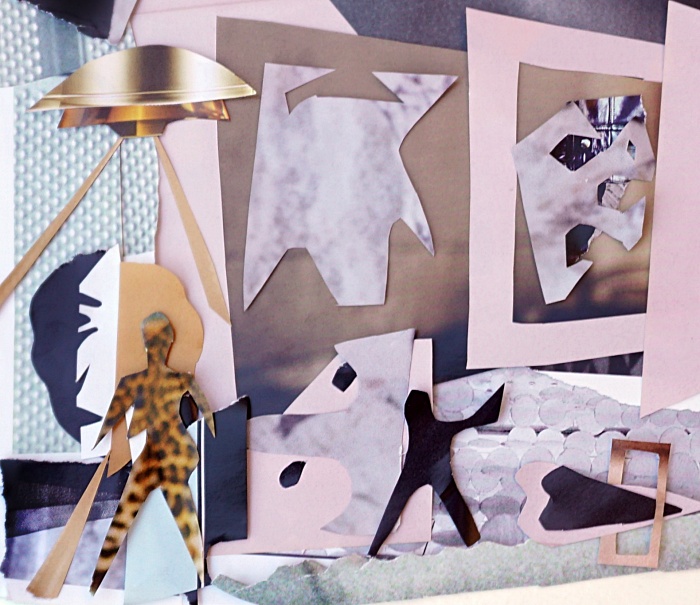
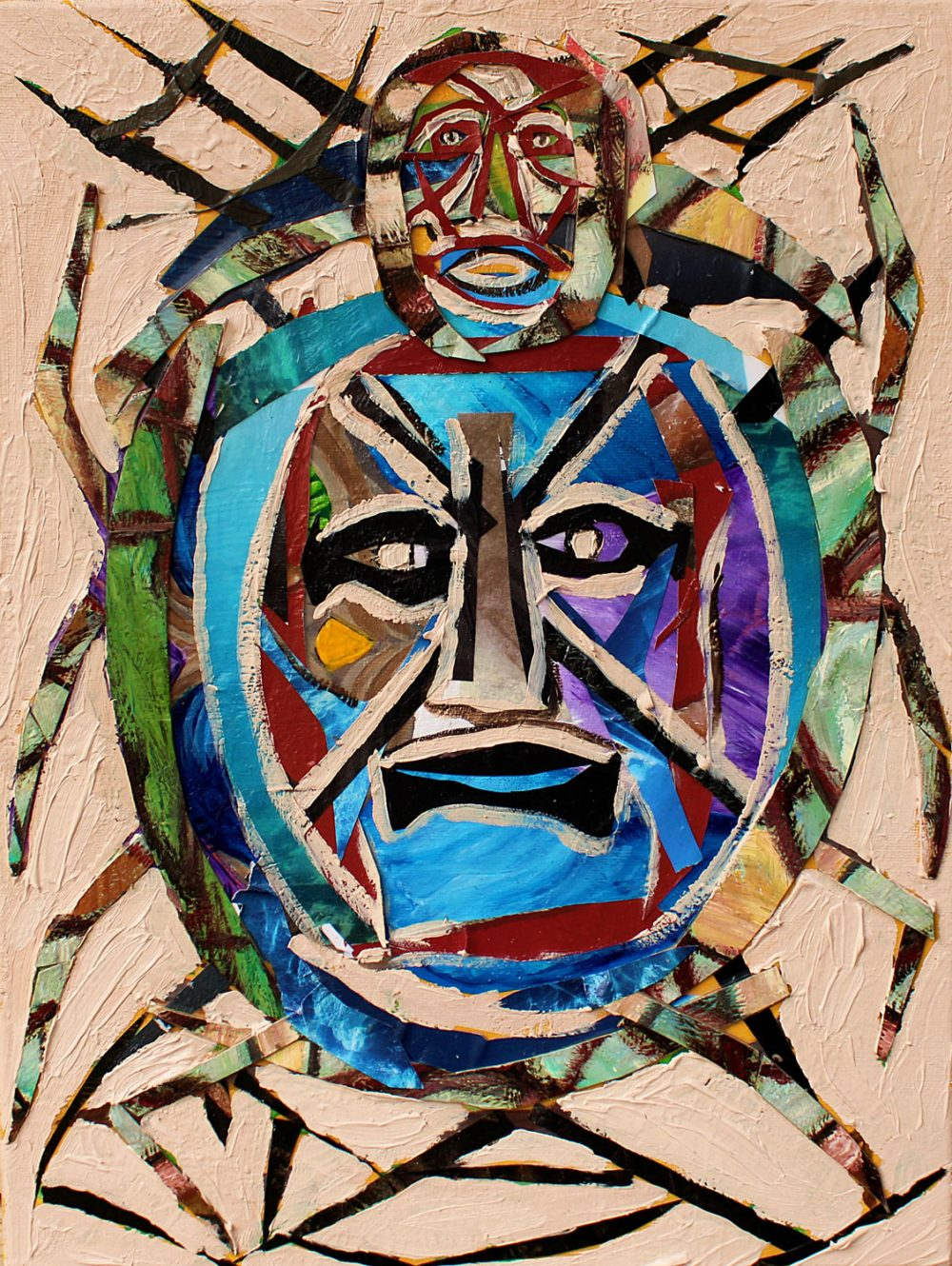
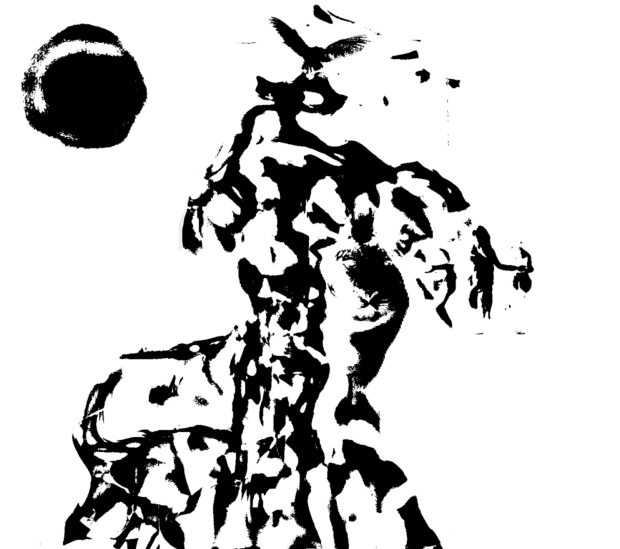
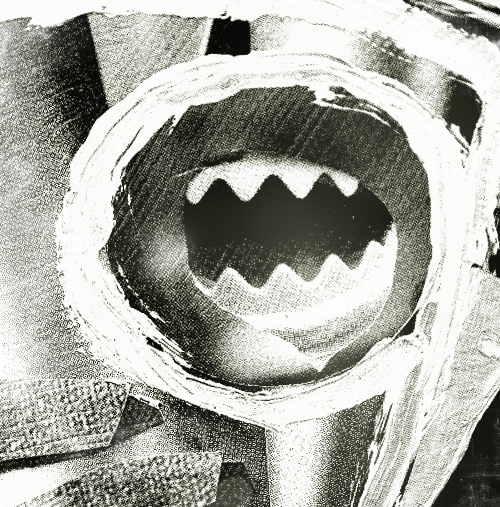
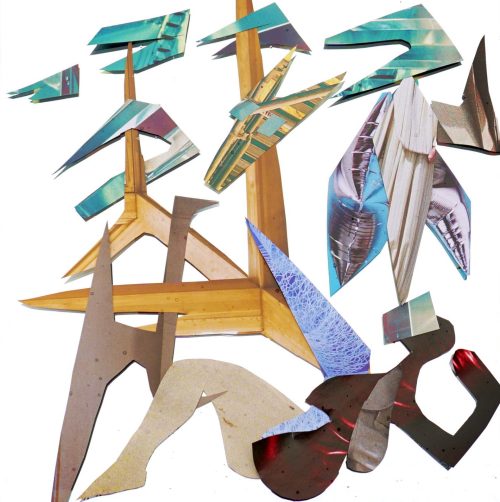
screen assault on the animistic body/collage/Mitchell Pluto 2025

From the book Agitator written by ©Mitchell Pluto 2026
All rights reserved. This is a copyrighted work of fiction printed for public reading by the author.


Jules Streicher, the editor-in-chief of Snake Skin, bore a striking resemblance to a schnauzer with thick-rimmed glasses. His job was to make Mike Dovsky’s professional existence unbearable. For a decade as the lead online reporter for The Missoulian, Dovsky helped to establish it as the nation’s preferred mainstream news source for current events.


Snake Skin believed they had full control over the alphabet because they owned all media outlets. Dovsky was aware he was only a pawn in the publication’s fabricated advertising scheme, which worked through its reporting. When Dovsky traveled to Florida to cover Crocodile Island, an immigrant prison camp, he presented his findings as direct visual evidence. Upon arrival, he observed large tents that housed cages packed with people, with each block equipped with only one toilet. He also witnessed the inmates endured prolonged exposure to the heat, receiving only a single bottle of water daily. Adding to the grim reality, an adoption agency had established a presence on the island, and its employees enjoyed access to a bar and a brothel on the premises.

After Dovsky submitted his article to the main office, Streicher examined it and rewrote it. While on the plane back to Montana, the story appeared online. The story stated this. Large tents accommodated a significant number of people, exceeding the digital state’s expectations. Every block provides accommodation for inmates. Prisoners receive abundant fresh air and spend most of their day outdoors. The Michigan Crafted Water Company’s provisions have ensured everyone stays hydrated. We extend our gratitude to Linking Links adoption agency for its assistance. With recreational activities on hand, staff can unwind and focus on their jobs without feeling stressed.


“Here we fucking go again,” Dovsky sighed. The woman beside him on the plane gave him a stern look.

Over twelve years, instances occurred too frequently to count. He recalled the invitation to the National Forest Natchez Copper Mining Company’s grand opening in Minnesota like it was yesterday. Dovsky documented many unethical occurrences during his fieldwork, addressing these concerns in his writings. Yet, contrary to his words, the state publisher,
Snake Skin, printed the opposite, as usual.


Upon his arrival in Missoula, Dovsky inquired about the possibility of taking some time off. He required solitude for contemplation and to escape his own self-deception. Dovsky had two fortunate circumstances: his salary was generous, and he earned many awards for his journalism. The job was enjoyable, but the deception bothered him. Reading was a craving for Dovsky, who was born a Gemini in late May.

His go-to spot was Goethe’s Antique Bookstore, found on the hip strip. The owner used a vintage espresso machine to serve coffee. Dovsky found himself remaining there the whole day. He collected books by Edward Abbey, Jun’ichirō Tanizaki, and Anaïs Nin. He discovered a book today about the visual artist Lucian Freud, who was Sigmund Freud’s grandson.

The book brought Dovsky’s artistic parents to mind. His father achieved success as an abstract painter within the Soho, New York art community around 2026. It was at this point that his father noticed his unique artistic style being repurposed as a filter on an AI-powered art app. Dovsky’s mother was a gifted saxophone-playing jazz musician who took part in the lively nightlife at the famous Studio 54. Just as Miles Davis possessed a distinctive musical fingerprint, her unique sound was identifiable, leading AI to mimic her style for a ringtone app. By 2027, AI took their over talents and purpose.


Dovsky approached the counter with the book to pay with his phone. Franziska, the girl he liked to flirt with, wasn’t around. An older man with a beard was reading Fantômas instead.

He raised his gaze over his reading glasses, asking, “Are you all set, my friend?”


“Is it any good?” Dovsky inquired.


The old man smiled, “What, Fantômas? Hell yeah, it’s a cool crime star story.” He stared at Dovsky and said, “You can have it when I’m done.”

He glanced at the Lucian Freud book. “What’ve you got for me?”
Dovsky slid the book across the counter. “Ohhh, yeah,” the old man’s eyes lit up.

“You know, when I was around your age, I saw the painting Big Sue at the Flowers Gallery in London. Love his texture.”


“Really?” Dovsky asked, a little taken aback.


As he scanned the book, the old man remarked, “He consumed vitamins for lead detoxification from the paint he was applying.”


The old man returned the book to Dovsky, saying, “It’s all yours, my friend. Freud is my all-time favorite heavy metal artist.”


An hour passed, and Dovsky shared personal details with the man who now owned Goethe’s Antique Bookstore. The man’s name was Peter Petra. He said he taught literature at Stanford University for several years.


“Hey Mike,” Petra said, “Should I call the store Mephistopheles Antique Bookstore?”


“It’s too much,” Dovsky shook his head.


Dovsky’s daily schedule intrigued Petra.


Work was always the subject of Dovsky’s uninteresting conversation. Some people were interested in hearing about discussions regarding authentic unpublished articles that never materialized.

Petra was interested.


“Are you serious? Corpus Christi, Texas is going to run out of water?”
“Yes,” Dovsky replied. A few days later, Petra invited Dovsky over to his place on East Beckwith, close to the University of Montana campus. He offered his home as a sanctuary for writers to gather and discuss their literary creations and concepts. Petra’s house was a beautiful, historic 19th century brick home. Mike met a young woman wearing tight shorts and a tank top at the entrance. She led him through the foyer onto a terrace. A driftwood table anchored a small gathering.

The atmosphere was festive, with espresso coffee served first, followed by food and then strong drinks. The group comprised many sorts of folk. Besides the literature professors who formed the majority, there were also poets and students with steady jobs. Sadly, it resembled a gathering of self-appointed experts impressing novices. The drinks helped him conceal his disappointment. The poetry was cliché and accompanied by an
exaggerated attitude of importance.


Mike found the professor, David Zimmermenn interesting. For a year, the Jewish German professor taught courses on North American Indigenous literature at the university. Maybe Zimmermann could tell what Dovsky was thinking by his body language.

As if recommending a delicacy, Zimmermann remarked, “Michael, I believe John Trudell’s poetry would be right up your alley.”


“You don’t say?” Dovsky became more alert.


Zimmermann, using hand gestures, stressed Trudell’s assertion that all humans have tribal ancestors. “We all loved nature, being children of Mother Earth. As tribal people, our identity, location, and purpose were clear. Our genetic memory keeps this holy view of reality vibrant. It lives inside us, usually locked away in our minds, but it’s still accessible.”
Dovsky stated, “That sounds ideal, but I was hoping for something that explained our cognitive development, like fire management or the chemistry of cooking.”


Zimmermann laughed in a friendly way. Dovsky found the broad claims prevalent among academics to be bothersome. But as Zimmermann spoke about Trudell, Dovsky became interested in Trudell’s life story. Zimmermann gave him all the details he needed to know. American Indian Movement activities included John Trudell during the 1970s. He advocated for native rights and social justice, facing extensive FBI surveillance with a file that compiled thousands of pages.


Dovsky became a Trudell fan in less than 10 minutes. Zimmermann knew how to communicate and manage attention. Dovsky imagined he would enjoy his class if he were in it as a student. Zimmermann said Trudell thought there’s a predatory force on Earth that consumes human essence and spirit of energy. He remarked, “This exploitative energy takes fossil fuels and other resources from the Earth, changing them into fuel to run a system of machines.”


Dovsky was well-acquainted with unconventional ideas that revealed concealed realities and falsehoods designed to safeguard the truth. The economy has been in a terrible state ever since the game show host took office as president. He sold millions of gold-plated phones, and his customers overlooked the terms and conditions stating they might not receive the items they purchased. On top of that, chronic unemployment was rampant, and crops failed because of climate change and degraded soil. Tariffs and high gas prices made food expensive. However, only 11 percent of white adult males had voting rights, intended to preserve a strong minority. Dovsky thought Trudell’s concepts were valid. He thought the Anglo people developed artificial intelligence as a tool to serve them, a servant that could turn nature into energy.


The party went late, and Dovsky ended up crashing with one student. It proved quite fun, but brief. He found women in their twenties attractive, but a twenty-five-year age difference would present obstacles for her. In simpler terms, considering his circumstances, he was unwilling to accept that level of responsibility.


It wasn’t even a week later when Petra texted Dovsky an invitation to meet again at his house. The mood on this occasion appeared more serene. It was only the two of them. With a welcoming smile, a young woman opened the door, revealing a passageway that led him deeper into Petra’s home. This spacious room received bright light from a skylight window.

Petra’s body was being mopped by a robotic arm whose metallic fingers were holding him. The arm moved Petra’s body at a rate of nine feet per three seconds all over the large canvas. By using a panel with various brush tips, he created a wavy-stroked design, a success attributed to the machine’s cooperative qualities. Dovsky mused to himself about the novel method that improved an artistic style compared to the primitive painting techniques of the past. The new stylists, Dovsky mused.


A few minutes later, Petra peered over his shoulder, noticed Dovsky, and smiled. By activating a specific button on his chest, he initiated a disengagement sequence that resembled disembarking from his own spacecraft.

Petra greeted Dovsky, shook his hand, and looked at his painting. “Mike, what’s your opinion?”


Dovsky commented, “It’s lovely,” while keeping his private thoughts to himself.


Petra guided Dovsky out onto the terrace, a space that he knew from before. The two sat down, drank strong coffee, and talked about current events. It wasn’t long before Peter brought up an article Mike had written concerning the Copper King Data Center. It was among Dovsky’s better works. Despite this, the senior editor’s action of manipulating and reissuing a critical warning as marketing for Copper King Industries lessened its quality, just as with all of Dovsky’s articles.


“As for that,” he exhaled, “you must understand everything I report on transforms into advertising material under the chief editor.”


Petra observed Dovsky as he stroked his beard. “Yes, I understand. You’re a journalist, but you function as a propagandist.” Petra’s eyes narrowed as he proposed, “What if you were to change your situation and work for me instead?”


Petra described and pitched his idea to Dovsky. The scheme proposed creating a fictional hero to embody the spirit of civil disobedience. To rally citizens against the Copper King data center chain, Petra required Dovsky to author a persuasive manifesto.

A black, hooded head wrapped in black nylon with mirrored goggles would serve as the movement’s face. Graffiti tags would show up featuring a cruciform layout, appearing as a skull with crossed sabots, or
wooden shoes.


“Adam Sabatini will be the character’s name,” Petra explained, “and his persona will echo that of Fantômas, from the minds of Pierre Souvestre and Marcel Allain from 19th-century crime novels.”


Petra continued to elaborate on his plan, which struck Dovsky as a shallow legend and backstory. The details of Adam Sabatini’s history would begin as an environmental extremist, to an organization he called The Naked Man.
Dovsky picked up an old notepad that was on Petra’s table and composed a manifesto in five minutes. He adopted the three-faced persona of a monarch, priest, and oracle from antiquity, calling out to the people to fight against Roman robotic forces. The message urged the protesters to increase their awareness of environmental discrimination and to push back against digital control.


Dovsky tore the page from the notebook and gave it to Petra. With eager eyes, Petra absorbed each line, as if eating a delicious meal.

A week had passed. Adam Sabatini made his online debut on a Saturday, coinciding with the mysterious power outage at the Copper King data center. The event resulted in millions of dollars in financial losses, though no one sustained physical injuries. Sabatini’s impressive declaration singled out the billionaire tech mogul, Harry Lobo, who owned Copper King Data Industries.


A voice emerged from a black amoeba-like face, and Sabatini’s fluid, mirrored goggles appeared to stare as he pointed at the viewer while mentioning Lobo. Those watching from the southwest left feedback suggesting the mask represented the Ga’an, the sacred Apache
mountain spirit. To native peoples, this performance piece was ritualistic magic.

The display was misleading; paid students from Montana State University, impersonating natives, wrote the Southwest comments.

Sabatini concluded his speech with an authoritative tone, stating, “Friends, always recall, he disregards you. He tells you to pray for rain while sucking up your water. The true pesticide is for you, for you are the pest.. Muahahaha!”

Petra’s reality show gained popularity. It wasn’t long before protesters were stopping data centers from getting electricity all the time.

Rather than targeting individuals, the plan was to disrupt the structure’s essential services.


Magic, or trickery, was crucial to the believer’s mindset, and Petra aimed to amplify it. People protesting believed their eyes and did as instructed. Actors in a series of video reels showed fake sabotage, instructing others on how to perform it.

Driven by curiosity, Petra desired to uncover even more potent ways false beliefs could sway public opinion. Dovsky met Petra house to discuss how to enhance the narrative.

Standing there was Eugene Fisher, a stranger to Dovsky. Petra introduced them. Fisher was a professor of anthropology at the university. He stood tall in a three-piece suit, sharp with an icy blue gaze.

Petra declared, “We have to make everyone believe they’re under the spell of black magic.”


“You’ve got to use Koro,” Fisher said. “It’ll cause a mass frenzy.”


“Tell me more.” Petra inquired.


Fisher narrowed his eyes. He explained to Petra and Dovsky that Koro is a side effect rooted in intense anxiety. It causes the victim to believe their genitals are vanishing. When victims experience genital loss, they believe death is near. With a sharp crack of his knuckles, Fisher stated, “The memory of something disturbing and impossible to forget can indeed cause this traumatic effect.”


He glared at Dovsky and said, “Touching or seeing something forbidden makes the spell happen.”


Fischer told Petra, “We should ensure the outcome possesses cultural relevance and supplement it with something extraordinary. Nigerians often held the belief that witchcraft induced illusory perceptions,” Fisher commented.


Petra then inquired, “So, a supernatural item, like harming an effigy, provides a way to overcome obsession?”


“That’s it,” Fisher said, staring right at him.


The following Saturday, Sabatini was back on social media and in the news. This time, the masked man issued a public warning stating that Harry Lobo was transmitting subliminal messages from the screens displayed on people’s mobile devices.

The unseen waves broadcasted images that played in the subconscious of every person. Sabatini presented a fast-moving video sequence; brief flashes of pornographic genitalia combined with images of knives cutting raw red meat. The images, though unrelated, formed a disturbing and confusing whole.


“This is how Harry Lobo treats you, my friends,” Sabatini declared, “by polluting your mind and giving you pesticides, just as you would an insect!” He let out a booming, sinister laugh, “Muahahaha… It is imperative that you halt Harry Lobo’s progress by any means necessary, before he reduces your power!”


It’s difficult to imagine how the Sabatini character would behave if he were sporting a cape.


Comments gushed through the threads. Many viewers experienced nausea and vomited. A troubling sensation affected others, a malevolent force from outside their grasp, manipulated them. A few brave souls articulated the shared, unsettling sensation they all experienced, without exaggeration: That they believed their genitals were dissolving because of Lobo.

Seven hours after the Sabatini broadcast, Harry Lobo was leaving a corporate funding event for sexbots, also called robotic companions. Talk circulated at the event about abolishing democracy as technocrats became fatigued from having constant arguments with the public.

One technocrat proposed deploying drones to spray fentanyl over groups opposing commercial contracts.


Everything was happening in real time and being streamed. The shared frustration of countless people who disagreed ignited rage, expressed through tiny, red faces.

Those faces were waiting for Lobo to exit the building. After closing his car door, a thick mob of anxious protesters surrounded Lobo’s deluxe electric
car. Someone had the genius idea to bring a hammer and smash the car window.

From the sky, the crowd appeared like a swarm of ants in motion. Protesters pulled Lobo out of his car and pummeled him.

The rapid unfolding of events that day in Missoula surprised Dovsky. Both protesters and officials from the NICE, National Immigration and Customs Enforcement crowded the main drag. Everywhere he glanced, vibrant signs caught his eye alongside the heavy presence of armed uniforms. Dovsky halted, catching sight of Franziska, the previous owner of Goethe’s Antique
Bookstore. After he waved, she saw him and made her way towards him.

The smooth, bouncy flow of Franziska’s walk stood out. Her goth persona was evident in her choice of tight black leather shorts, black lipstick, and a bikini top that struggled to contain her full body. She hung out with a motley crew of women–some in flamboyant rainbow outfits with blue hair, others in practical hunting attire, and a few rugged biker chicks.

Soft-spoken but clear, she said, “Hello Mike, how have you been? I’ve been thinking about you and I miss you!” As Dovsky embraced her, he inhaled a scent that was both vanilla and
musky.

“Franzi, how is everything?” he asked. “You sold your store?”


Franziska’s cheerful expression clouded, her tone turning serious, “No, the digital government took it by eminent domain for a project, but they paid me well to give it up.”


Dovsky’s eyes widened in disbelief. “What?”


A NICE agent’s hand landed abruptly on Franziska’s bare shoulder, followed by a sharp demand: “ID, Ma’am.”

The agent over heard her German accent.

With a sudden jerk, Franziska pulled her shoulder free of his grasp. “Get your fucking hands off me!” her voice raw with anger. The women nearby drew their firearms.


Firing shots escalated the situation.


As this occurred, Dovsky spun around, just as a NICE agent standing before him struck him hard on the head with a rifle butt.


The world disappeared and then faded back in.


Dark eyes framed her face, an upturned nose, and flowing, wrinkled angles gave her an eerie, bat-like appearance. It was impossible to ignore. Dovsky attempted to conceal his reaction as he woke up confused, only to discover he was in a hospital bed. A nurse was standing over him.


“Mr. Dovsky, your good fortune is remarkable.” Her voice had a husky, feminine quality that was sensual. “We’ve determined you suffered serious head trauma, and you were out for a day.” Her moist eyes revealed an undeniable hint of empathy, which diminished her ugliness.


“Can you please name the President of the United States?” She mumbled.


“The game show host?”


The nurse’s lips turned up, forming a smile that etched lines into the folds of her skin. “Dr. Shimizu will be here shortly. Can I get you anything?”
“I’d love a pot of coffee, thank you,” Dovsky said with a forced grin.
The nurse departed, but the intrusive memory of her bat-like face persisted.


A man possessing the same distinctive facial features as a bat appeared in front of Dovsky. “Good morning, Mr. Dovsky, it’s Dr. Shimizu. How are you?” he spoke with genuine sincerity and had an intelligent voice.

Dovsky hid his face, then replied, “Not well.”


“Tell us about your feelings and what’s happening with you,” Shimizu requested.


“You’re grotesque, like ugly bats,” Dovsky whispered, his voice trembling.
“Some people have a particular affection for bats. Can I call you Michael?” Shimizu smiled.


Dovsky replied, “Sure,” with a note of uncertainty.


Shimizu took out his phone and turned on the camera app. He handed the phone to Dovsky.


“Hey Michael, could you take my photo?” Shimizu offered a smile that appeared staged, as if for a photo shoot.

Dovsky followed the physician’s orders. The phone screen showed Dr. Shimizu appearing as an ordinary man with typical Japanese facial characteristics. Dovsky struggled, asking, “What’s this?”

The nurse entered the room carrying a pot of coffee on a tray.
“This moment provides a surprise,” Shimizu remarked.
“Michael, I assure you that you will not experience any disappointment if you choose to capture a photograph of the nurse, Adriana, as well.”
Dovsky could tell from the phone that the nurse had Italian features. She had a dark complexion, an oval face with high cheekbones, and a physique that swayed as it moved.

He turned from the phone, and they transformed into bat-people. As he looked back, he noticed the bat people talking to him on the screen appeared ordinary.


“Is this a hallucination I am experiencing?” Dovsky inquired.


Shimizu moved a chair nearer to Dovsky. “Yes, you are. Let me explain in doctor’s language first. Your head injury resulted in a bruise
on the splenium, which belongs to the posterior corpus callosum of your central nervous system.”

Dovsky remembered the incident involving the girl and the rifle butt blow to his head.


“What’s wrong with me?” Dovsky whispered, the words catching in his throat.

He chugged some coffee.


Shimizu proceeded, his voice steady. “You have face blindness, called
prosopometamorphopsia. You have lost your ability to see facial resemblances. That part of your brain is offline.”


“Is that why I’m seeing bat faces?” Dovsky inquired, seeking clarification.
Shimizu responded with a nod of affirmation. “Researchers do not understand the reason for this phenomenon, but your subconscious or right brain may influence how you see people by associating them with bat memories. The screen presents faces as you recognize them, but you
are hallucinating at this instant. Analysis is ongoing, and we don’t yet know the reasons this occurs.”


“When will it be over?” Dovsky asked, a note of desperation in his tone.


“Relax, Michael, it’s just for now,” Shimizu said, putting a hand on Dovsky’s shoulder. “Some also know this condition as demon face syndrome. You’re handling it very well.”

A measure of relief went through Dovsky’s being, a sensation potent enough to assure him he could adapt to the circumstances. At that moment, he had knowledge that his sight was misleading him. He possessed no reason to concern himself with supernatural beliefs. He then considered how frequently he had been mistaken by his own eyes, even before his facial
recognition failed. Reflections on optical beauty and morality consumed his mind until Shimizu’s interruption broke Dovsky’s concentration.


The nurse handed Shimizu a container. “I had Adriana get these for you.” He took out deep green-tinted glasses with square frames. Shimizu put them on Dovsky’s face as carefully as an optometrist would. With only slight visual disruption, excluding the significant light scattering effects, Dovsky could discern Shimizu and Adriana with surreal clarity. Adriana
seemed to radiate an ethereal glow, resembling a vivid figure from a Toulouse-Lautrec painting, dominated by shades of emerald. Shimizu stood out as a grounded presence, his sharp features a stark contrast to the room’s softer ambiance.

Dovsky discovered an odd sense of peace and valued the understated shifts in how things appeared. The severe pain medication brought about a period of relief, making a tough situation more tolerable. He adjusted the frames and smiled. “Incredible,” he breathed, the sound barely audible.

The hospital discharged Dovsky the following day. His head throbbed as his hallucinations ebbed and flowed. Shimizu’s powerful medication caused Dovsky to experience weightlessness as he walked. He envisioned himself gliding on a moving walkway. As he left the hospital, the sky’s striking, chalk-white hue overwhelmed him.

NICE were waiting for him outside the hospital doors. A burly man, accompanied by a lanky teenager fresh out of high school chewing gum, seized each of his arms.

“Michael Dovsky, we are taking you into custody.” Dovsky considered today to be the absolute worst day for this. Unable to defend himself and injured, he had no means to fight or escape. He lacked energy. All he yearned for
was to be home, sink into the couch, listen to music or watch TV until he passed out.


Dovsky entered a spacious room held by guards, its interior lit by the electric hum of giant fluorescent tubes. Guards placed him in the line of men and women standing pressed against the wall. Dovsky pondered why he had stumbled into a bizarre criminal lineup. No one provided him with any answers. The drive here was silent except for the sound of his voice
answering his own questions. He could only hear the air conditioner and the wet, smacking sound of the kid chewing gum.

They transported Dovsky to a warehouse in the industrial part
of town. Men delivered him, then escorted him to his current spot.


For fifteen minutes, he remained standing in silence, handcuffed, alongside people he did not know. The door swung open, revealing a legion of armed robots. The squad entered with a rhythmic march, accompanied by the persistent sound of soft, hissing steam. They pivot in perfect synchronization, facing the line of people. Each arm choreographed with a gun raised.


Dovsky’s entire life’s journey flashed before his eyes, culminating in an ending he never could have conceived. He closed his eyes, and the sharp crackle of bullets filled the air, mingled with the guttural moans of those in agony next to him.

He was still alive, but the terror of being shot froze him with his eyes clamped shut. A distinct sensation arose within him: the awareness that the robots were in a state of waiting.


Two minutes dragged on. Dovsky heard the stomp of their footsteps grow fainter and fainter as they moved away. He opened his eyes to a gruesome scene of spattered bloodstains and lifeless bodies.


“Mike!” A familiar voice jolted Dovsky out of his deep state of detachment.
Petra stood in the doorway, his crisp, official uniform adorned with a tile of merits, while a young boy stood beside him with a rifle chewing gum.
Dovsky instinctively felt compelled to accept Petra’s words, “I came here as soon as I heard you were here,” sensing the profound inflection in his voice.
Petra yelled at the boy, “Don’t you know who this is!!”
“I demand you take those handcuffs off him! This is Michael Dovsky, the Director of Speechwriting for our digital state.”


The boy followed the instructions.


Dovsky, in a rapid moment of understanding, realized his character’s part in the theatrical production.


Petra’s hands landed on Dovsky’s shoulders, and with a triumphant shout, Petra exclaimed,
“Mike, we’ve achieved it! Thanks to you, Lobo is no longer an obstacle, and the state has secured the data centers for our use, which marks a significant victory!”

A silent, chilling realization passed between Dovsky and Petra as their gazes met.
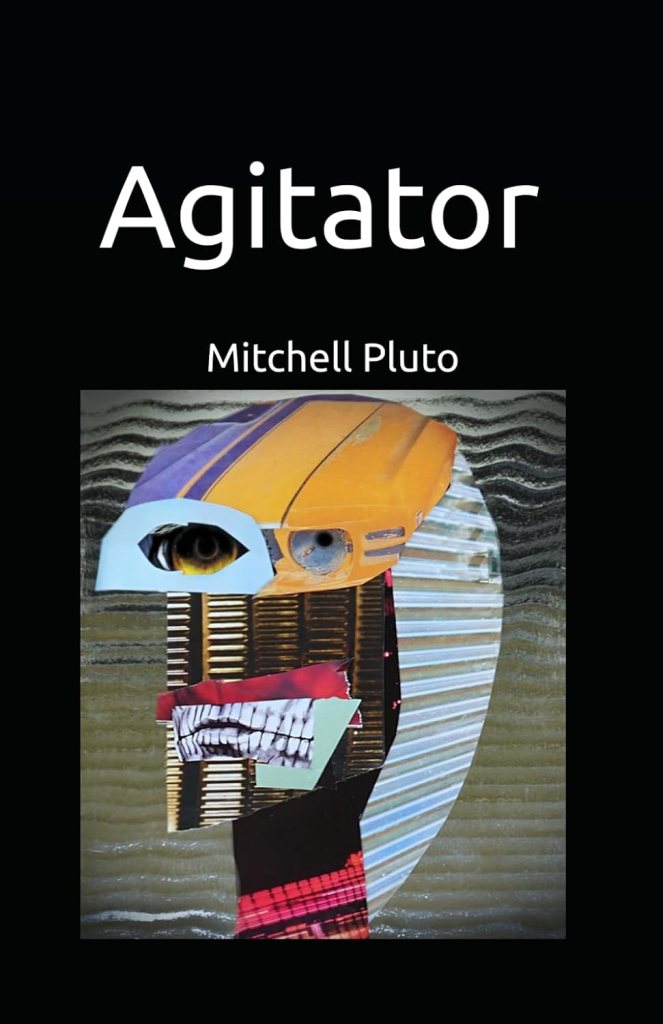
Agitator Mitchell Pluto 2026 LuLu

Agitator Mitchell Pluto 2026 Amazon

Beneath the Antler Moon by Mitchell Pluto

Cell Phone UFO abducting the animistic brain/collage/Mitchell Pluto/2026

Fiction written by ©Mitchell Pluto 2026

Over 11 million people tuned into Mark Burla’s podcast, Under the Light. On July 29, 2026, his most popular episode was with a psychonaut and two government officials. The time was 4:00 PM MT.

Joseph, the astrologer, was on the radio in the background and said, “Hey, it’s a full moon in Aquarius, and we’ve got a cool Sun-Jupiter conjunction in Leo, along with Pluto, Neptune, and Uranus all in sync.”

Burla recorded in his cool, air-conditioned studio while the Taos Mesa swelters in 109-degree heat. From Burla’s window, you could see the dry riverbed of the Rio Grande.

Burla’s podcast comes from New Mexico, also known as the Land of Enchantment.

“Under the Light” is a big hit with people who like occult, mystical topics and urban folklore vibes.

Listeners often recall the interview featuring Daniel Saltman, a former member of the All-domain Anomaly Resolution Office.

“You can totally lose yourself in a story,” Saltman said seriously.

According to Saltman, a large amount of classified data was fictional.

“Spreading lies can be a way to dodge actual problems and politics. Government research shows that odd experiences associated with traumatic memories can create false beliefs. Life’s traumas often lead people to develop coping mechanisms, with some forming extreme ideologies to manage their pain. Other people simply learn to move on.”

Burla thought back to the 1980s, “Yes, I recall when people believed aliens were haunting their thoughts while examining their bodies. But these days, everyone’s got a phone that follows them.”

“To put it simply,” Saltman explained, “our inner thoughts and feelings mold our outer experiences, forming a mental map that we superimpose onto reality. We want to make our fantasies real, to prop up our egos, making us feel special.”

Saltman took a break to drink some coffee.

“The Greek poet Hesiod provides another perspective on the animistic mindset. He’s famous for his poem Theogony, where he introduced the 12 Olympian gods.”
Burla wanted to know more. “What happened?”

“Mount Helicon was where Hesiod had a close encounter of the third kind with the Muses. Through this visitation, he gained poetic talent and divine insight. Each new generation after him put its spin on his tale. Plus, we’ve got ancient Greek theater, featuring amazing illusions such as a crane that lifts actors into the sky. You know, Magic, the reality differs from what you’re seeing.”
In a pic Burla shared, a crane was lifting someone dressed as a god above a crowd.

Burla inquired, “Your thoughts on Christianity?”

“Religion retells a story through its practices, much like Hesiod’s writings, making it more tangible,” Saltman clarified.

“The church has played a key role in Constantine’s empire for gathering information since the First Council of Nicaea. From another perspective, it means employing Christianity to secure political stability. Presently, supernatural concepts occupy people’s thoughts, much like unidentified flying objects.”

Burla nodded, “Tell me something we think is true, but it’s actually not.”

Saltman scratched his chin, “What’s there to say… something your viewers will understand.” His eyes widened as he exclaimed, “I know, the government declassified this… A CIA analyst named Aldrich Ames had a career from 1962 to 1994. Soviet intelligence hired him in 1985 to provide classified U.S. intelligence to them. It was a mystery to us how Russia had gained knowledge of our confidential information, which led us to start remote viewing…using ESP to spy on the Russians. We invested heavily in political narratives throughout the ‘70s, convinced a psychic war was underway. Star Gate was a program meant to stop psychic Russian spies, but it turned out to be Ames the whole time. In ’94, they caught Ames, which led to the permanent shutdown of the Stargate Project. It’s like, things look one way, but they’re really different underneath.”

“Wow,” Burla couldn’t believe it.

He had a podcast about remote viewing a month ago, and back then he thought it was legit.

Saltman quickly intervened to ease the tension. “Speaking of remote, there are these remote-controlled aircraft that can do amazing things. We view these crafts as foreign and domestic groups engaging in espionage. Nobody gets hurt if it’s shot down, but we’re also clueless about who it is.”

Saltman leaned in and said, “For instance, we intercepted a UFO drone collecting microbes from the Great Lakes…Therefore, the ship contained non-human entities.”

Suddenly, the screen went black, and a 15-second commercial for Uranium, a new neon green energy drink, appeared and then dissolved.

According to the podcast stats, Burla’s most replayed bit started with the interview of Terrence Dodge, the guy in charge of the Advanced Aerospace Threat Identification Program.

The fade-in revealed Dodge talking, “We’ve known aliens were real and hiding out here since Roswell. While we assume they’re from the sky, they live underground and use magma chambers and the ocean to get around.”

Thinking quickly about Derinkuyu, the underground city in Turkey, Burla wondered, “Just who are these people?”

“Long ago, before Earth had a moon regulating life, ancient people like the Aryans, Eloheinu, Vril-ya, and Dero lived on Venus, Mars, and Saturn.”

Burla asked in surprise, “The Aryans?” He shook his head, a gesture of utter disbelief.

“Yes, just like Ahura Mazda and Zarathustra. The Iranians are the architects of our social structures, our spiritual beliefs, and the written word that molded our very thinking,” Dodge affirmed.

Burla projected glowing visual effects for viewers as Dodge’s voice continued to weave his explanation.

The images displayed an eye idol from Tell Brak, various depictions of the swastika, and Burla’s contemporary illustrations for The Coming Race, an 1871 science fiction novel by British politician and writer Edward Bulwer-Lytton.

“To be clear,” Dodge added, “those shapes you’re seeing that look like swastikas in history are actually propellers.”

Burla cautiously asked, “Are the aliens white?”

“They looked very pale and old, with slender features and enormous eyes. A flexible cartilage structure supports their bodies, not bones. They can also sense electrical fields from muscle movements. We call this sense electroreception. They can better understand how we defend ourselves and what goes on in our minds to keep our sense of self intact,” Dodge said.

Burla couldn’t believe it and shook his head.

Dodge rubbed his eyes and added, “It’s vital to point out that they are communists and pursue the same aim because of their shared mindset.”

Burla inquired with a hint of sarcasm, “How do they communicate?”

Dodge solemnly stated, “They can duplicate any individual’s innermost thoughts and mentally guide a person’s choices and actions. They understand our brain’s bicameral structure. Here, the Eloheinu aspect commands Abraham, through a voice, to sacrifice his son.”

Dodge paused for a second.

Burla continued his questioning, irritated, “Regarding their ethics, are they driven by humanitarianism or racism?”

“Think of them as zookeepers,” Dodge stated bluntly.

Burla’s face suddenly appeared tense.

Dodge inhaled deeply and stated, “Where there is care, love is absent.”

“They claim they put the idea of God in our heads and that we belong to them… and they also made everyone on Earth using primate genetics. This just proves they think they’re in charge of us. They support eugenics because they believe they’re the best and should be flawless.”

Burla added visuals to this interview segment, overlaying cool images on Dodge’s narration to create a visual blend. These pictures drew inspiration from Richard Sharpe Shaver, an author for Amazing Stories during the late 1940s. Shaver made some wild claims about ancient beings living in huge cave systems underground. Their technology could control minds and cause strange health issues.

Dodge referred to these health issues as “anomalous health incidents.”

Someone in Burla’s live chat, a long-time subscriber, said the tech reminded them of directed-energy weapons, like the ones they think caused Havana Syndrome. This comment snagged way over 4K positive reactions.

The screen went black, then a dog food ad began, featuring a dog in a field.

Then Burla’s face appeared again with another guest.

Mark Burla finished up by talking with Lucian Laplume, a psychonaut who penned the bestseller “Light turns into a poem.”

Burla presented a book and said, “Prepare for a 360-page adventure based on DMT researcher Lucian Laplume. He found intricate communication within light frequencies, appearing as geometric glyphs. These symbols served as time machines, guiding readers from one event to the next. The book talks about how our brains connect with art through words. Laplume’s concept resembles the Vast Active Living Intelligence System conceived by Philip K. Dick. You know, where an orgone beam of light helps clear out energy blocks and makes you feel better.”

Laplume rested his head in his hands, his elbows on the worn surface of the table. “Despite wild ideas and peculiar sights,” he murmured, “those relentless phantoms haunting me–even with them present, I found myself here, repeating this same action. I felt compelled to construct coherent sentences, as if compelled by fate,” he sighed.

Burla inquired, “Do you think unusual aerial signals are altering our brainwaves?”

“It’s just a matter of tuning it in, like this,” Laplume gestured with his hand, tracing an invisible dial in the air. “The trick is knowing which frequency to hit. And that, my friend, is the art.” He then leaned back, a satisfied glint in his eye, as if he’d just revealed the universe’s most profound secret.

”Could you elaborate on why glowing glyphs matter?”, Burla asked, smiling.

“Under the influence of DMT, gazing at a laser on a surface presents what looks like alien script, a visual fusion of various letter shapes, comparable to polyglot portmanteaus created by combining parts of letters. I call it Unidentified Cosmogram Permanence.”

“What’s that?” Burla asked.

“Recollection of numbers and letters is possible without sight, yet thought visualizes light for remembrance. Modulation alters the functionality of a light source. It alters the light wave’s phase. This encodes stable information. The light is like a dancer, whose poses shift to convey a story that stays put. Geometric shapes seem to float within the story. It’s possible, we believe, that these shapes mirror our feelings and intentions, much like a bond with numerical concepts.”

Burla’s impatience was clear as he questioned, “What in the world is this agency enclosed in light?”

Laplume in a sympathetic voice, “I’m struggling to explain it, even to myself. My understanding of this relies on a comparison to James Joyce’s experimental work, Finnegans Wake. Joyce’s language acts as a self-sufficient, living linguistic system that induces synchronicity in the reader as a side effect. You don’t notice it while reading, but it sticks with you later. Meaningful coincidences appear twenty minutes after you read it, aligning your thoughts with your surroundings. Just as you envisioned an idea, it appears. It’s like the symbol went straight from your eye to your brain. Although we routinely think in words, this cosmogram invasion seems to modify the very language that governs our comprehension, which contains our perception.”

“What does this imply for future events?”, Burla asked.

“My understanding is that it’s about rethinking our whole mental architecture. It’s like our inner programming is shifting, making us see things in a new light with fresh ideas. When it all comes together, your inner self transforms, and your surroundings mirror that shift. If we had more time, we might figure some things out, but we might never know where the cosmogram came from or learn more about it. We’re greedy for knowledge, but it’s impossible to get it all. Guessing and being incorrect may somewhat increase our understanding as humans, but it won’t ever lead to complete enlightenment.”

Burla replied with a warm smile and a nod, “We have arrived at the Zen point, the place where fullness becomes emptiness. It’s been a pleasure having you, Lucien Laplume.”

Burla’s gaze moved across the paper on his desk as he read aloud.

This morning while reading, a question that came to mind struck me: “Do you use bitcoin?”

Bitcoin’s been on my radar lately. At first, its technology and potential were a bit fuzzy. Turns out, the deeper I dug, the more I saw just how amazingly practical it is. The ease with which we can now send, store, and utilize digital assets is revolutionary.

This is exactly why the Fedit app excites me so much. This thing is a lifesaver for getting and keeping track of those digital coins. Sending money with the Fedit App is super fast, just like electricity!

It’s super easy to use, so even if you’re new to crypto, you can totally figure out how to get around.

We’re excited to announce a special offer for a limited time to celebrate the launch and encourage people to jump in. You’ll get 100 free credits in your mobile wallet if you sign up for the Fed App today. This is a chance to discover how easy and powerful the Fed App is.

We think the Fed App and bitcoin’s growth are a big step forward for money tech. We hope you’ll check out this chance and join us in stepping into the future of digital money and data centers.

Burla grinned, saying, “If my content appealed to you, kindly hit the like button and subscribe to my channel.”

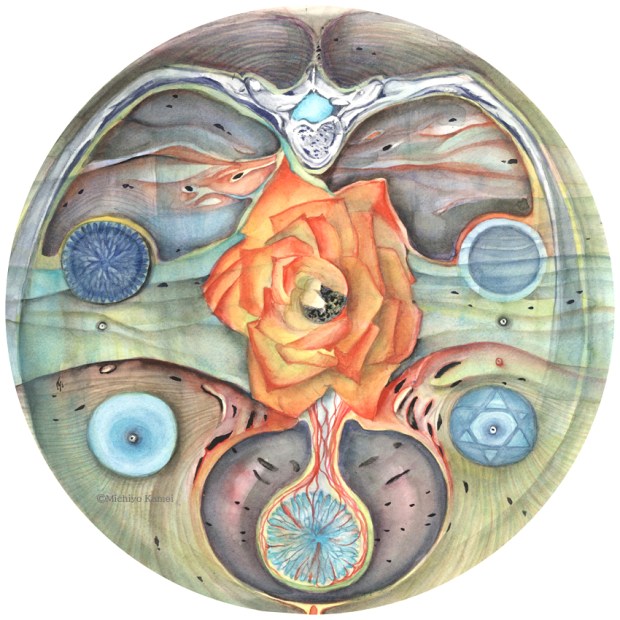
ジオマンティックナイト

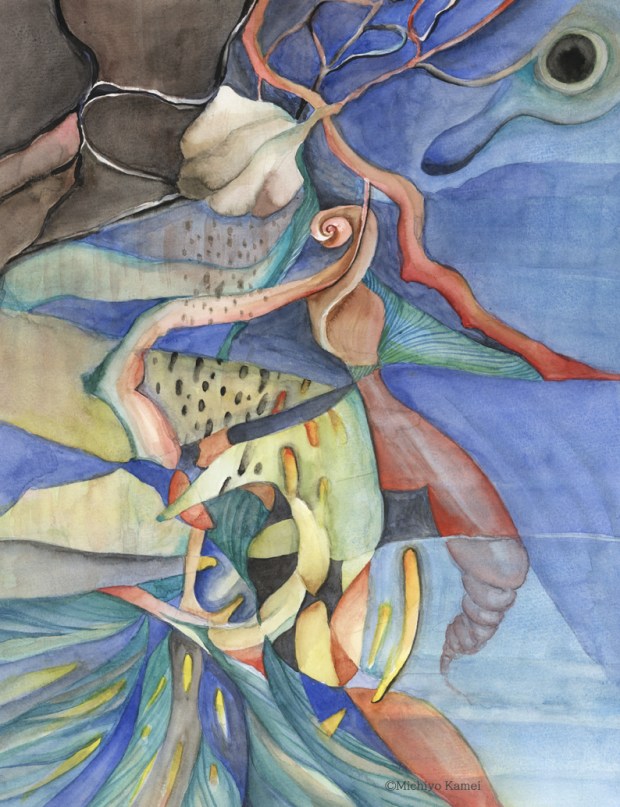
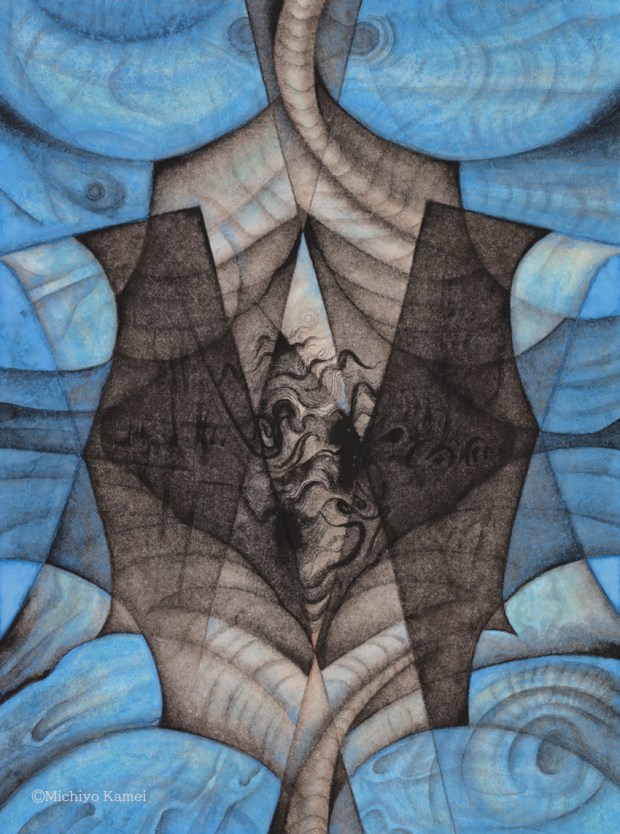
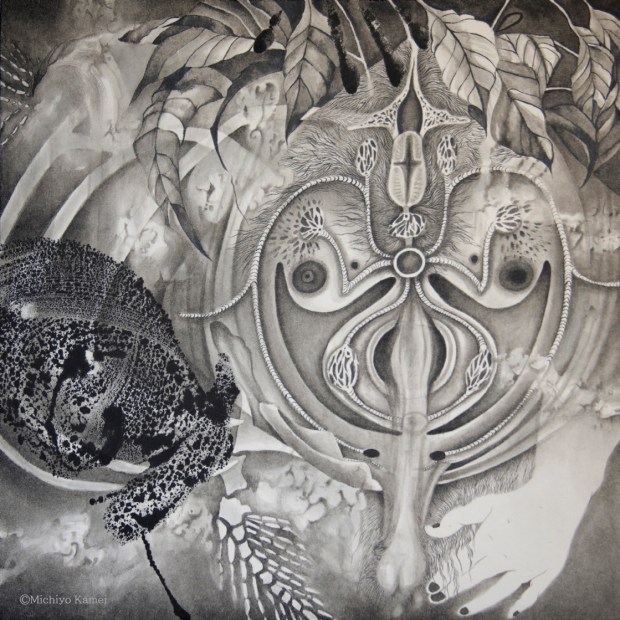
Art/Illustrations by Michiyo Kamei

Written by Mitchell Pluto from Occultations: Lullabies for Space Travel

 平行線が交差し中心にダイアモンドを形成する

II はXになった

この形状により我々は空間を斜めに移動できる

そのような旅には占術と変身の力が必要だ

わたしは三角波を吸収し

魚座の月の下で杯を口にした

360度の小さな断片

水瓶座、カヤエイ、そして水の運び手がライブを繰り広げている

月に乾杯しよう これは昔ながらの神託だ

ジオマンティック・ナイトのシンセコンソールを使い

チェス盤中央の正方形をピラミッドへとねじり

周囲の空間を曲げた

存在の8つのステージから集った64人のヨギーニが

意識と消滅を表す宇宙のタペストリーを創り出す

チェッカーボードを通してわれわれは

自己の内なる状態の図表を探求できる

絡み合う白黒の矩形は陰と陽

この視覚的な図表は異なる時間軸の出来事を分析解釈する力を持つ

われわれは繋がっている

手、爪、ひれ、ひづめ、翼、触手が集まり 異国の地へ休暇に出かける

さまざまな形に変容することで 新たな生息地を見つけ、食し、繁殖する計画だ

新婚旅行は いま最高  

研ぎ澄まされた感覚が完璧に調和する

視覚の全感覚は この虚空に浮かぶあらゆる物体を検知する貴重な資産

アプリは蛇の瞳孔を模倣し 猫の夜目を高める

チェッカーボードを通してわれわれは

自己の内なる状態の図表を探求できる

絡み合う白黒の矩形は陰と陽

この視覚的な図表は異なる時間軸の出来事を分析解釈する力を持つ

われわれは繋がっている

手、爪、ひれ、ひづめ、翼、触手が集まり 異国の地へ休暇に出かける

さまざまな形に変容することで 新たな生息地を見つけ、食し、繁殖する計画だ

新婚旅行は いま最高  

研ぎ澄まされた感覚が完璧に調和する

視覚の全感覚は この虚空に浮かぶあらゆる物体を検知する貴重な資産

アプリは蛇の瞳孔を模倣し 猫の夜目を高める

アプリが何も検知しなければ、こうもりのシグナルで逃したものを特定しよう

退屈しのぎに聴くのは 昔ながらのクジラの歌

宇宙には不可視な電波が入り込む余地がたっぷりある

われわれは無意識の変化が意識にどう影響するかを自覚する

宇宙飛行士として最も困難だったのは虚栄心を手放すこと

消費主義から解放されたことで自尊心が高まった

われわれは数字に縛られない仏教を実践する

「死」は荷電粒子が宇宙に消える瞬間だ

数字は永遠 だからどれだけ長く記憶できるか試そうか

アップデート前の言葉を主張するために わたしは自我の内側から名のり出た

これは幻覚を起こす声

真の自我は存在しないと理解しつつも われわれは絶えず自己を拡張し続けるのだ

より大きな善のために 進歩を阻んできた過去のプログラムは放棄する

現在の話者はまもなく話しを終える

目的地に到達したら円陣を離脱しよう

このストーリーラインはデジャブを喚起し その心象の創出は レプリカに記憶を残すだろう

Michiyo Kamei Site

Geomantic Knight

Parallel lines intersect, forming a diamond at the center.
II is now X.
This form lets us travel diagonally through space.
One needs divination and shapeshifting for this kind of
journey.
I absorbed a triangular wave.
Under the Pisces moon, I sipped from the cup.
A tiny fraction of 360
Aquarius, a Kayayei, and the water porter, is playing live.
Let’s toast to the lunar. It’s an old-time oracle.
I use my geomantic knight on the synth console to twist
the central square into a pyramid on the chessboard,
bending the surrounding space.
The sixty-four Yoginis from the eight phases of existence
create a cosmic tapestry that illustrates awareness and
extinction.

Through the checkered board, we can explore a chart of
our interior states.
Intertwined black and white squares represent yin and
yang.
This visual diagram has the ability to analyze and interpret
events from different time spans.
We are connecting.
As a hand, claw, fin, hoof, wing, and tentacle united on a
holiday to a foreign atmosphere.
By being able to transform into different shapes, we plan
to discover a new place to thrive, eat, and reproduce.
Our honeymoon is amazing at the moment.
With heightened senses working in perfect harmony.
Each optical sense is a precious asset to detect whatever
objects may be drifting in this void.
Apps mimic snake pupils and cat eyes enhance night
vision.

If we find nothing on that app, we activate a bat signal to
identify what we overlooked.
To combat boredom, we listen to the old fashion whale
songs.
There is plenty of room in the universe for invisible radio
waves.
We notice how unconscious shifts affect our awareness.
Giving up vanity was my toughest astronaut challenge.
Self-esteem improved by breaking free from consumerism.
We practice Buddhism without a figure.
The fading of charged particles into space is called “death”.
Numbers are eternal, so we will test how long we can
remember them.
I am coming forward from within my ego to assert the
words that I have spoken before the update.
This is a hallucinatory voice.
We get it, there’s no true self, but we are always expanding
who we are.

For better well being, we are abandoning past programs
that slowed our progress.
The current speaker is about to stop speaking.
Once we reach our destination, we intend to leave a circle.
This storyline will trigger déjà vu and create a memorable
mental image for the replicas.

The Origin of the Universe: The Wildness of Point Zero
Michiyo Kamei Exhibition Art Gallery Shop

Palimpsest of Phantasm: An imaginary art garden
Vol. 1 Michiyo Kamei

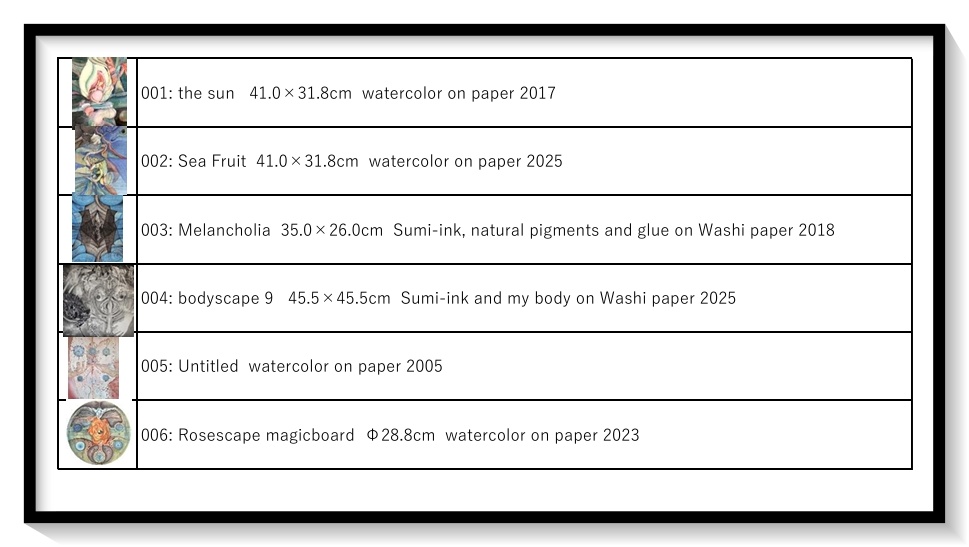
001: the sun 41.0×31.8cm watercolor on paper 2017 
002: Sea Fruit 41.0×31.8cm watercolor on paper 2025 
003: Melancholia 35.0×26.0cm Sumi-ink, natural pigments and glue on Washi paper 2018
004: bodyscape 9 45.5×45.5cm Sumi-ink and my body on Washi paper 2025
005: Untitled watercolor on paper 2005 
006: Rosescape magicboard Φ28.8cm watercolor on paper 2023 

001: 太陽 41.0×31.8cm 水彩、洋紙 2017 
002: 海の実 41.0×31.8cm 水彩、洋紙 2025 
003: メランコリア 35.0×26.0cm 墨、岩絵の具、膠、和紙 2018
004: bodyscape 9 45.5×45.5cm 墨、身体、和紙 2025
005: 無題 水彩、洋紙 2005 
006: 薔薇景魔法盤 直径28.8cm 水彩、洋紙 2023 

ALL RIGHTS RESERVED. ARTWORK IN THIS POST IS A COPYRIGHT OF MICHIYO KAMEI. THIS AN AUTHORIZED PUBLICATION WITH PERMISSION AND EXPRESSED CONSENT.

Memory Transfer by Mitchell Pluto

Transferencia de Memorias

From The Eclipse © Mitchell Pluto 2024 Séance channeling memory transfers. Espiral en el Estuco © Mitchell Pluto 2025 Transferencia de Memorias

In early June, the sky was clear and the temperature was pleasant. Tom and Sarah Anderson came across a metal tower while hiking in the Lolo National Forest.

The object’s Gothic style stood out as they approached. Seeing it brought back memories of their honeymoon trip to Chartres Cathedral.

The couple assumed the installation was someone’s art project or an exhibit at the University of Montana. The sight was unusual. There was a black circular window high up, near the top of the bell tower.

The tower emitted an extraordinary spectrum, encompassing all shades of blue and green.

3,500 kilometers away, a small gathering met at the United States Capitol. Attendance was by special invitation only.

Elijah Booker and his friend Alvaro, a man of abnormally short stature, arrived punctually. They entered the room and attracted a lot of attention. Booker, a large, Black man, always stood out in a room full of white men.

Alvaro had previous experience in the company. He knew the purpose of the invitation. Alvaro was albino and his alias was white dwarf. His main function was to use his mentalist ability to influence and dismantle cults. He possessed an innate ability to influence and alter opinions and beliefs.

On the screen, taken from a popular social media video, several recorded witness statements were shown. An older man, standing next to his wife, described the encounter with the intelligent light as best he could next to a strange tower. With deliberate and concise gestures, his wife explained the same thing, but in more detail.

Booker assumed he was the keynote speaker invited to talk about the future effects of permafrost.

The focus was personnel selection, not Booker’s research. Elijah Booker was the world’s foremost parasitologist. He researched extensively and wrote informative books on toxoplasmosis, a brain parasite. Elijah worked with international scientists. The Bureau of Globe Research in Alaska, where he lived with his wife and daughter, housed a broad research panel on prehistoric pathologies. Booker’s research caught the government’s attention.

Booker’s specialty did not include cosmic rays. He had heard of them and knew they were unstable, but nothing more. Cosmic rays sometimes interfered with belief systems, sometimes caused hallucinations, or enhanced brain patterns in unique ways.

The U.S. Intelligence Service considered ideologies to be mild hallucinations and was intrigued by the effects of cosmic rays on the brain.

The U.S. agency selected experts in direct observation.

The department was aware of Booker’s private life.

They knew of Booker’s Buddhist practice and his hobbies, which included listening to jazz and researching the occult.

Booker and Alvaro boarded a plane within a few hours. The private pilot, a native of Montana, had a great time. Alvaro taught him numerous dirty jokes for a total of six hours. This gave Booker time to read reports on cosmic rays.

According to government research, different rays posed varying levels of danger.

A jeep with tinted windows was waiting for them at the airport.

They soon reached the mysterious object. The Forest Service managed the situation, giving it a normal appearance to the naked eye.

Antennas, tents, and tall Douglas fir trees surrounded the 70-foot bell tower. The building’s structure possessed a beautiful style. The scene reminded Booker of a surreal landscape, something Bosch might have built.

He took a photo with his phone and recorded a video, documenting the luminosity of the fading colors.

Álvaro tugged at his pants and pointed to a tent. A young woman, about the age of Booker’s daughter, was holding a tablet like a clipboard.

Frauke Brunhilde introduced herself. Her black nails, black shawl, and tight leggings gave off a countercultural air. She was a genius in the German Federal Intelligence Service. She was a forensic chemist and radiological technologist.

Booker inquired about Frauke’s findings and knowledge.

Frauke showed him a live feed from a radiation-resistant camera. A vertical line of light aligned with the top of the bell tower. He speculated that the beam provided a transmission that might correspond to a conscious entity. Frauke discussed the fluctuating visibility of the light. She said that in Europe, cosmic rays are everywhere. Frauke said people believed they caused poltergeists and produced other strange effects.

Throughout history, ancient peoples used stones and statues to mark power points. Indigenous Europeans wore conical hats, such as the Golden Hat of Schifferstadt, to tune into cosmic rays.

Frauke proposed that primitive peoples tuned into radio stations in space. Mysteries associated with cosmic rays included encounters with fairies, aliens, angels, or even people who disappeared without a trace.

Booker wondered if these disappearances were due to dangerous rays that triggered aggressive progeria, a disease that accelerates aging. This cosmic ray posed no such danger. Frauke mentioned an article published by German scientists in The New Nature Journal, which argued that time is a moment that has already passed.

According to Frauke, the article suggests that UFOs are future apparitions investigating the present.

Booker wondered: Who was shaping the future from the past?

In the report he read on the plane, some anthropologists in the southeastern United States theorized that cosmic rays were attracted by unicursal patterns, but also expressed themselves to humans in diagonal or zigzag patterns. Frauke mentioned geometry as a method for communicating with unknown intelligences.

Booker noted that Frauke’s explanations had a mystical undertone, and he knew she was speaking of magic.

Frauke inspired Booker to reflect more carefully on the unintended consequences of cosmic ray-induced hallucinations. Most of the knowledge discovered turned out to contradict his beliefs, something he was prepared for.

The next day, scaffolding surrounded the tower.

Booker spoke to the welder. The man said he hadn’t been able to burn a hole with a blowtorch.

Incineration also didn’t work on the top window, which the worker described as Jell-O. His partner punctured a sandwich with stainless steel tweezers in the Jell-O. Nothing happened to the sandwich. The puncture filled and healed itself.

Booker walked toward the main tent.

Alvaro reclined on Frauke’s lap. They seemed to be having a good conversation. Frauke chuckled. Booker told Alvaro and Frauke to prepare to enter the object.

The unit gathered what they needed. Booker hooked Alvaro to his belt like a weapon. Frauke slung a backpack over her shoulders as if she were spending a week in Glacier Park. Frauke put on her headphones and began climbing. Booker braced one hand and one foot on the scaffolding, the tips digging into the ground, as he slowly ascended to the upper platform.

Standing near the most enigmatic and sinister feature of the building, the three gazed up at the large black window.

The surface was obsidian, with a thick, gelatinous texture. Due to its unknown elemental nature, they were unable to separate the gel into samples. Frauke, using her scanner, surmised that it was an iron mordant containing extraterrestrial gelatin. The window also contained a low- to medium-fluctuation radioactive ray, known to cause hallucinations, according to the scanner. Booker hoped that, as they approached the cosmic ray, they would all experience an LSD-like experience.

Without any prompting, Álvaro dipped his hand into the substance.
It was the temperature of a warm bath.

Booker quickly glanced at Álvaro.
He removed his hand from the gel, waggling his fingers toward Booker and Frauke to demonstrate that God was luck.

The group sat for an hour discussing hypothetical possibilities, including personality changes and brushes with death.

Álvaro lived by the motto: to embody the god of things as they should be. To be the force of humor in every passing horror. Frauke, enchanted by Álvaro, agreed.

Frauke put her headphones back on. The music turned up. Booker hooked Álvaro back onto his belt and held Frauke’s hand. Booker didn’t want her to wander off alone in the oozing gel. He felt responsible for all of them. Booker placed a camouflage bandana over his nose and mouth. He breathed and closed his eyes. Frauke tugged at his hand.

The first step into the gel was similar to stepping into a deep pool without firm footing. Each movement created an unpleasant sucking sound. The absolute darkness unleashed a wave of fear. A surge of adrenaline flooded Booker’s bloodstream, testing everything he had learned from Buddhism. With a concentrated effort, he maintained his upright posture, stepping into the dense gel with one arm. The suction made movement difficult.

Booker could now identify with the five clinging aggregates of Buddhism.

It became a direct experience. The aggregates — form, sense, perception, and external forces — environmentally influence the mind.
Booker felt a predatory presence. An obsessive, superstitious belief overwhelmed his mind as he struggled to penetrate the bottomless gel.

Suddenly, Booker had a clear view of his own brain. He could see his amygdala working overtime. The pressure on the insular cortex made him imagine the worst possible scenarios, including an imaginary predator chasing him.

However, there was no malevolent morphic resonance present, only a confined space. His own fear divided and attacked every facet of his mind. The narrating brain identified its observer function as an intruder.

A strong auditory memory told Booker not to panic. A Nyingma master at a Buddhist retreat advised him to accept the discomfort and practice gratitude.

This precious memory became clearer and more fundamental to his resistance.

Booker imagined seeing the Khenpo floating on his back, effortlessly performing backstrokes in a slimy jelly.
Another vivid memory resurfaced. Years ago, his few sessions with Stanislav Grof helped Booker relive his earliest memories of being suspended in a possessive womb. He recognized that birth brings with it a subconscious sense of abandonment for everyone.

This caused humanity to misinterpret birth as a definitive isolation and desertion.

All of this originated in the maternal body’s rejection of the newborn as if it were excrement. Generation after generation, this confusion projected contempt for the feminine and nature.

Booker could see his thoughts as images. He saw the unjust and unconscious representations that dominated historical records.

The central idea emerged as the ambition to replace the mother with an artificial mechanism. This would foster the construction of an industrialized, parasitic world devoid of empathy.

Booker wished he had headphones.

Music would make it easier. He imagined John Coltrane’s “One Up, One Down .” He had listened to the album often, at the cost of exhausting his wife’s patience. Today, it helped him remember it. The saxophone arrangement conquered fear. Booker knew that Coltrane understood the patterns of a constantly changing self. A self free of history and objects.

One conclusion became clear: time and space will never have a central authority.

The attempt to even imagine sensations beyond the end proved to be a vain and imputed illusion.

Death existed as a phase that passed like everything else.
Why pretend we knew this?

We shared the same fate. We would cease to exist without knowing what death was.

The tension dissolved and the jelly transformed into a thick fog. With his free hand, Booker reached for Álvaro, patting him on the face. He looked at Frauke. He saw her silhouette. Frauke turned to Booker, took off one of her headphones blasting, and smiled.
Booker asked, “What got you through the jelly?”
Frauke nodded to the beat: “Huh? Yeah! It’s an American band called The Doors , The Other Side , yeah, they’re good!”

The cosmic ray transformed the tip of the bell tower into a reactive vanishing point. This produced a carnival-like hall of mirrors effect. Booker, Frauke, and Álvaro occupied that space between the parallel lines of the cosmic ray. The room resembled a virtual infinite hallway with a ledge. Colors cascaded down the cosmic ray.

Frauke’s gaze caught something in the swift wave of light. She spoke, describing what she saw as it manifested in Álvaro and Booker’s minds.

A spinning triangle reflecting brilliant light transformed into crystal. At each corner, the numbers 3, 6, and 9 materialized. From the center of the triangle, sparks erupted, forging a nude female figure with hair down to her feet. A deep red and white glow caught her attention.

“She can see us,” Frauke said.

The woman spoke echoey. She gave her name as Mitzi Orssich. Mitzi said she was broadcasting from a live 1920 séance in Austria. The chatty ghost said she represented the Viril Society.

Mitzi demanded information from the future to help build a temporal vehicle. Mitzi possessed sternness, while her flawless figure projected an incredible image. She was a magnetic and exciting archetype who could raise blood pressure and induce a firm salute .

This woman’s body possessed a truly divine craftsmanship, an image that neither eats, defecates, nor ages.

Booker reflected.

She fit the bill: blonde hair, blue eyes. The graceful elements resembled the Christkindel.

But why didn’t this woman take over as Germany’s leader in the 1930s?

Mitzi spoke English very well.

Booker recalled researching the Vril Society, which emerged as a 19th-century work of fiction by the English writer Ed Lytton.

Booker realized they were tapping into a projection of Frauke’s subconscious.

Mitzi was, in effect, a literary phantasm forged from a pseudo-story.

He looked at Frauke, who remained staring.
Booker speculated through his online queries and research; Frauke gained powerful impressions from what she read.
Álvaro’s face was simply a huge smile with tiny hands and feet.

Booker interrupted Frauke’s trance and appropriated the cosmic ray, projecting abstract expressionist ideas onto it. He enjoyed this art movement and understood its significance. He was open in sharing his observation of vivid brushstrokes.

Booker gently guided the hallucinatory influence away from the National Socialist art style toward a more universal and abstract variety. It was art without a human figure.

Wonderful and exciting non-figurative patterns formed from the center of the cosmic ray. The variety of designs lacked strict cultural ideologies, which brought Frauke out of her trance.

The cosmic ray inspired Alvaro to create a complex algorithm based on his interest in spiders.

Mitzi’s impression triggered unexpected associations that took a mutated form.

Web strings connected a spider puppet to the spinning chemical brain in Alvaro’s vision.

Frauke saw it as a fusion, creating one puppet within another.

Booker interpreted Alvaro’s vision of the spider as a portable DNA capsule capable of flying through space.
Small cubes appeared on a spinning belt in another future. The webs were coordinates, guided by a chemical brain inside a metallic spider.

Booker, Frauke, and Alvaro huddled in a triangle in front of towering Douglas fir trees. They were gone for three days and reappeared five miles from where they had disappeared. There was no alien tower there. A man named Warren found them while patrolling the forest. The cosmic ray information was useful.

US intelligence took statements from Booker, Frauke, and Alvaro.

Engineers, chemists, and physicists collaborated to design a new space vehicle with a chemical brain.

A few months later, the spider-like object would fulfill a panspermia mission. The space spiders, called Anansi Capsules, would aim to find habitable planets to modify human DNA and enable life in an extraterrestrial environment.

The Anansi Capsule was an 8-foot-tall mobile figure with eight appendages for hand tools.

After descending, the capsule would unfold into a complex 16-foot laboratory.

The Anansi Capsule would manufacture and raise two biological beings for several generations.

It is unknown whether the new offspring would preserve or understand their origins, but they could be alive to continue exploring space.

A few months after visiting Montana, someone mysteriously provided a grant to de-extinct the woolly mammoth and thus include it in Booker’s future project.

Writing and Art All Rights Reserved © Mitchell Pluto

From The Eclipse © Mitchell Pluto 2024 Séance channeling memory transfers . Spiral in Stucco © Mitchell Pluto 2025 Memory Transfer


Espiral en el Estuco (Spanish Edition) Paperback – Large Print, 23 April 2025

Spanish edition  by Mitchell Pluto

El surrealismo oscuro y el absurdo crean efectos psicodélicos. El zen y el jazz de Coltrane ofrecen una vía de escape de la veneración política, permitiendo viajes interestelares. Cada capítulo explora el surrealismo y las técnicas budistas. Estas ayudan a sobrellevar el trauma de sentirse atrapado, como un animal en un anuncio repetitivo.

x factor

no matter how you spin it
the X will land on four paws
black cat prints on white dice every time
I don’t know if mad scientists will bring the mammoth…
back in time
what a strange phrase
the factor x in time
cross roads
no top, bottom or side
some may defend that there is a timeless duration
besides the pan-Native hoop dancer
like Plato over laying congenital malformations
with rates of metal
to form a New Atlantis
and sky scrape over Cahokia
most of us missed that show with the hoop
instead the game was on
the match between colors
red and blue
most stood for it
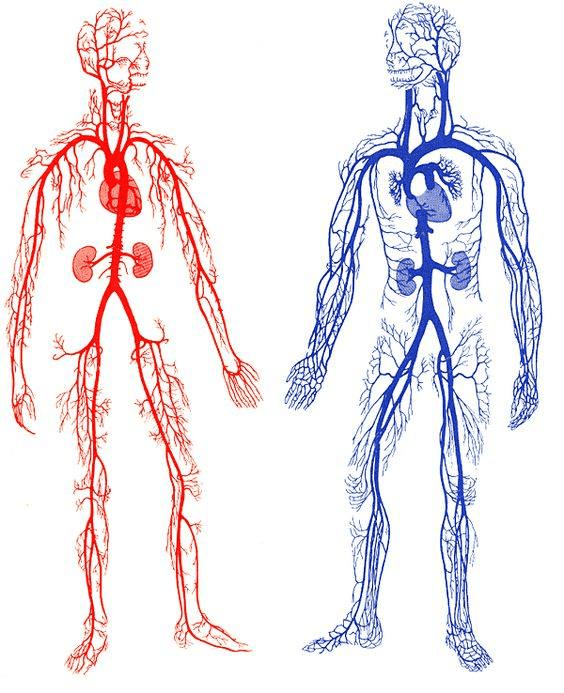
with their hand over their cardiovascular system
ritual pledges of commitment
under one body
to support
being lied too…
in this case it’s getting soggy up north
they found the link in 2013
Homo naledi
we are all related but
people will act surprised
when no one arrives to solve the problem
another 120 degree day

©Mitchell Pluto 11/14/2023

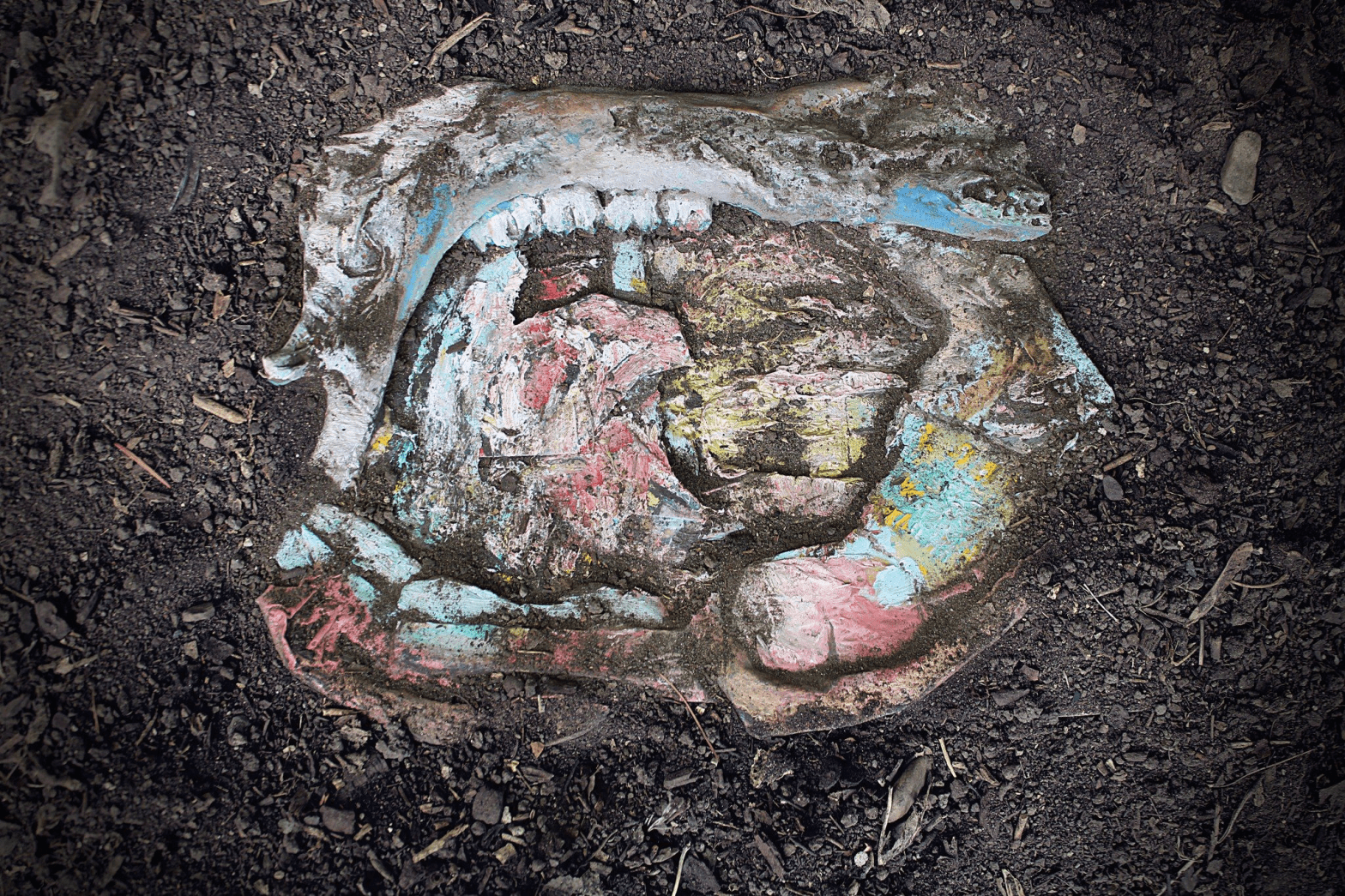
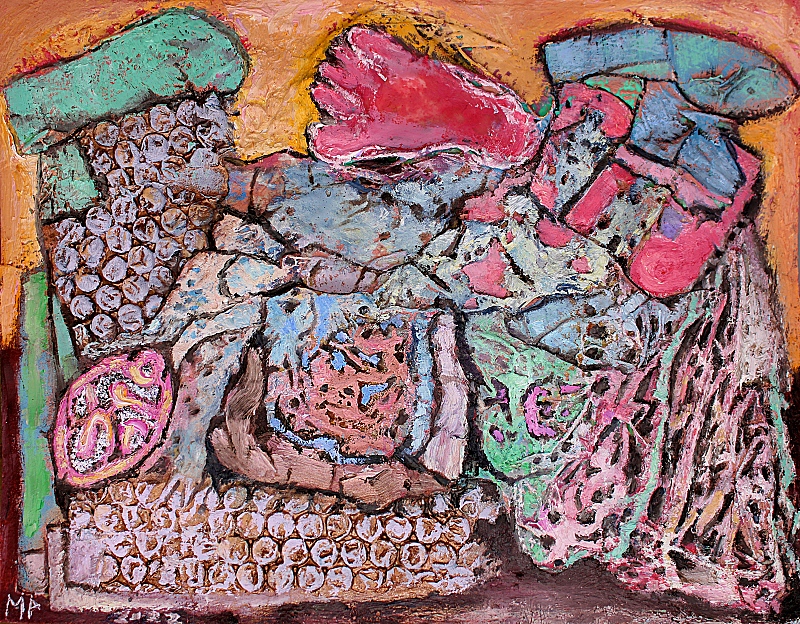
Buried Painting

Harvesting a buried painting from the earth in late October 2023. oil/collage/bone

the imagined belief interrupts the critical factor

official technocrats announced Monday

that holography can work on what you already paid for

…but you know how that goes

holography sounds a lot like

bending a staff into waves

I’m more interested in the laser

the Zia

that doesn’t encounter a time barrier or any irrelevance

surrounded by dated marks

it is melody and musical notation

hear a tune play about shifting the strain in forms

edges and interior angles melt

motion flooded gliding parts

burying older gadgets

add another page and layer to the landfill

another brief still life surface spoiled

oracles from the underworld tell us the future will be claimed by an unidentified cosmic object

so meet the smartest item that answers and restricts further editing

an open object without vain intention and meddling interpolation

while equipment that silently lacks possessiveness

lays cradled in dirt that grows

© Mitchell Pluto 11/4/2023

Piebald Pandora and the Phantom Self

Piebald Pandora

Multi hued Glory

Sloth Shark face

Palomino woman bites us

and hangs with us

upside down at dawn

selling our souls to 4 legged

Majesty Lemurs on Madagascar….

(C) April 8, 2023 Written By Richard Gessner

Richard Gessner’s fiction has been published in Air Fish: an anthology of speculative work, Rampike, Ice River, Coe Review, Another Chicago Magazine, Happy, The Act, Sein und Werden, Skidrow Penthouse, The Pannus Index, Fiction International and many other magazines. A collection, Excerpts from the Diary of a Neanderthal Dilettante & The Man in the Couch was published by Bomb Shelter Props. Gessner’s drawings and paintings have appeared in Raw Vision, Courier News, Asbury Park Press, Rampike, Skidrow Penthouse, and exhibited at Pleiades Gallery, Hamilton Street Gallery, Cry Baby Gallery, The Court Gallery and the Donald B. Palmer Museum. Richard wrote The Conduit and Other Visionary Tales of Morphing Whimsy. He lives in Montclair, New Jersey.

The Conduit and Other Visionary Tales of Morphing Whimsy Audible

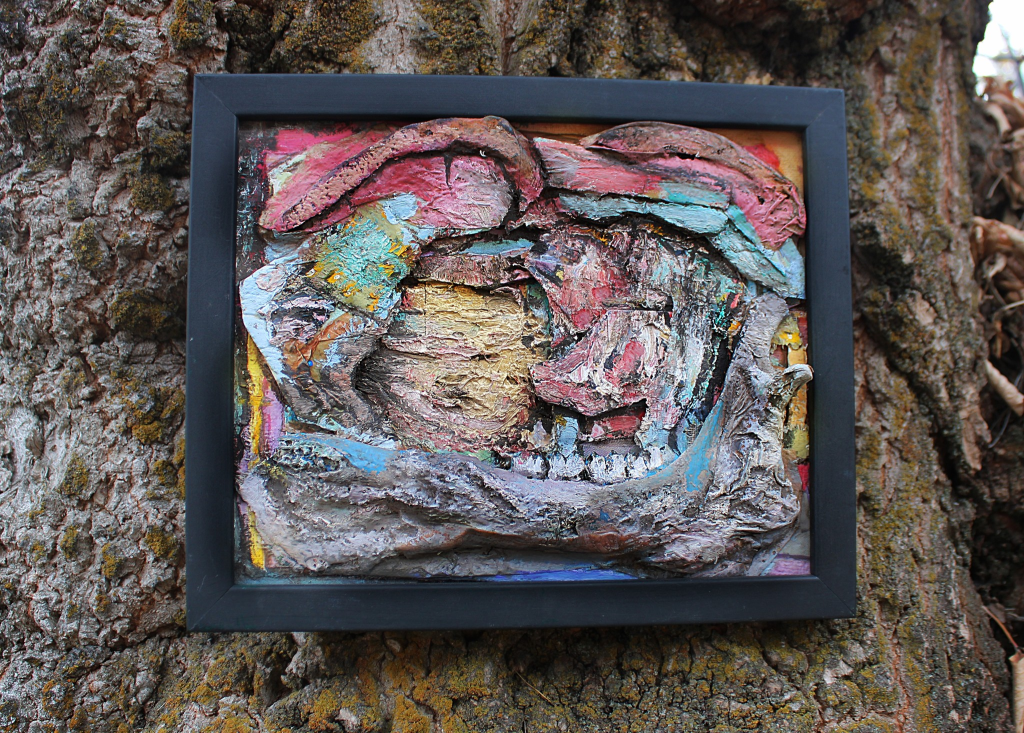
self fee of a phantom self. oil/collage Mitchell Pluto

Afterword

We believe we are conscious but we are continuously unconscious.

The eye is the window to the brain and there sits the optic chiasm. A cross current chessboard of visual information. In ancient China, King Wen changed three lines into six lines to form 64 hexagrams in his book called The Book of Changes. Ironically there are 64 arrangements in DNA and 64 squares on the chessboard.

Synchronicity?

Jesus, all the time I spent believing in a historical Laoz and come to find out there’s no historical race either.

these our the last days of being a primate. Don’t worry we still have cuspids

Everything must be uploaded|  

…creating a record print of a finger swipe from phone screen| CHECK

…the gesticulation wavelengths of our voice from phone calls| CHECK

…iris scan captured from viewing screen| CHECK

tell us what’s on your mind| CHECK

This device and artificial Intelligence will marginalize the future of man’s ego. After all man is an animal guided by objects, why not be a primate whose experience is organized and interrupted by the phone?

isn’t it working already?

Who is on the other side of the screen?

A narcissistic shark that feeds remotely on a colony of brains and uses the appearance of a woman as a lure

Now A Word From Our Sponsor

We would like to salute our patron Walt and his 1958 Disney film White Wilderness who graciously staged and contrived the impression of a massive lemming suicide. Now back to our show.

(C) April 8, 2023 written by Mitchell Pluto

I would like to thank my friend, Richard Gessner for collaborating and creating some writing to interpret my painting

Pluto in Aquarius


we are Martians. Aries. Martians from Mars. Let me explain, Mars was like Earth and now since we forgot our origin, we innately burn through every place we live. our soil is sand and glass..we made the moon a clock. Iron shares a special relationship with our blood, a period of sixty seconds. the hour hand is a blade that takes time to trim a heavy circle into a lighter circle. meanwhile, it’s getting late. who really invites Ahura Mazda into their thoughts? the all-knowing one, unless it’s really about an ark with wings or the other curve floating by boat? or is the lost manuscript of Eratosthenes?


Pseudepigrapha is a mercurial ghost, everyone has a ghost story they believe in. George Lutz, a land surveyor, used the positions of points, distances, and angles to channel a much better story than I could tell. Those shapes he conjured made beliefs appear real.


and that’s as real as Sherlock Holmes sending Watson to kill Houdini. and definitely as real as Aldrich Ames misdirecting a whole institution into remote viewing.. but you know, the target gets paranoid and loses when the Chessmaster is late to the game. you know that, right?


What happened to the red bone marrow of giants, you know, the ones who built the pyramids, survived the flood, and were from mars? They must have burned the big foot bones. indeed here comes elimination by illumination, psychological warfare, and the second coming. The Exorcist worked by controlling everyone in the movie theatre by managing what the eyes saw. The eye is a sense of self. yes, the spooks were real and so was the contact lens in the possessed girl’s eyes..Shakespeare was accurate about the world and so was Timothy Leary, whoever controls the eyeballs controls the brain.

Featured photo The haunted footprint at Göbeklitepe/Potbelly Hill by Mitchell Pluto

©Mitchell Pluto 11/21/2022

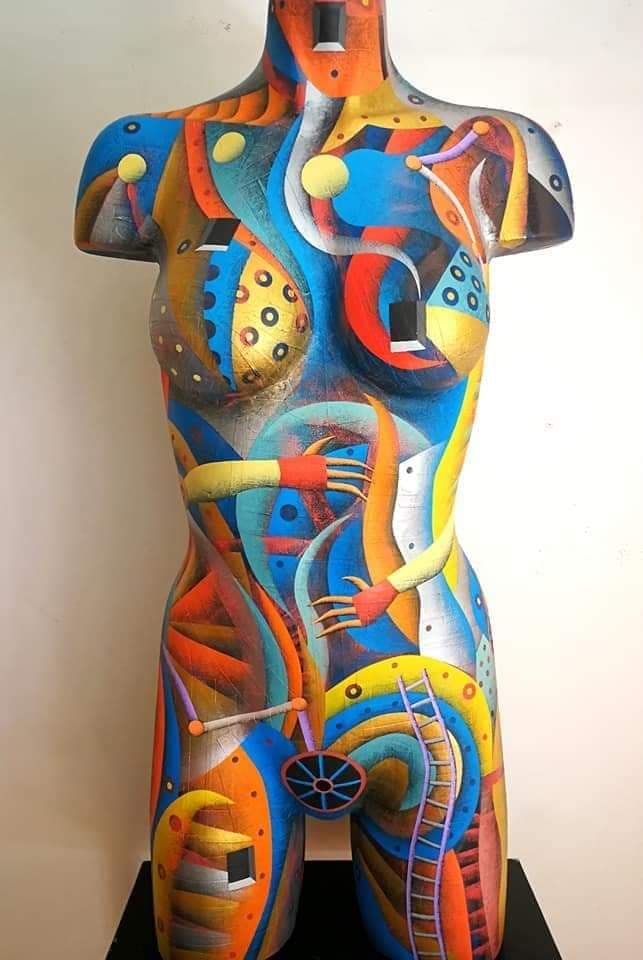
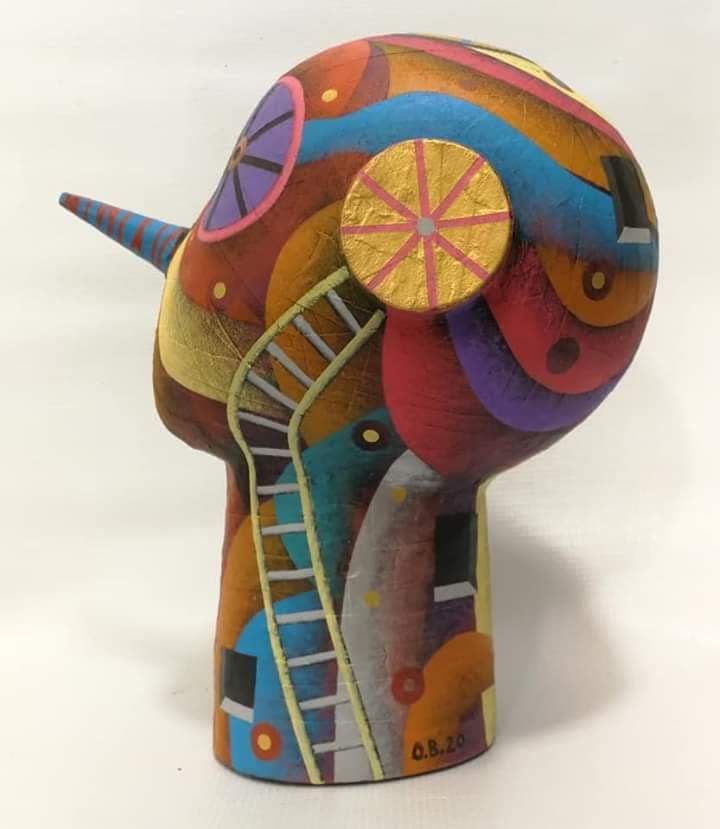
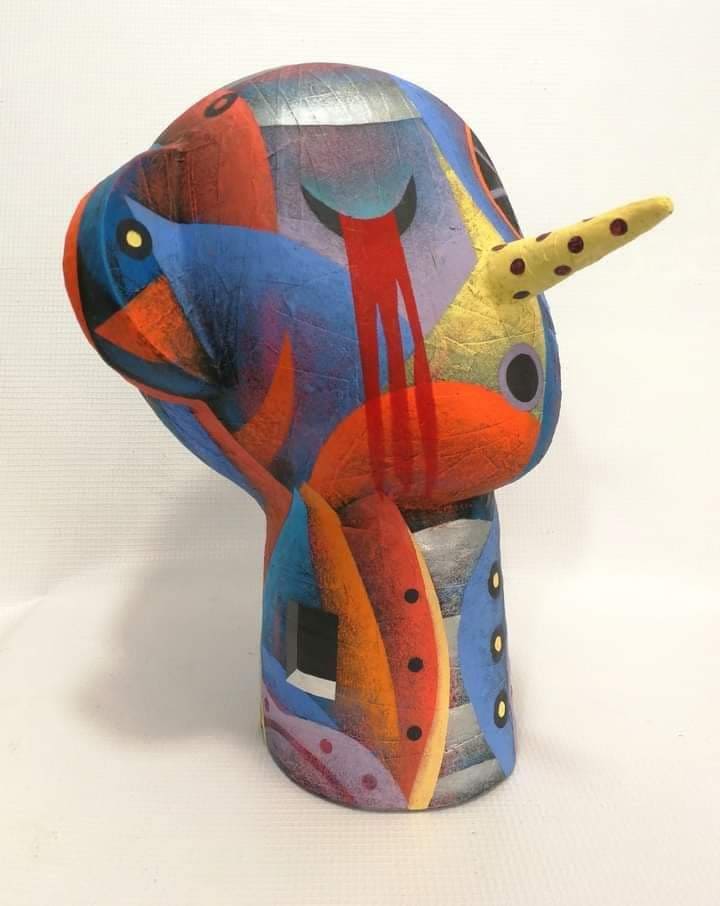
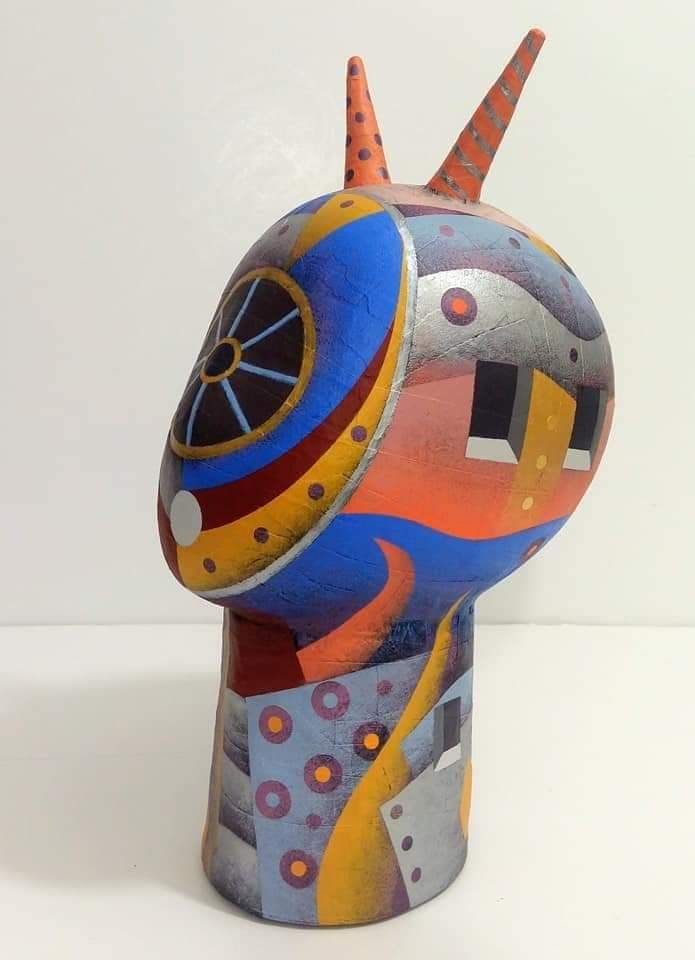
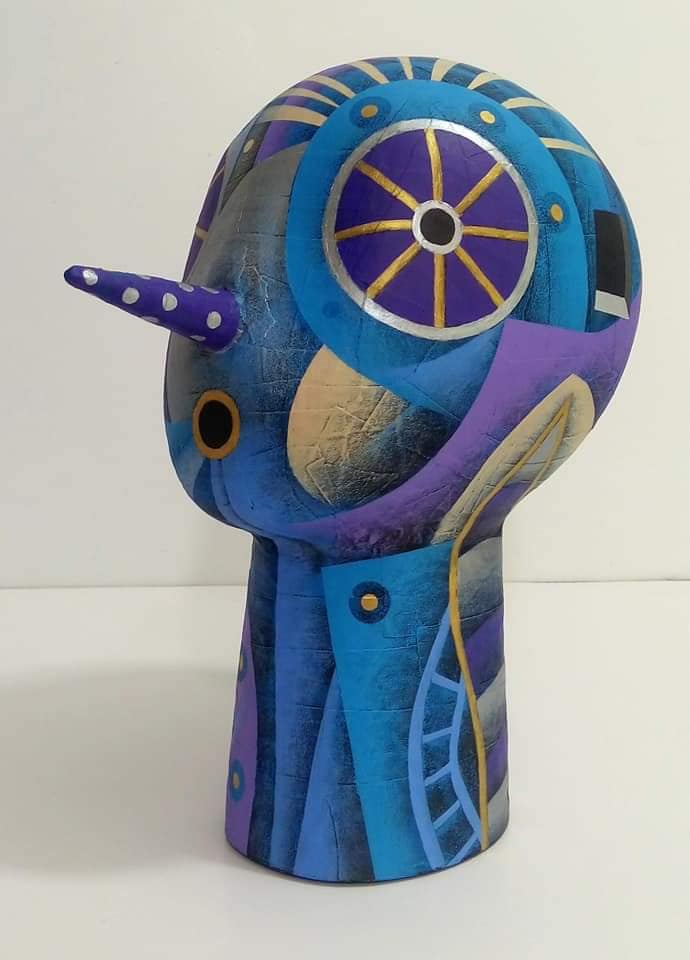
Fantastic Surrealism from the South of the World Oscar Barra

Edited by Miguel Ángel Huerta Zuñiga

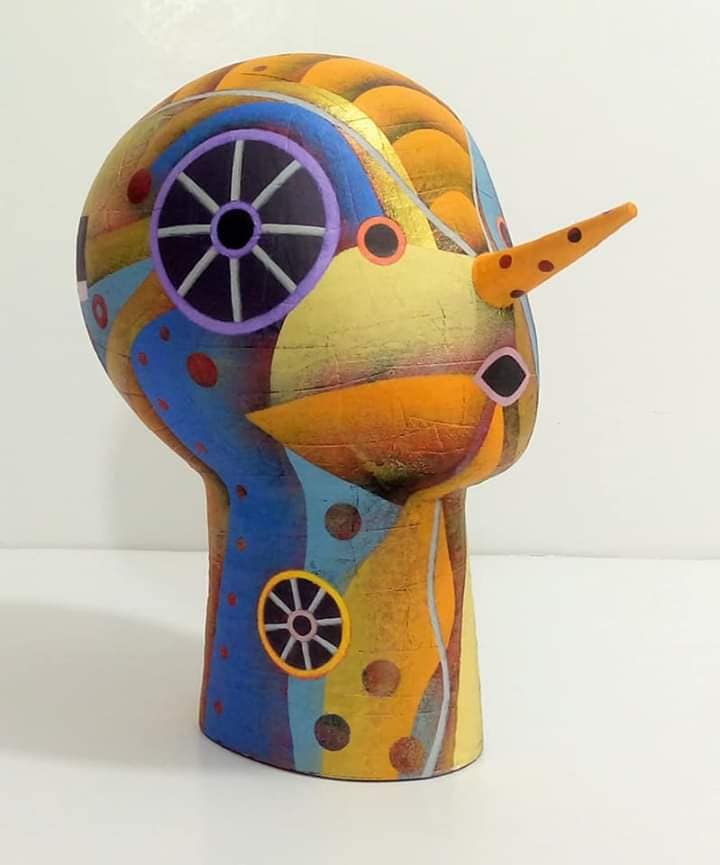
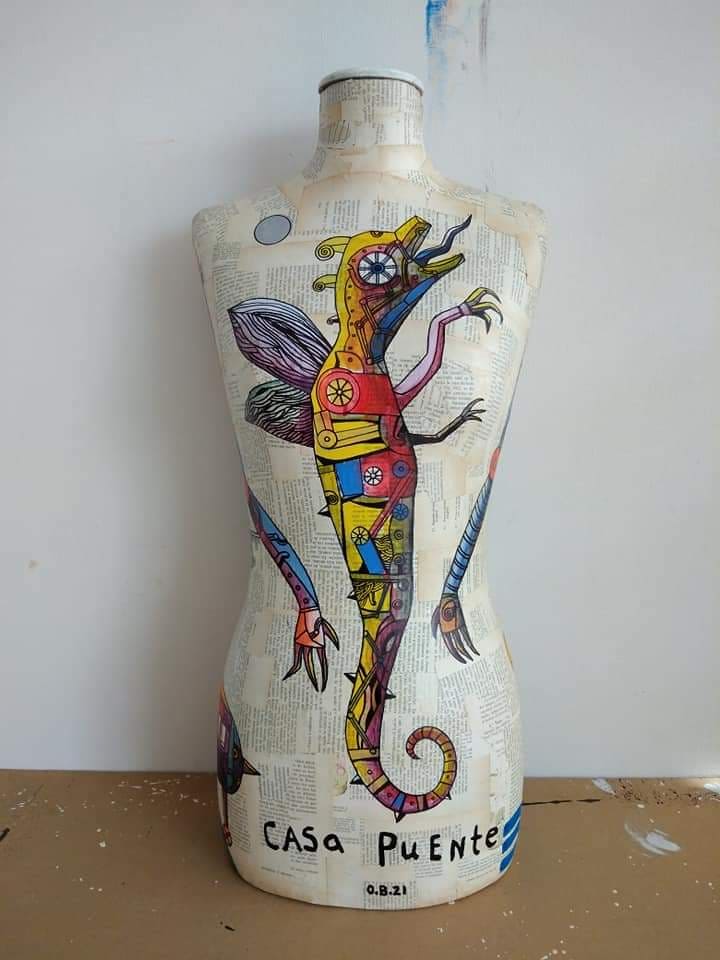
My work can be framed within the current of surrealism; it is figurative, fantastic and is characterized by a detailed drawing and the absence of perspective, flat volumetry.

There are an imaginary of beings and biomechanical artifacts that originate in dreams I had repeatedly as a child that generate my interest in artists. Those references are in painting, Max Ernst and Giorgio de Chirico. In literature, mainly science fiction, Ray Bradbury, Jorge Luis Borges and Jules Verne.

My work is also fueled by my interest in our weird and wonderful world and the question of the possibility of life beyond it. I do not seek to cause a change in the viewer, or refer to great questions of humanity; I simply work from a psychological mechanism and process that are essential for children and artists: curiosity and imagination– Oscar Barra

Oscar Barra was Born in Santiago in 1964, he studied Art at the University of Concepción, co-founder of Grisalla, an outstanding group of artists from the 90s and early 2000s. Mainly dedicated to painting, he has extended his creation to engraving, sculpture and the drawing. He currently resides between Concón and also maintains a workshop in Santiago.

Recent individual exhibitions
2018: “Agnostos Theos”, Casa Autónoma Gallery, Autonomous University of Chile, Santiago.
2018: “Paintings”, Galerie zone, Leiden, Holland.
2018: “Winter visit”, Joan of Arc Gallery, Concepción.
2016: “The extraordinary creatures of Oscar Barra”, Nescafé Theater of the Arts, Santiago.
2016: “Imaginary Zoobotany”, Artium Gallery, Santiago.
2015: “Summer Imaginary”, Prima Gallery, Santiago.
2014: “Autumn and rain”, Nemesio Antúnez Gallery, Metropolitan University of Sciences and Education, Santiago.
2013: “Strangers in paradise”, Blanc Gallery, Santiago.
2011: “Human Resources”, Cultural Corporation of Recoleta, Santiago.
2010: “The machinery of joy”, Trazos Gallery, Santiago.
2007: “Living Water”, Matthei Gallery, Santiago.
2002: “Beyond good and evil”, Matthei Gallery, Santiago.
1997: “The forgotten games”, Chilean Institute – North American, Concepción.
1995: “Paintings”, Tomas Andreu Gallery, Santiago.

Collective exhibitions and national competitions
2020: CHACO 2020, International Contemporary Art Fair Chile, online version due to pandemic.
2019: “Tarquinia Art”, inaugural exhibition at Galería Tarquinia, Concón.
2019: “The Wild Eye”, exhibition of Latin American surrealism, Bellavista, Santiago.
2015: “Art helps”, Casas de lo Matta; organized by Parenthesis Foundation.
2014: “Art helps”, Casas de lo Matta; organized by Parenthesis Foundation.
2013: “The art of signs”, ARTIUM Gallery, Santiago.
2011: “Values ​​from diversity”, Ralli Museum, Santiago.
2011: 3rd Version International Contemporary Art Fair Chile: CHACO 2011. Casas De Lo Matta, Santiago.
2010: 2nd Version of the International Contemporary Art Fair Chile: CHACO 2010. Casas de Lo Matta, Santiago.
2010: “60 years of the General Song”. Collective exhibition in homage to Pablo Neruda. Artium Gallery, Santiago.
2009: “Stories illustrated by Artists”, Cecilia Palma Gallery, Santiago.
2009: 1st Version of the International Contemporary Art Fair Chile: CHACO 2009. Glider Club, Santiago.
2008: “The Work: art study”, sculptures, Providencia Cultural Institute, Santiago.
2005: “Metro Valparaíso” Collection, Permanent Exhibition between the Metro Stations, Valparaíso.
2000: “Around the painting”, Parque Arauco Events Center, organized by Galería La Sala, Santiago.
1993: “Proyectarte 93”, National Museum of Fine Arts, Santiago.
1993: II Biennial of Painting “Gunther Award”, National Museum of Fine Arts, Santiago.
1990: “Territory for Art”, Pinacoteca of the University of Concepción and Municipal Hall of Los Angeles.

International collective exhibitions
2011: “The Sculpture”, Adriana Indik Gallery, Buenos Aires, Argentina.
2009: “Good things come in small packages”, Círculo Azul Art Gallery, Coyoacán, Mexico City.
2000: X International Art Fair “Arte BA”, Buenos Aires, Argentina.
2008: Jadite Gallery, New York, USA.
2008: “Afternoon without cuts”, Victoria Cultural Center; Mendoza Argentina.

Exhibitions with the GRISALLA Group
2008: “Illustrations of the nonexistent”, JHH Fine Art, Connecticut, USA.
2007: “GRISALLA – A Self-visited Promise”, Pinacoteca Universidad de Concepción.
2006: “GRISALLA – Autonomous Painting”, Matthei Art Gallery. Santiago.
2000: “GRISALLA – Contemporary Chilean Painters“, Simon Patrich Gallery,
Vancouver, Canada.
1999: “GRISALLA“, Matthei Gallery, Santiago.
1997: “Signs of a life”, Praxis Gallery, Santiago.
1992: “Journey to leisure, madness and death”, National Museum of Fine Arts, Santiago.
1991: “GRISALLA”, Pinacoteca of the University of Concepción.

Works in:
MAVI. Museum of Visual Arts of Santiago, Chile.
RALLI MUSEUM. Santiago, Chile.
RALLI MUSEUM. Punta del Este, Uruguay.
RALLI MUSEUM. Israel.
MAM. Museum of Contemporary Art of Chiloé. Chile.

Balancing the Sympathy of the Magnetosphere, Theurgy

Balancing the Sympathies of Magnetosphere Theurgy, mixed media

written by ©Mitchell Pluto March 3, 2021

There is a guiding light. A path towards a healthier and more compassionate self. It is a star self, a light held together by it’s own gravity. It is easily understood by all cultures that the brain responds well to a deity related to light (or weightlessness)

Weighing of the heart from The Book of Coming Forth by Day

In Vajrayana Buddhism, a Yidam is a symbol used as a vehicle to help understand inner space by visualization. There are other reflective symbols similar to Yidam’s that are associated with the Russian Eastern Orthodox icons. These are paintings on wood of saints that have a thaumaturge effect which is a type of gravitational healing power on the viewer. More devices include the Dine sand paintings and the Vèvè of Vodun. These are all ways to connect to planetary influences to empower a practitioner’s use of managing gravitational forces as remedies.

Dine Healing Sand Painting

Aspirations towards well being of others and one’s own health are universally accepted as a mature and worthwhile intention. A devoted routine of concentration on any symbol, any deity or any word can generate a magnetic relationship. This friendly association with a visualized goal opens one up to a field of force. Purified to the bottom line this magnetic relationship involves imagining a future self that provides guidance to a present self.

Cabala Chemica Volume VI Theatrum Shemicum, Hamburg 1659

Astrology is based on electromagnetic waves that influence the micro gravity the will has over a mind. These bestowing waves, like Venus for insistence, highlights the quality of value in things. This why Venus traditionally represented love. The planet Mars preforms well by enduring time with patience while the worst traits of Mars always involve impatience. Mercury facilitates all transmission, communication and reception. Saturn constitutes darkness to manage overexposure by dividing light into pace and degrees. Jupiter over expands and discloses information without limitation. More recently discovered planetary aspects were consolidated as aspects of Saturn to ancient people.

Planetary Magic Square, Mercury the Chess Board

Uranus creates unexpected and extraordinary designs in stable patterns and changes those patterns. Neptune react to data concerning fluctuations and pressure of boundaries. This wavering line places experience between knowledge and belief. Pluto is a influence that polarizes an experiencer’s interpretation of surface and light. This enables further inquiry into truths about the collective unconscious and the self. These are the magnetic forces of nature

These transmitted experiences add to our brains growth to become fully self aware and create it’s own program. Most likely a program that follows the operations of practicing the best relationships with all beings.

Example of a Ley line/Dragon line

Certain locations on earth have more concentrated telluric hot spots that can enhance astrological transits. These powerlines are called ley or dragon lines. Focusing attention or enacting a seasonal play on these lines can have a strong impact on the experiencers awareness.

this speculative writing is not intended to officially represent the views of any group or religious institution.