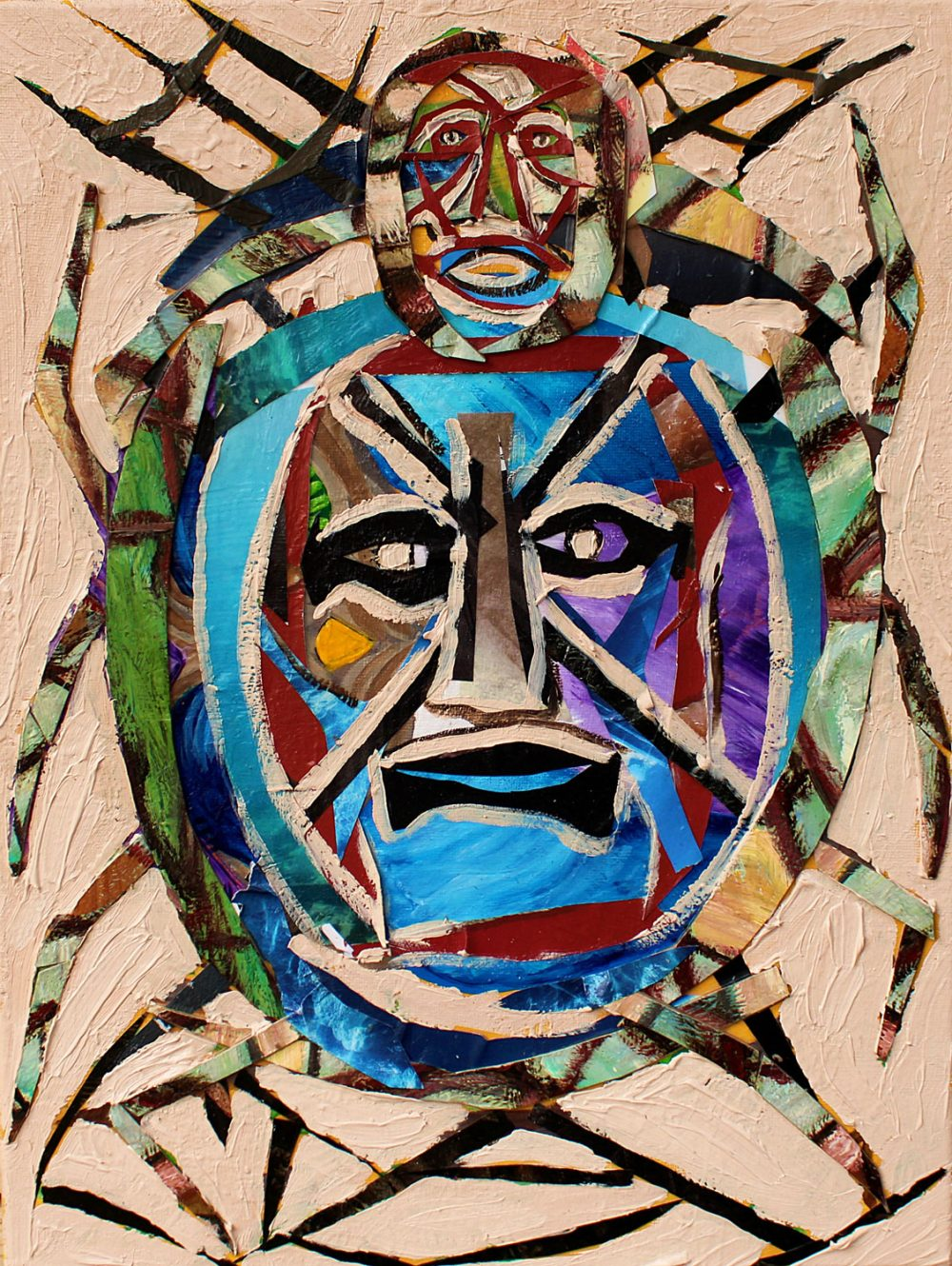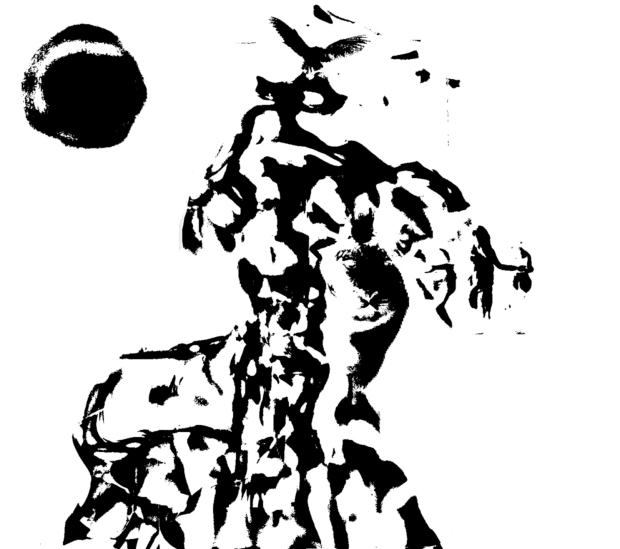
Beneath the Antler Moon by Mitchell Pluto

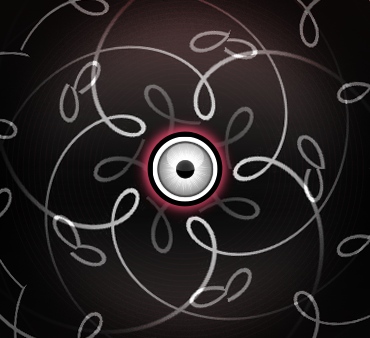
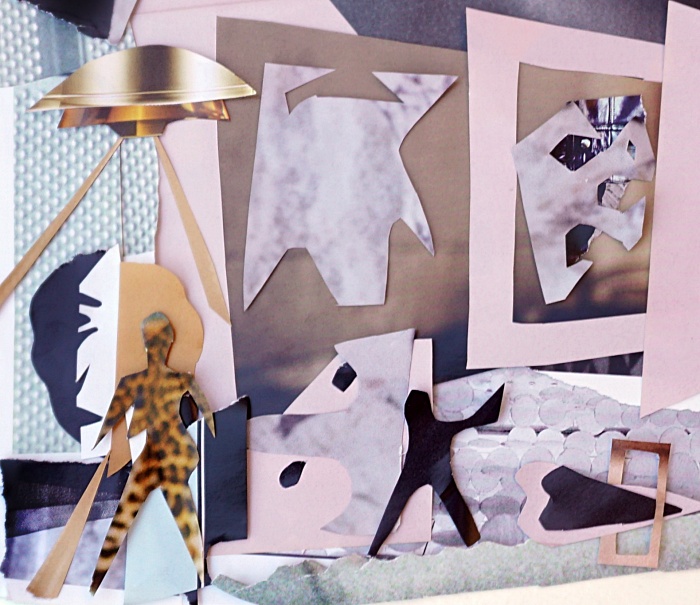
Cell Phone UFO abducting the animistic brain/collage/Mitchell Pluto/2026

Fiction written by ©Mitchell Pluto 2026

Over 11 million people tuned into Mark Burla’s podcast, Under the Light. On July 29, 2026, his most popular episode was with a psychonaut and two government officials. The time was 4:00 PM MT.

Joseph, the astrologer, was on the radio in the background and said, “Hey, it’s a full moon in Aquarius, and we’ve got a cool Sun-Jupiter conjunction in Leo, along with Pluto, Neptune, and Uranus all in sync.”

Burla recorded in his cool, air-conditioned studio while the Taos Mesa swelters in 109-degree heat. From Burla’s window, you could see the dry riverbed of the Rio Grande.

Burla’s podcast comes from New Mexico, also known as the Land of Enchantment.

“Under the Light” is a big hit with people who like occult, mystical topics and urban folklore vibes.

Listeners often recall the interview featuring Daniel Saltman, a former member of the All-domain Anomaly Resolution Office.

“You can totally lose yourself in a story,” Saltman said seriously.

According to Saltman, a large amount of classified data was fictional.

“Spreading lies can be a way to dodge actual problems and politics. Government research shows that odd experiences associated with traumatic memories can create false beliefs. Life’s traumas often lead people to develop coping mechanisms, with some forming extreme ideologies to manage their pain. Other people simply learn to move on.”

Burla thought back to the 1980s, “Yes, I recall when people believed aliens were haunting their thoughts while examining their bodies. But these days, everyone’s got a phone that follows them.”

“To put it simply,” Saltman explained, “our inner thoughts and feelings mold our outer experiences, forming a mental map that we superimpose onto reality. We want to make our fantasies real, to prop up our egos, making us feel special.”

Saltman took a break to drink some coffee.

“The Greek poet Hesiod provides another perspective on the animistic mindset. He’s famous for his poem Theogony, where he introduced the 12 Olympian gods.”

Burla wanted to know more. “What happened?”

“Mount Helicon was where Hesiod had a close encounter of the third kind with the Muses. Through this visitation, he gained poetic talent and divine insight. Each new generation after him put its spin on his tale. Plus, we’ve got ancient Greek theater, featuring amazing illusions such as a crane that lifts actors into the sky. You know, Magic, the reality differs from what you’re seeing.”

In a pic Burla shared, a crane was lifting someone dressed as a god above a crowd.

Burla inquired, “Your thoughts on Christianity?”

“Religion retells a story through its practices, much like Hesiod’s writings, making it more tangible,” Saltman clarified.

“The church has played a key role in Constantine’s empire for gathering information since the First Council of Nicaea. From another perspective, it means employing Christianity to secure political stability. Presently, supernatural concepts occupy people’s thoughts, much like unidentified flying objects.”

Burla nodded, “Tell me something we think is true, but it’s actually not.”

Saltman scratched his chin, “What’s there to say… something your viewers will understand.” His eyes widened as he exclaimed, “I know, the government declassified this… A CIA analyst named Aldrich Ames had a career from 1962 to 1994. Soviet intelligence hired him in 1985 to provide classified U.S. intelligence to them. It was a mystery to us how Russia had gained knowledge of our confidential information, which led us to start remote viewing…using ESP to spy on the Russians. We invested heavily in political narratives throughout the ‘70s, convinced a psychic war was underway. Star Gate was a program meant to stop psychic Russian spies, but it turned out to be Ames the whole time. In ’94, they caught Ames, which led to the permanent shutdown of the Stargate Project. It’s like, things look one way, but they’re really different underneath.”

“Wow,” Burla couldn’t believe it.

He had a podcast about remote viewing a month ago, and back then he thought it was legit.

Saltman quickly intervened to ease the tension. “Speaking of remote, there are these remote-controlled aircraft that can do amazing things. We view these crafts as foreign and domestic groups engaging in espionage. Nobody gets hurt if it’s shot down, but we’re also clueless about who it is.”

Saltman leaned in and said, “For instance, we intercepted a UFO drone collecting microbes from the Great Lakes…Therefore, the ship contained non-human entities.”

Suddenly, the screen went black, and a 15-second commercial for Uranium, a new neon green energy drink, appeared and then dissolved.

According to the podcast stats, Burla’s most replayed bit started with the interview of Terrence Dodge, the guy in charge of the Advanced Aerospace Threat Identification Program.

The fade-in revealed Dodge talking, “We’ve known aliens were real and hiding out here since Roswell. While we assume they’re from the sky, they live underground and use magma chambers and the ocean to get around.”

Thinking quickly about Derinkuyu, the underground city in Turkey, Burla wondered, “Just who are these people?”

“Long ago, before Earth had a moon regulating life, ancient people like the Aryans, Eloheinu, Vril-ya, and Dero lived on Venus, Mars, and Saturn.”

Burla asked in surprise, “The Aryans?” He shook his head, a gesture of utter disbelief.

“Yes, just like Ahura Mazda and Zarathustra. The Iranians are the architects of our social structures, our spiritual beliefs, and the written word that molded our very thinking,” Dodge affirmed.

Burla projected glowing visual effects for viewers as Dodge’s voice continued to weave his explanation.

The images displayed an eye idol from Tell Brak, various depictions of the swastika, and Burla’s contemporary illustrations for The Coming Race, an 1871 science fiction novel by British politician and writer Edward Bulwer-Lytton.

“To be clear,” Dodge added, “those shapes you’re seeing that look like swastikas in history are actually propellers.”

Burla cautiously asked, “Are the aliens white?”

“They looked very pale and old, with slender features and enormous eyes. A flexible cartilage structure supports their bodies, not bones. They can also sense electrical fields from muscle movements. We call this sense electroreception. They can better understand how we defend ourselves and what goes on in our minds to keep our sense of self intact,” Dodge said.

Burla couldn’t believe it and shook his head.

Dodge rubbed his eyes and added, “It’s vital to point out that they are communists and pursue the same aim because of their shared mindset.”

Burla inquired with a hint of sarcasm, “How do they communicate?”

Dodge solemnly stated, “They can duplicate any individual’s innermost thoughts and mentally guide a person’s choices and actions. They understand our brain’s bicameral structure. Here, the Eloheinu aspect commands Abraham, through a voice, to sacrifice his son.”

Dodge paused for a second.

Burla continued his questioning, irritated, “Regarding their ethics, are they driven by humanitarianism or racism?”

“Think of them as zookeepers,” Dodge stated bluntly.

Burla’s face suddenly appeared tense.

Dodge inhaled deeply and stated, “Where there is care, love is absent.”

“They claim they put the idea of God in our heads and that we belong to them… and they also made everyone on Earth using primate genetics. This just proves they think they’re in charge of us. They support eugenics because they believe they’re the best and should be flawless.”

Burla added visuals to this interview segment, overlaying cool images on Dodge’s narration to create a visual blend. These pictures drew inspiration from Richard Sharpe Shaver, an author for Amazing Stories during the late 1940s. Shaver made some wild claims about ancient beings living in huge cave systems underground. Their technology could control minds and cause strange health issues.

Dodge referred to these health issues as “anomalous health incidents.”

Someone in Burla’s live chat, a long-time subscriber, said the tech reminded them of directed-energy weapons, like the ones they think caused Havana Syndrome. This comment snagged way over 4K positive reactions.

The screen went black, then a dog food ad began, featuring a dog in a field.

Then Burla’s face appeared again with another guest.

Mark Burla finished up by talking with Lucian Laplume, a psychonaut who penned the bestseller “Light turns into a poem.”

Burla presented a book and said, “Prepare for a 360-page adventure based on DMT researcher Lucian Laplume. He found intricate communication within light frequencies, appearing as geometric glyphs. These symbols served as time machines, guiding readers from one event to the next. The book talks about how our brains connect with art through words. Laplume’s concept resembles the Vast Active Living Intelligence System conceived by Philip K. Dick. You know, where an orgone beam of light helps clear out energy blocks and makes you feel better.”

Laplume rested his head in his hands, his elbows on the worn surface of the table. “Despite wild ideas and peculiar sights,” he murmured, “those relentless phantoms haunting me–even with them present, I found myself here, repeating this same action. I felt compelled to construct coherent sentences, as if compelled by fate,” he sighed.

Burla inquired, “Do you think unusual aerial signals are altering our brainwaves?”

“It’s just a matter of tuning it in, like this,” Laplume gestured with his hand, tracing an invisible dial in the air. “The trick is knowing which frequency to hit. And that, my friend, is the art.” He then leaned back, a satisfied glint in his eye, as if he’d just revealed the universe’s most profound secret.

”Could you elaborate on why glowing glyphs matter?”, Burla asked, smiling.

“Under the influence of DMT, gazing at a laser on a surface presents what looks like alien script, a visual fusion of various letter shapes, comparable to polyglot portmanteaus created by combining parts of letters. I call it Unidentified Cosmogram Permanence.”

“What’s that?” Burla asked.

“Recollection of numbers and letters is possible without sight, yet thought visualizes light for remembrance. Modulation alters the functionality of a light source. It alters the light wave’s phase. This encodes stable information. The light is like a dancer, whose poses shift to convey a story that stays put. Geometric shapes seem to float within the story. It’s possible, we believe, that these shapes mirror our feelings and intentions, much like a bond with numerical concepts.”

Burla’s impatience was clear as he questioned, “What in the world is this agency enclosed in light?”

Laplume in a sympathetic voice, “I’m struggling to explain it, even to myself. My understanding of this relies on a comparison to James Joyce’s experimental work, Finnegans Wake. Joyce’s language acts as a self-sufficient, living linguistic system that induces synchronicity in the reader as a side effect. You don’t notice it while reading, but it sticks with you later. Meaningful coincidences appear twenty minutes after you read it, aligning your thoughts with your surroundings. Just as you envisioned an idea, it appears. It’s like the symbol went straight from your eye to your brain. Although we routinely think in words, this cosmogram invasion seems to modify the very language that governs our comprehension, which contains our perception.”

“What does this imply for future events?”, Burla asked.

“My understanding is that it’s about rethinking our whole mental architecture. It’s like our inner programming is shifting, making us see things in a new light with fresh ideas. When it all comes together, your inner self transforms, and your surroundings mirror that shift. If we had more time, we might figure some things out, but we might never know where the cosmogram came from or learn more about it. We’re greedy for knowledge, but it’s impossible to get it all. Guessing and being incorrect may somewhat increase our understanding as humans, but it won’t ever lead to complete enlightenment.”

Burla replied with a warm smile and a nod, “We have arrived at the Zen point, the place where fullness becomes emptiness. It’s been a pleasure having you, Lucien Laplume.”

Burla’s gaze moved across the paper on his desk as he read aloud.

This morning while reading, a question that came to mind struck me: “Do you use bitcoin?”

Bitcoin’s been on my radar lately. At first, its technology and potential were a bit fuzzy. Turns out, the deeper I dug, the more I saw just how amazingly practical it is. The ease with which we can now send, store, and utilize digital assets is revolutionary.

This is exactly why the Fedit app excites me so much. This thing is a lifesaver for getting and keeping track of those digital coins. Sending money with the Fedit App is super fast, just like electricity!

It’s super easy to use, so even if you’re new to crypto, you can totally figure out how to get around.

We’re excited to announce a special offer for a limited time to celebrate the launch and encourage people to jump in. You’ll get 100 free credits in your mobile wallet if you sign up for the Fed App today. This is a chance to discover how easy and powerful the Fed App is.

We think the Fed App and bitcoin’s growth are a big step forward for money tech. We hope you’ll check out this chance and join us in stepping into the future of digital money and data centers.

Burla grinned, saying, “If my content appealed to you, kindly hit the like button and subscribe to my channel.”
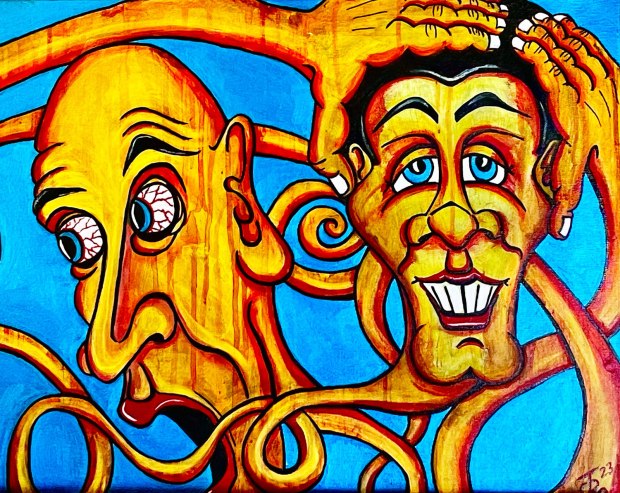
Like Father, Like Daughter: Inherited Visions

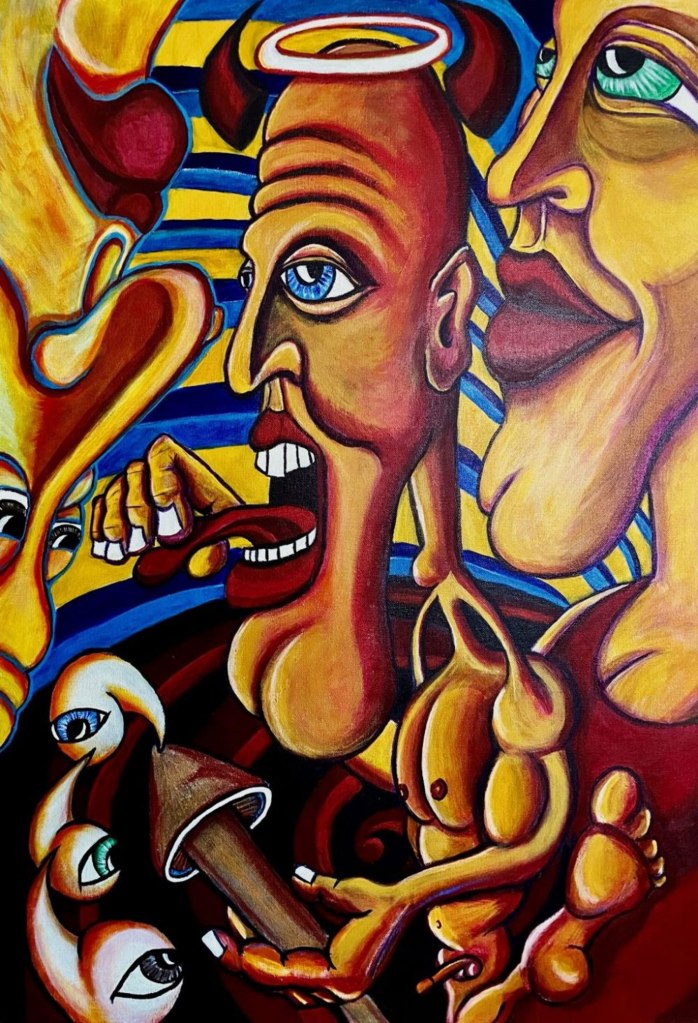
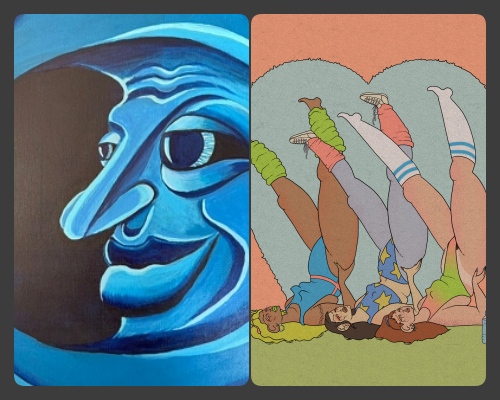
Mighty Fine Arts presents “Like Father, Like Daughter: Inherited Visions” featuring new work by Johnny Olson and Madelyn Olson. This show opens with a reception for the artists on Sept. 27 from 6-9 pm and will run till Oct. 26. It’s a family affair at MFA with a premiere exhibit by Mad Swirl spoken word master Johnny O and his exceptionally talented daughter Madelyn.

By Steve Cruz, curator/owner of Mighty Fine Arts

Johnny Olson

Both are figurative based artists who exaggerate and elaborate on the human condition. The characters they create derive from some overarching personal narrative but they manage to resonate on a mythic universal scale. Their approach is also filled with imaginative humor and playfulness with a touch of satire. The resultant effect is ebullient and energetic imagery imbued with creative fervor. Father and Daughter are cut from the same cloth and blessed with uncommon virtuosity.

Madelyn Olson

Also on Opening Night Wordspace Artspeak presents a musical performance by Swirve! Chris Curiel fronts this avant garde collective of liberated musicians devoted to free thinking and improvisation. Their goal is to release your mind from convention and neurotic restraints with cosmic soundscapes. Come experience and get emancipated with Swirve!

Mighty Fine Arts
409A N Tyler
Oak Cliff Texas

Johnny Olson was born on a brisk November day in 1970 in Chicagoland. He found his feet & cut his teeth in the blue-collared working class neighborhoods of his hometown. In 1988 he was reborn in MCRD San Diego, where he found himself the new title of United States Marine. After surviving the Gulf War, he hung up his BDUs & turned in his rifle to instead grab his pen & brush where he rediscovered his passion for writing & painting. In 1998 he found himself in Dallas, where what was supposed to be a brief stint in the South turned into over two decades… & counting.

In 1999, Johnny, with a couple of other mad cohorts, started Mad Swirl. This ‘zine project has now evolved into a being all its’ own. After wearing too many hats, he now only wears a few at Mad Swirl: Chief Editor, Creative Director & Host at Mad Swirl’s monthly Open Mic night & Mad Swirl’s Quarterly podcast, “Inside the Eye.”

Johnny’s work first appeared in print in 1996 in the now defunct Lip Magazine. Since then, his words & images have found their way onto a few online and printed zines thru the years. To name a few: Mad Swirl: Issues I-VI, The Best of Mad Swirl : 2017-2024, Haggard & Halloo, 10k Poets, PAO Productions: The Open Mic Project.

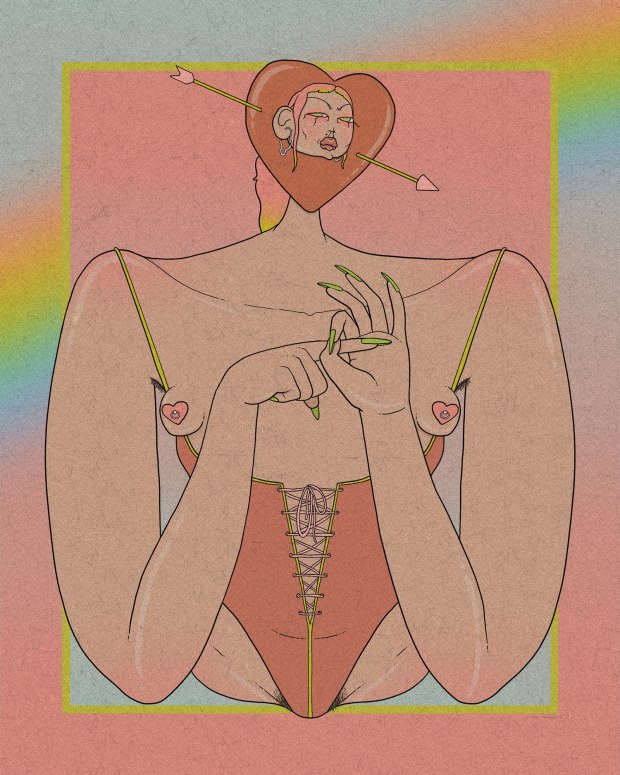
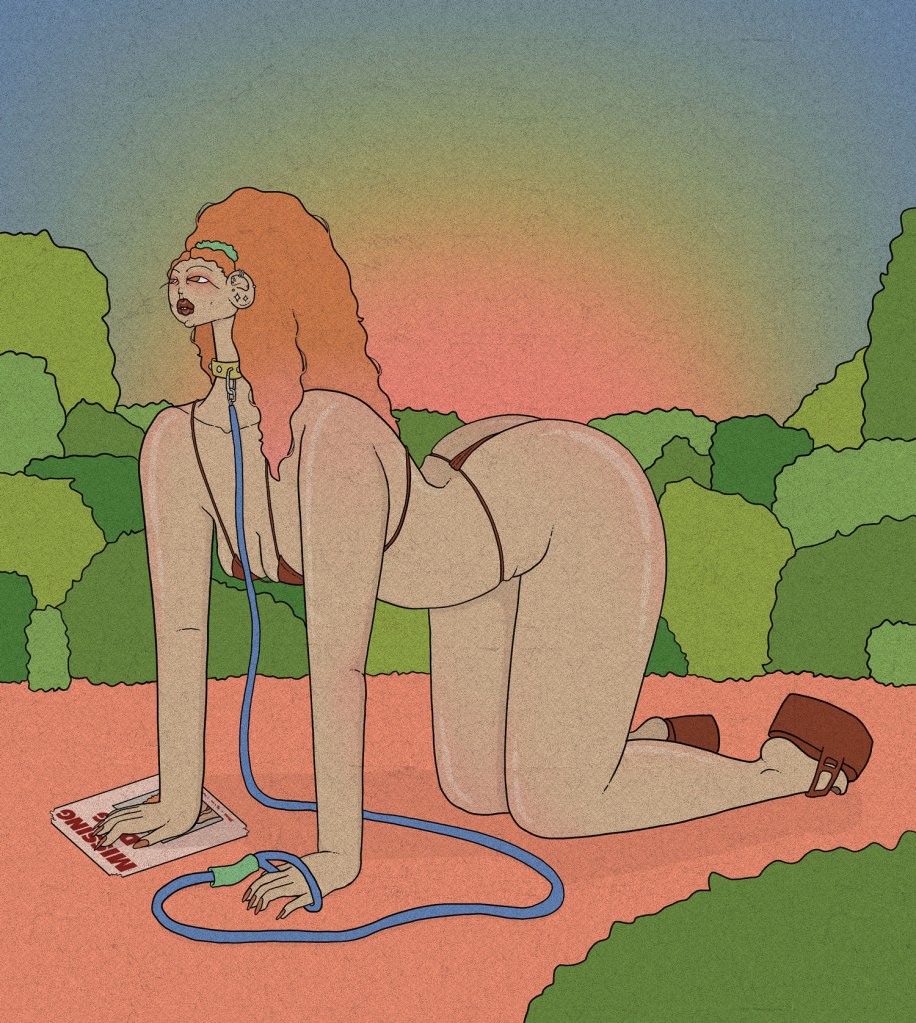
My name is Madelyn Olson and i’m an artist (anyone else have a hard time claiming that title?), primarily creating  in Procreate or on paper with ink & watercolor. i’ve been creating since i could hold a pencil in my tiny little hand. to me, artistic expression is one of the best things to exist. i hope to both create & admire it all till it hurts. when i’m not creating and admiring creation, i like to eat, hang out with my dog, laugh at silly things with my friends and frolic around outside in the sun.

The Lyre of Truth By Mitchell Pluto

Originally published as Carnival House in Cadaver Dogs 2024 and Espiral en el Estuco (Spanish Edition) 2025 Adapted for public reading.

All Rights Reserved by ©Mitchell Pluto

The lesser mysteries were open to anyone who wanted to join the lively street parade, but unraveling the secrets of the greater enigmas involved being selected.

The secret group of performers included actresses who helped change people’s perceptions of themselves.

A spine and a brain were simply a keyboard to play.

Few know the mysterious past of the mystery troupe. Some say they are witches, while others claim they are ingenious philosophers.

Many suggest that their extraordinary four-dimensional theatrical experience has the potential to induce a psychic state in the audience.
No one can answer with certainty.

The authors of the show will remain unknown to us. The key is self-exploration to better understand the thing we call ourselves.

I was inspired by witnessing their performances, especially considering the restrictions that prevented women from participating in Hellas theater. I wanted to see how the mystery play portrayed metempsychosis.

A dignified woman handed me an invitation.

I considered myself lucky.

The statements of the friends who attended concurred: all who ventured into the underground temple emerged transformed and with an enhanced mind.

My goal was enjoyment, whether the secrets were imaginary, sexual, or drug-induced.

Following the temple’s instructions, I performed the ablutions in the river. The first performer was a fisherman, who told me he was looking for pitch, rhythm, and duration. He cast a line, and I caught it.

He led me to the bank, and I followed him to the temple.

Crows in flight watched us as we walked. They have been trained to memorize and vocalize my name. The birds amuse themselves by taunting me with predictions related to my failure.

At the entrance, ancient emblems were visible. The door panel resembled the shape of the sarcophagus of Usiris, god of the chthonic realm.

The symbols painted on the door also matched those of the Shiva lingam, the serpent of Asclepius, and a symbol resembling a symmetrical pine cone.

To begin, I knocked on the door three times. Aegle, a very cheerful hostess, greeted me by name. A pleasant feeling of well-being washed over me.

She was generous and held a cup.

The dim candlelight cast strange shadows on the walls of a dark room.

Someone had placed a coffin in the floor.

This coffin supported a staircase that led down into the earth.

With each step down, the rungs became wetter, their textures mysterious.
I decided to ignore what I felt and focus on something else.

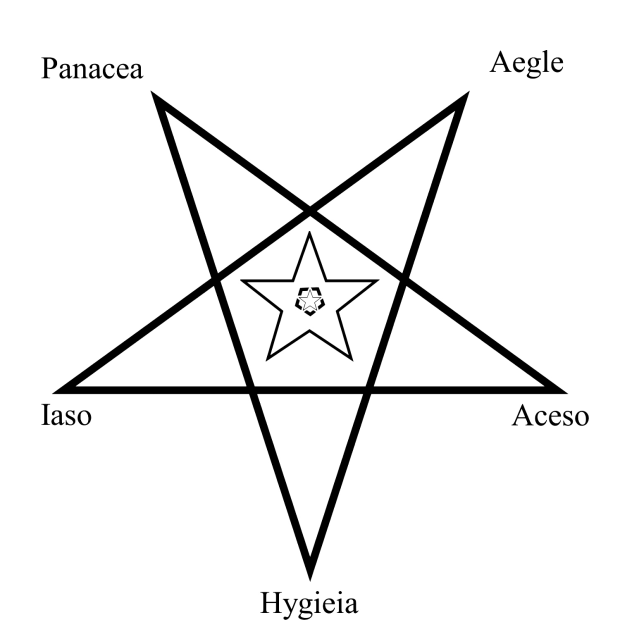
Taking the last step, I found myself inside a pentagram drawn on the ground. A woman was present at each point, one of whom was my host. They introduced themselves.

Their names were Hygieia of Purification, Panacea of ​​Medicine, Iaso of Revitalization, Aceso of Operation, and the hostess, Aegle of Joyful Strength.

There I received the first cup, called kykeon. Its taste was reminiscent of strong beer. With their voices united, the women expressed their thoughts through chants.

Flutes could be heard in the background.

The music intertwined, creating a mixture of harmony and discord that reflected my physical fluctuations.

At different corners of the star, the women rotated and alternated their positions.

I joined in this movement by observing; I felt a deep satisfaction and confidence.

With a sudden pause, the music ended, leaving behind an eerie silence. I was handed a torch. Aegle and her sisters lead me down a dark corridor, their arms poking through holes in the wall, ready to support me.

Panacea advises me to be careful of the light source as I make my way through a maze of several thick, damp curtains. Some of them being hanging animal furs.

We enter a chamber bathed in a soft green glow, with walls adorned with stained-glass windows that form an octagon.

In the center of the room, a golden chair has been placed in front of a small well.

I feel the women’s hands as they take my torch and guide me toward the well.

They buried me up to my neck; their soothing voices offered me some comfort, but not much. In a melodious voice, Iaso spoke my name, and the sound hung in the air.

Silence filled the space as a woman, dressed in a sheer black peplos, entered the room.

She embodied the sensuality of Demeter with her full figure. A shiver ran through her body as she sat on the golden chair. I stood before her, unable to move.

Aceso poured me another kykeon and gently held it to my lips. Then, Hygiea poured water on my hair.

The sisters took turns drawing rings around my head on the ground.
They created a line extending from my chin to the circumference of the circle. Hygiea sang a song, showing me how music serves as a compass in life.

As the song ended, Demeter rose from her chair and her eyes met mine.

Demeter stood on the outer edge, where the diameter and circumference met.

On her knees, she revealed her vulva by opening her skirt.

Demeter’s voice gave me a strange atmosphere.

The woman used an onomatopoeic effect, employing primal sounds instead of words. I imagined myself transported to a time before civilization.
The sounds displayed wild, sexual, and disturbing characteristics.

The five sisters dug me out and cared for me as if I were an uprooted plant.
They passed me a torch.

Iaso led the way, and the sisters followed. We entered a rotating, cylindrical tunnel operated by hydraulic power.

Maintaining my balance is a challenge.

A mirrored curtain distorts my reflection at the end of the tunnel.

Aegle advised me to face it head-on, passing through.

Behind the curtain, two steam vents dispersed. As the water vapor dissipated, a huge relief of a nude Demeter rose on a stone wall.

A raised walkway gave access to a door located where her vagina was.

The river of figures, dressed in contrasting black and white, moves in a choreographed, serpentine formation beneath the bridge.

This creates a deep unease in me.

The work depicts a battle scene, with soldiers sinking beneath the tides, their screams muffled by the earth.

This is iron and other minerals being sacrificed.

The haunting, animal wail freezes the moisture in my body. My only concern was the fear it created, overshadowing the actor’s talent and the astonishing stage effects. The fiction’s realistic portrayal convinced me of its truth.

I received Panacea’s advice to remove myself from disturbing thoughts.
Aceso takes my light and signals me to enter through the door. Hoping to find safety, I pass through colorful layers of scented sheets that release fragrances and pheromones, easing my discomfort.

I find myself in a spherical chamber. There is a portal in the ceiling that illuminates a rectangular bed with sunlight.

The sight of countless fresh flowers hid any trace of a wall, giving me time to recover and admire the intelligence of nature in each petal for many hours.

The group of five sisters entered the room dressed in black. They asked me to undress.

The intention was to remove any artificial obstacles between the goddess Persephone and me.

They prepared me, washed me, and offered me a calming drink that later became a potent aphrodisiac.

The sisters massaged my body to align the points with the star’s proportions and gave me affirmations that, to this day, have a positive effect on my thinking.

Persephone entered the room.

The woman removed her clothes.

Persephone had a youthful, simple face, with a pear-shaped body.

The five women formed a star constellation, with us at the center.

Hygieia sang a comical song that brought us both joy and laughter.

It was followed by a song that filled the air with sad melodies. It awakened a bittersweet sense of rediscovering something long forgotten.

Accompanied by Persephone, I experienced a sense of wholeness that completed the missing pieces of an unfinished picture.

Before we met, like a blazing and radiant star, Persephone comforted me.
I fell into a deep sleep with lucid dreams. I understood totality within an ever-present circle.

Revelations fueled my growth at every stage of my past life.

Everything I observed, inside and outside my thoughts, shone with brilliance.

I reached a state of peace where there are no boundaries.

By providing me with palm trees and poppy stalks, the group of five sisters acted out a brief skit where I was a man impregnated by the goddess.

This metaphorical journey disturbed me.

Panacea informed me that this ritual fostered the growth of a man’s inner woman, the anima. I must nurture my visionary mindset, inspired by the goddess Athena.

She reminds me that Athena was born in the head of Zeus. I am told she will heal my masculinity and that women will invite me into their bodies without fear.

Soon I observed the full moon within the oculus of the curved ceiling.

Strangers and street people filled the place.

Plainly dressed, Demeter and Persephone passed unnoticed in the crowd. With the room packed with spectators, I became the center of attention.

Someone announced my passing.

Despite my presence as a living being, the actors remained absorbed in their characters.

A tower of sand lay beneath the bed block that fit over a hollow.

The sand trickled out as vents opened from a lower level, sinking the bed.

Spectators showered me with flowers as I slid beneath the dark floor.

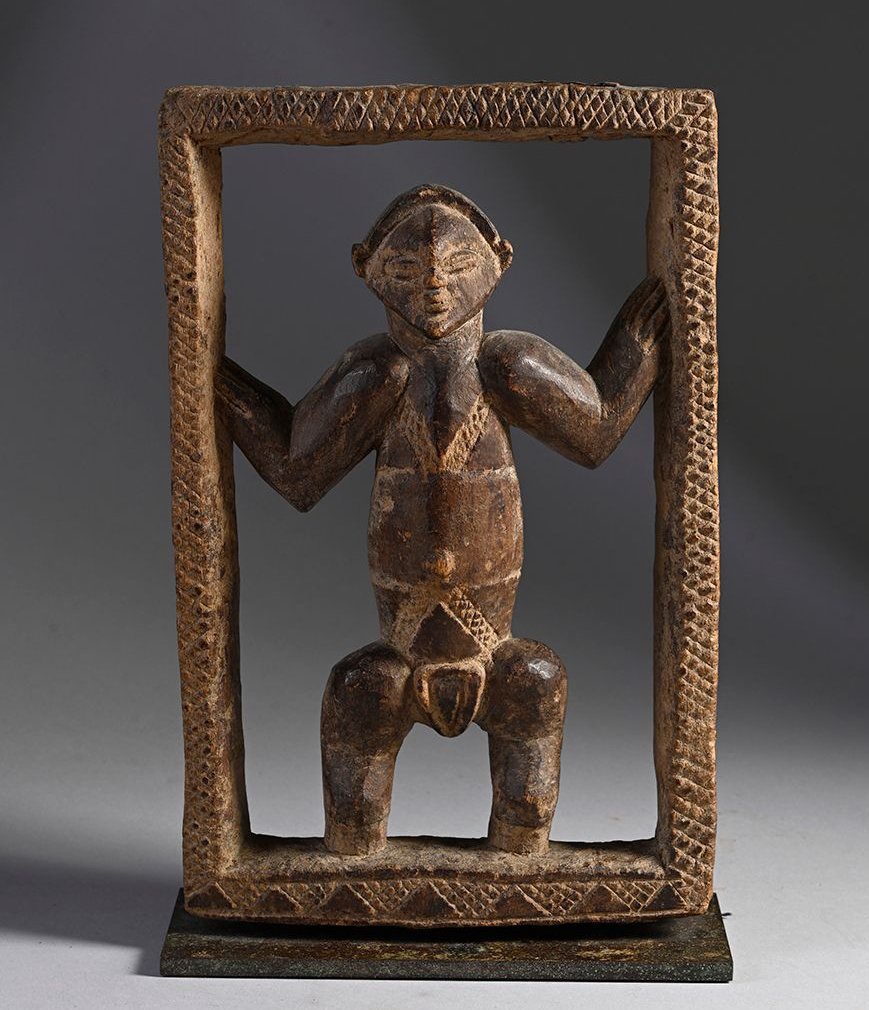
Soon, my perception was limited to that of people huddled in a suspended rectangular frame.

I kept my gaze fixed on the figure until it faded into the distance.

I analyzed the impressions the theater had left on my mind.

Love swept over me, but it vanished in an instant.

The elevator stopped, and I found myself surrounded by curtains of an intense magenta glow.

From behind the curtain, an open hand appeared, and without hesitation, I reached out and shook it.

The cavern I landed in had braziers lit with purple and red light.

Precious stones adorned the cave walls with sparkles.

A bearded man, dressed in a crocodile skin, held a horned cup and told me I was expecting too much.

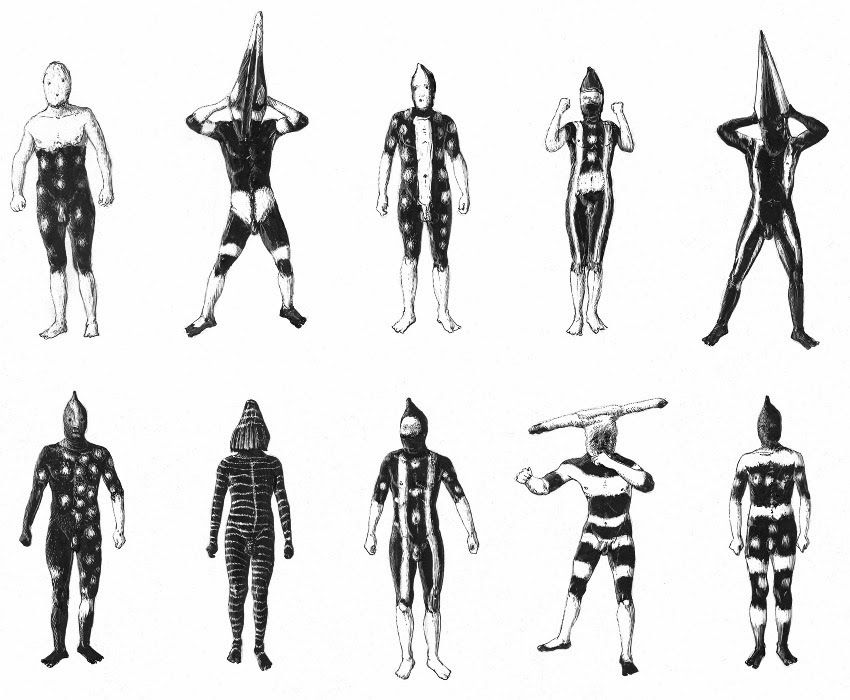
The five sisters, the attendants, had transformed into untamed figures, wearing only leopard skins around their waists.

Their breasts swung and their hair was disheveled.

He handed me the drinking horn, and I drank.

I asked him if this was Hades.

He replied that it was only a mortuary cave, ruining the disturbing image I had conjured in my mind. He said it was his place, Pluto’s lair.

He instructed me to follow him through a door where cavernous formations resembled fangs.

With some effort, we arrived at a dining room fit for an emperor.

Someone had prepared the food and placed it on the table.

He ordered me to sit down and eat, which was more of an invitation.

The five sisters consumed their food with an exaggerated display of hunger.

It was comical, but they played their parts so well that it became unsettling.

I hadn’t eaten in a while, so I was hungry.

While I was eating, Pluto was playing cat’s cradle. He braided a rope and handed it to me.

He told me to tie it around my waist and meditate on its meaning.

After we finished eating, Pluto led me to a mannequin wearing armor.
Pluto instructed me to put it on.

As he molded a piece of metal on an anvil, he told me to wait for the monster clown, whom he called Shoort.

I remained worried, expecting something to happen at any moment.

But nothing happened for a long time.

As I dozed, a creature emerged from the darkness.

The sisters sang a discordant chorus without fanfare or relief.

Rising, the creature demanded attention with its intimidating presence, asserting its dominance by finding the deepest fear within me. The monster took over my most intimate space. Fear paralyzed me. I reacted and broke free.

I fought the monster and stopped it, surprising myself.

Pluto yelled, “Grab the mask!”

I removed the mask, revealing the actor who was the fisherman.

Comically, the fisherman confessed to giving in, explaining that his actions were part of an elaborate plan to deceive me.

He said he had no choice but to follow orders.

I was about to delve deeper into my interrogation when a child’s crying diverted my attention.

Within seconds, I stumbled upon a boy trapped in a tunnel, out of my reach.

I untied the belt and rescued the little boy from the hole.

He hugged me, expressing his gratitude. The boy identified himself by my exact name.

Pluto and the five sisters clapped and cheered.

The women congratulated me as Aceso offered me a soft drink laced with anesthesia.

I woke up. The five sisters, disguised as bearded men, stared at me. They mocked the male voice as they spoke.

The voices were authoritarian, harsh, and angry.

Their question: Why did a woman like me lose consciousness?

I admitted to them that I didn’t understand what they meant.

The performers held me captive in their irony while remaining in character.

The ‘men’ helped me up, patting me on the buttocks and chest as I stood.

I realized and saw that we were performing on a stage with an audience present.

Through a mirror on the wall, I realized that someone had dressed me as a woman without my consent.

I protested, but discovered my role was silent.

The actresses did an extraordinary job pretending not to hear me.

Although the audience could hear my voice, they made unpleasant comments.

It didn’t take me long to understand the plot of the play.

The setting was a brothel. As an enslaved woman, I was traded for work in a prostitution establishment.

Three sisters took on the roles of slave traders.

Their authoritarian and malicious voices terrified me.

The remaining sisters portrayed the owner and the client.

The client’s expectation frightened me.

I kept overlooking the fact that it was only a simulation.

Now I saw the expectations I had hidden from the Aegle when he first greeted me.

My reflections were becoming visible in other people.

Three sisters crowded around me and, with surprising force, threw me into the crowd.

My body moved over the surface of the crowd, which tore off my dress while groping me.

As I reached the back of the audience, the five sisters intervened and embraced my exposed body.

By symbolically becoming a woman, the ritual allowed man to enhance his masculinity and develop greater empathy. Then, making love puts us in touch with a divine state.

The act of this love to women made me sense a connection to a godly presence that is universal.

My deepest longing becomes the foundation for love and creation.

I began the day by integrating tattvik tides into my exercises, and I could already feel a mature rhythm in my being.

I challenged myself blindfolded, while my eyes remained fixed on the shapes of my imagination.

Among the variety of tattvik shapes, the representation of air is a solid blue circle.

Earth is a transparent yellow square.

Fire looks like a red, triangular liquid.

Like a crescent of flaming silver, the water shimmered.

In the mind, the tattvic form resembles a dark egg.

It absorbs all light and is even darker than the surrounding darkness.

To complete this task, I visualize the symbols and relate them to other elemental designs.

It is important to replicate the images as accurately as possible and analyze the reasons for their deterioration.

By tracking and observing how the images deteriorate, I can understand other subconscious thought forms.

Later, the sisters led me to a cubicle with mirrored tile floors, walls, and ceiling.

Three chairs surrounded a triangular table at the focal point of the room.

On the table was a flat, round plate that looked like a coiled snake. I discovered that this was a game called Mehen.

I played a bit of Mehen with the twins.

It was difficult to distinguish who was causal and who was perpetual.

One twin is the other in the limited form of the eternal idea.

They seemed like four instead of a pair.

The twins embodied a perfect living square, treating all sides equally like Nzambi.

I participated in a couple of games. I fell short in the first, but won the second with the help of a lion.

These two events made me reconsider my participation in the works I was involved in.

Now the final ritual was taking place in the Telesterion, an acoustic pillared hall.

Throughout each ceremony, the dedicated team of sisters accompanied and guided me.

Like markings on a score, each sister represented a bar line, providing pitch, tempo, and duration to facilitate my experience.

The five daughters of Asclepius moved within the staff, shifting positions. Their perfect harmony generated a unicursal rhythm, instilling a sense of unconditional well-being.

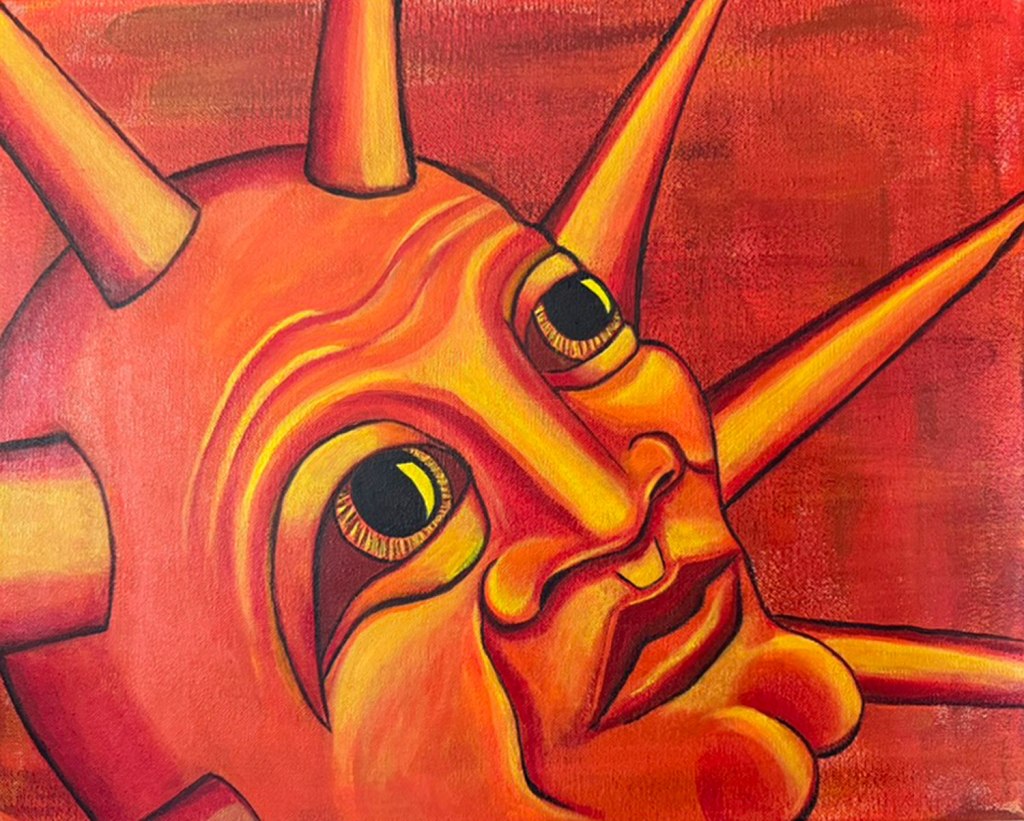
At that moment, I stood before the god of the sun, the star that radiates growth, maturity, and harmony.

Apollo has a dark complexion.

He wears a reflective suit that reverberates with the surrounding surfaces. In his wife’s hands, a harp resonated with soothing melodies as he played the saxophone.

Many birds fluttered around him as he played.

The final stage of the ritual involves offering a song to the radiant sun, which fills the atmosphere with harmonious melodies.

The star embodies the force that drives people in their pursuit of well-being, intelligence, and benevolence.

Keeping music in our hearts aligns all the chords around the goddess.

This connection reminds us of our deep philosophical connection with nature and its impact on our well-being.

Memory Transfer by Mitchell Pluto

Transferencia de Memorias

From The Eclipse © Mitchell Pluto 2024 Séance channeling memory transfers. Espiral en el Estuco © Mitchell Pluto 2025 Transferencia de Memorias

In early June, the sky was clear and the temperature was pleasant. Tom and Sarah Anderson came across a metal tower while hiking in the Lolo National Forest.

The object’s Gothic style stood out as they approached. Seeing it brought back memories of their honeymoon trip to Chartres Cathedral.

The couple assumed the installation was someone’s art project or an exhibit at the University of Montana. The sight was unusual. There was a black circular window high up, near the top of the bell tower.

The tower emitted an extraordinary spectrum, encompassing all shades of blue and green.

3,500 kilometers away, a small gathering met at the United States Capitol. Attendance was by special invitation only.

Elijah Booker and his friend Alvaro, a man of abnormally short stature, arrived punctually. They entered the room and attracted a lot of attention. Booker, a large, Black man, always stood out in a room full of white men.

Alvaro had previous experience in the company. He knew the purpose of the invitation. Alvaro was albino and his alias was white dwarf. His main function was to use his mentalist ability to influence and dismantle cults. He possessed an innate ability to influence and alter opinions and beliefs.

On the screen, taken from a popular social media video, several recorded witness statements were shown. An older man, standing next to his wife, described the encounter with the intelligent light as best he could next to a strange tower. With deliberate and concise gestures, his wife explained the same thing, but in more detail.

Booker assumed he was the keynote speaker invited to talk about the future effects of permafrost.

The focus was personnel selection, not Booker’s research. Elijah Booker was the world’s foremost parasitologist. He researched extensively and wrote informative books on toxoplasmosis, a brain parasite. Elijah worked with international scientists. The Bureau of Globe Research in Alaska, where he lived with his wife and daughter, housed a broad research panel on prehistoric pathologies. Booker’s research caught the government’s attention.

Booker’s specialty did not include cosmic rays. He had heard of them and knew they were unstable, but nothing more. Cosmic rays sometimes interfered with belief systems, sometimes caused hallucinations, or enhanced brain patterns in unique ways.

The U.S. Intelligence Service considered ideologies to be mild hallucinations and was intrigued by the effects of cosmic rays on the brain.

The U.S. agency selected experts in direct observation.

The department was aware of Booker’s private life.

They knew of Booker’s Buddhist practice and his hobbies, which included listening to jazz and researching the occult.

Booker and Alvaro boarded a plane within a few hours. The private pilot, a native of Montana, had a great time. Alvaro taught him numerous dirty jokes for a total of six hours. This gave Booker time to read reports on cosmic rays.

According to government research, different rays posed varying levels of danger.

A jeep with tinted windows was waiting for them at the airport.

They soon reached the mysterious object. The Forest Service managed the situation, giving it a normal appearance to the naked eye.

Antennas, tents, and tall Douglas fir trees surrounded the 70-foot bell tower. The building’s structure possessed a beautiful style. The scene reminded Booker of a surreal landscape, something Bosch might have built.

He took a photo with his phone and recorded a video, documenting the luminosity of the fading colors.

Álvaro tugged at his pants and pointed to a tent. A young woman, about the age of Booker’s daughter, was holding a tablet like a clipboard.

Frauke Brunhilde introduced herself. Her black nails, black shawl, and tight leggings gave off a countercultural air. She was a genius in the German Federal Intelligence Service. She was a forensic chemist and radiological technologist.

Booker inquired about Frauke’s findings and knowledge.

Frauke showed him a live feed from a radiation-resistant camera. A vertical line of light aligned with the top of the bell tower. He speculated that the beam provided a transmission that might correspond to a conscious entity. Frauke discussed the fluctuating visibility of the light. She said that in Europe, cosmic rays are everywhere. Frauke said people believed they caused poltergeists and produced other strange effects.

Throughout history, ancient peoples used stones and statues to mark power points. Indigenous Europeans wore conical hats, such as the Golden Hat of Schifferstadt, to tune into cosmic rays.

Frauke proposed that primitive peoples tuned into radio stations in space. Mysteries associated with cosmic rays included encounters with fairies, aliens, angels, or even people who disappeared without a trace.

Booker wondered if these disappearances were due to dangerous rays that triggered aggressive progeria, a disease that accelerates aging. This cosmic ray posed no such danger. Frauke mentioned an article published by German scientists in The New Nature Journal, which argued that time is a moment that has already passed.

According to Frauke, the article suggests that UFOs are future apparitions investigating the present.

Booker wondered: Who was shaping the future from the past?

In the report he read on the plane, some anthropologists in the southeastern United States theorized that cosmic rays were attracted by unicursal patterns, but also expressed themselves to humans in diagonal or zigzag patterns. Frauke mentioned geometry as a method for communicating with unknown intelligences.

Booker noted that Frauke’s explanations had a mystical undertone, and he knew she was speaking of magic.

Frauke inspired Booker to reflect more carefully on the unintended consequences of cosmic ray-induced hallucinations. Most of the knowledge discovered turned out to contradict his beliefs, something he was prepared for.

The next day, scaffolding surrounded the tower.

Booker spoke to the welder. The man said he hadn’t been able to burn a hole with a blowtorch.

Incineration also didn’t work on the top window, which the worker described as Jell-O. His partner punctured a sandwich with stainless steel tweezers in the Jell-O. Nothing happened to the sandwich. The puncture filled and healed itself.

Booker walked toward the main tent.

Alvaro reclined on Frauke’s lap. They seemed to be having a good conversation. Frauke chuckled. Booker told Alvaro and Frauke to prepare to enter the object.

The unit gathered what they needed. Booker hooked Alvaro to his belt like a weapon. Frauke slung a backpack over her shoulders as if she were spending a week in Glacier Park. Frauke put on her headphones and began climbing. Booker braced one hand and one foot on the scaffolding, the tips digging into the ground, as he slowly ascended to the upper platform.

Standing near the most enigmatic and sinister feature of the building, the three gazed up at the large black window.

The surface was obsidian, with a thick, gelatinous texture. Due to its unknown elemental nature, they were unable to separate the gel into samples. Frauke, using her scanner, surmised that it was an iron mordant containing extraterrestrial gelatin. The window also contained a low- to medium-fluctuation radioactive ray, known to cause hallucinations, according to the scanner. Booker hoped that, as they approached the cosmic ray, they would all experience an LSD-like experience.

Without any prompting, Álvaro dipped his hand into the substance.
It was the temperature of a warm bath.

Booker quickly glanced at Álvaro.
He removed his hand from the gel, waggling his fingers toward Booker and Frauke to demonstrate that God was luck.

The group sat for an hour discussing hypothetical possibilities, including personality changes and brushes with death.

Álvaro lived by the motto: to embody the god of things as they should be. To be the force of humor in every passing horror. Frauke, enchanted by Álvaro, agreed.

Frauke put her headphones back on. The music turned up. Booker hooked Álvaro back onto his belt and held Frauke’s hand. Booker didn’t want her to wander off alone in the oozing gel. He felt responsible for all of them. Booker placed a camouflage bandana over his nose and mouth. He breathed and closed his eyes. Frauke tugged at his hand.

The first step into the gel was similar to stepping into a deep pool without firm footing. Each movement created an unpleasant sucking sound. The absolute darkness unleashed a wave of fear. A surge of adrenaline flooded Booker’s bloodstream, testing everything he had learned from Buddhism. With a concentrated effort, he maintained his upright posture, stepping into the dense gel with one arm. The suction made movement difficult.

Booker could now identify with the five clinging aggregates of Buddhism.

It became a direct experience. The aggregates — form, sense, perception, and external forces — environmentally influence the mind.
Booker felt a predatory presence. An obsessive, superstitious belief overwhelmed his mind as he struggled to penetrate the bottomless gel.

Suddenly, Booker had a clear view of his own brain. He could see his amygdala working overtime. The pressure on the insular cortex made him imagine the worst possible scenarios, including an imaginary predator chasing him.

However, there was no malevolent morphic resonance present, only a confined space. His own fear divided and attacked every facet of his mind. The narrating brain identified its observer function as an intruder.

A strong auditory memory told Booker not to panic. A Nyingma master at a Buddhist retreat advised him to accept the discomfort and practice gratitude.

This precious memory became clearer and more fundamental to his resistance.

Booker imagined seeing the Khenpo floating on his back, effortlessly performing backstrokes in a slimy jelly.
Another vivid memory resurfaced. Years ago, his few sessions with Stanislav Grof helped Booker relive his earliest memories of being suspended in a possessive womb. He recognized that birth brings with it a subconscious sense of abandonment for everyone.

This caused humanity to misinterpret birth as a definitive isolation and desertion.

All of this originated in the maternal body’s rejection of the newborn as if it were excrement. Generation after generation, this confusion projected contempt for the feminine and nature.

Booker could see his thoughts as images. He saw the unjust and unconscious representations that dominated historical records.

The central idea emerged as the ambition to replace the mother with an artificial mechanism. This would foster the construction of an industrialized, parasitic world devoid of empathy.

Booker wished he had headphones.

Music would make it easier. He imagined John Coltrane’s “One Up, One Down .” He had listened to the album often, at the cost of exhausting his wife’s patience. Today, it helped him remember it. The saxophone arrangement conquered fear. Booker knew that Coltrane understood the patterns of a constantly changing self. A self free of history and objects.

One conclusion became clear: time and space will never have a central authority.

The attempt to even imagine sensations beyond the end proved to be a vain and imputed illusion.

Death existed as a phase that passed like everything else.
Why pretend we knew this?

We shared the same fate. We would cease to exist without knowing what death was.

The tension dissolved and the jelly transformed into a thick fog. With his free hand, Booker reached for Álvaro, patting him on the face. He looked at Frauke. He saw her silhouette. Frauke turned to Booker, took off one of her headphones blasting, and smiled.
Booker asked, “What got you through the jelly?”
Frauke nodded to the beat: “Huh? Yeah! It’s an American band called The Doors , The Other Side , yeah, they’re good!”

The cosmic ray transformed the tip of the bell tower into a reactive vanishing point. This produced a carnival-like hall of mirrors effect. Booker, Frauke, and Álvaro occupied that space between the parallel lines of the cosmic ray. The room resembled a virtual infinite hallway with a ledge. Colors cascaded down the cosmic ray.

Frauke’s gaze caught something in the swift wave of light. She spoke, describing what she saw as it manifested in Álvaro and Booker’s minds.

A spinning triangle reflecting brilliant light transformed into crystal. At each corner, the numbers 3, 6, and 9 materialized. From the center of the triangle, sparks erupted, forging a nude female figure with hair down to her feet. A deep red and white glow caught her attention.

“She can see us,” Frauke said.

The woman spoke echoey. She gave her name as Mitzi Orssich. Mitzi said she was broadcasting from a live 1920 séance in Austria. The chatty ghost said she represented the Viril Society.

Mitzi demanded information from the future to help build a temporal vehicle. Mitzi possessed sternness, while her flawless figure projected an incredible image. She was a magnetic and exciting archetype who could raise blood pressure and induce a firm salute .

This woman’s body possessed a truly divine craftsmanship, an image that neither eats, defecates, nor ages.

Booker reflected.

She fit the bill: blonde hair, blue eyes. The graceful elements resembled the Christkindel.

But why didn’t this woman take over as Germany’s leader in the 1930s?

Mitzi spoke English very well.

Booker recalled researching the Vril Society, which emerged as a 19th-century work of fiction by the English writer Ed Lytton.

Booker realized they were tapping into a projection of Frauke’s subconscious.

Mitzi was, in effect, a literary phantasm forged from a pseudo-story.

He looked at Frauke, who remained staring.
Booker speculated through his online queries and research; Frauke gained powerful impressions from what she read.
Álvaro’s face was simply a huge smile with tiny hands and feet.

Booker interrupted Frauke’s trance and appropriated the cosmic ray, projecting abstract expressionist ideas onto it. He enjoyed this art movement and understood its significance. He was open in sharing his observation of vivid brushstrokes.

Booker gently guided the hallucinatory influence away from the National Socialist art style toward a more universal and abstract variety. It was art without a human figure.

Wonderful and exciting non-figurative patterns formed from the center of the cosmic ray. The variety of designs lacked strict cultural ideologies, which brought Frauke out of her trance.

The cosmic ray inspired Alvaro to create a complex algorithm based on his interest in spiders.

Mitzi’s impression triggered unexpected associations that took a mutated form.

Web strings connected a spider puppet to the spinning chemical brain in Alvaro’s vision.

Frauke saw it as a fusion, creating one puppet within another.

Booker interpreted Alvaro’s vision of the spider as a portable DNA capsule capable of flying through space.
Small cubes appeared on a spinning belt in another future. The webs were coordinates, guided by a chemical brain inside a metallic spider.

Booker, Frauke, and Alvaro huddled in a triangle in front of towering Douglas fir trees. They were gone for three days and reappeared five miles from where they had disappeared. There was no alien tower there. A man named Warren found them while patrolling the forest. The cosmic ray information was useful.

US intelligence took statements from Booker, Frauke, and Alvaro.

Engineers, chemists, and physicists collaborated to design a new space vehicle with a chemical brain.

A few months later, the spider-like object would fulfill a panspermia mission. The space spiders, called Anansi Capsules, would aim to find habitable planets to modify human DNA and enable life in an extraterrestrial environment.

The Anansi Capsule was an 8-foot-tall mobile figure with eight appendages for hand tools.

After descending, the capsule would unfold into a complex 16-foot laboratory.

The Anansi Capsule would manufacture and raise two biological beings for several generations.

It is unknown whether the new offspring would preserve or understand their origins, but they could be alive to continue exploring space.

A few months after visiting Montana, someone mysteriously provided a grant to de-extinct the woolly mammoth and thus include it in Booker’s future project.

Writing and Art All Rights Reserved © Mitchell Pluto

From The Eclipse © Mitchell Pluto 2024 Séance channeling memory transfers . Spiral in Stucco © Mitchell Pluto 2025 Memory Transfer


Espiral en el Estuco (Spanish Edition) Paperback – Large Print, 23 April 2025

Spanish edition  by Mitchell Pluto

El surrealismo oscuro y el absurdo crean efectos psicodélicos. El zen y el jazz de Coltrane ofrecen una vía de escape de la veneración política, permitiendo viajes interestelares. Cada capítulo explora el surrealismo y las técnicas budistas. Estas ayudan a sobrellevar el trauma de sentirse atrapado, como un animal en un anuncio repetitivo.