Octaves and the Tarot by P.D. Newman

A Second Look at Leary’s Eight-Circuit Model: Gurdjieff’s Law of Octaves and the Tarot
P.D. Newman
Along with Ram Dass, Huston Smith, and Andrew Weil, Timothy Leary was part of what has been called “the Harvard Psychedelic Club.” Fired from his position at Harvard University for failing to attend scheduled class lectures, Leary is perhaps best known as being one of the most vocal advocates of lysergic acid diethylamide (better known as LSD-25), an extremely powerful hallucinogenic drug which Leary et alii helped to popularize during the revolutionary sixties. He was also part of the Harvard Psilocybin Project, which Leary organized following a trip to Mexico during which he was administered psilocybin mushrooms. He later recalled of this experience that he had: learned more about [his] brain and its possibilities [and] more about psychology in the five hours after taking these mushrooms than…in the preceding fifteen years of studying and doing research in psychology.
The Harvard Psilocybin Project went on to conduct the famous Concord Prison Experiment, which evaluated whether psilocybin paired with psychotherapy could successfully rehabilitate repeat offenders, and the Marsh Chapel Experiment, which sought to discover if psilocybin could reliably induce mystical experiences in religiously predisposed theology students. In 1963, Leary helped initiate the Millbrook Experiment, an enormous mansion located in New York where residents spent their days experimenting with psychedelic drugs and living according to the teachings of Armenian mystic, G.I. Gurdjieff. To Gurdjieff, we’ll return below. These experiments, impressive and novel as they were, are not the good doctor’s sole claims to fame, however. During one of his many incarcerations, in 1972, Dr. Leary developed a new theoretical model of the evolution of life on earth—and of individual human consciousness—which he called the ‘Eight Brain’ or ‘Eight Circuit’ model.
Popularized by Discordian Pope, Robert Anton Wilson, Leary’s Eight Circuit model postulates that all life on earth (and indeed in the entire cosmos) evolves through a series of eight successive ‘circuits.’ This same eight-fold process, Leary adds, is recapitulated in the development of consciousness within an individual human being. Just as the human embryo at various times manifests as unicellular, possessed of gills, having a tail, etc., so too does individual conscious unfold through the same successive stages of evolution. Divided into Terrestrial and Post-Terrestrial phases, Leary’s eight ‘circuits’ unfold as follows:
Terrestrial:
1. The Bio-Survival (Marine Consciousness) Circuit
2. The Emotion-Locomotion Terrestrial-Mammalian (Territorial Consciousness) Circuit
3. The Symbolic-Artifactual (Laryngeal-Muscular Consciousness) Circuit
4. The Industrial (Socio-Sexual Consciousness) Circuit
Post-Terrestrial
5. The Cyber-Somatic (Body Consciousness) Circuit
6. The Cyber-Electronic (Brain Consciousness) Circuit
7. The Cyber-Genetic (DNA Consciousness) Circuit
8. The Cyber-Atomic (Quantum Consciousness) Circuit 

Without entering into too much detail regarding the function of these ‘Brains,’ it is sufficient to say that each of the eight ‘circuits’ are further divided into three successive stages (thus giving us twenty-four) of what Leary calls “con-telligence.” Con–telligence is defined as “the reception (consciousness), integration, and transmission of energy signals.” The three stages of con–telligence applied to each of the unfolding circuits then constitute the twenty-four phases of the awareness, mastery, and communication-fusion of each new evolutionary technology—from spineless, floating amoeboid (as well as newborn infant) to meta-physiological nano-technician at the “violet hole” found at the center of our Milky Way galaxy. The people who represent these various stages of evolution Leary refers to as ‘castes.’ 
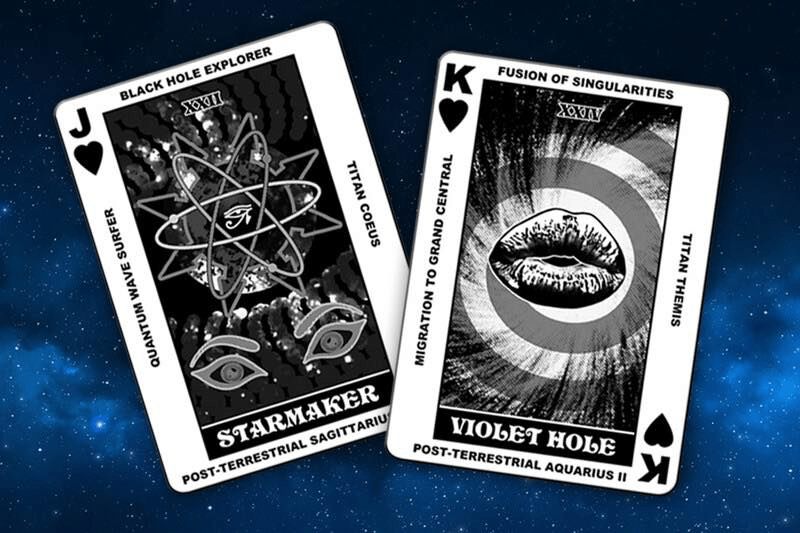
In an attempt to “relate the psychology of the ancient, pre-scientific world with modern notions of stages [and] phases,” Leary was wont to apply his twenty-four periods of evolution to the Major Arcana of the Tarot, wherein he perceived a clear reflection of his own model. For example, to illustrate the three-stage ‘con-telligence’ of Circuit I, Leary employed The Fool, The Magician, and The Empress cards. In illustration of the con-telligence of Circuit II, he used The High Priestess, The Emperor, and the Hierophant, etc. However, there’s just one problem with this arrangement. The Major Arcana are possessed of only twenty-two cards, leading Leary, to the horror of every Tarot purist in the world, to invent two brand new Major Arcana cards: Starmaker and Violet Whole. As hip and groovy as these two additions no doubt are, they may not have been necessary. Had Leary paid closer attention to his Gurdjieff while residing at Millbrook—or to the Ouspensky title (In Search of the Miraculous) that Charlie Manson slipped him while in solitary confinement at Folsom Prison—he might have thought to apply the sequence of Tarot’s Major Arcana cards to Gurdjieff’s Heptaparaparshinokh, aka his Law of Octaves.
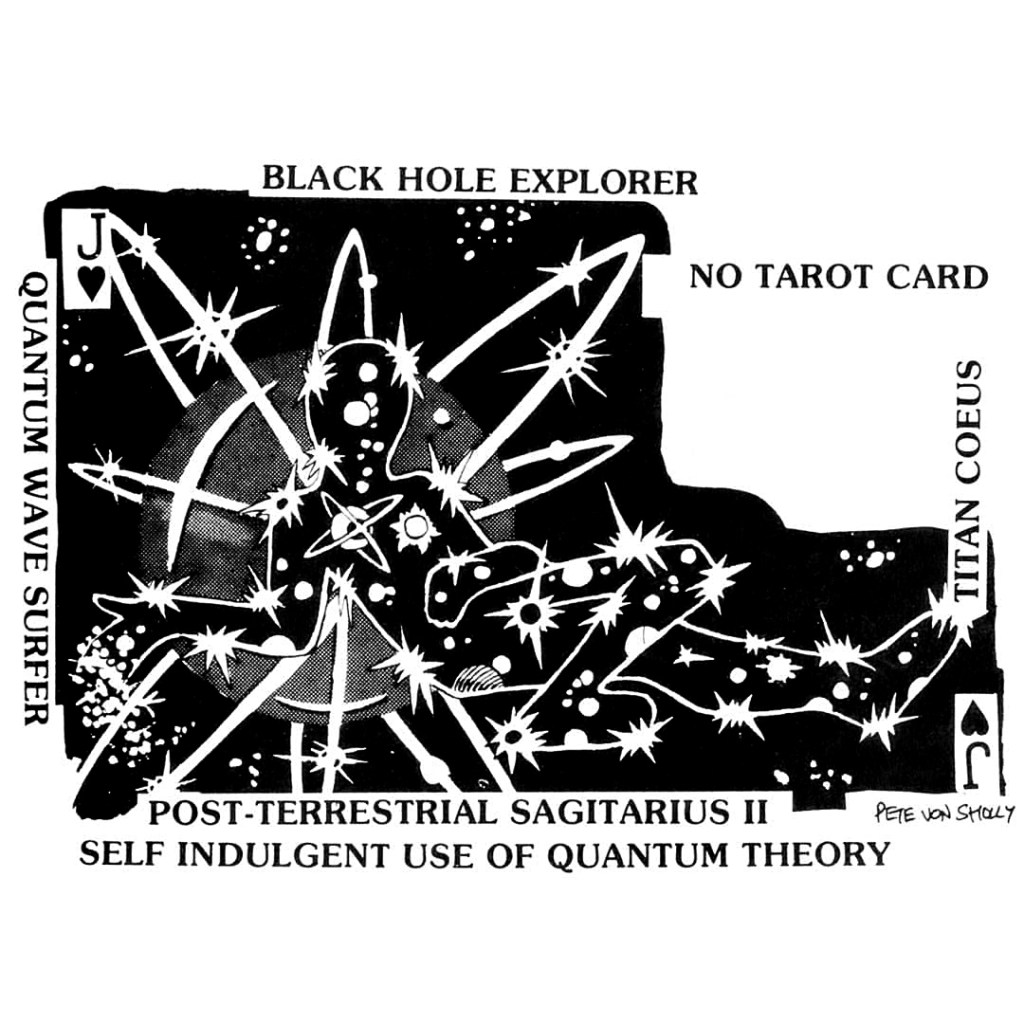

According to the Law of Octaves, everything in the universe that happens or can happen manifests according to a fixed set of cyclic vibrations, called octaves. From the initial impulse of a given thing to that thing’s final completion, this constitutes an octave; that is, from do (start) to do (finish) in the Ionian mode (do re mi fa sol la ti do) constitutes a given octave. Whether it is the birth and death of a galaxy or the beginning and end of an acid trip, taken as a unit, each of these phenomena would constitute its own octave. Considered in the key of C major (which Gurdjieff obviously intends), it becomes evident that a given octave is possessed not only of eight steps, but also of two intervals. For, every note in the C major scale is followed by a sharp—save two: mi and ti. Unlike the other six tones, mi and ti, rather than being followed by semitones, move directly into the following whole notes.  To compensate for these ‘intervals,’ in order to complete a given octave, Gurdjieff postulates that two “additional shocks” are required. P.D. Ouspensky, an early student of Gurdjieff, writes:
In an ascending octave the first ‘interval’ comes between mi and fa. If corresponding additional energy enters at this point the octave will develop without hindrance to [ti], but between [ti] and do it needs a much stronger ‘additional shock’ for its right development than between mi and fa, because the vibrations of the octave at this point are of a considerably higher pitch and to overcome a check in the development of the octave a greater intensity is needed.
It is our understanding that an ‘additional shock’ in an ascending (evolutionary) octave may be constituted by anything from a physical or emotional trauma, a mental break with mundane reality, a mystical initiation, a ritual working, or even by a psychedelic experience. It is the application of ‘super effort’ at two points in an ‘octave’ that will aid in bringing its process to completion.
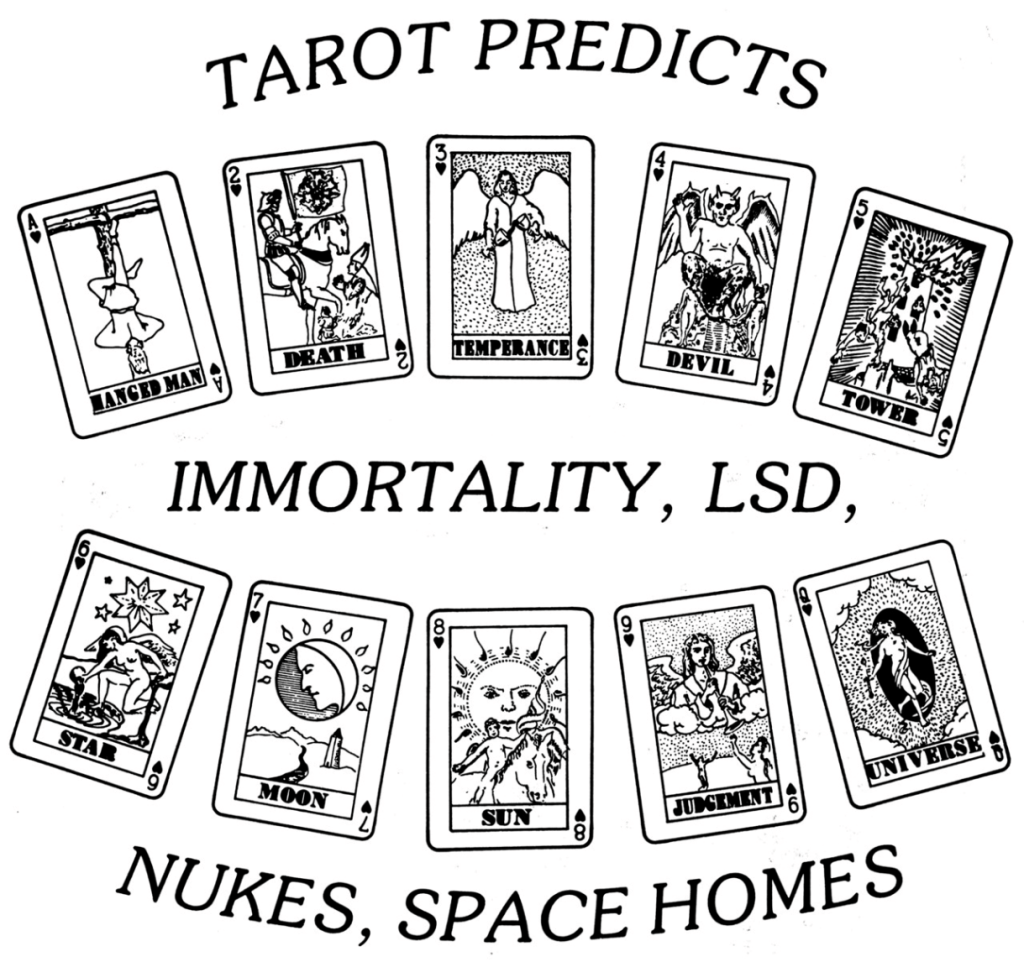

Possessed of eight steps and two ‘intervals,’ Gurdjieff’s Law of Octaves neatly solves the problem of what Leary saw as two ‘missing cards.’ If we allot the cards of the Major Arcana in sets of three to Leary’s eight ‘circuits’ while keeping true to Gurdjieff’s Law of Octaves, we arrive at the arrangement below. Let the Arabic numerals indicate Leary’s Eight Circuit model. Let the Roman numerals represent those attributed to the Major Arcana cards. Let the asterisks represent Gurdjieff’s ‘additional shocks.’


1. 0 – I – II (do)

  1. III – IV – V (re)
  2. VI – VII – * (mi)
  3. VIII – IX – X (fa)
  4. XI – XII – XIII (sol)
  5. XIV – XV – XVI (la)
  6. XVII – XVIII – * (ti)
  7. XIX – XX – XXI (do)
    As the reader may observe, these ‘shocks’ fall into the ‘transmission’ (per his theory of ‘con-telligence’) slots of Leary’s third (Symbolic-Artifactual) and seventh (Cyber-Genetic) circuits, precisely in the places where the ‘additional shocks’ are necessitated, per Gurdjieff’s Law of Octaves—no invention of cards required. The suggestion here is that ‘additional shocks’ serve as bridges for the transmission gaps between a) the integration phase of the Symbolic-Artifactual Circuit and the reception phase of the Industrial Circuit and b) the integration phase of the Cyber-Genetic Circuit and the reception phase of the Cyber-Atomic Circuit—thus providing the individual (and the species) with the momentum necessary to break the barriers between one evolutionary circuit and the next.
    In the Tarot, these ‘shocks’ appear between a) The Chariot and Strength and b) The Moon and The Sun cards. In the system popularized by the Hermetic Order of the Golden Dawn, The Chariot corresponds to the zodiac sign Cancer. Strength, on the other hand, corresponds to Leo. Conveniently, as Cancer is ruled by the moon and Leo is ruled by the sun, combined with the second ‘additional shock’ which occurs between The Moon and The Sun Cards, we see that both the ‘shocks’ take place at ‘intervals’ between symbolic diametrical moon-sun relationships. These ‘shocks,’ then, both practically and symbolically, serve the same ‘bridging’ function of a mercurial mediator between alchemical opposites. Coincidence? Perhaps. Granted, we may be guilty of ‘confusing the planes’ by comparing the zodiacal attributions of one pair of cards to the titles of another. However, one cannot deny the symmetrical neatness of the structure.
    For this arrangement to work, it goes without saying that all the cards and explanations following The Chariot in Leary’s model must be rearranged and reworked to accommodate for Gurdjieff’s ‘shocks.’ And, in fact, in Info-Psychology, his 1987 revision of Exo-Psychology, Leary kindly invited the reader “to engage in an ‘interactive co-writing’ of these important issues.” That’s all we’re really doing here. In any event, at the very least, we’ve arrived at what would appear to be a totally novel mode of Tarot analysis. The notion that hidden ‘additional shocks’ appear in the major arcana sequence between cards VII and VIII and between cards XVIII and XIX is, to our knowledge, unprecedented. But, does this innovation mean that two of Leary’s ‘castes’ must be sacrificed in favor these ‘shocks?’ Or, is the implication that two of Leary’s ‘castes’ are the ‘shocks?’ Further analysis is required to know. One thing we can say with certainty, however—and that, along with Leary’s friend, Dr. Israel Regardie of the Golden Dawn—is that “posterity […] will have a finer appreciation of what [Dr. Timothy Leary] has contributed to the world than we have today.”
    WORKS CITED
    Alpert, William. Ram Dass: Fierce Grace. Zeitgeist Films, New York. 2003
    Hollingshead, Michael. The Man Who Turned on the World. The Psychedelic Library. http://www.psychedelic-library.org/hollings.htm. Accessed Jan. 9, 2017
    Lattin, Don. The Harvard Psychedelic Club: How Timothy Leary, Ram Dass, Huston Smith, and Andrew Weil Killed the Fifties and Ushered in a New Age for America. HarperOne, San Francisco. 2011
    Leary, Timothy. Info-Psychology: A Manual on the Use of the Human Nervous System According to the Instructions of the Manufacturers. New Falcon Publications, Las Vegas. 1987
    Leary, Timothy. Neuropolitique. New Falcon Publications, Las Vegas. 2006.
    Leary, Timothy. The Game of Life. New Falcon Publications, Las Vegas. 2015
    Ouspensky, P.D. In Search of the Miraculous: The Teachings of G.I. Gurdjieff. Harcourt, Inc., New York. 2001
    Wilson, Robert Anton. Cosmic Trigger I: Final Secret of the Illuminati. Hilaritas Press, LLC., Grand Junction, CO. 2016
    Wilson, Robert Anton. Prometheus Rising. Hilaritas Press, LLC., Grand Junction, CO. 2016
P.D. Newman is an independent researcher located in the southern US, specializing in the history of the use of entheogenic substances in religious rituals and initiatory rites. He is the author of the books, Alchemically Stoned: The Psychedelic Secret of FreemasonryAngels in Vermilion: The Philosophers’ Stone from Dee to DMT, and the forthcoming title, Day Trips and Night Flights: Anabasis, Katabasis, and Entheogenic Ekstasis in Myth and Rite. The Secret Teachings of All Ages (TV Series documentary) 2023.

Theurgy: Theory and Practice: The Mysteries of the Ascent to the Divine by P.D. Newman, published by Inner Traditions, Bear & Company will be available on December 5, 2023

ALL RIGHTS RESERVED. THIS POST IS A COPYRIGHT OF P.D. NEWMAN
THIS AN AUTHORIZED DUPLICATION WITH PERMISSION AND EXPRESSED CONSENT
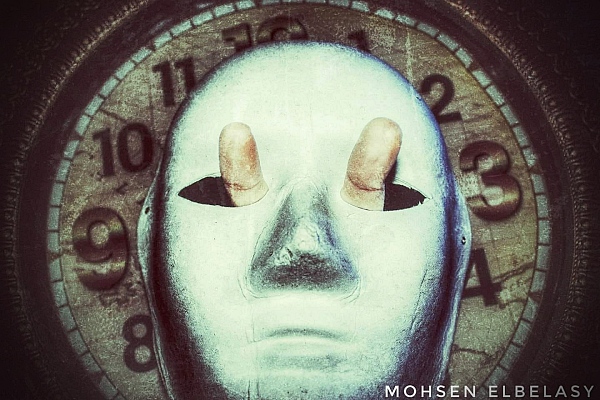
Mohsen L Belasy the Wolf of Cairo

Listen to the mysterious, revealing and fierce voices within you. 

And if you are caught up by  fear of doing so, remember that it is wrong for the senses to belong to the everyday, lived world.

For me any discovery that changes the nature or direction or a phenomenon constitutes

of something or is a  surrealist /poetic truth.

Objective chance , the subtlety of the intuition of the expectation, and the constant search for its flash . 

Going without a destination, the poet has an unknown encounter with the word, freed from any linguistic logic. 

In poetry the mind blows out of the mind. It aims at the spontaneous reclassification of things into a deeper and freer order, which is impossible to explain by the means of the ordinary mind.

The poet alternately is a deadwood pruner, a transformer, and a thunderbolt.

 Silence is a complete poetic and surrealist work.

The word must be left in suspense for a moment before it is transferred to a physical state on paper. At dawn or dusk, we walk down the road and sometimes come across the silhouette of a silent fairy woman, whose silence is the most comprehensive concept of poetry,  and surrealism. 

an absolutely possessed throat, echoing between howls and silence.

 the secrets of the world created, within the poetic mystery, darkness unfolds while questioning is stripped. 

Earthly legend and mystery doors open to infinity.

The poet is an enemy of the Sufist . 

The poet is not bound by a vision or a superior authority. 

Poetry is a momentary extraction of the unknown from the veins of every language.

If the poem does not have a chaotic body that smells of demolition, negation and destruction of all existing literary forms, genres, 

 Then what is living poetry?

Poetry should be the color of dried blood

The poem is the beginning and end of the world, it revives the world and its death, dismantles all self- and collective censorship, esoteric and physical, and drops every daily living dictionary.

The poem is an arena for the execution of all linguistic paralysis by burning with the napalm of the  lust.

Poetry is not a linguistic expression, but a visual, physical and perhaps biological expression as well.

Real poetry employs itself to monitor a waking dream which is resentful of its fate, re-sculpting it with dough baked by chaos inside the bone furnace called the human head.

I believe that enhancing poetic esoteric awareness does not come only by enhancing the possession of language or general cognitive awareness, but by developing and training the eye on scenes of logic disintegration always, whether they are daily or artistic works.

Even with everyday mind games

Thus, the magnetic linguistic ability self-develops and expands not only through the subconscious mind, but also through the nerves of the eye’s practice of strenuous imaginative sports to extract the faculties of impossible  earthy miracles in all its forms and templates.

I treat the Arabic language rules as a relationship between oppression and freedom; understand it

As a repressive social specter that must be removed and rebuilt anew every moment with vast doors to spend the  free desire. 

Poetry is the chaotic condensation of the inner momentary realization, but the seer poet must tame the tools of this condensation towards a permanent quest for the human interior, a quest fertilized by doubts in everything outside the individual.

Every human being has a poetic companion who lives behind his eye, the cunning poet who makes him constantly jump like a kangaroo and always seeks to protect this kangaroo from drowning in the prior cement lakes and to teach this kangaroo that there is no limit to what is called verbal maturity,

 poetry is a permanent electrical revolution inside the mind It is not controlled by something imaginary or even social.

The chief function of poetry is to impart sharp disturbances to language and to overthrow every possible holiness it bears. For me grammarians and academics of language are the social police of the imagination.

I despise even the inherited Arab aspirations to rebel against the Arabic language, except of course à few poets I see the deceptive horizon of most Arab poets now that they throw themselves in the recycling factories of closed poetic ambitions.

Surrealism relates to expressing «the real functioning of thought […] in the absence of any control exercised by reason and apart from any aesthetic or moral concern ».

– We think that not only language, but the whole world in all its aspects, was given to humanity to make surrealist use of it.

“All things are called to other uses than those generally attributed to them.” – André Breton, Le Point du Jour.

– We think that surrealists should make use of whatever materials and tools that they find attractive.  Whether a feather, a cloud or a computer, any single object in this world becomes a surrealist object as soon as surrealist use is made of it.

– We think that the results of surrealist activities do not have to conform to any type of listed art form, nor even to whatever is considered art. 

– Restrictions regarding materials and tools, as well as compliance with traditional artistic categories are views that were already considered and experienced as obsolete by most artists of the Renaissance period. We think that an attempt to liberate the human mind may in no way be successfully achieved on the basis of a narrower scope of practices and intellectual freedom than that which was already acquired by artists at that time.

 -‘we are interested in how surrealism appears in everyday life, whether it’s from surrealists or not, but we understand this is not the same as a surrealist movement.”

-“We are interested in certain parallel currents that might overlap with surrealism. Surrealism may -appear- or be present- within avant garde or popular art but it’s not necessarily the same thing.”

– We categorically reject mixing surrealism with whatever form of religion, and we reject the presence of any religious persons within the group.

– We reject any aesthetic attribute that directly or indirectly integrates into the life of this society or that would tend to reconcile with it.

– Realistic daily life erases the perception of the unique characteristics of objects. We will always seek to break this mechanism and its dynamics by means of words, plastic art, music and cinema or any other means.

– Collective automatism is self-contained in everyday life. It floats in the air, dissolving every entrenched and worn-out intellectual authority.

– The poem is a collective work, even if it is from one’s individual imagination.

– We have nothing but contempt for the guardians of grammar because they are the protectors of the heavy legacy of linguistic dependence that erases the ecstasy of all free desire. 

– We support every creative act that contributes to the wondrous conquest of everyday life and the conquest of mad love. Everything that has been physically neglected in the city, and every sexual explosion that social fascism hides, is for us the dough with which we form our written and visual poems.

written by Mohsen Elbelasy

Mohsen Elbelasy Egyptian surrealist artist and poet and researcher and editor in chief of the Room surrealist Magazine and sulfur-surrealist-jungle.com and the co manager of the international exhibition of surrealism Cairo Saint-Cirq-Lapopie and Echoes of Contemporary Surrealism Exhibition. And  co-founder of the Middle East and North Africa Surrealist Group. (MENA) and He also worked as a translator, cultural journalist and organizer of cultural and artistic events in Egypt and internationally. Chrysopoeia Surrealist union /Cooperative. In 2022, his book The Trip of Kamel Al Tilmissany  won the Sawiris Grand Prize of Literary Criticism

h Ghadah Kamal 

English /French /Spanish. 

La Belle Inutile Edition 

2021

1  _ Oblivion

Collaboration / Book 

By Zazie and Pierre Petiot and friends

Cover by / Zazie 

Phantom of Revolution by Ghadah Kamal Ahmed

The cruelty of life is only equaled by art… I used to search a lot in the paths of art for what could express what was going on inside me and my view of the world, but I was always faced with unfree spaces, spaces depicted by religion or what is connected  with  it..

My imagination was always trapped. When I dive into the past with deep sadness..

I did not know that imagination can lead us to a better future until I became acquainted with surrealism.

Closed areas of my subconscious began to open up to me.

I had never known these closed areas of my subconscious mind before.

I did not have complete freedom of expression with my body, and now I do.

Surrealism is a systematic breaking of the boundaries of reality, the body, society and religion.

Also, I was afraid to delve into fields that I had not studied or practiced, such as drawing, photography and cinema, but  Surrealism turned me into an active person who thirsted for all kinds of arts.

I am not only a surrealist artist, I also owe a lot to surrealism… Reconciliation with the unconscious mind can change the world for the better… and  it can be an iron wall stands against all life’s difficulties.

Linking and developing science and keeping pace with technological development and the subconscious freedom are able to create a better world.

This is surrealism for me

written by Ghadah Kamal

Ghadah Kamal is a surrealist visual artist, writer, and poet…Coordinator of performances and workshops and cinema screenings of The international exhibition of surrealism Cairo Saint-Cirq-Lapopie and Echoes of Contemporary Surrealism Exhibition / Alexandria and founding member of the Middle East and North Africa Surrealist Group..Founding member of the Chrysopoeia surrealist union. Editor of the Surrealist Cities section of the Room surrealist magazine and editor at Sulfur Surrealist Jungle.

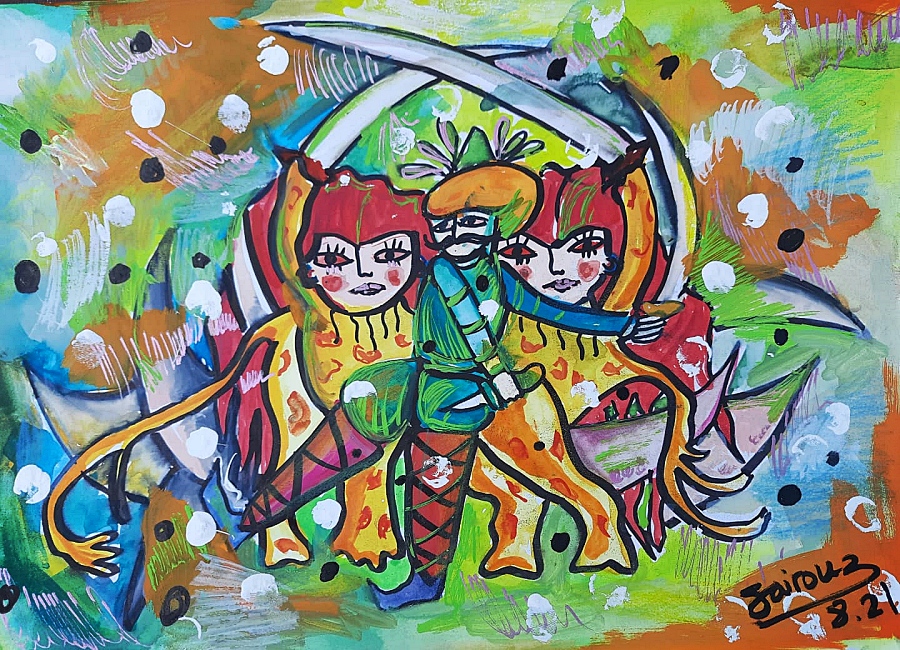
Play as a Form of Resistance by Fairouz Eltaweela

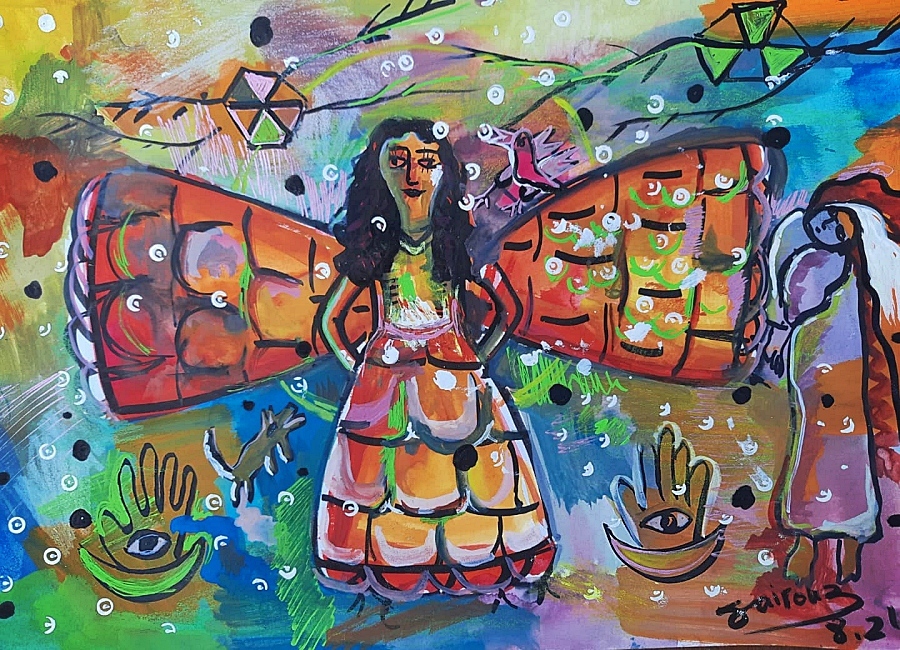
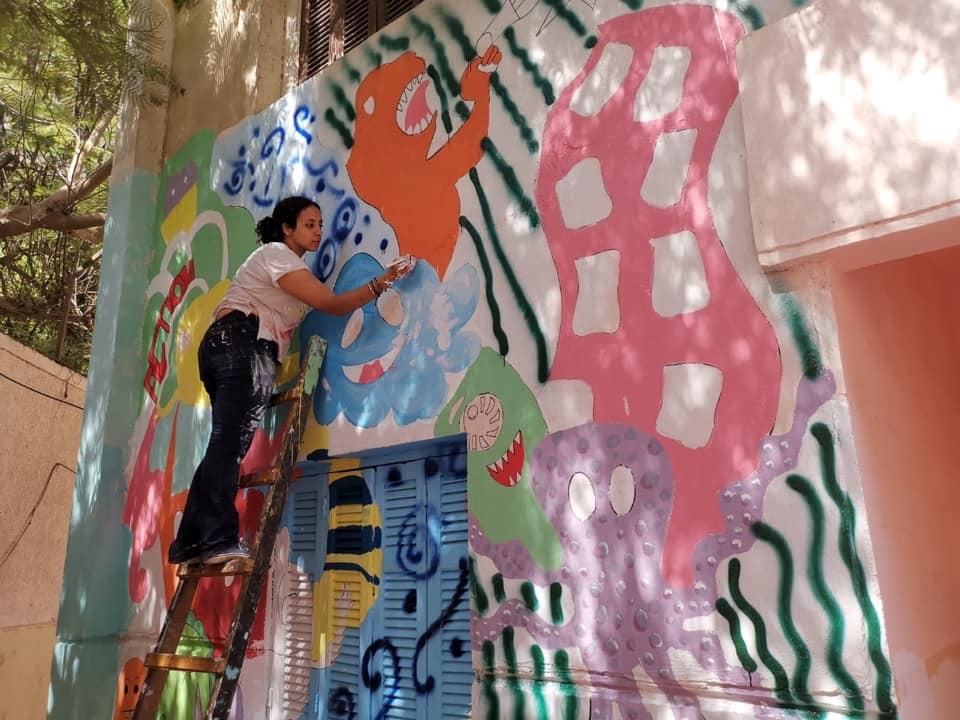
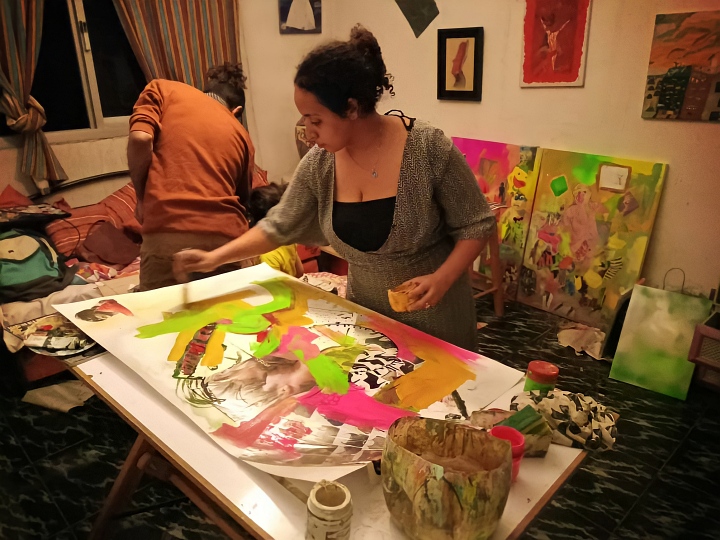
I am a multidisciplinary visual artist interested in painting, alternative sculpting, photography, digital art, collage and mixed media arts. I held my first solo painting exhibition at the age of 14 at Al Gezira Arts Center and have since participated in multiple art workshops and collaborations. I recently graduated from MSA University faculty of Arts & Design majoring in Cinema and Theatre.

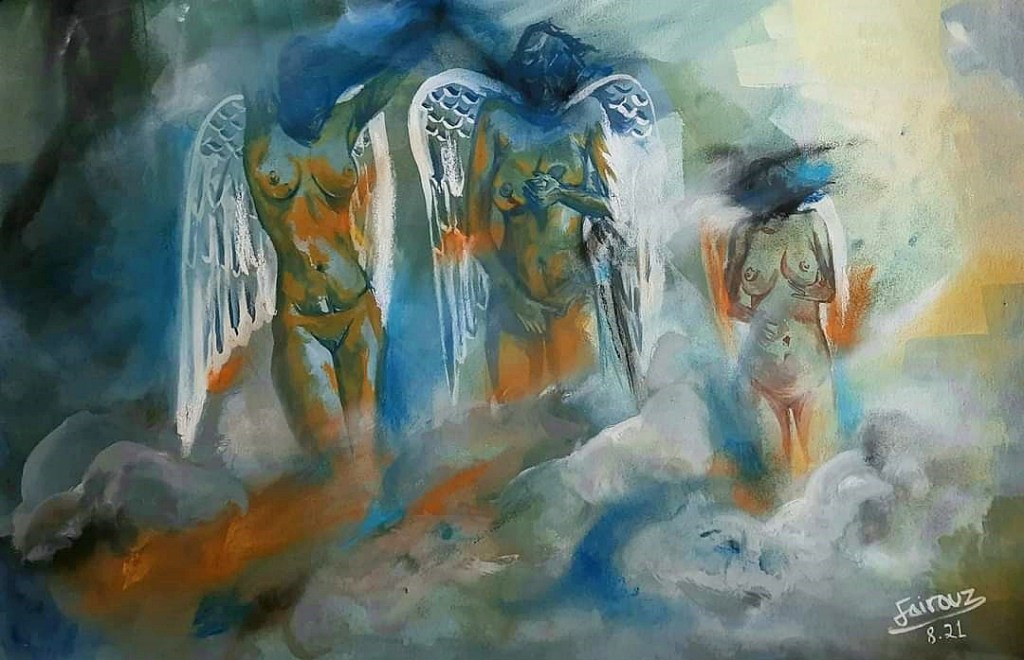
Most of my work explores the theme of ‘play’ as a form of resistance. Further expanding and searching how the visual identities of my various roots all meet in a space that feeds on contemporary imagery and ideals.

Coming from a culturally rich background I am drawn to the visual richness of my city Cairo, particularly the slums where street art happens accidentally as a coincidence unravelling the many great textures and layers of the city, as well as having family roots in Upper Egypt and Delta, I began exploring the relationship between the urban and rural space and how it can be visually contextualized.

My inner child holds the pencils, untangling all the fears that have accumulated within my head and sarcastically mocks them. My inner child giggles and makes all the decisions now. I can only contemplate from afar ,a foreign spectator, as I watch dreams from my subconscious unfold and my inner child continues to laugh at me.

Fairouz Eltaweela

Fairouz Eltaweela

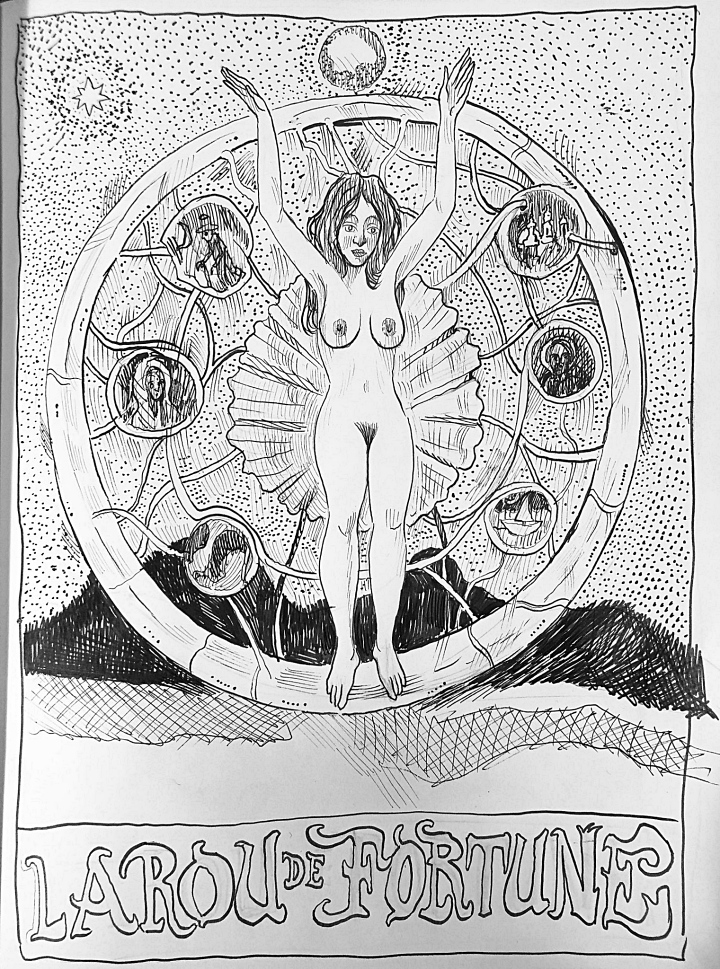
La Rou de la fortune Erik Volet

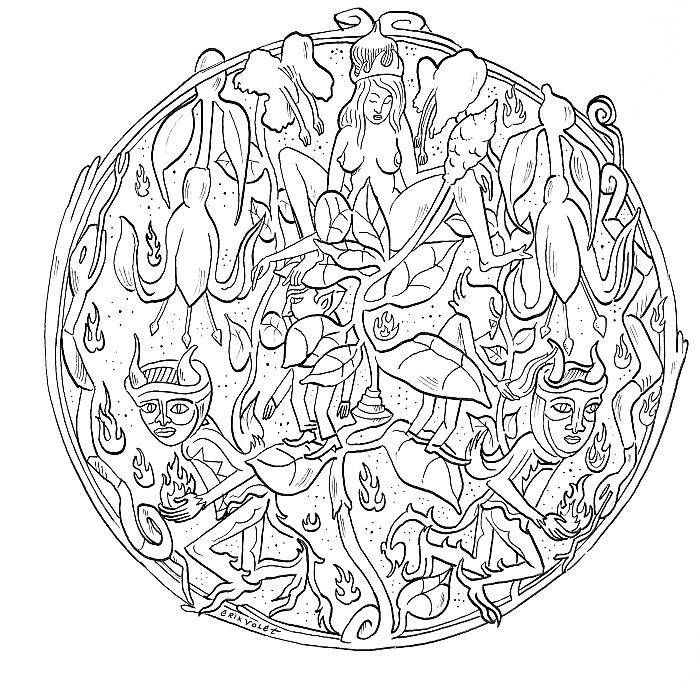
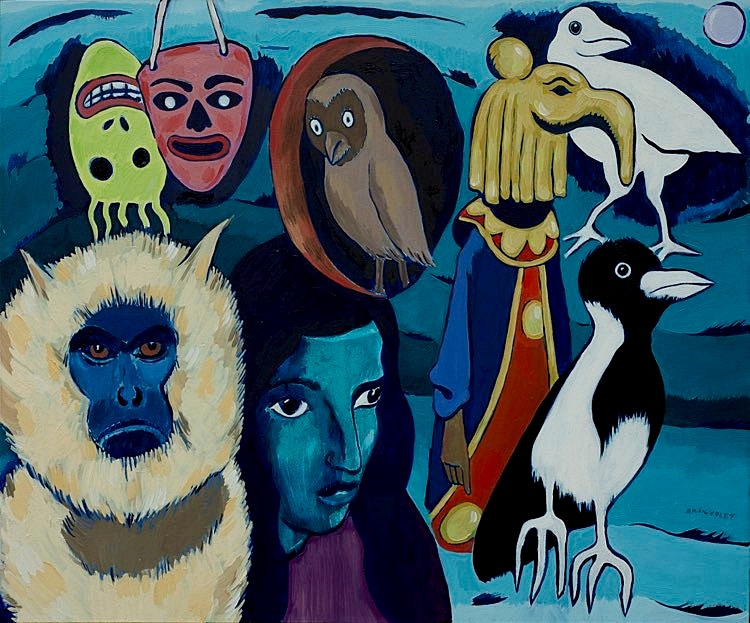
The Human world intersects with those of animals, plants and the spirit world which is gestured towards. There are also beings halfway between these worlds—transitional beings with the ability to move through these different worlds with ease. Multiple time periods intersect & the world of myth and the past blends with the present-day time of contemporary reality.

Erik Volet

Reclining nude

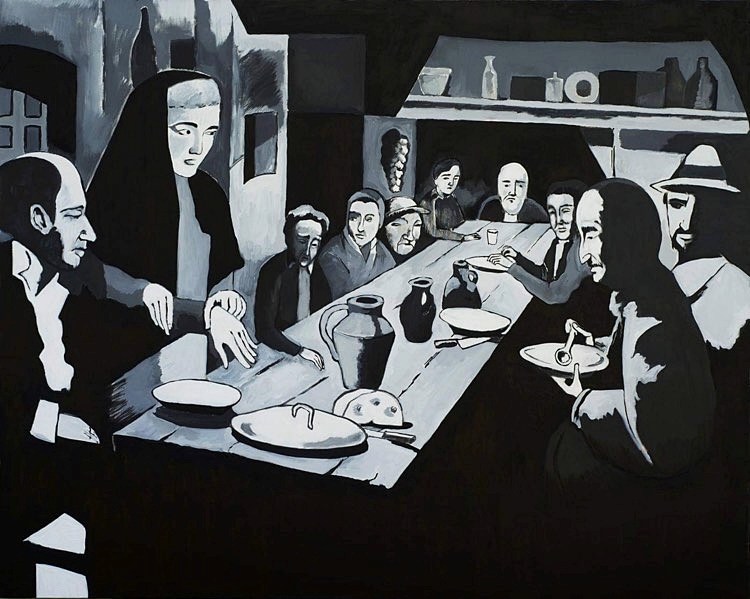
Beggars Banquet

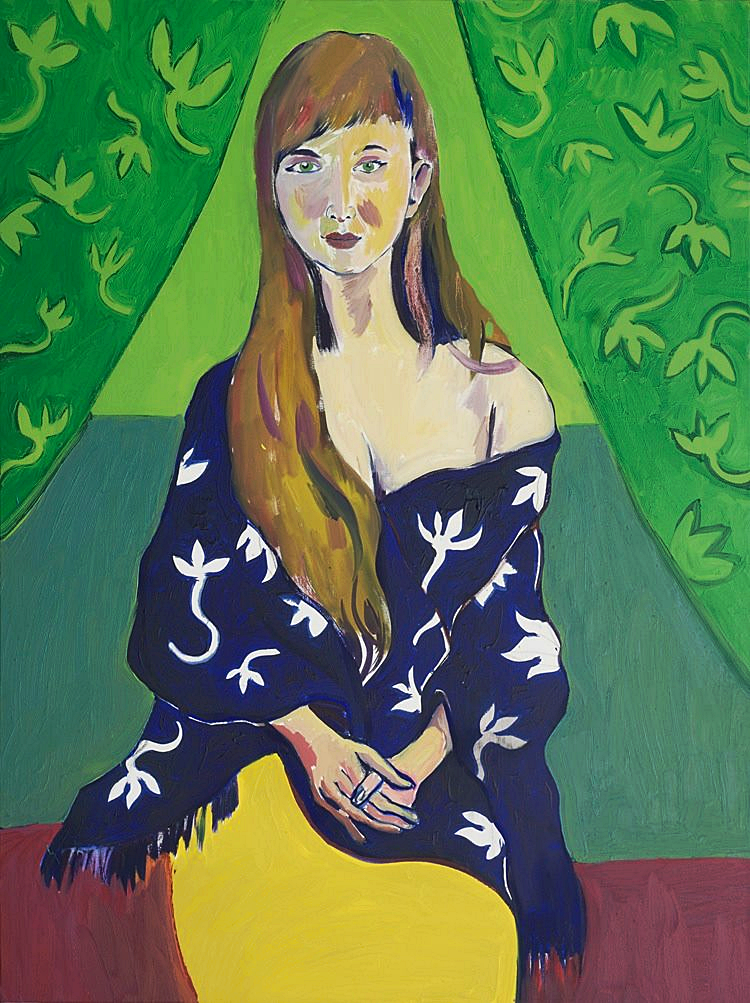
Woman in Blue Shawl and Poet’s Dream

Language of the Birds

Erik Volet (b. 1980) is a painter & illustrator from Canada who has exhibited in Canada, the US & Europe. As well as producing paintings he has published art books, made zines, illustrated books, and maintained a consistent involvement with painting murals on the street and in the public sphere. Influences, which continue to be important to his art practice are comic book art, graffiti, hip hop culture as well as surrealist theory and practice.

ERIK VOLET

Piebald Pandora and the Phantom Self

Piebald Pandora

Multi hued Glory

Sloth Shark face

Palomino woman bites us

and hangs with us

upside down at dawn

selling our souls to 4 legged

Majesty Lemurs on Madagascar….

(C) April 8, 2023 Written By Richard Gessner

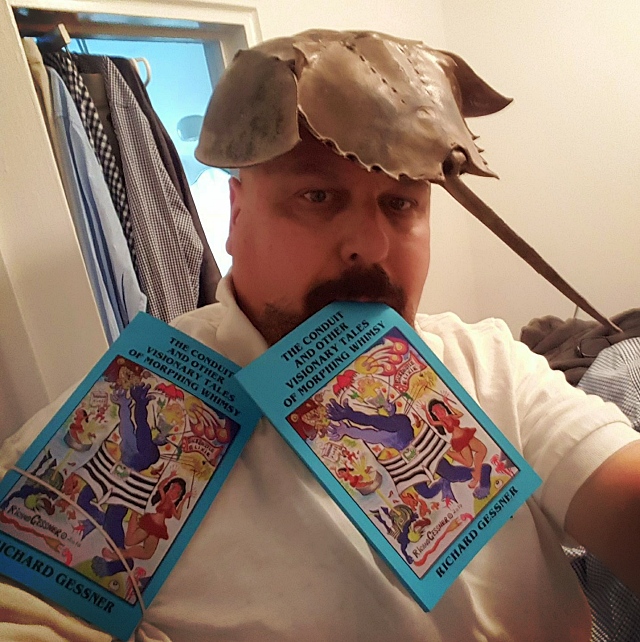
Richard Gessner’s fiction has been published in Air Fish: an anthology of speculative work, Rampike, Ice River, Coe Review, Another Chicago Magazine, Happy, The Act, Sein und Werden, Skidrow Penthouse, The Pannus Index, Fiction International and many other magazines. A collection, Excerpts from the Diary of a Neanderthal Dilettante & The Man in the Couch was published by Bomb Shelter Props. Gessner’s drawings and paintings have appeared in Raw Vision, Courier News, Asbury Park Press, Rampike, Skidrow Penthouse, and exhibited at Pleiades Gallery, Hamilton Street Gallery, Cry Baby Gallery, The Court Gallery and the Donald B. Palmer Museum. Richard wrote The Conduit and Other Visionary Tales of Morphing Whimsy. He lives in Montclair, New Jersey.

The Conduit and Other Visionary Tales of Morphing Whimsy Audible

self fee of a phantom self. oil/collage Mitchell Pluto

Afterword

We believe we are conscious but we are continuously unconscious.

The eye is the window to the brain and there sits the optic chiasm. A cross current chessboard of visual information. In ancient China, King Wen changed three lines into six lines to form 64 hexagrams in his book called The Book of Changes. Ironically there are 64 arrangements in DNA and 64 squares on the chessboard.

Synchronicity?

Jesus, all the time I spent believing in a historical Laoz and come to find out there’s no historical race either.

these our the last days of being a primate. Don’t worry we still have cuspids

Everything must be uploaded|  

…creating a record print of a finger swipe from phone screen| CHECK

…the gesticulation wavelengths of our voice from phone calls| CHECK

…iris scan captured from viewing screen| CHECK

tell us what’s on your mind| CHECK

This device and artificial Intelligence will marginalize the future of man’s ego. After all man is an animal guided by objects, why not be a primate whose experience is organized and interrupted by the phone?

isn’t it working already?

Who is on the other side of the screen?

A narcissistic shark that feeds remotely on a colony of brains and uses the appearance of a woman as a lure

Now A Word From Our Sponsor

We would like to salute our patron Walt and his 1958 Disney film White Wilderness who graciously staged and contrived the impression of a massive lemming suicide. Now back to our show.

(C) April 8, 2023 written by Mitchell Pluto

I would like to thank my friend, Richard Gessner for collaborating and creating some writing to interpret my painting

Greek in the wind By Richard Gessner

A Pan-Hellenic trinket, designed to mollify the curious, was given to me by a shadowy agency of relatives of the unknown passing in the night.

The trinket is a translucent diorama of my grandfathers’ Diner, 2’’ long, 1’’ wide, to fit on a key chain or small novelty display shelf.

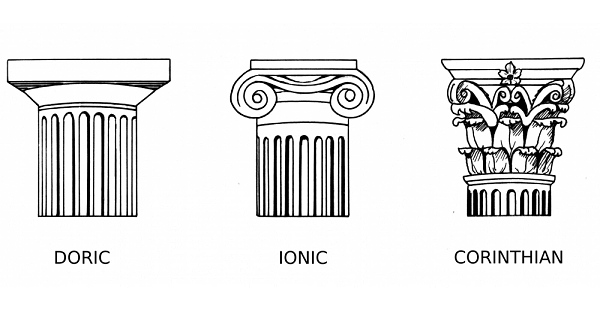
As if under a microscope, the chronological history of Panayiotis Konstantinos Stratigakis is visible through the roof of the miniature diner. Doric pillars on rows of coffee cups vanish in the horizon of countertop covered with displays of spanakopita, kalamata olive feta cheese salads and baklava.

When I shake the diner in my fist, tiny figurines of my grandfather light up, linking arms in a sirtaki dance accompanied by the sounds of a tiny red bazouki player. Valiantly flashing neon lights of blue and white striped patterns of the Greek flag move up and down. The diner, highlighting his personal and national history.

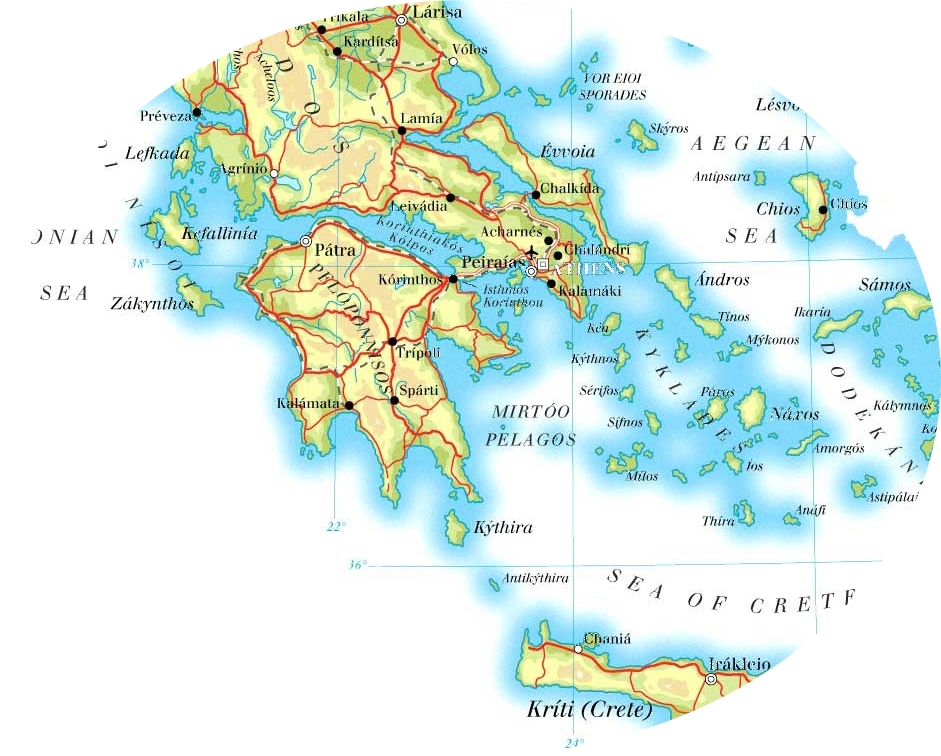
At the front entrance of the diner, stands the rocky terrain Of the Pelloponnesian peninsula where my ancestors have lived for thousands of years. There’s 400 years of Ottoman rule, subjugation and bloodshed between Greek and Turk. A Greek ancestors’ gold sword slashing the carotid artery of an Ottoman overlord glows like a beacon of hope, heralding the victory of the Greek war of Independence. The port of Piraeus, from where my grandfather sailed to America is then visible, followed by a heroic image of my grandfather as a tall handsome young man setting foot on American soil for the first time. His rapid rise in socioeconomic class represented by the the elite prep schools where he sent his promising sons. An honorable image of Panayiotis in middle age as a pillar of the community, a leader in the Greek Orthodox
Church glows, emitting rays of light in the middle of the diner.

Suddenly I notice there’s evidence of tampering in the diner diorama. Tiny diagonal fissures crisscross the clear lucite windows and roof, where significant parts of my grandfathers’ history had been removed. Paid off micro vandals with precision saws cut out slices of his life, hushed up buried secrets were blurred, then erased. Walls of shame pancaked on top of each other, horrid character flaws were sugar coated and thus rendered innocuous. The inflamed canker sores jutting from my grandfathers’ conscience, were filed down with chisels then surgically excised. The crater scars remaining were spackled over with dreamy blue tourist’ brochure views of the Aegean Sea.

I attempt to return my pan Hellenic trinket to the agency of unknown relatives, to show them the evidence of tampering, to retrieve the missing slices of my grandfathers’ life, to get a refund or replacement diner diorama, however the agency of unknown relatives were nowhere to be found.

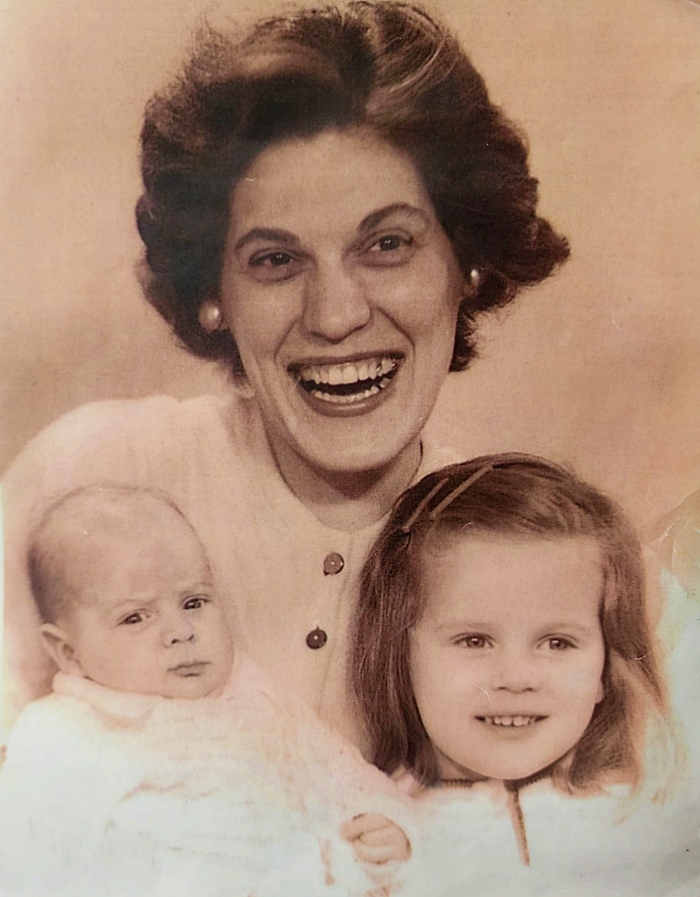
But soon in the gray dawn of an early spring morning, the missing slices of my grandfathers’ life were revealed. Over the cooing of a sandalwood morning dove, could be heard the voice of my grandfather anglicizing his last name to Sherwood because Stratigakis sounded too much like Streptococcus. “Streptogakis” had associations which were not good for business. Or he was hiding, and wanted to vanish without a trace. Elusive and transient as the wind. In the lucidity of the first light of the day, floating on the breeze, was a vision of my grandfathers’ swarthy muscular body enveloping my pale 15 year old grandmother, a non-Greek girl. It was mere sport to take the girls’ virginity, but when she got pregnant, my grandfather vanished and was never heard from ever again. My teenaged grandmother was burdened with an illegitimate child she never wanted. My mother had Greek features, swarthy skin, dark eyes and hair, like her father. She grew up fatherless in poverty.

Then it occurred to me to ask Panayiotis Stratigakis

“where was your democracy then?”

And to ask

“how do you reconcile being a pillar of your community with being a deadbeat and statutory rapist?”

But my grandfather was long gone like my mother into the eternal beyond.

Someone had to bear witness for my mother, because no-one else cared or remembered. And I realized that I was Greek by ill gotten gains. A grandfather who didn’t acknowledge his own daughter, my mother.

As I was the grandson of a statutory rapist, son of a bastard, the dishonor Panayiotis cast on my mother was too much to bear. In a misguided attempt at rectification, I got between many macho Greeks and their wives and daughters, provoking them to “fight me like a man”

But the dishonor Panayiotis cast on my mother and her memory, still lingered.

The Pan-Hellenic trinket felt infinitely light on my key chain. But it was heavy with my mothers’ unresolved conflicts. I felt burdened by the weight of it.

The trinket was a family heirloom, something as rare as a comet that passes by only every 10,000 years. But I had the need to be rid of it, it didn’t mollify my curiosity as the agency of unknown relatives had intended.

To break free of the curse afflicting my family, restore my mothers’ honor and undo the defilement of my own blood, I cupped the trinket in my left hand and cast it with all my might, high into the sky, the trinket traveling far, vanishing from sight over the Peloponnesian peninsula in Greece where my ancestors have lived for thousands of years.

“Greek in the wind” (C) 2020
By Richard Gessner

Richard Gessner’s fiction has been published in Air Fish: an anthology of speculative work, Rampike, Ice River, Coe Review, Another Chicago Magazine, Happy, The Act, Sein und Werden, Skidrow Penthouse, The Pannus Index, Fiction International and many other magazines. A collection, Excerpts from the Diary of a Neanderthal Dilettante & The Man in the Couch was published by Bomb Shelter Props. Gessner’s drawings and paintings have appeared in Raw Vision, Courier News, Asbury Park Press, Rampike, Skidrow Penthouse, and exhibited at Pleiades Gallery, Hamilton Street Gallery, Cry Baby Gallery, The Court Gallery and the Donald B. Palmer Museum. Richard wrote The Conduit and Other Visionary Tales of Morphing Whimsy. He lives in Montclair, New Jersey.

The Conduit and Other Visionary Tales of Morphing Whimsy Audible

THIS WRITING IS AN AUTHORIZED DUPLICATION WITH PERMISSION AND EXPRESSED CONSENT
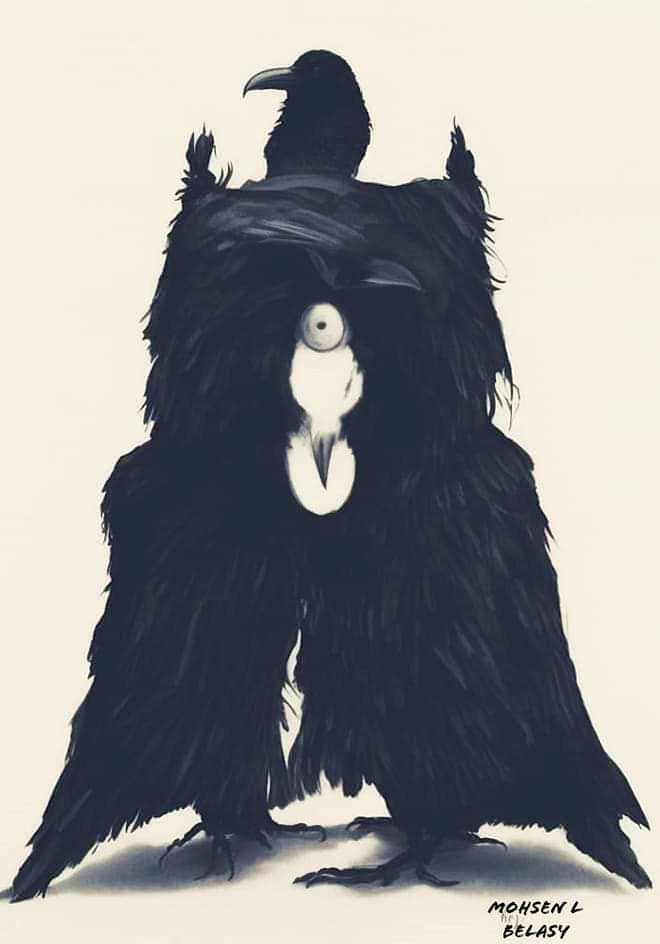
Tadeusz Baranowski Non-Obvious Painting

In November 2022 I invited Tadeusz Baranowski to talk a little bit about his life and his work. Tadeuszu graciously accepted which I am very grateful for, his thoughts on his life and abstract painting can be found here in Hidden Motion.

Tadeusz’s 2023 show organized by the Auschwitz Culture Center. Poster by Jarek Składanek

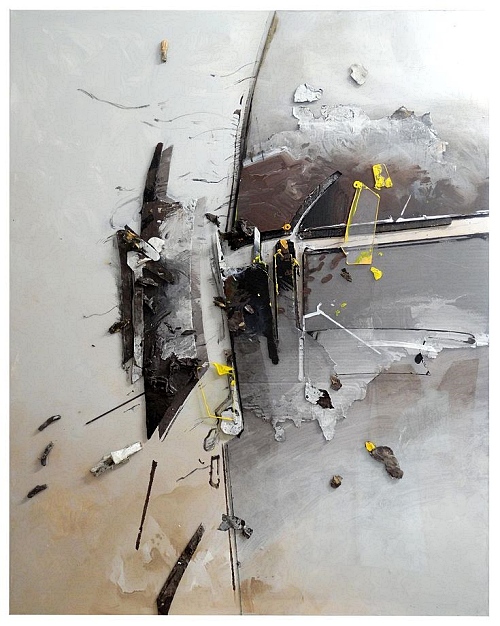
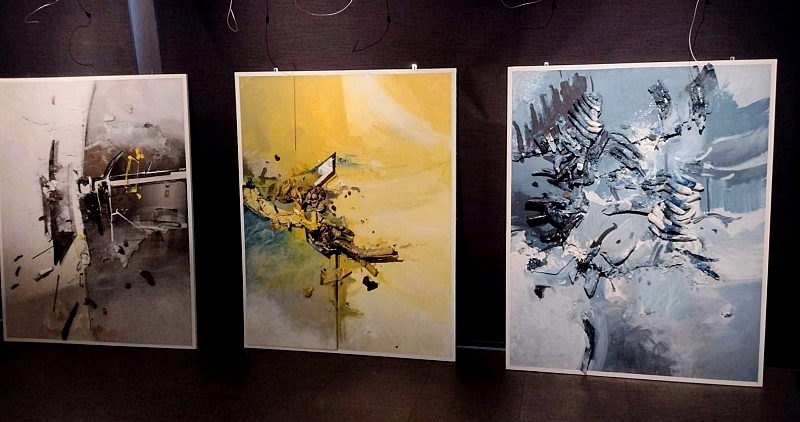
While known internationally for his original comic books, Tadeusz also paints Non-Obvious Painting that emphasizes free and spontaneous appearing expressions. Tadeusz’s paintings are deliberately built by a technique that uses wood, fabric, polystyrene, acrylics, and oils. One painting sometimes takes many months.

I spent several hours looking at Tadeusz’s work which I found universally appealing. Abstraction has a reputation that is not clearly understood like understanding quantum foam, synchronicity and the the nature of nothing. I think Tadeusz Baranowski’s paintings are a release of energy in a still life. There is no narrative or conventional images. There is a sense of time somewhere. The paintings convey a space scape with unidentified forces. These interactions influence the surface and time that contains them. Usually these tensions are dynamic, sometimes explosive, but firmly positioned so we can consciously see them. When I look into these paintings I apprehend different emotional and cognitive states. Each painting is worth meditating on.

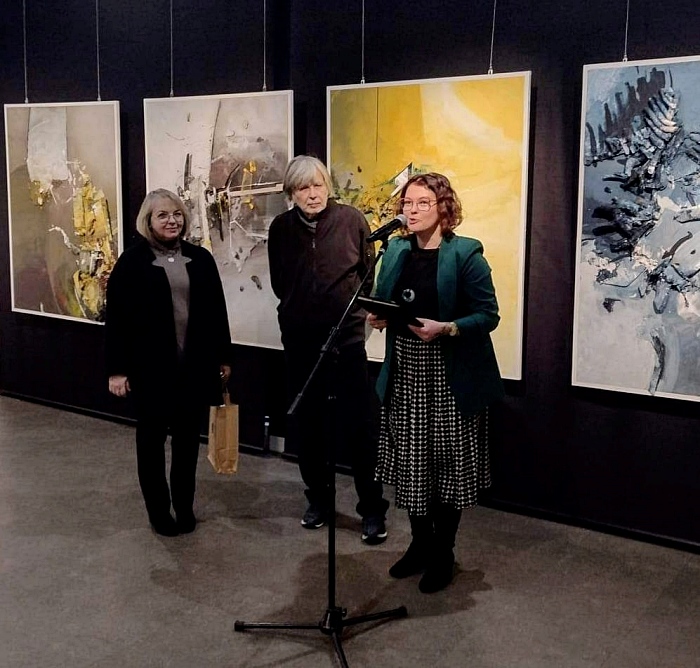
Through our correspondence in email Tadeusz and I immediately found we shared a common love and respect of nature. Tadeusz mentioned trips to the Masurian country with his wife Anna. He said he currently lived next to a forest near Warsaw, Poland. Tadeusz considers himself a lone wolf in the universe. He enjoys swimming as a contemplative activity. A prolific amount of nature photos can be found on Tadeusz’s Facebook page. The photos capture a rhythm and pattern of nature. I speculate Tadeusz’s photos of flowing water, broken trees, flowers and insects may have provided a scaffolding or study for his paintings. Tadeusz Baranowski’s show was curated by Magdalena Grochowska and will be shown from February 10th to March 14, 2023 at the Oświęcimskie Centrum Kultury

Director of OCK, Monika .wi ,tek-Smrek, curator Magdalena Grochowska and Tadeusz Baranowski

Tierra Profunda Rene Ortega

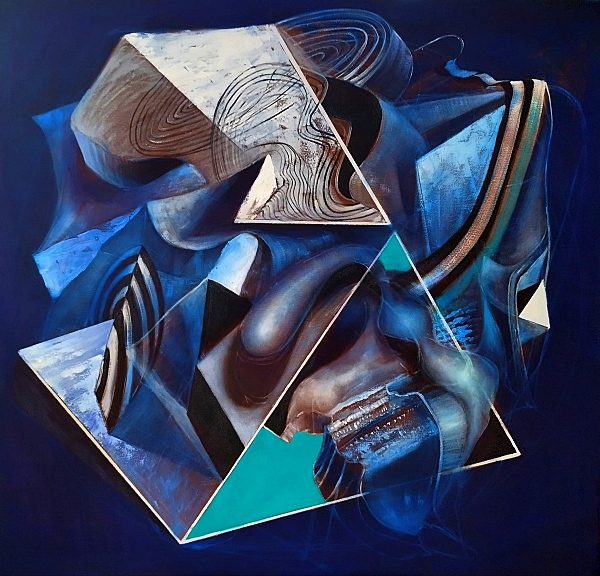
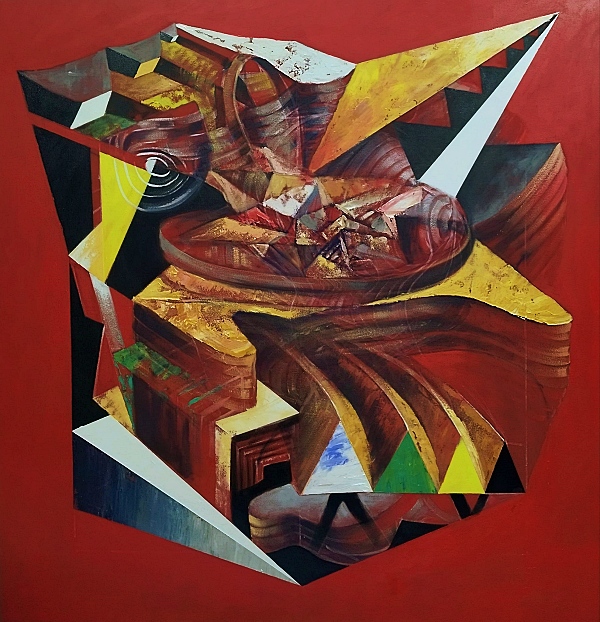
René Ortega utiliza fórmulas de liminalidad para iniciar al espectador a experimentar los misterios del inframundo. Hay una puerta de flores, una escalera de anillos a túneles, afinada con un aro de colores. Todo esto está aquí dentro de los secretos de nuestra tierra. En estos pasos buscamos un centro que ya es un estado completo, un lugar unido por los opuestos e igual a sí mismo. René agrega esquinas al círculo giratorio para crear una faceta para ver otros espacios y otros tiempos.

Mitchell Pluto

TIERRA PROFUNDA

Mi enfoque se enfatiza en la búsqueda de las respuestas transcendentales las problemáticas ecológicas y sociales de la humanidad que enfrentamos actualmente.

Con mis obras pretendo hacer conciencia para situar al ser humano como parte importante de la naturaleza es el volver encontrándose con muestro yo interno y nuestros sentidos que se encuentran en un estado dormido es el volver a mirar y observar como un niño para situarnos en las profundidades de los infinitos subsuelos y planos de tierra imaginaria de mundos micros organismos vivos subterráneos que se transmutan constantemente en máquinas orgánicas voladoras y así te llevo transportándote a mi imaginario poético donde danzan líneas interminables y planos de vida que se juntan y separan al mismo tiempo incansable búsqueda de lo desconocido como las estrellas y la naturaleza transmutando a infinitos planos profundo de colores y formas que voy realizando atreves de esta incansable y cambiante movimiento y sonido de la vida.

Escrito por ©René Ortega

Rene Fernando Ortega Villarroel

René Ortega, fue uno de los ganadores en la bienal internacional de arte contemporáneo 3 de octubre de 2022. René ha expuesto obra en Chile y Argentina. Está involucrado en muchos programas de arte cultural que se han relacionado con hospitales, niños y la enseñanza del arte profesionalmente. Su muestra más reciente fue Mental Labyrinths en la galería de arte del Centro Cultural Til Til el 18 de junio de 2022.

“Mi preocupación es la figura humana como sentimiento de estados primitivos e irracionales, cuyo punto principal son las cabezas, pensamiento universal de la creación del hombre y centro del universo. Todo ello condujo a una mutación del lenguaje plástico y pictórico”.

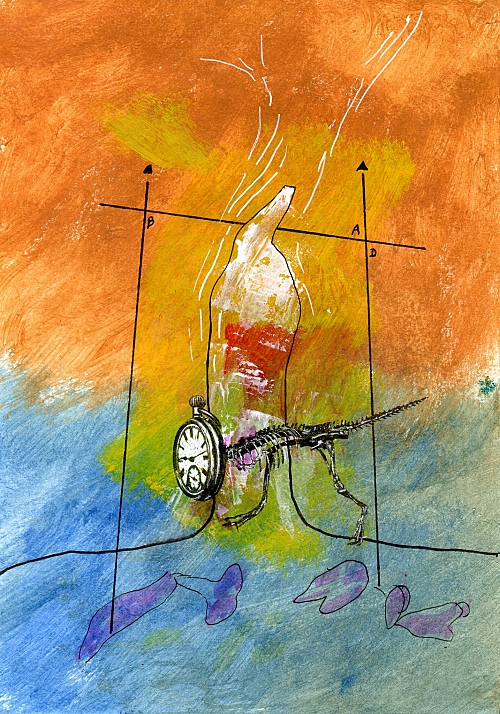
The Paleozoic Clock by Enrique de Santiago

Before to be

Before discriminating the grey hours of the clear

She lived the only and always ufana clarity of my imaginary friend

Time evaporated his muscles and nerves

To leave only impressions on the ether

Featured Image: The clock that survived the paleozoic, acrylic and ink on Fabriano paper 250 gm. 21 x 28 cm. Enrique de Santiago

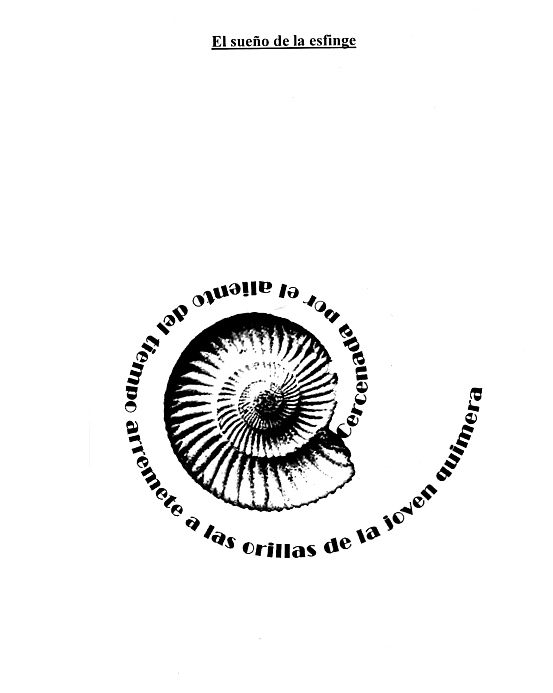
The dream of the sphinx

Bounded by the breath of time

Rush me to the shore

from the young chimera.

Aurea X-ray, acrylic and ink on Fabriano paper, 21 x 28 cm. Enrique de Santiago

SUM OF OPPORTUNITIES

“If the doors of perception were cleansed, everything would appear to men as it really is: infinite. “

William Blake

And I saw the impossible behind the possible

clinging to its subalternative limit that varies by century

because it responds to the movement of utopian tides

as I look into your eyes from the night glass

there everything was infinite in a tear lodged in your pupil

where she calculated the proper time

to go out into the light of tornadoes

and to the thick porcelain of desire.

Lithic Dreams of an Amazed Void, ink on 300gm Canson paper. 21 x 28 cm.
Enrique de Santiago

Perpendicular Imagination That Peeks Out

after the divine muscle

that bare your pelagic fate

to the one who lies at the feet of his limestone slab.

With every sun 666 mistakes arise

in the belly of the lunar word.

Appearance, ink and piece of paper, on 300 gm Canson paper. 21 x 28 cm. Enrique de Santiago

From the clouds held for centuries

of the air that snakes the knot violates sense

and every dark way that embraces the sound of the world

the maze light line emerges

The Weight of Astral Utopia, acrylic and ink on Fabriano paper 250 gm. 29 x 21 cm. Enrique de Santiago

STARS TOPOGRAPHY

Only from the heart can you touch the sky. (Rumi)

So many times announced about my bone marrow

Bear Minor reduces his trades

while the diligent memory of your laughter

still loathing the twilight

and you will know by the occasional spurs

that had not taken my hands away from that oniric praise

and neither from the damp condition that bounced from his promised halo.

written and Illustrated by ©Enrique De Santiago

Enrique De Santiago. Poet, Artist and Philosopher