In November 2022, I asked Tadeusz Baranowski to speak briefly about his life and work. I’m thankful Tadeusz kindly agreed, and you can read his thoughts on his life and abstract art in Hidden Motion.
Tadeusz’s 2023 show organized by the Auschwitz Culture Center. Poster by Jarek Składanek.
Tadeusz’s 2023 show organized by the Auschwitz Culture Center. Poster by Jarek Składanek
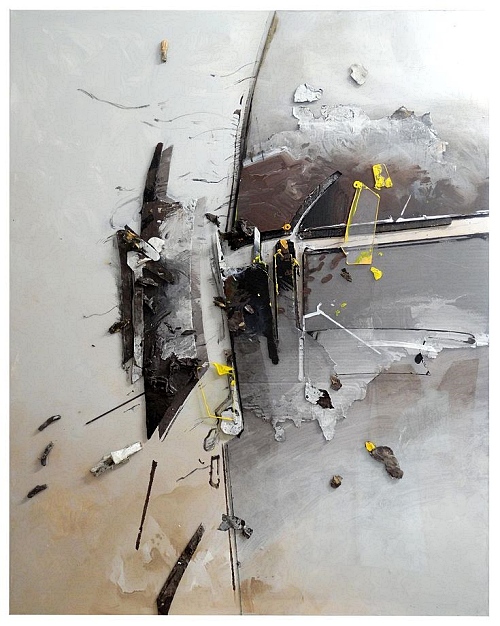
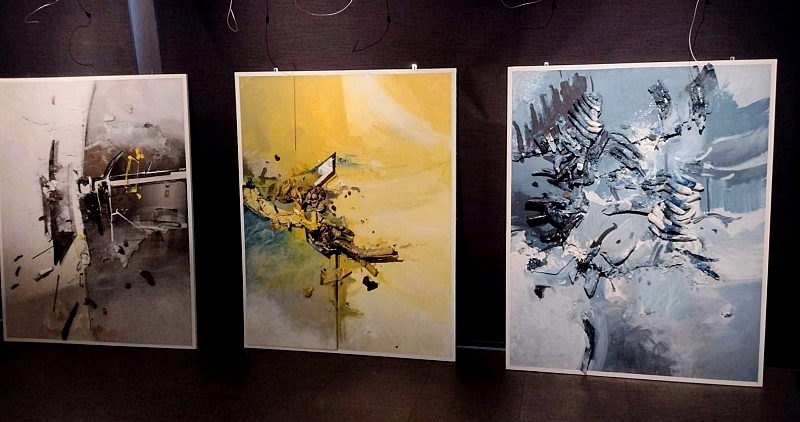
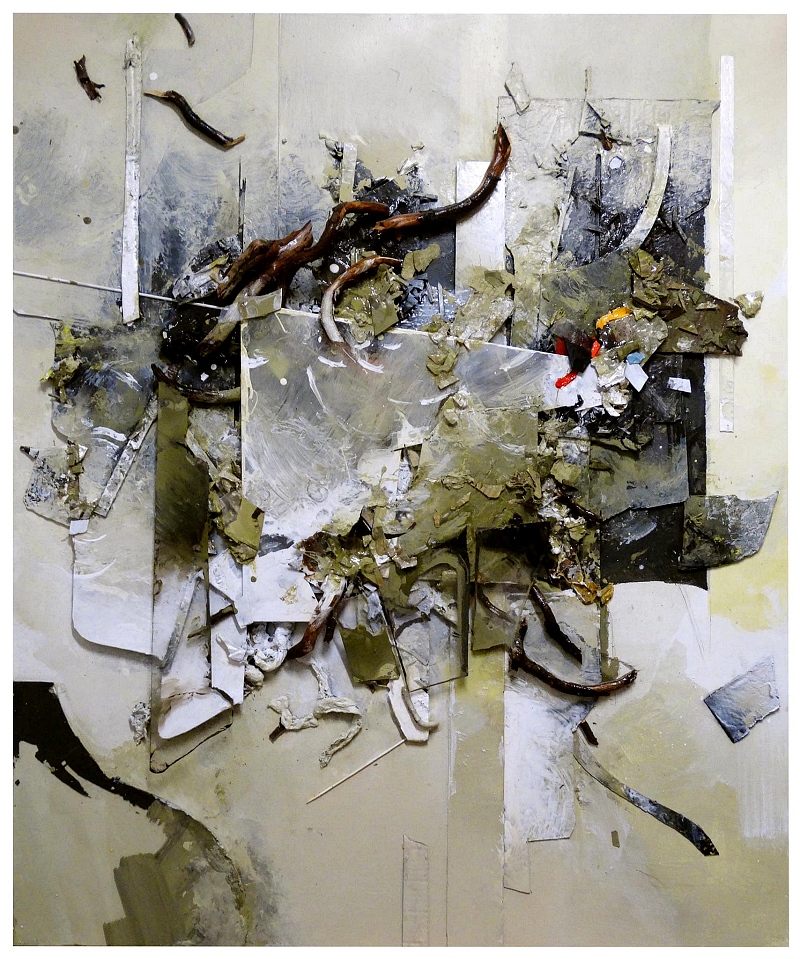
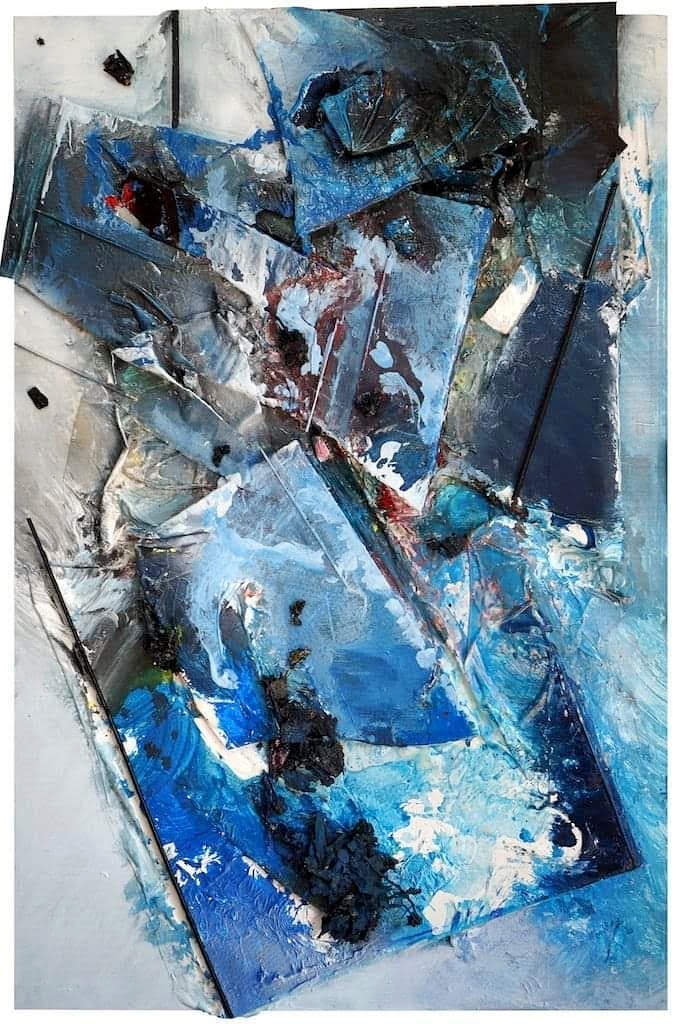
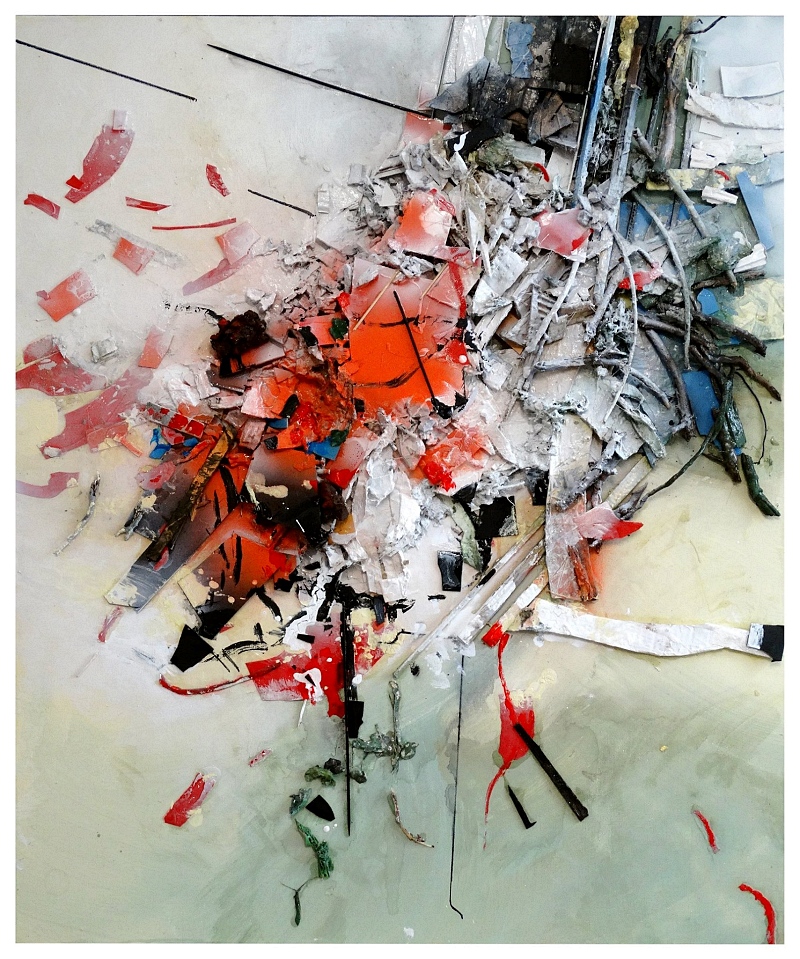
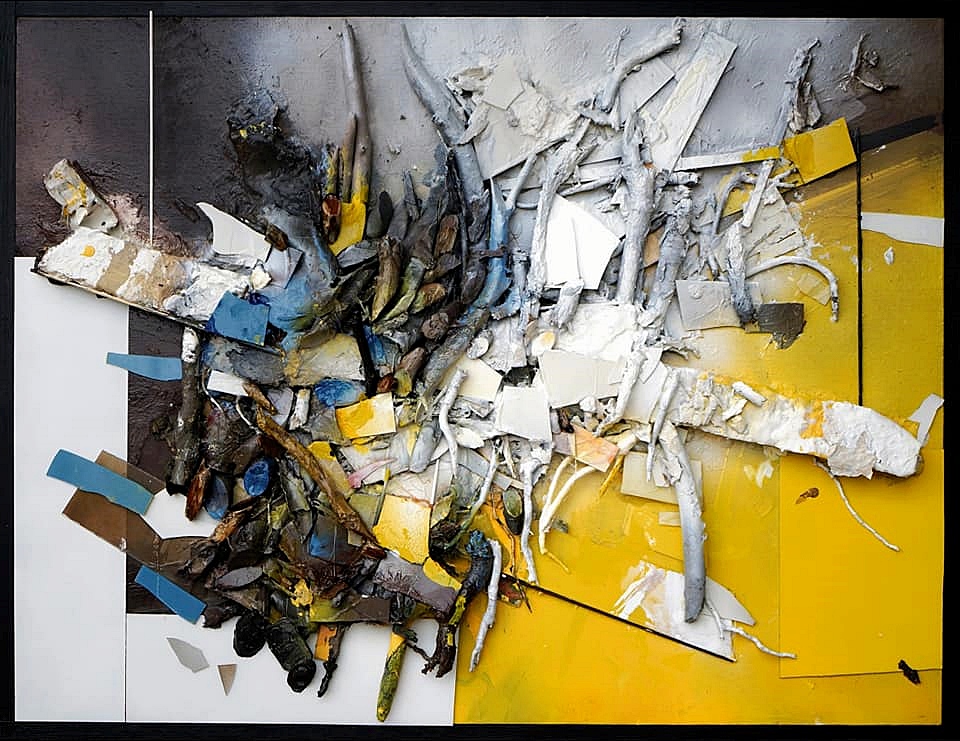
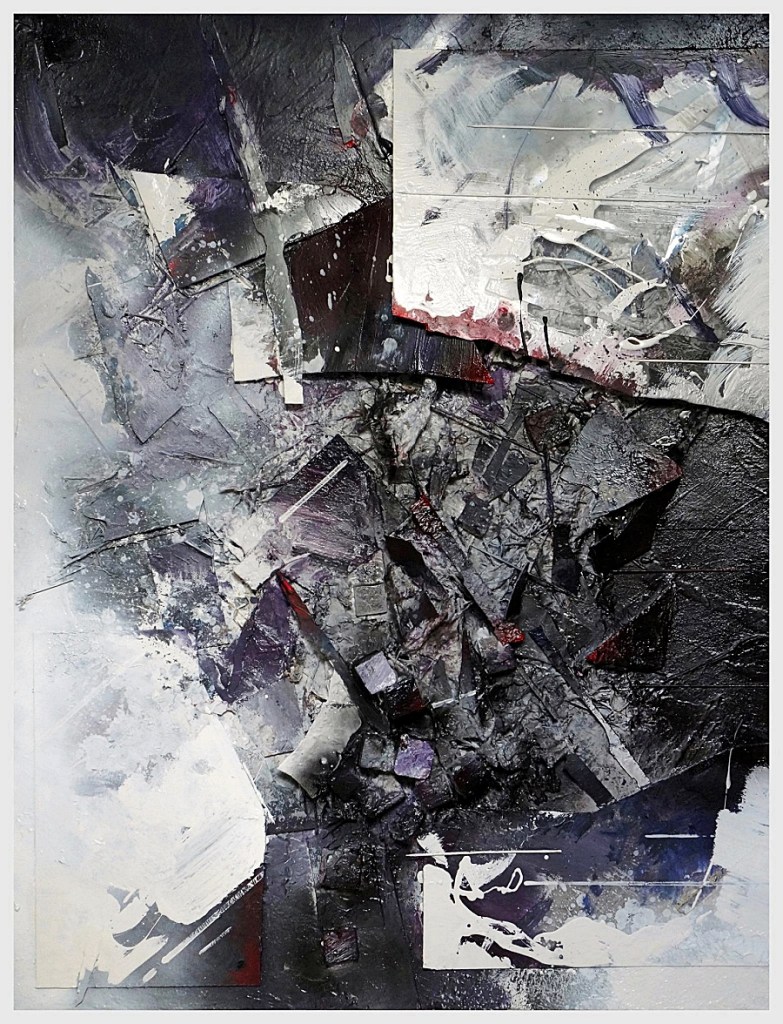
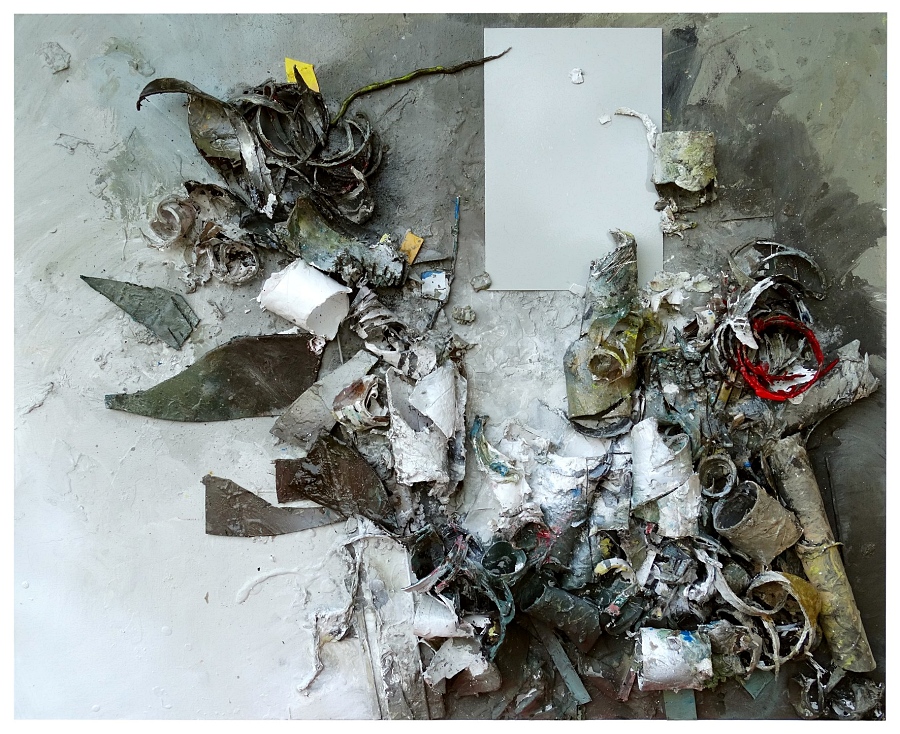
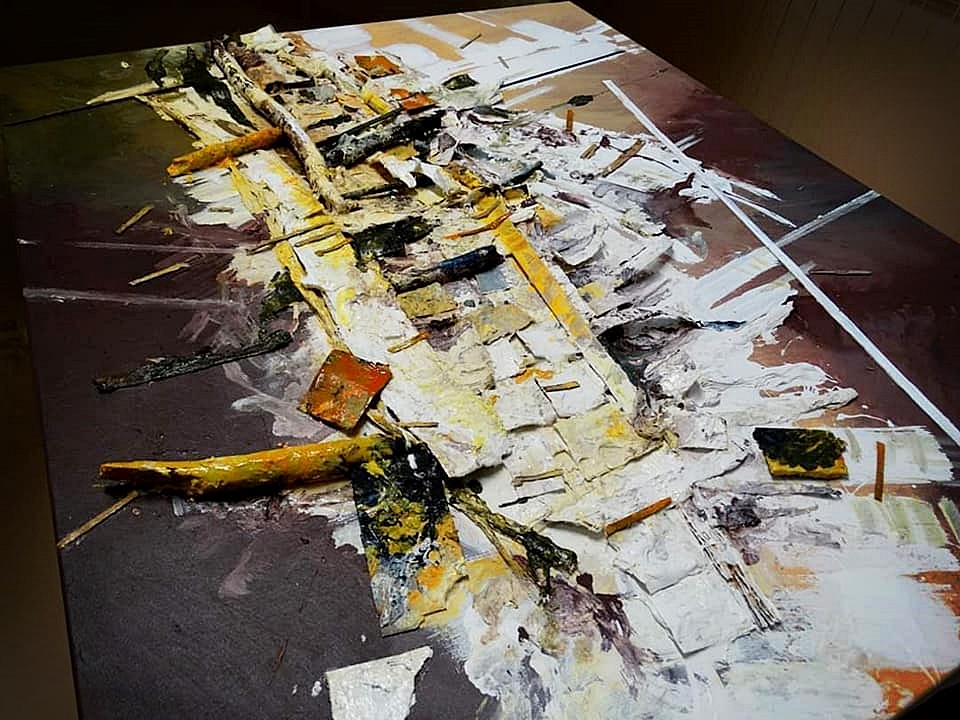
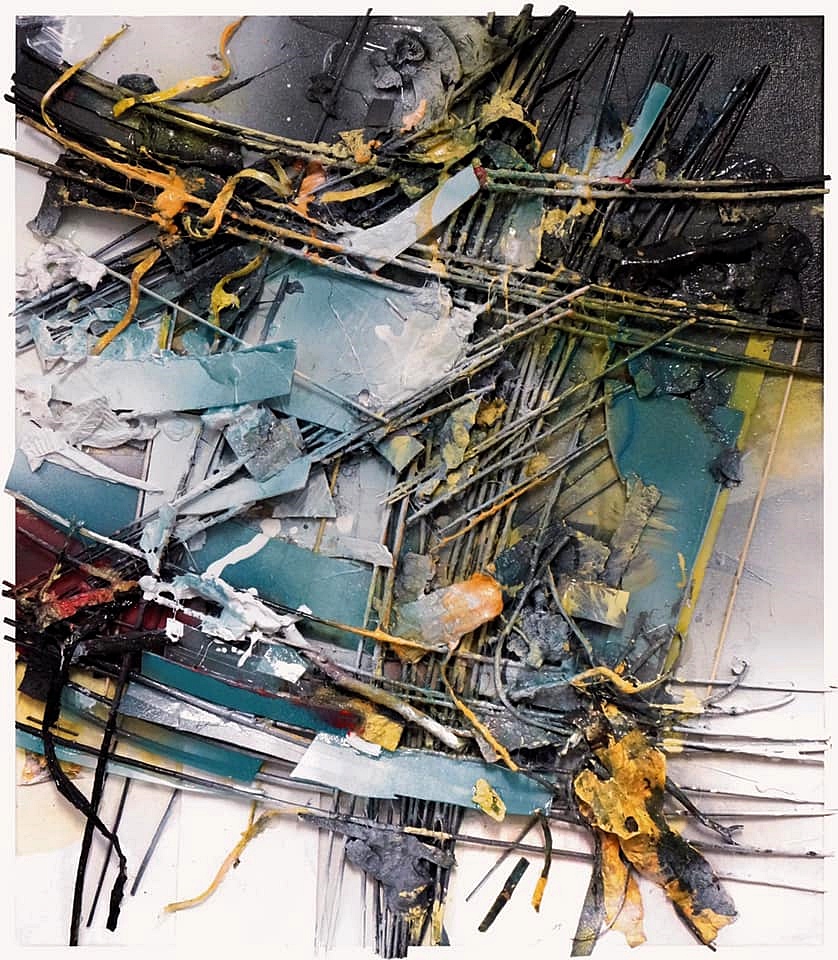
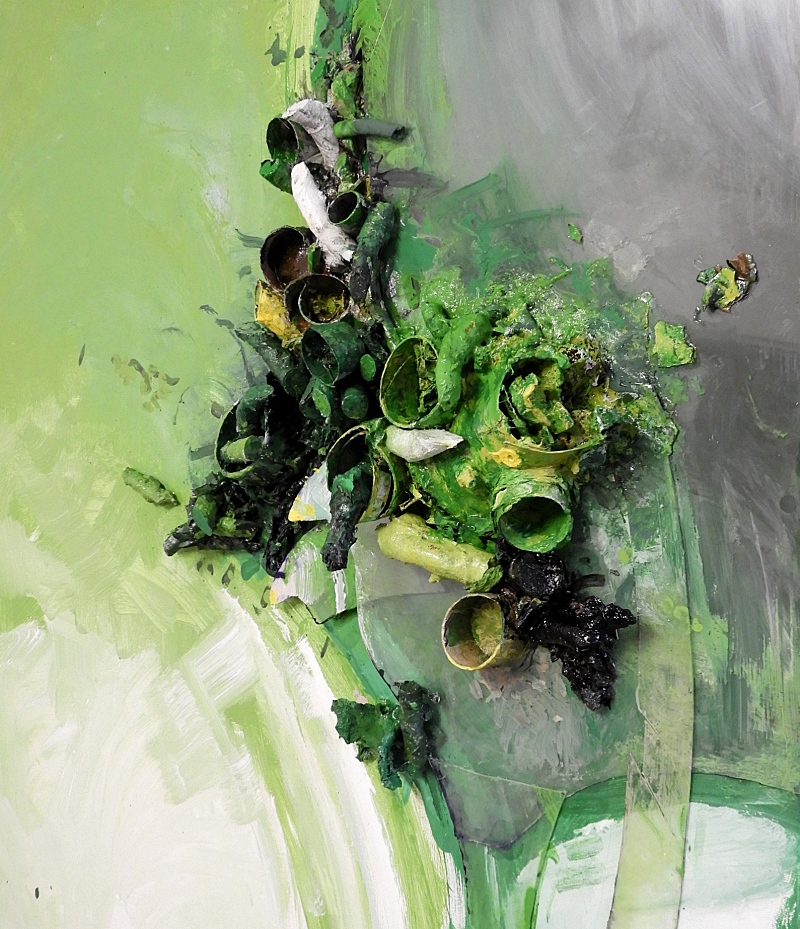
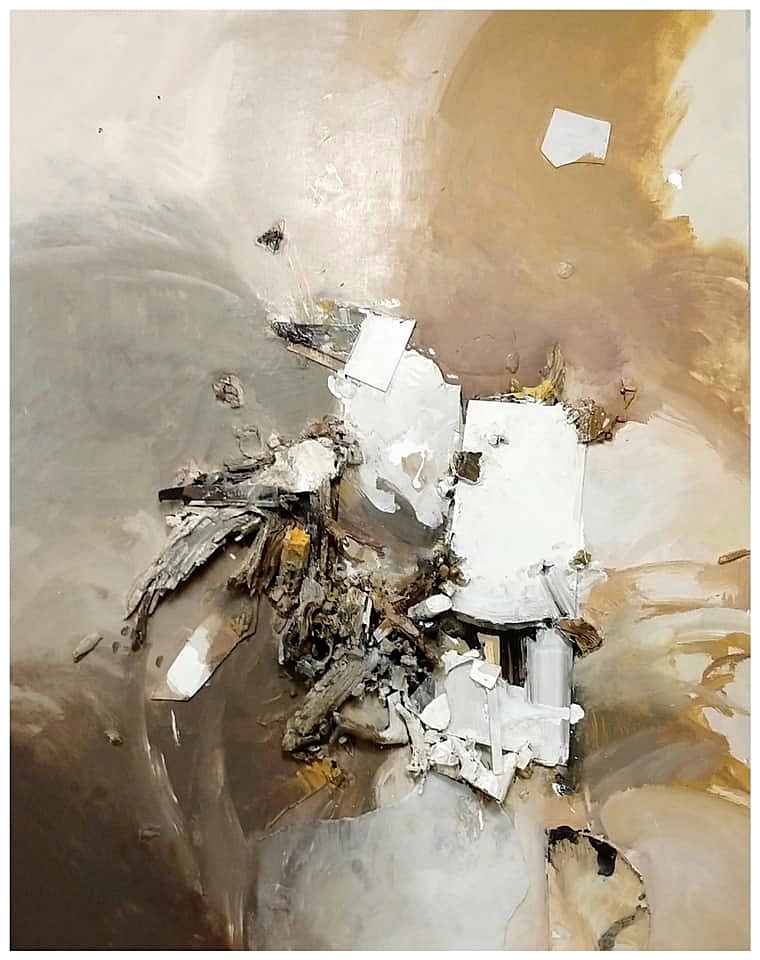
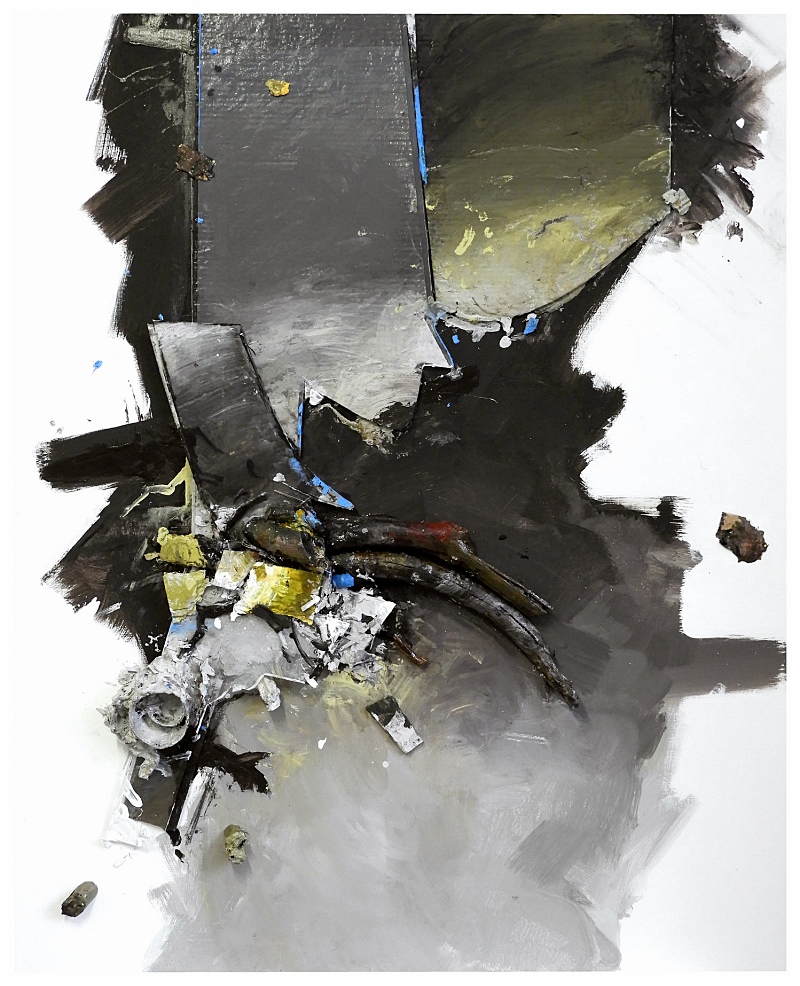
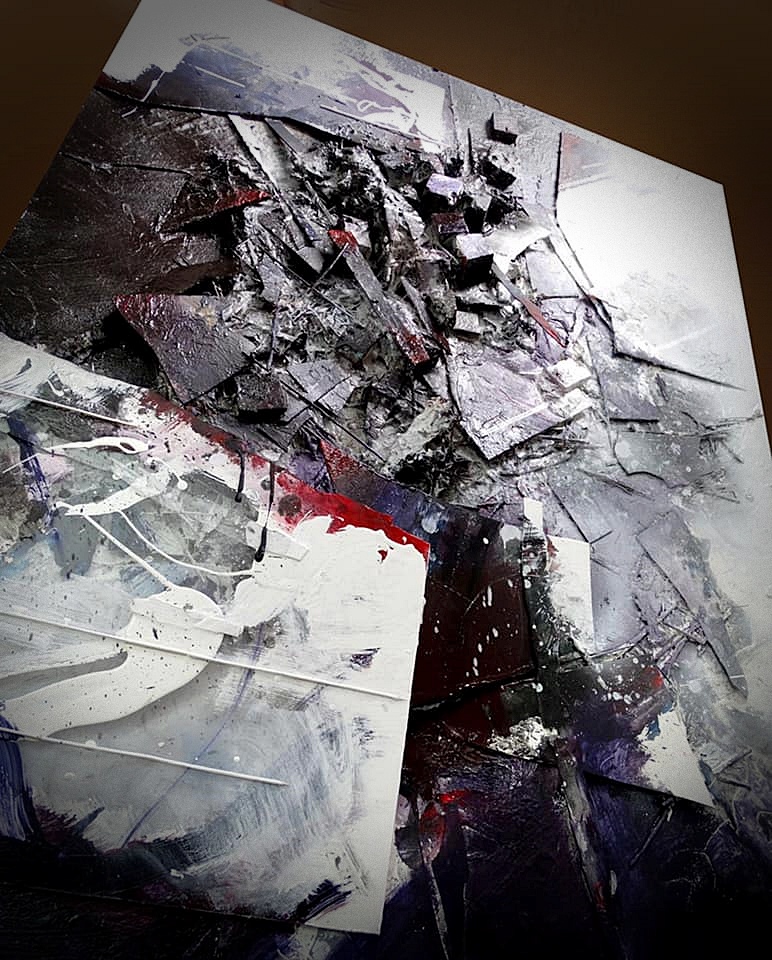
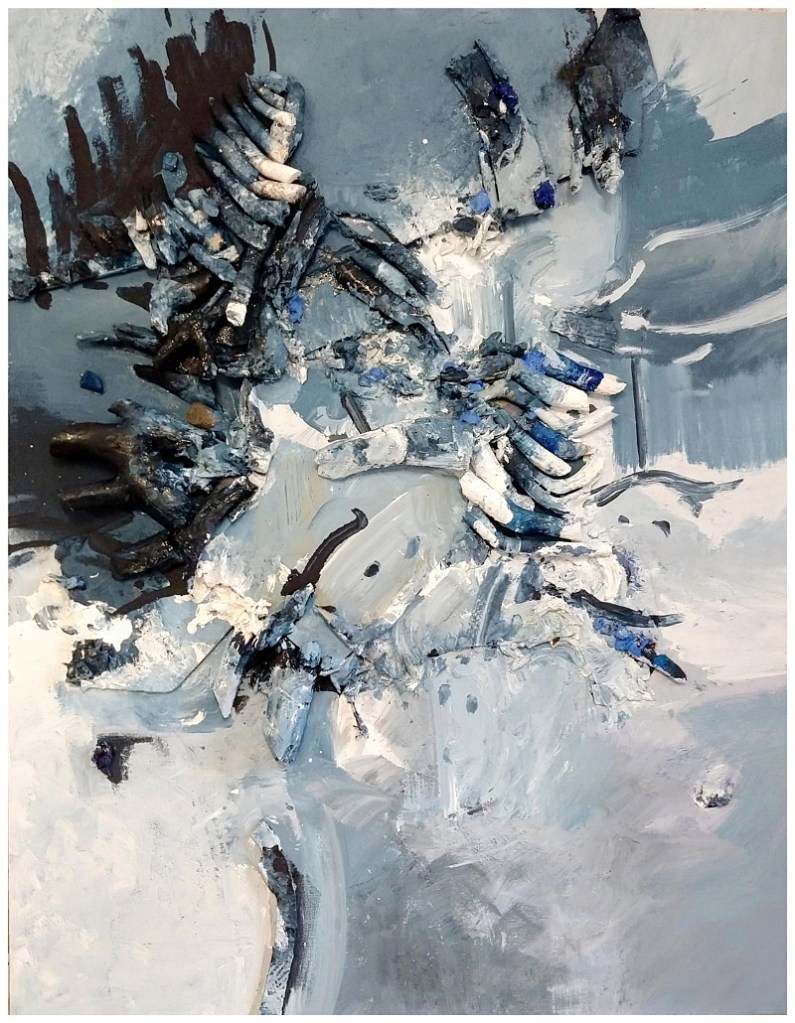
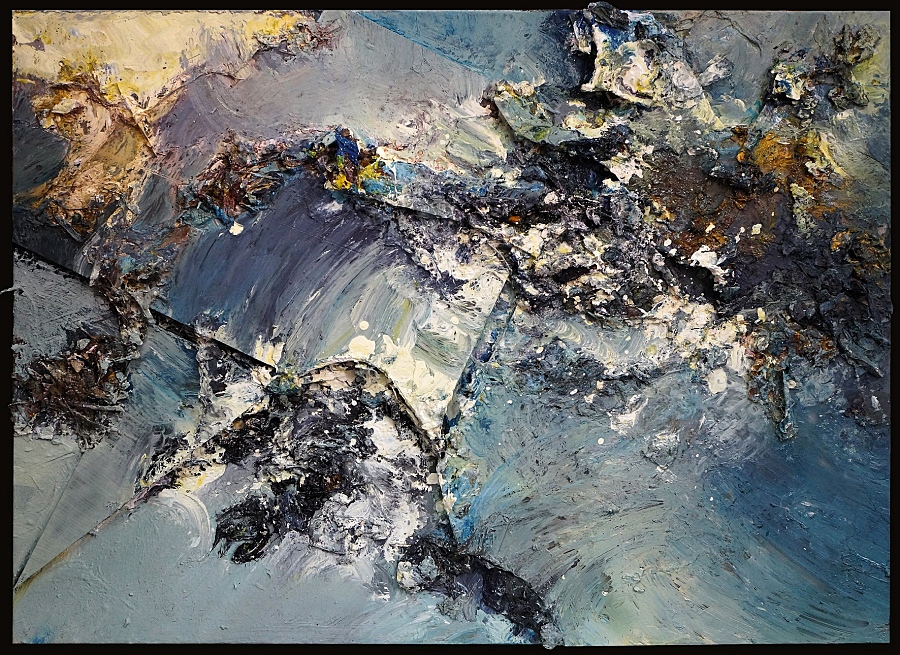
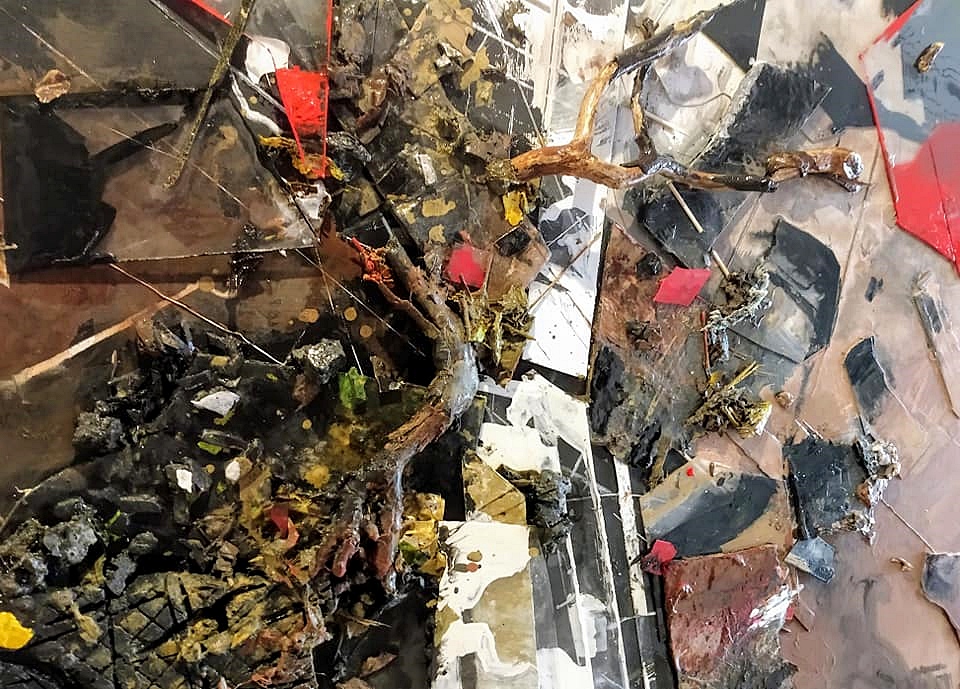
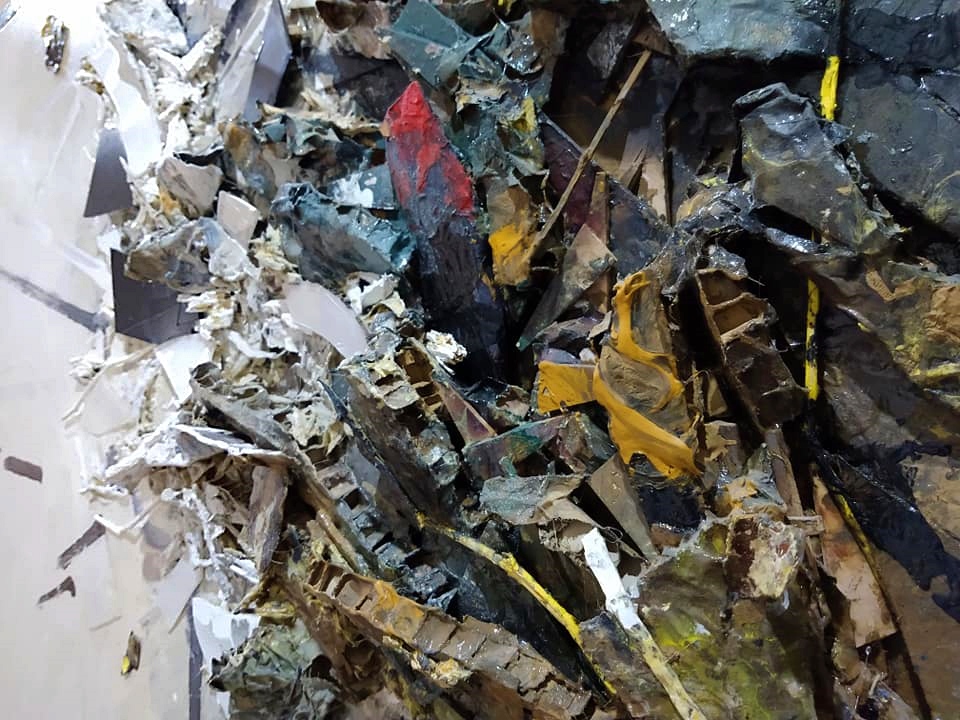
Tadeusz has earned international recognition for his comic books, and he also creates Non-Obvious Paintings that emphasize free, spontaneous expression. Tadeusz’s paintings are deliberately built by a technique that uses wood, fabric, polystyrene, acrylics, and oils. One painting sometimes takes many months.
I spent several hours admiring Tadeusz’s work, captivated by its universal appeal. The true meaning of abstraction remains as enigmatic as grasping quantum foam, synchronicity, and the essence of nothingness. For me, Tadeusz Baranowski’s canvases feel like an explosion of kinetic force captured within the confines of a still life. His work doesn’t follow a story or show you typical images. The feeling of time passing is present, but its source is unknown. In these artworks, the vastness of space unfolds, populated by mysterious, intangible energies. These interactions impact both the surface and the time they happen. Often, these tensions are lively, occasionally erupting, yet clearly visible to our deliberate observation. These paintings evoke a range of emotions and thoughts in me. Each painting is worth meditating on.
From the very first emails we exchanged, Tadeusz and I realized we had a shared love and respect for the natural world. Tadeusz spoke about journeys to the Masurian region with his wife, Anna. He said he currently lived next to a forest near Warsaw, Poland. Tadeusz sees himself as an individualist in the cosmos and finds swimming to be a reflective and enjoyable pastime. Tadeusz’s Facebook page features a vast collection of nature photographs. These pictures showcase the inherent rhythm and patterns found in nature. It’s possible that Tadeusz’s images of moving water, splintered trees, floral subjects, and insects acted as a preliminary structure or exploration for his paintings.
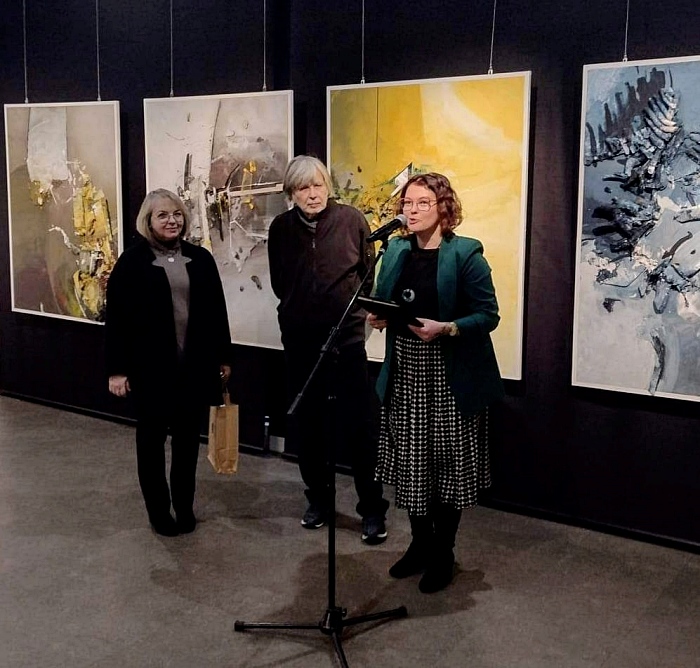
Tadeusz Baranowski’s show was curated by Magdalena Grochowska and will be shown from February 10th to March 14, 2023, at the Oświęcimskie Centrum Kultury
Director of OCK, Monika .wi ,tek-Smrek, curator Magdalena Grochowskaand Tadeusz Baranowski
I am from the generation of the end of the Second World War and the occupation. I have often wondered if it had any effect on my life. I read a statement by a British anthropologist who claimed that there is such a thing in us as genetic memory. All emotions and experiences of generations are recorded in this memory. According to this theory, my generation has genetically passed down from their parents everything that happened to them.
My whole family, father, mother, grandfather, and two of my father’s brothers, were in German concentration camps in Poland during the occupation. Grandpa and uncle never returned from there. My father spent the entire occupation in camps – Majdanek, and later Flossenburg. He showed extraordinary fortitude and willpower to survive. He didn’t tell much about his stay, and I am filled with empty laughter when I read about the repressions and sufferings of some of the heroes of the post-war period. Without taking anything away from them, of course.
Paradoxically, right after the war, my parents (because we had no place to live) were assigned an apartment in a barrack at Majdanek, five meters from the barbed wire of the camp. It was a barrack where the SS staff lived during the war. Not only my family lived there because at that time one of the many rooms of this barrack was called an apartment. I, as a small child, saw this camp up close.
The remains and remnants were not yet organized and archived as they are today in the form of a photographic museum. It was specific. In the crematorium, there were still half-burnt human corpses. In the barracks, thousands of dolls and teddy bears, toys left by children. A barrack – processing human bodies into soap, lampshades made of human skin, a barrack – filled only with glasses or hair cut from women’s heads. I used to watch it as a little kid because, frankly, no one paid any attention to me.
Only at night the camp guards, with flashlights and shovels, search for gold buried under these barracks. Left by the prisoners of the camp, hoping that one day they will redeem themselves from the hands of the torturers. I wasn’t a prisoner, but it’s probably not without reason that I’ve had dreams all my life that I’m in these camps and I’m constantly escaping from them. So something is “on”.
Happiness is not a constant state, and I don’t think there are people who are in it all the time and are euphorically happy. For me, these are some, sometimes completely unforeseen, actually short moments in life that cause this state. And I also think that we remember the moments of unhappiness more than the moments of happiness, it is easier to recall them in memory (or this is a feature of my personality).
Happiness is no stranger to me, of course. I’ve had different moments. In family life, professional life, in states of love intoxication, and alcohol intoxication. But what sticks most in my memory are those seemingly insignificant moments in which I experienced happiness.
In contact with nature, which fascinates me, shocks me with its beauty, and terrifies me with its ruthlessness. I am basically a loner and I feel happy when I look at the sky at midnight and a storm catches me as I swim alone through the middle of the lake. As I get older, I get more and more vulnerable and less and less happy. I look at the species “homo sapiens” with sadness. His unbridled greed, lust for money, disrespect for nature. Also people’s lack of respect for their own species. 80 years of relative peace, without global war (that’s almost two generations), has made people mentally lazy. Dreams of the return of fascism are born. When I was a kid, I saw how it ends.
I live in Poland, near Warsaw, although I was born in Zamość. I am married with three adult daughters and two dogs. I am a graduate of the Academy of Fine Arts in Warsaw at the faculty of painting. Throughout my professional life, I have been dealing with applied graphics, as well as writing and drawing comic books for children (published in millions).
However, painting, to which I returned after years of break, is my passion and my main goal in life. In my work I have always revolved around abstraction, which for me is a form that requires control over form, composition and color. I have developed my own method of combining various materials (wood, cardboard, fabric, resins, glues, acrylic paints) so that the resulting work has a distinct structure and space. My father was a sculptor, maybe that also shaped my aspirations.
Usually, the design of the painting is created earlier, on paper, but I think about it for a long time before I approach the canvas. And although it seems that the exact plan is, I need a lot of time to determine what the painting will look like in the end. Sometimes it develops quite quickly, i.e. three, four days, and sometimes a month.
WRITTEN BY TADEUSZ BARANOWSKI ALL RIGHTS RESERVED. ALL ARTWORK AND WRITING IN THIS POST IS A COPYRIGHT OF TADEUSZ BARANOWSKI. THIS AN AUTHORIZED DUPLICATION WITH PERMISSION AND EXPRESSED CONSENT