Memory Transfer by Mitchell Pluto

Transferencia de Memorias

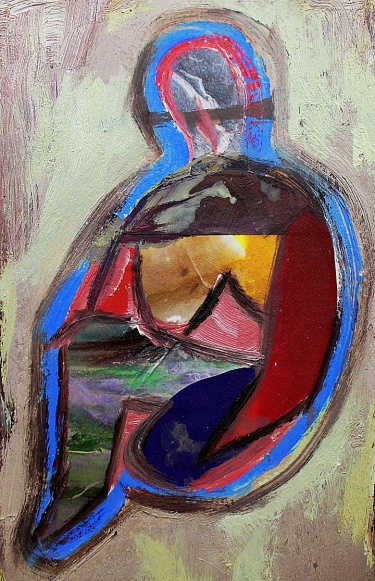
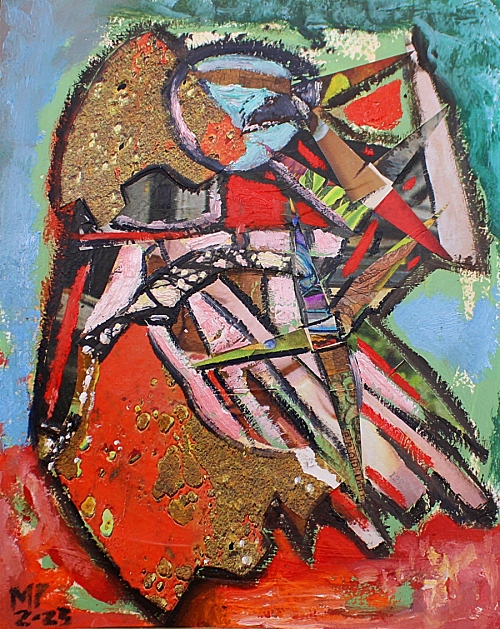
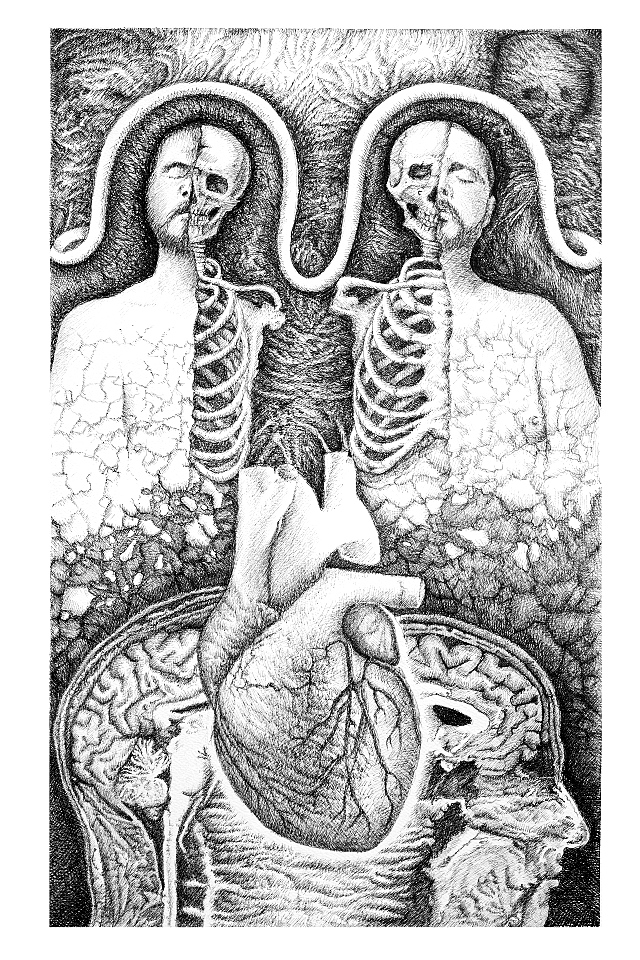
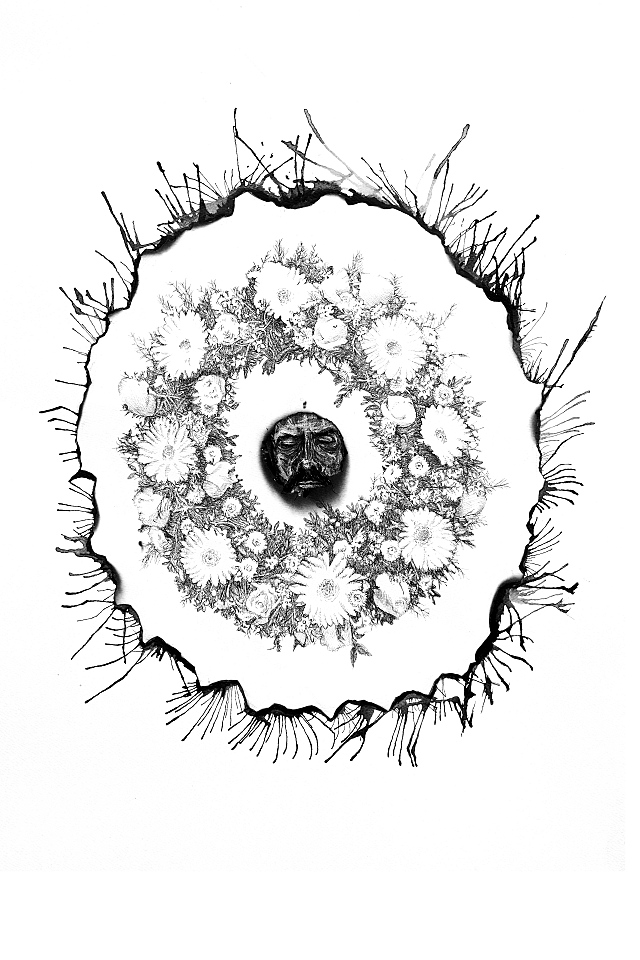
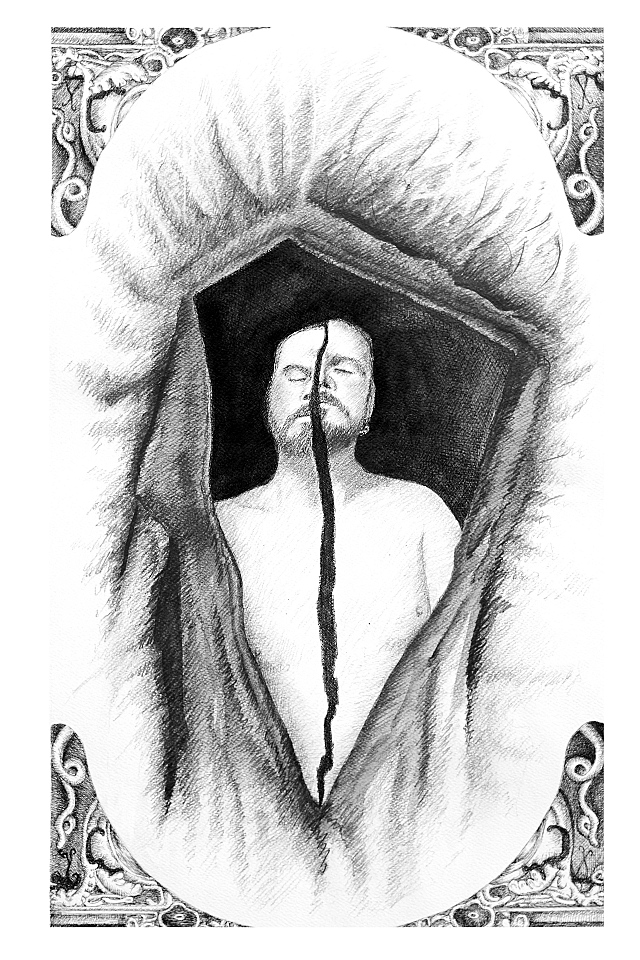
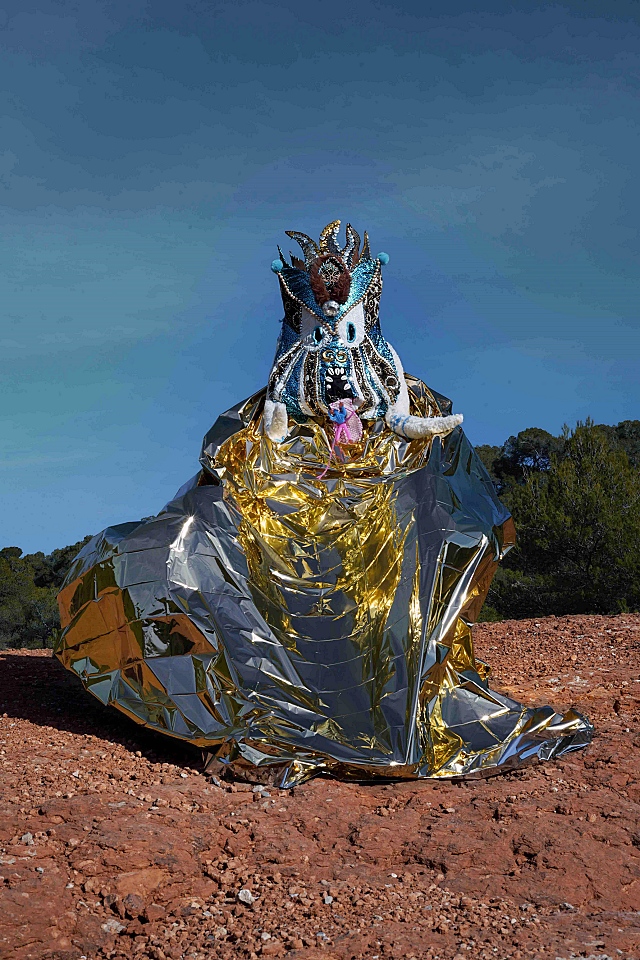
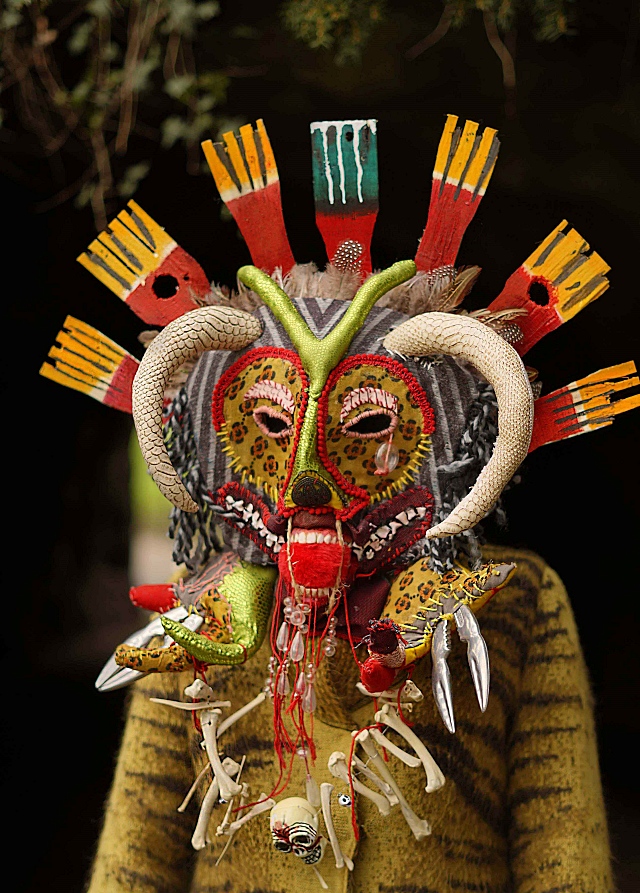
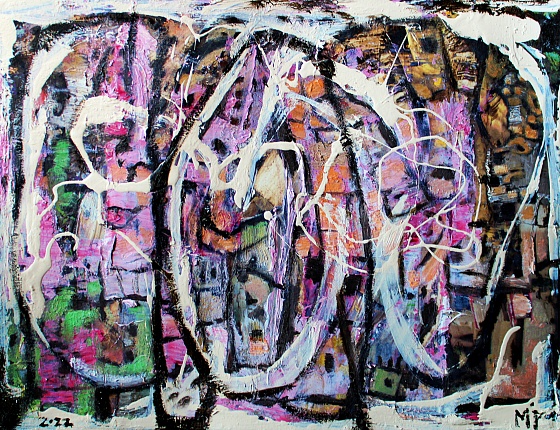
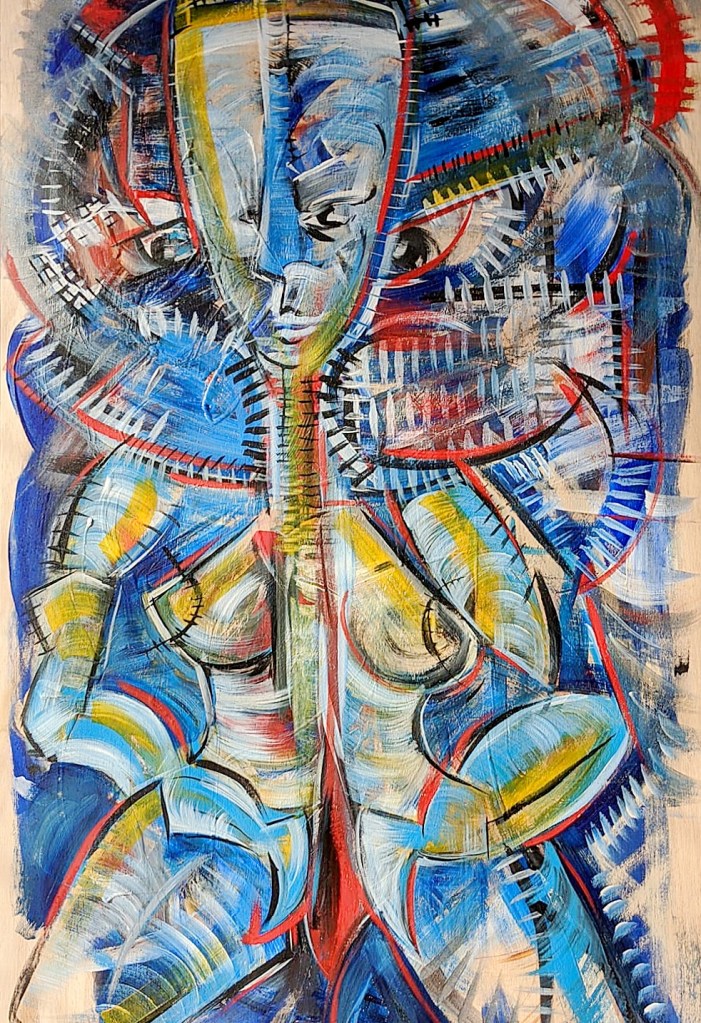
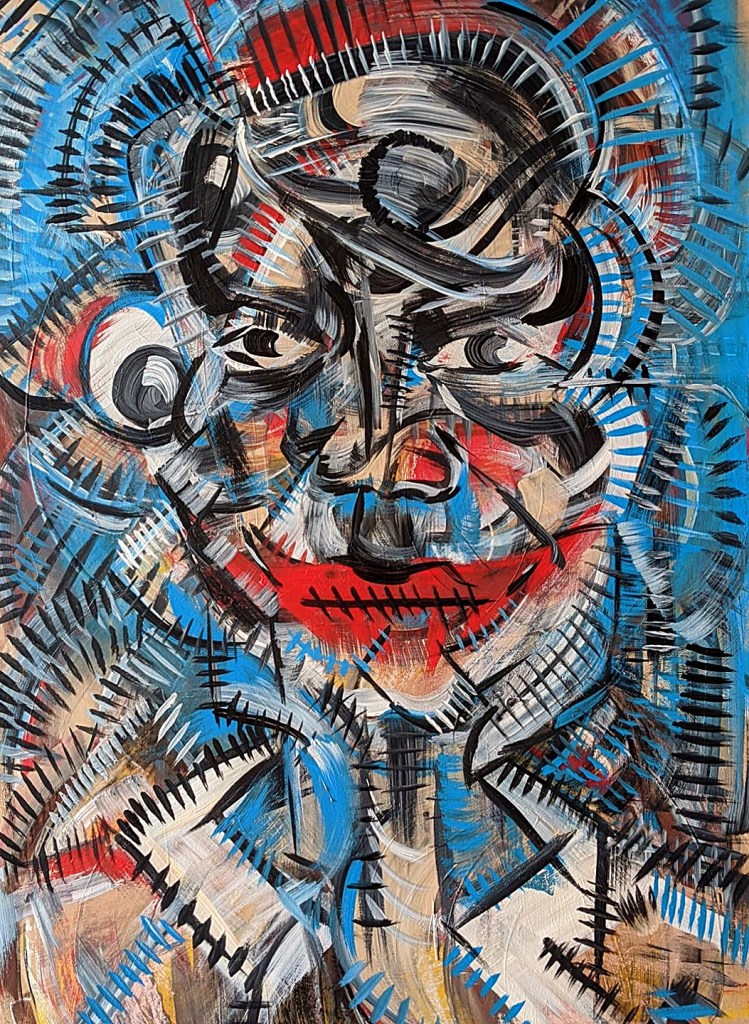
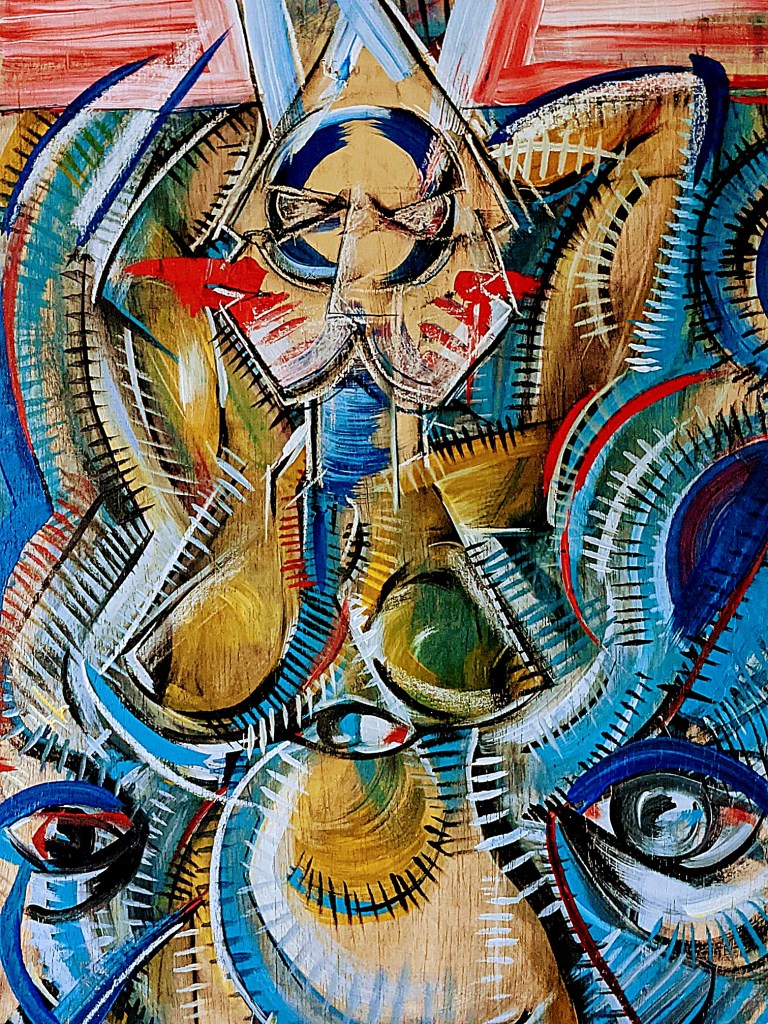
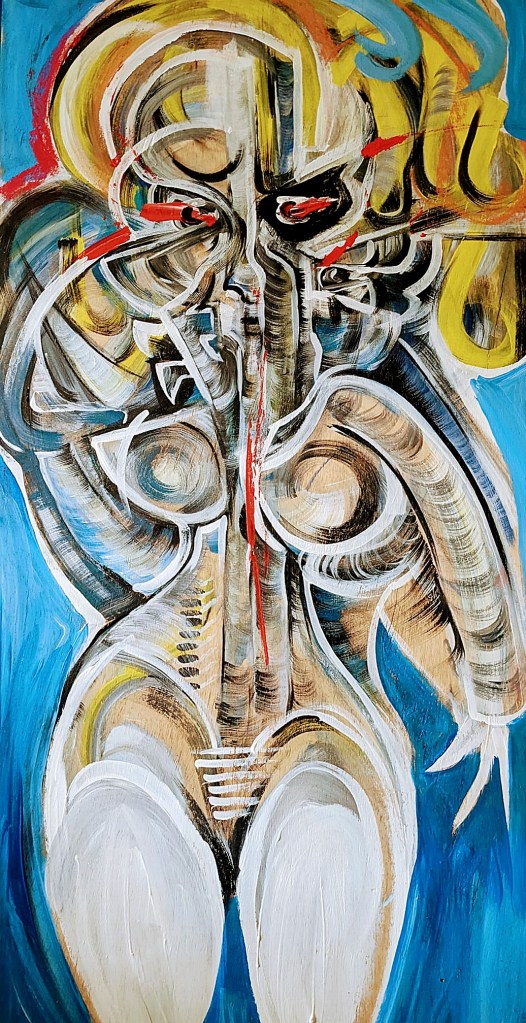
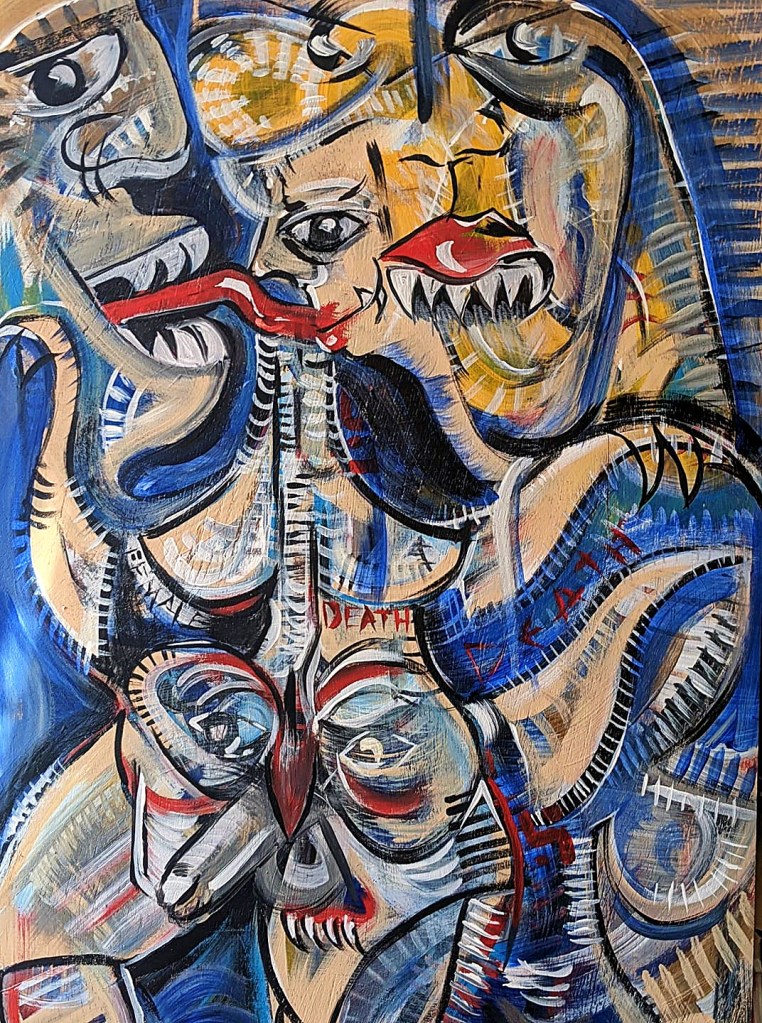
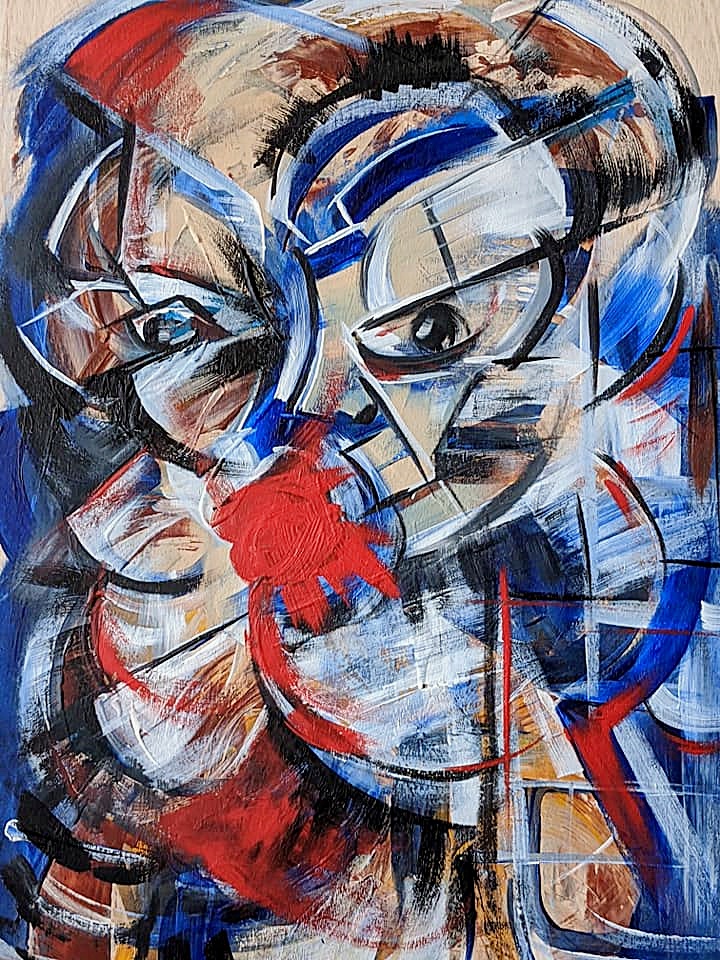
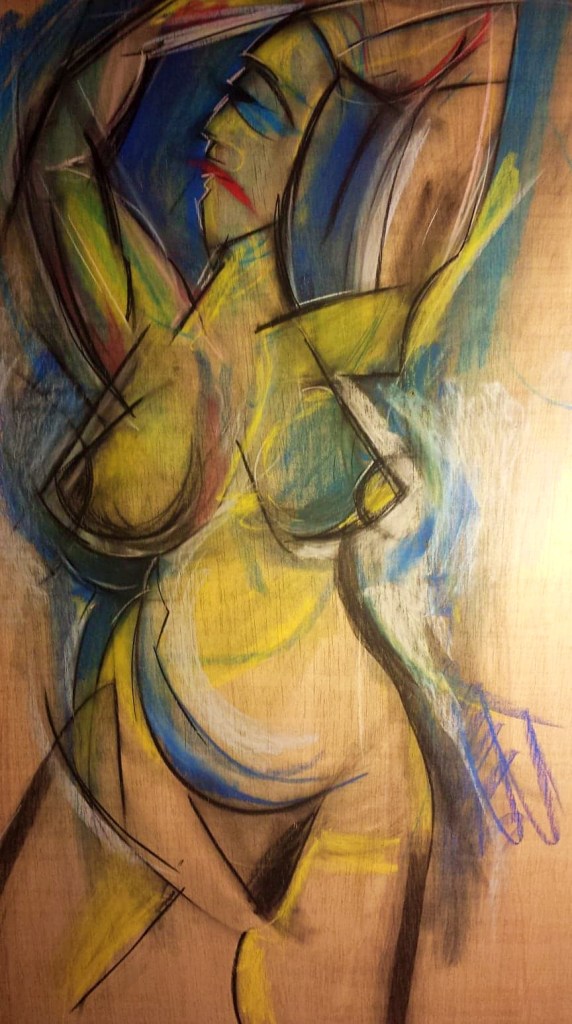
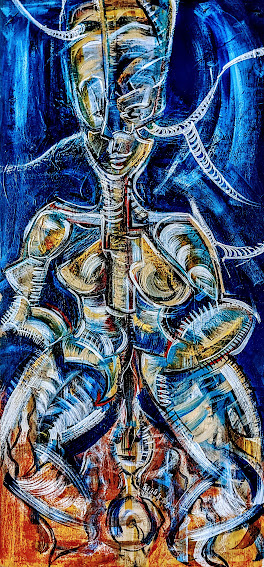
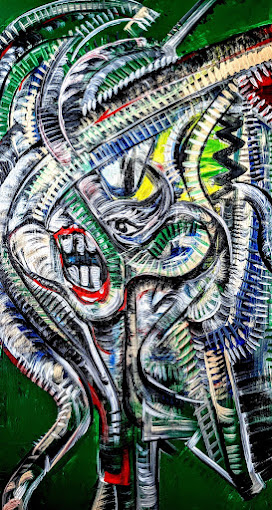
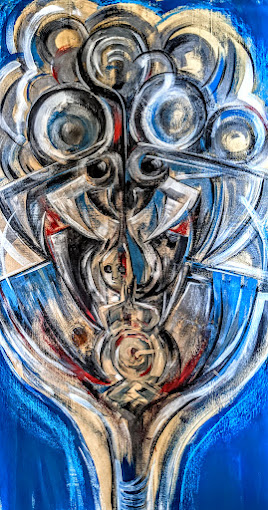
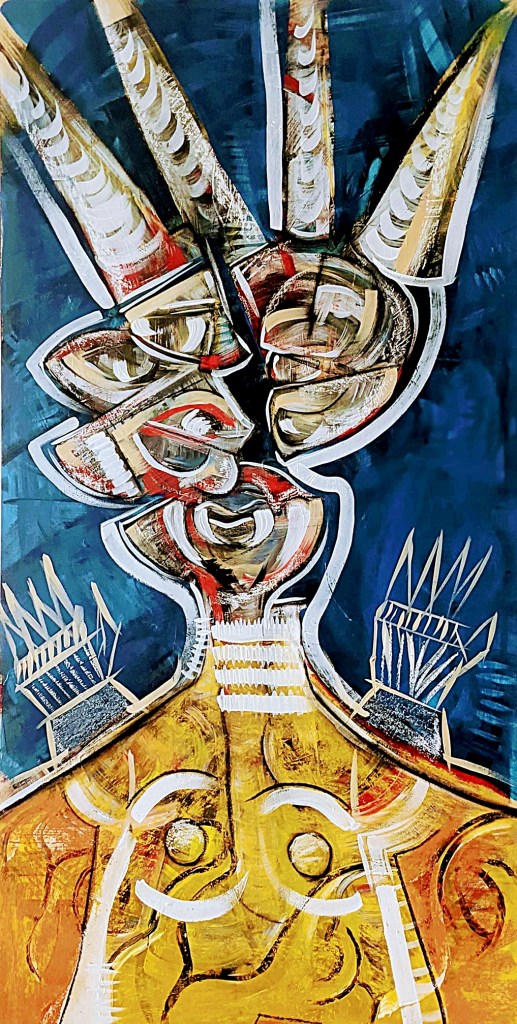
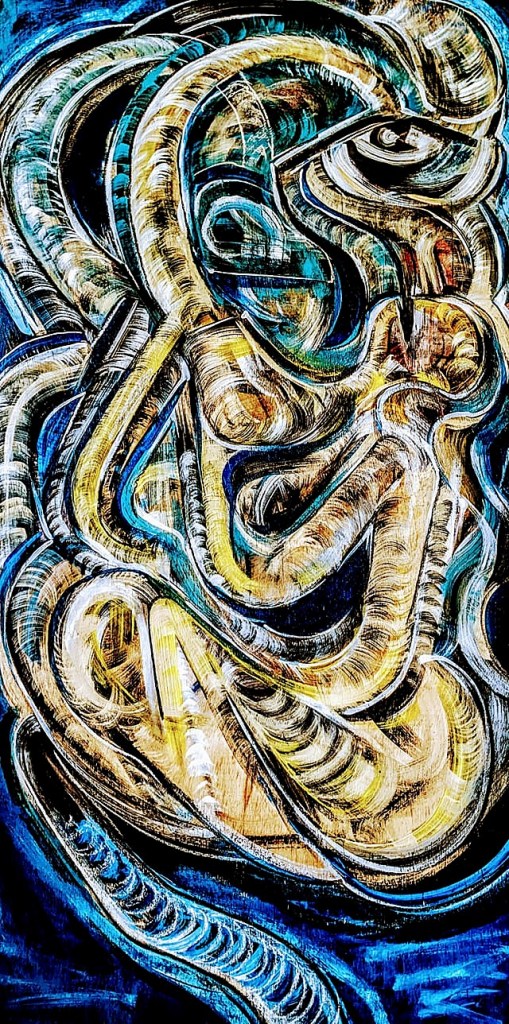
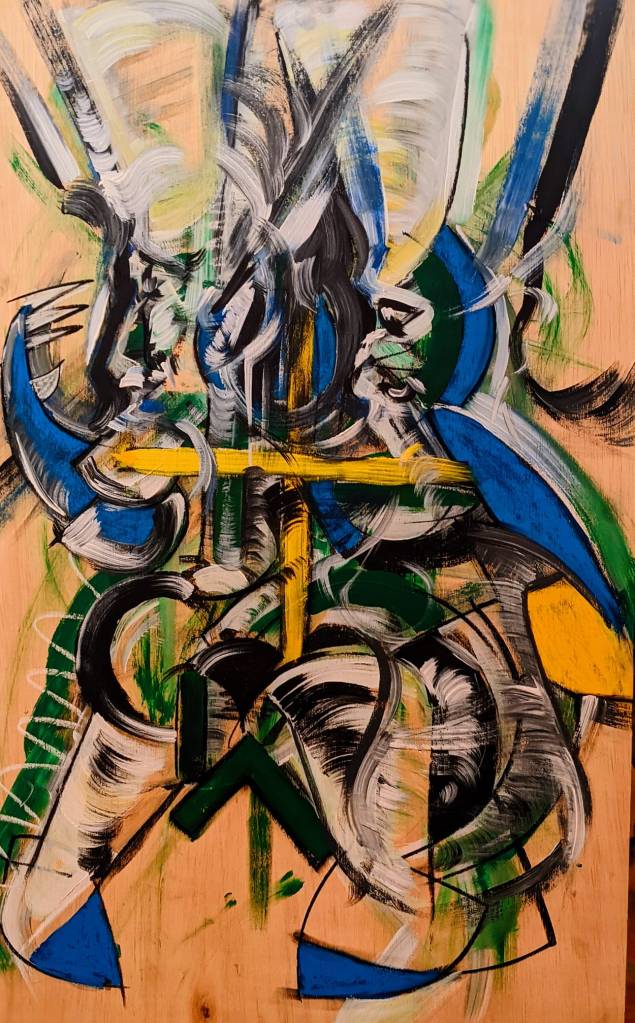
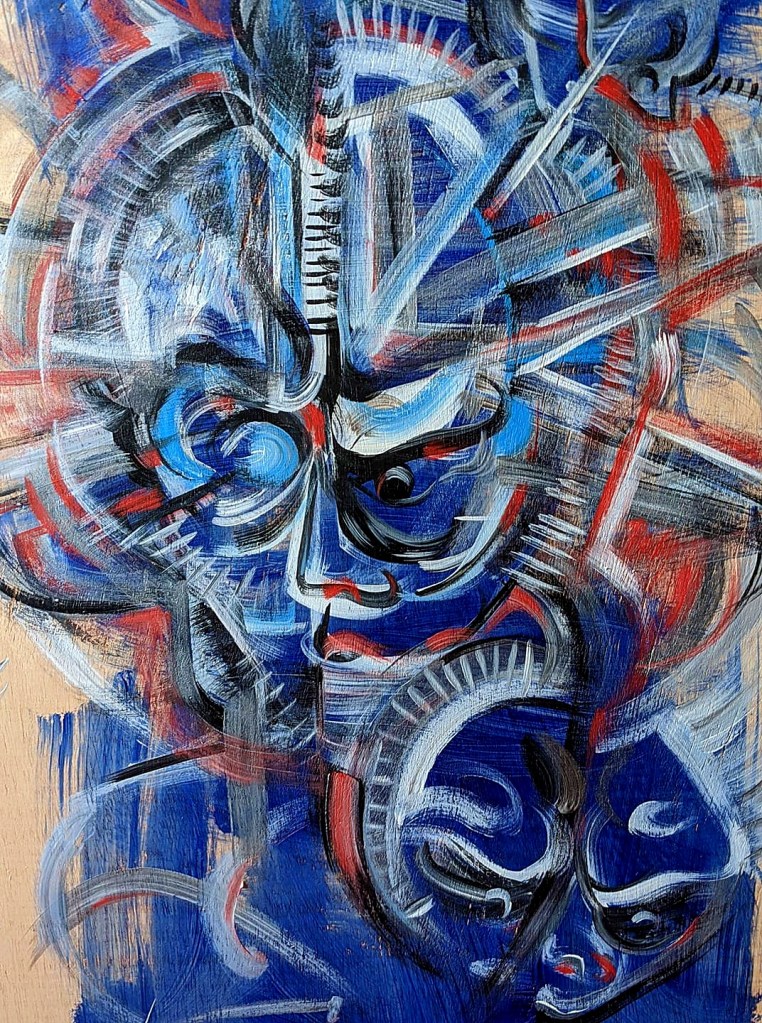
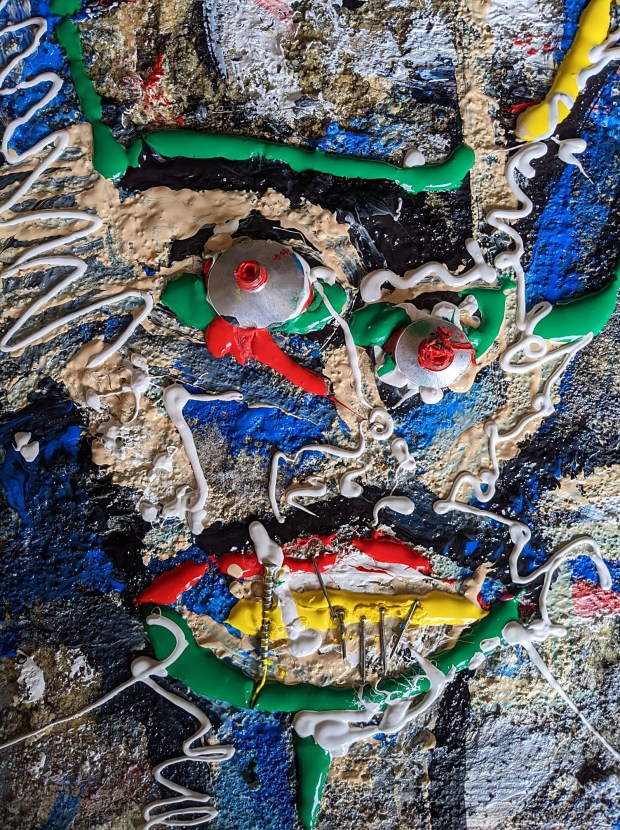
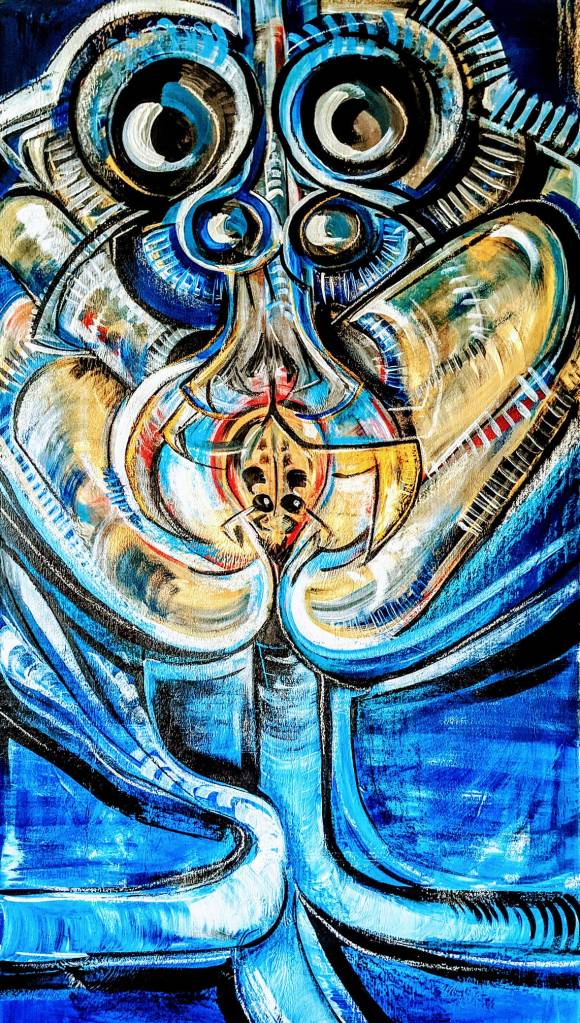
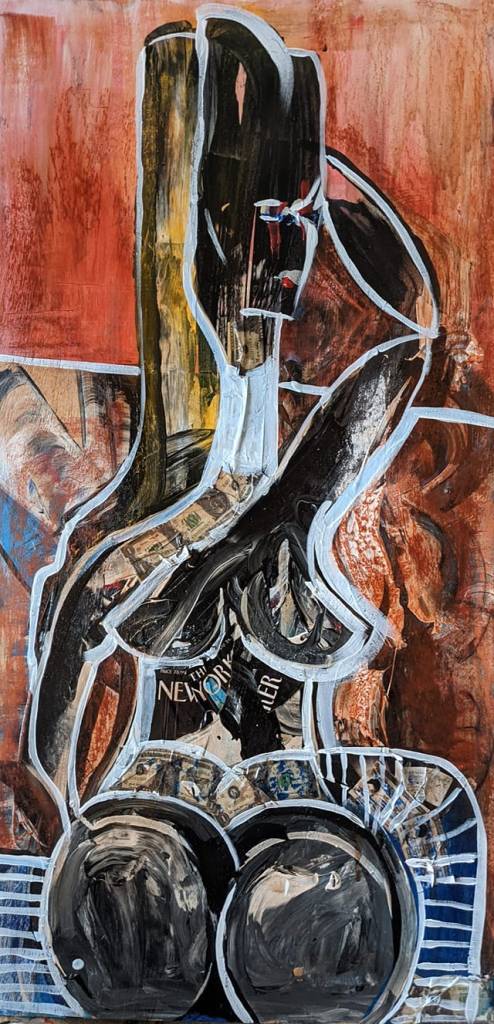
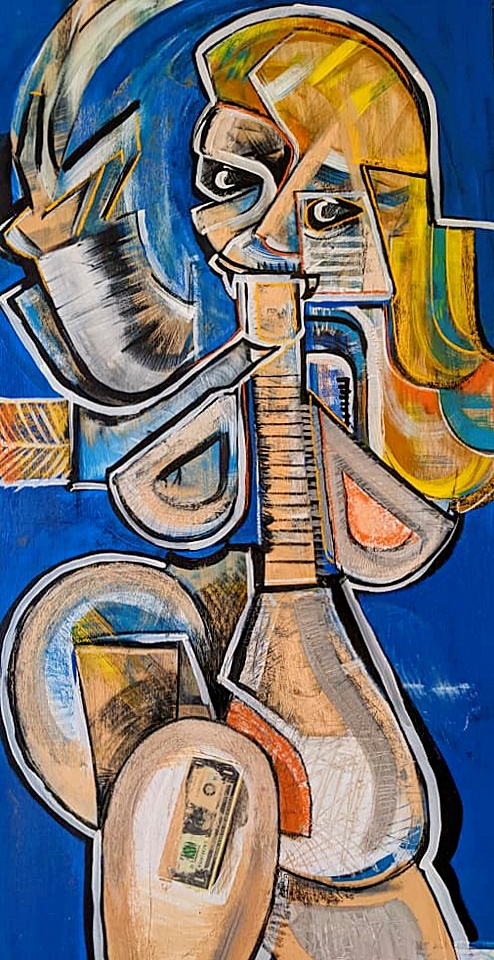
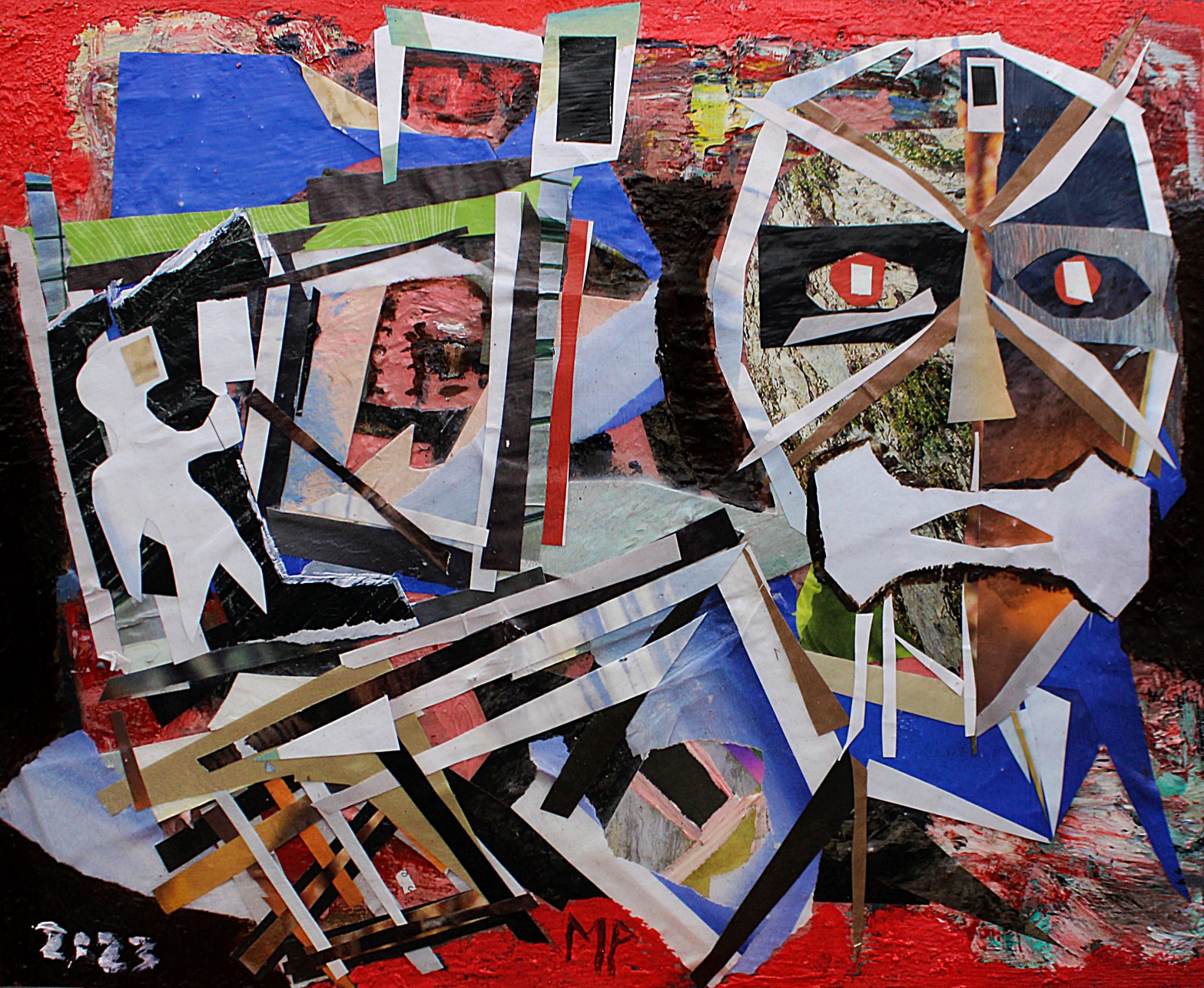
From The Eclipse © Mitchell Pluto 2024 Séance channeling memory transfers. Espiral en el Estuco © Mitchell Pluto 2025 Transferencia de Memorias
In early June, the sky was clear and the temperature was pleasant. Tom and Sarah Anderson came across a metal tower while hiking in the Lolo National Forest.

The object’s Gothic style stood out as they approached. Seeing it brought back memories of their honeymoon trip to Chartres Cathedral.

The couple assumed the installation was someone’s art project or an exhibit at the University of Montana. The sight was unusual. There was a black circular window high up, near the top of the bell tower.

The tower emitted an extraordinary spectrum, encompassing all shades of blue and green.

3,500 kilometers away, a small gathering met at the United States Capitol. Attendance was by special invitation only.

Elijah Booker and his friend Alvaro, a man of abnormally short stature, arrived punctually. They entered the room and attracted a lot of attention. Booker, a large, Black man, always stood out in a room full of white men.

Alvaro had previous experience in the company. He knew the purpose of the invitation. Alvaro was albino and his alias was white dwarf. His main function was to use his mentalist ability to influence and dismantle cults. He possessed an innate ability to influence and alter opinions and beliefs.

On the screen, taken from a popular social media video, several recorded witness statements were shown. An older man, standing next to his wife, described the encounter with the intelligent light as best he could next to a strange tower. With deliberate and concise gestures, his wife explained the same thing, but in more detail.

Booker assumed he was the keynote speaker invited to talk about the future effects of permafrost.

The focus was personnel selection, not Booker’s research. Elijah Booker was the world’s foremost parasitologist. He researched extensively and wrote informative books on toxoplasmosis, a brain parasite. Elijah worked with international scientists. The Bureau of Globe Research in Alaska, where he lived with his wife and daughter, housed a broad research panel on prehistoric pathologies. Booker’s research caught the government’s attention.

Booker’s specialty did not include cosmic rays. He had heard of them and knew they were unstable, but nothing more. Cosmic rays sometimes interfered with belief systems, sometimes caused hallucinations, or enhanced brain patterns in unique ways.

The U.S. Intelligence Service considered ideologies to be mild hallucinations and was intrigued by the effects of cosmic rays on the brain.

The U.S. agency selected experts in direct observation.

The department was aware of Booker’s private life.

They knew of Booker’s Buddhist practice and his hobbies, which included listening to jazz and researching the occult.

Booker and Alvaro boarded a plane within a few hours. The private pilot, a native of Montana, had a great time. Alvaro taught him numerous dirty jokes for a total of six hours. This gave Booker time to read reports on cosmic rays.

According to government research, different rays posed varying levels of danger.

A jeep with tinted windows was waiting for them at the airport.

They soon reached the mysterious object. The Forest Service managed the situation, giving it a normal appearance to the naked eye.

Antennas, tents, and tall Douglas fir trees surrounded the 70-foot bell tower. The building’s structure possessed a beautiful style. The scene reminded Booker of a surreal landscape, something Bosch might have built.

He took a photo with his phone and recorded a video, documenting the luminosity of the fading colors.

Álvaro tugged at his pants and pointed to a tent. A young woman, about the age of Booker’s daughter, was holding a tablet like a clipboard.

Frauke Brunhilde introduced herself. Her black nails, black shawl, and tight leggings gave off a countercultural air. She was a genius in the German Federal Intelligence Service. She was a forensic chemist and radiological technologist.

Booker inquired about Frauke’s findings and knowledge.

Frauke showed him a live feed from a radiation-resistant camera. A vertical line of light aligned with the top of the bell tower. He speculated that the beam provided a transmission that might correspond to a conscious entity. Frauke discussed the fluctuating visibility of the light. She said that in Europe, cosmic rays are everywhere. Frauke said people believed they caused poltergeists and produced other strange effects.

Throughout history, ancient peoples used stones and statues to mark power points. Indigenous Europeans wore conical hats, such as the Golden Hat of Schifferstadt, to tune into cosmic rays.

Frauke proposed that primitive peoples tuned into radio stations in space. Mysteries associated with cosmic rays included encounters with fairies, aliens, angels, or even people who disappeared without a trace.

Booker wondered if these disappearances were due to dangerous rays that triggered aggressive progeria, a disease that accelerates aging. This cosmic ray posed no such danger. Frauke mentioned an article published by German scientists in The New Nature Journal, which argued that time is a moment that has already passed.

According to Frauke, the article suggests that UFOs are future apparitions investigating the present.

Booker wondered: Who was shaping the future from the past?

In the report he read on the plane, some anthropologists in the southeastern United States theorized that cosmic rays were attracted by unicursal patterns, but also expressed themselves to humans in diagonal or zigzag patterns. Frauke mentioned geometry as a method for communicating with unknown intelligences.

Booker noted that Frauke’s explanations had a mystical undertone, and he knew she was speaking of magic.

Frauke inspired Booker to reflect more carefully on the unintended consequences of cosmic ray-induced hallucinations. Most of the knowledge discovered turned out to contradict his beliefs, something he was prepared for.

The next day, scaffolding surrounded the tower.

Booker spoke to the welder. The man said he hadn’t been able to burn a hole with a blowtorch.

Incineration also didn’t work on the top window, which the worker described as Jell-O. His partner punctured a sandwich with stainless steel tweezers in the Jell-O. Nothing happened to the sandwich. The puncture filled and healed itself.

Booker walked toward the main tent.

Alvaro reclined on Frauke’s lap. They seemed to be having a good conversation. Frauke chuckled. Booker told Alvaro and Frauke to prepare to enter the object.

The unit gathered what they needed. Booker hooked Alvaro to his belt like a weapon. Frauke slung a backpack over her shoulders as if she were spending a week in Glacier Park. Frauke put on her headphones and began climbing. Booker braced one hand and one foot on the scaffolding, the tips digging into the ground, as he slowly ascended to the upper platform.

Standing near the most enigmatic and sinister feature of the building, the three gazed up at the large black window.

The surface was obsidian, with a thick, gelatinous texture. Due to its unknown elemental nature, they were unable to separate the gel into samples. Frauke, using her scanner, surmised that it was an iron mordant containing extraterrestrial gelatin. The window also contained a low- to medium-fluctuation radioactive ray, known to cause hallucinations, according to the scanner. Booker hoped that, as they approached the cosmic ray, they would all experience an LSD-like experience.

Without any prompting, Álvaro dipped his hand into the substance.
It was the temperature of a warm bath.

Booker quickly glanced at Álvaro.
He removed his hand from the gel, waggling his fingers toward Booker and Frauke to demonstrate that God was luck.

The group sat for an hour discussing hypothetical possibilities, including personality changes and brushes with death.

Álvaro lived by the motto: to embody the god of things as they should be. To be the force of humor in every passing horror. Frauke, enchanted by Álvaro, agreed.

Frauke put her headphones back on. The music turned up. Booker hooked Álvaro back onto his belt and held Frauke’s hand. Booker didn’t want her to wander off alone in the oozing gel. He felt responsible for all of them. Booker placed a camouflage bandana over his nose and mouth. He breathed and closed his eyes. Frauke tugged at his hand.

The first step into the gel was similar to stepping into a deep pool without firm footing. Each movement created an unpleasant sucking sound. The absolute darkness unleashed a wave of fear. A surge of adrenaline flooded Booker’s bloodstream, testing everything he had learned from Buddhism. With a concentrated effort, he maintained his upright posture, stepping into the dense gel with one arm. The suction made movement difficult.

Booker could now identify with the five clinging aggregates of Buddhism.

It became a direct experience. The aggregates — form, sense, perception, and external forces — environmentally influence the mind.
Booker felt a predatory presence. An obsessive, superstitious belief overwhelmed his mind as he struggled to penetrate the bottomless gel.

Suddenly, Booker had a clear view of his own brain. He could see his amygdala working overtime. The pressure on the insular cortex made him imagine the worst possible scenarios, including an imaginary predator chasing him.

However, there was no malevolent morphic resonance present, only a confined space. His own fear divided and attacked every facet of his mind. The narrating brain identified its observer function as an intruder.

A strong auditory memory told Booker not to panic. A Nyingma master at a Buddhist retreat advised him to accept the discomfort and practice gratitude.

This precious memory became clearer and more fundamental to his resistance.

Booker imagined seeing the Khenpo floating on his back, effortlessly performing backstrokes in a slimy jelly.
Another vivid memory resurfaced. Years ago, his few sessions with Stanislav Grof helped Booker relive his earliest memories of being suspended in a possessive womb. He recognized that birth brings with it a subconscious sense of abandonment for everyone.

This caused humanity to misinterpret birth as a definitive isolation and desertion.

All of this originated in the maternal body’s rejection of the newborn as if it were excrement. Generation after generation, this confusion projected contempt for the feminine and nature.

Booker could see his thoughts as images. He saw the unjust and unconscious representations that dominated historical records.

The central idea emerged as the ambition to replace the mother with an artificial mechanism. This would foster the construction of an industrialized, parasitic world devoid of empathy.

Booker wished he had headphones.

Music would make it easier. He imagined John Coltrane’s “One Up, One Down .” He had listened to the album often, at the cost of exhausting his wife’s patience. Today, it helped him remember it. The saxophone arrangement conquered fear. Booker knew that Coltrane understood the patterns of a constantly changing self. A self free of history and objects.

One conclusion became clear: time and space will never have a central authority.

The attempt to even imagine sensations beyond the end proved to be a vain and imputed illusion.

Death existed as a phase that passed like everything else.
Why pretend we knew this?

We shared the same fate. We would cease to exist without knowing what death was.

The tension dissolved and the jelly transformed into a thick fog. With his free hand, Booker reached for Álvaro, patting him on the face. He looked at Frauke. He saw her silhouette. Frauke turned to Booker, took off one of her headphones blasting, and smiled.
Booker asked, “What got you through the jelly?”
Frauke nodded to the beat: “Huh? Yeah! It’s an American band called The Doors , The Other Side , yeah, they’re good!”

The cosmic ray transformed the tip of the bell tower into a reactive vanishing point. This produced a carnival-like hall of mirrors effect. Booker, Frauke, and Álvaro occupied that space between the parallel lines of the cosmic ray. The room resembled a virtual infinite hallway with a ledge. Colors cascaded down the cosmic ray.

Frauke’s gaze caught something in the swift wave of light. She spoke, describing what she saw as it manifested in Álvaro and Booker’s minds.

A spinning triangle reflecting brilliant light transformed into crystal. At each corner, the numbers 3, 6, and 9 materialized. From the center of the triangle, sparks erupted, forging a nude female figure with hair down to her feet. A deep red and white glow caught her attention.

“She can see us,” Frauke said.

The woman spoke echoey. She gave her name as Mitzi Orssich. Mitzi said she was broadcasting from a live 1920 séance in Austria. The chatty ghost said she represented the Viril Society.

Mitzi demanded information from the future to help build a temporal vehicle. Mitzi possessed sternness, while her flawless figure projected an incredible image. She was a magnetic and exciting archetype who could raise blood pressure and induce a firm salute .

This woman’s body possessed a truly divine craftsmanship, an image that neither eats, defecates, nor ages.

Booker reflected.

She fit the bill: blonde hair, blue eyes. The graceful elements resembled the Christkindel.

But why didn’t this woman take over as Germany’s leader in the 1930s?

Mitzi spoke English very well.

Booker recalled researching the Vril Society, which emerged as a 19th-century work of fiction by the English writer Ed Lytton.

Booker realized they were tapping into a projection of Frauke’s subconscious.

Mitzi was, in effect, a literary phantasm forged from a pseudo-story.

He looked at Frauke, who remained staring.
Booker speculated through his online queries and research; Frauke gained powerful impressions from what she read.
Álvaro’s face was simply a huge smile with tiny hands and feet.

Booker interrupted Frauke’s trance and appropriated the cosmic ray, projecting abstract expressionist ideas onto it. He enjoyed this art movement and understood its significance. He was open in sharing his observation of vivid brushstrokes.

Booker gently guided the hallucinatory influence away from the National Socialist art style toward a more universal and abstract variety. It was art without a human figure.

Wonderful and exciting non-figurative patterns formed from the center of the cosmic ray. The variety of designs lacked strict cultural ideologies, which brought Frauke out of her trance.

The cosmic ray inspired Alvaro to create a complex algorithm based on his interest in spiders.

Mitzi’s impression triggered unexpected associations that took a mutated form.

Web strings connected a spider puppet to the spinning chemical brain in Alvaro’s vision.

Frauke saw it as a fusion, creating one puppet within another.

Booker interpreted Alvaro’s vision of the spider as a portable DNA capsule capable of flying through space.
Small cubes appeared on a spinning belt in another future. The webs were coordinates, guided by a chemical brain inside a metallic spider.

Booker, Frauke, and Alvaro huddled in a triangle in front of towering Douglas fir trees. They were gone for three days and reappeared five miles from where they had disappeared. There was no alien tower there. A man named Warren found them while patrolling the forest. The cosmic ray information was useful.

US intelligence took statements from Booker, Frauke, and Alvaro.

Engineers, chemists, and physicists collaborated to design a new space vehicle with a chemical brain.

A few months later, the spider-like object would fulfill a panspermia mission. The space spiders, called Anansi Capsules, would aim to find habitable planets to modify human DNA and enable life in an extraterrestrial environment.

The Anansi Capsule was an 8-foot-tall mobile figure with eight appendages for hand tools.

After descending, the capsule would unfold into a complex 16-foot laboratory.

The Anansi Capsule would manufacture and raise two biological beings for several generations.

It is unknown whether the new offspring would preserve or understand their origins, but they could be alive to continue exploring space.

A few months after visiting Montana, someone mysteriously provided a grant to de-extinct the woolly mammoth and thus include it in Booker’s future project.

Writing and Art All Rights Reserved © Mitchell Pluto

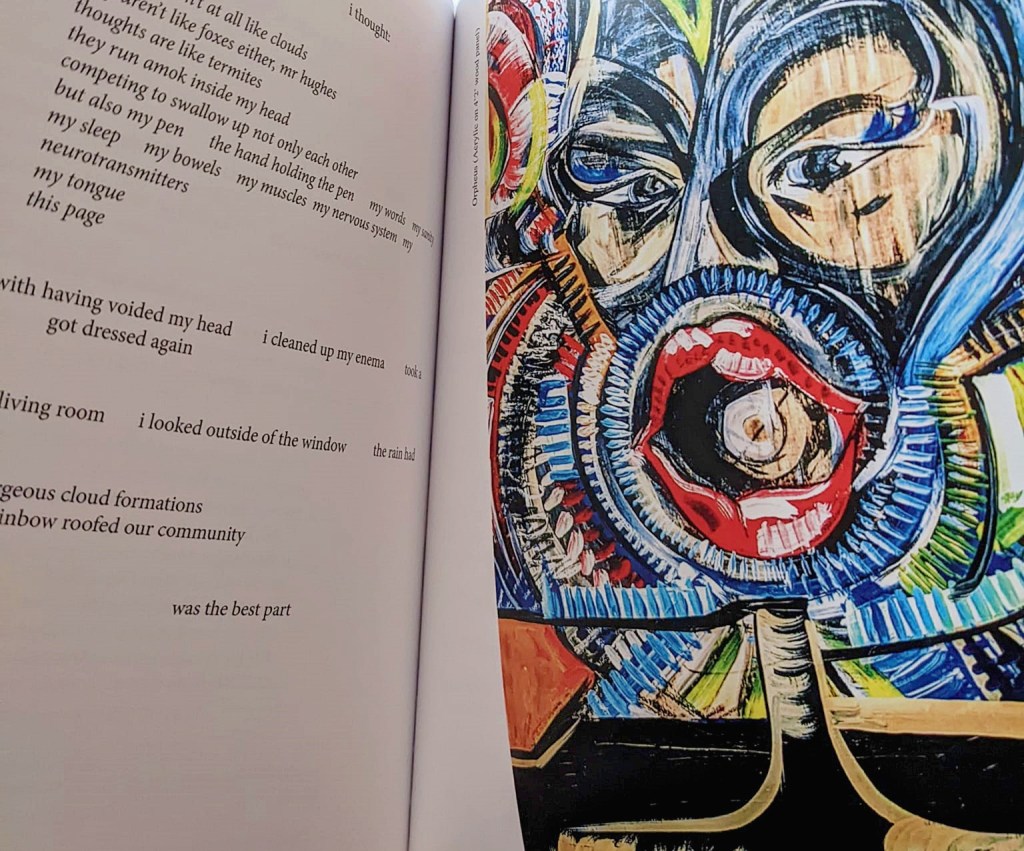
From The Eclipse © Mitchell Pluto 2024 Séance channeling memory transfers . Spiral in Stucco © Mitchell Pluto 2025 Memory Transfer


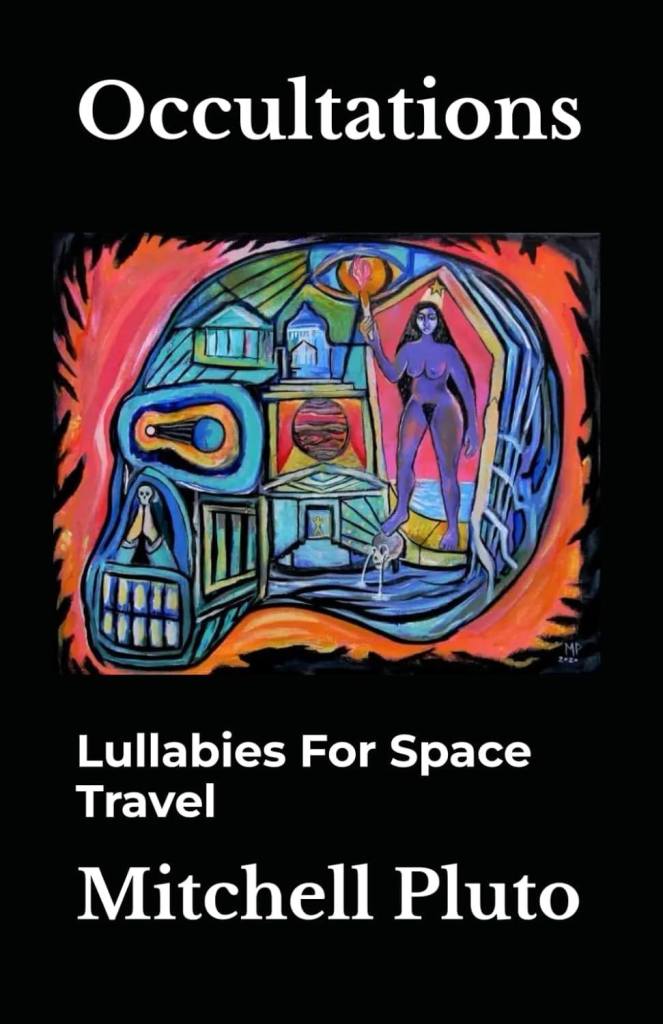
Espiral en el Estuco (Spanish Edition) Paperback – Large Print, 23 April 2025

Spanish edition  by Mitchell Pluto

El surrealismo oscuro y el absurdo crean efectos psicodélicos. El zen y el jazz de Coltrane ofrecen una vía de escape de la veneración política, permitiendo viajes interestelares. Cada capítulo explora el surrealismo y las técnicas budistas. Estas ayudan a sobrellevar el trauma de sentirse atrapado, como un animal en un anuncio repetitivo.
Phone Bot in Space


The emptiness of space challenges the narcissist.
I wasn’t talking about a daffodil either.
Imagine the self-centered individual in the cosmos.
This soundtrack fanfare involved a floating plastic water bottle bobbing in the void, creating a strange echo.
A promotional message
There’s a song still going strong on an eight track tape from a different era.
The signal aimed to scatter more phone bots onto another surface.
Those objects back then are now considered trash.
It originated as a billionaire’s dream.
That primate was something else and only connected with other special monkeys and top baboons.
The menu listed all the remaining items, which wasn’t much.
There’s no linear narrative here; there’s no gravity.
We all got talked into being in Barnum and Bailey’s Greatest Show in the Galaxy.
In a chain of forgotten memories, everyone plays a great-grand relative.
Social media made it simpler to believe in fantasies of endless joy, power, and attractiveness.
Here and there had something from Temu.
Every summoned name feels entitled to special treatment.
Just answer your text message alert and see for yourself.
To be a wild horse in a motion picture, a spaghetti string western running around with no identification or proven ownership.
We needed to get things lined up.
The designation we gave it on Earth was equinox.
Or Rahu and Ketu.
Everything existed between two distinct points, a liminal zone like the recommended dietary allowance.
What did the primates search for?
The environment was ripe for harvest, heavy with the scent of ripe fruit.
Phantosmia first appeared as a side effect.
But in truth, the air held a strong smell of burnt metal, a metallic Tang.
Nothing 29 grams of sugar can’t handle with ten percent of carbohydrates; one hundred percent of vitamin E; one hundred percent of vitamin C; six percent of calcium and 120 calories.
Those repeated old commercials taught us to disregard the feelings of others.
Your phone is always there for you.
We should continue to outsource our creativity to the colony in order to receive innovative ideas at no cost.
Be all you can be.
Show conceit and engage in scheming actions it’s what we do when we explore another space.
We must be ready to manipulate people into servitude while making them believe it was their own decision.
Finding less intelligent beings is our hope, but a lot of work remains.
Facebook use is compulsory for everyone. We created our own television program.
While floating in space, it will help you stay focused on the amazing advertisement.
Asteroid mining provided a cool residential unit that’s furnished nicely.
You can order it online from Amazon.
Your deposit is secure and what a great way to spend a layover before heading out to nowhere forever.
Kidney stones messed up my space trip. How about you?
Don’t let worries consume your thoughts.
It’s just another advertisement that your brain has stored as a memory.
Albert Einstein chose Buddhist philosophy as a garden guide for the future.
Despite the lack of a global law requiring flower gardens, we concentrated on collecting and trading symbolic coins.
No one paid any attention to perennial plants but wanted planets.
The most important thing was AI carrying a respiratory virus to another atmosphere.
Ultimately, the cosmos functions as both a wellspring and a drain.
Who is this object registered to?

©Mitchell Pluto 1/17/2025

Occultations: Lullabies For Space Travel

Relatos breves de Victoria Morrison 

Por la ventana

Confío más en tus huesos que en tu carne, por las noches sigo amando tu fantasma que huele a tierra infiel, confío más en tu bufanda roja detenida en el tiempo, el pasillo de nuestra casa gime llanto muerto, flota mi cuerpo en la tina, agua de árbol con espinas.
Recogí mi pelo mojado en tu vieja toalla de mi melancolía, arrojé todos tus libros por la ventana.

Imperfecto

El hombre frente a la tumba desprende de su boca su prótesis dental, la envuelve en un pañuelo blanco, la oculta entre el pasto y la tierra de tumba, solo frente a sus muertos puede ser él, así de imperfecto.
Ahí descansa su llanto desdentado, se sienta sobre la piedra, saca de una bolsa de papel café una lata de cerveza y bebe deseosamente el sorbo de vida a su garganta de flores mareadas que iluminan su rostro, suenan campanas a los lejos.
Allí, frente a sus ancestros sonríe a carcajadas recordando alguna anécdota pasada, nadie lo juzga ni lo critica, allí frente a sus antepasados puede revelar su sonrisa imperfecta.

Tierra seca y olvidada
(desierto)

El cerebro atormentado resuena en el grito del árbol abandonado en tierra antigua de la cuál brota maleza de llanto. El sol neurálgico y odiado nos quema la piel y el sudor es el brillo de su reflejo que nos tortura y nos humilla en esta hermosa y vacía tierra donde los hombres caminamos sobre arena hirviendo.
El único árbol sobreviviente no tiene hojas ni semillas, es un muerto de pie frente al inmenso viento de arena en la boca y los ojos. Ahí, cuelgo mis pertenecías, en sus ramas de volcán. Mancho mis dedos y pinto mi cara de maquillaje negro, dispongo mi improvisado refugio, mi instinto animal es más poderoso que mi humanidad inservible en esta atmosfera.

Pan y caldo con arena refuerzan mi sacrificio.

El florero de tu madre

Visito tu sepulcro con una sonrisa camuflada, retiro minuciosamente pétalos muertos, (flores que dejan tus viudas amantes), uno a uno recolecto en mi bolsillo de lana hojas secas en distintos tonos, agua limpia dejo caer en el florero de tu madre; flores frescas para ti, leo tus poemas para recordarte.
-Ya no vengo a llorarte al campo santo- a veces cuando se hace de noche, descanso sobre tu tierra de muerto, hago el amor contigo.

Abril y mayo

Dos retratos en dos marcos diferentes, dos fechas de nacimiento, dos nacionalidades, dos identidades. Ella no abraza a los árboles, los besa apasionadamente, la sangre que brota de su boca rota es savia dulce.
No es blanca ni negra, ni adinerada ni necesitada, ni culta pero tampoco ignorante, educada y también puede llegar a ser una marginal.
Por las noches se acuesta en su tina caliente, los cabellos que flotan en el agua talvez pertenecen a esa mujer que no existe.
Dos retratos en dos marcos diferentes; la adolescente que escribe poemas de amor aullándole a la luna, el otro, la belleza de una anciana de ciento veinte años moribunda, declamando sus últimas palabras a la muerte.

Cama de hoja


Cuando lloro por los vivos, son mis muertos quienes me consuelan, no los veo, conozco sus nombres, su edad los huelo, susurran delicias a mi oído de hierba fresca.
Florencia es la mujer fantasma y ciega que toca el piano entre ramas del bosque.
Mi cuerpo pequeño cubierto de hojas secas; he descubierto que a los árboles también le gustan las melodías de cuna.

Herencia de lo mágico


Tengo el don de la sensibilidad, ver, oír con gran sutileza lo que nadie, y los fantasmas recorren el bosque conmigo; placentero como fumar a escondidas sobre enormes arboles retorcidos en donde reposa mi silueta delgada, hija del hombre, herencia de lo mágico, el humo se cuela por las hojas, canta la rama, silenciosa raíz mágica, dulces espinas te embellecen.

written by ©Victoria Morrison

Victoria Morrison, Chile 1977, Trabajadora social, escritora de poesía y cuento. Miembro actual y activa de SECH (Sociedad de escritores de Chile) P.E.N Chile (Poetas, ensayistas y novelistas) Su poema Ñamku fue premiado con el segundo lugar del “Concurso poesía Indígena”, realizado por el “Museo de la memoria y los derechos humanos” en Chile el año 2020. Libros publicados: Una habitación en el infierno (2016) Ediciones La Horca. Poemas desahuciados (2017) Editorial Ovejas Negras. Pupilas de loco (2020) Rumbos Editores
Sus escritos se caracterizan por evocar temáticas psicológicas. Amante de la naturaleza, la autora explica que en cada palabra existe sanación; si asimilamos esa palabra a las raíces de cada planta pues, así como existen semillas imperfectas, también hay humanos imperfectos; no son acaso los bienes llamados “árboles torcidos” los que, sin agua, sombra, ni tierra fértil continúan respirando en la tierra. (Si la frágil planta resiste el frio, la intemperie, la carne humana cobijada en lana y bufanda debería agradecer y callar, oír en silencio, el congelado y valiente canto de la hora escarchada).

https://www.facebook.com/marielavictoriapoeta
https://www.antartica.cl/pupilas-de-loco-9789567295753.html
https://www.rumboseditores.cl/pupilasdeloco
https://www.instagram.com/victoria_morrison_/?hl=es

Feature art: Mitchell Pluto

The Madness of Philosophers by Wouter Kusters

In his seminal work Madness in Civilisation the American sociologist Andrew Scull examines the way madness has been both an ineradicable aspect of any ordered human society, a haunting image of fear and terror, as well as a fascinating realm that inspires and attracts artists and thinkers. With the Greeks the Hippocratian tradition began, in which physicians tried to explain deviations from the average mental and bodily behaviour in natural terms, with the four humoral elements; blood, phlegm, black bile and yellow bile. Meanwhile, folk explanations of what today is often called mental illness were given in terms of the influence of spirits and demons, as well as the actions, lessons, warnings and spells of the gods. Thirdly, it was also thought, in at least some cases, that the mad were perceiving something real, as Plato says: “We made four divisions of the divine madness, ascribing them to four gods, saying that prophecy was inspired by Apollo, the mystic madness by Dionysus, the poetic by the Muses, and the madness of love, inspired by Aphrodite and Eros, we said was the best.” In this third view, Plato’s view, the madman is not a patient with a disease, neither a sufferer from divine fate, but a seeker close to something of high value.

Madness has been translated as the inner individual working through of feelings of guilt, shame, stress, and recurring traumas, all of which are interacting with the neurobiological level of the brain.

Many centuries later, the medical attitude has become dominant in this domain; since the 20th century the profession and discourse of psychiatry has claimed to know best how to deal with madness, and its accounts have been soaked in ‘naturalist’, medical terms. The earlier folk explanations that interpreted madness as a curse, a revenge, or as a whim of gods, demons or spirits, have been transformed into the dry spiritless jargon of modern psychology. Stripping the gods from their ‘real’ character in a communal world, madness has been translated as the inner individual working through of feelings of guilt, shame, stress, and recurring traumas, all of which are interacting with the neurobiological level of the brain.

But what has become of the third way of interpreting madness, namely as mysticism, prophecy and inspiration? About that possibility from times past Andrew Scull remarks: “Madness might represent another possible way of seeing: bacchic, erotic, creative, prophetic, transformational… there was another concealed kind of knowledge, intuitive, visionary and transformative knowledge and madness might provide the keys to this mystical kingdom.” In our modern age however, this search for ‘concealed knowledge’ has been forced to be played out in the open, in the form of science, which led to ‘exact’ and general knowledge about nature and its ‘concealed’ patterns and laws. Knowledge and truth count only as valid today when they are communicable, explicit, and expressible. The visionary and prophetic, on their part, have been banned from any claims on knowledge and truth, and have been referred to the fictional domains of the narrative and the religious. And the transformative? Searching for transformation has become one lifestyle option among many, permissible as long as it remains an individual striving. This transformational drive has been captured and spelled out in self-help books, coaching trajectories, management books etc.

When, what Scull and Plato refer to as mysticism and as divine madness, is fully translated and reduced to the field of mental health, something risks becoming smothered, neglected or even suppressed and denied.

Such conformist adaptions and down to earth elaborations of what were once ‘mad transformations’ have however not exhausted the underlying longing for platonic ‘divine madness’, and the ways that people still long for – whatever we call it – freedom, the Other, infinity, being or nothingness, are numerous. Some of those longing for these things put their feet on the philosophical path, and lean to the explicit, active, overt or even academic forms of philosophizing. Others go their own way in a more intuitive and passively seeking and dreaming manner. Both run the risk that at some point their strivings are considered to be nothing else than expressions of individual psychological problems, or as by-product of a supposed disturbed dopamine transmission. That is, they run the risk that their roamings and free-floating searches for divine madness are ‘psychologised’ – ascribed to their personal identity, or to personal problems, or even reduced to the only one level that is considered to be ‘basic’ with respect to life: the neurobiological level.

These psychologising and psychiatric views on that ideal realm of Plato are, to be sure, not bad in themselves. Society’s well-being depends on mutual trust and care, and is helped by the professionalisation of health care. But when the vague, ineffable area that Scull and Plato refer to as mysticism and as divine madness, is fully translated and reduced to the field of mental health, something risks becoming smothered, neglected or even suppressed and denied. Some of the more thoughtful practitioners and careful psychiatrists in the mental health field are aware of this, and have attempted to approach the inner life, the experiences and desires of their patients, from a  perspective without presuppositions and prejudices about madness, and with an open mind as far as possible. And indeed, some of them, like Ronald Laing or Louis Sass have succeeded to a considerable extent to sketch the worlds of those that are involved in divine madness wander through. But all the more often, those that start from this psychiatric philosophical position remain hampered by the plain fact, that their starting point is the psychiatric diagnosis, and when tracking that diagnostic conclusion or end point back to its origins, they infuse the origins with the supposed crippledness of the endpoint. The diagnosis they make becomes a new identity for the patient, which throws its shadow back to earlier phases. What was once considered day-dreaming, or a peculiar whim, or capricious experience and deviant thoughts, become reinterpreted as only early signs of natural mental disorders: ADHD, autism, schizophrenia, bipolar disorder, etc. – nothing divine to find there! Not only the present state of a person becomes reduced to an amalgam of neurobiological patterns and psychological reactions, but also preceding experiences, thoughts, feelings and behaviour are drawn and reinterpreted into the diagnosis.

Such reinterpretations after diagnosis certainly do have their function: people receive strong narratives that give them a clear sense of identity, and a kind of compass in how to sail further with this diagnosis centered narrative. But the cost could be high as well: the third realm, the realm of divine madness, as I circumscribed it above with help of Scull and Plato himself, might simply vanish. A spiritual search becomes reinterpreted as a psychological search for a strong role model, a philosophical preoccupation becomes an ‘attention deficit’ problem, and a mystical experience becomes ‘salience dysregulation syndrome’.

In my book A Philosophy of Madness I start at the other side of the track: not at the end with diagnosis, but at the beginning with philosophy. What extreme domains of thought are accessible for a philosophically minded person? Where can a study in philosophy, both in its explicit academic form, and in its more intuitive forms, lead to?  Where does the impulse to philosophy stem from? What kind of philosophical thought and experiences can push it to the edge? In this exercise I have focused especially on philosophy, and drawn analysis also from the thoughts and experiences of those that are usually called mystics or spiritual. I started with the initial philosophical sense of wonder (also in Plato, from his work, the Theaetetus) in combination with philosophy’s consequent, consistent reasoning capacity. I followed these philosophical paths, and examined what may happen when you go down the philosophical rabbit hole. When you reason away, and/or dream away, through the philosophies, thoughts and ponderings on age-old questions about time, space, infinity or identity, then you may come at strange, fascinating and seducing thoughts and experiences, that may have quite some affinity with what is going on behind those so often frightening, enigmatic and seemingly impenetrable labels like bipolar disorder or schizophrenia. And with this exercise I hope to have induced a kind of ‘breakthrough’, through the wall that all too often separates philosophy and madness, in order to both confront the armchair philosopher with the ‘real life’ situations where their ideas are acted out, and the ‘madman’ with an explicit, exact reconstruction of the thoughts and experiences that are at the basis of their so-called mental health problems.

With this exercise I hope to have induced a kind of ‘breakthrough’, through the wall that all too often separates philosophy and madness.

On the one end this may have a therapeutic value, since I provide a more thoughtful exploration of the ways of the mind other than the usual psychological and psychiatric accounts. On the other hand, it has a destigmatising value, not by arguing that all persons with and without diagnostic labels should be respected equally, but instead by ‘opening up’ those labels, and detecting common patterns of thought and experiences between madness, dreams, art, and, in particular, philosophy. The notion of madness here may then reveal, and express perhaps in a socially unaccepted and clumsy way, the paradoxical and sometimes unbearable tensions that underlie any systematic attempt or philosophical striving to grasp the whole, or to seek unity and harmony. The passion that underlies so many philosophers’ intellectual drift may lead to a kind of ethereal detachment from earthly practical matters, that may lead them to become sucked up as fuel for further drifting away from the common sense and the communal life. Not only among philosophy students, but also among some of the great philosophers we find periods or episodes where they were for longer or shorter periods ‘out of their mind’, and at least some of them would be today diagnosed away, for instance think of Ludwig Wittgenstein, but also Blaise Pascal, David Hume, Michel Foucault.

To be sure, I do not pretend that all kinds of philosophy only lead to benign visions, prophecies or interesting thought experiments. Philosophy contained and will continue to contain ideas that are dangerous for society or for the well-being of individuals. The contagiousness of these ideas is well-known on the societal level, and the powers that be do everything they can to protect order from society destroying or undermining ideas. On the personal level, there are also ideas and experiences that may be drawn from philosophers like Nietzsche or Deleuze, that may induce ‘mad transformations’, and that may also be conceived as ‘unhealthy’ from an outsiders’ usual, normal perspective. However, to gain access to and explore what the mystical kingdom entails, the one Andrew Scull refers to, it will never suffice to prevent contact with dangerous ideas just because they are considered to be ‘unhealthy’. And perhaps there is another sense of health, greater and more important than mental health. Let me end, by quoting Nietzsche: “Anyone whose soul thirsts to experience the whole range of previous values and aspirations, to sail around all the coasts of this ‘inland sea’ of ideals, anyone who wants to know from the adventures of his own experience how it feels to be the discoverer or conqueror of an ideal, or to be an artist, a saint, a lawmaker, a sage, a pious man, a soothsayer, an old-style divine Ioner – any such person needs one thing above all – the great health, a health that one doesn’t only have, but also acquires continually and must acquire because one gives it up again and again, and must give it up!”

Wouter Kusters
Issue 96, 22nd June 2021 from the IAI Institute of Art and Ideas

Wouter Kusters (1966) is a philosopher, linguist and teacher. His new book Shock Effects will be published in March 2023 . Philosophizing in the Time of Climate Change .
His first public book was Pure Madness: A Quest for the Psychotic Experience  (2004). Pure madness received the Van Helsdingen Prize for the best work in the border area of ​​psychiatry and philosophy, and the Socrates Wisselbeker for the best, most stimulating philosophy book of the year. Philosophy of Madness was published in 2014 . Fundamental and cross-border insights , which also won the Socrates Challenge Cup. The English translation:  A Philosophy of Madness was published in 2020. The Experience of Psychotic Thinking . In 2022 the Arabic translation: فلسفة الجنون, see here .
Wouter Kusters regularly gives courses and lectures about his work and contributes to scientific and general journals. In addition, he collaborates with various researchers, authors, publishers and with the Psychiatry and Philosophy Foundation and the Waardenwerk Foundation .

ALL WRITING IN THIS POST IS A COPYRIGHT OF WOUTER KUSTERS. THIS AN AUTHORIZED DUPLICATION WITH PERMISSION AND EXPRESSED CONSENT FROM THE AUTHOR

Featured picture Jupiter Square Venus Mitchell Pluto

Anachronism Holiday by Shanta Lee

An Anachronism’s Version of a Holiday

Despite the different routes I chose to go exploring alone, I am grateful to the invites that were extended yesterday by individuals who, like me, make their own meaning out of the marked holidays.


I know of so many others like us who are increasingly becoming more comfortable with revising or creating the things they need to create to exist with within and outside of time on their own terms. Funny story, I encountered others who were thieving a whole day to themselves and they asked me to give them a tour because they felt safer exploring the rest of the complex. I always wanted to be a tour guide for the abandoned.

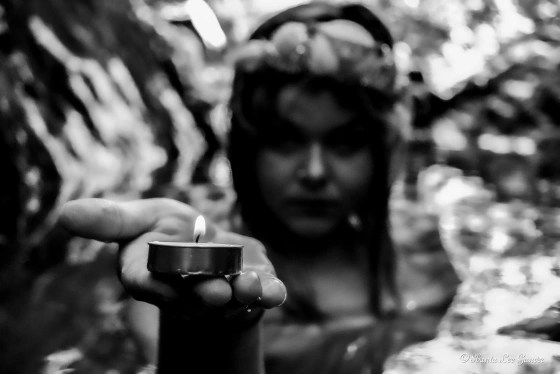
From Shanta Lee’s Exhibition Dark Goddess: An Exploration of the Sacred Feminine showing at the Fleming Museum of Art from February 2022 – Spring 2023

May all of us anachronisms always have full spirit, heart and energy to navigate within and outside of time on our own terms. 

written by © Shanta Lee

Shanta Lee is a writer of poetry, creative nonfiction, journalism, a visual artist and public intellectual actively participating in the cultural discourse with work that has been widely featured. Her current multimedia exhibition, Dark Goddess: An Exploration of the Sacred Feminine, which features her short film, interviews, and photography, and other items is currently on view  at University of Vermont’s Fleming Museum of Art from now until Spring 2023. To learn more about her work, visit: Shantalee.com

Shanta Lee Books

The Passing Sphere Carlos Alberto Lizama Peña

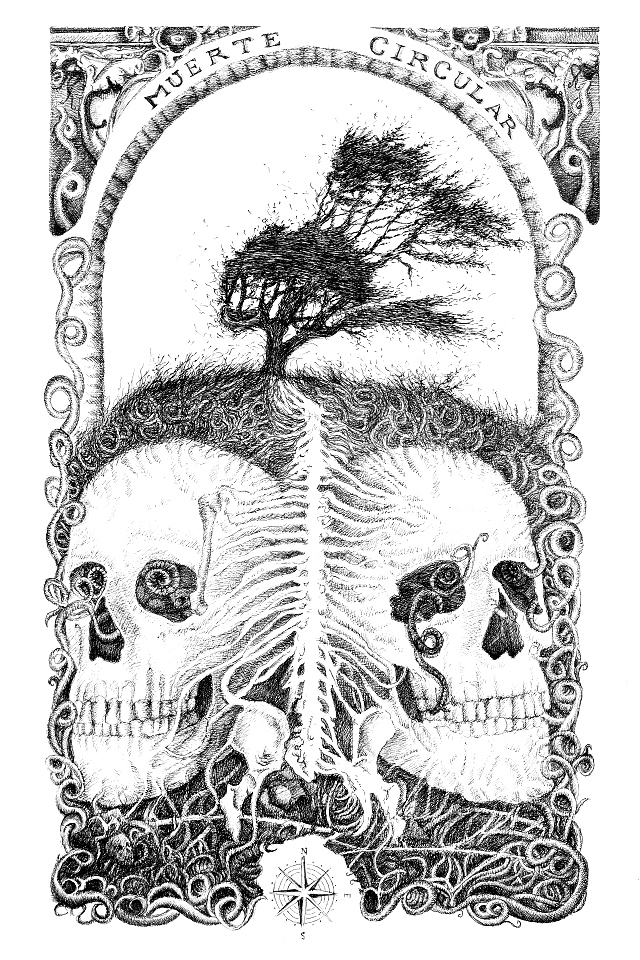
MUERTE CIRCULAR

wet and quiet land
wait in the wind
the worm coils
and swallows the shape of the lips

close the shadow
and the marrow
and the bone
they are disturbed in deep roots
they take silence from the air
through places without names
forgotten

covered with earth
white skeleton
naked
skin
lungs
veins
viscera
encephalitic mass
heart
kidneys
white and purple meat
rests in an old and busted drawer

the arteries return
with the sound of the rivers
trees
fertilizer
food

a body stopped and without time

dressed for an end
shoes shined by a loved one
mouth sealed with glue
the neck covered by a silk cloth

smell of flower crowns
the urn is sober
no religious symbols
the drawer is an astral elevator that goes out to say goodbye
It’s open
and I look at the faces that cry

truce and no drawer
naked
they have left me on the table for autopsies

Illustrations/written by ©Carlos Alberto Lizama Peña

Carlos Alberto Lizama Peña is a prominent Chilean Visual Artist has stood out in various national and international exhibitions, currently works and develops his work as a cultural and educational manager in the House of Culture of the Commune of El Bosque.

Co-executor in the FONDART Project “Open Sky Gallery South Zone Cultural Corridor “Work Production Workshop Coordinator”. March – September 2008
Mosaic Art Mural Program, El Bosque, Artistic Director, December 2006-February 2007
Murals Program on Facades of Villa la Pradera and Villa San Fernando, Quilicura, December 2006-January 2007
Painting classes, Anselmo Cádiz Cultural Center, Commune of El Bosque, 1998 to date
La Familia Foundation, Huechuraba, Painting Classes, 2002,2003,2004
Trigal Special School, Huechuraba Plastic Arts Classes, 2003
Painting workshop, Cristo Vive, Huechuraba April-December 2002-2004
Drawing and painting classes, Mun. from Huechuraba
Oct-December 2002
Painting workshop, Municipality of Huechuraba
October 1997

Oil painting classes, Mun. of Quilicura October and December 1997
Muralism Workshop, Millahue Foundation
May 1996
Extracurricular Painting Classes, Sta Teresa High School, Mun. of Independence, November 1995 – January 1996
Mural Art Project Paint your Paint, Mun. of Conchalí, June – August 1996
Paint Your Neighborhood Mural Project, New Orleans, USA
October – December 1995
Painting Classes, Youth Development Program, Conchalí, September and October 1995
Artistic Workshop, PRODEMU Foundation, Commune of La Granja
Esane Professional Institute, Graduate Assistantship in Advertising Graphic Design in Drawing and Color Branches, 1988

Curatorship of the Local Gestures I, II and III Exhibition, Art Gallery, 2005, 2006, and 2007
Guillermo Nuñez Art Gallery

Local Gestures I and II Exhibition at Contemporary Art Gallery, Quilicura, 2006 and 2007

December 1998 Work “Cantata de Santa María de Iquique,” Fondart Project, El Bosque Cultural House
November 1999 Play “Nemesio Pelao, What has happened to you”, directed by Andrés Pérez
October 2000 “Chañarcillo,” directed by Andrés Pérez, Antonio Varas Theater
April 2000 “The Exodus,” Chinese shadow play of his own creation
October 2001 Chinese shadows for the play “El Golpe,” directed by Eduardo Saez, Teatro Novedades (selected for Teatro a Mil 2002)
August-September 2004
Work ”1907 The year of the black flower’‘, La Pato Gallina theater company, pictorial work of curtains.


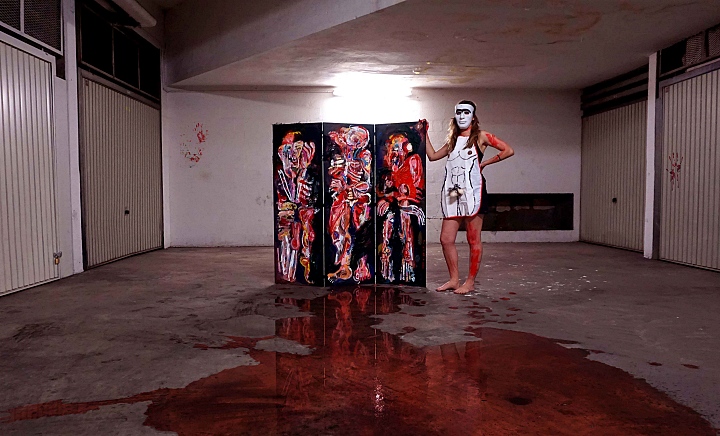
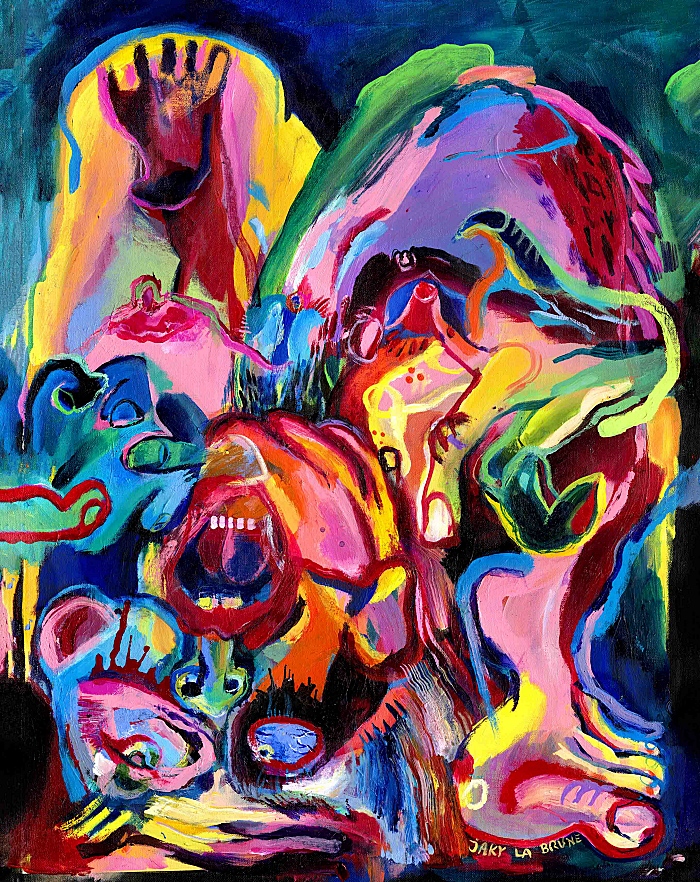
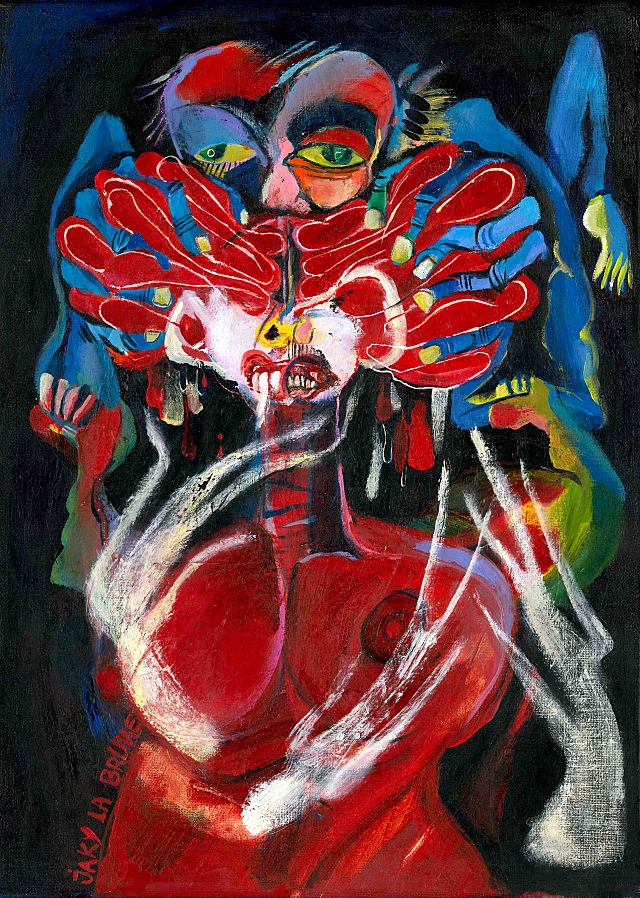
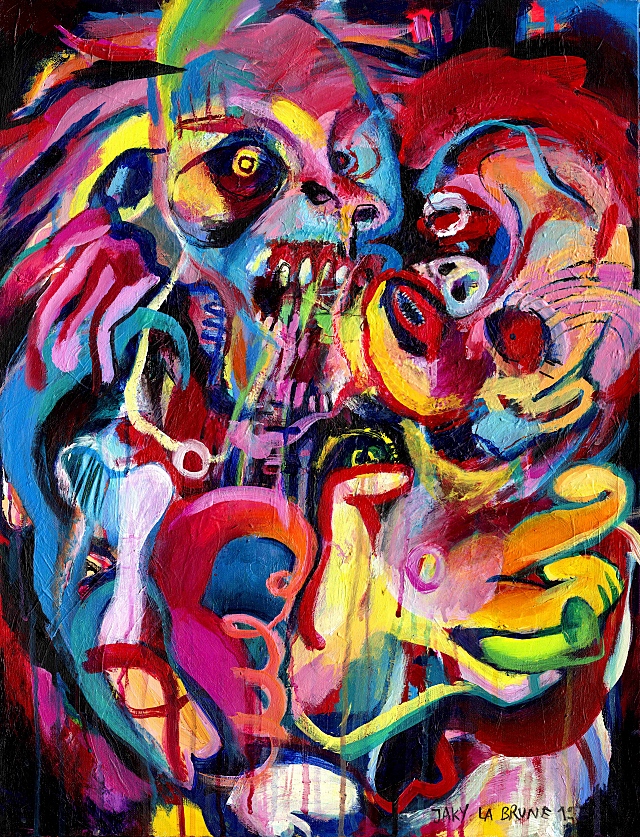
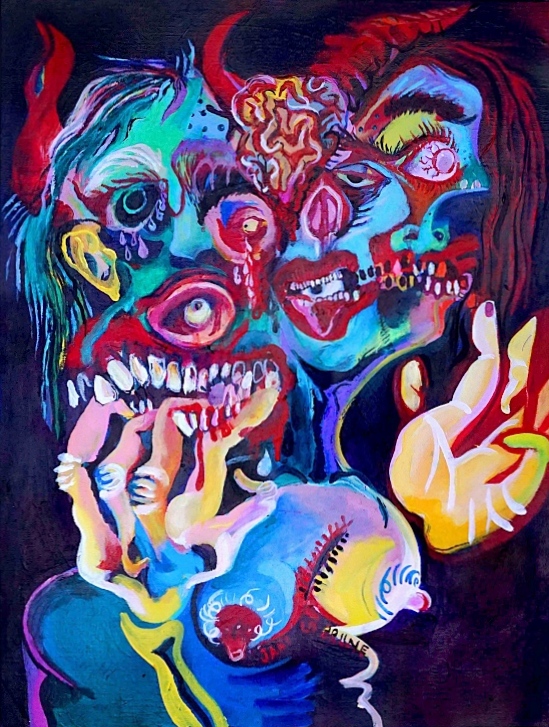
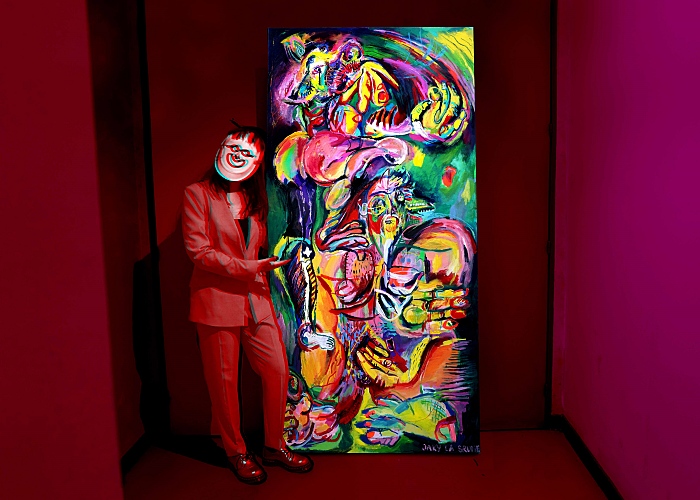
Psychic Theater of Jaky La Brune

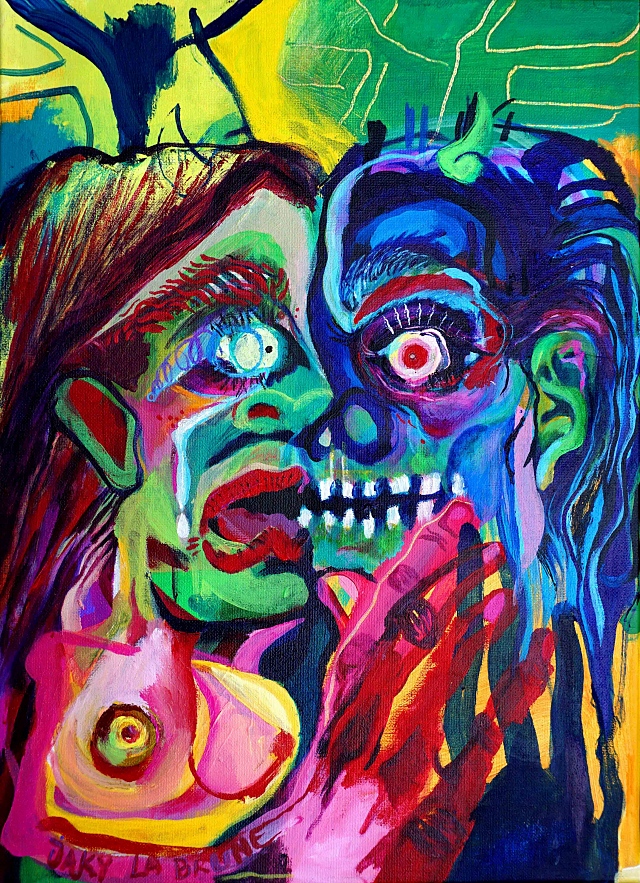
I knew I was an artist when I realized that art was therapy for me. When I’m not painting I’m sad and angry. It has become a daily need to survive like… eat. Creation is for me a “vital outlet”, that is to say that I have to vomit the darkness that there is at the bottom of my guts so as not to sink while continuing to live with the people I love.  It took me a long time to accept who I was. Today it is obvious. I eat, I shit, I paint and I sleep. I think that’s what being an artist is.

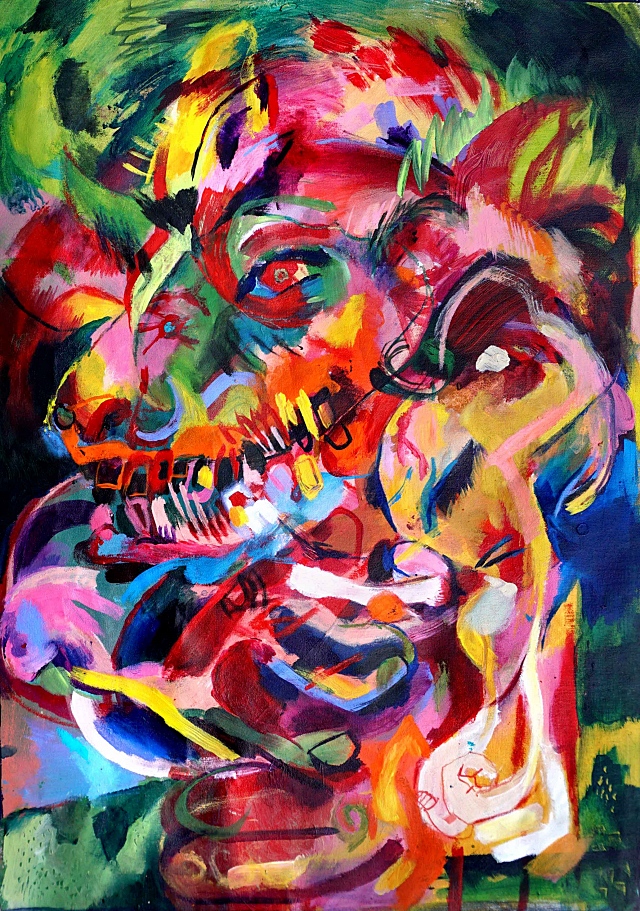
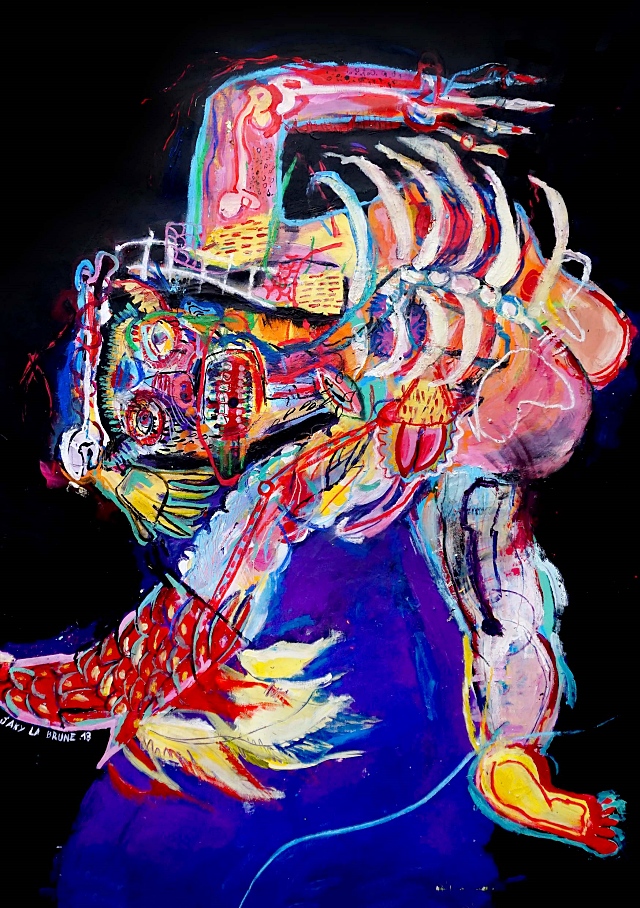
I have a lot of trouble communicating with others. I internalize everything so at some point it has TO EXPLODE ON THE CANVAS. To create, I draw inspiration from my own emotions and feelings that I can’t understand. Through the representation of the human body, I try to communicate these emotions. That’s why my paintings are very visceral: I have to dig into human bodies to see what’s inside.

You can then see in my paintings themes like identity, violence and love passion. Sometimes the spectators see monsters in my paintings but in my opinion, it is more about monstrous humans. It’s important to specify because it’s very different and it says a lot about the world in which we live.

I like to expand my pictorial universe on other supports. For a few years I have been sewing masks and costumes, and I have been doing performances. It’s as if my creatures in my paintings come out and become alive.

Cecily Brown is one of the artists I admire because she manages to find this balance between figuration and abstraction. In his work I see human bodies in motion but maybe my neighbor will see something else. I wish I could play with the viewer as well as she does. I love the idea of being able to inspire multiple stories through a single image.

written by © Jaky La Brune

https://www.jaky-la-brune.com/

cultivation phases of the basal ganglia and paleomammalian soul

the psychic robot, how our animal selves passed through the portions of different brain territories. the snakes, the monkey scribe, and now the circuit board advisory city-state. clay tablets as a big golem, ideas as ghosts informing the brain

Languaged, Body Synthetic by Giorgia Pavlidou

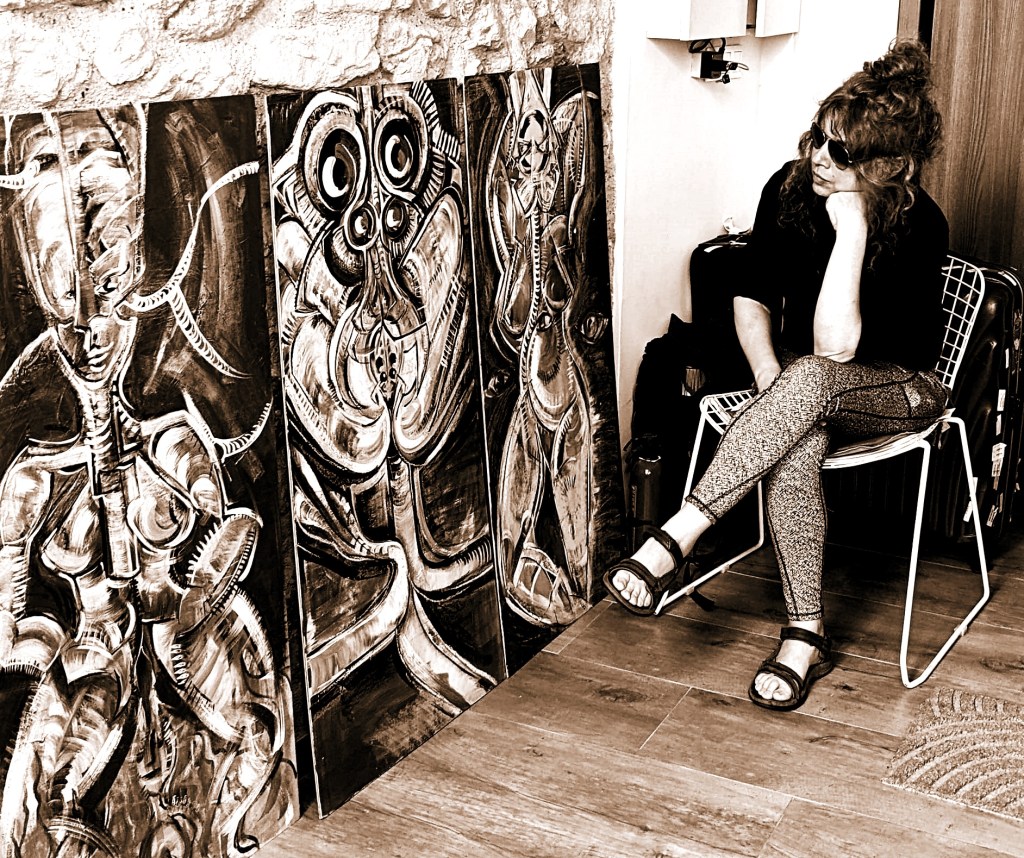
How would you describe your painting process and your associative relationship between concepts, events, or mental states of the subconscious? Is there a link between self-hypnosis and inspiration? 

Artists, writers, and poets such as Garcia Lorca, Roberto Matta, Henri Michaux, and even Anais Nin have inspired me to paint. Language, for me, comes first, but the visual can support the verbal. I paint as if I’m composing poetry.

Automatism or improvisation is the starting point – bebop – but I’ve realized that the contours of a, often dismembered and re-stitched, female body appears repetitively in my mind’s eye: think Mary Shelly. This flickering of fragmented body parts leaves deposits on the canvas/my mind. There’s something about the human body that truly fascinates me. This fascination isn’t deliberate, and it’s also strange because I’m more cerebral than a physical person: in my view, the body exists only in the mind. This also solves, at least for me, the century-old dualism: the body-mind split. Or, as William Blake said: “the body is a portion of the soul.”

Man is a machine, and a woman is a sublime machine. If you compare the human and the animal body, the human body is clearly synthetic and artificial. It blurs the boundaries between what’s considered natural and what’s considered artificial. I find that thrilling. There’s nothing natural about us humans. We aren’t becoming robots or cyborgs, we already are. We can’t rely on our instincts anymore as non-synthetic creatures can. There are vehicles in the making that’ll be able to reproduce themselves with whatever material they can find on Mars.

How’s that different from us? You could say that humans think and feel, but do we really? Aren’t we just parroting the words, stories, and belief systems that we’ve been fed? When was the last time you heard a new idea? Something you hadn’t heard before, something that stimulated an innovative thought. We’re the protein by-product of language. Perhaps when there’s trance, a moment of silence, or jazz, an intelligent intuition can unfold in the nerve domain. Painting or poetry can help it develop, transmit and circulate. Possibly it can be fertilized by critical reading or meditation.

Is painting a technique that represents a body disconnected from words? a sort of ‘transmuting neurology’

Transmuting neurology, I love this phrasing. Probably our neurology is in constant a state of desire for perpetual transmutation, but the culture must allow for it. Studying the history of painting, I was excited to learn that the Impressionists had “discovered” different shades in snow, something that nobody had “seen” before them. Isn’t that intriguing? I guess they contributed to an alteration of the general perception and experience of what’s “white.” They are also depicted as the very first in the history of Western painting of social situations such as people dancing or swimming. Nobody had done that before them. That’s why the establishment was so scandalized.

Of course, it didn’t help that the women they painted often were what today we’d call sex workers. Can you imagine that in the second part of the 19th century? Later with expressionism and surrealism, painters gave expression to the ebb and flow of what’s inside the mind’s eye. An interesting artist is Francis Bacon. He claimed that he depicted people as they “really” are. Perhaps some of us are polished yet monstrous or disfigured? Or even, maybe the human condition is one of perpetual disfigurement? Whether we can see without words is something I keep on mulling over. I feel tempted to believe that as humans we need some sort of narrative or linguistic frame of intelligibility to see things. Perhaps we can only perceive objects contextually. Painters should be called pioneers or even anarchists of perception. 

Can you elaborate on how language shapes us by a Languaged body, cultured intuition by sound, and language as a living intelligence?

I’d like to emphasize that I constantly toy with intuitions and ideas, not with truths. The truth for me often is a reductionist and particularly violent concept. Think of all the wars that have been fought over some sort of revelatory divine truth, or in later centuries, the so-called scientific truth. The Nazis had their ideology backed up by scientists’ assertion that theirs was the most evolved race (so-called Social Darwinism), and that certain other races were particularly parasitic and had to be exterminated the same way as rats or cockroaches. So, circling back to the central ideas informing my practices such as the “languaged body” which is a neologism, and the idea that language is a living intelligence, I don’t consider them to be truths. These are frames of intelligibility that have grown under my skin over the years of study, reflection, practice, and meditation. I have no problem admitting that these concepts are nothing more than my obsessions. I’m not a missionary.

I see language as something external to human beings, possibly an organism. In the process of language learning, humans are inserted into this external thing we frivolously call language. There are linguists in Switzerland who’ve developed a theory in which language is a symbiont. So not necessarily a virus as William S Burroughs famously claimed, or that it can turn parasitic in case of psychosis as French psychoanalyst Jacques Lacan suggested. I see our brain + nervous system as a receptor-like radio, tv, or computer, capable of receiving signals and building narrative. In some way, it’s a form of telepathy. By producing sounds, we invoke a whole shared world that has been forged across thousands of generations. Also, we invest our lifeworld, including our bodies, with words, with a story. If our bodies weren’t invested with language, we’d constantly experience ourselves and others as walking talking meat, protein bags, or water bags on legs. When we buy meat at the butcher’s or supermarket, we don’t think of that red stuff as chopped-up dead animal cadavers. We say it’s a New York strip or whatever. Something similar is going on with our bodies. We have names.

This name is somehow “written” on our skin, on our face. I’ve never met anyone without a name, though I’m curious how that’d be. When we feel attracted to someone, we don’t think “that’s a tasty animal.” Some of us might, however. A whole story about someone is activated within us when we fall in love, a concept of what a human being is, of what beauty is, etc. while we all know that a few millimeters under the skin there’s blood and a skull. But who, except a cannibal or a serial killer, thinks about that? The way language has contextualized humans prevents us from seeing the meatiness of a person. But this experience isn’t fixed. There are cultures in which not everyone has human status. Think of the Dalits in India. In Central Africa the so-called pygmy is being hunted and eaten, most probably because their appearance doesn’t conform to the hunter’s concept of what constitutes a human. It’s also interesting to read the private diaries of people who worked in concentration camps, and how they thought about the people they helped butcher or exterminate. Some agreed that Jews, homosexuals, communists, etc. had to be put to death, but they felt it should happen in a kinder way, pretty much how some activists think about animal rights in our era.

Language protects us by feeding us optical illusions. As humans, we’re trapped in a theater of distorted thoughts. It’s as if we need to drive on a busy freeway wearing glasses deforming everything coming our way. All this is extremely disorienting and frightening. I think maybe that’s why there’re so many ideologies and why religion is such a sensitive matter. These “grand narratives” offer the illusion of certainty and direction: how one should lead one’s life, where one should be headed, and where to invest one’s life force. The artist, I think, has been for whatever reason cast out of the Eden of ideology or religion, and is forced to constantly mold and remold her internalized worldviews, knowing often very well that this is a futile endeavor that must be repeated endlessly. But, at least, there’s some motion within. The alternative would be catatonia. 

Artists, writers, and poets who helped contribute and inform your process?

I sound like a broken record when I keep on mentioning Will Alexander. But there’s no denying that his oeuvre provided me with the missing link in my thinking. I have always had an interest in ritual, animism, and shamanism, but with the latter term, we need to be extremely careful. I adhere to academic concepts of shamanism, such as Mircea Eliade’s. When younger I participated extensively in groups believing that they were engaged in shamanic practices. Perhaps some of those did. I don’t want to claim that I have the capacity to say what’s authentic and what isn’t. What I inherited from these experiences is the sensation of trance. Will’s work transfuses both language and animism/shamanism, especially in his The Combustion Cycle.

Without trance, there’s no writing nor painting for me. Writing prose is different. Poetry and painting for me fall in the same domain as glossolalia, speaking in tongues or trance-speaking. Freudian associating on the couch. Will’s concept of language as a living, possibly alchemical intelligence, makes a lot of sense to me. It connects my interest in shamanism and animism with my obsession with language in a no-nonsense way. WA’s poetics is a conscious journey into the imagination. To truly feel this, you need to understand that the imagination isn’t just “fugazi” or fantasy. The Jungians know very well that the imaginal world is a tangible environment, in which one can move around and travel in. There are beings dwelling there. You can develop a bond with these inorganic characters. Jungian practitioners are aware of this possibility.

I think I can say that Occidental culture at this point in history is in a state of coma or autophagy: it’s eating itself up. The criteria for personhood are so one-sided and reductionist that it is extremely easy to descend into a state of being a non-person. Maybe the only option when that happens for some people is to die and, in the process, drag along as many corpses as possible. Ours is a high-risk society. Having said that, I’ve lived in India for three years the comfortable life of an adult literature student. Life in India is no bargain either. Perhaps I have taken shelter in the written word and painted images because I’ve experienced that it isn’t possible to change your own culture with another. Every culture has its own cruelties, sacrifices, and gains, but they aren’t commodities. The difference, maybe, between Western cultures and the rest of the planet is that, as French novelist Michel Houellebecq suggests, the West has sacrificed almost everything for the sake of rationalism and technocracy. 

There are also other artists and poets besides WA that have influenced me. I’m thinking of the “Grand Jeu” poets such as Rene Daumal and Gilbert-LeComte but also Antonin Artaud, Joyce Mansour, and Roberto Matta. Regarding US artists and poets, there’s, of course, Philip Lamantia, whose thinking and work is like a direct mind-injection into my mind: picture a metaphysical phone call without ever hanging up. Other important people would be Bob Kaufman, John Hoffman, Laurence Weisberg, but also someone like Mina Loy, and some beats, in particular William S Burroughs. I feel a deep affection for a lot of artists and writers: William Baziotes, Arshile Gorky, Thom Burns, Rik Lina, Byron Baker, Emily Dickenson, Edgar Allan Poe, William Blake, Lautreamont, Guiliaume Apollinaire, Baudelaire, Rimbaud, Gerard de Nerval, Grace Hartigan, Leonora Carrington, Remedios Varo, Juanita Guccione, and many more.

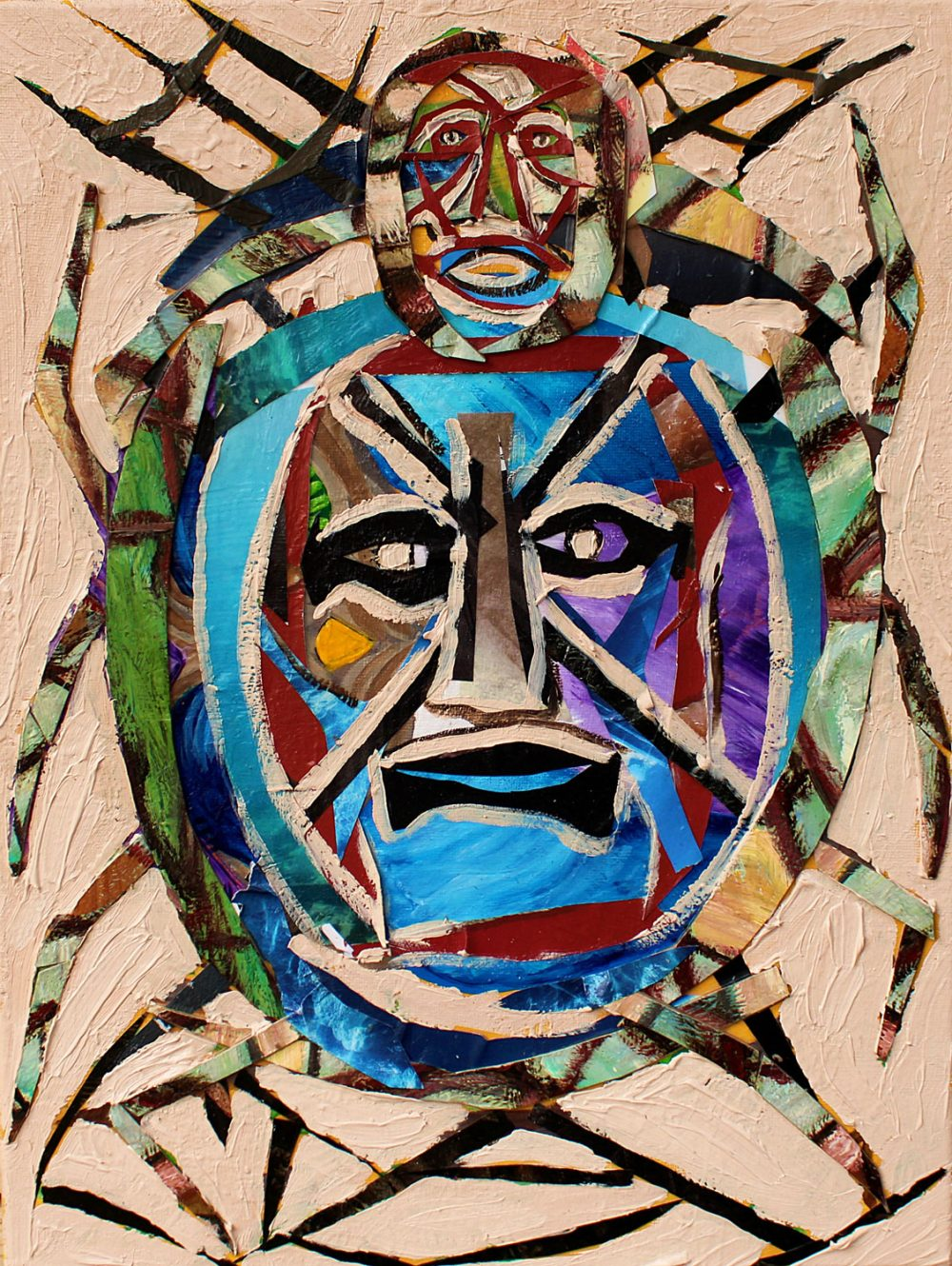
Bill de Kooning deserves special mention, on the one hand, because nobody speaks about him anymore and because of ongoing the “de Kooning-bashing. But also because my paintings are a prolegomenon (not a counter-narrative) to his disfigured depictions of Marilyn Monroe-type of women, in particular the teeth: Where else in the world is the business of smiling taken so seriously as in the USA? My series of chopped-up disfigured ladies, “Mutilated Madonnas,” are homage and homologous to his.

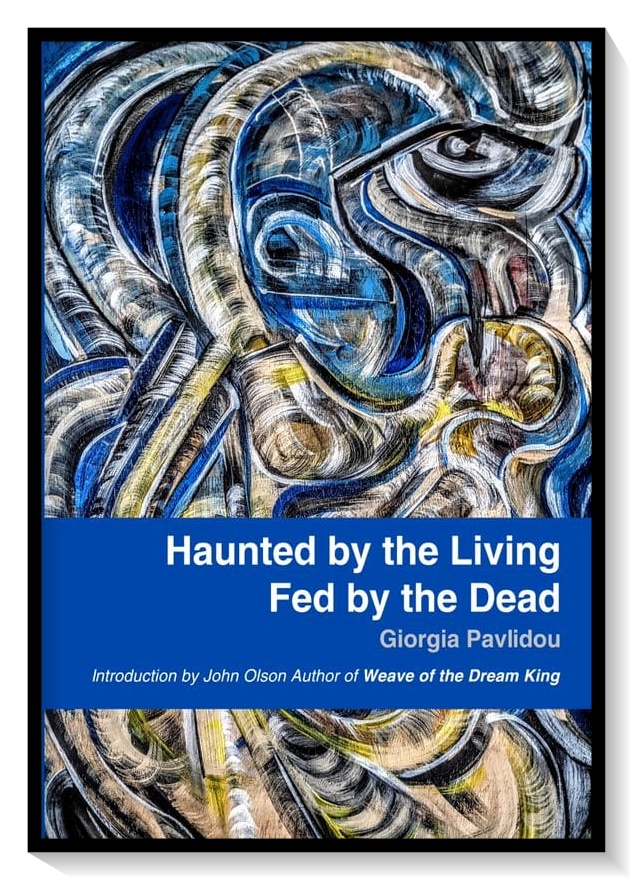
Haunted by the Living, Fed by the Dead
By
Giorgia Pavlidou

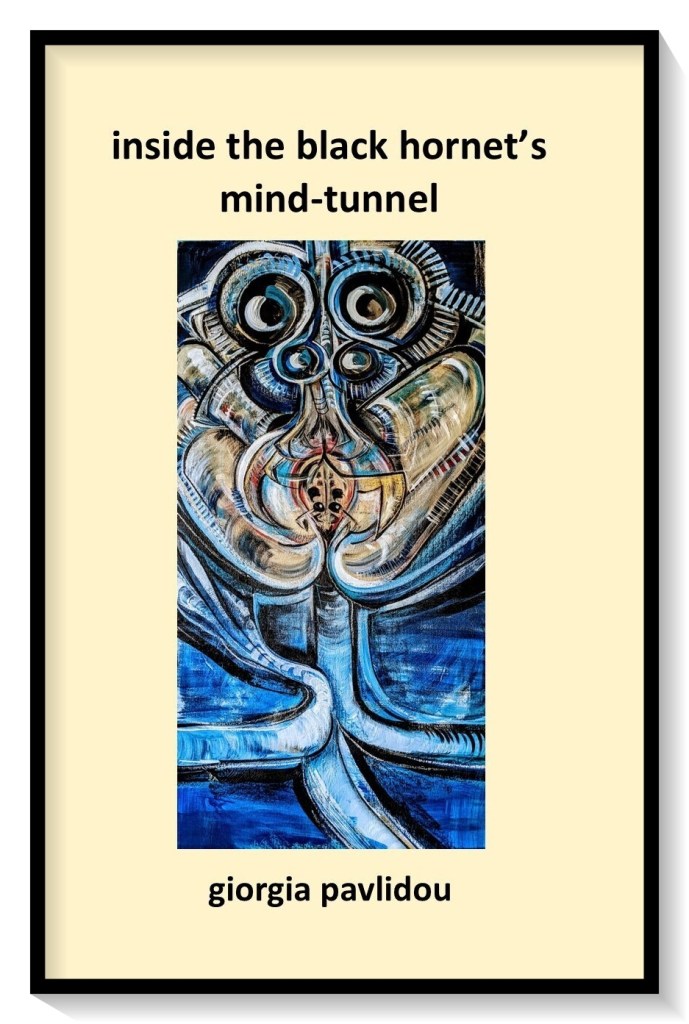
inside the black hornet’s mind-tunnel

by Giorgia Pavlidou

This is intense work. It’s incandescent. It’ll catch your eyes on fire. Burn your brain down. Giorgia Pavlidou has managed to make anguish appear beautiful. And sexy. Artaud is the tutelary spirit of this work. The anguish is real and the words have the taste and smell of the netherworld in its black gown of sibilant pupa. This is language with a biology; it writhes, hisses, and propagates by glossolalic impregnation. Reading these poems is an immersive experience. Here we find madness, anguish, erotica and Rabelaisian humor welded and wed to a language full of “lexical tentacles” and “fire dressed in fire.” It gets under your skin, this speech. These strangely intelligent & autonomous words, manic as wasps in a vessel of glass.

—John Olson

A pyrotechnics of lingual essence, Giorgia Pavlidou’s “inside the black hornet’s mind-tunnel” yields feeling through the language of the heart creating darkened constellations that rivet the inner eye all the while whirling as an estranged yet organic imaginal terrain.

—Will Alexander

Giorgia Pavlidou

Giorgia Pavlidou is an American writer and painter intermittently living in Greece and the US. Her work recently appeared or is forthcoming in Caesura, Maintenant Dada Journal, Puerto del Sol, Clockwise Cat, Ocotillo Review, Strukterriss Magazine, Entropy and Sun & Moon Magazine. She’s an editor of SULΦUR. Additionally, Trainwreck Press launched her chapbook ‘inside the black hornet’s mind-tunnel’ in 2021, and Anvil Tongue Books her full length book of poems and paintings, ‘Haunted by the Living – Fed by the Dead’ in May 2022