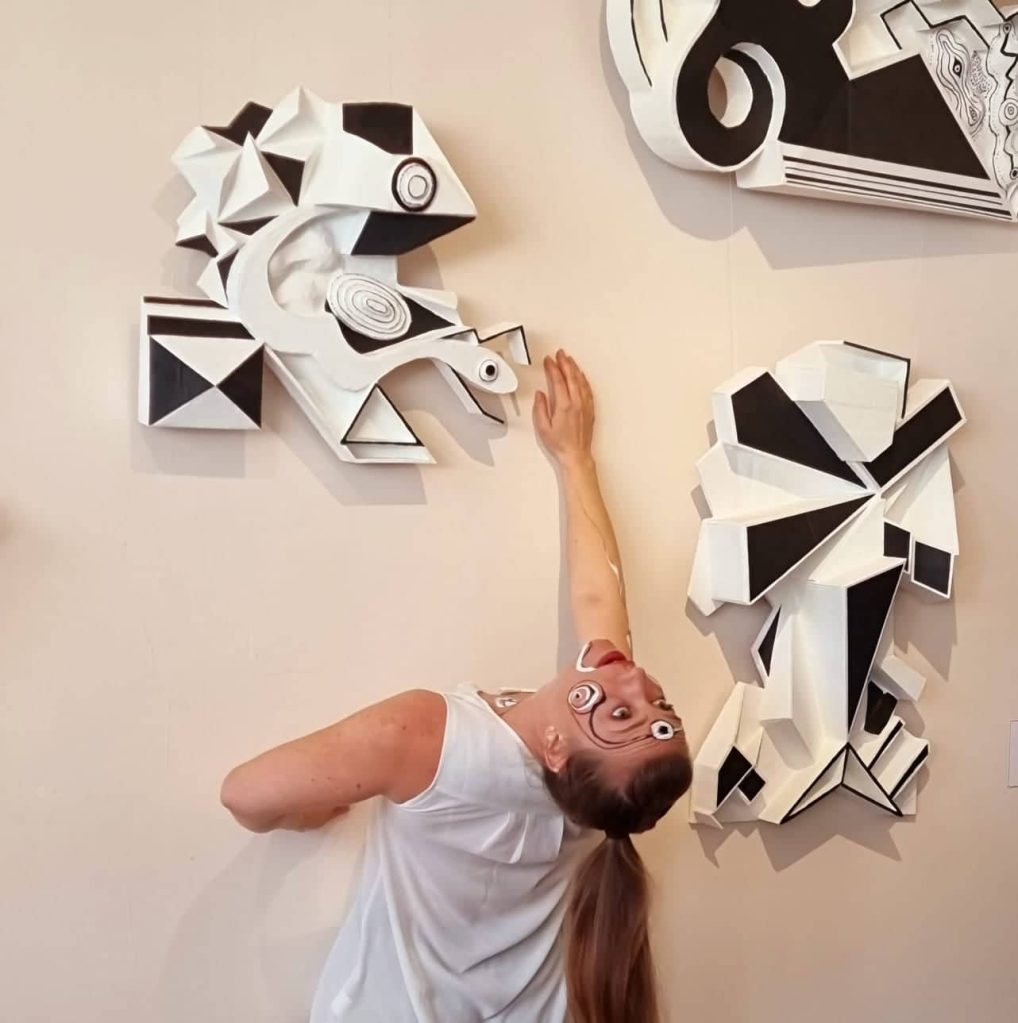
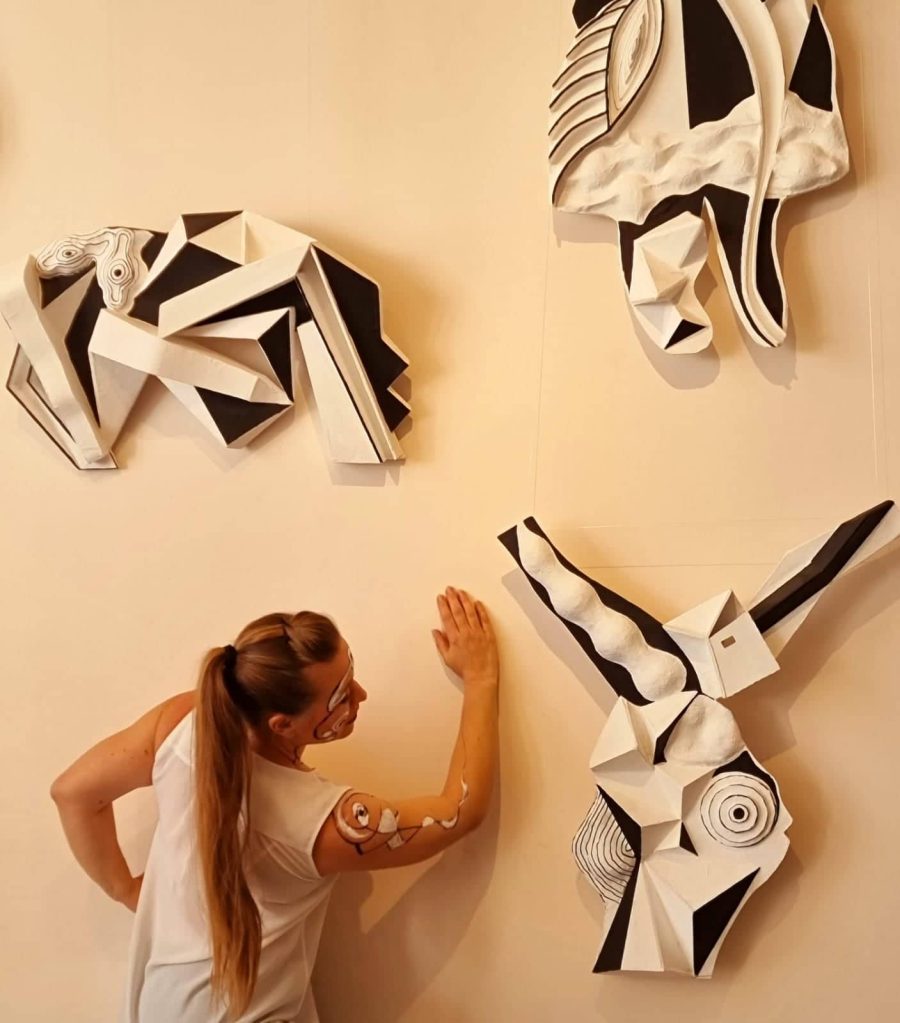
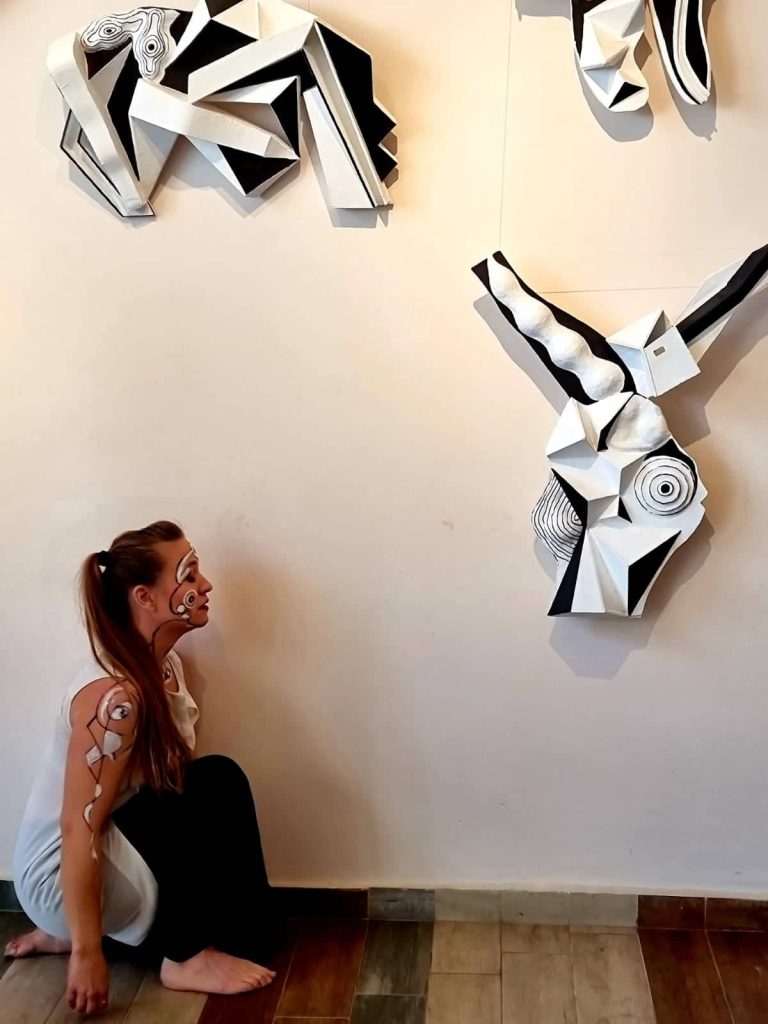
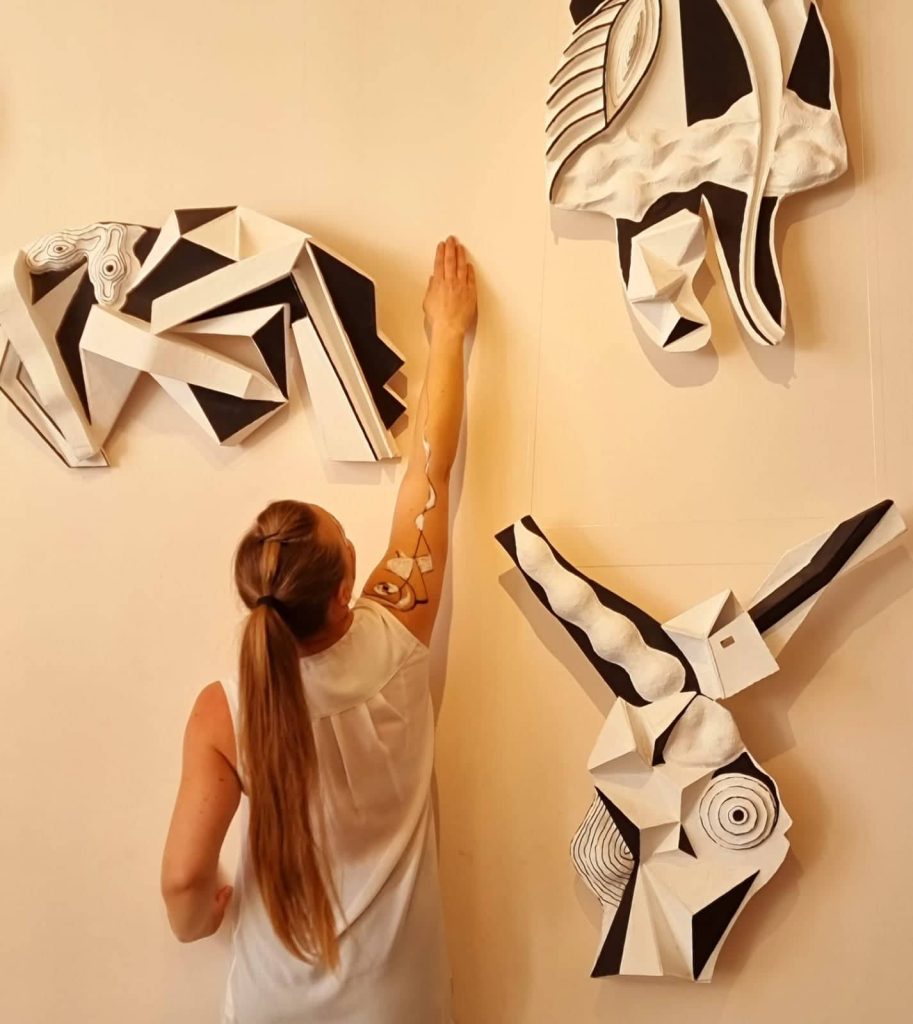
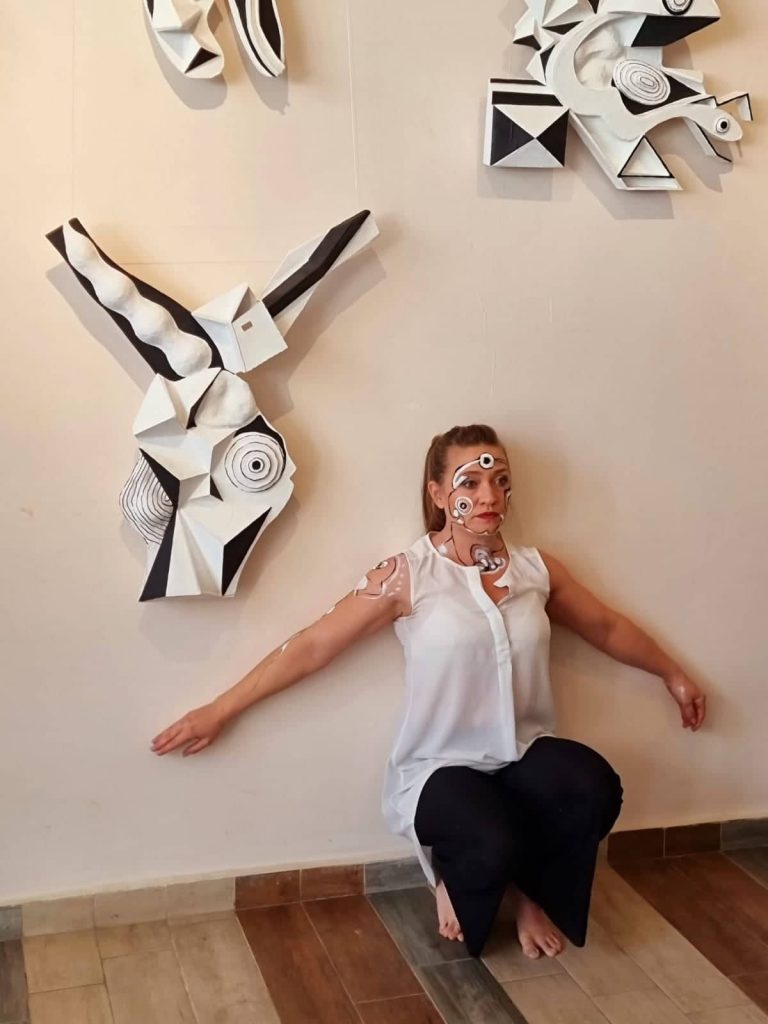
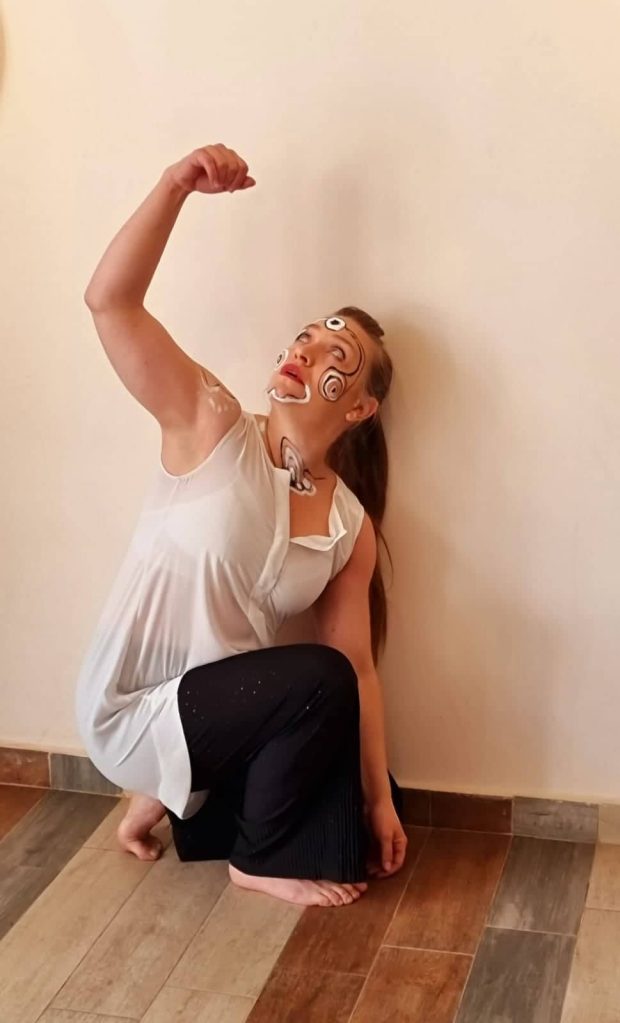
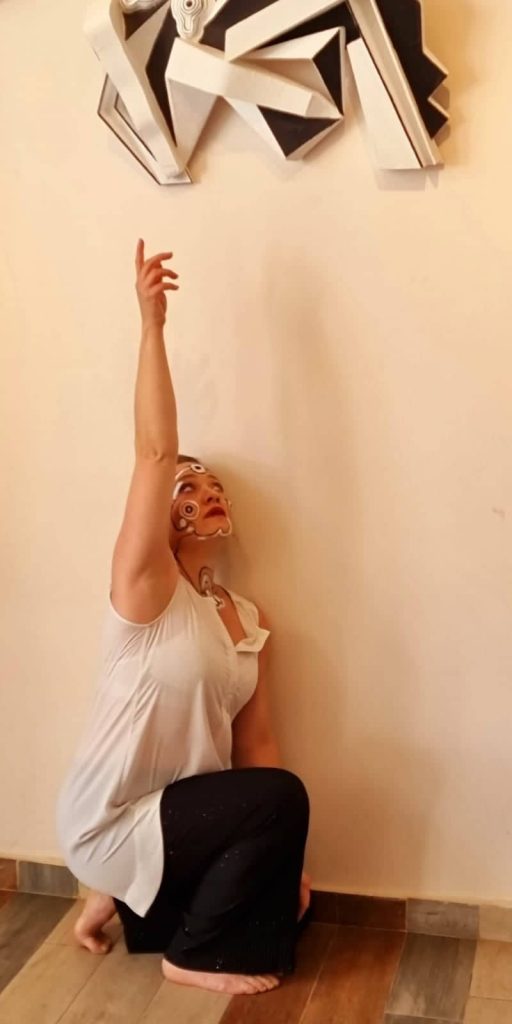
Poem read and written by Ceci Nahuelpangui Tiltil, June 2022 read at Rene Fernando Ortega Villarroel Mental LabyrinthsOpening with dancer Giannina Canessa/Poema leído y escrito por Ceci Nahuelpan, Junio 2022 leído en René Fernando Ortega Villarroel Apertura de Laberintos Mentales con la bailarina Giannina Canessa
Everything tells us that we are in seed times… The seed that dies in the dark under the nourishing moisture of our Ñuke Mapu, Mother Earth… She surrenders and strips herself of what she is to live fully towards that imminent transformation. The seed knows what its destiny may be, it was born for this long-awaited process and relies on the help of the cosmos to make it happen sooner or later. The help for this wonderful change is in all of creation… In the birds, the wind, the Moon and the Sun…
So, if we have that understanding and ancestral knowledge, we understand that this is how it is throughout this magical womb of the Ñuke Mapu. It doesn’t matter what seed we are, what matters is that we are and that germination will exist, but not without first experiencing this important and necessary darkness. The eclipses, Lai Kuyen the death of the Moon and Lai Antü, the death of the Sun are one more confirmation of our process. Darkness and death is also part of Life and it also has a beauty that we will discover if we are aware of living it. Welcome to this wonderful transformation… Inchiñ fün… We are seed.
Giannina Canessa
Todo nos indica que estamos en tiempos de semilla… La semilla que muere en la oscuridad bajo la humedad nutriente de nuestra Ñuke Mapu, Madre Tierra… Se entrega y se despoja de lo que es para vivir en plenitud hacía esa transformación inminente. La semilla sabe cual puede ser su destino, nació para este esperado proceso y confía en la ayuda del cosmos para que ocurra tarde o temprano. La ayuda para este cambio maravilloso está en toda la creación… En las aves, el viento, la Luna y el Sol…
Entonces, si tenemos ese entendimiento y conocimiento ancestral comprendemos que así es en todo este mágico vientre de la Ñuke Mapu. No importa que semilla somos, lo que importa es que lo somos y existirá esa germinación pero no sin antes vivir esta importante y necesaria oscuridad. Los eclipses, Lai Kuyen la muerte de la Luna y Lai Antü, la muerte del Sol son una confirmación más de nuestro proceso. Oscuridad y muerte también es parte de la Vida y también tiene una belleza que descubriremos si somos consciente al vivirla. Bienvenidos a esta maravillosa transformación… Inchiñ fün… Somos semilla.
Every time I ordered my papers I found these poems that correspond to my years of militancy in the communist youth under the period of the dictatorship, which in my personal case took place between 1979 and 1989
Already a couple of years ago, around 1977, my concern for writing verses had been awakened, and I still have those first poetic stammers. Those sheets speak of those attempts to provide something different to the word, since when adding two, these would give a different meaning and significance, more subtle, in short, that it had a broader meaning.
I had finished high school, and shortly after I met a landscape painter and an art student, who showed me the secrets of easel painting, it was then that I was already clear that my destiny was the visual arts. Parallel to the instruction, I received from these two friends, others close to the cultural circle that was forming in the neighborhood, they enlightened me about the dark passages that happened daily in our country. There was the coup d’état, the intervention of the United States, the disappeared detainees, the torture, the prison and the political persecution, which were some among many the prison, and the political persecution, which were some of the many atrocities that devastated our people.
poetry was still present, and names like Nicolas Guillen, Ernesto Cardenal, or Roque Dalton had been added to my library. I wrote in my spare time, and much of that poetry served the cause of the offended and their fight for liberation for the construction of a new, fairer life. It was then, during a sunny winter afternoon that one of my friends invited me to join the Communist Youth.
I accepted and from that moment my new name was Freddy. The following year he entered the Faculty of Arts of the University of Chile, where the student agitation had restarted after complex years where the repression was brutally violent. Now there were more of us and all the universities were setting up Student Centers ready to fight for student and human rights. They were two hard years, of strikes, street actions, propaganda, and confrontation with the repressive forces-Carabineros de Chile, which at that point was a militarized police force trained for repression-Between art classes, paintings, and struggle, of from time to time some of these poems that I have rescued arose. Others were lost among notebooks or were forgotten on a table in my school.
The months went by one after another; meeting, bells, protests, repression, hiding and reappearing, that’s how the years went by, with a lot of political activity, little appearance, and some verses that are being accommodated in these sheets.
At the beginning of 88, love came with force, since one day in January I met Valezka, who would be the mother of my three beloved daughters. That year, party activity would turn to the campaign for the October plebiscite and find a way to insert myself into the workplace, since by December there would be three of us in the family. It was a tough year for both of us, but we went to all the big marches where we joined the people who had said enough to so many people of darkness and opprobrium. The triumph of the “No” option brought hope for the daughter to come and the verses changed color, approaching a less arid and somber texture. 1989 I arrive with a stable job, my party life is focused on the union. That year Patricio Aylwin was elected, he would be the President “as far as possible”, or put another way: what was impossible for the people, while everything possible was given to the de facto groups and the oligarchy. Those were the years of asking for permission from the dictators and fascists who held key positions in the Armed Forces, Parliament, and the production and communication media. Large state companies continued to be privatized and neoliberalism deepened. From the 90s onwards, were the years of shame, of a protected democracy, and of the deepening of the model
Enrique of Santiago, December 2021
The Smoke Base (1979)
the base of the smoke it is base without eye for the bell a lock vibrates ten times, and the bewildered sight writes How many broken ideas are there in the mirror? for the bell the ear is deaf with pain of 10,000 years the crazy race has an end everywhere lips are pursed, the exit is praised, spitting black earth and the black earth spits us to the sky burning the pupils since the base of the smoke has no eye The base of the smoke has no eye and the ash drowns a siren and they crash by the thousands Well, it’s the autumn of man the bell screams in fright and the eardrum tells him to shut up.. but the cry is crying dog crying, of worms of mice human crying shoes melt and the frost boils in its hour pine is charcoal and the race burns and burns The base of the smoke has no eye but the beginning yes, but underlies its lock
Carnival and duel (1980)
Dreams have been trampled in the mud and the moans are silenced with screens and neon fun to lead the century on the trembling of absent birds but one day the crystal clear rain will come and after the sun with your new water kissed by the moon while the rebellious ligaments they give off longings on the gray asphalt under waiting stars the smooth flight of lepidoptera
The Pedaling (1981)
On a colorless bike pedal to a sleeping atoll in that corner of the skin of a rosy vision under the dark green chair so that the sole kisses the yellow sands the contemporary chip already inside my starry pants I think it is appropriate to say with a red voice: Long live this surreal expression! I then say: Your violet rifle jumps from the dark tides Stepping on the shapes that you don’t have yet and you were submerged in your numerical sea where they surprised you between mastabas and whips and embraced the heavy centuries under the belly of the galleys to cross the maps of the centuries chasing the useless and ephemeral
Night (1983)
Have you felt that the bats They come to your room one day agitated? They laugh and denote expired fangs while the music falls, abandoning each note, and I look for an onomatopoeia to simulate my brain hitting the floor, so as not to perceive how it is extinguished the spent life of those who do not have feathers I just want my fingers intact to pull a certain trigger and make my way through the gray tangle of his name
Observations (1984)
They are cloudy days vermin crawl and abound the palace beasts the city wears its best corruption suit and in each office a crime is perpetrated but there are still your kisses and your moisture in a brief but broad sincerity in that street that corrects my face and faith
Reading in Heaven (1985)
The fly refrained from ascending and stopped at folded hopes perceiving a usual odor had drilled all the diameters known and unknown of the present medieval apathy Repelled by bullets the nonconformity wears black tile and resume the flight causing the last ulcers to existing weight Tomorrow the cage is undressed before the soup gets cold
Painting (1986)
Alone, in front of the support clinging to thousands of flaming voices and be one and all following the thread of Ariadna in that challenging labyrinth where she is shipwrecked and pales her life, next to the truth and hers custodian loves be both and call what principle Without us realizing that we always carry with the fear of what ends
Dream (1987)
In the courtyard of my memory I did not pave stone *pastelones and on the most humid and fertile land grow a red flower burdensome and geometric without the language of capitulation and got up watered with the brief bravery that drives almost irrationally to the martyrs from every barricade in this city charnel house
Demystifying (1987)
The feather vortex perishes before the litigation of stillness and from so much looking for potions on nights covered with the moon shell I then went to the annals of oblivion while the image of the eroded sky appears under the uncertainty of its dim flashes going through the rubble of your memory My withered pupil arrived there to forget you
September Notes (1989)
They will hide my lean meat, under the cover of earth and parallel, where the traces left by my dreams will not be visible in those coordinates where the dragonflies nested In the softest parts of a solstice insistent the consecrated spells will be hidden for future generations while I drink from a larval porphyria since each wing contains the history of time, what takes my breath to set your levels without further limits that the one that extends in the red slope of a fallen where each segment of the man fulfills with the fragility of his own destiny In vain many look at their savings account on the gray sidewalk, when in reality life goes by insignificant before your eyes Now do you understand why? of the sound of crafty sabers in spring
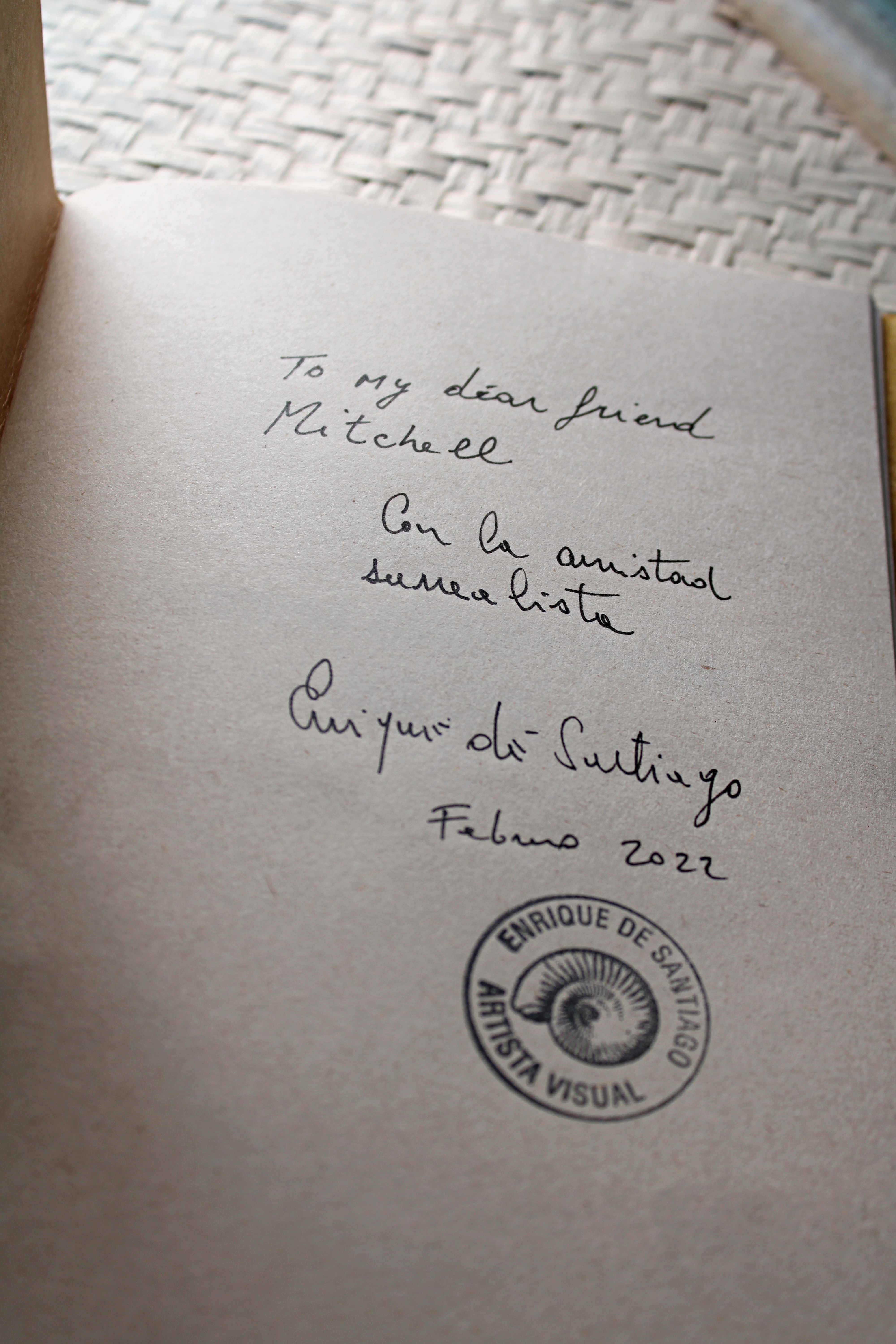
Enrique de Santiago, Born in Santiago, Chile (1961). Visual artist, poet, researcher, essayist, curator and cultural manager. He studied a Bachelor of Art at the University of Chile and at the Institute of Contemporary Art (Chile). Since 1984, he has exhibited in individual and group exhibitions, counting to his credit around more than 100 exhibitions. He has edited five books: Fragile Transits Under the Spirals in 2012, with La Polla Literaria; Elegía a las Magas and the book essay: El Regreso de las Magas, both with Editorial Varonas. In 2018 he edited La Cúspide Uránica with editorial Xaleshem and Dharma Comunicaciones, and Travel Bitácora with Editorial Opalina Cartonera. He has participated in various poetry anthologies, both in Chile and abroad. He has collaborated in the newspaper La Nación with articles on new media art, and in magazines such as Derrame, Escaner Cultural and Labios Menores in Chile, Brumes Blondes in Holland, Adamar from Spain, Punto Seguido from Colombia, Sonámbula from Mexico, Agulha de Brazil, Incomunidade de Portugal, Styxus de Rep. Czech, Canibaal de Valencia, Spain, Materika de Costa Rica and other printed and digital publications.
And from beyond the intellect comes beautiful love trailing her skirts, with a glass of wine in her hand. Rumi From above with his selenite love descends the brief nomenclature of desire in her diamond lust kissing in purple intervals the waves that announce your steps with your coming laugh to testify about the rain and in the nyctalope depths in its germinal dance the final hour of your name.
Patriarchal Decadence
(or Brute A attacks Brute B) Do you think that money will stop being fascinating? and if one day it disappears Do you think power will lose its appeal? possessing is more addictive than loving your missiles and two more the poker of life a “quijadaso”, ‘jaw bone’ well given in the skull for Abel (although that fact marks the end of grazing and the beginning of agriculture) that happens for misreading the allegories and also wrongly see the universe added to a dark and patriarchal church I light candles for Ishtar instead and I hear the voice of the earth but… Will there be anything left to restore the feminine? End of statement, I’m going to the shelter.
Enrique de Santiago, Born in Santiago, Chile (1961). Visual artist, poet, researcher, essayist, curator and cultural manager. He studied a Bachelor of Art at the University of Chile and at the Institute of Contemporary Art (Chile). Since 1984, he has exhibited in individual and group exhibitions, counting to his credit around more than 100 exhibitions. He has edited five books: Fragile Transits Under the Spirals in 2012, with La Polla Literaria; Elegía a las Magas and the book essay: El Regreso de las Magas, both with Editorial Varonas. In 2018 he edited La Cúspide Uránica with editorial Xaleshem and Dharma Comunicaciones, and Travel Bitácora with Editorial Opalina Cartonera. He has participated in various poetry anthologies, both in Chile and abroad. He has collaborated in the newspaper La Nación with articles on new media art, and in magazines such as Derrame, Escaner Cultural and Labios Menores in Chile, Brumes Blondes in Holland, Adamar from Spain, Punto Seguido from Colombia, Sonámbula from Mexico, Agulha de Brazil, Incomunidade de Portugal, Styxus de Rep. Czech, Canibaal de Valencia, Spain, Materika de Costa Rica and other printed and digital publications.
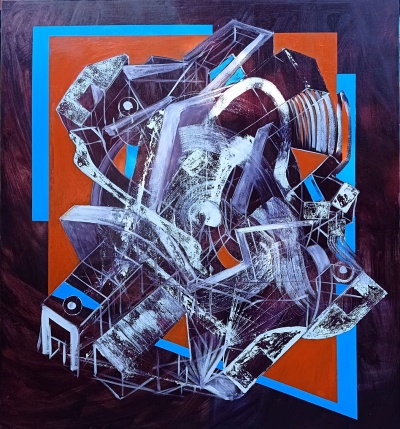
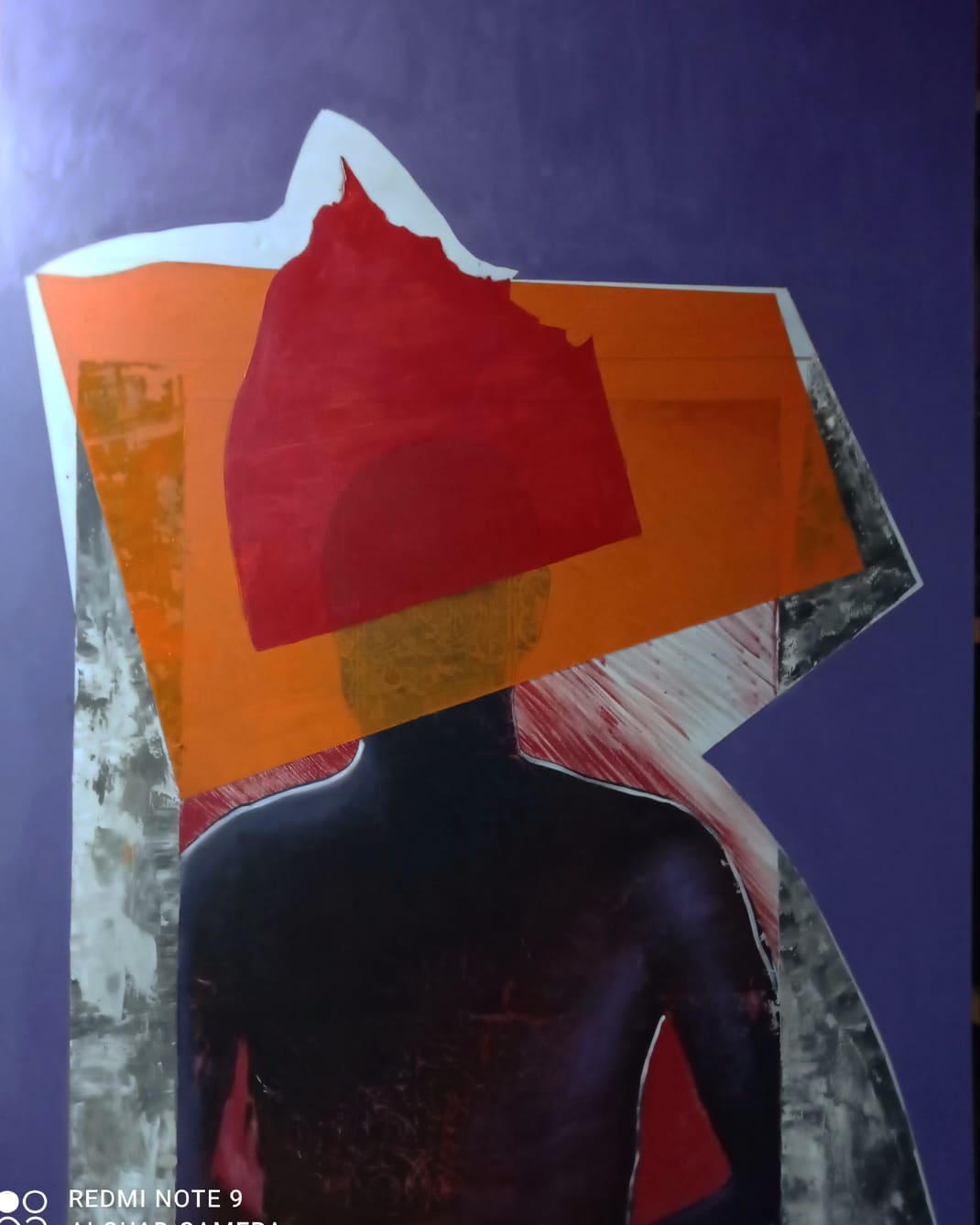
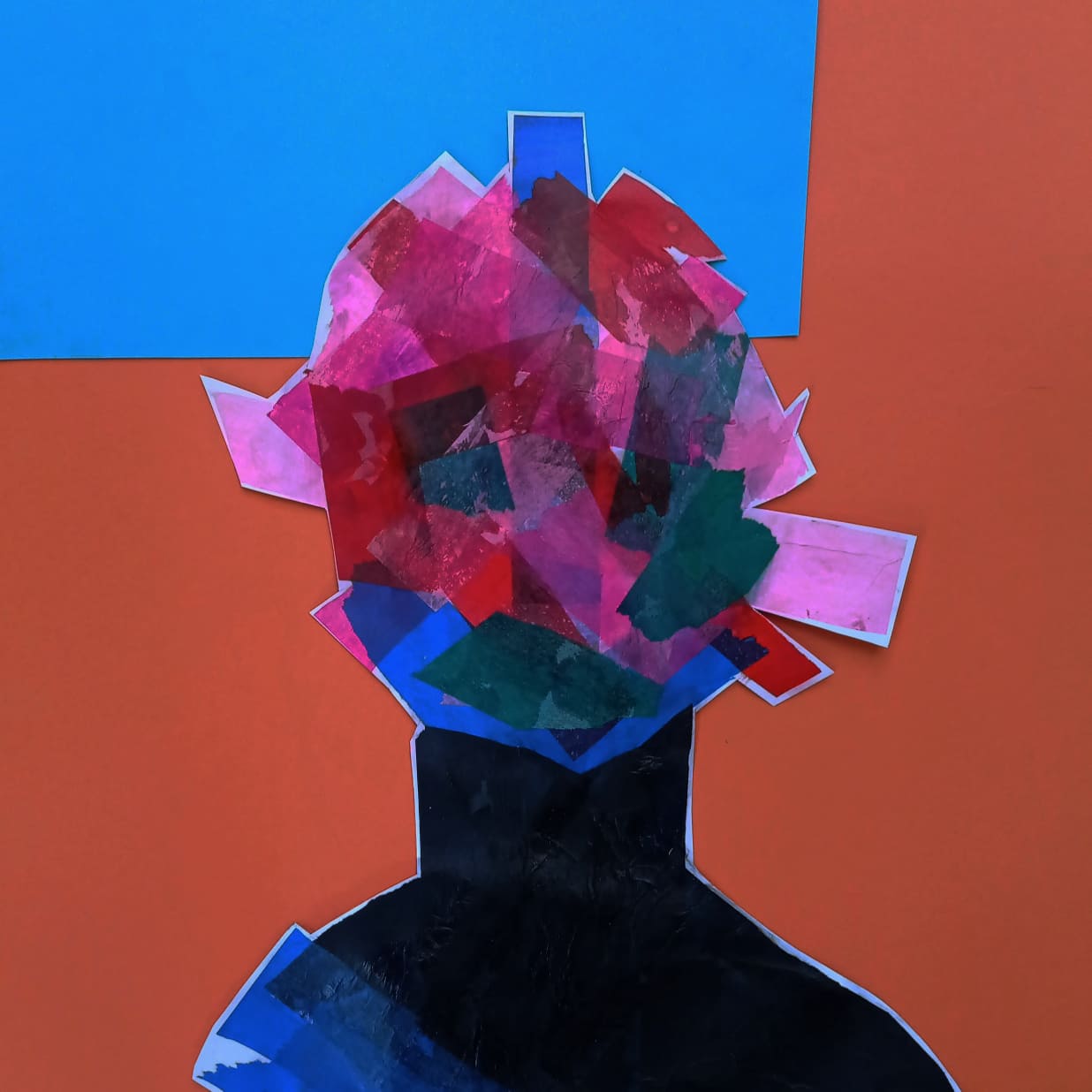
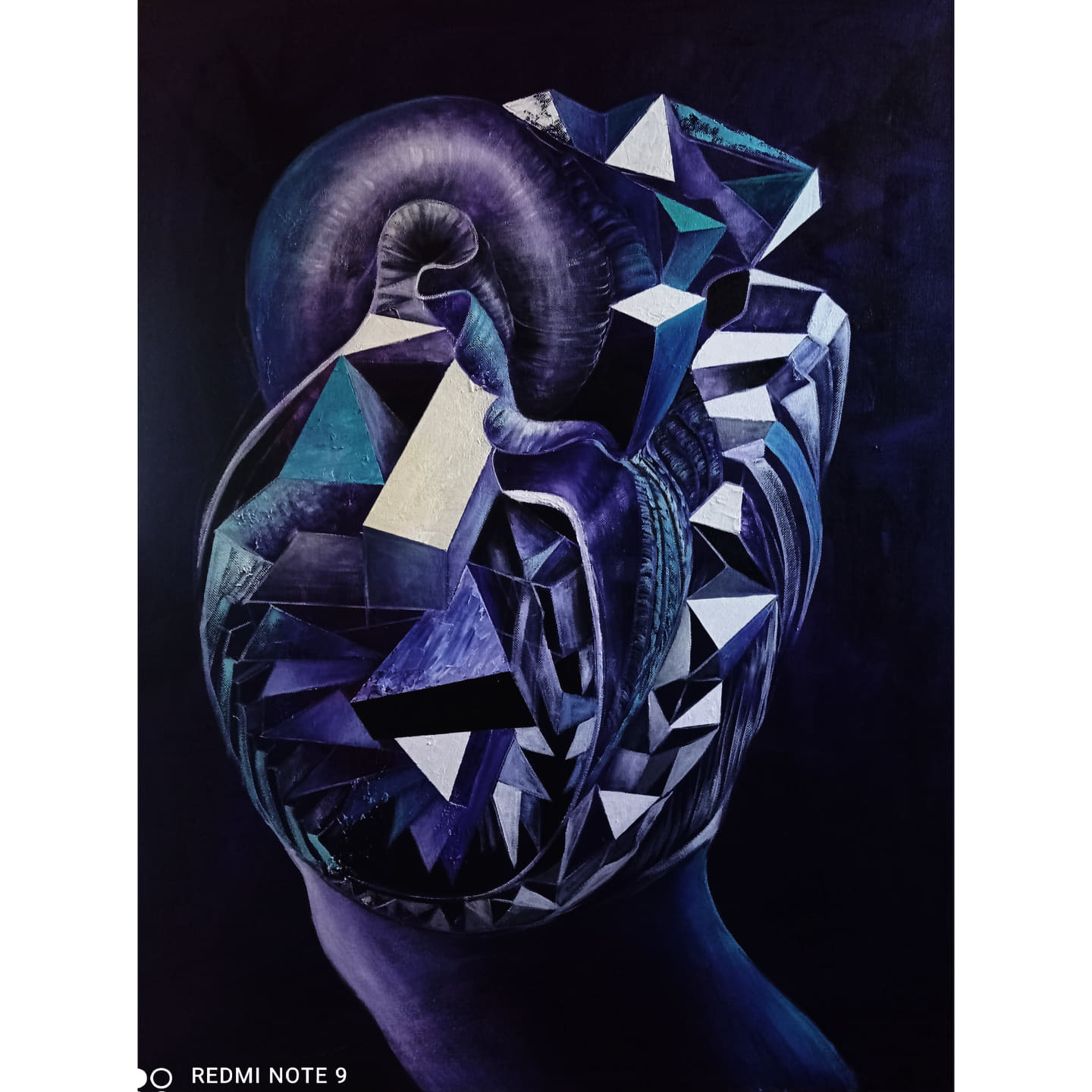
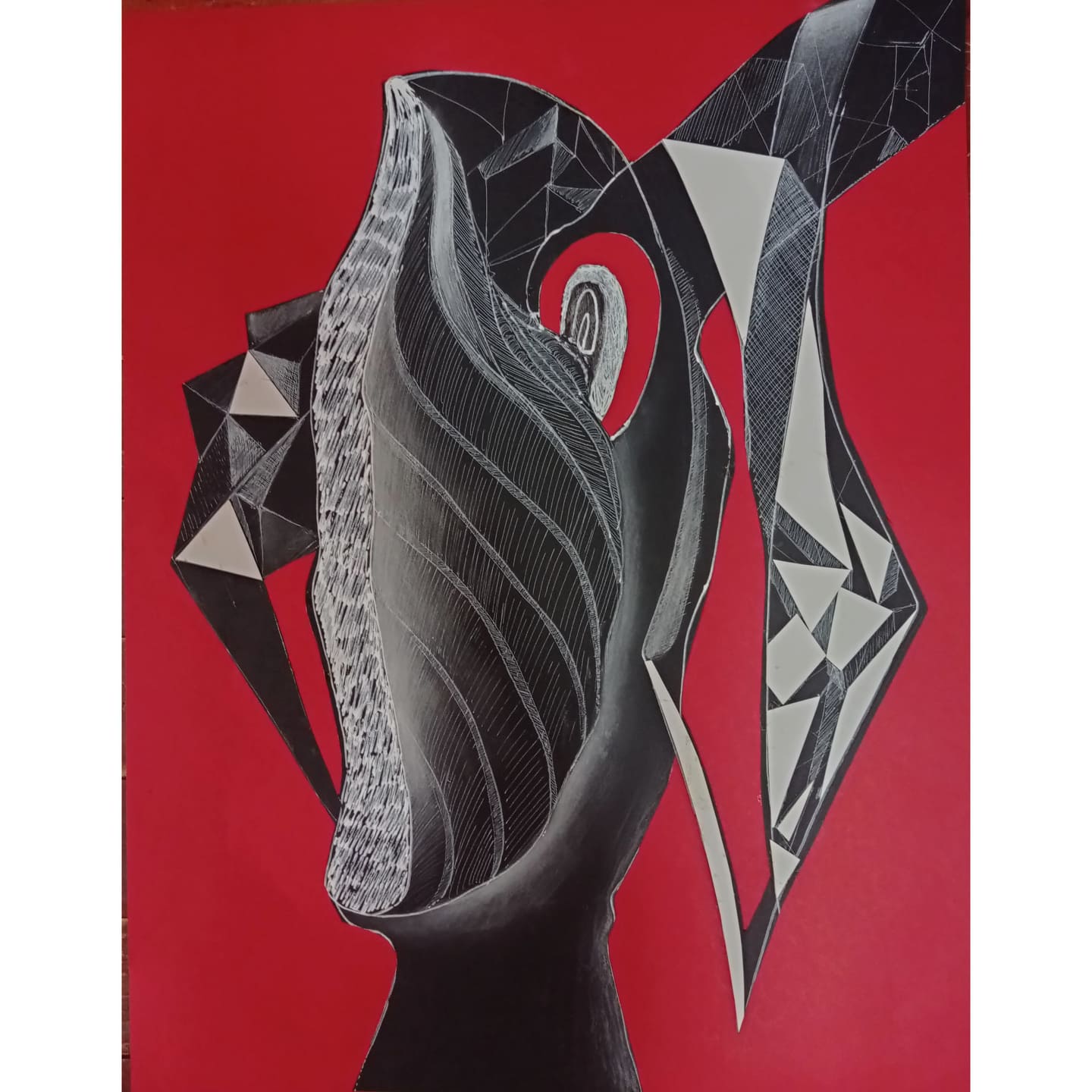
The faceless figures in Rene Fernando Ortega Villarroel’s work open a doorway to our silhouette.
Las figuras sin rostro en la obra de René Fernando Ortega Villarroel abren una puerta a nuestra silueta.
A labyrinth that challenges realities between an all-knowing self and a unicursal passage of selves.
Un laberinto que desafía realidades entre un yo que todo lo sabe y un pasaje unicursal de yos.
The viewer will see waves of motion paused long enough to discover psychic architecture and lapidary engines.
El espectador verá ondas de movimiento pausadas el tiempo suficiente para descubrir la arquitectura psíquica y los motores lapidarios.
Rene Fernando Ortega Villarroel’s art delivers a psychic experience to our world. The deities are shapes and eternal archetypes
El arte de René Fernando Ortega Villarroel entrega una experiencia psíquica a nuestro mundo. Las deidades son formas y arquetipos eternos.
The vision is an art beyond the vanishing points camouflaged and hunted by shamanic, artistic, and theurgic observance.
La visión es un arte más allá de los puntos de fuga camuflados y cazados por la observancia chamánica, artística y teúrgica
Rene Fernando Ortega Villarroel is a visual artist from Chile who practices the ancient tradition of X-ray vision in his painting.
René Fernando Ortega Villarroel es un artista visual de Chile que practica la antigua tradición de la visión de rayos X en su pintura.
Rene has exhibited work in Chile and Argentina. He is involved in many cultural art programs that have related to hospitals, children and teaching art professionally.
René ha expuesto obra en Chile y Argentina. Está involucrado en muchos programas de arte cultural relacionados con hospitales, niños y la enseñanza del arte profesionalmente.
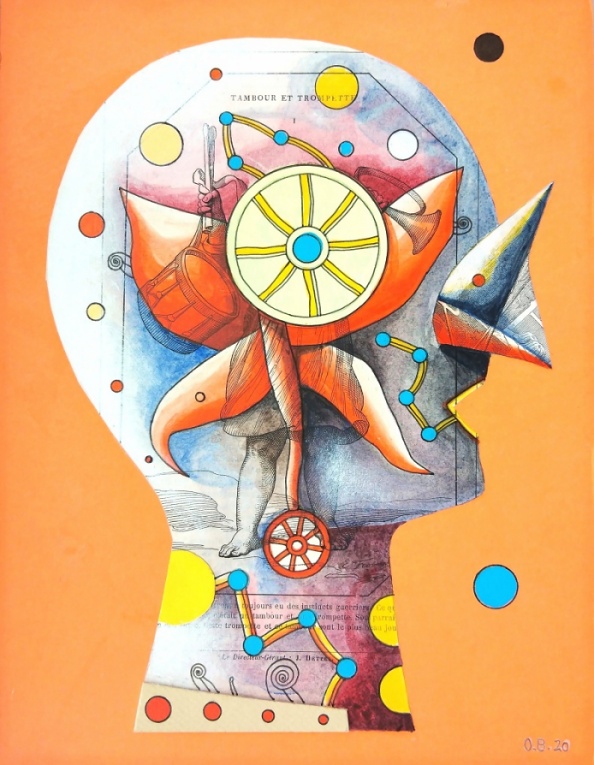
“My concern is the human figure as a feeling of primitive and irrational states, whose main point is the heads, universal thought of the creation of man and center of the universe. All this led to a mutation of the plastic and pictorial language”. Rene Ortega Villarroel
“Mi preocupación es la figura humana como sentimiento de estados primitivos e irracionales, cuyo punto principal son las cabezas, pensamiento universal de la creación del hombre y centro del universo. Todo esto llevado a un mutamiento del lenguaje plástico y pictórico”. Rene Ortega Villarroel
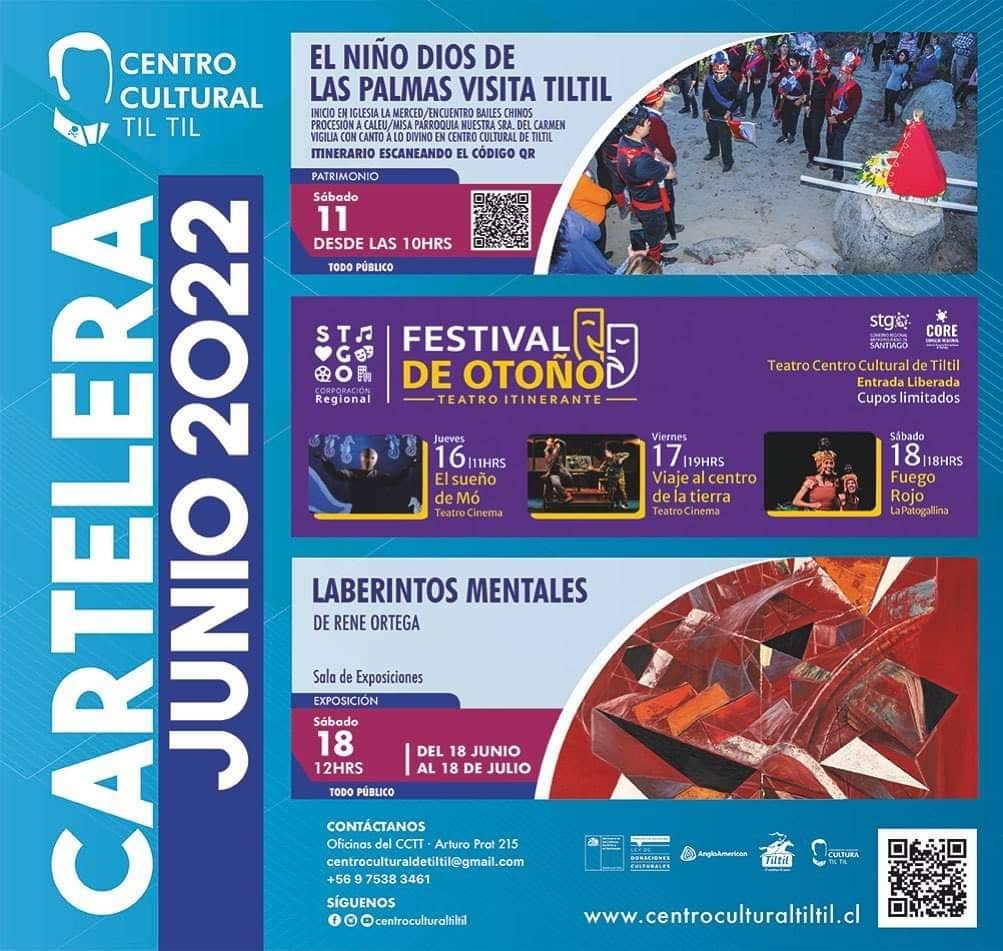
Everyone is invited and welcome to celebrate Rene Fernando Ortega Villarroel’s exposition Mental Labyrinths at the Til Til Cultural Center Art gallery on June 18, 2022
Todos están invitados y bienvenidos a celebrar la exposición Laberintos mentales de René Fernando Ortega Villarroel en la galería de arte del Centro Cultural Til Til el 18 de junio de 2022.
Oscar Barra was Born in Santiago in 1964, he studied Art at the University of Concepción, co-founder of Grisalla, an outstanding group of artists from the 90s and early 2000s. Mainly dedicated to painting, he has extended his creation to engraving, sculpture and the drawing. He currently resides between Concón and also maintains a workshop in Santiago.
Oscar Barra was Born in Santiago in 1964, he studied Art at the University of Concepción, co-founder of Grisalla, an outstanding group of artists from the 90s and early 2000s. Mainly dedicated to painting, he has extended his creation to engraving, sculpture and the drawing. He currently resides between Concón and also maintains a workshop in Santiago.
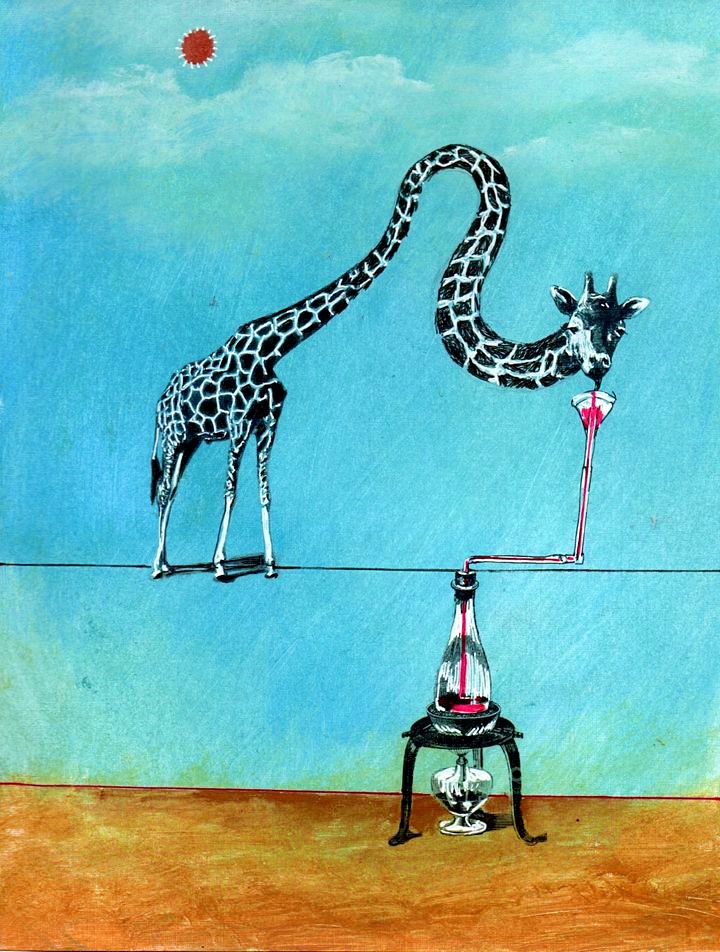
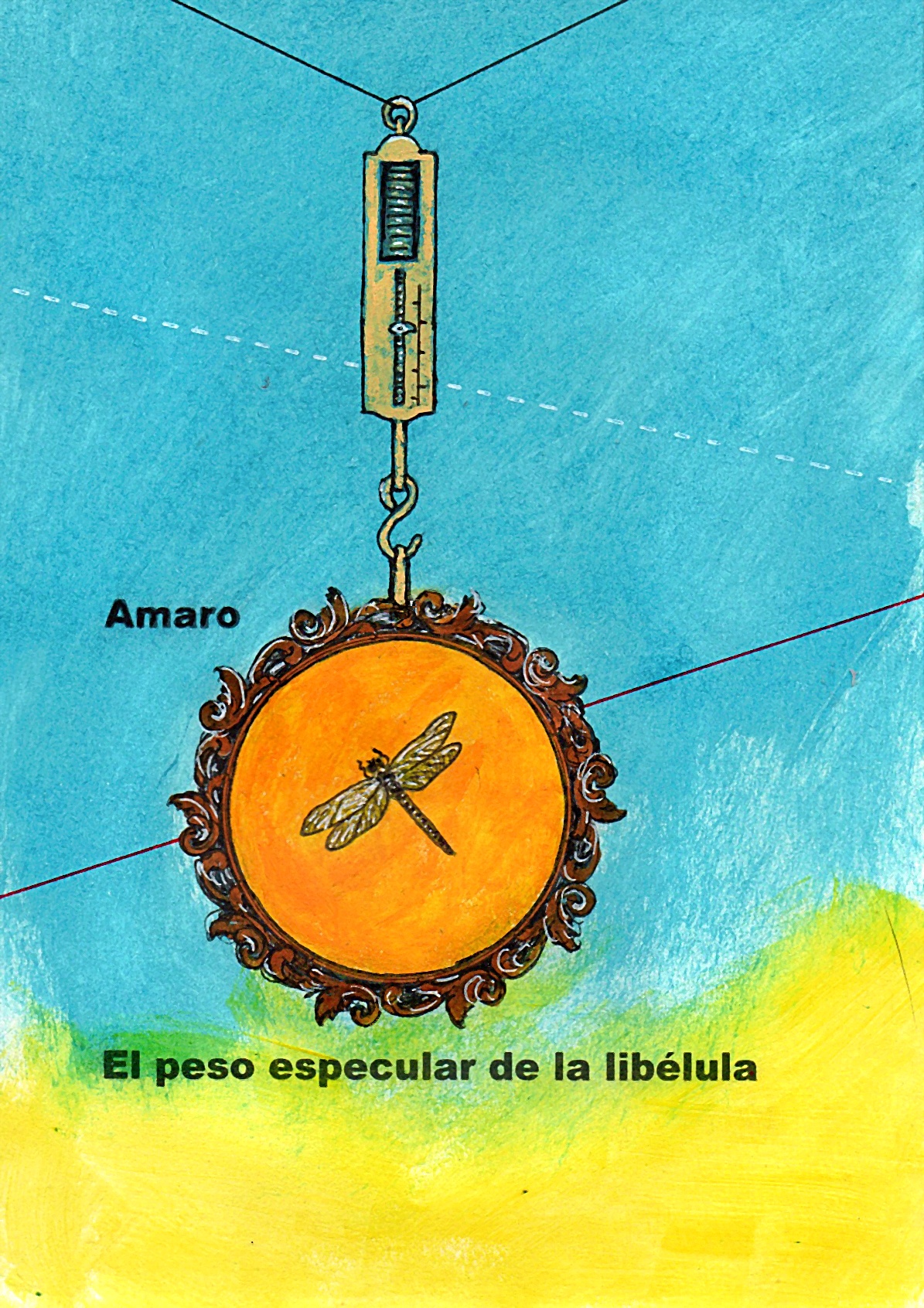
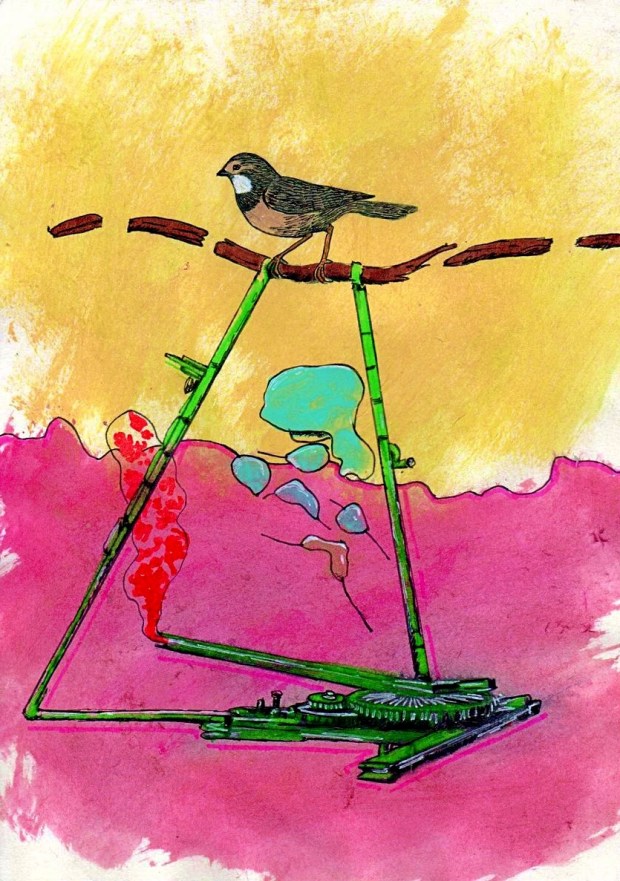
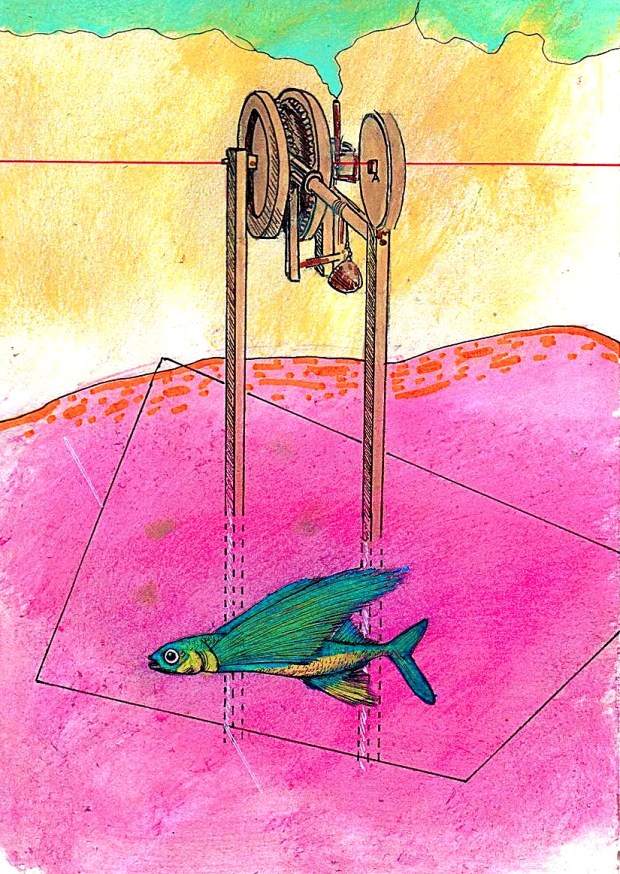
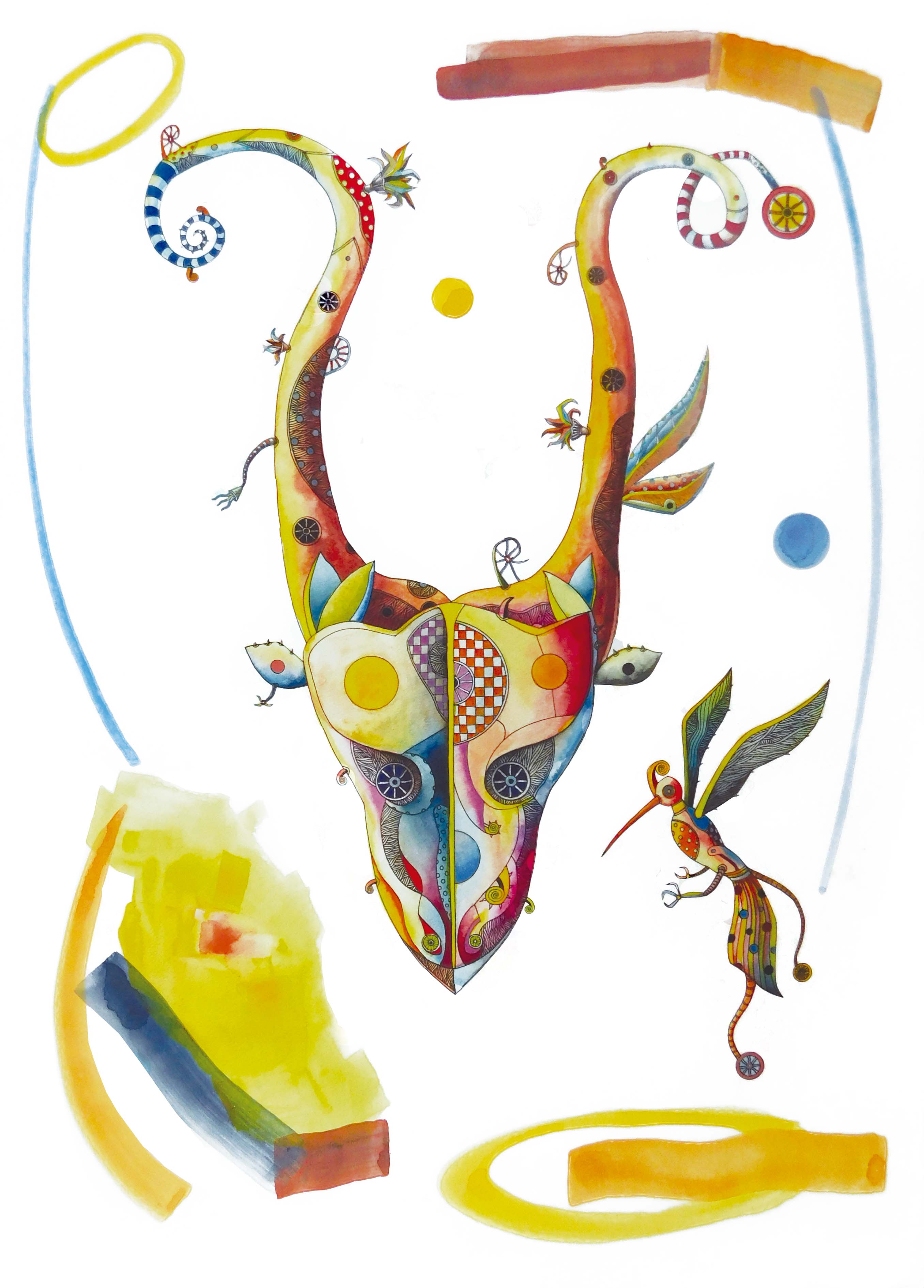
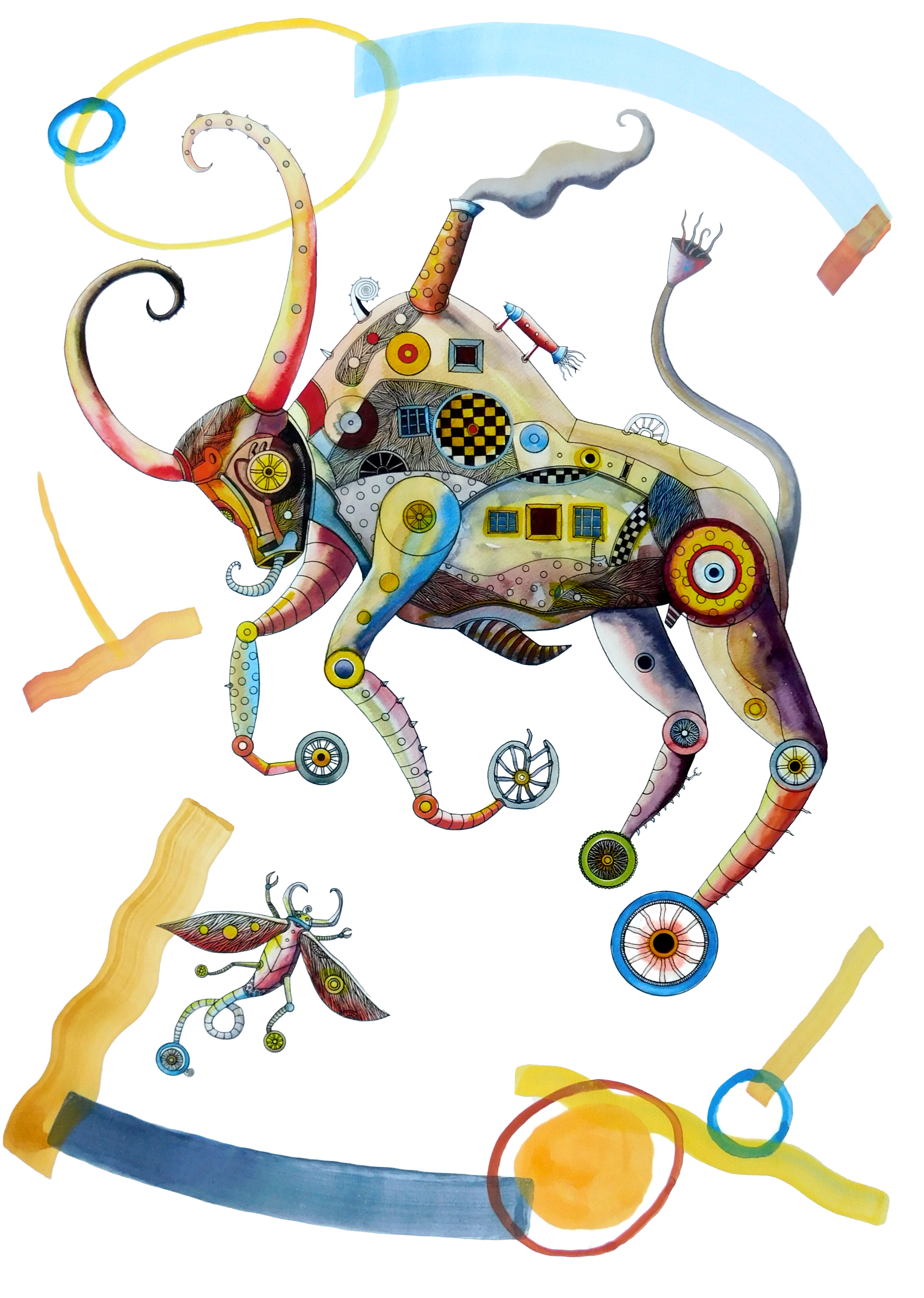
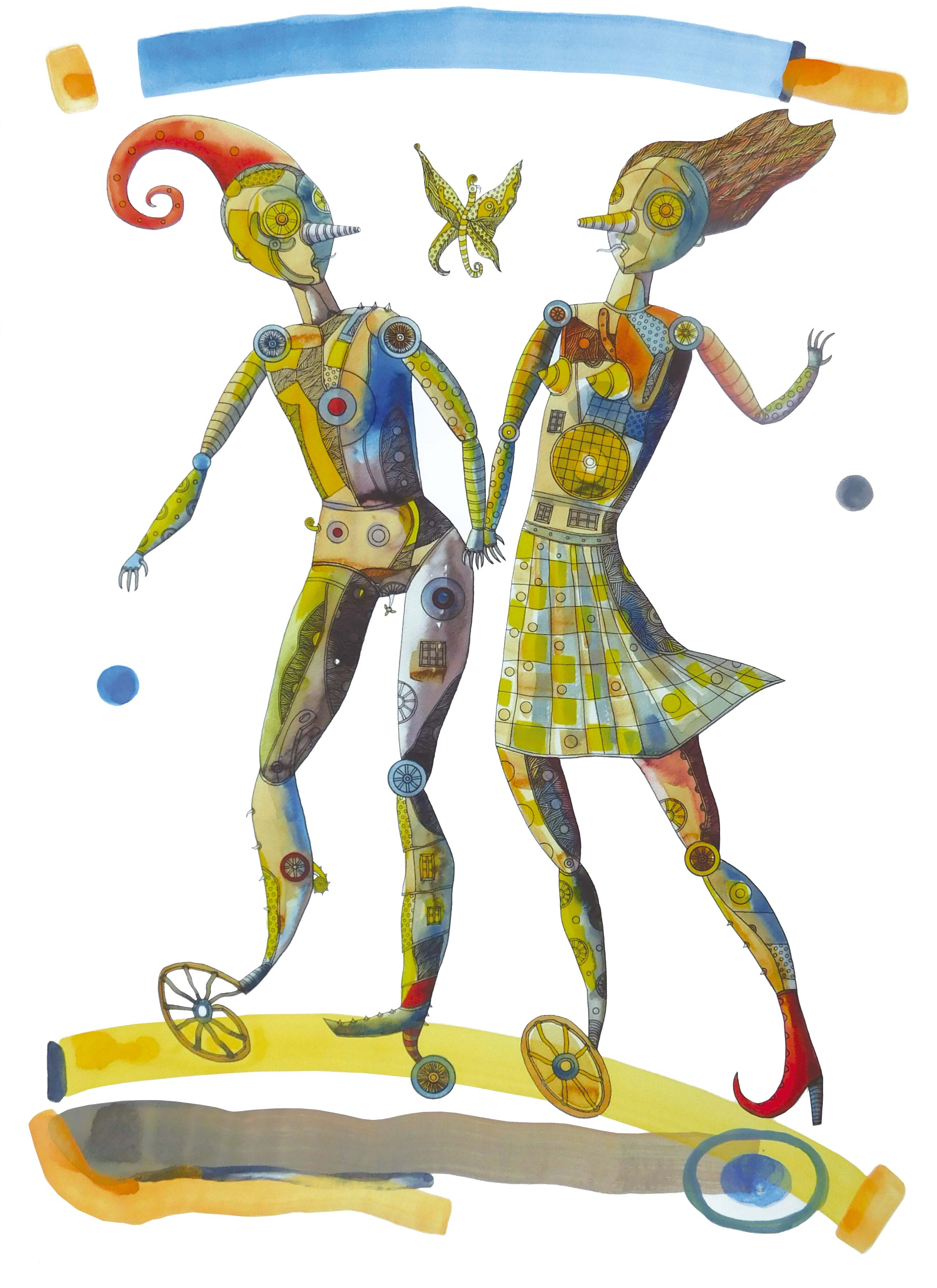
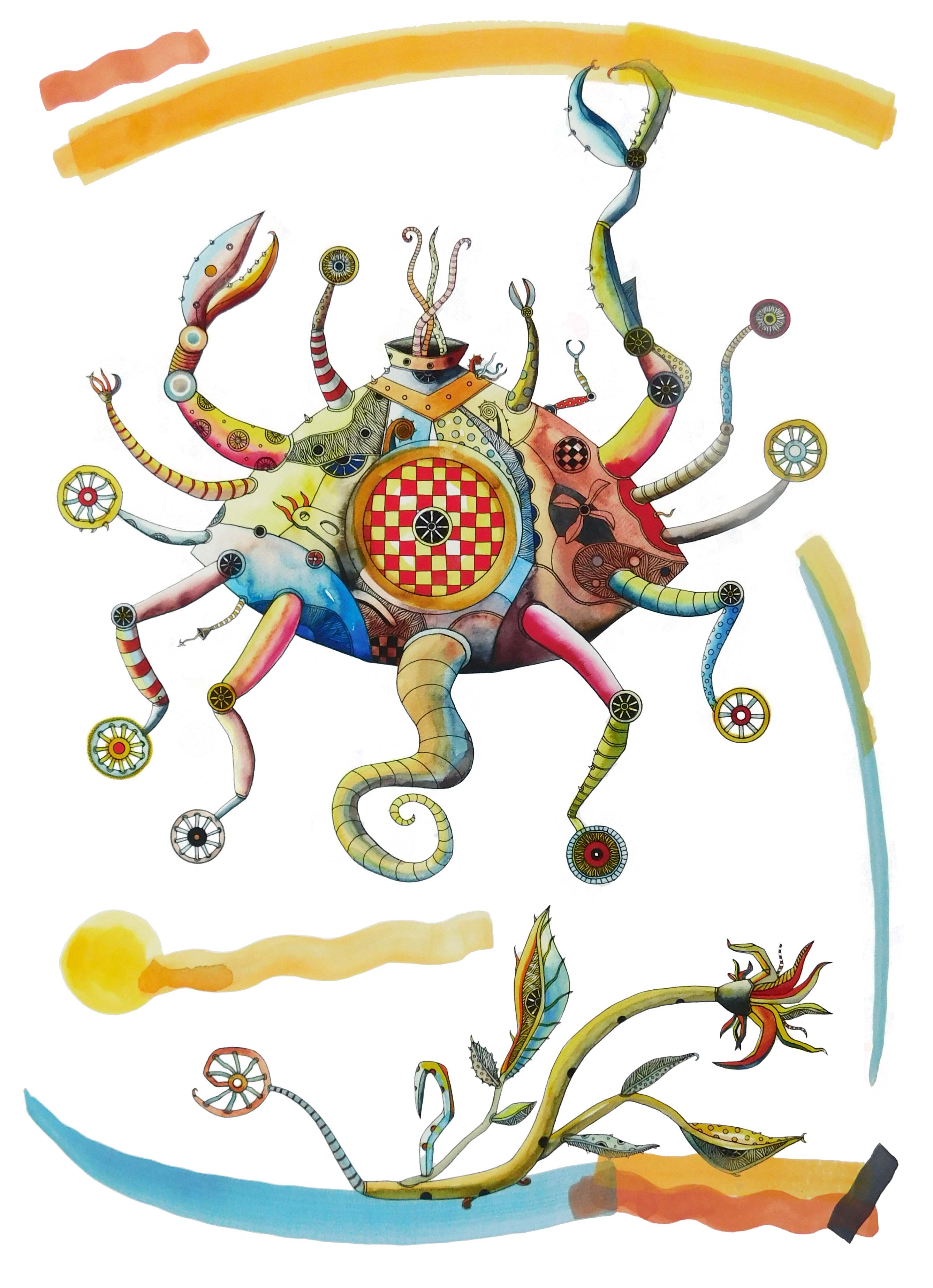
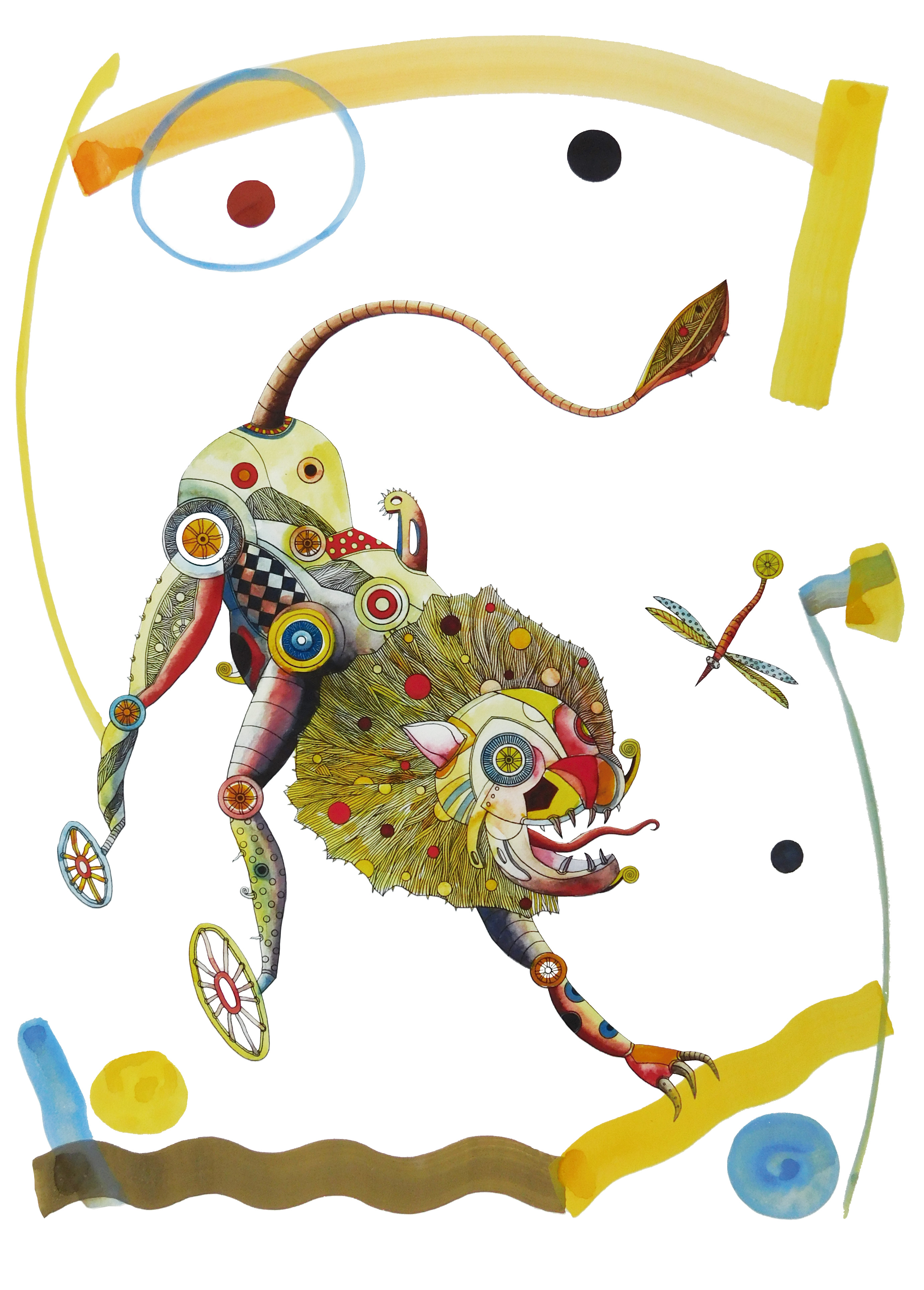
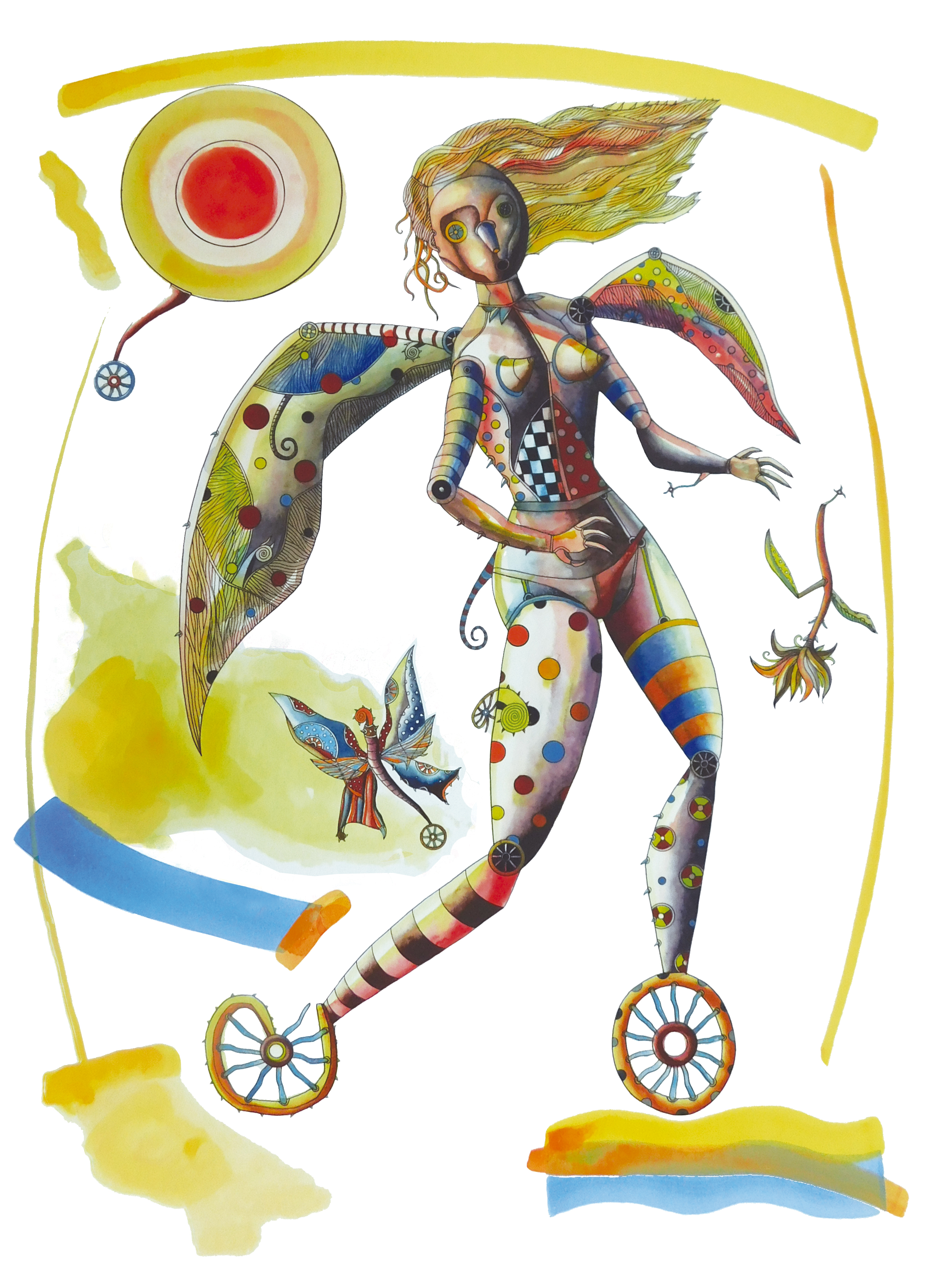
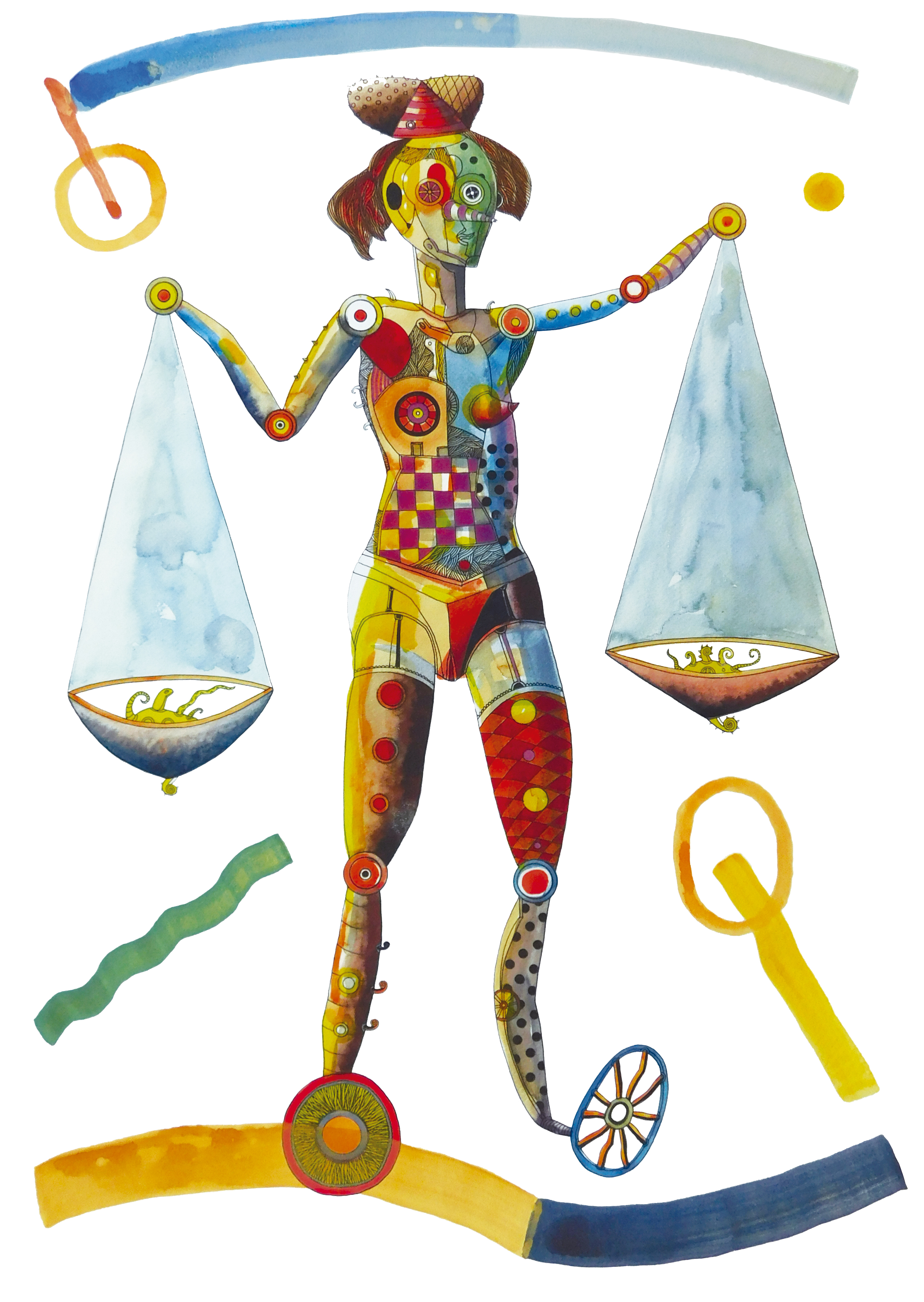
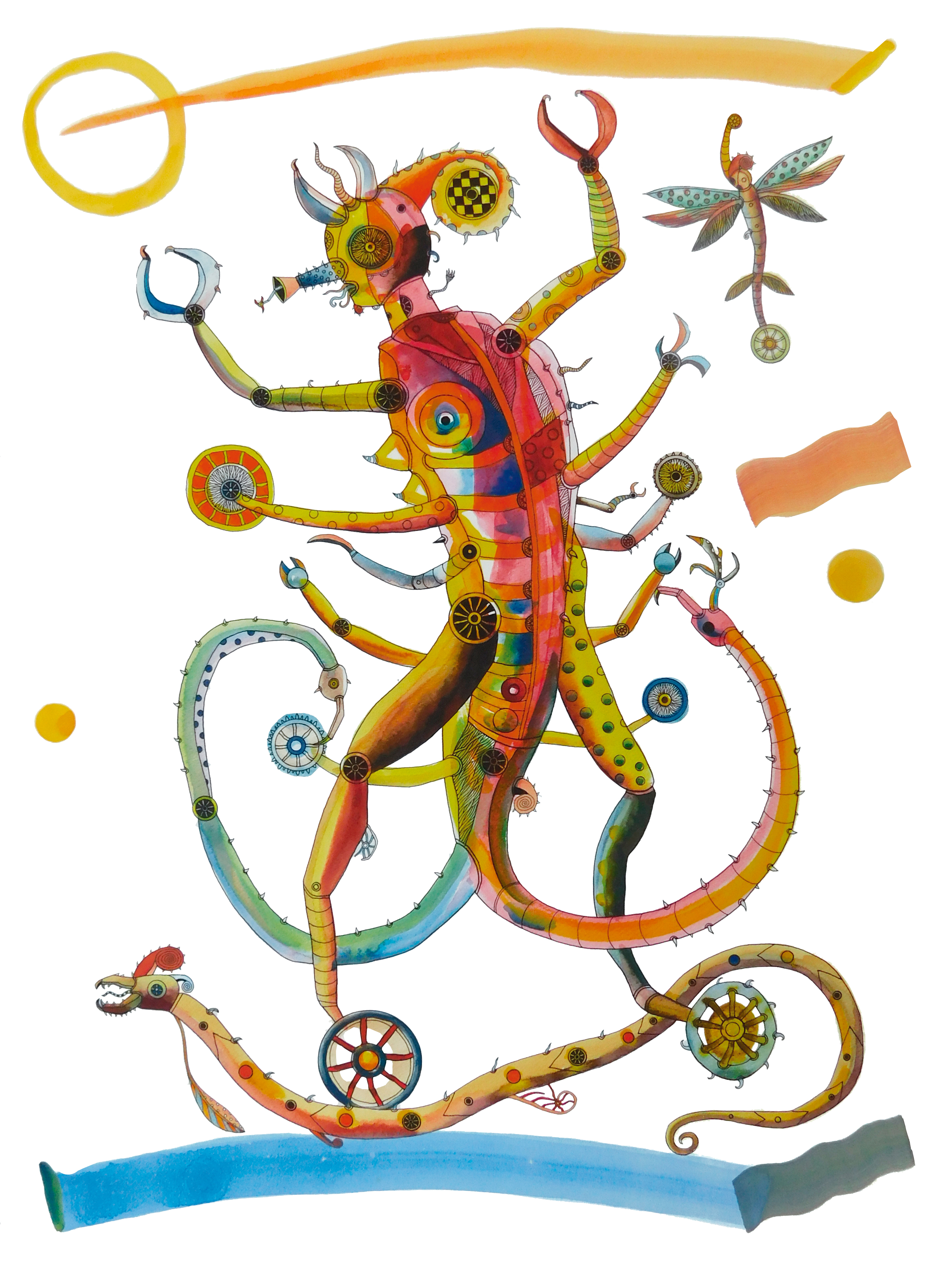
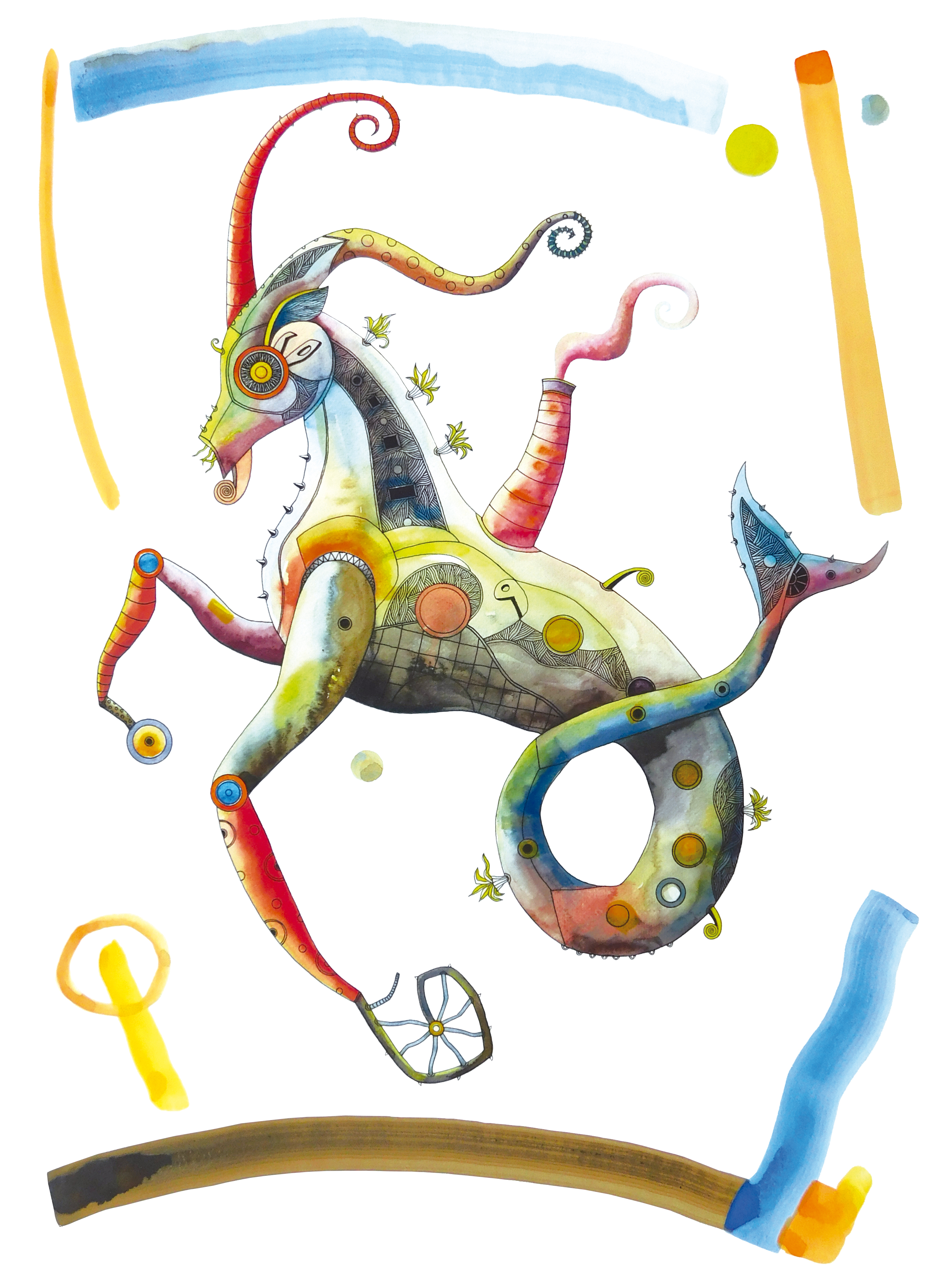
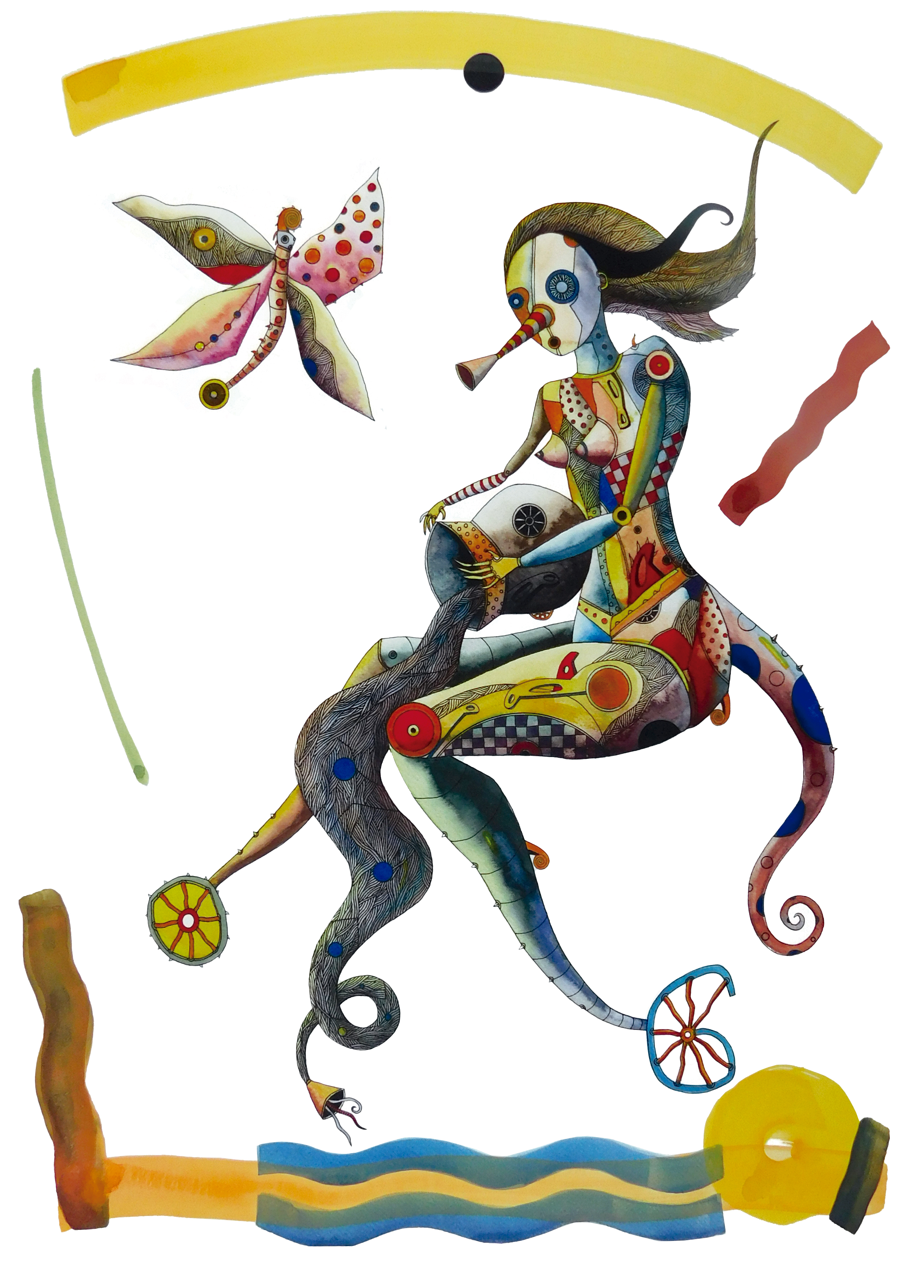
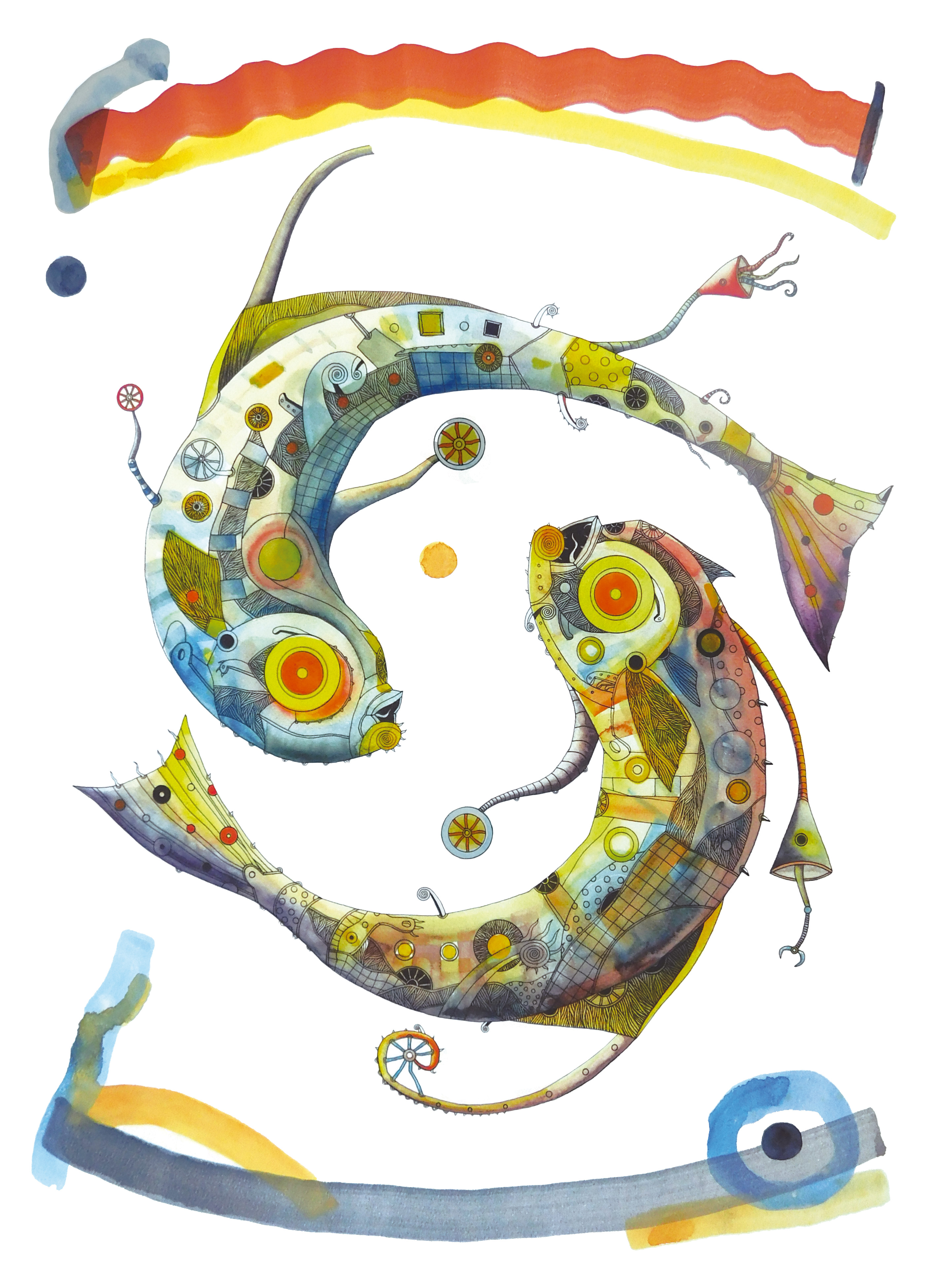
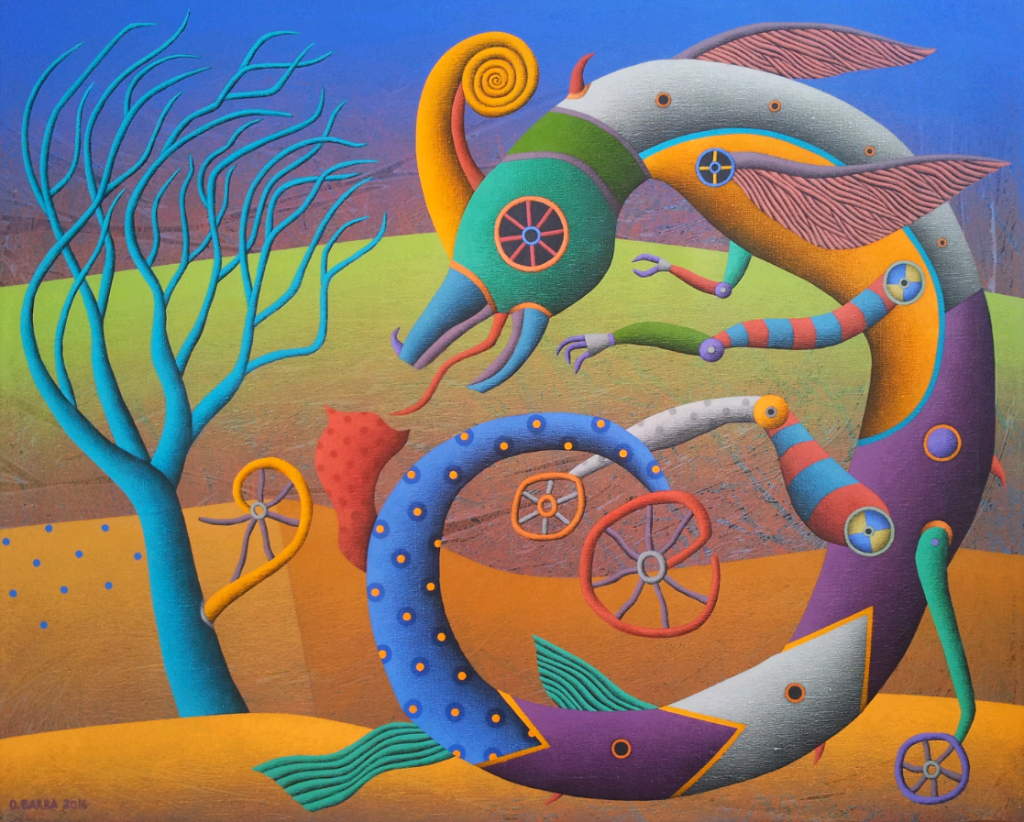
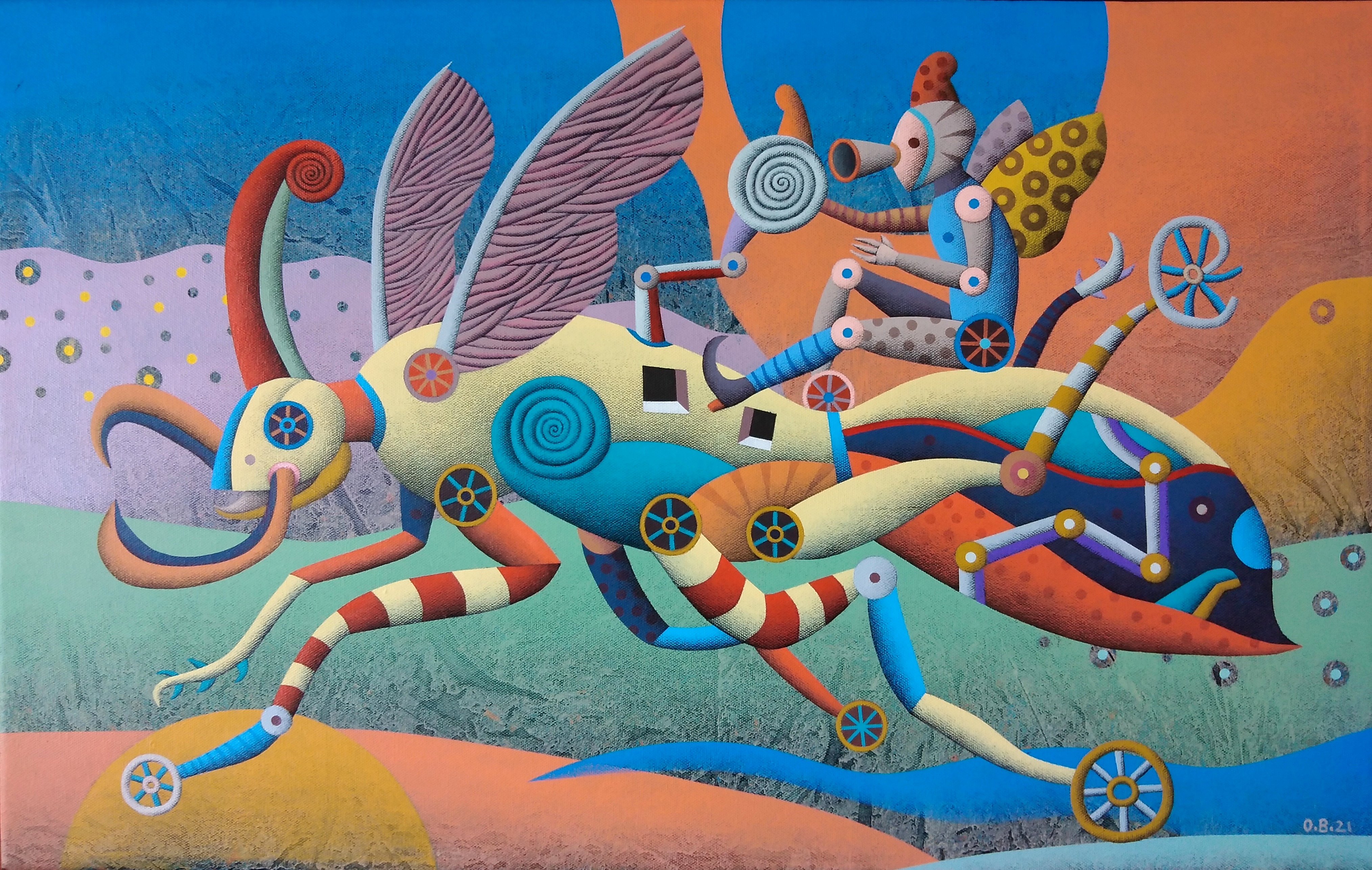
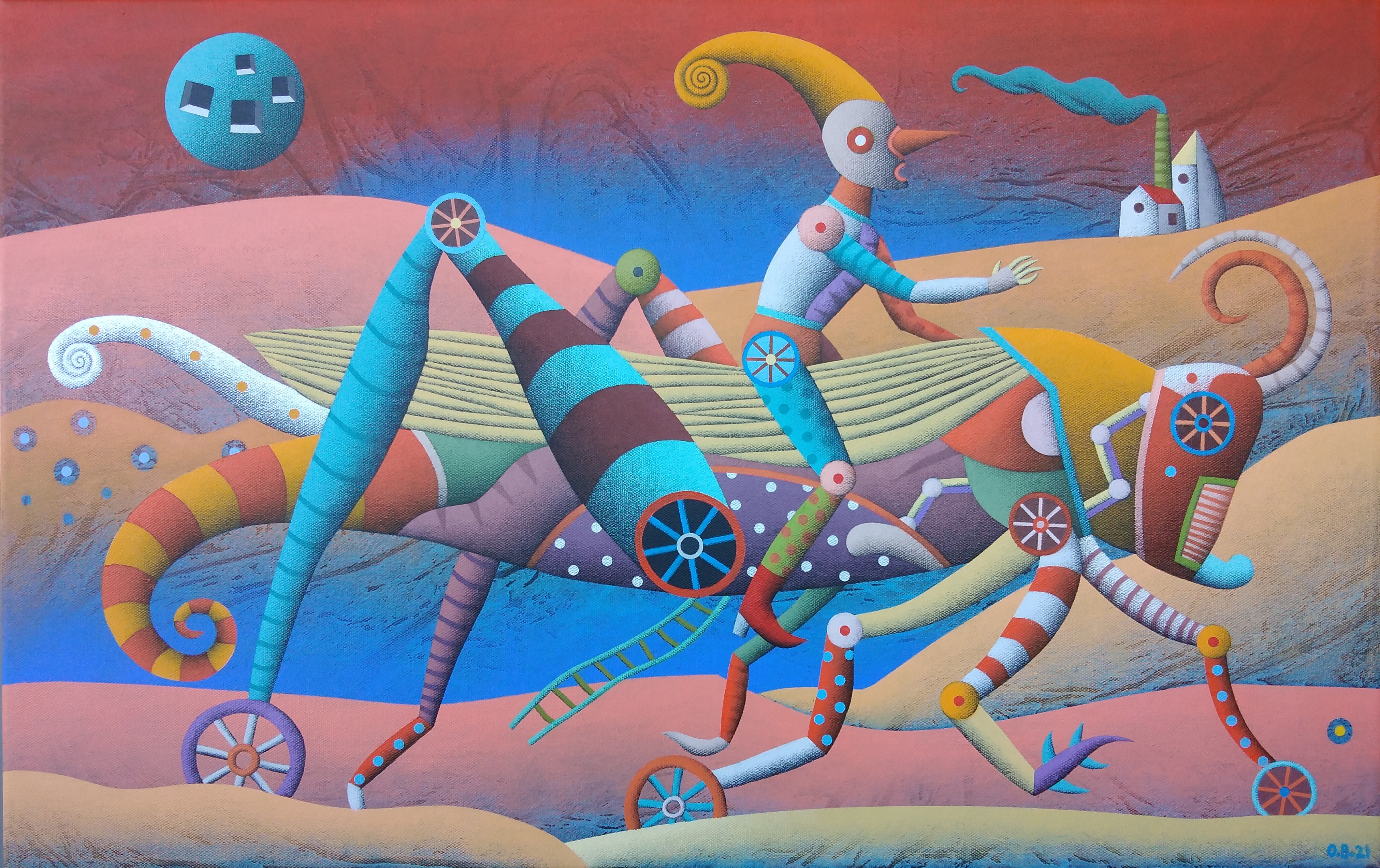
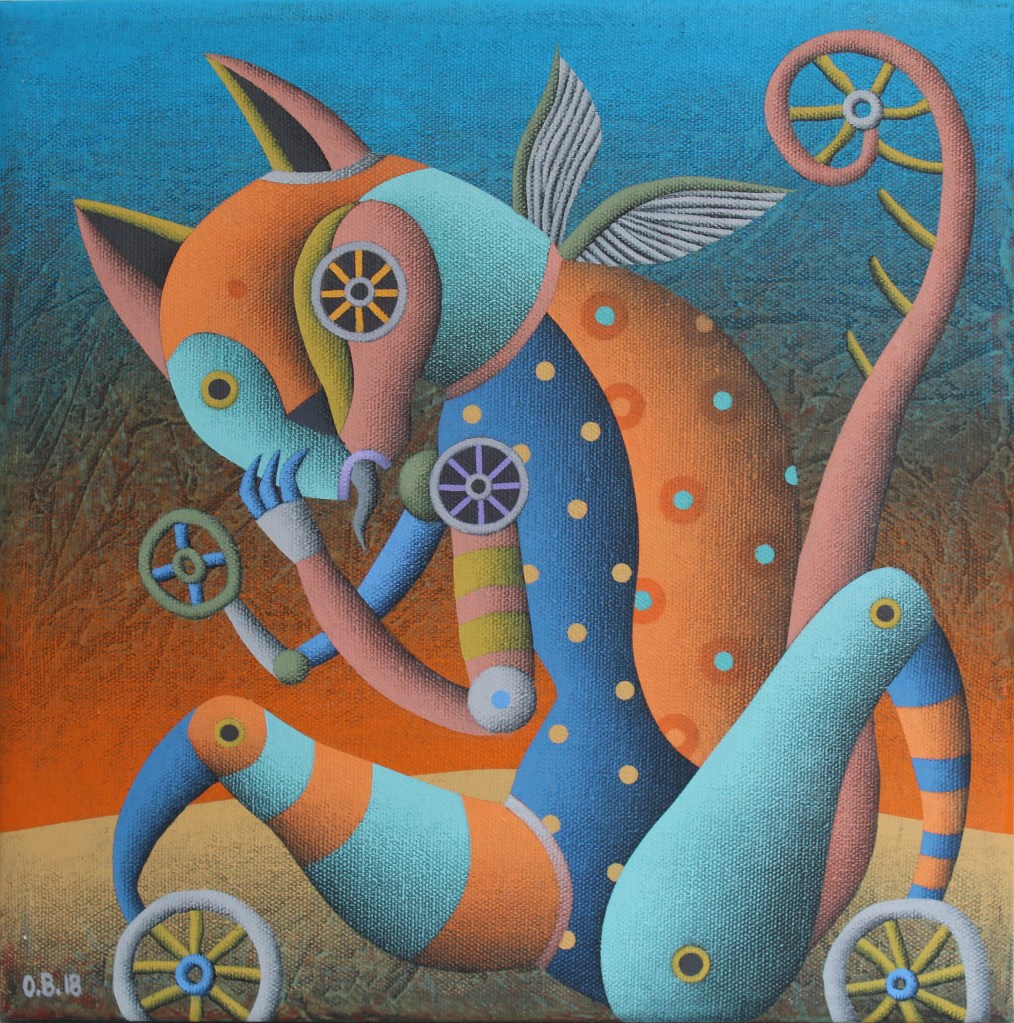
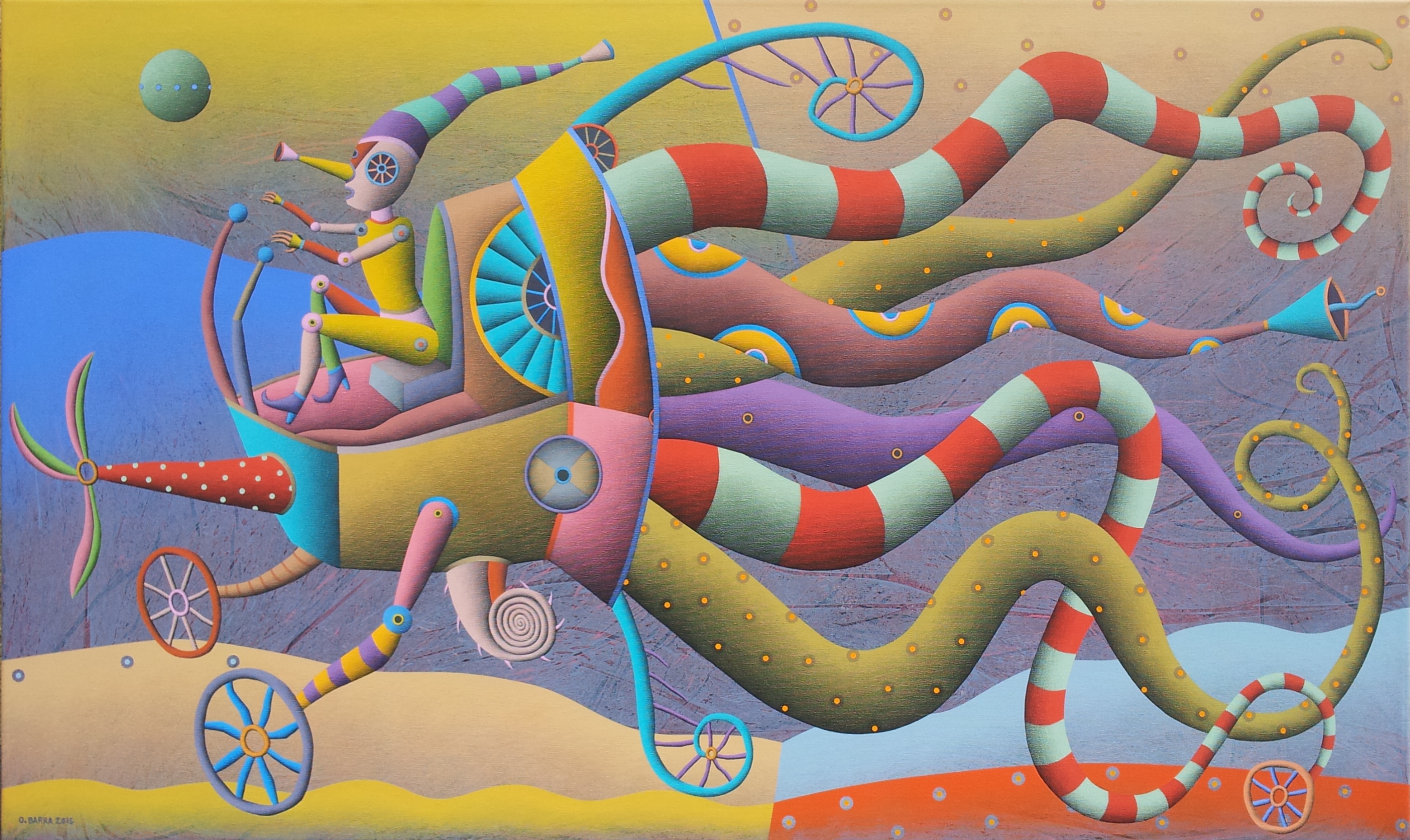
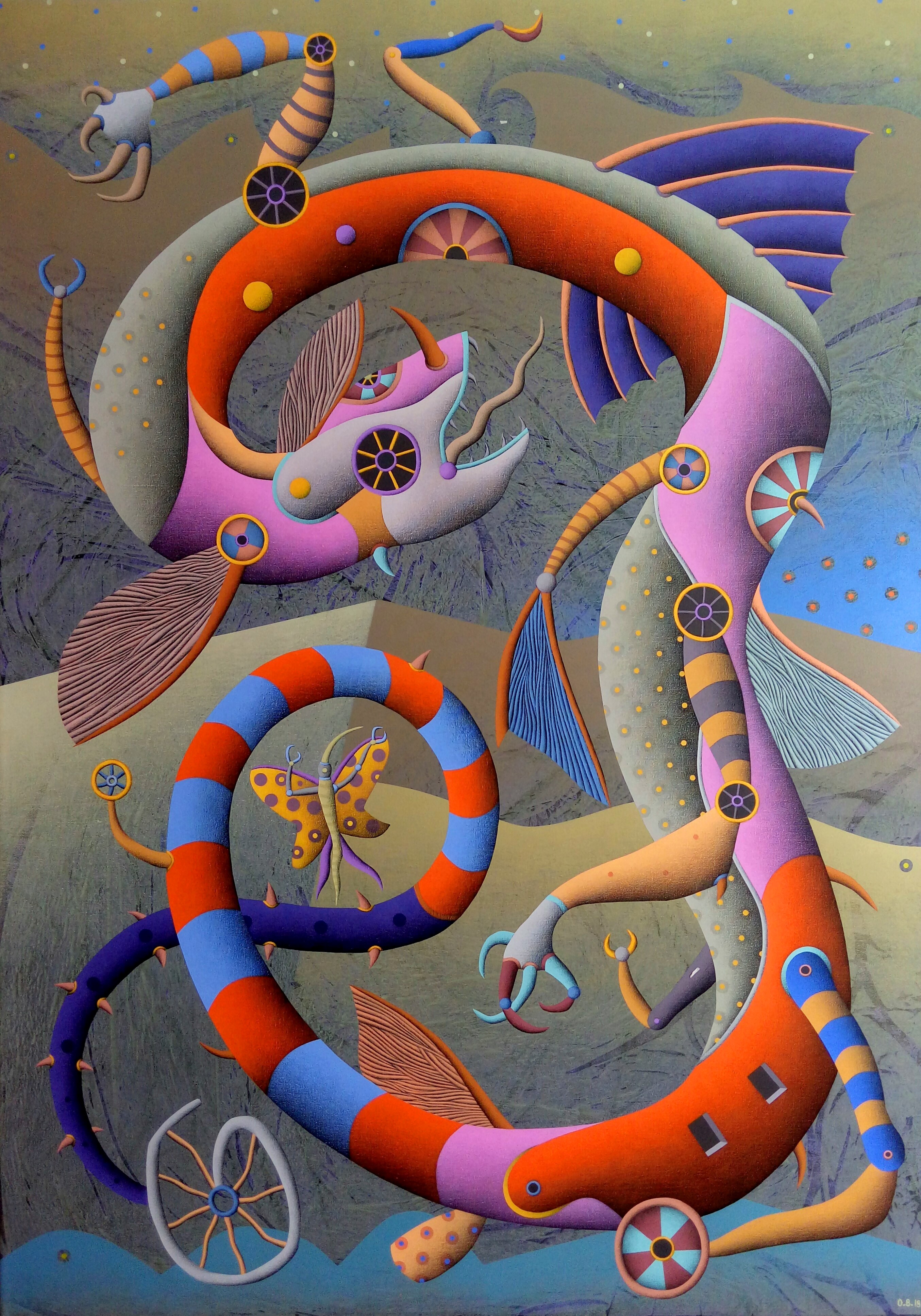
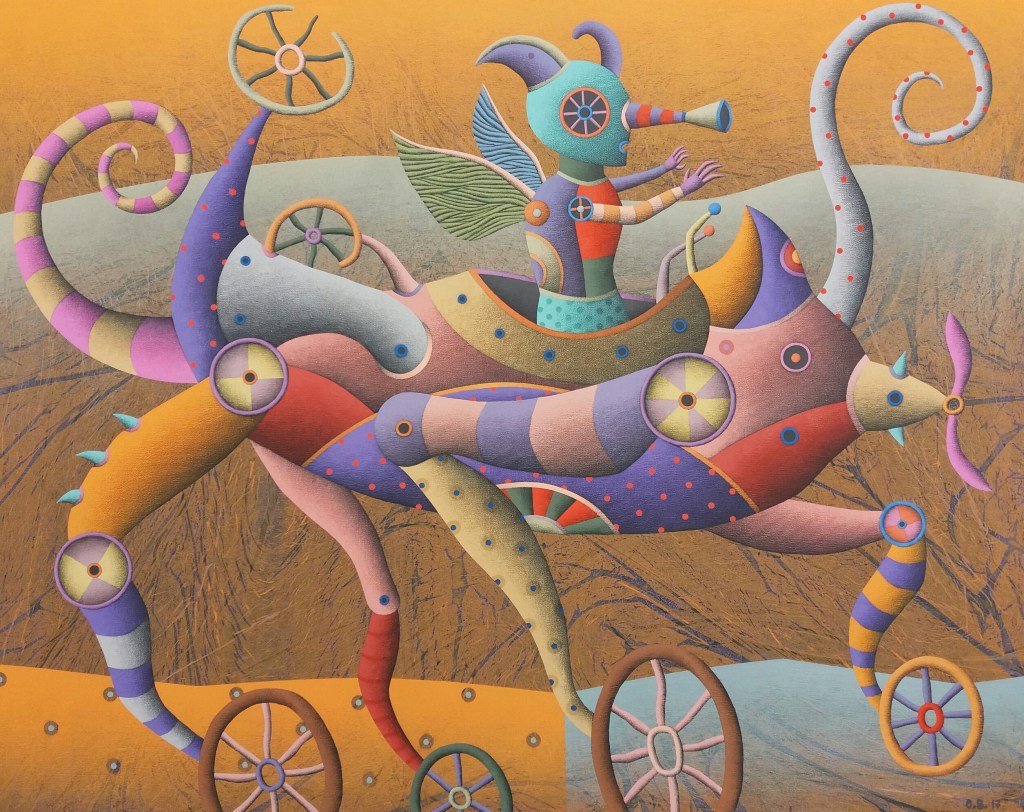
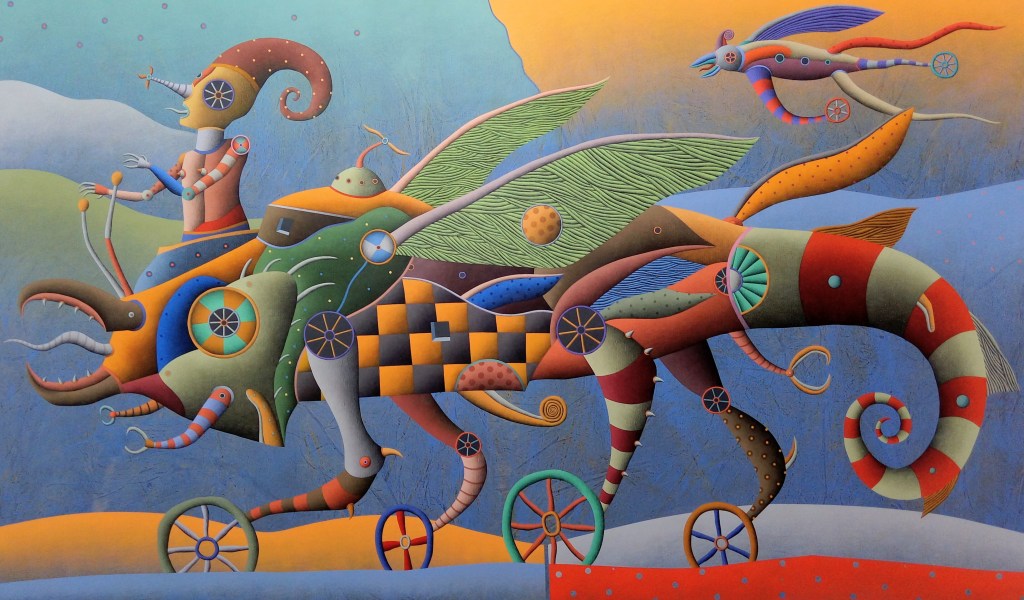
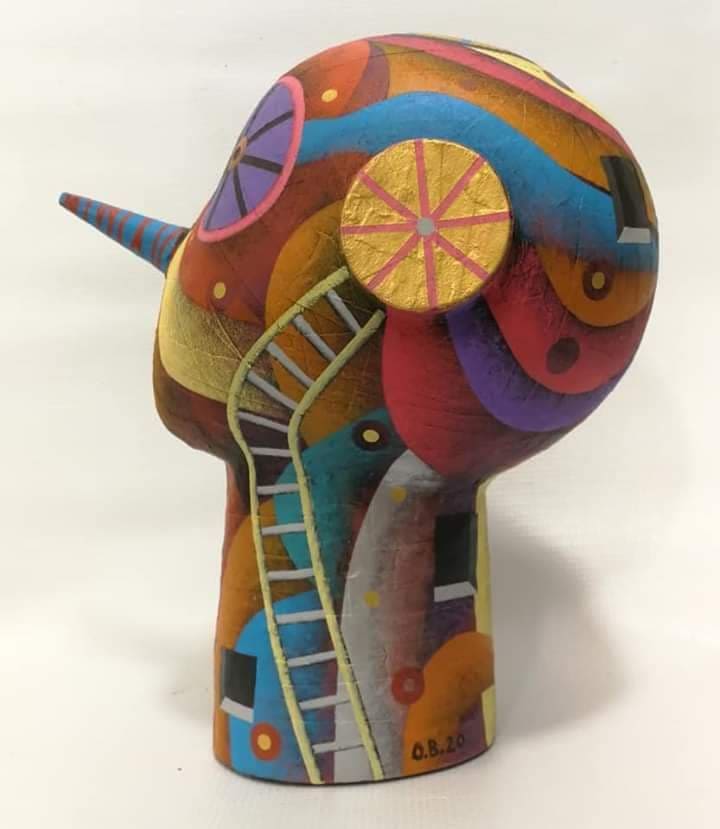
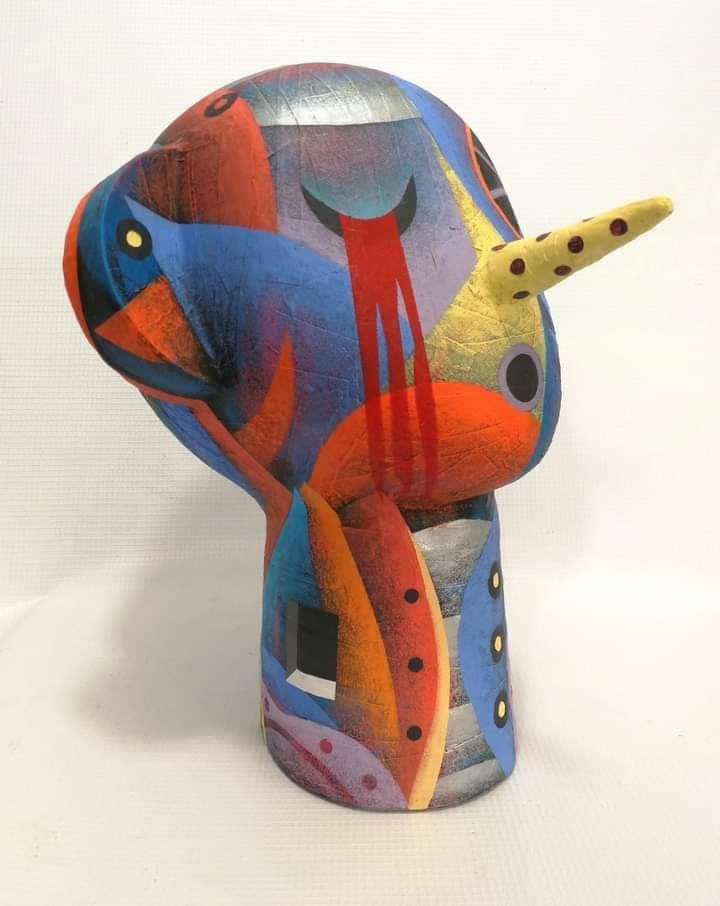
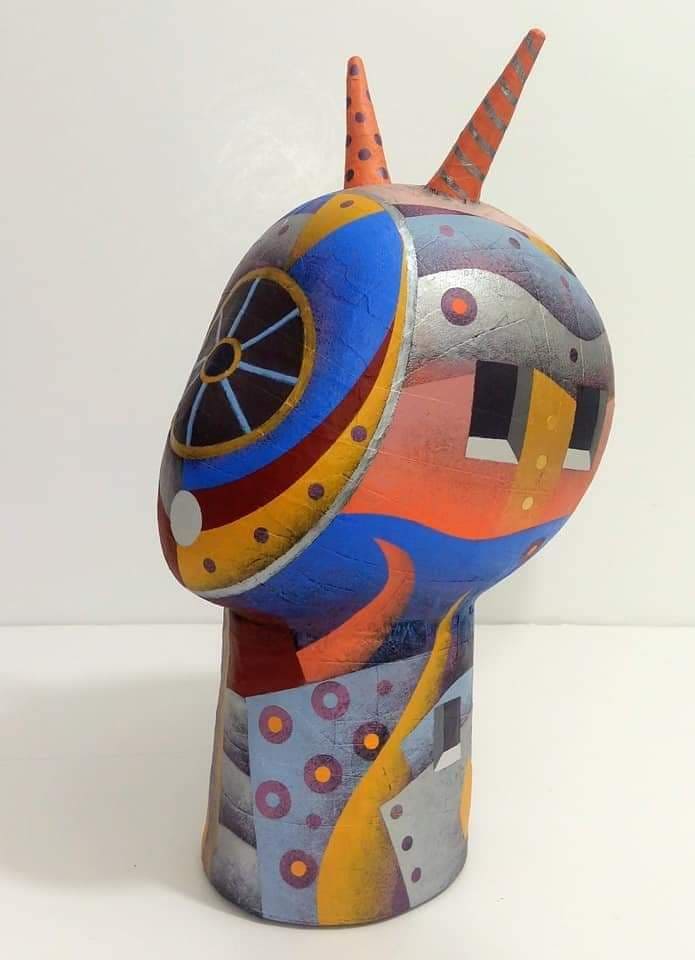
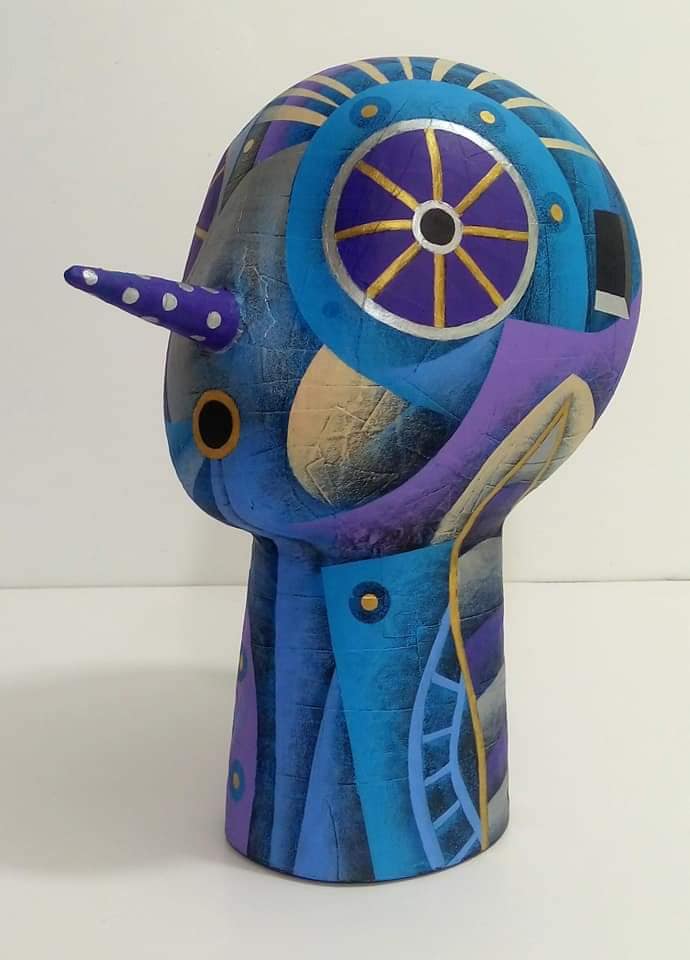
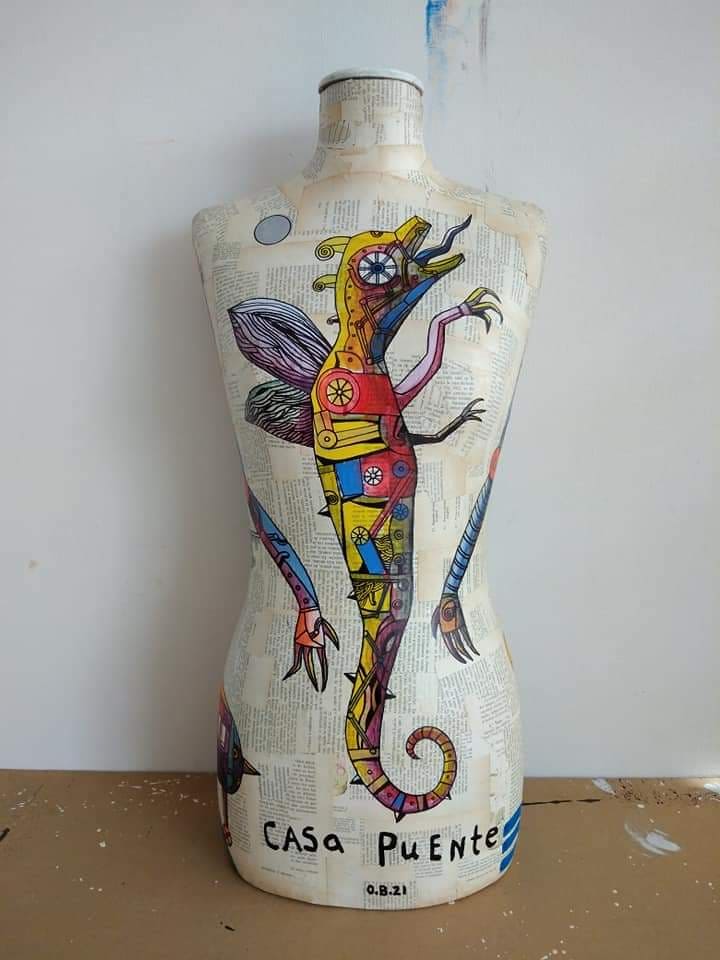
My work can be framed within the current of surrealism; it is figurative, fantastic and is characterized by a detailed drawing and the absence of perspective, flat volumetry.
There are an imaginary of beings and biomechanical artifacts that originate in dreams I had repeatedly as a child that generate my interest in artists. Those references are in painting, Max Ernst and Giorgio de Chirico. In literature, mainly science fiction, Ray Bradbury, Jorge Luis Borges and Jules Verne.
My work is also fueled by my interest in our weird and wonderful world and the question of the possibility of life beyond it. I do not seek to cause a change in the viewer, or refer to great questions of humanity; I simply work from a psychological mechanism and process that are essential for children and artists: curiosity and imagination– Oscar Barra
Oscar Barra was Born in Santiago in 1964, he studied Art at the University of Concepción, co-founder of Grisalla, an outstanding group of artists from the 90s and early 2000s. Mainly dedicated to painting, he has extended his creation to engraving, sculpture and the drawing. He currently resides between Concón and also maintains a workshop in Santiago.
Recent individual exhibitions 2018: “Agnostos Theos”, Casa Autónoma Gallery, Autonomous University of Chile, Santiago. 2018: “Paintings”, Galerie zone, Leiden, Holland. 2018: “Winter visit”, Joan of Arc Gallery, Concepción. 2016: “The extraordinary creatures of Oscar Barra”, Nescafé Theater of the Arts, Santiago. 2016: “Imaginary Zoobotany”, Artium Gallery, Santiago. 2015: “Summer Imaginary”, Prima Gallery, Santiago. 2014: “Autumn and rain”, Nemesio Antúnez Gallery, Metropolitan University of Sciences and Education, Santiago. 2013: “Strangers in paradise”, Blanc Gallery, Santiago. 2011: “Human Resources”, Cultural Corporation of Recoleta, Santiago. 2010: “The machinery of joy”, Trazos Gallery, Santiago. 2007: “Living Water”, Matthei Gallery, Santiago. 2002: “Beyond good and evil”, Matthei Gallery, Santiago. 1997: “The forgotten games”, Chilean Institute – North American, Concepción. 1995: “Paintings”, Tomas Andreu Gallery, Santiago.
Collective exhibitions and national competitions 2020: CHACO 2020, International Contemporary Art Fair Chile, online version due to pandemic. 2019: “Tarquinia Art”, inaugural exhibition at Galería Tarquinia, Concón. 2019: “The Wild Eye”, exhibition of Latin American surrealism, Bellavista, Santiago. 2015: “Art helps”, Casas de lo Matta; organized by Parenthesis Foundation. 2014: “Art helps”, Casas de lo Matta; organized by Parenthesis Foundation. 2013: “The art of signs”, ARTIUM Gallery, Santiago. 2011: “Values from diversity”, Ralli Museum, Santiago. 2011: 3rd Version International Contemporary Art Fair Chile: CHACO 2011. Casas De Lo Matta, Santiago. 2010: 2nd Version of the International Contemporary Art Fair Chile: CHACO 2010. Casas de Lo Matta, Santiago. 2010: “60 years of the General Song”. Collective exhibition in homage to Pablo Neruda. Artium Gallery, Santiago. 2009: “Stories illustrated by Artists”, Cecilia Palma Gallery, Santiago. 2009: 1st Version of the International Contemporary Art Fair Chile: CHACO 2009. Glider Club, Santiago. 2008: “The Work: art study”, sculptures, Providencia Cultural Institute, Santiago. 2005: “Metro Valparaíso” Collection, Permanent Exhibition between the Metro Stations, Valparaíso. 2000: “Around the painting”, Parque Arauco Events Center, organized by Galería La Sala, Santiago. 1993: “Proyectarte 93”, National Museum of Fine Arts, Santiago. 1993: II Biennial of Painting “Gunther Award”, National Museum of Fine Arts, Santiago. 1990: “Territory for Art”, Pinacoteca of the University of Concepción and Municipal Hall of Los Angeles.
International collective exhibitions 2011: “The Sculpture”, Adriana Indik Gallery, Buenos Aires, Argentina. 2009: “Good things come in small packages”, Círculo Azul Art Gallery, Coyoacán, Mexico City. 2000: X International Art Fair “Arte BA”, Buenos Aires, Argentina. 2008: Jadite Gallery, New York, USA. 2008: “Afternoon without cuts”, Victoria Cultural Center; Mendoza Argentina.
Exhibitions with the GRISALLA Group 2008: “Illustrations of the nonexistent”, JHH Fine Art, Connecticut, USA. 2007: “GRISALLA – A Self-visited Promise”, Pinacoteca Universidad de Concepción. 2006: “GRISALLA – Autonomous Painting”, Matthei Art Gallery. Santiago. 2000: “GRISALLA – Contemporary Chilean Painters“, Simon Patrich Gallery, Vancouver, Canada. 1999: “GRISALLA“, Matthei Gallery, Santiago. 1997: “Signs of a life”, Praxis Gallery, Santiago. 1992: “Journey to leisure, madness and death”, National Museum of Fine Arts, Santiago. 1991: “GRISALLA”, Pinacoteca of the University of Concepción.
Works in: MAVI. Museum of Visual Arts of Santiago, Chile. RALLI MUSEUM. Santiago, Chile. RALLI MUSEUM. Punta del Este, Uruguay. RALLI MUSEUM. Israel. MAM. Museum of Contemporary Art of Chiloé. Chile.
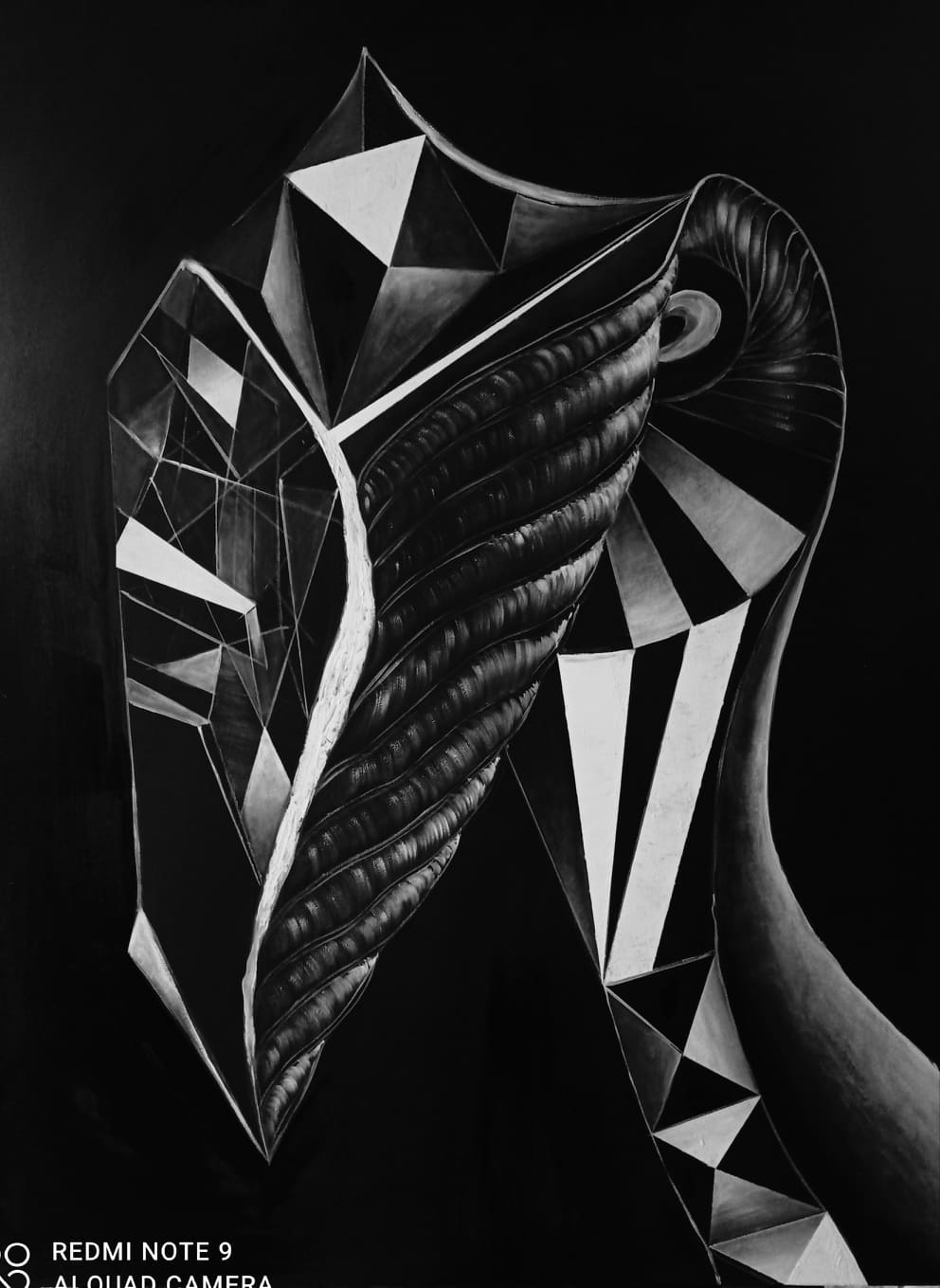
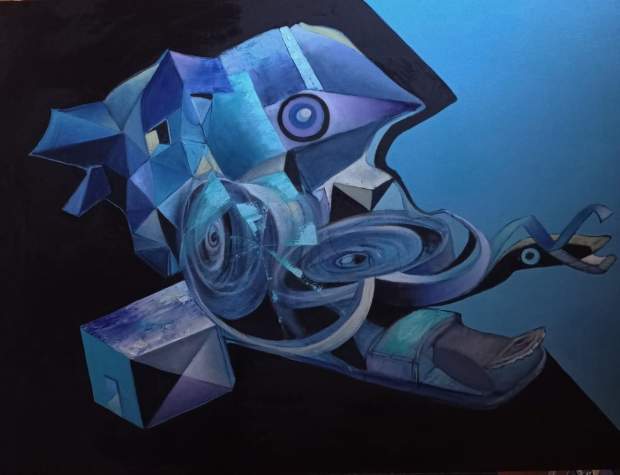
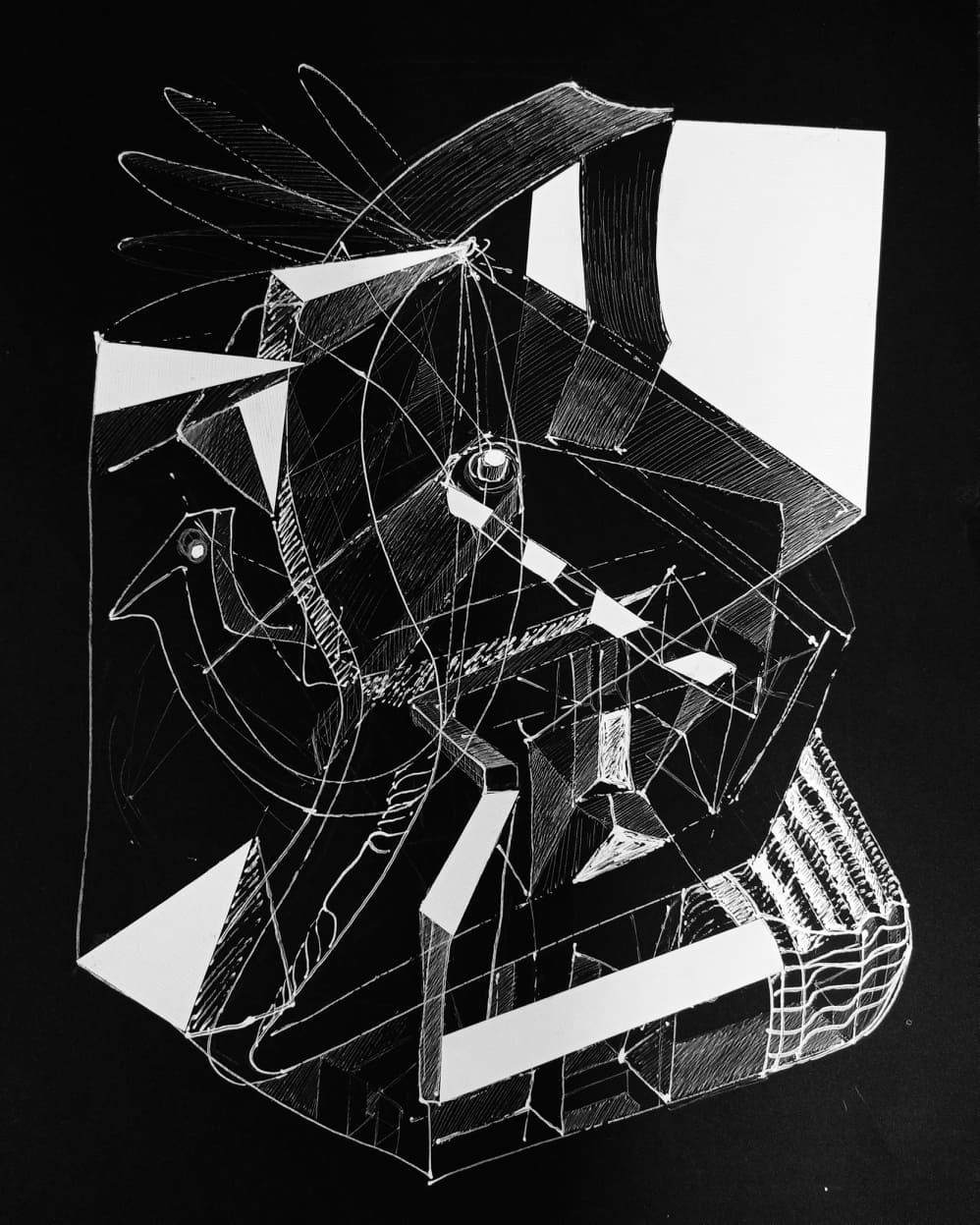
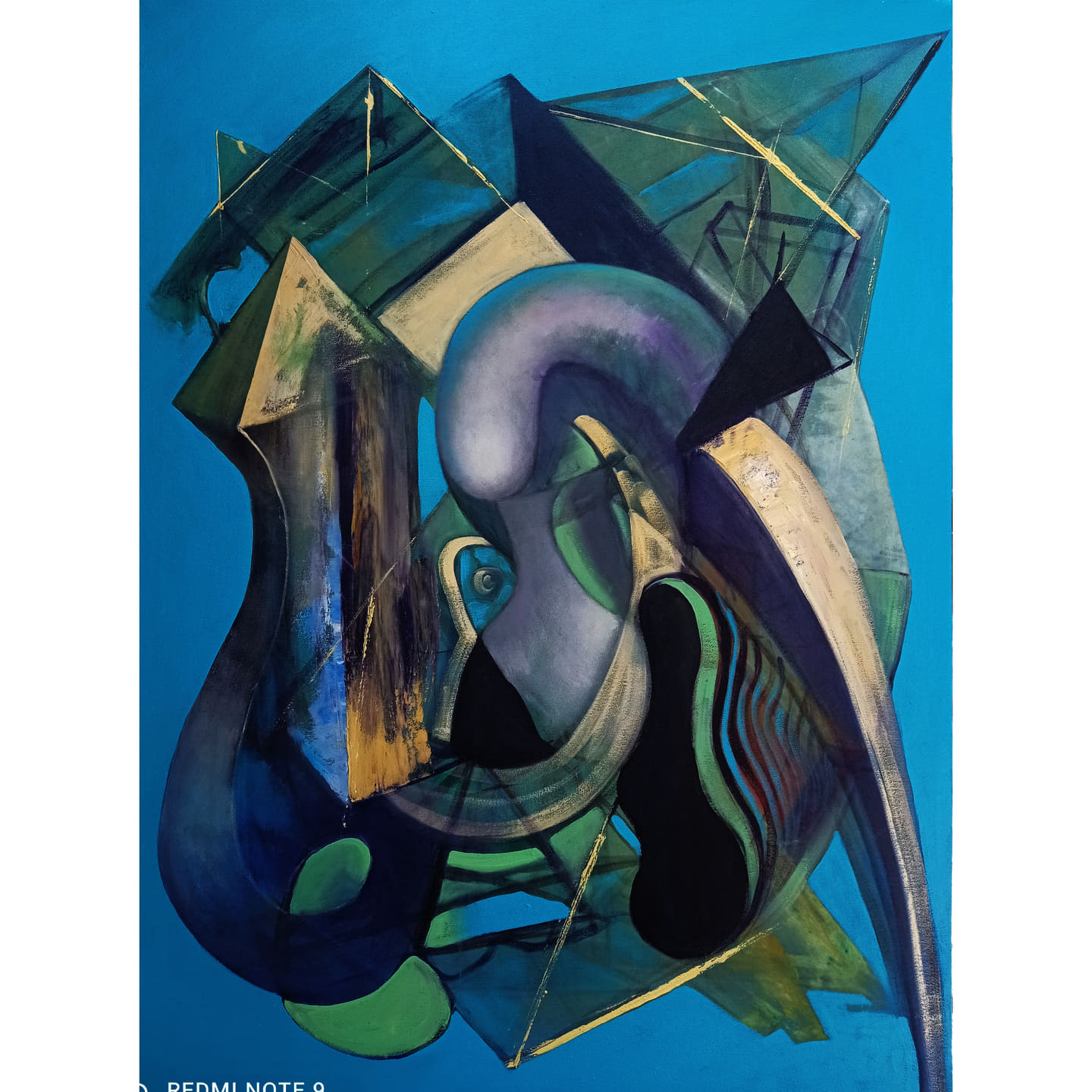
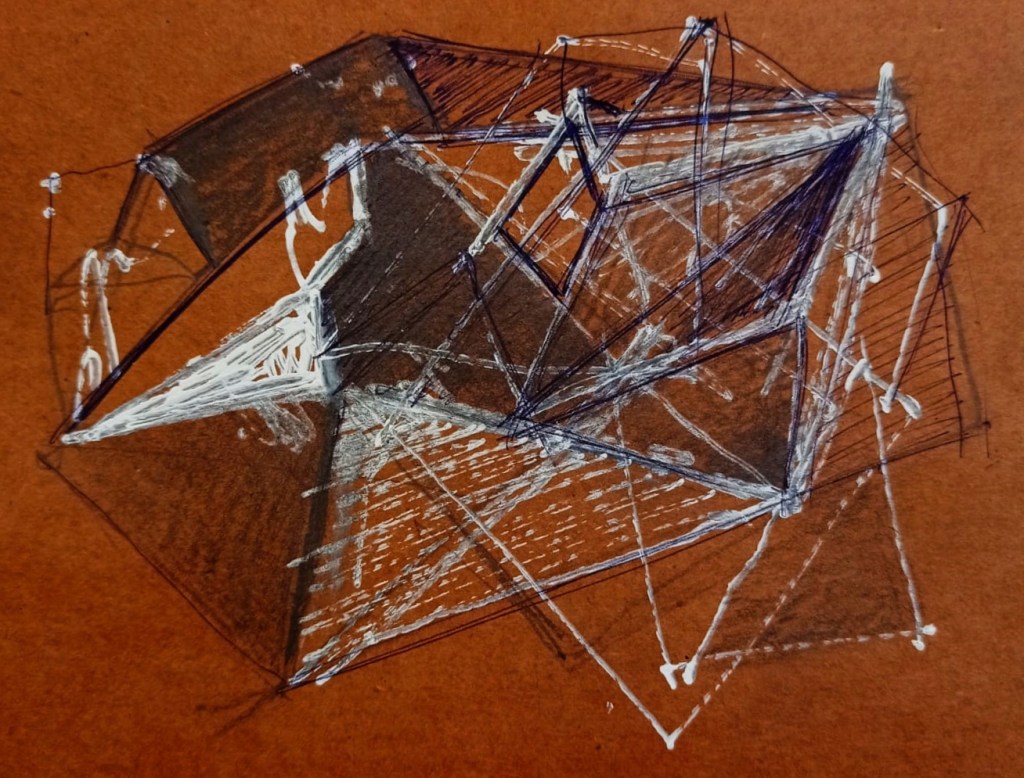
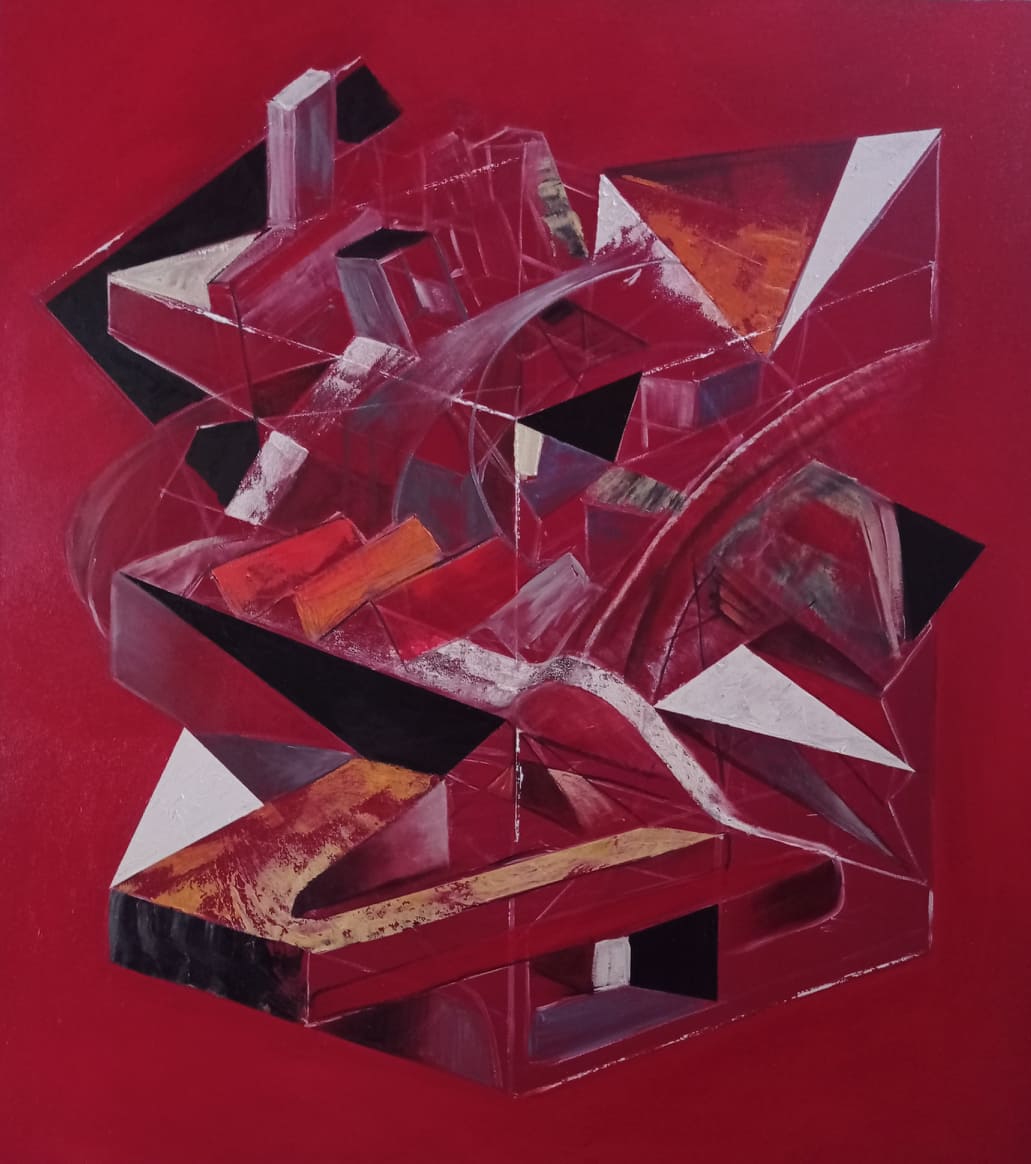
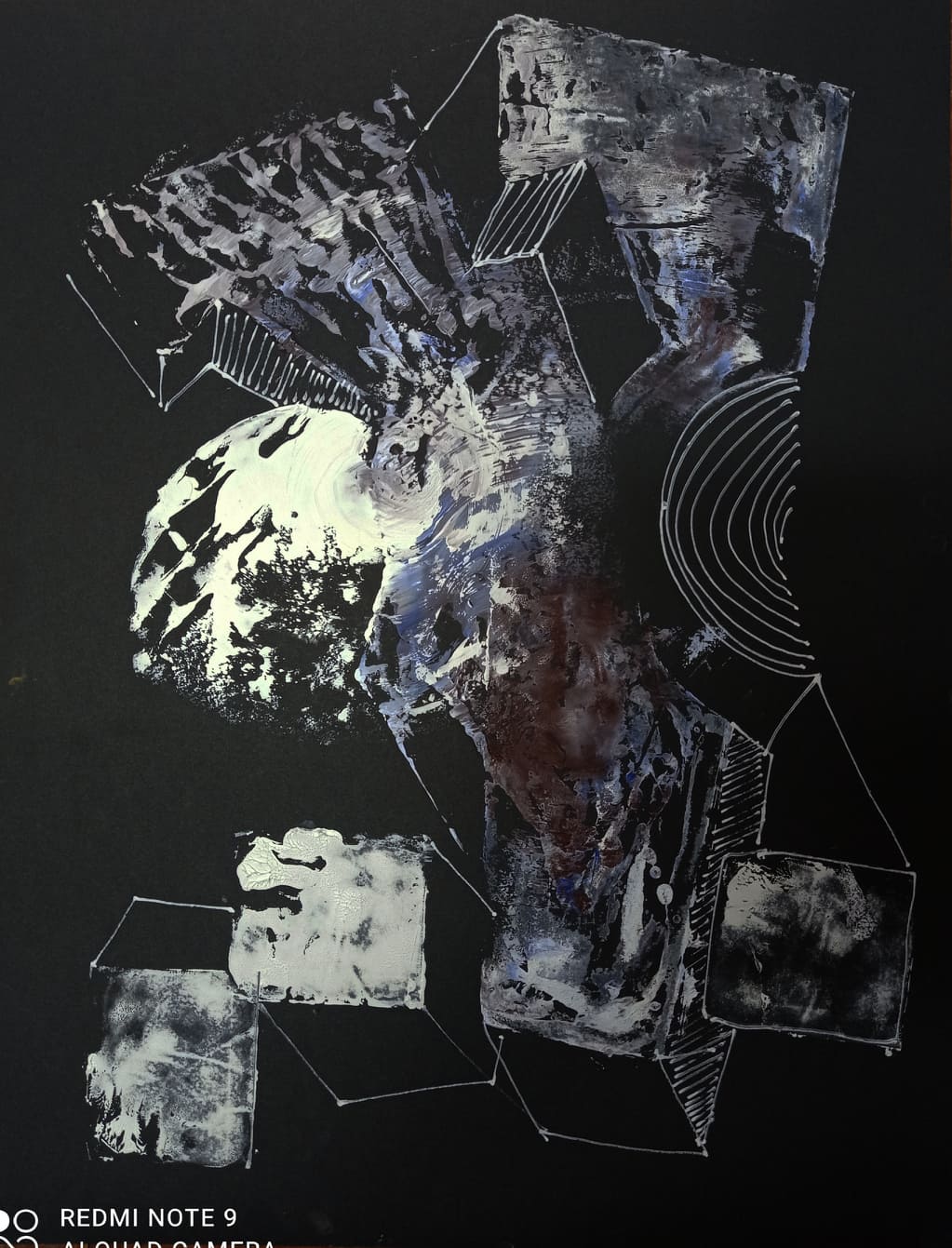
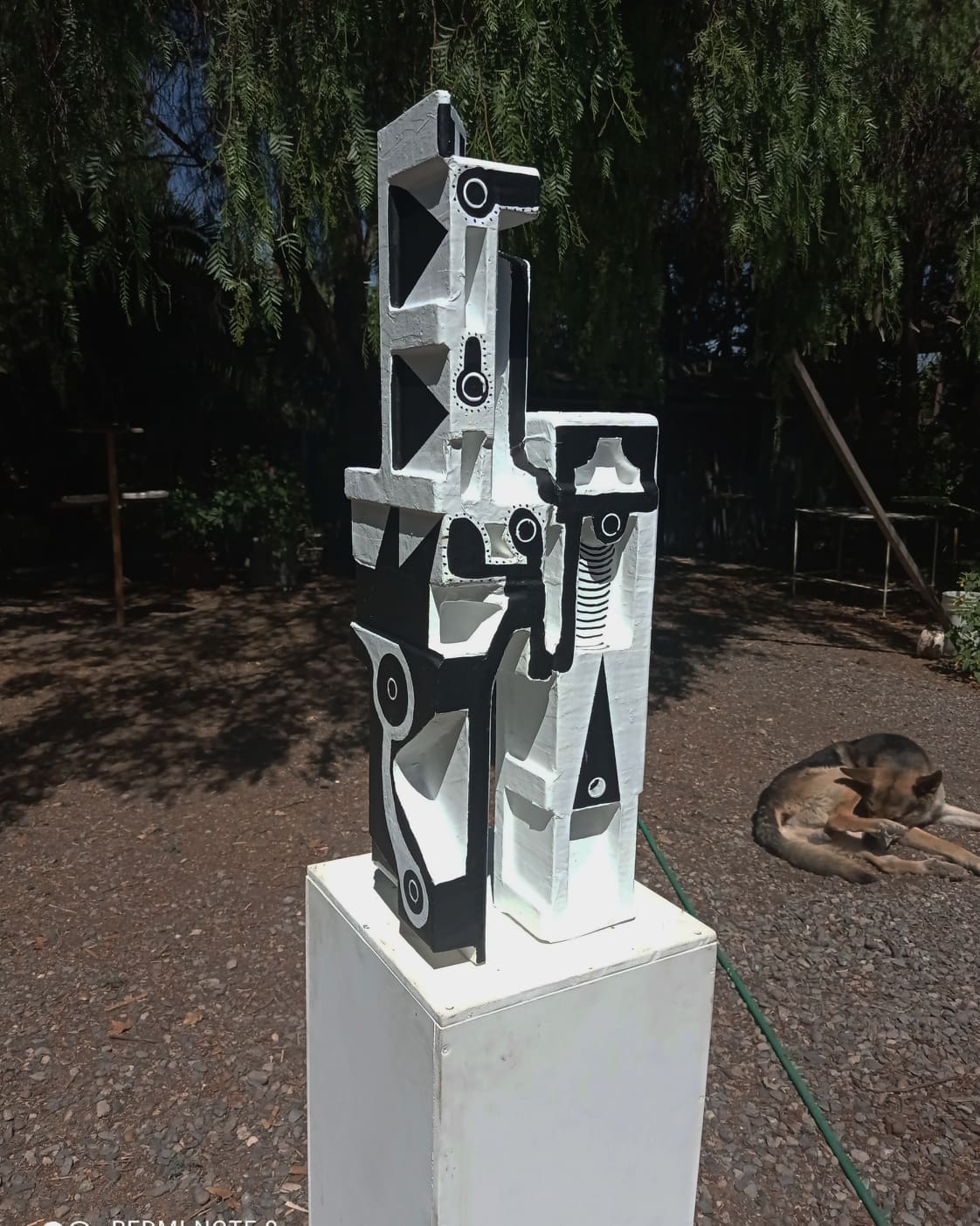
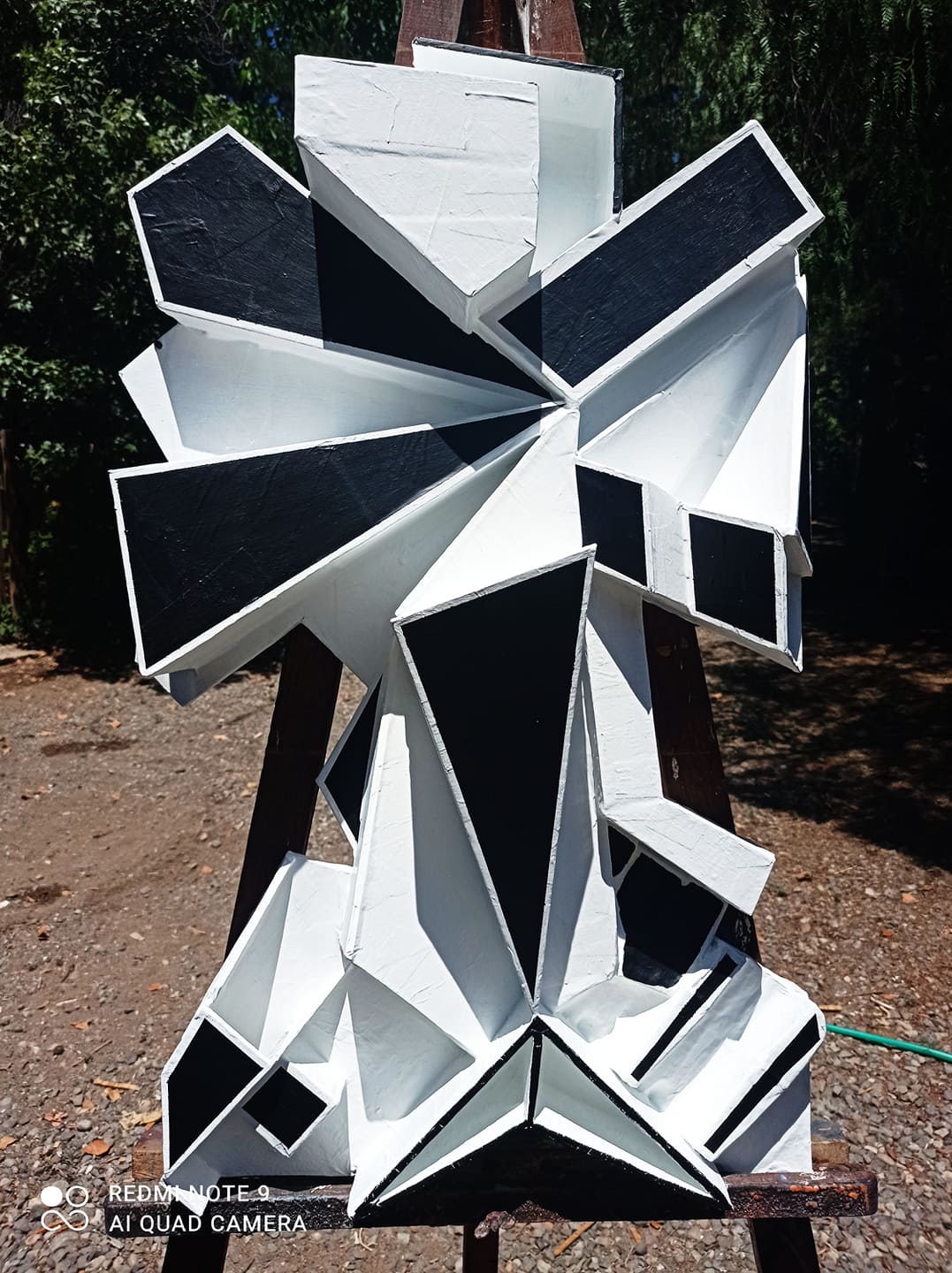
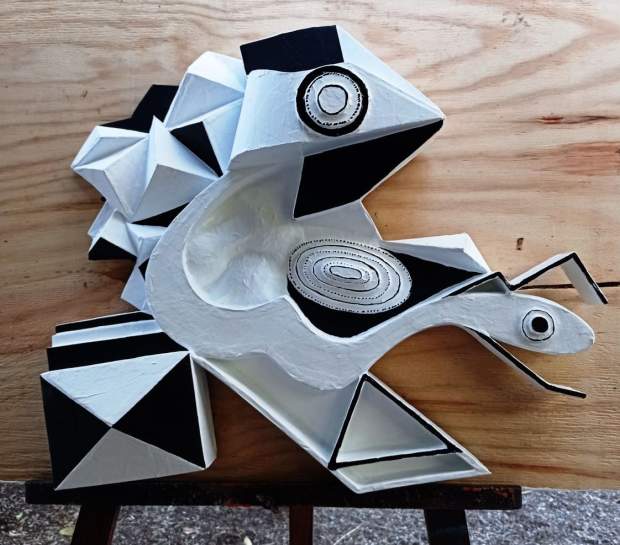
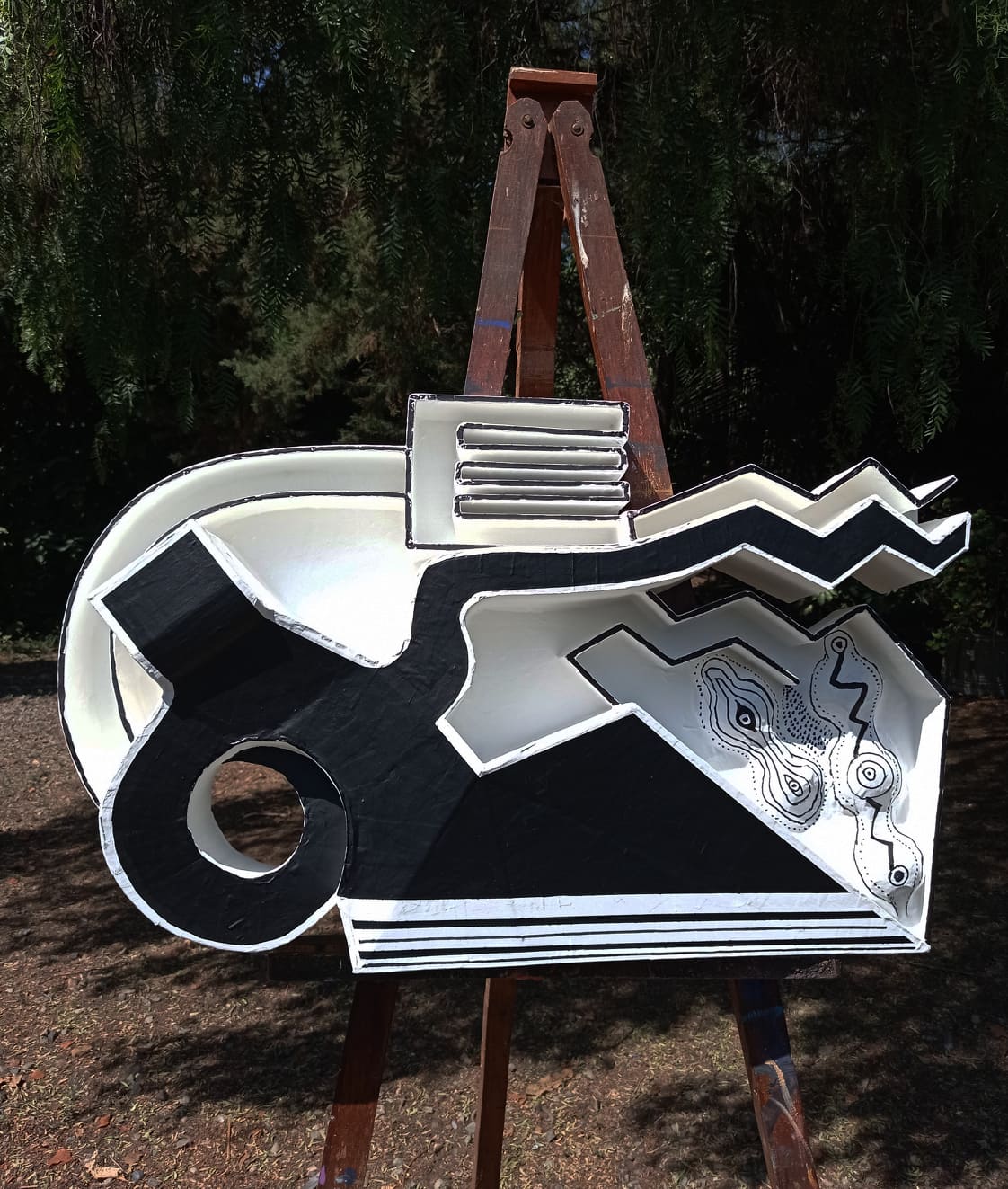
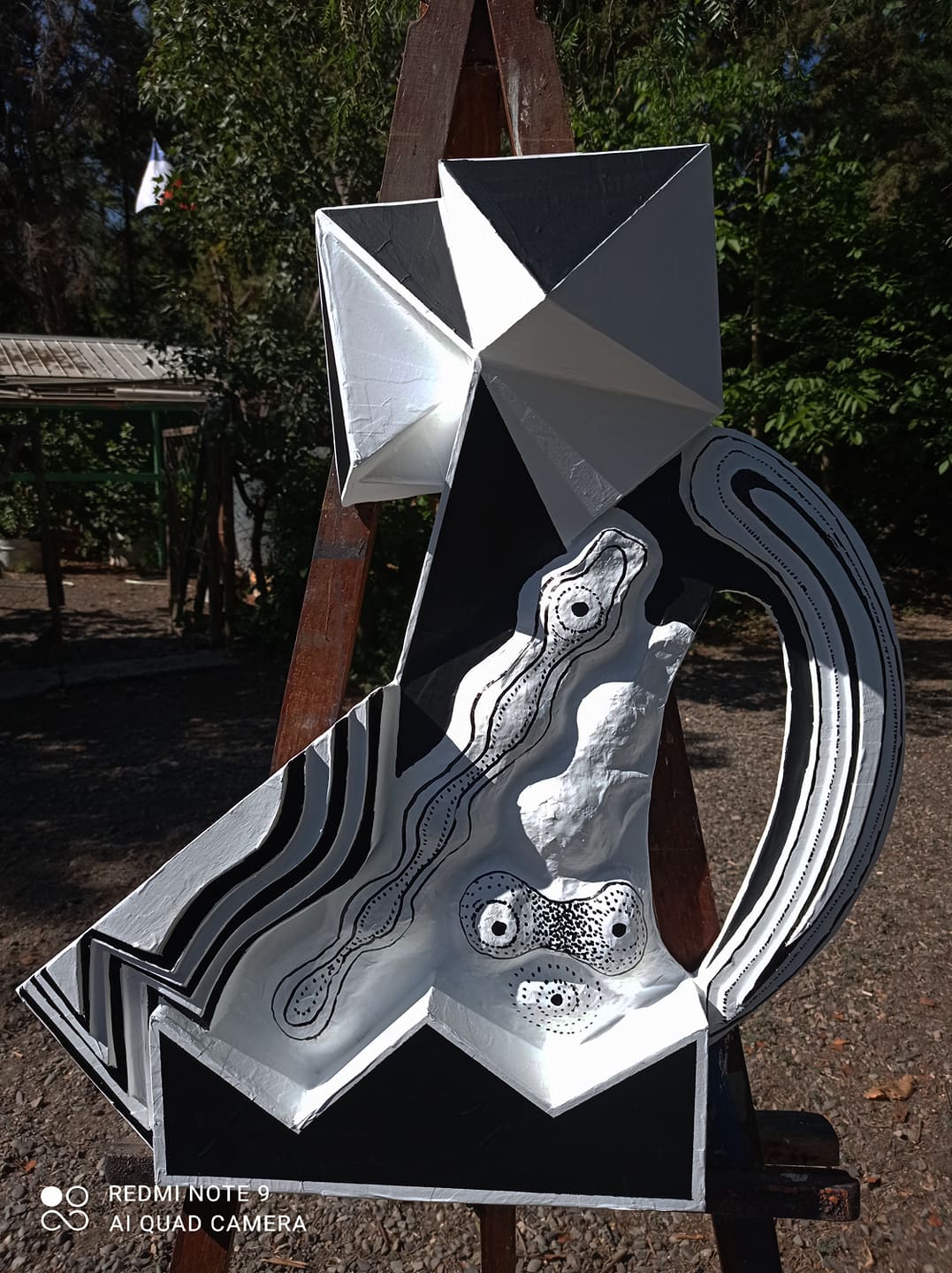
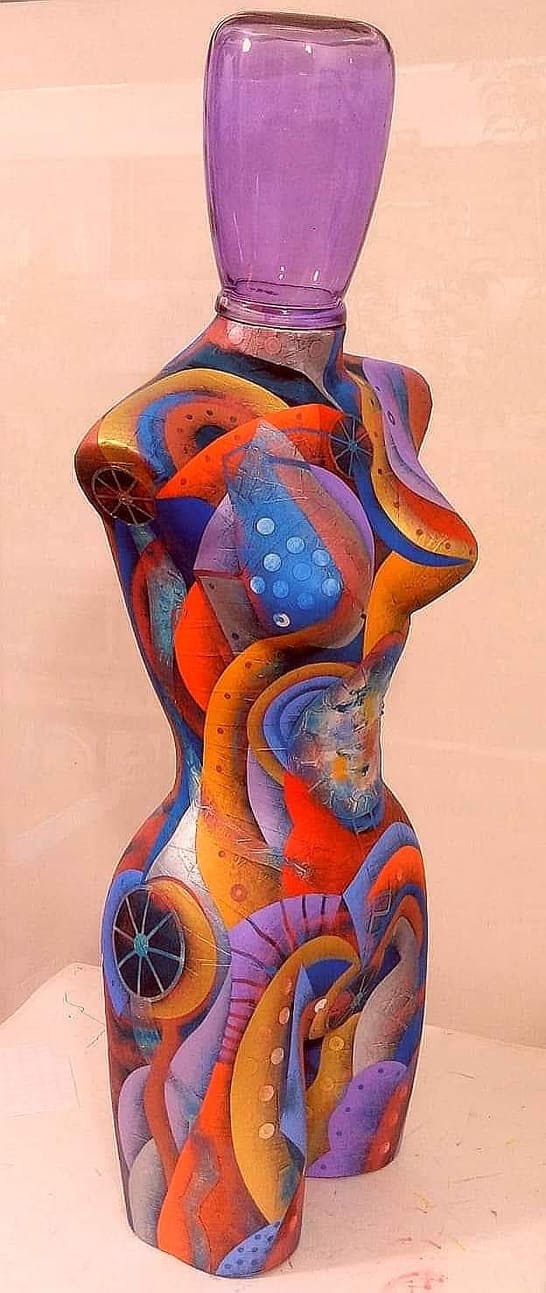
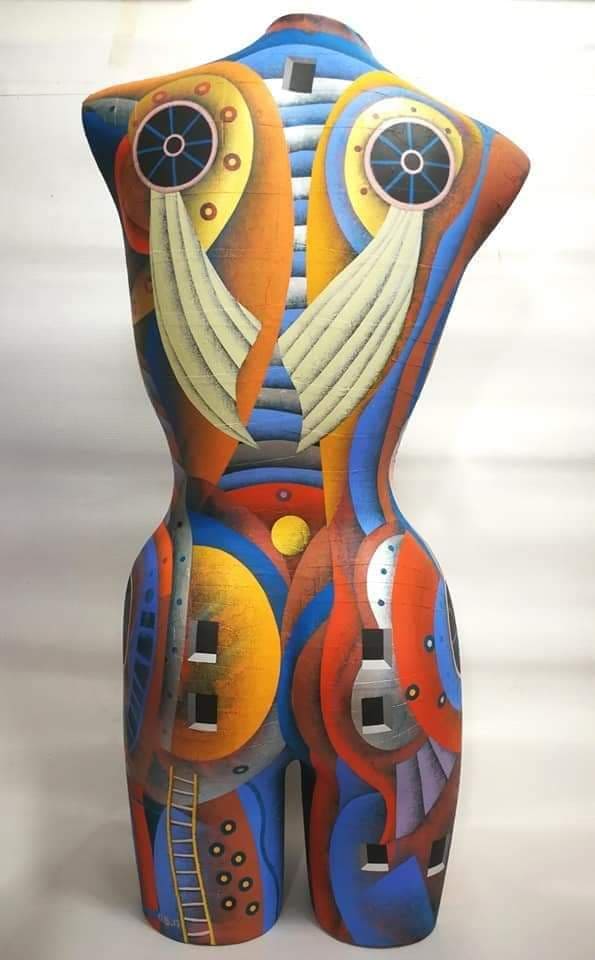
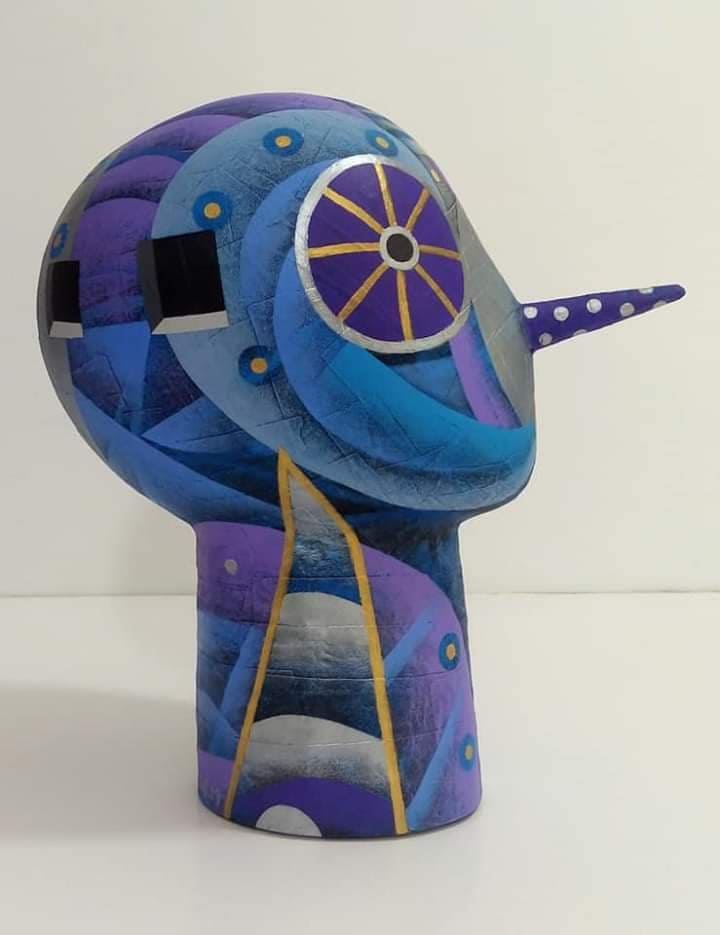
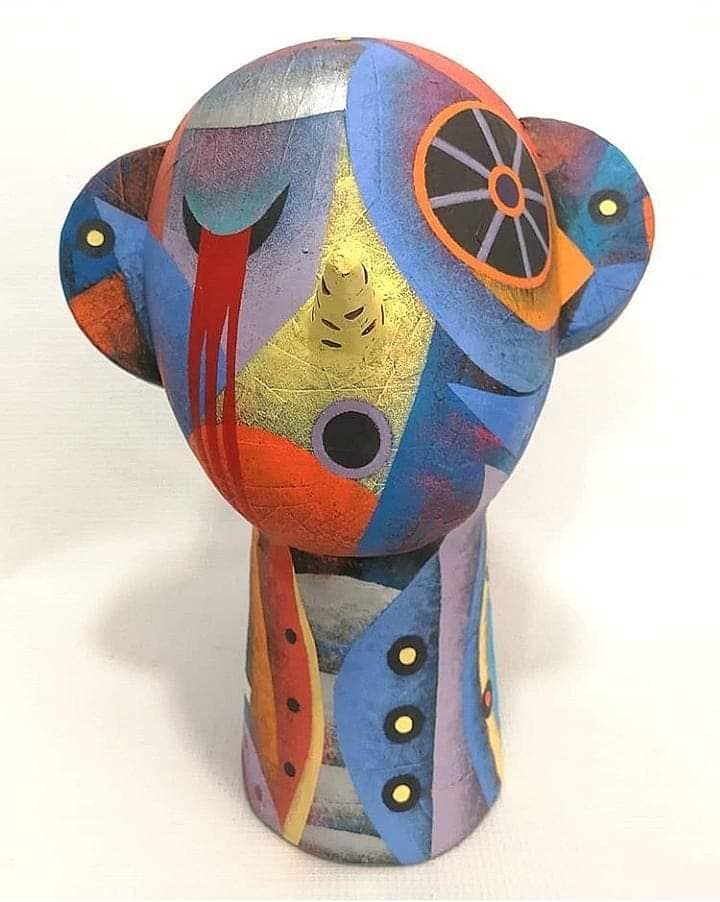
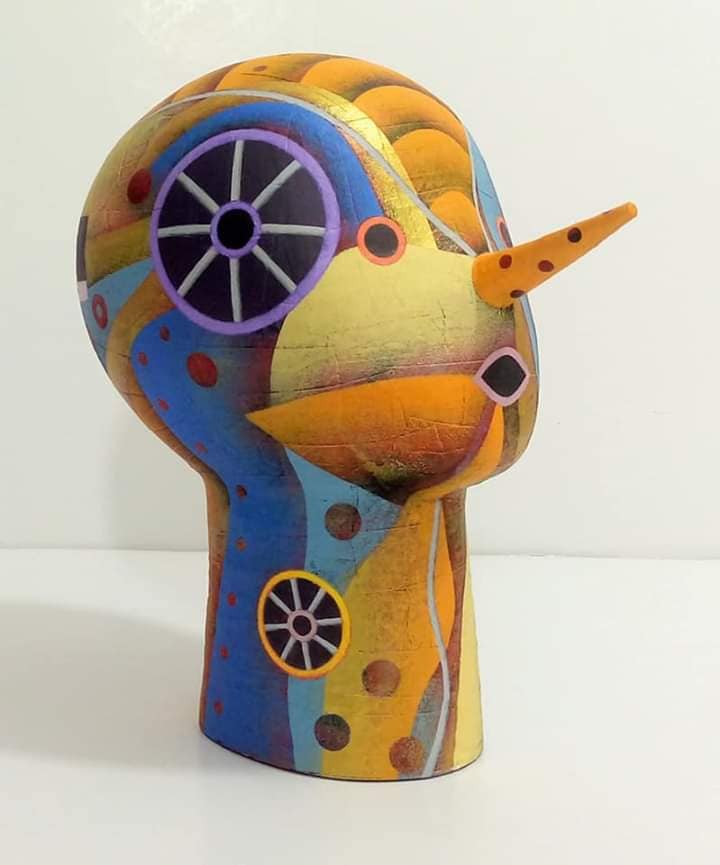
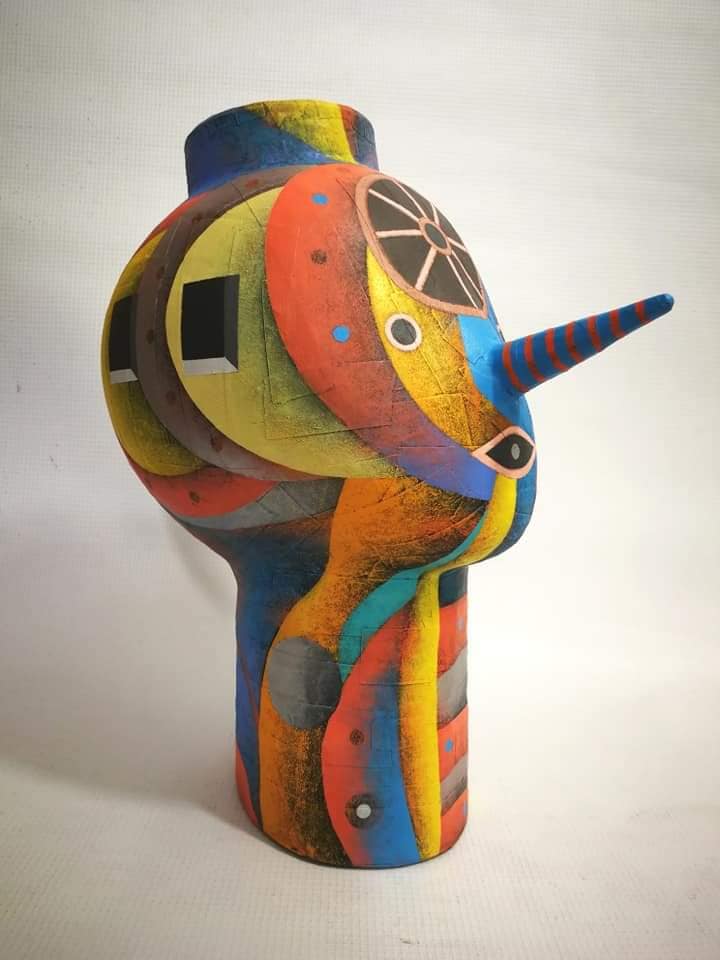
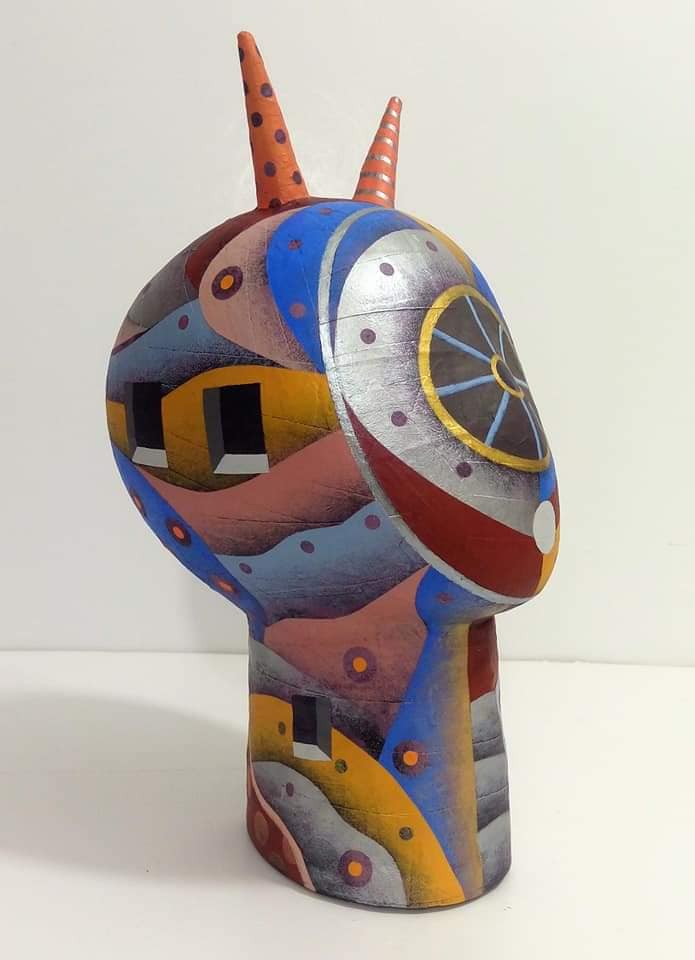
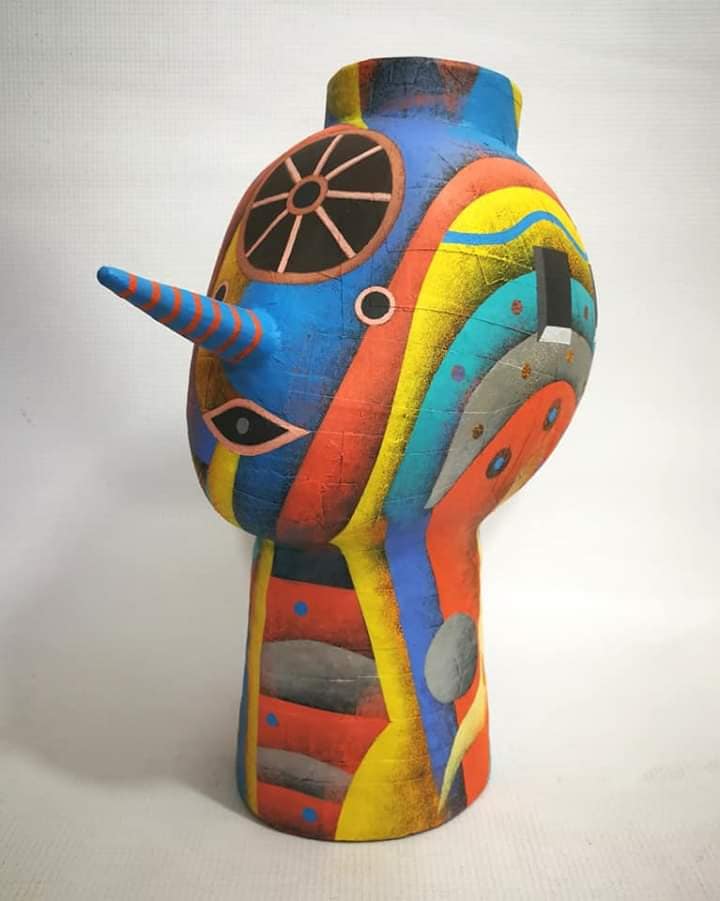
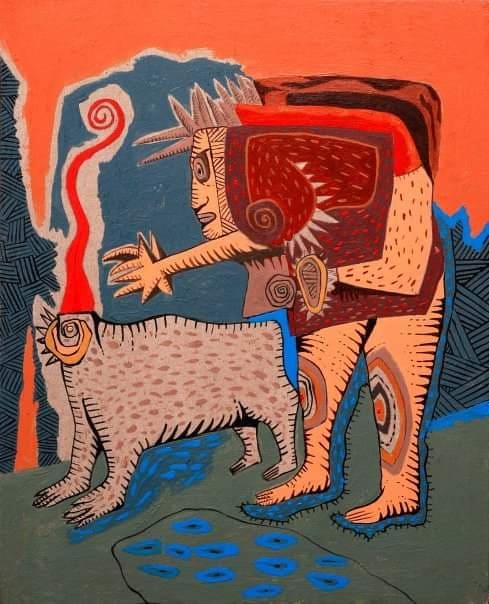
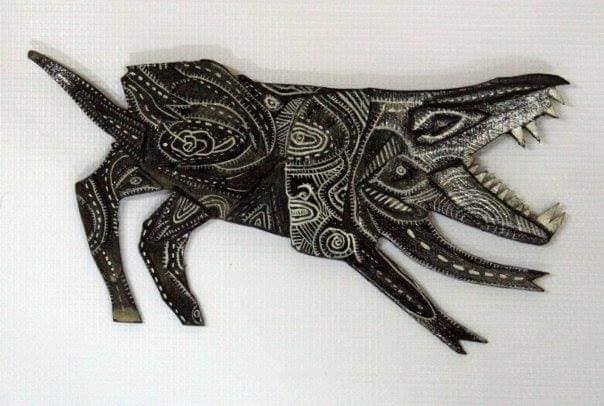
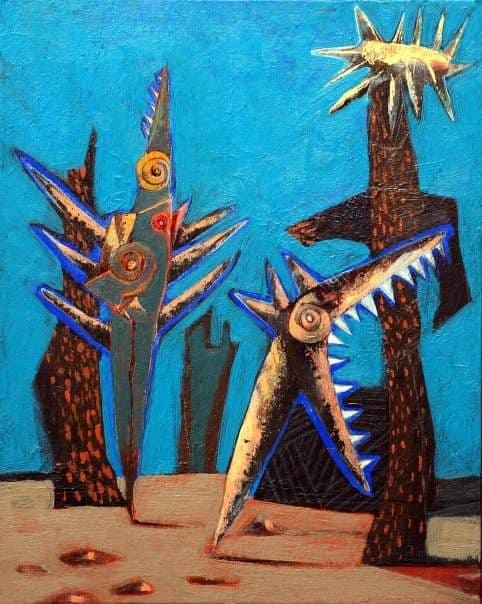
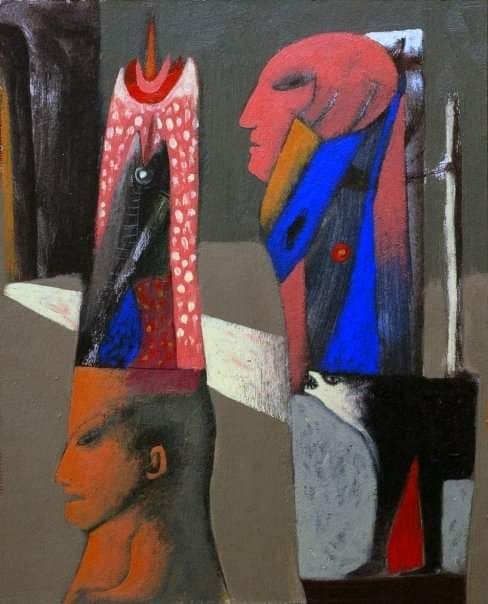
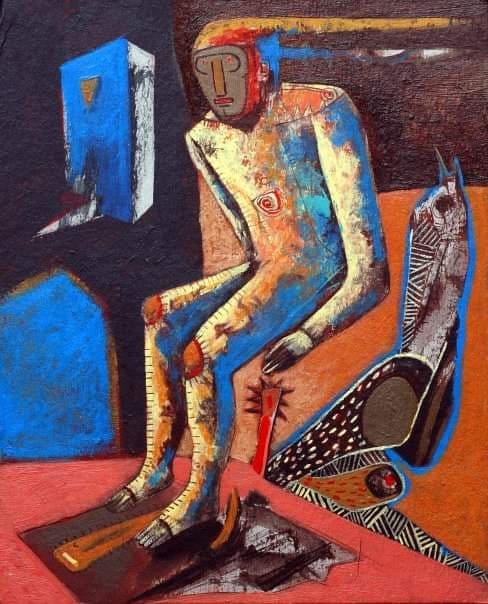
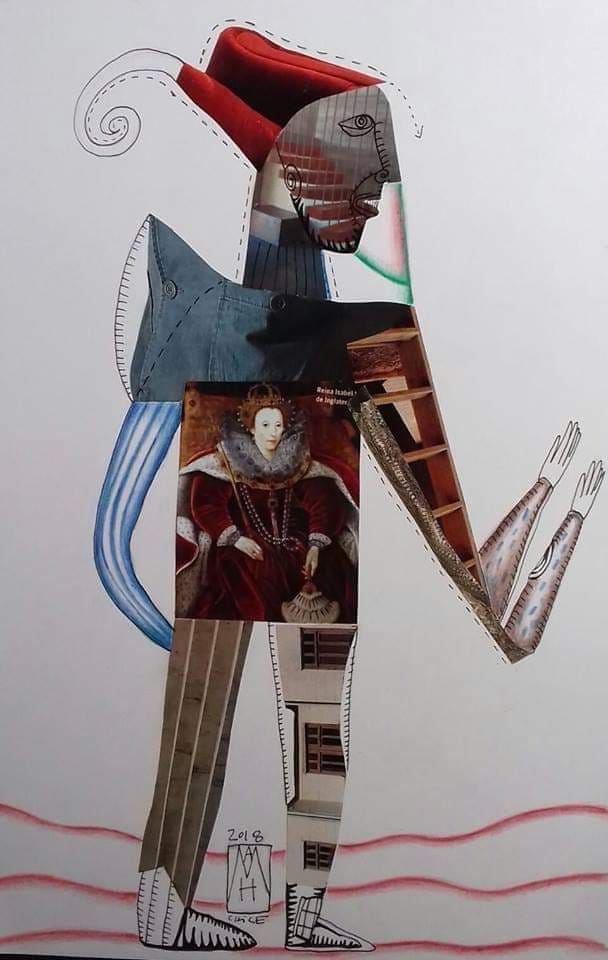
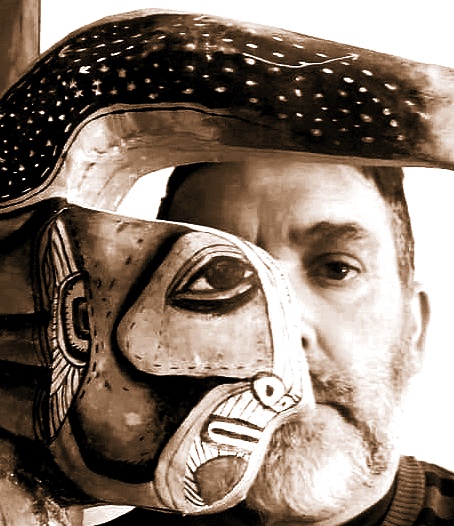
In 2009 I started a correspondence with Chilean painter and Surrealist Miguel Ángel Huerta Zuñiga. When I first saw his work I was surprised he was expressing a deep exploration into the animistic mind like I was. Later that year in November, Miguel invited me to join El Umbral Secreto the first Surrealist Exhibition in Latin America since 1940. Over the years we have continue to be very good friends. I wanted to share some of Miguel’s work. I also asked him a few questions that would balance his image with word.
Do you think a computer will organize our experience for us?
I don’t think so and I hope it is not so, otherwise our particularity of being part of the cosmos will have been lost
Have you experienced synchronicity?
On some occasions I have felt synchronicity, but I am not very sure that’s what it was.
What do you think the future holds for handmade art ? Do you think the image on the screen will replace the object?
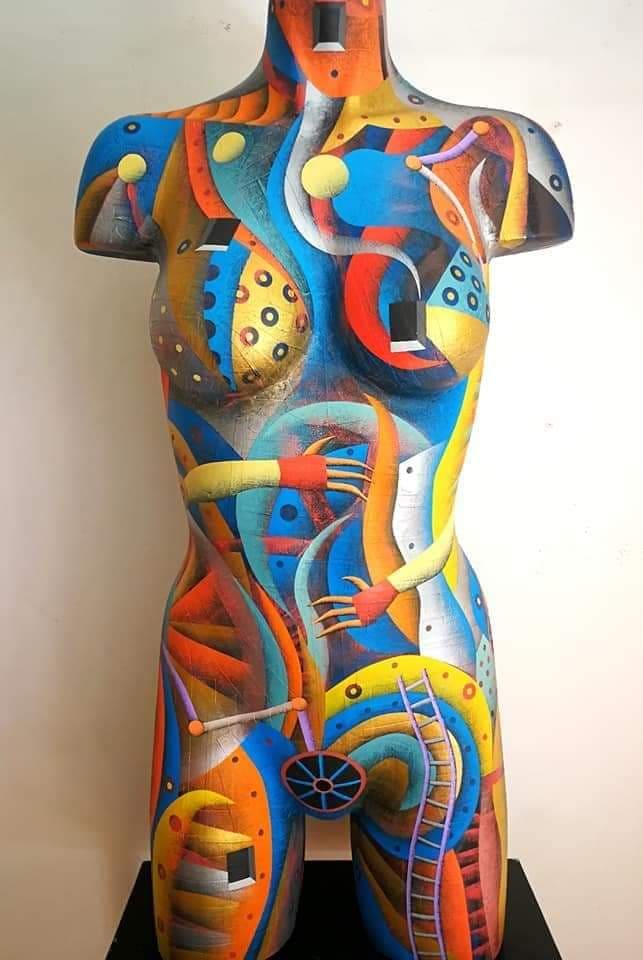
I believe and hope that technology will not replace painting and sculpture because the feeling that the artist creates in talismans, in objects of power lead to another reality and that link with the cosmos will be lost.
To what extent do you think our brain will merge with a simulated or fabricated imitation of reality?
I worry that our brains will merge with faux simulated or fabricated reality. I think our relationship with the cosmos would be lost

























 Mitchell Pluto