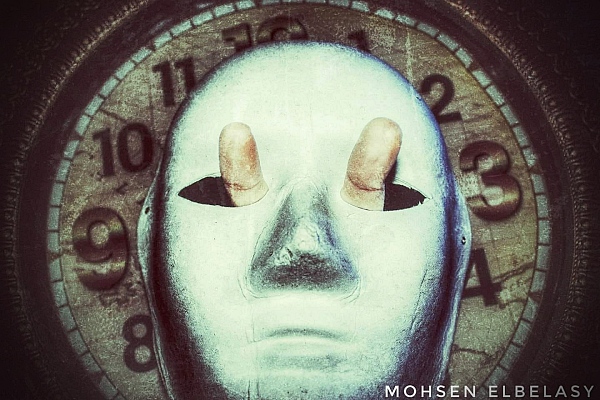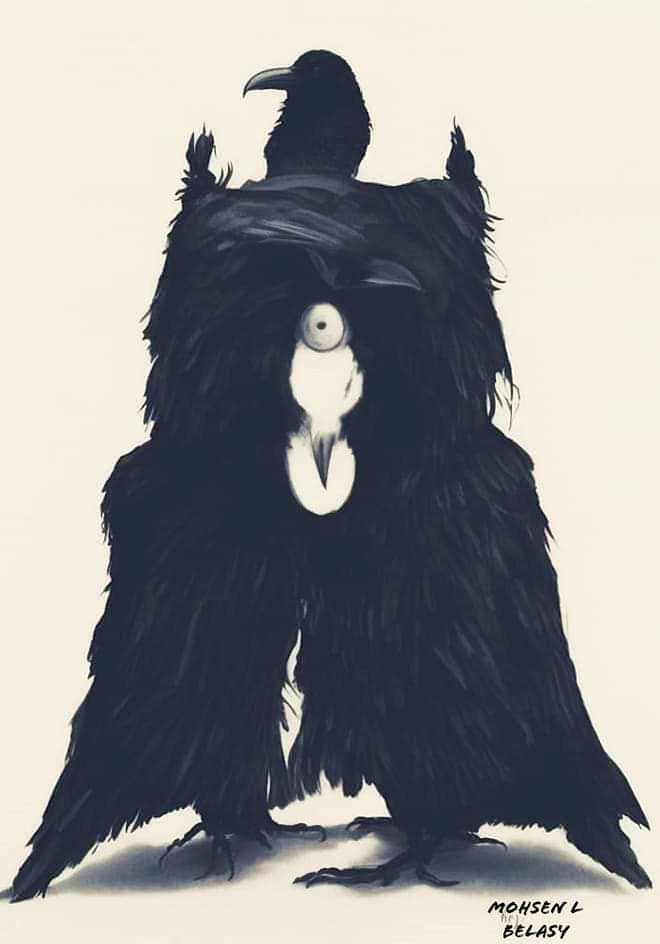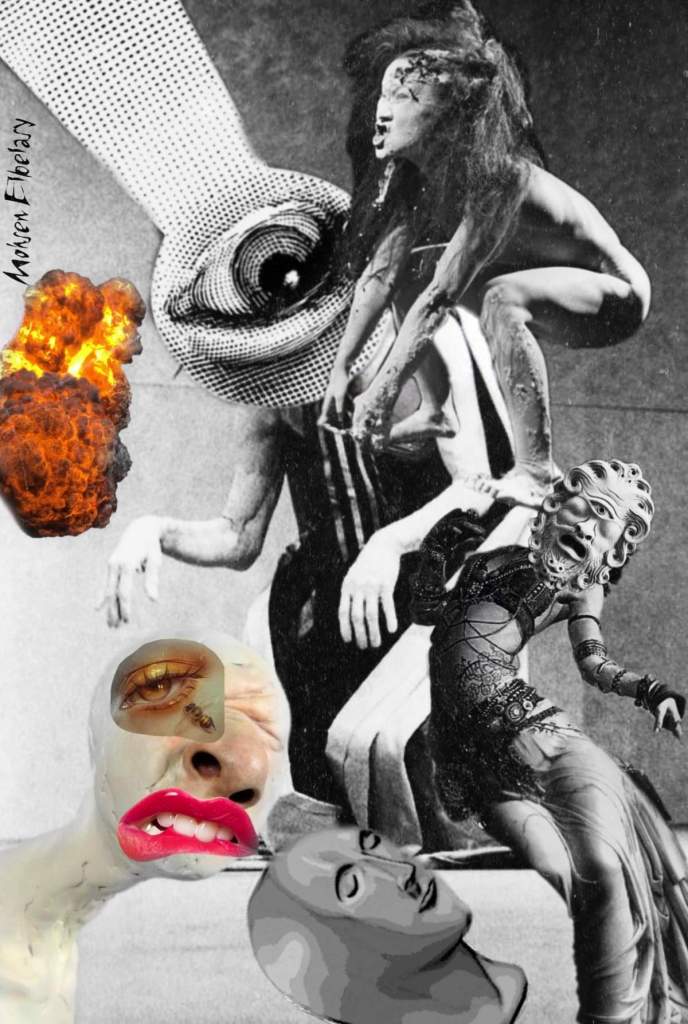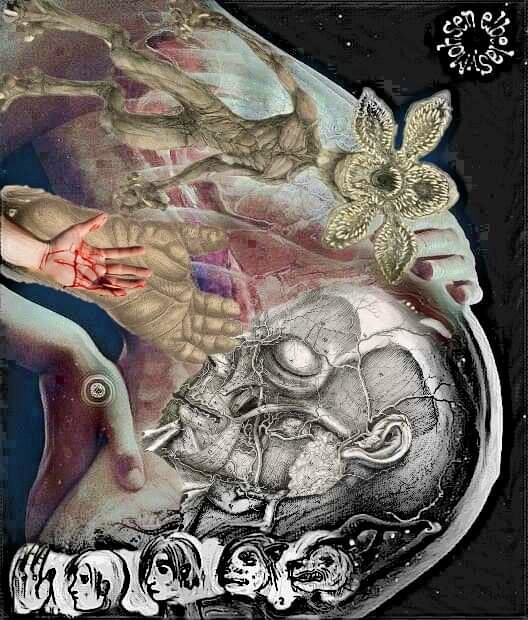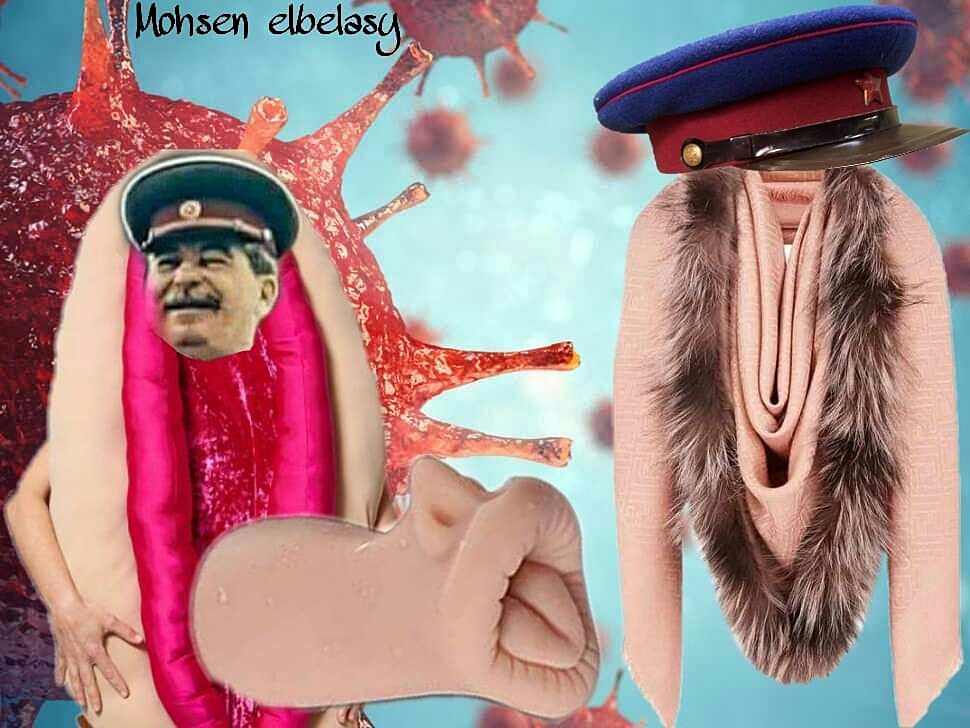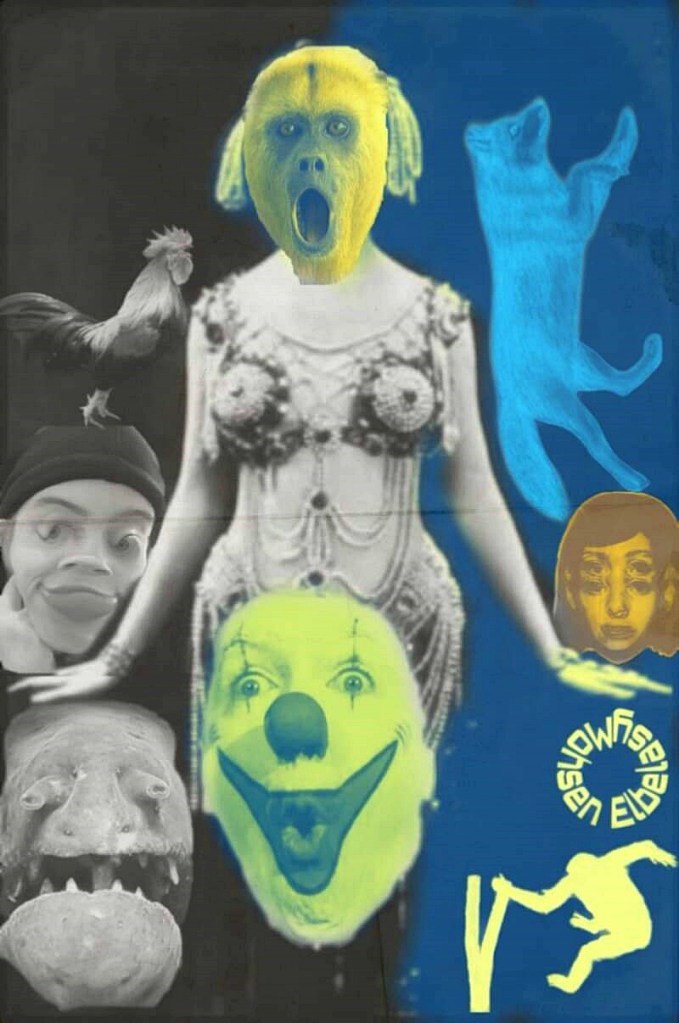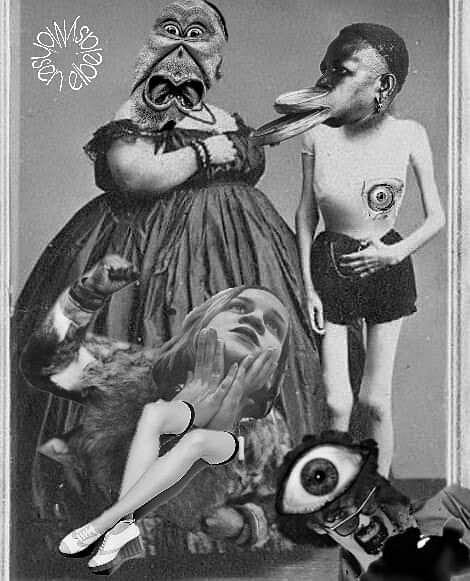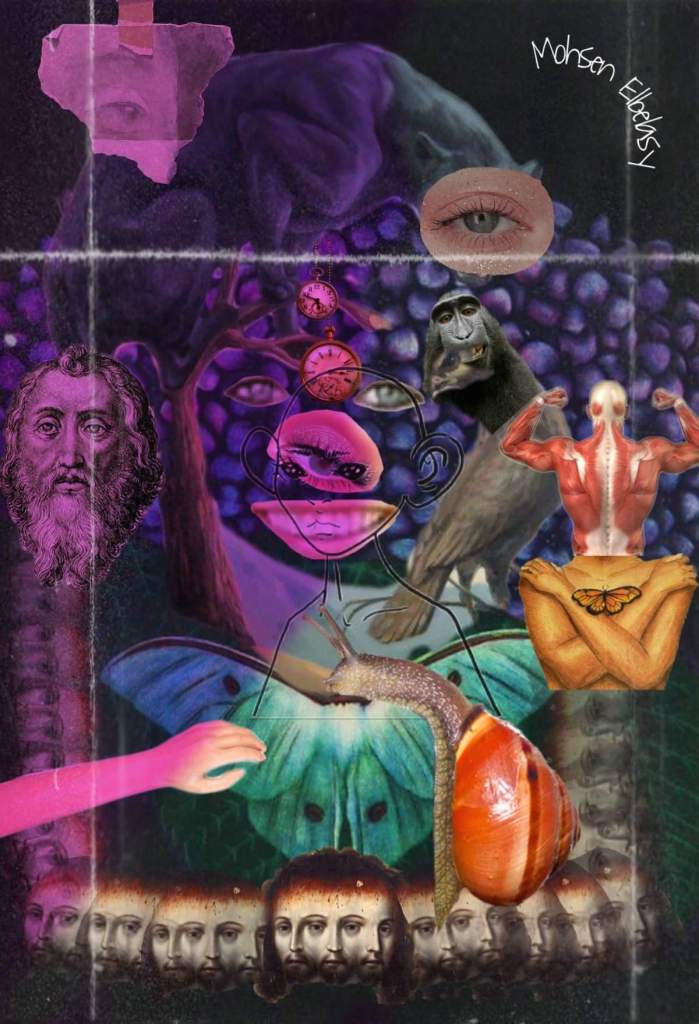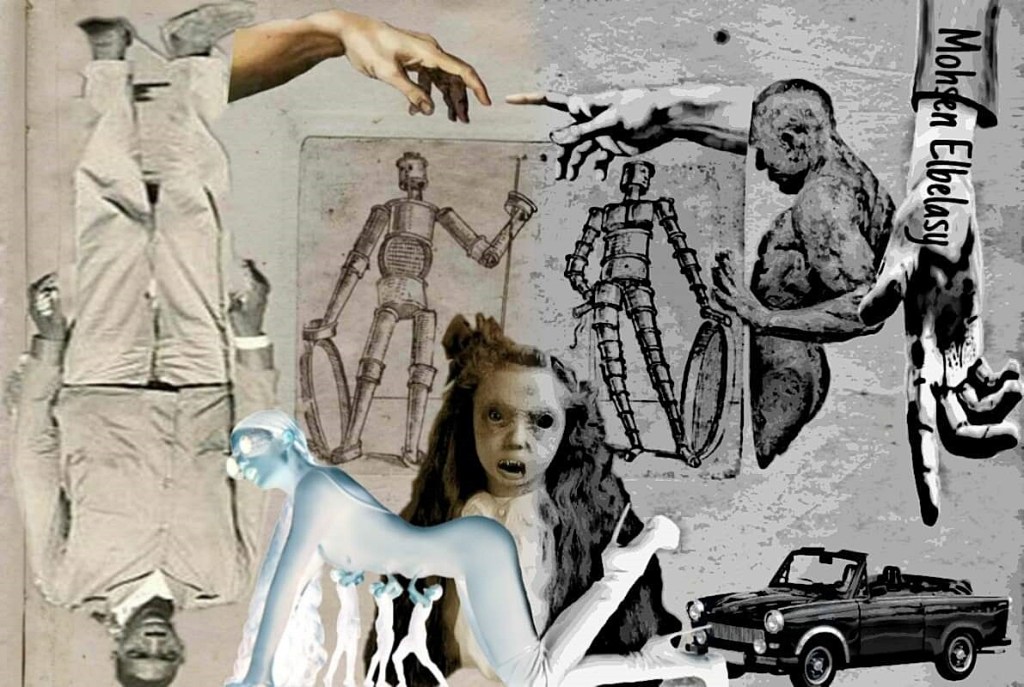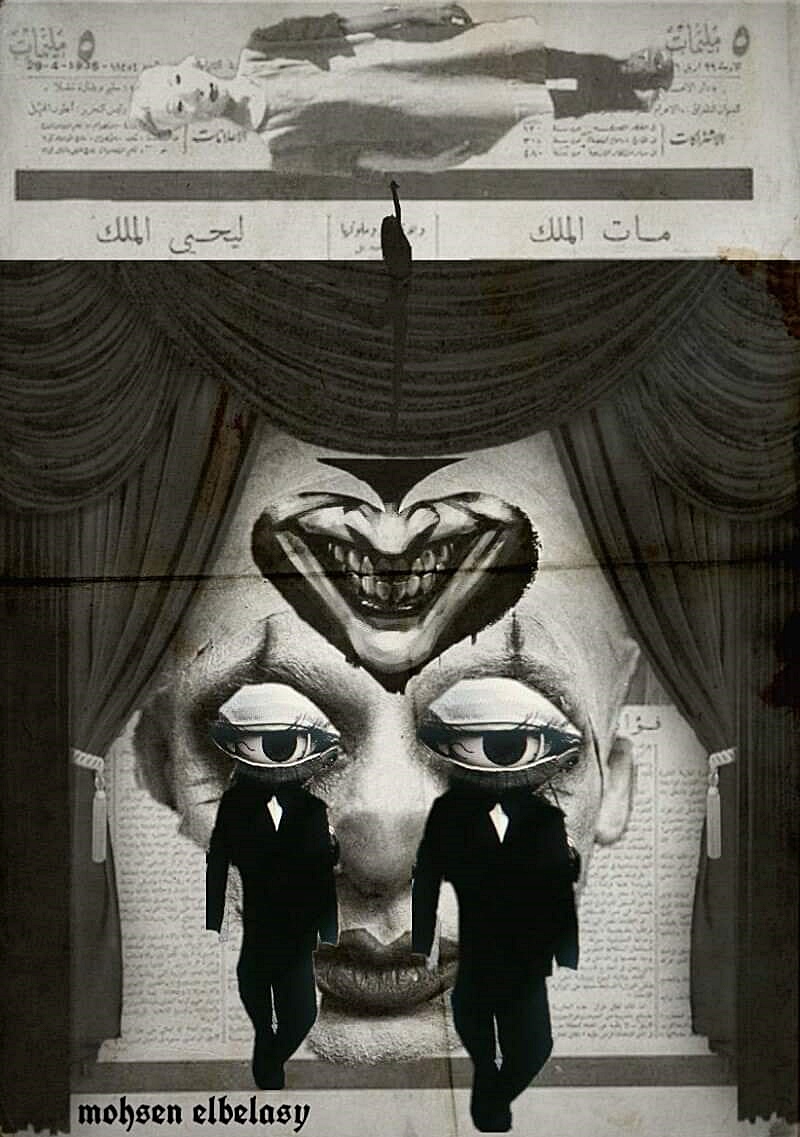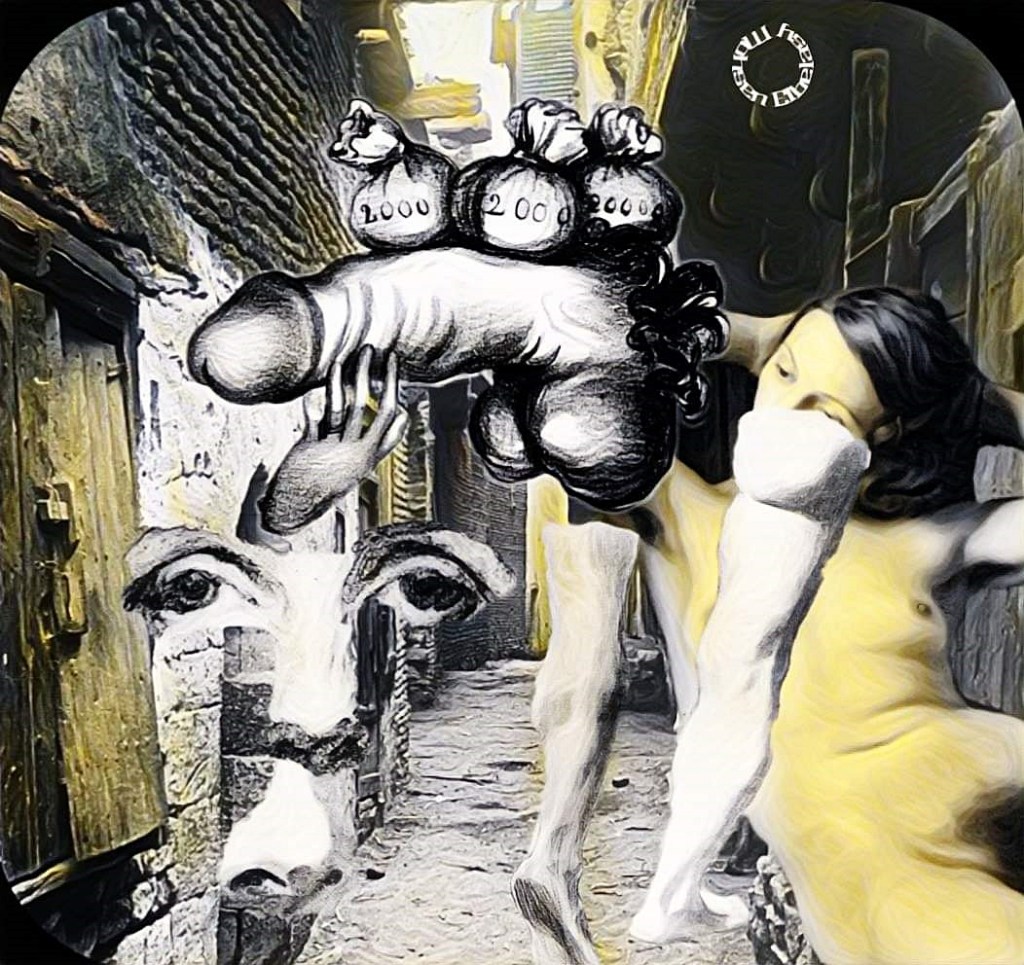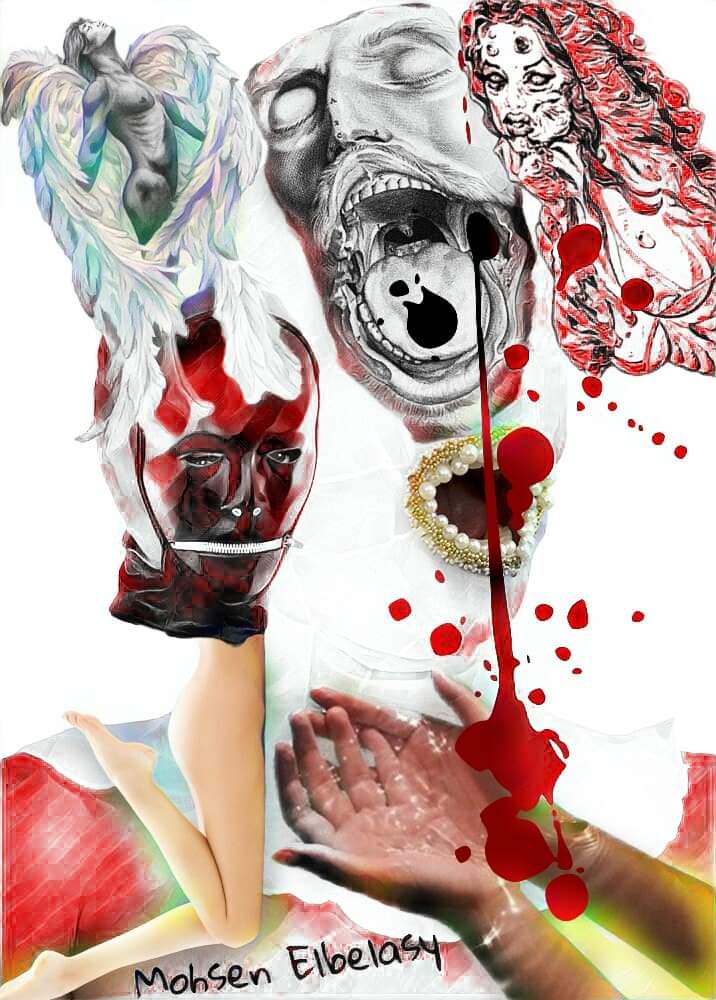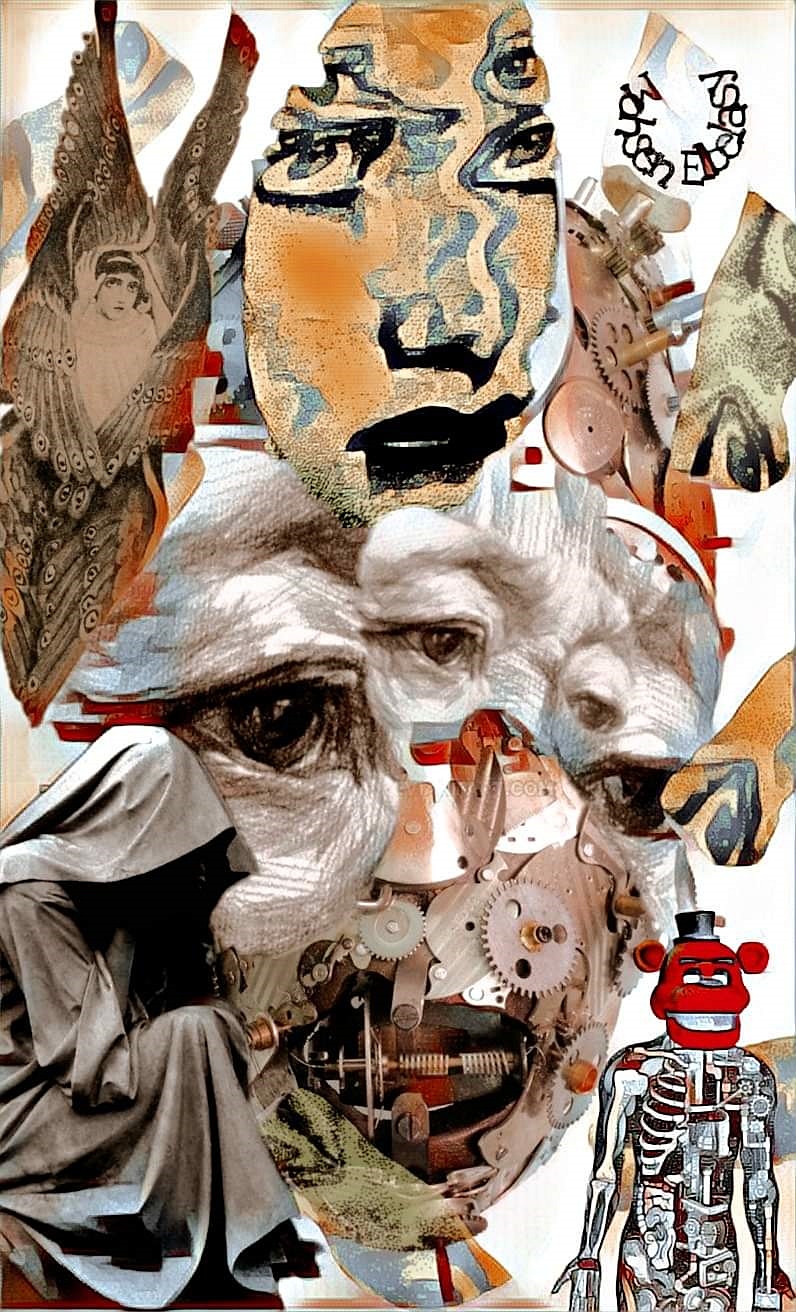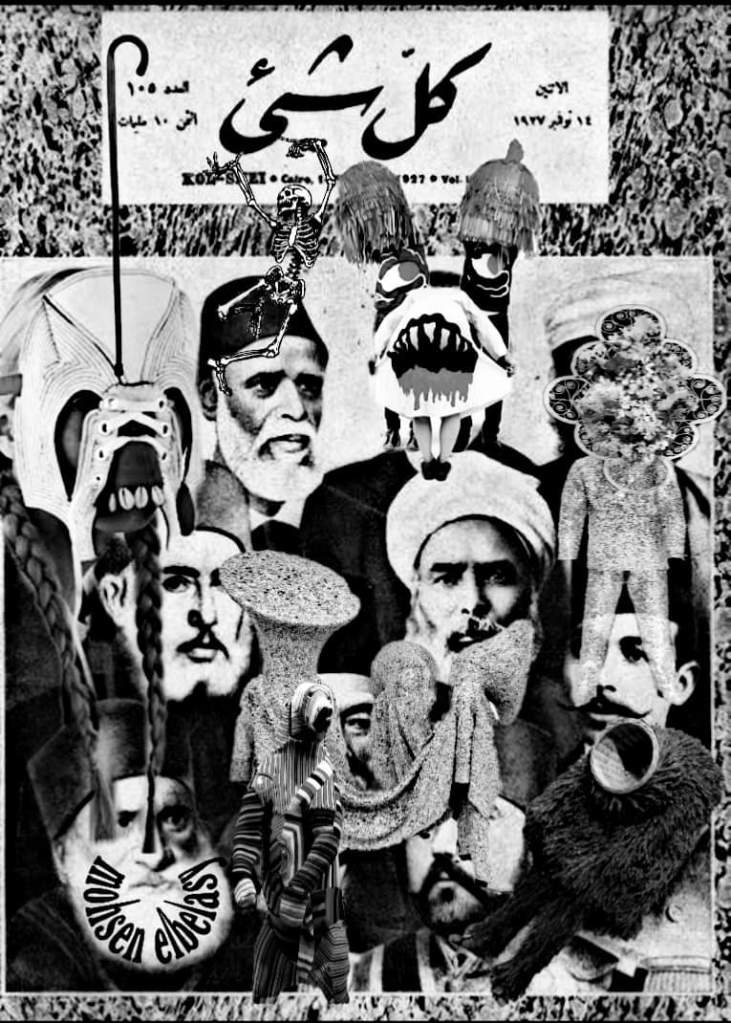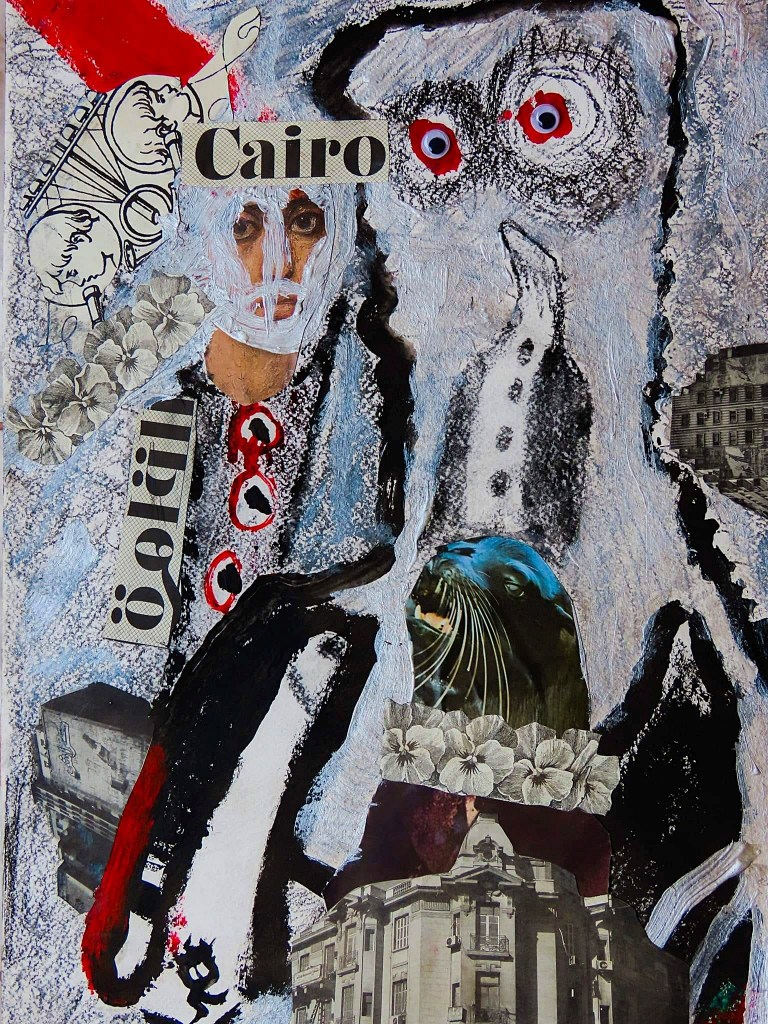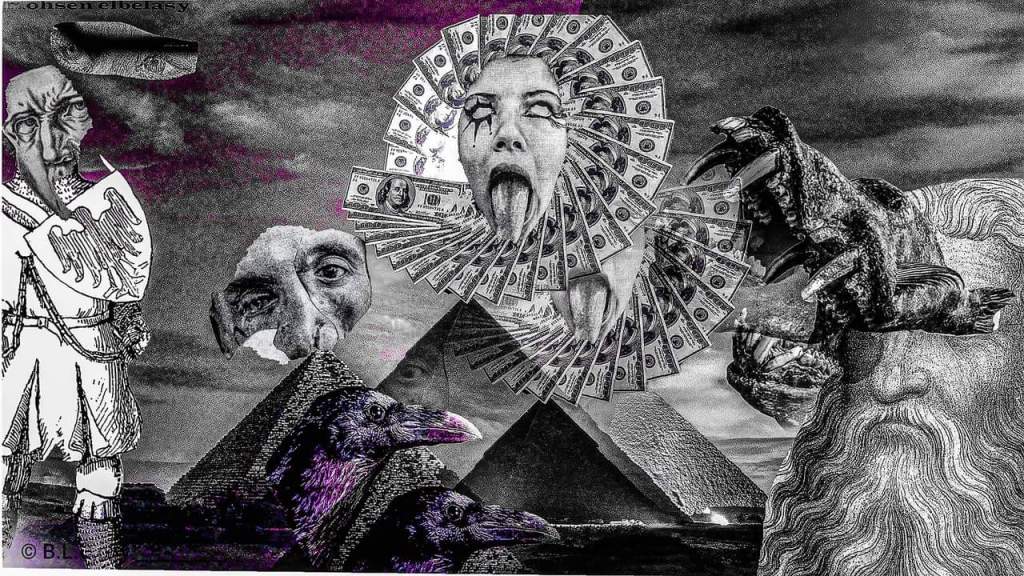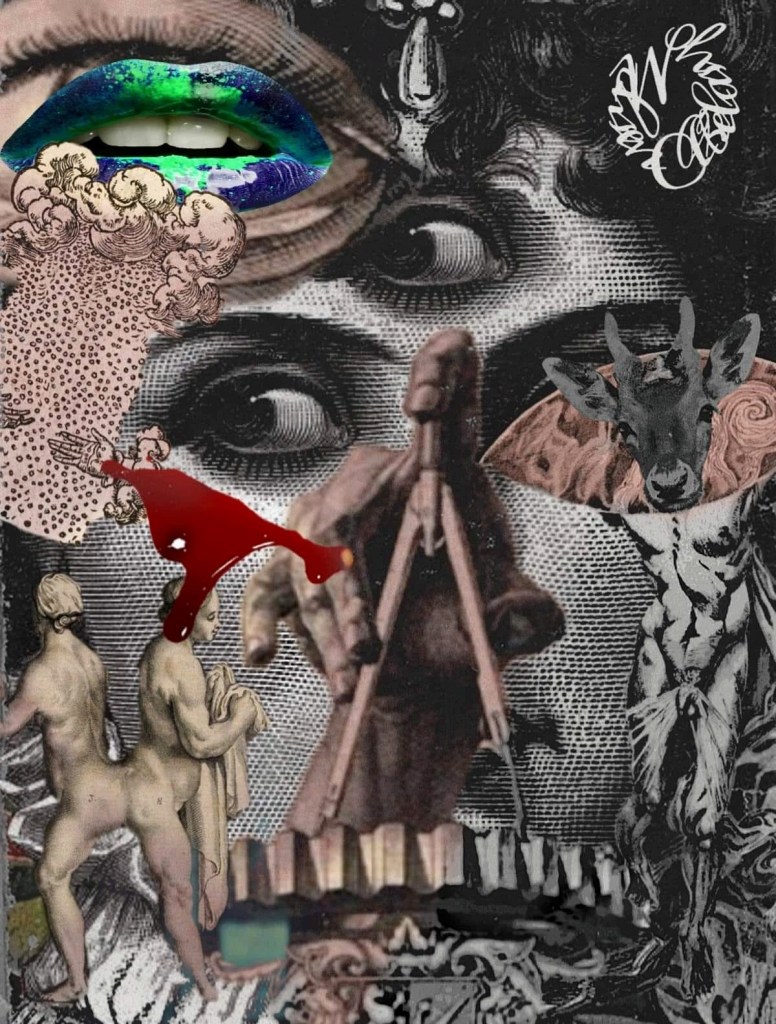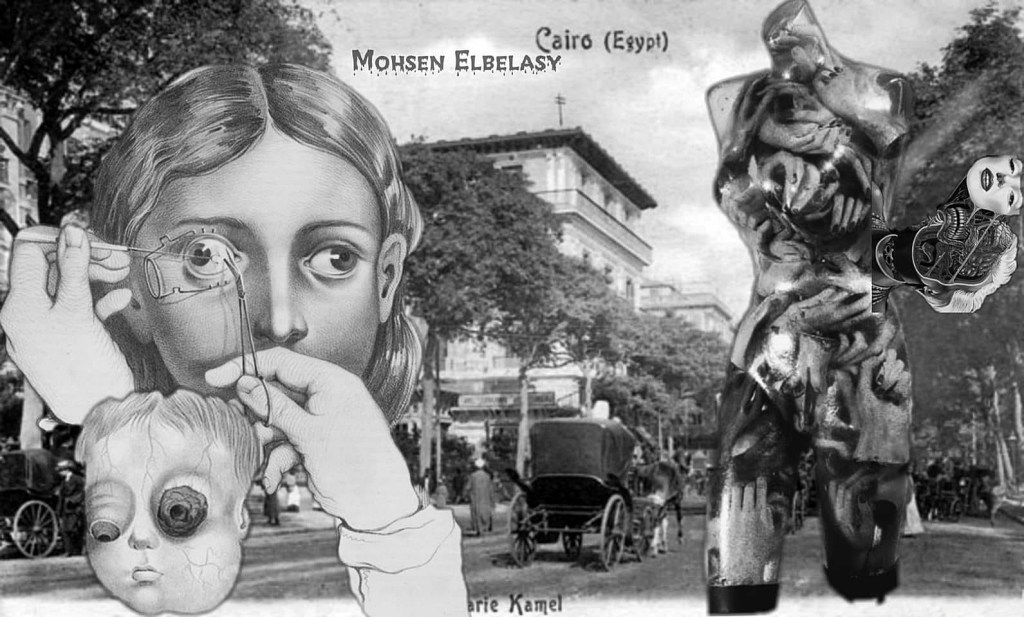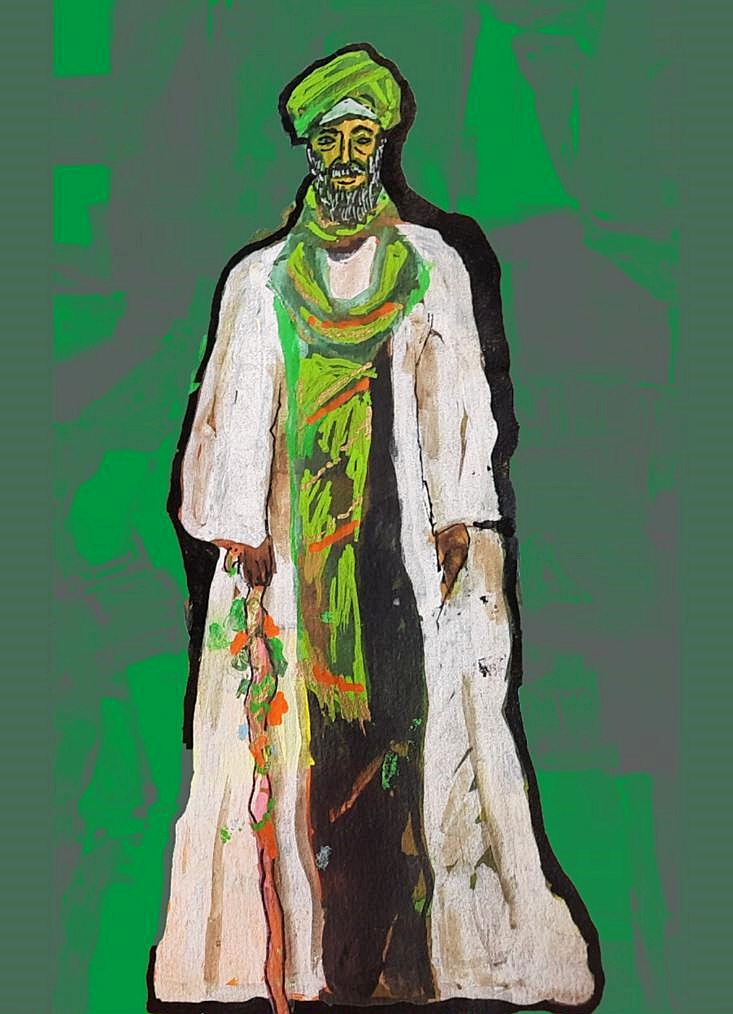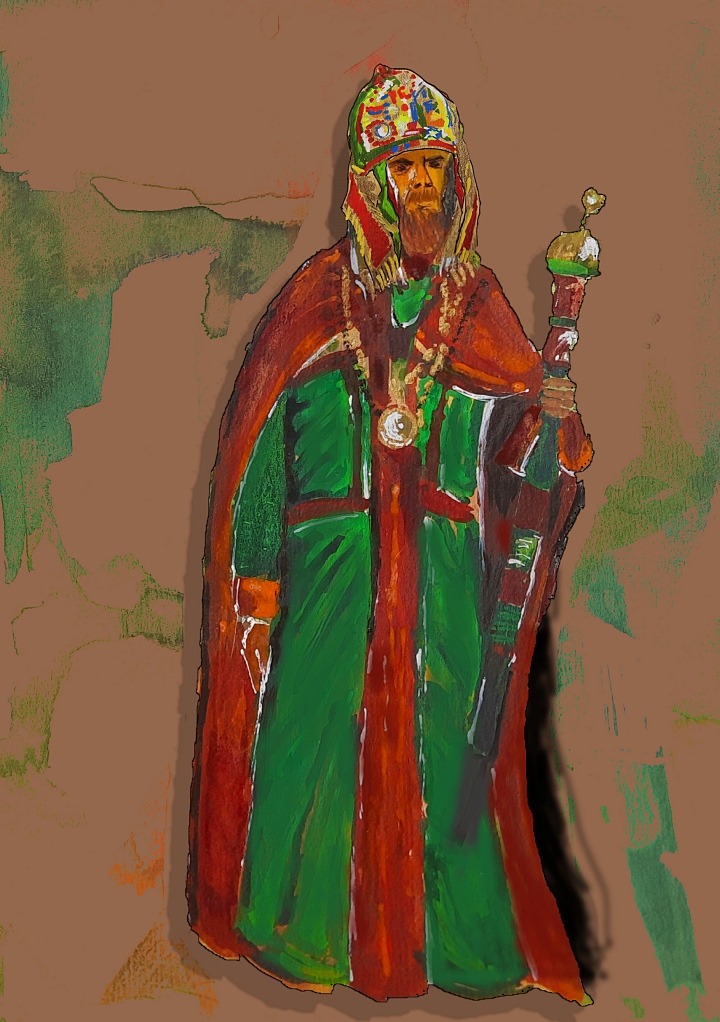
Mohsen L Belasy the Wolf of Cairo

Listen to the mysterious, revealing and fierce voices within you. 

And if you are caught up by  fear of doing so, remember that it is wrong for the senses to belong to the everyday, lived world.

For me any discovery that changes the nature or direction or a phenomenon constitutes

of something or is a  surrealist /poetic truth.

Objective chance , the subtlety of the intuition of the expectation, and the constant search for its flash . 

Going without a destination, the poet has an unknown encounter with the word, freed from any linguistic logic. 

In poetry the mind blows out of the mind. It aims at the spontaneous reclassification of things into a deeper and freer order, which is impossible to explain by the means of the ordinary mind.

The poet alternately is a deadwood pruner, a transformer, and a thunderbolt.

 Silence is a complete poetic and surrealist work.

The word must be left in suspense for a moment before it is transferred to a physical state on paper. At dawn or dusk, we walk down the road and sometimes come across the silhouette of a silent fairy woman, whose silence is the most comprehensive concept of poetry,  and surrealism. 

an absolutely possessed throat, echoing between howls and silence.

 the secrets of the world created, within the poetic mystery, darkness unfolds while questioning is stripped. 

Earthly legend and mystery doors open to infinity.

The poet is an enemy of the Sufist . 

The poet is not bound by a vision or a superior authority. 

Poetry is a momentary extraction of the unknown from the veins of every language.

If the poem does not have a chaotic body that smells of demolition, negation and destruction of all existing literary forms, genres, 

 Then what is living poetry?

Poetry should be the color of dried blood

The poem is the beginning and end of the world, it revives the world and its death, dismantles all self- and collective censorship, esoteric and physical, and drops every daily living dictionary.

The poem is an arena for the execution of all linguistic paralysis by burning with the napalm of the  lust.

Poetry is not a linguistic expression, but a visual, physical and perhaps biological expression as well.

Real poetry employs itself to monitor a waking dream which is resentful of its fate, re-sculpting it with dough baked by chaos inside the bone furnace called the human head.

I believe that enhancing poetic esoteric awareness does not come only by enhancing the possession of language or general cognitive awareness, but by developing and training the eye on scenes of logic disintegration always, whether they are daily or artistic works.

Even with everyday mind games

Thus, the magnetic linguistic ability self-develops and expands not only through the subconscious mind, but also through the nerves of the eye’s practice of strenuous imaginative sports to extract the faculties of impossible  earthy miracles in all its forms and templates.

I treat the Arabic language rules as a relationship between oppression and freedom; understand it

As a repressive social specter that must be removed and rebuilt anew every moment with vast doors to spend the  free desire. 

Poetry is the chaotic condensation of the inner momentary realization, but the seer poet must tame the tools of this condensation towards a permanent quest for the human interior, a quest fertilized by doubts in everything outside the individual.

Every human being has a poetic companion who lives behind his eye, the cunning poet who makes him constantly jump like a kangaroo and always seeks to protect this kangaroo from drowning in the prior cement lakes and to teach this kangaroo that there is no limit to what is called verbal maturity,

 poetry is a permanent electrical revolution inside the mind It is not controlled by something imaginary or even social.

The chief function of poetry is to impart sharp disturbances to language and to overthrow every possible holiness it bears. For me grammarians and academics of language are the social police of the imagination.

I despise even the inherited Arab aspirations to rebel against the Arabic language, except of course à few poets I see the deceptive horizon of most Arab poets now that they throw themselves in the recycling factories of closed poetic ambitions.

Surrealism relates to expressing «the real functioning of thought […] in the absence of any control exercised by reason and apart from any aesthetic or moral concern ».

– We think that not only language, but the whole world in all its aspects, was given to humanity to make surrealist use of it.

“All things are called to other uses than those generally attributed to them.” – André Breton, Le Point du Jour.

– We think that surrealists should make use of whatever materials and tools that they find attractive.  Whether a feather, a cloud or a computer, any single object in this world becomes a surrealist object as soon as surrealist use is made of it.

– We think that the results of surrealist activities do not have to conform to any type of listed art form, nor even to whatever is considered art. 

– Restrictions regarding materials and tools, as well as compliance with traditional artistic categories are views that were already considered and experienced as obsolete by most artists of the Renaissance period. We think that an attempt to liberate the human mind may in no way be successfully achieved on the basis of a narrower scope of practices and intellectual freedom than that which was already acquired by artists at that time.

 -‘we are interested in how surrealism appears in everyday life, whether it’s from surrealists or not, but we understand this is not the same as a surrealist movement.”

-“We are interested in certain parallel currents that might overlap with surrealism. Surrealism may -appear- or be present- within avant garde or popular art but it’s not necessarily the same thing.”

– We categorically reject mixing surrealism with whatever form of religion, and we reject the presence of any religious persons within the group.

– We reject any aesthetic attribute that directly or indirectly integrates into the life of this society or that would tend to reconcile with it.

– Realistic daily life erases the perception of the unique characteristics of objects. We will always seek to break this mechanism and its dynamics by means of words, plastic art, music and cinema or any other means.

– Collective automatism is self-contained in everyday life. It floats in the air, dissolving every entrenched and worn-out intellectual authority.

– The poem is a collective work, even if it is from one’s individual imagination.

– We have nothing but contempt for the guardians of grammar because they are the protectors of the heavy legacy of linguistic dependence that erases the ecstasy of all free desire. 

– We support every creative act that contributes to the wondrous conquest of everyday life and the conquest of mad love. Everything that has been physically neglected in the city, and every sexual explosion that social fascism hides, is for us the dough with which we form our written and visual poems.

written by Mohsen Elbelasy

Mohsen Elbelasy Egyptian surrealist artist and poet and researcher and editor in chief of the Room surrealist Magazine and sulfur-surrealist-jungle.com and the co manager of the international exhibition of surrealism Cairo Saint-Cirq-Lapopie and Echoes of Contemporary Surrealism Exhibition. And  co-founder of the Middle East and North Africa Surrealist Group. (MENA) and He also worked as a translator, cultural journalist and organizer of cultural and artistic events in Egypt and internationally. Chrysopoeia Surrealist union /Cooperative. In 2022, his book The Trip of Kamel Al Tilmissany  won the Sawiris Grand Prize of Literary Criticism

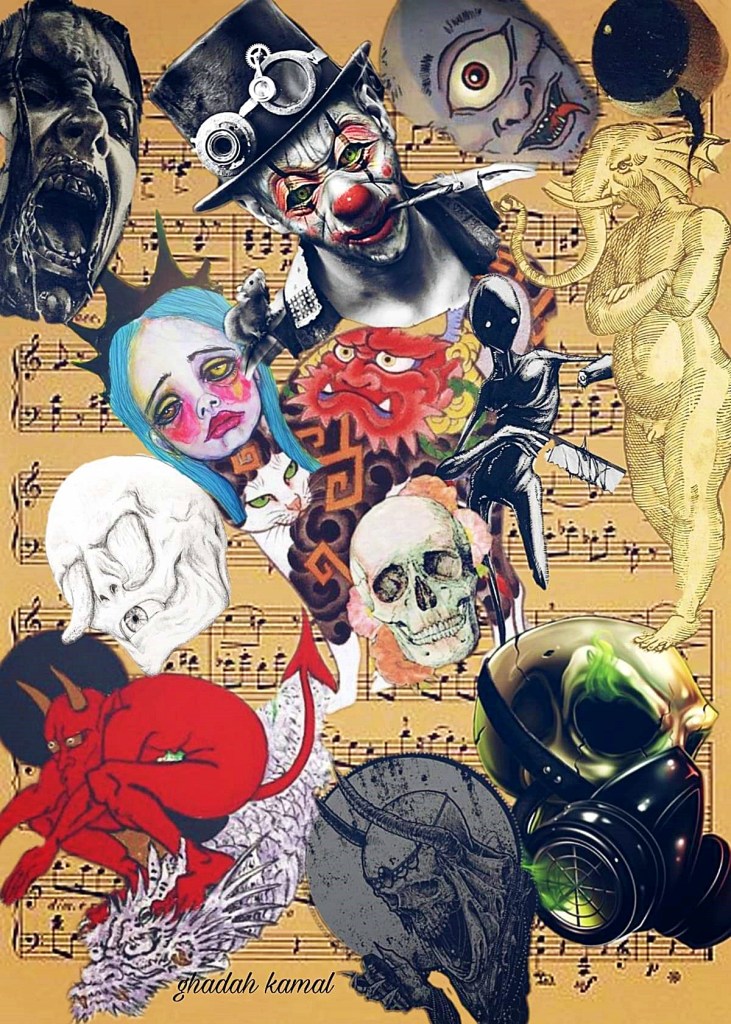
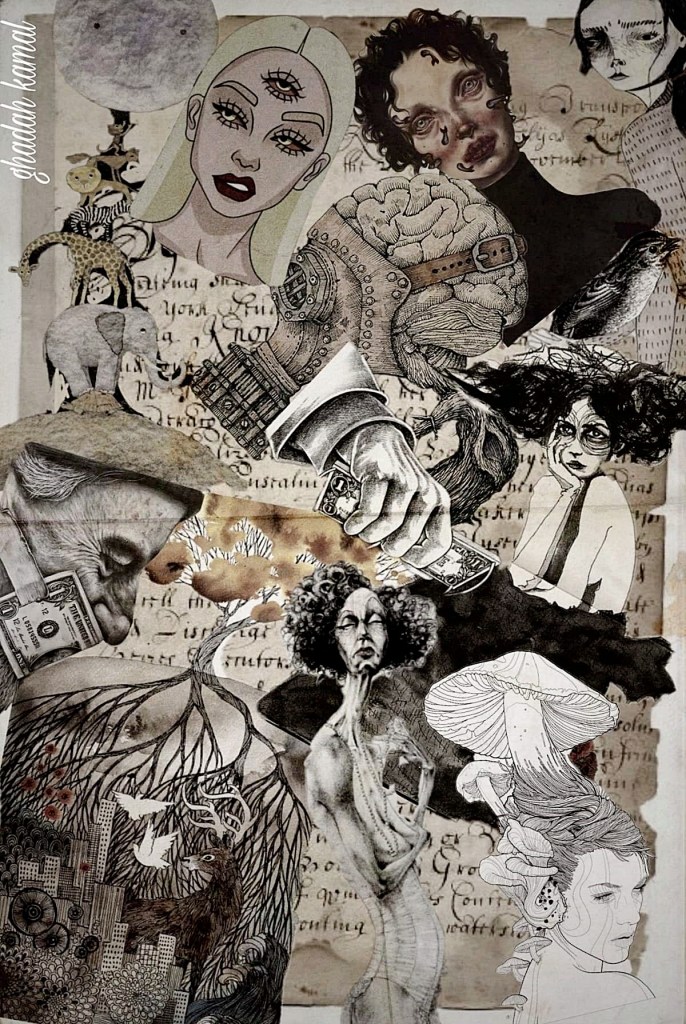
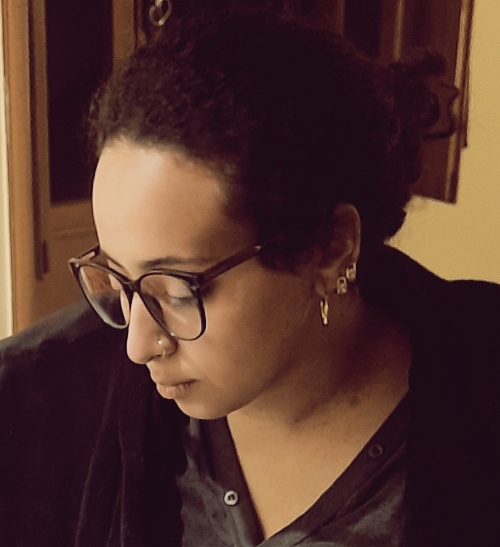
h Ghadah Kamal 

English /French /Spanish. 

La Belle Inutile Edition 

2021

1  _ Oblivion

Collaboration / Book 

By Zazie and Pierre Petiot and friends

Cover by / Zazie 

Phantom of Revolution by Ghadah Kamal Ahmed

The cruelty of life is only equaled by art… I used to search a lot in the paths of art for what could express what was going on inside me and my view of the world, but I was always faced with unfree spaces, spaces depicted by religion or what is connected  with  it..

My imagination was always trapped. When I dive into the past with deep sadness..

I did not know that imagination can lead us to a better future until I became acquainted with surrealism.
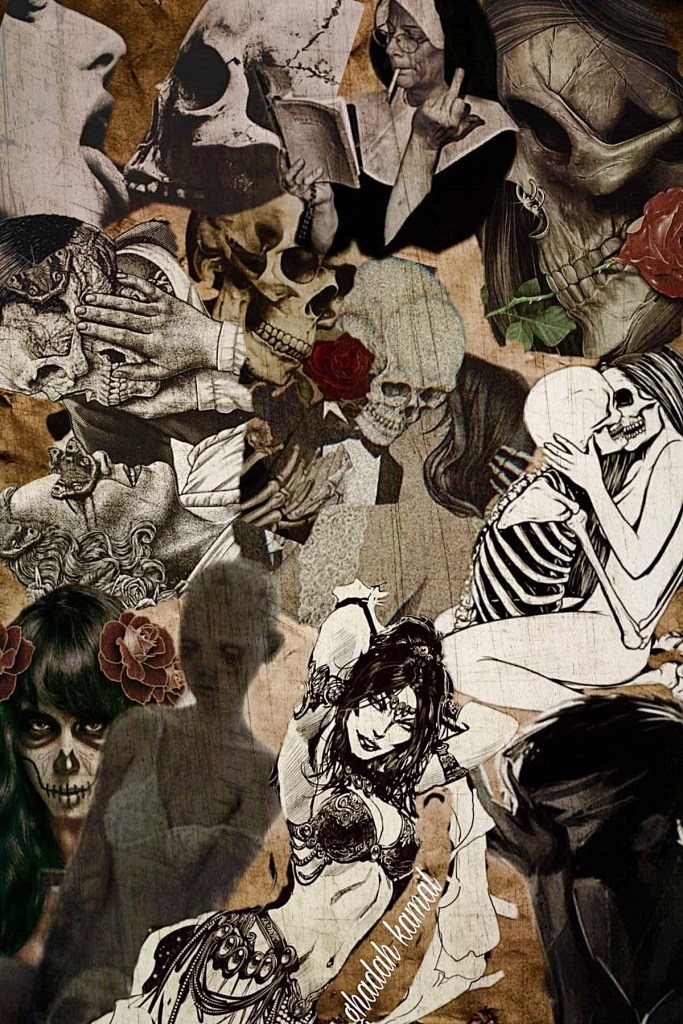
Closed areas of my subconscious began to open up to me.

I had never known these closed areas of my subconscious mind before.

I did not have complete freedom of expression with my body, and now I do.

Surrealism is a systematic breaking of the boundaries of reality, the body, society and religion.

Also, I was afraid to delve into fields that I had not studied or practiced, such as drawing, photography and cinema, but  Surrealism turned me into an active person who thirsted for all kinds of arts.

I am not only a surrealist artist, I also owe a lot to surrealism… Reconciliation with the unconscious mind can change the world for the better… and  it can be an iron wall stands against all life’s difficulties.

Linking and developing science and keeping pace with technological development and the subconscious freedom are able to create a better world.
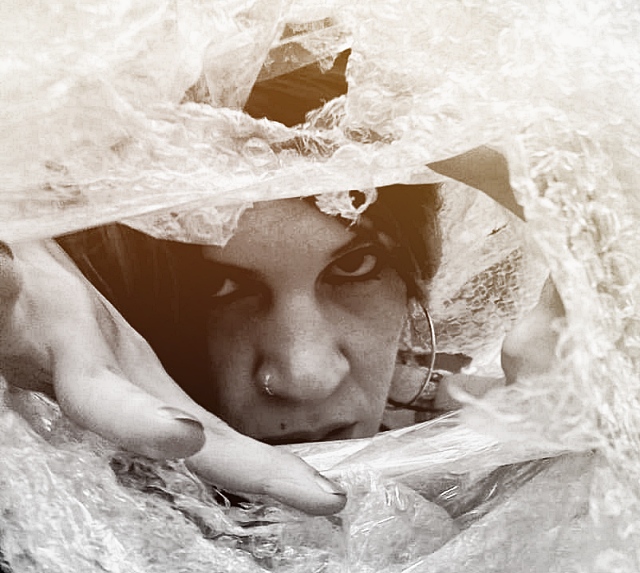
This is surrealism for me

written by Ghadah Kamal

Ghadah Kamal is a surrealist visual artist, writer, and poet…Coordinator of performances and workshops and cinema screenings of The international exhibition of surrealism Cairo Saint-Cirq-Lapopie and Echoes of Contemporary Surrealism Exhibition / Alexandria and founding member of the Middle East and North Africa Surrealist Group..Founding member of the Chrysopoeia surrealist union. Editor of the Surrealist Cities section of the Room surrealist magazine and editor at Sulfur Surrealist Jungle.

Orishas by P.D. Newman

“Ifá tells us that when he is enraged, Obaluaiye [Babalú Ayé] takes [his] special broom and spreads sesame seeds (yamoti) on the earth before him, then sweeps the seeds before him, in ever-widening circles. As the broom begins to touch the dust and the dust begins to rise, the seeds, like miniature pockmarks, ride the wind with their annihilating powers: the force of a smallpox epidemic is thereby unleashed.”

—Robert Farris Thompson, Flash of the Spirit: African and Afro-American Art and Philosophy, p. 63 (Vintage Books. New York, NY. 1984.)

Babalú gettin’ me up in the mornin’
I believe I’ll dust my broom
Babalú gettin’ me up in the mornin’
I believe I’ll dust my broom
I get to sweepin’ this sesame, baby
Babalú pox gon’ be ya doom

And you won’t get better—ya whole body covered in sores
No, you won’t get better—ya whole body be covered in sores
Be nothin’ but dogs a-lickin’ you, baby
Once these bristles start sweepin’ the floors

Lazy Pushin’ Daisy

I know that there’s a man
Who in Bethany stays
Erbody like to call him Lazy
Cause he lay still four days

Talkin’ bout that Lazy
I’d swear he pushin’ up daisy

I know that there’s a man
Who sleep like the dead
Only the power of the good lord
Rouse him out of his bed

Talkin’ bout that Lazy
I’d swear he pushin’ up daisy

I know a man name Lazy
Always got that bed breath
Got a twisted mouth so sour
Breathe out the smell of death

Talkin’ bout that Lazy
I’d swear he pushin’ up daisy

I know a man name Lazy
Who stink to his core
Body raw as his mouth
And dogs licking’ his sores

Talkin’ bout that Lazy
I’d swear he pushin’ up daisy

written by P.D. Newman

P.D. Newman is an independent researcher located in the southern US, specializing in the history of the use of entheogenic substances in religious rituals and initiatory rites. He is the author of the books, Alchemically Stoned: The Psychedelic Secret of FreemasonryAngels in Vermilion: The Philosophers’ Stone from Dee to DMT, and the forthcoming title, Day Trips and Night Flights: Anabasis, Katabasis, and Entheogenic Ekstasis in Myth and Rite. The Secret Teachings of All Ages (TV Series documentary) 2023.

Theurgy: Theory and Practice: The Mysteries of the Ascent to the Divine by P.D. Newman, published by Inner Traditions, Bear & Company will be available on December 5, 2023

Feature photo: Cryptic God, la science des mystères by Mitchell Pluto. PD Newman collection

ANIMISM IN THE AMERICAN SOUTHWEST by Christine S. VanPool and Elizabeth Newsome

People often imbue their surroundings, including tools, with a “life essence” that makes them active objects. A growing number of archaeologists are beginning to study how such “living” beings impact human behavior. These archaeologists use the term “object agency,” but employ many different ontological approaches. We explore this variation, and present a framework comparing different ontological models archaeologists use. We adopt an animistic perspective, and evaluate its applicability to the Southwest using ethnographic and archaeological data. We further propose that it is applicable through out the New World. Puebloan potters consider pots living beings with a spiritual essence that is affected by and that impacts humans. Pottery manufacture is a mutual negotiation between the potter and the clay to create a “Made Being” with its own spiritual and material aspects. We conclude that a similar ontology is reflected in effigy pots and globular jars from the Casas Grandes region. Ultimately we conclude that this perspective provides useful insights into the placement, decoration, and discard of many vessels that have puzzled Southwestern archaeologists for decades.
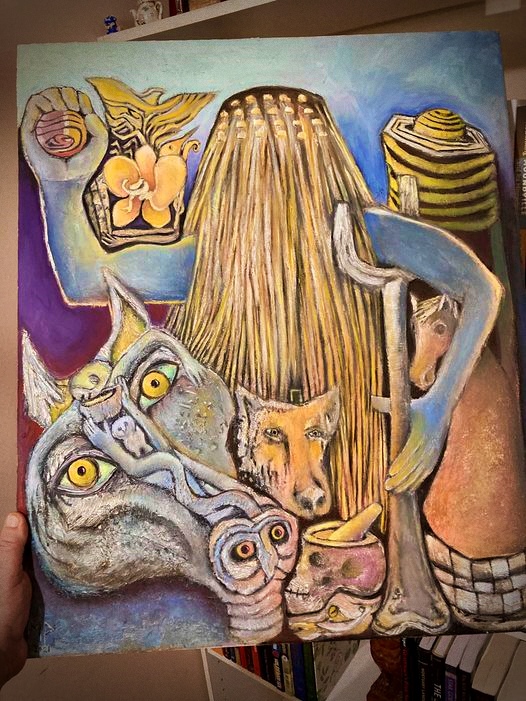
A Female Casas Grandes effigy jar. Photo Christine S. VanPool 1999. Used with Permission

Author(s): Christine S. VanPool and Elizabeth Newsome

Duplicated and Intended for Art Educational Purposes Only

THE SPIRIT IN THE MATERIAL: A CASE STUDY OF ANIMISM IN THE AMERICAN SOUTHWEST
Author(s): Christine S. VanPool and Elizabeth Newsome
Source: American Antiquity, Vol. 77, No. 2 (April 2012), pp. 243-262
Published by: Society for American Archaeology
Stable URL: http://www.jstor.org/stable/23486060
Accessed: 02-03-2015 22:47 UTC

Featured image: Fully formed Human Effigy Vessel. Courtesy of the Natural History Museum of Los Angeles County, Los Angeles. Photographed by Chris Coleman.

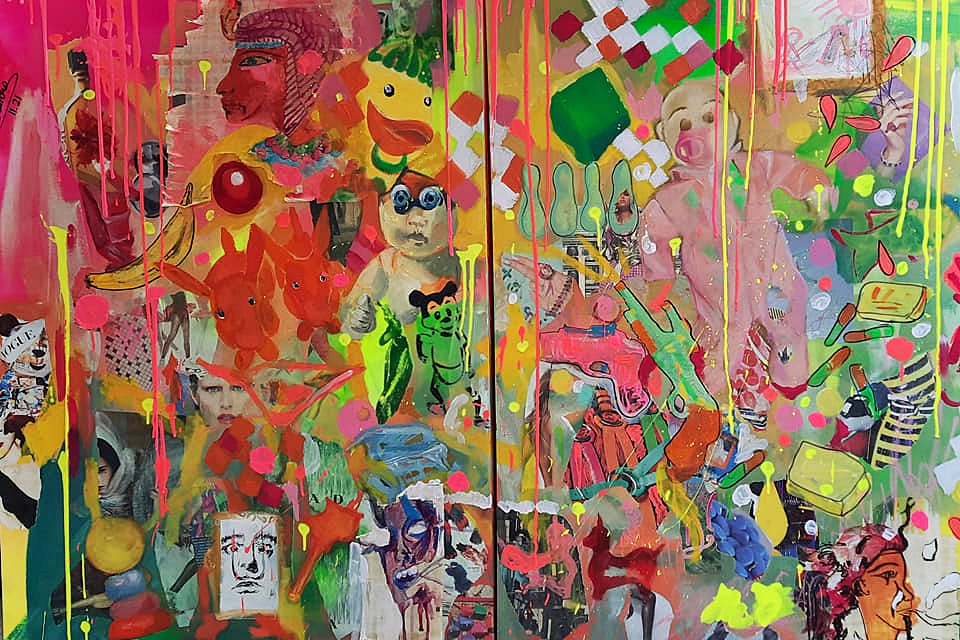
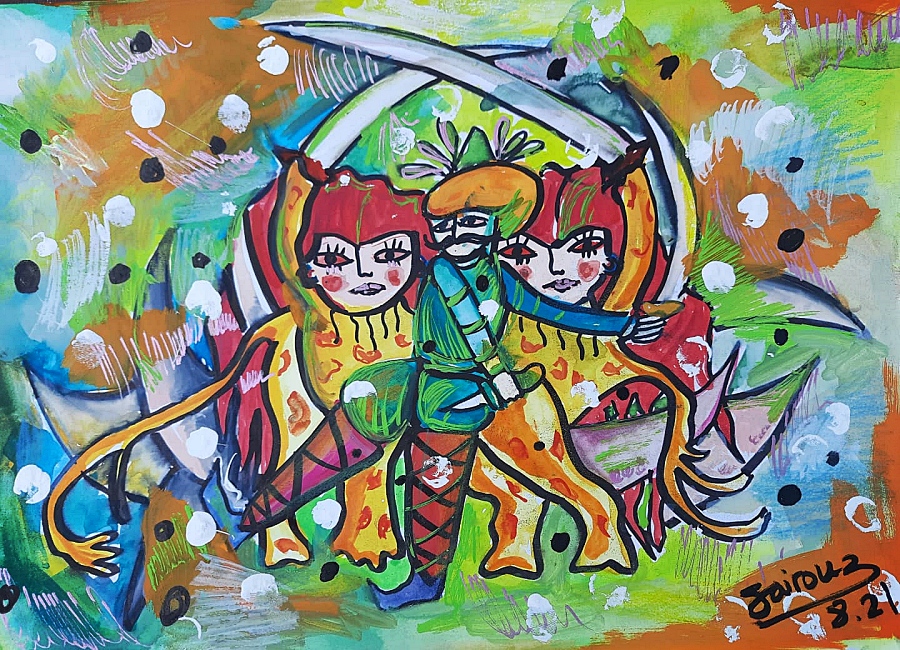
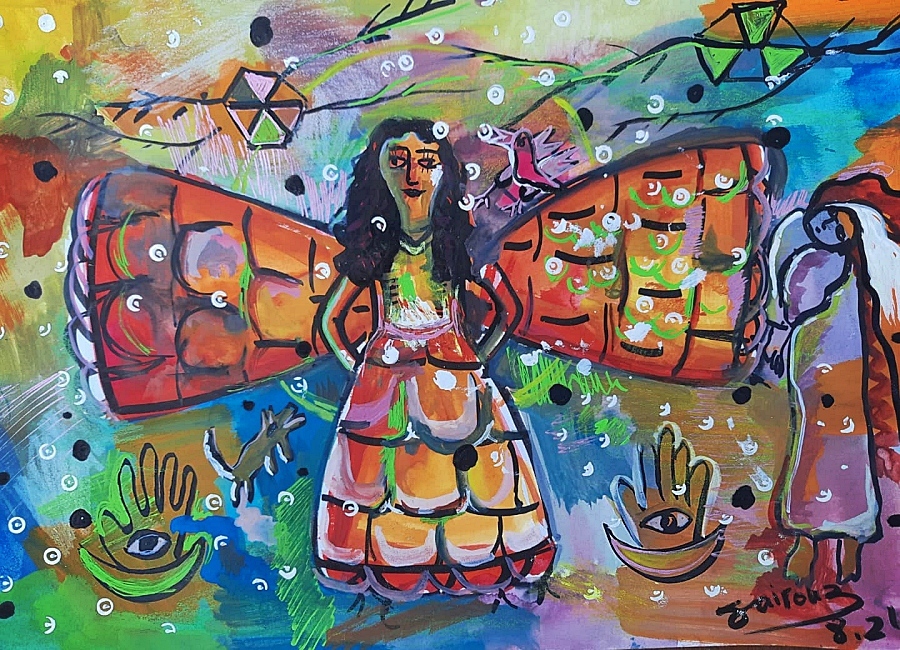
Play as a Form of Resistance by Fairouz Eltaweela

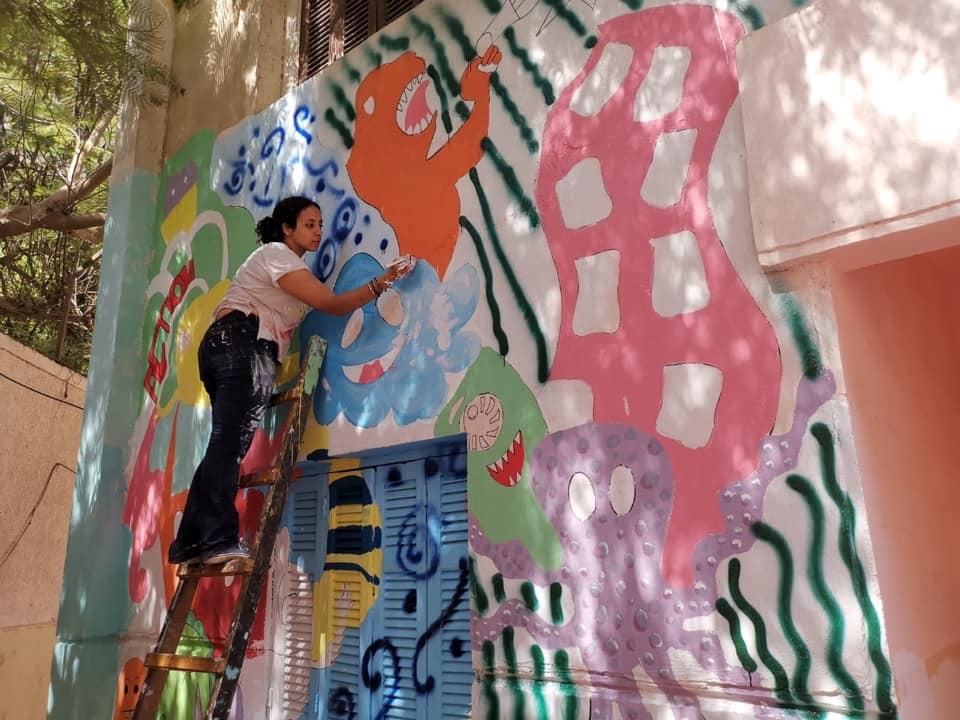
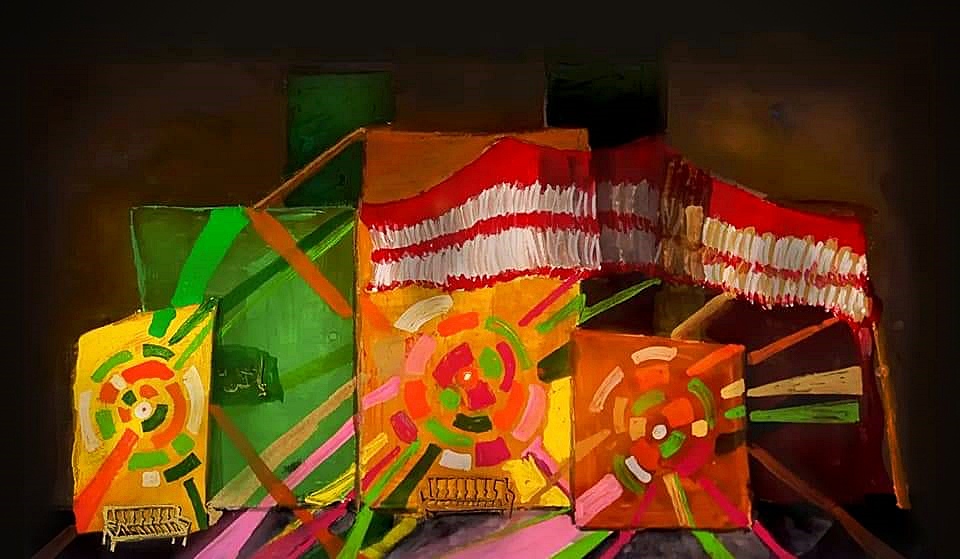
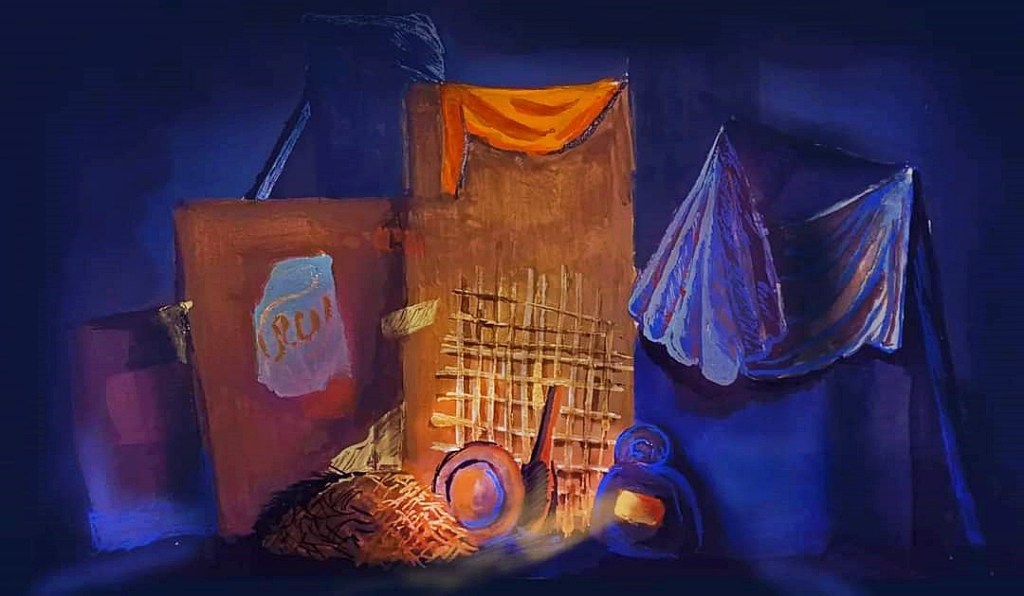
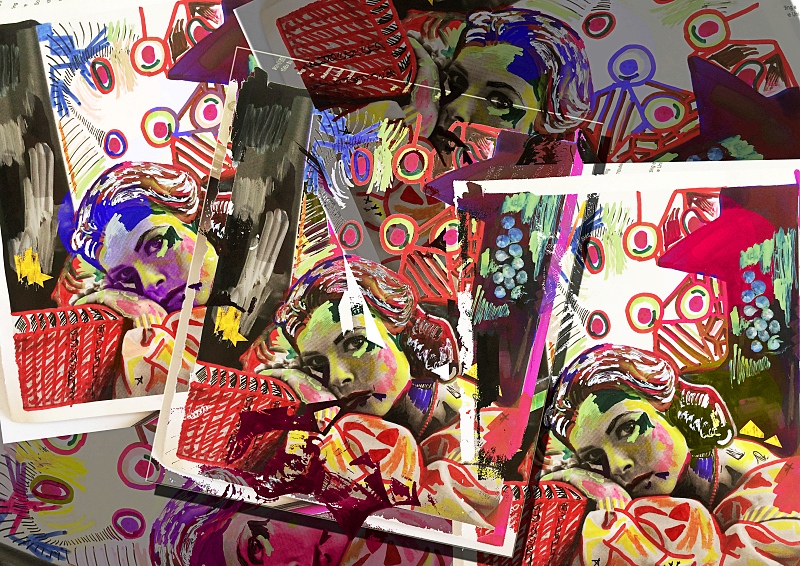
I am a multidisciplinary visual artist interested in painting, alternative sculpting, photography, digital art, collage and mixed media arts. I held my first solo painting exhibition at the age of 14 at Al Gezira Arts Center and have since participated in multiple art workshops and collaborations. I recently graduated from MSA University faculty of Arts & Design majoring in Cinema and Theatre.
Most of my work explores the theme of ‘play’ as a form of resistance. Further expanding and searching how the visual identities of my various roots all meet in a space that feeds on contemporary imagery and ideals.

Coming from a culturally rich background I am drawn to the visual richness of my city Cairo, particularly the slums where street art happens accidentally as a coincidence unravelling the many great textures and layers of the city, as well as having family roots in Upper Egypt and Delta, I began exploring the relationship between the urban and rural space and how it can be visually contextualized.

My inner child holds the pencils, untangling all the fears that have accumulated within my head and sarcastically mocks them. My inner child giggles and makes all the decisions now. I can only contemplate from afar ,a foreign spectator, as I watch dreams from my subconscious unfold and my inner child continues to laugh at me.

Fairouz Eltaweela

Fairouz Eltaweela

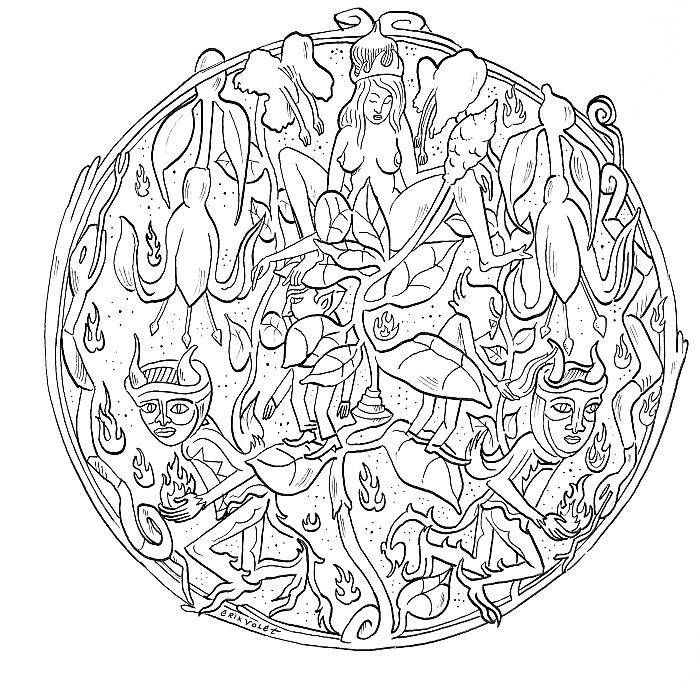
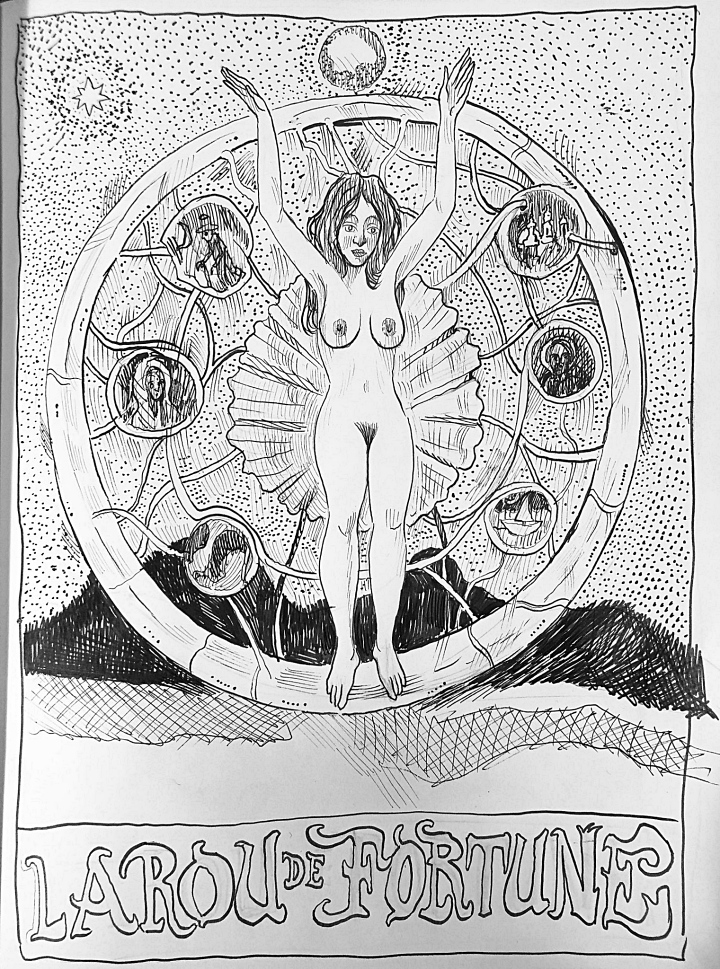
La Rou de la fortune Erik Volet

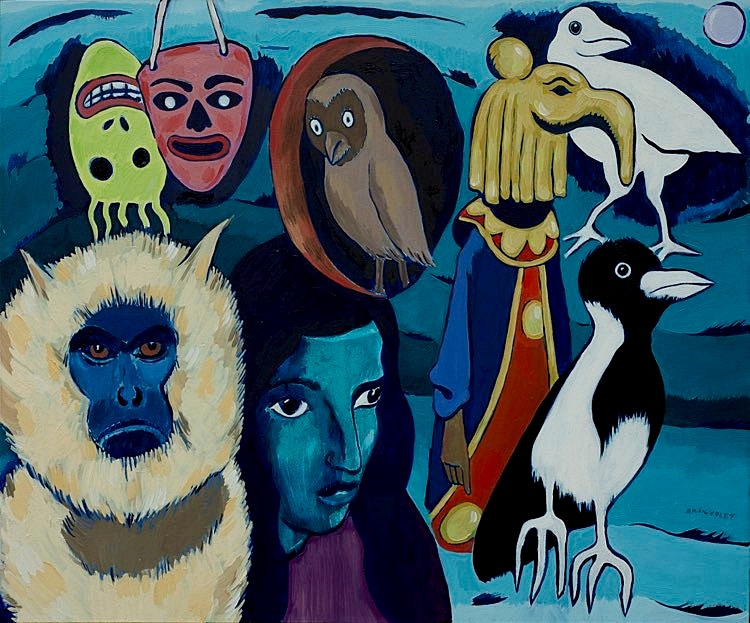
The Human world intersects with those of animals, plants and the spirit world which is gestured towards. There are also beings halfway between these worlds—transitional beings with the ability to move through these different worlds with ease. Multiple time periods intersect & the world of myth and the past blends with the present-day time of contemporary reality.

Erik Volet

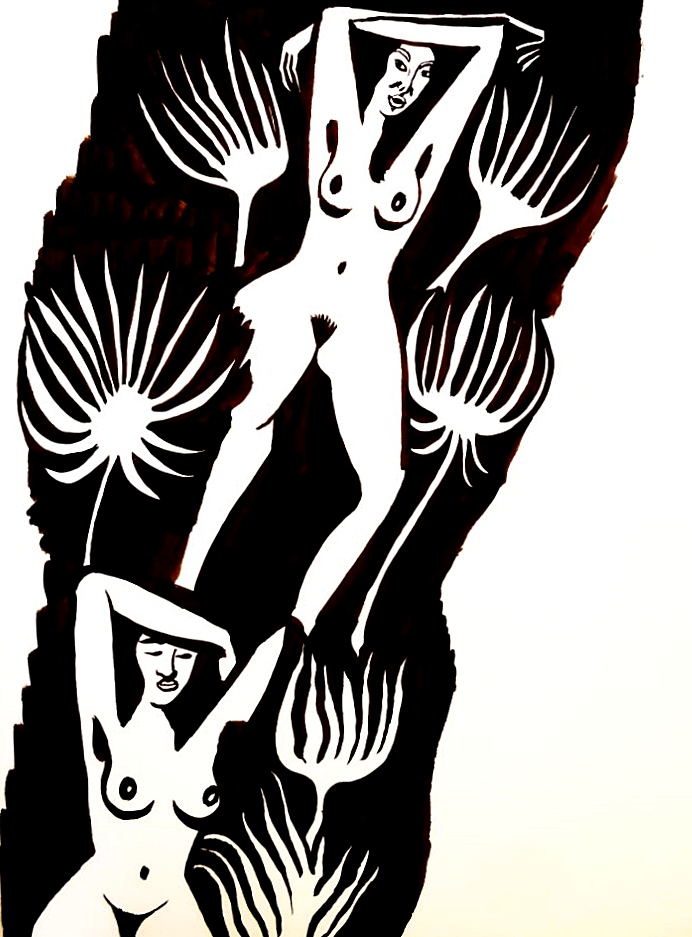
Reclining nude

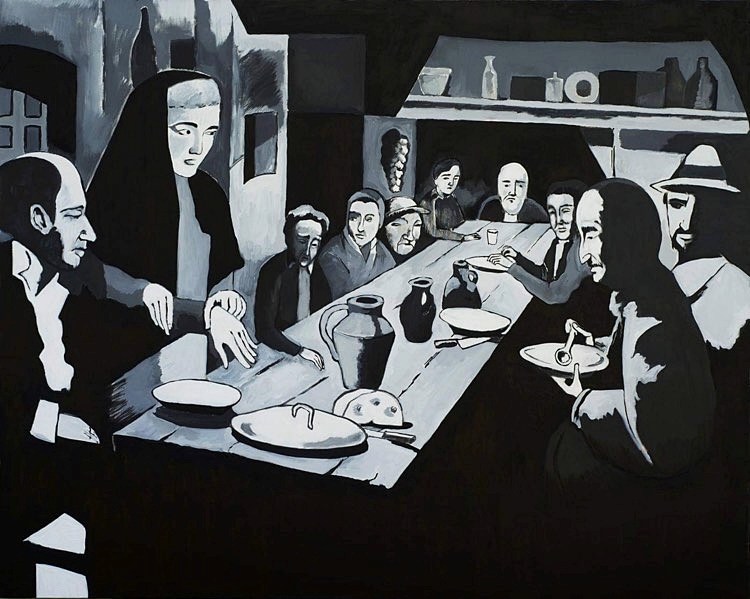
Beggars Banquet

Woman in Blue Shawl and Poet’s Dream

Language of the Birds

Erik Volet (b. 1980) is a painter & illustrator from Canada who has exhibited in Canada, the US & Europe. As well as producing paintings he has published art books, made zines, illustrated books, and maintained a consistent involvement with painting murals on the street and in the public sphere. Influences, which continue to be important to his art practice are comic book art, graffiti, hip hop culture as well as surrealist theory and practice.

ERIK VOLET

Piebald Pandora and the Phantom Self

Piebald Pandora

Multi hued Glory

Sloth Shark face

Palomino woman bites us

and hangs with us

upside down at dawn

selling our souls to 4 legged

Majesty Lemurs on Madagascar….

(C) April 8, 2023 Written By Richard Gessner

Richard Gessner’s fiction has been published in Air Fish: an anthology of speculative work, Rampike, Ice River, Coe Review, Another Chicago Magazine, Happy, The Act, Sein und Werden, Skidrow Penthouse, The Pannus Index, Fiction International and many other magazines. A collection, Excerpts from the Diary of a Neanderthal Dilettante & The Man in the Couch was published by Bomb Shelter Props. Gessner’s drawings and paintings have appeared in Raw Vision, Courier News, Asbury Park Press, Rampike, Skidrow Penthouse, and exhibited at Pleiades Gallery, Hamilton Street Gallery, Cry Baby Gallery, The Court Gallery and the Donald B. Palmer Museum. Richard wrote The Conduit and Other Visionary Tales of Morphing Whimsy. He lives in Montclair, New Jersey.

The Conduit and Other Visionary Tales of Morphing Whimsy Audible

self fee of a phantom self. oil/collage Mitchell Pluto

Afterword

We believe we are conscious but we are continuously unconscious.

The eye is the window to the brain and there sits the optic chiasm. A cross current chessboard of visual information. In ancient China, King Wen changed three lines into six lines to form 64 hexagrams in his book called The Book of Changes. Ironically there are 64 arrangements in DNA and 64 squares on the chessboard.

Synchronicity?

Jesus, all the time I spent believing in a historical Laoz and come to find out there’s no historical race either.

these our the last days of being a primate. Don’t worry we still have cuspids

Everything must be uploaded|  

…creating a record print of a finger swipe from phone screen| CHECK

…the gesticulation wavelengths of our voice from phone calls| CHECK

…iris scan captured from viewing screen| CHECK

tell us what’s on your mind| CHECK

This device and artificial Intelligence will marginalize the future of man’s ego. After all man is an animal guided by objects, why not be a primate whose experience is organized and interrupted by the phone?

isn’t it working already?

Who is on the other side of the screen?

A narcissistic shark that feeds remotely on a colony of brains and uses the appearance of a woman as a lure

Now A Word From Our Sponsor

We would like to salute our patron Walt and his 1958 Disney film White Wilderness who graciously staged and contrived the impression of a massive lemming suicide. Now back to our show.

(C) April 8, 2023 written by Mitchell Pluto

I would like to thank my friend, Richard Gessner for collaborating and creating some writing to interpret my painting

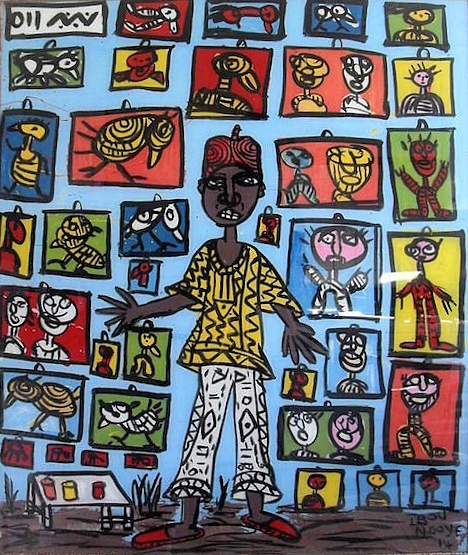
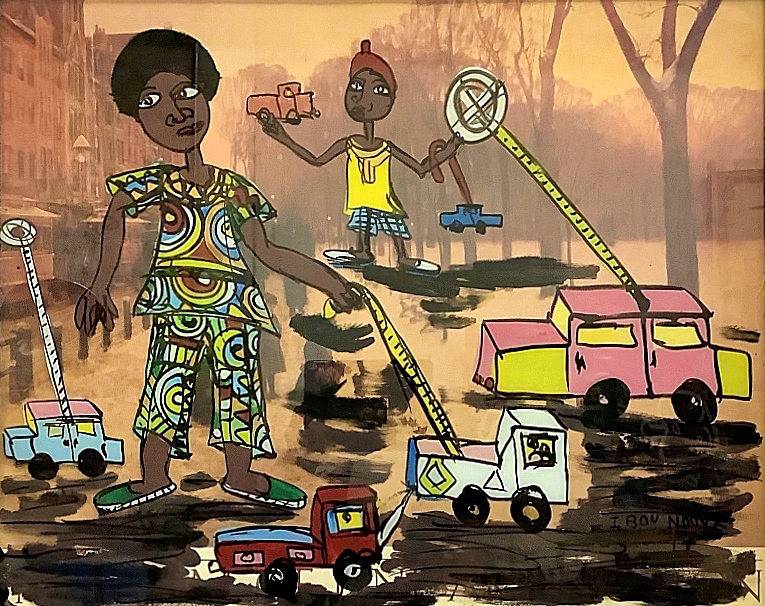
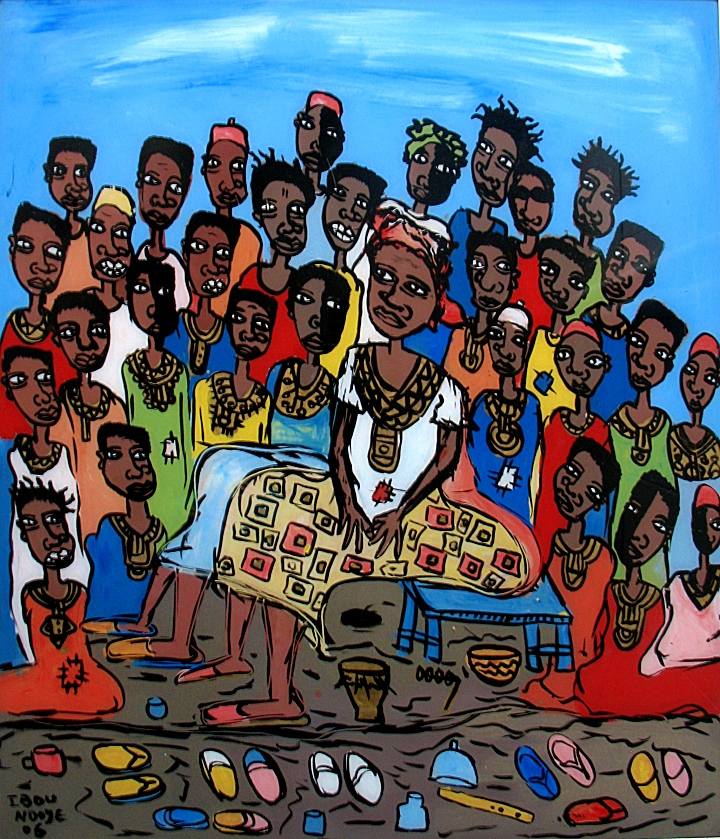
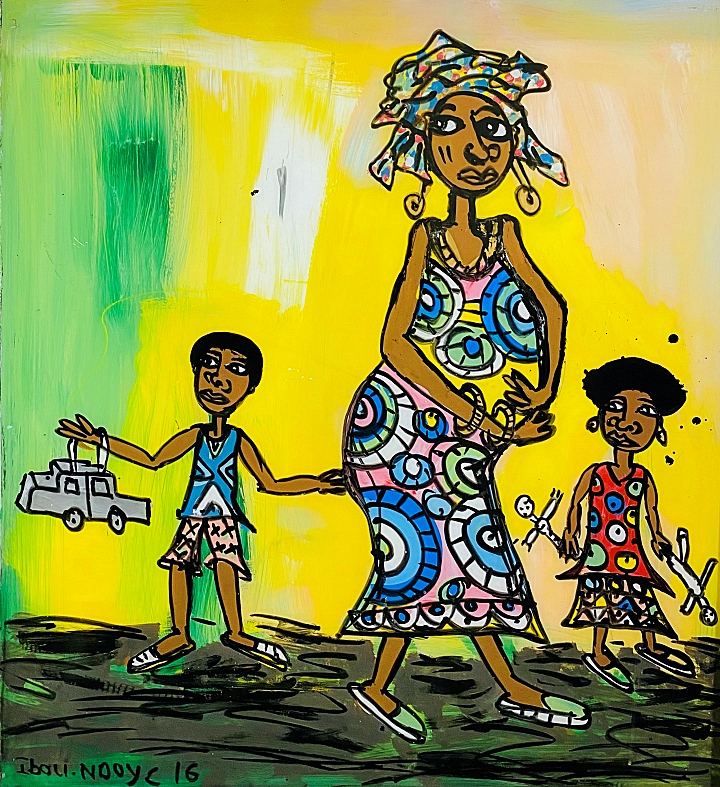
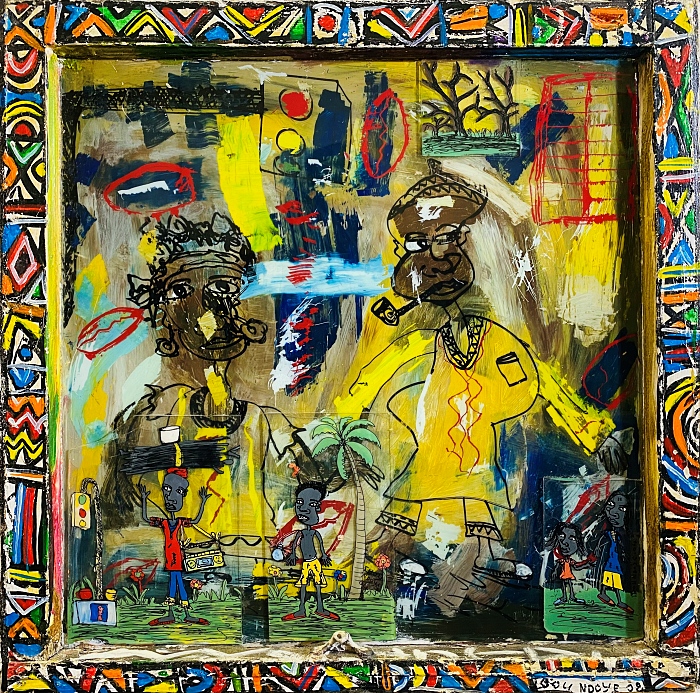
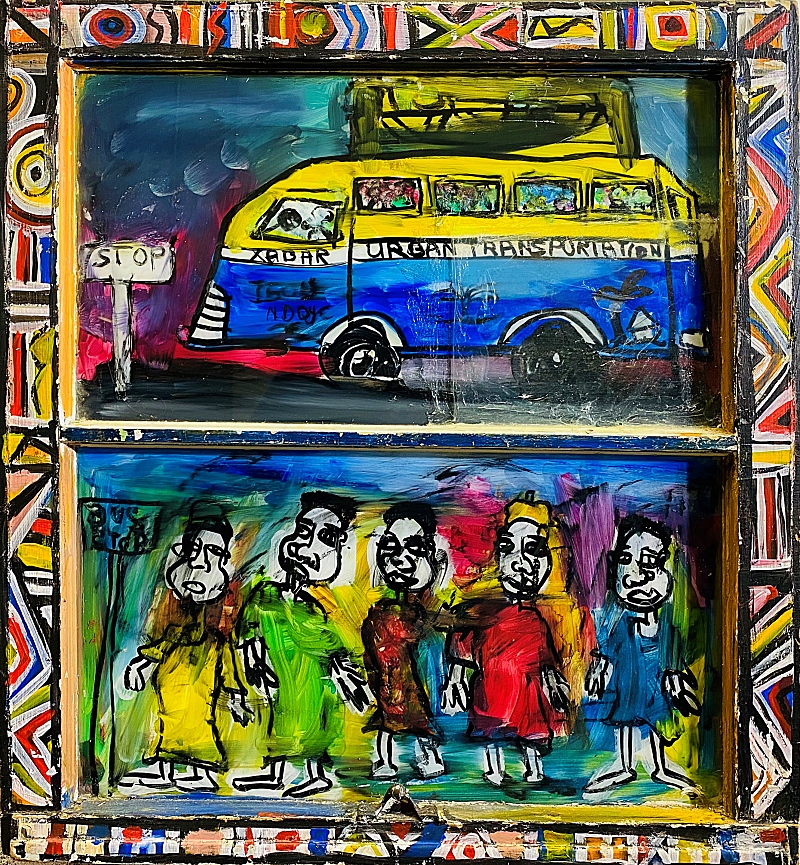
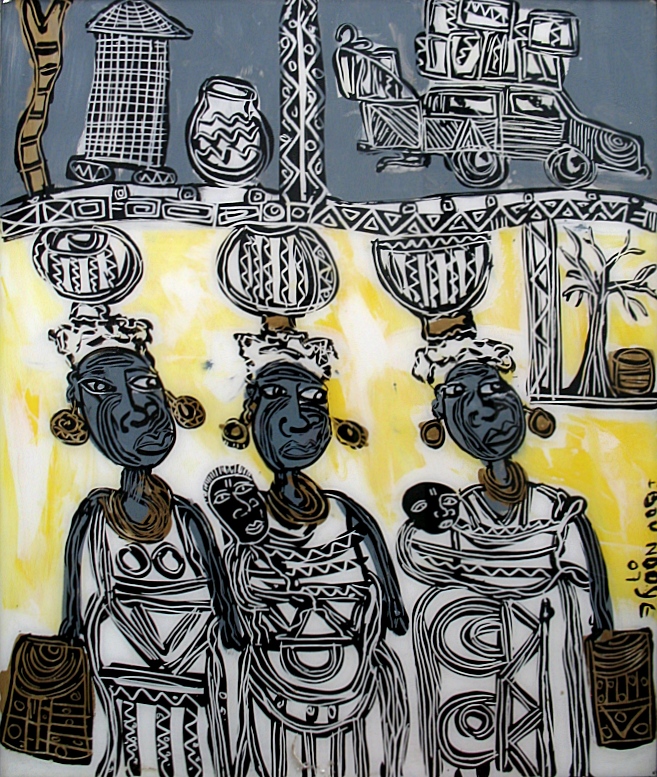
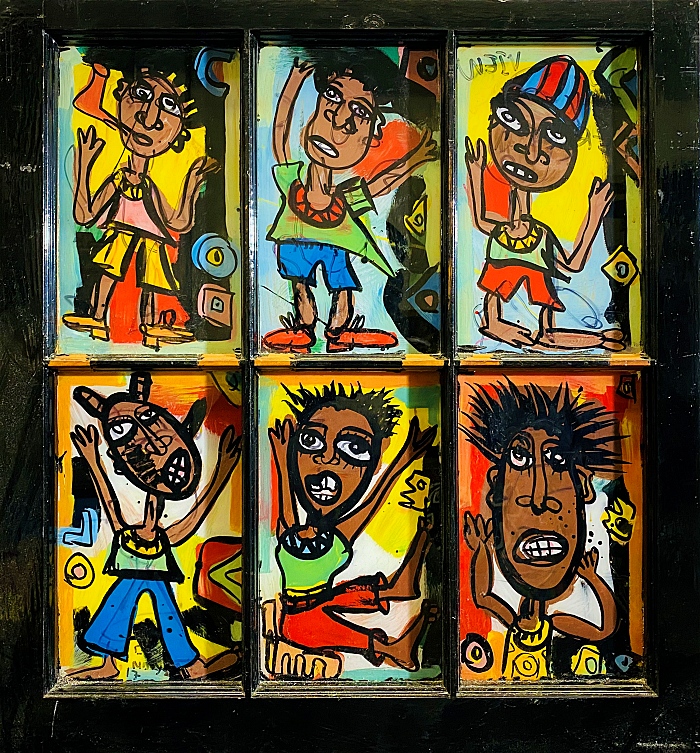
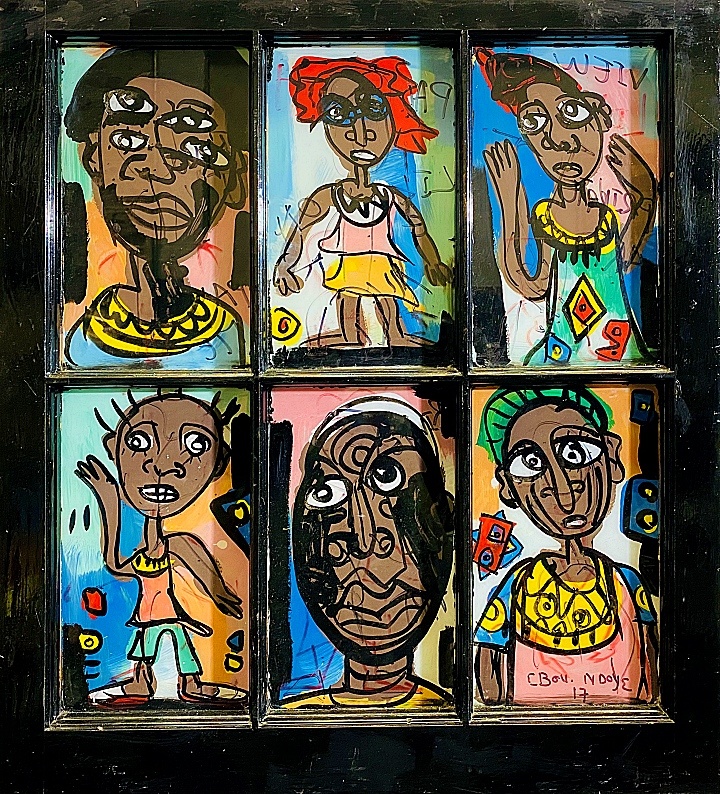
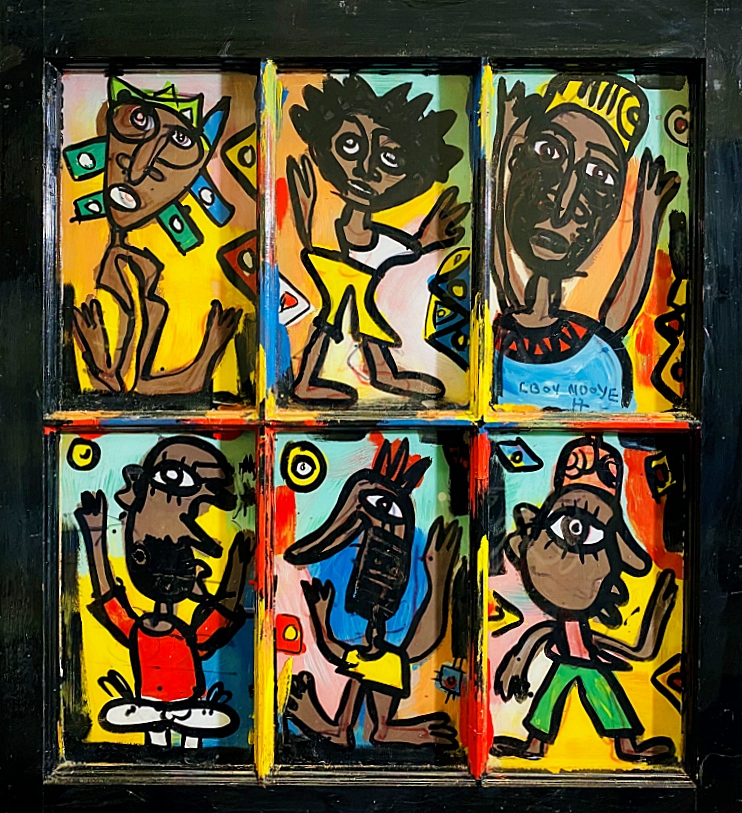
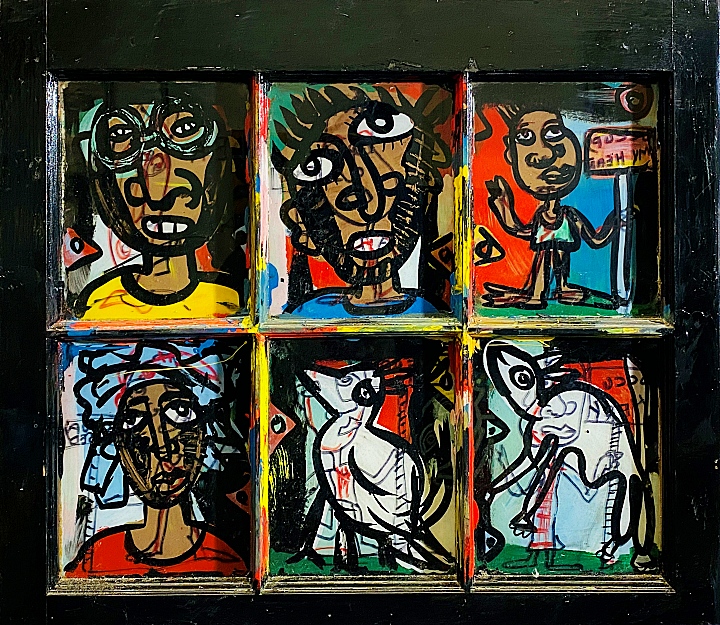
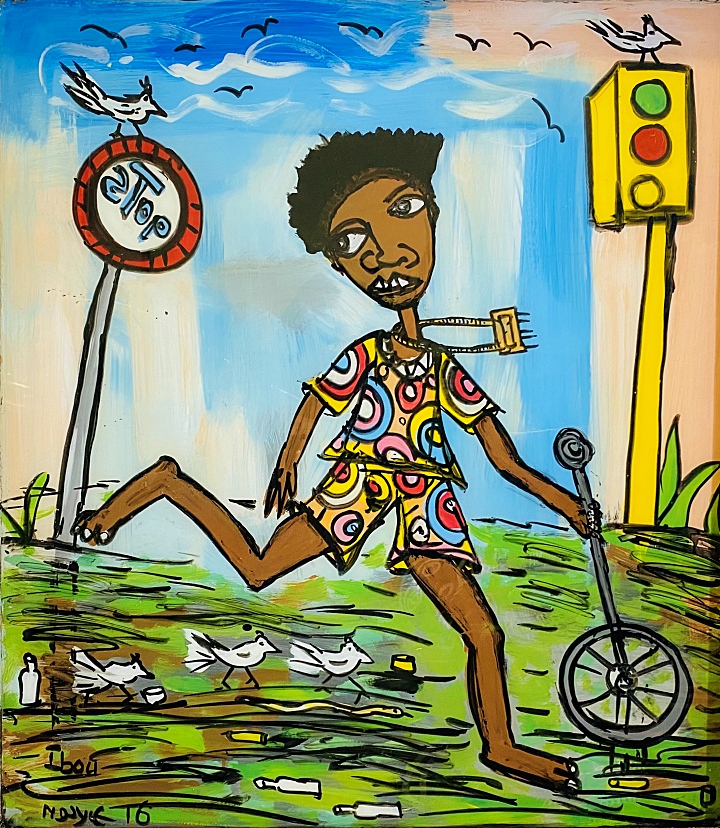
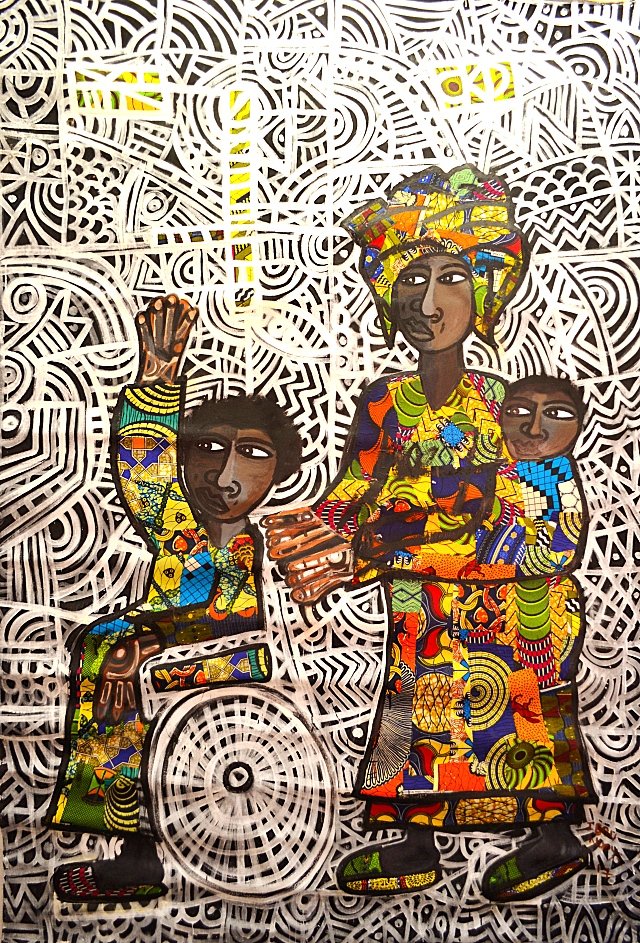
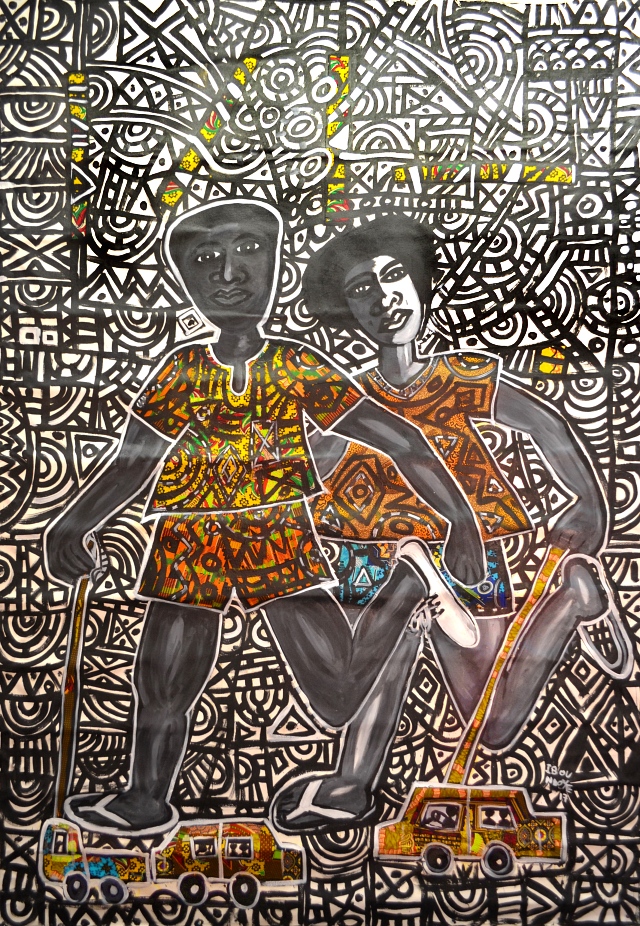
Ibou Ndoye My Paint Brush is a Walking Stick

MY PAINTINGS ARE 100% SOCIAL, IN THE SENSE
THAT THEY HAVE SOCIAL FUNCTIONS WHICH
ALLOW THE VIEWER TO DEAL WITH ALL THE SOCIAL
ETHICS OF MODERN AND TRADITIONAL LIFE.
THEY ARE THE SHORT STORIES FROM ORAL
TRADITIONS THAT TEACH, INFORM, AWAKE AND
COMMUNICATE WITH YOUR SUBCONSCIOUS.
IBOU NDOYE

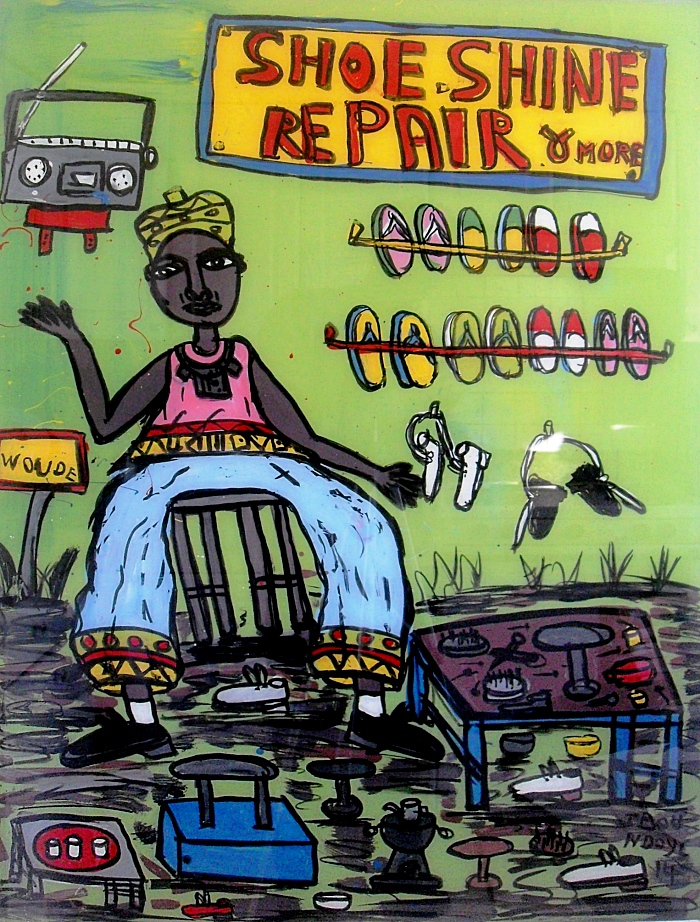
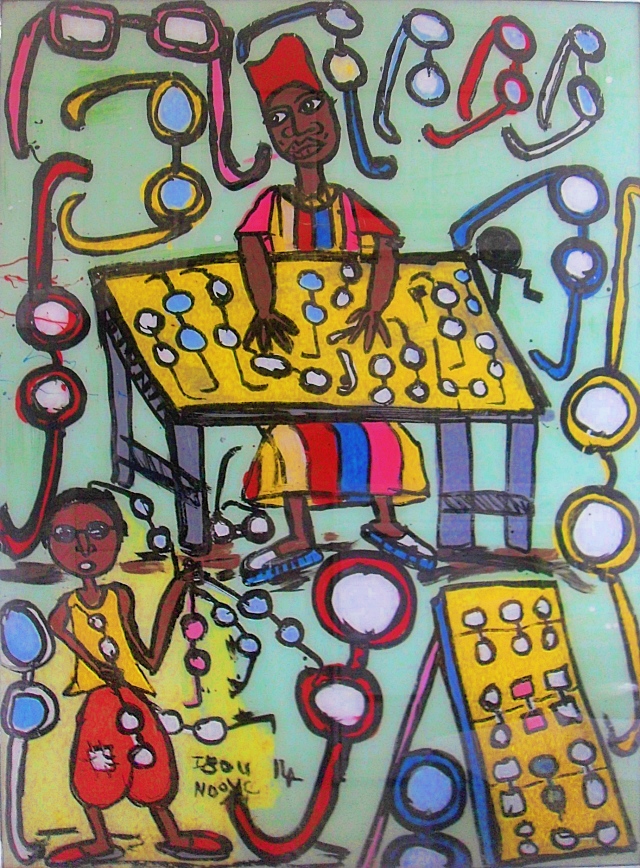
All Glass paintings are done on found windows. Please Click Image to Enlarge

Born in West Africa’s most progressive capital city, Dakar, Senegal, glass-painting
artist Ibrahima Ndoye has combined modernism and traditionalism to create a style
unique to himself. Ibrahima, commonly known as “Ibou,” grew up as the oldest
child of a family of four boys in the suburbs of Dakar. Ibou’s mother made her living
as a dressmaker while his grandmother worked as a tie-dye artist. Regularly
surrounded by colorful African textiles and fabrics, it is not surprising that Ibou says
he “socialized with art and cohabited with colors” from a very young age.

Ibou began his career as a painter in the late 1980s during a period in Senegal
called the “Set Setal,” or clean-up movement. The movement encouraged artists to
embellish the environment by expressing themselves through murals on buildings
and walls
. It was during this time that Ibou painted several murals in the suburban
city of Pikine. Some of Ibou’s murals were selected to appear in a French-produced
documentary in 1990.

Eventually Ibou’s interests changed. Following a tradition brought from the Middle
East to Senegal one hundred years prior, Ibou entered and renovated the world of
glass painting. When the technique was first introduced to the Senegalese, the
subject matter was predominated by religious scenes- i.e. Abraham’s sacrifice,
Noah’s Ark, Mary and Jesus. It wasn’t until after Senegal gained its independence
from its French colonizers (1960) that glass painting expanded in new directions.
However, through the 1980s only those holding degrees in fine art dared to play
with the century-old tradition. These initial innovators tended to create images in
such a way that the traditional style was barely recognizable through their
abstractions.

It was in the early 90s that a third wave of glass painters surfaced in Dakar. People
like Ibou began to look back at the traditional style of their predecessors with a new
inspiration. Instead of painting traditional African scenes on clean sheets of
regularly shaped glass, Ibou started breaking and layering the glass to create new
textures and effects. The incorporation of various other materials including copper
wire, broken bottles, wood, bone, and animal skin began to appear in Ibou’s work
as well. Later in his life, upon relocating to America, Ibou took one step further by
mixing glass with plastics and other materials common to our modern environment.
It is not unusual to find Ibou stapling scraps of soda cans and detergent boxes onto
vibrantly painted CD cases portraying images of African women carrying jugs of
water above their heads. As the times changed, so did Ibou’s work, creating a new
style from an old tradition.

In the late 90s Ibou began exhibiting his work around Africa and Europe in local
and internationally touring shows. The Biannual of African Art hosted in Dakar
regularly accepts Ibou’s work for exhibition in a show titled “The Salon of Glass
Painting.” In 1999 Ibou expanded his involvement in Senegal’s art scene when he
started running glass painting workshops at the El Hadji Doudou Mbath Primary
School, and later at the Dakar YMCA.

In 2001 Ibou found himself on his way to join a friend in New England. For several
months Ibou taught painting classes at Allen Special Needs Camp for the disabled
in Bedford, New Hampshire. Later that year Ibou moved to Rhode Island where he
acted as an art instructor for a program entitled “Kids at Risk” run by the Urban
Collaborative Accelerated Program (UCAP). Ibou also appeared as a guest speaker
on the Cox Television production “Cultural Tapestry.”

Now Ibou resides in Jersey City, New Jersey, and regularly exhibits his art both
locally and internationally in addition to holding glass painting workshops at
libraries and schools. Ibou intends to continue promoting and expanding his artistic
vision through exhibition, education and cultural exchange.

Jaclyn Pedalino African Art Manager

When i paint i become blind and turn my painting brushes into walking stick ,then fumble until i reach where i want to be

Ibou Ibrahima Ndoye e-mail; Ibouart@gmail.com www.iboundoye.com

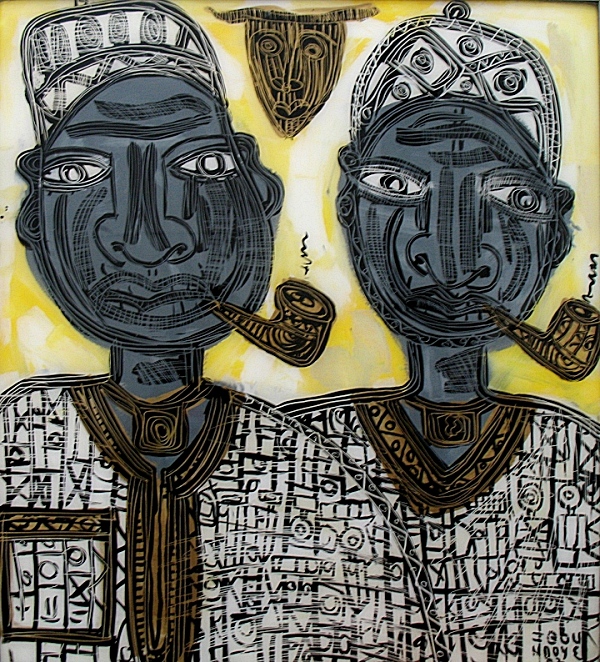
Featured photo: Pipe Smokers

 Art and Beadwork by Salisha Anne Old Bull

When I was a little kid my first years were spent with my mom and dad until they parted ways when I was in kindergarten. Before that, I remember my mom walked a lot because we didn’t have a car. My last memory of my dad’s work was he was a taxi-cab driver in Billings, MT. I was their only child and spent a lot of time with my mom, dad, and paternal grandparents. My dad would sketch a lot and my grandfather would do Absaaloke (Crow) art by making artifacts he could sell throughout his travels in Montana and Wyoming. Art was always a part of my family’s life in some form.

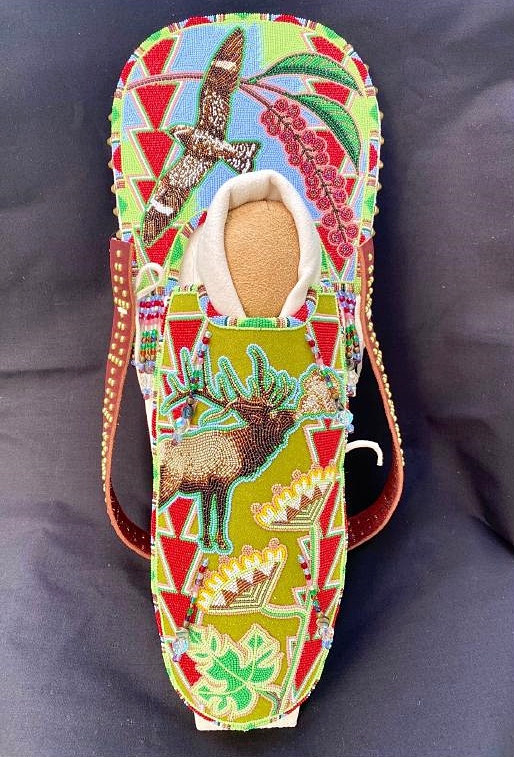
Qwasqwi, Storm, Five Friends & the Canoe (2021). 7.7″ x 1′ 7″. Red vintage true-cut, size 13 seed beads, true-cut, size 13 seed beads, deer hide, wood, cotton fabric, wool, leather, stabilizer, czech beads, nylon and cotton thread, brass tacks and spots. The first cradleboard in a series of four cradleboards, representing the four seasons. This board represents the winter season. Award: 63rd Annual Heard Museum Guild Indian Fair & Market: 1st place award in Division D-Functional objects such as bows and arrows, cradleboards, bows, weapons, shields, furniture, lamps, musical instruments, bull roarers, beaded bottles, and other objects. Exhibition: “Expressions of Resilience” at Bigfork Arts & Cultural Center showing May 8-June 26, 2021. Exhibition: “Finding Our Place: Beading and Weaving Our Culture Together” at City Scape Community Art Space, in North Vancouver BC, Oct. 8-Nov. 13, 2021. Awards 2022: Harrison Eiteljorg Purchase Award, Best of Division in Traditional Beadwork (Eiteljorg Museum), First Place in Traditional Beadwork (Eiteljorg Museum). This cradleboard is in the permanent collection of the Eiteljorg Museum.

When my mom and dad broke up, I moved with my mom to Salish country in Western Montana. For the first few years, we lived with my uncle Johnny Arlee, my aunt Joan, and my maternal grandmother Rachel Arlee Bowers. All three were prolific in their Indigenous skillsets. At the time, my uncle had his own painting business and was always out in his shop making large hand-painted signs. My aunt Joan was always doing beadwork or sewing and my grandmother did beadwork and taught at the local tribal college; her beadwork. She was also a great seamstress. Earlier than I can remember, my mom would send me with my grandmother Rachel often and she was always toting her beading supplies and beaded creations to sell.

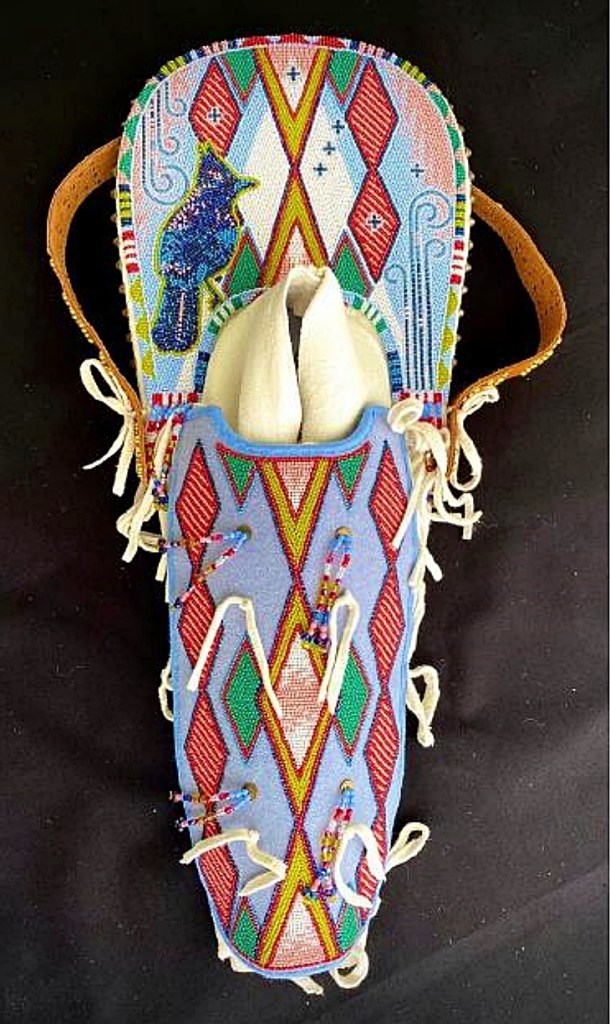
Salish Bitterroot Story (2022), 7.7″ x 1′ 7″. Combination of vintage and contemporary size 13 seed beads, true-cut, deer hide, wood, cotton fabric, wool, leather, stabilizer, Czech beads, nylon and cotton thread, brass tacks and spots. The second cradleboard in a series of four cradleboards, representing the four seasons. This board represents the spring season. Shown at the 64th Annual Heard Museum Guild Indian Fair & Market Award 2022: Second Place in Traditional Beadwork (Eiteljorg Museum). This work is now owned by a private collector.

There were times we camped at Agne’s Camp, in Valley Creek, and she would spend summers with Agnes, helping to pass on the Salish culture. I don’t remember the earlier years but as I got older the summer was cut down to a week and my grandma would be there every year, camping out, teaching the tribal college students how to bead. I looked forward to that time and I would help her get her camp set up and do small chores so she could work. She would teach me how to bead too and I remember my first finished beadwork was a little clip-on barrette I wore with my dance regalia when I was in about 4th grade.

Felicite McDonald
Digital Photograph
2021

By the time I was in high school I knew I wanted to practice art as a profession. I loved to draw and sketched on everything I was allowed to personalize. I wanted to know how to paint and I took every art class that was offered as an elective. I loved color theory and all of the challenges and assignments given to produce art. I wanted to go to art school but as I got older high school had a lot of social challenges for me; for a lot of different reasons; mainly adolescence and social factors. I was fast tracked through high school and when it came time to apply for colleges my mom didn’t agree that art would be the best declaration to pursue. I was so heart-broken but I minded and I ended up doing a lot of other things in college. I was never really satisfied with my majors, and mostly resentful of the ease that came to my classmates when they were following their career passions. I tried to stick it out as long as I could, which felt like my whole life.

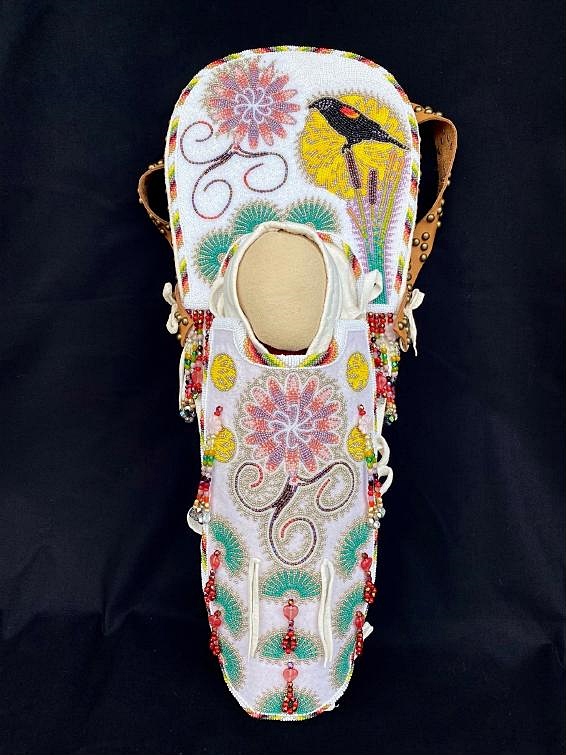
Remember That Night At Buffalo Camp (2022). 7.7″ x 1′ 7″. Red and Green vintage true-cut, size 13 seed beads, true-cut, size 13 seed beads, deer hide, wood, cotton fabric, wool, leather, stabilizer, czech beads, nylon and cotton thread, brass tacks and spots. The third cradleboard in a series of four cradleboards, representing the four seasons. This board represents the summer season. Award: 100th Annual Santa Fe Indian Market: 2nd place award in Classification VIII: Beadwork & Quillwork, Div. C: Other items, Category 3102. This cradleboard is apart of a private collection.

I feel that I’ve had a very hard adult life and I’ve somehow managed to take the road less travelled. Like everyone who takes this path, I would say I wouldn’t change my outcomes, but I get a lump in my throat thinking about everything I’ve endured to get to where I am today. I married at age 20 to a Salish man, since I had spent most of my life in Salish country. He had three daughters from a previous marriage that I helped raise. We had two sons of our own who are still young enough to be in elementary school. I used my college degrees to stay near home, in Arlee MT, but I couldn’t handle the local, you-need-to-grow-a-thicker-skin attitudes of home. I’m pretty sure I suffered from PTSD from working in a hostile working environment.

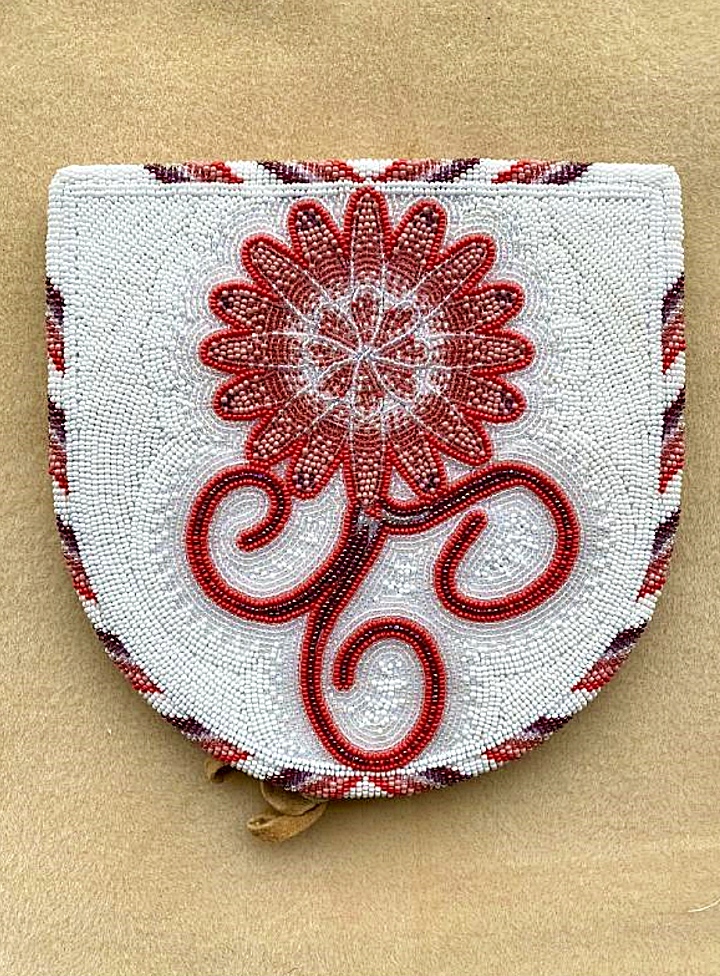
Bitterroot & Huckleberries (2021). 8.5″ x 11″ beadwork surface, not including fringe length. Combination of modern and vintage size 13 true-cut seed beads, stabilizer, deer hide, wool, cotton fabric, nylon thread, czech beads, brass bells, one plastic button. Technique is flat-stitch, two-needle, contour beadwork. Exhibition: Knowledge from Land (2021), University Center Gallery, Missoula MT Award: 100th Annual Santa Fe Indian Market: 2nd place award in Classification VII: Diverse Art Forms, Div. A: Functional objects, Category 2707. This purse is apart of a private collection

One day, I had enough. My youngest daughter was in her last year of high school and she was exploring colleges to attend. We went to a college visit with her in the spring and we sat in on the art major session. I remembered my existing broken heart from not being able to pursue art as a young adult. When I got back to work, I had a really bad day and decided enough was enough. I found out the University of Montana was beginning its first cohort of online art degree program majors and I enrolled. I took as many classes as I could handle, quit my job and got a different job. I worked full-time and took online classes until eventually I finished the program in 2021 and I finally got an art degree. I don’t think I’ve ever cried so much, throughout those few years, realizing that I should have put my foot down and did art school from the start.

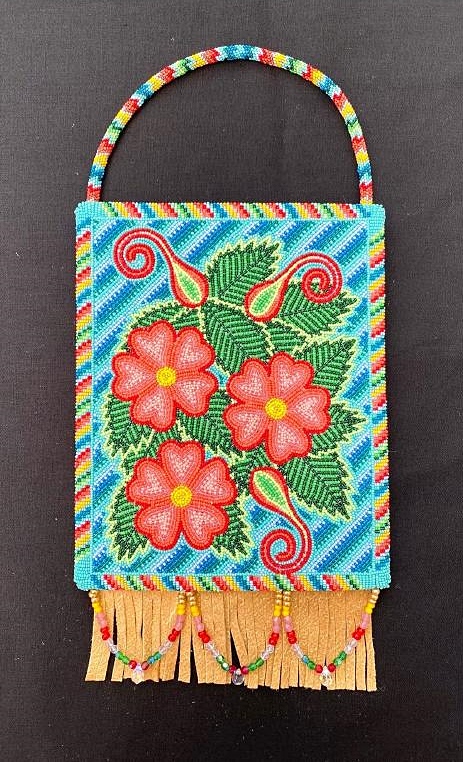
The Roses We Know (2023). 13″ x 6-3/16″ x .25″. Technique is flat-stitch, two-needle, beadwork. Materials are true cut, size 13 Czech modern and vintage seed beads, brain-tanned smoked deer hide, glass and crystal beads, nylon cord, stabilizer, thread, and cotton material. This purse shows the images of wild roses that grow in Western Montana. The plant is significant to the Bitterroot Salish people as the blooming represents the buffalo are fat and ready to hunt. It is currently in a virtual exhibit, “Stories From Bead Night,” hosted by Carrie McCleary and her Plain Soul beading group, Rock Your Beads at rockyourbeads.com. This purse now belongs to a private collector.

Towards the end of my degree program, I was finally able to do more extensive exploration into art that I was hoping to strongly focus. I was sad that I didn’t know much about being a professional artist so I soaked up any advice I could along the way—I’m still a beginner. I wanted to continue to do beadwork and also was very happy to get a formal educational background on art history. It helped me to better understand genres of the artworld as well as where I found interest. It turned out that all of my time before art school was not wasted. I used a lot of my educational background to express my interest in the type of art I like to create.
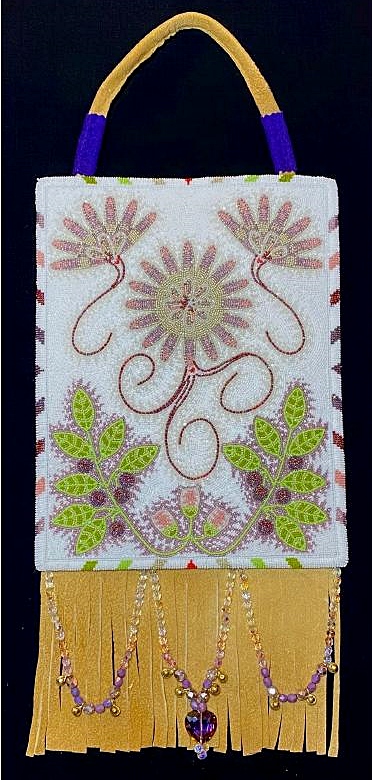
Salish Bitterroot Back Bag (2022). 6in. x 6 in., Size 13 true cut Czech beads (combination of modern and vintage). Brain-tanned, smoked, deer hide, nylon thread, stabilizer, and paper. This bag is in the permanent collection of the Montana Museum of Arts and Culture.

I like to focus on Indigenous knowledge and I like the idea of using empowerment to overcome systemic and racial oppression. The environment is most interesting and I try to express ecological concepts in my work, especially the beadwork. I enjoy lots of aspects of my culture, but feel that getting a formal education gave me a leg-up in life and it opened doors for me when I least expected it. Throughout my educational experience, I connected the idea of place-based learning and Indigenous ways of knowing. I believe that when a person is aware of their environment they can grow intellectually and pursue life beyond their basic needs—they are grounded and secure.

Susan At Thunderhead (2021). 12″ x 16″ original photograph and beadwork on canvas. Donated to Open Air for fundraiser.

Although beadwork is my go-to creative expression, I enjoy painting, drawing, and I aspire to improve my photography skills; I sometimes attempt to mix these medias. The past few years I’ve checked off some huge bucket list items, the biggest one being to participate in the Santa Fe Indian Market. Since 2021 I’ve found joy in participating in Indian Markets and learning how to make time to produce smaller items to vend during the market. It’s intense and physically challenging but I enjoy meeting Indigenous artists I’ve admired for years and having the honor of having artworks amongst the “greats.”

Indigenous Bitterroot Land
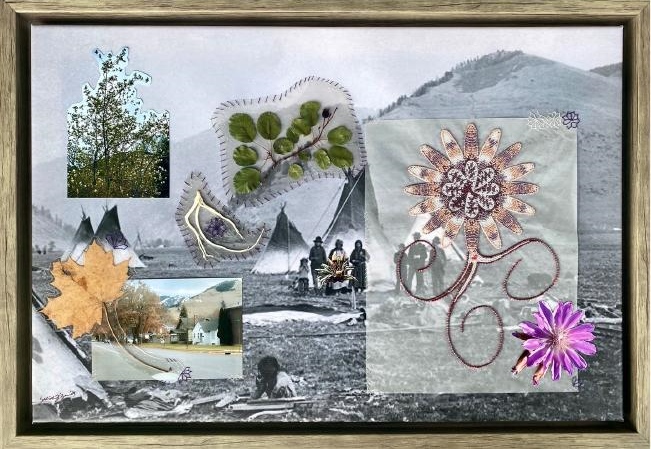
25” x 18”, Collage and beadwork on canvas
2021


In the future, I hope to calm down a bit and get a better handle of the business end of things. I hope to continue to grow artistically, continue to create art in a cultural sense, and to continue to support my family in this way. At the end of 2021 my husband got a new job and we moved part-time away from Arlee. But when that happened, we agreed that I would give it 100% to pursing professional art full-time. I’ve been doing this and slowly learning how to network and become more knowledgeable about the financial part of the deal. I’m thankful for my husband’s support of my journey and attribute his support to much of my ability to follow-through with life, up to this point. I’m also very thankful for the chance of being born into a family that valued art as a way of life.
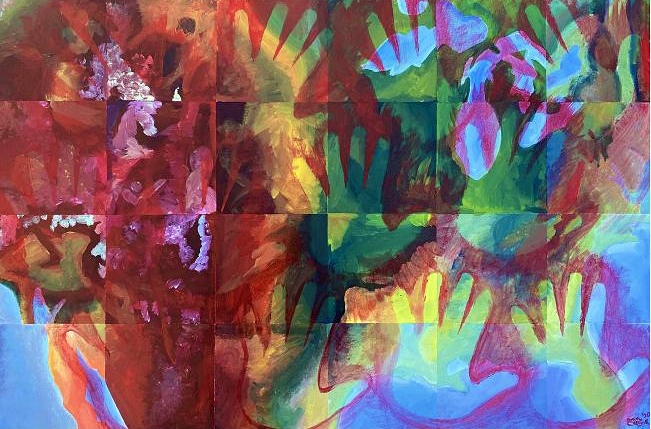
Indigenous Hillshade (2020). 24″ x 36″ acrylic on canvas. Shown in the “We are Still Here and this is Our Story” exhibition in the Emerson Center for the Arts & Culture in Bozeman, Montana
.

I know that I cannot change the past but if I had to give a small bit of advice, I would say that dreams are always worth pursuing. Hard work, consistency, belief in yourself seem to be at the core of carrying a dream. I’ve wanted to give it up a few times, but I stop and remember things I’ve heard other artists say, such as having hard times and easy times along the way. I know that if I can live a life that I didn’t want for so many years, I can definitely commit to a life I really want and do my best to be accountable to myself and to my children. I love creating art and I’m certain this is how I will live the rest of my life.
written by ©Salisha Anne Old Bull

John Pelko on Florals
Hard sketch crayon on heavy gift-wrapping paper
12 in. x 14 in.
2019

SALISHA ANNE OLD BULL ART, PHOTOS AND WRITING IS AN AUTHORIZED DUPLICATION WITH PERMISSION AND EXPRESSED CONSENT

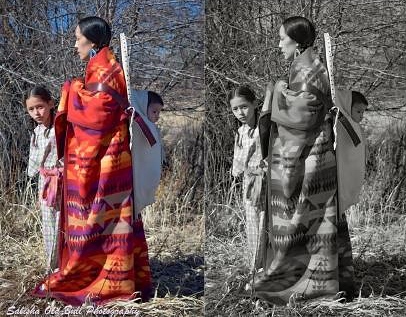
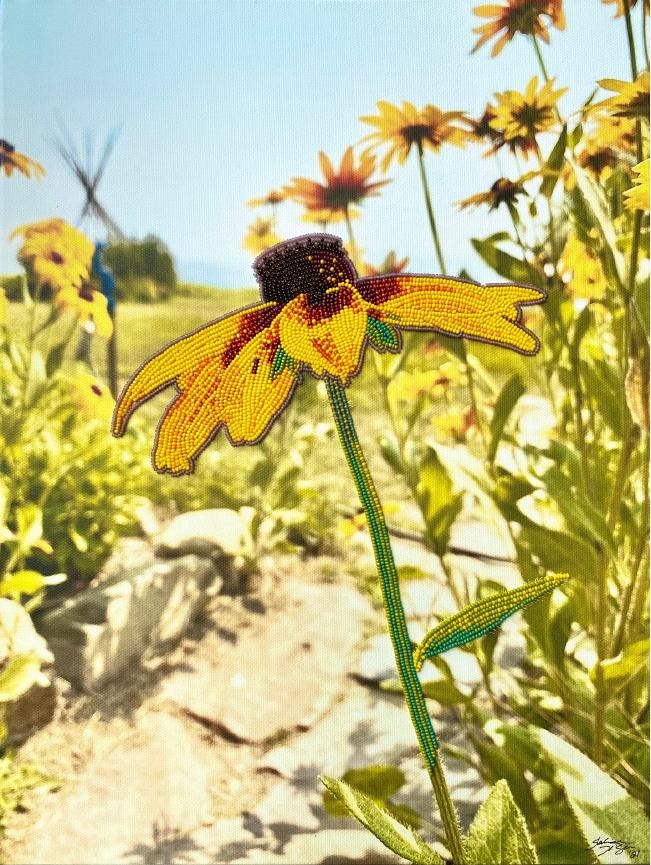
Feature photo: Signs of Autumn (2023). 7.7″ x 1′ 7″. Vintage and modern true-cut, size 13 seed beads, deer hide, wood, cotton fabric, wool, leather, stabilizer, glass beads, nylon and cotton thread, brass tacks and spots. The fourth cradleboard in a series of four cradleboards, representing the four seasons. This board represents the autumn season. Award: 65th Annual Heard Museum Guild Indian Fair & Market: Honorable Mention award in Division D-Functional objects such as bows and arrows, cradleboards, bows, weapons, shields, furniture, lamps, musical instruments, bull roarers, beaded bottles, and other objects. This work is now owned by a private collector.

Oracle Painting by Sarah Whitmire

I believe that I died when I was a child. Or perhaps a part of me died and something different was brought back. After that, things were not the same for me. I had several more brushes with death and suffering moving forward. These experiences shaped who I would become. They taught me about the uncertainty and duality of life and also brought me to a fierce inward state of being.

Decisive Action

I grew up in a world of adults. I was told that children were to be seen and not heard. I was given long stretches of time to play on my own. I turned to art and creative pursuits as a way to escape into the worlds I preferred to create. I built elaborate doll houses and loved magical wilderness spaces. I was inspired by the world of Fae that Brain Froud so beautifully captured. I was fortunate that my mother took me to art museums where I fell in love immediately with the language of art.

Transform

I believe that art has the power to heal, inspire and awaken; it has saved my life more times than I can count. As an adult, I have been lucky to keep my curiosity and magic alive. I pride myself on growth and becoming more and more who I prefer to be. I have now trained for over a decade in mystic and spiritual disciplines with the mission to inspire the world with my connection to what I call the Muse.

Allies

When I paint, I am moved by intuitive Muse forces from moment-to-moment, making marks with a variety of implements from my hands to brushes and handmade tools. I create from an empty meditative space, not knowing what will come out. There’s a huge amount of surrendering as I have to allow things to be as they are. Ugly or beautiful… I have to release all judgement. It’s one of the hardest things I do. It feels very vulnerable for me to allow “what is” when people are watching. And that is part of my work.

Glamour

What comes next often depends on the energy in a place, or time, or the viewers themselves who I feel pull the work through me. Over a period of 6-12 hours, sharp images, texts, and shapes are revealed as profound messages. Through abstraction, the art becomes the Oracle and represents the literal and metaphorical power of transformation. My art is in a constant state of service.

I Surrender All

The method I use requires a forgiving material like acrylic paint that permits rapid revisions. I think of my work as evolving in the moment.

Weight of Heart

Some parts gets covered up and pushed back and others change and are pulled forward. The pieces tell their own narrative as they become deeper with layers and more defined. I work on large 6 foot x 4 foot pieces of birch and frequently layer with colored pencil, watercolors, oil pastels, pouring paint, acrylic ink, China marker and more.

Gallery

When the pieces are ready we work hard to meticulously scan them at high resolution and make them into Oracle cards. I have always believed that these images are for others and sharing them is important as meaning makers for others. I release new each series of cards as they become available. Currently series 1 + 2 are available and I am painting pieces that will become Series 3 + 4 now.

I have performed this oracle painting performance every week at festivals, clubs and events, and online for the past 6 years. I believe the true magic is that these pieces are not only for viewing but can also be experienced. I invite you to journey with me as I discover the messages the Divine Muse will uncover next!

written by ©Sarah Whitmire

You can find me and my social media links at whitmireart.com