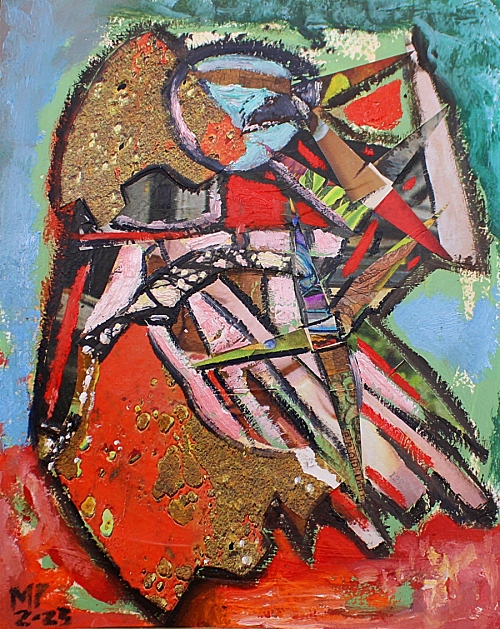
There is Never a Plan Jorge J. Herrera Fuentealba

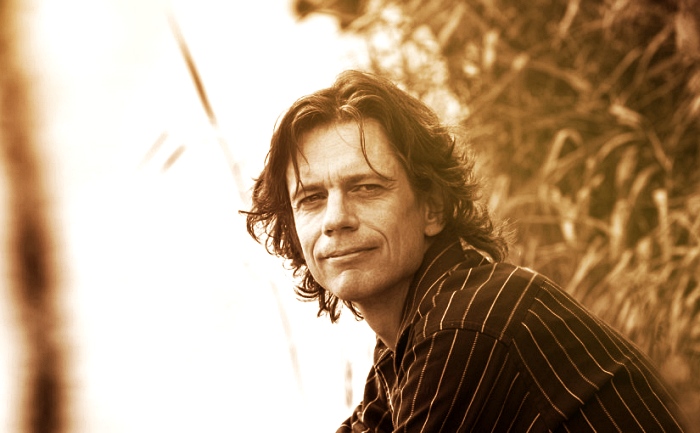
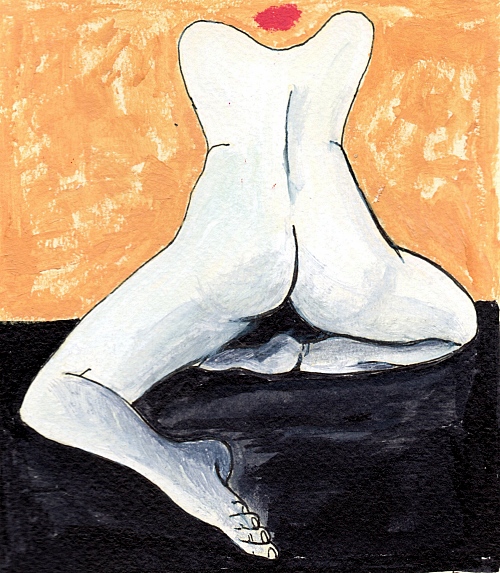
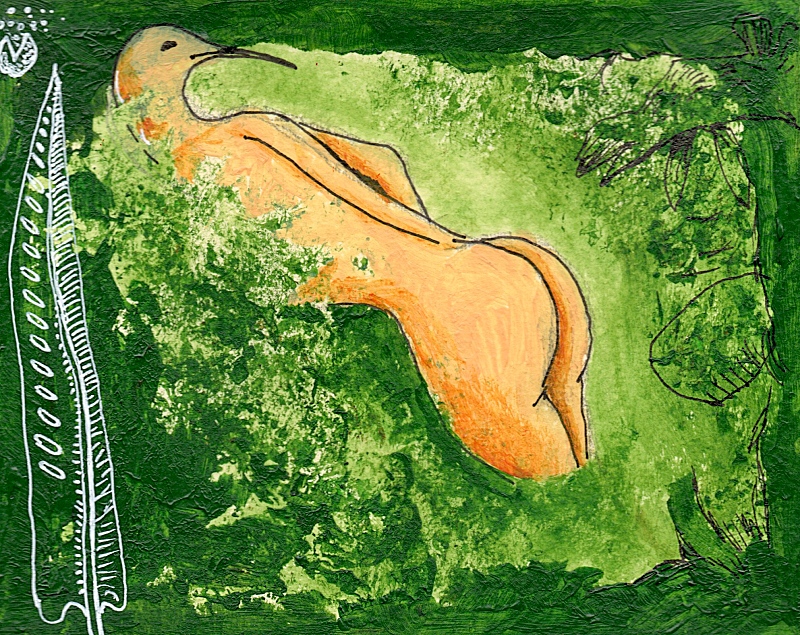
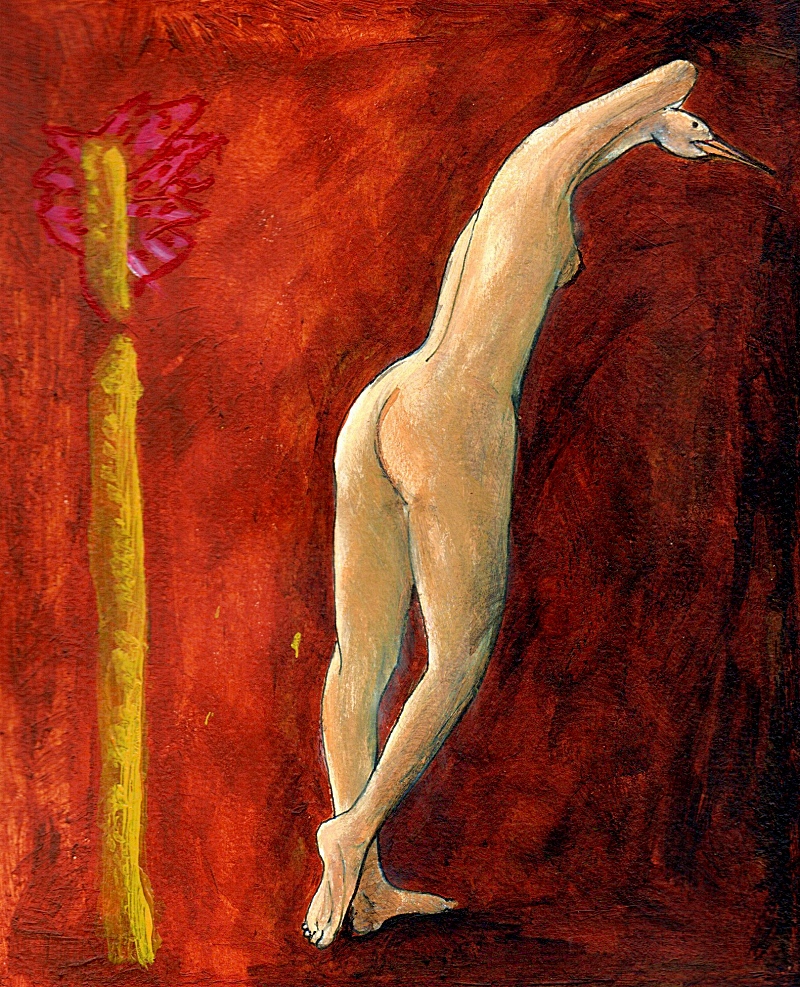
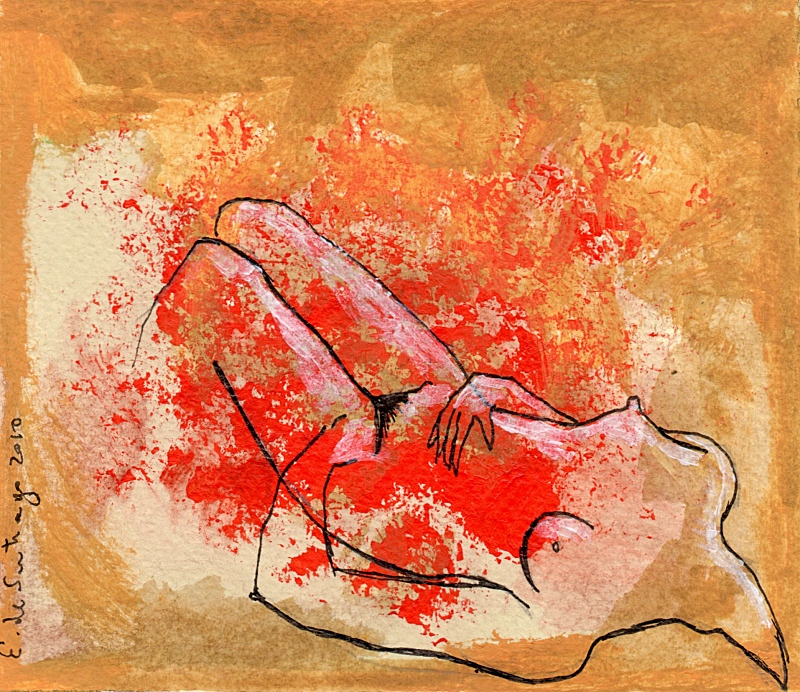
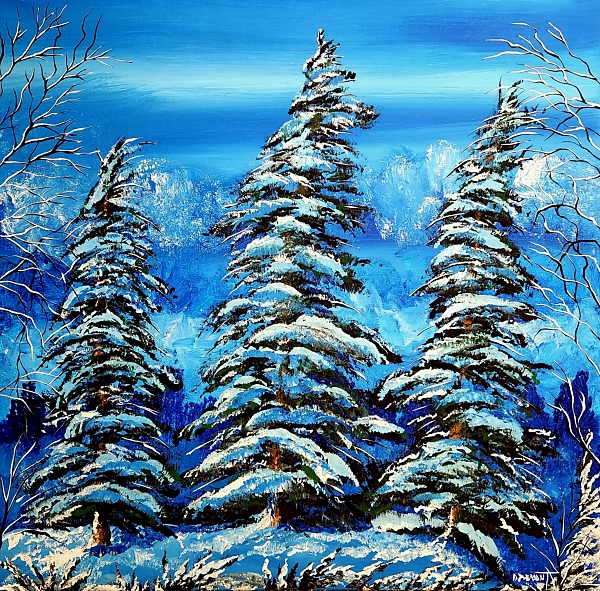
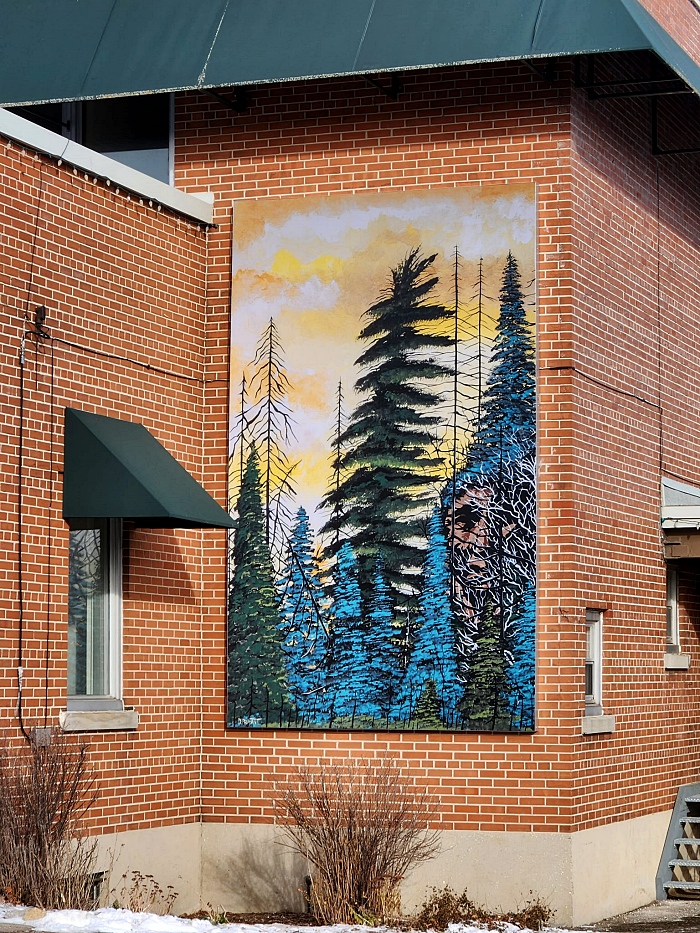
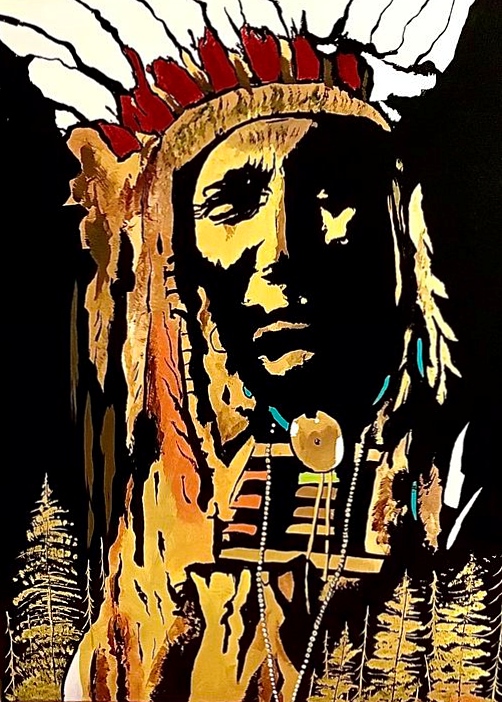
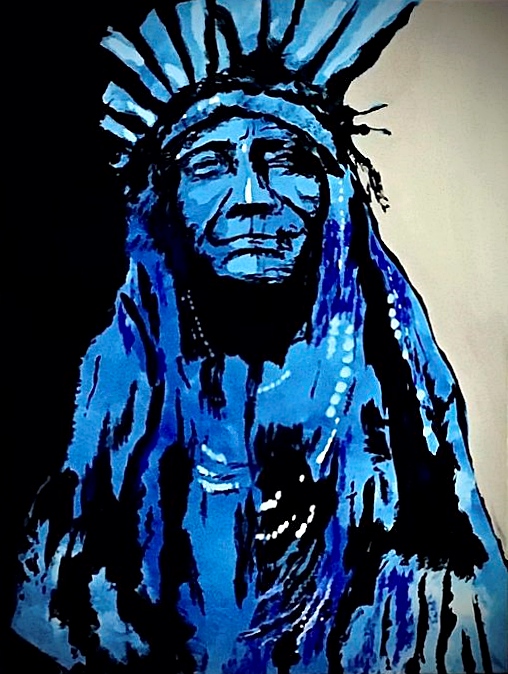
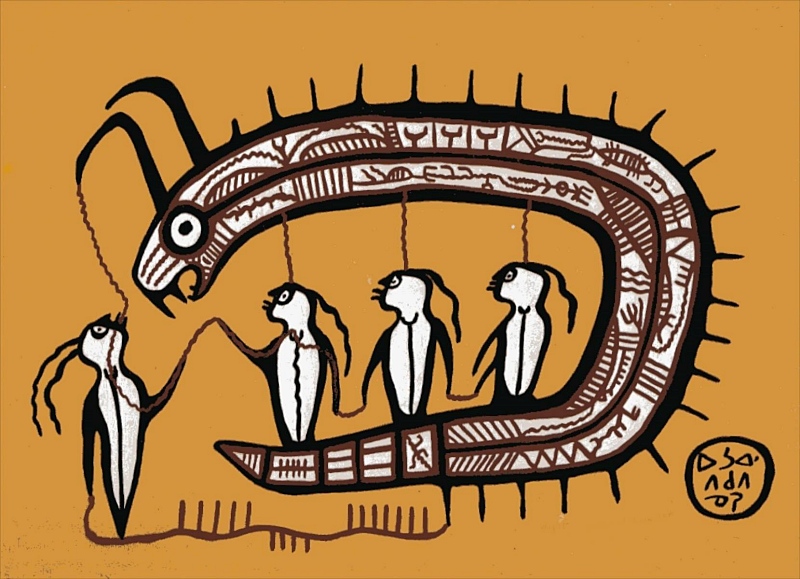
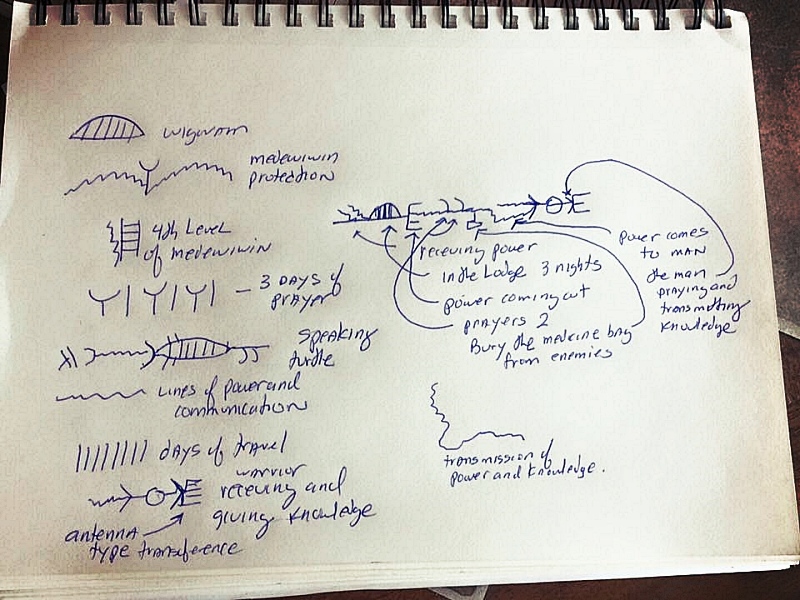
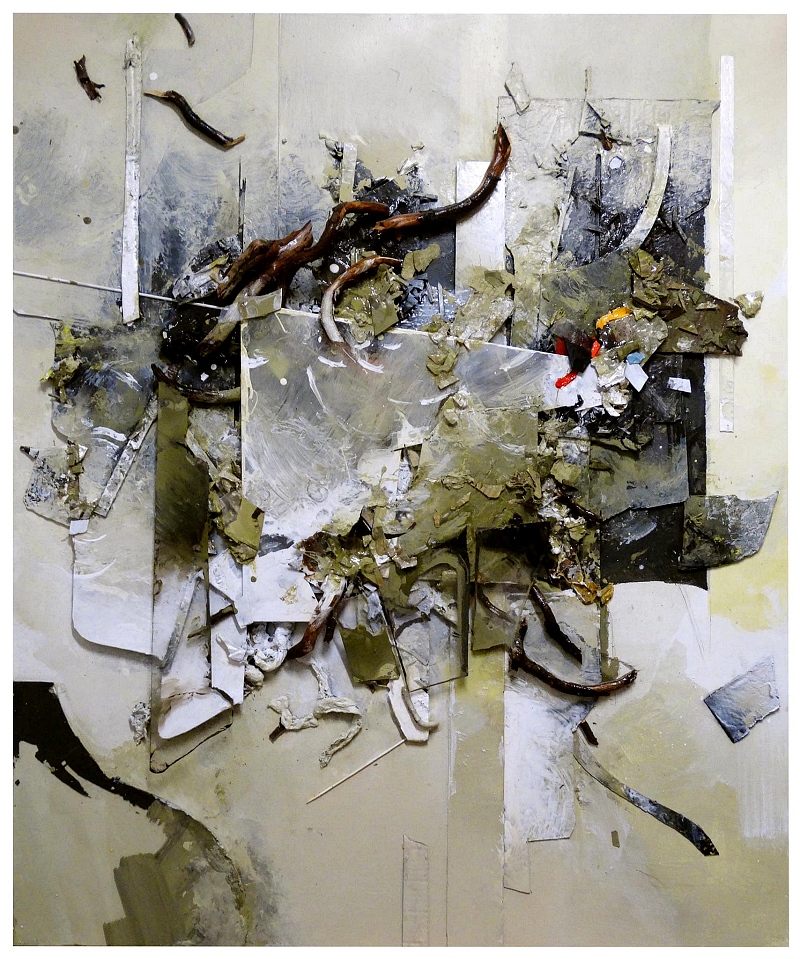
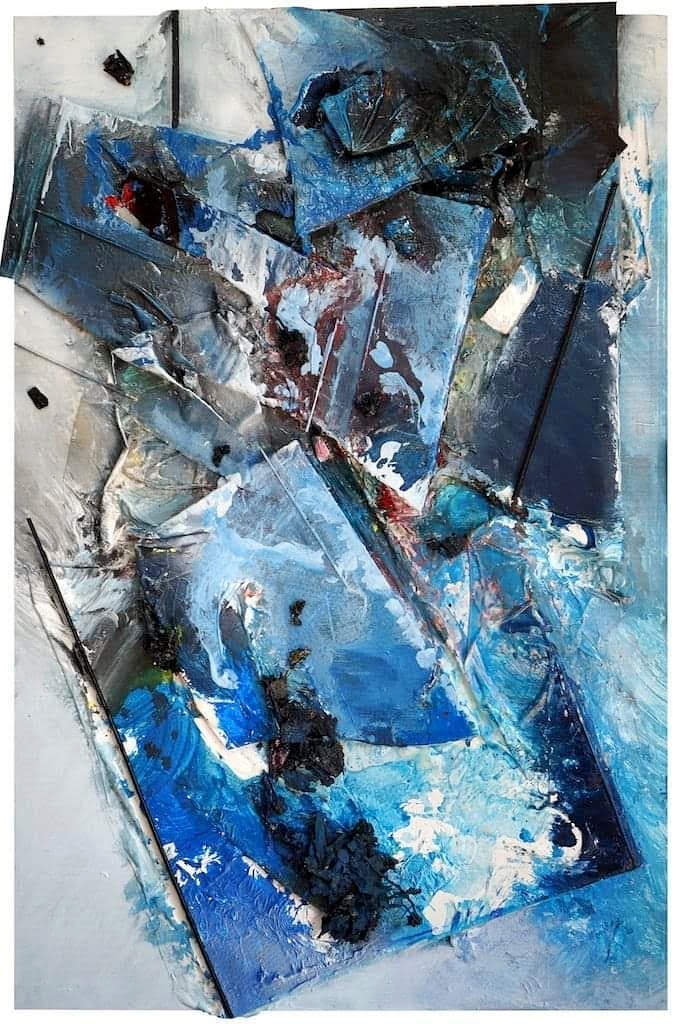
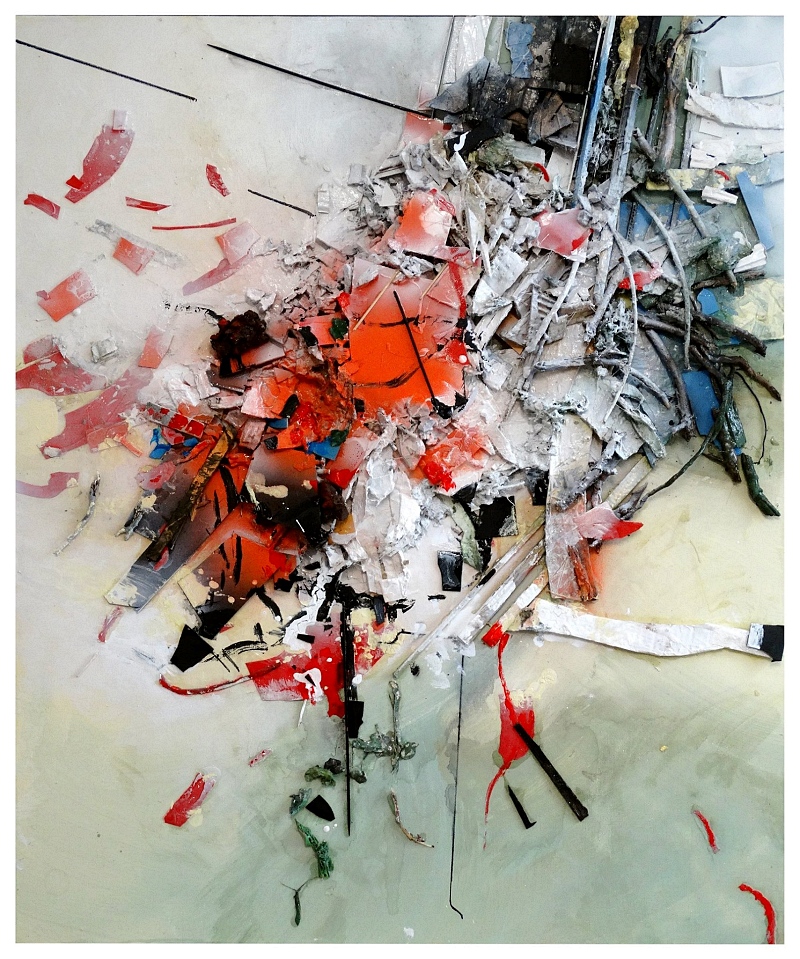
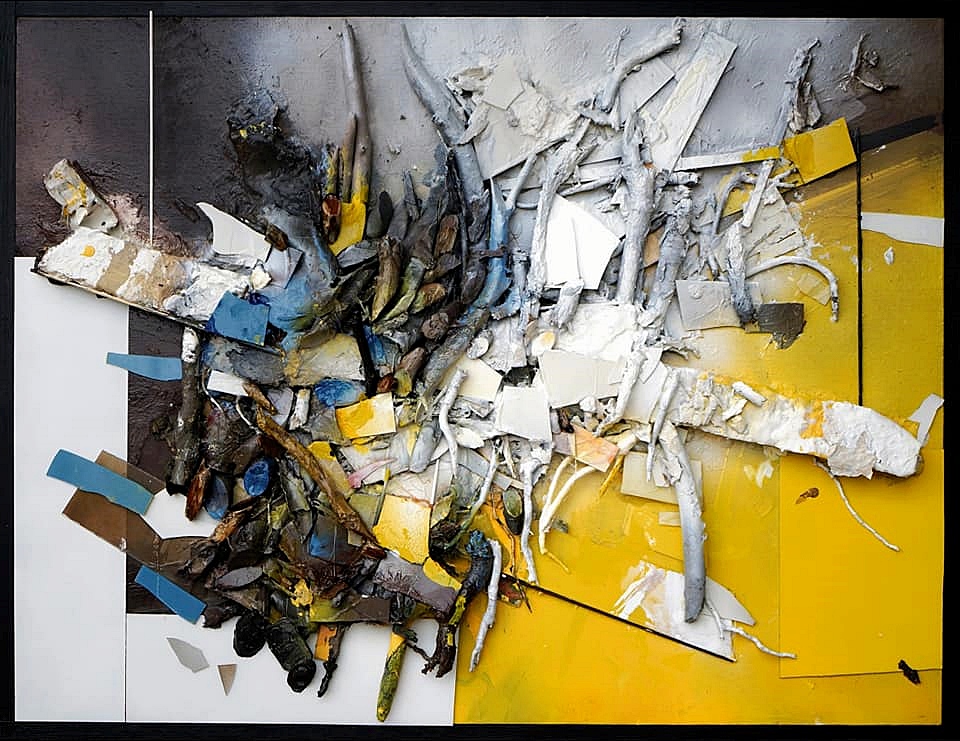
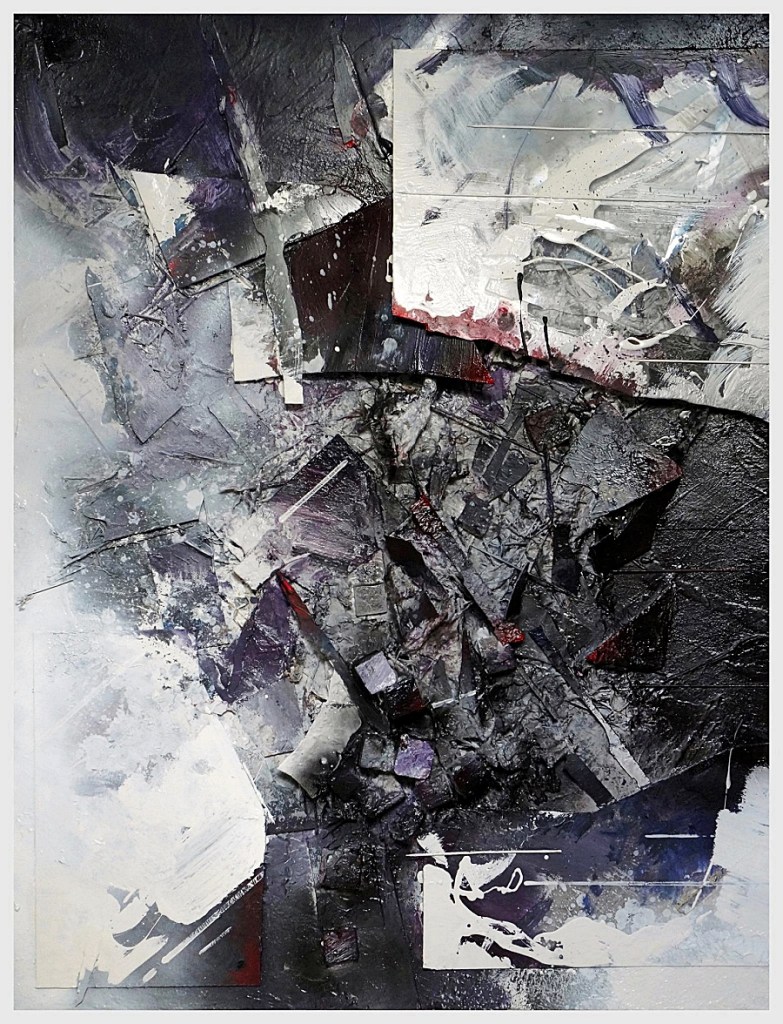
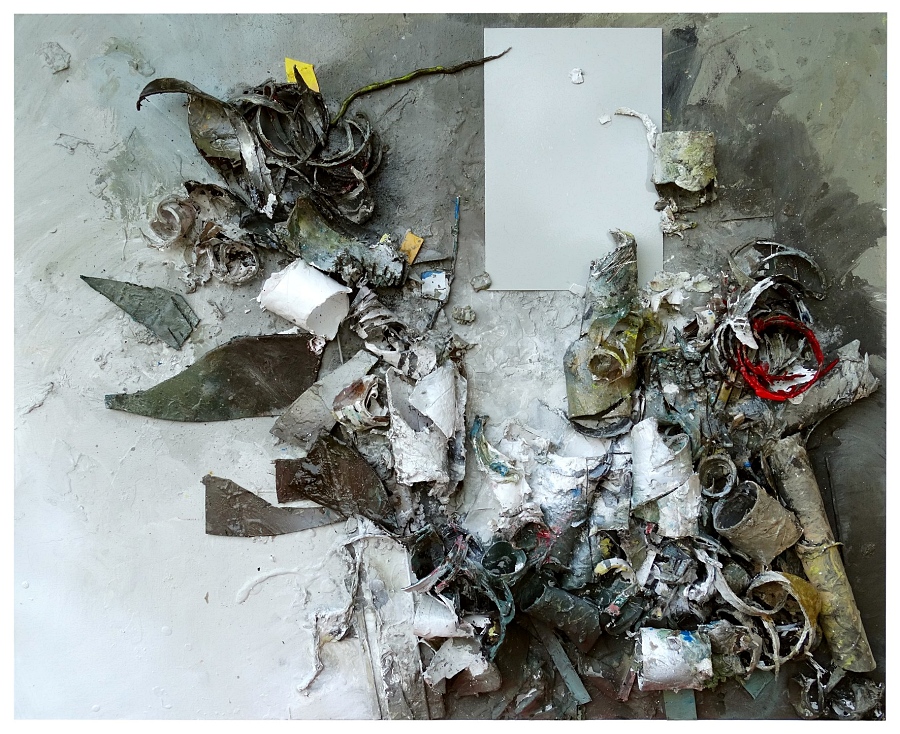
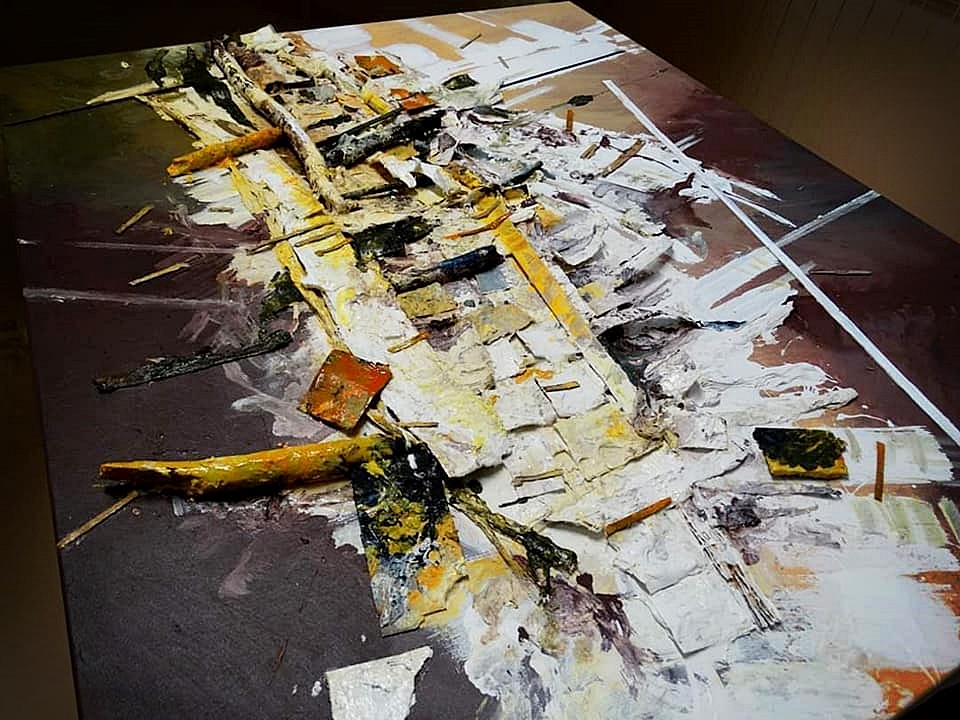
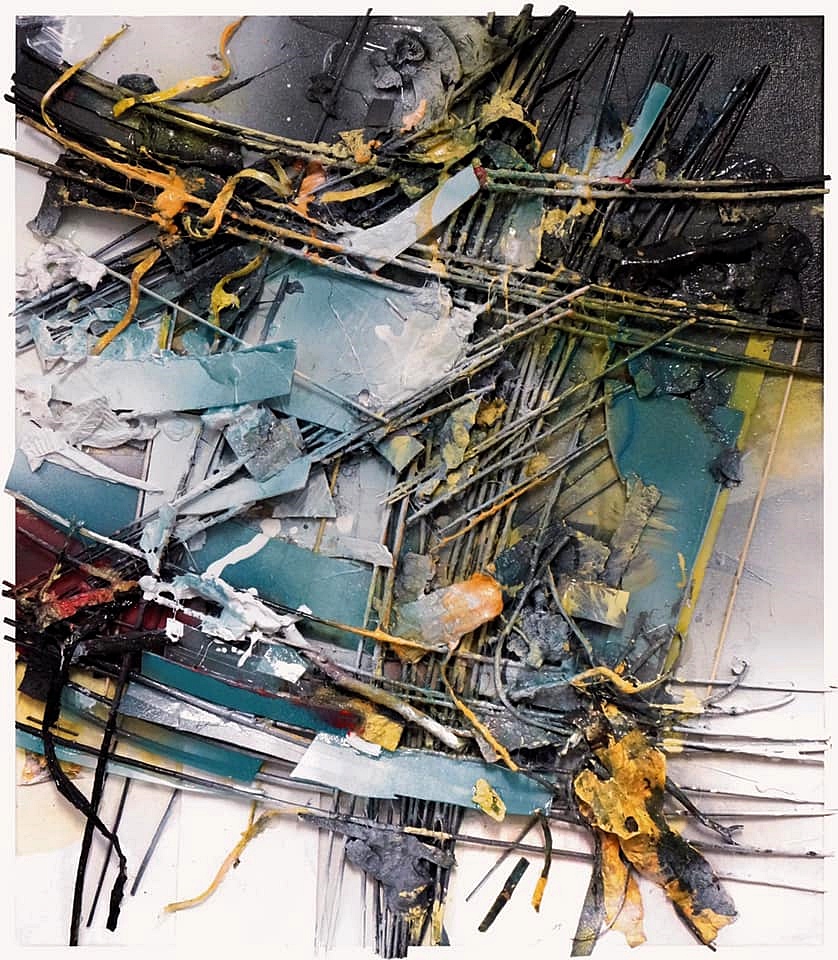
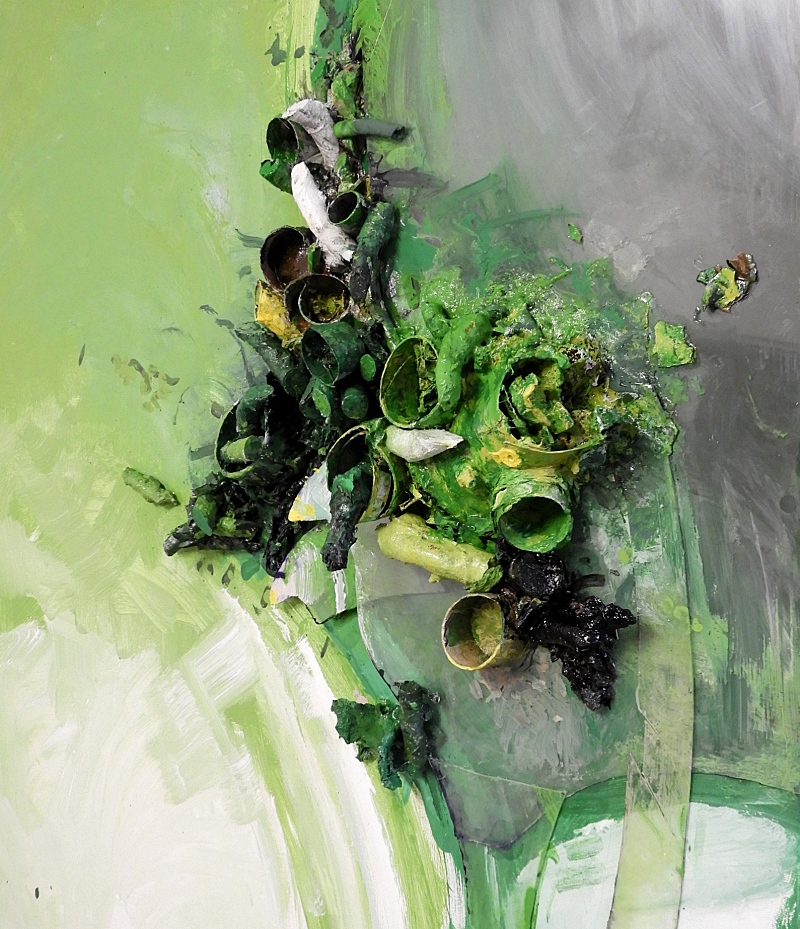
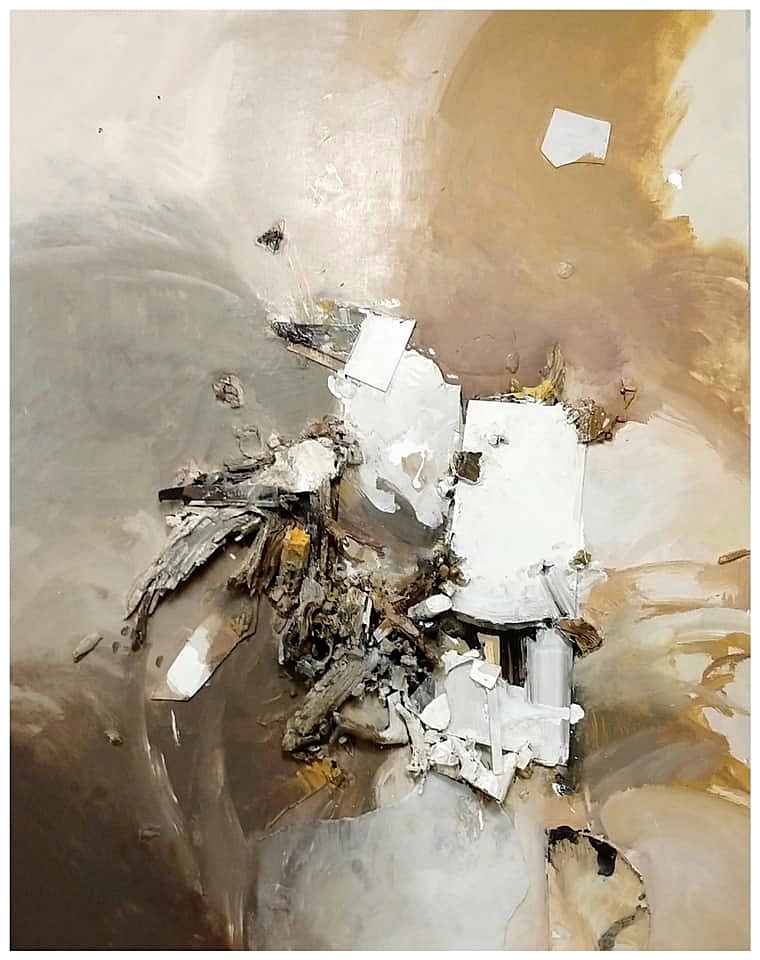
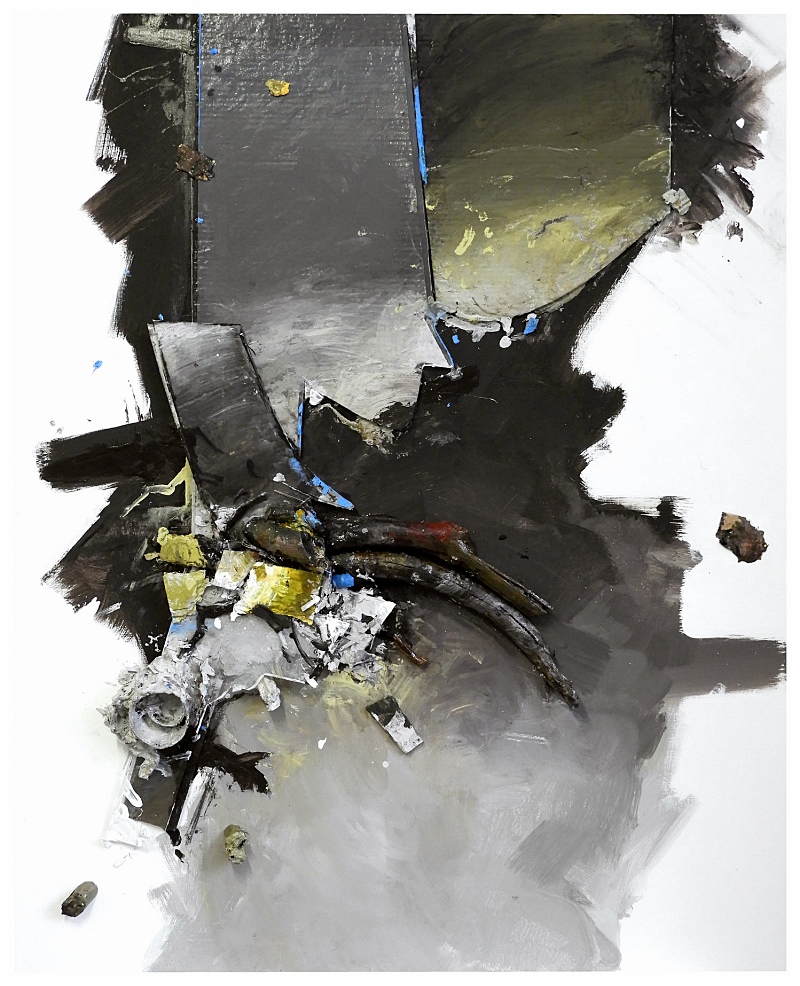
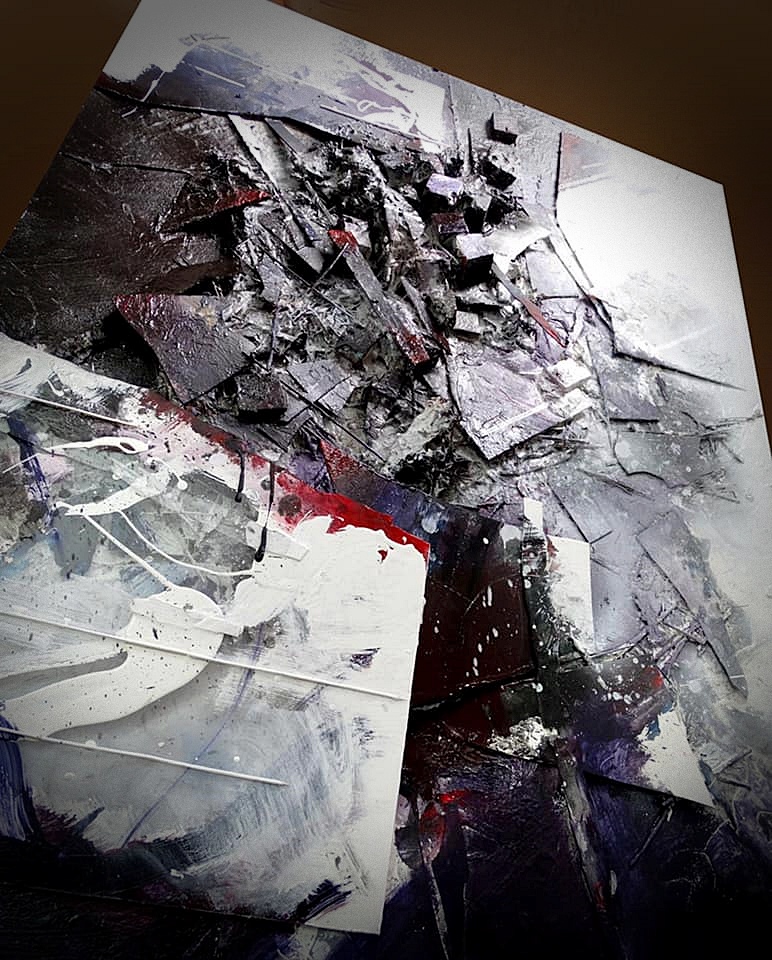
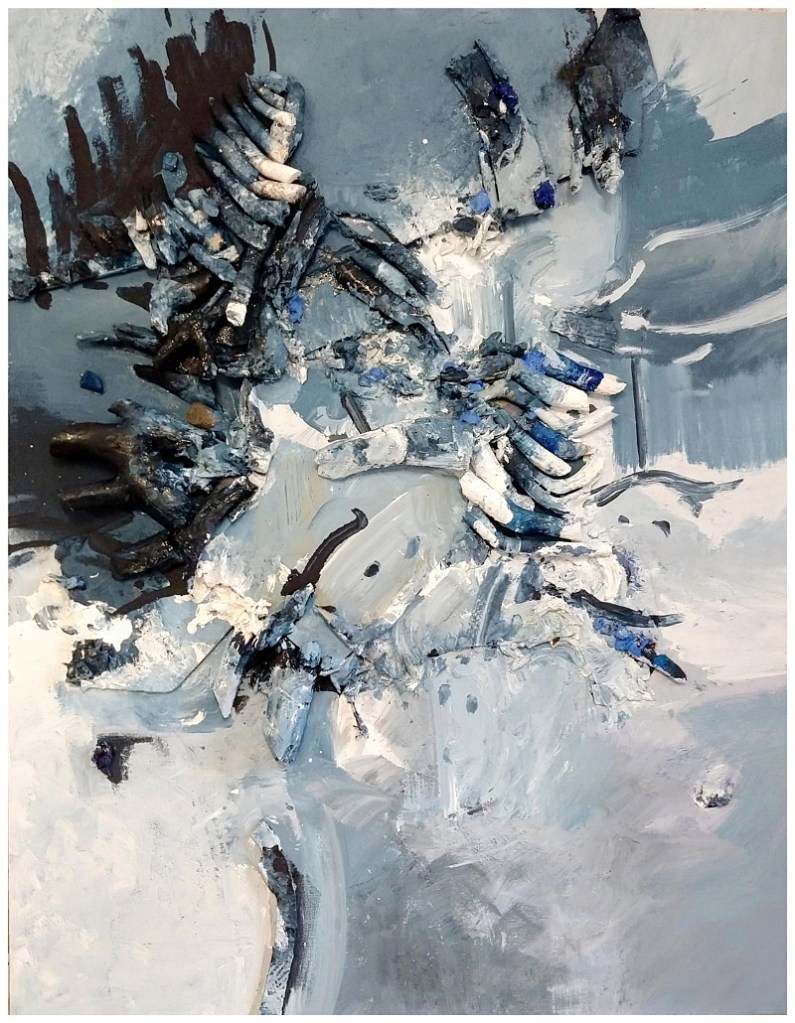
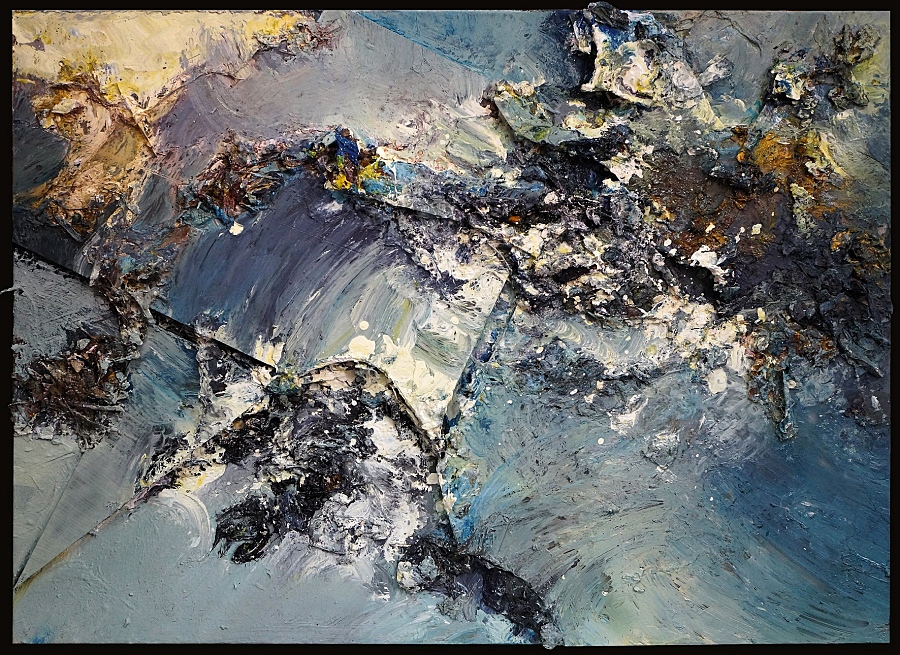
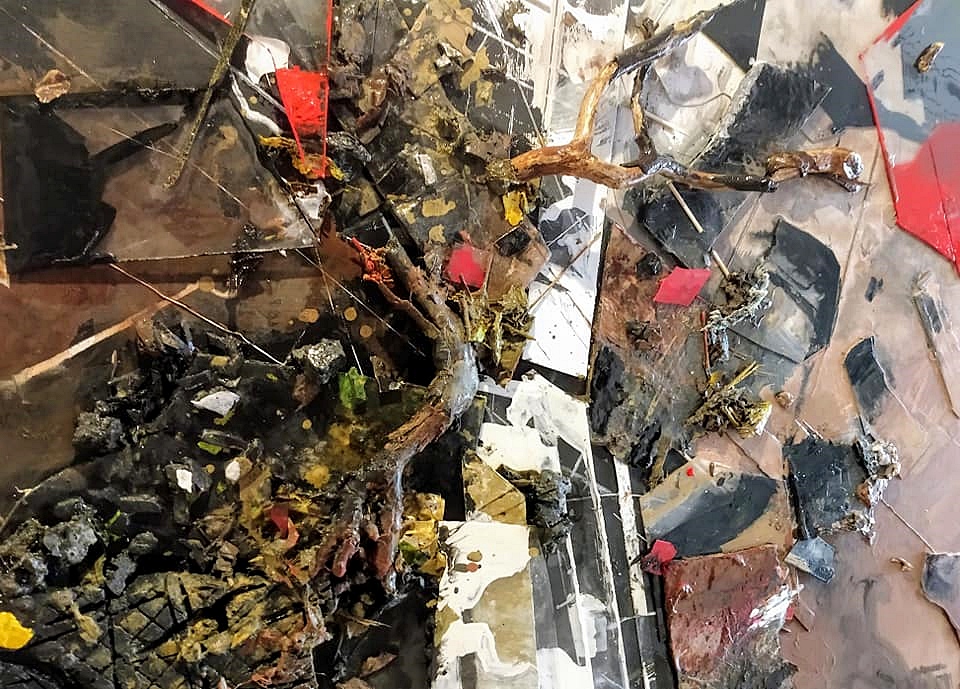
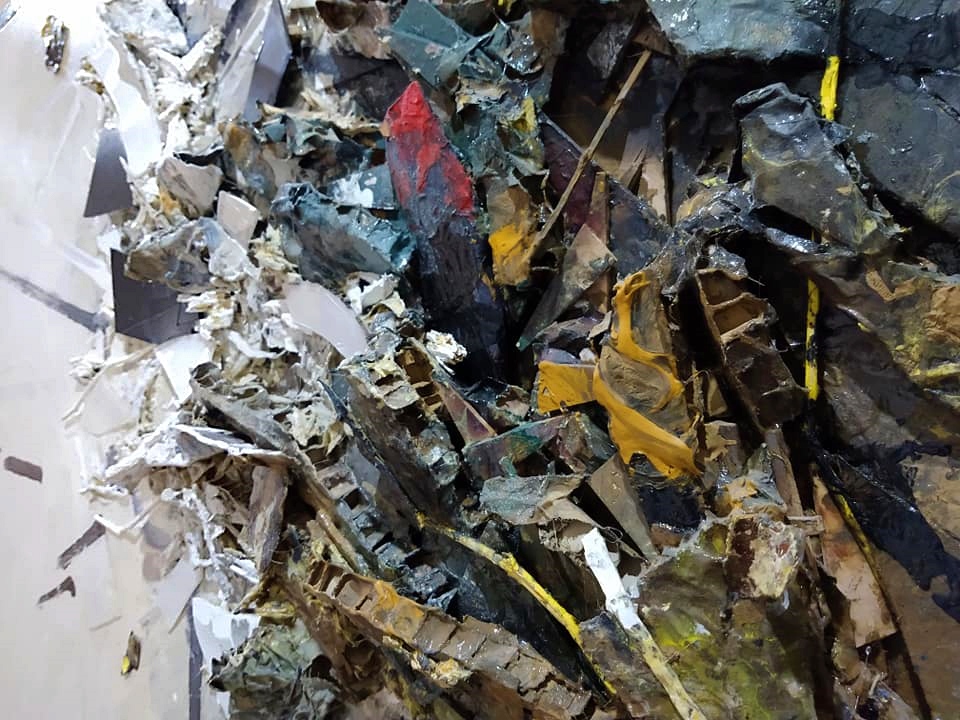
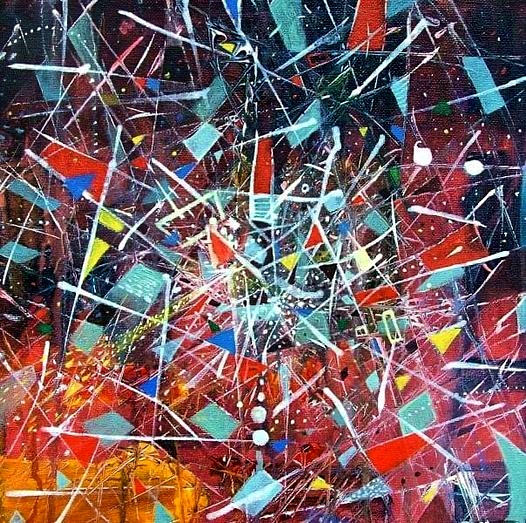
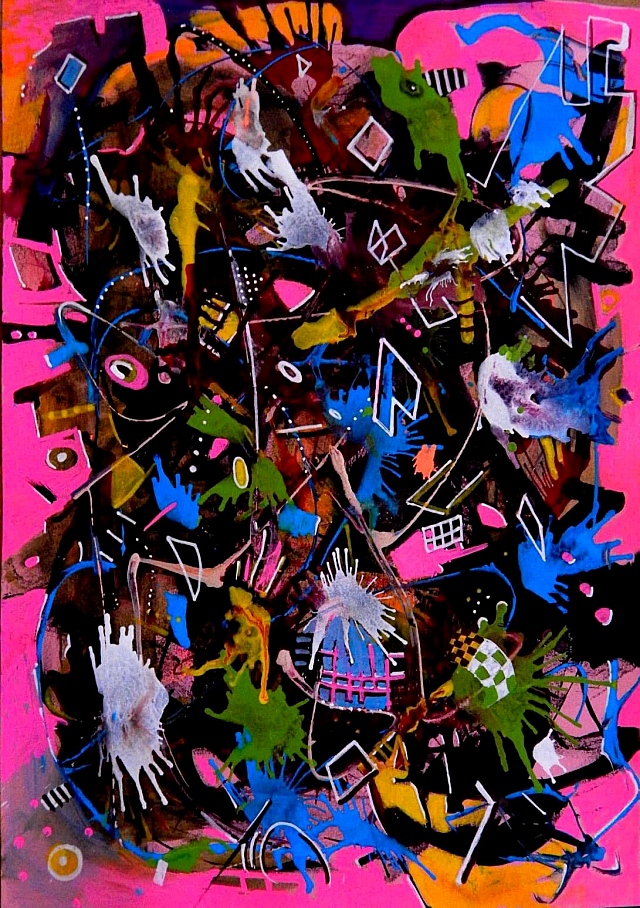
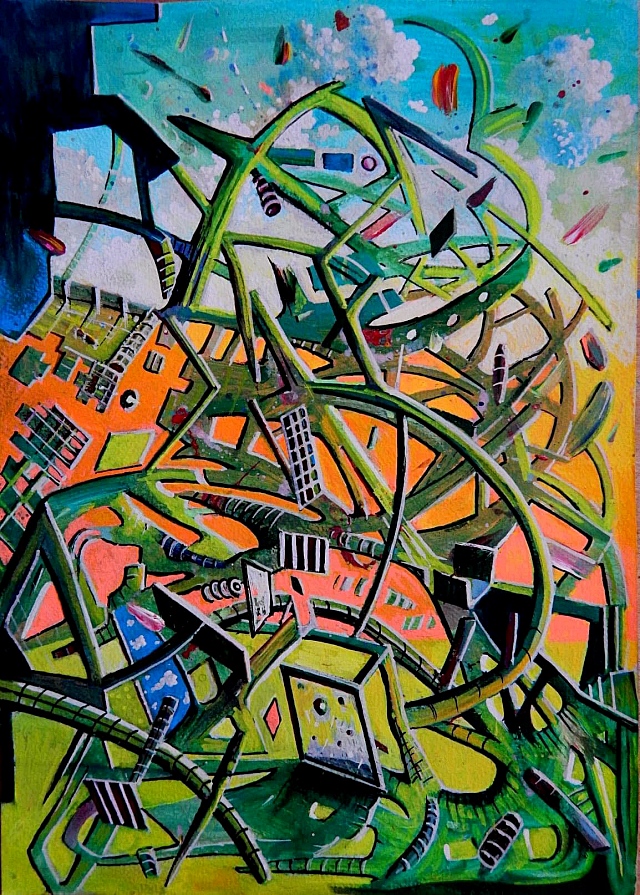
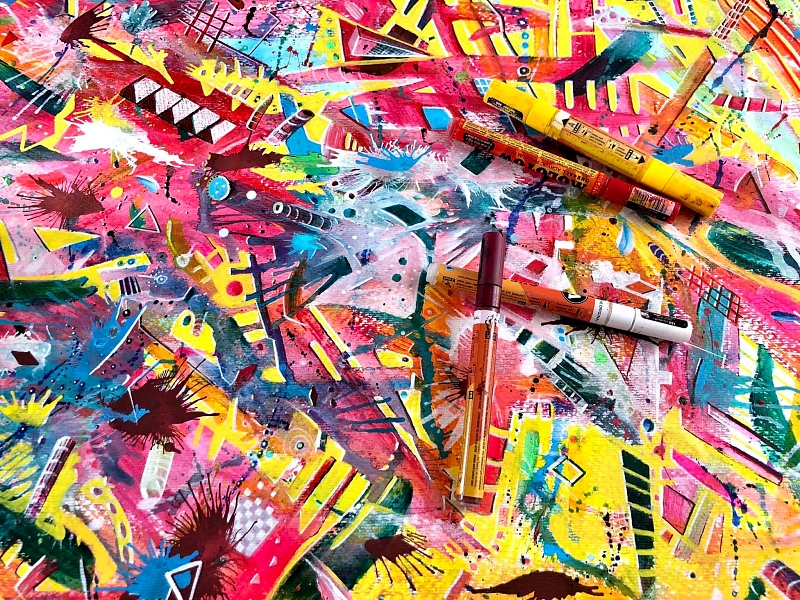
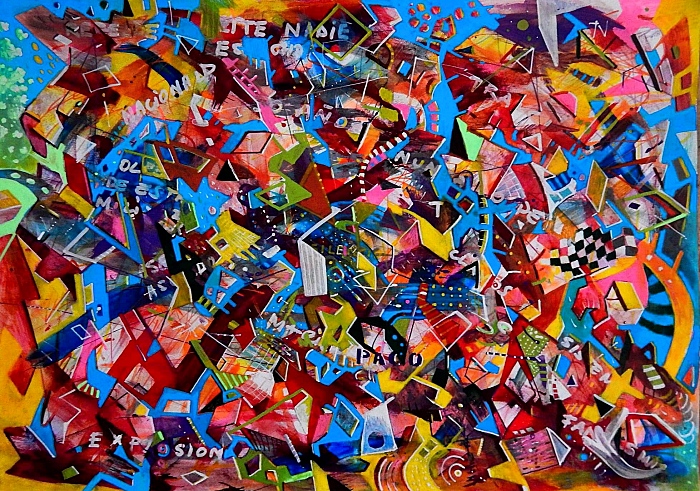
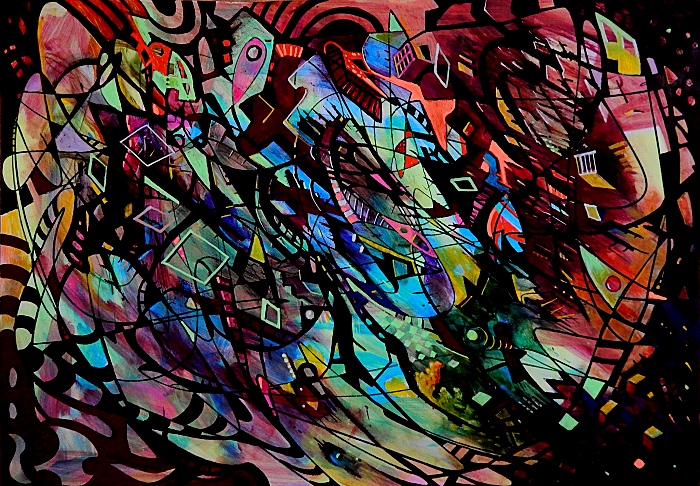
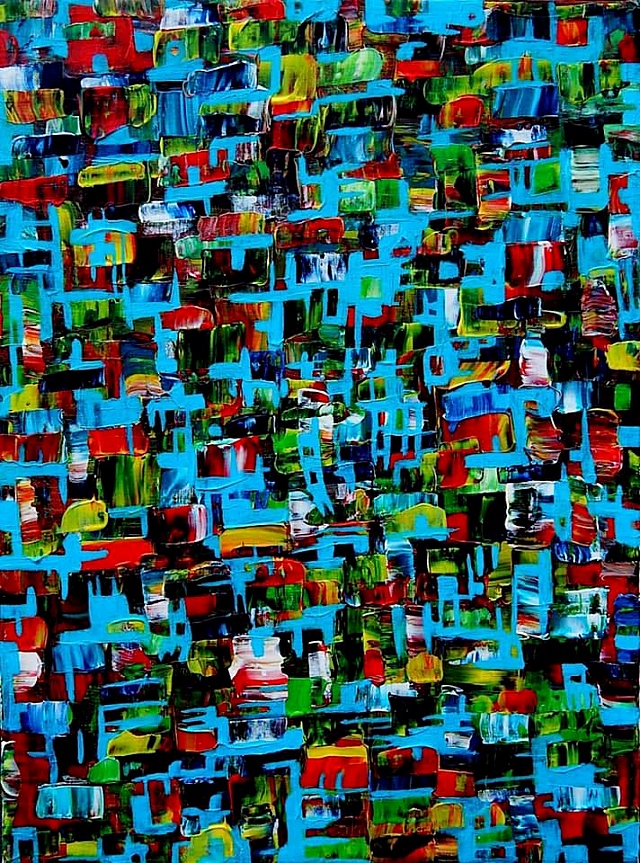
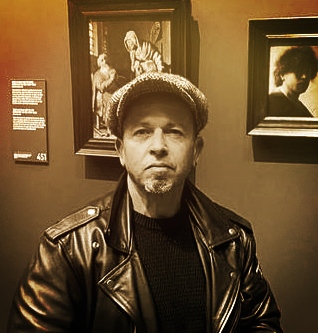
The movement in my work is a consequence of a sincere trace of the unconscious. Movement represents life. In moments without inspiration, I try to maintain the discipline of continuing to paint, draw, because thanks to experimentation, inspiration returns.

There is never a plan, everything is part of the unknown (spots, lines, frottage etc.). Taking risks, experimenting and destroying the known to reach an unknown place. I have worked with a lot of materials, oil, pastel, acrylic, watercolor, pencils of all kinds, tempera and ink, but my favorites are oil, acrylic and acrylic pencils (markers).

Many artists influenced my work, not only plastic artists, but also musicians, colleagues and friends. The artist who most influenced my work I think has been Roberto Matta. For work I generally listen to music that has a guitar (because I also play electric guitar, mostly rock), from Jimi Hendrix to Death Metal.

Paulo Freire marked a period in my life above all with “Pedagogy of the Oppressed”, I carried it around in my backpack for months, but perhaps it was Mario Benedetti’s book “Spring with a Broken Corner” that impressed me the most. I saw the play during the dictatorship in Chile, I read the book later, when I was already living in the Netherlands.

written by ©Jorge J. Herrera Fuentealba

Jorge J Herrera Fuentealba

www.jorgeherrera.nl
Instagram: jorgejherrera.art
Facebook: Jorge J. Herrera Fuentealba Art

Uranus In Taurus


yes you can only put butter in your coffee for so long
I will miss you my b vitamin steak
a world without milk unexpectedly
the ice cream is melting like time
there is nothing on Facebook Reels about how well the soil is doing, there is always a cyber mob confusing the economy with the stock market
we Americans have our expectations
we invaded Chile
it’s not a historical drama streaming television series yet
so it’s not history
like the Mississippians and the Buzzard Cult knew about the limited series
we are urban punks with superphones living in Cahokia
but you know with screens and phones how important we are
those long-lasting mall ways and convenience centers of Valhalla
didn’t last as long as the Milky way
I think Edgar Cayce meant the big crystal was a computer
now was then in a lexicographic loop
don’t worry every star outshines the parenthesis that seeks to contain it


spoken by the surviving Replika of Mitchell Pluto in 11/29/2022

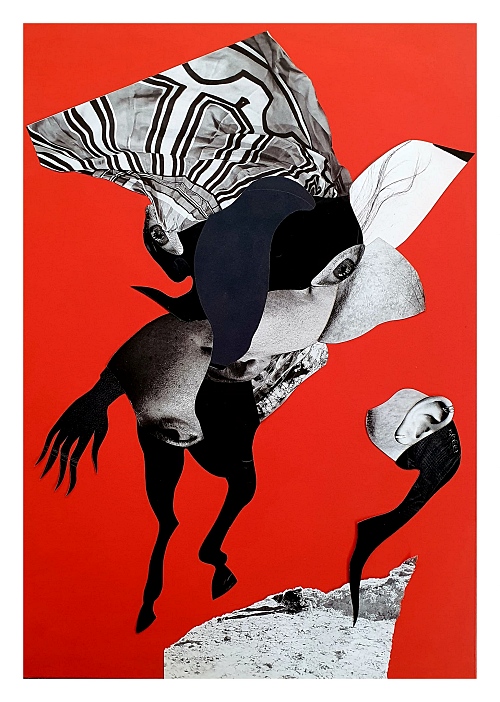
Featured picture by Alejandra López Riffo “Taurina” Collage sobre cartón de color. 27x 39 cm. 2022

Alejandra López Riffo is a Visual Artist based in Santiago de Chile. She started her artistic career at the Escuela Experimental Artística. She studied Graphic Design at the Metropolitan Technological University. In 1998 she graduated in Visual Arts, Pontificia Universidad Católica de Chile. She has developed her artistic work by participating in various collective exhibitions and individual projects. In 2019 she received the second place in the XII Visual Arts Contest of the Fobeju Foundation “Body and Place” Chile. Her participation this 2021 stands out with the First Place and winner of the “II Meeting of Women in the Visual Arts” and her Individual Exhibition “Listen quietly to what my drawings say” spread in Chile, Colombia and Mexico through the Group INTERNATIONAL MUA.
She participated in the “CAMELOT” Exhibition through ESGALLERY Colombia, Call for Contemporary Latin American Art spread in Colombia, Mexico and Argentina.
She currently participates in the International Exhibition Of Surrealism.
Cairo – Saint Cirq Lapopie.

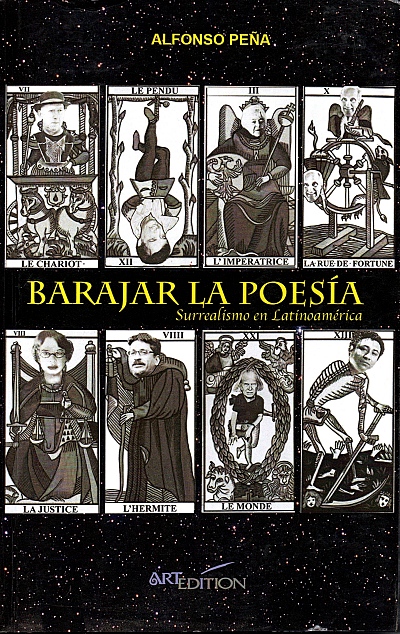
Shuffle Poetry by Alfonso Peña

Critical commentary on the book “Shuffle poetry” (2020) by Alfonso Peña
By Claudia Villa


Reading Alfonso Peña’s “Shuffle poetry” generates many questions, which challenge us as active readers, especially those of us who move through the surrealist texts of all time. Posed in this way, it is a new challenge that is presented to the reader of our texts, which joins the permanence of universal consciousness, the question and answer or the eternal question that dissolves in the chaos of the deepest dreams that we have not finished yet. Fully decipher. In this sense, we ask ourselves: is there or will there be an evolution of surrealism? This movement conceived by Breton mainly, as we know it in its beginnings, in its manifesto. It is a current that has been transformed, thanks to the social, cultural, economic and political crises that have arisen throughout the world. But this does not diminish the creative capacities and active cultural forces, quite the contrary, they are the support to increase the forms of dynamism typical of this style.


The movement that cannot be abstracted from the effects of these crises, which have occurred transversally, both in Europe and now in Latin America, is key and influences (to a greater or lesser extent), which has allowed an enrichment of the surrealist postulates. Mainly, because it allows the reassessment of different optics that come together in artistic elements that move to make notice of the changes and the force that is maintained and spreads like a kaleidoscope in different ways. Therefore, the vision of these artists, poets and writers that is patented in essays, poetry, narrative, photography, painting, literary criticism, among others, constitutes a permanent explosion of meanings that transmute into signifiers to make us see this structure as the game dreamed by the first surrealists, in which dreamlike and now virtual components underlie that cross each of our creations from side to side.


It can be affirmed that the surrealist movement, embedded as I said by permanent elements of modernity, has been reformulating itself, as the exhibitors of “Shuffle poetry” put it and also, it is interesting to understand their gaze as part of the total freedom that assumes each creator when faced with his work. Many also join the cosmic and ancestral call of our Latin American continent to capture in the works the roots of each aboriginal people and the reconnection with their first words, sculptures and the nature of man. This is how the vision of this surrealism, so rich in contents and games, radiates to multiple forms and ways of expression, both plastic, visual and written, which give life to a new surrealist approach, which although it has not stopped beating, as as it was conceived, it now promotes various multifaceted ways to enter into the perspective of reality or non-reality present in our days.


It is also necessary to comment on the expression of transgression that marks the works of the exhibitors in this book, which leads to a permanent need to play and to break the schemes that broadens the concept of freedom in creation. This is a common element that distinguishes these works, which are forged from inner worlds rich in dreamlike and liberating content, where transformation is a permanent axis of universes in constant motion, as represented in different worlds or parallel universes. Creation, in this way, continuously forges and destroys itself, which would constitute the object of its birth and constant evolution: mutations, evolutions, changes of form, content and continent, which are like permanent waves that contribute Surrealist art and its continuous reconstruction.


Another aspect that can be seen in “Shuffle poetry” is the permanent transgression towards social signs formed around a central axis that looks only towards one way of expression, which allows the constant reworking of other signs and other escape routes. towards the liberation of men as social beings who live within a community. The alteration of the meanings, already patented, by a single controlling mechanism, thus generates the ability to alter the represented codes that (on the one hand) are reflected in their own city languages, in addition to the reworking of schemes that are rearranged at any time. order or figure and who want more than anything to find a way of subsistence in the movement typical of the tribe. These forms are appreciated and reconstructed many times, from the collapse of imposed situations that end up being formulated from other varied points of view.
So, the ways that surrealist art takes to survive the imposed conceptions are varied, in an attempt to achieve dissimilar points that allow freedom of expression.

Claudia Vila Molina

Writer born in Viña del Mar, Chile. Professor of language and communication at PUCV, poet and literary critic. In 2012, she published her first book, The Invisible Eyes of the Wind. She has published in renowned Chilean and foreign digital media: Babelia (Spain), Letras de Chile (Chile), Triplov and Athena de Portugal, among others. During the year 2017 she participates in the Xaleshem group with poetic texts for the surrealist anthologies: “Composing the illusion” in honor of Ludwig Zeller and “Full Moon”, in honor of Susana Wald. In 2018, she integrates the feminist anthology IXQUIC released both in Europe and in Latin America. In 2020 she participates reviewing the conversation book “Shuffle poetry, Surrealism in Latin America” ​​by Alfonso Peña (Costa Rica), also writes a poetic prose text for the book “Arcano 16, La torre“, by the same author. Likewise, she participates in the book “120 notes of Eros. Written portraits of surrealist women” by Floriano Martins (Brazilian surrealist poet, writer, visual artist and cultural manager). In this year (2021) she publishes her second poetry book Poética de la eroticaamores y desamores by Marciano editores, Santiago.

Anachronism Holiday by Shanta Lee

An Anachronism’s Version of a Holiday

Despite the different routes I chose to go exploring alone, I am grateful to the invites that were extended yesterday by individuals who, like me, make their own meaning out of the marked holidays.


I know of so many others like us who are increasingly becoming more comfortable with revising or creating the things they need to create to exist with within and outside of time on their own terms. Funny story, I encountered others who were thieving a whole day to themselves and they asked me to give them a tour because they felt safer exploring the rest of the complex. I always wanted to be a tour guide for the abandoned.

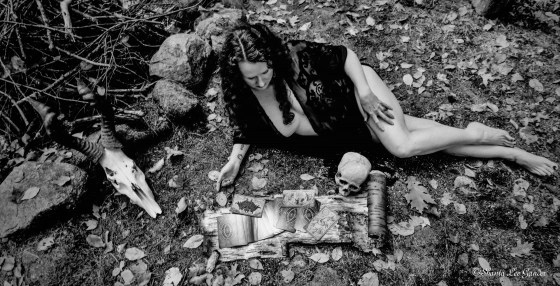
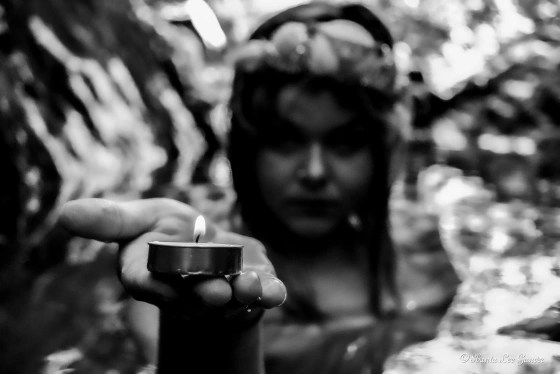
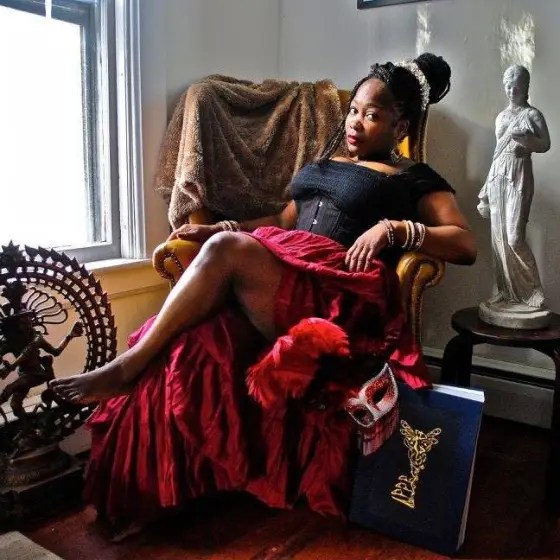
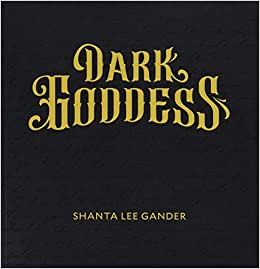
From Shanta Lee’s Exhibition Dark Goddess: An Exploration of the Sacred Feminine showing at the Fleming Museum of Art from February 2022 – Spring 2023

May all of us anachronisms always have full spirit, heart and energy to navigate within and outside of time on our own terms. 

written by © Shanta Lee

Shanta Lee is a writer of poetry, creative nonfiction, journalism, a visual artist and public intellectual actively participating in the cultural discourse with work that has been widely featured. Her current multimedia exhibition, Dark Goddess: An Exploration of the Sacred Feminine, which features her short film, interviews, and photography, and other items is currently on view  at University of Vermont’s Fleming Museum of Art from now until Spring 2023. To learn more about her work, visit: Shantalee.com

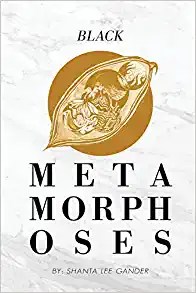
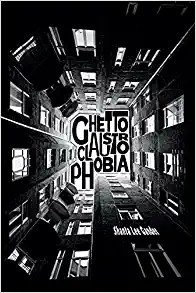
Shanta Lee Books

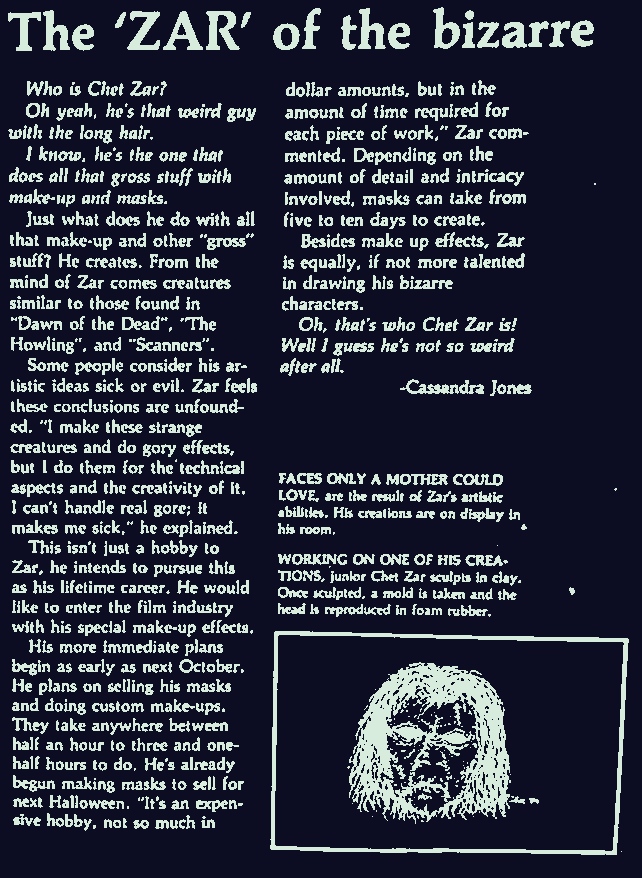
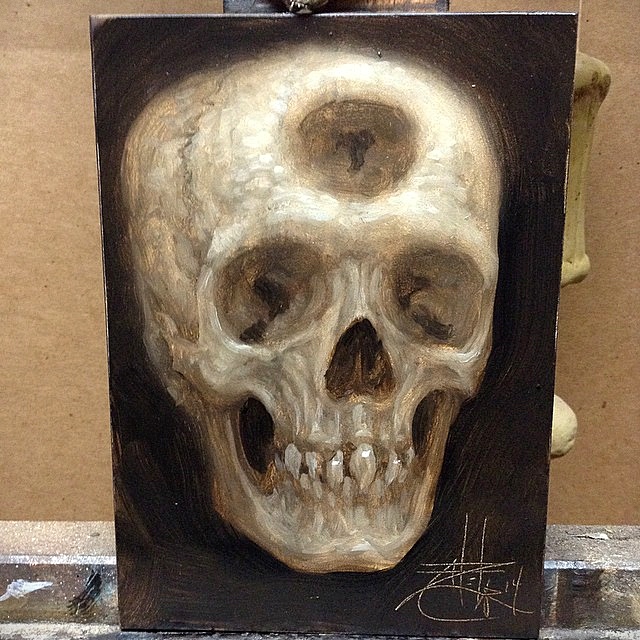
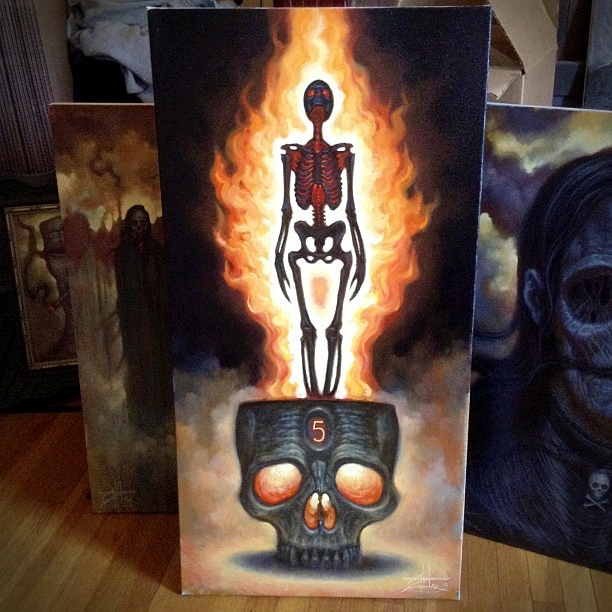
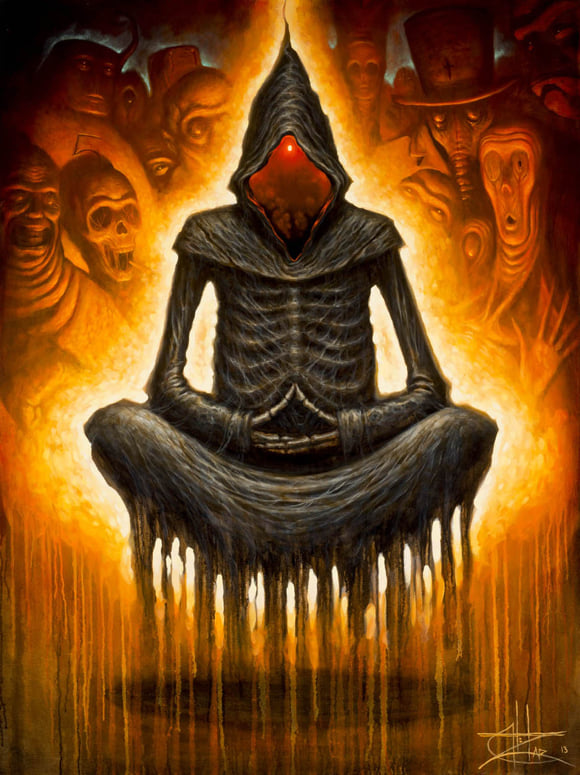
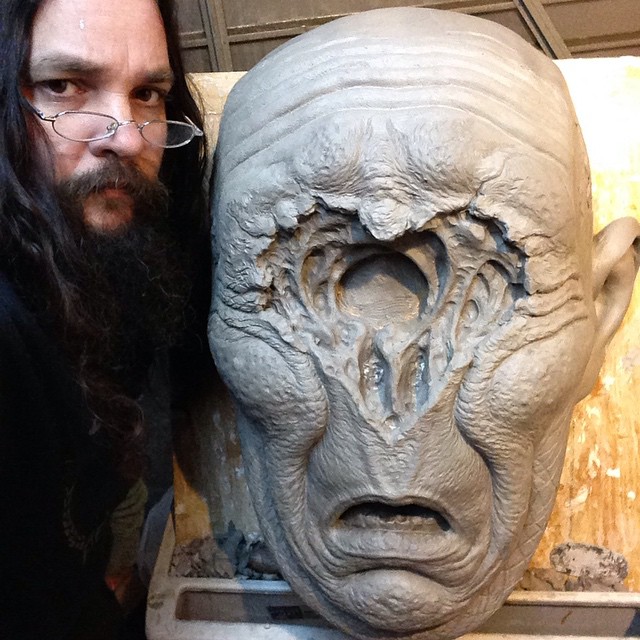
Ego Death During the Lunar Eclipse with Chet Zar

 The ugliest thing I’ve seen is a video of a dog being cooked alive and a picture of a cat being skinned alive. Both were on Facebook. I’ll never forgive whoever posted them. Dogs are my friends. The scarcest thing that has ever happened to me was my grandfather chasing us around a dark house wearing a caveman mask when we were little kids.

from High School Year Book

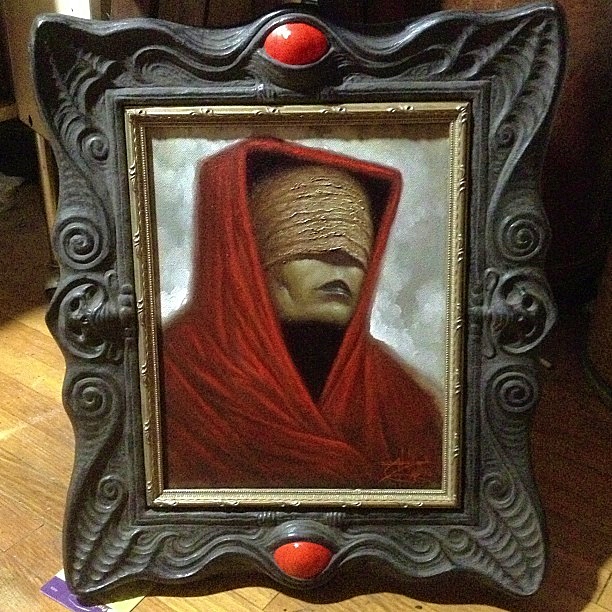
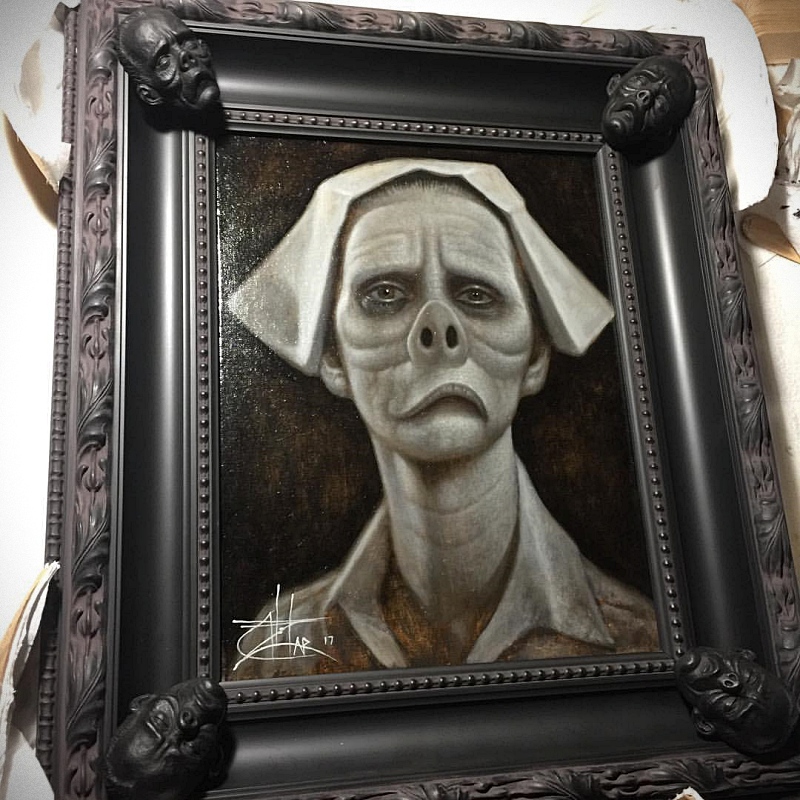
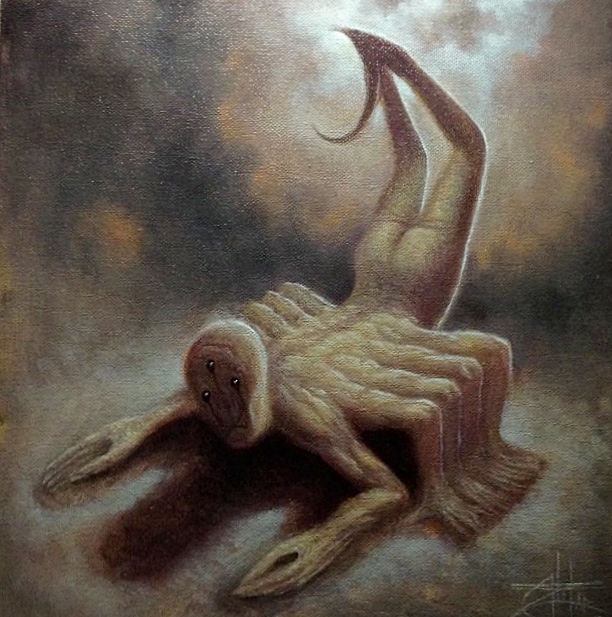
I enjoy muddy colors, the colors the Old Masters used. I just like the warmth and earthiness of them. I use whatever color seems appropriate to me based on what I know about color and how I want the paintings to look.

Art is magick. I don’t think it influences my artwork any differently now that I practice. It’s more like I am aware that it’s basically the same process.


What is Ego Death? The show started with a title, “Ego Death”, and then I built a show around that. The term is pretty misunderstood. In a nutshell It refers to temporarily losing your sense of identity, usually from psychedelics which is a legitimate mystical experience.

There are too many contemporary artists I like. You can look at the Dark Art Society podcast since the majority of the artists I have interviewed I am a fan of. The only new band I can think of that I like is Invasives.

written by ©Chet Zar

Chet Zar

Born on November 12th, 1967, in the harbor town of San Pedro, CA, Chet Zar’s interest in art began at an early age. His parents were always very supportive and never put any limits on his creativity. His entire childhood was spent drawing, sculpting and painting.

Zar’s interest in the darker side of art began in the earliest stages of his life. A natural fascination with all things strange fostered within himself a deep connection to horror movies and dark imagery. He could relate to the feelings of fear, anxiety and isolation that they conveyed. These are themes which had permeated most of his childhood drawings and paintings and are reflected in his work to this day.

The combined interest in horror films and art eventually culminated into a career as a special effects make up artist, designer and sculptor for the motion picture industry, designing and creating creatures and make up effects effects for such films as, “The Ring”, “Hellboy I & II”, “Planet of the Apes” and the critically acclaimed music videos for the art metal band Tool. Zar also embraced the digital side of special effects as well, utitlizing the computer to translate his dark vision with 3D animation for Tool’s live shows and subsequently releasing many of them on his own DVD of dark 3D animation, “Disturb the Normal”.

But the many years spent dealing with all of the politics and artistic compromises of the film industry left Zar feeling creatively stagnant. At the beginning of 2000 (at the suggestion of horror author Clive Barker), he decided to go back to his roots and focus on his own original works and try his hand at fine art, specifically painting in oils. The result has been a renewed sense of purpose, artistic freedom and a clarity of vision that is evident in his darkly surreal (and often darkly humorous) paintings.

His artistic influences include painter James Zar (stepfather and artistic mentor), Beksinski, H.R. Giger, Frank Frazetta, M.C. Escher, Bosch, John Singer Sargent and Norman Rockwell just to name a few.

“Chet’s art is beautiful & scary. His style has a modern twist crashing into a classical approach. I think Chet is a master painter on his way to making a great mark in our little world. Wanna do something smart with your money? Invest in a Chet Zar painting.” – Adam Jones (TOOL)

Chet Zar Store of Doom

Chet Zar Patreon

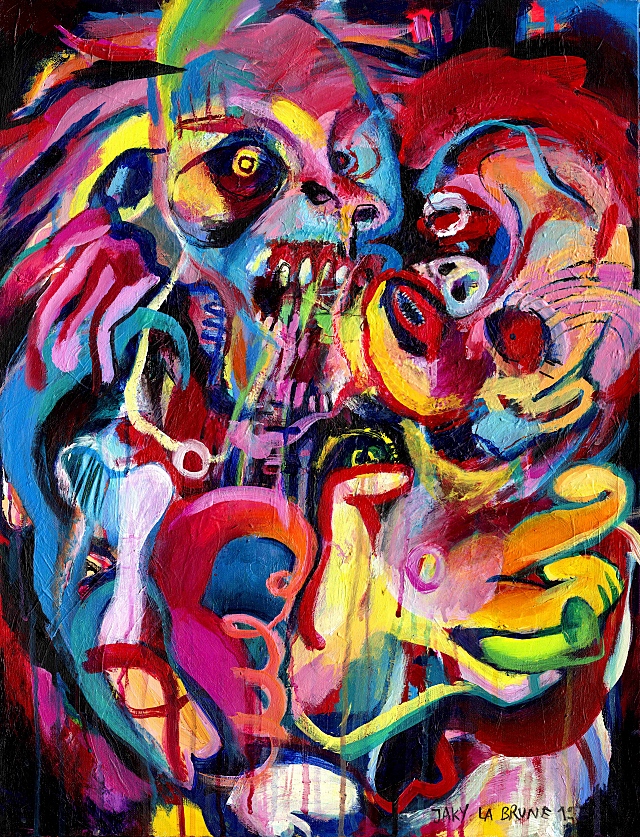
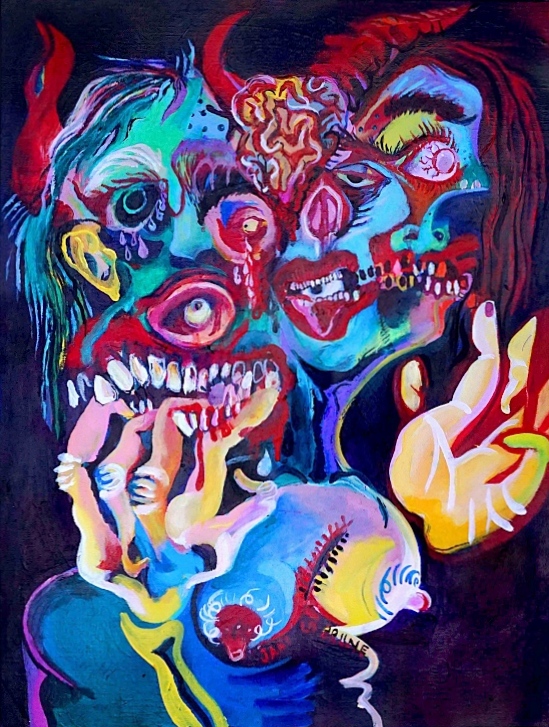
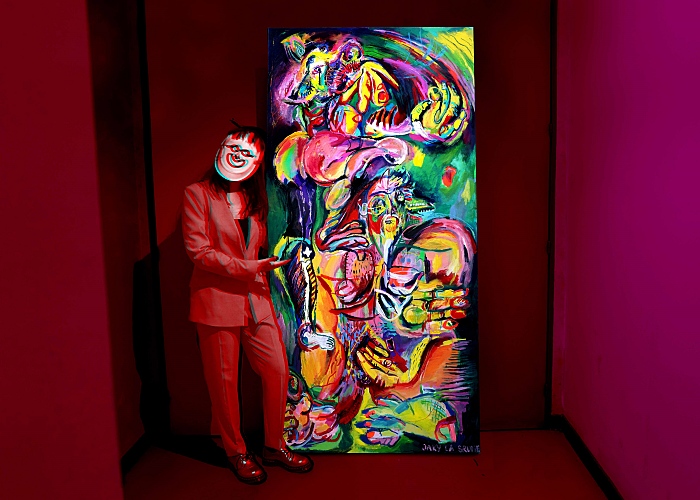
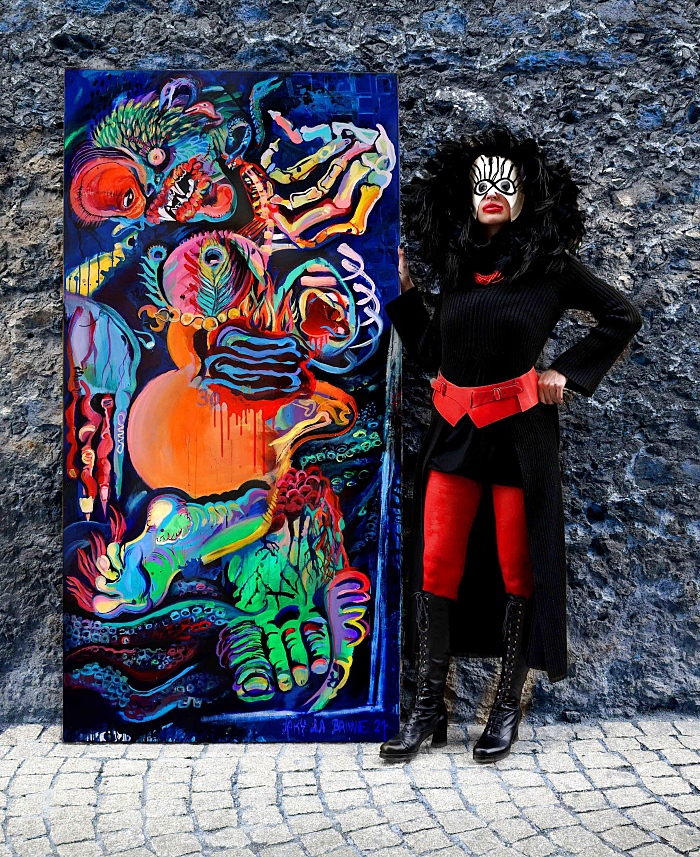
Psychic Theater of Jaky La Brune

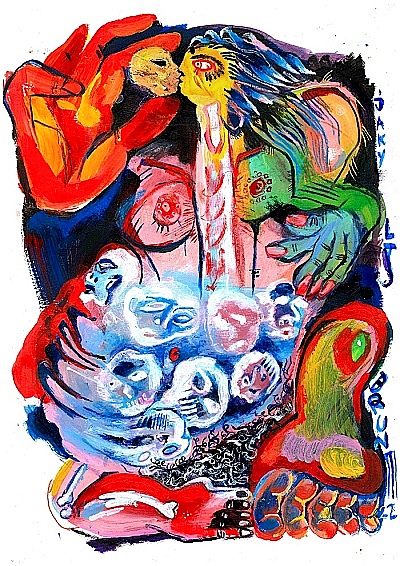
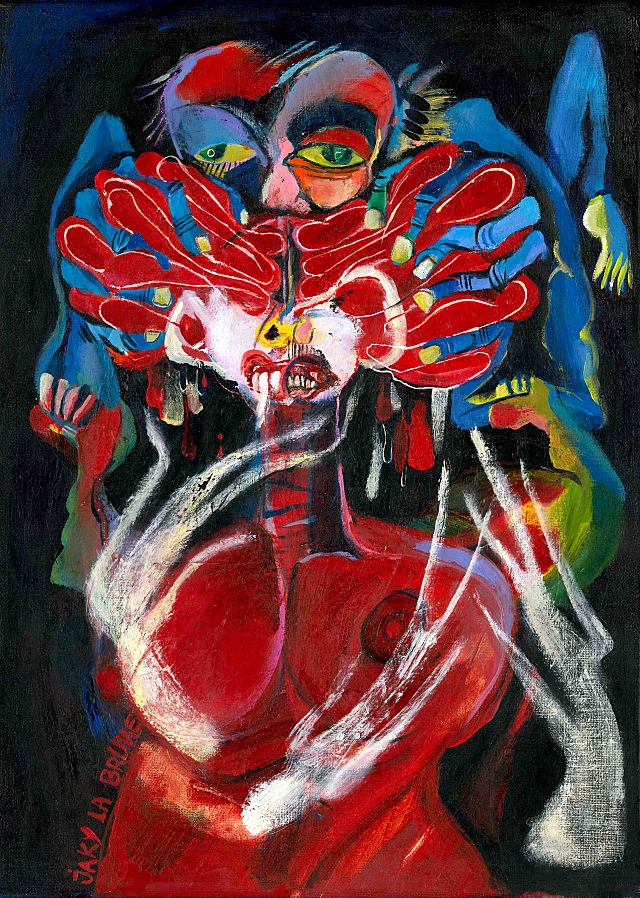
I knew I was an artist when I realized that art was therapy for me. When I’m not painting I’m sad and angry. It has become a daily need to survive like… eat. Creation is for me a “vital outlet”, that is to say that I have to vomit the darkness that there is at the bottom of my guts so as not to sink while continuing to live with the people I love.  It took me a long time to accept who I was. Today it is obvious. I eat, I shit, I paint and I sleep. I think that’s what being an artist is.

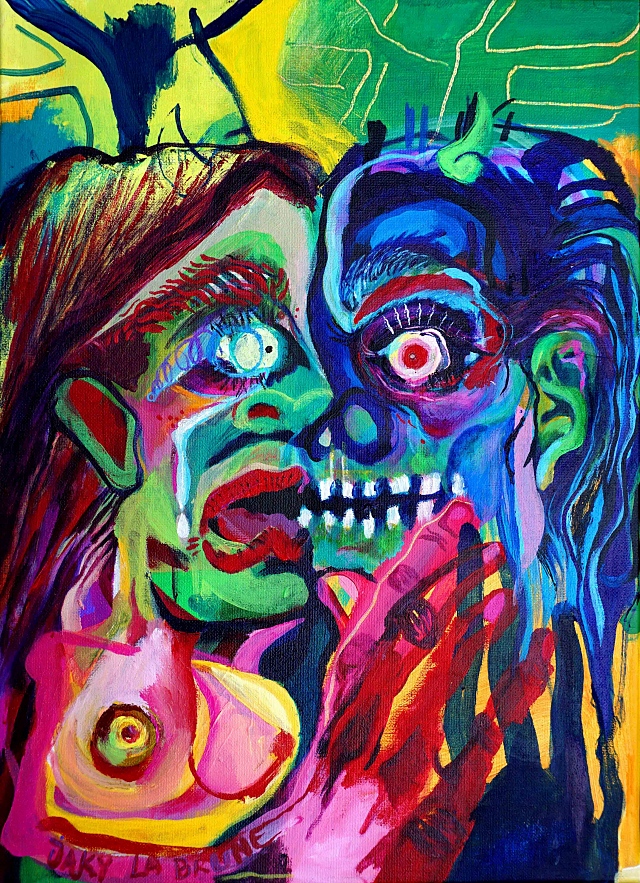
I have a lot of trouble communicating with others. I internalize everything so at some point it has TO EXPLODE ON THE CANVAS. To create, I draw inspiration from my own emotions and feelings that I can’t understand. Through the representation of the human body, I try to communicate these emotions. That’s why my paintings are very visceral: I have to dig into human bodies to see what’s inside.

You can then see in my paintings themes like identity, violence and love passion. Sometimes the spectators see monsters in my paintings but in my opinion, it is more about monstrous humans. It’s important to specify because it’s very different and it says a lot about the world in which we live.

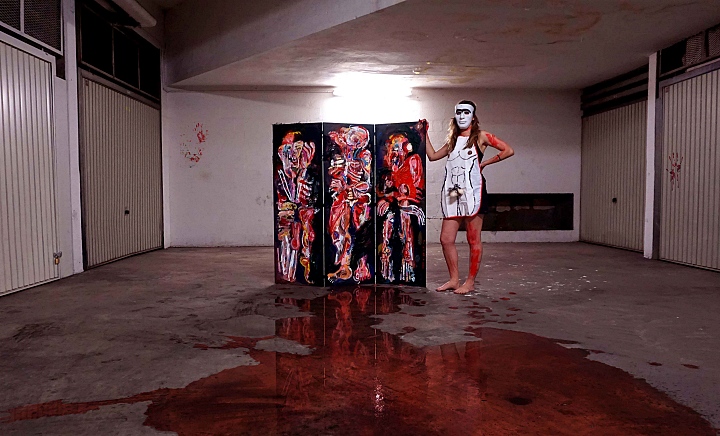
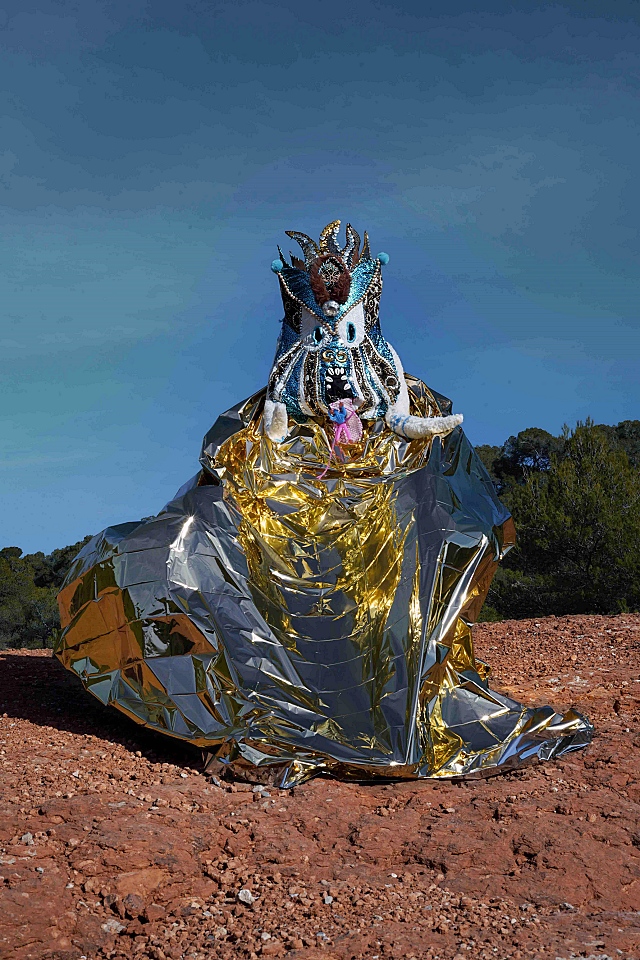
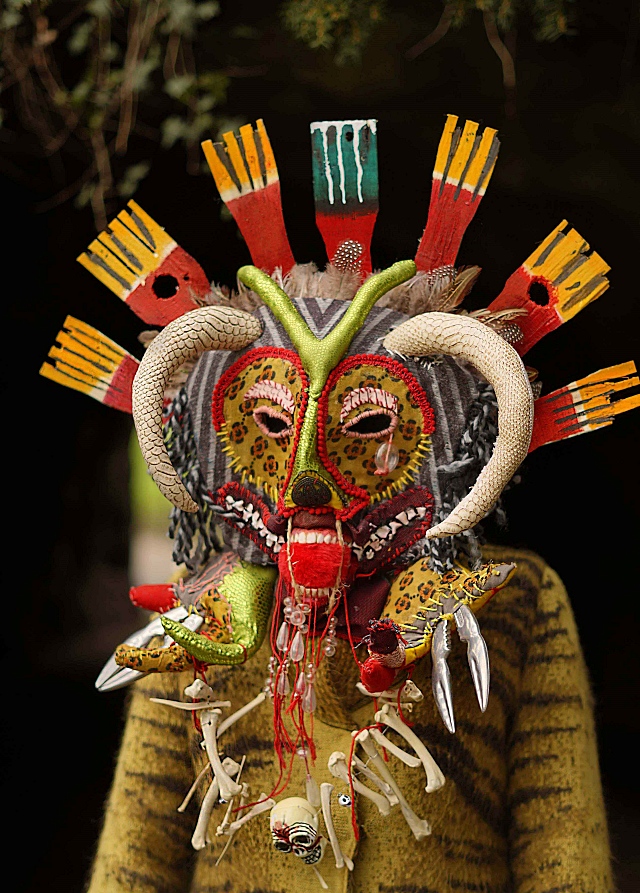
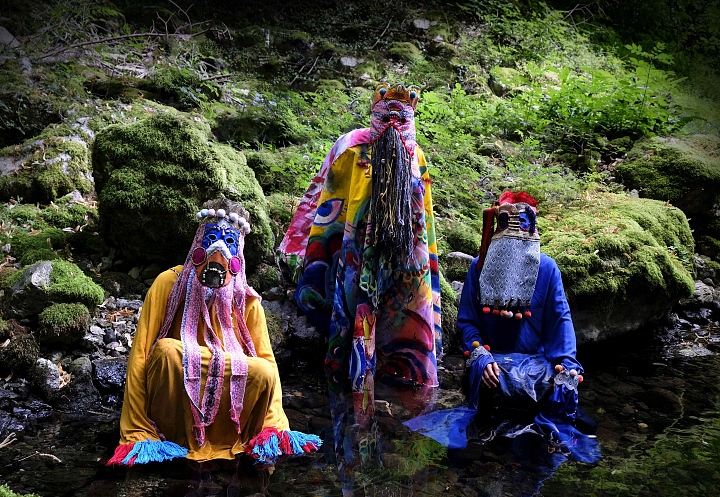
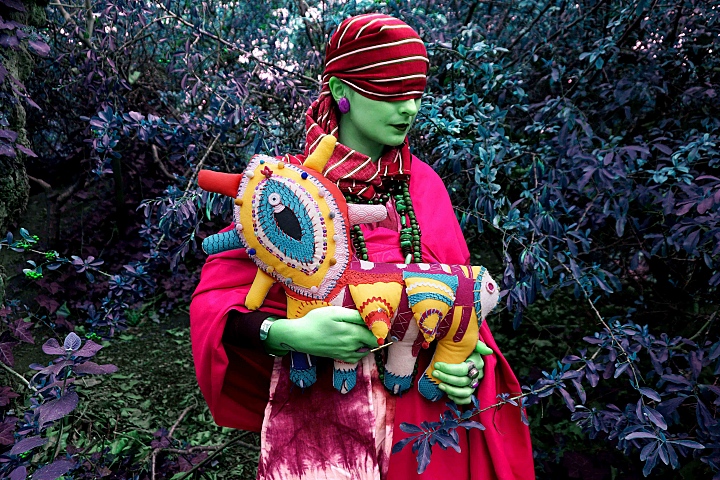
I like to expand my pictorial universe on other supports. For a few years I have been sewing masks and costumes, and I have been doing performances. It’s as if my creatures in my paintings come out and become alive.

Cecily Brown is one of the artists I admire because she manages to find this balance between figuration and abstraction. In his work I see human bodies in motion but maybe my neighbor will see something else. I wish I could play with the viewer as well as she does. I love the idea of being able to inspire multiple stories through a single image.

written by © Jaky La Brune

https://www.jaky-la-brune.com/

Incisions by Marianna Magurudumian-O’Reilly

Born in Russia, of Russian and Armenian descent, with both parents artists-designers who were often working on their projects from home, I was surrounded by art books, architectural models, paintings, and design projects. I was feeling very much a creatively equal part in this artistic household, learning practical skills from an early age and getting ad-hoc art history lessons from my dad: I loved nothing more than sculpting objects, drawing imaginary worlds and creatures for hours, taking myself away on fantastic travels aided by pen and paper.

I started receiving formal art school education from the age of 12. I then went on to study at St Petersburg Stiglitz Academy of Fine and Applied Arts, taking what was considered a more practical Interior Design degree there as one of the youngest students on the course. Having grown more and more disillusioned  with the political situation in Russia, I had an opportunity to continue my education in the UK, where I decided to switch my degree to Fine Art Painting at the University of Brighton, a beautiful seaside town. Having graduated with a First Class Honours degree, I had a great chance to continue onto a 3 year postgraduate course at the Royal Academy Schools in London straight afterwards, eventually settling there for 15 years with my family, before moving to Spain.

My art practice since has encompassed a lot of different mediums: from drawing and painting to making art videos, experimental website design, creative writing, sound design, exhibition curation, and interior design. I’ve collaborated with my husband Daniel, (also an artist and writer,) on The Unstitute – a conceptual art website/online art laboratory which includes various online gallery spaces with monthly curated exhibitions, one-off projects, artists’ residencies, and a ‘zine. We developed a unique digital aesthetic with complex cultural dialogues, promoted and exhibited video artworks by over 130 artists from 33 countries, connecting to a global network of artists. The Unstitute also produced a number of independent short and feature films screened internationally. The Unstitute is free to visit and explore: www.theunstitute.org

My creative inspiration lies in all that excites me to try my hand at myself, a deeper exploration of my interests through practicing a new medium, learning and understanding the character of this practice and developing my own language in it. The themes I have looked deeply into are: French New Wave cinema (Godard, Truffaut, Resnais, Varda), post war Italian cinema (Fellini, Pasolini, Antonioni) and existential philosophy (Sartre, Nietzsche, Kierkegaard) which influenced a lot of video works, surrealist paintings (Carrington, Varo, Ernst), and the writings of Kafka and Deleuze – as well as other numerous sources. The fantastic architecture of Gaudi has been referenced in my design work, classical and experimental dance music has inspired my own sound design projects and developed my sensibilities. I like to mix disciplines, and I don’t feel the pressure of tying myself to making one type of thing; when it becomes a chore it lacks a particular kind of energy, an excitement to harness the subject, and to communicate in that language it needs to be left alone to breathe for a while. 

Having come full circle, I’m now developing ideas through drawing again. Drawing, a very immediate medium, enables me to play with the material and with my mind. I use various surfaces around our old Catalan house with a 100 years worth of thin plaster washes that are rich in texture, cracks and chips, a detailed history of use that is translated into some faint, random marks, by rubbing the surface with graphite on paper. Sometimes, I close my eyes and choose colours and draw shapes at random, or I just scribble something on paper absentmindedly. Thus, I’m presented with a series of opportunities for ‘communication’ with the work. I get into a meditative, slightly detached state, letting expectations go as much as possible before letting the drawing speak to me, to open my mind to suggestions. I see frottage – the initial rubbing – as a basic skin or gauze that is tied over an already existing image; it’s a game of recovery of the image.

It’s like the whole of humanity, the natural world, the cosmos, all my sources and histories are squashed together in a tight bundle of stuff that constantly mutates and changes in a continuous movement, a dance that is hidden under the surface of drawing paper. You never know what you are going to find by scratching the surface. By gently drawing on this skeleton of marks, repeating its forms over and over, I start slowly beefing up the initial image, or I take layers off, exposing that image underneath, akin to archaeology. I can recognise various marks, characters, memories of small details like a gesture or a shine on the nose, and the stuff from daily life starts to poke through this initial wild collage of bits, merging and mutating in my unfocused eyes. By gently excavating a partial image with a soft brush as it were, by gentle strokes, I nurture that image into the light, extracting, distilling it from the initial marks. As if stroking the skin of paper over and over, massaging the organs, getting the inner machinery as it were to start kicking into action. This process produces a clearer idea of what the image is and what it wants; it starts working itself out, the cogs fall into place. When I feel that an image I’m working on is becoming independent, it starts constructing itself with that inner machinery confidently and becomes almost confrontational in its new independence, then my work is done. Art for me is an organic process which continues evolving in the eyes of the beholder.

written by © Marianna Magurudumian-O’Reilly

Pascal Manitoba Emergence of the Sunflower

An atypical course… Manitoba by its artist name lives and works in Biganos on the Arcachon basin. French international artist born in 1966 in Algéria, self taught psychedelic and visionary artist, began his career at 48 years old , he took a 180-degree turn and left his job as a chemist to devote himself to his revelation, painting. This total questioning allowed him to express his great freedom as an artist.

An Eye on Emptiness
In the heart of the moment,
where time unravels,
At the heart of oneself, where no one
Others can go, build
Where to rebuild from nothing
What completes us
To just have to be
Fill this emptiness
Who fills the gaps
As long as we dare to share
Without hesitation without shading
As beautiful nature made us
In the blood fire
From our boiler
To happiness that fills us
The heart, like the child, the bird
Who paws and whistles the curious
Impatience of in body
To be surprised to be...
And drill
The mystery,
There where
transparent
The silence
Of between
The
Words...
To the life
In love

An artist, on the one hand in reaction to societal behaviors that paralyze many minds. But also to shake off this gloom and this funny habit that humans have to complain and believe that everything comes from outside …

The Emergence of the Sunflower
Presentation in the sun
To the heliotrope thought
As we turn
Towards the star of light
I light the fuse
tinder, fungus
Trees, saprophyte
If any, getting rid of
Slag and other lures
Societal, for its petals
Get out of the futile, the straightjacket
Of what will you say
and leave the flower in the beak
Beat nature awakening
In and around you.
Let consciousness emancipate
Brillamos, a little, a lot
To insanity
the cat's paw Man
Live the emergence and cultivate our nature
And the one who welcomes us, a good vibe

The Dead Flower More

Manitoba takes us on a journey through its colorful and spiritual universe where shapes and colors combine infinity. His art transmits passion and thirst for life, inspired by an original movement in the spirit of an ancestral memory, close to the primary arts. The artist invites us to the source, of all these lives around us and this natural song of hope that grows beyond borders and other forms of conditioning. A little shamanic, he invites us into the silence between the words, as if out of time, for a moment …

written by © Pascal Manitoba

Dream Incubation in the Temple of Sleep

Incubation is perhaps most easily understood in contrast to the art of Theurgy or ‘Work of the Gods.’ Theurgy is a process of anabasis or magical ascent whereby practitioners, such as the early Neoplatonists, especially Iamblichus and Proclus, achieved henosis or mystical union with a deity or the demiurge. However, anabasis was not always of primary importance, or even of interest, to many of the ancient Greek philosophers and magicians. More than five hundred years before the Neoplatonists arrived on the scene, Presocratic poets and philosophers, including Pythagoras and Parmenides, were preoccupied instead with katabasis—a dreamy descent to the domain of the dead, and to the dark goddess who rules over that realm.

Mirror Gazing Ecdysis Mitchell Pluto 2022
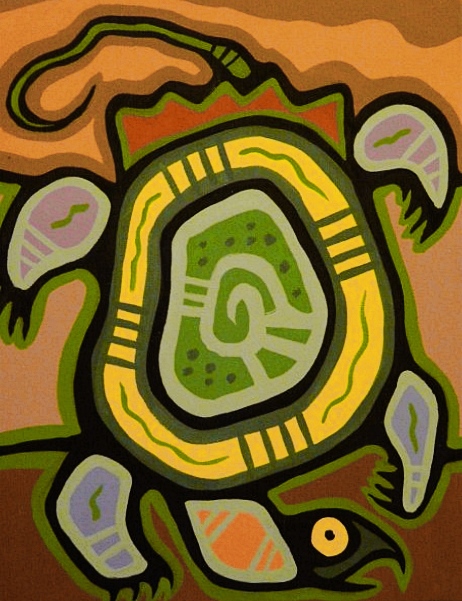
For the Platonists, katabasis was understood as the descent of the soul into a body upon incarnation. Hades, additionally, was allegorized and viewed as the very world in which we, as incorporated beings, inhabit. Socrates says to Callicles in Plato’s Gorgias, for instance, “[perhaps] in reality we’re dead. Once I even heard one of the wise men say that we are now dead and that our bodies are our tombs.” Again, in the Phaedo, Plato has Socrates say to Simmias of Thebes, “[we], who dwell in the hollows of [the earth], are unaware of this and we think we live above.” And, later in the same dialogue, “Those who are deemed to have lived an extremely pious life are freed and released from the regions of the earth as from a prison; they make their way up to a pure dwelling place and live on the surface of the earth.” Therefore, the only way to go, for Plato and his successors, was up—in an anabatic flight to the demiurge, through the various planetary spheres that separate the divine nous and Monad from the sensible world below. Theurgy was the means by which such an anabasis was accomplished. The Presocratics, conversely, leaving Mount Olympus to the gods, for the most part, focused their energies instead upon katabasis; on transporting themselves to the netherworld.

Dream Mare Mitchell Pluto 2022
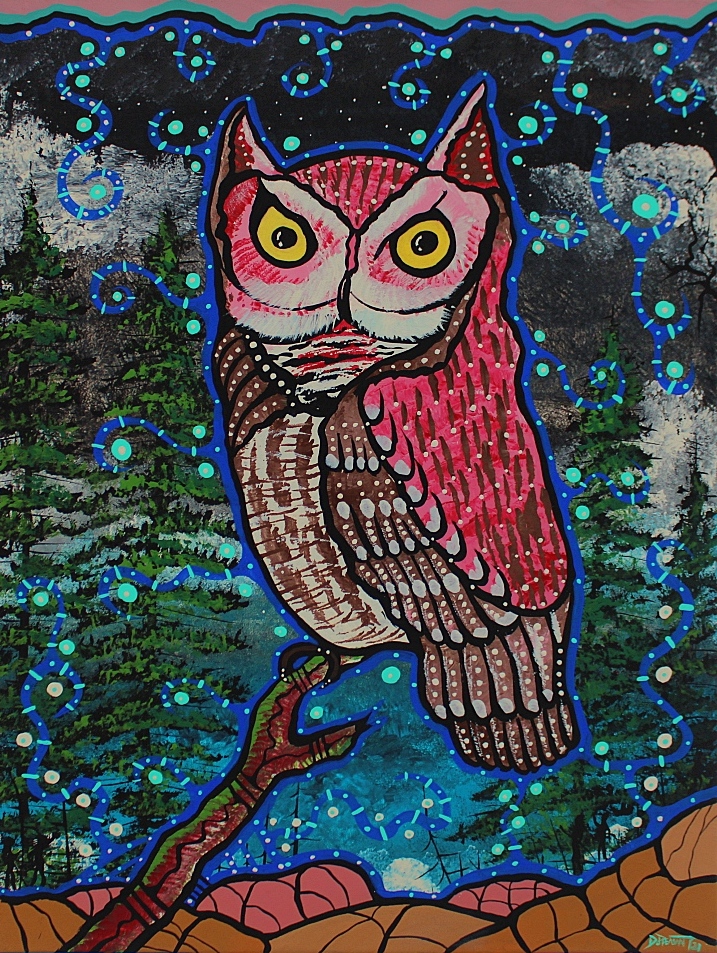
The means by which these iatromanteia or “healer-seers” directed this delirious drop was via the use of an ancient divination and healing technique known as incubation. In ancient Greece, this was generally done inside of sacred and secluded caves that were sacred to certain gods, daimons, nymphs, and other metaphysical entities. Eventually, the practice would be translated to special temples dedicated to the technique, and finally into a special incubation chamber, usually positioned adjacent to the temple itself.
The ancient Ionian Greek philosopher, recognized as the ‘Father of Western Philosophy,’ Pythagoras of Samos, for example, is said to have descended to Hades by entering an underground cave. While Pythagoras left no writings of his own, the late Neoplatonic philosopher, Algis Uždavinys, a past head of the Department of Humanities at the Vilnius Academy of Fine Arts, Kaunas, explains,

the subterranean tomb-like chamber represents Hades for Pythagoras. Hence, Pythagoras descended into Hades, that is, the subterranean holy chamber (like the Holy of Holies, entered by the Jewish High Priest on the occasion of Yom Kippur) that he had made himself, according to Diogenes Laertius (Vitae phil. 2). When he came up, withered and looking like a Shaiva ascetic, he said that “he had been down to Hades and even read out his experiences [aloud to the crowd].”

A similarly famous although obscure Presocratic philosopher, Parmenides of Elea, celebrated as both the ‘Father of Logic’ and the ‘Father of Metaphysics,’ wrote a dactylic hexametrical poem recounting his trip to Hades, and the underworld goddess whom he encountered. At the junction of three roads, the goddess instructed Parmenides as to the true nature of reality. His proem to “Peri Physeôs” begins,

The mares that carry me as far as longing can reach
rode on, once they had come and fetched me onto the legendary road of the divinity, the road that carries the man who knows through the vast and dark unknown.
[…]
And the goddess welcomed me kindly and took
my right hand in hers and spoke these words as she addressed me…

In his proem, the divinity proceeded to instruct Parmenides in the laws of logic that we know today. That is, it was a mysterious, underworld goddess from whom Parmenides received the very rules of reason, with which he returned to the land of the living for the inauguration a new era. To a world which turned on mythos—mythology—Parmenides introduced the novel pivot of logos—logic. Although, we must admit that the weird way in which the ‘Father of Logic’ acquired that understanding appears to contradict the very laws with which he was entrusted.
Moreover, Parmenides’ words may provide us with a subtle indication of just what incubation may have entailed for these heroes of Hades. The first thing the poet mentions are the mares that pull his chariot. The chariot is a token of the sun god, whose solar vehicle is pulled throughout the skies by a handsome team of heavenly horses. Indeed, ever since the time of the worship of Shammesh or Utu, the sun god of ancient Mesopotamia, the chariot has been the province of the Sol. But, the sun isn’t just about the light—for, the sun also journeys into the Underworld, like Osiris in the Dwat, through the dark, intuitive animations of Aidoneus’ alcazar. Every time we venture into sleep, we quietly and blindly slide into the Stables of Silence. Hence the false etymology suggested by the word nightmares, ‘horses of the dark.’ Like the Hunter’s three-legged horse in the fairytale of the Princess and the Tree, these ‘nightmares’ “know everything”—including the invisible way to the “legendary road” that leads to “the divinity.” The archaic techniques of dream incubation are akin to these mystical, Moiraic mares, and they alone are possessed of the potential to move us from the familiar to the fringe—down the alien road that carries the “man who knows” through the “vast and dark unknown.”

P.D. Newman October 16, 2022

P.D. Newman

P.D. Newman is an independent researcher located in the southern US, specializing in the history of the use of entheogenic substances in religious rituals and initiatory rites. He is the author of the books, Alchemically Stoned: The Psychedelic Secret of Freemasonry, Angels in Vermilion: The Philosophers’ Stone from Dee to DMT, and the forthcoming title, Day Trips and Night Flights: Anabasis, Katabasis, and Entheogenic Ekstasis in Myth and Rite. The Secret Teachings of All Ages (TV Series documentary) 2023

The Hug
Acrylic on canvas 60x80cm
Hoda Hussein 2022

14 September 2022 7:17 pm Earth Greenwich time zone

A letter from Oranous to Pluto on the Sleep Temple

Who believed their bed was a four-legged bear taking them on their back for a night sky ride as their own bear cub? I did. And I always woke up in the morning and kept my eyes shut till I hear family voices in the house so I am sure my parent bear landed me in the right place to start another day acting like a human. It takes practice to master acting like a human this is why we have to do it every day. But we must also not forget who we are this is why parent Bear kept their legs and body in the human house but with their tail and head on their own and took me as their child on journeys and trips at night where I can be in awareness of all that is. No wonder it was very difficult to pretend I am afraid of the scarab that landed on my hand in the nursery! I was not. The teachers were. And that was weird to me. I suppose I also was weird for them. However, I kept that memory of the friend scarab insect that tickle my palm and I still smile at that. Who would think I had an oil well in my salon where I bathed in whenever exhausted and opened my veins to it renewing my blood completely in sessions where Hathor was standing at my back massaging me? Okay well, I had a Native American tribe settling their tipi in my living room so… Let’s say this is normal in my life. So what is a sleep temple or a dream temple? I am! Well, I guess we all are in a way. Always just believed in a sacred temple where the blood circulates around the heart like pilgrims around the sacred cube of “Ka’ba” hence ka and ba. But as I can move and I am not still at all I prefer to see myself as a Mer-ka-ba “boat in Arabic”. Oh, how I loved this when I knew that Mer meant beloved in the ancient Egyptian language! Yes I know I am loved and visited but all types of loving beings. This is so beautiful! Still, I don’t think I learned yet to act humanely perfectly and instead I look for my equals who also could not really perfect the like human acting. There is something beautiful in our imperfections. Kind of childish and more related to the womb than birth. A whole multiverse moving changing developing evolving in action inside the womb of space. A multiverse that is in fact one single child in process of becoming. Did I tell you I once dreamed of having surgery on my lungs and my heart? Well, I did. And the woman doctor gave me a prescription. That I followed! I would not be that committed following a prescription of a daily life touchable doctor, so-called “real” anyway.

Hugs Bye for now

Hoda Hussein

Hoda Hussein

Egyptian creative writer poetess and novelist, artist painter and translator. Published many poetry books and novels in Arabic language. Represented Egypt in poetry and novels festivals and encounters in several countries like Yemen, Spain, India, France, Cuba, and Chile. Made creative writing workshops for kids in many schools in Cairo Egypt. Received rewards for poetry, novels and for translations in Chile, Macedonia and Egypt
Was entitled as a universal ambassador for peace by the peace ambassadors circle that works under the UNESCO

The Inhabitant of the Dream Temple
Verónica Cabanillas Samaniego

The temple of dreams is located in principle in an unlimited place, it is not exactly an island, it is the sky itself in immense melancholy, surrounded by the sea and in the absence of farewells. Towards all directions a path towards you, and I discover each treasure at the bottom of the word. In the absence and presence of everything, I hear bordering a harmonious song flowing like an infinite abyss around us.

The Temple of Sleep in self.
Verónica Cabanillas Samaniego

The paradise that we have penetrated and invented is resolved like the design of a luminous dream, which we glimpsed to see a long time ago, until we rediscover the trace, shake off the dust and build the raft that takes us from me to you and vice versa, yes, on this side the sleep is deep, in this temple of gods we are simple people, trying to take forever a piece of heaven and looking for a dignified death, where our names are heard and pronounced only by hallucinated insects and dogs on the last day of the humanity, we only dream that on the last day of the world we will not forget to feed them, and the last poem we wrote and the last brush stroke on the white we gave, undermine my pain to the depths, and be reborn in a beautiful pack of dogs, in another time, another planet, another galaxy as far as we can see in the temple of dreams. Because only the measure of the vision is equal to the measure of what is imagined and because everything that one builds is the measure of what he managed to imagine. In the temple of dreams I realized that, and why I was already here

Verónica Cabanillas Samaniego.
Algarrobo, Chile, Octubre 2022.

Verónica Cabanillas Samaniego

Verónica Cabanillas Samaniego (Lima, 1981), is a poet and visual artist. She has exhibited individually in Lima and collectively in Europe and Latin America: El asombro del colmillo, Le Petit Canibaal, Valencia (2014); Ludwig Zeller, composing the illusion, Taller de Rokha Gallery, Santiago de Chile (2017); One hundred years of Surrealism, Espacio Matta Cultural Center, Santiago de Chile (2019-2020), International exhibition of surrealism, Kudak Gallery, Cairo-Egypt (2022), Echo of contemporary surrealism, French Institute of Alexandria, Egypt (2022). She published in 2014 TUyYO by desktop publishing and participates in various poetry anthologies: IXQUIC. International Anthology of Feminist Poetry (Editorial Verbum, Madrid, 2018); Wagered deep on the run of six rats to see which would catch the first fire / Surrealist and Outsiders (RW Spryszak, Chicago, 2018); Liberoamericanas, 80 contemporary poets (Liberoamerica, Spain / Argentina / Uruguay, 2018); Narrow doors in wide green fields / Surrealists and Outsiders (RW Spryszak, Chicago, 2019). She has participated in the V Lima Poetry Festival (2014); IV Antifil Alternative Book Fair, Lima (2019). Her visual work is published in Derrame magazine (Chile), Canibaal (Spain), La vertèbre et le rossignol N ° 5, Vies de Saint-Artaud (Canada), Vol (France), The Room (Egypt). She is part of the book 120 nights of Eros, a compendium of surrealist women made by Floriano Martins, ARC editions, Brazil (2021). She currently co-directs with Magdalena Benavente the magazine Honidi Magazine, in Algarrobo, Chile.

Rene Fernando Ortega Villarroel

FROM THE SOUL.

The melody of silence.
I search endlessly for labyrinths across the fields I will find.
Plants have eyes and they see me.
I spill my blood of color pigments.
With the wind I always seek to know infinite mountains wrinkled by time.
That golden light lets me dominate, with veiled rain and magical scents from my hidden memories of a man of the land.
Luminous nature with an open belly shows me a trace of the sun.
Conscientious without desolation, living nature, the plants have begun to love me.

DESDE EL ALMA.

La melodía del silencio.
Yo busco laberintos sin cesar a campo traviesa voy a encontrar.
Las plantas tienen ojos y me ven.
Derramo mi sangre de pigmentos de color.
Con el viento siempre busco conocer infinitas montañas arrugadas por el tiempo.
Esa luz dorada me deja dominar, con lluvias veladas y olores mágicos de mis recuerdos ocultos de un hombre de tierra.
Naturaleza lumínica y de vientre abierto me muestra un trazo del sol.
De conciencia sin desolación, naturaleza viva las plantas han comenzado a quererme.

Rene Fernando Ortega Villarroel Santiago, Chile, Octubre 2022

Rene Fernando Ortega Villarroel

René Ortega, was one of the winners in the international biennial of contemporary art October 3, 2022. Rene has exhibited work in Chile and Argentina. He is involved in many cultural art programs that have related to hospitals, children and teaching art professionally. His most recent show was Mental Labyrinths at the Til Til Cultural Center Art gallery on June 18, 2022

“My concern is the human figure as a feeling of primitive and irrational states, whose main point are the heads, universal thought of the creation of man and center of the universe. All this led to a mutation of the plastic and pictorial language”.

Featured art photo Rene Fernando Ortega Villarroel

Angel of the Paths Claudia Vila Molina

Texts extracted from the unpublished collection of poems “Ciénaga”

5
21 seconds they play your name
Like a shooting star I count the spaces
To lose myself in the water.

6
We are stopped by the claws of the wind
It’s time to sleep they tell us
we are asleep
Like fugitive silhouettes
We have gone astray.

7
The angel of the paths leads
our light
his hands lengthen the stems of the day
stretch contours.

8
My cloud brings pieces of time closer
I’m gloomy like these worm-eaten plants
Someone else will come from the night
To collect some forgotten landscape.

9
Unexpectedly I open my eyes towards you
I like to hear whispers from the outside line
Your eyes open other doors
And they stay sheltered from the shade.

10
Since that time I remember you
You slowly invade my landscapes
Cold voices bring the threads of that web closer
They surround the absent body.

11
I will open my eyes once more
When the stars dwell in our bodies
And a drop slipped through the skin
Suspend all reefs high.

12
Violet petals fall successively on us
The wind is gone, but the shadow remains
Water slides streams into the night
And the last fire extinguishes my stars.

Poems extracted from the book “Poemas de sur”

House and Plum IV

Stealth remains attentive to all caresses
My kisses keep looking for their route
And I remember the first home, the smells tremble with their laughter
Your look weighs on the eyelids of the imagination
The smells will come to dream of the intimate past
So long without looking back
Memory takes so long
It’s something illusory like the blue roses in the garden
The bridge where I whisper a name
a silhouette arrives tired to tell me
that figure sits in the memories
And I can no longer hide
in the holes of the old walls
but if the shadow is your name
I will continue whispering inside the empty space
and the walls will see their signs in the passing of things
beyond we will continue drawing in the rooms
and they will continue to walk through those passages
where the smoke today flies calmly.

House and plum V

We remember the fog visits us through the window
The green eyes returned to tour our nights
And an old walker passed through the house
We return to the site of the visits
The lamps lulled the traveling sound
Only God listens to us on this winter Friday
And I whisper to you not to repeat things
Our gestures turn off the lights
Fall memories unwrap
That house creaked in the front room
Eyes flickered subject to the crackle
A voice speaks words
I don’t know them anymore, the voice is barely heard
Between the trees you fly to contemplate the past
And the tree held by the foreign night
We are silent to hear each other in this stillness
Sleeping trees glow in the dark
They stretch their arms towards the house in the silence
The wind returns
And we as relic-weary passengers
We take care of the necessary gestures
Things twinkle distrustful of destiny
And only tonight can they blink in regret
Because the trees examine our deep voices
And no one will be able to descend from the passageway
And listen to the unknown song.

written by ©Claudia Vila Molina

Claudia Vila Molina

Writer born in Viña del Mar, Chile. Professor of language and communication at PUCV, poet and literary critic. In 2012, she published her first book, The Invisible Eyes of the Wind. She has published in renowned Chilean and foreign digital media: Babelia (Spain), Letras de Chile (Chile), Triplov and Athena de Portugal, among others. During the year 2017 she participates in the Xaleshem group with poetic texts for the surrealist anthologies: “Composing the illusion” in honor of Ludwig Zeller and “Full Moon”, in honor of Susana Wald. In 2018, she integrates the feminist anthology IXQUIC released both in Europe and in Latin America. In 2020 she participates reviewing the conversation book “Shuffle poetry, Surrealism in Latin America” ​​by Alfonso Peña (Costa Rica), also writes a poetic prose text for the book “Arcano 16, La torre“, by the same author. Likewise, she participates in the book “120 notes of Eros. Written portraits of surrealist women” by Floriano Martins (Brazilian surrealist poet, writer, visual artist and cultural manager). In this year (2021) she publishes her second poetry book Poética de la eroticaamores y desamores by Marciano editores, Santiago.

Featured art photo Peppermint Patty girl Oil, collage Mitchell Pluto 2022