P.D. Newman
Internationally recognized author and lecturer specializing in the use of entheogenic compounds in magico-religious settings. P. D. Newman has been immersed in the study and practice of alchemy and theurgy for more than two decades. A member of the Masonic Fraternity, the Society of Rosicrucians, and the Martinist Order, he lectures internationally and has published articles in many esoteric journals, including The Scottish Rite Journal, The Masonic Society Journal, and Invisible College. The author of Alchemically Stoned and Angels in Vermilion, he lives in Tupelo, Mississippi.
An altar constitutes a sacred space insofar as it is a deliberately constructed liminal space. A space is made sacred first and foremost through the creation and maintenance of a vacuum within it—it is the mystical act of reverting an area back to its natural, chaotic state. What is then invited to fill this void constitutes the divine FIAT—the magic “word” whose essence will thenceforth inform that space and all that transpires in it. Ergo, nothing is permitted to penetrate that void which is not in harmony with essence of the god. Those things that are harmonious with a given essence are termed ‘symbols’ and ‘tokens’ of that essence. These do not simply represent or correspond to the god, but rather constitute the deity himself in miniature form—a fractal-like manifestation of that essence which recapitulates and reiterates the totality of the god upon the microcosmic plane.
The Neoplatonist, Proclus, once stated that Soul “contains images of [things] and detailed, essential [seed forms] which are like statues of things themselves.” Even the names of things, therefore, arise from Soul and amount to veritable ‘statues in sound’ that really are the things described. If the name of the god is a presence of said deity, how much more an actual image? The profane view is that the worshipper believes the god to reside within the statue gracing the altar. This is absurd. No, the statue is in the god, as are all the symbols and tokens descending from his essence. Indeed, gods are beyond space. In reality, it is the altar that occupies the god.
Claudia Isabel Vila Molina
born in Viña del Mar, Chile. Professor of language and communication at PUCV, poet and literary critic. In 2012, she published her first book, The Invisible Eyes of the Wind. She has published in renowned Chilean and foreign digital media: Babelia (Spain), Letras de Chile (Chile), Triplov and Athena de Portugal, among others. During the year 2017 she participates in the Xaleshem group with poetic texts for the surrealist anthologies: “Composing the illusion” in honor of Ludwig Zeller and “Full Moon”, in honor of Susana Wald. In 2018, she integrates the feminist anthology IXQUIC released both in Europe and in Latin America. In 2020 she participates reviewing the conversation book “Shuffle poetry, Surrealism in Latin America” by Alfonso Peña (Costa Rica), also writes a poetic prose text for the book “Arcano 16, La torre“, by the same author. Likewise, she participates in the book “120 notes of Eros. Written portraits of surrealist women” by Floriano Martins (Brazilian surrealist poet, writer, visual artist and cultural manager). In this year (2021) she publishes her second poetry book Poética de la erotica, amores y desamores by Marciano editores, Santiago.
Rituales poéticos
El corazón me sabe a pañuelos mojados
Hoy escucho la canción de los océanos
Y alguien más viene a mirarme
Las algas suben por mis pies hacia las últimas rocas
En este elemento volví a imitar los arrecifes
Ellos callaban
Me miraban tiernamente
Como solo miran quienes están en estado perpetuo
Y quise salir fuera de mi nombre
Quise volar desde las ataduras de mi cuerpo
La noche no halló sus otros puñales
Y me concedió un nuevo deseo.
Del poemario inédito Solsticio de invierno, derechos reservados.
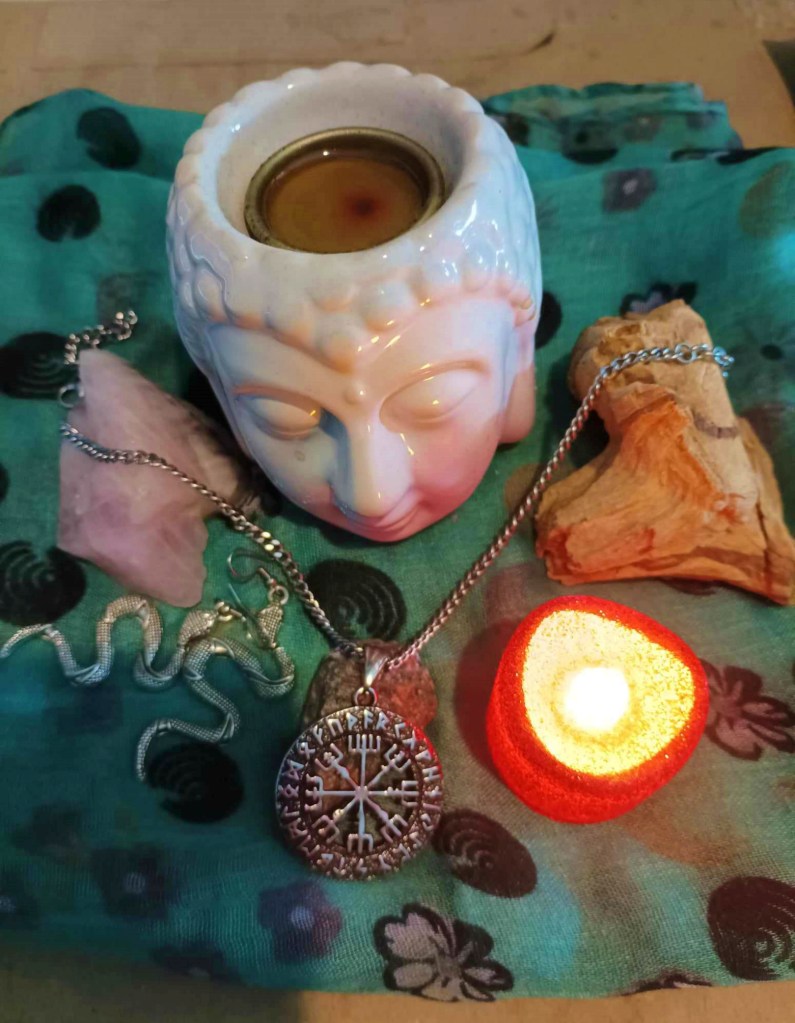
Olesya Volk
Born in Baku, Azerbajan, lived in Moscow from age 16 and moved to Los Angeles in 1992. She holds a M.F.A. in Film &TV, majoring in Animation from UCLA; and is involved in painting, writing, illustrating, cartooning, mixed media, paper theatre and small size dioramas.
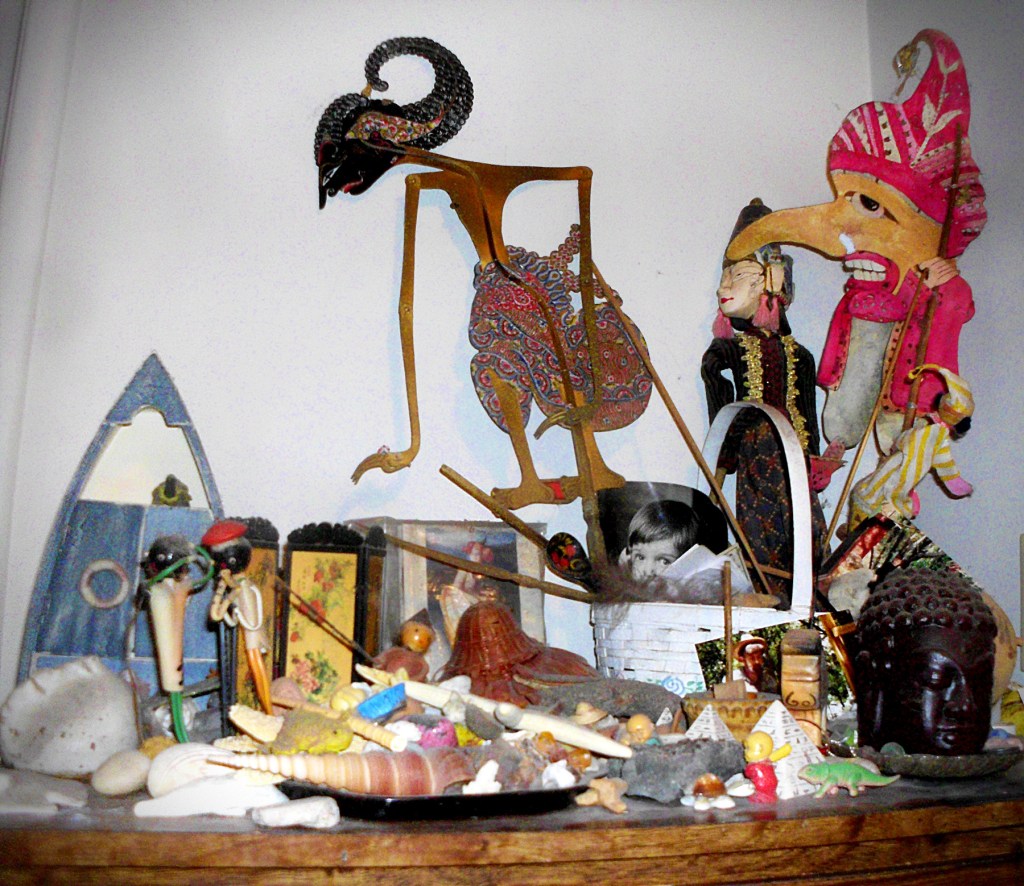
My altar: The inspiration for me always comes from the area deep inside my memory, it is connected to my childhood.
That is why my personal altar reminds of a little village that existed on a shelf in the cupboard at our place when I was a child. That village had a pond and a mill, woods and little houses. It had fishermen, singers. musicians, dancers, witches and sages, and a couple of hooligans. it had the place for games and the place for meditation and talking to spirits. Me and my sister and my mother were in charge of the village, and the villagers were protecting us and granting our daily wishes. The inhabitants of that village are still living with me! some of them are seen in the altar, the others have settled around in different corners…they continue to protect and manage the ties with the other worlds. My altar tries to copy visually that village from our cupboard, only there are much more pebbles now, and the lucky holey stones , they tell me of my walks on the beaches which I also held as sacred when a child…And above the village, there are spirits or gods overseeing it, in the shape of the Indian and Turkish shadow puppets ( one of the puppets, Beberuhi, I made myself; he is a nosier , he is curios about the essence of everything. ) And there are there the photos of the loved ones as well, photos from the past.
May the love last! may the protection and the belief in my vocation last! may the blessings stay!
Jaime Alfaro Ngwazi
born in Coquimbo, Chile in October 17th, 1971. He studied at the University of La Serena and his degree is Bachelor in Education and Visual Arts. He has carried out different worshops about graphic expression. One of them is called Vivir el Afiche given by Mieczyslaw Gorowski. Apart from this, we can also mention Lo Esencial Significa given by Mieczyslaw Wassilewski and, finally, a seminar given by Lech Majewski at the University of La Serena.
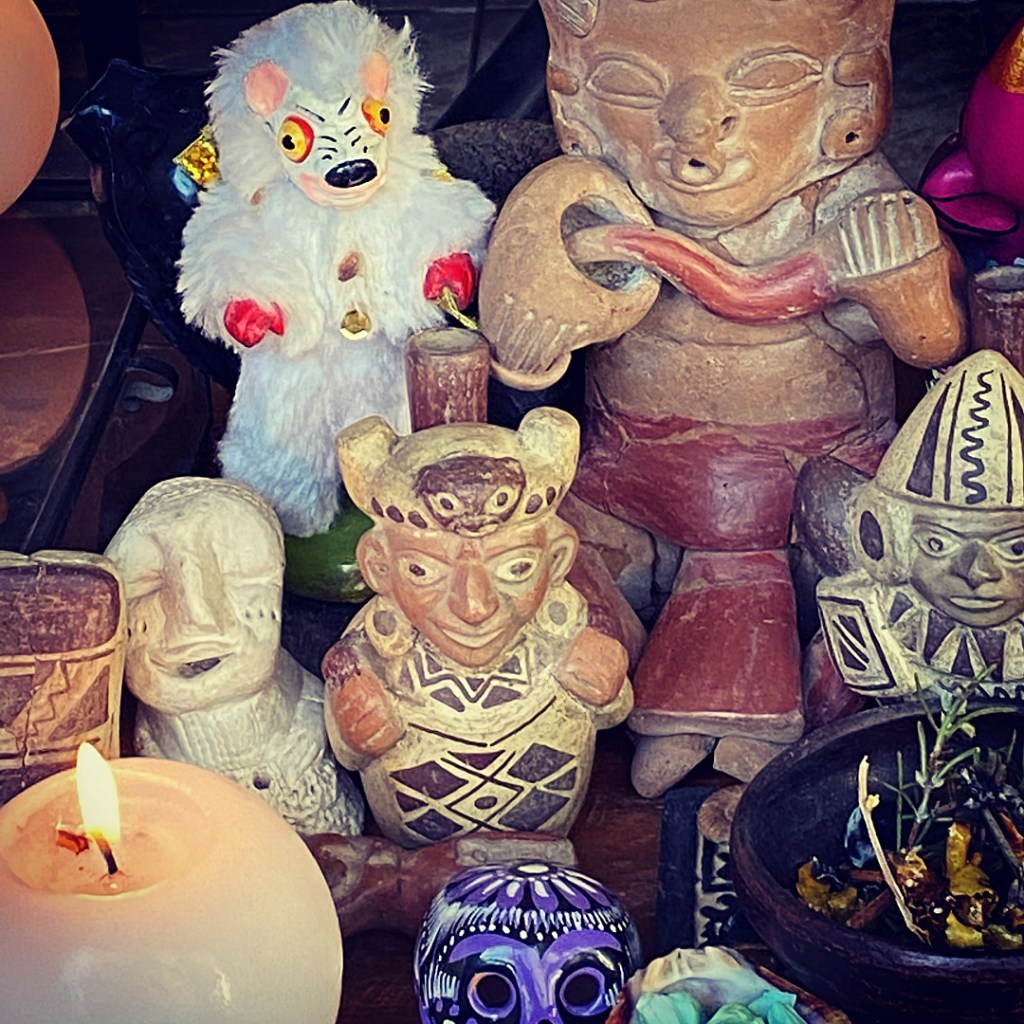
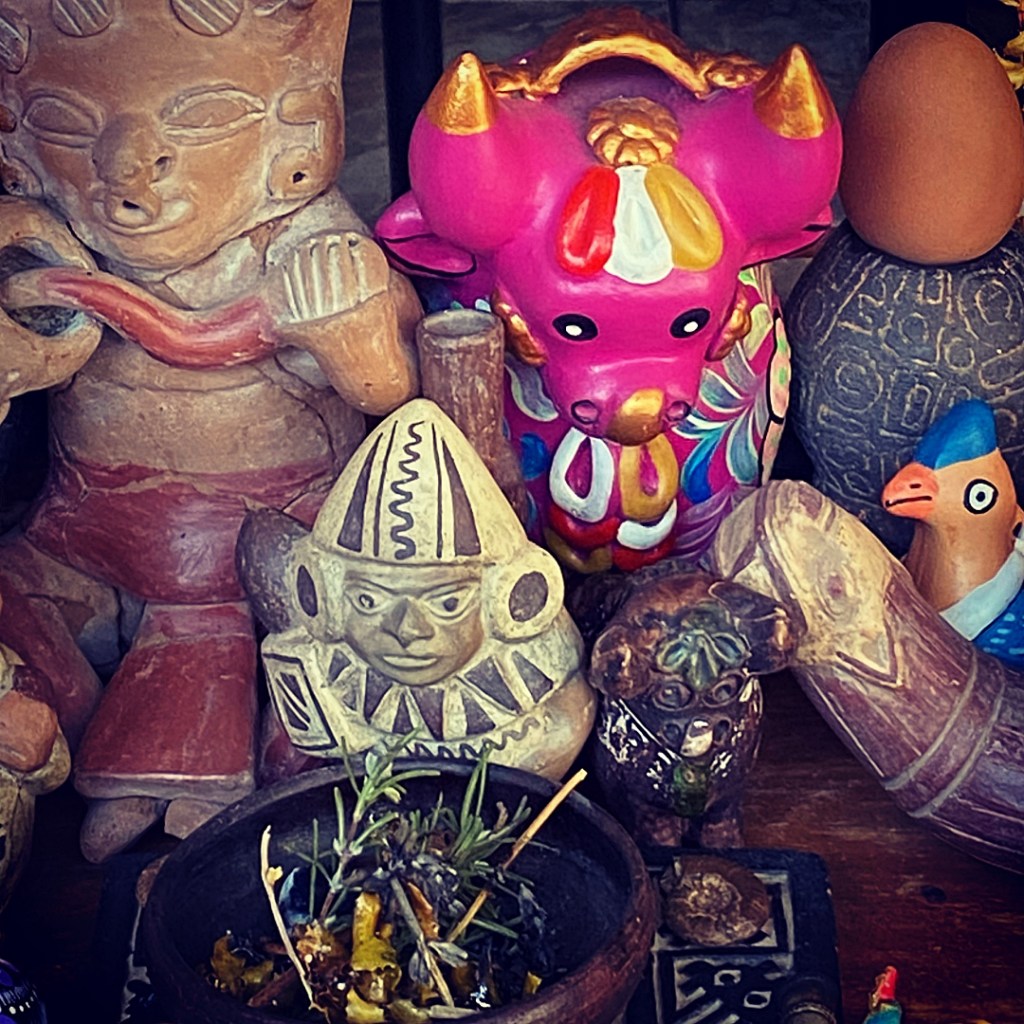
El altar como centro mágico del mundo/ una trama de hilos multicolores de lana cruzan su centro/ se cuelgan a las orejas de las llamas del altiplano /brotan teléfonos con líneas como nervios-cuerdas de charangos, algunos trozos de carne seca y latidos de corazones emulando a Boltanski, en un centro magnético que conecta espectros de cristal, pantallas de celular y el sonido del viento/ en el desierto,seco ,que disecciona el paisaje salino, entre talleres líticos y mega fauna fantasma. Todos convocados a este espacio, reproducción en artefactos de madera del gran imperio / las cabezas de jaguar rugen a las estrellas de la lejana vía láctea ‚el frío es el ruego en la amplitud de la noche, mientras un vinilo con voces raspadas gira sin fin al compás de una danza metafísica las aristas del rombo raspan la piel suave/ el centro de todo es un valle seco ‚púrpura, apastelado en colores carne.

Tony Kail
Ethnographer and writer. Tony holds a degree in cultural anthropology and has researched ethnic cultures for more than twenty-five years. His work has taken him from voodoo ceremonies in New Orleans to Haitian Botanicas in Harlem and Spiritual Churches in East Africa. He has lectured at more than one hundred universities, hospitals and public safety agencies. Kail has been featured on CNN Online, the History Channel and numerous radio, television and print outlets. A resident of Humboldt, Tennessee, Kail was raised in Memphis and calls it his second home.
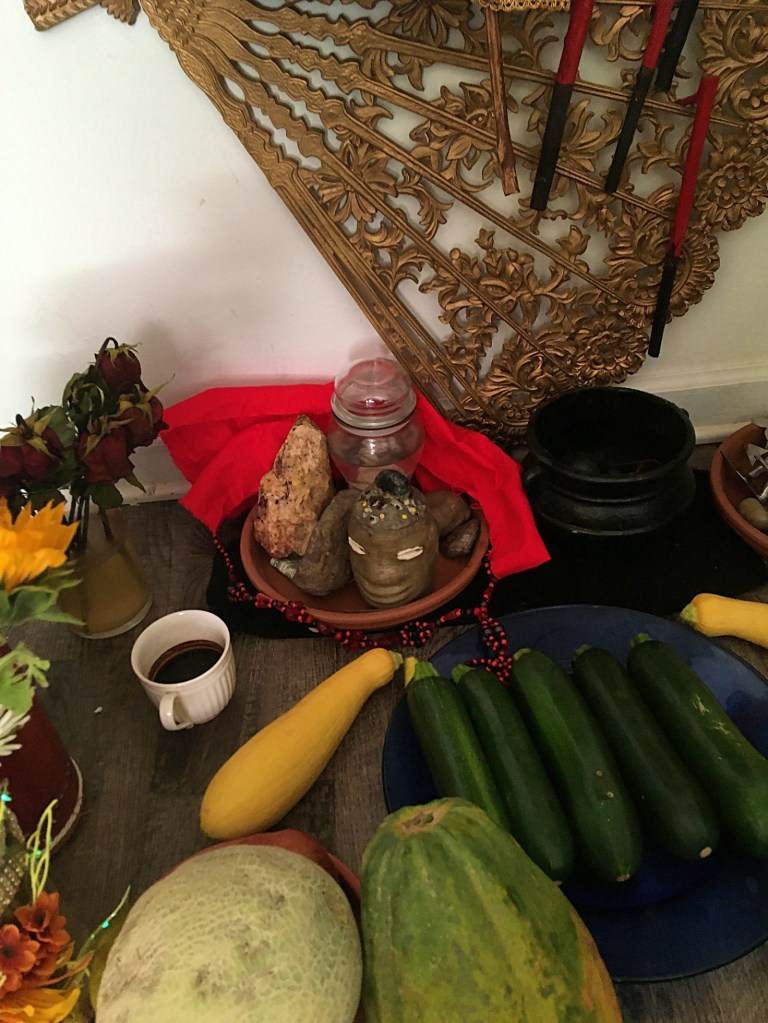
During ceremonies various events would occur that involved participants seeking reactions from the spiritual realm. On one occasion trance possession occurred and a participant was given information regarding a health issue that they had not shared with the possessed individual. Spontaneous deaths of animals would occur during rituals used to combat witchcraft. In the daily life of practitioners, physical evidence would manifest as a result of supernatural activity. Miraculous healings occurred where images of scars and skin disorders would appear on fruit and vegetables that were used in offerings to ask for healing. Subsequently practitioners would obtain healing and their wounds would disappear. Offerings to the Orishas would frequently disappear such as cups of coffee and wilting flowers would appear revived after being placed on specific altars.
From my upcoming book ‘Fieldwork with the Saints: An Ethnographic Journey into Santería in the American South
Duncan Neganigwane Pheasant
M’Chigeeng First Nation artist Duncan Neganigwane Pheasant is from Manitoulin Island. Duncan started painting in high school using colours and techniques inspired by Norval Morrisseau and other Woodland style artists. His grandfather, Ambrose Pheasant, told stories that were also a great influence on his artwork. Duncan uses his images to interpret Ojibwe legends and stories that surround the history of his ancestors and Manitoulin Island.
The Mohawk Warrior Flag design has been flown all over the world, serving as a symbol of the unity of Indigenous peoples in our common struggle, becoming a beacon of hope, and illuminating the discordant relationship between the dominant society and Indigenous peoples.
The deer’s antlers are one of the characteristics that have made it the figure of a spiritual superiority, according to the Ojibwe. Like a crown, the antlers grow beyond its body, bringing it closer to the sky and making it sacred. In many tribes the deer is a symbol of spiritual authority. During a deer’s life the antlers fall off and grow again and the animal is also a symbol of regeneration.
Regeneration is the key to my shrine,, I burn sacred tobacco and recite the welcoming prayer..
The flag is also a symbol of regeneration,, fighting for what’s right, bringing the people back from the brink of disappearance and destruction
when you enter it you travel through the eastern doorway…like when you were born…behind the warrior flag is another door…the western doorway…this is where you travel through when your journey is finished .but it is on the other side of the flag…this represents the fight ,the journey is to be done first…then you can travel through the western door…
Overall, having this home altar can be another way to remind myself of things I love or intentions I have for the future. If any of these rules are throwing me off, just trust my gut. You know what is best for you and your intentions. As long as you are in touch with your true desires, you’ll be fine to design your home altar anyway you like.

Jay Blackwood
makes assemblages, boxes, totem dolls and other three dimensional pieces using found objects and materials. He has been involved with Surrealism, both as a practice and as a creative/revolutionary current, since the early 1990s. His work straddles the border between dream and consensus reality, the everyday and the numinous. Jay lives in Bristol, England.
The presiding spirit in my studio is a wonderful stone lithograph by Rikki Ducornet, Histoire Naturelle I, kindly given to me by Guy Ducornet some years ago. Beneath it are a number of pieces I made between 2001 and 2015. They are the product of chance finds, dreams and fleeting inspirations. All relate in some way to the natural world, and to archaic notions of male/female energies.

CLAUDIO RODRIGUEZ LANFRANCO
born in Valparaíso in 1968. After living in Patagonia and in United States product of a scholarship, his first painting exhibitions were date back to the nineties in Valdivia. Later he moved to Santiago and the Fifth Region, where his visual and literary work materializes in a body of work that addresses different forms of expression, such as painting and drawing, experimental and documentary video, visual poetry and muralism, with public art projects installed in Santiago, Valparaíso. As a visual artist he has exhibited his paintings in 15 solo shows and in more than 60 group shows in Chile, Europe and the United States, and his poetic texts have been published in regional, national and international poetry collections, his work being awarded in different state funds for artistic creation such as Fondart, Cntv, Fondo Carnavales Cultural Centers of Valparaíso, among others. Currently the painter lives and works between Valparaíso, Santiago and Concón, where he develops his artistic projects and teacher training, being in charge of university graduates, painting and mural workshops, becoming a teacher for generations of students and artists who have worked with him.
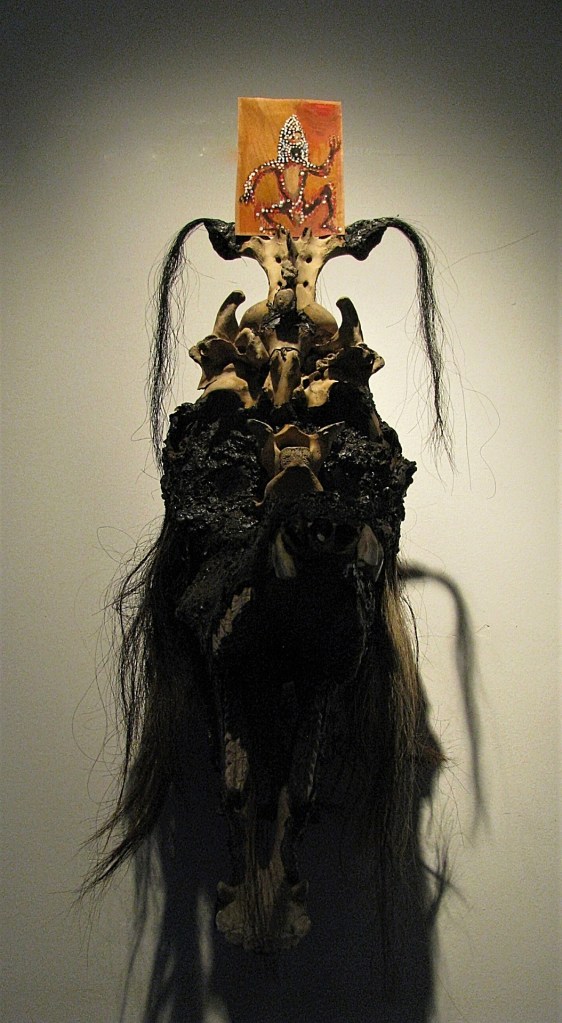
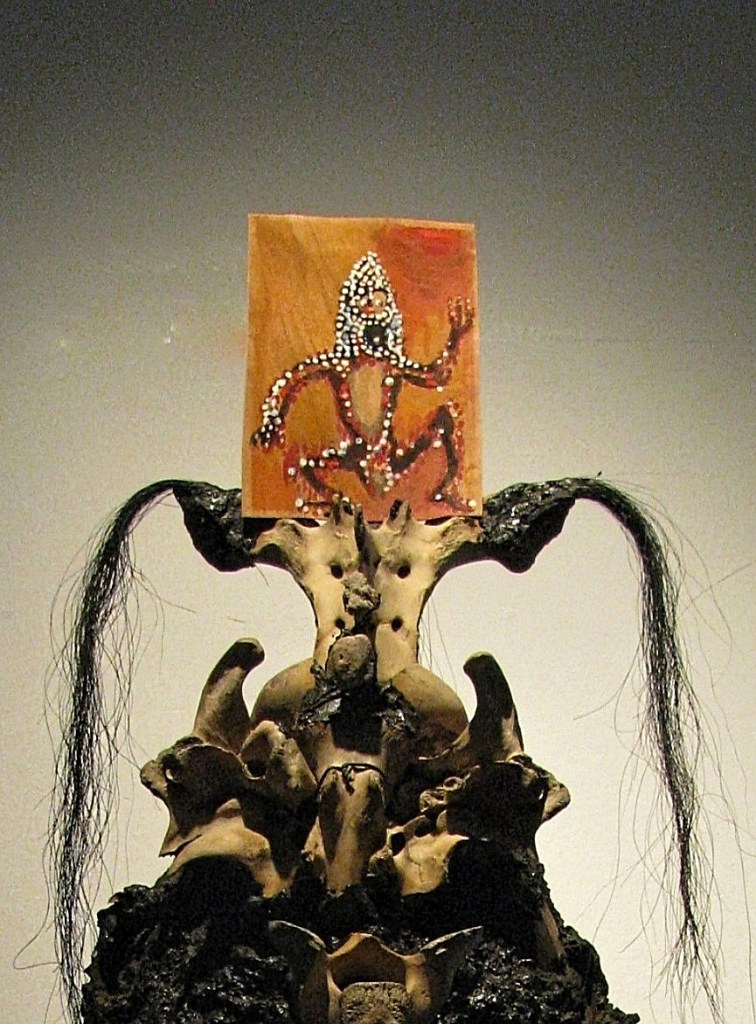
SELK’NAM FORCE. AS AN EXERCISE OF CREATION ON TRAVEL, CARRIED OUT DURING MY TEMPORARY TRANSIT THROUGH DIFFERENT PLACES IN CHILE SUCH AS THE ANDES MOUNTAINS, THE SOUTHERN CANALS, PATAGONIA AND THE ROUGH ARIDITY OF THE NORTH COASTS. A GLANCE OF THE BODY VALUE THAT THE ANCIENT CULTURES OF THE SOUTH OF THE PLANET GAVE THEIR CEREMONIAL REPRESENTATIONS, WHERE WITCHES AND SHAMANS DRESSED WITH BARK OR LEATHER MASKS COVERED WITH MUD AND MINERAL PIGMENTS SUCH AS WHITE, BLACK OR RED ON WHICH THEY THEN DRAWED FRAGMENTS OF THE SKY, THE PATH OF THE CONSTELLATIONS, SIGNS OF ANIMALS OR IMPORTANT NATURAL EVENTS – THE MOVEMENT OF THE SUN OR THE MOON – USING THE BODY AS A SUPPORT, AS A MAP, AS A GEOGRAPHICAL LANDMARK.
Doug Campbell
works primarily in collage, enjoying the immediacy of cutting through the detritus of the spectacle to the marvellous. He was born in Edinburgh, Scotland, where he still lives. Asking about the word ‘surrealist’ after finding it in a science fiction novel as a child, he was given a small book of Surrealist paintings. This was the first step on an adventure that continues until this day. His first encounter with living Surrealism was a second-hand copy of the Chicago Group’s ‘ARSENAL 4’ in the mid 1990’s. In response to a letter, Franklin Rosemont directed him to the recently-formed Leeds Surrealist group. This led to an on-going engagement with the international Surrealist movement through correspondence, collective games and contributions to publications and group shows. In 2017, he took part in the ‘Archaeology of Hope’ a large-scale Surrealist game concluding with a show and solstice ritual on the Isle of Wight. This was a significant transformative experience for everyone involved. Since then he has published a continuing series of collage novels in weekly instalments online at ‘The Cabinet of Major Weir’.
This is the biggest shrine in the house, and in the main living space, so probably the best organised. A mix of heirloom items, curios and pop culture junk. Framed artwork on the wall is by (l to r) Janice Hathaway, Tim White and Peter Overton. The boxed object at upper left is a magic bottle that belonged to my grandfather, an amateur conjurer.

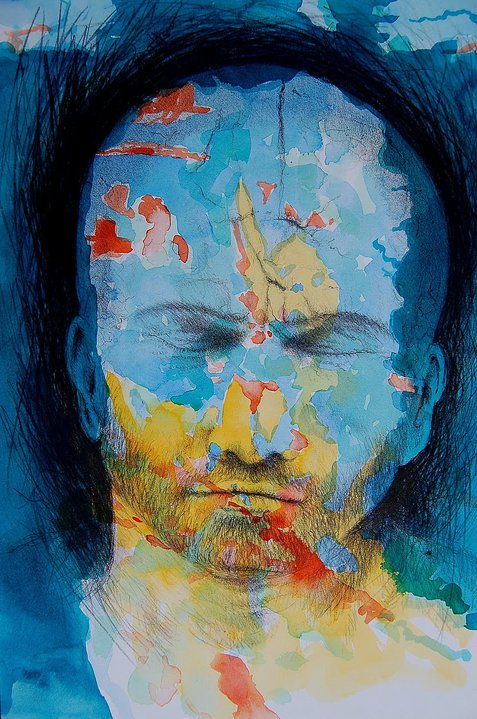
Mitchell Pluto
Artist, Jewelry Maker, Art Editor
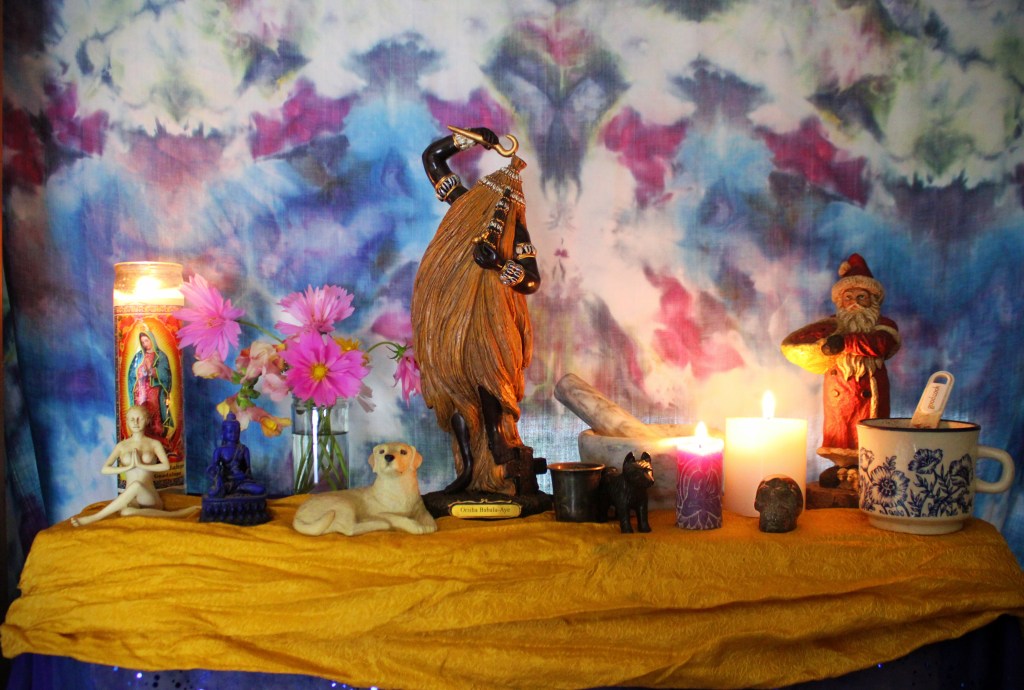
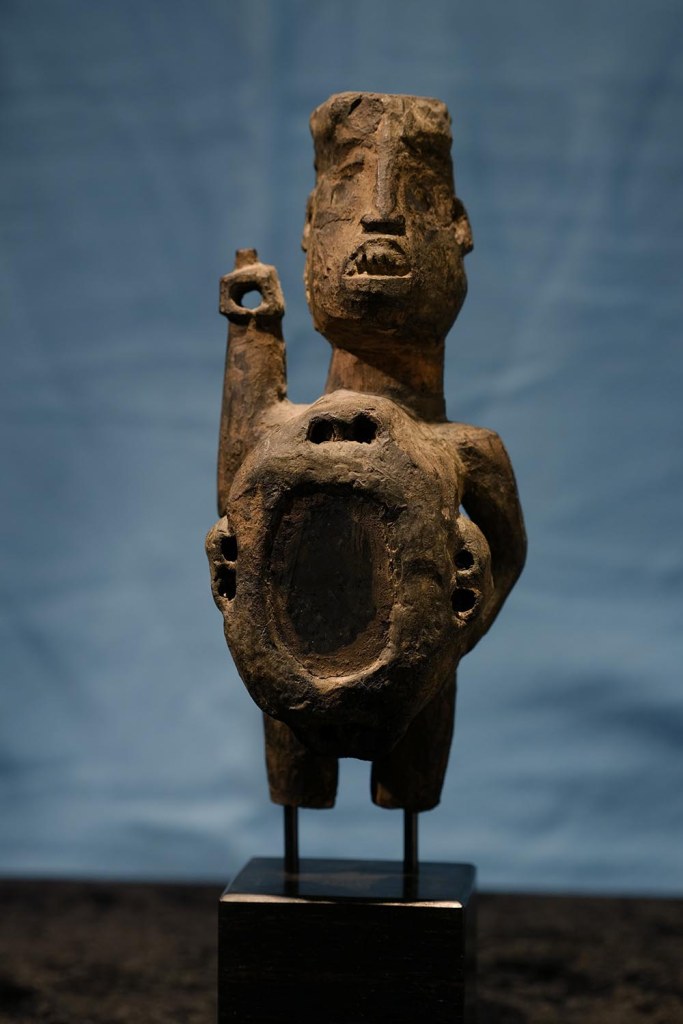
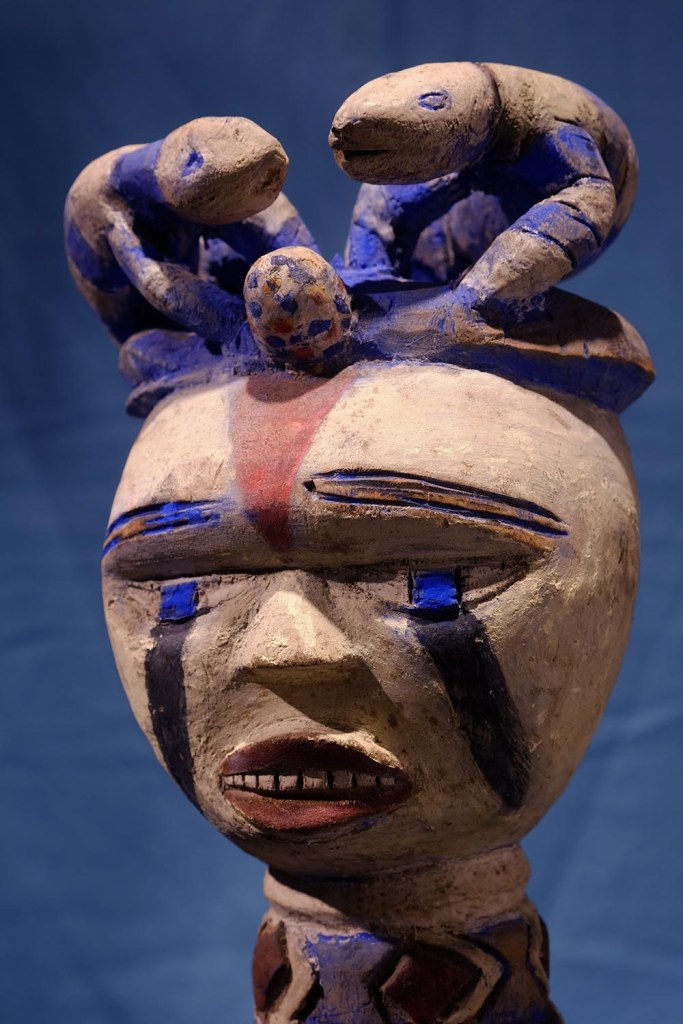
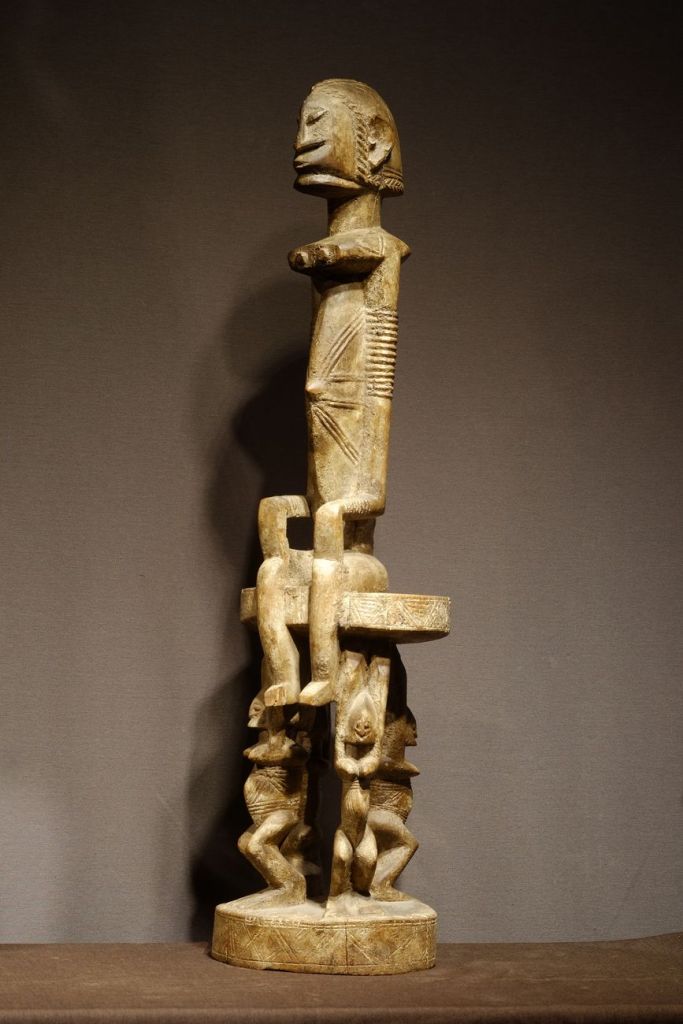
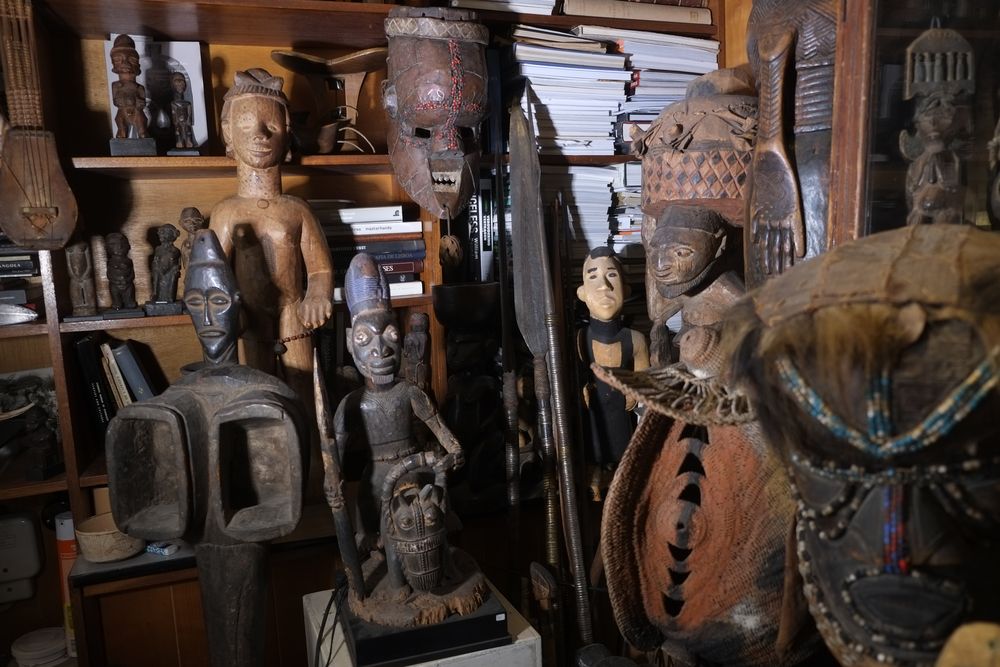
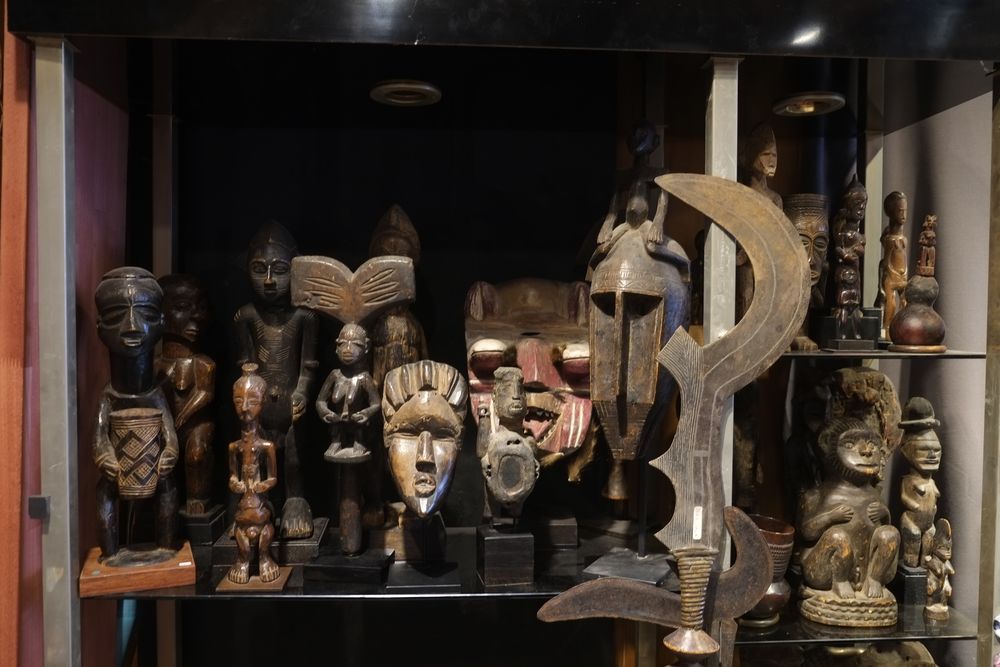
I began collecting objects for our altar in 2020 during the Covid pandemic. I selected figures that embody different archetypical aspects of growth and limitation. The process of recovery is sincerely magical. These mysterious qualities remain a focus on the altar. They play a vital role in the background as well as influencing the subconscious in healthy ways. Constructing an altar helped me be attentive to the belief needed for healing.
During the pandemic complimentary rum and coffee were supplied as part of a thoughtful routine and ritual. The other side of our altar is a shelf for salts, herbs and spices.
Wifredo Lam
Cuban artist who sought to portray and revive the enduring Afro-Cuban spirit and culture.
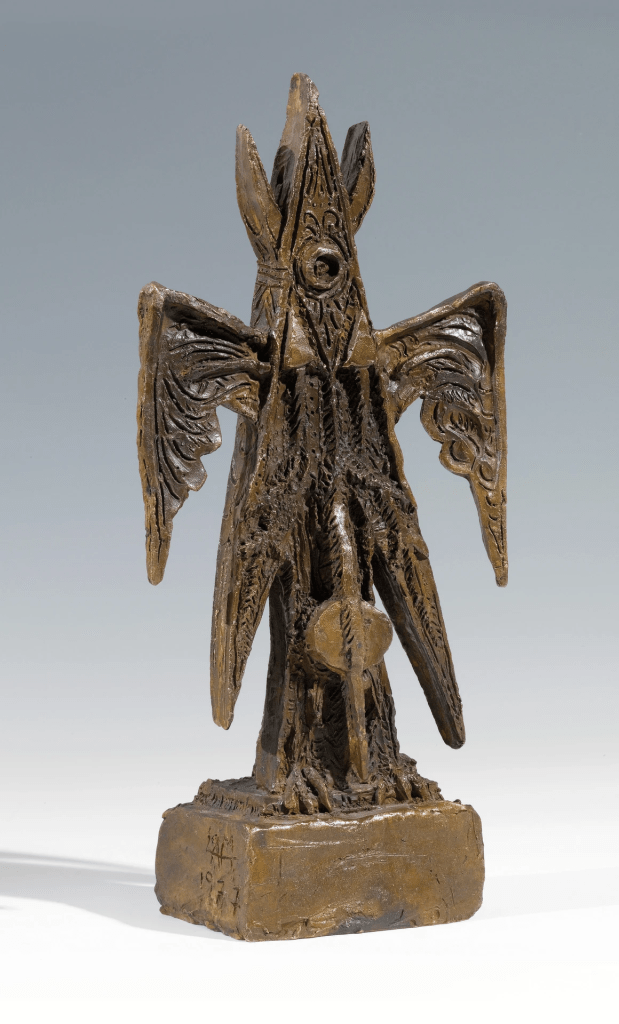
Osun, 1977
bronze
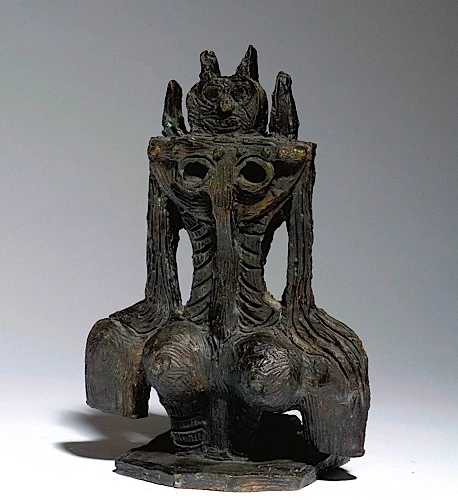
GRAND YEMAYA, 1977
bronze sculpture, brown patina
About the Featured Photo

The Hair of Falmer, an altar created by Claude Tarnaud, Michel Hertz and Francis Bouvet following a design sent by Wifredo Lam from Havana for Le Surrealisme en 1947 exhibition held at Galerie Maeght, Paris, 7 July-30 September 1947 original photo Denise Bellon. Expert from The EY Exhibition: Wifredo Lam. Tate Publishing figure 33, page 211 used and intended for educational purpose only


















 Mitchell Pluto