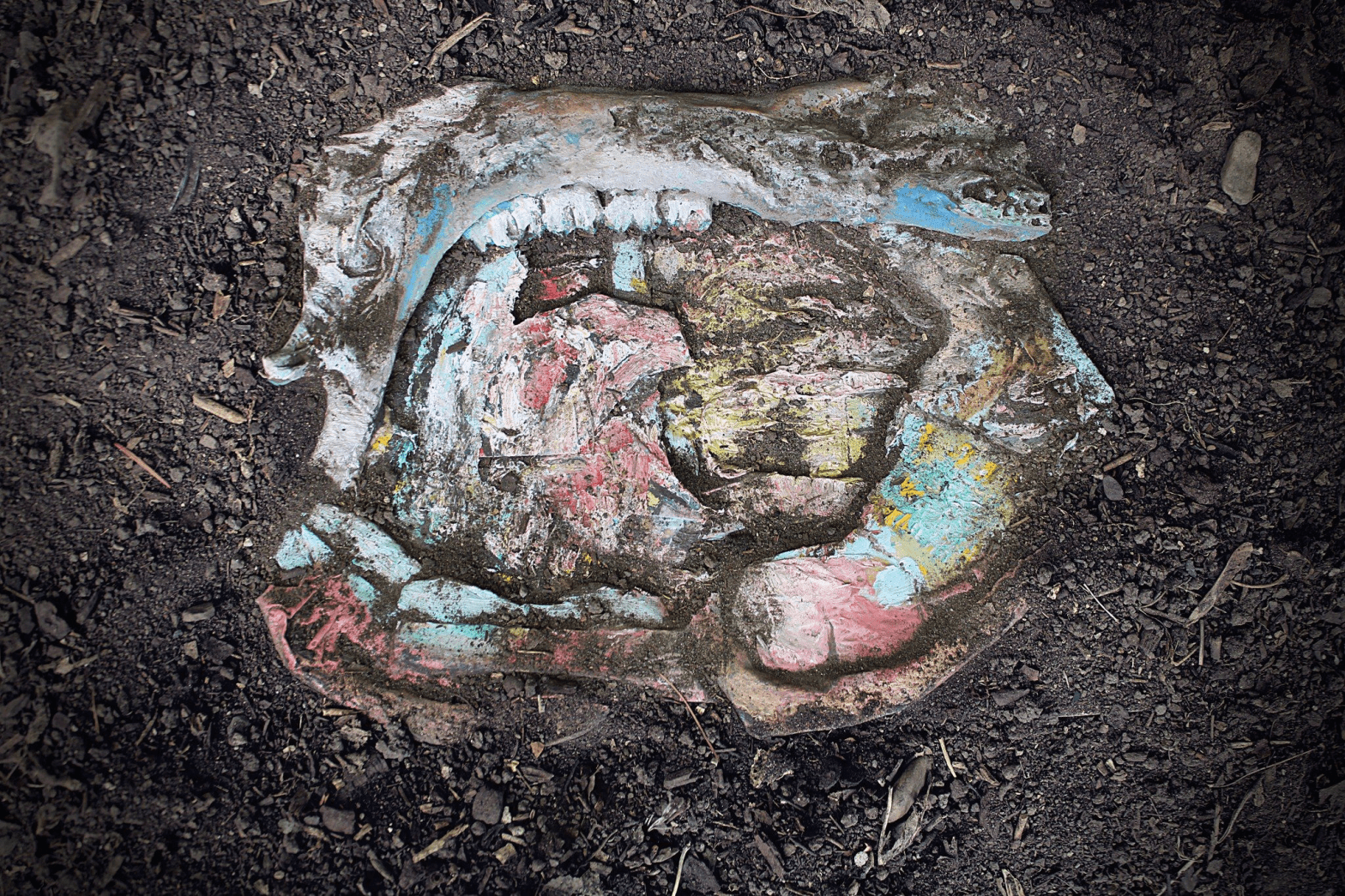
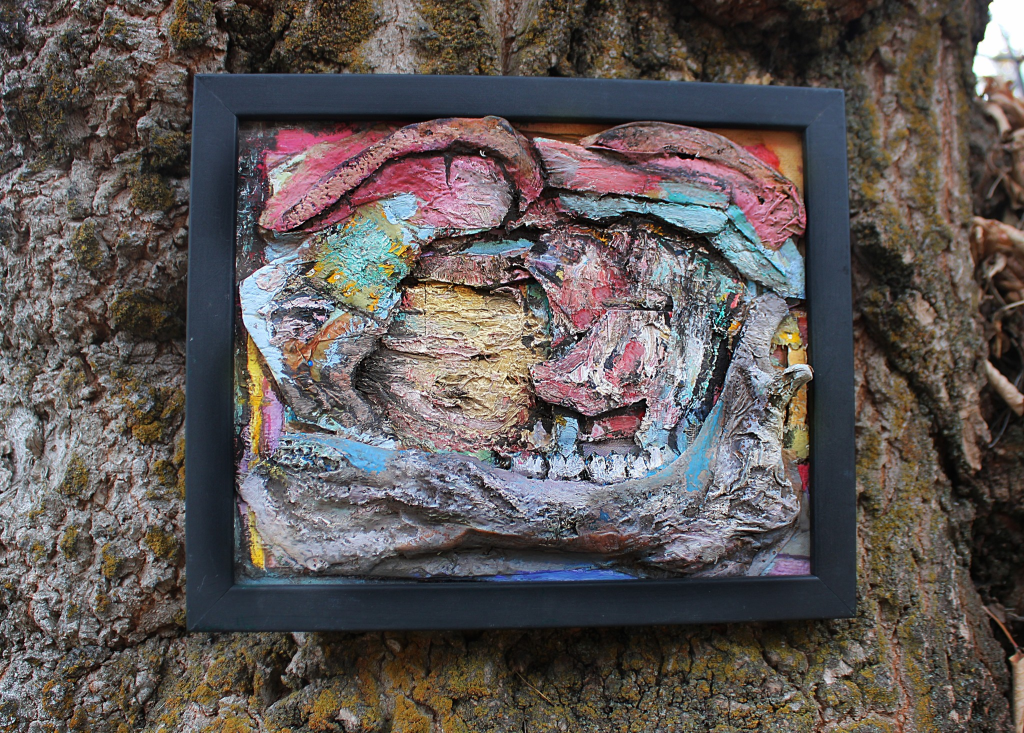
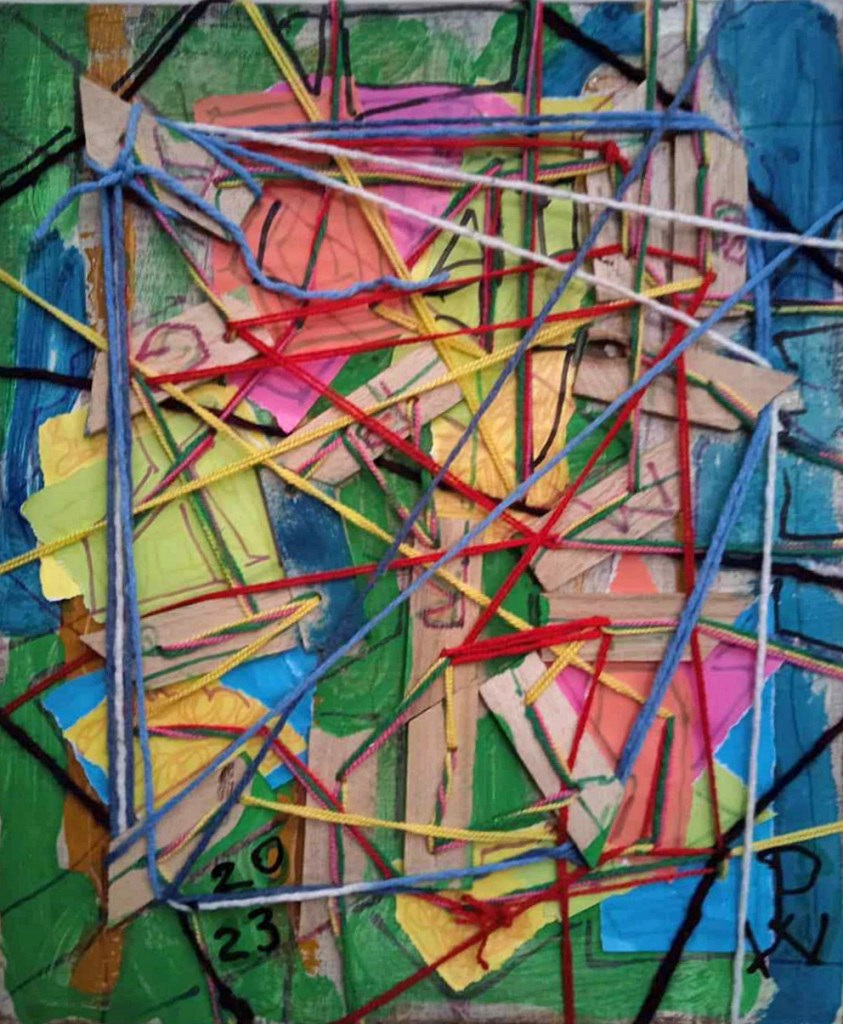
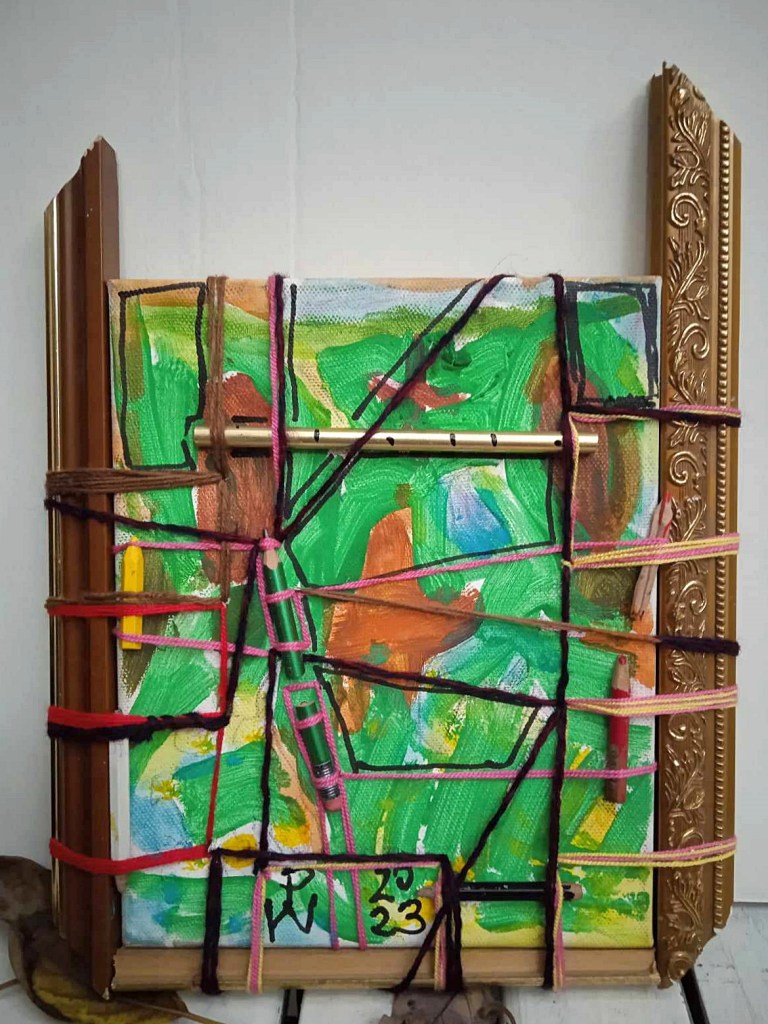
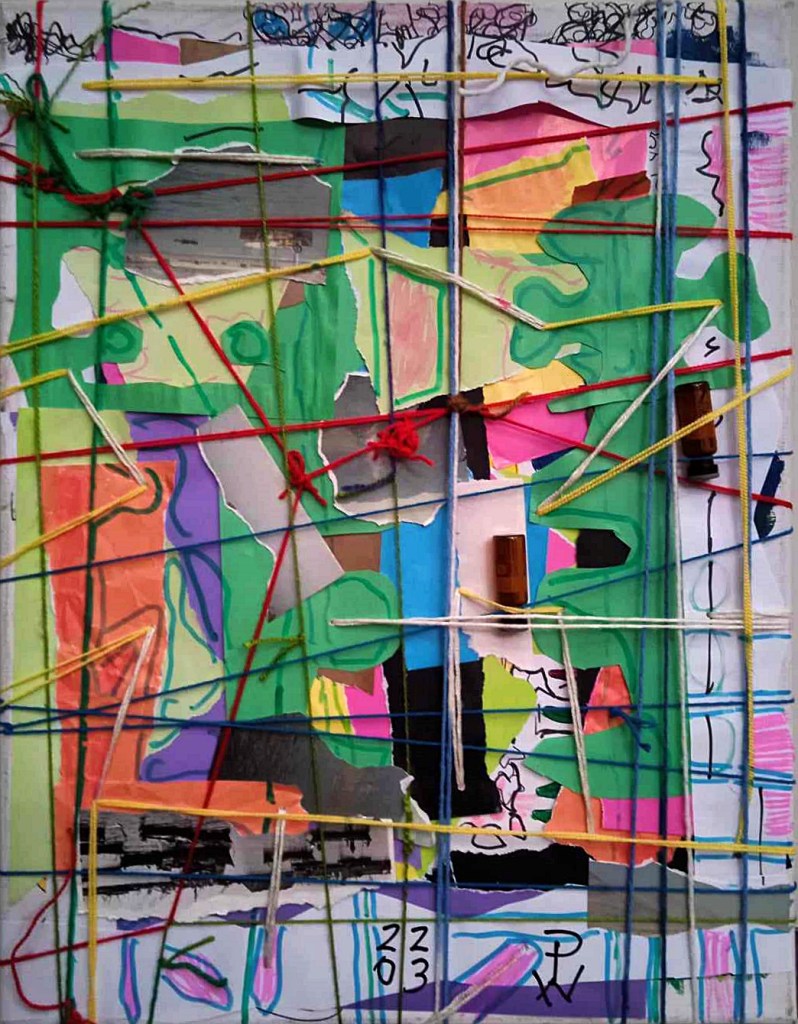
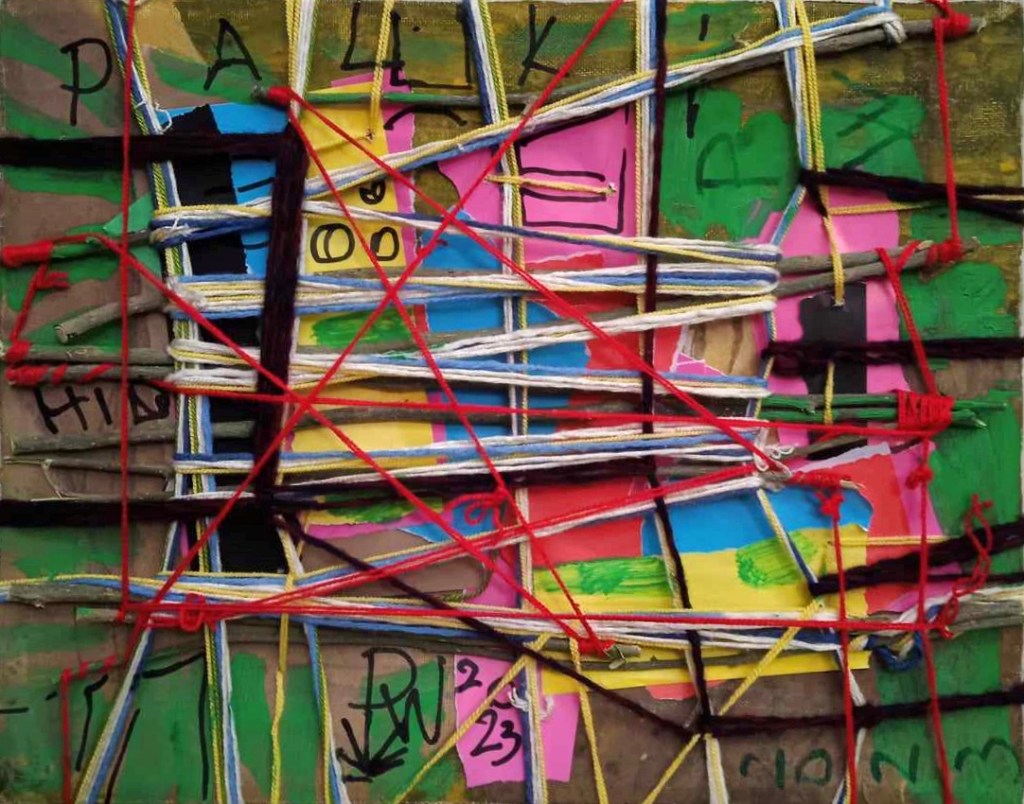
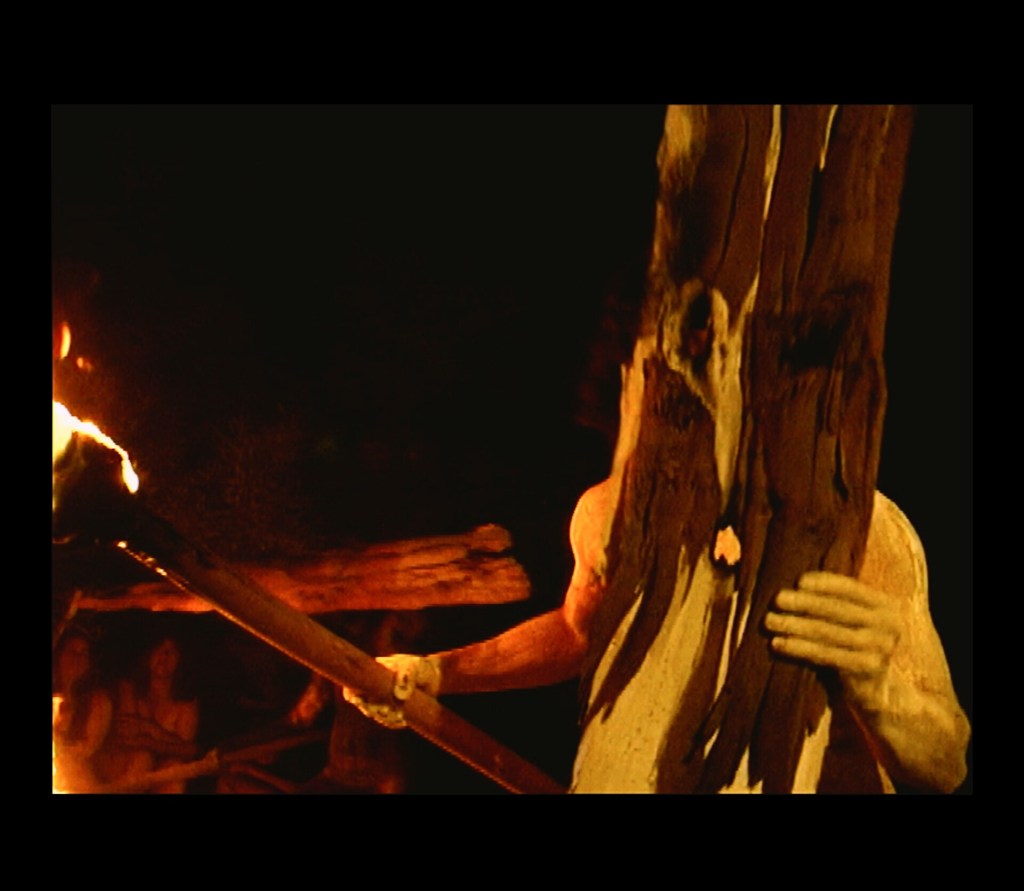
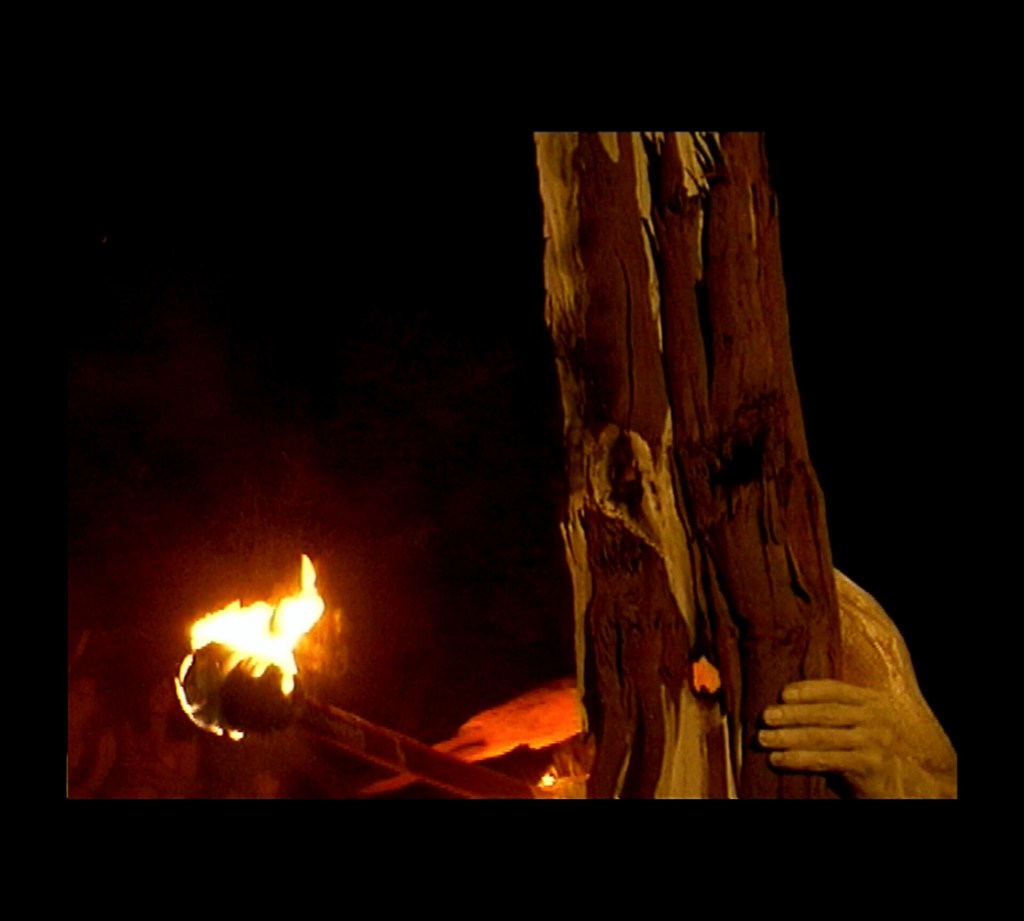
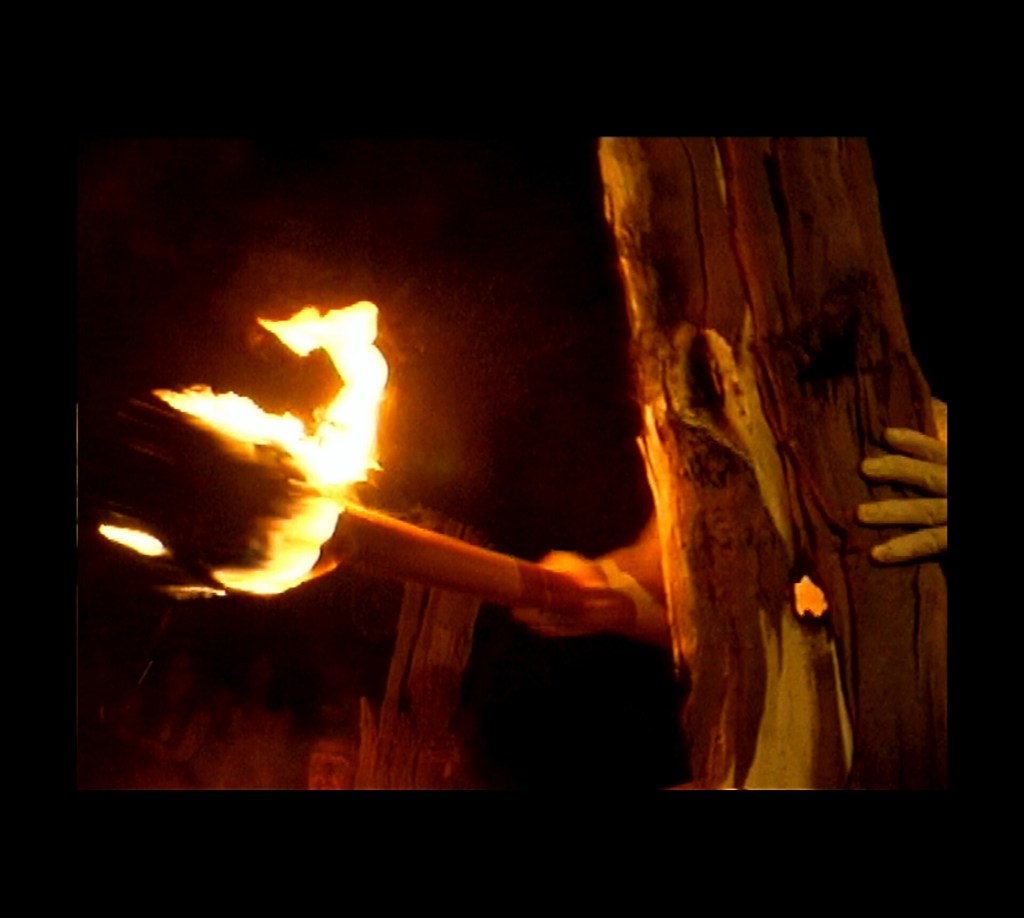
no matter how you spin it the X will land on four paws black cat prints on white dice every time I don’t know if mad scientists will bring the mammoth… back in time what a strange phrase the factor x in time cross roads no top, bottom or side some may defend that there is a timeless duration besides the pan-Native hoop dancer like Plato over laying congenital malformations with rates of metal to form a New Atlantis and sky scrape over Cahokia most of us missed that show with the hoop instead the game was on the match between colors red and blue most stood for it with their hand over their cardiovascular system ritual pledges of commitment under one body to support being lied too… in this case it’s getting soggy up north they found the link in 2013 Homo naledi we are all related but people will act surprised when no one arrives to solve the problem another 120 degree day
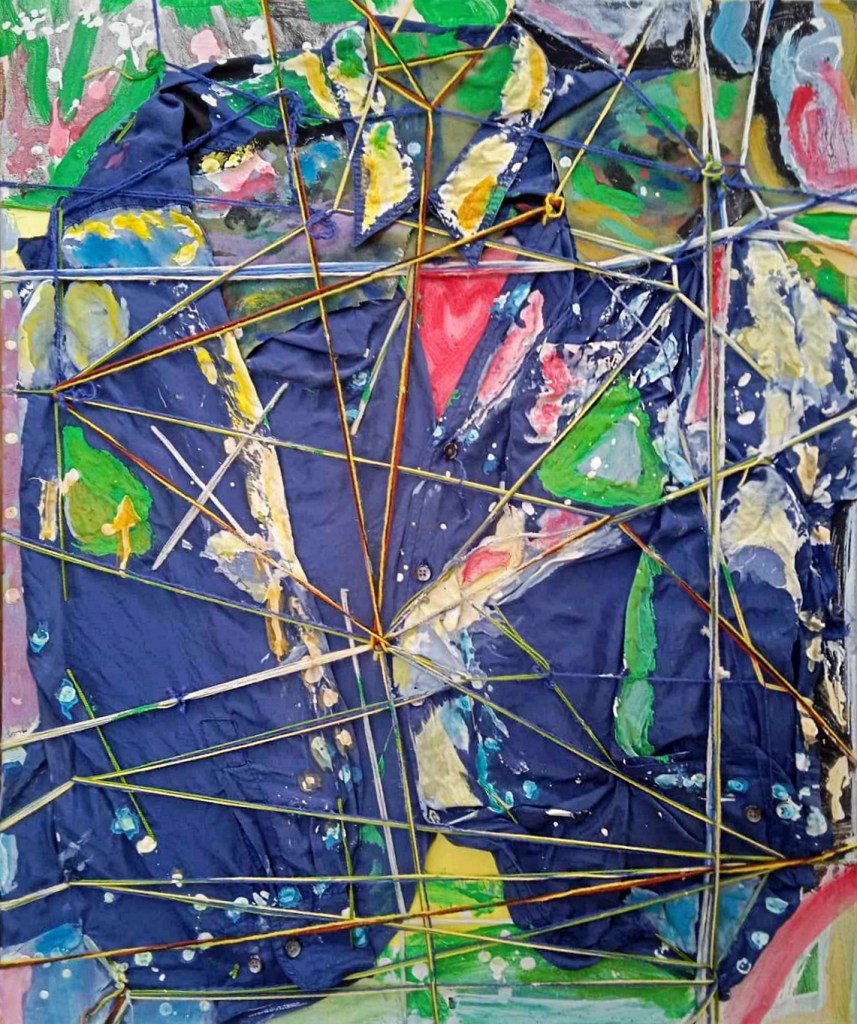
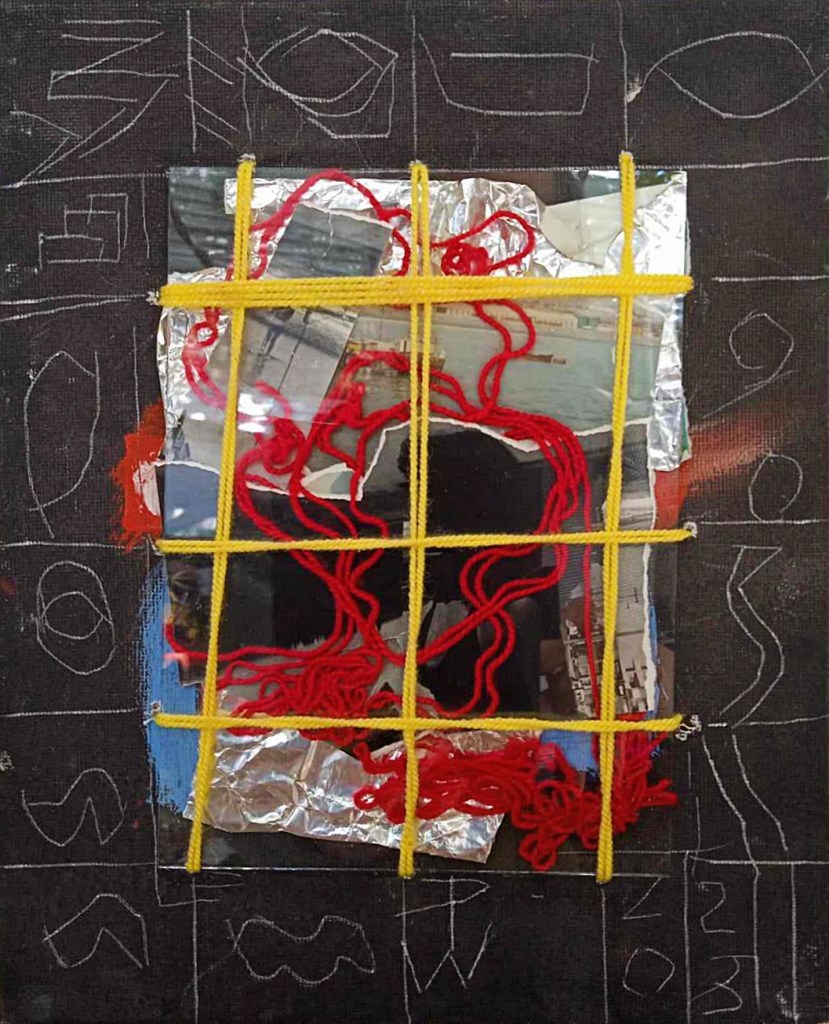
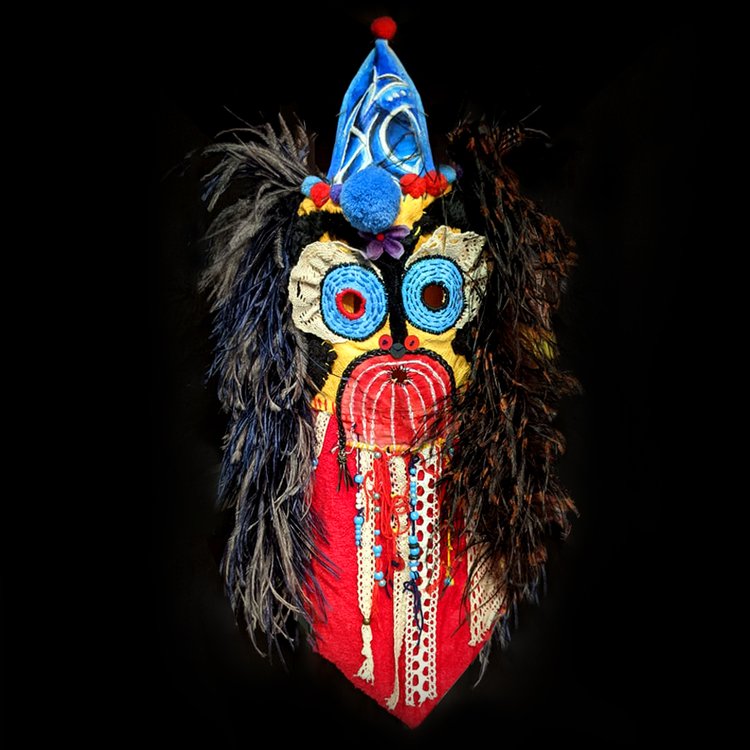
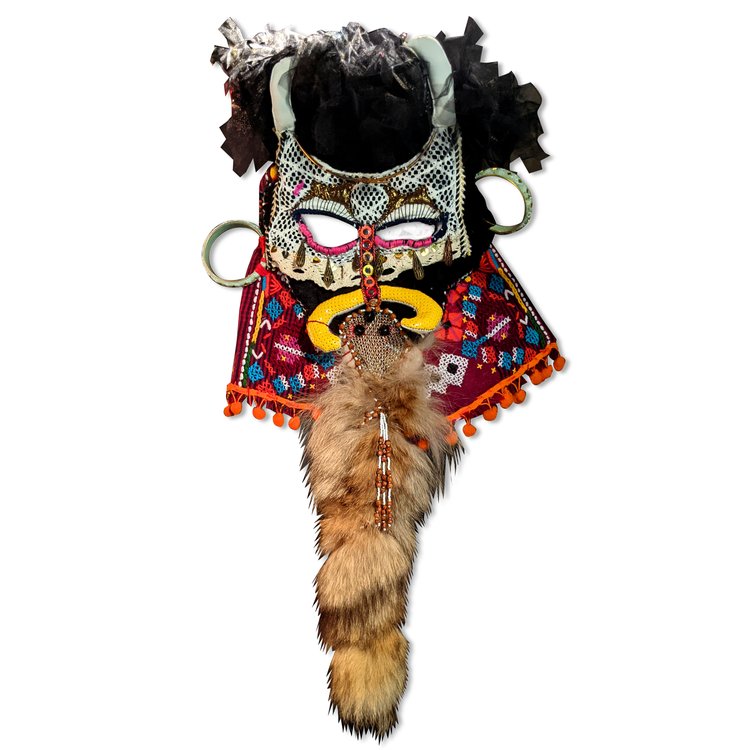
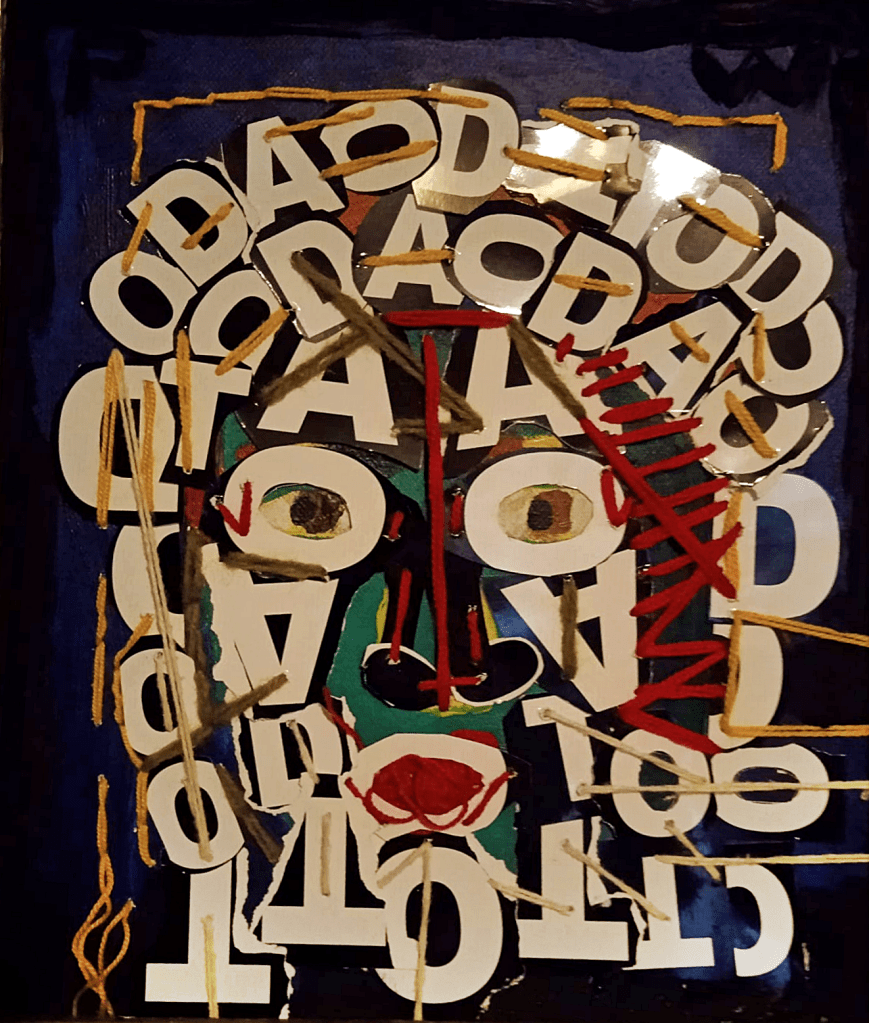
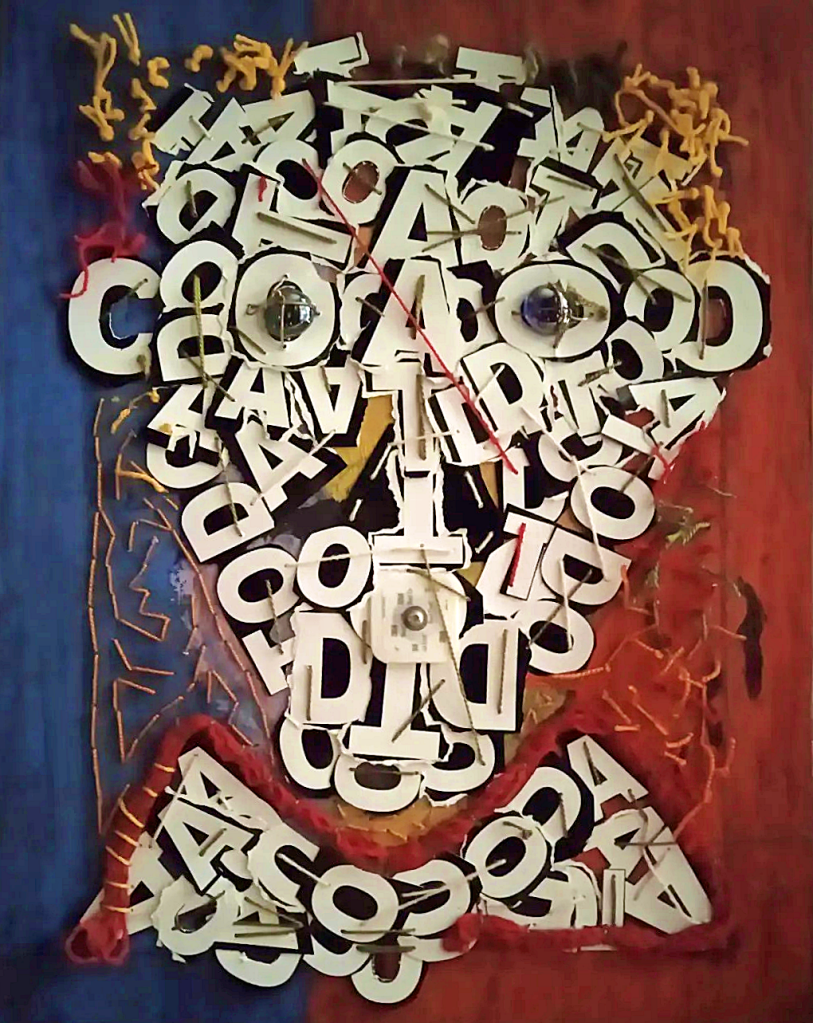
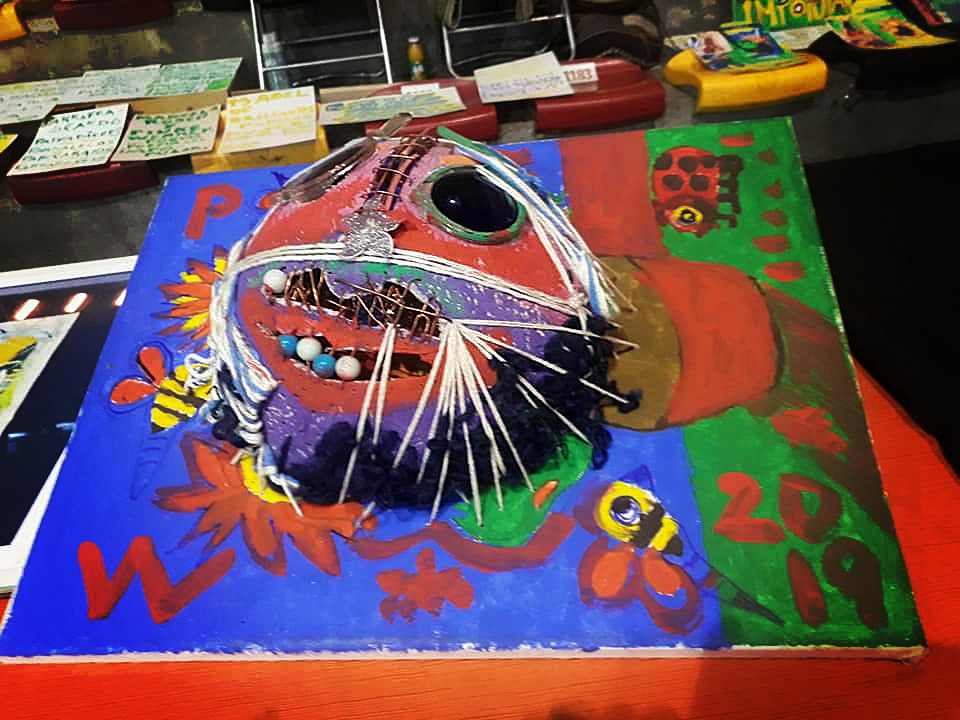
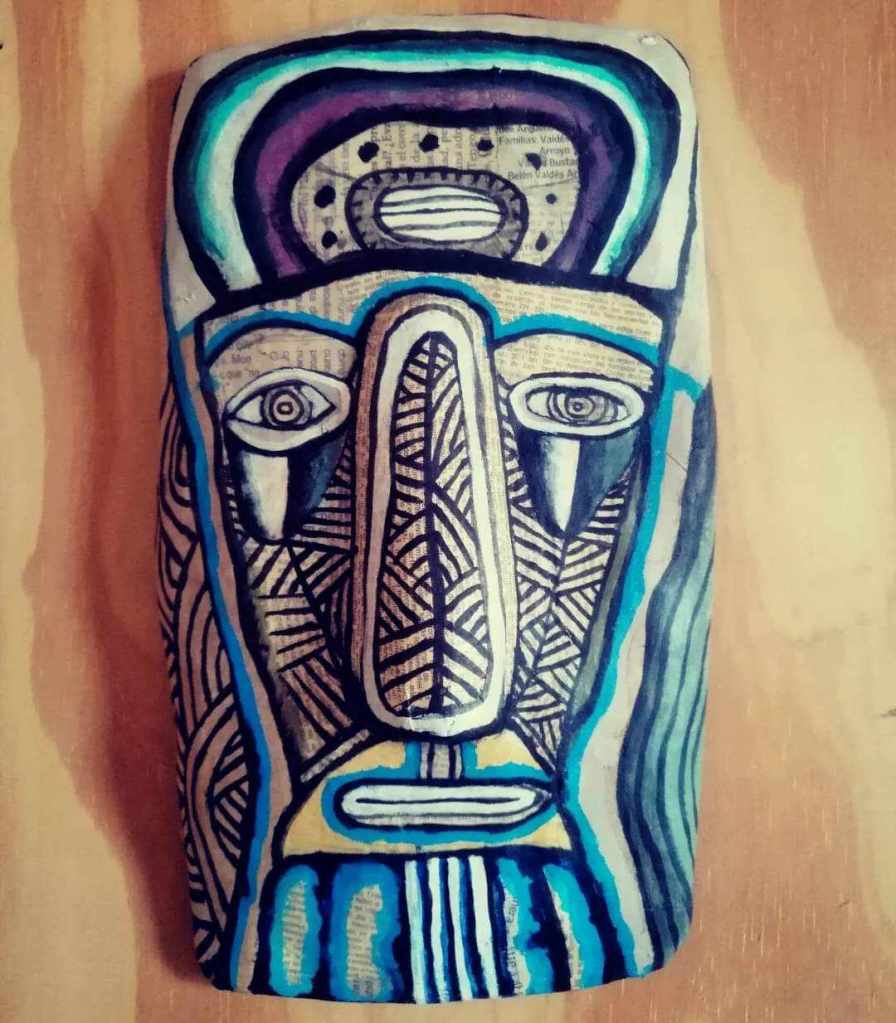
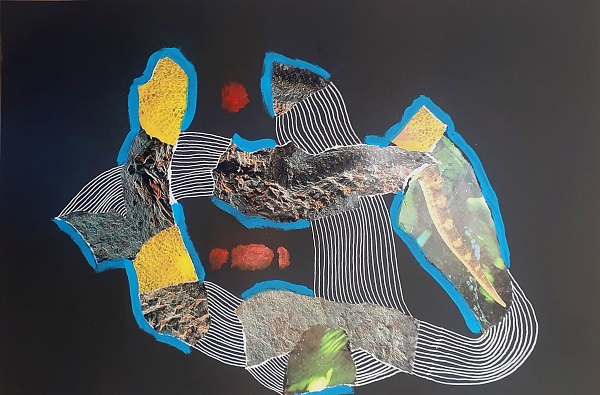
La materia sustancial de mis obras las constituyen materiales orgánicos mutables provenientes de la natura-leza y prefabricados por la industría humana. En la unión de estas dos naturalezas está el magneto. Savia fito morfa, sabia antropomorfa. El medio ambiente me proporciona los medios, el medio ambiente urbano, en las calles tomadas por recicla dores. Todos los objetos son encontrados, escasa compra de materias para hacer obras de arte, sólo basura, desperdicios con ene energía humana. Cartones, lanas, vidrios y maderas; papeles, hilos, pinturas, vidrios, telas y marcos. Reúno elementos desperdigados, subproductos de la industria y la codicia humana. Doto a cada parte de la obra con una condición magnética, esto hace que de diversos elementos surja un sólo. Mix de materiales considerados de nuevo para la aventura creativa, reciclador de los que reciclan cachureos. Materiales abandonados por el sistema educacional, obras de arte anónimas, retratos de adolescentes, papeles pintados con acuarela, todo es obra de arte antes de que yo la asuma como medio para elaborar otras ideas, me siento como un borrador, como si fueran partes de un muro pintado donde llega otro que pinta y tapa lo que ya está pintado, mucha obra de niñas y niños, dejo muchas veces los colores o algunas formas, se puede decir que mis obras son coproducciones, alucinaciones de seres humanos de Chile.
Color Los colores vienen con los objetos que encuentro. Uso común de temperas y acuarelas, cartones preparados con esmalte blanco al agua. El papel lustre aporta colores brillantes y planos, es ahí donde tempera y acuarela vienen a apaciguar estos planos, luego como complemento: Hilos, lanas y pitillas aportan lineas de colores inenarrables, son lineas de color que tensan con ángulos y triángulos las formas, por tanto lo que ya está pintado, y recortado se reaviva, los colores se superponen, se acercan el hilo negro con la tempera negra, el amarillo del hilo con el amarillo del papel lustre, la acuarela hace su magia transparente. Los géneros me aportan un color de sedas azules o sedas amaranto, todos los colores dependen del material en uso (y huso) y de esta convergencia surge el color final de la cosa. Obras que sólo tienen el color de los papeles lustres lustrosos satinados, con recortes se forman las manchas, se forman las zonas de color y todas sus líneas, más el color de las lanas que uso para atrapar el papel, es indiscriminada mi elección de los colores, los hago entrar en cada una de las obras, esto hace que se asemejen mucho entre ellas, o tal vez sólo es familiaridad, color familiar.
Linea ¿Linea de estilo? ¿Qué linea sigo?
la linea como parte de las figuras, de los fondos, como parte integral de un monosapiens, o de una gráfica cualquiera. Las inalterables lineas del soporte, todas lineas rectas, innumerables en la trama de la tela, verticales i horizontales, invisibles. Cubierta de pintura o de papel. Linea hilo diagrama, el hilo-linea entra en el agujero que es el aleph de las que ya fueron trazadas con lana. Se convierte en trama, en tensión, gira alrededor del soporte, sujetan la composición, como factor de unión. la línea sigue un hilo en el laberinto de la obra mixta, amarra las formas, los fondos y las figuras giran en torno a la obra,dejándola reversible, o sea apta para apreciarla como si fuera un volumen. El empleo de marcos (enmarcación) le aportan 4 lineas rígidas a la soltura de la estampa, lineas que atrapan toda otra posible linea variable de la obra misma, echando al cuerno la espontaneidad o soltura del contenido. Acertijo de lineas sólo inicio y final.
Es un asunto de querer magnetizar los elementos encontrados. Unirlos como si fueran una solución a un problema, sin tener , ni presentarse como problema. Al encontrar un objeto se van produciendo solas las uniones, la visión de esa reunión empieza a crear se su propia obra. Una inspiración creativa que se gesta a través de las palabras y las acciones. Arte de acción, teatro, poesía, plástica.
Nacido el año de 1961 y dedicado a la creación artística desde entonces, cuento en la actualidad con 62 años y perseveró con entusiasmo en la creación de poesía, obra plástica y conciertos de poesía.
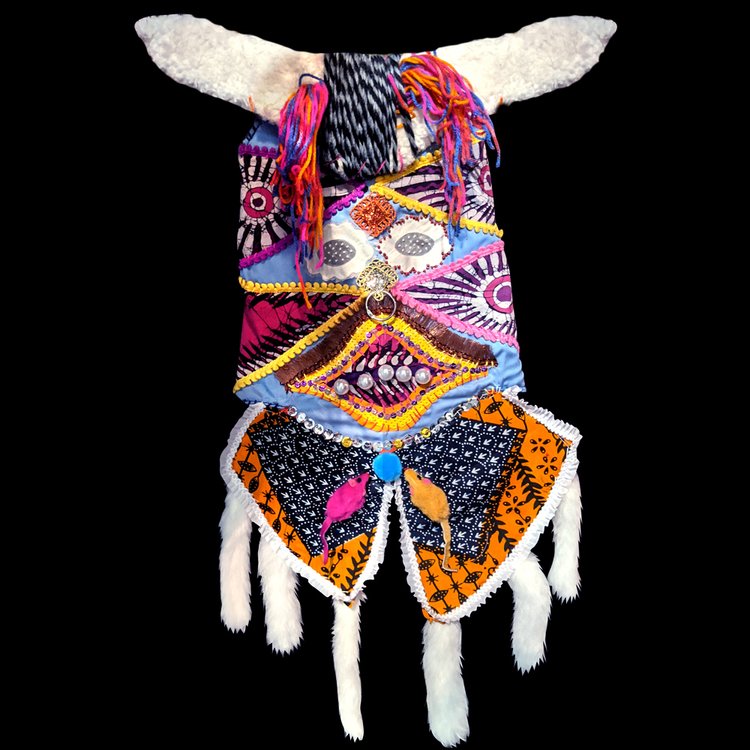
The gods have “inner” or “spiritual” eyes (oju inun) with which to see the world of heaven and “outside eyes” (oju ode) with which to view the word of men and women. When a person comes under the influence of a spirit, his ordinary eyes swell to accommodate the inner eyes, the eyes of god. He will look broadly across the whole of all the devotees, he will open his eyes abnormally. Araba Eko, Lagos. 13 Janurary 1972. Flash of the Spirit. African and Afro-American Art and Philosophy Robert Farris Thompson 1983
Ritual contact with divinity underscores the religious aspirations of the Yoruba. To become possessed by the spirit of the Yoruba deity, which is a formal goal of the religion, is to “make the god”, to capture numinous flowing force within one’s body. When this happens, the face of the devotee usually freezes into a mask, a mask often (but not always) held during the time of possession by the spirit. Aṣhe is untranslatable.
Flash of the Spirit.African and Afro-American Art and Philosophy Robert Farris Thompson 1983
Bámigbóyè: A Master Sculptor of the Yorùbá Tradition. Mask, carved wood.James Green With Olúṣẹ̀yẹ Adéṣọlá, Anne Turner Gunnison, Efeoghene Igor, Will Rea, and Cathy Silverman. Yale University Press 2022
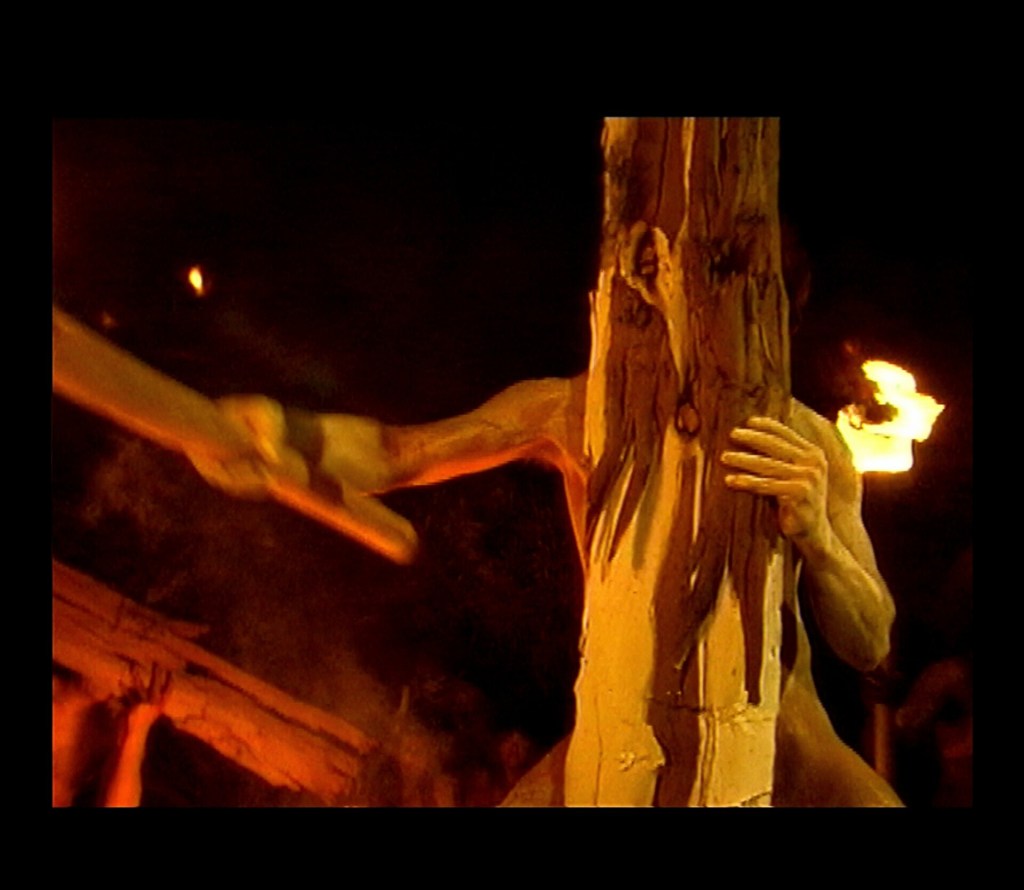
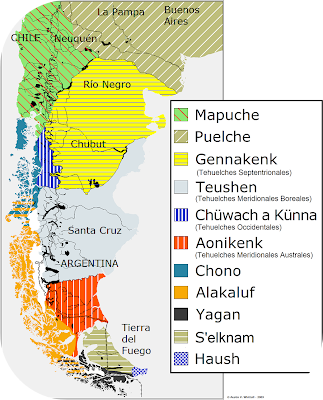
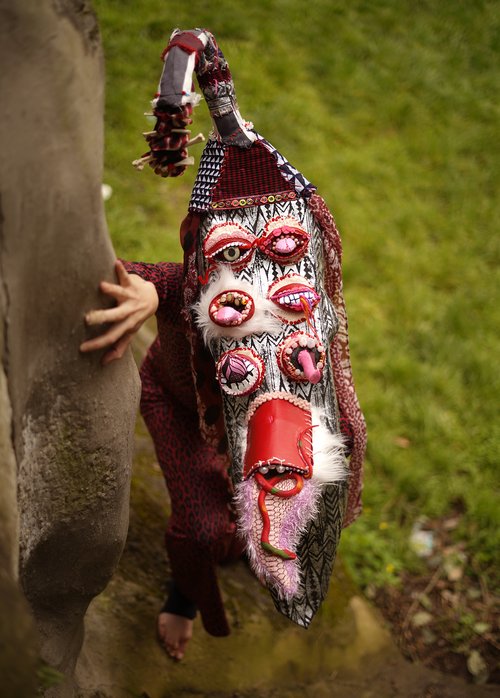
Ayayema es uno de los espíritus del mundo sobrenatural Kawéskar. Para los Kawéskar -canoeros de los archipiélagos del fin del mundo- existe un orden en la naturaleza, una armonía. Si esta se rompe cuando alguien se enferma o se produce un accidente, es causado por Ayayema, un espíritu poderoso que en su ser, lleva esa propiedad de alterar el orden. Ayayema proviene de hóutk’a álowe “más allá del horizonte”, que es la tierra de los espíritus que transitan desde ese mundo al mundo de los hombres. Él es un depredador, se alimenta de la energía vital de los seres vivos, viene al mundo de los hombres a cazar.
“YO SOY LA VOZ DEL CIELO SUR
QUE TRAE EL INVIERNO Y EL ANGOSTO DIA AUSTRAL
SOMBRAS ENORMES QUE SE LEVANTAN EN LA NOCHE
ALLÍ DONDE VIVE AYAYEMA
ESPÍRITU DEL RUIDO QUE RONCA ENTRE MONTAÑAS Y GLACIARES
QUE CAMINA EN LA ESPESURA DEL BOSQUE Y EL PANTANO
MITAD LLANTO HUMANO, MITAD GRITO DE BESTIA
ÉL TRAE AL VIENTO QUE VUELCA LAS CANOAS
ALLÍ HABITA RONDANDO LA NOCHE
ESCALANDO EL AGUA DE LAS CASCADAS
TRAYENDO EL MAL TIEMPO QUE HEMOS APRENDIDO A VER
EN EL PASO DE UNA BANDADA DE LOROS
QUE HEMOS COMBATIDO QUEMANDO UN DIENTE DE LOBA
Y HECHANDO SUS CENIZAS AL MAR.” (*)
“I AM THE VOICE OF THE SOUTH SKY
THAT BRINGS THE WINTER AND THE NARROW SOUTHERN DAY
HUGE SHADOWS THAT RISE AT NIGHT
WHERE AYAYEMA LIVES
THE SPIRIT OF THE NOISE THAT SNORES AMONG MOUNTAINS AND GLACIERS
THAT WALKS IN THE THICKNESS OF THE FOREST AND THE SWAMP
HALF WEEPING HUMAN, HALF THE CRY OF A BEAST
HE BRINGS THE WIND THAT OVERTURNS THE CANOES
THERE HE LIVES WANDERING AROUND THE NIGHT
CLIMBING THE WATER OF THE WATERFALLS
BRINGING THE BAD WEATHER THAT WE HAVE LEARNED TO SEE
IN THE PASSAGE OF A FLOCK OF PARROTS
THAT WE HAVE FIGHTED BY BURNING A WOLF’S TEETH
AND MAKING THEIR ASHES INTO THE SEA.” (*)
(*)Fragments from “Viaje al Archipiélago de los Chonos”, poem and documentary film written by Claudio Rodriguez Lanfranco.
En los Ceremoniales Kawéskar se usaban máscaras que representaban estos espíritus, usadas por los hombres, ya que las mujeres no podían llevarlas. Éstas máscaras, así como la pintura corporal, están más relacionadas con usos rituales que artísticos. Entre los Kawéskar existía un repertorio de canciones para estas ocasiones. Como parte de su rica tradición oral, estas experiencias se transmitían a los iniciados de generación en generación en cánticos alrededor de grandes fogatas donde Ayayema era un protagonista. Es el único tipo de expresión musical que se conoce de este pueblo. Las canciones ceremoniales se desconocen hoy y solo se cuenta con el testimonio de la literatura especializada.
“Kuosá jeksólok ak’uás æs čačár tawaisélok aksǽmhar os
aselái eik’olájer-s kuos ko at ku kiáu afsenák at árka æs sa
“Y después el finado, el espíritu, el alma de mi difunto papá, decían, contaban en aquella carpa, se sentía hablar, en la carpa que quedaba más arriba de la mía. Y a los espíritus les decían Ayayema así los llamaban. A él me mandaron, me mandaron animándome y le pregunté a él: “Padre, ¿eres tú el que está hablando?”, así dije. Y me respondió el espíritu que mora más allá del horizonte: “Sí”, así [dijo], “¿por qué me estás preguntando?
Los cuentos, relatos de viaje y las historias de vida Kawéskar, constituyen lo que se ha llamado “arte de la palabra”. Joel Sherzer y Greg Urban (1986) manifiestan que “Ningún indígena sudamericano ha ganado jamás el premio Nobel por su actuación (performance) oral u oratoria política. Sin embargo, todos los días y todas las noches los miembros de remotas sociedades de Brasil, Ecuador, Panamá, Chile, que viven en medioambientes no tecnológicos, están creando y desplegando una notable diversidad de formas verbales caracterizadas por riqueza metafórica, procesos poéticos y retóricos y estilos intensamente personales, todos los cuales son parte íntima de la reproducción y transmisión de sus tradiciones culturales y estéticas”.
Entre los Kawéskar se desarrolló durante siglos este arte de la palabra y fue la única manera de transmitir el conocimiento y de expresar estéticamente mediante la palabra (cf. O. Aguilera)
Poemas sobre máscaras desde poemario inédito Luz de lluvia escrito por Claudia Vila Molina
Grietas de la máscara
No nos es dado seguir hablando
ni de encontrar rastros perdidos
el azul juega con sus colores
y se forman raíces a tu alrededor
Son formas ennegrecidas
del sucio mineral de tu sangre,
espacio leve disgregado
en torno a esa máscara.
Tiempo ancestral
Recorro espacios cerrados
la memoria archiva actos conocidos
y solo vapor emerge desde estados de la imaginación,
mi mente perpetra esos instintos
(armonía remota de un entramado salvaje)
lucho por la veracidad de signos confiscados
y es penetrante tu esencia
ese código agrieta mis destinos
y películas convergen hacia tu manantial
Algo nos rodea desde siempre,
imagen pétrea instalada en cuencas de la prehistoria,
Es un asunto de querer magnetizar los elementos encontrados. Unirlos como si fueran una solución a un problema, sin tener , ni presentarse como problema. Al encontrar un objeto se van produciendo solas las uniones, la visión de esa reunión empieza a crear se su propia obra. Una inspiración creativa que se gesta a través de las palabras y las acciones. Arte de acción, teatro, poesía, plástica.
Nacido el año de 1961 y dedicado a la creación artística desde entonces, cuento en la actualidad con 62 años y perseveró con entusiasmo en la creación de poesía, obra plástica y conciertos de poesía.
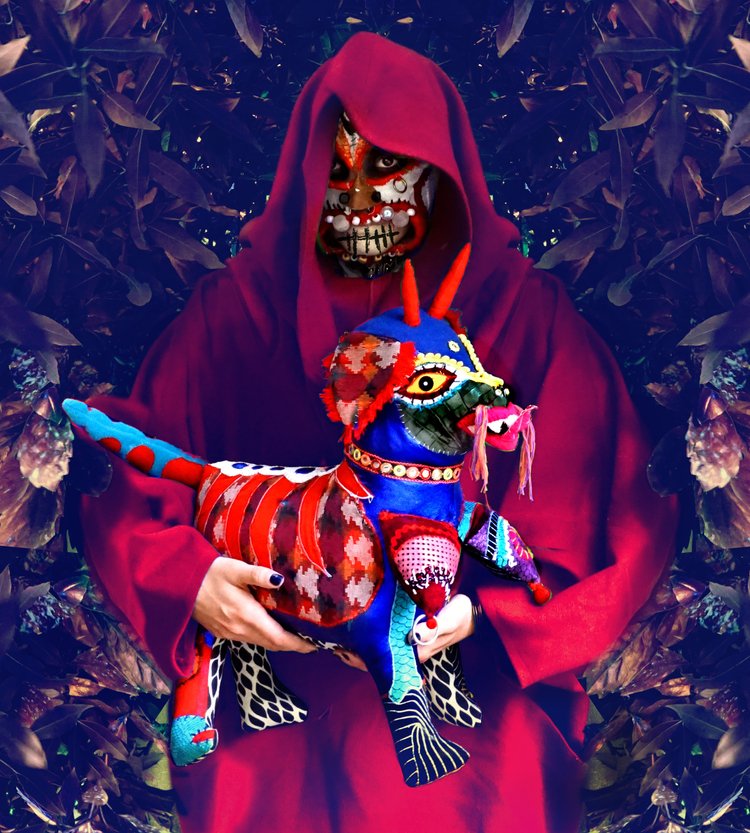
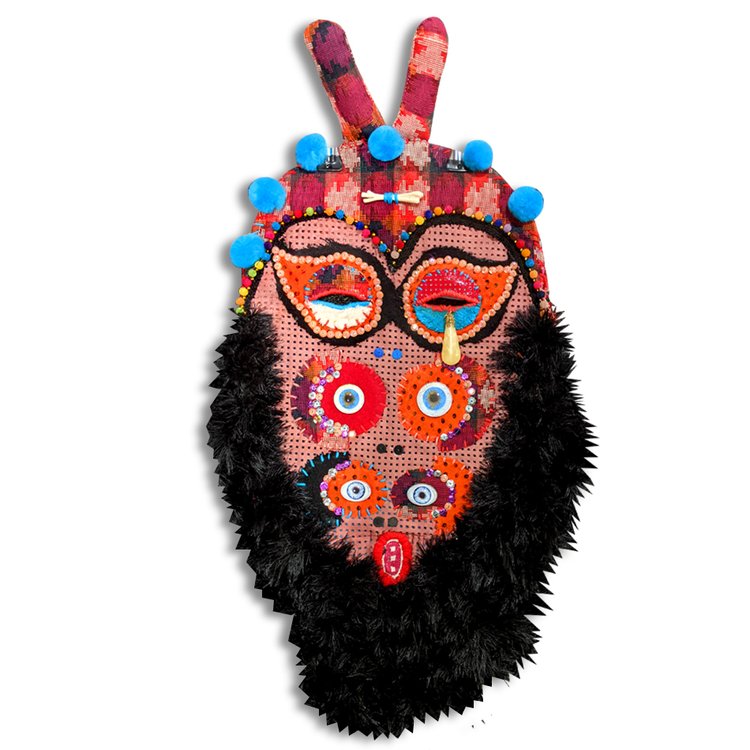
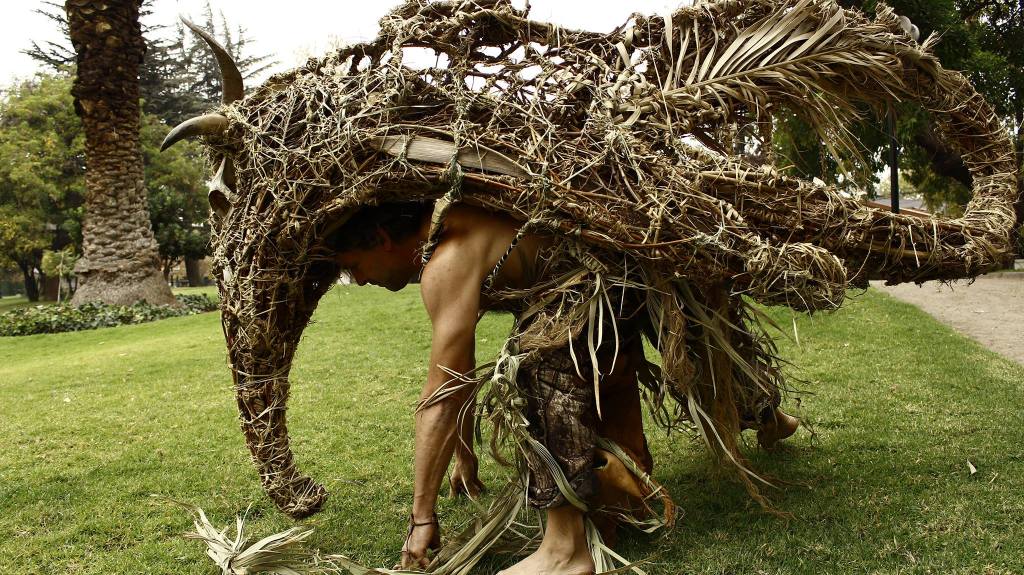
Francisco Rios Araya blends the ancient diversity between Paracas culture and Chilote mythology to build a new mythic hybrid. Rios creates a séance with the memories of archaeological sites, improvised ceremony and masks.
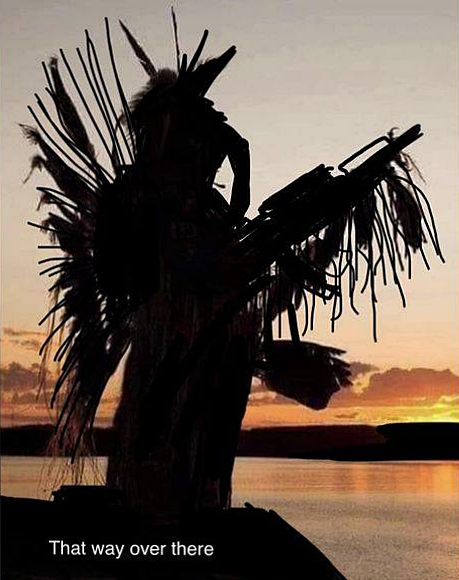
Mun gee dik lives in rocks and along shadows near lake Manitou…it is said this spirit hid a cache of weapons in a cave from the marauding Iroquois…some believe weapons are hidden to this day and include modern firearms that were lost or thought stolen…the Great War hero Kawbenaw is said to still be alive and is keeping these weapons…someday mun gee dik and Kawbenaw will make themselves known
written and created by Duncan Neganigwane Pheasant
Mitchell Pluto
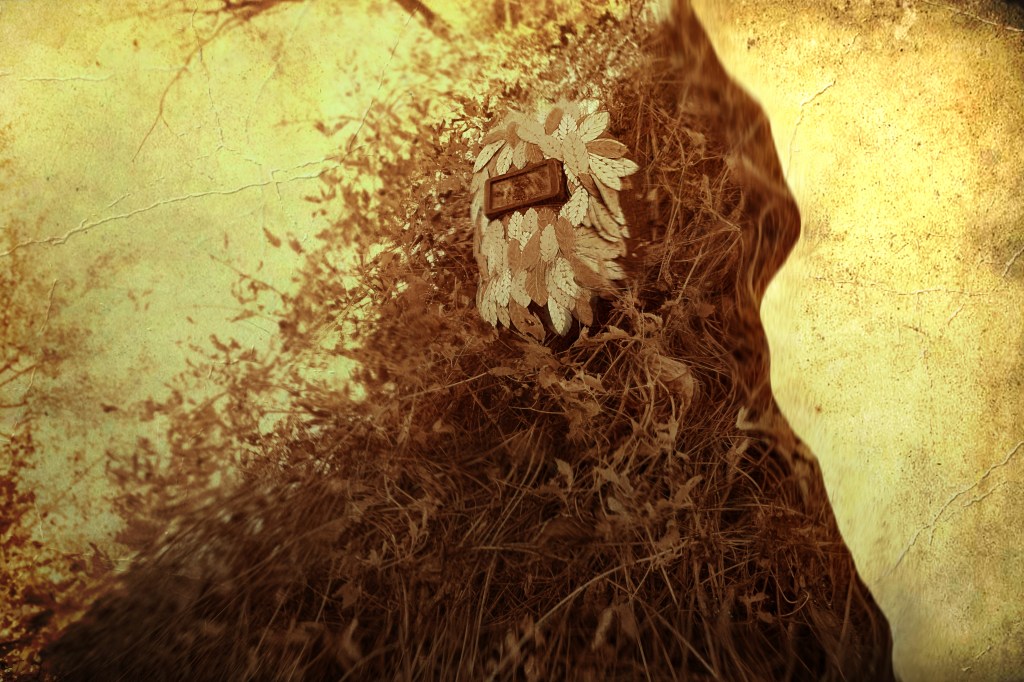
In August 1869, Alexander Jay Russell, a railroad photographer, captured an image of an unidentified entity during a total solar eclipse in Western Montana Territory. Russell’s journal entry depicted the creature as a tree-like being that glided along the ground and through the trees, mimicking every texture it encountered. The dark visor was the only consistent characteristic.
Photos found at an estate sale in 2023 are now in the possession of the Montana Historical Society Research Center Archives. Certain independent researchers suggest that this camouflaged entity possesses the capacity to swiftly adjust its chromatophores, enabling it to blend into any surroundings without being easily observed or recognized. This trait resembles that of Cephalopoda, the only organism known to exhibit such capabilities.
Many witnesses in Montana reported similar encounters during the solar eclipse on February 26, 1979, like Russell’s. Authorities have not yet released any official comments to the public.
welding mask with painted copper leaf by Mitchell Pluto. Wild Plains Horse Plains, Montana
epilogue
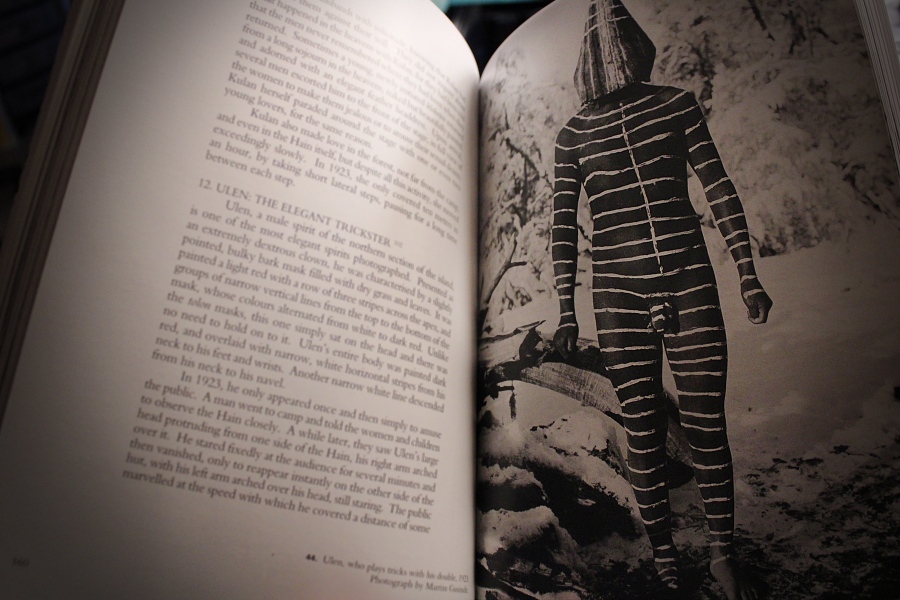
Ulen the elegant trickster. Plays tricks with his double, 1923. Photograph by Martin Gusinde
“In 1923, the Ulen only appeared once and then simply to amuse the public. A man went to the camp and told the women and children to observe the Hain closely. Awhile later, they saw Ulen’s large head protruding from one side of the Hain, his right arm arched over it. He started fixedly at the audience for several minutes and then vanished, only to reappear instantly on the other side of the hut, with his left arm arched over his head, still staring. The public marveled at the speed at the speed with which he cover the distance of some eight metres. The public did not know that the “backstage” there were two rigorously identical Ulens, posed at each side of the Hain. A third man gave them signals as to the exact moment at which they were to protrude their heads. The performers practiced a great deal in order to coordinate their movements and remain immobile for several minutes.”
Chapman, Anne (2008) Hain, Selknam Initiation Ceremony. Initiation ceremony of the Selknam of Tierra Del Fuego 12 160-162
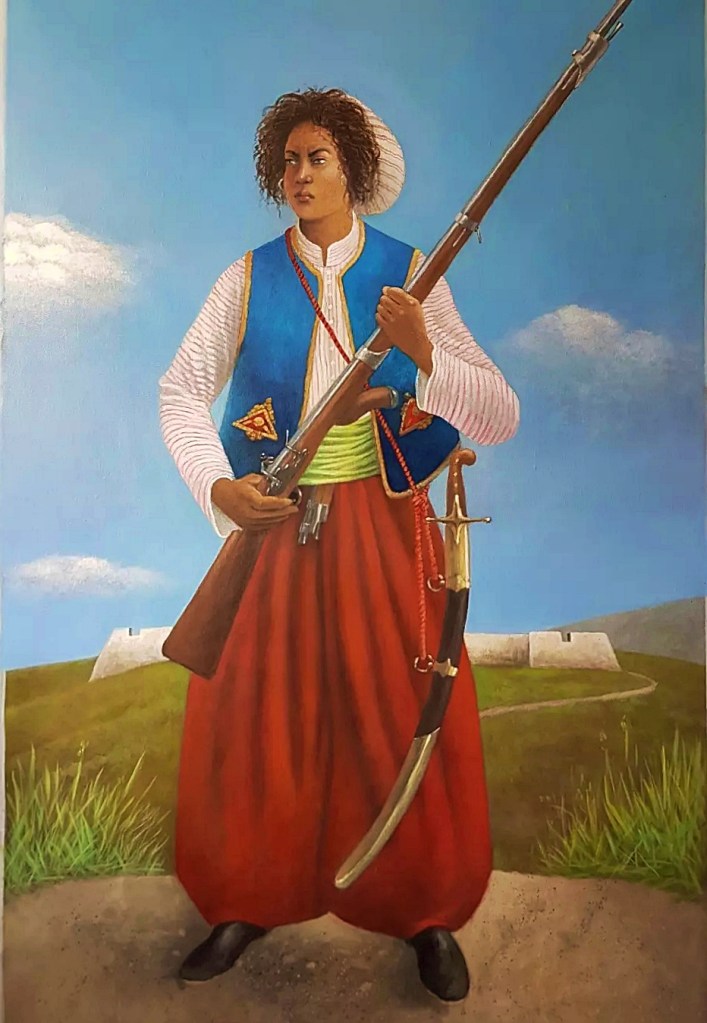
Sanite Belair, Haitian Héroïne of the Revolution of 1803 by François Cauvin 2021.
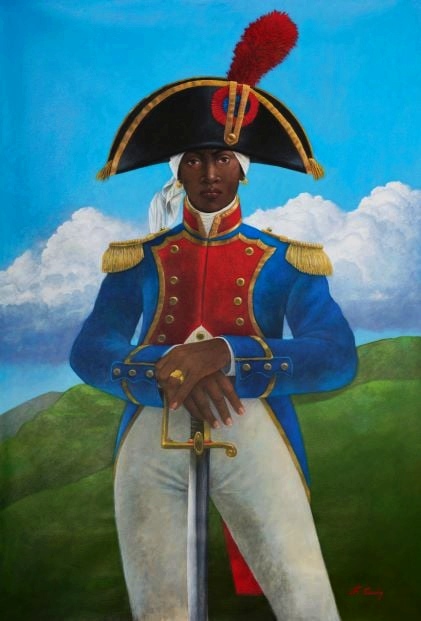
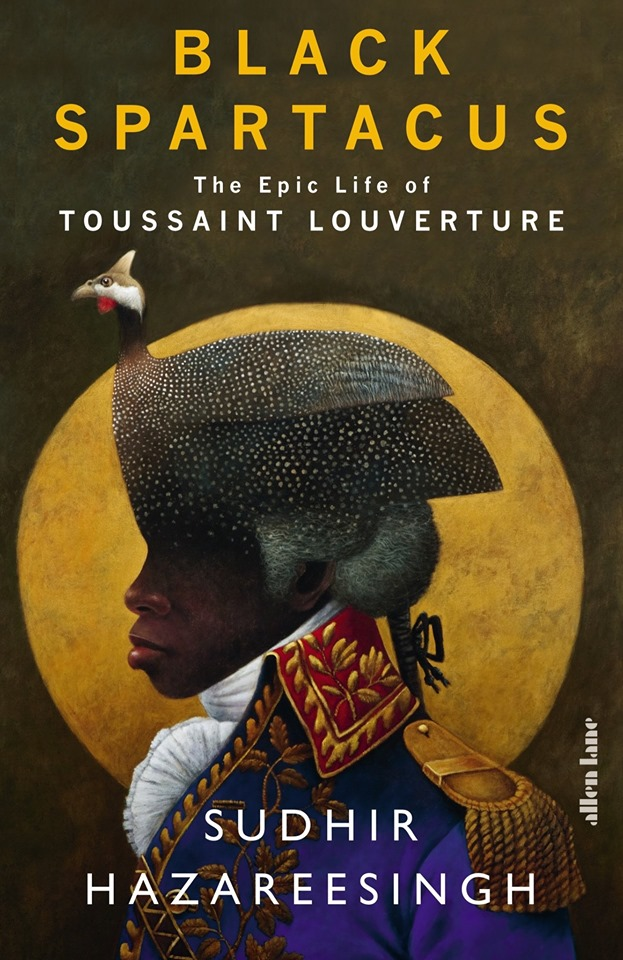
François Cauvin is an acclaimed Haitian artist based in Montreal. His iconic portrait of Toussaint Louverture with a guinea fowl forming his hat is the cover image of Sudhir Hazareesingh’s Black Spartacus: The Epic Life of Toussaint Louverture. The famous portrait has now travelled far and wide as this book won the Wolfson Prize, the UK’s most prestigious history prize. Recently he has completed portraits of Haiti’s revolutionary women, including Sanite Belair and Marie-Jeanne Lamartinière. With funding from the Glasgow Knowledge Exchange Fund, Cauvin will speak with Rachel Douglas at UK museums and the Houses of Parliament on the topic “Visual Aftershocks of the Haitian Revolution.”
Nouvelle toile par François Cauvin ” Marie Jeanne Lamartinière “ Acrylique sur canevas. 2023. Contrairement a ce que le noirisme duvalieriste nous a fait croire , Marie Jeanne Lamartiniere etait metisse ,d’un pere francais et d’une mere africaine. Demolition des mythes pour une nouvelle Haiti sans prejuges.
”Black Spartacus” by Sudhir Hazareesingh. Painting François Cauvin
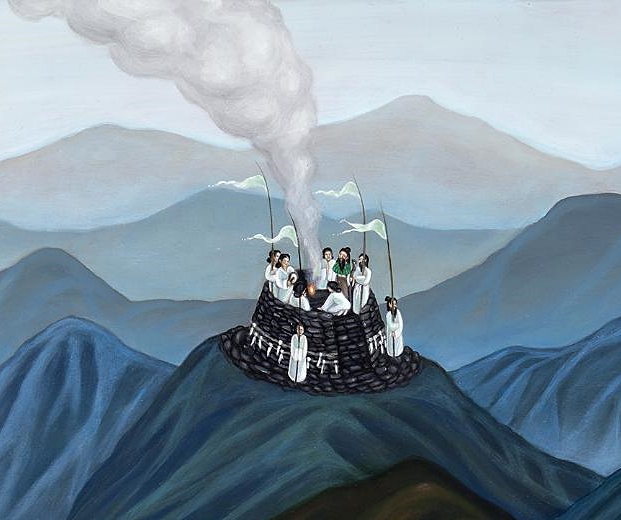
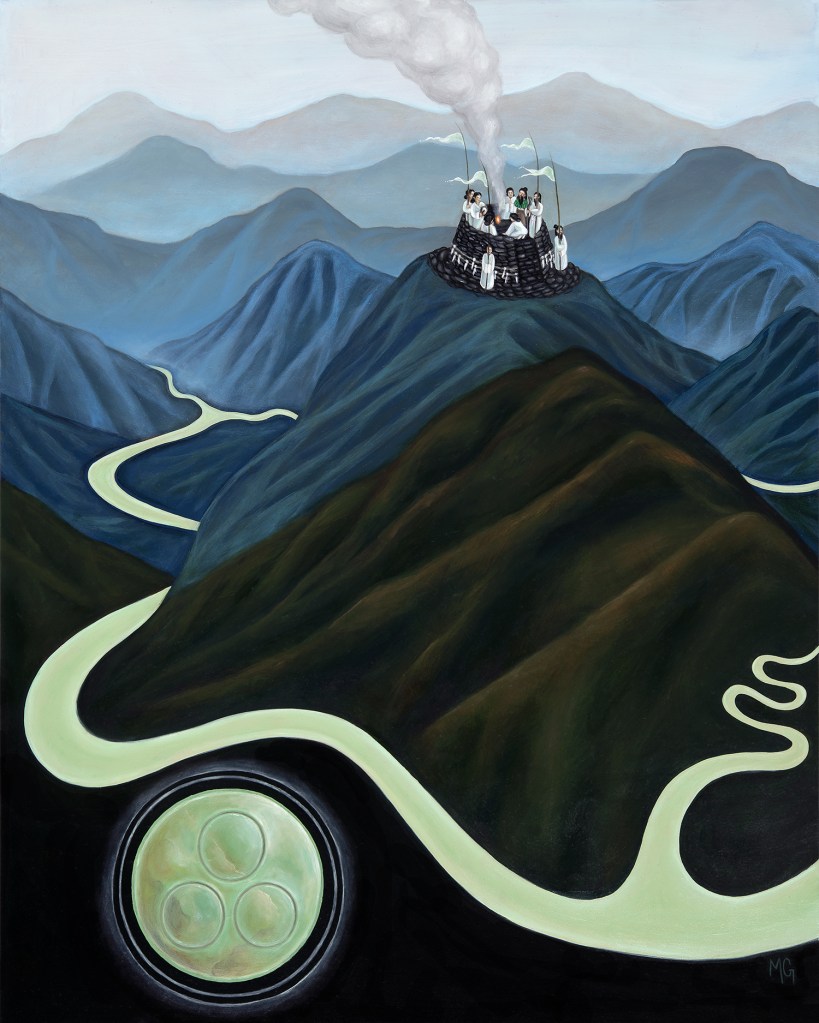
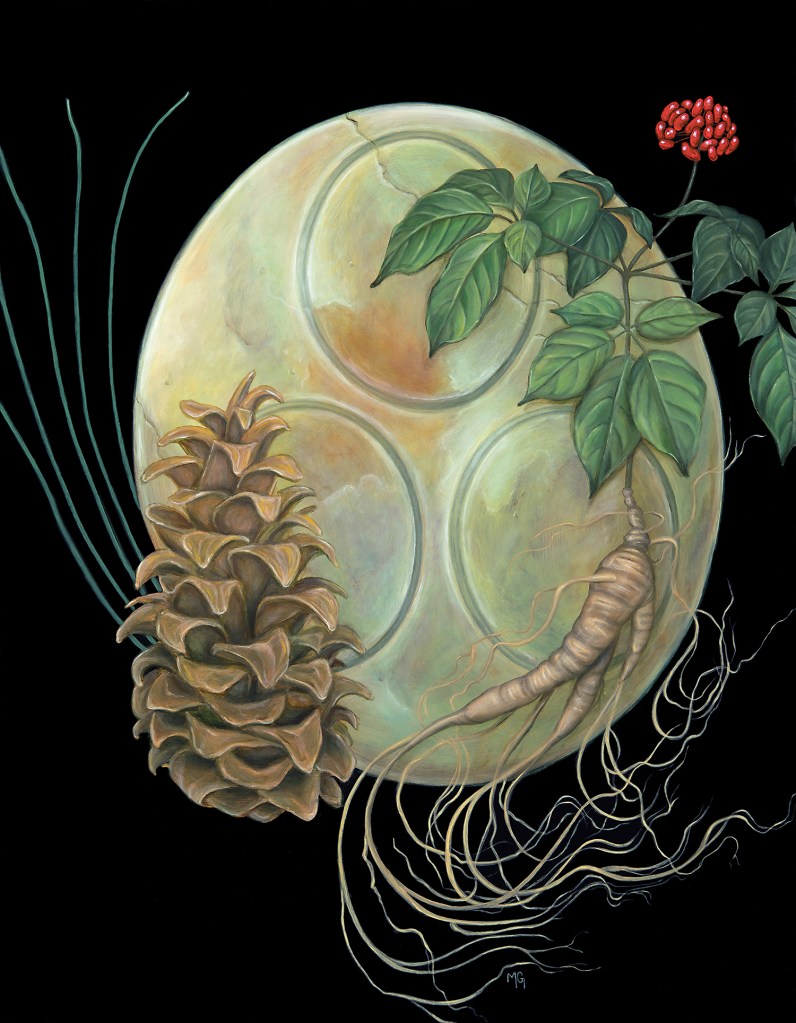
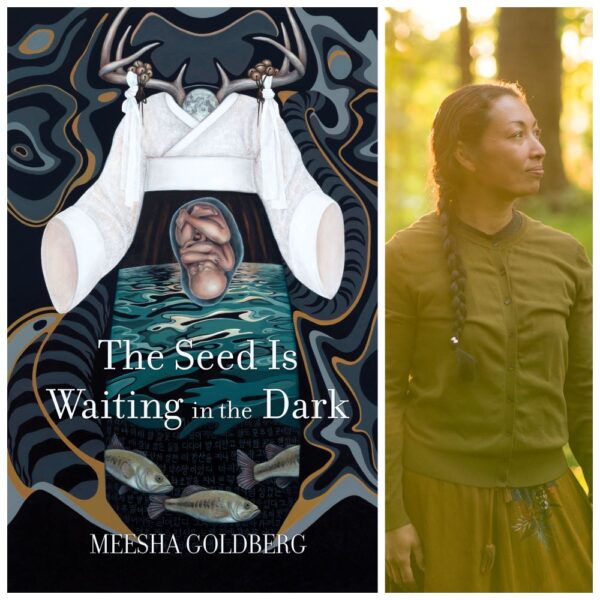
Meesha Goldberg is a Korean American artist and poet living in Charlottesville, VA. Her experiences growing food, serving as an activist, and journeying to sacred places have made her a powerful advocate for the Earth. Goldberg has exhibited her work in solo shows around the United States, with her debut poetry chapbook “The Seed is Waiting in the Dark” forthcoming in 2024 through Finishing Line Press. Her art crosses the boundaries of genre to both experience and express transformational repair. Performance, ritual, painting, film, and poetry merge in durational, place-based works and gallery installations that insist upon the re-enchantment of the world.
The Seed Is Waiting in the Dark by Meesha Goldberg
This title will be released on January 19, 2024
The Seed is Waiting in the Darkconfronts the realities of ecological catastrophe and diasporic displacement with the lyric intensity of a life lived reckoning with questions of collective survival. Included within this debut collection are five of Goldberg’s paintings, which poignantly illustrate these feral, visionary poems. Full of grief, grace, and lessons from the land, The Seed is Waiting in the Dark conjures ancestral instincts to claim belonging within the cycles of natural life.
Juan Enrique Piedrabuena Ruiz-Tagle nació en Santiago de Chile en 1951. Es Abogado y Magíster en Administración de Empresas. Vivió en Barcelona, España, entre 1973 y 1997, donde activamente participó en el grupo literario “L` Ocell Radiant”, en la Floresta, Sant Cugat del Valles. De vuelta en Chile, ha participado en algunos grupos literarios y además en el taller de poesía «El Caleuche» dirigido por la poeta Tatiana Olavarría en la SECH. Ha sido traducido parcialmente al catalán. Es miembro de la APOC (Asociación de Profesionales Catalanes) y uno de los editores de la revista literaria Joan Brossa. Ha publicado “Poemas del desarraigo” y “El entresijo de tu mirada”.
Toda ciudad hiede a sombras las cuales son a su vez sus cementos, que la ocultan, a ella, la de la piel perlada y ojos evocadores. Filo emergido del océano antiguo bajo la oscuridad nubosa de la palabra sonido del reino animal que dibuja su notocorda (o notocordio) por consejo de los cantos cámbricos de células turgentes y cada cuerda se compone según designio con ese diseño urdido en los albores del primer sentir del todo música que continúa con su decibel arcano y transversal.
Born in 1961, he entered the Faculty of Arts of the University of Chile in 1980, from where he was exonerated at the end of 1981. There he had classes with artists such as Luis Lobo Parga, Adolfo Couve and Luis Advis among others. It was then that he began his studies in fine arts at the Institute of Contemporary Art, where he was a student of Sergio Sosa, Milan Ivelic, Gaspar Galaz and Enrique Zamudio, among a long list of notable academics. He interrupted these studies to enter Graphic Design, where he would meet great masters, such as his friend Claudio Cortes, or the outstanding Antonio Pérez and Patricio de la O. At the end of this training, he returned for one more year to the Institute of Contemporary Arts, and finally , studied a Color diploma at the Catholic University of Chile during 1992.
He is considered one of the most notable representatives of surrealist painting; His works have been exhibited in Italy, France, Spain and the United States.
Descendidos al mismo infierno Tu saciedad en mi boca Los labios aparean otras voces Me buscas entre la niebla La imaginación me busca entre la bruma Yo no existo Tú me asesinaste Hundiste tus preguntas en partes viejas de la casa Algo encendía el techo Los pequeños alumbraron esa melancolía Hasta que todo se fue en la inundación Y las miradas se ensuciaron con su propio ruido No había más caretas para procrear Ni más sueños para parir.
Vuelvo al sur a los bosques La lluvia detiene el canto de nuestros cuerpos Volveremos a arder mientras la lluvia gire hacia la luz Y una partícula de viento entre en nuestros reinos El aire será nuestro Nos poseeremos agitados Ante el agua descendida por la noche Mientras los animales buscan sus huellas Y nosotros decapitamos el terror Observamos la hoguera desde la boca hacia los pies Y en un minuto todo será conocido Cada detalle entra en nosotros Aullamos con el musgo que nos cubre Y tus labios me tocan Deslizan tus hogueras en la ruta del sol Hasta que el viento es un solo gemido Y nadie ni siquiera la noche puede soportar Estas sombras recorriendo Palpando la silueta Entrando en la oscuridad.
Descubriéndonos Descubro el sur en este navío que vuela Es mi imaginación en su astillero de astros Los muñecos envician las agitadas aguas Es el aire sucio que nos recorre Y una llamarada revierte Los fragmentos del aire en toda su gestación Es tanto el aire que ansío Volar por estas explanadas hacia el lago Y desde allí recorrer la senda Las nubes dejan pergaminos en la noche Nosotros nombramos nuestras inmensidades En las lagunas del secreto La madre guarda sus señales con devoción Y el anciano lleva botellas en el bolsillo Yo no puedo morir antes de verte Es azul esta nostalgia del verde corredor Mis muñecas recuerdan todos recordamos Es un viaje por las huellas de esa mirada distante Es un tiempo dedicado al sigilo Las madrugadas vuelven a reunir sus escombros Pero la hierba crece desterrada desde la tierra Y las cartas regresan a la ciudad perdida.
The psychedelic, psilocybin-rich species, Psilocybe cubensis, is a coprophilous mushroom. This means that it can only subsist in the wild upon the dung of certain animals, especially cattle. While native to Cuba (hence cubensis), this fantastic fungus has been documented in a number of southern states, including Florida, Georgia, Alabama, Mississippi, Tennessee, Arkansas, Louisiana, Texas, South Carolina, North Carolina, and even as far north as Oklahoma, Virginia, and West Virginia—albeit rarely in these latter three. The species is also found in Hawaii. It was in the state of Louisiana, however, amidst its humid cattle fields and dank, swampy marshes, where African American sharecropper, Denver Moore—then just a boy—first underwent what may be an early example of psilocybin mushroom use in North America.
As the book says, Ron Hall and Denver Moore’s New York Times Bestseller, Same Kind of Different as Me—an amazing true tale of a modern-day slave, an international art dealer, and an unlikely woman who brought them together—is a story filled with hardship, betrayal, and the brutality that lines the hearts of some men. But, it’s also a story of hope and perseverance, mottled throughout with thought-provoking anecdotes about black life in the Deep South in the 1950s. Descended from African American slaves, Denver Moore was raised on a scorching southern plantation near the alligator-riddled, mosquito-infested swamps of Louisiana. Having very few monetary resources, Moore was blessed to have an incredibly resourceful wise woman of an aunt, a Conjure woman—called Auntie Etha—who, with the aid of traditional African American folk remedies, was able to help the Moore family make the most of an often difficult situation. Moore recalls,
Lookin back on it, I think Auntie was what you might call a spiritual healer, like a ‘medicine man,’ cept she was an elderly woman. […] Big Mama made me go show my respect and also to help Auntie gather up the fixins for her medicines.
She used to take me with her down by the swamp where she’d be gatherin up some leaves and roots. […] ‘Now Li’l Buddy, this here’s for takin the pain out of a wound,’ she’d say, pullin up a root and shakin off the earth. ‘And this here’s for pneumonia.’
[…] She had a room in her house with a big table in it covered with jars in all kinda sizes.
‘See them jars?’ she told me one time.
‘Yes, ma’am.’
‘In each of em, I got somethin for anything that happens to you.’
[…] She had some kinda spiritual thing goin on in that house. Every time I went in there, she made me sit on a little stool in the same spot, even facin in the same direction, like she didn’t want me to mess up whatever voodoo she had goin on in there.
Moore’s charming description of Auntie Etha clearly betrays her as a practitioner of Hoodoo, known in the Mississippi Delta as a “Rootwork” or “Conjure,” even going so far as to evoke the term, “voodoo,” in his account.
Hoodoo, a traditional African American spirituality that arose from several West African traditions as the same were imported into the New World, may not be stranger to psychoactive plants. For instance, while not entheogenic itself, one of the most common charms carried by Conjure practitioners is the root ball of the Ipomoea jalapa vine, referred to as a “High John the Conqueroo” root. Some species of Ipomoea (morning glory), such as Ipomoea tricolor and Ipomoea corymbosa, are possessed of the hallucinogenic compound, ergine, also known as d-lysergic acid amide (LSA)—a close cousin to Albert Hofmann’s “problem child,” lysergic acid diethylamide (LSD-25). In 1938, Ipomoea corymbosa (formerly Rivea corymbosa), for example, was discovered by American biologist, Richard Evans Schultes, to solve to problem of the identity of the ancient Mexican hallucinogen, Ololiuqui. The formidable effects of Ololiuqui were noted in the colonial document, The Florentine Codex, from the 16th century:
It inebriates one; it makes one crazy, stirs one up, makes one mad, makes one possessed. He who eats of it, he who drinks of it, sees many things that will make him afraid to a high degree. He is truly terrified of the great snake that he sees for this reason.
Francisco Hernandez, the famous Spanish physician, also discussed Ololiuqui in his book, Rerum medicarum Novae Hispaniae thesarus:
When the priests of the indians wish to commune with the spirits of the dead, they eat these seeds to induce a delirium and then see thousands of satanic figures and phantoms around them.
Ergo, there was already a history of the Native use of hallucinogenic morning glories in the Americas long before the arrival of African slaves. But, that doesn’t necessarily mean they learned of jalapa through Native Americans.
Century Illustrated Magazine (1881-1906), XLI, 825.
Before going any further, it is important to note that some African cultures are known to be in possession of their own rich, entheogenic traditions—independent of the export of African slaves to the New World. The Bwiti cult found among the Puna, Mitsogo, and Fang tribes in Gabon and Cameroon, for instance, employ the inebriating root bark of the West African shrub, Tabernanthe iboga, in their lively initiations. Like the “High John the Conqueroo” charms cherished by Southern practitioners of Hoodoo in North America, iboga is harvested from the roots of the shrub, linking the Bwiti cult, at least in spirit, to the black “rootwork” of Southern Hoodoo—a tradition whose own roots are to be sought in the religious practices of the Bantu of the former Kingdom of Kongo in west-central Africa. In fact, when iboga was first documented by the West, English traveler and author, Thomas Edward Bowdich, reported that,
The Eroga, a favourite but violent medicine, is no doubt a fungus, for they describe it as growing on a tree called the Ocamboo, when decaying; they burn it first, and take as muchas would lay on a shilling.
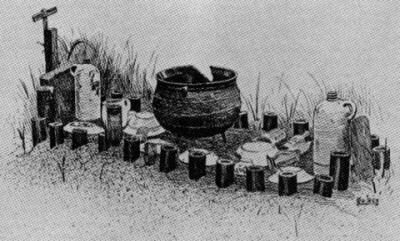
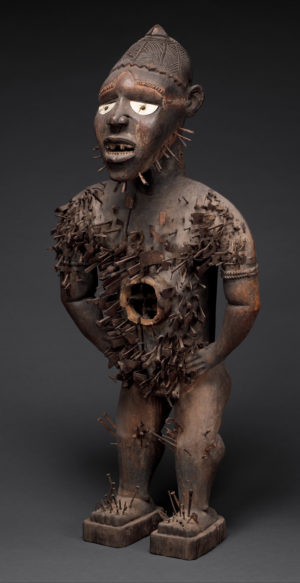
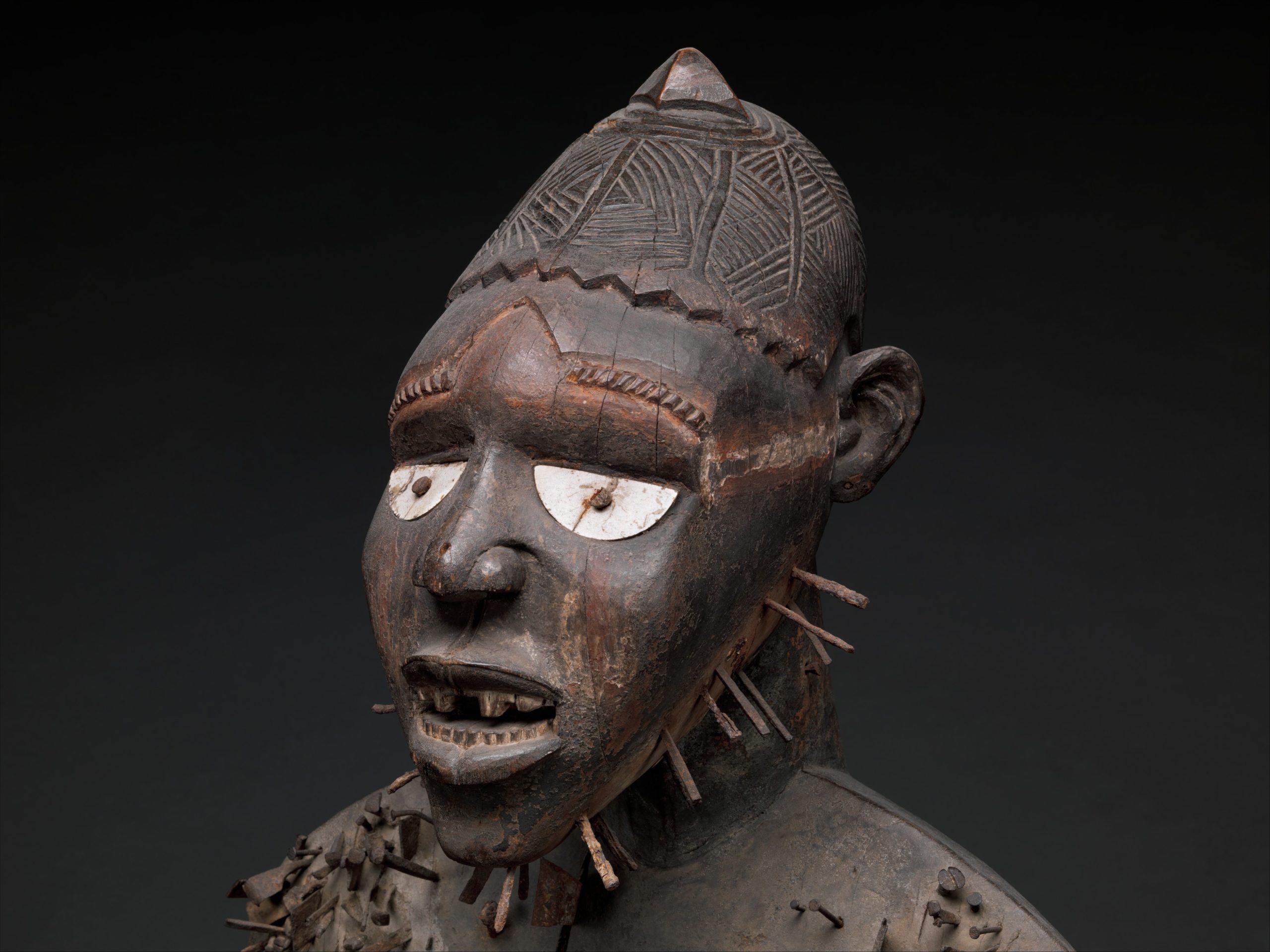
While this Englishman is no doubt in confusion regarding the identity of iboga, his observation suggests that some species of fungus was sacred to the Indigenous of the area. And, indeed, a tree fungus, known as tondo, was in fact central to the construction of nkisi statues, whose “kondu gland”—a hollow chamber in the belly of the statue—held samples of the unidentified specimen. One Bantu nganga, making an offering of the mushroom to the spirits, referred to tondo as “the key that opens everything.” The Kongolese and African American practice of surrounding the gravesite of a loved one with inverted plates and saucers, often resting atop poles or sticks, was believed to imitate the appearance of mushrooms around the burial. According to one source, this curious form of grave decoration was meant to recall and old Kongo play on words: tondo / matondo. For, in Bantu, the word for mushroom (tondo) is similar to the word for “to love” (matondo).
Power Figure (Nkisi N’Kondi: Mangaaka), Kongo peoples, mid to late nineteenth century, wood, paint, metal, resin, ceramic, 118 x 49.5 x 39.4 cm, Democratic Republic of Congo. Medicinal combinations called bilongo are sometimes stored in the head of the figure but frequently in the belly of the figure, which is shielded by a piece of glass, mirror, or other reflective surface. (The Metropolitan Museum of Art)
To return to the Americas, Schultes also identified the Aztec psychedelic, Teonanácatl, as belonging to the Psilocybe genus. But, Denver Moore’s would appear to be the first account of the possible use of a psilocybin mushroom within the context of Conjure, as the same was practiced by African American slaves in the Deep South. Many Hoodoo practices continue to be shrouded in secrecy. So, it may be impossible to determine just how far back this tradition among African Americans extends. But, as the famous Tennessee Hoodoo practitioner, Doc “Wash” Harris, founder of the infamous Saint Paul Spiritual Holy Temple in Memphis—inappropriately known by locals as “Voodoo Village”—once said in an interview with the Commercial Appeal in 1984,
God told the black man and the Indian somethings he didn’t tell nobody else.
One of those things may have concerned the powerful effects of a particular species of dung-loving mushroom.
Reminiscing about his great, wise Auntie, Moore briefly continues,
Aunt Etha took care of our bodies and souls. Mostly we never got very sick, but when we did, my auntie sure ‘nough had the cure: Somethin she called ‘cow-lip tea.’
Now cow-lip tea was brown and thin, kinda like the Lipton tea the Man sold at his store, but a durn sight more powerful. Cow-lip tea come from them white toadstools that sprout outta cow patties. […] That’s where cow-lip tea got its name. ‘Cow’ from the cow patties and ‘lip’ from the Lipton. Least that’s what Aunt Etha always told me.
The way you make cow-lip tea is you get the toadstools […] and grind em up in the sifter. [You] put it in a rag and tie a knot on top. Then you add a little honey to a boilin pot and drop that rag in the water til it bubbles up and turns good and brown. Now you got cow-lip tea.
If I was sick, Aunt Etha’d always make me drink a canful.
‘All good medicine tastes bad!’ she’d say, then put me in the bed underneath a whole pile a’ covers, no matter whether it was summertime or wintertime. In the mornin, the bed’d be soppin wet and the sheets’d be all yella, but I’d always be healed. I was nearly grown before I figured out what I was drinkin.
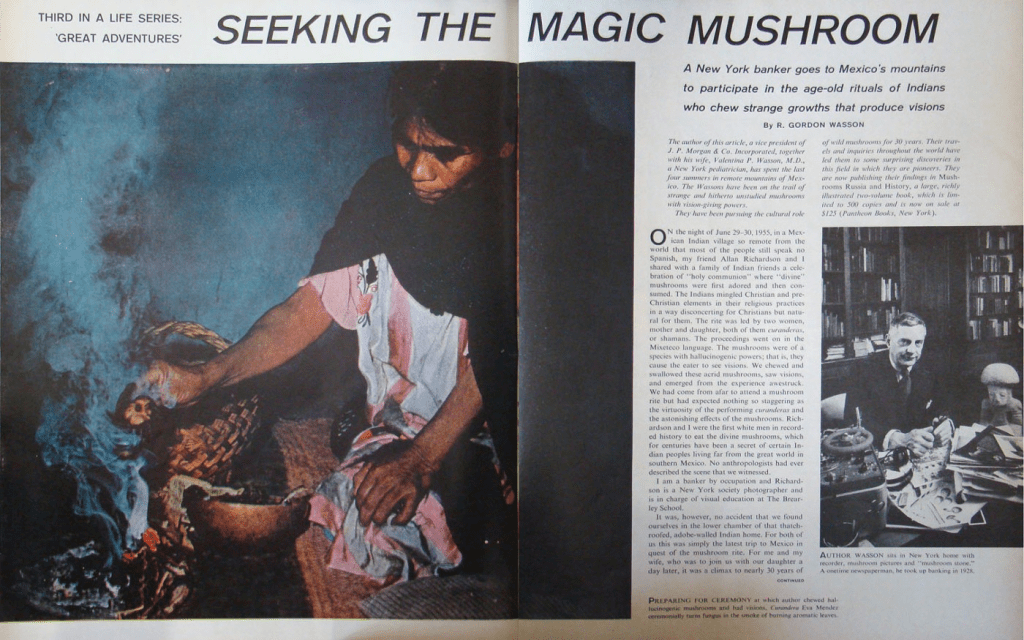
This historical narrative is simply amazing. Psilocybin mushrooms weren’t brought to the attention of the broader West until 1957, with the publication of the paradigm-shifting photo essay, “Seeking the Magic Mushroom,” in LIFE magazine by R. Gordon Wasson—the “father of ethnomycology.” Moore’s account is at least contemporaneous with Wasson’s publication. But, considering that this particular treatment was likely a timeworn tradition handed down to Auntie Etha by her own teacher(s), it is very probable that this particular use of the fungus went back much earlier than the time of Moore or his Auntie Etha. While no psychedelic effects were noted by the author, the mere fact the mushroom tea was administered in a medicinal context, to treat a sick boy, is highly significant. For, the Mazatec ceremony to which Mexican curandera, María Sabina, invited Wasson, the same wherein the psilocybin mushrooms were ingested, was also explicitly medicinal—velada being the traditional name given to the mushroom healing vigils carried out by Mazatec “shamans.” Moreover, if Moore was administered Auntie Etha’s tea while suffering a high fever, any psychedelic effects—including hallucinations—may have simply been attributed to the symptoms of the contracted illness.
“Seeking the Magic Mushroom,” in LIFE magazine by R. Gordon Wasson 1957
Importantly, Moore’s account is not the sole evidence of the use of entheogenic concoctions in the practice of Hoodoo. Over twenty years before the experience described in Same Kind of Different as Me, African American author, Zora Neale Hurston, in her 1935 classic, Mules and Men, revealed her own experience with what is quite clearly a powerful yet unnamed hallucinogen.
…I had to fast and “seek,” shut in a room that had been purged by smoke. Twenty-four hours without food except a special wine that was fed to me every four hours. It did not make me drunk in the accepted sense of the word. I merely seemed to lose my body, my mind seemed very clear. […] Maybe I went off in a trance. Great beast-like creatures thundered up to the circle from all sides. Indescribable noises, sights, feelings. Death was at hand! Seemed unavoidable! I don’t know.
While Hurston’s report does not mention hallucinogenic fungi specifically (or any other substance for that matter), the obvious psychedelic nature of her account is a good indication that entheogenic plants were not unknown to Hoodoo practitioners such as Denver Moore’s Auntie Etha.
Miguel Covarrubias’ Illustration for “Mules and Men” Zora Neale Hurston/ Lippincott, Philadelphia, 1935
Denver Moore passed away in 2012, so we were unable to interview him concerning his spectacular narration. But, it is our hope that Moore and his Auntie Etha would have been proud to know that their legacy not only lives on, but it may change the narrative as we know it regarding both the history of ethnomycology and the practices of Hoodoo and folk medicine among African Americans living in the Deep South.
P.D. Newman is an independent researcher located in the southern US, specializing in the history of the use of entheogenic substances in religious rituals and initiatory rites. He is the author of the books, Alchemically Stoned: The Psychedelic Secret of Freemasonry, Angels in Vermilion: The Philosophers’ Stone from Dee to DMT, and the forthcoming title, Day Trips and Night Flights: Anabasis, Katabasis, and Entheogenic Ekstasis in Myth and Rite. The Secret Teachings of All Ages (TV Series documentary) 2023.