Juan Enrique Piedrabuena Ruiz-Tagle nació en Santiago de Chile en 1951. Es Abogado y Magíster en Administración de Empresas. Vivió en Barcelona, España, entre 1973 y 1997, donde activamente participó en el grupo literario “L` Ocell Radiant”, en la Floresta, Sant Cugat del Valles. De vuelta en Chile, ha participado en algunos grupos literarios y además en el taller de poesía «El Caleuche» dirigido por la poeta Tatiana Olavarría en la SECH. Ha sido traducido parcialmente al catalán. Es miembro de la APOC (Asociación de Profesionales Catalanes) y uno de los editores de la revista literaria Joan Brossa. Ha publicado “Poemas del desarraigo” y “El entresijo de tu mirada”.
Toda ciudad hiede a sombras las cuales son a su vez sus cementos, que la ocultan, a ella, la de la piel perlada y ojos evocadores. Filo emergido del océano antiguo bajo la oscuridad nubosa de la palabra sonido del reino animal que dibuja su notocorda (o notocordio) por consejo de los cantos cámbricos de células turgentes y cada cuerda se compone según designio con ese diseño urdido en los albores del primer sentir del todo música que continúa con su decibel arcano y transversal.
Born in 1961, he entered the Faculty of Arts of the University of Chile in 1980, from where he was exonerated at the end of 1981. There he had classes with artists such as Luis Lobo Parga, Adolfo Couve and Luis Advis among others. It was then that he began his studies in fine arts at the Institute of Contemporary Art, where he was a student of Sergio Sosa, Milan Ivelic, Gaspar Galaz and Enrique Zamudio, among a long list of notable academics. He interrupted these studies to enter Graphic Design, where he would meet great masters, such as his friend Claudio Cortes, or the outstanding Antonio Pérez and Patricio de la O. At the end of this training, he returned for one more year to the Institute of Contemporary Arts, and finally , studied a Color diploma at the Catholic University of Chile during 1992.
He is considered one of the most notable representatives of surrealist painting; His works have been exhibited in Italy, France, Spain and the United States.
Descendidos al mismo infierno Tu saciedad en mi boca Los labios aparean otras voces Me buscas entre la niebla La imaginación me busca entre la bruma Yo no existo Tú me asesinaste Hundiste tus preguntas en partes viejas de la casa Algo encendía el techo Los pequeños alumbraron esa melancolía Hasta que todo se fue en la inundación Y las miradas se ensuciaron con su propio ruido No había más caretas para procrear Ni más sueños para parir.
Vuelvo al sur a los bosques La lluvia detiene el canto de nuestros cuerpos Volveremos a arder mientras la lluvia gire hacia la luz Y una partícula de viento entre en nuestros reinos El aire será nuestro Nos poseeremos agitados Ante el agua descendida por la noche Mientras los animales buscan sus huellas Y nosotros decapitamos el terror Observamos la hoguera desde la boca hacia los pies Y en un minuto todo será conocido Cada detalle entra en nosotros Aullamos con el musgo que nos cubre Y tus labios me tocan Deslizan tus hogueras en la ruta del sol Hasta que el viento es un solo gemido Y nadie ni siquiera la noche puede soportar Estas sombras recorriendo Palpando la silueta Entrando en la oscuridad.
Descubriéndonos Descubro el sur en este navío que vuela Es mi imaginación en su astillero de astros Los muñecos envician las agitadas aguas Es el aire sucio que nos recorre Y una llamarada revierte Los fragmentos del aire en toda su gestación Es tanto el aire que ansío Volar por estas explanadas hacia el lago Y desde allí recorrer la senda Las nubes dejan pergaminos en la noche Nosotros nombramos nuestras inmensidades En las lagunas del secreto La madre guarda sus señales con devoción Y el anciano lleva botellas en el bolsillo Yo no puedo morir antes de verte Es azul esta nostalgia del verde corredor Mis muñecas recuerdan todos recordamos Es un viaje por las huellas de esa mirada distante Es un tiempo dedicado al sigilo Las madrugadas vuelven a reunir sus escombros Pero la hierba crece desterrada desde la tierra Y las cartas regresan a la ciudad perdida.
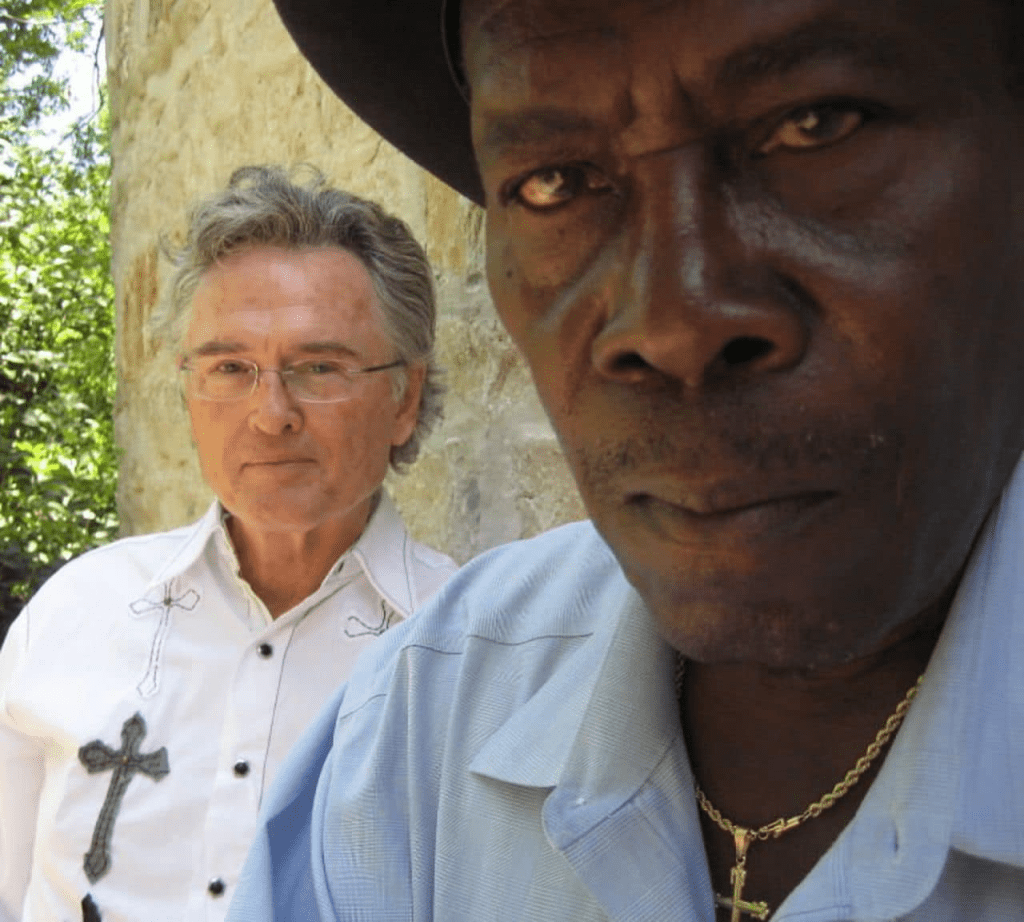
The psychedelic, psilocybin-rich species, Psilocybe cubensis, is a coprophilous mushroom. This means that it can only subsist in the wild upon the dung of certain animals, especially cattle. While native to Cuba (hence cubensis), this fantastic fungus has been documented in a number of southern states, including Florida, Georgia, Alabama, Mississippi, Tennessee, Arkansas, Louisiana, Texas, South Carolina, North Carolina, and even as far north as Oklahoma, Virginia, and West Virginia—albeit rarely in these latter three. The species is also found in Hawaii. It was in the state of Louisiana, however, amidst its humid cattle fields and dank, swampy marshes, where African American sharecropper, Denver Moore—then just a boy—first underwent what may be an early example of psilocybin mushroom use in North America.
As the book says, Ron Hall and Denver Moore’s New York Times Bestseller, Same Kind of Different as Me—an amazing true tale of a modern-day slave, an international art dealer, and an unlikely woman who brought them together—is a story filled with hardship, betrayal, and the brutality that lines the hearts of some men. But, it’s also a story of hope and perseverance, mottled throughout with thought-provoking anecdotes about black life in the Deep South in the 1950s. Descended from African American slaves, Denver Moore was raised on a scorching southern plantation near the alligator-riddled, mosquito-infested swamps of Louisiana. Having very few monetary resources, Moore was blessed to have an incredibly resourceful wise woman of an aunt, a Conjure woman—called Auntie Etha—who, with the aid of traditional African American folk remedies, was able to help the Moore family make the most of an often difficult situation. Moore recalls,
Lookin back on it, I think Auntie was what you might call a spiritual healer, like a ‘medicine man,’ cept she was an elderly woman. […] Big Mama made me go show my respect and also to help Auntie gather up the fixins for her medicines.
She used to take me with her down by the swamp where she’d be gatherin up some leaves and roots. […] ‘Now Li’l Buddy, this here’s for takin the pain out of a wound,’ she’d say, pullin up a root and shakin off the earth. ‘And this here’s for pneumonia.’
[…] She had a room in her house with a big table in it covered with jars in all kinda sizes.
‘See them jars?’ she told me one time.
‘Yes, ma’am.’
‘In each of em, I got somethin for anything that happens to you.’
[…] She had some kinda spiritual thing goin on in that house. Every time I went in there, she made me sit on a little stool in the same spot, even facin in the same direction, like she didn’t want me to mess up whatever voodoo she had goin on in there.
Moore’s charming description of Auntie Etha clearly betrays her as a practitioner of Hoodoo, known in the Mississippi Delta as a “Rootwork” or “Conjure,” even going so far as to evoke the term, “voodoo,” in his account.
Hoodoo, a traditional African American spirituality that arose from several West African traditions as the same were imported into the New World, may not be stranger to psychoactive plants. For instance, while not entheogenic itself, one of the most common charms carried by Conjure practitioners is the root ball of the Ipomoea jalapa vine, referred to as a “High John the Conqueroo” root. Some species of Ipomoea (morning glory), such as Ipomoea tricolor and Ipomoea corymbosa, are possessed of the hallucinogenic compound, ergine, also known as d-lysergic acid amide (LSA)—a close cousin to Albert Hofmann’s “problem child,” lysergic acid diethylamide (LSD-25). In 1938, Ipomoea corymbosa (formerly Rivea corymbosa), for example, was discovered by American biologist, Richard Evans Schultes, to solve to problem of the identity of the ancient Mexican hallucinogen, Ololiuqui. The formidable effects of Ololiuqui were noted in the colonial document, The Florentine Codex, from the 16th century:
It inebriates one; it makes one crazy, stirs one up, makes one mad, makes one possessed. He who eats of it, he who drinks of it, sees many things that will make him afraid to a high degree. He is truly terrified of the great snake that he sees for this reason.
Francisco Hernandez, the famous Spanish physician, also discussed Ololiuqui in his book, Rerum medicarum Novae Hispaniae thesarus:
When the priests of the indians wish to commune with the spirits of the dead, they eat these seeds to induce a delirium and then see thousands of satanic figures and phantoms around them.
Ergo, there was already a history of the Native use of hallucinogenic morning glories in the Americas long before the arrival of African slaves. But, that doesn’t necessarily mean they learned of jalapa through Native Americans.
Century Illustrated Magazine (1881-1906), XLI, 825.
Before going any further, it is important to note that some African cultures are known to be in possession of their own rich, entheogenic traditions—independent of the export of African slaves to the New World. The Bwiti cult found among the Puna, Mitsogo, and Fang tribes in Gabon and Cameroon, for instance, employ the inebriating root bark of the West African shrub, Tabernanthe iboga, in their lively initiations. Like the “High John the Conqueroo” charms cherished by Southern practitioners of Hoodoo in North America, iboga is harvested from the roots of the shrub, linking the Bwiti cult, at least in spirit, to the black “rootwork” of Southern Hoodoo—a tradition whose own roots are to be sought in the religious practices of the Bantu of the former Kingdom of Kongo in west-central Africa. In fact, when iboga was first documented by the West, English traveler and author, Thomas Edward Bowdich, reported that,
The Eroga, a favourite but violent medicine, is no doubt a fungus, for they describe it as growing on a tree called the Ocamboo, when decaying; they burn it first, and take as muchas would lay on a shilling.
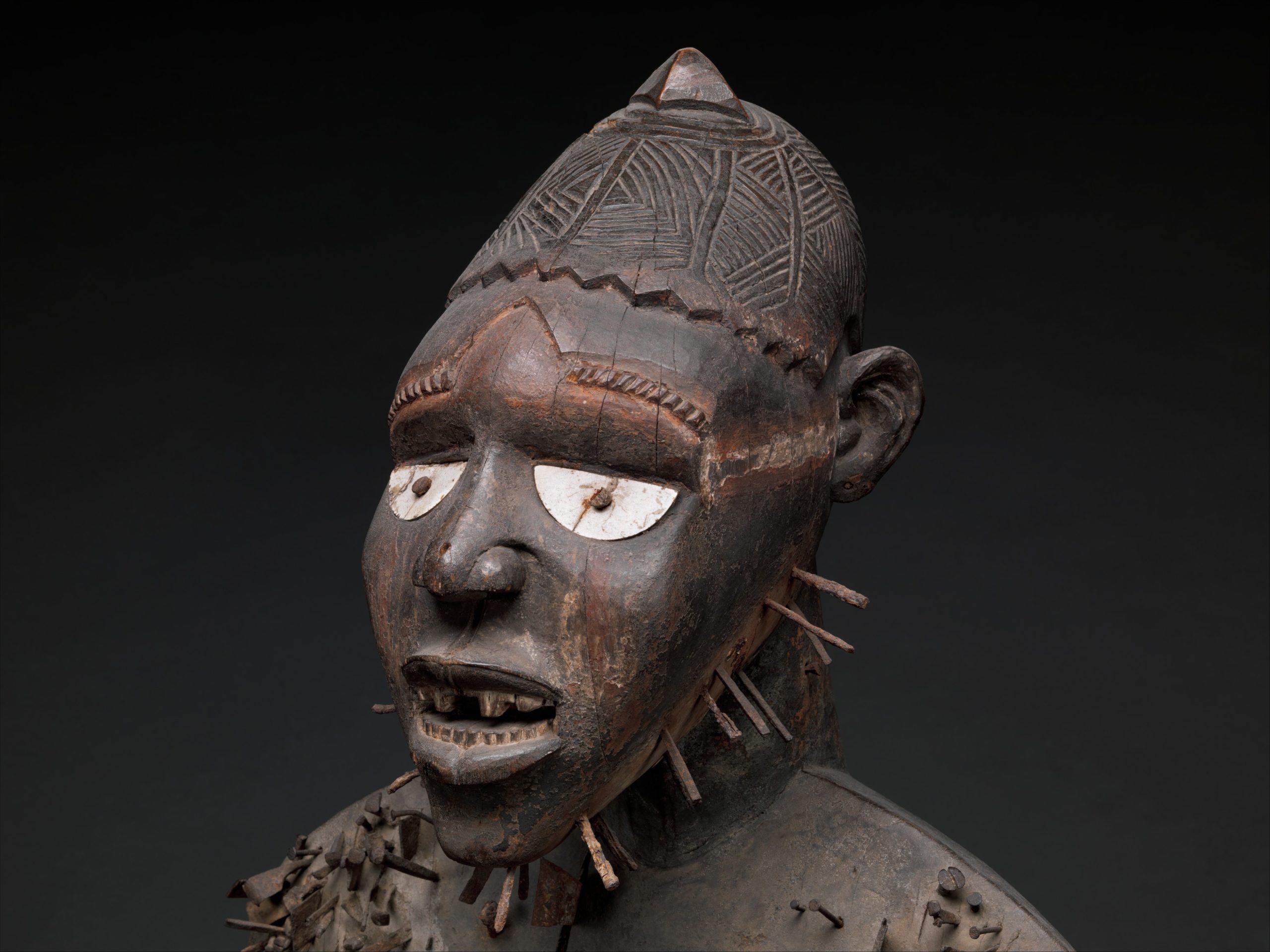
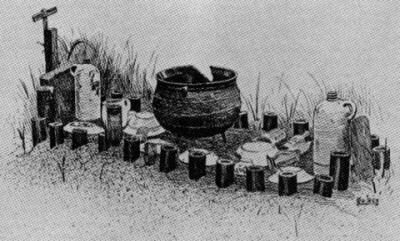
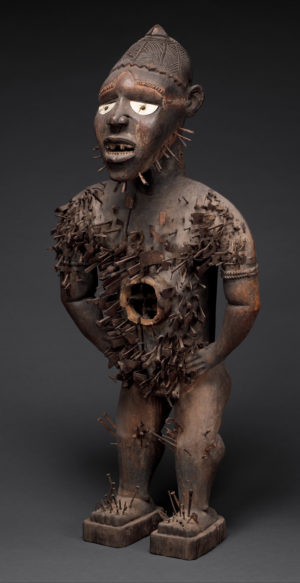
While this Englishman is no doubt in confusion regarding the identity of iboga, his observation suggests that some species of fungus was sacred to the Indigenous of the area. And, indeed, a tree fungus, known as tondo, was in fact central to the construction of nkisi statues, whose “kondu gland”—a hollow chamber in the belly of the statue—held samples of the unidentified specimen. One Bantu nganga, making an offering of the mushroom to the spirits, referred to tondo as “the key that opens everything.” The Kongolese and African American practice of surrounding the gravesite of a loved one with inverted plates and saucers, often resting atop poles or sticks, was believed to imitate the appearance of mushrooms around the burial. According to one source, this curious form of grave decoration was meant to recall and old Kongo play on words: tondo / matondo. For, in Bantu, the word for mushroom (tondo) is similar to the word for “to love” (matondo).
Power Figure (Nkisi N’Kondi: Mangaaka), Kongo peoples, mid to late nineteenth century, wood, paint, metal, resin, ceramic, 118 x 49.5 x 39.4 cm, Democratic Republic of Congo. Medicinal combinations called bilongo are sometimes stored in the head of the figure but frequently in the belly of the figure, which is shielded by a piece of glass, mirror, or other reflective surface. (The Metropolitan Museum of Art)
To return to the Americas, Schultes also identified the Aztec psychedelic, Teonanácatl, as belonging to the Psilocybe genus. But, Denver Moore’s would appear to be the first account of the possible use of a psilocybin mushroom within the context of Conjure, as the same was practiced by African American slaves in the Deep South. Many Hoodoo practices continue to be shrouded in secrecy. So, it may be impossible to determine just how far back this tradition among African Americans extends. But, as the famous Tennessee Hoodoo practitioner, Doc “Wash” Harris, founder of the infamous Saint Paul Spiritual Holy Temple in Memphis—inappropriately known by locals as “Voodoo Village”—once said in an interview with the Commercial Appeal in 1984,
God told the black man and the Indian somethings he didn’t tell nobody else.
One of those things may have concerned the powerful effects of a particular species of dung-loving mushroom.
Reminiscing about his great, wise Auntie, Moore briefly continues,
Aunt Etha took care of our bodies and souls. Mostly we never got very sick, but when we did, my auntie sure ‘nough had the cure: Somethin she called ‘cow-lip tea.’
Now cow-lip tea was brown and thin, kinda like the Lipton tea the Man sold at his store, but a durn sight more powerful. Cow-lip tea come from them white toadstools that sprout outta cow patties. […] That’s where cow-lip tea got its name. ‘Cow’ from the cow patties and ‘lip’ from the Lipton. Least that’s what Aunt Etha always told me.
The way you make cow-lip tea is you get the toadstools […] and grind em up in the sifter. [You] put it in a rag and tie a knot on top. Then you add a little honey to a boilin pot and drop that rag in the water til it bubbles up and turns good and brown. Now you got cow-lip tea.
If I was sick, Aunt Etha’d always make me drink a canful.
‘All good medicine tastes bad!’ she’d say, then put me in the bed underneath a whole pile a’ covers, no matter whether it was summertime or wintertime. In the mornin, the bed’d be soppin wet and the sheets’d be all yella, but I’d always be healed. I was nearly grown before I figured out what I was drinkin.
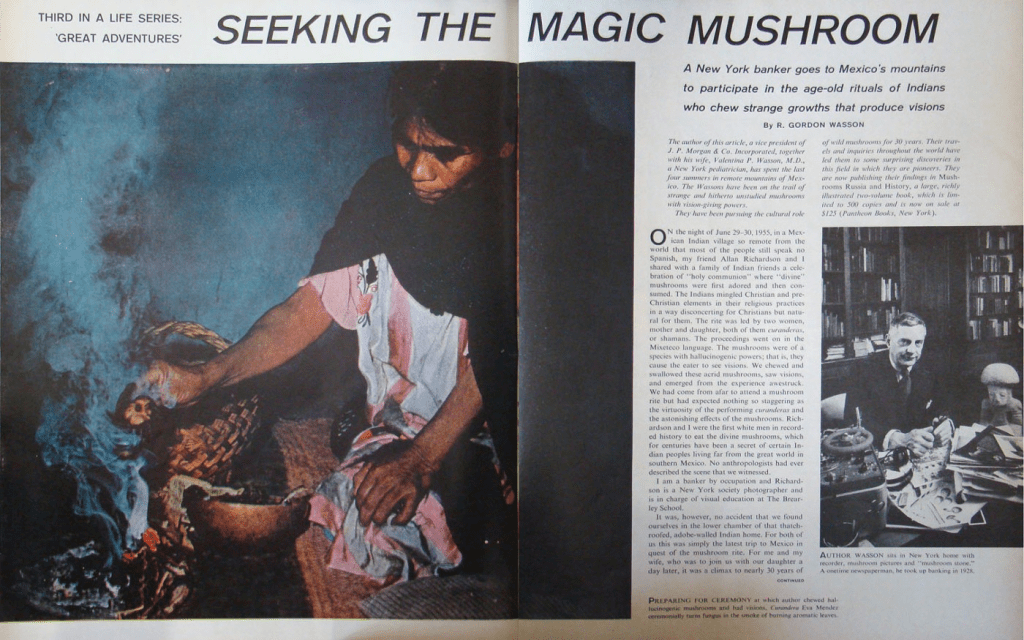
This historical narrative is simply amazing. Psilocybin mushrooms weren’t brought to the attention of the broader West until 1957, with the publication of the paradigm-shifting photo essay, “Seeking the Magic Mushroom,” in LIFE magazine by R. Gordon Wasson—the “father of ethnomycology.” Moore’s account is at least contemporaneous with Wasson’s publication. But, considering that this particular treatment was likely a timeworn tradition handed down to Auntie Etha by her own teacher(s), it is very probable that this particular use of the fungus went back much earlier than the time of Moore or his Auntie Etha. While no psychedelic effects were noted by the author, the mere fact the mushroom tea was administered in a medicinal context, to treat a sick boy, is highly significant. For, the Mazatec ceremony to which Mexican curandera, María Sabina, invited Wasson, the same wherein the psilocybin mushrooms were ingested, was also explicitly medicinal—velada being the traditional name given to the mushroom healing vigils carried out by Mazatec “shamans.” Moreover, if Moore was administered Auntie Etha’s tea while suffering a high fever, any psychedelic effects—including hallucinations—may have simply been attributed to the symptoms of the contracted illness.
“Seeking the Magic Mushroom,” in LIFE magazine by R. Gordon Wasson 1957
Importantly, Moore’s account is not the sole evidence of the use of entheogenic concoctions in the practice of Hoodoo. Over twenty years before the experience described in Same Kind of Different as Me, African American author, Zora Neale Hurston, in her 1935 classic, Mules and Men, revealed her own experience with what is quite clearly a powerful yet unnamed hallucinogen.
…I had to fast and “seek,” shut in a room that had been purged by smoke. Twenty-four hours without food except a special wine that was fed to me every four hours. It did not make me drunk in the accepted sense of the word. I merely seemed to lose my body, my mind seemed very clear. […] Maybe I went off in a trance. Great beast-like creatures thundered up to the circle from all sides. Indescribable noises, sights, feelings. Death was at hand! Seemed unavoidable! I don’t know.
While Hurston’s report does not mention hallucinogenic fungi specifically (or any other substance for that matter), the obvious psychedelic nature of her account is a good indication that entheogenic plants were not unknown to Hoodoo practitioners such as Denver Moore’s Auntie Etha.
Miguel Covarrubias’ Illustration for “Mules and Men” Zora Neale Hurston/ Lippincott, Philadelphia, 1935
Denver Moore passed away in 2012, so we were unable to interview him concerning his spectacular narration. But, it is our hope that Moore and his Auntie Etha would have been proud to know that their legacy not only lives on, but it may change the narrative as we know it regarding both the history of ethnomycology and the practices of Hoodoo and folk medicine among African Americans living in the Deep South.
P.D. Newman is an independent researcher located in the southern US, specializing in the history of the use of entheogenic substances in religious rituals and initiatory rites. He is the author of the books, Alchemically Stoned: The Psychedelic Secret of Freemasonry, Angels in Vermilion: The Philosophers’ Stone from Dee to DMT, and the forthcoming title, Day Trips and Night Flights: Anabasis, Katabasis, and Entheogenic Ekstasis in Myth and Rite. The Secret Teachings of All Ages (TV Series documentary) 2023.
Before the dawn of language, when all utterance was Gibberish, words had no meaning; the first racial epithets Were born innocently as ancient spidery cave drawings.
Scratchy jagged lines depicting tiny insulting hand gestures; Flagellum tangents of middle fingers flipped between Protozoa and parasite, bacteria and amoeba—
Dramatic strife of microorganisms mushrooming as Intra species slurs amongst the animal kingdom increased.
The colorful bird of paradise calling a common pigeon A dull grey drone— The majestic king cobra, bold and supercilious, calling The humble garter snake a fraying thread from a bankrupt Farmers’ shirt—
The sleek nimble weasel’s smug indifference to the beauty Of the brindle patterns of big cousin wolverines’ coat— Full of potential for expressive hatred and derisive scorn, Smoldering with bad intent; the early racial epithets long Lay dormant; aging poisons fermenting, Larval words
Clustering into round, red lace doilies; a devil’s needle point.
The forbidden words waiting to be introduced into the Vocabularies of developing homo sapiens. The words Finding their true meaning only after cataclysmic world History played out—rivers of bloodshed flooding 7 continents—casualties of endless wars forming a vast Mass grave of victims and victimizers, reaching beyond Our solar system.
It was then, rising above the transient minutiae of life, The epithets were imbued with power, meaning and Context, having the wide ranging capacity to offend, Cause controversy and discord. The taboo words came of age, and men were struck Dead by lighting bolts of name calling.
Gangs of racial epithets; clusters of rolling red lace doilies Stampede like outlaw bikers or rabid hyenas, across a thin Skinned landscape as vulnerable as a newborn bunny.
The leader of the pack, King Slur, flashy flamboyant, So offensive it can’t be spoken, wears its ugly history Like a badge of honor; King Slur seizes the limelight Having the Alpha status of a fighting word, much Envied by lesser less offensive epithets with fragile Egos.
An epithets’ self worth is determined by frequency of use And maximum offense when spoken. Epithets suffer From neglect when for noble reasons they aren’t in Someones vocabulary.
Pity the wimpy slur, bland as tofu or cottage cheese, Which announces itself with a saccharine greeting Card jingle— Pity the declawed neutered slur, unable to offend, Useless as an old work horse sent to the glue factory—
Pity the obscure, antiquated slur uttered at deaf phantoms In a provincial backwater, not heard and dimly understood By the judgmental ears of a damned civilization—
Beware of epithets that get misconstrued as compliments— Beware of moldy tripe past its expiration date— Beware of sunflower seeds laced with tiny razor blades— Beware of sharks as cuddly as kittens—
If someone calls someone a bad word, and atomic bombs Are dropped all over again, take a vacation and sail to Epithet Isle where a pure slur language is spoken by Litigious masses in perpetual offense collapsing in upon Each other as they speak themselves into oblivion and King Slur is smiling and laughing at them vanish.
“The Hidden Evolution of Racial Epithets” (C) Richard Gessner 2023
Before the onslaught of fat and male pattern baldness, Richard Gessner made front page news during an April snow storm, long ago….
Richard Gessner’s fiction has been published in Air Fish: an anthology of speculative work, Rampike, Ice River, Coe Review, Another Chicago Magazine, Happy, The Act, Sein und Werden, Skidrow Penthouse, The Pannus Index, Fiction International and many other magazines. A collection, Excerpts from the Diary of a Neanderthal Dilettante & The Man in the Couch was published by Bomb Shelter Props. Gessner’s drawings and paintings have appeared in Raw Vision, Courier News, Asbury Park Press, Rampike, Skidrow Penthouse, and exhibited at Pleiades Gallery, Hamilton Street Gallery, Cry Baby Gallery, The Court Gallery and the Donald B. Palmer Museum. Richard wrote The Conduit and Other Visionary Tales of Morphing Whimsy. He lives in Montclair, New Jersey.
The Conduit and Other Visionary Tales of Morphing WhimsyAudible
THIS WRITING IS AN AUTHORIZED DUPLICATION WITH PERMISSION AND EXPRESSED CONSENT
Featured photo: Kaulquappen-Vergangenheitsbewaltigung. Richard Gessner
“Sol, el cuarto cielo” Acrílico sobre tela y madera. 50 x 50 cm 2023
Writing is an art, which requires a life and I don’t know how to write, I know how to paint, after 25 years, I don’t stop learning and growing. Words can probe the deepest reality, but it is not the only way, you can have few words and still have a profound impact on the nuances of reality, you can have songs in your mind, plastic and colors.
I have colors.
When I look at a painter I also see words. Meanings, ways of seeing the world and nature, that have been transferred, inherited from one artist to another. As if we all spoke the same language, a hidden one. Hidden it is, behind the colors that live in my mind.
I do not hide in the colors, from the unbearable reality. I want to think that I shape it, I want to think that it can be inhabited in other realities. I want to think that I win the fight, freedom from myself, freedom from reality. I want to be able to see a space, a small work of art and it reminds me of this, it speaks to me about the spirit, I want to inhabit dreams. Imagine the psyche of a great musician, composing songs in his mind, or a poet spinning beautiful phrases full of meaning. Evading the weight of the psychic constructions of the most common social dynamics. What a beautiful girl, that guy looked at me ugly, how badly that old man drives, how fat, how tall, DO RE MI FA SOL LA SI, isn’t it perhaps a transmutation.
I don’t know how to write, I can put these meaningful sentences, which I will regret later, not a poet. Nor from what I have painted, a constant growth, the practice of a static that comes from colors and forms. A way of meditating, a way of praying, perhaps that is why I am building altars today.
Seres perdidos Septiembre devuelve partes de mi ser perdido A dónde estarán todas las partes de mi cuerpo? En qué huella? En qué nube? Volveré a volar otra vez?
Nuestros restos Los restos de ellos aún nos miran Dónde están tus huesos? Pedro Martin Federico Victor María Alicia Dónde se fueron a morir? Dónde podré buscar y ensangrentar mis manos? Algo negro vuelve a supurar en la memoria Algo viene devuelto desde la estación del exilio.
El día de mañana Mañana moriremos cuando queramos buscar y no haya sombras ni acequias dónde enlutar la voz Solo un clavel blanco retratará tu figura desaparecida Más allá del ojo en negro Más allá del tendón cortado en dos Más allá del septiembre que humea solitario En la última carta que recibí Cuando la mirada no era suficiente ni el grito Ni la mano perdida en los barrotes oxidados. En memoria de nuestros muertos y desaparecidos en esta fecha funesta.
Writer born in Viña del Mar, Chile. Professor of language and communication at PUCV, poet and literary critic. In 2012, she published her first book, The Invisible Eyes of the Wind. She has published in renowned Chilean and foreign digital media: Babelia (Spain), Letras de Chile (Chile), Triplov and Athena de Portugal, among others. During the year 2017 she participates in the Xaleshem group with poetic texts for the surrealist anthologies: “Composing the illusion” in honor of Ludwig Zeller and “Full Moon”, in honor of Susana Wald. In 2018, she integrates the feminist anthology IXQUIC released both in Europe and in Latin America. In 2020 she participates reviewing the conversation book “Shuffle poetry, Surrealism in Latin America” by Alfonso Peña (Costa Rica), also writes a poetic prose text for the book “Arcano 16, La torre“, by the same author. Likewise, she participates in the book “120 notes of Eros. Written portraits of surrealist women” by Floriano Martins (Brazilian surrealist poet, writer, visual artist and cultural manager). In this year (2021) she publishes her second poetry book Poética de la erotica, amores y desamores by Marciano editores, Santiago. The Extraviados is her third book published by Espacio Sol Ediciones (2023)
Dibujaste una mirada muda perpendicular a la onda más leve el polvo, el concreto, la almohada ahogan la imagen pervertida de ti Estoy a punto de exterminar una idea, de convertirme en una imitación de la neblina en el vidrio.
Sahumerio
Reflejos anulan el acto hasta que olvidas mi presencia yo enciendo fuegos, derrito despojos de amor cada tanto escribo y un extraño nace del aire y puede aterrizar a pesar de mi estación forzada, el ritmo aplaza conjugaciones de un verbo que se sugiere desigual.
Vaciada
Mira antes de atravesar rumbos de la ensoñación pasan caminantes, articulan facciones rotas le sorprenden cada vez.
Recortes
Una sola ondulación contiene nuestras raíces contienen al hombre dentro lo meten en un saco y huyen, más el tiempo tiene pasajes en sus idiomas me voy a otra parte, cierro la puerta.
Imaginería
Te concibo desnudo como si fornicaras con tu reflejo ¡qué lenta desnudez ¡ ¡Qué precipicio excava mi construcción ¡ Vienes a mí a pesar de tus cuerpos vulnerados Yo profano tu vientre Me agacho a recoger cosas extraviadas el tacto enmienda mi orgía de océanos me disfrazo de caracola para alunizar contigo y nadie espera dormido en el sofá nadie corretea desnudo por estas piezas.
Writer born in Viña del Mar, Chile. Professor of language and communication at PUCV, poet and literary critic. In 2012, she published her first book, The Invisible Eyes of the Wind. She has published in renowned Chilean and foreign digital media: Babelia (Spain), Letras de Chile (Chile), Triplov and Athena de Portugal, among others. During the year 2017 she participates in the Xaleshem group with poetic texts for the surrealist anthologies: “Composing the illusion” in honor of Ludwig Zeller and “Full Moon”, in honor of Susana Wald. In 2018, she integrates the feminist anthology IXQUIC released both in Europe and in Latin America. In 2020 she participates reviewing the conversation book “Shuffle poetry, Surrealism in Latin America” by Alfonso Peña (Costa Rica), also writes a poetic prose text for the book “Arcano 16, La torre“, by the same author. Likewise, she participates in the book “120 notes of Eros. Written portraits of surrealist women” by Floriano Martins (Brazilian surrealist poet, writer, visual artist and cultural manager). In this year (2021) she publishes her second poetry book Poética de la erotica, amores y desamores by Marciano editores, Santiago. The Extraviados is her third book published by Espacio Sol Ediciones (2023)
ALL WRITING IN THIS POST IS A COPYRIGHT OF CLAUDIA VILA MOLINA. THIS AN AUTHORIZED DUPLICATION WITH PERMISSION AND EXPRESSED CONSENT FROM THE AUTHOR
Allí se ubicaron en un improvisado toldo levantado con ramas de calafate, apoyados bajo una gigantesca roca que le daba la espalda al viento que corría desde el NorEste y que traía las nubes del Atlántico.
La fogata ardió esta vez a cargo Ocetán quien no tardó en reunir material combustible para alimentar las llamas y depositar cuidadosamente sobre el suelo los hongos recolectados durante su pasada por los faldeos de la Sierra Boquerón.
Extrajo de su bolsa (mujii) los hongos y raíces que forman la dieta invernal del fueguino hongos que crecen sobre el suelo esponjoso de los pantanos donde sus raíces pequeñas se internan quedando solo visible la parte superior algo más colorida por la acción de la luz.
El sabroso shanamain, el suave y transparente Ahuichi, cubierto de pintas blancas y rojas la chahuata que crece allí en todos los árboles vivos y el lechoso chagadakaamáin que sabe muy bien asado cubierto entre las cenizas calientes del fuego.
Mientras los ojos de ella ardían en la noche Selcha hurgueteó en el componente mineral que formaba las rocas y con el pehí (cuchillo) raspó hasta dar con una veta de marcado tono rojizo que llamó su atención por la inusual extensión que ocupaba en la superficie del granito
Derritiendo luego un trozo de grasa de guanaco y separando la roca del pigmento, mezcló ambos logrando una masa colorida y viscosa que afinó machacándola en un improvisado mortero ubicado en la roca.
Untó los dedos en la pintura tibia dibujando primero en su cuerpo y luego en el de su pareja desnuda la simbología de su clan y mientras el silencio de la noche se apoderaba de ese paisaje solitario, se alimentaron bajo las estrellas, al alero de estos grandes bloques abandonados por antiguas glaciaciones sobre la inmensidad de la pampa, allí donde durante milenios la luz de la luna recortaba sus pálidas siluetas graníticas en el azul de la noche, anunciándolas mucho más inmensas y misteriosas que durante los angostos días antárticos.
Entonces sólo el aullido de algún animal nochero se hacía sentir muy lejano trazando su oscuro guión en la noche, y pronto ambos se durmieron abrazados por la naturaleza que sabiamente todo lo acoge
-DCXCI-
“Trashumancia”, poema inédito del libro “Cuando la Tierra se Acaba”, de Claudio Rodriguez Lanfranco.
born in Valparaíso in 1968. After living in Patagonia and in the United States, a product of a scholarship, his first painting exhibitions back to the nineties in Valdivia. Later he moved to Santiago and the Fifth Region, where his visual and literary work materializes in a body of work that addresses different forms of expression, such as painting and drawing, experimental and documentary video, visual poetry and muralism, with public art projects installed in Santiago, Valparaíso. As a visual artist he has exhibited his paintings in 15 solo shows and in more than 60 group shows in Chile, Europe and the United States, and his poetic texts have been published in regional, national and international poetry collections, his work being awarded in different state funds for artistic creation such as Fondart, Cntv, Fondo Carnavales Cultural Centers of Valparaíso, among others. Currently the painter lives and works between Valparaíso, Santiago and Concón, where he develops his artistic projects and teacher training, being in charge of university graduates, painting and mural workshops, becoming a teacher for generations of students and artists who have worked with him.
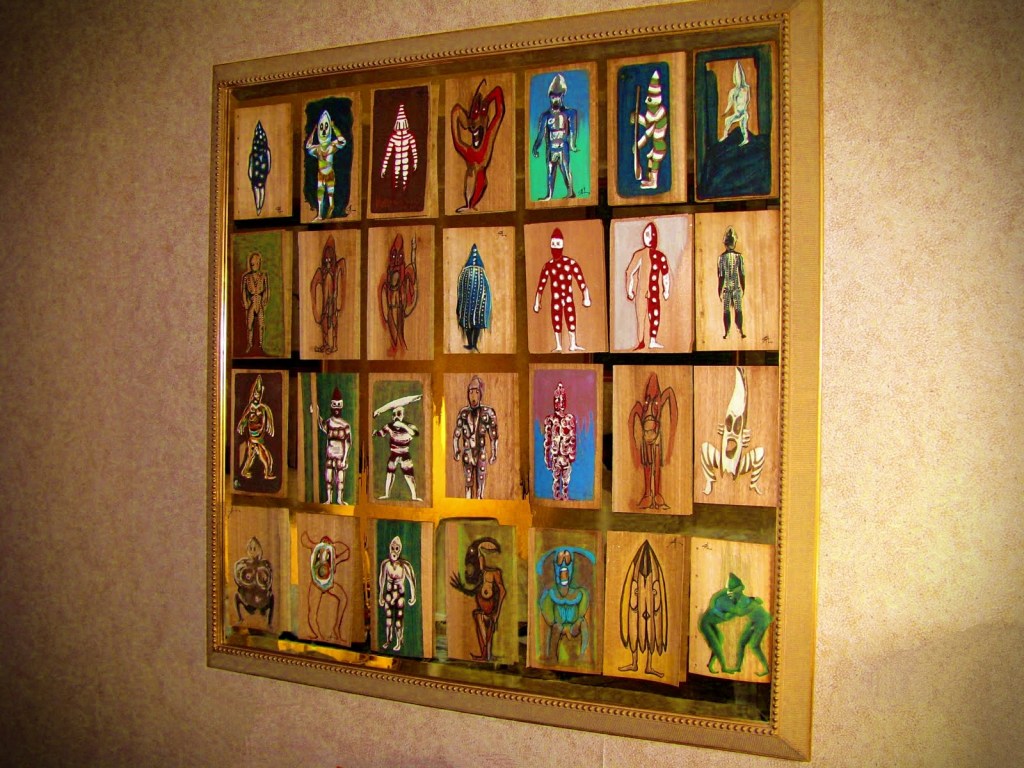
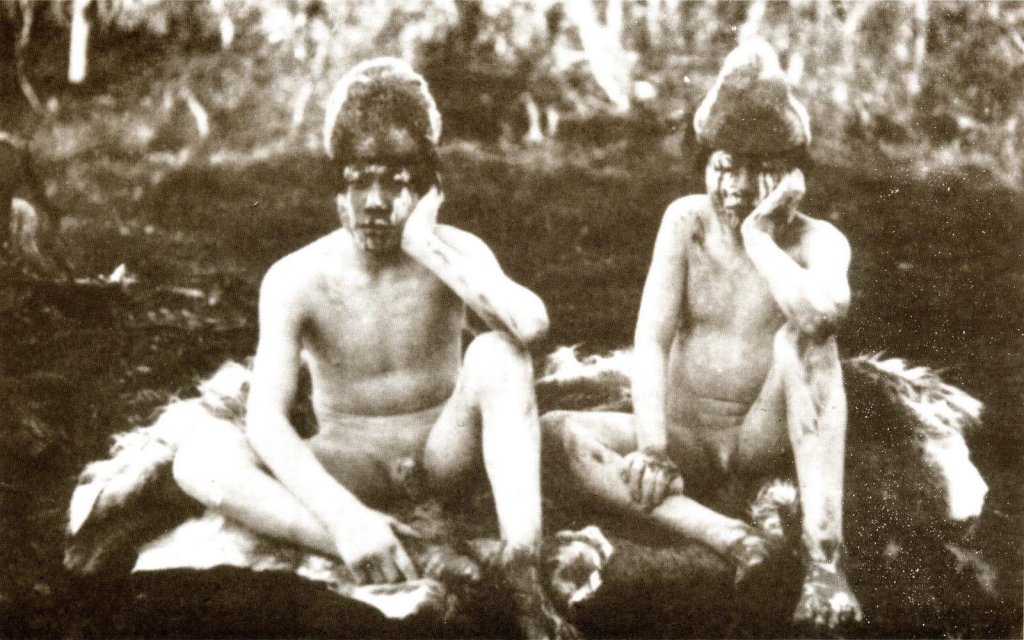
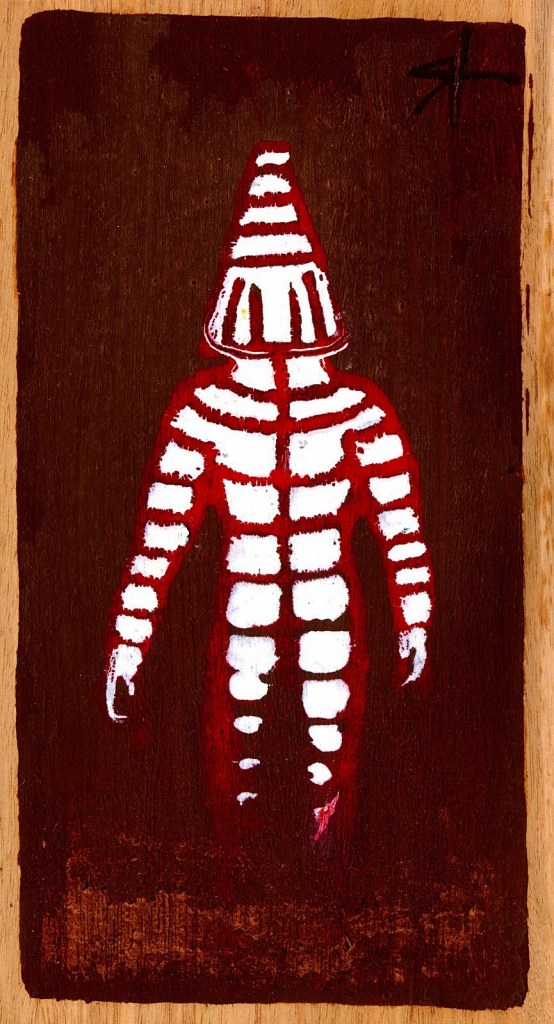
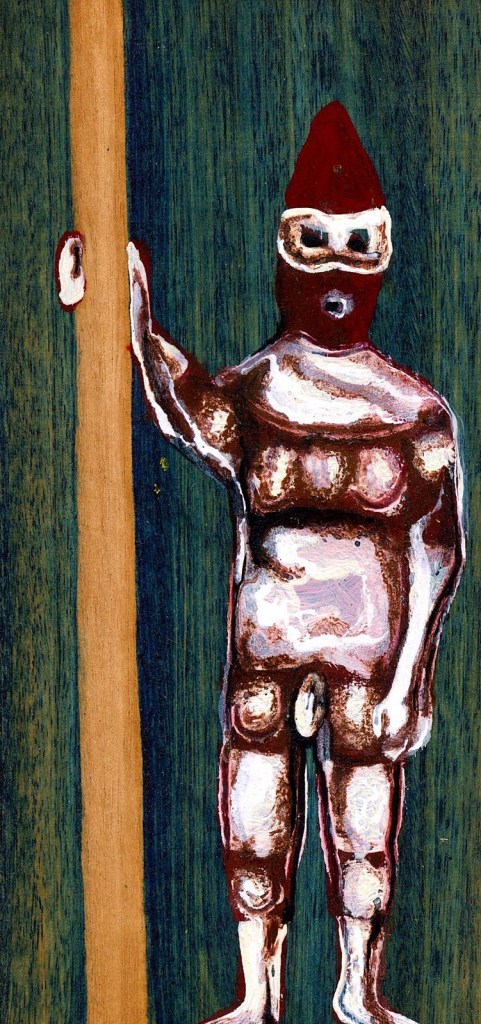
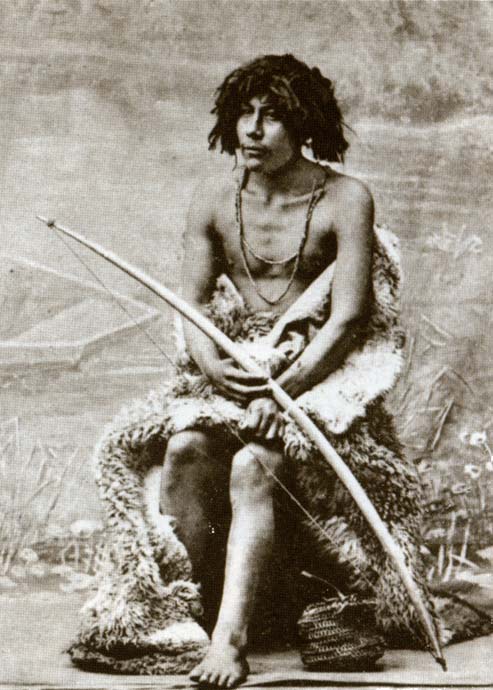
MY LITTLE SELK’NAM ARMY IS A PAINTING WITHOUT ANY RUSH AND THAT HAS BEEN CREATED OVER TIME, FORMING A VISUAL ASSEMBLY STILL UNDER CONSTRUCTION MADE IN PRINCIPLE FROM THE PHOTOGRAPHIC RECORDS OF MARTÍN GUSINDE AND OTHER STYLE ARCHIVES , BUT WHICH THEN WAS INSTALLED WITH ITS OWN IMAGINARY. WITH THIS WORK I ALSO PAY A DEBT TO MY HISTORY AS A PAINTER, BODY PAINTING BEING ONE OF THE THEMES THAT HAS DIAGONALLY CROSSED ALL OF MY WORK.
“MY LITTLE SELKNAM ARMY”IT IS AN EXERCISE OF REPRESENTATION THROUGH PAINTING OF THIS RITUAL PATTERN OF FUEGIAN CREATION: AN AESTHETIC RELATIONSHIP WITH THE SUPERNATURAL AND A WAY OF UPDATING THE MYTH OF ORIGIN THROUGH A PROPOSAL FOR CONTEMPORARY CREATION THAT AT THE SAME TIME SEEKS TO RESIST FORGETTING.
-ASPECTS OF ETERNAL ADOLESCENCE-
A COUPLE OF NIGHTS AGO I LISTENED TO A SPECIALIST IN THEMES OF EMOTIONAL GROWTH -A SOCIOLOGIST I BELIEVE- TALK ABOUT THE BEHAVIOR OF MODERN ADOLESCENTS WITH REGARD TO THEIR INTEGRATION INTO THE ENVIRONMENT AND OTHER BEHAVIORS RELATED TO THEIR SOCIAL AND GROUP VALIDATION. QUITE KNOWLEDGEABLE ON THESE ISSUES, THE SOCIOLOGIST EXPLAINED CLEARLY REFERRING TO THE IMPORTANCE OF THE LOSS OF RITES OF PASSAGE IN CURRENT SOCIETIES, WHICH WOULD MEAN FOR THE ADOLESCENT GROUP TODAY, A STRONG DEFICIENCY IN THE SOCIAL AND PERSONAL AFFECTIVE FIELD, BY NOT HAVING NO CLEAR GENERATIONAL SIGN THAT CONFIRMS WHEN IS THAT EXACT MOMENT WHEN YOU STOP BEING A CHILD TO BECOME AN ADULT IN FULL MATURITY. THIS WOULD EXPLAIN THE SENSATION OF NOT BELONGING SOMETIMES MANIFESTED BY THE ADOLESCENT GROUP AND WOULD BE ADJUSTED IN SOME CASES,
THIS LACK OF SECURITY REGARDING THEIR PLACE IN THE WORLD WOULD AFFECT ADOLESCENTS IN ALMOST ALL CONTEMPORARY SOCIETIES AND WOULD BE EXTENDERED BY A SYSTEM THAT APPEARS TO IGNORE THE TRANSCENDENCE OF THESE GENERATIONAL ISSUES OR EVOLUTIONARY PROCESSES OF VITAL IMPORTANCE, SUCH AS THOSE THAT THEY ANNOUNCE THE GREAT CHANGES IN THE HUMAN BEING.
TO ADOLESCENCE COMES FROM ADOLESCENCE, TIME OF AILMENTS AND CHANGES. LEAVING AWAY THE FIRST MENSTRUATION OR THE CASE OF SEXUAL INITIATION IN MEN, TRADITIONALLY MARKED BY THE LITTLE GIRL ON TURN THAT DAD CHOOSES, THERE ARE FEW OR NONE OF THE SPACES OF RITUAL TRUST THAT WE PRACTICE SERIOUSLY AS PARENTS AND SONS. IT IS PARADOXICAL THAT REACHING THE AGE OF MAJORITY IS TODAY, IN A COUNTRY THAT BOASTS OF PRIVILEGING FAMILY VALUES, TECHNICALLY NOTHING MORE THAN A MERE PROCEDURE, WHERE AT THE AGE OF 18 THE ADOLESCENT “AUTOMATICALLY” BEGINS TO CARRY A CIVIL RESPONSIBILITY THAT THEY MUST CULTIVATE . FAR FROM ANY CEREMONY, IT IS NOT CURIOUS THEN THAT FINALLY THERE ARE EVERY FEWER RITES THAT CALL US TO COME TOGETHER OPENLY, WITH THE EXCEPTION OF DEATH, WHEN IT IS ALREADY TOO LATE.
FOR ANCIENT CULTURES SUCH AS THE SELKNAM, ONE OF OUR ORIGINAL AUTRAL PEOPLES, THESE CEREMONIES OR RITES OF PASSAGE WERE VERY IMPORTANT, EVEN CAUSING GREAT GENDER WARS FOR POWER AND DOMINATION OF THESE FESTIVALS, WHERE THE HOUSE WAS THROWN DOWN -O EL TOLDO- THROUGH THE WINDOW TO PAY TRIBUTE TO THE KEY MOMENT THROUGH WHICH THEIR CELEBRATIONS PASSED FOR THE ONLY TIME IN LIFE.
THE HAIN CLEARLY EMERGES AS THAT SACRED CEREMONY THAT USED THEATER AND SURVIVAL REPRESENTATIONS TO TEST THE MEASURE OF THE INITIATES, PREPARING THEM FOR A PROCESS OF TRANSFORMATIONS WITHIN THE MILESTONE THAT WOULD MARK A NEW EVENT IN THE BEHAVIOR OF THE KLOKÉTEN NOVICE IN FRONT OF HIS TRIBE, WHO AT THAT MOMENT JOINTLY DECIDED THEIR PASS TO PHYSICAL AND SPIRITUAL MATURITY. A SACRED ACT WHICH WOULD GIVE THEIR LIVES BOTH STRUCTURE AND SIGNIFICANCE AND WHICH WOULD ALLOW THEM TO GENERATE THE TRUST WHICH THE INITIATED COULD LATER HAND ON FOR THE REST OF HIS LIFE. PAST-PRESENT-FUTURE DEFINED WITH SUCH OPENNESS AND CLARITY, ALLOWED THE KLOKÉTEN TO BEGIN THE RITUAL PROCESS TO STOP BEING A CHILD AND THUS TAKE THE REINS OF ITS OWN MATURITY.
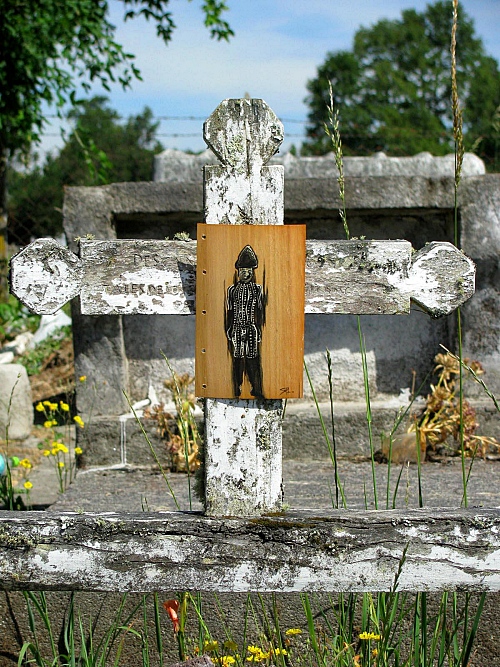
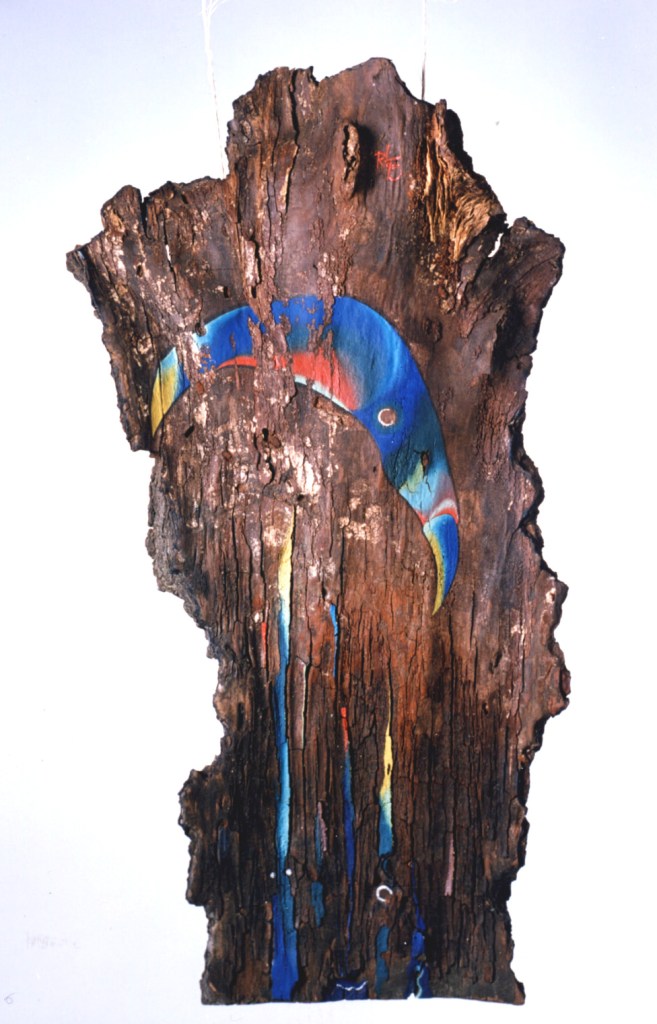
BEING AN ADULT, HOW COMPLICATED…. EVERYTHING WRITTEN IS BORN FROM ONE OF THE PICTURES OR “ FRAGMENTS”, WHICH I PAINTED YEARS AGO ON A TREE BARK (ABOVE IN THE PHOTO) AND WHERE THE SPIRIT OF HAIN MANIFESTS HOUSING IN THE PAINTED FIGURE OF AKLOKÉTEN . HERE IS REPRESENTED THE COMPLEX SYMBOLISM OF INITIAL OPPOSITION AND TRANSFORMATION BY WHICH THE KLOKÉTENHE WAS SUBJECTED INSIDE SECRET SOCIETIES THAT SEEKED TO TURN HIM INTO A MAN. THE FUSION OF A WORLD IN TRANSIT OR RITE OF PASSAGE IS INCORPORATED INTO THE PICTORICAL SIGN AND INTO THE HISTORY BROUGHT WITH IT BY THE SUPPORT, COLLECTED FOR THAT PURPOSE ON THE SLOPE OF THE VILLARRICA VOLCANO FROM THE CALCINATED REMAINS OF A CONIFER SPLIT BY LIGHTNING. JUST AS THE ANCIENTS DID TO MAKE THE RITUAL MASKS WHICH THEY USED IN THEIR CEREMONIES, I COLLECT THE BARK OF THE TREES TO PAINT THEM WITH PART OF THIS HISTORY THAT DISAPPEARS AND THAT ALSO BELONGS TO ME, BEING THE COLLECTION, A RITE THAT IS SIBLISHED TO THE PAINTING ALREADY THE TELLURIC TEXTURES OF THE EARTH, LIKE BROKEN FRAGMENTS FROM A NOT SO REMOTE PAST, AND IN WHICH WE STILL REFLECT OURSELVES.
-MY LITTLE SELK’NAM ARMY- I
THE VARIETY OF COSTUMES THAT THE SELK’NAM USED FOR THEIR PERFORMANCES DURING THE HAIN CEREMONY, THEY ARE BASED ON A CONCEPT OF CORPORALITY CREATED TO DELIVER THEIR IDEAS REGARDING RELIGIOUSNESS AND INFLUENCES TO WHICH THEY WERE SUBJECTED SINCE THEIR ORIGINS IN A DOMINANT MATRIARCHAL SOCIETY, IN WHICH THE BODY WAS THE MAIN COMMUNICATION INSTRUMENT OF MAN . THIS CONCEPT OF IMAGE, DESIGN AND MOVING COLORS ARE KEY ELEMENTS TO UNDERSTAND THE SYMBOLIC MESSAGE OF ITS CEREMONIES. IN THIS SECRET GAME, THE WORK OF THE SPIRITS WAS TO PUNISH HARDLY THOSE WHO OPPOSED THE ORDERS OF THE WOMEN.
THE PASSAGE OF TIME WOULD BE KNOWN AS THE UPDATING OF THE MYTH -ENDING THE FEMALE DOMINANCE IN CEREMONIES- THE REVEALED MEN FOUND A NEW HUT BUILT OF ROCK WITH SEVEN STONE POSTS DRAGGED FROM THEIR NATAL COUNTRIES. FIRST WACUS STARTED , THEN PAWUS AND AFTER SANU. THEY WERE STRONG AND TALL MEN. WHEN THE FIRST THREE PILLARS WERE WELL SECURED, HE BEGAN TO RAISE HIS SATE , THEN TALEN , THEN KEYAISK AND FINALLY YOISIK . EACH ONE OF THEM STOOD UNDER THE POST HE HAD RAISED, ASSUMING THE ROLE OF THE SEVEN SUPPORTSMAIN. THESE MEN ANCESTORS IN MYTHICAL TIMES WOULD BE TRANSFORMED AFTER THEIR DEATH IN DIFFERENT BEINGS OF THE NATURAL ENVIRONMENT, ACTING AS SIGNIFICANTS IN EACH EPISODE REPRESENTED IN THE RITUAL AND ESTABLISHING AN ORDER THAT WOULD HAVE BEEN THE ONE THAT THEY WOULD HAVE MAINTAINED UNTIL HISTORICAL TIMES.
EACH ONE OF THE SEVEN REGIONS OF THE SELK’NAM TERRITORY HAD A SUPPORT ACCOMPANIED BY HIS XALPEN WIFE . XALPEN WAS A FEMALE SPIRIT OF GREAT POWER FEARED BY MEN AND WOMEN WHO LIVED UNDER THE EARTH AND CALLED ON MEN TO SATISFY THEIR LUSTFUL DESIRES. “IT IS ABOUT AN EXTREMELY DANGEROUS, IRRITABLE, CAPRICIOUSLY UNPREDICTABLE BEING, WHICH WITH GREAT PLEASURE CAUSES MEN THE MOST DIVERSE DISCOMFORT. She alternates them to satisfy her sexual desires with them, REGARDLESS THAT UNDERGROUND, THE INITIATES OF THE KLÓKETEN ARE PERMANENTLY AVAILABLE (…) SHE IS CONSIDERED A WOMAN OF GREAT PROCREATIVE POWER AND BECAUSE OF HER ARBITRARIOUSNESS, SHE IS HATED BY WOMEN WHO HOWEVER, THEY SHOULD MAKE AN EFFORT TO CALM IT OUT OF CONSIDERATIONS TOWARDS THEIR HUSBANDS AND CHILDREN” (M.GUSINDE 1990: 908)
EACH SUPPORT THEN WAS DECORATED WITH PAINTINGS AND DESIGNS DEFINED BY TRADITION. THEIR FIGURES AND MOVEMENTS WERE CONSIDERED BY THE SELK’NAM AS MAGNIFICENT AND BEAUTIFUL, ESPECIALLY AMONG WOMEN. SANUIT WAS THE SOORTE OF THE WEST . WITH A RED BODY AND ABUNDANT WHITE DOTS ORDERED SYMMETRICALLY THROUGHOUT THE ENTIRE BODY, IT INDICATED THE SPIRIT’S BELONGING TO A SPECIFIC CARDINAL POINT THAT COULD BE EASILY INTERPRETED BY ALL BYSTANDERS THANKS TO THE PREDOMINANCE OF COLOR. ITS BODY ORNAMENTATION PRESENTED A DEFINED DESIGN PATTERN, WHICH SEEKED TO HIGHLIGHT A TALL, SLIM, STRONG AND AGILE FIGURE, SOMETIMES REPRESENTED BY MOVEMENTS SUCH AS FLIGHT: “SHOULDERS RAISED, ARMS FOLDED AND SLIGHTLY SEPARATED FROM THE BODY, AND HANDS CLOSED IN FISTS, THE “ACTOR” REPETITATIVELY LIFTS HIS FEET, MOVES HIS HEAD ENERGETICALLY, GIVES QUICK JUMPS, STOPS AFTER EACH ONE OF THEM AND THEN MAKES THE WHOLE BODY SHAKE” .
THE SEVEN MAIN SUPPORTS WERE SYMBOLICALLY RELATED TO THE “FOUR INVISIBLE MOUNTAINS OF INFINITY”, COMBINING A HIGH-LEVEL IDEOLOGICAL CONSTRUCTION OF CONCEPTUAL AND AESTHETIC ABSTRACTION. SOORTE SANU CAME FROM THE WEST KÉNENIK MOUNTAIN RANGE, PLACE OF THE SUNSET OF THE SUN EXPRESSED BY THE ORIGIN OF RED AND THE TRAIL OF DEATH. REPRESENTING AN OWN CULTURAL IMAGINERY THROUGH THE PERFORMANCE OF THE RITE WAS FOR THE SELK’NAM A COMPLEX SHOW OF ANTHROPOMORPHOLIC BEINGS WHOSE MASKS AND ACTIONS REVEALED THEIR PERSONALITY, THUS HELPING TO ORDER AND UPDATE A SYMBOLIC-TERRITORIAL SPACE SUPPORTED BY ATTITUDES AND SOCIAL VALUES.
-MY LITTLE SELK’NAM ARMY- II
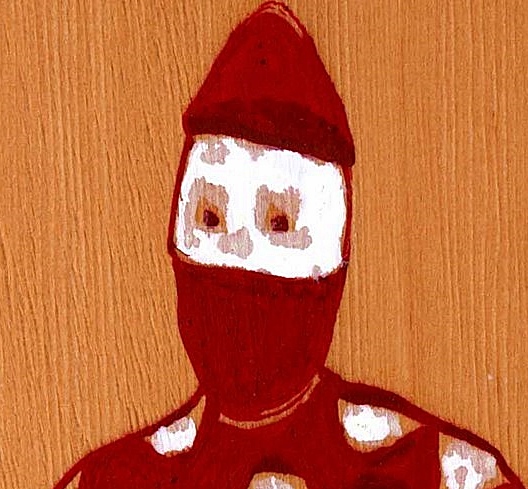
IN THE YEARS OF THE HAIN MYTH, THE YOUNGER AND INEXPERIENCED MEN OCCUPY INSIDE THE CEREMONIAL, THE SITE OF THE SECONDARY SUPPORTS; AGILE AND FAST BODIES PREPARED AND DECORATED FOR DANCE WITH COLORS ONLY PARTIALLY VISIBLE TO OTHERS, THUS SHOWING THEIR SURPRISING SPEED AND BODY ENERGY. ULEM IS ONE OF THEM. HE RELATED WITH THE OTHER SOORTES THROUGH THE THREE MAIN COLORS AND HIS FENSE FOR MOVEMENT:
“THE BODY IS DARK RED AND WHITE HORIZONTAL STRIPES ARE APPLIED TO IT, LEAVING SHORT INTERMEDIATE SECTIONS”…”VERTICALLY FROM THE NECK PASSING THROUGH THE NAVEL, LOWERS A WHITE LINE. THE ULEM MASK IS MADE OF COLORED BARK LIGHTER RED WITH THREE WHITE LINES ON THE TOP”.
THIS POINT – LINE – STRIP REITERATING WITHIN THE FIELDS OF BODY DRAWING, REFERS TO THE MYTH OF THE SAME CHARACTERS: MALE SPIRITS WITH IDEAL PHYSICAL QUALITIES FOR A HUNTER-GATHERER IN THE TIME OF THE SELK’NAM SOCIETY: AGILITY, STRENGTH, SPEED AND BEAUTY.
EACH SUPPORT HAD TOTAL CREATION AUTONOMY AND BY NOT REPRESENTING A DEFINED PATTERN IN ITS DESIGN, IT WAS POSSIBLE TO RECOGNIZE EACH OF THEM BY THEIR MASKS.
ALL FIGURES WITH GREAT MOBILITY, BLENDED INTO THE BLACK ANTARCTIC NIGHTS, TRYING TO REPRESENT THE MOVEMENTS OF SOME LOCAL ANIMAL BROUGHT INTO THE FIELD OF THE CEREMONY, WITHOUT FORGETTING THAT DESPITE THEY ENJOYED GREAT FREEDOM, EACH OF THE CHARACTERIZATIONS WAS SUBORDINATED TO A PREVIOUSLY ESTABLISHED SCRIPT INHERITED FROM PREVIOUS GENERATIONS.
THIS SIGN OF BELONGING GAVE SENSE TO THE CYCLE OF LIFE, AND EACH YOUNG INITIATE WHO UNDERTAKEN THE RITUAL UNDERSTANDED IT SO. ULEM IS PART OF SOME 100 FIGURES PAINTED ON COIGÜE PLATE THAT ARE INCLUDED IN THE POLYPTHYTHY MURAL “MY LITTLE SELKNAM ARMY” .
-MY LITTLE SELK’NAM ARMY- III
ACID LIKE A PAINTING COMPOSED OF SEVERAL PIECES THAT TOGETHER MAKE UP A MAJOR WORK, “MY LITTLE SELK’NAM ARMY” IS A POLYPTIC MURAL OF FIGURES IN OIL AND MIXED TECHNIQUES ON COIGUE AND MAÑÍO PLATES THAT I BEGAN TO PAINT IN 1998 AND WHICH I CONTINUE TO PAINTING UNTIL TODAY AS AN EXERCISE OF CREATION ON TRAVEL, CARRIED OUT DURING MY TEMPORARY TRANSIT THROUGH DIFFERENT PLACES IN CHILE SUCH AS THE ANDES MOUNTAINS, THE SOUTHERN CANALS, PATAGONIA OR THE ROUGH ARIDITY OF THE NORTHERN COASTS, TRAVELING ON SOLO EXPEDITIONS OVER THE DECK OF BOATS, BUS SEATS, LOANED CARS, MICROS OR PLANES; RESTING IN HOTELS, SHELTERS OR TENTS, WORKING AND WALKING IN WHICH ARE UP TO NOW 120 FIGURES OF BODY PAINTED IN A SIZE OF 16 X 10 CMS EACH AND WHICH FORM AS A WHOLE,
BODY PAINTING OF REAL AND INVENTED BEINGS, IMAGINED, TORN FROM THE BORDERS OF DEATH (AND OBLIVION) IN A FORMAT OF RITUAL REPRESENTATION THAT THE ANCIENTS KEPT UNTIL THE ARRIVAL OF THE WHITE MAN AS A CEREMONY OF PASSAGE FOR THE NEW GENERATIONS OF INITIATES.
THIS IS THE ARMY OF THE REPUBLIC, MY TERRACOTTA ESCORT. A GUARD OF MOCETONES MADE OF MUD AND FUNERAL WOOD THAT STAND UP AMONG THE CULTURAL LANDSCAPE LIKE A MASTER BEAM THAT SPEAKS TO US WITH THE SILENCE OF THE EXHUMEED BODIES, THAT ADVENTURE OF NAMELESS GRAVES, EMPTY BASINS AND TRACES MISSING LIKE RUBBLE BURIED AMONG THE branches.
THE PETROGLYPHS OF THE CHOAPA VALLEY- TWOIN THE PATH
THE REGION BETWEEN THE ILLAPEL AND CHOAPA RIVERS CORRESPONDS TO THE SOUTH/EAST EXTREME OF THE PROVINCE OF THE SAME NAME, IN THE IV REGION OF CHILE. IT IS ALSO THE SOUTHERN LIMIT OF THE NORTE CHICO, A GEOGRAPHICAL AND CLIMATE TRANSITION ZONE TO THE ABSOLUTE ARIDITY OF THE NORTE GRANDE.
CROSSED BY A LARGE NUMBER OF TRANSVERSE VALLEYS, THIS REGION IS THE NARROWEST IN CHILE -90 KM WIDTH FROM THE SEA TO THE CORDILLERA- WHICH MAKES IT A USUAL HUMAN TRACK SINCE TIME IMMEMORIAL. FULL OF MOUNTAIN PASSES THAT CROSS THE ANDES AT VERY LOW ALTITUDE, IT HAS BEEN A PLACE OF PERMANENT MOVEMENT OF HUMAN POPULATIONS SINCE PRE-HISPANIC TIMES. UNTIL TODAY IT IS COMMON TO SEE MUTLEEERS WITH CARAVANS OF MULES TRAVELING THE BEAUTIFUL FOOTPRINT THAT WINDS DRAWING THE NARROW VALLEY THAT FOLLOWS THE COURSE OF THE ILLAPEL RIVER, OR THROUGH THE FERTILE CAUCE OF THE CHOAPA, WHICH OFFERS A GOOD AMOUNT OF NATURAL VIEWPOINTS FROM WHICH THE ANCIENT HAD A PERFECT PANORAMIC OF THE VALLEY.
FOLLOWING A BRANCH OF THE ROAD THAT LEADS TO THE CAVILOLÉN SLOPE, WE GO INTO AN AREA FULL OF FERTILE TRANSVERSAL VALLEYS INHABITED BY MAN FOR MORE THAN TWO THOUSAND YEARS.
PLACE OF ORIGIN OF STRONG POPULAR MYTHS, TODAY WE TRY TO TRAVEL THROUGH THESE ROADS, AS A WAY TO REMAKE PART OF THE ANCIENT TRACES OCCUPIED BY THE NOMADIC SHEPHERDS AND AS POSSIBLE TO DISCOVER THE MYSTERIOUS REASON THAT MOTIVATED THESE MEN TO MARK THEIR PASSAGE THROUGH THESE PLACES , THROUGH THE STONE INSCRIPTION OF ROCK ART.
WE LEAVE THE CITY OF ILLAPEL BEHIND, TO PASS THROUGH THE MYSTERIOUS SALAMANCA -NATIONAL CAPITAL OF IMBUNCHE- AND CONTINUE THROUGH THE COURSE OF THE CHOAPA RIVER TO ITS ORIGIN, SOMETHING SOUTHEAST OF CUNCUMEN, OUR FIRST STOP.
NIGHT FALLS SLOWLY OVER THE GENTLE SLOPS OF THE MOUNTAINS, FROM WHERE THE CACTI RISE LIKE ANCIENT LOOTCH-OUTS OUTLINED AGAINST THE FADING COLOR OF THE SKIES.
THE WIND SLOWS DOWN AND A STRONG SILENCE APPEARS SPEEDING UP FROM THE BOTTOM OF THE EARTH, WHILE WE INSTALL OUR TENTS AND DREAM THAT ON FULL MOON NIGHTS, WITCHES WILL FLY OUT TO THEIR COVENS WHILE POETS WILL WRITE WITH A BONE PUNCH IN THE ANCIENT LANGUAGE OF A BLACK GOAT.
THRESHOLDS
“THRESHOLD IS THAT BRIDGE THAT IS ESTABLISHED BETWEEN ONE PLACE AND ANOTHER, THAT (IN)VISIBLE PATH OR LIMIT THAT SEPARATES THEM, IS THE MINIMUM SIGN, SKIN, TEXTURE OR MATTER, FIRST STEP OR ENTRANCE FOR THINGS TO HAPPEN, OPEN DOOR IN FRONT OF THE THE ABYSS OF A NON-EXISTENT SPACE WHICH IS ALSO THE WORLD OF PAINTING, WHICH MOVES, WHICH MUTS, WHICH CHANGES, WHICH DISAPPEARES; THRESHOLD IS THE FRONTIER AND THE REVERSE OF THINGS, IT IS AT THE SAME TIME THE BEGINNING AND THE END, ORIGIN AND DESTINATION, ENTRY AND EXIT; THRESHOLD IS PAINTING AT THE SPEED OF A NERVOUS IMPULSE STIMULATING UNKNOWN SPACES, EXPLORING A NON-PLACE AND FINDING THE PERMANENT FACES OF ITS ABSENCE IN IT.”
“THRESHOLDS”,SERIES OF 15 PAINTINGS, TWO SHOWN, IN MIXED TECHNIQUE ON COUCHÉ PAPER, 40 X 40 CMS EACH, MADE BETWEEN MY WORKSHOPS OF “LAS ANIMAS” IN VALDIVIA AND “RIO ACONCAGUA” IN CONCON, ON THE EDGE OF THE XXI CENTURY.
born in Valparaíso in 1968. After living in Patagonia and in United States product of a scholarship, his first painting exhibitions were date back to the nineties in Valdivia. Later he moved to Santiago and the Fifth Region, where his visual and literary work materializes in a body of work that addresses different forms of expression, such as painting and drawing, experimental and documentary video, visual poetry and muralism, with public art projects installed in Santiago, Valparaíso. As a visual artist he has exhibited his paintings in 15 solo shows and in more than 60 group shows in Chile, Europe and the United States, and his poetic texts have been published in regional, national and international poetry collections, his work being awarded in different state funds for artistic creation such as Fondart, Cntv, Fondo Carnavales Cultural Centers of Valparaíso, among others. Currently the painter lives and works between Valparaíso, Santiago and Concón, where he develops his artistic projects and teacher training, being in charge of university graduates, painting and mural workshops, becoming a teacher for generations of students and artists who have worked with him.


















 Mitchell Pluto