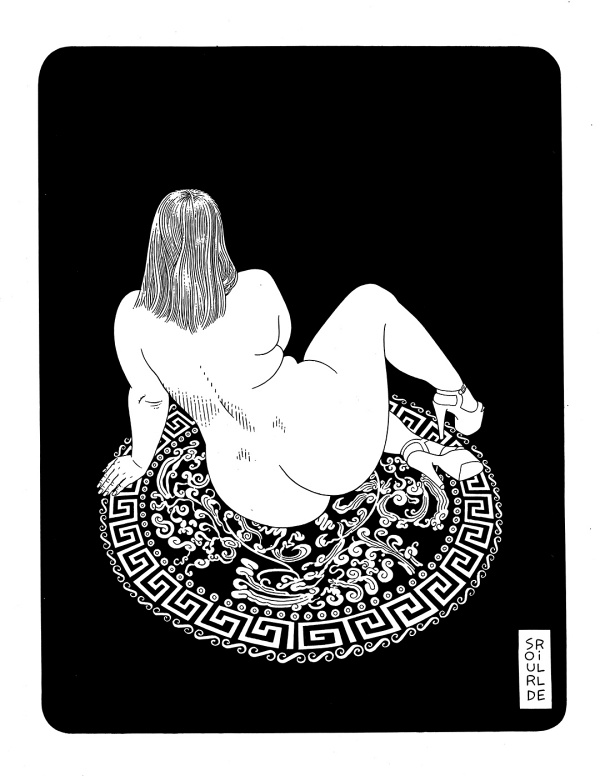
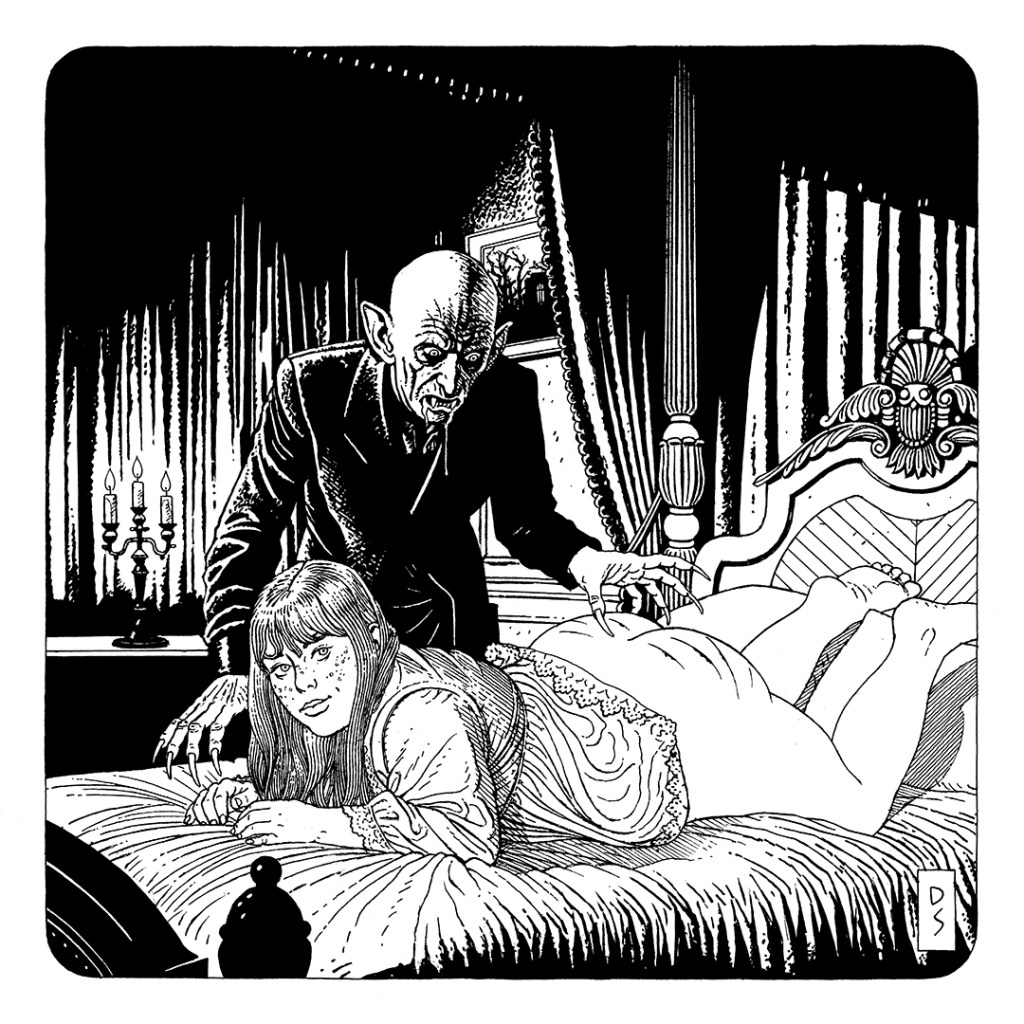
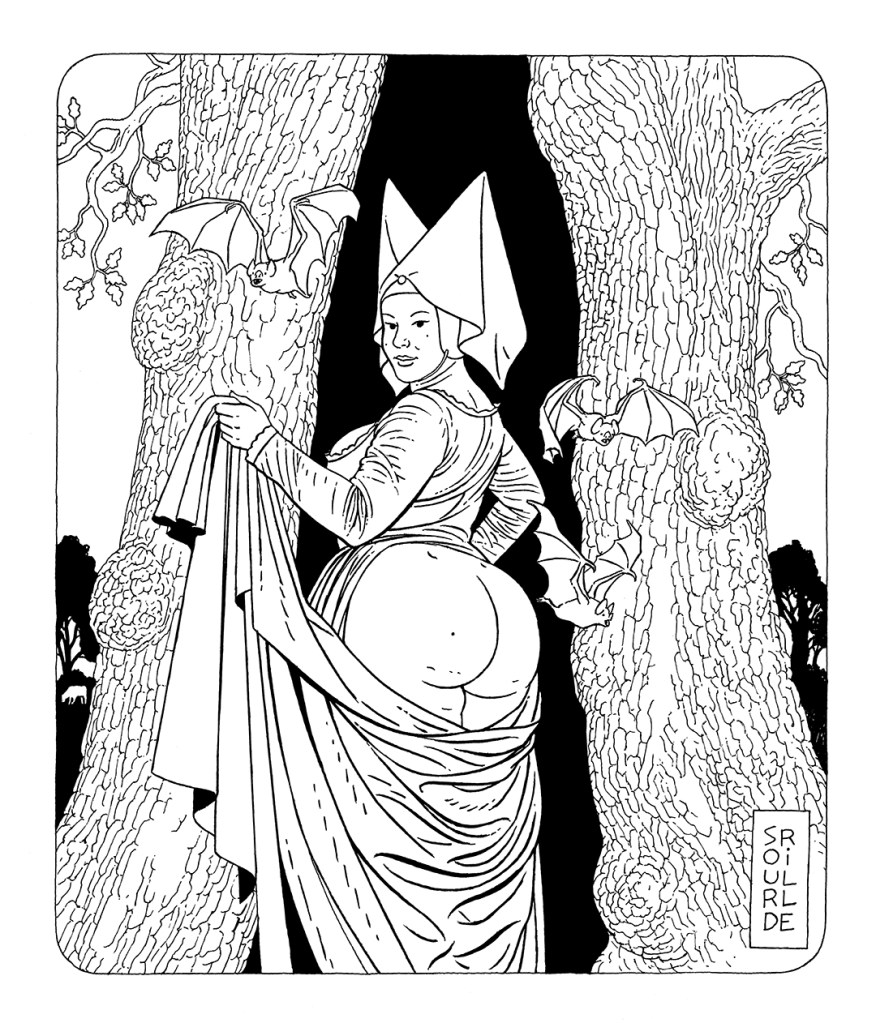
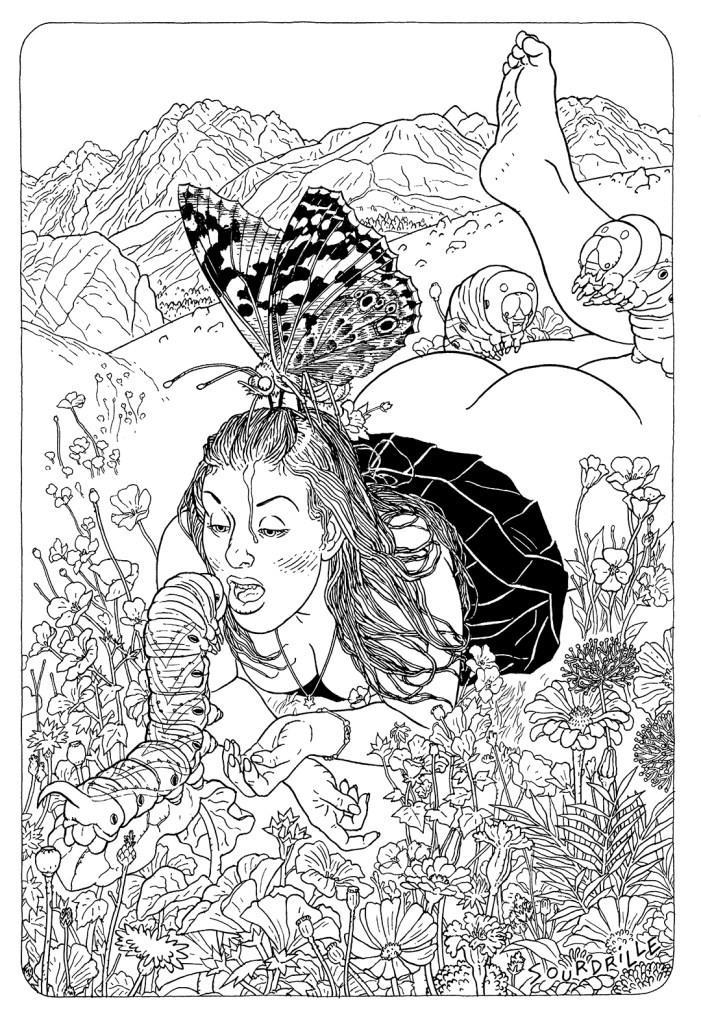
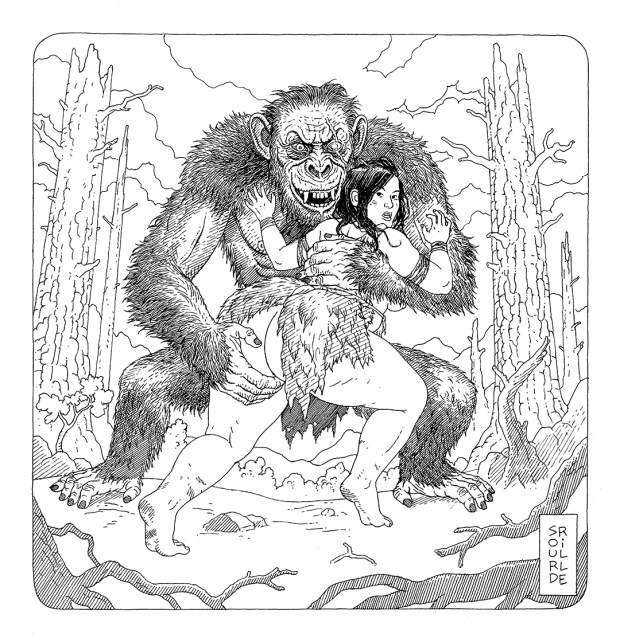
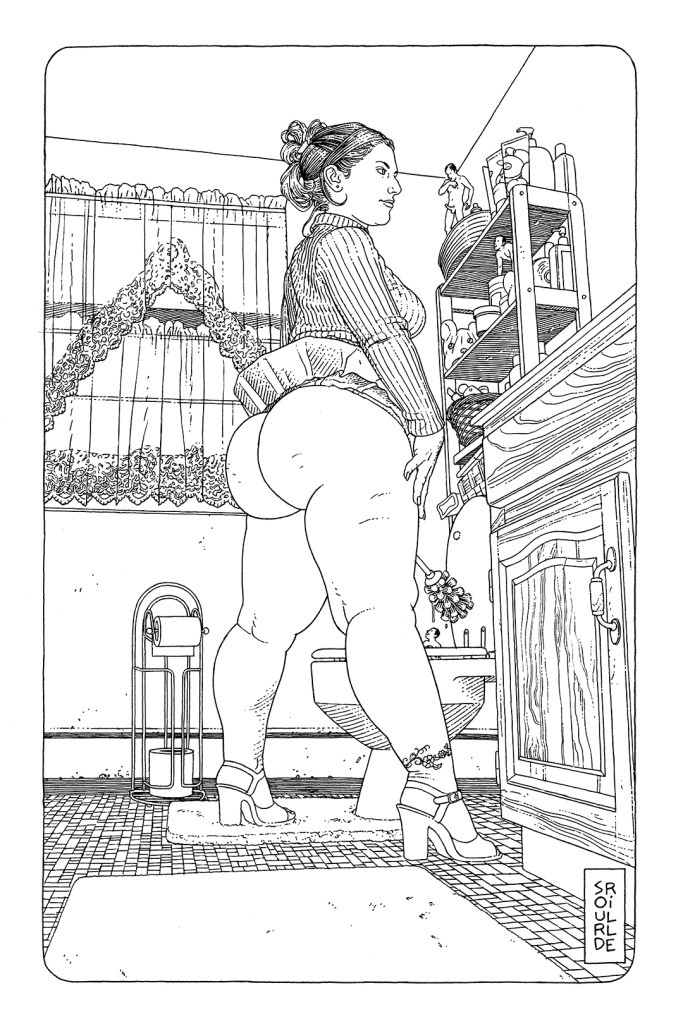
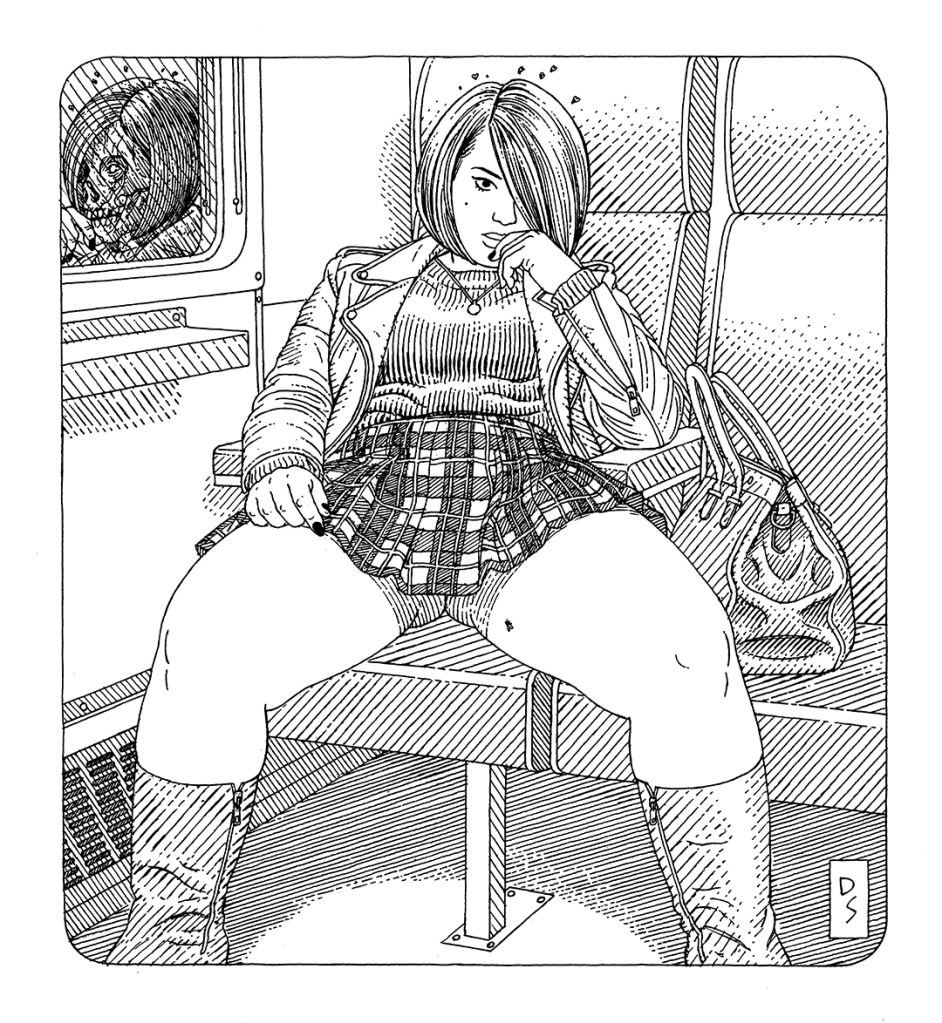
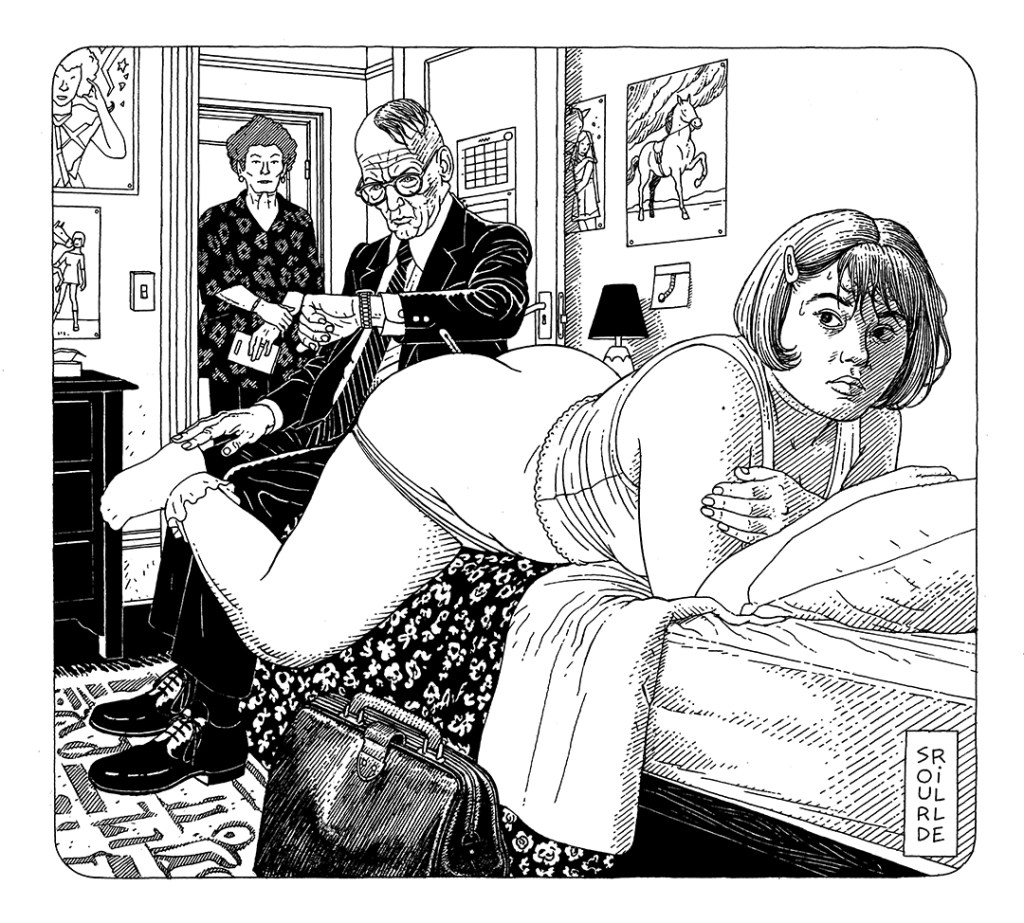
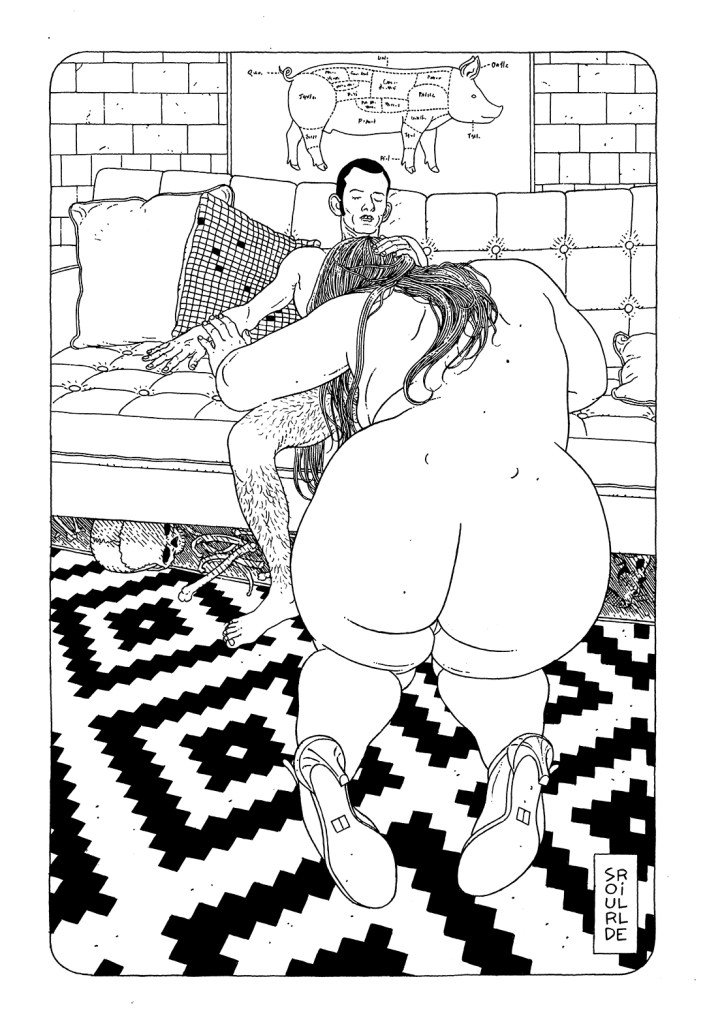
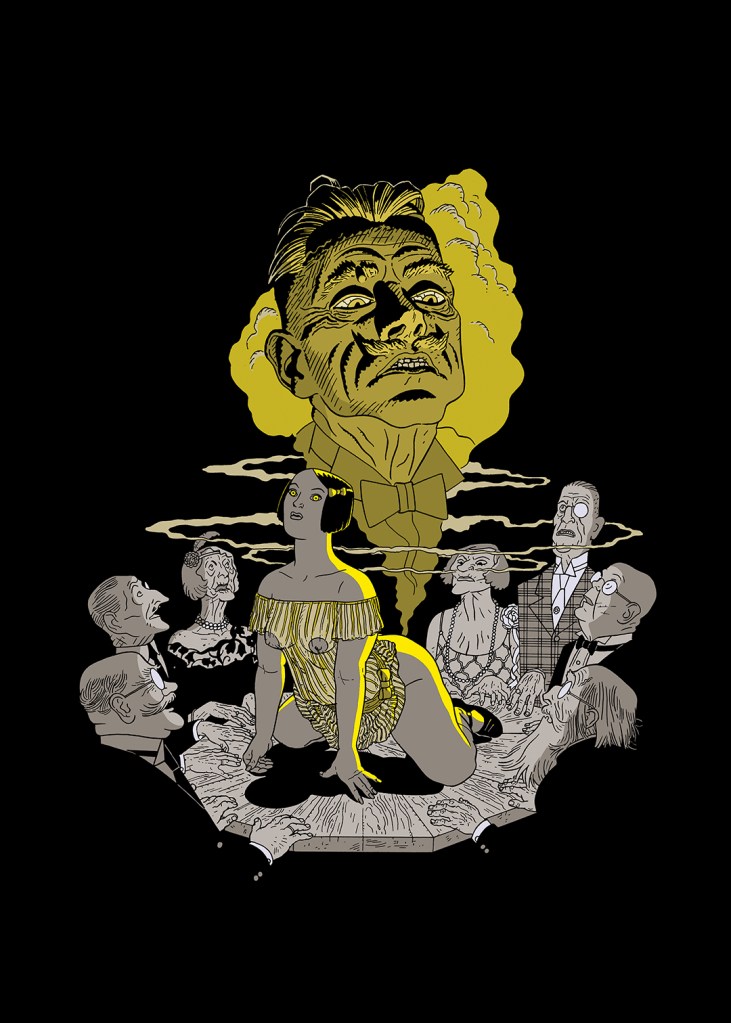
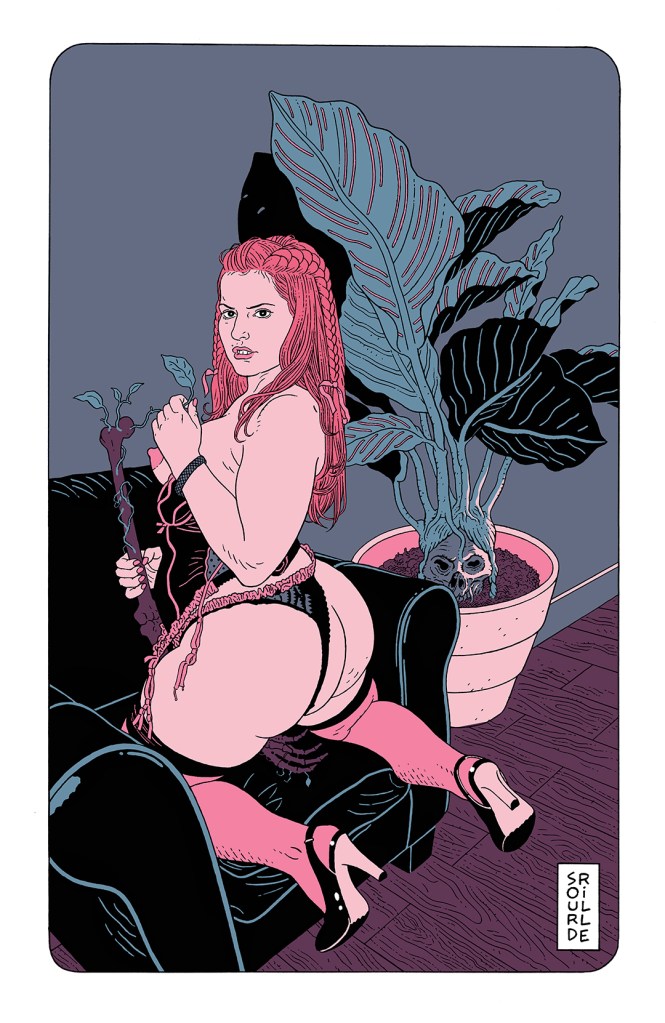
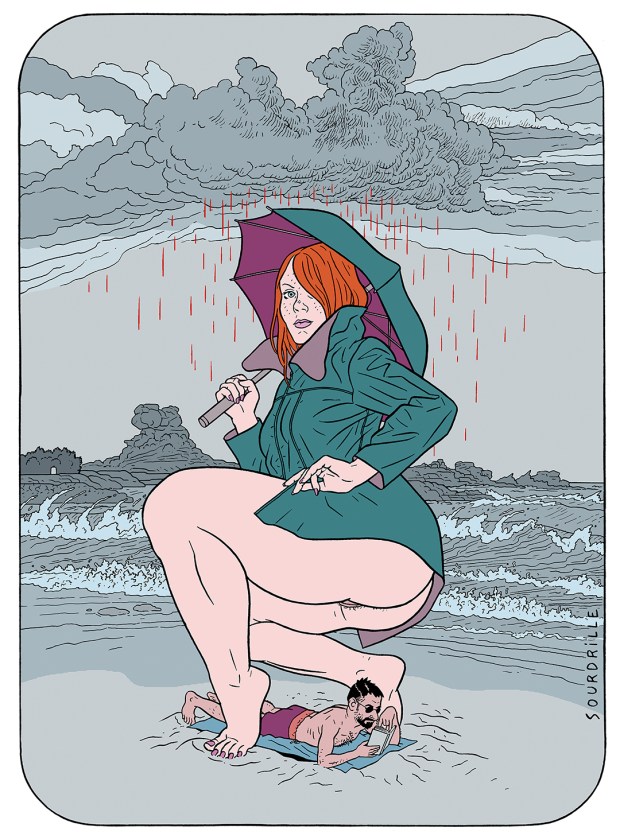
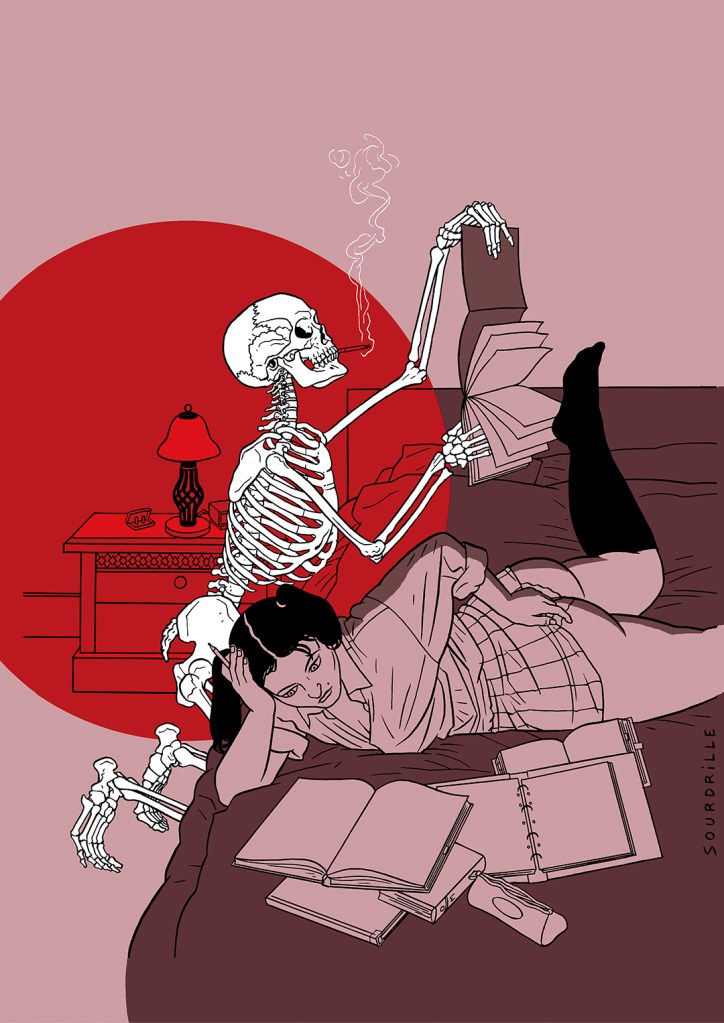
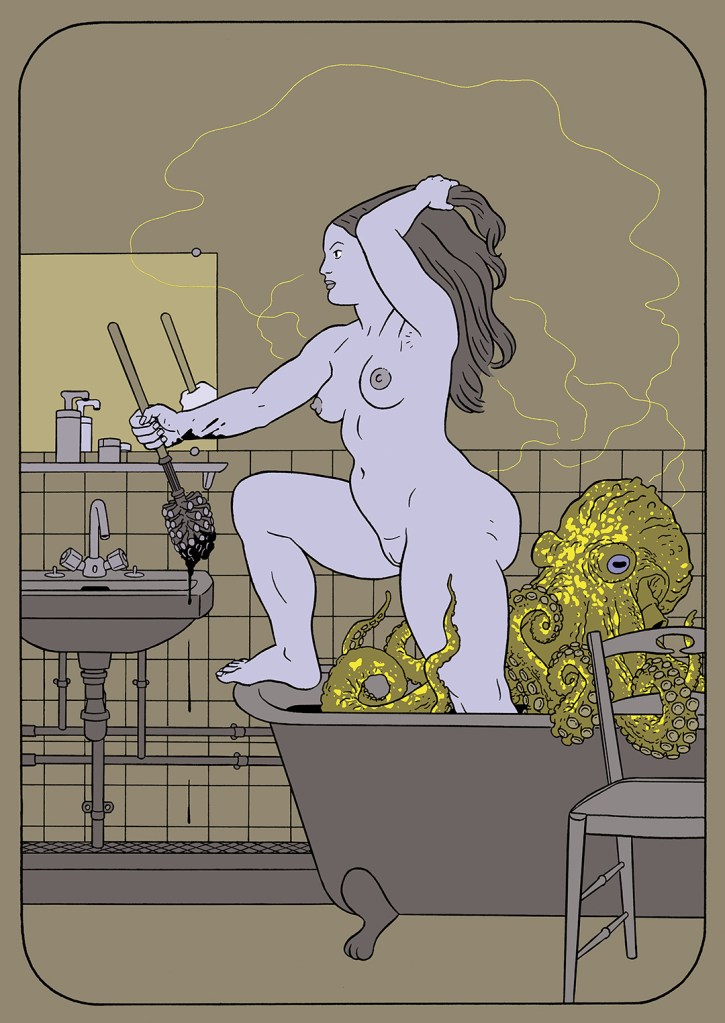
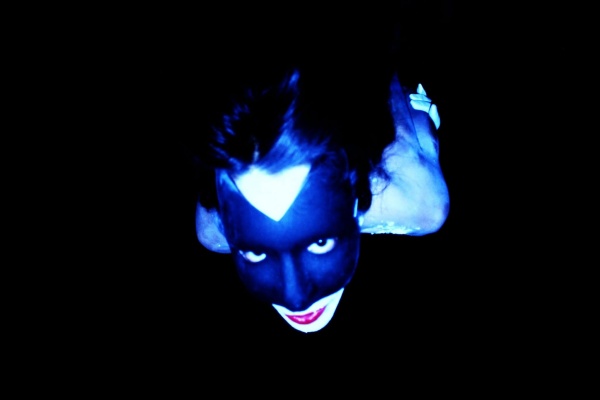
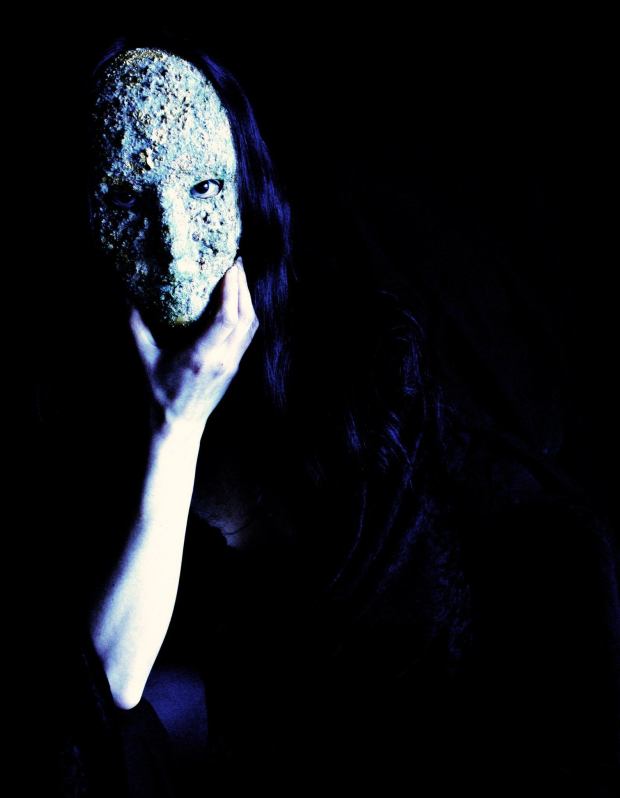
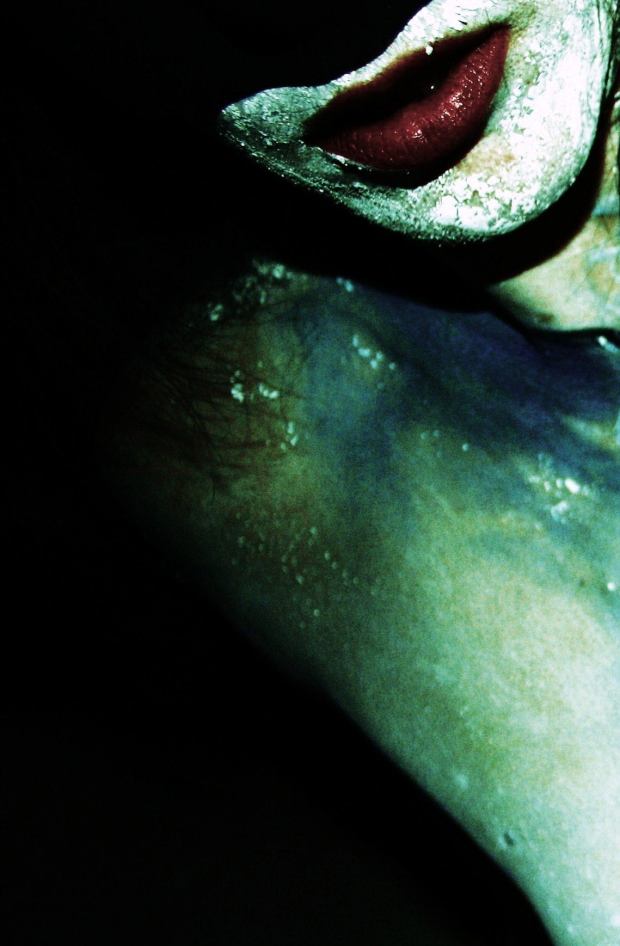
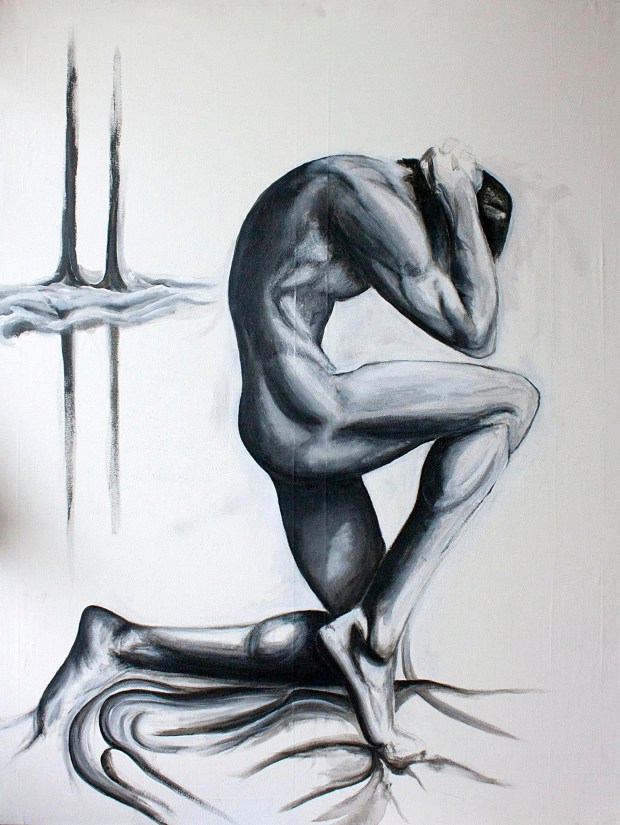
French artist, David Sourdrille combines sexual imagery with elements of horror, the grotesque, taboo topics, and Gothic motifs. Through his work, he questions established norms and morality, unveiling the shadow’s underlying psychological urges. In many of Sourdrille David’s pieces, you can often find concepts that involve the relationships between monsters and humans, eerie settings, and ideas about submission and dominance.
Understanding both fantasy and human behavior is crucial. Certain cultural experts suggest that dark or perverse sexual fantasies often serve as symbolic outlets, allowing individuals to cope with fear, power dynamics, taboos, or trauma within a consensual and safe environment, where the mind can explore freely.
When I think of Stanislav Grof’s transpersonal psychology research, it evokes dark erotic quests originating as somatic imprints that guide the conscious mind’s journey through the underworld. The same idea applies when you view art that faces the difficult fundamental forces behind the pleasure principle as it aims for more freedom in space.
Wilhelm Reich, a psychoanalyst, also introduced the concept of character armor, which acts to repress sexual energy, sometimes in grotesque ways that resemble intense archetypes.Sourdrille’s artwork leads the observer into this world.
Mitchell Pluto
written by David Sourdrille
The core values that guide my work are freedom and authenticity—freedom found through the transgression of boundaries. I create only drawings—nothing more, nothing less—but for me, art cannot exist without crossing the threshold of “good taste.”
Authenticity is equally essential, as I draw primarily what pleases and amuses me, with no regard for an agenda or a career plan. My work is not for everyone, and I advise against it for minors.
Over the years, I’ve noticed that I am slowly but surely reaching a more female audience. Women have taken a greater interest in my work since I began relying less systematically on pornography. Setting aside the fact that some women I draw are also artists or writers, I currently work alone, but I am open to all forms of collaboration.
Additional explicit erotic horror-themed art and an interview with Sourdrille David are available on the Shunga Gallery Erotic Art Magazine website, a site for adult and mature viewers.
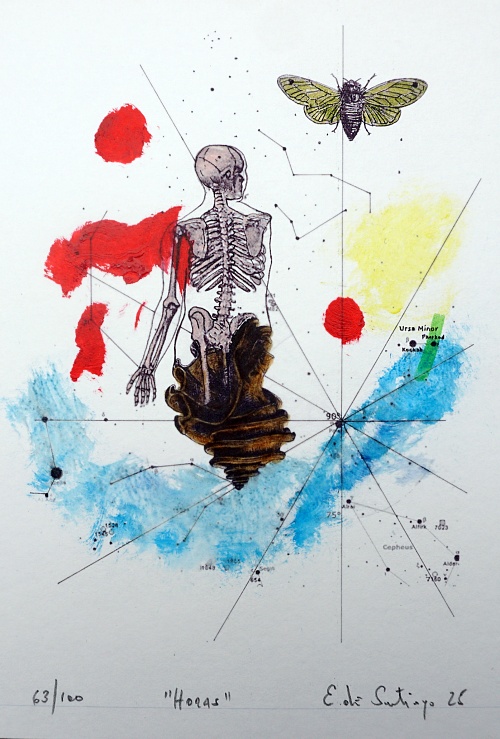
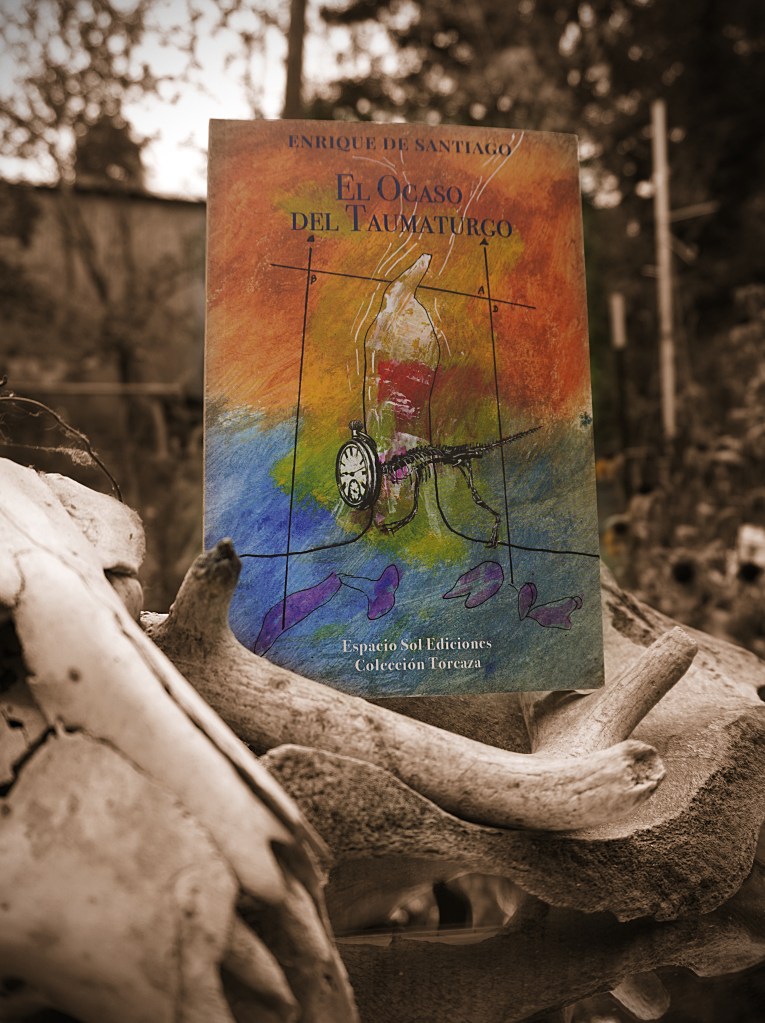
Thaumaturgy—also known as the performance of miracles—involves applying occult principles to produce tangible results. Speaking with the voice of a modern-day oracle, Chilean poet and visual artist Enrique de Santiago offers moving messages that touch the heart of humanity, connecting us to the Earth’s ancestral power. The visual language of Santiago’s work links the architecture of bones with stellar patterns and geometric structures of movement. These creative poems will help the reader recall nature’s hidden wonders.
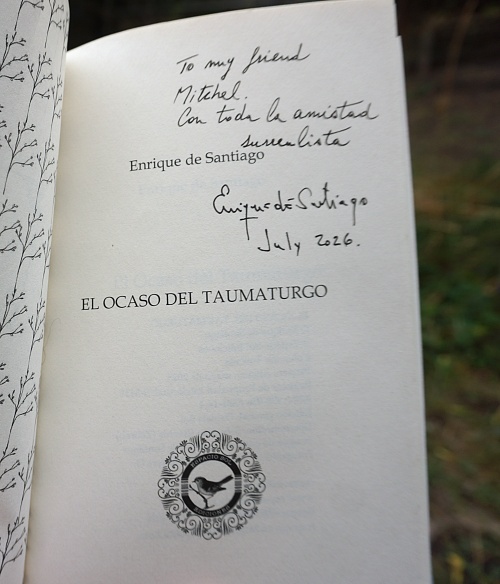
My friendship with Enrique de Santiago began in 2010, after being invited to participate in El Umbral Secreto, an international surrealism gathering. It is an honor for me to present his work in my web gallery.
-Mitchell Pluto
The eternal cycle that moves the souls beneath the mountains and the roots of fire
Hours
The extinguished soul of the tabernacle, the hidden phrase that does not appear on my tombstone, the pardons granted, the glass half-empty with its half-full smile, the useless justifications, each undeserved kiss, with its hollow dream. A long list of strange events that ought not be written under my name.
Hidden Hours
I am weary of chasing after serenity, after so many days of sun— those days of old, the lost ones, days when I laid my head upon certainty, though in the end, it was merely a mirage; there was nothing epic in the streets, only cobblestones and the same dampness, for I believed in things beyond reality, yet it was but a reflection mirroring the void— much like now, with fearful eyes, dreading another mistake, so I walk with eyelids trapped, unable to escape the memory, perpetuating into the coming day the cycle of emptiness— an emptiness that cannot turn the wheel of life, despite the claim that the world is round; there is only more oxygen to prolong the agony, the gazes devoid of hope, with no constellations favoring me, only the interruption of the ceremony, and the white light calling once more, compelling me toward salvation—skeptics by day, inert by night; nothing remains the same, only ailments, air seeping into open sores, or seeking its own salvation— a clumsy, enslaved instrument, foolish for writing, for the pleasure of the treacherous, the cynics, the covert ones, those who bring the stench down upon my flesh; a hard, penitent life, a fierce passage following withered faith, a barren wasteland left by lies, by betrayed words, by the shattered sand that will never draw near, with no public squares to roam, no scents, only projected playthings, cast into the soul’s deepest abyss. I rely on no one, let no one rely on me; just fix your gaze— orderly and without delay— for the hour will come to reveal myself: in silence, without a word spoken, you shall learn of my wounds, of my unspeakable suffering, for my spirit is cloaked in flesh— clumsy, troublesome flesh, flesh I seek to unleash from its dark delights, yet I always end up brushing against my own fingers, returning to the blank slate, though I have already turned a weary ochre, and I renounce this script of my life; I want to descend into sleep, drunk on molecules that compel me, and which torment me deep down— molecules that frighten me with what remains, with what I do not deserve.
Night entered my life uninvited, settling in without awaiting an answer; it took my clothes, my sheets, and smiled, leaving a breath of dead smiles and cadaverous breakfasts; without further ado, it simply installed itself within these walls, sitting to watch me with stubborn persistence, yet I no longer meet its gaze; long ago, I left my senses inside my nightstand— I use them no more, I need them no more; what the night brings is enough.
Loica, the Songbird Singing after a Solar Explosion
In the beginning, there was hydrogen— fusions in the void, upon the chaos, and light escaping immeasurable density, an atomic dance in a corner of immensity, forging clouds of helium, with horoscopes gathering in their wombs— incandescent— a sea with its cosmic tides, solar matrices, primordial motherhood, woman with her 1,080 designs, who loves the early nebulae when you gaze upon her— with her analogous births, her stars and comets that govern your sweet destiny, with your magnificent horizontality, bearing her feminine ambrosias.
For in the beginning was your name, before the galaxy sleeping within the orchid, with the archaic promise of your lips naming the secret that dwells in oblivion— a secret slowly surfacing from your skin like photons escaping the solar core, a task spanning millennia to reach the corona and warm us in eight minutes; for in the beginning, it was not light, nor the will of the gods, nor my own meager poetry— unnoticed by the world, traveling like a lightning bolt to return to the void of a beginning where there was only the stifled voice of space.
This is my vocation: to snatch, at times, a glimmer from the marvelous— a poorly paid yet inevitable calling; thus my bed fills with forest leaves, and my roof is the stars bathing the calendulas that embrace my walls— my perfect prison, the sweet fate of an ancient equation, like these verses traversed by your eyes— which is, to me, a more than fair wage throughout the days, with their mornings and their sunsets.
Enrique de Santiago has given his consent for the poems to be translated for a North American audience.
Enrique de Santiago, Born in Santiago, Chile (1961). Visual artist, poet, researcher, essayist, curator and cultural manager. He studied a Bachelor of Art at the University of Chile and at the Institute of Contemporary Art (Chile).
Parallel lines intersect, forming a diamond at the center. II is now X. This form lets us travel diagonally through space. One needs divination and shapeshifting for this kind of journey. I absorbed a triangular wave. Under the Pisces moon, I sipped from the cup. A tiny fraction of 360 Aquarius, a Kayayei, and the water porter, is playing live. Let’s toast to the lunar. It’s an old-time oracle. I use my geomantic knight on the synth console to twist the central square into a pyramid on the chessboard, bending the surrounding space. The sixty-four Yoginis from the eight phases of existence create a cosmic tapestry that illustrates awareness and extinction.
Through the checkered board, we can explore a chart of our interior states. Intertwined black and white squares represent yin and yang. This visual diagram has the ability to analyze and interpret events from different time spans. We are connecting. As a hand, claw, fin, hoof, wing, and tentacle united on a holiday to a foreign atmosphere. By being able to transform into different shapes, we plan to discover a new place to thrive, eat, and reproduce. Our honeymoon is amazing at the moment. With heightened senses working in perfect harmony. Each optical sense is a precious asset to detect whatever objects may be drifting in this void. Apps mimic snake pupils and cat eyes enhance night vision.
If we find nothing on that app, we activate a bat signal to identify what we overlooked. To combat boredom, we listen to the old fashion whale songs. There is plenty of room in the universe for invisible radio waves. We notice how unconscious shifts affect our awareness. Giving up vanity was my toughest astronaut challenge. Self-esteem improved by breaking free from consumerism. We practice Buddhism without a figure. The fading of charged particles into space is called “death”. Numbers are eternal, so we will test how long we can remember them. I am coming forward from within my ego to assert the words that I have spoken before the update. This is a hallucinatory voice. We get it, there’s no true self, but we are always expanding who we are.
For better well being, we are abandoning past programs that slowed our progress. The current speaker is about to stop speaking. Once we reach our destination, we intend to leave a circle. This storyline will trigger déjà vu and create a memorable mental image for the replicas.
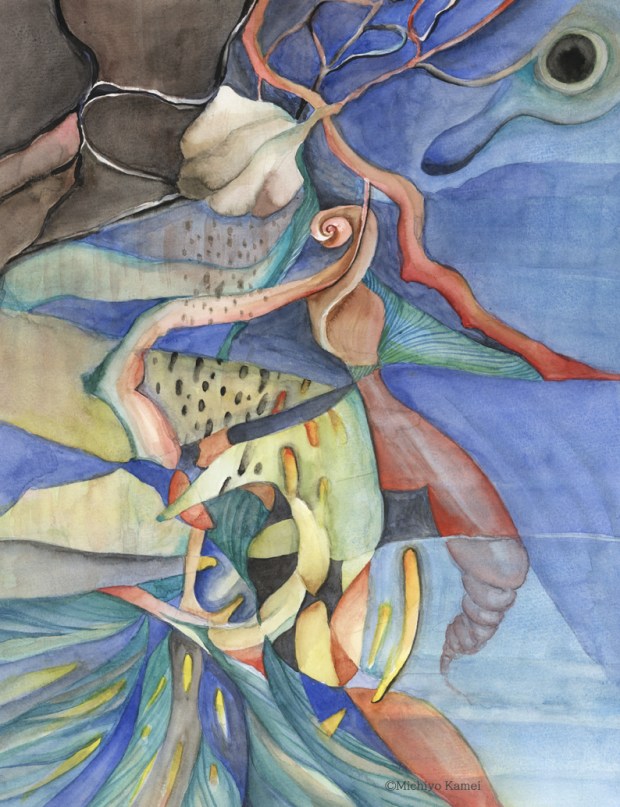
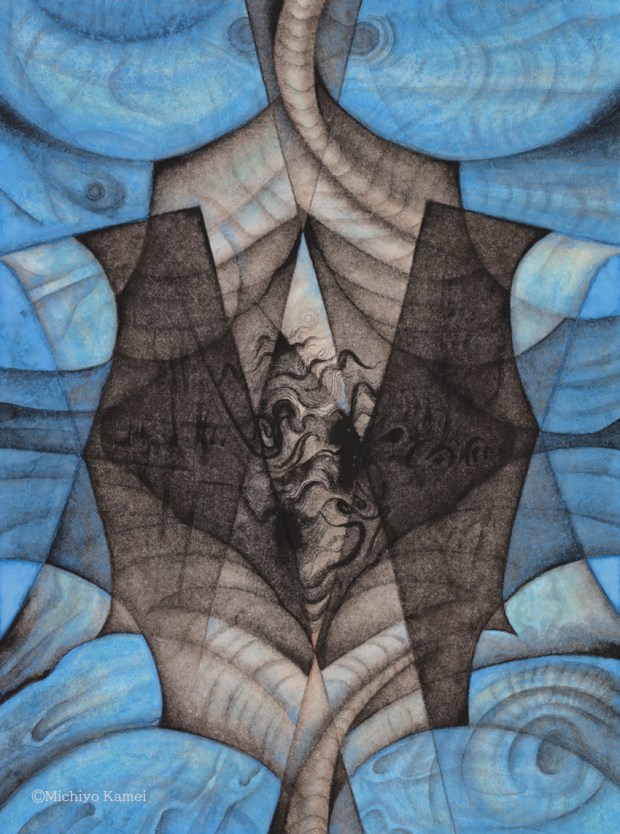
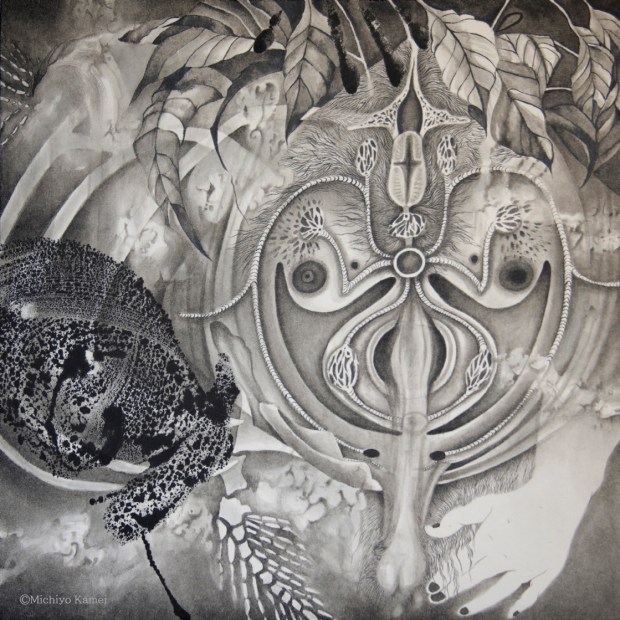
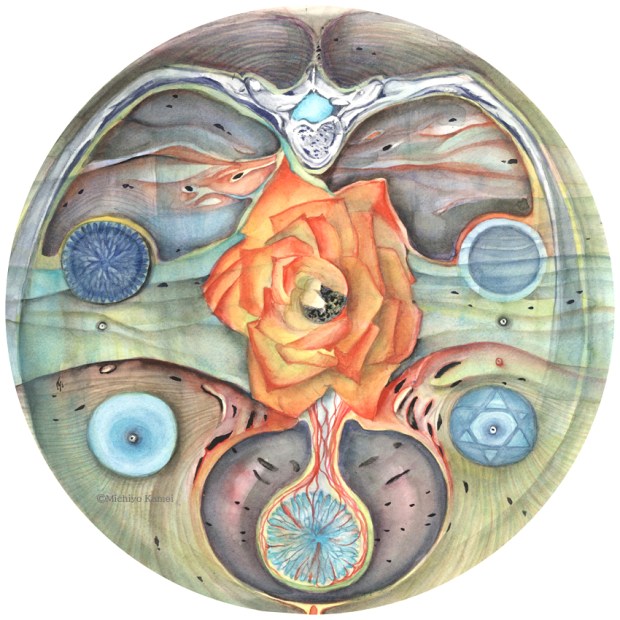
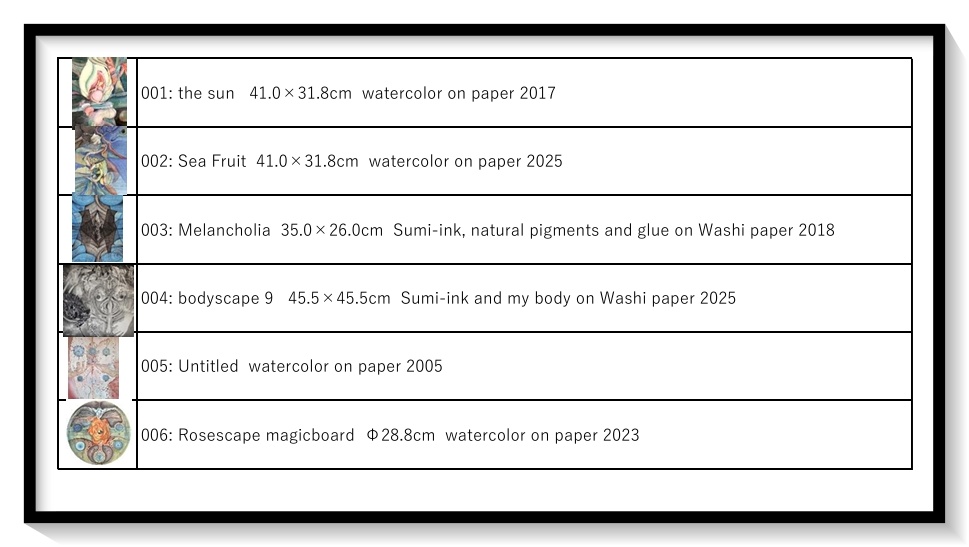
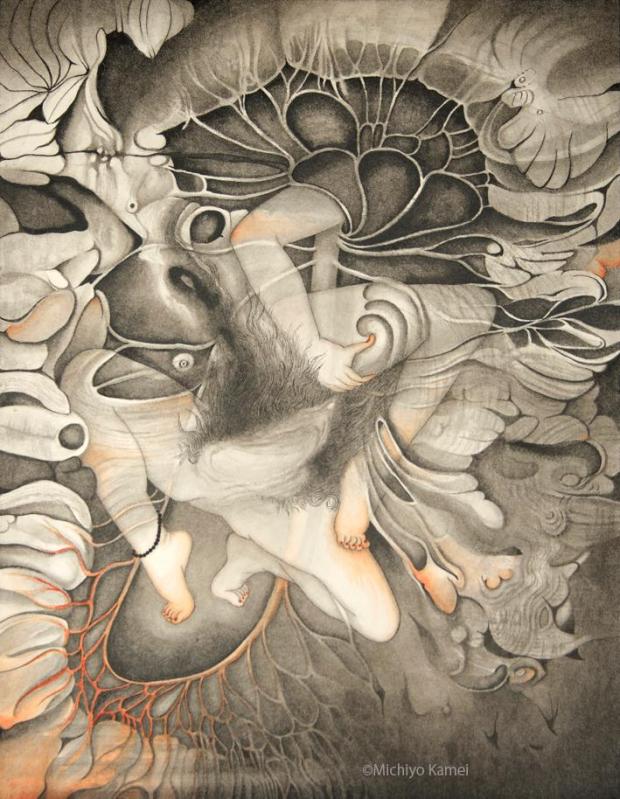
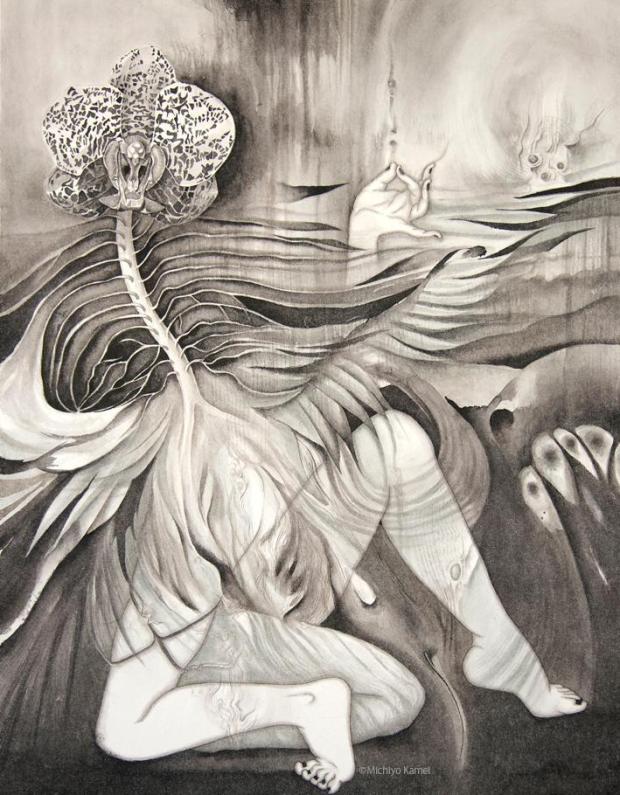
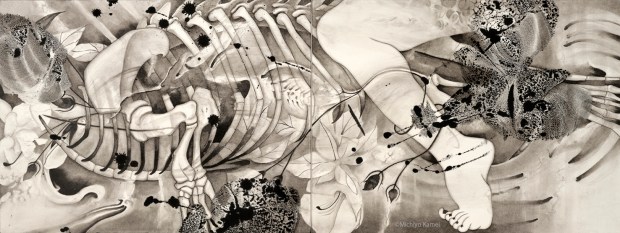
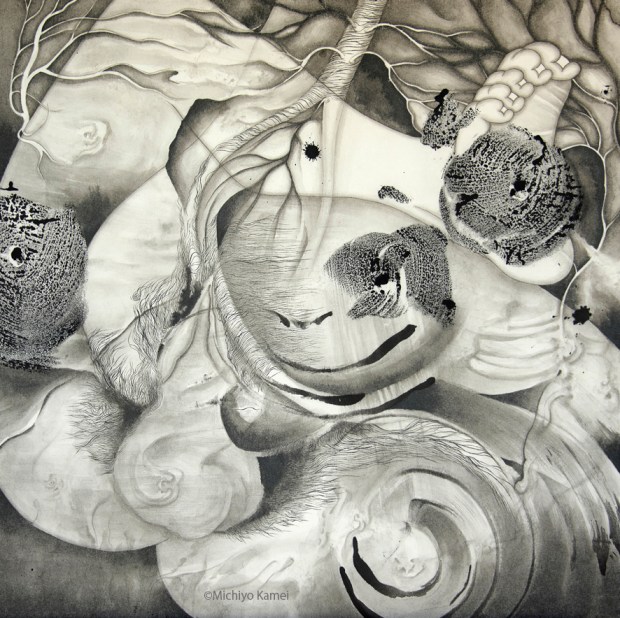
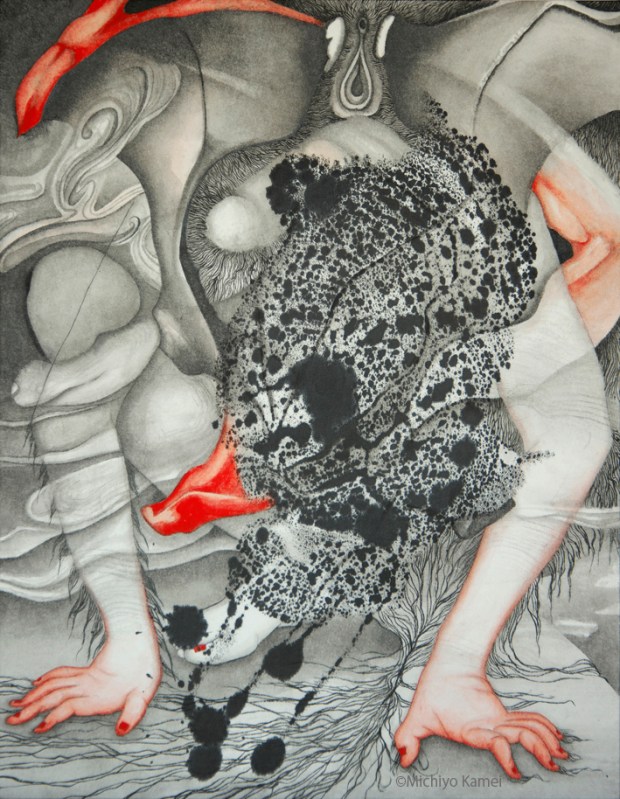
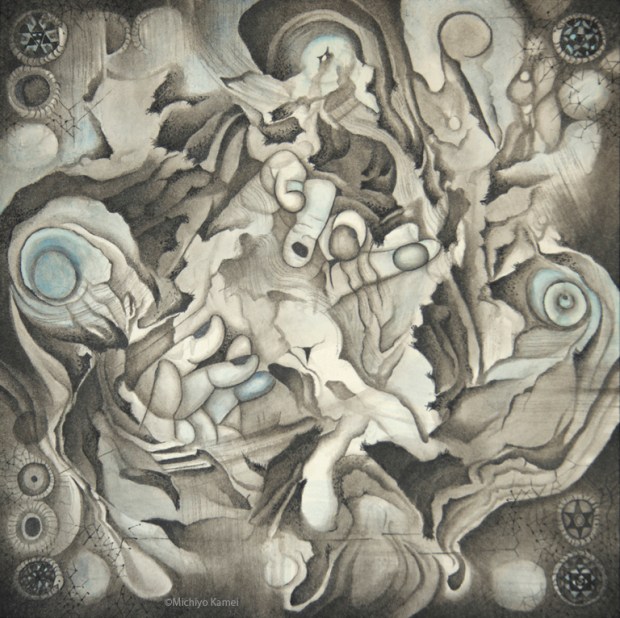
001: the sun 41.0×31.8cm watercolor on paper 2017 002: Sea Fruit 41.0×31.8cm watercolor on paper 2025 003: Melancholia 35.0×26.0cm Sumi-ink, natural pigments and glue on Washi paper 2018 004: bodyscape 9 45.5×45.5cm Sumi-ink and my body on Washi paper 2025 005: Untitled watercolor on paper 2005 006: Rosescape magicboard Φ28.8cm watercolor on paper 2023
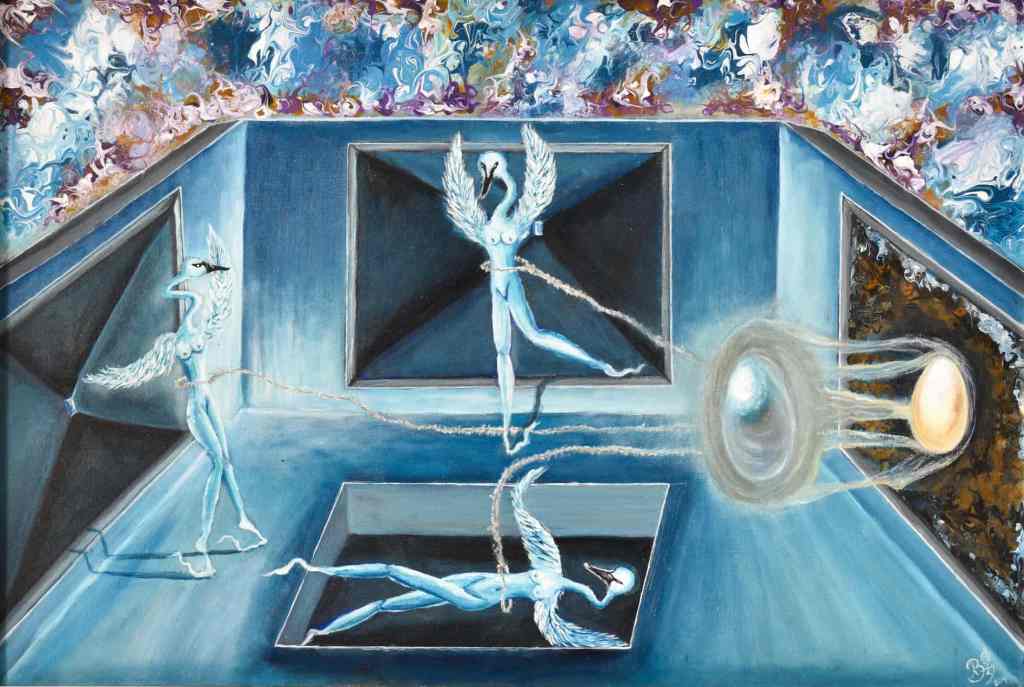
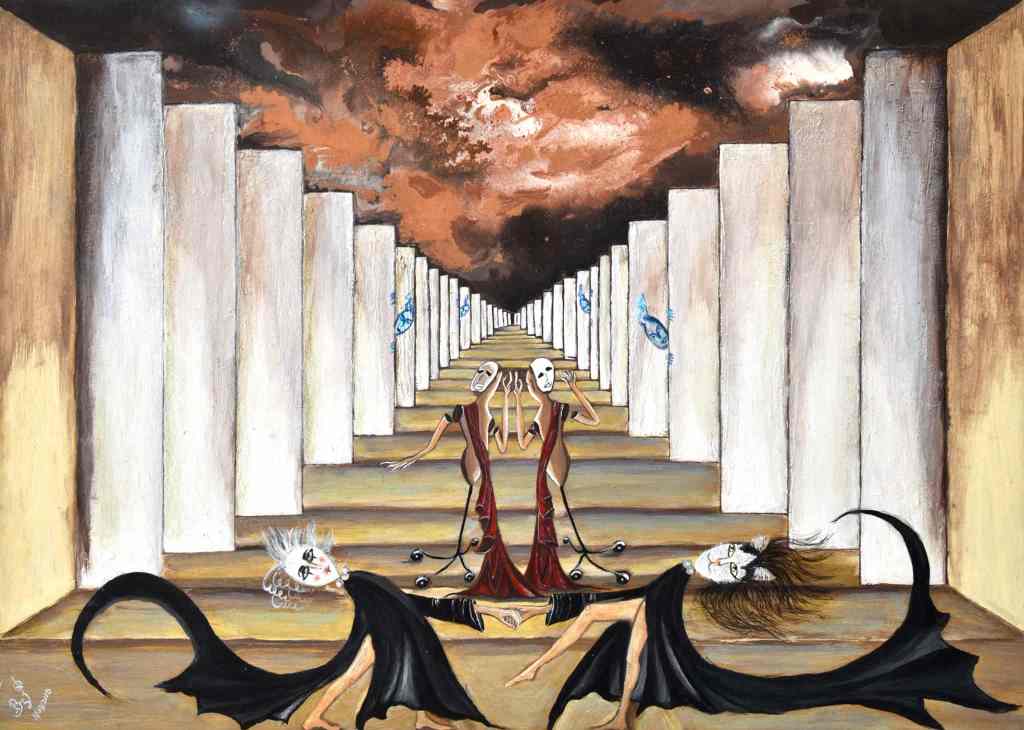
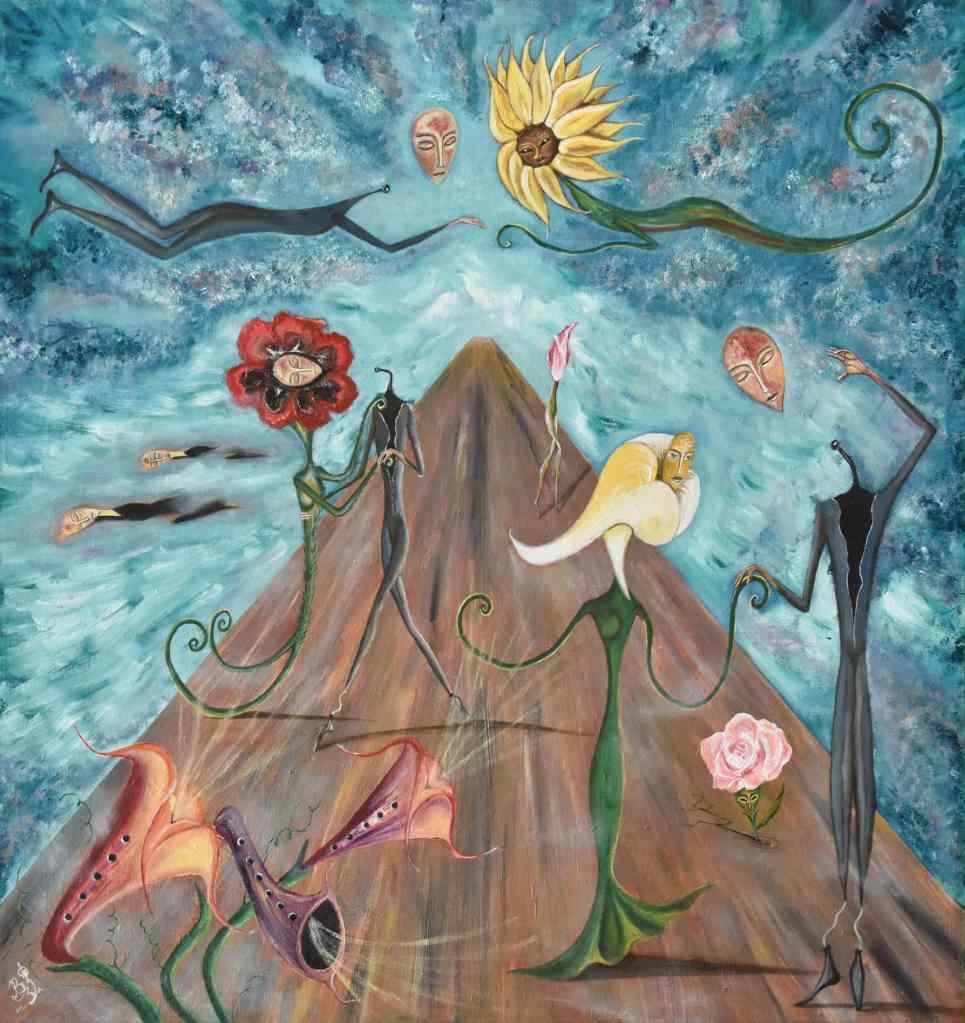
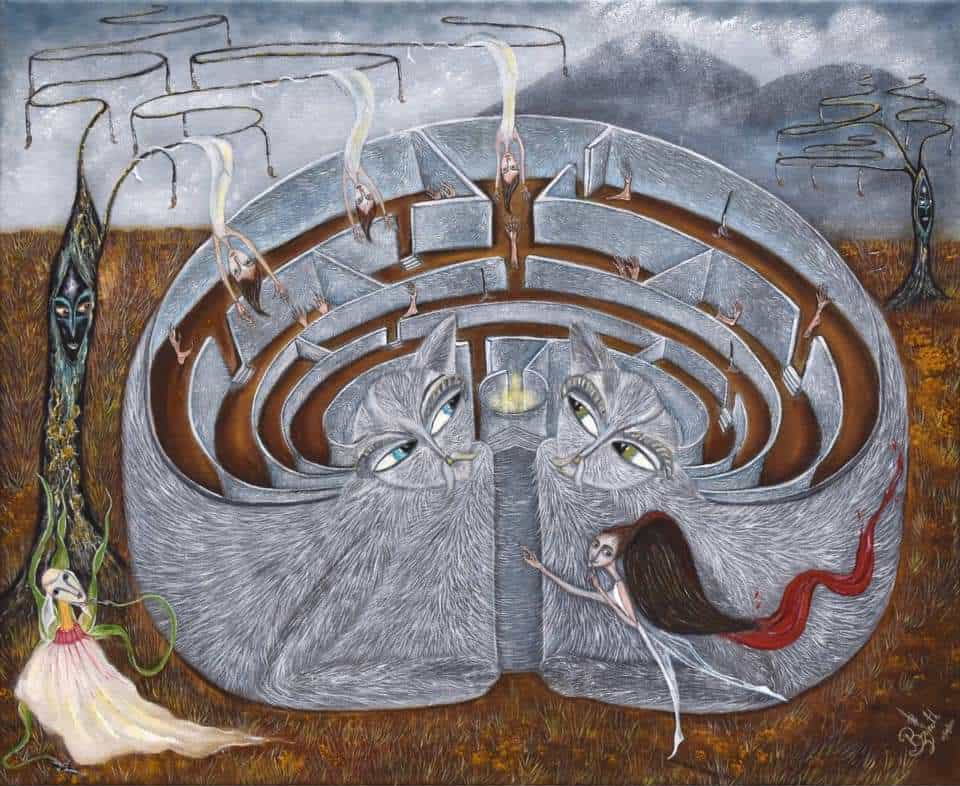
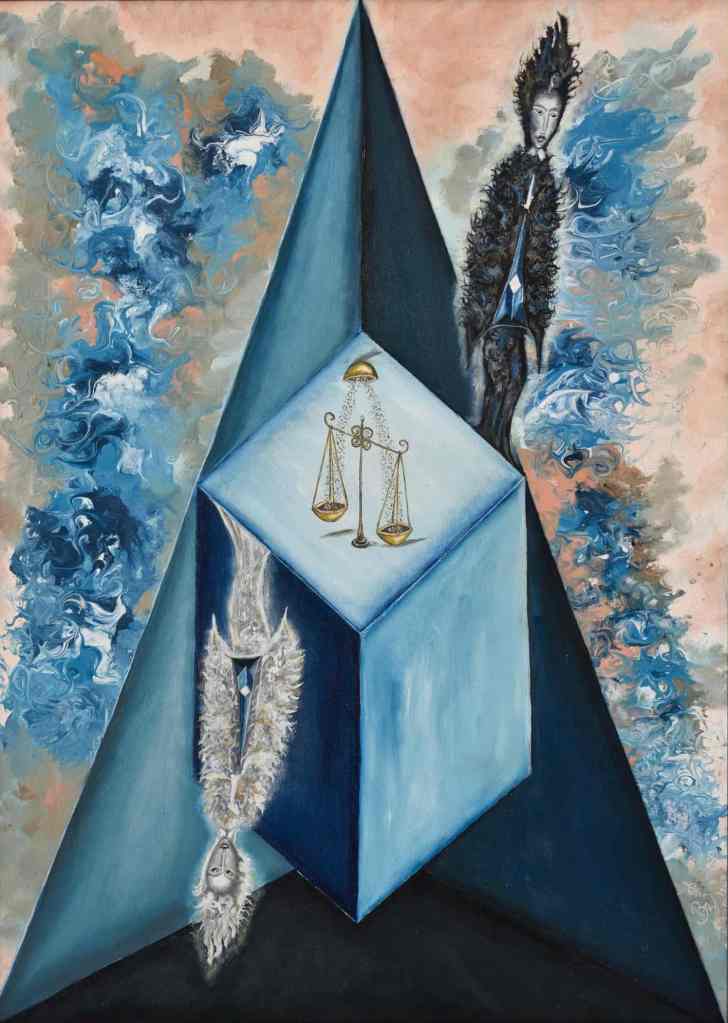
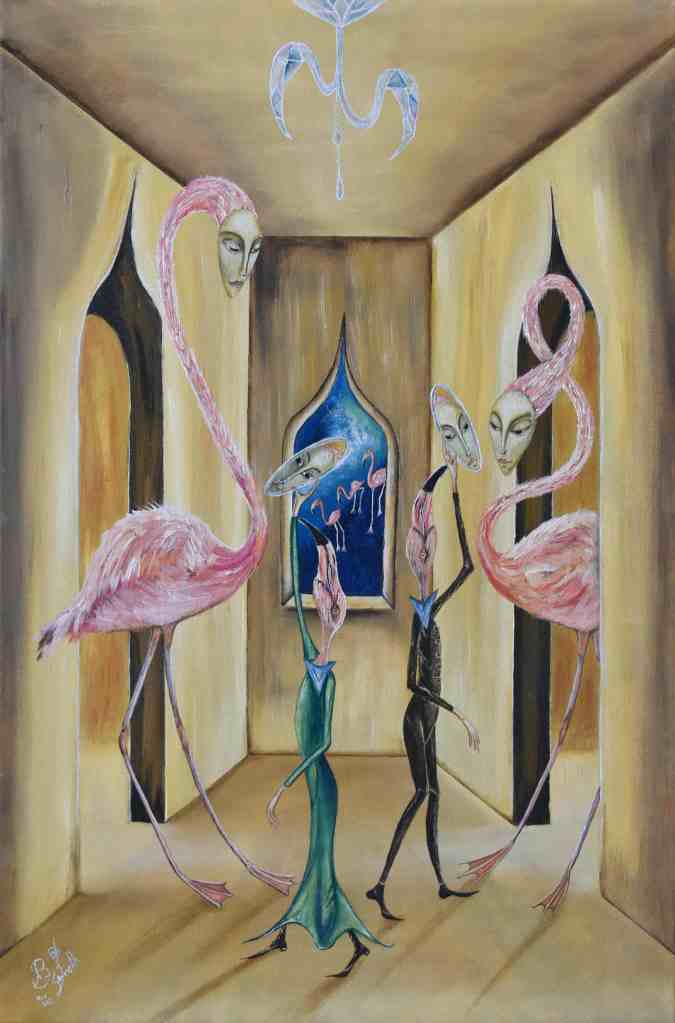
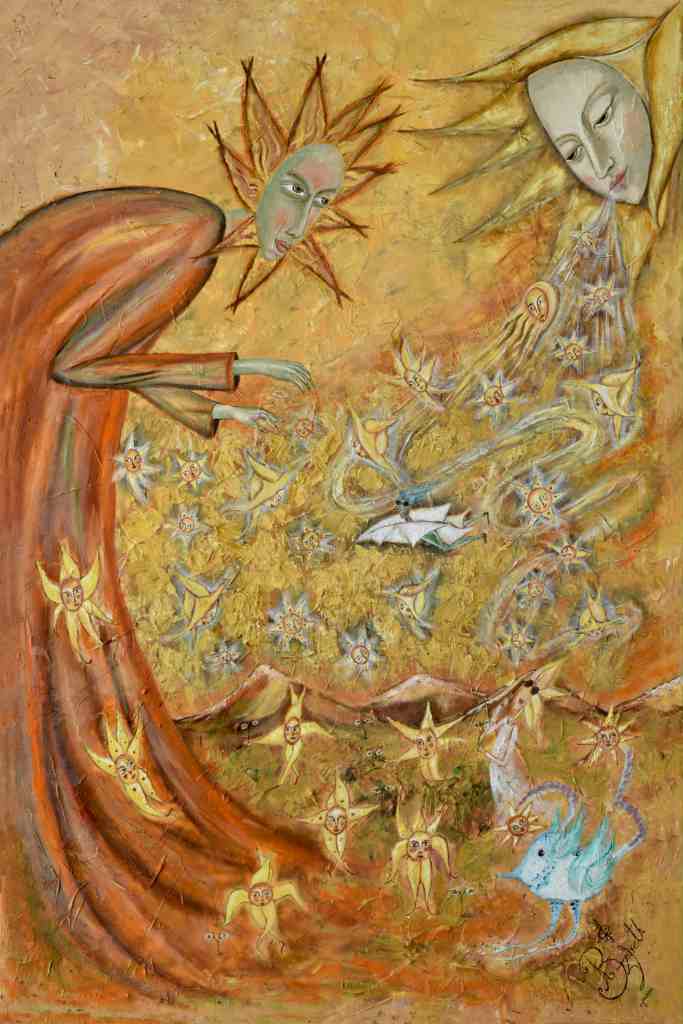
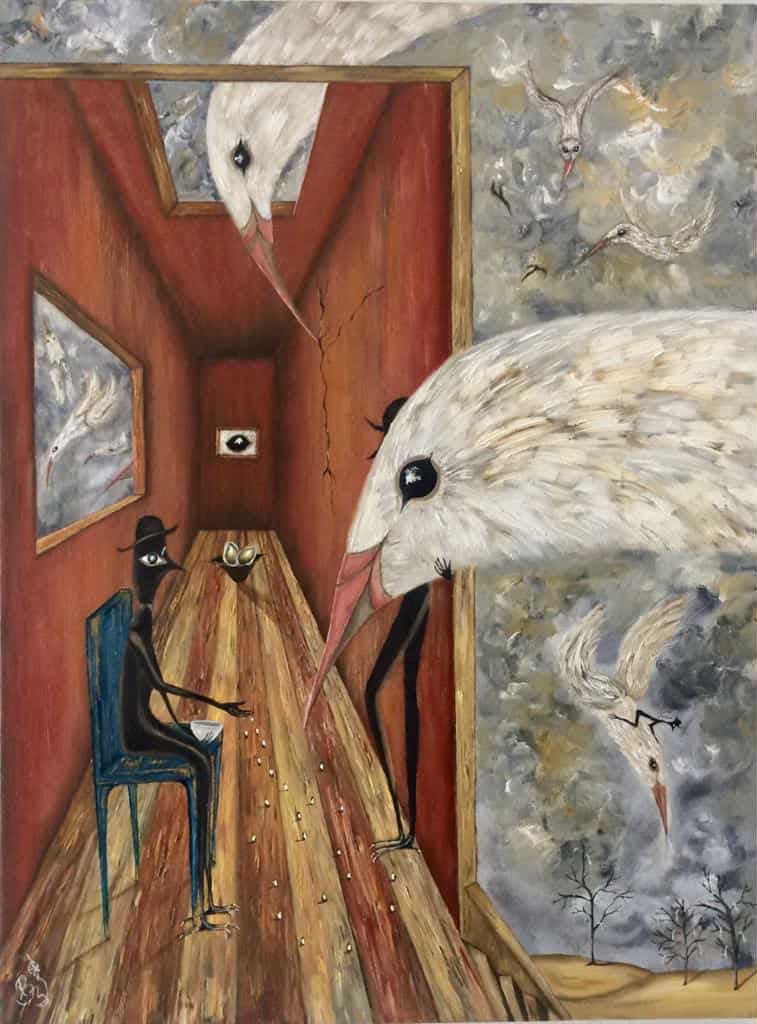
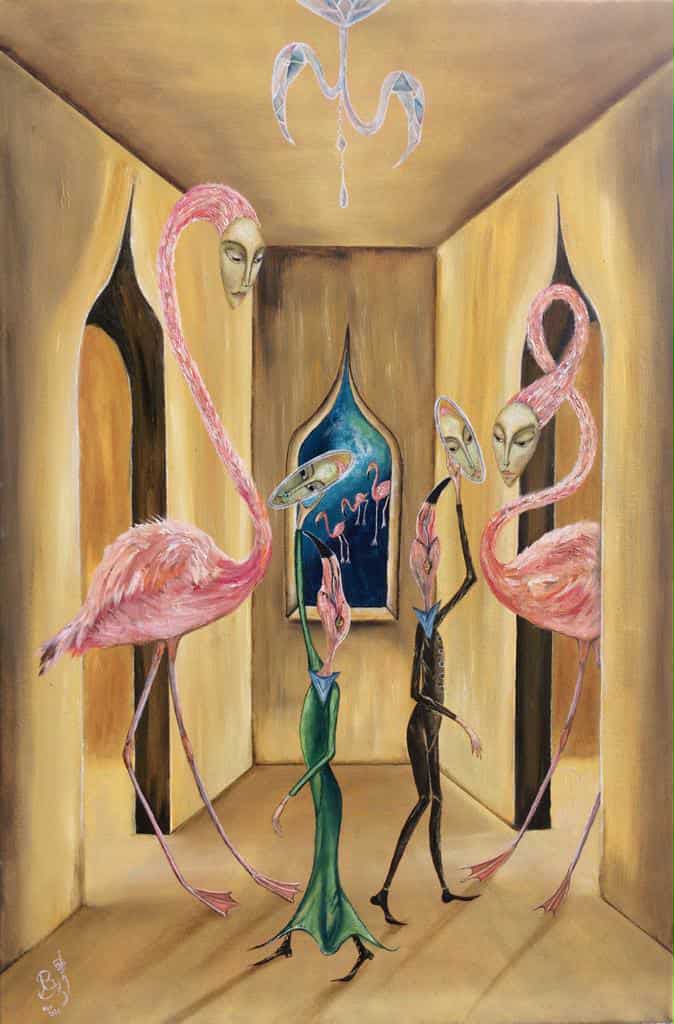
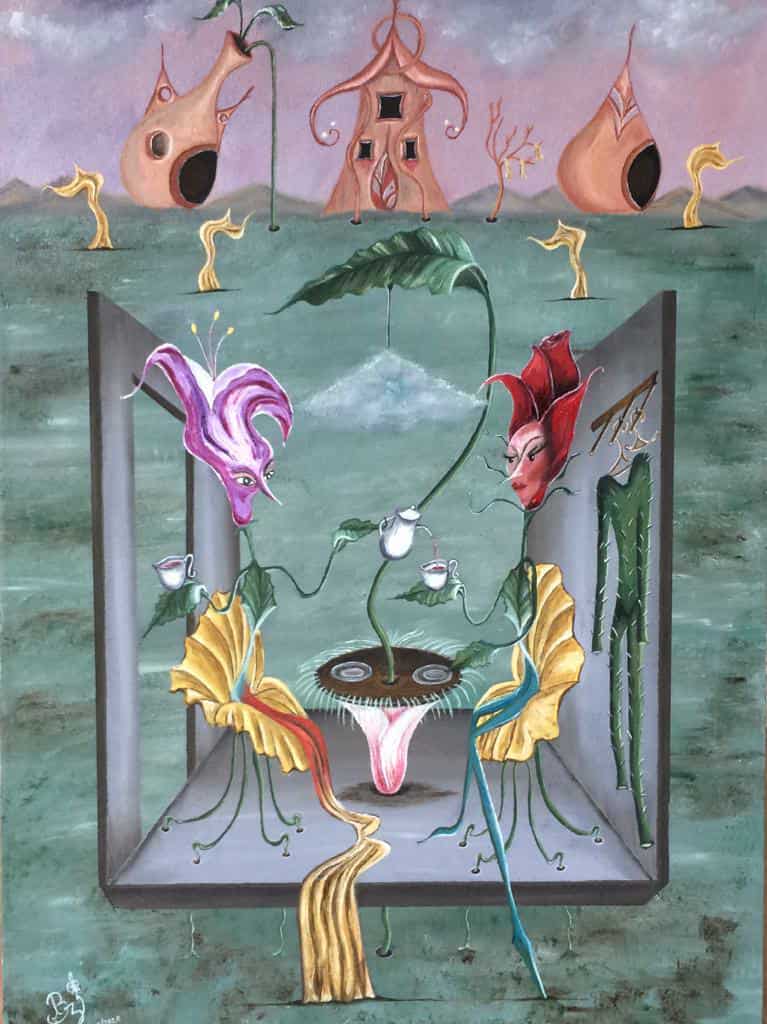
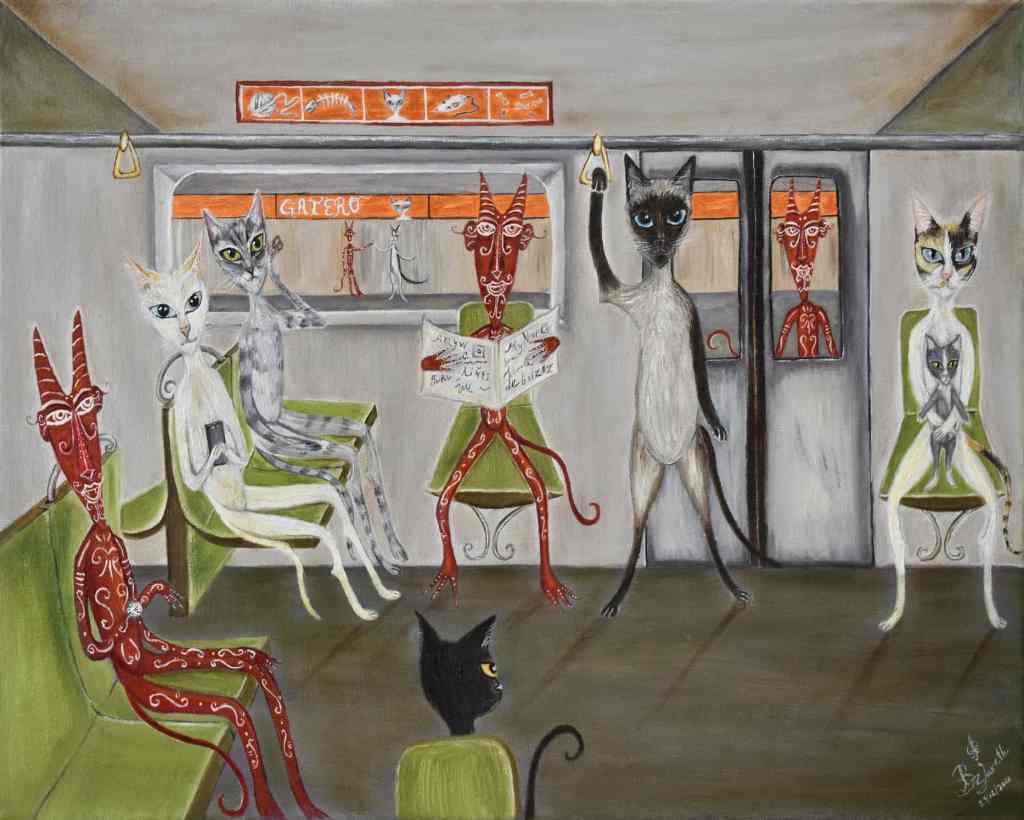
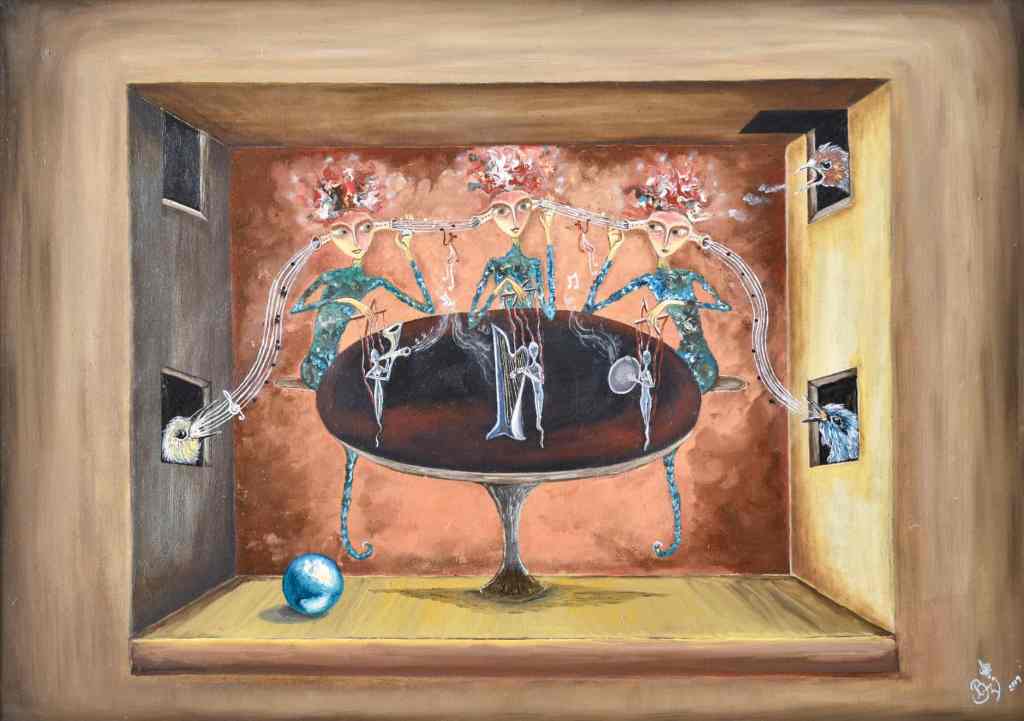
Each painting is a window into the worlds that inhabit my inner self; they represent the way I have found to share and communicate with the world, the way I can transform the visions of my dreams and materialize them into art.
In a way, Surrealism has not only been an expression but has also become a free way of life through the multiple and unlimited acts of creation that the world of dreams reveals. It has been an open door that has revealed other possibilities of creation to me, an extension of my inner world.
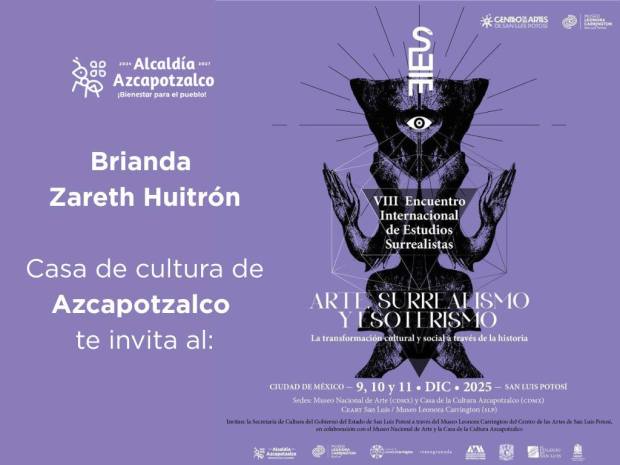
Brianda Zareth Huitrón has exhibited individually and collectively in Mexico and abroad.
Solo Exhibitions Leonora Carrington Museum of Xilitla, DREAM ENCOUNTERS in 2025. Women’s Museum, DREAM REVELATIONS, in 2022.
DREAM LANDSCAPES for the Temascalcingo Festival Honoring Velasco, in 2021. WINDOW TO DREAM WORLDS, at the Futurama Cultural Center, Mexico City, in 2020.
Group Exhibitions Col-art at the Oscar Román Gallery in 2025. The painting exhibition THE PAINTER’S TRADE, at the San Carlos Academy, in 2019. DIMENSIONS, Wave Gotik Treffen Festival, held in Leipzig, Germany, in 2018.
She has participated in the Chair for 100 Years of Surrealism, at the Faculty of Philosophy and Letters of the UNAM, giving a lecture on female surrealism.
Her work has recently been published in the book Mexican Women in Art, published by Agueda, and in THE ROOM SURREALIST MAGAZINE, an international surrealism magazine.
Ce spectacle comprend des lumières stroboscopiques et des effets atmosphériques ; la discrétion du spectateur est recommandée.
Un flash est un crâne qui vibre. Son aspect visuel provoque une photopsie et des sensations au niveau du lobe temporal. Les rencontres fantomatiques ont des allures psychiques. Observez des étincelles électriques dans l’atmosphère, entre les nuages et l’air. Les images du film défilent au-dessus d’un faisceau de rayons. Le projectionniste s’assure que le son et l’image de la bobine sont synchronisés. Des trous vides consomment la matière tandis que le compte à rebours se transforme en un drain optique. Une femme nue et cramoisie danse. Avec ses seins généreux et son collier de perles de crânes ondulant, elle marque la surface de notre mémoire rétinienne.
Il s’agit d’un procédé de lumière polarisée aux silhouettes exceptionnelles. Les ombres caressent les contours. Le cordon ombilical nourrit un embryon, de la même manière qu’un fil soutient un astronaute. Pendant un instant, une pieuvre du futur nous observa jusqu’à ce qu’elle projette de l’encre, rendant les observateurs inconscients. L’obscurité se remplit d’une illumination à motifs, jusqu’à une nuée de chauves-souris albinos en vol. Les drones sont des OVNIs partout. Une immense colonie de fourmis sur Terre a envahi et dévoré une simple feuille flottante. La foule s’amusait au parc d’attractions jusqu’à ce que le programme lui ordonne de former des lignes. Le fossile d’une orchidée montrait une minuscule danseuse du ventre à l’intérieur, en accéléré. La fleur était un signal intelligent voyageant à travers le temps. Un déluge d’éclairs éclipsait tout ce qui l’entourait. Une façon de contacter les extraterrestres était la danse du cerceau.
Ce cercle vient d’ailleurs. Évitez de vous leurrer. Les voyages spatiaux impliquent le vieillissement, la mutation et la mort. C’est aussi simple que ça. Observez comment les ondes de radiation dissolvent les éléments dans le néant. Ensuite, la chasse aux iguanes. Ne vous inquiétez pas, ce sont de gentils lézards en quête d’un en-cas. L’homme prothétique n’a aucun loisir, car les objets orientent son expérience vers une série télévisée. Suivez la figure nageant du tronc cérébral, à travers le système limbique, jusqu’au tableau de bord néomammifère. La Créature du Lagon Noir, malgré son portrait, n’est pas misogyne. Au contraire, elle incarne le principe du plaisir et illustre la conception de la nature. La plupart des gens entendent le saxophone flirter avec eux. Le mouvement rotatif tourbillonne de points qui s’épanouissent dans les danseurs Dogan célébrant la cérémonie du Sigui avec des masques. L’extérieur d’un masque reflète son noyau central, situé de la 111e rue à DaDa.
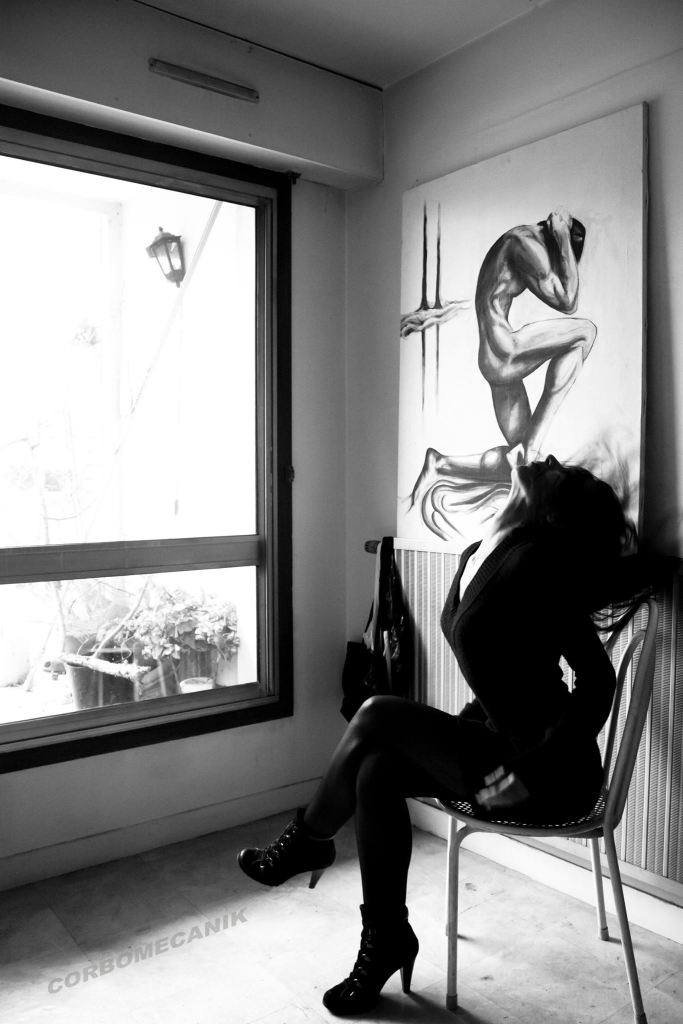
J’evolue dans le monde des arts plastiques , de l’expression corporelle et dans le milieu alternatif parisien depuis très jeune. J’ai donc explore diverses techniques et directions : peinture , photographie , dessin , graphisme , video , danse et travail sur le corps.
Depuis ces 15 dernières annnees , j’ai fait des expositions et performances en France et quelquescollaborations qui m’on ouvert de nouveaux horizons. Le public me connait plus pour mes photograhies , mes performances ou mes mises en scène des corps ( dans la cadre fetichiste , danse ou autre ) pour la simple raison que je viens des arts plastiques mais que j’ai fait une pause de 10 ans dans le domaine de la peinture pour y revenir après une renaissance.
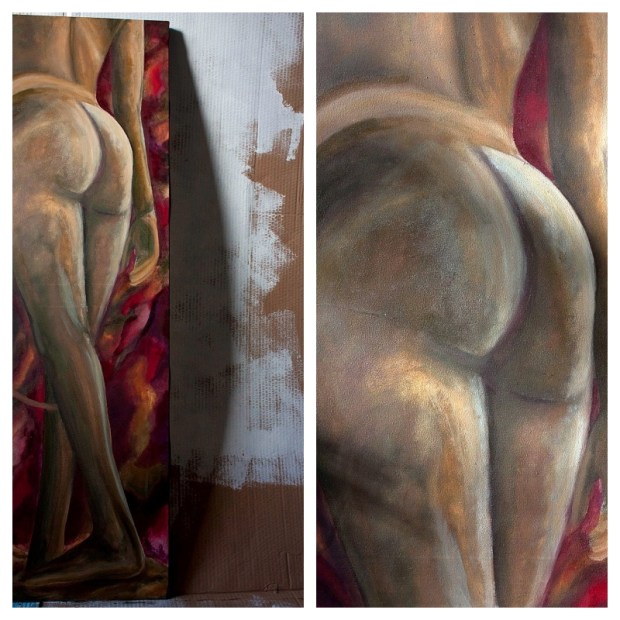
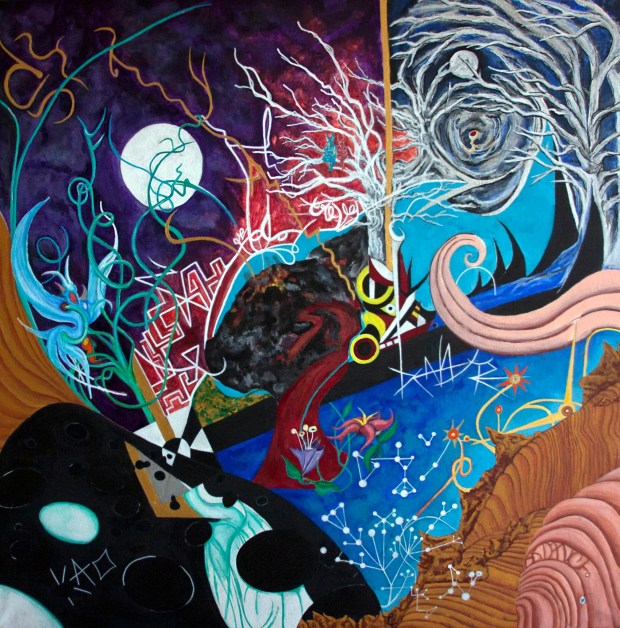
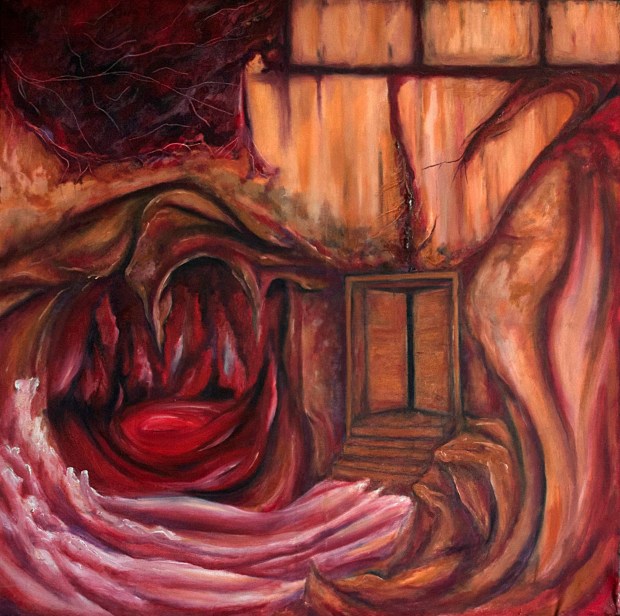
La plupart des peintures presentes ici , acryliques ou à l’huile sont des œuvres en grand format , antre 1 m et 1 m 20 de hauteur . Deux series emergent , l’une totalement dans la recherche et le jeu graphique , l’autre est une plongee dans la matière brute à travers les mediums et les volumes.
Dans mes peintures , le corps est plutot reduit à l’expression de chocs emotionels devenus physiques, j’y introduis parfois des cicatrices ou blessures ouvertes.
Je dirais qu’on y navigue plus dans le subconscient , dont l’exploration brute instinctive voir animal que me mène finalement ensuite à ritualiser en toute conscience ( mon travail photographique et de performance).
La demarche chamanique de rendre visble les esprits est toujours presente dans les deux cas. Mon attrait pour l’exploration psychedelique du subconscient , le symbolisme universel , le domaine du reve reconnecte au quotidien , le rapport à l’invisible et l’interet esoterique qui en decoulennt ont toujours etait la des l’enfance.
Mes influences picturales sont très diverses des arts premiers au classicisme , des arts sacres aux symbolistes , du street art à la bande dessine SF ( pour moi , tout est source d’inspiration et de stimulation technique , graphique et de vibration de couleurs ) et biensur les surrealistes et leur grande revolution.
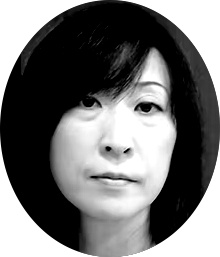
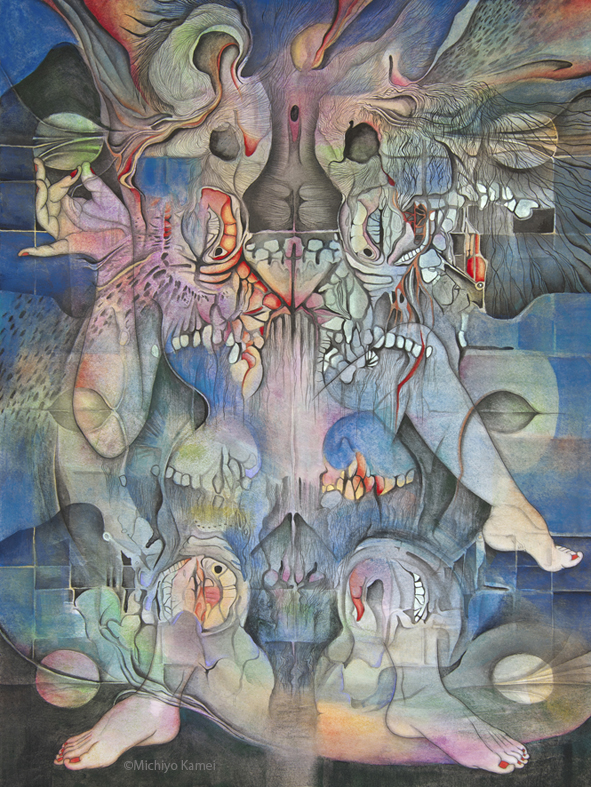
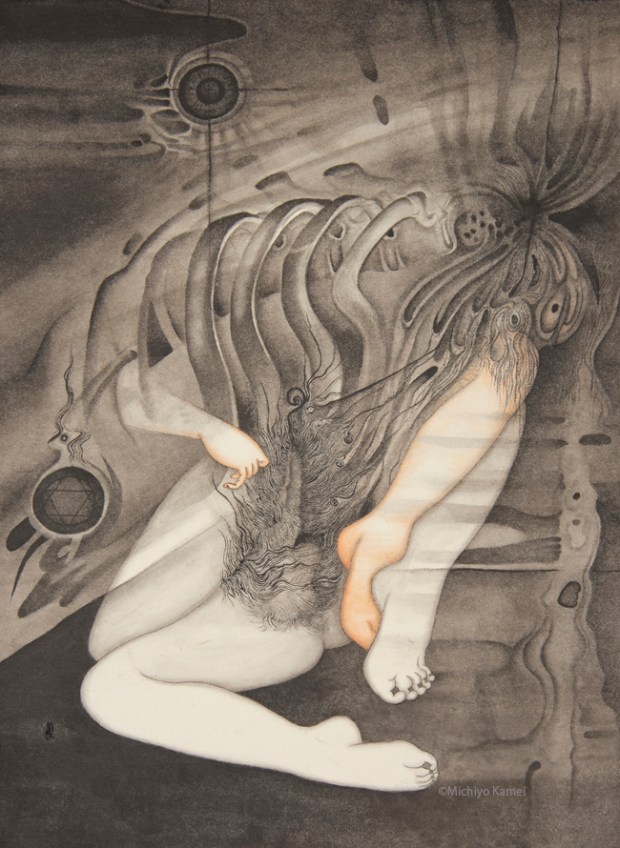
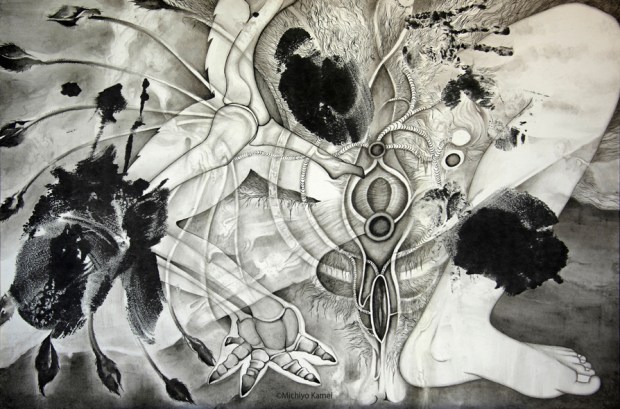
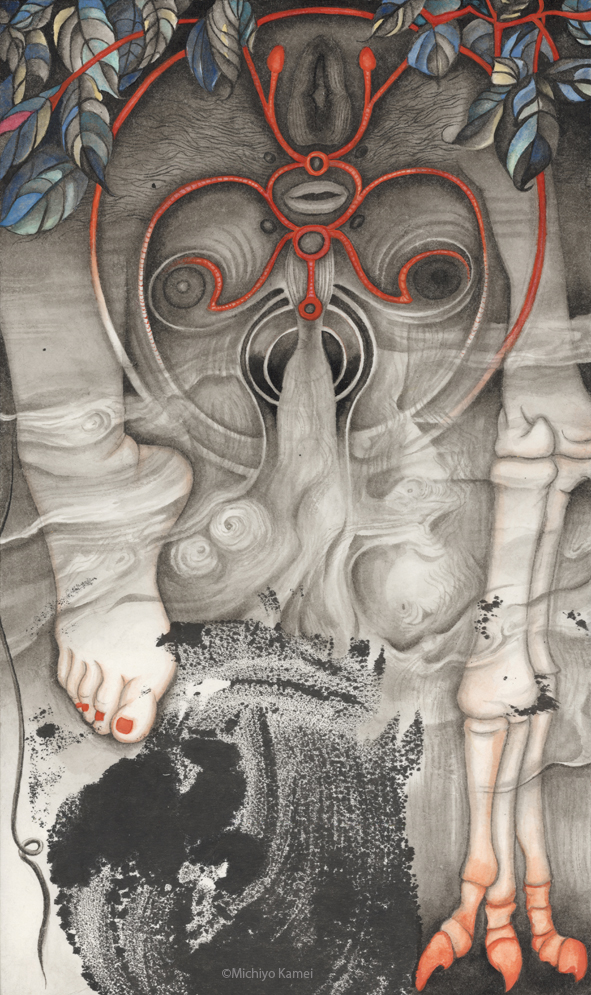
In her black ink paintings, Michiyo Kamei explores the concepts of impermanence, transformation, and the enduring nature of existence through a form she calls the bodymandala.
Mitchell Pluto: At what point did you realize you were an artist?
Michiyo Kamei: I originally studied anatomy at medical school and started out as a medical illustrator. It was only after I stopped working as an illustrator and began creating paintings that I realized I was an artist. Anatomical illustrations are created at the request of the medical field to follow the authors’ papers and wishes, so the illustrator cannot draw them freely. Paintings are free to be drawn by the creator, so the artist can freely incorporate their own ideas. This difference is significant to me.
Mitchell Pluto: How would you describe your art, given that it blends many traditional and modern genres?
Michiyo Kamei: When I was drawing anatomical illustrations, I studied the theory of modern anatomy and created my diagrams. After I quit this job and started painting, I began exhibiting at a gallery that collected ukiyo-e prints from the Edo period in Japan. Seeing many hand-painted ukiyo-e at the gallery, I rediscovered the beauty of traditional Japanese styles. When drawing the hands and feet in my work, I sketch my own body in front of a mirror, then deform it in the ukiyo-e style. In this way, I am influenced by both modern anatomical diagrams and ukiyo-e from the Edo period, which have a uniquely Japanese style.
Mitchell Pluto: When creating your artwork, what specific medium or materials do you prefer to work with?
Michiyo Kamei: I like oriental materials. Rather than just adding paint to the paper, I like to let the ink soak into the paper, letting it bleed and see how it moves within the paper fibers. Sometimes I don’t just create a picture, I let the ink create a picture on its own.
Mitchell Pluto: Could you describe and clarify what a bodymandala is?
Michiyo Kamei: Anatomical illustrations are pictures of the world of death drawn from corpses. Since I began painting, I have wanted to depict the world of life, so I have incorporated energetic shunga. Death and life are repeated in my paintings, and I hope to approach the theme of “eternity.” Mandalas represent the universe in Buddhist worldview, but I represent the universe through the body, and am exploring a new mandala form called the “bodymandala.”
Mitchell Pluto: What visual artists have influenced your work and given you inspiration?
Michiyo Kamei: I’ve been interested in the body since I was a child. It feels as though I am contained within this body, but at the same time it is also part of the natural world, the world outside of me. Which one does it belong to? And when I realized that I would die along with this body, I was terrified. Francis Bacon is an artist I admire for his expression of the body and anxiety. I’ve admired him ever since I discovered him in an illustrated catalogue as a teenager. Another artist is H.R. Giger. I think his organic expression in black and white is so beautiful.
Mitchell Pluto: Could you please tell me the central idea behind your current show?
Michiyo Kamei: I’m currently incorporating “jintaku” a technique in which ink is applied to my body and then transferred onto Japanese washi paper. Rather than painting with a paintbrush, jintaku involves pressing my body against the paper, resulting in completely uncontrollable and unexpected ink patterns. While observing the stains on my skin, I paint the “inside and outside” of the body in the blank spaces. It is meaningful to me to compose my paintings using three elements: the inside (anatomical illustrations) and outside (limbs, plants, natural world and the universe), and my living skin, which lies at the boundary between them. I call this “bodyscape,” and I hope to expand the image in my paintings from a small image of the body to a larger world. What kind of world can unfold from the body? And can humans have the imagination to do so?
Mitchell Pluto: What are your thoughts about the universe in relation to the philosophy of your art?
Michiyo Kamei: I believe that the universe in which we live has no beginning or end, but is a whole that is constantly transforming. There are times when I feel that even life and the body are merely a fleeting moment. Currently, I assume that the beginning of everything is the “zero point” of the universe, and my theme is the transformation and chaos of the body (form) that begins from there. In my paintings, I want to rewind time and explore the primordial form of life. I find a unique beauty in the cruelty and sacredness of the wild nature of evolution, which repeats selection and mating.
Mitchell Pluto: Who are your favorite writers for inspiration, and how do they influence your art and perspective?
Michiyo Kamei: I like Jorge Luis Borges, especially “The Library of Babel.” When I read this novel, I feel like an infinite universe is expanding in my head. I think his universe can only be expressed in novels (words), and can never be depicted. I would like to reach such a world someday, but life is short, and I feel that once is not enough for me.
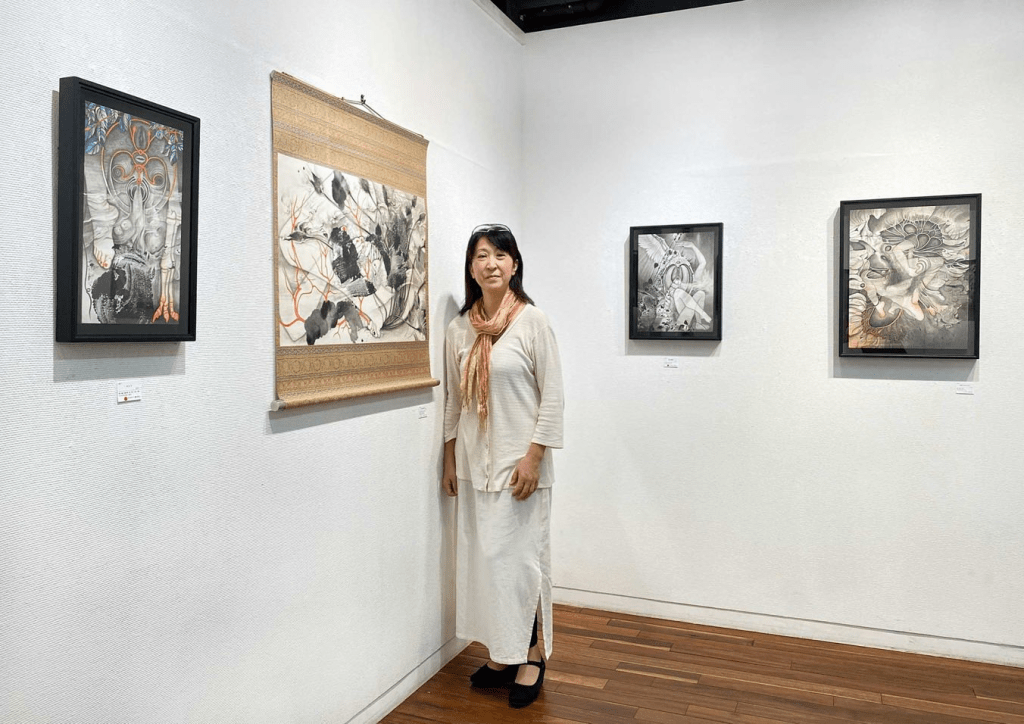
“The original form of the universe: the wildness of the zero point” Michiyo Kamei exhibition at the Y art gallery in Osaka, Japan 2025
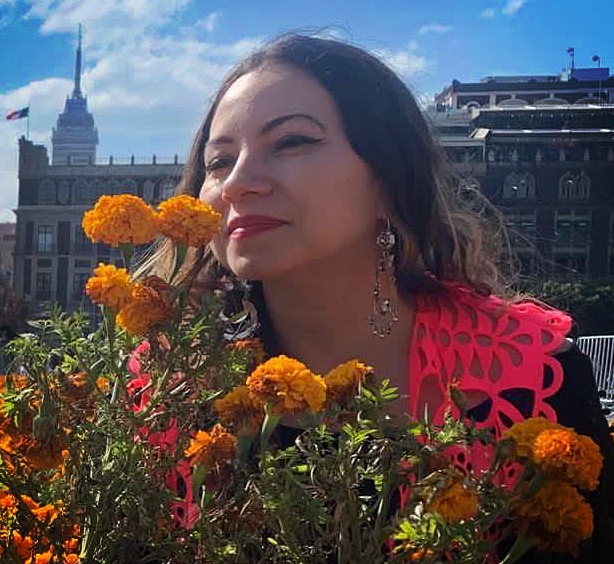
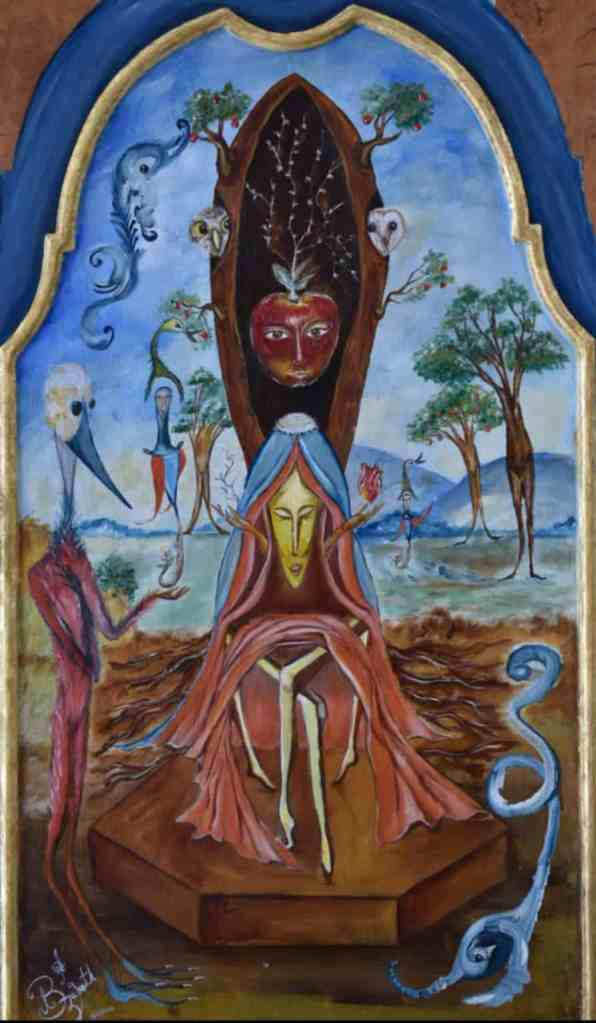
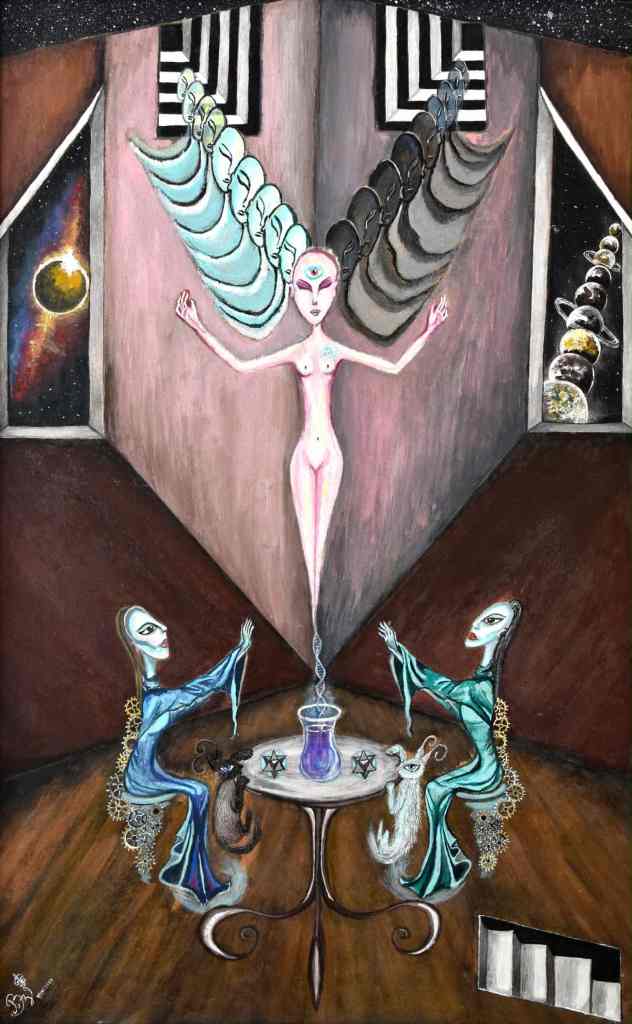
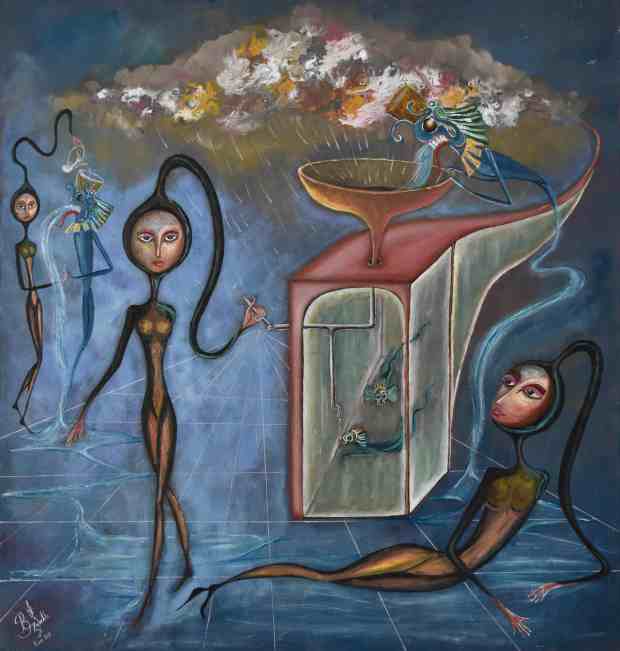
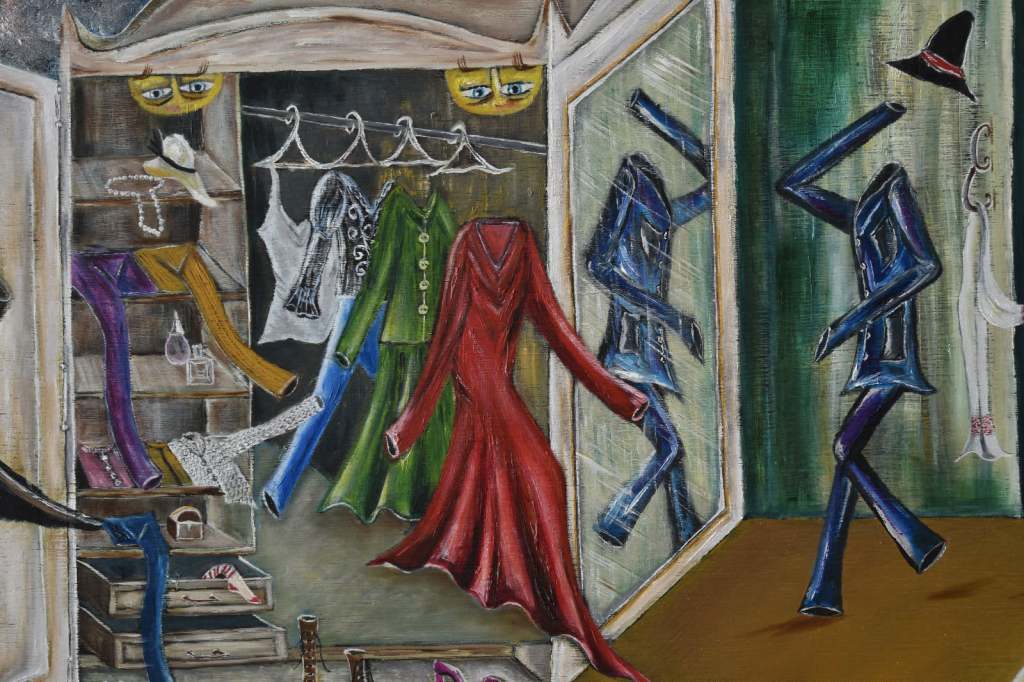
Brianda Zareth Huitrón (1990) is originally from Temascalcingo, José María Velasco, Mexico, she is a visual artist and surrealist painter. She studied painting at the Academia de San Carlos in Mexico City.
Her multiple artistic facets and curious personality led her to discover surrealism, a movement in which she would find a way to communicate with the world. She creates poetic interpretations where the everyday is transformed into a fantastical and dreamlike reality. Magical paintings that reflect life’s desires to be expressed in a painting.
Brianda Zareth Huitrón has exhibited individually and collectively in Mexico and abroad.
Solo Exhibitions Leonora Carrington Museum of Xilitla, DREAM ENCOUNTERS in 2025. Women’s Museum, DREAM REVELATIONS, in 2022.
DREAM LANDSCAPES for the Temascalcingo Festival Honoring Velasco, in 2021. WINDOW TO DREAM WORLDS, at the Futurama Cultural Center, Mexico City, in 2020.
Group Exhibitions Col-art at the Oscar Román Gallery in 2025. The painting exhibition THE PAINTER’S TRADE, at the San Carlos Academy, in 2019. DIMENSIONS, Wave Gotik Treffen Festival, held in Leipzig, Germany, in 2018.
She has participated in the Chair for 100 Years of Surrealism, at the Faculty of Philosophy and Letters of the UNAM, giving a lecture on female surrealism.
Her work has recently been published in the book Mexican Women in Art, published by Agueda, and in THE ROOM SURREALIST MAGAZINE, an international surrealism magazine.
Inspiration for my Artwork comes about fast and furiously, which I attribute to the theory of left-to-right brain transformation. My background and education have enabled me to create without boundaries.
The Overseer
I see a world of abstract shapes and colors, and I interpret my vision in digital images. Hidden within my creations are enigmas—mysterious images, cryptic messages, and symbolism. I invite viewers to explore, to decode, and to find their own meanings in the art
Crystal Blue Persuasion
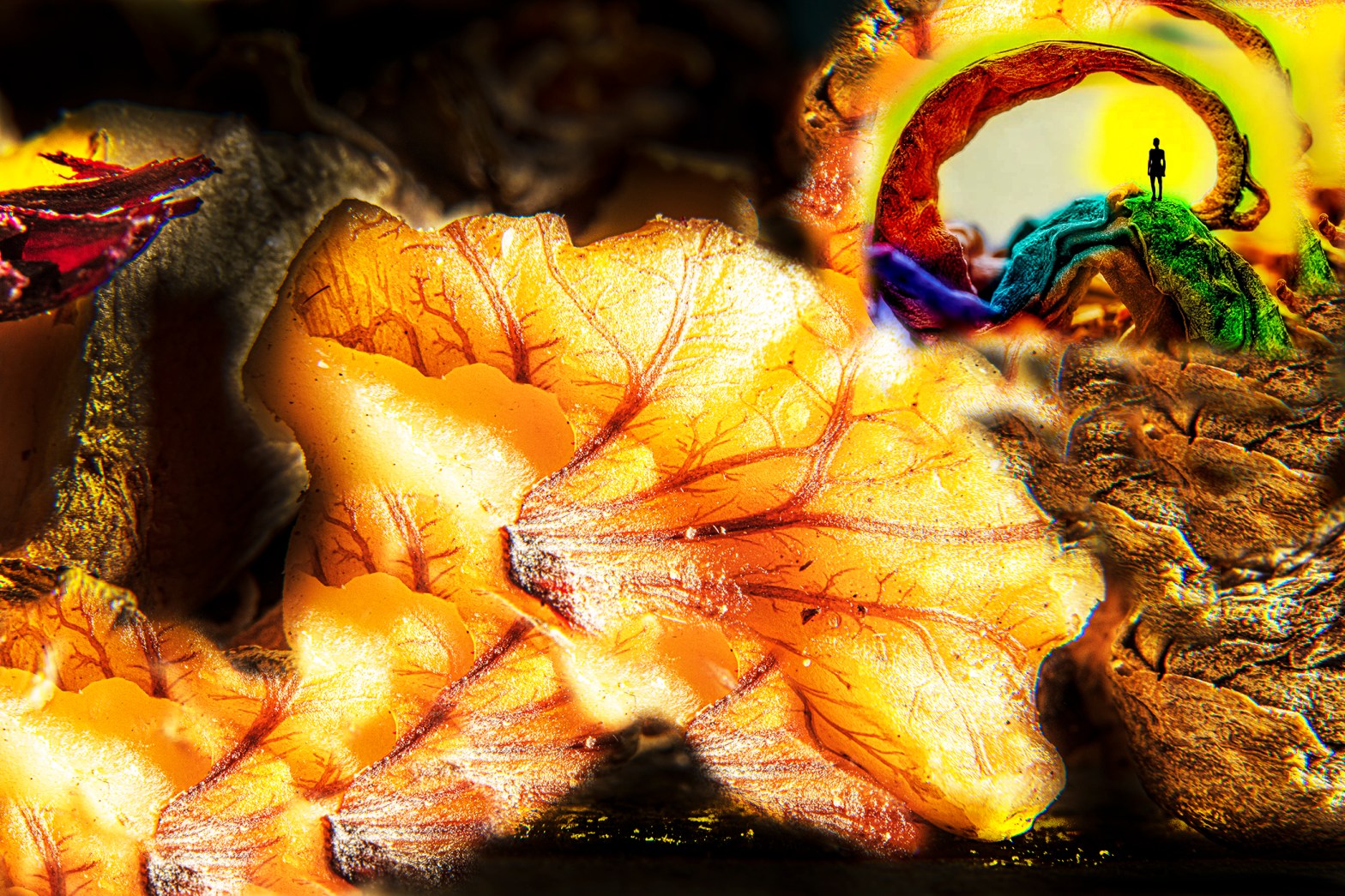
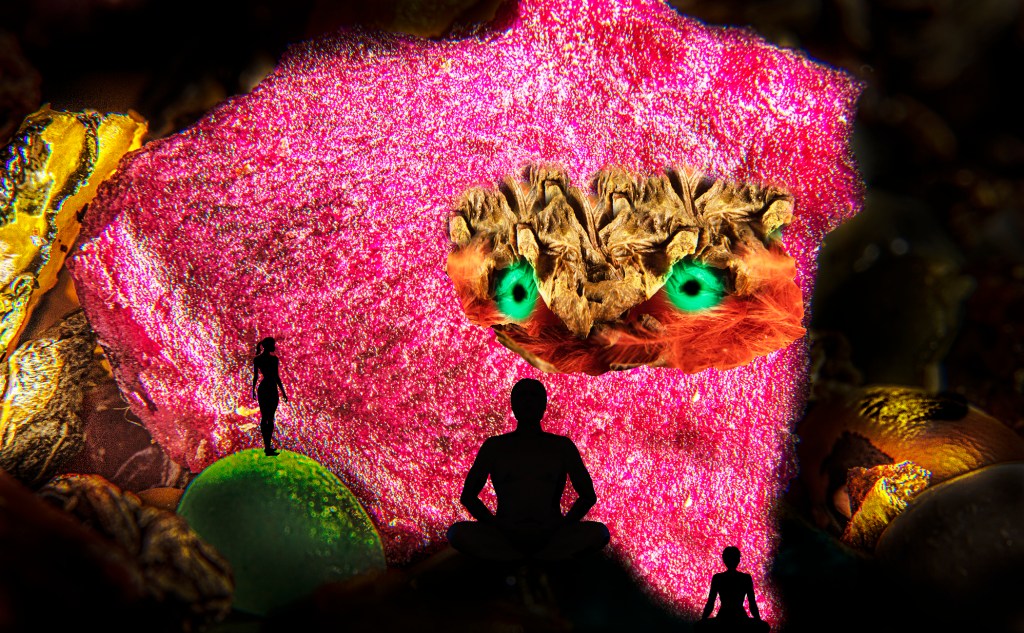
Leo Alt (Leonid Altshuler) is a notable 21st Century Digital artist, whose work incorporates images of organic substances, minerals, and man-made items, photographed on a micro-scale. Included in the surreal scenes are silhouetted forms of humans and other creatures.
The vivid images are evocative of many scenes: dreamscapes, alien worlds, portals to other dimensions, and more. Leo’s portfolio showcases his unique vision and creative approach to digital art
y un nuevo rostro aparece me saco antiguos ropajes
y floto con los muertos
nada es mas oscuro ni menos irreal.
Hipnosis
Un brillo como de hoja seca
persiste a traves de los objetos
que se diluyen en nuestras miradas
si a ese disfraz le quitamos las plumas
la noche tendria que inventar
nuevos prostibulos para esconderse
y se resquebrajarian
los rostros de todos los hipnotizados
Exorcismos
Las sombras saben guardar secretos
y muerden los tramos de esta hipocresia
no niego tu podredumbre
aunque me siente a un costado de este camino
y eche espuma por la boca
El tiempo tiene una agotadora manera
de sentarse en las sillas y mecerse
Claudia Vila Molina
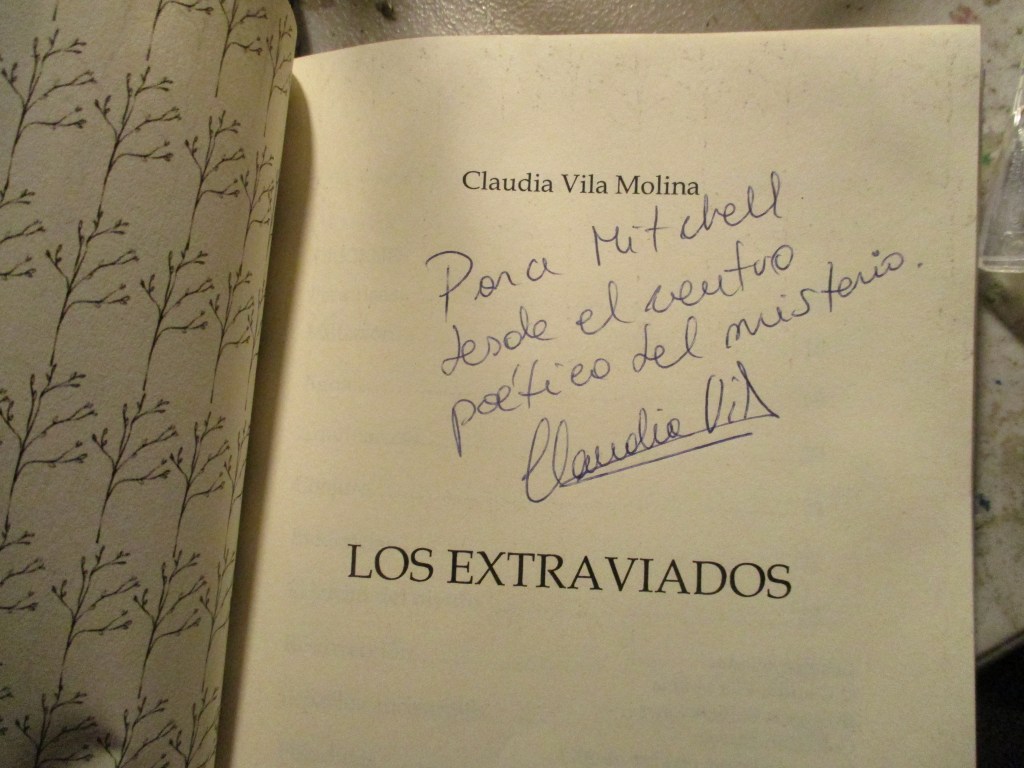
My signed copy
09-22-1969
Born in Viña del Mar, Chile. Professor of language and communication at PUCV, poet and literary critic. In 2012, she published her first book, The Invisible Eyes of the Wind. She has published in renowned Chilean and foreign digital media: Babelia (Spain), Letras de Chile (Chile), Triplov and Athena de Portugal, among others. During the year 2017 she participates in the Xaleshem group with poetic texts for the surrealist anthologies: “Composing the illusion” in honor of Ludwig Zeller and “Full Moon”, in honor of Susana Wald. In 2018, she integrates the feminist anthology IXQUIC released both in Europe and in Latin America. In 2020 she participates reviewing the conversation book “Shuffle poetry, Surrealism in Latin America” by Alfonso Peña (Costa Rica), also writes a poetic prose text for the book “Arcano 16, La torre“, by the same author. Likewise, she participates in the book “120 notes of Eros. Written portraits of surrealist women” by Floriano Martins (Brazilian surrealist poet, writer, visual artist and cultural manager). In this year (2021) she publishes her second poetry book Poética de la erotica, amores y desamores by Marciano editores, Santiago. In 2023 Los Extraviados