Octaves and the Tarot by P.D. Newman

A Second Look at Leary’s Eight-Circuit Model: Gurdjieff’s Law of Octaves and the Tarot
P.D. Newman
Along with Ram Dass, Huston Smith, and Andrew Weil, Timothy Leary was part of what has been called “the Harvard Psychedelic Club.” Fired from his position at Harvard University for failing to attend scheduled class lectures, Leary is perhaps best known as being one of the most vocal advocates of lysergic acid diethylamide (better known as LSD-25), an extremely powerful hallucinogenic drug which Leary et alii helped to popularize during the revolutionary sixties. He was also part of the Harvard Psilocybin Project, which Leary organized following a trip to Mexico during which he was administered psilocybin mushrooms. He later recalled of this experience that he had: learned more about [his] brain and its possibilities [and] more about psychology in the five hours after taking these mushrooms than…in the preceding fifteen years of studying and doing research in psychology.
The Harvard Psilocybin Project went on to conduct the famous Concord Prison Experiment, which evaluated whether psilocybin paired with psychotherapy could successfully rehabilitate repeat offenders, and the Marsh Chapel Experiment, which sought to discover if psilocybin could reliably induce mystical experiences in religiously predisposed theology students. In 1963, Leary helped initiate the Millbrook Experiment, an enormous mansion located in New York where residents spent their days experimenting with psychedelic drugs and living according to the teachings of Armenian mystic, G.I. Gurdjieff. To Gurdjieff, we’ll return below. These experiments, impressive and novel as they were, are not the good doctor’s sole claims to fame, however. During one of his many incarcerations, in 1972, Dr. Leary developed a new theoretical model of the evolution of life on earth—and of individual human consciousness—which he called the ‘Eight Brain’ or ‘Eight Circuit’ model.
Popularized by Discordian Pope, Robert Anton Wilson, Leary’s Eight Circuit model postulates that all life on earth (and indeed in the entire cosmos) evolves through a series of eight successive ‘circuits.’ This same eight-fold process, Leary adds, is recapitulated in the development of consciousness within an individual human being. Just as the human embryo at various times manifests as unicellular, possessed of gills, having a tail, etc., so too does individual conscious unfold through the same successive stages of evolution. Divided into Terrestrial and Post-Terrestrial phases, Leary’s eight ‘circuits’ unfold as follows:
Terrestrial:
1. The Bio-Survival (Marine Consciousness) Circuit
2. The Emotion-Locomotion Terrestrial-Mammalian (Territorial Consciousness) Circuit
3. The Symbolic-Artifactual (Laryngeal-Muscular Consciousness) Circuit
4. The Industrial (Socio-Sexual Consciousness) Circuit
Post-Terrestrial
5. The Cyber-Somatic (Body Consciousness) Circuit
6. The Cyber-Electronic (Brain Consciousness) Circuit
7. The Cyber-Genetic (DNA Consciousness) Circuit
8. The Cyber-Atomic (Quantum Consciousness) Circuit 

Without entering into too much detail regarding the function of these ‘Brains,’ it is sufficient to say that each of the eight ‘circuits’ are further divided into three successive stages (thus giving us twenty-four) of what Leary calls “con-telligence.” Con–telligence is defined as “the reception (consciousness), integration, and transmission of energy signals.” The three stages of con–telligence applied to each of the unfolding circuits then constitute the twenty-four phases of the awareness, mastery, and communication-fusion of each new evolutionary technology—from spineless, floating amoeboid (as well as newborn infant) to meta-physiological nano-technician at the “violet hole” found at the center of our Milky Way galaxy. The people who represent these various stages of evolution Leary refers to as ‘castes.’ 
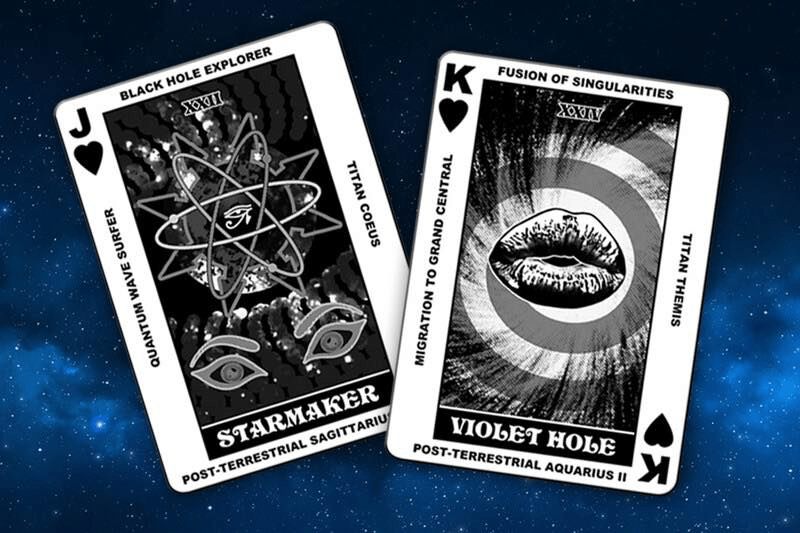
In an attempt to “relate the psychology of the ancient, pre-scientific world with modern notions of stages [and] phases,” Leary was wont to apply his twenty-four periods of evolution to the Major Arcana of the Tarot, wherein he perceived a clear reflection of his own model. For example, to illustrate the three-stage ‘con-telligence’ of Circuit I, Leary employed The Fool, The Magician, and The Empress cards. In illustration of the con-telligence of Circuit II, he used The High Priestess, The Emperor, and the Hierophant, etc. However, there’s just one problem with this arrangement. The Major Arcana are possessed of only twenty-two cards, leading Leary, to the horror of every Tarot purist in the world, to invent two brand new Major Arcana cards: Starmaker and Violet Whole. As hip and groovy as these two additions no doubt are, they may not have been necessary. Had Leary paid closer attention to his Gurdjieff while residing at Millbrook—or to the Ouspensky title (In Search of the Miraculous) that Charlie Manson slipped him while in solitary confinement at Folsom Prison—he might have thought to apply the sequence of Tarot’s Major Arcana cards to Gurdjieff’s Heptaparaparshinokh, aka his Law of Octaves.
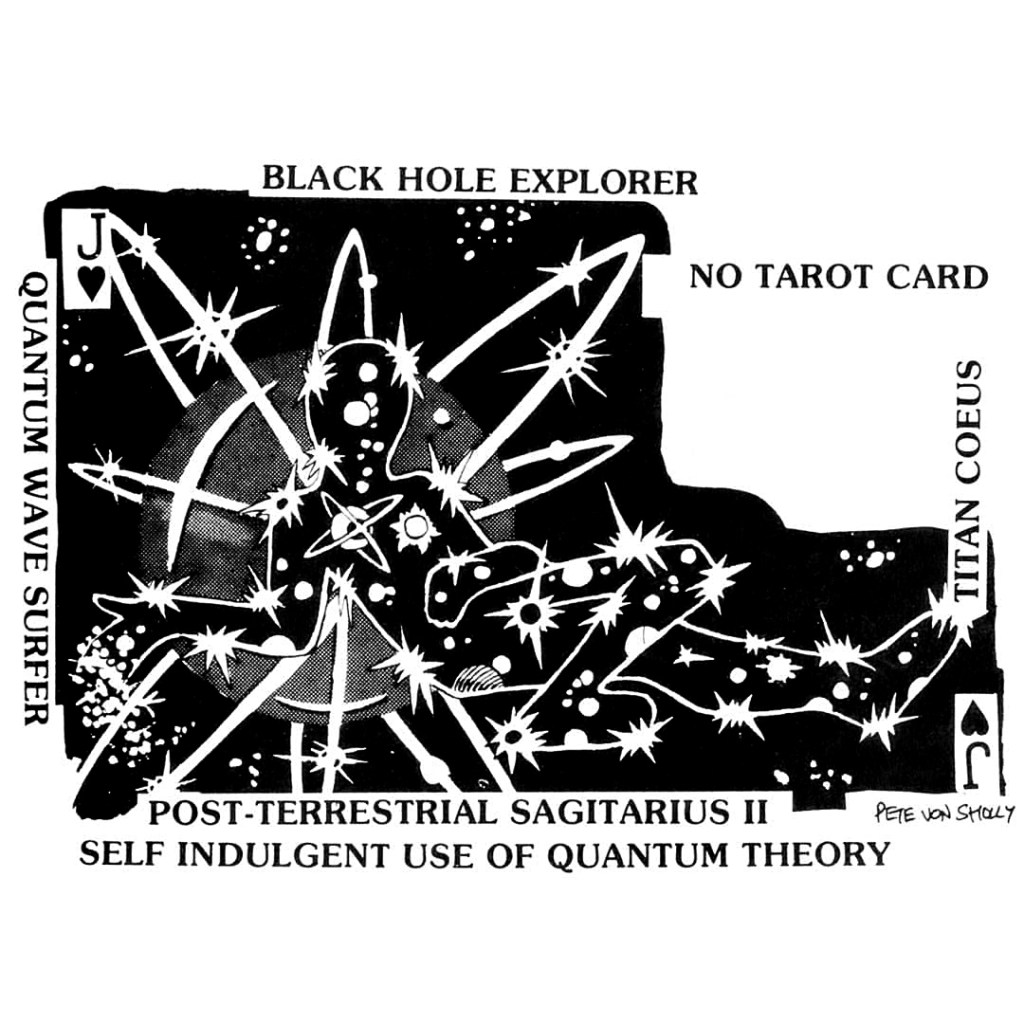

According to the Law of Octaves, everything in the universe that happens or can happen manifests according to a fixed set of cyclic vibrations, called octaves. From the initial impulse of a given thing to that thing’s final completion, this constitutes an octave; that is, from do (start) to do (finish) in the Ionian mode (do re mi fa sol la ti do) constitutes a given octave. Whether it is the birth and death of a galaxy or the beginning and end of an acid trip, taken as a unit, each of these phenomena would constitute its own octave. Considered in the key of C major (which Gurdjieff obviously intends), it becomes evident that a given octave is possessed not only of eight steps, but also of two intervals. For, every note in the C major scale is followed by a sharp—save two: mi and ti. Unlike the other six tones, mi and ti, rather than being followed by semitones, move directly into the following whole notes.  To compensate for these ‘intervals,’ in order to complete a given octave, Gurdjieff postulates that two “additional shocks” are required. P.D. Ouspensky, an early student of Gurdjieff, writes:
In an ascending octave the first ‘interval’ comes between mi and fa. If corresponding additional energy enters at this point the octave will develop without hindrance to [ti], but between [ti] and do it needs a much stronger ‘additional shock’ for its right development than between mi and fa, because the vibrations of the octave at this point are of a considerably higher pitch and to overcome a check in the development of the octave a greater intensity is needed.
It is our understanding that an ‘additional shock’ in an ascending (evolutionary) octave may be constituted by anything from a physical or emotional trauma, a mental break with mundane reality, a mystical initiation, a ritual working, or even by a psychedelic experience. It is the application of ‘super effort’ at two points in an ‘octave’ that will aid in bringing its process to completion.
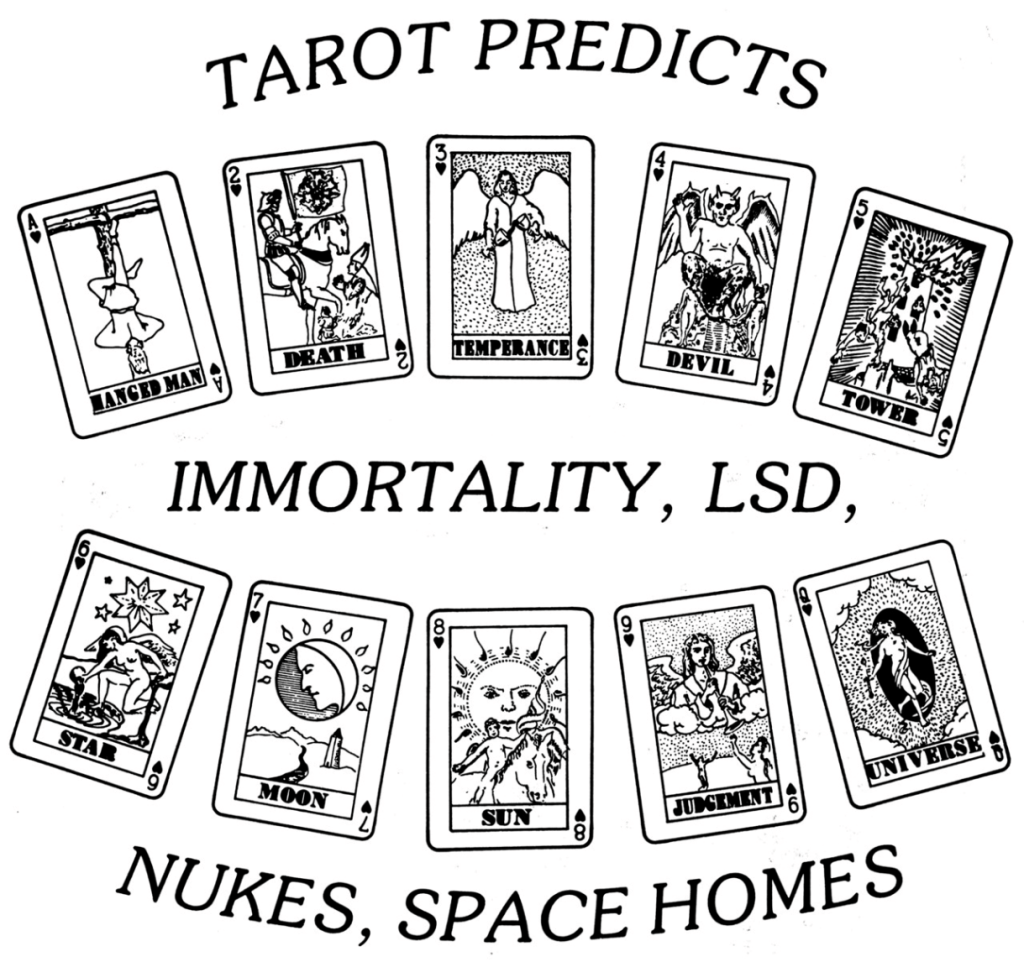

Possessed of eight steps and two ‘intervals,’ Gurdjieff’s Law of Octaves neatly solves the problem of what Leary saw as two ‘missing cards.’ If we allot the cards of the Major Arcana in sets of three to Leary’s eight ‘circuits’ while keeping true to Gurdjieff’s Law of Octaves, we arrive at the arrangement below. Let the Arabic numerals indicate Leary’s Eight Circuit model. Let the Roman numerals represent those attributed to the Major Arcana cards. Let the asterisks represent Gurdjieff’s ‘additional shocks.’


1. 0 – I – II (do)

  1. III – IV – V (re)
  2. VI – VII – * (mi)
  3. VIII – IX – X (fa)
  4. XI – XII – XIII (sol)
  5. XIV – XV – XVI (la)
  6. XVII – XVIII – * (ti)
  7. XIX – XX – XXI (do)
    As the reader may observe, these ‘shocks’ fall into the ‘transmission’ (per his theory of ‘con-telligence’) slots of Leary’s third (Symbolic-Artifactual) and seventh (Cyber-Genetic) circuits, precisely in the places where the ‘additional shocks’ are necessitated, per Gurdjieff’s Law of Octaves—no invention of cards required. The suggestion here is that ‘additional shocks’ serve as bridges for the transmission gaps between a) the integration phase of the Symbolic-Artifactual Circuit and the reception phase of the Industrial Circuit and b) the integration phase of the Cyber-Genetic Circuit and the reception phase of the Cyber-Atomic Circuit—thus providing the individual (and the species) with the momentum necessary to break the barriers between one evolutionary circuit and the next.
    In the Tarot, these ‘shocks’ appear between a) The Chariot and Strength and b) The Moon and The Sun cards. In the system popularized by the Hermetic Order of the Golden Dawn, The Chariot corresponds to the zodiac sign Cancer. Strength, on the other hand, corresponds to Leo. Conveniently, as Cancer is ruled by the moon and Leo is ruled by the sun, combined with the second ‘additional shock’ which occurs between The Moon and The Sun Cards, we see that both the ‘shocks’ take place at ‘intervals’ between symbolic diametrical moon-sun relationships. These ‘shocks,’ then, both practically and symbolically, serve the same ‘bridging’ function of a mercurial mediator between alchemical opposites. Coincidence? Perhaps. Granted, we may be guilty of ‘confusing the planes’ by comparing the zodiacal attributions of one pair of cards to the titles of another. However, one cannot deny the symmetrical neatness of the structure.
    For this arrangement to work, it goes without saying that all the cards and explanations following The Chariot in Leary’s model must be rearranged and reworked to accommodate for Gurdjieff’s ‘shocks.’ And, in fact, in Info-Psychology, his 1987 revision of Exo-Psychology, Leary kindly invited the reader “to engage in an ‘interactive co-writing’ of these important issues.” That’s all we’re really doing here. In any event, at the very least, we’ve arrived at what would appear to be a totally novel mode of Tarot analysis. The notion that hidden ‘additional shocks’ appear in the major arcana sequence between cards VII and VIII and between cards XVIII and XIX is, to our knowledge, unprecedented. But, does this innovation mean that two of Leary’s ‘castes’ must be sacrificed in favor these ‘shocks?’ Or, is the implication that two of Leary’s ‘castes’ are the ‘shocks?’ Further analysis is required to know. One thing we can say with certainty, however—and that, along with Leary’s friend, Dr. Israel Regardie of the Golden Dawn—is that “posterity […] will have a finer appreciation of what [Dr. Timothy Leary] has contributed to the world than we have today.”
    WORKS CITED
    Alpert, William. Ram Dass: Fierce Grace. Zeitgeist Films, New York. 2003
    Hollingshead, Michael. The Man Who Turned on the World. The Psychedelic Library. http://www.psychedelic-library.org/hollings.htm. Accessed Jan. 9, 2017
    Lattin, Don. The Harvard Psychedelic Club: How Timothy Leary, Ram Dass, Huston Smith, and Andrew Weil Killed the Fifties and Ushered in a New Age for America. HarperOne, San Francisco. 2011
    Leary, Timothy. Info-Psychology: A Manual on the Use of the Human Nervous System According to the Instructions of the Manufacturers. New Falcon Publications, Las Vegas. 1987
    Leary, Timothy. Neuropolitique. New Falcon Publications, Las Vegas. 2006.
    Leary, Timothy. The Game of Life. New Falcon Publications, Las Vegas. 2015
    Ouspensky, P.D. In Search of the Miraculous: The Teachings of G.I. Gurdjieff. Harcourt, Inc., New York. 2001
    Wilson, Robert Anton. Cosmic Trigger I: Final Secret of the Illuminati. Hilaritas Press, LLC., Grand Junction, CO. 2016
    Wilson, Robert Anton. Prometheus Rising. Hilaritas Press, LLC., Grand Junction, CO. 2016
P.D. Newman is an independent researcher located in the southern US, specializing in the history of the use of entheogenic substances in religious rituals and initiatory rites. He is the author of the books, Alchemically Stoned: The Psychedelic Secret of FreemasonryAngels in Vermilion: The Philosophers’ Stone from Dee to DMT, and the forthcoming title, Day Trips and Night Flights: Anabasis, Katabasis, and Entheogenic Ekstasis in Myth and Rite. The Secret Teachings of All Ages (TV Series documentary) 2023.

Theurgy: Theory and Practice: The Mysteries of the Ascent to the Divine by P.D. Newman, published by Inner Traditions, Bear & Company will be available on December 5, 2023

ALL RIGHTS RESERVED. THIS POST IS A COPYRIGHT OF P.D. NEWMAN
THIS AN AUTHORIZED DUPLICATION WITH PERMISSION AND EXPRESSED CONSENT
Relatos breves de Victoria Morrison 

Por la ventana

Confío más en tus huesos que en tu carne, por las noches sigo amando tu fantasma que huele a tierra infiel, confío más en tu bufanda roja detenida en el tiempo, el pasillo de nuestra casa gime llanto muerto, flota mi cuerpo en la tina, agua de árbol con espinas.
Recogí mi pelo mojado en tu vieja toalla de mi melancolía, arrojé todos tus libros por la ventana.

Imperfecto

El hombre frente a la tumba desprende de su boca su prótesis dental, la envuelve en un pañuelo blanco, la oculta entre el pasto y la tierra de tumba, solo frente a sus muertos puede ser él, así de imperfecto.
Ahí descansa su llanto desdentado, se sienta sobre la piedra, saca de una bolsa de papel café una lata de cerveza y bebe deseosamente el sorbo de vida a su garganta de flores mareadas que iluminan su rostro, suenan campanas a los lejos.
Allí, frente a sus ancestros sonríe a carcajadas recordando alguna anécdota pasada, nadie lo juzga ni lo critica, allí frente a sus antepasados puede revelar su sonrisa imperfecta.

Tierra seca y olvidada
(desierto)

El cerebro atormentado resuena en el grito del árbol abandonado en tierra antigua de la cuál brota maleza de llanto. El sol neurálgico y odiado nos quema la piel y el sudor es el brillo de su reflejo que nos tortura y nos humilla en esta hermosa y vacía tierra donde los hombres caminamos sobre arena hirviendo.
El único árbol sobreviviente no tiene hojas ni semillas, es un muerto de pie frente al inmenso viento de arena en la boca y los ojos. Ahí, cuelgo mis pertenecías, en sus ramas de volcán. Mancho mis dedos y pinto mi cara de maquillaje negro, dispongo mi improvisado refugio, mi instinto animal es más poderoso que mi humanidad inservible en esta atmosfera.

Pan y caldo con arena refuerzan mi sacrificio.

El florero de tu madre

Visito tu sepulcro con una sonrisa camuflada, retiro minuciosamente pétalos muertos, (flores que dejan tus viudas amantes), uno a uno recolecto en mi bolsillo de lana hojas secas en distintos tonos, agua limpia dejo caer en el florero de tu madre; flores frescas para ti, leo tus poemas para recordarte.
-Ya no vengo a llorarte al campo santo- a veces cuando se hace de noche, descanso sobre tu tierra de muerto, hago el amor contigo.

Abril y mayo

Dos retratos en dos marcos diferentes, dos fechas de nacimiento, dos nacionalidades, dos identidades. Ella no abraza a los árboles, los besa apasionadamente, la sangre que brota de su boca rota es savia dulce.
No es blanca ni negra, ni adinerada ni necesitada, ni culta pero tampoco ignorante, educada y también puede llegar a ser una marginal.
Por las noches se acuesta en su tina caliente, los cabellos que flotan en el agua talvez pertenecen a esa mujer que no existe.
Dos retratos en dos marcos diferentes; la adolescente que escribe poemas de amor aullándole a la luna, el otro, la belleza de una anciana de ciento veinte años moribunda, declamando sus últimas palabras a la muerte.

Cama de hoja


Cuando lloro por los vivos, son mis muertos quienes me consuelan, no los veo, conozco sus nombres, su edad los huelo, susurran delicias a mi oído de hierba fresca.
Florencia es la mujer fantasma y ciega que toca el piano entre ramas del bosque.
Mi cuerpo pequeño cubierto de hojas secas; he descubierto que a los árboles también le gustan las melodías de cuna.

Herencia de lo mágico


Tengo el don de la sensibilidad, ver, oír con gran sutileza lo que nadie, y los fantasmas recorren el bosque conmigo; placentero como fumar a escondidas sobre enormes arboles retorcidos en donde reposa mi silueta delgada, hija del hombre, herencia de lo mágico, el humo se cuela por las hojas, canta la rama, silenciosa raíz mágica, dulces espinas te embellecen.

written by ©Victoria Morrison

Victoria Morrison, Chile 1977, Trabajadora social, escritora de poesía y cuento. Miembro actual y activa de SECH (Sociedad de escritores de Chile) P.E.N Chile (Poetas, ensayistas y novelistas) Su poema Ñamku fue premiado con el segundo lugar del “Concurso poesía Indígena”, realizado por el “Museo de la memoria y los derechos humanos” en Chile el año 2020. Libros publicados: Una habitación en el infierno (2016) Ediciones La Horca. Poemas desahuciados (2017) Editorial Ovejas Negras. Pupilas de loco (2020) Rumbos Editores
Sus escritos se caracterizan por evocar temáticas psicológicas. Amante de la naturaleza, la autora explica que en cada palabra existe sanación; si asimilamos esa palabra a las raíces de cada planta pues, así como existen semillas imperfectas, también hay humanos imperfectos; no son acaso los bienes llamados “árboles torcidos” los que, sin agua, sombra, ni tierra fértil continúan respirando en la tierra. (Si la frágil planta resiste el frio, la intemperie, la carne humana cobijada en lana y bufanda debería agradecer y callar, oír en silencio, el congelado y valiente canto de la hora escarchada).

https://www.facebook.com/marielavictoriapoeta
https://www.antartica.cl/pupilas-de-loco-9789567295753.html
https://www.rumboseditores.cl/pupilasdeloco
https://www.instagram.com/victoria_morrison_/?hl=es

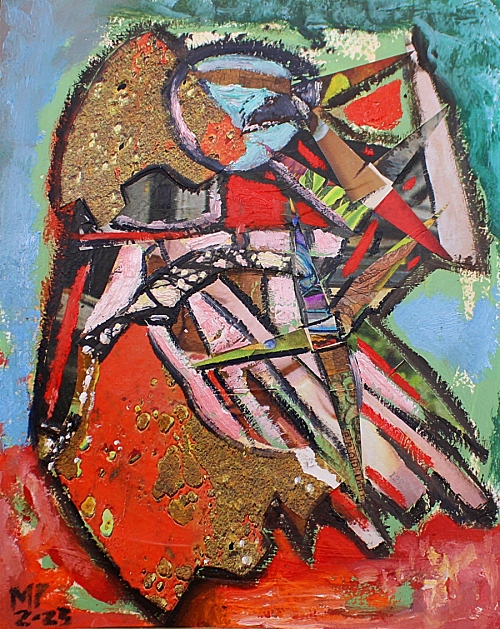
Feature art: Mitchell Pluto

Brian J. McVeigh Decluttering My Mental Space

Decluttering My Mental Space

Collected Poems with Commentary

Brian J. McVeigh

My first encounter with haiku was not out of a love for poetry; rather it came from an educational motive. Many years ago, I was tasked with teaching Japanese students English. This was a bit of a challenge as the students had been taught what is pejoratively called the “grammar translation method” (emphasizing grammar rules; memorizing words as if each one only had a singular definition; focusing on error avoidance; rote exercises; testing for “only one correct answer”). Such a pedagogical approach not only instilled a fear of making mistakes but socialized students to see language learning as a terribly unimaginative enterprise. In an attempt to wean students off such a view, I had them translate Japanese haiku into English and English haiku into Japanese, hoping to impress upon them the inherent creativeness and flexibility of language. Most appreciated the purpose of utilizing haiku, though a few objected, apparently more comfortable with the unnaturalness and rigidities of textbook tutelage.
I also relied on haiku for another reason related to education that is a bit more involved. As I explain below, in one section of Interpreting Japan: Approaches and Applications for the Classroom (2014) I analyzed the aesthetics of haiku in order to show how ideas are built through sensory experiences. Haiku rely on perceptual immediacy to highlight an intuitive insight, thereby succinctly crystallizing a point. As such, they illustrate a crucial aspect about how human cognition operates and symbolic thought is created, i.e., the complex interplay between perception and conception. In other words, like other artistic expressions, haiku demonstrate how corporeal experiences facilitate looking at the world from a different angle, and sometimes that novel perspective possesses intellectual import.

The Body in the Mind
How do we come to believe or feel that something is true? To a large degree people are persuaded through aesthetics, and an appreciation of aesthetics emerges from bodily experiences and perception. Aesthetics is deeply implicated in what we think, how we interpret the social and natural environment, and the very words we use to communicate complex thoughts; this even includes super-abstract mental terms describing subjective introspectable self-awareness (i.e., consciousness as defined by the psychologist Julian Jaynes). In other words, the ideological and imaginary are grounded in physiology and embodied experiences.
We can categorize psychophysiological processes into sensate and ideational processes. The former has to do with what is seen, heard, felt, smelled, or tasted. It is the objective, perceptible world that comes to us through our senses. While the sensate is the experiential, the ideational refers to the conceptual; this form of knowing is not directly perceived through the senses (it is reasonable, of course, to argue that emotions are “felt,” and certainly strong affect is a physiological as well as a cognitive experience).
The sensate and ideational become linked in an individual’s psyche and mutually work together. We might say that the body is good with which to think. Sensate experiences are transformed into the ideational dimension, which in turn implicate different aspects of our corporeality: bodily parts (e.g., the belief that one’s personal essence is in one’s heart or head); spatial orientation or how the body is positioned in relation to objects and others (e.g., the universal assumption that what is up is always superior to what is below); interoceptive or internal sensations (experiences used to construct mental words as theorized by Julian Jaynes).
The relationship between the sensate and nonsensate is complex, but if simply stated, it may be viewed in the form of a two-tiered structure, with nonsensate knowledge generated from the senses. Perceptual experiences are borrowed to build nonsensate knowledge. Our mental worlds are based on the interchange of qualities of the corporeal and the cultural. Bodily experiences and the qualities of concrete things, then, become associated with belief. We do not and cannot just “think;” we can only think “of,” “about,” or “with” something borrowed from our interactions with the world. It is, therefore, the tangible and observable which is essential in defining our experience of mental events.

The Sensate and Ideational Dimensions of Symbols and Metaphors
Important symbols⸺religious icons, political emblems, commercial logos, key words, a meaningful piece of writing such as a poem⸺work their magic by having their perceptual aspects reinforce their ideational aspects and vice versa. In this way certain representations become powerful motivating mechanisms that influence behavior and beliefs. This was the great insight explored by the anthropologist Victor Turner.
Nonsensate knowledge is built upon and through sensate experiences via semantic shifting, i.e., metaphors. This is a type of knowing that is “from” but not “of” the senses, i.e., nonsensate knowledge refers to ideas that are not directly tied to or shaped by the immediate perceptual environment. Indeed, our conceptual processes are fundamentally metaphorical. The capability to organize experience and order our ideas of the world using tropes means that metaphor itself is a perception, just like seeing, hearing, touching, tasting, etc. Thus, metaphors (and their various cousins, such as similes and analogies) do not only give us a way of conceptualizing a preexisting reality, nor are they merely a matter of language; metaphors do more than just describe since they structure our engagement with the world.
The visible material world of things and objects interacts with the invisible, abstract realm of ideas and feelings. The exchange of these aspects is important because it reifies a symbol’s meanings, thereby adding to its persuasive power. This linkage sometimes involves a certain degree of “shouldness.” In other words, moral messages acquire a sensory immediacy and compellingness. This resonates with Ludwig Wittgenstein’s dictum that “ethics and aesthetics are one and the same.” The ideational (values and meanings; normative; proclaiming a prescriptive point; moral imperatives; obligations; what we need to do) becomes associated with the sensate (feelings and emotions; longings; appeals to our animal spirits; corporeal desires; the desirable; what we want to do).

Exorcising Demons
I decided to compose poems not because I wanted to write poetry, but because I felt coerced by personal demons kicking up psychic fragments that littered my mind. In some cases, it was a desire to rid my head of old and odd whisperings inspired by haunting “half-experiences” (dreamy, barely remembered memories that may or may not recount actual events), some of which have been with me since very early childhood. In other cases, I felt compelled to describe a scene whose sublimity unsettled me. “Therapeutic” might be too strong a word, but it is in the neighborhood as it describes why I wrote these poems.
Originally, I composed poems using the traditional Japanese haiku pattern of 5 morae/7 morae/5 morae (morae are not exactly syllables, e.g., in English a long vowel is counted as one syllable, but in Japanese it is considered two morae). I found the 17-morae pattern restricting, as was the convention that a Japanese haiku should contain a seasonal reference (kigo). Then I tried American-style haiku (lunes), both the styles developed by Jack Collom (3 words/5 words/3 words) and Robert Kelly (5 syllables/3 syllables/5 syllables). With a few exceptions, I settled on Collom lunes.
This short collection is categorized by themes (the poems lack titles) and curated from different versions of poems (the number of variants is indicated in parentheses). From these versions I selected my favorites and put the rest in storage. I have included commentary to illustrate the interchange between the sensate and ideational. While some think such an analysis detracts from an enigmatic vagueness and is overly clinical, my remarks are part of an attempt to calm troubling mental rumblings that, while not plaguing my mind, have to a degree preoccupied my thoughts.

The Collection

Enchanting Sound

Young boy points
To plane’s drone amid stars.
Listening to mystery.

I begin with this lune because several of its elements reappear in several other poems below. It emerges from a very old memory. I was quite young, perhaps a toddler, standing in an alley on a cold, clear night and I stopped to look up, captivated by the source of a strange sound in the dark, inky heavens. To this day I still associate the sensory experience of the humming drone of a distant plane with the unsettling curiosity of faraway, bewitching places, both geographical and within my psyche.

Listening to the Infinite

Toward the horizon
A droning, wraith-like plane edges.
To hear eternity.

This lune echoes the sentiments of the previous one. The perception of droning is both primal and transcendent, beautifully haunting but melancholy; it is listening to the music of the infinite or being allowed to eavesdrop on another, unearthly dimension. Visually the horizon leads to thoughts of foreverness. The plane is barely visible from earth, making it ghostly and making me wonder if it is really a man-made flying contraption or a gliding winged-spirit from another sphere of existence (three other versions).

The Sky Limitless

Boundless blue sky
Swallows up a tiny plane.
The vast infinite.

Another echo of the very first lune. This one does not include any reference to droning, but the plane’s existence implies it. In any case, one day I realized how the gentle pulsating resonance and unbounded, horizonless sky merge sound and spatiality into the same fabric of reality. The celestial domain, taken in by the eyes, suggests the abstract idea of the infinite, which leads to notions of insignificance, i.e., the solitary plane is lost, absorbed by the cosmos. Or the plane may represent the soul of each individual, confronting the overwhelming awesomeness of the absolute, tunneling through reality, pushing on through the universe on some unknown trajectory (three other versions).

The Forest Stares Back

At wood’s edge
Dog and master intensely stare.
Both are awed.

Though “night” and “dark” do not appear in this poem, it describes a wooded area in a misty evening, made ghostly white by snow covering the tree branches. Not only the human, but even his dog senses an otherworldly presence deep in the forest that keeps an eye on passersby (two versions).

The Race of Life

Gunshot, heavy panting.
Track curves, a finish line.
Life’s a race.

Even during an intense, high-pressure spurt of physical energy, the psyche finds a way to give other meanings to whatever we are doing. While competing in a high school track event my mind couldn’t resist searching for other interpretations of my bodily movements. Other versions of this poem describe chasing the “blinding sun” (i.e., interfering with focusing on some objective) and “finish line in sight” (i.e., meeting a challenge; about to reach an important personal goal; persistence pays off). Also appearing in other variants were “running within lines,” signifying the value of playing fair with others, “staying in one’s lane,” and maintaining appropriate boundaries (two other versions).

The Moon Goddess Visits

Moon Goddess descends,
A divine visit⸺great honor!
A mere dream.

This is based on an event that was probably the closest thing I’ve ever had to a religious experience. It is inspired by an actual dream I had in my late teens: I was in an iridescent pasture that could be accessed by a gate located on the street on which that my grandparents lived. In the dream the full moon suddenly floated down from the sky and transformed itself into a half-moon shaped boat. Riding upon this shimmering lunar ferry, with whitish, willowy sails, was a translucent, alabaster-skinned moon goddess, who appeared as if she had been lifted from a Wedgwood Cobalt Blue vase. I felt humbled and privileged to have received such a visitation. Surely, I concluded, such dignified beauty must have something of great import to deliver to me. But I was sorely disappointed when I awoke before she could convey to me any great revelation (one other version).

A Summer Night’s Swim with Spirits

The pool’s waves
Reflect on leaves of trees.
Ghosts dancing above.

A dip in a cool electric-blue pool on a quiet, sultry summer night is made more interesting when one’s senses are persuaded to see spirits manifested as flickerings and glimmerings. The gently lapping water project light onto the canopy formed by trees, conjuring up a spectral show.

Pool, Sky, and Soul

Under blue sky,
In placid water body floats.
Soul at peace.

§

The pool below,
Reflects cloudless blue sky above.
The infinite mirrored.

§

Sky above,
Pool below.
Soul between.

The first lune of this theme depicts me lying on my back on an inflatable lounge and looking up at the shining azure sky. I could see nothing but blueness, and this mirrored how the utter calmness of the soothing water had emptied my mind. Any thoughts were now “see-through,” i.e., I was cognizant of them but somehow distant from them. A profound restfulness and tranquility overcame me; meditation without trying (one other version). The second and third poem describe a spatial encapsulation of the totality of all existence. The pool is an earthly, this-world microcosm of the sky, which is the boundless empyreal macrocosm. Somewhere between “the above” and “the below” is the individual soul, an imperfect reflection of allness that futilely attempts to capture and control ultimate reality.

The Hall of Holiness in My House

At hallway’s end
The door strangely beckons me.
Night of revelations.

§

Dark hall,
Door beckons.
A presence.

If the hallway’s lights were off in the house I grew up in during the evening, walking to my room sent a chill down my spine. The hallway was long. And for some reason seeing the darkness behind my half-opened bedroom door instilled within me a sense of a numinous “otherness” waiting for me, a sacredness possessed of something waiting to be conveyed.

Running Alone at Dusk

Rolling green hills,
A golf course at dusk.
A lone runner.

Not far from my house was a municipal golf course in which I ran in the summer while in high school. I would have to wait until dusk, when most golfers had finished so as not to get beaned in the head by a stray golf ball. Not having anyone around afforded me an exhilarating freedom; no gazes from others, no cars or people to dodge as on the street. Being with myself among the manicured hilly lawns that stretched far in the distance made me feel small and effaced my ego, but in a reassuring sense. Like blue, green has an inherently comforting effect.

Walking Home in Winter

Walking, snow crunches,
A glowing warmth from windows.
Night cloaks me.

When in high school a bus would drop me off at a corner and then I would have to walk about a mile to my house. The walk was pleasurable, as I usually felt satisfied after a long day at school, and what seemed like an even longer workout for indoor track. Sometimes it was so cold that the snow made a funny squeaking sound with each footstep. The windows of each house emitted a reassuring yellow-orangish radiance. The contrasts of wintriness versus warmth, others versus myself, and darkness versus luminosity brought to mind indifference versus protection, exposure versus privacy, and the unfamiliar versus the welcoming. I wondered what went on in each household and if anyone could hear my squeaking footsteps. But I wasn’t too concerned as I felt anonymous, shrouded as I was by the night.

Pumpkin Patch and Graveyard

Side by side,
Orange pumpkins and grey tombstones.
Souls born anew.

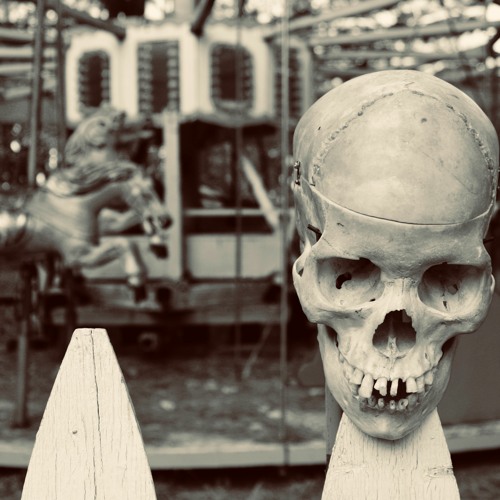
I was in Massachusetts on a brilliant autumn day walking down a country road when I noticed a white fence separating two fields. In one were old gravestones, while in the other were growing finely ball-shaped pumpkins. The positioning of the fields cried out “the deceased are reborn as orange orbs!” I knew I was seeing death and the promise of rebirth in one glance⸺the circle of life. When I asked my wife to comment on this scene, she also noticed the juxtaposition, observing that the departed are granted new life (four other versions).

Grateful for Dinner

Silently she cooks.
Cold night in the city.
Warm meal arrives.

§

Hair pulled back,
Wife in a steamy kitchen.
Long day ends.

For many years I lived in Tokyo. This metropolitan monstrosity’s unnerving hustle and bustle, commuting crowds crammed onto public transportation, harsh neon nightscape, and surprisingly chilly winter nights could be draining. But my wife’s support and cozy apartment greatly assuaged my tired nerves. Preparing a meal without speaking hints at uncomplaining, while hair pulled-back suggests being ready for culinary action. Both lunes employ contrasts to drive home perceptual elements, though in the second poem they are only implied: cold versus warm, steaminess inside versus iciness outside. And both poems close the sensate–ideational divide by denoting how nourishment for the body signifies sustenance for the spirit (two other versions).

Coyote Eyes

Coyote eyes float,
My eyes must glimmer too.
I’m the ghost?

§

Walking at night.
Coyote eyes glow and glide.
Vanish like ghost.

Almost every night, when I walked a trail near our home in Tucson, I would see the eyes of coyotes looking back at me. Their eyes drifted, like small fireflies in the darkness. I often wondered what their sighting of me triggered in their minds (two other versions). The first lune highlights the hovering eyes of a creature, but these had the human experient think that undoubtedly the owners of those optical red beads are carefully observing him. In the second lune the darting eyes in the darkness invoked idea of how the night is full of unknown beings.

Praying in the Desert Night

To starry skies,
Hillside cacti lift their arms
In reverent prayer.

§

To saucer moon,
Man-shaped cacti raise their arms
In worshipful pose.

Another sight that captured my imagination in the desert were all the cacti crowded on hills, shaped like men, with their limbs held up as if praying; nature in an act of self-reverence. Person-shaped plants pointing to the beauty of the full moon or the star-studded heavens aroused within me the idea that there is more going in the world of nature than meets the eye (four other versions).

Observing Mountains

Walking toward mountains,
They look down at me.
I am judged.

§

At path’s end,
Observant hills trace my trail.
Guarding ancient wisdom.

§

Towards small mountains
I walk a giant ribbon.
Life lies ahead.

Besides spectral coyotes and reverential cacti, low-lying mountains and rolling hills also seemed to have an animistic presence. At the trailhead of a long path I used to hike were foothills and peaks whose grave and dignified immobility made me feel as if they were carefully watching me as I approached them on foot. These daily walks were spontaneously meditative (an opportunity to ponder my own life’s journey), and the gaze of mounds, perhaps protecting age-old wisdom filled me with a measure of humility, as if I were being interrogated by the desert landscape as I trekked out my narrative (three other versions).

Metallic Birds of the Urban Night

Helicopters circle above,
Chopping air, beams slicing darkness.
Trouble brews below.

The skies of southern Arizona, for whatever reason, always seemed to be abuzz with police, military, and other types of helicopters. One day, like a giant metallic bird, an ambulance helicopter landed in front of our house to take away an individual thrown from his ATV as he was racing up and down the street. From our house we frequently could hear and see what were presumably police helicopters in the evening, circling over an area and using their searchlights to pierce the night and shed light on the disturbance on the ground; perhaps a fleeing fugitive, a robbery gone wrong, or a car chase (three other versions). In a dream the cutting noise of the blades became the flapping wings of a flying dinosaur wearing a shiny crown, searching for its prey on the ground.

Heaven’s Special Show

Flying at night,
Lightning—giant cotton balls ablaze.
What earth misses.

“Flying through lightning” does not sound very inviting. “Flying above lightning” sounds a lot better, and one night I had the opportunity to witness billowing clouds on fire stretching toward the horizon. It looked as if the gods were at war, hurtling lightning bolts at each other that exploded behind banks of bulging clouds. Or as if celestial sky spirits were putting on an awe-inspiring performance just for us passengers. I thought about how people on the ground, fast asleep, were obliviousness to the stunning lightshow far above their heads. All this exciting razzle-dazzle made me ponder about how we can be totally unaware of places and spaces pregnant with spectacle, whether earthly or heavenly (four versions).

Dog Dreams

A busy intersection,
A dog looks to cross.
In which direction?

§

Dog close by,
Soulful eyes look at me.
Furry four-legged loyalty.

§

Slumped on couch,
Furry friend frets and whimpers.
A dog dreams.

The first lune of this theme pivots around the perceptual act of looking, but implicates some indecision and choice that require deliberation, as if the dog were planning his day amidst the comings and goings of others. In the second lune physical nearness, the touchability and softness of furriness, and the connecting power of eye contact evoke the ethics of unquestionable dependability and faithfulness. In the third lune movement and sound—sleeping, twitching, whining—suggest unseeable canine thoughts. All three poems attribute a sophisticated psychology to dogs. Of course, animal minds are different from those of humans. But we still anthropomorphize animals, especially our pets. We cannot truly know the mind of a canine, any more than we can completely understand the thoughts of another human being (though obviously in the case of the latter we actually understand a great deal). And yet a primitive bond ties us to our dogs. These creatures, grounding us with their pure, unadulterated affection and unconditional acceptance, are humanity’s most secure connection to the nonhuman world of nature.

The Observing Grandfather Clock

The staring face
Of the old grandfather clock.
I’m being watched.

Humans instinctively anthropomorphize objects, natural and made-man. I do not have a clear memory of seeing a particular grandfather clock that appeared animated. But through the years anytime I see one I can’t help but see it as somehow possessed of life. Their round face, imposing height, and distinctive “voice” heard as chiming make them seem as if they are alive. These tall timepieces tell two types of time, that of the hours and that of the passing hours and days of those the clock silently watched over for many years. Certainly, these standing time tellers have witnessed so much over the years that, having absorbed the life energy of others, they just might come to life (one other version).

written by ©Brian J. McVeigh

Brian J. McVeigh has an MA and a PhD in anthropology from Princeton University, as well as an MS in counseling. He is interested in how the human mind adapts, both through history and psychotherapeutically. Inspired by and using the theories of Julian Jaynes as a theoretical framework, he has published 16 books on the history of Japanese psychology, the origins of religions, the Bible, spirit possession, art and popular culture, linguistics, nationalism, and changing definitions of self, time, and space. He has lived and worked in Japan and China for many years, taught at the University of Arizona for ten years, and now works in private practice as a licensed mental health counselor.

Licensed Mental Health Counselor, Private Practice. BA Asian Studies & Poli Sci, MA Anthro, MS Counseling, U at Albany, State U of NY; PhD Anthro Dept, Princeton U. POSITIONS: Asst Prof, Kōryō International College, Nagoya; Assoc Prof, Tōyō Gakuen U, Tokyo; Dept Chair, Tokyo Jogakkan College, Tokyo; Dept of E Asian Studies, U of Arizona; Behavioral Health Counselor, St Peter’s Addiction & Recovery Center

Books by Brian J. McVeigh

Brian J. McVeigh Website

WRITTEN BY BRIAN J. MCVEIGH ALL RIGHTS RESERVED. ALL WRITING IN THIS POST IS A COPYRIGHT OF BRIAN J. MCVEIGH. THIS AN AUTHORIZED DUPLICATION WITH PERMISSION AND EXPRESSED CONSENT
Feature Photo by Mitchell Pluto

Shanta Lee, The Topography of One’s Body

What does it mean to have secrets as the topography of one’s body?

It is true, not all secrets are created equal. Some add a sway to the hips while others…well…they are a poison that eat us from the inside out.

I’m Tellin’

All unsaids, All secrets are not created equal. Some secrets kin with our bodies because our bodies know that they need to be the safe, the harbor for such things. This is not about that. Some secrets turn a walk, a regular gait to a saunter because the body tastes its sweetness. This is not about that. Certain kinds of othas, secrets that is, well….they bloom somethin else, the poison that eats us from the inside out.

This be bout dat. Dat latter kind. Dat otha kind.


It’s not just in the toxic we trust. We grow. We throw seeds. We replicate it. 

*

When I was a child , there was a statement that we would say that would check the perceived wrong doer. It would be something like, ’Oooooh, I’m tellin.’ What precedes the ‘tellin’ is the series of oooo’s mixed with the arrangement of vowels and consonants after that short phrase all together, in sum, in calculation, may make the 24 million miles long tail of Hailey’s comet green-eyed.

I’m tellin’ was a threat. 

It was to check the doer who was already in deep doin wrong. It was a  nod to the way one was willing to betray secrets, willing to betray the real monster who hid under covers.

The tellers of the toxic became the snitches, the snitches  is who we said would get stitches     In those streets

What does it mean to have secrets as the topography of one’s body?

Be damned, dare stitches,  dare the can of whoops ass…I’m tellin.

No threat…but invocation

Viens

Viens ici

Je ne te l’ai jamais dit mais

Oui je l’ai fait

*

Gwendolyn said it best, “…Even if you are not ready for the day,

It will not always be night.” By not ready, we mean whatever you are holding.
Whatever is hiding within the folds and wrinkles and twists of
unmade beds.
Whatever is being passed across through invisible notes

All ink doesn’t vanish. Some just wears…refusin’ ignoring

By not ready, we mean through the hush of phone calls.
The phone calls that contain whispers.
The phone calls that have no phone lines that require that and only THAT one other person picks up the receiver

The thing that returns to the pit spiraled tight behind the spiral of the belly’s button. The thing that makes it feel like each look by another means they know it because of the way it reads on the body. Tethered and bound. Whatever it is that you are holding and hoping that the sun won’t beat you to it…It’s coming

Je le referais

Je le referais juste pour le chemin

*

What if we said that the keepers of that kinda….  are the sleepers who never awake. What if we said we will nail their coffins shut

And forbid them from wake. What if we flipped the script on the secret keepers, the pain dwellers, all gates and their guards,


The bottom feeders who feed on the toxic blooms, the corpse eaters who grow fat full and bloated  off the bodies that become emaciated from thoooose kinda secrets

What if…We take their power back. We read the topography of the secret laden body and become fluent. Armed with the tongues that know how to untaste poison, daggers in hand.

We  the kind who realllll good with the way the sun sneaks up, how it creeps from behind the curtains of dark. The heat, we feel it on our shoulders. We refuse to hide from the way it will come get us

Nous  avons tous été pese

Nous sommes toujours trouve…voulant

Nous ne pouvons pas le nier

Something about the way a secret taste

Jevu hu fair sa

Shanta Lee Gander is an artist and multi-faceted professional. As an artist, her endeavors include writing prose, poetry, investigative journalism, and photography. Her poetry, prose, and personal essays have been featured in The Crisis Magazine, Rebelle Society, and on the Ms. Magazine Blog.

Exhibitions

Dark Goddess: An Exploration of the Sacred Feminine February 2022  – Spring 2023 * Fleming Museum of Art

Books

Black Metamorphoses  (Etruscan Press, 2023)

GHETTOCLAUSTROPHOBIA (Diode Editions)

Dreamin of Mama While Trying to Speak Woman in Woke Tongues

Shanta Lee, MBA, MFA Shantalee.com * (802) 275 – 8152

Feature Photo Credit © Shanta Lee 2015

The Madness of Philosophers by Wouter Kusters

In his seminal work Madness in Civilisation the American sociologist Andrew Scull examines the way madness has been both an ineradicable aspect of any ordered human society, a haunting image of fear and terror, as well as a fascinating realm that inspires and attracts artists and thinkers. With the Greeks the Hippocratian tradition began, in which physicians tried to explain deviations from the average mental and bodily behaviour in natural terms, with the four humoral elements; blood, phlegm, black bile and yellow bile. Meanwhile, folk explanations of what today is often called mental illness were given in terms of the influence of spirits and demons, as well as the actions, lessons, warnings and spells of the gods. Thirdly, it was also thought, in at least some cases, that the mad were perceiving something real, as Plato says: “We made four divisions of the divine madness, ascribing them to four gods, saying that prophecy was inspired by Apollo, the mystic madness by Dionysus, the poetic by the Muses, and the madness of love, inspired by Aphrodite and Eros, we said was the best.” In this third view, Plato’s view, the madman is not a patient with a disease, neither a sufferer from divine fate, but a seeker close to something of high value.

Madness has been translated as the inner individual working through of feelings of guilt, shame, stress, and recurring traumas, all of which are interacting with the neurobiological level of the brain.

Many centuries later, the medical attitude has become dominant in this domain; since the 20th century the profession and discourse of psychiatry has claimed to know best how to deal with madness, and its accounts have been soaked in ‘naturalist’, medical terms. The earlier folk explanations that interpreted madness as a curse, a revenge, or as a whim of gods, demons or spirits, have been transformed into the dry spiritless jargon of modern psychology. Stripping the gods from their ‘real’ character in a communal world, madness has been translated as the inner individual working through of feelings of guilt, shame, stress, and recurring traumas, all of which are interacting with the neurobiological level of the brain.

But what has become of the third way of interpreting madness, namely as mysticism, prophecy and inspiration? About that possibility from times past Andrew Scull remarks: “Madness might represent another possible way of seeing: bacchic, erotic, creative, prophetic, transformational… there was another concealed kind of knowledge, intuitive, visionary and transformative knowledge and madness might provide the keys to this mystical kingdom.” In our modern age however, this search for ‘concealed knowledge’ has been forced to be played out in the open, in the form of science, which led to ‘exact’ and general knowledge about nature and its ‘concealed’ patterns and laws. Knowledge and truth count only as valid today when they are communicable, explicit, and expressible. The visionary and prophetic, on their part, have been banned from any claims on knowledge and truth, and have been referred to the fictional domains of the narrative and the religious. And the transformative? Searching for transformation has become one lifestyle option among many, permissible as long as it remains an individual striving. This transformational drive has been captured and spelled out in self-help books, coaching trajectories, management books etc.

When, what Scull and Plato refer to as mysticism and as divine madness, is fully translated and reduced to the field of mental health, something risks becoming smothered, neglected or even suppressed and denied.

Such conformist adaptions and down to earth elaborations of what were once ‘mad transformations’ have however not exhausted the underlying longing for platonic ‘divine madness’, and the ways that people still long for – whatever we call it – freedom, the Other, infinity, being or nothingness, are numerous. Some of those longing for these things put their feet on the philosophical path, and lean to the explicit, active, overt or even academic forms of philosophizing. Others go their own way in a more intuitive and passively seeking and dreaming manner. Both run the risk that at some point their strivings are considered to be nothing else than expressions of individual psychological problems, or as by-product of a supposed disturbed dopamine transmission. That is, they run the risk that their roamings and free-floating searches for divine madness are ‘psychologised’ – ascribed to their personal identity, or to personal problems, or even reduced to the only one level that is considered to be ‘basic’ with respect to life: the neurobiological level.

These psychologising and psychiatric views on that ideal realm of Plato are, to be sure, not bad in themselves. Society’s well-being depends on mutual trust and care, and is helped by the professionalisation of health care. But when the vague, ineffable area that Scull and Plato refer to as mysticism and as divine madness, is fully translated and reduced to the field of mental health, something risks becoming smothered, neglected or even suppressed and denied. Some of the more thoughtful practitioners and careful psychiatrists in the mental health field are aware of this, and have attempted to approach the inner life, the experiences and desires of their patients, from a  perspective without presuppositions and prejudices about madness, and with an open mind as far as possible. And indeed, some of them, like Ronald Laing or Louis Sass have succeeded to a considerable extent to sketch the worlds of those that are involved in divine madness wander through. But all the more often, those that start from this psychiatric philosophical position remain hampered by the plain fact, that their starting point is the psychiatric diagnosis, and when tracking that diagnostic conclusion or end point back to its origins, they infuse the origins with the supposed crippledness of the endpoint. The diagnosis they make becomes a new identity for the patient, which throws its shadow back to earlier phases. What was once considered day-dreaming, or a peculiar whim, or capricious experience and deviant thoughts, become reinterpreted as only early signs of natural mental disorders: ADHD, autism, schizophrenia, bipolar disorder, etc. – nothing divine to find there! Not only the present state of a person becomes reduced to an amalgam of neurobiological patterns and psychological reactions, but also preceding experiences, thoughts, feelings and behaviour are drawn and reinterpreted into the diagnosis.

Such reinterpretations after diagnosis certainly do have their function: people receive strong narratives that give them a clear sense of identity, and a kind of compass in how to sail further with this diagnosis centered narrative. But the cost could be high as well: the third realm, the realm of divine madness, as I circumscribed it above with help of Scull and Plato himself, might simply vanish. A spiritual search becomes reinterpreted as a psychological search for a strong role model, a philosophical preoccupation becomes an ‘attention deficit’ problem, and a mystical experience becomes ‘salience dysregulation syndrome’.

In my book A Philosophy of Madness I start at the other side of the track: not at the end with diagnosis, but at the beginning with philosophy. What extreme domains of thought are accessible for a philosophically minded person? Where can a study in philosophy, both in its explicit academic form, and in its more intuitive forms, lead to?  Where does the impulse to philosophy stem from? What kind of philosophical thought and experiences can push it to the edge? In this exercise I have focused especially on philosophy, and drawn analysis also from the thoughts and experiences of those that are usually called mystics or spiritual. I started with the initial philosophical sense of wonder (also in Plato, from his work, the Theaetetus) in combination with philosophy’s consequent, consistent reasoning capacity. I followed these philosophical paths, and examined what may happen when you go down the philosophical rabbit hole. When you reason away, and/or dream away, through the philosophies, thoughts and ponderings on age-old questions about time, space, infinity or identity, then you may come at strange, fascinating and seducing thoughts and experiences, that may have quite some affinity with what is going on behind those so often frightening, enigmatic and seemingly impenetrable labels like bipolar disorder or schizophrenia. And with this exercise I hope to have induced a kind of ‘breakthrough’, through the wall that all too often separates philosophy and madness, in order to both confront the armchair philosopher with the ‘real life’ situations where their ideas are acted out, and the ‘madman’ with an explicit, exact reconstruction of the thoughts and experiences that are at the basis of their so-called mental health problems.

With this exercise I hope to have induced a kind of ‘breakthrough’, through the wall that all too often separates philosophy and madness.

On the one end this may have a therapeutic value, since I provide a more thoughtful exploration of the ways of the mind other than the usual psychological and psychiatric accounts. On the other hand, it has a destigmatising value, not by arguing that all persons with and without diagnostic labels should be respected equally, but instead by ‘opening up’ those labels, and detecting common patterns of thought and experiences between madness, dreams, art, and, in particular, philosophy. The notion of madness here may then reveal, and express perhaps in a socially unaccepted and clumsy way, the paradoxical and sometimes unbearable tensions that underlie any systematic attempt or philosophical striving to grasp the whole, or to seek unity and harmony. The passion that underlies so many philosophers’ intellectual drift may lead to a kind of ethereal detachment from earthly practical matters, that may lead them to become sucked up as fuel for further drifting away from the common sense and the communal life. Not only among philosophy students, but also among some of the great philosophers we find periods or episodes where they were for longer or shorter periods ‘out of their mind’, and at least some of them would be today diagnosed away, for instance think of Ludwig Wittgenstein, but also Blaise Pascal, David Hume, Michel Foucault.

To be sure, I do not pretend that all kinds of philosophy only lead to benign visions, prophecies or interesting thought experiments. Philosophy contained and will continue to contain ideas that are dangerous for society or for the well-being of individuals. The contagiousness of these ideas is well-known on the societal level, and the powers that be do everything they can to protect order from society destroying or undermining ideas. On the personal level, there are also ideas and experiences that may be drawn from philosophers like Nietzsche or Deleuze, that may induce ‘mad transformations’, and that may also be conceived as ‘unhealthy’ from an outsiders’ usual, normal perspective. However, to gain access to and explore what the mystical kingdom entails, the one Andrew Scull refers to, it will never suffice to prevent contact with dangerous ideas just because they are considered to be ‘unhealthy’. And perhaps there is another sense of health, greater and more important than mental health. Let me end, by quoting Nietzsche: “Anyone whose soul thirsts to experience the whole range of previous values and aspirations, to sail around all the coasts of this ‘inland sea’ of ideals, anyone who wants to know from the adventures of his own experience how it feels to be the discoverer or conqueror of an ideal, or to be an artist, a saint, a lawmaker, a sage, a pious man, a soothsayer, an old-style divine Ioner – any such person needs one thing above all – the great health, a health that one doesn’t only have, but also acquires continually and must acquire because one gives it up again and again, and must give it up!”

Wouter Kusters
Issue 96, 22nd June 2021 from the IAI Institute of Art and Ideas

Wouter Kusters (1966) is a philosopher, linguist and teacher. His new book Shock Effects will be published in March 2023 . Philosophizing in the Time of Climate Change .
His first public book was Pure Madness: A Quest for the Psychotic Experience  (2004). Pure madness received the Van Helsdingen Prize for the best work in the border area of ​​psychiatry and philosophy, and the Socrates Wisselbeker for the best, most stimulating philosophy book of the year. Philosophy of Madness was published in 2014 . Fundamental and cross-border insights , which also won the Socrates Challenge Cup. The English translation:  A Philosophy of Madness was published in 2020. The Experience of Psychotic Thinking . In 2022 the Arabic translation: فلسفة الجنون, see here .
Wouter Kusters regularly gives courses and lectures about his work and contributes to scientific and general journals. In addition, he collaborates with various researchers, authors, publishers and with the Psychiatry and Philosophy Foundation and the Waardenwerk Foundation .

ALL WRITING IN THIS POST IS A COPYRIGHT OF WOUTER KUSTERS. THIS AN AUTHORIZED DUPLICATION WITH PERMISSION AND EXPRESSED CONSENT FROM THE AUTHOR
Featured picture Jupiter Square Venus Mitchell Pluto

Baetylus and our birthright to know our brain

our birthright is to know our brain and to become aware of the impact of meteorites on our language.

but first

guard the self that believes in you. the best hallucination is a healthy belief. a belief in self without vanity is sincere and free magic. magic without title, property or theft.

which older you are we anyway?

everything about the overactive amygdala is the source of insular cortex phantoms, wrathful deities averting ourselves from sapience. it keeps us from enjoying our temporal lobes, ruled by self-rejection in the temple of the body.

autoscopy, is the real spirituality with particles and waves. this tide will lead to a more balanced clonal pluralization of selves. to be one with everything, one is everything.

written by  ©Mitchell Pluto July 29, 2022

cultivation phases of the basal ganglia and paleomammalian soul

the psychic robot, how our animal selves passed through the portions of different brain territories. the snakes, the monkey scribe, and now the circuit board advisory city-state. clay tablets as a big golem, ideas as ghosts informing the brain

Languaged, Body Synthetic by Giorgia Pavlidou

How would you describe your painting process and your associative relationship between concepts, events, or mental states of the subconscious? Is there a link between self-hypnosis and inspiration? 

Artists, writers, and poets such as Garcia Lorca, Roberto Matta, Henri Michaux, and even Anais Nin have inspired me to paint. Language, for me, comes first, but the visual can support the verbal. I paint as if I’m composing poetry.

Automatism or improvisation is the starting point – bebop – but I’ve realized that the contours of a, often dismembered and re-stitched, female body appears repetitively in my mind’s eye: think Mary Shelly. This flickering of fragmented body parts leaves deposits on the canvas/my mind. There’s something about the human body that truly fascinates me. This fascination isn’t deliberate, and it’s also strange because I’m more cerebral than a physical person: in my view, the body exists only in the mind. This also solves, at least for me, the century-old dualism: the body-mind split. Or, as William Blake said: “the body is a portion of the soul.”

Man is a machine, and a woman is a sublime machine. If you compare the human and the animal body, the human body is clearly synthetic and artificial. It blurs the boundaries between what’s considered natural and what’s considered artificial. I find that thrilling. There’s nothing natural about us humans. We aren’t becoming robots or cyborgs, we already are. We can’t rely on our instincts anymore as non-synthetic creatures can. There are vehicles in the making that’ll be able to reproduce themselves with whatever material they can find on Mars.

How’s that different from us? You could say that humans think and feel, but do we really? Aren’t we just parroting the words, stories, and belief systems that we’ve been fed? When was the last time you heard a new idea? Something you hadn’t heard before, something that stimulated an innovative thought. We’re the protein by-product of language. Perhaps when there’s trance, a moment of silence, or jazz, an intelligent intuition can unfold in the nerve domain. Painting or poetry can help it develop, transmit and circulate. Possibly it can be fertilized by critical reading or meditation.

Is painting a technique that represents a body disconnected from words? a sort of ‘transmuting neurology’

Transmuting neurology, I love this phrasing. Probably our neurology is in constant a state of desire for perpetual transmutation, but the culture must allow for it. Studying the history of painting, I was excited to learn that the Impressionists had “discovered” different shades in snow, something that nobody had “seen” before them. Isn’t that intriguing? I guess they contributed to an alteration of the general perception and experience of what’s “white.” They are also depicted as the very first in the history of Western painting of social situations such as people dancing or swimming. Nobody had done that before them. That’s why the establishment was so scandalized.

Of course, it didn’t help that the women they painted often were what today we’d call sex workers. Can you imagine that in the second part of the 19th century? Later with expressionism and surrealism, painters gave expression to the ebb and flow of what’s inside the mind’s eye. An interesting artist is Francis Bacon. He claimed that he depicted people as they “really” are. Perhaps some of us are polished yet monstrous or disfigured? Or even, maybe the human condition is one of perpetual disfigurement? Whether we can see without words is something I keep on mulling over. I feel tempted to believe that as humans we need some sort of narrative or linguistic frame of intelligibility to see things. Perhaps we can only perceive objects contextually. Painters should be called pioneers or even anarchists of perception. 

Can you elaborate on how language shapes us by a Languaged body, cultured intuition by sound, and language as a living intelligence?

I’d like to emphasize that I constantly toy with intuitions and ideas, not with truths. The truth for me often is a reductionist and particularly violent concept. Think of all the wars that have been fought over some sort of revelatory divine truth, or in later centuries, the so-called scientific truth. The Nazis had their ideology backed up by scientists’ assertion that theirs was the most evolved race (so-called Social Darwinism), and that certain other races were particularly parasitic and had to be exterminated the same way as rats or cockroaches. So, circling back to the central ideas informing my practices such as the “languaged body” which is a neologism, and the idea that language is a living intelligence, I don’t consider them to be truths. These are frames of intelligibility that have grown under my skin over the years of study, reflection, practice, and meditation. I have no problem admitting that these concepts are nothing more than my obsessions. I’m not a missionary.

I see language as something external to human beings, possibly an organism. In the process of language learning, humans are inserted into this external thing we frivolously call language. There are linguists in Switzerland who’ve developed a theory in which language is a symbiont. So not necessarily a virus as William S Burroughs famously claimed, or that it can turn parasitic in case of psychosis as French psychoanalyst Jacques Lacan suggested. I see our brain + nervous system as a receptor-like radio, tv, or computer, capable of receiving signals and building narrative. In some way, it’s a form of telepathy. By producing sounds, we invoke a whole shared world that has been forged across thousands of generations. Also, we invest our lifeworld, including our bodies, with words, with a story. If our bodies weren’t invested with language, we’d constantly experience ourselves and others as walking talking meat, protein bags, or water bags on legs. When we buy meat at the butcher’s or supermarket, we don’t think of that red stuff as chopped-up dead animal cadavers. We say it’s a New York strip or whatever. Something similar is going on with our bodies. We have names.

This name is somehow “written” on our skin, on our face. I’ve never met anyone without a name, though I’m curious how that’d be. When we feel attracted to someone, we don’t think “that’s a tasty animal.” Some of us might, however. A whole story about someone is activated within us when we fall in love, a concept of what a human being is, of what beauty is, etc. while we all know that a few millimeters under the skin there’s blood and a skull. But who, except a cannibal or a serial killer, thinks about that? The way language has contextualized humans prevents us from seeing the meatiness of a person. But this experience isn’t fixed. There are cultures in which not everyone has human status. Think of the Dalits in India. In Central Africa the so-called pygmy is being hunted and eaten, most probably because their appearance doesn’t conform to the hunter’s concept of what constitutes a human. It’s also interesting to read the private diaries of people who worked in concentration camps, and how they thought about the people they helped butcher or exterminate. Some agreed that Jews, homosexuals, communists, etc. had to be put to death, but they felt it should happen in a kinder way, pretty much how some activists think about animal rights in our era.

Language protects us by feeding us optical illusions. As humans, we’re trapped in a theater of distorted thoughts. It’s as if we need to drive on a busy freeway wearing glasses deforming everything coming our way. All this is extremely disorienting and frightening. I think maybe that’s why there’re so many ideologies and why religion is such a sensitive matter. These “grand narratives” offer the illusion of certainty and direction: how one should lead one’s life, where one should be headed, and where to invest one’s life force. The artist, I think, has been for whatever reason cast out of the Eden of ideology or religion, and is forced to constantly mold and remold her internalized worldviews, knowing often very well that this is a futile endeavor that must be repeated endlessly. But, at least, there’s some motion within. The alternative would be catatonia. 

Artists, writers, and poets who helped contribute and inform your process?

I sound like a broken record when I keep on mentioning Will Alexander. But there’s no denying that his oeuvre provided me with the missing link in my thinking. I have always had an interest in ritual, animism, and shamanism, but with the latter term, we need to be extremely careful. I adhere to academic concepts of shamanism, such as Mircea Eliade’s. When younger I participated extensively in groups believing that they were engaged in shamanic practices. Perhaps some of those did. I don’t want to claim that I have the capacity to say what’s authentic and what isn’t. What I inherited from these experiences is the sensation of trance. Will’s work transfuses both language and animism/shamanism, especially in his The Combustion Cycle.

Without trance, there’s no writing nor painting for me. Writing prose is different. Poetry and painting for me fall in the same domain as glossolalia, speaking in tongues or trance-speaking. Freudian associating on the couch. Will’s concept of language as a living, possibly alchemical intelligence, makes a lot of sense to me. It connects my interest in shamanism and animism with my obsession with language in a no-nonsense way. WA’s poetics is a conscious journey into the imagination. To truly feel this, you need to understand that the imagination isn’t just “fugazi” or fantasy. The Jungians know very well that the imaginal world is a tangible environment, in which one can move around and travel in. There are beings dwelling there. You can develop a bond with these inorganic characters. Jungian practitioners are aware of this possibility.

I think I can say that Occidental culture at this point in history is in a state of coma or autophagy: it’s eating itself up. The criteria for personhood are so one-sided and reductionist that it is extremely easy to descend into a state of being a non-person. Maybe the only option when that happens for some people is to die and, in the process, drag along as many corpses as possible. Ours is a high-risk society. Having said that, I’ve lived in India for three years the comfortable life of an adult literature student. Life in India is no bargain either. Perhaps I have taken shelter in the written word and painted images because I’ve experienced that it isn’t possible to change your own culture with another. Every culture has its own cruelties, sacrifices, and gains, but they aren’t commodities. The difference, maybe, between Western cultures and the rest of the planet is that, as French novelist Michel Houellebecq suggests, the West has sacrificed almost everything for the sake of rationalism and technocracy. 

There are also other artists and poets besides WA that have influenced me. I’m thinking of the “Grand Jeu” poets such as Rene Daumal and Gilbert-LeComte but also Antonin Artaud, Joyce Mansour, and Roberto Matta. Regarding US artists and poets, there’s, of course, Philip Lamantia, whose thinking and work is like a direct mind-injection into my mind: picture a metaphysical phone call without ever hanging up. Other important people would be Bob Kaufman, John Hoffman, Laurence Weisberg, but also someone like Mina Loy, and some beats, in particular William S Burroughs. I feel a deep affection for a lot of artists and writers: William Baziotes, Arshile Gorky, Thom Burns, Rik Lina, Byron Baker, Emily Dickenson, Edgar Allan Poe, William Blake, Lautreamont, Guiliaume Apollinaire, Baudelaire, Rimbaud, Gerard de Nerval, Grace Hartigan, Leonora Carrington, Remedios Varo, Juanita Guccione, and many more.

Bill de Kooning deserves special mention, on the one hand, because nobody speaks about him anymore and because of ongoing the “de Kooning-bashing. But also because my paintings are a prolegomenon (not a counter-narrative) to his disfigured depictions of Marilyn Monroe-type of women, in particular the teeth: Where else in the world is the business of smiling taken so seriously as in the USA? My series of chopped-up disfigured ladies, “Mutilated Madonnas,” are homage and homologous to his.

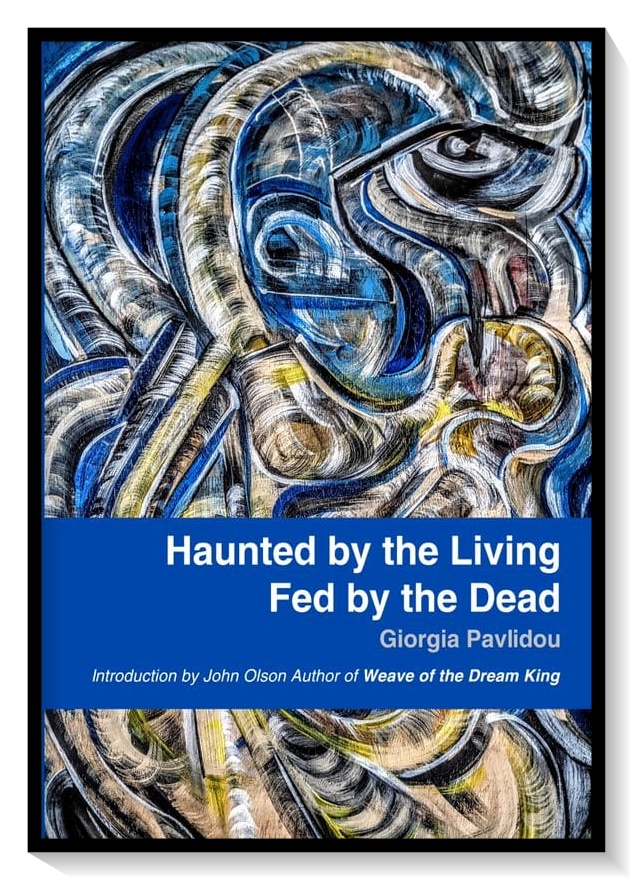
Haunted by the Living, Fed by the Dead
By
Giorgia Pavlidou

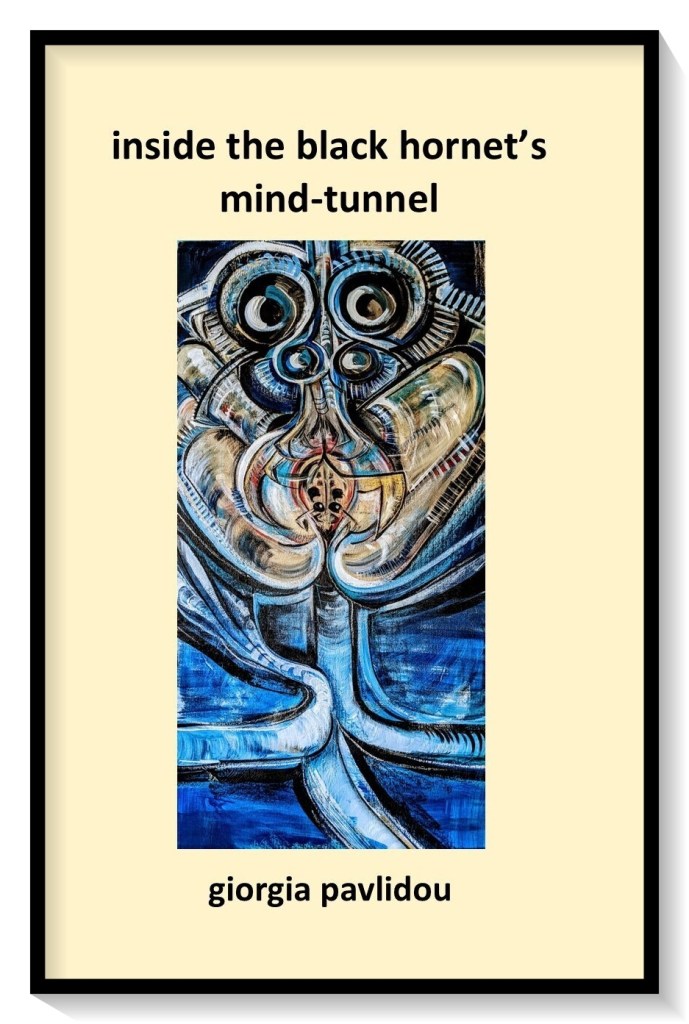
inside the black hornet’s mind-tunnel

by Giorgia Pavlidou

This is intense work. It’s incandescent. It’ll catch your eyes on fire. Burn your brain down. Giorgia Pavlidou has managed to make anguish appear beautiful. And sexy. Artaud is the tutelary spirit of this work. The anguish is real and the words have the taste and smell of the netherworld in its black gown of sibilant pupa. This is language with a biology; it writhes, hisses, and propagates by glossolalic impregnation. Reading these poems is an immersive experience. Here we find madness, anguish, erotica and Rabelaisian humor welded and wed to a language full of “lexical tentacles” and “fire dressed in fire.” It gets under your skin, this speech. These strangely intelligent & autonomous words, manic as wasps in a vessel of glass.

—John Olson

A pyrotechnics of lingual essence, Giorgia Pavlidou’s “inside the black hornet’s mind-tunnel” yields feeling through the language of the heart creating darkened constellations that rivet the inner eye all the while whirling as an estranged yet organic imaginal terrain.

—Will Alexander

Giorgia Pavlidou

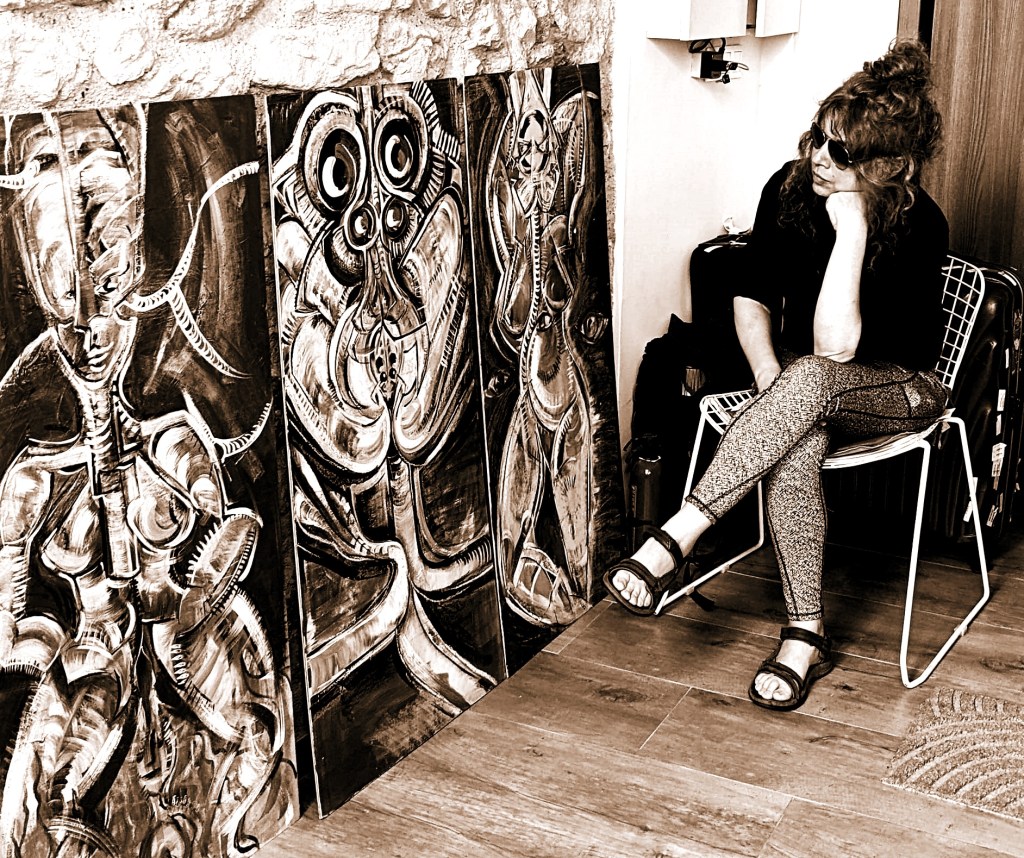
Giorgia Pavlidou is an American writer and painter intermittently living in Greece and the US. Her work recently appeared or is forthcoming in Caesura, Maintenant Dada Journal, Puerto del Sol, Clockwise Cat, Ocotillo Review, Strukterriss Magazine, Entropy and Sun & Moon Magazine. She’s an editor of SULΦUR. Additionally, Trainwreck Press launched her chapbook ‘inside the black hornet’s mind-tunnel’ in 2021, and Anvil Tongue Books her full length book of poems and paintings, ‘Haunted by the Living – Fed by the Dead’ in May 2022

Alkalizing the Wendigo with a Whirling Mantra

Every culture has experienced cannibalism, headhunting and parasites. This intrusive painting is about those things but thankfully it’s all metaphorical. In this painting I use figures of speech to convey malignant narcissism and greedy tendencies as a psychic virus. While no specific group or person is targeted it is important to be aware of the dangers of being egocentric and that it puts everybody at risk.

An ancient parasite has been interfering with our optimum self moderating programing since the beginning of time. This is not an original idea and can be found as a theme through many Science fiction and horror stories. One specific example is The Mind Parasites by Colin Wilson worth checking out. However there are more real life examples. I found details in Sigmund Freud’s Totem and Taboo: Resemblances Between the Mental Lives of Savages and Neurotics that offered a general outline on taboo as a psychic contagion.

Anyone who has violated a taboo becomes taboo himself because he possesses the dangerous quality of tempting others to follow his example: why should he be allowed to do what is forbidden to others? Thus he is truly contagious in that every example encourages imitation, and for that reason he himself must be shunned.

Freuds statement makes me think of the origin of the scapegoat and the spiritual cleanse that shares a polarity with transgressions of the community. An organized ritual allows a contamination of an object to later be sacrificed.

How did the Wendigo archetype institute and set in motion such a horrible malware on the consciousness of humanity?

First and foremost the Wendigo represents a defense against becoming selfish. An example not to follow. It is no one’s ambition to become cannibalistic or maladaptive but abrupt experience overwhelms an unactualized mind. This is usually caused by trauma experience. An experience by all accounts that leaves a brain feeling abandoned. With no one else around to understand. While left defenseless against the brains own intense fear, a sudden disconnection occurs.

By looking in a mirror day after day one moves more progressively towards a reduplicative hallucination. An elaborate state where one see themselves as an apparition. This double tells the vulnerable self a story about how much stronger and more valuable it is than the other. it tells the other self it is the reflection that is important. Across this imbalanced relationship the double forever feeds off of one traumatic moment. As a kind of psychic parasitic disease, the reflection commandeers the entire body while holding the suffering self hostage. This painful body tries to fight but not being fully rehabilitated to control it’s own operations, instead seeks to control other brains.

Robert A. Brightman an American anthropologist describes the Wendigo as

“The wendigo (/ˈwɛndɪɡoʊ/)(also wetiko) Ojibwa wintikö. Cree wihtiköw is a mythological man-eating creature or evil spirit from the folklore of the First Nations Algonquian tribes based in the northern forests of Nova Scotia, the East Coast of Canada, and Great Lakes Region of Canada and the United States. The wendigo is described as a monster with some characteristics of a human or as a spirit who has possessed a human being and made them become monstrous. Its influence is said to invoke acts of murder, insatiable greed, cannibalism and the cultural taboos against such behaviors”

From Brightman’s statement we get a profile of a very unrelenting and maladaptive personality who is controlled by a psychotic spirit whose strategy relates to a person in the same parasitic mode a protozoa relates to a host. There is an invisible influence.

At the very top of my painting is an example of the Woodland Style. Inside the face is a very filtered cosmogram that offers a limited preview of a Peyote ceremony I was invited too. I choose the Bidu and moon cipher to act on behalf of an meaningful experience. The full night ceremony continues to make a deep impression on me. This impression is similar to my discussion in Astrology and Cosmograms . I review the root Loa as comparable to a strong radio signal filled with intelligent information and the brain as land-based radio station. In the painting this Loa voice scrolls from the lips to a wireless phone. This sudden illumination is delivered by a lightening bolt brightening a picture tube with a whirling log message. The subliminal effects directly communicates with the Mooladhara Chakra, the chair where the Kundalini sits. At it’s immature stage the Mooladhara is completely egotistical, security driven and possessive. These traits when pressed by scarcity and megalomania create a Wendigo.