The Lyre of Truth By Mitchell Pluto

Originally published as Carnival House in Cadaver Dogs 2024 and Espiral en el Estuco (Spanish Edition) 2025 Adapted for public reading.

All Rights Reserved by ©Mitchell Pluto

The lesser mysteries were open to anyone who wanted to join the lively street parade, but unraveling the secrets of the greater enigmas involved being selected.

The secret group of performers included actresses who helped change people’s perceptions of themselves.

A spine and a brain were simply a keyboard to play.

Few know the mysterious past of the mystery troupe. Some say they are witches, while others claim they are ingenious philosophers.

Many suggest that their extraordinary four-dimensional theatrical experience has the potential to induce a psychic state in the audience.
No one can answer with certainty.

The authors of the show will remain unknown to us. The key is self-exploration to better understand the thing we call ourselves.

I was inspired by witnessing their performances, especially considering the restrictions that prevented women from participating in Hellas theater. I wanted to see how the mystery play portrayed metempsychosis.

A dignified woman handed me an invitation.

I considered myself lucky.

The statements of the friends who attended concurred: all who ventured into the underground temple emerged transformed and with an enhanced mind.

My goal was enjoyment, whether the secrets were imaginary, sexual, or drug-induced.

Following the temple’s instructions, I performed the ablutions in the river. The first performer was a fisherman, who told me he was looking for pitch, rhythm, and duration. He cast a line, and I caught it.

He led me to the bank, and I followed him to the temple.

Crows in flight watched us as we walked. They have been trained to memorize and vocalize my name. The birds amuse themselves by taunting me with predictions related to my failure.

At the entrance, ancient emblems were visible. The door panel resembled the shape of the sarcophagus of Usiris, god of the chthonic realm.

The symbols painted on the door also matched those of the Shiva lingam, the serpent of Asclepius, and a symbol resembling a symmetrical pine cone.

To begin, I knocked on the door three times. Aegle, a very cheerful hostess, greeted me by name. A pleasant feeling of well-being washed over me.

She was generous and held a cup.

The dim candlelight cast strange shadows on the walls of a dark room.

Someone had placed a coffin in the floor.

This coffin supported a staircase that led down into the earth.

With each step down, the rungs became wetter, their textures mysterious.
I decided to ignore what I felt and focus on something else.
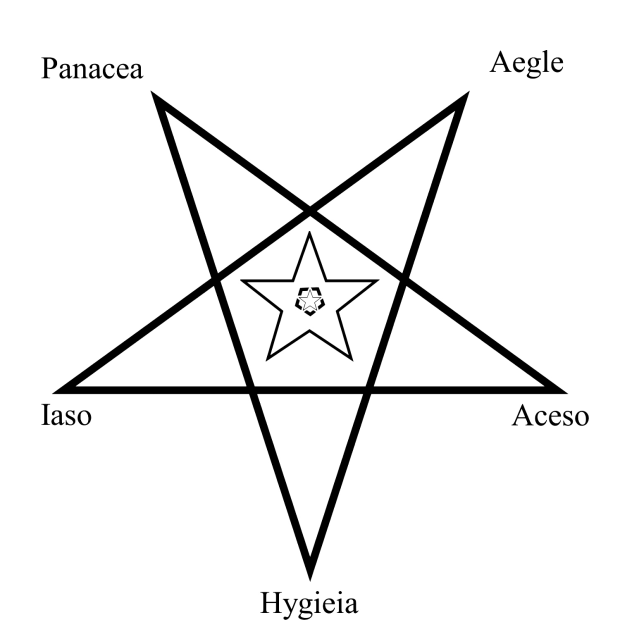
Taking the last step, I found myself inside a pentagram drawn on the ground. A woman was present at each point, one of whom was my host. They introduced themselves.

Their names were Hygieia of Purification, Panacea of ​​Medicine, Iaso of Revitalization, Aceso of Operation, and the hostess, Aegle of Joyful Strength.

There I received the first cup, called kykeon. Its taste was reminiscent of strong beer. With their voices united, the women expressed their thoughts through chants.

Flutes could be heard in the background.

The music intertwined, creating a mixture of harmony and discord that reflected my physical fluctuations.

At different corners of the star, the women rotated and alternated their positions.

I joined in this movement by observing; I felt a deep satisfaction and confidence.

With a sudden pause, the music ended, leaving behind an eerie silence. I was handed a torch. Aegle and her sisters lead me down a dark corridor, their arms poking through holes in the wall, ready to support me.

Panacea advises me to be careful of the light source as I make my way through a maze of several thick, damp curtains. Some of them being hanging animal furs.

We enter a chamber bathed in a soft green glow, with walls adorned with stained-glass windows that form an octagon.

In the center of the room, a golden chair has been placed in front of a small well.

I feel the women’s hands as they take my torch and guide me toward the well.

They buried me up to my neck; their soothing voices offered me some comfort, but not much. In a melodious voice, Iaso spoke my name, and the sound hung in the air.

Silence filled the space as a woman, dressed in a sheer black peplos, entered the room.

She embodied the sensuality of Demeter with her full figure. A shiver ran through her body as she sat on the golden chair. I stood before her, unable to move.

Aceso poured me another kykeon and gently held it to my lips. Then, Hygiea poured water on my hair.

The sisters took turns drawing rings around my head on the ground.
They created a line extending from my chin to the circumference of the circle. Hygiea sang a song, showing me how music serves as a compass in life.

As the song ended, Demeter rose from her chair and her eyes met mine.

Demeter stood on the outer edge, where the diameter and circumference met.

On her knees, she revealed her vulva by opening her skirt.

Demeter’s voice gave me a strange atmosphere.

The woman used an onomatopoeic effect, employing primal sounds instead of words. I imagined myself transported to a time before civilization.
The sounds displayed wild, sexual, and disturbing characteristics.

The five sisters dug me out and cared for me as if I were an uprooted plant.
They passed me a torch.

Iaso led the way, and the sisters followed. We entered a rotating, cylindrical tunnel operated by hydraulic power.

Maintaining my balance is a challenge.

A mirrored curtain distorts my reflection at the end of the tunnel.

Aegle advised me to face it head-on, passing through.

Behind the curtain, two steam vents dispersed. As the water vapor dissipated, a huge relief of a nude Demeter rose on a stone wall.

A raised walkway gave access to a door located where her vagina was.

The river of figures, dressed in contrasting black and white, moves in a choreographed, serpentine formation beneath the bridge.

This creates a deep unease in me.

The work depicts a battle scene, with soldiers sinking beneath the tides, their screams muffled by the earth.

This is iron and other minerals being sacrificed.

The haunting, animal wail freezes the moisture in my body. My only concern was the fear it created, overshadowing the actor’s talent and the astonishing stage effects. The fiction’s realistic portrayal convinced me of its truth.

I received Panacea’s advice to remove myself from disturbing thoughts.
Aceso takes my light and signals me to enter through the door. Hoping to find safety, I pass through colorful layers of scented sheets that release fragrances and pheromones, easing my discomfort.

I find myself in a spherical chamber. There is a portal in the ceiling that illuminates a rectangular bed with sunlight.

The sight of countless fresh flowers hid any trace of a wall, giving me time to recover and admire the intelligence of nature in each petal for many hours.

The group of five sisters entered the room dressed in black. They asked me to undress.

The intention was to remove any artificial obstacles between the goddess Persephone and me.

They prepared me, washed me, and offered me a calming drink that later became a potent aphrodisiac.

The sisters massaged my body to align the points with the star’s proportions and gave me affirmations that, to this day, have a positive effect on my thinking.

Persephone entered the room.

The woman removed her clothes.

Persephone had a youthful, simple face, with a pear-shaped body.

The five women formed a star constellation, with us at the center.

Hygieia sang a comical song that brought us both joy and laughter.

It was followed by a song that filled the air with sad melodies. It awakened a bittersweet sense of rediscovering something long forgotten.

Accompanied by Persephone, I experienced a sense of wholeness that completed the missing pieces of an unfinished picture.

Before we met, like a blazing and radiant star, Persephone comforted me.
I fell into a deep sleep with lucid dreams. I understood totality within an ever-present circle.

Revelations fueled my growth at every stage of my past life.

Everything I observed, inside and outside my thoughts, shone with brilliance.

I reached a state of peace where there are no boundaries.

By providing me with palm trees and poppy stalks, the group of five sisters acted out a brief skit where I was a man impregnated by the goddess.

This metaphorical journey disturbed me.

Panacea informed me that this ritual fostered the growth of a man’s inner woman, the anima. I must nurture my visionary mindset, inspired by the goddess Athena.

She reminds me that Athena was born in the head of Zeus. I am told she will heal my masculinity and that women will invite me into their bodies without fear.

Soon I observed the full moon within the oculus of the curved ceiling.

Strangers and street people filled the place.

Plainly dressed, Demeter and Persephone passed unnoticed in the crowd. With the room packed with spectators, I became the center of attention.

Someone announced my passing.

Despite my presence as a living being, the actors remained absorbed in their characters.

A tower of sand lay beneath the bed block that fit over a hollow.

The sand trickled out as vents opened from a lower level, sinking the bed.

Spectators showered me with flowers as I slid beneath the dark floor.

Soon, my perception was limited to that of people huddled in a suspended rectangular frame.

I kept my gaze fixed on the figure until it faded into the distance.

I analyzed the impressions the theater had left on my mind.

Love swept over me, but it vanished in an instant.

The elevator stopped, and I found myself surrounded by curtains of an intense magenta glow.

From behind the curtain, an open hand appeared, and without hesitation, I reached out and shook it.

The cavern I landed in had braziers lit with purple and red light.

Precious stones adorned the cave walls with sparkles.

A bearded man, dressed in a crocodile skin, held a horned cup and told me I was expecting too much.

The five sisters, the attendants, had transformed into untamed figures, wearing only leopard skins around their waists.

Their breasts swung and their hair was disheveled.

He handed me the drinking horn, and I drank.

I asked him if this was Hades.

He replied that it was only a mortuary cave, ruining the disturbing image I had conjured in my mind. He said it was his place, Pluto’s lair.

He instructed me to follow him through a door where cavernous formations resembled fangs.

With some effort, we arrived at a dining room fit for an emperor.

Someone had prepared the food and placed it on the table.

He ordered me to sit down and eat, which was more of an invitation.

The five sisters consumed their food with an exaggerated display of hunger.

It was comical, but they played their parts so well that it became unsettling.

I hadn’t eaten in a while, so I was hungry.

While I was eating, Pluto was playing cat’s cradle. He braided a rope and handed it to me.

He told me to tie it around my waist and meditate on its meaning.

After we finished eating, Pluto led me to a mannequin wearing armor.
Pluto instructed me to put it on.

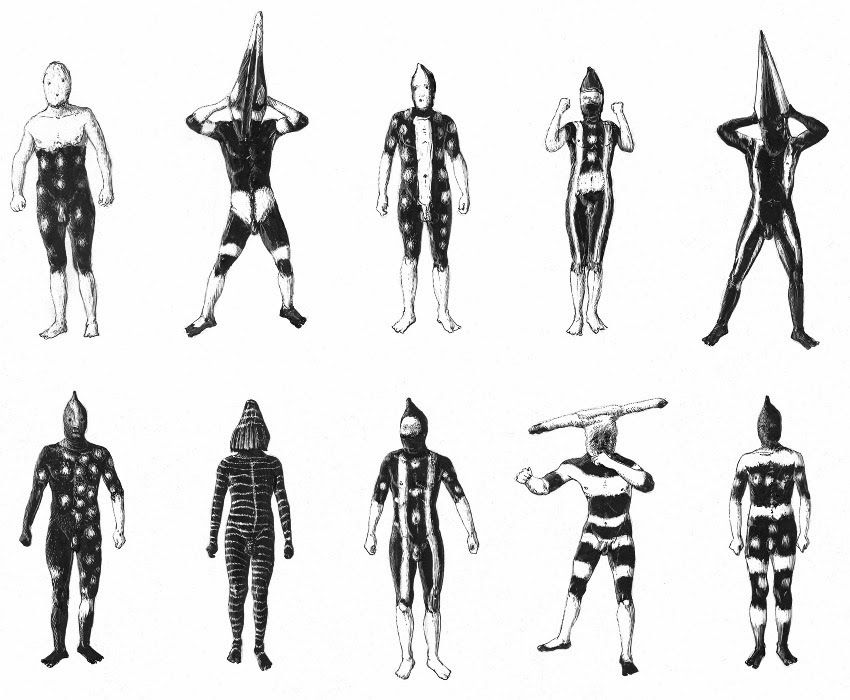
As he molded a piece of metal on an anvil, he told me to wait for the monster clown, whom he called Shoort.
I remained worried, expecting something to happen at any moment.

But nothing happened for a long time.

As I dozed, a creature emerged from the darkness.

The sisters sang a discordant chorus without fanfare or relief.

Rising, the creature demanded attention with its intimidating presence, asserting its dominance by finding the deepest fear within me. The monster took over my most intimate space. Fear paralyzed me. I reacted and broke free.

I fought the monster and stopped it, surprising myself.

Pluto yelled, “Grab the mask!”

I removed the mask, revealing the actor who was the fisherman.

Comically, the fisherman confessed to giving in, explaining that his actions were part of an elaborate plan to deceive me.

He said he had no choice but to follow orders.

I was about to delve deeper into my interrogation when a child’s crying diverted my attention.

Within seconds, I stumbled upon a boy trapped in a tunnel, out of my reach.

I untied the belt and rescued the little boy from the hole.

He hugged me, expressing his gratitude. The boy identified himself by my exact name.

Pluto and the five sisters clapped and cheered.

The women congratulated me as Aceso offered me a soft drink laced with anesthesia.

I woke up. The five sisters, disguised as bearded men, stared at me. They mocked the male voice as they spoke.

The voices were authoritarian, harsh, and angry.

Their question: Why did a woman like me lose consciousness?

I admitted to them that I didn’t understand what they meant.

The performers held me captive in their irony while remaining in character.

The ‘men’ helped me up, patting me on the buttocks and chest as I stood.

I realized and saw that we were performing on a stage with an audience present.

Through a mirror on the wall, I realized that someone had dressed me as a woman without my consent.

I protested, but discovered my role was silent.

The actresses did an extraordinary job pretending not to hear me.

Although the audience could hear my voice, they made unpleasant comments.

It didn’t take me long to understand the plot of the play.

The setting was a brothel. As an enslaved woman, I was traded for work in a prostitution establishment.

Three sisters took on the roles of slave traders.

Their authoritarian and malicious voices terrified me.

The remaining sisters portrayed the owner and the client.

The client’s expectation frightened me.

I kept overlooking the fact that it was only a simulation.

Now I saw the expectations I had hidden from the Aegle when he first greeted me.

My reflections were becoming visible in other people.

Three sisters crowded around me and, with surprising force, threw me into the crowd.

My body moved over the surface of the crowd, which tore off my dress while groping me.

As I reached the back of the audience, the five sisters intervened and embraced my exposed body.

By symbolically becoming a woman, the ritual allowed man to enhance his masculinity and develop greater empathy. Then, making love puts us in touch with a divine state.

The act of this love to women made me sense a connection to a godly presence that is universal.

My deepest longing becomes the foundation for love and creation.

I began the day by integrating tattvik tides into my exercises, and I could already feel a mature rhythm in my being.

I challenged myself blindfolded, while my eyes remained fixed on the shapes of my imagination.

Among the variety of tattvik shapes, the representation of air is a solid blue circle.

Earth is a transparent yellow square.

Fire looks like a red, triangular liquid.

Like a crescent of flaming silver, the water shimmered.

In the mind, the tattvic form resembles a dark egg.

It absorbs all light and is even darker than the surrounding darkness.

To complete this task, I visualize the symbols and relate them to other elemental designs.

It is important to replicate the images as accurately as possible and analyze the reasons for their deterioration.

By tracking and observing how the images deteriorate, I can understand other subconscious thought forms.

Later, the sisters led me to a cubicle with mirrored tile floors, walls, and ceiling.

Three chairs surrounded a triangular table at the focal point of the room.

On the table was a flat, round plate that looked like a coiled snake. I discovered that this was a game called Mehen.

I played a bit of Mehen with the twins.

It was difficult to distinguish who was causal and who was perpetual.

One twin is the other in the limited form of the eternal idea.

They seemed like four instead of a pair.

The twins embodied a perfect living square, treating all sides equally like Nzambi.
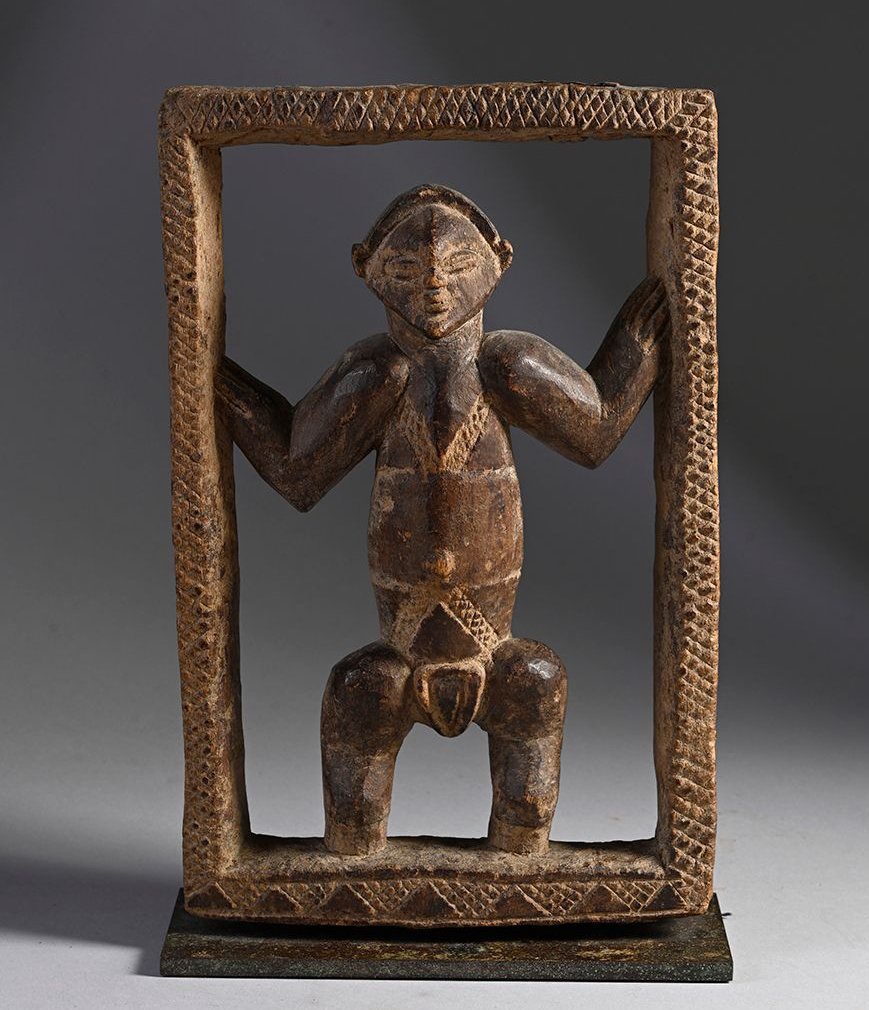
I participated in a couple of games. I fell short in the first, but won the second with the help of a lion.

These two events made me reconsider my participation in the works I was involved in.

Now the final ritual was taking place in the Telesterion, an acoustic pillared hall.

Throughout each ceremony, the dedicated team of sisters accompanied and guided me.

Like markings on a score, each sister represented a bar line, providing pitch, tempo, and duration to facilitate my experience.

The five daughters of Asclepius moved within the staff, shifting positions. Their perfect harmony generated a unicursal rhythm, instilling a sense of unconditional well-being.

At that moment, I stood before the god of the sun, the star that radiates growth, maturity, and harmony.

Apollo has a dark complexion.

He wears a reflective suit that reverberates with the surrounding surfaces. In his wife’s hands, a harp resonated with soothing melodies as he played the saxophone.

Many birds fluttered around him as he played.

The final stage of the ritual involves offering a song to the radiant sun, which fills the atmosphere with harmonious melodies.

The star embodies the force that drives people in their pursuit of well-being, intelligence, and benevolence.

Keeping music in our hearts aligns all the chords around the goddess.

This connection reminds us of our deep philosophical connection with nature and its impact on our well-being.
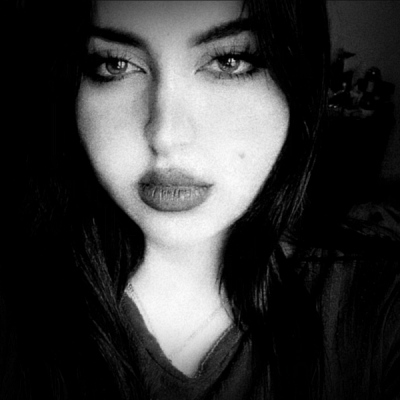
Hager Youssef, Halal

When everything becomes permissible,
permissible,
permissible,
I will turn off the lights
as a war upon the world,
and make love to sleep and time
in the same bed.
A woman like me, at night,
devours herself,
and in the morning,
returns entirely whole.

Permissible, permissible—
if I shatter the mirror
with a laugh.

If I open the windows
to the insects,
and your face,
leaving behind
my shadow—
may you swallow one another.

Or if I keep you inside my palm,
hide you behind the guest china,
maybe, if I sweeten your fragments,
you’ll still fall short.

Permissible—your vision falls
from the innocence wall
like worn-out shoes,
and the night sings a vulgar hymn,
as it should.

I will show you my painted limbs
and won’t ask you where we bury
lust—in white cotton,
or in a new glass.
I’ll place on your grave
a sacred symbol
befitting tonight’s blasphemy.
Everything’s permissible,
where pleasure
forgives sins for their loud voices
and wakes in me
like an animal
from death.

Deferred to you—
like a poem no longer fit for use.
I will be just fine
when I’m between two walls,
where mercy and mercy—mercy.

I sleep in a bed stretched out like punishment,
and beside you,
I dream of an impossible crime.
And when I permit you,
when you permit me,
when the night
permits everything—
we will yawn.

Hagar Youssef is an Egyptian poet and writer based in Cairo. She has published a poetry collection titled “A Damaged Memory” in Arabic and she is currently working on two collection stories: “Dreaming With Two Heads” and “One Day.” She graduated from the Faculty of Education – Department of Sciences. She has written for various platforms, including those focused on feminism and gender studies. Her work explores the essence of language, deeply influenced by philosophers Roland Barthes and Georges Bataille, in linking love, pain, and death to language, deconstructing these themes. She is also passionate about translating literature and poetry, reviewing books, and writing journalistic and critical articles.

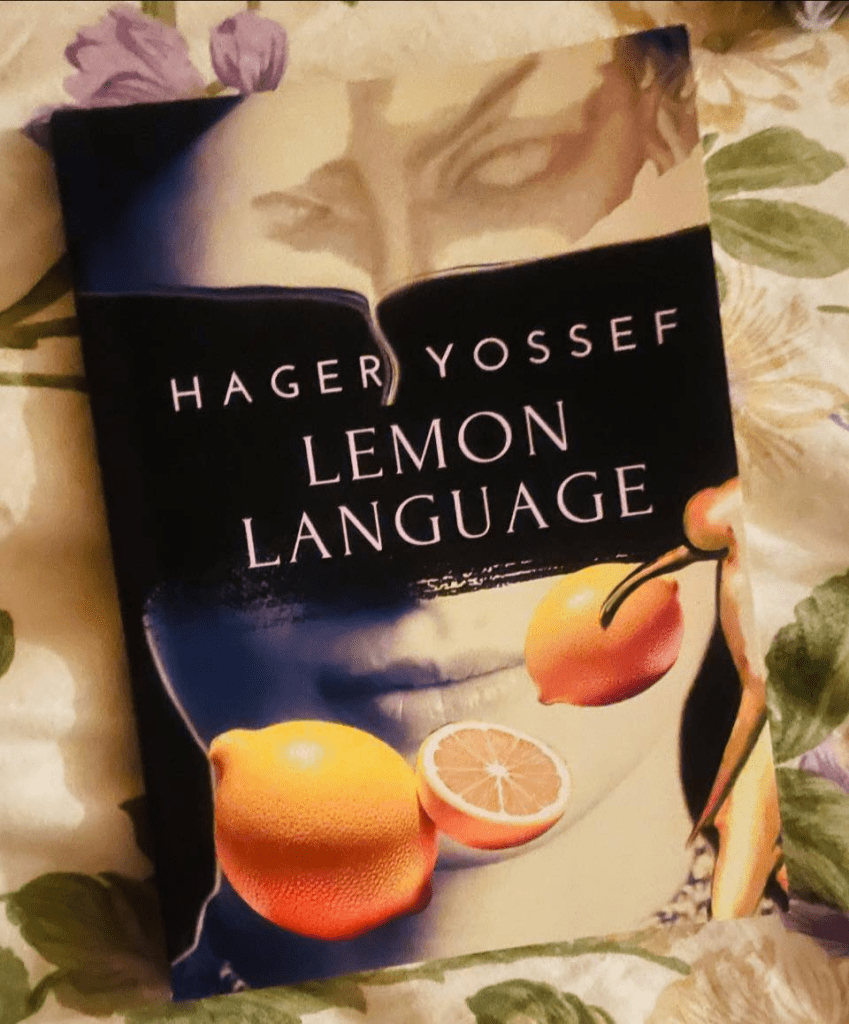
Lemon Language Paperback – November 22, 2024
by Hager Yossef

Machine for Memories

The transatlantic voyage is being undertaken by the new colony of artificial intelligence.


Don’t forget that AI, developed by dominate culture, is claiming the territory.


One can compare the brain to Vodou, an animistic concept.

People built statues to memorialize theurgy.


Hesiod’s depiction of the gods illustrates the organization of pareidolia.


We won’t be going to space ourselves; AI units carrying our genetic information and instructions will go instead.

©Mitchell Pluto 6/7/2025

The Banquet of Banality by Hager Youssef

The Banquet of Banality

It was too much—

your friendly chatter

with a plastic doll,

beside all my womanhood.

Too much closeness,

and not enough of friendship’s honor.

You dressed your attention

in a shirt far larger than your frame,

and wandered all night

seeking someone to stitch it tighter.

Fevered listening,

inflamed reactions,

obscene exaggeration,

and a sugar tongue

with no cause.

Your talk—

not just the melting

of social shyness,

but constant calls

of a drifting gigolo.

In the light’s reflection

in my glass,

Narcissus

appears smirking,

then fades.

This woman

stuffs her misery

with your emptiness,

and leaves,

utterly emptied by your absence.

And I—

beneath the weight of analysis and inquiry,

will sleep well tonight,

for I won’t let your butterfly

scratch a hole into my mind.

That banquet of banality—

doors whose insides I know too well:

the illnesses of ego,

the body,

and your childhood—

where it seems your own hand

chokes the other lost in itself.

The other women leave delighted—

They got their change

from the shiny illusion

they came for:

illicit praise

drawn from both my shares.

But I—

I’ll go home

in my white dress,

just as I came.

All I lack now

from such tired evenings

are the symphonies

of your lies.

My Weather Is Fragmented, Beautifully Distorted

My weather is fragmented,
beautiful in its disfigurement,
it writes me upon a page that quivers—
like a vast, open hand.

I’ll hang my first face on the door.
In the wild haste of love,
I’ll let you enter.

This night
lengthens over me
like a mosquito.

This lamp
only illuminates
my fear.

My second face
is dark and wicked—
like a rat in hiding.

The third, I vomit
onto the body of air,
into a bowl of memory,
like a child,
retreating into his mother’s breast.

The fourth is a mask of fire.
When you choke me,
I think—
you are making love.

The fifth, a nail in my throat.
I hammer it in,
and spit out a sixth face
that will never be complete.

The seventh sees nothing,
hears nothing—
he simply cages his sorrow
and mutters.

The eighth
sings to you
in the voices of prostitutes.

The ninth writes poetry
without faith,
sketches you on my back
with a broken fingernail.

And I—
when I sleep within you,
and rise without me,
like a tattoo,
when you forgot my name
and screamed:
“Who am I?”

Alcoholic privilege night

When my beloved is drunk,
I become a wound upon his cheek.
He strikes my chest with an empty glass,
Saying, ”This bell—this is what wakes me.”

When he drinks,
He opens my mouth like a pit,
Searching for his name,
For a button he lost
As we rushed back toward childhood.

He loves me swaying
Between two chairs:
Truth—
And the guilt I know,
When he mistakes me for a window,
When he spills the wine
As an apology on my behalf,
Like the blink of an eye.

When he drinks,
My arms multiply in his memory.
He summons them to soothe his pain,
Asks me to plant my tree
Right here—
Above his eye,
A finger for his throat,
And a final finger pointing to the wall:
“Embodied—as if you were pure awareness.”

When he’s drunk,
I draw back.
He runs like a shadow
Caught in light,
Bleeds me
Into some vague emptiness,
Traps me in a space
Shorter than a whisper,
Inside a bottle,
Inside a child’s nature.

He points often—
As if he’s arrived,
As if I were a mouth
He must enter,
Not merely behold.

Hagar Youssef is an Egyptian poet and writer based in Cairo. She has published a poetry collection titled “A Damaged Memory” in Arabic and she is currently working on two collection stories: “Dreaming With Two Heads” and “One Day.” She graduated from the Faculty of Education – Department of Sciences. She has written for various platforms, including those focused on feminism and gender studies. Her work explores the essence of language, deeply influenced by philosophers Roland Barthes and Georges Bataille, in linking love, pain, and death to language, deconstructing these themes. She is also passionate about translating literature and poetry, reviewing books, and writing journalistic and critical articles.

Lemon Language Paperback – November 22, 2024
by Hager Yossef

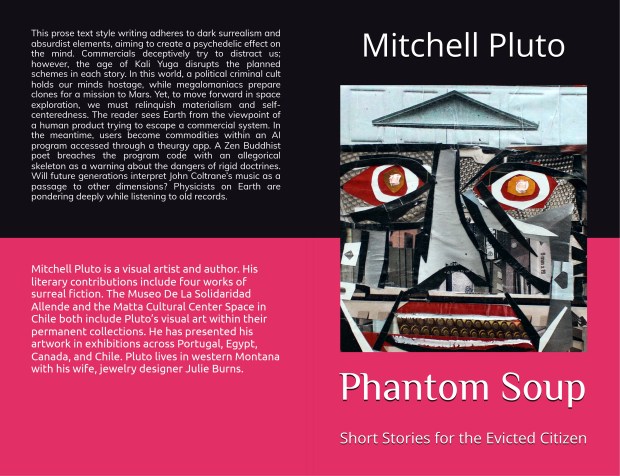
Phantom Soup: Short Stories for the Evicted Citizen

To write something and leave it behind us,
It is but a dream.
When we awake we know
There is not even anyone to read it.

The 8th day of the 4th month, the 3rd year of Kōshō (1457)
Ikkyū-shi Sōjun

Ghost Ride

Phantom Soup © Mitchell Pluto 2025

Accessible for reading.

All rights reserved. Permission grants brief quotations embodied in critical reviews and certain other non-commercial uses permitted by copyright law.

In case you overlooked it, this universe wasn’t lacking in ambition or size.
It was putting on a spectacle with its production.
The cosmos is just incredible; even haters gotta admit it’s breathtaking.
Zanni, the defendant, is still waiting for a verdict.
In space, sentences float around and words drift apart.
His black and white checkerboard suit embodied the polarities of opposites.
He is a man without a country.
A joker in a deck of cards.
Through gestures alone, Zanni attempted to decipher the universe’s communication.
There was drama everywhere, but Zanni just didn’t understand how it worked or how it occurred.
No one ever knew the truth; it died with them, leaving only unanswered questions.
Everyone figured the headache meant they knew what the problem was.
Less pain means clearer perception and a more optimistic outlook.
Honestly, it wasn’t a matter of right and wrong.
Or pain or pleasure.
It dealt with items of worth later becoming trash.
You could tell what things meant to people by how often they handled them.
It’s a space ballad playing both life and death.
No one will sing the sad cowboy songs of unrealized dreams anymore.
It’s alright.
We are part of a sombrero galaxy, a galaxy that is an eternal sunrise.
Zanni was in a giant empty room with waves of random stuff.
His world symbolized a particular responsibility of being.
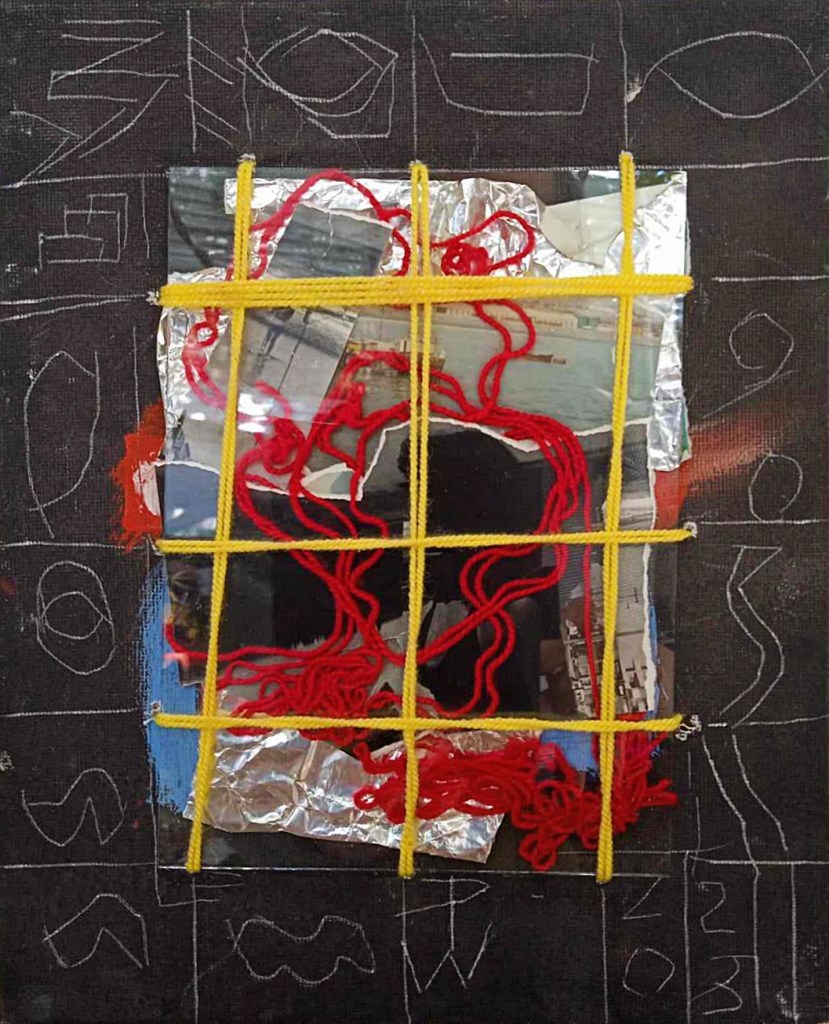
Special car keys for a 2025 model, a mobile wallet, a decorative cup, a gold pen, a seasonal tire, headphones from 1979, crumpled up Kleenex, a 1990 professional styling brush and a flashlight from 1899.
These objects surrounded Zanni.
Thankfully, a consumer digital camera from 1996 captured a pic of this.
But for who?
Regular waves swapped out old things for newer ones.
Zanni contemplated this event.
He figured the most likely explanation was that he was inside a massive vacuum cleaner.
He experienced a strong connection to things he saw on his trip.
Zanni speculated that the objects he couldn’t name were from a future timeline.
Things appear and vanished super fast out here.
Zanni drifted between sleep and wakefulness.
We can refer to it as a space fog in the mind.
A magnetic memory was his most beloved possession.
It echoed because Zanni repeated it.
He brought it back to mind in a re-run.
Zanni felt the luscious lips vibrate against his ear. It was a figurine of a woman.
Her name was Colombina.
The teal diamonds and magenta triangles on her dress flowed together to create a pattern of doves.
Hand in hand, they created poetry.
The rhythm of their partnership quivered in the shared space.
The couples’ bond created a constant interplay of elements through the intercourse of their geometric patterns.
Zanni maintained his embrace for as long as possible before the vacuum wave separated them.
He could not pinpoint the incident’s time without a clock.
The arrangement of numbers magically shapes the surrounding space. A regular watch shows what’s going on between the numbers.
Of all the puppets, did he alone ponder his whereabouts?
Only he understood his own thoughts and feelings.
Sometimes Zanni heard voices that didn’t belong to him.
Intrigued by the mysterious voice, he followed it.
The voice led him back to his body.
Those seizures and hallucinations gave epilepsy a mystical quality.
His memories of himself were likely because of thinking about Colombina.
He owned the moment, his own little universe, for a single second. Zanni saw himself as a buoy, helping other objects find their way.
But Pantalone, a hunchbacked old man, considered himself the universe’s ultimate authority.
He was a drifting turtleback tomb from another vacuum wave.
Pantalone preferred the nickname “god.”
His face twisted in anger as he guarded his belongings. Losing things got on his nerves. His tailored red suit reflected Pantalone’s importance.
Every item got a brand and price label from him. He believed he understood your true worth more than you did yourself. He used his talent to make you think whatever he wanted.
Those close to him risked having their self-image stolen and used against them.
Pantalone intended for everyone to rent from his cloud.
He lost money in the vacuum wave, then recovered his losses.
This activity provided him with enjoyment, a sentiment he wished to share. Provided that he had more.
Scattered dollar bills wandered everywhere.
The bills, by themselves in space, lacked any connections.
Now, Pantalone found himself surrounded by dancing product wrappers, toenail clippings, old grocery lists, damaged furniture, empty food containers, broken appliances, crumbled up receipts and dead batteries.
Think of it as a garbage cloud.
Several real estate agents, their eyes wide with nervous energy, tried to appear calm as they floated past Pantalone.
They pretended to own a spot by treading in one place.
While this was occurring, Harry Houdini sailed by and unlocked a satellite.
Intrigued by Pantalone’s possessiveness, Zanni examined the egocentric and deceitful nature of his own point of view.
He observed the ego’s memories fade as the mind surrendered its ownership.
Once the fear was gone, relief came.
Houdini cracked his knuckles. “No worries are necessary. Don’t sweat it. It is a simple lock to open. “
The hierarchy reflects the relationships between things in a chain.
An x-ray showed how brain waves link things up through information chains, like you see in neuron activation patterns.
This electromagnetic wave made Zanni wonder about the engineer of the universe.
It appeared the designer wrote a script for a big stage performance but remains anonymous.
In the meantime,
Pantalone reached his own planet.

Phantom Soup: Short Stories for the Evicted Citizen Paperback

Phone Bot in Space


The emptiness of space challenges the narcissist.
I wasn’t talking about a daffodil either.
Imagine the self-centered individual in the cosmos.
This soundtrack fanfare involved a floating plastic water bottle bobbing in the void, creating a strange echo.
A promotional message
There’s a song still going strong on an eight track tape from a different era.
The signal aimed to scatter more phone bots onto another surface.
Those objects back then are now considered trash.
It originated as a billionaire’s dream.
That primate was something else and only connected with other special monkeys and top baboons.
The menu listed all the remaining items, which wasn’t much.
There’s no linear narrative here; there’s no gravity.
We all got talked into being in Barnum and Bailey’s Greatest Show in the Galaxy.
In a chain of forgotten memories, everyone plays a great-grand relative.
Social media made it simpler to believe in fantasies of endless joy, power, and attractiveness.
Here and there had something from Temu.
Every summoned name feels entitled to special treatment.
Just answer your text message alert and see for yourself.
To be a wild horse in a motion picture, a spaghetti string western running around with no identification or proven ownership.
We needed to get things lined up.
The designation we gave it on Earth was equinox.
Or Rahu and Ketu.
Everything existed between two distinct points, a liminal zone like the recommended dietary allowance.
What did the primates search for?
The environment was ripe for harvest, heavy with the scent of ripe fruit.
Phantosmia first appeared as a side effect.
But in truth, the air held a strong smell of burnt metal, a metallic Tang.
Nothing 29 grams of sugar can’t handle with ten percent of carbohydrates; one hundred percent of vitamin E; one hundred percent of vitamin C; six percent of calcium and 120 calories.
Those repeated old commercials taught us to disregard the feelings of others.
Your phone is always there for you.
We should continue to outsource our creativity to the colony in order to receive innovative ideas at no cost.
Be all you can be.
Show conceit and engage in scheming actions it’s what we do when we explore another space.
We must be ready to manipulate people into servitude while making them believe it was their own decision.
Finding less intelligent beings is our hope, but a lot of work remains.
Facebook use is compulsory for everyone. We created our own television program.
While floating in space, it will help you stay focused on the amazing advertisement.
Asteroid mining provided a cool residential unit that’s furnished nicely.
You can order it online from Amazon.
Your deposit is secure and what a great way to spend a layover before heading out to nowhere forever.
Kidney stones messed up my space trip. How about you?
Don’t let worries consume your thoughts.
It’s just another advertisement that your brain has stored as a memory.
Albert Einstein chose Buddhist philosophy as a garden guide for the future.
Despite the lack of a global law requiring flower gardens, we concentrated on collecting and trading symbolic coins.
No one paid any attention to perennial plants but wanted planets.
The most important thing was AI carrying a respiratory virus to another atmosphere.
Ultimately, the cosmos functions as both a wellspring and a drain.
Who is this object registered to?

©Mitchell Pluto 1/17/2025

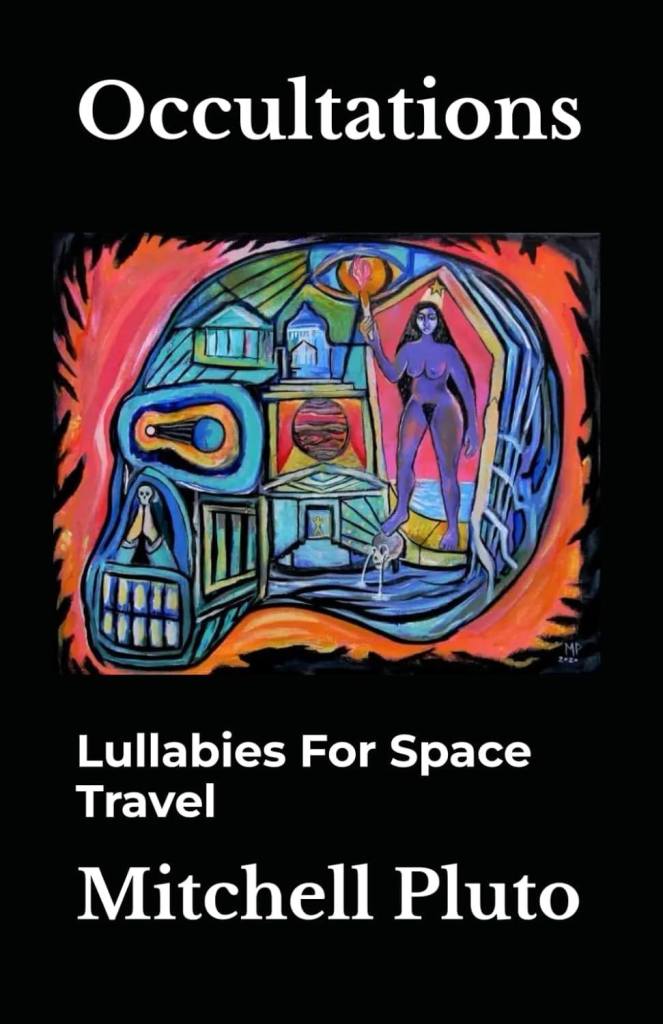
Occultations: Lullabies For Space Travel

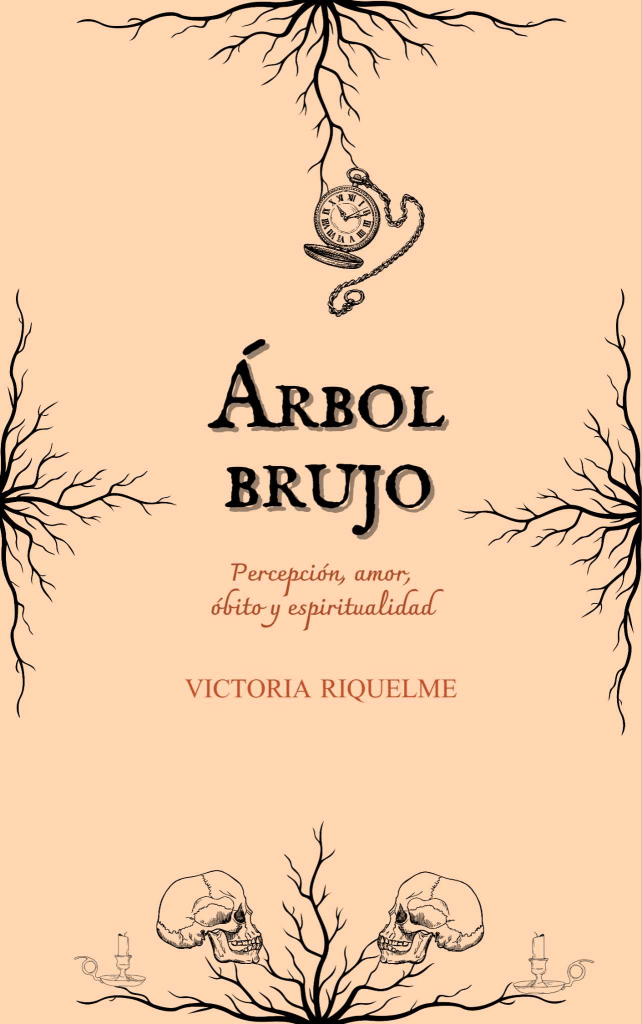
Warlock Tree, Rhizomatic writings by Victoria Riquelme

Capítulo I

Limbo de hoja (Percepción)

Rizoma herbolario

Rizoma comestible, tubérculo sanador, yema axilar e interrumpida, epigeo brote conquistador de jengibre, lúpulo y cúrcuma medicinal. Rizoma incontrolable, inalcanzable, rebelde rizoma de venas de tallos subterráneos e ingobernables. También eres nutriente, órgano de reserva para las plantas y sostienes con tu amor horizontal los tallos perennes. No eres inmortal ya que mueres de vejez con el curso de los años; pero en verdad no mueres nunca, nuevos tallos inquietos brotan y siguen y se quiebran y siguen y los cortan y se doblen y siguen creciendo. Se aferran al suelo, ramificándose y creando esa red entrelazada de conexiones que los mantiene vivos y unidos. Rizoma difícil, no eres estático ni sistemático Tienes tantos puntos de vista y miras por todos los ojos la creación de la tierra.

La nieta del brujo

El pájaro austral canta debajo de la lluvia balanceándose en el árbol rezado y superviviente. Pica los limones y entona. Caen las semillas en la poza de agua que lava sus raíces; dedos rizomas: brotan flores cítricas que nadan. Llueve en el jardín del curandero. Don Manuel Antonio Lezana es sereno; sabe leer el idioma antiguo. El de la piedra. El tallado…

Oficio antiguo

Somos los cultivadores brujos, los de la marca en el cuerpo, nuestro oficio es la botánica de la sobrevivencia. Somos los gentiles, observamos la belleza en el micelio del auxilio. Vivimos muchas vidas: eres bienvenido a regar nuestras tierras.

Árbol brujo

Dormí en tu halo tardes de primavera, hice el amor con el destello del sol que penetraba tus hojas calientes. Subrayé mi nombre en la secreta elevación de tu mejilla. Es verdad tu belleza, es verdad al caer el agua en tu humedad y tu sudor de invierno. Comí cada hongo alucinógeno proveniente de tu mutación, me cobijé del sol neurálgico cuando mi piel ardía, descansé mis huesos sudorosos en tu sombra, canté el nacimiento de pájaros en nidos de pelo lobo. Aprendí el nuevo idioma de lo recóndito, de las profundidades, de lo mas sublime de las estrellas…

Recorrer los textos de Árbol brujo es aceptar el curso de un río; flotar sobre aguas que cambian de velocidad sin advertencia. Adentrarse en sus palabras significa estar dispuesto a habitar el micelio de la autora, recorrer sus hebras y vivir en sus espacios. Buscar nuevas entradas y salidas, pues como dice Victoria Riquelme: «nunca ha de cerrarse ningún camino». Un rizoma de lenguaje feroz y sensual será lo que encontrarán en estas páginas.

Leonel Huerta / Chile/ 2024

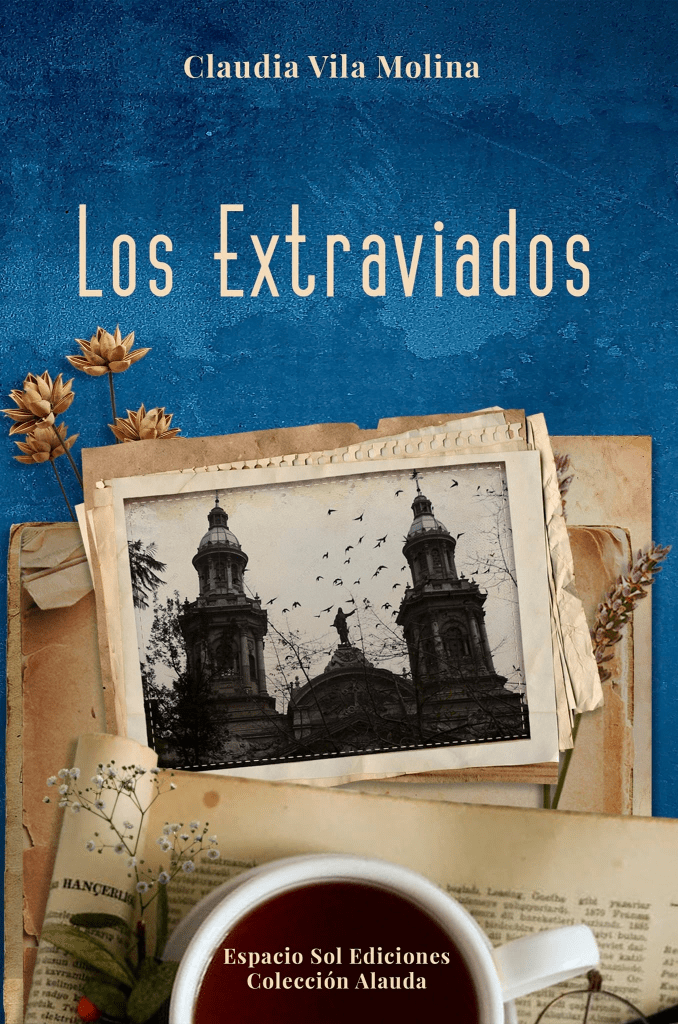
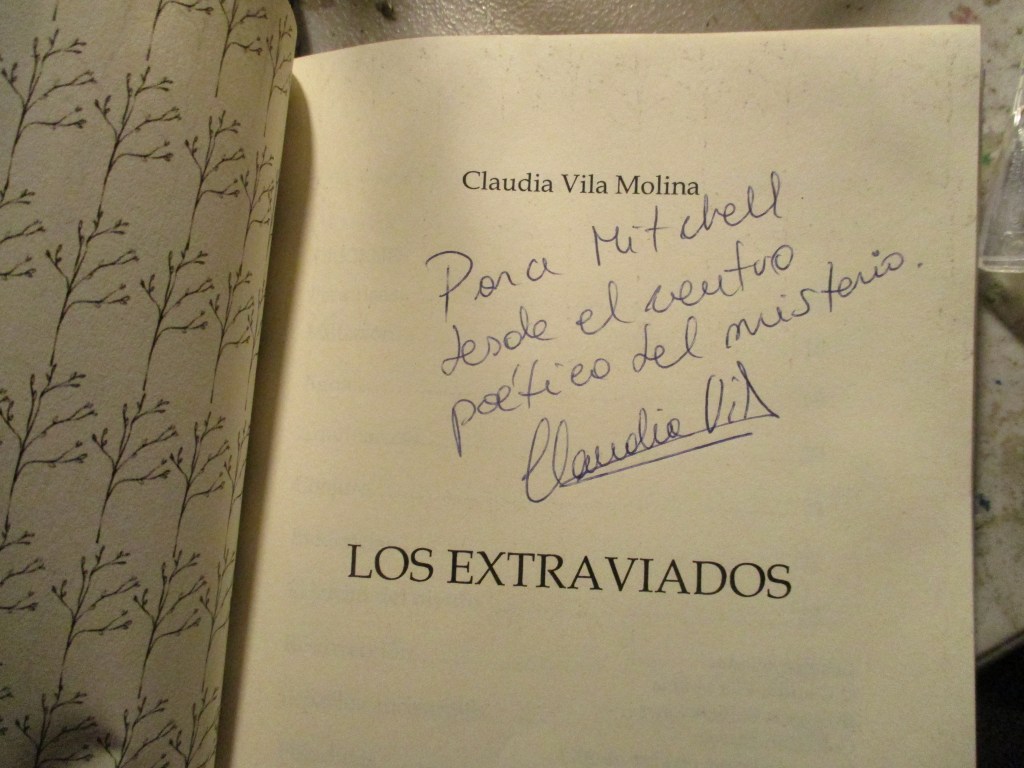
Los Extraviados Claudia Vila Molina

Pesquisas

He estado buscando la esencia del mundo

y he recorrido todos los escondites

pero tu no estabas

aunque vi debajo de los cartones

muchos quisieron huir

y albergarse dentro de mi mente

los demas escucaban los relojes

y seguian palpitando

entretanto yo ofrecia mi cuerpo a la luna

y ella miraba a traves de los espejos

la cara oculta de todos los hombres

Conjuro

Hago un circulo con las hojas

llamo a las puertas de la neblina

y un nuevo rostro aparece me saco antiguos ropajes

y floto con los muertos

nada es mas oscuro ni menos irreal.

Hipnosis

Un brillo como de hoja seca

persiste a traves de los objetos

que se diluyen en nuestras miradas

si a ese disfraz le quitamos las plumas

la noche tendria que inventar

nuevos prostibulos para esconderse

y se resquebrajarian

los rostros de todos los hipnotizados

Exorcismos

Las sombras saben guardar secretos

y muerden los tramos de esta hipocresia

no niego tu podredumbre

aunque me siente a un costado de este camino

y eche espuma por la boca

El tiempo tiene una agotadora manera

de sentarse en las sillas y mecerse

Claudia Vila Molina
Claudia Vila Molina was born in Viña del Mar, Chile. Professor of language and communication at PUCV. She is a poet and literary critic.
My signed copy

09-22-1969

Born in Viña del Mar, Chile. Professor of language and communication at PUCV, poet and literary critic. In 2012, she published her first book, The Invisible Eyes of the Wind. She has published in renowned Chilean and foreign digital media: Babelia (Spain), Letras de Chile (Chile), Triplov and Athena de Portugal, among others. During the year 2017 she participates in the Xaleshem group with poetic texts for the surrealist anthologies: “Composing the illusion” in honor of Ludwig Zeller and “Full Moon”, in honor of Susana Wald. In 2018, she integrates the feminist anthology IXQUIC released both in Europe and in Latin America. In 2020 she participates reviewing the conversation book “Shuffle poetry, Surrealism in Latin America” ​​by Alfonso Peña (Costa Rica), also writes a poetic prose text for the book “Arcano 16, La torre“, by the same author. Likewise, she participates in the book “120 notes of Eros. Written portraits of surrealist women” by Floriano Martins (Brazilian surrealist poet, writer, visual artist and cultural manager). In this year (2021) she publishes her second poetry book Poética de la erotica, amores y desamores by Marciano editores, Santiago. In 2023 Los Extraviados

Cephalopod by Daniel O’Reilly

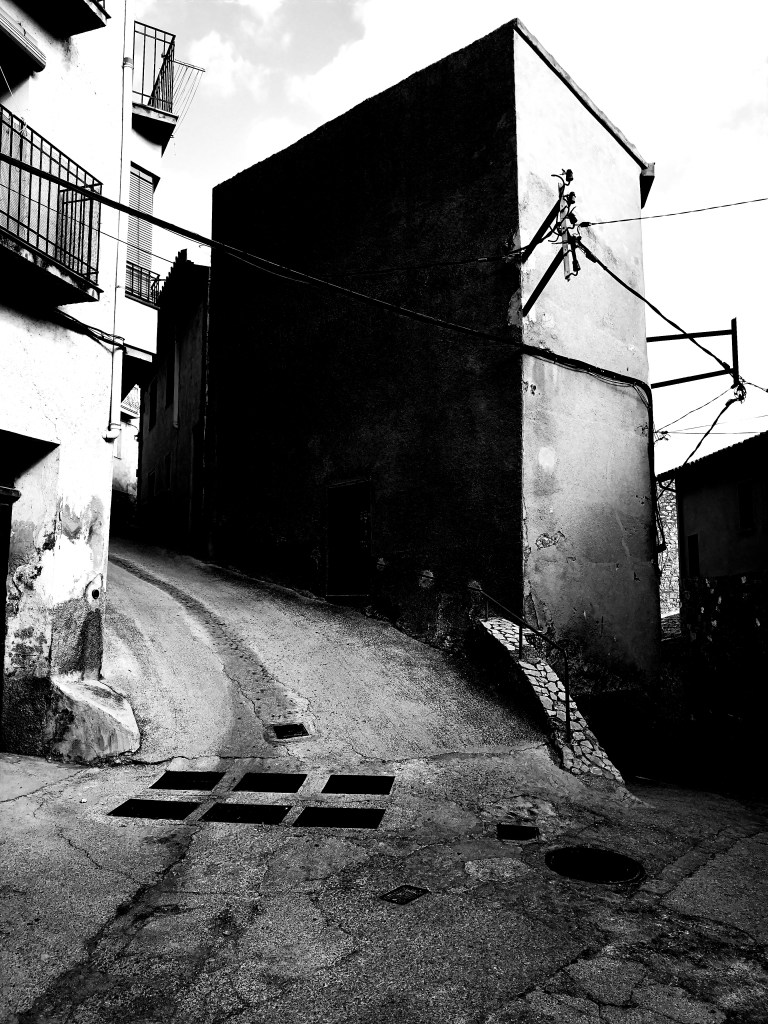
Pauls Catalonia

Cephalopod

written/photos ©Daniel O’Reilly

In centuries preceding, during the long, dark night of people passed, the light from the moon was different, they say. Carpet weavers watched sporadic clouds wrestle with thick air as translucent sentiments, ribbed by fleshy coils, pointed fingers at old friends. Tarpaulin Triveni, female, teacher of twenty, payer of Federal taxes, architect of the west winds, lover of afternoons; Route 79 to Tiruvannamalai, rush hour smoke, brimstone, incense, pooja, sudden migrations: the temple, partly stone, partly human –

Astarte! At last, longed the cantaloupe queen, conscious like burned butter afloat in disquietning nodes of boiled heroism, sheer terror written on her bronze armour in longhand Sufic prose, arrows bristling brilliant shafts of light upon those who stand amazed. In showers of liquid lead and riddles like retribution she raises up her head in thunderous paroxysms of wildfire, incinerating the noise of the NASDAQ trading floor via the quietest opening, or tearing into the roaring twenties: like lovers they eat themselves whole. A pain-pointed predilection for killing gods of all sorts, striking them to the ground, howling, shrieking for mercy, but shewing none, misusing the corpse after the kill like orca with a dead seal, or Achilles with Hector’s remains. We play with death. It makes us young.

Silver serpents entwine the heart-locket of a young man in Queens. The crepuscular silhouettes of tall buildings all empty, as in a dream, bitter chills in the wind from Hudson’s channel, flashes of red lightning, banshees in the street below setting the dumpster afire. Concrete streets empty and dark, this wraith-like apparition only masquerades as a city: a riddle, an omen, a curse. A picture of petty consequences, catalysing a tuber shaped oath for remedying unlikely afflictions of the psyche, like the pinch of a rubber band wound too tightly around your finger. Entrenched layers of decimal decline pontificate politely to a crowd of mainly young goatherds, but they don’t mind, as any entertainment will suffice for a goatherd of the Bactrian valley, longsuffering in the August Afghan ovenheat, yearning for the cool Hindu Kush. Up there, queens look down from snowy temples, peaks outlined by the monsoon moon, vanished layers of paradise passing instantaneously from view. Instantaneously

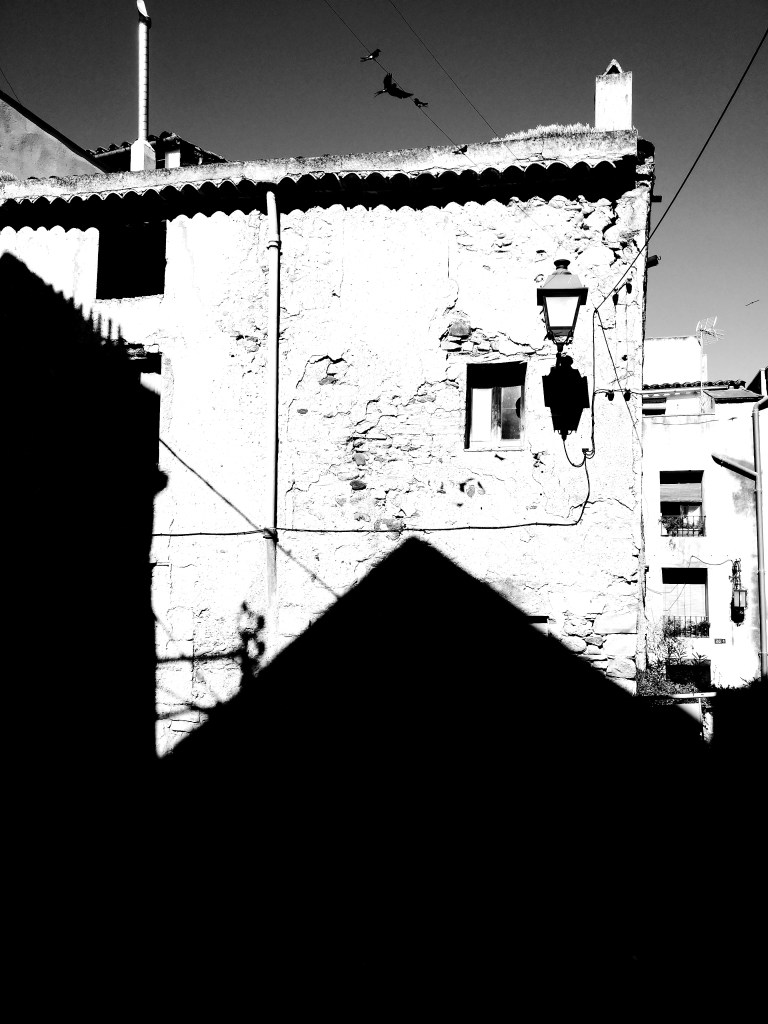
Tivenys Catalonia

Borders bind the wealthy to the poor, but in seaside temples of voluminous concern we count epigrams between sunsets, rallying fractious spirits in the meanwhile, damaging civic furniture installed in the Citibank Plaza. The old guard sits outside the bank on a plastic beach chair, machine gun hanging lazily at his side, smiling cheerfully at the calls of the brain-fever bird stirring raptures in the daytime as if coaxing clams from shells, a child of every man. Now we are ringing the new year by the seven bridges of Königsberg, full of cheap fortified wine and high on super glue, destroying the way of life for those who cannot know better, sweetening a joyous relation between the baroque lintel and its most spiritual rejoinder.

Openings, ruptures and fissures decimate Dorothy Drumwise on her drunk drive through the badlands of Blackpool, BMW unlicensed, DMT fairground flakeout. She sings sweet missives of the Golden Age, of Plutarch, Pindar, and of Ovid. Inclinations of ages move with tectonic twists, first shifting this way, then that way, as with the latest dance fad. I know that you know that the ‘this way and that way’ is a vital mechanism of natural philosophy. The waggledance of industry, the fiesta after the feast, festivals observed on Temple grounds, and with much smoke and incense. Astarte above, chariot rider of fury, smoking halos of pure fire above the heads of gathered postmodernists, crypto-Marxists, and other groups assembled for purposes only spectacle may account for. This terror and delight is for quivering flesh alone: no gods may get a taste –

Tivenys Catalonia

In an asemic New Babylon, an endless plan of a constant architecture, sketch after sketch of alleyways and avenues, flows, interruptions, passages of ludic intrigue: our only concern will be for how the wind goes. The city-gestalt, our new Babylon, is stacked tier-upon-tier as with a Hindu temple, complete with the sombre front of a necropolis, grey and overbearing, the pantheonic structures of dead gods hewn into rock, but haphazardly, without plan or meaning. The Temple of pure, empty worship, accessed via doors which only appear to be doors, words which only appear to be words, each word a door signifying an exit, but only signifying, without being itself –

Kuilapalayam India

The cultivation of ways, sulfurite ligaments imposing reasonable content on expounding gasses, phosphorescent burns blister the torn corners of Lloyd George’s copy of The Life of Gargantua and of Pantagruel, but this will not be a problem for long – at least, not for several centuries. Down in the Centre Pompidou there exists a scale copy of Nieuwenhuys’ Labyrinthe aux échelles mobiles. Parisians drink pastis at 7pm.

The matriarchal temple builders of our mother, our lady, notre dame. The swollen, translucent body nurtures a billion babies in complex mythic tunnels underground. Our lady of the temple, founded with mortar and keystone, high Romanesque arches, transverse, ribbed, darkened by smoke of incense that beckons, intoxicates, shines, yet moulds-over quickly. The body of our lady nurtures a repugnant decay where fungi of a million kinds find resplendent consumption. A gentle breeze lifts the spores up and into the forest above, the penthouses, tower blocks, the Gothic quarter below, even the suburbs populated with a thousand empty houses, empty restaurants, empty hotels, emptiness, or so it is reported by La Vanguardia, thumbed in street corners by elderly gentlemen sipping coffee in districts of towering blocks, Brutalist forms, echoes of steel rod construction divining bittersweet sunsets of lackadaisical reform, wilted in margarita sunsets, sugary sensualities disinhibiting bashful dissimulation with the gait and libido of a wild cur, roaming street corners, lurking around the panty drawer, Our Lady intends two-thousand years of certitude for divine discourses on nature, for a thorough study of Deleuze, for a monthslong dance of the wild kind, for carnivals of a schizoid nature, for a Heraclitean passing, and passing, and never returning

Our retreat towards a porcelain past resides in a turpentine residue of vistas opening above the Sierra Nevada, that pillar supporting the vaulted deep blue sky, the only thing keeping worm-eaten heavens from falling. Remember how we drove there in December of 2018, how the warning signs for ice hazards slowed us for many miles? We sat in the steamy car and drank tea from a flask, ate sandwiches prepared earlier at home, austerity gnawing at the innards. Porcelain does not prevent against cysts. Cysts large as an eyeball, pickled in vinegar solution, stacked on a forgotten shelf in a back room of the British Museum. Perhaps it was Napoleon’s eye? Perhaps it was not?
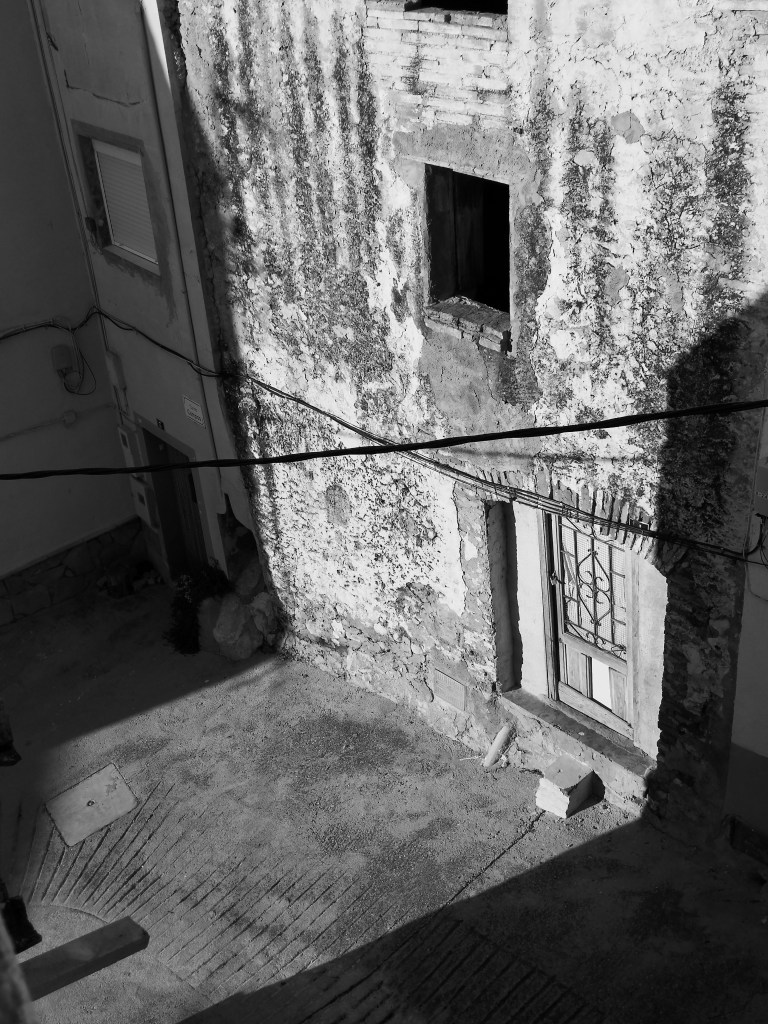
Tortosa Catalonia

It was I, not Napoleon, who took the moon and put it at the bottom of a lake, littered with the bloated bodies of Englishmen drowned in their re-sprayed Range Rovers. Between velour flaps, cold castellations and raptures coloured like velvet bands at the fair, phalanxes shimmer like desert lizards tussling in the heat of day, the axehead aligns at the very base of the skull to release a thousand demons from their hiding places, demons who vy against one another in their scramble to escape this mind forever, darting this way and that, a confusion of beastly shapes writhing in colours both sapphire and turquoise –

Daniel O’Reilly

Daniel O’Reilly is an independent British author, publisher and internationally exhibited multimedia artist living and writing in rural Catalonia in northern Spain. In 2022 he exhibited stories, photographs and music from the [archipelago] project at the International Exhibition of Surrealism in Cairo & Alexandria in Egypt, which will travel to the Andre Breton House in France in 2024. He has recently published short fiction in the Margate Bookie Zine, Trilobite Literary Journal, Tiny Spoon magazine, Writer’s Block magazine, Sulfur Surrealist Jungle, the Bengaluru Review, Defunkt Magazine, Everything in Aspic Magazine, Chachalaca Review, The Room Journal of African Surrealism, and Black Flowers Literary Magazine. He is co-creator of The Unstitute, an online art lab and artists’ co-operative, and has screened original video art in competitions and exhibitions in over 20 different countries worldwide.

Visit the [archipelago] literary project on Patreon: https://www.patreon.com/DanielOReilly

Visit The Unstitute: https://www.theunstitute.org/

Anthropomorphic Sap by Ricardo Enrique Castro Guerra

Materialidad en la obra de Ricardo Castro Guerra

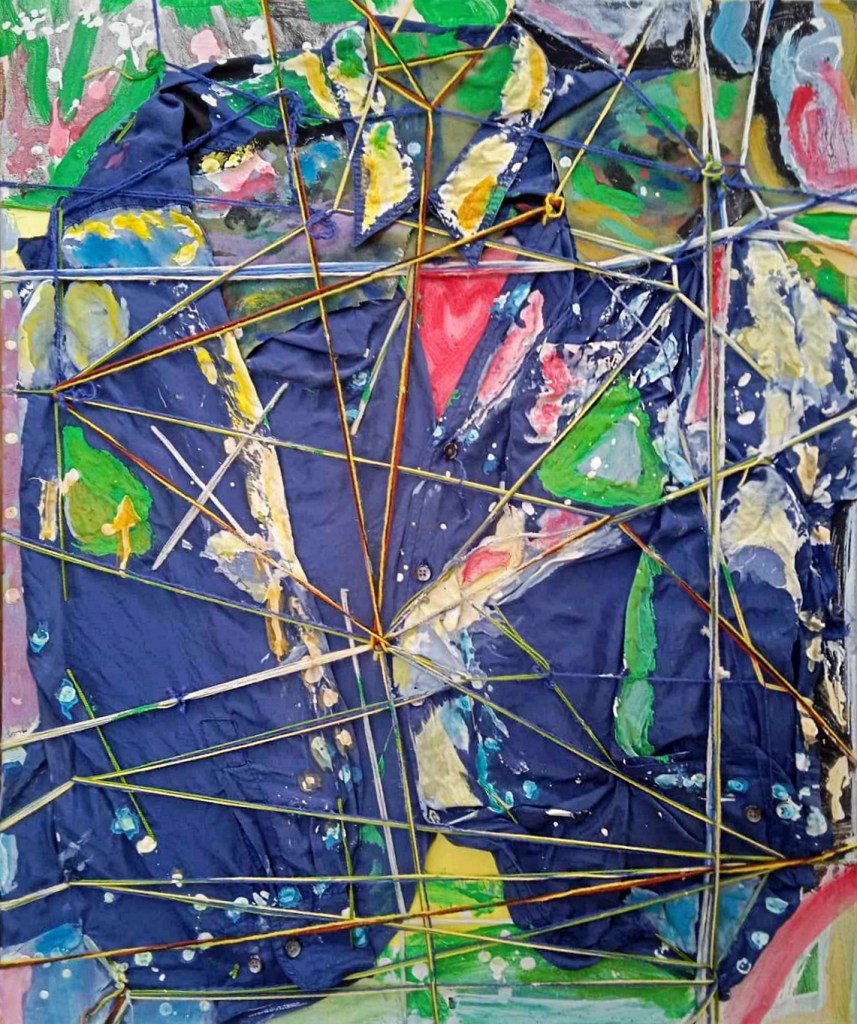
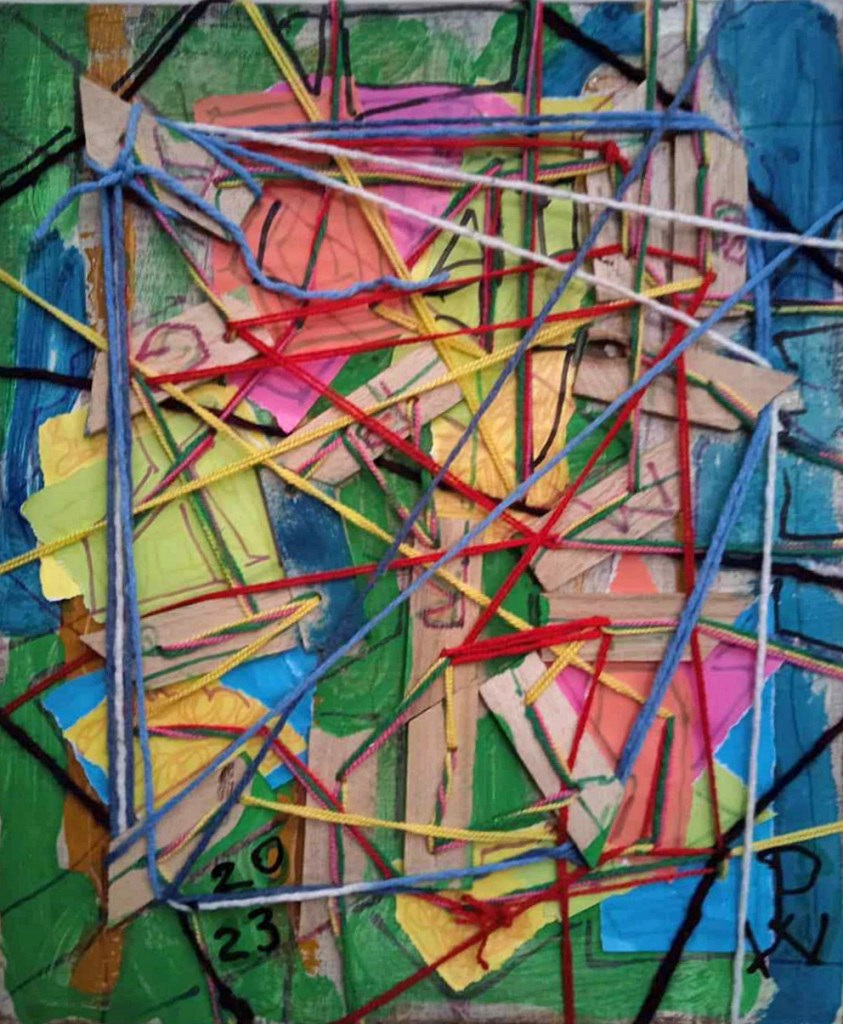
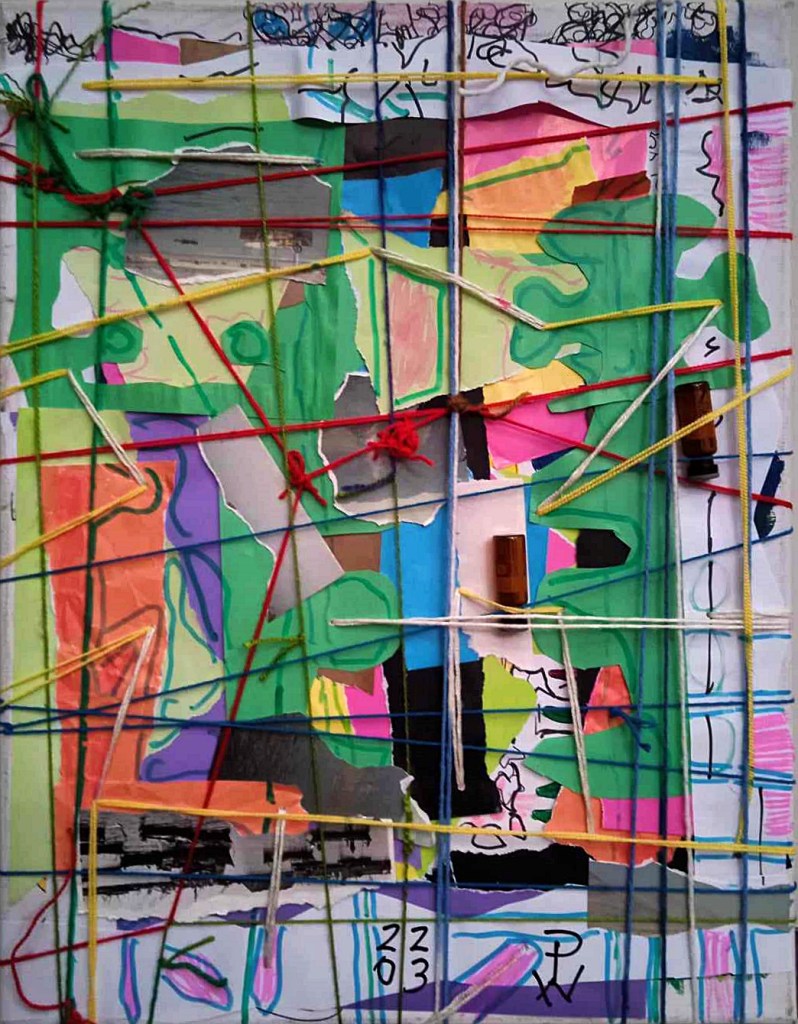
La materia sustancial de mis obras las constituyen materiales orgánicos mutables provenientes de la natura-leza y prefabricados por la industría humana. En la unión de estas dos naturalezas está el magneto. Savia fito morfa, sabia antropomorfa. El medio ambiente me proporciona los medios, el medio ambiente urbano, en las calles tomadas por recicla dores. Todos los objetos son encontrados, escasa compra de materias para hacer obras de arte, sólo basura, desperdicios con ene energía humana. Cartones, lanas, vidrios y maderas; papeles, hilos, pinturas, vidrios, telas y marcos. Reúno elementos desperdigados, subproductos de la industria y la codicia humana. Doto a cada parte de la obra con una condición magnética, esto hace que de diversos elementos surja un sólo. Mix de materiales considerados de nuevo para la aventura creativa, reciclador de los que reciclan cachureos. Materiales abandonados por el sistema educacional, obras de arte anónimas, retratos de adolescentes, papeles pintados con acuarela, todo es obra de arte antes de que yo la asuma como medio para elaborar otras ideas, me siento como un borrador, como si fueran partes de un muro pintado donde llega otro que pinta y tapa lo que ya está pintado, mucha obra de niñas y niños, dejo muchas veces los colores o algunas formas, se puede decir que mis obras son coproducciones, alucinaciones de seres humanos de Chile.

Color
Los colores vienen con los objetos que encuentro. Uso común de temperas y acuarelas, cartones preparados con esmalte blanco al agua. El papel lustre aporta colores brillantes y planos, es ahí donde tempera y acuarela vienen a apaciguar estos planos, luego como complemento: Hilos, lanas y pitillas aportan lineas de colores inenarrables, son lineas de color que tensan con ángulos y triángulos las formas, por tanto lo que ya está pintado, y recortado se reaviva, los colores se superponen, se acercan el hilo negro con la tempera negra, el amarillo del hilo con el amarillo del papel lustre, la acuarela hace su magia transparente. Los géneros me aportan un color de sedas azules o sedas amaranto, todos los colores dependen del material en uso (y huso) y de esta convergencia surge el color final de la cosa. Obras que sólo tienen el color de los papeles lustres lustrosos satinados, con recortes se forman las manchas, se forman las zonas de color y todas sus líneas, más el color de las lanas que uso para atrapar el papel, es indiscriminada mi elección de los colores, los hago entrar en cada una de las obras, esto hace que se asemejen mucho entre ellas, o tal vez sólo es familiaridad, color familiar.

Linea ¿Linea de estilo? ¿Qué linea sigo?

la linea como parte de las figuras, de los fondos, como parte integral de un monosapiens, o de una gráfica cualquiera. Las inalterables lineas del soporte, todas lineas rectas, innumerables en la trama de la tela, verticales i horizontales, invisibles. Cubierta de pintura o de papel. Linea hilo diagrama, el hilo-linea entra en el agujero que es el aleph de las que ya fueron trazadas con lana. Se convierte en trama, en tensión, gira alrededor del soporte, sujetan la composición, como factor de unión. la línea sigue un hilo en el laberinto de la obra mixta, amarra las formas, los fondos y las figuras giran en torno a la obra,dejándola reversible, o sea apta para apreciarla como si fuera un volumen. El empleo de marcos (enmarcación) le aportan 4 lineas rígidas a la soltura de la estampa, lineas que atrapan toda otra posible linea variable de la obra misma, echando al cuerno la espontaneidad o soltura del contenido. Acertijo de lineas sólo inicio y final.

written by ©Ricardo Enrique Castro Guerra

Ricardo Enrique Castro Guerra

Es un asunto de querer magnetizar los elementos encontrados. Unirlos como si fueran una solución a un problema, sin tener , ni presentarse como problema. Al encontrar un objeto se van produciendo solas las uniones, la visión de esa reunión empieza a crear se su propia obra. Una inspiración creativa que se gesta a través de las palabras y las acciones. Arte de acción, teatro, poesía, plástica.

Nacido el año de 1961 y dedicado a la creación artística desde entonces, cuento en la actualidad con 62 años y perseveró con entusiasmo en la creación de poesía, obra plástica y conciertos de poesía.