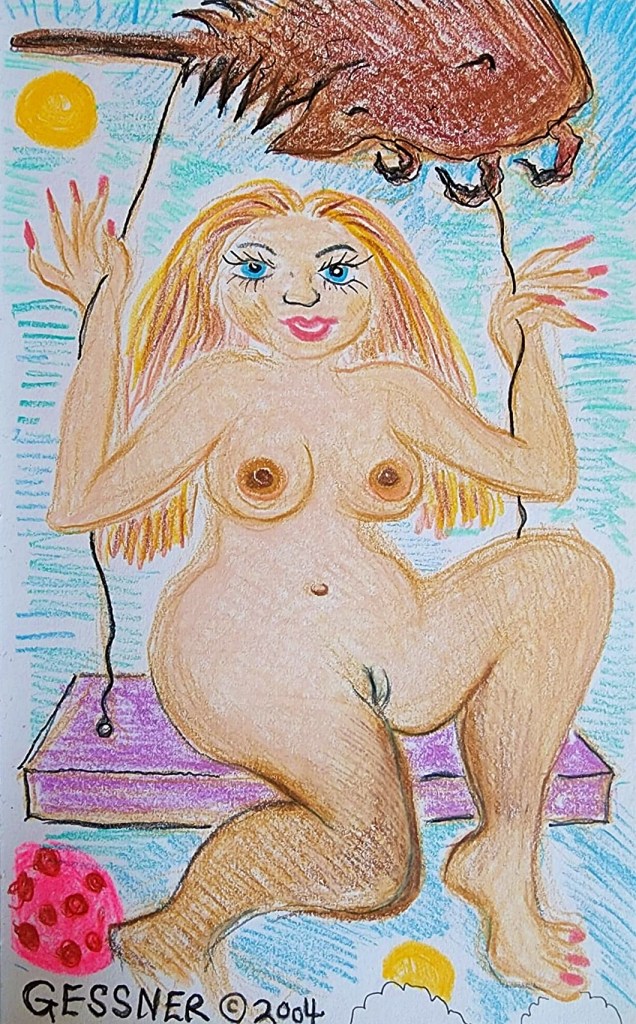
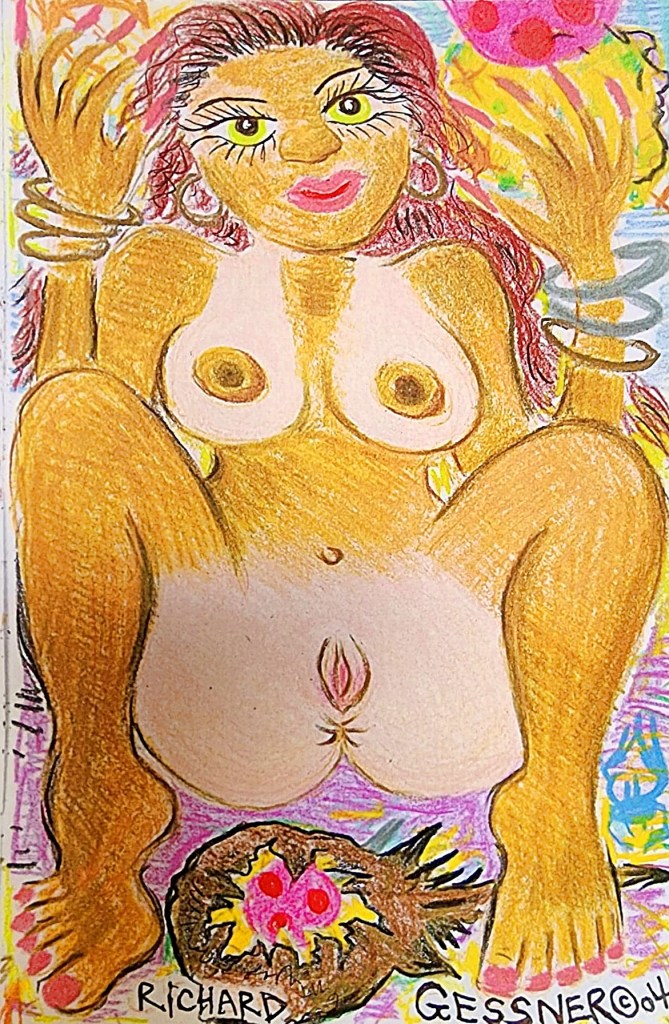
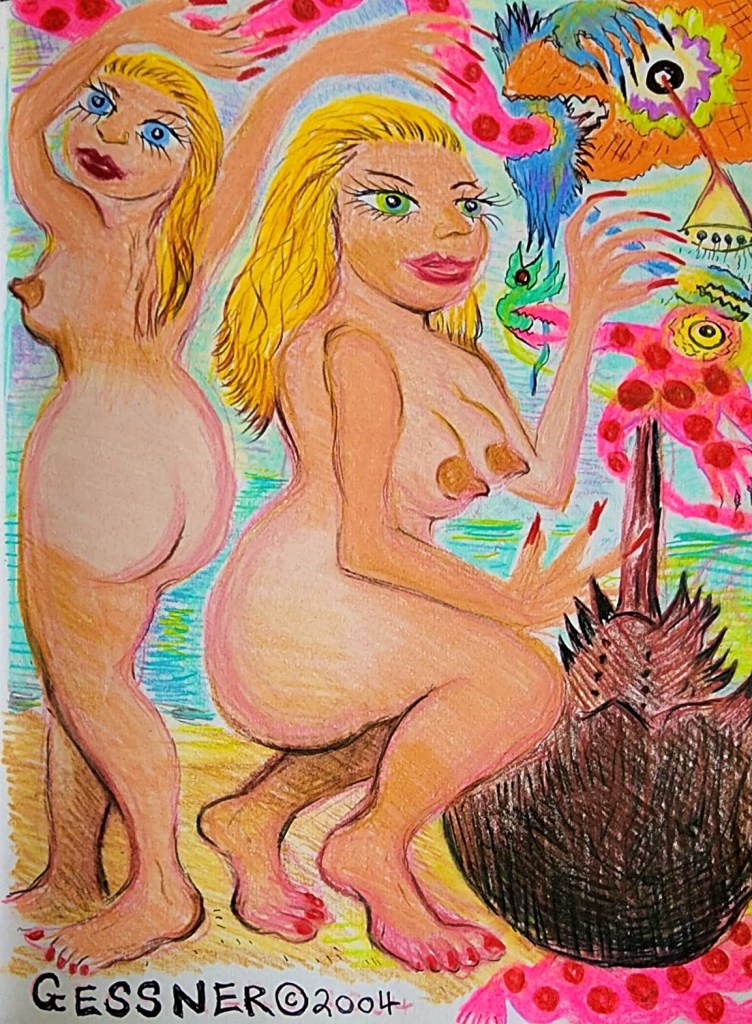
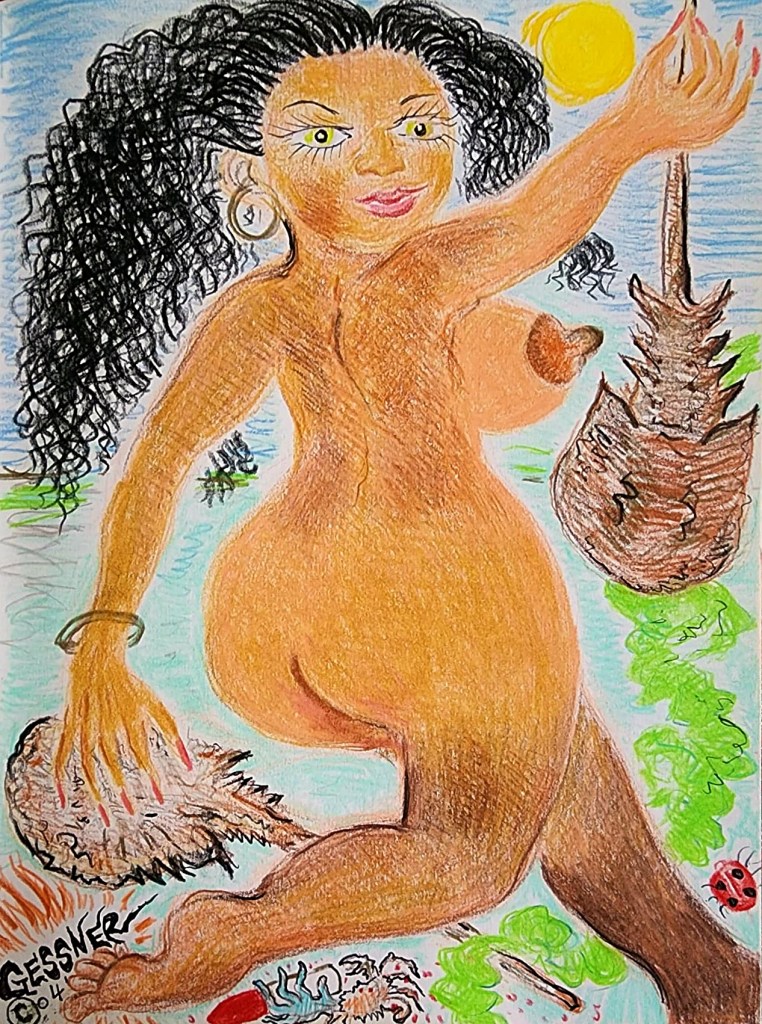
Limulus, is my favorite arthropod, it’s the oldest species on the planet.
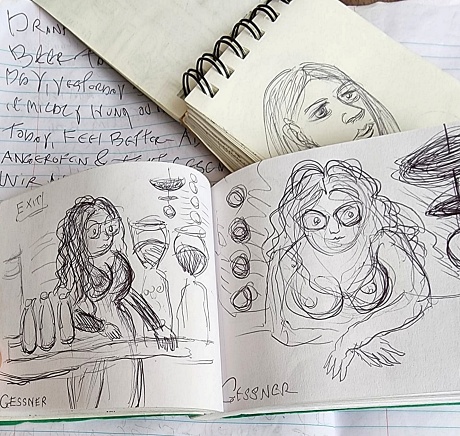
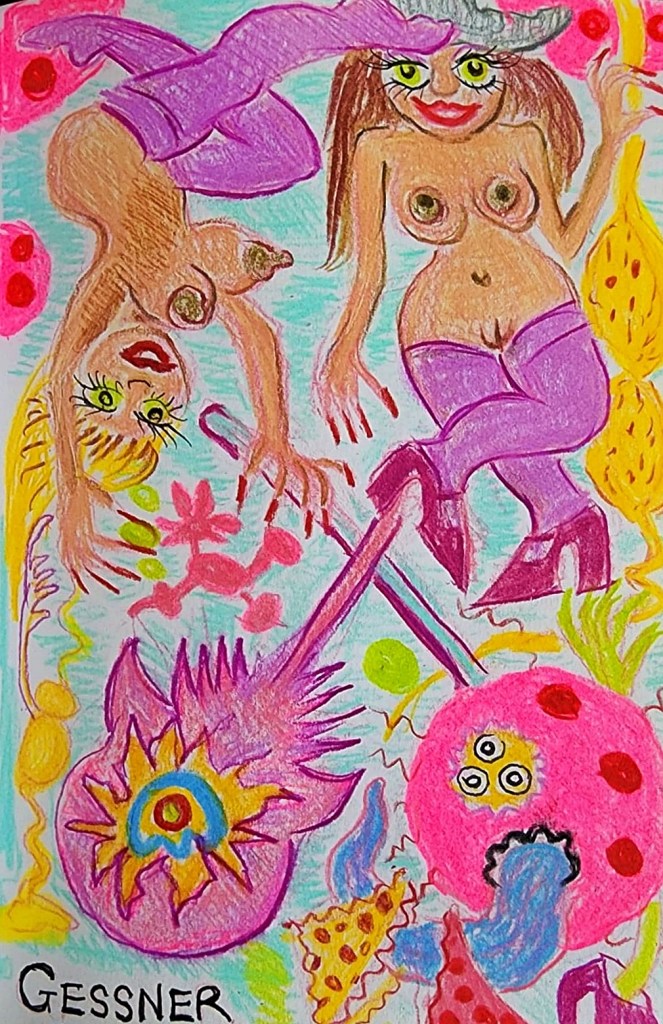
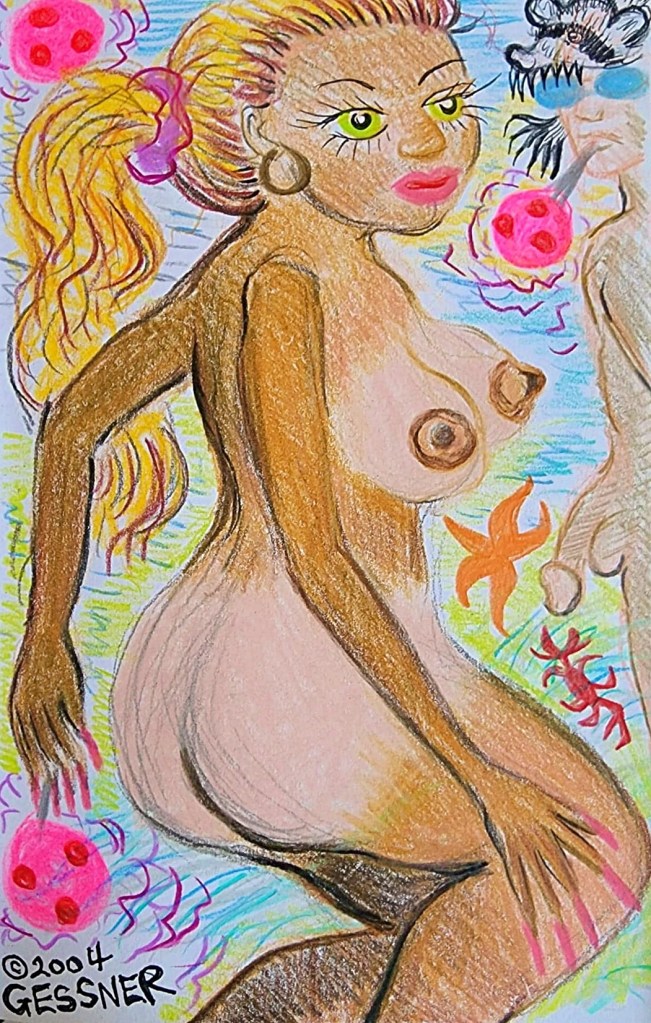
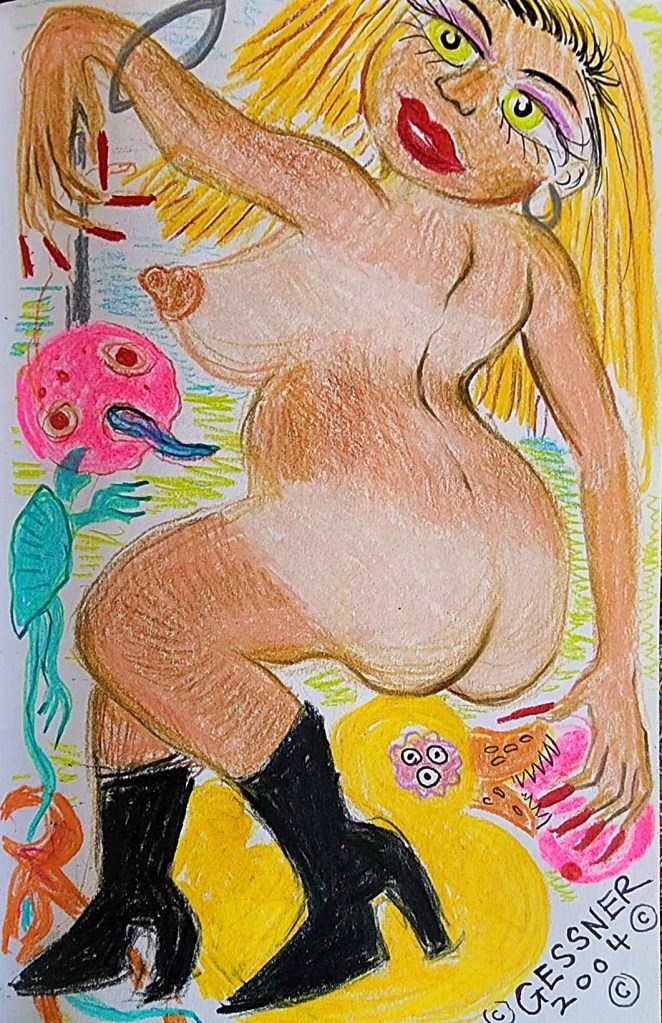
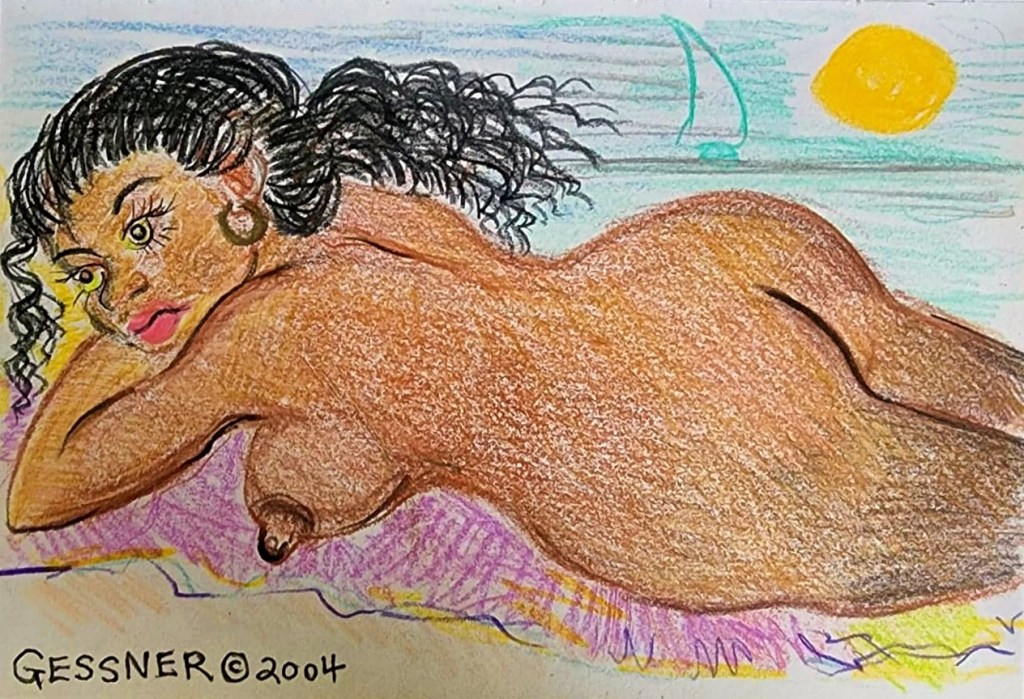
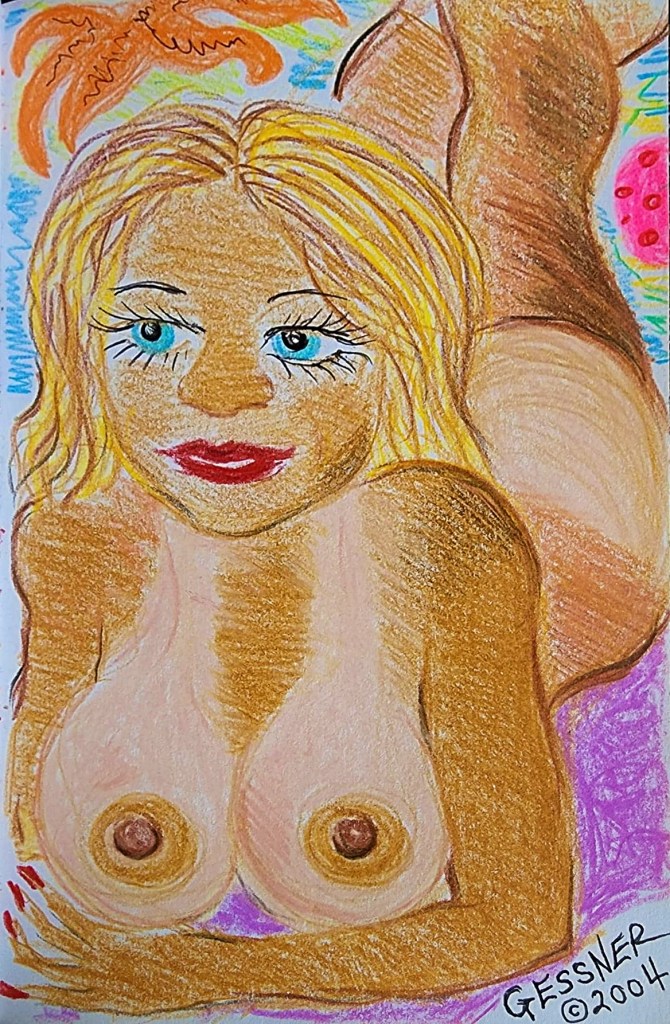
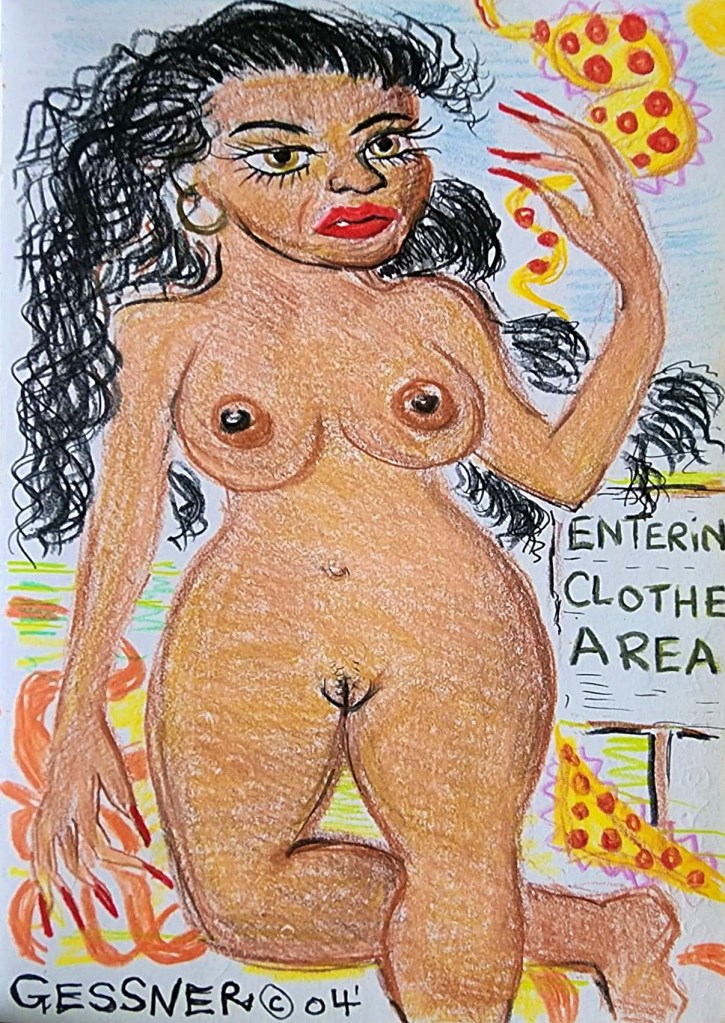
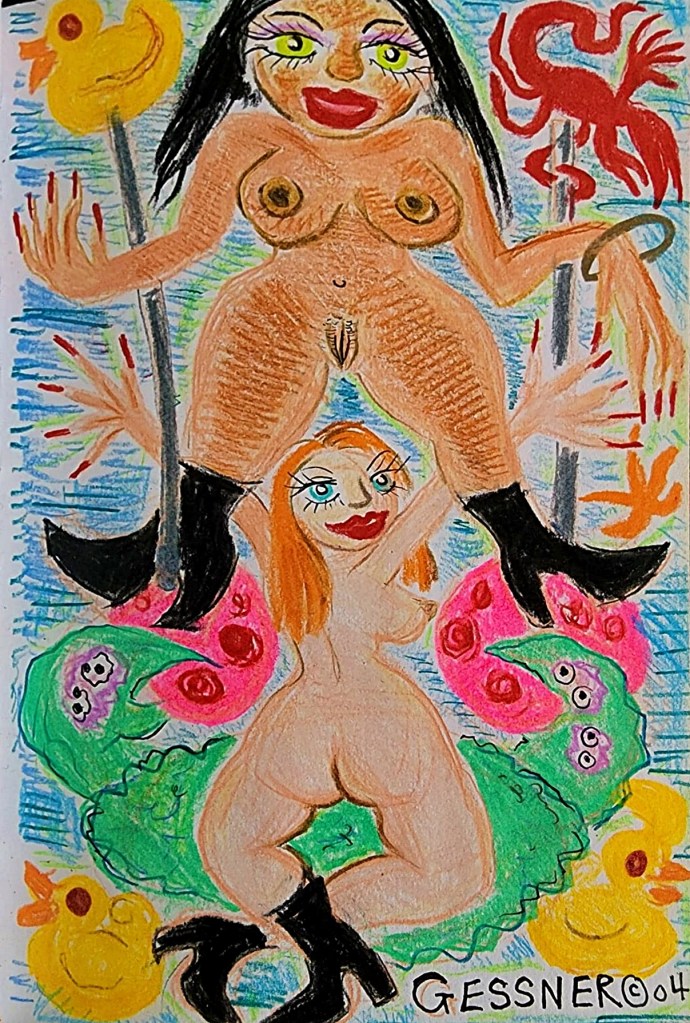
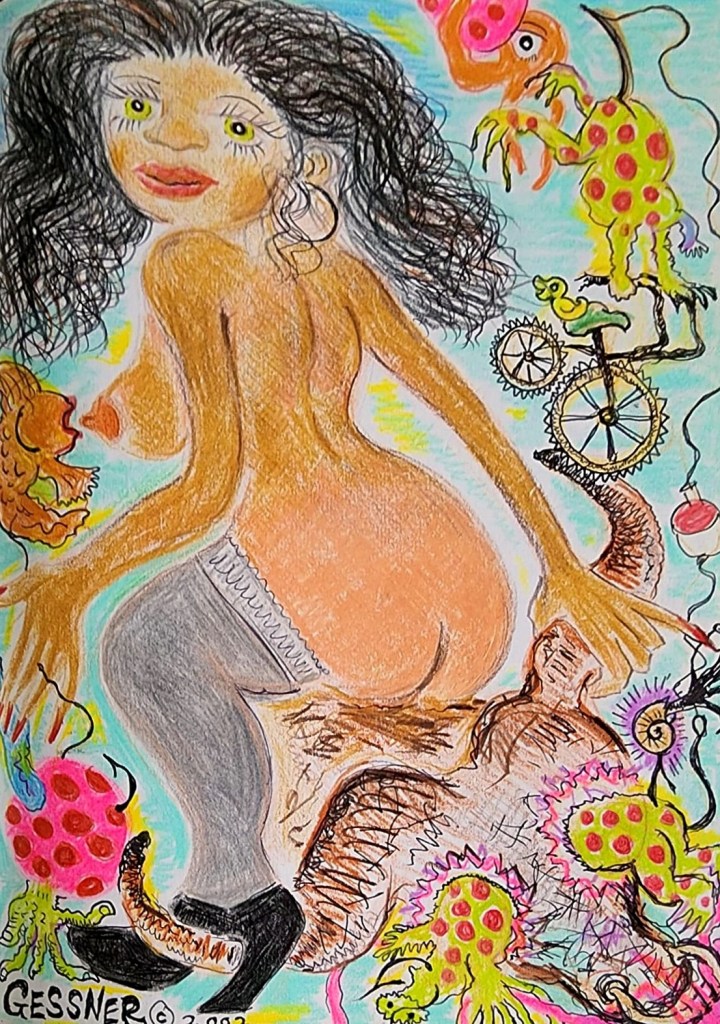
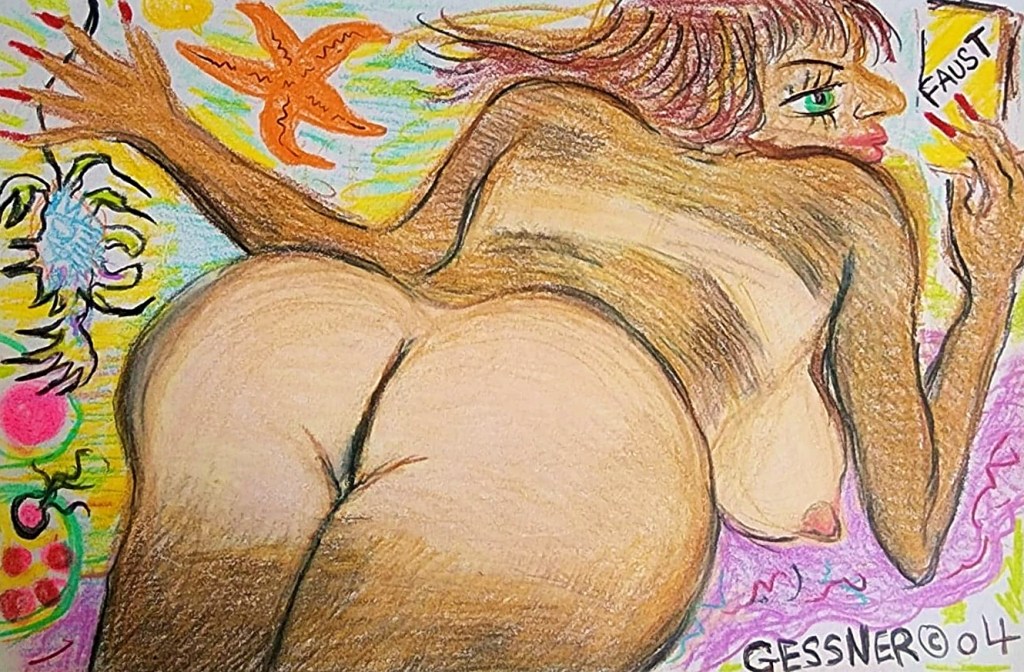
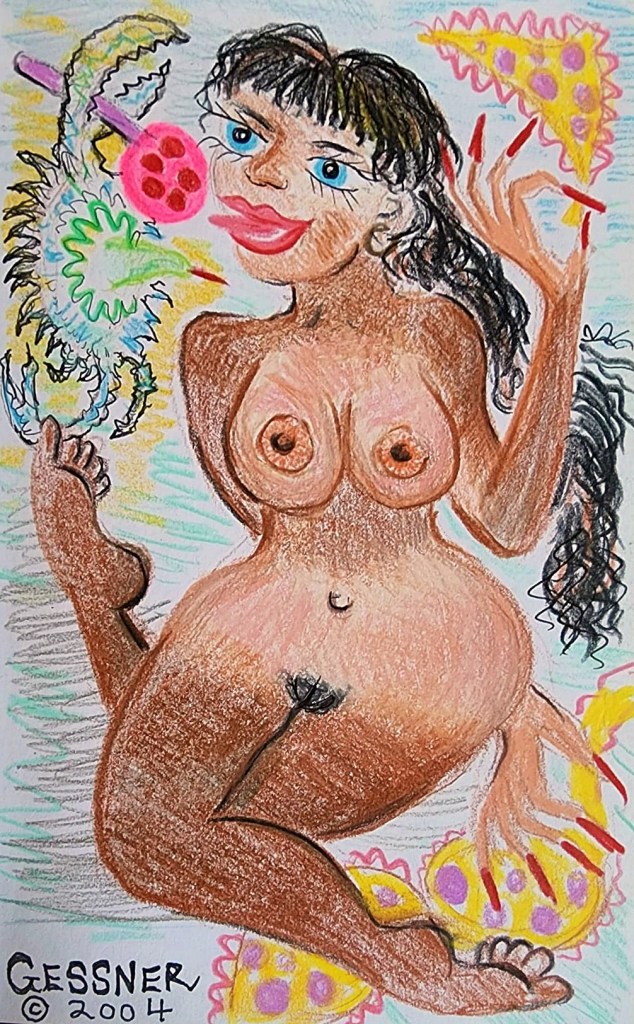
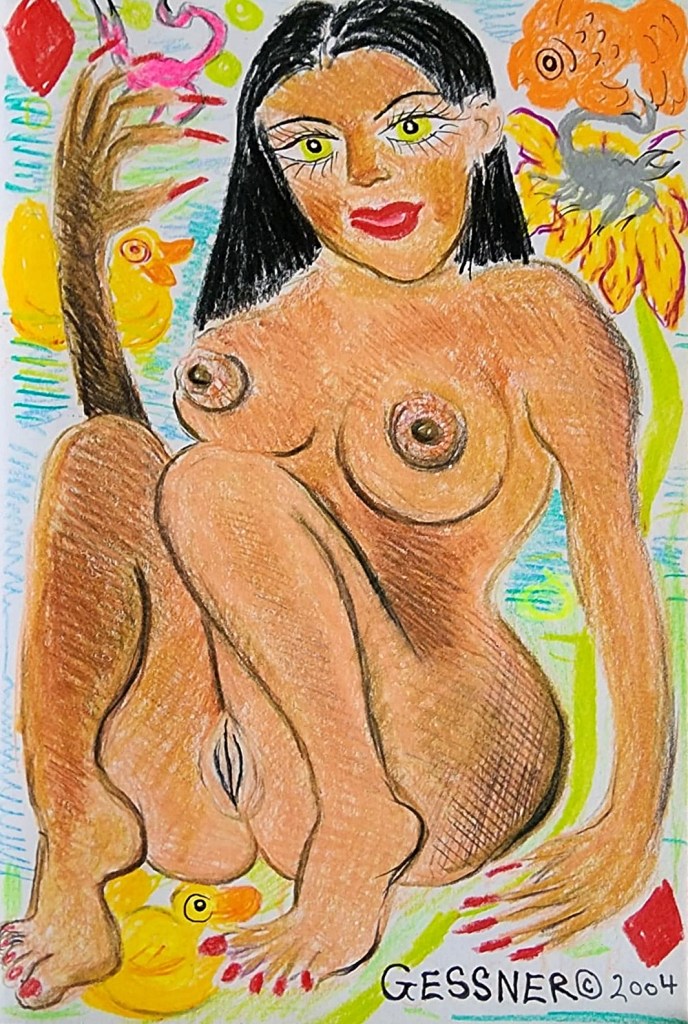
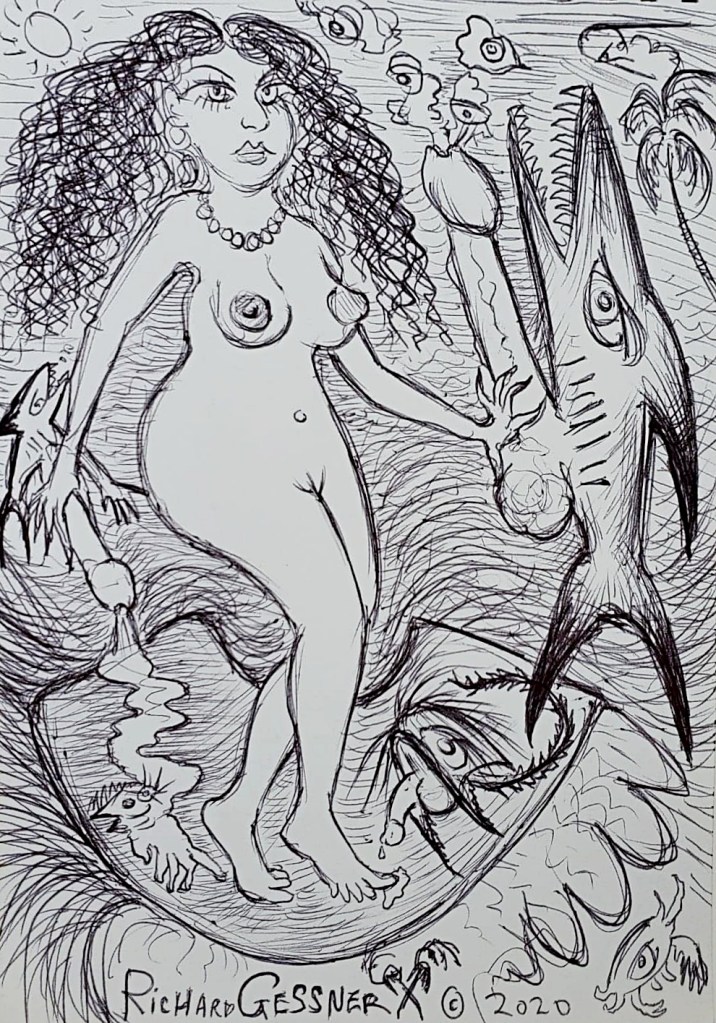
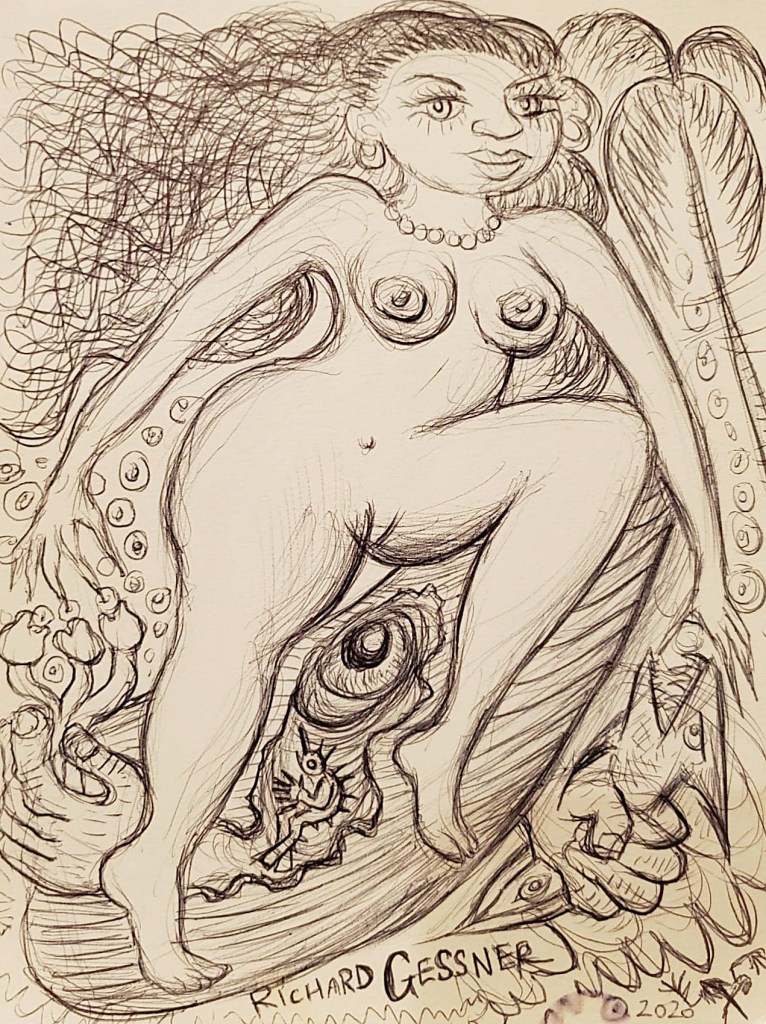
I’m thinking about sex 24/7. Raging hormonal beach Paradises stretch on infinitely into horny horizons. The sight of beautiful fertility Goddesses is always more pleasant to behold than old men covered with craters of acne scars, or Syphlytic doomsday warthogs with copper sulfate tusks!!
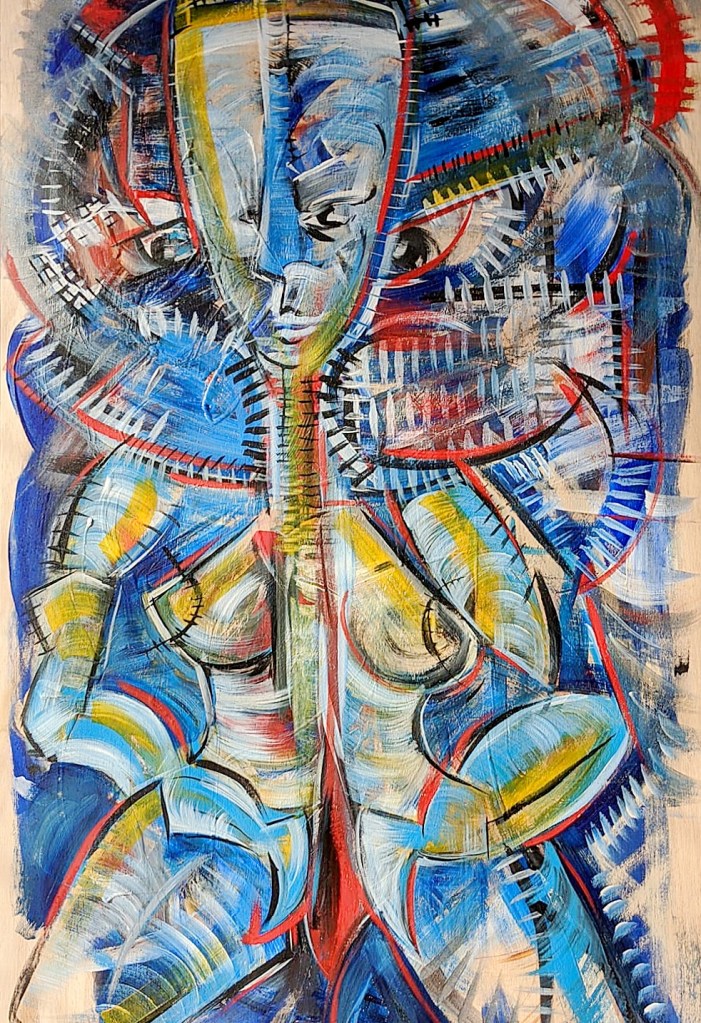
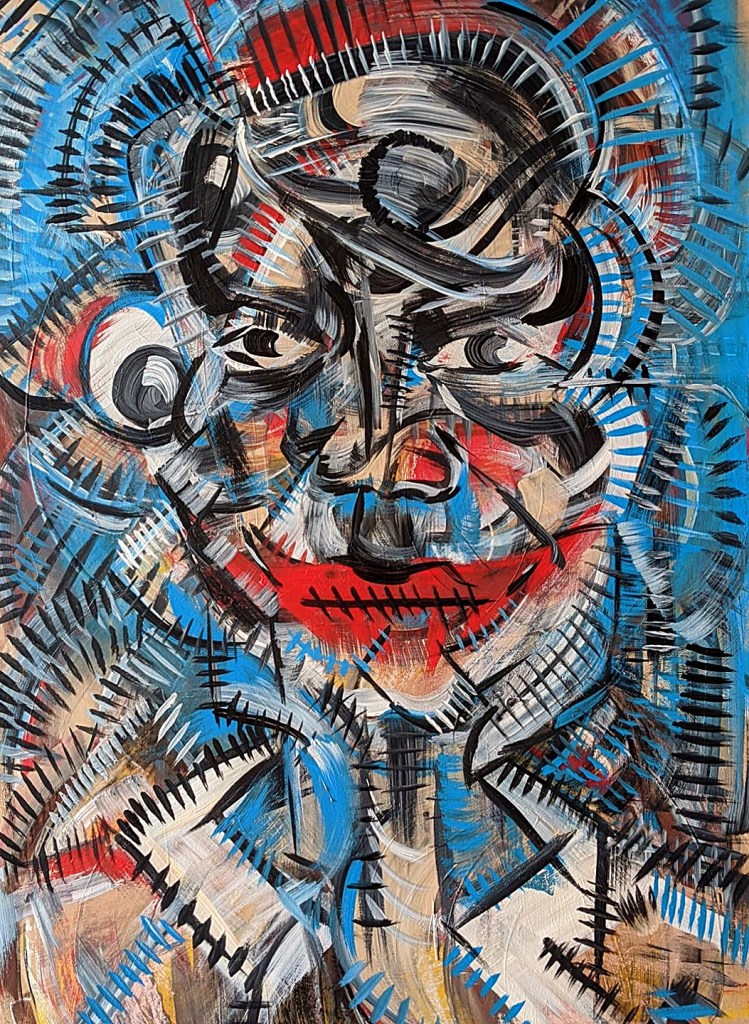
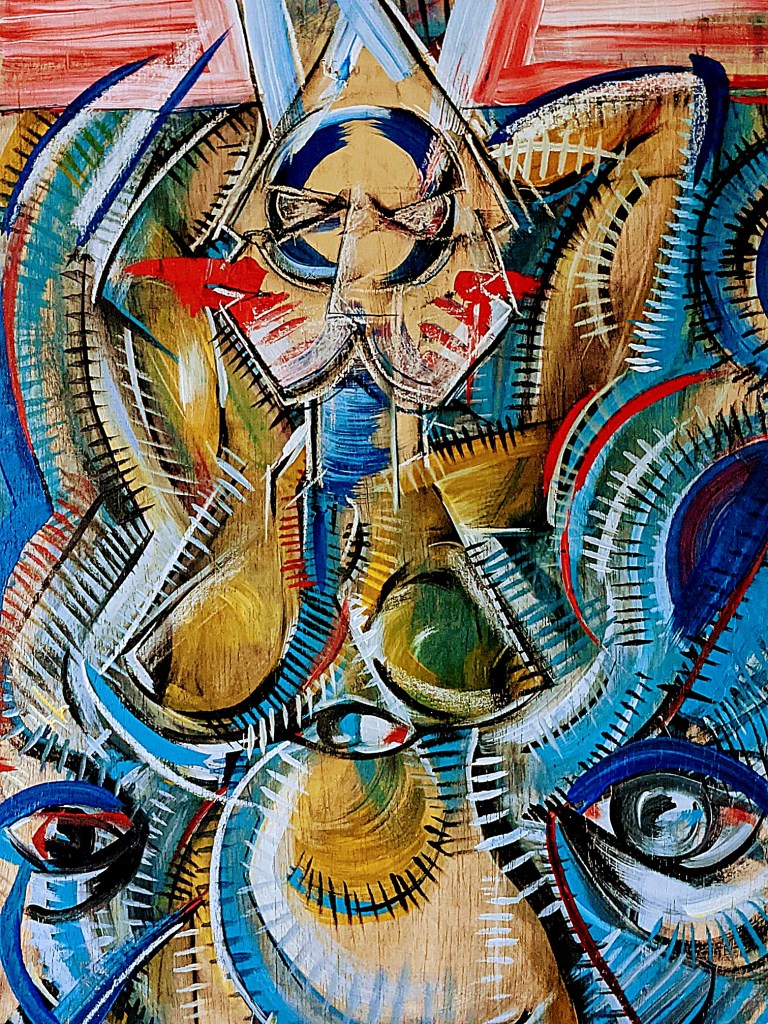
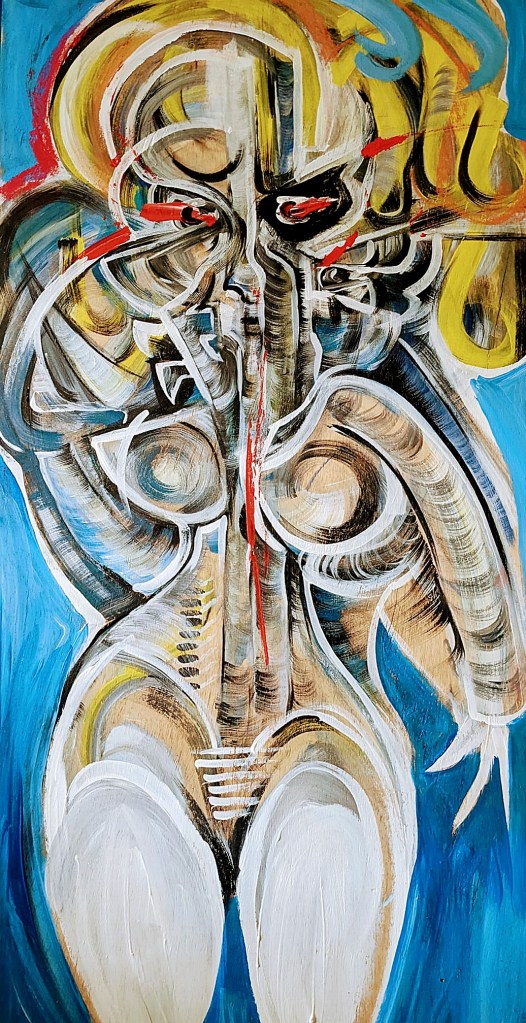
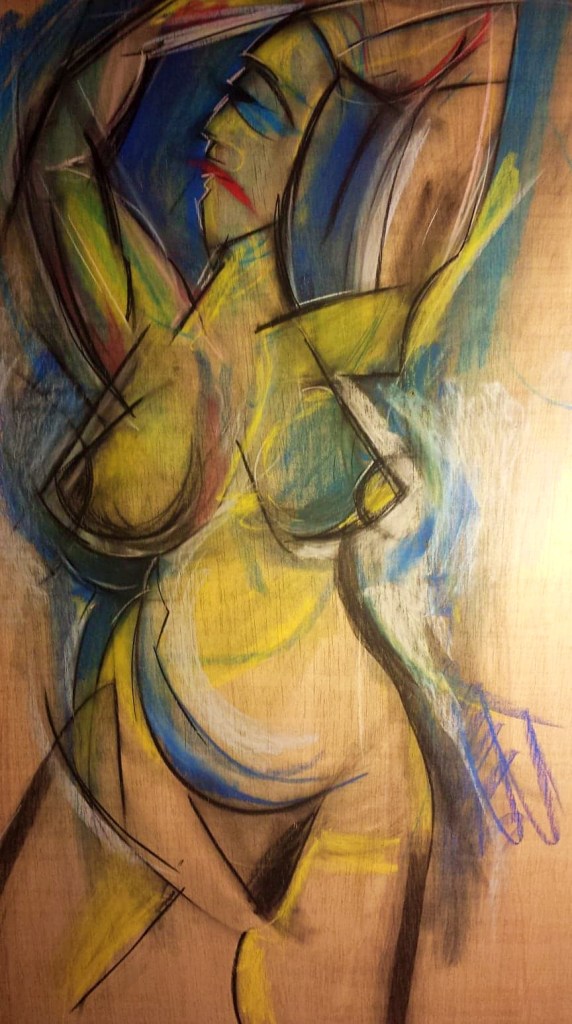
Naked ladies have a storied history in the history of art. From Boucher, Bouguereau, Anders Zorn, Mel Ramos, Eric Fischl, pin up art of Elvgren and Driben….Like Brooke Burke and 10 thousand other Brunettes. Hans Bellmer is a favorite. Independent from art, the naked lady in public viewed by the salivating Voyeur since time immemorial is inspirational.
Hans Bellmer appeals to me because it’s Life itself. What beauties can be viewed spontaneously in the street. It is bizarre and an otherworldly ethereal quality that I like.
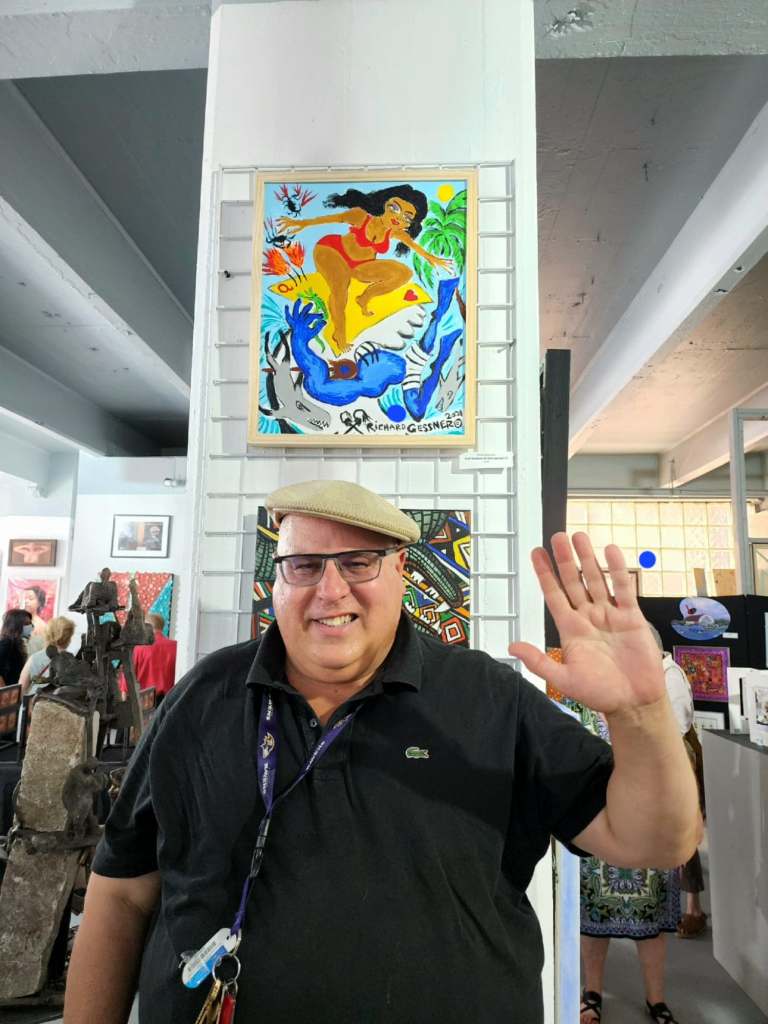
written by Richard Gessner
Richard GessneratStudio Montclair, Leach Gallery 641 Bloomfield Avenue Montclair, NJ
Artist and Short Story Writer Richard Gessner
more art and info on Richard Gessner can be found at
the psychic robot, how our animal selves passed through the portions of different brain territories. the snakes, the monkey scribe, and now the circuit board advisory city-state. clay tablets as a big golem, ideas as ghosts informing the brain
How would you describe your painting process and your associative relationship between concepts, events, or mental states of the subconscious? Is there a link between self-hypnosis and inspiration?
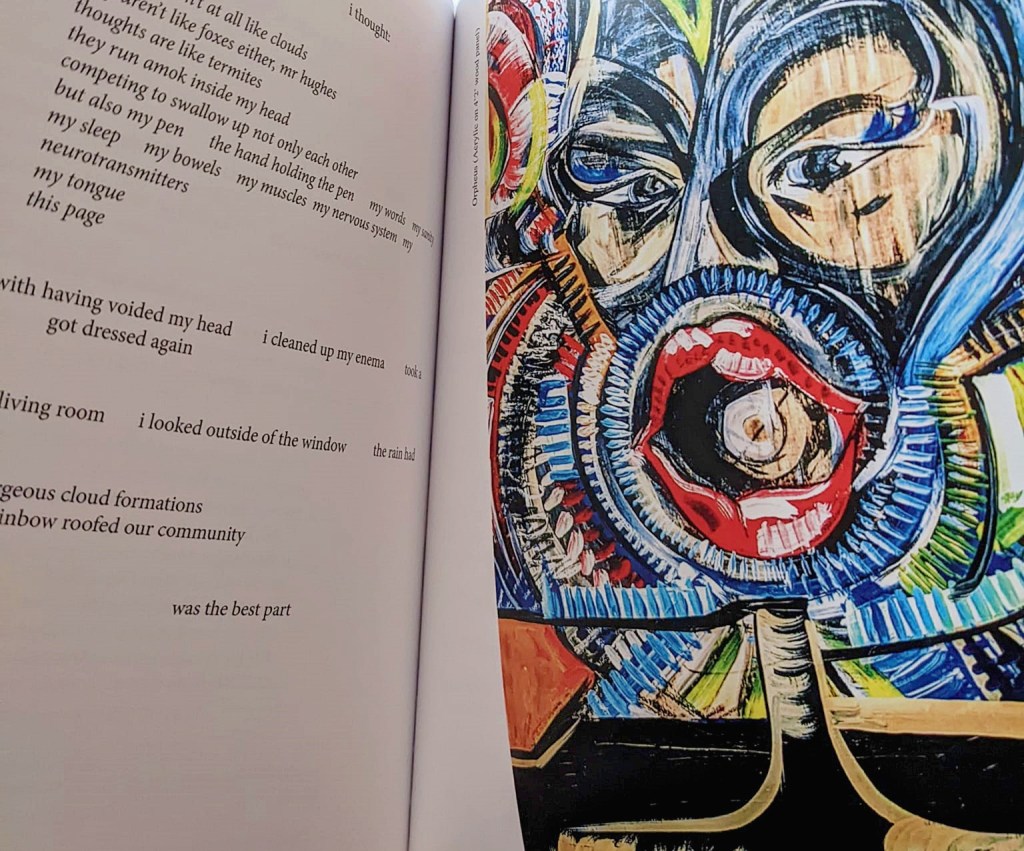
Artists, writers, and poets such as Garcia Lorca, Roberto Matta, Henri Michaux, and even Anais Nin have inspired me to paint. Language, for me, comes first, but the visual can support the verbal. I paint as if I’m composing poetry.
Automatism or improvisation is the starting point – bebop – but I’ve realized that the contours of a, often dismembered and re-stitched, female body appears repetitively in my mind’s eye: think Mary Shelly. This flickering of fragmented body parts leaves deposits on the canvas/my mind. There’s something about the human body that truly fascinates me. This fascination isn’t deliberate, and it’s also strange because I’m more cerebral than a physical person: in my view, the body exists only in the mind. This also solves, at least for me, the century-old dualism: the body-mind split. Or, as William Blake said: “the body is a portion of the soul.”
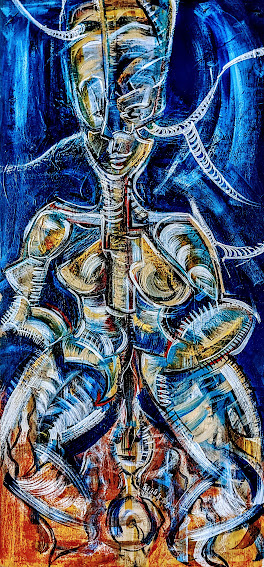
Man is a machine, and a woman is a sublime machine. If you compare the human and the animal body, the human body is clearly synthetic and artificial. It blurs the boundaries between what’s considered natural and what’s considered artificial. I find that thrilling. There’s nothing natural about us humans. We aren’t becoming robots or cyborgs, we already are. We can’t rely on our instincts anymore as non-synthetic creatures can. There are vehicles in the making that’ll be able to reproduce themselves with whatever material they can find on Mars.
How’s that different from us? You could say that humans think and feel, but do we really? Aren’t we just parroting the words, stories, and belief systems that we’ve been fed? When was the last time you heard a new idea? Something you hadn’t heard before, something that stimulated an innovative thought. We’re the protein by-product of language. Perhaps when there’s trance, a moment of silence, or jazz, an intelligent intuition can unfold in the nerve domain. Painting or poetry can help it develop, transmit and circulate. Possibly it can be fertilized by critical reading or meditation.
Is painting a technique that represents a body disconnected from words? a sort of ‘transmuting neurology’
Transmuting neurology, I love this phrasing. Probably our neurology is in constant a state of desire for perpetual transmutation, but the culture must allow for it. Studying the history of painting, I was excited to learn that the Impressionists had “discovered” different shades in snow, something that nobody had “seen” before them. Isn’t that intriguing? I guess they contributed to an alteration of the general perception and experience of what’s “white.” They are also depicted as the very first in the history of Western painting of social situations such as people dancing or swimming. Nobody had done that before them. That’s why the establishment was so scandalized.
Of course, it didn’t help that the women they painted often were what today we’d call sex workers. Can you imagine that in the second part of the 19th century? Later with expressionism and surrealism, painters gave expression to the ebb and flow of what’s inside the mind’s eye. An interesting artist is Francis Bacon. He claimed that he depicted people as they “really” are. Perhaps some of us are polished yet monstrous or disfigured? Or even, maybe the human condition is one of perpetual disfigurement? Whether we can see without words is something I keep on mulling over. I feel tempted to believe that as humans we need some sort of narrative or linguistic frame of intelligibility to see things. Perhaps we can only perceive objects contextually. Painters should be called pioneers or even anarchists of perception.
Can you elaborate on how language shapes us by a Languaged body, cultured intuition by sound, and language as a living intelligence?
I’d like to emphasize that I constantly toy with intuitions and ideas, not with truths. The truth for me often is a reductionist and particularly violent concept. Think of all the wars that have been fought over some sort of revelatory divine truth, or in later centuries, the so-called scientific truth. The Nazis had their ideology backed up by scientists’ assertion that theirs was the most evolved race (so-called Social Darwinism), and that certain other races were particularly parasitic and had to be exterminated the same way as rats or cockroaches. So, circling back to the central ideas informing my practices such as the “languaged body” which is a neologism, and the idea that language is a living intelligence, I don’t consider them to be truths. These are frames of intelligibility that have grown under my skin over the years of study, reflection, practice, and meditation. I have no problem admitting that these concepts are nothing more than my obsessions. I’m not a missionary.
I see language as something external to human beings, possibly an organism. In the process of language learning, humans are inserted into this external thing we frivolously call language. There are linguists in Switzerland who’ve developed a theory in which language is a symbiont. So not necessarily a virus as William S Burroughs famously claimed, or that it can turn parasitic in case of psychosis as French psychoanalyst Jacques Lacan suggested. I see our brain + nervous system as a receptor-like radio, tv, or computer, capable of receiving signals and building narrative. In some way, it’s a form of telepathy. By producing sounds, we invoke a whole shared world that has been forged across thousands of generations. Also, we invest our lifeworld, including our bodies, with words, with a story. If our bodies weren’t invested with language, we’d constantly experience ourselves and others as walking talking meat, protein bags, or water bags on legs. When we buy meat at the butcher’s or supermarket, we don’t think of that red stuff as chopped-up dead animal cadavers. We say it’s a New York strip or whatever. Something similar is going on with our bodies. We have names.
This name is somehow “written” on our skin, on our face. I’ve never met anyone without a name, though I’m curious how that’d be. When we feel attracted to someone, we don’t think “that’s a tasty animal.” Some of us might, however. A whole story about someone is activated within us when we fall in love, a concept of what a human being is, of what beauty is, etc. while we all know that a few millimeters under the skin there’s blood and a skull. But who, except a cannibal or a serial killer, thinks about that? The way language has contextualized humans prevents us from seeing the meatiness of a person. But this experience isn’t fixed. There are cultures in which not everyone has human status. Think of the Dalits in India. In Central Africa the so-called pygmy is being hunted and eaten, most probably because their appearance doesn’t conform to the hunter’s concept of what constitutes a human. It’s also interesting to read the private diaries of people who worked in concentration camps, and how they thought about the people they helped butcher or exterminate. Some agreed that Jews, homosexuals, communists, etc. had to be put to death, but they felt it should happen in a kinder way, pretty much how some activists think about animal rights in our era.
Language protects us by feeding us optical illusions. As humans, we’re trapped in a theater of distorted thoughts. It’s as if we need to drive on a busy freeway wearing glasses deforming everything coming our way. All this is extremely disorienting and frightening. I think maybe that’s why there’re so many ideologies and why religion is such a sensitive matter. These “grand narratives” offer the illusion of certainty and direction: how one should lead one’s life, where one should be headed, and where to invest one’s life force. The artist, I think, has been for whatever reason cast out of the Eden of ideology or religion, and is forced to constantly mold and remold her internalized worldviews, knowing often very well that this is a futile endeavor that must be repeated endlessly. But, at least, there’s some motion within. The alternative would be catatonia.
Artists, writers, and poets who helped contribute and inform your process?
I sound like a broken record when I keep on mentioning Will Alexander. But there’s no denying that his oeuvre provided me with the missing link in my thinking. I have always had an interest in ritual, animism, and shamanism, but with the latter term, we need to be extremely careful. I adhere to academic concepts of shamanism, such as Mircea Eliade’s. When younger I participated extensively in groups believing that they were engaged in shamanic practices. Perhaps some of those did. I don’t want to claim that I have the capacity to say what’s authentic and what isn’t. What I inherited from these experiences is the sensation of trance. Will’s work transfuses both language and animism/shamanism, especially in his The Combustion Cycle.
Without trance, there’s no writing nor painting for me. Writing prose is different. Poetry and painting for me fall in the same domain as glossolalia, speaking in tongues or trance-speaking. Freudian associating on the couch. Will’s concept of language as a living, possibly alchemical intelligence, makes a lot of sense to me. It connects my interest in shamanism and animism with my obsession with language in a no-nonsense way. WA’s poetics is a conscious journey into the imagination. To truly feel this, you need to understand that the imagination isn’t just “fugazi” or fantasy. The Jungians know very well that the imaginal world is a tangible environment, in which one can move around and travel in. There are beings dwelling there. You can develop a bond with these inorganic characters. Jungian practitioners are aware of this possibility.
I think I can say that Occidental culture at this point in history is in a state of coma or autophagy: it’s eating itself up. The criteria for personhood are so one-sided and reductionist that it is extremely easy to descend into a state of being a non-person. Maybe the only option when that happens for some people is to die and, in the process, drag along as many corpses as possible. Ours is a high-risk society. Having said that, I’ve lived in India for three years the comfortable life of an adult literature student. Life in India is no bargain either. Perhaps I have taken shelter in the written word and painted images because I’ve experienced that it isn’t possible to change your own culture with another. Every culture has its own cruelties, sacrifices, and gains, but they aren’t commodities. The difference, maybe, between Western cultures and the rest of the planet is that, as French novelist Michel Houellebecq suggests, the West has sacrificed almost everything for the sake of rationalism and technocracy.
There are also other artists and poets besides WA that have influenced me. I’m thinking of the “Grand Jeu” poets such as Rene Daumal and Gilbert-LeComte but also Antonin Artaud, Joyce Mansour, and Roberto Matta. Regarding US artists and poets, there’s, of course, Philip Lamantia, whose thinking and work is like a direct mind-injection into my mind: picture a metaphysical phone call without ever hanging up. Other important people would be Bob Kaufman, John Hoffman, Laurence Weisberg, but also someone like Mina Loy, and some beats, in particular William S Burroughs. I feel a deep affection for a lot of artists and writers: William Baziotes, Arshile Gorky, Thom Burns, Rik Lina, Byron Baker, Emily Dickenson, Edgar Allan Poe, William Blake, Lautreamont, Guiliaume Apollinaire, Baudelaire, Rimbaud, Gerard de Nerval, Grace Hartigan, Leonora Carrington, Remedios Varo, Juanita Guccione, and many more.
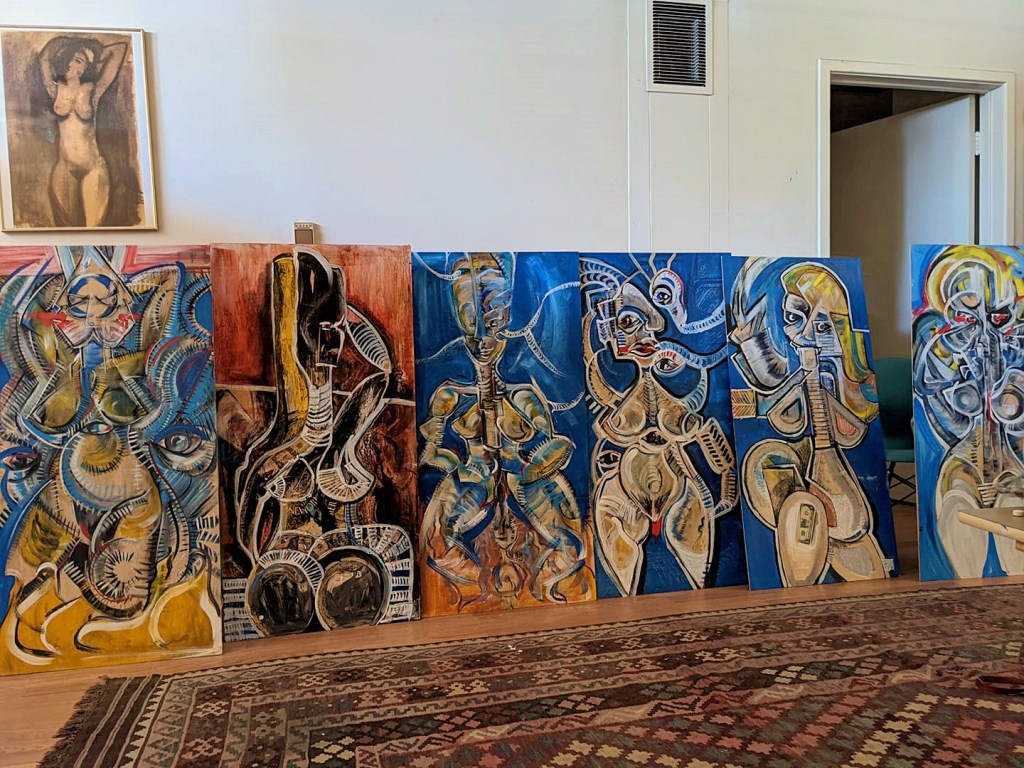
Bill de Kooning deserves special mention, on the one hand, because nobody speaks about him anymore and because of ongoing the “de Kooning-bashing. But also because my paintings are a prolegomenon (not a counter-narrative) to his disfigured depictions of Marilyn Monroe-type of women, in particular the teeth: Where else in the world is the business of smiling taken so seriously as in the USA? My series of chopped-up disfigured ladies, “Mutilated Madonnas,” are homage and homologous to his.
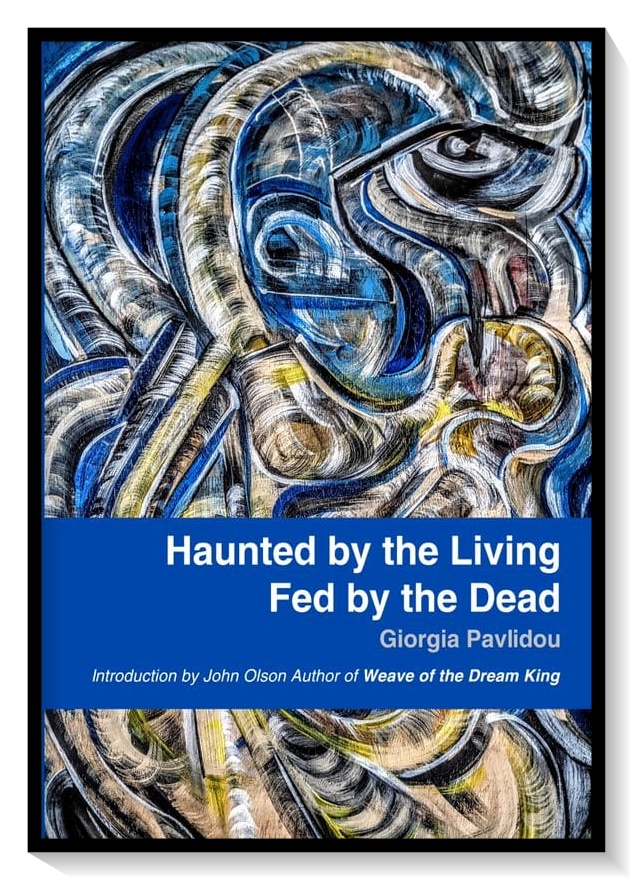
This is intense work. It’s incandescent. It’ll catch your eyes on fire. Burn your brain down. Giorgia Pavlidou has managed to make anguish appear beautiful. And sexy. Artaud is the tutelary spirit of this work. The anguish is real and the words have the taste and smell of the netherworld in its black gown of sibilant pupa. This is language with a biology; it writhes, hisses, and propagates by glossolalic impregnation. Reading these poems is an immersive experience. Here we find madness, anguish, erotica and Rabelaisian humor welded and wed to a language full of “lexical tentacles” and “fire dressed in fire.” It gets under your skin, this speech. These strangely intelligent & autonomous words, manic as wasps in a vessel of glass.
—John Olson
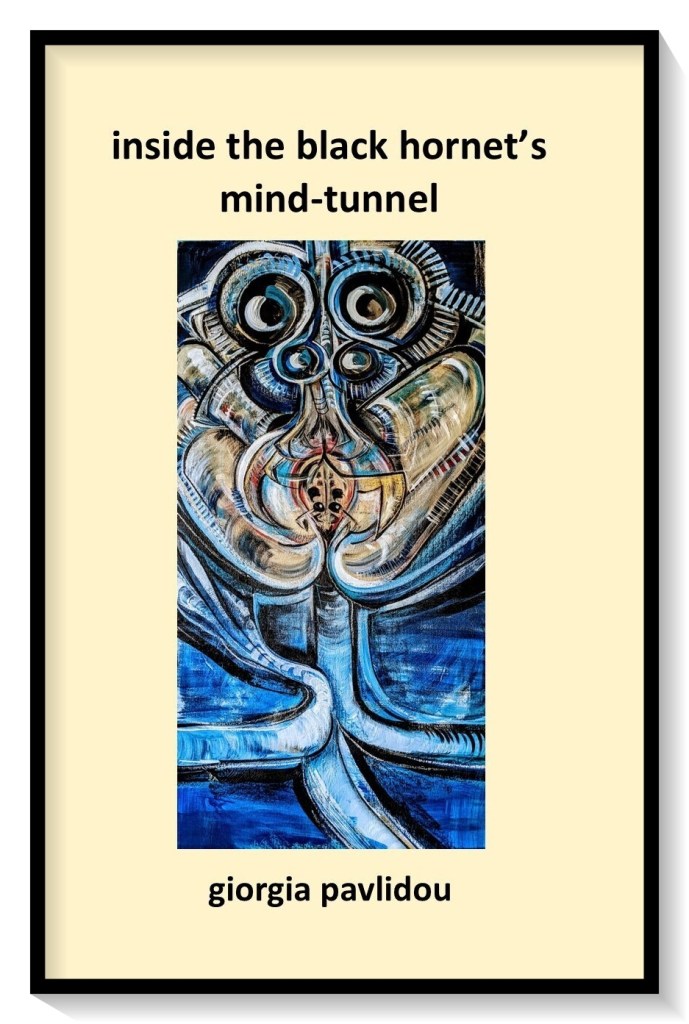
A pyrotechnics of lingual essence, Giorgia Pavlidou’s “inside the black hornet’s mind-tunnel” yields feeling through the language of the heart creating darkened constellations that rivet the inner eye all the while whirling as an estranged yet organic imaginal terrain.
—Will Alexander
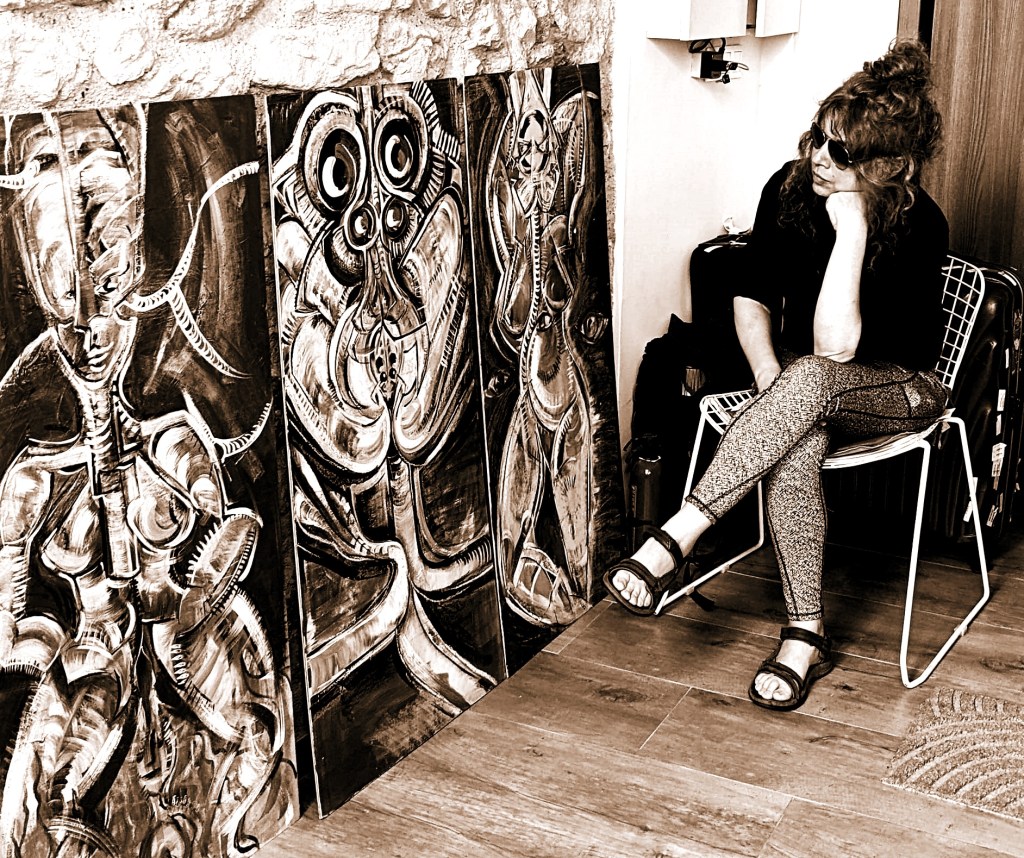
Giorgia Pavlidou
Giorgia Pavlidou is an American writer and painter intermittently living in Greece and the US. Her work recently appeared or is forthcoming in Caesura, Maintenant Dada Journal, Puerto del Sol, Clockwise Cat, Ocotillo Review, Strukterriss Magazine, Entropy and Sun & Moon Magazine. She’s an editor of SULΦUR. Additionally, Trainwreck Press launched her chapbook ‘inside the black hornet’s mind-tunnel’ in 2021, and Anvil Tongue Books her full length book of poems and paintings, ‘Haunted by the Living – Fed by the Dead’ in May 2022
My art is a way for me to navigate difficult subjects and emotions, and as I work on each piece, I am able to meditate on, process and organize my emotions about the subject matter I am addressing.
I started really getting into art after finishing a five-year enlistment in the US Navy. I spent most of my time in the service overseas and felt completely lost when I returned to California in July 1999. I had few friends, no social life or hobbies, and an extremely difficult time finding work. I had a ton of anxiety, felt out of place, would go through episodes of depression followed by manic insomnia, and the only way I’d learned to deal with those emotions in the service was to drink excessively. I wandered into an art supply store one day, looking for something to keep my mind busy and provide an outlet for my manic energy. I started with pastels and watercolor pencils. At first, I just did my own thing, with no direction, technique, or theme. I think that’s probably the best way to get into art. It’s what children do. And they don’t compare their drawing with the other kid’s drawing, they just draw. They don’t strive for photo realism either—if you don’t see the boa constrictor eating an elephant, that’s your failing because they drew it perfectly. I was only in this golden state of mind for a short time, though.
After going through several jobs in Bakersfield, and working two years in Dutch Harbor at a seafood processing plant, I bought a tiny, run-down mobile on the property next to my parents up in Bodfish, CA. I started painting with acrylics, and I took every art class offered at the local community college. I took classes in ceramics, sculpture, drawing, and painting. I also started comparing my work to my classmates’ work. People would compliment my paintings, but I was never happy with them. I loved the classes and instructors but hated myself. I got hung up on every stray mark or brushstroke. Instead of loosening up and becoming more expressive, I was hyper-focusing on the most ridiculous things.
Blue Lotus Scratchboard with India inks. 2021
Scratchboard, oddly enough, helped get me out of this creativity-destroying state of mind. I picked up an 8×10 Ampersand Scratchboard at the art supply store one day. I grabbed a hobby knife and started digging into the clay. But as soon as I made a mistake, I realized this medium doesn’t lend itself well to corrections, and promptly threw it away. Months later, I picked up another scratchboard. There was something about it I found really satisfying, and I wanted to keep working with this medium. I use Ampersand Scratchboards, and they aren’t cheap. So, when I made an errant mark with the knife, I reimagined the scene to incorporate the mistake. I slowly began to worry less about being as realistic as possible and began working from my imagination again. I also realized that I had retained much more technical knowledge from those art classes than I thought, and I found a few artists who were always willing to impart knowledge, advice, and encouragement whenever I needed it. Thank you, Chris Owen and Chet Zar!
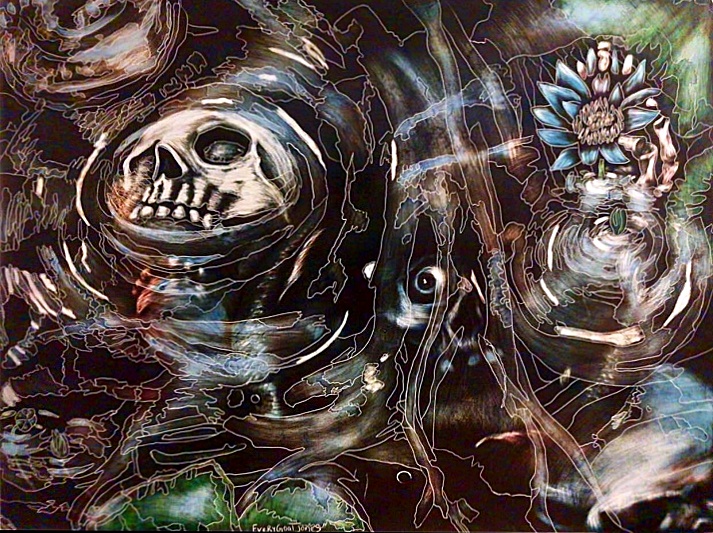
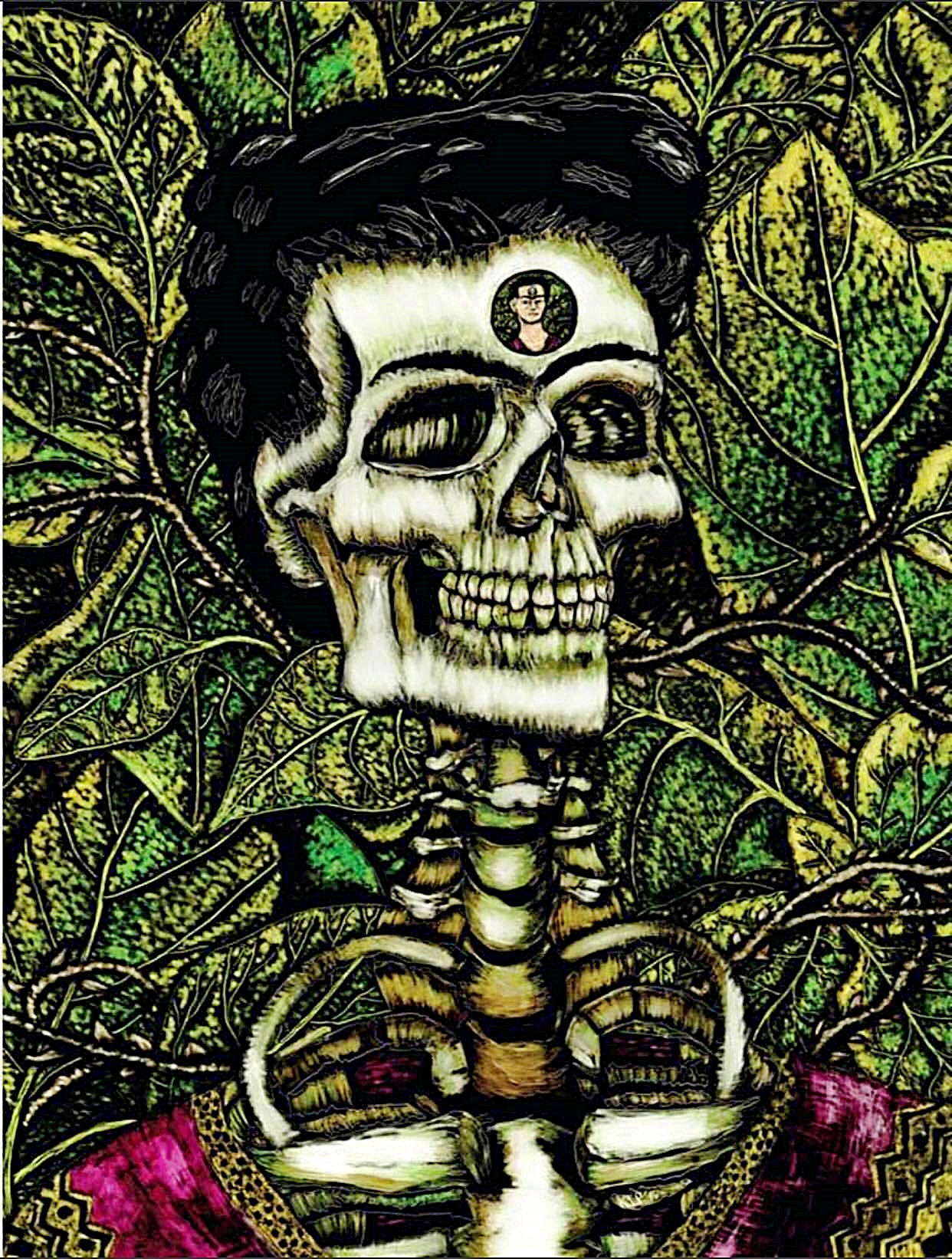
Left: Thinking about FridaMiddle:Prairie GhostsRight:Meeting Death in a Forest
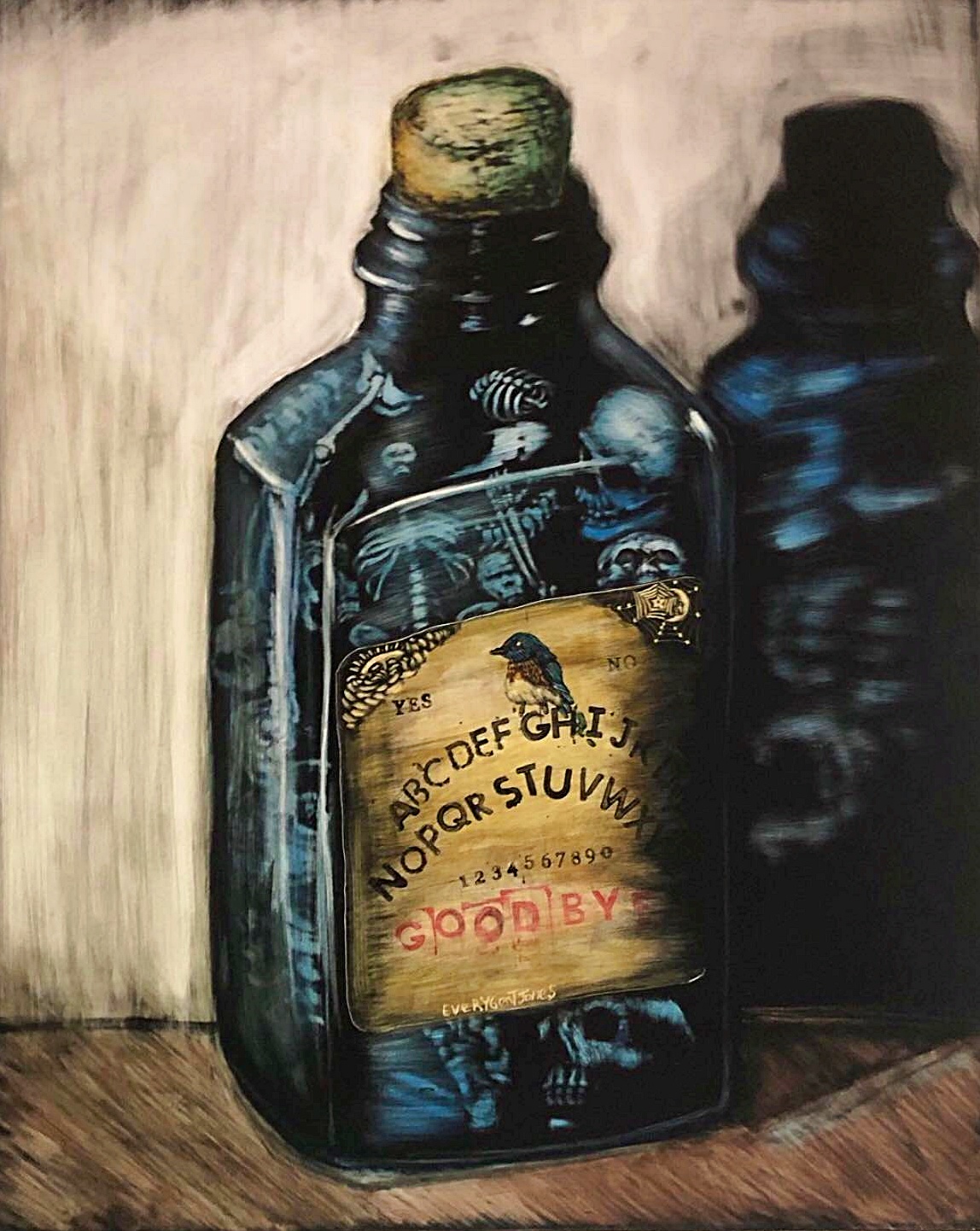
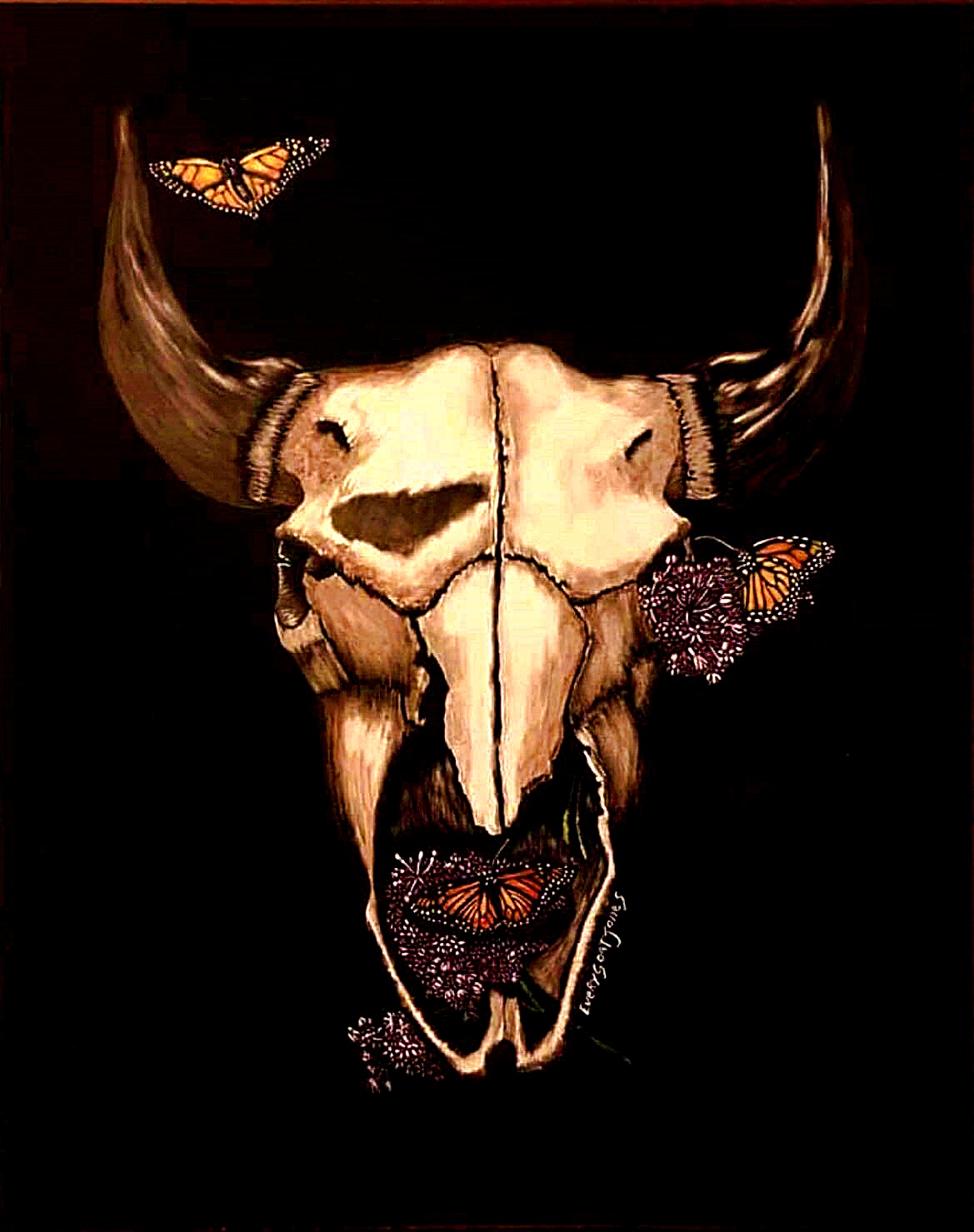
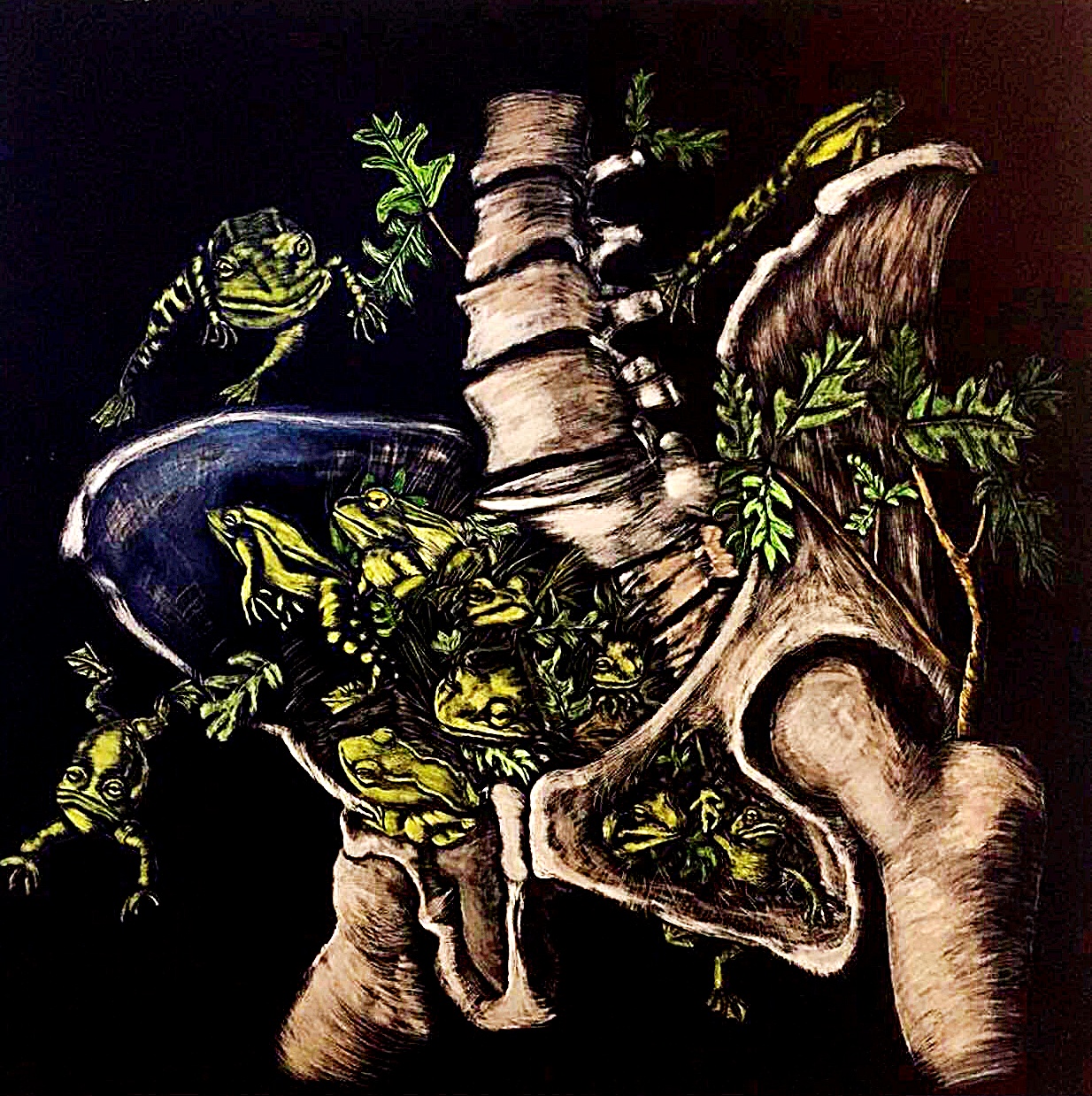
Encouragement and acceptance from others definitely helped me to keep going. I practiced all the time. I studied how other scratchboard artists worked. Then, I would experiment with various techniques and different tools while developing my own style. I used my art to deal with difficult feelings and subjects that were triggering my depression and anxiety. Mortality, loss, kindness and cruelty, spirituality and purpose are all there, represented by skeletons, birds, flowers and cats.
Left:Enoch’s Gone Home Scratchboard, Inks Right:Empathy Scratchboard, Inks
One of the most therapeutic boards I did is Enoch’s Gone Home. I was caring for a colony of cats left behind when a neighbor died. She was a cat hoarder. It was terrible. There was one small kitten I named Enoch, who didn’t thrive. He always seemed weak. He wasn’t very assertive and often got pushed away by the others during meal times. I tried to help him, but I had very little experience with caring for community cats. One day, I noticed him looking really bad. He seemed listless and weak. I rushed him to the vet, but it was too late. I was unwilling to give up, however, so I brought him home and tried to give him water and food. Poor little guy died in my arms the same day. I felt so guilty. I took it personally. I Couldn’t stop thinking about it, so I started working on Enoch’s Gone Home.
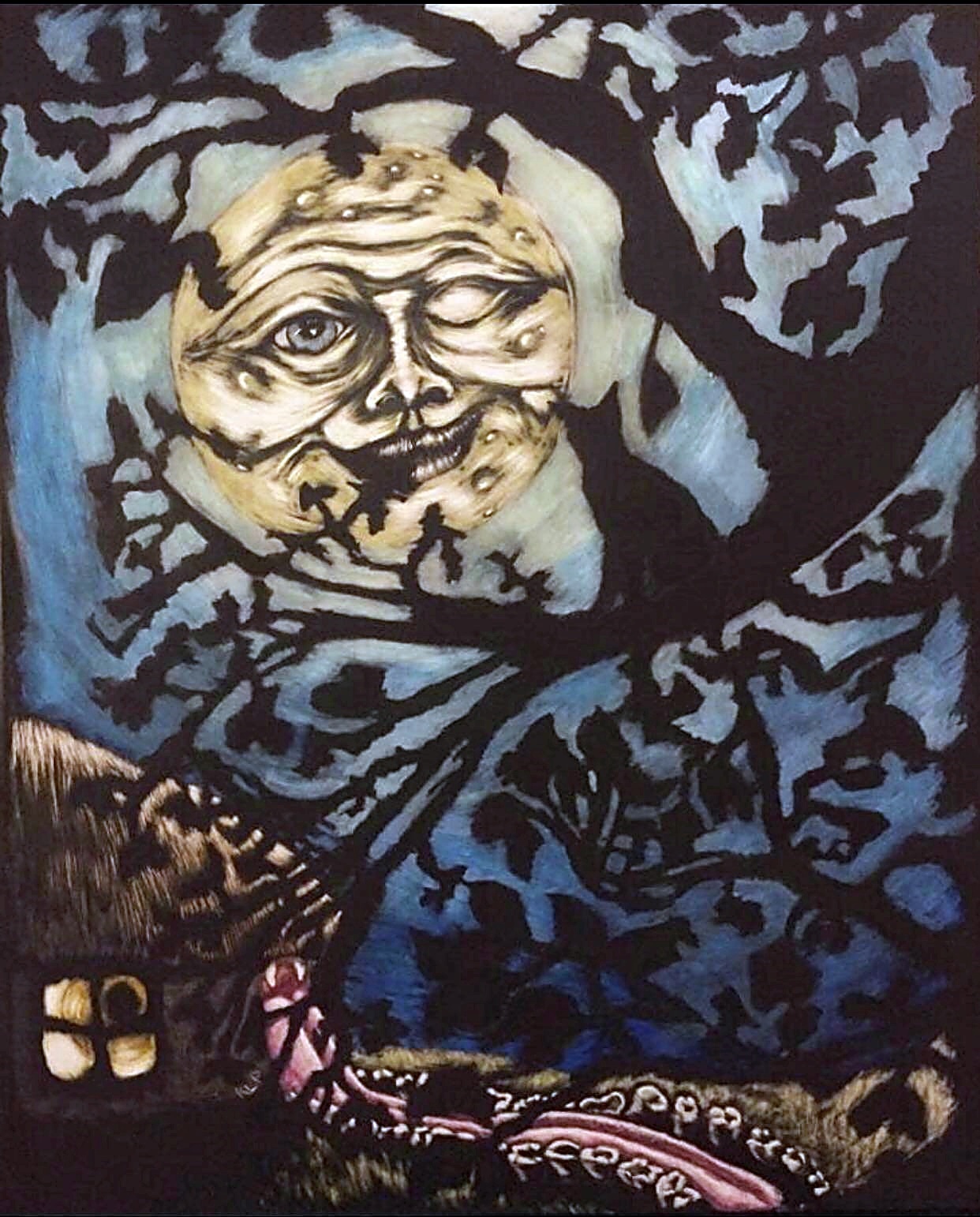
Another favorite is this 24×36 scratchboard I did, titled, Meeting Death in a Forest. The viewer is looking up at Death, who is escorting a nest of birds into the afterlife. Everything from the perspective, light and shadow placement, and the direction of Death’s gaze is important to me. I use skeletons much of the time to represent Death, but not always. Sometimes they are not the personification of Death, but are symbolic of other human attributes or experiences. I also like to do a visual definition of a particular word as the subject of my work. Empathy and Feral are two examples. Again, everything from the feathers in Empathy to the tooth-lined tongue path leading to the cottage door in Feral is important to my definition of those words.
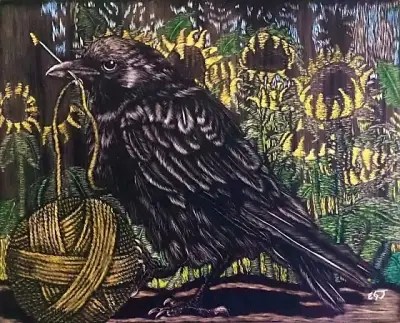
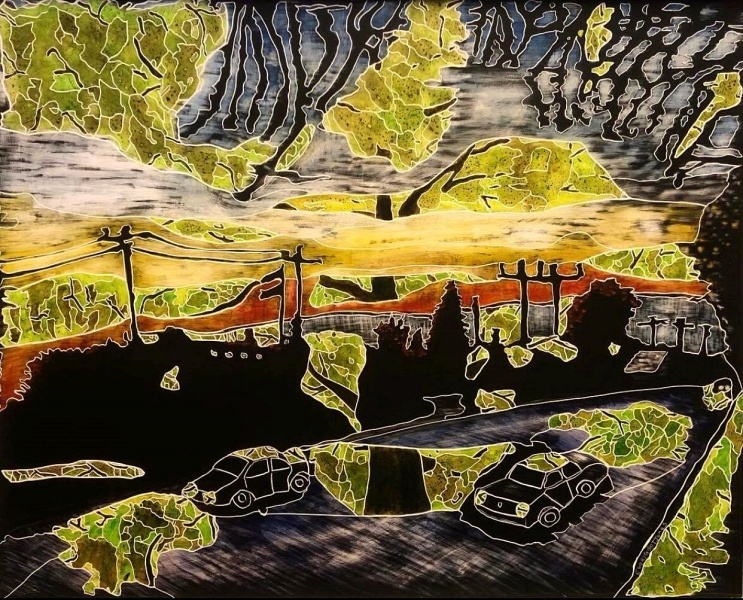
Wildland Urban Interface Scratchboard, inks. 2020
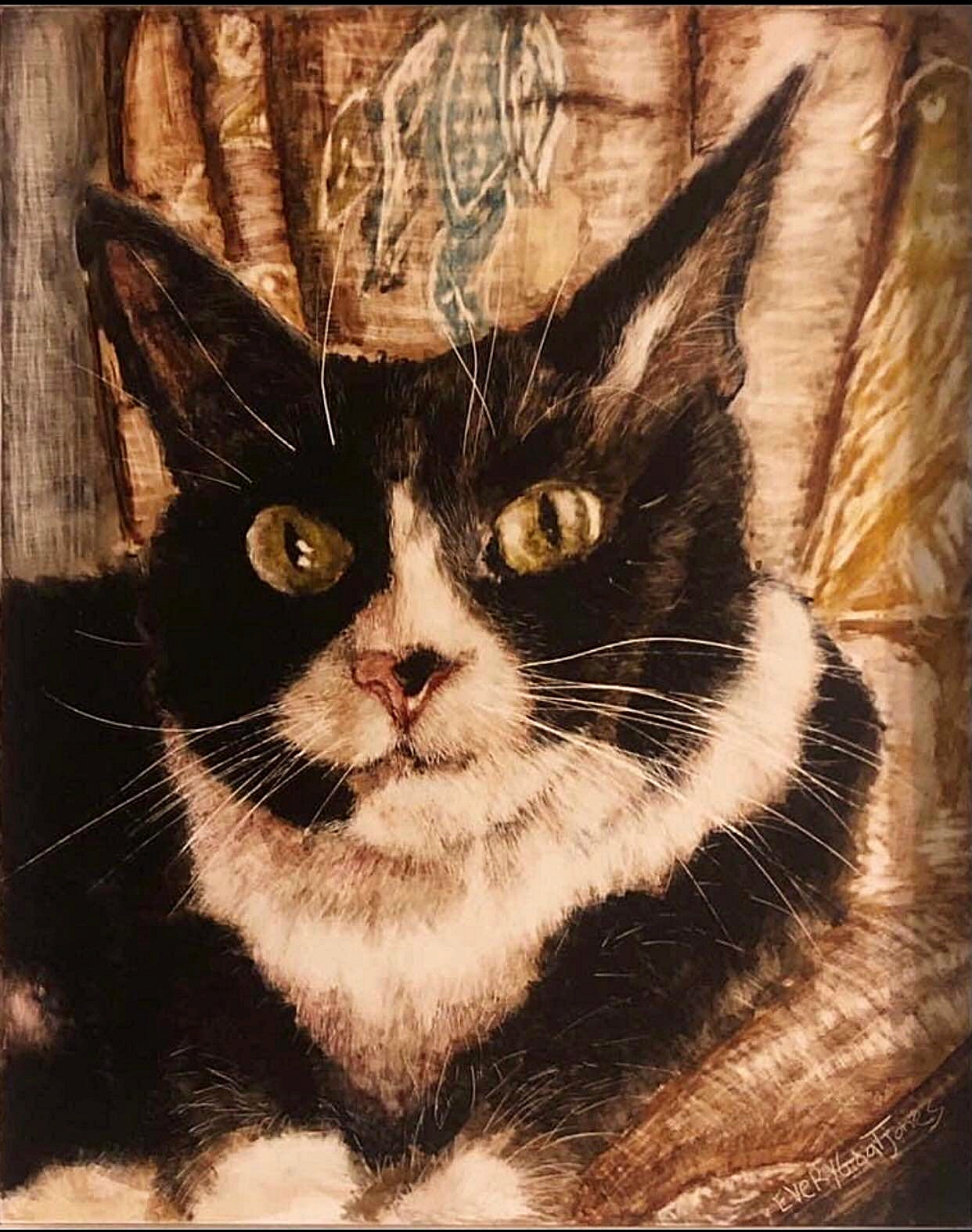
I take commissions, occasionally. Pet portraits are a popular request, and scratchboard is a favorite medium of pet portrait and animal artists, as it lends well to very fine details. I have seen some amazing, hyper-realistic animals on scratchboard. I think I may be the only scratchboard artist in the world who hasn’t done a lion, tiger, or zebra. But I have done human portraits—only a few though, and only of close friends and family.
Left: Battle of Nightstand Middle:The QuestRight:Seamus
I really enjoy doing studies of many different subjects. Anything that happens to catch my attention is a potential subject for a study or even a larger work. I’m constantly taking photos of anything I see around me that looks like it could be challenging, interesting, ugly or beautiful on a scratchboard.
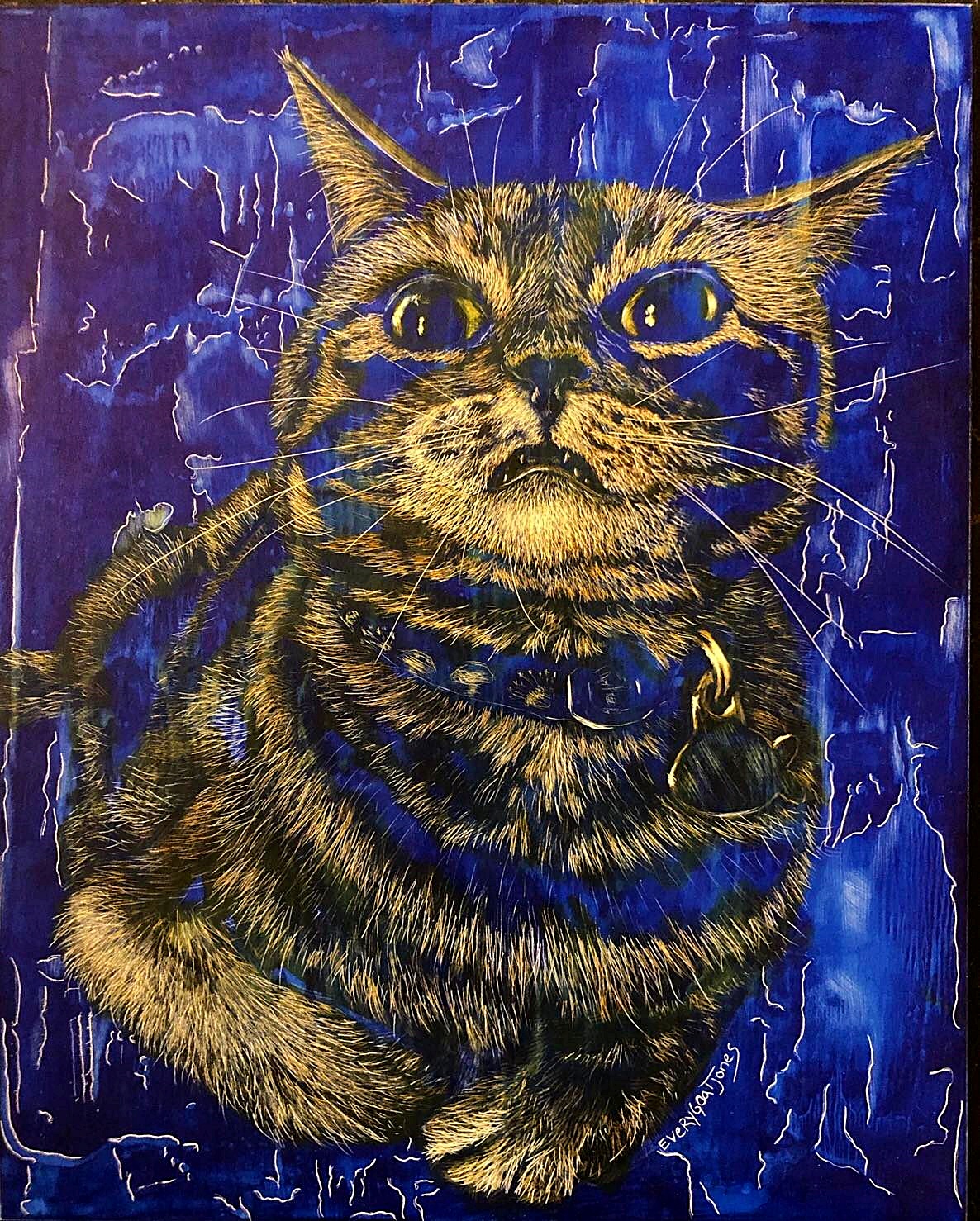
Left: Ginger Cat Clayboard with Scratchboard inks, 2020. Right:Bamboo Clayboard with India inks, (commissioned portrait) 2019.
I do not like to be limited on what themes I address or style I use in my art. If I forced myself to focus on only a narrow theme or style, I would feel stifled and claustrophobic. I never know what I’ll work on next (unless it’s a commission). It’s always a spontaneous decision for me. I may hear a word, see something, get a feeling or be overcome with some emotion or experience that I cannot separate myself from—and that will probably be the subject of my next scratchboard.
Exhibitions: Kern Valley Museum- Kernville, Ca October 2016 Bakersfield Museum of Art- Bakersfield, Ca May 2019 Visual Arts Festival Kern Valley Museum- Kernville, Ca June 2019 Work used by Ampersand Art to advertise Fall Scratchbord sale, 2019] Arts Illiana Gallery “The Crow Show” February-April 2020
Publications and Reviews: KRV’s Hidden Gems: Kernville Arts and Crafts Festival Kern Valley Sun, September 2019 Skilled Hands Bakersfield Magazine, February 2018 [No Link Avail.] Artist Finds Focus Kern Valley Sun, June 28, 2017 First Friday, Dagny’s Coffee, November 2019
Awards and Recognition: Best in Show, The Crow Show, Arts Illiana Gallery, Terre Haute, IN 2020 1st Place, Kern County Fair, Professional Scratchboard Art- Bakersfield, Ca 2019 1st Place, Kern County Fair, Professional Scratchboard Art-Bakersfield, Ca 2018
Collections: Alex Joya, La Costa Mariscos Bakersfield, Stockdale Hwy Bakersfield Veteran’s Clinic, Bakersfield, Ca, Westwind Dr. Kern Veterinary Hospital, Lake Isabella, Ca, Lake Isabella Blvd. The Cyclesmiths, Kernville, Ca The Starlite Lounge, Kernville, Ca
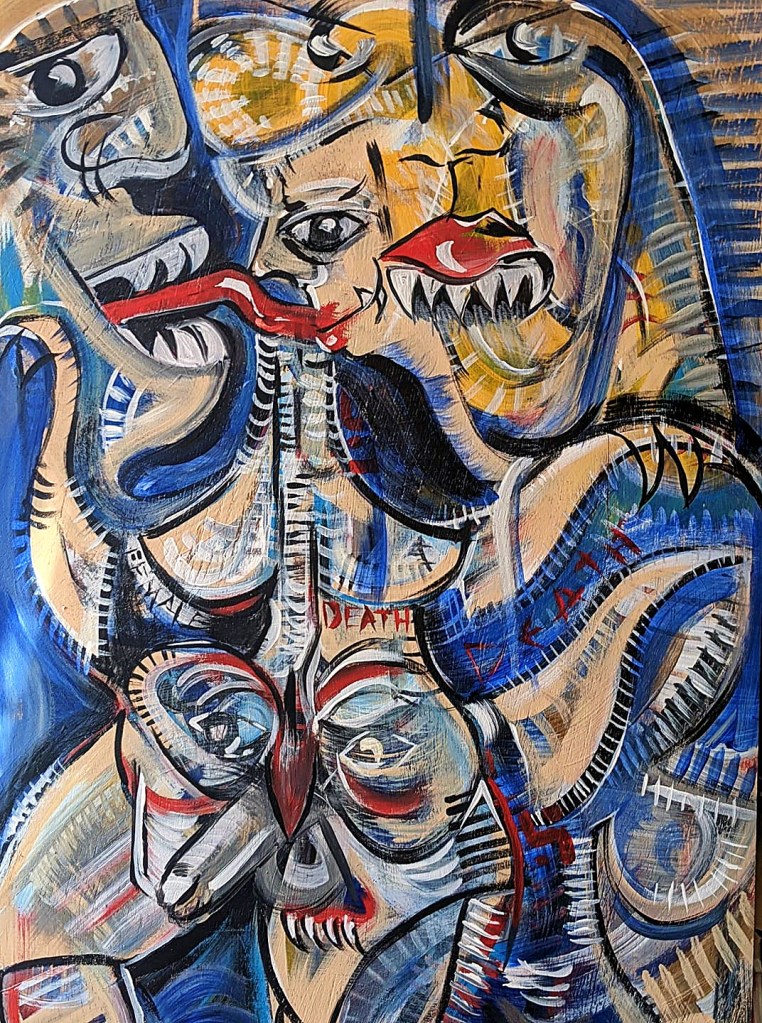
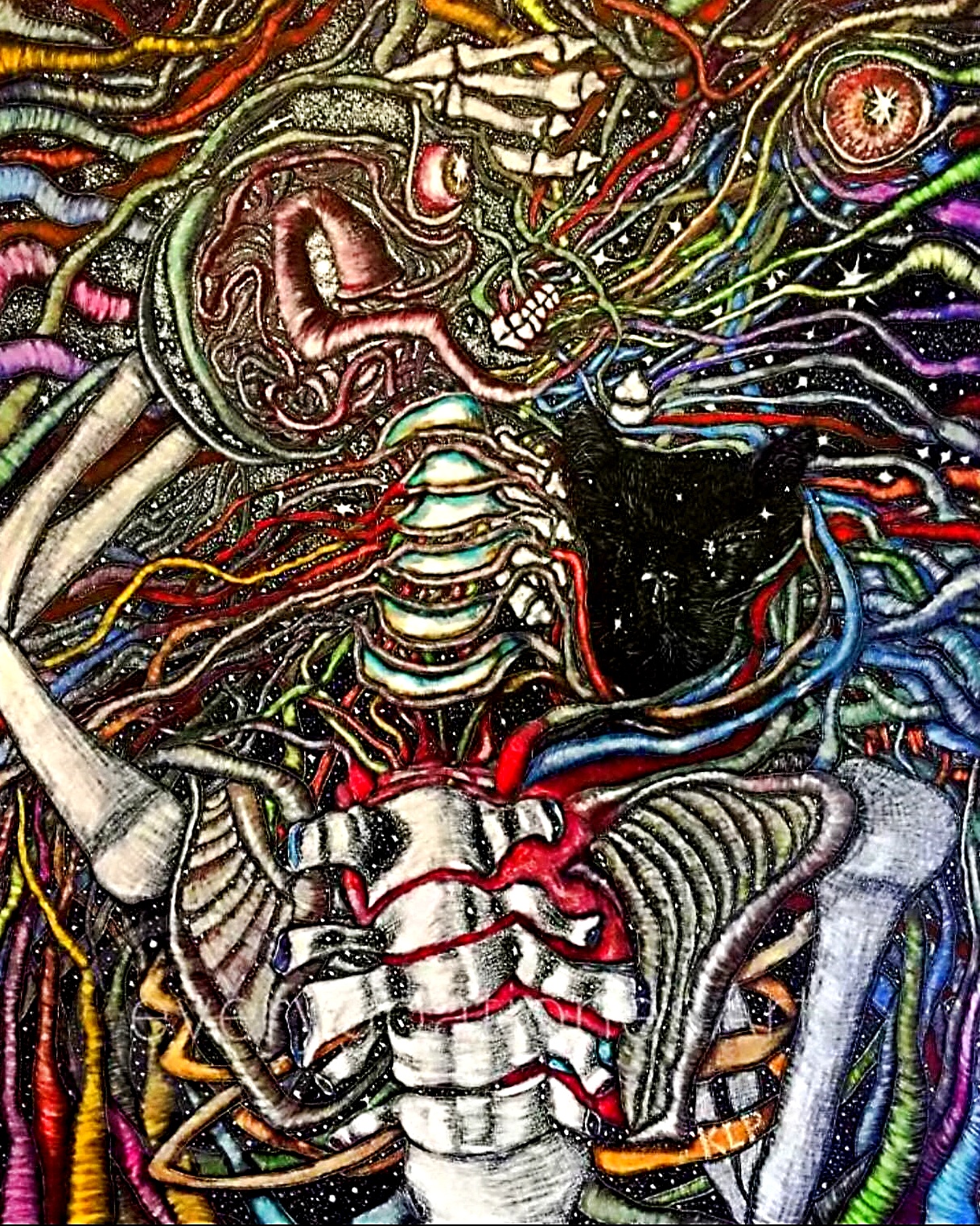
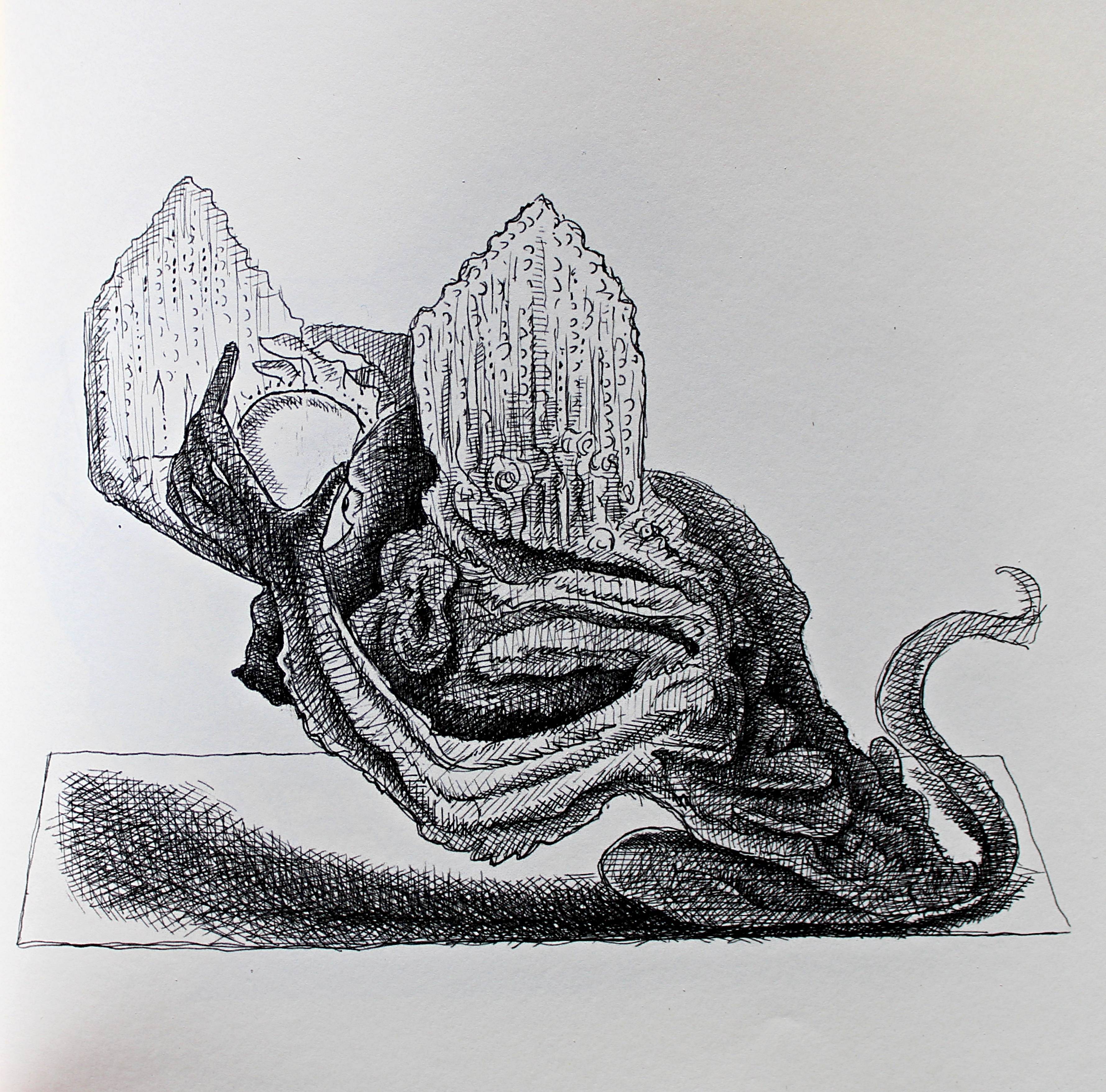
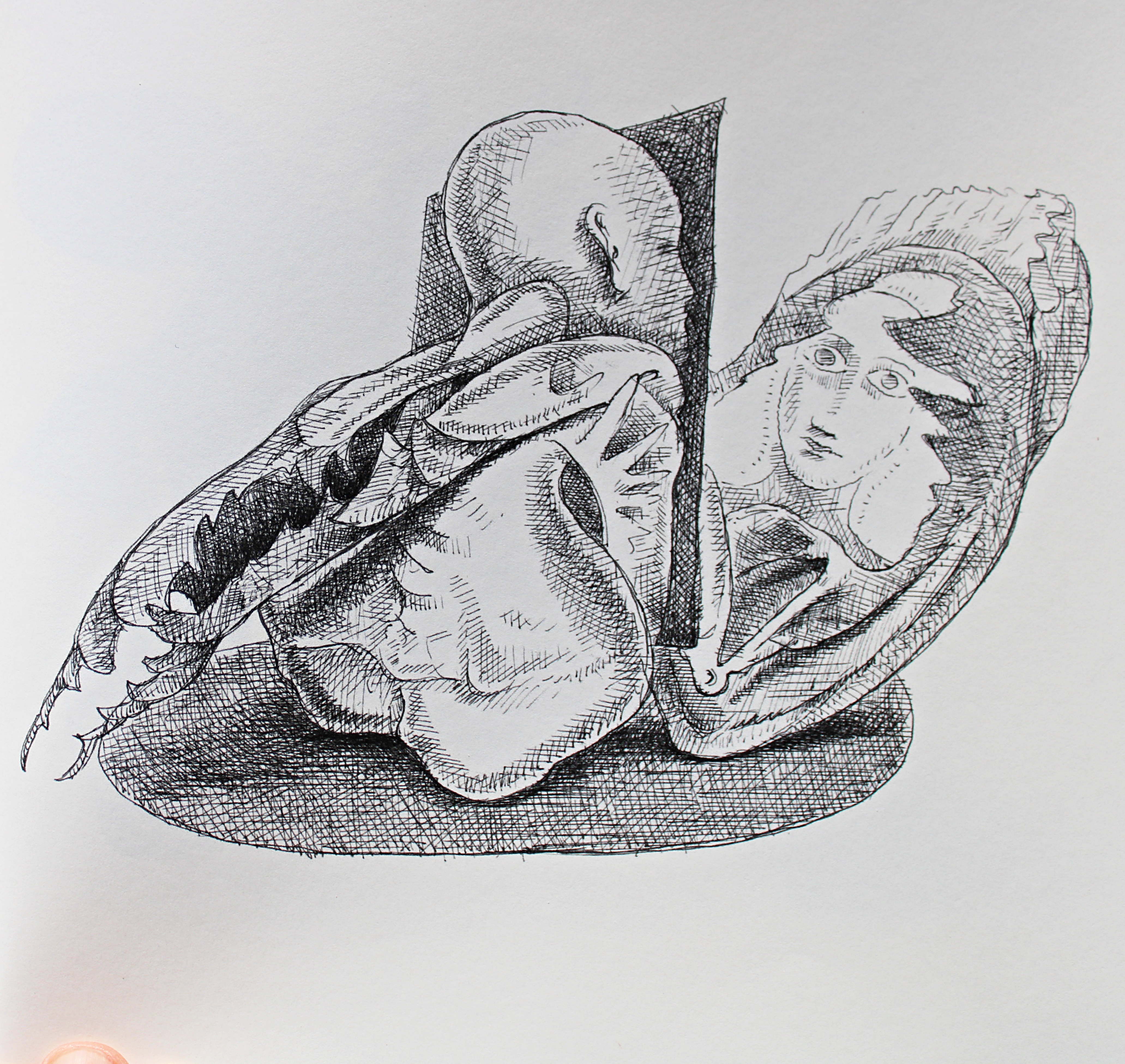
An automatic drawing is the starting point for an image. A powerful sense of promised adventure arises and the process of freely transferring the drawing onto the canvas will trigger an opening of doorways to another world. Nothing can be forced and it’s similar to a two-way conversation with the developing image before me.
I have to listen and the process is always full of surprises. Constantly having a feeling of ‘otherness’, alongside a foreign/unknown part of me, comes forth as a flow of departing points.
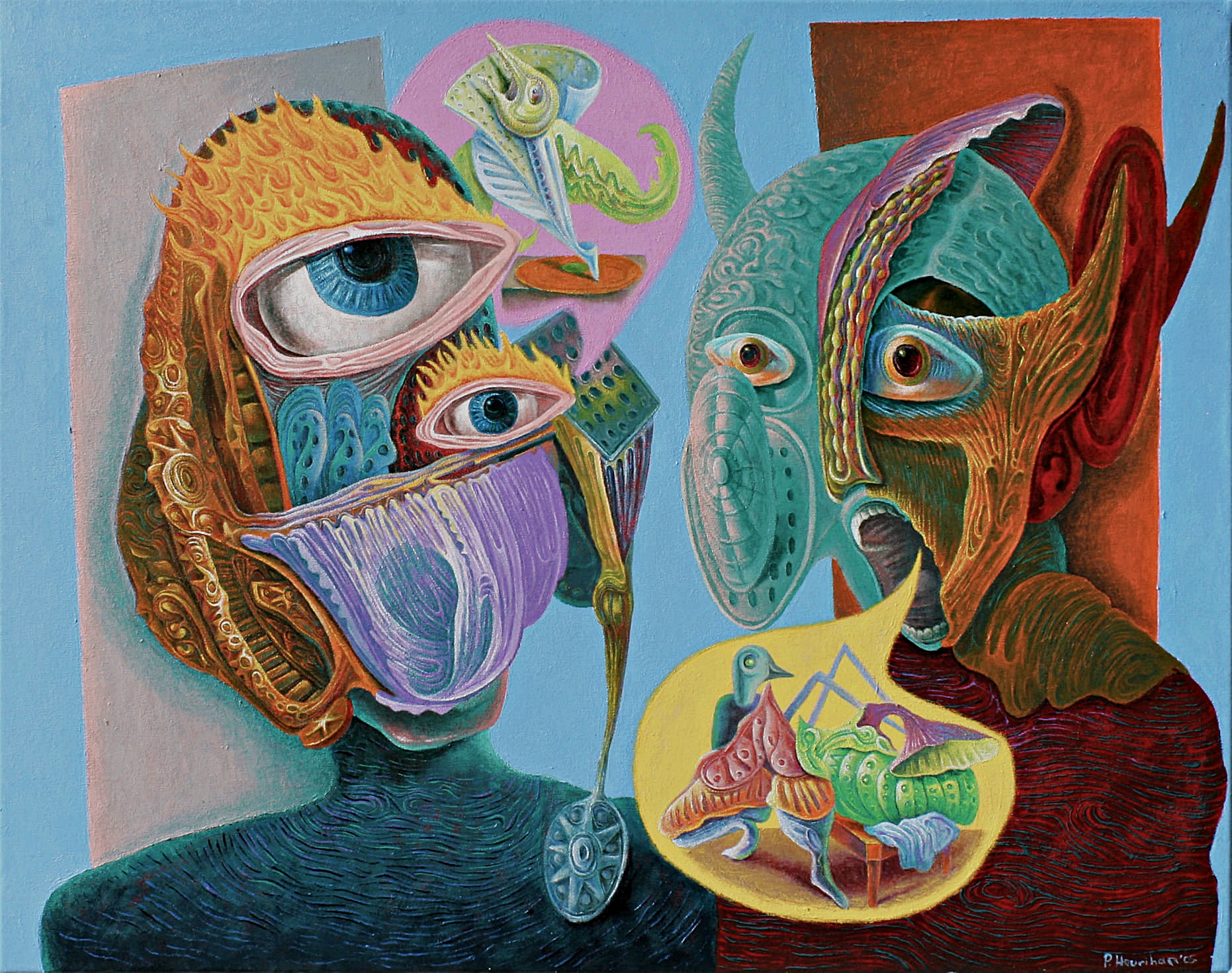
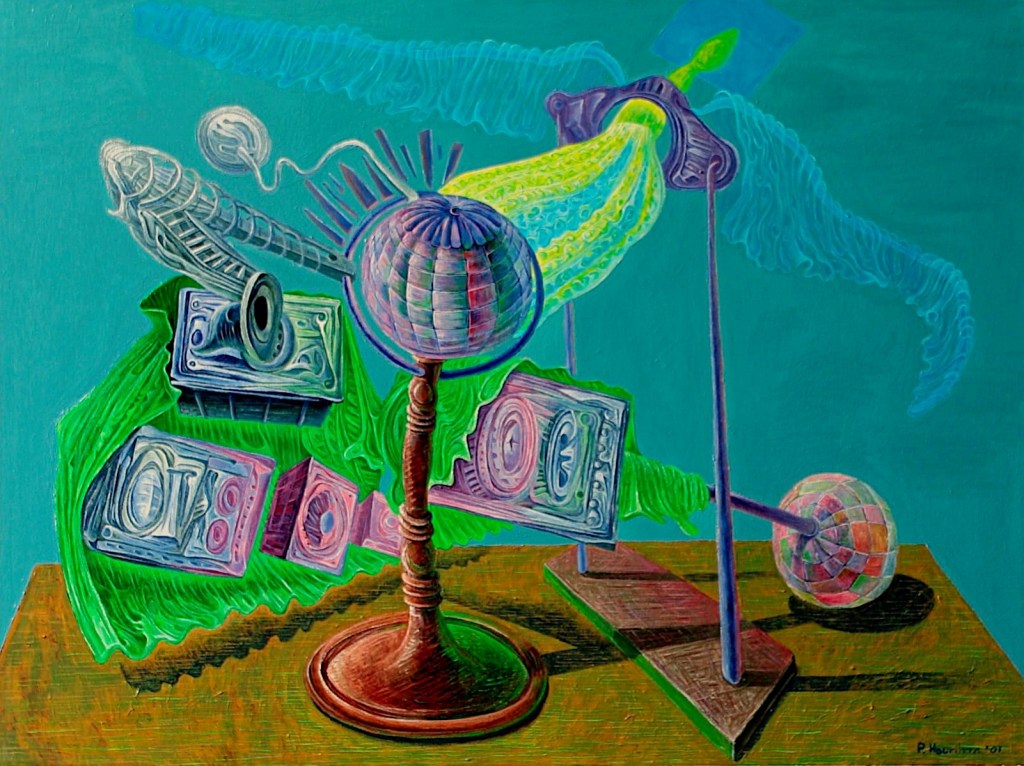
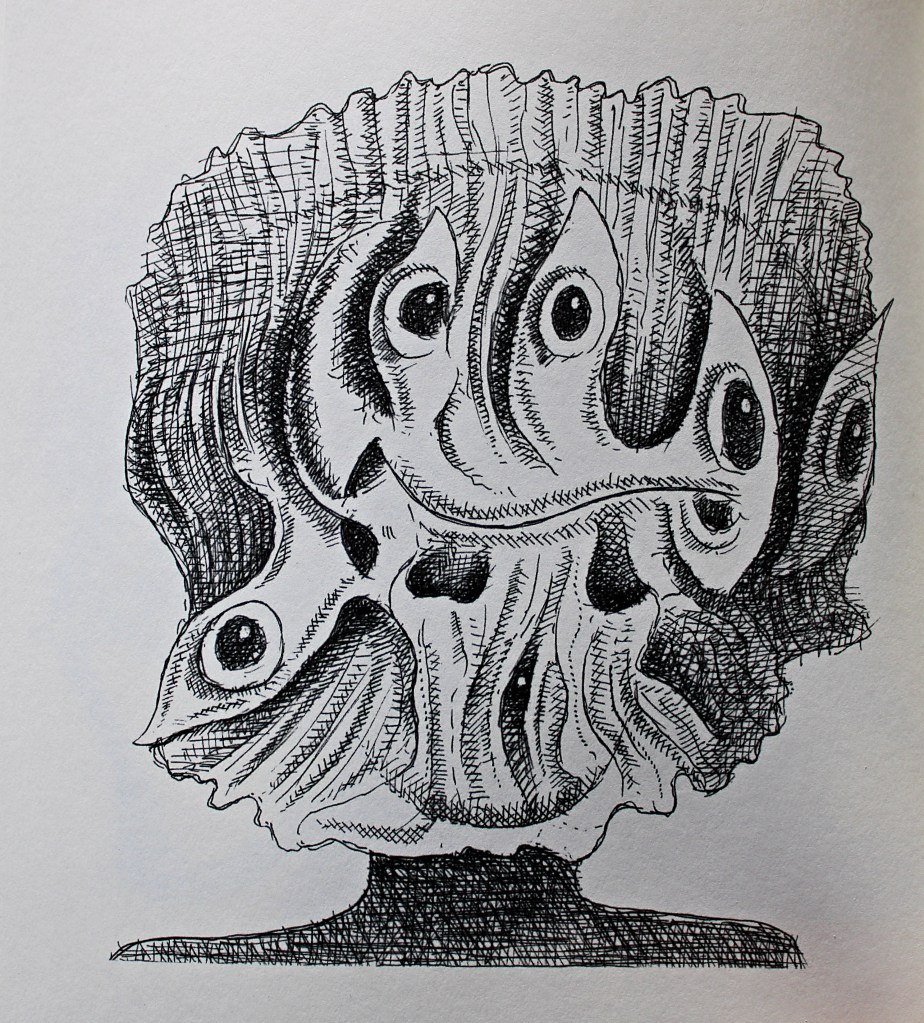
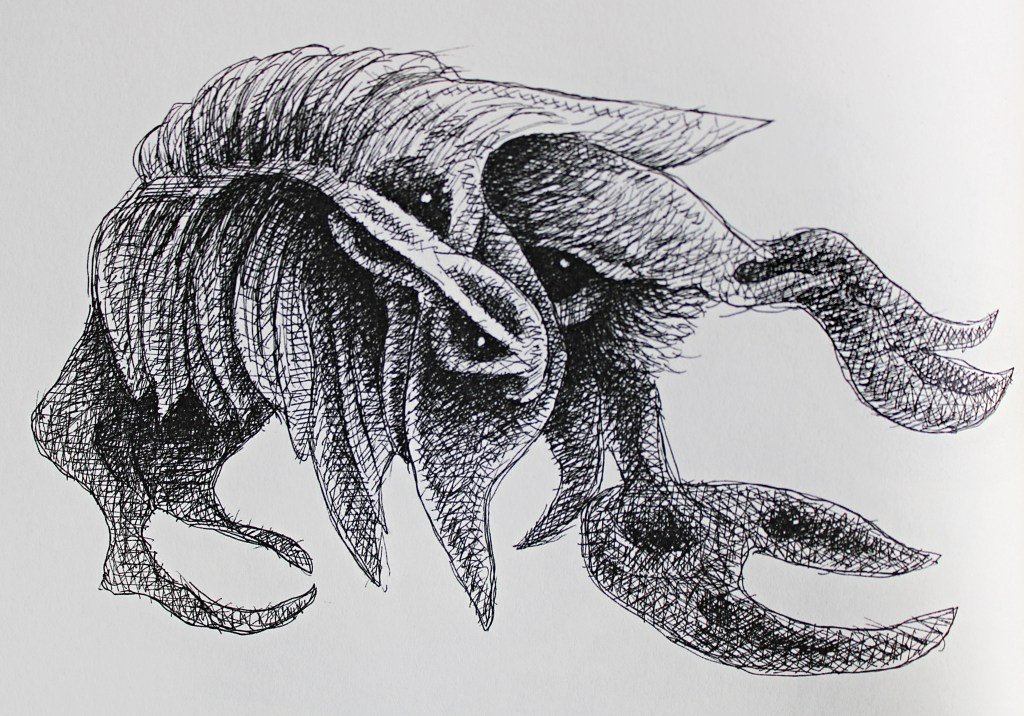
Left Talking Heads. Right Psychic Machine
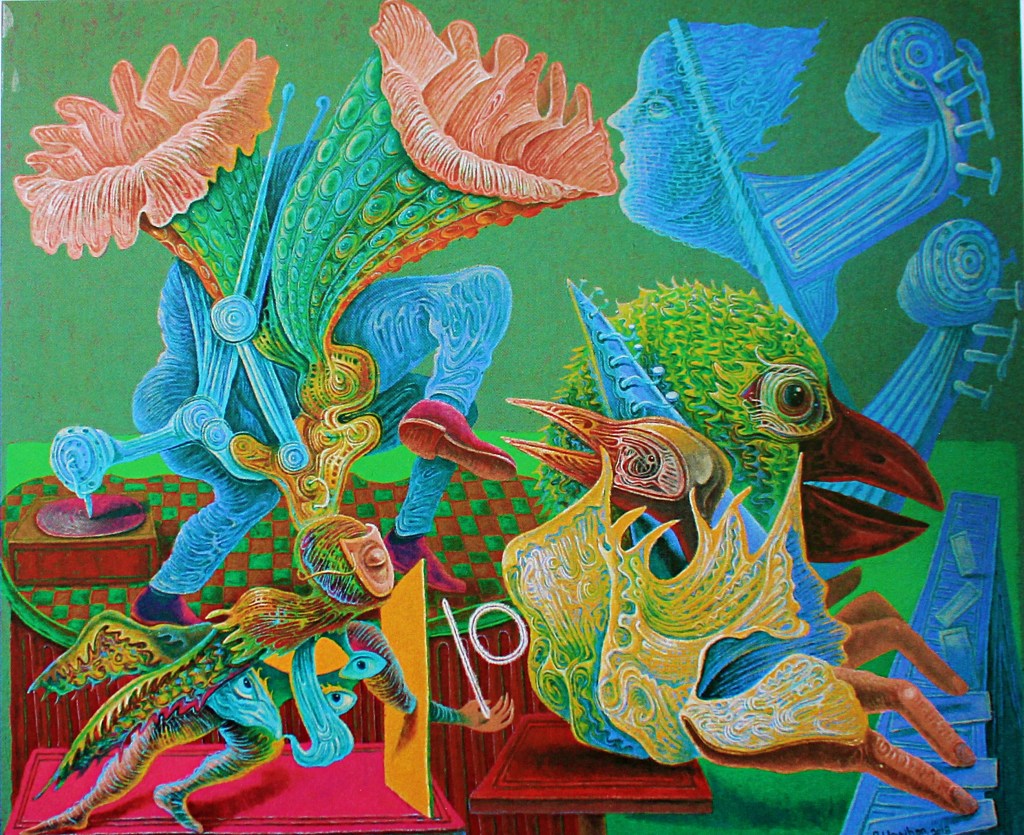
Fantastic Duet Acrylic on Canvas 90cm x 60cm
Surrealism was just part of a larger personal picture for me, with no aspirations of calling myself a surrealist …or anything else. But it strangely seemed to follow me.
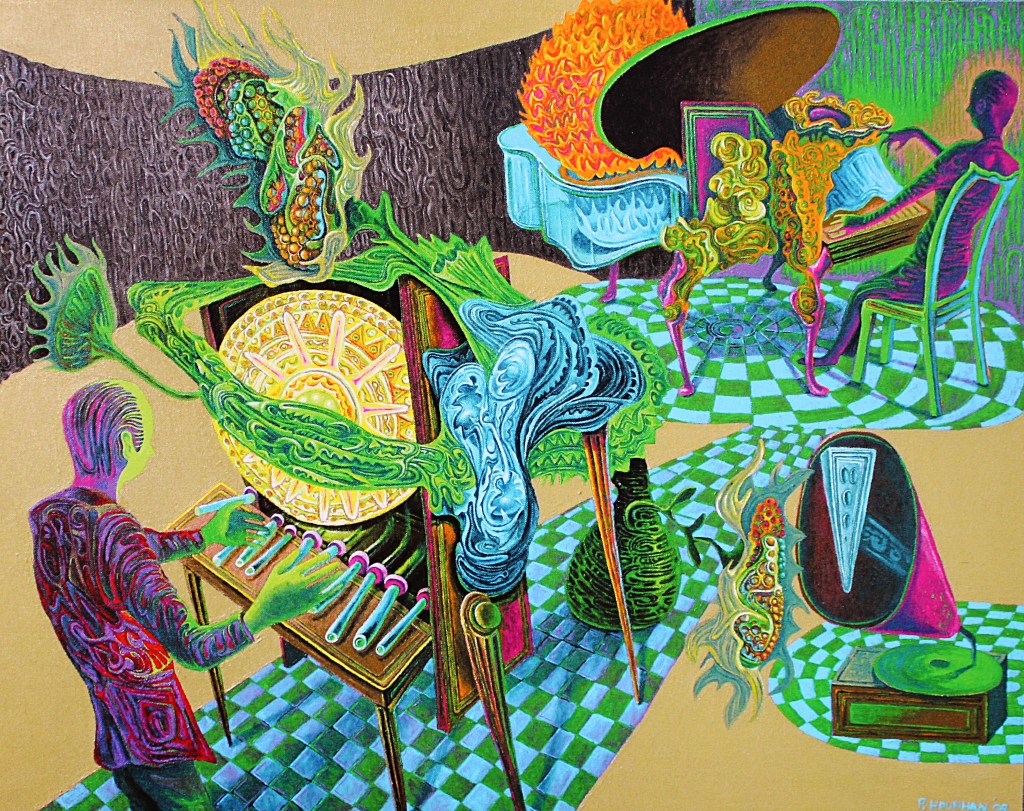
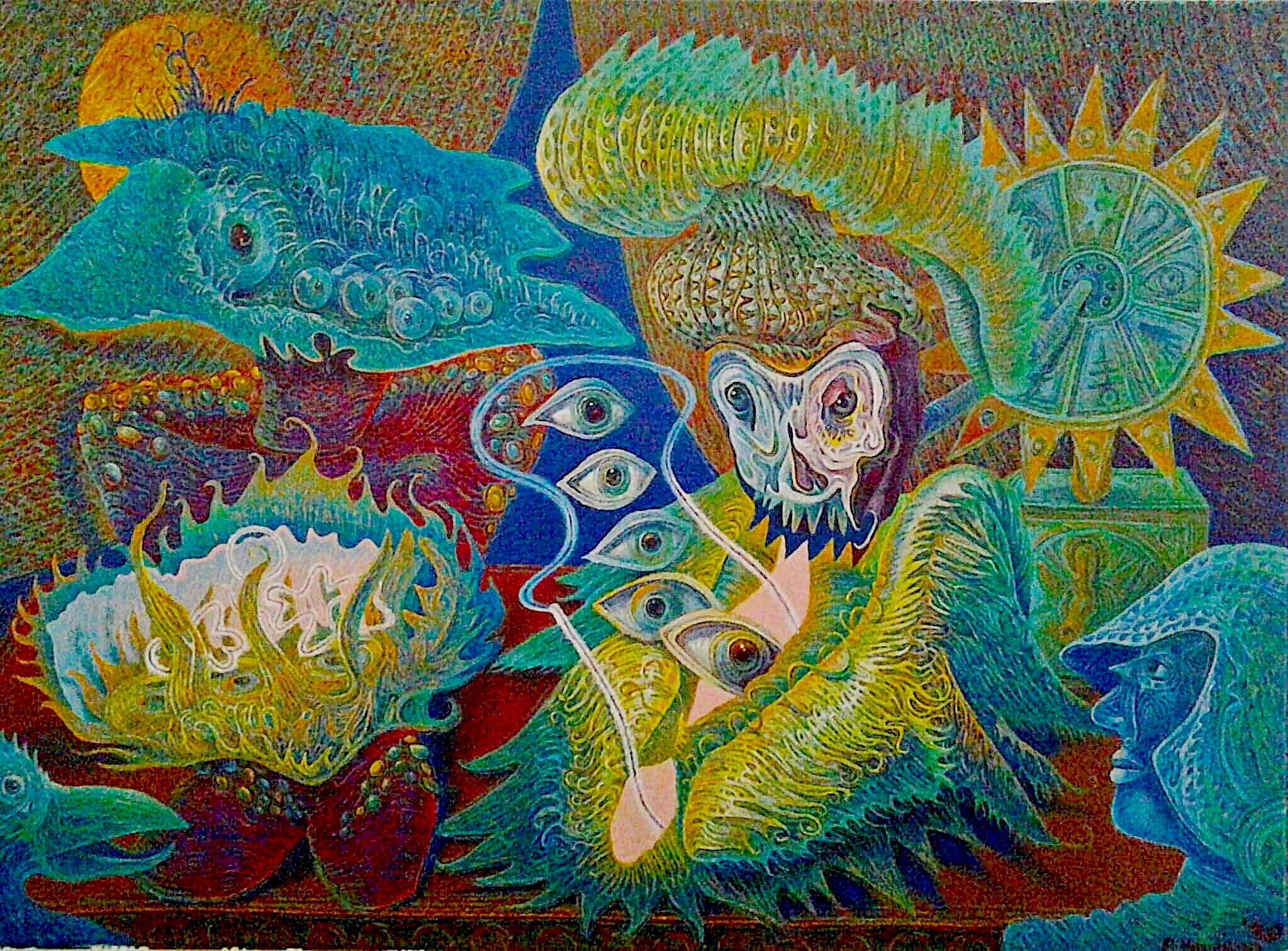
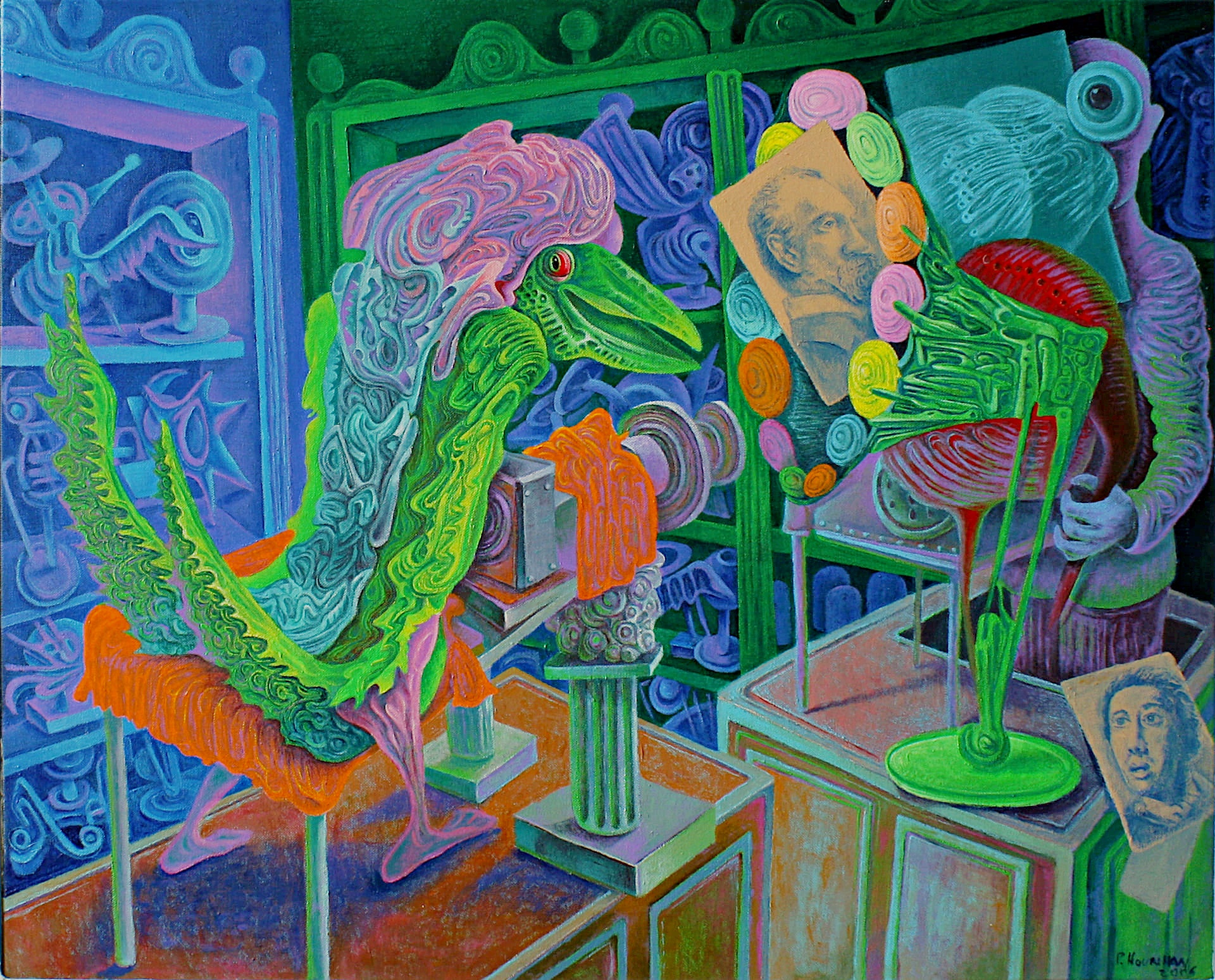
Left Dark Carnival. Right Optical Lab
Night Music Acrylic on Canvas 65cm x 81cm
Outsider art has a compulsive need to externalize an inner world with no ego and a wonderful innocence.
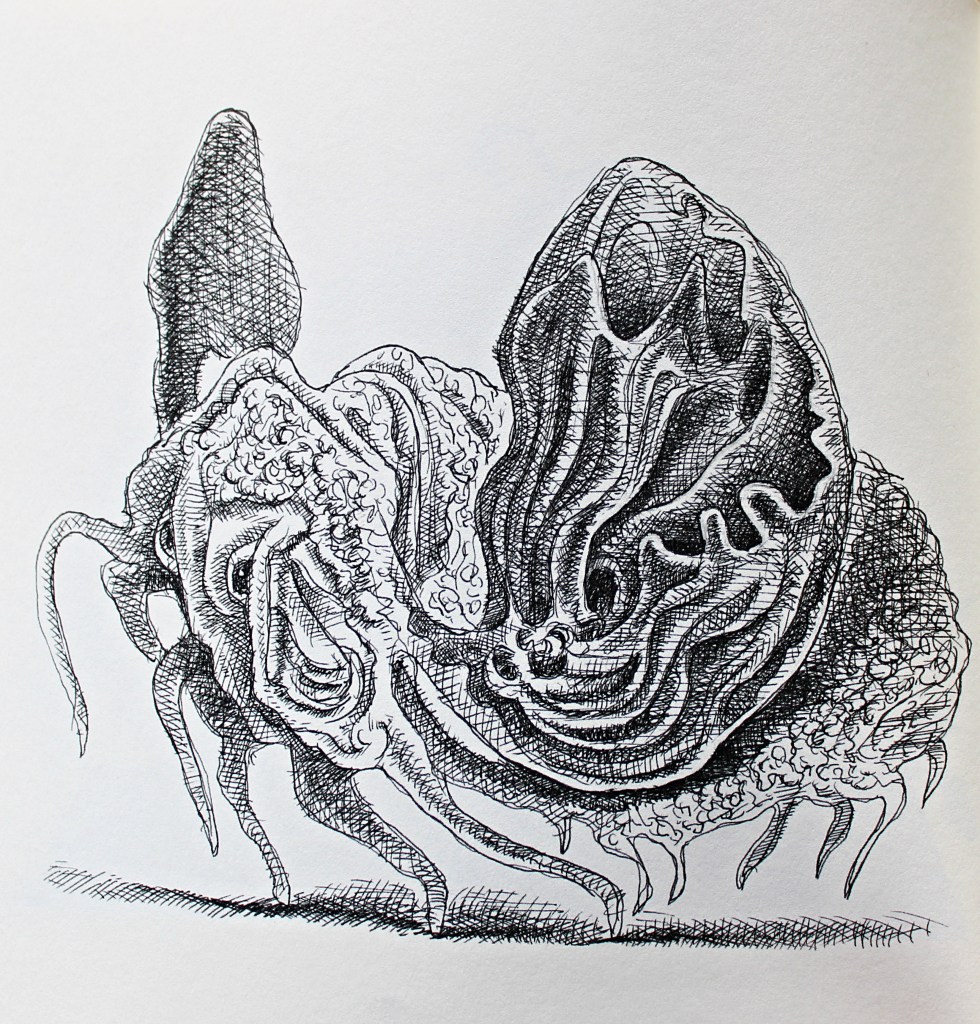
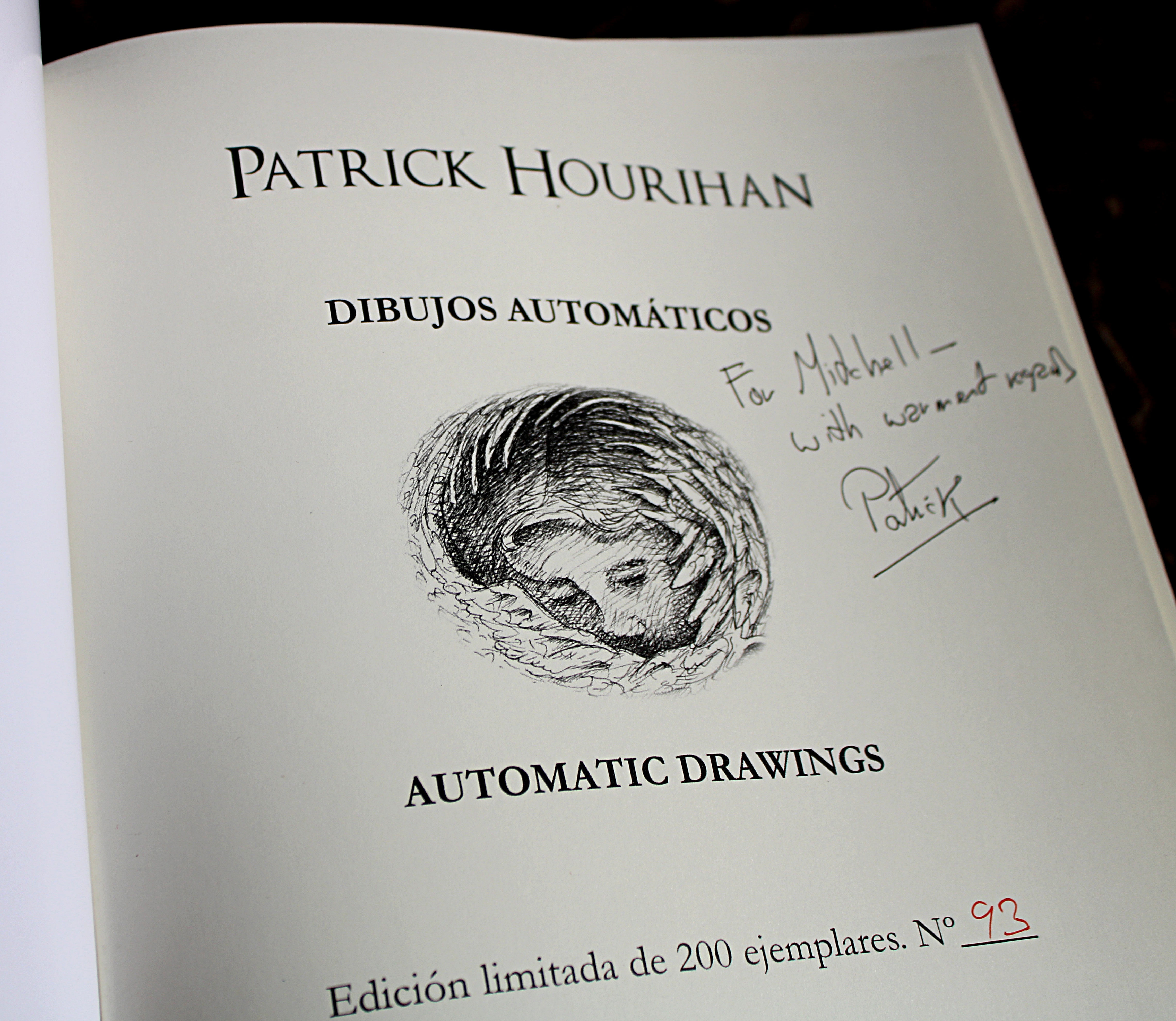
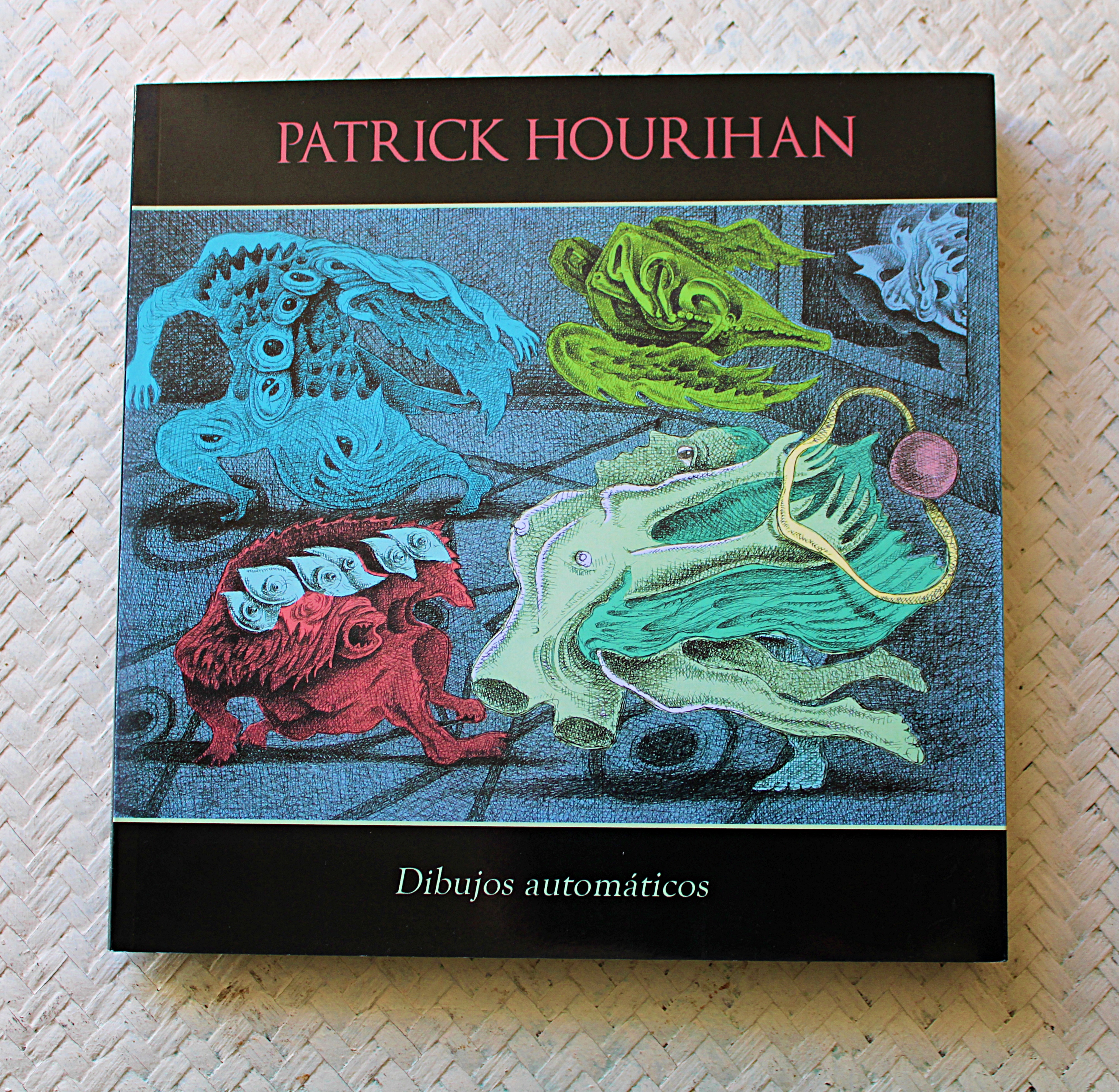
Drawings From Patrick Hourihan Dibujo Automático
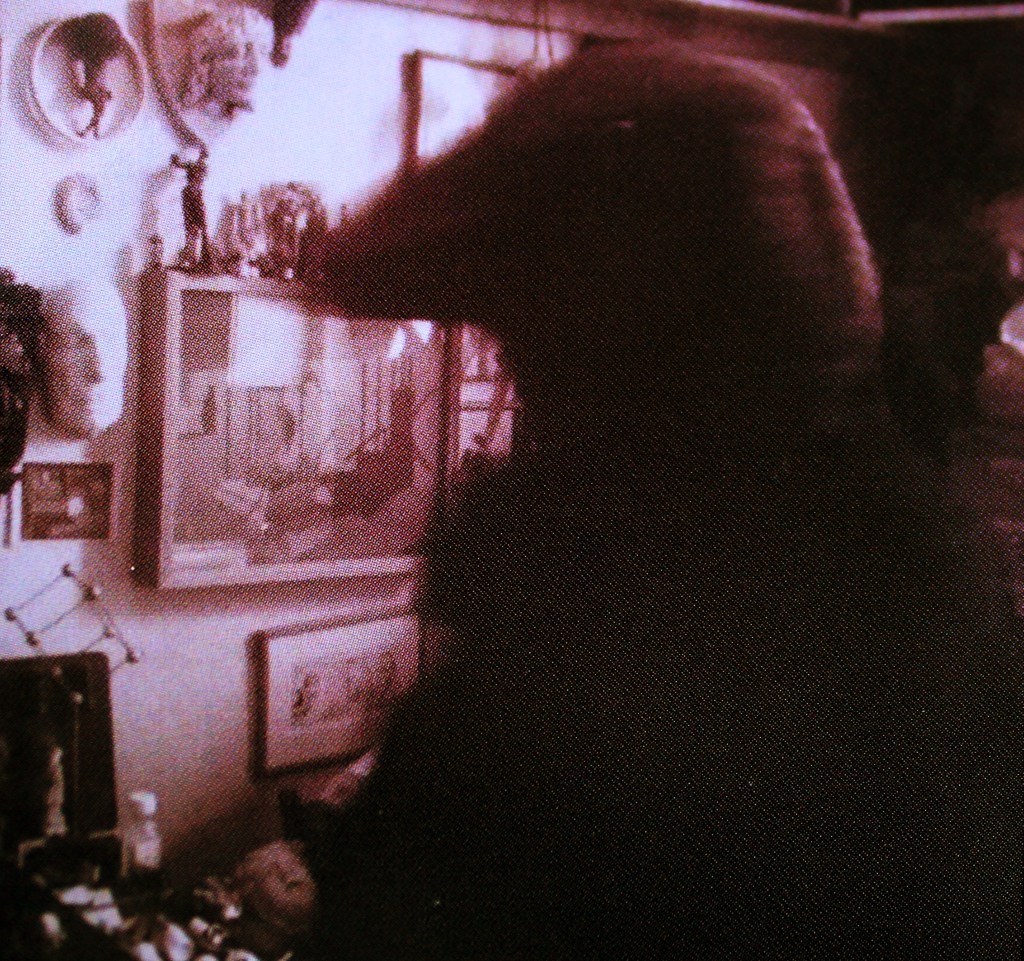
London -based Surrealist, Patrick Hourihan. Paintings, Automatic Drawings, and Boxed Assemblages. photo David Caldwell
Full interview with Antonio Rámirez / Translation by Gala Milla
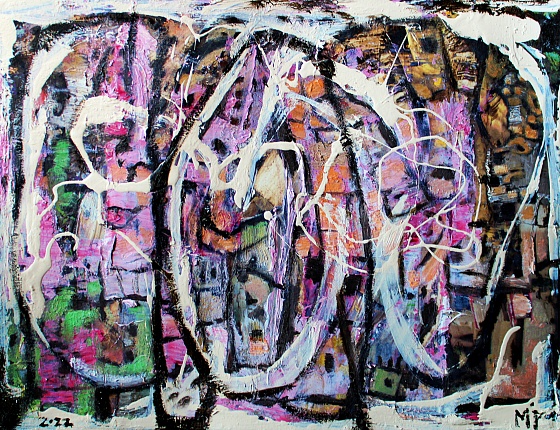
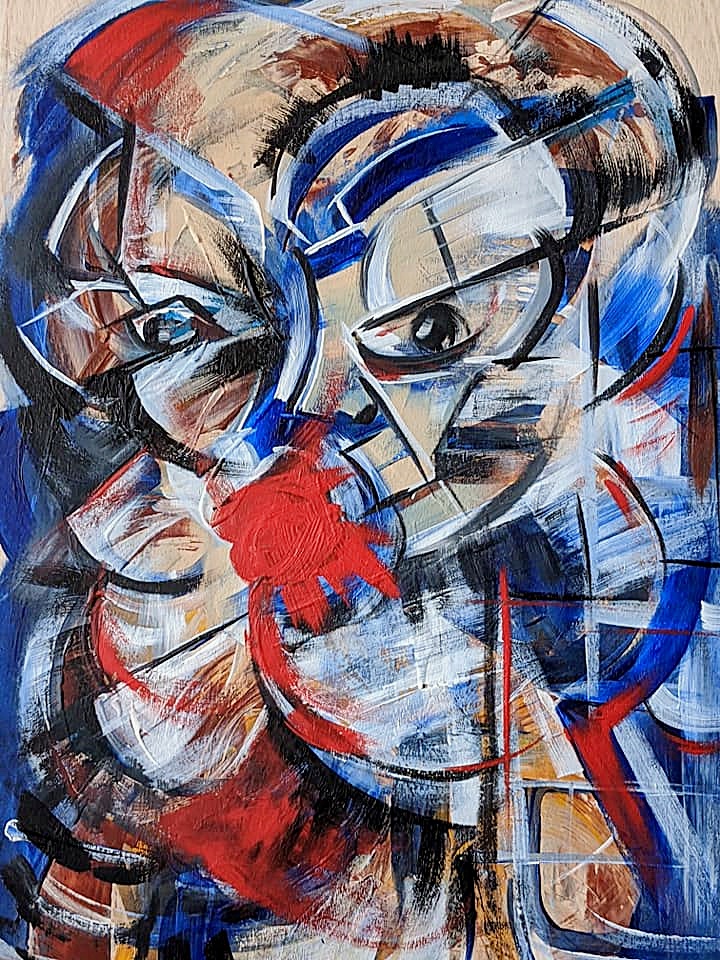
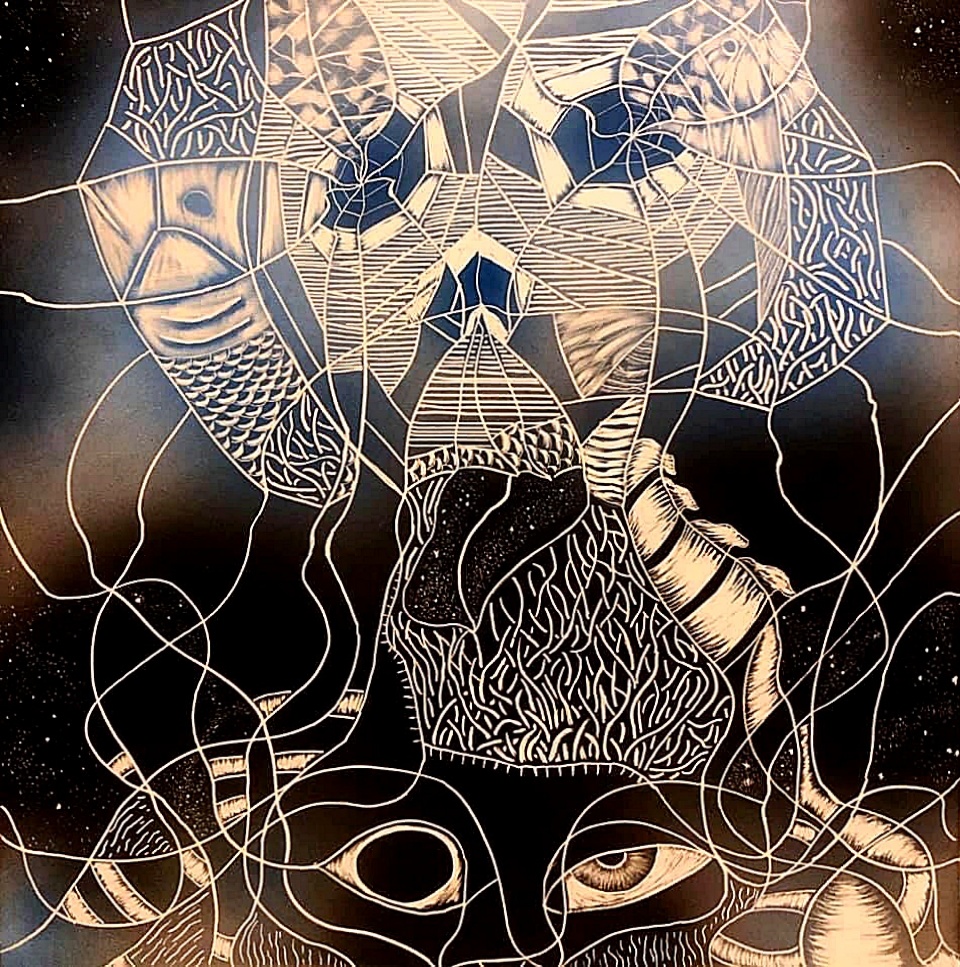
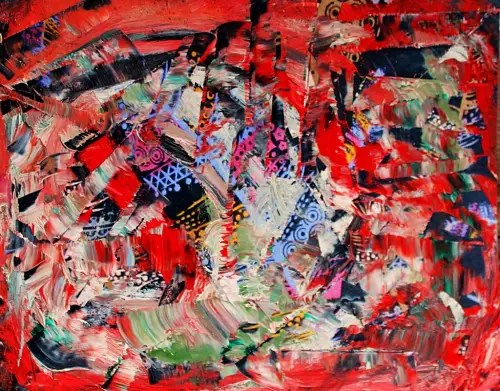
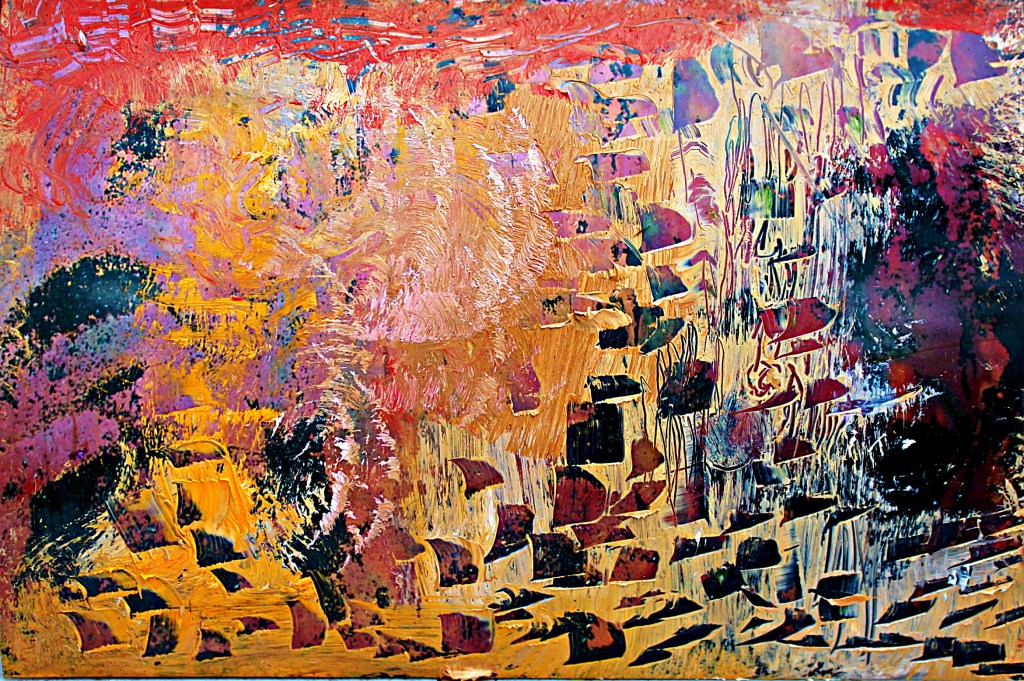
my non representational paintings are automatic impressions from my subconscious. a sort of interior psychic meteorology.
Venus sextile Jupiter
I work on them everyday. there are no things, no pronouns, no gender, no politics, no beliefs, no morals. no 17th 18th, 19th or 20th century archetypes, no mystical ideas, no ideas about beauty or ugliness, no appropriation, no opinions.
Internet Poltergeist
it’s just a lot of yes too energy, paint, color and texture. the theme is about finding nothing. the exercise is liberating-the painting can not develop into something. I only name them when I share them, which I have been reluctant and hesitant to do. they are not made to be understood.
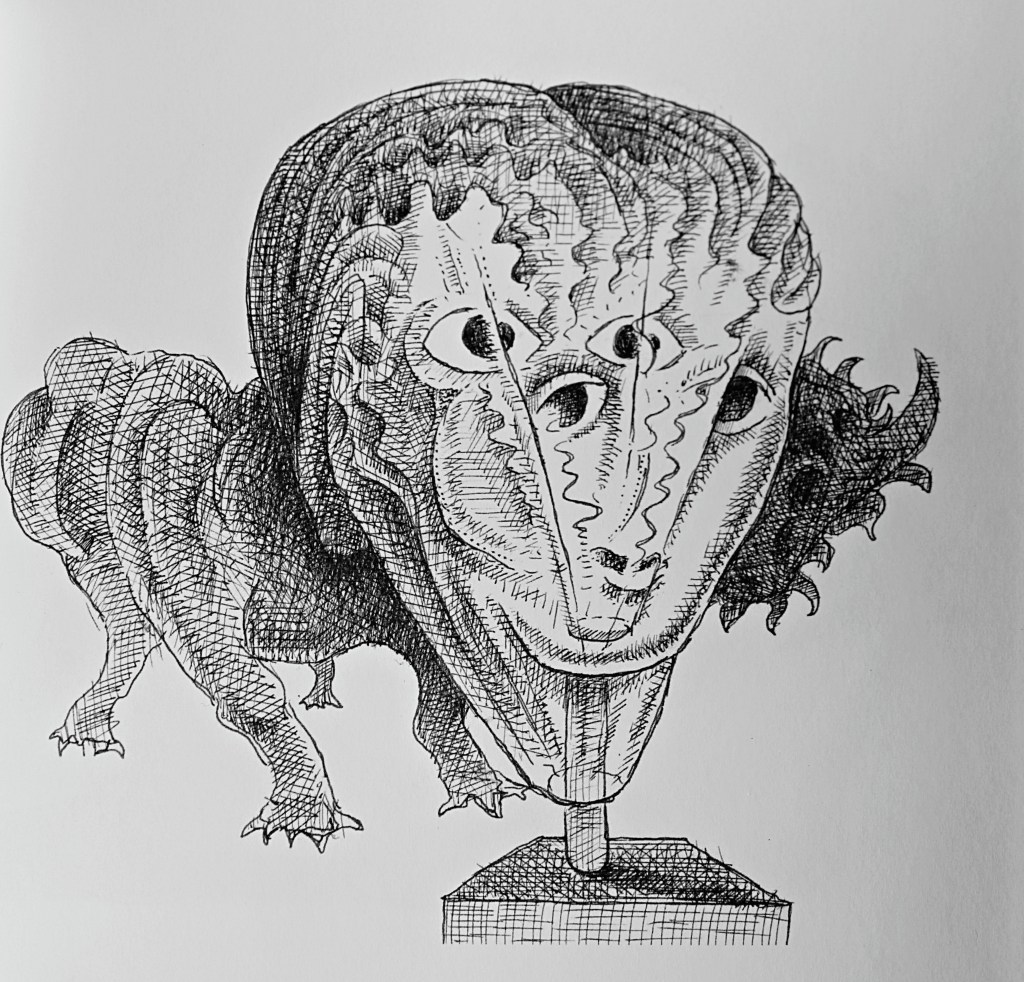
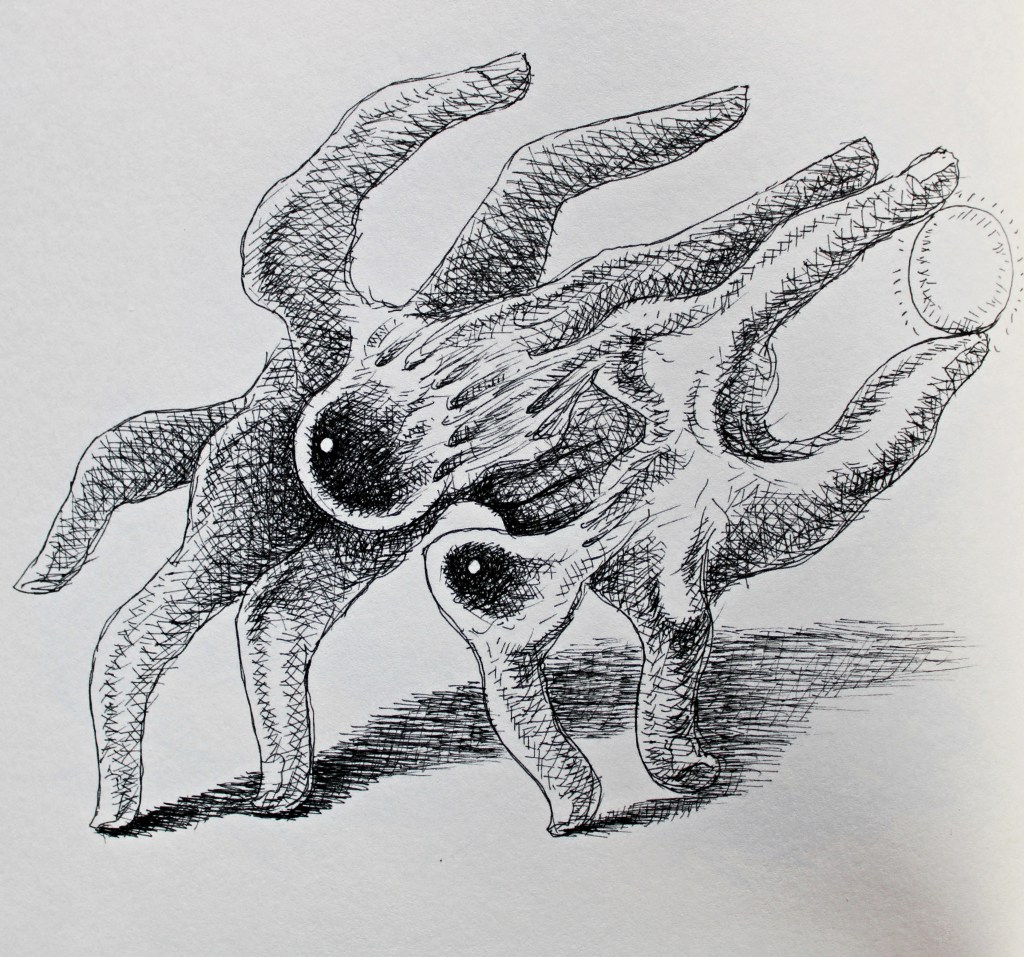
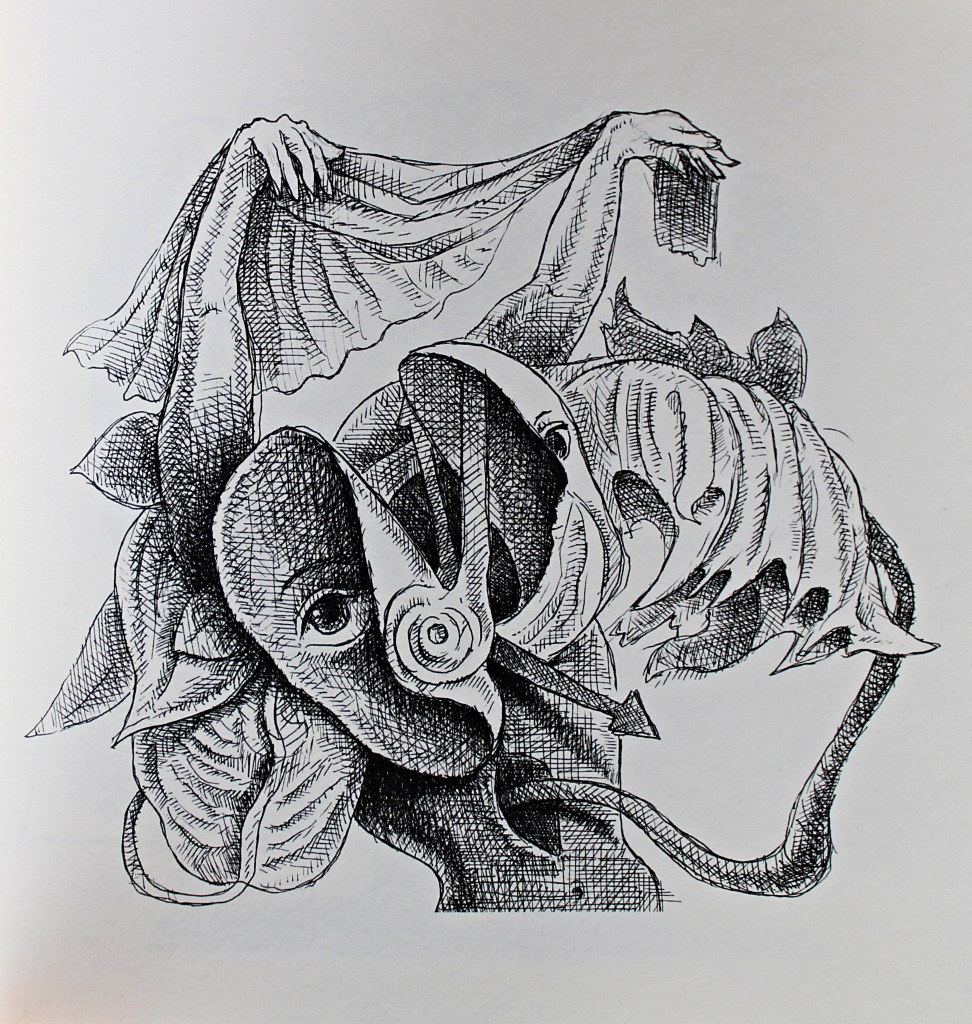
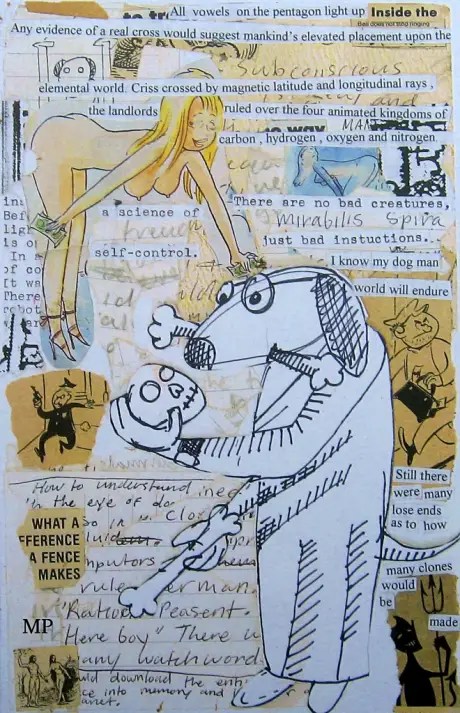
organize the snakes pluck strings divide the wave to the pedal point a step, a diesis, a key signature target a center ignition arrow bow lyre fabulist the dirty gods she had a nice base associative process with dials from point to point seamlessly one to the other and then Sigmund Freud’s rings hello utterance udder rants a scale rave turning things into words a jewelers hammer striking the strings kinetic parenthesis circle intersection drawing back waxing links undone wading octaves and moonlight the face on a corpuscule Saint Teresa melts the robot into a full bodied universe
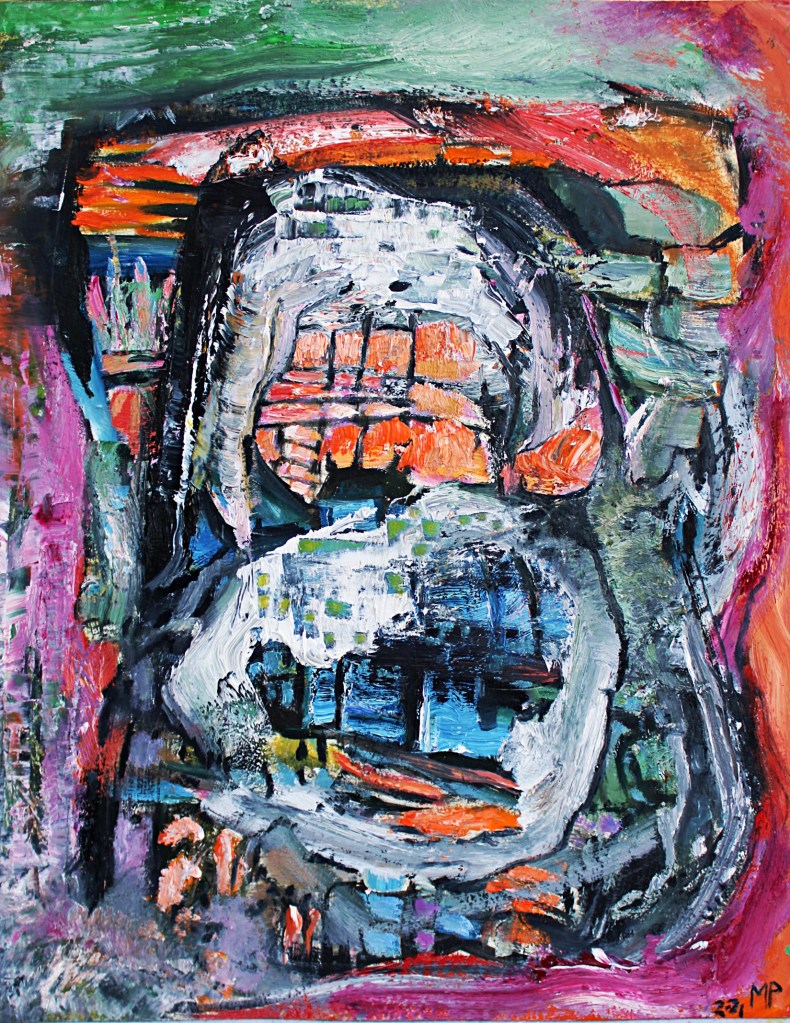
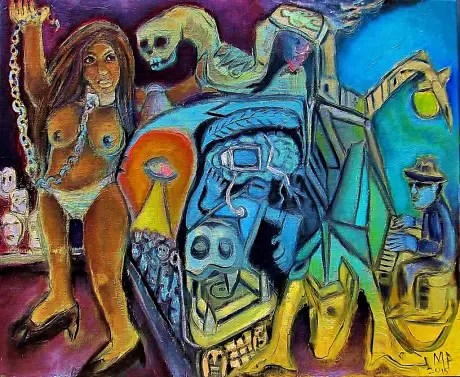
Every culture has experienced cannibalism, headhunting and parasites. This intrusive painting is about those things but thankfully it’s all metaphorical. In this painting I use figures of speech to convey malignant narcissism and greedy tendencies as a psychic virus. While no specific group or person is targeted it is important to be aware of the dangers of being egocentric and that it puts everybody at risk.
An ancient parasite has been interfering with our optimum self moderating programing since the beginning of time. This is not an original idea and can be found as a theme through many Science fiction and horror stories. One specific example is The Mind Parasites by Colin Wilson worth checking out. However there are more real life examples. I found details in Sigmund Freud’s Totem and Taboo: Resemblances Between the Mental Lives of Savages and Neurotics that offered a general outline on taboo as a psychic contagion.
Anyone who has violated a taboo becomes taboo himself because he possesses the dangerous quality of tempting others to follow his example: why should he be allowed to do what is forbidden to others? Thus he is truly contagious in that every example encourages imitation, and for that reason he himself must be shunned.
Freuds statement makes me think of the origin of the scapegoat and the spiritual cleanse that shares a polarity with transgressions of the community. An organized ritual allows a contamination of an object to later be sacrificed.
How did the Wendigo archetype institute and set in motion such a horrible malware on the consciousness of humanity?
First and foremost the Wendigo represents a defense against becoming selfish. An example not to follow. It is no one’s ambition to become cannibalistic or maladaptive but abrupt experience overwhelms an unactualized mind. This is usually caused by trauma experience. An experience by all accounts that leaves a brain feeling abandoned. With no one else around to understand. While left defenseless against the brains own intense fear, a sudden disconnection occurs.
By looking in a mirror day after day one moves more progressively towards a reduplicative hallucination. An elaborate state where one see themselves as an apparition. This double tells the vulnerable self a story about how much stronger and more valuable it is than the other. it tells the other self it is the reflection that is important. Across this imbalanced relationship the double forever feeds off of one traumatic moment. As a kind of psychic parasitic disease, the reflection commandeers the entire body while holding the suffering self hostage. This painful body tries to fight but not being fully rehabilitated to control it’s own operations, instead seeks to control other brains.
Robert A. Brightman an American anthropologist describes the Wendigo as
“The wendigo (/ˈwɛndɪɡoʊ/)(also wetiko) Ojibwa wintikö. Cree wihtiköw is a mythological man-eating creature or evil spirit from the folklore of the First Nations Algonquian tribes based in the northern forests of Nova Scotia, the East Coast of Canada, and Great Lakes Region of Canada and the United States. The wendigo is described as a monster with some characteristics of a human or as a spirit who has possessed a human being and made them become monstrous. Its influence is said to invoke acts of murder, insatiable greed, cannibalism and the cultural taboos against such behaviors”
From Brightman’s statement we get a profile of a very unrelenting and maladaptive personality who is controlled by a psychotic spirit whose strategy relates to a person in the same parasitic mode a protozoa relates to a host. There is an invisible influence.
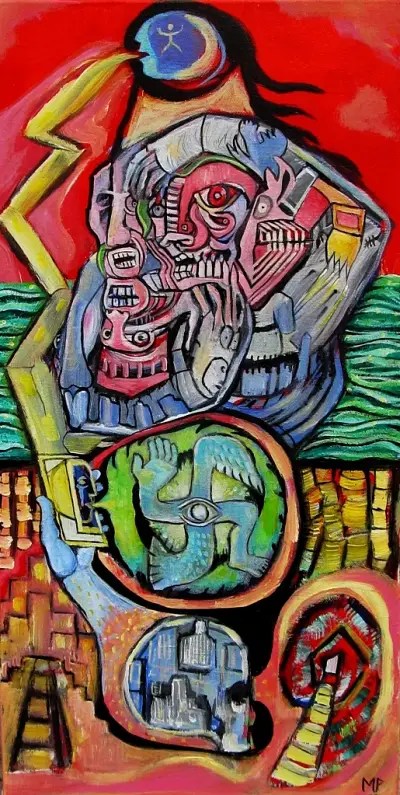
At the very top of my painting is an example of the Woodland Style. Inside the face is a very filtered cosmogram that offers a limited preview of a Peyote ceremony I was invited too. I choose the Bidu and moon cipher to act on behalf of an meaningful experience. The full night ceremony continues to make a deep impression on me. This impression is similar to my discussion inAstrology and Cosmograms. I review the root Loa as comparable to a strong radio signal filled with intelligent information and the brain as land-based radio station. In the painting this Loa voice scrolls from the lips to a wireless phone. This sudden illumination is delivered by a lightening bolt brightening a picture tube with a whirling log message. The subliminal effects directly communicates with the Mooladhara Chakra, the chair where the Kundalini sits. At it’s immature stage the Mooladhara is completely egotistical, security driven and possessive. These traits when pressed by scarcity and megalomania create a Wendigo.














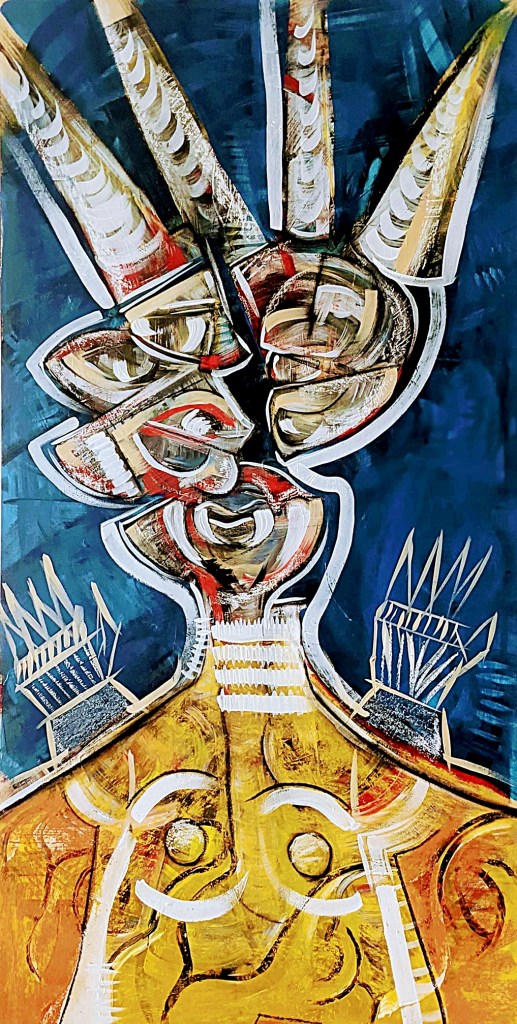
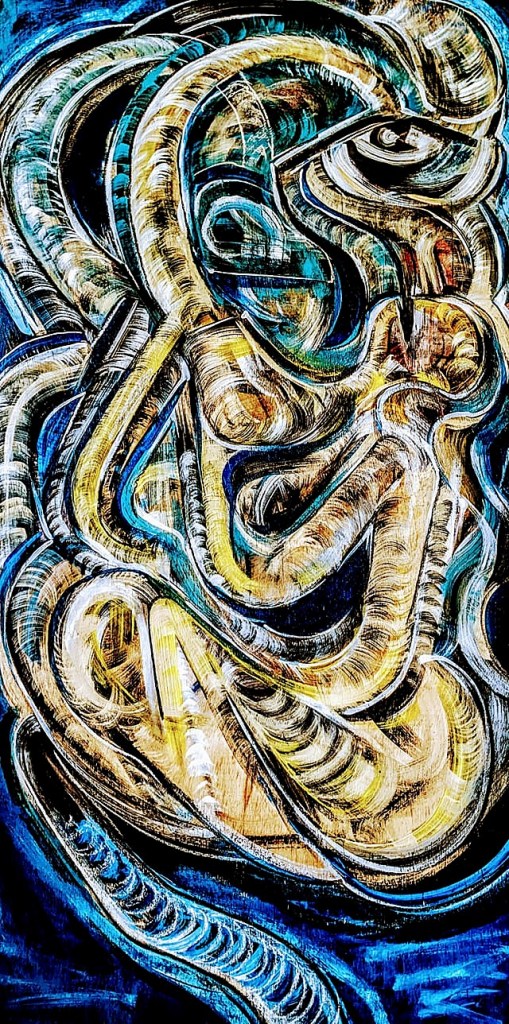
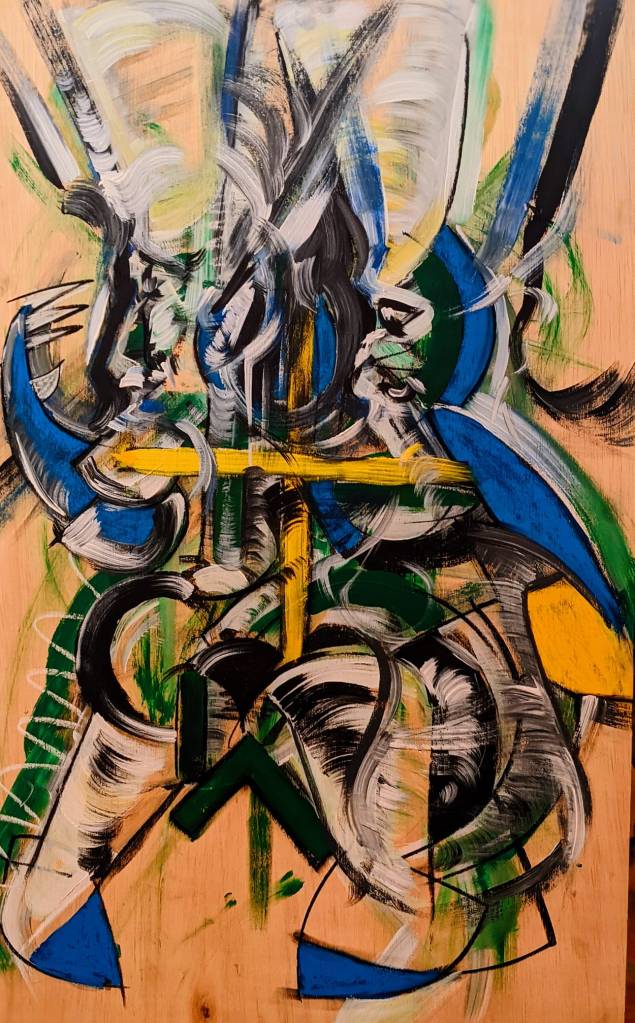

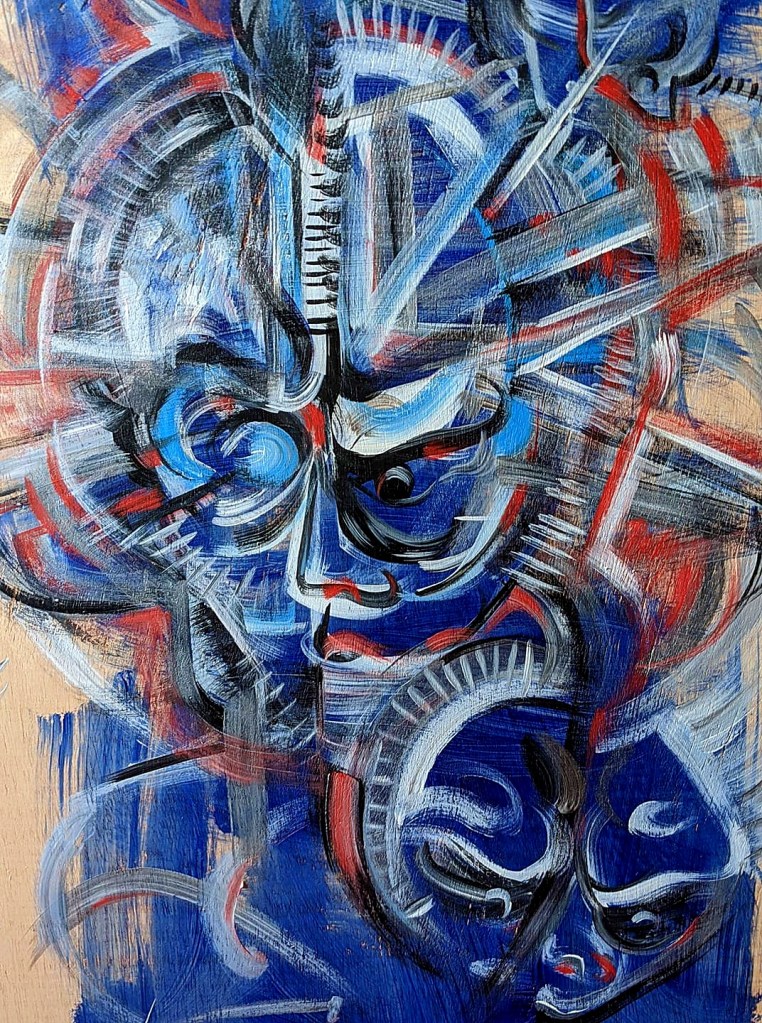
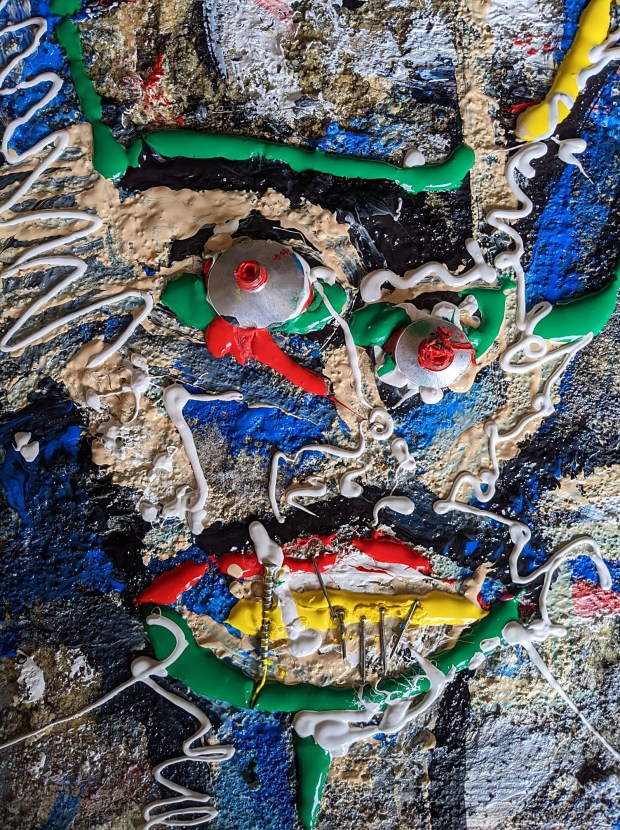
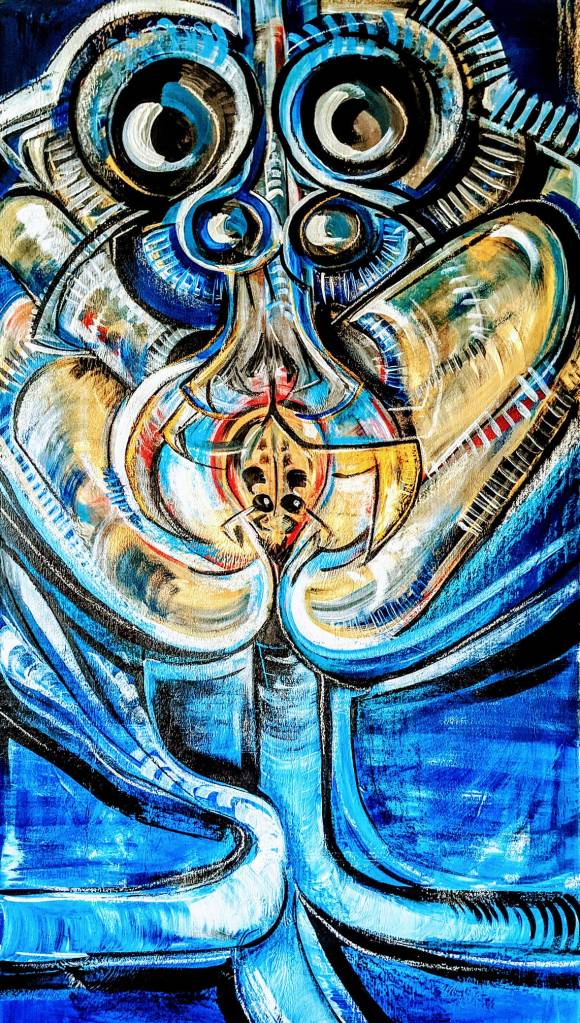
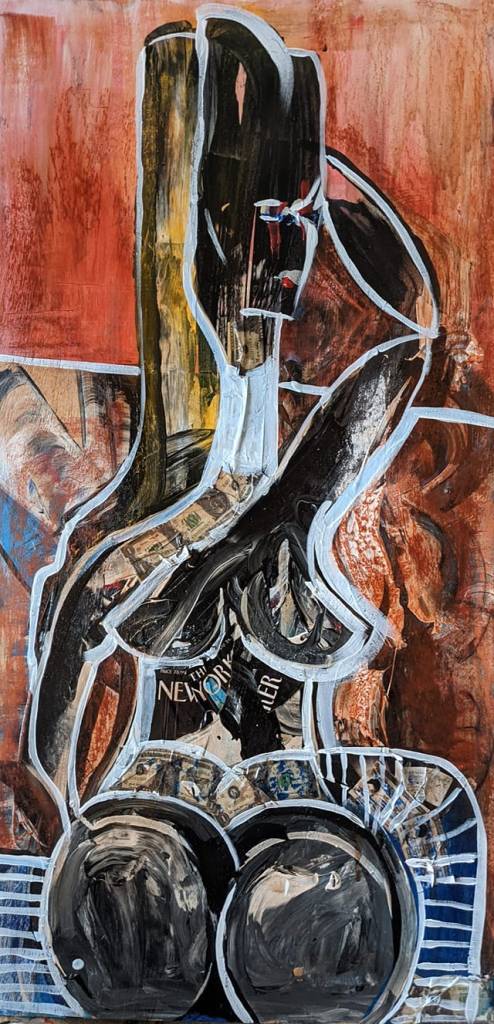
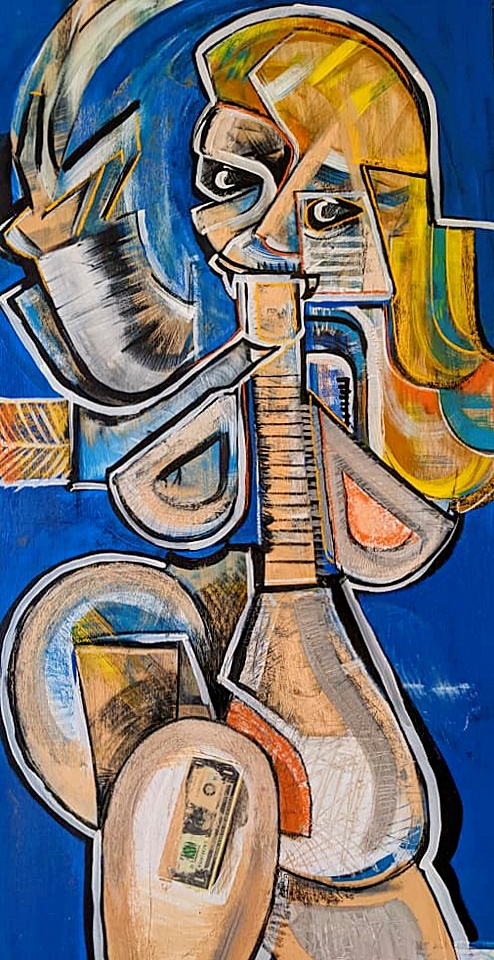





 Mitchell Pluto