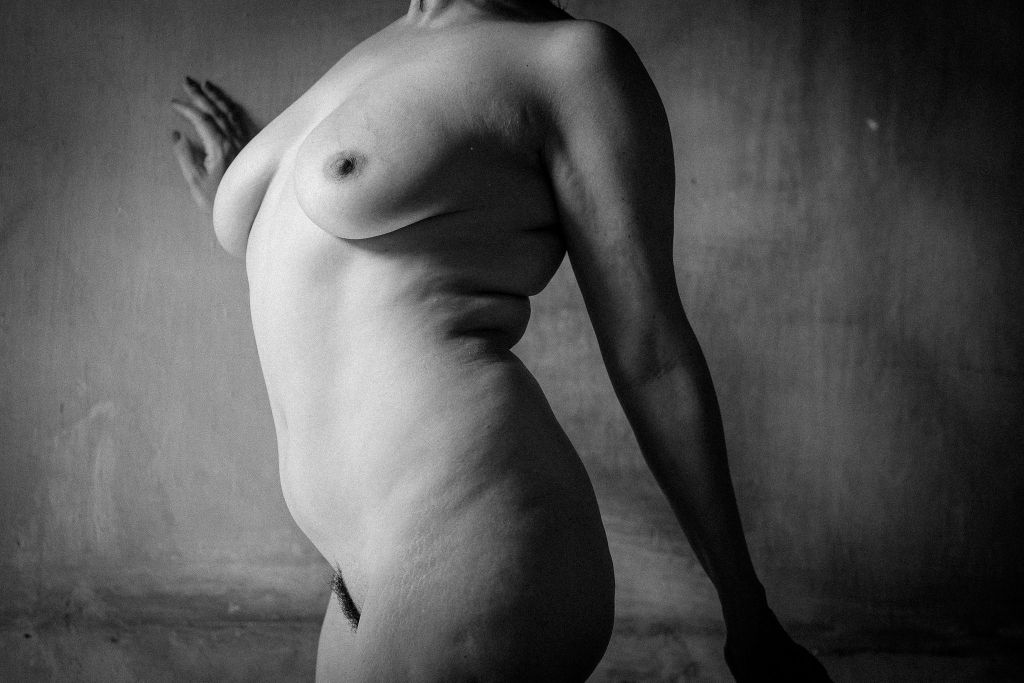
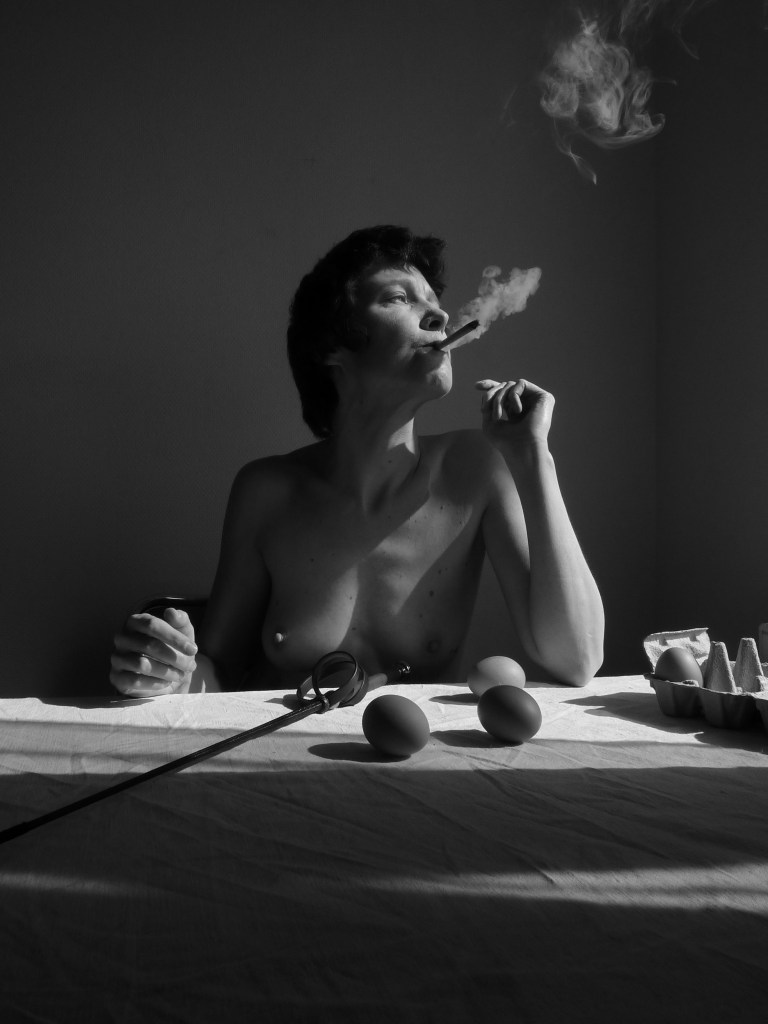
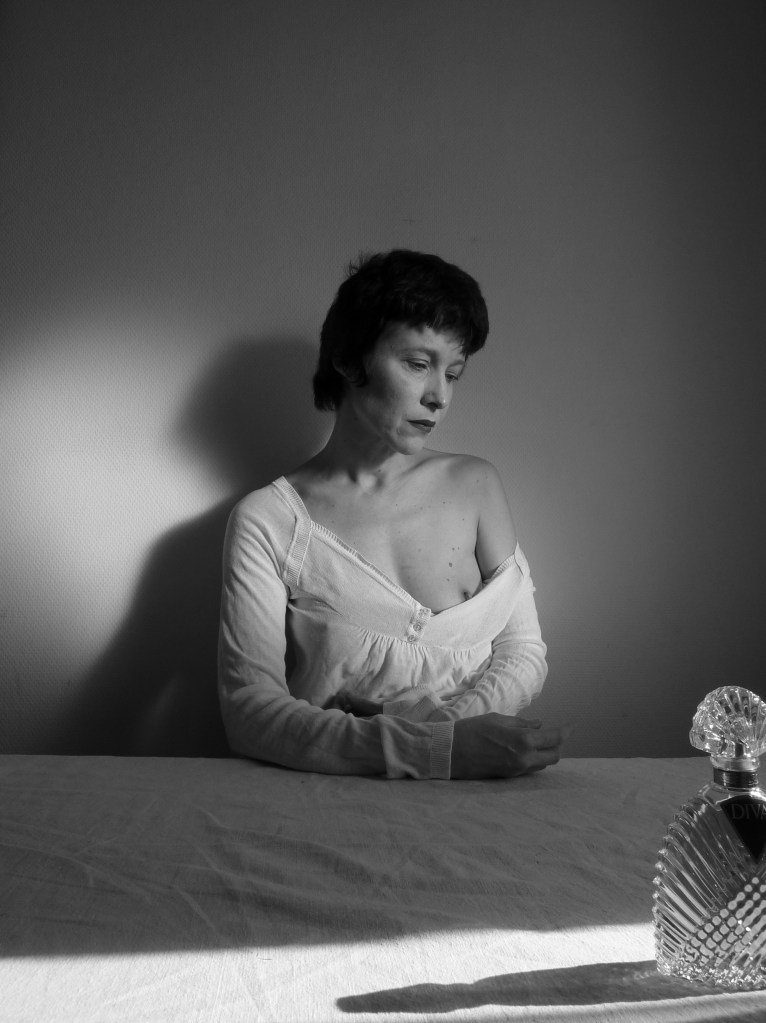
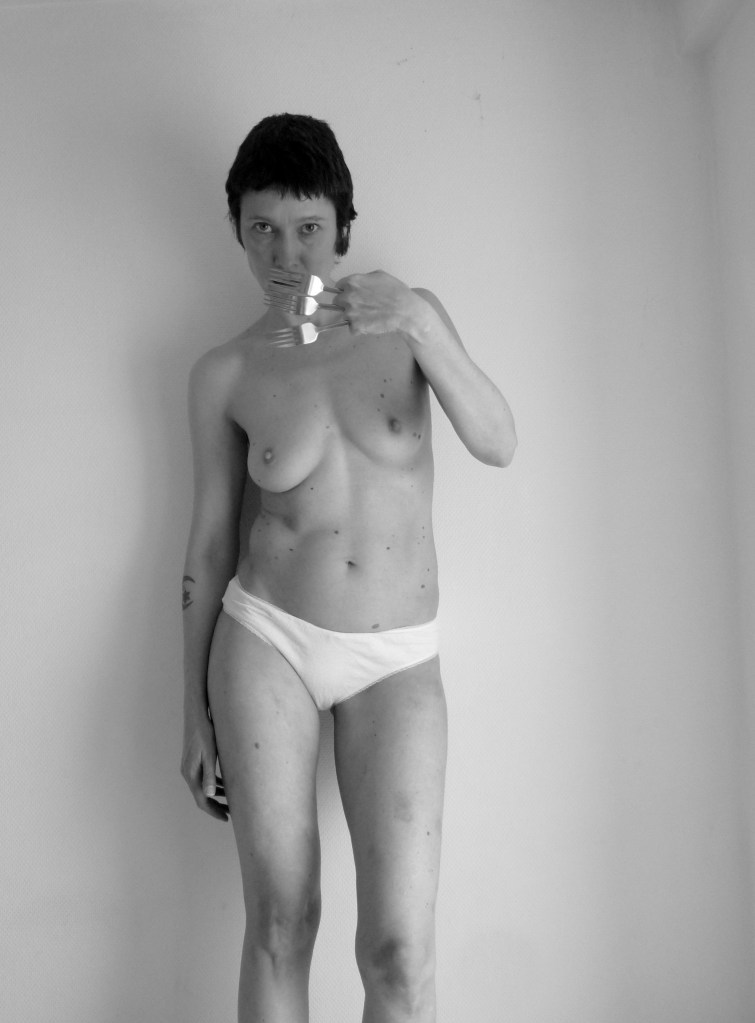
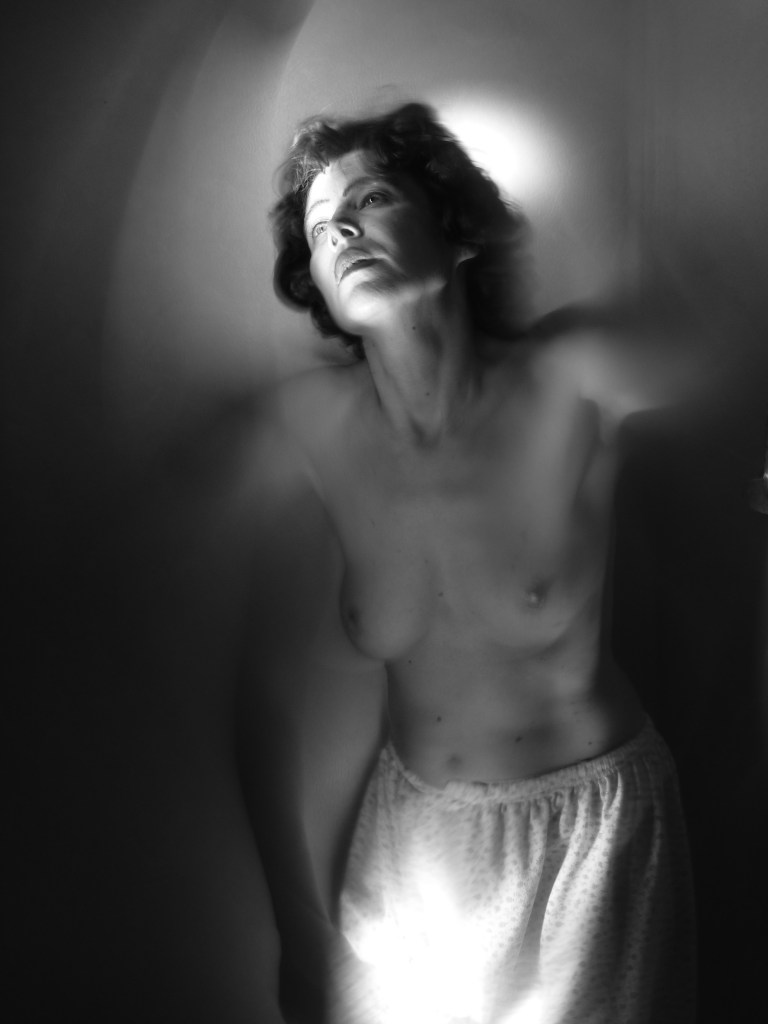
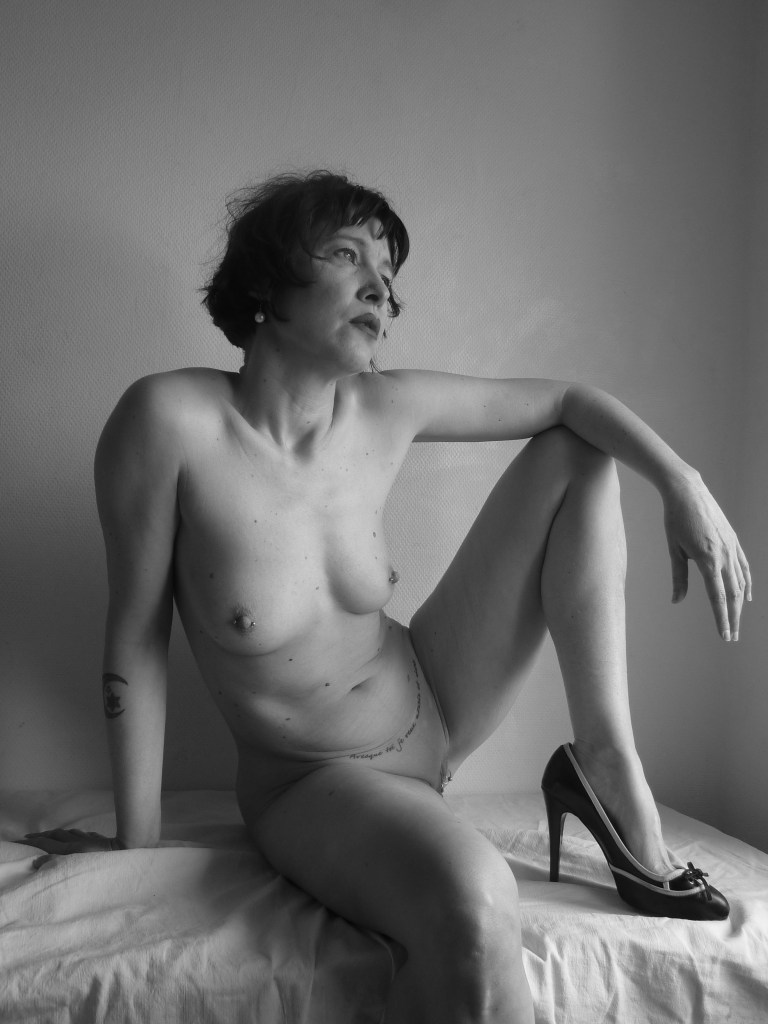
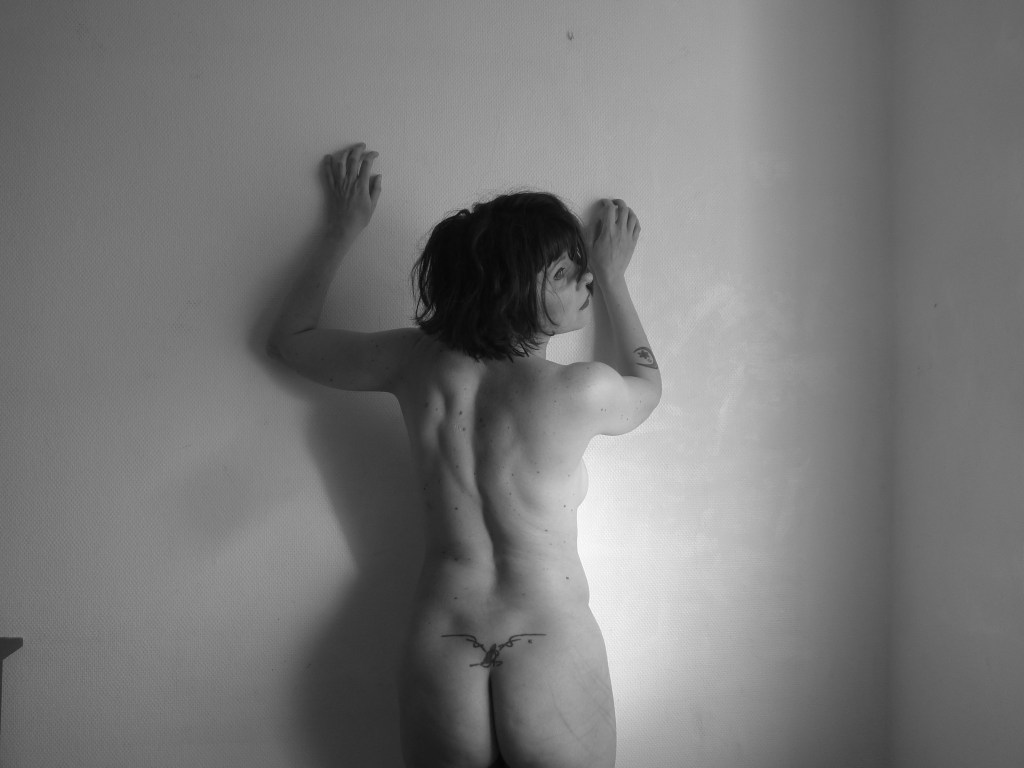
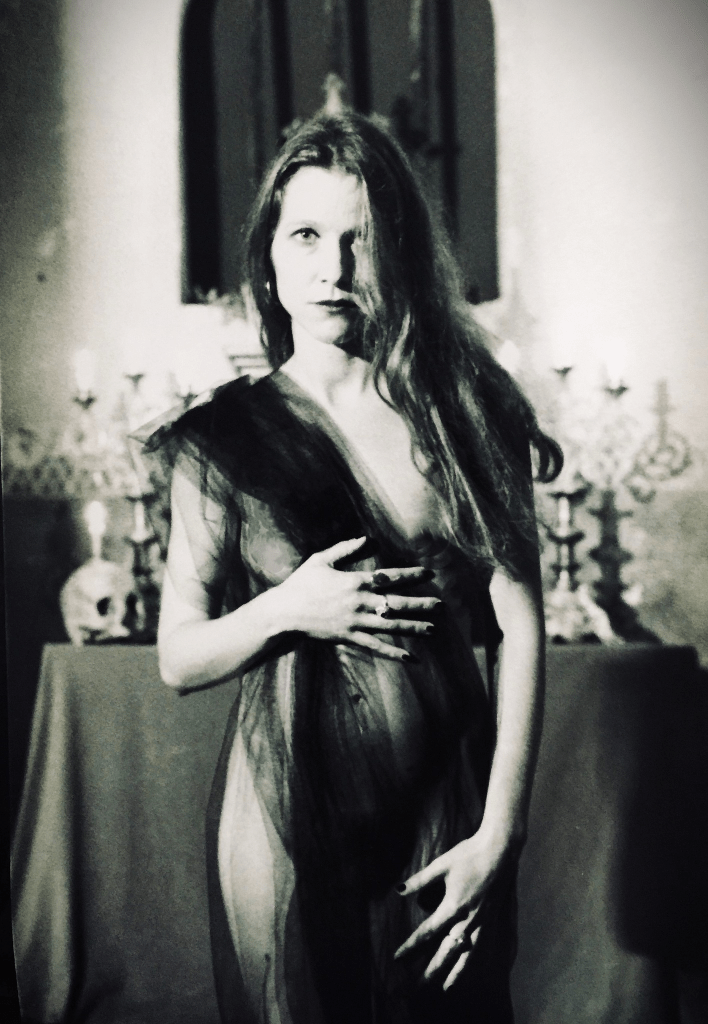
With complete dedication, Stéphanie immersed herself in photography, perfecting the gestures, and selecting women as her muse. Through her work, she realized the significance of honoring the dignity of every woman. Stephanie’s sessions revolve around accepting the body and loving one’s self, even in the face of adversity. This theme triggered a desire for personal growth.
L’œuvre est ici un détachement en soi, comme un désœuvrement/recoeuvrement, en mêlant les différentes expériences du vivant, la mort, le sexe, le viol, l’inceste, la naissance, le plaisir, la douleur. Ce qui reste de plus vivant provenant de l’intérieur du vécu là où les spectateurs sont confrontés directement à leurs propres fantômes/fantasmes.
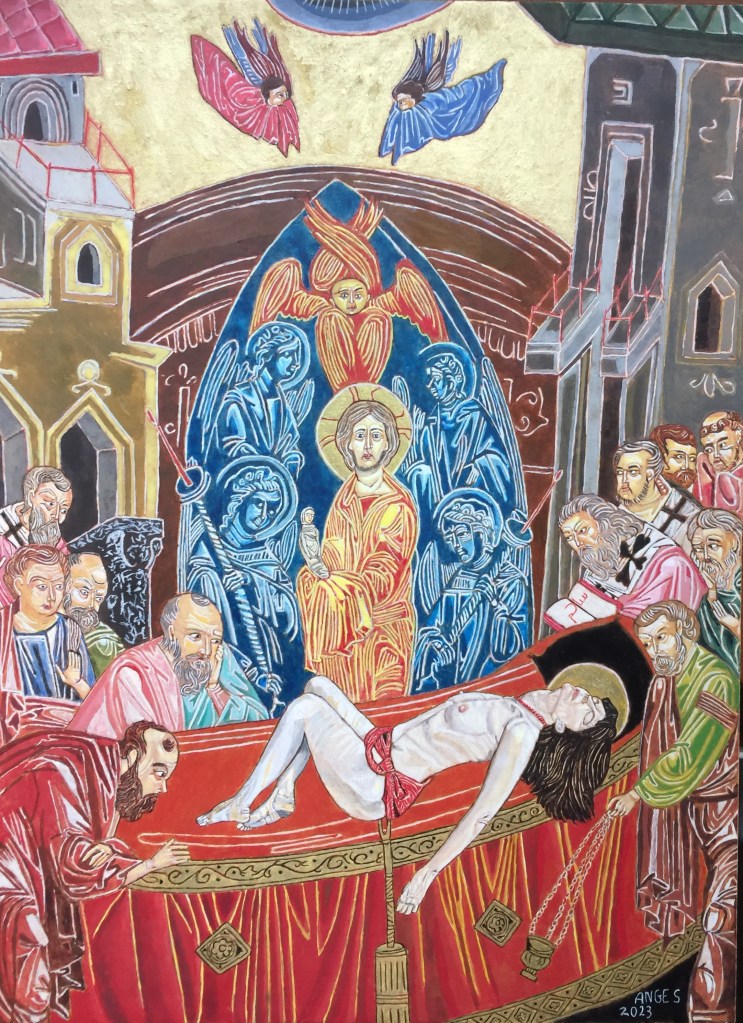
Je fais mon apprentissage au Prieuré de Gorze en compagnie de nonnes et femmes converties à l’orthodoxie. Elles font parties de la communauté du lieu. Mon maître d’icônes se nomme Louise Marie. Une dame d’un certain âge aux cheveux ressemblant à des nuages.Une formation qui a duré trois ans. Dans le même temps je prends des cours de dessins de nu à l’école des Beaux art à Metz.
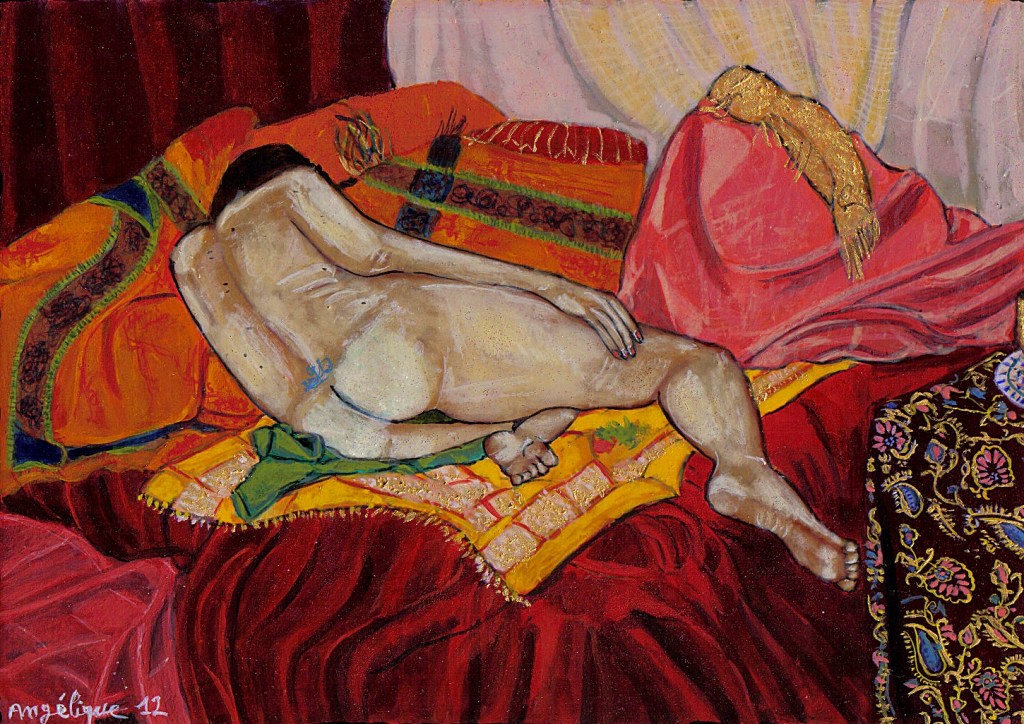
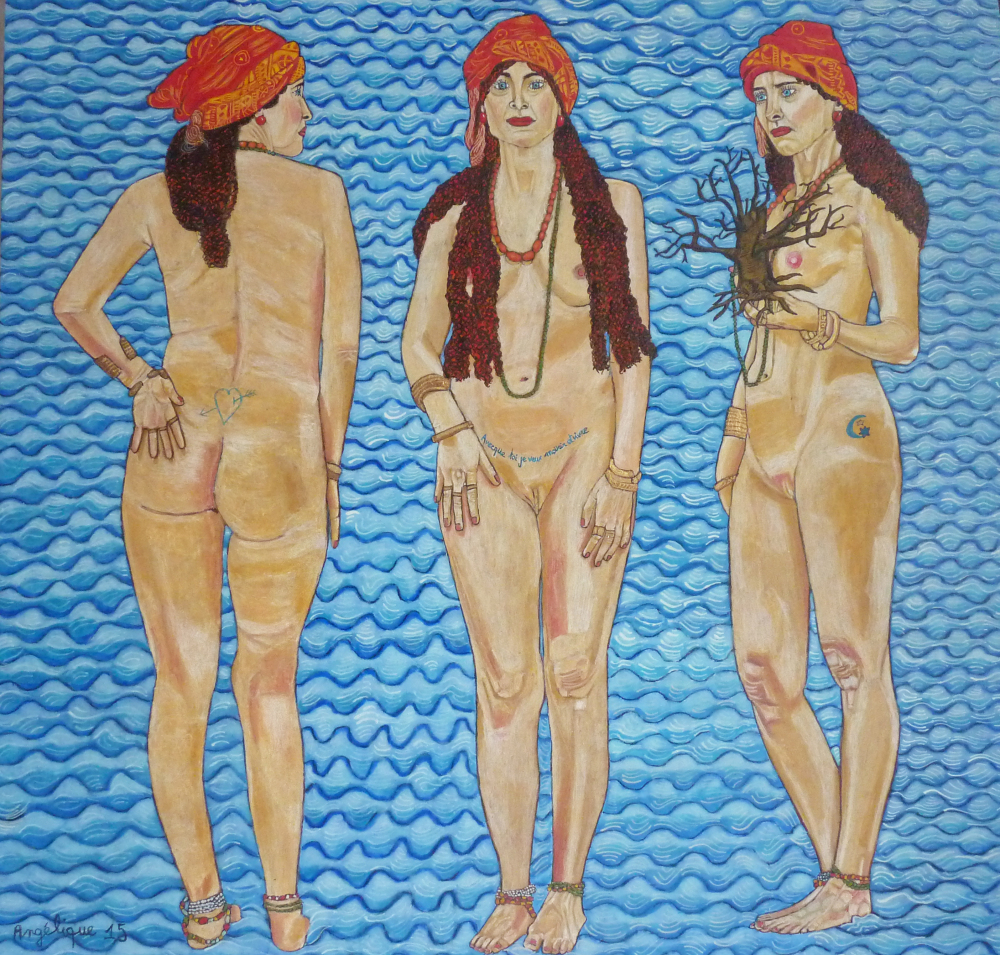
Odalisque de dos
Pour commencer une icône il me faut d’abord contacter un menuisier car le sujet se peint sur une planche de bois (exotique de préférence). Une fois la planche coupée il me faut la préparer avec du Blanc de Meudon, de la gélatine alimentaire et de l’eau. (Une recette bien précise que je ne citerai pas ici) Une quinzaine de couches de cet enduit sont indispensables.
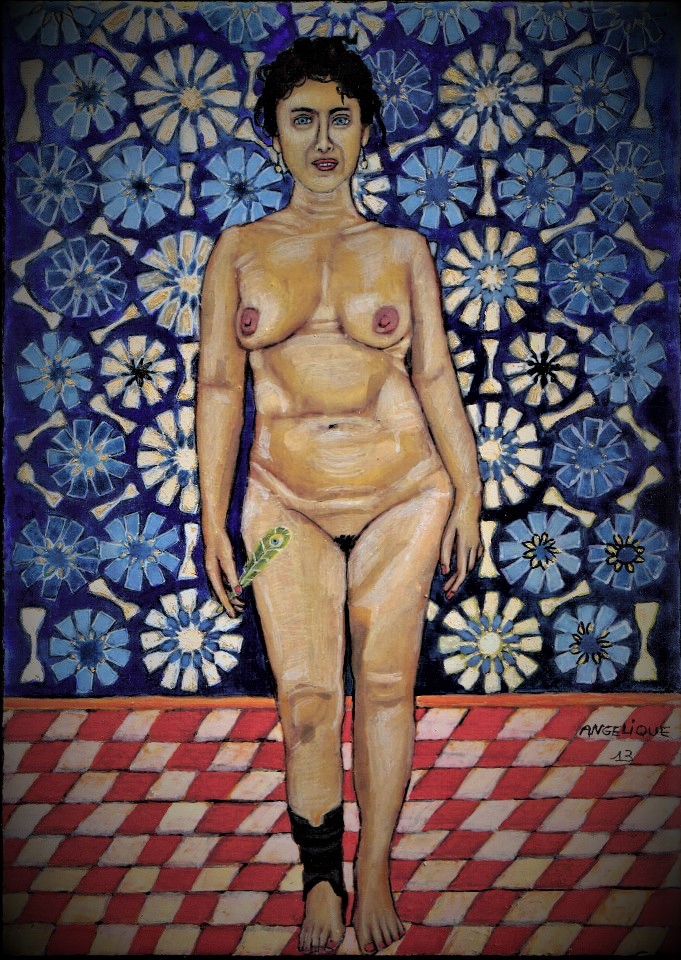
Femme de coeurMargot
Une fois toutes les couches terminées, je laisse sécher la planche deux jours et avec du papier abrasif fin je ponce les aspérités. Planche qui représente symboliquement pour ma part le tout et le rien. Le dessin se fait sur un calque pour pouvoir le transposer grâce à des pigments sur la planche. Puis vient la préparation du liant qui va me servir à peindre. A base de jaune d’œuf et de vinaigre et un peu d’eau. (Je lave le jaune sous un mince filet d’eau et enlève la membrane). Une fois le dessin transposer sur la planche je reprends les traits grâce à un pinceau fin et du pigment noir. Le pigment qui se trouve sur la planche s’efface facilement d’où la nécessité de le reprendre. La technique que j’utilise pour peindre est celle de la tempera à la goutte. C’est à dire que je trempe mon pinceau dans ma palette contenant le liant à l’œuf (mélangé à un peu d’eau) et les pigments pour ensuite déposer la goutte sur l’endroit du dessin où je veux peindre.
Olympe
Puis je la fais rouler, mon pinceau ne touche pas la planche. Ce qui forme en quelque sorte une flaque. Une fois cette dernière sèche, je recommence le même procédé. Je commence toujours par les couleurs sombres pour arriver aux couleurs les plus claires. La symbolique de l’ombre vers la lumière. Par exemple pour la chair (un visage, un corps, les mains) j’utilise d’abord un vert olive (symbole de la terre) puis du pigment ocre rouge (symbole du sang) pour enfin arriver à l’ocre jaune pur. Les finitions de la chair comportent souvent trois voir quatre teintes différentes toujours dans les tons chairs mais de plus en plus clairs. Les quelques notes blanches que je trace grâce à un pinceau très fin se font tout à la fin pour accentuer la lumière. J’utilise la même méthodes pour les vêtement, les bijoux, le fond…..
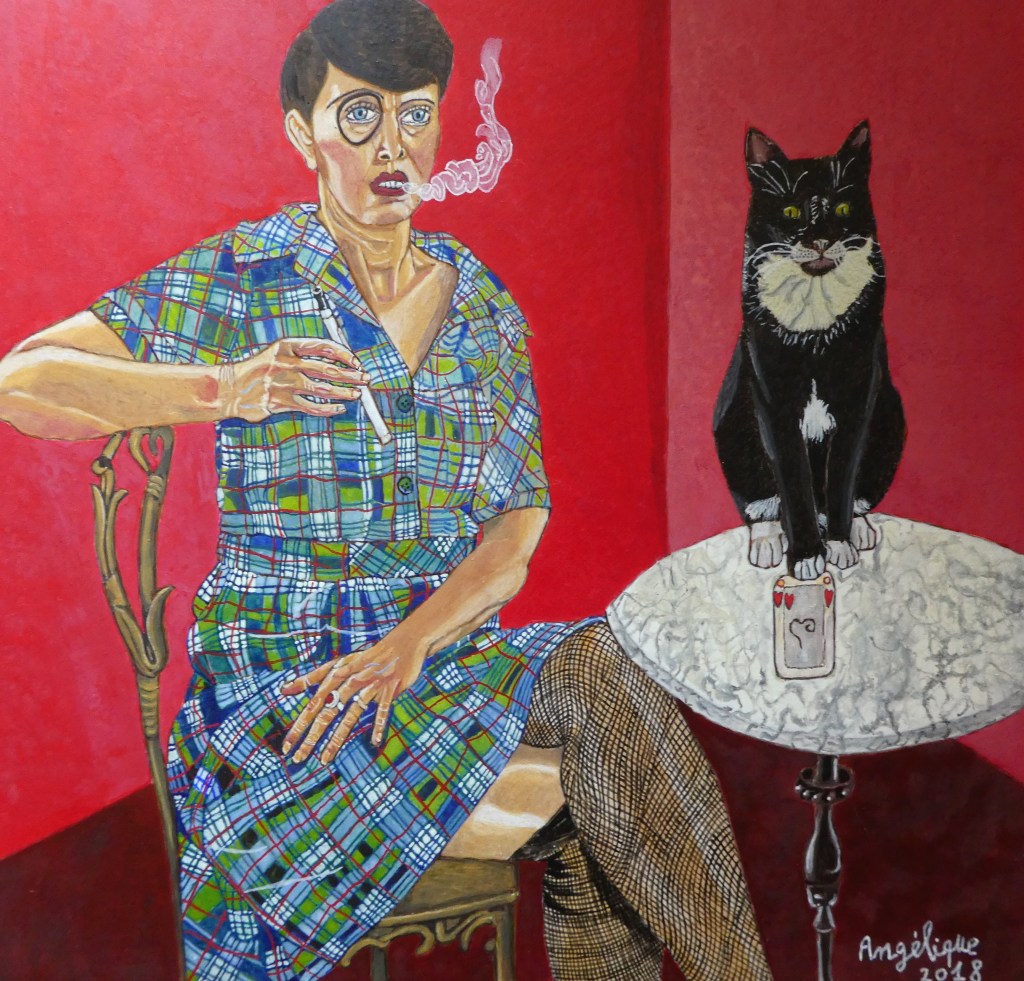
Le bar d’amsterdam
Une fois l’œuvre terminée je peux passer au vernis. Je laisse d’abord sécher la peinture quelques jours puis je passe à la saturation et enfin le vernis. Je peins les bords de l’icône en noir ainsi que l’autre face de la planche.
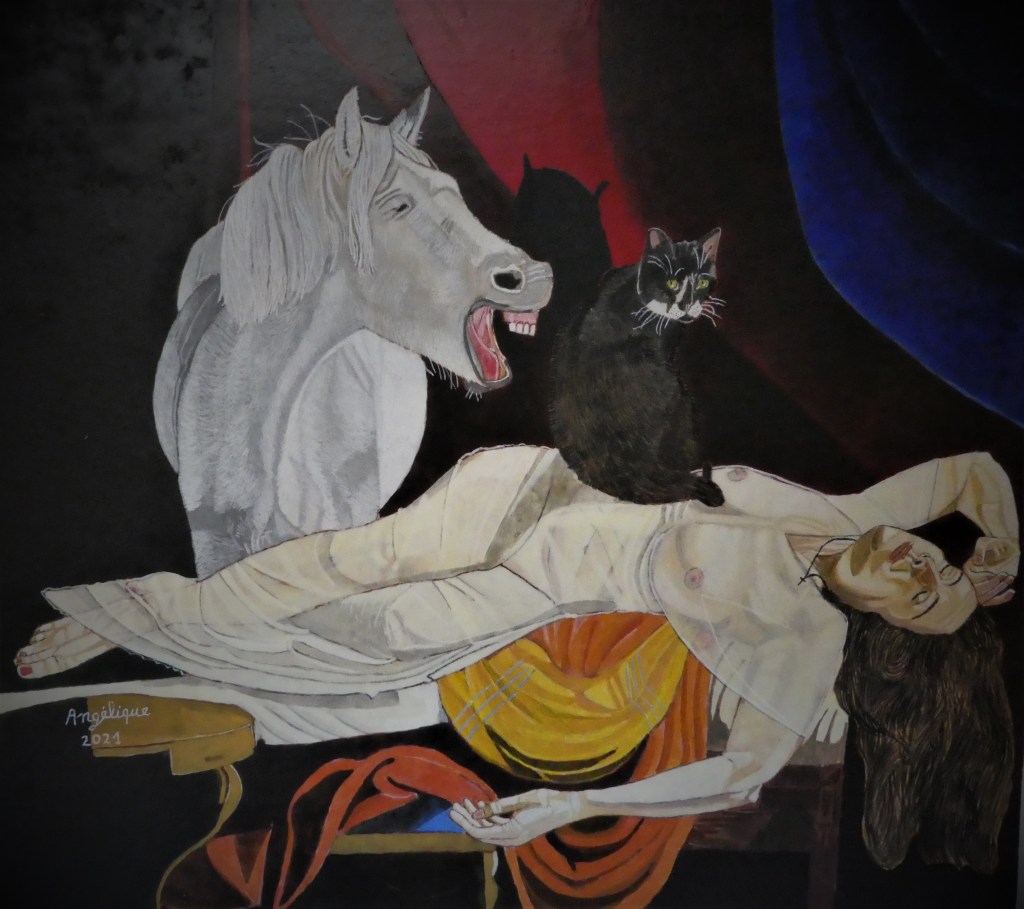
Le cauchemar
Les années 2000 représentent des changements dans mon esprit et naturellement dans les sujets que je peins. J’utilise la même technique que l’icône pour peindre des personnes qui veulent bien poser pour moi et ma vie toujours teintée de spiritualité et d’émotions fortes.
Elephant à vendre
En parallèle je pose en tant que modèle à l’école des Beaux Arts de Metz et pour d’autres ateliers. Beaucoup d’élèves dessinent mon corps ou réalisent des peintures. Je pose aussi en tant que modèle pour photographes. Photographies qui m’inspirent pour relater ma vie en peinture. Je continue aussi à écrire des icônes religieuse sur commande. Je travaille aussi sur les animaux qui font partis des êtres sensibles qui peuplent ce monde et sur des sujets plus dures comme la déportation ou la détresse des femmes par exemple en Afghanistan.
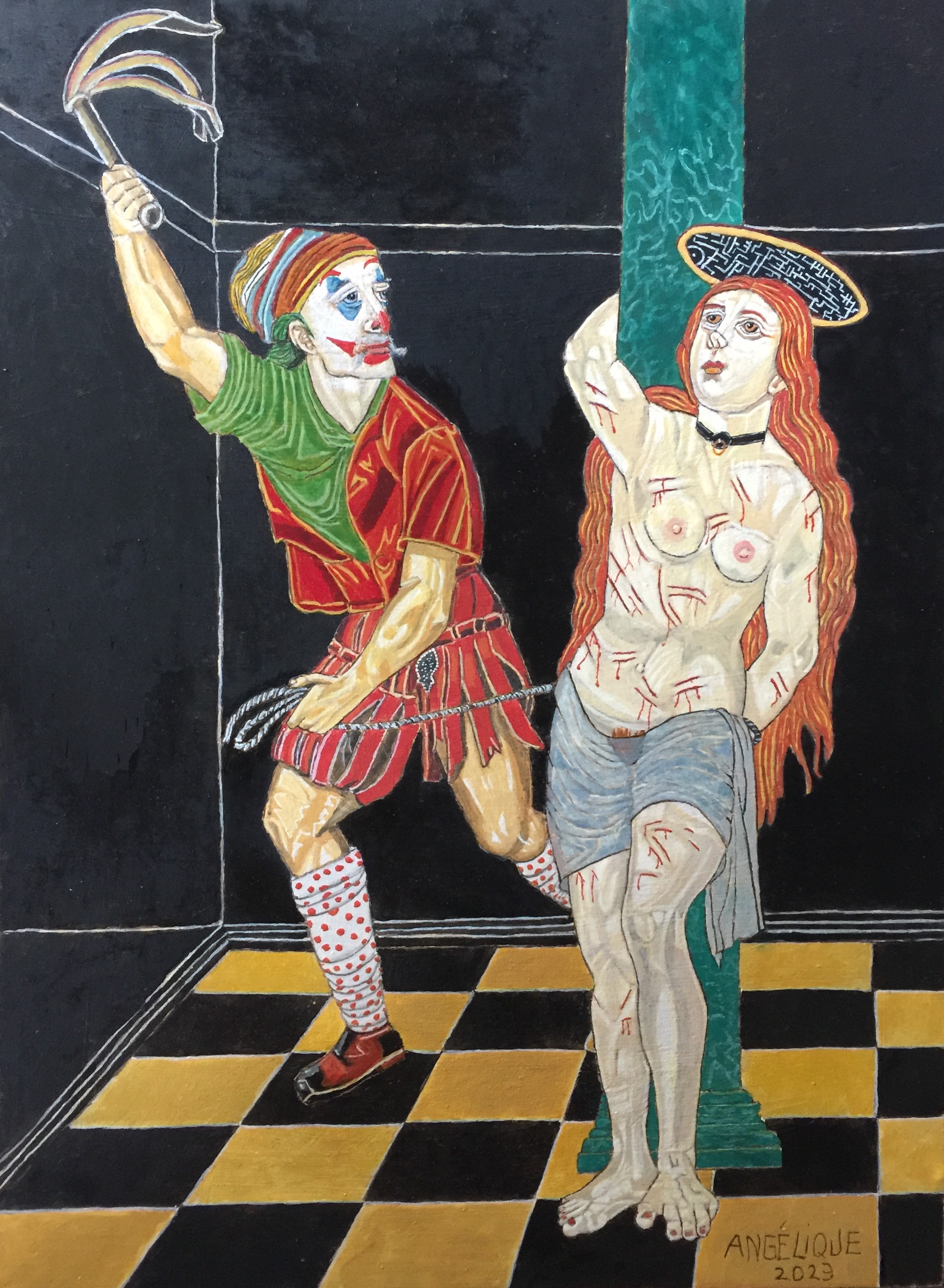
Bettina Sainte Barbe et le fou réservée
Je continue de poser pour des photographes (si le projet est sérieux) et je fais des autoportraits en photos que j’utilise aussi pour mes peintures et travaille sur commandes ou pour des expositions. Des vidéos performances sont réalisées grâce à plusieurs personnes. (artistes, amies passionnées par mon travail). Beaucoup d’artistes via fb s’inspirent de mes photos pour peindre de jolis tableaux.
L’arbre mort
Je pense dans l’avenir toujours peindre et donner des cours, transmettre ce savoir de la technique à la tempera comme Louise Marie du prieuré me l’a transmis. Et travailler sur commandes. Exposer et écrire. Pour finir, en quête d’identité depuis mon adolescence ces supports artistiques me permettent d’avancer.
noir et blanc
Angélique Bègue (December 23, 1970 – ) is a French artist who has renewed tempera painting.
NatureDouble
Video intended for mature audiences
Mes expositions :
2023 : Exposition Atelier Sainte Croix à Metz
2022 : Exposition Carrefour des Arts à Metz
2022 : Exposition Atelier Sainte Croix des Arts à Metz
2020 : Exposition à la Galerie Tet de lart à Forbach
2018-2019 :Après avoir été exposée au Centre européen du résistant déporté et au fort de Queuleu, l’oeuvre d’Angélique Bègue et d’Annick Monnier sera présentée au public normand dans le cadre du 75ème anniversaire du débarquement.
2018-2019 : J’exposerai à partir du 15 septembre ma série de peintures consacrée aux expériences médicales menées dans les camps de concentration nazis. Mes œuvres seront présentées dans le cadre de la nouvelle exposition du Centre européen du résistant déporté consacrée aux médecins déportés.
2016-2017 : «rue des Déportés« , Fort de Queuleu, Metz
2015 : « rue des Déportés », Struthof, Centre européen du résistant déporté
2012-2013 : « Dans mon corps », Toul, Musée d’Art et d’Histoire (pour public averti)
2012 : « Un envol…de vie », Université de Lorraine, Bibliothèque universitaire de Lettres, Nancy
2011 : « Ange ou démon », Villers-lès-Nancy, Galerie de Madame de Graffigny
2011 : « Super héros », Maxéville, Souterrain Porte VI
2010 : « Femme entre terre et ciel », Bar-le-Duc, Espace d’art contemporain Saint Louis
Descendidos al mismo infierno Tu saciedad en mi boca Los labios aparean otras voces Me buscas entre la niebla La imaginación me busca entre la bruma Yo no existo Tú me asesinaste Hundiste tus preguntas en partes viejas de la casa Algo encendía el techo Los pequeños alumbraron esa melancolía Hasta que todo se fue en la inundación Y las miradas se ensuciaron con su propio ruido No había más caretas para procrear Ni más sueños para parir.
Vuelvo al sur a los bosques La lluvia detiene el canto de nuestros cuerpos Volveremos a arder mientras la lluvia gire hacia la luz Y una partícula de viento entre en nuestros reinos El aire será nuestro Nos poseeremos agitados Ante el agua descendida por la noche Mientras los animales buscan sus huellas Y nosotros decapitamos el terror Observamos la hoguera desde la boca hacia los pies Y en un minuto todo será conocido Cada detalle entra en nosotros Aullamos con el musgo que nos cubre Y tus labios me tocan Deslizan tus hogueras en la ruta del sol Hasta que el viento es un solo gemido Y nadie ni siquiera la noche puede soportar Estas sombras recorriendo Palpando la silueta Entrando en la oscuridad.
Descubriéndonos Descubro el sur en este navío que vuela Es mi imaginación en su astillero de astros Los muñecos envician las agitadas aguas Es el aire sucio que nos recorre Y una llamarada revierte Los fragmentos del aire en toda su gestación Es tanto el aire que ansío Volar por estas explanadas hacia el lago Y desde allí recorrer la senda Las nubes dejan pergaminos en la noche Nosotros nombramos nuestras inmensidades En las lagunas del secreto La madre guarda sus señales con devoción Y el anciano lleva botellas en el bolsillo Yo no puedo morir antes de verte Es azul esta nostalgia del verde corredor Mis muñecas recuerdan todos recordamos Es un viaje por las huellas de esa mirada distante Es un tiempo dedicado al sigilo Las madrugadas vuelven a reunir sus escombros Pero la hierba crece desterrada desde la tierra Y las cartas regresan a la ciudad perdida.
Dibujaste una mirada muda perpendicular a la onda más leve el polvo, el concreto, la almohada ahogan la imagen pervertida de ti Estoy a punto de exterminar una idea, de convertirme en una imitación de la neblina en el vidrio.
Sahumerio
Reflejos anulan el acto hasta que olvidas mi presencia yo enciendo fuegos, derrito despojos de amor cada tanto escribo y un extraño nace del aire y puede aterrizar a pesar de mi estación forzada, el ritmo aplaza conjugaciones de un verbo que se sugiere desigual.
Vaciada
Mira antes de atravesar rumbos de la ensoñación pasan caminantes, articulan facciones rotas le sorprenden cada vez.
Recortes
Una sola ondulación contiene nuestras raíces contienen al hombre dentro lo meten en un saco y huyen, más el tiempo tiene pasajes en sus idiomas me voy a otra parte, cierro la puerta.
Imaginería
Te concibo desnudo como si fornicaras con tu reflejo ¡qué lenta desnudez ¡ ¡Qué precipicio excava mi construcción ¡ Vienes a mí a pesar de tus cuerpos vulnerados Yo profano tu vientre Me agacho a recoger cosas extraviadas el tacto enmienda mi orgía de océanos me disfrazo de caracola para alunizar contigo y nadie espera dormido en el sofá nadie corretea desnudo por estas piezas.
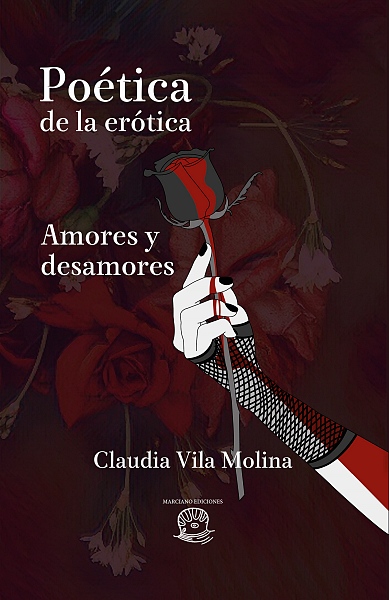
Writer born in Viña del Mar, Chile. Professor of language and communication at PUCV, poet and literary critic. In 2012, she published her first book, The Invisible Eyes of the Wind. She has published in renowned Chilean and foreign digital media: Babelia (Spain), Letras de Chile (Chile), Triplov and Athena de Portugal, among others. During the year 2017 she participates in the Xaleshem group with poetic texts for the surrealist anthologies: “Composing the illusion” in honor of Ludwig Zeller and “Full Moon”, in honor of Susana Wald. In 2018, she integrates the feminist anthology IXQUIC released both in Europe and in Latin America. In 2020 she participates reviewing the conversation book “Shuffle poetry, Surrealism in Latin America” by Alfonso Peña (Costa Rica), also writes a poetic prose text for the book “Arcano 16, La torre“, by the same author. Likewise, she participates in the book “120 notes of Eros. Written portraits of surrealist women” by Floriano Martins (Brazilian surrealist poet, writer, visual artist and cultural manager). In this year (2021) she publishes her second poetry book Poética de la erotica, amores y desamores by Marciano editores, Santiago. The Extraviados is her third book published by Espacio Sol Ediciones (2023)
ALL WRITING IN THIS POST IS A COPYRIGHT OF CLAUDIA VILA MOLINA. THIS AN AUTHORIZED DUPLICATION WITH PERMISSION AND EXPRESSED CONSENT FROM THE AUTHOR
Listen to the mysterious, revealing and fierce voices within you.
And if you are caught up by fear of doing so, remember that it is wrong for the senses to belong to the everyday, lived world.
For me any discovery that changes the nature or direction or a phenomenon constitutes
of something or is a surrealist /poetic truth.
Objective chance , the subtlety of the intuition of the expectation, and the constant search for its flash .
Going without a destination, the poet has an unknown encounter with the word, freed from any linguistic logic.
In poetry the mind blows out of the mind. It aims at the spontaneous reclassification of things into a deeper and freer order, which is impossible to explain by the means of the ordinary mind.
The poet alternately is a deadwood pruner, a transformer, and a thunderbolt.
Silence is a complete poetic and surrealist work.
The word must be left in suspense for a moment before it is transferred to a physical state on paper. At dawn or dusk, we walk down the road and sometimes come across the silhouette of a silent fairy woman, whose silence is the most comprehensive concept of poetry, and surrealism.
an absolutely possessed throat, echoing between howls and silence.
the secrets of the world created, within the poetic mystery, darkness unfolds while questioning is stripped.
Earthly legend and mystery doors open to infinity.
The poet is an enemy of the Sufist .
The poet is not bound by a vision or a superior authority.
Poetry is a momentary extraction of the unknown from the veins of every language.
If the poem does not have a chaotic body that smells of demolition, negation and destruction of all existing literary forms, genres,
Then what is living poetry?
Poetry should be the color of dried blood
The poem is the beginning and end of the world, it revives the world and its death, dismantles all self- and collective censorship, esoteric and physical, and drops every daily living dictionary.
The poem is an arena for the execution of all linguistic paralysis by burning with the napalm of the lust.
Poetry is not a linguistic expression, but a visual, physical and perhaps biological expression as well.
Real poetry employs itself to monitor a waking dream which is resentful of its fate, re-sculpting it with dough baked by chaos inside the bone furnace called the human head.
I believe that enhancing poetic esoteric awareness does not come only by enhancing the possession of language or general cognitive awareness, but by developing and training the eye on scenes of logic disintegration always, whether they are daily or artistic works.
Even with everyday mind games
Thus, the magnetic linguistic ability self-develops and expands not only through the subconscious mind, but also through the nerves of the eye’s practice of strenuous imaginative sports to extract the faculties of impossible earthy miracles in all its forms and templates.
I treat the Arabic language rules as a relationship between oppression and freedom; understand it
As a repressive social specter that must be removed and rebuilt anew every moment with vast doors to spend the free desire.
Poetry is the chaotic condensation of the inner momentary realization, but the seer poet must tame the tools of this condensation towards a permanent quest for the human interior, a quest fertilized by doubts in everything outside the individual.
Every human being has a poetic companion who lives behind his eye, the cunning poet who makes him constantly jump like a kangaroo and always seeks to protect this kangaroo from drowning in the prior cement lakes and to teach this kangaroo that there is no limit to what is called verbal maturity,
poetry is a permanent electrical revolution inside the mind It is not controlled by something imaginary or even social.
The chief function of poetry is to impart sharp disturbances to language and to overthrow every possible holiness it bears. For me grammarians and academics of language are the social police of the imagination.
I despise even the inherited Arab aspirations to rebel against the Arabic language, except of course à few poets I see the deceptive horizon of most Arab poets now that they throw themselves in the recycling factories of closed poetic ambitions.
Surrealism relates to expressing «the real functioning of thought […] in the absence of any control exercised by reason and apart from any aesthetic or moral concern ».
– We think that not only language, but the whole world in all its aspects, was given to humanity to make surrealist use of it.
“All things are called to other uses than those generally attributed to them.” – André Breton, Le Point du Jour.
– We think that surrealists should make use of whatever materials and tools that they find attractive. Whether a feather, a cloud or a computer, any single object in this world becomes a surrealist object as soon as surrealist use is made of it.
– We think that the results of surrealist activities do not have to conform to any type of listed art form, nor even to whatever is considered art.
– Restrictions regarding materials and tools, as well as compliance with traditional artistic categories are views that were already considered and experienced as obsolete by most artists of the Renaissance period. We think that an attempt to liberate the human mind may in no way be successfully achieved on the basis of a narrower scope of practices and intellectual freedom than that which was already acquired by artists at that time.
-‘we are interested in how surrealism appears in everyday life, whether it’s from surrealists or not, but we understand this is not the same as a surrealist movement.”
-“We are interested in certain parallel currents that might overlap with surrealism. Surrealism may -appear- or be present- within avant garde or popular art but it’s not necessarily the same thing.”
– We categorically reject mixing surrealism with whatever form of religion, and we reject the presence of any religious persons within the group.
– We reject any aesthetic attribute that directly or indirectly integrates into the life of this society or that would tend to reconcile with it.
– Realistic daily life erases the perception of the unique characteristics of objects. We will always seek to break this mechanism and its dynamics by means of words, plastic art, music and cinema or any other means.
– Collective automatism is self-contained in everyday life. It floats in the air, dissolving every entrenched and worn-out intellectual authority.
– The poem is a collective work, even if it is from one’s individual imagination.
– We have nothing but contempt for the guardians of grammar because they are the protectors of the heavy legacy of linguistic dependence that erases the ecstasy of all free desire.
– We support every creative act that contributes to the wondrous conquest of everyday life and the conquest of mad love. Everything that has been physically neglected in the city, and every sexual explosion that social fascism hides, is for us the dough with which we form our written and visual poems.
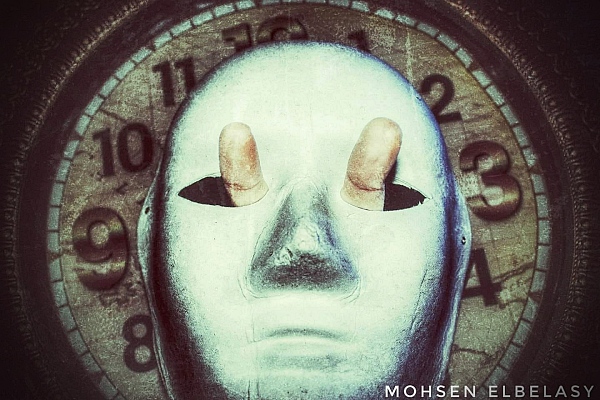
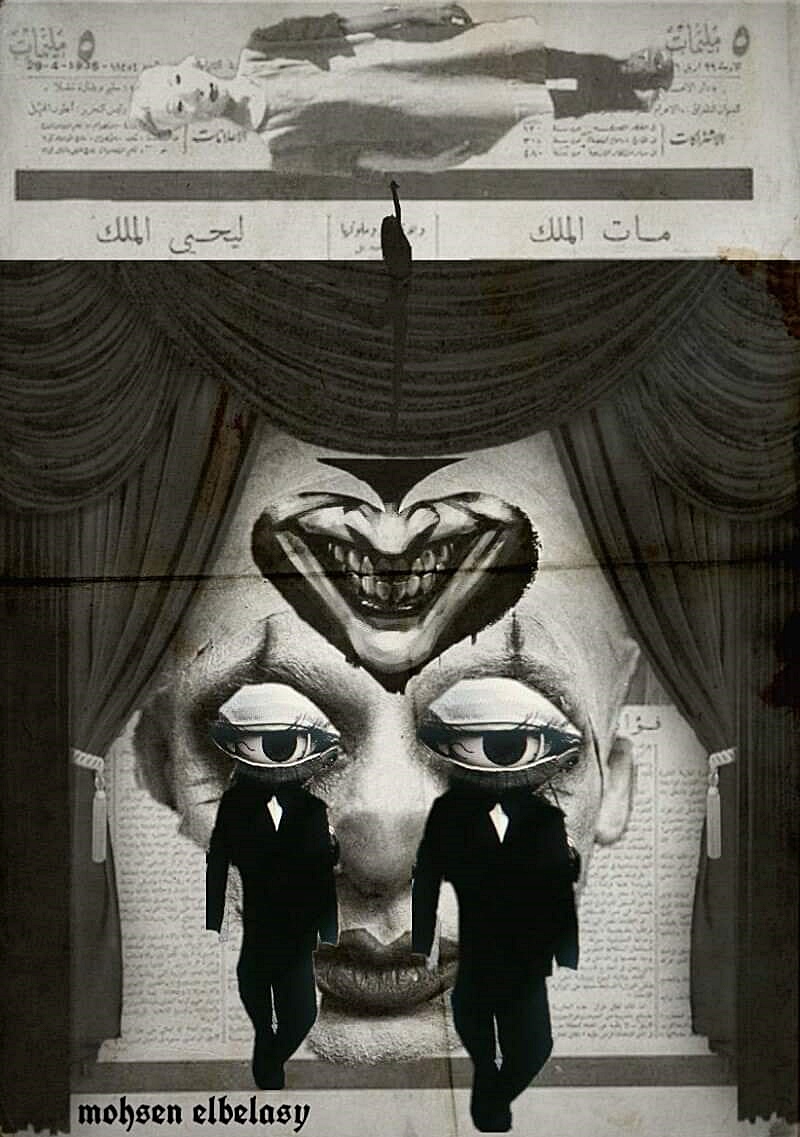
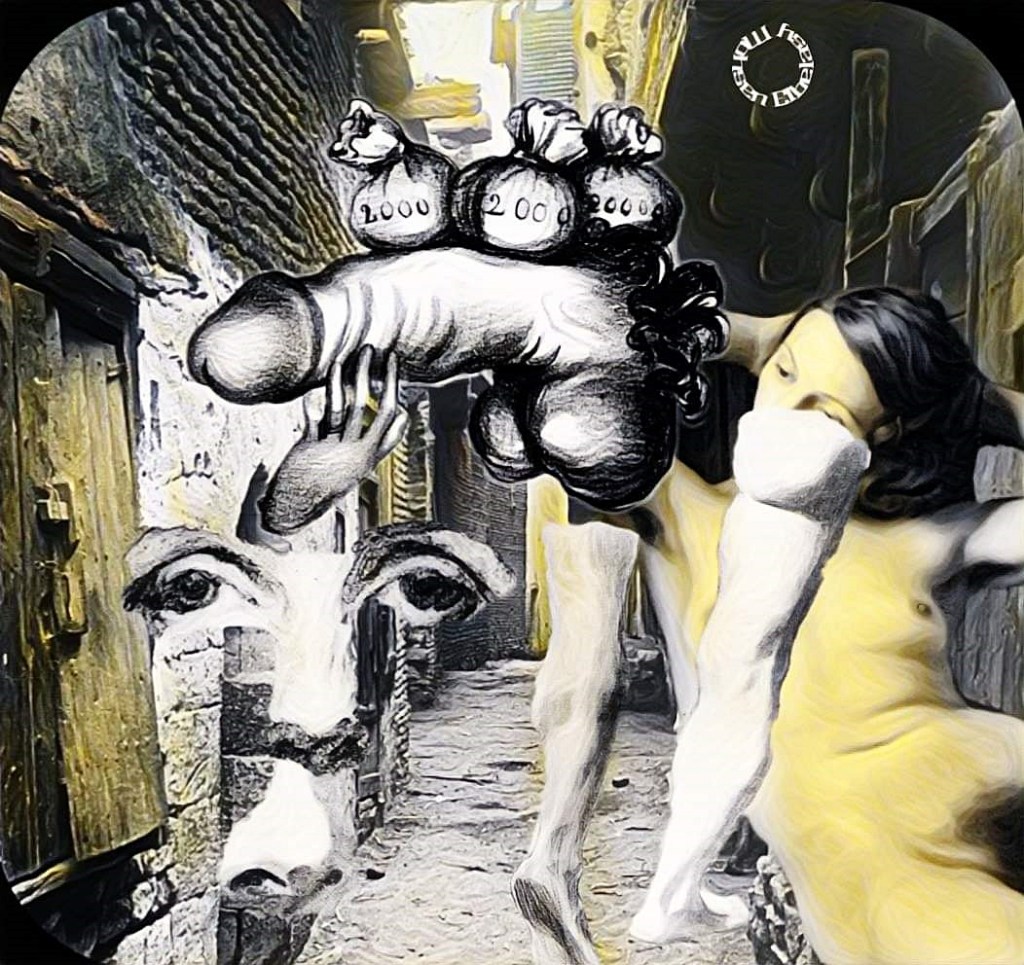
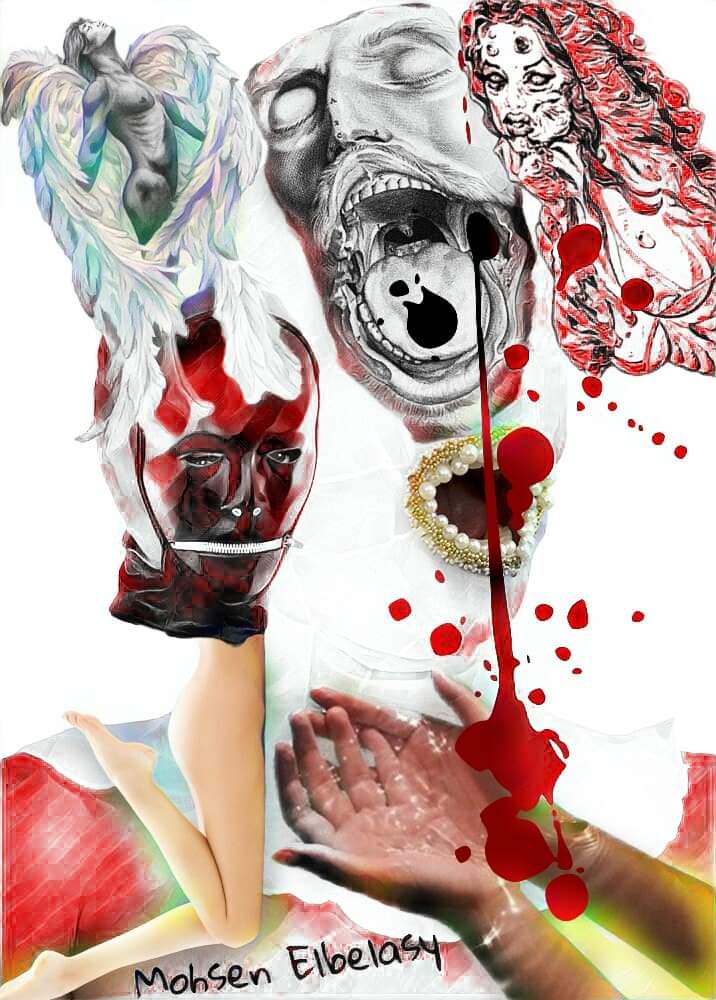
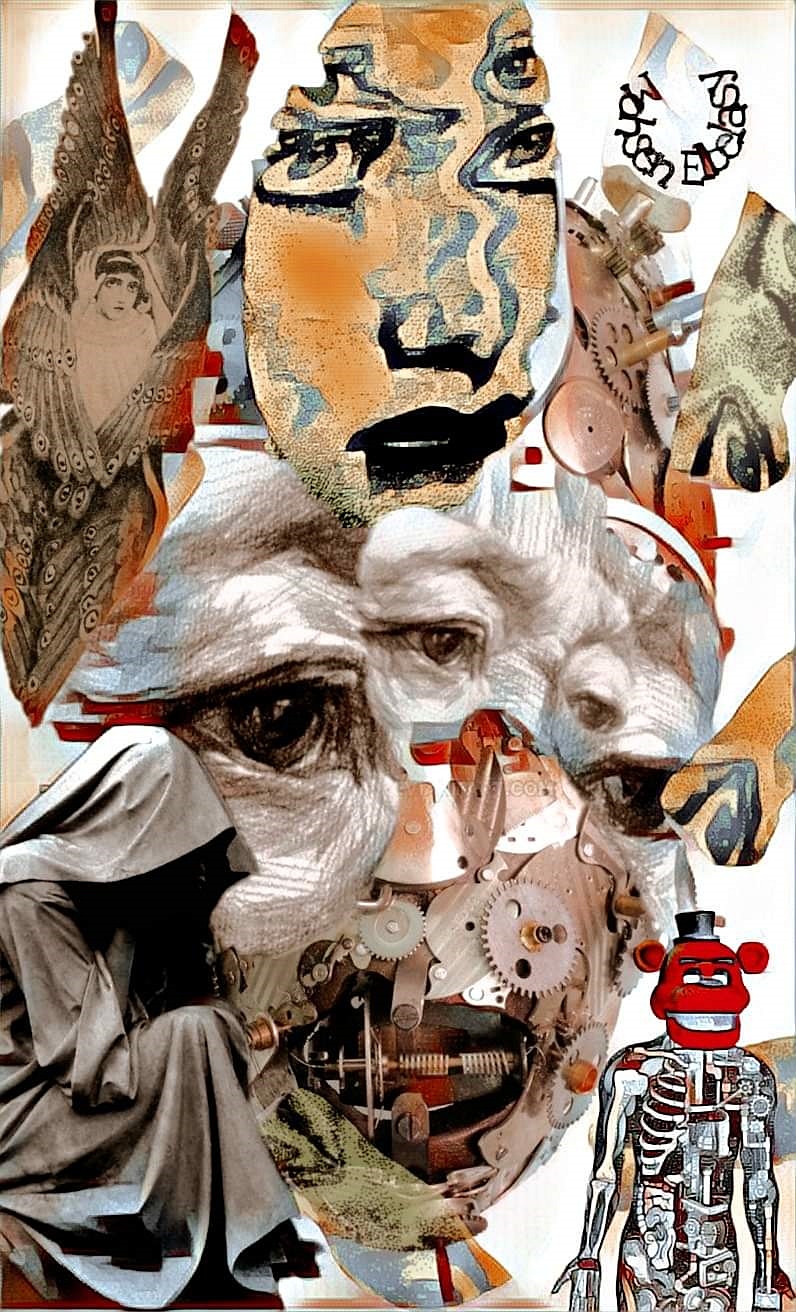
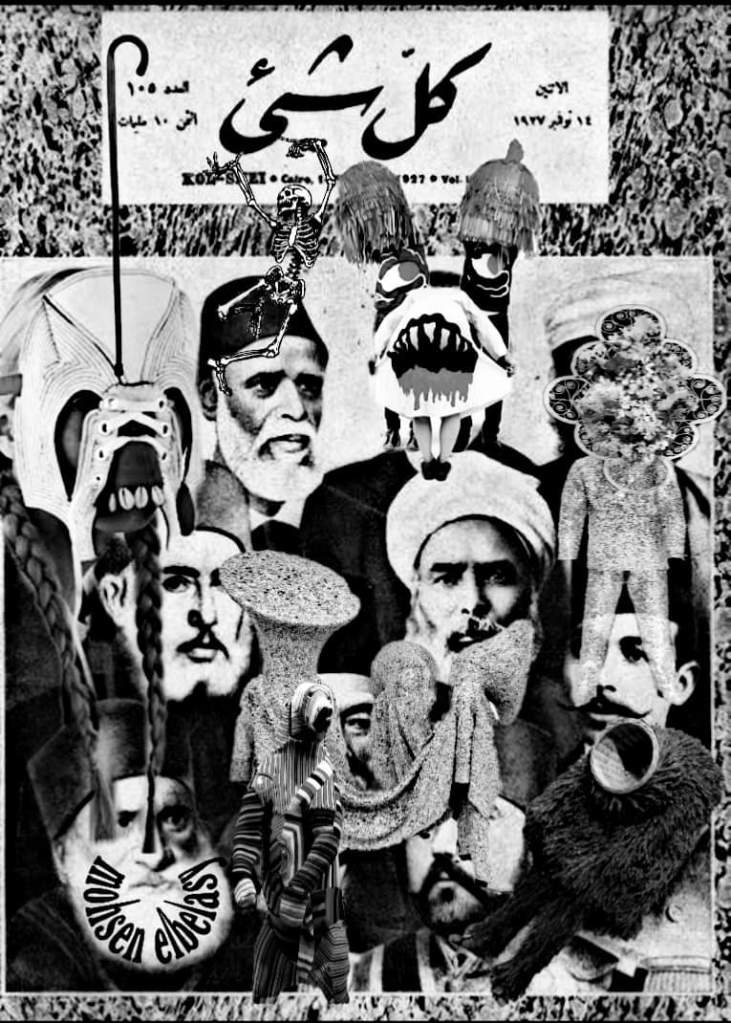
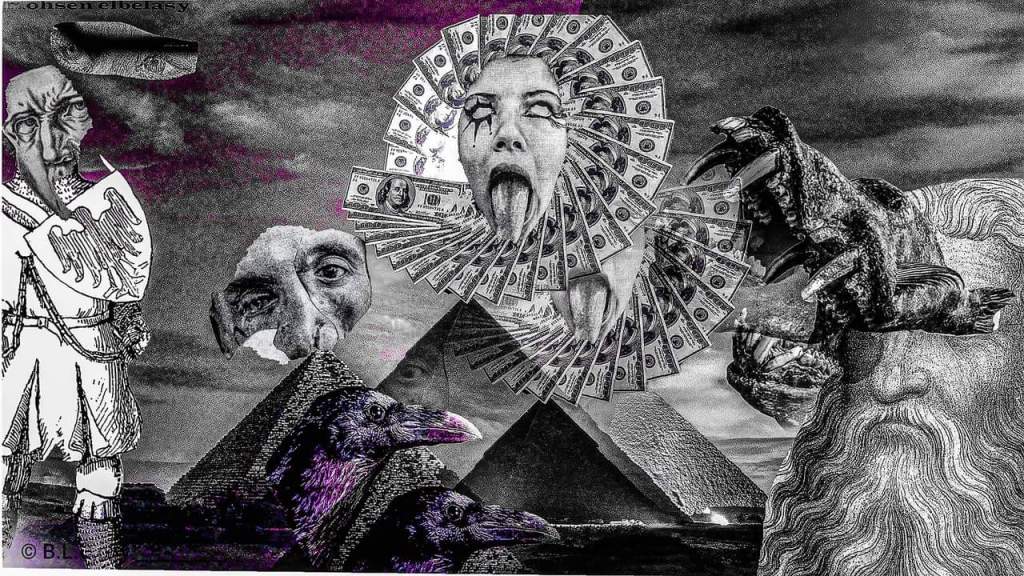
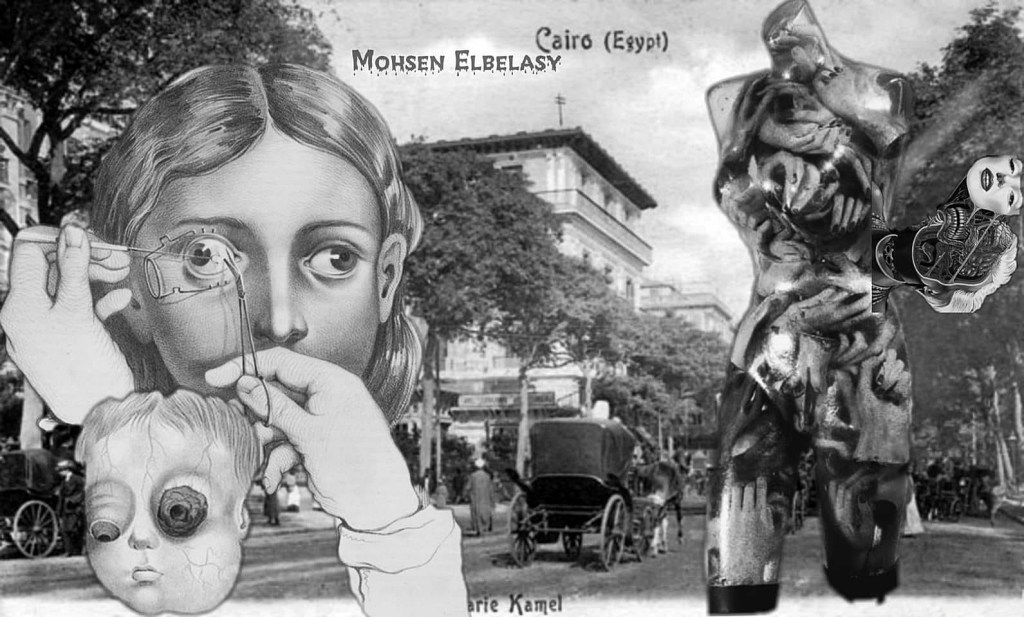
written by Mohsen Elbelasy
Mohsen Elbelasy Egyptian surrealist artist and poet and researcher and editor in chief of the Room surrealist Magazine and sulfur-surrealist-jungle.com and the co manager of the international exhibition of surrealism Cairo Saint-Cirq-Lapopie and Echoes of Contemporary Surrealism Exhibition. And co-founder of the Middle East and North Africa Surrealist Group. (MENA) and He also worked as a translator, cultural journalist and organizer of cultural and artistic events in Egypt and internationally. Chrysopoeia Surrealist union /Cooperative. In 2022, his book The Trip of Kamel Al Tilmissany won the Sawiris Grand Prize of Literary Criticism
Disclaimer. This is a work of fiction, any resemblance to Actual persons or events is Purely coincidental.
I took Maryellen, a lady of leisure, to every expensive restaurant and high end bar, indulged her with gourmet food, fine wine and droll conversation. I spent a lot of $ on her, as a gentleman always pays for a lady. It was my intention to wear down her defenses and inhibitions, to spend a day and night with her, warming her up to strip naked in a luxurious hotel room with a heart shaped Jacuzzi.
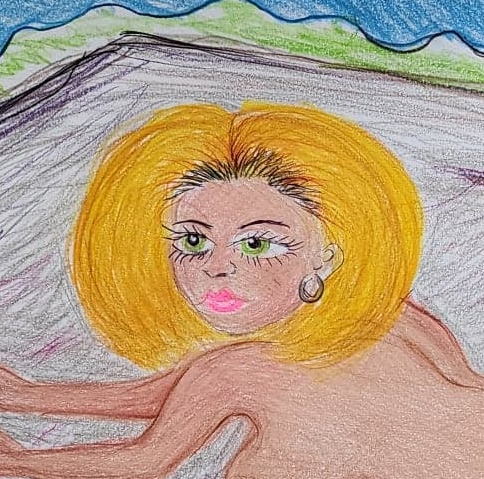
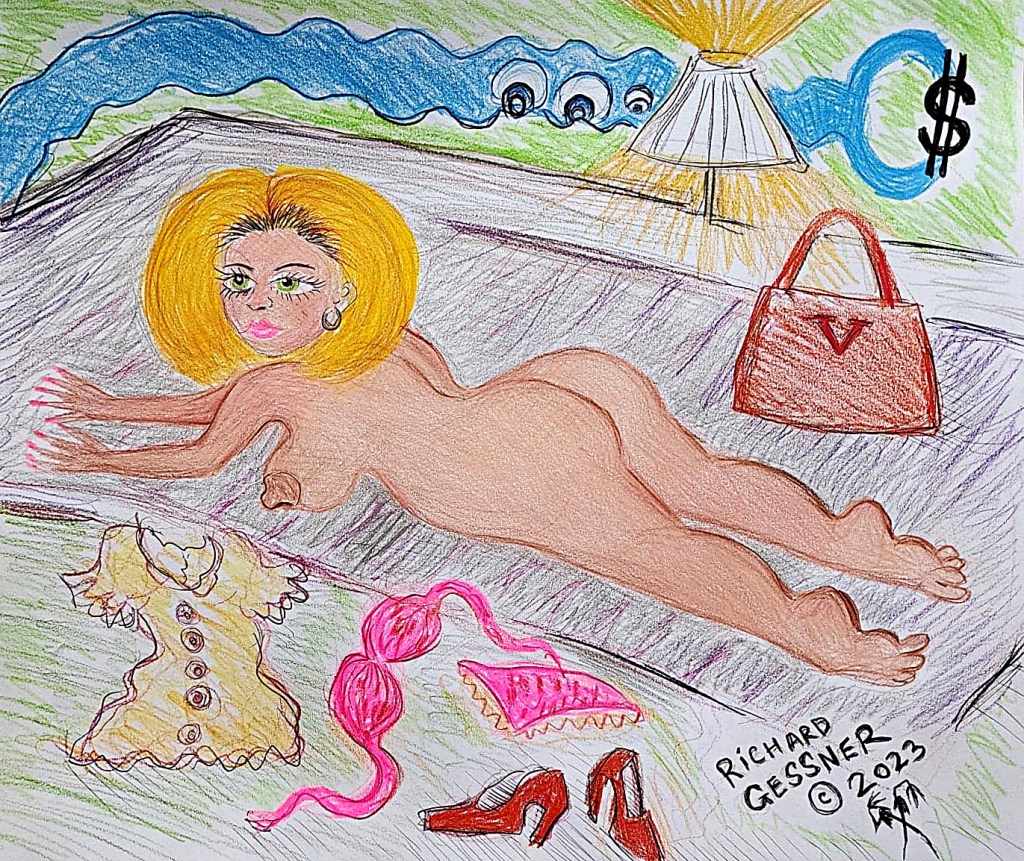
Maryellen was a glamorous, statuesque beauty, with creamy platinum blonde shoulder length hair, pale pink lipstick and nail polish. She wore a demure antique white designer dress, shimmering nude nylon stockings, and strappy high heels. Her ample breasts, curvaceous shape and nice ass, were her most noticeable feminine assets.
Maryellen was the kept woman of a film producer who was her sugar daddy. She was useful as eye candy at public events, and made the producer look good. She lived rent free and got a generous allowance for other “services” too shadowy to mention.
Maryellen was a precocious sugar baby, adept at sucking the blood of men with deep pockets. I was also friendly with the film producer who owned two summer homes and drove a Jaguar and a Mercedes. I had business dealings with the film producer of an artistic nature. But having no loyalty to him, I jumped at the opportunity to get his girl if I was lucky.
By chance, I met up with Maryellen, while passing through the producer’s neighborhood, and it was then that she went on several surreptitious dinner dates with me. She welcomed time away from her master who was overbearing, controlling and played power games with money. Threatening to withhold funds from her when he didn’t feel sexually satisfied. But Maryellen was successful at twisting the producer’s arm to buy her a new high end designer purse, not some cheap fake discount.
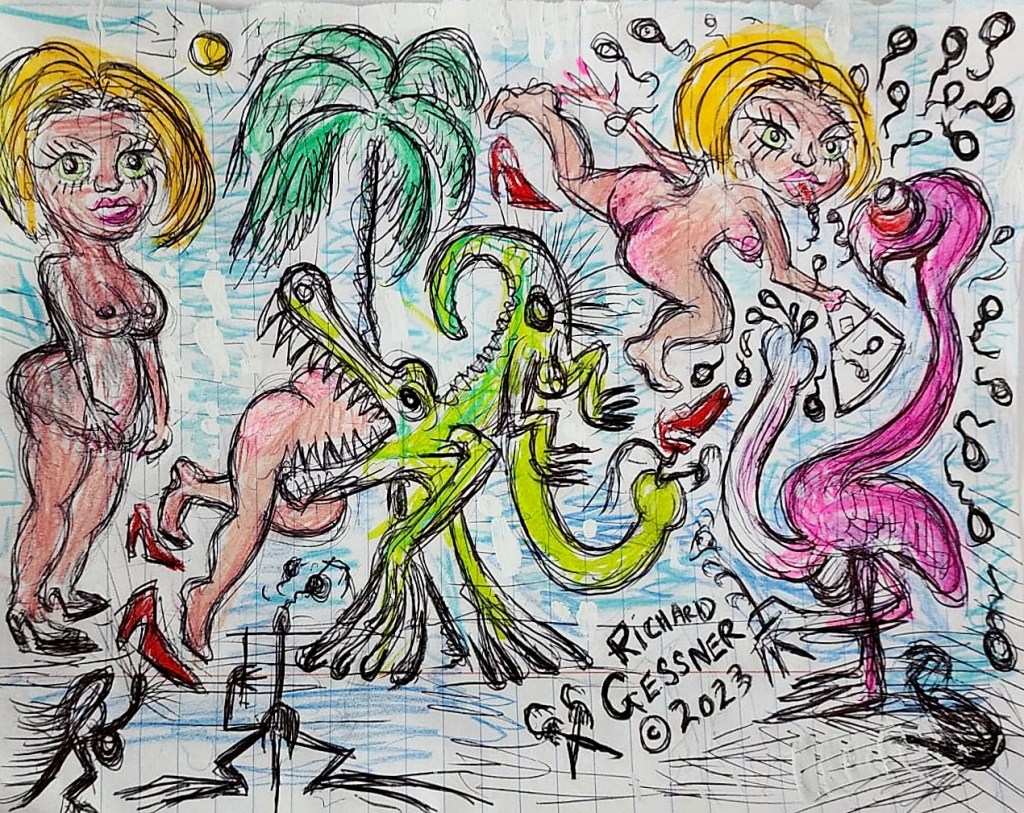
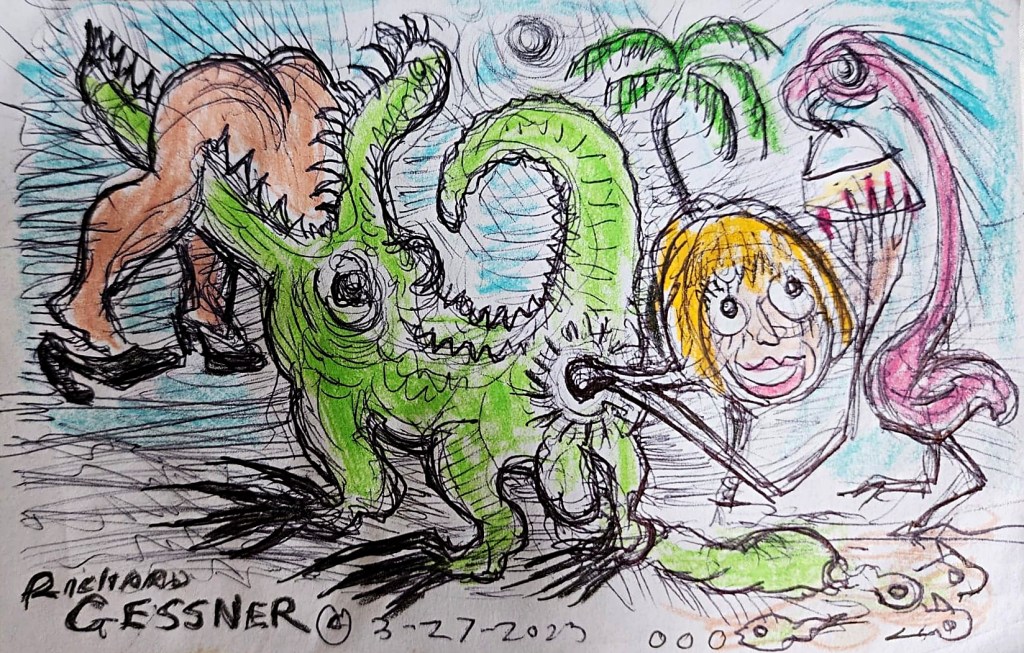
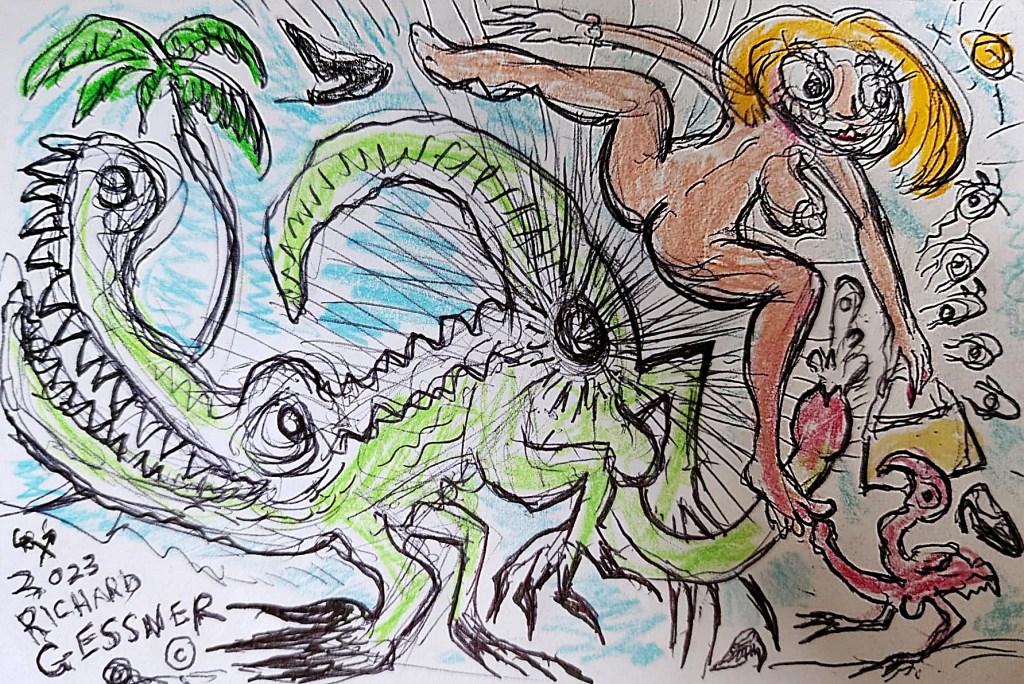
A giant alligator sex toy swallowed Maryellen whole and pooped her out its butt into the Florida heat, designer handbag and all. A giant alligator sex toy swallowed Maryellen whole pooping her out its butt, soiling her designer clothes, making her sad. A giant alligator sex toy swallowed Maryellen whole, she found spiritual enlightenment in the alligator’s digestive tract, emerging naked from the reptiles’ butt, and in her nakedness, she was most comfortable in the Florida heat.
All erotic, exotic and grotesque epiphanies aside, after many expensive dinner and bar dates, I finally got Maryellen to spend a day and night with me in a luxurious hotel room with a heart shaped Jacuzzi. After she took off her demure designer dress, stockings and heels, I helped her out of her panties and unhooked her brassiere, then she lay naked on the bed and I rubbed eucalyptus oil on her body. Then we entered the Jacuzzi together, in the warm water she blissfully felt my stiff erect phallus entering the prime real estate between her legs.
“Reptile Fling” (C) 2023 by Richard Gessner
Richard Gessner’s work is published in Black Scat Review 24, Sulfur Surreal Jungle, Fiction International, Skidrow Penthouse, Seinundwerden, Another Chicago Magazine, Air Fish et al.
Richard Gessner’s fiction has been published in Air Fish: an anthology of speculative work, Rampike, Ice River, Coe Review, Another Chicago Magazine, Happy, The Act, Sein und Werden, Skidrow Penthouse, The Pannus Index, Fiction International and many other magazines. A collection, Excerpts from the Diary of a Neanderthal Dilettante & The Man in the Couch was published by Bomb Shelter Props. Gessner’s drawings and paintings have appeared in Raw Vision, Courier News, Asbury Park Press, Rampike, Skidrow Penthouse, and exhibited at Pleiades Gallery, Hamilton Street Gallery, Cry Baby Gallery, The Court Gallery and the Donald B. Palmer Museum. Richard wrote The Conduit and Other Visionary Tales of Morphing Whimsy. He lives in Montclair, New Jersey.
The Conduit and Other Visionary Tales of Morphing WhimsyAudible
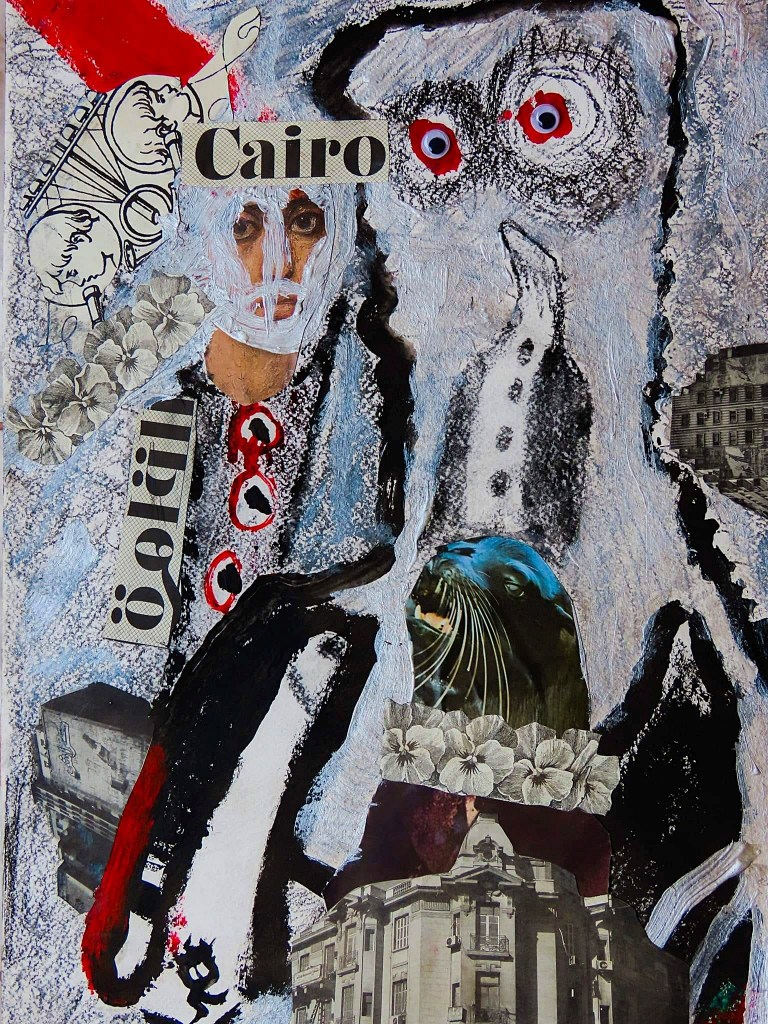
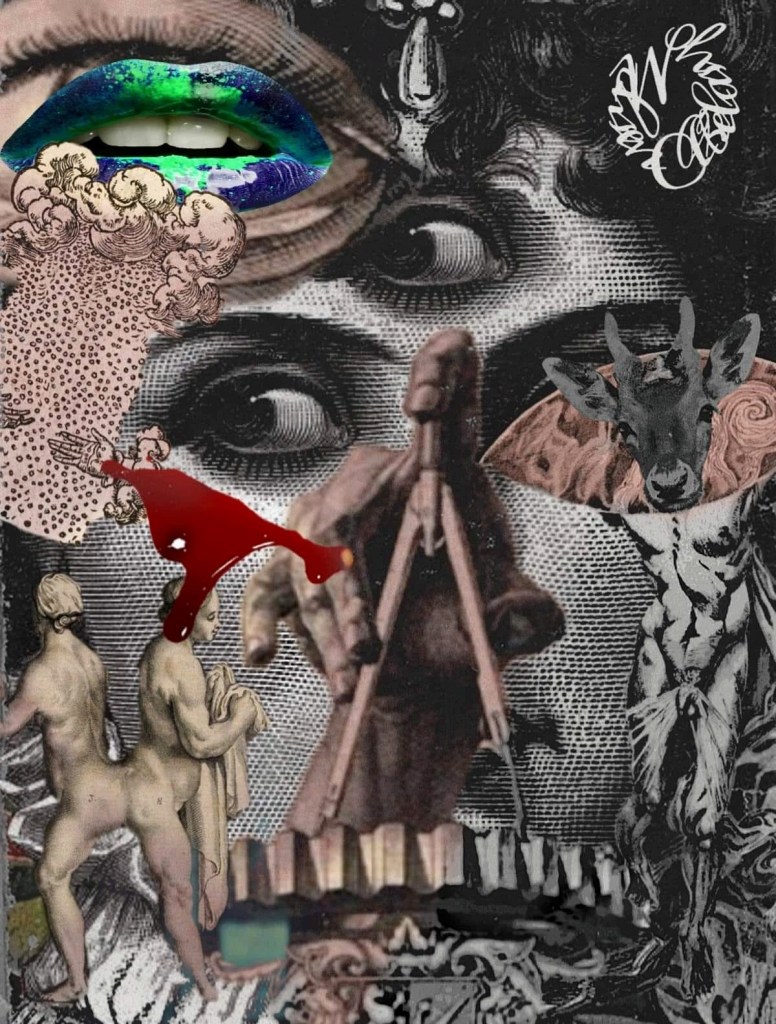
self fee of a phantom self. oil/collage Mitchell Pluto
Afterword
We believe we are conscious but we are continuously unconscious.
The eye is the window to the brain and there sits the optic chiasm. A cross current chessboard of visual information. In ancient China, King Wen changed three lines into six lines to form 64 hexagrams in his book called The Book of Changes. Ironically there are 64 arrangements in DNA and 64 squares on the chessboard.
Synchronicity?
Jesus, all the time I spent believing in a historical Laoz and come to find out there’s no historical race either.
these our the last days of being a primate. Don’t worry we still have cuspids
Everything must be uploaded|
…creating a record print of a finger swipe from phone screen| CHECK
…the gesticulation wavelengths of our voice from phone calls| CHECK
…iris scan captured from viewing screen| CHECK
tell us what’s on your mind| CHECK
This device and artificial Intelligence will marginalize the future of man’s ego. After all man is an animal guided by objects, why not be a primate whose experience is organized and interrupted by the phone?
isn’t it working already?
Who is on the other side of the screen?
A narcissistic shark that feeds remotely on a colony of brains and uses the appearance of a woman as a lure
Now A Word From Our Sponsor
We would like to salute our patron Walt and his 1958 Disney film White Wilderness who graciously staged and contrived the impression of a massive lemming suicide. Now back to our show.
(C) April 8, 2023 written by Mitchell Pluto
I would like to thank my friend, Richard Gessner for collaborating and creating some writing to interpret my painting
Seas tú el extraviado que regresa hacia la niebla de nuestros cuerpos.
Catástrofe
El amor será poseído por los únicos sobrevivientes de esta masacre.
Vaticinio
Tu cuerpo disuelve las cosas para anunciar un gemido o recóndito extremo de la noche que ya no esconde nada ni siquiera una nueva forma de estremecimiento.
Extrañamiento
Me miras como si fuese tu fetiche me tocas cuando estamos solos no soy nada de aquello ni la sombra de nuestros propios pasos.
Escritora nacido en Viña del Mar, Chile. Profesora de Lengua y Comunicación de la PUCV, poeta y crítico literario. En 2012 publicó su primer libro, Los ojos invisibles del viento. Ha publicado en reconocidos medios digitales chilenos y extranjeros: Babelia (España), Letras de Chile (Chile), Triplov y Athena de Portugal, entre otros. Durante el año 2017 participa en el grupo Xaleshem con textos poéticos para las antologías surrealistas: “Componiendo la ilusión” en honor a Ludwig Zeller y “Luna Llena”, en honor a Susana Wald. En 2018 integra la antología feminista IXQUIC estrenada tanto en Europa como en Latinoamérica. En 2020 participa reseñando el libro de conversación “Poesía aleatoria, Surrealismo en América Latina” de Alfonso Peña (Costa Rica), también escribe un texto en prosa poética para el libro “Arcano 16, La torre”, del mismo autor. Asimismo, participa en el libro “120 notas de Eros. Retratos escritos de mujeres surrealistas” de Floriano Martins (poeta, escritor, artista visual y gestor cultural brasileño surrealista). En este año (2021) publica su segundo libro de poesía Poética de la erótica, amores y desamores de Marciano editores, Santiago.

























 Mitchell Pluto