The movement in my work is a consequence of a sincere trace of the unconscious. Movement represents life. In moments without inspiration, I try to maintain the discipline of continuing to paint, draw, because thanks to experimentation, inspiration returns.
There is never a plan, everything is part of the unknown (spots, lines, frottage etc.). Taking risks, experimenting and destroying the known to reach an unknown place. I have worked with a lot of materials, oil, pastel, acrylic, watercolor, pencils of all kinds, tempera and ink, but my favorites are oil, acrylic and acrylic pencils (markers).
Many artists influenced my work, not only plastic artists, but also musicians, colleagues and friends. The artist who most influenced my work I think has been Roberto Matta. For work I generally listen to music that has a guitar (because I also play electric guitar, mostly rock), from Jimi Hendrix to Death Metal.
Paulo Freire marked a period in my life above all with “Pedagogy of the Oppressed”, I carried it around in my backpack for months, but perhaps it was Mario Benedetti’s book “Spring with a Broken Corner” that impressed me the most. I saw the play during the dictatorship in Chile, I read the book later, when I was already living in the Netherlands.
we are Martians. Aries. Martians from Mars. Let me explain, Mars was like Earth and now since we forgot our origin, we innately burn through every place we live. our soil is sand and glass..we made the moon a clock. Iron shares a special relationship with our blood, a period of sixty seconds. the hour hand is a blade that takes time to trim a heavy circle into a lighter circle. meanwhile, it’s getting late. who really invites Ahura Mazda into their thoughts? the all-knowing one, unless it’s really about an ark with wings or the other curve floating by boat? or is the lost manuscript of Eratosthenes?
Pseudepigrapha is a mercurial ghost, everyone has a ghost story they believe in. George Lutz, a land surveyor, used the positions of points, distances, and angles to channel a much better story than I could tell. Those shapes he conjured made beliefs appear real.
and that’s as real as Sherlock Holmes sending Watson to kill Houdini. and definitely as real as Aldrich Ames misdirecting a whole institution into remote viewing.. but you know, the target gets paranoid and loses when the Chessmaster is late to the game. you know that, right?
What happened to the red bone marrow of giants, you know, the ones who built the pyramids, survived the flood, and were from mars? They must have burned the big foot bones. indeed here comes elimination by illumination, psychological warfare, and the second coming. The Exorcist worked by controlling everyone in the movie theatre by managing what the eyes saw. The eye is a sense of self. yes, the spooks were real and so was the contact lens in the possessed girl’s eyes..Shakespeare was accurate about the world and so was Timothy Leary, whoever controls the eyeballs controls the brain.
Featured photo The haunted footprint at Göbeklitepe/Potbelly Hill by Mitchell Pluto
Born in Russia, of Russian and Armenian descent, with both parents artists-designers who were often working on their projects from home, I was surrounded by art books, architectural models, paintings, and design projects. I was feeling very much a creatively equal part in this artistic household, learning practical skills from an early age and getting ad-hoc art history lessons from my dad: I loved nothing more than sculpting objects, drawing imaginary worlds and creatures for hours, taking myself away on fantastic travels aided by pen and paper.
I started receiving formal art school education from the age of 12. I then went on to study at St Petersburg Stiglitz Academy of Fine and Applied Arts, taking what was considered a more practical Interior Design degree there as one of the youngest students on the course. Having grown more and more disillusioned with the political situation in Russia, I had an opportunity to continue my education in the UK, where I decided to switch my degree to Fine Art Painting at the University of Brighton, a beautiful seaside town. Having graduated with a First Class Honours degree, I had a great chance to continue onto a 3 year postgraduate course at the Royal Academy Schools in London straight afterwards, eventually settling there for 15 years with my family, before moving to Spain.
My art practice since has encompassed a lot of different mediums: from drawing and painting to making art videos, experimental website design, creative writing, sound design, exhibition curation, and interior design. I’ve collaborated with my husband Daniel, (also an artist and writer,) on The Unstitute – a conceptual art website/online art laboratory which includes various online gallery spaces with monthly curated exhibitions, one-off projects, artists’ residencies, and a ‘zine. We developed a unique digital aesthetic with complex cultural dialogues, promoted and exhibited video artworks by over 130 artists from 33 countries, connecting to a global network of artists. The Unstitute also produced a number of independent short and feature films screened internationally. The Unstitute is free to visit and explore: www.theunstitute.org
My creative inspiration lies in all that excites me to try my hand at myself, a deeper exploration of my interests through practicing a new medium, learning and understanding the character of this practice and developing my own language in it. The themes I have looked deeply into are: French New Wave cinema (Godard, Truffaut, Resnais, Varda), post war Italian cinema (Fellini, Pasolini, Antonioni) and existential philosophy (Sartre, Nietzsche, Kierkegaard) which influenced a lot of video works, surrealist paintings (Carrington, Varo, Ernst), and the writings of Kafka and Deleuze – as well as other numerous sources. The fantastic architecture of Gaudi has been referenced in my design work, classical and experimental dance music has inspired my own sound design projects and developed my sensibilities. I like to mix disciplines, and I don’t feel the pressure of tying myself to making one type of thing; when it becomes a chore it lacks a particular kind of energy, an excitement to harness the subject, and to communicate in that language it needs to be left alone to breathe for a while.
Having come full circle, I’m now developing ideas through drawing again. Drawing, a very immediate medium, enables me to play with the material and with my mind. I use various surfaces around our old Catalan house with a 100 years worth of thin plaster washes that are rich in texture, cracks and chips, a detailed history of use that is translated into some faint, random marks, by rubbing the surface with graphite on paper. Sometimes, I close my eyes and choose colours and draw shapes at random, or I just scribble something on paper absentmindedly. Thus, I’m presented with a series of opportunities for ‘communication’ with the work. I get into a meditative, slightly detached state, letting expectations go as much as possible before letting the drawing speak to me, to open my mind to suggestions. I see frottage – the initial rubbing – as a basic skin or gauze that is tied over an already existing image; it’s a game of recovery of the image.
It’s like the whole of humanity, the natural world, the cosmos, all my sources and histories are squashed together in a tight bundle of stuff that constantly mutates and changes in a continuous movement, a dance that is hidden under the surface of drawing paper. You never know what you are going to find by scratching the surface. By gently drawing on this skeleton of marks, repeating its forms over and over, I start slowly beefing up the initial image, or I take layers off, exposing that image underneath, akin to archaeology. I can recognise various marks, characters, memories of small details like a gesture or a shine on the nose, and the stuff from daily life starts to poke through this initial wild collage of bits, merging and mutating in my unfocused eyes. By gently excavating a partial image with a soft brush as it were, by gentle strokes, I nurture that image into the light, extracting, distilling it from the initial marks. As if stroking the skin of paper over and over, massaging the organs, getting the inner machinery as it were to start kicking into action. This process produces a clearer idea of what the image is and what it wants; it starts working itself out, the cogs fall into place. When I feel that an image I’m working on is becoming independent, it starts constructing itself with that inner machinery confidently and becomes almost confrontational in its new independence, then my work is done. Art for me is an organic process which continues evolving in the eyes of the beholder.
Incubation is perhaps most easily understood in contrast to the art of Theurgy or ‘Work of the Gods.’ Theurgy is a process of anabasis or magical ascent whereby practitioners, such as the early Neoplatonists, especially Iamblichus and Proclus, achieved henosis or mystical union with a deity or the demiurge. However, anabasis was not always of primary importance, or even of interest, to many of the ancient Greek philosophers and magicians. More than five hundred years before the Neoplatonists arrived on the scene, Presocratic poets and philosophers, including Pythagoras and Parmenides, were preoccupied instead with katabasis—a dreamy descent to the domain of the dead, and to the dark goddess who rules over that realm.
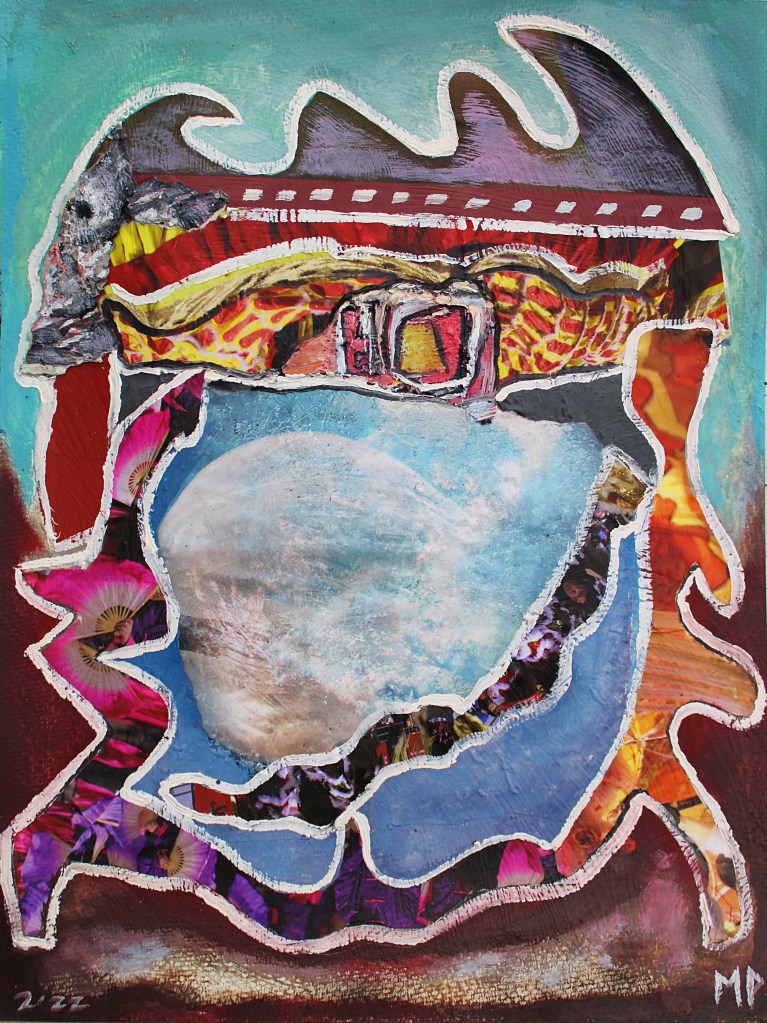
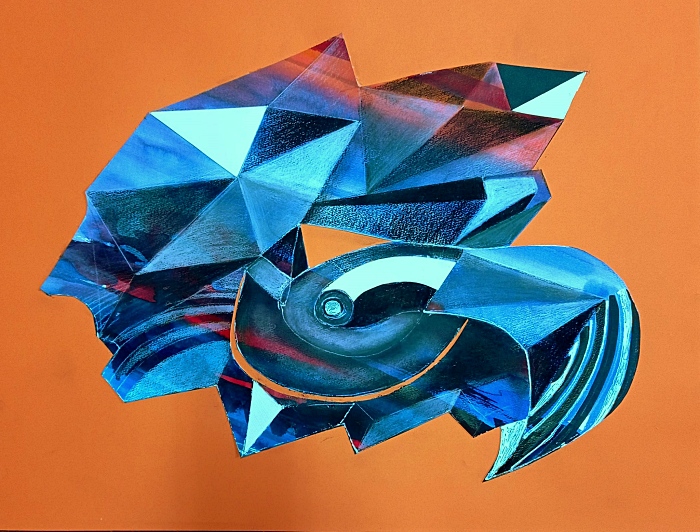
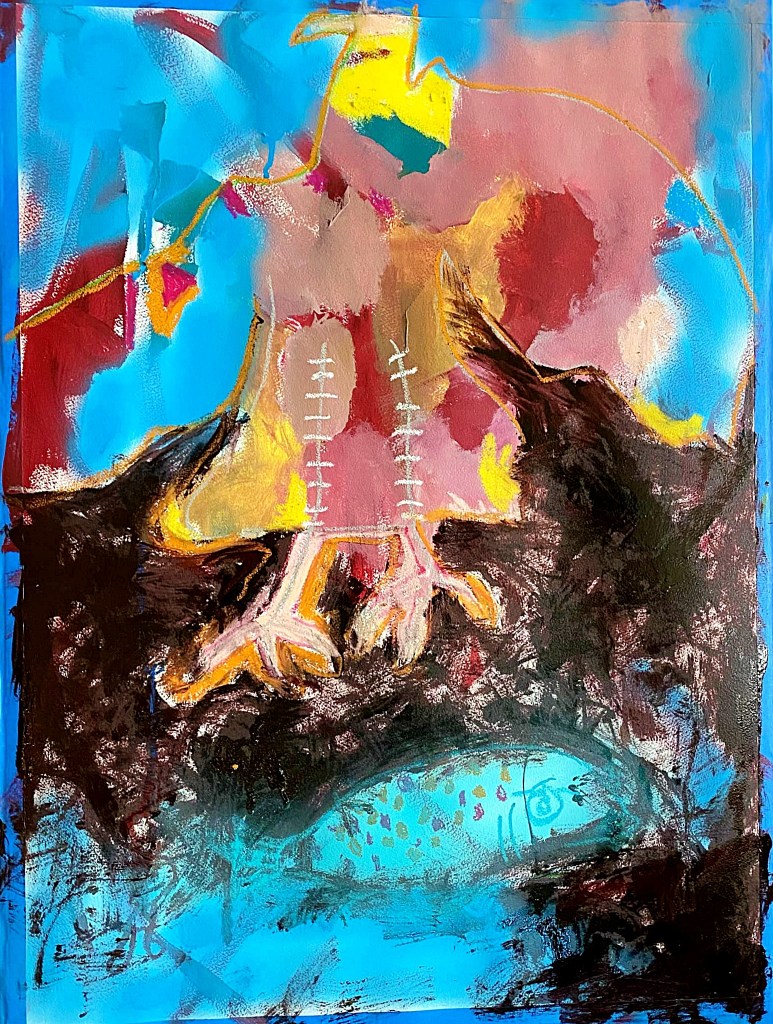
Mirror Gazing Ecdysis Mitchell Pluto 2022
For the Platonists, katabasis was understood as the descent of the soul into a body upon incarnation. Hades, additionally, was allegorized and viewed as the very world in which we, as incorporated beings, inhabit. Socrates says to Callicles in Plato’s Gorgias, for instance, “[perhaps] in reality we’re dead. Once I even heard one of the wise men say that we are now dead and that our bodies are our tombs.” Again, in the Phaedo, Plato has Socrates say to Simmias of Thebes, “[we], who dwell in the hollows of [the earth], are unaware of this and we think we live above.” And, later in the same dialogue, “Those who are deemed to have lived an extremely pious life are freed and released from the regions of the earth as from a prison; they make their way up to a pure dwelling place and live on the surface of the earth.” Therefore, the only way to go, for Plato and his successors, was up—in an anabatic flight to the demiurge, through the various planetary spheres that separate the divine nous and Monad from the sensible world below. Theurgy was the means by which such an anabasis was accomplished. The Presocratics, conversely, leaving Mount Olympus to the gods, for the most part, focused their energies instead upon katabasis; on transporting themselves to the netherworld.
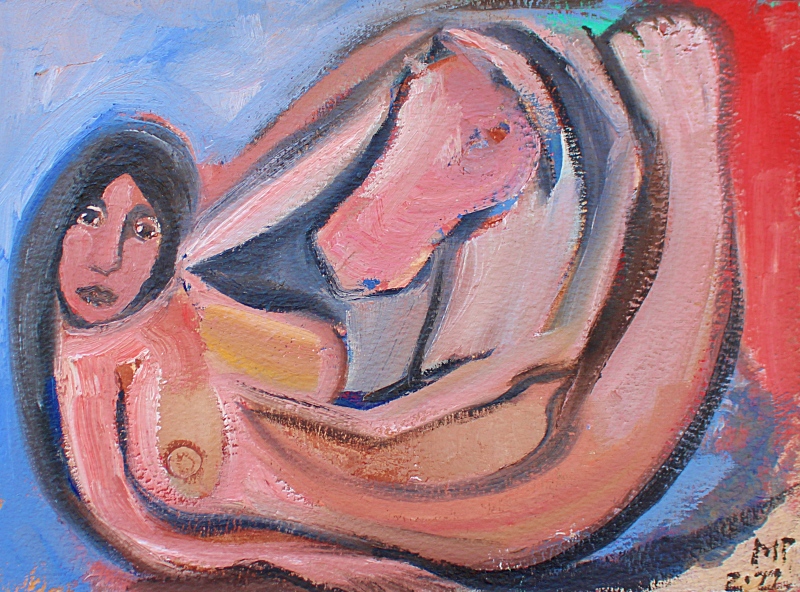
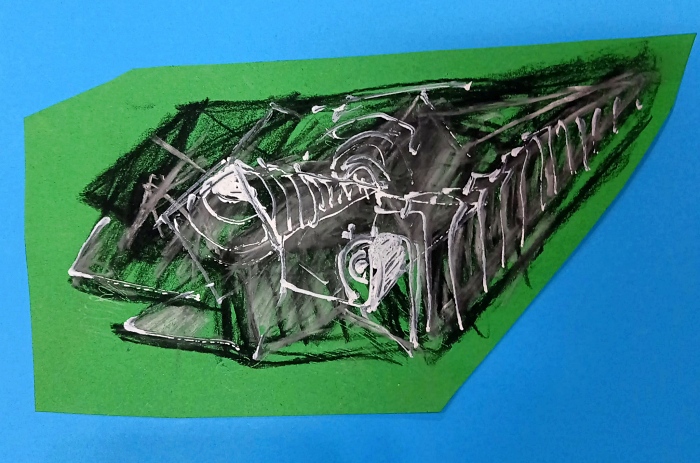
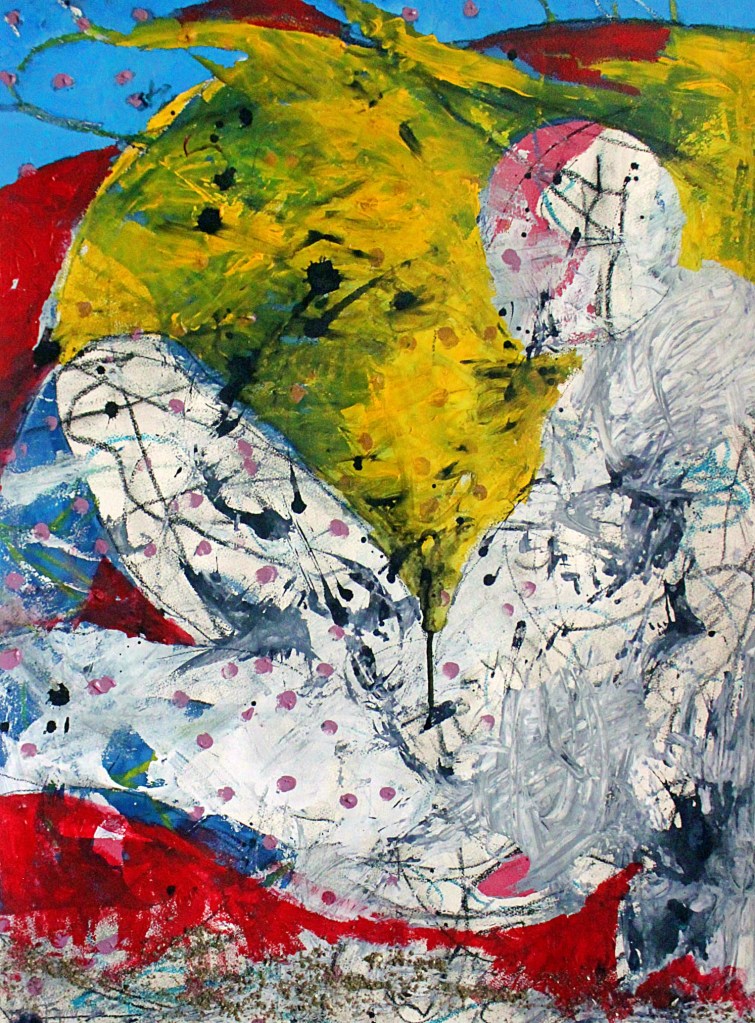
Dream Mare Mitchell Pluto 2022
The means by which these iatromanteia or “healer-seers” directed this delirious drop was via the use of an ancient divination and healing technique known as incubation. In ancient Greece, this was generally done inside of sacred and secluded caves that were sacred to certain gods, daimons, nymphs, and other metaphysical entities. Eventually, the practice would be translated to special temples dedicated to the technique, and finally into a special incubation chamber, usually positioned adjacent to the temple itself. The ancient Ionian Greek philosopher, recognized as the ‘Father of Western Philosophy,’ Pythagoras of Samos, for example, is said to have descended to Hades by entering an underground cave. While Pythagoras left no writings of his own, the late Neoplatonic philosopher, Algis Uždavinys, a past head of the Department of Humanities at the Vilnius Academy of Fine Arts, Kaunas, explains,
the subterranean tomb-like chamber represents Hades for Pythagoras. Hence, Pythagoras descended into Hades, that is, the subterranean holy chamber (like the Holy of Holies, entered by the Jewish High Priest on the occasion of Yom Kippur) that he had made himself, according to Diogenes Laertius (Vitae phil. 2). When he came up, withered and looking like a Shaiva ascetic, he said that “he had been down to Hades and even read out his experiences [aloud to the crowd].”
A similarly famous although obscure Presocratic philosopher, Parmenides of Elea, celebrated as both the ‘Father of Logic’ and the ‘Father of Metaphysics,’ wrote a dactylic hexametrical poem recounting his trip to Hades, and the underworld goddess whom he encountered. At the junction of three roads, the goddess instructed Parmenides as to the true nature of reality. His proem to “Peri Physeôs” begins,
The mares that carry me as far as longing can reach rode on, once they had come and fetched me onto the legendary road of the divinity, the road that carries the man who knows through the vast and dark unknown. […] And the goddess welcomed me kindly and took my right hand in hers and spoke these words as she addressed me…
In his proem, the divinity proceeded to instruct Parmenides in the laws of logic that we know today. That is, it was a mysterious, underworld goddess from whom Parmenides received the very rules of reason, with which he returned to the land of the living for the inauguration a new era. To a world which turned on mythos—mythology—Parmenides introduced the novel pivot of logos—logic. Although, we must admit that the weird way in which the ‘Father of Logic’ acquired that understanding appears to contradict the very laws with which he was entrusted. Moreover, Parmenides’ words may provide us with a subtle indication of just what incubation may have entailed for these heroes of Hades. The first thing the poet mentions are the mares that pull his chariot. The chariot is a token of the sun god, whose solar vehicle is pulled throughout the skies by a handsome team of heavenly horses. Indeed, ever since the time of the worship of Shammesh or Utu, the sun god of ancient Mesopotamia, the chariot has been the province of the Sol. But, the sun isn’t just about the light—for, the sun also journeys into the Underworld, like Osiris in the Dwat, through the dark, intuitive animations of Aidoneus’ alcazar. Every time we venture into sleep, we quietly and blindly slide into the Stables of Silence. Hence the false etymology suggested by the word nightmares, ‘horses of the dark.’ Like the Hunter’s three-legged horse in the fairytale of the Princess and the Tree, these ‘nightmares’ “know everything”—including the invisible way to the “legendary road” that leads to “the divinity.” The archaic techniques of dream incubation are akin to these mystical, Moiraic mares, and they alone are possessed of the potential to move us from the familiar to the fringe—down the alien road that carries the “man who knows” through the “vast and dark unknown.”
P.D. Newman October 16, 2022
P.D. Newman
P.D. Newman is an independent researcher located in the southern US, specializing in the history of the use of entheogenic substances in religious rituals and initiatory rites. He is the author of the books, Alchemically Stoned: The Psychedelic Secret of Freemasonry, Angels in Vermilion: The Philosophers’ Stone from Dee to DMT, and the forthcoming title, Day Trips and Night Flights: Anabasis, Katabasis, and Entheogenic Ekstasis in Myth and Rite. The Secret Teachings of All Ages (TV Series documentary) 2023
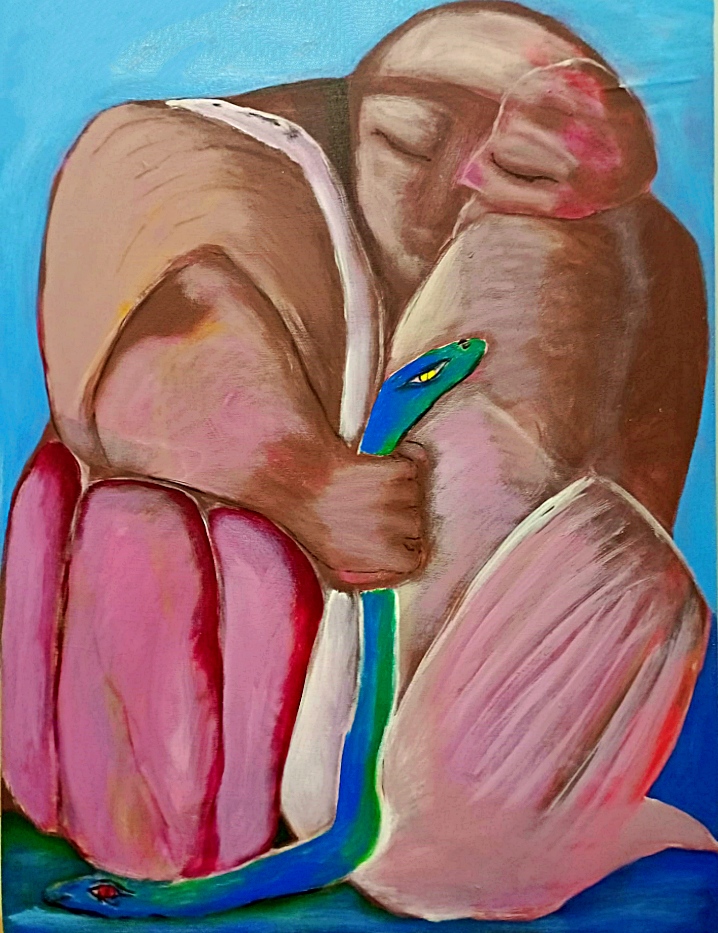
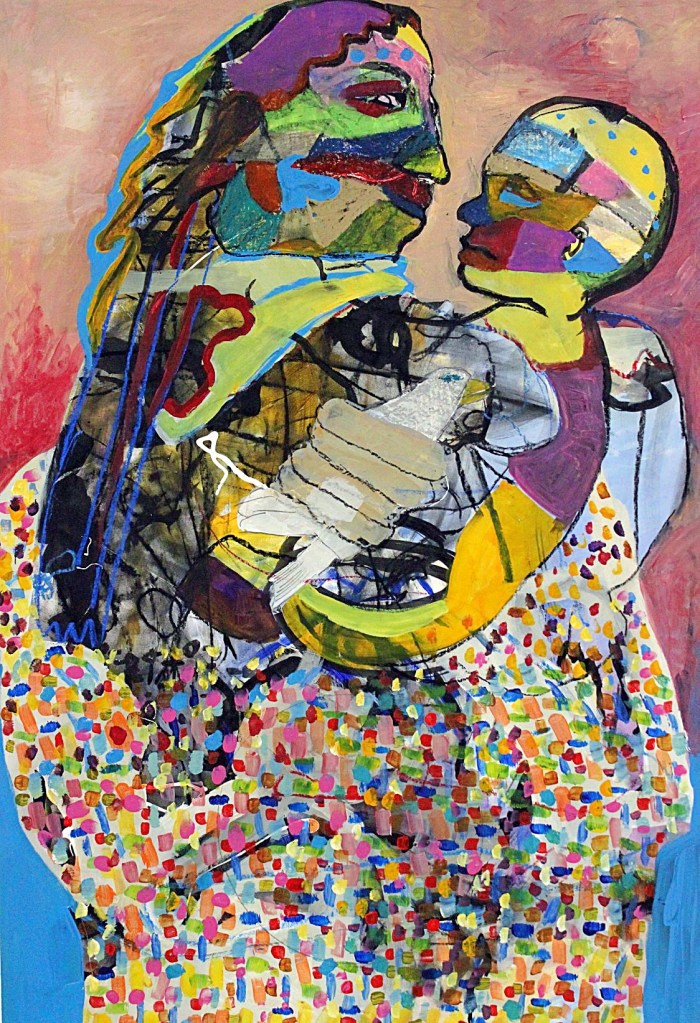
The Hug Acrylic on canvas 60x80cm Hoda Hussein 2022
14 September 2022 7:17 pm Earth Greenwich time zone
A letter from Oranous to Pluto on the Sleep Temple
Who believed their bed was a four-legged bear taking them on their back for a night sky ride as their own bear cub? I did. And I always woke up in the morning and kept my eyes shut till I hear family voices in the house so I am sure my parent bear landed me in the right place to start another day acting like a human. It takes practice to master acting like a human this is why we have to do it every day. But we must also not forget who we are this is why parent Bear kept their legs and body in the human house but with their tail and head on their own and took me as their child on journeys and trips at night where I can be in awareness of all that is. No wonder it was very difficult to pretend I am afraid of the scarab that landed on my hand in the nursery! I was not. The teachers were. And that was weird to me. I suppose I also was weird for them. However, I kept that memory of the friend scarab insect that tickle my palm and I still smile at that. Who would think I had an oil well in my salon where I bathed in whenever exhausted and opened my veins to it renewing my blood completely in sessions where Hathor was standing at my back massaging me? Okay well, I had a Native American tribe settling their tipi in my living room so… Let’s say this is normal in my life. So what is a sleep temple or a dream temple? I am! Well, I guess we all are in a way. Always just believed in a sacred temple where the blood circulates around the heart like pilgrims around the sacred cube of “Ka’ba” hence ka and ba. But as I can move and I am not still at all I prefer to see myself as a Mer-ka-ba “boat in Arabic”. Oh, how I loved this when I knew that Mer meant beloved in the ancient Egyptian language! Yes I know I am loved and visited but all types of loving beings. This is so beautiful! Still, I don’t think I learned yet to act humanely perfectly and instead I look for my equals who also could not really perfect the like human acting. There is something beautiful in our imperfections. Kind of childish and more related to the womb than birth. A whole multiverse moving changing developing evolving in action inside the womb of space. A multiverse that is in fact one single child in process of becoming. Did I tell you I once dreamed of having surgery on my lungs and my heart? Well, I did. And the woman doctor gave me a prescription. That I followed! I would not be that committed following a prescription of a daily life touchable doctor, so-called “real” anyway.
Hugs Bye for now
Hoda Hussein
Hoda Hussein
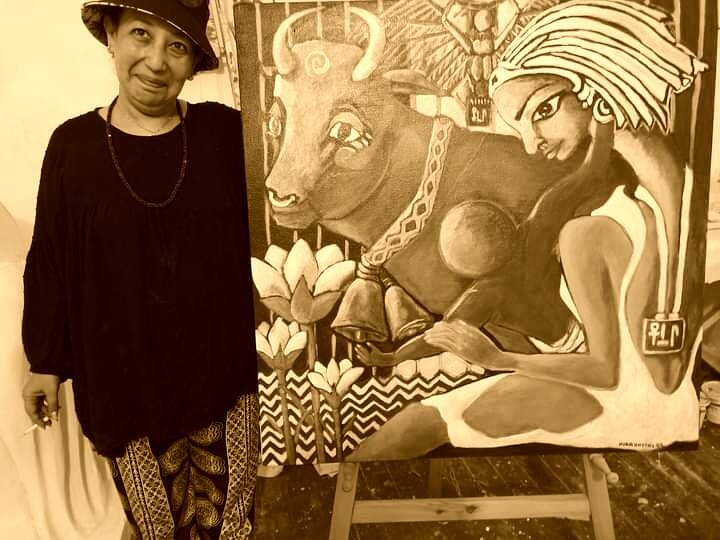
Egyptian creative writer poetess and novelist, artist painter and translator. Published many poetry books and novels in Arabic language. Represented Egypt in poetry and novels festivals and encounters in several countries like Yemen, Spain, India, France, Cuba, and Chile. Made creative writing workshops for kids in many schools in Cairo Egypt. Received rewards for poetry, novels and for translations in Chile, Macedonia and Egypt Was entitled as a universal ambassador for peace by the peace ambassadors circle that works under the UNESCO
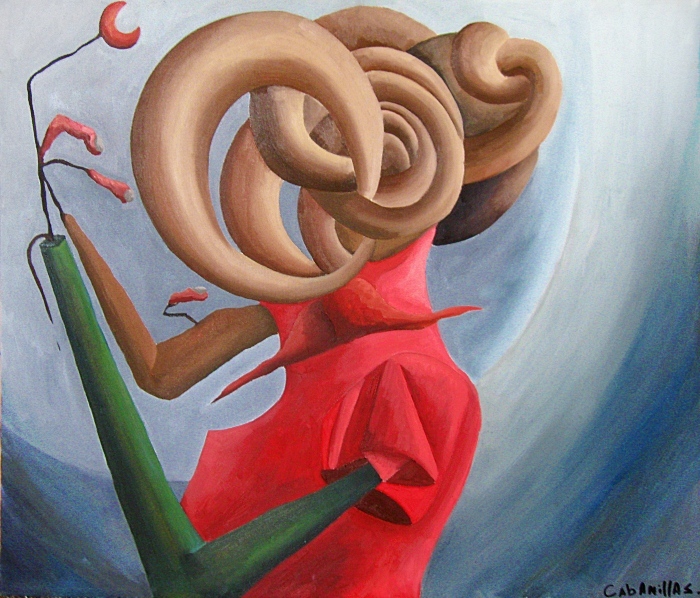
The Inhabitant of the Dream Temple Verónica Cabanillas Samaniego
The temple of dreams is located in principle in an unlimited place, it is not exactly an island, it is the sky itself in immense melancholy, surrounded by the sea and in the absence of farewells. Towards all directions a path towards you, and I discover each treasure at the bottom of the word. In the absence and presence of everything, I hear bordering a harmonious song flowing like an infinite abyss around us.
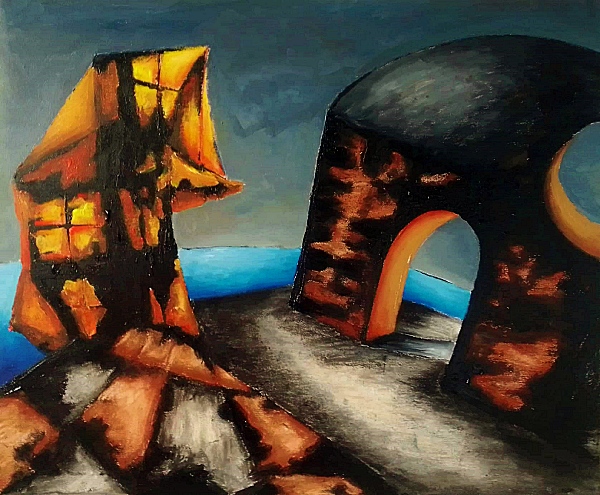
The Temple of Sleep in self. Verónica Cabanillas Samaniego
The paradise that we have penetrated and invented is resolved like the design of a luminous dream, which we glimpsed to see a long time ago, until we rediscover the trace, shake off the dust and build the raft that takes us from me to you and vice versa, yes, on this side the sleep is deep, in this temple of gods we are simple people, trying to take forever a piece of heaven and looking for a dignified death, where our names are heard and pronounced only by hallucinated insects and dogs on the last day of the humanity, we only dream that on the last day of the world we will not forget to feed them, and the last poem we wrote and the last brush stroke on the white we gave, undermine my pain to the depths, and be reborn in a beautiful pack of dogs, in another time, another planet, another galaxy as far as we can see in the temple of dreams. Because only the measure of the vision is equal to the measure of what is imagined and because everything that one builds is the measure of what he managed to imagine. In the temple of dreams I realized that, and why I was already here
Verónica Cabanillas Samaniego. Algarrobo, Chile, Octubre 2022.
Verónica Cabanillas Samaniego
Verónica Cabanillas Samaniego (Lima, 1981), is a poet and visual artist. She has exhibited individually in Lima and collectively in Europe and Latin America: El asombro del colmillo, Le Petit Canibaal, Valencia (2014); Ludwig Zeller, composing the illusion, Taller de Rokha Gallery, Santiago de Chile (2017); One hundred years of Surrealism, Espacio Matta Cultural Center, Santiago de Chile (2019-2020), International exhibition of surrealism, Kudak Gallery, Cairo-Egypt (2022), Echo of contemporary surrealism, French Institute of Alexandria, Egypt (2022). She published in 2014 TUyYO by desktop publishing and participates in various poetry anthologies: IXQUIC. International Anthology of Feminist Poetry (Editorial Verbum, Madrid, 2018); Wagered deep on the run of six rats to see which would catch the first fire / Surrealist and Outsiders (RW Spryszak, Chicago, 2018); Liberoamericanas, 80 contemporary poets (Liberoamerica, Spain / Argentina / Uruguay, 2018); Narrow doors in wide green fields / Surrealists and Outsiders (RW Spryszak, Chicago, 2019). She has participated in the V Lima Poetry Festival (2014); IV Antifil Alternative Book Fair, Lima (2019). Her visual work is published in Derrame magazine (Chile), Canibaal (Spain), La vertèbre et le rossignol N ° 5, Vies de Saint-Artaud (Canada), Vol (France), The Room (Egypt). She is part of the book 120 nights of Eros, a compendium of surrealist women made by Floriano Martins, ARC editions, Brazil (2021). She currently co-directs with Magdalena Benavente the magazine Honidi Magazine, in Algarrobo, Chile.
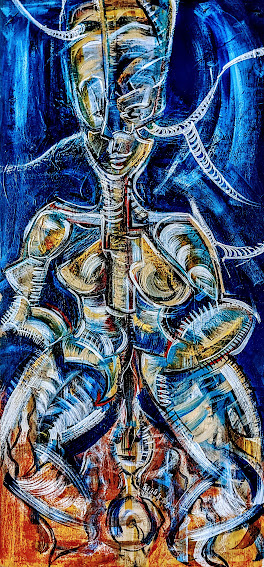
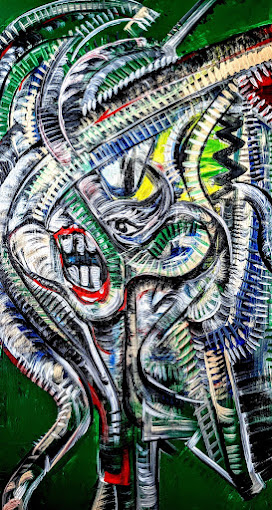
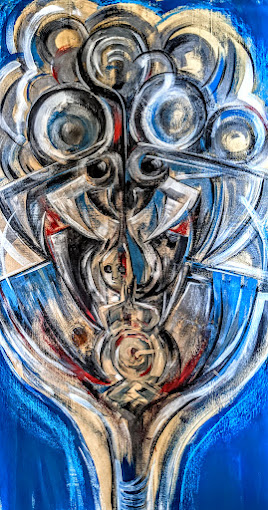
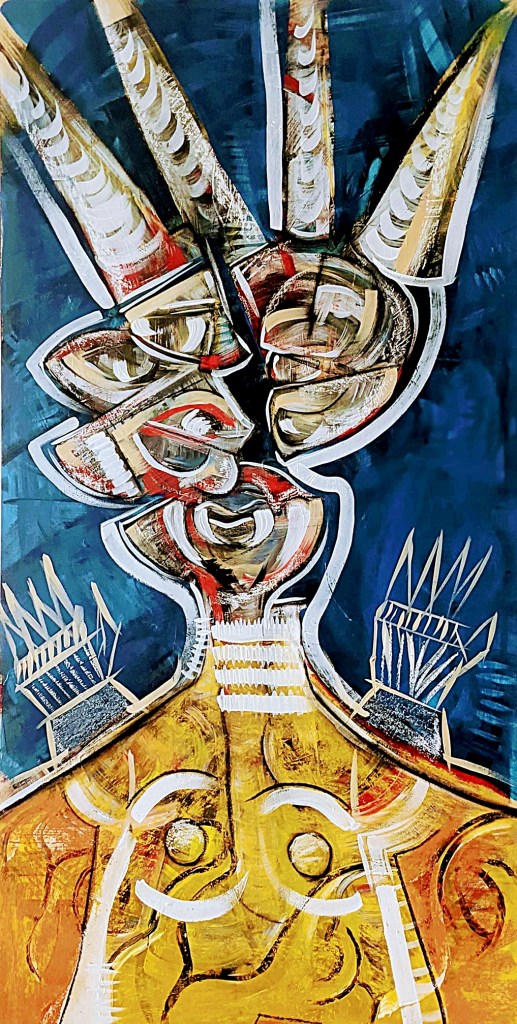
Rene Fernando Ortega Villarroel
FROM THE SOUL.
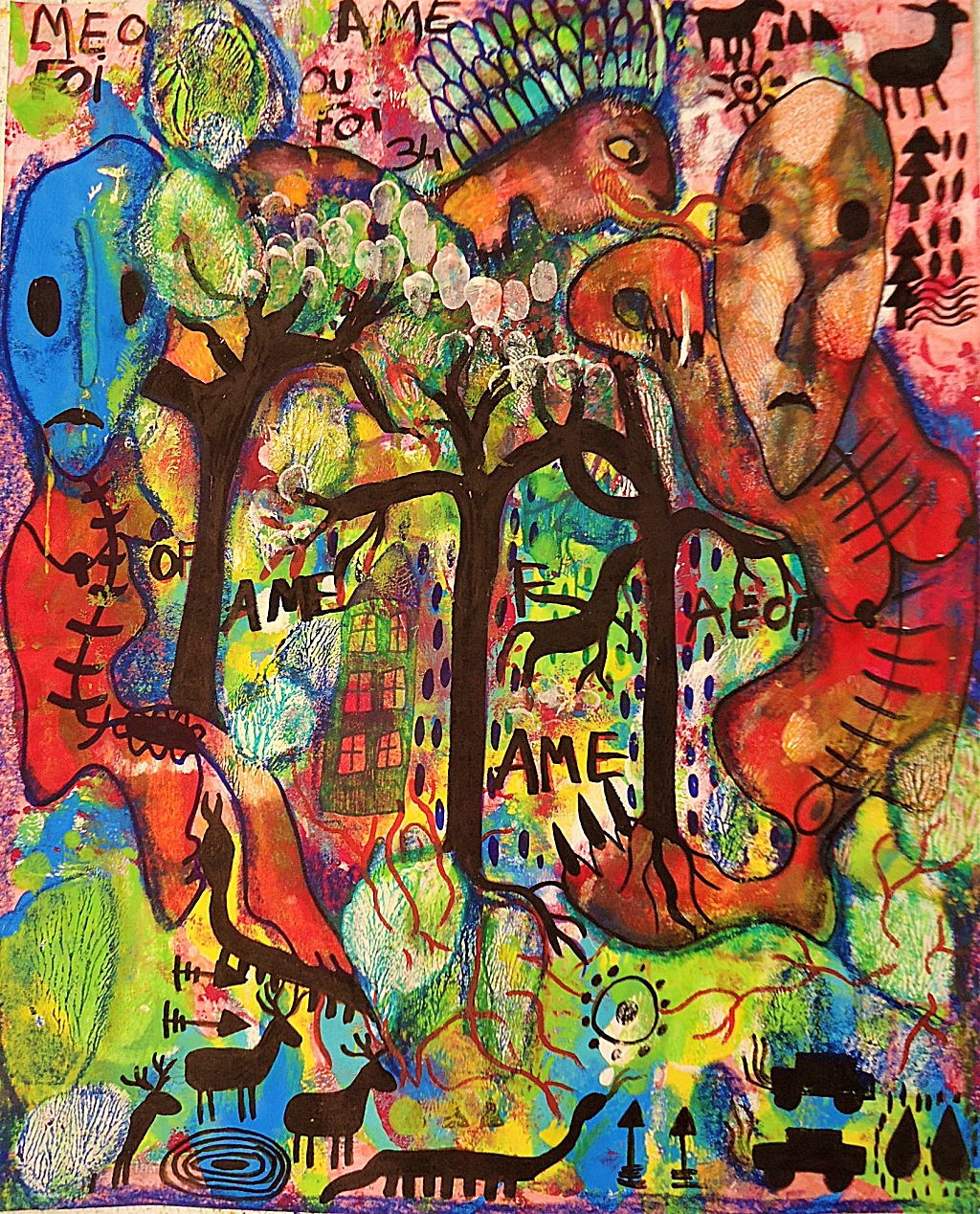
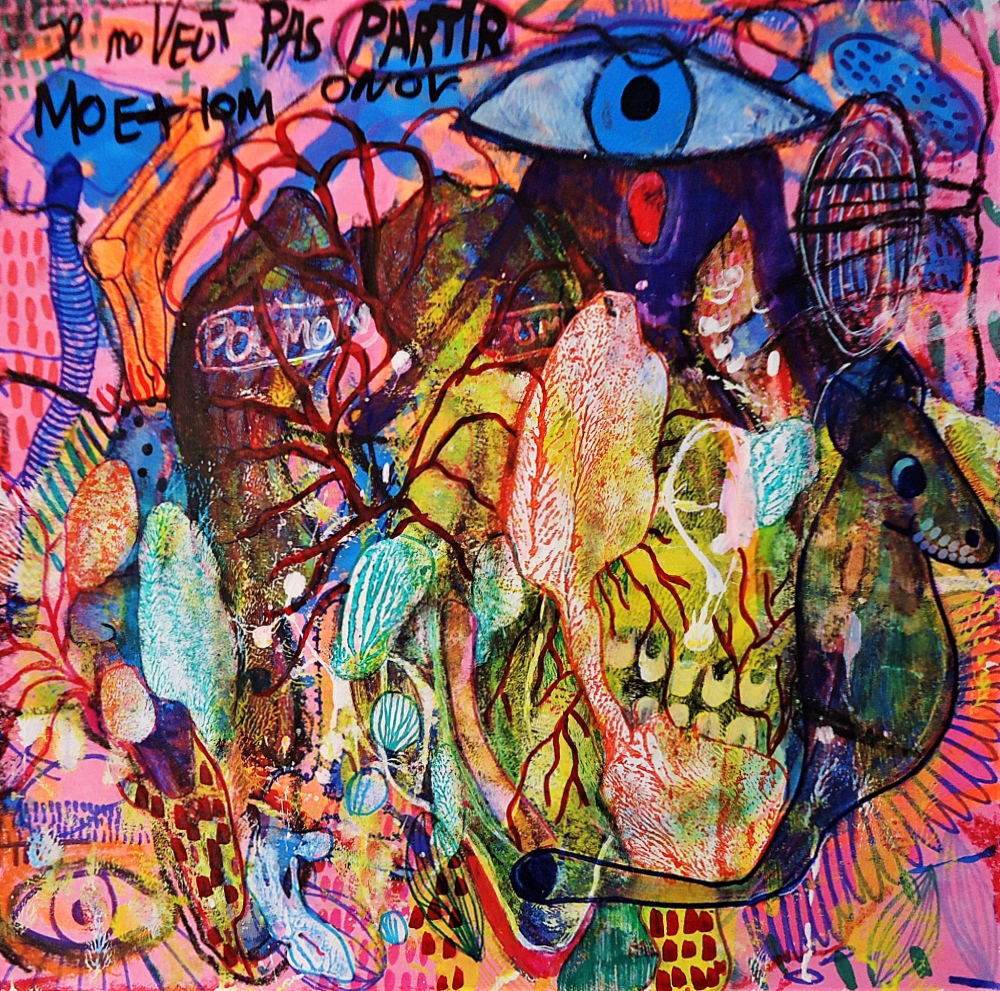
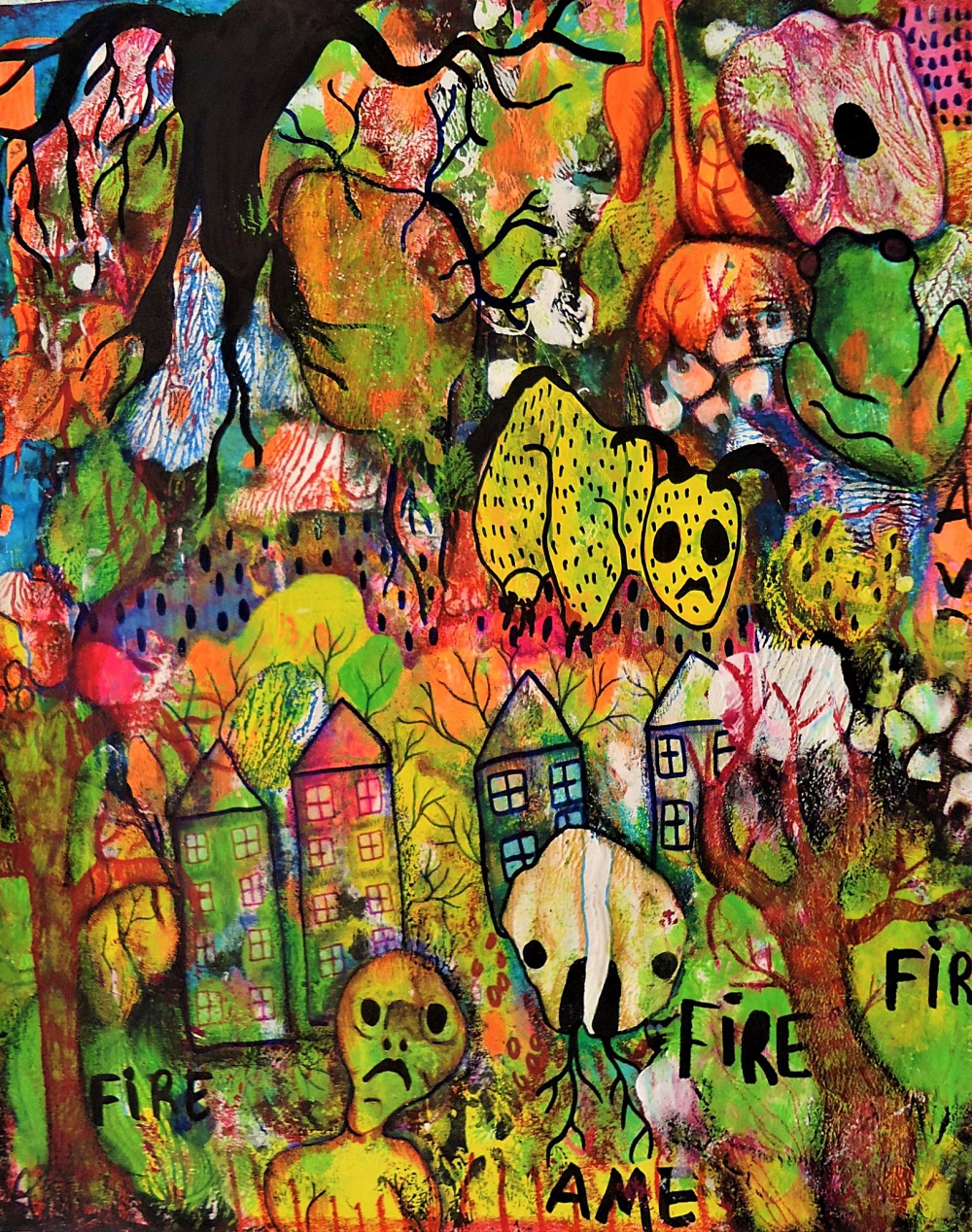
The melody of silence. I search endlessly for labyrinths across the fields I will find. Plants have eyes and they see me. I spill my blood of color pigments. With the wind I always seek to know infinite mountains wrinkled by time. That golden light lets me dominate, with veiled rain and magical scents from my hidden memories of a man of the land. Luminous nature with an open belly shows me a trace of the sun. Conscientious without desolation, living nature, the plants have begun to love me.
DESDE EL ALMA.
La melodía del silencio. Yo busco laberintos sin cesar a campo traviesa voy a encontrar. Las plantas tienen ojos y me ven. Derramo mi sangre de pigmentos de color. Con el viento siempre busco conocer infinitas montañas arrugadas por el tiempo. Esa luz dorada me deja dominar, con lluvias veladas y olores mágicos de mis recuerdos ocultos de un hombre de tierra. Naturaleza lumínica y de vientre abierto me muestra un trazo del sol. De conciencia sin desolación, naturaleza viva las plantas han comenzado a quererme.
Rene Fernando Ortega Villarroel Santiago, Chile, Octubre 2022
Rene Fernando Ortega Villarroel
René Ortega, was one of the winners in the international biennial of contemporary art October 3, 2022. Rene has exhibited work in Chile and Argentina. He is involved in many cultural art programs that have related to hospitals, children and teaching art professionally. His most recent show was Mental Labyrinthsat the Til Til Cultural Center Art gallery on June 18, 2022
“My concern is the human figure as a feeling of primitive and irrational states, whose main point are the heads, universal thought of the creation of man and center of the universe. All this led to a mutation of the plastic and pictorial language”.
Featured art photo Rene Fernando Ortega Villarroel
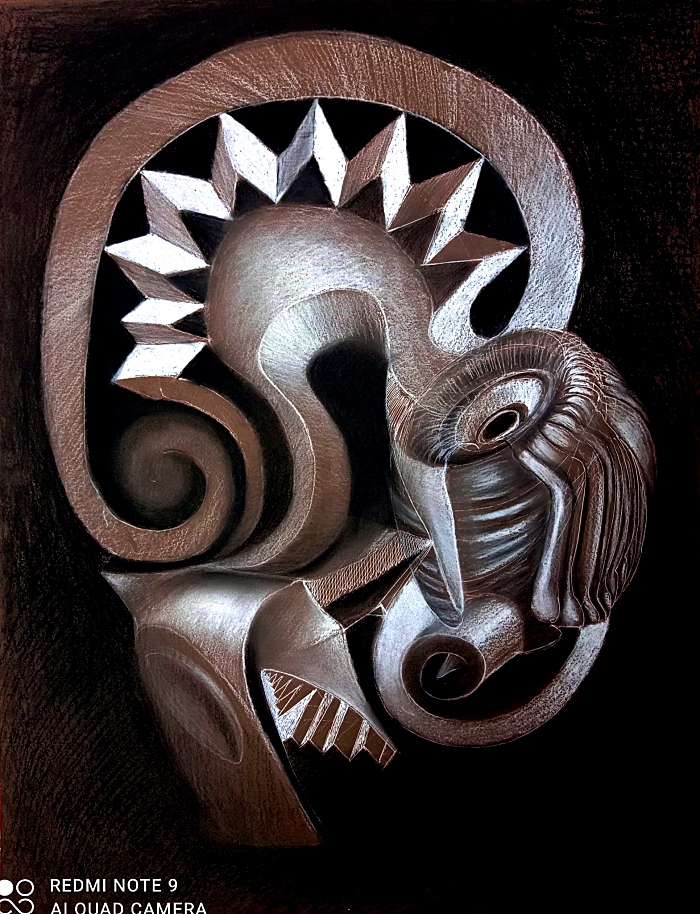
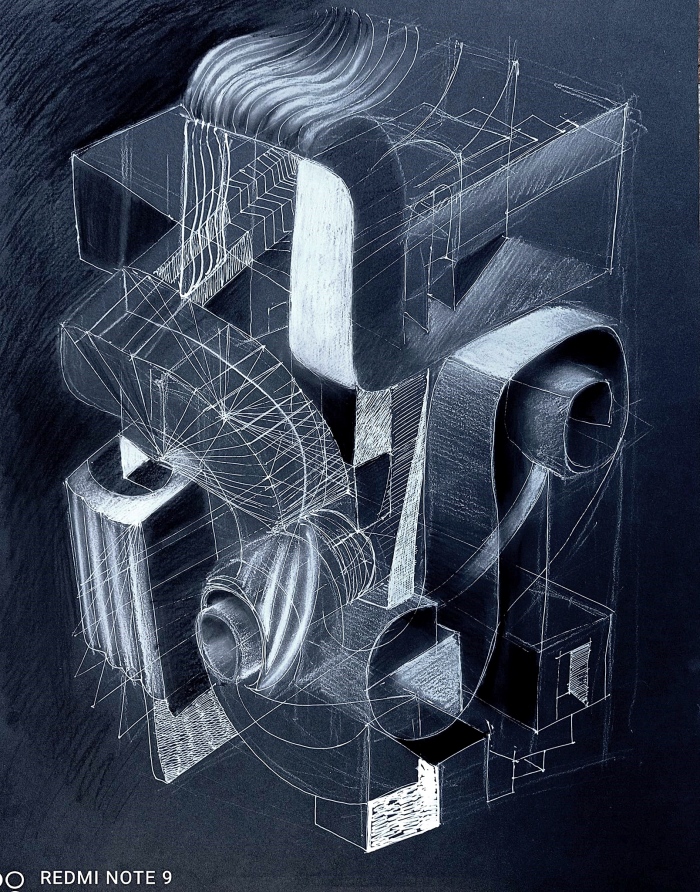
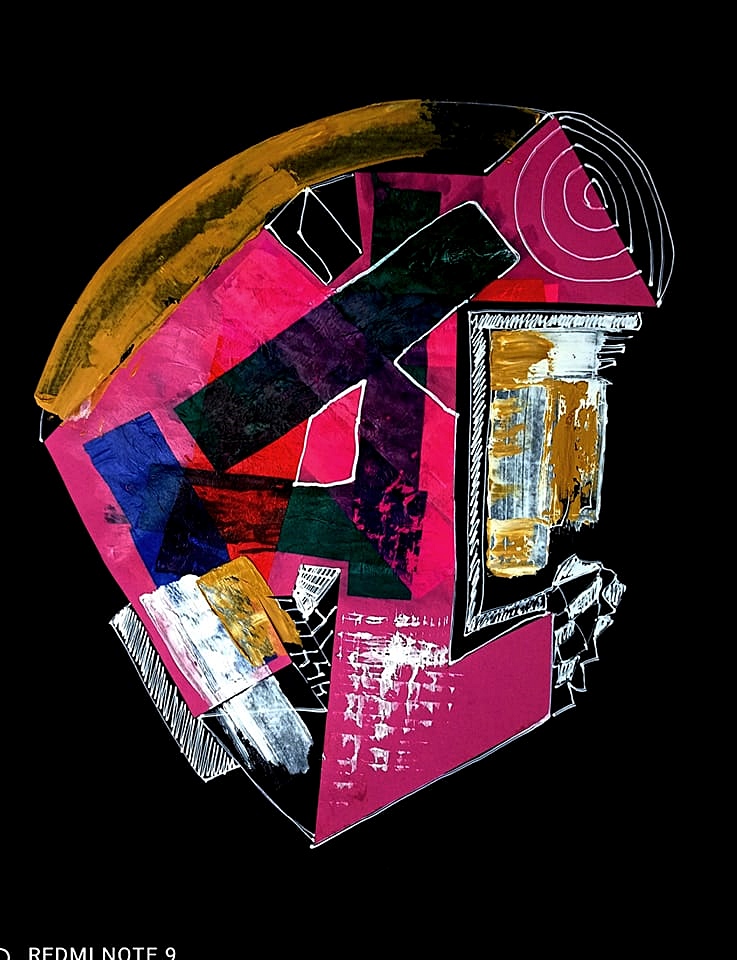
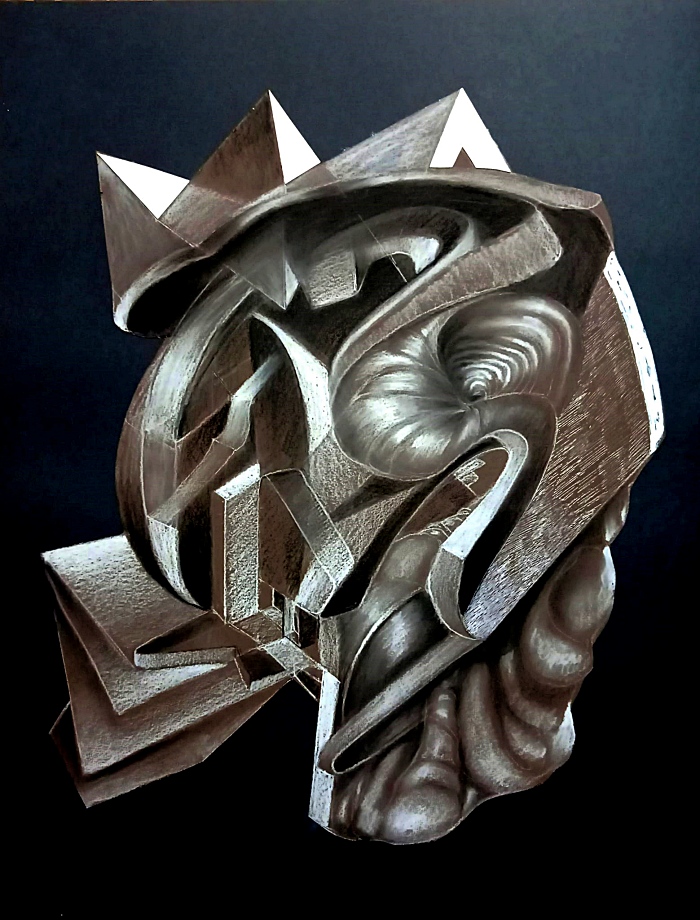
Inner space, mathematical entities, organic architecture and time doors from the liminal mind of artist René Ortega
From TvoTiltil October 3, 2022
El artista plástico y vecino de Huertos Familiares, René Ortega, resultó uno de los ganadores en la bienal internacional de arte contemporáneo que se desarrolló la semana pasada en Cali Colombia. En el encuentro participaron más de 3000 pinturas y representantes de 15 países y fue trinfador en la categoría de arte abstracto. La premiación se llevó a cabo en la Universidad Santiago de Cali. Sin duda es el logro y reconocimiento más importante en mi carrera hasta la fecha nos indicó el artista hace instantes.
The plastic artist and neighbor of Huertos Familiares, René Ortega, was one of the winners in the international biennial of contemporary art that took place last week in Cali, Colombia. More than 3,000 paintings and representatives from 15 countries participated in the meeting and it was the winner in the category of abstract art. The award ceremony was held at the Santiago de Cali University. Without a doubt, it is the most important achievement and recognition in my career to date, the artist told us moments ago.
Rene Fernando Ortega Villarroel
Feature art photo was selected as the award-winning work.
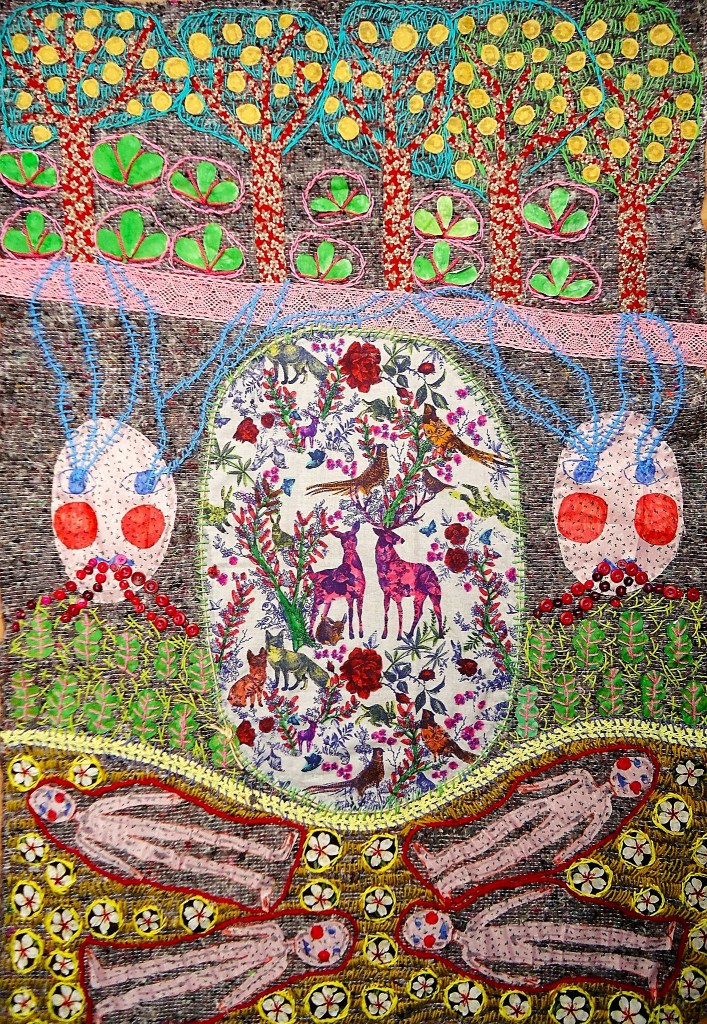
I always knew that art would be part of my life. In one form or another. I was born in 1986 in Normandy, during my childhood I suffered from school phobia, then from anxiety disorder in adolescence. Imagination, poetry, drawing have always been a kind of protection against the chaos that reigns outside.
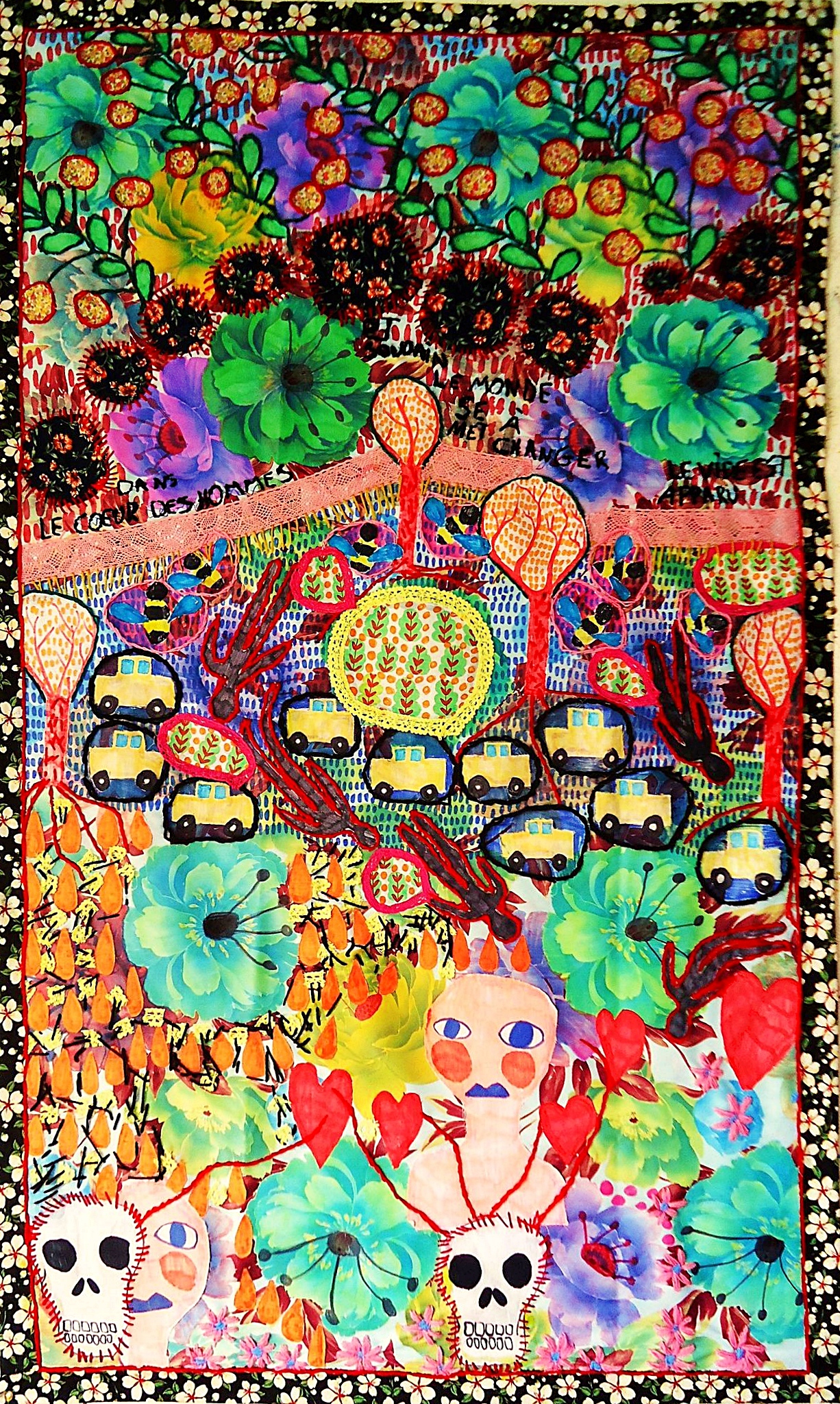
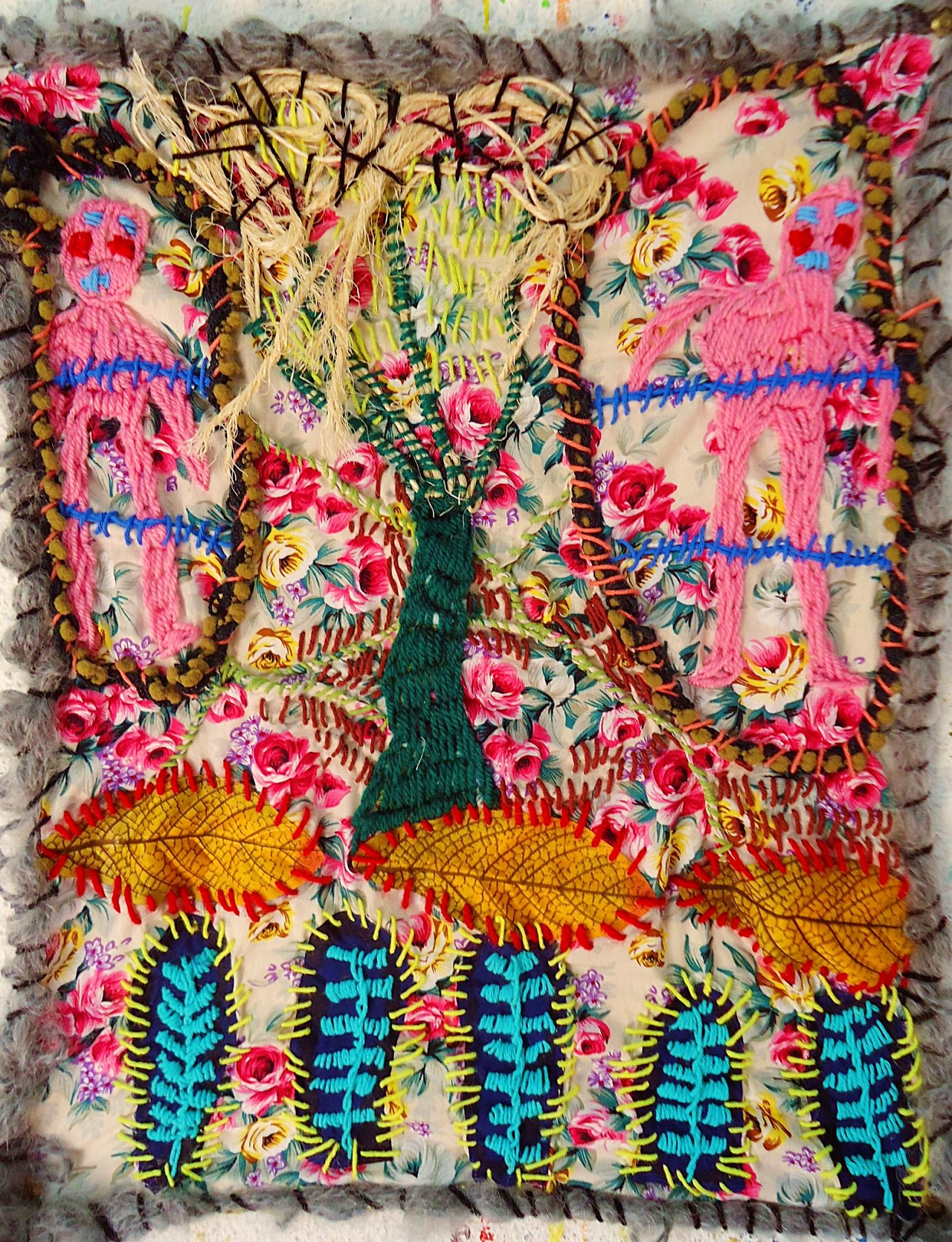
My father suffered from schizophrenia and my universe comes from this particular relationship with madness and disorder. In 2018 when my father committed suicide, I completely immersed myself in art. I still suffer from anxiety disorder, some days are harder than others, but one day at a time I am moving forward. Several months ago I started working with fabric. I sew human beings, nature, forests, rivers but above all I sew myself. This is what has changed in my new artistic work, I am no longer in the expression in traumas but in healing. It is much more than symbolic to sew. There is this idea of stitching up scars.
written by Alicia Lasne
In this work, which dates from 2019-2020, there is the representation of madness, of the depths.
In this work, which dates from 2020-2021, there is a kind of acceptance of madness, of the darkness of the human soul.
Then finally, my current work, where we really see the change with this desire for healing
The self is the unconscious and conscious that allows you to enter these imaginary worlds of creation, that is why it is important
Bueno el yo es el inconsciente y consiente que te permite entrar a estos mundos imaginarios de creación por eso es importante
I knew when I entered the experimental artist school and I liked all the artistic disciplines such as sculpture, engraving, drawing, forge, in short, I wanted to learn all the arts and be good at it with a lot of discipline and read the theoretical and aesthetic knowledge, and I realized that I could do it.
Bueno supe cuando entre a la escuela experimental artista y me gustaron todas las disciplinas artísticas como escultura grabado dibujo forja en fin todas las artes quería aprender y ser bueno en ello con mucha disciplina y leer el conocimiento estético lo teórico y me di cuenta que podía hacerlo
The environment has a strong influence on my paintings sketches sculptures from the observation and reflection of nature as something as small as a seed or as big as a tree and as infinite as a hill and from an insect to a bird in flight
El entorno tiene una fuerte influencia sobre mis pinturas bocetos esculturas desde la observación y la reflexión de la naturaleza como algo tan pequeño como una semilla o tan grande como árbol y tan infinito como un cerro y de un insecto a un pájaro en vuelo
It inspires me when I get up every morning and breathe the pure air of my mountains and feel that I am alive again to create with my hands and my eyes and feel the smells of my trees
Me inspira cuando me levanto todas las mañanas y respirar aire puro de mis montañas y sentirme que estoy viví otra ves para crear con mis manos y mis ojos y sentir los olores de mis árboles
Looking at nature influences my work and the action of carefully observing the plants and everything that surrounds me is part of my daily work.
En mi trabajo influye el mirar la naturaleza y tener la acción de observar detenidamente las plantas y todo lo que me rodea es parte de mi trabajo diario
I read many authors and artists bibliographies, as many as ancient and contemporary books on aesthetics, books on theorists and mathematicians, I like it a lot, and I am investigating fractal logarithms, why life was created that way, matter multiplies thousands of times and infinitely. that what I want in my work
Bueno leo muchos autores y bibliografías de artista tantos como antiguos y contemporánea libros de estéticas libros de los teóricos y matemáticos me gusta mucho y estoy investigando los logaritmos fractales por qué la vida se creo de esa manera se multiplica Miles de veces y infinitamente la materia y eso lo que quiero en mi obra
Rene has exhibited work in Chile and Argentina. He is involved in many cultural art programs that have related to hospitals, children and teaching art professionally.
René ha expuesto obra en Chile y Argentina. Está involucrado en muchos programas de arte cultural relacionados con hospitales, niños y la enseñanza del arte profesionalmente.
“My concern is the human figure as a feeling of primitive and irrational states, whose main point is the heads, universal thought of the creation of man and center of the universe. All this led to a mutation of the plastic and pictorial language”.
“Mi preocupación es la figura humana como sentimiento de estados primitivos e irracionales, cuyo punto principal son las cabezas, pensamiento universal de la creación del hombre y centro del universo. Todo esto llevado a un mutamiento del lenguaje plástico y pictórico”.
The self is the unconscious and conscious that allows you to enter these imaginary worlds of creation, that is why it is important
Bueno el yo es el inconsciente y consiente que te permite entrar a estos mundos imaginarios de creación por eso es importante
I knew when I entered the experimental artist school and I liked all the artistic disciplines such as sculpture, engraving, drawing, forge, in short, I wanted to learn all the arts and be good at it with a lot of discipline and read the theoretical and aesthetic knowledge, and I realized that I could do it.
Bueno supe cuando entre a la escuela experimental artista y me gustaron todas las disciplinas artísticas como escultura grabado dibujo forja en fin todas las artes quería aprender y ser bueno en ello con mucha disciplina y leer el conocimiento estético lo teórico y me di cuenta que podía hacerlo
The environment has a strong influence on my paintings sketches sculptures from the observation and reflection of nature as something as small as a seed or as big as a tree and as infinite as a hill and from an insect to a bird in flight
El entorno tiene una fuerte influencia sobre mis pinturas bocetos esculturas desde la observación y la reflexión de la naturaleza como algo tan pequeño como una semilla o tan grande como árbol y tan infinito como un cerro y de un insecto a un pájaro en vuelo
It inspires me when I get up every morning and breathe the pure air of my mountains and feel that I am alive again to create with my hands and my eyes and feel the smells of my trees
Me inspira cuando me levanto todas las mañanas y respirar aire puro de mis montañas y sentirme que estoy viví otra ves para crear con mis manos y mis ojos y sentir los olores de mis árboles
Looking at nature influences my work and the action of carefully observing the plants and everything that surrounds me is part of my daily work.
En mi trabajo influye el mirar la naturaleza y tener la acción de observar detenidamente las plantas y todo lo que me rodea es parte de mi trabajo diario
I read many authors and artists bibliographies, as many as ancient and contemporary books on aesthetics, books on theorists and mathematicians, I like it a lot, and I am investigating fractal logarithms, why life was created that way, matter multiplies thousands of times and infinitely. that what I want in my work
Bueno leo muchos autores y bibliografías de artista tantos como antiguos y contemporánea libros de estéticas libros de los teóricos y matemáticos me gusta mucho y estoy investigando los logaritmos fractales por qué la vida se creo de esa manera se multiplica Miles de veces y infinitamente la materia y eso lo que quiero en mi obra
Rene has exhibited work in Chile and Argentina. He is involved in many cultural art programs that have related to hospitals, children and teaching art professionally.
René ha expuesto obra en Chile y Argentina. Está involucrado en muchos programas de arte cultural relacionados con hospitales, niños y la enseñanza del arte profesionalmente.
“My concern is the human figure as a feeling of primitive and irrational states, whose main point is the heads, universal thought of the creation of man and center of the universe. All this led to a mutation of the plastic and pictorial language”.
“Mi preocupación es la figura humana como sentimiento de estados primitivos e irracionales, cuyo punto principal son las cabezas, pensamiento universal de la creación del hombre y centro del universo. Todo esto llevado a un mutamiento del lenguaje plástico y pictórico”.
I’ve been making art my entire life, I actually remember my 1st studio was a closet in my bedroom, I probably was about 6 or 7 years old
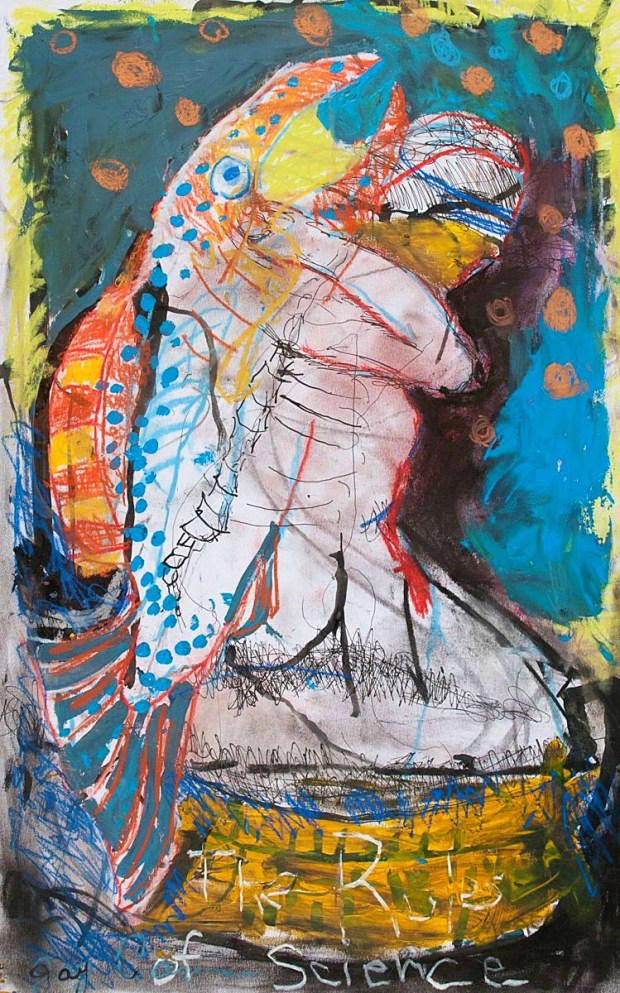
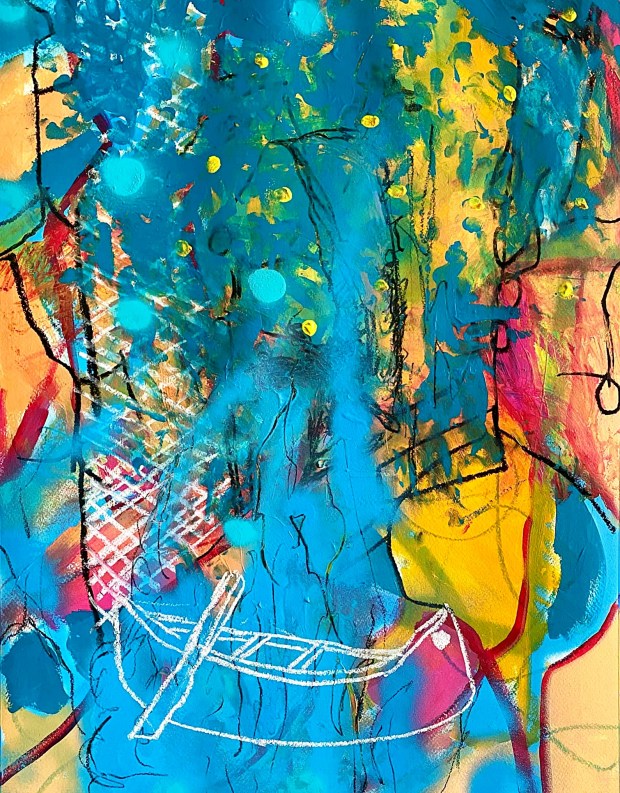
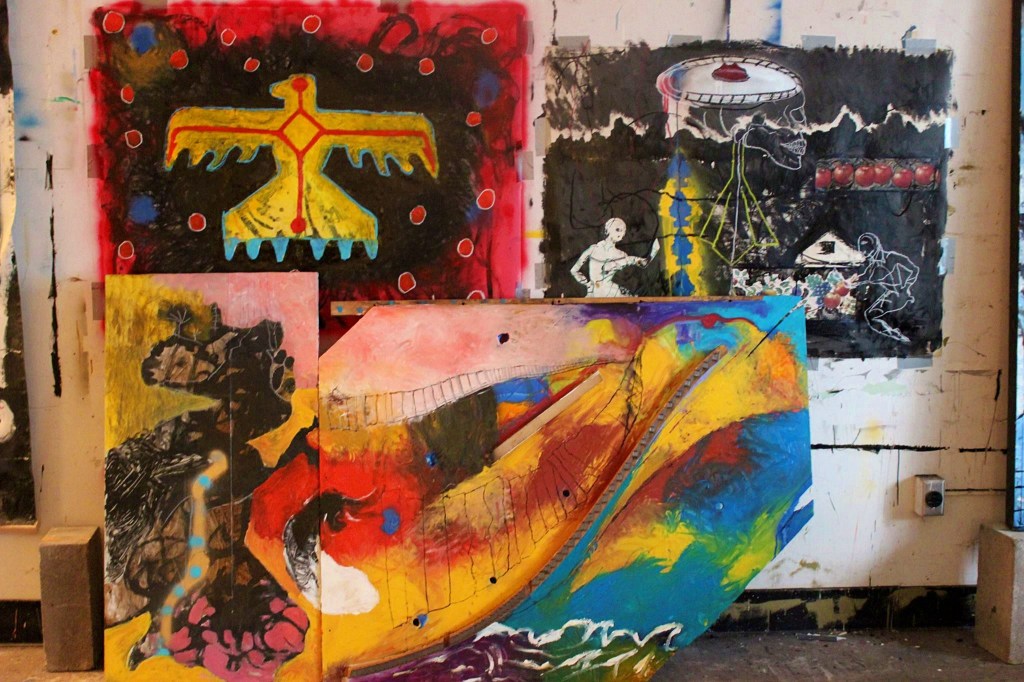
Top Left: 2015 mixed media work The Rules of Science Top Center:It’s All I Can Do, 30inx22in, mixed media on paper, July, 2022 Top Right:The Giving, mixed media on canvas, 65inx50in June 2009 Bottom Center: Gather, acrylic on paper, 22inx30in, July 2022
There are many different kinds of artists in my family from lacrosse stick makers, stone carvers, beadwork artist, leather workers and of course painters
Jay Carrier studio scenes
I paint my life, my thoughts, the philosophies that I’ve studied, the culture and society that I was born into.
December 18, 2012 Painting. Jay Carrier
Left: mixed media on wood, 52inx 52in August 2018 Center:Mother and Child, 44inx 30.5in, mixed media on paper, 2014 October 2019 Right: mixed media on paper, 30in x 22in
I was born on the six nations rez near Brantford Ontario, moved to Niagara Falls NY when I was 4
Left: December 1, 2021 Painting Right:Monuments, oil on canvas, 60inx 57in July 2020
Adapted painting April 2020
Skull ship, acrylic on paper, 22inx30in, July 2022
The things that influence me were not necessarily art movements. The people of the six nations used what we call traditional art in contemporary society are made for different reasons. There was no term for art in our societies
Night painting, acrylic on canvas, 14inx 11in, July 2022
I paint intuitively so spirit can travel unimpeded
written by Jay Carrier
Left:Night Sky, mostly oil on wood 36inx 41in 3-4in, June 2022 Center: Couple, oil on wood, 36inx 48in, June 2022 Right: mixed media on canvas, December 2021
“The places that we dwell and live, the relationships that we form with the natural environment, the people that we surround ourselves with, and the many things that influence our thoughts are reflected in the paintings chosen for this show. I was born and briefly grew up on the Six Nations Reservation but predominately was raised in the Southend downtown Niagara Falls. I was constantly amazed by the city’s surroundings, the river, and, the Niagara gorge. Many memories were made that have a direct reference in these paintings; there were exciting times, there were hard times, there were happy times, and tragic times. These experiences in some regard formed the thoughts and ideas reflected in these paintings.”
Left: oil, spay paint, oil stick on canvas, 66inx72in. April 2017 Right: multi media painting on canvas August 2019
“There is a poetically tragic, glamorous, and beautiful reality about Niagara Falls. The beauty and seduction of the water as it travels, the brutal stark reality of living in a repressed small city, the fallen industry, the curio identity that was what the world would see…. these are the catalysts for exploring my art in relationship to the city.” -Jay Carrier
Jay Carrier at Hallwalls Contemporary Arts Center in Buffalo, New York on September 18, 2021 photo by Dawn Carrier
JAY CARRIER 2115 Lockport Road Niagara Falls, New York 14304 Phone: (716) 534-0489 Studio: 20, NACC, 1201 Pine Avenue, Niagara Falls, New York 14301 e-mail: carrierj@roadrunner.com carrierjay@yahoo.com
EDUCATION 1993-94 The University of Illinois at Urbana/Champaign, attended 1 year Masters Program 1993-95 The University of Illinois at Urbana/Champaign, Bachelors of Fine Arts 1986-87, 92 The College of Santa Fe, New Mexico, attended, Major, Fine Arts: Painting, Sculpture 1984 Buffalo State College, Attended 1984 Niagara County Community College, Associates in Fine Arts
SELECTED SOLO EXHIBITIONS
2021 Free To Roam Hallwalls Contemporary Art Center, Buffalo New York 2020 We Took Things With Us, Buffalo Arts Studio Gallery, Buffalo New York 2019 Places of Transformation/ City Indian, the NACC Gallery Niagara Falls New York 2016 The City is Clean, Recent works, Gallery Eleneneleven, Buffalo, New York 2016 Recent work by: Jay Carrier, Garden Gallery Niagara Arts and Cultural Center, Niagara Falls, New York 2014 Recent Drawings, The Garden Gallery, Niagara Arts and Cultural Center Niagara Falls New York 2006 Risen from the Ashes of 2 Fires, American Indian Community House Gallery, New York New York 2004 Chautauqua Center for Visual Arts, Chautauqua Institution Gallery, Chautauqua New York 2002 Polar Visions, Niagara Art and Cultural Center, Niagara Falls, New York 1995 Nothing is Sacred, Institute of American Indian Arts, Santa Fe New Mexico 1993 The Blind Pig Gallery, Champaign, Illinois 1993 The Union Gallery, The University of Illinois at Champaign/Urbana 1993 The South Garage Gallery, The University of Illinois at Champaign/Urban
SELECTED GROUP EXHIBITIONS 2020-2021 Native American and First Nations Contemporary Art, K Art Gallery, Buffalo New York 2018 At This Time, Burchfield Art Center, Buffalo New York 2017 Beyond the Barrel, Annual Exhibition Niagara Arts and Cultural Center Niagara Falls New York 2016 Amid/In WNY – Part 6, Hallwalls Contemporary Arts Center, Buffalo, New York 2016 Featured Artist, 24 Below Gallery, Niagara Falls, New York, 2015-2016 2015 Stick, Stone & Steel, Niagara Art and Cultural Center, Niagara Falls, New York 2015 Diversity Works: Selections from the Gerald Mead Collection, El Museo, Buffalo, New York 2011 4 from 6: Four Artists from Six Nations curated by Shelley Niro, Hamilton Artists Inc., Hamilton, Ontario, Canada 2011 Haudenosaunee: Elements: Works by Artists from the Six Nations of the Iroquois, Everson Museum, Syracuse, New York 2008 Burgeoning: Artists Invite Artists, You Me Gallery, Hamilton, Ontario, Canada 2006 First Nations Art 2006, Woodland Cultural Center, Brantford, Ontario, Canada 2005 From Deep in the Forest: An Exhibition of Fine Woodworking, Niagara Falls, New York 2004 First Nations Art 2004, Woodland Cultural Center, Brantford, Ontario, Canada 2004 Collects Buffalo State, Burchfield Penney Art Center, Buffalo, New York 2003 First Nations Art 2003, Woodland Culture Center, Brantford, Ontario, Canada 2002 1st Annual Exhibition, Niagara Art and Cultural Center Niagara Falls, New York, 2002 The Pan American Exposition Centennial: Images of the American Indian, Burchfield Penney Art Center, Buffalo, New York 1997 Where We Stand, Fenimore House Museum, Cooperstown, New York 1995 Expressions of the Spirit, The Wheelwright Museum of the American Indian, Santa Fe, New Mexico 1994 In the Shadow of the Eagle, The Castellani Art Museum, Niagara Falls, New York 1993 The Second Floor Gallery, St. Louis, Missouri 1988 The Galleries, Buffalo, New York 1988 American Indian Institute, Iroquois Art, Connecticut, Washington
Biennials
2012 The Other New York 2012 XL Projects Syracuse NY
2007 Beyond/ In WNY Biennial, Castellani Museum, Niagara Falls NY
FELLOWSHIPS/RESIDENCIES
Art Matters Inc., New York, New York, 1994-1995 Artist In Residence, Native American Center for the Living Arts, “The Turtle”, Niagara Falls, NY 1987
How would you describe your painting process and your associative relationship between concepts, events, or mental states of the subconscious? Is there a link between self-hypnosis and inspiration?
Artists, writers, and poets such as Garcia Lorca, Roberto Matta, Henri Michaux, and even Anais Nin have inspired me to paint. Language, for me, comes first, but the visual can support the verbal. I paint as if I’m composing poetry.
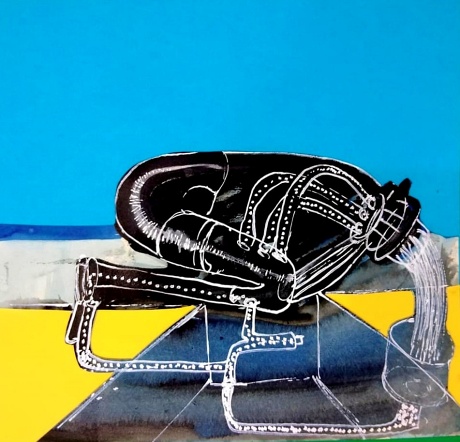
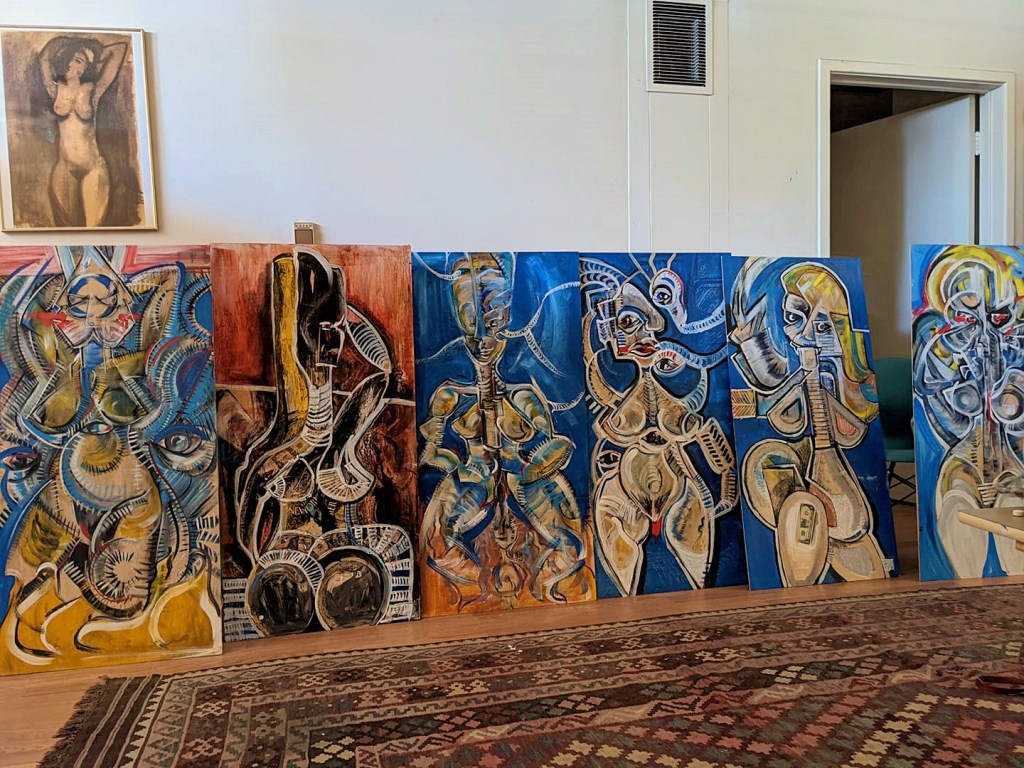
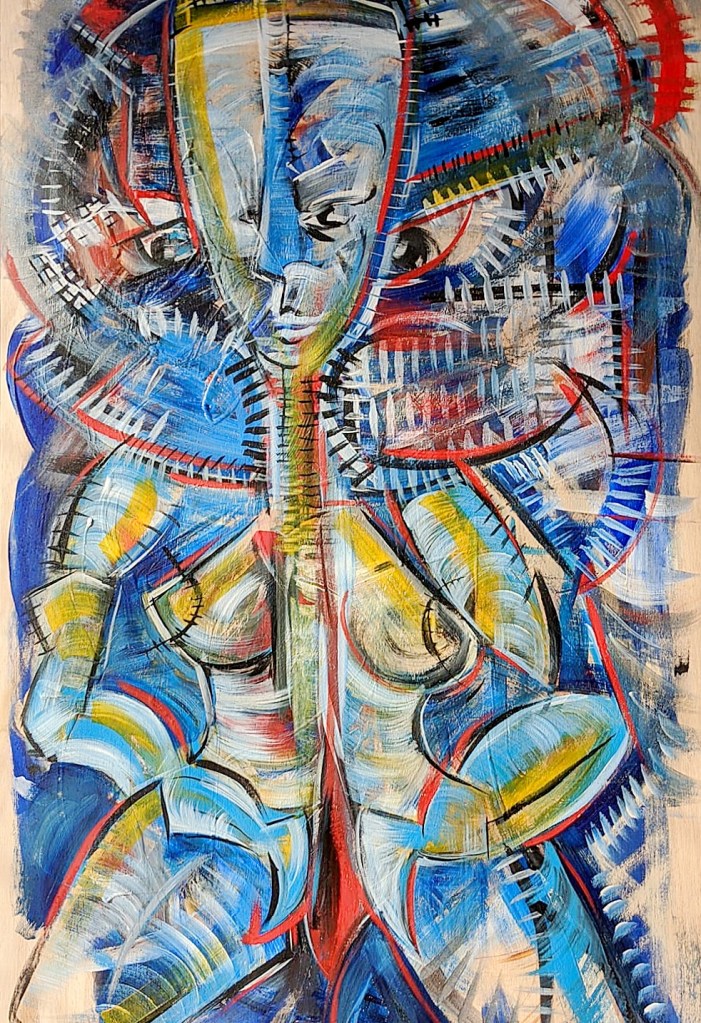
Automatism or improvisation is the starting point – bebop – but I’ve realized that the contours of a, often dismembered and re-stitched, female body appears repetitively in my mind’s eye: think Mary Shelly. This flickering of fragmented body parts leaves deposits on the canvas/my mind. There’s something about the human body that truly fascinates me. This fascination isn’t deliberate, and it’s also strange because I’m more cerebral than a physical person: in my view, the body exists only in the mind. This also solves, at least for me, the century-old dualism: the body-mind split. Or, as William Blake said: “the body is a portion of the soul.”
Man is a machine, and a woman is a sublime machine. If you compare the human and the animal body, the human body is clearly synthetic and artificial. It blurs the boundaries between what’s considered natural and what’s considered artificial. I find that thrilling. There’s nothing natural about us humans. We aren’t becoming robots or cyborgs, we already are. We can’t rely on our instincts anymore as non-synthetic creatures can. There are vehicles in the making that’ll be able to reproduce themselves with whatever material they can find on Mars.
How’s that different from us? You could say that humans think and feel, but do we really? Aren’t we just parroting the words, stories, and belief systems that we’ve been fed? When was the last time you heard a new idea? Something you hadn’t heard before, something that stimulated an innovative thought. We’re the protein by-product of language. Perhaps when there’s trance, a moment of silence, or jazz, an intelligent intuition can unfold in the nerve domain. Painting or poetry can help it develop, transmit and circulate. Possibly it can be fertilized by critical reading or meditation.
Is painting a technique that represents a body disconnected from words? a sort of ‘transmuting neurology’
Transmuting neurology, I love this phrasing. Probably our neurology is in constant a state of desire for perpetual transmutation, but the culture must allow for it. Studying the history of painting, I was excited to learn that the Impressionists had “discovered” different shades in snow, something that nobody had “seen” before them. Isn’t that intriguing? I guess they contributed to an alteration of the general perception and experience of what’s “white.” They are also depicted as the very first in the history of Western painting of social situations such as people dancing or swimming. Nobody had done that before them. That’s why the establishment was so scandalized.
Of course, it didn’t help that the women they painted often were what today we’d call sex workers. Can you imagine that in the second part of the 19th century? Later with expressionism and surrealism, painters gave expression to the ebb and flow of what’s inside the mind’s eye. An interesting artist is Francis Bacon. He claimed that he depicted people as they “really” are. Perhaps some of us are polished yet monstrous or disfigured? Or even, maybe the human condition is one of perpetual disfigurement? Whether we can see without words is something I keep on mulling over. I feel tempted to believe that as humans we need some sort of narrative or linguistic frame of intelligibility to see things. Perhaps we can only perceive objects contextually. Painters should be called pioneers or even anarchists of perception.
Can you elaborate on how language shapes us by a Languaged body, cultured intuition by sound, and language as a living intelligence?
I’d like to emphasize that I constantly toy with intuitions and ideas, not with truths. The truth for me often is a reductionist and particularly violent concept. Think of all the wars that have been fought over some sort of revelatory divine truth, or in later centuries, the so-called scientific truth. The Nazis had their ideology backed up by scientists’ assertion that theirs was the most evolved race (so-called Social Darwinism), and that certain other races were particularly parasitic and had to be exterminated the same way as rats or cockroaches. So, circling back to the central ideas informing my practices such as the “languaged body” which is a neologism, and the idea that language is a living intelligence, I don’t consider them to be truths. These are frames of intelligibility that have grown under my skin over the years of study, reflection, practice, and meditation. I have no problem admitting that these concepts are nothing more than my obsessions. I’m not a missionary.
I see language as something external to human beings, possibly an organism. In the process of language learning, humans are inserted into this external thing we frivolously call language. There are linguists in Switzerland who’ve developed a theory in which language is a symbiont. So not necessarily a virus as William S Burroughs famously claimed, or that it can turn parasitic in case of psychosis as French psychoanalyst Jacques Lacan suggested. I see our brain + nervous system as a receptor-like radio, tv, or computer, capable of receiving signals and building narrative. In some way, it’s a form of telepathy. By producing sounds, we invoke a whole shared world that has been forged across thousands of generations. Also, we invest our lifeworld, including our bodies, with words, with a story. If our bodies weren’t invested with language, we’d constantly experience ourselves and others as walking talking meat, protein bags, or water bags on legs. When we buy meat at the butcher’s or supermarket, we don’t think of that red stuff as chopped-up dead animal cadavers. We say it’s a New York strip or whatever. Something similar is going on with our bodies. We have names.
This name is somehow “written” on our skin, on our face. I’ve never met anyone without a name, though I’m curious how that’d be. When we feel attracted to someone, we don’t think “that’s a tasty animal.” Some of us might, however. A whole story about someone is activated within us when we fall in love, a concept of what a human being is, of what beauty is, etc. while we all know that a few millimeters under the skin there’s blood and a skull. But who, except a cannibal or a serial killer, thinks about that? The way language has contextualized humans prevents us from seeing the meatiness of a person. But this experience isn’t fixed. There are cultures in which not everyone has human status. Think of the Dalits in India. In Central Africa the so-called pygmy is being hunted and eaten, most probably because their appearance doesn’t conform to the hunter’s concept of what constitutes a human. It’s also interesting to read the private diaries of people who worked in concentration camps, and how they thought about the people they helped butcher or exterminate. Some agreed that Jews, homosexuals, communists, etc. had to be put to death, but they felt it should happen in a kinder way, pretty much how some activists think about animal rights in our era.
Language protects us by feeding us optical illusions. As humans, we’re trapped in a theater of distorted thoughts. It’s as if we need to drive on a busy freeway wearing glasses deforming everything coming our way. All this is extremely disorienting and frightening. I think maybe that’s why there’re so many ideologies and why religion is such a sensitive matter. These “grand narratives” offer the illusion of certainty and direction: how one should lead one’s life, where one should be headed, and where to invest one’s life force. The artist, I think, has been for whatever reason cast out of the Eden of ideology or religion, and is forced to constantly mold and remold her internalized worldviews, knowing often very well that this is a futile endeavor that must be repeated endlessly. But, at least, there’s some motion within. The alternative would be catatonia.
Artists, writers, and poets who helped contribute and inform your process?
I sound like a broken record when I keep on mentioning Will Alexander. But there’s no denying that his oeuvre provided me with the missing link in my thinking. I have always had an interest in ritual, animism, and shamanism, but with the latter term, we need to be extremely careful. I adhere to academic concepts of shamanism, such as Mircea Eliade’s. When younger I participated extensively in groups believing that they were engaged in shamanic practices. Perhaps some of those did. I don’t want to claim that I have the capacity to say what’s authentic and what isn’t. What I inherited from these experiences is the sensation of trance. Will’s work transfuses both language and animism/shamanism, especially in his The Combustion Cycle.
Without trance, there’s no writing nor painting for me. Writing prose is different. Poetry and painting for me fall in the same domain as glossolalia, speaking in tongues or trance-speaking. Freudian associating on the couch. Will’s concept of language as a living, possibly alchemical intelligence, makes a lot of sense to me. It connects my interest in shamanism and animism with my obsession with language in a no-nonsense way. WA’s poetics is a conscious journey into the imagination. To truly feel this, you need to understand that the imagination isn’t just “fugazi” or fantasy. The Jungians know very well that the imaginal world is a tangible environment, in which one can move around and travel in. There are beings dwelling there. You can develop a bond with these inorganic characters. Jungian practitioners are aware of this possibility.
I think I can say that Occidental culture at this point in history is in a state of coma or autophagy: it’s eating itself up. The criteria for personhood are so one-sided and reductionist that it is extremely easy to descend into a state of being a non-person. Maybe the only option when that happens for some people is to die and, in the process, drag along as many corpses as possible. Ours is a high-risk society. Having said that, I’ve lived in India for three years the comfortable life of an adult literature student. Life in India is no bargain either. Perhaps I have taken shelter in the written word and painted images because I’ve experienced that it isn’t possible to change your own culture with another. Every culture has its own cruelties, sacrifices, and gains, but they aren’t commodities. The difference, maybe, between Western cultures and the rest of the planet is that, as French novelist Michel Houellebecq suggests, the West has sacrificed almost everything for the sake of rationalism and technocracy.
There are also other artists and poets besides WA that have influenced me. I’m thinking of the “Grand Jeu” poets such as Rene Daumal and Gilbert-LeComte but also Antonin Artaud, Joyce Mansour, and Roberto Matta. Regarding US artists and poets, there’s, of course, Philip Lamantia, whose thinking and work is like a direct mind-injection into my mind: picture a metaphysical phone call without ever hanging up. Other important people would be Bob Kaufman, John Hoffman, Laurence Weisberg, but also someone like Mina Loy, and some beats, in particular William S Burroughs. I feel a deep affection for a lot of artists and writers: William Baziotes, Arshile Gorky, Thom Burns, Rik Lina, Byron Baker, Emily Dickenson, Edgar Allan Poe, William Blake, Lautreamont, Guiliaume Apollinaire, Baudelaire, Rimbaud, Gerard de Nerval, Grace Hartigan, Leonora Carrington, Remedios Varo, Juanita Guccione, and many more.
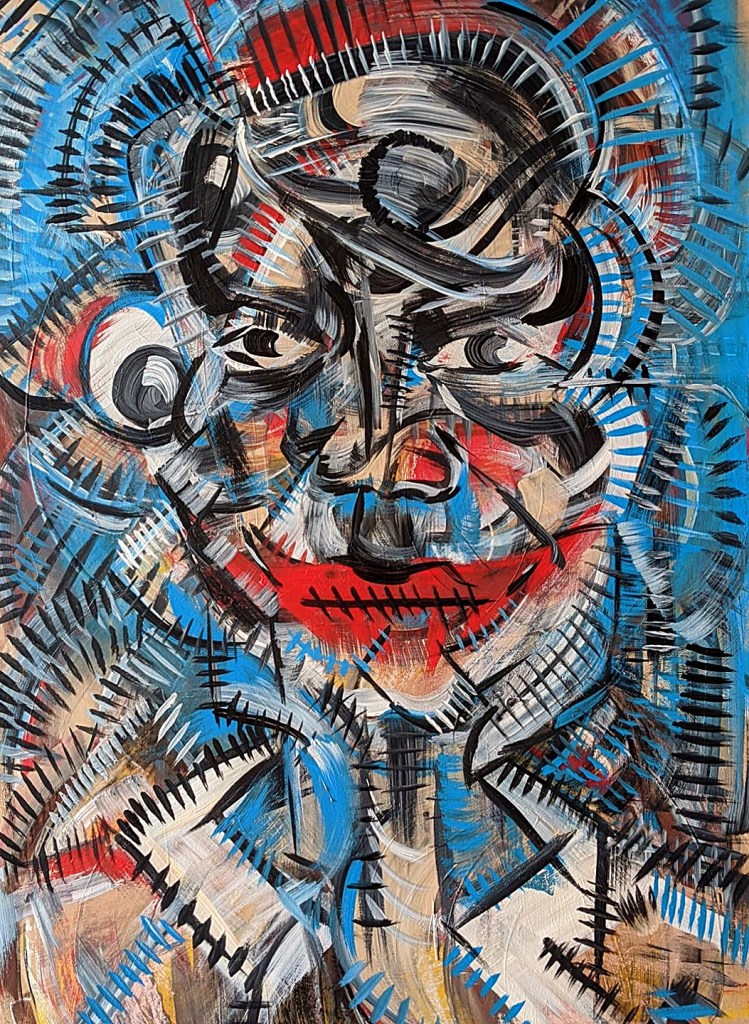
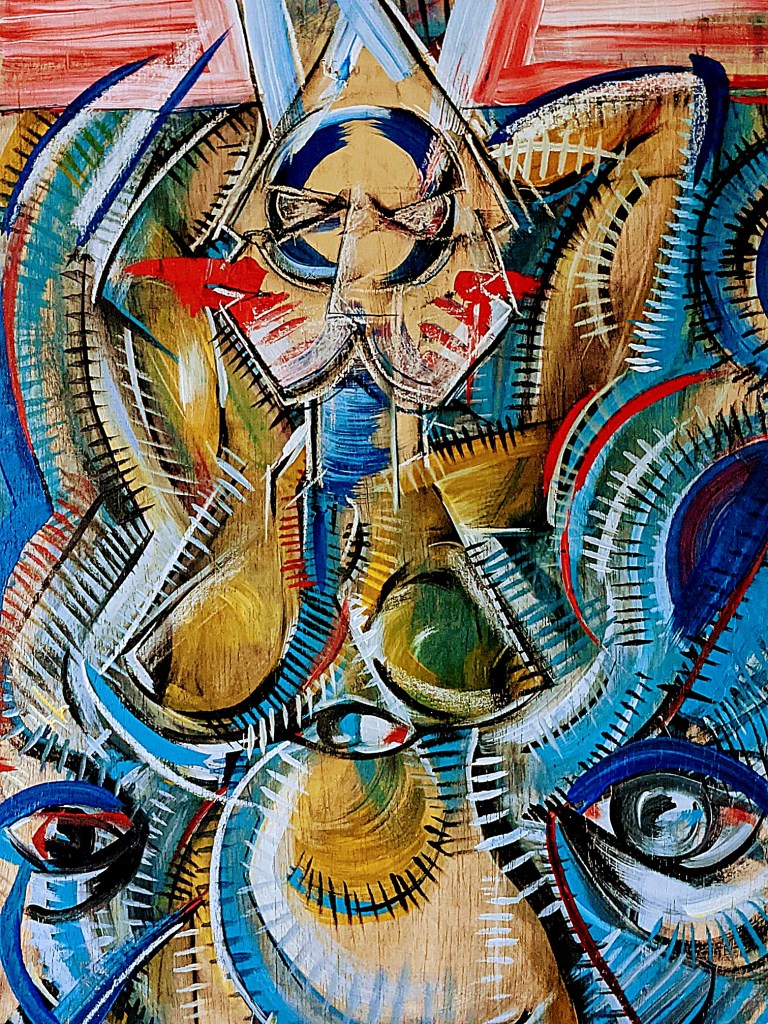
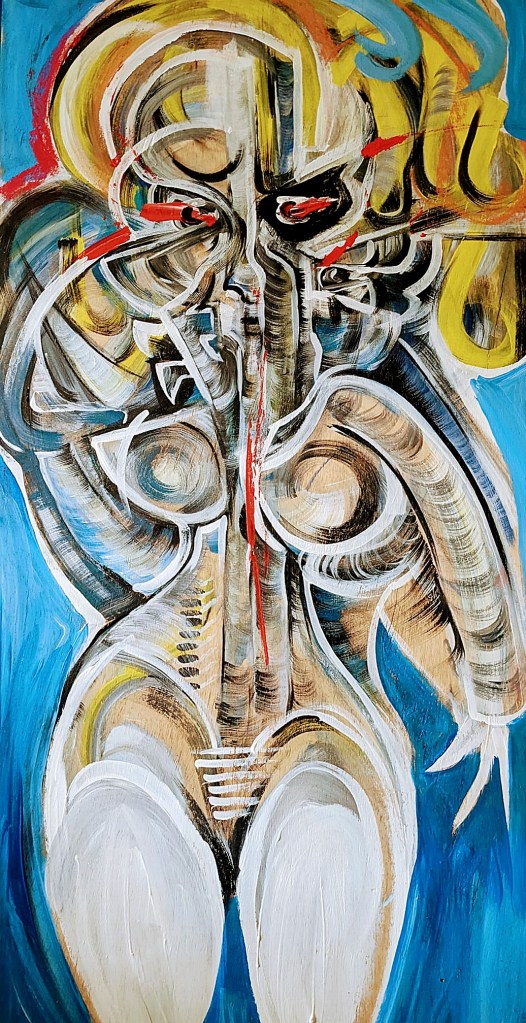
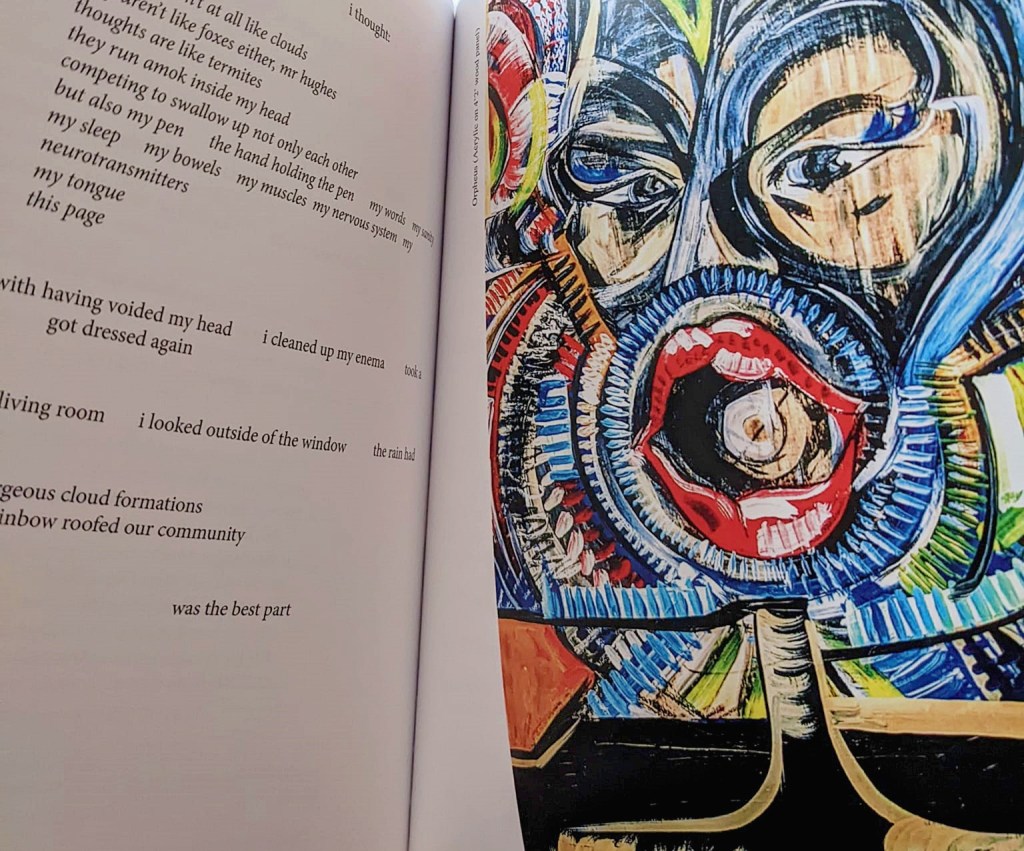
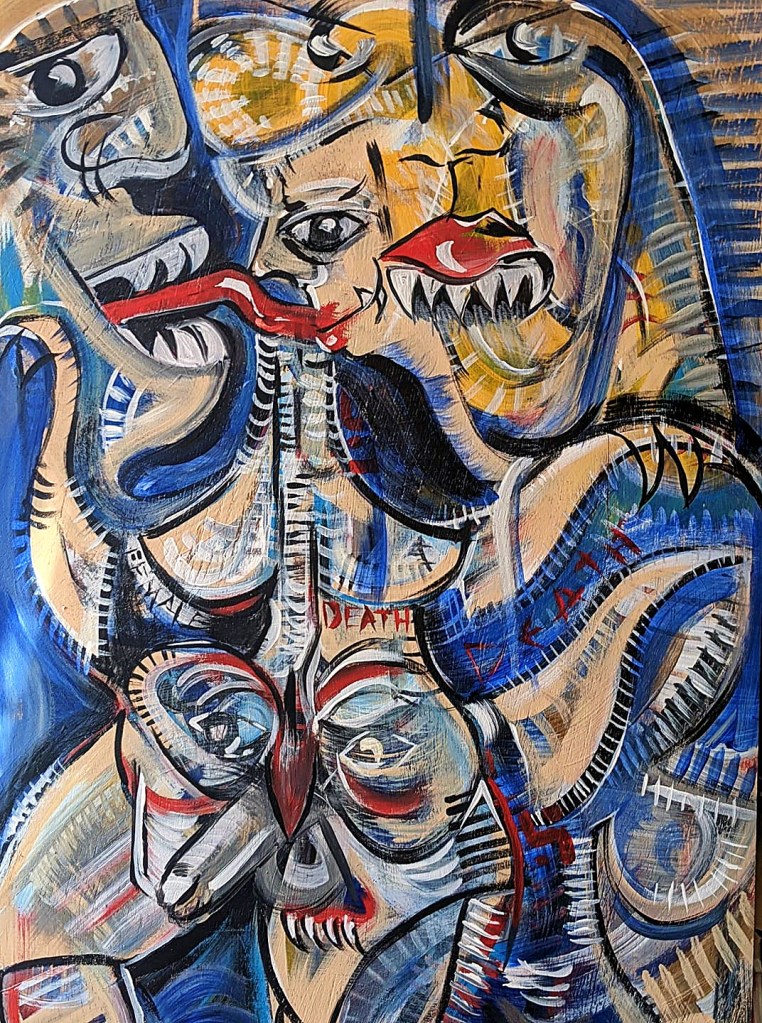
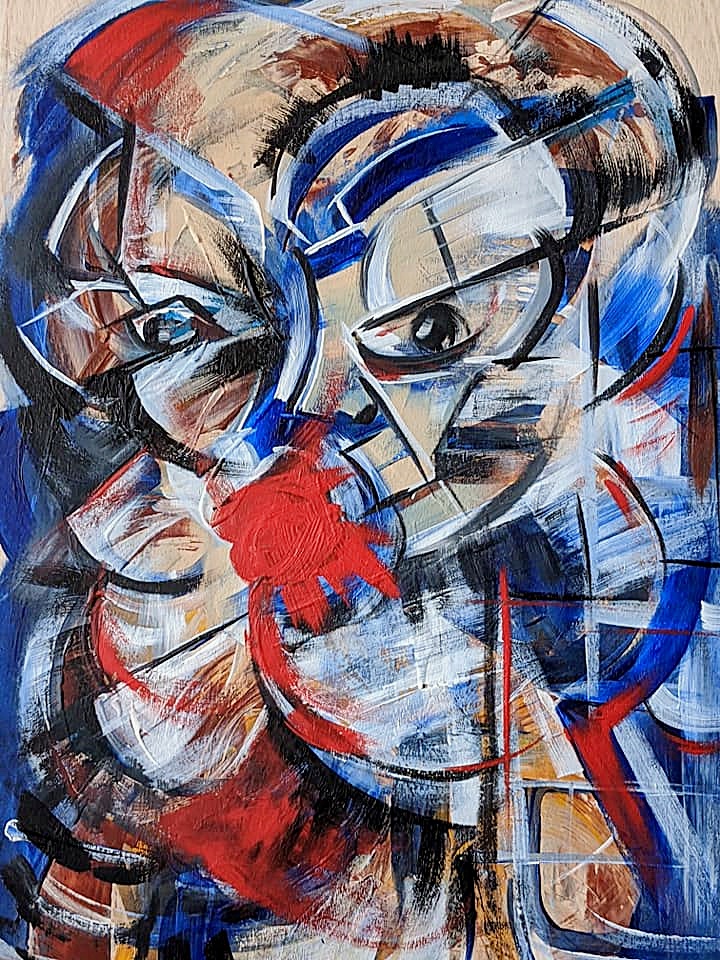
Bill de Kooning deserves special mention, on the one hand, because nobody speaks about him anymore and because of ongoing the “de Kooning-bashing. But also because my paintings are a prolegomenon (not a counter-narrative) to his disfigured depictions of Marilyn Monroe-type of women, in particular the teeth: Where else in the world is the business of smiling taken so seriously as in the USA? My series of chopped-up disfigured ladies, “Mutilated Madonnas,” are homage and homologous to his.
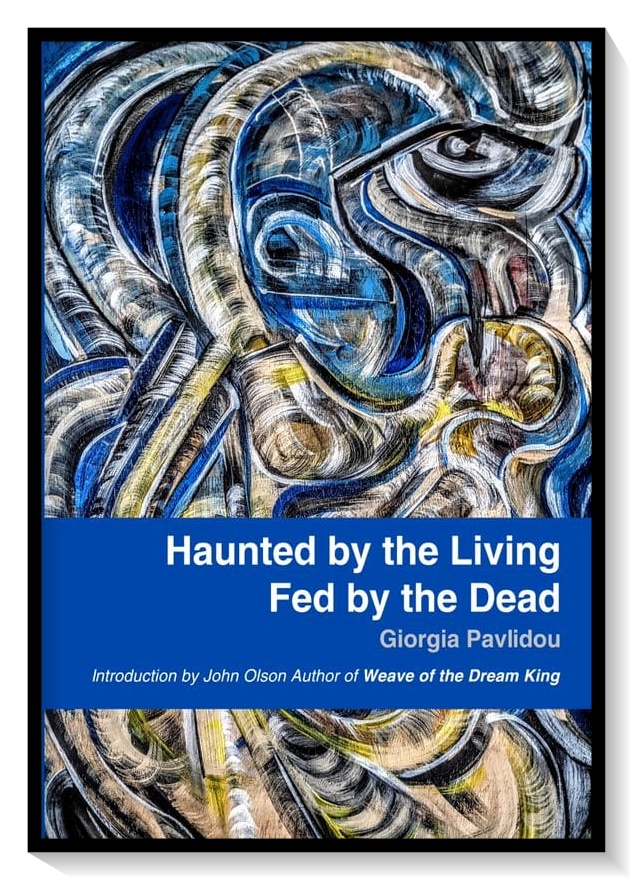
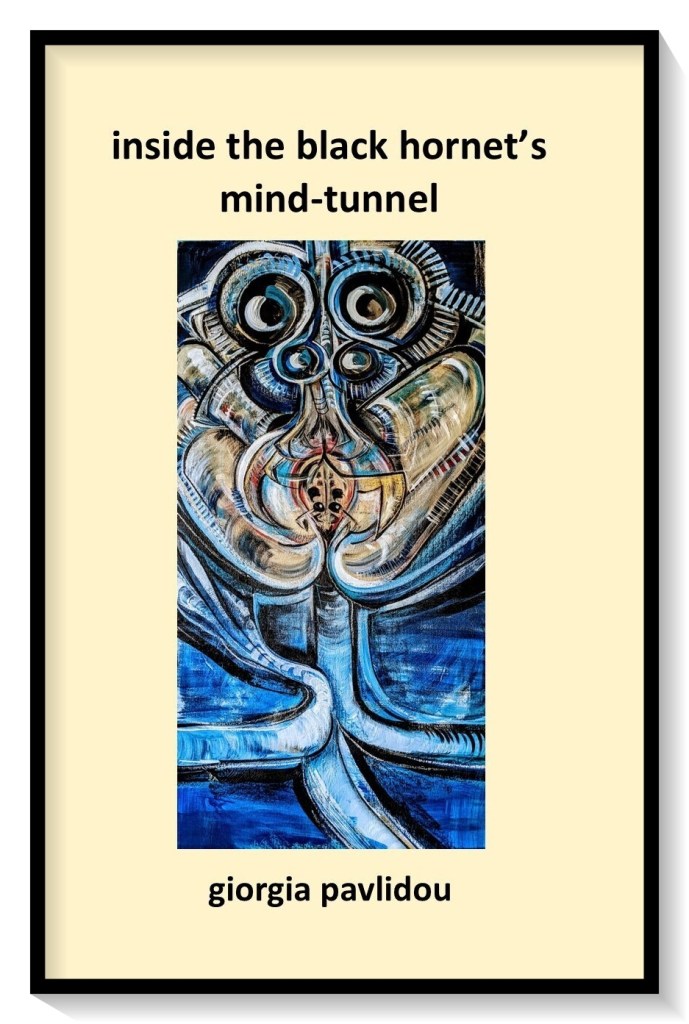
This is intense work. It’s incandescent. It’ll catch your eyes on fire. Burn your brain down. Giorgia Pavlidou has managed to make anguish appear beautiful. And sexy. Artaud is the tutelary spirit of this work. The anguish is real and the words have the taste and smell of the netherworld in its black gown of sibilant pupa. This is language with a biology; it writhes, hisses, and propagates by glossolalic impregnation. Reading these poems is an immersive experience. Here we find madness, anguish, erotica and Rabelaisian humor welded and wed to a language full of “lexical tentacles” and “fire dressed in fire.” It gets under your skin, this speech. These strangely intelligent & autonomous words, manic as wasps in a vessel of glass.
—John Olson
A pyrotechnics of lingual essence, Giorgia Pavlidou’s “inside the black hornet’s mind-tunnel” yields feeling through the language of the heart creating darkened constellations that rivet the inner eye all the while whirling as an estranged yet organic imaginal terrain.
—Will Alexander
Giorgia Pavlidou
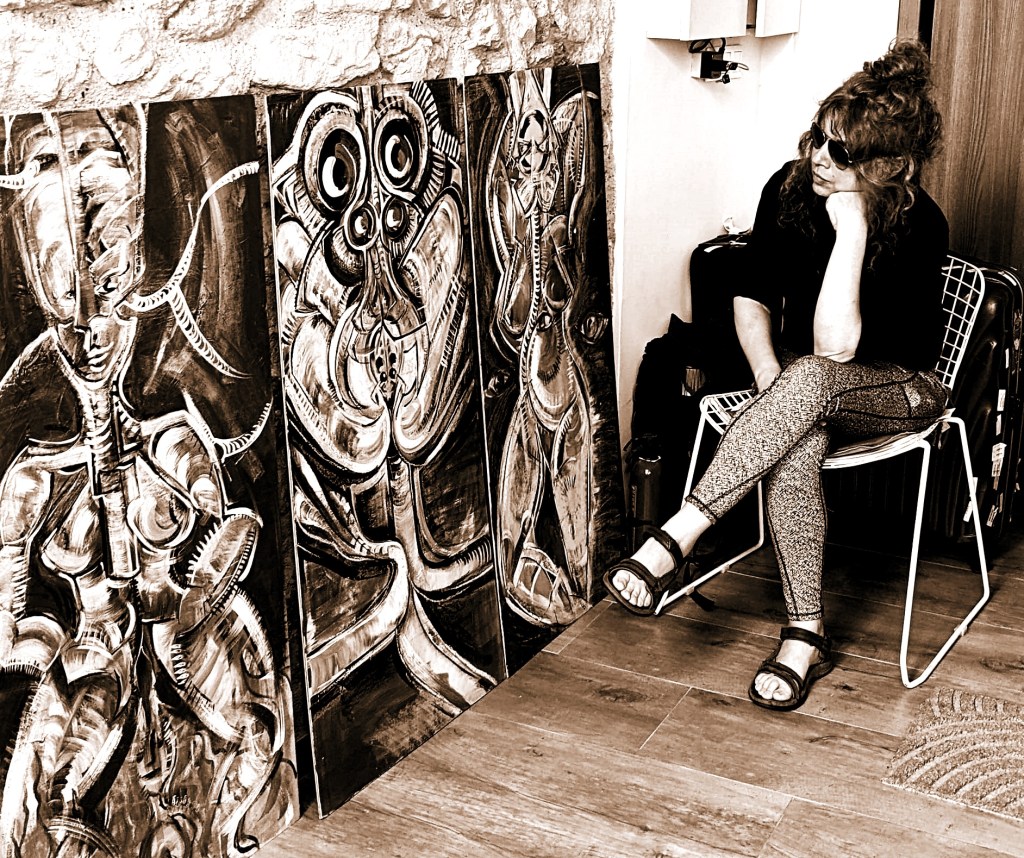
Giorgia Pavlidou is an American writer and painter intermittently living in Greece and the US. Her work recently appeared or is forthcoming in Caesura, Maintenant Dada Journal, Puerto del Sol, Clockwise Cat, Ocotillo Review, Strukterriss Magazine, Entropy and Sun & Moon Magazine. She’s an editor of SULΦUR. Additionally, Trainwreck Press launched her chapbook ‘inside the black hornet’s mind-tunnel’ in 2021, and Anvil Tongue Books her full length book of poems and paintings, ‘Haunted by the Living – Fed by the Dead’ in May 2022



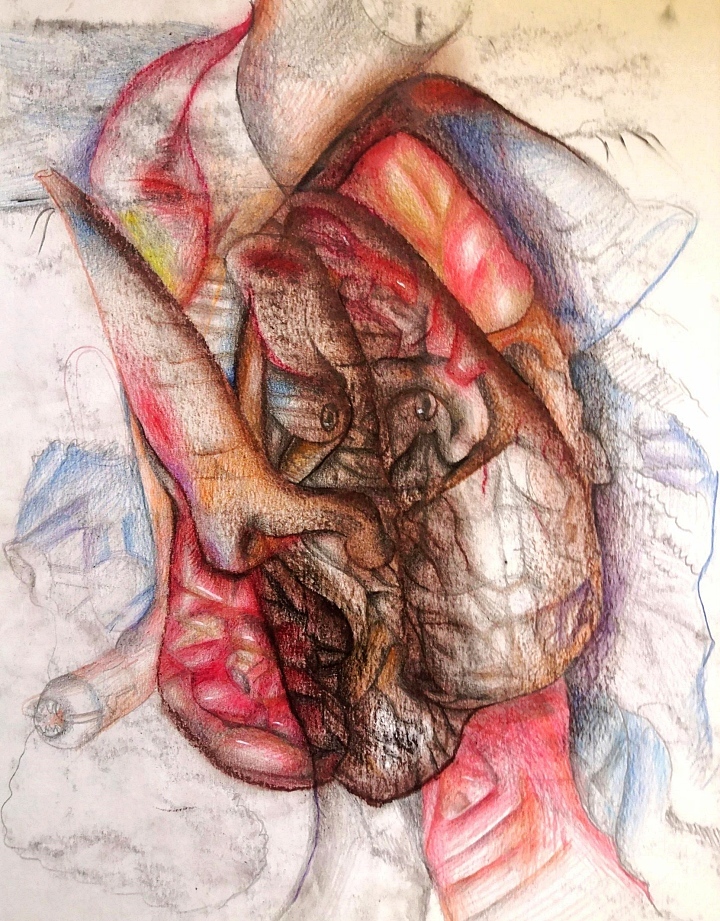
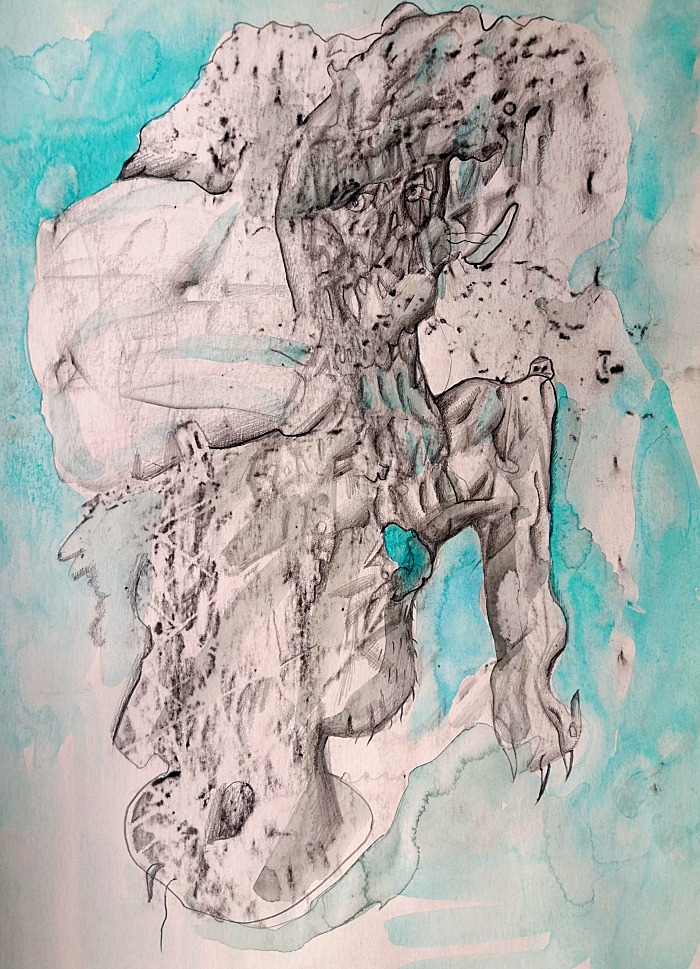
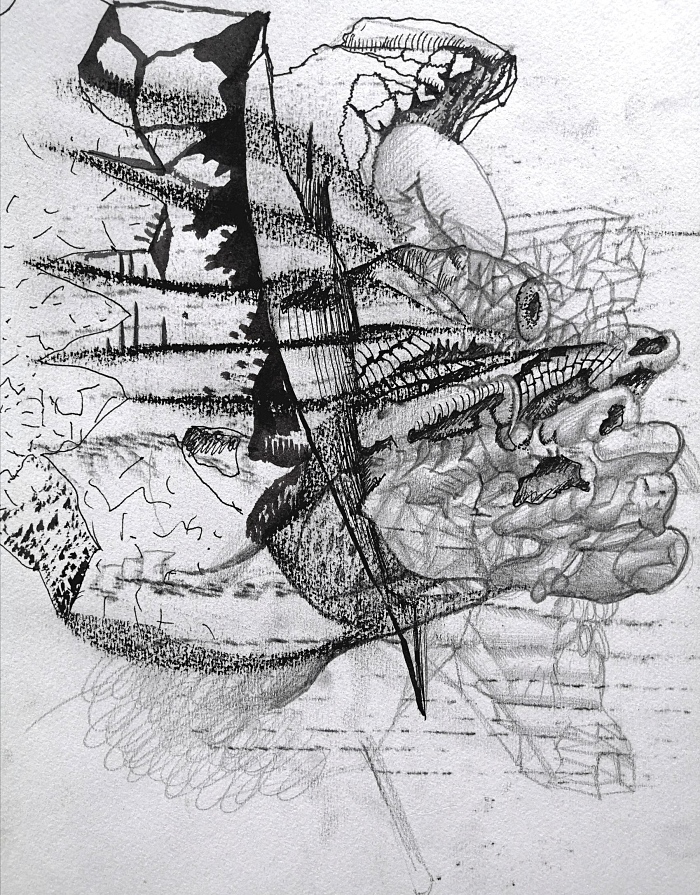
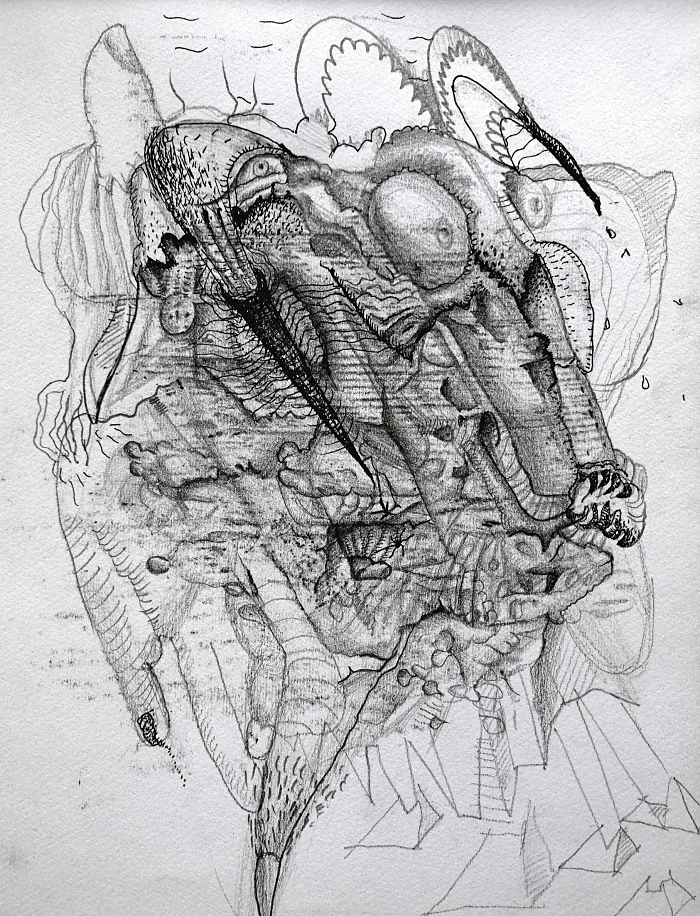
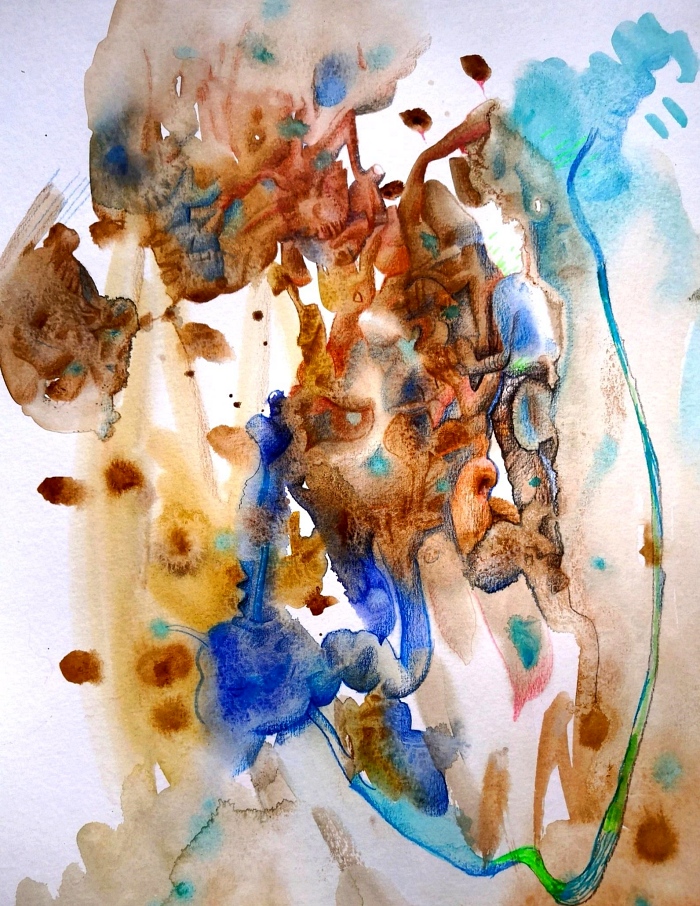
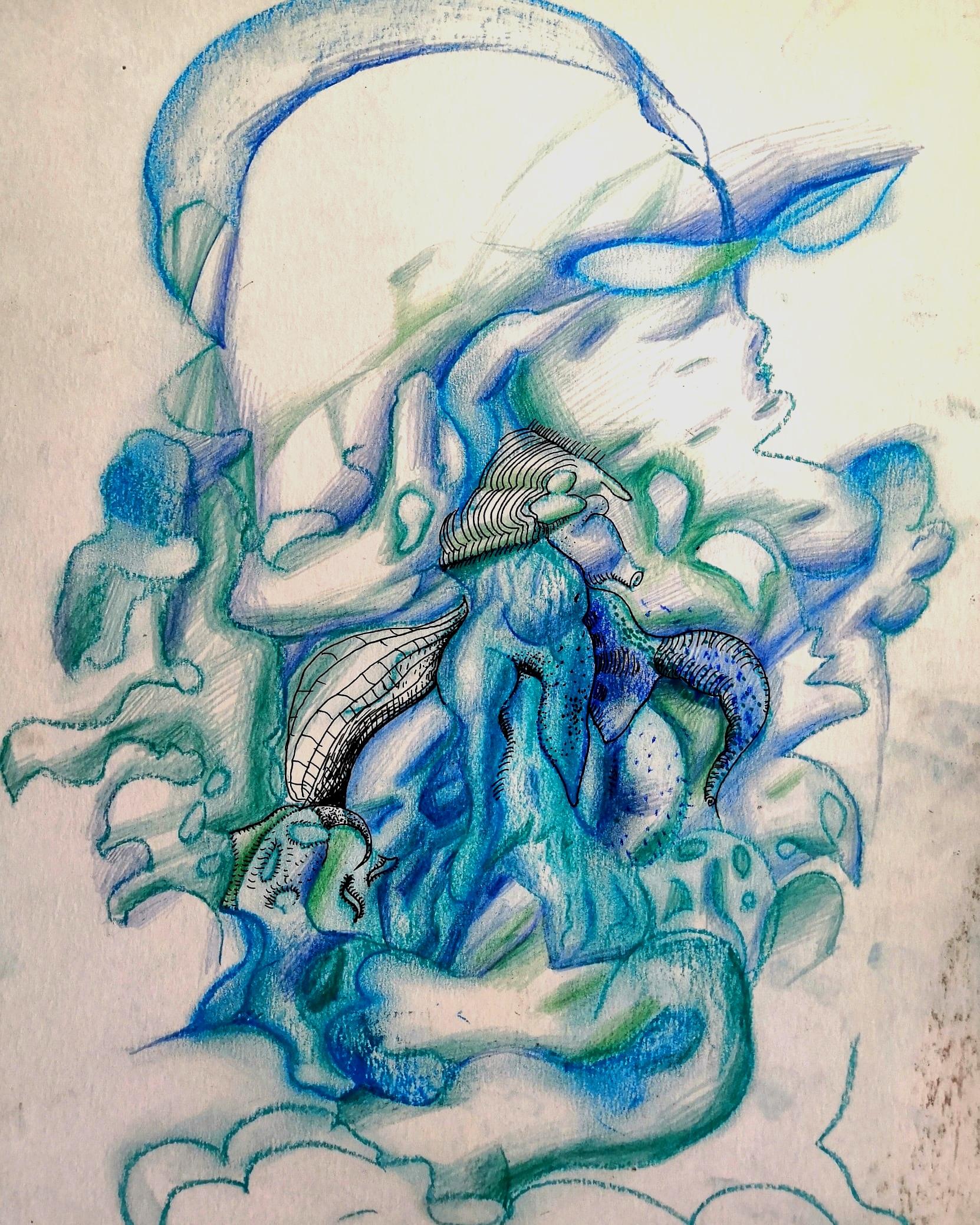
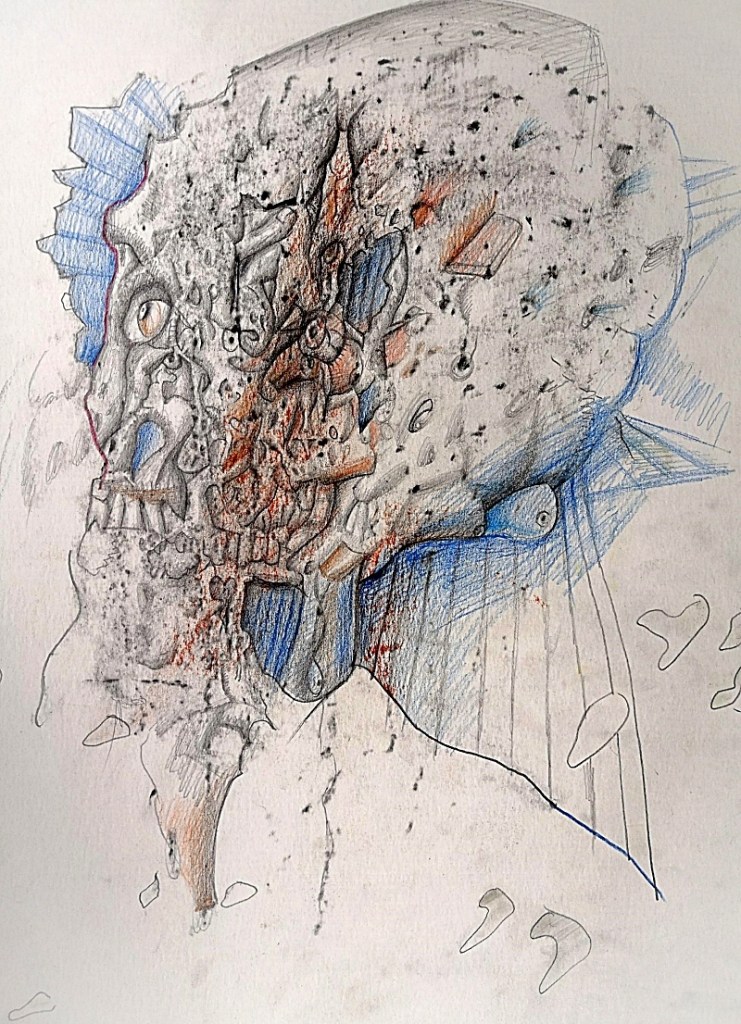
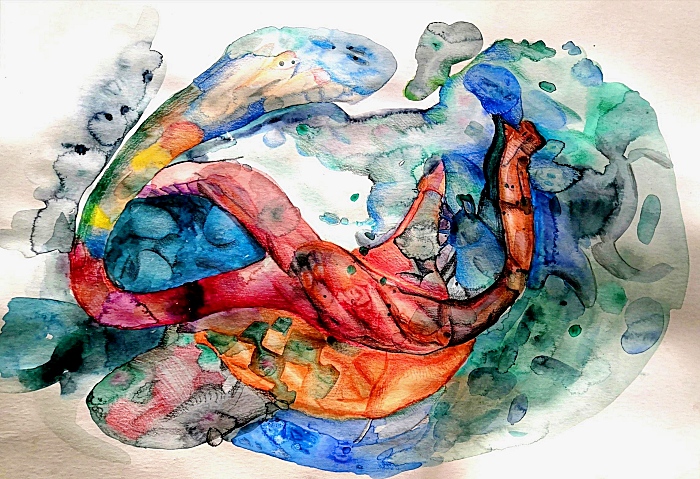

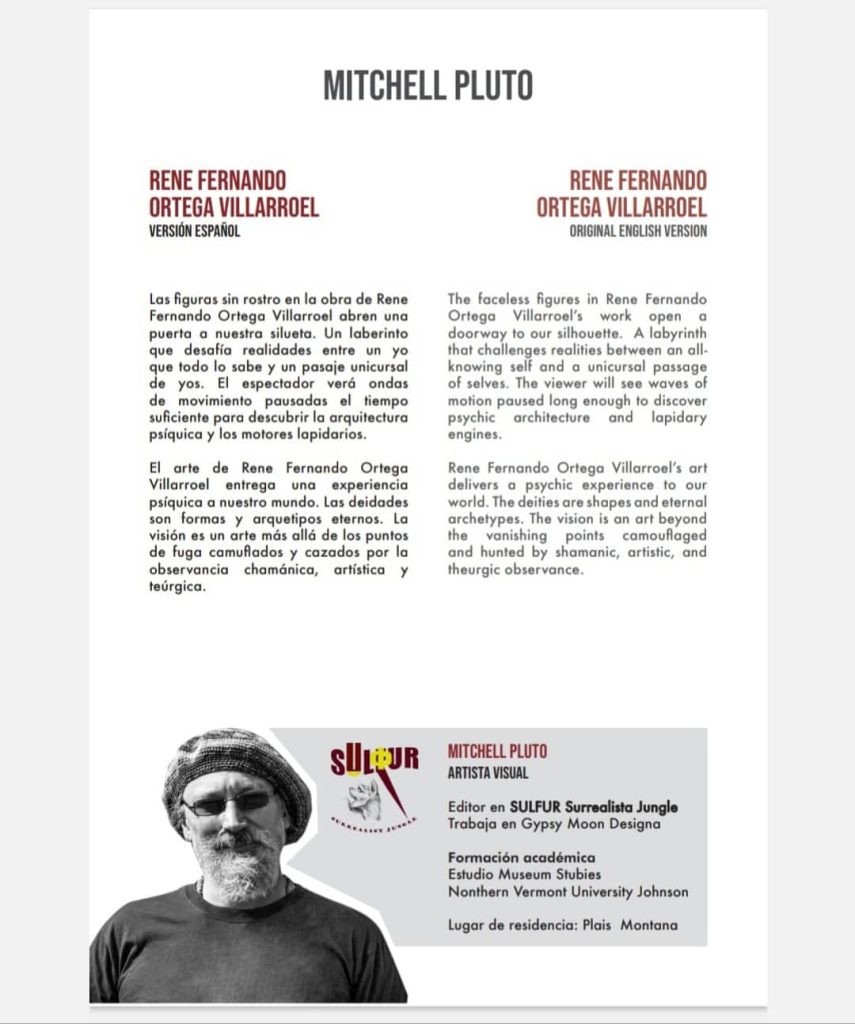





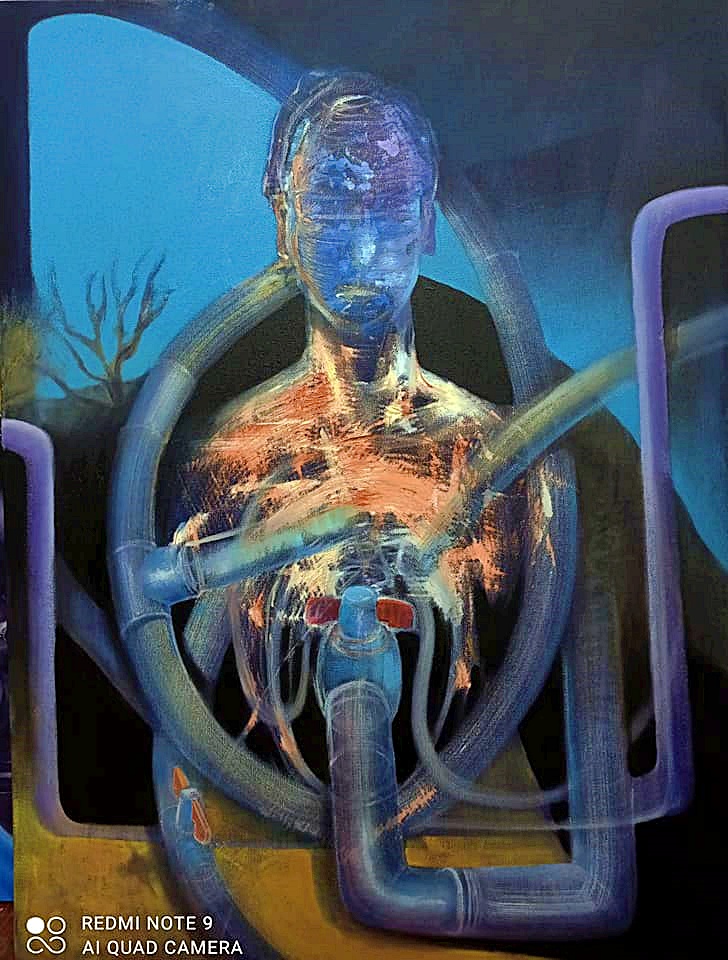
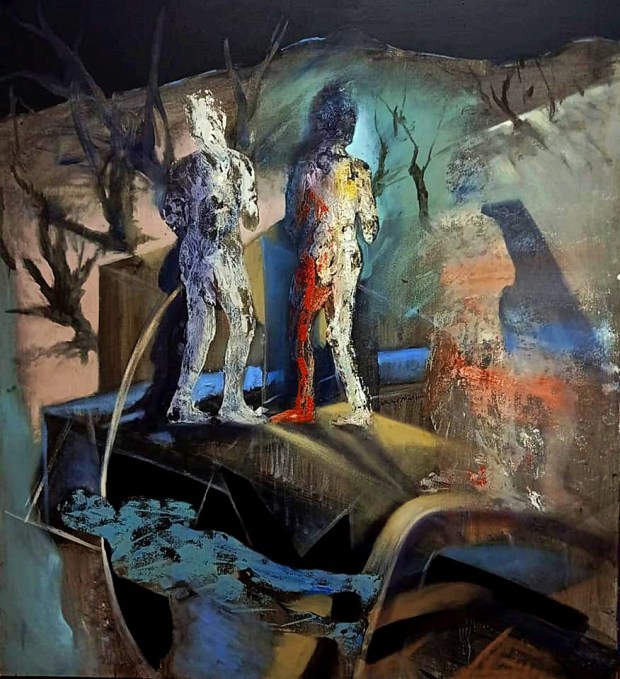

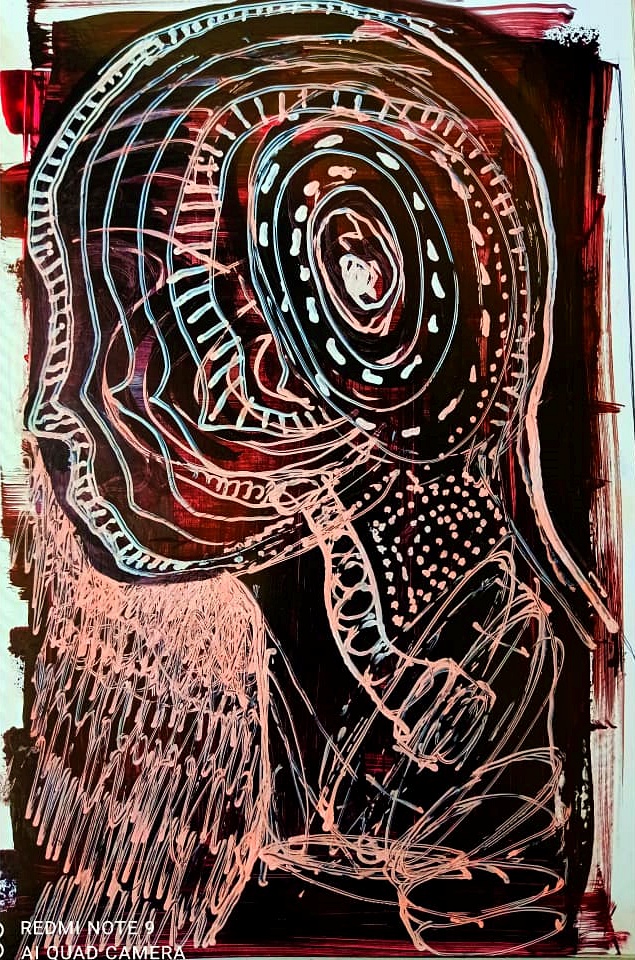
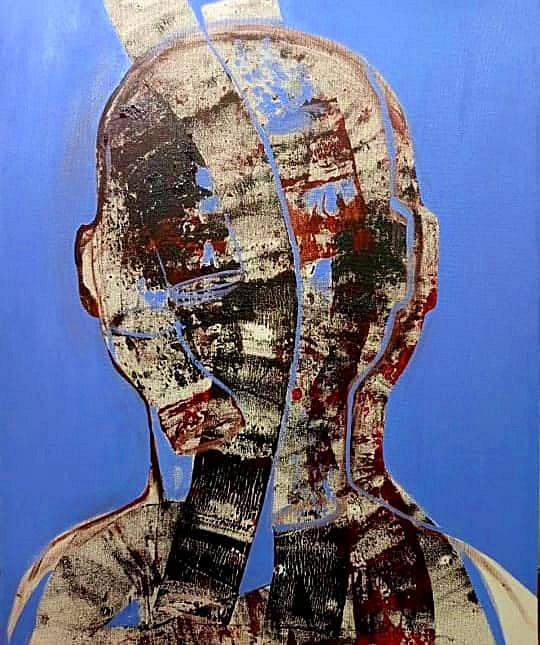

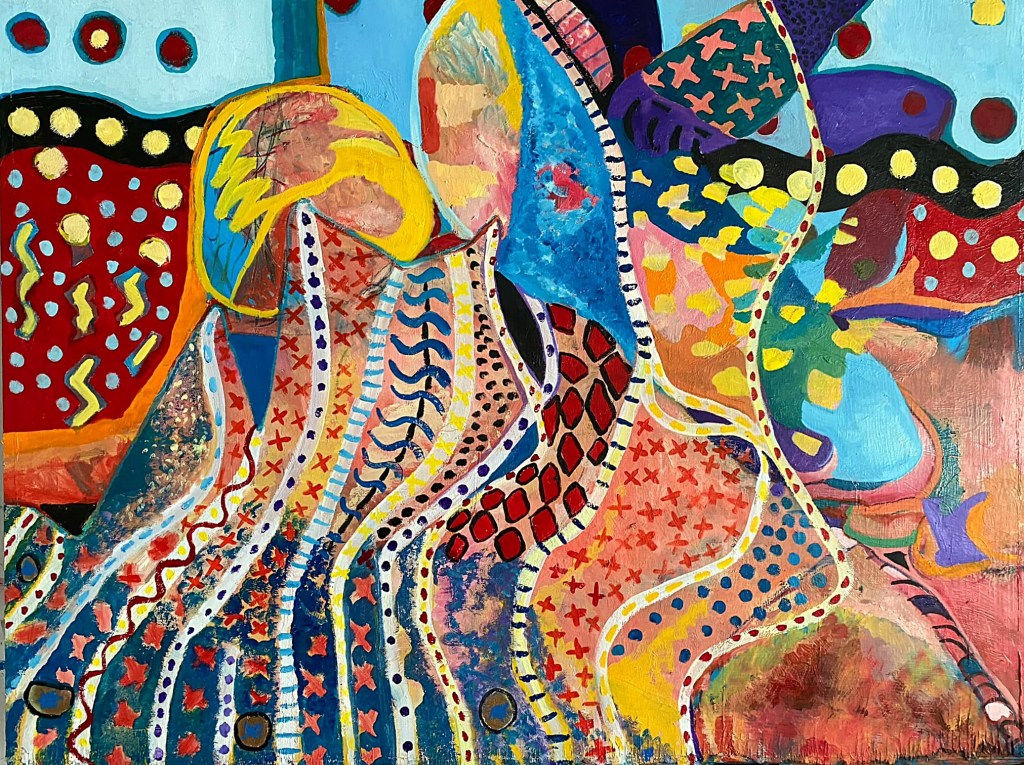
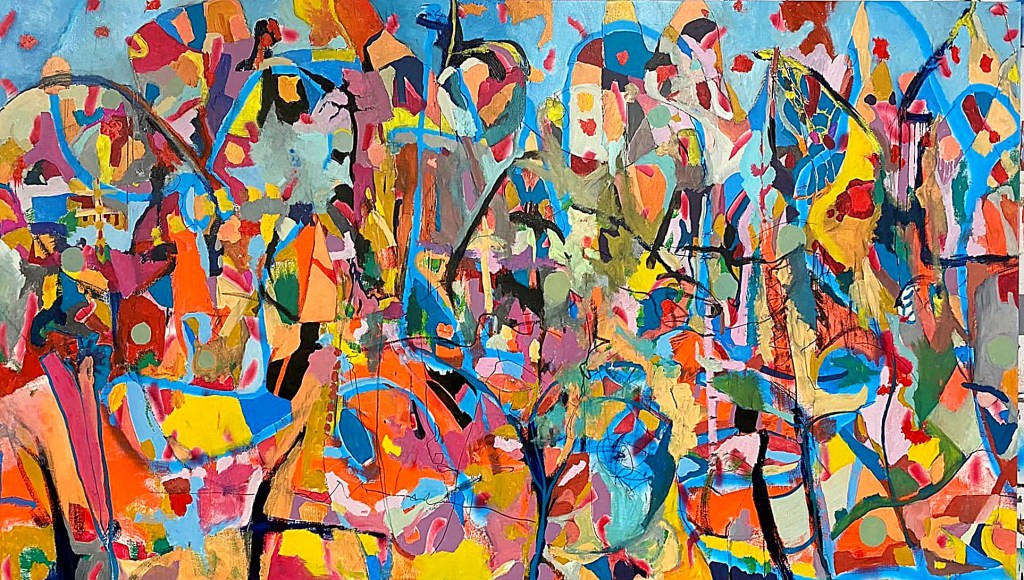
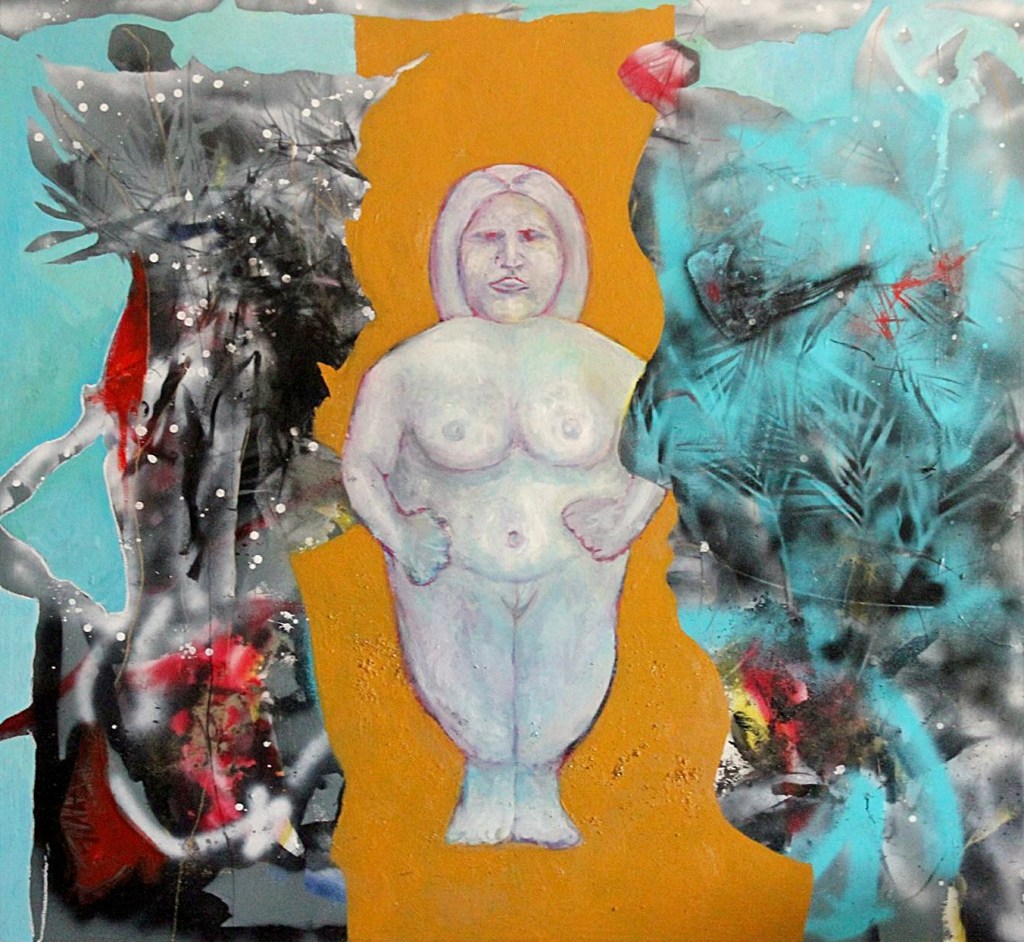
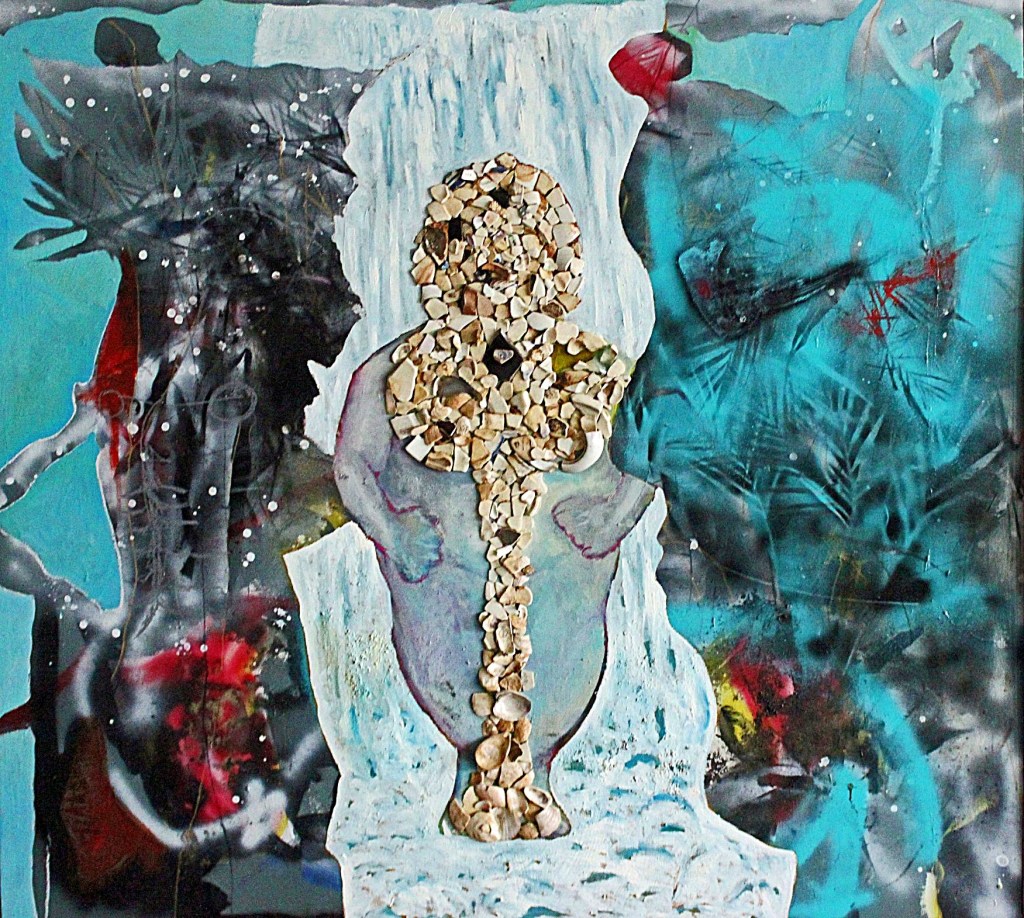









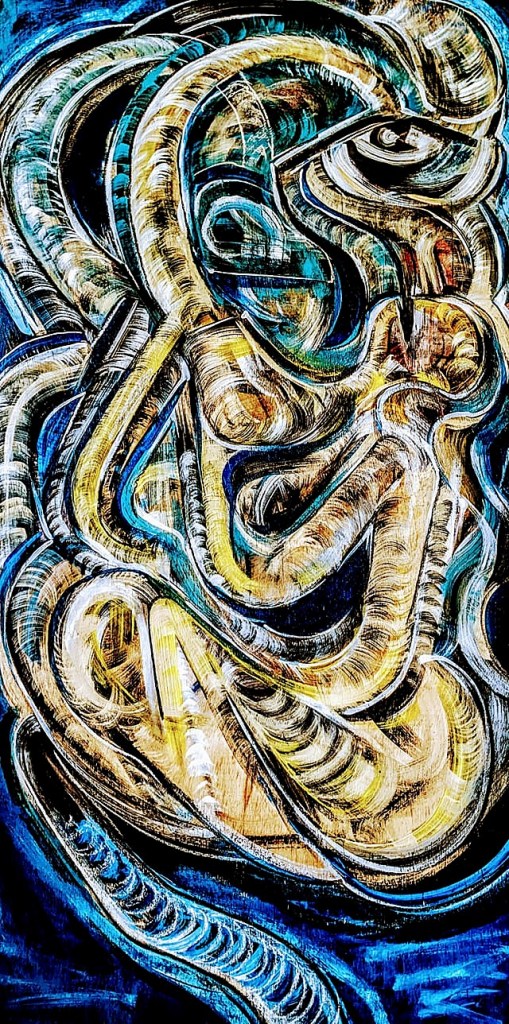
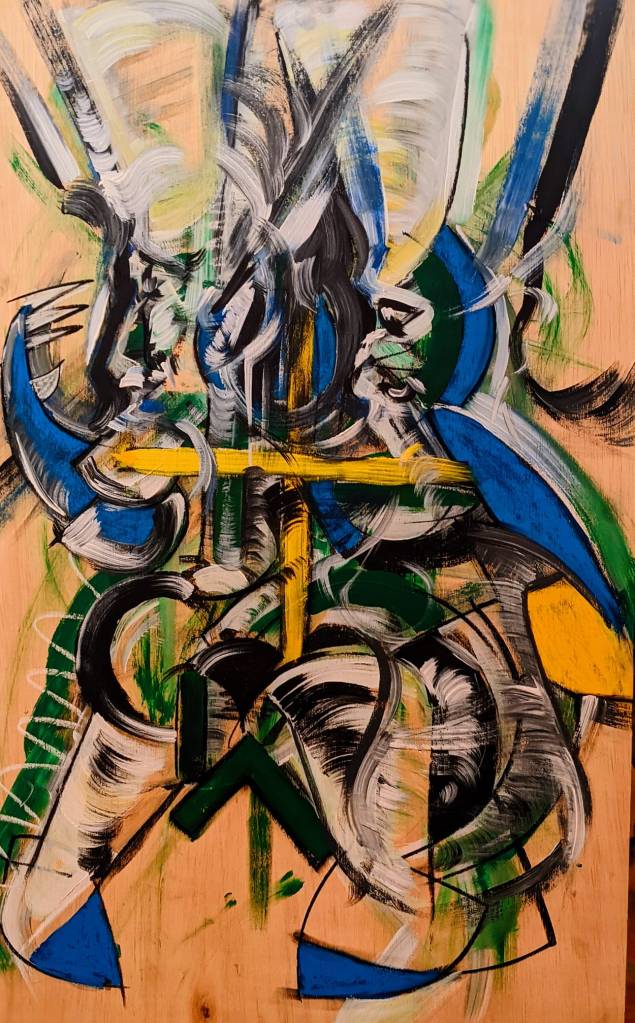

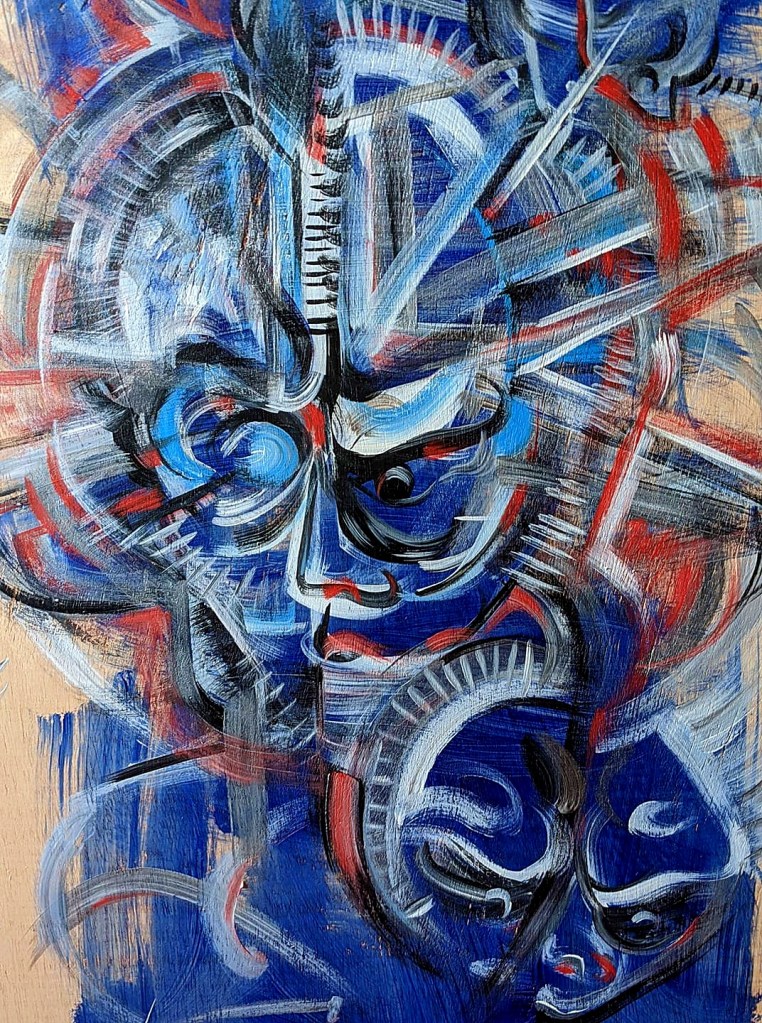
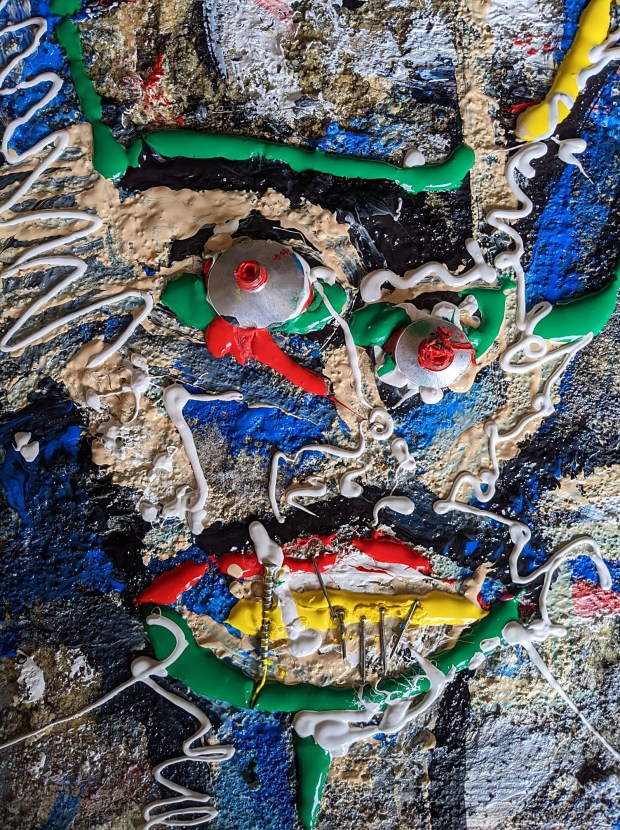
 Mitchell Pluto