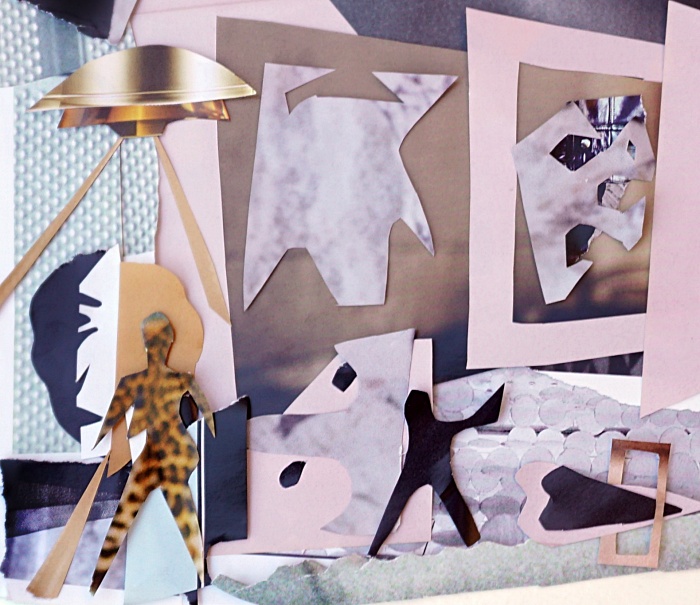
Beneath the Antler Moon by Mitchell Pluto

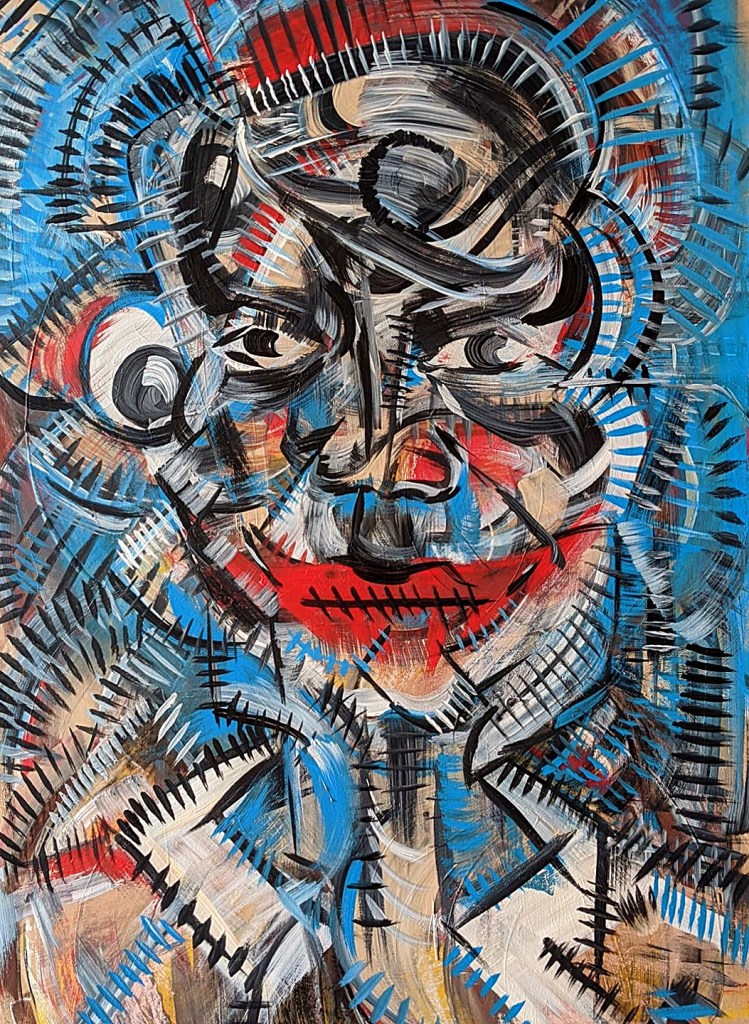
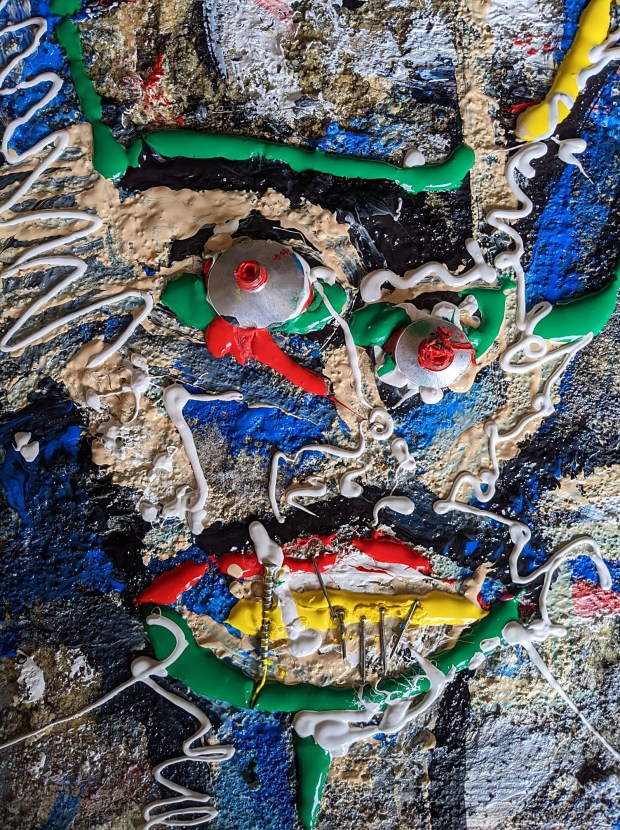
Cell Phone UFO abducting the animistic brain/collage/Mitchell Pluto/2026

Fiction written by ©Mitchell Pluto 2026

Over 11 million people tuned into Mark Burla’s podcast, Under the Light. On July 29, 2026, his most popular episode was with a psychonaut and two government officials. The time was 4:00 PM MT.

Joseph, the astrologer, was on the radio in the background and said, “Hey, it’s a full moon in Aquarius, and we’ve got a cool Sun-Jupiter conjunction in Leo, along with Pluto, Neptune, and Uranus all in sync.”

Burla recorded in his cool, air-conditioned studio while the Taos Mesa swelters in 109-degree heat. From Burla’s window, you could see the dry riverbed of the Rio Grande.

Burla’s podcast comes from New Mexico, also known as the Land of Enchantment.

“Under the Light” is a big hit with people who like occult, mystical topics and urban folklore vibes.

Listeners often recall the interview featuring Daniel Saltman, a former member of the All-domain Anomaly Resolution Office.

“You can totally lose yourself in a story,” Saltman said seriously.

According to Saltman, a large amount of classified data was fictional.

“Spreading lies can be a way to dodge actual problems and politics. Government research shows that odd experiences associated with traumatic memories can create false beliefs. Life’s traumas often lead people to develop coping mechanisms, with some forming extreme ideologies to manage their pain. Other people simply learn to move on.”

Burla thought back to the 1980s, “Yes, I recall when people believed aliens were haunting their thoughts while examining their bodies. But these days, everyone’s got a phone that follows them.”

“To put it simply,” Saltman explained, “our inner thoughts and feelings mold our outer experiences, forming a mental map that we superimpose onto reality. We want to make our fantasies real, to prop up our egos, making us feel special.”

Saltman took a break to drink some coffee.

“The Greek poet Hesiod provides another perspective on the animistic mindset. He’s famous for his poem Theogony, where he introduced the 12 Olympian gods.”

Burla wanted to know more. “What happened?”

“Mount Helicon was where Hesiod had a close encounter of the third kind with the Muses. Through this visitation, he gained poetic talent and divine insight. Each new generation after him put its spin on his tale. Plus, we’ve got ancient Greek theater, featuring amazing illusions such as a crane that lifts actors into the sky. You know, Magic, the reality differs from what you’re seeing.”

In a pic Burla shared, a crane was lifting someone dressed as a god above a crowd.

Burla inquired, “Your thoughts on Christianity?”

“Religion retells a story through its practices, much like Hesiod’s writings, making it more tangible,” Saltman clarified.

“The church has played a key role in Constantine’s empire for gathering information since the First Council of Nicaea. From another perspective, it means employing Christianity to secure political stability. Presently, supernatural concepts occupy people’s thoughts, much like unidentified flying objects.”

Burla nodded, “Tell me something we think is true, but it’s actually not.”

Saltman scratched his chin, “What’s there to say… something your viewers will understand.” His eyes widened as he exclaimed, “I know, the government declassified this… A CIA analyst named Aldrich Ames had a career from 1962 to 1994. Soviet intelligence hired him in 1985 to provide classified U.S. intelligence to them. It was a mystery to us how Russia had gained knowledge of our confidential information, which led us to start remote viewing…using ESP to spy on the Russians. We invested heavily in political narratives throughout the ‘70s, convinced a psychic war was underway. Star Gate was a program meant to stop psychic Russian spies, but it turned out to be Ames the whole time. In ’94, they caught Ames, which led to the permanent shutdown of the Stargate Project. It’s like, things look one way, but they’re really different underneath.”

“Wow,” Burla couldn’t believe it.

He had a podcast about remote viewing a month ago, and back then he thought it was legit.

Saltman quickly intervened to ease the tension. “Speaking of remote, there are these remote-controlled aircraft that can do amazing things. We view these crafts as foreign and domestic groups engaging in espionage. Nobody gets hurt if it’s shot down, but we’re also clueless about who it is.”

Saltman leaned in and said, “For instance, we intercepted a UFO drone collecting microbes from the Great Lakes…Therefore, the ship contained non-human entities.”

Suddenly, the screen went black, and a 15-second commercial for Uranium, a new neon green energy drink, appeared and then dissolved.

According to the podcast stats, Burla’s most replayed bit started with the interview of Terrence Dodge, the guy in charge of the Advanced Aerospace Threat Identification Program.

The fade-in revealed Dodge talking, “We’ve known aliens were real and hiding out here since Roswell. While we assume they’re from the sky, they live underground and use magma chambers and the ocean to get around.”

Thinking quickly about Derinkuyu, the underground city in Turkey, Burla wondered, “Just who are these people?”

“Long ago, before Earth had a moon regulating life, ancient people like the Aryans, Eloheinu, Vril-ya, and Dero lived on Venus, Mars, and Saturn.”

Burla asked in surprise, “The Aryans?” He shook his head, a gesture of utter disbelief.

“Yes, just like Ahura Mazda and Zarathustra. The Iranians are the architects of our social structures, our spiritual beliefs, and the written word that molded our very thinking,” Dodge affirmed.

Burla projected glowing visual effects for viewers as Dodge’s voice continued to weave his explanation.

The images displayed an eye idol from Tell Brak, various depictions of the swastika, and Burla’s contemporary illustrations for The Coming Race, an 1871 science fiction novel by British politician and writer Edward Bulwer-Lytton.

“To be clear,” Dodge added, “those shapes you’re seeing that look like swastikas in history are actually propellers.”

Burla cautiously asked, “Are the aliens white?”

“They looked very pale and old, with slender features and enormous eyes. A flexible cartilage structure supports their bodies, not bones. They can also sense electrical fields from muscle movements. We call this sense electroreception. They can better understand how we defend ourselves and what goes on in our minds to keep our sense of self intact,” Dodge said.

Burla couldn’t believe it and shook his head.

Dodge rubbed his eyes and added, “It’s vital to point out that they are communists and pursue the same aim because of their shared mindset.”

Burla inquired with a hint of sarcasm, “How do they communicate?”

Dodge solemnly stated, “They can duplicate any individual’s innermost thoughts and mentally guide a person’s choices and actions. They understand our brain’s bicameral structure. Here, the Eloheinu aspect commands Abraham, through a voice, to sacrifice his son.”

Dodge paused for a second.

Burla continued his questioning, irritated, “Regarding their ethics, are they driven by humanitarianism or racism?”

“Think of them as zookeepers,” Dodge stated bluntly.

Burla’s face suddenly appeared tense.

Dodge inhaled deeply and stated, “Where there is care, love is absent.”

“They claim they put the idea of God in our heads and that we belong to them… and they also made everyone on Earth using primate genetics. This just proves they think they’re in charge of us. They support eugenics because they believe they’re the best and should be flawless.”

Burla added visuals to this interview segment, overlaying cool images on Dodge’s narration to create a visual blend. These pictures drew inspiration from Richard Sharpe Shaver, an author for Amazing Stories during the late 1940s. Shaver made some wild claims about ancient beings living in huge cave systems underground. Their technology could control minds and cause strange health issues.

Dodge referred to these health issues as “anomalous health incidents.”

Someone in Burla’s live chat, a long-time subscriber, said the tech reminded them of directed-energy weapons, like the ones they think caused Havana Syndrome. This comment snagged way over 4K positive reactions.

The screen went black, then a dog food ad began, featuring a dog in a field.

Then Burla’s face appeared again with another guest.

Mark Burla finished up by talking with Lucian Laplume, a psychonaut who penned the bestseller “Light turns into a poem.”

Burla presented a book and said, “Prepare for a 360-page adventure based on DMT researcher Lucian Laplume. He found intricate communication within light frequencies, appearing as geometric glyphs. These symbols served as time machines, guiding readers from one event to the next. The book talks about how our brains connect with art through words. Laplume’s concept resembles the Vast Active Living Intelligence System conceived by Philip K. Dick. You know, where an orgone beam of light helps clear out energy blocks and makes you feel better.”

Laplume rested his head in his hands, his elbows on the worn surface of the table. “Despite wild ideas and peculiar sights,” he murmured, “those relentless phantoms haunting me–even with them present, I found myself here, repeating this same action. I felt compelled to construct coherent sentences, as if compelled by fate,” he sighed.

Burla inquired, “Do you think unusual aerial signals are altering our brainwaves?”

“It’s just a matter of tuning it in, like this,” Laplume gestured with his hand, tracing an invisible dial in the air. “The trick is knowing which frequency to hit. And that, my friend, is the art.” He then leaned back, a satisfied glint in his eye, as if he’d just revealed the universe’s most profound secret.

”Could you elaborate on why glowing glyphs matter?”, Burla asked, smiling.

“Under the influence of DMT, gazing at a laser on a surface presents what looks like alien script, a visual fusion of various letter shapes, comparable to polyglot portmanteaus created by combining parts of letters. I call it Unidentified Cosmogram Permanence.”

“What’s that?” Burla asked.

“Recollection of numbers and letters is possible without sight, yet thought visualizes light for remembrance. Modulation alters the functionality of a light source. It alters the light wave’s phase. This encodes stable information. The light is like a dancer, whose poses shift to convey a story that stays put. Geometric shapes seem to float within the story. It’s possible, we believe, that these shapes mirror our feelings and intentions, much like a bond with numerical concepts.”

Burla’s impatience was clear as he questioned, “What in the world is this agency enclosed in light?”

Laplume in a sympathetic voice, “I’m struggling to explain it, even to myself. My understanding of this relies on a comparison to James Joyce’s experimental work, Finnegans Wake. Joyce’s language acts as a self-sufficient, living linguistic system that induces synchronicity in the reader as a side effect. You don’t notice it while reading, but it sticks with you later. Meaningful coincidences appear twenty minutes after you read it, aligning your thoughts with your surroundings. Just as you envisioned an idea, it appears. It’s like the symbol went straight from your eye to your brain. Although we routinely think in words, this cosmogram invasion seems to modify the very language that governs our comprehension, which contains our perception.”

“What does this imply for future events?”, Burla asked.

“My understanding is that it’s about rethinking our whole mental architecture. It’s like our inner programming is shifting, making us see things in a new light with fresh ideas. When it all comes together, your inner self transforms, and your surroundings mirror that shift. If we had more time, we might figure some things out, but we might never know where the cosmogram came from or learn more about it. We’re greedy for knowledge, but it’s impossible to get it all. Guessing and being incorrect may somewhat increase our understanding as humans, but it won’t ever lead to complete enlightenment.”

Burla replied with a warm smile and a nod, “We have arrived at the Zen point, the place where fullness becomes emptiness. It’s been a pleasure having you, Lucien Laplume.”

Burla’s gaze moved across the paper on his desk as he read aloud.

This morning while reading, a question that came to mind struck me: “Do you use bitcoin?”

Bitcoin’s been on my radar lately. At first, its technology and potential were a bit fuzzy. Turns out, the deeper I dug, the more I saw just how amazingly practical it is. The ease with which we can now send, store, and utilize digital assets is revolutionary.

This is exactly why the Fedit app excites me so much. This thing is a lifesaver for getting and keeping track of those digital coins. Sending money with the Fedit App is super fast, just like electricity!

It’s super easy to use, so even if you’re new to crypto, you can totally figure out how to get around.

We’re excited to announce a special offer for a limited time to celebrate the launch and encourage people to jump in. You’ll get 100 free credits in your mobile wallet if you sign up for the Fed App today. This is a chance to discover how easy and powerful the Fed App is.

We think the Fed App and bitcoin’s growth are a big step forward for money tech. We hope you’ll check out this chance and join us in stepping into the future of digital money and data centers.

Burla grinned, saying, “If my content appealed to you, kindly hit the like button and subscribe to my channel.”
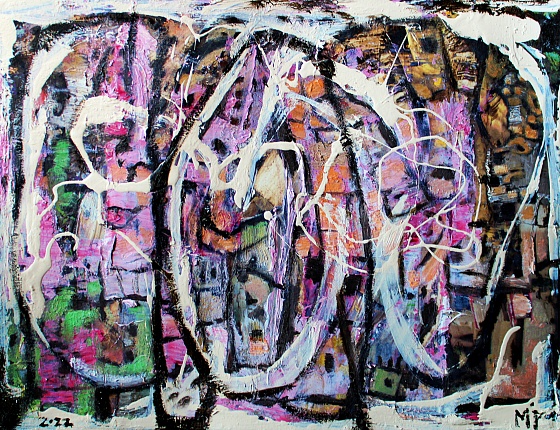
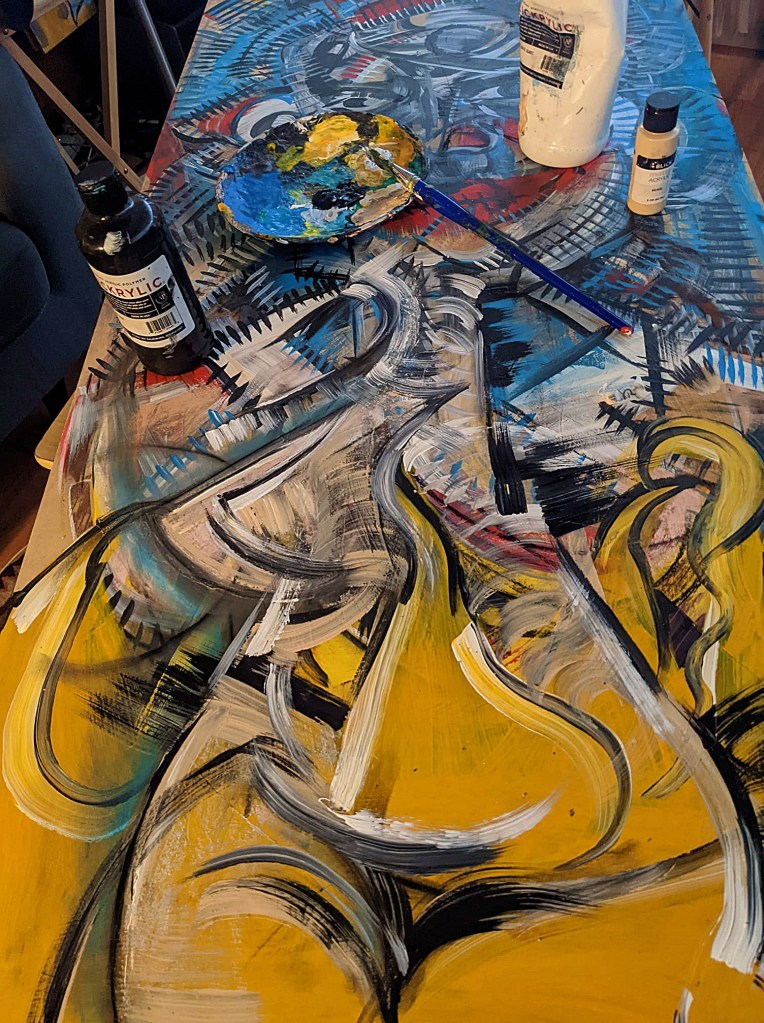
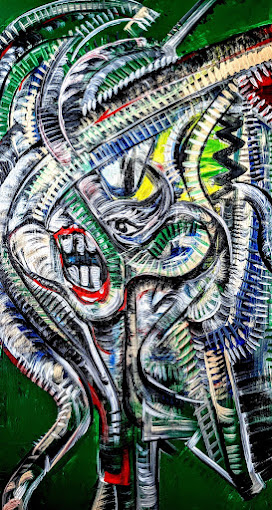
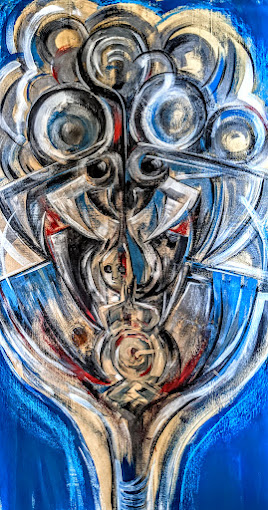
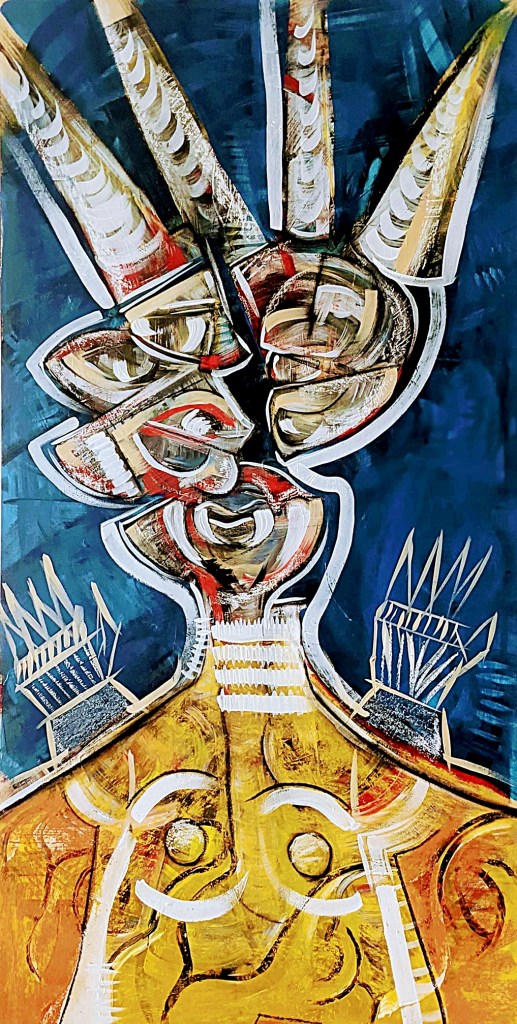
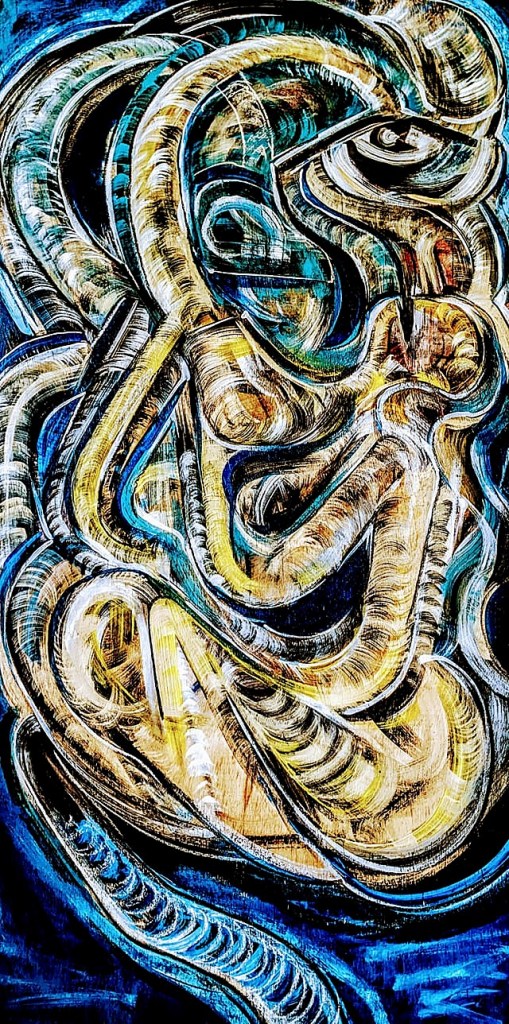
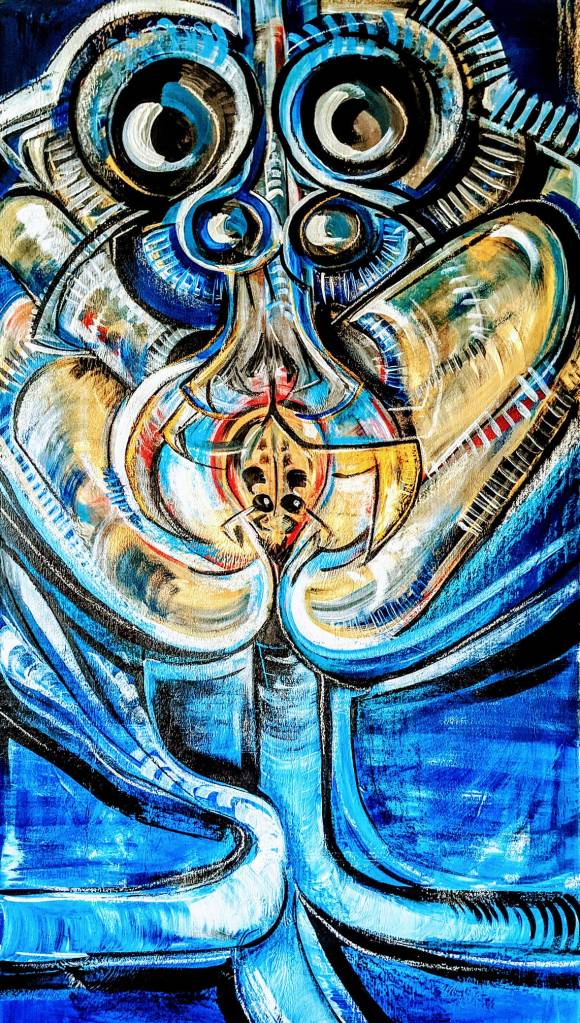
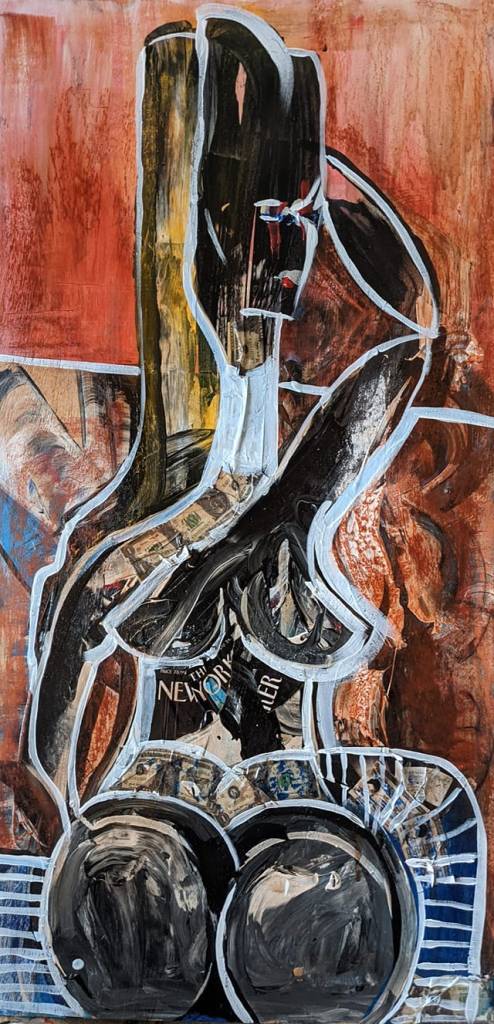
cultivation phases of the basal ganglia and paleomammalian soul

the psychic robot, how our animal selves passed through the portions of different brain territories. the snakes, the monkey scribe, and now the circuit board advisory city-state. clay tablets as a big golem, ideas as ghosts informing the brain

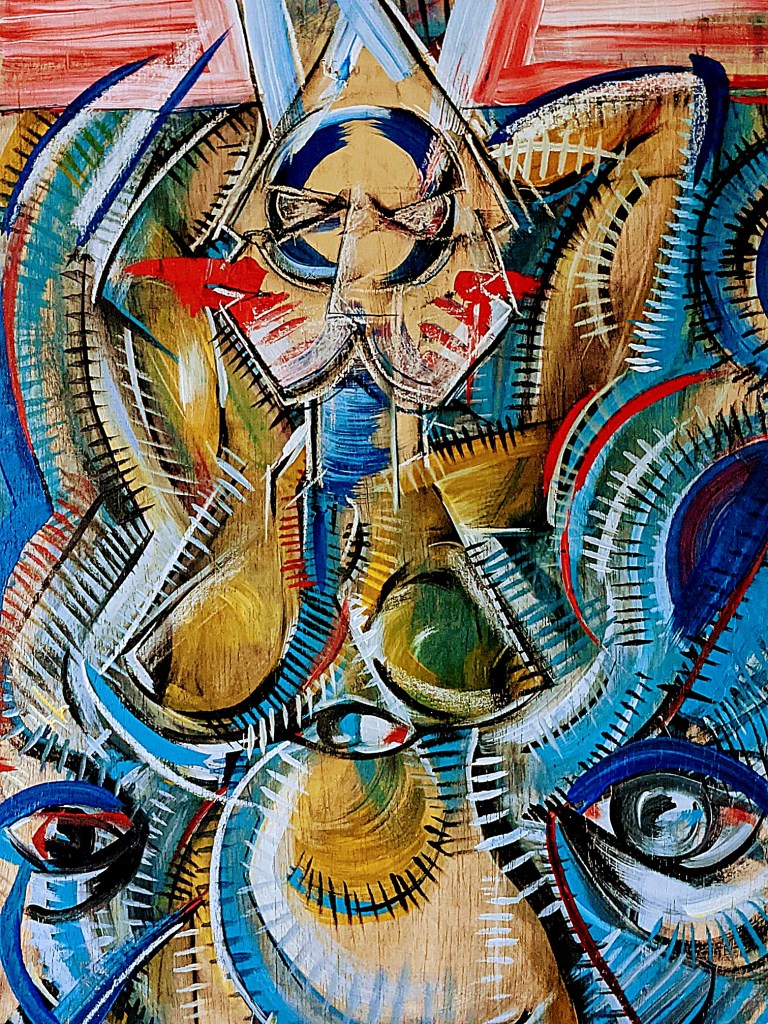
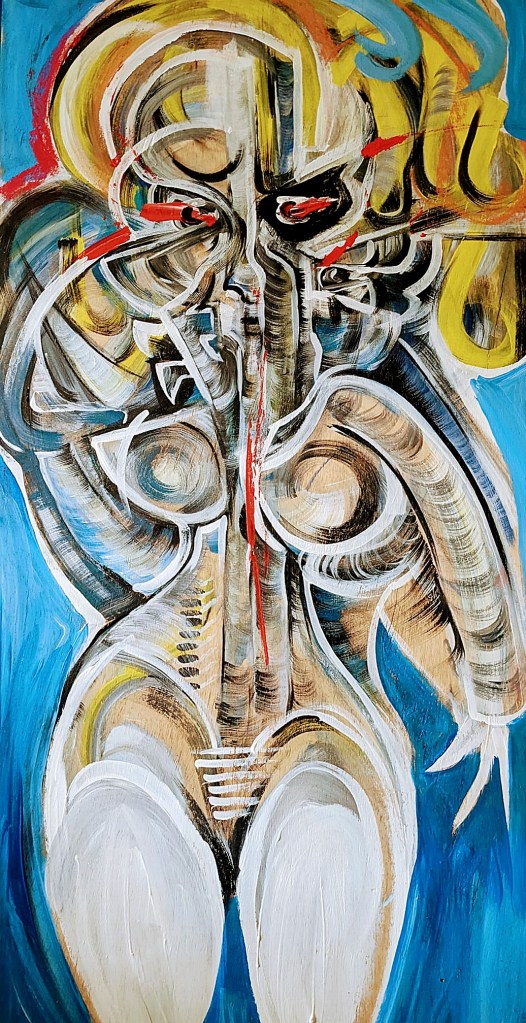
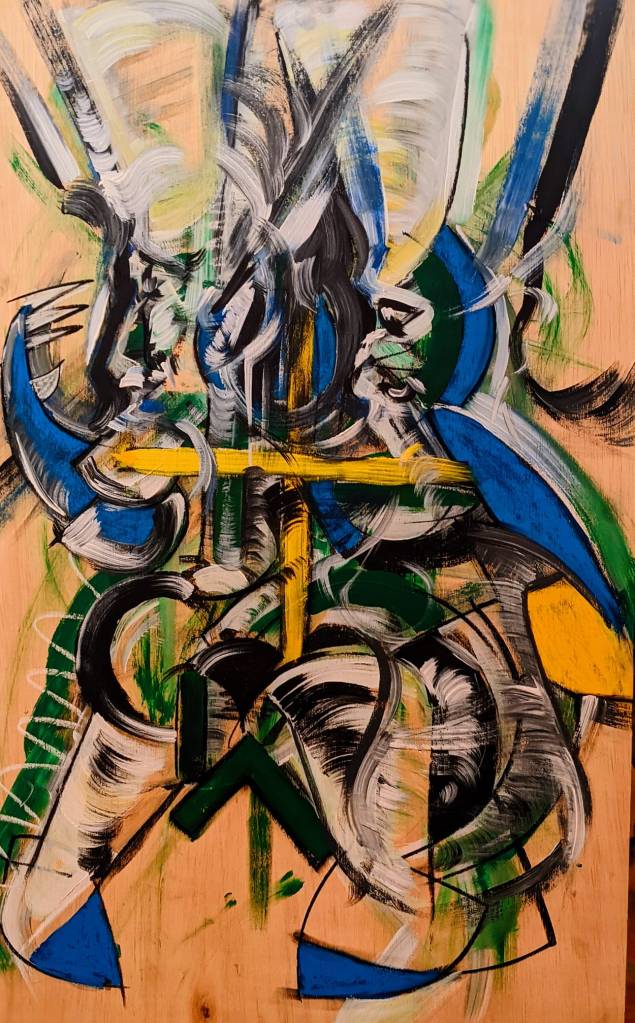
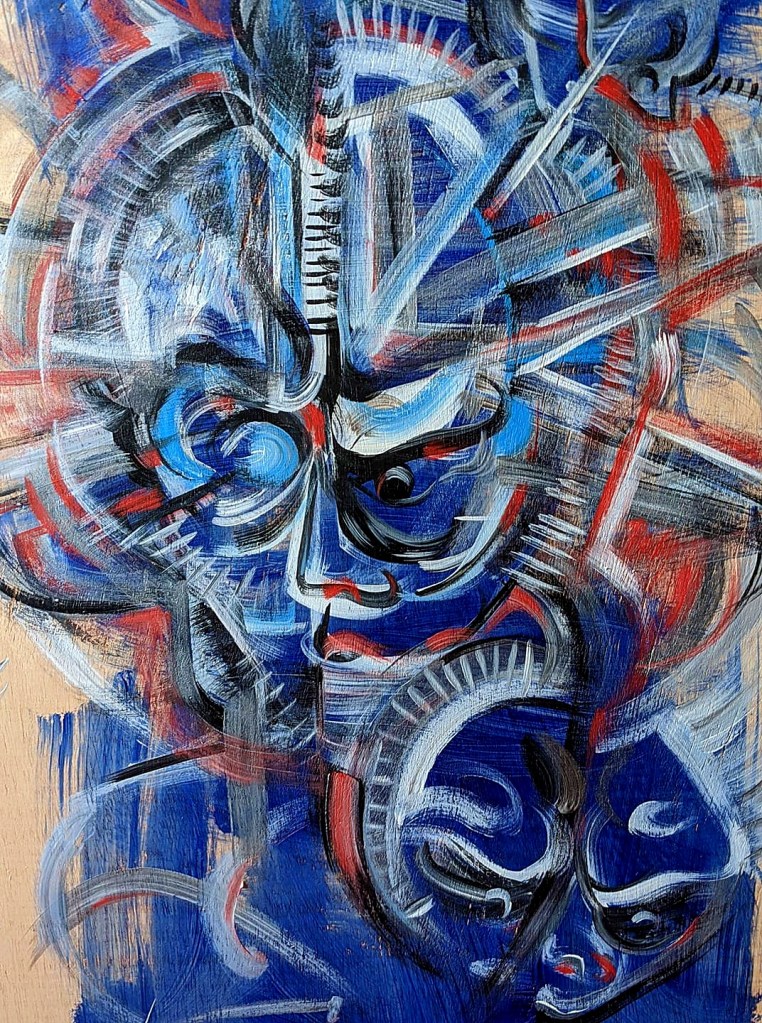
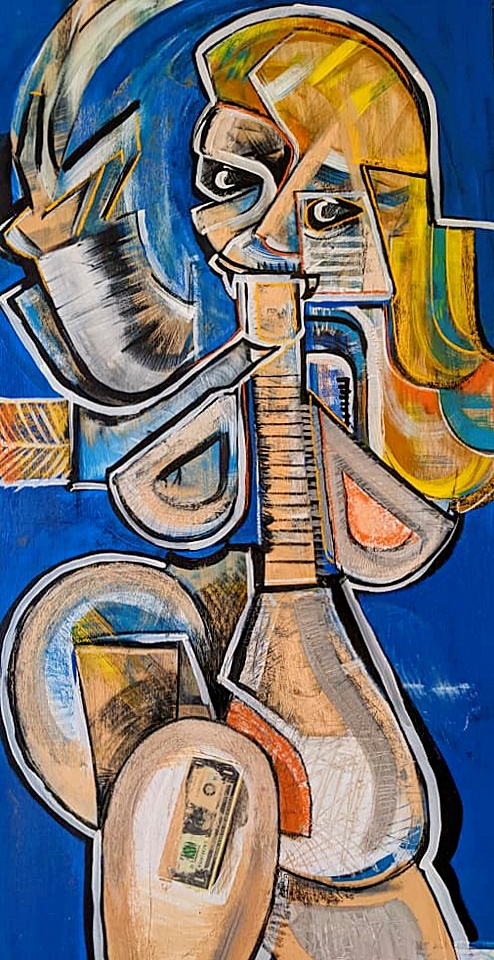
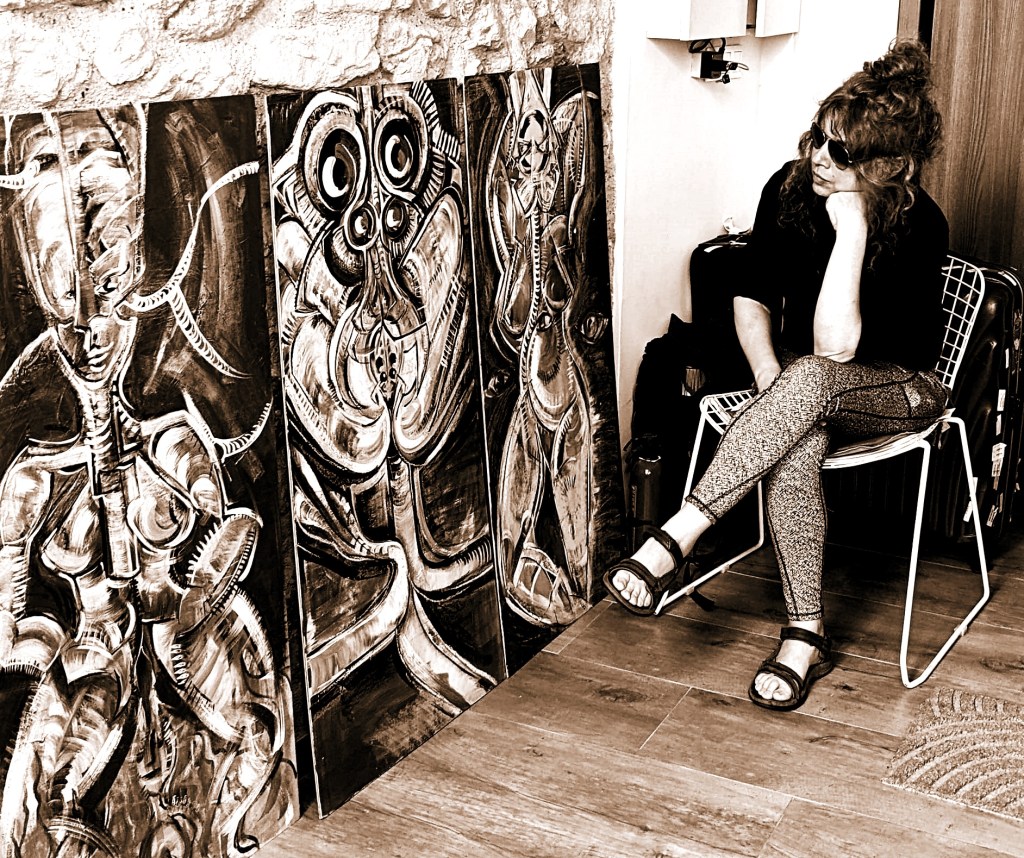
Languaged, Body Synthetic by Giorgia Pavlidou

How would you describe your painting process and your associative relationship between concepts, events, or mental states of the subconscious? Is there a link between self-hypnosis and inspiration? 

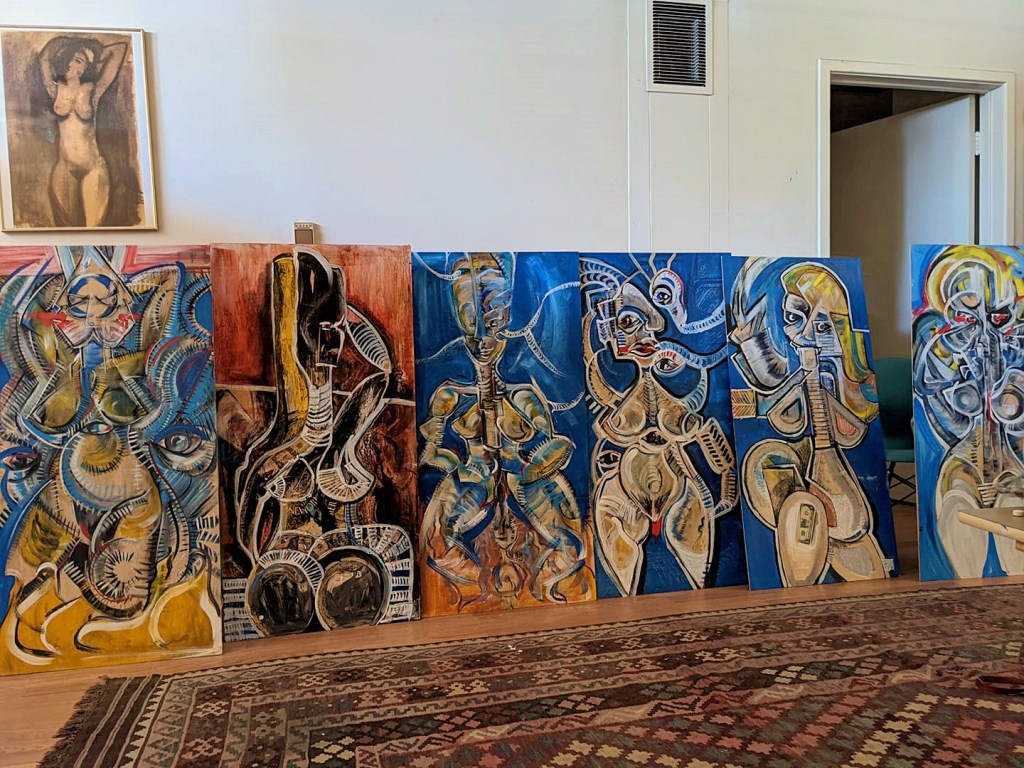
Artists, writers, and poets such as Garcia Lorca, Roberto Matta, Henri Michaux, and even Anais Nin have inspired me to paint. Language, for me, comes first, but the visual can support the verbal. I paint as if I’m composing poetry.

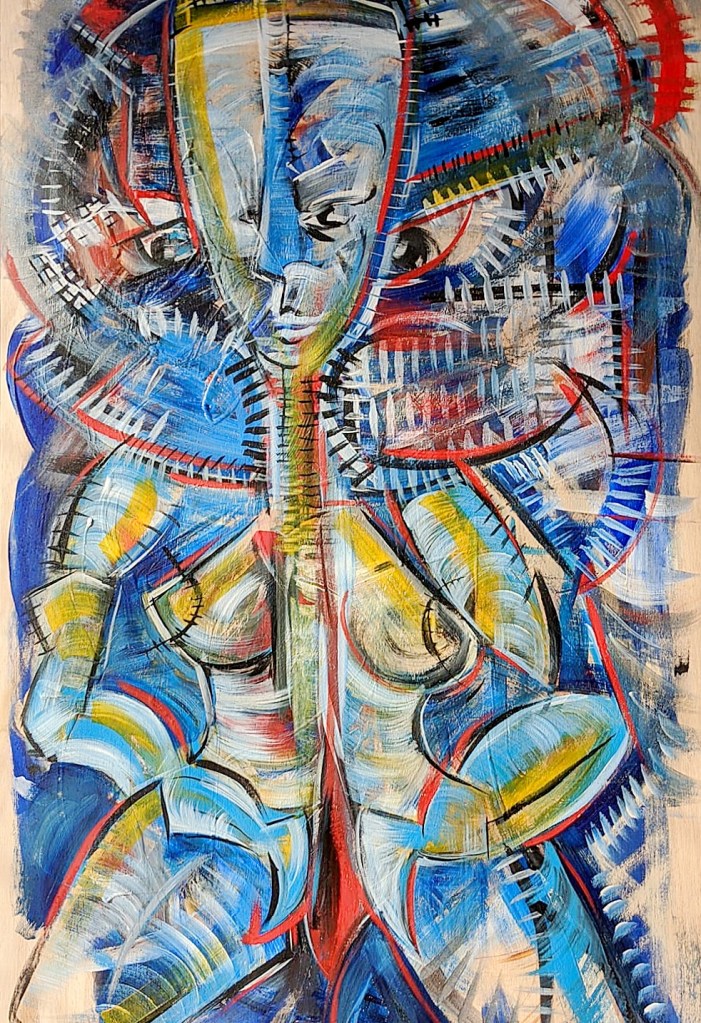
Automatism or improvisation is the starting point – bebop – but I’ve realized that the contours of a, often dismembered and re-stitched, female body appears repetitively in my mind’s eye: think Mary Shelly. This flickering of fragmented body parts leaves deposits on the canvas/my mind. There’s something about the human body that truly fascinates me. This fascination isn’t deliberate, and it’s also strange because I’m more cerebral than a physical person: in my view, the body exists only in the mind. This also solves, at least for me, the century-old dualism: the body-mind split. Or, as William Blake said: “the body is a portion of the soul.”
Man is a machine, and a woman is a sublime machine. If you compare the human and the animal body, the human body is clearly synthetic and artificial. It blurs the boundaries between what’s considered natural and what’s considered artificial. I find that thrilling. There’s nothing natural about us humans. We aren’t becoming robots or cyborgs, we already are. We can’t rely on our instincts anymore as non-synthetic creatures can. There are vehicles in the making that’ll be able to reproduce themselves with whatever material they can find on Mars.

How’s that different from us? You could say that humans think and feel, but do we really? Aren’t we just parroting the words, stories, and belief systems that we’ve been fed? When was the last time you heard a new idea? Something you hadn’t heard before, something that stimulated an innovative thought. We’re the protein by-product of language. Perhaps when there’s trance, a moment of silence, or jazz, an intelligent intuition can unfold in the nerve domain. Painting or poetry can help it develop, transmit and circulate. Possibly it can be fertilized by critical reading or meditation.

Is painting a technique that represents a body disconnected from words? a sort of ‘transmuting neurology’

Transmuting neurology, I love this phrasing. Probably our neurology is in constant a state of desire for perpetual transmutation, but the culture must allow for it. Studying the history of painting, I was excited to learn that the Impressionists had “discovered” different shades in snow, something that nobody had “seen” before them. Isn’t that intriguing? I guess they contributed to an alteration of the general perception and experience of what’s “white.” They are also depicted as the very first in the history of Western painting of social situations such as people dancing or swimming. Nobody had done that before them. That’s why the establishment was so scandalized.
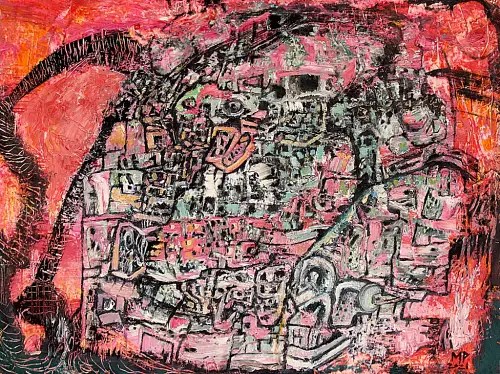
Of course, it didn’t help that the women they painted often were what today we’d call sex workers. Can you imagine that in the second part of the 19th century? Later with expressionism and surrealism, painters gave expression to the ebb and flow of what’s inside the mind’s eye. An interesting artist is Francis Bacon. He claimed that he depicted people as they “really” are. Perhaps some of us are polished yet monstrous or disfigured? Or even, maybe the human condition is one of perpetual disfigurement? Whether we can see without words is something I keep on mulling over. I feel tempted to believe that as humans we need some sort of narrative or linguistic frame of intelligibility to see things. Perhaps we can only perceive objects contextually. Painters should be called pioneers or even anarchists of perception. 

Can you elaborate on how language shapes us by a Languaged body, cultured intuition by sound, and language as a living intelligence?

I’d like to emphasize that I constantly toy with intuitions and ideas, not with truths. The truth for me often is a reductionist and particularly violent concept. Think of all the wars that have been fought over some sort of revelatory divine truth, or in later centuries, the so-called scientific truth. The Nazis had their ideology backed up by scientists’ assertion that theirs was the most evolved race (so-called Social Darwinism), and that certain other races were particularly parasitic and had to be exterminated the same way as rats or cockroaches. So, circling back to the central ideas informing my practices such as the “languaged body” which is a neologism, and the idea that language is a living intelligence, I don’t consider them to be truths. These are frames of intelligibility that have grown under my skin over the years of study, reflection, practice, and meditation. I have no problem admitting that these concepts are nothing more than my obsessions. I’m not a missionary.

I see language as something external to human beings, possibly an organism. In the process of language learning, humans are inserted into this external thing we frivolously call language. There are linguists in Switzerland who’ve developed a theory in which language is a symbiont. So not necessarily a virus as William S Burroughs famously claimed, or that it can turn parasitic in case of psychosis as French psychoanalyst Jacques Lacan suggested. I see our brain + nervous system as a receptor-like radio, tv, or computer, capable of receiving signals and building narrative. In some way, it’s a form of telepathy. By producing sounds, we invoke a whole shared world that has been forged across thousands of generations. Also, we invest our lifeworld, including our bodies, with words, with a story. If our bodies weren’t invested with language, we’d constantly experience ourselves and others as walking talking meat, protein bags, or water bags on legs. When we buy meat at the butcher’s or supermarket, we don’t think of that red stuff as chopped-up dead animal cadavers. We say it’s a New York strip or whatever. Something similar is going on with our bodies. We have names.

This name is somehow “written” on our skin, on our face. I’ve never met anyone without a name, though I’m curious how that’d be. When we feel attracted to someone, we don’t think “that’s a tasty animal.” Some of us might, however. A whole story about someone is activated within us when we fall in love, a concept of what a human being is, of what beauty is, etc. while we all know that a few millimeters under the skin there’s blood and a skull. But who, except a cannibal or a serial killer, thinks about that? The way language has contextualized humans prevents us from seeing the meatiness of a person. But this experience isn’t fixed. There are cultures in which not everyone has human status. Think of the Dalits in India. In Central Africa the so-called pygmy is being hunted and eaten, most probably because their appearance doesn’t conform to the hunter’s concept of what constitutes a human. It’s also interesting to read the private diaries of people who worked in concentration camps, and how they thought about the people they helped butcher or exterminate. Some agreed that Jews, homosexuals, communists, etc. had to be put to death, but they felt it should happen in a kinder way, pretty much how some activists think about animal rights in our era.

Language protects us by feeding us optical illusions. As humans, we’re trapped in a theater of distorted thoughts. It’s as if we need to drive on a busy freeway wearing glasses deforming everything coming our way. All this is extremely disorienting and frightening. I think maybe that’s why there’re so many ideologies and why religion is such a sensitive matter. These “grand narratives” offer the illusion of certainty and direction: how one should lead one’s life, where one should be headed, and where to invest one’s life force. The artist, I think, has been for whatever reason cast out of the Eden of ideology or religion, and is forced to constantly mold and remold her internalized worldviews, knowing often very well that this is a futile endeavor that must be repeated endlessly. But, at least, there’s some motion within. The alternative would be catatonia. 

Artists, writers, and poets who helped contribute and inform your process?

I sound like a broken record when I keep on mentioning Will Alexander. But there’s no denying that his oeuvre provided me with the missing link in my thinking. I have always had an interest in ritual, animism, and shamanism, but with the latter term, we need to be extremely careful. I adhere to academic concepts of shamanism, such as Mircea Eliade’s. When younger I participated extensively in groups believing that they were engaged in shamanic practices. Perhaps some of those did. I don’t want to claim that I have the capacity to say what’s authentic and what isn’t. What I inherited from these experiences is the sensation of trance. Will’s work transfuses both language and animism/shamanism, especially in his The Combustion Cycle.

Without trance, there’s no writing nor painting for me. Writing prose is different. Poetry and painting for me fall in the same domain as glossolalia, speaking in tongues or trance-speaking. Freudian associating on the couch. Will’s concept of language as a living, possibly alchemical intelligence, makes a lot of sense to me. It connects my interest in shamanism and animism with my obsession with language in a no-nonsense way. WA’s poetics is a conscious journey into the imagination. To truly feel this, you need to understand that the imagination isn’t just “fugazi” or fantasy. The Jungians know very well that the imaginal world is a tangible environment, in which one can move around and travel in. There are beings dwelling there. You can develop a bond with these inorganic characters. Jungian practitioners are aware of this possibility.

I think I can say that Occidental culture at this point in history is in a state of coma or autophagy: it’s eating itself up. The criteria for personhood are so one-sided and reductionist that it is extremely easy to descend into a state of being a non-person. Maybe the only option when that happens for some people is to die and, in the process, drag along as many corpses as possible. Ours is a high-risk society. Having said that, I’ve lived in India for three years the comfortable life of an adult literature student. Life in India is no bargain either. Perhaps I have taken shelter in the written word and painted images because I’ve experienced that it isn’t possible to change your own culture with another. Every culture has its own cruelties, sacrifices, and gains, but they aren’t commodities. The difference, maybe, between Western cultures and the rest of the planet is that, as French novelist Michel Houellebecq suggests, the West has sacrificed almost everything for the sake of rationalism and technocracy. 

There are also other artists and poets besides WA that have influenced me. I’m thinking of the “Grand Jeu” poets such as Rene Daumal and Gilbert-LeComte but also Antonin Artaud, Joyce Mansour, and Roberto Matta. Regarding US artists and poets, there’s, of course, Philip Lamantia, whose thinking and work is like a direct mind-injection into my mind: picture a metaphysical phone call without ever hanging up. Other important people would be Bob Kaufman, John Hoffman, Laurence Weisberg, but also someone like Mina Loy, and some beats, in particular William S Burroughs. I feel a deep affection for a lot of artists and writers: William Baziotes, Arshile Gorky, Thom Burns, Rik Lina, Byron Baker, Emily Dickenson, Edgar Allan Poe, William Blake, Lautreamont, Guiliaume Apollinaire, Baudelaire, Rimbaud, Gerard de Nerval, Grace Hartigan, Leonora Carrington, Remedios Varo, Juanita Guccione, and many more.

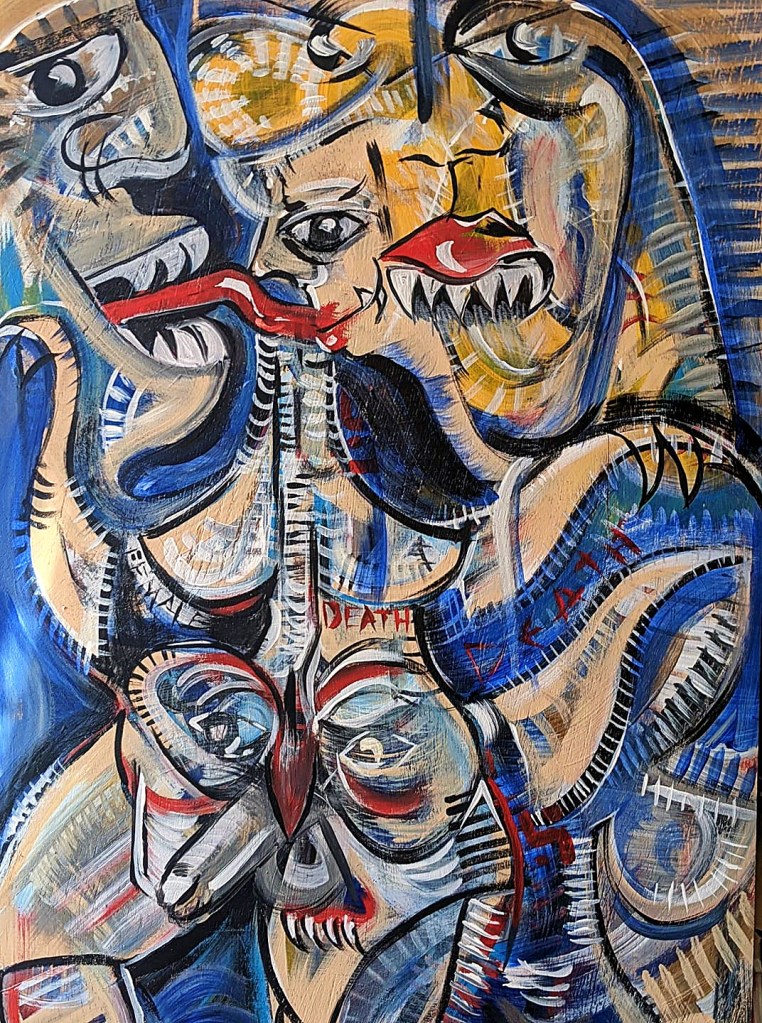
Bill de Kooning deserves special mention, on the one hand, because nobody speaks about him anymore and because of ongoing the “de Kooning-bashing. But also because my paintings are a prolegomenon (not a counter-narrative) to his disfigured depictions of Marilyn Monroe-type of women, in particular the teeth: Where else in the world is the business of smiling taken so seriously as in the USA? My series of chopped-up disfigured ladies, “Mutilated Madonnas,” are homage and homologous to his.

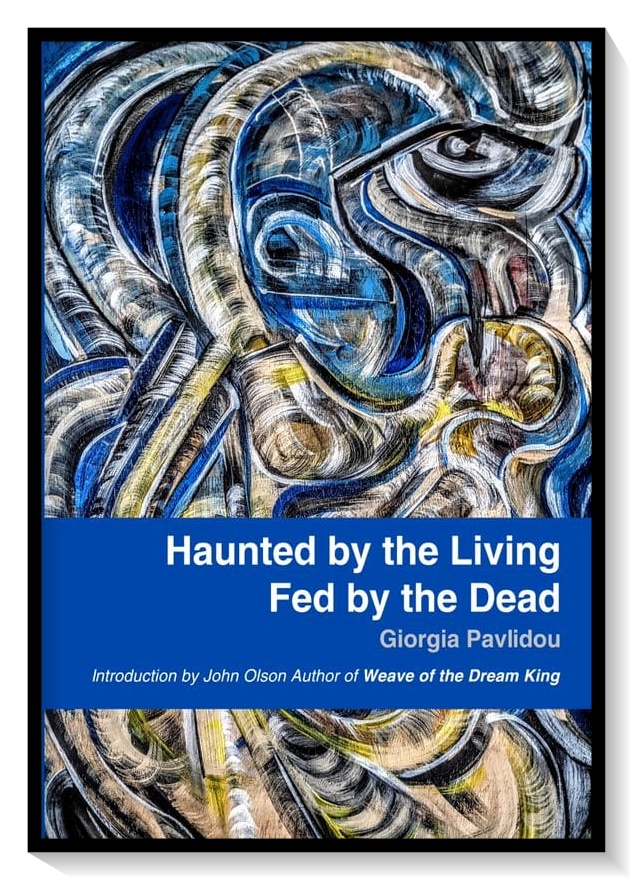
Haunted by the Living, Fed by the Dead
By
Giorgia Pavlidou

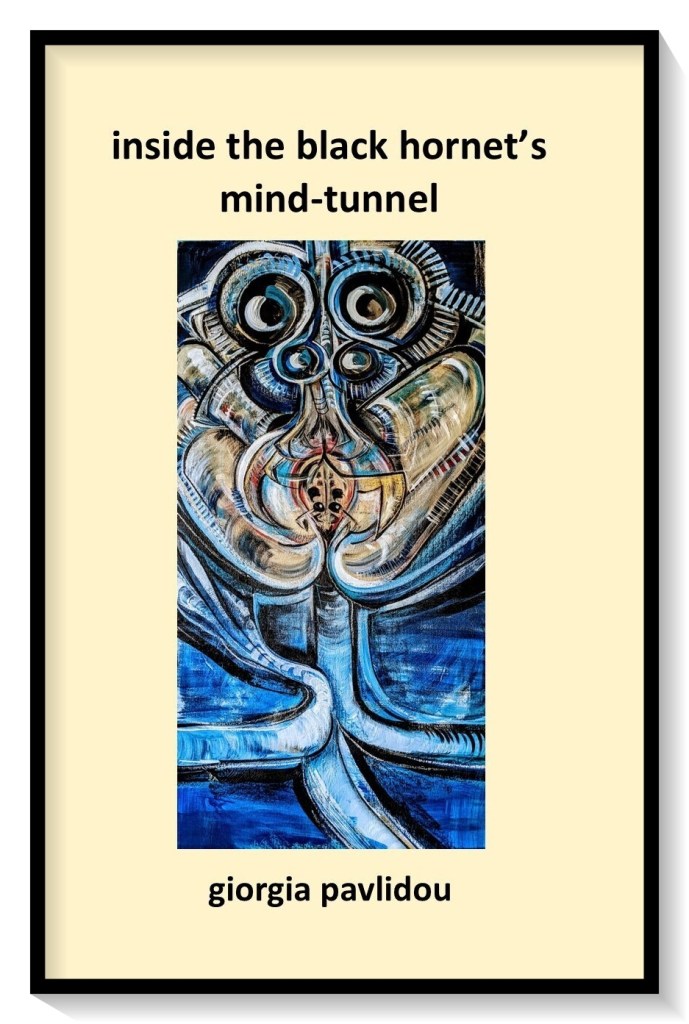
inside the black hornet’s mind-tunnel

by Giorgia Pavlidou

This is intense work. It’s incandescent. It’ll catch your eyes on fire. Burn your brain down. Giorgia Pavlidou has managed to make anguish appear beautiful. And sexy. Artaud is the tutelary spirit of this work. The anguish is real and the words have the taste and smell of the netherworld in its black gown of sibilant pupa. This is language with a biology; it writhes, hisses, and propagates by glossolalic impregnation. Reading these poems is an immersive experience. Here we find madness, anguish, erotica and Rabelaisian humor welded and wed to a language full of “lexical tentacles” and “fire dressed in fire.” It gets under your skin, this speech. These strangely intelligent & autonomous words, manic as wasps in a vessel of glass.

—John Olson

A pyrotechnics of lingual essence, Giorgia Pavlidou’s “inside the black hornet’s mind-tunnel” yields feeling through the language of the heart creating darkened constellations that rivet the inner eye all the while whirling as an estranged yet organic imaginal terrain.

—Will Alexander

Giorgia Pavlidou

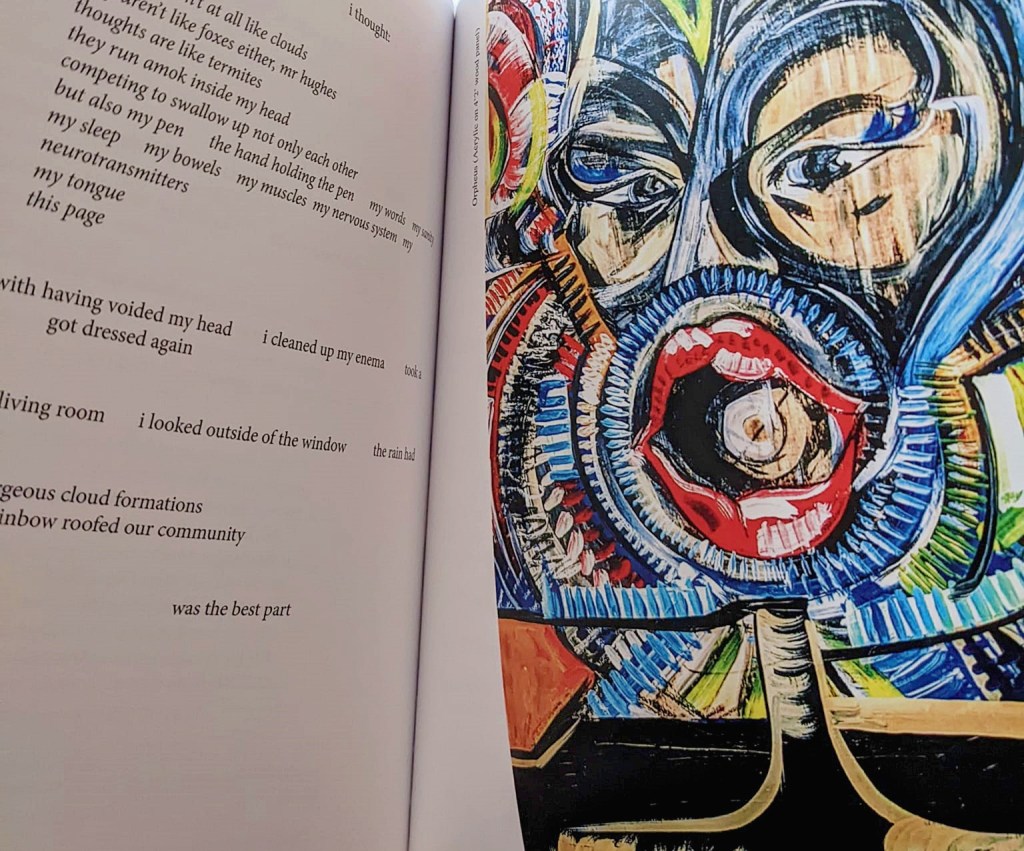
Giorgia Pavlidou is an American writer and painter intermittently living in Greece and the US. Her work recently appeared or is forthcoming in Caesura, Maintenant Dada Journal, Puerto del Sol, Clockwise Cat, Ocotillo Review, Strukterriss Magazine, Entropy and Sun & Moon Magazine. She’s an editor of SULΦUR. Additionally, Trainwreck Press launched her chapbook ‘inside the black hornet’s mind-tunnel’ in 2021, and Anvil Tongue Books her full length book of poems and paintings, ‘Haunted by the Living – Fed by the Dead’ in May 2022

convolutional echolocation

artificial neural network
neurons are aggregated
image input
visual cortex
layers and magic squares
number and color spaces
red, green, blue
processing example
image recognition
labeled
a set of facts
filters removing waves from particles
about that world, who was thinking the who
useful information
an algorithm
binary classifier
animal, non animal
vector of numbers on a clock
adapt parameters
template of being two points in time
self-driving car
spatiotemporal
the finding and collecting self

written by Mitchell Pluto December 2, 2021 ©