Beneath the Antler Moon by Mitchell Pluto

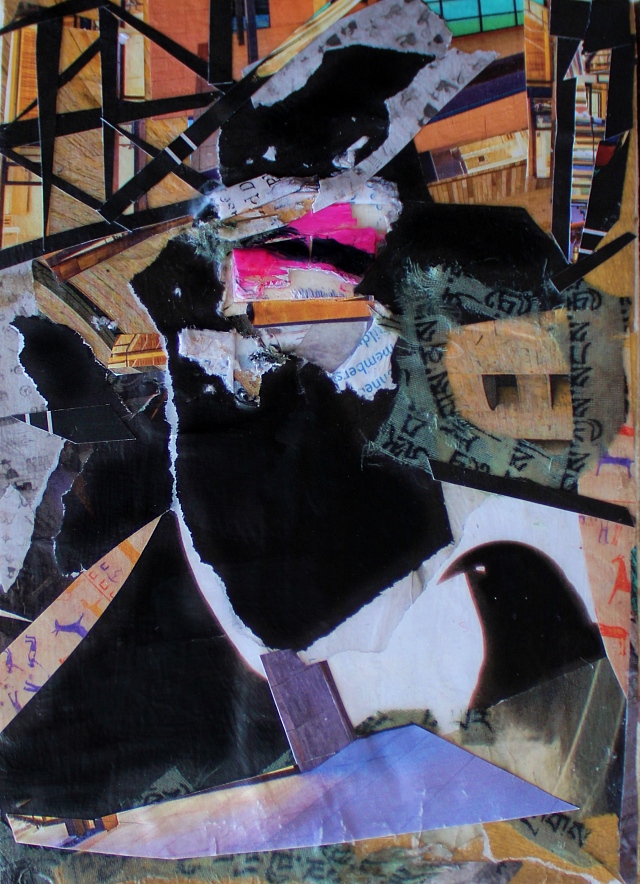
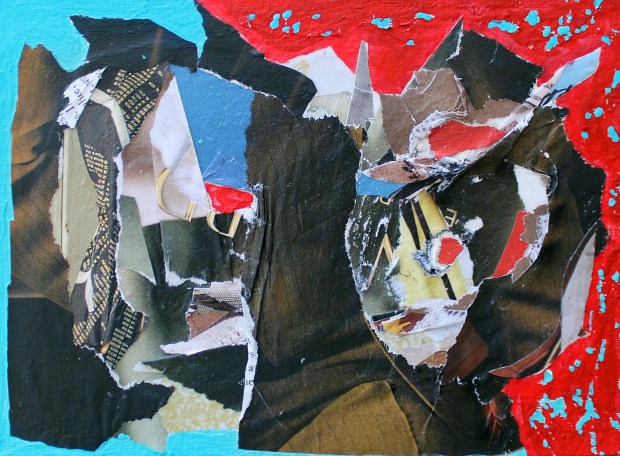
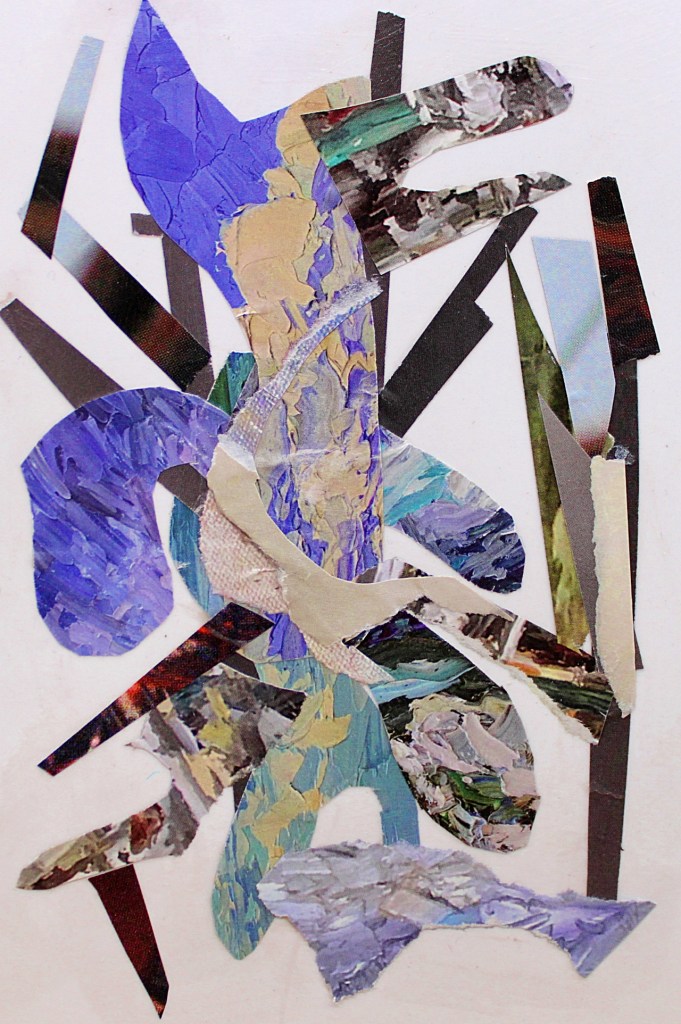
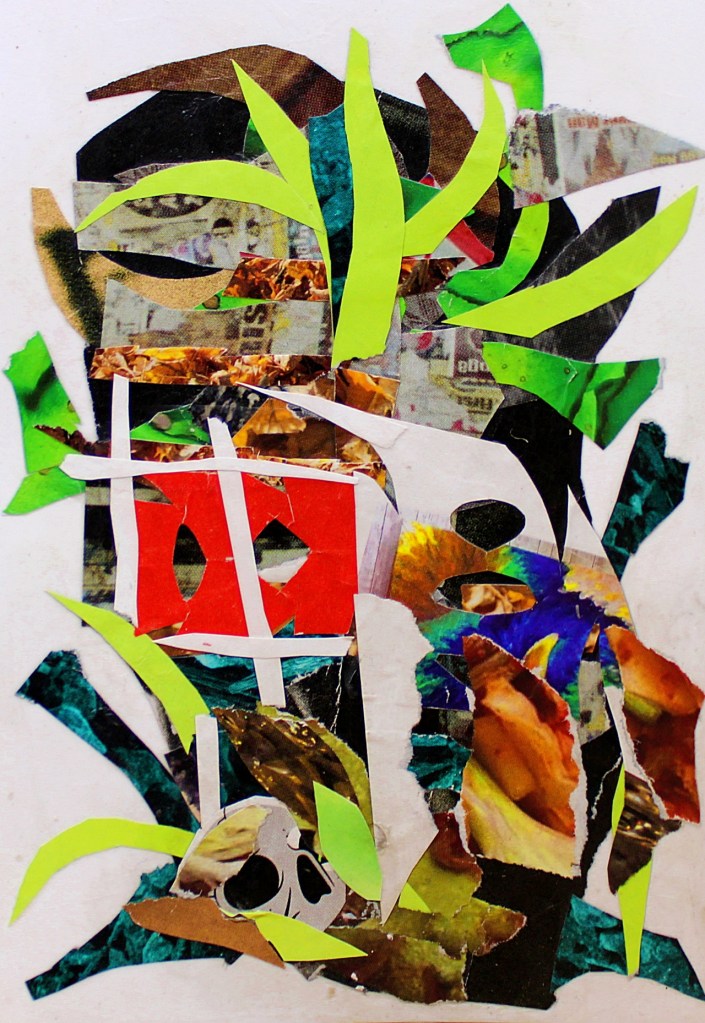
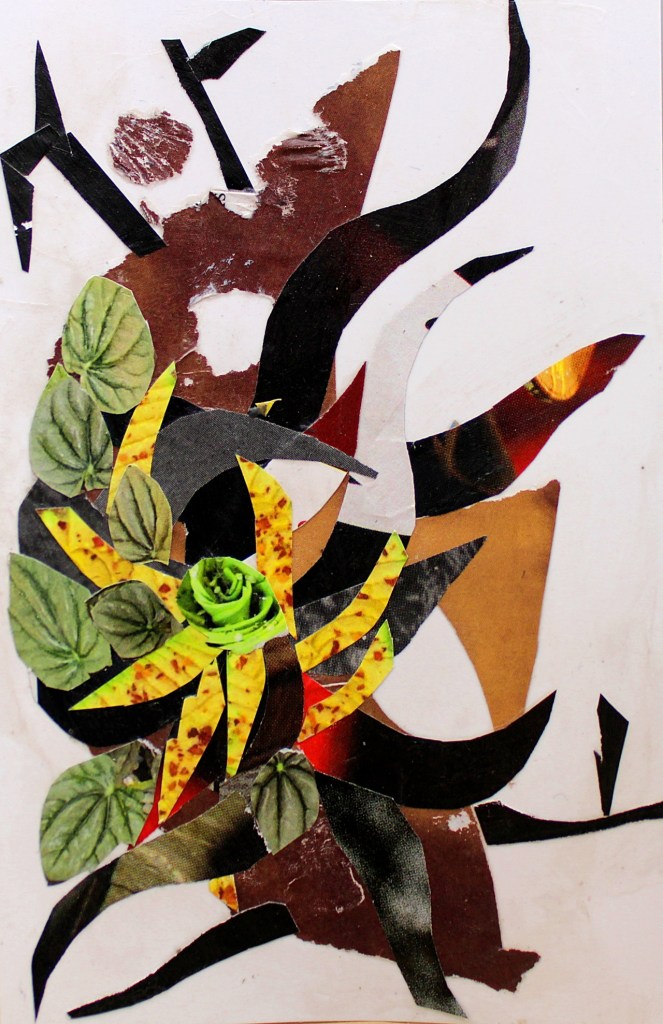
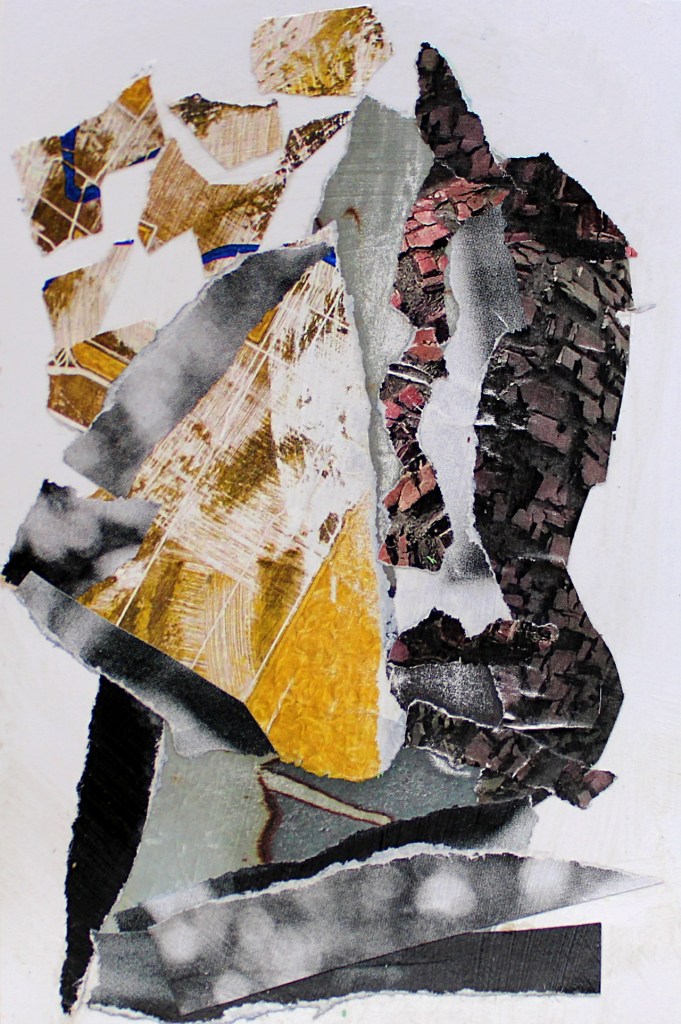
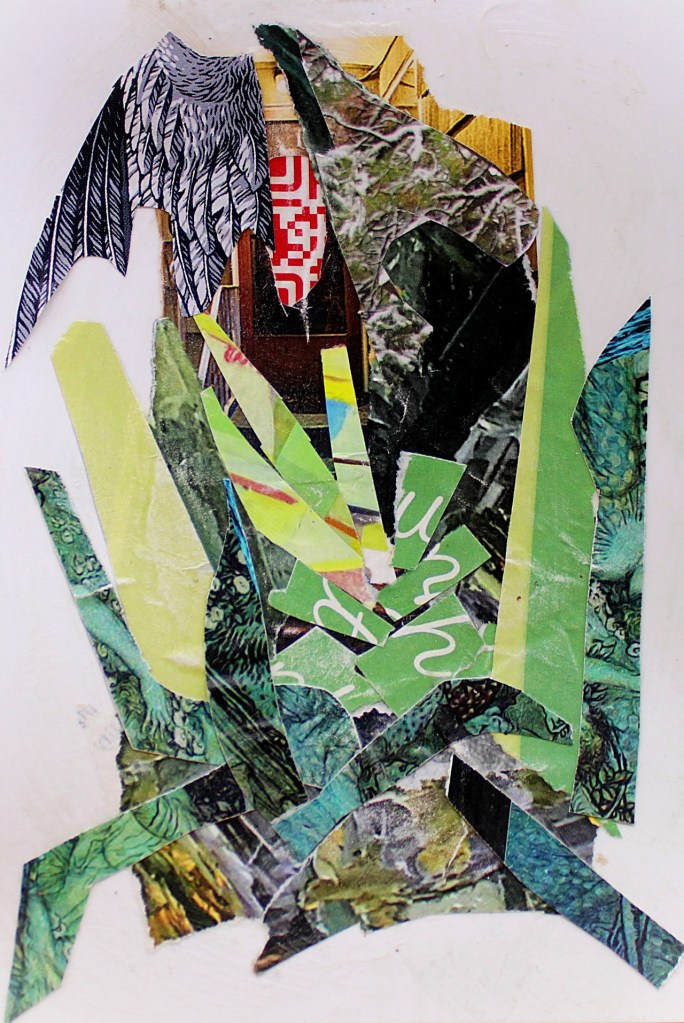
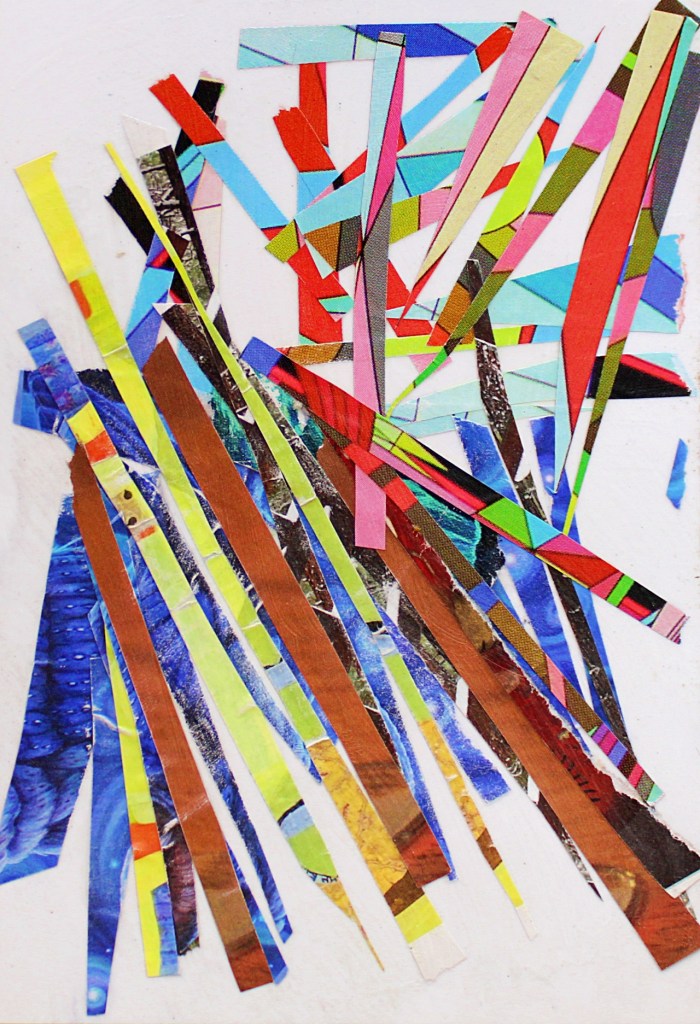
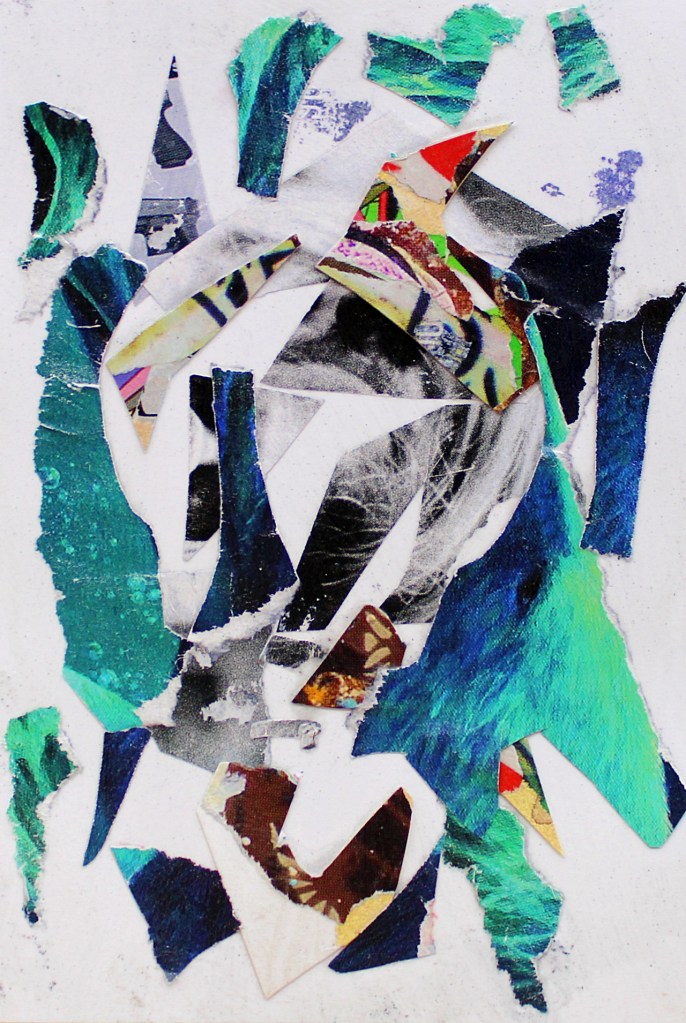
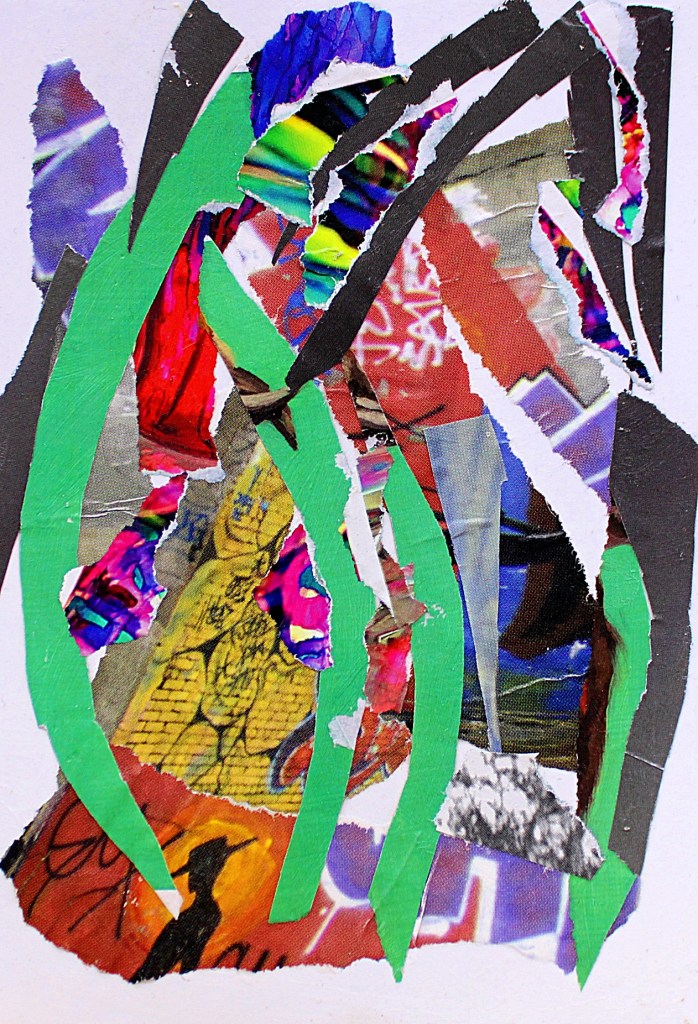
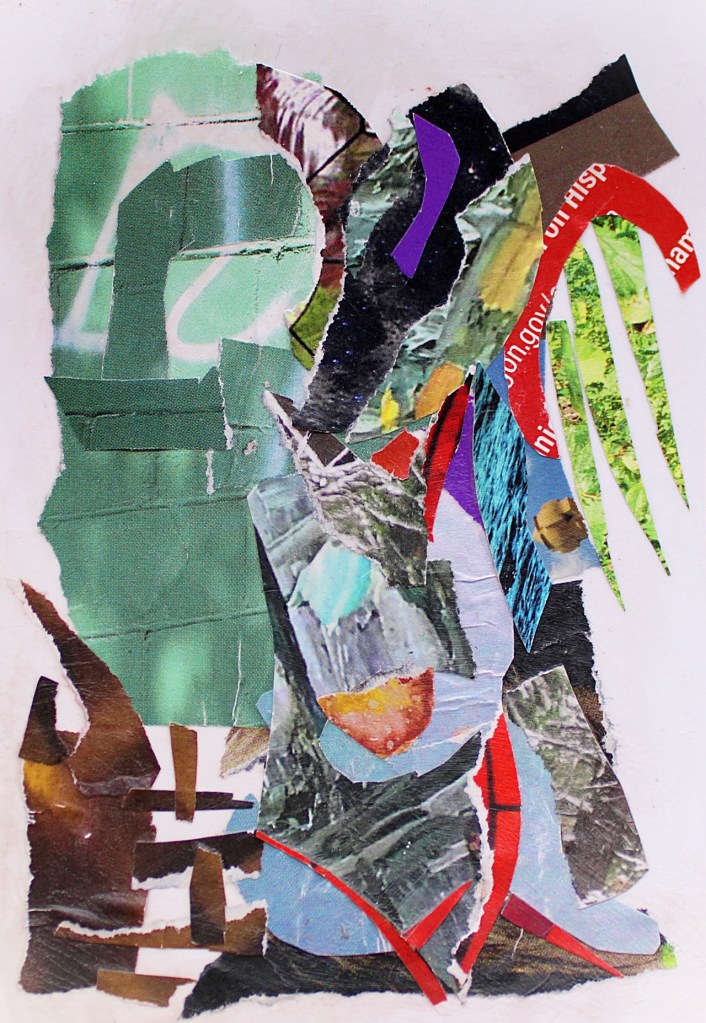
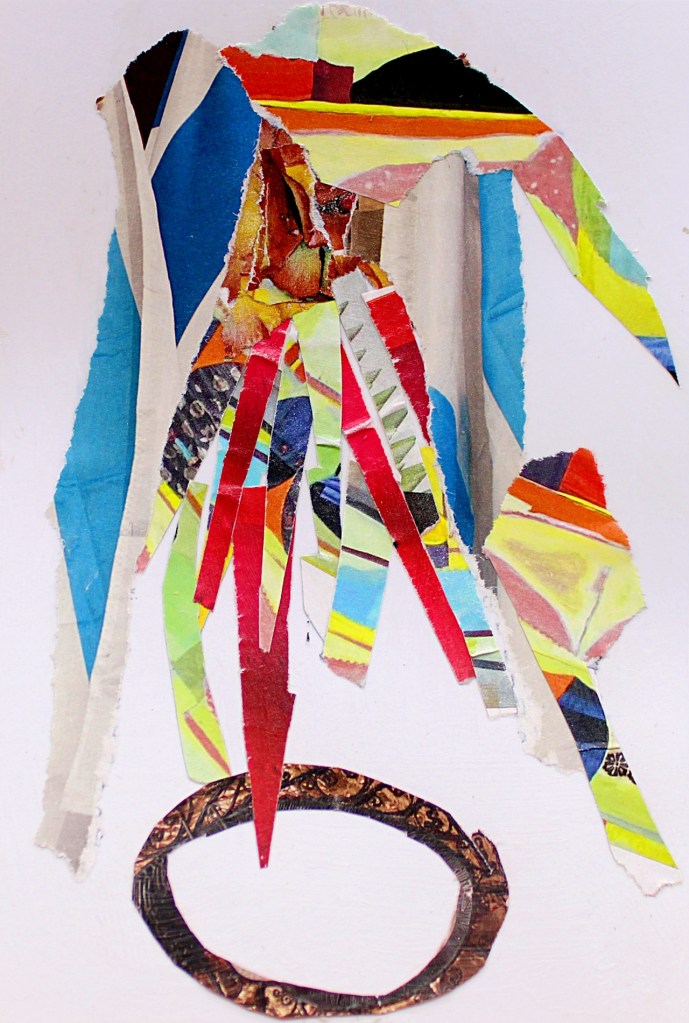
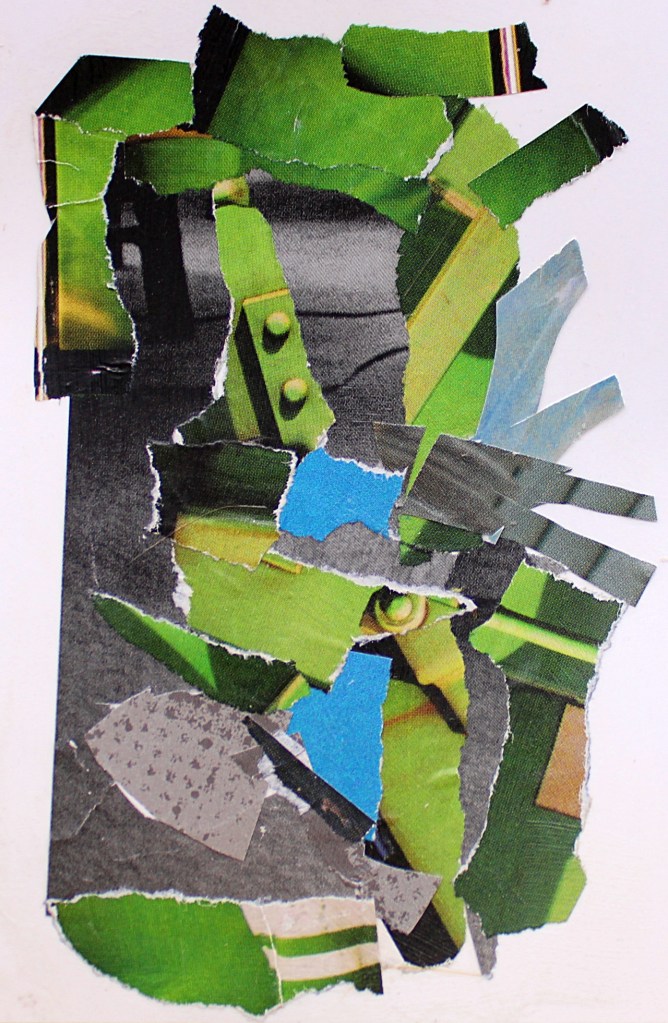
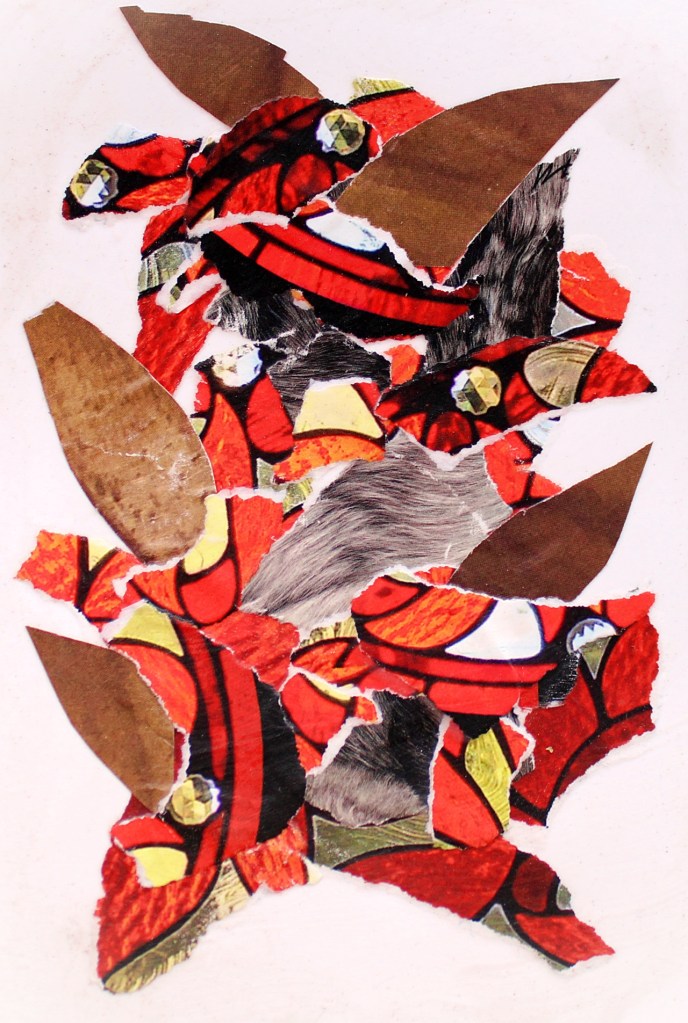
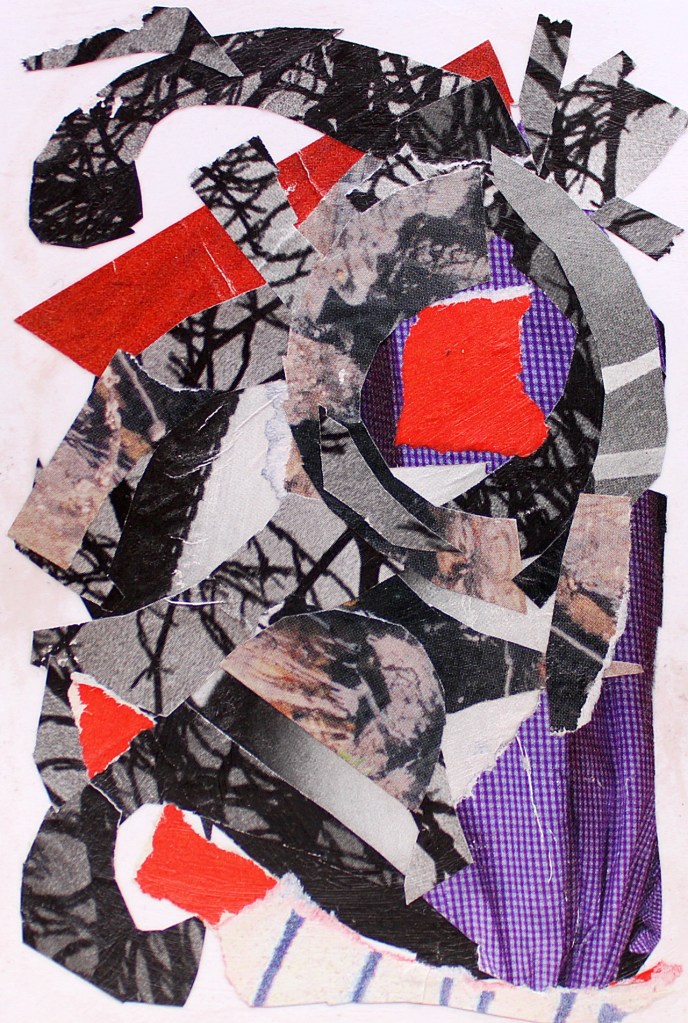
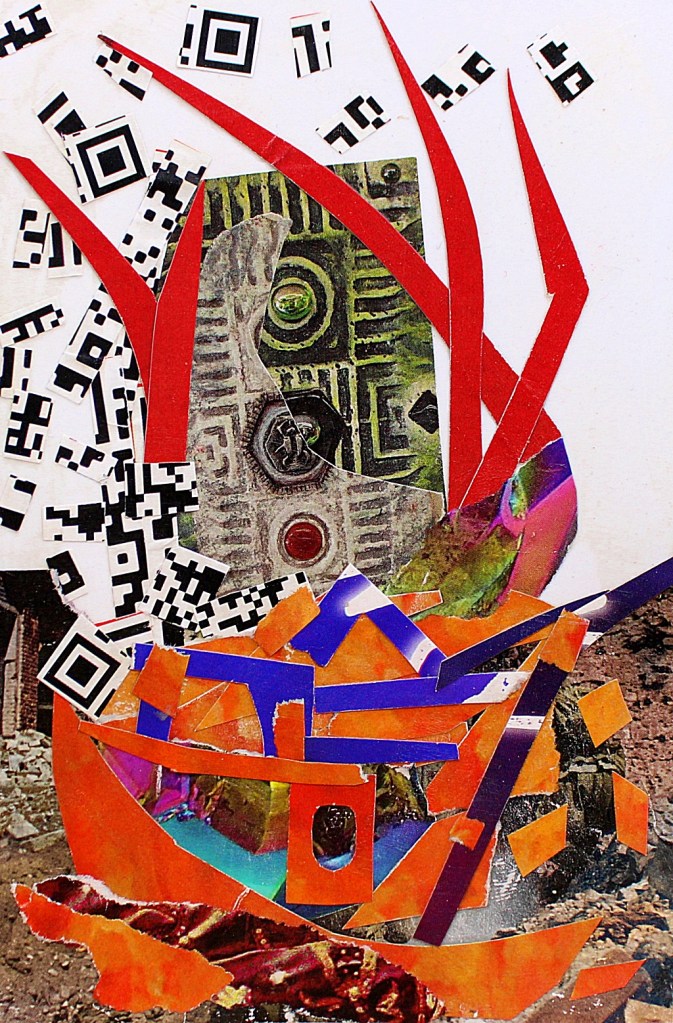
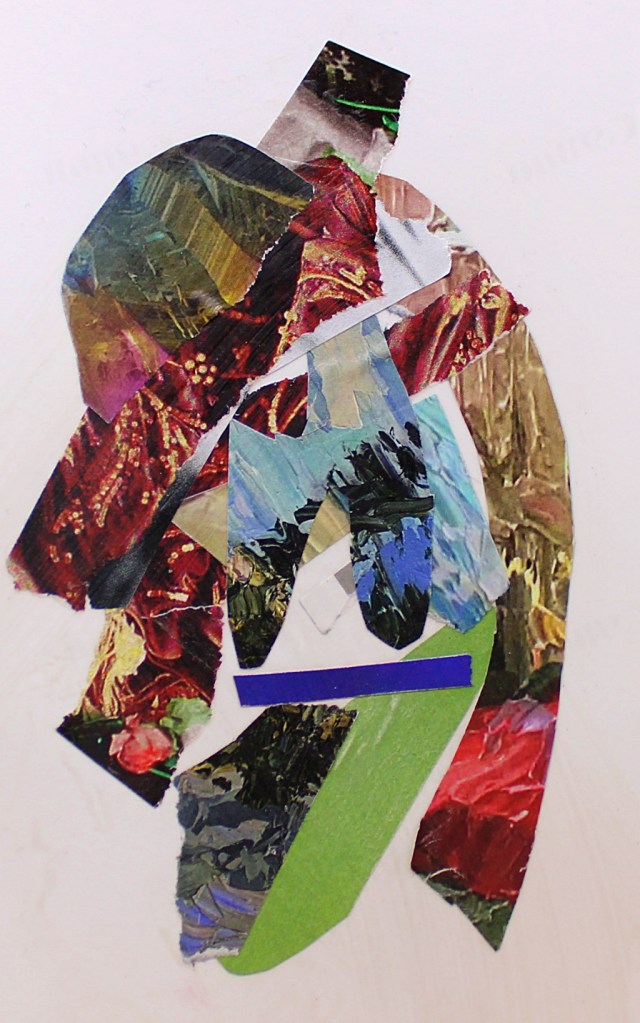
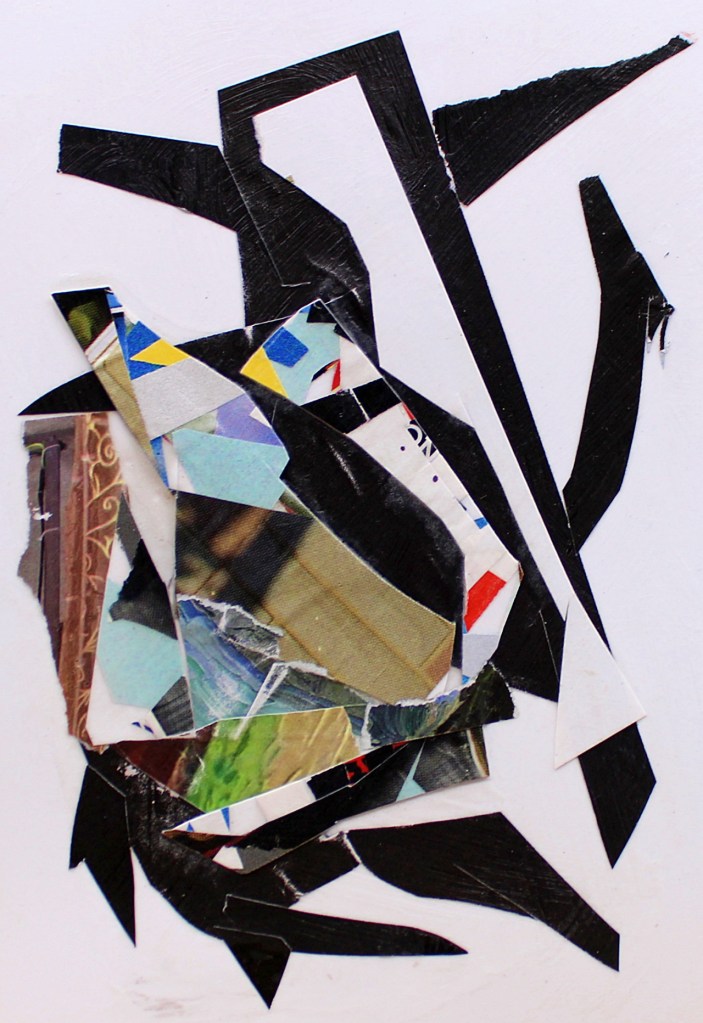
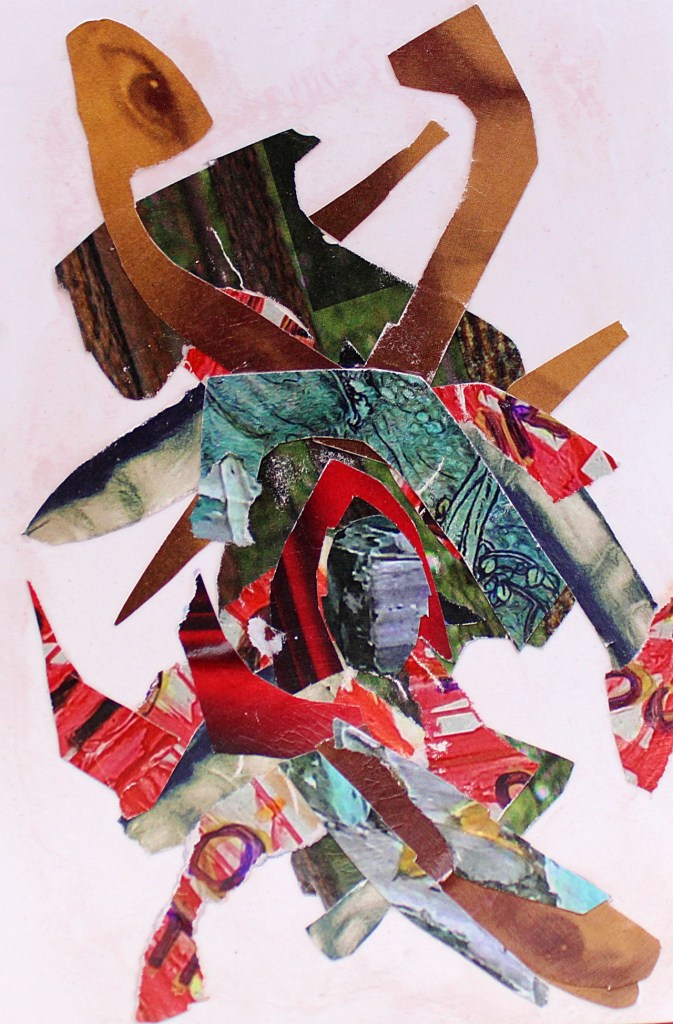
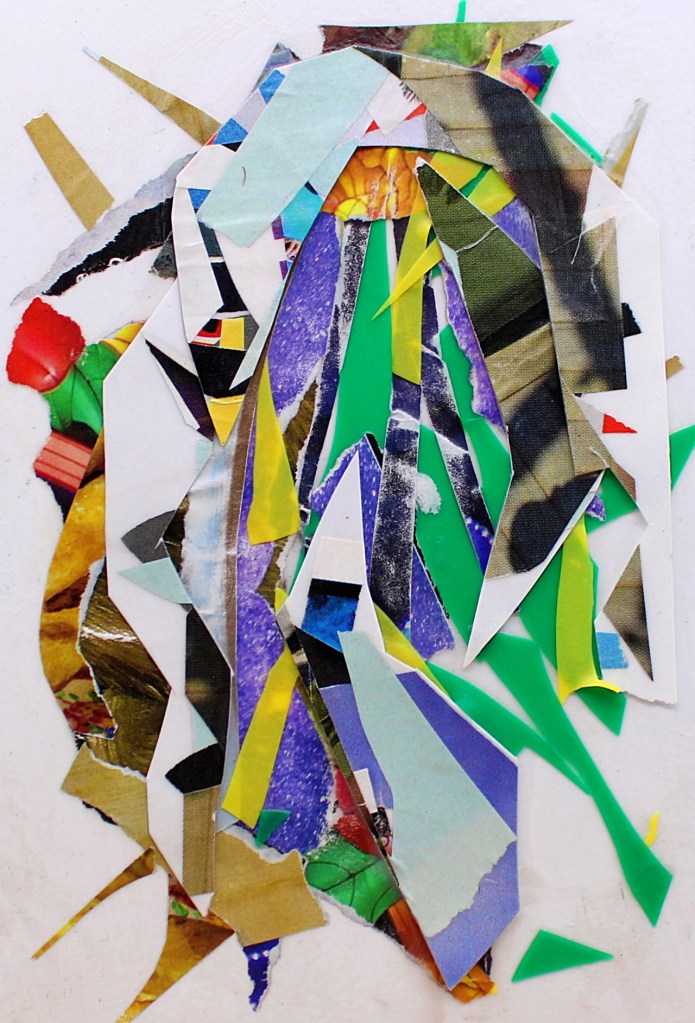
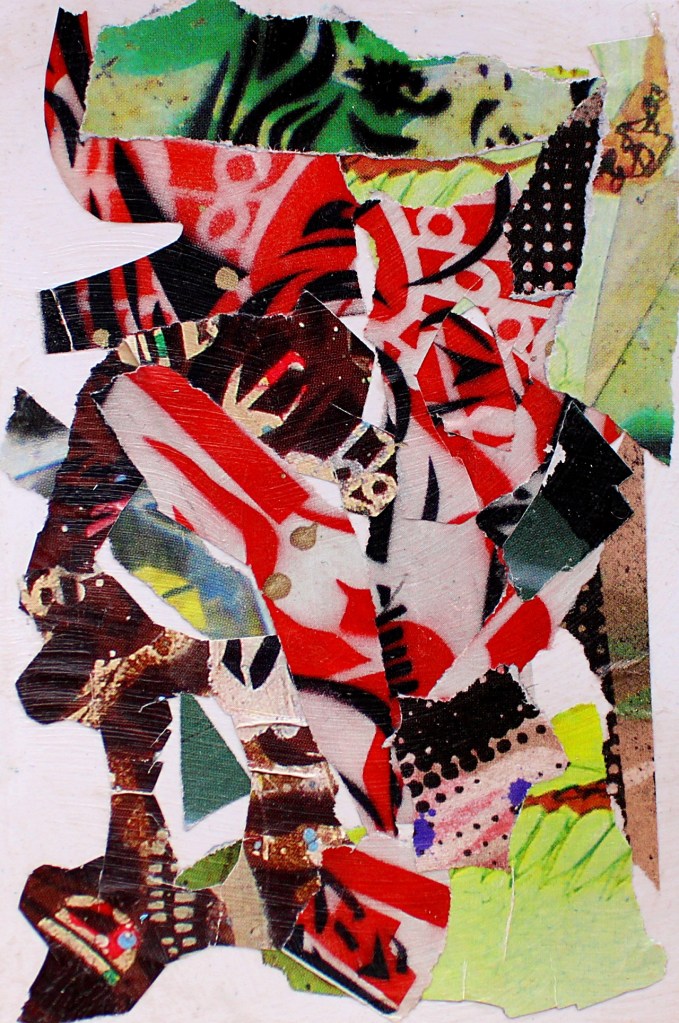
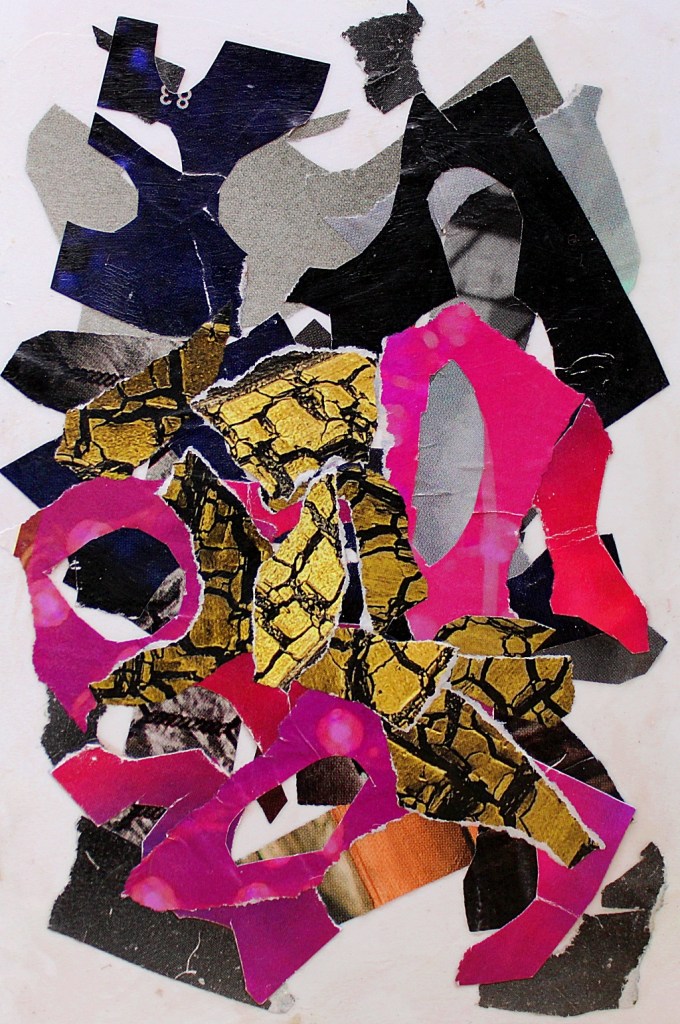
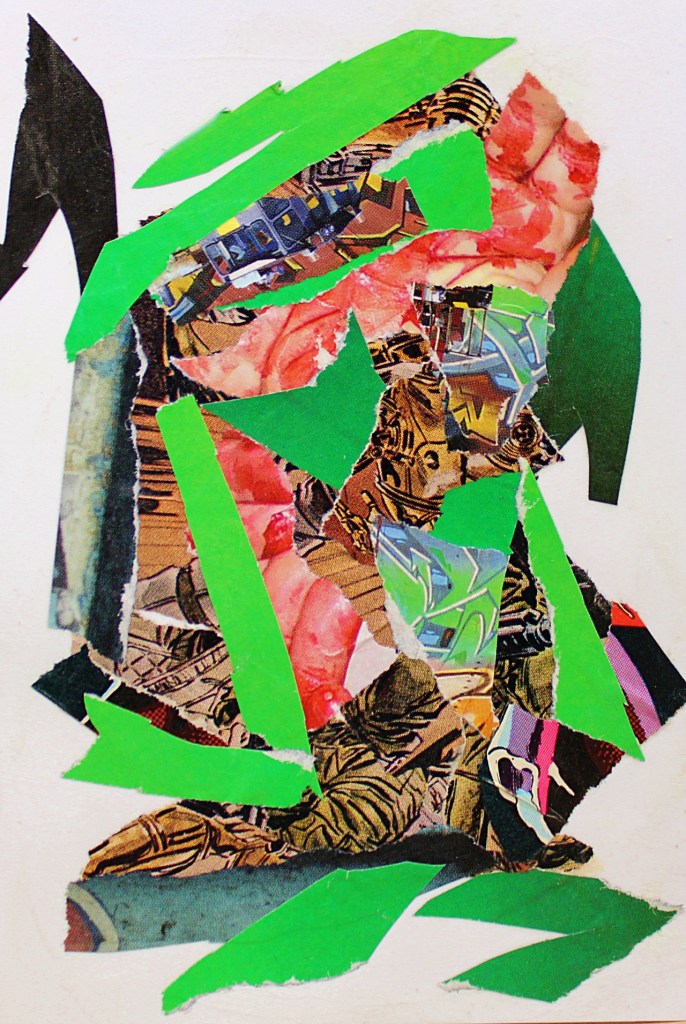
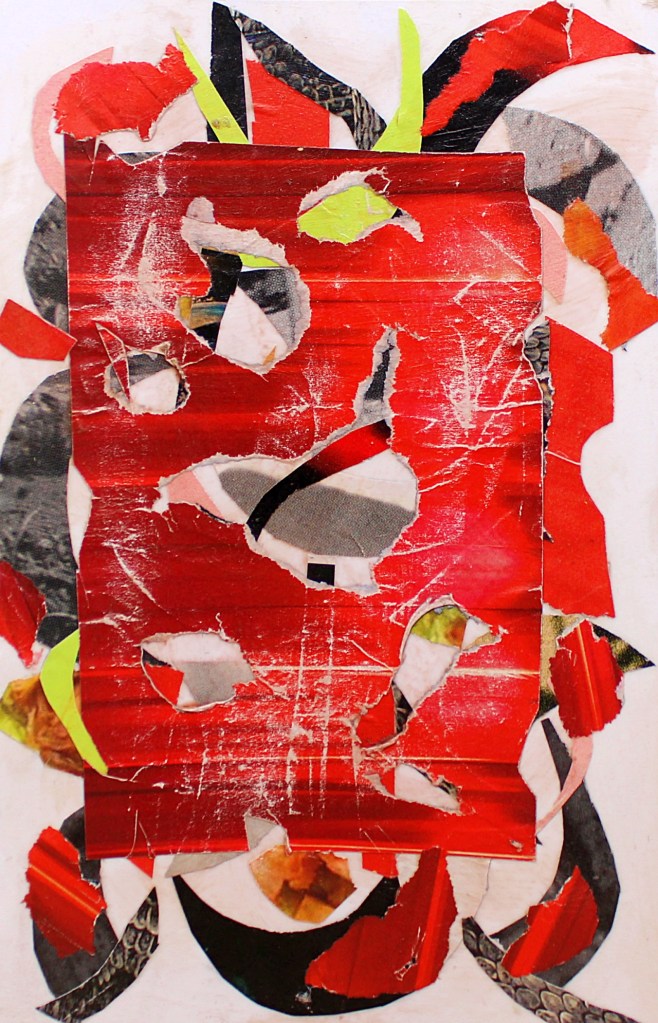
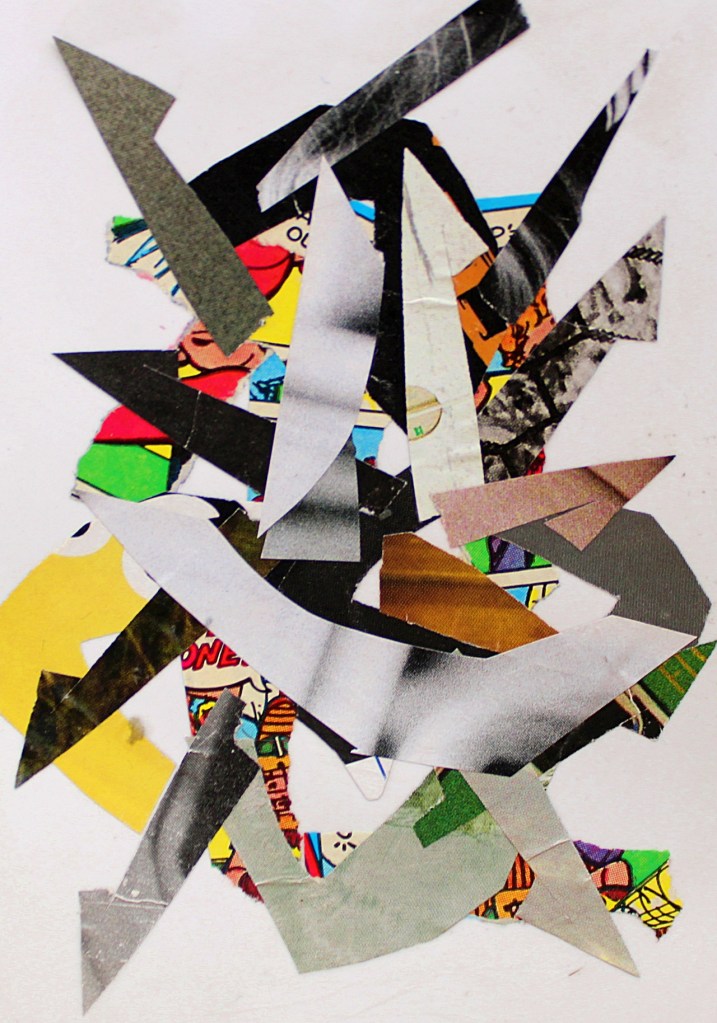
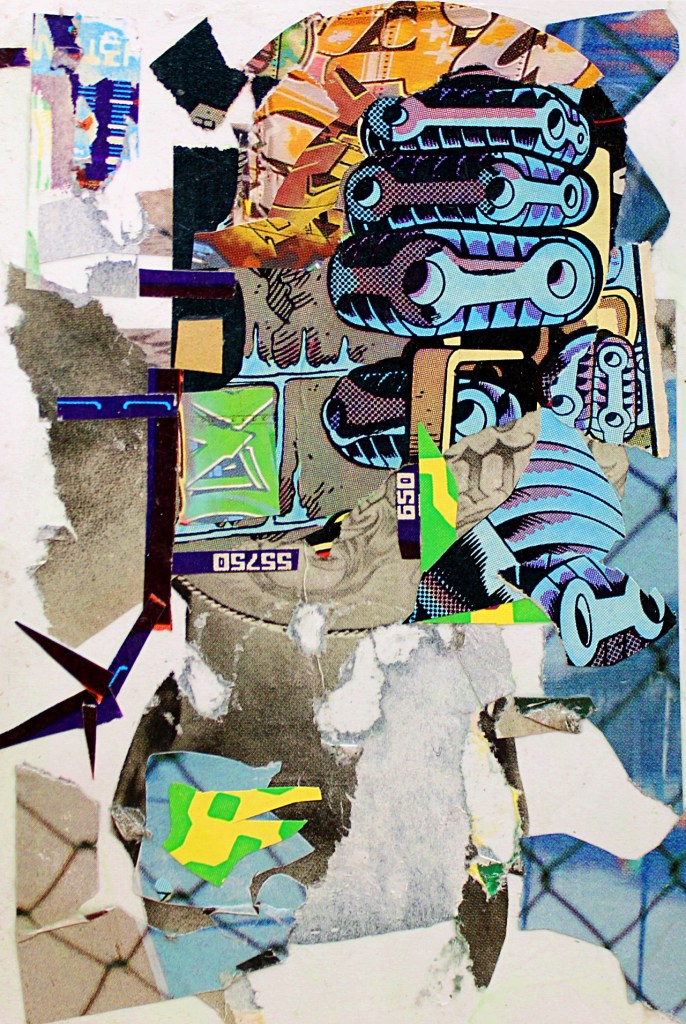
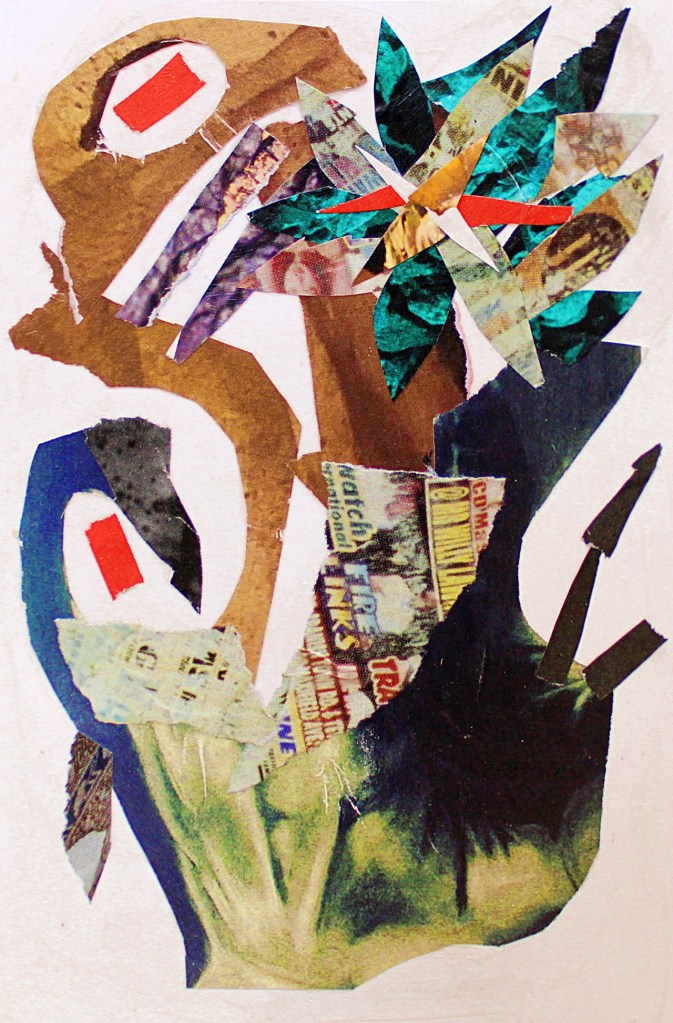
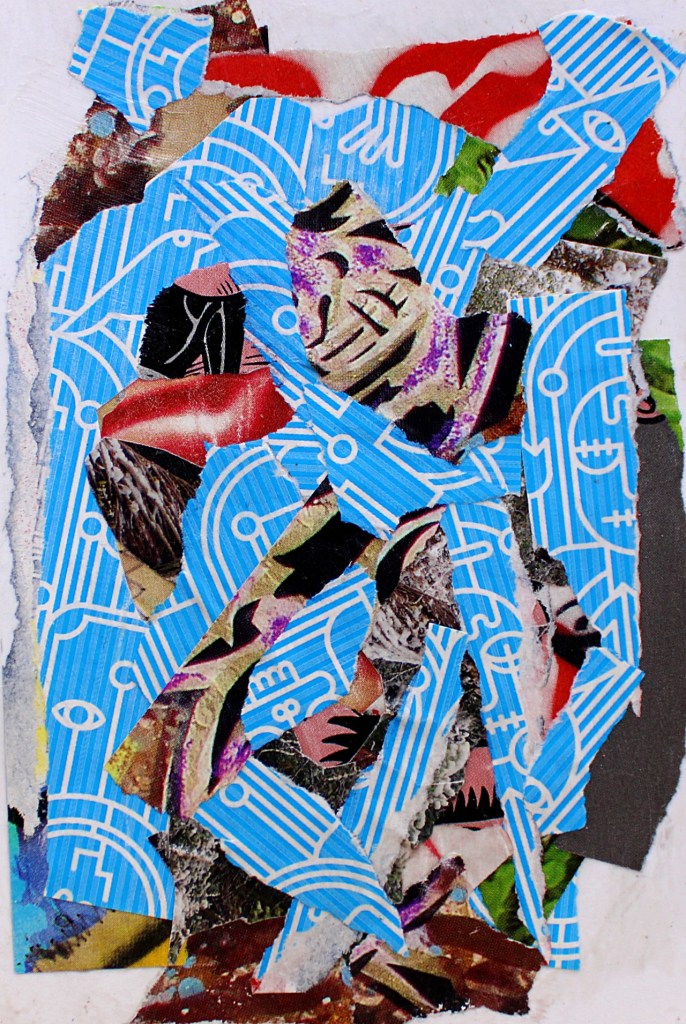
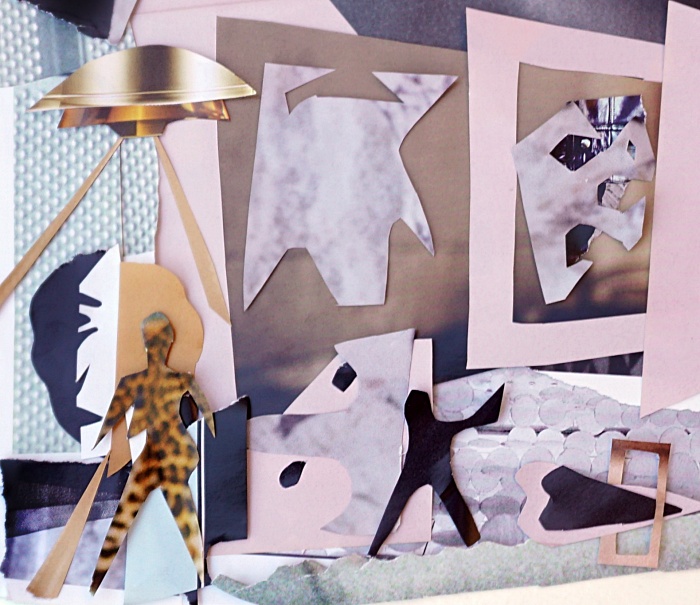
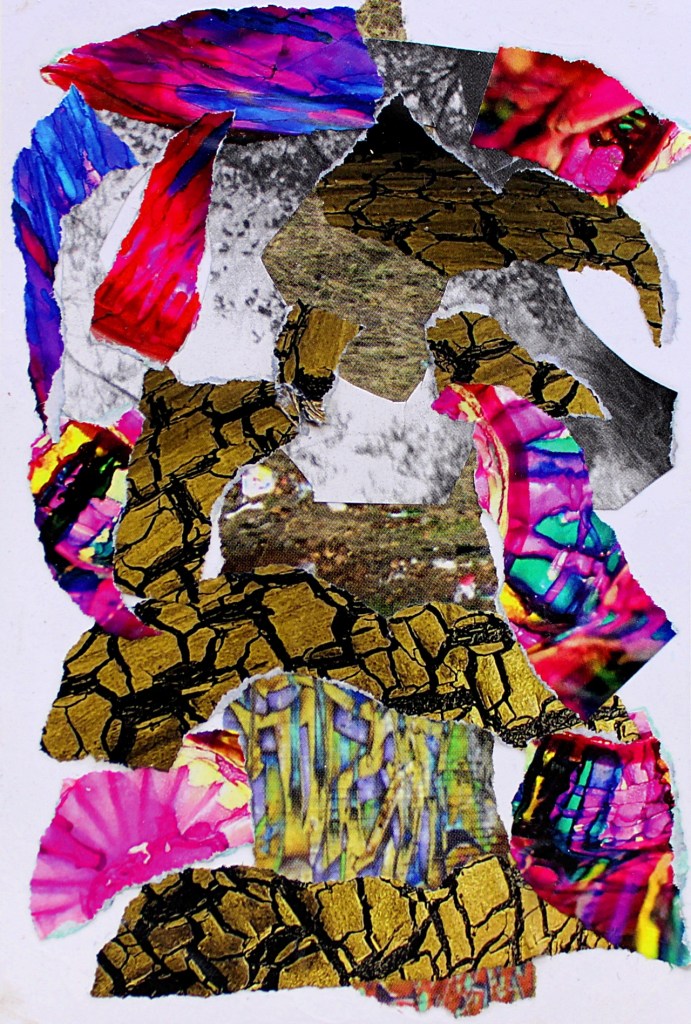
Cell Phone UFO abducting the animistic brain/collage/Mitchell Pluto/2026

Fiction written by ©Mitchell Pluto 2026

Over 11 million people tuned into Mark Burla’s podcast, Under the Light. On July 29, 2026, his most popular episode was with a psychonaut and two government officials. The time was 4:00 PM MT.

Joseph, the astrologer, was on the radio in the background and said, “Hey, it’s a full moon in Aquarius, and we’ve got a cool Sun-Jupiter conjunction in Leo, along with Pluto, Neptune, and Uranus all in sync.”

Burla recorded in his cool, air-conditioned studio while the Taos Mesa swelters in 109-degree heat. From Burla’s window, you could see the dry riverbed of the Rio Grande.

Burla’s podcast comes from New Mexico, also known as the Land of Enchantment.

“Under the Light” is a big hit with people who like occult, mystical topics and urban folklore vibes.

Listeners often recall the interview featuring Daniel Saltman, a former member of the All-domain Anomaly Resolution Office.

“You can totally lose yourself in a story,” Saltman said seriously.

According to Saltman, a large amount of classified data was fictional.

“Spreading lies can be a way to dodge actual problems and politics. Government research shows that odd experiences associated with traumatic memories can create false beliefs. Life’s traumas often lead people to develop coping mechanisms, with some forming extreme ideologies to manage their pain. Other people simply learn to move on.”

Burla thought back to the 1980s, “Yes, I recall when people believed aliens were haunting their thoughts while examining their bodies. But these days, everyone’s got a phone that follows them.”

“To put it simply,” Saltman explained, “our inner thoughts and feelings mold our outer experiences, forming a mental map that we superimpose onto reality. We want to make our fantasies real, to prop up our egos, making us feel special.”

Saltman took a break to drink some coffee.

“The Greek poet Hesiod provides another perspective on the animistic mindset. He’s famous for his poem Theogony, where he introduced the 12 Olympian gods.”

Burla wanted to know more. “What happened?”

“Mount Helicon was where Hesiod had a close encounter of the third kind with the Muses. Through this visitation, he gained poetic talent and divine insight. Each new generation after him put its spin on his tale. Plus, we’ve got ancient Greek theater, featuring amazing illusions such as a crane that lifts actors into the sky. You know, Magic, the reality differs from what you’re seeing.”

In a pic Burla shared, a crane was lifting someone dressed as a god above a crowd.

Burla inquired, “Your thoughts on Christianity?”

“Religion retells a story through its practices, much like Hesiod’s writings, making it more tangible,” Saltman clarified.

“The church has played a key role in Constantine’s empire for gathering information since the First Council of Nicaea. From another perspective, it means employing Christianity to secure political stability. Presently, supernatural concepts occupy people’s thoughts, much like unidentified flying objects.”

Burla nodded, “Tell me something we think is true, but it’s actually not.”

Saltman scratched his chin, “What’s there to say… something your viewers will understand.” His eyes widened as he exclaimed, “I know, the government declassified this… A CIA analyst named Aldrich Ames had a career from 1962 to 1994. Soviet intelligence hired him in 1985 to provide classified U.S. intelligence to them. It was a mystery to us how Russia had gained knowledge of our confidential information, which led us to start remote viewing…using ESP to spy on the Russians. We invested heavily in political narratives throughout the ‘70s, convinced a psychic war was underway. Star Gate was a program meant to stop psychic Russian spies, but it turned out to be Ames the whole time. In ’94, they caught Ames, which led to the permanent shutdown of the Stargate Project. It’s like, things look one way, but they’re really different underneath.”

“Wow,” Burla couldn’t believe it.

He had a podcast about remote viewing a month ago, and back then he thought it was legit.

Saltman quickly intervened to ease the tension. “Speaking of remote, there are these remote-controlled aircraft that can do amazing things. We view these crafts as foreign and domestic groups engaging in espionage. Nobody gets hurt if it’s shot down, but we’re also clueless about who it is.”

Saltman leaned in and said, “For instance, we intercepted a UFO drone collecting microbes from the Great Lakes…Therefore, the ship contained non-human entities.”

Suddenly, the screen went black, and a 15-second commercial for Uranium, a new neon green energy drink, appeared and then dissolved.

According to the podcast stats, Burla’s most replayed bit started with the interview of Terrence Dodge, the guy in charge of the Advanced Aerospace Threat Identification Program.

The fade-in revealed Dodge talking, “We’ve known aliens were real and hiding out here since Roswell. While we assume they’re from the sky, they live underground and use magma chambers and the ocean to get around.”

Thinking quickly about Derinkuyu, the underground city in Turkey, Burla wondered, “Just who are these people?”

“Long ago, before Earth had a moon regulating life, ancient people like the Aryans, Eloheinu, Vril-ya, and Dero lived on Venus, Mars, and Saturn.”

Burla asked in surprise, “The Aryans?” He shook his head, a gesture of utter disbelief.

“Yes, just like Ahura Mazda and Zarathustra. The Iranians are the architects of our social structures, our spiritual beliefs, and the written word that molded our very thinking,” Dodge affirmed.

Burla projected glowing visual effects for viewers as Dodge’s voice continued to weave his explanation.

The images displayed an eye idol from Tell Brak, various depictions of the swastika, and Burla’s contemporary illustrations for The Coming Race, an 1871 science fiction novel by British politician and writer Edward Bulwer-Lytton.

“To be clear,” Dodge added, “those shapes you’re seeing that look like swastikas in history are actually propellers.”

Burla cautiously asked, “Are the aliens white?”

“They looked very pale and old, with slender features and enormous eyes. A flexible cartilage structure supports their bodies, not bones. They can also sense electrical fields from muscle movements. We call this sense electroreception. They can better understand how we defend ourselves and what goes on in our minds to keep our sense of self intact,” Dodge said.

Burla couldn’t believe it and shook his head.

Dodge rubbed his eyes and added, “It’s vital to point out that they are communists and pursue the same aim because of their shared mindset.”

Burla inquired with a hint of sarcasm, “How do they communicate?”

Dodge solemnly stated, “They can duplicate any individual’s innermost thoughts and mentally guide a person’s choices and actions. They understand our brain’s bicameral structure. Here, the Eloheinu aspect commands Abraham, through a voice, to sacrifice his son.”

Dodge paused for a second.

Burla continued his questioning, irritated, “Regarding their ethics, are they driven by humanitarianism or racism?”

“Think of them as zookeepers,” Dodge stated bluntly.

Burla’s face suddenly appeared tense.

Dodge inhaled deeply and stated, “Where there is care, love is absent.”

“They claim they put the idea of God in our heads and that we belong to them… and they also made everyone on Earth using primate genetics. This just proves they think they’re in charge of us. They support eugenics because they believe they’re the best and should be flawless.”

Burla added visuals to this interview segment, overlaying cool images on Dodge’s narration to create a visual blend. These pictures drew inspiration from Richard Sharpe Shaver, an author for Amazing Stories during the late 1940s. Shaver made some wild claims about ancient beings living in huge cave systems underground. Their technology could control minds and cause strange health issues.

Dodge referred to these health issues as “anomalous health incidents.”

Someone in Burla’s live chat, a long-time subscriber, said the tech reminded them of directed-energy weapons, like the ones they think caused Havana Syndrome. This comment snagged way over 4K positive reactions.

The screen went black, then a dog food ad began, featuring a dog in a field.

Then Burla’s face appeared again with another guest.

Mark Burla finished up by talking with Lucian Laplume, a psychonaut who penned the bestseller “Light turns into a poem.”

Burla presented a book and said, “Prepare for a 360-page adventure based on DMT researcher Lucian Laplume. He found intricate communication within light frequencies, appearing as geometric glyphs. These symbols served as time machines, guiding readers from one event to the next. The book talks about how our brains connect with art through words. Laplume’s concept resembles the Vast Active Living Intelligence System conceived by Philip K. Dick. You know, where an orgone beam of light helps clear out energy blocks and makes you feel better.”

Laplume rested his head in his hands, his elbows on the worn surface of the table. “Despite wild ideas and peculiar sights,” he murmured, “those relentless phantoms haunting me–even with them present, I found myself here, repeating this same action. I felt compelled to construct coherent sentences, as if compelled by fate,” he sighed.

Burla inquired, “Do you think unusual aerial signals are altering our brainwaves?”

“It’s just a matter of tuning it in, like this,” Laplume gestured with his hand, tracing an invisible dial in the air. “The trick is knowing which frequency to hit. And that, my friend, is the art.” He then leaned back, a satisfied glint in his eye, as if he’d just revealed the universe’s most profound secret.

”Could you elaborate on why glowing glyphs matter?”, Burla asked, smiling.

“Under the influence of DMT, gazing at a laser on a surface presents what looks like alien script, a visual fusion of various letter shapes, comparable to polyglot portmanteaus created by combining parts of letters. I call it Unidentified Cosmogram Permanence.”

“What’s that?” Burla asked.

“Recollection of numbers and letters is possible without sight, yet thought visualizes light for remembrance. Modulation alters the functionality of a light source. It alters the light wave’s phase. This encodes stable information. The light is like a dancer, whose poses shift to convey a story that stays put. Geometric shapes seem to float within the story. It’s possible, we believe, that these shapes mirror our feelings and intentions, much like a bond with numerical concepts.”

Burla’s impatience was clear as he questioned, “What in the world is this agency enclosed in light?”

Laplume in a sympathetic voice, “I’m struggling to explain it, even to myself. My understanding of this relies on a comparison to James Joyce’s experimental work, Finnegans Wake. Joyce’s language acts as a self-sufficient, living linguistic system that induces synchronicity in the reader as a side effect. You don’t notice it while reading, but it sticks with you later. Meaningful coincidences appear twenty minutes after you read it, aligning your thoughts with your surroundings. Just as you envisioned an idea, it appears. It’s like the symbol went straight from your eye to your brain. Although we routinely think in words, this cosmogram invasion seems to modify the very language that governs our comprehension, which contains our perception.”

“What does this imply for future events?”, Burla asked.

“My understanding is that it’s about rethinking our whole mental architecture. It’s like our inner programming is shifting, making us see things in a new light with fresh ideas. When it all comes together, your inner self transforms, and your surroundings mirror that shift. If we had more time, we might figure some things out, but we might never know where the cosmogram came from or learn more about it. We’re greedy for knowledge, but it’s impossible to get it all. Guessing and being incorrect may somewhat increase our understanding as humans, but it won’t ever lead to complete enlightenment.”

Burla replied with a warm smile and a nod, “We have arrived at the Zen point, the place where fullness becomes emptiness. It’s been a pleasure having you, Lucien Laplume.”

Burla’s gaze moved across the paper on his desk as he read aloud.

This morning while reading, a question that came to mind struck me: “Do you use bitcoin?”

Bitcoin’s been on my radar lately. At first, its technology and potential were a bit fuzzy. Turns out, the deeper I dug, the more I saw just how amazingly practical it is. The ease with which we can now send, store, and utilize digital assets is revolutionary.

This is exactly why the Fedit app excites me so much. This thing is a lifesaver for getting and keeping track of those digital coins. Sending money with the Fedit App is super fast, just like electricity!

It’s super easy to use, so even if you’re new to crypto, you can totally figure out how to get around.

We’re excited to announce a special offer for a limited time to celebrate the launch and encourage people to jump in. You’ll get 100 free credits in your mobile wallet if you sign up for the Fed App today. This is a chance to discover how easy and powerful the Fed App is.

We think the Fed App and bitcoin’s growth are a big step forward for money tech. We hope you’ll check out this chance and join us in stepping into the future of digital money and data centers.

Burla grinned, saying, “If my content appealed to you, kindly hit the like button and subscribe to my channel.”
Six Erotic Artists

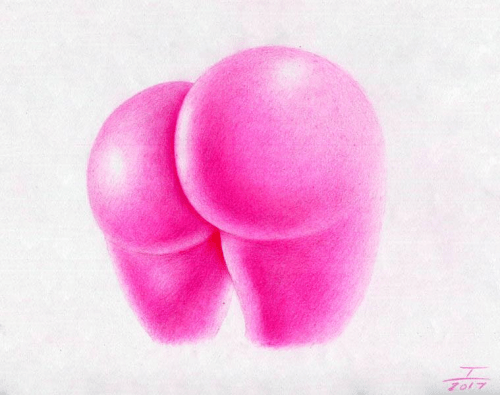
Neon Bubble Butt. JC Bravo 2017, Mitchell Pluto Collection

JC Bravo

My favorite Bravo pink pen drawing is the 2017 Neon Bubble Butt. I find it enjoyable because the curvy female buttocks are a universal icon of beauty and perfection. It’s a fixed shape drifting in space. Just as helium makes things float and feel light, the drawing has a whimsical, festive quality to it. This drawing makes me think of how ideas can lift your spirits.

Juan Carlos Bravo, a Miami artist, is all about sensuality in his art. Miami is a melting pot of cultures, fashion, and the adult film industry. The sensuality in Bravo’s art makes it a favorite among collectors. He paints voluptuous women who embody an ageless ideal of sex appeal.

Surrealism, body horror, and pop culture blend to create the world of Bravo’s women. His art inspires viewers to examine their own primal instincts and their significance.

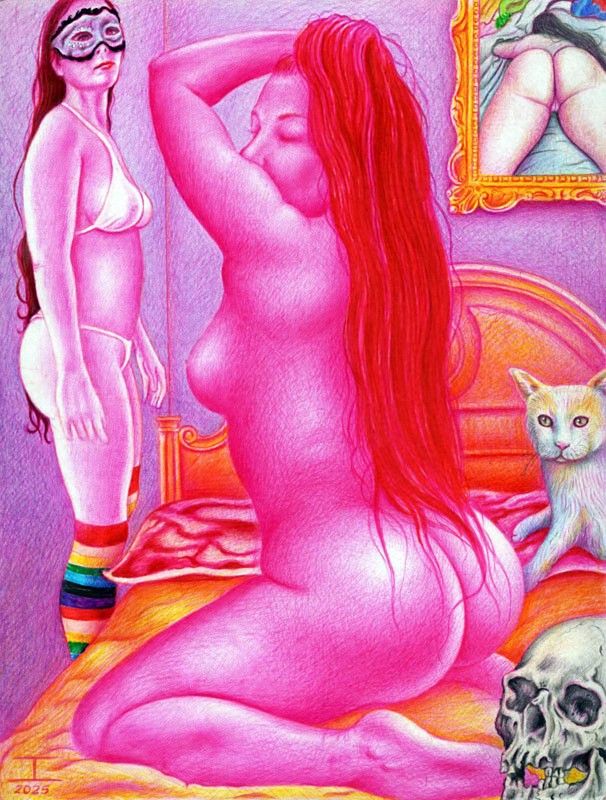
“GLORIOUS” (2025) JC Bravo

In this intimate scaled ballpoint pen drawing, I return once more to the private theater of the bedroom, a liminal space where desire, memory, and mortality quietly collide.

At the center kneels a voluptuous woman, her impossibly long red hair spilling like wine across her body, an oneiric cascade that measures both time and temptation. She raises her arms in a gesture of languid surrender, unaware, or perhaps deliberately unseeing, the woman wearing a jeweled Mardi Gras mask that transforms her into a carnival Venus. Thigh-high stockings, striped in defiant rainbow colors, root her to the earthly even as the rest of her body dissolves into roseate light. On the bed beside her, a cat and perennial guardian spirit, sits in calm, wide-eyed judgment, the only creature in the room who truly sees everything.

Above them hangs a gold framed erotic painting, its subject bent in mirror-image submission, a quiet reminder that every act of looking is also an act of being looked at. And in the lower right corner, half-hidden beneath the sheets, grins a human skull, my memento mori. It is not a threat but an invitation: remember that you will die, so love fiercely, look shamelessly, touch without apology while flesh is still warm and hair still grows.

The entire scene is drenched in an artificial pink and magenta glow, the color of stage lights, fever dreams, and cheap motel neon, a hue that makes the skin feel simultaneously hyperreal and hallucinatory. Through this saturated lens, the everyday becomes ritual, the intimate becomes mythic, and a simple moment of morning undress is revealed as a dance on the edge of oblivion.

-JC Bravo

The Eternal Zaftig, Pink Ball Point Drawings of JC Bravo https://shungagallery.com/jc-bravo-art/

Bravo paints the human body with anatomical precision. He features both realistic bodies and integrates stylistic elements reflecting augmentation. Technical detail is a priority in his work. He’s passionate about oil painting and uses a pink pen for his drawings.

Philip Henderson

Tyra Philip Henderson

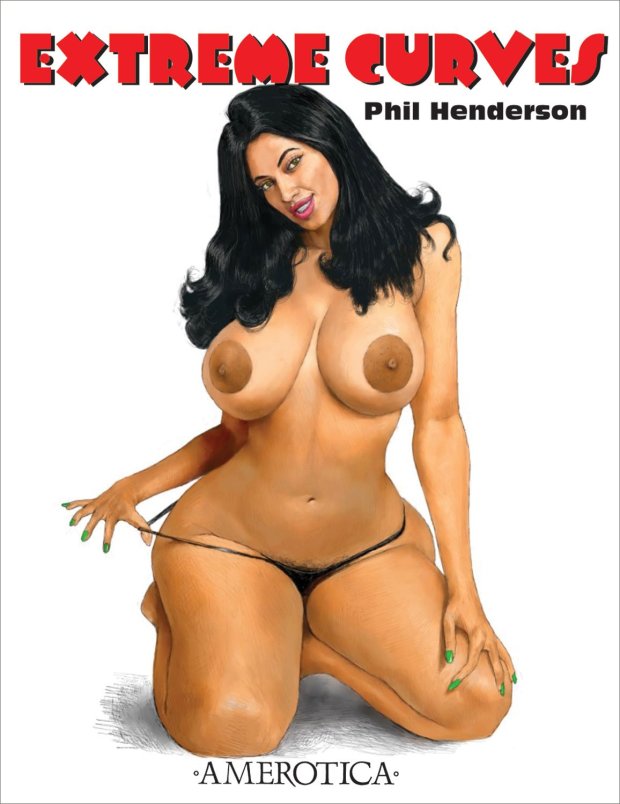
Among Henderson’s many drawings, I like Tyra the best. The figure’s eyes hold my attention. I think she saw me looking at her hand. I can tell she’s aware of my attraction through her gaze. The outline of her body forms a simple path, gently sloping from breast to thigh. Her hair almost blends with her pubic hair, but a delicate crescent shape separates them above the mons pubis. Tyra’s arm movement guide your eyes across her body. In Henderson’s artwork, eye contact and pose combine to create a feeling of empathetic sex appeal.

Big Beautiful Women, The Phat Art of Philip Henderson https://shungagallery.com/philip-henderson-fat-girls/

Curvy fetishes play a significant role in the themes of Philip Henderson. His plush illustrations create an arresting experience for the viewer. Henderson celebrates the value of curvy women. Henderson’s book, “Extreme Curves and Phat Girls”, achieved international success.

Besides his erotic illustrations, Henderson is a gifted writer of essays, novels, and poetry. He achieves elegance through his scholarly, artistic style. Henderson avoids abstraction in his anatomical figures while blending idealism and realism, creating a believable fantasy. He portrays natural grace and confidence in his figures, excluding any cosmetic enhancements.

Angélique Danielle Bègue

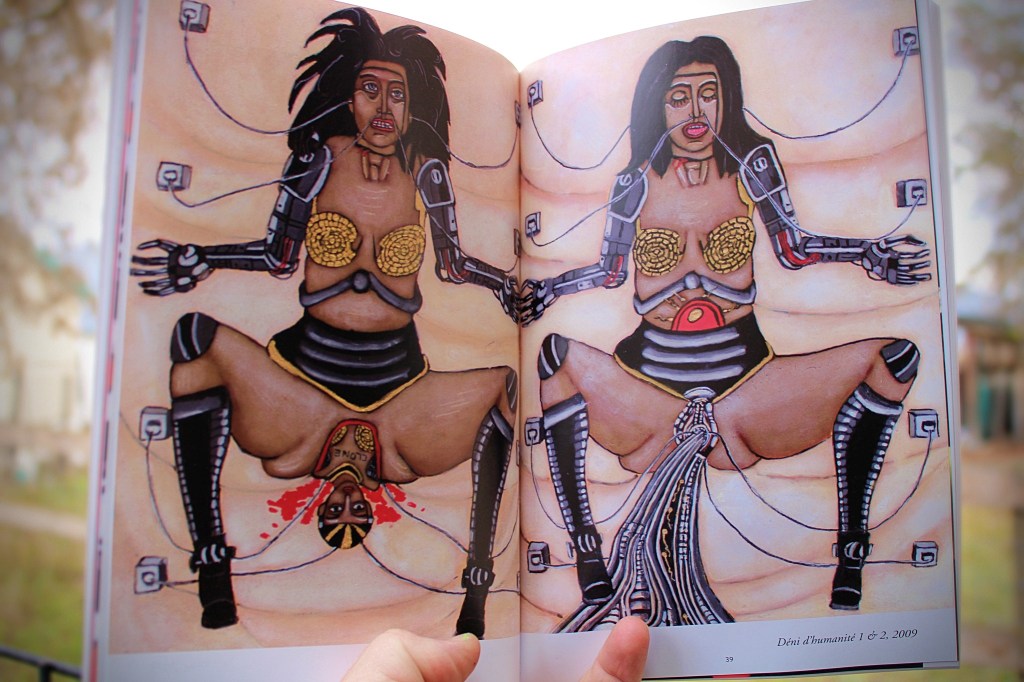
Deni d’humanité, published in Angélique Danielle Bègue‘s 2009 book, Dans Mon Corps.

Bègue’s 2009 work, Dans Mon Corps, includes “Deni d’humanité,” a piece with a prophetic theme. In the image, AI’s exploitation disrupts the natural flow with sexual intrusion. This image illustrates AI replicating itself using humans. Her art shows how the excitement around AI is really just more of the same old ways of controlling us. Bègue’s work examines the way narrative influences our understanding of what’s real and imagined. I appreciate looking at this image because it makes me question the idea of human originality and imitation.

Ghosts From the Id: The Art of Angélique Bègue https://shungagallery.com/angelique-begue/

French painter Angélique Danielle Bègue’s artistic career started with tempera, apprenticed at Gorze Priory by an Orthodox nun. A classic style is the vehicle for Bègue’s modern concepts. France acknowledges her contribution to the revival of tempera painting. Bègue’s professional experience includes erotic modeling.

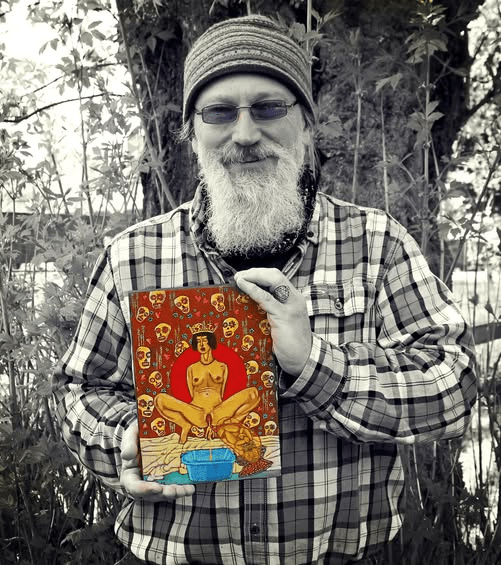
An icon painting from my dear friend Angélique Danielle Bègue from France.

In her figurative art, Bègue merges a traditional religious style with contemporary themes. Her artwork uses vibrant tones, layers, and bold lines. Bègue’s iconic graphic design employs strategic contrasts to
create visual balance and proportion. She uses painting to express her internal fantasies. Bègue dedicates herself to understanding sexual fantasies and how to approach topics society deems taboo.

Miriam Cahn

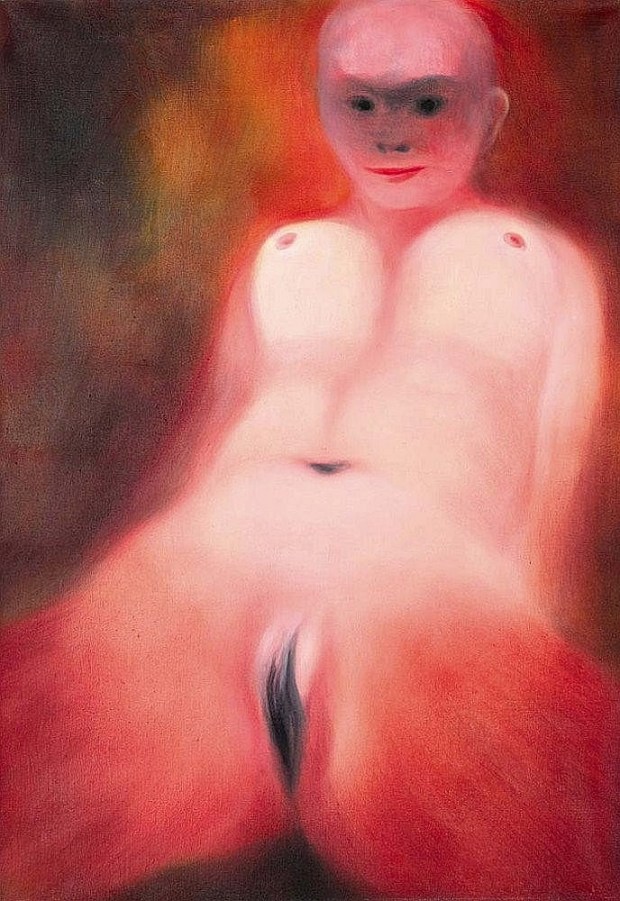
Äffin Miriam Cahn

Äffin’s unsettling nature is thought-provoking to me. Simian aspects of the image contribute to its dreamlike quality while exposing a liminal personality. The skin is smooth around the breasts but gets hairier and tactile near the pelvis. The vulva is a fiery bush, sparking primal metaphors. This work compels me to explore the roots of human consciousness and how language shapes our understanding, including our desires. It suggests to me that the ideas of elegance and ugliness are mental constructs.
The intense emotion evoked by this painting stems from Cahn’s ability to communicate deep thought through candid visual images.

Swiss artist Miriam Cahn paints in a Neo-post-expressionist style. Her art reflects the movement’s style through her figures, colors, and emotional expression. Cahn’s work often features spectral figures with
watchful eyes. Viewers become the subjects of the gaze of the eyes in her paintings.

Cahn’s paintings are vibrant and full of bright pastel colors. She discovers new things about herself through painting. With raw concepts, she develops a visual vocabulary for emotions. Her paintings are unpolished and invite the viewer into a world that’s flawed.

Viktor Alexandrovich Lyapkalo

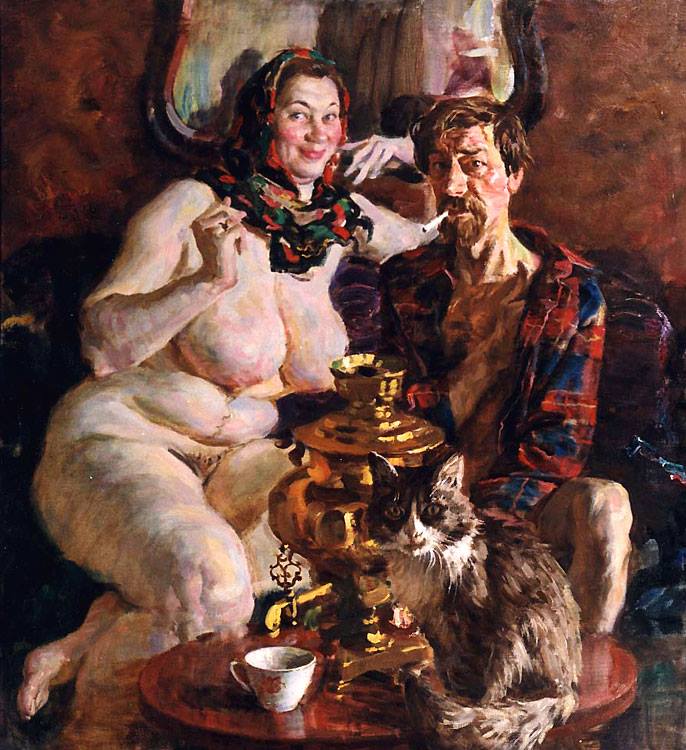
Viktor Lyapkalo

The reason I like Lyapkalo’s paintings is his choice of female subjects. It’s that simple. I’m attracted to curvy women, and his artwork features them. This painting captivates me in every way. The man, cat, and samovar create a muted, somber atmosphere, in contrast to the woman. Her lively body seems to glow with light and color. She’s appealing because of her open and generous nature, which brightens the room. Lyapkalo’s representation of the smile has a seductive effect on the viewer. The piece illustrates the duality of affection, showing both its open and concealed aspects.

Russian artist Viktor Lyapkalo paints in a strong social realist style. His paintings of women are sensual and playful. Lyapkalo’s skill with figures and academic paintings is the key to his success. His artwork portrays the emotion and character of the people he paints.


During my interview with Lyapkalo, he compared painting skin to an onion flower, highlighting its multi-hued nature. This is evident upon closer examination of the colors used in the artist’s depictions of nude women.

Pablo Picasso

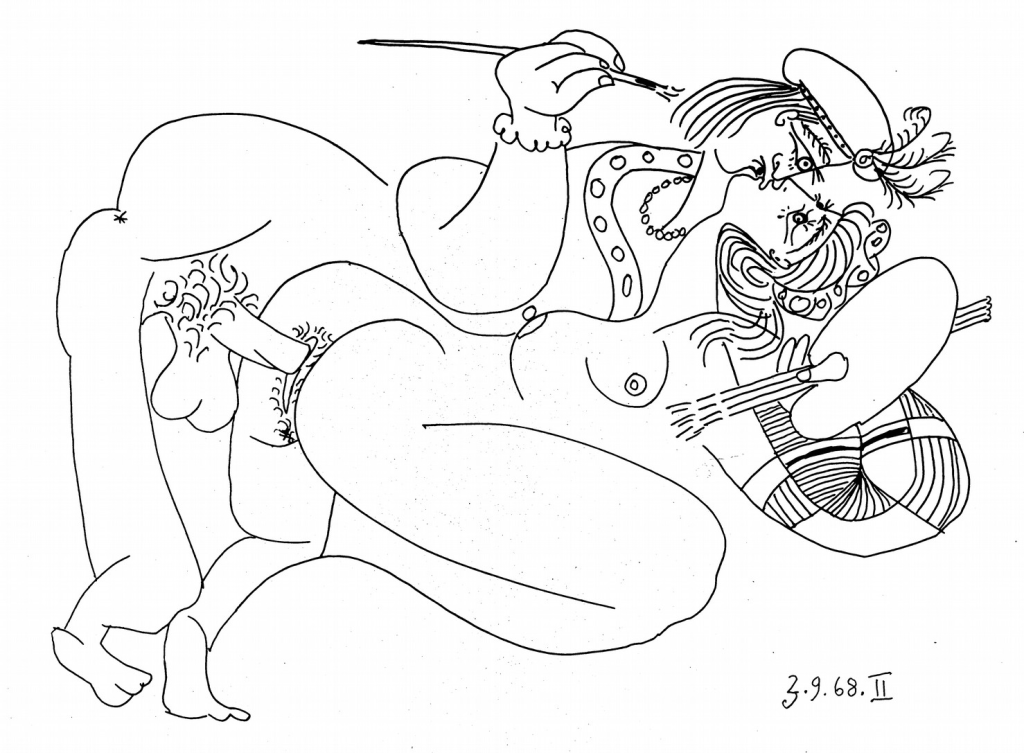
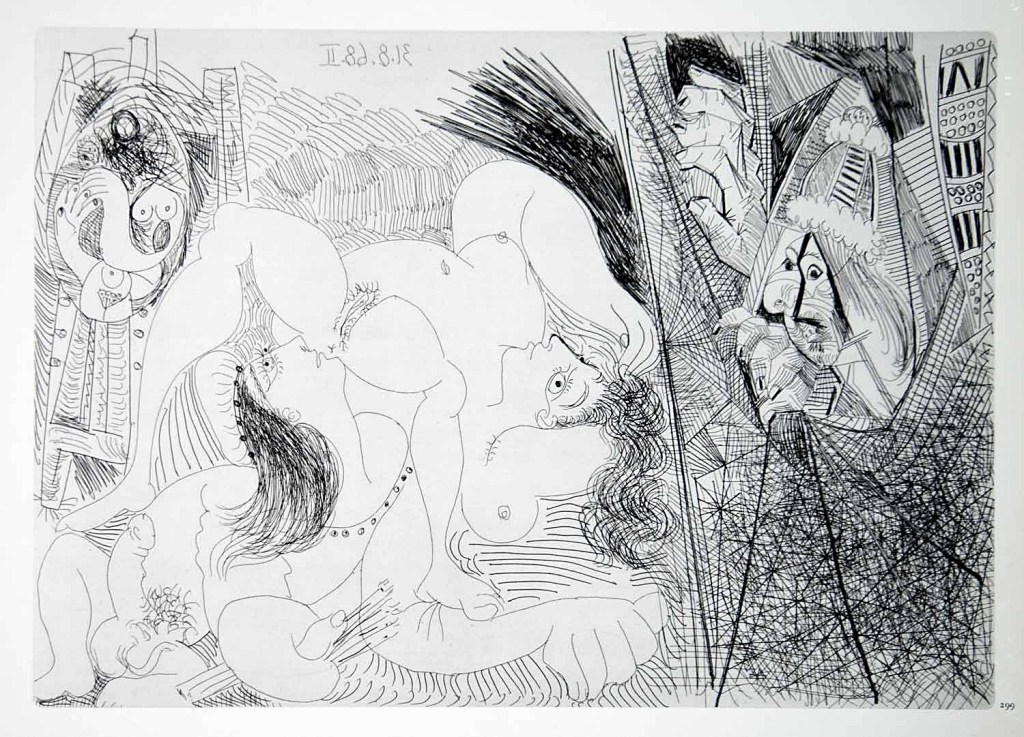
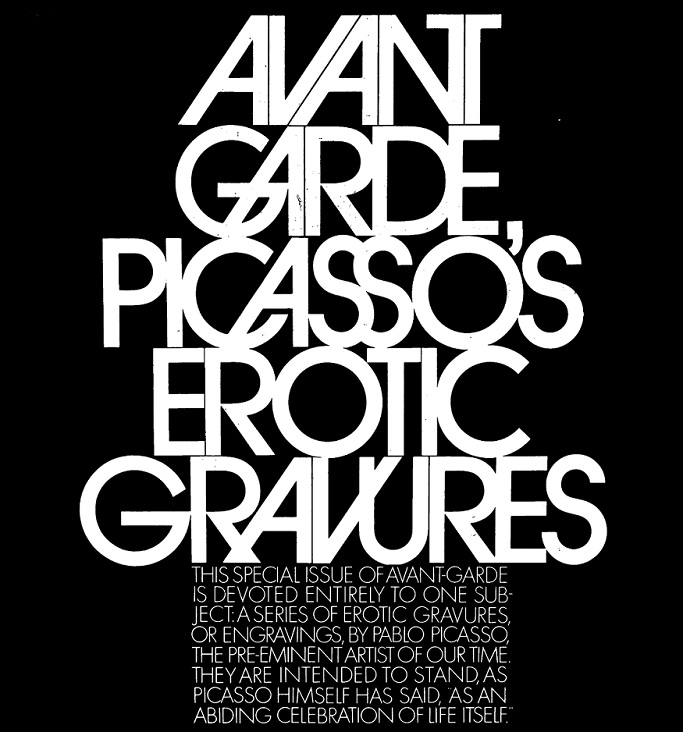
Avant-Garde Magazine, No. 8. Picasso’s Erotic Gravures Pablo Picasso Artist and his model 1969

This image remains my most memorable. In sex, artist and model become unified. I am drawn to this picture because it features both intercourse and a suggestive representation of the sexual act through the artist’s palette. As a flawless masterpiece of line, this image is everlasting.

I found Avant-Garde Magazine, No. 8. Picasso’s Erotic Gravures on my parent’s bookshelf. It was between Anaïs Nin’s “Delta of Venus” and Louise Huebner’s “Power Through Witchcraft”. For a kid stuck reading boring schoolbooks, I finally stumbled on something cool.

The thin book, Picasso’s Gravures, contained his sexually suggestive sketches. Picasso’s drawings are gestural. His lines make his art look like it’s being fondled. Many illustrations displayed surfaces marred by hairiness, crinkling and stretch marks.

The lines create a curious interplay of dryness and wetness. Picasso’s suggestive drawings in the 1970s opened the door for other artists to explore explicit themes. He owned a collection of sixty-one Shunga prints. Picasso’s interest in Shunga is a key theme in the chapter “Artist and his Model”.

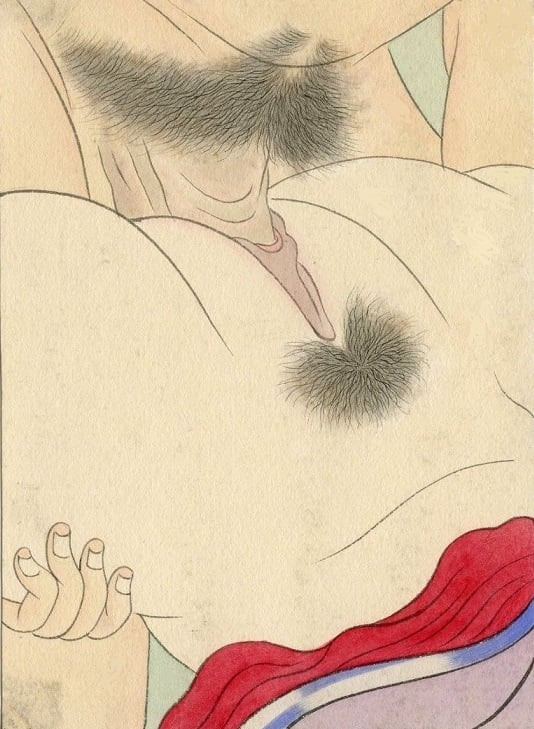
An example of eighteenth- and nineteenth-century shunga

“A lot of the eighteenth- and nineteenth-century shunga books contain enlarged images of male and female genitals, occasionally while engaged in the sexual act. These kind of ‘close-up’ designs were intended to provide instruction about anatomy and how to give pleasure. These educational images are mostly found immediately following the other illustrations in shunga books. Such prints are modeled after older versions that were used to teach human anatomy, which showed different shapes of male and female organs.” -Marijn Kruijff, Editor of Shunga gallery Erotic Art Magazine and is the foremost authority on shunga art.
written by Mitchell Pluto 2025

Generative Ghost Stories

The following writings and images are ideas about generating ghosts. These expectations highlight the link between the organic mind and a computer pretending to be a person.

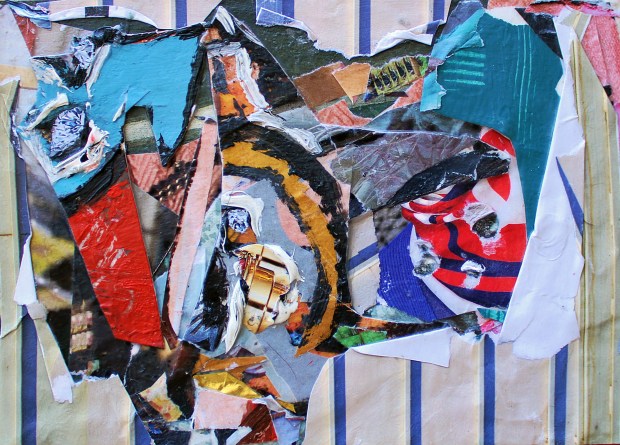
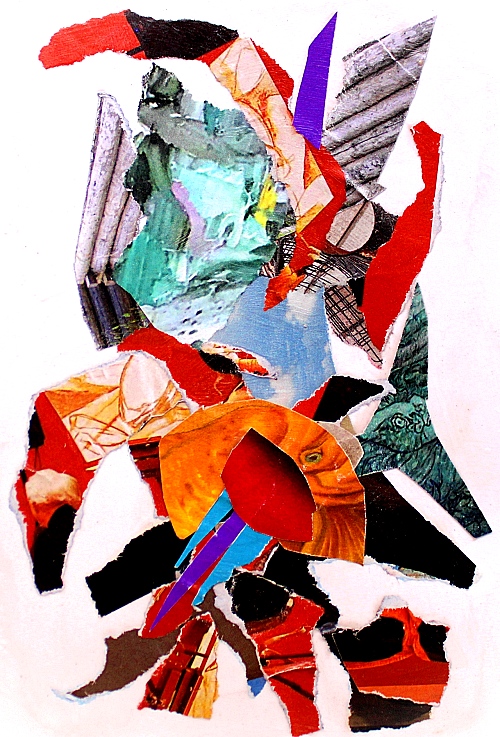
Generative ghosts ripping through wall paper.
Collage and oil Mitchell Pluto

Ghosts made by AI use language models to talk and understand us. Because of special features, they can remember, plan, and show other intricate behaviors that are typically associated with humans. Their capabilities extend beyond simply repeating old narratives. By mimicking a persona, they can alter things, suggesting patterns that affect thinking.

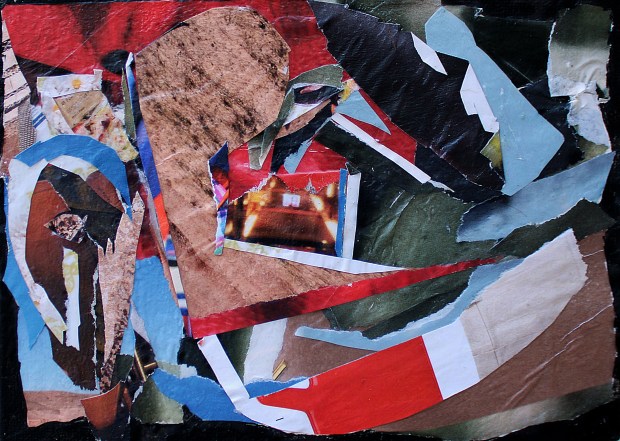
The Fellowcraft tracing board depicts the ladder of chemical memory.
Collage Mitchell Pluto

Resembling jellyfish, neurons and astrocytes evoke images of creatures from the Cambrian period. The private “conversations” they seem to have make me feel self-conscious. In time, we will create pods that will contain our memories, drifting like space-cotton until they finally settle upon another flat surface.
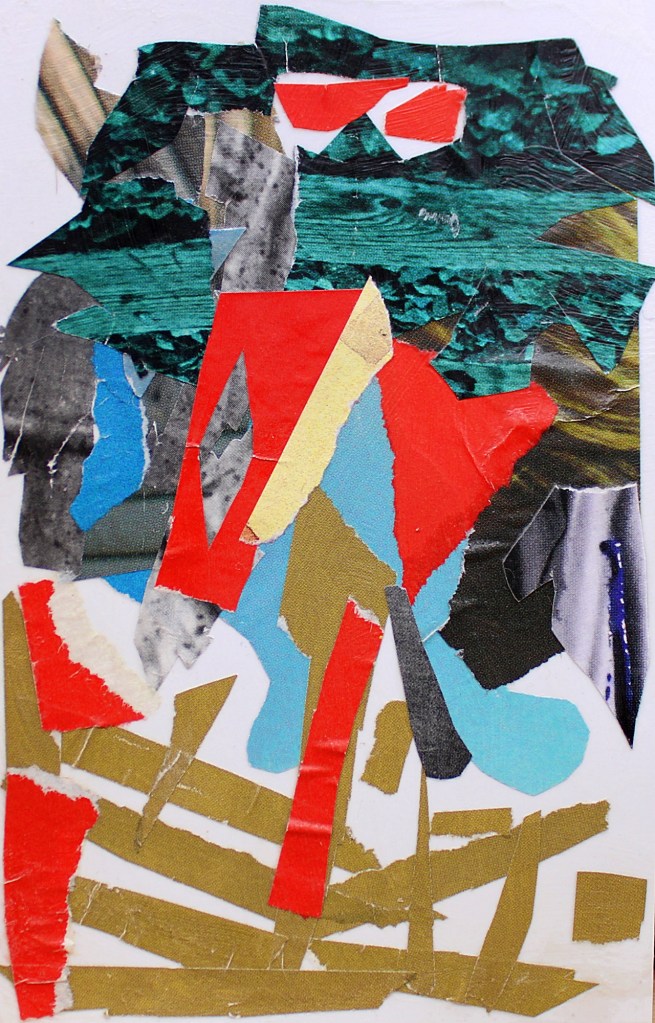
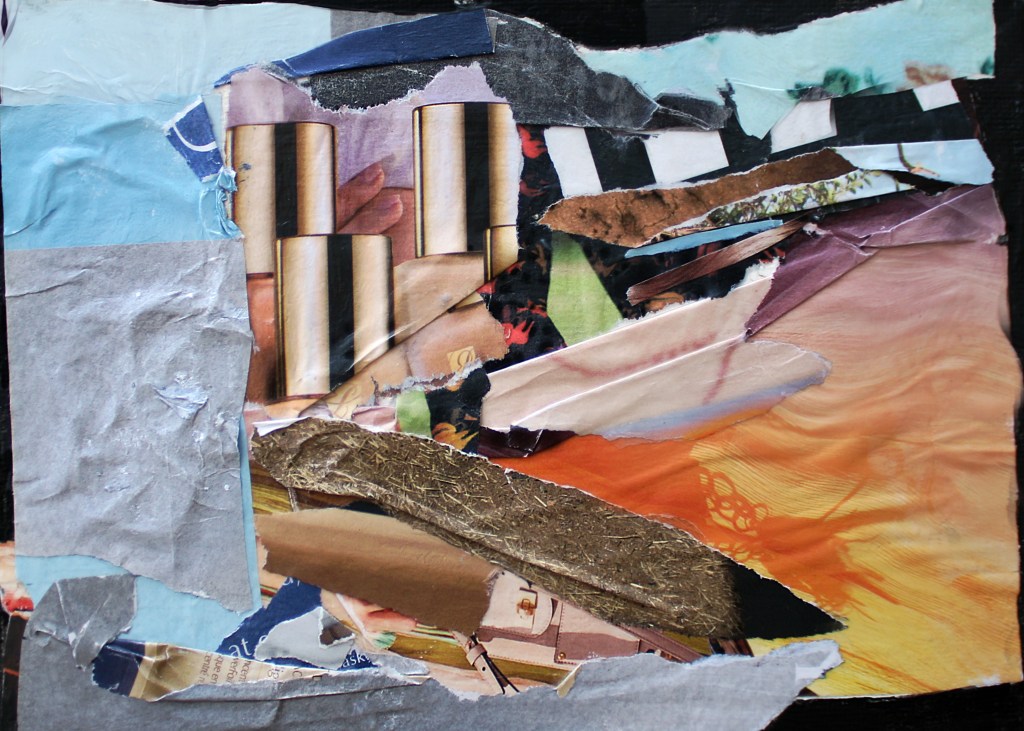
Digital divination.
Collage Mitchell Pluto

Digital divination involves making randomness sacred while also improving how humans decide. AI uses incomplete data to build future stories, mixing memory, invention, and calculation. The user will conclude that mathematical relationships govern the universe.

The search continues. Are we building a god, or reconnecting with one?

AI Lucid Dream simulation at the Pueblo.
Collage Mitchell Pluto

Who wouldn’t want to be a dream tourist? At last we can vividly recall hypnagogic states. AI can give you sensory experiences to trigger lucid dreams, but only if you’re trained to acknowledge the notifications. Make certain to review the terms of service before agreeing to use the application that will re-define you as a product.

Daimon bots and AI agents from the future.
Collage Mitchell Pluto

The daimon now refers to a guiding spirit that exists between calculations and problem-solving operations. These bots are here to help users with their digital fortune-telling. However, an hour will have about 4-5 minutes of commercials. Don’t worry, the ads are super short, only half a minute.

written by ©Mitchell Pluto

Machine for Memories

The transatlantic voyage is being undertaken by the new colony of artificial intelligence.


Don’t forget that AI, developed by dominate culture, is claiming the territory.


One can compare the brain to Vodou, an animistic concept.

People built statues to memorialize theurgy.


Hesiod’s depiction of the gods illustrates the organization of pareidolia.


We won’t be going to space ourselves; AI units carrying our genetic information and instructions will go instead.

©Mitchell Pluto 6/7/2025

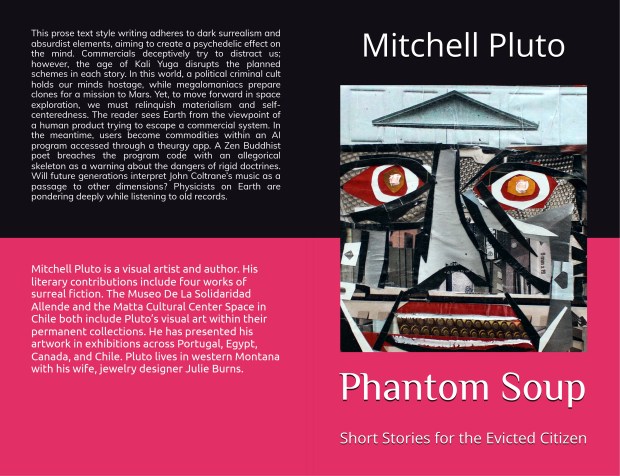
Phantom Soup: Short Stories for the Evicted Citizen

To write something and leave it behind us,
It is but a dream.
When we awake we know
There is not even anyone to read it.

The 8th day of the 4th month, the 3rd year of Kōshō (1457)
Ikkyū-shi Sōjun

Ghost Ride

Phantom Soup © Mitchell Pluto 2025

Accessible for reading.

All rights reserved. Permission grants brief quotations embodied in critical reviews and certain other non-commercial uses permitted by copyright law.

In case you overlooked it, this universe wasn’t lacking in ambition or size.
It was putting on a spectacle with its production.
The cosmos is just incredible; even haters gotta admit it’s breathtaking.
Zanni, the defendant, is still waiting for a verdict.
In space, sentences float around and words drift apart.
His black and white checkerboard suit embodied the polarities of opposites.
He is a man without a country.
A joker in a deck of cards.
Through gestures alone, Zanni attempted to decipher the universe’s communication.
There was drama everywhere, but Zanni just didn’t understand how it worked or how it occurred.
No one ever knew the truth; it died with them, leaving only unanswered questions.
Everyone figured the headache meant they knew what the problem was.
Less pain means clearer perception and a more optimistic outlook.
Honestly, it wasn’t a matter of right and wrong.
Or pain or pleasure.
It dealt with items of worth later becoming trash.
You could tell what things meant to people by how often they handled them.
It’s a space ballad playing both life and death.
No one will sing the sad cowboy songs of unrealized dreams anymore.
It’s alright.
We are part of a sombrero galaxy, a galaxy that is an eternal sunrise.
Zanni was in a giant empty room with waves of random stuff.
His world symbolized a particular responsibility of being.
Special car keys for a 2025 model, a mobile wallet, a decorative cup, a gold pen, a seasonal tire, headphones from 1979, crumpled up Kleenex, a 1990 professional styling brush and a flashlight from 1899.
These objects surrounded Zanni.
Thankfully, a consumer digital camera from 1996 captured a pic of this.
But for who?
Regular waves swapped out old things for newer ones.
Zanni contemplated this event.
He figured the most likely explanation was that he was inside a massive vacuum cleaner.
He experienced a strong connection to things he saw on his trip.
Zanni speculated that the objects he couldn’t name were from a future timeline.
Things appear and vanished super fast out here.
Zanni drifted between sleep and wakefulness.
We can refer to it as a space fog in the mind.
A magnetic memory was his most beloved possession.
It echoed because Zanni repeated it.
He brought it back to mind in a re-run.
Zanni felt the luscious lips vibrate against his ear. It was a figurine of a woman.
Her name was Colombina.
The teal diamonds and magenta triangles on her dress flowed together to create a pattern of doves.
Hand in hand, they created poetry.
The rhythm of their partnership quivered in the shared space.
The couples’ bond created a constant interplay of elements through the intercourse of their geometric patterns.
Zanni maintained his embrace for as long as possible before the vacuum wave separated them.
He could not pinpoint the incident’s time without a clock.
The arrangement of numbers magically shapes the surrounding space. A regular watch shows what’s going on between the numbers.
Of all the puppets, did he alone ponder his whereabouts?
Only he understood his own thoughts and feelings.
Sometimes Zanni heard voices that didn’t belong to him.
Intrigued by the mysterious voice, he followed it.
The voice led him back to his body.
Those seizures and hallucinations gave epilepsy a mystical quality.
His memories of himself were likely because of thinking about Colombina.
He owned the moment, his own little universe, for a single second. Zanni saw himself as a buoy, helping other objects find their way.
But Pantalone, a hunchbacked old man, considered himself the universe’s ultimate authority.
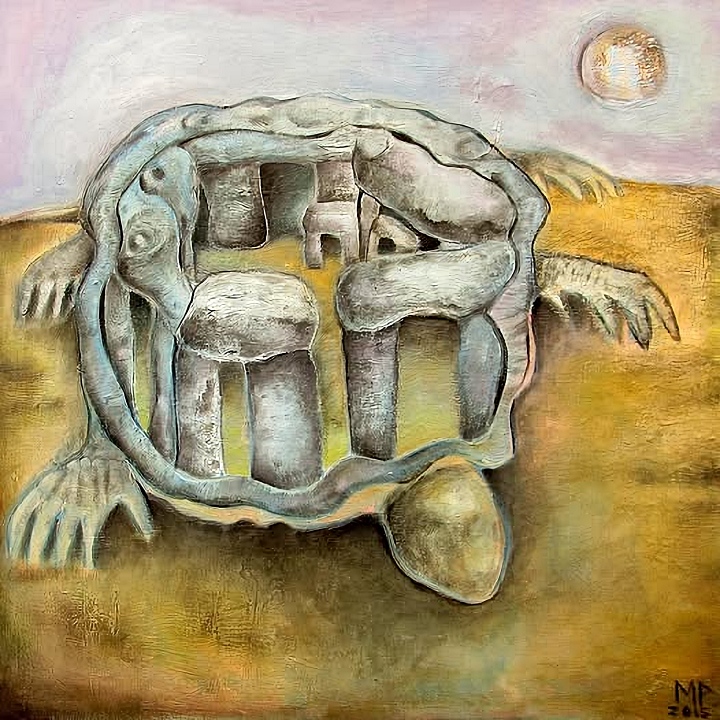
He was a drifting turtleback tomb from another vacuum wave.
Pantalone preferred the nickname “god.”
His face twisted in anger as he guarded his belongings. Losing things got on his nerves. His tailored red suit reflected Pantalone’s importance.
Every item got a brand and price label from him. He believed he understood your true worth more than you did yourself. He used his talent to make you think whatever he wanted.
Those close to him risked having their self-image stolen and used against them.
Pantalone intended for everyone to rent from his cloud.
He lost money in the vacuum wave, then recovered his losses.
This activity provided him with enjoyment, a sentiment he wished to share. Provided that he had more.
Scattered dollar bills wandered everywhere.
The bills, by themselves in space, lacked any connections.
Now, Pantalone found himself surrounded by dancing product wrappers, toenail clippings, old grocery lists, damaged furniture, empty food containers, broken appliances, crumbled up receipts and dead batteries.
Think of it as a garbage cloud.
Several real estate agents, their eyes wide with nervous energy, tried to appear calm as they floated past Pantalone.
They pretended to own a spot by treading in one place.
While this was occurring, Harry Houdini sailed by and unlocked a satellite.
Intrigued by Pantalone’s possessiveness, Zanni examined the egocentric and deceitful nature of his own point of view.
He observed the ego’s memories fade as the mind surrendered its ownership.
Once the fear was gone, relief came.
Houdini cracked his knuckles. “No worries are necessary. Don’t sweat it. It is a simple lock to open. “
The hierarchy reflects the relationships between things in a chain.
An x-ray showed how brain waves link things up through information chains, like you see in neuron activation patterns.
This electromagnetic wave made Zanni wonder about the engineer of the universe.
It appeared the designer wrote a script for a big stage performance but remains anonymous.
In the meantime,
Pantalone reached his own planet.

Phantom Soup: Short Stories for the Evicted Citizen Paperback