Transferencia de Memorias
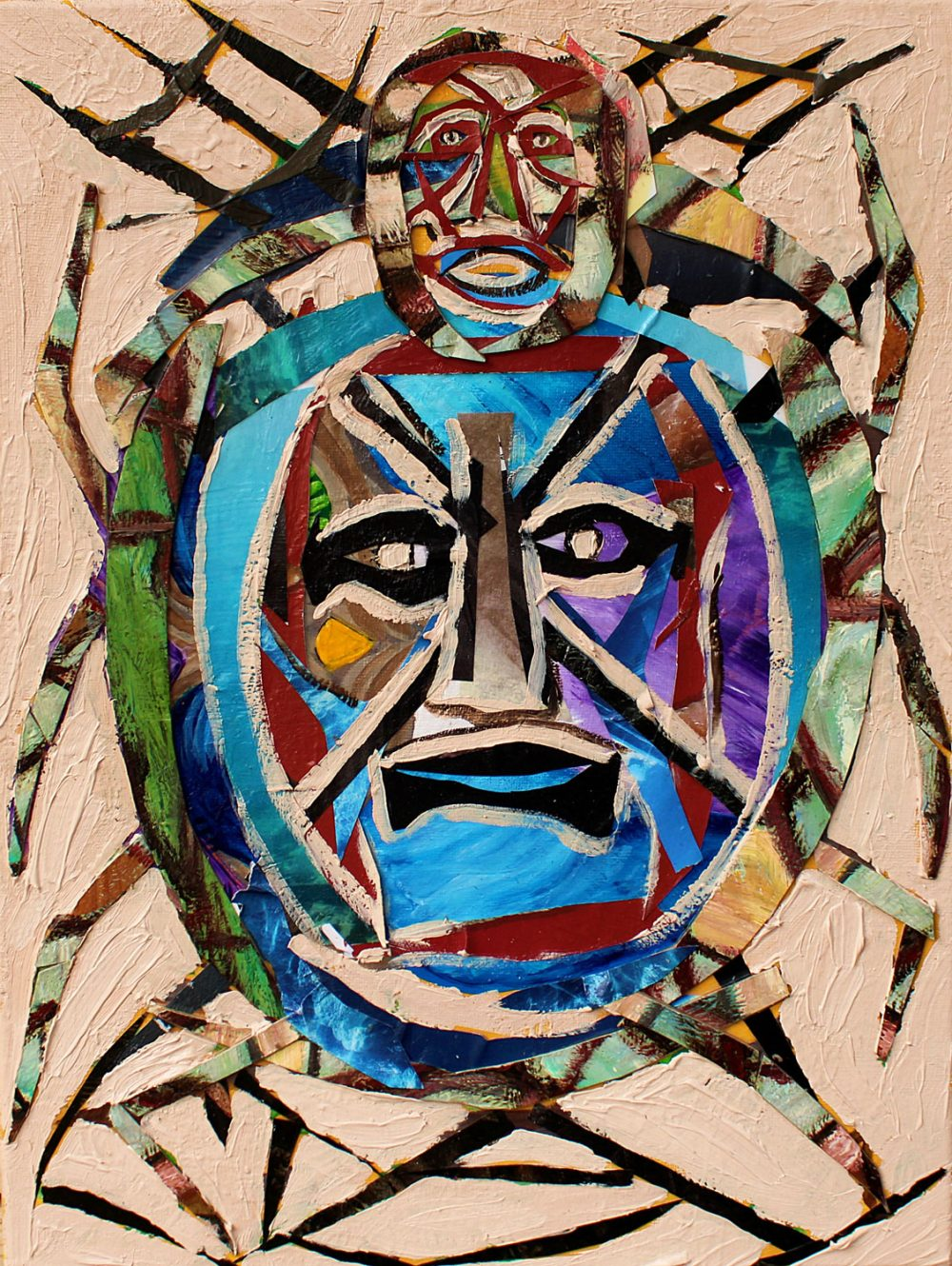
From The Eclipse © Mitchell Pluto 2024 Séance channeling memory transfers. Espiral en el Estuco © Mitchell Pluto 2025 Transferencia de Memorias
In early June, the sky was clear and the temperature was pleasant. Tom and Sarah Anderson came across a metal tower while hiking in the Lolo National Forest.
The object’s Gothic style stood out as they approached. Seeing it brought back memories of their honeymoon trip to Chartres Cathedral.
The couple assumed the installation was someone’s art project or an exhibit at the University of Montana. The sight was unusual. There was a black circular window high up, near the top of the bell tower.
The tower emitted an extraordinary spectrum, encompassing all shades of blue and green.
3,500 kilometers away, a small gathering met at the United States Capitol. Attendance was by special invitation only.
Elijah Booker and his friend Alvaro, a man of abnormally short stature, arrived punctually. They entered the room and attracted a lot of attention. Booker, a large, Black man, always stood out in a room full of white men.
Alvaro had previous experience in the company. He knew the purpose of the invitation. Alvaro was albino and his alias was white dwarf. His main function was to use his mentalist ability to influence and dismantle cults. He possessed an innate ability to influence and alter opinions and beliefs.
On the screen, taken from a popular social media video, several recorded witness statements were shown. An older man, standing next to his wife, described the encounter with the intelligent light as best he could next to a strange tower. With deliberate and concise gestures, his wife explained the same thing, but in more detail.
Booker assumed he was the keynote speaker invited to talk about the future effects of permafrost.
The focus was personnel selection, not Booker’s research. Elijah Booker was the world’s foremost parasitologist. He researched extensively and wrote informative books on toxoplasmosis, a brain parasite. Elijah worked with international scientists. The Bureau of Globe Research in Alaska, where he lived with his wife and daughter, housed a broad research panel on prehistoric pathologies. Booker’s research caught the government’s attention.
Booker’s specialty did not include cosmic rays. He had heard of them and knew they were unstable, but nothing more. Cosmic rays sometimes interfered with belief systems, sometimes caused hallucinations, or enhanced brain patterns in unique ways.
The U.S. Intelligence Service considered ideologies to be mild hallucinations and was intrigued by the effects of cosmic rays on the brain.
The U.S. agency selected experts in direct observation.
The department was aware of Booker’s private life.
They knew of Booker’s Buddhist practice and his hobbies, which included listening to jazz and researching the occult.
Booker and Alvaro boarded a plane within a few hours. The private pilot, a native of Montana, had a great time. Alvaro taught him numerous dirty jokes for a total of six hours. This gave Booker time to read reports on cosmic rays.
According to government research, different rays posed varying levels of danger.
A jeep with tinted windows was waiting for them at the airport.
They soon reached the mysterious object. The Forest Service managed the situation, giving it a normal appearance to the naked eye.
Antennas, tents, and tall Douglas fir trees surrounded the 70-foot bell tower. The building’s structure possessed a beautiful style. The scene reminded Booker of a surreal landscape, something Bosch might have built.
He took a photo with his phone and recorded a video, documenting the luminosity of the fading colors.
Álvaro tugged at his pants and pointed to a tent. A young woman, about the age of Booker’s daughter, was holding a tablet like a clipboard.
Frauke Brunhilde introduced herself. Her black nails, black shawl, and tight leggings gave off a countercultural air. She was a genius in the German Federal Intelligence Service. She was a forensic chemist and radiological technologist.
Booker inquired about Frauke’s findings and knowledge.
Frauke showed him a live feed from a radiation-resistant camera. A vertical line of light aligned with the top of the bell tower. He speculated that the beam provided a transmission that might correspond to a conscious entity. Frauke discussed the fluctuating visibility of the light. She said that in Europe, cosmic rays are everywhere. Frauke said people believed they caused poltergeists and produced other strange effects.
Throughout history, ancient peoples used stones and statues to mark power points. Indigenous Europeans wore conical hats, such as the Golden Hat of Schifferstadt, to tune into cosmic rays.
Frauke proposed that primitive peoples tuned into radio stations in space. Mysteries associated with cosmic rays included encounters with fairies, aliens, angels, or even people who disappeared without a trace.
Booker wondered if these disappearances were due to dangerous rays that triggered aggressive progeria, a disease that accelerates aging. This cosmic ray posed no such danger. Frauke mentioned an article published by German scientists in The New Nature Journal, which argued that time is a moment that has already passed.
According to Frauke, the article suggests that UFOs are future apparitions investigating the present.
Booker wondered: Who was shaping the future from the past?
In the report he read on the plane, some anthropologists in the southeastern United States theorized that cosmic rays were attracted by unicursal patterns, but also expressed themselves to humans in diagonal or zigzag patterns. Frauke mentioned geometry as a method for communicating with unknown intelligences.
Booker noted that Frauke’s explanations had a mystical undertone, and he knew she was speaking of magic.
Frauke inspired Booker to reflect more carefully on the unintended consequences of cosmic ray-induced hallucinations. Most of the knowledge discovered turned out to contradict his beliefs, something he was prepared for.
The next day, scaffolding surrounded the tower.
Booker spoke to the welder. The man said he hadn’t been able to burn a hole with a blowtorch.
Incineration also didn’t work on the top window, which the worker described as Jell-O. His partner punctured a sandwich with stainless steel tweezers in the Jell-O. Nothing happened to the sandwich. The puncture filled and healed itself.
Booker walked toward the main tent.
Alvaro reclined on Frauke’s lap. They seemed to be having a good conversation. Frauke chuckled. Booker told Alvaro and Frauke to prepare to enter the object.
The unit gathered what they needed. Booker hooked Alvaro to his belt like a weapon. Frauke slung a backpack over her shoulders as if she were spending a week in Glacier Park. Frauke put on her headphones and began climbing. Booker braced one hand and one foot on the scaffolding, the tips digging into the ground, as he slowly ascended to the upper platform.
Standing near the most enigmatic and sinister feature of the building, the three gazed up at the large black window.
The surface was obsidian, with a thick, gelatinous texture. Due to its unknown elemental nature, they were unable to separate the gel into samples. Frauke, using her scanner, surmised that it was an iron mordant containing extraterrestrial gelatin. The window also contained a low- to medium-fluctuation radioactive ray, known to cause hallucinations, according to the scanner. Booker hoped that, as they approached the cosmic ray, they would all experience an LSD-like experience.
Without any prompting, Álvaro dipped his hand into the substance.
It was the temperature of a warm bath.
Booker quickly glanced at Álvaro.
He removed his hand from the gel, waggling his fingers toward Booker and Frauke to demonstrate that God was luck.
The group sat for an hour discussing hypothetical possibilities, including personality changes and brushes with death.
Álvaro lived by the motto: to embody the god of things as they should be. To be the force of humor in every passing horror. Frauke, enchanted by Álvaro, agreed.
Frauke put her headphones back on. The music turned up. Booker hooked Álvaro back onto his belt and held Frauke’s hand. Booker didn’t want her to wander off alone in the oozing gel. He felt responsible for all of them. Booker placed a camouflage bandana over his nose and mouth. He breathed and closed his eyes. Frauke tugged at his hand.
The first step into the gel was similar to stepping into a deep pool without firm footing. Each movement created an unpleasant sucking sound. The absolute darkness unleashed a wave of fear. A surge of adrenaline flooded Booker’s bloodstream, testing everything he had learned from Buddhism. With a concentrated effort, he maintained his upright posture, stepping into the dense gel with one arm. The suction made movement difficult.
Booker could now identify with the five clinging aggregates of Buddhism.
It became a direct experience. The aggregates — form, sense, perception, and external forces — environmentally influence the mind.
Booker felt a predatory presence. An obsessive, superstitious belief overwhelmed his mind as he struggled to penetrate the bottomless gel.
Suddenly, Booker had a clear view of his own brain. He could see his amygdala working overtime. The pressure on the insular cortex made him imagine the worst possible scenarios, including an imaginary predator chasing him.
However, there was no malevolent morphic resonance present, only a confined space. His own fear divided and attacked every facet of his mind. The narrating brain identified its observer function as an intruder.
A strong auditory memory told Booker not to panic. A Nyingma master at a Buddhist retreat advised him to accept the discomfort and practice gratitude.
This precious memory became clearer and more fundamental to his resistance.
Booker imagined seeing the Khenpo floating on his back, effortlessly performing backstrokes in a slimy jelly.
Another vivid memory resurfaced. Years ago, his few sessions with Stanislav Grof helped Booker relive his earliest memories of being suspended in a possessive womb. He recognized that birth brings with it a subconscious sense of abandonment for everyone.
This caused humanity to misinterpret birth as a definitive isolation and desertion.
All of this originated in the maternal body’s rejection of the newborn as if it were excrement. Generation after generation, this confusion projected contempt for the feminine and nature.
Booker could see his thoughts as images. He saw the unjust and unconscious representations that dominated historical records.
The central idea emerged as the ambition to replace the mother with an artificial mechanism. This would foster the construction of an industrialized, parasitic world devoid of empathy.
Booker wished he had headphones.
Music would make it easier. He imagined John Coltrane’s “One Up, One Down .” He had listened to the album often, at the cost of exhausting his wife’s patience. Today, it helped him remember it. The saxophone arrangement conquered fear. Booker knew that Coltrane understood the patterns of a constantly changing self. A self free of history and objects.
One conclusion became clear: time and space will never have a central authority.
The attempt to even imagine sensations beyond the end proved to be a vain and imputed illusion.
Death existed as a phase that passed like everything else.
Why pretend we knew this?
We shared the same fate. We would cease to exist without knowing what death was.
The tension dissolved and the jelly transformed into a thick fog. With his free hand, Booker reached for Álvaro, patting him on the face. He looked at Frauke. He saw her silhouette. Frauke turned to Booker, took off one of her headphones blasting, and smiled.
Booker asked, “What got you through the jelly?”
Frauke nodded to the beat: “Huh? Yeah! It’s an American band called The Doors , The Other Side , yeah, they’re good!”
The cosmic ray transformed the tip of the bell tower into a reactive vanishing point. This produced a carnival-like hall of mirrors effect. Booker, Frauke, and Álvaro occupied that space between the parallel lines of the cosmic ray. The room resembled a virtual infinite hallway with a ledge. Colors cascaded down the cosmic ray.
Frauke’s gaze caught something in the swift wave of light. She spoke, describing what she saw as it manifested in Álvaro and Booker’s minds.
A spinning triangle reflecting brilliant light transformed into crystal. At each corner, the numbers 3, 6, and 9 materialized. From the center of the triangle, sparks erupted, forging a nude female figure with hair down to her feet. A deep red and white glow caught her attention.
“She can see us,” Frauke said.
The woman spoke echoey. She gave her name as Mitzi Orssich. Mitzi said she was broadcasting from a live 1920 séance in Austria. The chatty ghost said she represented the Viril Society.
Mitzi demanded information from the future to help build a temporal vehicle. Mitzi possessed sternness, while her flawless figure projected an incredible image. She was a magnetic and exciting archetype who could raise blood pressure and induce a firm salute .
This woman’s body possessed a truly divine craftsmanship, an image that neither eats, defecates, nor ages.
Booker reflected.
She fit the bill: blonde hair, blue eyes. The graceful elements resembled the Christkindel.
But why didn’t this woman take over as Germany’s leader in the 1930s?
Mitzi spoke English very well.
Booker recalled researching the Vril Society, which emerged as a 19th-century work of fiction by the English writer Ed Lytton.
Booker realized they were tapping into a projection of Frauke’s subconscious.
Mitzi was, in effect, a literary phantasm forged from a pseudo-story.
He looked at Frauke, who remained staring.
Booker speculated through his online queries and research; Frauke gained powerful impressions from what she read.
Álvaro’s face was simply a huge smile with tiny hands and feet.
Booker interrupted Frauke’s trance and appropriated the cosmic ray, projecting abstract expressionist ideas onto it. He enjoyed this art movement and understood its significance. He was open in sharing his observation of vivid brushstrokes.
Booker gently guided the hallucinatory influence away from the National Socialist art style toward a more universal and abstract variety. It was art without a human figure.
Wonderful and exciting non-figurative patterns formed from the center of the cosmic ray. The variety of designs lacked strict cultural ideologies, which brought Frauke out of her trance.
The cosmic ray inspired Alvaro to create a complex algorithm based on his interest in spiders.
Mitzi’s impression triggered unexpected associations that took a mutated form.
Web strings connected a spider puppet to the spinning chemical brain in Alvaro’s vision.
Frauke saw it as a fusion, creating one puppet within another.
Booker interpreted Alvaro’s vision of the spider as a portable DNA capsule capable of flying through space.
Small cubes appeared on a spinning belt in another future. The webs were coordinates, guided by a chemical brain inside a metallic spider.
Booker, Frauke, and Alvaro huddled in a triangle in front of towering Douglas fir trees. They were gone for three days and reappeared five miles from where they had disappeared. There was no alien tower there. A man named Warren found them while patrolling the forest. The cosmic ray information was useful.
US intelligence took statements from Booker, Frauke, and Alvaro.
Engineers, chemists, and physicists collaborated to design a new space vehicle with a chemical brain.
A few months later, the spider-like object would fulfill a panspermia mission. The space spiders, called Anansi Capsules, would aim to find habitable planets to modify human DNA and enable life in an extraterrestrial environment.
The Anansi Capsule was an 8-foot-tall mobile figure with eight appendages for hand tools.
After descending, the capsule would unfold into a complex 16-foot laboratory.
The Anansi Capsule would manufacture and raise two biological beings for several generations.
It is unknown whether the new offspring would preserve or understand their origins, but they could be alive to continue exploring space.
A few months after visiting Montana, someone mysteriously provided a grant to de-extinct the woolly mammoth and thus include it in Booker’s future project.
Writing and Art All Rights Reserved © Mitchell Pluto
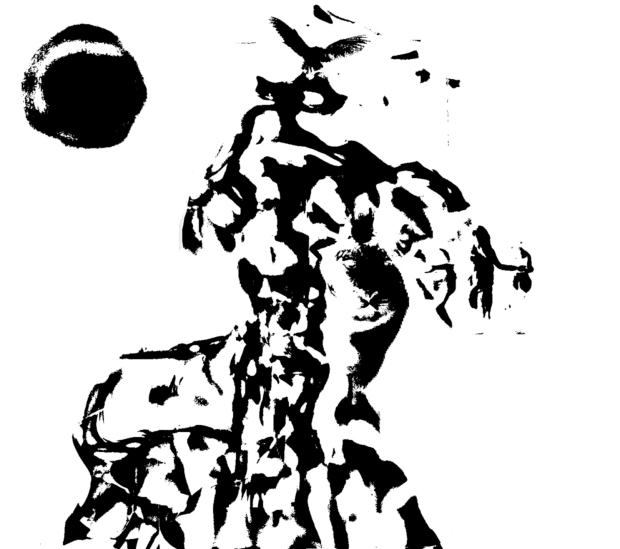
From The Eclipse © Mitchell Pluto 2024 Séance channeling memory transfers . Spiral in Stucco © Mitchell Pluto 2025 Memory Transfer
Espiral en el Estuco (Spanish Edition) Paperback – Large Print, 23 April 2025
Spanish edition by Mitchell Pluto
El surrealismo oscuro y el absurdo crean efectos psicodélicos. El zen y el jazz de Coltrane ofrecen una vía de escape de la veneración política, permitiendo viajes interestelares. Cada capítulo explora el surrealismo y las técnicas budistas. Estas ayudan a sobrellevar el trauma de sentirse atrapado, como un animal en un anuncio repetitivo.





 Mitchell Pluto