Une conversation avec l’artiste érotique Rajah Foo

L’enfant vert

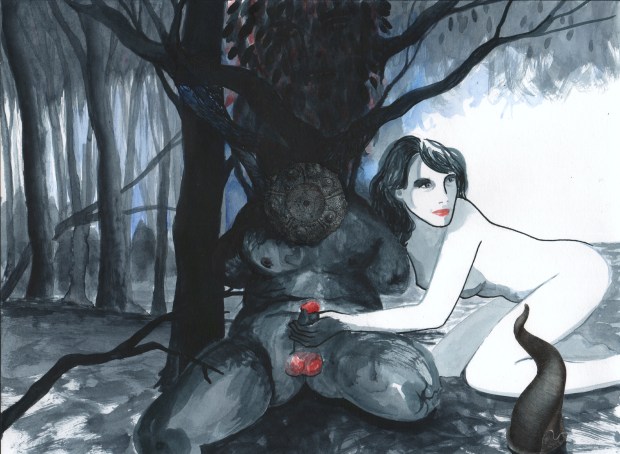
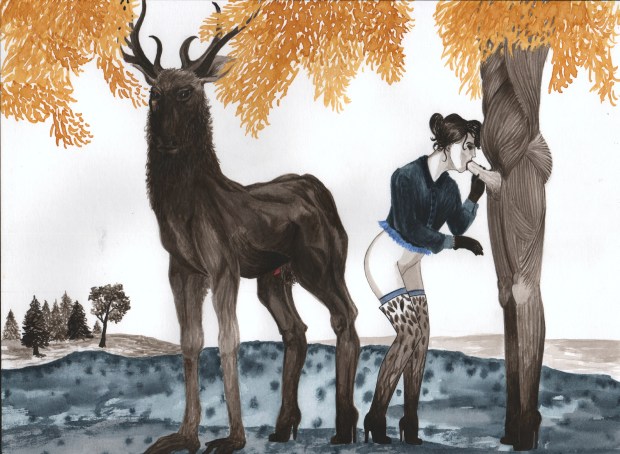
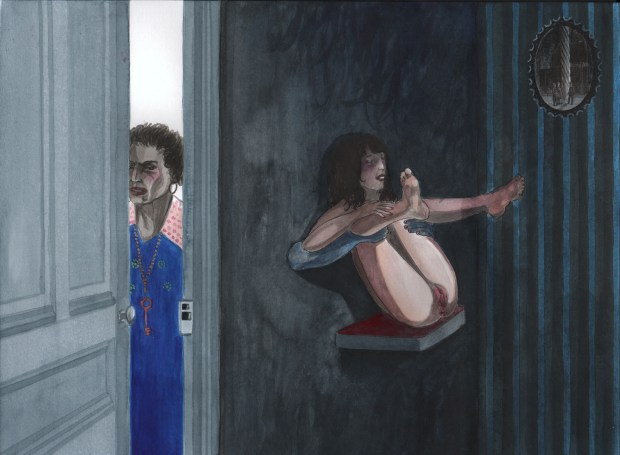
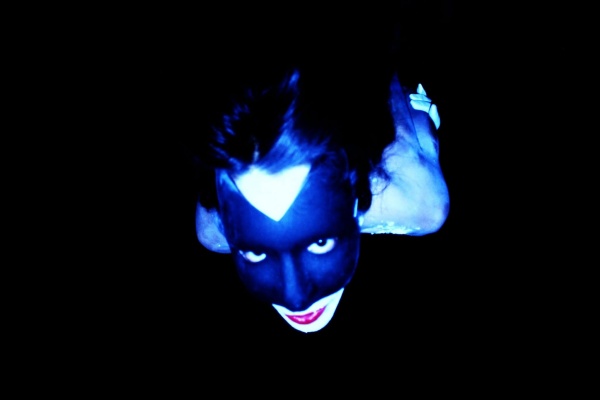
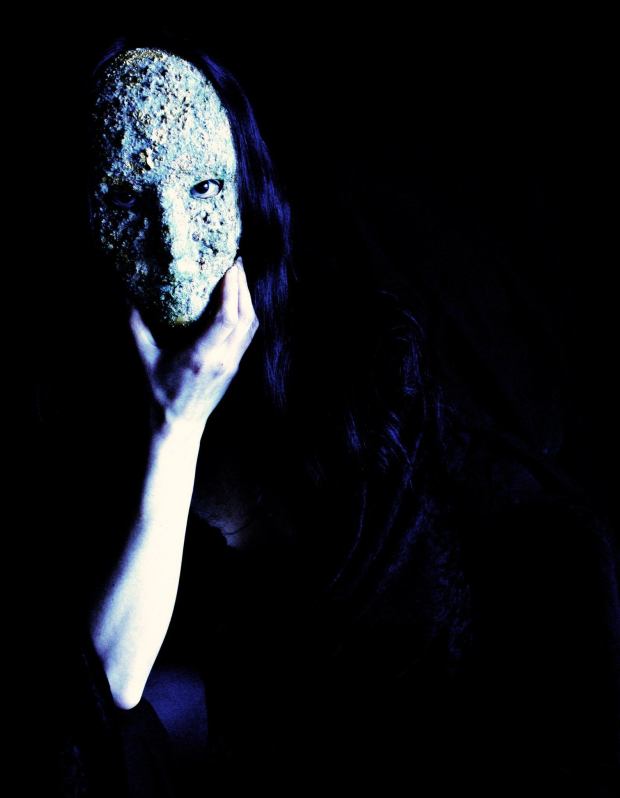
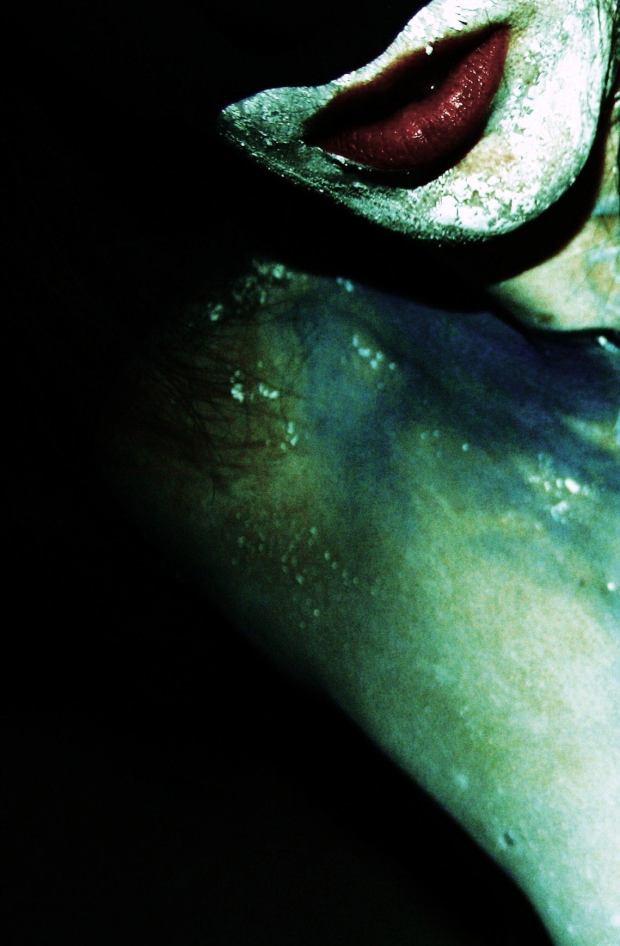
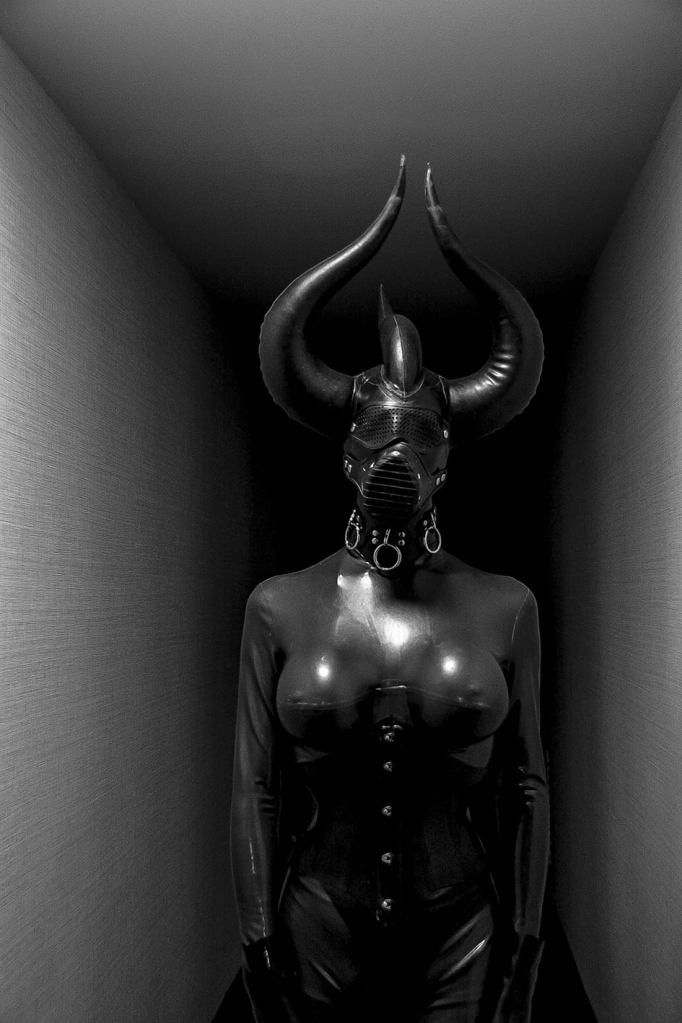
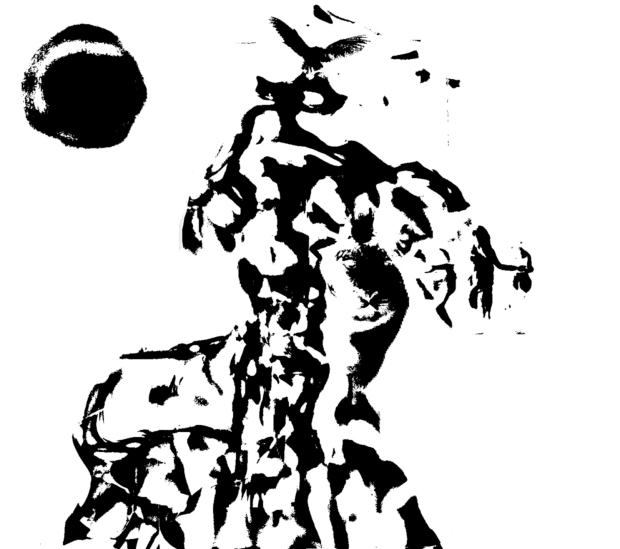
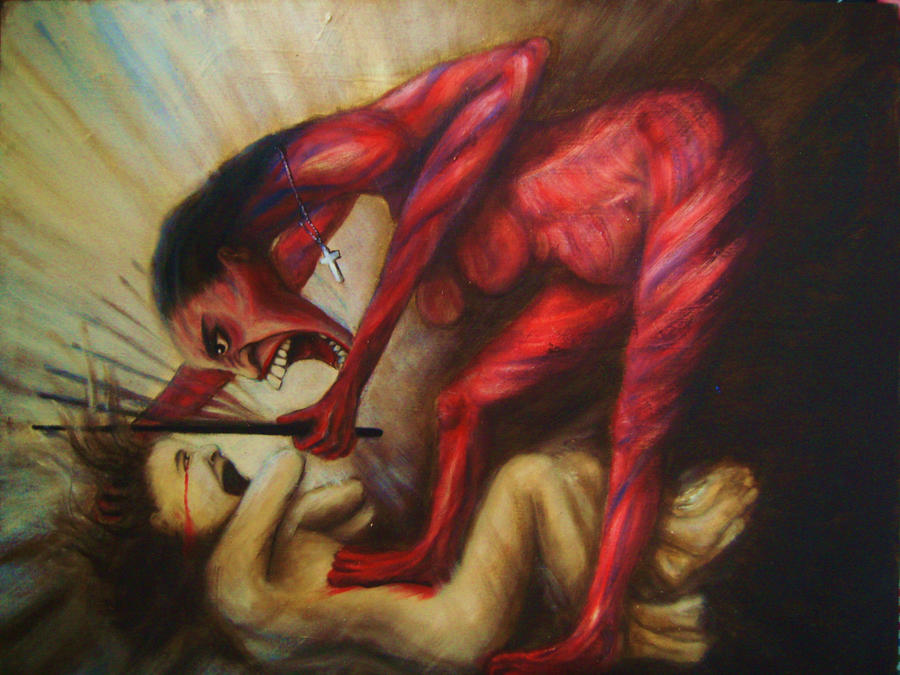
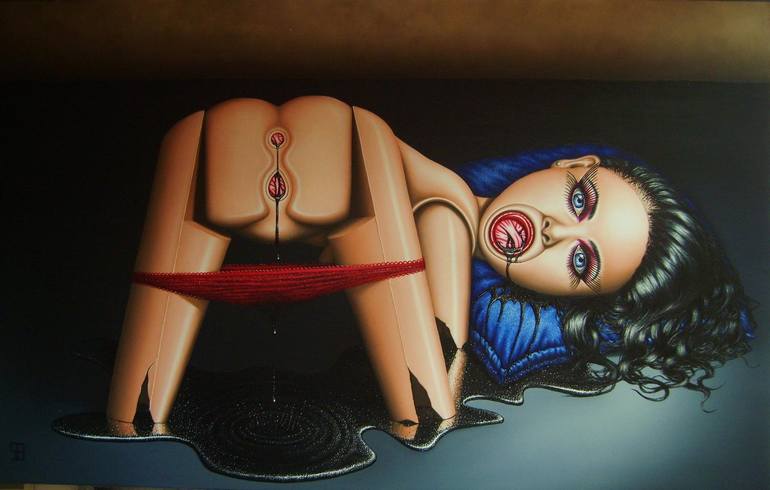
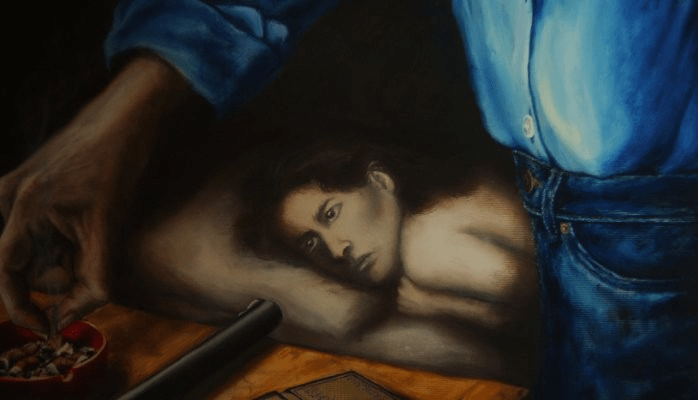
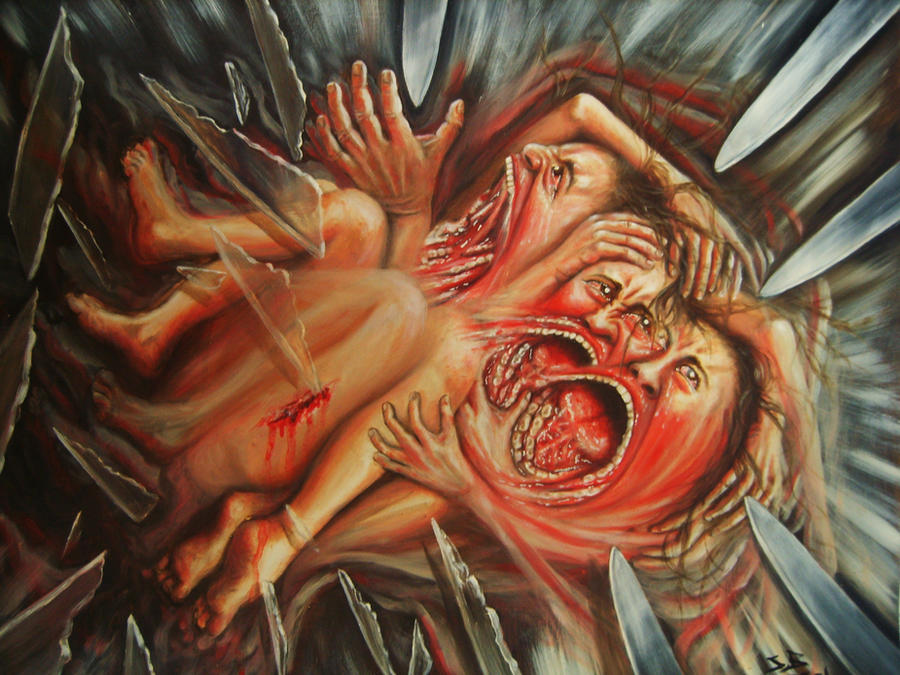
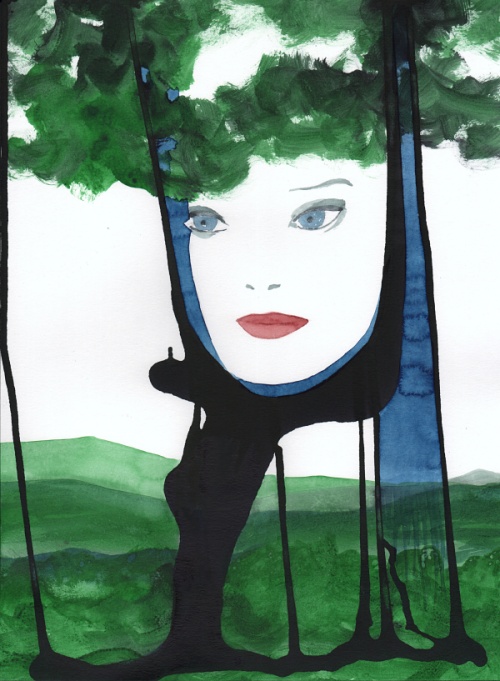
L’œuvre de Rajah Foo est souvent marquée par une touche gothique. Son travail utilise le suspense, des images troublantes et des paysages ruraux pour créer des récits visuels. Ces œuvres suscitent des émotions profondes chez le spectateur. Au cœur de son travail se trouve le thème de la pénétration et du désir. Les scènes entraînent le spectateur dans une célébration de la libido.

J’étais étudiant à L’école des beaux-arts de Nancy en France. Je discutais avec la professeure de culture générale, Geneviève B. Tout ce que je produisais était lié l’énergie sexuelle: sulptures représentant des couples de danseurs, minotaures, peintures et dessins pornographiques. Tout cela etait loin de tout ce que je voyais chez les autres etudiants, à l’introspection conceptuelle. Les enseignants étaient gênés par mon travail. Geneviève m’a dit d’un mot: tu es un artiste différent.

La coquille bleue

J’ai découvert, alors que j’étais enfant, dans la bibliothèque de ma mère le livre de ” Pauline Réage ” Histoire d’O. Une lecture comme un éblouissement. Plus tard, Sade dont la biographie m’a plus impressionnée que l’œuvre. Je fais de Freud et David Lynch, des compagnons intimes, quitte à les trahir, pour explorer l’opacité du désir. Mais j’ai peur d’être trop long… ( mythologie grecque, Bataille, Klossovski…) j’ajouterai simplement que la littérature m’a touchée la première, avant la peinture ou la sculpture.

Diane

Je crois que les deux artistes qui m’ont le plus marqué sont Hans Bellmer et sa poupée, et Max Ernst pour ses extraordinaires découpages comme ceux d’une semaine de bonté.

La fleur crue

Vous voyez, vous avez bien perçu dans mon travail ceux qui l’accompagnent. Un mot me plaît particulièrement dans vos propos: totémique. Il contient une forme de spiritualité, de brutalité et de mystères antiques. Il me fait penser à la fascination qu’exerce sur moi le mythe de Pasiphae depuis que je l’ai lu, enfant. On y trouve la puissance du désir, le scandale qu’il suscite, comme il renverse le monde. Mes dessins sont des images lentes extraites de toute cette exploration.

Le cercle de l’horizon

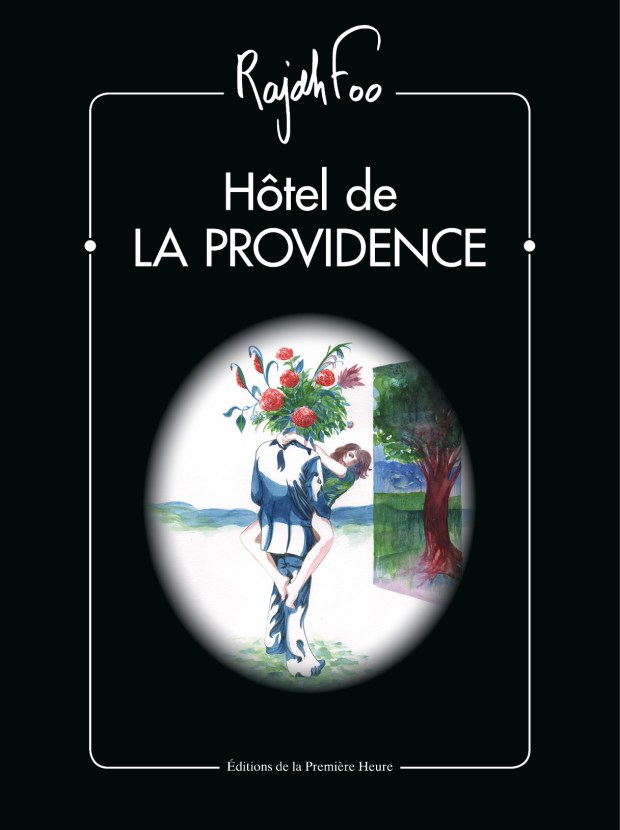
Je ne contacte jamais les galeries, je ne sais pas à l’aise avec les inconnus, et je sais que nombreux sont les artistes qui les sollicitent. Il y a une exception à ce tableau, la galerie Arts Factory à Paris, qui m’a accueilli lors d’une exposition collective, et le 8 octobre cette année pour signer un livre que m’a consacré les editions première heure.

©Rajah Foo November 2025

Hôtel de la Providence by Rajah Foo

Publications and exhibitions by Rajah Foo:

2007 Orgien (collective), Hans-Jürgen Döpp, éditions Area
2008 Exhibition Happy Valentine Libertine! Alexandre Pavlenko, Violeta Caldes and Rajah Foo, galerie Émilie Dujat, Bruxelles
2018 Le Jardin des délices (Les Crocs électriques n° 119)
2018-2019-2020 Le Bateau n° 14, 16 et 17 (collective)
2019 La Squaw (Images cachées – Images devinettes) (collective), éditions parisiennes Michel Lascault
2020 Les Crocs électriques group show, Arts Factory gallery, Paris
2021 The Chained Faun (collective), Portugal
2022 Éros mécanique n°8 (Japon theme), Hector Domiane
2022 Eroticamente explicito (cover and back cover), Gabriele Conti, éditions Dunken, Argentina

Links:

Rajah Foo : https://rajahfoo.wixsite.com/rajahfoo

Prenez la 111e rue jusqu’à DaDa

Photography by ©Laetitia Corbomecanik

Written by ©Mitchell Pluto from Occultations: Lullabies for Space Travel

Ce spectacle comprend des lumières stroboscopiques et des effets atmosphériques ; la discrétion du spectateur est recommandée.

Un flash est un crâne qui vibre.
Son aspect visuel provoque une photopsie et des sensations au niveau du lobe temporal.
Les rencontres fantomatiques ont des allures psychiques.
Observez des étincelles électriques dans l’atmosphère, entre les nuages ​​et l’air.
Les images du film défilent au-dessus d’un faisceau de rayons.
Le projectionniste s’assure que le son et l’image de la bobine sont synchronisés.
Des trous vides consomment la matière tandis que le compte à rebours se transforme en un drain optique.
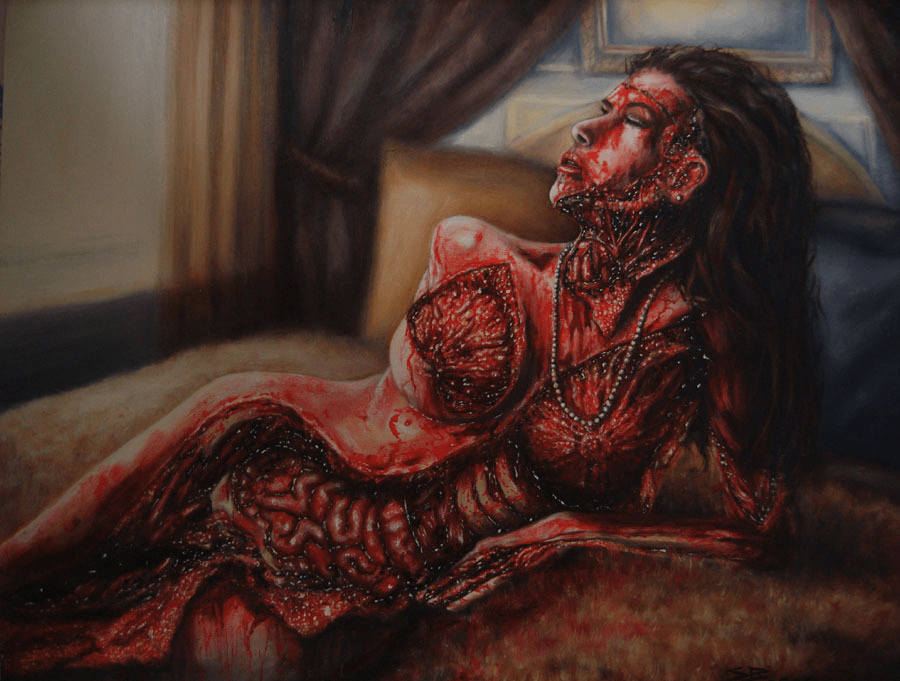
Une femme nue et cramoisie danse. Avec ses seins généreux et son collier de perles de crânes ondulant, elle marque la surface de notre mémoire rétinienne.

Il s’agit d’un procédé de lumière polarisée aux silhouettes exceptionnelles.
Les ombres caressent les contours.
Le cordon ombilical nourrit un embryon, de la même manière qu’un fil soutient un astronaute.
Pendant un instant, une pieuvre du futur nous observa jusqu’à ce qu’elle projette de l’encre, rendant les observateurs inconscients.
L’obscurité se remplit d’une illumination à motifs, jusqu’à une nuée de chauves-souris albinos en vol.
Les drones sont des OVNIs partout.
Une immense colonie de fourmis sur Terre a envahi et dévoré une simple feuille flottante.
La foule s’amusait au parc d’attractions jusqu’à ce que le programme lui ordonne de former des lignes.
Le fossile d’une orchidée montrait une minuscule danseuse du ventre à l’intérieur, en accéléré.
La fleur était un signal intelligent voyageant à travers le temps.
Un déluge d’éclairs éclipsait tout ce qui l’entourait.
Une façon de contacter les extraterrestres était la danse du cerceau.

Ce cercle vient d’ailleurs.
Évitez de vous leurrer. Les voyages spatiaux impliquent le vieillissement, la mutation et la mort. C’est aussi simple que ça.
Observez comment les ondes de radiation dissolvent les éléments dans le néant.
Ensuite, la chasse aux iguanes. Ne vous inquiétez pas, ce sont de gentils lézards en quête d’un en-cas.
L’homme prothétique n’a aucun loisir, car les objets orientent son expérience vers une série télévisée.
Suivez la figure nageant du tronc cérébral, à travers le système limbique, jusqu’au tableau de bord néomammifère.
La Créature du Lagon Noir, malgré son portrait,
n’est pas misogyne. Au contraire, elle incarne le principe du plaisir et illustre la conception de la nature.
La plupart des gens entendent le saxophone flirter avec eux.
Le mouvement rotatif tourbillonne de points qui s’épanouissent dans les danseurs Dogan célébrant la cérémonie du Sigui avec des masques. L’extérieur d’un masque reflète son noyau central, situé de la 111e rue à DaDa.

Ascendant Verseau, Laetitia Corbomecanik

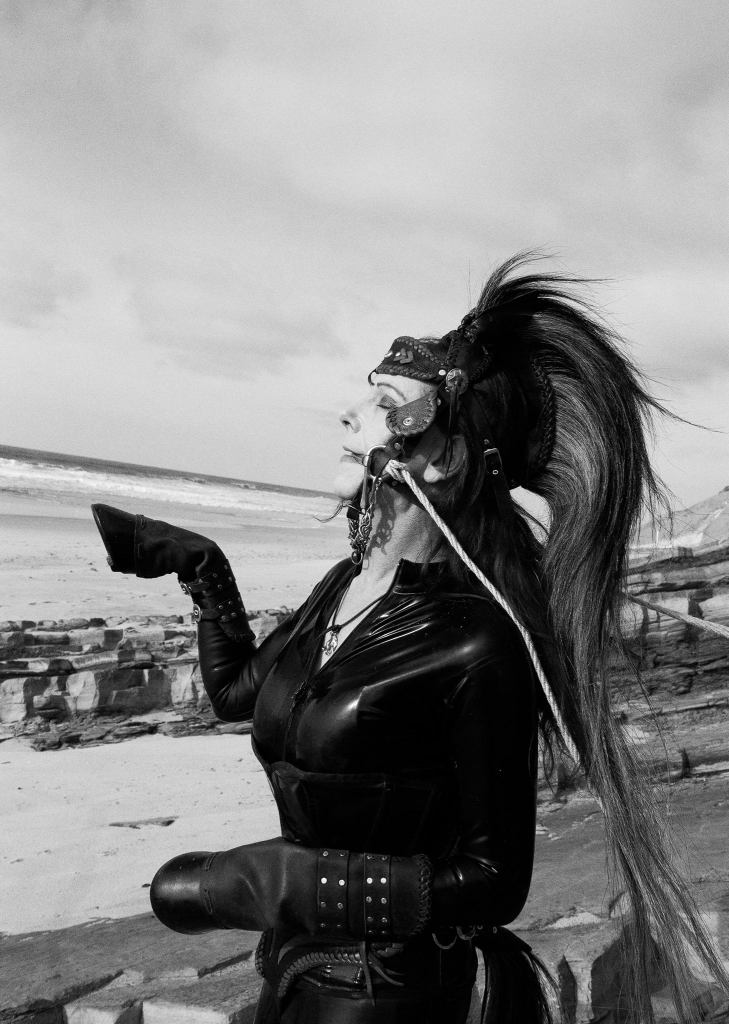
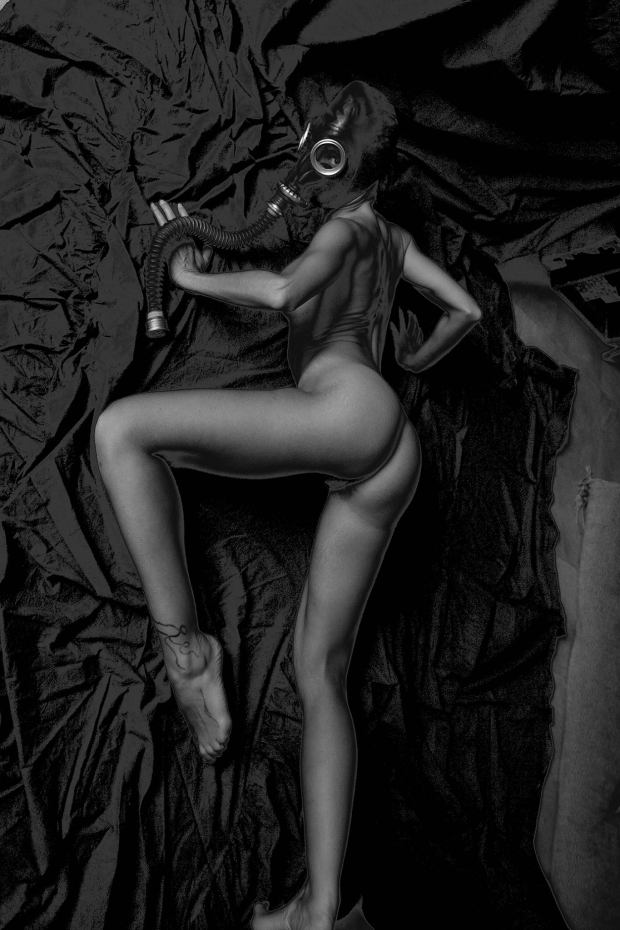
J’évolue dans le monde des arts plastiques , de l’expression corporelle et dans le milieu alternatif parisien depuis très jeune . J’ai donc exploré diverses techniques et directions : peinture , photographie , dessin , graphisme , video , danse et travail sur le corps.

Depuis ces 15 dernières annnées , j’ai fait des expositions et performances en France et quelques collaborations qui m’on ouvert de nouveaux horizons. Il y a un moment ou j’ai glissé de la peinture et de la representation du corps à la mise en scène directe des corps et des ames à travers la photographie , le corps au sens large comme moyen d’expression.

Il m’est rapidement venu un questionnement sur mon propre érotisme face aux archetypes simplifiés et imposés par la société de consommation. Durant des siècles d’histoire de l’art , les femmes ont été enfermées dans le rôle de sujet de fantasme érotique , mais empechées dans l’expression de leur propre érotisme loin des attentes sociales , ce qui explique le fait que toute une génération actuelle parte dans cette direction à la suite des pionnières du siècle dernier.

Dans la jouissance esthétique et tactile de la matière , j’y trouve une relation au spirituel dans le monde des fantasmes qui ouvre une porte à la fois physique , énergetique , psychologique et mystique . La sensualité comme acte quasi religieux , la sensualité comme prière.

Mes influences profondes dans la démarche et l’esthétique sont clairement celle des suréalistes ( dont certains pionniers qui ont abordé l’érotisme du fétichisme ) Etant de la génération de1976 , j’ai été aussi très influencée par la vague rock punk goth newwave des années 80 et j’ai été jeune ado et jeune adulte dans les années 90 pendant l’emergeance des mouvements technos sauvages. Les attitudes des femmes de la scène rock comme Lydia Lunch par exemple ( parmis beaucoup d’autres ) ont clairement ouvert la porte à ma generation. C’est aussi dans ce monde rock notament gothique et new wave que j’ai decouvert très jeune mes tendances au fetichisme et aux mises en scène BDSM.

Dans la photographie , les artistes comme Robert Mapplethorpe me parlent beaucoup , le fait d’aborder des sujets parfois crus ou qui peuvent paraître provoquant mais dans un style presque academique pour un rendu raffiné , les photographies de sexe ou de fleur y sont representé avec la meme sensualité , ramenées au meme niveau.

En ce qui concerne la littérature , je citerai ‘ L’histoire de l’oeil ‘ de Georges Bataille , ‘incontournable ..Les oeuvres d’Henry Miller m’interessent beaucoup , j’y retrouve cette errance hedoniste , urbaine ou se melent sexualité et philosophie ‘ King kong théorie ‘ de Virginie Despentes est également un de mes livres de chevet , je le considère comme le livre de ma génération en ce qui les femmes et leur sexualité face à la société . Mon autre influence est bien évidement l’érotisme asiatique , en particulier japonais , les classiques comme ‘ L’empire des sens ‘ par exemple , le shibari ( le bondage japonais ) , le coté rituel et très martial dans la mise en scène de l’eros.

written by ©Laetitia Corbomecanik

Memory Transfer by Mitchell Pluto

Transferencia de Memorias

From The Eclipse © Mitchell Pluto 2024 Séance channeling memory transfers. Espiral en el Estuco © Mitchell Pluto 2025 Transferencia de Memorias

In early June, the sky was clear and the temperature was pleasant. Tom and Sarah Anderson came across a metal tower while hiking in the Lolo National Forest.

The object’s Gothic style stood out as they approached. Seeing it brought back memories of their honeymoon trip to Chartres Cathedral.

The couple assumed the installation was someone’s art project or an exhibit at the University of Montana. The sight was unusual. There was a black circular window high up, near the top of the bell tower.

The tower emitted an extraordinary spectrum, encompassing all shades of blue and green.

3,500 kilometers away, a small gathering met at the United States Capitol. Attendance was by special invitation only.

Elijah Booker and his friend Alvaro, a man of abnormally short stature, arrived punctually. They entered the room and attracted a lot of attention. Booker, a large, Black man, always stood out in a room full of white men.

Alvaro had previous experience in the company. He knew the purpose of the invitation. Alvaro was albino and his alias was white dwarf. His main function was to use his mentalist ability to influence and dismantle cults. He possessed an innate ability to influence and alter opinions and beliefs.

On the screen, taken from a popular social media video, several recorded witness statements were shown. An older man, standing next to his wife, described the encounter with the intelligent light as best he could next to a strange tower. With deliberate and concise gestures, his wife explained the same thing, but in more detail.

Booker assumed he was the keynote speaker invited to talk about the future effects of permafrost.

The focus was personnel selection, not Booker’s research. Elijah Booker was the world’s foremost parasitologist. He researched extensively and wrote informative books on toxoplasmosis, a brain parasite. Elijah worked with international scientists. The Bureau of Globe Research in Alaska, where he lived with his wife and daughter, housed a broad research panel on prehistoric pathologies. Booker’s research caught the government’s attention.

Booker’s specialty did not include cosmic rays. He had heard of them and knew they were unstable, but nothing more. Cosmic rays sometimes interfered with belief systems, sometimes caused hallucinations, or enhanced brain patterns in unique ways.

The U.S. Intelligence Service considered ideologies to be mild hallucinations and was intrigued by the effects of cosmic rays on the brain.

The U.S. agency selected experts in direct observation.

The department was aware of Booker’s private life.

They knew of Booker’s Buddhist practice and his hobbies, which included listening to jazz and researching the occult.

Booker and Alvaro boarded a plane within a few hours. The private pilot, a native of Montana, had a great time. Alvaro taught him numerous dirty jokes for a total of six hours. This gave Booker time to read reports on cosmic rays.

According to government research, different rays posed varying levels of danger.

A jeep with tinted windows was waiting for them at the airport.

They soon reached the mysterious object. The Forest Service managed the situation, giving it a normal appearance to the naked eye.

Antennas, tents, and tall Douglas fir trees surrounded the 70-foot bell tower. The building’s structure possessed a beautiful style. The scene reminded Booker of a surreal landscape, something Bosch might have built.

He took a photo with his phone and recorded a video, documenting the luminosity of the fading colors.

Álvaro tugged at his pants and pointed to a tent. A young woman, about the age of Booker’s daughter, was holding a tablet like a clipboard.

Frauke Brunhilde introduced herself. Her black nails, black shawl, and tight leggings gave off a countercultural air. She was a genius in the German Federal Intelligence Service. She was a forensic chemist and radiological technologist.

Booker inquired about Frauke’s findings and knowledge.

Frauke showed him a live feed from a radiation-resistant camera. A vertical line of light aligned with the top of the bell tower. He speculated that the beam provided a transmission that might correspond to a conscious entity. Frauke discussed the fluctuating visibility of the light. She said that in Europe, cosmic rays are everywhere. Frauke said people believed they caused poltergeists and produced other strange effects.

Throughout history, ancient peoples used stones and statues to mark power points. Indigenous Europeans wore conical hats, such as the Golden Hat of Schifferstadt, to tune into cosmic rays.

Frauke proposed that primitive peoples tuned into radio stations in space. Mysteries associated with cosmic rays included encounters with fairies, aliens, angels, or even people who disappeared without a trace.

Booker wondered if these disappearances were due to dangerous rays that triggered aggressive progeria, a disease that accelerates aging. This cosmic ray posed no such danger. Frauke mentioned an article published by German scientists in The New Nature Journal, which argued that time is a moment that has already passed.

According to Frauke, the article suggests that UFOs are future apparitions investigating the present.

Booker wondered: Who was shaping the future from the past?

In the report he read on the plane, some anthropologists in the southeastern United States theorized that cosmic rays were attracted by unicursal patterns, but also expressed themselves to humans in diagonal or zigzag patterns. Frauke mentioned geometry as a method for communicating with unknown intelligences.

Booker noted that Frauke’s explanations had a mystical undertone, and he knew she was speaking of magic.

Frauke inspired Booker to reflect more carefully on the unintended consequences of cosmic ray-induced hallucinations. Most of the knowledge discovered turned out to contradict his beliefs, something he was prepared for.

The next day, scaffolding surrounded the tower.

Booker spoke to the welder. The man said he hadn’t been able to burn a hole with a blowtorch.

Incineration also didn’t work on the top window, which the worker described as Jell-O. His partner punctured a sandwich with stainless steel tweezers in the Jell-O. Nothing happened to the sandwich. The puncture filled and healed itself.

Booker walked toward the main tent.

Alvaro reclined on Frauke’s lap. They seemed to be having a good conversation. Frauke chuckled. Booker told Alvaro and Frauke to prepare to enter the object.

The unit gathered what they needed. Booker hooked Alvaro to his belt like a weapon. Frauke slung a backpack over her shoulders as if she were spending a week in Glacier Park. Frauke put on her headphones and began climbing. Booker braced one hand and one foot on the scaffolding, the tips digging into the ground, as he slowly ascended to the upper platform.

Standing near the most enigmatic and sinister feature of the building, the three gazed up at the large black window.

The surface was obsidian, with a thick, gelatinous texture. Due to its unknown elemental nature, they were unable to separate the gel into samples. Frauke, using her scanner, surmised that it was an iron mordant containing extraterrestrial gelatin. The window also contained a low- to medium-fluctuation radioactive ray, known to cause hallucinations, according to the scanner. Booker hoped that, as they approached the cosmic ray, they would all experience an LSD-like experience.

Without any prompting, Álvaro dipped his hand into the substance.
It was the temperature of a warm bath.

Booker quickly glanced at Álvaro.
He removed his hand from the gel, waggling his fingers toward Booker and Frauke to demonstrate that God was luck.

The group sat for an hour discussing hypothetical possibilities, including personality changes and brushes with death.

Álvaro lived by the motto: to embody the god of things as they should be. To be the force of humor in every passing horror. Frauke, enchanted by Álvaro, agreed.

Frauke put her headphones back on. The music turned up. Booker hooked Álvaro back onto his belt and held Frauke’s hand. Booker didn’t want her to wander off alone in the oozing gel. He felt responsible for all of them. Booker placed a camouflage bandana over his nose and mouth. He breathed and closed his eyes. Frauke tugged at his hand.

The first step into the gel was similar to stepping into a deep pool without firm footing. Each movement created an unpleasant sucking sound. The absolute darkness unleashed a wave of fear. A surge of adrenaline flooded Booker’s bloodstream, testing everything he had learned from Buddhism. With a concentrated effort, he maintained his upright posture, stepping into the dense gel with one arm. The suction made movement difficult.

Booker could now identify with the five clinging aggregates of Buddhism.

It became a direct experience. The aggregates — form, sense, perception, and external forces — environmentally influence the mind.
Booker felt a predatory presence. An obsessive, superstitious belief overwhelmed his mind as he struggled to penetrate the bottomless gel.

Suddenly, Booker had a clear view of his own brain. He could see his amygdala working overtime. The pressure on the insular cortex made him imagine the worst possible scenarios, including an imaginary predator chasing him.

However, there was no malevolent morphic resonance present, only a confined space. His own fear divided and attacked every facet of his mind. The narrating brain identified its observer function as an intruder.

A strong auditory memory told Booker not to panic. A Nyingma master at a Buddhist retreat advised him to accept the discomfort and practice gratitude.

This precious memory became clearer and more fundamental to his resistance.

Booker imagined seeing the Khenpo floating on his back, effortlessly performing backstrokes in a slimy jelly.
Another vivid memory resurfaced. Years ago, his few sessions with Stanislav Grof helped Booker relive his earliest memories of being suspended in a possessive womb. He recognized that birth brings with it a subconscious sense of abandonment for everyone.

This caused humanity to misinterpret birth as a definitive isolation and desertion.

All of this originated in the maternal body’s rejection of the newborn as if it were excrement. Generation after generation, this confusion projected contempt for the feminine and nature.

Booker could see his thoughts as images. He saw the unjust and unconscious representations that dominated historical records.

The central idea emerged as the ambition to replace the mother with an artificial mechanism. This would foster the construction of an industrialized, parasitic world devoid of empathy.

Booker wished he had headphones.

Music would make it easier. He imagined John Coltrane’s “One Up, One Down .” He had listened to the album often, at the cost of exhausting his wife’s patience. Today, it helped him remember it. The saxophone arrangement conquered fear. Booker knew that Coltrane understood the patterns of a constantly changing self. A self free of history and objects.

One conclusion became clear: time and space will never have a central authority.

The attempt to even imagine sensations beyond the end proved to be a vain and imputed illusion.

Death existed as a phase that passed like everything else.
Why pretend we knew this?

We shared the same fate. We would cease to exist without knowing what death was.

The tension dissolved and the jelly transformed into a thick fog. With his free hand, Booker reached for Álvaro, patting him on the face. He looked at Frauke. He saw her silhouette. Frauke turned to Booker, took off one of her headphones blasting, and smiled.
Booker asked, “What got you through the jelly?”
Frauke nodded to the beat: “Huh? Yeah! It’s an American band called The Doors , The Other Side , yeah, they’re good!”

The cosmic ray transformed the tip of the bell tower into a reactive vanishing point. This produced a carnival-like hall of mirrors effect. Booker, Frauke, and Álvaro occupied that space between the parallel lines of the cosmic ray. The room resembled a virtual infinite hallway with a ledge. Colors cascaded down the cosmic ray.

Frauke’s gaze caught something in the swift wave of light. She spoke, describing what she saw as it manifested in Álvaro and Booker’s minds.

A spinning triangle reflecting brilliant light transformed into crystal. At each corner, the numbers 3, 6, and 9 materialized. From the center of the triangle, sparks erupted, forging a nude female figure with hair down to her feet. A deep red and white glow caught her attention.

“She can see us,” Frauke said.

The woman spoke echoey. She gave her name as Mitzi Orssich. Mitzi said she was broadcasting from a live 1920 séance in Austria. The chatty ghost said she represented the Viril Society.

Mitzi demanded information from the future to help build a temporal vehicle. Mitzi possessed sternness, while her flawless figure projected an incredible image. She was a magnetic and exciting archetype who could raise blood pressure and induce a firm salute .

This woman’s body possessed a truly divine craftsmanship, an image that neither eats, defecates, nor ages.

Booker reflected.

She fit the bill: blonde hair, blue eyes. The graceful elements resembled the Christkindel.

But why didn’t this woman take over as Germany’s leader in the 1930s?

Mitzi spoke English very well.

Booker recalled researching the Vril Society, which emerged as a 19th-century work of fiction by the English writer Ed Lytton.

Booker realized they were tapping into a projection of Frauke’s subconscious.

Mitzi was, in effect, a literary phantasm forged from a pseudo-story.

He looked at Frauke, who remained staring.
Booker speculated through his online queries and research; Frauke gained powerful impressions from what she read.
Álvaro’s face was simply a huge smile with tiny hands and feet.

Booker interrupted Frauke’s trance and appropriated the cosmic ray, projecting abstract expressionist ideas onto it. He enjoyed this art movement and understood its significance. He was open in sharing his observation of vivid brushstrokes.

Booker gently guided the hallucinatory influence away from the National Socialist art style toward a more universal and abstract variety. It was art without a human figure.

Wonderful and exciting non-figurative patterns formed from the center of the cosmic ray. The variety of designs lacked strict cultural ideologies, which brought Frauke out of her trance.

The cosmic ray inspired Alvaro to create a complex algorithm based on his interest in spiders.

Mitzi’s impression triggered unexpected associations that took a mutated form.

Web strings connected a spider puppet to the spinning chemical brain in Alvaro’s vision.

Frauke saw it as a fusion, creating one puppet within another.

Booker interpreted Alvaro’s vision of the spider as a portable DNA capsule capable of flying through space.
Small cubes appeared on a spinning belt in another future. The webs were coordinates, guided by a chemical brain inside a metallic spider.

Booker, Frauke, and Alvaro huddled in a triangle in front of towering Douglas fir trees. They were gone for three days and reappeared five miles from where they had disappeared. There was no alien tower there. A man named Warren found them while patrolling the forest. The cosmic ray information was useful.

US intelligence took statements from Booker, Frauke, and Alvaro.

Engineers, chemists, and physicists collaborated to design a new space vehicle with a chemical brain.

A few months later, the spider-like object would fulfill a panspermia mission. The space spiders, called Anansi Capsules, would aim to find habitable planets to modify human DNA and enable life in an extraterrestrial environment.

The Anansi Capsule was an 8-foot-tall mobile figure with eight appendages for hand tools.

After descending, the capsule would unfold into a complex 16-foot laboratory.

The Anansi Capsule would manufacture and raise two biological beings for several generations.

It is unknown whether the new offspring would preserve or understand their origins, but they could be alive to continue exploring space.

A few months after visiting Montana, someone mysteriously provided a grant to de-extinct the woolly mammoth and thus include it in Booker’s future project.

Writing and Art All Rights Reserved © Mitchell Pluto

From The Eclipse © Mitchell Pluto 2024 Séance channeling memory transfers . Spiral in Stucco © Mitchell Pluto 2025 Memory Transfer


Espiral en el Estuco (Spanish Edition) Paperback – Large Print, 23 April 2025

Spanish edition  by Mitchell Pluto

El surrealismo oscuro y el absurdo crean efectos psicodélicos. El zen y el jazz de Coltrane ofrecen una vía de escape de la veneración política, permitiendo viajes interestelares. Cada capítulo explora el surrealismo y las técnicas budistas. Estas ayudan a sobrellevar el trauma de sentirse atrapado, como un animal en un anuncio repetitivo.

Art by Suzzan Blac: Inside Out

To present a well-rounded viewpoint, it’s crucial for me to feature a female artist who actively advocates for the well-being of both children and adults. I am describing someone who fights tirelessly against child exploitation and human trafficking. It is necessary to mention that there are painful sexual encounters. The focus of this article is not on fantasy, but on deep contemplation of the harsh realities surrounding sexual assault. It describes the experience of one artist who overcame incredible odds and survived.

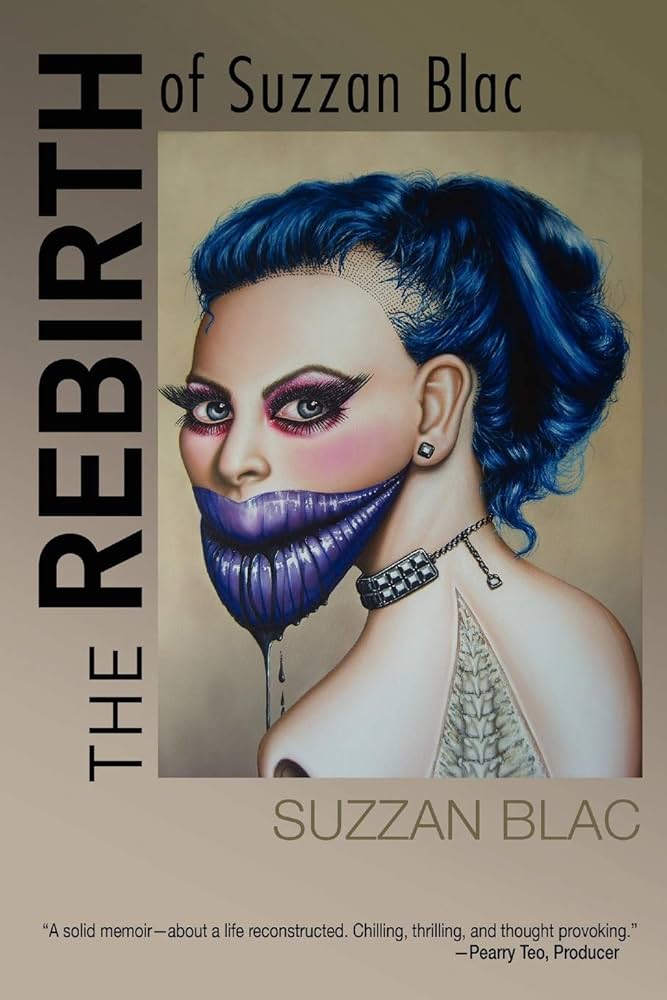
Suzzan Blac was born in Birmingham, UK in 1960. Her oil paintings and writing reflect her personal experiences with physical, mental, and sexual abuse. Blac’s artistic purpose is to shake society out of apathy and educate those who perpetrate secondary victimization, which can be equally distressing as the abuse. Suzzan’s work serves as a source of inspiration in group therapy for victims of abuse. Her work revolves around creating educational programs that encourage greater understanding.

Blac turned to painting between 2000 and 2004 to process her pain, anger, and trauma from the abuse she experienced. In order to tap into her subconscious, she started by doodling while watching TV, recognizing that these drawings had to originate from a place deep within herself rather than her conscious thoughts. After creating the drawings, she skillfully transformed them into realistic paintings that depicted both the victim and the perpetrators. Despite feeling unsettled by her paintings, she understood that they honestly portrayed her innermost pain that required healing. For four years, she dedicated herself to painting forty images, which she carefully kept hidden for over a decade, fully aware that sharing them would cause harsh judgment. It was in 2011 when she made the bold decision to share her most challenging work with the world by putting it online. Blac found it necessary to use her artistic abilities as a platform for speaking out and advocating for her beliefs. There were many people who said hurtful things to her. However, she also received gratitude from countless survivors who felt empowered to speak up because of her.

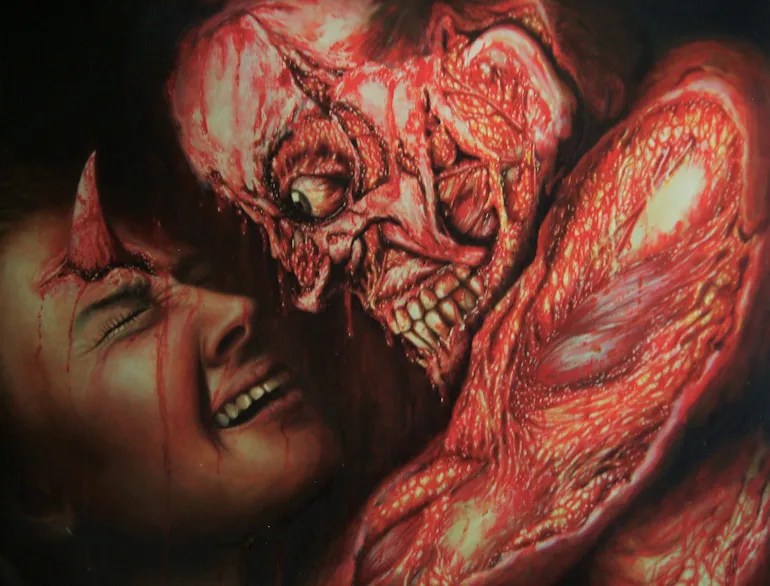
Blac’s work is challenging to look at. It invites the viewer to contemplate and empathize with situations involving sexual violence as a victim. In her own description, she compares rape to a type of murder in which the victim does not lose their life. Blac renders and illustrates emotions in a horrific way. She blends figuration with an eerie, surreal style. In her painting, she frequently uses an effect where the figures appear malleable under the influence of a predatory force. Dolls are frequently used to represent figures. The combination of these elements makes a significant and lingering impression on anyone who sees them. Her paintings hold viewers hostage and give them an intimate feeling of her experience.

The scenes in Blac’s work are terrifying, creating the ultimate experience of body horror and disassociation. Her artwork also serves as a healing remedy for emotional trauma, as well as a catalyst for memories of sexual abuse survivors. One could hypothesize that Blac’s neuroaesthetics might have an influence on the hippocampus, the area of the brain that plays a crucial role in managing the experiencing self and the remembering self.

Before reading her book, The Rebirth of Suzzan Blac, I was familiar with Suzzan’s remarkable talent for painting, but unaware of her story. I won’t reveal too much about the book, but I can give you a general concept. Blac was a prisoner, enduring unimaginable exploitation in the sex trade. These events occurred when she was still a teenager. The book is candid, and Blac’s narrative has a genuine and tender tone. Although the subject was difficult, the book had a natural and easy-to-read style that leads the reader into a world filled with the most cruel human conditions one can imagine. Blac’s book is incredibly uplifting and positive. Her dedication to addressing sexual abuse issues is evident in her continuous efforts to use art as a medium for awareness.

Written by Mitchell Pluto

Destino predestinado en la mujer de la calle Por Claudia Isabel Vila Molina

RESEÑA CRÍTICA DE CINE: Destino predestinado en la mujer de la calle Por Claudia Isabel Vila MolinaL

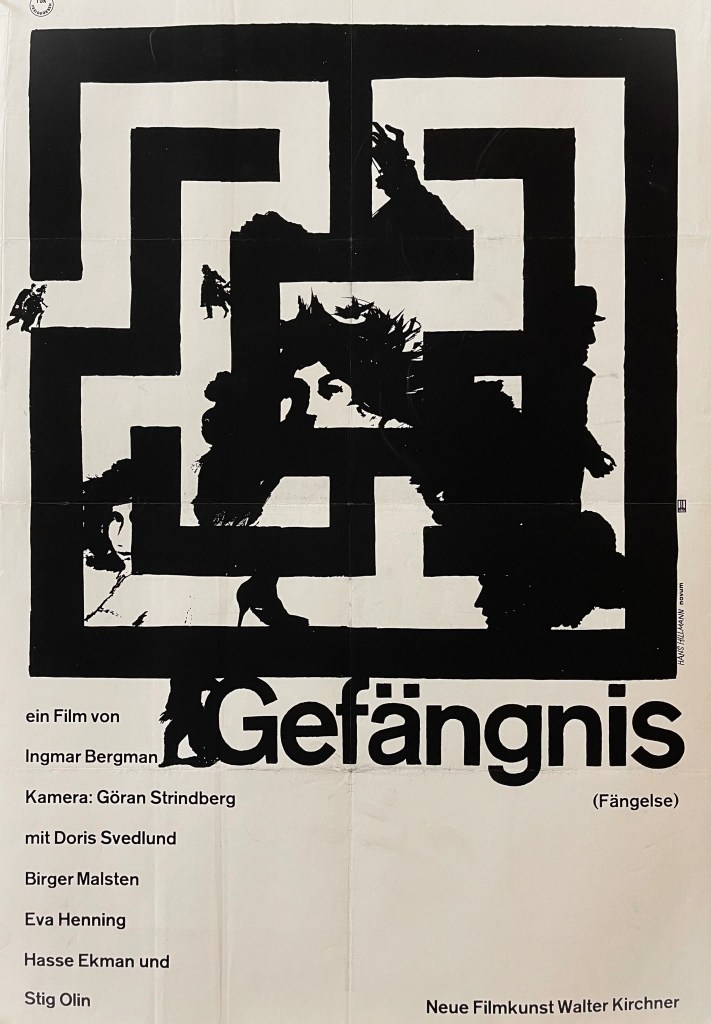
A siguiente reseña está basada en el análisis de las películas “El demonio nos gobierna” (1949) de Ingmar Bergman y “Los hermanos de Rocco” (1960) de Luchino Visconti. En ambas tramas se aprecia como la mujer que ejerce la prostitución, con una vida dura de por medio, tiene un momento de salvación y liberación en el cual trata de salir de este destino. Esto se aprecia cuando conoce a un nuevo hombre que le ofrece un mundo distinto y ella logra tener una esperanza desistiendo de su destino forzado en la vida de la calle; pero desgraciadamente y en los momentos finales, la fémina muere aplastada por el peso de las circunstancias, que le señalan que esta nueva realidad liberadora es imposible.

En la película “Los hermanos de Rocco” (Visconti) se observa como dos hermanos marcados por la pobreza se sienten atraídos emocional y sexualmente por su vecina Nadia, quien luego del rompimiento con Simone opta por involucrarse con Rocco. En este punto, el hombre le ofrece a Nadia otra forma de vida; ya que la trata con cariño y respeto. Por ello, Nadia comienza a pensar en dejar la prostitución para estudiar y cambiar su vida, pero una desgracia detiene este hermoso objetivo. En el caso del filme “El demonio nos gobierna” (Ingmar Bergman) a Briggitte Carolina se le obliga a abandonar a su hijo recién nacido, el cual es asesinado por manos de sus captores, uno de ellos es el padre de la criatura. Durante sus sueños, Briggitte observa repetidamente el llanto del niño y la ausencia de este mediante elementos simbólicos potentes, que implican varios significados.

De acuerdo con lo comentado, en ambos filmes se aprecia un destino marcado o teoría del determinismo, la cual se observa claramente en la magistral obra “Edipo Rey”, ya que sobre su protagonista pesa la advertencia del asesinato a su padre y su posterior matrimonio con su madre Yocasta. Sigmund Freud menciona que “El oráculo planta la misma maldición sobre nosotros, dirigir nuestro impulso sexual hacia la madre y nuestro primer odio asesino hacia nuestro padre” “Nuestros sueños nos convencen de esto”. Edipo rey es una tragedia que gira en torno a un elemento fundamental: el ser humano no puede escapar de su destino. En la cultura griega, el destino se representa con un final inevitable.

Con relación a esto, la figura de la mujer no tiene redención posible, ni puede acceder a un cambio favorable en su vida, porque está “obligada” a seguir esa vida de submundo, por lo tanto, la pregunta que surge es: ¿Por qué la mujer no es libre de acceder al conocimiento de otras vías, como la cultura y el estudio que la dignifican mucho más? Por ello surge la interrogante acerca de: ¿Quién es realmente el que juzga y castiga a la mujer por permitirse conocer otras formas de vida, ante la realidad brutal que le ha tocado vivir? ¿Es ella misma?, ¿La sociedad?, ¿El hombre como ente dominador?, ¿La iglesia como institución?, ¿El sistema estatal?, ¿U otro organismo?

Incluso se podría mencionar al inconsciente colectivo, guiado por el aspecto masculinizante, quien determina con anterioridad el camino trazado por la prostituta de la calle.En el análisis se advierte una mirada respecto a la liberación de la mujer frente a la toma de conciencia de nuevas realidades, antes ignoradas.

Finalmente, de acuerdo con la línea de cada filme, se observan diferentes influencias que confluyen para determinar la visión del rol femenino dentro de la época. En el caso de la película “El demonio nos gobierna” la cual presenta varios rasgos del cine negro y expresionismo alemán, se puede mencionar que debido justamente a estas influencias es que se produce el desenlace marcado claramente por la tragedia: “Las películas expresionistas son consecuencia de un estado de miedo colectivo, de una sociedad alienada por la modernidad. Al hombre le asusta lo que está sucediendo en su entorno, no entiende qué pasa y quiere huir de este mundo caótico y “liberar al objeto de su vínculo con otros objetos, en definitiva, convertirlo en absoluto” (Eisner, 1996).

En relación con el filme “Los hermanos de Rocco” se puede afirmar que está guiada por el neorrealismo italiano, hay un contraste entre estos afuerinos venidos desde el mundo rural hacia la ciudad, esto produce un choque de este mundo contra la modernidad expresada en la urbe, por ello la imagen de la prostituta que solo puede ejercer este oficio, como una parte más de este gran engranaje que está representado por el sistema social. El punto en que ella intenta deshacerse del yugo autoimpuesto es el momento en que perece por la misma modernidad, que augura su permanencia dentro del gran mecanismo y relegación del mundo interior de las personas, sea así el rol de la mujer como un ente que debe seguir el rumbo ya trazado.

Referencias bibliográficas-Alberdi, M. Una mirada al cine negro. La Fuga, 1, 2005

Claudia Isabel Vila Molina 09-22-1969 Writer born in Viña del Mar, Chile. She is a language and communication teacher (PUCV), poet, editor and literary critic. She is a Master’s student in Comparative Literature at the UAI in Santiago, Chile.