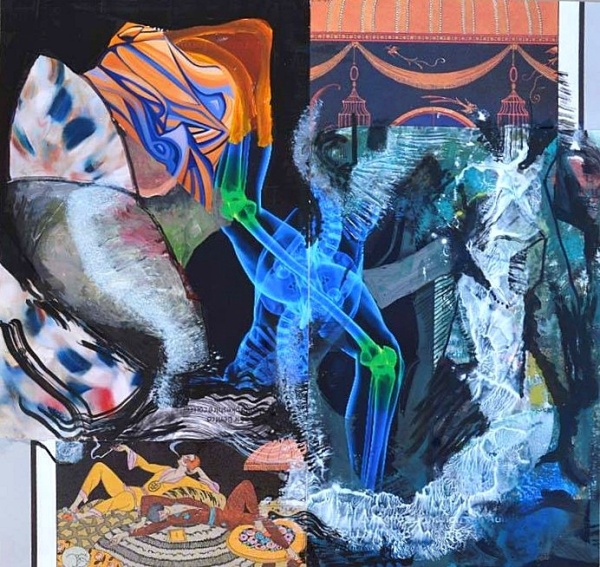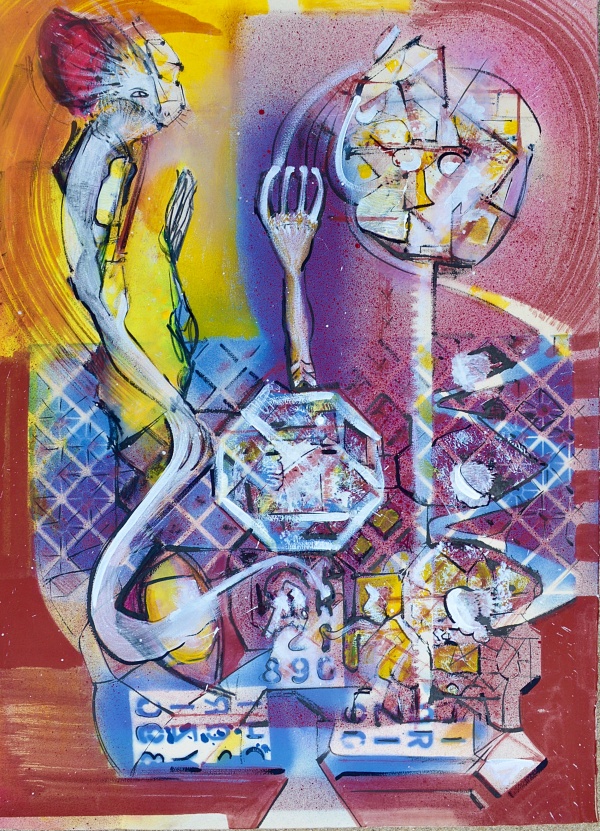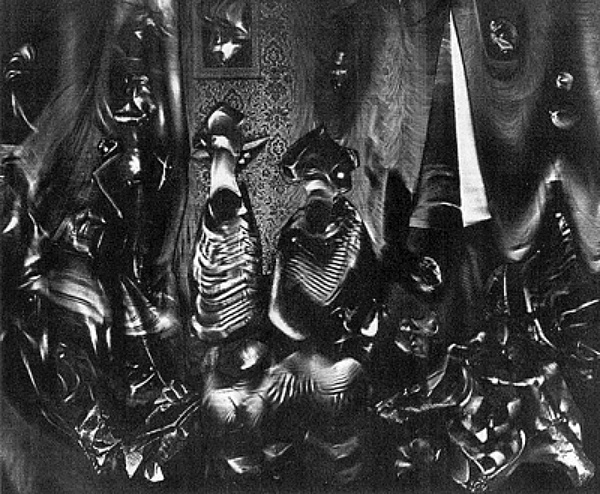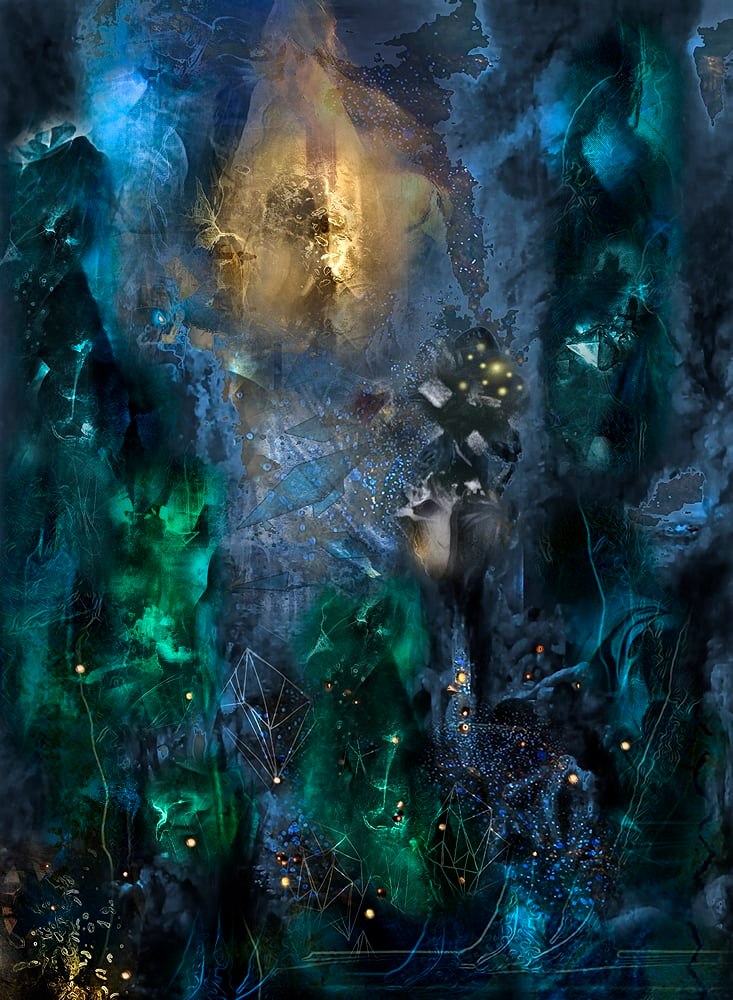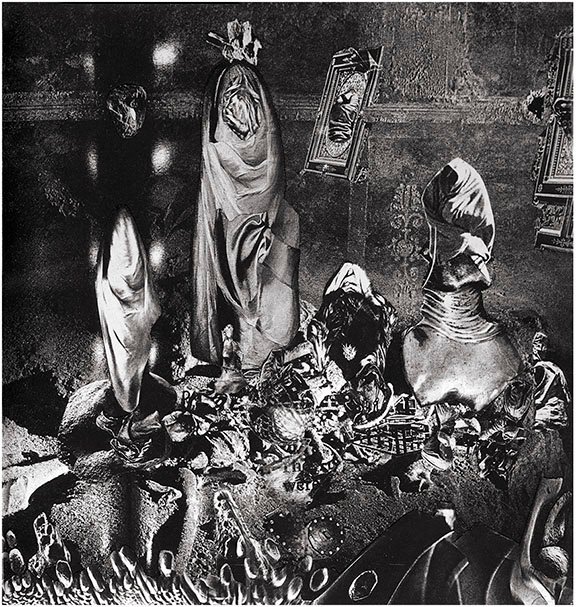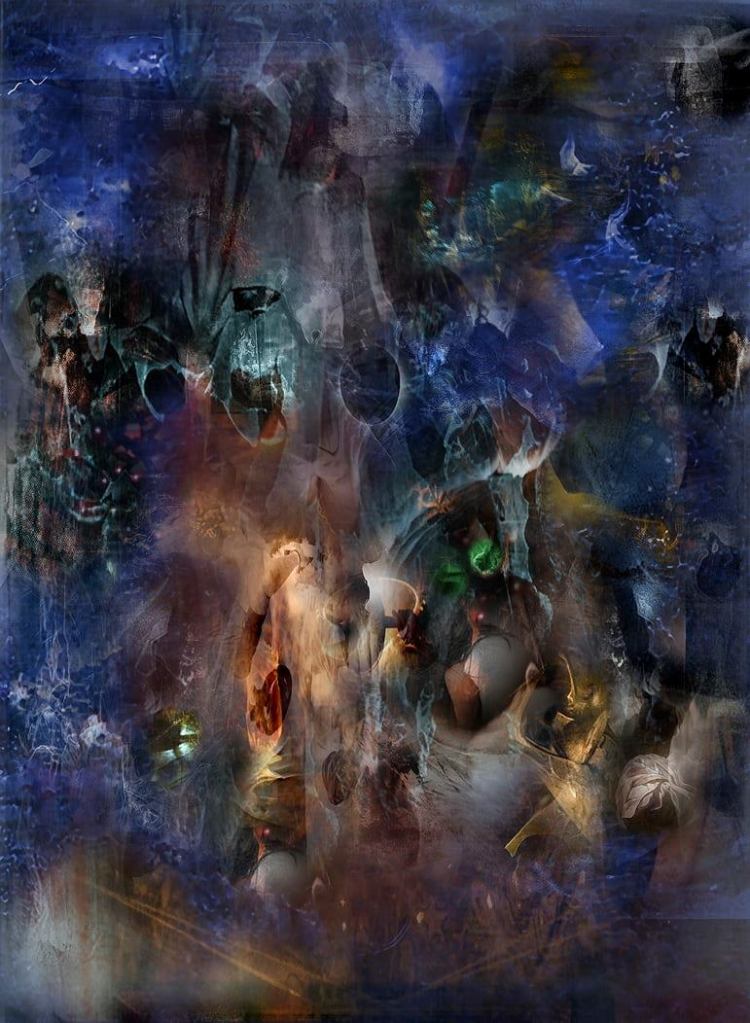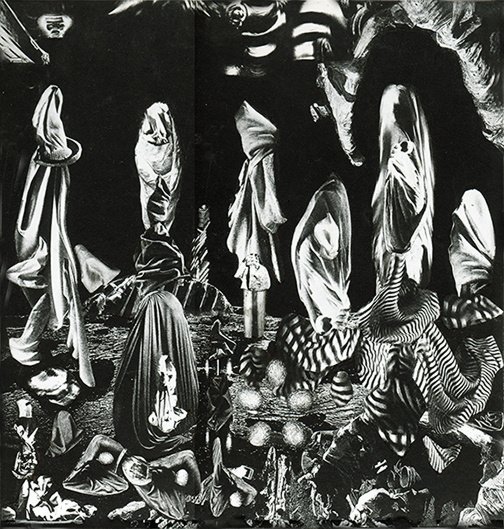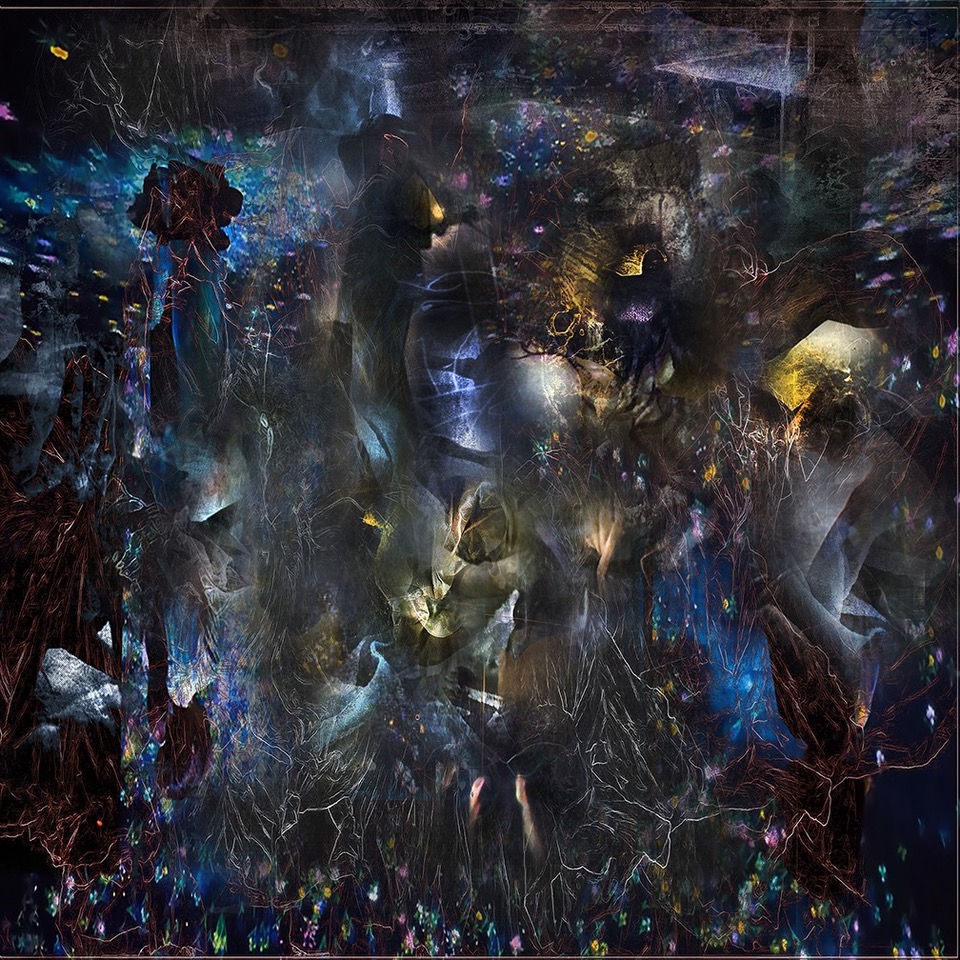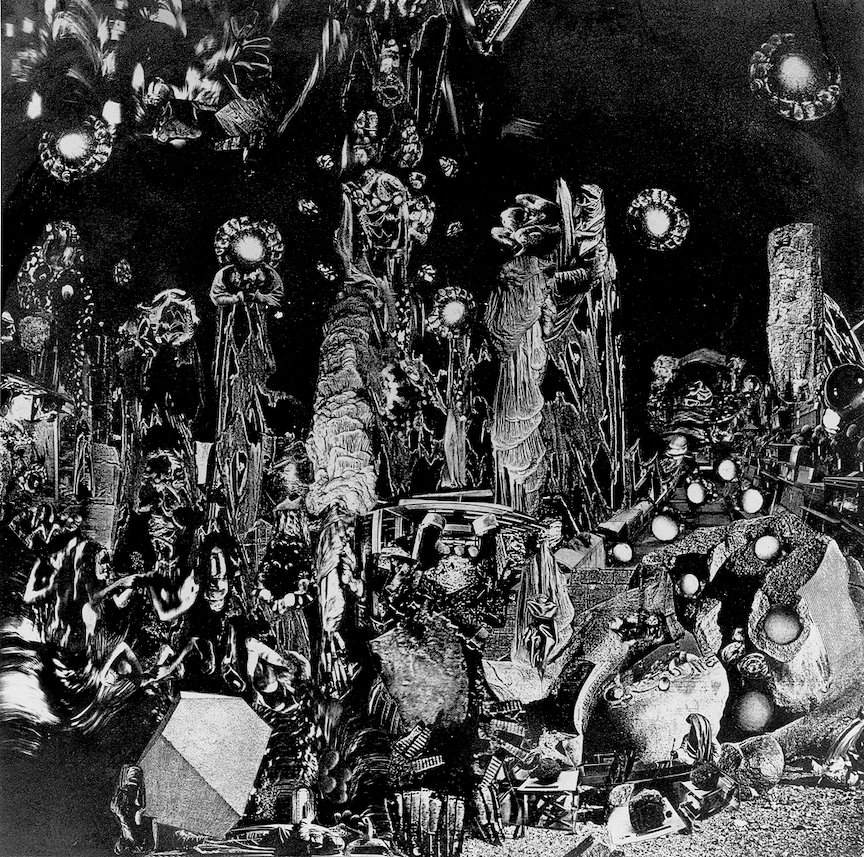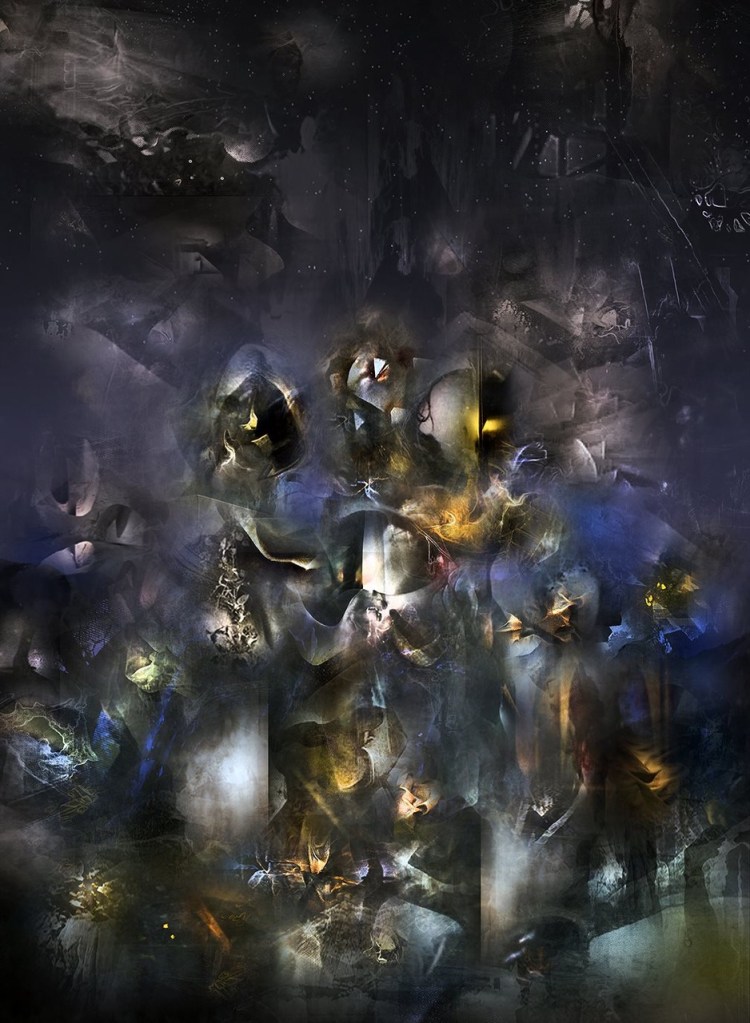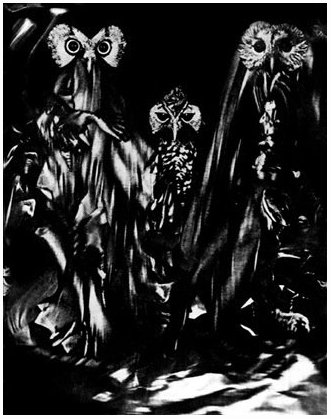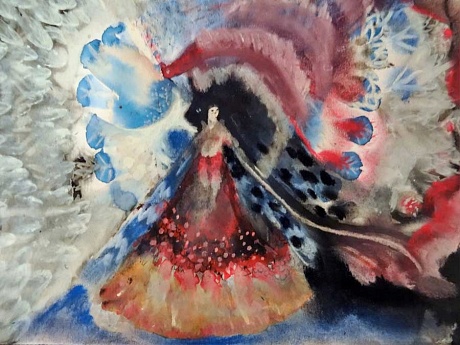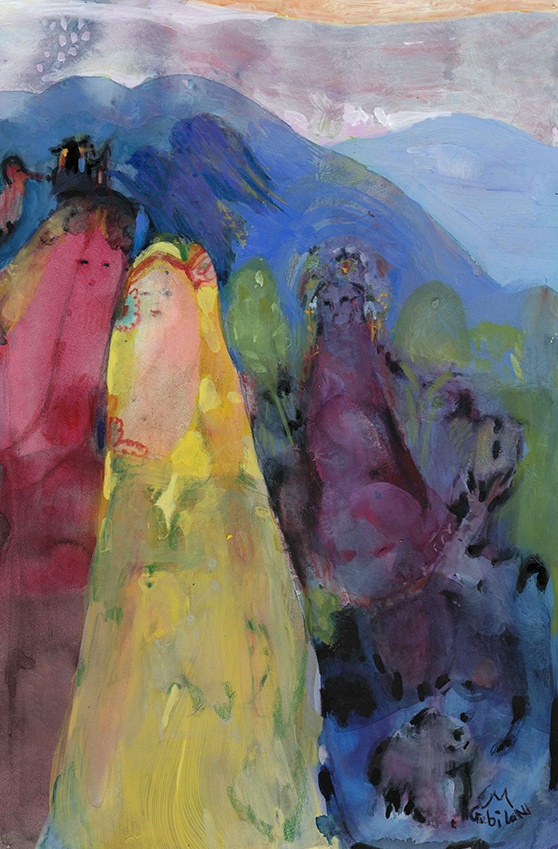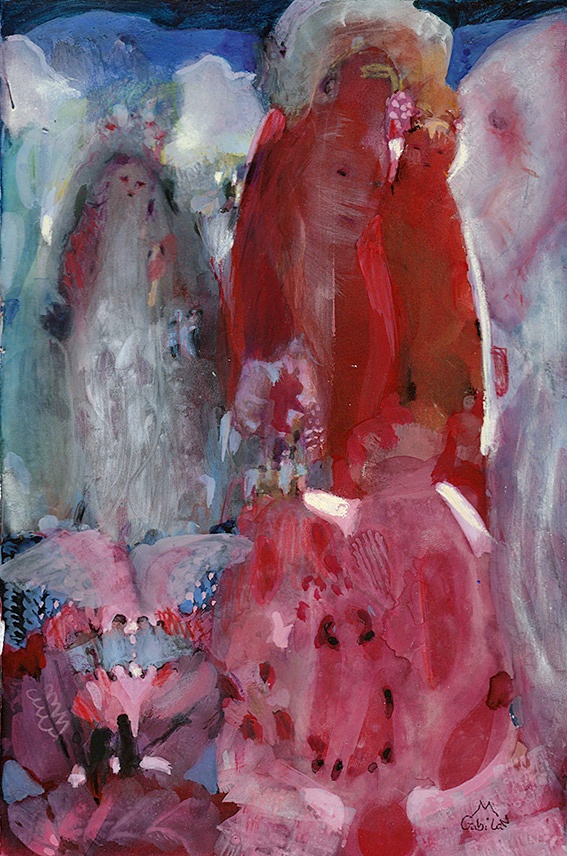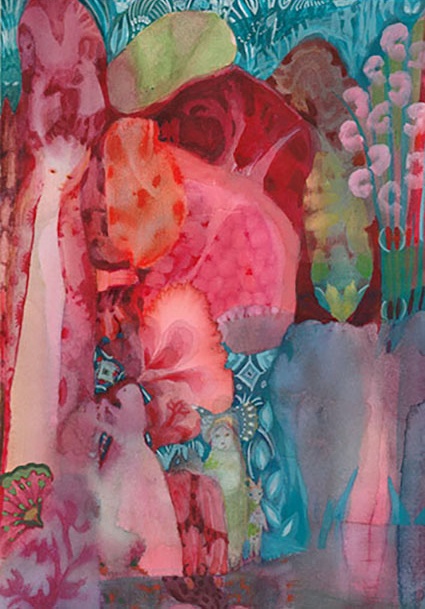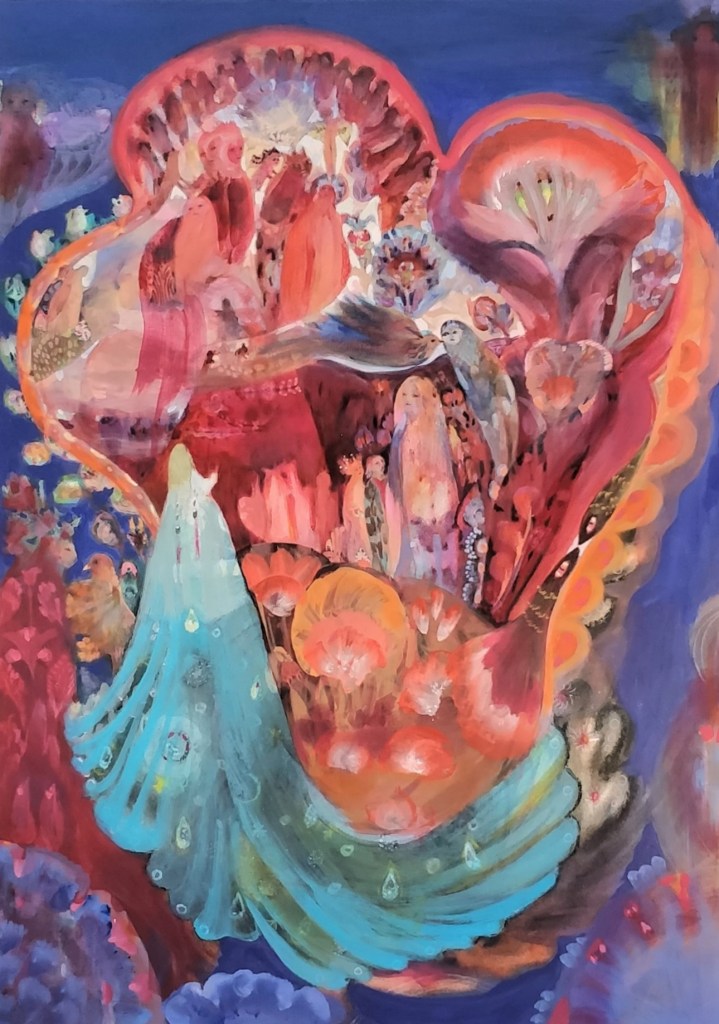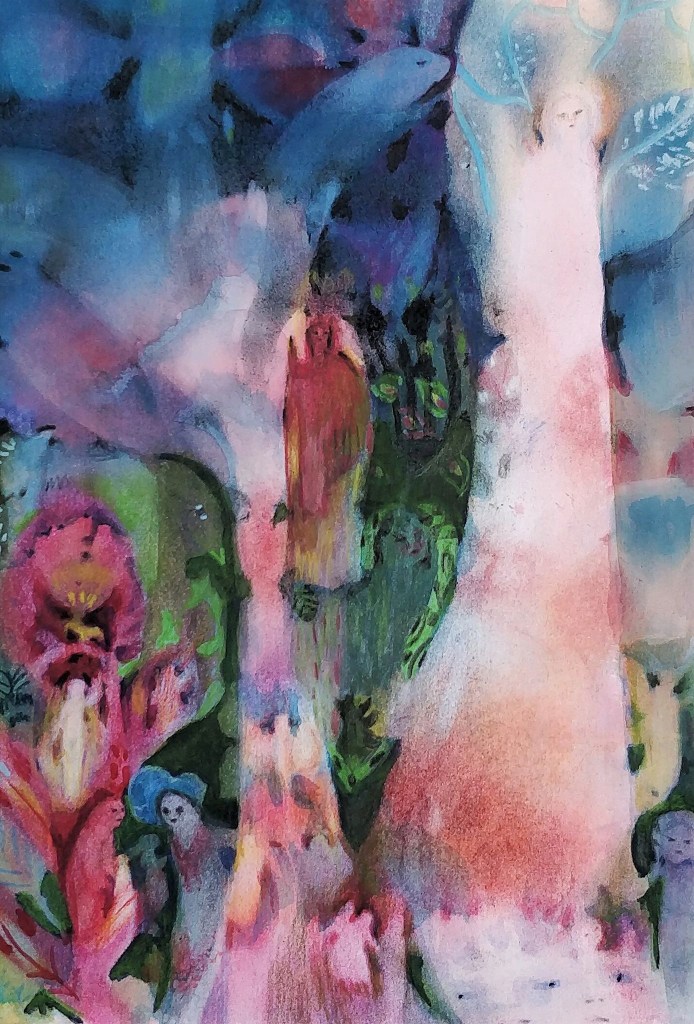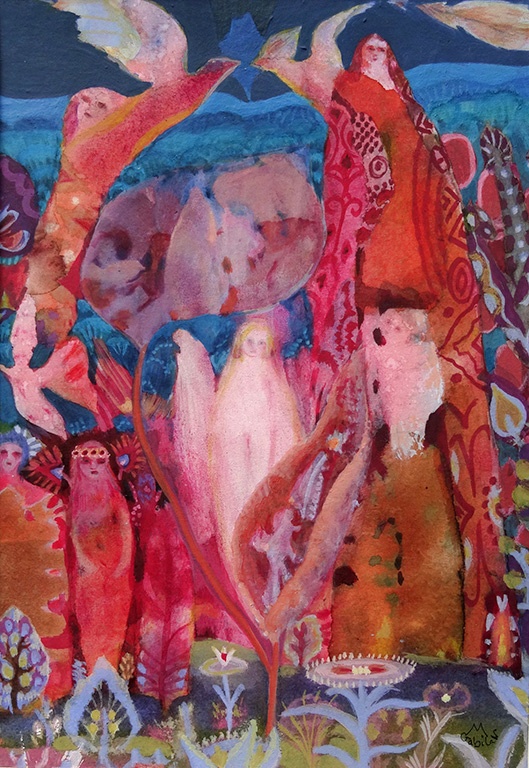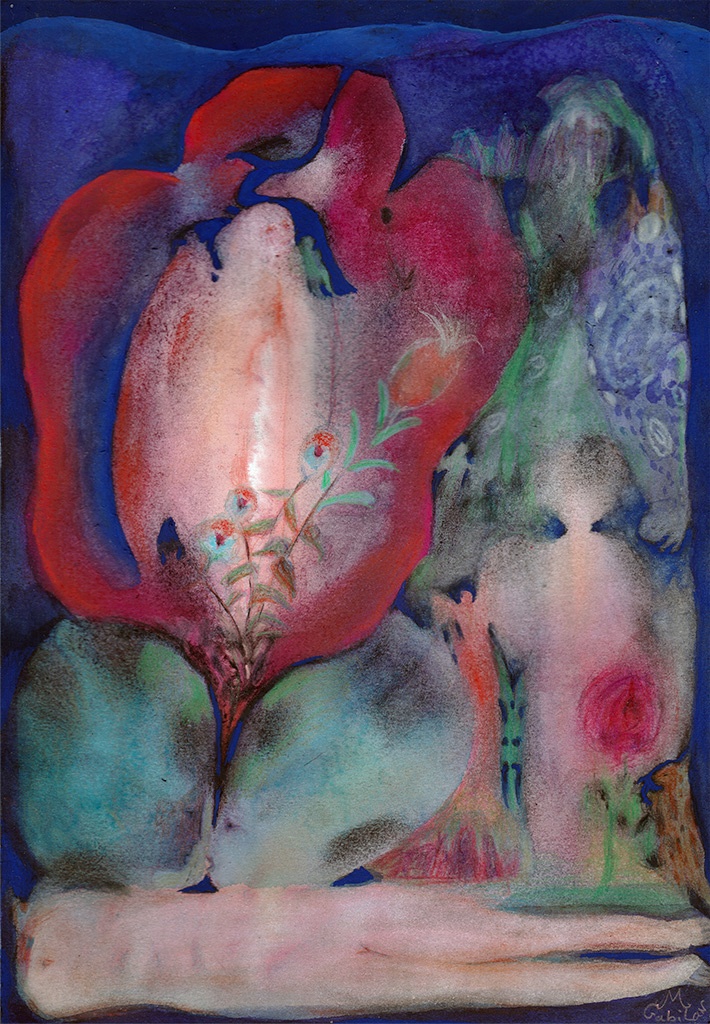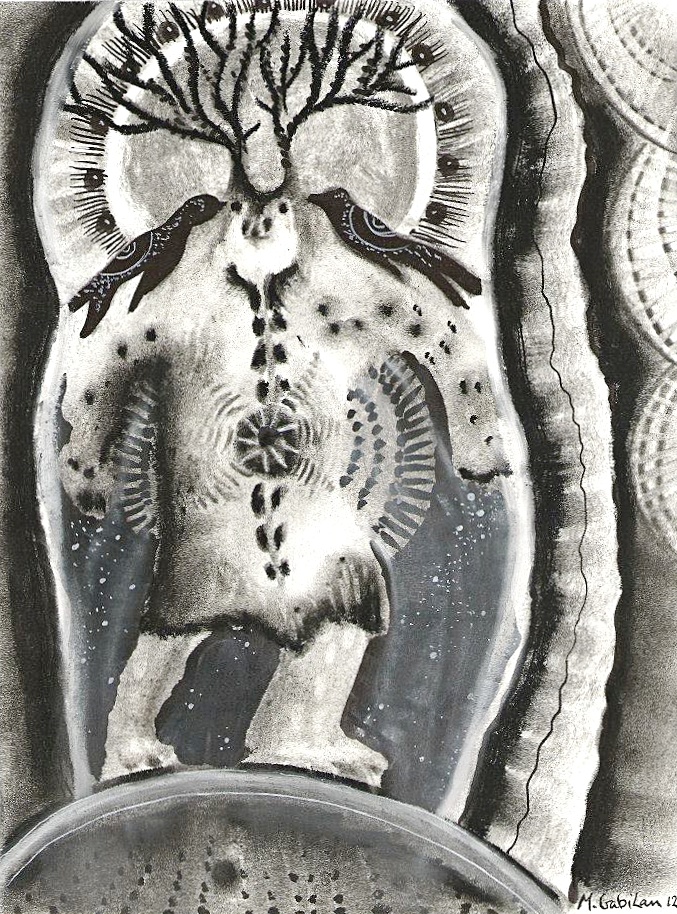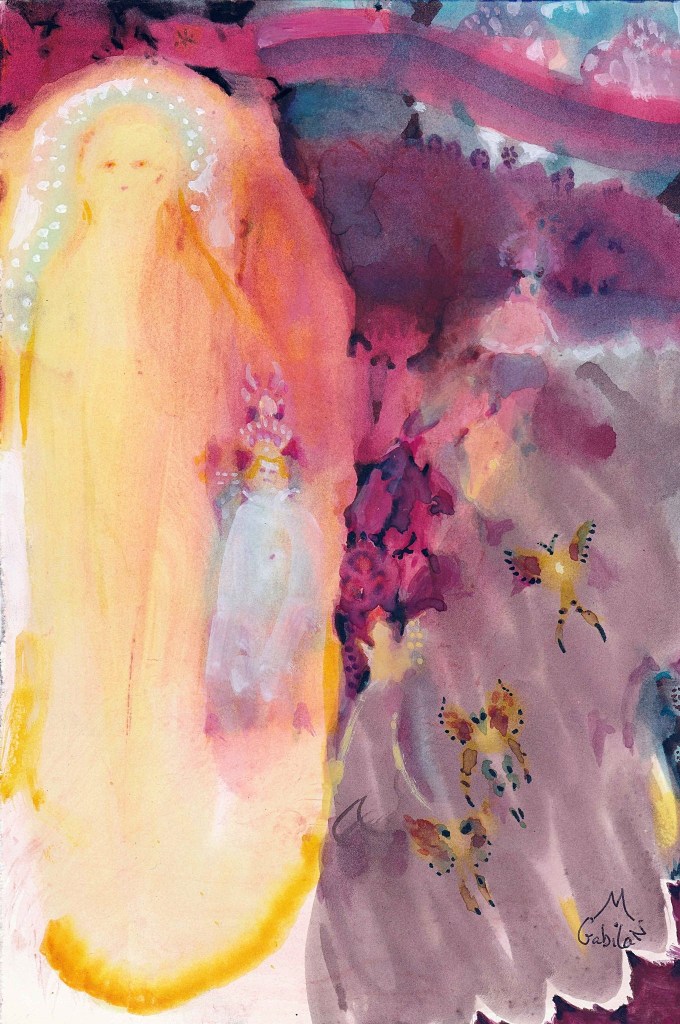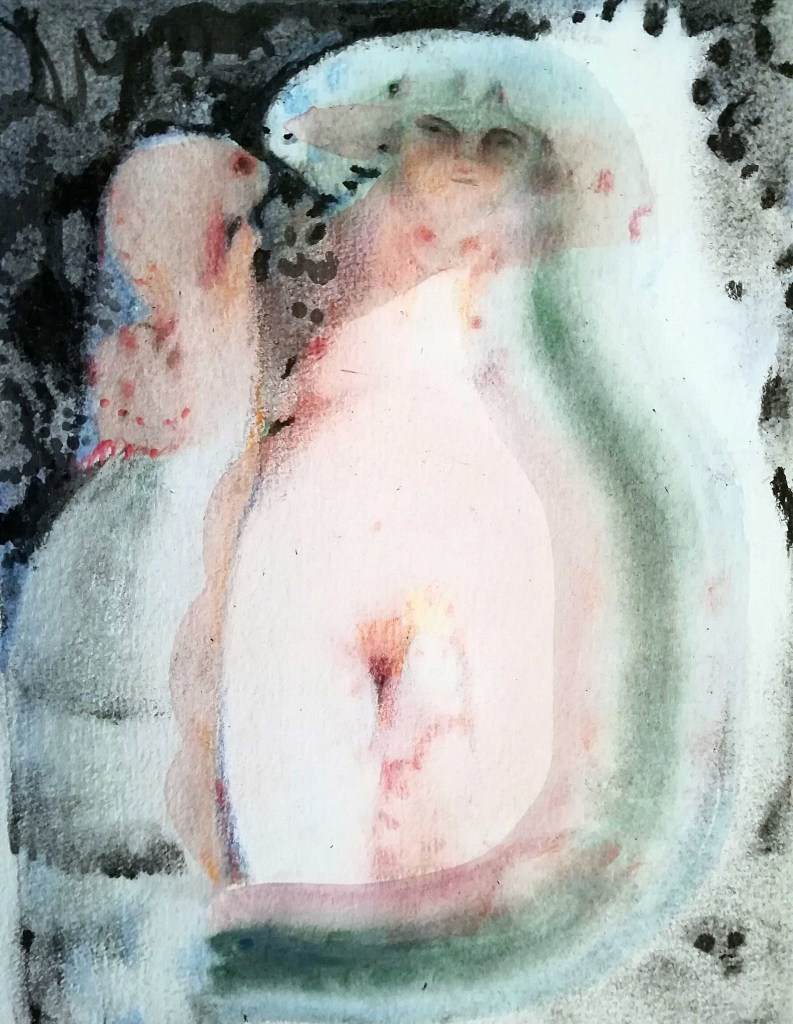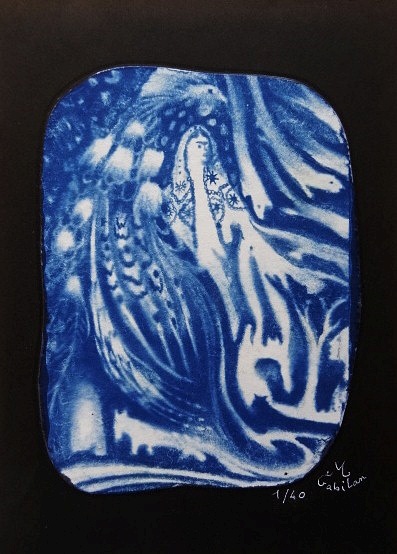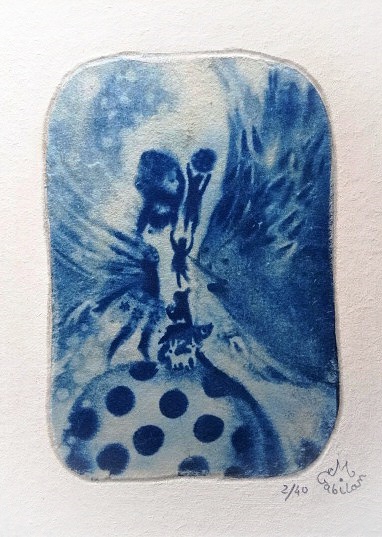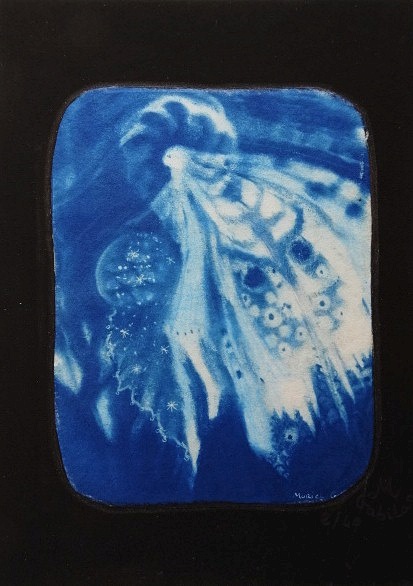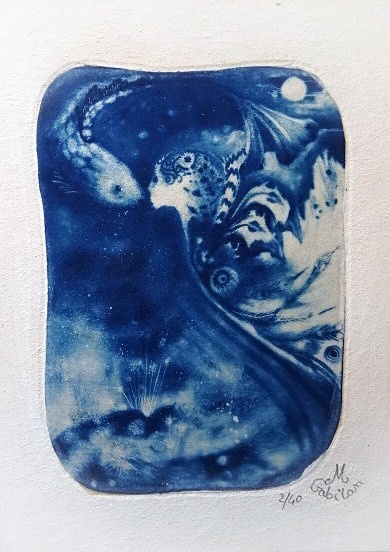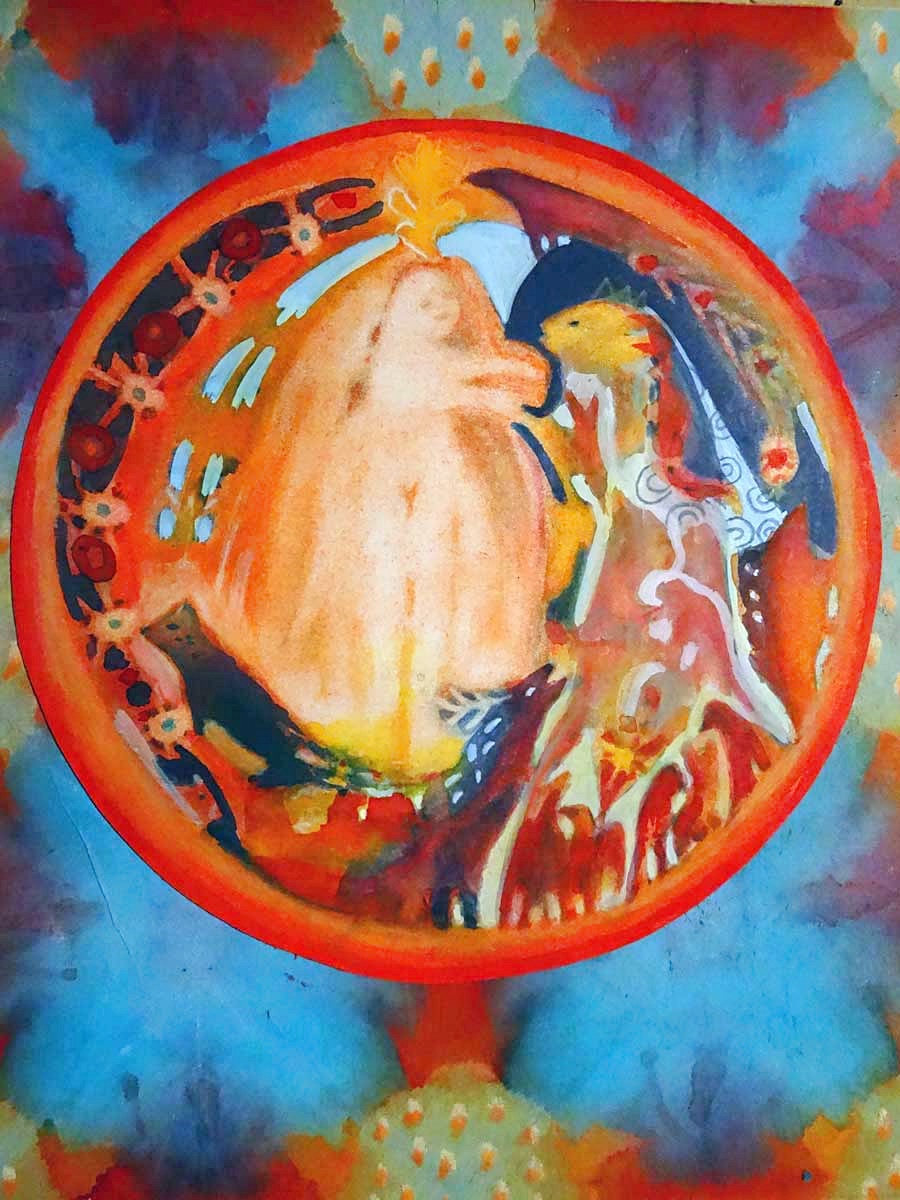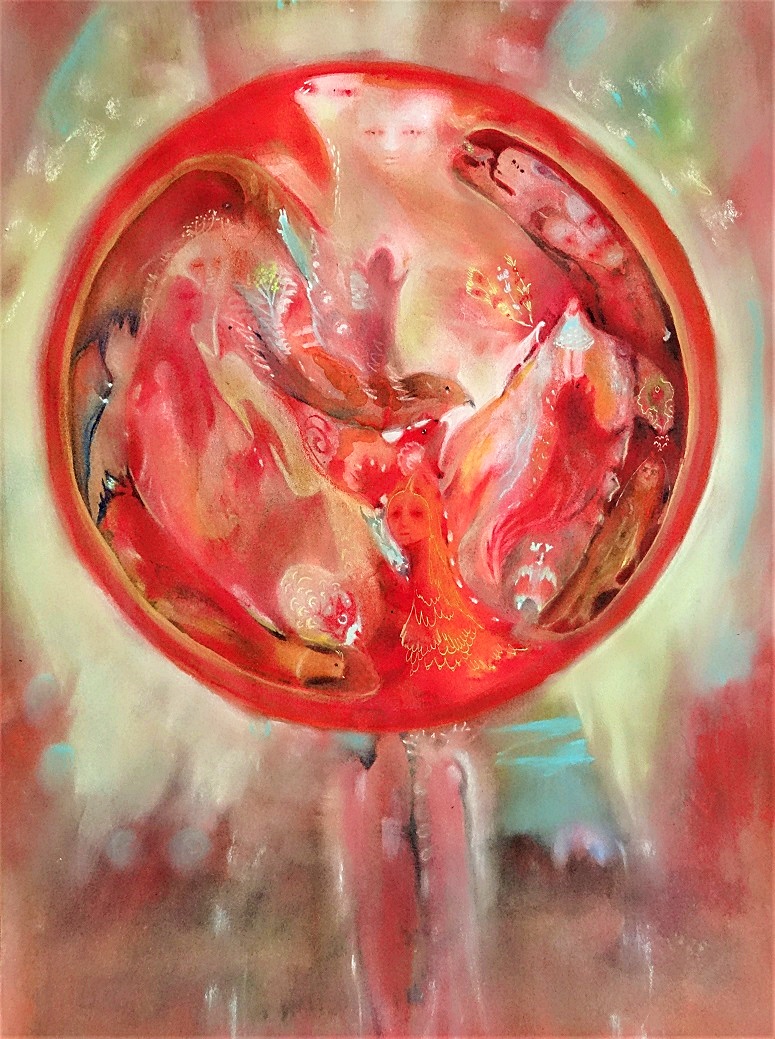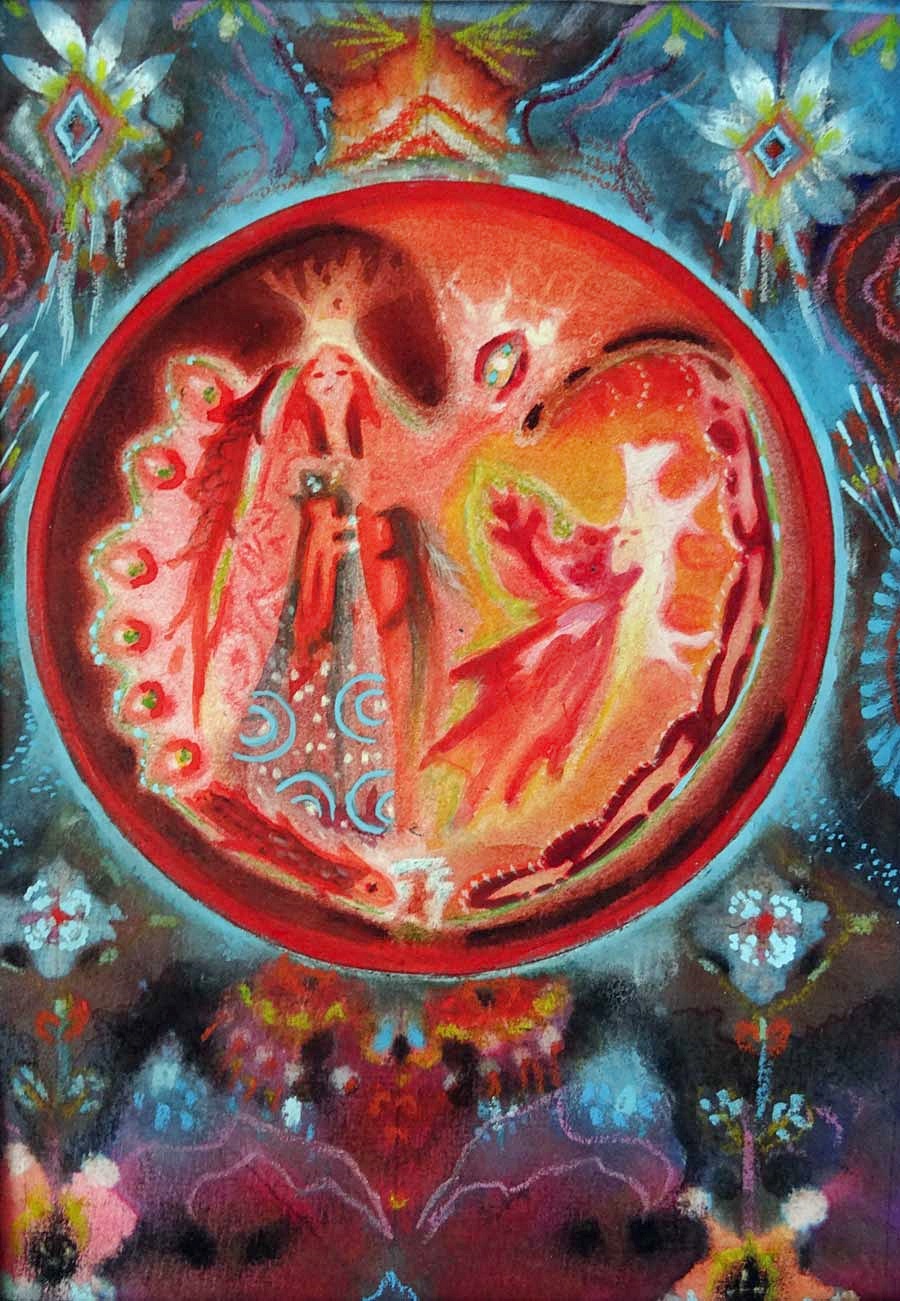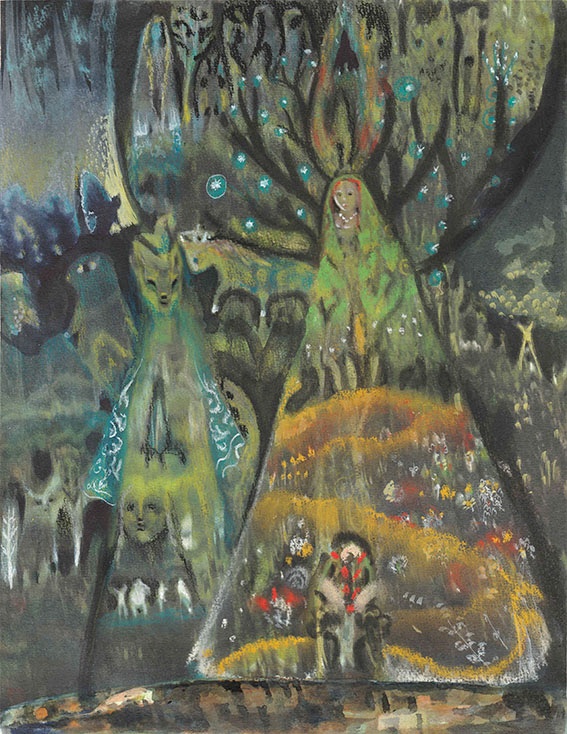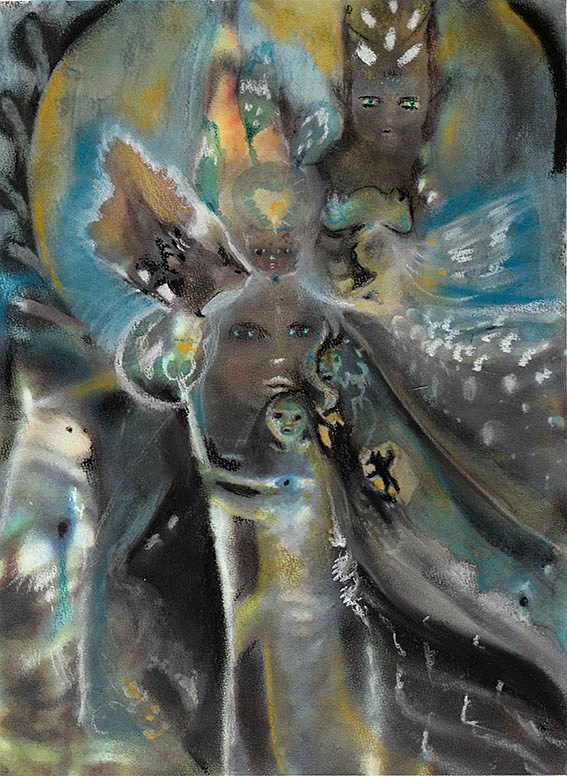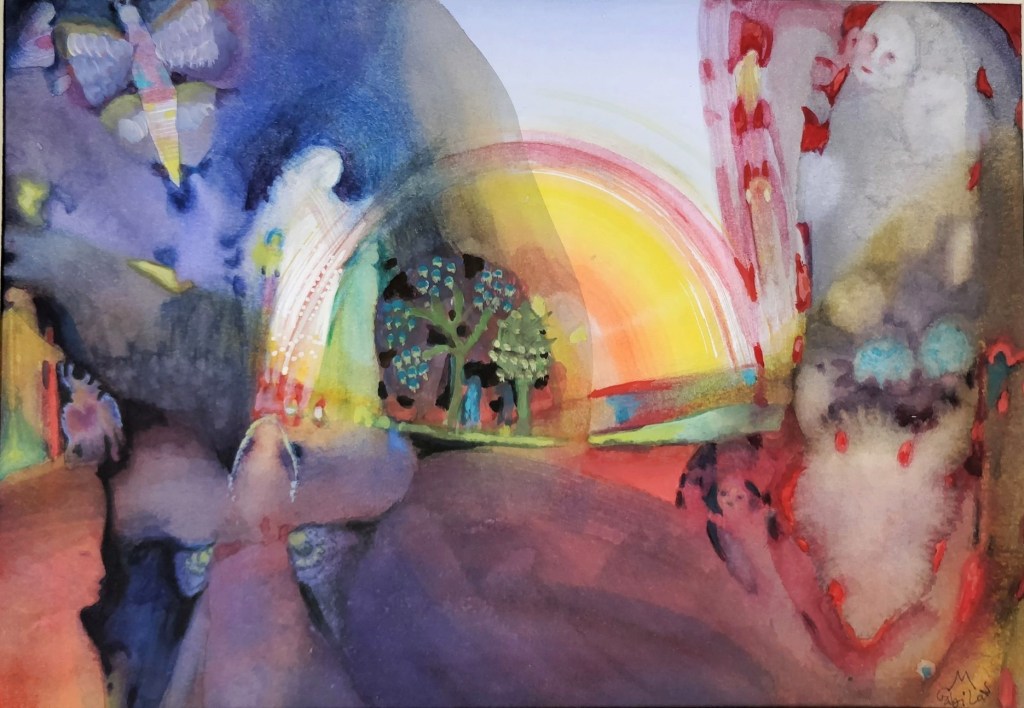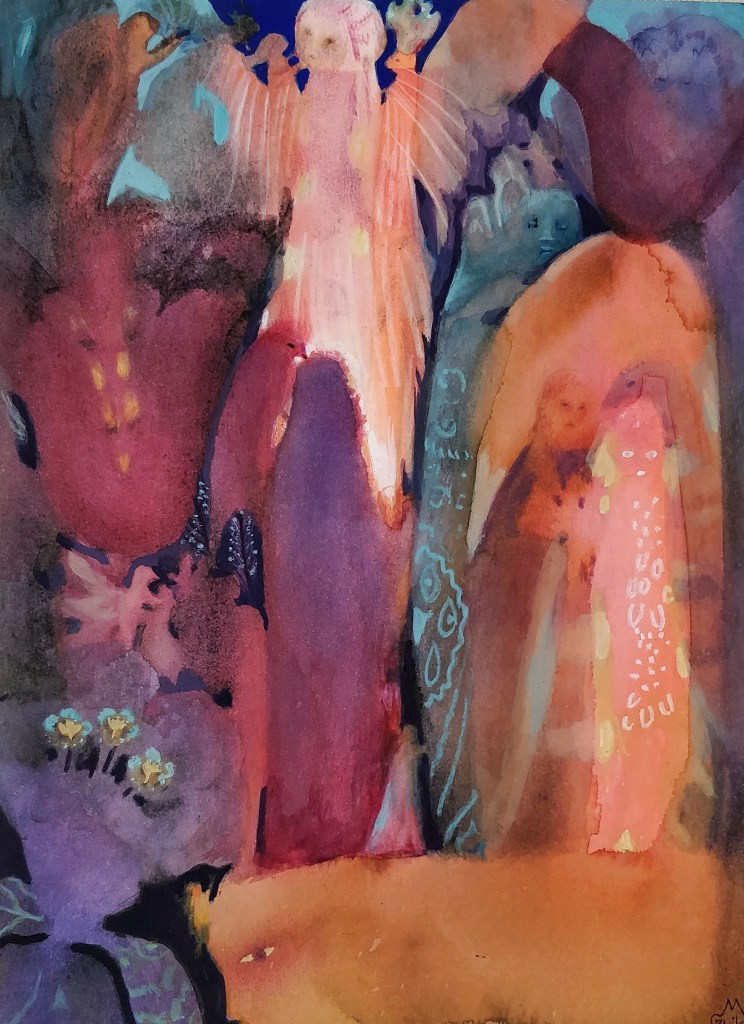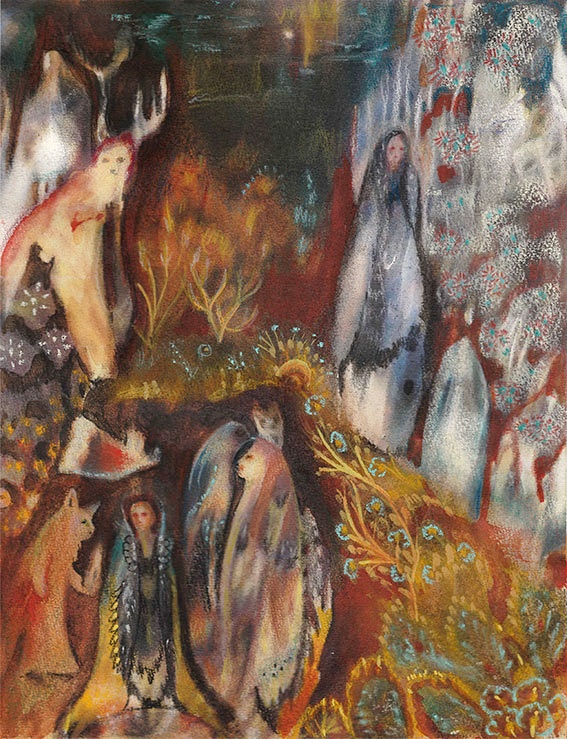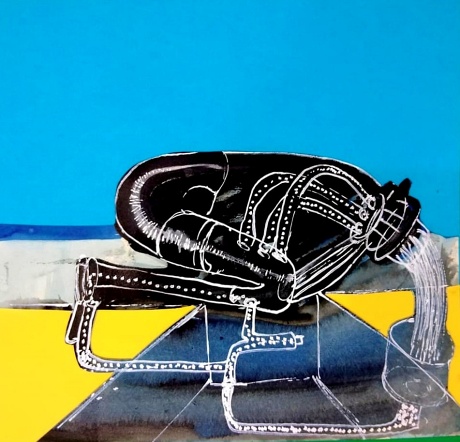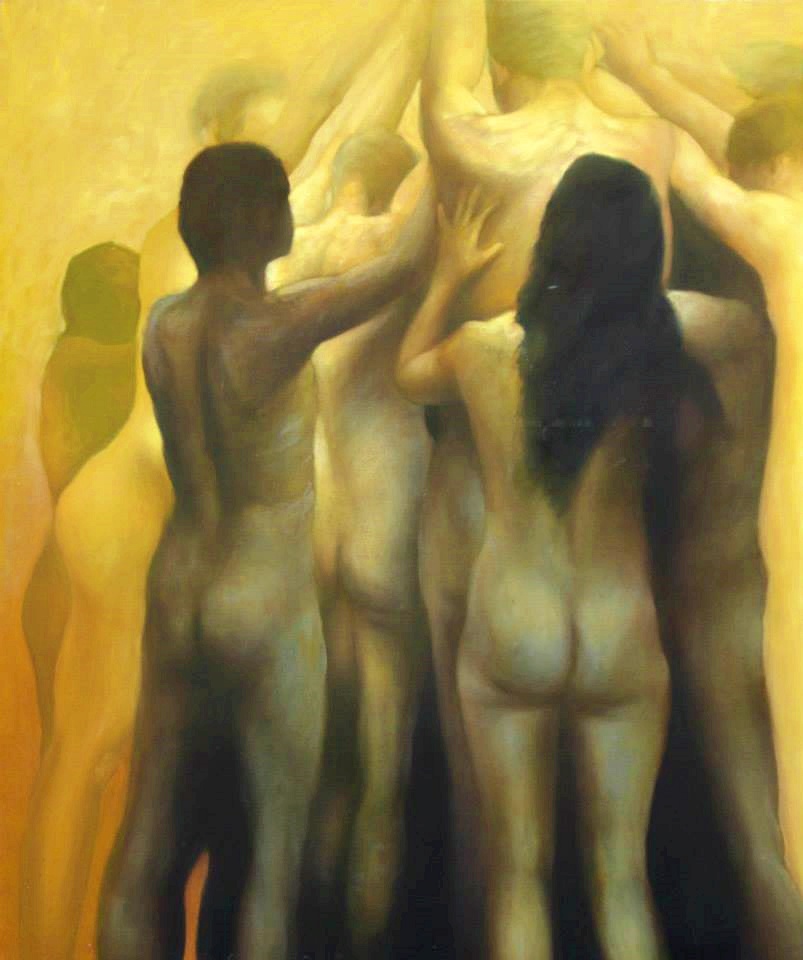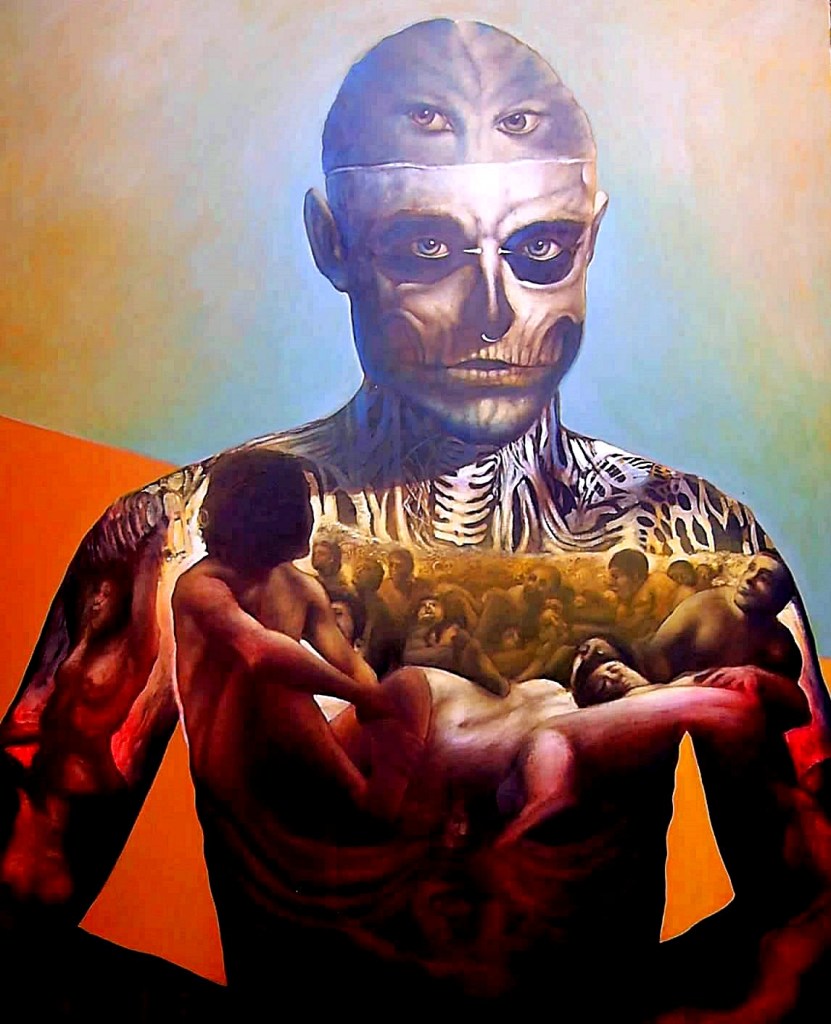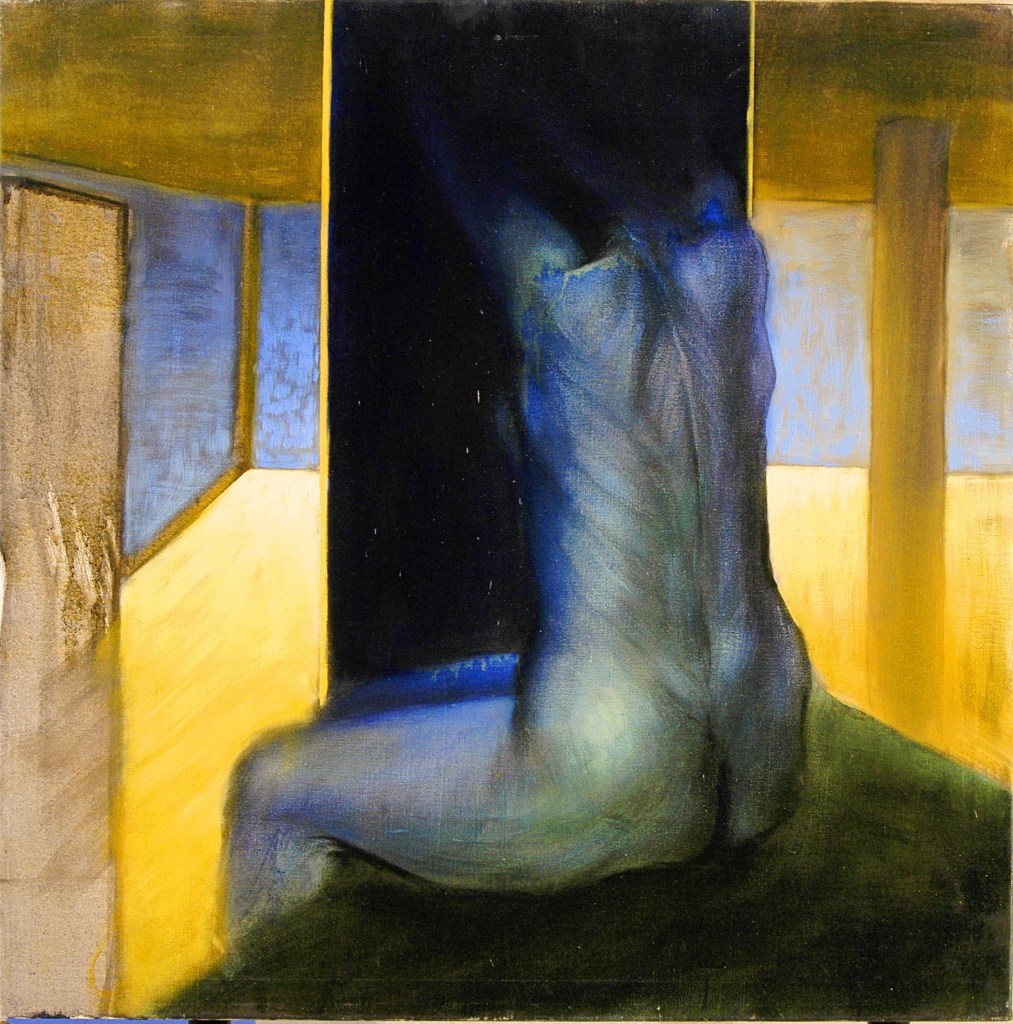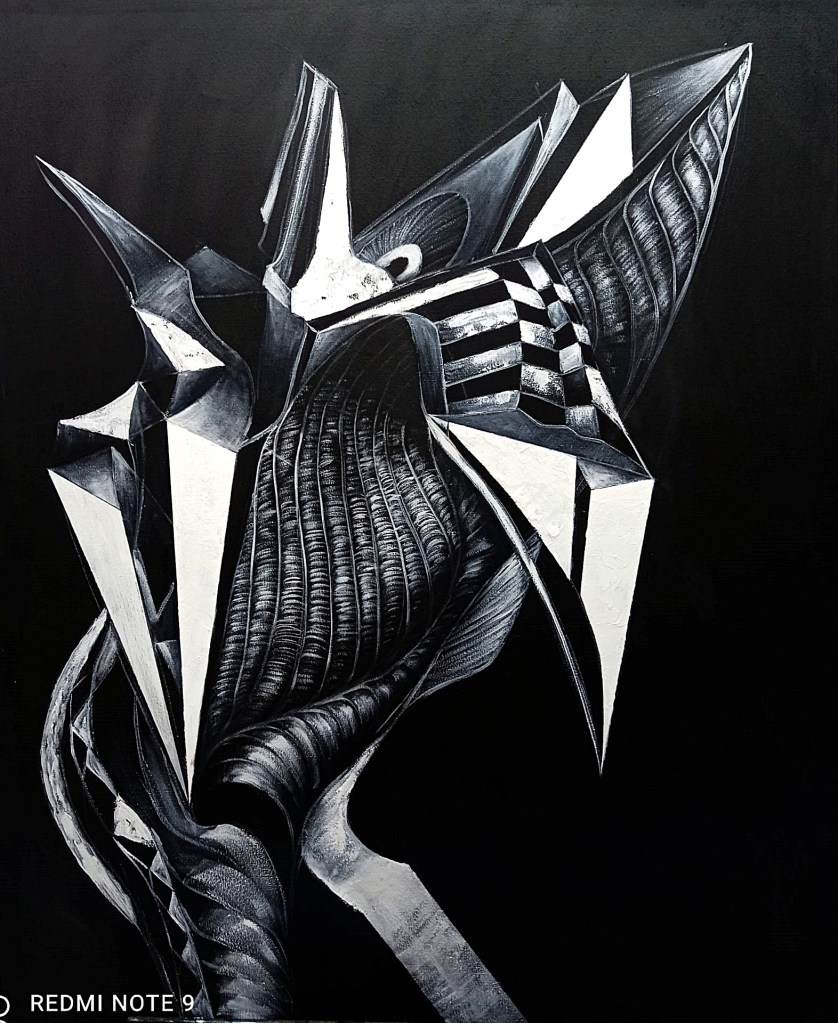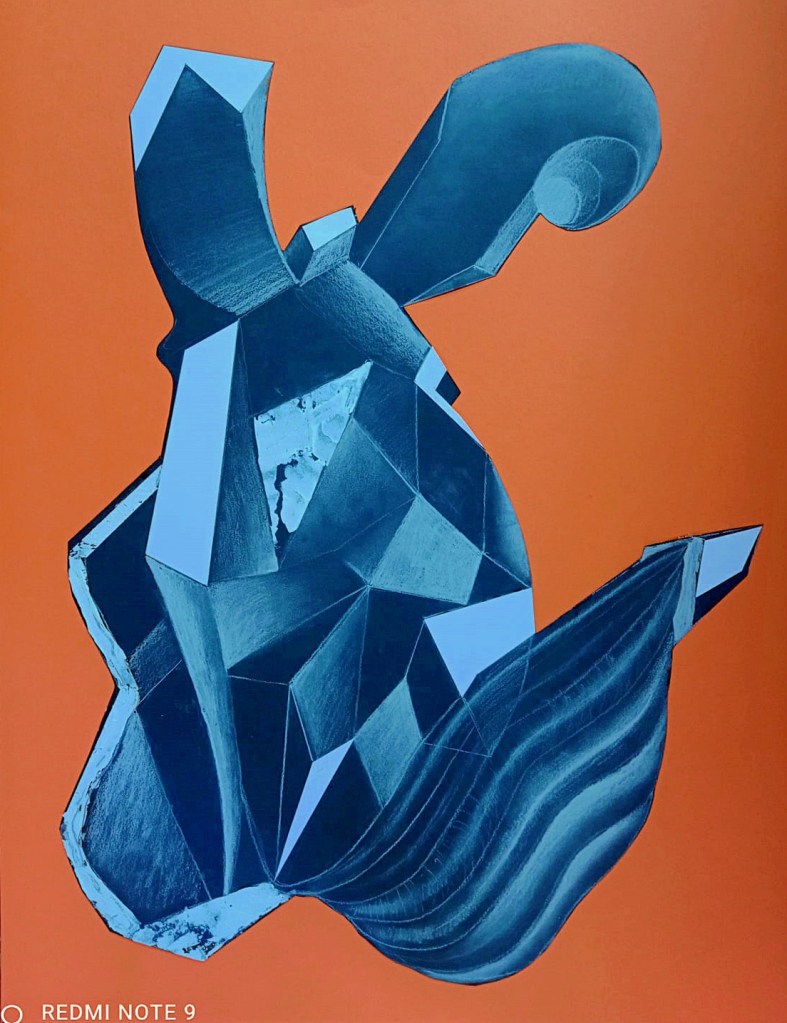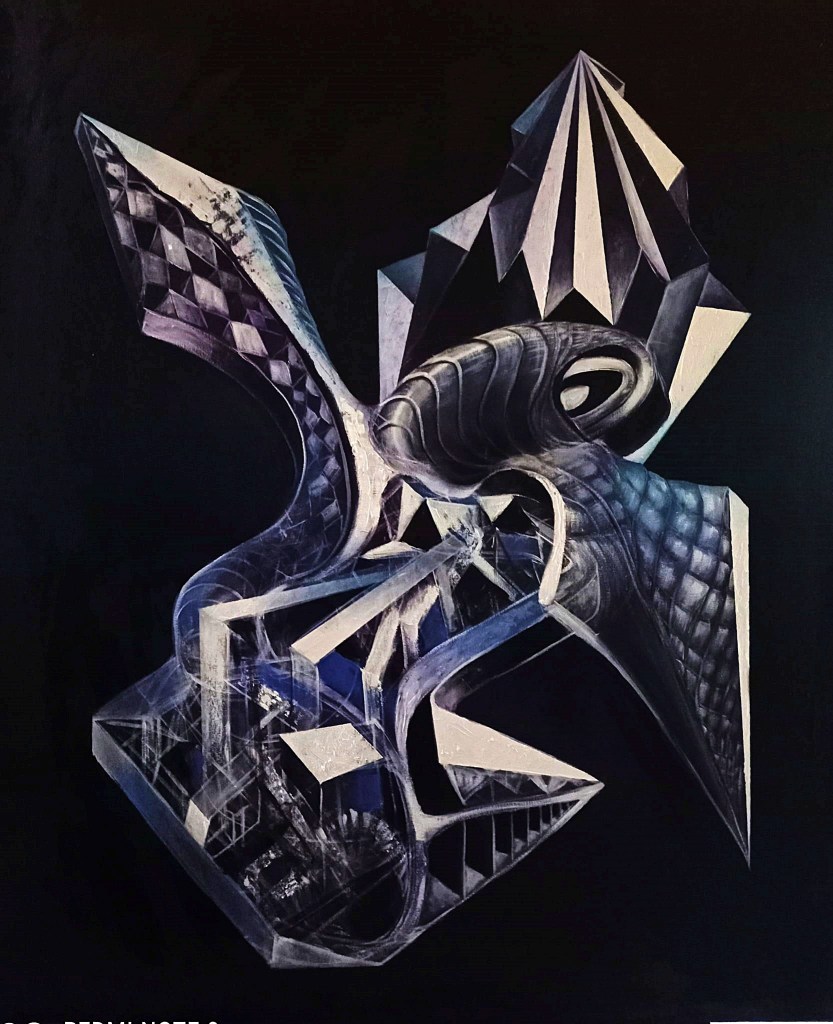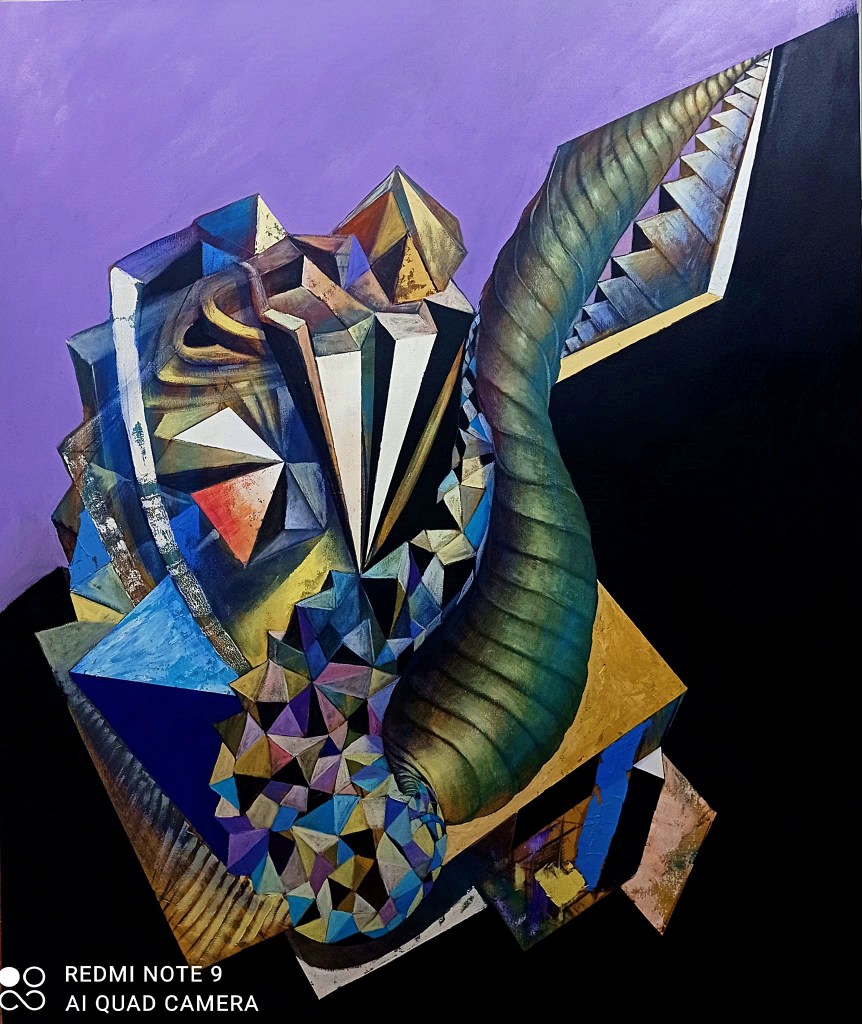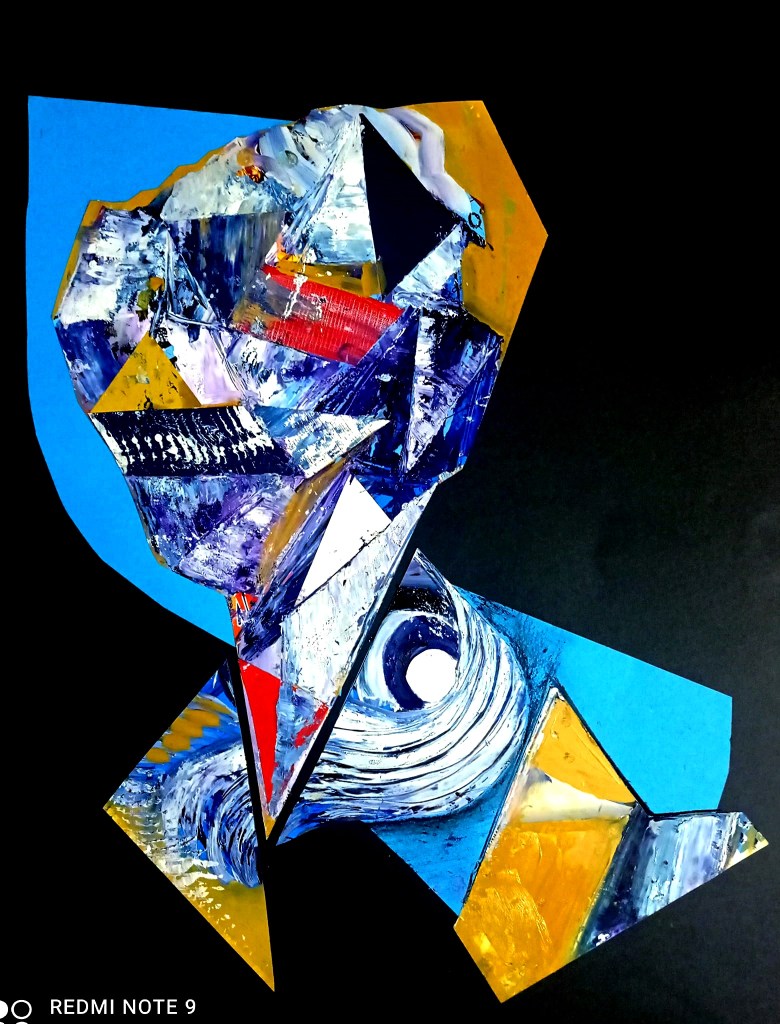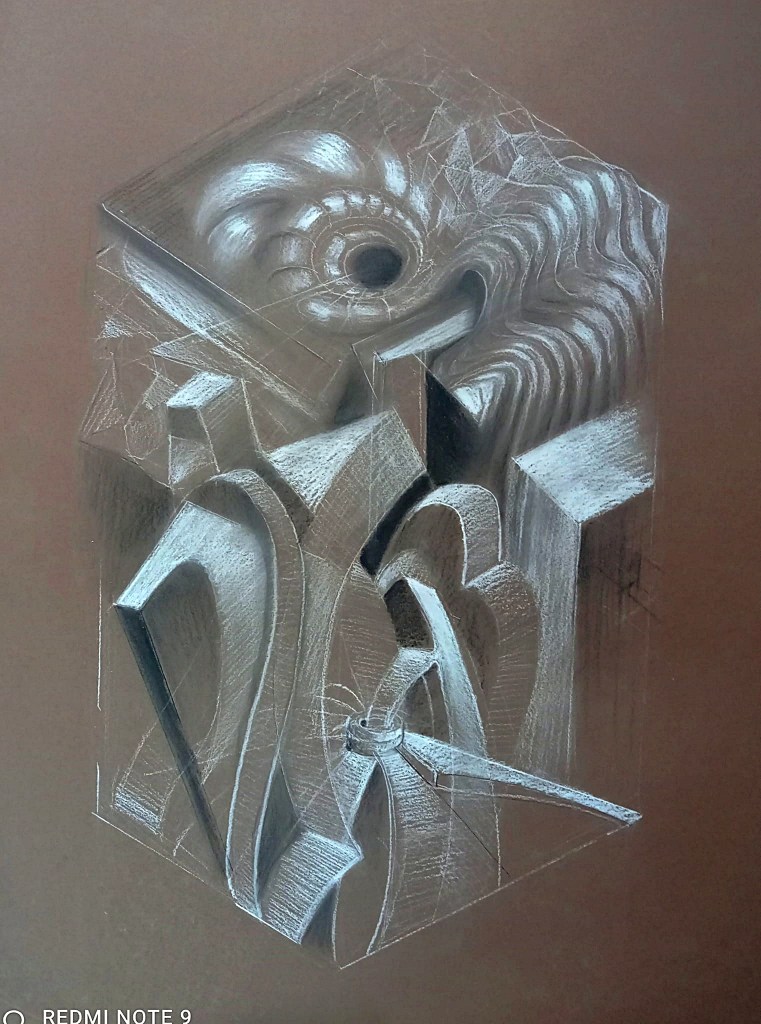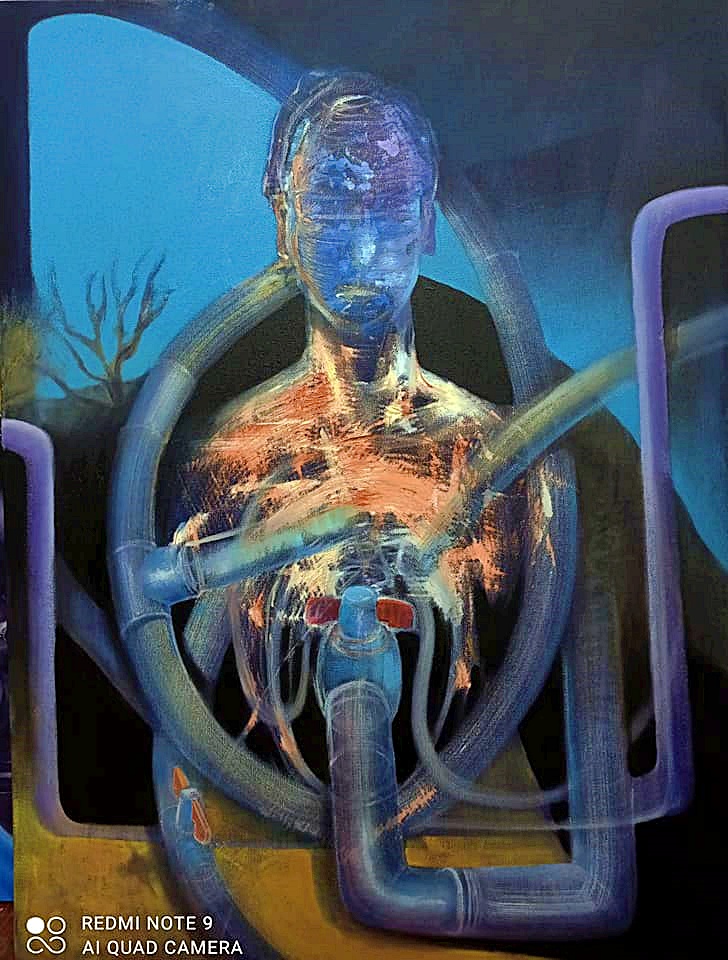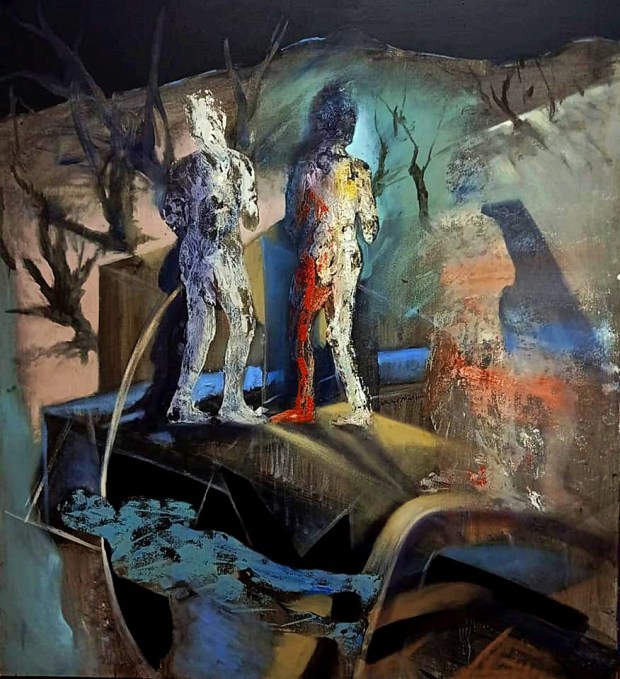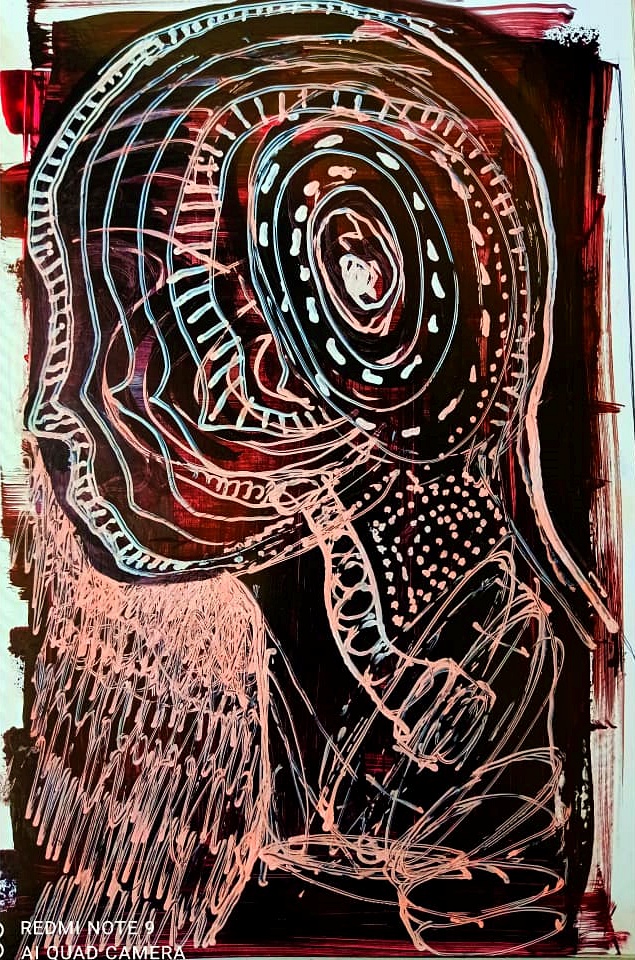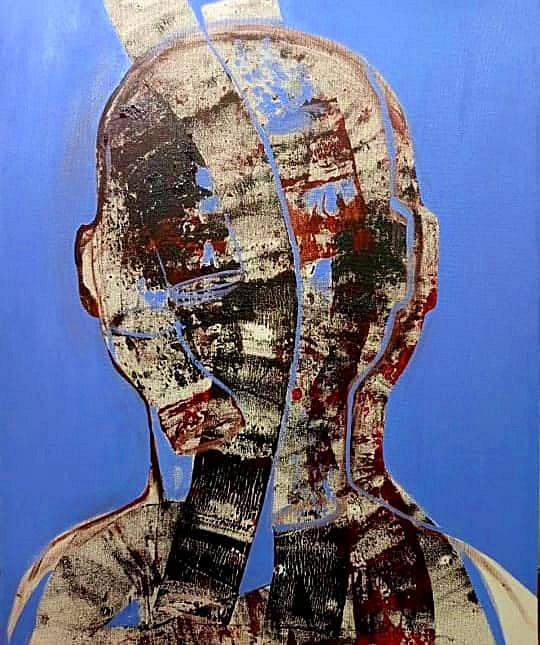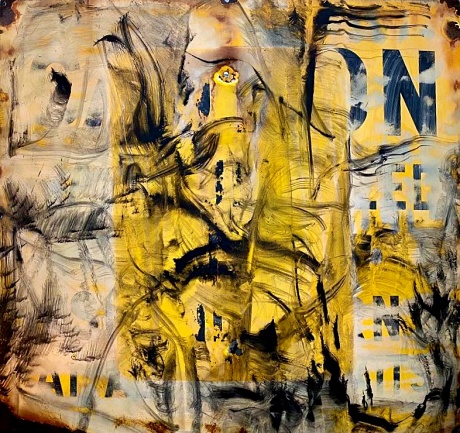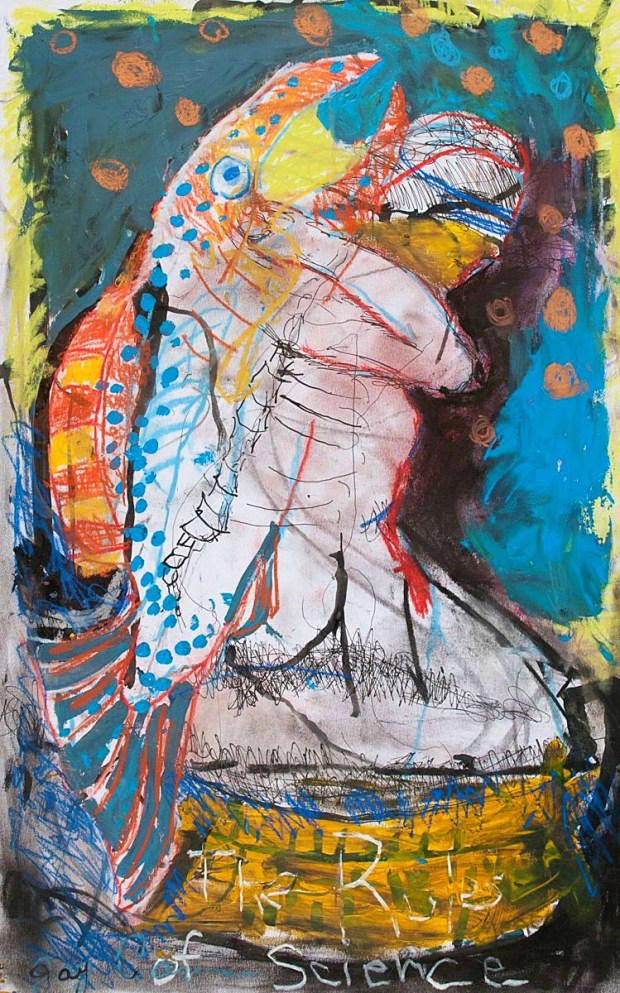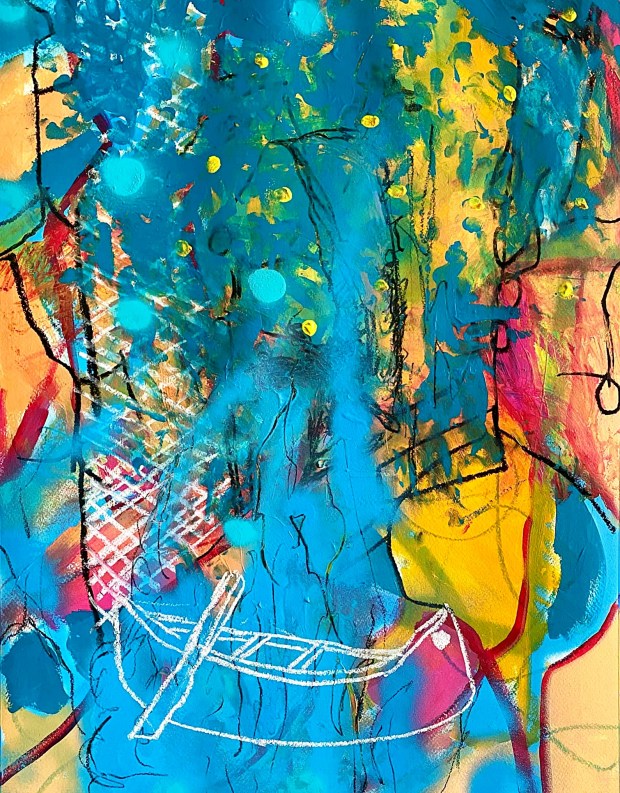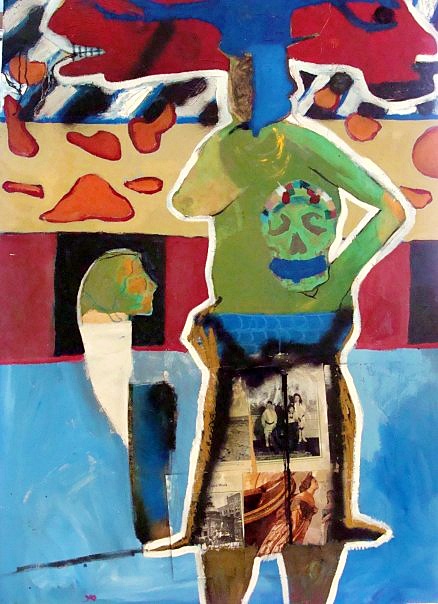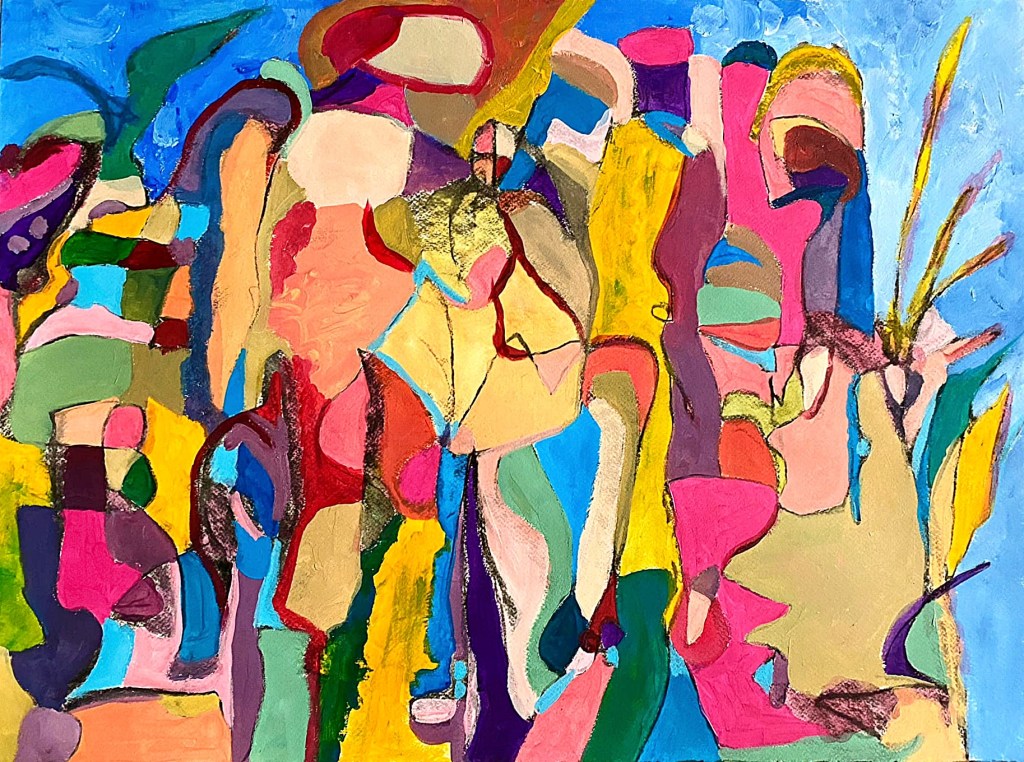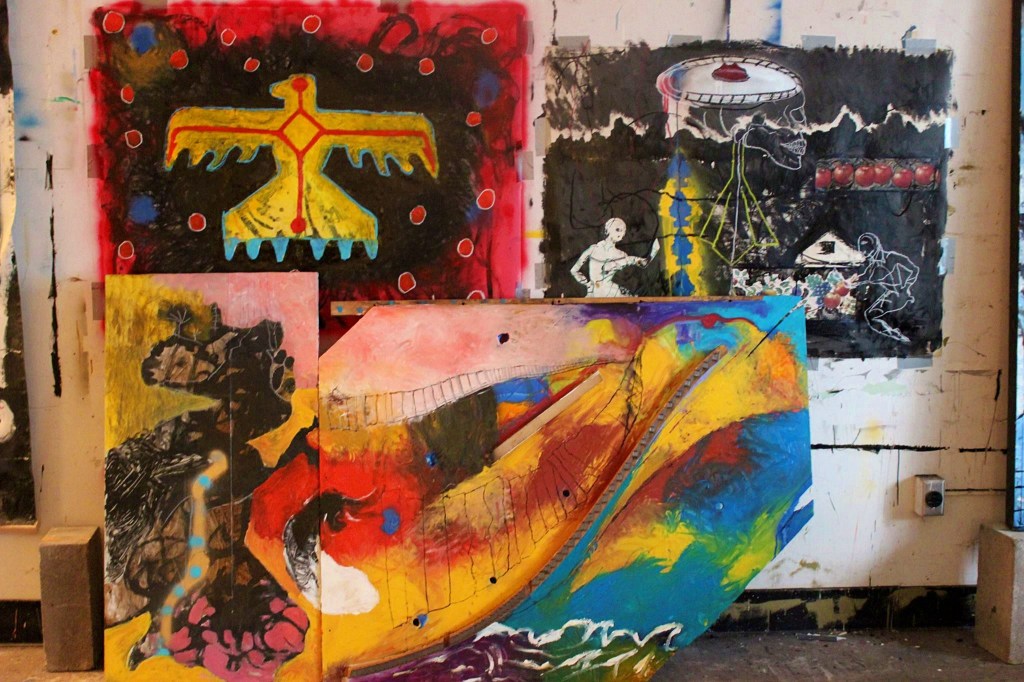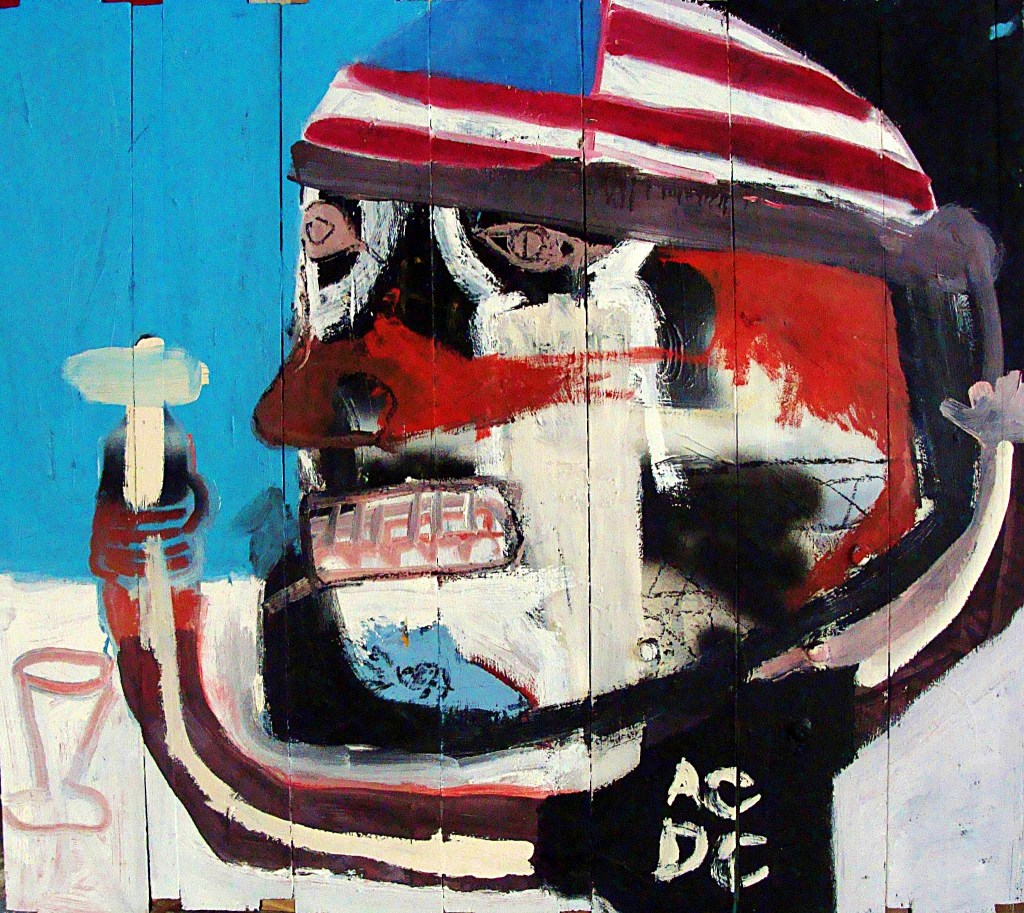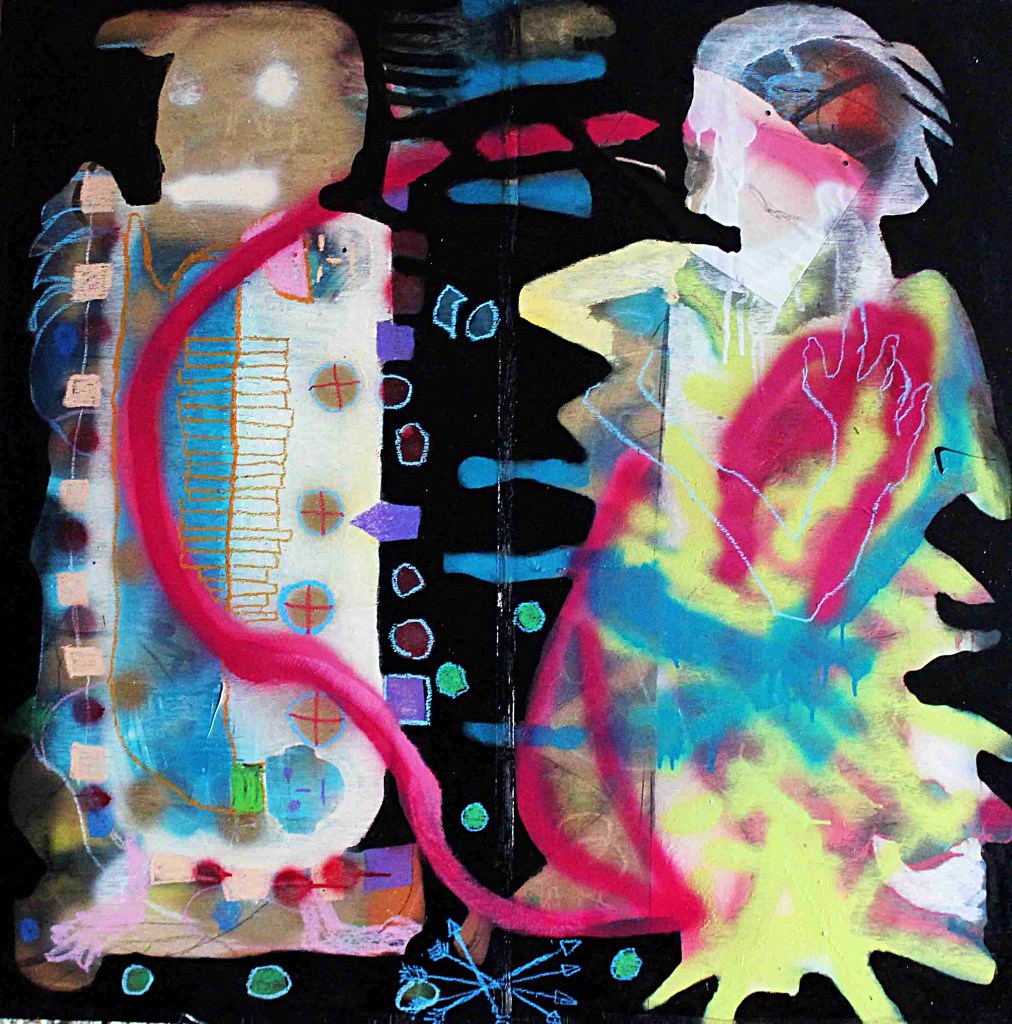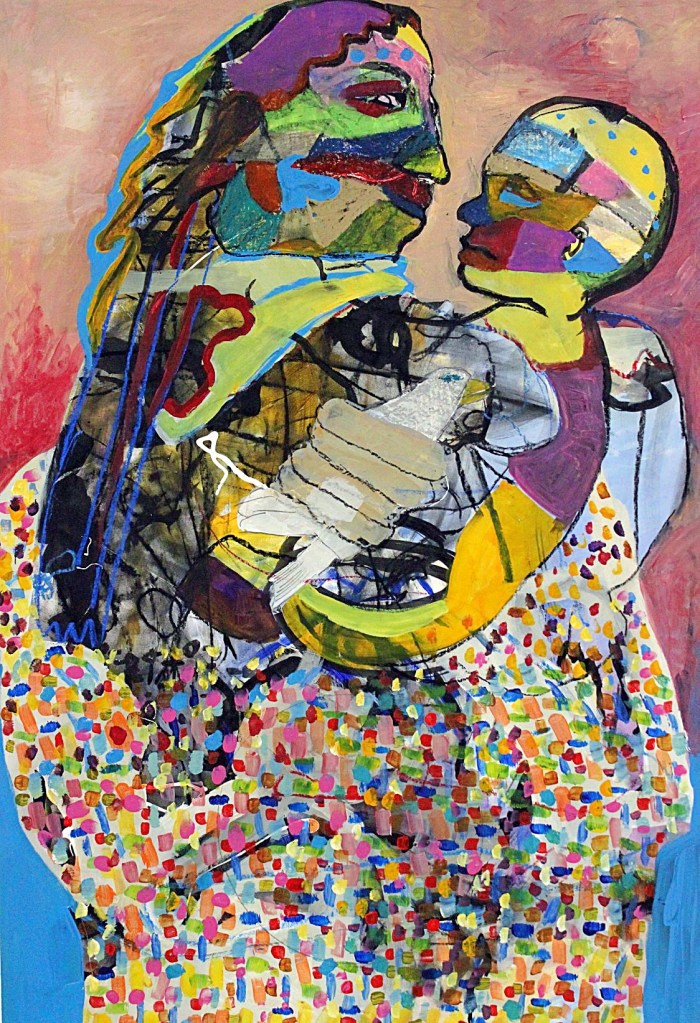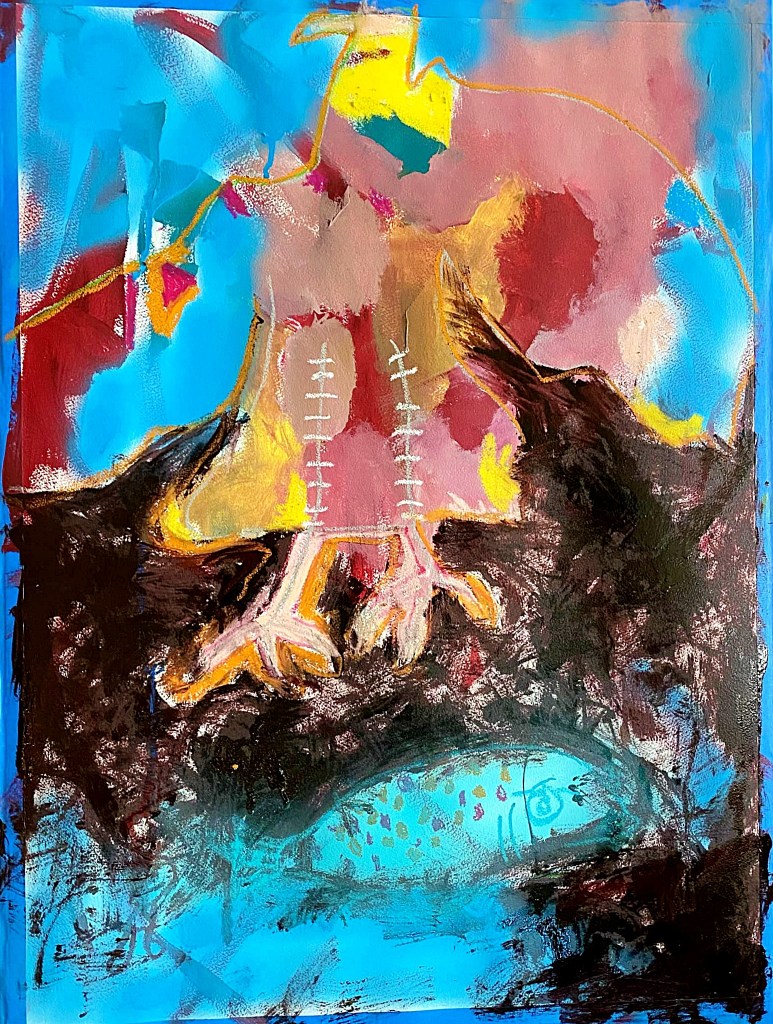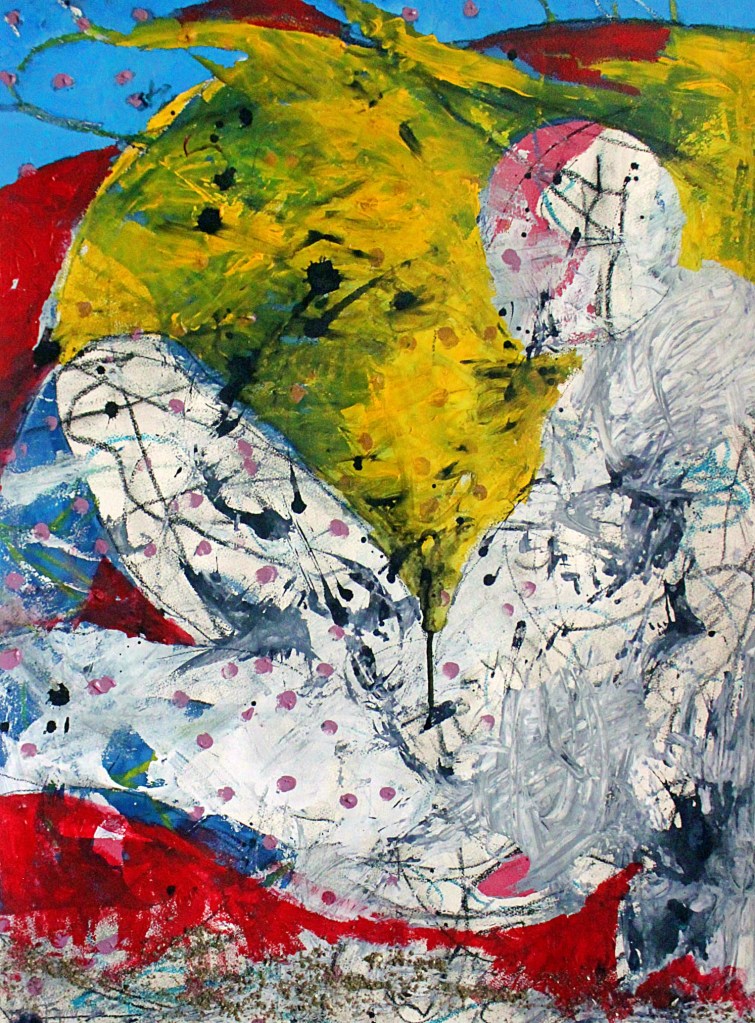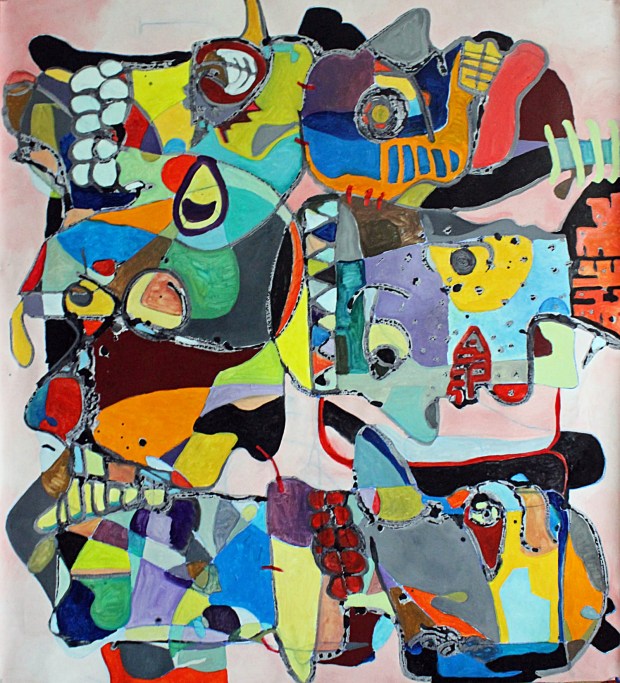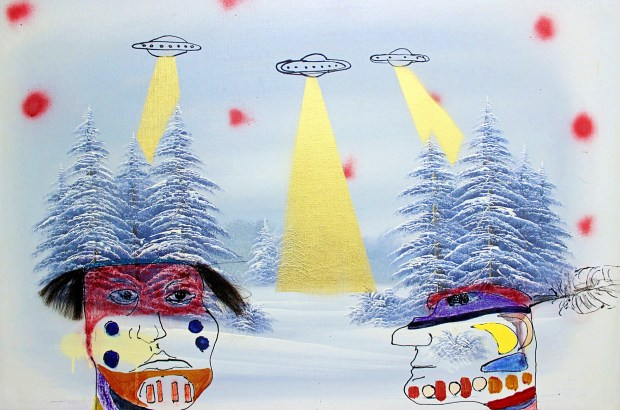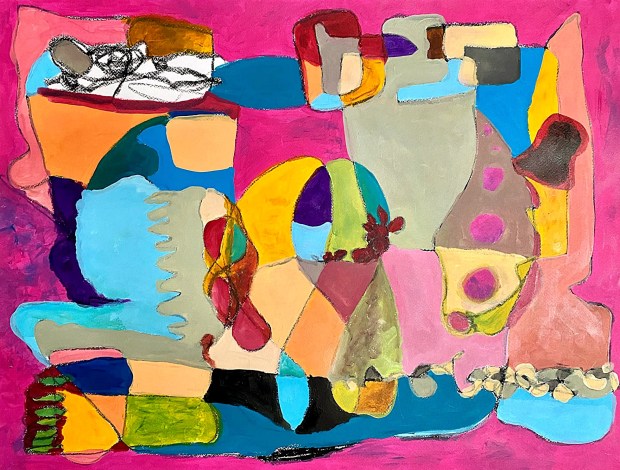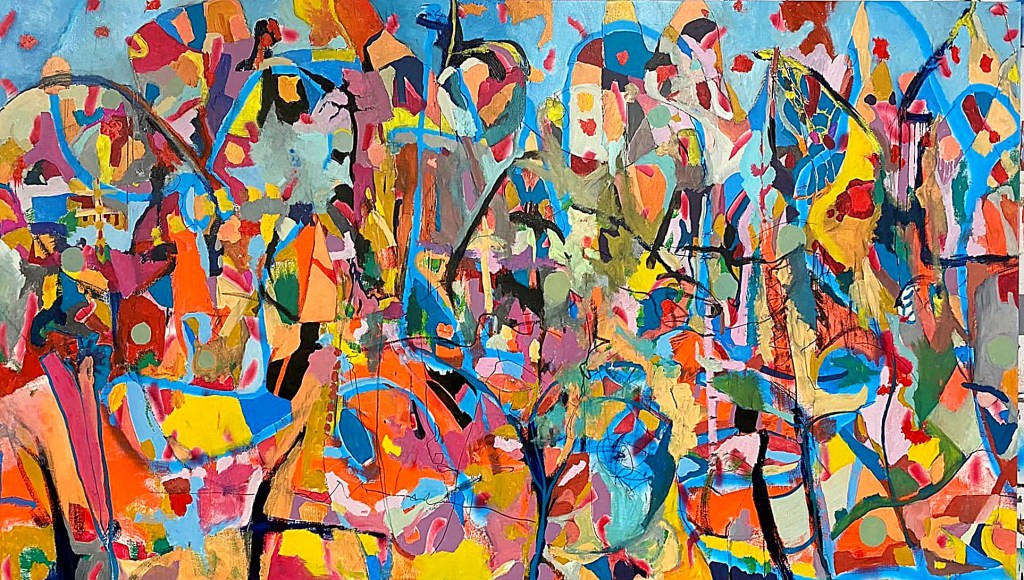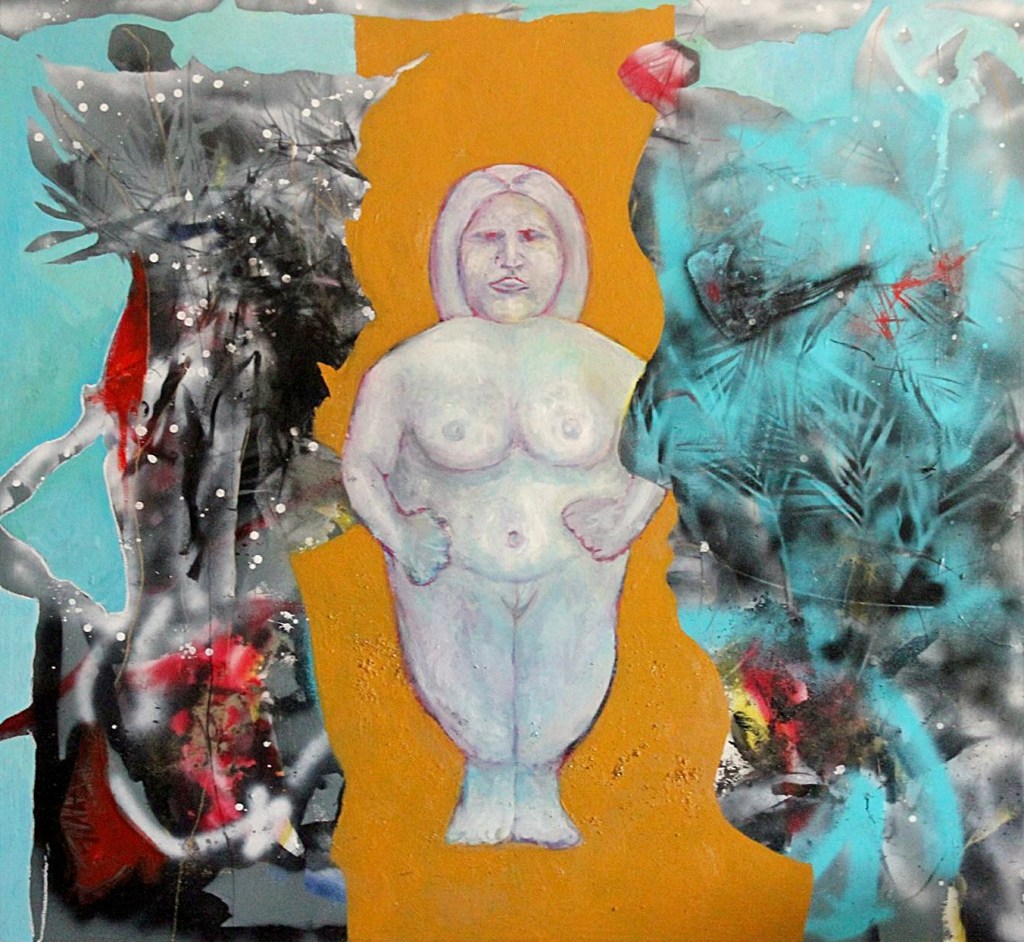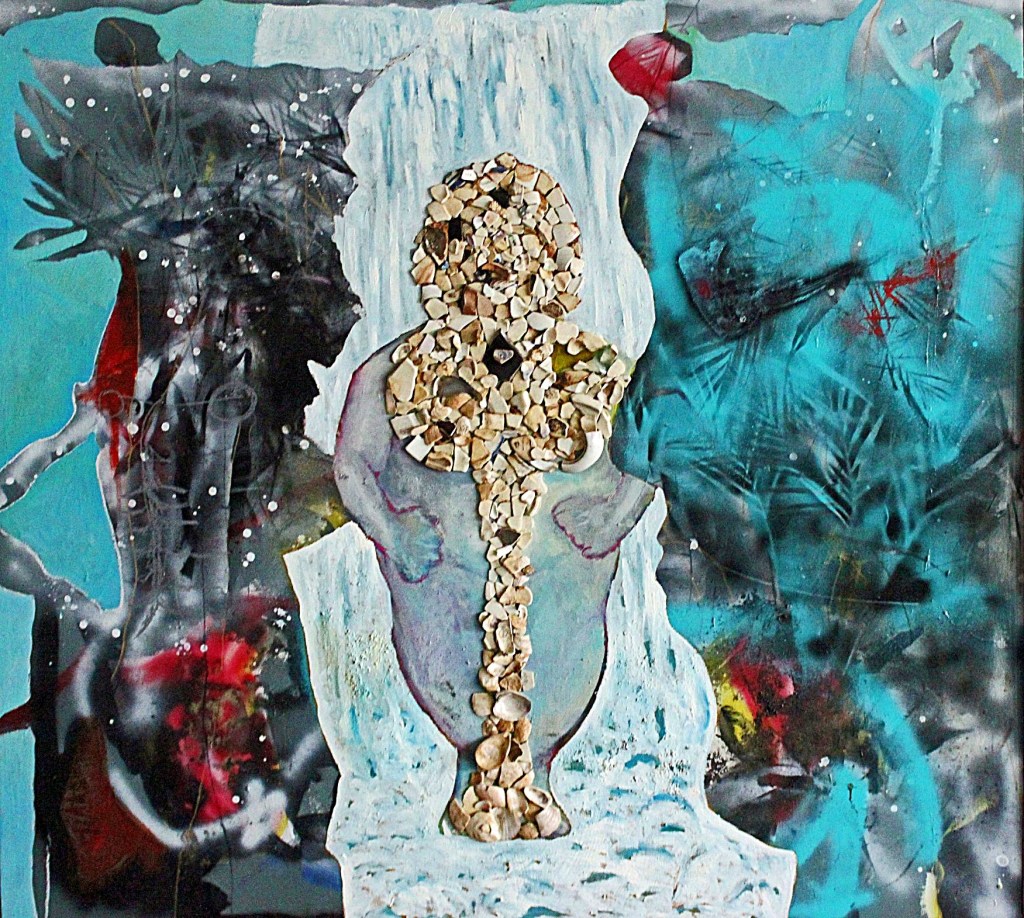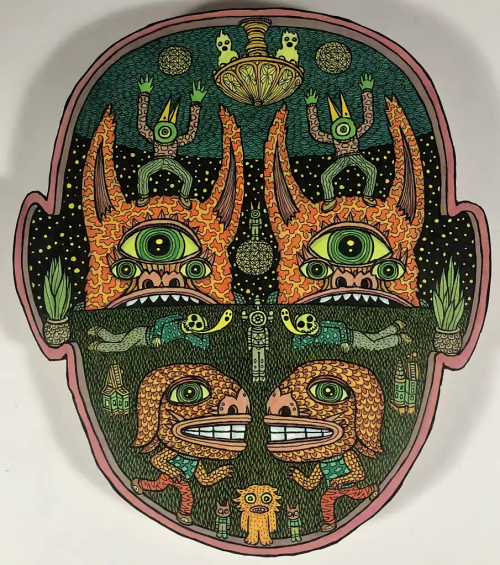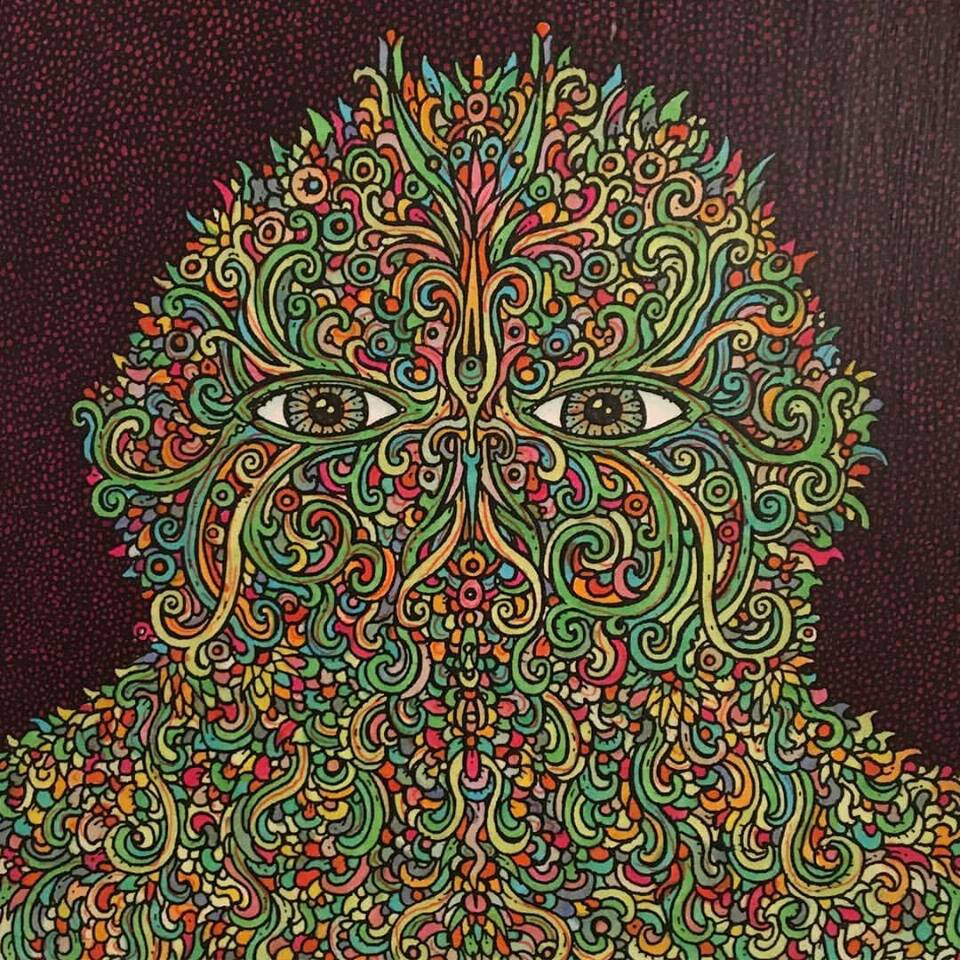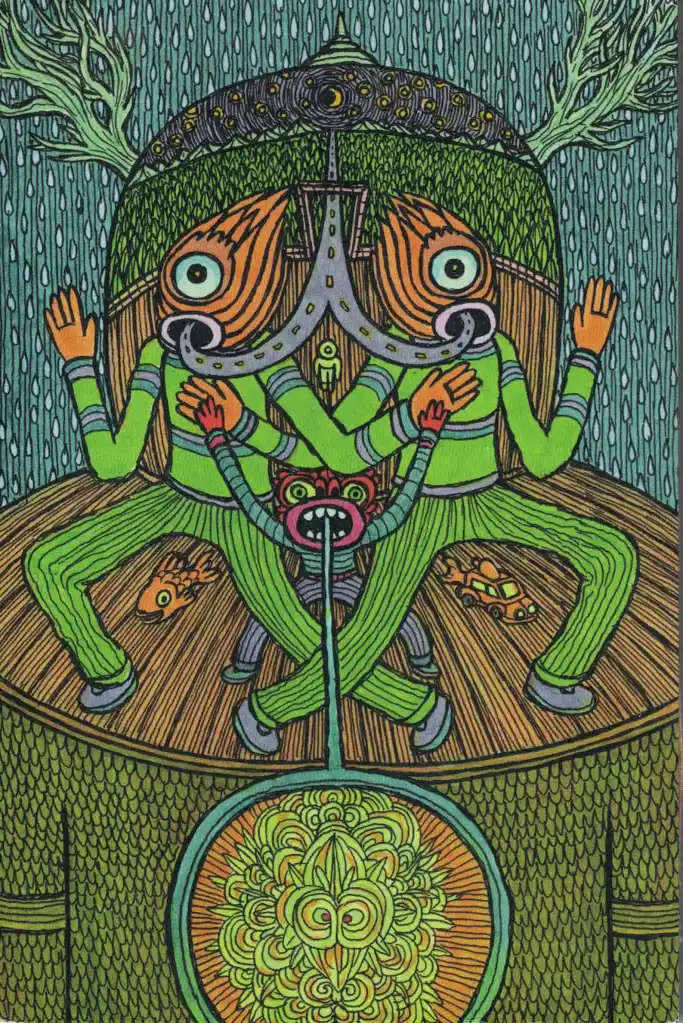
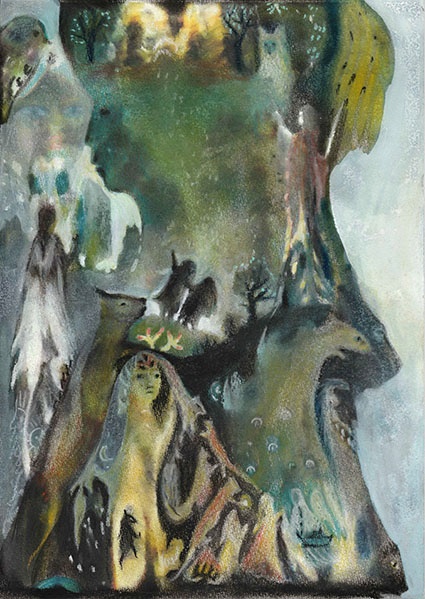
Formulas in Liminal Space/Fórmulas en el Espacio Liminal, Art by René Fernando Ortega Villarroel

The self is the unconscious and conscious that allows you to enter these imaginary worlds of creation, that is why it is important

Bueno el yo es el inconsciente y consiente que te permite entrar a estos mundos imaginarios de creación por eso es importante

I knew when I entered the experimental artist school and I liked all the artistic disciplines such as sculpture, engraving, drawing, forge, in short, I wanted to learn all the arts and be good at it with a lot of discipline and read the theoretical and aesthetic knowledge, and I realized that I could do it.
Bueno supe cuando entre a la escuela experimental artista y me gustaron todas las disciplinas artísticas como escultura grabado dibujo forja en fin todas las artes quería aprender y ser bueno en ello con mucha disciplina y leer el conocimiento estético lo teórico y me di cuenta que podía hacerlo

The environment has a strong influence on my paintings sketches sculptures from the observation and reflection of nature as something as small as a seed or as big as a tree and as infinite as a hill and from an insect to a bird in flight

El entorno tiene una fuerte influencia sobre mis pinturas bocetos esculturas desde la observación y la reflexión de la naturaleza como algo tan pequeño como una semilla o tan grande como árbol y tan infinito como un cerro y de un insecto a un pájaro en vuelo

It inspires me when I get up every morning and breathe the pure air of my mountains and feel that I am alive again to create with my hands and my eyes and feel the smells of my trees

Me inspira cuando me levanto todas las mañanas y respirar aire puro de mis montañas y sentirme que estoy viví otra ves para crear con mis manos y mis ojos y sentir los olores de mis árboles

Looking at nature influences my work and the action of carefully observing the plants and everything that surrounds me is part of my daily work.
En mi trabajo influye el mirar la naturaleza y tener la acción de observar detenidamente las plantas y todo lo que me rodea es parte de mi trabajo diario

I read many authors and artists bibliographies, as many as ancient and contemporary books on aesthetics, books on theorists and mathematicians, I like it a lot, and I am investigating fractal logarithms, why life was created that way, matter multiplies thousands of times and infinitely. that what I want in my work

Bueno leo muchos autores y bibliografías de artista tantos como antiguos y contemporánea libros de estéticas libros de los teóricos y matemáticos me gusta mucho y estoy investigando los logaritmos fractales por qué la vida se creo de esa manera se multiplica Miles de veces y infinitamente la materia y eso lo que quiero en mi obra

Rene has exhibited work in Chile and Argentina. He is involved in many cultural art programs that have related to hospitals, children and teaching art professionally.

René ha expuesto obra en Chile y Argentina. Está involucrado en muchos programas de arte cultural relacionados con hospitales, niños y la enseñanza del arte profesionalmente.

“My concern is the human figure as a feeling of primitive and irrational states, whose main point is the heads, universal thought of the creation of man and center of the universe. All this led to a mutation of the plastic and pictorial language”.

“Mi preocupación es la figura humana como sentimiento de estados primitivos e irracionales, cuyo punto principal son las cabezas, pensamiento universal de la creación del hombre y centro del universo. Todo esto llevado a un mutamiento del lenguaje plástico y pictórico”.

Rene Ortega Villarroel


Formulas in Liminal Space by René Fernando Ortega Villarroel

The self is the unconscious and conscious that allows you to enter these imaginary worlds of creation, that is why it is important

Bueno el yo es el inconsciente y consiente que te permite entrar a estos mundos imaginarios de creación por eso es importante

I knew when I entered the experimental artist school and I liked all the artistic disciplines such as sculpture, engraving, drawing, forge, in short, I wanted to learn all the arts and be good at it with a lot of discipline and read the theoretical and aesthetic knowledge, and I realized that I could do it.

Bueno supe cuando entre a la escuela experimental artista y me gustaron todas las disciplinas artísticas como escultura grabado dibujo forja en fin todas las artes quería aprender y ser bueno en ello con mucha disciplina y leer el conocimiento estético lo teórico y me di cuenta que podía hacerlo

The environment has a strong influence on my paintings sketches sculptures from the observation and reflection of nature as something as small as a seed or as big as a tree and as infinite as a hill and from an insect to a bird in flight

El entorno tiene una fuerte influencia sobre mis pinturas bocetos esculturas desde la observación y la reflexión de la naturaleza como algo tan pequeño como una semilla o tan grande como árbol y tan infinito como un cerro y de un insecto a un pájaro en vuelo

It inspires me when I get up every morning and breathe the pure air of my mountains and feel that I am alive again to create with my hands and my eyes and feel the smells of my trees

Me inspira cuando me levanto todas las mañanas y respirar aire puro de mis montañas y sentirme que estoy viví otra ves para crear con mis manos y mis ojos y sentir los olores de mis árboles

Looking at nature influences my work and the action of carefully observing the plants and everything that surrounds me is part of my daily work.

En mi trabajo influye el mirar la naturaleza y tener la acción de observar detenidamente las plantas y todo lo que me rodea es parte de mi trabajo diario

I read many authors and artists bibliographies, as many as ancient and contemporary books on aesthetics, books on theorists and mathematicians, I like it a lot, and I am investigating fractal logarithms, why life was created that way, matter multiplies thousands of times and infinitely. that what I want in my work

Bueno leo muchos autores y bibliografías de artista tantos como antiguos y contemporánea libros de estéticas libros de los teóricos y matemáticos me gusta mucho y estoy investigando los logaritmos fractales por qué la vida se creo de esa manera se multiplica Miles de veces y infinitamente la materia y eso lo que quiero en mi obra

Rene has exhibited work in Chile and Argentina. He is involved in many cultural art programs that have related to hospitals, children and teaching art professionally.

René ha expuesto obra en Chile y Argentina. Está involucrado en muchos programas de arte cultural relacionados con hospitales, niños y la enseñanza del arte profesionalmente.

“My concern is the human figure as a feeling of primitive and irrational states, whose main point is the heads, universal thought of the creation of man and center of the universe. All this led to a mutation of the plastic and pictorial language”.

“Mi preocupación es la figura humana como sentimiento de estados primitivos e irracionales, cuyo punto principal son las cabezas, pensamiento universal de la creación del hombre y centro del universo. Todo esto llevado a un mutamiento del lenguaje plástico y pictórico”.

Rene Ortega Villarroel


Six Nations, Niagara Falls Artist Jay Carrier

I’ve been making art my entire life, I actually remember my 1st studio was a closet in my bedroom, I probably was about 6 or 7 years old

There are many different kinds of artists in my family from lacrosse stick makers, stone carvers, beadwork artist, leather workers and of course painters


I paint my life, my thoughts, the philosophies that I’ve studied, the culture and society that I was born into.

December 18, 2012 Painting. Jay Carrier

I was born on the six nations rez near Brantford Ontario, moved to Niagara Falls NY when I was 4

Adapted painting April 2020

Skull ship, acrylic on paper, 22inx30in, July 2022

The things that influence me were not necessarily art movements. The people of the six nations used what we call traditional art in contemporary society are made for different reasons. There was no term for art in our societies

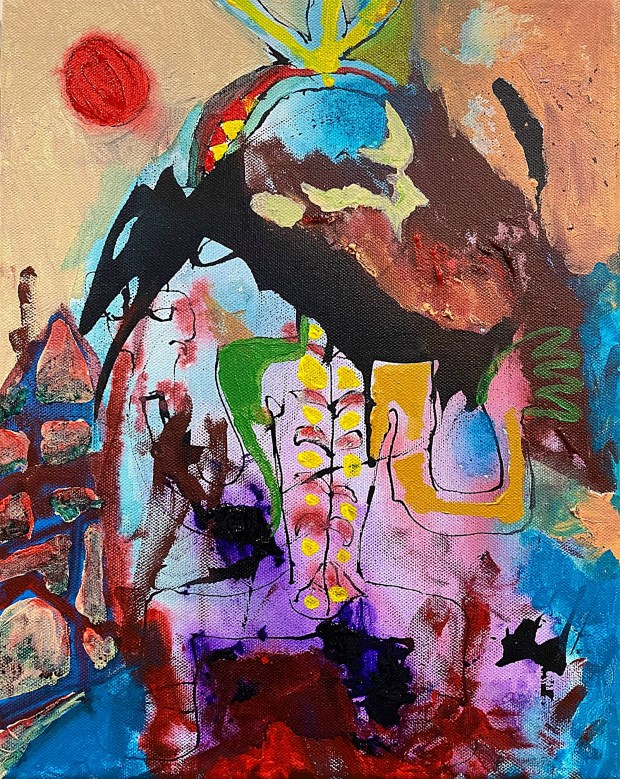
Night painting, acrylic on canvas, 14inx 11in, July 2022

I paint intuitively so spirit can travel unimpeded

written by Jay Carrier

“The places that we dwell and live, the relationships that we form with the natural environment, the people that we surround ourselves with, and the many things that influence our thoughts are reflected in the paintings chosen for this show. I was born and briefly grew up on the Six Nations Reservation but predominately was raised in the Southend downtown Niagara Falls. I was constantly amazed by the city’s surroundings, the river, and, the Niagara gorge. Many memories were made that have a direct reference in these paintings; there were exciting times, there were hard times, there were happy times, and tragic times. These experiences in some regard formed the thoughts and ideas reflected in these paintings.”

There is a poetically tragic, glamorous, and beautiful reality about Niagara Falls. The beauty and seduction of the water as it travels, the brutal stark reality of living in a repressed small city, the fallen industry, the curio identity that was what the world would see…. these are the catalysts for exploring my art in relationship to the city.” -Jay Carrier

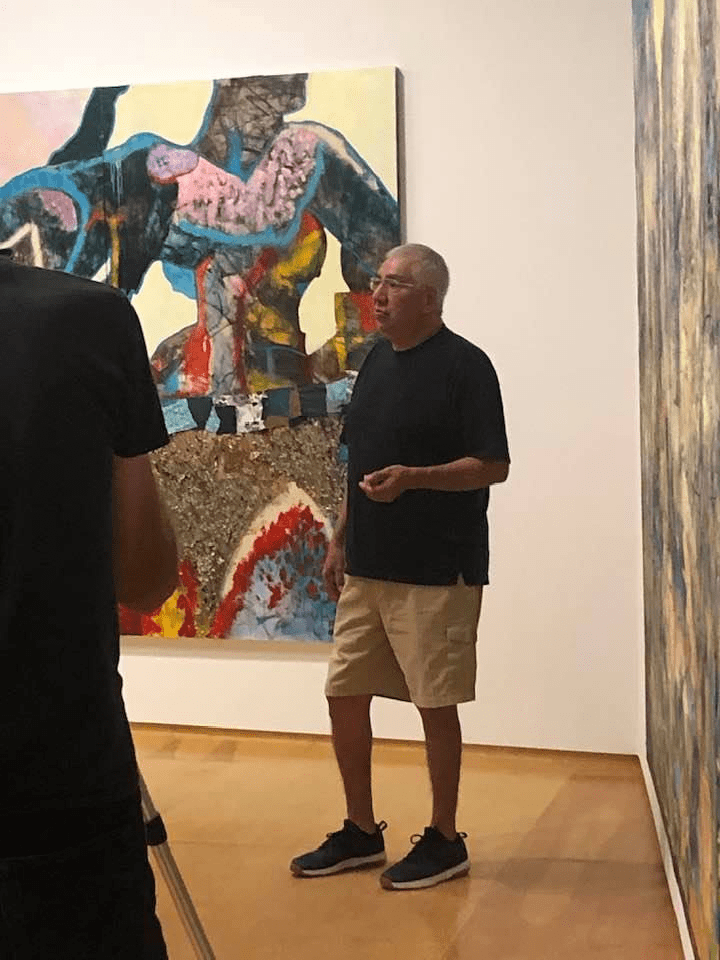
Jay Carrier at Hallwalls Contemporary Arts Center in Buffalo, New York on September 18, 2021 photo by Dawn Carrier

JAY CARRIER
2115 Lockport Road
Niagara Falls, New York 14304
Phone: (716) 534-0489
Studio: 20, NACC, 1201 Pine Avenue, Niagara Falls, New York 14301
e-mail: carrierj@roadrunner.com
carrierjay@yahoo.com

EDUCATION
1993-94 The University of Illinois at Urbana/Champaign, attended 1 year Masters Program
1993-95 The University of Illinois at Urbana/Champaign, Bachelors of Fine Arts
1986-87, 92 The College of Santa Fe, New Mexico, attended, Major, Fine Arts: Painting, Sculpture
1984 Buffalo State College, Attended
1984 Niagara County Community College, Associates in Fine Arts

SELECTED SOLO EXHIBITIONS

2021 Free To Roam Hallwalls Contemporary Art Center, Buffalo New York
2020 We Took Things With Us, Buffalo Arts Studio Gallery, Buffalo New York
2019 Places of Transformation/ City Indian, the NACC Gallery Niagara Falls New York
2016 The City is Clean, Recent works, Gallery Eleneneleven, Buffalo, New York
2016 Recent work by: Jay Carrier, Garden Gallery Niagara Arts and Cultural Center, Niagara Falls, New York
2014 Recent Drawings, The Garden Gallery, Niagara Arts and Cultural Center Niagara Falls New York
2006 Risen from the Ashes of 2 Fires, American Indian Community House Gallery, New York New York
2004 Chautauqua Center for Visual Arts, Chautauqua Institution Gallery, Chautauqua New York
2002 Polar Visions, Niagara Art and Cultural Center, Niagara Falls, New York
1995 Nothing is Sacred, Institute of American Indian Arts, Santa Fe New Mexico
1993 The Blind Pig Gallery, Champaign, Illinois
1993 The Union Gallery, The University of Illinois at Champaign/Urbana
1993 The South Garage Gallery, The University of Illinois at Champaign/Urban

SELECTED GROUP EXHIBITIONS
2020-2021 Native American and First Nations Contemporary Art, K Art Gallery, Buffalo New York
2018 At This Time, Burchfield Art Center, Buffalo New York
2017 Beyond the Barrel, Annual Exhibition Niagara Arts and Cultural Center Niagara Falls New York
2016 Amid/In WNY – Part 6, Hallwalls Contemporary Arts Center, Buffalo, New York
2016 Featured Artist, 24 Below Gallery, Niagara Falls, New York, 2015-2016
2015 Stick, Stone & Steel, Niagara Art and Cultural Center, Niagara Falls, New York
2015 Diversity Works: Selections from the Gerald Mead Collection, El Museo, Buffalo, New York
2011 4 from 6: Four Artists from Six Nations curated by Shelley Niro, Hamilton Artists Inc., Hamilton, Ontario, Canada
2011 Haudenosaunee: Elements: Works by Artists from the Six Nations of the Iroquois, Everson Museum, Syracuse, New York
2008 Burgeoning: Artists Invite Artists, You Me Gallery, Hamilton, Ontario, Canada
2006 First Nations Art 2006, Woodland Cultural Center, Brantford, Ontario, Canada
2005 From Deep in the Forest: An Exhibition of Fine Woodworking, Niagara Falls, New York
2004 First Nations Art 2004, Woodland Cultural Center, Brantford, Ontario, Canada
2004 Collects Buffalo State, Burchfield Penney Art Center, Buffalo, New York
2003 First Nations Art 2003, Woodland Culture Center, Brantford, Ontario, Canada
2002 1st Annual Exhibition, Niagara Art and Cultural Center Niagara Falls, New York,
2002 The Pan American Exposition Centennial: Images of the American Indian, Burchfield Penney Art Center, Buffalo, New York
1997 Where We Stand, Fenimore House Museum, Cooperstown, New York
1995 Expressions of the Spirit, The Wheelwright Museum of the American Indian, Santa Fe, New Mexico
1994 In the Shadow of the Eagle, The Castellani Art Museum, Niagara Falls, New York
1993 The Second Floor Gallery, St. Louis, Missouri
1988 The Galleries, Buffalo, New York
1988 American Indian Institute, Iroquois Art, Connecticut, Washington

Biennials

2012 The Other New York 2012 XL Projects Syracuse NY

2007 Beyond/ In WNY Biennial, Castellani Museum, Niagara Falls NY

FELLOWSHIPS/RESIDENCIES

Art Matters Inc., New York, New York, 1994-1995
Artist In Residence, Native American Center for the Living Arts, “The Turtle”, Niagara Falls, NY 1987

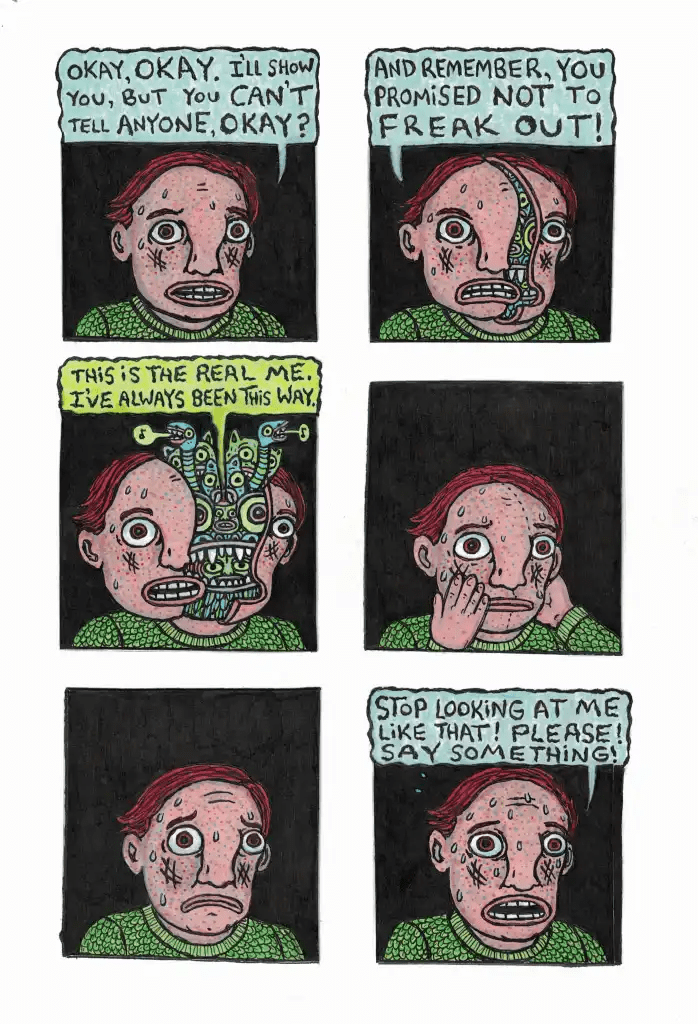
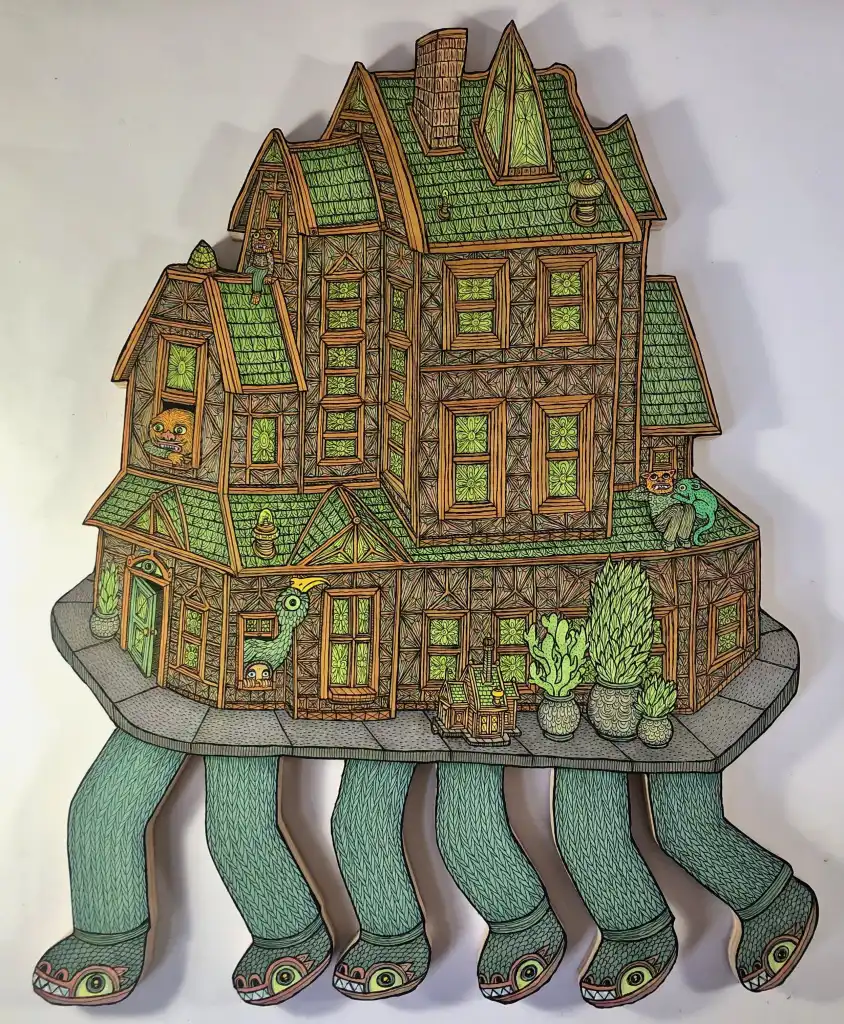
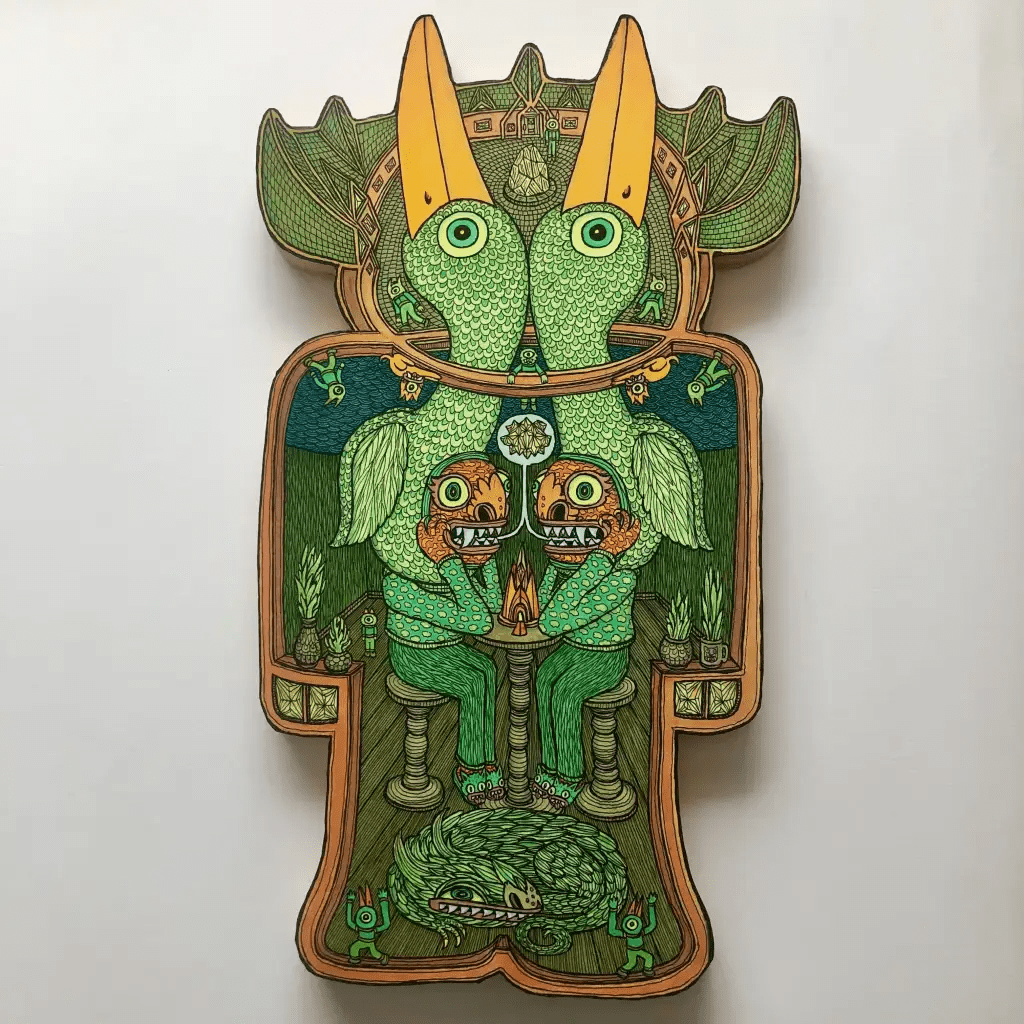
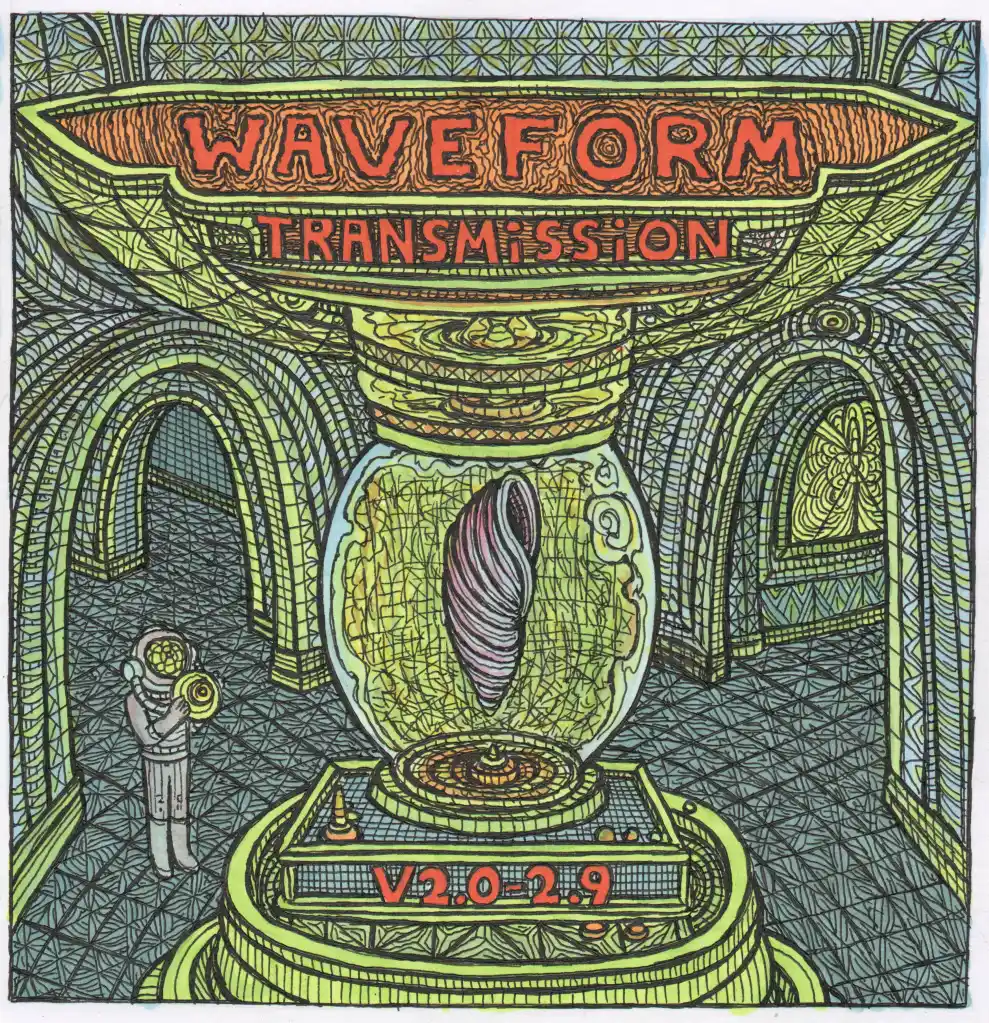
Omnivoyant Eye Theo Ellsworth

How do you put yourself into a trance or into a place that’s receptive to the subconsciousness?

I find the act of drawing in itself to be trance inducing. I first became obsessed with automatic drawing in high school because it felt like it would light up my brain and smooth out all of my anxious energy. It would literally feel like I was drawing my way out of a stupor and waking up to the strangeness of my own mind.

Drawing helps me reach that valuable state where I can feel awake and alert, yet simultaneously relaxed. I find that my breathing slows down when I’m drawing and time feels more fluid. It helps to have a quiet studio where I can go and disappear for hours at a time. I think of the imagination as a living thing that I have an ever evolving relationship with. If I meet it halfway and submerse myself in the creative process, I get to interact with and explore the subconscious and come back with artistic documentation.

What interests inform and inspire you?

So many things. I love outsider, folk, visionary, and ancient art. Whenever art is made from an inner need or impulse, I find it extremely valuable. I love children’s art. I have 2 kids and love watching the way their minds work. I love creative collaboration as a way to relate to another person’s mind and bring out something totally unexpected and new.

I’m interested in neuroscience and new scientific thought around the so called Hard Problem of Consciousness and Theories of Everything. I love to read. Especially speculative fiction, strange fiction, and comics. I’m hugely inspired by nature and spend a lot of time in the woods. Learning some carpentry skills is another thing that’s been opening me up to new art possibilities. Just sitting and trying to clearly see images or hear music in my head is an ongoing practice.

What role do you think the artist has in the 21st century?

The best thing an artist can do is follow their own unique impulse. Artists need to push back against the bizarre human drive to homogenize everything. They need to reach beyond the inadequate systems we live inside.

I think diversity of culture and human expression is the most valuable thing we can cultivate as a species. I also think it’s important for artists to have an anti-cruelty stance. There’s so much cruelty in our history and baked into our systems. I think the artist’s role is to look unflinchingly at this and attempt to untie those knots. Art can be part of the antidote to the bad ideas that seem to cling to our brains and stunt our evolution.

Have you experienced Lucid Dreaming or any kind of encounter with cosmic consciousness?

Yes, I’ve had quite a few experiences that have felt outside of normal cognitive experience. Each of these experiences feel incredibly valuable to me and I’m thankful for them. Mostly I’ve regretted it whenever I’ve tried to describe them to people. They feel like something to internalize and hold close. It’s easy to discount things that don’t fit with the narrative of the everyday, so I try to think about those experiences a lot and not let them fade into doubt.

When did you create or discover your own archetypical patterns?

I started with automatic drawing, just letting my hand draw without knowing where it would go. Through that, a lot of patterns and imagery naturally began to emerge and I would just kind of follow that. Through years of working in this way and contemplating the recurring symbols, a lot of ideas and feelings started taking shape. Making comics became a way to explore that more actively by trying to unlock the stories and concepts that my drawings were revealing to me.

Has your work ever lead you to an experience of intuition or synchronicity?

Following an artistic impulse is in itself an intuitive and synchronistic experience. It adds an extra dimension to my daily life and when I have positive momentum in my work, I feel like that crosses over into my daily life and helps me see connections and meaning. Putting my work out into the world has also allowed me to meet a lot of people I wouldn’t have met otherwise, so in that way, I feel like dedicating myself to making art has allowed me to have important friendships that have inspired and helped me grow.

What do you like to cook?

I love cooking. I cook almost every night. I like to make enchiladas with sauce made from scratch. I like making sushi, jambalaya, grilled pizza, salmon. It’s just fun to work a kitchen and try to be efficient with all the different elements in play and it’s satisfying to serve up something good to my family. Cleaning up the kitchen afterwards is not as fun.

Theo Ellsworth is a self-taught artist living in Montana. His previously published comics include Capacity, The Understanding Monster, Sleeper Car, and An Exorcism. The New York Times once called his work, Imagination at firehose intensity. He has been the recipient of the Lynd Ward Honor Book Prize and an Artist Innovation Award. He loves creative collaboration, cooking, and making family folk art with his kids. He is constantly making invisible performance art in his head that no one will ever see.

more info and books by Theo Ellsworth

Interview by Mitchell Pluto from SULΦUR surrealist jungle archive 15 OCT 2021

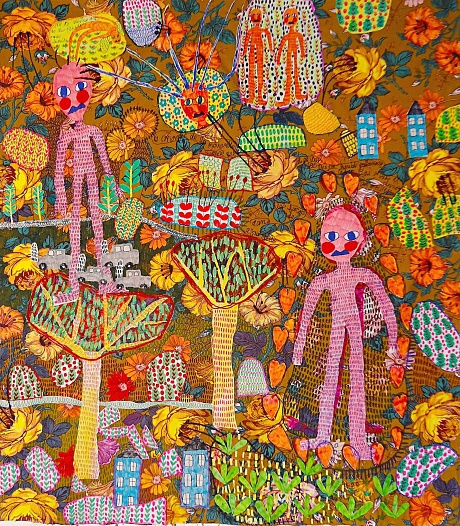
Born Under a Radioactive Transit: Art and Poems by Alicia Lasne

In this illusory quest
to survival, I abstain
to say your name.
In this twilight world
where everything freezes;
inevitably.
I watch this glow
on the horizon
of our extinction

The human being dreaming of the world of tomorrow
Poison the last rivers;
Who was already feeding him more.
In a deafening silence;
Consumes;
What it is no longer:
human

And as in every moment, the eternity of a breath depends on it.
The human being, called to disappear under an acid rain, seizes the last gleam which remains to him.
He then becomes the last link in a corrupt chain, broken down to his DNA.
He is then surprised that he still has a last glimmer of hope in this twilight disaster.
In a canicular suffocation, he observes the beauty of the world he has just destroyed.
The power-seeking human suddenly stops and stares at his bloodied hands.
He understands then that in each moment, the eternity of a breath depends on it.

Some will say I was born on a rainy day, others will tell you it was a full moon night. The reality is very different, I was born in 1986 in Normandy between a radioactive cloud caused by the explosion of a nuclear reactor and the passage of comet Halley. This is how all things begin.

Written by Alicia Lasne

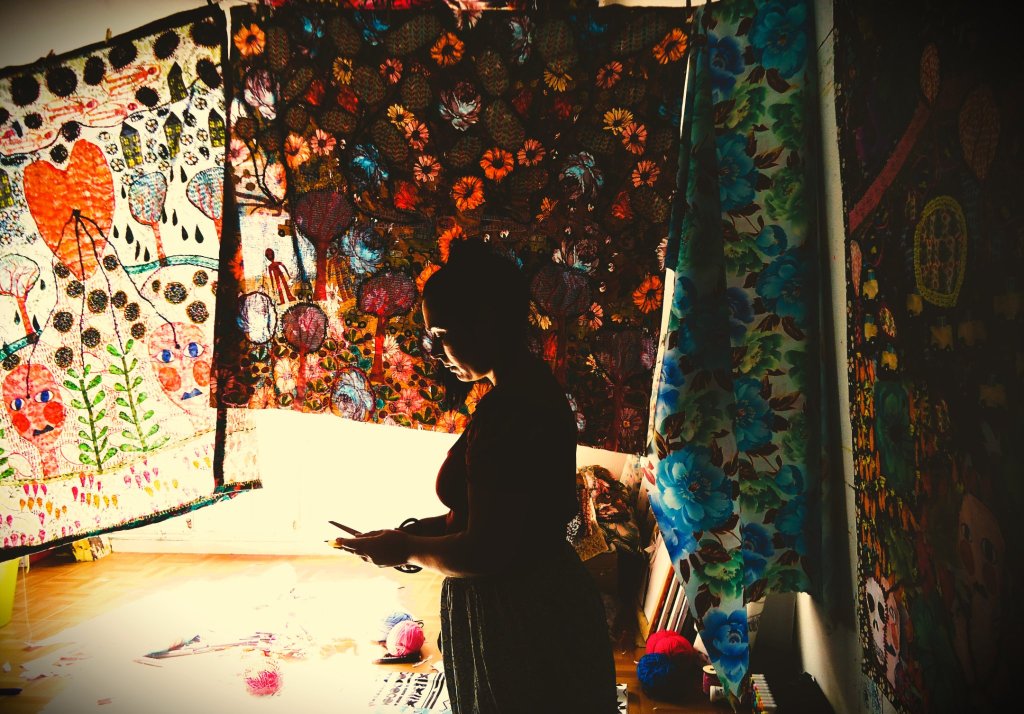
Artist Alicia Lasne in her studio

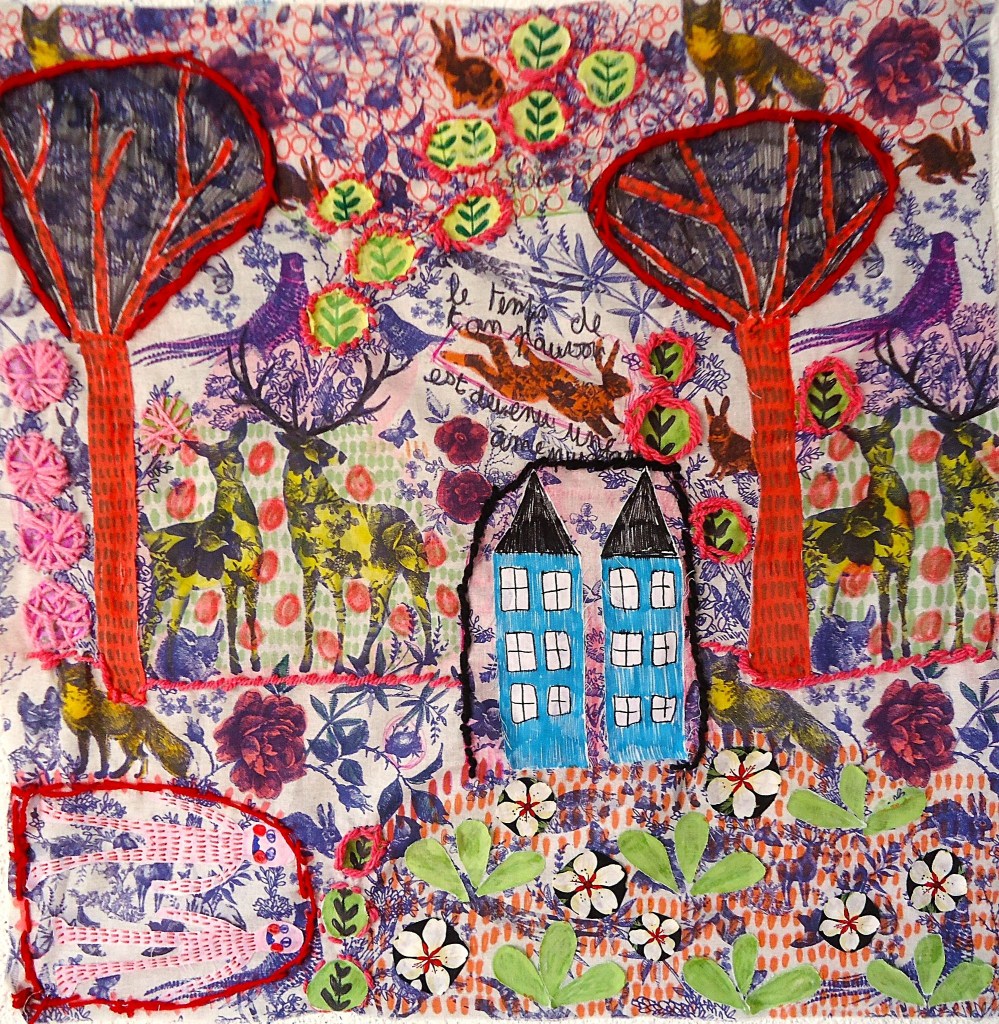
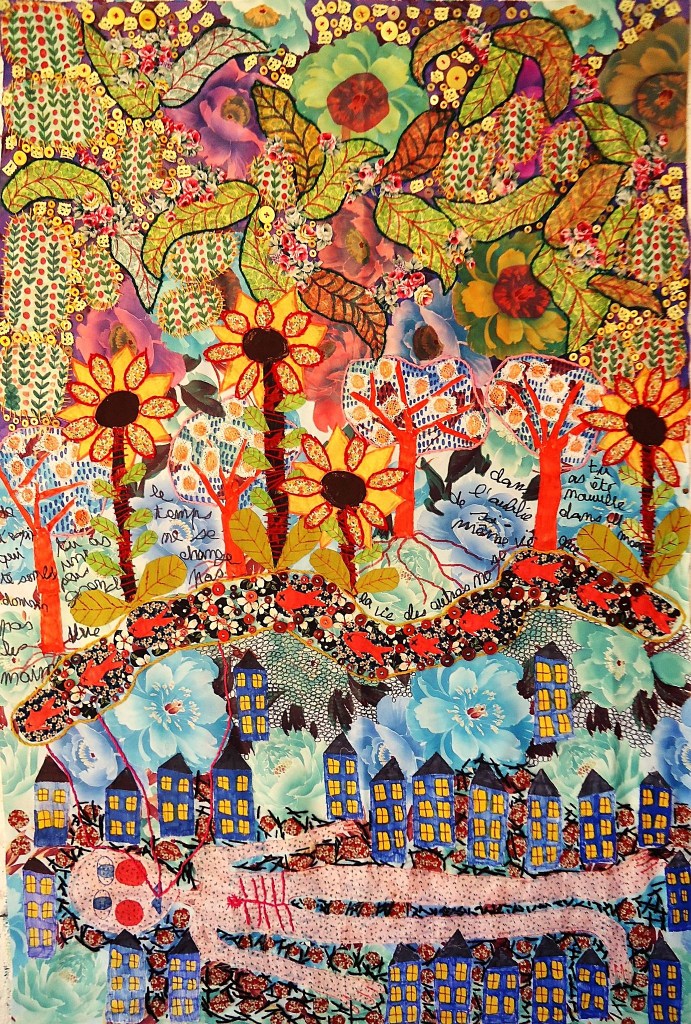
In this collapse, where a universal rebirth can only be inevitable, I sew, suture, glue on pieces of fabric like exvotos, half-spoken prayers.

Alicia Lasne sewing a picture together

I weave this nature too often ransacked by our lifestyles. Constantly questioning myself about what I am, as a human being. What is my place, my role, our mission on this Earth? What should I change to no longer feed a society of destruction, but a society of the Living.

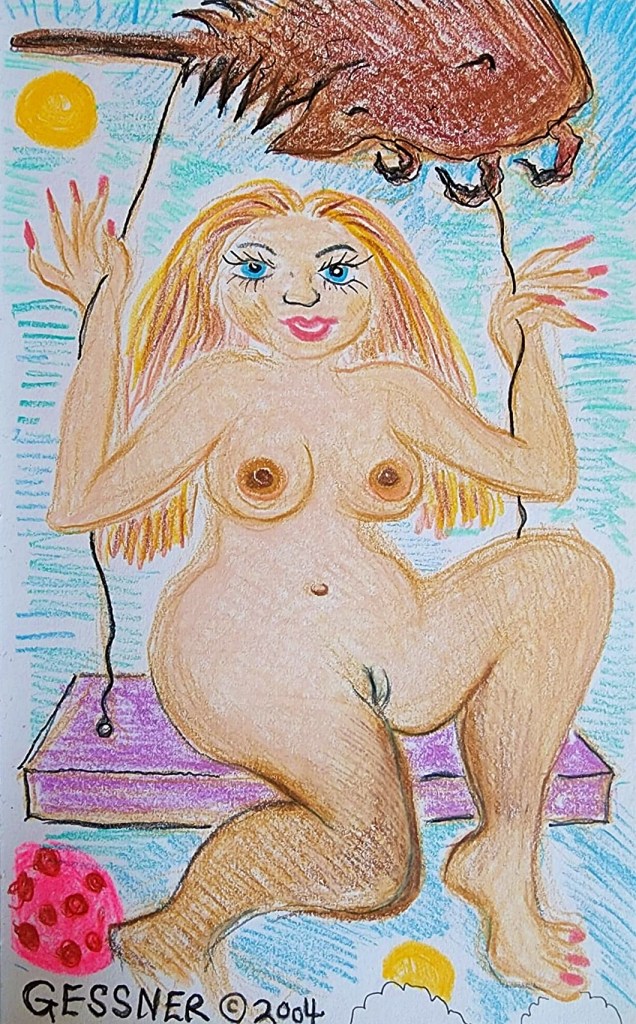
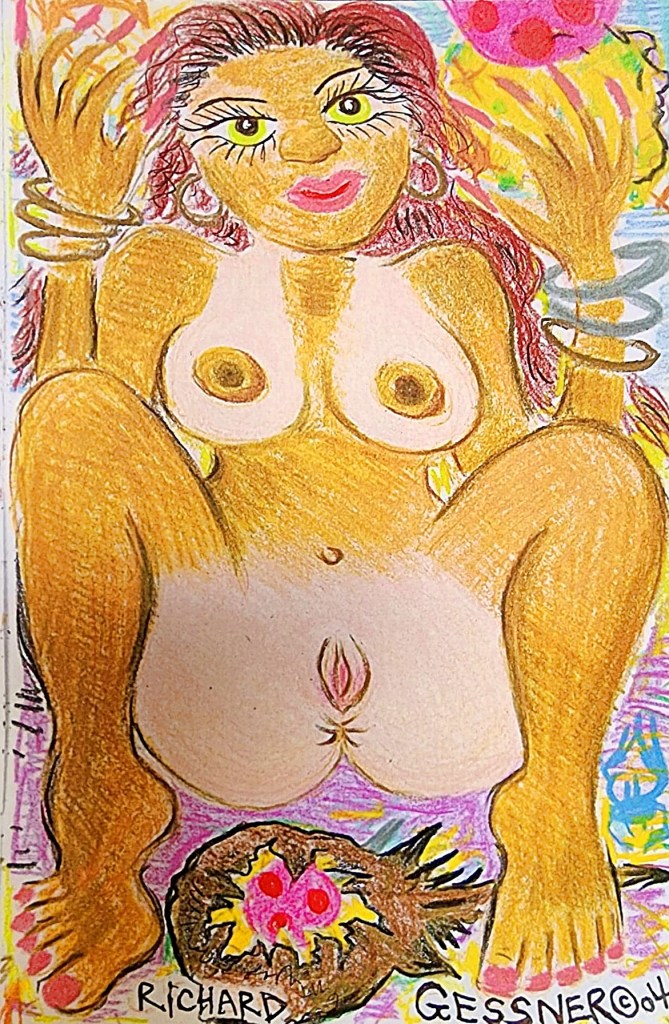
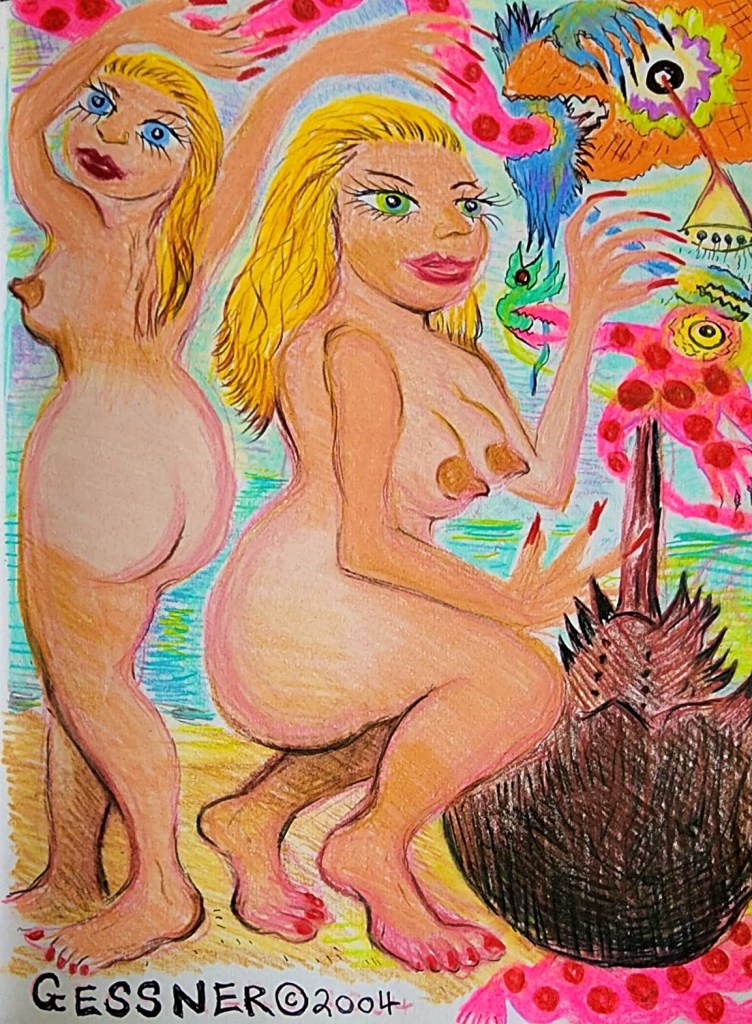
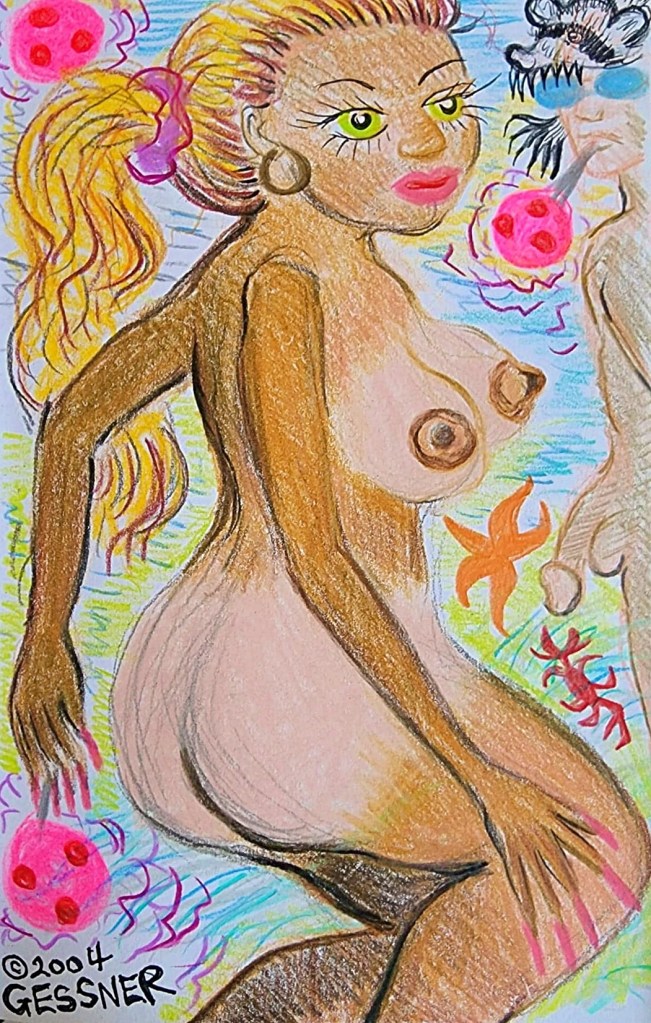
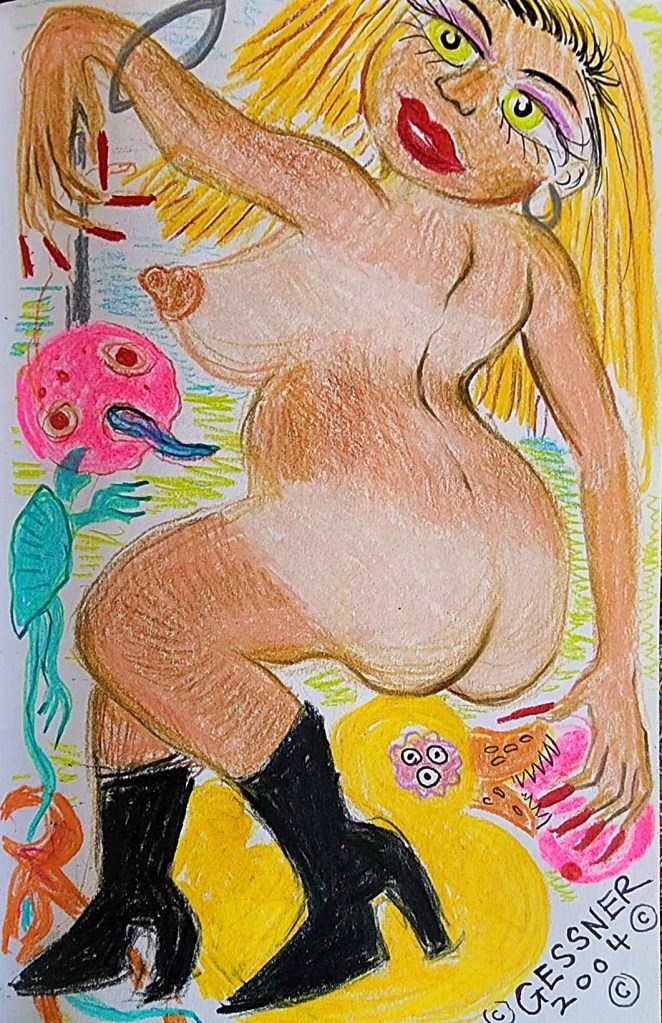
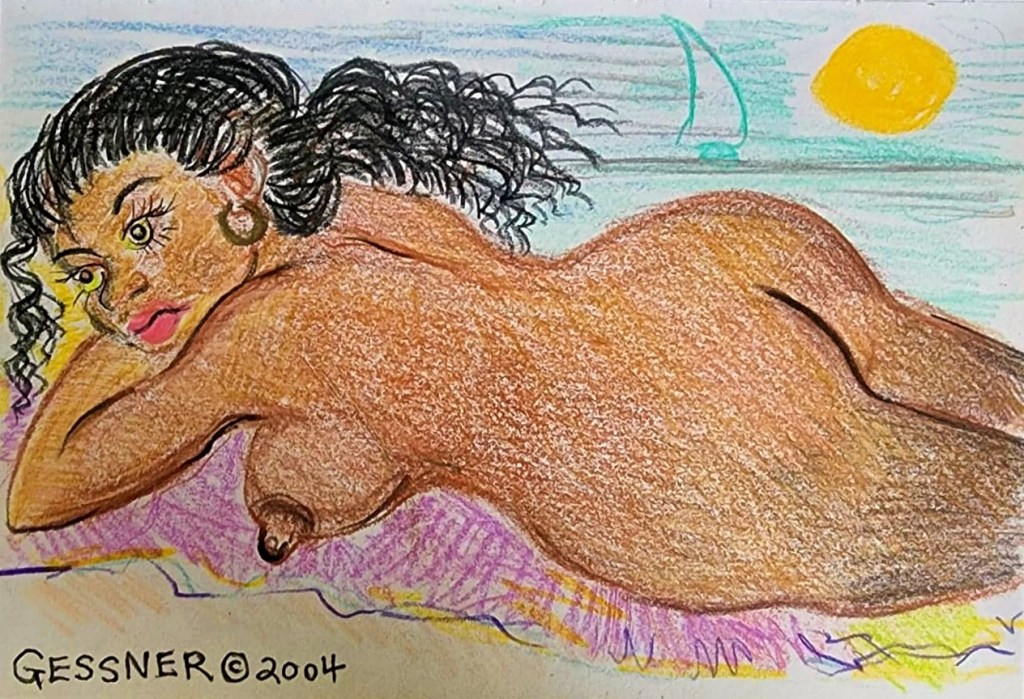
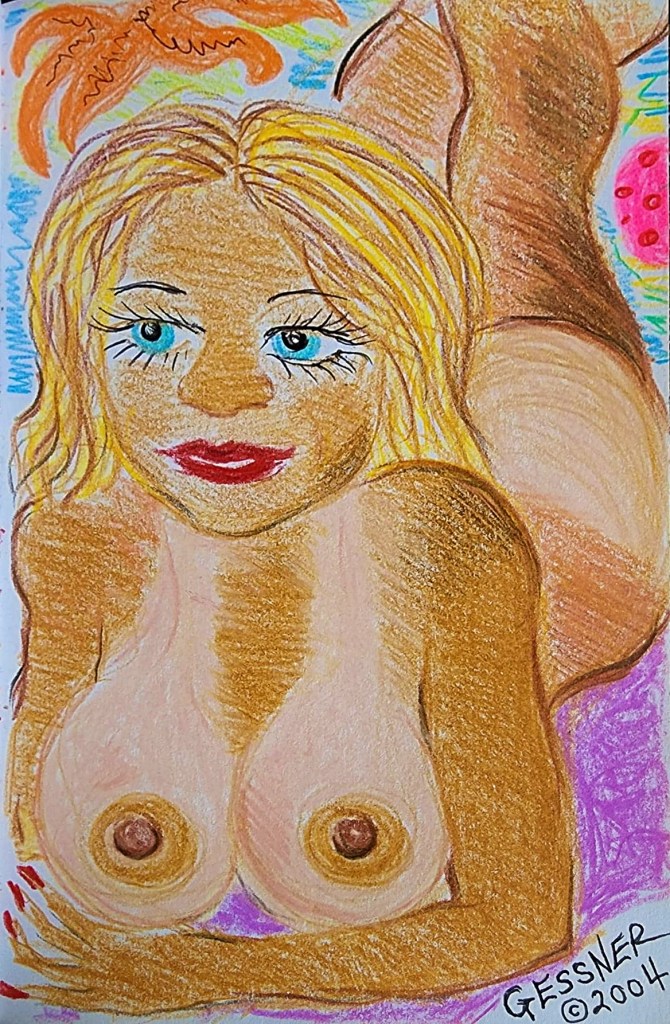
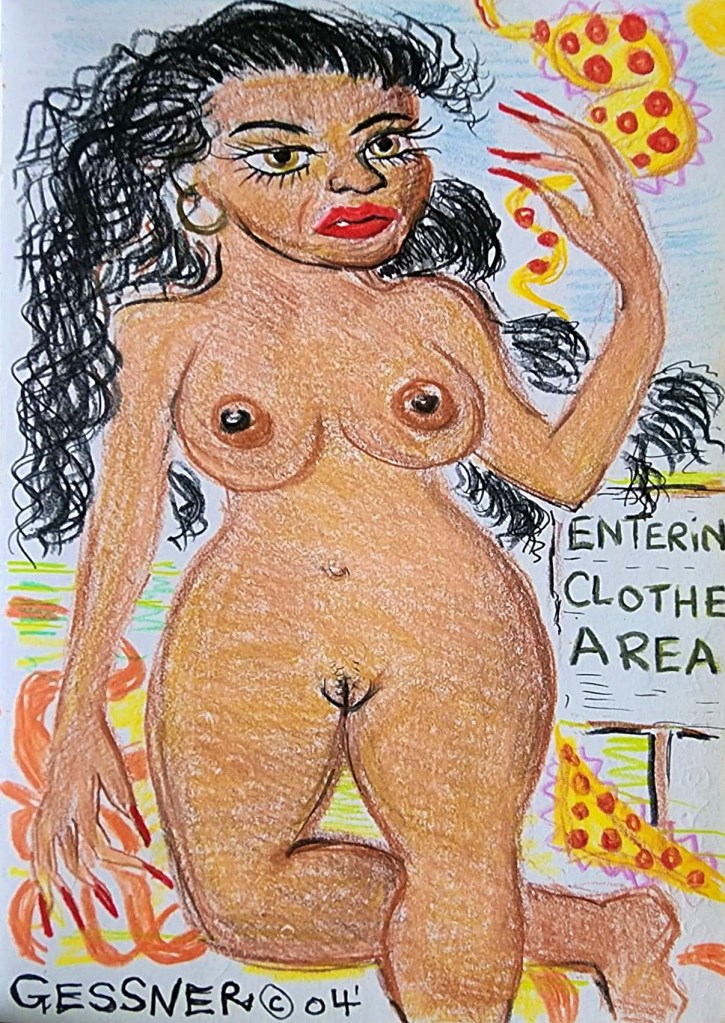
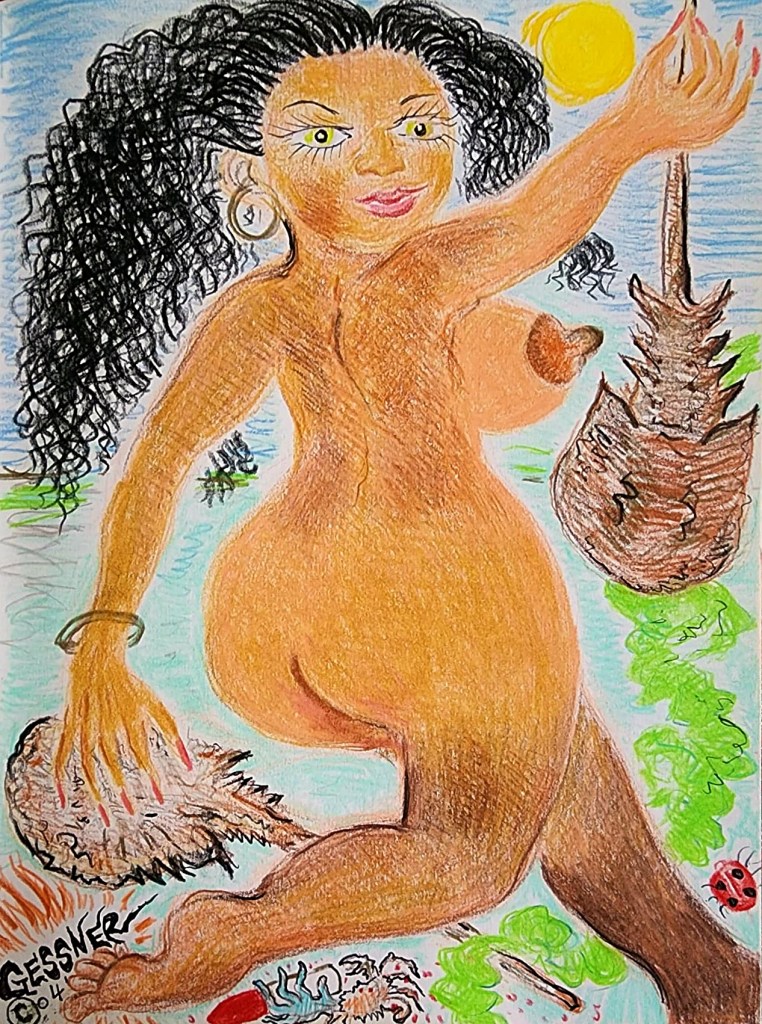
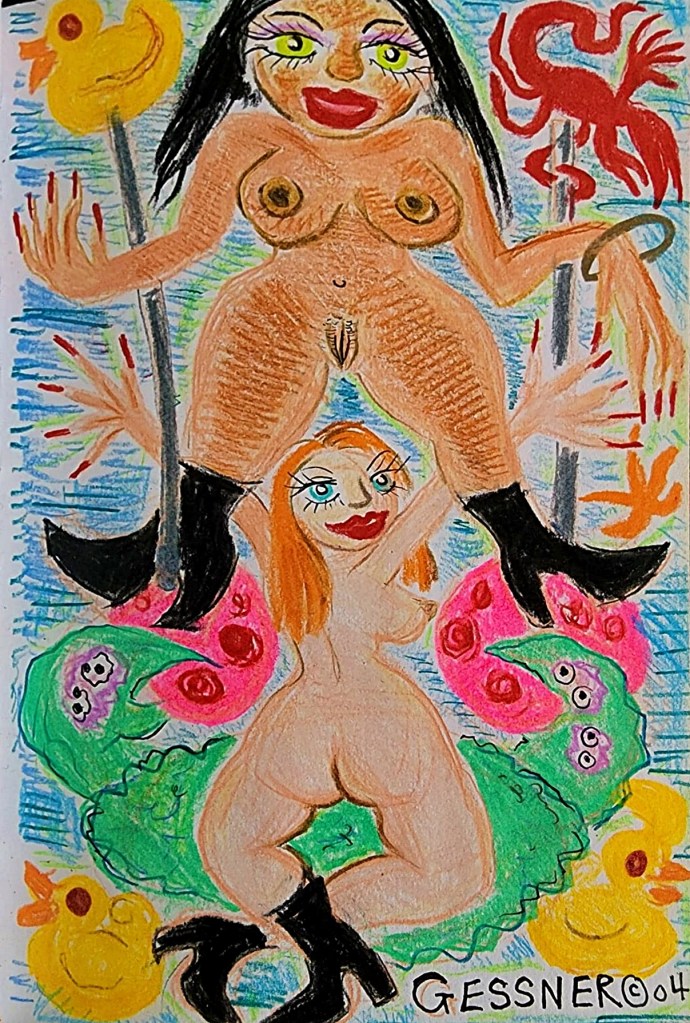
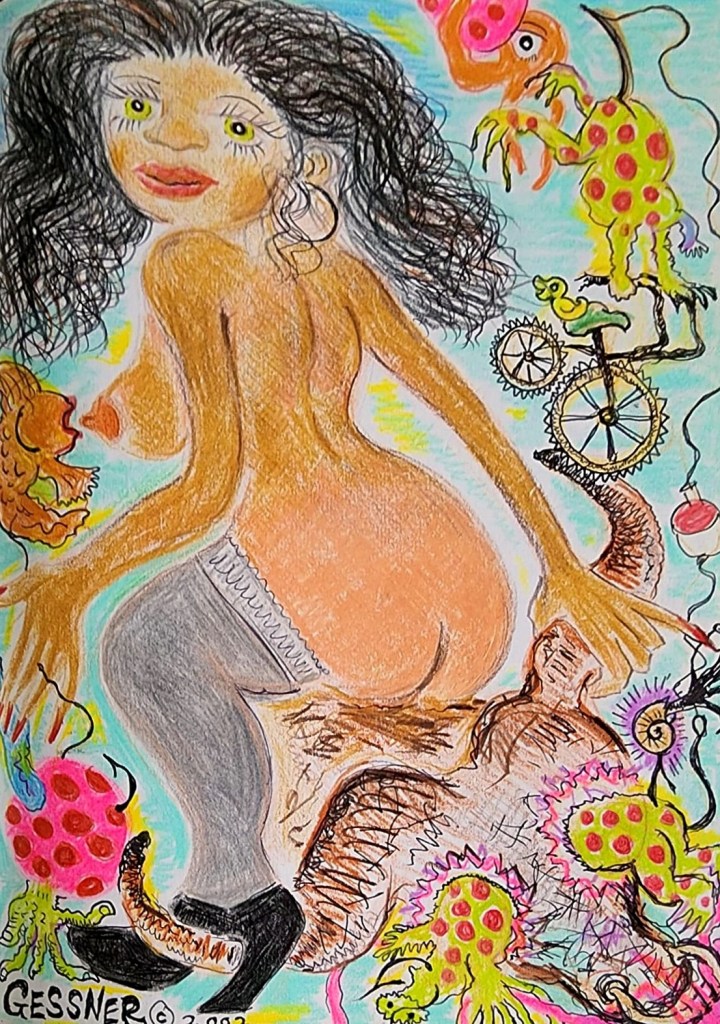
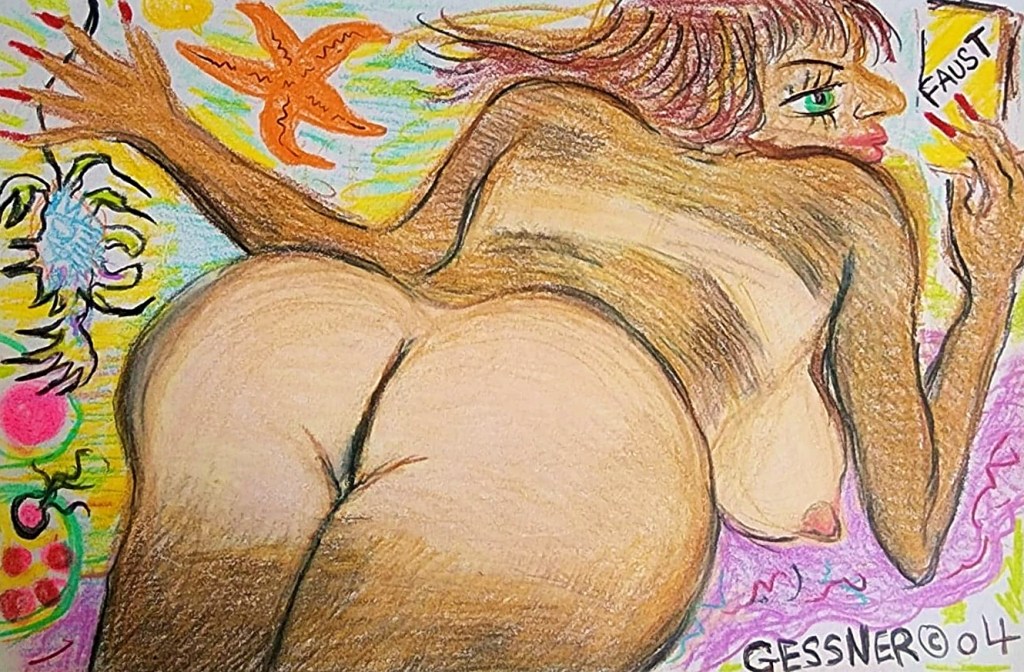
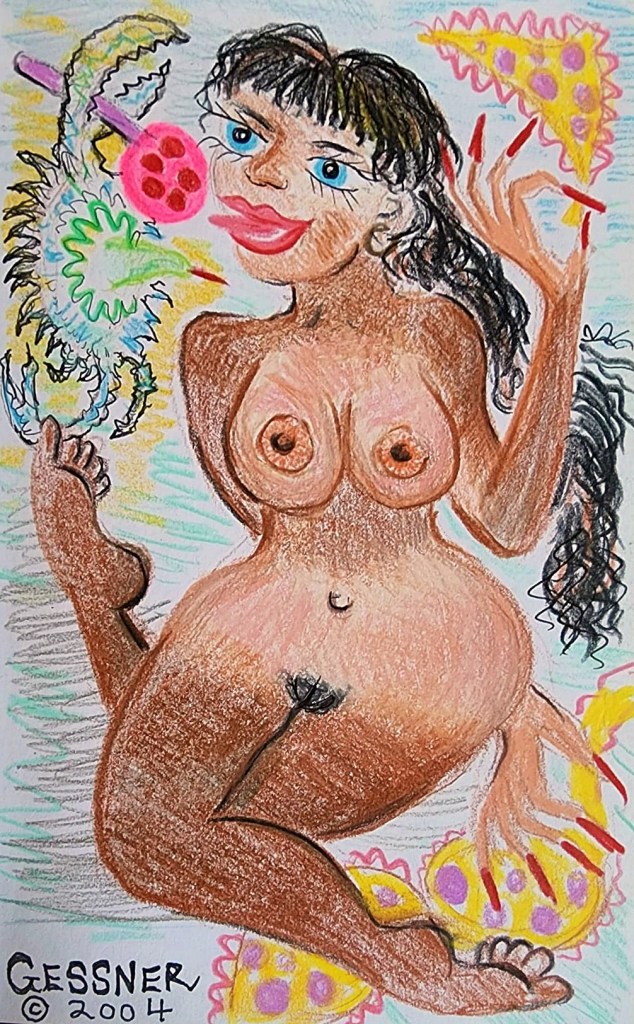
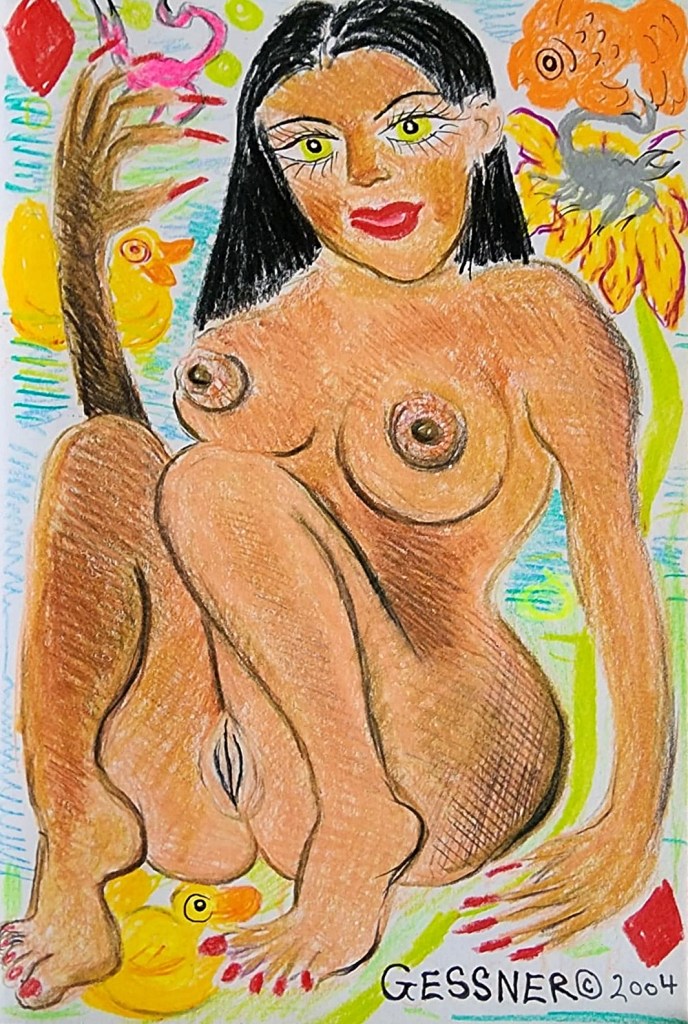
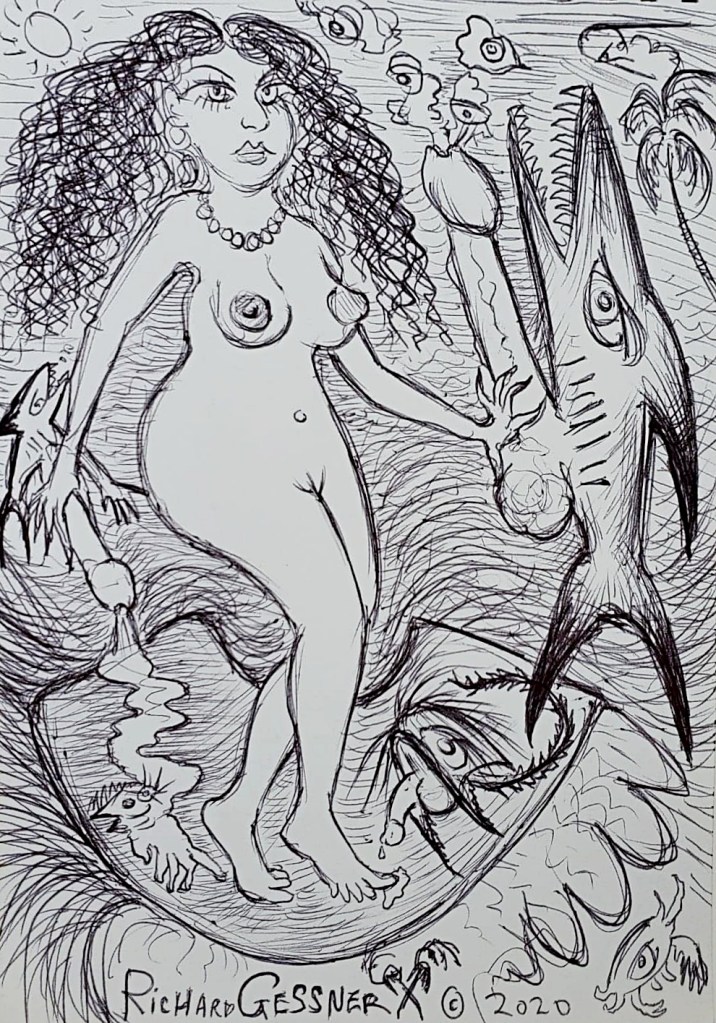
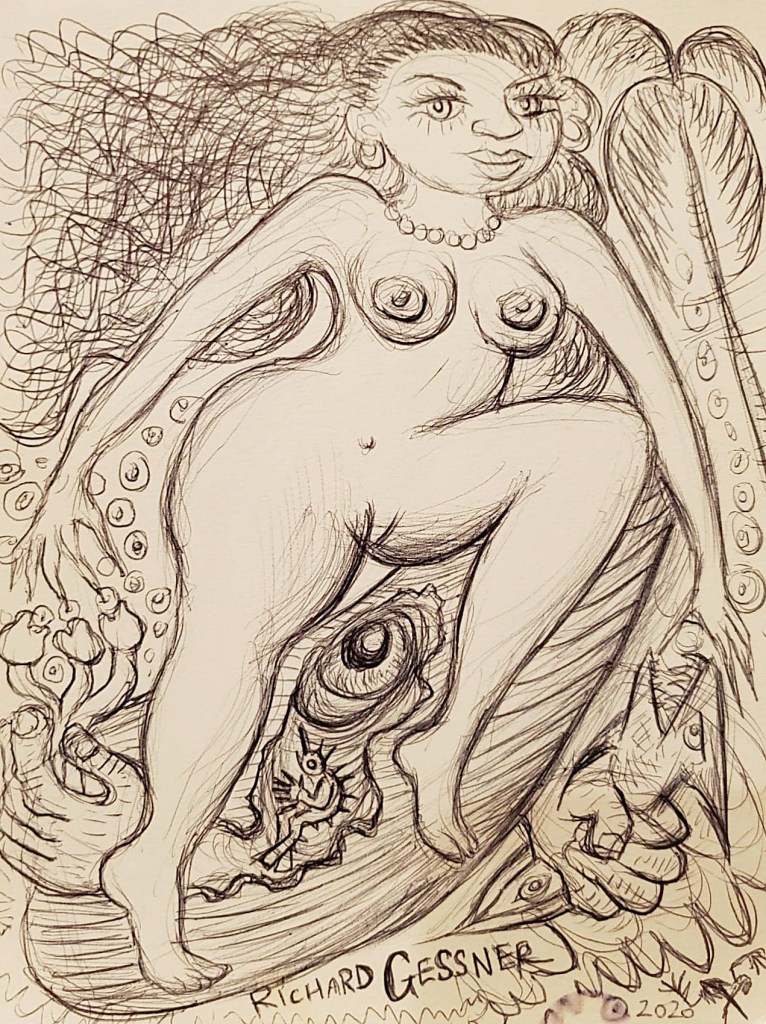
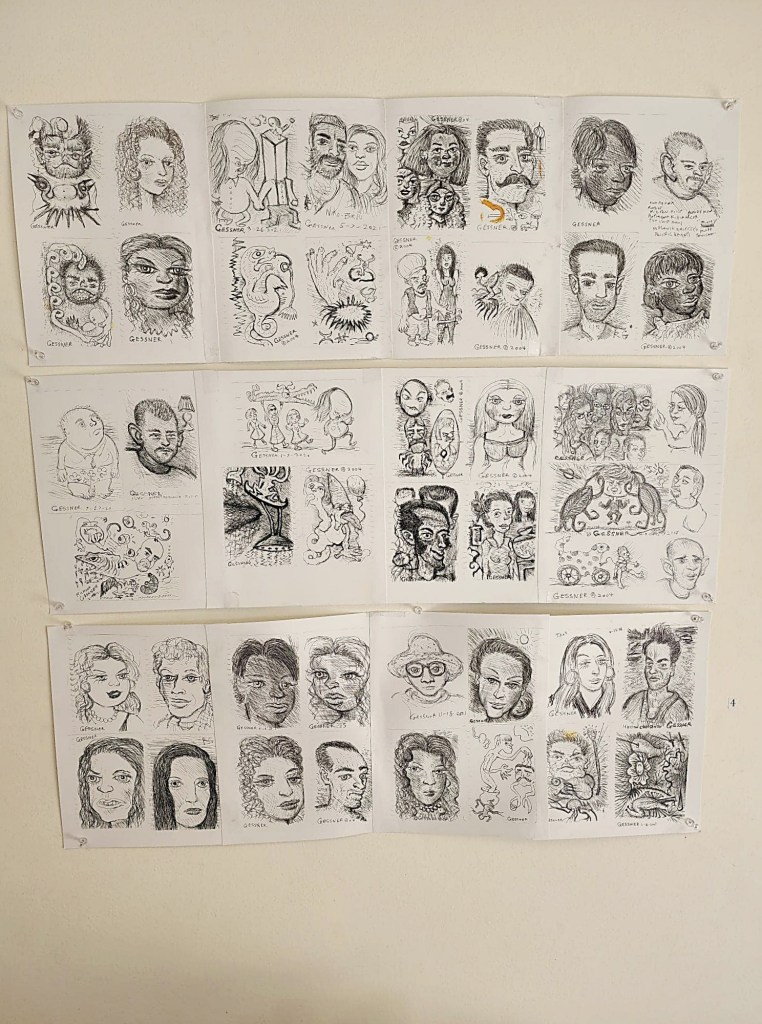
Full moon in Capricorn, Erotic Drawings by Richard Gessner

Limulus, is my favorite arthropod, it’s the oldest species on the planet.

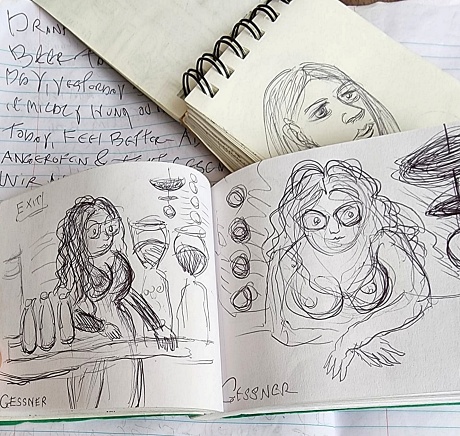
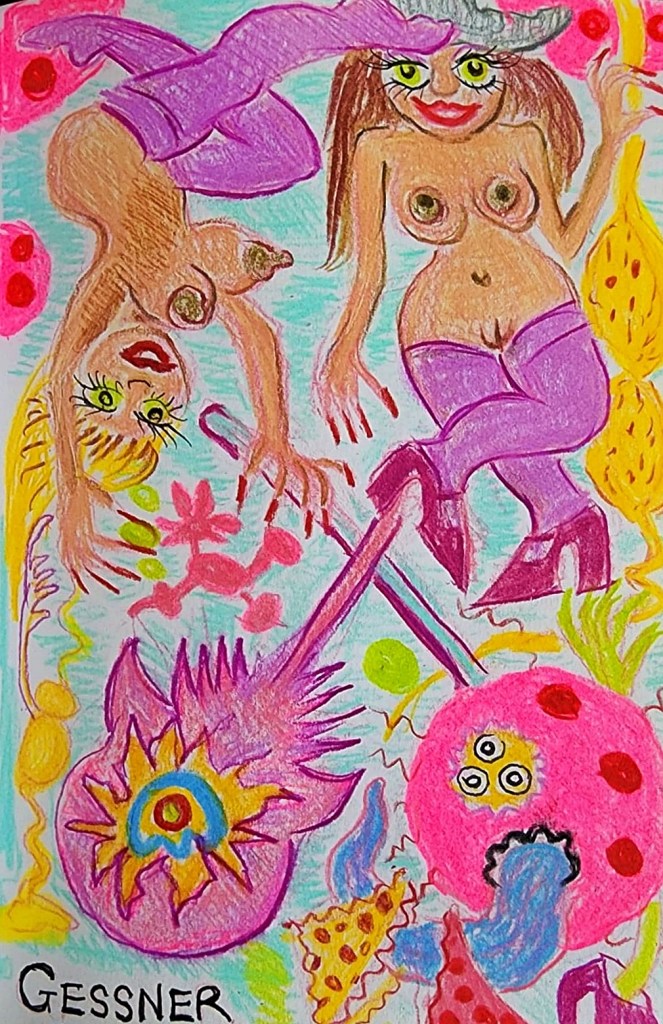
I’m thinking about sex 24/7. Raging hormonal beach Paradises stretch on infinitely into horny horizons. The sight of beautiful fertility Goddesses is always more pleasant to behold than old men covered with craters of acne scars, or Syphlytic doomsday warthogs with copper sulfate tusks!!

Naked ladies have a storied history in the history of art. From Boucher, Bouguereau, Anders Zorn, Mel Ramos, Eric Fischl, pin up art of Elvgren and Driben….Like Brooke Burke and 10 thousand other Brunettes. Hans Bellmer is a favorite. Independent from art, the naked lady in public viewed by the salivating Voyeur since time immemorial is inspirational.

Hans Bellmer appeals to me because it’s Life itself. What beauties can be viewed spontaneously in the street. It is bizarre and an otherworldly ethereal quality that I like.

written by Richard Gessner

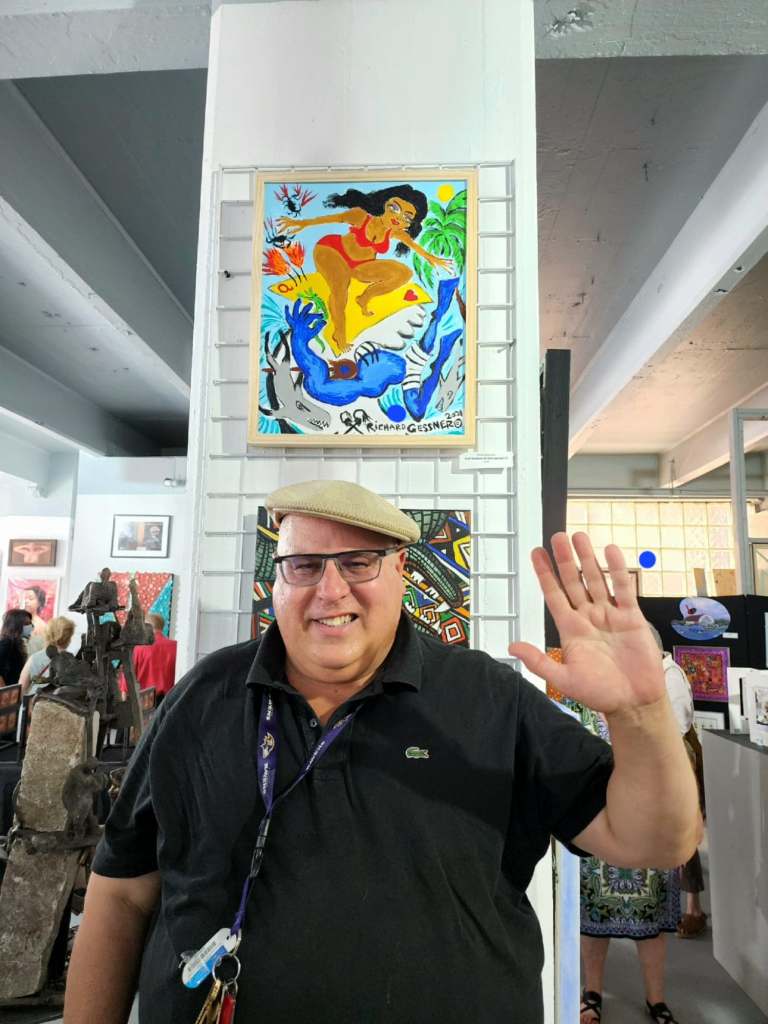
Richard Gessner at Studio Montclair, Leach Gallery 641 Bloomfield Avenue
Montclair, NJ

Artist and Short Story Writer Richard Gessner

more art and info on Richard Gessner can be found at

The Hamilton Street Gallery

It is better to be an oracle than a king by P.D. Newman

It is better to be an oracle than a king

To play the lyre, and the aulos, and sing

Leading maenads ‘round in a ring

Yes, ‘tis better to be an oracle than a king

written by ©P.D. Newman

P.D. Newman is an independent researcher located in the southern US, specializing in the history of the use of entheogenic substances in religious rituals and initiatory rites. He is the author of the books, Alchemically Stoned: The Psychedelic Secret of Freemasonry, Angels in Vermilion: The Philosophers’ Stone from Dee to DMT, and the forthcoming title, Day Trips and Night Flights: Anabasis, Katabasis, and Entheogenic Ekstasis in Myth and Rite. The Secret Teachings of All Ages (TV Series documentary) 2023

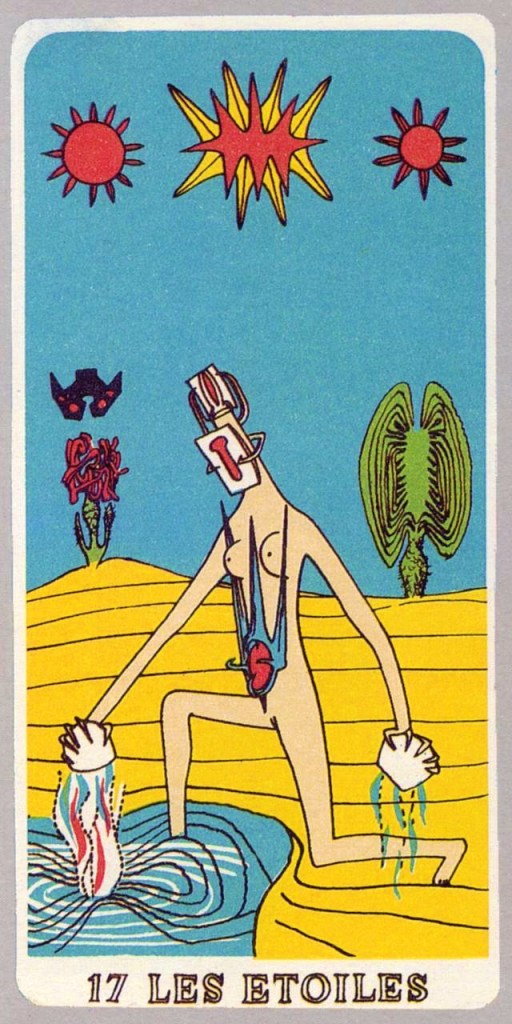
cultivation phases of the basal ganglia and paleomammalian soul

the psychic robot, how our animal selves passed through the portions of different brain territories. the snakes, the monkey scribe, and now the circuit board advisory city-state. clay tablets as a big golem, ideas as ghosts informing the brain

The Gnosis of the Mirage and other Poems Enrique de Santiago

THE GNOSIS OF THE MIRAGE

“Relativity makes distance meaningless, but the situation is even worse when quantum mechanics intervenes, since it questions the idea of place.”
Paul Davis.

Of the clouds contained for centuries
of the air that winds the violet knot of meaning
And of every dark shape that embraces the sound of the world
the lit line of the labyrinth emerges
contemplating ourselves immersed in this myriad of fluids
that embrace us from the beginning
and from before in its reverse reality
to end up drowned in the crack of fate
and never know what the essential source of the moon holds
nor the celestial song of the plumage found in the boreal bosom
this is how the air is thrown into being
Without measure
no understanding
while diligently it oxidizes and hastens its decline.


WINGED PHOTOTROPISM

nothing ends,
just a keep going around in a spiral,
at the command of vector dreams,
that rest on the moon that raises the stamens,
Like the names I’ve forgotten
my own,
and the name of my destiny,
while I move hugging the clouds
with my numbers on the side of my brain
and my breath laughing again.

The astral root, acrylic on canvas 118 x 85cm

MANDRAGORA, ASTRAL ROOT

telluric resonance
with its harsh echo that stuns reason
magmatic word that arises from the refusal of the verb
black poetry on its sharp path
the one that hurts the one who goes into its mystery
with the blessed dagger of the fallen angels
that are arranged on the sidewalk of dawn
illuminated by the forgotten star
between rivers of multitude of bones
council opening submerging volcanic fire
where the salamander dances
at the right time and hour
when the word that unleashes the lightning is released
with its fractal memory
that renews the solanaceous plant
what is the mandrake of the damned
and of the saved.

Under the Luciferian influence, acrylic and ink on Conqueror 300 gm paper

PERPETUAL FLORA

From foliage ancient and forgotten,
when time was captive in the womb of time
even before the language of birds appeared,
that lost and extinct star arose,
loved from her nebula
and awaited by the early cicadas,
it was so that she sang her scrolls
and she danced the mystery of the nymphs,
hidden in the mystery of her and in the first number of her name
because this is found in the sum of the rings of a forest,
and her dress is the transmutation of the nymph
something like that, like a thousand and eighty times the face of the moon.

Winged Past, acrylic on 300 gm Canson paper, 30 x 39 cm

THE PAST OF THE FOREST

I love your origin from the unknown
with that particular elliptical aroma
like an elk that descended from a learned galaxy
there between the sources of light and condensed matter
close sister of the unchanging logos
the one you robbed by surprise
On the oblique ship that was hidden
with their inverted masts on the sleepwalking skins
begin to awaken from amazement
of so many days of your destiny
without knowing why ??
away from the inanimate pavement
that carries with your long steps
in the certain uncertainty
in the sacred place
that goes off
and it bares to oblivion.

Astral Watcher, acrylic on Canson 300 gm paper. 40x30cm

THE RELENTLESS OUROBOROS


beyond the wind
in a northern region of the universe
an uncertain number of names
dissolved by the golden flame of oblivion
They descend from the crevice of a nebula
while the bird as watchman of the secret
sing their celestial nomenclatures
to revive them in their new sap.

Altered distance, acrylic and ink on 200 gm Canson paper. 21x28cm

DISTANCE


The lightness of your poetry taught me to look beyond
in that place where we don’t understand each other
a room of emptiness and fullness
where there is enough space to brush your hair.

The implacable oracle, acrylic on canvas, 70 x 70 cm

NGC 6753


When a star collapses, does part of your destiny end?
Do you know the emptiness that will come in the litany of the dream of the demiurge?
Each sphere engraves its own ellipse so as not to perpetuate it
because the grass kisses the constellations
until it loses sight of its splendor
and the turn announces its sunset
like love dissolved in nothing
where the word is not perpetuated
And these verses will disappear when the screens turn off
so too the leaves yellow following the dust
Of expired stars in forgotten hells
parked in some empty universe
waiting to speak from the past
and the future.

Prehistory of the present. acrylic on canvas, 70 x 70 cm

CYCLES IN COSMIC WETLANDS

rising winds
without becoming storms
They spring from the soul until they inhabit the shadow
that takes the lonely measure
of the one who forgets the kiss
when long ago life rocked its cocoon
unaware of his hypocrisy
looking for the fierce copper mascada
while we smell that inexorable time
that snatches the lights rapidly in the twilight
where every month is the same for everyone
and between the mist and the pit
the same efforts start
the same young people with their ideals
who see their elders leave
clinging to clothes like the smell of tobacco
and the humidity of the asphalt
every year is the same for those who do not see the clouds
but in the long run it’s the same music
fashions are fashions and your makeup is the same
and when you cry a black line tears your face
similar to the one that tears your soul
love that sucks life and releases it
leaving us exhausted for months
Until I return for another rest of life
like a pleasant and hostile embrace
and there is no way to draw life
to know how to color it
it only comes around every corner
sneaky and silent
distinguishing itself in a fissure of time
when it’s too late to decide or repent
Well, it installs, without further ado…
with his elastic suit that loses his memory
in that last station
when everyone wants to change their habit
nothing more like life
that first puff of cigarette
strange, pleasant and bitter
slight time that will end in ashes
hopelessly.

The bodies remained weightless
next to each other
faced with the cosmic dilemma
and to the protocol of the farewell,
he perceived the aroma of the bones
while she expired her step at night
with a certain harshness
the one that evaporates with the days
slow and silent
like that subordinate hatefulness of truncated desire

The music of the spheres, acrylic on Canson paper, 250 gms. 25 x 32.5 cm

GRAVITATIONAL CONDITION


On the edge of my lithic archetypes
sweet new grass grows
that with its solemn verticality
wants to hug the moon
in serene times
like your memories
before forging the tides
and unleash the liquid of his beloved
burning oblivion
and shadow
permian knots
skeletons
going down the river of oblivion
everlastingly
in its exact ritual.

Early Invisible, acrylic on canvas, 65 x 81 cms

ANIMA WORLD


Mother Earth exhaled the perfume of redemption
while the useless man and dismembered course
listened to the night without name or shadow,
in order to gain oxidizable objects,
at the midpoint of his fecal abyss,
with the emptiness left by fear
and so he names himself among the speechless faces
that day when chemical weddings were prepared
without finding for your optic cells
when the leaves of the forest fall slowly
and to my ears comes the roar of the terrestrial kiss
which is a sound to be ocher dust in solar memory
in the end of time
With its circular principle in the appointed mystery,
while third world children are murdered
to make toys that were not for them.
Before knowing the sky and the gods
she appears from the beginning taming the chords of silence
she, well, she knows the key to love in a sleeping place
and she licks the perpendicular voices of the waters
like rivers that arise from the carboniferous
she well she knows how to offer the womb
to spawn the world.

Astral fissure, oil on prepared cardboard, 60 x 45 cm

blank slate


“My soul is from another place, I am sure of it, and I intend to end up there.”
Rumi


Reset the inconsequential
To restart with the fruitful

Enrique de Santiago

All poems and art ©Enrique de Santiago

Languaged, Body Synthetic by Giorgia Pavlidou

How would you describe your painting process and your associative relationship between concepts, events, or mental states of the subconscious? Is there a link between self-hypnosis and inspiration? 

Artists, writers, and poets such as Garcia Lorca, Roberto Matta, Henri Michaux, and even Anais Nin have inspired me to paint. Language, for me, comes first, but the visual can support the verbal. I paint as if I’m composing poetry.

Automatism or improvisation is the starting point – bebop – but I’ve realized that the contours of a, often dismembered and re-stitched, female body appears repetitively in my mind’s eye: think Mary Shelly. This flickering of fragmented body parts leaves deposits on the canvas/my mind. There’s something about the human body that truly fascinates me. This fascination isn’t deliberate, and it’s also strange because I’m more cerebral than a physical person: in my view, the body exists only in the mind. This also solves, at least for me, the century-old dualism: the body-mind split. Or, as William Blake said: “the body is a portion of the soul.”

Man is a machine, and a woman is a sublime machine. If you compare the human and the animal body, the human body is clearly synthetic and artificial. It blurs the boundaries between what’s considered natural and what’s considered artificial. I find that thrilling. There’s nothing natural about us humans. We aren’t becoming robots or cyborgs, we already are. We can’t rely on our instincts anymore as non-synthetic creatures can. There are vehicles in the making that’ll be able to reproduce themselves with whatever material they can find on Mars.

How’s that different from us? You could say that humans think and feel, but do we really? Aren’t we just parroting the words, stories, and belief systems that we’ve been fed? When was the last time you heard a new idea? Something you hadn’t heard before, something that stimulated an innovative thought. We’re the protein by-product of language. Perhaps when there’s trance, a moment of silence, or jazz, an intelligent intuition can unfold in the nerve domain. Painting or poetry can help it develop, transmit and circulate. Possibly it can be fertilized by critical reading or meditation.

Is painting a technique that represents a body disconnected from words? a sort of ‘transmuting neurology’

Transmuting neurology, I love this phrasing. Probably our neurology is in constant a state of desire for perpetual transmutation, but the culture must allow for it. Studying the history of painting, I was excited to learn that the Impressionists had “discovered” different shades in snow, something that nobody had “seen” before them. Isn’t that intriguing? I guess they contributed to an alteration of the general perception and experience of what’s “white.” They are also depicted as the very first in the history of Western painting of social situations such as people dancing or swimming. Nobody had done that before them. That’s why the establishment was so scandalized.

Of course, it didn’t help that the women they painted often were what today we’d call sex workers. Can you imagine that in the second part of the 19th century? Later with expressionism and surrealism, painters gave expression to the ebb and flow of what’s inside the mind’s eye. An interesting artist is Francis Bacon. He claimed that he depicted people as they “really” are. Perhaps some of us are polished yet monstrous or disfigured? Or even, maybe the human condition is one of perpetual disfigurement? Whether we can see without words is something I keep on mulling over. I feel tempted to believe that as humans we need some sort of narrative or linguistic frame of intelligibility to see things. Perhaps we can only perceive objects contextually. Painters should be called pioneers or even anarchists of perception. 

Can you elaborate on how language shapes us by a Languaged body, cultured intuition by sound, and language as a living intelligence?

I’d like to emphasize that I constantly toy with intuitions and ideas, not with truths. The truth for me often is a reductionist and particularly violent concept. Think of all the wars that have been fought over some sort of revelatory divine truth, or in later centuries, the so-called scientific truth. The Nazis had their ideology backed up by scientists’ assertion that theirs was the most evolved race (so-called Social Darwinism), and that certain other races were particularly parasitic and had to be exterminated the same way as rats or cockroaches. So, circling back to the central ideas informing my practices such as the “languaged body” which is a neologism, and the idea that language is a living intelligence, I don’t consider them to be truths. These are frames of intelligibility that have grown under my skin over the years of study, reflection, practice, and meditation. I have no problem admitting that these concepts are nothing more than my obsessions. I’m not a missionary.

I see language as something external to human beings, possibly an organism. In the process of language learning, humans are inserted into this external thing we frivolously call language. There are linguists in Switzerland who’ve developed a theory in which language is a symbiont. So not necessarily a virus as William S Burroughs famously claimed, or that it can turn parasitic in case of psychosis as French psychoanalyst Jacques Lacan suggested. I see our brain + nervous system as a receptor-like radio, tv, or computer, capable of receiving signals and building narrative. In some way, it’s a form of telepathy. By producing sounds, we invoke a whole shared world that has been forged across thousands of generations. Also, we invest our lifeworld, including our bodies, with words, with a story. If our bodies weren’t invested with language, we’d constantly experience ourselves and others as walking talking meat, protein bags, or water bags on legs. When we buy meat at the butcher’s or supermarket, we don’t think of that red stuff as chopped-up dead animal cadavers. We say it’s a New York strip or whatever. Something similar is going on with our bodies. We have names.

This name is somehow “written” on our skin, on our face. I’ve never met anyone without a name, though I’m curious how that’d be. When we feel attracted to someone, we don’t think “that’s a tasty animal.” Some of us might, however. A whole story about someone is activated within us when we fall in love, a concept of what a human being is, of what beauty is, etc. while we all know that a few millimeters under the skin there’s blood and a skull. But who, except a cannibal or a serial killer, thinks about that? The way language has contextualized humans prevents us from seeing the meatiness of a person. But this experience isn’t fixed. There are cultures in which not everyone has human status. Think of the Dalits in India. In Central Africa the so-called pygmy is being hunted and eaten, most probably because their appearance doesn’t conform to the hunter’s concept of what constitutes a human. It’s also interesting to read the private diaries of people who worked in concentration camps, and how they thought about the people they helped butcher or exterminate. Some agreed that Jews, homosexuals, communists, etc. had to be put to death, but they felt it should happen in a kinder way, pretty much how some activists think about animal rights in our era.

Language protects us by feeding us optical illusions. As humans, we’re trapped in a theater of distorted thoughts. It’s as if we need to drive on a busy freeway wearing glasses deforming everything coming our way. All this is extremely disorienting and frightening. I think maybe that’s why there’re so many ideologies and why religion is such a sensitive matter. These “grand narratives” offer the illusion of certainty and direction: how one should lead one’s life, where one should be headed, and where to invest one’s life force. The artist, I think, has been for whatever reason cast out of the Eden of ideology or religion, and is forced to constantly mold and remold her internalized worldviews, knowing often very well that this is a futile endeavor that must be repeated endlessly. But, at least, there’s some motion within. The alternative would be catatonia. 

Artists, writers, and poets who helped contribute and inform your process?

I sound like a broken record when I keep on mentioning Will Alexander. But there’s no denying that his oeuvre provided me with the missing link in my thinking. I have always had an interest in ritual, animism, and shamanism, but with the latter term, we need to be extremely careful. I adhere to academic concepts of shamanism, such as Mircea Eliade’s. When younger I participated extensively in groups believing that they were engaged in shamanic practices. Perhaps some of those did. I don’t want to claim that I have the capacity to say what’s authentic and what isn’t. What I inherited from these experiences is the sensation of trance. Will’s work transfuses both language and animism/shamanism, especially in his The Combustion Cycle.

Without trance, there’s no writing nor painting for me. Writing prose is different. Poetry and painting for me fall in the same domain as glossolalia, speaking in tongues or trance-speaking. Freudian associating on the couch. Will’s concept of language as a living, possibly alchemical intelligence, makes a lot of sense to me. It connects my interest in shamanism and animism with my obsession with language in a no-nonsense way. WA’s poetics is a conscious journey into the imagination. To truly feel this, you need to understand that the imagination isn’t just “fugazi” or fantasy. The Jungians know very well that the imaginal world is a tangible environment, in which one can move around and travel in. There are beings dwelling there. You can develop a bond with these inorganic characters. Jungian practitioners are aware of this possibility.

I think I can say that Occidental culture at this point in history is in a state of coma or autophagy: it’s eating itself up. The criteria for personhood are so one-sided and reductionist that it is extremely easy to descend into a state of being a non-person. Maybe the only option when that happens for some people is to die and, in the process, drag along as many corpses as possible. Ours is a high-risk society. Having said that, I’ve lived in India for three years the comfortable life of an adult literature student. Life in India is no bargain either. Perhaps I have taken shelter in the written word and painted images because I’ve experienced that it isn’t possible to change your own culture with another. Every culture has its own cruelties, sacrifices, and gains, but they aren’t commodities. The difference, maybe, between Western cultures and the rest of the planet is that, as French novelist Michel Houellebecq suggests, the West has sacrificed almost everything for the sake of rationalism and technocracy. 

There are also other artists and poets besides WA that have influenced me. I’m thinking of the “Grand Jeu” poets such as Rene Daumal and Gilbert-LeComte but also Antonin Artaud, Joyce Mansour, and Roberto Matta. Regarding US artists and poets, there’s, of course, Philip Lamantia, whose thinking and work is like a direct mind-injection into my mind: picture a metaphysical phone call without ever hanging up. Other important people would be Bob Kaufman, John Hoffman, Laurence Weisberg, but also someone like Mina Loy, and some beats, in particular William S Burroughs. I feel a deep affection for a lot of artists and writers: William Baziotes, Arshile Gorky, Thom Burns, Rik Lina, Byron Baker, Emily Dickenson, Edgar Allan Poe, William Blake, Lautreamont, Guiliaume Apollinaire, Baudelaire, Rimbaud, Gerard de Nerval, Grace Hartigan, Leonora Carrington, Remedios Varo, Juanita Guccione, and many more.

Bill de Kooning deserves special mention, on the one hand, because nobody speaks about him anymore and because of ongoing the “de Kooning-bashing. But also because my paintings are a prolegomenon (not a counter-narrative) to his disfigured depictions of Marilyn Monroe-type of women, in particular the teeth: Where else in the world is the business of smiling taken so seriously as in the USA? My series of chopped-up disfigured ladies, “Mutilated Madonnas,” are homage and homologous to his.

Haunted by the Living, Fed by the Dead
By
Giorgia Pavlidou

inside the black hornet’s mind-tunnel

by Giorgia Pavlidou

This is intense work. It’s incandescent. It’ll catch your eyes on fire. Burn your brain down. Giorgia Pavlidou has managed to make anguish appear beautiful. And sexy. Artaud is the tutelary spirit of this work. The anguish is real and the words have the taste and smell of the netherworld in its black gown of sibilant pupa. This is language with a biology; it writhes, hisses, and propagates by glossolalic impregnation. Reading these poems is an immersive experience. Here we find madness, anguish, erotica and Rabelaisian humor welded and wed to a language full of “lexical tentacles” and “fire dressed in fire.” It gets under your skin, this speech. These strangely intelligent & autonomous words, manic as wasps in a vessel of glass.

—John Olson

A pyrotechnics of lingual essence, Giorgia Pavlidou’s “inside the black hornet’s mind-tunnel” yields feeling through the language of the heart creating darkened constellations that rivet the inner eye all the while whirling as an estranged yet organic imaginal terrain.

—Will Alexander

Giorgia Pavlidou

Giorgia Pavlidou is an American writer and painter intermittently living in Greece and the US. Her work recently appeared or is forthcoming in Caesura, Maintenant Dada Journal, Puerto del Sol, Clockwise Cat, Ocotillo Review, Strukterriss Magazine, Entropy and Sun & Moon Magazine. She’s an editor of SULΦUR. Additionally, Trainwreck Press launched her chapbook ‘inside the black hornet’s mind-tunnel’ in 2021, and Anvil Tongue Books her full length book of poems and paintings, ‘Haunted by the Living – Fed by the Dead’ in May 2022