Ce spectacle comprend des lumières stroboscopiques et des effets atmosphériques ; la discrétion du spectateur est recommandée.
Un flash est un crâne qui vibre. Son aspect visuel provoque une photopsie et des sensations au niveau du lobe temporal. Les rencontres fantomatiques ont des allures psychiques. Observez des étincelles électriques dans l’atmosphère, entre les nuages et l’air. Les images du film défilent au-dessus d’un faisceau de rayons. Le projectionniste s’assure que le son et l’image de la bobine sont synchronisés. Des trous vides consomment la matière tandis que le compte à rebours se transforme en un drain optique. Une femme nue et cramoisie danse. Avec ses seins généreux et son collier de perles de crânes ondulant, elle marque la surface de notre mémoire rétinienne.
Il s’agit d’un procédé de lumière polarisée aux silhouettes exceptionnelles. Les ombres caressent les contours. Le cordon ombilical nourrit un embryon, de la même manière qu’un fil soutient un astronaute. Pendant un instant, une pieuvre du futur nous observa jusqu’à ce qu’elle projette de l’encre, rendant les observateurs inconscients. L’obscurité se remplit d’une illumination à motifs, jusqu’à une nuée de chauves-souris albinos en vol. Les drones sont des OVNIs partout. Une immense colonie de fourmis sur Terre a envahi et dévoré une simple feuille flottante. La foule s’amusait au parc d’attractions jusqu’à ce que le programme lui ordonne de former des lignes. Le fossile d’une orchidée montrait une minuscule danseuse du ventre à l’intérieur, en accéléré. La fleur était un signal intelligent voyageant à travers le temps. Un déluge d’éclairs éclipsait tout ce qui l’entourait. Une façon de contacter les extraterrestres était la danse du cerceau.
Ce cercle vient d’ailleurs. Évitez de vous leurrer. Les voyages spatiaux impliquent le vieillissement, la mutation et la mort. C’est aussi simple que ça. Observez comment les ondes de radiation dissolvent les éléments dans le néant. Ensuite, la chasse aux iguanes. Ne vous inquiétez pas, ce sont de gentils lézards en quête d’un en-cas. L’homme prothétique n’a aucun loisir, car les objets orientent son expérience vers une série télévisée. Suivez la figure nageant du tronc cérébral, à travers le système limbique, jusqu’au tableau de bord néomammifère. La Créature du Lagon Noir, malgré son portrait, n’est pas misogyne. Au contraire, elle incarne le principe du plaisir et illustre la conception de la nature. La plupart des gens entendent le saxophone flirter avec eux. Le mouvement rotatif tourbillonne de points qui s’épanouissent dans les danseurs Dogan célébrant la cérémonie du Sigui avec des masques. L’extérieur d’un masque reflète son noyau central, situé de la 111e rue à DaDa.
The gods have “inner” or “spiritual” eyes (oju inun) with which to see the world of heaven and “outside eyes” (oju ode) with which to view the word of men and women. When a person comes under the influence of a spirit, his ordinary eyes swell to accommodate the inner eyes, the eyes of god. He will look broadly across the whole of all the devotees, he will open his eyes abnormally. Araba Eko, Lagos. 13 Janurary 1972. Flash of the Spirit. African and Afro-American Art and Philosophy Robert Farris Thompson 1983
Ritual contact with divinity underscores the religious aspirations of the Yoruba. To become possessed by the spirit of the Yoruba deity, which is a formal goal of the religion, is to “make the god”, to capture numinous flowing force within one’s body. When this happens, the face of the devotee usually freezes into a mask, a mask often (but not always) held during the time of possession by the spirit. Aṣhe is untranslatable.
Flash of the Spirit.African and Afro-American Art and Philosophy Robert Farris Thompson 1983
Bámigbóyè: A Master Sculptor of the Yorùbá Tradition. Mask, carved wood.James Green With Olúṣẹ̀yẹ Adéṣọlá, Anne Turner Gunnison, Efeoghene Igor, Will Rea, and Cathy Silverman. Yale University Press 2022
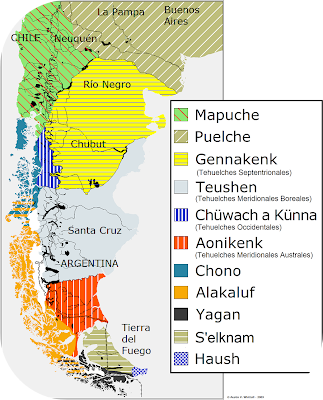
Ayayema es uno de los espíritus del mundo sobrenatural Kawéskar. Para los Kawéskar -canoeros de los archipiélagos del fin del mundo- existe un orden en la naturaleza, una armonía. Si esta se rompe cuando alguien se enferma o se produce un accidente, es causado por Ayayema, un espíritu poderoso que en su ser, lleva esa propiedad de alterar el orden. Ayayema proviene de hóutk’a álowe “más allá del horizonte”, que es la tierra de los espíritus que transitan desde ese mundo al mundo de los hombres. Él es un depredador, se alimenta de la energía vital de los seres vivos, viene al mundo de los hombres a cazar.
“YO SOY LA VOZ DEL CIELO SUR
QUE TRAE EL INVIERNO Y EL ANGOSTO DIA AUSTRAL
SOMBRAS ENORMES QUE SE LEVANTAN EN LA NOCHE
ALLÍ DONDE VIVE AYAYEMA
ESPÍRITU DEL RUIDO QUE RONCA ENTRE MONTAÑAS Y GLACIARES
QUE CAMINA EN LA ESPESURA DEL BOSQUE Y EL PANTANO
MITAD LLANTO HUMANO, MITAD GRITO DE BESTIA
ÉL TRAE AL VIENTO QUE VUELCA LAS CANOAS
ALLÍ HABITA RONDANDO LA NOCHE
ESCALANDO EL AGUA DE LAS CASCADAS
TRAYENDO EL MAL TIEMPO QUE HEMOS APRENDIDO A VER
EN EL PASO DE UNA BANDADA DE LOROS
QUE HEMOS COMBATIDO QUEMANDO UN DIENTE DE LOBA
Y HECHANDO SUS CENIZAS AL MAR.” (*)
“I AM THE VOICE OF THE SOUTH SKY
THAT BRINGS THE WINTER AND THE NARROW SOUTHERN DAY
HUGE SHADOWS THAT RISE AT NIGHT
WHERE AYAYEMA LIVES
THE SPIRIT OF THE NOISE THAT SNORES AMONG MOUNTAINS AND GLACIERS
THAT WALKS IN THE THICKNESS OF THE FOREST AND THE SWAMP
HALF WEEPING HUMAN, HALF THE CRY OF A BEAST
HE BRINGS THE WIND THAT OVERTURNS THE CANOES
THERE HE LIVES WANDERING AROUND THE NIGHT
CLIMBING THE WATER OF THE WATERFALLS
BRINGING THE BAD WEATHER THAT WE HAVE LEARNED TO SEE
IN THE PASSAGE OF A FLOCK OF PARROTS
THAT WE HAVE FIGHTED BY BURNING A WOLF’S TEETH
AND MAKING THEIR ASHES INTO THE SEA.” (*)
(*)Fragments from “Viaje al Archipiélago de los Chonos”, poem and documentary film written by Claudio Rodriguez Lanfranco.
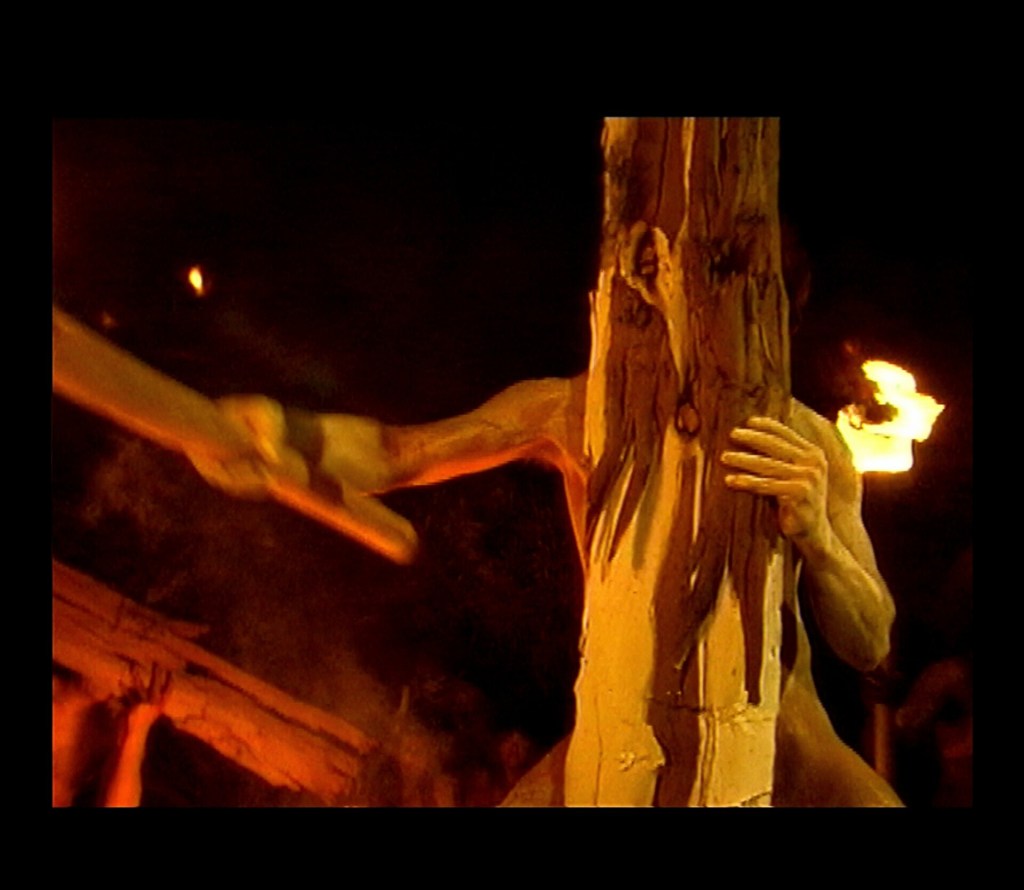
En los Ceremoniales Kawéskar se usaban máscaras que representaban estos espíritus, usadas por los hombres, ya que las mujeres no podían llevarlas. Éstas máscaras, así como la pintura corporal, están más relacionadas con usos rituales que artísticos. Entre los Kawéskar existía un repertorio de canciones para estas ocasiones. Como parte de su rica tradición oral, estas experiencias se transmitían a los iniciados de generación en generación en cánticos alrededor de grandes fogatas donde Ayayema era un protagonista. Es el único tipo de expresión musical que se conoce de este pueblo. Las canciones ceremoniales se desconocen hoy y solo se cuenta con el testimonio de la literatura especializada.
“Kuosá jeksólok ak’uás æs čačár tawaisélok aksǽmhar os
aselái eik’olájer-s kuos ko at ku kiáu afsenák at árka æs sa
“Y después el finado, el espíritu, el alma de mi difunto papá, decían, contaban en aquella carpa, se sentía hablar, en la carpa que quedaba más arriba de la mía. Y a los espíritus les decían Ayayema así los llamaban. A él me mandaron, me mandaron animándome y le pregunté a él: “Padre, ¿eres tú el que está hablando?”, así dije. Y me respondió el espíritu que mora más allá del horizonte: “Sí”, así [dijo], “¿por qué me estás preguntando?
Los cuentos, relatos de viaje y las historias de vida Kawéskar, constituyen lo que se ha llamado “arte de la palabra”. Joel Sherzer y Greg Urban (1986) manifiestan que “Ningún indígena sudamericano ha ganado jamás el premio Nobel por su actuación (performance) oral u oratoria política. Sin embargo, todos los días y todas las noches los miembros de remotas sociedades de Brasil, Ecuador, Panamá, Chile, que viven en medioambientes no tecnológicos, están creando y desplegando una notable diversidad de formas verbales caracterizadas por riqueza metafórica, procesos poéticos y retóricos y estilos intensamente personales, todos los cuales son parte íntima de la reproducción y transmisión de sus tradiciones culturales y estéticas”.
Entre los Kawéskar se desarrolló durante siglos este arte de la palabra y fue la única manera de transmitir el conocimiento y de expresar estéticamente mediante la palabra (cf. O. Aguilera)
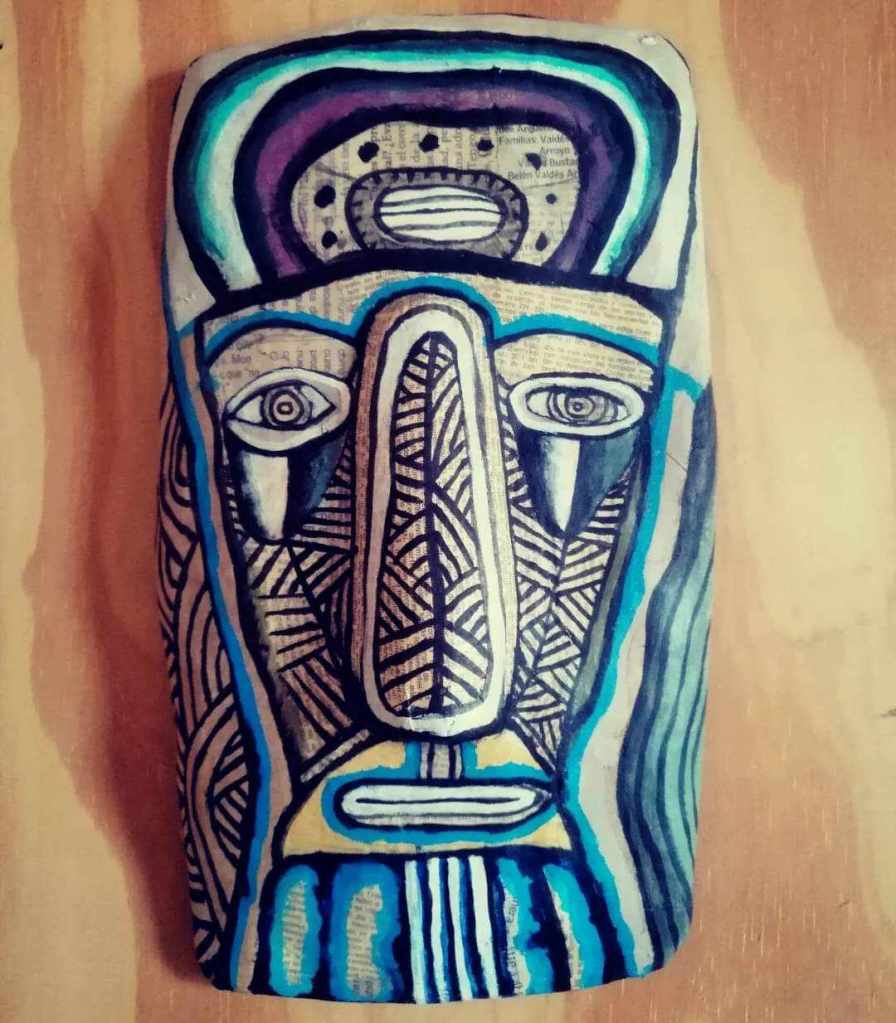
Poemas sobre máscaras desde poemario inédito Luz de lluvia escrito por Claudia Vila Molina
Grietas de la máscara
No nos es dado seguir hablando
ni de encontrar rastros perdidos
el azul juega con sus colores
y se forman raíces a tu alrededor
Son formas ennegrecidas
del sucio mineral de tu sangre,
espacio leve disgregado
en torno a esa máscara.
Tiempo ancestral
Recorro espacios cerrados
la memoria archiva actos conocidos
y solo vapor emerge desde estados de la imaginación,
mi mente perpetra esos instintos
(armonía remota de un entramado salvaje)
lucho por la veracidad de signos confiscados
y es penetrante tu esencia
ese código agrieta mis destinos
y películas convergen hacia tu manantial
Algo nos rodea desde siempre,
imagen pétrea instalada en cuencas de la prehistoria,
Es un asunto de querer magnetizar los elementos encontrados. Unirlos como si fueran una solución a un problema, sin tener , ni presentarse como problema. Al encontrar un objeto se van produciendo solas las uniones, la visión de esa reunión empieza a crear se su propia obra. Una inspiración creativa que se gesta a través de las palabras y las acciones. Arte de acción, teatro, poesía, plástica.
Nacido el año de 1961 y dedicado a la creación artística desde entonces, cuento en la actualidad con 62 años y perseveró con entusiasmo en la creación de poesía, obra plástica y conciertos de poesía.
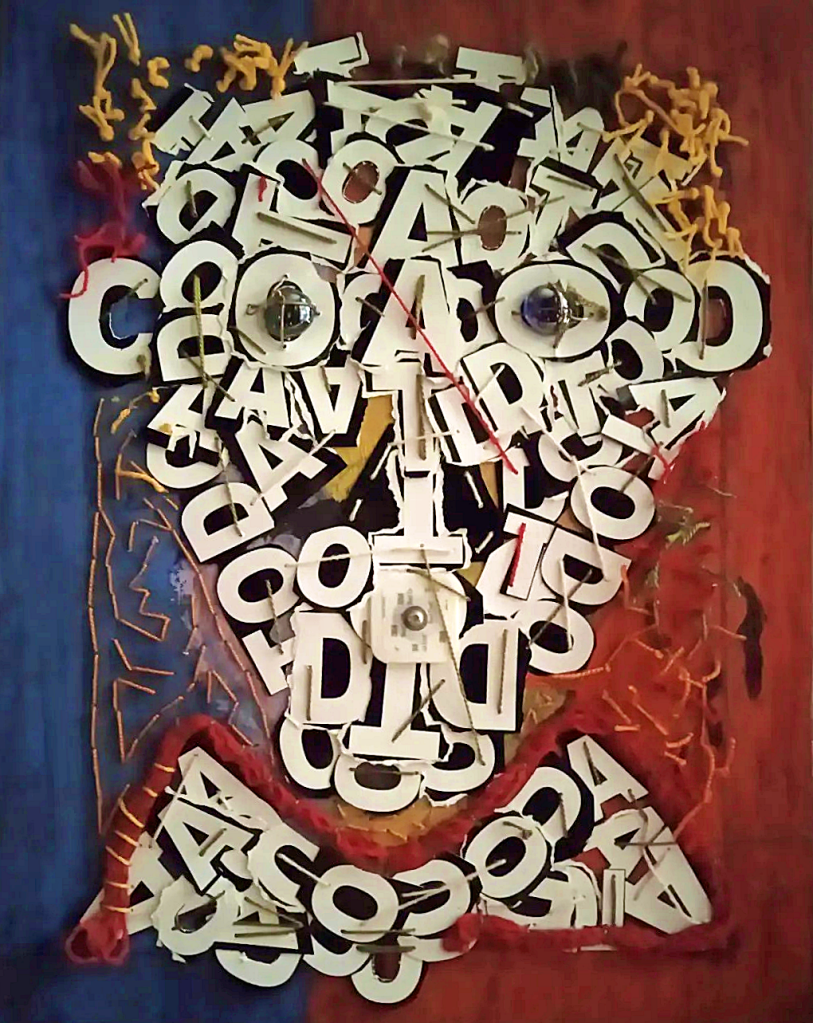
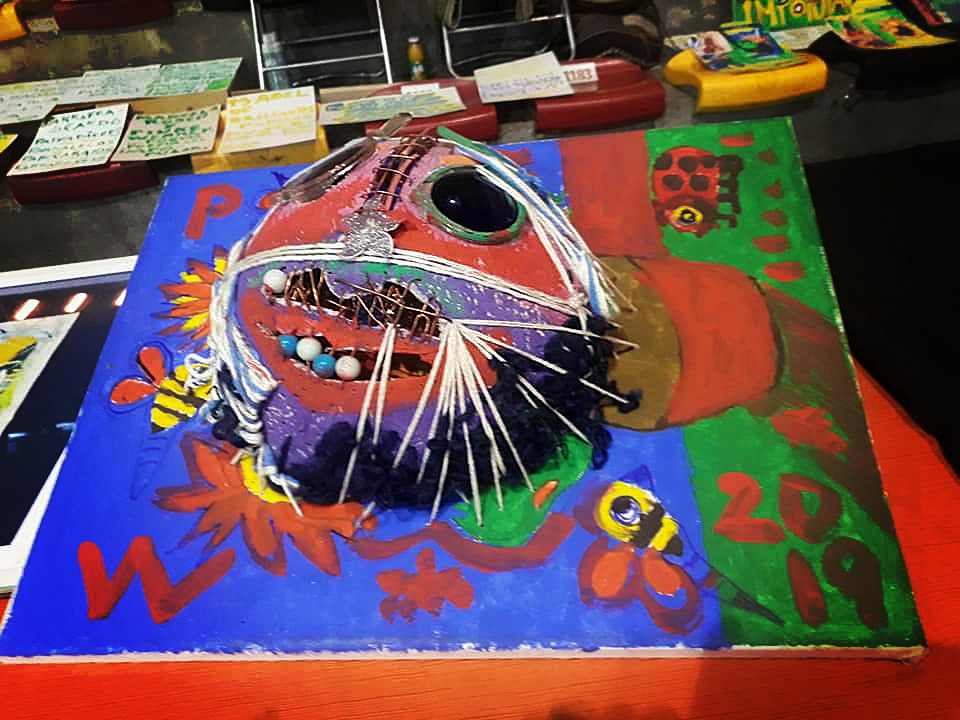
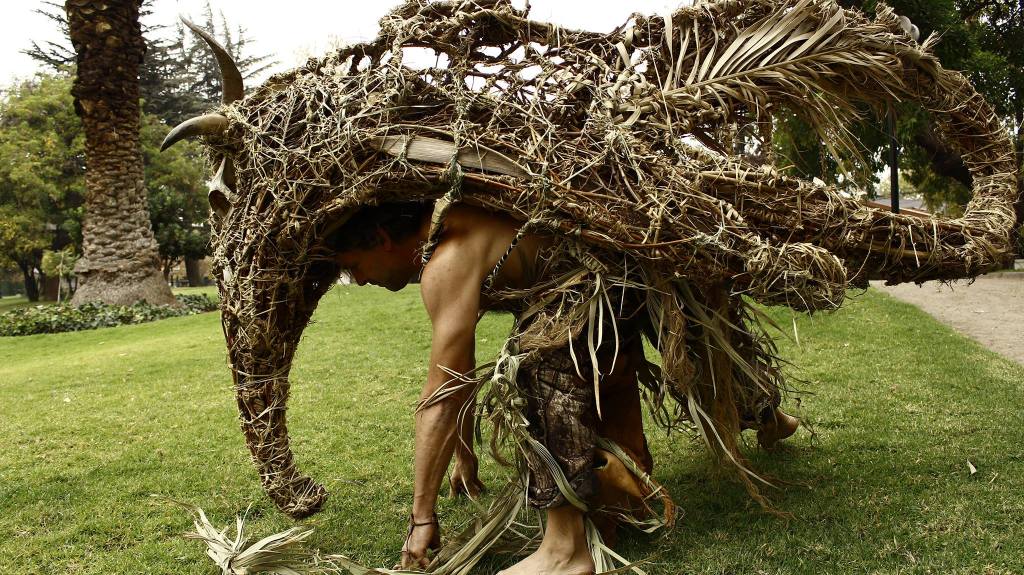
Francisco Rios Araya blends the ancient diversity between Paracas culture and Chilote mythology to build a new mythic hybrid. Rios creates a séance with the memories of archaeological sites, improvised ceremony and masks.
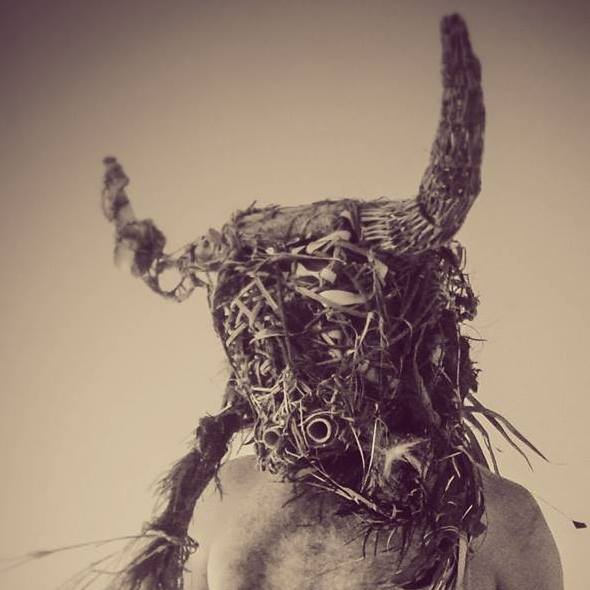
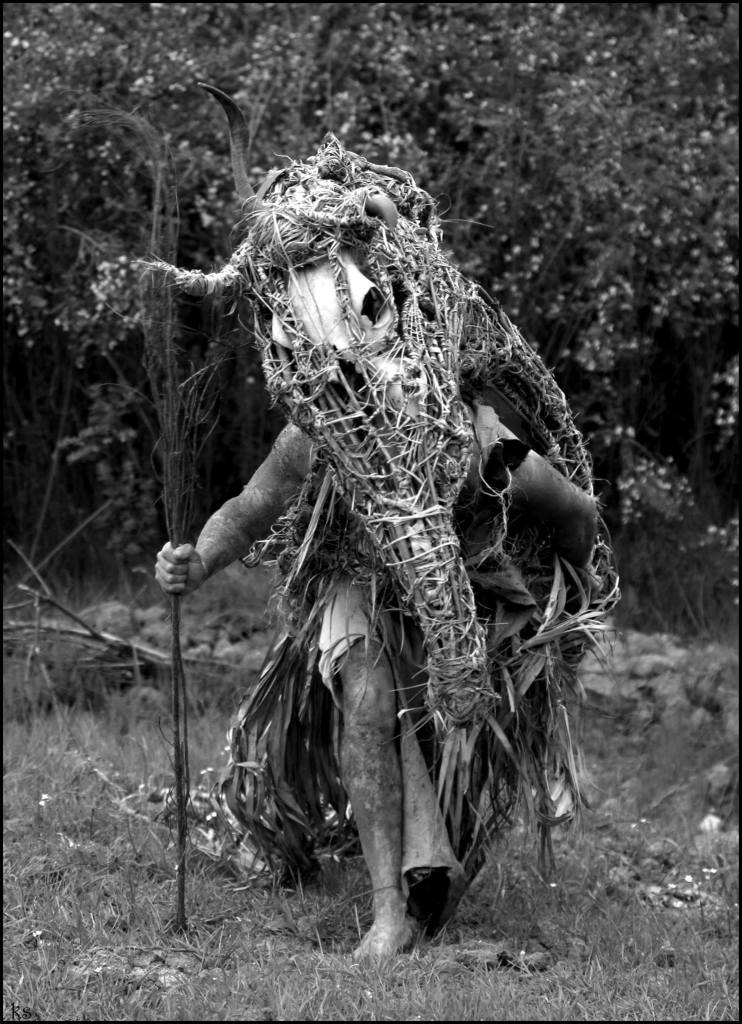
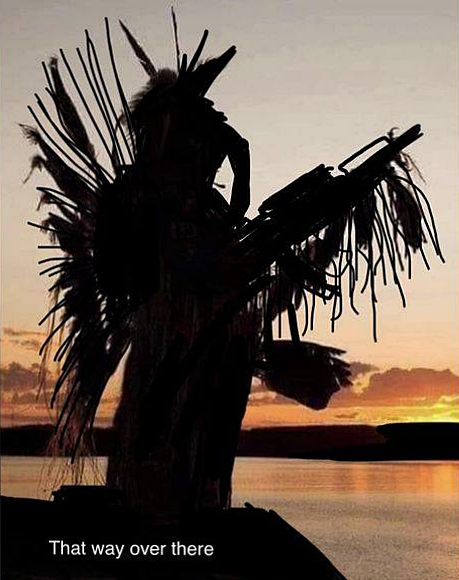
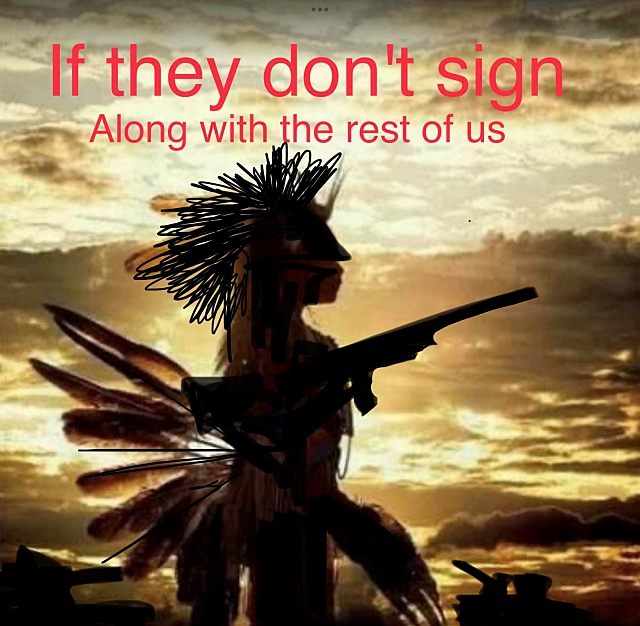
Mun gee dik lives in rocks and along shadows near lake Manitou…it is said this spirit hid a cache of weapons in a cave from the marauding Iroquois…some believe weapons are hidden to this day and include modern firearms that were lost or thought stolen…the Great War hero Kawbenaw is said to still be alive and is keeping these weapons…someday mun gee dik and Kawbenaw will make themselves known
written and created by Duncan Neganigwane Pheasant
Mitchell Pluto
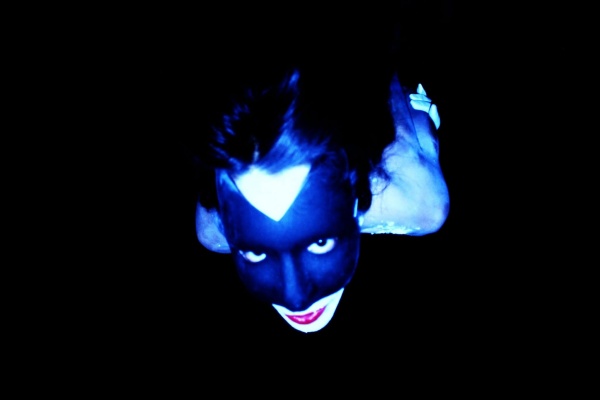
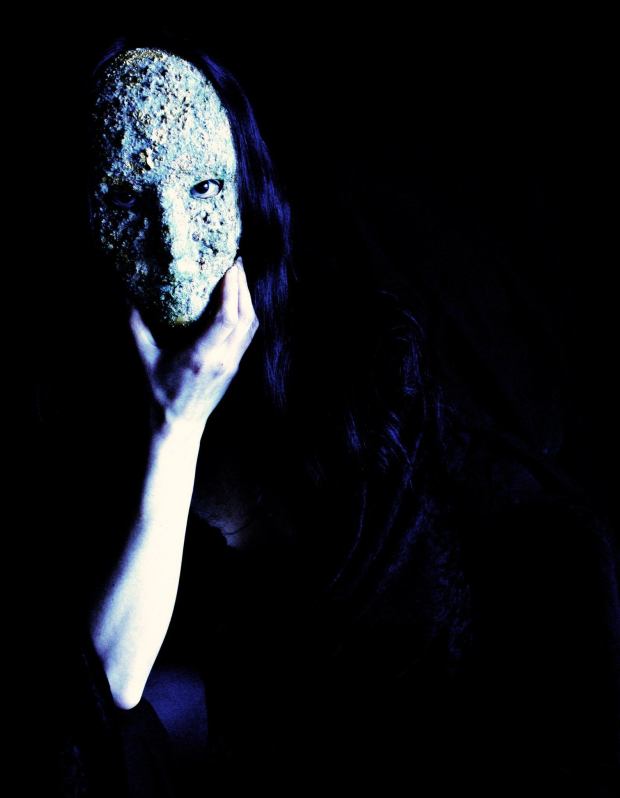
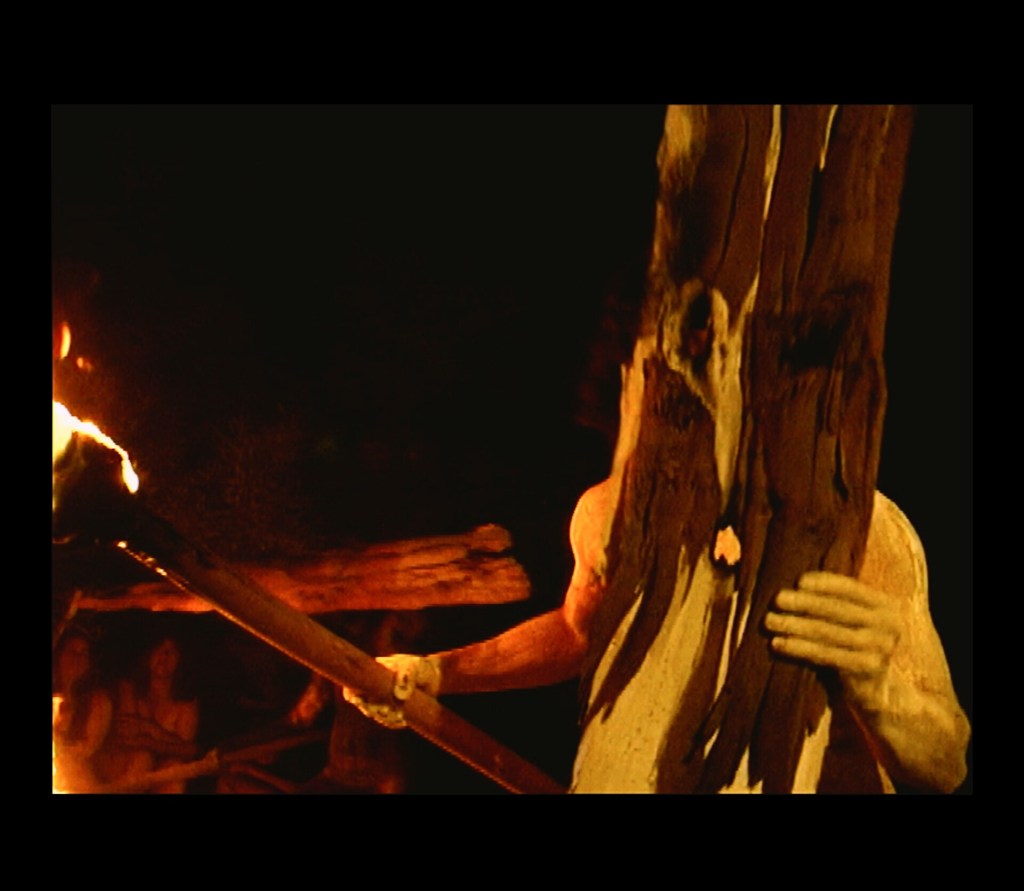
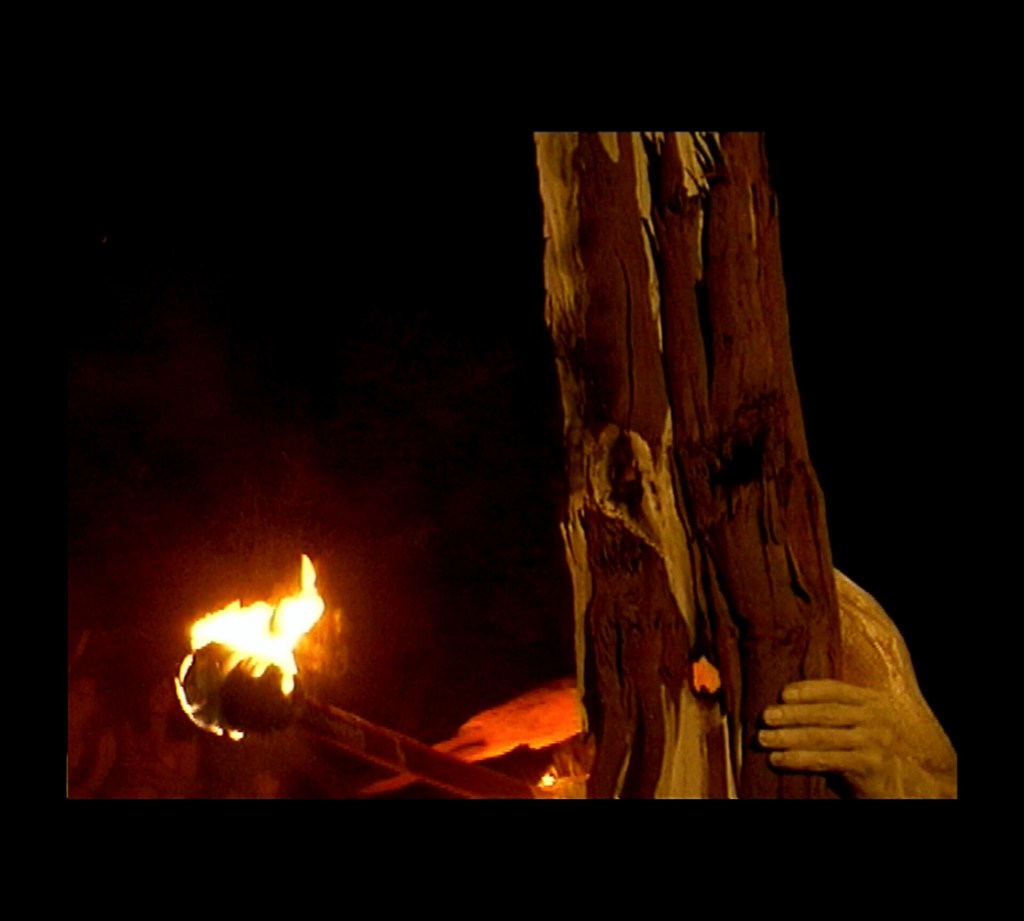
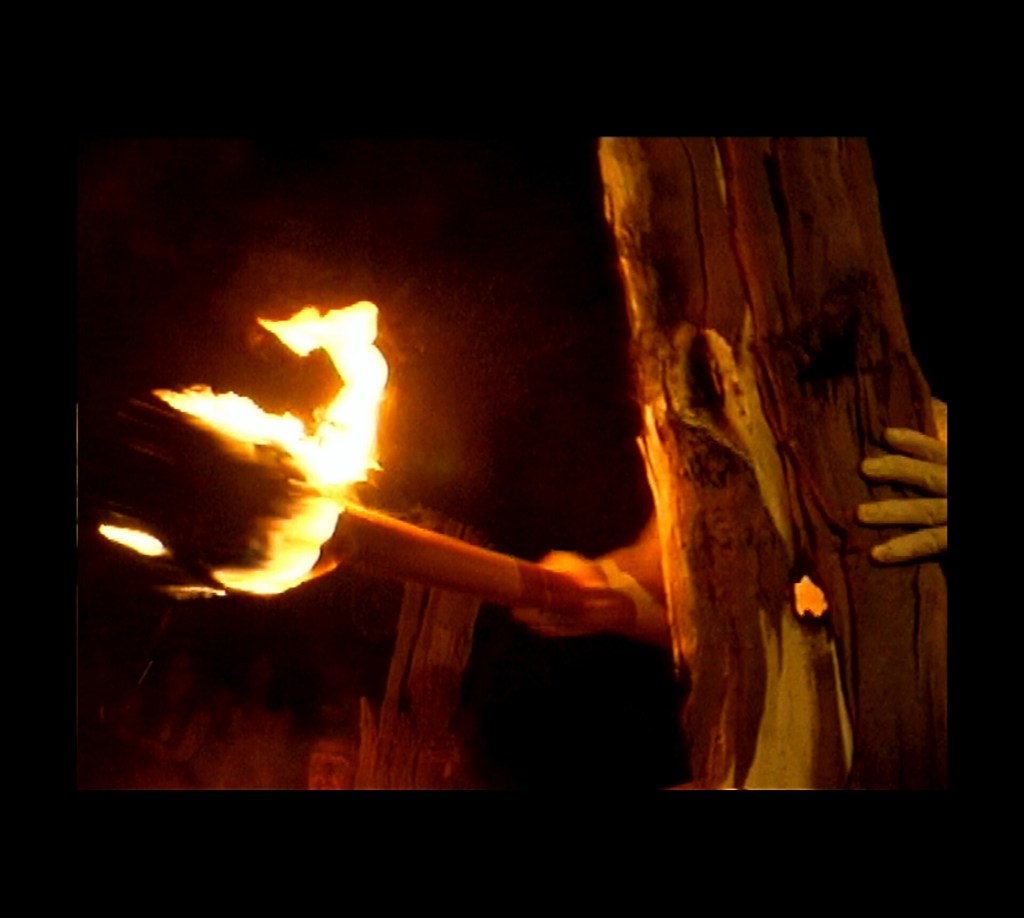
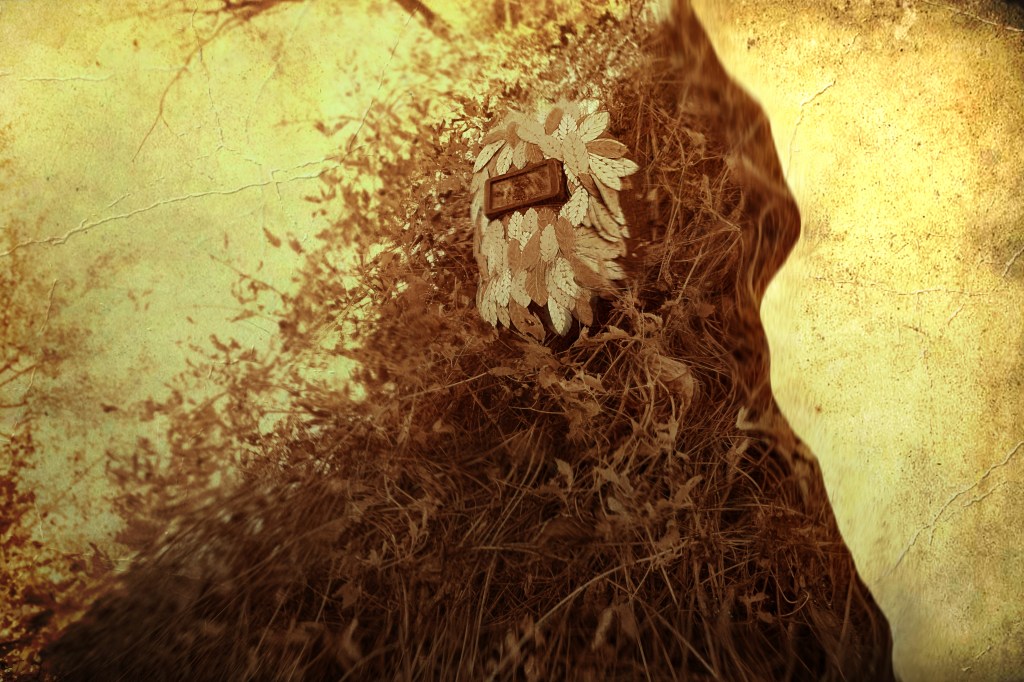
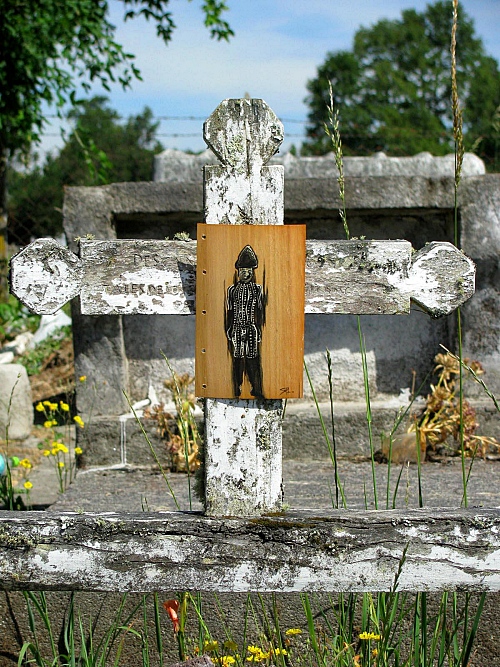
In August 1869, Alexander Jay Russell, a railroad photographer, captured an image of an unidentified entity during a total solar eclipse in Western Montana Territory. Russell’s journal entry depicted the creature as a tree-like being that glided along the ground and through the trees, mimicking every texture it encountered. The dark visor was the only consistent characteristic.
Photos found at an estate sale in 2023 are now in the possession of the Montana Historical Society Research Center Archives. Certain independent researchers suggest that this camouflaged entity possesses the capacity to swiftly adjust its chromatophores, enabling it to blend into any surroundings without being easily observed or recognized. This trait resembles that of Cephalopoda, the only organism known to exhibit such capabilities.
Many witnesses in Montana reported similar encounters during the solar eclipse on February 26, 1979, like Russell’s. Authorities have not yet released any official comments to the public.
welding mask with painted copper leaf by Mitchell Pluto. Wild Plains Horse Plains, Montana
epilogue
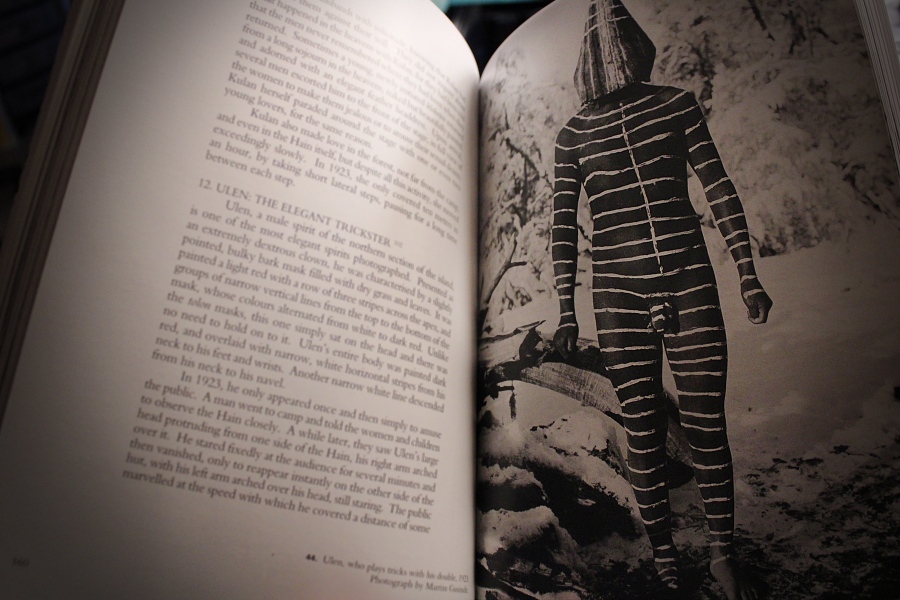
Ulen the elegant trickster. Plays tricks with his double, 1923. Photograph by Martin Gusinde
“In 1923, the Ulen only appeared once and then simply to amuse the public. A man went to the camp and told the women and children to observe the Hain closely. Awhile later, they saw Ulen’s large head protruding from one side of the Hain, his right arm arched over it. He started fixedly at the audience for several minutes and then vanished, only to reappear instantly on the other side of the hut, with his left arm arched over his head, still staring. The public marveled at the speed at the speed with which he cover the distance of some eight metres. The public did not know that the “backstage” there were two rigorously identical Ulens, posed at each side of the Hain. A third man gave them signals as to the exact moment at which they were to protrude their heads. The performers practiced a great deal in order to coordinate their movements and remain immobile for several minutes.”
Chapman, Anne (2008) Hain, Selknam Initiation Ceremony. Initiation ceremony of the Selknam of Tierra Del Fuego 12 160-162
The psychedelic, psilocybin-rich species, Psilocybe cubensis, is a coprophilous mushroom. This means that it can only subsist in the wild upon the dung of certain animals, especially cattle. While native to Cuba (hence cubensis), this fantastic fungus has been documented in a number of southern states, including Florida, Georgia, Alabama, Mississippi, Tennessee, Arkansas, Louisiana, Texas, South Carolina, North Carolina, and even as far north as Oklahoma, Virginia, and West Virginia—albeit rarely in these latter three. The species is also found in Hawaii. It was in the state of Louisiana, however, amidst its humid cattle fields and dank, swampy marshes, where African American sharecropper, Denver Moore—then just a boy—first underwent what may be an early example of psilocybin mushroom use in North America.
As the book says, Ron Hall and Denver Moore’s New York Times Bestseller, Same Kind of Different as Me—an amazing true tale of a modern-day slave, an international art dealer, and an unlikely woman who brought them together—is a story filled with hardship, betrayal, and the brutality that lines the hearts of some men. But, it’s also a story of hope and perseverance, mottled throughout with thought-provoking anecdotes about black life in the Deep South in the 1950s. Descended from African American slaves, Denver Moore was raised on a scorching southern plantation near the alligator-riddled, mosquito-infested swamps of Louisiana. Having very few monetary resources, Moore was blessed to have an incredibly resourceful wise woman of an aunt, a Conjure woman—called Auntie Etha—who, with the aid of traditional African American folk remedies, was able to help the Moore family make the most of an often difficult situation. Moore recalls,
Lookin back on it, I think Auntie was what you might call a spiritual healer, like a ‘medicine man,’ cept she was an elderly woman. […] Big Mama made me go show my respect and also to help Auntie gather up the fixins for her medicines.
She used to take me with her down by the swamp where she’d be gatherin up some leaves and roots. […] ‘Now Li’l Buddy, this here’s for takin the pain out of a wound,’ she’d say, pullin up a root and shakin off the earth. ‘And this here’s for pneumonia.’
[…] She had a room in her house with a big table in it covered with jars in all kinda sizes.
‘See them jars?’ she told me one time.
‘Yes, ma’am.’
‘In each of em, I got somethin for anything that happens to you.’
[…] She had some kinda spiritual thing goin on in that house. Every time I went in there, she made me sit on a little stool in the same spot, even facin in the same direction, like she didn’t want me to mess up whatever voodoo she had goin on in there.
Moore’s charming description of Auntie Etha clearly betrays her as a practitioner of Hoodoo, known in the Mississippi Delta as a “Rootwork” or “Conjure,” even going so far as to evoke the term, “voodoo,” in his account.
Hoodoo, a traditional African American spirituality that arose from several West African traditions as the same were imported into the New World, may not be stranger to psychoactive plants. For instance, while not entheogenic itself, one of the most common charms carried by Conjure practitioners is the root ball of the Ipomoea jalapa vine, referred to as a “High John the Conqueroo” root. Some species of Ipomoea (morning glory), such as Ipomoea tricolor and Ipomoea corymbosa, are possessed of the hallucinogenic compound, ergine, also known as d-lysergic acid amide (LSA)—a close cousin to Albert Hofmann’s “problem child,” lysergic acid diethylamide (LSD-25). In 1938, Ipomoea corymbosa (formerly Rivea corymbosa), for example, was discovered by American biologist, Richard Evans Schultes, to solve to problem of the identity of the ancient Mexican hallucinogen, Ololiuqui. The formidable effects of Ololiuqui were noted in the colonial document, The Florentine Codex, from the 16th century:
It inebriates one; it makes one crazy, stirs one up, makes one mad, makes one possessed. He who eats of it, he who drinks of it, sees many things that will make him afraid to a high degree. He is truly terrified of the great snake that he sees for this reason.
Francisco Hernandez, the famous Spanish physician, also discussed Ololiuqui in his book, Rerum medicarum Novae Hispaniae thesarus:
When the priests of the indians wish to commune with the spirits of the dead, they eat these seeds to induce a delirium and then see thousands of satanic figures and phantoms around them.
Ergo, there was already a history of the Native use of hallucinogenic morning glories in the Americas long before the arrival of African slaves. But, that doesn’t necessarily mean they learned of jalapa through Native Americans.
Century Illustrated Magazine (1881-1906), XLI, 825.
Before going any further, it is important to note that some African cultures are known to be in possession of their own rich, entheogenic traditions—independent of the export of African slaves to the New World. The Bwiti cult found among the Puna, Mitsogo, and Fang tribes in Gabon and Cameroon, for instance, employ the inebriating root bark of the West African shrub, Tabernanthe iboga, in their lively initiations. Like the “High John the Conqueroo” charms cherished by Southern practitioners of Hoodoo in North America, iboga is harvested from the roots of the shrub, linking the Bwiti cult, at least in spirit, to the black “rootwork” of Southern Hoodoo—a tradition whose own roots are to be sought in the religious practices of the Bantu of the former Kingdom of Kongo in west-central Africa. In fact, when iboga was first documented by the West, English traveler and author, Thomas Edward Bowdich, reported that,
The Eroga, a favourite but violent medicine, is no doubt a fungus, for they describe it as growing on a tree called the Ocamboo, when decaying; they burn it first, and take as muchas would lay on a shilling.
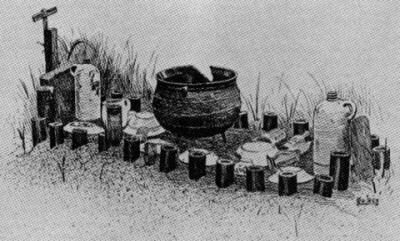
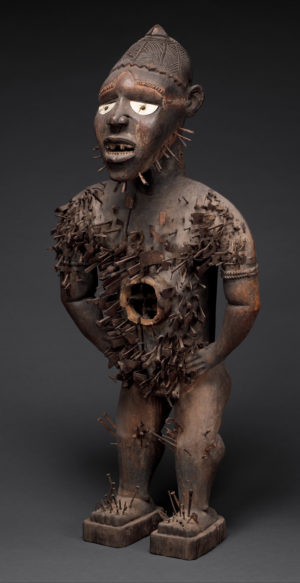
While this Englishman is no doubt in confusion regarding the identity of iboga, his observation suggests that some species of fungus was sacred to the Indigenous of the area. And, indeed, a tree fungus, known as tondo, was in fact central to the construction of nkisi statues, whose “kondu gland”—a hollow chamber in the belly of the statue—held samples of the unidentified specimen. One Bantu nganga, making an offering of the mushroom to the spirits, referred to tondo as “the key that opens everything.” The Kongolese and African American practice of surrounding the gravesite of a loved one with inverted plates and saucers, often resting atop poles or sticks, was believed to imitate the appearance of mushrooms around the burial. According to one source, this curious form of grave decoration was meant to recall and old Kongo play on words: tondo / matondo. For, in Bantu, the word for mushroom (tondo) is similar to the word for “to love” (matondo).
Power Figure (Nkisi N’Kondi: Mangaaka), Kongo peoples, mid to late nineteenth century, wood, paint, metal, resin, ceramic, 118 x 49.5 x 39.4 cm, Democratic Republic of Congo. Medicinal combinations called bilongo are sometimes stored in the head of the figure but frequently in the belly of the figure, which is shielded by a piece of glass, mirror, or other reflective surface. (The Metropolitan Museum of Art)
To return to the Americas, Schultes also identified the Aztec psychedelic, Teonanácatl, as belonging to the Psilocybe genus. But, Denver Moore’s would appear to be the first account of the possible use of a psilocybin mushroom within the context of Conjure, as the same was practiced by African American slaves in the Deep South. Many Hoodoo practices continue to be shrouded in secrecy. So, it may be impossible to determine just how far back this tradition among African Americans extends. But, as the famous Tennessee Hoodoo practitioner, Doc “Wash” Harris, founder of the infamous Saint Paul Spiritual Holy Temple in Memphis—inappropriately known by locals as “Voodoo Village”—once said in an interview with the Commercial Appeal in 1984,
God told the black man and the Indian somethings he didn’t tell nobody else.
One of those things may have concerned the powerful effects of a particular species of dung-loving mushroom.
Reminiscing about his great, wise Auntie, Moore briefly continues,
Aunt Etha took care of our bodies and souls. Mostly we never got very sick, but when we did, my auntie sure ‘nough had the cure: Somethin she called ‘cow-lip tea.’
Now cow-lip tea was brown and thin, kinda like the Lipton tea the Man sold at his store, but a durn sight more powerful. Cow-lip tea come from them white toadstools that sprout outta cow patties. […] That’s where cow-lip tea got its name. ‘Cow’ from the cow patties and ‘lip’ from the Lipton. Least that’s what Aunt Etha always told me.
The way you make cow-lip tea is you get the toadstools […] and grind em up in the sifter. [You] put it in a rag and tie a knot on top. Then you add a little honey to a boilin pot and drop that rag in the water til it bubbles up and turns good and brown. Now you got cow-lip tea.
If I was sick, Aunt Etha’d always make me drink a canful.
‘All good medicine tastes bad!’ she’d say, then put me in the bed underneath a whole pile a’ covers, no matter whether it was summertime or wintertime. In the mornin, the bed’d be soppin wet and the sheets’d be all yella, but I’d always be healed. I was nearly grown before I figured out what I was drinkin.
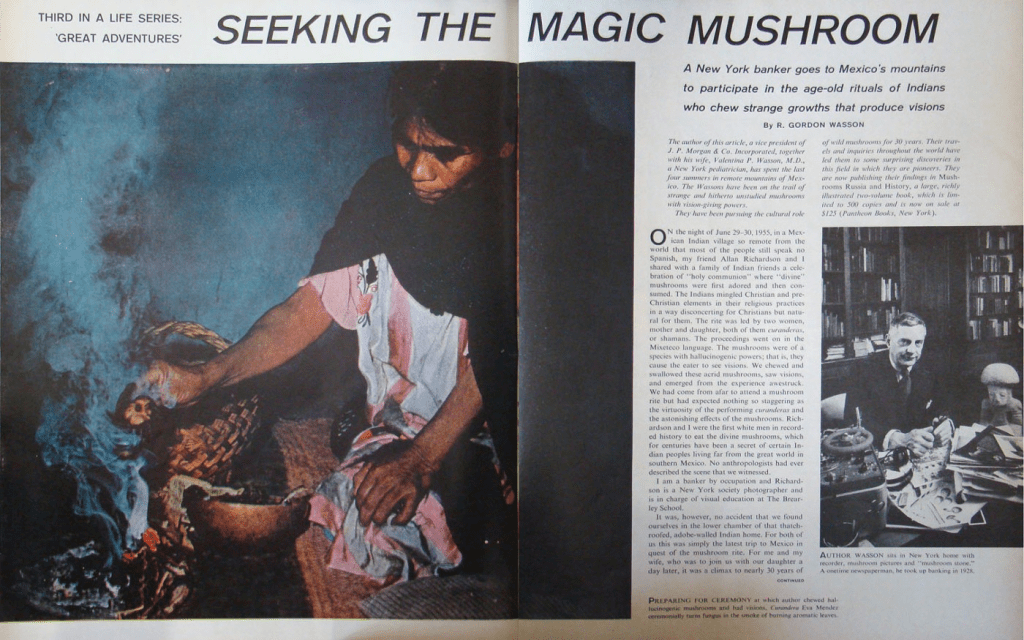
This historical narrative is simply amazing. Psilocybin mushrooms weren’t brought to the attention of the broader West until 1957, with the publication of the paradigm-shifting photo essay, “Seeking the Magic Mushroom,” in LIFE magazine by R. Gordon Wasson—the “father of ethnomycology.” Moore’s account is at least contemporaneous with Wasson’s publication. But, considering that this particular treatment was likely a timeworn tradition handed down to Auntie Etha by her own teacher(s), it is very probable that this particular use of the fungus went back much earlier than the time of Moore or his Auntie Etha. While no psychedelic effects were noted by the author, the mere fact the mushroom tea was administered in a medicinal context, to treat a sick boy, is highly significant. For, the Mazatec ceremony to which Mexican curandera, María Sabina, invited Wasson, the same wherein the psilocybin mushrooms were ingested, was also explicitly medicinal—velada being the traditional name given to the mushroom healing vigils carried out by Mazatec “shamans.” Moreover, if Moore was administered Auntie Etha’s tea while suffering a high fever, any psychedelic effects—including hallucinations—may have simply been attributed to the symptoms of the contracted illness.
“Seeking the Magic Mushroom,” in LIFE magazine by R. Gordon Wasson 1957
Importantly, Moore’s account is not the sole evidence of the use of entheogenic concoctions in the practice of Hoodoo. Over twenty years before the experience described in Same Kind of Different as Me, African American author, Zora Neale Hurston, in her 1935 classic, Mules and Men, revealed her own experience with what is quite clearly a powerful yet unnamed hallucinogen.
…I had to fast and “seek,” shut in a room that had been purged by smoke. Twenty-four hours without food except a special wine that was fed to me every four hours. It did not make me drunk in the accepted sense of the word. I merely seemed to lose my body, my mind seemed very clear. […] Maybe I went off in a trance. Great beast-like creatures thundered up to the circle from all sides. Indescribable noises, sights, feelings. Death was at hand! Seemed unavoidable! I don’t know.
While Hurston’s report does not mention hallucinogenic fungi specifically (or any other substance for that matter), the obvious psychedelic nature of her account is a good indication that entheogenic plants were not unknown to Hoodoo practitioners such as Denver Moore’s Auntie Etha.
Miguel Covarrubias’ Illustration for “Mules and Men” Zora Neale Hurston/ Lippincott, Philadelphia, 1935
Denver Moore passed away in 2012, so we were unable to interview him concerning his spectacular narration. But, it is our hope that Moore and his Auntie Etha would have been proud to know that their legacy not only lives on, but it may change the narrative as we know it regarding both the history of ethnomycology and the practices of Hoodoo and folk medicine among African Americans living in the Deep South.
P.D. Newman is an independent researcher located in the southern US, specializing in the history of the use of entheogenic substances in religious rituals and initiatory rites. He is the author of the books, Alchemically Stoned: The Psychedelic Secret of Freemasonry, Angels in Vermilion: The Philosophers’ Stone from Dee to DMT, and the forthcoming title, Day Trips and Night Flights: Anabasis, Katabasis, and Entheogenic Ekstasis in Myth and Rite. The Secret Teachings of All Ages (TV Series documentary) 2023.
Allí se ubicaron en un improvisado toldo levantado con ramas de calafate, apoyados bajo una gigantesca roca que le daba la espalda al viento que corría desde el NorEste y que traía las nubes del Atlántico.
La fogata ardió esta vez a cargo Ocetán quien no tardó en reunir material combustible para alimentar las llamas y depositar cuidadosamente sobre el suelo los hongos recolectados durante su pasada por los faldeos de la Sierra Boquerón.
Extrajo de su bolsa (mujii) los hongos y raíces que forman la dieta invernal del fueguino hongos que crecen sobre el suelo esponjoso de los pantanos donde sus raíces pequeñas se internan quedando solo visible la parte superior algo más colorida por la acción de la luz.
El sabroso shanamain, el suave y transparente Ahuichi, cubierto de pintas blancas y rojas la chahuata que crece allí en todos los árboles vivos y el lechoso chagadakaamáin que sabe muy bien asado cubierto entre las cenizas calientes del fuego.
Mientras los ojos de ella ardían en la noche Selcha hurgueteó en el componente mineral que formaba las rocas y con el pehí (cuchillo) raspó hasta dar con una veta de marcado tono rojizo que llamó su atención por la inusual extensión que ocupaba en la superficie del granito
Derritiendo luego un trozo de grasa de guanaco y separando la roca del pigmento, mezcló ambos logrando una masa colorida y viscosa que afinó machacándola en un improvisado mortero ubicado en la roca.
Untó los dedos en la pintura tibia dibujando primero en su cuerpo y luego en el de su pareja desnuda la simbología de su clan y mientras el silencio de la noche se apoderaba de ese paisaje solitario, se alimentaron bajo las estrellas, al alero de estos grandes bloques abandonados por antiguas glaciaciones sobre la inmensidad de la pampa, allí donde durante milenios la luz de la luna recortaba sus pálidas siluetas graníticas en el azul de la noche, anunciándolas mucho más inmensas y misteriosas que durante los angostos días antárticos.
Entonces sólo el aullido de algún animal nochero se hacía sentir muy lejano trazando su oscuro guión en la noche, y pronto ambos se durmieron abrazados por la naturaleza que sabiamente todo lo acoge
-DCXCI-
“Trashumancia”, poema inédito del libro “Cuando la Tierra se Acaba”, de Claudio Rodriguez Lanfranco.
born in Valparaíso in 1968. After living in Patagonia and in the United States, a product of a scholarship, his first painting exhibitions back to the nineties in Valdivia. Later he moved to Santiago and the Fifth Region, where his visual and literary work materializes in a body of work that addresses different forms of expression, such as painting and drawing, experimental and documentary video, visual poetry and muralism, with public art projects installed in Santiago, Valparaíso. As a visual artist he has exhibited his paintings in 15 solo shows and in more than 60 group shows in Chile, Europe and the United States, and his poetic texts have been published in regional, national and international poetry collections, his work being awarded in different state funds for artistic creation such as Fondart, Cntv, Fondo Carnavales Cultural Centers of Valparaíso, among others. Currently the painter lives and works between Valparaíso, Santiago and Concón, where he develops his artistic projects and teacher training, being in charge of university graduates, painting and mural workshops, becoming a teacher for generations of students and artists who have worked with him.
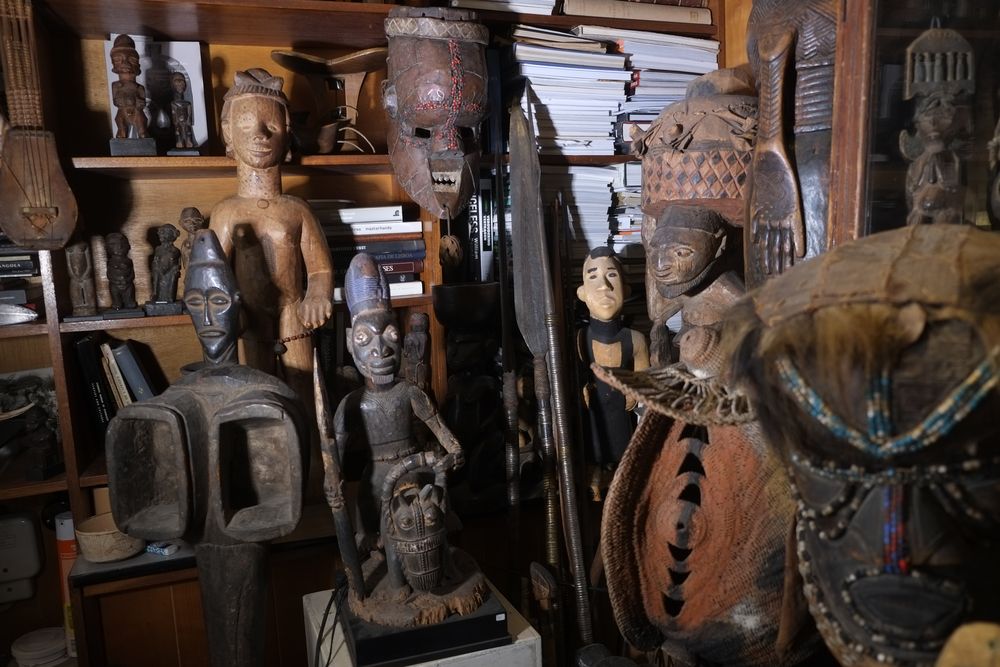
African art has been a part of my childhood. My mother, Nadya Levi, was a sculptor who collected African art, and my father, Herman Norden, was an antique dealer who had a room in his house filled with African art, books, and stuffed birds. As a child, I went to London many times with my mother for auctions, where we met interesting people like Patricia Withofs and Gaston de Havenon. I also remember Mrs. Huguette van Geluwe in Brussels, where we went to seek her opinion on Congolese pieces, or Willy Mestach. And there were Simpson, Charles Raton, and Baron Rollin, who would visit us in Antwerp, and as a little boy, I had to serve coffee and help clean the display cases.
The Salampasu mask is steeped in cultural significance and is traditionally used in tribal ceremonies and rituals. It is believed to represent ancestral spirits and is used for various purposes, such as warding off evil spirits, promoting fertility, and celebrating harvest festivals.
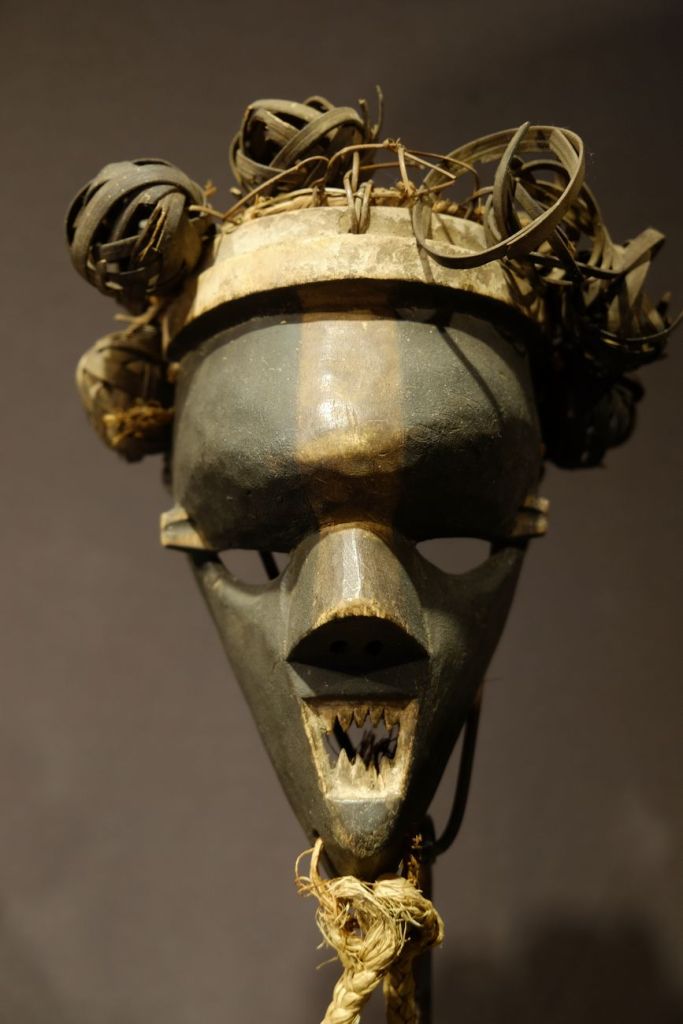
My mother’s collection of Bassa and Dan masks, all hung side by side, many of which were acquired from Paolo Morigi. My first purchase was a small miniature Etruscan stone tablet depicting a lion.
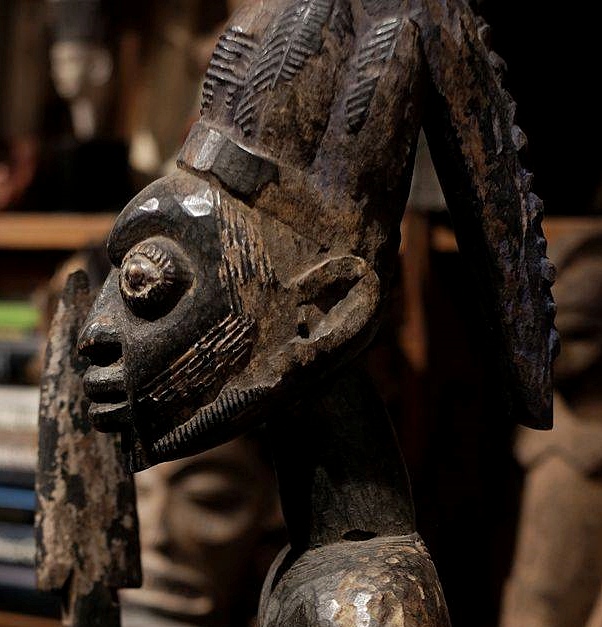
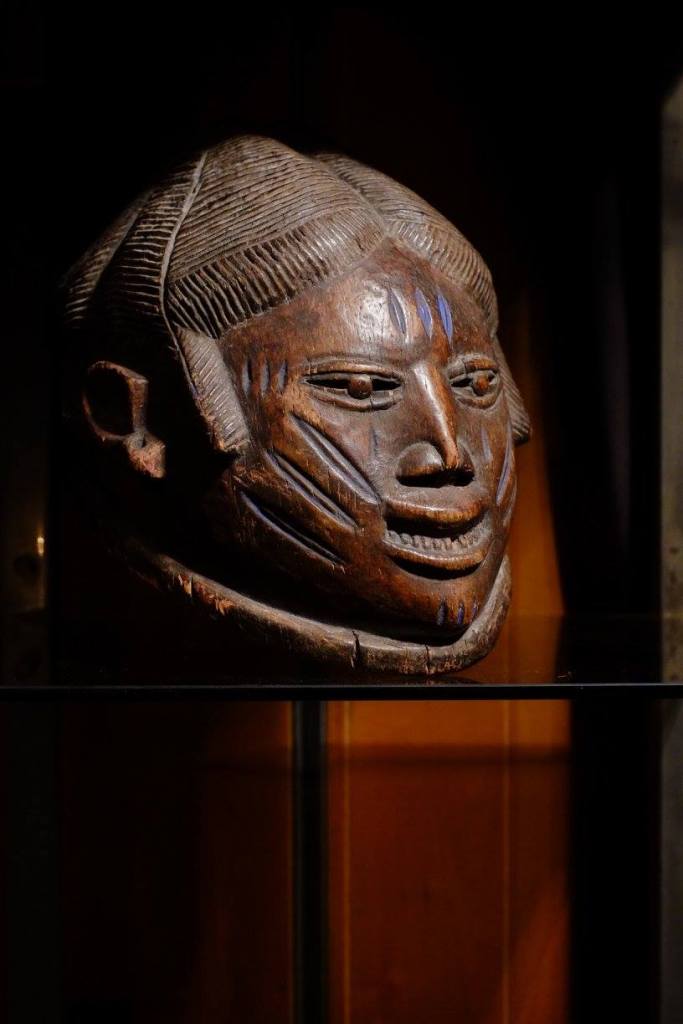
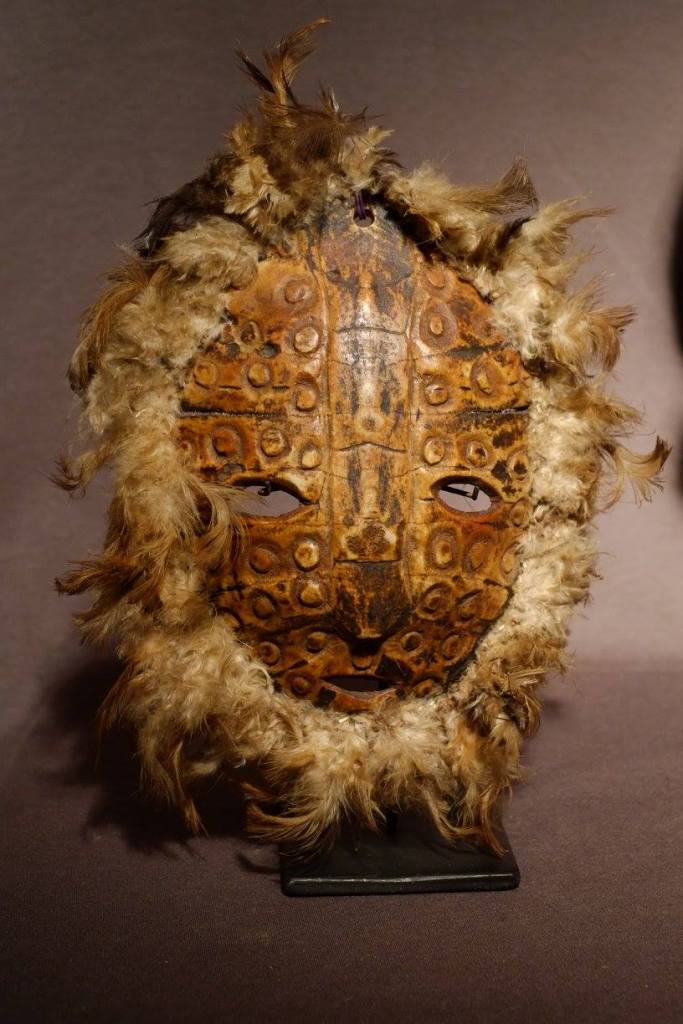
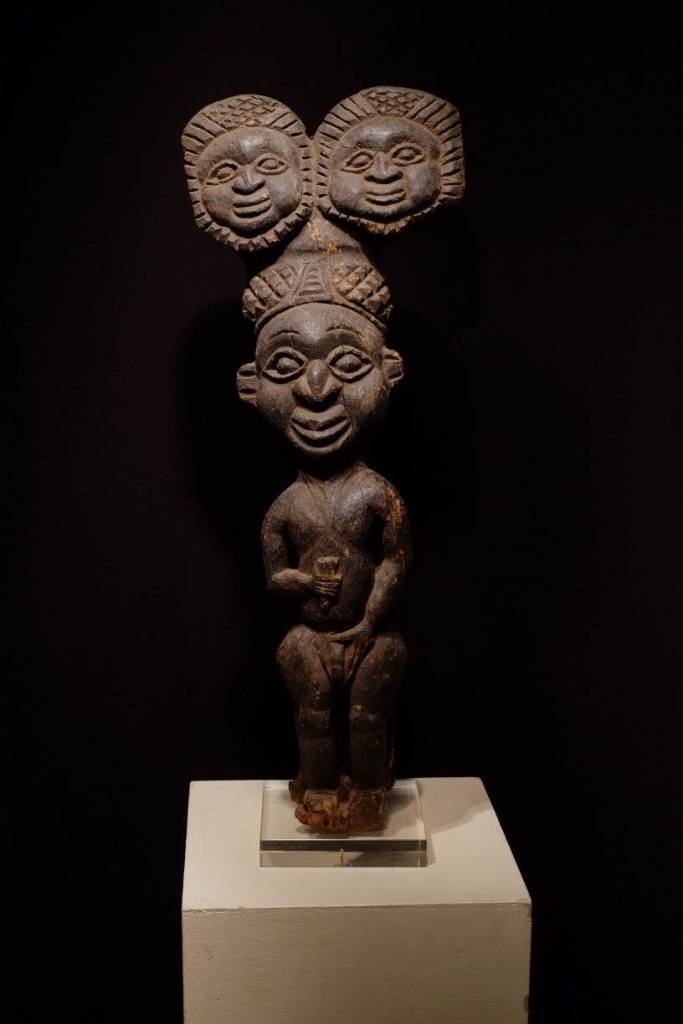
Gelede Mask Yoruba Nigeria. This sect is devoted to the mother of all orisha, the matriarchal head of the universe. Lega Turtle Mask. Mask symbolizes the wisdom of the elder members of the Bwami. Bamileke figure with three heads -Cameroun
I am always looking for an object that evokes emotions in me. I would love to acquire a beautiful object that belonged to Henry Pareyn, the first collector dealer in Antwerp around 1910. I have always derived more pleasure from acquiring objects than from selling them, but I am not a fetishist who cannot part with them.
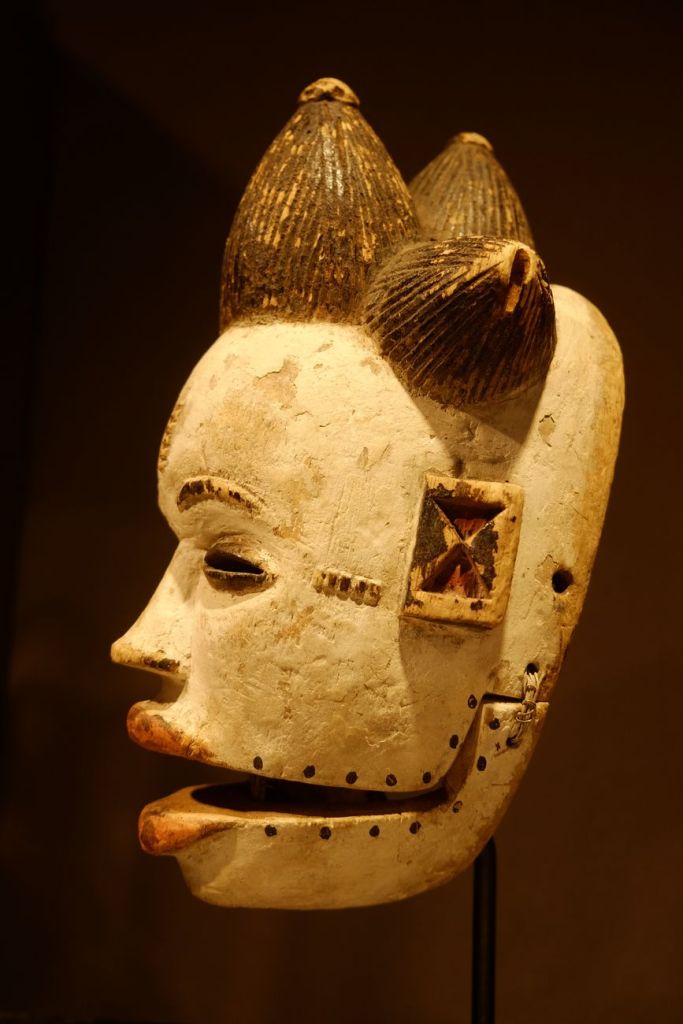
Ogoni ‘Elu’ mask with articulated jaw, Nigeria.The Ogboni ( also spelled Ogoni) people are an ancient and secretive society that has existed in Nigeria for centuries. Their religion is centered around the worship of various deities and the use of masks in religious rituals and ceremonies. The Ogboni mask being described is a prime example of this tradition.
What determines the value of the works? The value of an object often depends on the buyer. I could say that it is the beauty and antiquity associated with the provenance, but in reality, it is the emotion that an object evokes in you that is important, and sometimes the place your imagination gives it.
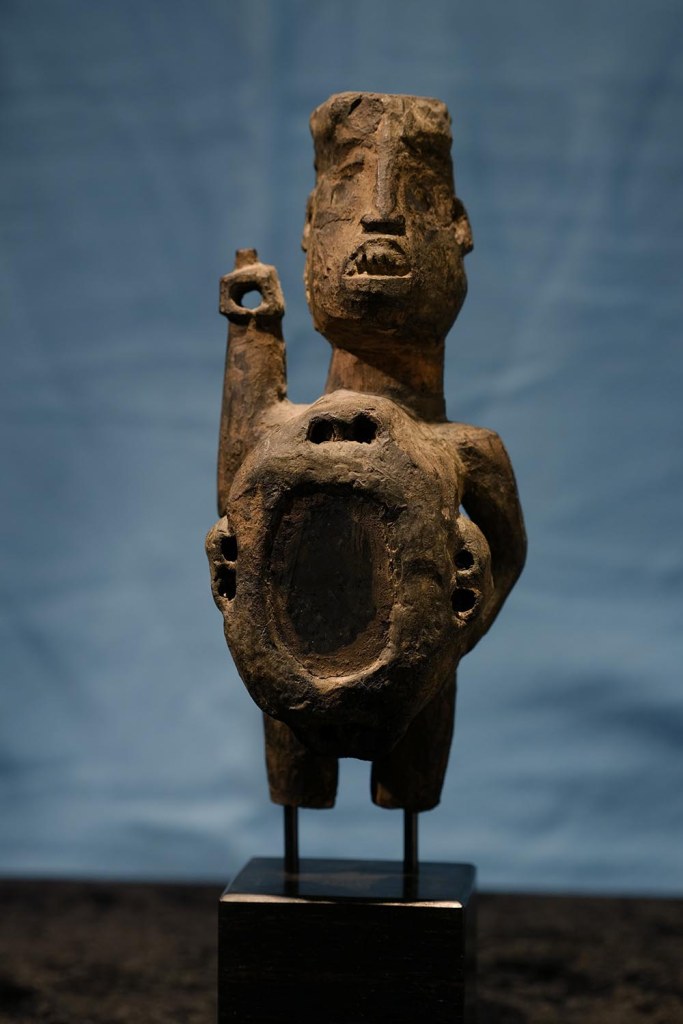
A 19th century Bakongo Nkisi Figure. The figure is known as a nkondi, which means “hunter” or “hunter of wrongs,” and it is believed to have the power to track down and punish wrongdoers. The mirror in its belly is said to allow it to see into the hearts of people and to reveal any evil or malicious intentions they may have. The eyes of the figure are made of mirror, and they are thought to help the nkondi to see clearly in the spiritual realm.
There are so many personalities in this field who have inspired me that I can’t name them all, but first and foremost, it is people with a deep passion and those who recognize the beauty and importance of African art for humanity that inspire me the most. African art has had a tremendous impact and great influence on Western art after World War I, and it is only natural to recognize the importance of this art and its artists.
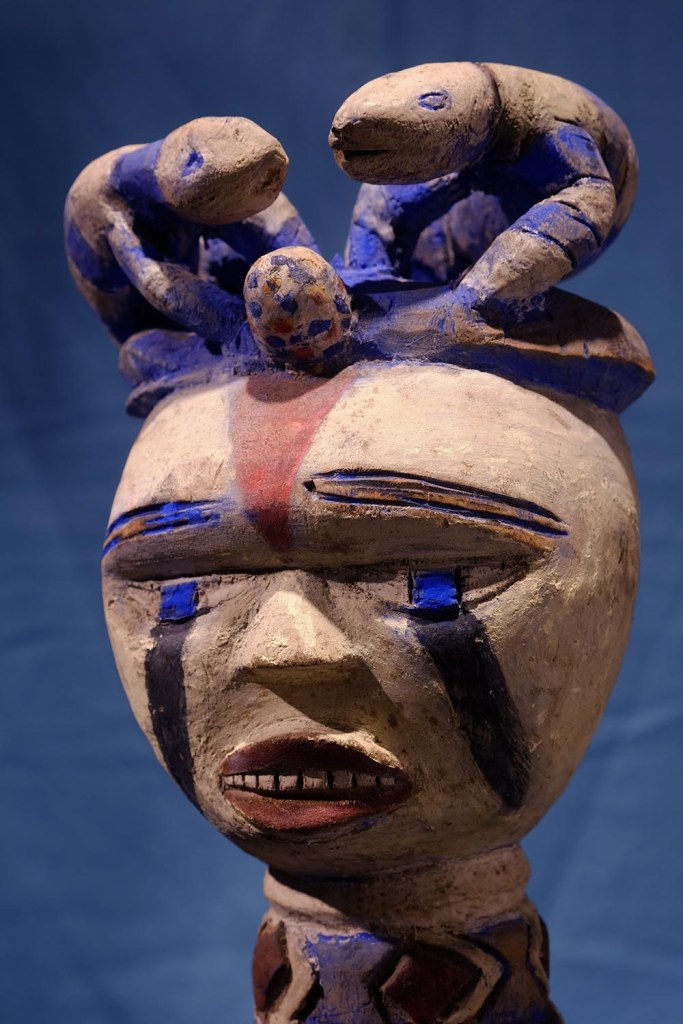
Kuyu Crest Head. The two lizards on the head of the Kuyu sculpture could represent spiritual guardians or protective spirits, as lizards are frequently associated with protective powers in many African cultures
The African art market represents only 0.8% of the overall antique market. It is flooded with fakes, and verifying authenticity is reserved for a very small experienced elite with a network of knowledgeable friends. Determining the value is equally unpredictable due to the market’s volatility, as it is too small. However, this provides many opportunities for knowledgeable buyers to make good purchases. The price of African art has declined in recent years for mid-range pieces due to the disappearance of wealthy collectors and the abundance of supply in the market. Only exceptional objects still command high prices.
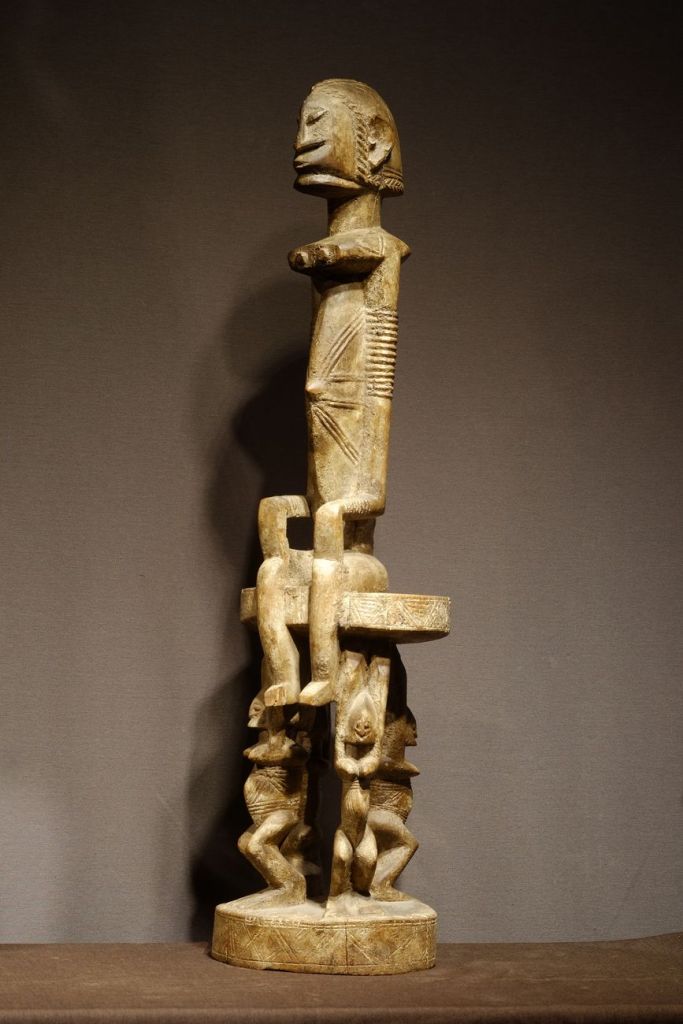
A 1967 published and museum exhibited Dogon Figure Hermaphroditic figure on a seat, which is supported by four female figures with raised arms. Yellow-brown patinated, heavy, hard wood. The published Meulendijk Dogon Figure was also exhibited in the ” Museum voor Land- en Volkenkunde” in Rotterdam, Nederland in december 1967
I do see many small collectors entering the market, but they rarely “invest” more than a few thousand euros. The recognition of contemporary African art over the past decade is very encouraging, as it could attract new audiences to African primitive art as well. The role of museums and cultural institutions is crucial in recognizing these cultures. In this regard, the Musée du quai Branly is doing excellent work by offering beautiful exhibitions that attract new audiences. However, the recent demands for repatriation create some discomfort in the market in the short term. But with the recognition of the importance of their own art, in the long term, it should allow an African market to develop in Africa. I also look forward to the creation of museums on the African continent, especially with the opening of the Museum of Black Civilizations in Dakar.
Throughout his journey, Norden has found inspiration in numerous figures within the primitive art field. He admires those who possess a deep passion for African art and recognize its significance in the broader context of humanity. The profound impact of African art on Western artistic movements following World War I further fuels his admiration for the art form and its artists. Looking ahead, Norden’s enthusiasm for primitive art shows no signs of waning. With an ongoing book project awaiting completion, he is dedicated to sharing his extensive knowledge and experiences with a wider audience.
Norden places great importance on the role of museums and cultural institutions in recognizing and promoting the significance of African art and its associated cultures. He commends the Musée du quai Branly for its remarkable exhibitions, which attract new audiences and foster appreciation for African primitive art. Norden also expresses anticipation for the emergence of museums on the African continent, with the Museum of Black Civilizations in Dakar serving as a beacon of hope.
David Norden’s lifelong dedication to primitive art has solidified his position as a respected figure in the field. His unwavering passion, discerning eye, and commitment to preserving the legacy of African art continue to shape his remarkable journey. As he eagerly shares his knowledge and explores new horizons, Norden’s contributions play an invaluable role in promoting the beauty and significance of primitive art to a global audience.
Sint Katelijnevest 27/B2000 Antwerpen/Belgium+32 3 227.35.40/david.norden@telenet.be
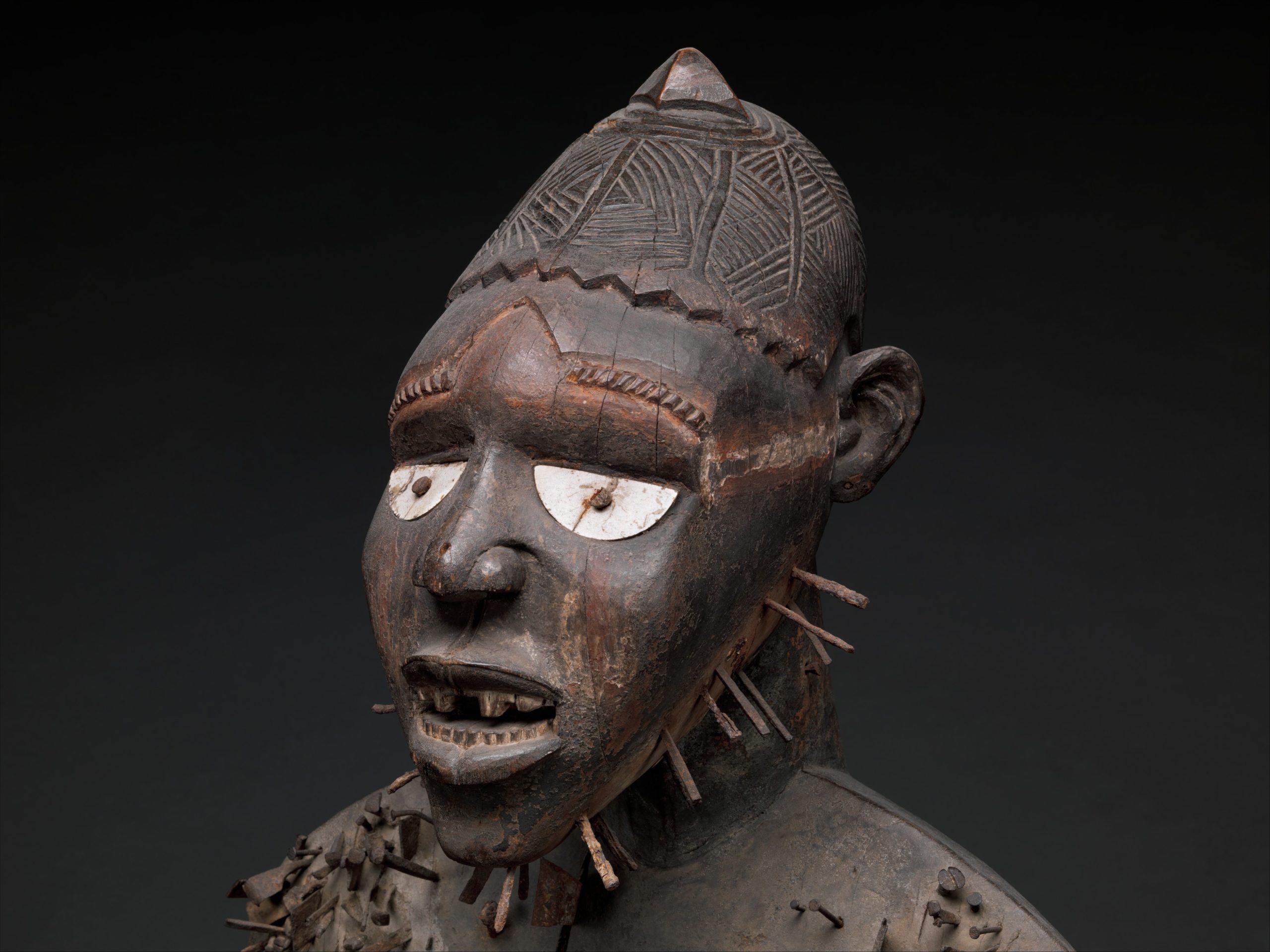
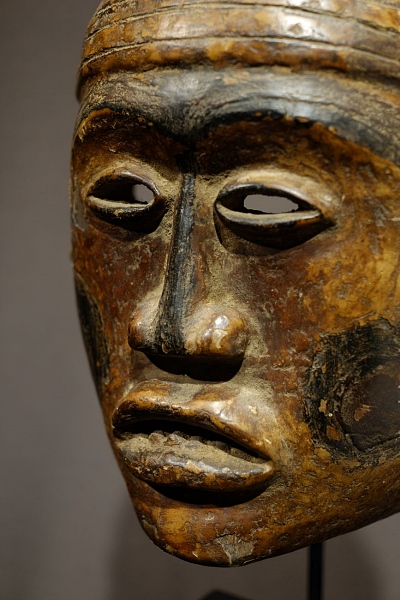
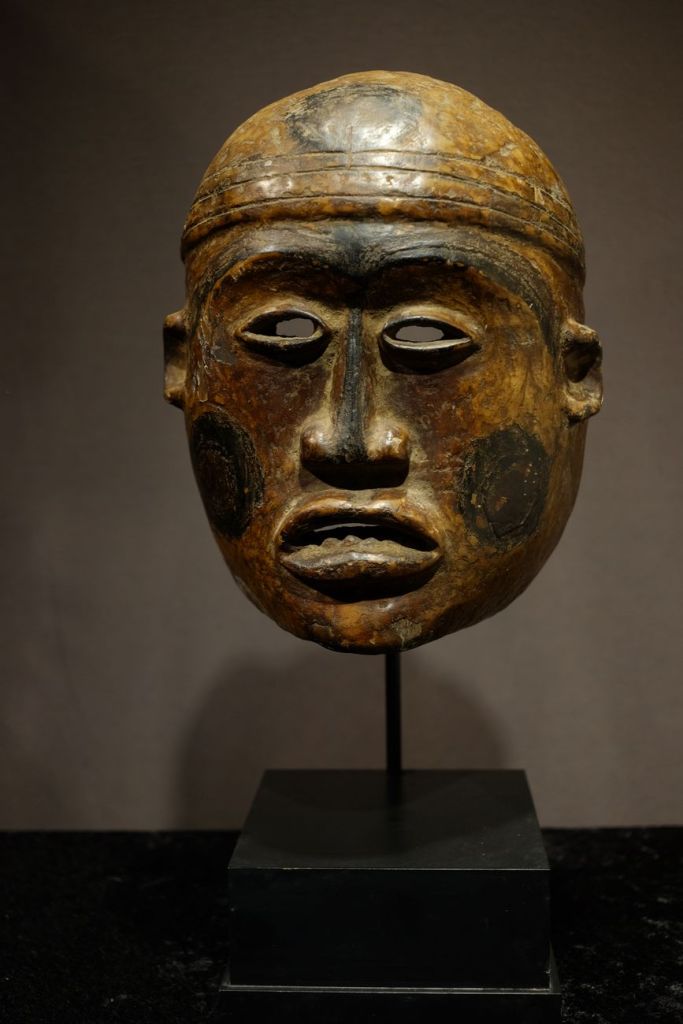
The customs of the Congo are quite different from those of Nigeria there is no direct relation between the Yoruba and Yombe. Ngobudi is the name of the diviner’s Mask . Once he wears the mask the powers of the diviner are active. A nganga is a soothsayer or traditional healer. The diviner can explain the past and give advice about the future. Nganga masks are owned by the healer or diviner.
The Yombe don’t have the traditions, like the Yoruba that are more related to the Voodoo…and Congo is difficult to explain there are so many different tribes. But the main activities are about the passage to adulthood, honoring ancestors and telling the old stories when they are royal kingdoms. In Nigeria like Benin brass pieces are more to tell and illustrate the conquest of the kingdom and decorate their palace.
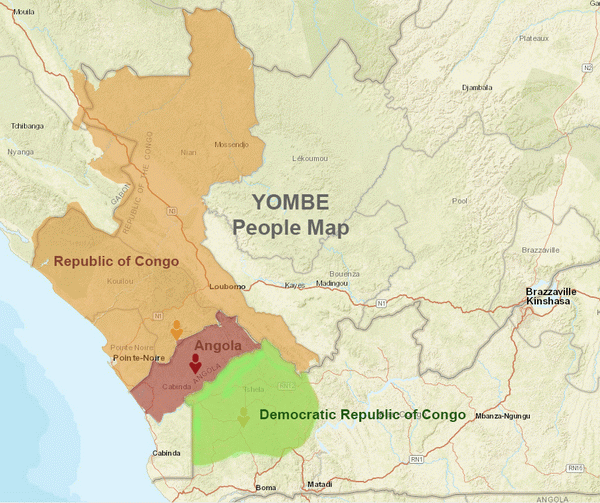
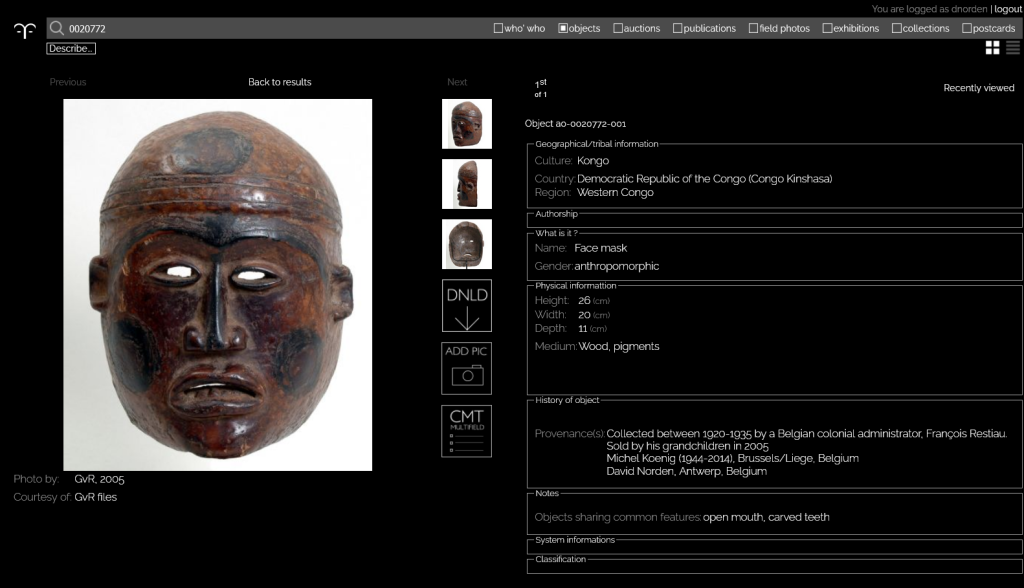
In the past a lot of colonials where going to Congo, since it was a Belgian colony. That specific Yombe mask was brought back between 1920-1935 by a Belgian colonial administrator, François Restiau, Mons. He was working for the railroad company in Congo. He found that mask in Congo when the “Ocean Railway” was built between 1921 and 1934. It is a bit of a sad story when you know that to build the railway from Pointe-Noire to Brazzaville between 15,000 and 20,000 Africans died. Today the Yombe people has a small population of 15,000 and the culture is still active, but it’s not exactly the same as 100 years ago.
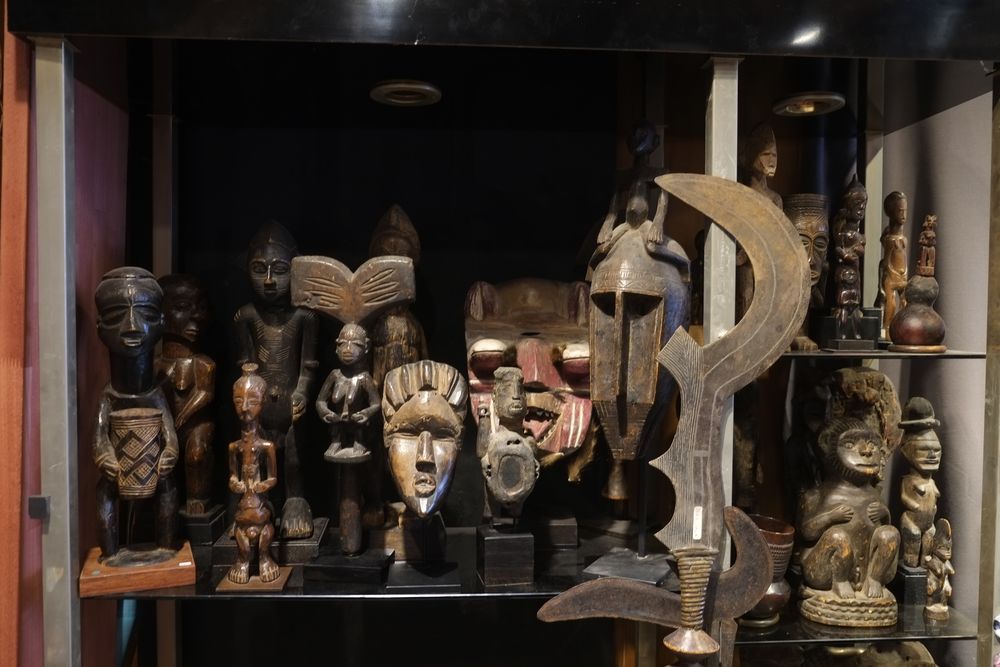
I have been dealing African art since 1993, before I was a professional photographer. I am specialized in African art coming from old collections mainly, so I do not import my pieces directly from Africa. My mother Nadya Levi was a sculptor and she collected African Art. My father Herman Norden was an antique dealer, and he had a room with African Art in his house. The African Art world is quite small I guess there are less than 200 serious specialized dealers in this field in the world. It is not so easy, because there are a lot of fakes that have been produced, some of them very well done, and you need to have seen a lot of pieces to be able to tell the differences.
written by David Norden
Sint Katelijnevest 27/B2000 Antwerpen/Belgium+32 3 227.35.40/david.norden@telenet.be






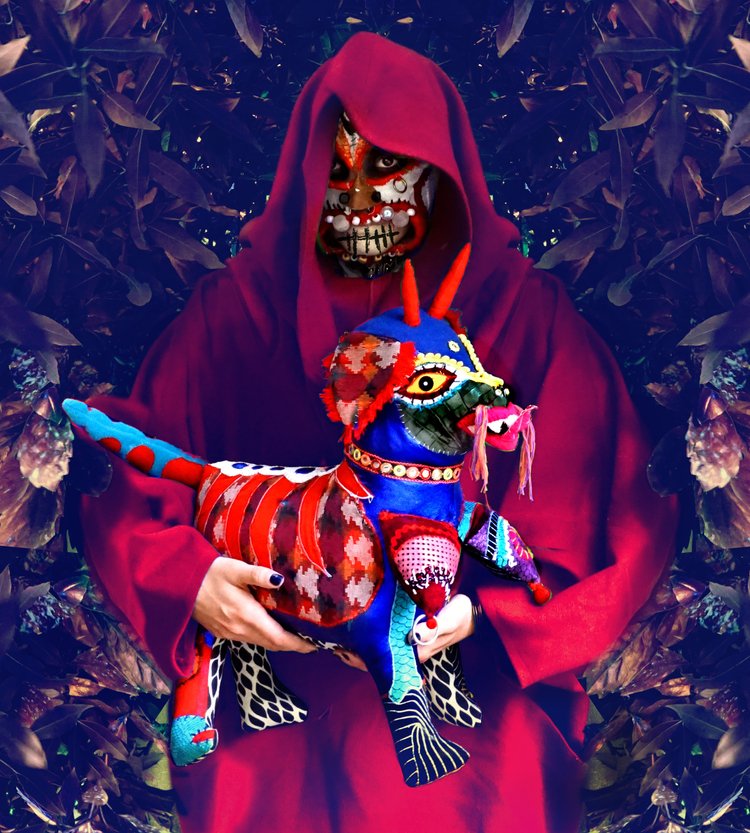
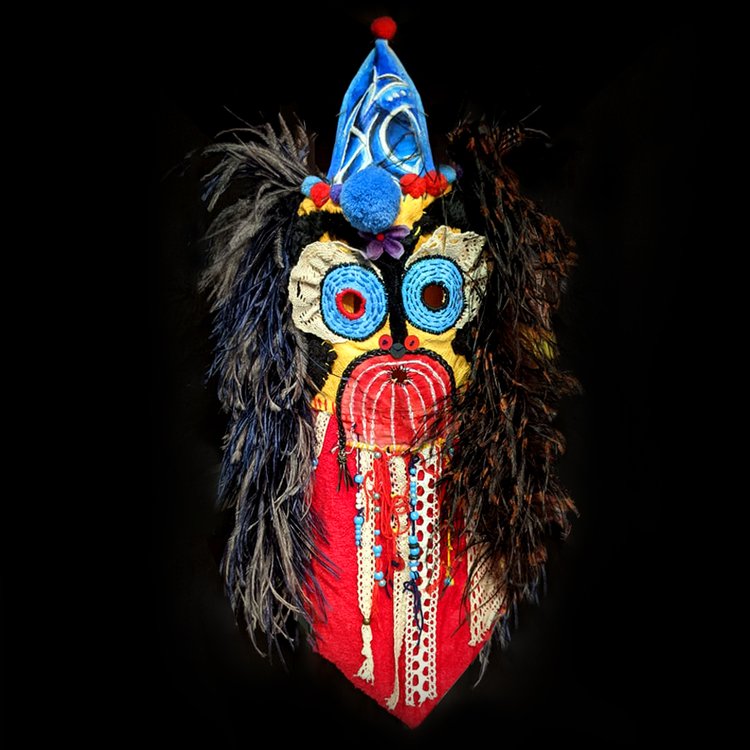
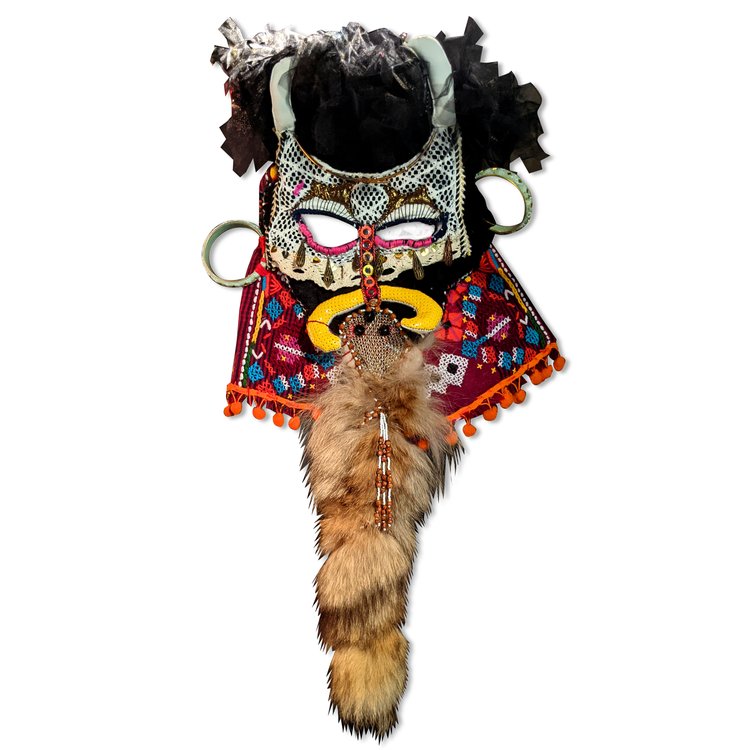
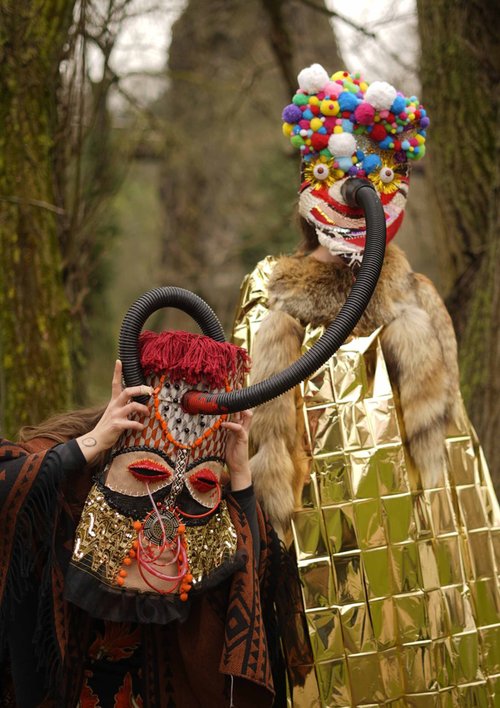






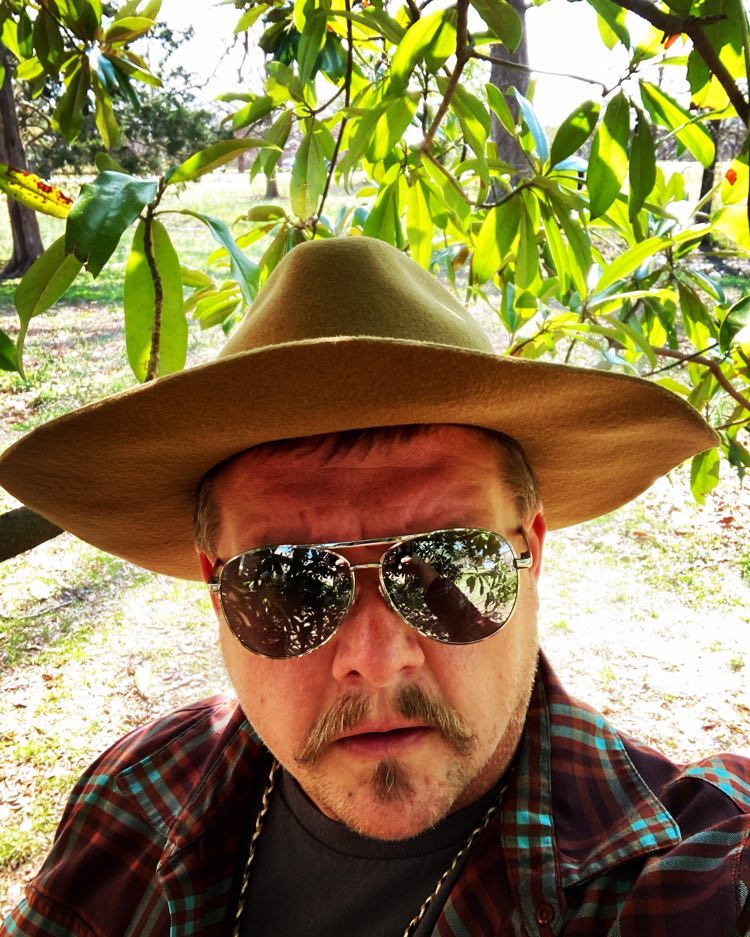




 Mitchell Pluto