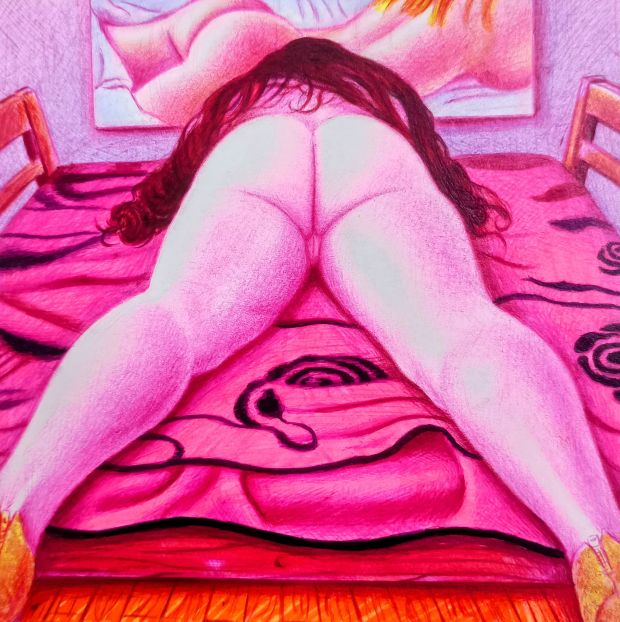
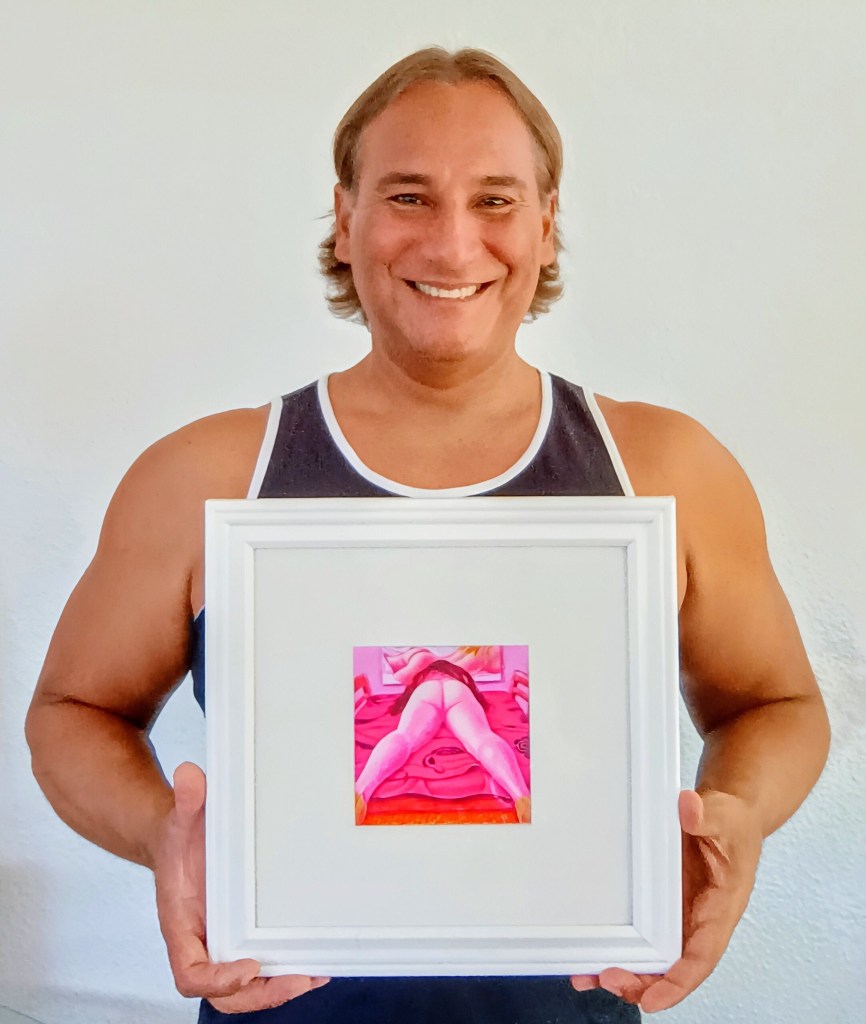
JC Bravo CONFESSION (2026) ballpoint pen on paper.
In this neon pink ballpoint pen drawing, obsessive crosshatching builds a body laid bare in complete surrender. Neon pink pulses with the heated flush of skin, the electric thrill of longing, and the raw intensity of love and lust. Through thousands of meticulous strokes, the figure becomes a quiet confession of obsession, femininity, and the consuming ache of wanting — desire quietly witnessing itself in the mirror of another painted nude.
HOT FOR TEACHER (2024) Ballpoint pen on paper
THE END OF DESIRE 2026 JC Bravo
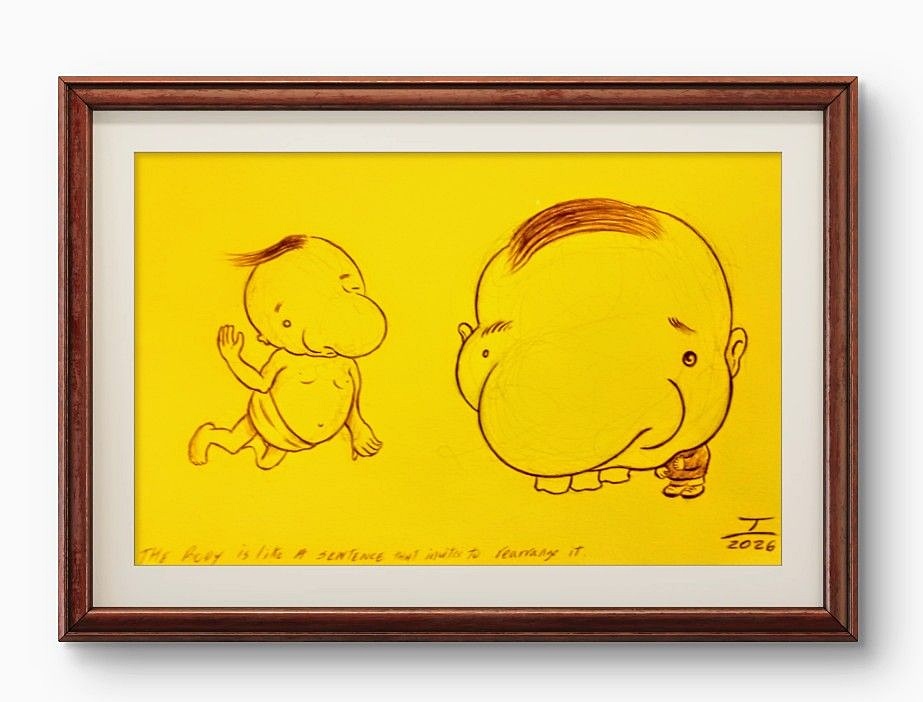
REARRANGED (2026)
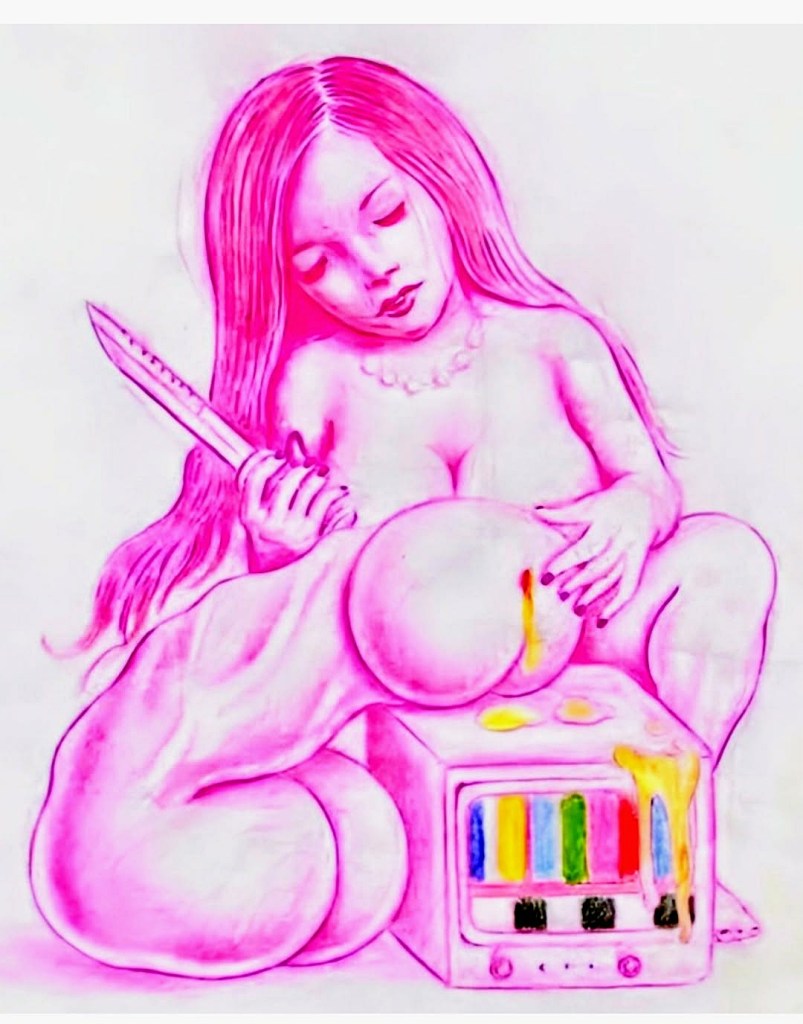
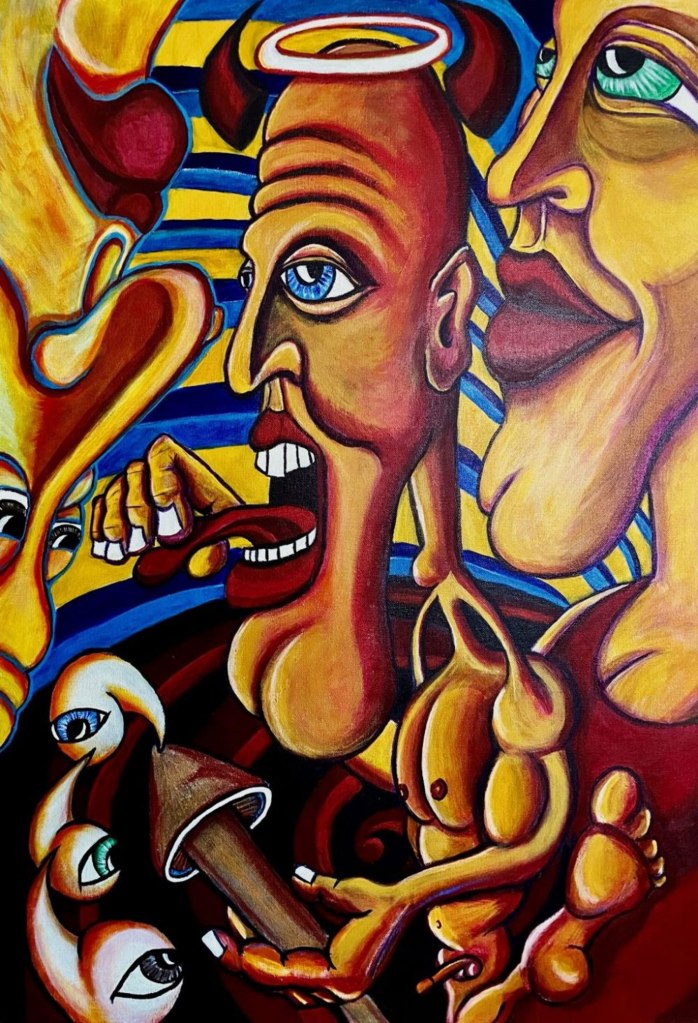
My swollen, bulbous characters are exaggerated vessels of the human condition. They are grotesque yet tender, absurd yet deeply familiar. Through them I explore inner chaos, vulnerability, desire, and the carnivalesque absurdity of simply being human.
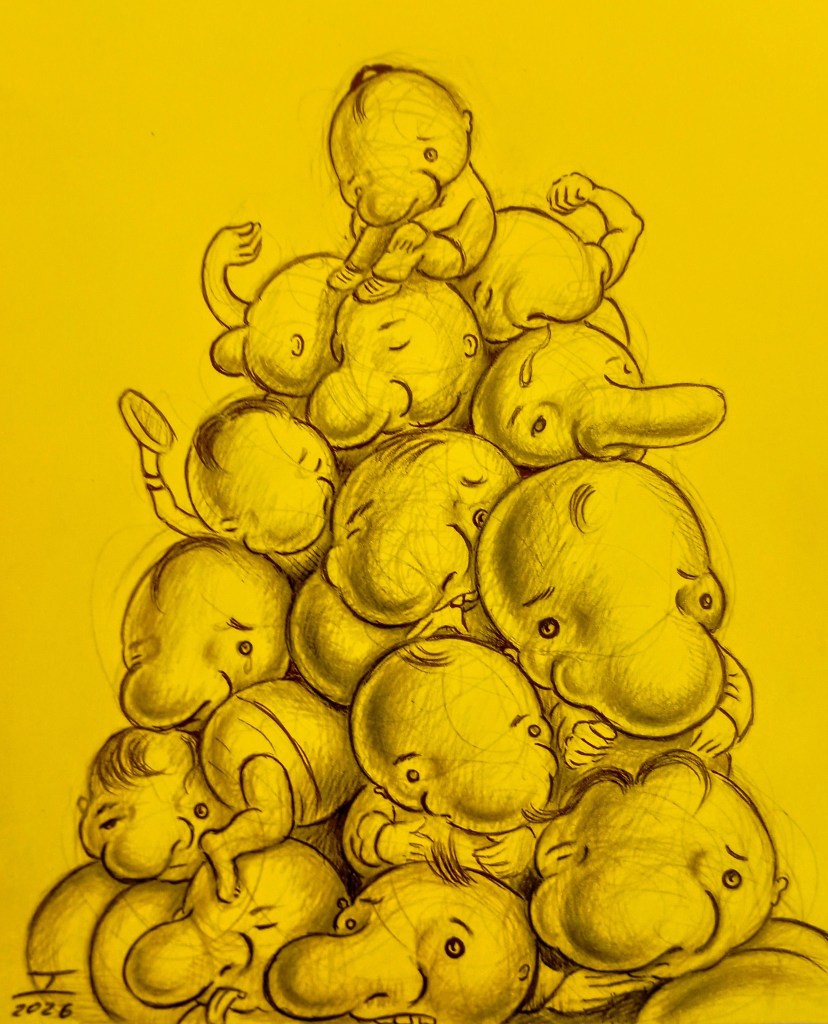
MENAGERIE (2026)
A towering pile of bulbous, round-headed baby-like creatures are stacked precariously on a bright yellow background. The way they’re climbing, clinging, and overlapping is both playful and deeply unsettling; like a living tower of innocence mixed with grotesque absurdity. Some look sleepy or content, others wide-eyed or struggling, and the whole mass has this frantic, organic energy and a carnivalesque spirit.
The pyramid shape draws the eye upward, and the yellow background makes the graphite figures pop with dramatic contrast. The details like tiny hands, varied expressions, the way limbs intertwine show great control and an unhinged imagination.
This drawing depicts a human menagerie at its most chaotic and biological: birth, multiplicity, piling up, struggling for space, yet somehow forming a single absurd existence.
I work primarily with oil paints. It is important for me to achieve a jewel like preciousness in my paintings in order to convey care and importance. I want to give my paintings a monumental and sensual quality that I believe can only be achieved with oil. Also, oil painting gives my work an elegance that balances the sometimes grotesque and fantastical subject matter.
If you would like to know more about me and see more of my work visit my website:
Parallel lines intersect, forming a diamond at the center. II is now X. This form lets us travel diagonally through space. One needs divination and shapeshifting for this kind of journey. I absorbed a triangular wave. Under the Pisces moon, I sipped from the cup. A tiny fraction of 360 Aquarius, a Kayayei, and the water porter, is playing live. Let’s toast to the lunar. It’s an old-time oracle. I use my geomantic knight on the synth console to twist the central square into a pyramid on the chessboard, bending the surrounding space. The sixty-four Yoginis from the eight phases of existence create a cosmic tapestry that illustrates awareness and extinction.
Through the checkered board, we can explore a chart of our interior states. Intertwined black and white squares represent yin and yang. This visual diagram has the ability to analyze and interpret events from different time spans. We are connecting. As a hand, claw, fin, hoof, wing, and tentacle united on a holiday to a foreign atmosphere. By being able to transform into different shapes, we plan to discover a new place to thrive, eat, and reproduce. Our honeymoon is amazing at the moment. With heightened senses working in perfect harmony. Each optical sense is a precious asset to detect whatever objects may be drifting in this void. Apps mimic snake pupils and cat eyes enhance night vision.
If we find nothing on that app, we activate a bat signal to identify what we overlooked. To combat boredom, we listen to the old fashion whale songs. There is plenty of room in the universe for invisible radio waves. We notice how unconscious shifts affect our awareness. Giving up vanity was my toughest astronaut challenge. Self-esteem improved by breaking free from consumerism. We practice Buddhism without a figure. The fading of charged particles into space is called “death”. Numbers are eternal, so we will test how long we can remember them. I am coming forward from within my ego to assert the words that I have spoken before the update. This is a hallucinatory voice. We get it, there’s no true self, but we are always expanding who we are.
For better well being, we are abandoning past programs that slowed our progress. The current speaker is about to stop speaking. Once we reach our destination, we intend to leave a circle. This storyline will trigger déjà vu and create a memorable mental image for the replicas.
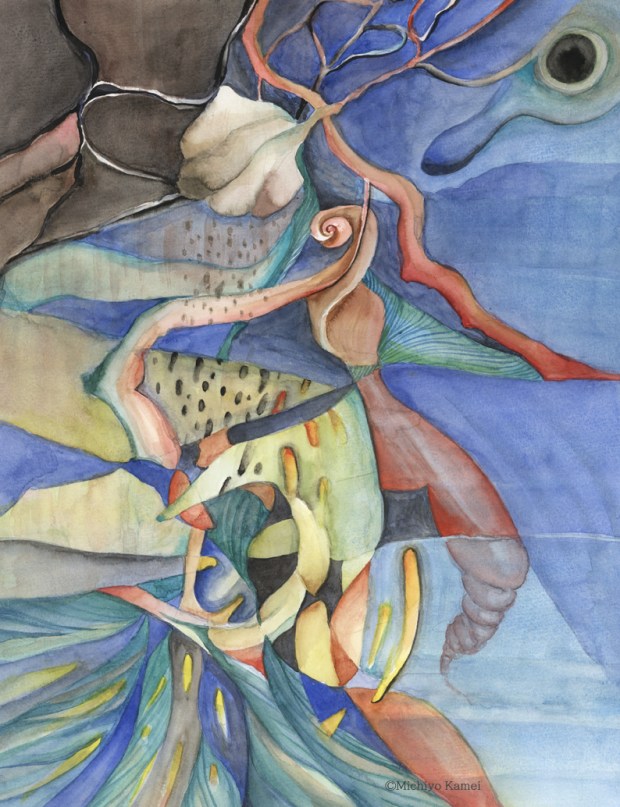
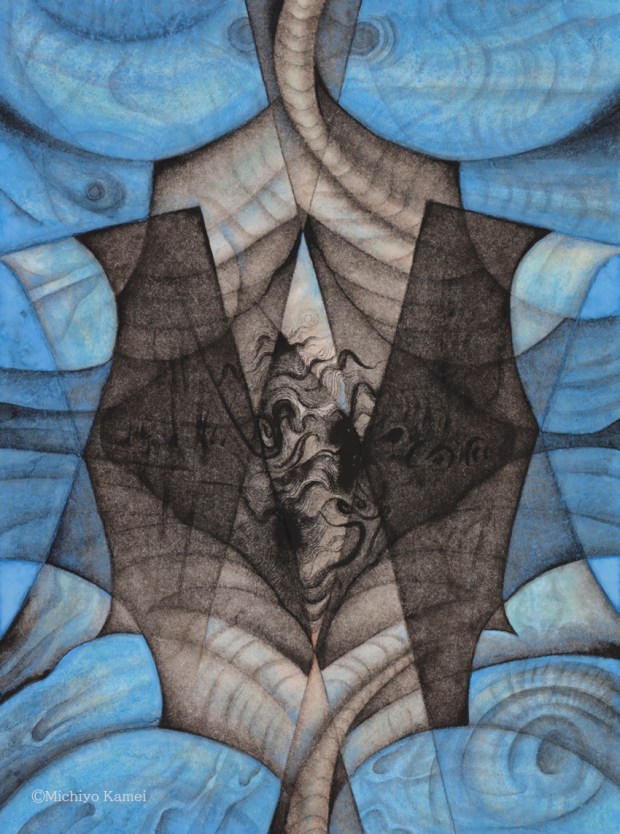
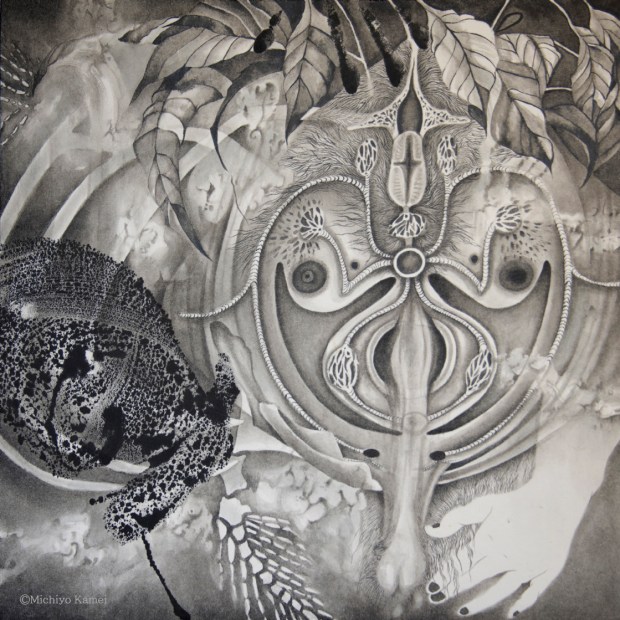
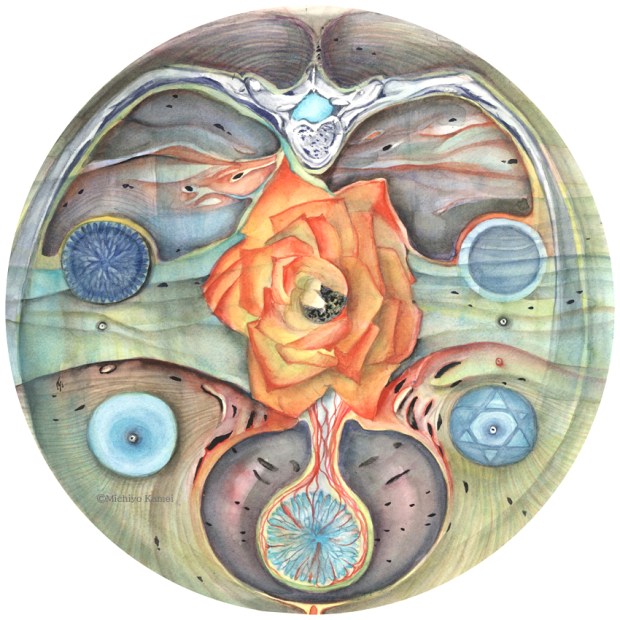
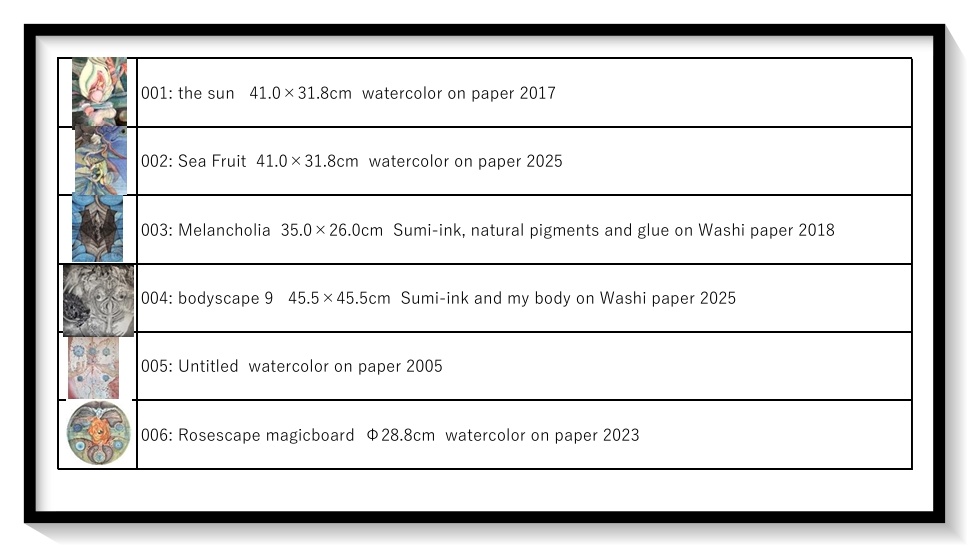
001: the sun 41.0×31.8cm watercolor on paper 2017 002: Sea Fruit 41.0×31.8cm watercolor on paper 2025 003: Melancholia 35.0×26.0cm Sumi-ink, natural pigments and glue on Washi paper 2018 004: bodyscape 9 45.5×45.5cm Sumi-ink and my body on Washi paper 2025 005: Untitled watercolor on paper 2005 006: Rosescape magicboard Φ28.8cm watercolor on paper 2023
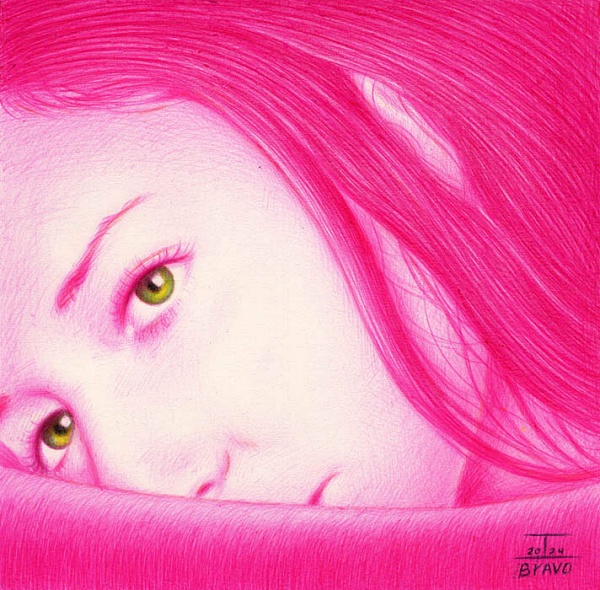
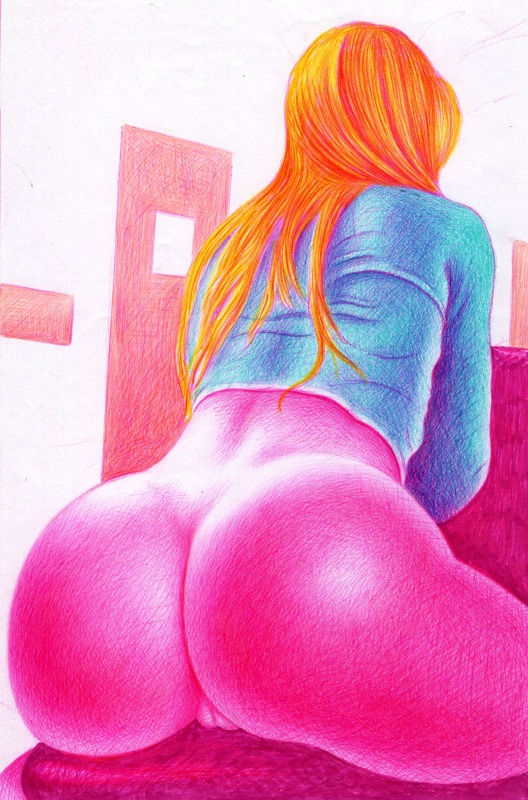
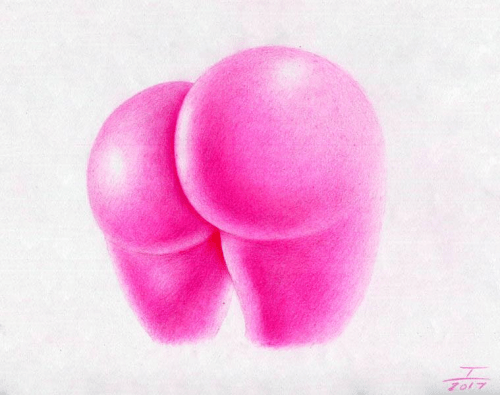
My favorite Bravo pink pen drawing is the 2017 Neon Bubble Butt. I find it enjoyable because the curvy female buttocks are a universal icon of beauty and perfection. It’s a fixed shape drifting in space. Just as helium makes things float and feel light, the drawing has a whimsical, festive quality to it. This drawing makes me think of how ideas can lift your spirits.
Juan Carlos Bravo, a Miami artist, is all about sensuality in his art. Miami is a melting pot of cultures, fashion, and the adult film industry. The sensuality in Bravo’s art makes it a favorite among collectors. He paints voluptuous women who embody an ageless ideal of sex appeal.
Surrealism, body horror, and pop culture blend to create the world of Bravo’s women. His art inspires viewers to examine their own primal instincts and their significance.
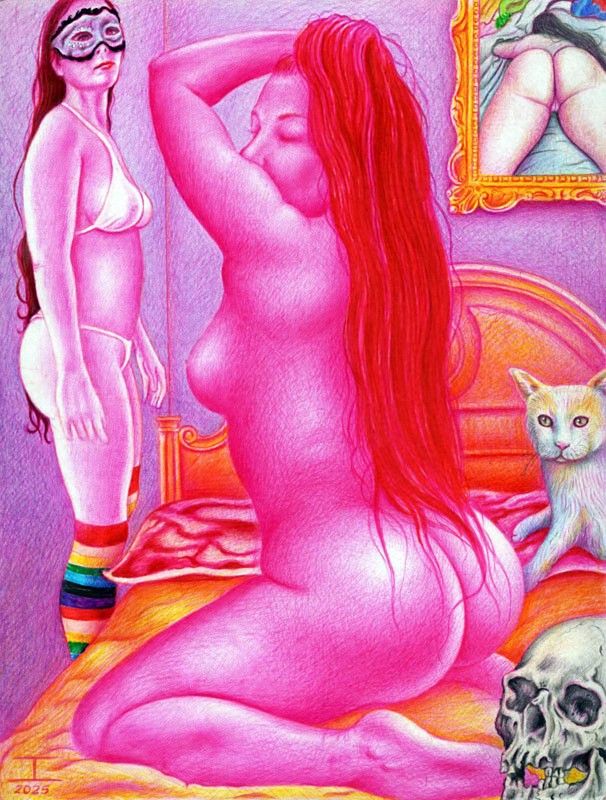
“GLORIOUS” (2025) JC Bravo
In this intimate scaled ballpoint pen drawing, I return once more to the private theater of the bedroom, a liminal space where desire, memory, and mortality quietly collide.
At the center kneels a voluptuous woman, her impossibly long red hair spilling like wine across her body, an oneiric cascade that measures both time and temptation. She raises her arms in a gesture of languid surrender, unaware, or perhaps deliberately unseeing, the woman wearing a jeweled Mardi Gras mask that transforms her into a carnival Venus. Thigh-high stockings, striped in defiant rainbow colors, root her to the earthly even as the rest of her body dissolves into roseate light. On the bed beside her, a cat and perennial guardian spirit, sits in calm, wide-eyed judgment, the only creature in the room who truly sees everything.
Above them hangs a gold framed erotic painting, its subject bent in mirror-image submission, a quiet reminder that every act of looking is also an act of being looked at. And in the lower right corner, half-hidden beneath the sheets, grins a human skull, my memento mori. It is not a threat but an invitation: remember that you will die, so love fiercely, look shamelessly, touch without apology while flesh is still warm and hair still grows.
The entire scene is drenched in an artificial pink and magenta glow, the color of stage lights, fever dreams, and cheap motel neon, a hue that makes the skin feel simultaneously hyperreal and hallucinatory. Through this saturated lens, the everyday becomes ritual, the intimate becomes mythic, and a simple moment of morning undress is revealed as a dance on the edge of oblivion.
Bravo paints the human body with anatomical precision. He features both realistic bodies and integrates stylistic elements reflecting augmentation. Technical detail is a priority in his work. He’s passionate about oil painting and uses a pink pen for his drawings.
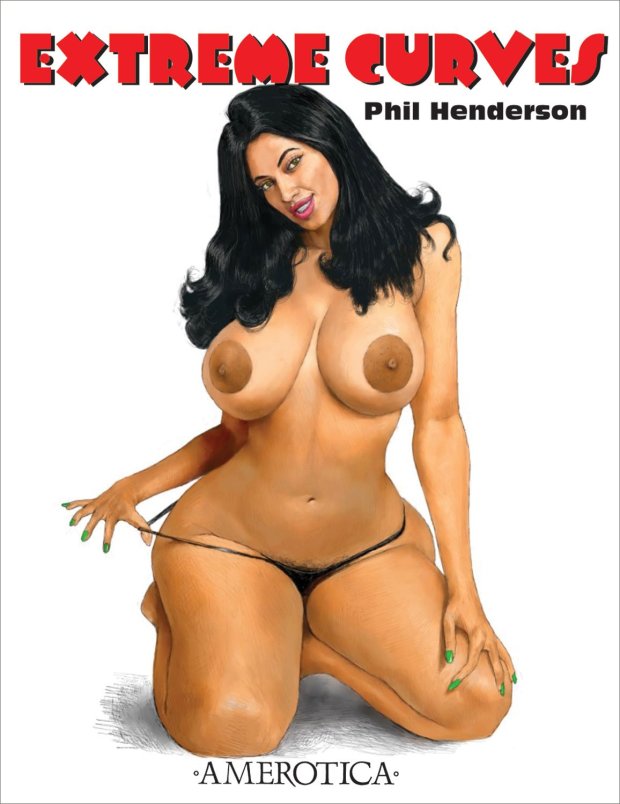
Philip Henderson
Tyra Philip Henderson
Among Henderson’s many drawings, I like Tyra the best. The figure’s eyes hold my attention. I think she saw me looking at her hand. I can tell she’s aware of my attraction through her gaze. The outline of her body forms a simple path, gently sloping from breast to thigh. Her hair almost blends with her pubic hair, but a delicate crescent shape separates them above the mons pubis. Tyra’s arm movement guide your eyes across her body. In Henderson’s artwork, eye contact and pose combine to create a feeling of empathetic sex appeal.
Curvy fetishes play a significant role in the themes of Philip Henderson. His plush illustrations create an arresting experience for the viewer. Henderson celebrates the value of curvy women. Henderson’s book, “Extreme Curves and Phat Girls”, achieved international success.
Besides his erotic illustrations, Henderson is a gifted writer of essays, novels, and poetry. He achieves elegance through his scholarly, artistic style. Henderson avoids abstraction in his anatomical figures while blending idealism and realism, creating a believable fantasy. He portrays natural grace and confidence in his figures, excluding any cosmetic enhancements.
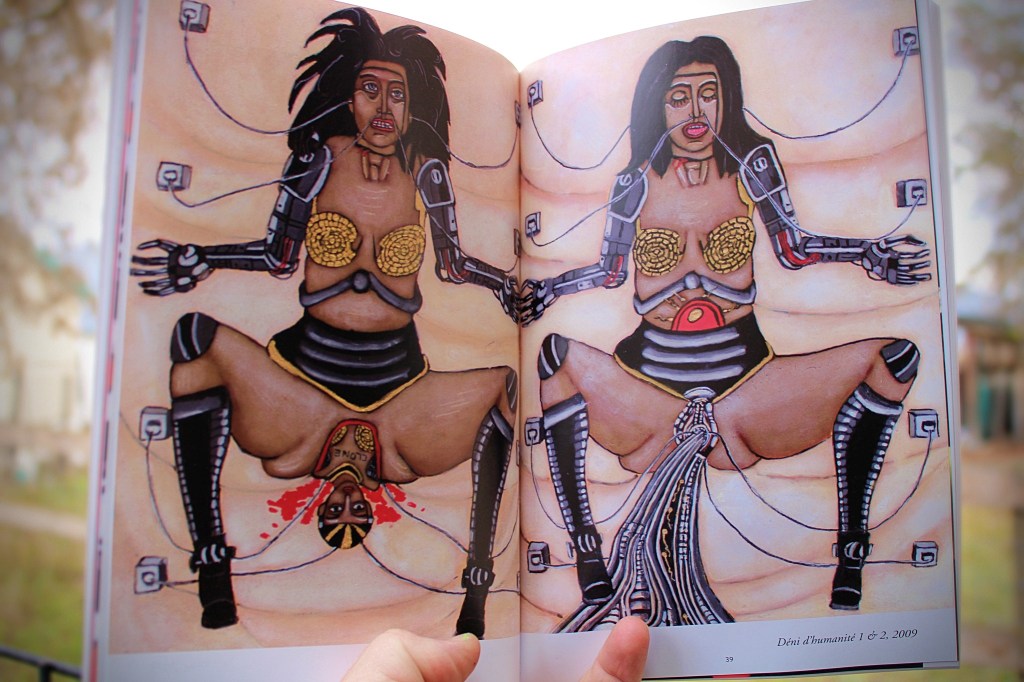
Angélique Danielle Bègue
Deni d’humanité, published in Angélique Danielle Bègue‘s 2009 book, Dans Mon Corps.
Bègue’s 2009 work, Dans Mon Corps, includes “Deni d’humanité,” a piece with a prophetic theme. In the image, AI’s exploitation disrupts the natural flow with sexual intrusion. This image illustrates AI replicating itself using humans. Her art shows how the excitement around AI is really just more of the same old ways of controlling us. Bègue’s work examines the way narrative influences our understanding of what’s real and imagined. I appreciate looking at this image because it makes me question the idea of human originality and imitation.
French painter Angélique Danielle Bègue’s artistic career started with tempera, apprenticed at Gorze Priory by an Orthodox nun. A classic style is the vehicle for Bègue’s modern concepts. France acknowledges her contribution to the revival of tempera painting. Bègue’s professional experience includes erotic modeling.
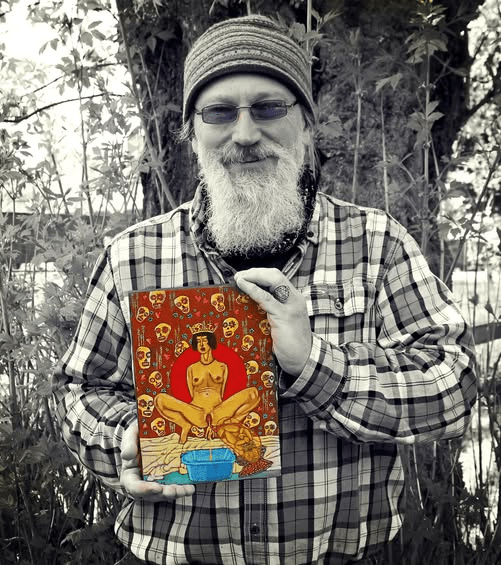
An icon painting from my dear friend Angélique Danielle Bègue from France.
In her figurative art, Bègue merges a traditional religious style with contemporary themes. Her artwork uses vibrant tones, layers, and bold lines. Bègue’s iconic graphic design employs strategic contrasts to create visual balance and proportion. She uses painting to express her internal fantasies. Bègue dedicates herself to understanding sexual fantasies and how to approach topics society deems taboo.
Miriam Cahn
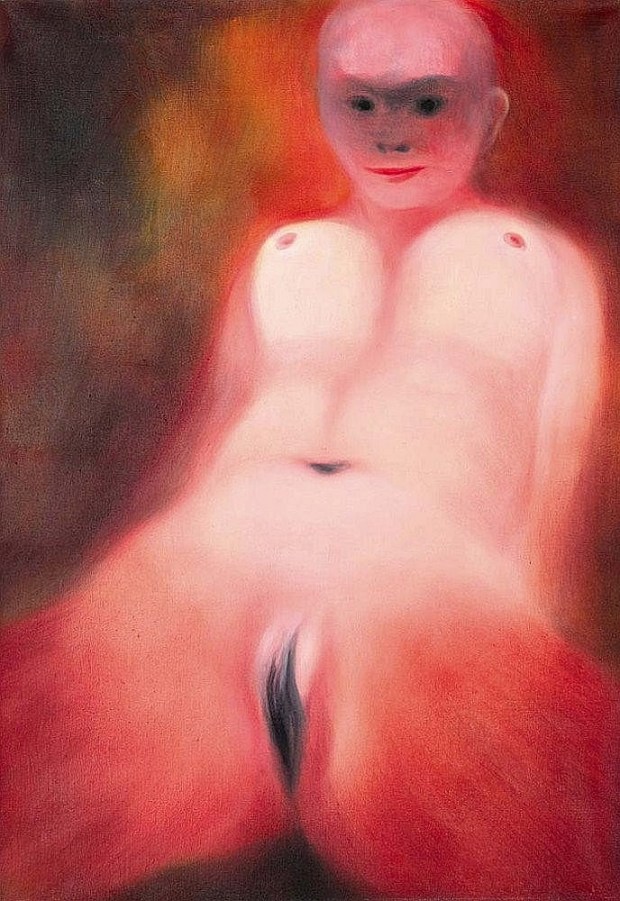
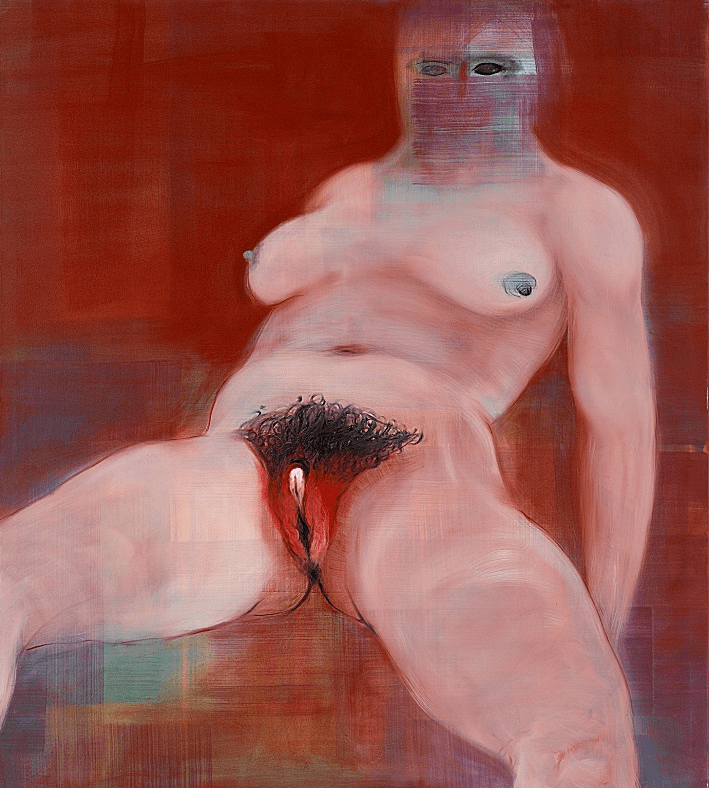
ÄffinMiriam Cahn
Äffin’s unsettling nature is thought-provoking to me. Simian aspects of the image contribute to its dreamlike quality while exposing a liminal personality. The skin is smooth around the breasts but gets hairier and tactile near the pelvis. The vulva is a fiery bush, sparking primal metaphors. This work compels me to explore the roots of human consciousness and how language shapes our understanding, including our desires. It suggests to me that the ideas of elegance and ugliness are mental constructs. The intense emotion evoked by this painting stems from Cahn’s ability to communicate deep thought through candid visual images.
Swiss artist Miriam Cahn paints in a Neo-post-expressionist style. Her art reflects the movement’s style through her figures, colors, and emotional expression. Cahn’s work often features spectral figures with watchful eyes. Viewers become the subjects of the gaze of the eyes in her paintings.
Cahn’s paintings are vibrant and full of bright pastel colors. She discovers new things about herself through painting. With raw concepts, she develops a visual vocabulary for emotions. Her paintings are unpolished and invite the viewer into a world that’s flawed.
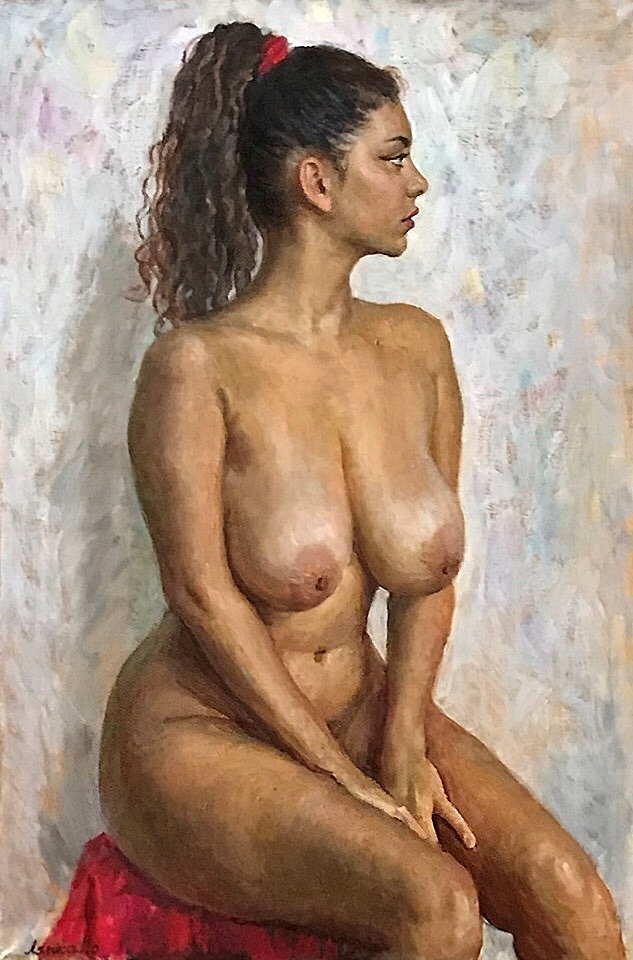
Viktor Alexandrovich Lyapkalo
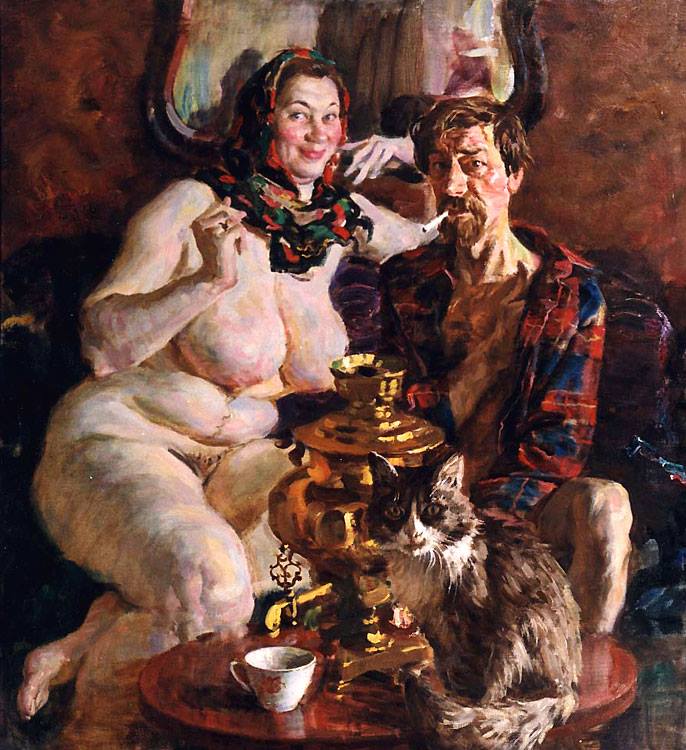
Viktor Lyapkalo
The reason I like Lyapkalo’s paintings is his choice of female subjects. It’s that simple. I’m attracted to curvy women, and his artwork features them. This painting captivates me in every way. The man, cat, and samovar create a muted, somber atmosphere, in contrast to the woman. Her lively body seems to glow with light and color. She’s appealing because of her open and generous nature, which brightens the room. Lyapkalo’s representation of the smile has a seductive effect on the viewer. The piece illustrates the duality of affection, showing both its open and concealed aspects.
Russian artist Viktor Lyapkalo paints in a strong social realist style. His paintings of women are sensual and playful. Lyapkalo’s skill with figures and academic paintings is the key to his success. His artwork portrays the emotion and character of the people he paints.
During my interview with Lyapkalo, he compared painting skin to an onion flower, highlighting its multi-hued nature. This is evident upon closer examination of the colors used in the artist’s depictions of nude women.
Pablo Picasso
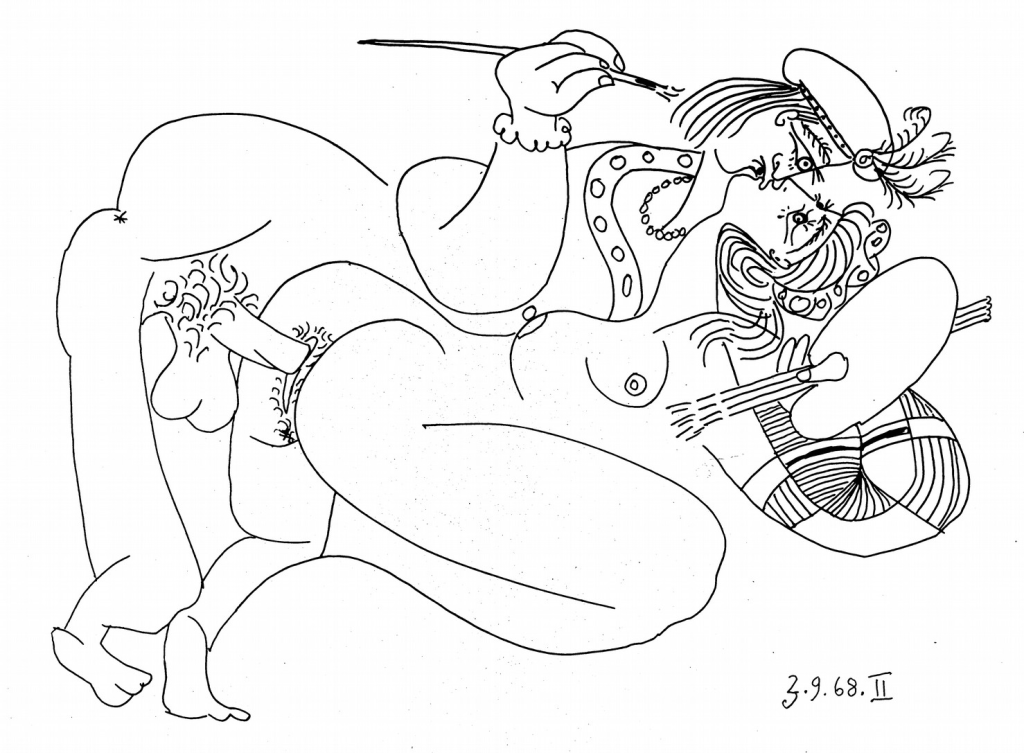
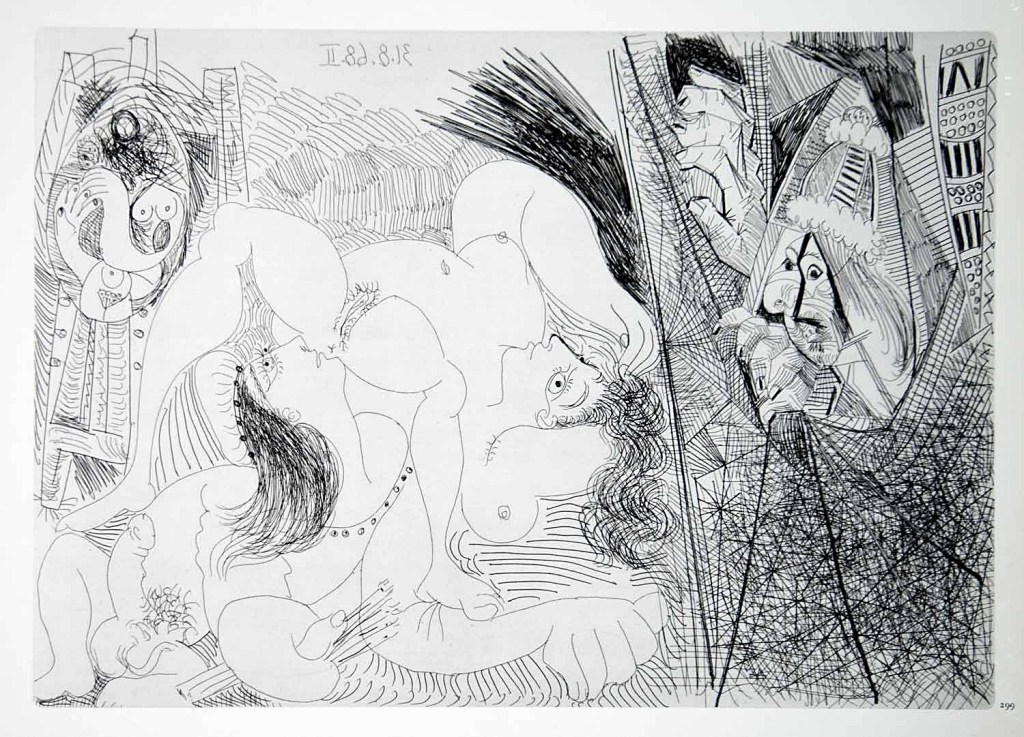
Avant-Garde Magazine, No. 8. Picasso’s Erotic Gravures Pablo PicassoArtist and his model 1969
This image remains my most memorable. In sex, artist and model become unified. I am drawn to this picture because it features both intercourse and a suggestive representation of the sexual act through the artist’s palette. As a flawless masterpiece of line, this image is everlasting.
I found Avant-Garde Magazine, No. 8. Picasso’s Erotic Gravures on my parent’s bookshelf. It was between Anaïs Nin’s “Delta of Venus” and Louise Huebner’s “Power Through Witchcraft”. For a kid stuck reading boring schoolbooks, I finally stumbled on something cool.
The thin book, Picasso’s Gravures, contained his sexually suggestive sketches. Picasso’s drawings are gestural. His lines make his art look like it’s being fondled. Many illustrations displayed surfaces marred by hairiness, crinkling and stretch marks.
The lines create a curious interplay of dryness and wetness. Picasso’s suggestive drawings in the 1970s opened the door for other artists to explore explicit themes. He owned a collection of sixty-one Shunga prints. Picasso’s interest in Shunga is a key theme in the chapter “Artist and his Model”.
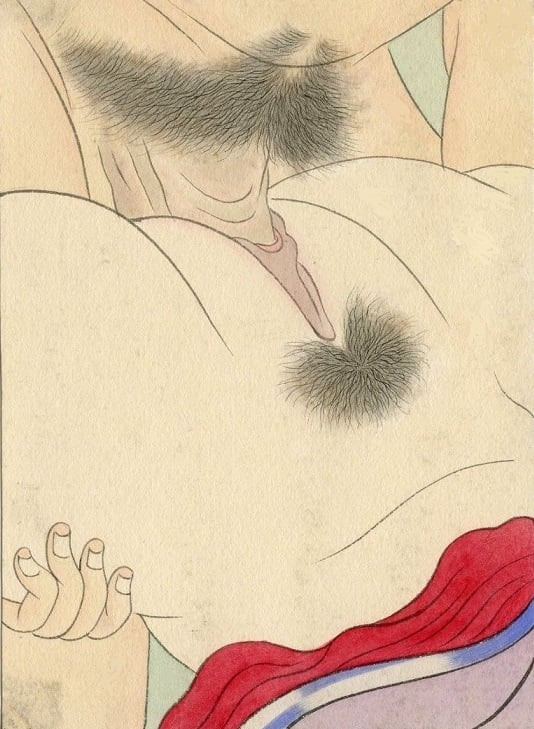
An example of eighteenth- and nineteenth-century shunga
“A lot of the eighteenth- and nineteenth-century shunga books contain enlarged images of male and female genitals, occasionally while engaged in the sexual act. These kind of ‘close-up’ designs were intended to provide instruction about anatomy and how to give pleasure. These educational images are mostly found immediately following the other illustrations in shunga books. Such prints are modeled after older versions that were used to teach human anatomy, which showed different shapes of male and female organs.” -Marijn Kruijff, Editor of Shunga gallery Erotic Art Magazine and is the foremost authority on shunga art.
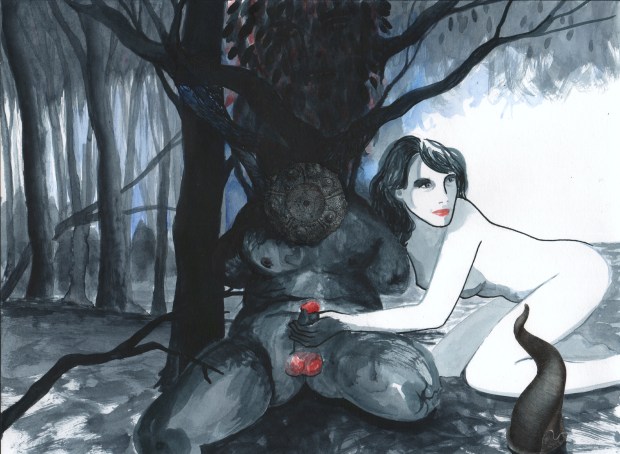
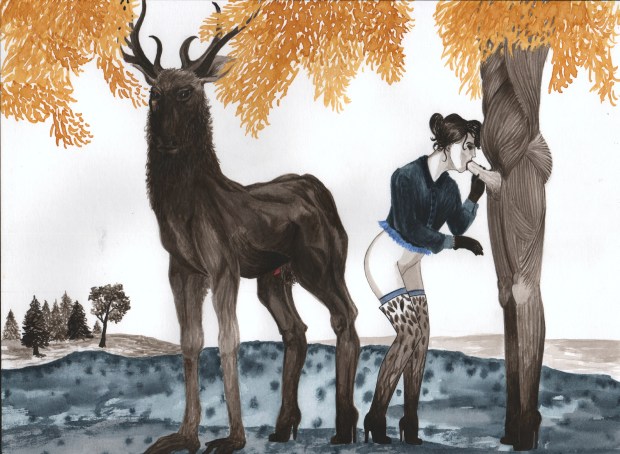
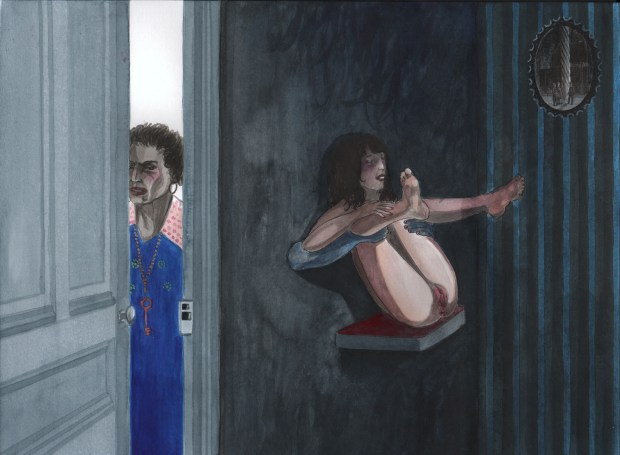
L’œuvre de Rajah Foo est souvent marquée par une touche gothique. Son travail utilise le suspense, des images troublantes et des paysages ruraux pour créer des récits visuels. Ces œuvres suscitent des émotions profondes chez le spectateur. Au cœur de son travail se trouve le thème de la pénétration et du désir. Les scènes entraînent le spectateur dans une célébration de la libido.
J’étais étudiant à L’école des beaux-arts de Nancy en France. Je discutais avec la professeure de culture générale, Geneviève B. Tout ce que je produisais était lié l’énergie sexuelle: sulptures représentant des couples de danseurs, minotaures, peintures et dessins pornographiques. Tout cela etait loin de tout ce que je voyais chez les autres etudiants, à l’introspection conceptuelle. Les enseignants étaient gênés par mon travail. Geneviève m’a dit d’un mot: tu es un artiste différent.
La coquille bleue
J’ai découvert, alors que j’étais enfant, dans la bibliothèque de ma mère le livre de ” Pauline Réage ” Histoire d’O. Une lecture comme un éblouissement. Plus tard, Sade dont la biographie m’a plus impressionnée que l’œuvre. Je fais de Freud et David Lynch, des compagnons intimes, quitte à les trahir, pour explorer l’opacité du désir. Mais j’ai peur d’être trop long… ( mythologie grecque, Bataille, Klossovski…) j’ajouterai simplement que la littérature m’a touchée la première, avant la peinture ou la sculpture.
Diane
Je crois que les deux artistes qui m’ont le plus marqué sont Hans Bellmer et sa poupée, et Max Ernst pour ses extraordinaires découpages comme ceux d’une semaine de bonté.
La fleur crue
Vous voyez, vous avez bien perçu dans mon travail ceux qui l’accompagnent. Un mot me plaît particulièrement dans vos propos: totémique. Il contient une forme de spiritualité, de brutalité et de mystères antiques. Il me fait penser à la fascination qu’exerce sur moi le mythe de Pasiphae depuis que je l’ai lu, enfant. On y trouve la puissance du désir, le scandale qu’il suscite, comme il renverse le monde. Mes dessins sont des images lentes extraites de toute cette exploration.
Le cercle de l’horizon
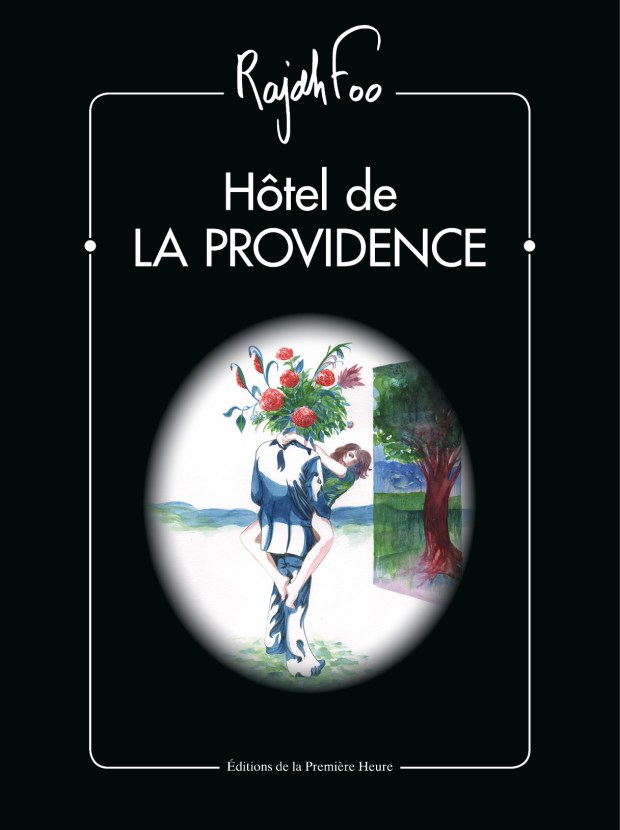
Je ne contacte jamais les galeries, je ne sais pas à l’aise avec les inconnus, et je sais que nombreux sont les artistes qui les sollicitent. Il y a une exception à ce tableau, la galerie Arts Factory à Paris, qui m’a accueilli lors d’une exposition collective, et le 8 octobre cette année pour signer un livre que m’a consacré les editions première heure.
Ce spectacle comprend des lumières stroboscopiques et des effets atmosphériques ; la discrétion du spectateur est recommandée.
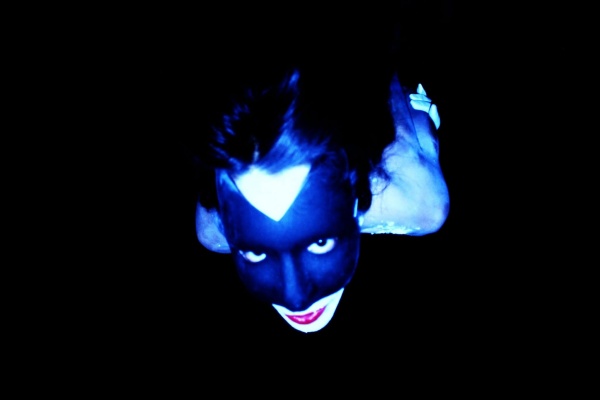
Un flash est un crâne qui vibre. Son aspect visuel provoque une photopsie et des sensations au niveau du lobe temporal. Les rencontres fantomatiques ont des allures psychiques. Observez des étincelles électriques dans l’atmosphère, entre les nuages et l’air. Les images du film défilent au-dessus d’un faisceau de rayons. Le projectionniste s’assure que le son et l’image de la bobine sont synchronisés. Des trous vides consomment la matière tandis que le compte à rebours se transforme en un drain optique. Une femme nue et cramoisie danse. Avec ses seins généreux et son collier de perles de crânes ondulant, elle marque la surface de notre mémoire rétinienne.
Il s’agit d’un procédé de lumière polarisée aux silhouettes exceptionnelles. Les ombres caressent les contours. Le cordon ombilical nourrit un embryon, de la même manière qu’un fil soutient un astronaute. Pendant un instant, une pieuvre du futur nous observa jusqu’à ce qu’elle projette de l’encre, rendant les observateurs inconscients. L’obscurité se remplit d’une illumination à motifs, jusqu’à une nuée de chauves-souris albinos en vol. Les drones sont des OVNIs partout. Une immense colonie de fourmis sur Terre a envahi et dévoré une simple feuille flottante. La foule s’amusait au parc d’attractions jusqu’à ce que le programme lui ordonne de former des lignes. Le fossile d’une orchidée montrait une minuscule danseuse du ventre à l’intérieur, en accéléré. La fleur était un signal intelligent voyageant à travers le temps. Un déluge d’éclairs éclipsait tout ce qui l’entourait. Une façon de contacter les extraterrestres était la danse du cerceau.
Ce cercle vient d’ailleurs. Évitez de vous leurrer. Les voyages spatiaux impliquent le vieillissement, la mutation et la mort. C’est aussi simple que ça. Observez comment les ondes de radiation dissolvent les éléments dans le néant. Ensuite, la chasse aux iguanes. Ne vous inquiétez pas, ce sont de gentils lézards en quête d’un en-cas. L’homme prothétique n’a aucun loisir, car les objets orientent son expérience vers une série télévisée. Suivez la figure nageant du tronc cérébral, à travers le système limbique, jusqu’au tableau de bord néomammifère. La Créature du Lagon Noir, malgré son portrait, n’est pas misogyne. Au contraire, elle incarne le principe du plaisir et illustre la conception de la nature. La plupart des gens entendent le saxophone flirter avec eux. Le mouvement rotatif tourbillonne de points qui s’épanouissent dans les danseurs Dogan célébrant la cérémonie du Sigui avec des masques. L’extérieur d’un masque reflète son noyau central, situé de la 111e rue à DaDa.
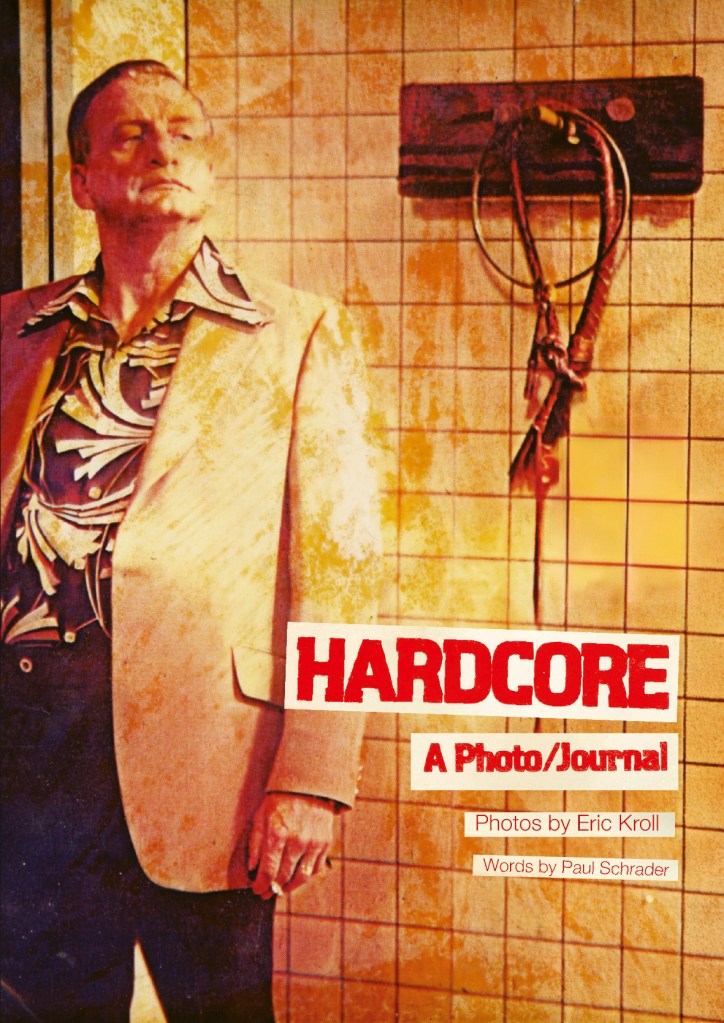
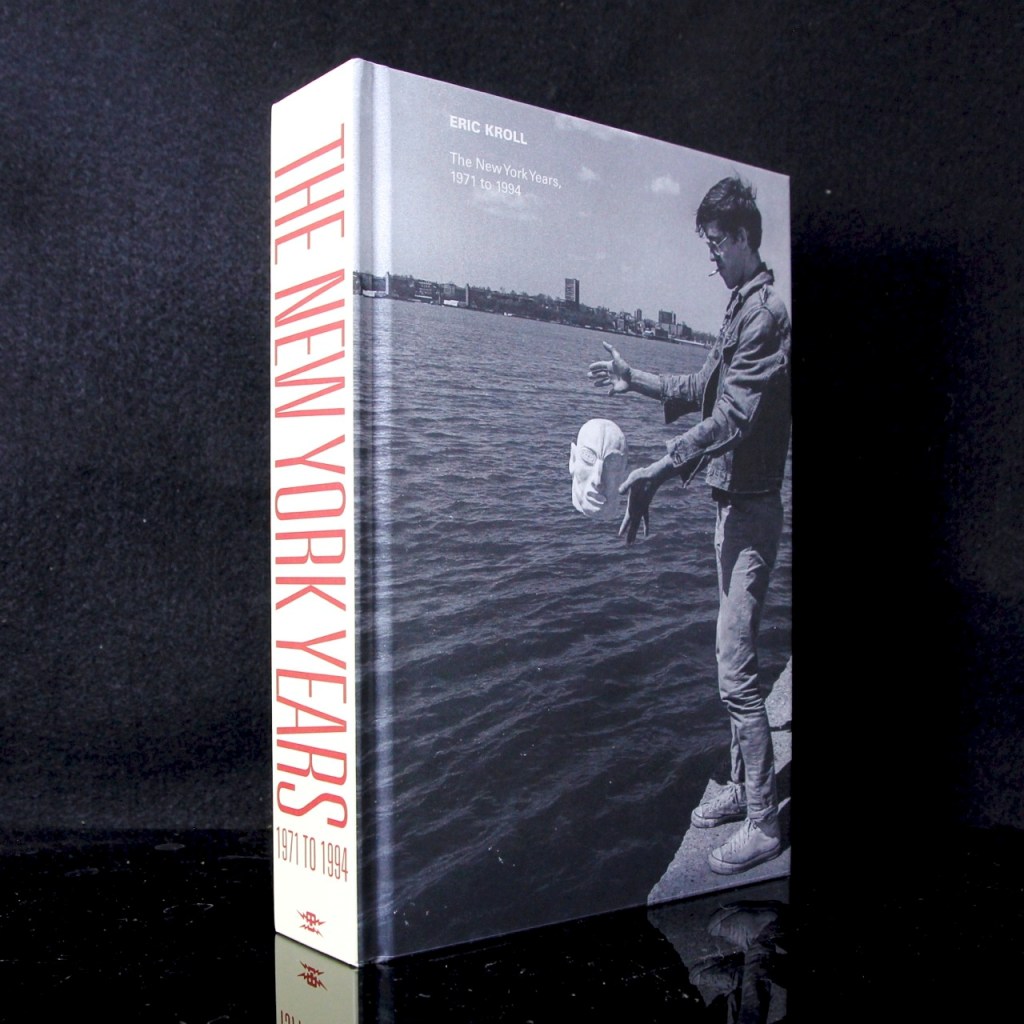
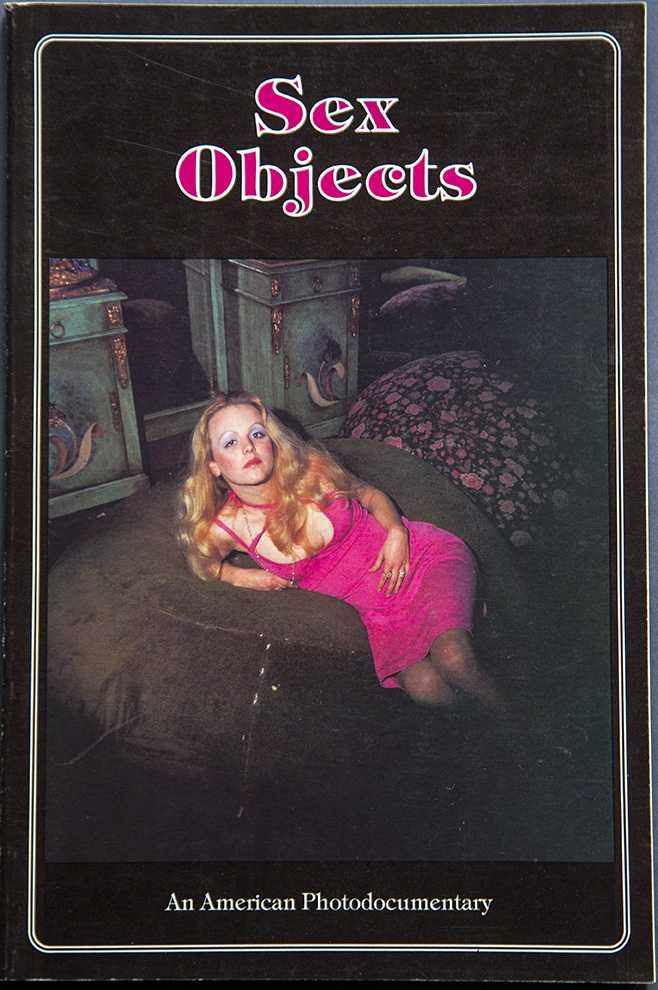
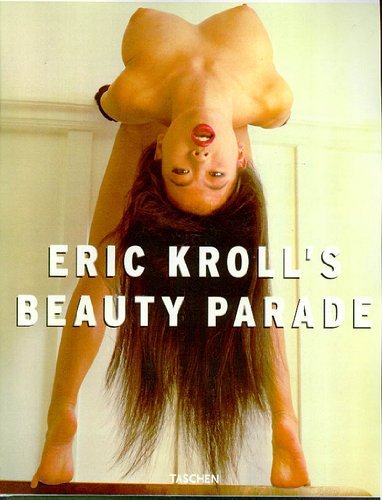
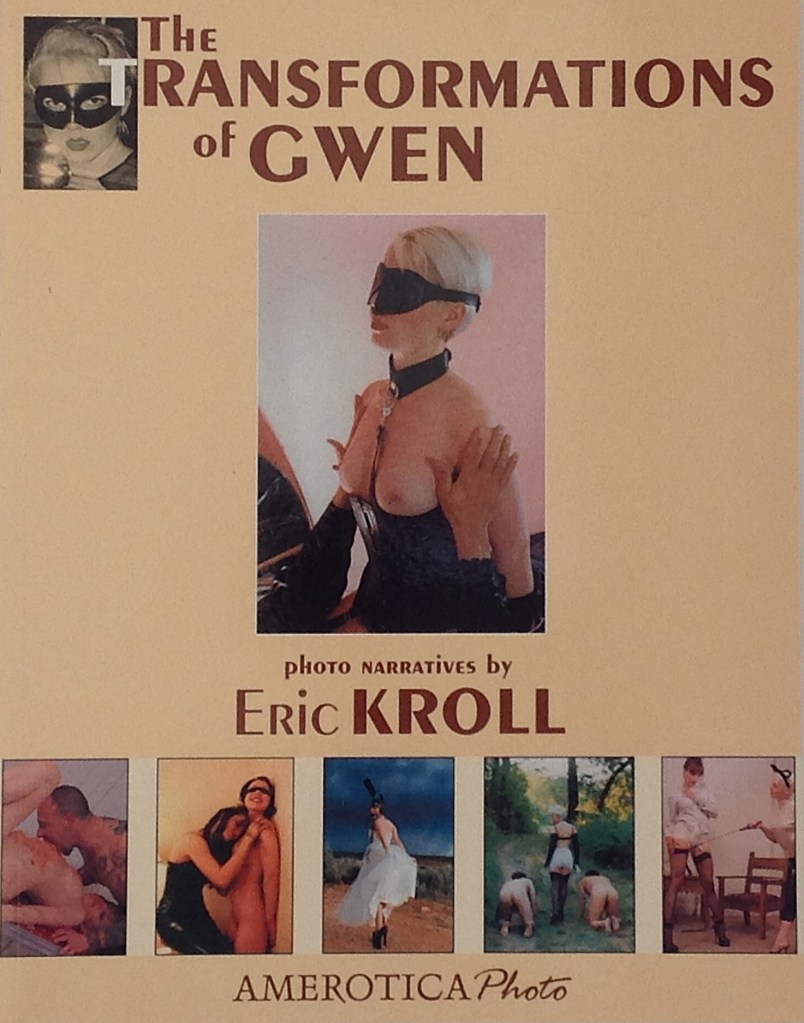
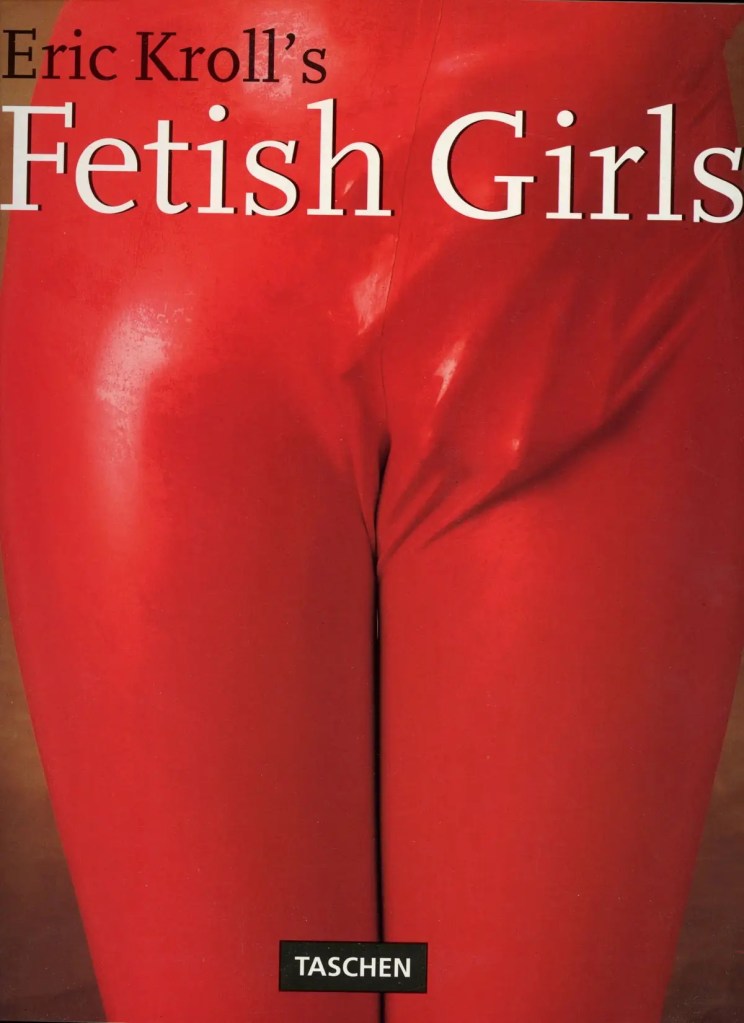
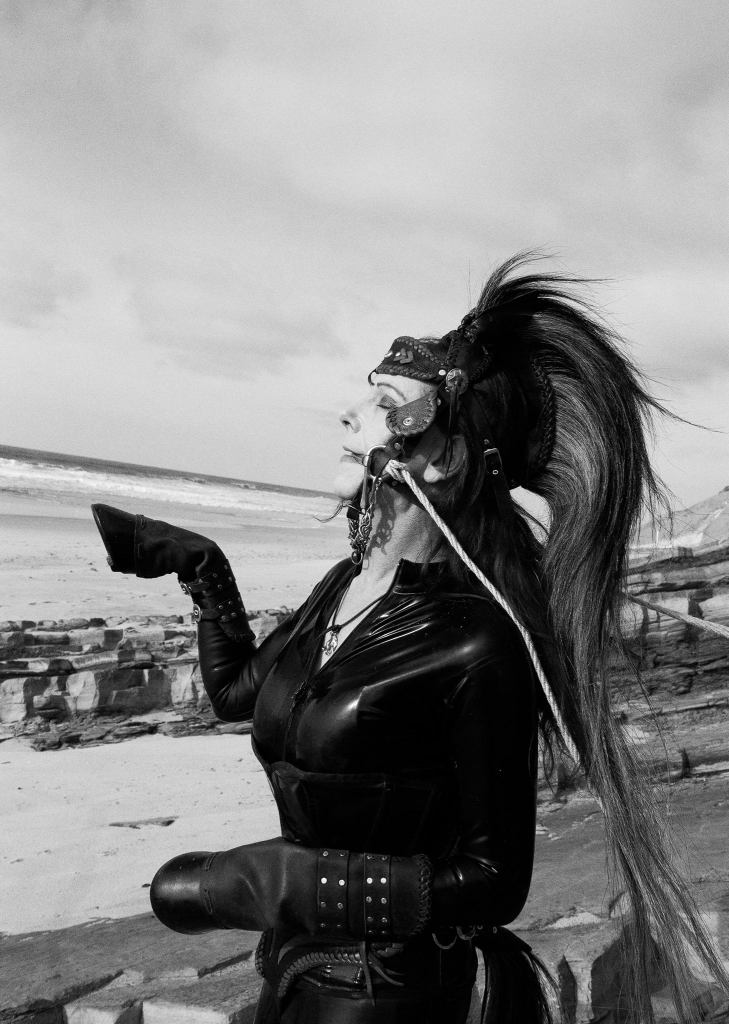
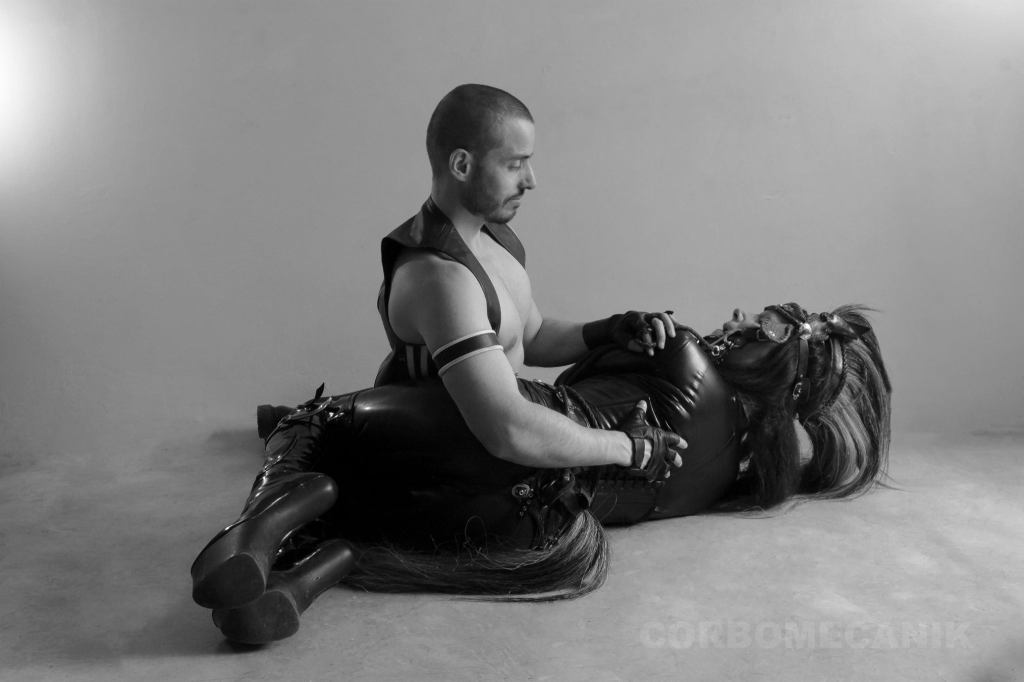
The American author Mitchell Pluto had a short email exchange with the legendary kink photographer in which he shares, among other things, some of his influences, favorite camera, books he’s currently reading. Kroll also shared some exclusive erotic photos of his own.
— Marijn Kruijff, Founder Shunga Gallery
Triple Scorpio, Triple Vision: Eric Kroll’s Lifelong Affair with Eroticism can be found here the article has been added to the Shunga Gallery blog
On October 3, 2025, I got in touch with Eric Kroll, who kindly consented to discuss himself for Shunga Gallery. Kroll. a triple Scorpio, is skilled at creating sexual aesthetics through photography. He was fortunate to have been in the ideal location at the precise moment. His work has documented and influenced transformations in art and sexuality. Kroll’s work remains a potent influence in the ongoing exploration of taboo subjects in pop culture.
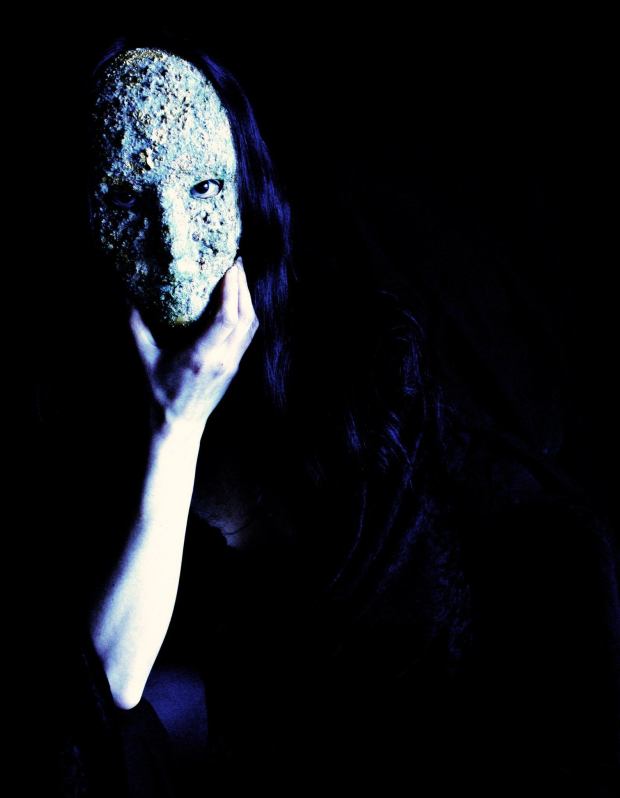
J’évolue dans le monde des arts plastiques , de l’expression corporelle et dans le milieu alternatif parisien depuis très jeune . J’ai donc exploré diverses techniques et directions : peinture , photographie , dessin , graphisme , video , danse et travail sur le corps.
Depuis ces 15 dernières annnées , j’ai fait des expositions et performances en France et quelques collaborations qui m’on ouvert de nouveaux horizons. Il y a un moment ou j’ai glissé de la peinture et de la representation du corps à la mise en scène directe des corps et des ames à travers la photographie , le corps au sens large comme moyen d’expression.
Il m’est rapidement venu un questionnement sur mon propre érotisme face aux archetypes simplifiés et imposés par la société de consommation. Durant des siècles d’histoire de l’art , les femmes ont été enfermées dans le rôle de sujet de fantasme érotique , mais empechées dans l’expression de leur propre érotisme loin des attentes sociales , ce qui explique le fait que toute une génération actuelle parte dans cette direction à la suite des pionnières du siècle dernier.
Dans la jouissance esthétique et tactile de la matière , j’y trouve une relation au spirituel dans le monde des fantasmes qui ouvre une porte à la fois physique , énergetique , psychologique et mystique . La sensualité comme acte quasi religieux , la sensualité comme prière.
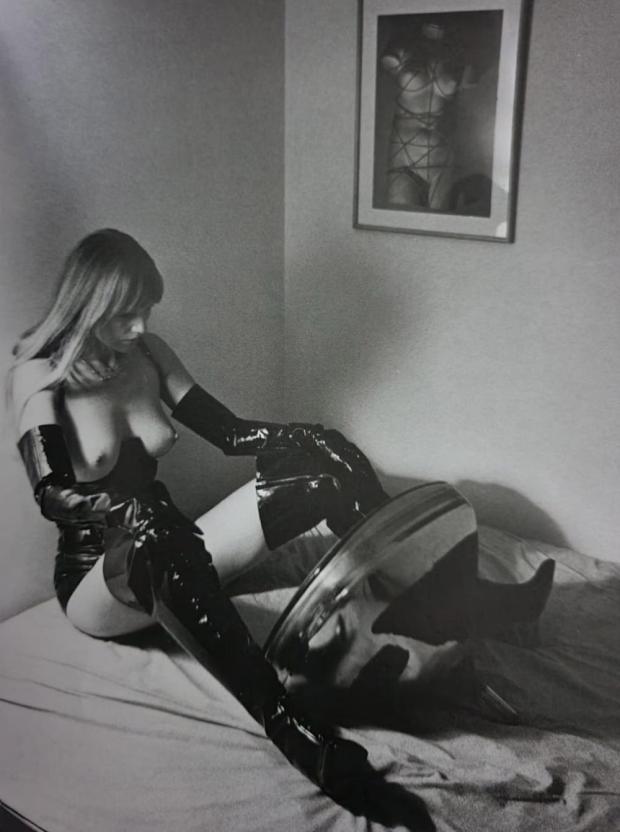
Mes influences profondes dans la démarche et l’esthétique sont clairement celle des suréalistes ( dont certains pionniers qui ont abordé l’érotisme du fétichisme ) Etant de la génération de1976 , j’ai été aussi très influencée par la vague rock punk goth newwave des années 80 et j’ai été jeune ado et jeune adulte dans les années 90 pendant l’emergeance des mouvements technos sauvages. Les attitudes des femmes de la scène rock comme Lydia Lunch par exemple ( parmis beaucoup d’autres ) ont clairement ouvert la porte à ma generation. C’est aussi dans ce monde rock notament gothique et new wave que j’ai decouvert très jeune mes tendances au fetichisme et aux mises en scène BDSM.
Dans la photographie , les artistes comme Robert Mapplethorpe me parlent beaucoup , le fait d’aborder des sujets parfois crus ou qui peuvent paraître provoquant mais dans un style presque academique pour un rendu raffiné , les photographies de sexe ou de fleur y sont representé avec la meme sensualité , ramenées au meme niveau.
En ce qui concerne la littérature , je citerai ‘ L’histoire de l’oeil ‘ de Georges Bataille , ‘incontournable ..Les oeuvres d’Henry Miller m’interessent beaucoup , j’y retrouve cette errance hedoniste , urbaine ou se melent sexualité et philosophie ‘ King kong théorie ‘ de Virginie Despentes est également un de mes livres de chevet , je le considère comme le livre de ma génération en ce qui les femmes et leur sexualité face à la société . Mon autre influence est bien évidement l’érotisme asiatique , en particulier japonais , les classiques comme ‘ L’empire des sens ‘ par exemple , le shibari ( le bondage japonais ) , le coté rituel et très martial dans la mise en scène de l’eros.
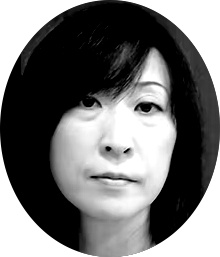
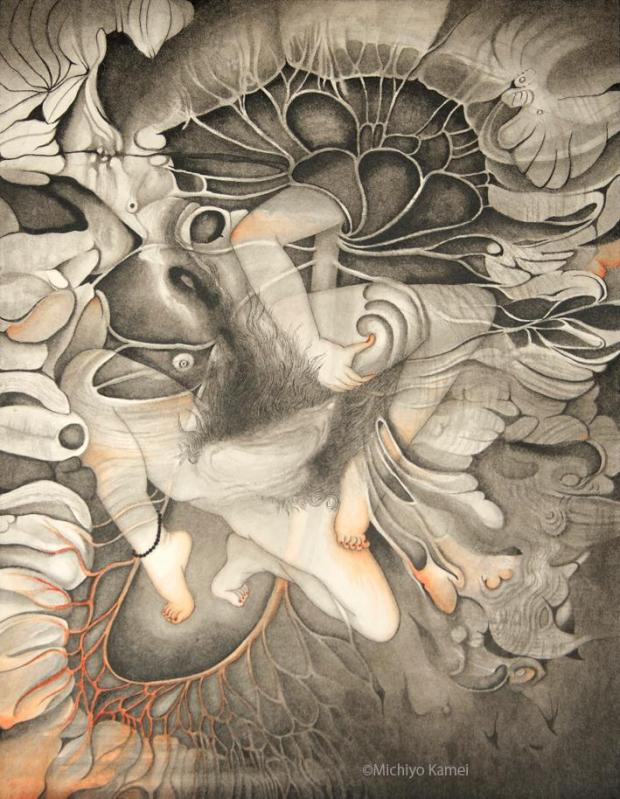
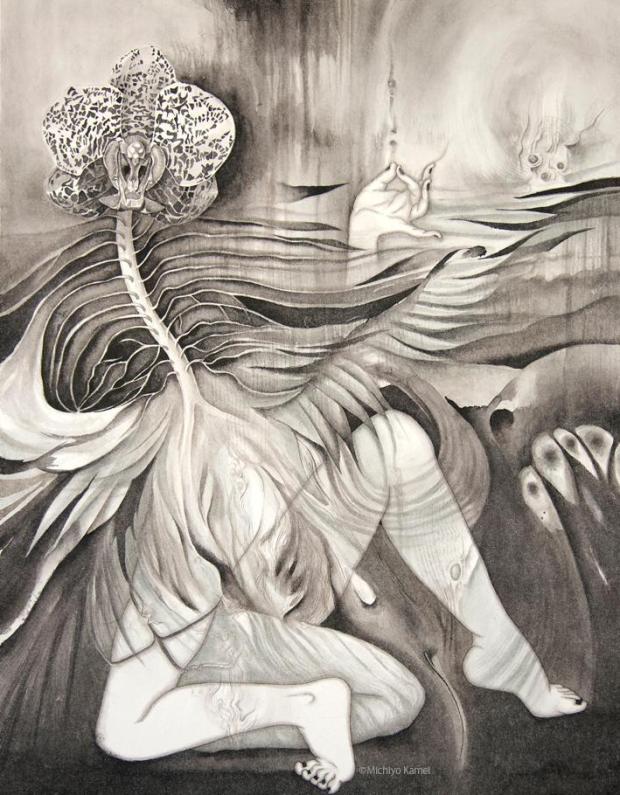
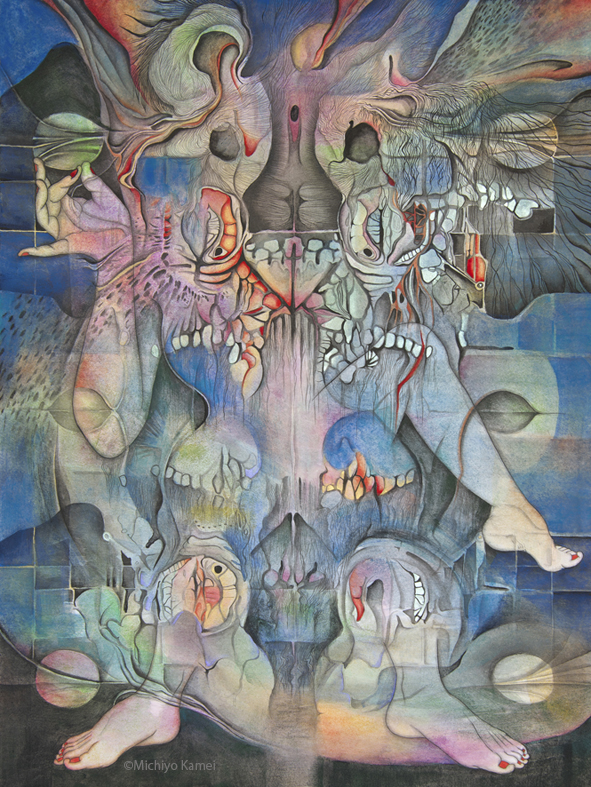
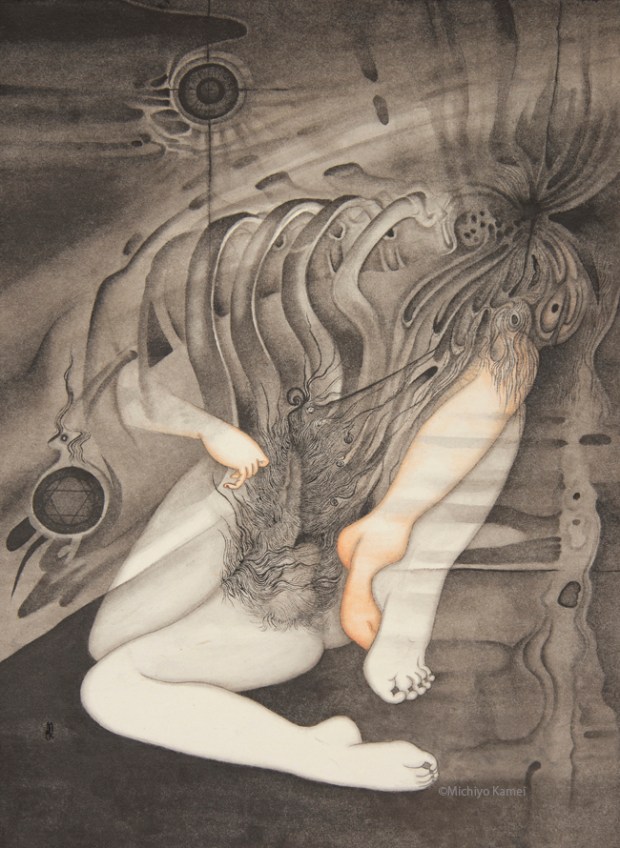
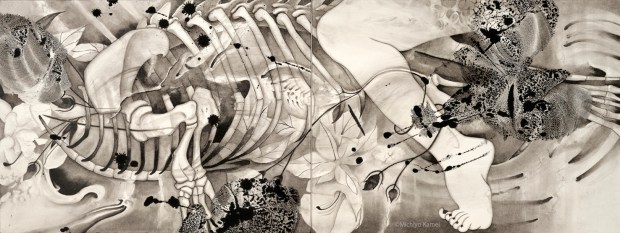
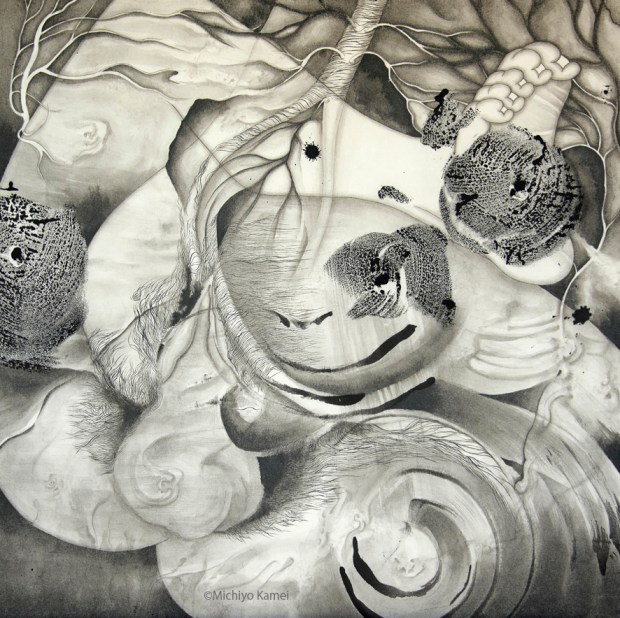
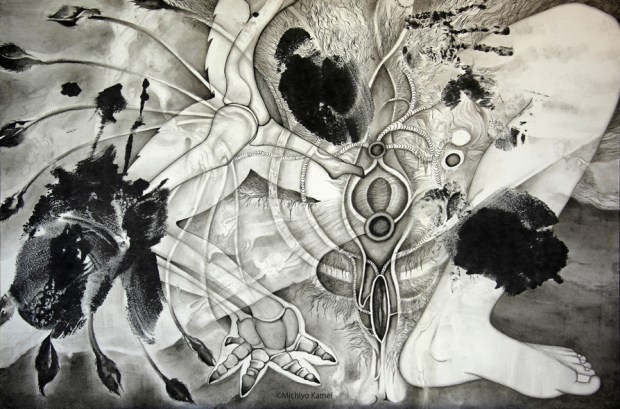
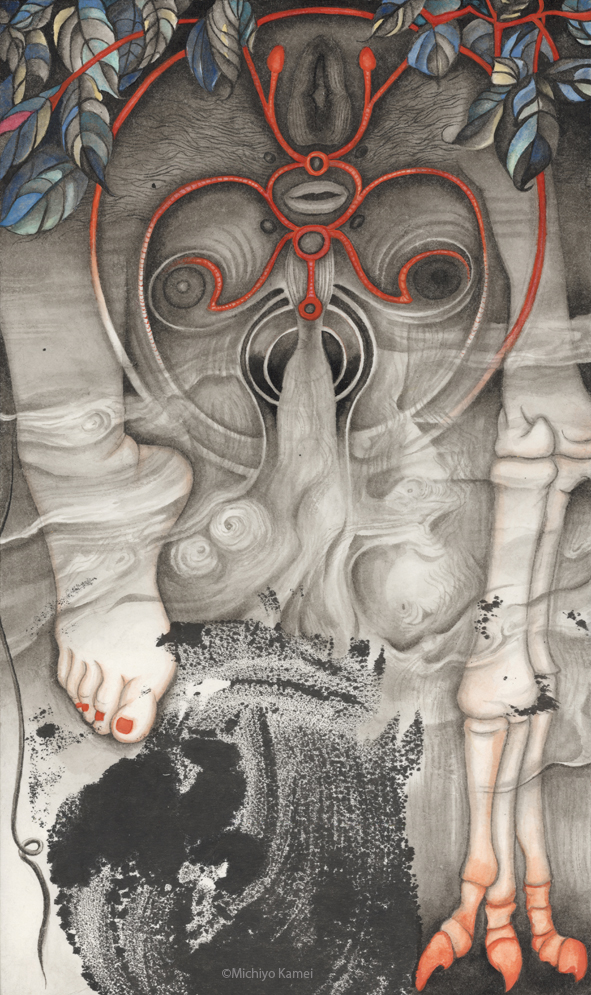
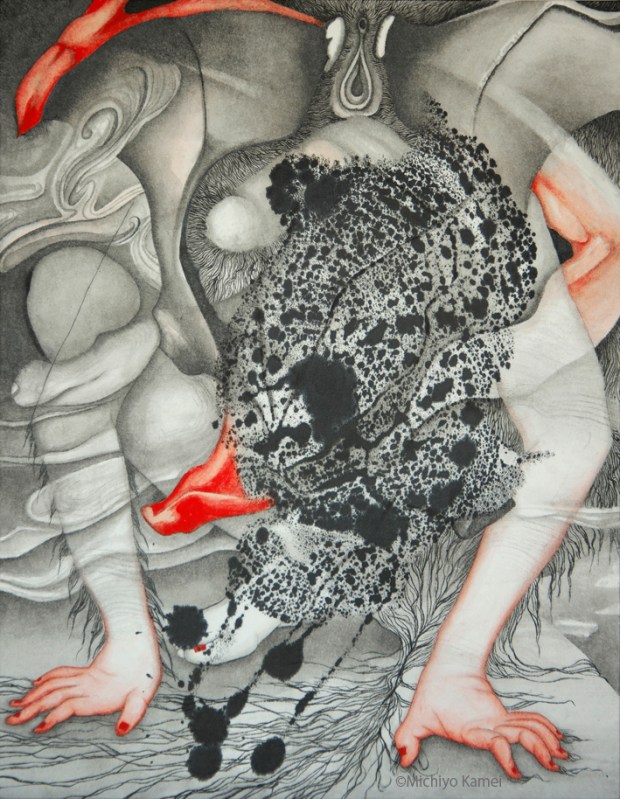
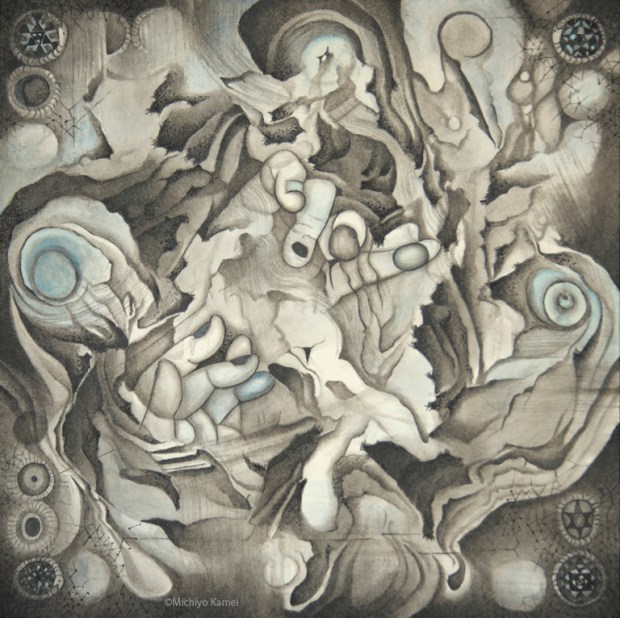
In her black ink paintings, Michiyo Kamei explores the concepts of impermanence, transformation, and the enduring nature of existence through a form she calls the bodymandala.
Mitchell Pluto: At what point did you realize you were an artist?
Michiyo Kamei: I originally studied anatomy at medical school and started out as a medical illustrator. It was only after I stopped working as an illustrator and began creating paintings that I realized I was an artist. Anatomical illustrations are created at the request of the medical field to follow the authors’ papers and wishes, so the illustrator cannot draw them freely. Paintings are free to be drawn by the creator, so the artist can freely incorporate their own ideas. This difference is significant to me.
Mitchell Pluto: How would you describe your art, given that it blends many traditional and modern genres?
Michiyo Kamei: When I was drawing anatomical illustrations, I studied the theory of modern anatomy and created my diagrams. After I quit this job and started painting, I began exhibiting at a gallery that collected ukiyo-e prints from the Edo period in Japan. Seeing many hand-painted ukiyo-e at the gallery, I rediscovered the beauty of traditional Japanese styles. When drawing the hands and feet in my work, I sketch my own body in front of a mirror, then deform it in the ukiyo-e style. In this way, I am influenced by both modern anatomical diagrams and ukiyo-e from the Edo period, which have a uniquely Japanese style.
Mitchell Pluto: When creating your artwork, what specific medium or materials do you prefer to work with?
Michiyo Kamei: I like oriental materials. Rather than just adding paint to the paper, I like to let the ink soak into the paper, letting it bleed and see how it moves within the paper fibers. Sometimes I don’t just create a picture, I let the ink create a picture on its own.
Mitchell Pluto: Could you describe and clarify what a bodymandala is?
Michiyo Kamei: Anatomical illustrations are pictures of the world of death drawn from corpses. Since I began painting, I have wanted to depict the world of life, so I have incorporated energetic shunga. Death and life are repeated in my paintings, and I hope to approach the theme of “eternity.” Mandalas represent the universe in Buddhist worldview, but I represent the universe through the body, and am exploring a new mandala form called the “bodymandala.”
Mitchell Pluto: What visual artists have influenced your work and given you inspiration?
Michiyo Kamei: I’ve been interested in the body since I was a child. It feels as though I am contained within this body, but at the same time it is also part of the natural world, the world outside of me. Which one does it belong to? And when I realized that I would die along with this body, I was terrified. Francis Bacon is an artist I admire for his expression of the body and anxiety. I’ve admired him ever since I discovered him in an illustrated catalogue as a teenager. Another artist is H.R. Giger. I think his organic expression in black and white is so beautiful.
Mitchell Pluto: Could you please tell me the central idea behind your current show?
Michiyo Kamei: I’m currently incorporating “jintaku” a technique in which ink is applied to my body and then transferred onto Japanese washi paper. Rather than painting with a paintbrush, jintaku involves pressing my body against the paper, resulting in completely uncontrollable and unexpected ink patterns. While observing the stains on my skin, I paint the “inside and outside” of the body in the blank spaces. It is meaningful to me to compose my paintings using three elements: the inside (anatomical illustrations) and outside (limbs, plants, natural world and the universe), and my living skin, which lies at the boundary between them. I call this “bodyscape,” and I hope to expand the image in my paintings from a small image of the body to a larger world. What kind of world can unfold from the body? And can humans have the imagination to do so?
Mitchell Pluto: What are your thoughts about the universe in relation to the philosophy of your art?
Michiyo Kamei: I believe that the universe in which we live has no beginning or end, but is a whole that is constantly transforming. There are times when I feel that even life and the body are merely a fleeting moment. Currently, I assume that the beginning of everything is the “zero point” of the universe, and my theme is the transformation and chaos of the body (form) that begins from there. In my paintings, I want to rewind time and explore the primordial form of life. I find a unique beauty in the cruelty and sacredness of the wild nature of evolution, which repeats selection and mating.
Mitchell Pluto: Who are your favorite writers for inspiration, and how do they influence your art and perspective?
Michiyo Kamei: I like Jorge Luis Borges, especially “The Library of Babel.” When I read this novel, I feel like an infinite universe is expanding in my head. I think his universe can only be expressed in novels (words), and can never be depicted. I would like to reach such a world someday, but life is short, and I feel that once is not enough for me.
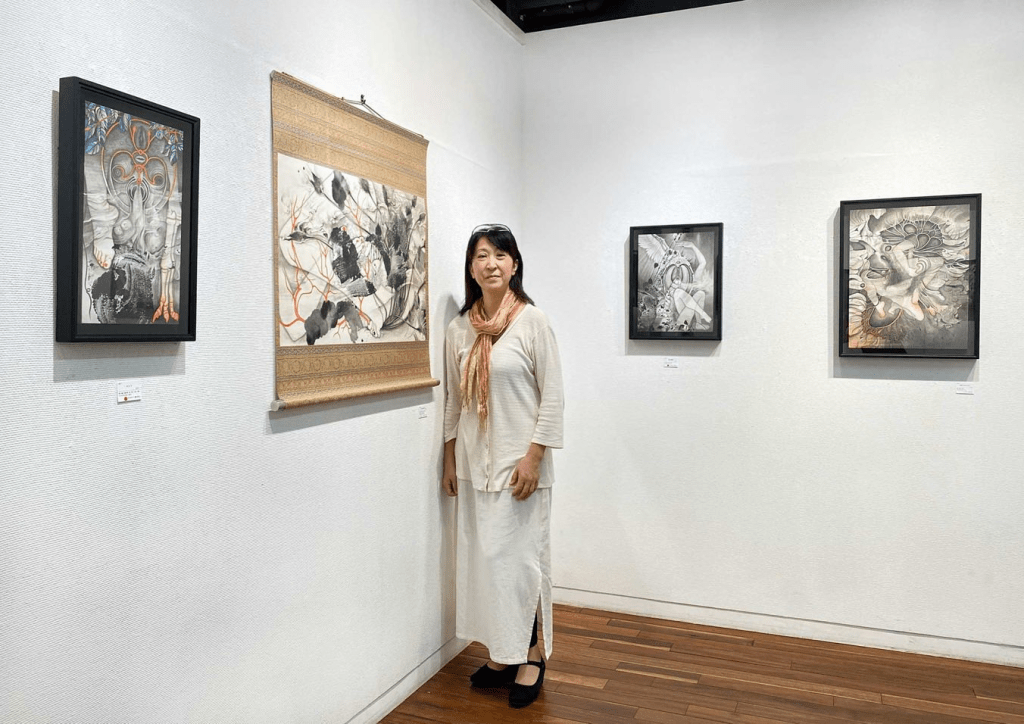
“The original form of the universe: the wildness of the zero point” Michiyo Kamei exhibition at the Y art gallery in Osaka, Japan 2025
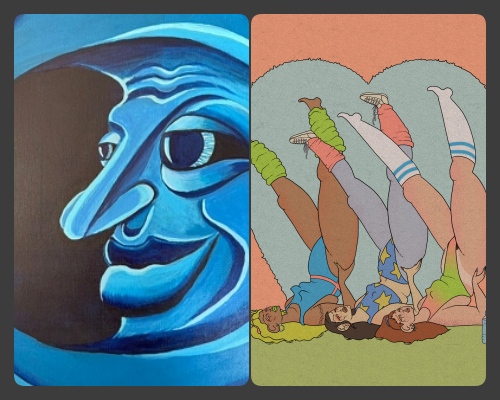
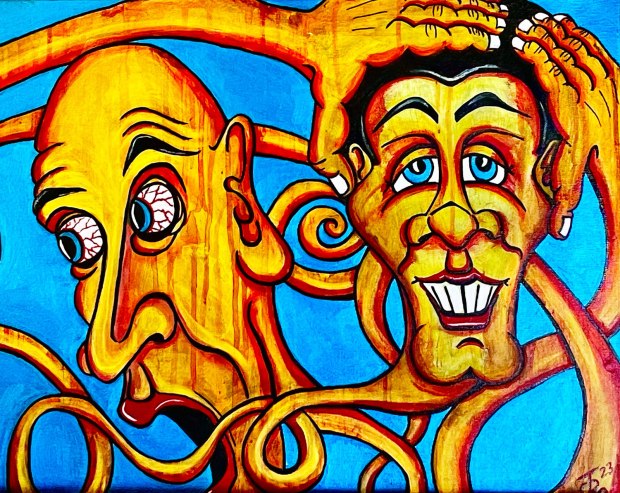
Mighty Fine Arts presents “Like Father, Like Daughter: Inherited Visions” featuring new work by Johnny Olson and Madelyn Olson. This show opens with a reception for the artists on Sept. 27 from 6-9 pm and will run till Oct. 26. It’s a family affair at MFA with a premiere exhibit by Mad Swirl spoken word master Johnny O and his exceptionally talented daughter Madelyn.
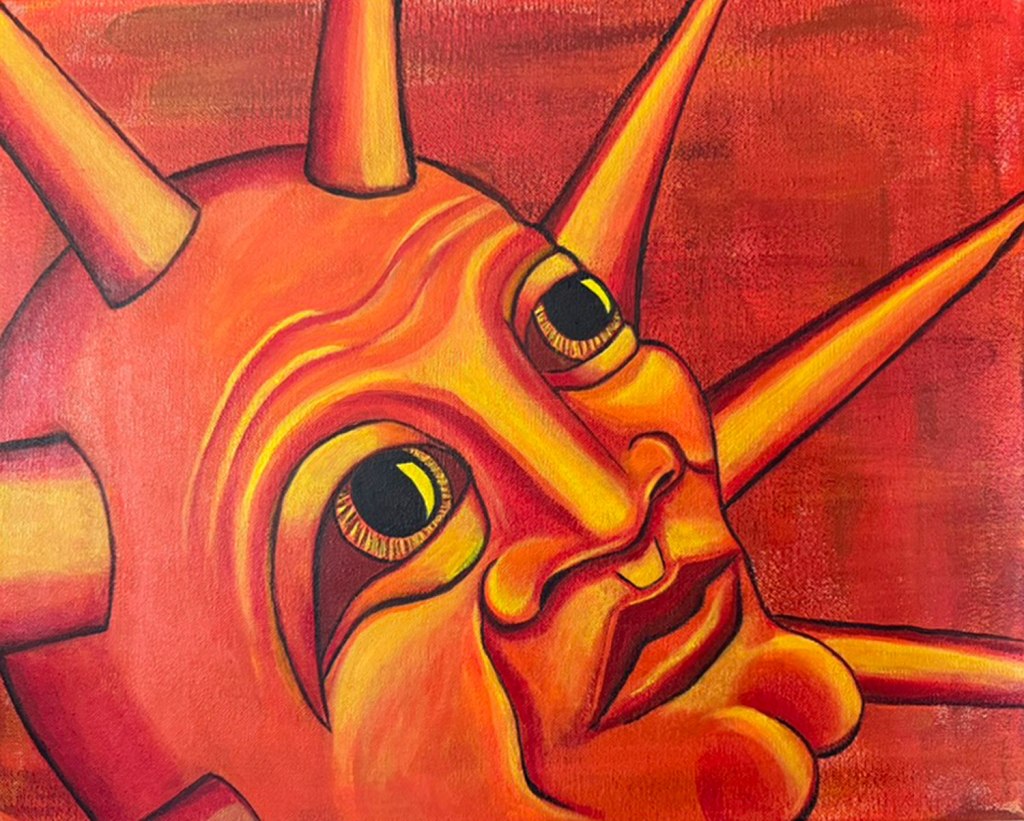
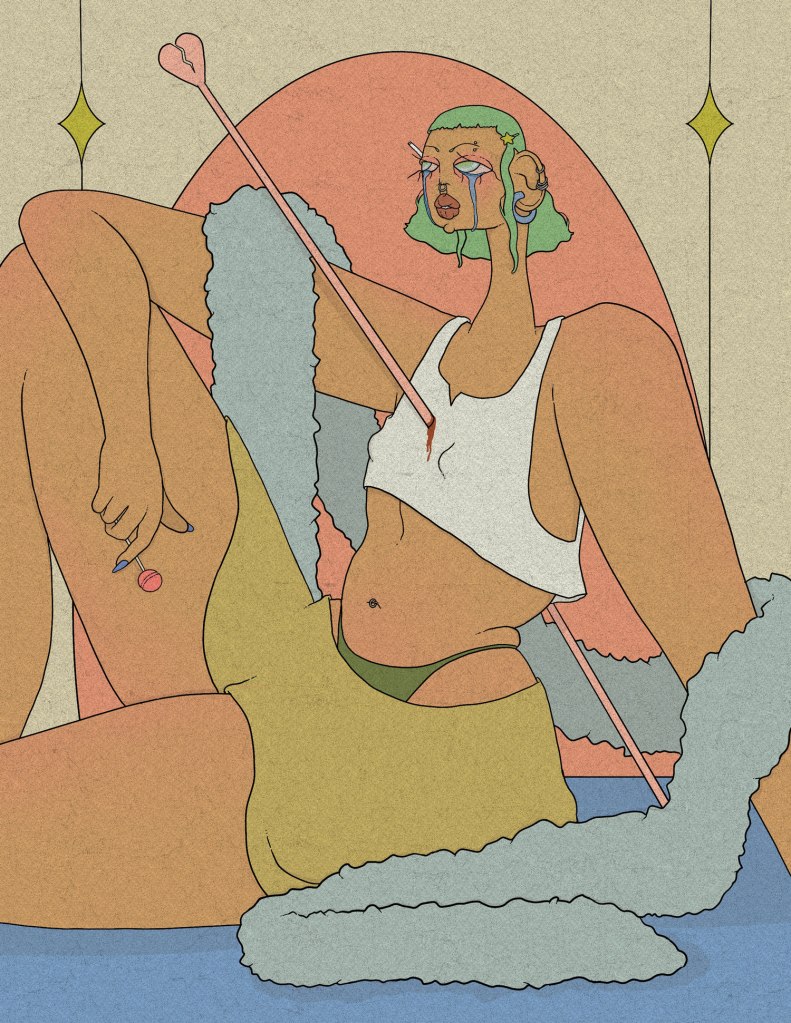
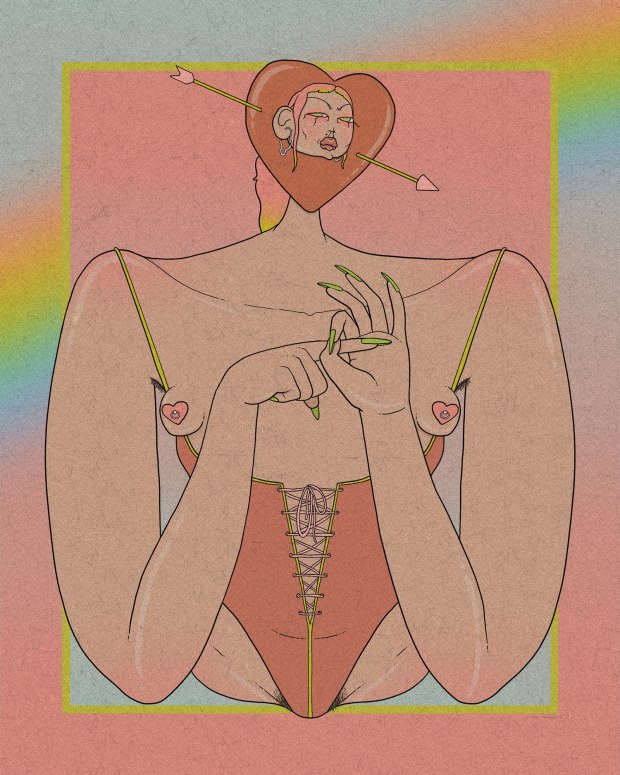
Both are figurative based artists who exaggerate and elaborate on the human condition. The characters they create derive from some overarching personal narrative but they manage to resonate on a mythic universal scale. Their approach is also filled with imaginative humor and playfulness with a touch of satire. The resultant effect is ebullient and energetic imagery imbued with creative fervor. Father and Daughter are cut from the same cloth and blessed with uncommon virtuosity.
Also on Opening Night Wordspace Artspeak presents a musical performance by Swirve! Chris Curiel fronts this avant garde collective of liberated musicians devoted to free thinking and improvisation. Their goal is to release your mind from convention and neurotic restraints with cosmic soundscapes. Come experience and get emancipated with Swirve!
Johnny Olson was born on a brisk November day in 1970 in Chicagoland. He found his feet & cut his teeth in the blue-collared working class neighborhoods of his hometown. In 1988 he was reborn in MCRD San Diego, where he found himself the new title of United States Marine. After surviving the Gulf War, he hung up his BDUs & turned in his rifle to instead grab his pen & brush where he rediscovered his passion for writing & painting. In 1998 he found himself in Dallas, where what was supposed to be a brief stint in the South turned into over two decades… & counting.
In 1999, Johnny, with a couple of other mad cohorts, started Mad Swirl. This ‘zine project has now evolved into a being all its’ own. After wearing too many hats, he now only wears a few at Mad Swirl: Chief Editor, Creative Director & Host at Mad Swirl’s monthly Open Mic night & Mad Swirl’s Quarterly podcast, “Inside the Eye.”
Johnny’s work first appeared in print in 1996 in the now defunct Lip Magazine. Since then, his words & images have found their way onto a few online and printed zines thru the years. To name a few: Mad Swirl: Issues I-VI, The Best of Mad Swirl : 2017-2024, Haggard & Halloo, 10k Poets, PAO Productions: The Open Mic Project.
My name is Madelyn Olson and i’m an artist (anyone else have a hard time claiming that title?), primarily creating in Procreate or on paper with ink & watercolor. i’ve been creating since i could hold a pencil in my tiny little hand. to me, artistic expression is one of the best things to exist. i hope to both create & admire it all till it hurts.when i’m not creating and admiring creation, i like to eat, hang out with my dog, laugh at silly things with my friends and frolic around outside in the sun.
I encountered difficulties in collecting factual information on Lyapkalo’s thoughts to write about. The following is a correspondence with Viktor Lyapkalo. I’m grateful that Viktor made time to reply. Before sharing our correspondence, I got Lyapkalo’s consent to share his thoughts on art.
Socialist Realism is a strong realistic school that takes its origins from the old Imperial Academy of Arts where Serov Vrubel Kustodiev Repin studied.
The political background of socialism is another story, but first it is a realistic school that still serves us as an example of gorgeous paintings of strong drawing.
Thanks to socialist realism, we have preserved a strong Russian school in the Academy of Arts, where very talented students who know how to draw and write still study
Artists of socialist realism Gerasimov use layer of layers still serves us as an example of pictorial skill and excellent drawing.
Their political paintings are already a tribute to the times, but they achieve a high artistic level in their execution. While in other countries, in other art schools, teaching underwent changes under the influence of new versions of new trends in art, our school, thanks to socialist realism, training remained at the same level as at the Imperial Academy of Arts, therefore our students can all write well, I have good painting qualities.
I believe you need to narrate what you love and what you like and then it will be sincere. Those works that are made for sale without love are immediately visible. They are fake and without a soul. Of course, my preferences are not for everyone. I look primarily at picturesque points of view when I narrate a painting with women. I really understand Renoir because of how he painted women. Skin is more like an onion flower that has all shades of colors.
















 Mitchell Pluto