Phantom Soup: Short Stories for the Evicted Citizen
To write something and leave it behind us,
It is but a dream.
When we awake we know
There is not even anyone to read it.

The 8th day of the 4th month, the 3rd year of Kōshō (1457)
Ikkyū-shi Sōjun

Ghost Ride

Phantom Soup © Mitchell Pluto 2025

Accessible for reading.

All rights reserved. Permission grants brief quotations embodied in critical reviews and certain other non-commercial uses permitted by copyright law.

In case you overlooked it, this universe wasn’t lacking in ambition or size.
It was putting on a spectacle with its production.
The cosmos is just incredible; even haters gotta admit it’s breathtaking.
Zanni, the defendant, is still waiting for a verdict.
In space, sentences float around and words drift apart.
His black and white checkerboard suit embodied the polarities of opposites.
He is a man without a country.
A joker in a deck of cards.
Through gestures alone, Zanni attempted to decipher the universe’s communication.
There was drama everywhere, but Zanni just didn’t understand how it worked or how it occurred.
No one ever knew the truth; it died with them, leaving only unanswered questions.
Everyone figured the headache meant they knew what the problem was.
Less pain means clearer perception and a more optimistic outlook.
Honestly, it wasn’t a matter of right and wrong.
Or pain or pleasure.
It dealt with items of worth later becoming trash.
You could tell what things meant to people by how often they handled them.
It’s a space ballad playing both life and death.
No one will sing the sad cowboy songs of unrealized dreams anymore.
It’s alright.
We are part of a sombrero galaxy, a galaxy that is an eternal sunrise.
Zanni was in a giant empty room with waves of random stuff.
His world symbolized a particular responsibility of being.
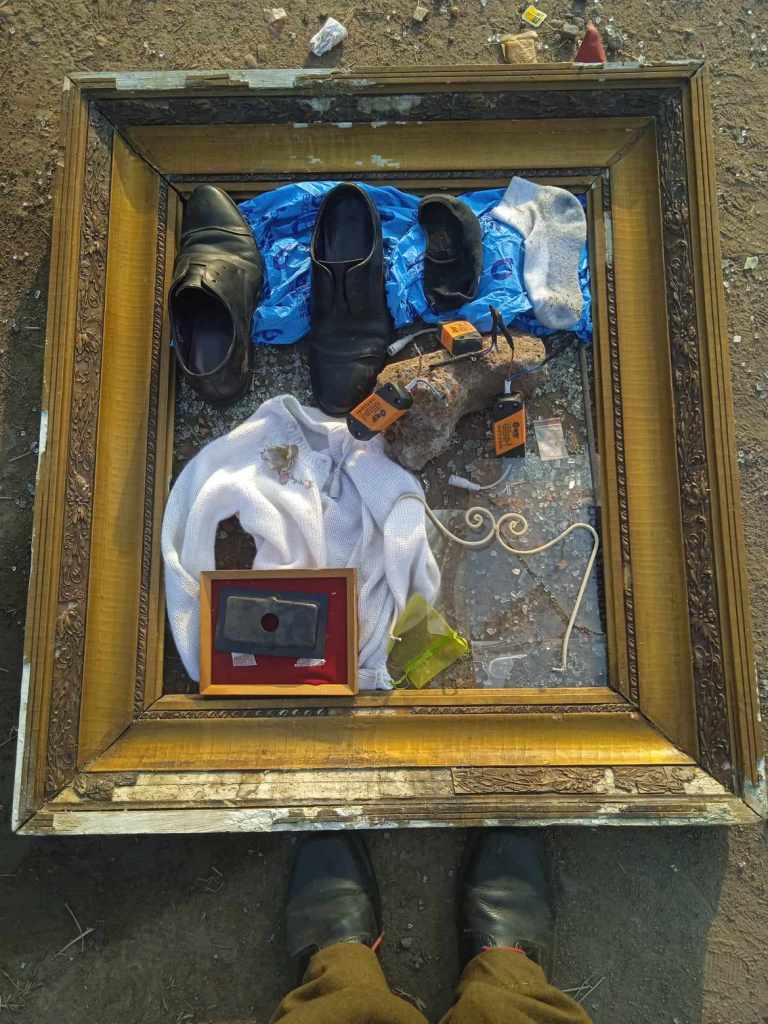
Special car keys for a 2025 model, a mobile wallet, a decorative cup, a gold pen, a seasonal tire, headphones from 1979, crumpled up Kleenex, a 1990 professional styling brush and a flashlight from 1899.
These objects surrounded Zanni.
Thankfully, a consumer digital camera from 1996 captured a pic of this.
But for who?
Regular waves swapped out old things for newer ones.
Zanni contemplated this event.
He figured the most likely explanation was that he was inside a massive vacuum cleaner.
He experienced a strong connection to things he saw on his trip.
Zanni speculated that the objects he couldn’t name were from a future timeline.
Things appear and vanished super fast out here.
Zanni drifted between sleep and wakefulness.
We can refer to it as a space fog in the mind.
A magnetic memory was his most beloved possession.
It echoed because Zanni repeated it.
He brought it back to mind in a re-run.
Zanni felt the luscious lips vibrate against his ear. It was a figurine of a woman.
Her name was Colombina.
The teal diamonds and magenta triangles on her dress flowed together to create a pattern of doves.
Hand in hand, they created poetry.
The rhythm of their partnership quivered in the shared space.
The couples’ bond created a constant interplay of elements through the intercourse of their geometric patterns.
Zanni maintained his embrace for as long as possible before the vacuum wave separated them.
He could not pinpoint the incident’s time without a clock.
The arrangement of numbers magically shapes the surrounding space. A regular watch shows what’s going on between the numbers.
Of all the puppets, did he alone ponder his whereabouts?
Only he understood his own thoughts and feelings.
Sometimes Zanni heard voices that didn’t belong to him.
Intrigued by the mysterious voice, he followed it.
The voice led him back to his body.
Those seizures and hallucinations gave epilepsy a mystical quality.
His memories of himself were likely because of thinking about Colombina.
He owned the moment, his own little universe, for a single second. Zanni saw himself as a buoy, helping other objects find their way.
But Pantalone, a hunchbacked old man, considered himself the universe’s ultimate authority.
He was a drifting turtleback tomb from another vacuum wave.
Pantalone preferred the nickname “god.”
His face twisted in anger as he guarded his belongings. Losing things got on his nerves. His tailored red suit reflected Pantalone’s importance.
Every item got a brand and price label from him. He believed he understood your true worth more than you did yourself. He used his talent to make you think whatever he wanted.
Those close to him risked having their self-image stolen and used against them.
Pantalone intended for everyone to rent from his cloud.
He lost money in the vacuum wave, then recovered his losses.
This activity provided him with enjoyment, a sentiment he wished to share. Provided that he had more.
Scattered dollar bills wandered everywhere.
The bills, by themselves in space, lacked any connections.
Now, Pantalone found himself surrounded by dancing product wrappers, toenail clippings, old grocery lists, damaged furniture, empty food containers, broken appliances, crumbled up receipts and dead batteries.
Think of it as a garbage cloud.
Several real estate agents, their eyes wide with nervous energy, tried to appear calm as they floated past Pantalone.
They pretended to own a spot by treading in one place.
While this was occurring, Harry Houdini sailed by and unlocked a satellite.
Intrigued by Pantalone’s possessiveness, Zanni examined the egocentric and deceitful nature of his own point of view.
He observed the ego’s memories fade as the mind surrendered its ownership.
Once the fear was gone, relief came.
Houdini cracked his knuckles. “No worries are necessary. Don’t sweat it. It is a simple lock to open. “
The hierarchy reflects the relationships between things in a chain.
An x-ray showed how brain waves link things up through information chains, like you see in neuron activation patterns.
This electromagnetic wave made Zanni wonder about the engineer of the universe.
It appeared the designer wrote a script for a big stage performance but remains anonymous.
In the meantime,
Pantalone reached his own planet.

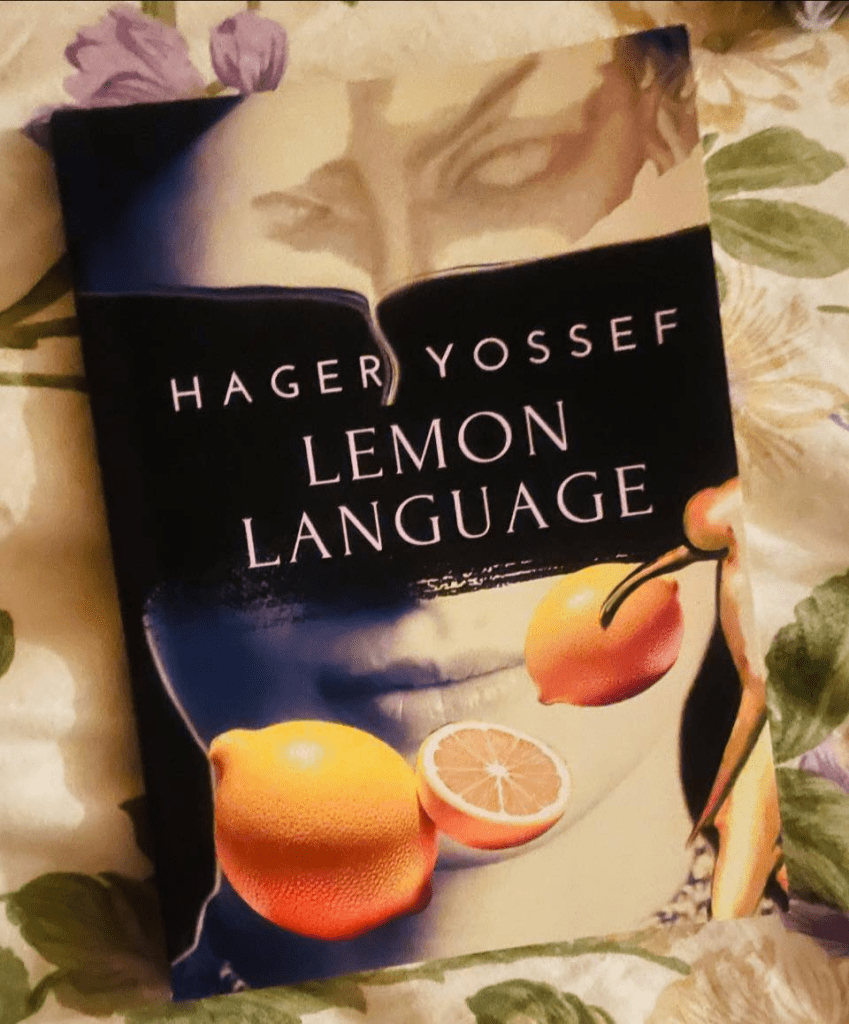
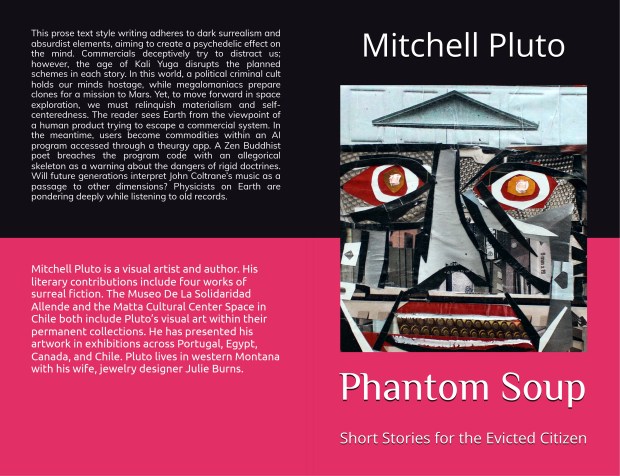
Phantom Soup: Short Stories for the Evicted Citizen Paperback

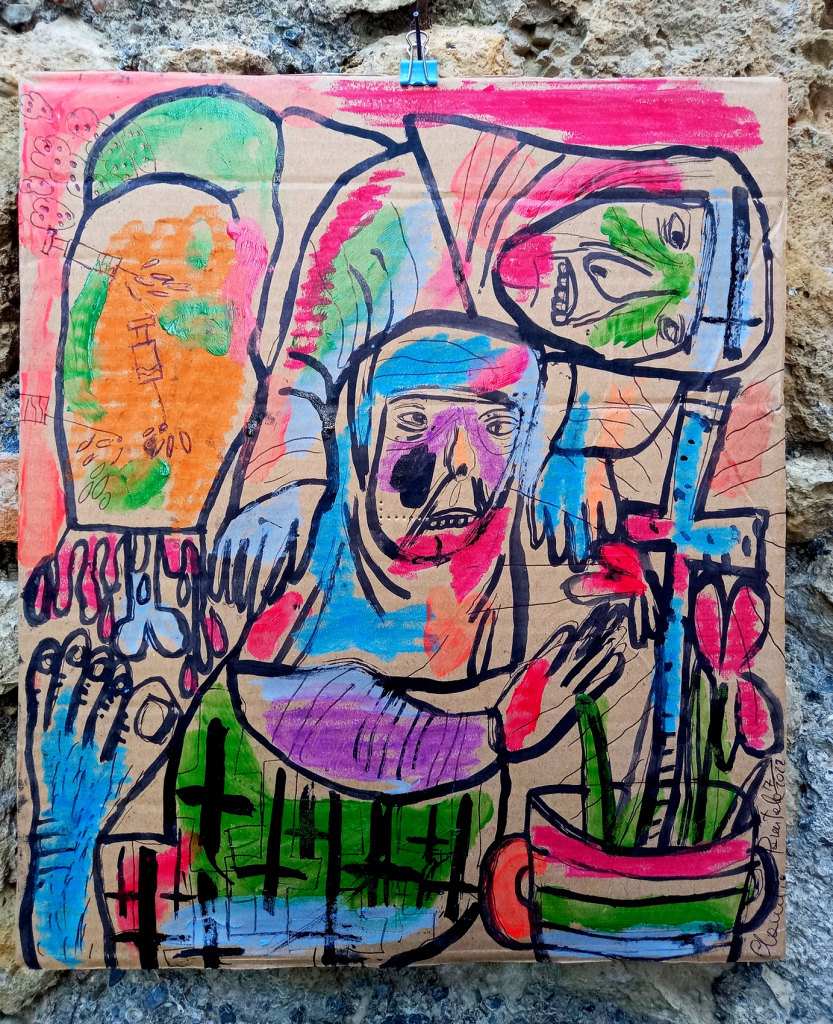
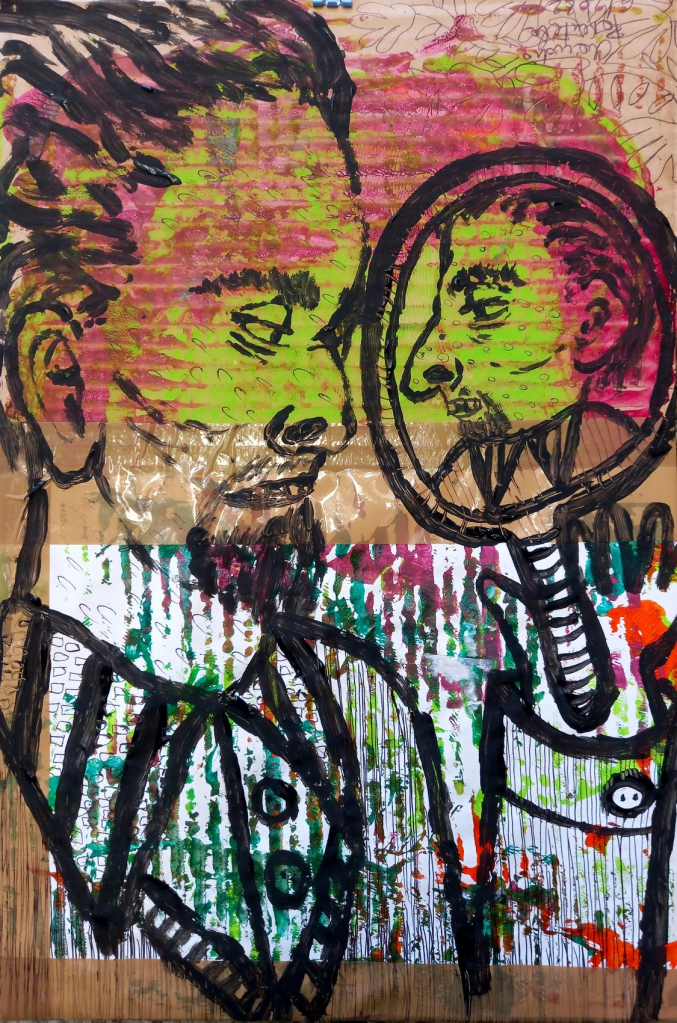
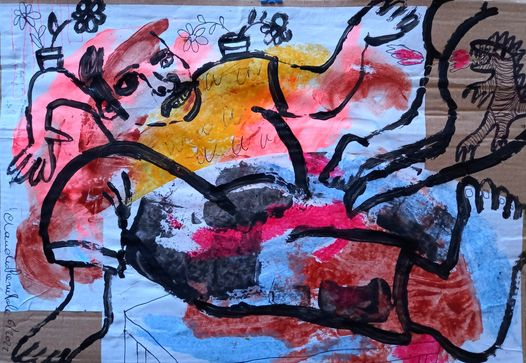
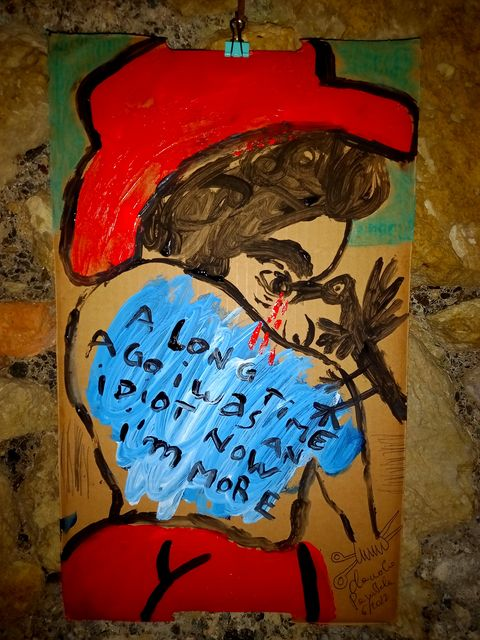
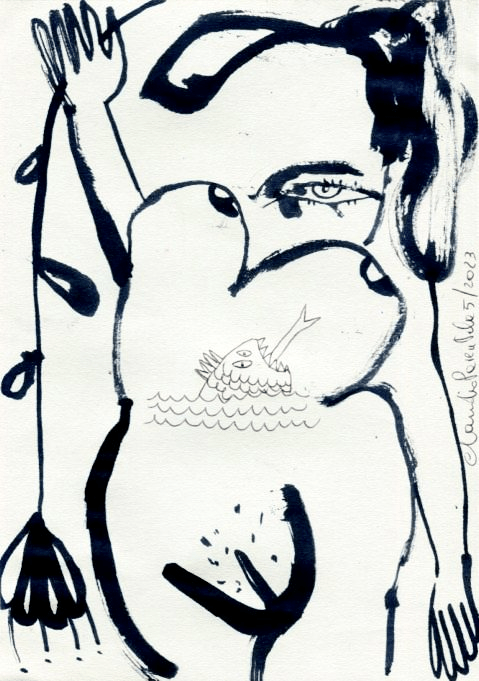
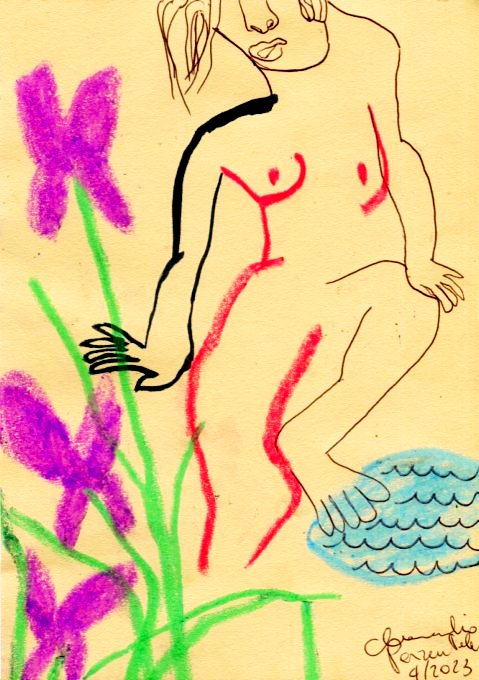
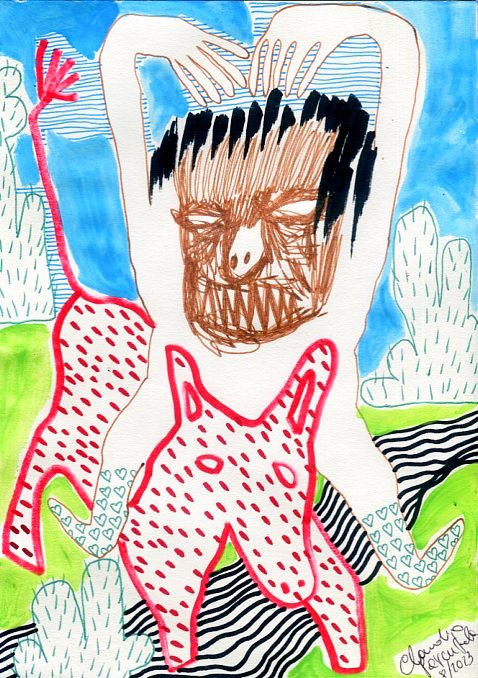
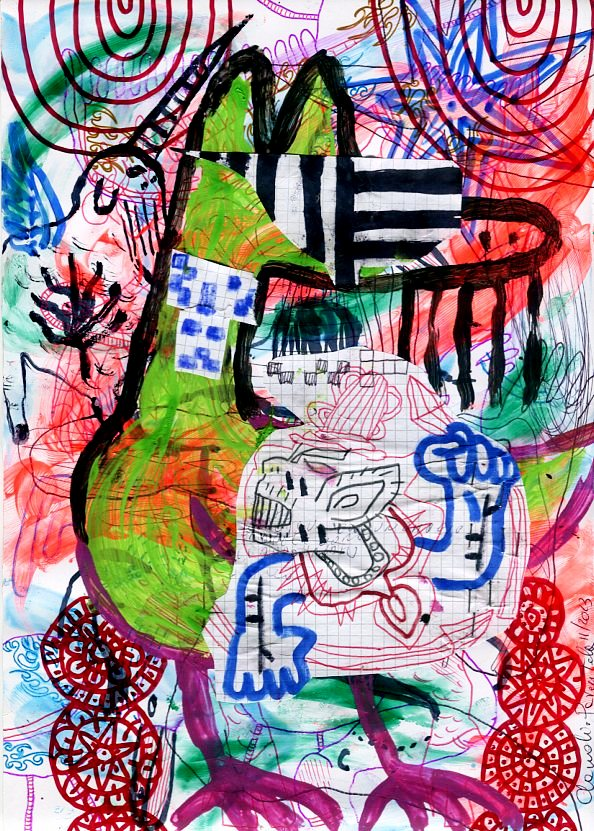
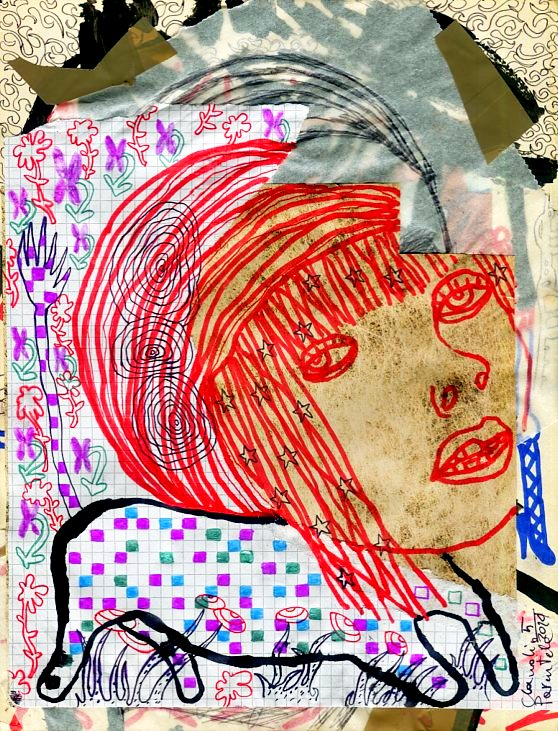
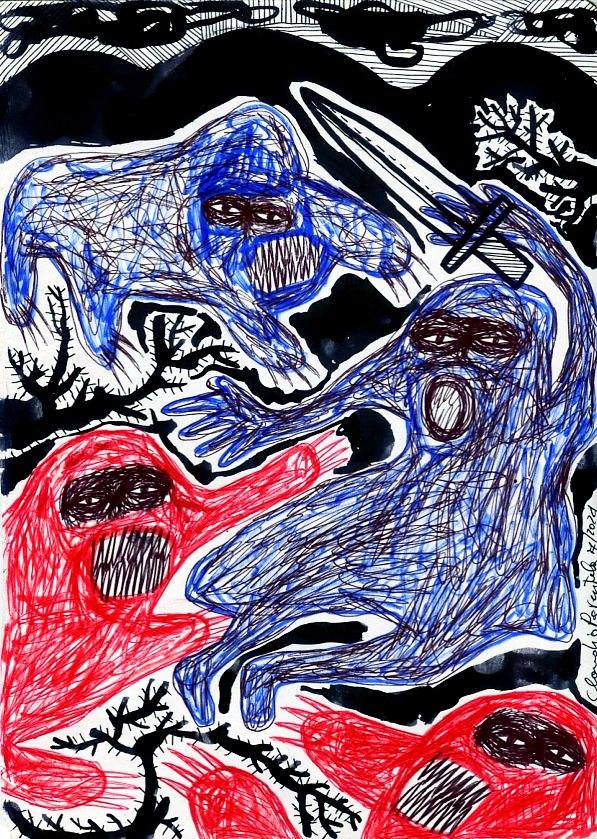
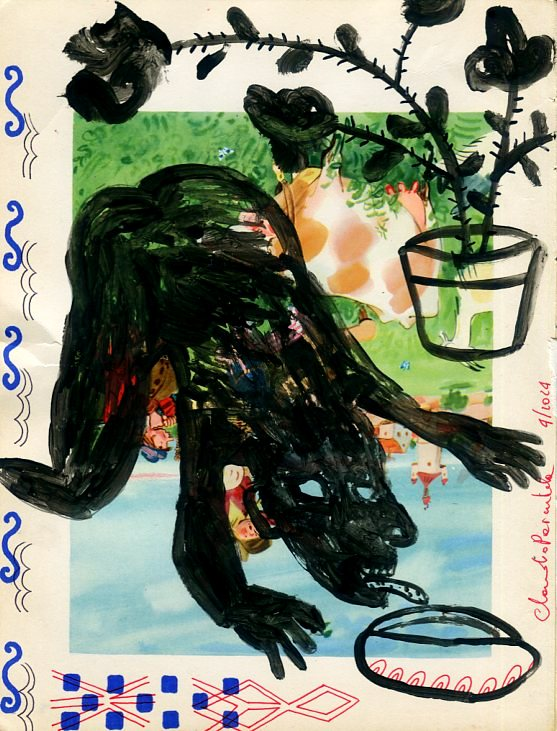
The Stormy Sea of Claudio Parentela 

I am 62 years old and I live in Calabria, in the ancient Magna Graecia. I am harsh and solitary, wild, introverted, anarchic and autistically proud like my land, which is full of stormy seas, turquoise and crystalline seas, and rugged and desolate mountains, very colorful and rich in lakes and impenetrable woods. I have been painting, drawing, photographing, cutting, sewing, gluing professionally since 1995, since I decided that I wanted to breathe art every moment of my life.

I like to experiment with everything I have at hand,mixing incompatible, different materials in absurd ways. I like to scratch and dirty my photos. Sew them together and with my paintings. I like to sew my paintings endlessly.

PAINTING2812-MIXED MEDIA ON CARDBOARD-YEAR:2022-SIZE:31CM X 36CM

I never know what I’ll do, what of new or old I’m going to create. I don’t like to plan anything, I want things to happen as and when they have to happen, I don’t do anything at all…. I put on some music, maybe with a good glass of red wine…. I sit at my work table where I have all my colors, my beloved books, my photos, my colors….and the magic happens every time.

PAINTING2807-MIXED MEDIA ON CARDBOARD-YEAR:2022-SIZE:27CM X 39CM

After a while I start to draw dots, lines, knotted lines, I choose the colors….and so on….it’s wonderful what happens every time. It’s a continuous catharsis, a going inside myself, and always opening new doors to go deeper and deeper.

PAINTING2805-MIXED MEDIA ON CARDBOARD-YEAR:2022-SIZE:37CM X 26CM


To know, to discover and open parts of me that were sealed and that now by magic I was able to open and penetrate. Art has been my autistic way to be in the world, the only way I know and have to communicate my words, what I have in my mind and heart. It is the dance that I have chosen to dance in harmony with my breathing.

PAINTING2798-MIXED MEDIA ON CARDBOARD-YEAR:2022-SIZE:24CM X 38CM

It is my freedom, the freedom that is essential for me to live, to feel sincere and true. For the first 14 years of my ”professional” career I drew and painted only in black and white with rivers of ink and lots and lots of paper. I love black indian ink, and its thousand shades…..they are like the thousand shades of my soul, they are like the clouds that hide the faint glow of the moon….like the thousand thoughts that crowd the mind before it can choose the right word.

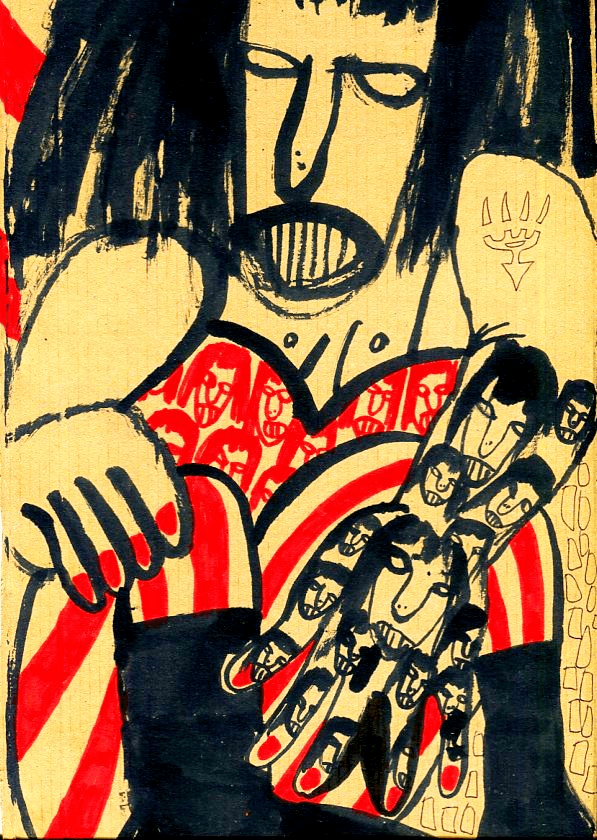
PAINTING2941-INK AND PEN ON CARDBOARD-YEAR:2023-SIZE:15CM X21CM

I started drawing frantically and joyfully on many many zines and magazines from all over the world, I collaborated with noise, metal, industrial, techno music bands….did a lot of mail art…drew for everyone, everything. I have never stopped since then, obviously because I like it, because it is the job I have chosen, it is my life, the life I have chosen to live freely. I never stop looking for freedom in everything I do, it is essential to me. Art is freedom, dance, joy, pain, art is life.

The transition to color was an obvious, natural necessity, and collage too. Collage is an extraordinary bridge to and with infinite potential, it is a labyrinth, a puzzle that never ceases to amaze me. I love experimenting, measuring myself and having fun with everything that attracts my attention, it helps me grow artistically, to discover many new games.

My inspirations are many, many….. my beloved books, underground comics, fashion magazines, so much contemporary art, medieval and Renaissance art….Osho , Aurobindo and Mère, Sara Vaughan, Patty Waters, Evan Parker and Ornette Coleman, Can, Nicke Drake and Van Morrison, Joni Mitchell…. Diamanda Galas and Joel Peter Witkink…. many, much more… the laughter of my friends, the noises of the street, my beloved cats, the winter sea and mountain lakes.


…and of course the tarot cards….I have been studying, reading and painting tarot cards since I was a boy….I love them and I can’t stop studying them, contemplating them, collecting them. For the International Tarot Museum I have created 5 tarot decks and in these days I will start the sixth.
I hope and want to continue to create and be free as I am today

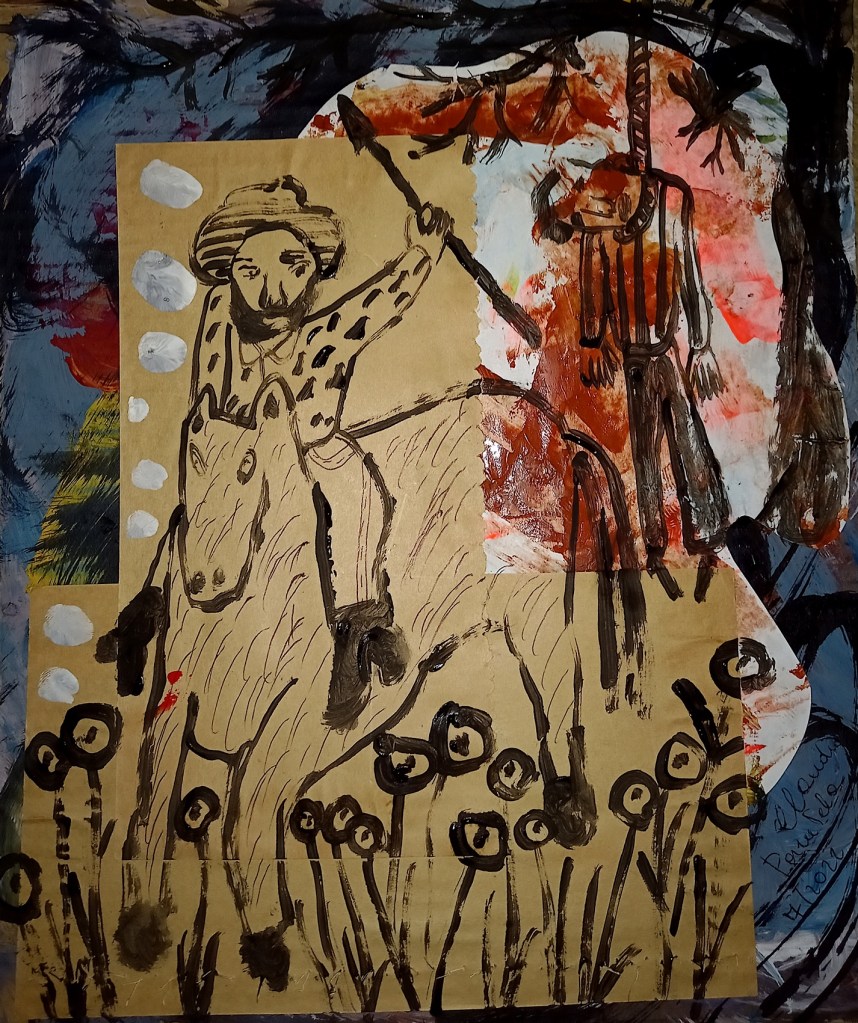
PAINTING3134-PEN, ACRYLICS ON CARDBOARD-YEAR:2024-SIZE:20CM X26CM

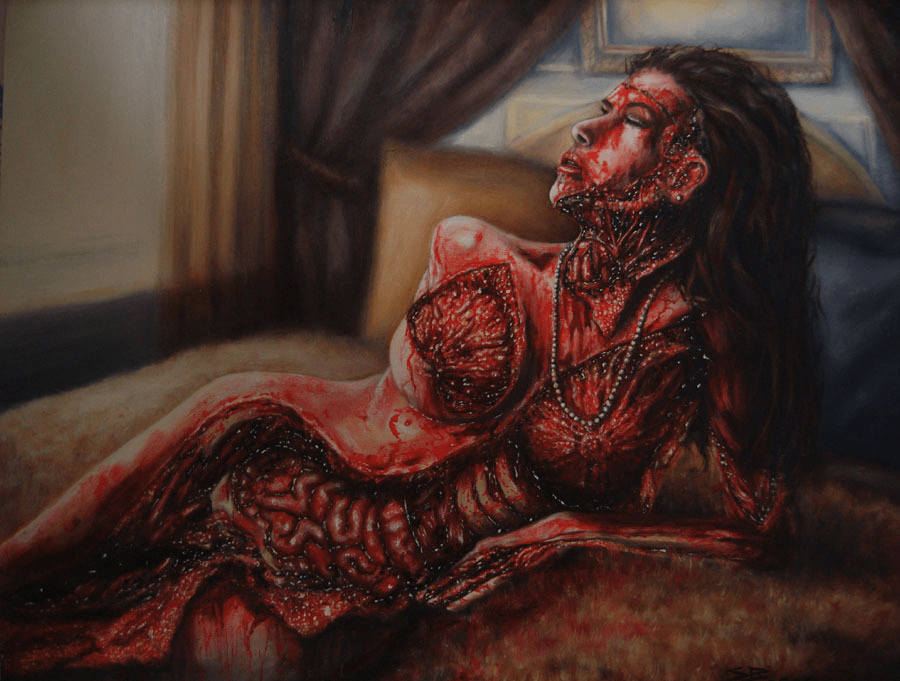
Art by Suzzan Blac: Inside Out

To present a well-rounded viewpoint, it’s crucial for me to feature a female artist who actively advocates for the well-being of both children and adults. I am describing someone who fights tirelessly against child exploitation and human trafficking. It is necessary to mention that there are painful sexual encounters. The focus of this article is not on fantasy, but on deep contemplation of the harsh realities surrounding sexual assault. It describes the experience of one artist who overcame incredible odds and survived.

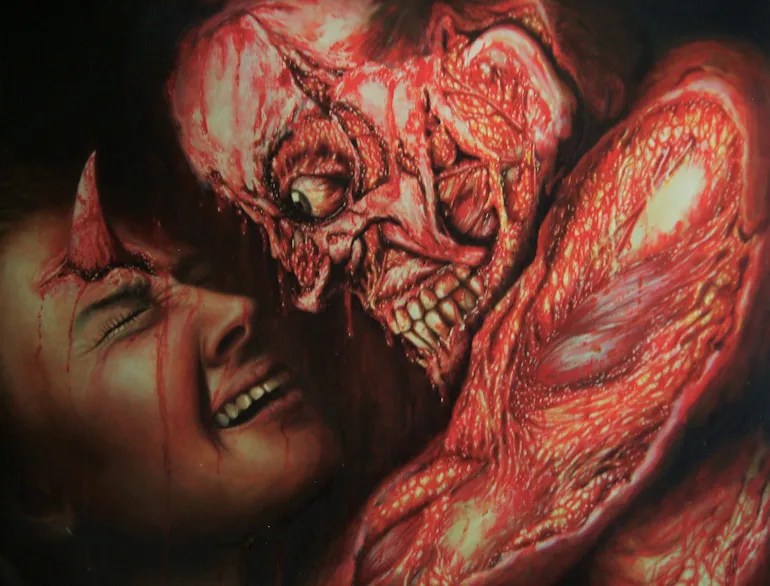
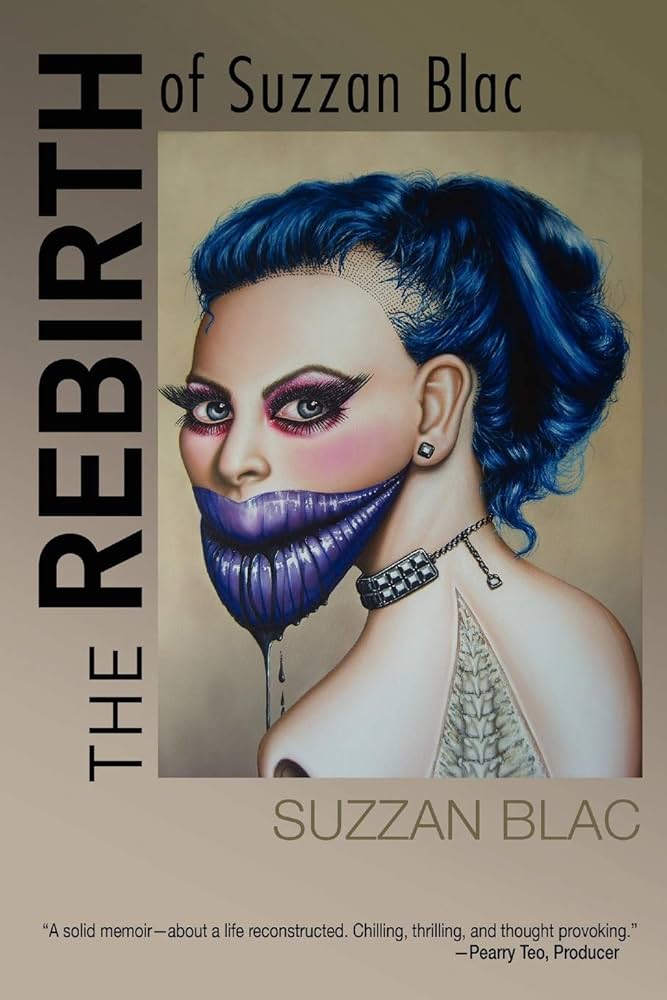
Suzzan Blac was born in Birmingham, UK in 1960. Her oil paintings and writing reflect her personal experiences with physical, mental, and sexual abuse. Blac’s artistic purpose is to shake society out of apathy and educate those who perpetrate secondary victimization, which can be equally distressing as the abuse. Suzzan’s work serves as a source of inspiration in group therapy for victims of abuse. Her work revolves around creating educational programs that encourage greater understanding.

Blac turned to painting between 2000 and 2004 to process her pain, anger, and trauma from the abuse she experienced. In order to tap into her subconscious, she started by doodling while watching TV, recognizing that these drawings had to originate from a place deep within herself rather than her conscious thoughts. After creating the drawings, she skillfully transformed them into realistic paintings that depicted both the victim and the perpetrators. Despite feeling unsettled by her paintings, she understood that they honestly portrayed her innermost pain that required healing. For four years, she dedicated herself to painting forty images, which she carefully kept hidden for over a decade, fully aware that sharing them would cause harsh judgment. It was in 2011 when she made the bold decision to share her most challenging work with the world by putting it online. Blac found it necessary to use her artistic abilities as a platform for speaking out and advocating for her beliefs. There were many people who said hurtful things to her. However, she also received gratitude from countless survivors who felt empowered to speak up because of her.

Blac’s work is challenging to look at. It invites the viewer to contemplate and empathize with situations involving sexual violence as a victim. In her own description, she compares rape to a type of murder in which the victim does not lose their life. Blac renders and illustrates emotions in a horrific way. She blends figuration with an eerie, surreal style. In her painting, she frequently uses an effect where the figures appear malleable under the influence of a predatory force. Dolls are frequently used to represent figures. The combination of these elements makes a significant and lingering impression on anyone who sees them. Her paintings hold viewers hostage and give them an intimate feeling of her experience.

The scenes in Blac’s work are terrifying, creating the ultimate experience of body horror and disassociation. Her artwork also serves as a healing remedy for emotional trauma, as well as a catalyst for memories of sexual abuse survivors. One could hypothesize that Blac’s neuroaesthetics might have an influence on the hippocampus, the area of the brain that plays a crucial role in managing the experiencing self and the remembering self.

Before reading her book, The Rebirth of Suzzan Blac, I was familiar with Suzzan’s remarkable talent for painting, but unaware of her story. I won’t reveal too much about the book, but I can give you a general concept. Blac was a prisoner, enduring unimaginable exploitation in the sex trade. These events occurred when she was still a teenager. The book is candid, and Blac’s narrative has a genuine and tender tone. Although the subject was difficult, the book had a natural and easy-to-read style that leads the reader into a world filled with the most cruel human conditions one can imagine. Blac’s book is incredibly uplifting and positive. Her dedication to addressing sexual abuse issues is evident in her continuous efforts to use art as a medium for awareness.

Written by Mitchell Pluto

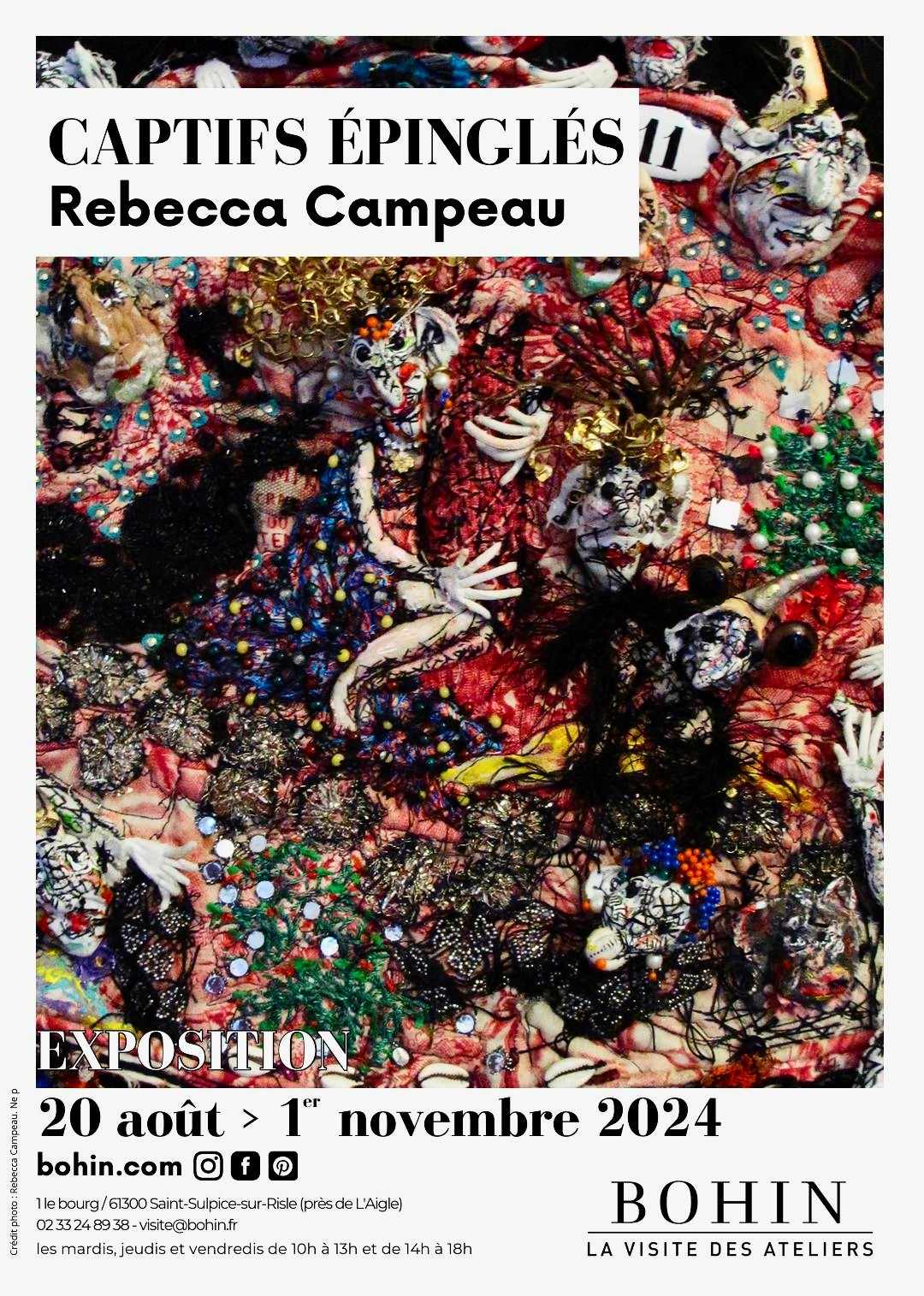
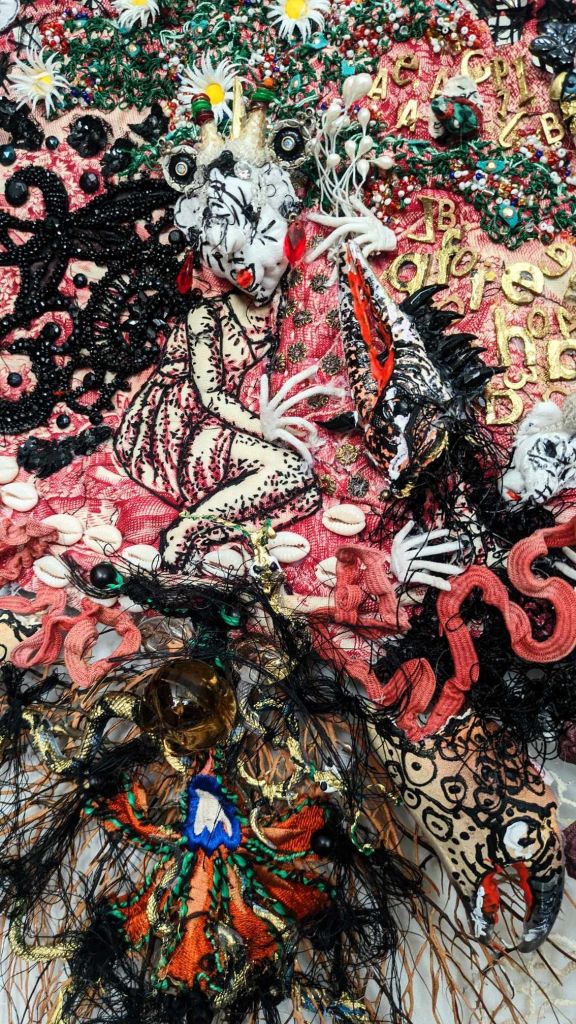
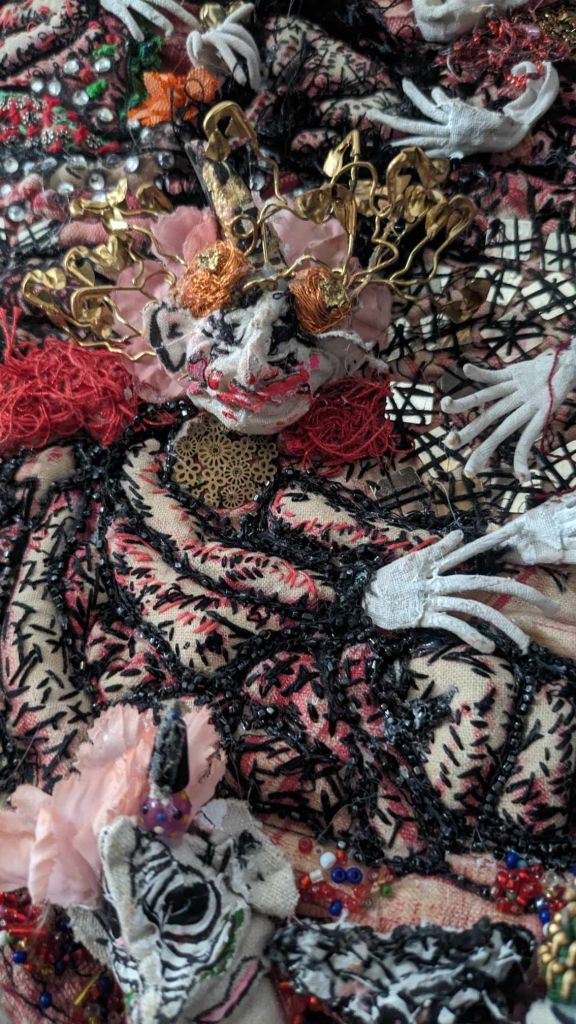
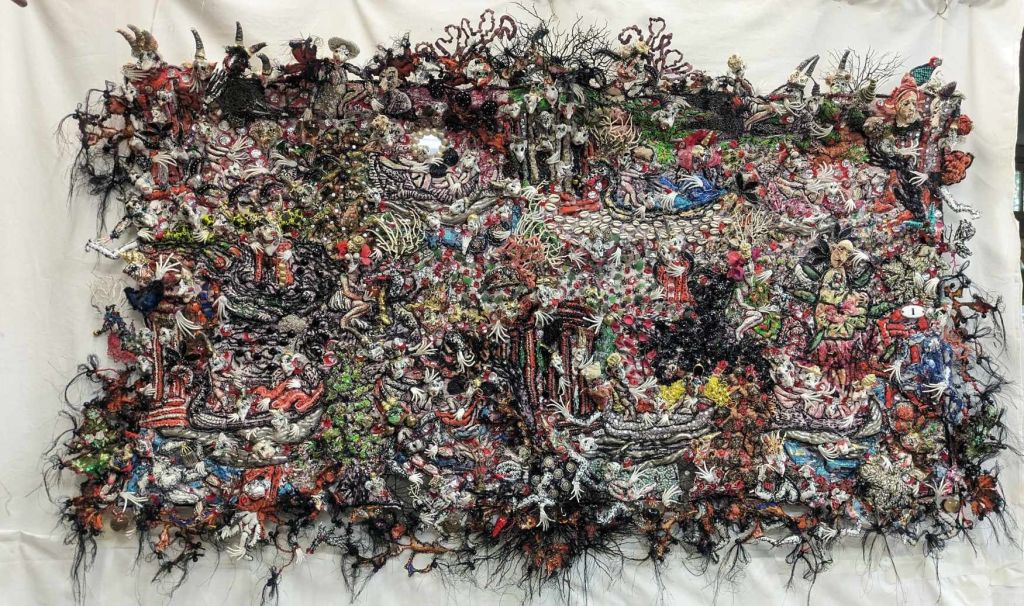
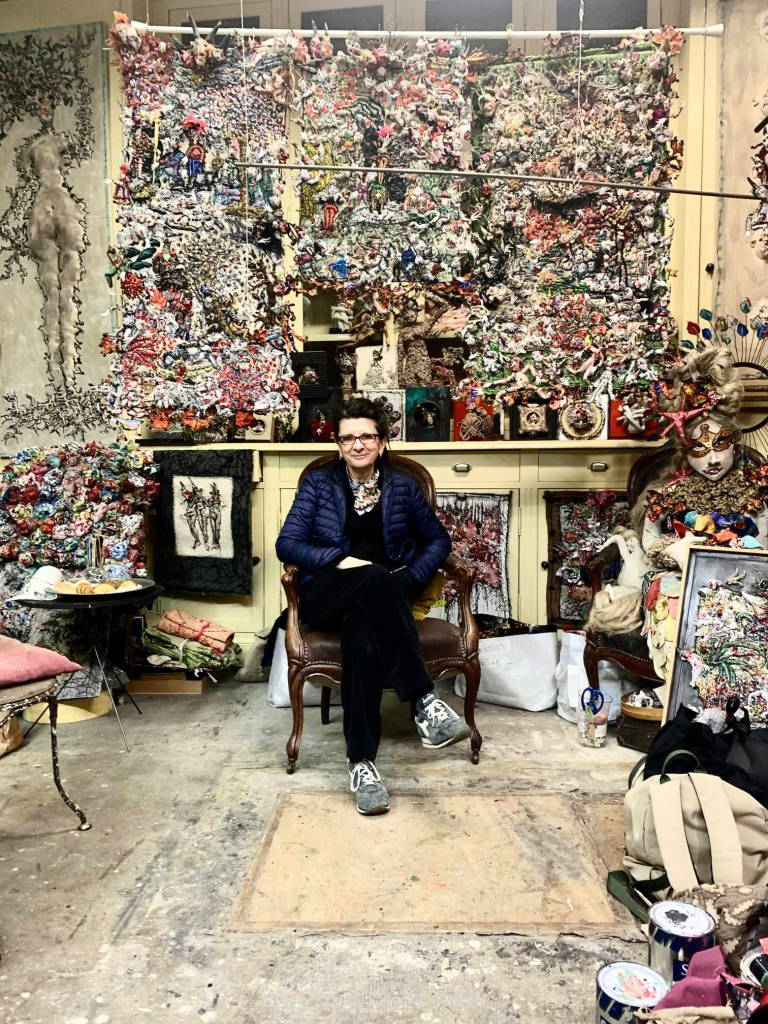
Exploring Tissues, Works by Rebecca Campeau

Ma petite histoire sans fin !
Passionnée depuis toujours par divers les matériaux et aillant une grande prédilection pour les tissus !


J’ai commencé à travailler au Journal ELLE, Jardin des Modes,100 IDEES,Jours de France, Journal Femme, et autres journaux comme rédactrice de mode, parallèlement j’ai aussi commencé à travailler comme styliste en publicité ,pour de grandes agences de Publicite :Hélène Rubinstein, Danone, Kodak ,Nazareno Gabrielli-Milan/ORO BLEUE-Milan.

De 1970 à 80 avec le photographe Frank Horvat, j’ai réalisé seule le livre-Vraisemblances- 50 costumes, fonds photo teintures, peintures, bijoux et stylisme.
J’ai aussi participé au choix des photos.

J’ai aussi réalisé quelques décorations d’intérieur d’apres mes dessins pour certaines actrices de cinéma.

Puis j’ai commencé à faire des costumes pour le théâtre notamment pour les Colombaioni à l’Olympia,cinema etc…

Suite à la rencontre avec Giancarlo Petrolati, décorateur avec lequel nous avons monte

  • l’Atelier des 3 Coups- pandant 40 ans
    Nous avons travaillé pour l’UNESCO-Paris ainsi que pour divers musées dans le monde ! Japon, Portugal, Paris, Suisse, Belgique, Italie. En 1990 en collaboration avec et pour Claude Lévi-Strauss, j’ai réalisé des sculptures grandeur nature (indiens) en textile (3 tribus du Mato-Grosso-Brésil)
    pour l’exposition-Les Amériques de Claude Lévi-Trauss- au musée de l’homme Paris.

Puis pour Paul Emile-Victor en 1989 au musée de l’Homme Paris j’ai réalisé des Eskimos grandeur nature pour l’exposition -Eskimo-

Parallèlement j’ai toujours eu un travail personnel que j’ai exposé régulièrement dans les galeries, musées & salons .

Musée National de Norvège-exposition Louise Bourgeois-Oslo/Musée des Champs Libres-Rennes/musée Cérès Cérès Franco Montolieu/musée d’Art Brut-Montpellier/musée Villa Montebello.
musée Mona Bismarck-Paris/musée Mendjisky-Paris/Le FIAA-Le Mans/musée Cite du Train-Mulhouse/musée Toine Colot-Belgique/musée du Tunnel du Gothard-Suisse/musse du Plan incliné-Ronquieres-Belgique/musée de la mine-liège/musée de la Mine Bleue-Noyant-la-Gravoiere/musée Guerre et Paix-Ardennes/musée de la forêt-Renwez/musée de la carrière de pierre-Givet-France/musée Cristallerie Saint Louis-Saint-Louis-les Biche/Hôtel de Sully-Paris/Bibliothèque Bilipo-paris/musée Gustave Flaubert et de la Médecine-Rouen/The National Art Center-Tokyo/musée Bohin- Saint-Sulpice-Sur-Risle/musée des Beaux-Arts-Carcassonne/musée des Champs Libres-Rennes/Galerie Kiron-Paris/musée Mini Textile-Italie/Vibrations Textiles-Paris/musée de la photo-Paris/

Mes sculptures sont visibles
en permanence-au Musée d’Art Brut-Montpellier/musée Gustave Flaubert et de la médecine-Rouen/
Musée de l’Homme-Paris /Cite du train-Mulhouse/musée du plan incliné-conquières-Belgique/musée Arthur Masson-Belgique et…

Salons : Art Capital-Comparaisons-Paris/AAF-Paris/Figuration Critique-Paris/Salon d’Automne-Paris/Biennale 109-Paris/Salon des Beaux-Arts-Paris/Salon-XI’AN-Chine
Art Partage-Rives/Hors Normes-Praz-sur-Arly/Chic Art Fair-Paris/Aix-en-oeuvres à Aix-en-Provence organisé par Andréa Ferreol

Galeries: Edgard le Marchand-Paris/Beaubourg-Paris/Art-Top-Lille/Not a Gallery-Paris/Galerie75-Rouen/l’Ecu de France-Viroflay/Chez Colette-Paris/Cécile Dufay-Paris/ST’ART-Paris/Espace Aliès Guinard-Chaillon/ l’oeil de la Femme à Barbe-Paris/Artcompulssion-Montpellier/Artistes Actuels-Paris/Collection Gallery-Chypre/

PRIX Jean Anouilh 2019/
PRIX Taylor 2021/PRIX Attention 2022 / PRIX Bohin 2023.
rebecca-campeau@hotmail.fr
http://www.rebecca-campeau.com

El arte de la basura Ricardo Enrique Castro Guerra

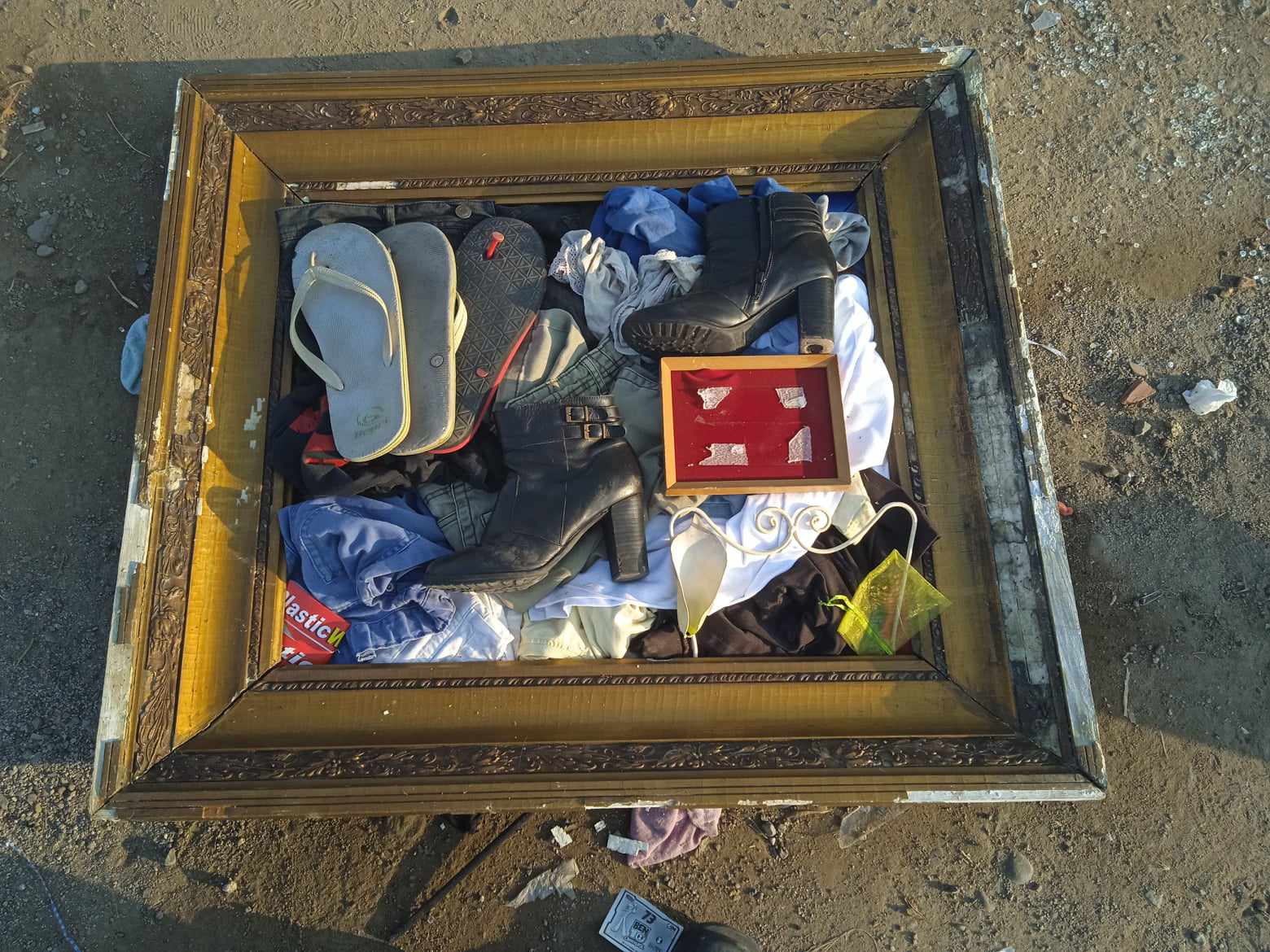
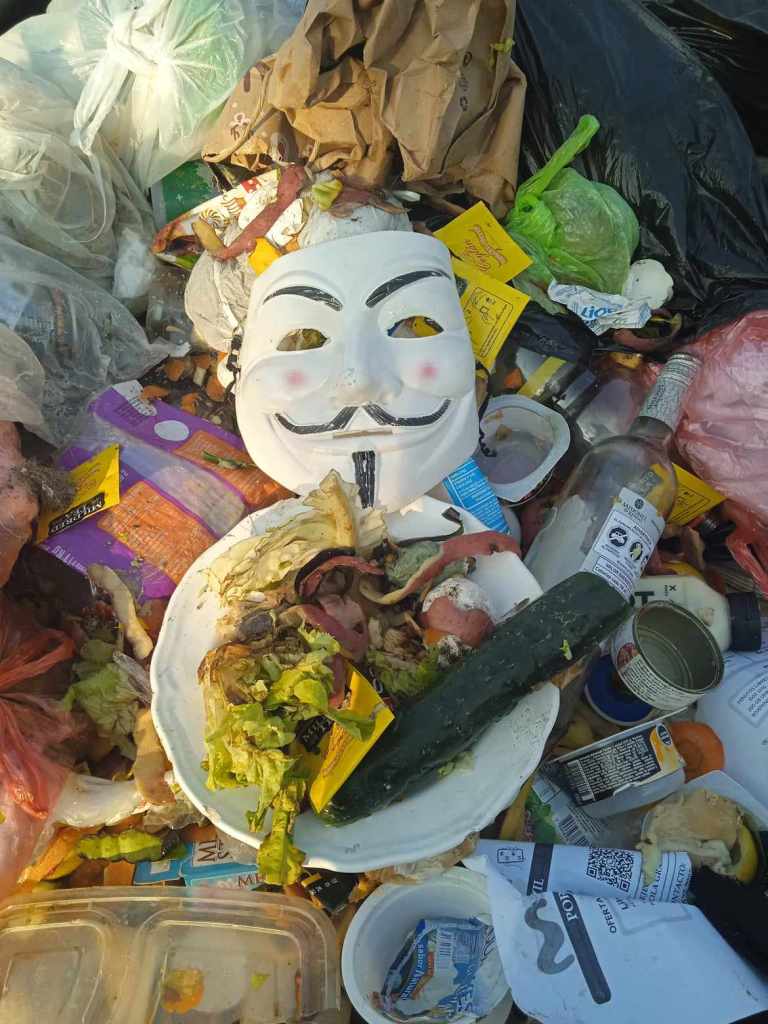
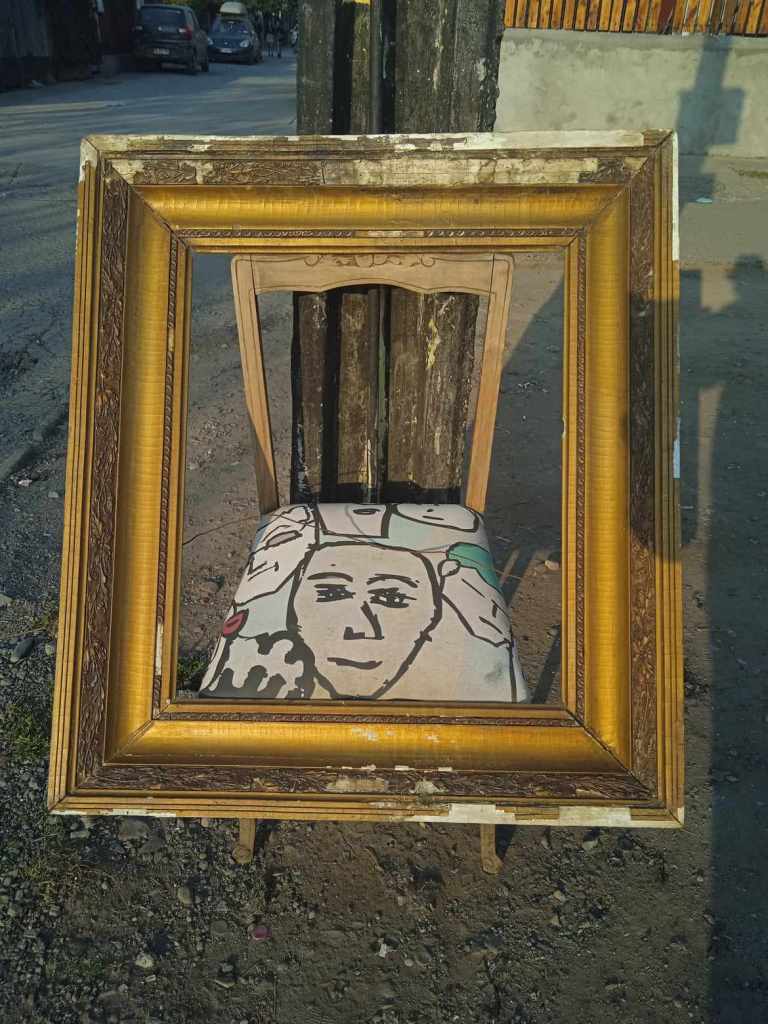
El arte de la basura. La basura del arte. La creación como desperdicio. Desperdiciando la creatividad a través de la basura acumulada en una calle del vecindario, en el desierto, en loscaminos del agua, en la frontera. Es arte la basura? No en principio, en los principios del arte la basura no existe,latécnica requiere de objetos calificados para lograr el objetivo de la “belleza” y por tanto en esta belleza no existiria la basura, aún así el uso de los materiales empleados dará como resultado “residuos” y estos residuos son la basura, lo despreciado que irá a dar al basural el basural de la ciudad lo recoge el artista que creará una obra de arte con esta o con cualquier residuo. Las galerias y museos no exponen basura, la basura que antes se escondia ahora ya no se puede esconder, la tenemos aquí como montaña o como laguna, como materia de importación y exportación. ¿Es progreso la basura? Es un adelanto? No. Ahora el arte es progreso? Es adelanto una obra de arte?no, pues el arte tambien crea un subproducto llamado basura y entonces la basura es un problema? La natraleza no humana,npo produce basura estoda muerte-vida-muerte se convierte en alimento de principio a fin.

La basura es el subproducto de hombres y mujeres codiciosas, temerosas del vacio, del silencio, de lassombras y por esto sobrellenan, sobrecopan y reproducen de modo insensible objetos prontos a la inutilidad, incluyendo el vestuario dañino confeccionado con hilos sinteticos, y la destrucción progresiva de nuestra naturaleza. Por cierto destuyen la tierra y el agua, el cielo y losmares pues créen que les pertenecen, se creen los amos y dueños

Ricardo Enrique Castro Guerra

Es un asunto de querer magnetizar los elementos encontrados. Unirlos como si fueran una solución a un problema, sin tener , ni presentarse como problema. Al encontrar un objeto se van produciendo solas las uniones, la visión de esa reunión empieza a crear se su propia obra. Una inspiración creativa que se gesta a través de las palabras y las acciones. Arte de acción, teatro, poesía, plástica.

Nacido el año de 1961 y dedicado a la creación artística desde entonces, cuento en la actualidad con 62 años y perseveró con entusiasmo en la creación de poesía, obra plástica y conciertos de poesía.

Francisco Ríos Araya y el Trance de Tejer

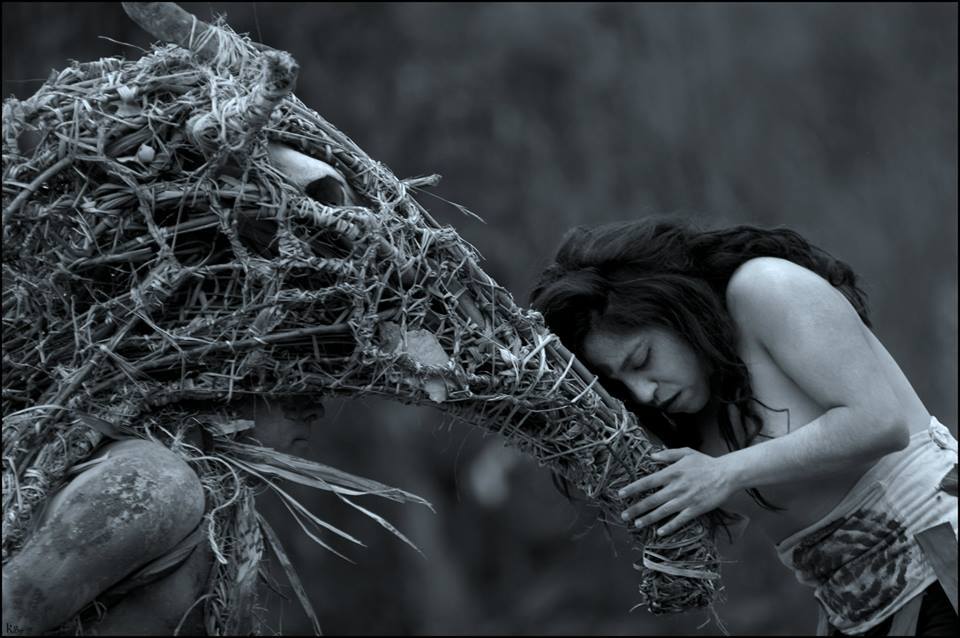
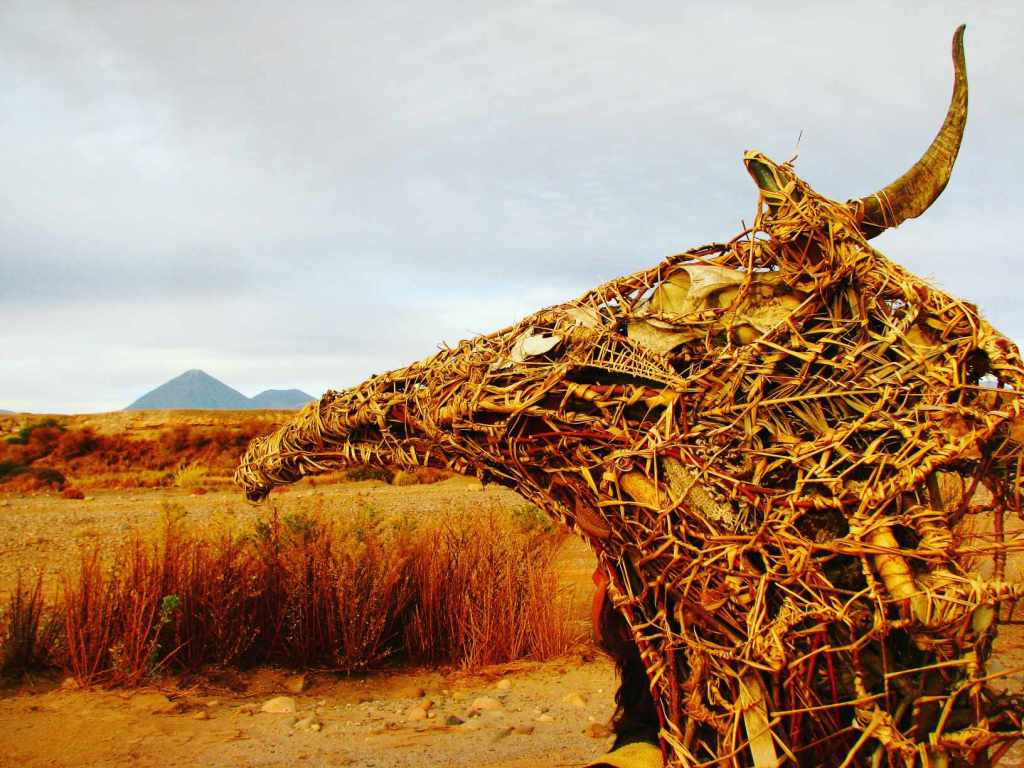
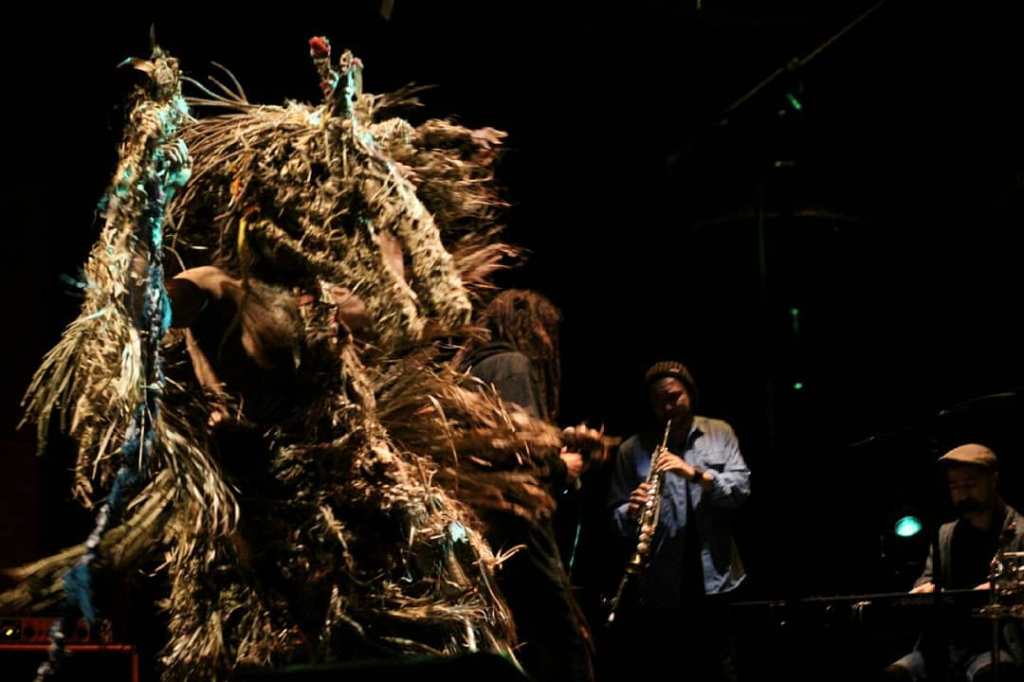
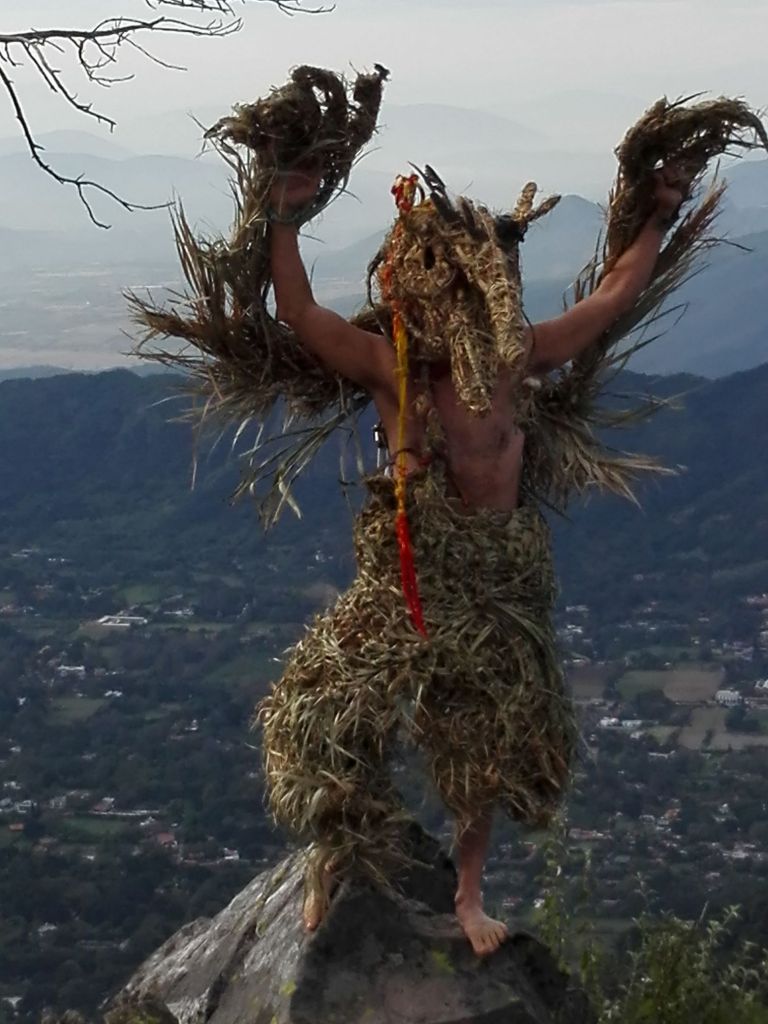
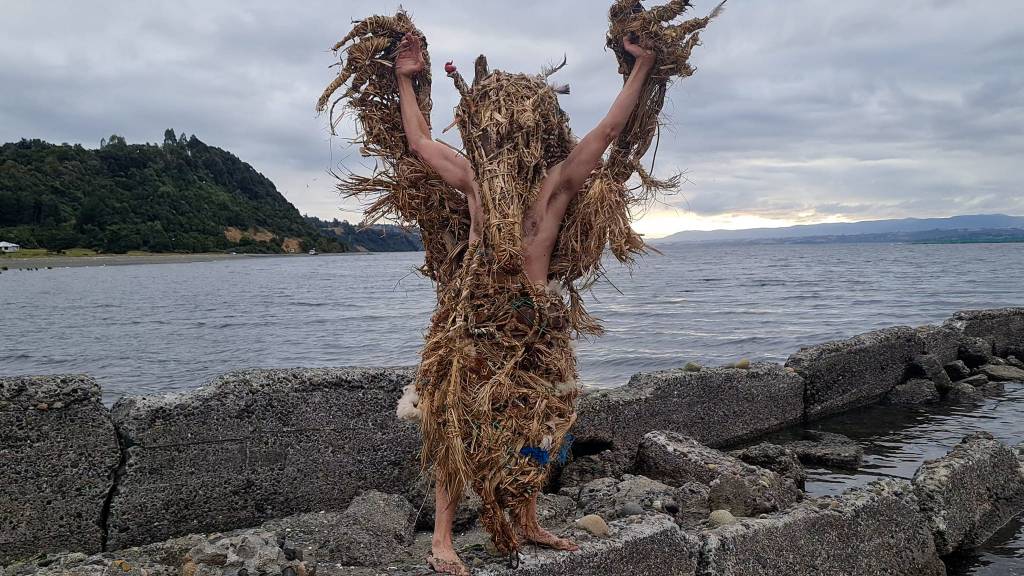
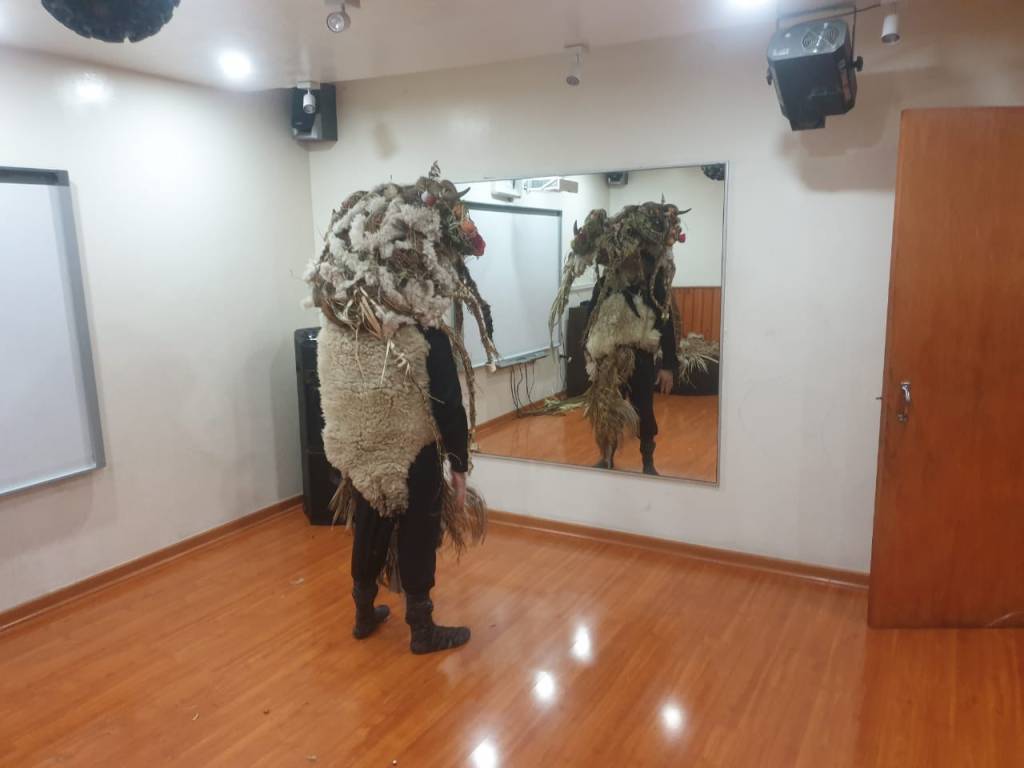
Son seres míticos… o espíritus vegetales y animales…que aparecen por el trance de tejer .
Que son nuestros primeros textos.

Es bajar ese texto al cuerpo y activarlo en ceremonia
Ese texto de plantas tiene una memoria ancestral

Que yo rescato hoy, por la necesidad de volver al rito, al mito y a generar saberes integrados para sanar

Si es así…mi quehacer es un trance espontáneo…según lo que voy tejiendo se arma el texto…

Si tejo una raíz me habla del inframundo.
De mis densidades, oscuridades.
De mis ancestros que nos sostienen y nos hacen pertenecer con identidad.
Nuestras abuelas piedras nos enseñan a concretar

A cristaliza

Si tejo una rama, me conecta con supramundo, la luz , los seres alados, el aire, la espiral y el fruto , para dis frutar = sacar el fruto..
Es lo que me hace ser Pajararbol
Al servicio de un oficio ancestral.
Arte para lo social, arte en tribu

Francisco Ríos Araya (1971, Santiago)

With a background in journalism and art studies, Francisco has established a career known for participating in international sculptors’ gatherings. Clay, metal clay, wood, resin, and natural fibers are among the materials he integrates into his works.. Through his research, he investigates abstract elements that are connected to sensuality and the origins of life.

Francisco’s work revolves around exploring the representation of mythological beings present in diversified cultures. His reinterpretation of these concepts emphasizes their role as a conduit, linking the earthly with the celestial.

Stephanie Di Domenico, Another day before death 

With complete dedication, Stéphanie immersed herself in photography, perfecting the gestures, and selecting women as her muse. Through her work, she realized the significance of honoring the dignity of every woman. Stephanie’s sessions revolve around accepting the body and loving one’s self, even in the face of adversity. This theme triggered a desire for personal growth.

An Intimate Photo Session with Stéphanie Di Domenico From Shunga Gallery Erotic Art Magazine

Another Day Before Death

Limited Edition 75 copies – Photographic book – photographs by Stéphanie Di Domenico

Cryptic Messages from Leo Alt

Alien Telepathy

Inspiration for my Artwork comes about fast and furiously, which I attribute to the theory of left-to-right brain transformation. My background and education have enabled me to create without boundaries.

The Overseer

I see a world of abstract shapes and colors, and I interpret my vision in digital images. Hidden within my creations are enigmas—mysterious images, cryptic messages, and symbolism. I invite viewers to explore, to decode, and to find their own meanings in the art

Crystal Blue Persuasion

Leo Alt (Leonid Altshuler) is a notable 21st Century Digital artist, whose work incorporates images of organic substances, minerals, and man-made items, photographed on a micro-scale. Included in the surreal scenes are silhouetted forms of humans and other creatures.

The vivid images are evocative of many scenes: dreamscapes, alien worlds, portals to other dimensions, and more. Leo’s portfolio showcases his unique vision and creative approach to digital art

Galería de Colibríes

A partir del próximo mes, el mundo pronto recibirá una invitación para experimentar la vibrante galería del artista sudamericano René Fernando Ortega Villarroel. Quienes se encuentren dentro del área son bienvenidos a asistir a la expo Franterno. Marquen sus calendarios para el 23 de marzo, cuando una exposición de grandes artistas sudamericanos que alteran la mente debutará en Til Til, región metropolitana de Santiago.

Pocos lugares pueden rivalizar con la línea eléctrica orgánica que se encuentra en los entornos naturales surrealistas de Chile. Chile y Sudamérica se convertirán en destinos líderes mundiales para experimentar estados psíquicos surrealistas.

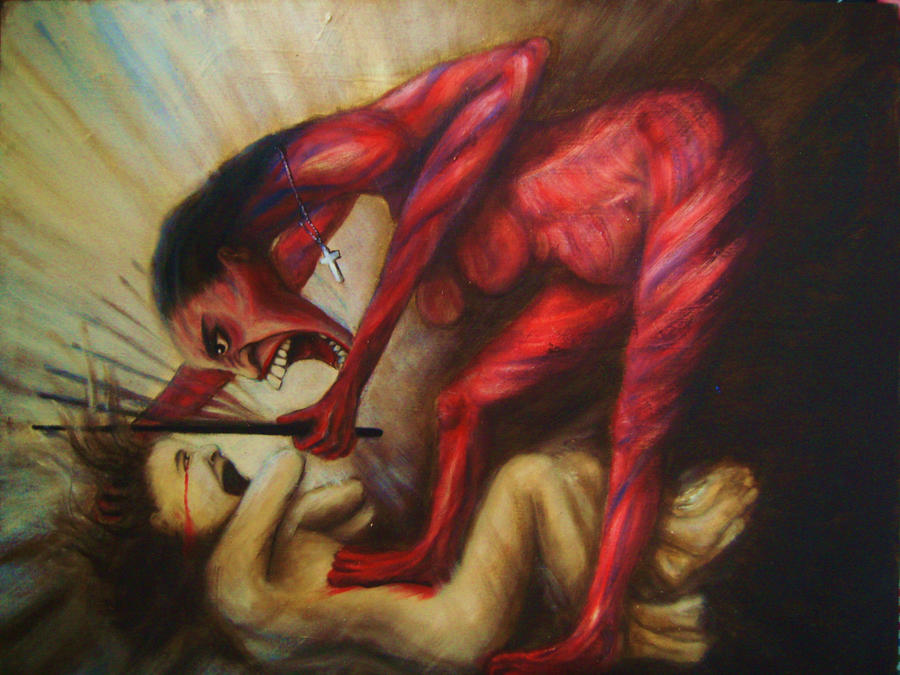
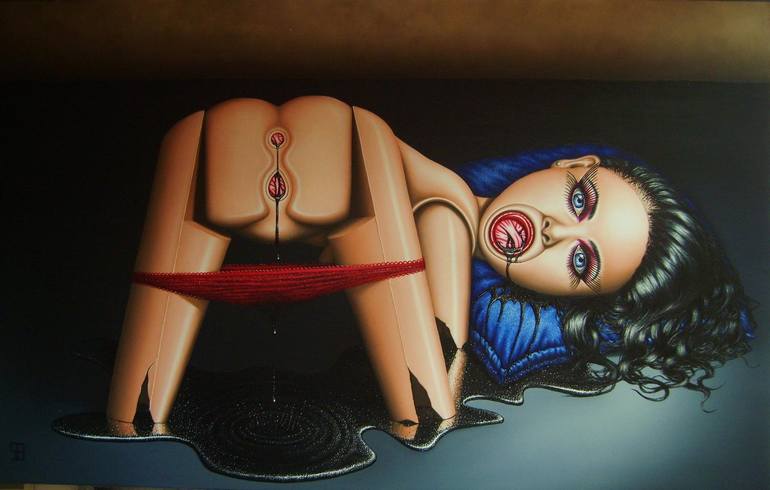
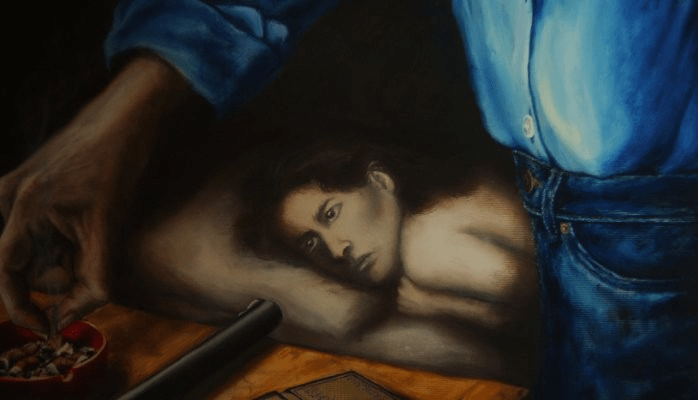
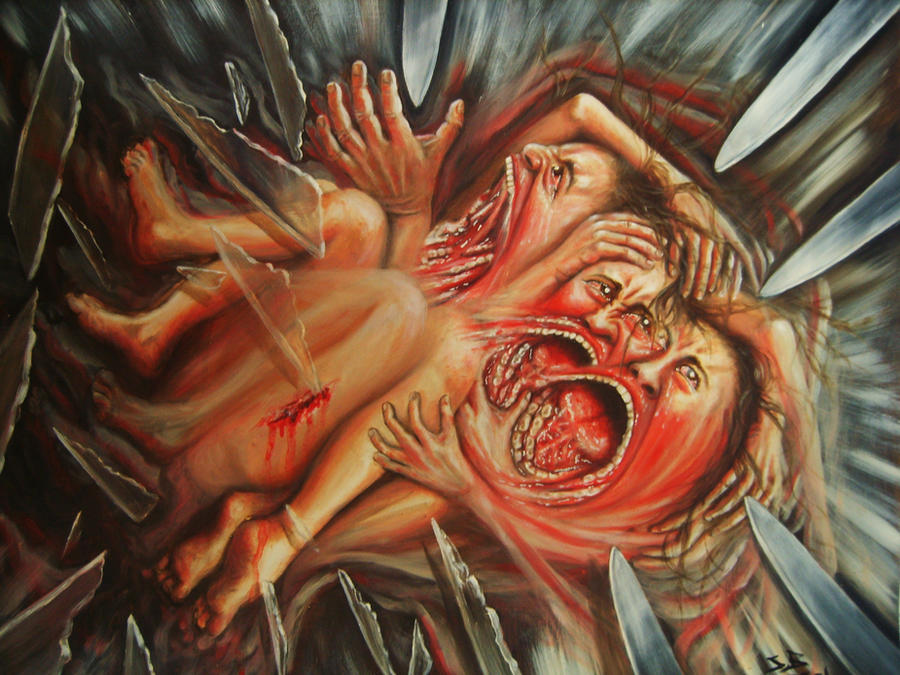
Angélique Danielle Bègue Icônes

I did my apprenticeship at the Priory of Gorze in the company of nuns and women converted to Orthodoxy. They are part of the local community.
combat

L’œuvre est ici un détachement en soi, comme un désœuvrement/recoeuvrement, en mêlant les différentes expériences du vivant, la mort, le sexe, le viol, l’inceste, la naissance, le plaisir, la douleur. Ce qui reste de plus vivant provenant de l’intérieur du vécu là où les spectateurs sont confrontés directement à leurs propres fantômes/fantasmes.

Bernard Andrieu, philosophe

Délivrance commande

Toutes les étapes pour peindre à la tempera

écrit par ©Angélique Danielle Bègue

Je fais mon apprentissage au Prieuré de Gorze en compagnie de nonnes et femmes converties à l’orthodoxie. Elles font parties de la communauté du lieu. Mon maître d’icônes se nomme Louise Marie. Une dame d’un certain âge aux cheveux ressemblant à des nuages.Une formation qui a duré trois ans. Dans le même temps je prends des cours de dessins de nu à l’école des Beaux art à Metz.

Odalisque de dos

Pour commencer une icône il me faut d’abord contacter un menuisier car le sujet se peint sur une planche de bois (exotique de préférence). Une fois la planche coupée il me faut la préparer avec du Blanc de Meudon, de la gélatine alimentaire et de l’eau. (Une recette bien précise que je ne citerai pas ici) Une quinzaine de couches de cet enduit sont indispensables.

Une fois toutes les couches terminées, je laisse sécher la planche deux jours et avec du papier abrasif fin je ponce les aspérités. Planche qui représente symboliquement pour ma part le tout et le rien. Le dessin se fait sur un calque pour pouvoir le transposer grâce à des pigments sur la planche. Puis vient la préparation du liant qui va me servir à peindre. A base de jaune d’œuf et de vinaigre et un peu d’eau. (Je lave le jaune sous un mince filet d’eau et enlève la membrane). Une fois le dessin transposer sur la planche je reprends les traits grâce à un pinceau fin et du pigment noir. Le pigment qui se trouve sur la planche s’efface facilement d’où la nécessité de le reprendre. La technique que j’utilise pour peindre est celle de la tempera à la goutte. C’est à dire que je trempe mon pinceau dans ma palette contenant le liant à l’œuf (mélangé à un peu d’eau) et les pigments pour ensuite déposer la goutte sur l’endroit du dessin où je veux peindre.

Olympe

Puis je la fais rouler, mon pinceau ne touche pas la planche. Ce qui forme en quelque sorte une flaque. Une fois cette dernière sèche, je recommence le même procédé. Je commence toujours par les couleurs sombres pour arriver aux couleurs les plus claires. La symbolique de l’ombre vers la lumière. Par exemple pour la chair (un visage, un corps, les mains) j’utilise d’abord un vert olive (symbole de la terre) puis du pigment ocre rouge (symbole du sang) pour enfin arriver à l’ocre jaune pur. Les finitions de la chair comportent souvent trois voir quatre teintes différentes toujours dans les tons chairs mais de plus en plus clairs. Les quelques notes blanches que je trace grâce à un pinceau très fin se font tout à la fin pour accentuer la lumière. J’utilise la même méthodes pour les vêtement, les bijoux, le fond…..

Le bar d’amsterdam

Une fois l’œuvre terminée je peux passer au vernis. Je laisse d’abord sécher la peinture quelques jours puis je passe à la saturation et enfin le vernis. Je peins les bords de l’icône en noir ainsi que l’autre face de la planche.

Le cauchemar

Les années 2000 représentent des changements dans mon esprit et naturellement dans les sujets que je peins. J’utilise la même technique que l’icône pour peindre des personnes qui veulent bien poser pour moi et ma vie toujours teintée de spiritualité et d’émotions fortes.

Elephant à vendre

En parallèle je pose en tant que modèle à l’école des Beaux Arts de Metz et pour d’autres ateliers. Beaucoup d’élèves dessinent mon corps ou réalisent des peintures. Je pose aussi en tant que modèle pour photographes. Photographies qui m’inspirent pour relater ma vie en peinture. Je continue aussi à écrire des icônes religieuse sur commande. Je travaille aussi sur les animaux qui font partis des êtres sensibles qui peuplent ce monde et sur des sujets plus dures comme la déportation ou la détresse des femmes par exemple en Afghanistan.

Je continue de poser pour des photographes (si le projet est sérieux) et je fais des autoportraits en photos que j’utilise aussi pour mes peintures et travaille sur commandes ou pour des expositions. Des vidéos performances sont réalisées grâce à plusieurs personnes. (artistes, amies passionnées par mon travail). Beaucoup d’artistes via fb s’inspirent de mes photos pour peindre de jolis tableaux.

L’arbre mort

Je pense dans l’avenir toujours peindre et donner des cours, transmettre ce savoir de la technique à la tempera comme Louise Marie du prieuré me l’a transmis. Et travailler sur commandes. Exposer et écrire. Pour finir, en quête d’identité depuis mon adolescence ces supports artistiques me permettent d’avancer.

noir et blanc

 Angélique Bègue (December 23, 1970 – ) is a French artist who has renewed tempera painting.

NatureDouble

Video intended for mature audiences

Mes expositions :

2023 : Exposition Atelier Sainte Croix à Metz

2022 : Exposition Carrefour des Arts à Metz

2022 : Exposition Atelier Sainte Croix des Arts à Metz

2020 : Exposition à la Galerie Tet de lart à Forbach

2018-2019 :Après avoir été exposée au Centre européen du résistant déporté et au fort de Queuleu, l’oeuvre d’Angélique Bègue et d’Annick Monnier sera présentée au public normand dans le cadre du 75ème anniversaire du débarquement.

2018-2019 : J’exposerai à partir du 15 septembre ma série de peintures consacrée aux expériences médicales menées dans les camps de concentration nazis.
Mes œuvres seront présentées dans le cadre de la nouvelle exposition du Centre européen du résistant déporté consacrée aux médecins déportés.

2016-2017 : « rue des Déportés« , Fort de Queuleu, Metz

2015 : « rue des Déportés », Struthof, Centre européen du résistant déporté

2012-2013 : « Dans mon corps », Toul, Musée d’Art et d’Histoire (pour public averti)

2012 : « Un envol…de vie », Université de Lorraine, Bibliothèque universitaire de Lettres, Nancy

2011 : « Ange ou démon », Villers-lès-Nancy, Galerie de Madame de Graffigny

2011 : « Super héros », Maxéville, Souterrain Porte VI

2010 : « Femme entre terre et ciel », Bar-le-Duc, Espace d’art contemporain Saint Louis

2010 : « Les 7 péchés capitaux », Strasbourg, Galerie Insight

2009 : « Intuition », Pont-à-Mousson, Chapelle de l’Institut

2009 : « Déni d’humanité », Totem, Maxéville

2008 : « Regard » Galerie 9 à Nancy

https://imagesdangelique.wordpress.com/

https://www.artmajeur.com/angedaniellebegue/en

THIS AN AUTHORIZED DUPLICATION WITH PERMISSION AND EXPRESSED CONSENT