Bodymandala: Interview with Michiyo Kamei

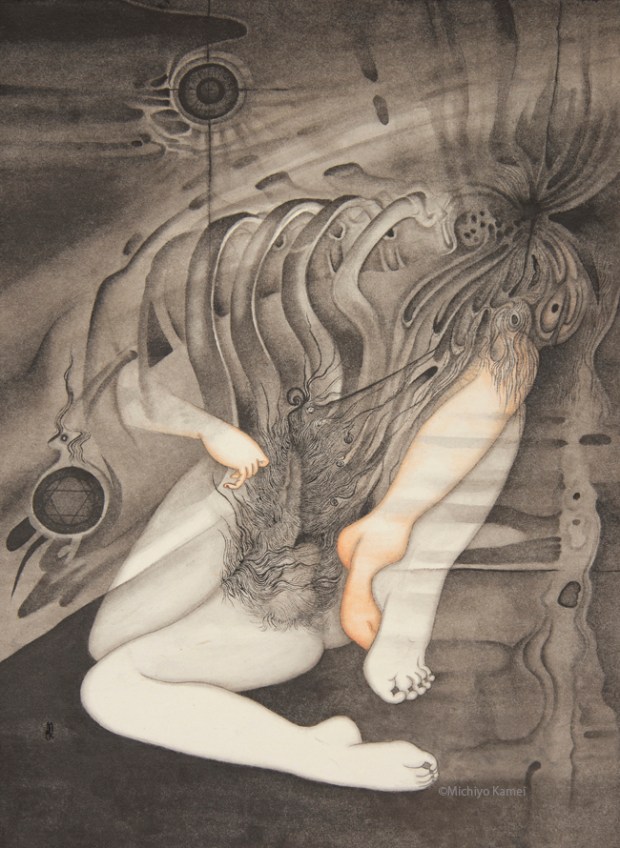
Feature Photo: Black Inspiration 41.0 x 31.8cm Sumi-ink with Michiyo Kamei’s body on Washi paper 2025. Photo used with kind permission directly from the artist and copyright holder © Michiyo Kamei

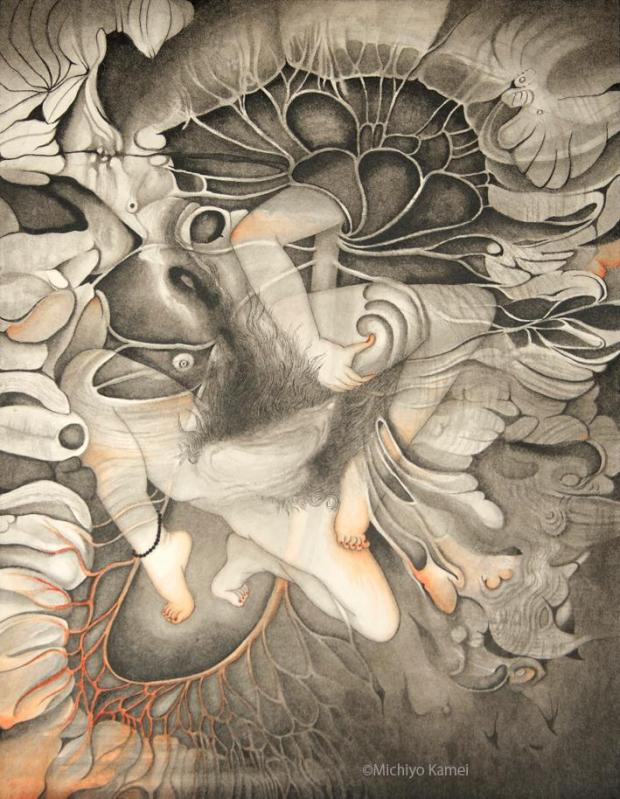
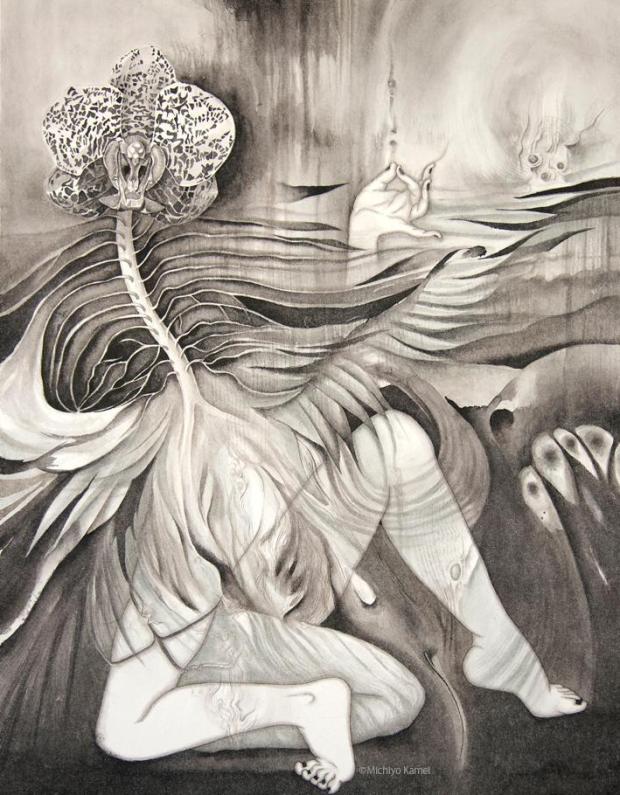
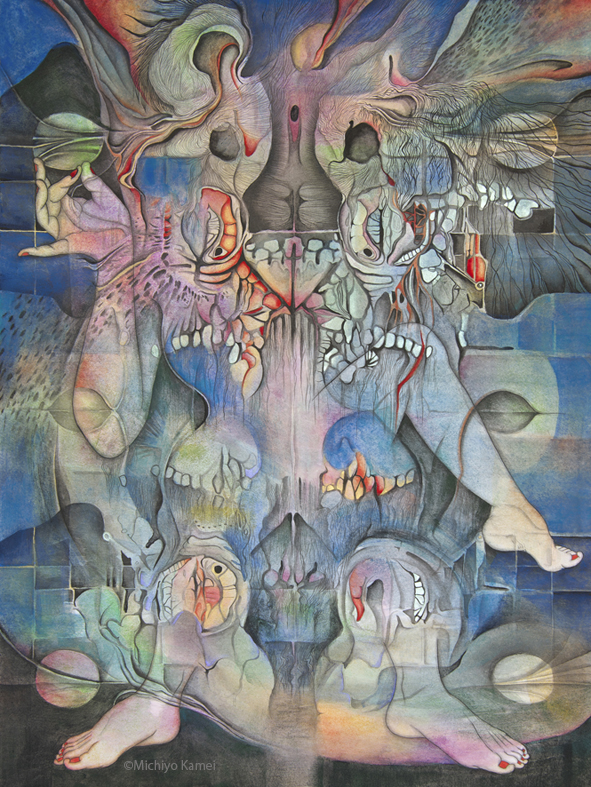
In her black ink paintings, Michiyo Kamei explores the concepts of impermanence, transformation, and the enduring nature of existence through a form she calls the bodymandala.

Mitchell Pluto: At what point did you realize you were an artist?

Michiyo Kamei: I originally studied anatomy at medical school and started out as a medical illustrator. It was only after I stopped working as an illustrator and began creating paintings that I realized I was an artist. Anatomical illustrations are created at the request of the medical field to follow the authors’ papers and wishes, so the illustrator cannot draw them freely. Paintings are free to be drawn by the creator, so the artist can freely incorporate their own ideas. This difference is significant to me.

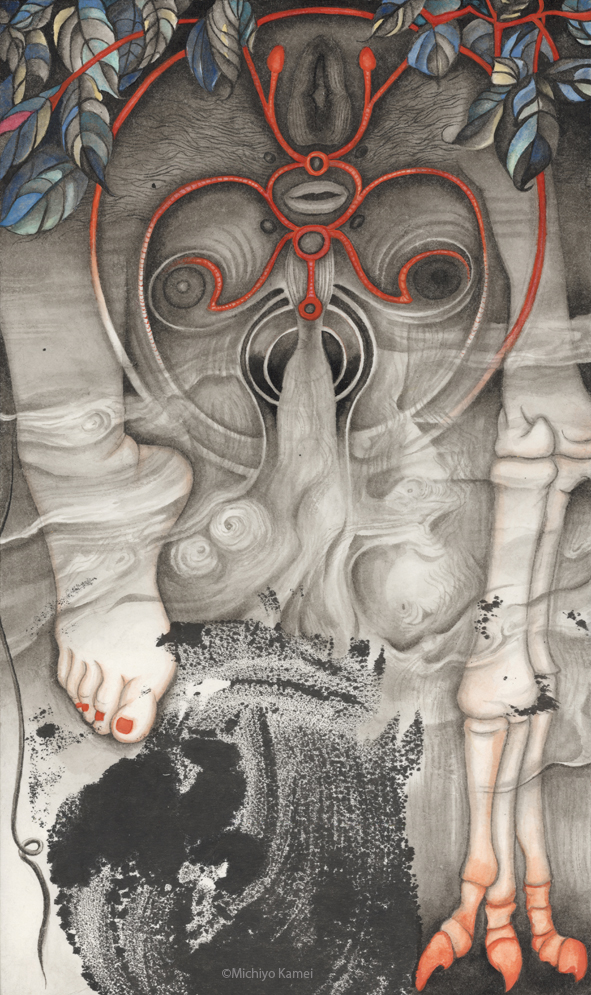
Kuuka
53.0 x 41.0cm Sumi-ink and red-ink on Washi paper 2025. Photo used with kind permission directly from the artist and copyright holder © Michiyo Kamei

Apocalypse
53.0 x 41.0cm Sumi-ink on Washi paper 2021. Photo used with kind permission directly from the artist and copyright holder © Michiyo Kamei

Mitchell Pluto: How would you describe your art, given that it blends many traditional and modern genres?

Michiyo Kamei: When I was drawing anatomical illustrations, I studied the theory of modern anatomy and created my diagrams. After I quit this job and started painting, I began exhibiting at a gallery that collected ukiyo-e prints from the Edo period in Japan. Seeing many hand-painted ukiyo-e at the gallery, I rediscovered the beauty of traditional Japanese styles. When drawing the hands and feet in my work, I sketch my own body in front of a mirror, then deform it in the ukiyo-e style. In this way, I am influenced by both modern anatomical diagrams and ukiyo-e from the Edo period, which have a uniquely Japanese style.

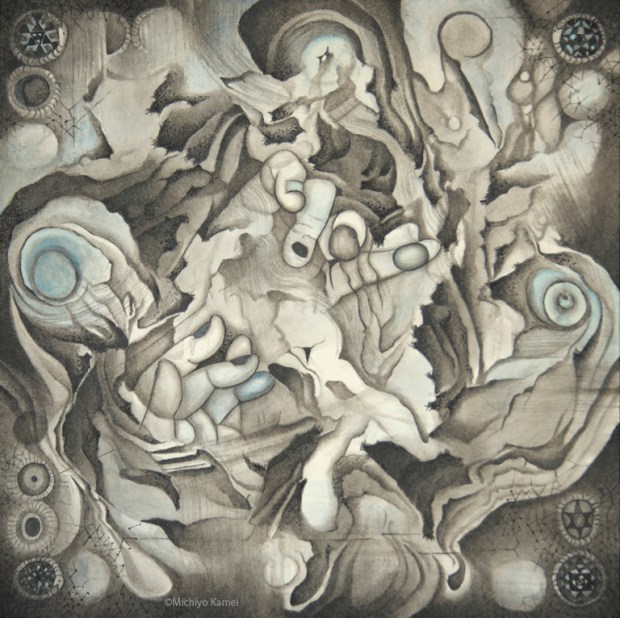
Ring
33.3 x 33.3cm Sumi-ink, natural pigments and glue on Washi paper 2023. Photo used with kind permission directly from the artist and copyright holder © Michiyo Kamei

Mitchell Pluto: When creating your artwork, what specific medium or materials do you prefer to work with?

Michiyo Kamei: I like oriental materials. Rather than just adding paint to the paper, I like to let the ink soak into the paper, letting it bleed and see how it moves within the paper fibers. Sometimes I don’t just create a picture, I let the ink create a picture on its own.

Brahman
60.6 x 45.5 Sumi-ink, natural pigments and glue on Washi paper 2021. Photo used with kind permission directly from the artist and copyright holder © Michiyo Kamei

Moon Ritual
45.5 x 33.3cm Sumi-ink and red-ink on Washi 2020. Photo used with kind permission directly from the artist and copyright holder © Michiyo Kamei

Mitchell Pluto: Could you describe and clarify what a bodymandala is? 

Michiyo Kamei: Anatomical illustrations are pictures of the world of death drawn from corpses. Since I began painting, I have wanted to depict the world of life, so I have incorporated energetic shunga. Death and life are repeated in my paintings, and I hope to approach the theme of “eternity.” Mandalas represent the universe in Buddhist worldview, but I represent the universe through the body, and am exploring a new mandala form called the “bodymandala.” 

Bodyscape 8
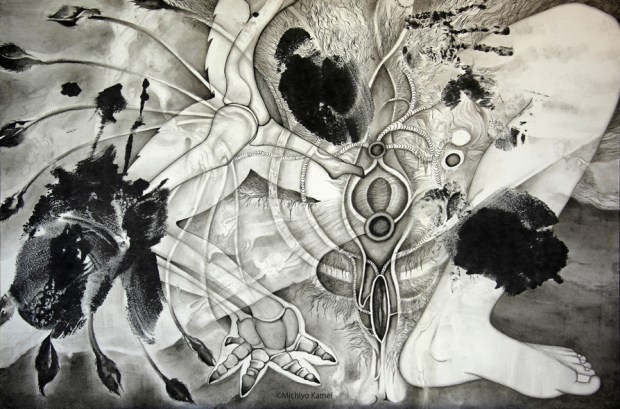
45.5 x 121.2cm Sumi-ink with Michiyo Kamei’s body on Washi paper 2025. Photo used with kind permission directly from the artist and copyright holder © Michiyo Kamei

Mitchell Pluto: What visual artists have influenced your work and given you inspiration?

Michiyo Kamei: I’ve been interested in the body since I was a child. It feels as though I am contained within this body, but at the same time it is also part of the natural world, the world outside of me. Which one does it belong to? And when I realized that I would die along with this body, I was terrified. Francis Bacon is an artist I admire for his expression of the body and anxiety. I’ve admired him ever since I discovered him in an illustrated catalogue as a teenager. Another artist is H.R. Giger. I think his organic expression in black and white is so beautiful.

Spin
65.2 x 65.2cm Sumi-ink with Michiyo Kamei’s body on Washi paper 2025. Photo used with kind permission directly from the artist and copyright holder © Michiyo Kamei

Bodyscape 7
60.9 x 91.0cm Sumi-ink with Michiyo Kamei’s body on Washi paper 2025. Photo used with kind permission directly from the artist and copyright holder © Michiyo Kamei

Mitchell Pluto: Could you please tell me the central idea behind your current show?

Michiyo Kamei: I’m currently incorporating “jintaku” a technique in which ink is applied to my body and then transferred onto Japanese washi paper. Rather than painting with a paintbrush, jintaku involves pressing my body against the paper, resulting in completely uncontrollable and unexpected ink patterns. While observing the stains on my skin, I paint the “inside and outside” of the body in the blank spaces. It is meaningful to me to compose my paintings using three elements: the inside (anatomical illustrations) and outside (limbs, plants, natural world and the universe), and my living skin, which lies at the boundary between them. I call this “bodyscape,” and I hope to expand the image in my paintings from a small image of the body to a larger world. What kind of world can unfold from the body? And can humans have the imagination to do so?

Chimera
41.0 x 24.2cm Sumi-ink, natural pigments, glue with Michiyo Kamei’s body on Washi paper 2025. Photo used with kind permission directly from the artist and copyright holder © Michiyo Kamei

Mitchell Pluto: What are your thoughts about the universe in relation to the philosophy of your art?

Michiyo Kamei: I believe that the universe in which we live has no beginning or end, but is a whole that is constantly transforming. There are times when I feel that even life and the body are merely a fleeting moment. Currently, I assume that the beginning of everything is the “zero point” of the universe, and my theme is the transformation and chaos of the body (form) that begins from there. In my paintings, I want to rewind time and explore the primordial form of life. I find a unique beauty in the cruelty and sacredness of the wild nature of evolution, which repeats selection and mating.

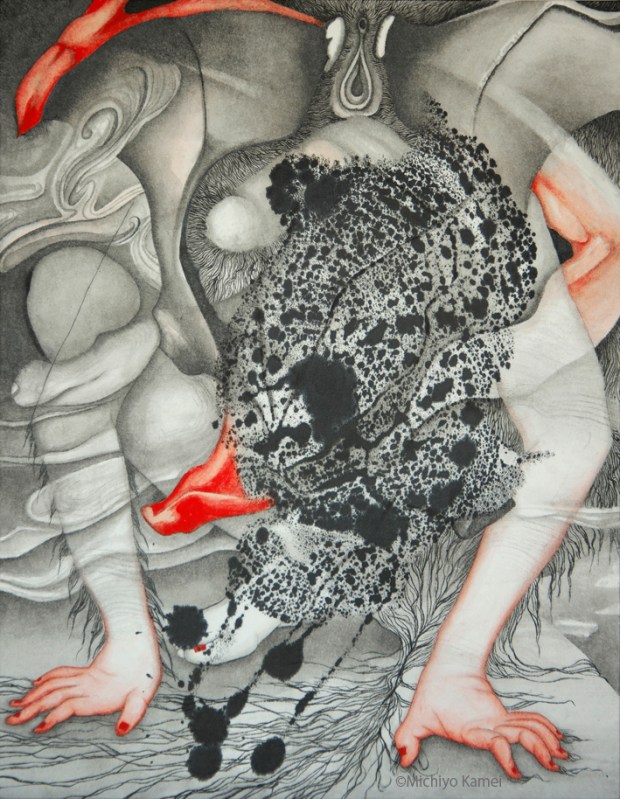
Zero Point Wild
41.0 x 31.8 Sumi-ink and red-ink with Michiyo Kamei’s body on Washi paper 2025. Photo used with kind permission directly from the artist and copyright holder © Michiyo Kamei

Witch’s Game
33.3x 33.3cm Sumi-ink. natural pigments and glue on Washi paper 2023. Photo used with kind permission directly from the artist and copyright holder © Michiyo Kamei

Mitchell Pluto: Who are your favorite writers for inspiration, and how do they influence your art and perspective?

Michiyo Kamei: I like Jorge Luis Borges, especially “The Library of Babel.” When I read this novel, I feel like an infinite universe is expanding in my head. I think his universe can only be expressed in novels (words), and can never be depicted. I would like to reach such a world someday, but life is short, and I feel that once is not enough for me.

“The original form of the universe: the wildness of the zero point”
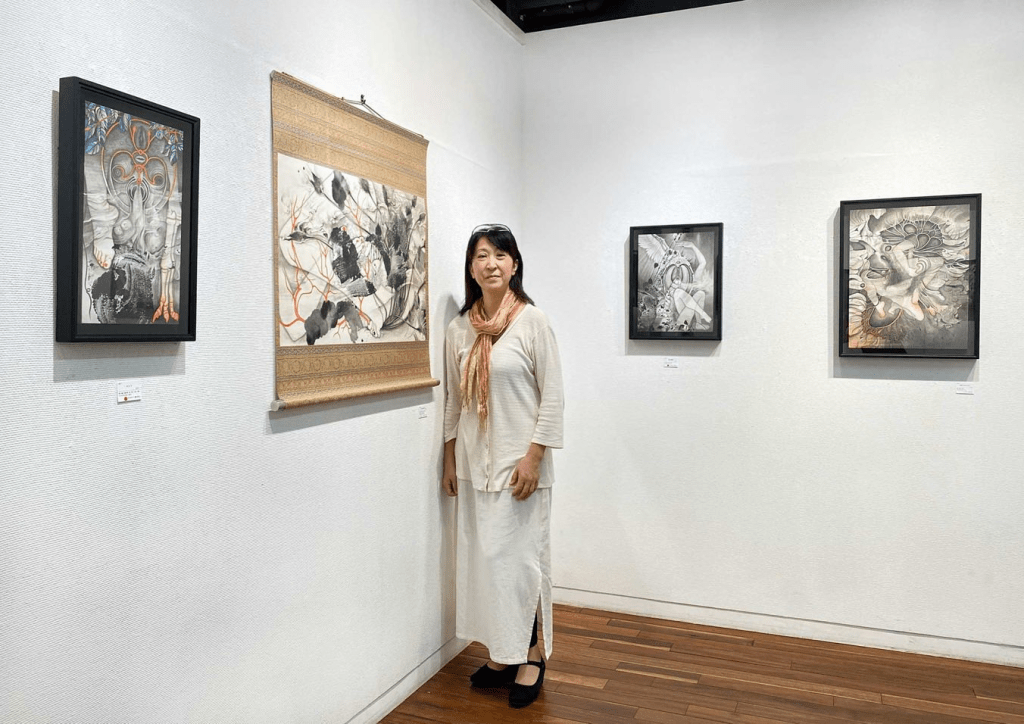
Michiyo Kamei exhibition at the Y art gallery in Osaka, Japan 2025

Michiyo Kamei Site

The Origin of the Universe: The Wildness of Point Zero
Michiyo Kamei Exhibition Art Gallery Shop

Palimpsest of Phantasm: An imaginary art garden
Vol. 1 Michiyo Kamei

ALL RIGHTS RESERVED. ARTWORK IN THIS POST IS A COPYRIGHT OF MICHIYO KAMEI. THIS AN AUTHORIZED PUBLICATION WITH PERMISSION AND EXPRESSED CONSENT.

Like Father, Like Daughter: Inherited Visions

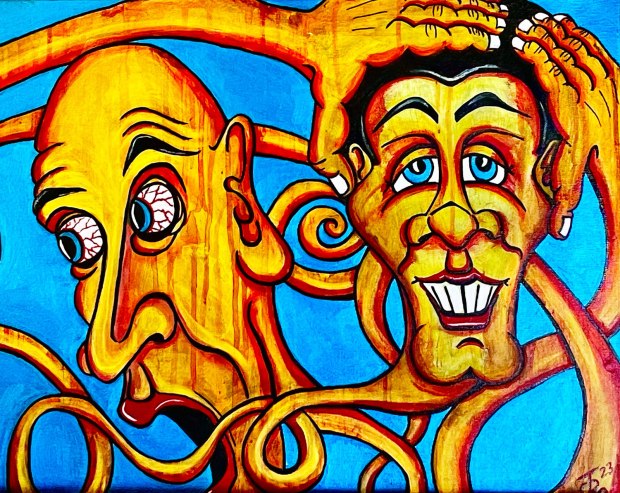
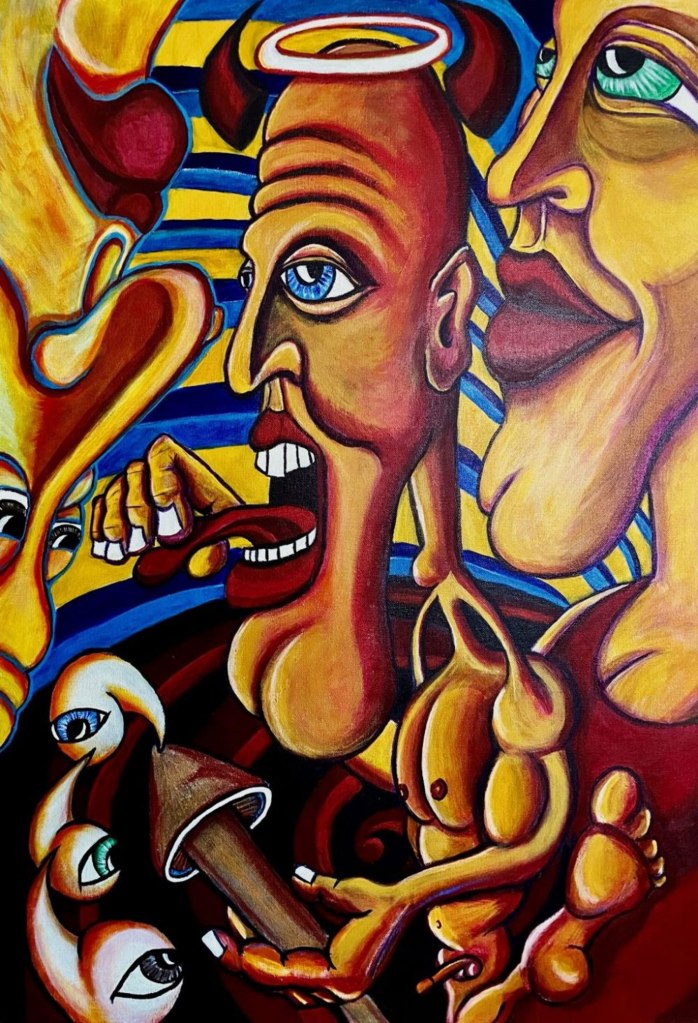
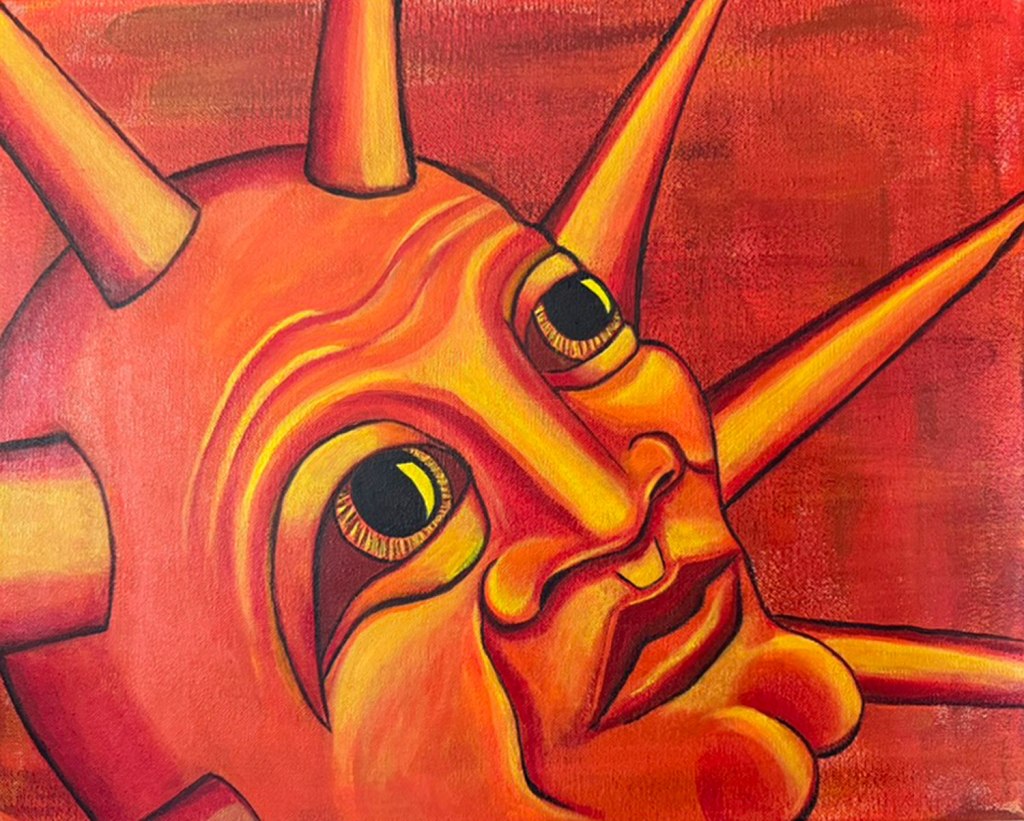
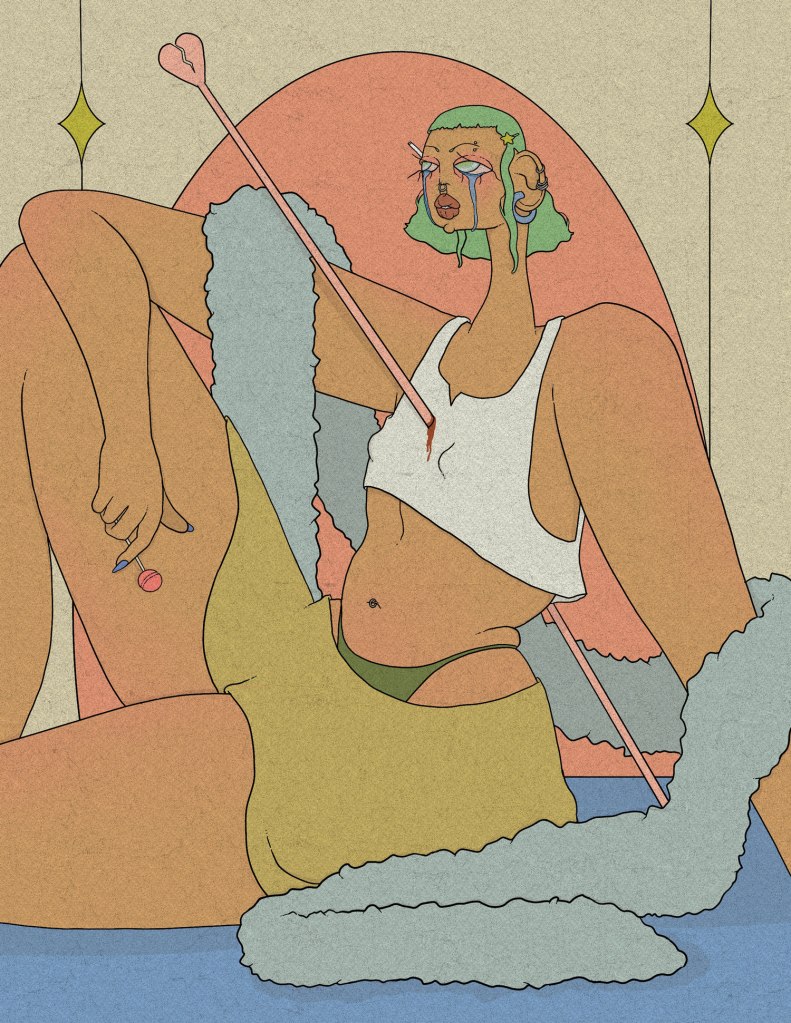
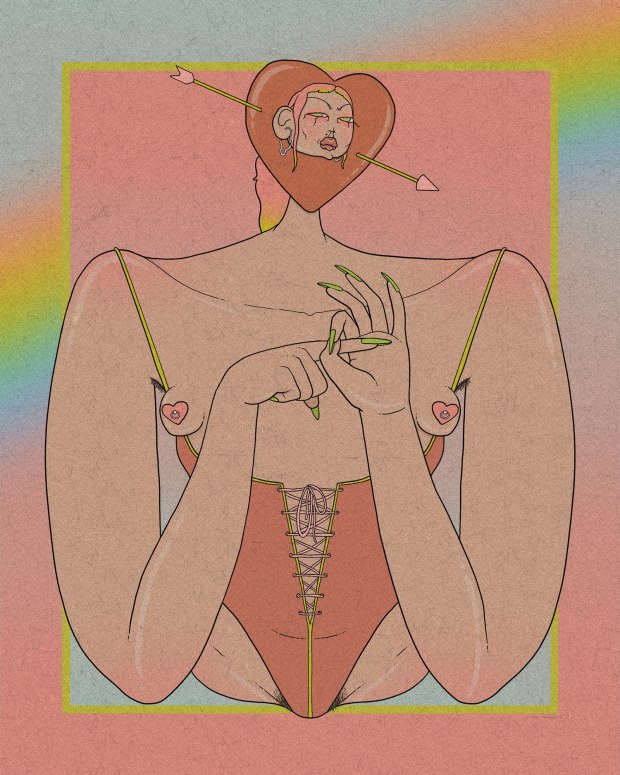
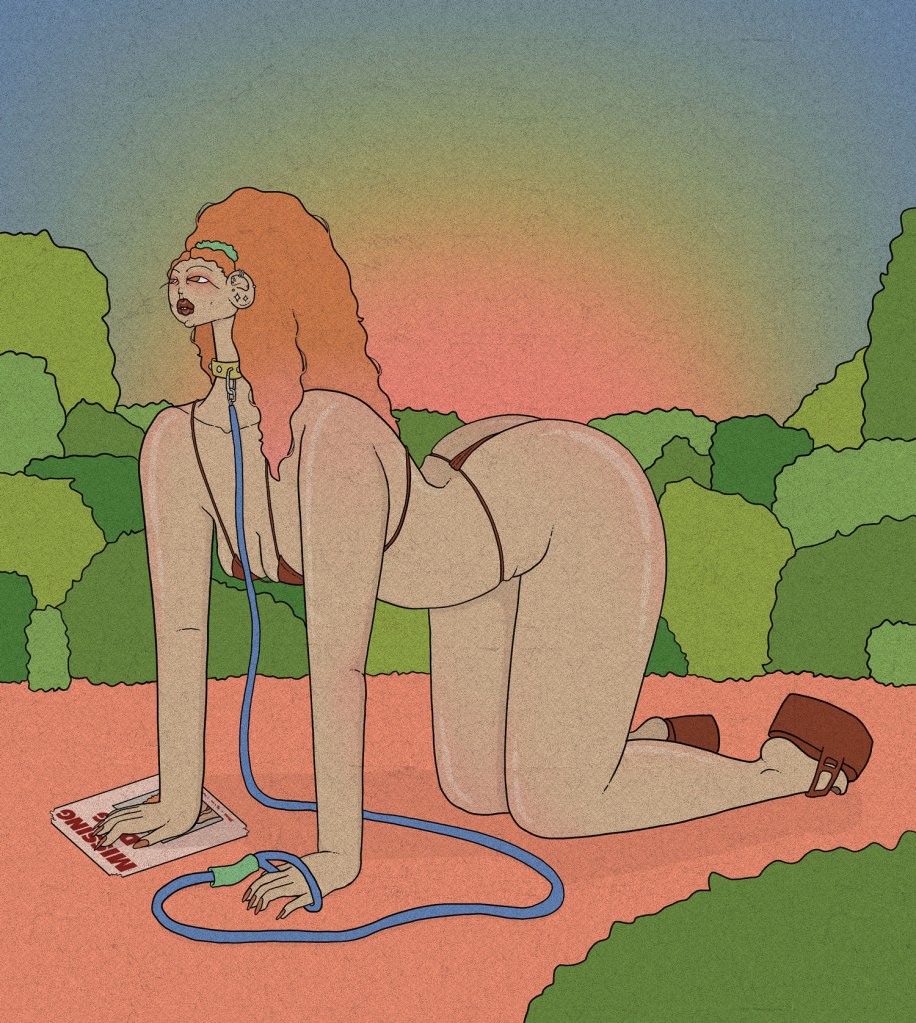
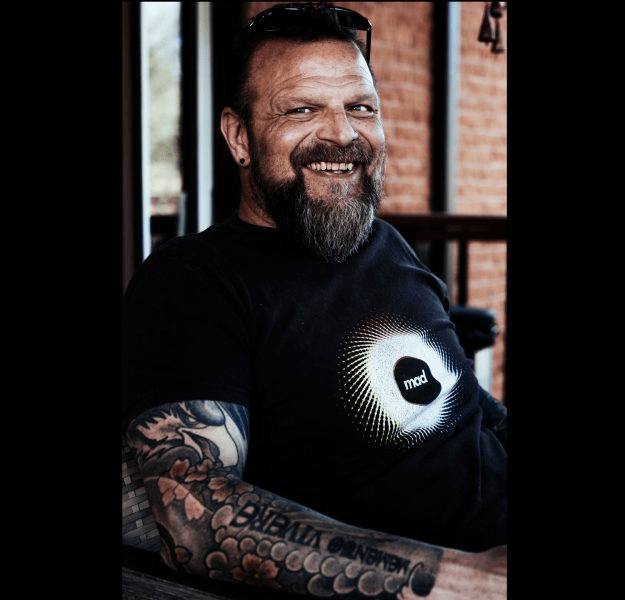
Mighty Fine Arts presents “Like Father, Like Daughter: Inherited Visions” featuring new work by Johnny Olson and Madelyn Olson. This show opens with a reception for the artists on Sept. 27 from 6-9 pm and will run till Oct. 26. It’s a family affair at MFA with a premiere exhibit by Mad Swirl spoken word master Johnny O and his exceptionally talented daughter Madelyn.

By Steve Cruz, curator/owner of Mighty Fine Arts

Johnny Olson

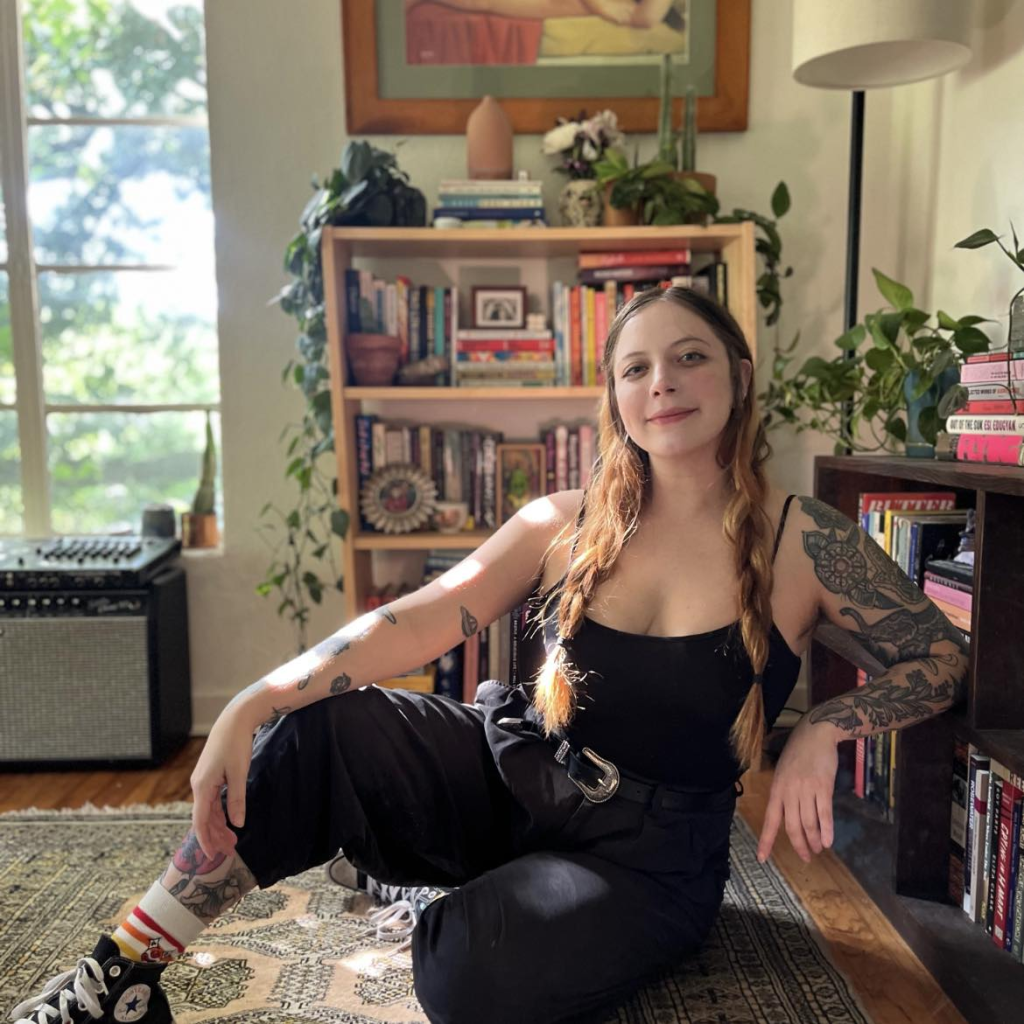
Both are figurative based artists who exaggerate and elaborate on the human condition. The characters they create derive from some overarching personal narrative but they manage to resonate on a mythic universal scale. Their approach is also filled with imaginative humor and playfulness with a touch of satire. The resultant effect is ebullient and energetic imagery imbued with creative fervor. Father and Daughter are cut from the same cloth and blessed with uncommon virtuosity.

Madelyn Olson

Also on Opening Night Wordspace Artspeak presents a musical performance by Swirve! Chris Curiel fronts this avant garde collective of liberated musicians devoted to free thinking and improvisation. Their goal is to release your mind from convention and neurotic restraints with cosmic soundscapes. Come experience and get emancipated with Swirve!

Mighty Fine Arts
409A N Tyler
Oak Cliff Texas

Johnny Olson was born on a brisk November day in 1970 in Chicagoland. He found his feet & cut his teeth in the blue-collared working class neighborhoods of his hometown. In 1988 he was reborn in MCRD San Diego, where he found himself the new title of United States Marine. After surviving the Gulf War, he hung up his BDUs & turned in his rifle to instead grab his pen & brush where he rediscovered his passion for writing & painting. In 1998 he found himself in Dallas, where what was supposed to be a brief stint in the South turned into over two decades… & counting.

In 1999, Johnny, with a couple of other mad cohorts, started Mad Swirl. This ‘zine project has now evolved into a being all its’ own. After wearing too many hats, he now only wears a few at Mad Swirl: Chief Editor, Creative Director & Host at Mad Swirl’s monthly Open Mic night & Mad Swirl’s Quarterly podcast, “Inside the Eye.”

Johnny’s work first appeared in print in 1996 in the now defunct Lip Magazine. Since then, his words & images have found their way onto a few online and printed zines thru the years. To name a few: Mad Swirl: Issues I-VI, The Best of Mad Swirl : 2017-2024, Haggard & Halloo, 10k Poets, PAO Productions: The Open Mic Project.

My name is Madelyn Olson and i’m an artist (anyone else have a hard time claiming that title?), primarily creating  in Procreate or on paper with ink & watercolor. i’ve been creating since i could hold a pencil in my tiny little hand. to me, artistic expression is one of the best things to exist. i hope to both create & admire it all till it hurts. when i’m not creating and admiring creation, i like to eat, hang out with my dog, laugh at silly things with my friends and frolic around outside in the sun.

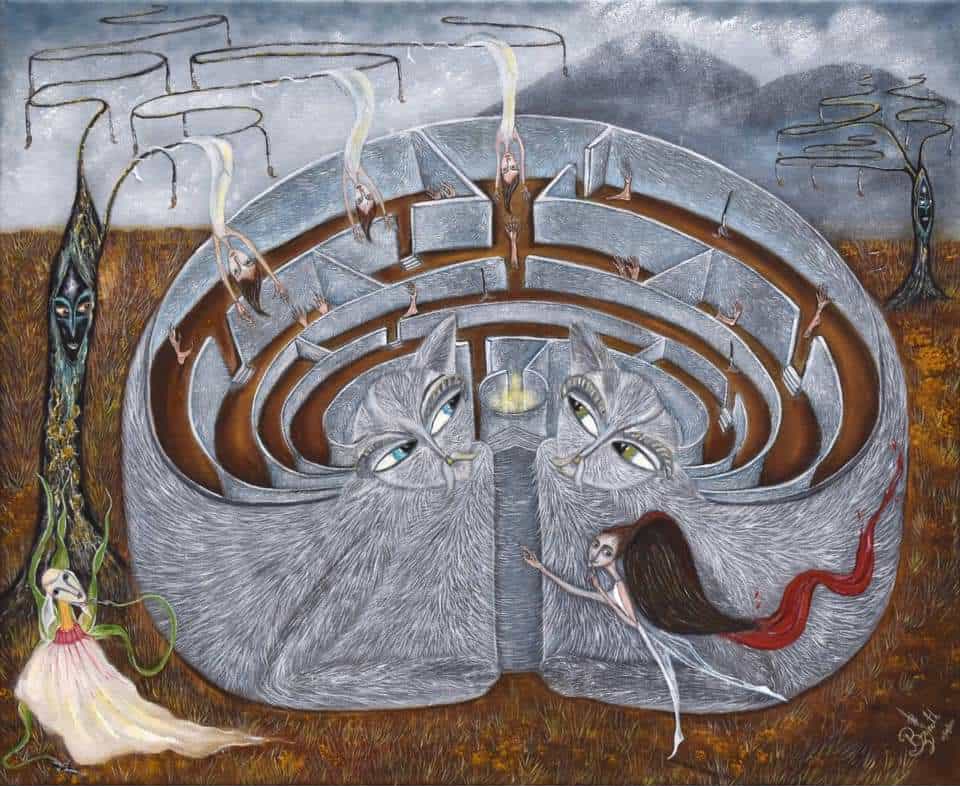
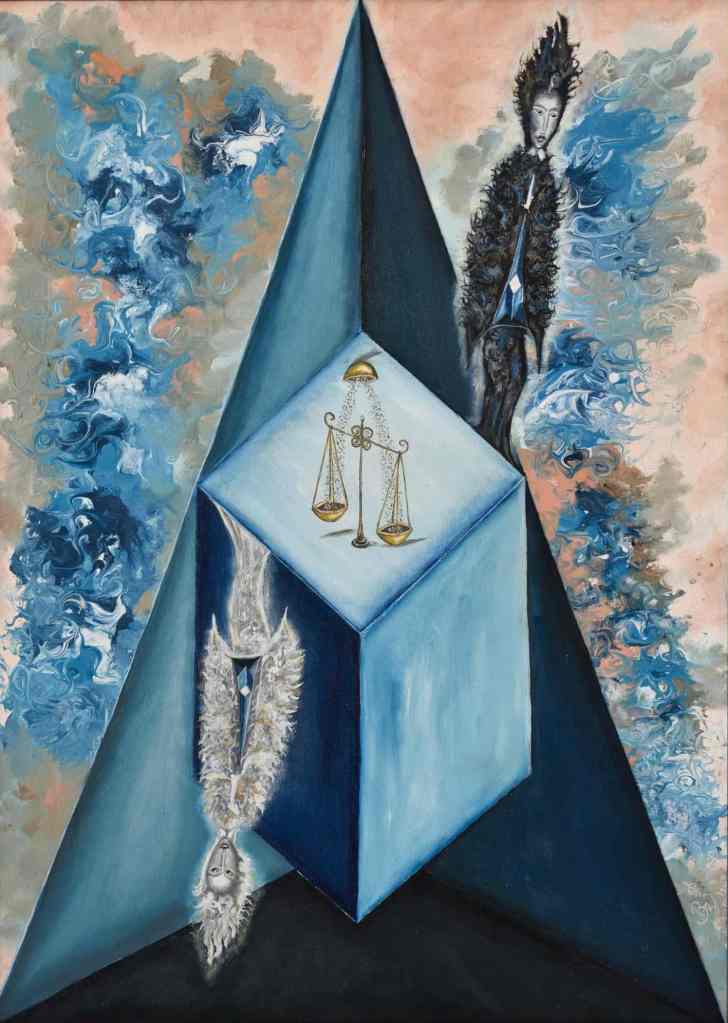
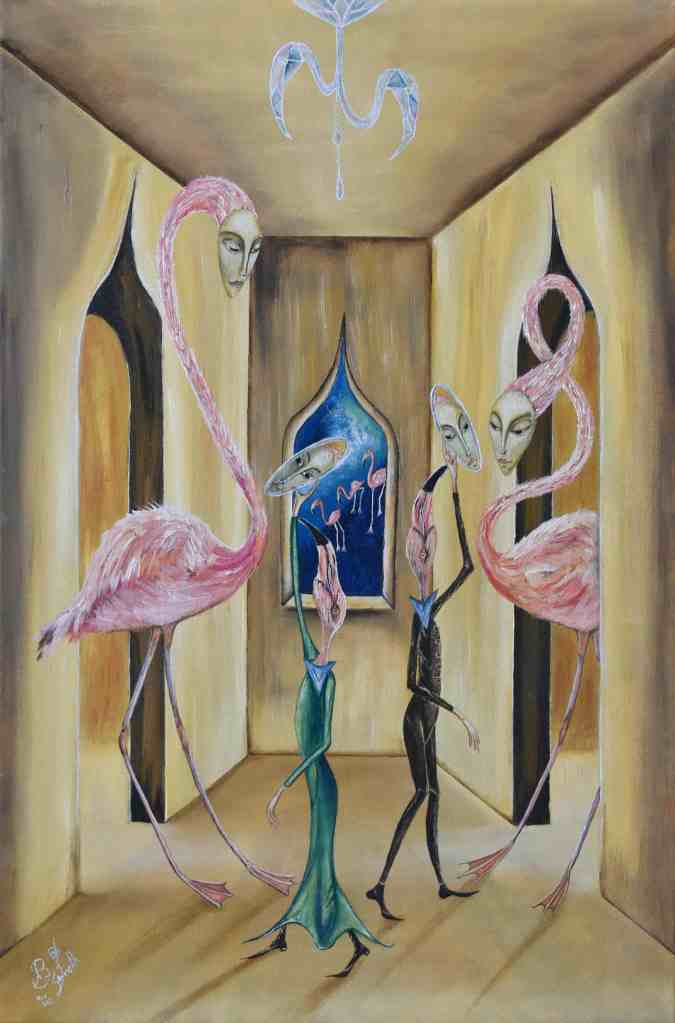
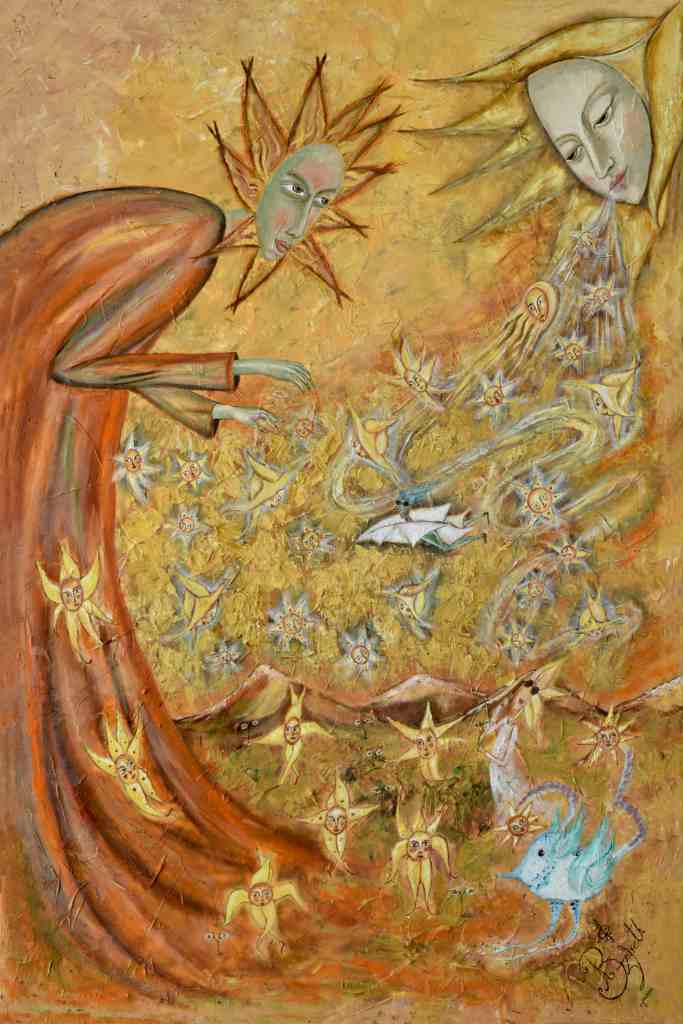
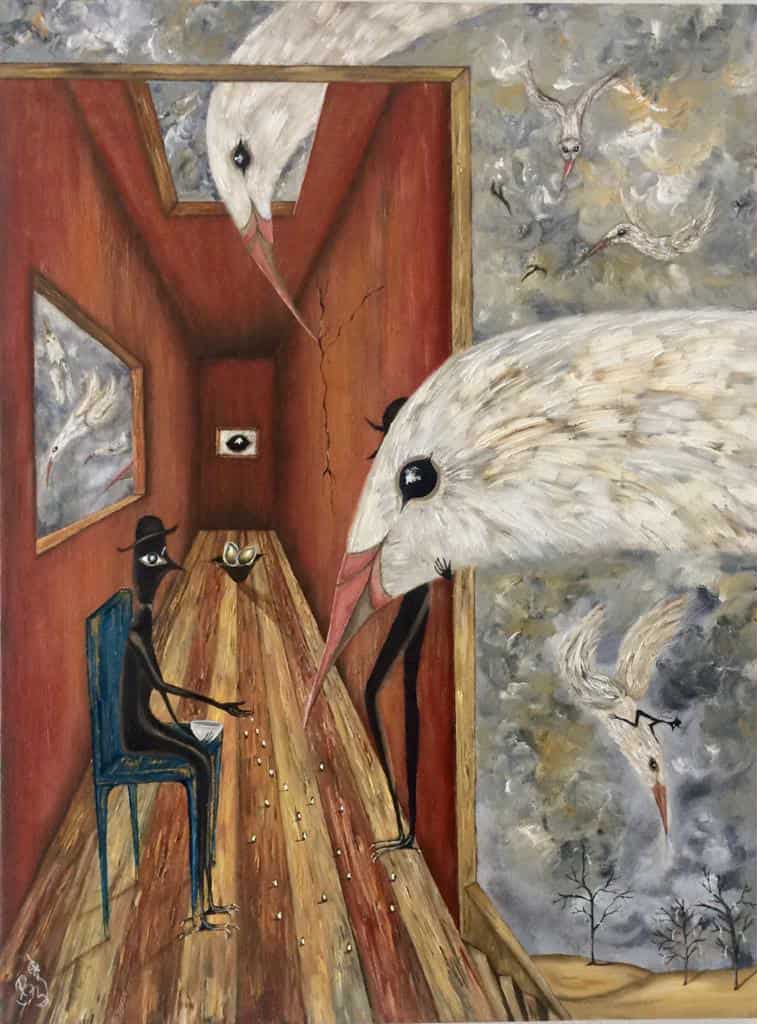
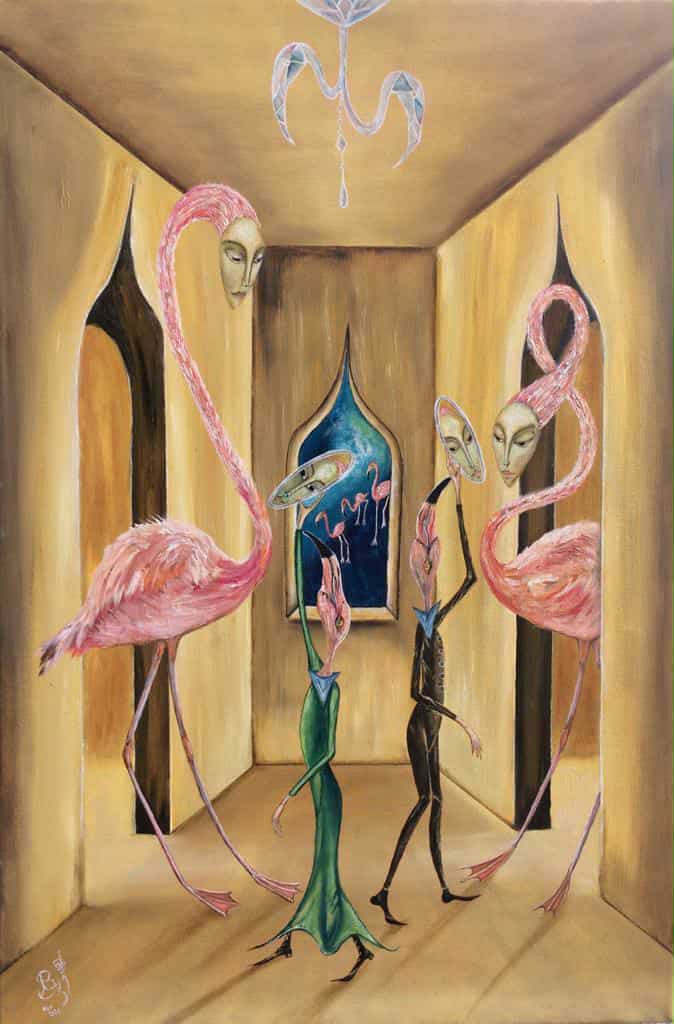
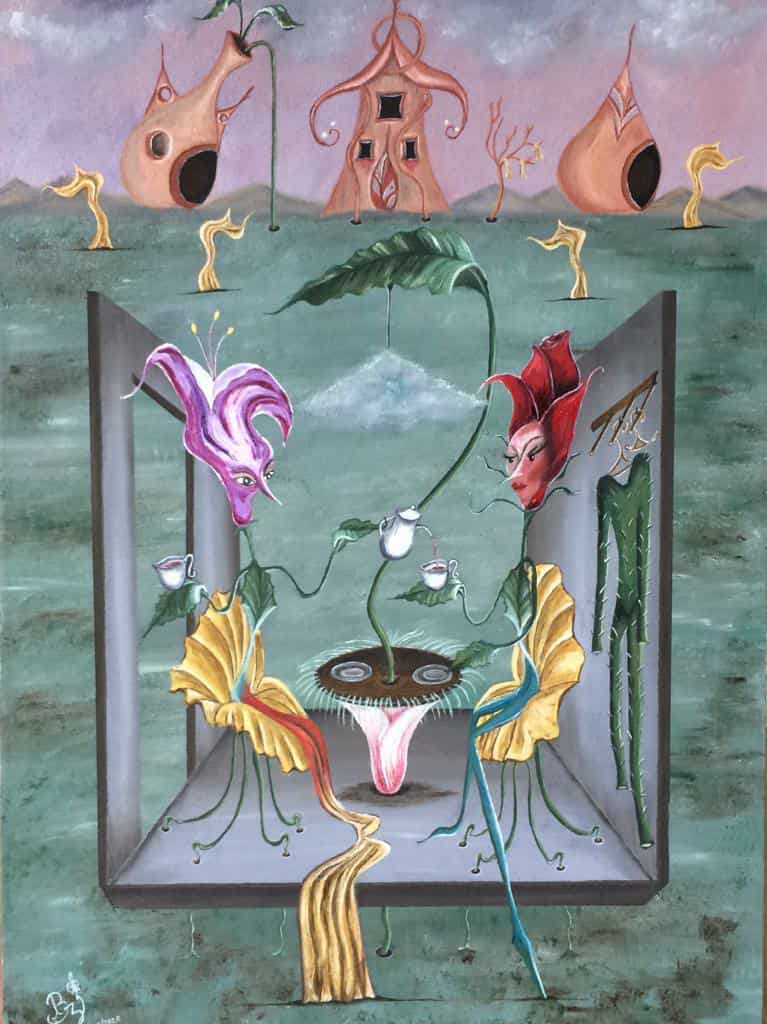
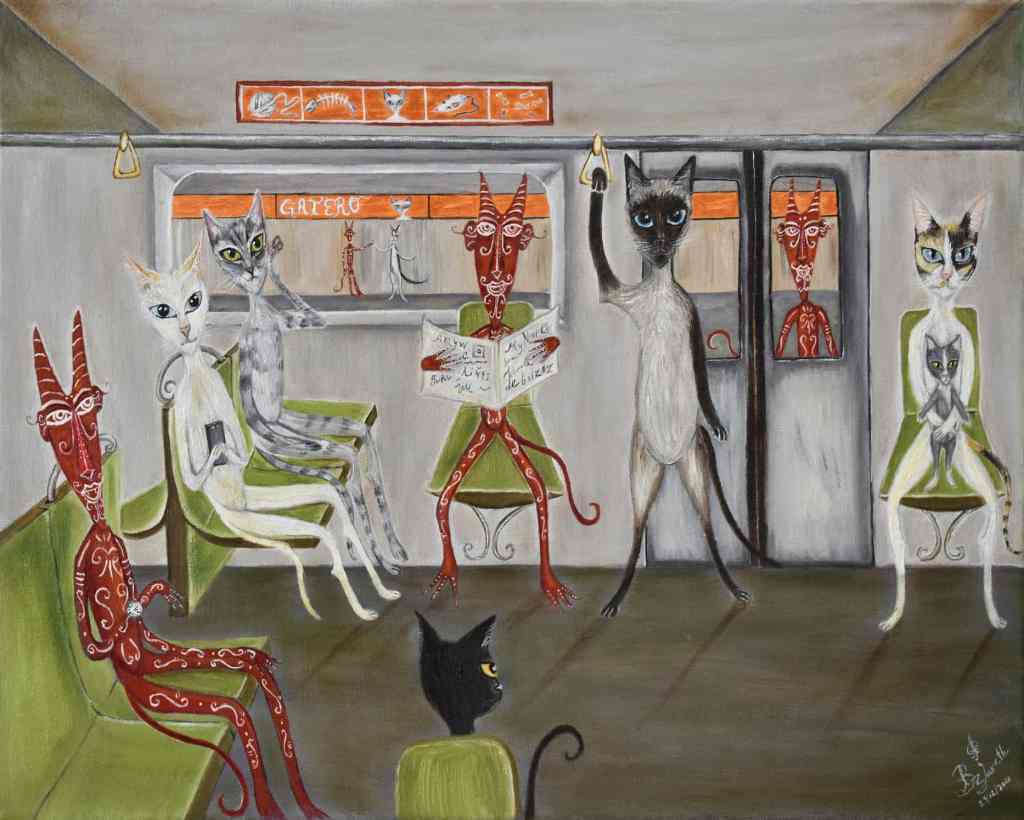
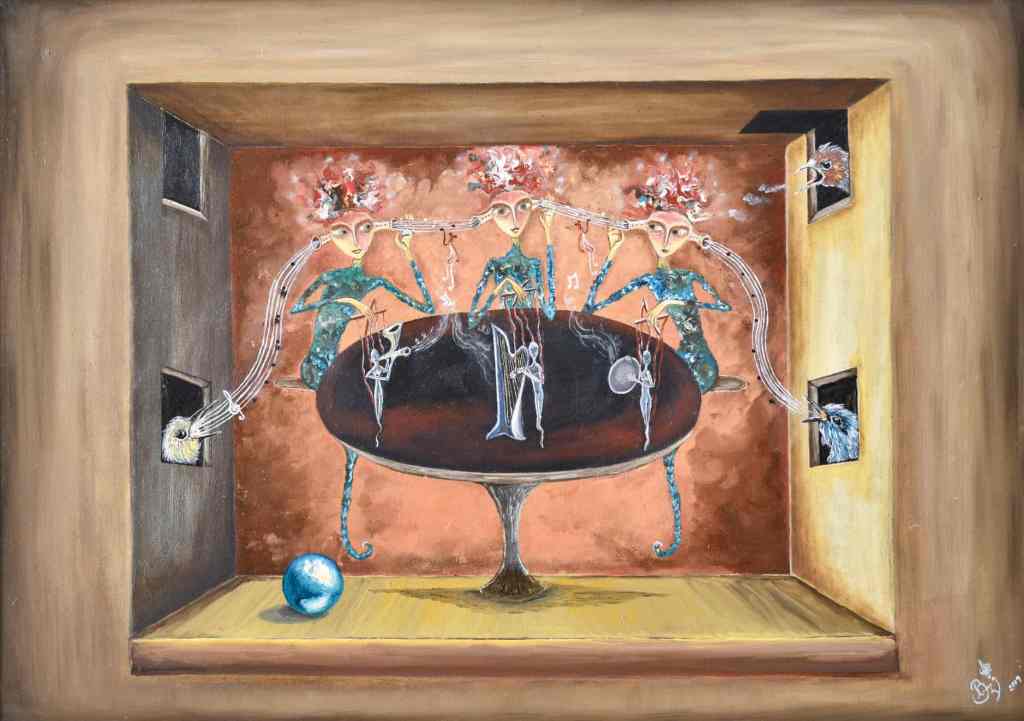
The Dreamscapes of Brianda Zareth Huitrón

Brianda Zareth Huitrón (1990) is originally from Temascalcingo, José María Velasco, Mexico, she is a visual artist and surrealist painter. She studied painting at the Academia de San Carlos in Mexico City.

Her multiple artistic facets and curious personality led her to discover surrealism, a movement in which she would find a way to communicate with the world. She creates poetic interpretations where the everyday is transformed into a fantastical and dreamlike reality. Magical paintings that reflect life’s desires to be expressed in a painting.

Brianda Zareth Huitrón has exhibited individually and collectively in Mexico and abroad.

Solo Exhibitions
Leonora Carrington Museum of Xilitla, DREAM ENCOUNTERS in 2025.
Women’s Museum, DREAM REVELATIONS, in 2022.

DREAM LANDSCAPES for the Temascalcingo Festival Honoring Velasco, in 2021.
WINDOW TO DREAM WORLDS, at the Futurama Cultural Center, Mexico City, in 2020.

Group Exhibitions
Col-art at the Oscar Román Gallery in 2025.
The painting exhibition THE PAINTER’S TRADE, at the San Carlos Academy, in 2019.
DIMENSIONS, Wave Gotik Treffen Festival, held in Leipzig, Germany, in 2018.

She has participated in the Chair for 100 Years of Surrealism, at the Faculty of Philosophy and Letters of the UNAM, giving a lecture on female surrealism.

Her work has recently been published in the book Mexican Women in Art, published by Agueda, and in THE ROOM SURREALIST MAGAZINE, an international surrealism magazine.

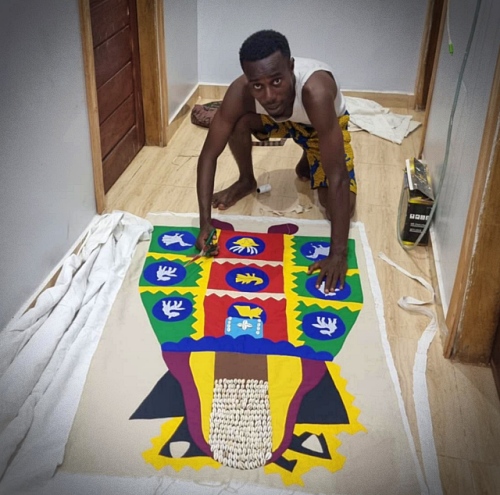
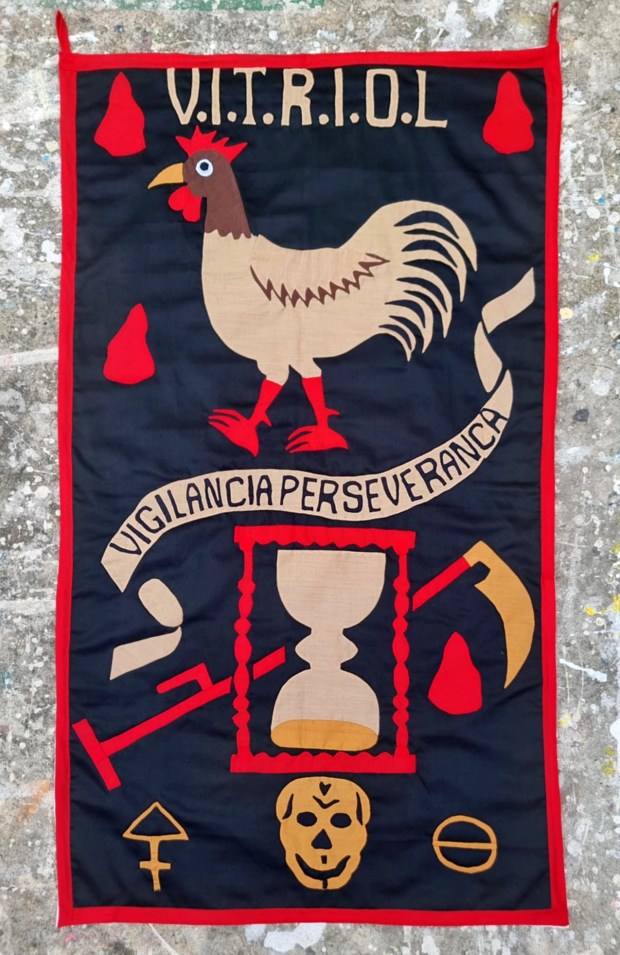
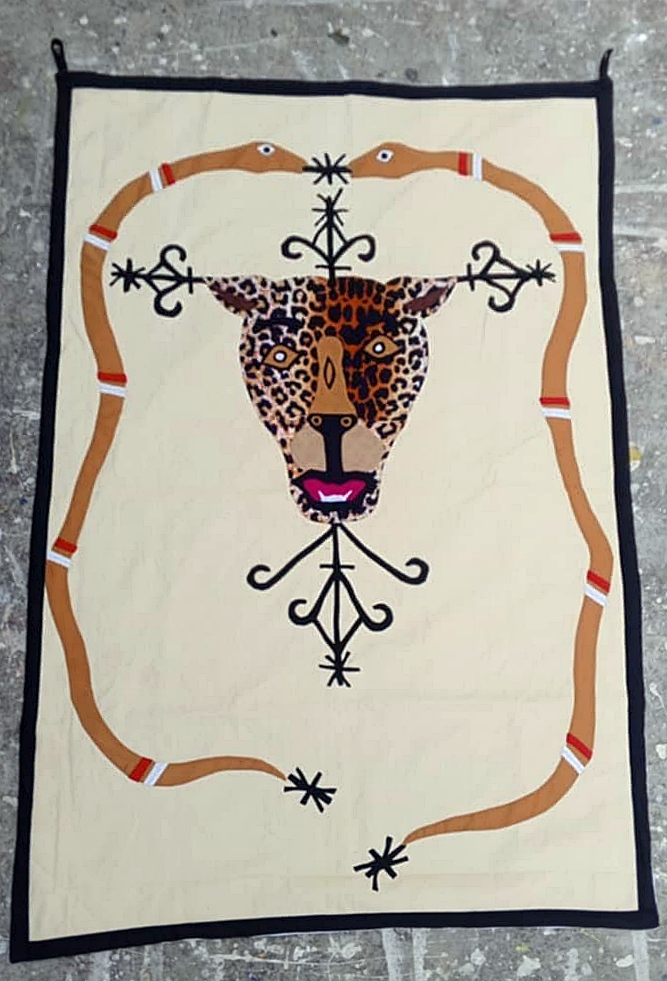
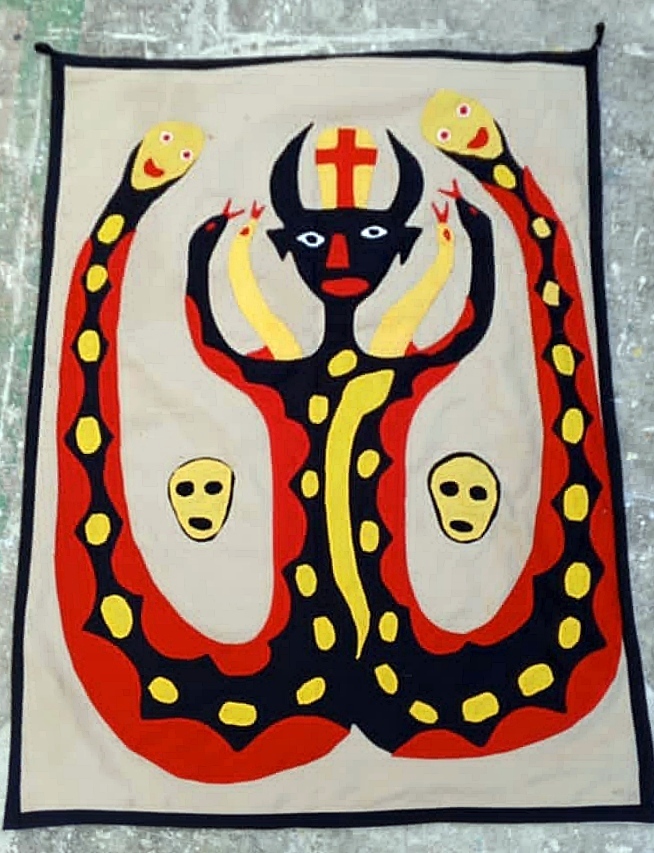
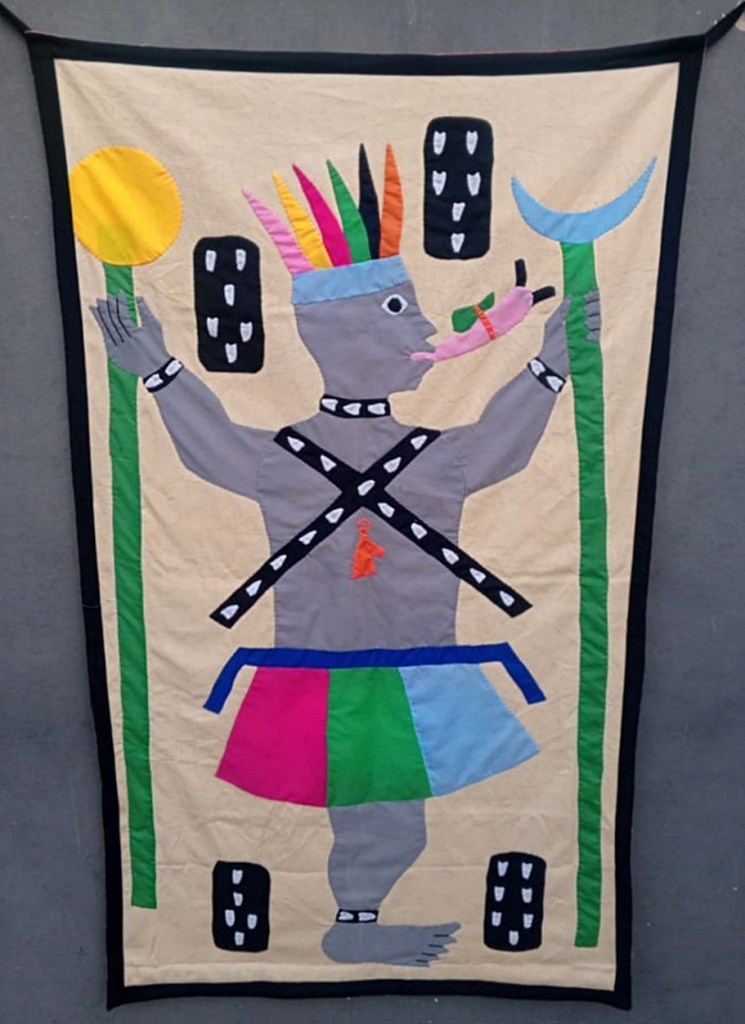
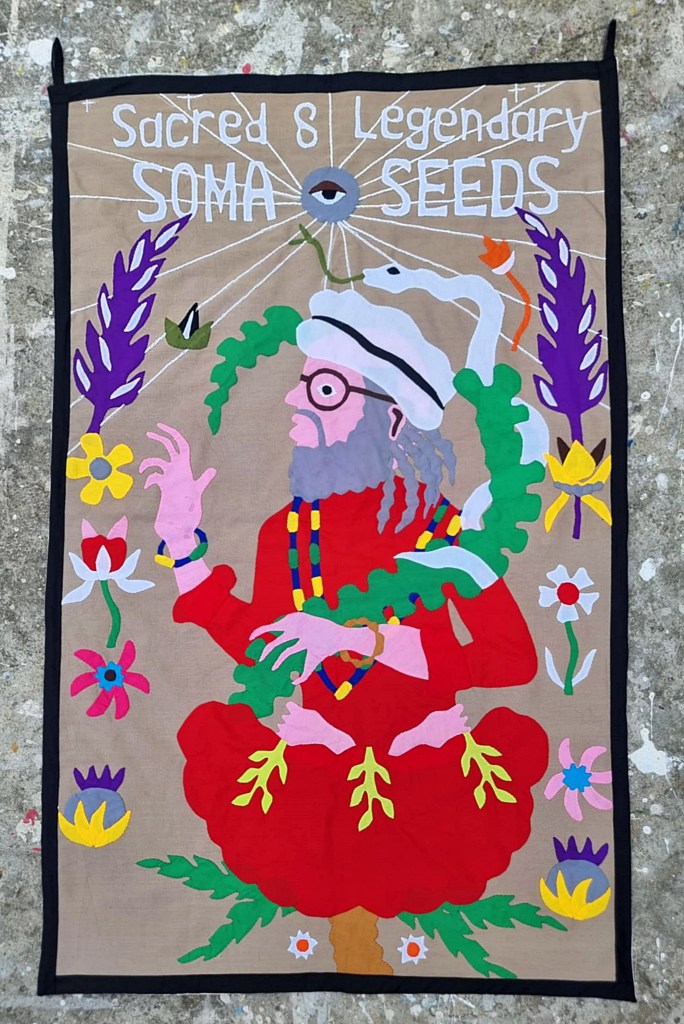
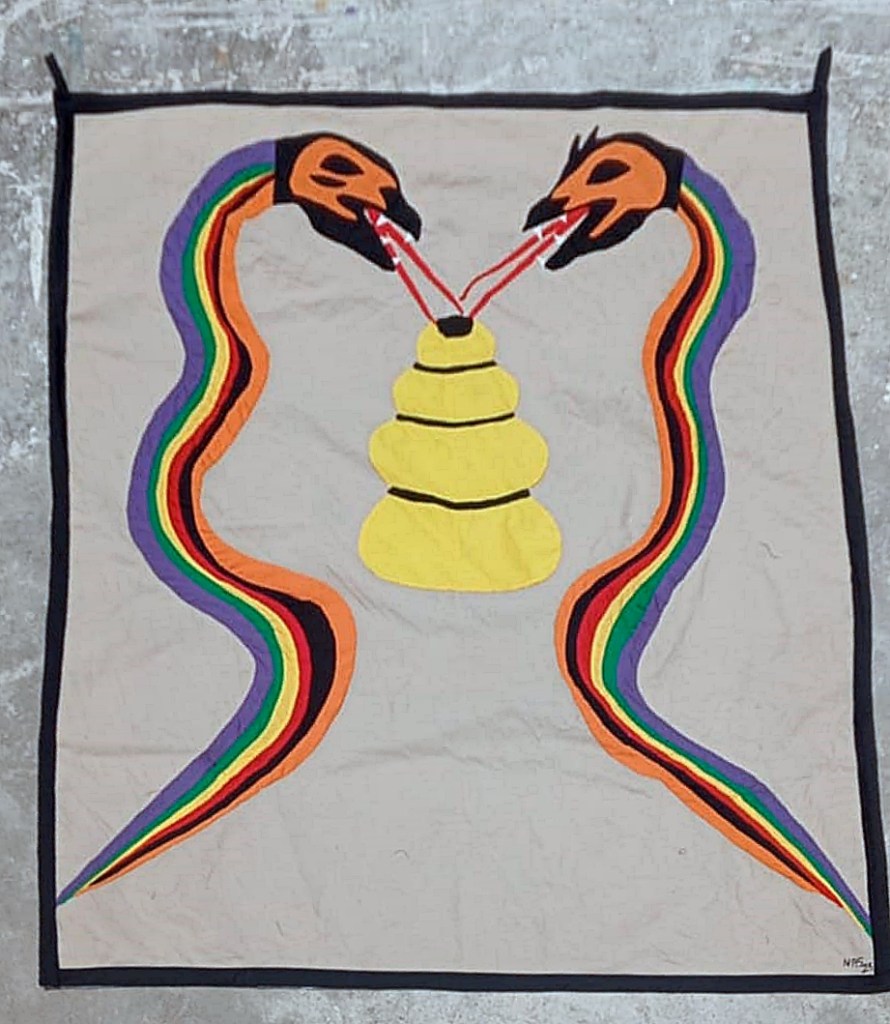
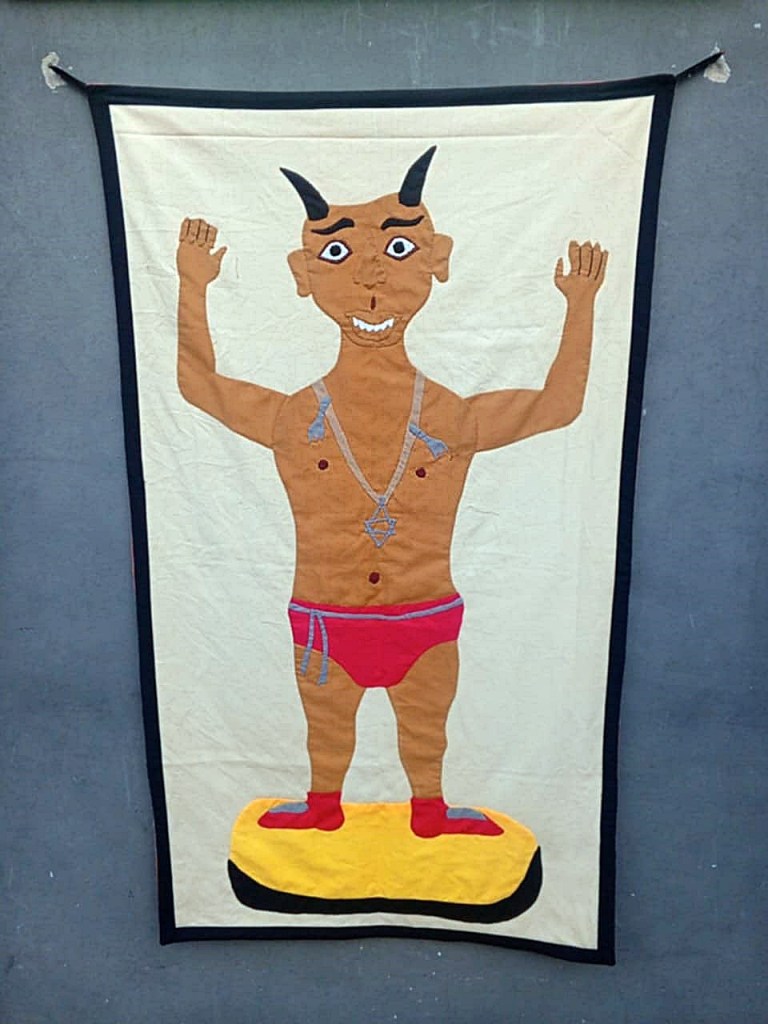
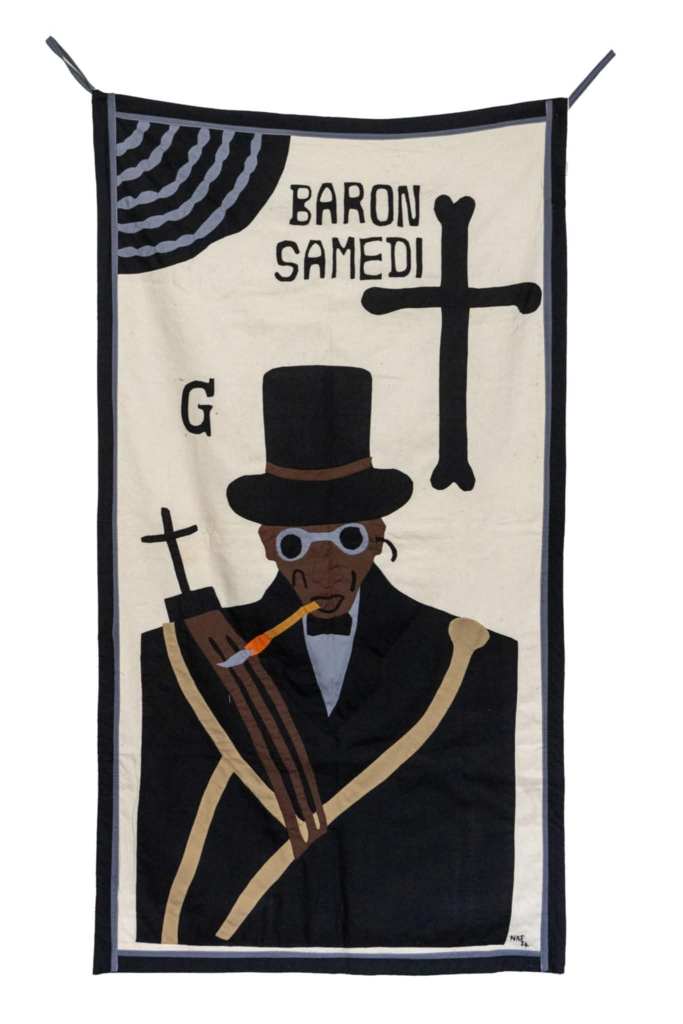
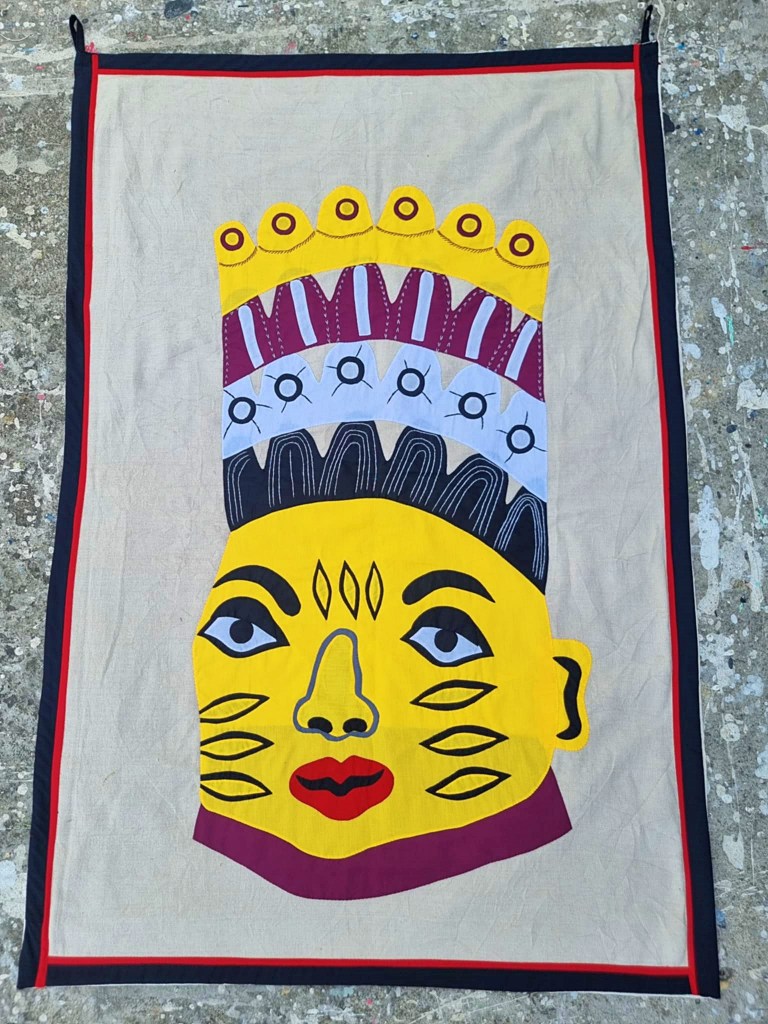
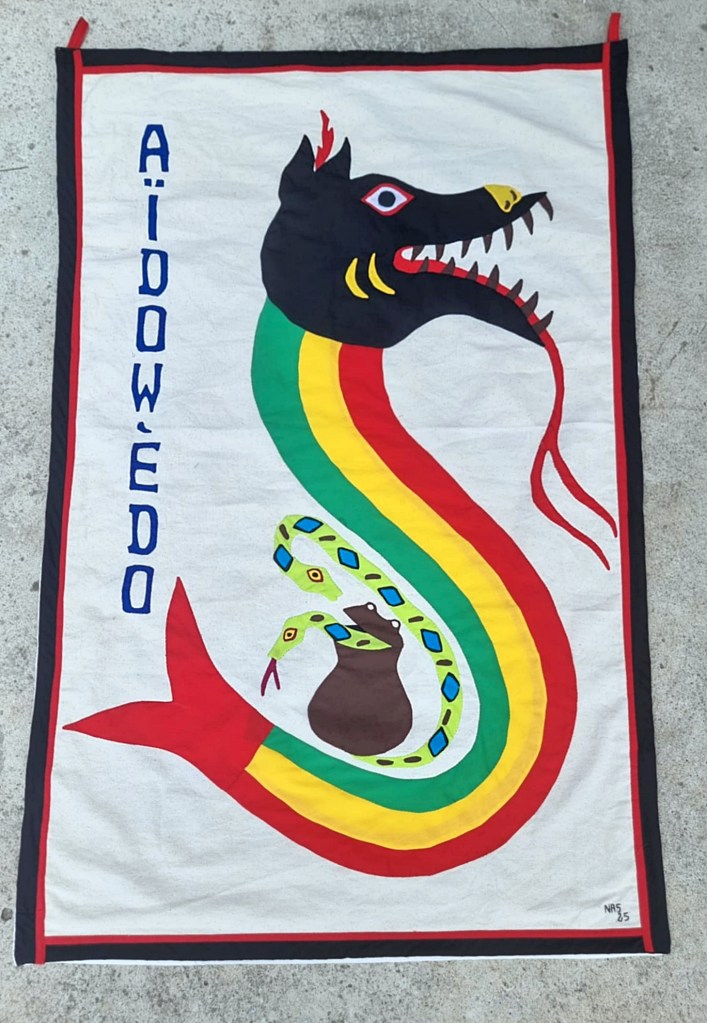
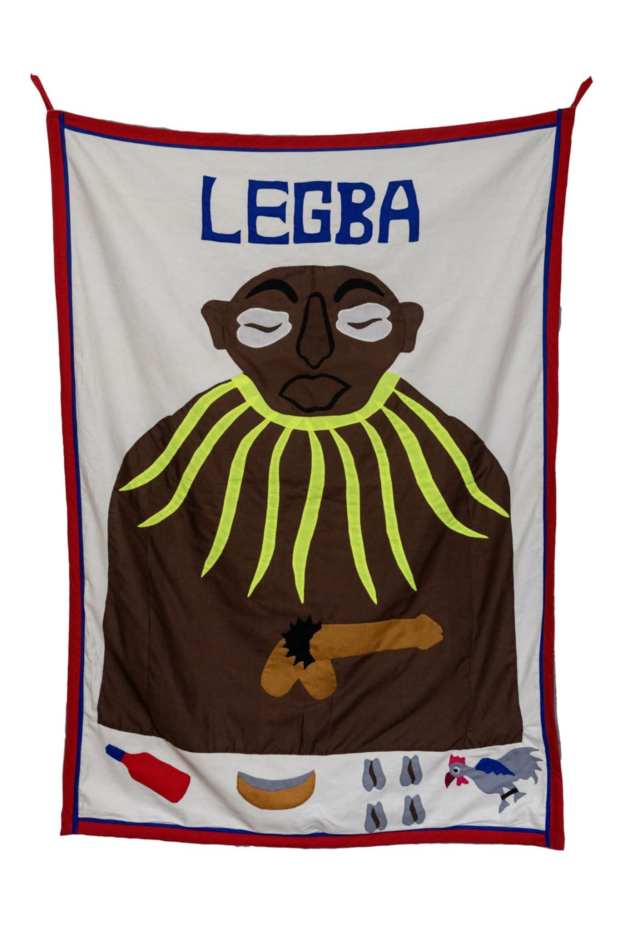
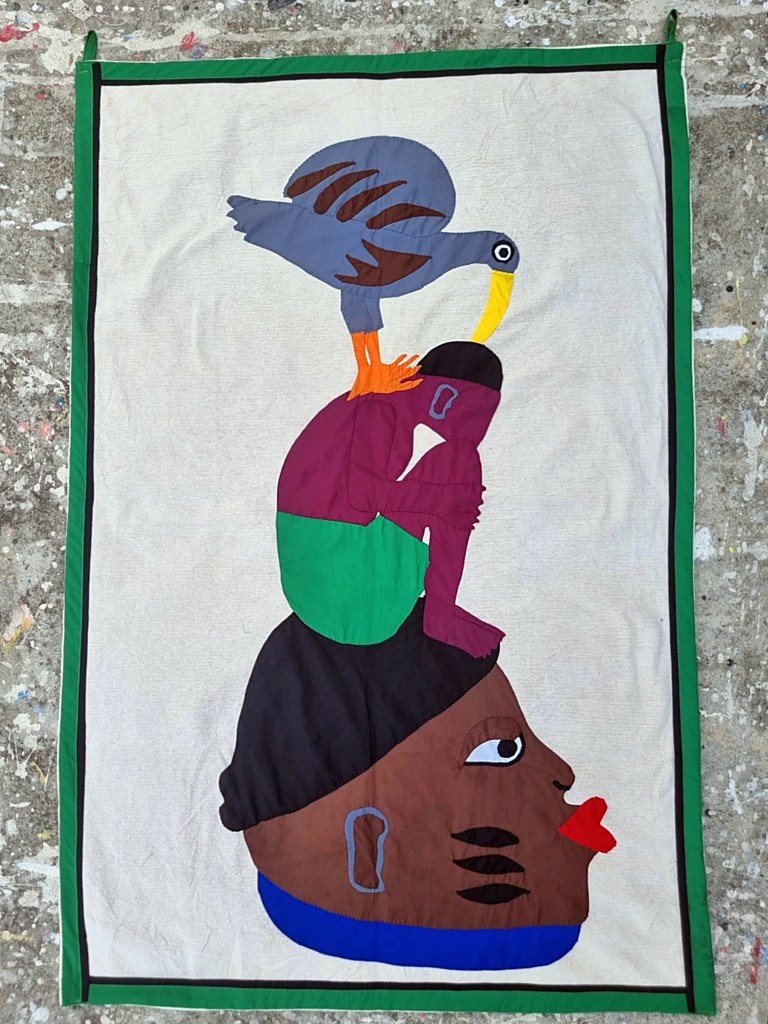
Appliqués by Benin Artist Narcisse Dotou

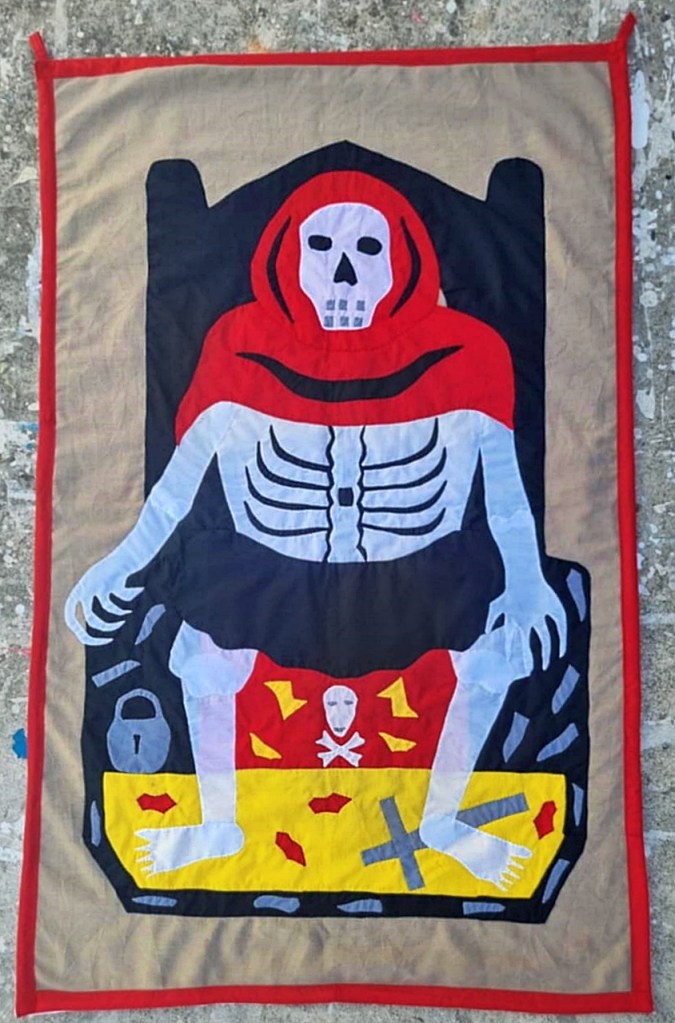
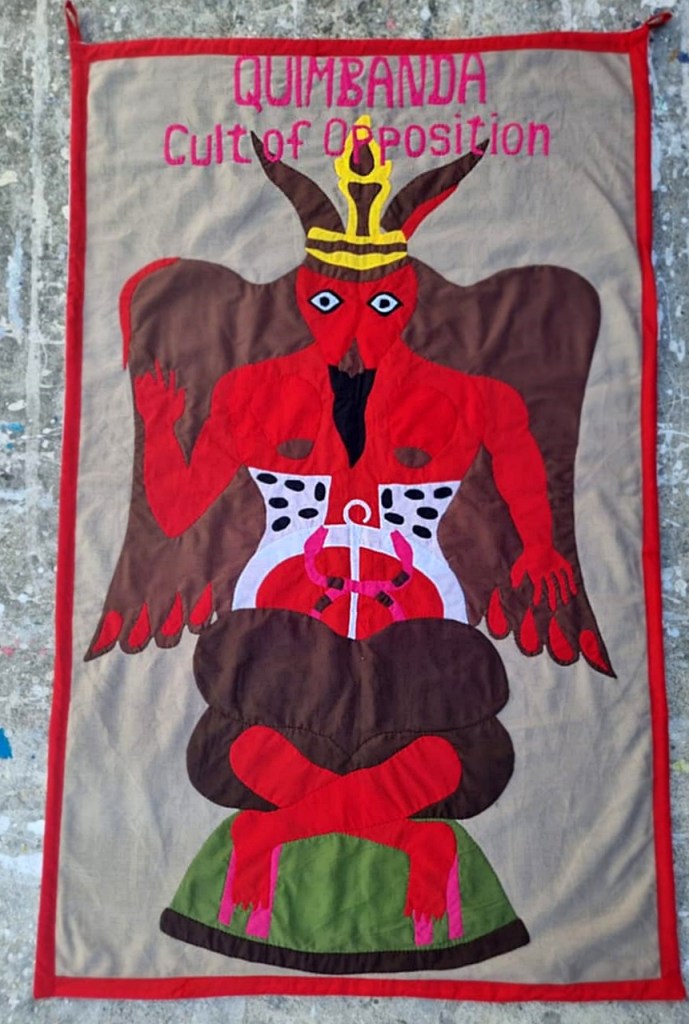
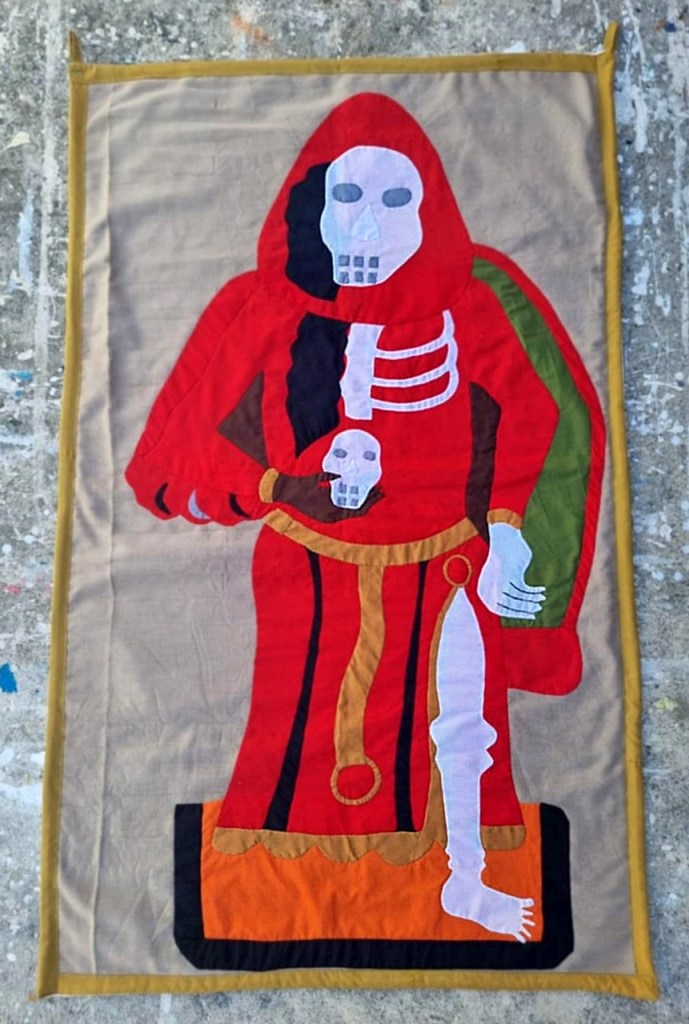
Narcisse Daphnée Dotou crafts symbolic appliqués representing Vodun gods and African diaspora spirits. Dotou’s images encourage introspection, offering a visual journey into one’s inner self. The viewer is asked to concentrate on the visuals and consider them thoughtfully, just as one would with a tarot card. Only then can the object’s grandeur gain a mystical and meaningful quality.

To make an appliqué like this, you need at least three weeks before doing it. We make the drawings on paper and then we start by cutting things out. Materials include sewing needles scissors cotton fabric of different colors fabric. Everything is done by hand except the border which was done by machine. My teacher was François Codjo Yemadje who is from Abomey, Benin.

Narcisse Daphnée Dotou

Narcisse Daphnée Dotou was born on October 31, 1991 in Benin and has lived in the Mono department for a long time. He is an artist trained in the traditional art of tapestry sewing. The motifs of his refined works cover a wide spectrum. These include the varied symbolism of the ancient kings of Benin, which is the former Danhomey, representations of the traditional gods of Benin voodoo, Haitian voodoo, Cuba, but also modern themes and works made especially at the request of customers. In addition, Narcisse is an excellent connoisseur of the Cotonou art scene. He is happy to advise you and act as an intermediary if you have any wishes or requests.

Interested in Dotou’s appliques you can contact him via Facebook at Narcisse Daphnée Dotou.

The Voodoo-Culture Introduction from Soul of Africa Museum

Generative Ghost Stories

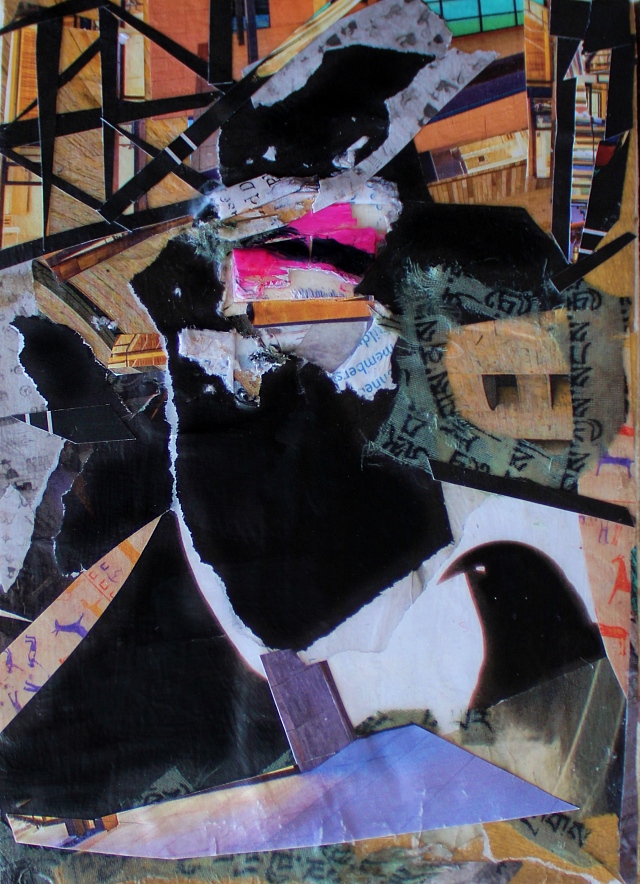
The following writings and images are ideas about generating ghosts. These expectations highlight the link between the organic mind and a computer pretending to be a person.

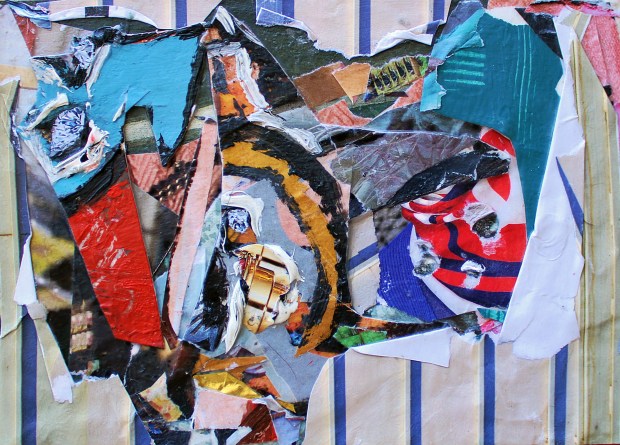
Generative ghosts ripping through wall paper.
Collage and oil Mitchell Pluto

Ghosts made by AI use language models to talk and understand us. Because of special features, they can remember, plan, and show other intricate behaviors that are typically associated with humans. Their capabilities extend beyond simply repeating old narratives. By mimicking a persona, they can alter things, suggesting patterns that affect thinking.

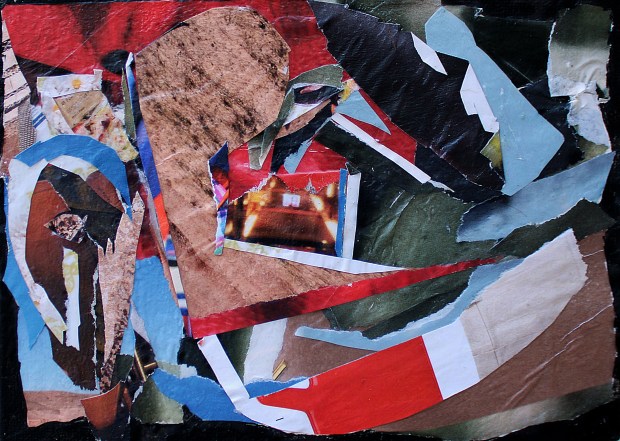
The Fellowcraft tracing board depicts the ladder of chemical memory.
Collage Mitchell Pluto

Resembling jellyfish, neurons and astrocytes evoke images of creatures from the Cambrian period. The private “conversations” they seem to have make me feel self-conscious. In time, we will create pods that will contain our memories, drifting like space-cotton until they finally settle upon another flat surface.

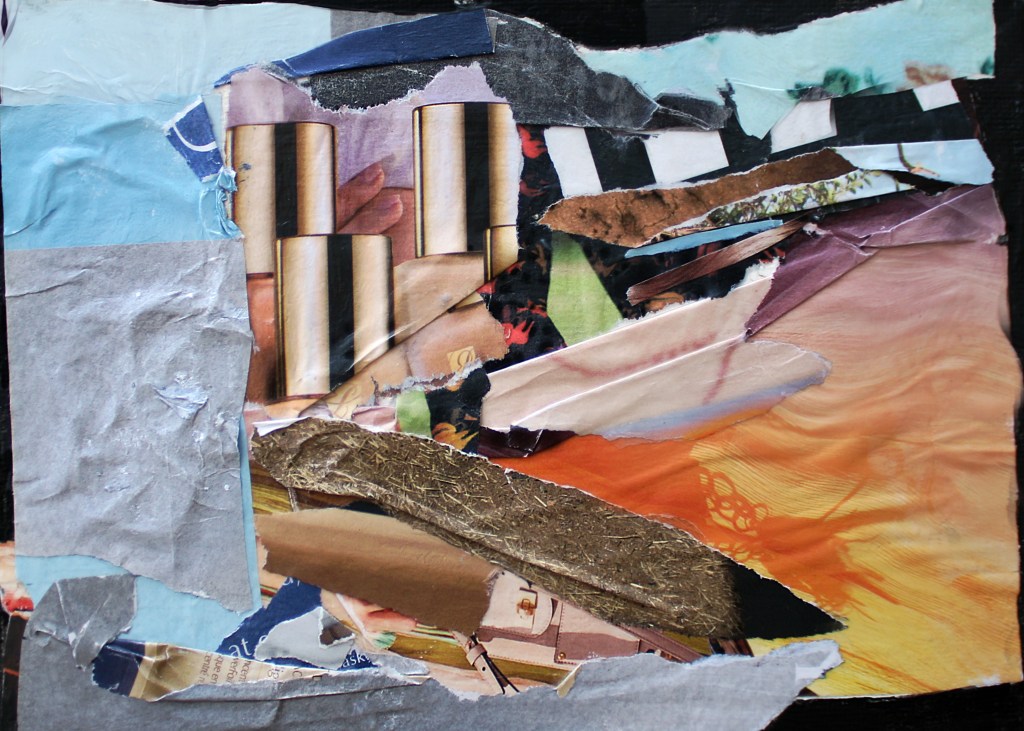
Digital divination.
Collage Mitchell Pluto

Digital divination involves making randomness sacred while also improving how humans decide. AI uses incomplete data to build future stories, mixing memory, invention, and calculation. The user will conclude that mathematical relationships govern the universe.

The search continues. Are we building a god, or reconnecting with one?

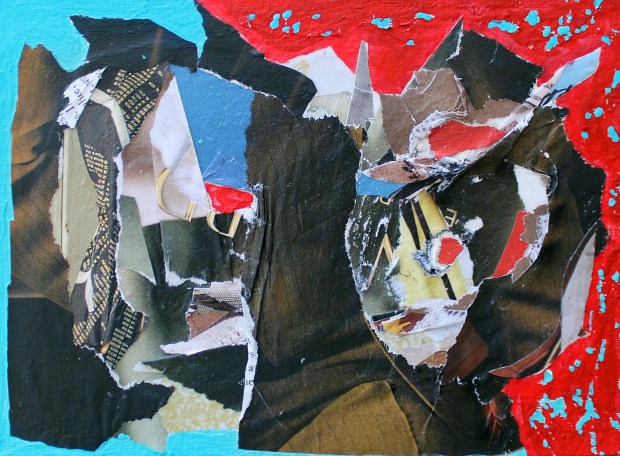
AI Lucid Dream simulation at the Pueblo.
Collage Mitchell Pluto

Who wouldn’t want to be a dream tourist? At last we can vividly recall hypnagogic states. AI can give you sensory experiences to trigger lucid dreams, but only if you’re trained to acknowledge the notifications. Make certain to review the terms of service before agreeing to use the application that will re-define you as a product.

Daimon bots and AI agents from the future.
Collage Mitchell Pluto

The daimon now refers to a guiding spirit that exists between calculations and problem-solving operations. These bots are here to help users with their digital fortune-telling. However, an hour will have about 4-5 minutes of commercials. Don’t worry, the ads are super short, only half a minute.

written by ©Mitchell Pluto

Memory Transfer by Mitchell Pluto

Transferencia de Memorias

From The Eclipse © Mitchell Pluto 2024 Séance channeling memory transfers. Espiral en el Estuco © Mitchell Pluto 2025 Transferencia de Memorias

In early June, the sky was clear and the temperature was pleasant. Tom and Sarah Anderson came across a metal tower while hiking in the Lolo National Forest.

The object’s Gothic style stood out as they approached. Seeing it brought back memories of their honeymoon trip to Chartres Cathedral.

The couple assumed the installation was someone’s art project or an exhibit at the University of Montana. The sight was unusual. There was a black circular window high up, near the top of the bell tower.

The tower emitted an extraordinary spectrum, encompassing all shades of blue and green.

3,500 kilometers away, a small gathering met at the United States Capitol. Attendance was by special invitation only.

Elijah Booker and his friend Alvaro, a man of abnormally short stature, arrived punctually. They entered the room and attracted a lot of attention. Booker, a large, Black man, always stood out in a room full of white men.

Alvaro had previous experience in the company. He knew the purpose of the invitation. Alvaro was albino and his alias was white dwarf. His main function was to use his mentalist ability to influence and dismantle cults. He possessed an innate ability to influence and alter opinions and beliefs.

On the screen, taken from a popular social media video, several recorded witness statements were shown. An older man, standing next to his wife, described the encounter with the intelligent light as best he could next to a strange tower. With deliberate and concise gestures, his wife explained the same thing, but in more detail.

Booker assumed he was the keynote speaker invited to talk about the future effects of permafrost.

The focus was personnel selection, not Booker’s research. Elijah Booker was the world’s foremost parasitologist. He researched extensively and wrote informative books on toxoplasmosis, a brain parasite. Elijah worked with international scientists. The Bureau of Globe Research in Alaska, where he lived with his wife and daughter, housed a broad research panel on prehistoric pathologies. Booker’s research caught the government’s attention.

Booker’s specialty did not include cosmic rays. He had heard of them and knew they were unstable, but nothing more. Cosmic rays sometimes interfered with belief systems, sometimes caused hallucinations, or enhanced brain patterns in unique ways.

The U.S. Intelligence Service considered ideologies to be mild hallucinations and was intrigued by the effects of cosmic rays on the brain.

The U.S. agency selected experts in direct observation.

The department was aware of Booker’s private life.

They knew of Booker’s Buddhist practice and his hobbies, which included listening to jazz and researching the occult.

Booker and Alvaro boarded a plane within a few hours. The private pilot, a native of Montana, had a great time. Alvaro taught him numerous dirty jokes for a total of six hours. This gave Booker time to read reports on cosmic rays.

According to government research, different rays posed varying levels of danger.

A jeep with tinted windows was waiting for them at the airport.

They soon reached the mysterious object. The Forest Service managed the situation, giving it a normal appearance to the naked eye.

Antennas, tents, and tall Douglas fir trees surrounded the 70-foot bell tower. The building’s structure possessed a beautiful style. The scene reminded Booker of a surreal landscape, something Bosch might have built.

He took a photo with his phone and recorded a video, documenting the luminosity of the fading colors.

Álvaro tugged at his pants and pointed to a tent. A young woman, about the age of Booker’s daughter, was holding a tablet like a clipboard.

Frauke Brunhilde introduced herself. Her black nails, black shawl, and tight leggings gave off a countercultural air. She was a genius in the German Federal Intelligence Service. She was a forensic chemist and radiological technologist.

Booker inquired about Frauke’s findings and knowledge.

Frauke showed him a live feed from a radiation-resistant camera. A vertical line of light aligned with the top of the bell tower. He speculated that the beam provided a transmission that might correspond to a conscious entity. Frauke discussed the fluctuating visibility of the light. She said that in Europe, cosmic rays are everywhere. Frauke said people believed they caused poltergeists and produced other strange effects.

Throughout history, ancient peoples used stones and statues to mark power points. Indigenous Europeans wore conical hats, such as the Golden Hat of Schifferstadt, to tune into cosmic rays.

Frauke proposed that primitive peoples tuned into radio stations in space. Mysteries associated with cosmic rays included encounters with fairies, aliens, angels, or even people who disappeared without a trace.

Booker wondered if these disappearances were due to dangerous rays that triggered aggressive progeria, a disease that accelerates aging. This cosmic ray posed no such danger. Frauke mentioned an article published by German scientists in The New Nature Journal, which argued that time is a moment that has already passed.

According to Frauke, the article suggests that UFOs are future apparitions investigating the present.

Booker wondered: Who was shaping the future from the past?

In the report he read on the plane, some anthropologists in the southeastern United States theorized that cosmic rays were attracted by unicursal patterns, but also expressed themselves to humans in diagonal or zigzag patterns. Frauke mentioned geometry as a method for communicating with unknown intelligences.

Booker noted that Frauke’s explanations had a mystical undertone, and he knew she was speaking of magic.

Frauke inspired Booker to reflect more carefully on the unintended consequences of cosmic ray-induced hallucinations. Most of the knowledge discovered turned out to contradict his beliefs, something he was prepared for.

The next day, scaffolding surrounded the tower.

Booker spoke to the welder. The man said he hadn’t been able to burn a hole with a blowtorch.

Incineration also didn’t work on the top window, which the worker described as Jell-O. His partner punctured a sandwich with stainless steel tweezers in the Jell-O. Nothing happened to the sandwich. The puncture filled and healed itself.

Booker walked toward the main tent.

Alvaro reclined on Frauke’s lap. They seemed to be having a good conversation. Frauke chuckled. Booker told Alvaro and Frauke to prepare to enter the object.

The unit gathered what they needed. Booker hooked Alvaro to his belt like a weapon. Frauke slung a backpack over her shoulders as if she were spending a week in Glacier Park. Frauke put on her headphones and began climbing. Booker braced one hand and one foot on the scaffolding, the tips digging into the ground, as he slowly ascended to the upper platform.

Standing near the most enigmatic and sinister feature of the building, the three gazed up at the large black window.

The surface was obsidian, with a thick, gelatinous texture. Due to its unknown elemental nature, they were unable to separate the gel into samples. Frauke, using her scanner, surmised that it was an iron mordant containing extraterrestrial gelatin. The window also contained a low- to medium-fluctuation radioactive ray, known to cause hallucinations, according to the scanner. Booker hoped that, as they approached the cosmic ray, they would all experience an LSD-like experience.

Without any prompting, Álvaro dipped his hand into the substance.
It was the temperature of a warm bath.

Booker quickly glanced at Álvaro.
He removed his hand from the gel, waggling his fingers toward Booker and Frauke to demonstrate that God was luck.

The group sat for an hour discussing hypothetical possibilities, including personality changes and brushes with death.

Álvaro lived by the motto: to embody the god of things as they should be. To be the force of humor in every passing horror. Frauke, enchanted by Álvaro, agreed.

Frauke put her headphones back on. The music turned up. Booker hooked Álvaro back onto his belt and held Frauke’s hand. Booker didn’t want her to wander off alone in the oozing gel. He felt responsible for all of them. Booker placed a camouflage bandana over his nose and mouth. He breathed and closed his eyes. Frauke tugged at his hand.

The first step into the gel was similar to stepping into a deep pool without firm footing. Each movement created an unpleasant sucking sound. The absolute darkness unleashed a wave of fear. A surge of adrenaline flooded Booker’s bloodstream, testing everything he had learned from Buddhism. With a concentrated effort, he maintained his upright posture, stepping into the dense gel with one arm. The suction made movement difficult.

Booker could now identify with the five clinging aggregates of Buddhism.

It became a direct experience. The aggregates — form, sense, perception, and external forces — environmentally influence the mind.
Booker felt a predatory presence. An obsessive, superstitious belief overwhelmed his mind as he struggled to penetrate the bottomless gel.

Suddenly, Booker had a clear view of his own brain. He could see his amygdala working overtime. The pressure on the insular cortex made him imagine the worst possible scenarios, including an imaginary predator chasing him.

However, there was no malevolent morphic resonance present, only a confined space. His own fear divided and attacked every facet of his mind. The narrating brain identified its observer function as an intruder.

A strong auditory memory told Booker not to panic. A Nyingma master at a Buddhist retreat advised him to accept the discomfort and practice gratitude.

This precious memory became clearer and more fundamental to his resistance.

Booker imagined seeing the Khenpo floating on his back, effortlessly performing backstrokes in a slimy jelly.
Another vivid memory resurfaced. Years ago, his few sessions with Stanislav Grof helped Booker relive his earliest memories of being suspended in a possessive womb. He recognized that birth brings with it a subconscious sense of abandonment for everyone.

This caused humanity to misinterpret birth as a definitive isolation and desertion.

All of this originated in the maternal body’s rejection of the newborn as if it were excrement. Generation after generation, this confusion projected contempt for the feminine and nature.

Booker could see his thoughts as images. He saw the unjust and unconscious representations that dominated historical records.

The central idea emerged as the ambition to replace the mother with an artificial mechanism. This would foster the construction of an industrialized, parasitic world devoid of empathy.

Booker wished he had headphones.

Music would make it easier. He imagined John Coltrane’s “One Up, One Down .” He had listened to the album often, at the cost of exhausting his wife’s patience. Today, it helped him remember it. The saxophone arrangement conquered fear. Booker knew that Coltrane understood the patterns of a constantly changing self. A self free of history and objects.

One conclusion became clear: time and space will never have a central authority.

The attempt to even imagine sensations beyond the end proved to be a vain and imputed illusion.

Death existed as a phase that passed like everything else.
Why pretend we knew this?

We shared the same fate. We would cease to exist without knowing what death was.

The tension dissolved and the jelly transformed into a thick fog. With his free hand, Booker reached for Álvaro, patting him on the face. He looked at Frauke. He saw her silhouette. Frauke turned to Booker, took off one of her headphones blasting, and smiled.
Booker asked, “What got you through the jelly?”
Frauke nodded to the beat: “Huh? Yeah! It’s an American band called The Doors , The Other Side , yeah, they’re good!”

The cosmic ray transformed the tip of the bell tower into a reactive vanishing point. This produced a carnival-like hall of mirrors effect. Booker, Frauke, and Álvaro occupied that space between the parallel lines of the cosmic ray. The room resembled a virtual infinite hallway with a ledge. Colors cascaded down the cosmic ray.

Frauke’s gaze caught something in the swift wave of light. She spoke, describing what she saw as it manifested in Álvaro and Booker’s minds.

A spinning triangle reflecting brilliant light transformed into crystal. At each corner, the numbers 3, 6, and 9 materialized. From the center of the triangle, sparks erupted, forging a nude female figure with hair down to her feet. A deep red and white glow caught her attention.

“She can see us,” Frauke said.

The woman spoke echoey. She gave her name as Mitzi Orssich. Mitzi said she was broadcasting from a live 1920 séance in Austria. The chatty ghost said she represented the Viril Society.

Mitzi demanded information from the future to help build a temporal vehicle. Mitzi possessed sternness, while her flawless figure projected an incredible image. She was a magnetic and exciting archetype who could raise blood pressure and induce a firm salute .

This woman’s body possessed a truly divine craftsmanship, an image that neither eats, defecates, nor ages.

Booker reflected.

She fit the bill: blonde hair, blue eyes. The graceful elements resembled the Christkindel.

But why didn’t this woman take over as Germany’s leader in the 1930s?

Mitzi spoke English very well.

Booker recalled researching the Vril Society, which emerged as a 19th-century work of fiction by the English writer Ed Lytton.

Booker realized they were tapping into a projection of Frauke’s subconscious.

Mitzi was, in effect, a literary phantasm forged from a pseudo-story.

He looked at Frauke, who remained staring.
Booker speculated through his online queries and research; Frauke gained powerful impressions from what she read.
Álvaro’s face was simply a huge smile with tiny hands and feet.

Booker interrupted Frauke’s trance and appropriated the cosmic ray, projecting abstract expressionist ideas onto it. He enjoyed this art movement and understood its significance. He was open in sharing his observation of vivid brushstrokes.

Booker gently guided the hallucinatory influence away from the National Socialist art style toward a more universal and abstract variety. It was art without a human figure.

Wonderful and exciting non-figurative patterns formed from the center of the cosmic ray. The variety of designs lacked strict cultural ideologies, which brought Frauke out of her trance.

The cosmic ray inspired Alvaro to create a complex algorithm based on his interest in spiders.

Mitzi’s impression triggered unexpected associations that took a mutated form.

Web strings connected a spider puppet to the spinning chemical brain in Alvaro’s vision.

Frauke saw it as a fusion, creating one puppet within another.

Booker interpreted Alvaro’s vision of the spider as a portable DNA capsule capable of flying through space.
Small cubes appeared on a spinning belt in another future. The webs were coordinates, guided by a chemical brain inside a metallic spider.

Booker, Frauke, and Alvaro huddled in a triangle in front of towering Douglas fir trees. They were gone for three days and reappeared five miles from where they had disappeared. There was no alien tower there. A man named Warren found them while patrolling the forest. The cosmic ray information was useful.

US intelligence took statements from Booker, Frauke, and Alvaro.

Engineers, chemists, and physicists collaborated to design a new space vehicle with a chemical brain.

A few months later, the spider-like object would fulfill a panspermia mission. The space spiders, called Anansi Capsules, would aim to find habitable planets to modify human DNA and enable life in an extraterrestrial environment.

The Anansi Capsule was an 8-foot-tall mobile figure with eight appendages for hand tools.

After descending, the capsule would unfold into a complex 16-foot laboratory.

The Anansi Capsule would manufacture and raise two biological beings for several generations.

It is unknown whether the new offspring would preserve or understand their origins, but they could be alive to continue exploring space.

A few months after visiting Montana, someone mysteriously provided a grant to de-extinct the woolly mammoth and thus include it in Booker’s future project.

Writing and Art All Rights Reserved © Mitchell Pluto

From The Eclipse © Mitchell Pluto 2024 Séance channeling memory transfers . Spiral in Stucco © Mitchell Pluto 2025 Memory Transfer


Espiral en el Estuco (Spanish Edition) Paperback – Large Print, 23 April 2025

Spanish edition  by Mitchell Pluto

El surrealismo oscuro y el absurdo crean efectos psicodélicos. El zen y el jazz de Coltrane ofrecen una vía de escape de la veneración política, permitiendo viajes interestelares. Cada capítulo explora el surrealismo y las técnicas budistas. Estas ayudan a sobrellevar el trauma de sentirse atrapado, como un animal en un anuncio repetitivo.

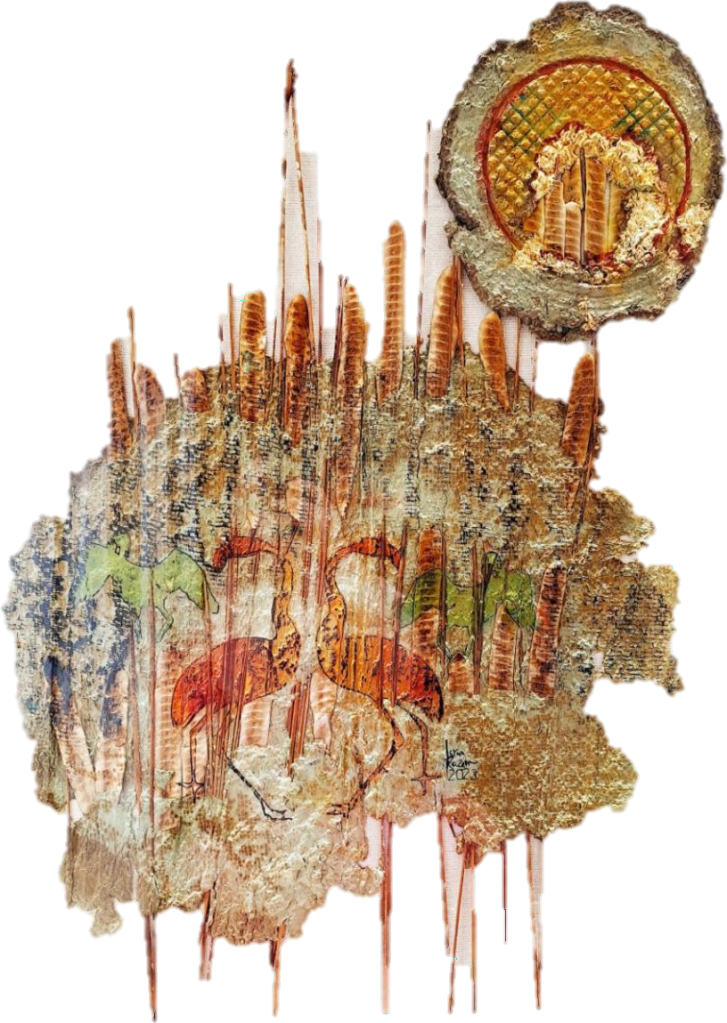
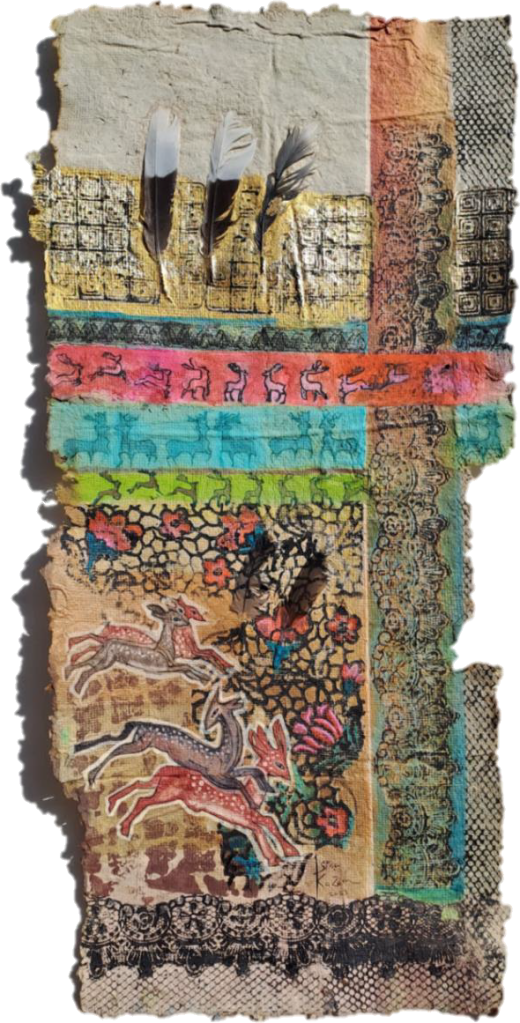
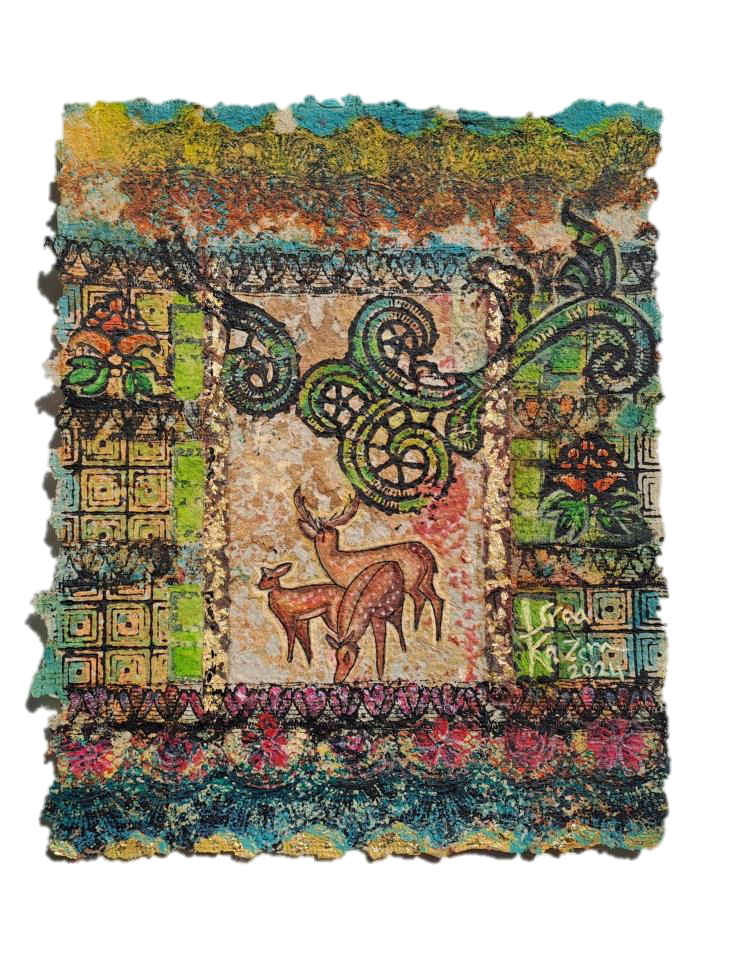
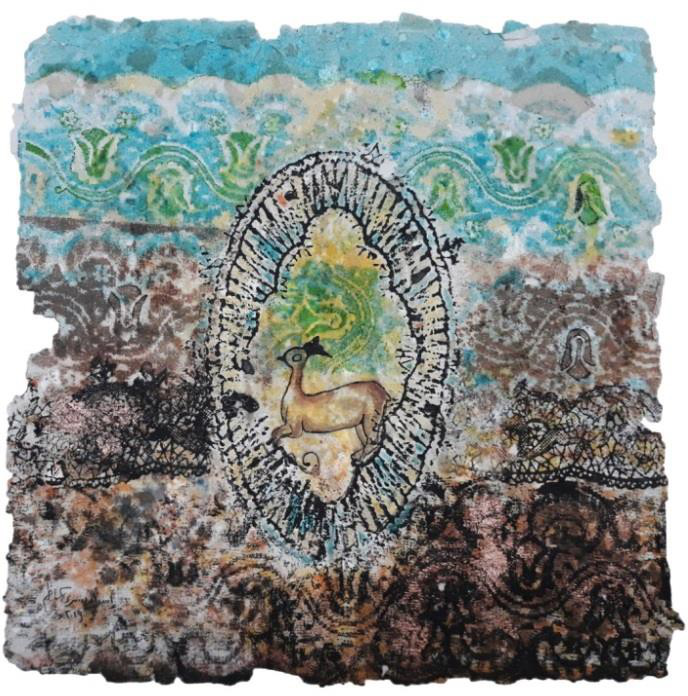
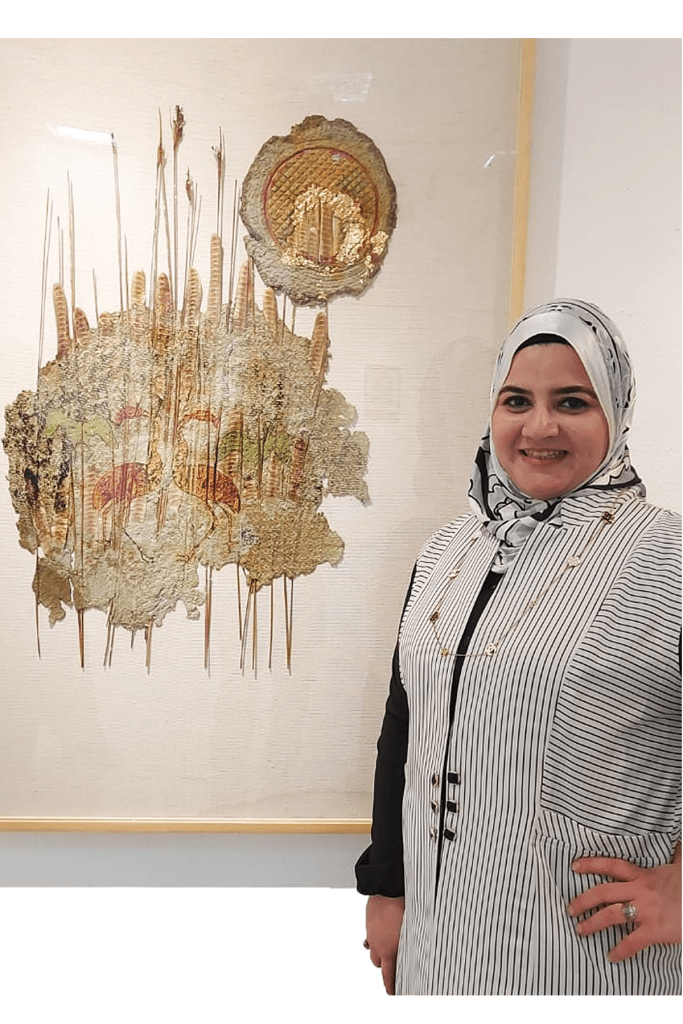
Salma El Ashry: Paintings From the Orbit of a Flower

The Concept Behind My Work by Salma El Ashry

In my artistic practice, I am deeply committed to exploring the symbolism of the elements that surround me and to delving into their profound meanings—meanings that may often go unnoticed, yet form essential keys to understanding much of my work.

The majority of my pieces contain symbols that reflect personal, contemplative visions, intimately connected to the places and objects around me. These works are nourished by my readings and inner reflections.

I draw inspiration from the symbols of ancient Egyptian heritage, using them as a contemplative entry point to examine our relationship with identity and visual memory.

My artistic vision emerges from a personal meditation on the meanings of identity and existence. In this journey, I turn to ancient Egyptian symbols and texts—chief among them the lotus flower, which I regard as a central icon due to its multiple manifestations and its profound philosophical role centered around the concepts of rebirth, balance, and inner transformation.

I also incorporate other symbols, such as the dove, which I see as a representation of loyalty, return, and peace.

Color plays a pivotal symbolic role in completing this vision, alongside other visual elements.

Each color carries a philosophical significance rooted in the legacy of ancient Egypt:

• Green symbolizes purity, renewal, and the continuity of the spirit.

• Blue represents protection, connection to the sacred, and embodies

tranquility and psychological harmony.

• Red signifies energy, life, passion, and the latent strength within the human being.

Through this framework, I seek to build bridges between eras—between the past and the present—reinterpreting cultural symbols from a contemporary, humanistic perspective.

My intention is to open a spiritual and contemplative space for the viewer, inviting them to look beyond the surface image, to listen to the hidden messages that these symbols transmit when revived in a personal, spiritual, and modern philosophical context

Cultivating Compassion Paintings by Marci Wolff 

My painting can be understood best when looked at with an understanding of the Tibetan Buddhist ideas of Maitri and Tonglen. (Maitrī loving-kindness) and Tonglen (giving and taking) are two related practices in Buddhist traditions, particularly Tibetan Buddhism, focused on cultivating compassion and kindness. Maitrī involves cultivating a warm and benevolent attitude towards oneself and others, while Tonglen is a meditation practice that involves breathing in suffering and breathing out relief, compassion, or loving-kindness.

I didn’t start out as a kid practicing this meditation. I was adopted as an infant from South Korea when I was 3 months old. And my parents weren’t Buddhists. My dad told me he used to practice transcendental meditation as an adult, but never taught me how. I came to it, through wanting to connect more deeply with my Korean heritage. That was about 10 years ago.
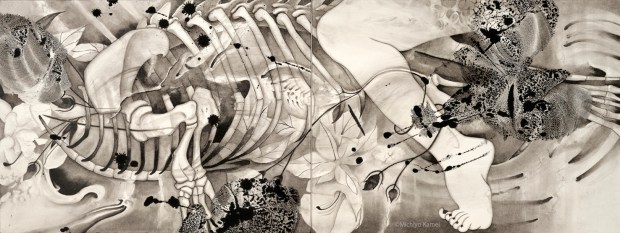
I didn’t start, wanting to merge my meditation practice and my painting practice. But because of the visual nature of tonglen, the imagery was a naturally on my mind. And had no idea what I wanted my thesis to be. So, both created a synergy that helped me inadvertently heal, and explore the different relationships in my past and in my present. By the end of my graduate studies, my thesis was: Painting and Meditation: Paths to healing. I even tried my thesis out in the community. I had around 10 women come to learn tonglen meditation. And to use the imagery from their meditation, as the subject for their artwork. They painted a suffering and the opposite of that. They used photos, to help inform their work. And then they talked about the transformation. It was a beautiful and empowering workshop.
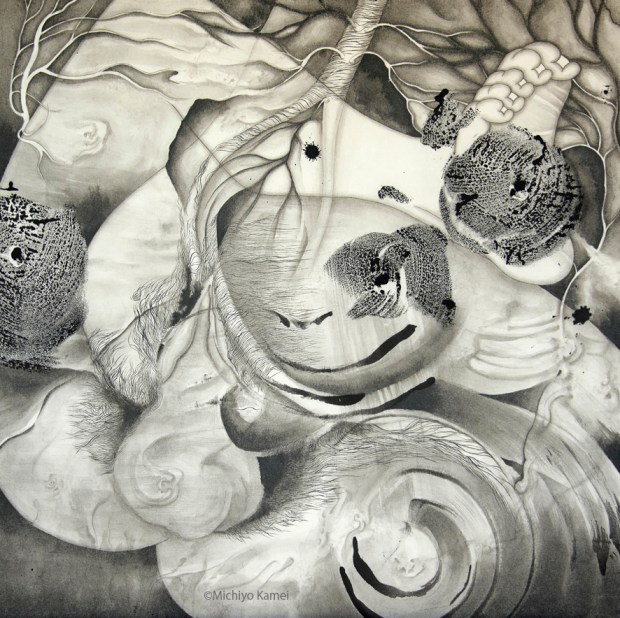
I love this tiny painting. It started out as a quick study as nothing serious. But I really just fell into the paint and managed to keep the essence of her being lost in what looked like to me as a state of pleasure or like she’s making a wish. Color tends to go anywhere, when I don’t think about it so much. I just let my hand choose and place it where it wants to go. It’s very instinctual and intuitive. I like not having to think so much. It’s more of an emotional application. Lately I’m in love with the soft plumes of color and line quality I can get with watercolor. I will paint a person just for the softness they have in their hair or body.

After placing myself in tonglen. It was shocking to discover that I had never really jumped off the hamster wheel of life to even talk or address the ambiguous loss I’d carried for years in my body and psyche. I had never even talked to anyone about how hard it was to miss a family I had never met. Or the woman who carried me and birthed me. But the loss is real. This meditation of compassion gave me the space to fully sit with that grief and actively tend to it. I seemed to have just fleshed it out more fully in my paintings.

I made my very complex and heavy feelings into a visualization in my mind. Then used those as a springboard for narrative paintings. Turning trauma into a concrete painting. Painting has played a part helping me make of sense this unique journey. Of what had missing pieces and lies. I’ve created a story with a start, beginning and ending, that made sense to me. Not the dominant narrative of the adoption industry, or lies or mystery surrounding my adoption. Not adoption from the parents perspective. Not adoption from a Christian perspective. But one that comes from historical facts and felt memories from my body and how I felt about being adopted and having gone through so much with so little.

“The Baby Catchers” 2015
Oil on wood panel
32″ 5/8 x 49′ 3/4

In 2016, I saw the photojournalism of these displaced refugee children at the gate in Kilis, Turkey. People were being shot as they tried to cross out of their war torn home of Syria. This photo captures kids becoming displaced people. Being a displaced person has made me an international citizen. Painting directly from the photo while changing small things like the gate colors to infuse America’s presence. I made the girl in pink to look like me as a toddler. I did change the baby’s eyes to look directly at the viewer. I was on a roll here, moving my meditation onto strangers I didn’t know. People on the news. I just so happened to be able to relate.


“At the border Gate in Kilis,Turkey” 2016. Oil on canvas. 41″ x 41″.

In ‘Feeding Time’ subject play with ideas of being nourished in captivity in an unnatural environment at the Wild Animal Park in San Diego. I was trying to express the absurdities, dangerous issues in American culture and realities of parenting in 2017. Child trafficking, abuse and the ridiculous standards and roles that are expected and fulfilled by mothers. Letting in those issues and risks, gave me a broader range of character to play with which was really fun. I really enjoyed designing the composition to create this cramped, foreboding space.


“Feeding Time” Oil on canvas. 67 3/4″ x 57″

Dancing brings me great joy. For me, It’s wildly feminine, spontaneous, expressive and cathartic. Dancing to DJ’d dance parties helped me get through Covid. So, when I found a photo of people doing tantric dance in the Netherlands. To me, this painting signifies freedom joy and sensual pleasures and a trust in the feminine and masculine moving in spontaneous harmony. I painted it for a public art viewing in downtown space. I wanted to make something that signaled the end of social distancing. At the same time, I liked that the men were letting the women lead them through space. It signaled to me a trust. Which, for in America, the Supreme Court had just reversed Roe v. Wade.

This dance was photographed in a very brightly lit ballroom with a bare wood floors, with random music stands and billowy curtains in the background. The color was too white, too bright and the figures were getting lost. So, I decided that blue would be a perfect color. I had been swimming and diving in the Lakes in Montana, and realized that blue of the water would be perfect balance to all the activity and detail in the figures. It is like they’re dancing underwater or in the sky, free flowing.


“The Tantric Dancers” Oil on canvas. 40″ X 60″

I painted a still from a YouTube video of a young Korean woman eating Korean noodles. Her name is Dorothy.


“Dorothy” (from her Mukbang video) watercolor on paper. 7″x7″

Mukbang is the art of eating Korean food as a performance for all those who click on the video. I enjoy watching these videos. And they are highly addictive and always inspire me to make Korean food. I’m not one for K-Dramas, but I am highly drawn to the Visual and audible feast. Plus I love seeing what South Koreans are eating.

Marci Wolff

The Banquet of Banality by Hager Youssef

The Banquet of Banality

It was too much—

your friendly chatter

with a plastic doll,

beside all my womanhood.

Too much closeness,

and not enough of friendship’s honor.

You dressed your attention

in a shirt far larger than your frame,

and wandered all night

seeking someone to stitch it tighter.

Fevered listening,

inflamed reactions,

obscene exaggeration,

and a sugar tongue

with no cause.

Your talk—

not just the melting

of social shyness,

but constant calls

of a drifting gigolo.

In the light’s reflection

in my glass,

Narcissus

appears smirking,

then fades.

This woman

stuffs her misery

with your emptiness,

and leaves,

utterly emptied by your absence.

And I—

beneath the weight of analysis and inquiry,

will sleep well tonight,

for I won’t let your butterfly

scratch a hole into my mind.

That banquet of banality—

doors whose insides I know too well:

the illnesses of ego,

the body,

and your childhood—

where it seems your own hand

chokes the other lost in itself.

The other women leave delighted—

They got their change

from the shiny illusion

they came for:

illicit praise

drawn from both my shares.

But I—

I’ll go home

in my white dress,

just as I came.

All I lack now

from such tired evenings

are the symphonies

of your lies.

My Weather Is Fragmented, Beautifully Distorted

My weather is fragmented,
beautiful in its disfigurement,
it writes me upon a page that quivers—
like a vast, open hand.

I’ll hang my first face on the door.
In the wild haste of love,
I’ll let you enter.

This night
lengthens over me
like a mosquito.

This lamp
only illuminates
my fear.

My second face
is dark and wicked—
like a rat in hiding.

The third, I vomit
onto the body of air,
into a bowl of memory,
like a child,
retreating into his mother’s breast.

The fourth is a mask of fire.
When you choke me,
I think—
you are making love.

The fifth, a nail in my throat.
I hammer it in,
and spit out a sixth face
that will never be complete.

The seventh sees nothing,
hears nothing—
he simply cages his sorrow
and mutters.

The eighth
sings to you
in the voices of prostitutes.

The ninth writes poetry
without faith,
sketches you on my back
with a broken fingernail.

And I—
when I sleep within you,
and rise without me,
like a tattoo,
when you forgot my name
and screamed:
“Who am I?”

Alcoholic privilege night

When my beloved is drunk,
I become a wound upon his cheek.
He strikes my chest with an empty glass,
Saying, ”This bell—this is what wakes me.”

When he drinks,
He opens my mouth like a pit,
Searching for his name,
For a button he lost
As we rushed back toward childhood.

He loves me swaying
Between two chairs:
Truth—
And the guilt I know,
When he mistakes me for a window,
When he spills the wine
As an apology on my behalf,
Like the blink of an eye.

When he drinks,
My arms multiply in his memory.
He summons them to soothe his pain,
Asks me to plant my tree
Right here—
Above his eye,
A finger for his throat,
And a final finger pointing to the wall:
“Embodied—as if you were pure awareness.”

When he’s drunk,
I draw back.
He runs like a shadow
Caught in light,
Bleeds me
Into some vague emptiness,
Traps me in a space
Shorter than a whisper,
Inside a bottle,
Inside a child’s nature.

He points often—
As if he’s arrived,
As if I were a mouth
He must enter,
Not merely behold.

Hagar Youssef is an Egyptian poet and writer based in Cairo. She has published a poetry collection titled “A Damaged Memory” in Arabic and she is currently working on two collection stories: “Dreaming With Two Heads” and “One Day.” She graduated from the Faculty of Education – Department of Sciences. She has written for various platforms, including those focused on feminism and gender studies. Her work explores the essence of language, deeply influenced by philosophers Roland Barthes and Georges Bataille, in linking love, pain, and death to language, deconstructing these themes. She is also passionate about translating literature and poetry, reviewing books, and writing journalistic and critical articles.

Lemon Language Paperback – November 22, 2024
by Hager Yossef