Decluttering My Mental Space
Collected Poems with Commentary
Brian J. McVeigh
My first encounter with haiku was not out of a love for poetry; rather it came from an educational motive. Many years ago, I was tasked with teaching Japanese students English. This was a bit of a challenge as the students had been taught what is pejoratively called the “grammar translation method” (emphasizing grammar rules; memorizing words as if each one only had a singular definition; focusing on error avoidance; rote exercises; testing for “only one correct answer”). Such a pedagogical approach not only instilled a fear of making mistakes but socialized students to see language learning as a terribly unimaginative enterprise. In an attempt to wean students off such a view, I had them translate Japanese haiku into English and English haiku into Japanese, hoping to impress upon them the inherent creativeness and flexibility of language. Most appreciated the purpose of utilizing haiku, though a few objected, apparently more comfortable with the unnaturalness and rigidities of textbook tutelage.
I also relied on haiku for another reason related to education that is a bit more involved. As I explain below, in one section of Interpreting Japan: Approaches and Applications for the Classroom (2014) I analyzed the aesthetics of haiku in order to show how ideas are built through sensory experiences. Haiku rely on perceptual immediacy to highlight an intuitive insight, thereby succinctly crystallizing a point. As such, they illustrate a crucial aspect about how human cognition operates and symbolic thought is created, i.e., the complex interplay between perception and conception. In other words, like other artistic expressions, haiku demonstrate how corporeal experiences facilitate looking at the world from a different angle, and sometimes that novel perspective possesses intellectual import.
The Body in the Mind
How do we come to believe or feel that something is true? To a large degree people are persuaded through aesthetics, and an appreciation of aesthetics emerges from bodily experiences and perception. Aesthetics is deeply implicated in what we think, how we interpret the social and natural environment, and the very words we use to communicate complex thoughts; this even includes super-abstract mental terms describing subjective introspectable self-awareness (i.e., consciousness as defined by the psychologist Julian Jaynes). In other words, the ideological and imaginary are grounded in physiology and embodied experiences.
We can categorize psychophysiological processes into sensate and ideational processes. The former has to do with what is seen, heard, felt, smelled, or tasted. It is the objective, perceptible world that comes to us through our senses. While the sensate is the experiential, the ideational refers to the conceptual; this form of knowing is not directly perceived through the senses (it is reasonable, of course, to argue that emotions are “felt,” and certainly strong affect is a physiological as well as a cognitive experience).
The sensate and ideational become linked in an individual’s psyche and mutually work together. We might say that the body is good with which to think. Sensate experiences are transformed into the ideational dimension, which in turn implicate different aspects of our corporeality: bodily parts (e.g., the belief that one’s personal essence is in one’s heart or head); spatial orientation or how the body is positioned in relation to objects and others (e.g., the universal assumption that what is up is always superior to what is below); interoceptive or internal sensations (experiences used to construct mental words as theorized by Julian Jaynes).
The relationship between the sensate and nonsensate is complex, but if simply stated, it may be viewed in the form of a two-tiered structure, with nonsensate knowledge generated from the senses. Perceptual experiences are borrowed to build nonsensate knowledge. Our mental worlds are based on the interchange of qualities of the corporeal and the cultural. Bodily experiences and the qualities of concrete things, then, become associated with belief. We do not and cannot just “think;” we can only think “of,” “about,” or “with” something borrowed from our interactions with the world. It is, therefore, the tangible and observable which is essential in defining our experience of mental events.
The Sensate and Ideational Dimensions of Symbols and Metaphors
Important symbols⸺religious icons, political emblems, commercial logos, key words, a meaningful piece of writing such as a poem⸺work their magic by having their perceptual aspects reinforce their ideational aspects and vice versa. In this way certain representations become powerful motivating mechanisms that influence behavior and beliefs. This was the great insight explored by the anthropologist Victor Turner.
Nonsensate knowledge is built upon and through sensate experiences via semantic shifting, i.e., metaphors. This is a type of knowing that is “from” but not “of” the senses, i.e., nonsensate knowledge refers to ideas that are not directly tied to or shaped by the immediate perceptual environment. Indeed, our conceptual processes are fundamentally metaphorical. The capability to organize experience and order our ideas of the world using tropes means that metaphor itself is a perception, just like seeing, hearing, touching, tasting, etc. Thus, metaphors (and their various cousins, such as similes and analogies) do not only give us a way of conceptualizing a preexisting reality, nor are they merely a matter of language; metaphors do more than just describe since they structure our engagement with the world.
The visible material world of things and objects interacts with the invisible, abstract realm of ideas and feelings. The exchange of these aspects is important because it reifies a symbol’s meanings, thereby adding to its persuasive power. This linkage sometimes involves a certain degree of “shouldness.” In other words, moral messages acquire a sensory immediacy and compellingness. This resonates with Ludwig Wittgenstein’s dictum that “ethics and aesthetics are one and the same.” The ideational (values and meanings; normative; proclaiming a prescriptive point; moral imperatives; obligations; what we need to do) becomes associated with the sensate (feelings and emotions; longings; appeals to our animal spirits; corporeal desires; the desirable; what we want to do).
Exorcising Demons
I decided to compose poems not because I wanted to write poetry, but because I felt coerced by personal demons kicking up psychic fragments that littered my mind. In some cases, it was a desire to rid my head of old and odd whisperings inspired by haunting “half-experiences” (dreamy, barely remembered memories that may or may not recount actual events), some of which have been with me since very early childhood. In other cases, I felt compelled to describe a scene whose sublimity unsettled me. “Therapeutic” might be too strong a word, but it is in the neighborhood as it describes why I wrote these poems.
Originally, I composed poems using the traditional Japanese haiku pattern of 5 morae/7 morae/5 morae (morae are not exactly syllables, e.g., in English a long vowel is counted as one syllable, but in Japanese it is considered two morae). I found the 17-morae pattern restricting, as was the convention that a Japanese haiku should contain a seasonal reference (kigo). Then I tried American-style haiku (lunes), both the styles developed by Jack Collom (3 words/5 words/3 words) and Robert Kelly (5 syllables/3 syllables/5 syllables). With a few exceptions, I settled on Collom lunes.
This short collection is categorized by themes (the poems lack titles) and curated from different versions of poems (the number of variants is indicated in parentheses). From these versions I selected my favorites and put the rest in storage. I have included commentary to illustrate the interchange between the sensate and ideational. While some think such an analysis detracts from an enigmatic vagueness and is overly clinical, my remarks are part of an attempt to calm troubling mental rumblings that, while not plaguing my mind, have to a degree preoccupied my thoughts.
The Collection
Enchanting Sound
Young boy points
To plane’s drone amid stars.
Listening to mystery.
I begin with this lune because several of its elements reappear in several other poems below. It emerges from a very old memory. I was quite young, perhaps a toddler, standing in an alley on a cold, clear night and I stopped to look up, captivated by the source of a strange sound in the dark, inky heavens. To this day I still associate the sensory experience of the humming drone of a distant plane with the unsettling curiosity of faraway, bewitching places, both geographical and within my psyche.
Listening to the Infinite
Toward the horizon
A droning, wraith-like plane edges.
To hear eternity.
This lune echoes the sentiments of the previous one. The perception of droning is both primal and transcendent, beautifully haunting but melancholy; it is listening to the music of the infinite or being allowed to eavesdrop on another, unearthly dimension. Visually the horizon leads to thoughts of foreverness. The plane is barely visible from earth, making it ghostly and making me wonder if it is really a man-made flying contraption or a gliding winged-spirit from another sphere of existence (three other versions).
The Sky Limitless
Boundless blue sky
Swallows up a tiny plane.
The vast infinite.
Another echo of the very first lune. This one does not include any reference to droning, but the plane’s existence implies it. In any case, one day I realized how the gentle pulsating resonance and unbounded, horizonless sky merge sound and spatiality into the same fabric of reality. The celestial domain, taken in by the eyes, suggests the abstract idea of the infinite, which leads to notions of insignificance, i.e., the solitary plane is lost, absorbed by the cosmos. Or the plane may represent the soul of each individual, confronting the overwhelming awesomeness of the absolute, tunneling through reality, pushing on through the universe on some unknown trajectory (three other versions).
The Forest Stares Back
At wood’s edge
Dog and master intensely stare.
Both are awed.
Though “night” and “dark” do not appear in this poem, it describes a wooded area in a misty evening, made ghostly white by snow covering the tree branches. Not only the human, but even his dog senses an otherworldly presence deep in the forest that keeps an eye on passersby (two versions).
The Race of Life
Gunshot, heavy panting.
Track curves, a finish line.
Life’s a race.
Even during an intense, high-pressure spurt of physical energy, the psyche finds a way to give other meanings to whatever we are doing. While competing in a high school track event my mind couldn’t resist searching for other interpretations of my bodily movements. Other versions of this poem describe chasing the “blinding sun” (i.e., interfering with focusing on some objective) and “finish line in sight” (i.e., meeting a challenge; about to reach an important personal goal; persistence pays off). Also appearing in other variants were “running within lines,” signifying the value of playing fair with others, “staying in one’s lane,” and maintaining appropriate boundaries (two other versions).
The Moon Goddess Visits
Moon Goddess descends,
A divine visit⸺great honor!
A mere dream.
This is based on an event that was probably the closest thing I’ve ever had to a religious experience. It is inspired by an actual dream I had in my late teens: I was in an iridescent pasture that could be accessed by a gate located on the street on which that my grandparents lived. In the dream the full moon suddenly floated down from the sky and transformed itself into a half-moon shaped boat. Riding upon this shimmering lunar ferry, with whitish, willowy sails, was a translucent, alabaster-skinned moon goddess, who appeared as if she had been lifted from a Wedgwood Cobalt Blue vase. I felt humbled and privileged to have received such a visitation. Surely, I concluded, such dignified beauty must have something of great import to deliver to me. But I was sorely disappointed when I awoke before she could convey to me any great revelation (one other version).
A Summer Night’s Swim with Spirits
The pool’s waves
Reflect on leaves of trees.
Ghosts dancing above.
A dip in a cool electric-blue pool on a quiet, sultry summer night is made more interesting when one’s senses are persuaded to see spirits manifested as flickerings and glimmerings. The gently lapping water project light onto the canopy formed by trees, conjuring up a spectral show.
Pool, Sky, and Soul
Under blue sky,
In placid water body floats.
Soul at peace.
§
The pool below,
Reflects cloudless blue sky above.
The infinite mirrored.
§
Sky above,
Pool below.
Soul between.
The first lune of this theme depicts me lying on my back on an inflatable lounge and looking up at the shining azure sky. I could see nothing but blueness, and this mirrored how the utter calmness of the soothing water had emptied my mind. Any thoughts were now “see-through,” i.e., I was cognizant of them but somehow distant from them. A profound restfulness and tranquility overcame me; meditation without trying (one other version). The second and third poem describe a spatial encapsulation of the totality of all existence. The pool is an earthly, this-world microcosm of the sky, which is the boundless empyreal macrocosm. Somewhere between “the above” and “the below” is the individual soul, an imperfect reflection of allness that futilely attempts to capture and control ultimate reality.
The Hall of Holiness in My House
At hallway’s end
The door strangely beckons me.
Night of revelations.
§
Dark hall,
Door beckons.
A presence.
If the hallway’s lights were off in the house I grew up in during the evening, walking to my room sent a chill down my spine. The hallway was long. And for some reason seeing the darkness behind my half-opened bedroom door instilled within me a sense of a numinous “otherness” waiting for me, a sacredness possessed of something waiting to be conveyed.
Running Alone at Dusk
Rolling green hills,
A golf course at dusk.
A lone runner.
Not far from my house was a municipal golf course in which I ran in the summer while in high school. I would have to wait until dusk, when most golfers had finished so as not to get beaned in the head by a stray golf ball. Not having anyone around afforded me an exhilarating freedom; no gazes from others, no cars or people to dodge as on the street. Being with myself among the manicured hilly lawns that stretched far in the distance made me feel small and effaced my ego, but in a reassuring sense. Like blue, green has an inherently comforting effect.
Walking Home in Winter
Walking, snow crunches,
A glowing warmth from windows.
Night cloaks me.
When in high school a bus would drop me off at a corner and then I would have to walk about a mile to my house. The walk was pleasurable, as I usually felt satisfied after a long day at school, and what seemed like an even longer workout for indoor track. Sometimes it was so cold that the snow made a funny squeaking sound with each footstep. The windows of each house emitted a reassuring yellow-orangish radiance. The contrasts of wintriness versus warmth, others versus myself, and darkness versus luminosity brought to mind indifference versus protection, exposure versus privacy, and the unfamiliar versus the welcoming. I wondered what went on in each household and if anyone could hear my squeaking footsteps. But I wasn’t too concerned as I felt anonymous, shrouded as I was by the night.
Pumpkin Patch and Graveyard
Side by side,
Orange pumpkins and grey tombstones.
Souls born anew.
I was in Massachusetts on a brilliant autumn day walking down a country road when I noticed a white fence separating two fields. In one were old gravestones, while in the other were growing finely ball-shaped pumpkins. The positioning of the fields cried out “the deceased are reborn as orange orbs!” I knew I was seeing death and the promise of rebirth in one glance⸺the circle of life. When I asked my wife to comment on this scene, she also noticed the juxtaposition, observing that the departed are granted new life (four other versions).
Grateful for Dinner
Silently she cooks.
Cold night in the city.
Warm meal arrives.
§
Hair pulled back,
Wife in a steamy kitchen.
Long day ends.
For many years I lived in Tokyo. This metropolitan monstrosity’s unnerving hustle and bustle, commuting crowds crammed onto public transportation, harsh neon nightscape, and surprisingly chilly winter nights could be draining. But my wife’s support and cozy apartment greatly assuaged my tired nerves. Preparing a meal without speaking hints at uncomplaining, while hair pulled-back suggests being ready for culinary action. Both lunes employ contrasts to drive home perceptual elements, though in the second poem they are only implied: cold versus warm, steaminess inside versus iciness outside. And both poems close the sensate–ideational divide by denoting how nourishment for the body signifies sustenance for the spirit (two other versions).
Coyote Eyes
Coyote eyes float,
My eyes must glimmer too.
I’m the ghost?
§
Walking at night.
Coyote eyes glow and glide.
Vanish like ghost.
Almost every night, when I walked a trail near our home in Tucson, I would see the eyes of coyotes looking back at me. Their eyes drifted, like small fireflies in the darkness. I often wondered what their sighting of me triggered in their minds (two other versions). The first lune highlights the hovering eyes of a creature, but these had the human experient think that undoubtedly the owners of those optical red beads are carefully observing him. In the second lune the darting eyes in the darkness invoked idea of how the night is full of unknown beings.
Praying in the Desert Night
To starry skies,
Hillside cacti lift their arms
In reverent prayer.
§
To saucer moon,
Man-shaped cacti raise their arms
In worshipful pose.
Another sight that captured my imagination in the desert were all the cacti crowded on hills, shaped like men, with their limbs held up as if praying; nature in an act of self-reverence. Person-shaped plants pointing to the beauty of the full moon or the star-studded heavens aroused within me the idea that there is more going in the world of nature than meets the eye (four other versions).
Observing Mountains
Walking toward mountains,
They look down at me.
I am judged.
§
At path’s end,
Observant hills trace my trail.
Guarding ancient wisdom.
§
Towards small mountains
I walk a giant ribbon.
Life lies ahead.
Besides spectral coyotes and reverential cacti, low-lying mountains and rolling hills also seemed to have an animistic presence. At the trailhead of a long path I used to hike were foothills and peaks whose grave and dignified immobility made me feel as if they were carefully watching me as I approached them on foot. These daily walks were spontaneously meditative (an opportunity to ponder my own life’s journey), and the gaze of mounds, perhaps protecting age-old wisdom filled me with a measure of humility, as if I were being interrogated by the desert landscape as I trekked out my narrative (three other versions).
Metallic Birds of the Urban Night
Helicopters circle above,
Chopping air, beams slicing darkness.
Trouble brews below.
The skies of southern Arizona, for whatever reason, always seemed to be abuzz with police, military, and other types of helicopters. One day, like a giant metallic bird, an ambulance helicopter landed in front of our house to take away an individual thrown from his ATV as he was racing up and down the street. From our house we frequently could hear and see what were presumably police helicopters in the evening, circling over an area and using their searchlights to pierce the night and shed light on the disturbance on the ground; perhaps a fleeing fugitive, a robbery gone wrong, or a car chase (three other versions). In a dream the cutting noise of the blades became the flapping wings of a flying dinosaur wearing a shiny crown, searching for its prey on the ground.
Heaven’s Special Show
Flying at night,
Lightning—giant cotton balls ablaze.
What earth misses.
“Flying through lightning” does not sound very inviting. “Flying above lightning” sounds a lot better, and one night I had the opportunity to witness billowing clouds on fire stretching toward the horizon. It looked as if the gods were at war, hurtling lightning bolts at each other that exploded behind banks of bulging clouds. Or as if celestial sky spirits were putting on an awe-inspiring performance just for us passengers. I thought about how people on the ground, fast asleep, were obliviousness to the stunning lightshow far above their heads. All this exciting razzle-dazzle made me ponder about how we can be totally unaware of places and spaces pregnant with spectacle, whether earthly or heavenly (four versions).
Dog Dreams
A busy intersection,
A dog looks to cross.
In which direction?
§
Dog close by,
Soulful eyes look at me.
Furry four-legged loyalty.
§
Slumped on couch,
Furry friend frets and whimpers.
A dog dreams.
The first lune of this theme pivots around the perceptual act of looking, but implicates some indecision and choice that require deliberation, as if the dog were planning his day amidst the comings and goings of others. In the second lune physical nearness, the touchability and softness of furriness, and the connecting power of eye contact evoke the ethics of unquestionable dependability and faithfulness. In the third lune movement and sound—sleeping, twitching, whining—suggest unseeable canine thoughts. All three poems attribute a sophisticated psychology to dogs. Of course, animal minds are different from those of humans. But we still anthropomorphize animals, especially our pets. We cannot truly know the mind of a canine, any more than we can completely understand the thoughts of another human being (though obviously in the case of the latter we actually understand a great deal). And yet a primitive bond ties us to our dogs. These creatures, grounding us with their pure, unadulterated affection and unconditional acceptance, are humanity’s most secure connection to the nonhuman world of nature.
The Observing Grandfather Clock
The staring face
Of the old grandfather clock.
I’m being watched.
Humans instinctively anthropomorphize objects, natural and made-man. I do not have a clear memory of seeing a particular grandfather clock that appeared animated. But through the years anytime I see one I can’t help but see it as somehow possessed of life. Their round face, imposing height, and distinctive “voice” heard as chiming make them seem as if they are alive. These tall timepieces tell two types of time, that of the hours and that of the passing hours and days of those the clock silently watched over for many years. Certainly, these standing time tellers have witnessed so much over the years that, having absorbed the life energy of others, they just might come to life (one other version).
written by ©Brian J. McVeigh
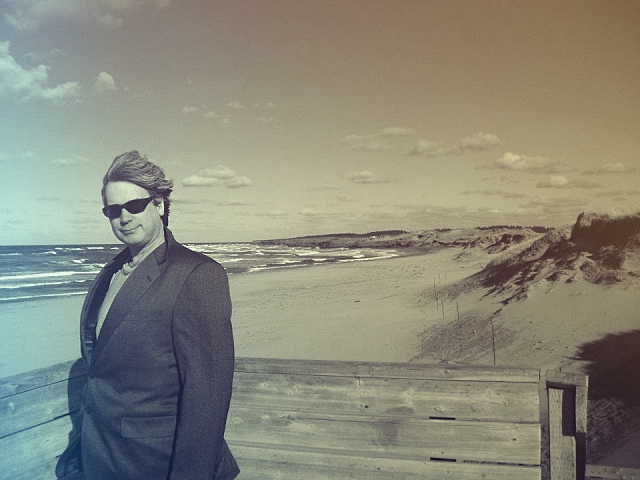
Brian J. McVeigh has an MA and a PhD in anthropology from Princeton University, as well as an MS in counseling. He is interested in how the human mind adapts, both through history and psychotherapeutically. Inspired by and using the theories of Julian Jaynes as a theoretical framework, he has published 16 books on the history of Japanese psychology, the origins of religions, the Bible, spirit possession, art and popular culture, linguistics, nationalism, and changing definitions of self, time, and space. He has lived and worked in Japan and China for many years, taught at the University of Arizona for ten years, and now works in private practice as a licensed mental health counselor.
Licensed Mental Health Counselor, Private Practice. BA Asian Studies & Poli Sci, MA Anthro, MS Counseling, U at Albany, State U of NY; PhD Anthro Dept, Princeton U. POSITIONS: Asst Prof, Kōryō International College, Nagoya; Assoc Prof, Tōyō Gakuen U, Tokyo; Dept Chair, Tokyo Jogakkan College, Tokyo; Dept of E Asian Studies, U of Arizona; Behavioral Health Counselor, St Peter’s Addiction & Recovery Center
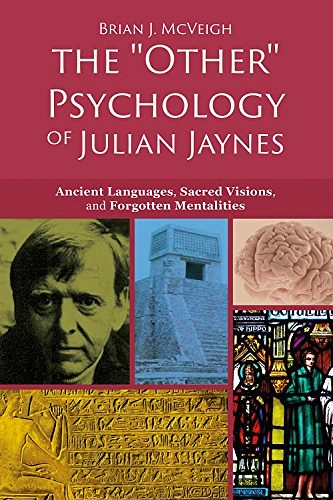
Books by Brian J. McVeigh
Brian J. McVeigh Website
WRITTEN BY BRIAN J. MCVEIGH ALL RIGHTS RESERVED. ALL WRITING IN THIS POST IS A COPYRIGHT OF BRIAN J. MCVEIGH. THIS AN AUTHORIZED DUPLICATION WITH PERMISSION AND EXPRESSED CONSENT
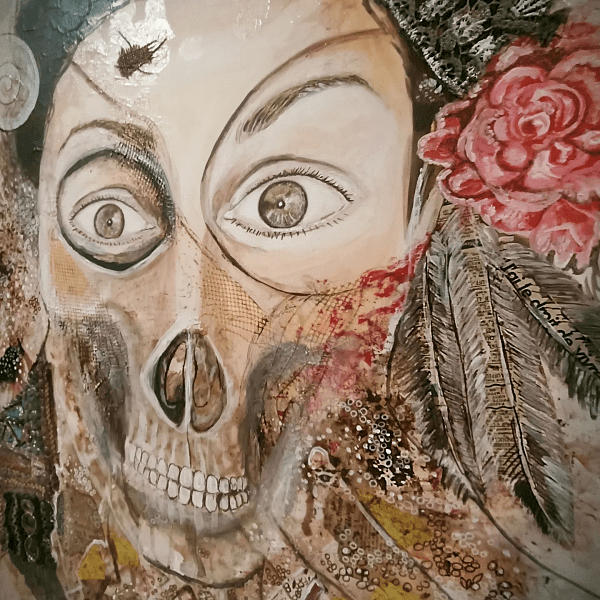
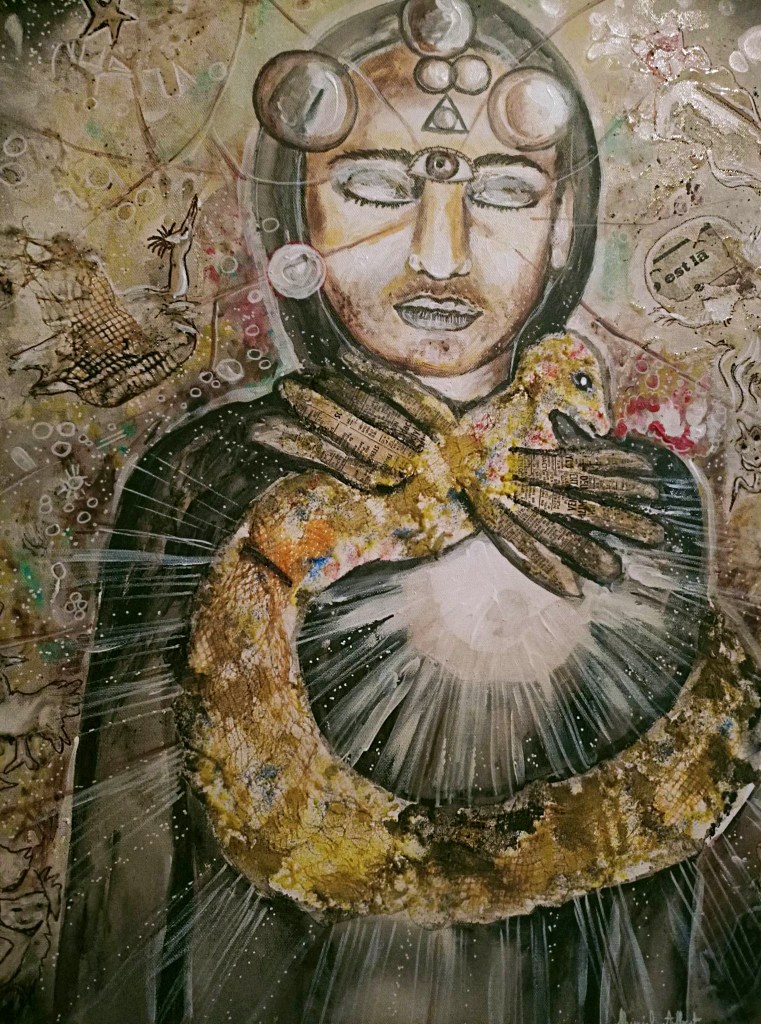
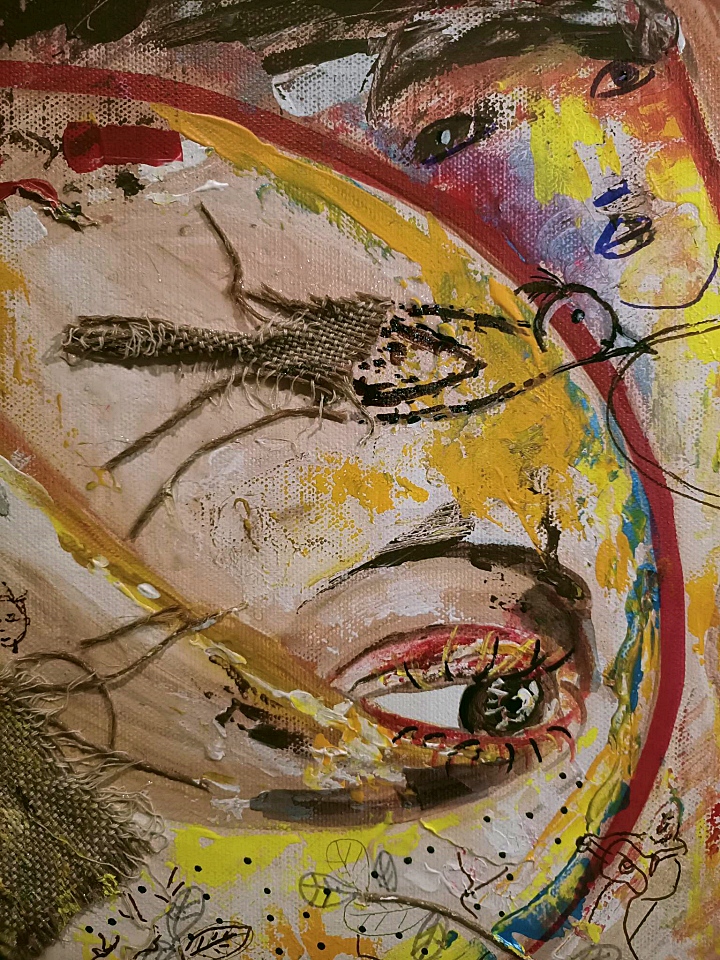
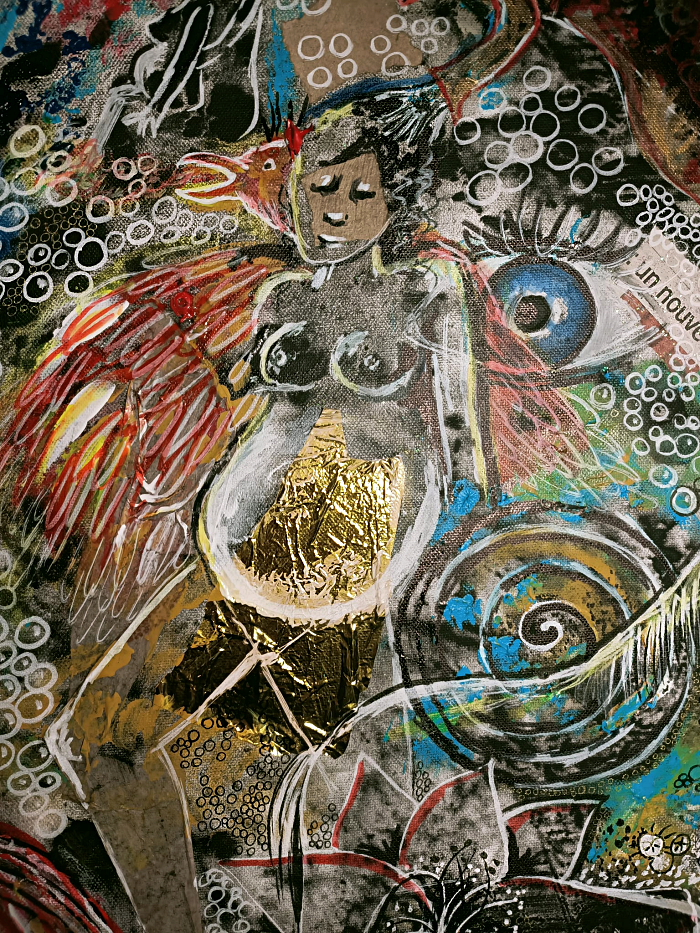
Feature Photo by Mitchell Pluto

























 Mitchell Pluto