The Stormy Sea of Claudio Parentela 

I am 62 years old and I live in Calabria, in the ancient Magna Graecia. I am harsh and solitary, wild, introverted, anarchic and autistically proud like my land, which is full of stormy seas, turquoise and crystalline seas, and rugged and desolate mountains, very colorful and rich in lakes and impenetrable woods. I have been painting, drawing, photographing, cutting, sewing, gluing professionally since 1995, since I decided that I wanted to breathe art every moment of my life.

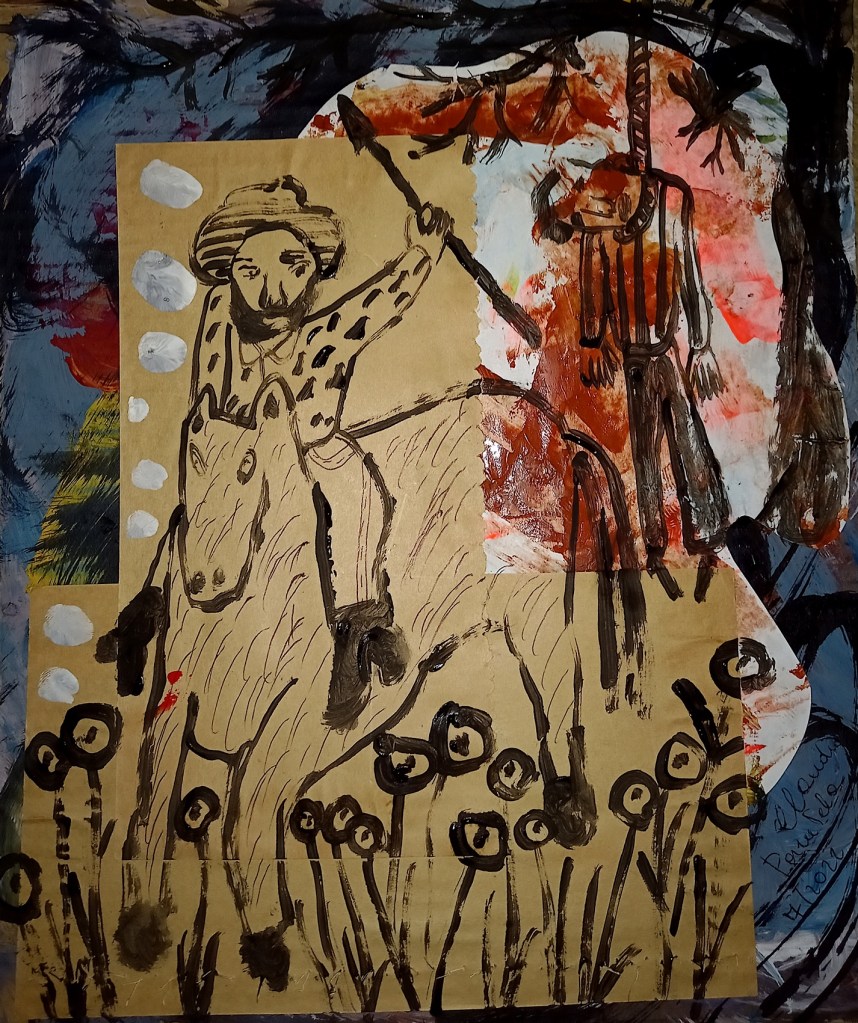
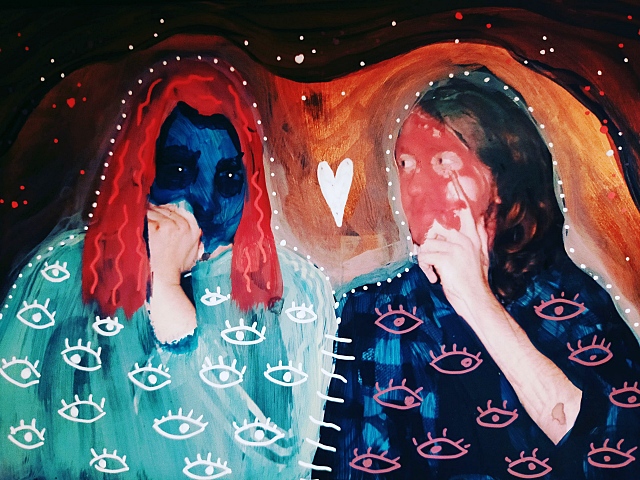
I like to experiment with everything I have at hand,mixing incompatible, different materials in absurd ways. I like to scratch and dirty my photos. Sew them together and with my paintings. I like to sew my paintings endlessly.
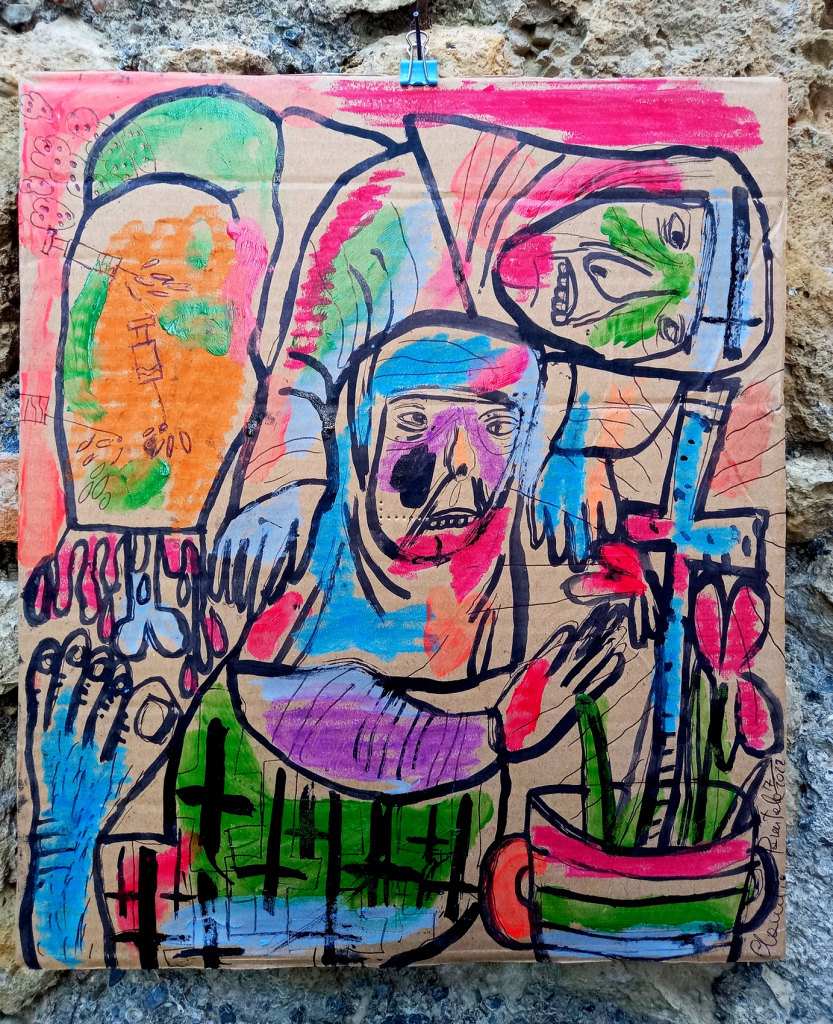
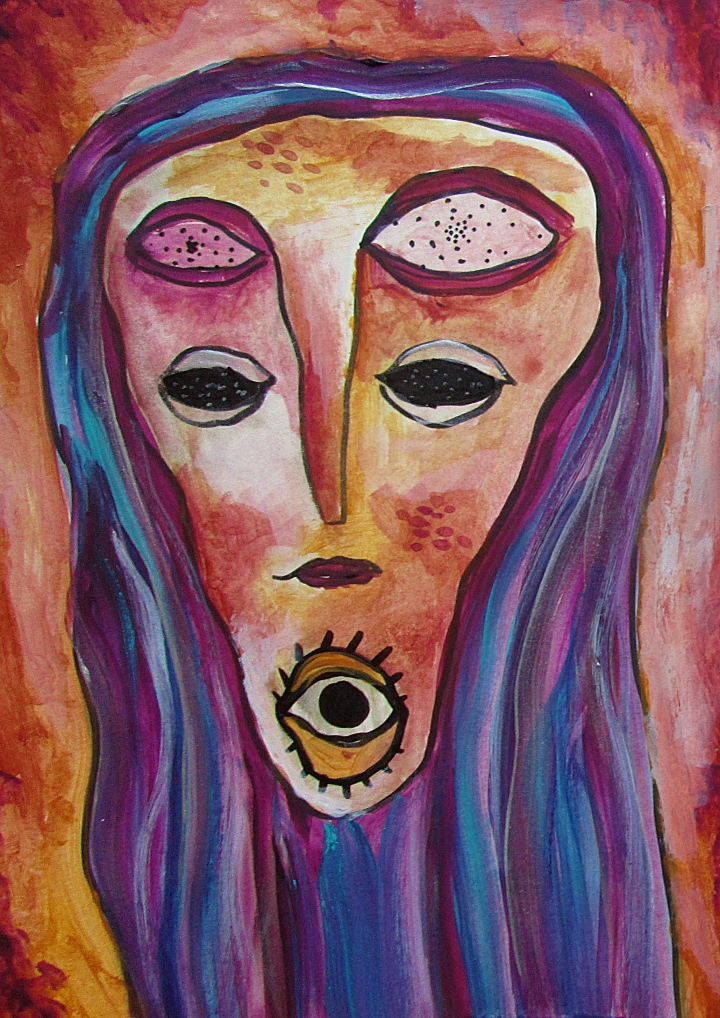
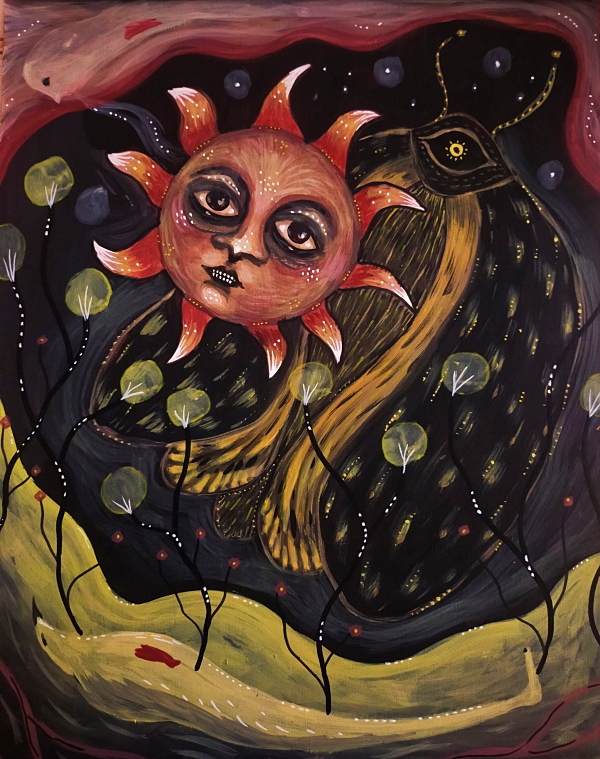
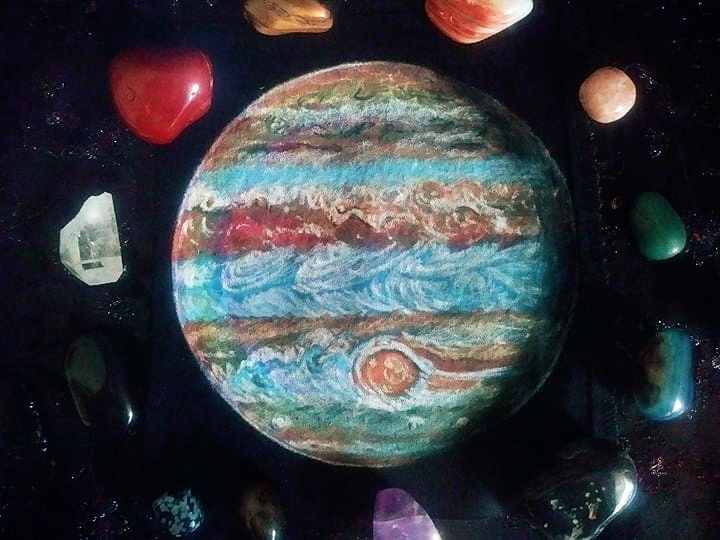
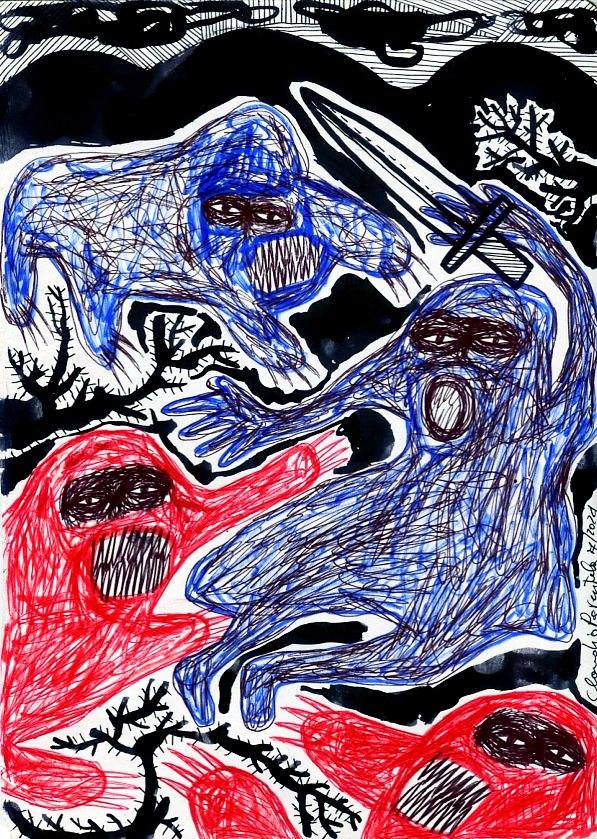
PAINTING2812-MIXED MEDIA ON CARDBOARD-YEAR:2022-SIZE:31CM X 36CM

I never know what I’ll do, what of new or old I’m going to create. I don’t like to plan anything, I want things to happen as and when they have to happen, I don’t do anything at all…. I put on some music, maybe with a good glass of red wine…. I sit at my work table where I have all my colors, my beloved books, my photos, my colors….and the magic happens every time.
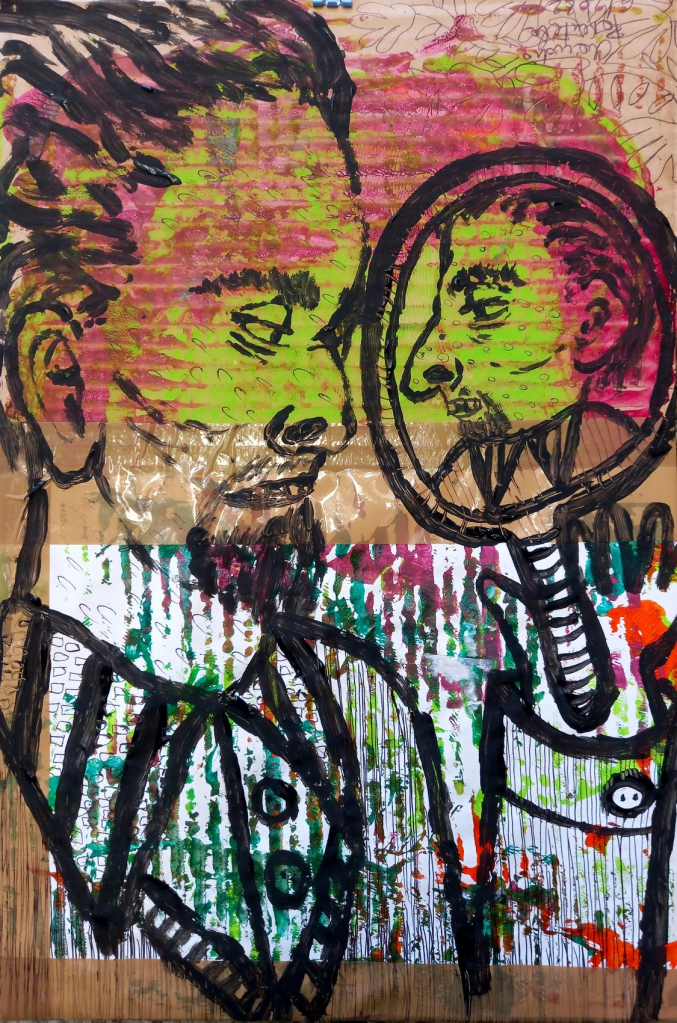
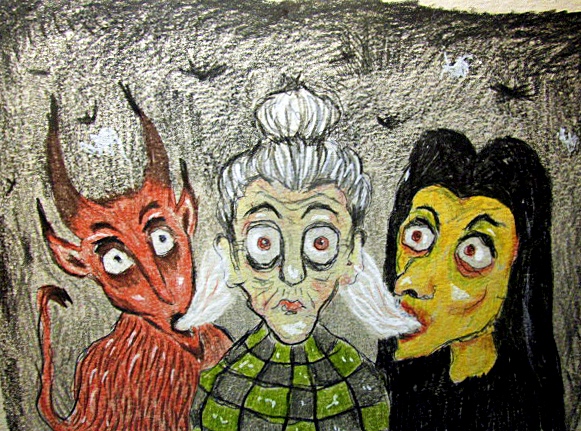
PAINTING2807-MIXED MEDIA ON CARDBOARD-YEAR:2022-SIZE:27CM X 39CM

After a while I start to draw dots, lines, knotted lines, I choose the colors….and so on….it’s wonderful what happens every time. It’s a continuous catharsis, a going inside myself, and always opening new doors to go deeper and deeper.
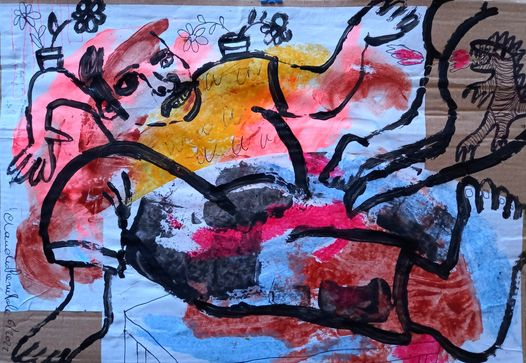
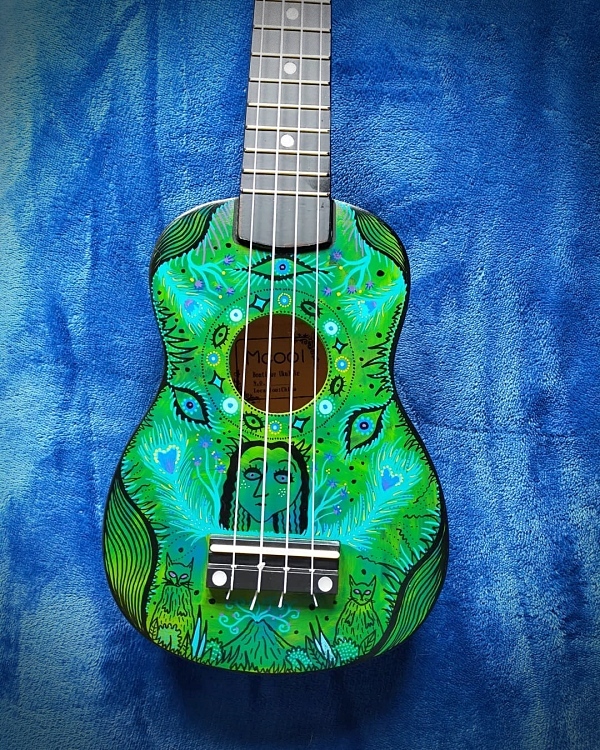
PAINTING2805-MIXED MEDIA ON CARDBOARD-YEAR:2022-SIZE:37CM X 26CM


To know, to discover and open parts of me that were sealed and that now by magic I was able to open and penetrate. Art has been my autistic way to be in the world, the only way I know and have to communicate my words, what I have in my mind and heart. It is the dance that I have chosen to dance in harmony with my breathing.
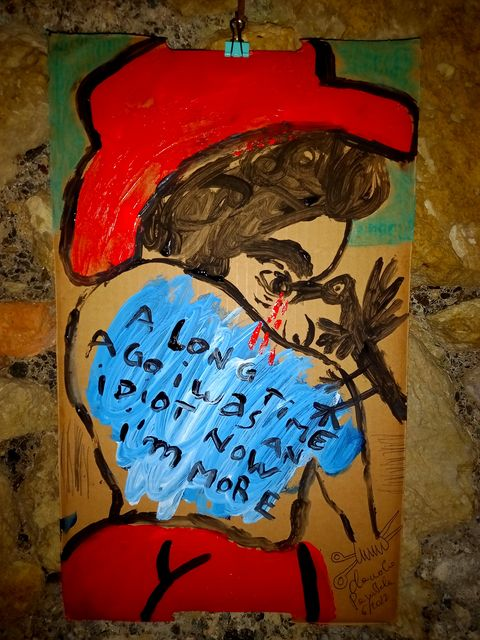
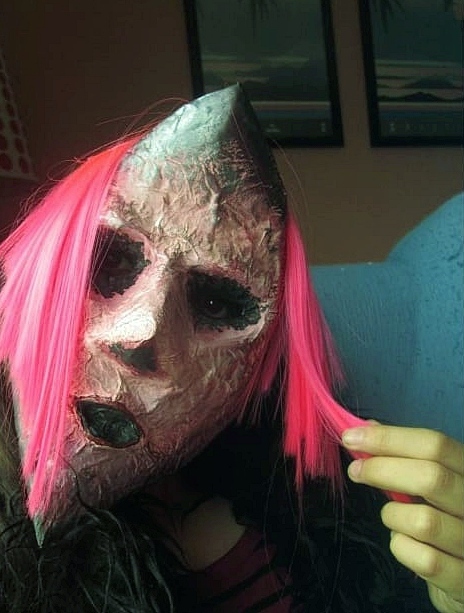
PAINTING2798-MIXED MEDIA ON CARDBOARD-YEAR:2022-SIZE:24CM X 38CM

It is my freedom, the freedom that is essential for me to live, to feel sincere and true. For the first 14 years of my ”professional” career I drew and painted only in black and white with rivers of ink and lots and lots of paper. I love black indian ink, and its thousand shades…..they are like the thousand shades of my soul, they are like the clouds that hide the faint glow of the moon….like the thousand thoughts that crowd the mind before it can choose the right word.
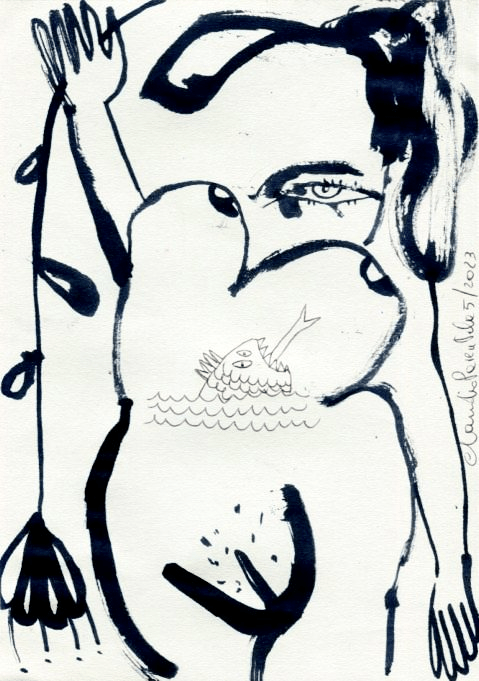
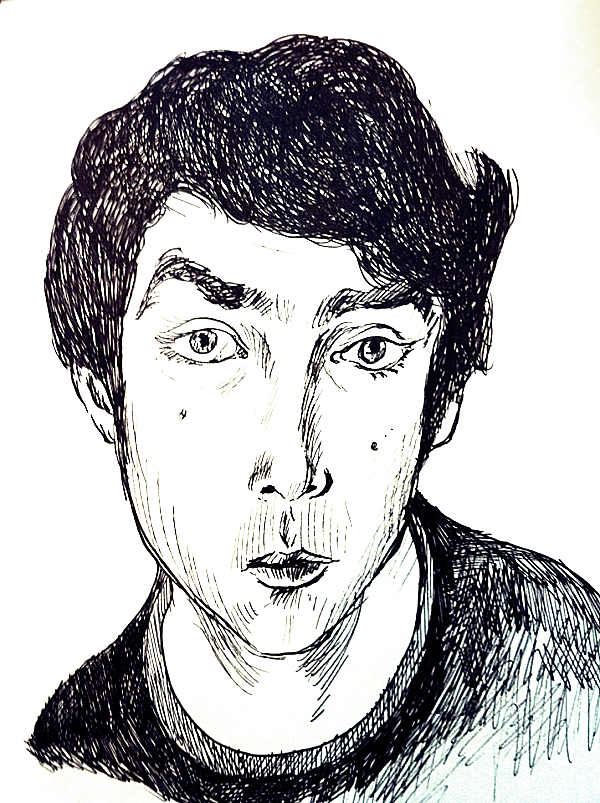
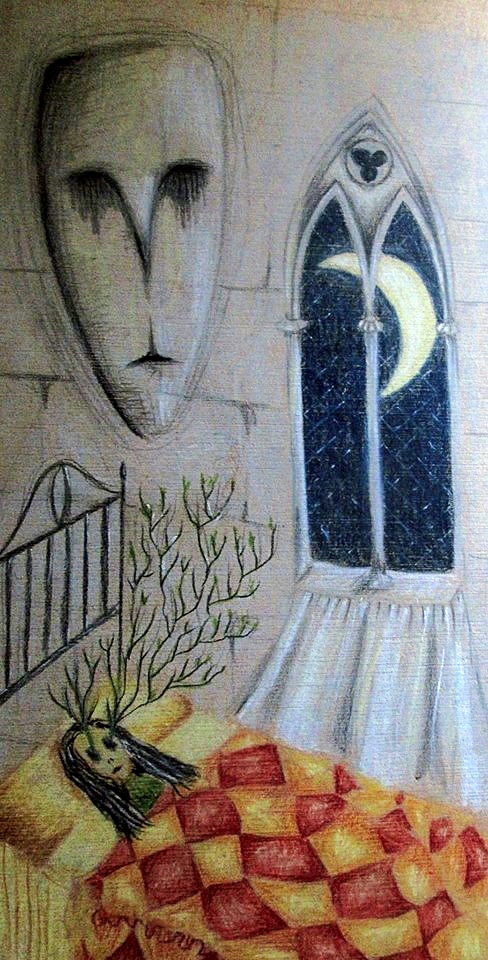
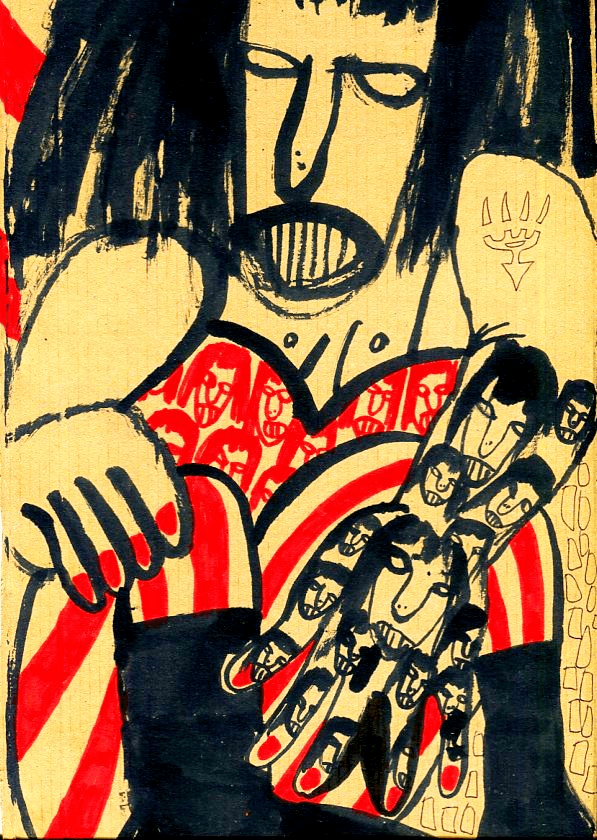
PAINTING2941-INK AND PEN ON CARDBOARD-YEAR:2023-SIZE:15CM X21CM

I started drawing frantically and joyfully on many many zines and magazines from all over the world, I collaborated with noise, metal, industrial, techno music bands….did a lot of mail art…drew for everyone, everything. I have never stopped since then, obviously because I like it, because it is the job I have chosen, it is my life, the life I have chosen to live freely. I never stop looking for freedom in everything I do, it is essential to me. Art is freedom, dance, joy, pain, art is life.

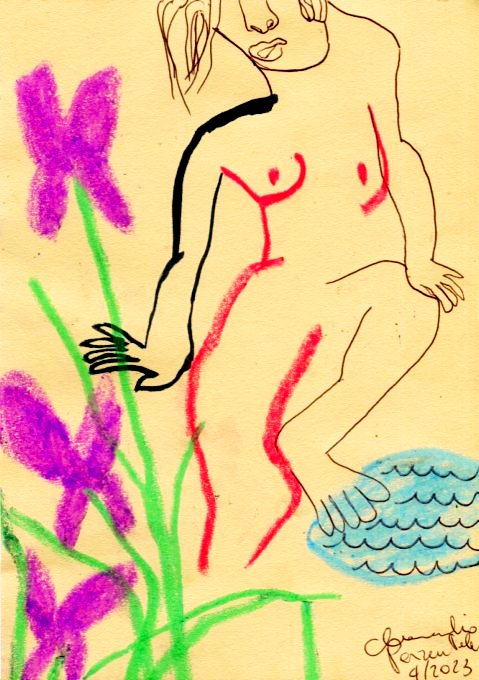
The transition to color was an obvious, natural necessity, and collage too. Collage is an extraordinary bridge to and with infinite potential, it is a labyrinth, a puzzle that never ceases to amaze me. I love experimenting, measuring myself and having fun with everything that attracts my attention, it helps me grow artistically, to discover many new games.
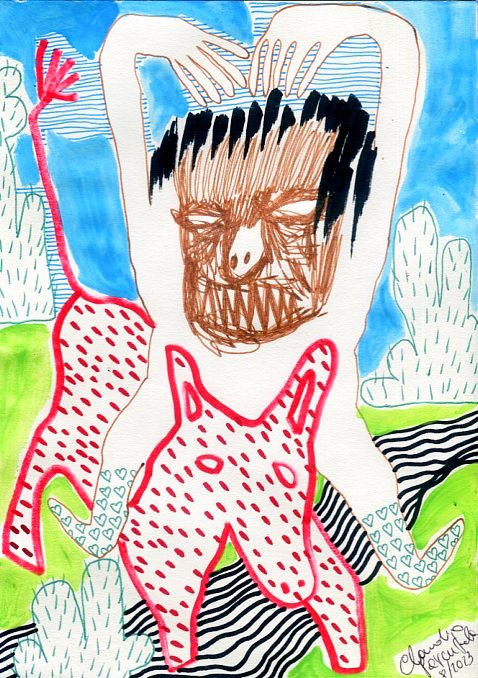
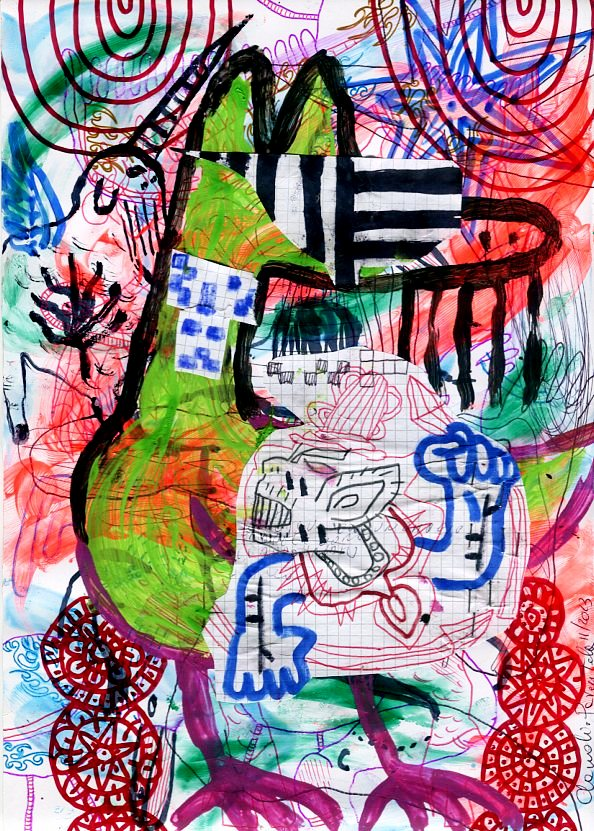
My inspirations are many, many….. my beloved books, underground comics, fashion magazines, so much contemporary art, medieval and Renaissance art….Osho , Aurobindo and Mère, Sara Vaughan, Patty Waters, Evan Parker and Ornette Coleman, Can, Nicke Drake and Van Morrison, Joni Mitchell…. Diamanda Galas and Joel Peter Witkink…. many, much more… the laughter of my friends, the noises of the street, my beloved cats, the winter sea and mountain lakes.
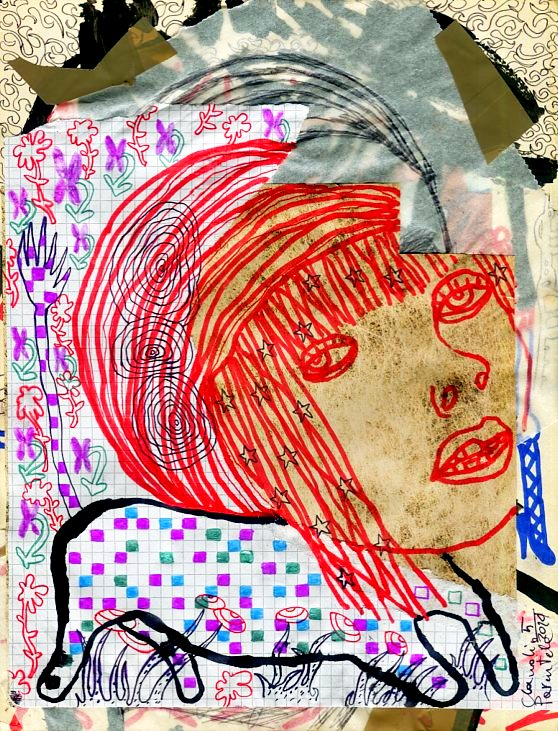
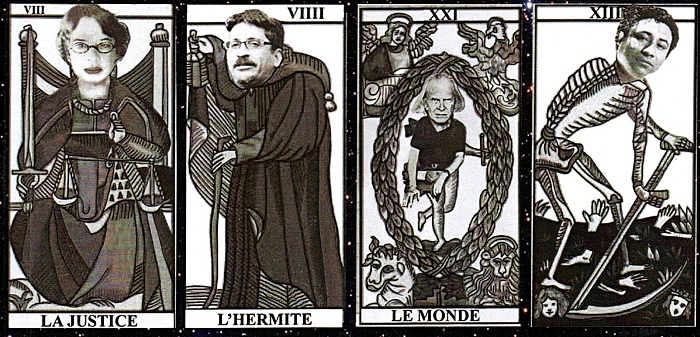
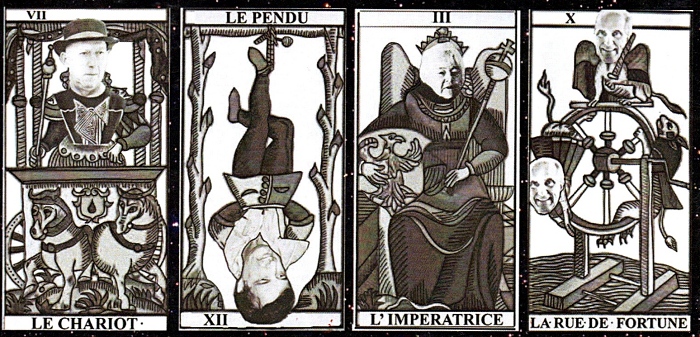
…and of course the tarot cards….I have been studying, reading and painting tarot cards since I was a boy….I love them and I can’t stop studying them, contemplating them, collecting them. For the International Tarot Museum I have created 5 tarot decks and in these days I will start the sixth.
I hope and want to continue to create and be free as I am today
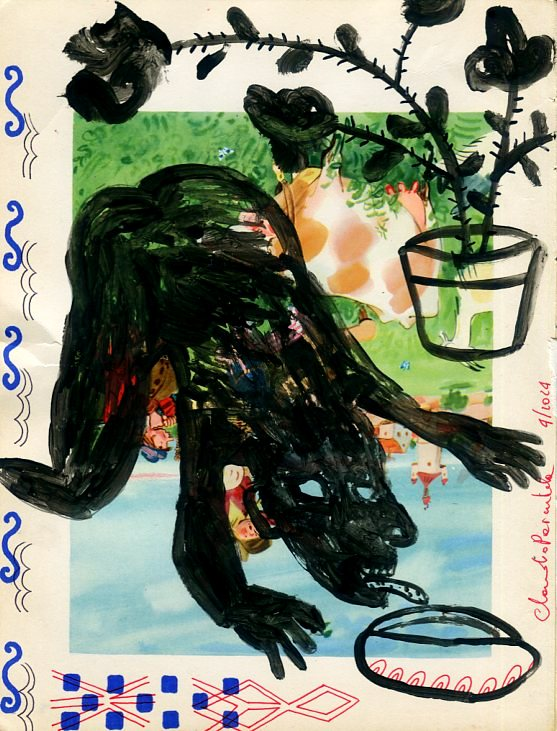
PAINTING3134-PEN, ACRYLICS ON CARDBOARD-YEAR:2024-SIZE:20CM X26CM

Octaves and the Tarot by P.D. Newman

A Second Look at Leary’s Eight-Circuit Model: Gurdjieff’s Law of Octaves and the Tarot
P.D. Newman
Along with Ram Dass, Huston Smith, and Andrew Weil, Timothy Leary was part of what has been called “the Harvard Psychedelic Club.” Fired from his position at Harvard University for failing to attend scheduled class lectures, Leary is perhaps best known as being one of the most vocal advocates of lysergic acid diethylamide (better known as LSD-25), an extremely powerful hallucinogenic drug which Leary et alii helped to popularize during the revolutionary sixties. He was also part of the Harvard Psilocybin Project, which Leary organized following a trip to Mexico during which he was administered psilocybin mushrooms. He later recalled of this experience that he had: learned more about [his] brain and its possibilities [and] more about psychology in the five hours after taking these mushrooms than…in the preceding fifteen years of studying and doing research in psychology.
The Harvard Psilocybin Project went on to conduct the famous Concord Prison Experiment, which evaluated whether psilocybin paired with psychotherapy could successfully rehabilitate repeat offenders, and the Marsh Chapel Experiment, which sought to discover if psilocybin could reliably induce mystical experiences in religiously predisposed theology students. In 1963, Leary helped initiate the Millbrook Experiment, an enormous mansion located in New York where residents spent their days experimenting with psychedelic drugs and living according to the teachings of Armenian mystic, G.I. Gurdjieff. To Gurdjieff, we’ll return below. These experiments, impressive and novel as they were, are not the good doctor’s sole claims to fame, however. During one of his many incarcerations, in 1972, Dr. Leary developed a new theoretical model of the evolution of life on earth—and of individual human consciousness—which he called the ‘Eight Brain’ or ‘Eight Circuit’ model.
Popularized by Discordian Pope, Robert Anton Wilson, Leary’s Eight Circuit model postulates that all life on earth (and indeed in the entire cosmos) evolves through a series of eight successive ‘circuits.’ This same eight-fold process, Leary adds, is recapitulated in the development of consciousness within an individual human being. Just as the human embryo at various times manifests as unicellular, possessed of gills, having a tail, etc., so too does individual conscious unfold through the same successive stages of evolution. Divided into Terrestrial and Post-Terrestrial phases, Leary’s eight ‘circuits’ unfold as follows:
Terrestrial:
1. The Bio-Survival (Marine Consciousness) Circuit
2. The Emotion-Locomotion Terrestrial-Mammalian (Territorial Consciousness) Circuit
3. The Symbolic-Artifactual (Laryngeal-Muscular Consciousness) Circuit
4. The Industrial (Socio-Sexual Consciousness) Circuit
Post-Terrestrial
5. The Cyber-Somatic (Body Consciousness) Circuit
6. The Cyber-Electronic (Brain Consciousness) Circuit
7. The Cyber-Genetic (DNA Consciousness) Circuit
8. The Cyber-Atomic (Quantum Consciousness) Circuit 

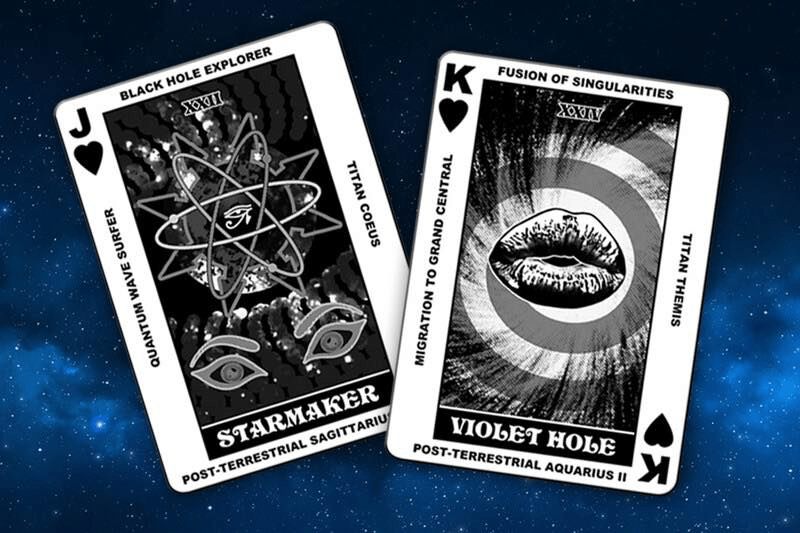
Without entering into too much detail regarding the function of these ‘Brains,’ it is sufficient to say that each of the eight ‘circuits’ are further divided into three successive stages (thus giving us twenty-four) of what Leary calls “con-telligence.” Con–telligence is defined as “the reception (consciousness), integration, and transmission of energy signals.” The three stages of con–telligence applied to each of the unfolding circuits then constitute the twenty-four phases of the awareness, mastery, and communication-fusion of each new evolutionary technology—from spineless, floating amoeboid (as well as newborn infant) to meta-physiological nano-technician at the “violet hole” found at the center of our Milky Way galaxy. The people who represent these various stages of evolution Leary refers to as ‘castes.’ 
In an attempt to “relate the psychology of the ancient, pre-scientific world with modern notions of stages [and] phases,” Leary was wont to apply his twenty-four periods of evolution to the Major Arcana of the Tarot, wherein he perceived a clear reflection of his own model. For example, to illustrate the three-stage ‘con-telligence’ of Circuit I, Leary employed The Fool, The Magician, and The Empress cards. In illustration of the con-telligence of Circuit II, he used The High Priestess, The Emperor, and the Hierophant, etc. However, there’s just one problem with this arrangement. The Major Arcana are possessed of only twenty-two cards, leading Leary, to the horror of every Tarot purist in the world, to invent two brand new Major Arcana cards: Starmaker and Violet Whole. As hip and groovy as these two additions no doubt are, they may not have been necessary. Had Leary paid closer attention to his Gurdjieff while residing at Millbrook—or to the Ouspensky title (In Search of the Miraculous) that Charlie Manson slipped him while in solitary confinement at Folsom Prison—he might have thought to apply the sequence of Tarot’s Major Arcana cards to Gurdjieff’s Heptaparaparshinokh, aka his Law of Octaves.


According to the Law of Octaves, everything in the universe that happens or can happen manifests according to a fixed set of cyclic vibrations, called octaves. From the initial impulse of a given thing to that thing’s final completion, this constitutes an octave; that is, from do (start) to do (finish) in the Ionian mode (do re mi fa sol la ti do) constitutes a given octave. Whether it is the birth and death of a galaxy or the beginning and end of an acid trip, taken as a unit, each of these phenomena would constitute its own octave. Considered in the key of C major (which Gurdjieff obviously intends), it becomes evident that a given octave is possessed not only of eight steps, but also of two intervals. For, every note in the C major scale is followed by a sharp—save two: mi and ti. Unlike the other six tones, mi and ti, rather than being followed by semitones, move directly into the following whole notes.  To compensate for these ‘intervals,’ in order to complete a given octave, Gurdjieff postulates that two “additional shocks” are required. P.D. Ouspensky, an early student of Gurdjieff, writes:
In an ascending octave the first ‘interval’ comes between mi and fa. If corresponding additional energy enters at this point the octave will develop without hindrance to [ti], but between [ti] and do it needs a much stronger ‘additional shock’ for its right development than between mi and fa, because the vibrations of the octave at this point are of a considerably higher pitch and to overcome a check in the development of the octave a greater intensity is needed.
It is our understanding that an ‘additional shock’ in an ascending (evolutionary) octave may be constituted by anything from a physical or emotional trauma, a mental break with mundane reality, a mystical initiation, a ritual working, or even by a psychedelic experience. It is the application of ‘super effort’ at two points in an ‘octave’ that will aid in bringing its process to completion.


Possessed of eight steps and two ‘intervals,’ Gurdjieff’s Law of Octaves neatly solves the problem of what Leary saw as two ‘missing cards.’ If we allot the cards of the Major Arcana in sets of three to Leary’s eight ‘circuits’ while keeping true to Gurdjieff’s Law of Octaves, we arrive at the arrangement below. Let the Arabic numerals indicate Leary’s Eight Circuit model. Let the Roman numerals represent those attributed to the Major Arcana cards. Let the asterisks represent Gurdjieff’s ‘additional shocks.’


1. 0 – I – II (do)

  1. III – IV – V (re)
  2. VI – VII – * (mi)
  3. VIII – IX – X (fa)
  4. XI – XII – XIII (sol)
  5. XIV – XV – XVI (la)
  6. XVII – XVIII – * (ti)
  7. XIX – XX – XXI (do)
    As the reader may observe, these ‘shocks’ fall into the ‘transmission’ (per his theory of ‘con-telligence’) slots of Leary’s third (Symbolic-Artifactual) and seventh (Cyber-Genetic) circuits, precisely in the places where the ‘additional shocks’ are necessitated, per Gurdjieff’s Law of Octaves—no invention of cards required. The suggestion here is that ‘additional shocks’ serve as bridges for the transmission gaps between a) the integration phase of the Symbolic-Artifactual Circuit and the reception phase of the Industrial Circuit and b) the integration phase of the Cyber-Genetic Circuit and the reception phase of the Cyber-Atomic Circuit—thus providing the individual (and the species) with the momentum necessary to break the barriers between one evolutionary circuit and the next.
    In the Tarot, these ‘shocks’ appear between a) The Chariot and Strength and b) The Moon and The Sun cards. In the system popularized by the Hermetic Order of the Golden Dawn, The Chariot corresponds to the zodiac sign Cancer. Strength, on the other hand, corresponds to Leo. Conveniently, as Cancer is ruled by the moon and Leo is ruled by the sun, combined with the second ‘additional shock’ which occurs between The Moon and The Sun Cards, we see that both the ‘shocks’ take place at ‘intervals’ between symbolic diametrical moon-sun relationships. These ‘shocks,’ then, both practically and symbolically, serve the same ‘bridging’ function of a mercurial mediator between alchemical opposites. Coincidence? Perhaps. Granted, we may be guilty of ‘confusing the planes’ by comparing the zodiacal attributions of one pair of cards to the titles of another. However, one cannot deny the symmetrical neatness of the structure.
    For this arrangement to work, it goes without saying that all the cards and explanations following The Chariot in Leary’s model must be rearranged and reworked to accommodate for Gurdjieff’s ‘shocks.’ And, in fact, in Info-Psychology, his 1987 revision of Exo-Psychology, Leary kindly invited the reader “to engage in an ‘interactive co-writing’ of these important issues.” That’s all we’re really doing here. In any event, at the very least, we’ve arrived at what would appear to be a totally novel mode of Tarot analysis. The notion that hidden ‘additional shocks’ appear in the major arcana sequence between cards VII and VIII and between cards XVIII and XIX is, to our knowledge, unprecedented. But, does this innovation mean that two of Leary’s ‘castes’ must be sacrificed in favor these ‘shocks?’ Or, is the implication that two of Leary’s ‘castes’ are the ‘shocks?’ Further analysis is required to know. One thing we can say with certainty, however—and that, along with Leary’s friend, Dr. Israel Regardie of the Golden Dawn—is that “posterity […] will have a finer appreciation of what [Dr. Timothy Leary] has contributed to the world than we have today.”
    WORKS CITED
    Alpert, William. Ram Dass: Fierce Grace. Zeitgeist Films, New York. 2003
    Hollingshead, Michael. The Man Who Turned on the World. The Psychedelic Library. http://www.psychedelic-library.org/hollings.htm. Accessed Jan. 9, 2017
    Lattin, Don. The Harvard Psychedelic Club: How Timothy Leary, Ram Dass, Huston Smith, and Andrew Weil Killed the Fifties and Ushered in a New Age for America. HarperOne, San Francisco. 2011
    Leary, Timothy. Info-Psychology: A Manual on the Use of the Human Nervous System According to the Instructions of the Manufacturers. New Falcon Publications, Las Vegas. 1987
    Leary, Timothy. Neuropolitique. New Falcon Publications, Las Vegas. 2006.
    Leary, Timothy. The Game of Life. New Falcon Publications, Las Vegas. 2015
    Ouspensky, P.D. In Search of the Miraculous: The Teachings of G.I. Gurdjieff. Harcourt, Inc., New York. 2001
    Wilson, Robert Anton. Cosmic Trigger I: Final Secret of the Illuminati. Hilaritas Press, LLC., Grand Junction, CO. 2016
    Wilson, Robert Anton. Prometheus Rising. Hilaritas Press, LLC., Grand Junction, CO. 2016

P.D. Newman is an independent researcher located in the southern US, specializing in the history of the use of entheogenic substances in religious rituals and initiatory rites. He is the author of the books, Alchemically Stoned: The Psychedelic Secret of FreemasonryAngels in Vermilion: The Philosophers’ Stone from Dee to DMT, and the forthcoming title, Day Trips and Night Flights: Anabasis, Katabasis, and Entheogenic Ekstasis in Myth and Rite. The Secret Teachings of All Ages (TV Series documentary) 2023.

Theurgy: Theory and Practice: The Mysteries of the Ascent to the Divine by P.D. Newman, published by Inner Traditions, Bear & Company will be available on December 5, 2023

ALL RIGHTS RESERVED. THIS POST IS A COPYRIGHT OF P.D. NEWMAN
THIS AN AUTHORIZED DUPLICATION WITH PERMISSION AND EXPRESSED CONSENT

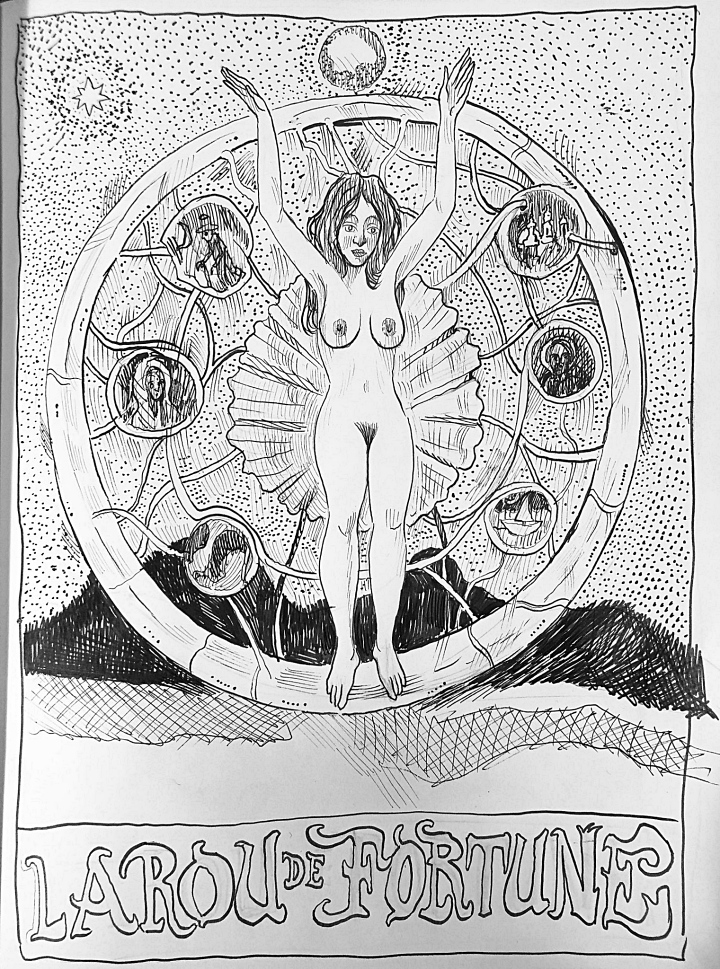
La Rou de la fortune Erik Volet

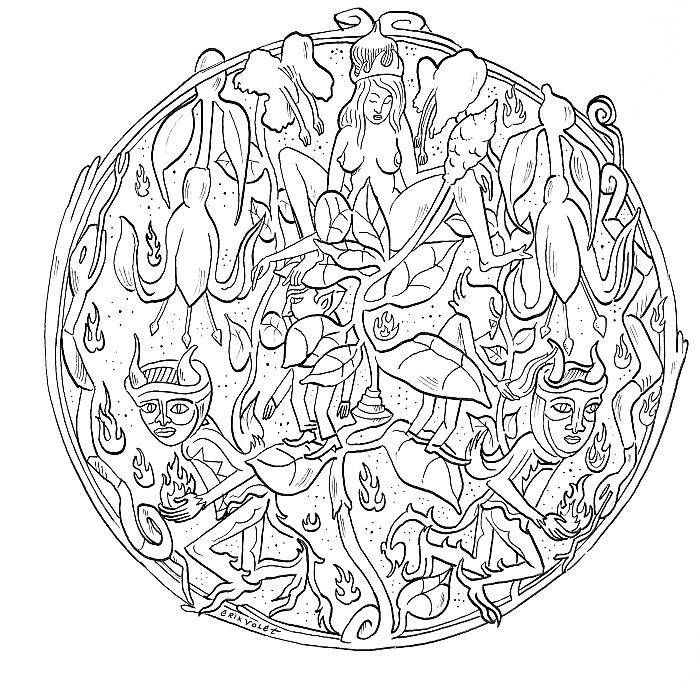
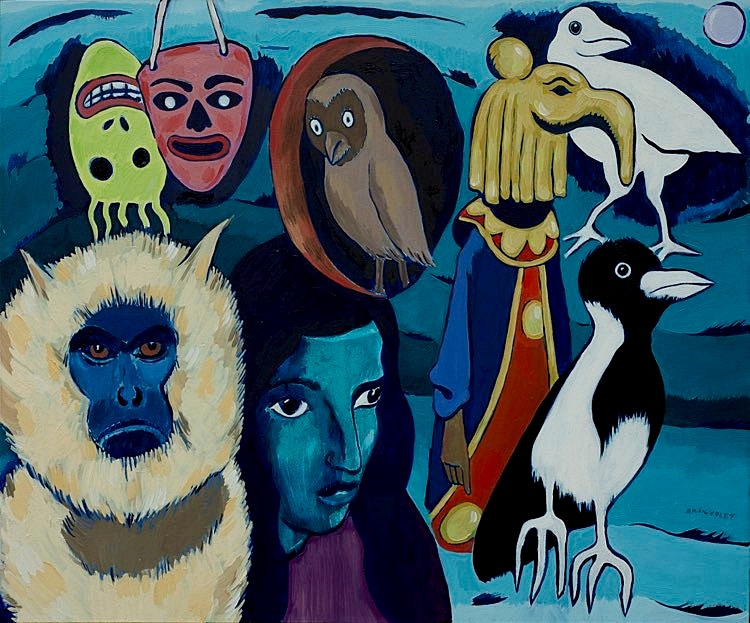
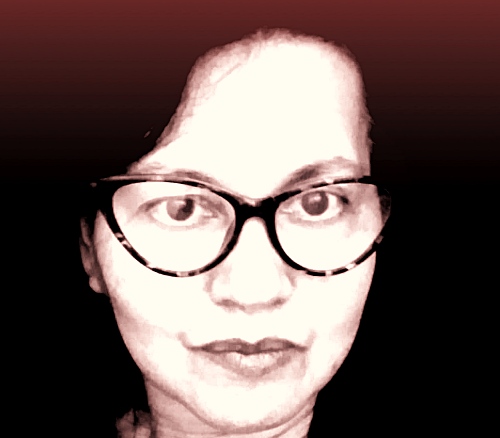
The Human world intersects with those of animals, plants and the spirit world which is gestured towards. There are also beings halfway between these worlds—transitional beings with the ability to move through these different worlds with ease. Multiple time periods intersect & the world of myth and the past blends with the present-day time of contemporary reality.
Erik Volet

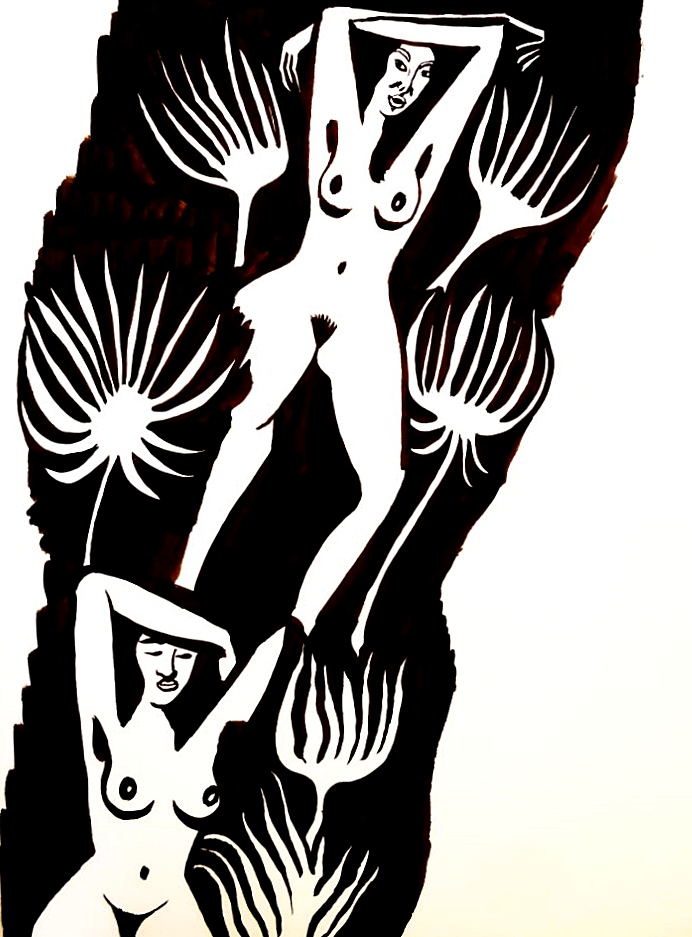
Reclining nude

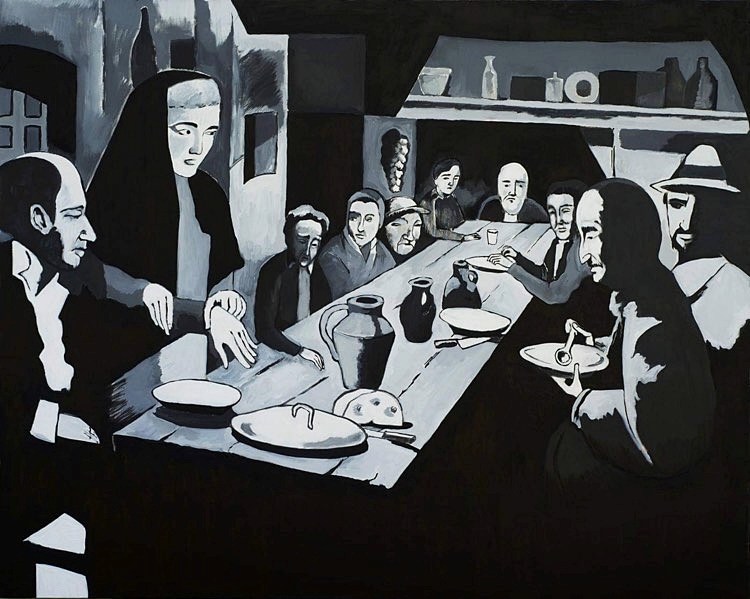
Beggars Banquet

Woman in Blue Shawl and Poet’s Dream

Language of the Birds

Erik Volet (b. 1980) is a painter & illustrator from Canada who has exhibited in Canada, the US & Europe. As well as producing paintings he has published art books, made zines, illustrated books, and maintained a consistent involvement with painting murals on the street and in the public sphere. Influences, which continue to be important to his art practice are comic book art, graffiti, hip hop culture as well as surrealist theory and practice.

ERIK VOLET

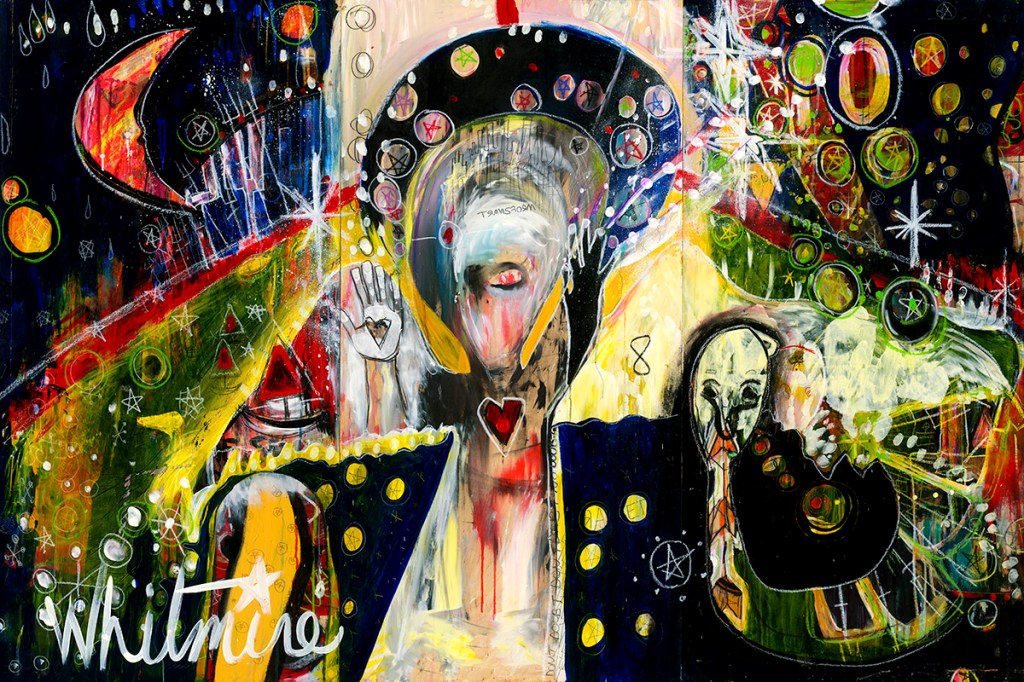
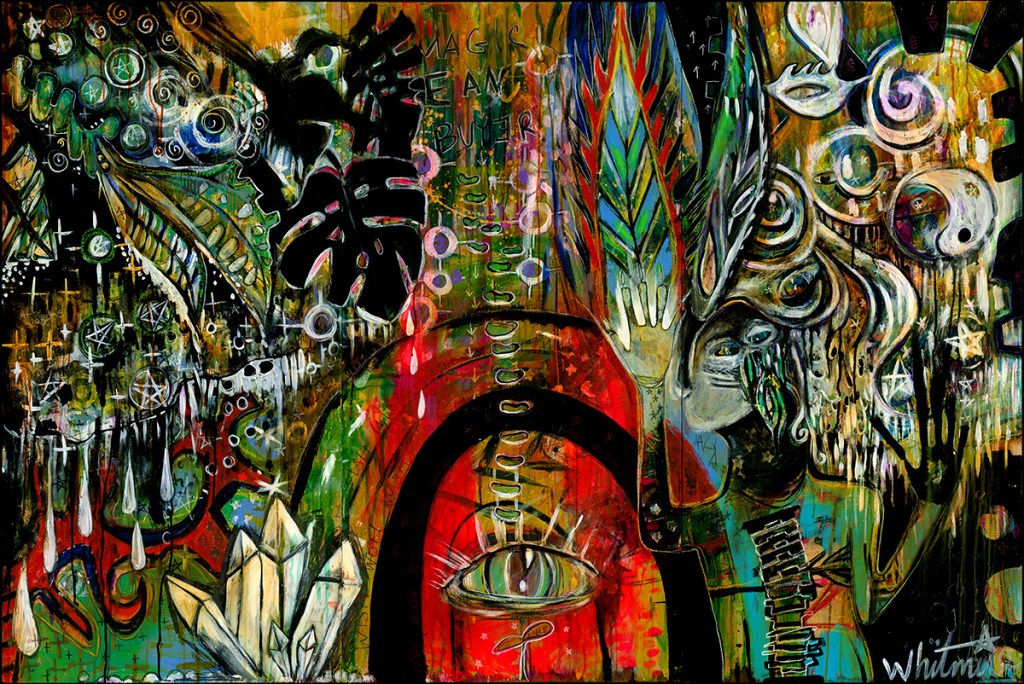
Oracle Painting by Sarah Whitmire

I believe that I died when I was a child. Or perhaps a part of me died and something different was brought back. After that, things were not the same for me. I had several more brushes with death and suffering moving forward. These experiences shaped who I would become. They taught me about the uncertainty and duality of life and also brought me to a fierce inward state of being.

Decisive Action

I grew up in a world of adults. I was told that children were to be seen and not heard. I was given long stretches of time to play on my own. I turned to art and creative pursuits as a way to escape into the worlds I preferred to create. I built elaborate doll houses and loved magical wilderness spaces. I was inspired by the world of Fae that Brain Froud so beautifully captured. I was fortunate that my mother took me to art museums where I fell in love immediately with the language of art.
Transform

I believe that art has the power to heal, inspire and awaken; it has saved my life more times than I can count. As an adult, I have been lucky to keep my curiosity and magic alive. I pride myself on growth and becoming more and more who I prefer to be. I have now trained for over a decade in mystic and spiritual disciplines with the mission to inspire the world with my connection to what I call the Muse.

Allies

When I paint, I am moved by intuitive Muse forces from moment-to-moment, making marks with a variety of implements from my hands to brushes and handmade tools. I create from an empty meditative space, not knowing what will come out. There’s a huge amount of surrendering as I have to allow things to be as they are. Ugly or beautiful… I have to release all judgement. It’s one of the hardest things I do. It feels very vulnerable for me to allow “what is” when people are watching. And that is part of my work.

Glamour

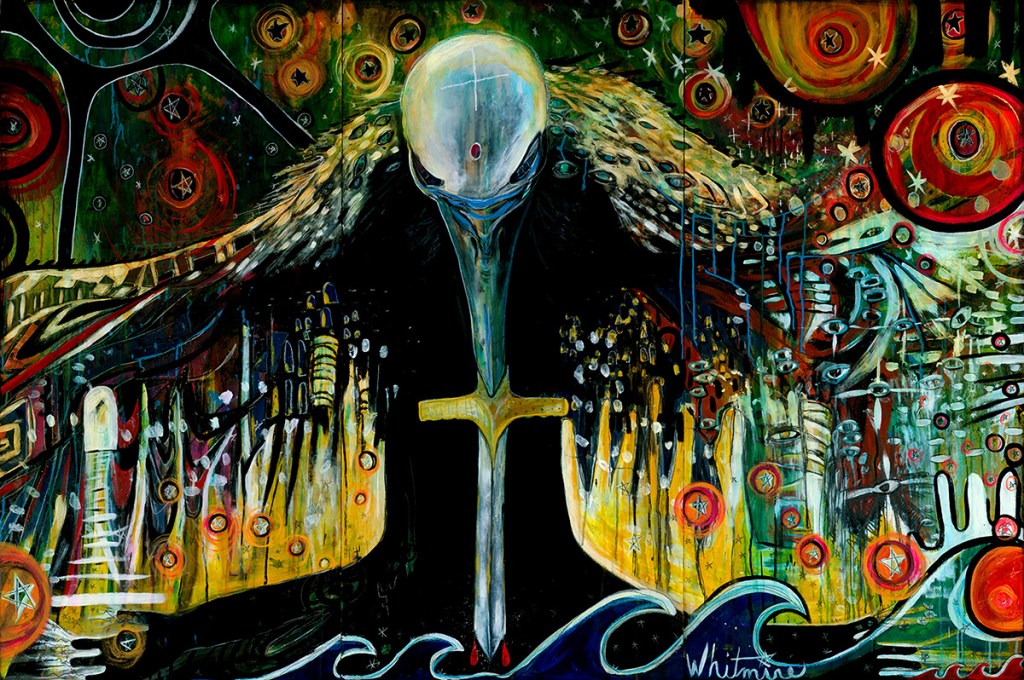
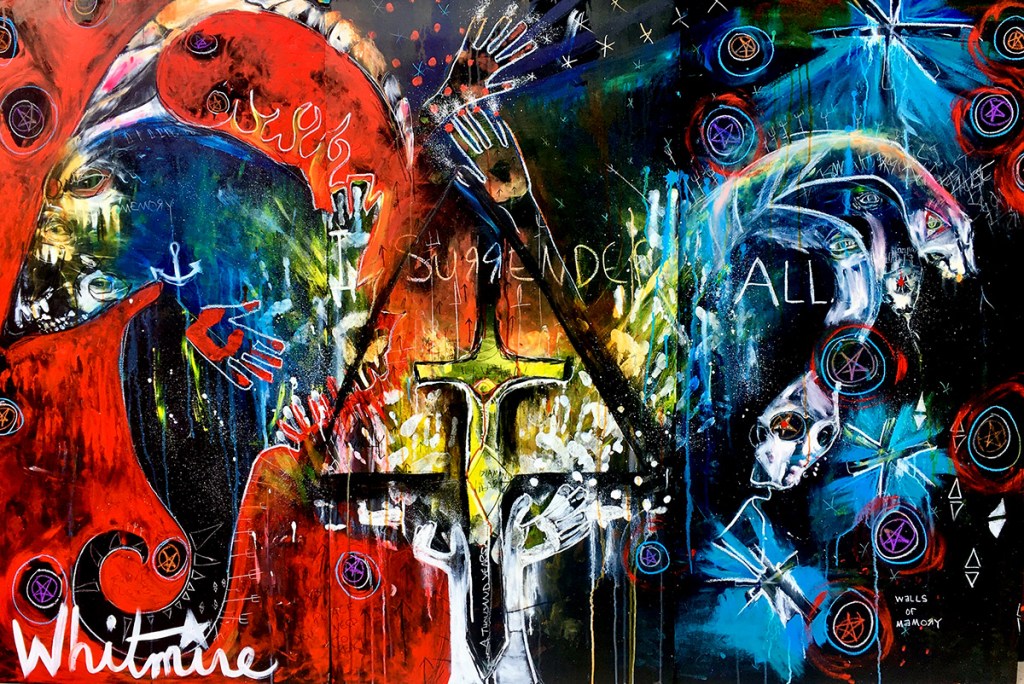
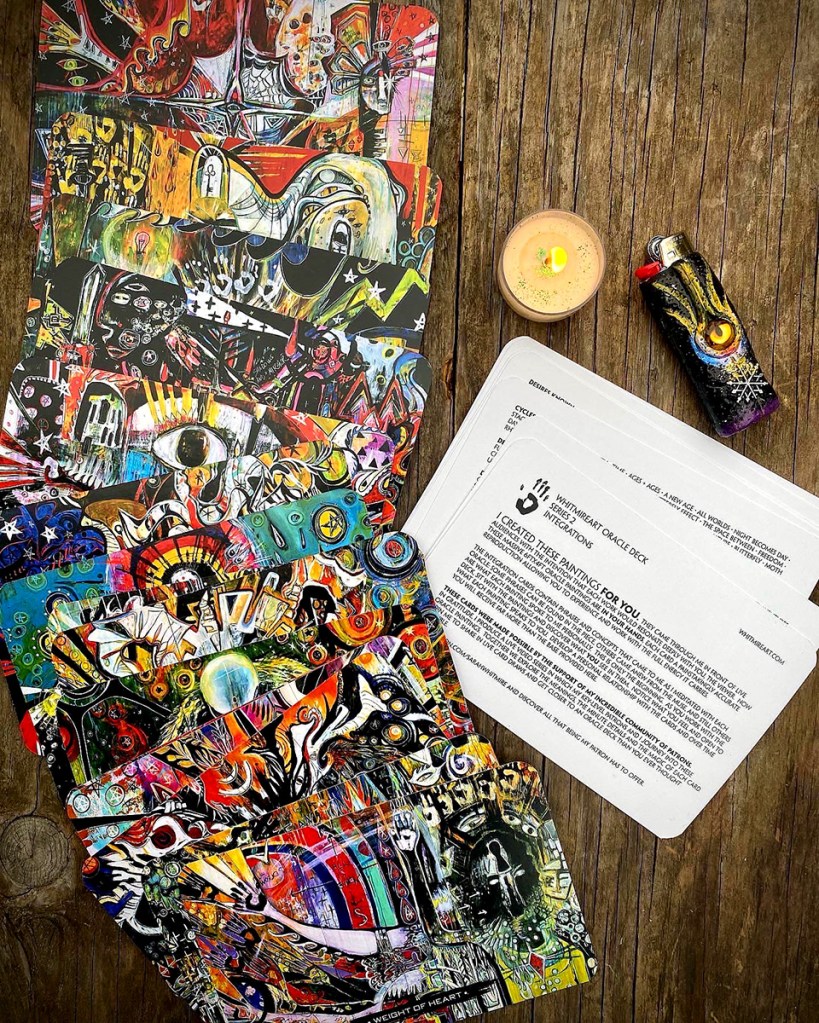
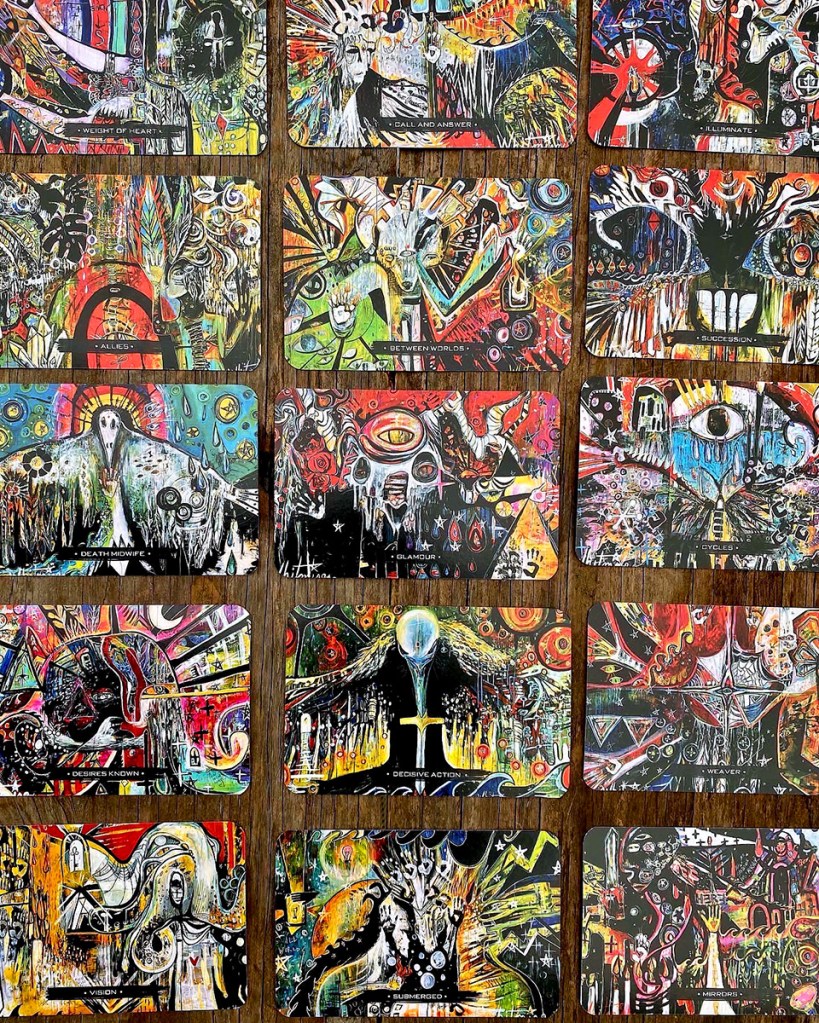
What comes next often depends on the energy in a place, or time, or the viewers themselves who I feel pull the work through me. Over a period of 6-12 hours, sharp images, texts, and shapes are revealed as profound messages. Through abstraction, the art becomes the Oracle and represents the literal and metaphorical power of transformation. My art is in a constant state of service.

I Surrender All

The method I use requires a forgiving material like acrylic paint that permits rapid revisions. I think of my work as evolving in the moment.

Weight of Heart

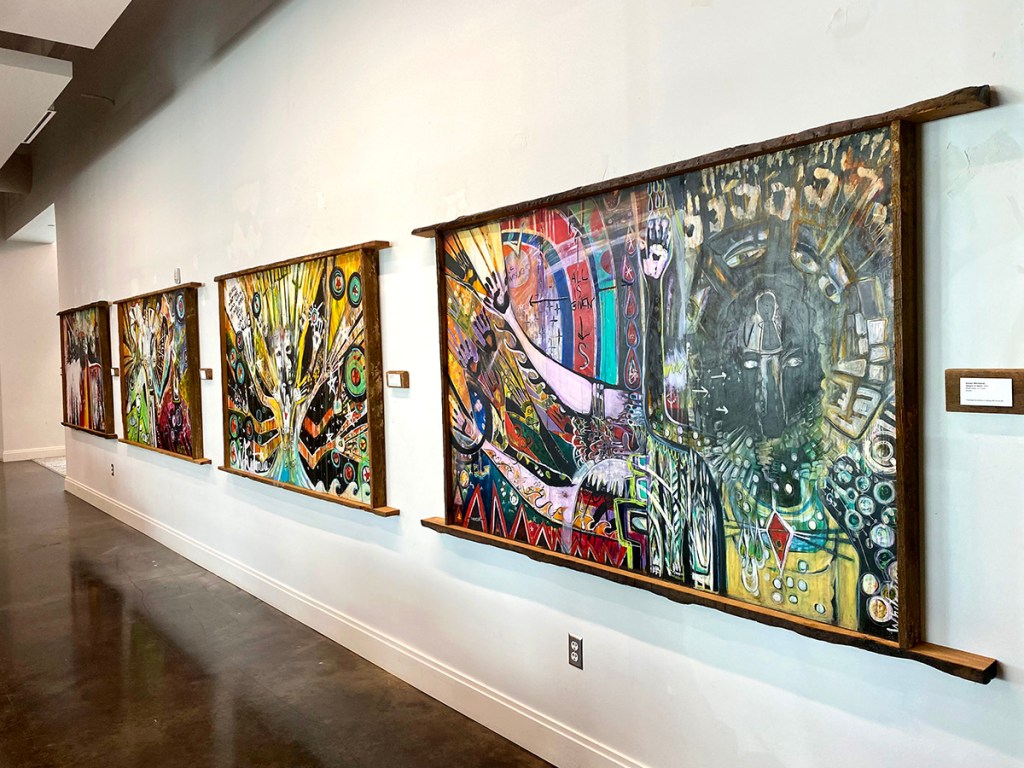
Some parts gets covered up and pushed back and others change and are pulled forward. The pieces tell their own narrative as they become deeper with layers and more defined. I work on large 6 foot x 4 foot pieces of birch and frequently layer with colored pencil, watercolors, oil pastels, pouring paint, acrylic ink, China marker and more.

Gallery

When the pieces are ready we work hard to meticulously scan them at high resolution and make them into Oracle cards. I have always believed that these images are for others and sharing them is important as meaning makers for others. I release new each series of cards as they become available. Currently series 1 + 2 are available and I am painting pieces that will become Series 3 + 4 now.

I have performed this oracle painting performance every week at festivals, clubs and events, and online for the past 6 years. I believe the true magic is that these pieces are not only for viewing but can also be experienced. I invite you to journey with me as I discover the messages the Divine Muse will uncover next!

written by ©Sarah Whitmire

You can find me and my social media links at whitmireart.com

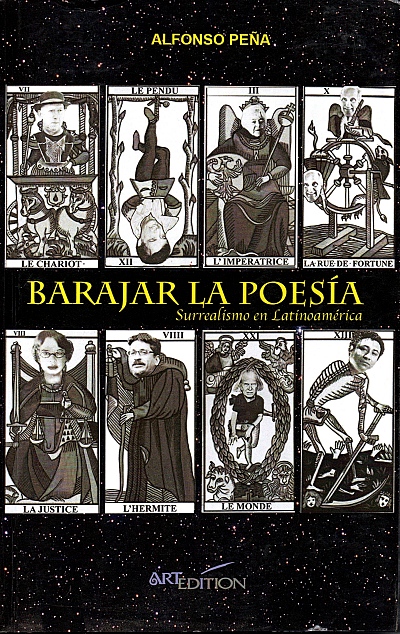
Shuffle Poetry by Alfonso Peña

Critical commentary on the book “Shuffle poetry” (2020) by Alfonso Peña
By Claudia Villa


Reading Alfonso Peña’s “Shuffle poetry” generates many questions, which challenge us as active readers, especially those of us who move through the surrealist texts of all time. Posed in this way, it is a new challenge that is presented to the reader of our texts, which joins the permanence of universal consciousness, the question and answer or the eternal question that dissolves in the chaos of the deepest dreams that we have not finished yet. Fully decipher. In this sense, we ask ourselves: is there or will there be an evolution of surrealism? This movement conceived by Breton mainly, as we know it in its beginnings, in its manifesto. It is a current that has been transformed, thanks to the social, cultural, economic and political crises that have arisen throughout the world. But this does not diminish the creative capacities and active cultural forces, quite the contrary, they are the support to increase the forms of dynamism typical of this style.


The movement that cannot be abstracted from the effects of these crises, which have occurred transversally, both in Europe and now in Latin America, is key and influences (to a greater or lesser extent), which has allowed an enrichment of the surrealist postulates. Mainly, because it allows the reassessment of different optics that come together in artistic elements that move to make notice of the changes and the force that is maintained and spreads like a kaleidoscope in different ways. Therefore, the vision of these artists, poets and writers that is patented in essays, poetry, narrative, photography, painting, literary criticism, among others, constitutes a permanent explosion of meanings that transmute into signifiers to make us see this structure as the game dreamed by the first surrealists, in which dreamlike and now virtual components underlie that cross each of our creations from side to side.


It can be affirmed that the surrealist movement, embedded as I said by permanent elements of modernity, has been reformulating itself, as the exhibitors of “Shuffle poetry” put it and also, it is interesting to understand their gaze as part of the total freedom that assumes each creator when faced with his work. Many also join the cosmic and ancestral call of our Latin American continent to capture in the works the roots of each aboriginal people and the reconnection with their first words, sculptures and the nature of man. This is how the vision of this surrealism, so rich in contents and games, radiates to multiple forms and ways of expression, both plastic, visual and written, which give life to a new surrealist approach, which although it has not stopped beating, as as it was conceived, it now promotes various multifaceted ways to enter into the perspective of reality or non-reality present in our days.


It is also necessary to comment on the expression of transgression that marks the works of the exhibitors in this book, which leads to a permanent need to play and to break the schemes that broadens the concept of freedom in creation. This is a common element that distinguishes these works, which are forged from inner worlds rich in dreamlike and liberating content, where transformation is a permanent axis of universes in constant motion, as represented in different worlds or parallel universes. Creation, in this way, continuously forges and destroys itself, which would constitute the object of its birth and constant evolution: mutations, evolutions, changes of form, content and continent, which are like permanent waves that contribute Surrealist art and its continuous reconstruction.


Another aspect that can be seen in “Shuffle poetry” is the permanent transgression towards social signs formed around a central axis that looks only towards one way of expression, which allows the constant reworking of other signs and other escape routes. towards the liberation of men as social beings who live within a community. The alteration of the meanings, already patented, by a single controlling mechanism, thus generates the ability to alter the represented codes that (on the one hand) are reflected in their own city languages, in addition to the reworking of schemes that are rearranged at any time. order or figure and who want more than anything to find a way of subsistence in the movement typical of the tribe. These forms are appreciated and reconstructed many times, from the collapse of imposed situations that end up being formulated from other varied points of view.
So, the ways that surrealist art takes to survive the imposed conceptions are varied, in an attempt to achieve dissimilar points that allow freedom of expression.

Claudia Vila Molina

Writer born in Viña del Mar, Chile. Professor of language and communication at PUCV, poet and literary critic. In 2012, she published her first book, The Invisible Eyes of the Wind. She has published in renowned Chilean and foreign digital media: Babelia (Spain), Letras de Chile (Chile), Triplov and Athena de Portugal, among others. During the year 2017 she participates in the Xaleshem group with poetic texts for the surrealist anthologies: “Composing the illusion” in honor of Ludwig Zeller and “Full Moon”, in honor of Susana Wald. In 2018, she integrates the feminist anthology IXQUIC released both in Europe and in Latin America. In 2020 she participates reviewing the conversation book “Shuffle poetry, Surrealism in Latin America” ​​by Alfonso Peña (Costa Rica), also writes a poetic prose text for the book “Arcano 16, La torre“, by the same author. Likewise, she participates in the book “120 notes of Eros. Written portraits of surrealist women” by Floriano Martins (Brazilian surrealist poet, writer, visual artist and cultural manager). In this year (2021) she publishes her second poetry book Poética de la eroticaamores y desamores by Marciano editores, Santiago.

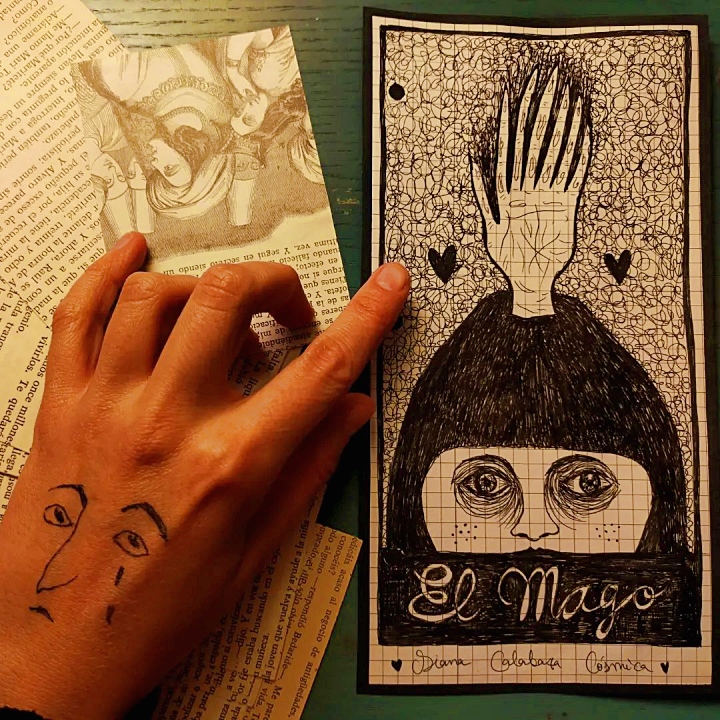
Diana Calabaza de Júpiter

I still don’t know if I’m an artist. I have always considered that calling oneself an artist is something pretentious. It is true that I create new things from an intellectual and also a subconscious act, but I feel more comfortable when I think I am creative. On the other hand, I have not studied Fine Arts and this fact makes me think that I am an outsider. However, I don’t care about everything because I’ve been painting since I was a child and I will always continue to do so. Painting has allowed me to pay rent and eat, other times it has not been like that. If I defined myself as an artist, would I change anything?

Above all, nature inspires me. I can paint something like a portrait of a person, but it will never be quite so. The animals, the plants, the mountains, the rivers, the universe, the water, the rain, all the elements and the stones, also the cells, scales, wings, spores. All of this is always present because it is Nature and I feel that humanity ceased to be a part of it a long time ago. That is why I try to bring these two worlds closer together through painting and dreams. It is like imagining a hopeful future for the planet, even though it is not actually possible.

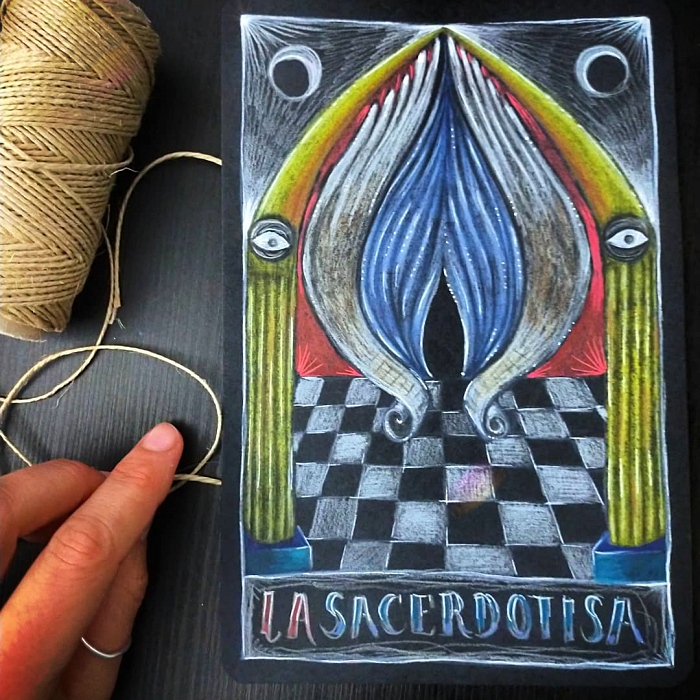
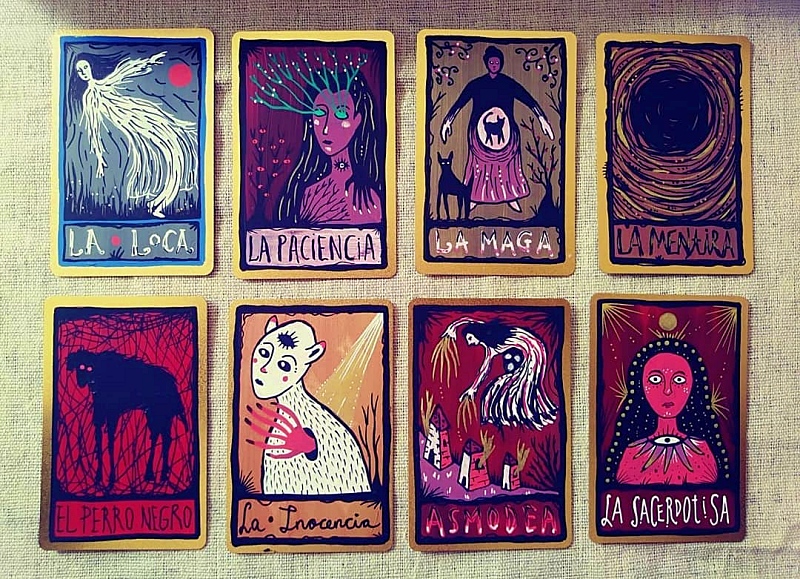
I am not a tarot expert. I have many different decks, even an oracle of my own creation. My intention is to edit a deck of Major Arcana as soon as possible, it is a project that is taking me a long time precisely because I understand the tarot in my own way. And I think there is no universal way to understand it, so the fact that I am not an expert in tarot would not be a big problem because I would know my own tarot perfectly.

I think it is a language in itself, another kind of language. But I also believe that its divinatory character is a construction. When Visconti decks appeared in fifteenth-century Italy, their intention was not to guess but to memorize the hierarchies and their functions. Divination as such is much older. The current tarot brings together many characteristics of memoizable hierarchical archetypes that we now identify as tools for self-knowledge. I believe that the tarot can help us to know the things that we don’t know that we already know. It is like walking at night along a path full of brambles but illuminated by the soft glow of the full moon

I started a dream journal and loved the experience but didn’t have enough consistency to stick with it. I would love to be able to take it up again but I need a suitable environment and environment that I don’t have right now. I remember dreams from decades ago and from time to time they come back to my mind and give me the same sensations as at the time of the dream. Other times my dreams return to places I have already dreamed of, as if they wanted to finish telling stories. Somehow I keep in my memory the most relevant dreams, their sensations and what they brought me throughout my life. On the theories of dreams and their materialization in daily routines and in life, I would like to recommend the literary work of Julio Monteverde.

I try to make my relationship with the subconscious conscious when I’m awake. Creations are born from that place and we must remain attentive to their movements. For me it is like a call at any time of day or night that reveals other realities to me. Sometimes I know how to take advantage of that call and transform it into what you can understand as art. Other times it is too blinding a light that has the power to paralyze me and shows me through its light a deep and infinite darkness. It is what you can understand by anxiety.

Nature is the biggest influence I have. There are also some people and artistic movements in those influences, either because of the color in their works, because of the absence of color, because of their way of describing heaven and hell. There are too many but these are a very small sample of what I mean: Chagall, Redon, Remedios Varo, William Blake, Teresa de Ávila, El Greco, Goya, Diane Arbus, baroque music.

I’ve been under another the name Jupiter for quite a few years. This month (September 2022) I have started a new cycle that has been brewing since spring. I would like to get more light on the road and be able to keep my feet on the ground, something that has never happened in my life.

Alto Giove
è tua grazia è tuo vanto
il gran dono di vita immortale
che il tuo Cenno sovrano mi fà
Ma il rendermi poi quella
già sospirata tanto
Diva amorose e bella
è un dono senza uguale come la tua beltà

High Jupiter
it is your grace it is your pride
the great gift of immortal life
that your sovereign nod makes me
But then making me that one
already longed for so much
Loving and beautiful diva
it is a gift without equal like your beauty

For this reason, through Jupiter and almost by way of a “sigilo”, I intend to attract another way of seeing things without leaving aside my causality and gloom. I could have chosen Saturn and it really is what I wanted but we already know how Saturn treats already melancholic souls. I can’t afford that. Jupiter, as in the piece that Nicola Porpora (Alto Giove) composed to be performed by Farinelli, was a haven of peace in the stormy world of Felipe V. Leaving aside the stupid monarchy, Diana was a lunar goddess, daughter of Jupiter. In an astrological sense, Jupiter is associated with positive concepts such as abundance and optimism. And finally, I often say that “I live on Jupiter”, referring to the fact that I live in the clouds, that I am not attentive to reality and that I am a dreamer.

Lechuza is one of my music bands. We have started this summer of 2022 and we have just published our Demo. We are two friends making music, working with our hands on record packaging and trying to make nice videos of our songs. We are called Fantasmita and Ruda. Proceeds from sales go to an animal shelter. All the information is on our Bandcamp, and of course the music.

written by Diana Calabaza de Júpiter

Diana de Júpiter artistic training is intuitive and self taught. She prefers not to rely on any institution to interfere with her experience. Her themes hang between the dark and silent. She has worked for several Spanish publishers such as Aurora Dorada and La Felguera. Diana has had solo and group exhibitions in Spain, Mexico and the United States. She is currently preparing a complete tarot deck while painting daily.

Diana de Júpiter Clothes

Dianadejupiter

https://www.etsy.com/shop/Dianadejupiter

Hypnotic illustration and magical craftsmanship

Utopia is Feminine and the Morning Star Enrique De Santiago

“The time will come to assert the ideas of women at the expense of those of men, whose failure is consummated so resoundingly today. It is up to the artist in particular, if only in protest against this scandalous state of affairs, to make everything that arises from the feminine system of the world as opposed to the masculine system predominate to the maximum; of emphasizing exclusively the powers of women; better still, of appropriating her to the point of making it jealously hers, of that which distinguishes her from man in her way of evaluating and wanting.”
André Breton, Arcanum 17

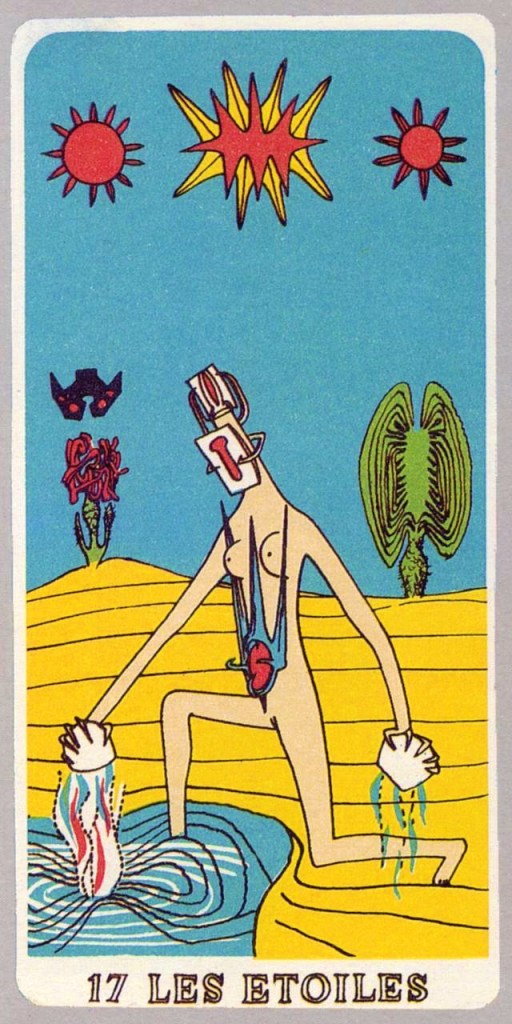
17 Star Tarot Card 9in x 6 1/2in
André Breton

Roberto Sebastián Antonio Matta Echaurren

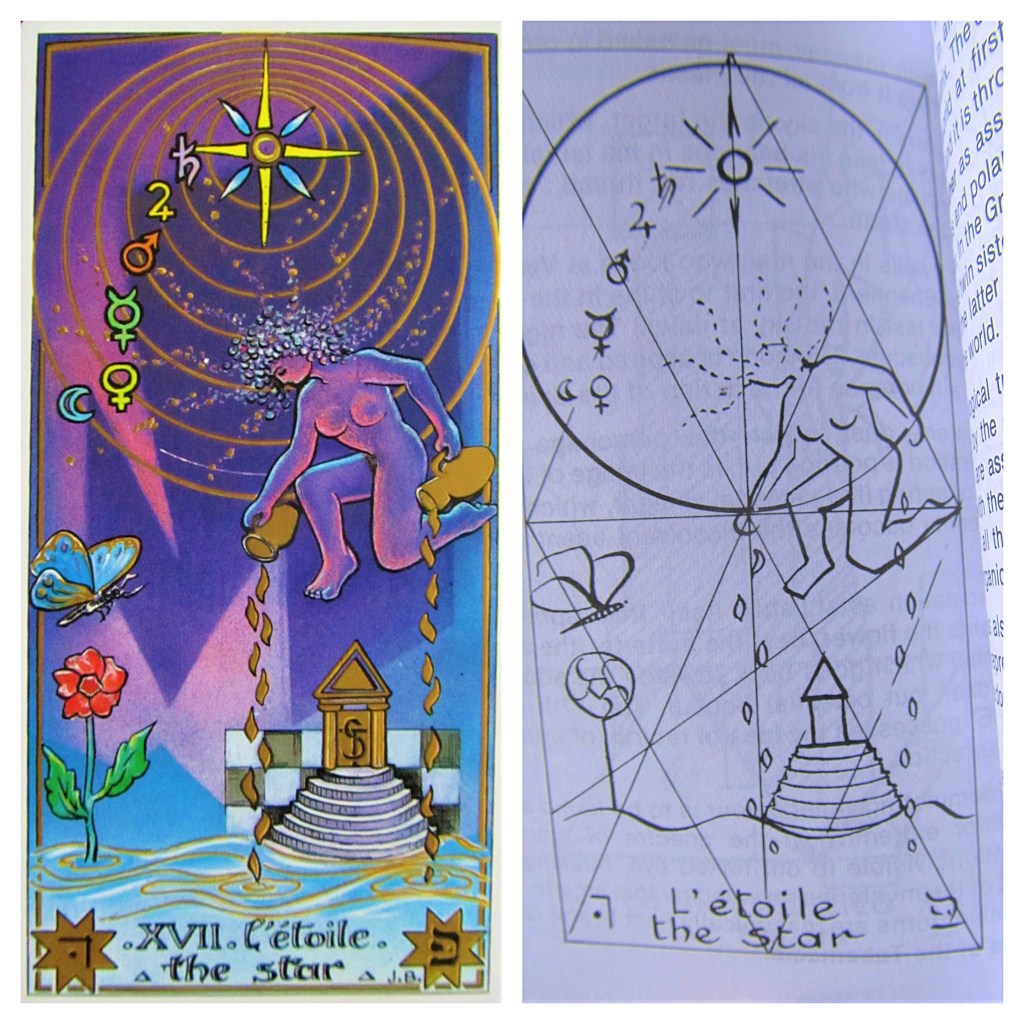
This is another example of the surrealist passion for tarot. The title of Breton’s long prose poem, Arcane 17, refers to tarot card 17, the “stars” card (Les étoiles), usually a symbol of free-flowing love and renewal of forces. However, Breton’s imagination brought new associations, multiplying the morning stars and infusing them with fluid meanings. Breton describes the figure in the center of the card as a naked young woman kneeling as she pours out the contents of two urns, one into a pond, the other onto the ground. He associates this woman with the legendary figure of Mélusine, a legendary mermaid who became a symbol of the difficulty to reconcile “reality” and “magic.” There is hope, however, that the “inexhaustible” urns could renew our disenchanted world. Indeed, even though the pond gives off the “pestilential odor” of social conventions, it is still longing for “a new dream.” The fragile butterfly is another symbol of “consoling mystery.” Chilean painter Roberto Matta designed the four colorful illustrations in the shape and size of tarot cards (or “arcanas”) pasted in the book.

The Importance of Magic for Surrealism, Spirits, Mediums, and Tarot. Cornell University Library


Utopia is Feminine by Enrique De Santiago

Love descending incandescent and calm
from the primordial nature of the universe
to embrace the hope full of your walk
in your women’s hands that welcome
in your womb container of light
on your lips that educate and dismiss poetry
on your back that holds the arcanum of the morning
with that epiphany that looks like your body.
This is how I take flight rebellious
bathed by the celestial of the bodies wrongly called celestial,
where I learned to love the brevity of the possible in the impossible
to go up with my luggage to another utopia
clearing away the old tears
in front of a showcase that is empty
and that is condescending with my people
in its persistent lack
where I also know my measurements
and who excessively hugs them
in these hours of opaque tides
with their lost leviathans
of heads sunk in the mud of consumption
without noticing the hands of those who ask
between remains of bodies
that are invisible to him
and alien.

Morning Prayer Monroe Tsa Toke

A star, as Bernard Roger recalls, “has served forever as a guide to nocturnal navigators whether
over the oceans of the globe or over the philosophical sea of the Argonauts.” Echoing him, Jorge Camacho notes the star “has shown the solitary sailor his route over the high seas. By faithfully following it throughout his long voyage, he is sure to reach port safely.” The star burns with such an intense gleam in the surrealist imaginal realm that in 2004, the Czech painter Martin Stejskal organized a large exhibition near White Mountain in which it “was declined in all its natural, cultural, as well as mythical aspects, in the union of traditions (astrology, kabbalah, alchemy, Freemasonry) as in the poetic union of the male and female in each individual, borne by the work of surrealist friends, and by the uncarved stone placed at the castle entrance that bore this phrase that sings in our hearts like a magical couplet: constructed on the side of abyss, on philosopher’s stone . . .” as Marie Dominique Massoni points out in issue 5 of S.U.R.R. However, “You can never see this star like I saw it. You don’t understand: it is like the heart of a heartless flower,” as Nadja, the “magician,” says.,,

A harmony founded on the spiritual in all its forms, love of humanity in all its beauty, we can thus clearly see the richness of the esoteric domain approached this way by the surrealists, who incidentally made the Star, in the Deck of Marseille, the symbol for the suit of Dreams, whose face cards are Lautréamont, Alice in Wonderland, and Freud. This deck was conceived (these things are never invented) between the Villa Air Bel and the café Au Brûleur de Loups.

The Esoteric Secrets of Surrealism Origins, Magic, and Secret Societies By Patrick Lepetit

Star Tarot Symbolique Maçonnique Deck by Jean Beauchard

“A very powerful myth continues to have a hold on me, and no apparent contradiction of it in the course of my previous adventures can prevail “Find the place in the formula” merges with, “possess truth in one soul and one body: That the highest hope has the power to unfold before it the allegorical arena which holds that every human being was thrown into life to search for a being of the opposite sex and only that one who is paired in all respects, to the point where one without the other seems like the result of the dissociation of dismembering a unit of light”

Arcanum 17: With Apertures, Grafted to the End. By André Breton

Featured Painting by Enrique De Santiago She raises the day, oil on canvas, 140 x 100 cm.