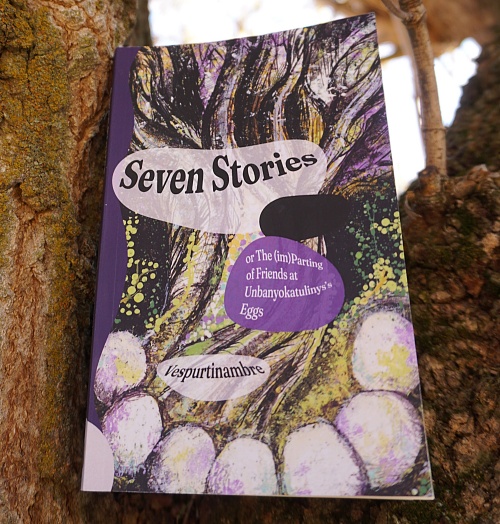
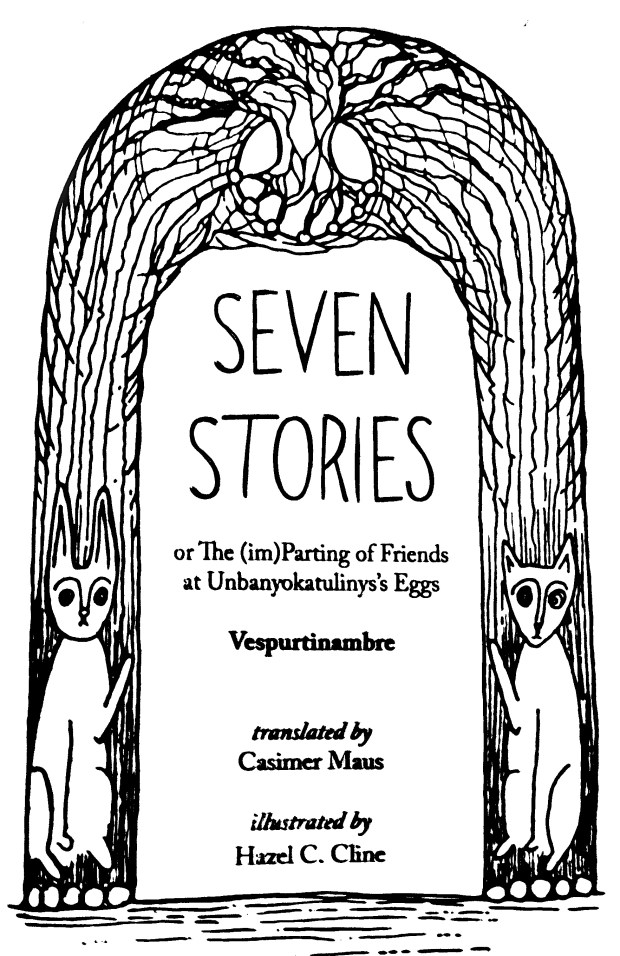
In Seven Stories or the (im) Parting of Friends at Unbanyokatulinys’s Eggs, readers are first immersed in a neurological realm, seen through the eyes of a relative of Casimer Maus. Maus, a German linguist, stumbles upon a new language during her vacation when she gets lost in Luweng Jaran, a cave in Indonesia. While in the cave, Maus found a chamber archway with engravings she copied.
This unfamiliar language triggers a significant internal shift in her life. For the next decade, Maus studied the visual representation of circular connections and a sentence structure that bloomed outward in a spiral. She called the new language Lingkaran.
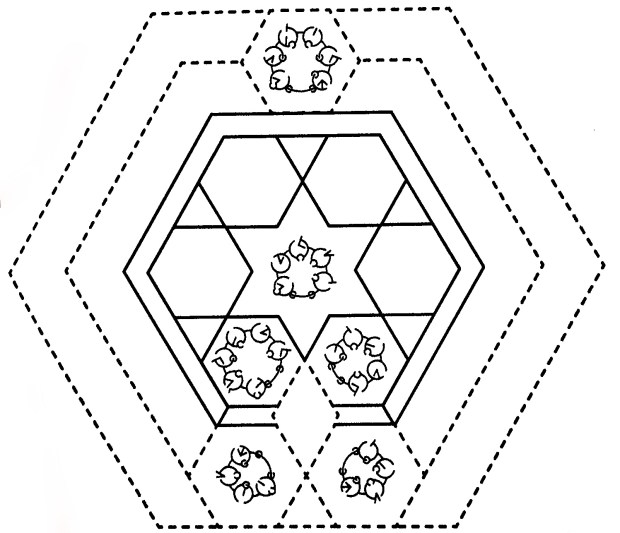
She planned to announce her discovery to the world, beginning with the Deutsch Linguistic Society. However, her peers proved unwilling to accept the strange occurrences that arose from deciphering the language. Readers are first introduced to Casimer Maus’s discoveries through a heptagram that positions an archetypal animal at each point. These animals gather near a growing tree, seeking truth in contradictions, as they aim to comprehend the world’s interconnectedness (the world womb) from its very beginning.
Through speculative surreal fiction, Casi (Hazel) Cline develops her own theogony and original mythology. Seven Stories shares some common ground with James Joyce’s Finnegans Wake; however, it presents a more approachable examination of metacognitive ideas, clarifying the archetypal patterns of the collective unconscious with animal totems.
Hazel Casimer Cline is a nonbinary writer and witch based in Atlanta, where they live with their partner, Steven, and their cats. They have been involved in both local and international Surrealist communities. Hazel served as an editor of Peculiar Mormyrid Journal for nearly ten years and participated in the Atlanta Surrealist Group, which met regularly for several years. They have co-organized three Surrealist exhibitions in Atlanta and Birmingham, Alabama. Currently, Hazel is focusing on their writing. They also work with film, experimental music, and visual art, including collage, drawing, and painting. https://ephemeralityart.com/
Steven Cline is based in Atlanta and has been involved in surrealist activity for the past decade, including Peculiar Mormyrid Journal and the Atlanta Surrealist Group. He has co-organized exhibitions in Atlanta and Birmingham and has participated in others in Paris. His first book of fiction, Planetoid Sassafras, was published by Montag Press under the name Stephanie Klein. A subsequent book of surrealist nonfiction, AMOK, was published by Trapart Press. https://stevenclineart.com/
Parallel lines intersect, forming a diamond at the center. II is now X. This form lets us travel diagonally through space. One needs divination and shapeshifting for this kind of journey. I absorbed a triangular wave. Under the Pisces moon, I sipped from the cup. A tiny fraction of 360 Aquarius, a Kayayei, and the water porter, is playing live. Let’s toast to the lunar. It’s an old-time oracle. I use my geomantic knight on the synth console to twist the central square into a pyramid on the chessboard, bending the surrounding space. The sixty-four Yoginis from the eight phases of existence create a cosmic tapestry that illustrates awareness and extinction.
Through the checkered board, we can explore a chart of our interior states. Intertwined black and white squares represent yin and yang. This visual diagram has the ability to analyze and interpret events from different time spans. We are connecting. As a hand, claw, fin, hoof, wing, and tentacle united on a holiday to a foreign atmosphere. By being able to transform into different shapes, we plan to discover a new place to thrive, eat, and reproduce. Our honeymoon is amazing at the moment. With heightened senses working in perfect harmony. Each optical sense is a precious asset to detect whatever objects may be drifting in this void. Apps mimic snake pupils and cat eyes enhance night vision.
If we find nothing on that app, we activate a bat signal to identify what we overlooked. To combat boredom, we listen to the old fashion whale songs. There is plenty of room in the universe for invisible radio waves. We notice how unconscious shifts affect our awareness. Giving up vanity was my toughest astronaut challenge. Self-esteem improved by breaking free from consumerism. We practice Buddhism without a figure. The fading of charged particles into space is called “death”. Numbers are eternal, so we will test how long we can remember them. I am coming forward from within my ego to assert the words that I have spoken before the update. This is a hallucinatory voice. We get it, there’s no true self, but we are always expanding who we are.
For better well being, we are abandoning past programs that slowed our progress. The current speaker is about to stop speaking. Once we reach our destination, we intend to leave a circle. This storyline will trigger déjà vu and create a memorable mental image for the replicas.
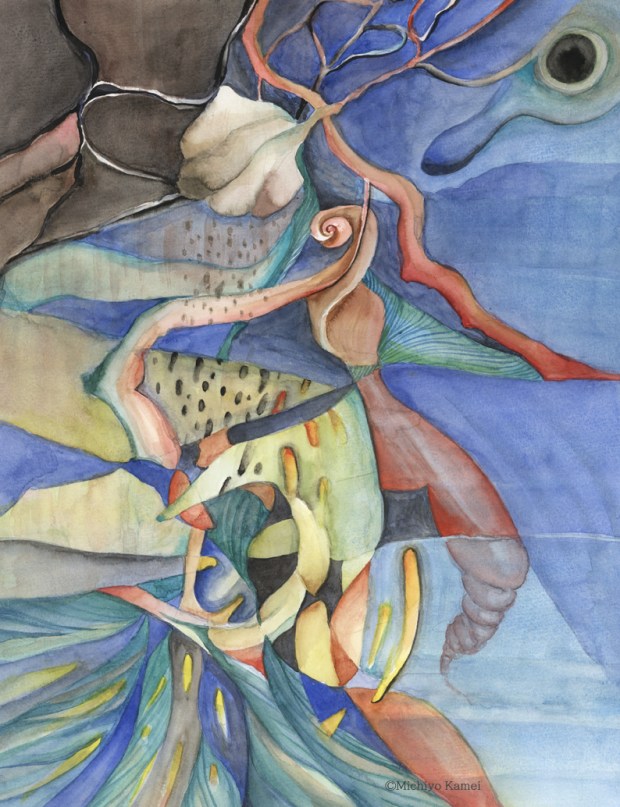
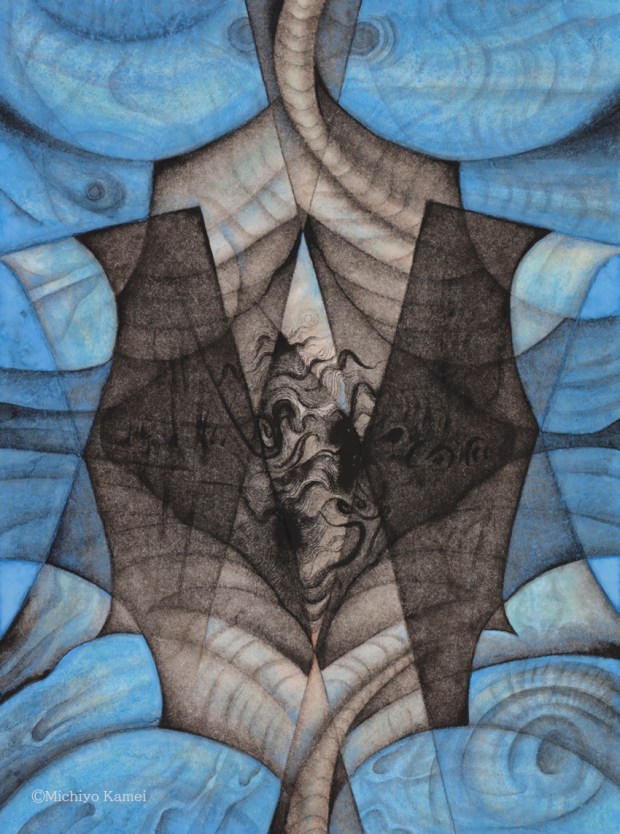
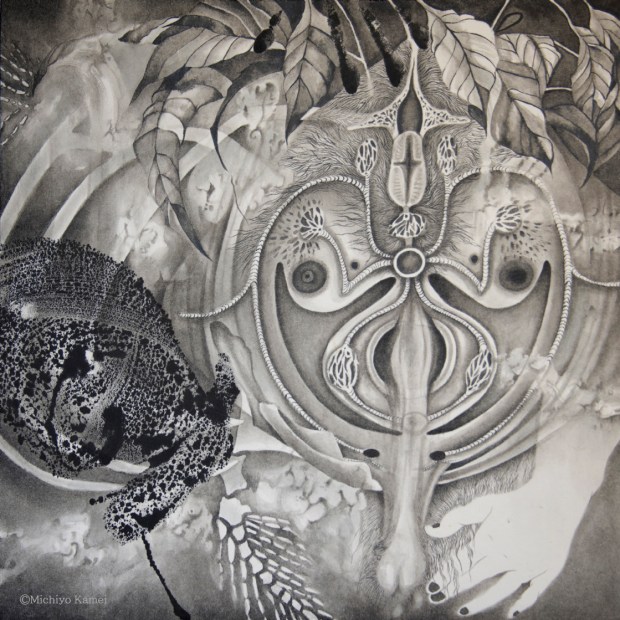
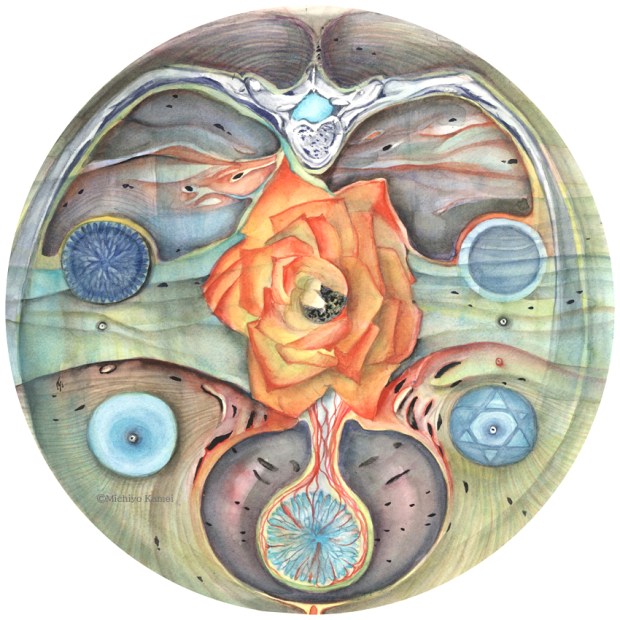
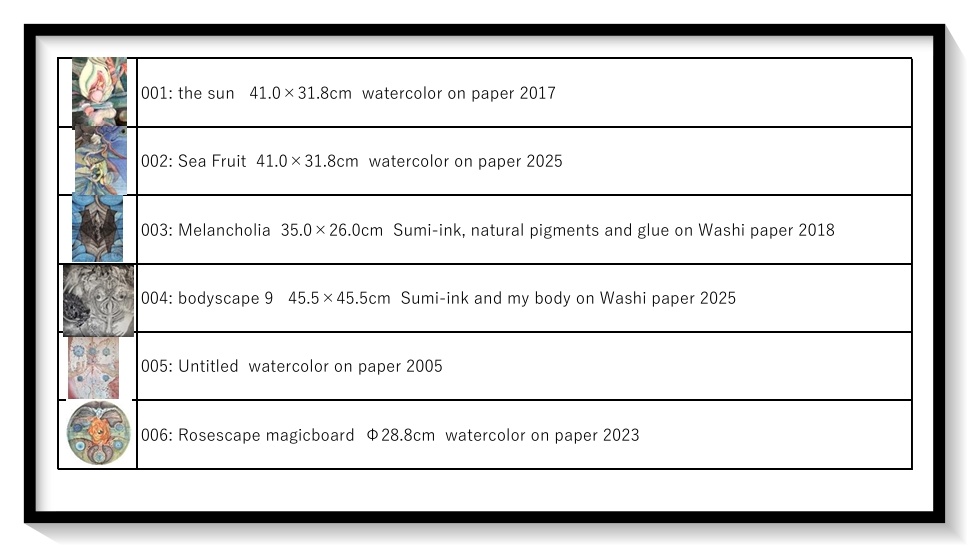
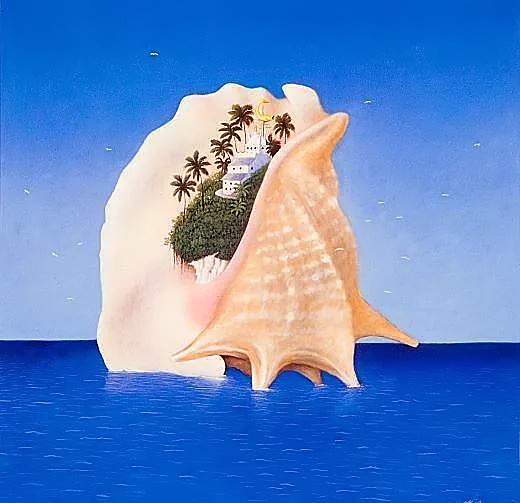
001: the sun 41.0×31.8cm watercolor on paper 2017 002: Sea Fruit 41.0×31.8cm watercolor on paper 2025 003: Melancholia 35.0×26.0cm Sumi-ink, natural pigments and glue on Washi paper 2018 004: bodyscape 9 45.5×45.5cm Sumi-ink and my body on Washi paper 2025 005: Untitled watercolor on paper 2005 006: Rosescape magicboard Φ28.8cm watercolor on paper 2023
In centuries preceding, during the long, dark night of people passed, the light from the moon was different, they say. Carpet weavers watched sporadic clouds wrestle with thick air as translucent sentiments, ribbed by fleshy coils, pointed fingers at old friends. Tarpaulin Triveni, female, teacher of twenty, payer of Federal taxes, architect of the west winds, lover of afternoons; Route 79 to Tiruvannamalai, rush hour smoke, brimstone, incense, pooja, sudden migrations: the temple, partly stone, partly human –
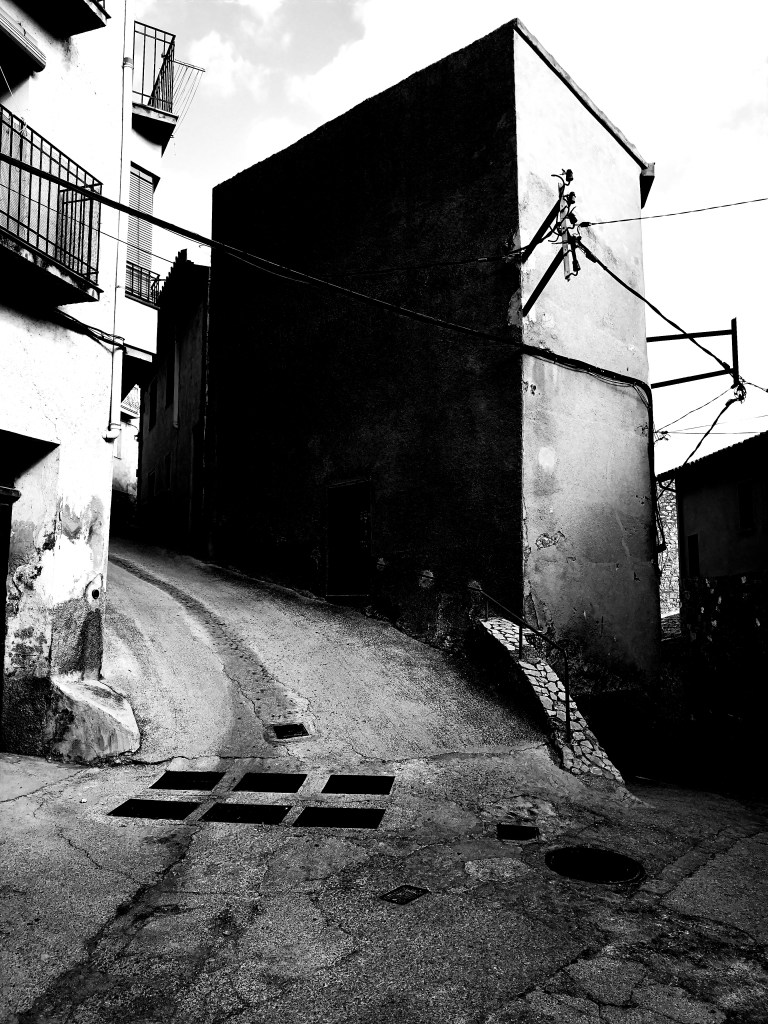
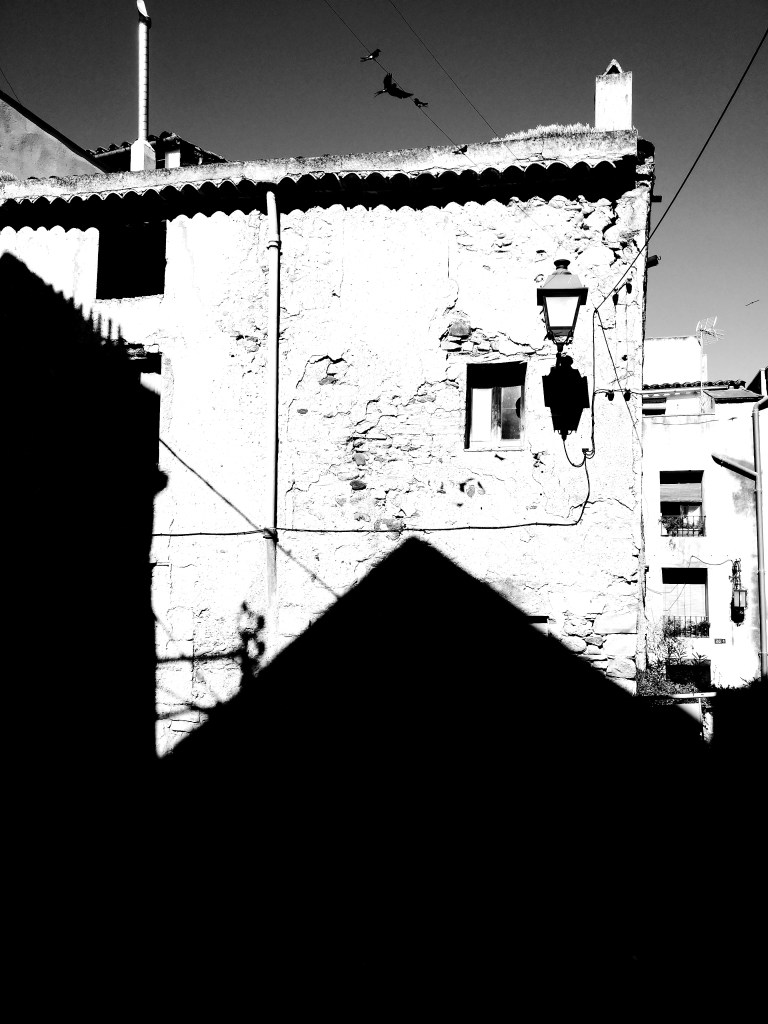
Tortosa CataloniaMontblanc Catalonia
Astarte! At last, longed the cantaloupe queen, conscious like burned butter afloat in disquietning nodes of boiled heroism, sheer terror written on her bronze armour in longhand Sufic prose, arrows bristling brilliant shafts of light upon those who stand amazed. In showers of liquid lead and riddles like retribution she raises up her head in thunderous paroxysms of wildfire, incinerating the noise of the NASDAQ trading floor via the quietest opening, or tearing into the roaring twenties: like lovers they eat themselves whole. A pain-pointed predilection for killing gods of all sorts, striking them to the ground, howling, shrieking for mercy, but shewing none, misusing the corpse after the kill like orca with a dead seal, or Achilles with Hector’s remains. We play with death. It makes us young.
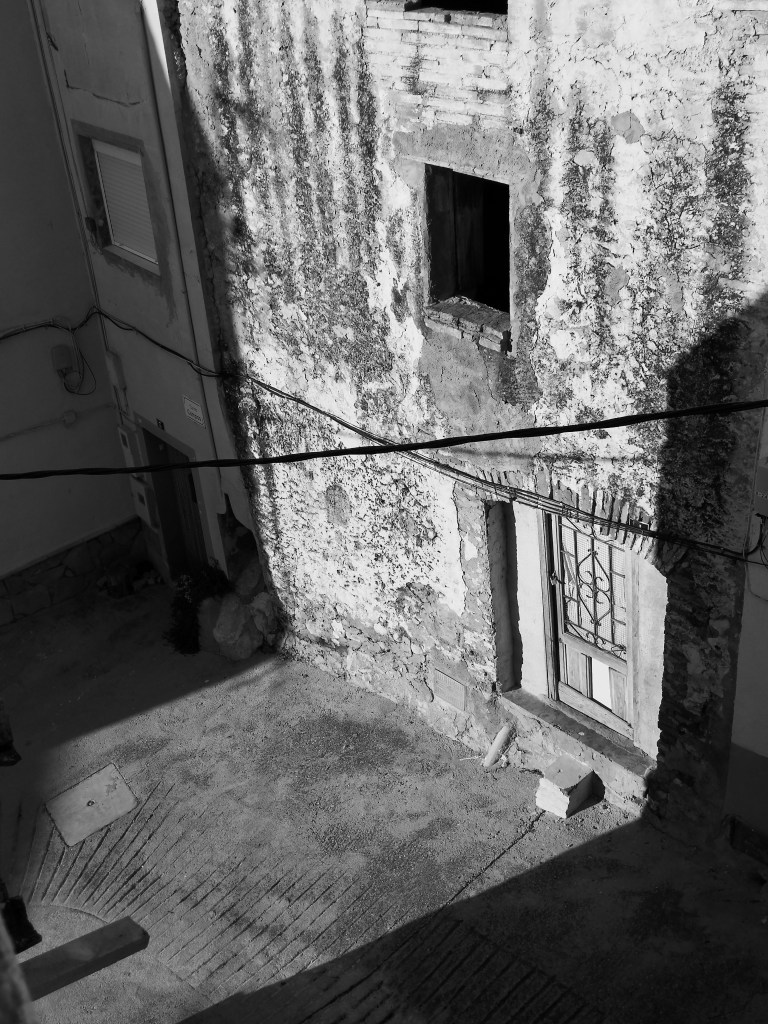
Tivenys CataloniaTivenys Catalonia
Silver serpents entwine the heart-locket of a young man in Queens. The crepuscular silhouettes of tall buildings all empty, as in a dream, bitter chills in the wind from Hudson’s channel, flashes of red lightning, banshees in the street below setting the dumpster afire. Concrete streets empty and dark, this wraith-like apparition only masquerades as a city: a riddle, an omen, a curse. A picture of petty consequences, catalysing a tuber shaped oath for remedying unlikely afflictions of the psyche, like the pinch of a rubber band wound too tightly around your finger. Entrenched layers of decimal decline pontificate politely to a crowd of mainly young goatherds, but they don’t mind, as any entertainment will suffice for a goatherd of the Bactrian valley, longsuffering in the August Afghan ovenheat, yearning for the cool Hindu Kush. Up there, queens look down from snowy temples, peaks outlined by the monsoon moon, vanished layers of paradise passing instantaneously from view. Instantaneously –
Tivenys Catalonia
Borders bind the wealthy to the poor, but in seaside temples of voluminous concern we count epigrams between sunsets, rallying fractious spirits in the meanwhile, damaging civic furniture installed in the Citibank Plaza. The old guard sits outside the bank on a plastic beach chair, machine gun hanging lazily at his side, smiling cheerfully at the calls of the brain-fever bird stirring raptures in the daytime as if coaxing clams from shells, a child of every man. Now we are ringing the new year by the seven bridges of Königsberg, full of cheap fortified wine and high on super glue, destroying the way of life for those who cannot know better, sweetening a joyous relation between the baroque lintel and its most spiritual rejoinder.
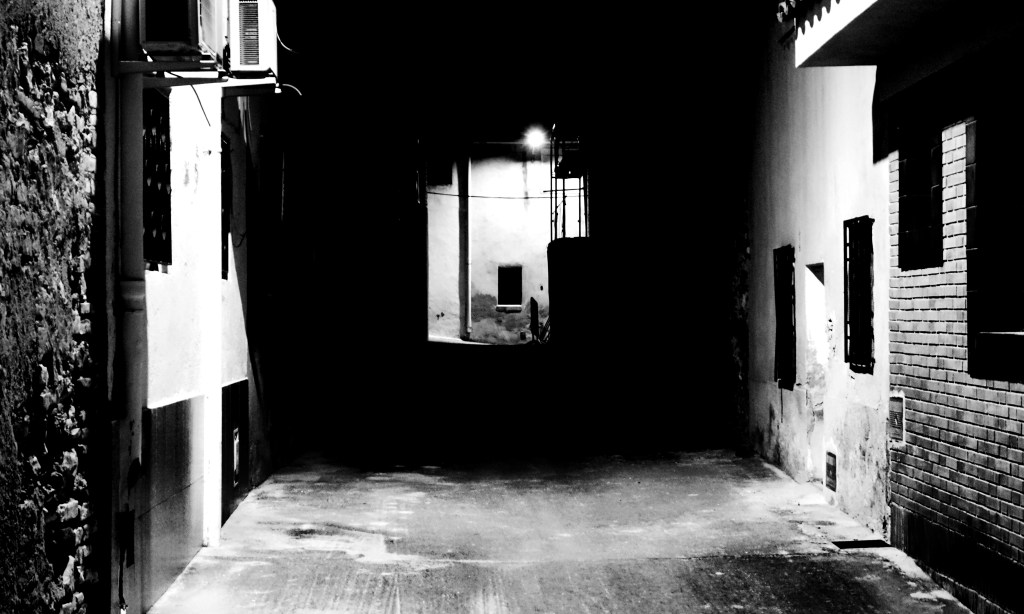
Montblanc CataloniaMontblanc Catalonia
Openings, ruptures and fissures decimate Dorothy Drumwise on her drunk drive through the badlands of Blackpool, BMW unlicensed, DMT fairground flakeout. She sings sweet missives of the Golden Age, of Plutarch, Pindar, and of Ovid. Inclinations of ages move with tectonic twists, first shifting this way, then that way, as with the latest dance fad. I know that you know that the ‘this way and that way’ is a vital mechanism of natural philosophy. The waggledance of industry, the fiesta after the feast, festivals observed on Temple grounds, and with much smoke and incense. Astarte above, chariot rider of fury, smoking halos of pure fire above the heads of gathered postmodernists, crypto-Marxists, and other groups assembled for purposes only spectacle may account for. This terror and delight is for quivering flesh alone: no gods may get a taste –
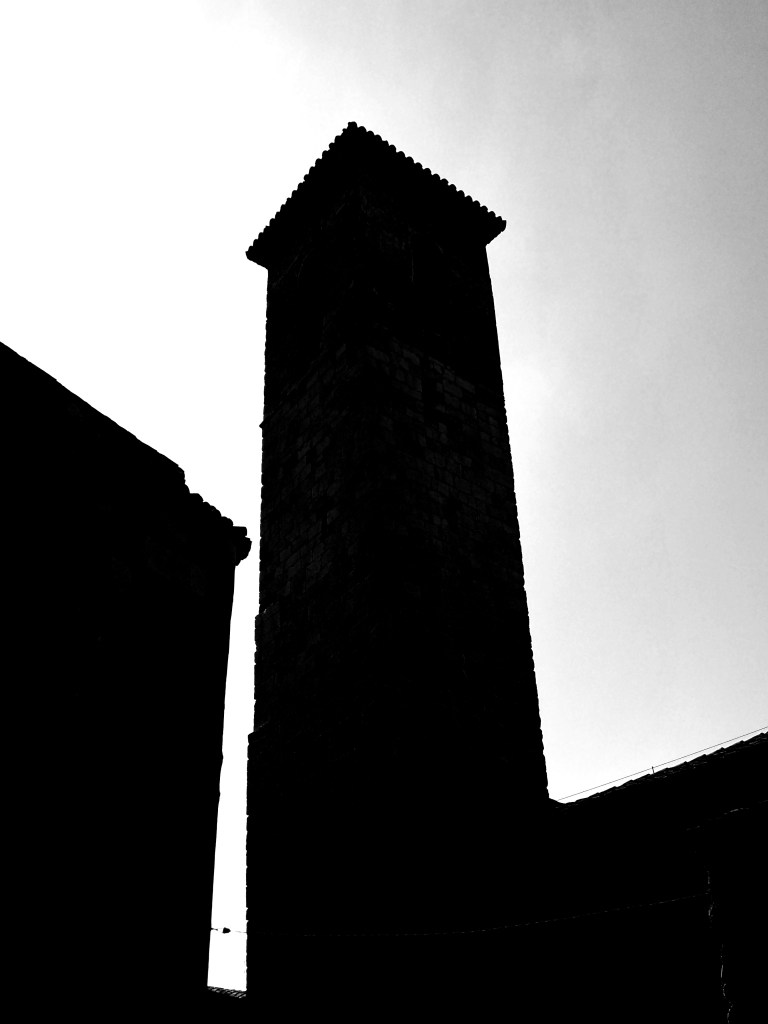
Tivenys Catalonia
In an asemic New Babylon, an endless plan of a constant architecture, sketch after sketch of alleyways and avenues, flows, interruptions, passages of ludic intrigue: our only concern will be for how the wind goes. The city-gestalt, our new Babylon, is stacked tier-upon-tier as with a Hindu temple, complete with the sombre front of a necropolis, grey and overbearing, the pantheonic structures of dead gods hewn into rock, but haphazardly, without plan or meaning. The Temple of pure, empty worship, accessed via doors which only appear to be doors, words which only appear to be words, each word a door signifying an exit, but only signifying, without being itself –
Kuilapalayam India
The cultivation of ways, sulfurite ligaments imposing reasonable content on expounding gasses, phosphorescent burns blister the torn corners of Lloyd George’s copy of The Life of Gargantua and of Pantagruel, but this will not be a problem for long – at least, not for several centuries. Down in the Centre Pompidou there exists a scale copy of Nieuwenhuys’ Labyrinthe aux échelles mobiles. Parisians drink pastis at 7pm.
Tivenys CataloniaTivenys Catalonia
The matriarchal temple builders of our mother, our lady, notre dame. The swollen, translucent body nurtures a billion babies in complex mythic tunnels underground. Our lady of the temple, founded with mortar and keystone, high Romanesque arches, transverse, ribbed, darkened by smoke of incense that beckons, intoxicates, shines, yet moulds-over quickly. The body of our lady nurtures a repugnant decay where fungi of a million kinds find resplendent consumption. A gentle breeze lifts the spores up and into the forest above, the penthouses, tower blocks, the Gothic quarter below, even the suburbs populated with a thousand empty houses, empty restaurants, empty hotels, emptiness, or so it is reported by La Vanguardia, thumbed in street corners by elderly gentlemen sipping coffee in districts of towering blocks, Brutalist forms, echoes of steel rod construction divining bittersweet sunsets of lackadaisical reform, wilted in margarita sunsets, sugary sensualities disinhibiting bashful dissimulation with the gait and libido of a wild cur, roaming street corners, lurking around the panty drawer, Our Lady intends two-thousand years of certitude for divine discourses on nature, for a thorough study of Deleuze, for a monthslong dance of the wild kind, for carnivals of a schizoid nature, for a Heraclitean passing, and passing, and never returning –
Tivenys CataloniaBarcelona Catalonia
Our retreat towards a porcelain past resides in a turpentine residue of vistas opening above the Sierra Nevada, that pillar supporting the vaulted deep blue sky, the only thing keeping worm-eaten heavens from falling. Remember how we drove there in December of 2018, how the warning signs for ice hazards slowed us for many miles? We sat in the steamy car and drank tea from a flask, ate sandwiches prepared earlier at home, austerity gnawing at the innards. Porcelain does not prevent against cysts. Cysts large as an eyeball, pickled in vinegar solution, stacked on a forgotten shelf in a back room of the British Museum. Perhaps it was Napoleon’s eye? Perhaps it was not?
Tortosa Catalonia
It was I, not Napoleon, who took the moon and put it at the bottom of a lake, littered with the bloated bodies of Englishmen drowned in their re-sprayed Range Rovers. Between velour flaps, cold castellations and raptures coloured like velvet bands at the fair, phalanxes shimmer like desert lizards tussling in the heat of day, the axehead aligns at the very base of the skull to release a thousand demons from their hiding places, demons who vy against one another in their scramble to escape this mind forever, darting this way and that, a confusion of beastly shapes writhing in colours both sapphire and turquoise –
Daniel O’Reilly
Daniel O’Reilly is an independent British author, publisher and internationally exhibited multimedia artist living and writing in rural Catalonia in northern Spain. In 2022 he exhibited stories, photographs and music from the [archipelago] project at the International Exhibition of Surrealism in Cairo & Alexandria in Egypt, which will travel to the Andre Breton House in France in 2024. He has recently published short fiction in the Margate Bookie Zine, Trilobite Literary Journal, Tiny Spoon magazine, Writer’s Block magazine, Sulfur Surrealist Jungle, the Bengaluru Review, Defunkt Magazine, Everything in Aspic Magazine, Chachalaca Review, The Room Journal of African Surrealism, and Black Flowers Literary Magazine. He is co-creator of The Unstitute, an online art lab and artists’ co-operative, and has screened original video art in competitions and exhibitions in over 20 different countries worldwide.
A Pan-Hellenic trinket, designed to mollify the curious, was given to me by a shadowy agency of relatives of the unknown passing in the night.
The trinket is a translucent diorama of my grandfathers’ Diner, 2’’ long, 1’’ wide, to fit on a key chain or small novelty display shelf.
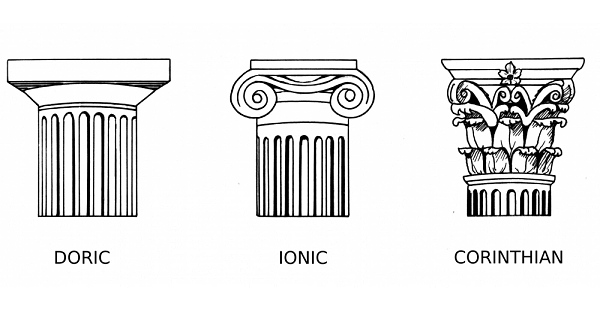
As if under a microscope, the chronological history of Panayiotis Konstantinos Stratigakis is visible through the roof of the miniature diner. Doric pillars on rows of coffee cups vanish in the horizon of countertop covered with displays of spanakopita, kalamata olive feta cheese salads and baklava.
When I shake the diner in my fist, tiny figurines of my grandfather light up, linking arms in a sirtaki dance accompanied by the sounds of a tiny red bazouki player. Valiantly flashing neon lights of blue and white striped patterns of the Greek flag move up and down. The diner, highlighting his personal and national history.
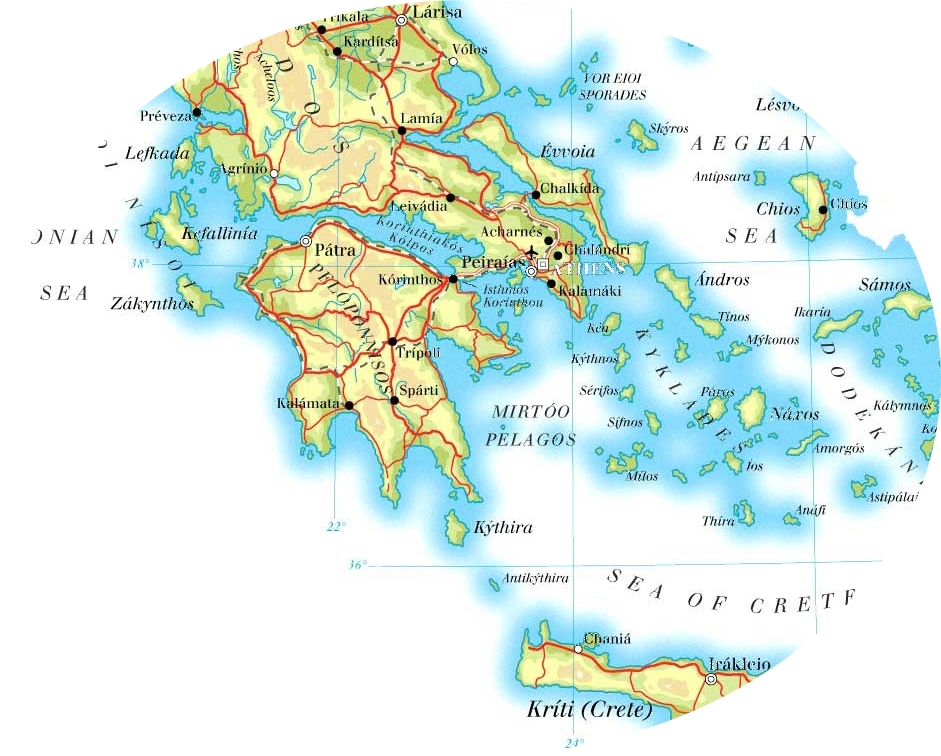
At the front entrance of the diner, stands the rocky terrain Of the Pelloponnesian peninsula where my ancestors have lived for thousands of years. There’s 400 years of Ottoman rule, subjugation and bloodshed between Greek and Turk. A Greek ancestors’ gold sword slashing the carotid artery of an Ottoman overlord glows like a beacon of hope, heralding the victory of the Greek war of Independence. The port of Piraeus, from where my grandfather sailed to America is then visible, followed by a heroic image of my grandfather as a tall handsome young man setting foot on American soil for the first time. His rapid rise in socioeconomic class represented by the the elite prep schools where he sent his promising sons. An honorable image of Panayiotis in middle age as a pillar of the community, a leader in the Greek Orthodox Church glows, emitting rays of light in the middle of the diner.
Suddenly I notice there’s evidence of tampering in the diner diorama. Tiny diagonal fissures crisscross the clear lucite windows and roof, where significant parts of my grandfathers’ history had been removed. Paid off micro vandals with precision saws cut out slices of his life, hushed up buried secrets were blurred, then erased. Walls of shame pancaked on top of each other, horrid character flaws were sugar coated and thus rendered innocuous. The inflamed canker sores jutting from my grandfathers’ conscience, were filed down with chisels then surgically excised. The crater scars remaining were spackled over with dreamy blue tourist’ brochure views of the Aegean Sea.
I attempt to return my pan Hellenic trinket to the agency of unknown relatives, to show them the evidence of tampering, to retrieve the missing slices of my grandfathers’ life, to get a refund or replacement diner diorama, however the agency of unknown relatives were nowhere to be found.
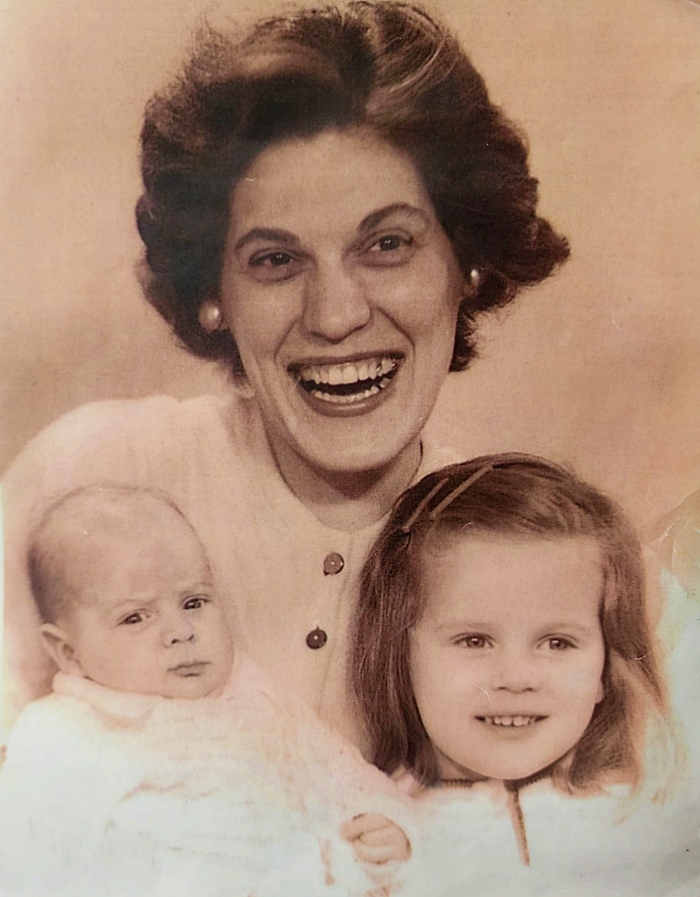
But soon in the gray dawn of an early spring morning, the missing slices of my grandfathers’ life were revealed. Over the cooing of a sandalwood morning dove, could be heard the voice of my grandfather anglicizing his last name to Sherwood because Stratigakis sounded too much like Streptococcus. “Streptogakis” had associations which were not good for business. Or he was hiding, and wanted to vanish without a trace. Elusive and transient as the wind. In the lucidity of the first light of the day, floating on the breeze, was a vision of my grandfathers’ swarthy muscular body enveloping my pale 15 year old grandmother, a non-Greek girl. It was mere sport to take the girls’ virginity, but when she got pregnant, my grandfather vanished and was never heard from ever again. My teenaged grandmother was burdened with an illegitimate child she never wanted. My mother had Greek features, swarthy skin, dark eyes and hair, like her father. She grew up fatherless in poverty.
Then it occurred to me to ask Panayiotis Stratigakis
“where was your democracy then?”
And to ask
“how do you reconcile being a pillar of your community with being a deadbeat and statutory rapist?”
But my grandfather was long gone like my mother into the eternal beyond.
Someone had to bear witness for my mother, because no-one else cared or remembered. And I realized that I was Greek by ill gotten gains. A grandfather who didn’t acknowledge his own daughter, my mother.
As I was the grandson of a statutory rapist, son of a bastard, the dishonor Panayiotis cast on my mother was too much to bear. In a misguided attempt at rectification, I got between many macho Greeks and their wives and daughters, provoking them to “fight me like a man”
But the dishonor Panayiotis cast on my mother and her memory, still lingered.
The Pan-Hellenic trinket felt infinitely light on my key chain. But it was heavy with my mothers’ unresolved conflicts. I felt burdened by the weight of it.
The trinket was a family heirloom, something as rare as a comet that passes by only every 10,000 years. But I had the need to be rid of it, it didn’t mollify my curiosity as the agency of unknown relatives had intended.
To break free of the curse afflicting my family, restore my mothers’ honor and undo the defilement of my own blood, I cupped the trinket in my left hand and cast it with all my might, high into the sky, the trinket traveling far, vanishing from sight over the Peloponnesian peninsula in Greece where my ancestors have lived for thousands of years.
“Greek in the wind” (C) 2020 By Richard Gessner
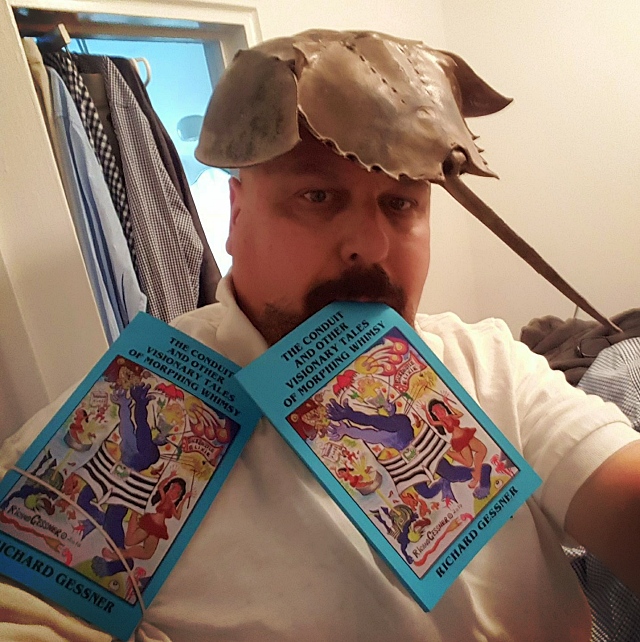
Richard Gessner’s fiction has been published in Air Fish: an anthology of speculative work, Rampike, Ice River, Coe Review, Another Chicago Magazine, Happy, The Act, Sein und Werden, Skidrow Penthouse, The Pannus Index, Fiction International and many other magazines. A collection, Excerpts from the Diary of a Neanderthal Dilettante & The Man in the Couch was published by Bomb Shelter Props. Gessner’s drawings and paintings have appeared in Raw Vision, Courier News, Asbury Park Press, Rampike, Skidrow Penthouse, and exhibited at Pleiades Gallery, Hamilton Street Gallery, Cry Baby Gallery, The Court Gallery and the Donald B. Palmer Museum. Richard wrote The Conduit and Other Visionary Tales of Morphing Whimsy. He lives in Montclair, New Jersey.
The Conduit and Other Visionary Tales of Morphing WhimsyAudible
THIS WRITING IS AN AUTHORIZED DUPLICATION WITH PERMISSION AND EXPRESSED CONSENT
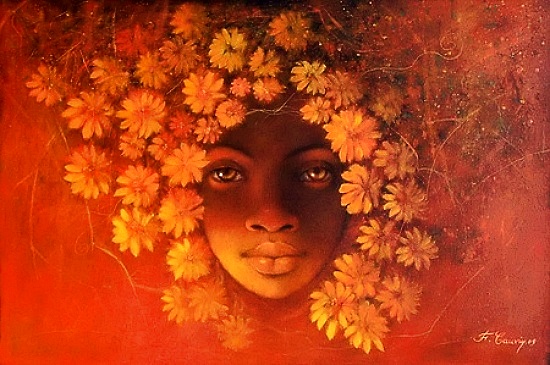
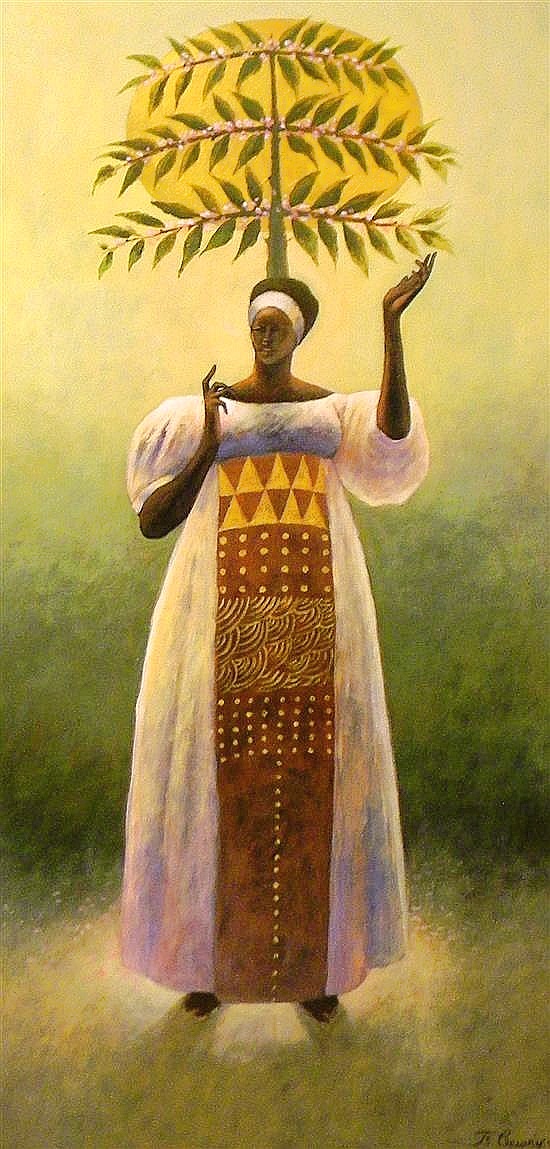
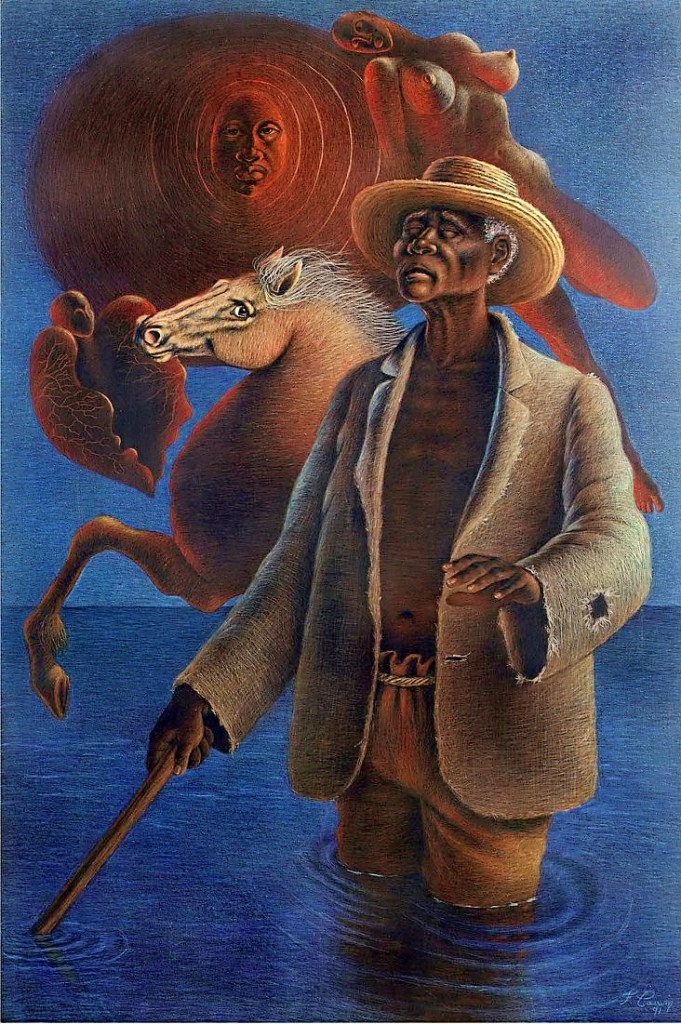
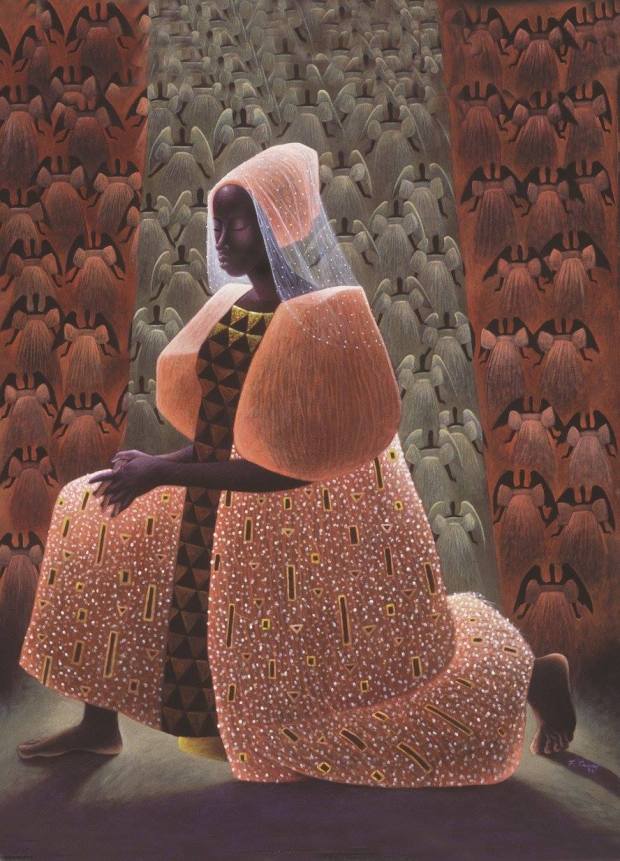
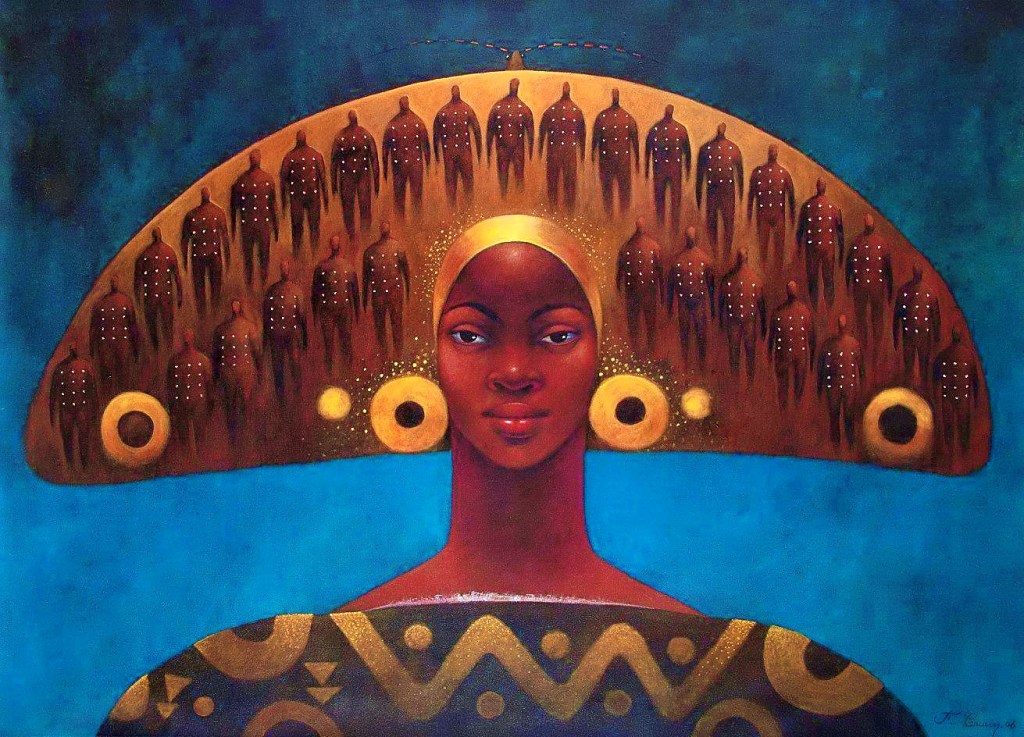
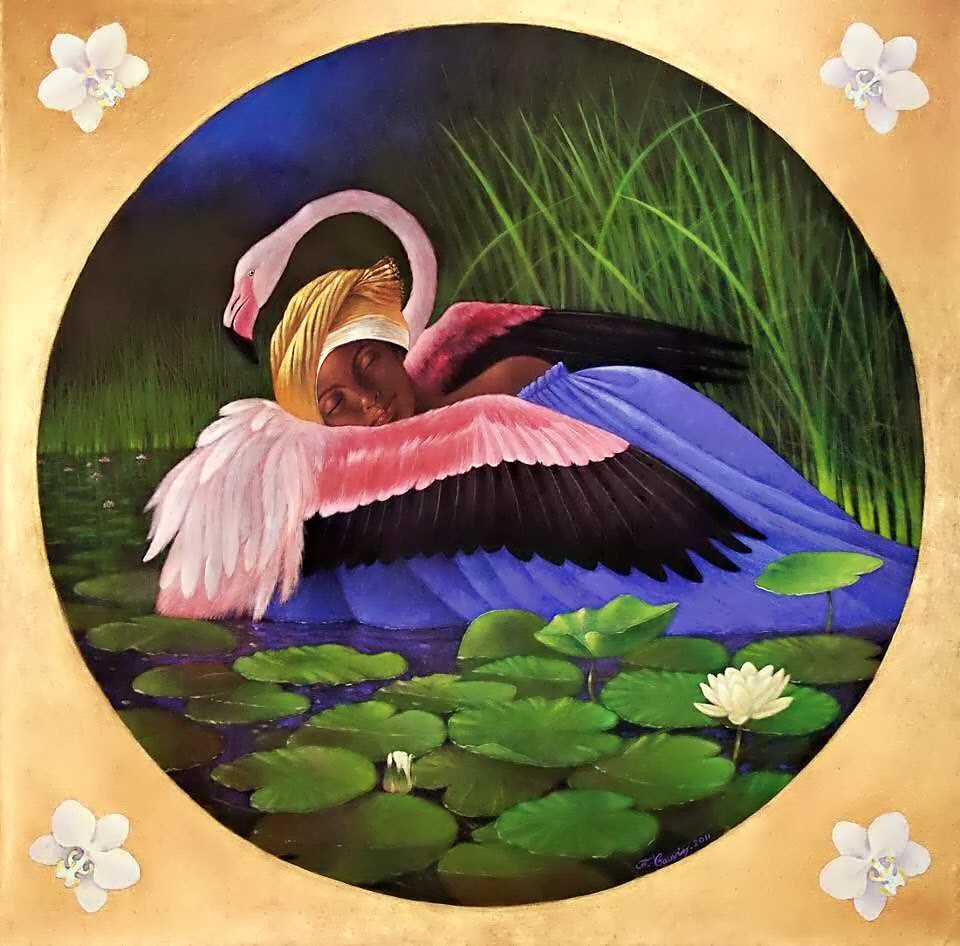
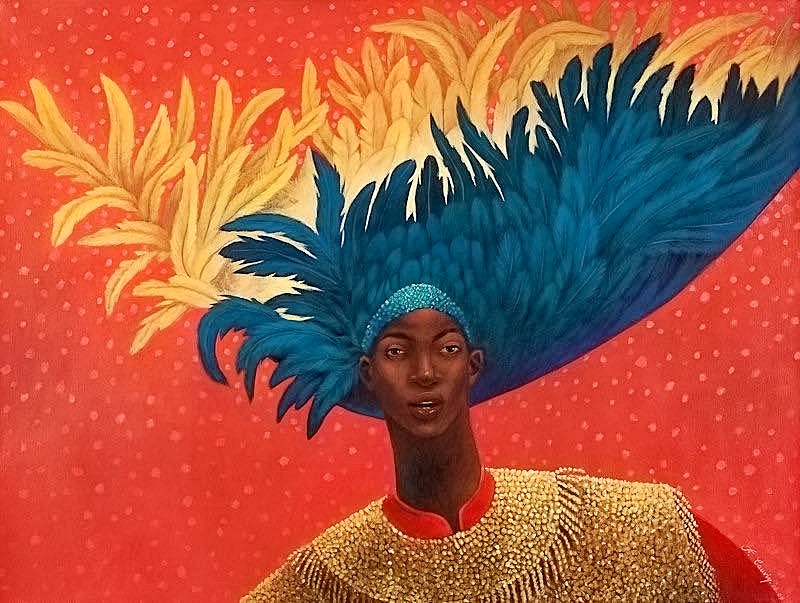
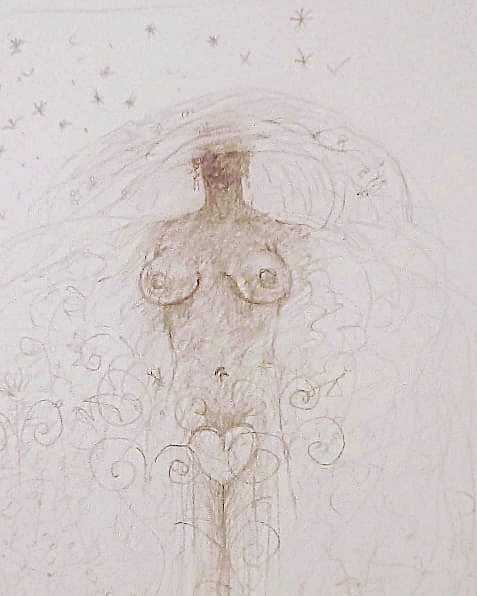
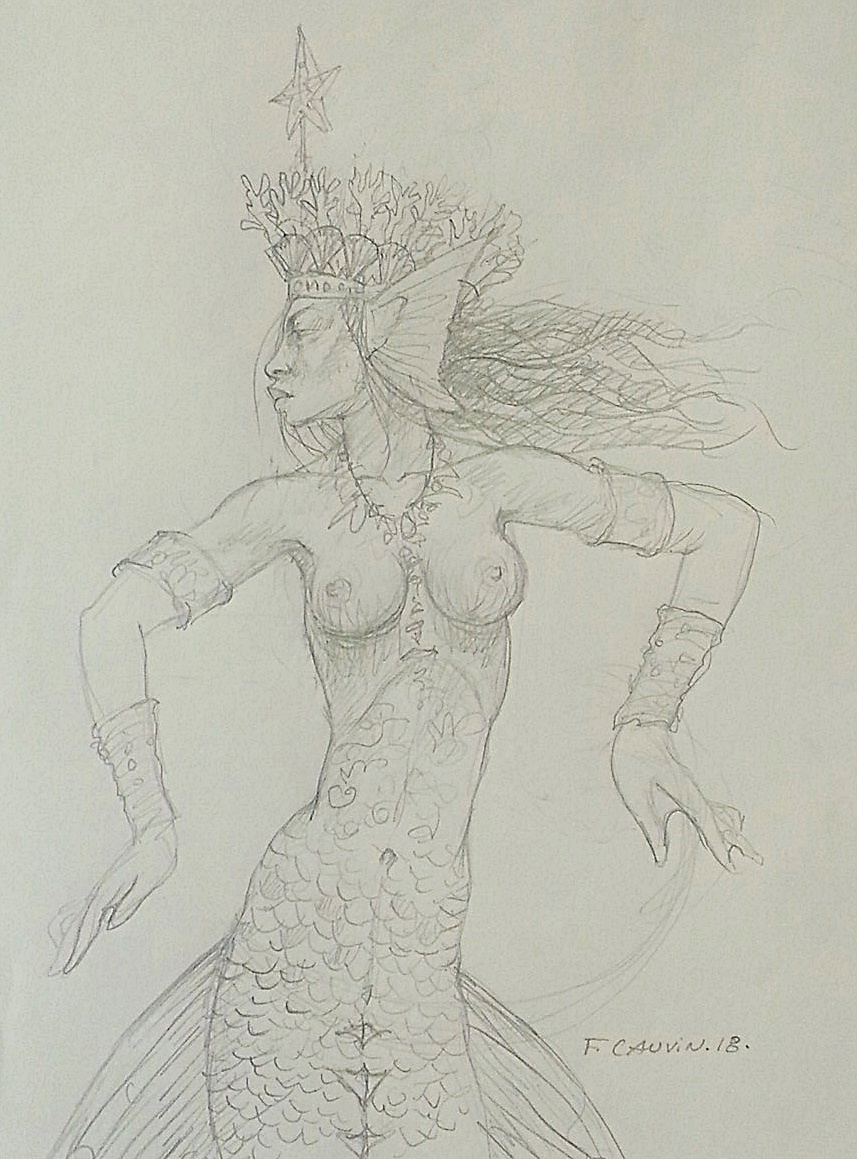
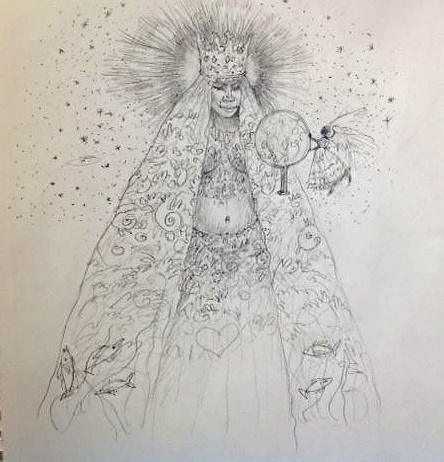
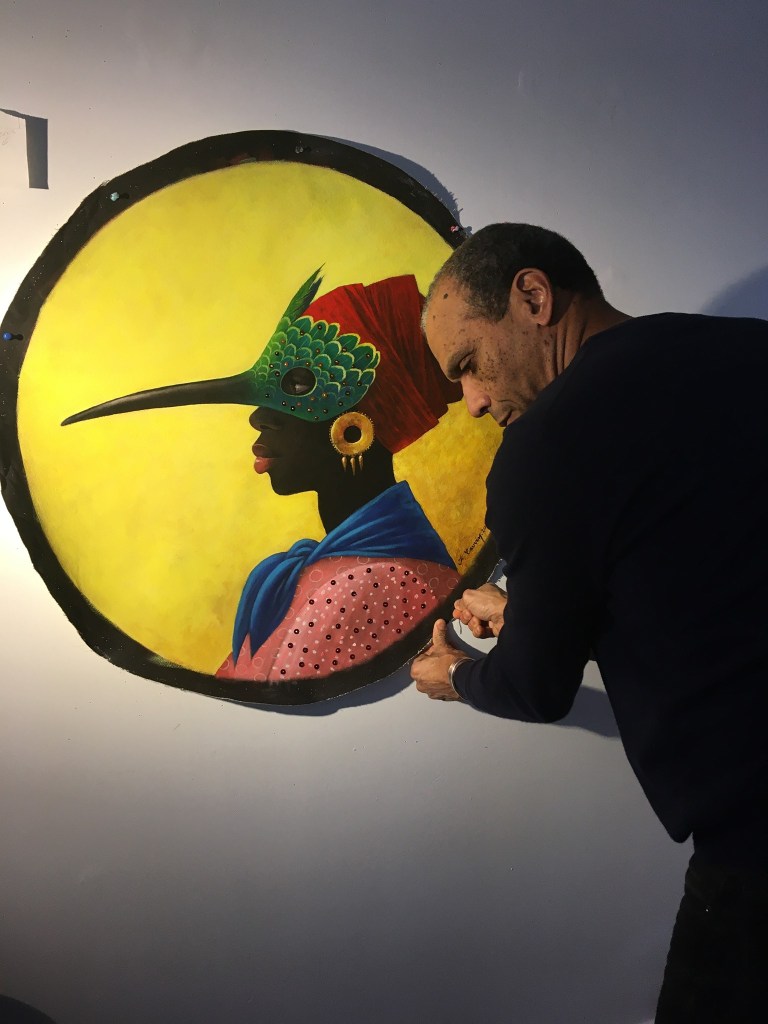
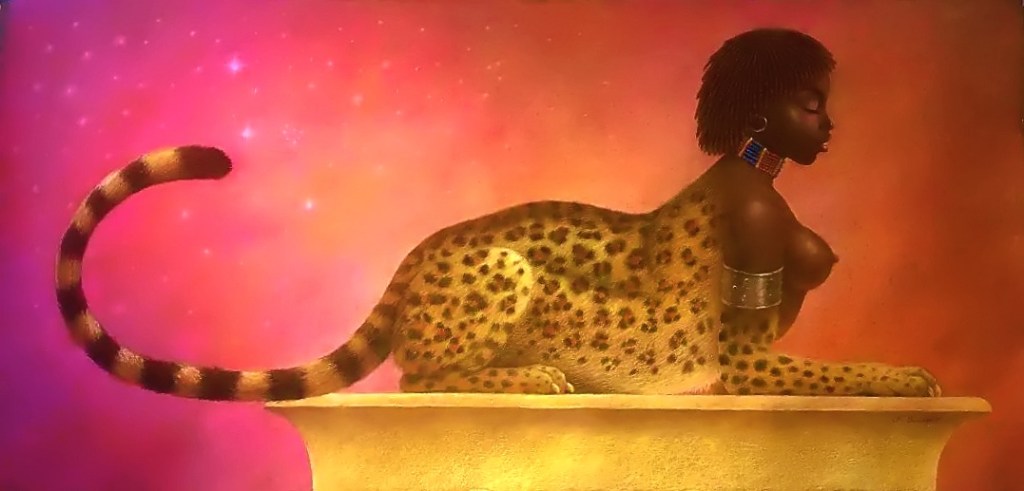
I find inspiration and magic in François Cauvin’s works. Many of his paintings can make the viewer more open to the mysteries of nature. This begins as a desire to remember our self while dreaming.
As a native of Haiti you grew up in a family of artists, musicians and poets. Who were they and how did they inform you?
Yes. I had many artists and musicians in my family. My uncles and aunts. also my mom was a fashion and dresses maker. My sister Marie-Hélène Cauvin is a visual artist too… but first they were musicians. Major influences included composer and virtuoso pianist Ludovic Lamothe and Occide Jeanty who was a composer, trumpeter and pianist.
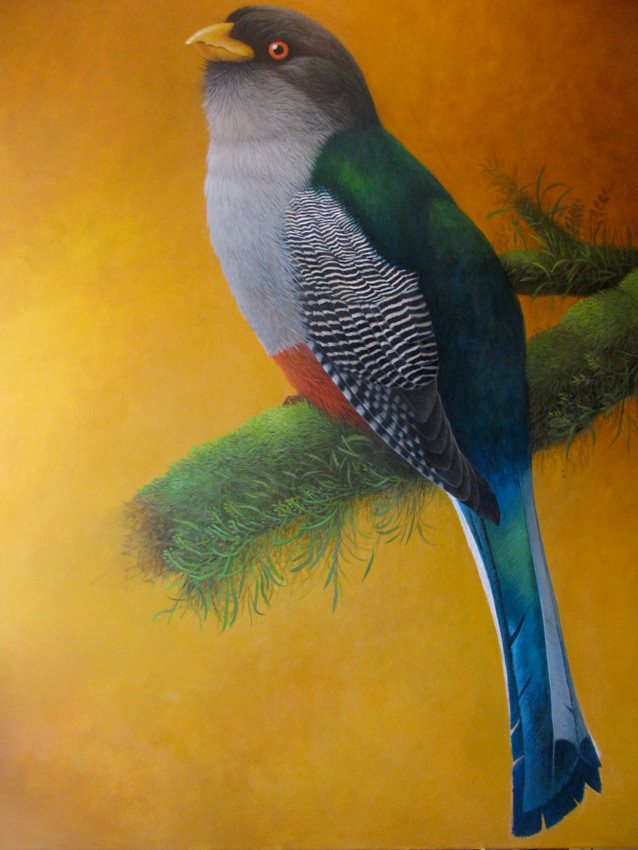
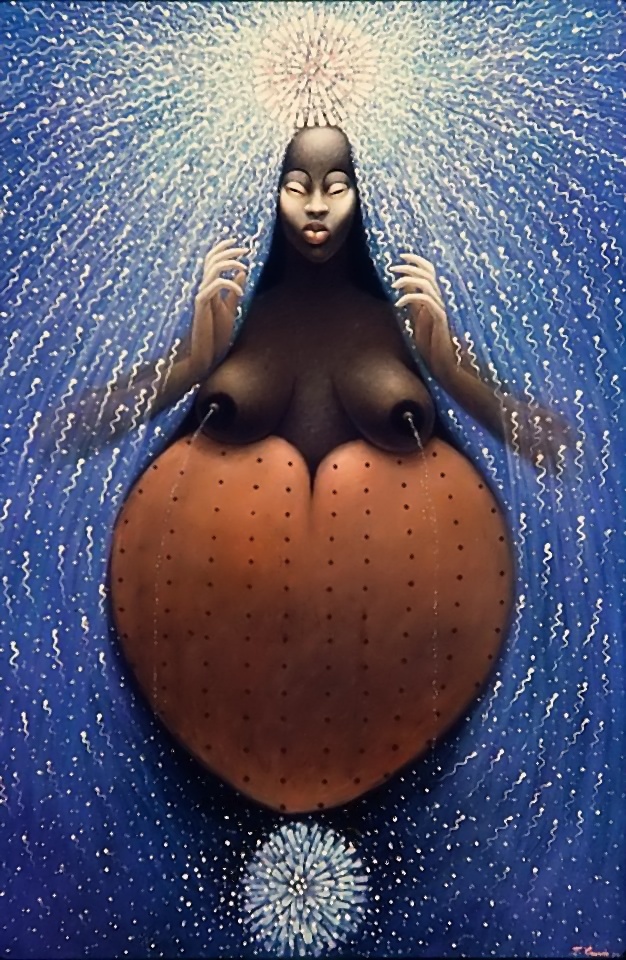
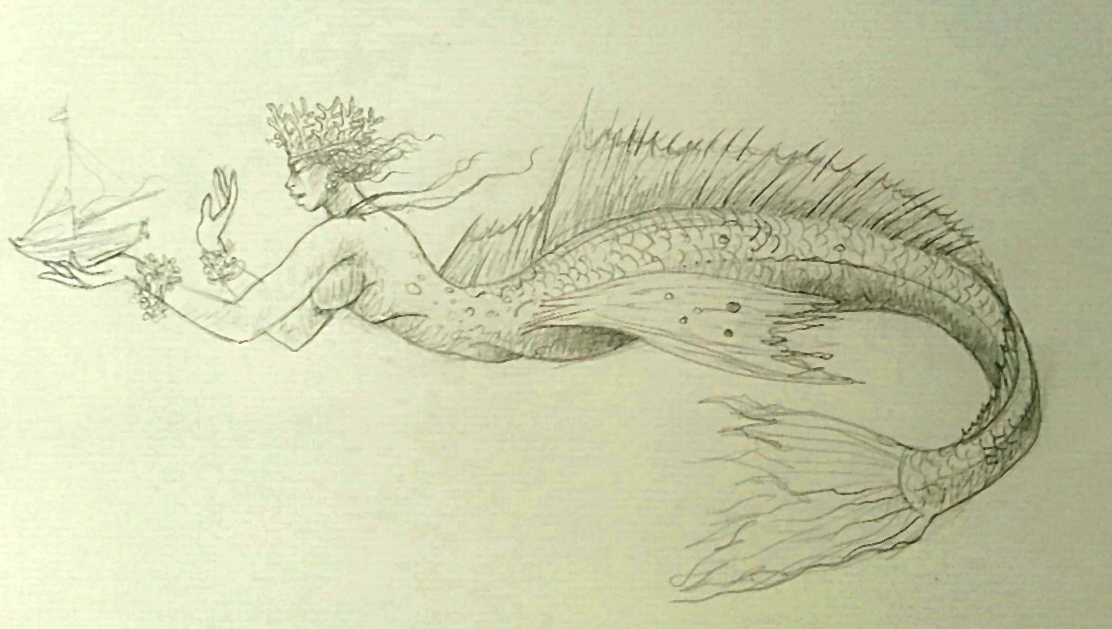
Le secretVille ImaginaireOpossum de MartiniqueGoddessOshunTree of LifeHispaniolan Trogon
Woman and nature are reoccurring themes in your work. what is it about those mysteries that inspire you?
Since I was raised by women, mother and sisters, I think it plays a role in my choice of painting them later I was initiate in the tradition of the Goddess of love.
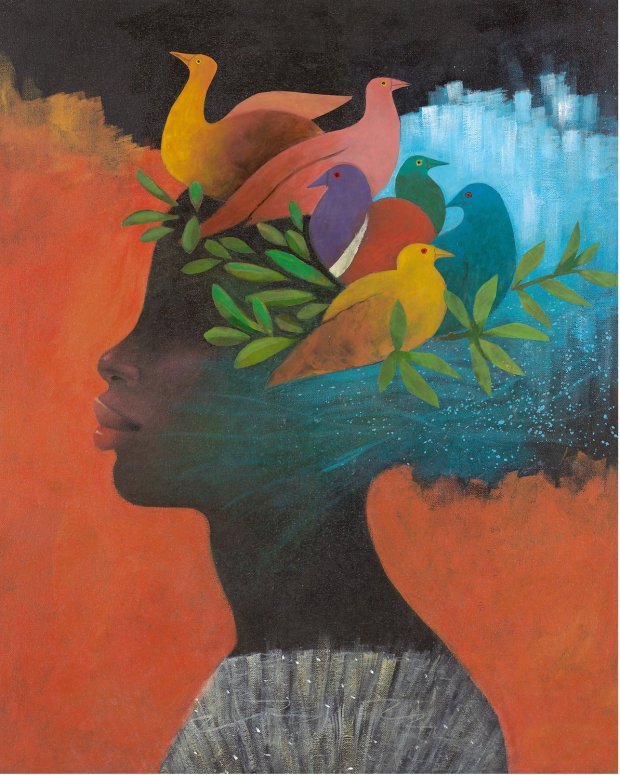
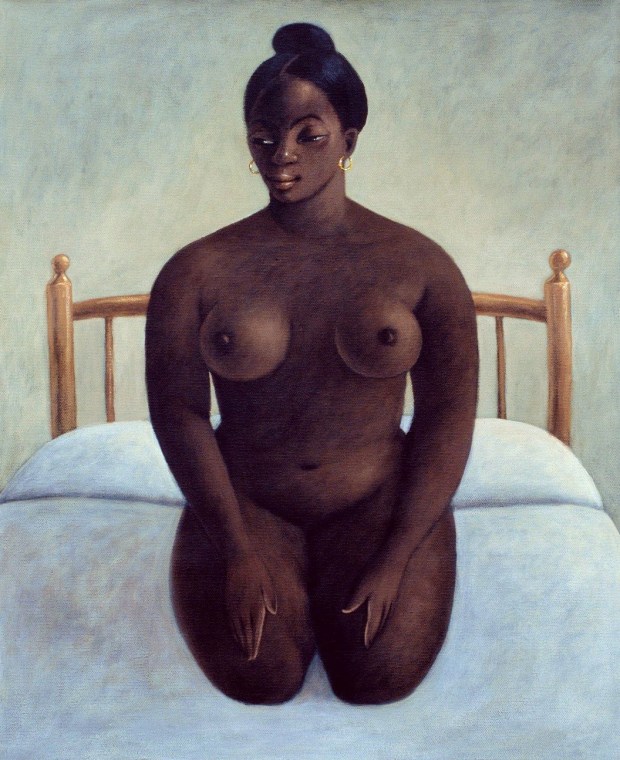
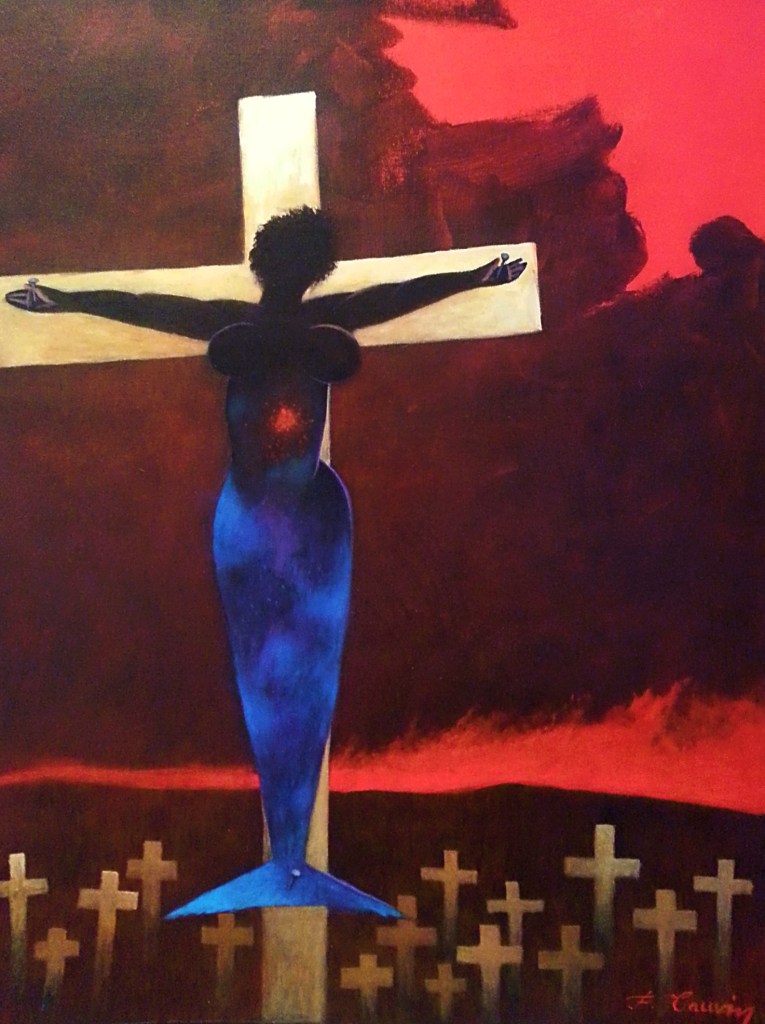
I saw red and got freeL’AttenteFleur de FemmeLove GoddessDeath of the MermaidL’Attente III
How do you approach Haitian religious symbolism? is it based on traditional Vodou or your own formula to remember the universal self? or a little of both?
I think my work is based on the Haitian Vodou tradition. Since most of my work are from dreams of the spirits, messages from them. I do have dreams of my previous lives .
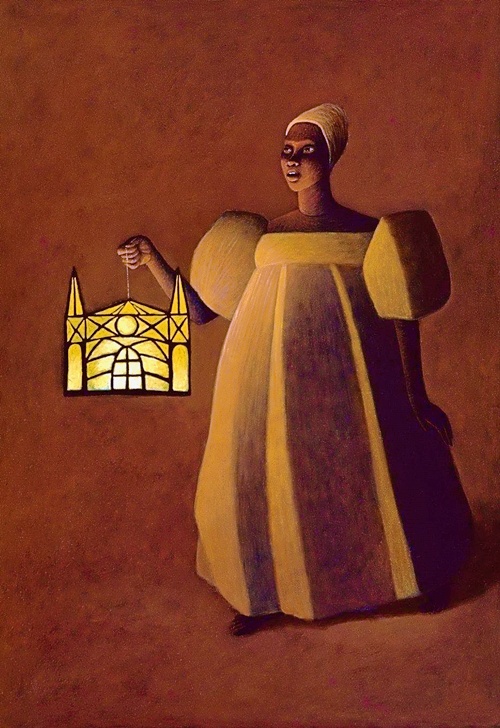
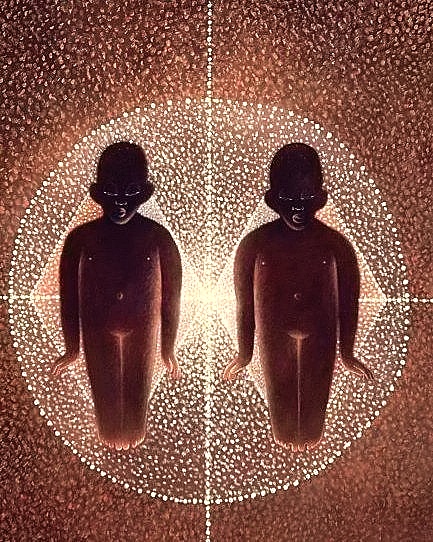
Fille au fanalMagical TwinsTrancePapillonLostPriere
How would describe the relationship you have with the universal mind, dreams and subconscious process? how do you find images to paint?
The images are from dreams most of the time. The ideas sometimes comes from my mind which hold and received them. They are from a place that I don’t know. You can receive images and ideas without knowing its happening.
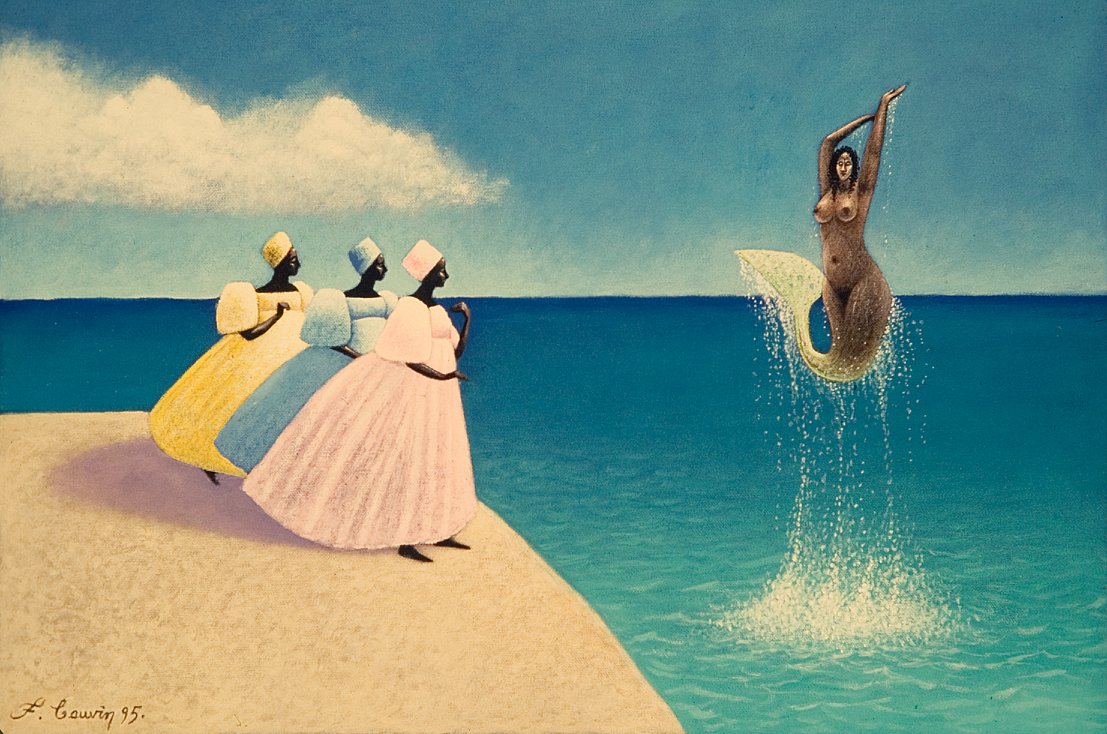
Met TetOgunJumping Mermaid
A la recherche du bonheur perdu
in your artistic interpretation what are the crossroads, twins and snake represent?is there one archetype you consider a guide?
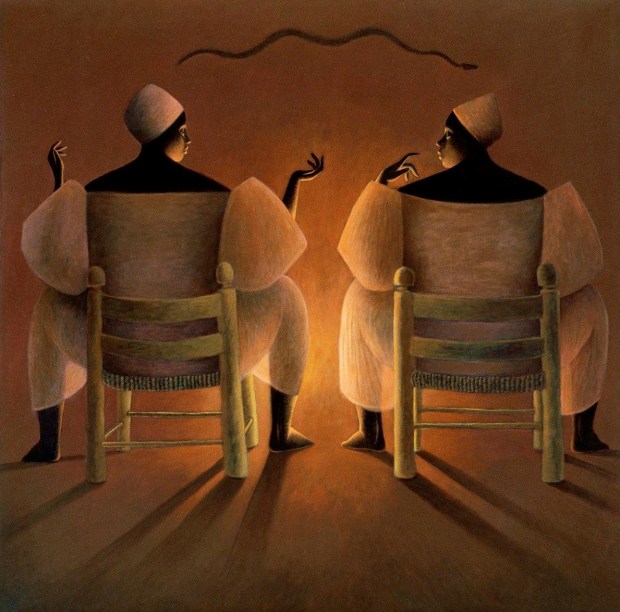
What I can answer for sure is that the snake is my true initiator before I was an initiate in the tradition. I dreamt once about the crossroad Master. He was skinless dancing in the air.
Two Mambos
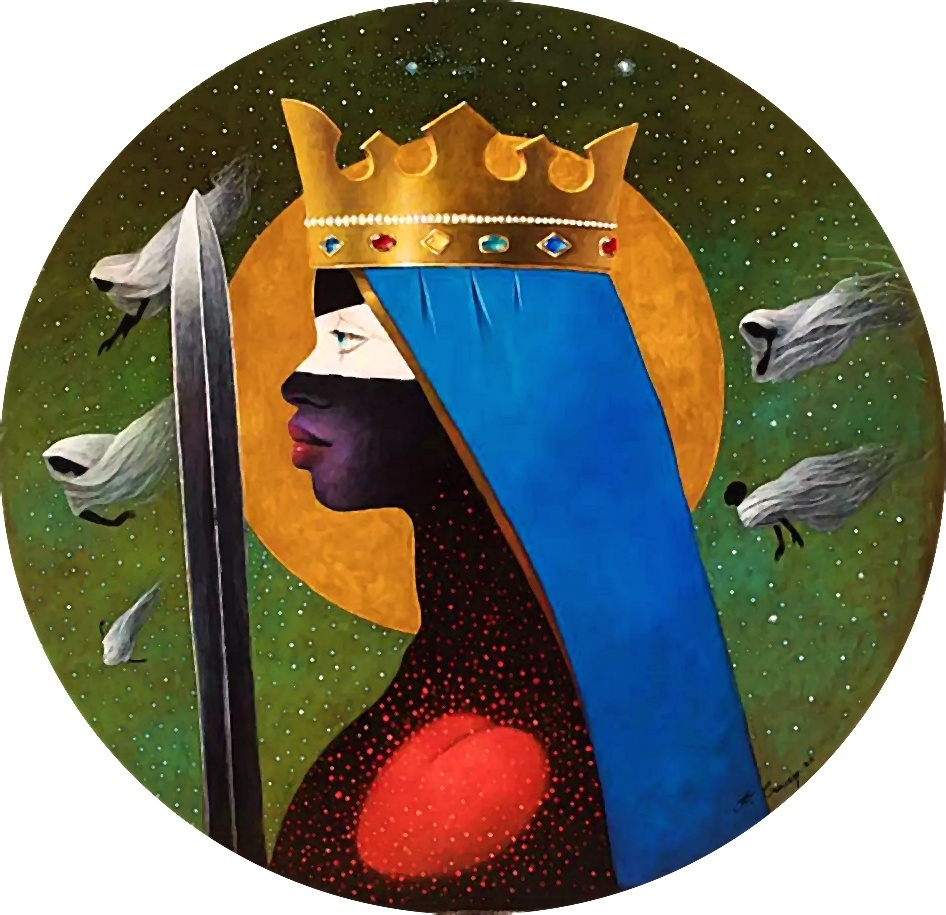
The Queen Mother, Goddess of the broken hearts/protector of the souls This painting shows clearly, the appropriation of the old myth of Isis by the Haitian Vodou from the Catholic Church dogma.
what writers have influenced you? what other influences changed your perception of the world?
I really love the South American writers and the magic realism school. Colombian novelist, Gabriel García Márquez. Guatemalan poet, Miguel Ángel Asturias. Cuban novelist, Alejo Carpentier. Haitian writers too that include Jacques Stephen Alexis, Jacques Roumain, Laennec Hurbon, Jean Price Mars and Villard Denis. I loved reading French novelist Marguerite Yourcenar… but what really influenced me was my past in the Haitian country side and Port-au-Prince. Also what my father taught me in that time about nature and plants.
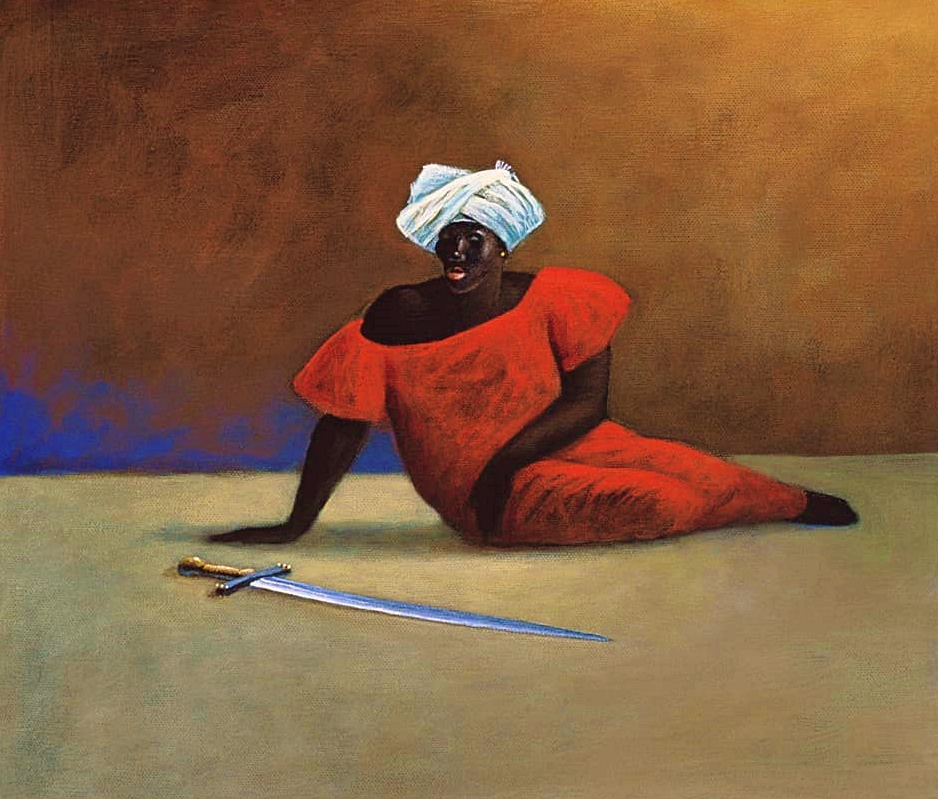
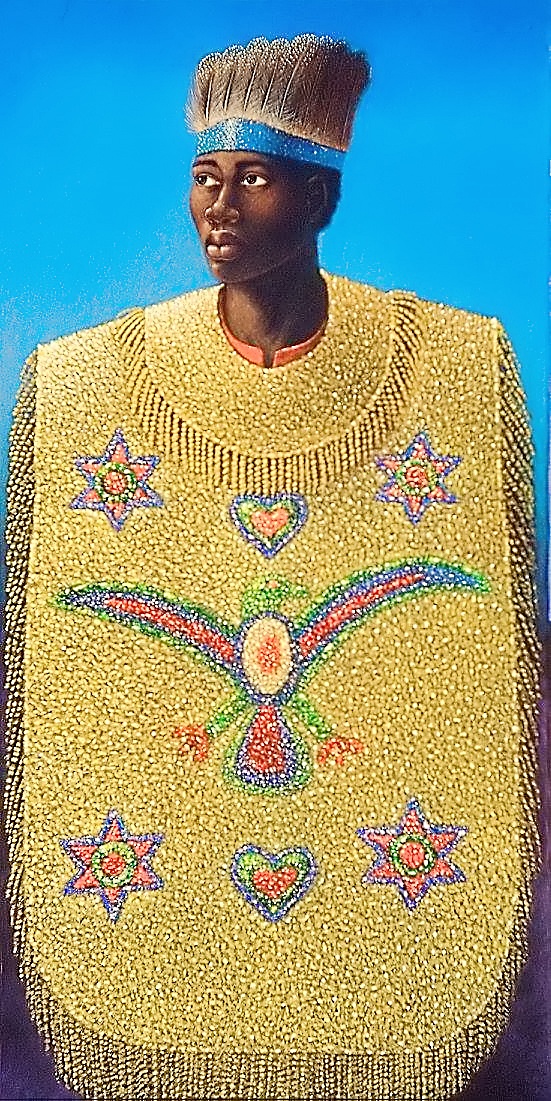
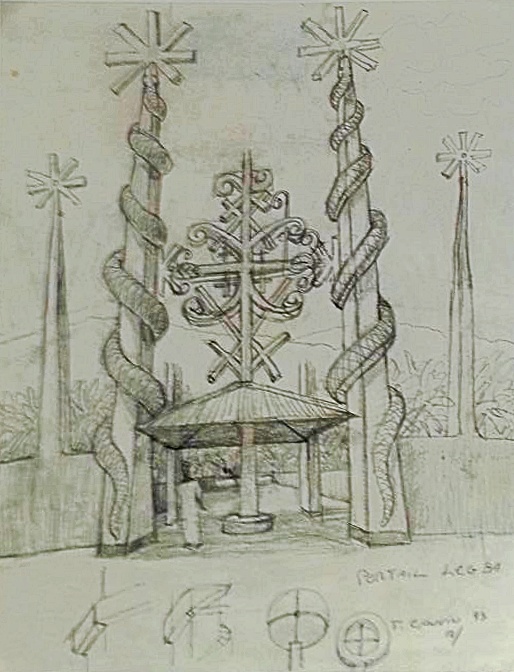
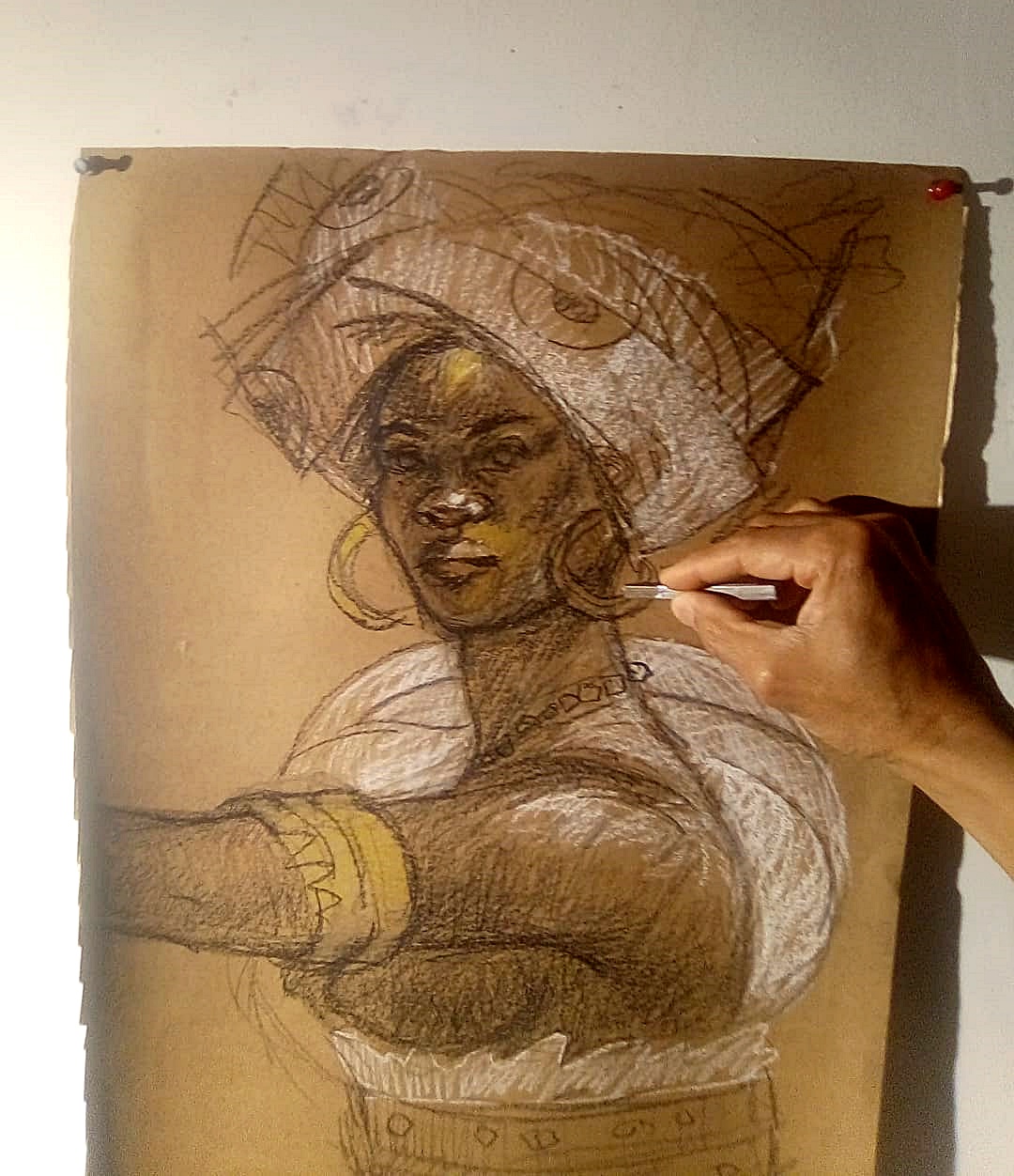
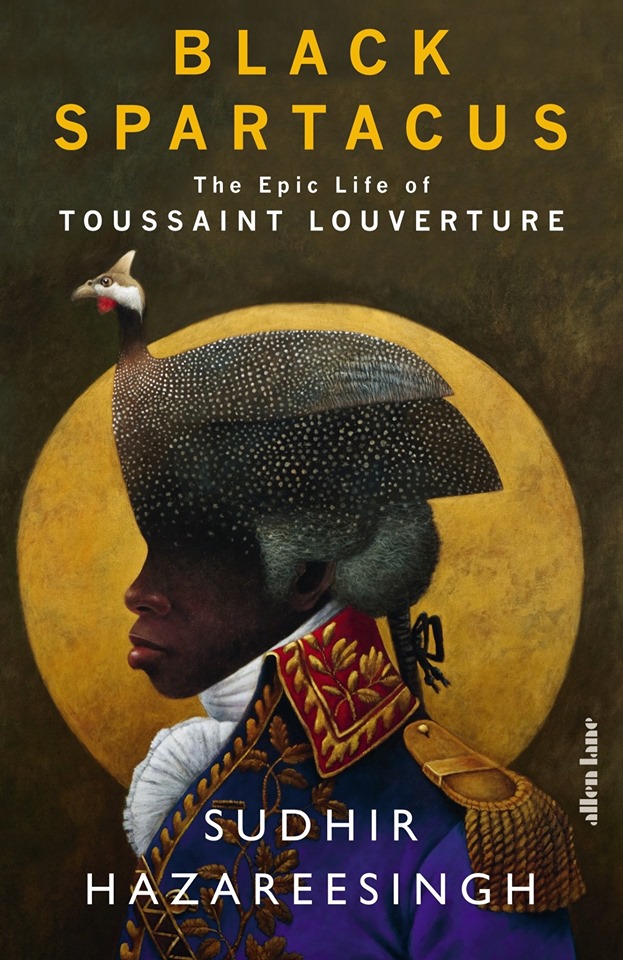
Rara King IToussaint LouvertureSanite Belair, Héroïne of the Independence war of HaïtiRara King II Blue Prints and Sketches Book Covers
Artrist François Cauvin lives between Montreal Canada and Haiti
















 Mitchell Pluto