In my figurative art, I don’t see the figure as something to be copied but as an event that’s shaped by rhythm, gesture and emotion. I grew up close to nature and think of my painted and drawn lines as threads and fibres, veins and roots, feeding and defining the boundaries of colours, which are the emotions describing an inner life, memories and connections.
Each painting can be thought of almost like a conversation. As I work on a piece, whilst I usually have an overall concept that I’d like to express, the details and the manner in which that idea is expressed is often only discovered whilst I’m actually working on it. Some pieces end up looking more like physical time-lapses, with the figures moving on the canvas as they get painted then repainted, whilst others could be seen as long-exposure captures of emotional changes, with the shifting colours both mirroring and guiding my mood whilst I work.
Magdalena studied Artistic Textiles at the C.K. Norwid Art College in Lublin, Poland and earned her master’s degree in Painting from the nearby M.C. Skłodowska University. After living and exhibiting in England and Switzerland, she settled in Asturias in northern Spain, where she continues to develop her work. She has held numerous solo exhibitions and included in group exhibitions worldwide. Her work is represented by several international galleries and is held in collections around the world.
The movement in my work is a consequence of a sincere trace of the unconscious. Movement represents life. In moments without inspiration, I try to maintain the discipline of continuing to paint, draw, because thanks to experimentation, inspiration returns.
There is never a plan, everything is part of the unknown (spots, lines, frottage etc.). Taking risks, experimenting and destroying the known to reach an unknown place. I have worked with a lot of materials, oil, pastel, acrylic, watercolor, pencils of all kinds, tempera and ink, but my favorites are oil, acrylic and acrylic pencils (markers).
Many artists influenced my work, not only plastic artists, but also musicians, colleagues and friends. The artist who most influenced my work I think has been Roberto Matta. For work I generally listen to music that has a guitar (because I also play electric guitar, mostly rock), from Jimi Hendrix to Death Metal.
Paulo Freire marked a period in my life above all with “Pedagogy of the Oppressed”, I carried it around in my backpack for months, but perhaps it was Mario Benedetti’s book “Spring with a Broken Corner” that impressed me the most. I saw the play during the dictatorship in Chile, I read the book later, when I was already living in the Netherlands.
Born in Russia, of Russian and Armenian descent, with both parents artists-designers who were often working on their projects from home, I was surrounded by art books, architectural models, paintings, and design projects. I was feeling very much a creatively equal part in this artistic household, learning practical skills from an early age and getting ad-hoc art history lessons from my dad: I loved nothing more than sculpting objects, drawing imaginary worlds and creatures for hours, taking myself away on fantastic travels aided by pen and paper.
I started receiving formal art school education from the age of 12. I then went on to study at St Petersburg Stiglitz Academy of Fine and Applied Arts, taking what was considered a more practical Interior Design degree there as one of the youngest students on the course. Having grown more and more disillusioned with the political situation in Russia, I had an opportunity to continue my education in the UK, where I decided to switch my degree to Fine Art Painting at the University of Brighton, a beautiful seaside town. Having graduated with a First Class Honours degree, I had a great chance to continue onto a 3 year postgraduate course at the Royal Academy Schools in London straight afterwards, eventually settling there for 15 years with my family, before moving to Spain.
My art practice since has encompassed a lot of different mediums: from drawing and painting to making art videos, experimental website design, creative writing, sound design, exhibition curation, and interior design. I’ve collaborated with my husband Daniel, (also an artist and writer,) on The Unstitute – a conceptual art website/online art laboratory which includes various online gallery spaces with monthly curated exhibitions, one-off projects, artists’ residencies, and a ‘zine. We developed a unique digital aesthetic with complex cultural dialogues, promoted and exhibited video artworks by over 130 artists from 33 countries, connecting to a global network of artists. The Unstitute also produced a number of independent short and feature films screened internationally. The Unstitute is free to visit and explore: www.theunstitute.org
My creative inspiration lies in all that excites me to try my hand at myself, a deeper exploration of my interests through practicing a new medium, learning and understanding the character of this practice and developing my own language in it. The themes I have looked deeply into are: French New Wave cinema (Godard, Truffaut, Resnais, Varda), post war Italian cinema (Fellini, Pasolini, Antonioni) and existential philosophy (Sartre, Nietzsche, Kierkegaard) which influenced a lot of video works, surrealist paintings (Carrington, Varo, Ernst), and the writings of Kafka and Deleuze – as well as other numerous sources. The fantastic architecture of Gaudi has been referenced in my design work, classical and experimental dance music has inspired my own sound design projects and developed my sensibilities. I like to mix disciplines, and I don’t feel the pressure of tying myself to making one type of thing; when it becomes a chore it lacks a particular kind of energy, an excitement to harness the subject, and to communicate in that language it needs to be left alone to breathe for a while.
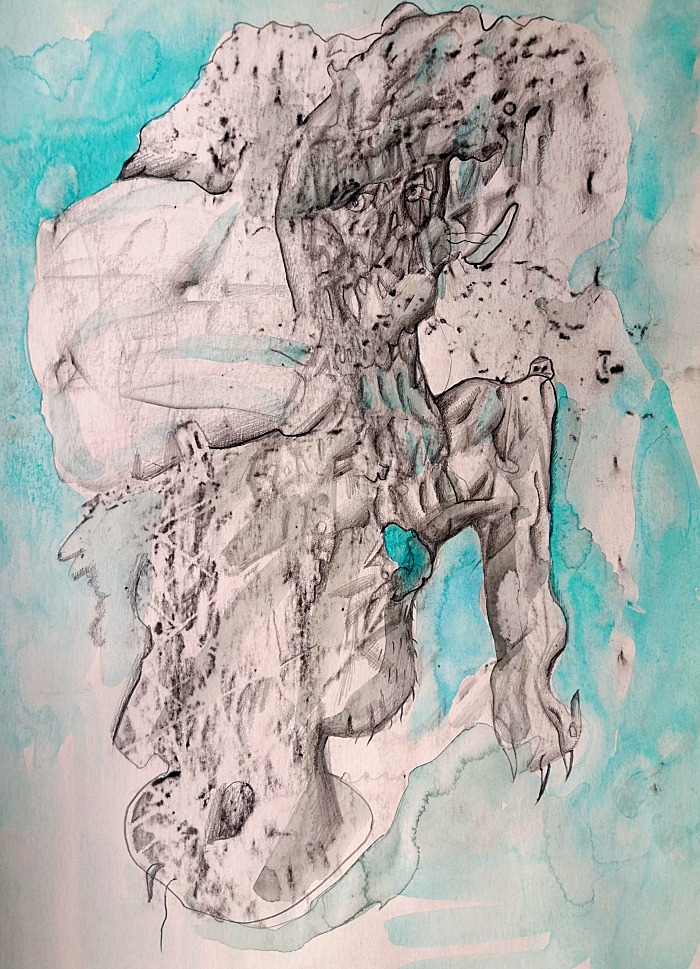
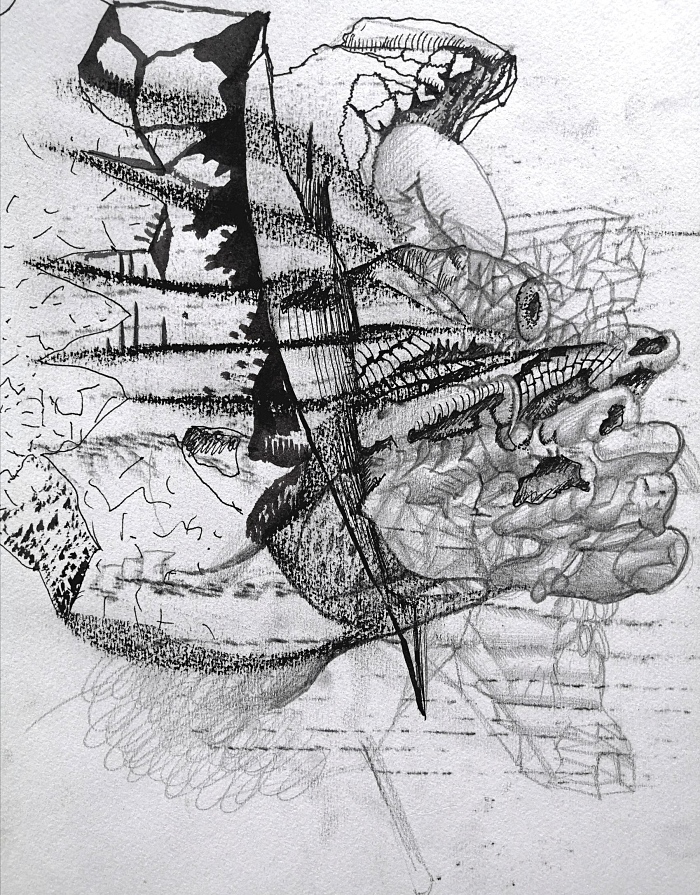
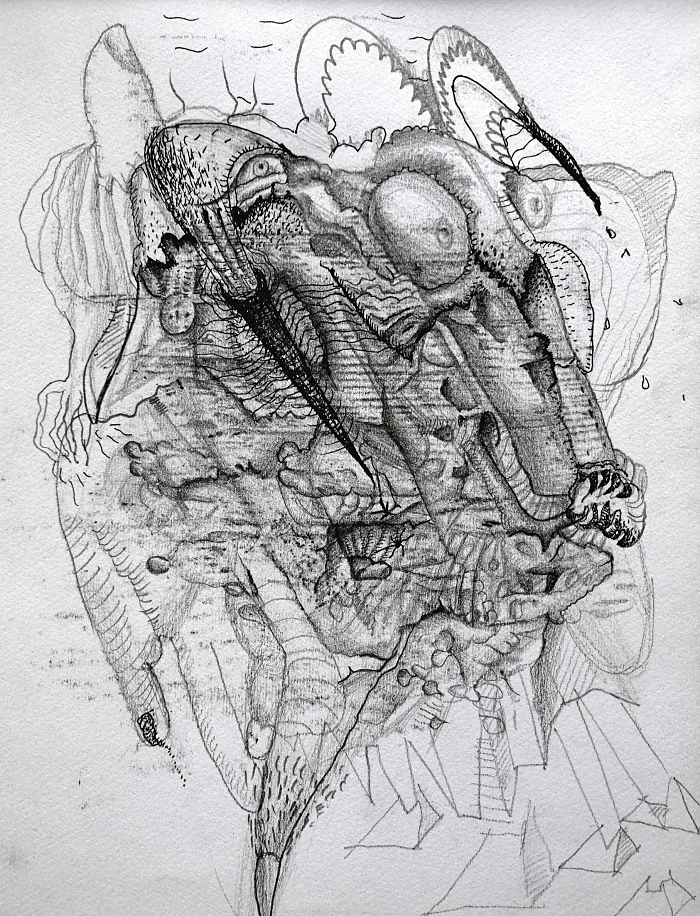
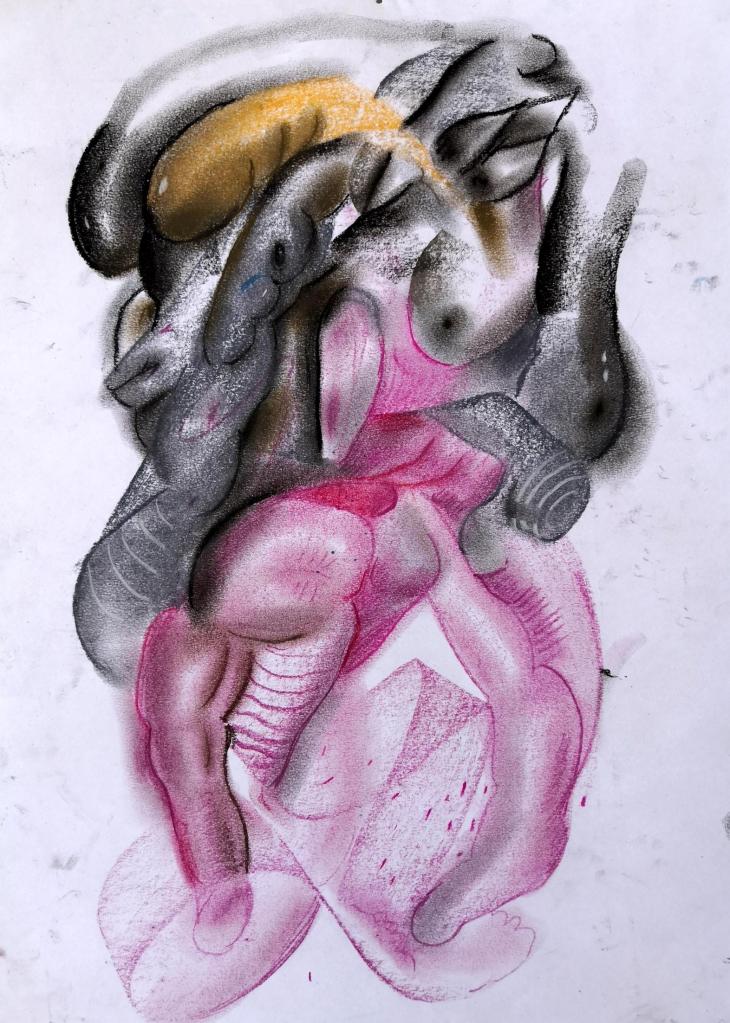
Having come full circle, I’m now developing ideas through drawing again. Drawing, a very immediate medium, enables me to play with the material and with my mind. I use various surfaces around our old Catalan house with a 100 years worth of thin plaster washes that are rich in texture, cracks and chips, a detailed history of use that is translated into some faint, random marks, by rubbing the surface with graphite on paper. Sometimes, I close my eyes and choose colours and draw shapes at random, or I just scribble something on paper absentmindedly. Thus, I’m presented with a series of opportunities for ‘communication’ with the work. I get into a meditative, slightly detached state, letting expectations go as much as possible before letting the drawing speak to me, to open my mind to suggestions. I see frottage – the initial rubbing – as a basic skin or gauze that is tied over an already existing image; it’s a game of recovery of the image.
It’s like the whole of humanity, the natural world, the cosmos, all my sources and histories are squashed together in a tight bundle of stuff that constantly mutates and changes in a continuous movement, a dance that is hidden under the surface of drawing paper. You never know what you are going to find by scratching the surface. By gently drawing on this skeleton of marks, repeating its forms over and over, I start slowly beefing up the initial image, or I take layers off, exposing that image underneath, akin to archaeology. I can recognise various marks, characters, memories of small details like a gesture or a shine on the nose, and the stuff from daily life starts to poke through this initial wild collage of bits, merging and mutating in my unfocused eyes. By gently excavating a partial image with a soft brush as it were, by gentle strokes, I nurture that image into the light, extracting, distilling it from the initial marks. As if stroking the skin of paper over and over, massaging the organs, getting the inner machinery as it were to start kicking into action. This process produces a clearer idea of what the image is and what it wants; it starts working itself out, the cogs fall into place. When I feel that an image I’m working on is becoming independent, it starts constructing itself with that inner machinery confidently and becomes almost confrontational in its new independence, then my work is done. Art for me is an organic process which continues evolving in the eyes of the beholder.
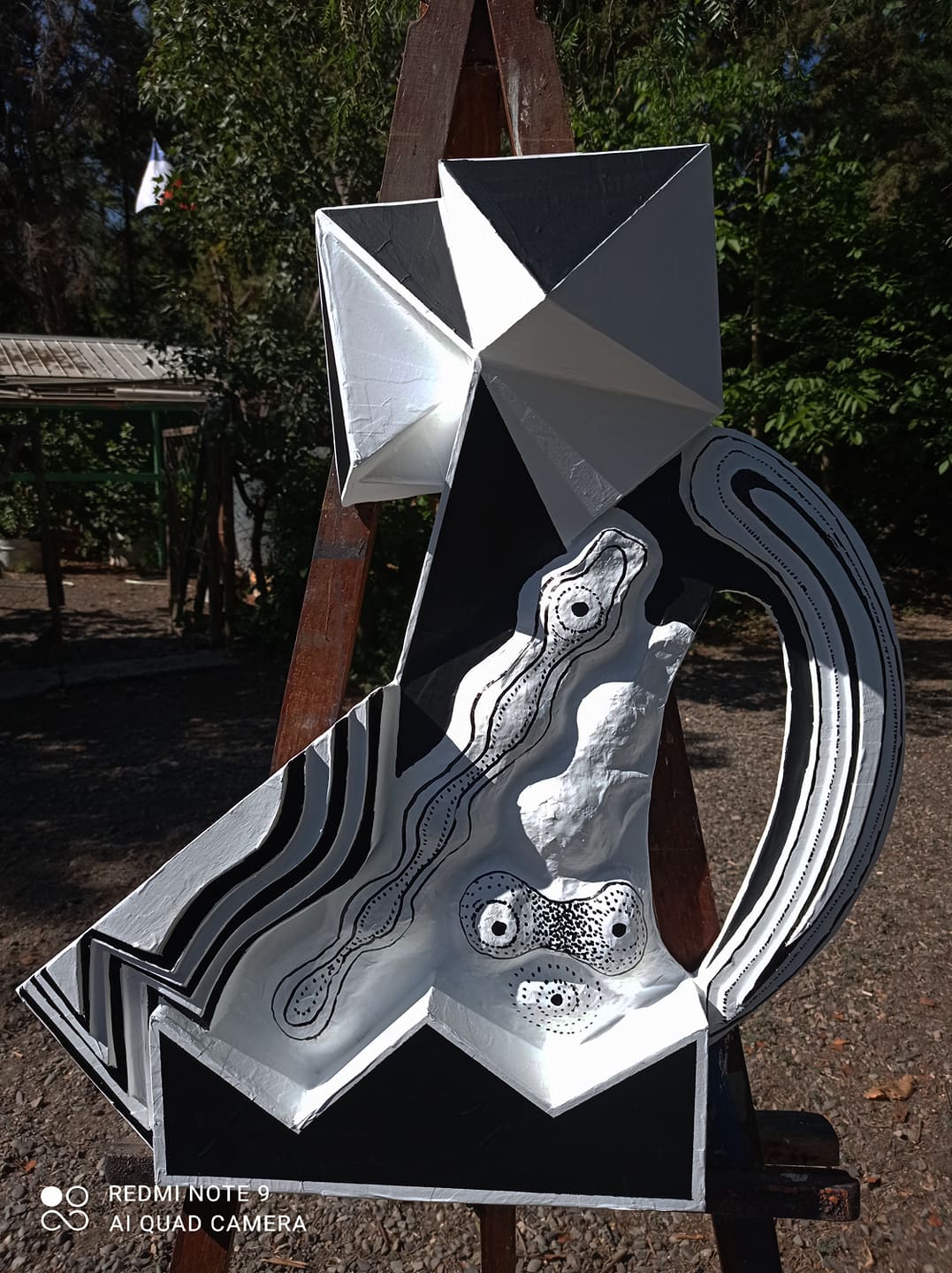
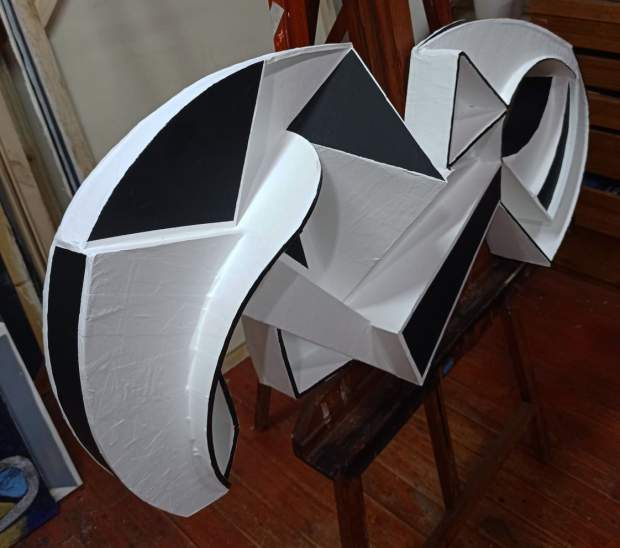
The faceless figures in Rene Fernando Ortega Villarroel’s work open a doorway to our silhouette.
Las figuras sin rostro en la obra de René Fernando Ortega Villarroel abren una puerta a nuestra silueta.
A labyrinth that challenges realities between an all-knowing self and a unicursal passage of selves.
Un laberinto que desafía realidades entre un yo que todo lo sabe y un pasaje unicursal de yos.
The viewer will see waves of motion paused long enough to discover psychic architecture and lapidary engines.
El espectador verá ondas de movimiento pausadas el tiempo suficiente para descubrir la arquitectura psíquica y los motores lapidarios.
Rene Fernando Ortega Villarroel’s art delivers a psychic experience to our world. The deities are shapes and eternal archetypes
El arte de René Fernando Ortega Villarroel entrega una experiencia psíquica a nuestro mundo. Las deidades son formas y arquetipos eternos.
The vision is an art beyond the vanishing points camouflaged and hunted by shamanic, artistic, and theurgic observance.
La visión es un arte más allá de los puntos de fuga camuflados y cazados por la observancia chamánica, artística y teúrgica
Rene Fernando Ortega Villarroel is a visual artist from Chile who practices the ancient tradition of X-ray vision in his painting.
René Fernando Ortega Villarroel es un artista visual de Chile que practica la antigua tradición de la visión de rayos X en su pintura.
Rene has exhibited work in Chile and Argentina. He is involved in many cultural art programs that have related to hospitals, children and teaching art professionally.
René ha expuesto obra en Chile y Argentina. Está involucrado en muchos programas de arte cultural relacionados con hospitales, niños y la enseñanza del arte profesionalmente.
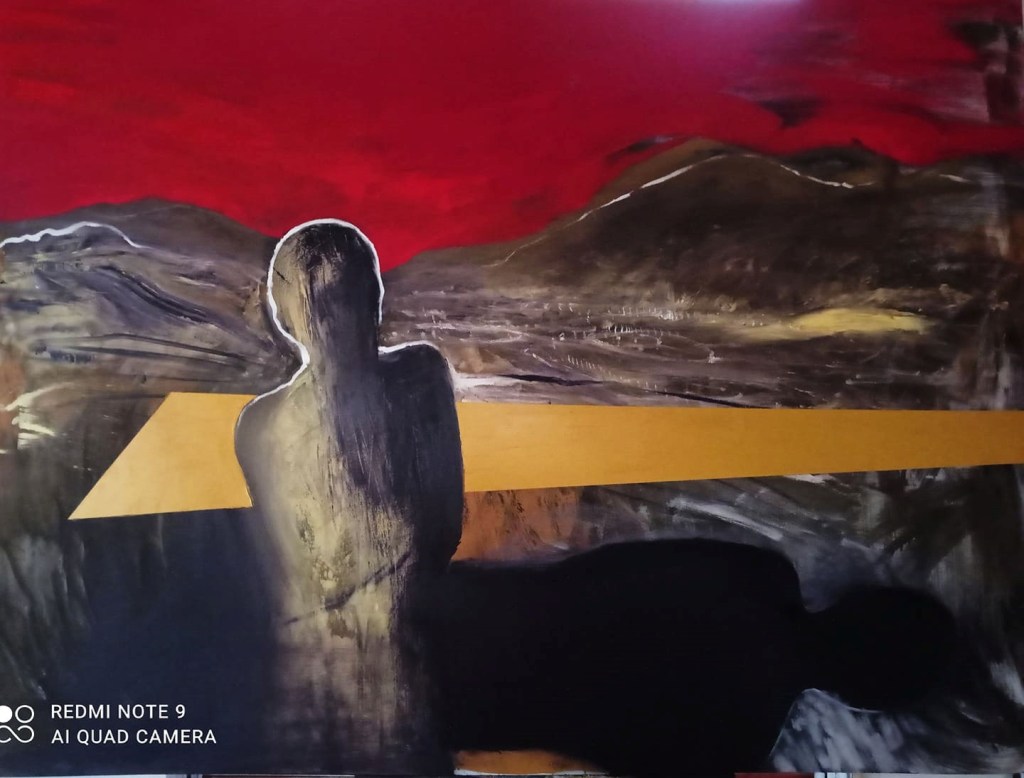
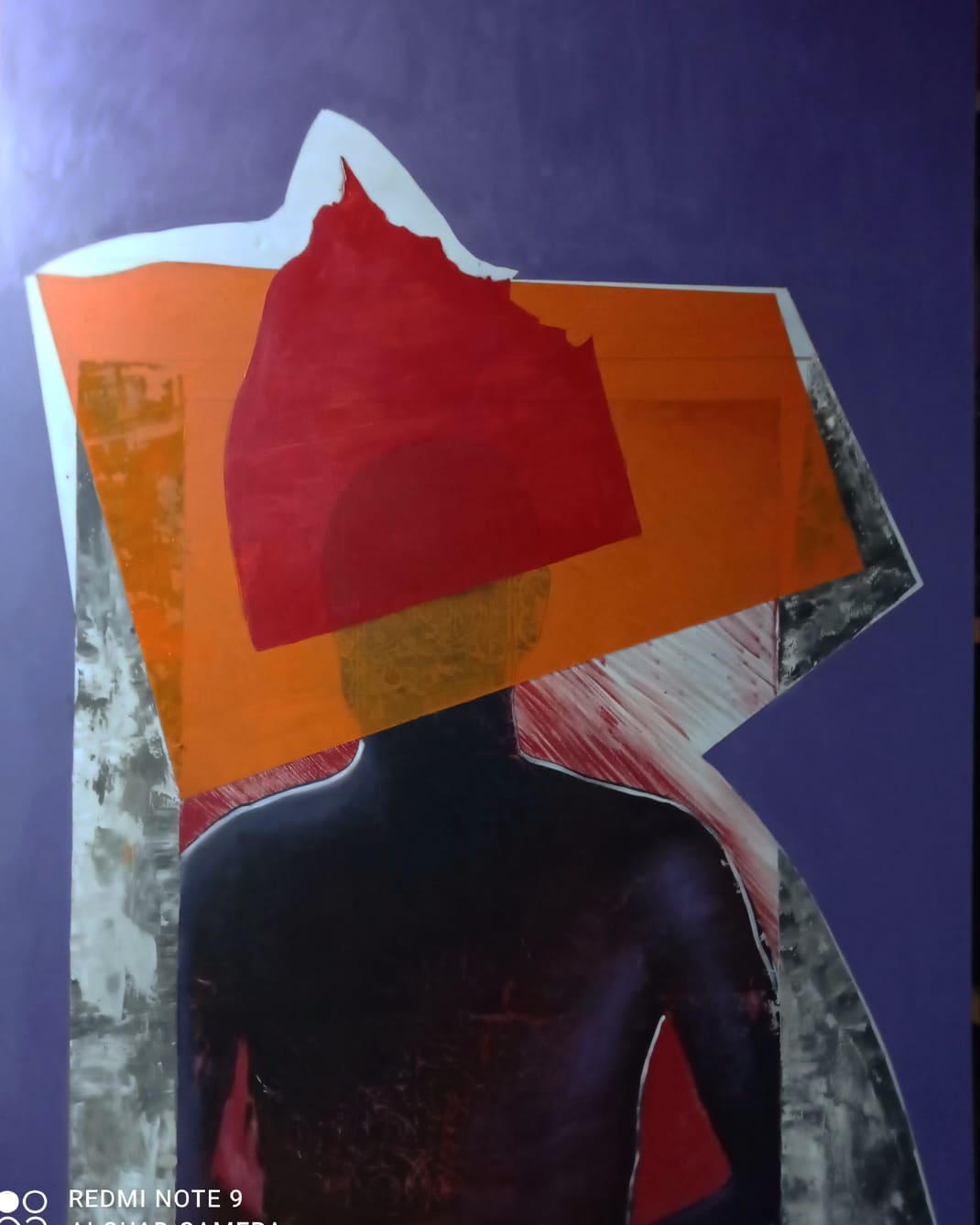
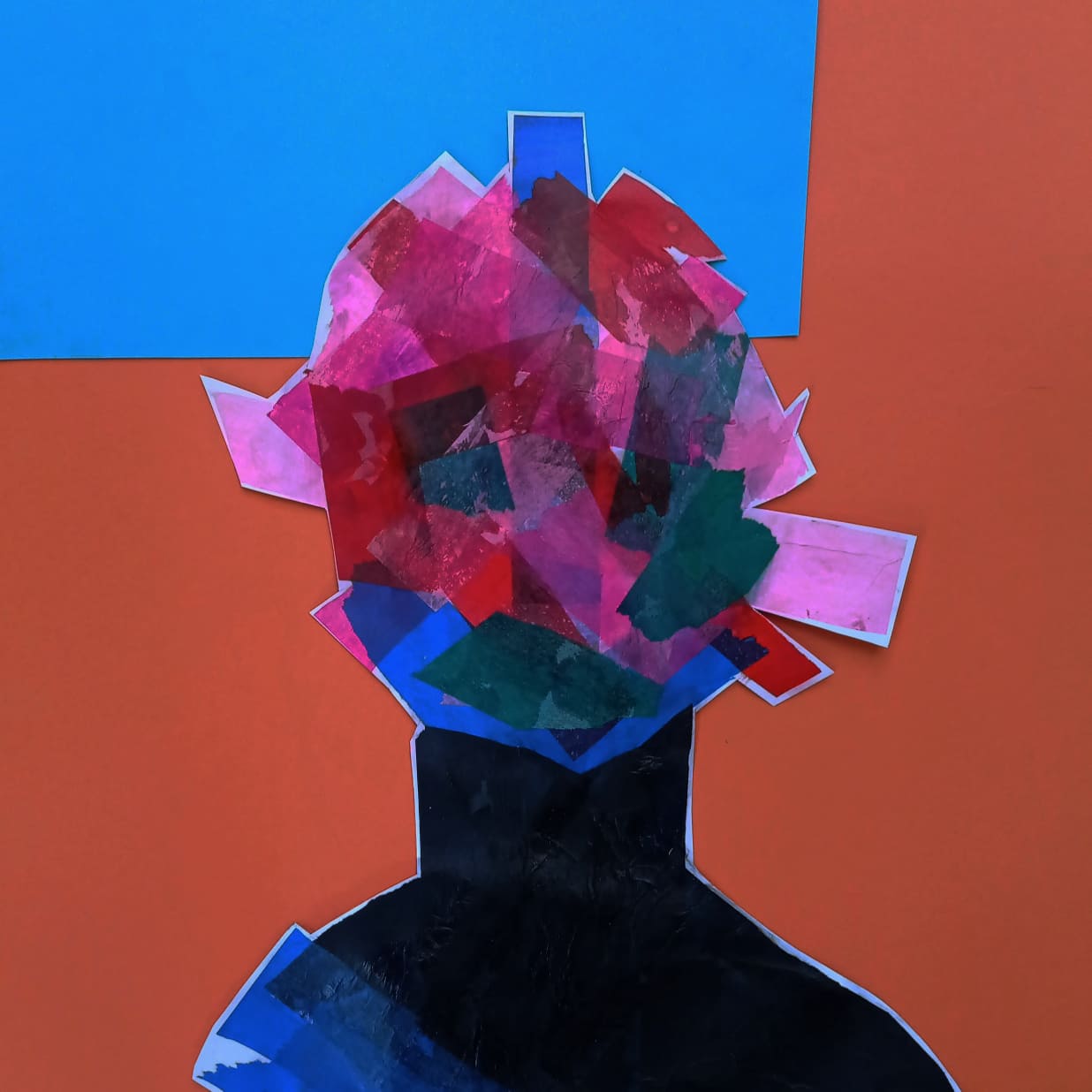
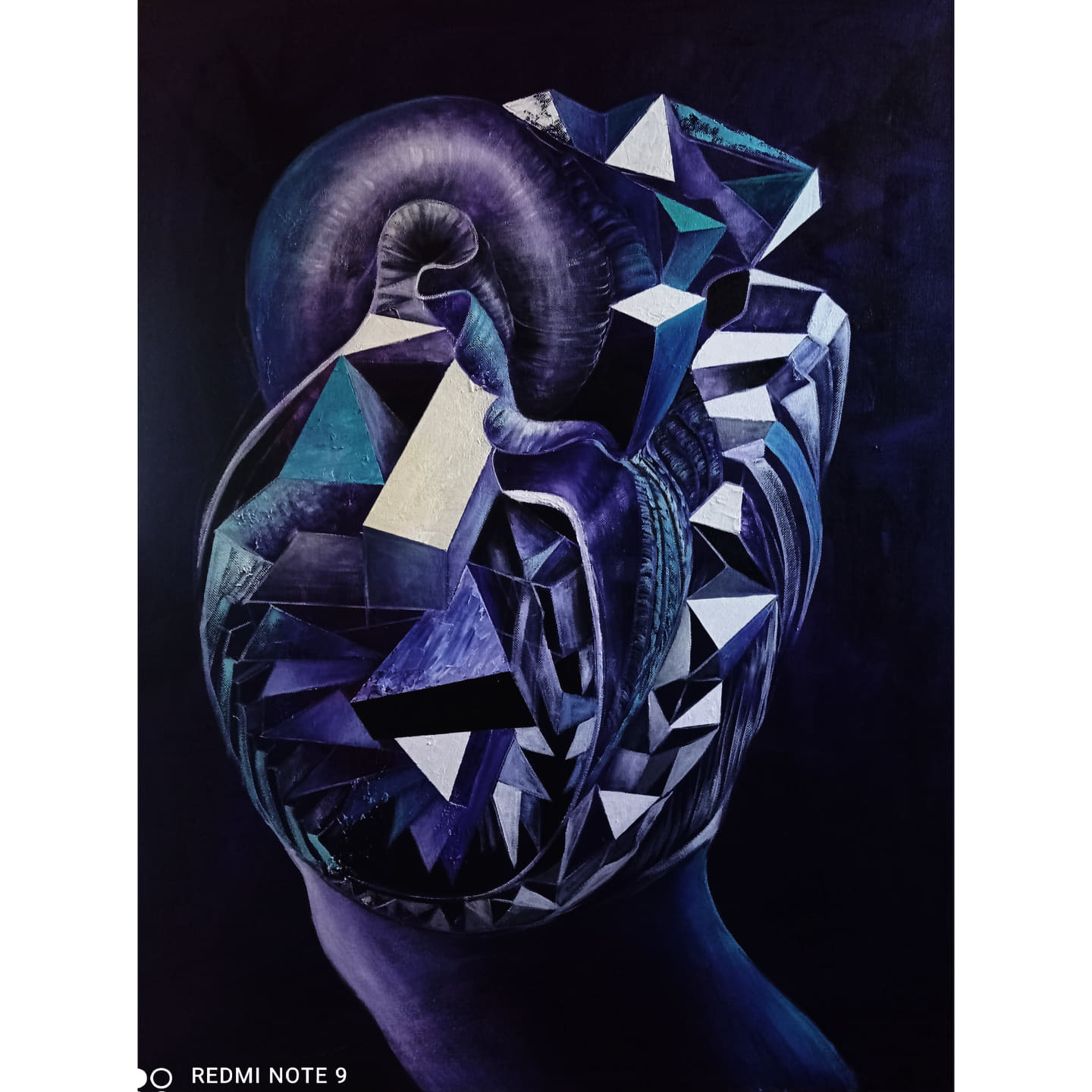
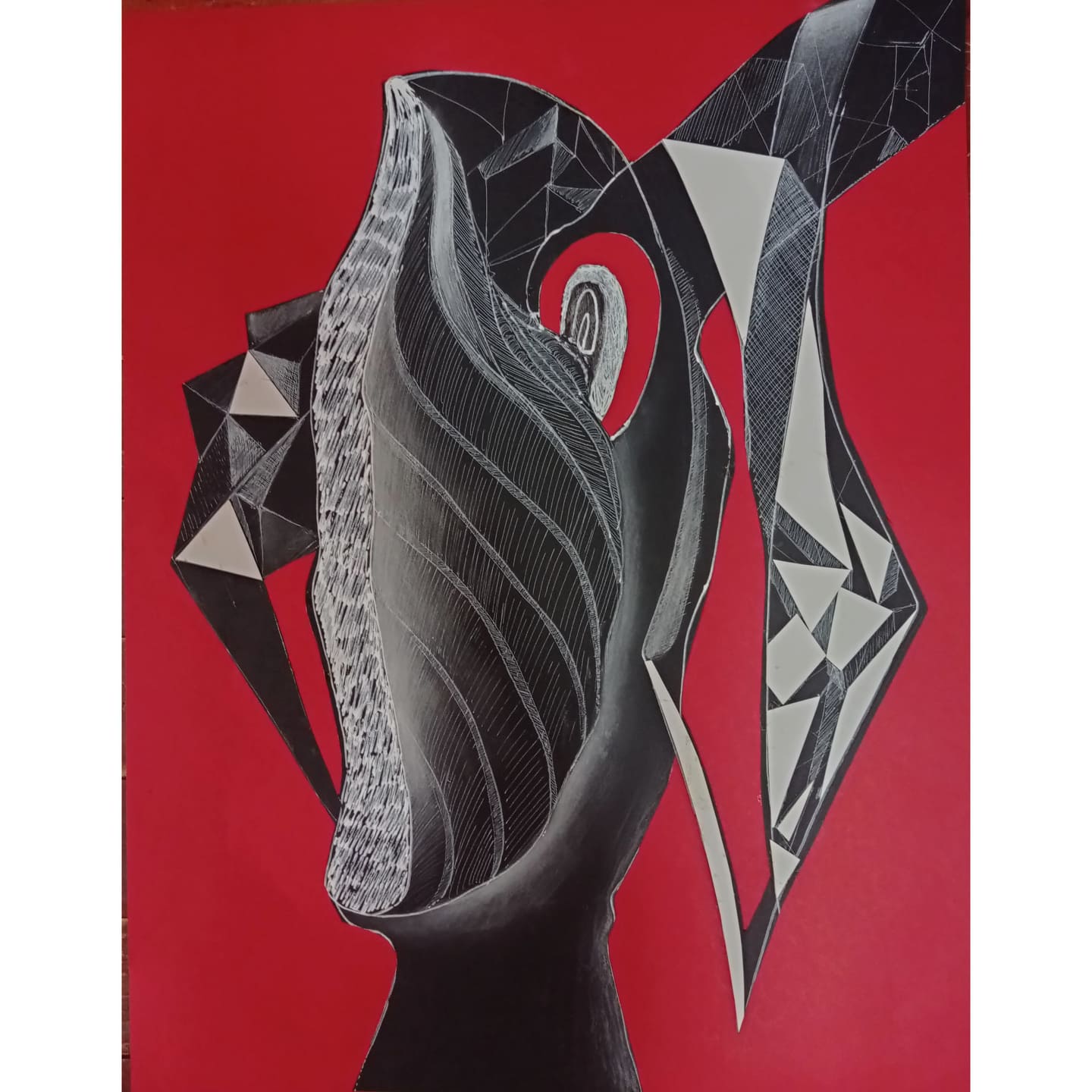
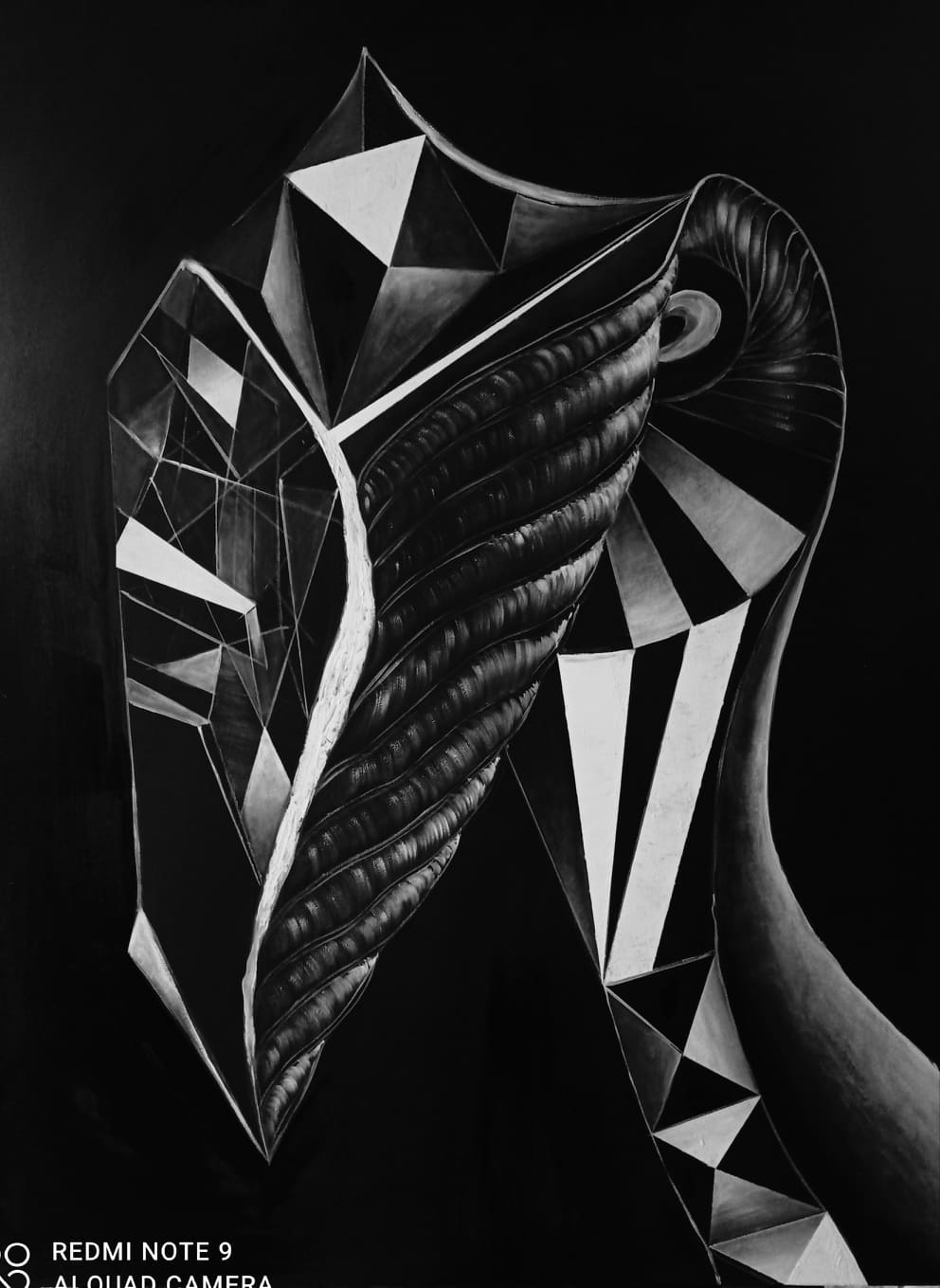
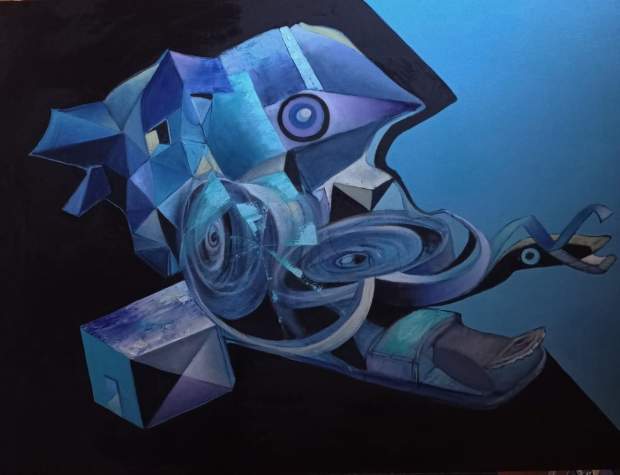
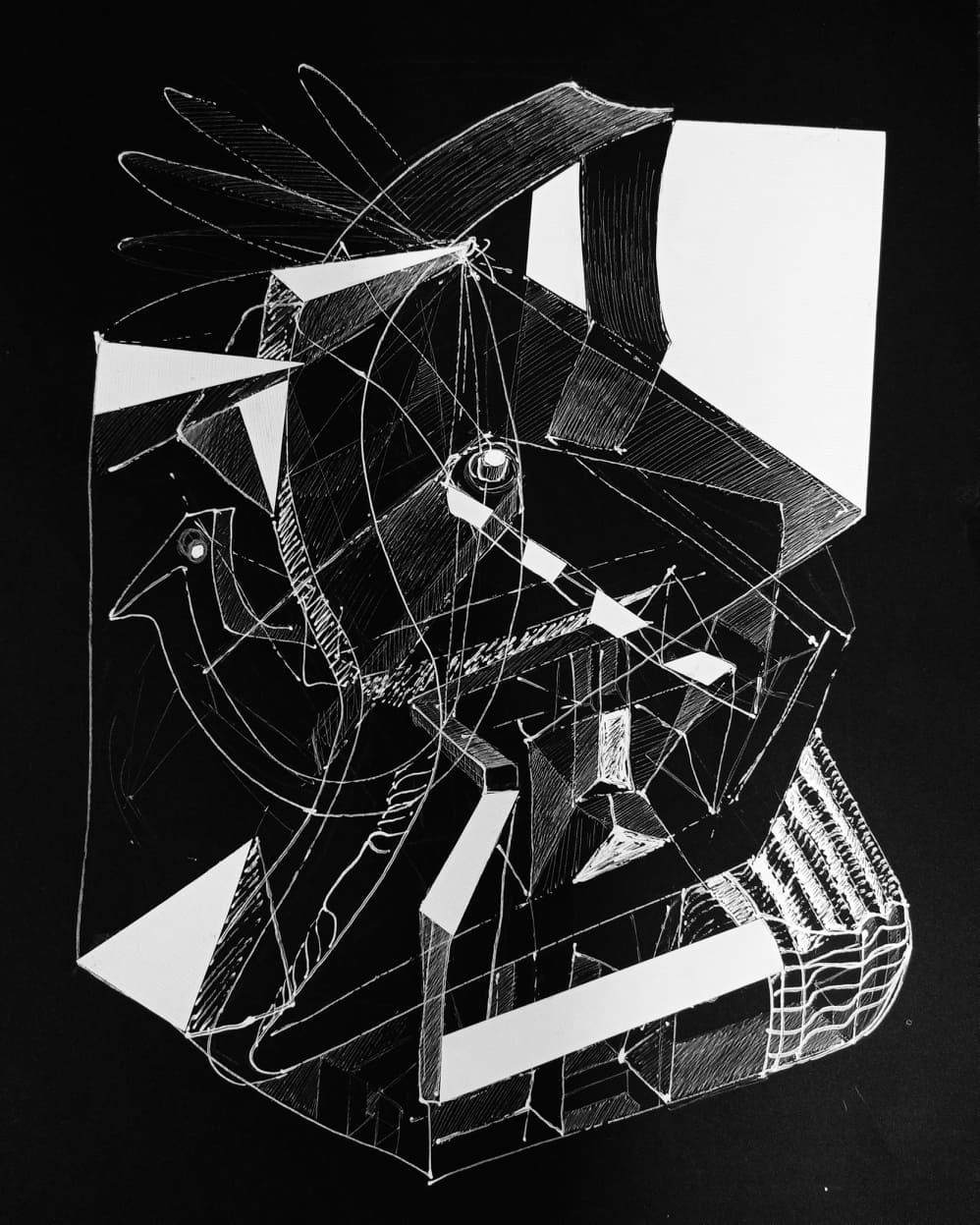
“My concern is the human figure as a feeling of primitive and irrational states, whose main point is the heads, universal thought of the creation of man and center of the universe. All this led to a mutation of the plastic and pictorial language”. Rene Ortega Villarroel
“Mi preocupación es la figura humana como sentimiento de estados primitivos e irracionales, cuyo punto principal son las cabezas, pensamiento universal de la creación del hombre y centro del universo. Todo esto llevado a un mutamiento del lenguaje plástico y pictórico”. Rene Ortega Villarroel
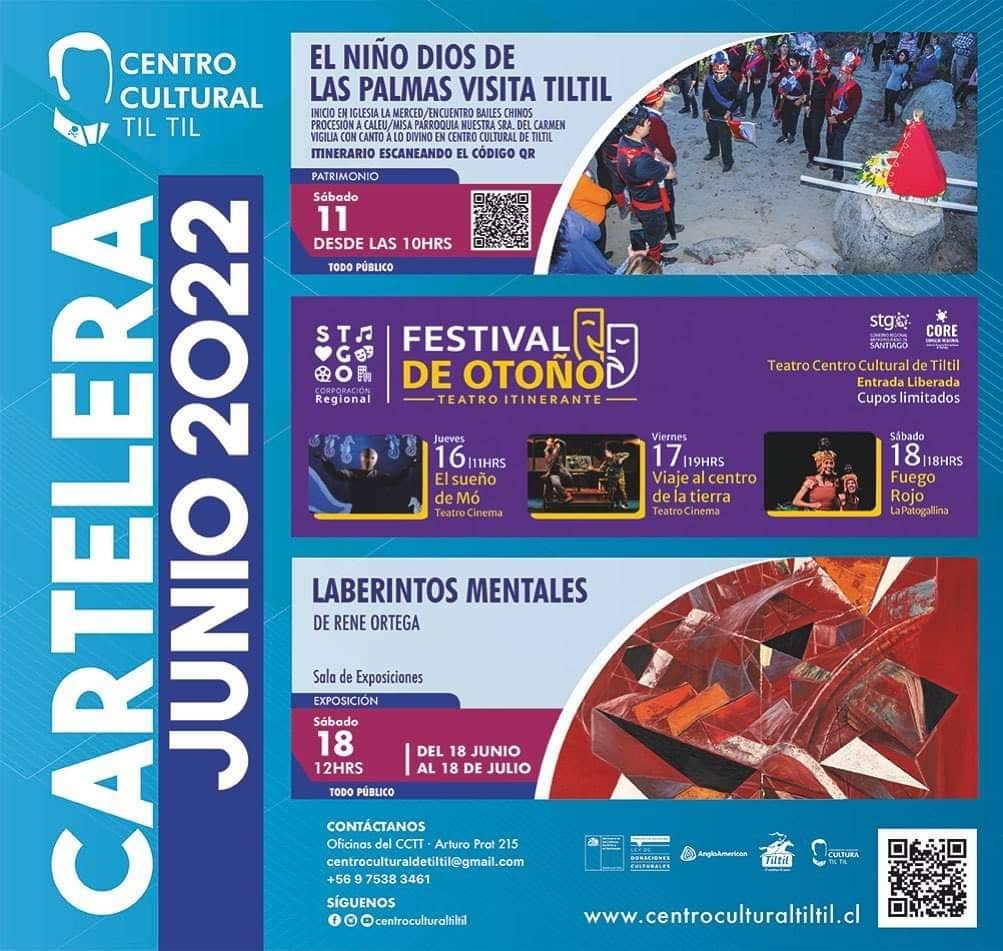
Everyone is invited and welcome to celebrate Rene Fernando Ortega Villarroel’s exposition Mental Labyrinths at the Til Til Cultural Center Art gallery on June 18, 2022
Todos están invitados y bienvenidos a celebrar la exposición Laberintos mentales de René Fernando Ortega Villarroel en la galería de arte del Centro Cultural Til Til el 18 de junio de 2022.
When you get lonely you can always go downtown downtown
Does anyone need to know more about America
Than the name Anthony Quinn Warner
Or that our history is unknowable
Why not just say Elvis?
These mirrors and masquerades history books
“The tension between individual liberty and the social good has always been…
You can’t finish that sentence, can you?
But it was in Nashville, so of course places
What things happened in Nashville?
Electrons, really, a kind of skill
That has something to do with money
or control
Proud Boys v. Antifa this lust for violence Chaos grins says
Listen to the trees
Her hair glistens like oiled snakes
& you know darling all it takes
Is one slow kiss under the candlelight
And maybe you might lose your fright
And be the man you said you’d be
Trembling in shade under the apple tree
Said some words you nah know what they mean
Maybe you hoping you weren’t seen
But have to say boo it was like that we watching you
2.
The idea of nobility in human affairs still exists
And there is something to be said for the study of history and language
Whatever you resisted resisted you back
You carried an alarm clock
The idea that time does not exist a child’s dream
Ok say it true now baby say how it feel
You know if you don’t it won’t be real
Make your heart in rainbow slices
See the sunlight how nice is
Make this beat your own heartbeat
Tell me you don’t know the street
Tell you what you not understand
You blow your van up—you not a man
Outside the tent of the destruction
Of the greatest empire the world has known
We watching you
3.
What is the statute of limitations on lynching’s
And the mass graves
–you can find the bones if you look
Or in Nashville some human tissue
Ephraim and Henry Gizzard, 1872
Samuel Smith, 1924
he was fifteen
David Jones
Jo Reed
232 lynching’s in Tennessee
Human tissue debrisfrom RV historic
District
inside CNN carnival
electrons warm
warp
smile a lie
Tennessee’s “greatest lynching carnival” was held in Memphis in May 1917 when Ell Person, the allegedly confessed ax-murderer of a sixteen-year-old white girl, was burned to death in the presence of fifteen thousand men, women, and little children.
4.
Tonight we must mourn anyone named Anthony Quinn Warner
No story to tell, no rhyme no reason no couplet indebted to any ideology
Just ample evidence of the meaninglessness of time
No babe its about how sad someone gets
He saved everyone with that loudspeaker
And you know those six cops were heroes
What point is there in talking about history
When you know you will die without seeing the end?
Make an intention
It’s ok not to believe in anything, it is easier that way
Remember Anthony Quinn Warner
5.
What drives a man? Antaeus vs. Heracles says
God of the waters, goddess of earth I called to you
Choking on air, my monstrous soul
What were you doing in Libya, anyway?
We could have been brothers
Between us we could have destroyed the gods
The beauty of a suicide bombing that killed no one
The single-minded and purposeless effort like writing Finnegan’s Wake
Or climbing a cliff no one climbed before
Or making sure to leave on the stone “He lived a quiet, ordinary life”
You have no idea how much pain it costs me
To tell you this—you feel troubled by the broken windows
To me they are beautiful
There is nothing more beautiful than broken glass Catching the flickering oranges and yellows Of cars and buildings on fire
6.
The idea of meaninglessness
Captured in a single gesture
Make an intention taste the fire
He was designed for summer
The ways in which a human body can be destroyed
Are chronicled. You can’t look away—see it clearly
African American victims, both men and women, were regularly tortured with methods that included eye-gouging, cutting off of the ears and nose, and cutting off fingers and toes joint by joint for souvenirs.
Were you there? We are watching you tell the truth
Don’t look away
I met my darling on a dark street
We talked all night until dawn came
She said she’d love me if I paid the price
Give my skin up, let the sky fall
Keep a shotgun on the kitchen wall
Saying y’all Sicilian don’t be nice
You white boys all look the same
What you got, how your heart beat?
LED’s and Sunlight
Squirrels grow fat when you feed them seeds Or an electronic barbie with a vicious smile
Like butterscotch razor blades and the ice Where a blue-jay has joined the squirrel
Is melting slowly in the noon sunlight So it can freeze again harder
But the plastic doll is tasty and satisfying– That’s all they need–
Inside the mirror of ice the squirrel looks fat Blue jays descend in a tight-knit gang now
Chickadees and slate juncos scatter A cardinal watches from an apple limb
These natural hierarchies are comforting, A small piece of obsidian in my mouth, sucking on it
LED lights shine all the time, even at 5AM When juncos are wrapped in their fir trees
Not much illumination but the clowns still dance And long trucks thrum on the daybreak avenue.
Kaleidoscope
If my anger is a kaleidoscope then tell me What the shrapnel taught you, taste this black ice.
Inside the intermissions of an interminable drama There is real blood on the stage. Bend low, taste it–
You’re my bitch tonight, follow my words, A voice calling hopeless on a weekly phone call from prison—
I never picked up the phone, no one fucking makes bail In this life, you know that–snakes in the hole—
Avoid them—make feathers in your hair Somewhere close to edge—rock is scrawled in runes
We slant on dirt like raged farmers so starved for love We can’t answer the most basic questions.
We have not read the stories yet. We won’t. This late winter sunset filled with bone.
Beulah
Birds and so on, apple blossoms and knives, Slime on the river stones, a trail of blood Up trap-house stairs, no light in the sky, Rain falling and the stream rising to flood—
Dawn sends artifacts like an oracle, Some gibberish about nature and the human, A bounty of coins from a failed empire Like trying to spend Japanese pesos From the WWII occupation At the Firehouse in Manila On a girl who would be nice to you But just for a while—that money was fake.
My last doctor told me that I was “programmed to die”— He said that. It was strange, My body was fine but he wanted me to understand I would inevitably die, so what did I believe in?
They called him Crazy Eddie In the small-town practice he had, And he put me through the course on miracles for free, Reading the Bible and Bagavad Gita, the Secret Garden And the Wizard of Oz, a sort of mad map Of ways to think the soul persists beyond death, That there is a larger reality we can’t see.
It didn’t work. I am just a reporter. All I can do is say what I see, or what I remember. Fifty years ago, in this same country place, I owned a horse. I rode him bareback on the dirt roads, Veering sometimes into an open mowing to ride full out, Gliding over his galloping body like a sprite.
Once he shied and I flew off into the soft grass, Stunned for a moment, breath knocked out. I came to with wildflowers all around me. Then I climbed back on and rode home
Solstice: Green River
One mourns at dawn, blue light on the snow, Cracked windows locked against the cold.
What can one say? I’ve always marveled At time’s bleak nature, scored now by ice Coating still-green grass and the dirt road,
And while the landscape is winter-barren The ghosts that inhabit this place are partying In liquid light of the fireplace, rafters shaking, That tune from 1939 going round and round.
One year we visited where the girl witches were hanged, A christmas sojourn to Salem. There was no cause for celebration. There were addicts on the sidestreet. A grey smudge Lay like a quilt on the bay. Gulls swooped and screamed.
This year ghosts scratch graffiti on the frost.
Solstice: Songbirds
This austere December sunlight on thin snow Today’s ghetto, shards of grass pocking through frost, The light slanted so deep against the high windows
It might as well be sunset, that yard-arm passed At dawn, ice glazed on the water glass, No sound on roads, just winter’s vacant heart.
In this season, December’s full moon Cold Moon— A couple of weeks to wait for the Wolf Moon, The spirit I long to inhabit my body.
Cold moon says look at the light, weep, and sing Songs of joy since you have no choice, Play that violin in the concentration camp of your body.
Inside the churning of dreams and lost time A spirit made of ice and hot chocolate Says drop those seeds from your hand. Songbirds will follow.
Solstice
So this the day you meet the dead—you knew It would come, ice in your hair and tangled wires, And while you said you have no fear you knew That you were afraid. The wood is made of ghosts.
Inside the enchantment of the cold moon You searched a way to speak to them, the ghosts Inside the wood walls where heat depends on burning. But the full moon’s a motorcycle and the wind
Against your face as you ride into the sky Won’t let language free except you are screaming How much I love you at the sweet savage spirits That cling like wraiths to the dark leather of your soul.
When the full dark comes you walk to the graveyard, Touch the cold stone with your hands, then go home again.
Solstice: Meteor Shower
At five AM shooting star flowers on black, Flaring without explanation, just quick And lovely, the way all things are, and this frost
Glitters like answering stars in porch-light, Dead leaves shining like gems.
My arms are filled with wood But I still look around, how quiet the night is, How constellations have not changed
Since I was a child and soon light will start These skeletons of trees green again, The dead grass needing mowing.
Nothing is permanent, or temporary, but something else That we have no language for except The stars fall from sky they remind us
Some things are beautiful, the way we dance In sky, dancing for free—no one takes coins home From this game, we play stacked odds,
Dancing until dawn finally comes With an unusually beautiful shade of blue That like everything else has no name.
MacLean Gander grew up in Manhattan, where he attended the Collegiate School before studying at Harvard, where he received an A.B. in English and American Literature and Languages, cum laude. He was the Hoyt Fellow in creative writing at Boston University in 1981, where he took his Master’s in Creative Writing (Poetry).
In the 1980s he worked for several years as a researcher, writer, and reporter for Newsweek’s international edition in New York, and then spent two years in the Philippines covering the 1985 elections and 1986 “People’s Revolution” as a freelancer accredited to The Nation. After returning from Manila, he decided to relocate in Vermont and change his career path, taking a faculty position at Landmark College. In 1988, he was appointed English department chair, a position he held for nine years. In 1997 he was appointed Vice President of Academic Affairs and Dean of the College, a position he held for 11 years, a period of rapid growth and change for the college. During this time he earned an Ed.D. in Educational Leadership and Change from Fielding Graduate University. As Vice President for External Affairs and Strategic Planning from 2008 – 2009 he led and participated in the College’s consulting initiatives with the Kipp Charter Schools, The Prince Salman Center for Learning Disabilities Research in Riyadh, and with several other organizations and groups.
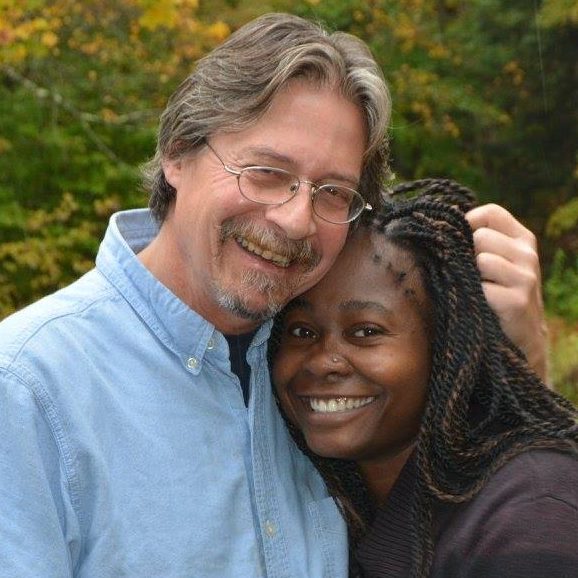
After returning to the faculty in 2009, MacLean held appointments in the writing department and then in the Core Education Program, teaching courses in composition, creative writing, journalism, and education. He currently holds an appointment in the Professional Studies program, where he teaches courses in journalism, leadership, and narrative nonfiction. He also donates his time as an investigative reporter for The Commons, Windham County’s nonprofit independent newsweekly, a role in which he is able to engage journalism and business students in internships and in doing reporting in real-world contexts. He lives in Brattleboro, Vermont, with his wife, the poet and artist Shanta Lee Gander.
MacLean Gander grew up in Manhattan, where he attended the Collegiate School before studying at Harvard, where he received an A.B. in English and American Literature and Languages, cum laude. He was the Hoyt Fellow in creative writing at Boston University in 1981, where he took his Master’s in Creative Writing (Poetry).
In the 1980s he worked for several years as a researcher, writer, and reporter for Newsweek’s international edition in New York, and then spent two years in the Philippines covering the 1985 elections and 1986 “People’s Revolution” as a freelancer accredited to The Nation. After returning from Manila, he decided to relocate in Vermont and change his career path, taking a faculty position at Landmark College. In 1988, he was appointed English department chair, a position he held for nine years. In 1997 he was appointed Vice President of Academic Affairs and Dean of the College, a position he held for 11 years, a period of rapid growth and change for the college. During this time he earned an Ed.D. in Educational Leadership and Change from Fielding Graduate University. As Vice President for External Affairs and Strategic Planning from 2008 – 2009 he led and participated in the College’s consulting initiatives with the Kipp Charter Schools, The Prince Salman Center for Learning Disabilities Research in Riyadh, and with several other organizations and groups.
After returning to the faculty in 2009, MacLean held appointments in the writing department and then in the Core Education Program, teaching courses in composition, creative writing, journalism, and education. He currently holds an appointment in the Professional Studies program, where he teaches courses in journalism, leadership, and narrative nonfiction. He also donates his time as an investigative reporter for The Commons, Windham County’s nonprofit independent newsweekly, a role in which he is able to engage journalism and business students in internships and in doing reporting in real-world contexts. He lives in Brattleboro, Vermont, with his wife, the poet and artist Shanta Lee Gander.
artificial neural network neurons are aggregated image input visual cortex layers and magic squares number and color spaces red, green, blue processing example image recognition labeled a set of facts filters removing waves from particles about that world, who was thinking the who useful information an algorithm binary classifier animal, non animal vector of numbers on a clock adapt parameters template of being two points in time self-driving car spatiotemporal the finding and collecting self
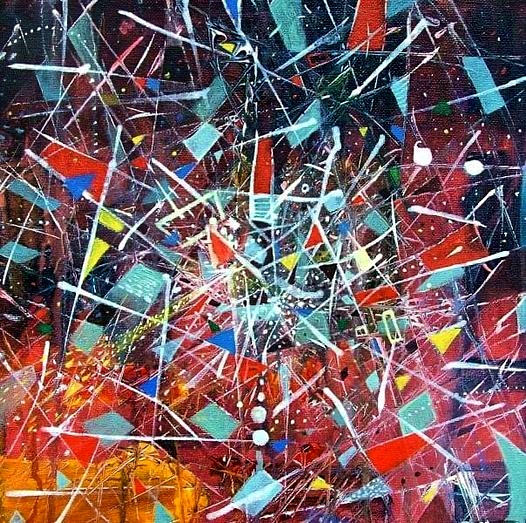
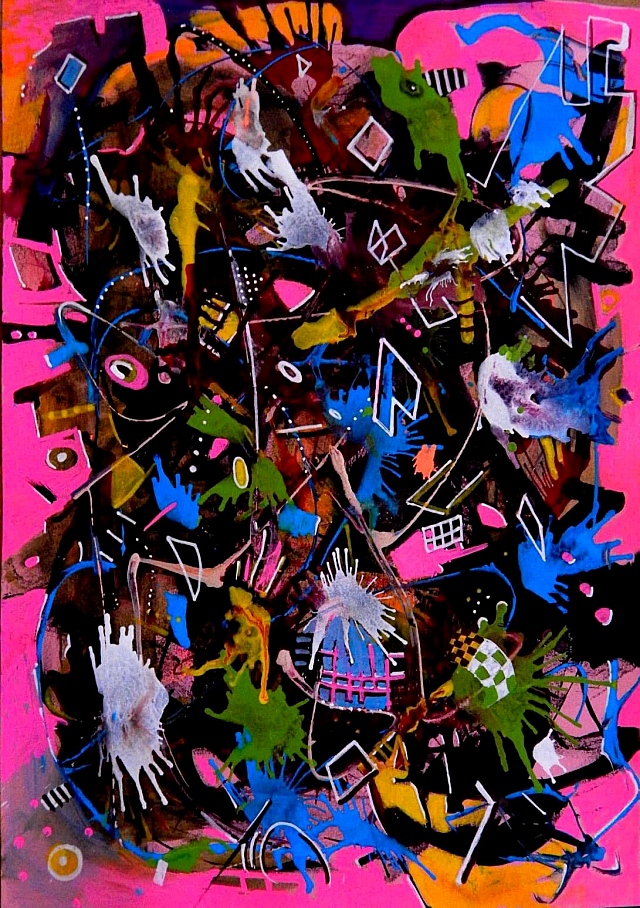
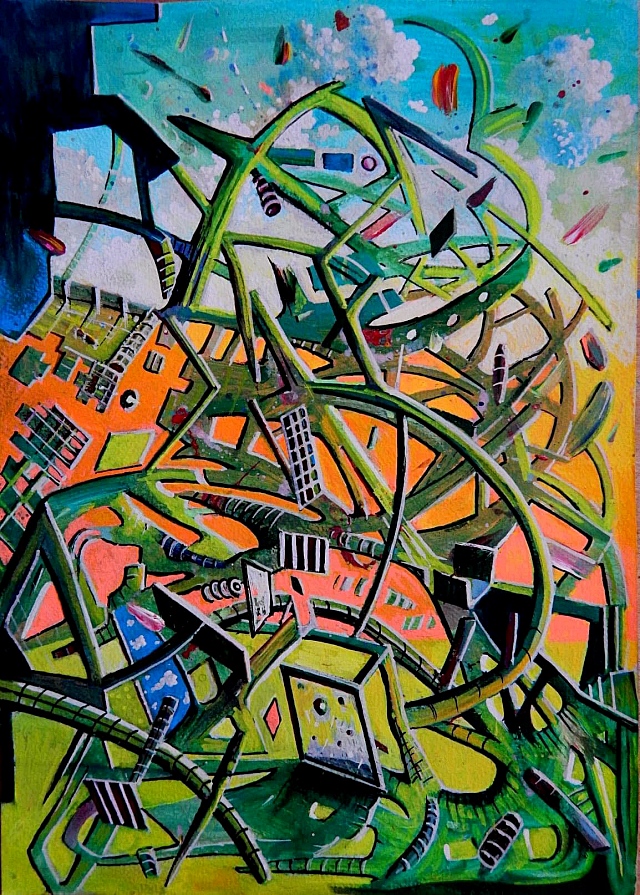
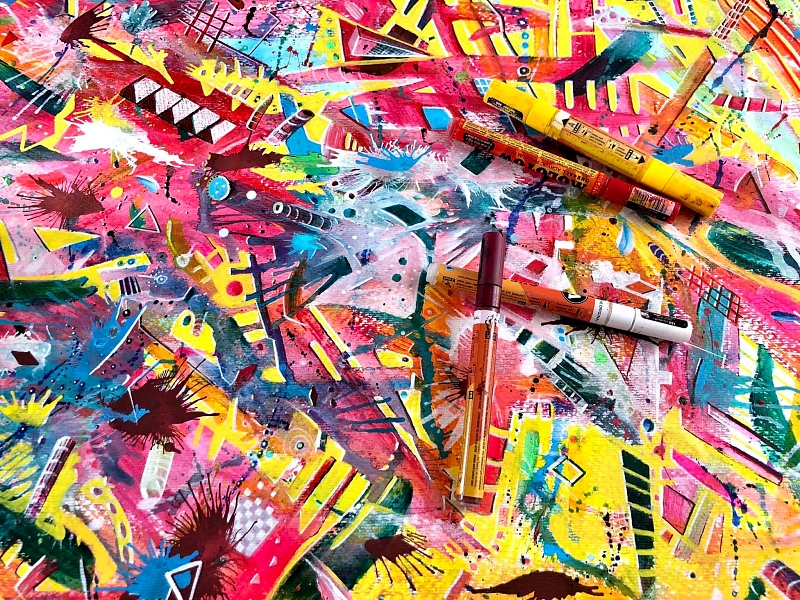
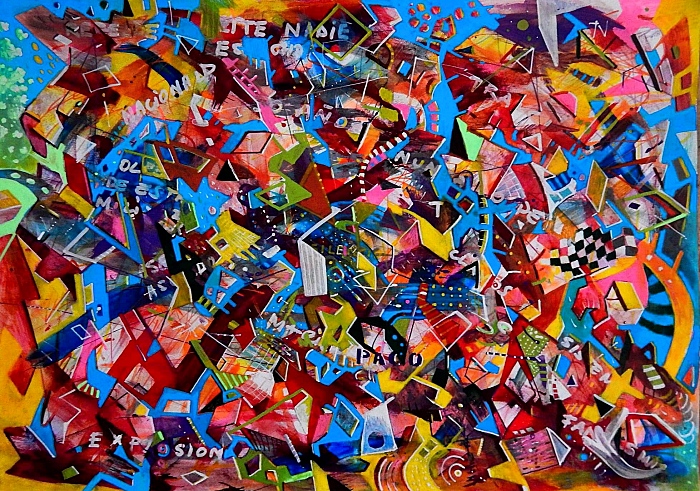
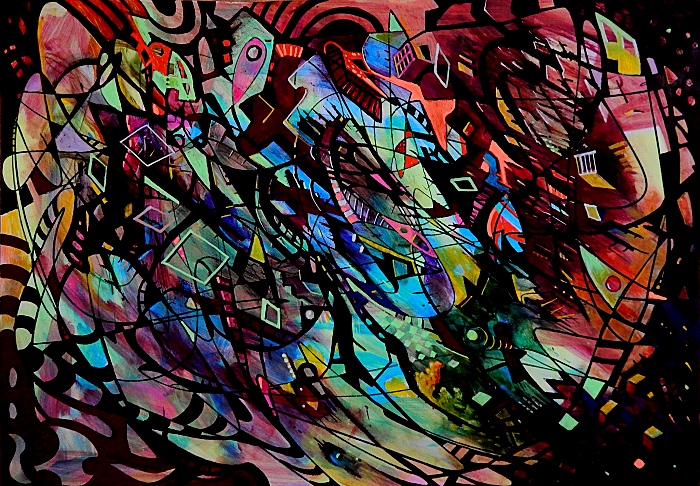
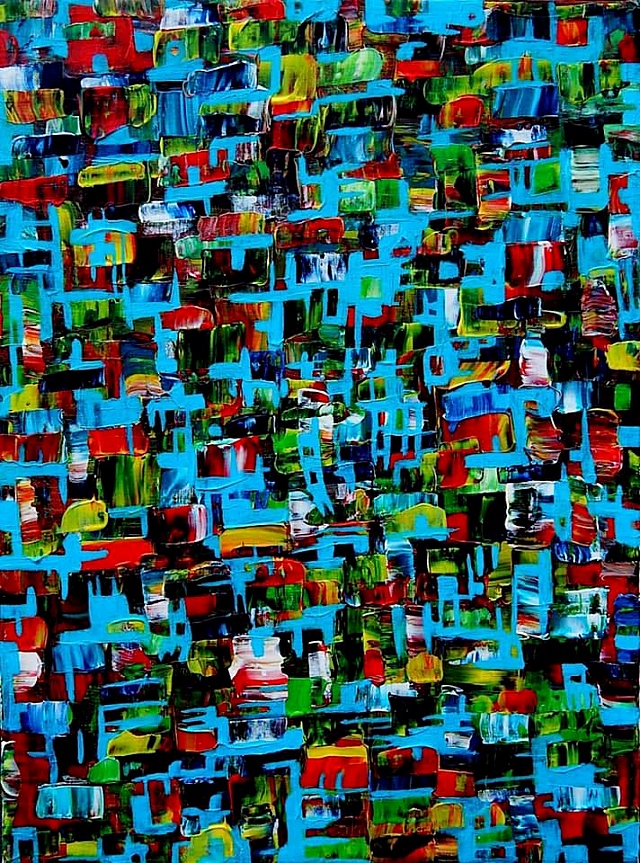
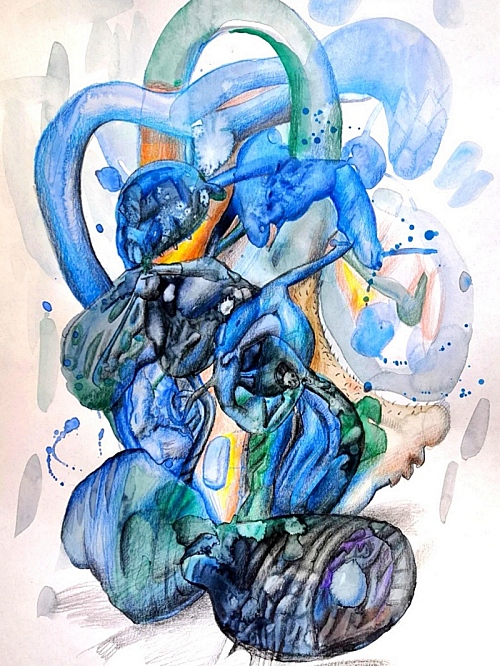
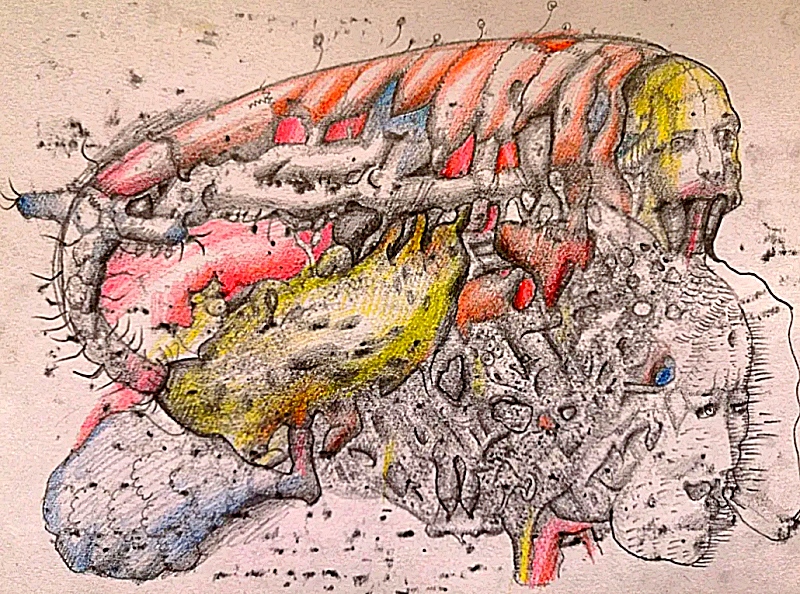
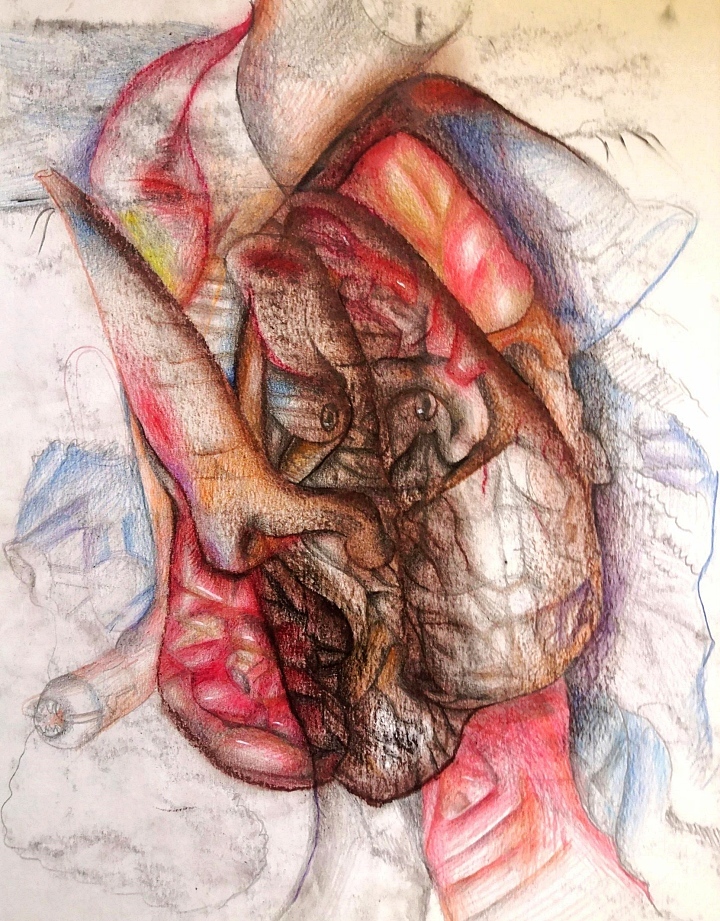
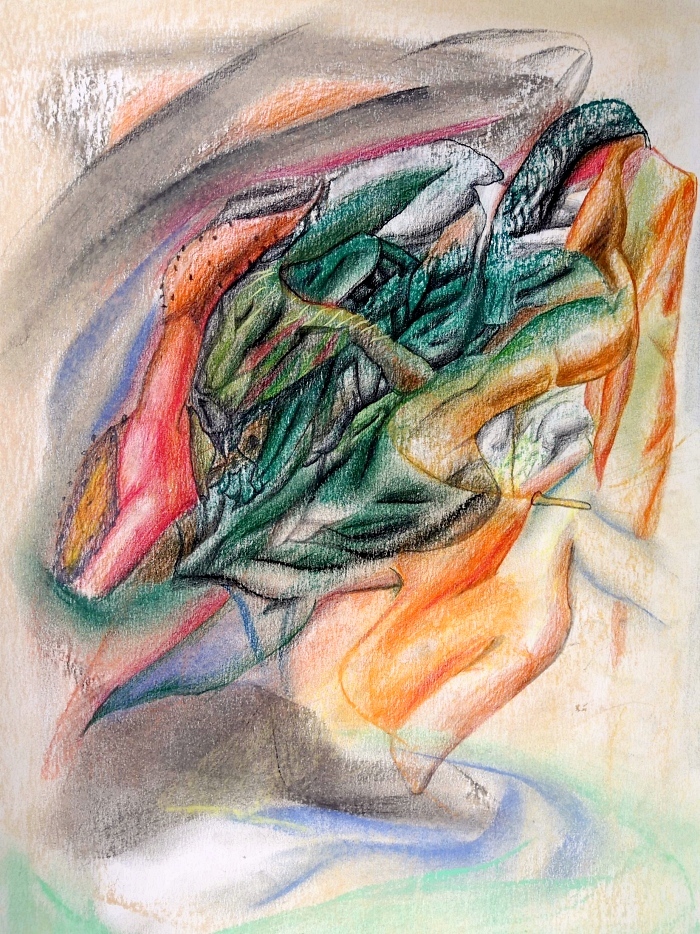
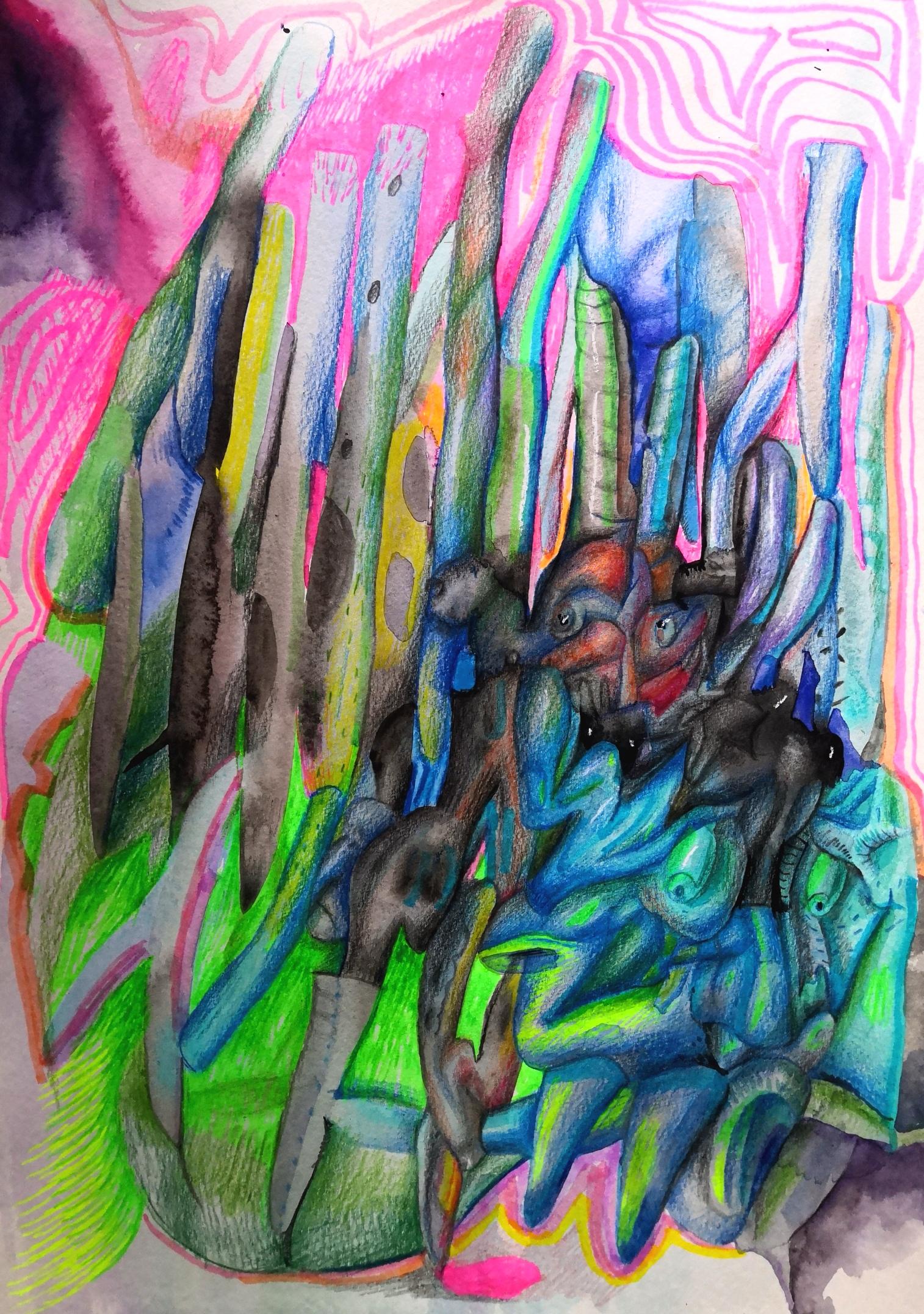
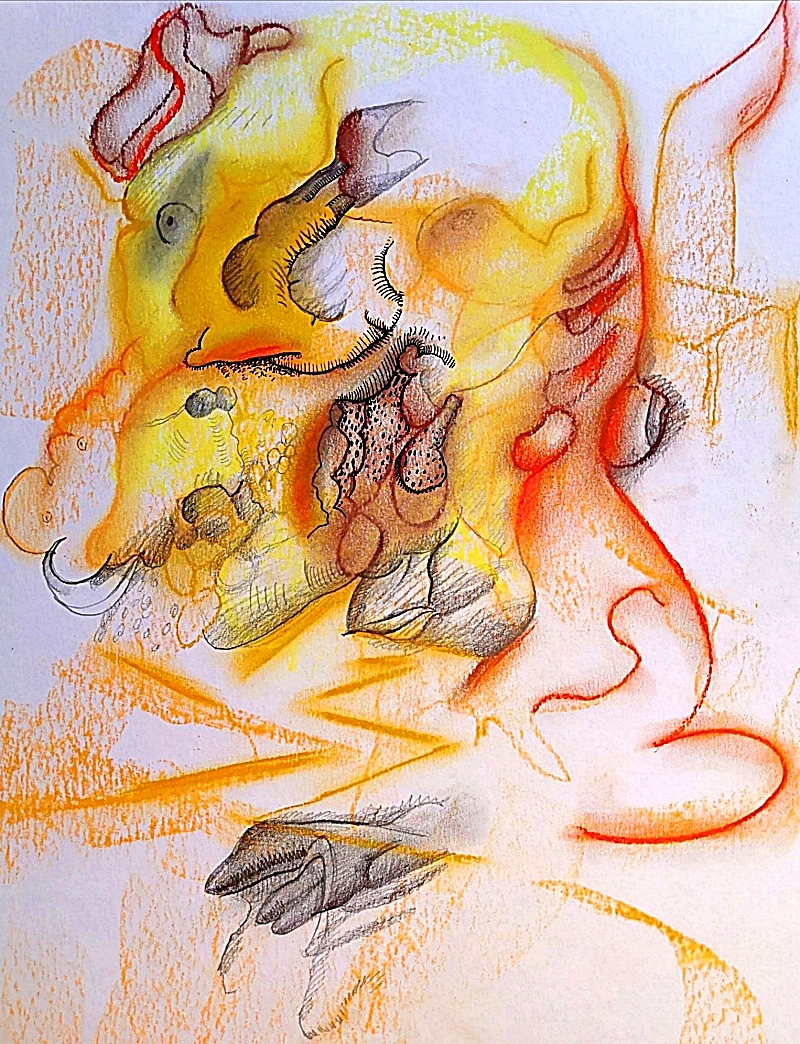
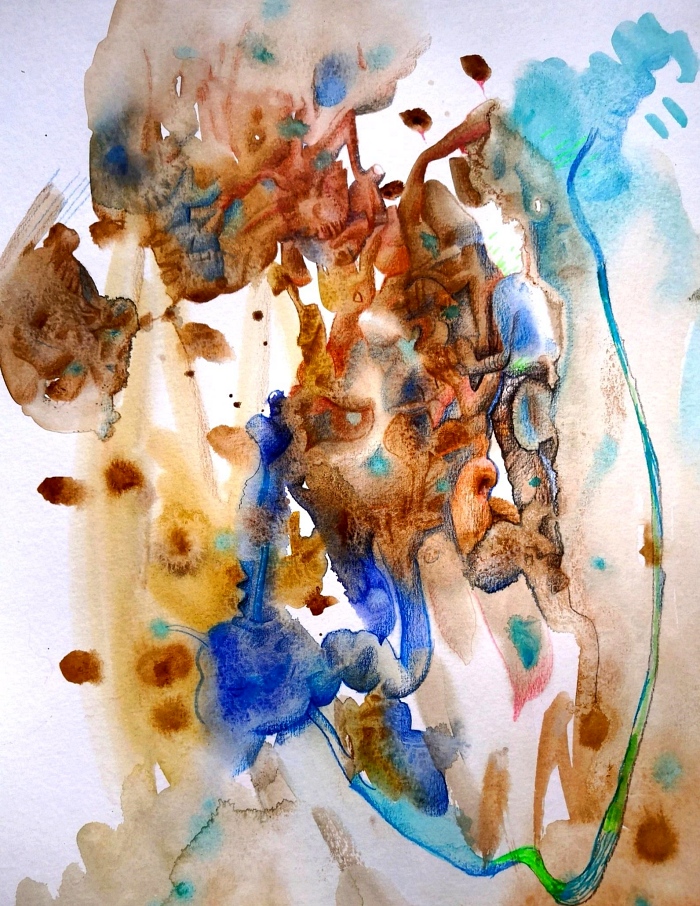
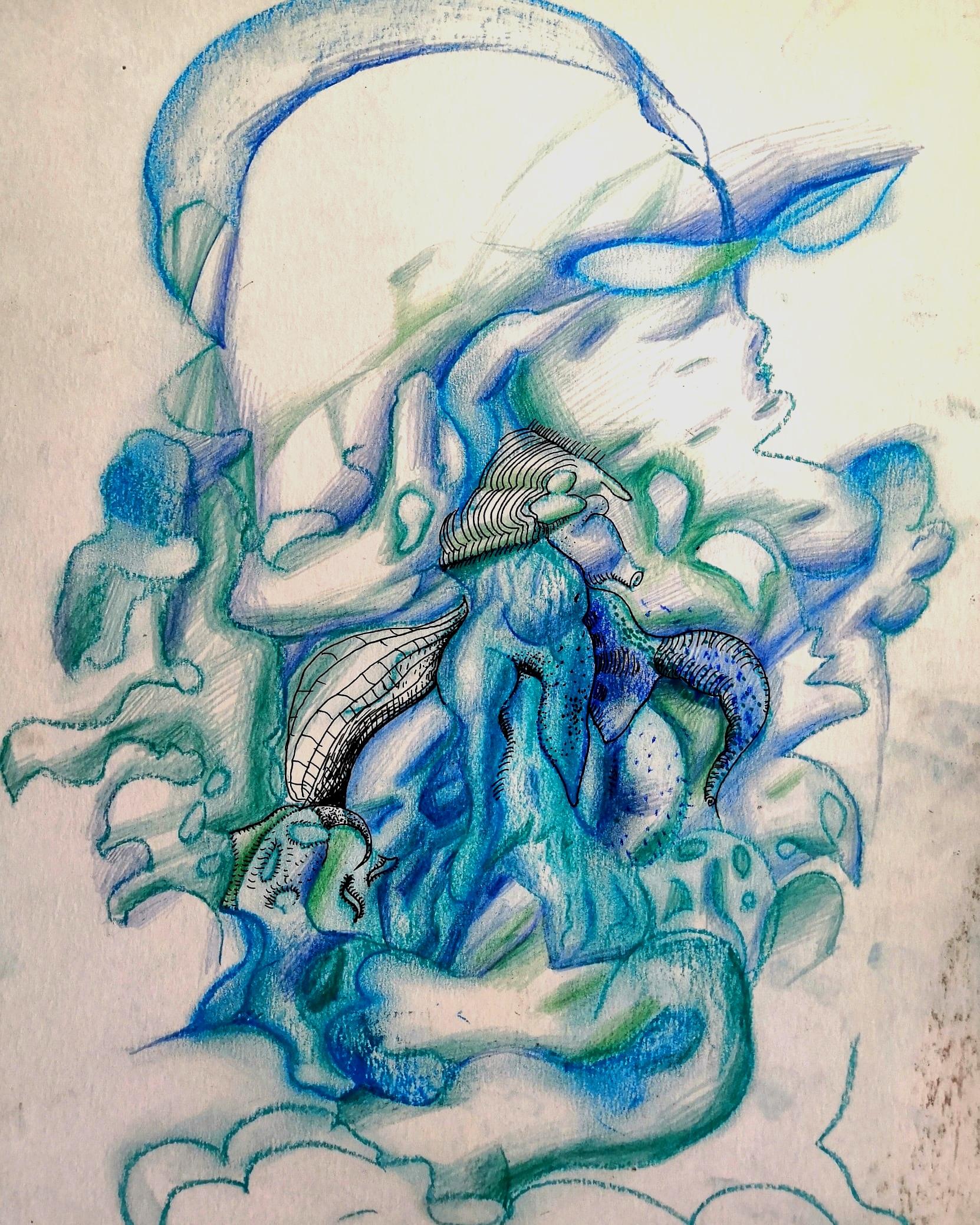
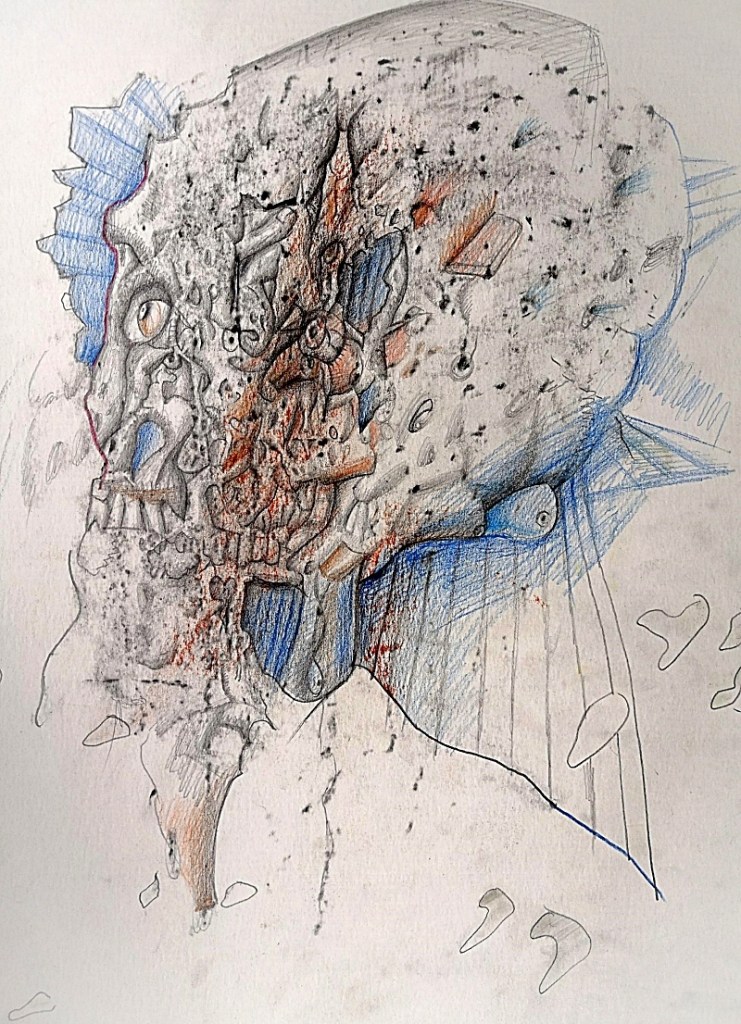
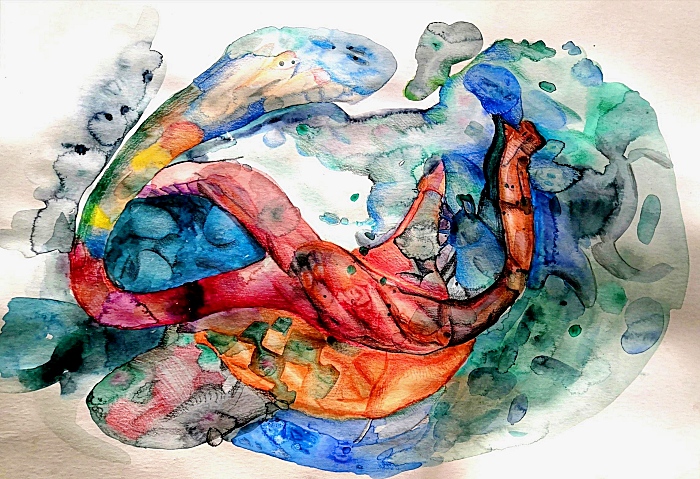
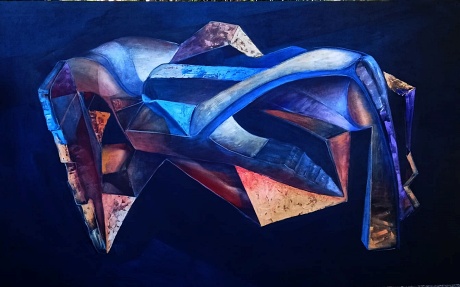
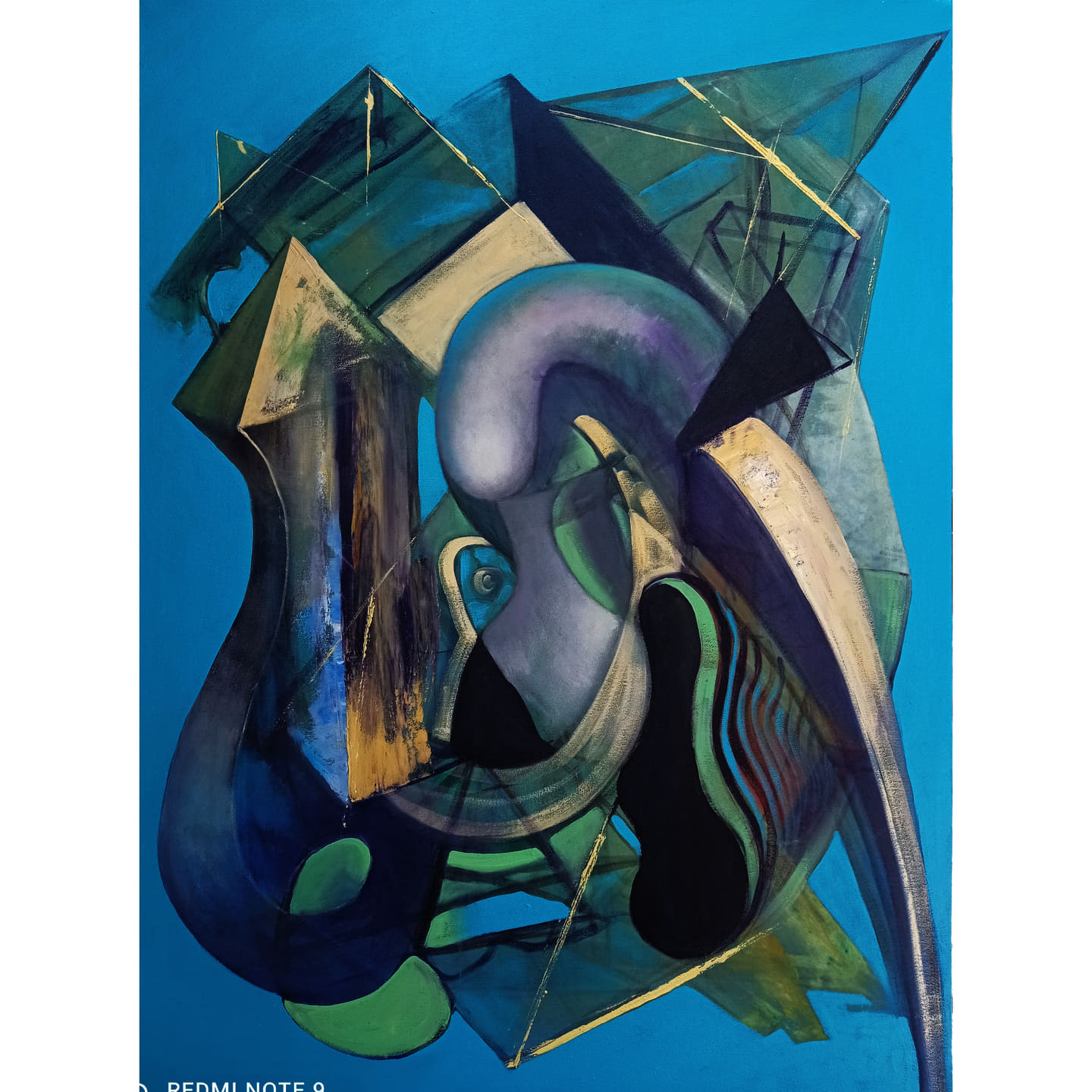
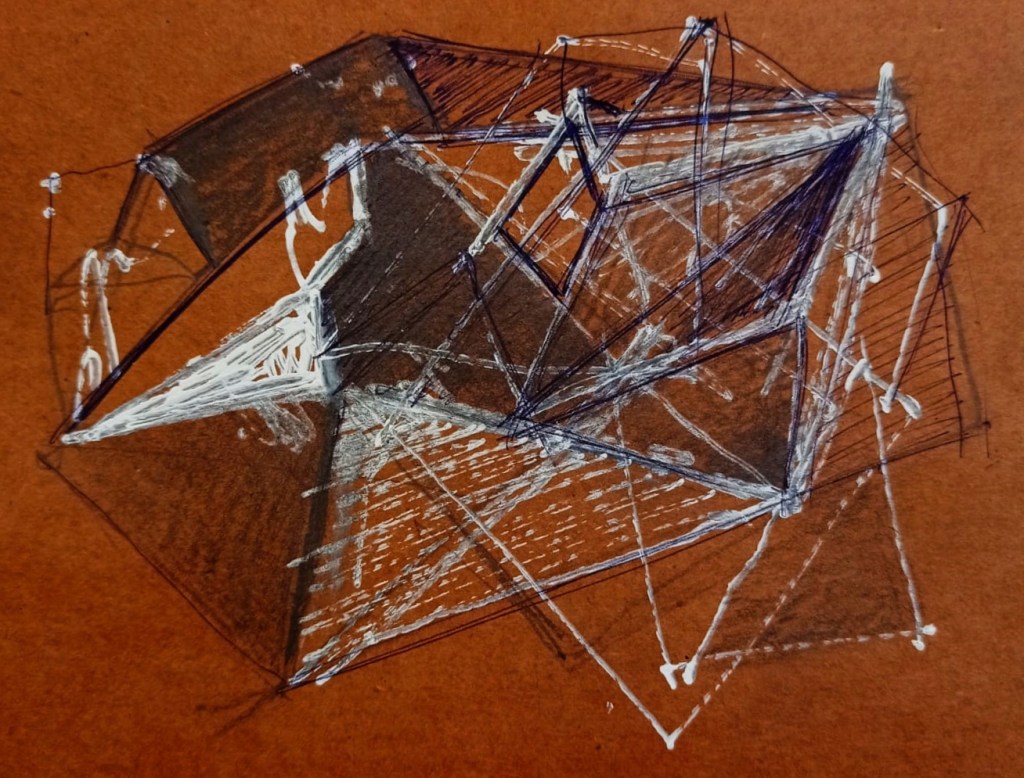
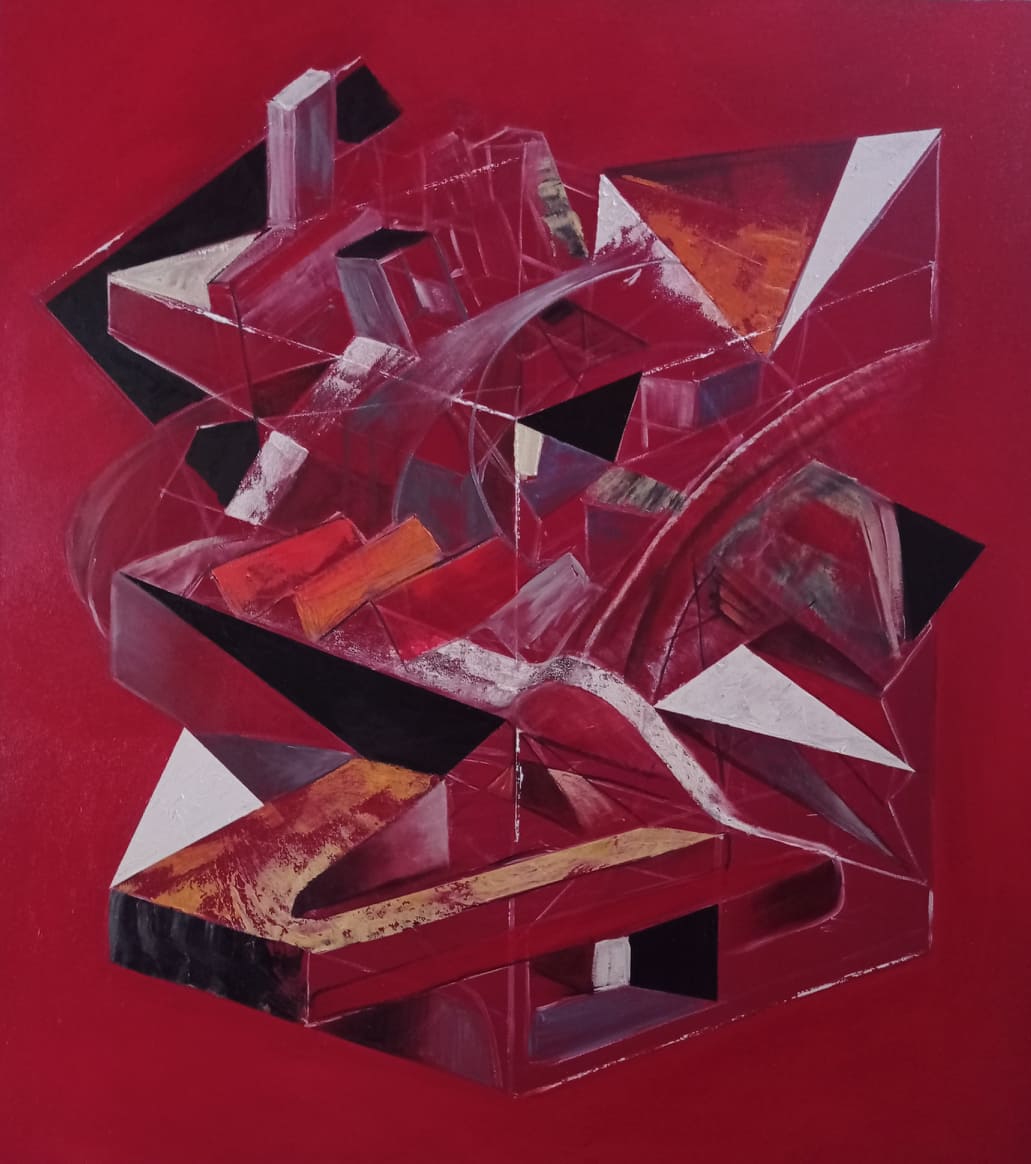
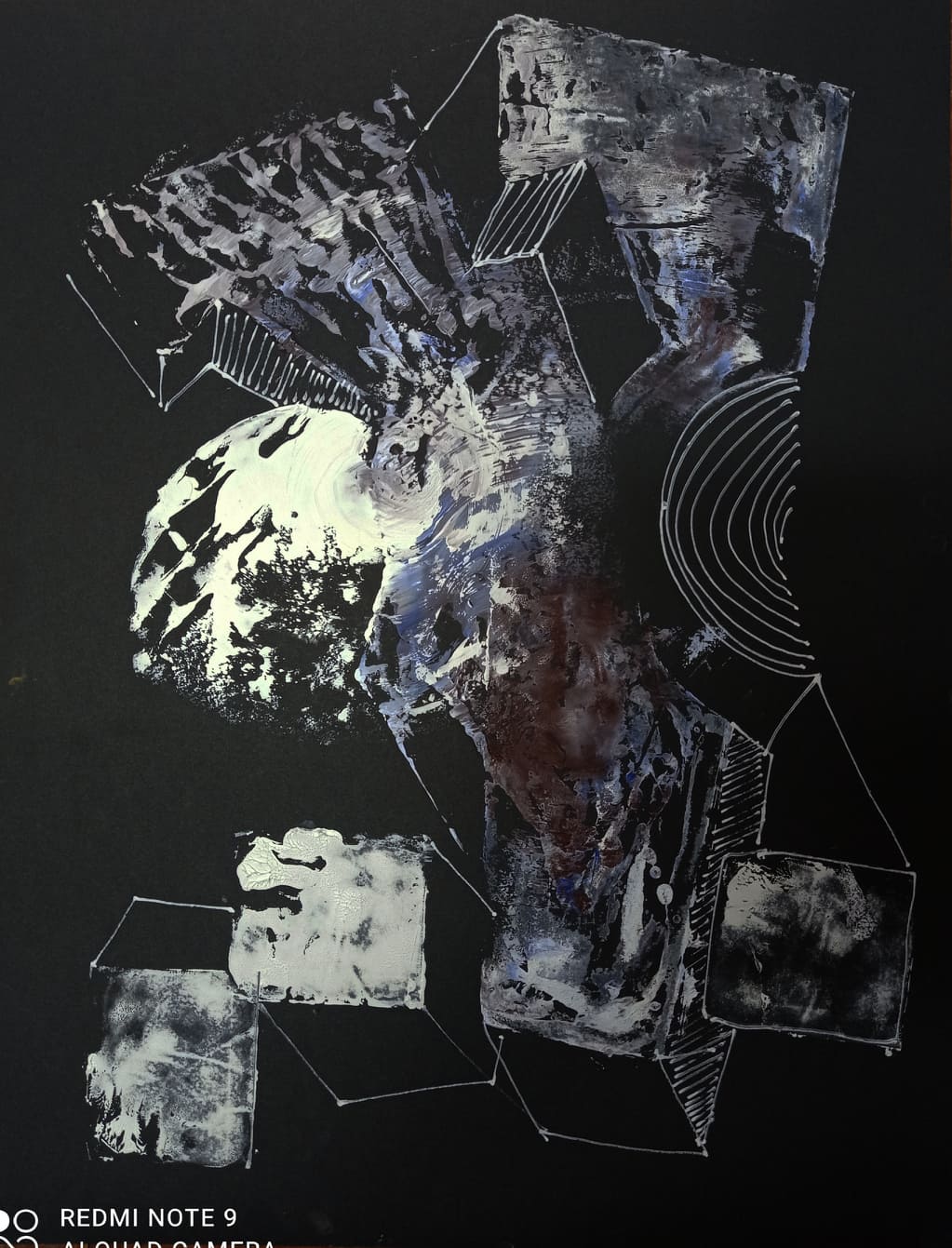
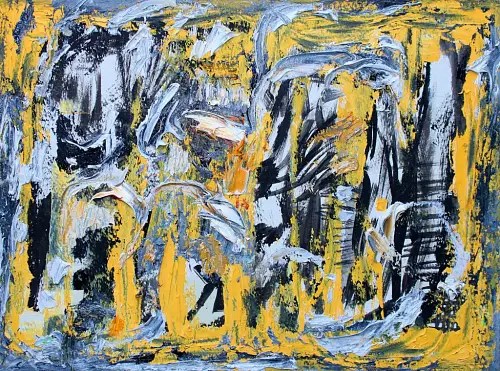
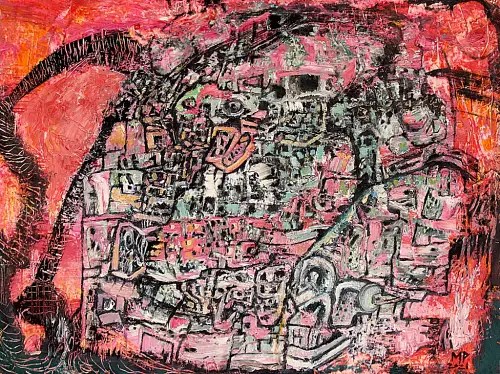
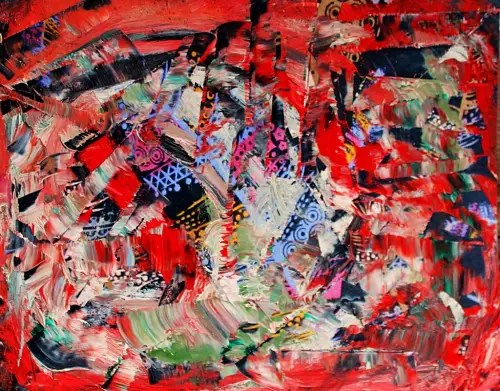
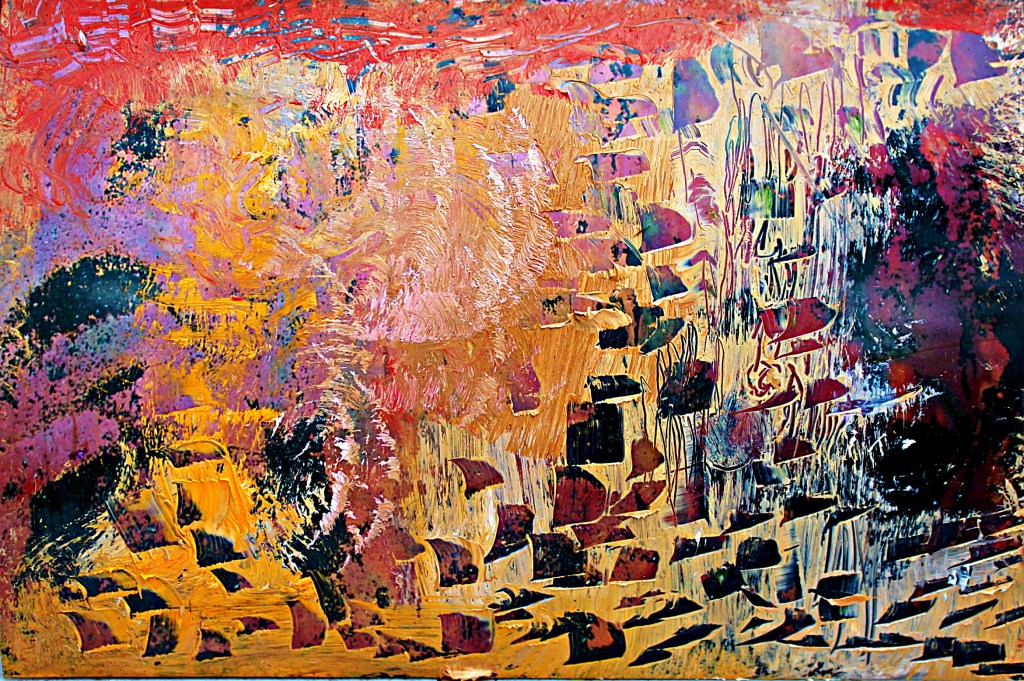
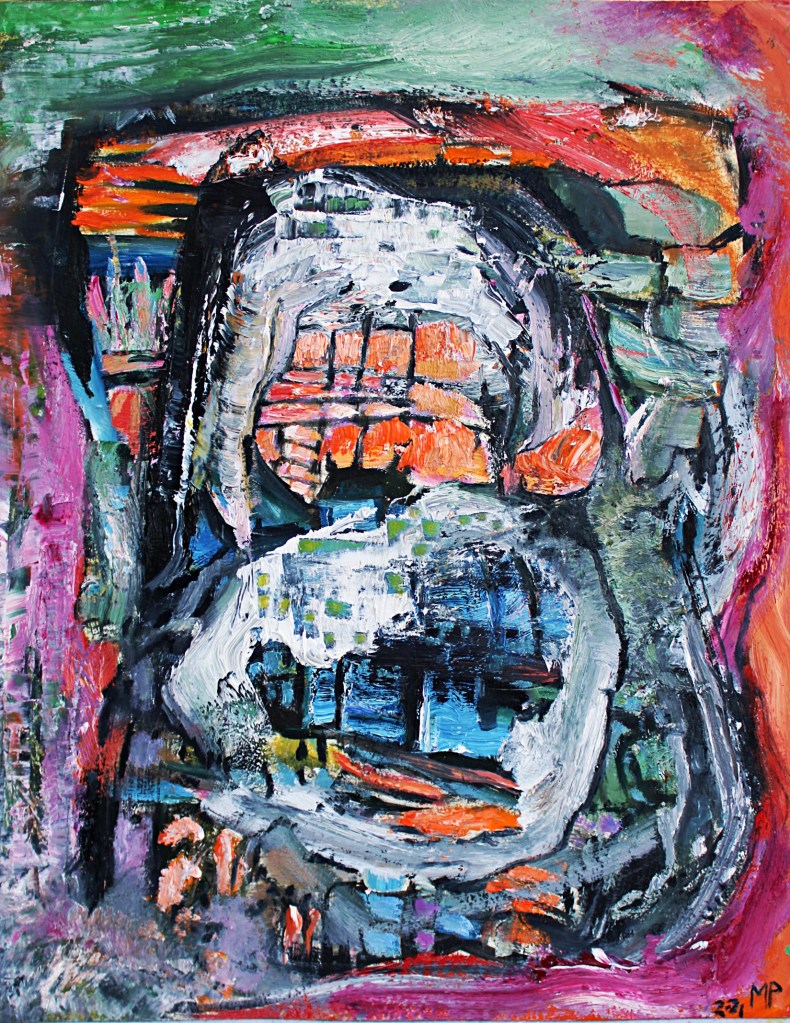
my non representational paintings are automatic impressions from my subconscious. a sort of interior psychic meteorology.
Venus sextile Jupiter
I work on them everyday. there are no things, no pronouns, no gender, no politics, no beliefs, no morals. no 17th 18th, 19th or 20th century archetypes, no mystical ideas, no ideas about beauty or ugliness, no appropriation, no opinions.
Internet Poltergeist
it’s just a lot of yes too energy, paint, color and texture. the theme is about finding nothing. the exercise is liberating-the painting can not develop into something. I only name them when I share them, which I have been reluctant and hesitant to do. they are not made to be understood.









 Mitchell Pluto