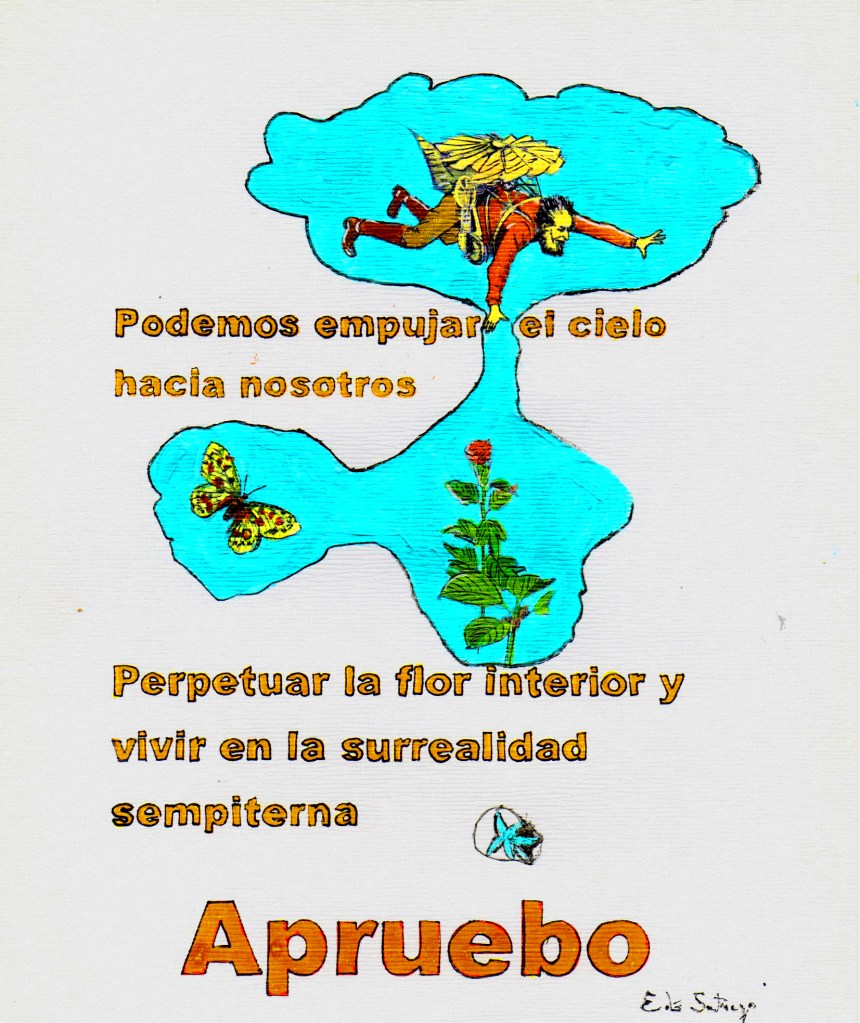
It is then when the tree that tomorrow will summon the thorns loses its leaves, and the bumblebee falls, prey to the polar trails, to reinvent the powerful patient engineering of lytic promises, Well, that’s where I shelter, and where I rescue the omens, there I drink from the Paleozoic salts, which today move the migratory herds, those who come to the eyes without ears, of those attending Sunday services. By nature, I approve!!
They speak of love, and my bet is more on compassion, which is a kind of continuum in a collective warp, of an ineffable equation that they will never understand. Because perhaps love (like that image shown to us) does not exist and if it does exist it is a sum of chemical reactions where a set of hormones stimulates our syntax, and which may also be subject to the need for genes to be perpetuated. Maybe?. But there is also one who breaks this previous theory; crazy love, passionate love, eternal love, etc. that love that becomes unclassifiable. I only know that I know nothing. After all, I believe in love. Does the egg use the chicken to make more eggs? It is possible, but in a global and precisely circular analysis, the plot of existence is supported in a shed crossed by the polyform reality of infinite logics and illogics, where each of its corresponding paradoxes and balances avoids its critical tension. But, we can order them in the not well understood compassion, which could be a feeling deeper than that of the corruptible flesh (physical theory and cognitively plausible), which leads to understandable and celestial simplicity. But what if an infinitesimal were more than an integer, or if that time circulated in all directions? or love will not mean more than a necessary impulse to take risks in order to live the contradictions, so that the soul, when dying, will return with the pertinent knowledge to correct, deconstruct or ratify the whole of the so-called divinity . For this reason, the next step opens the temporality to dedicate more time to essential reflection, and to put aside an imposed competitiveness for the accumulation of objects that lead to the void that means pursuing a way of life that is subordinated to the symbolic relationship. of the object or objects, which is useless and inconducive (a simulacrum of the society of the spectacle) for our true purpose in this brief transit called life. Ars longa vita brevis. Or your existence is just an accident to offer a limited amount of data to accompany the equation that gives additional information to find the way out of the answer. By the way; nobody takes me into account, since my infallibility is very poor since periodically and statistically, my failures are more abundant than my certainties. And therein lies my wisdom; in realizing that my hypotheses are only attempts to find the truth within infinity. To think otherwise would be to err drastically and in the process lie to them. It would be, subjecting myself from the ego to an option to dress elegantly, but in the end, it would strip my limits. It is better to be honest in clumsiness than false in an inane and temporary charade. But: What if love were one of that unknown design in my intrinsic astral writing, waiting for you?
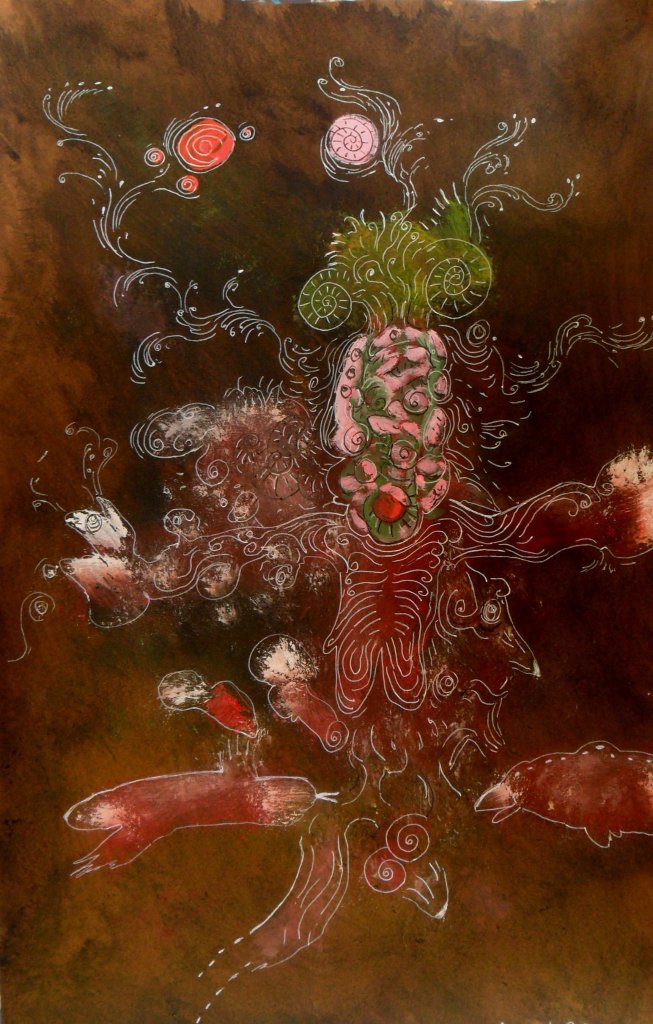
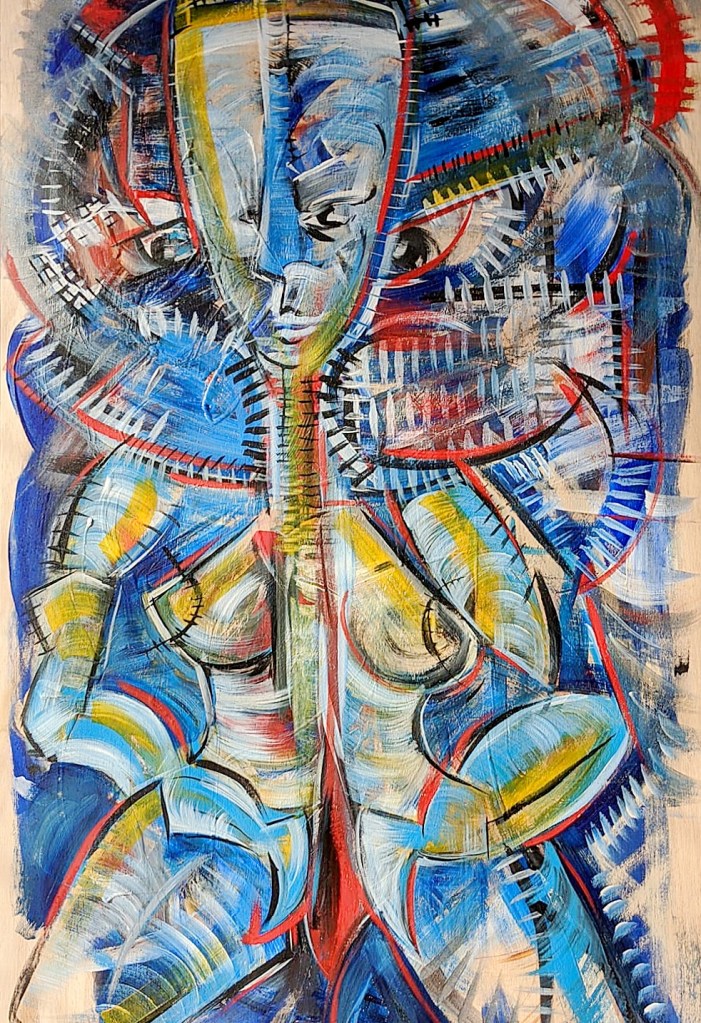
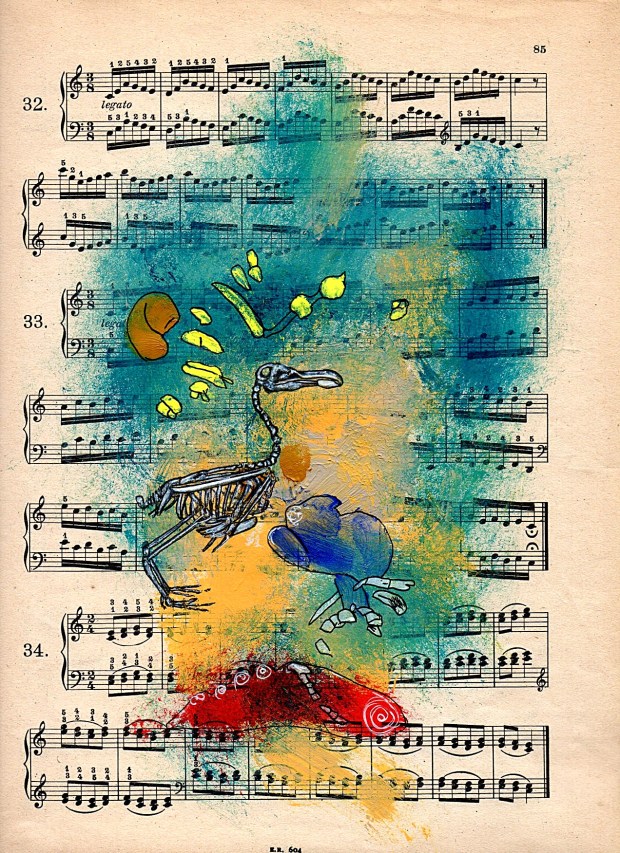
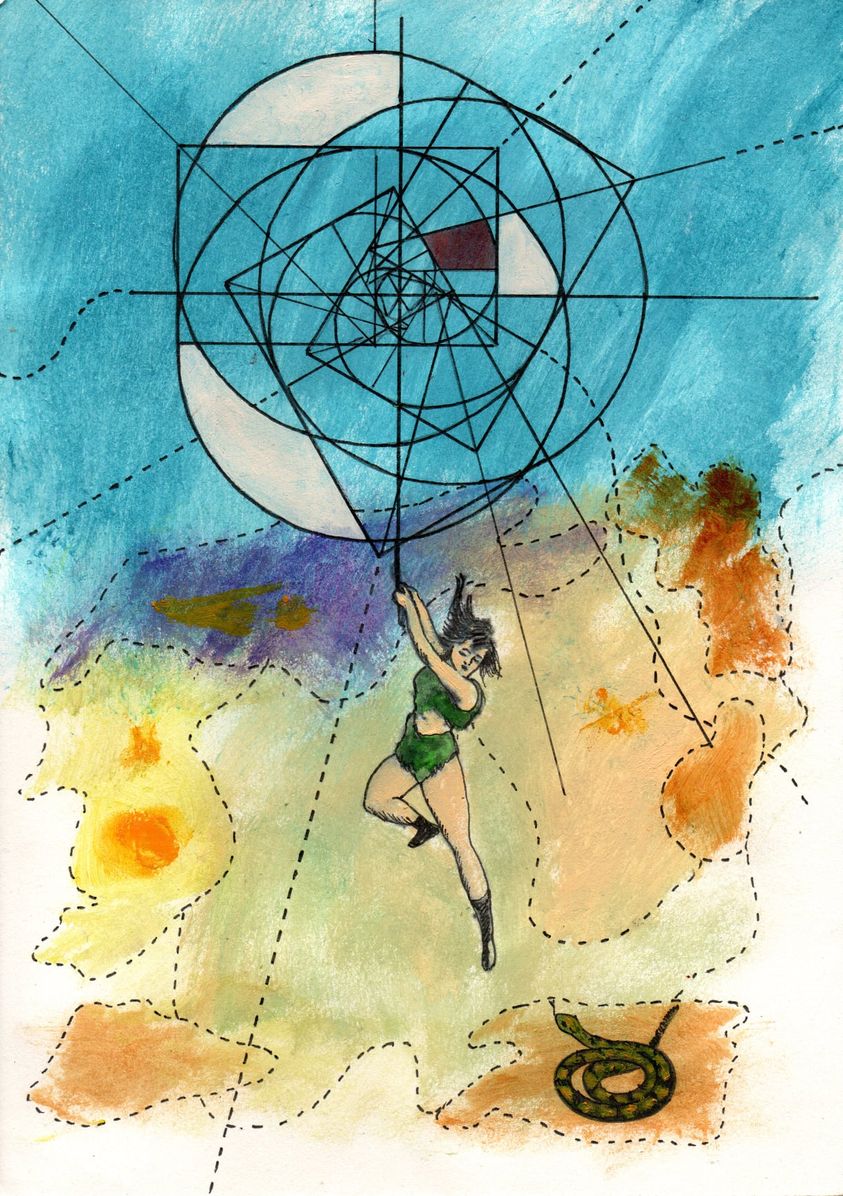
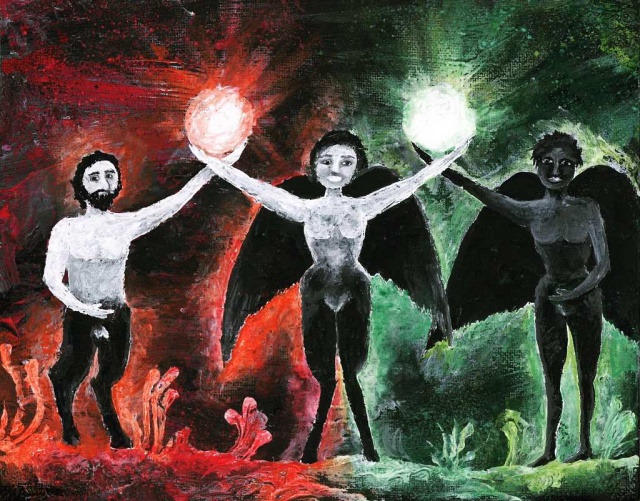
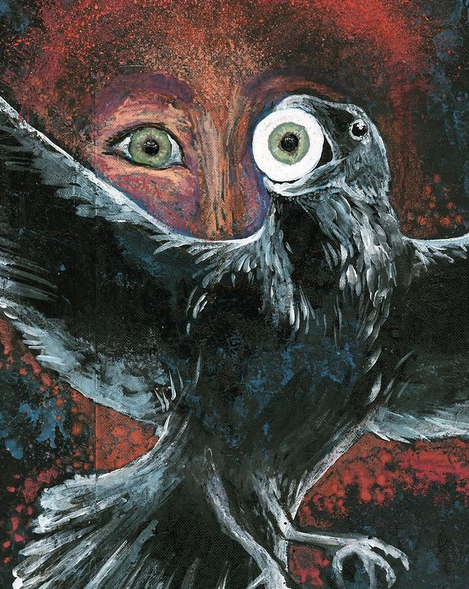
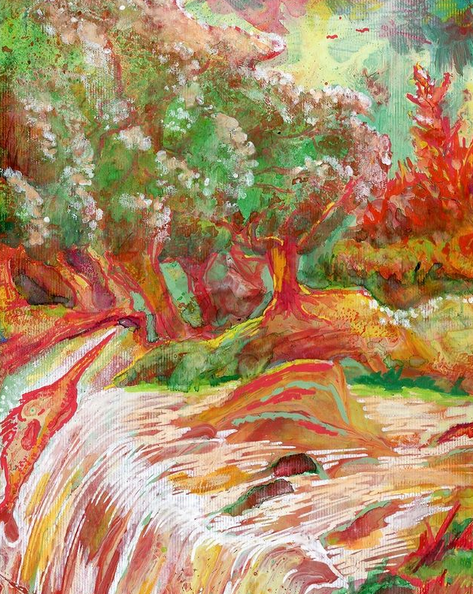
Primordial circulation approaching from a past spring, acrylic on Fabriano paper 250 gm. 35x45cm
So the wide dividing width will unload its useful molecules in this useless impertinent distance there where the lightning reigns without asking for their blind blows. Is when my pale measures they embrace their designs devoid of elytra to save the waters possessed of salt and fire that bathe the limits of my suffering body without entering the first cause that brings me down from within the muscle periphery.
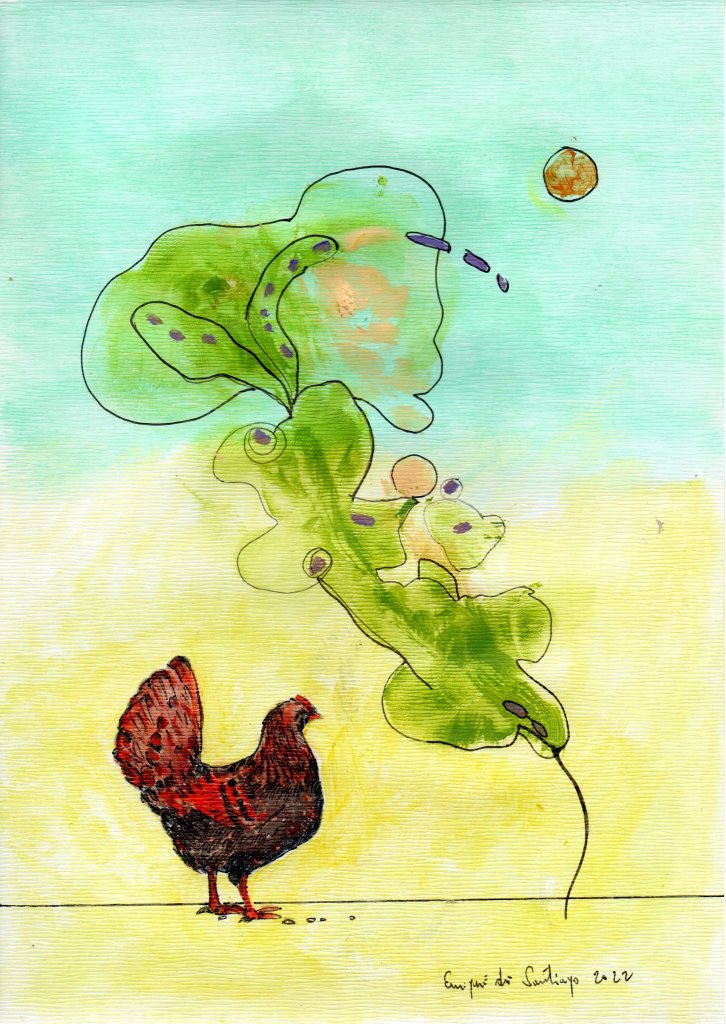
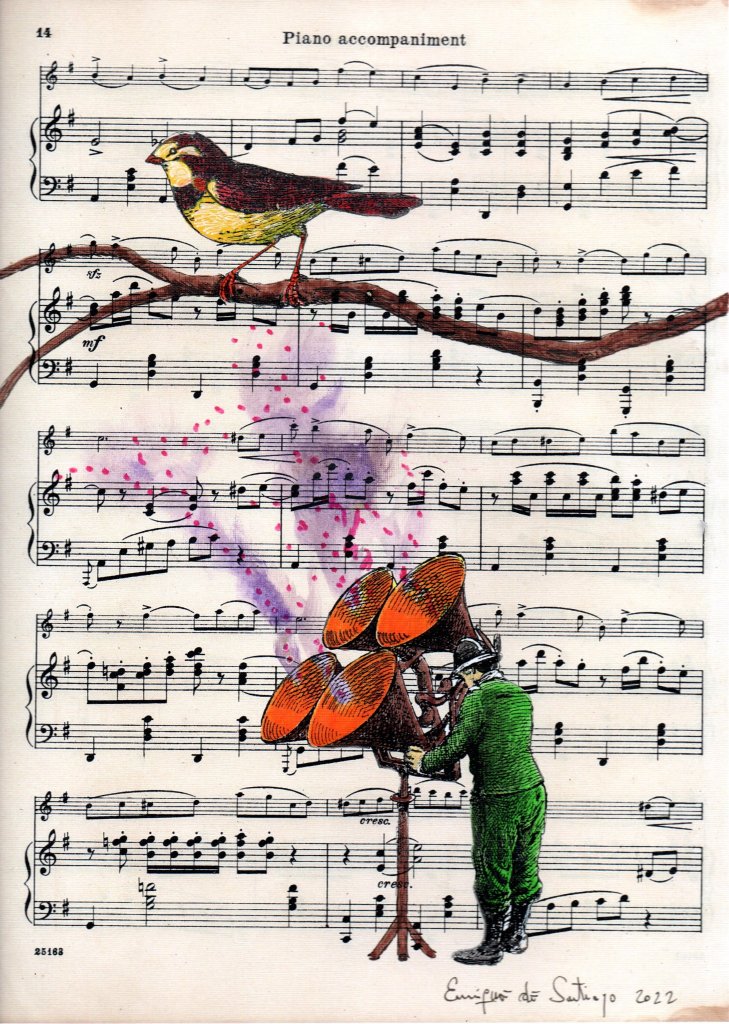
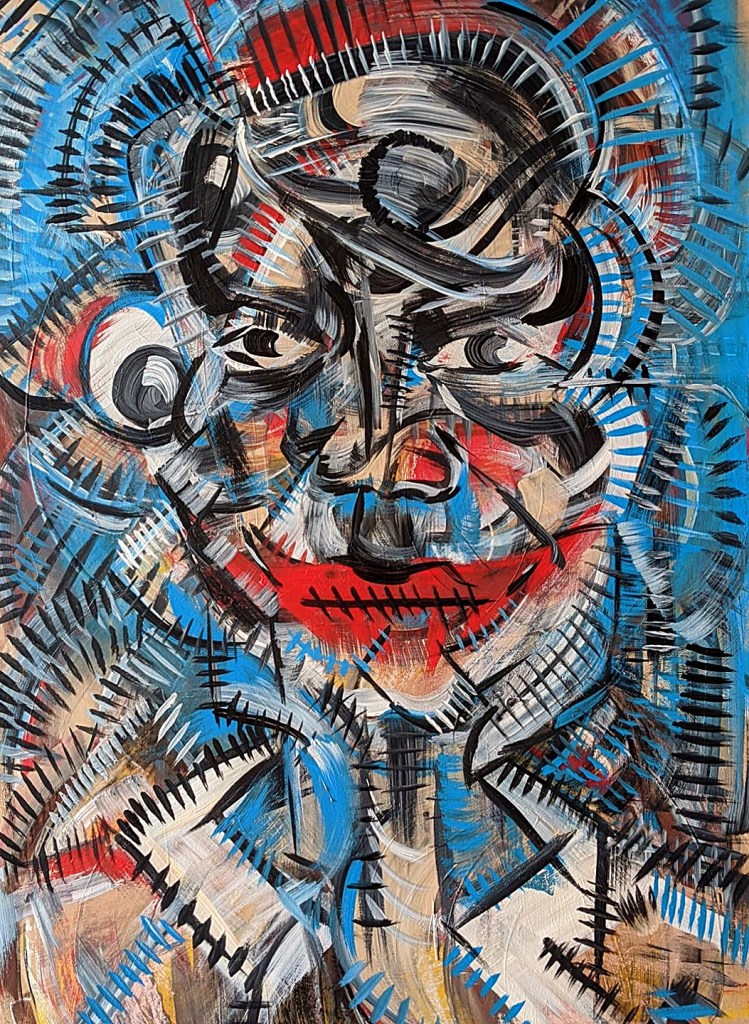
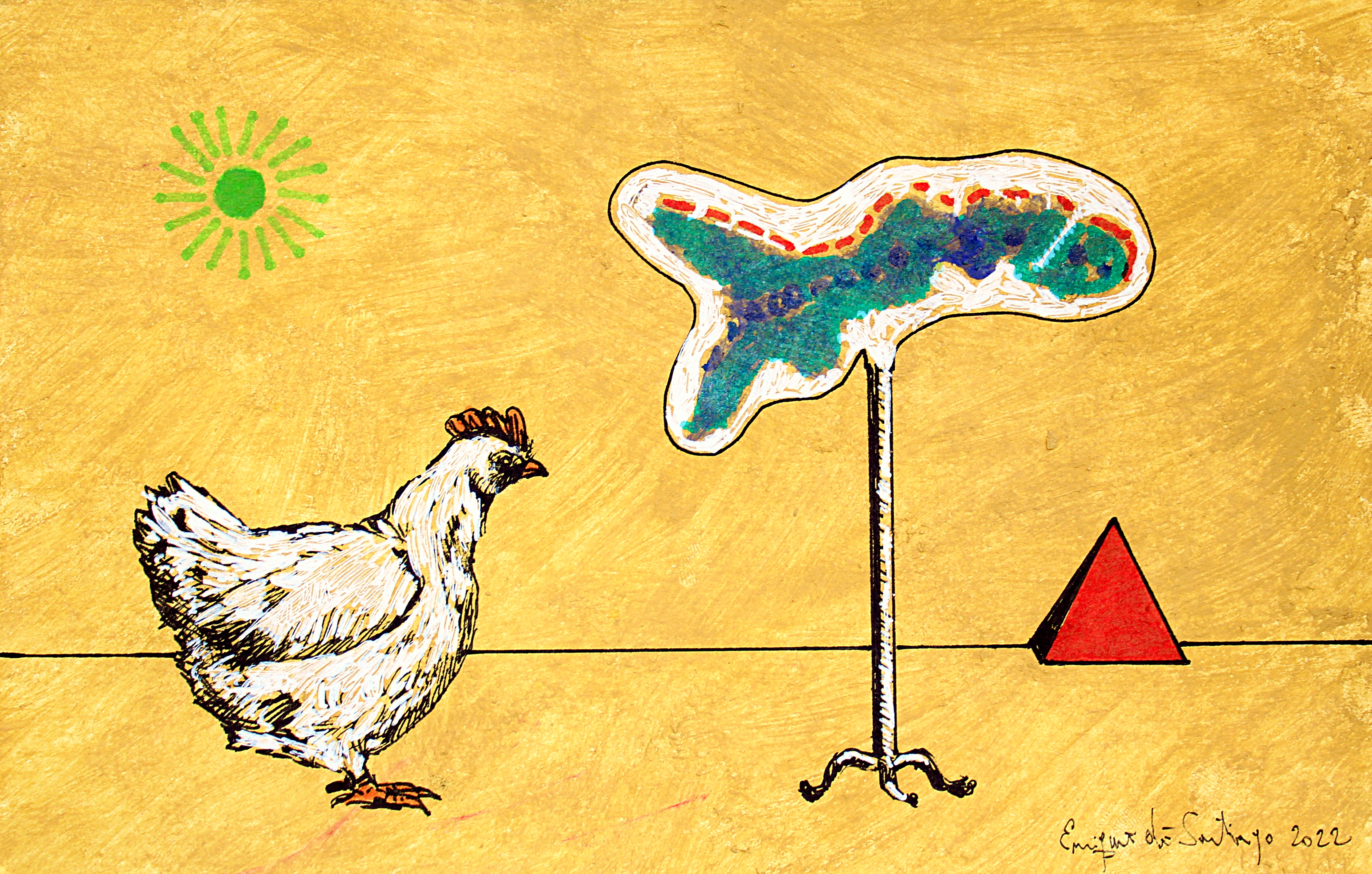
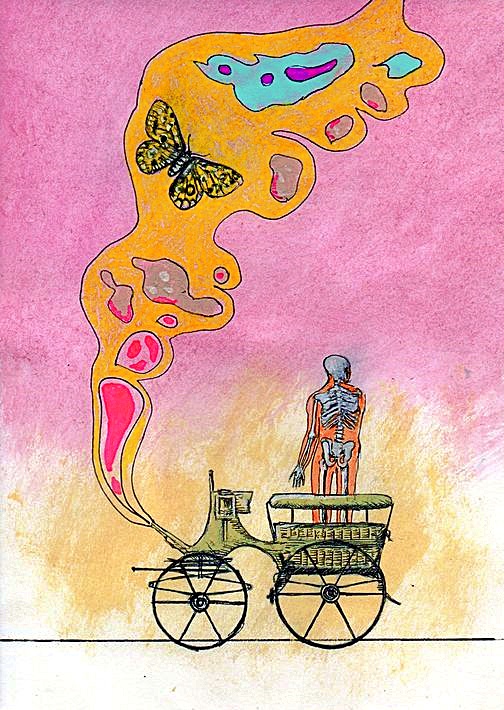
Eros Phasianidae, acrylic and ink on Canson 300 gms paper. 11″ x 8.3
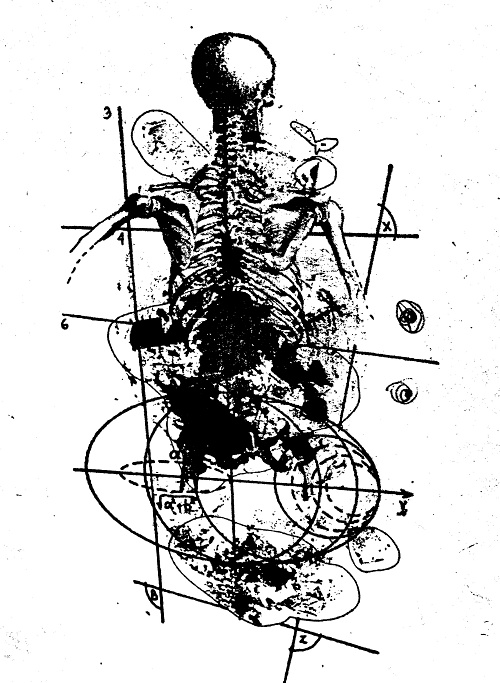
EROS PHASIANIDAE Yo And she saw the chicken rise from the ground a brilliant and ectoplasmic epiphany and she remembered the words of the feathered prophets: “before the primordial egg was the verb” and the pyrrhic evolutionary expedition embraced me so necessary and indeterminate where we are more but under sheds and I saw the grayish uncertainty that shakes my being h = 6.626 0693 (11) x 10 – (34) J. s = 4,135 667 43 (35) x10–(15)eV. s and the beast arose from the miasma without the feminine warmth it was in the offensive of the arches thousands of years ago on the Cartesian line of Har Meggido under the law of y = m x + b and those tears originated at 32°34’59″N 35°10’56″E. II huge old stars leaning out on the horizontal cobblestone sheets were dictated by an ancient manual of glorious epic forms where I did not read the cunning locks and from there lights fall like eagles that are suspended in front of your pale fortifications and despite the fact that I descend without air I cling to the desiccated edges of this abyss turning away from the waves of floral promises with summer mentions that anoint you. Thus the amaranth silence returns to rock the star and like the silent lymph you seek to break beyond the fundamental shell the one that you got to know in a primitive way in the sweet rooms of belief.
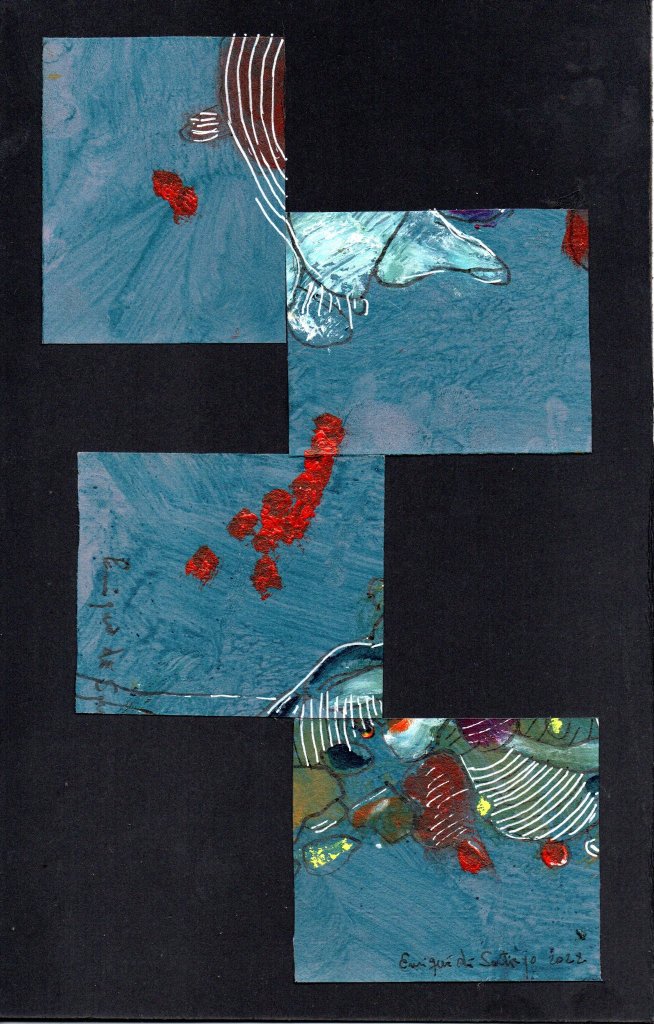
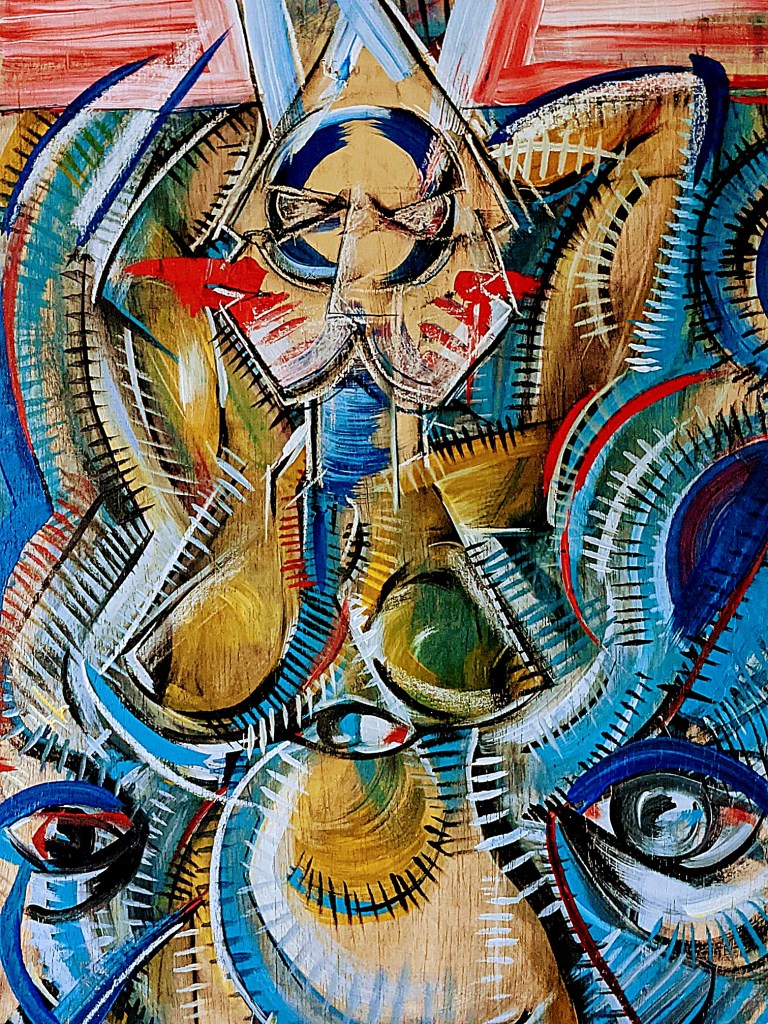
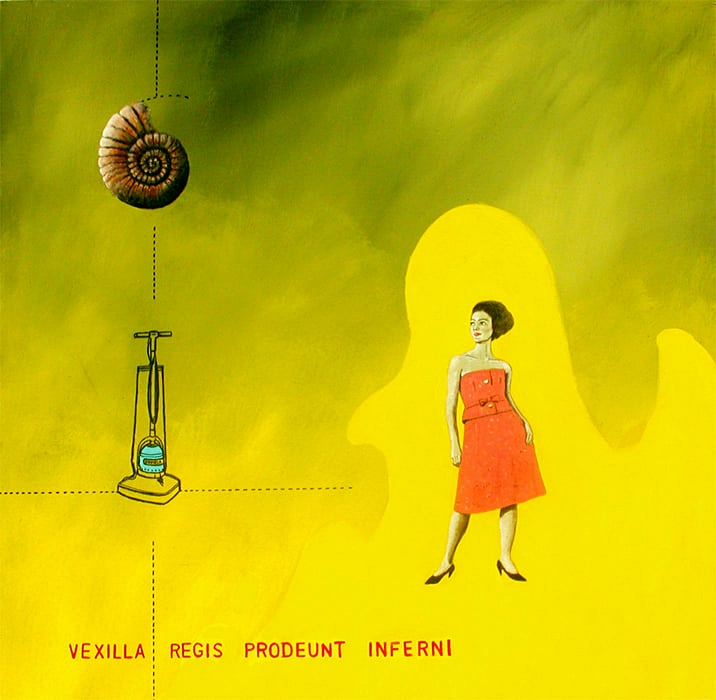
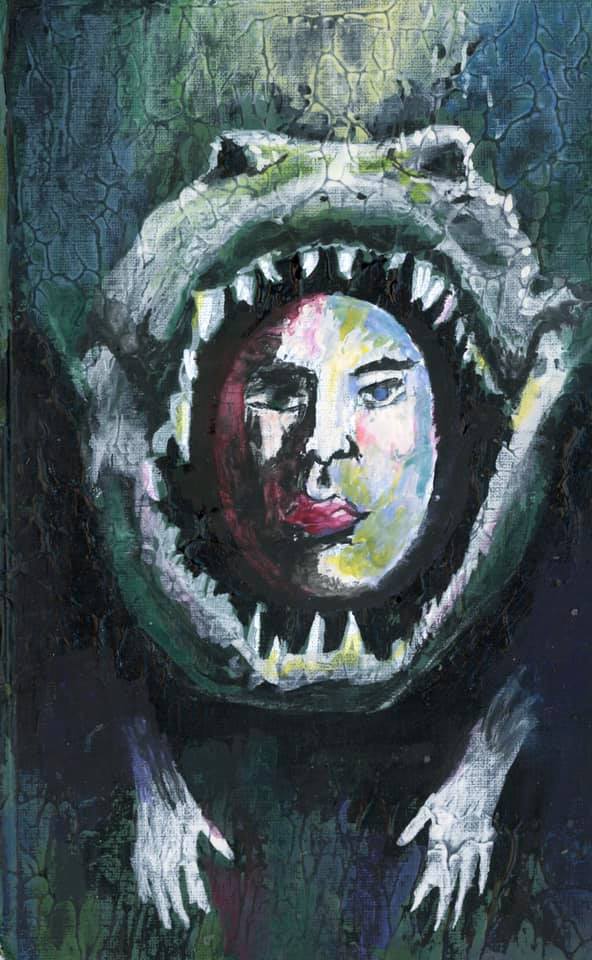
Interruption, acrylic on cut Fabriano paper, on black cardboard. 18x24cm. The inclination of one of the elements is voluntary.
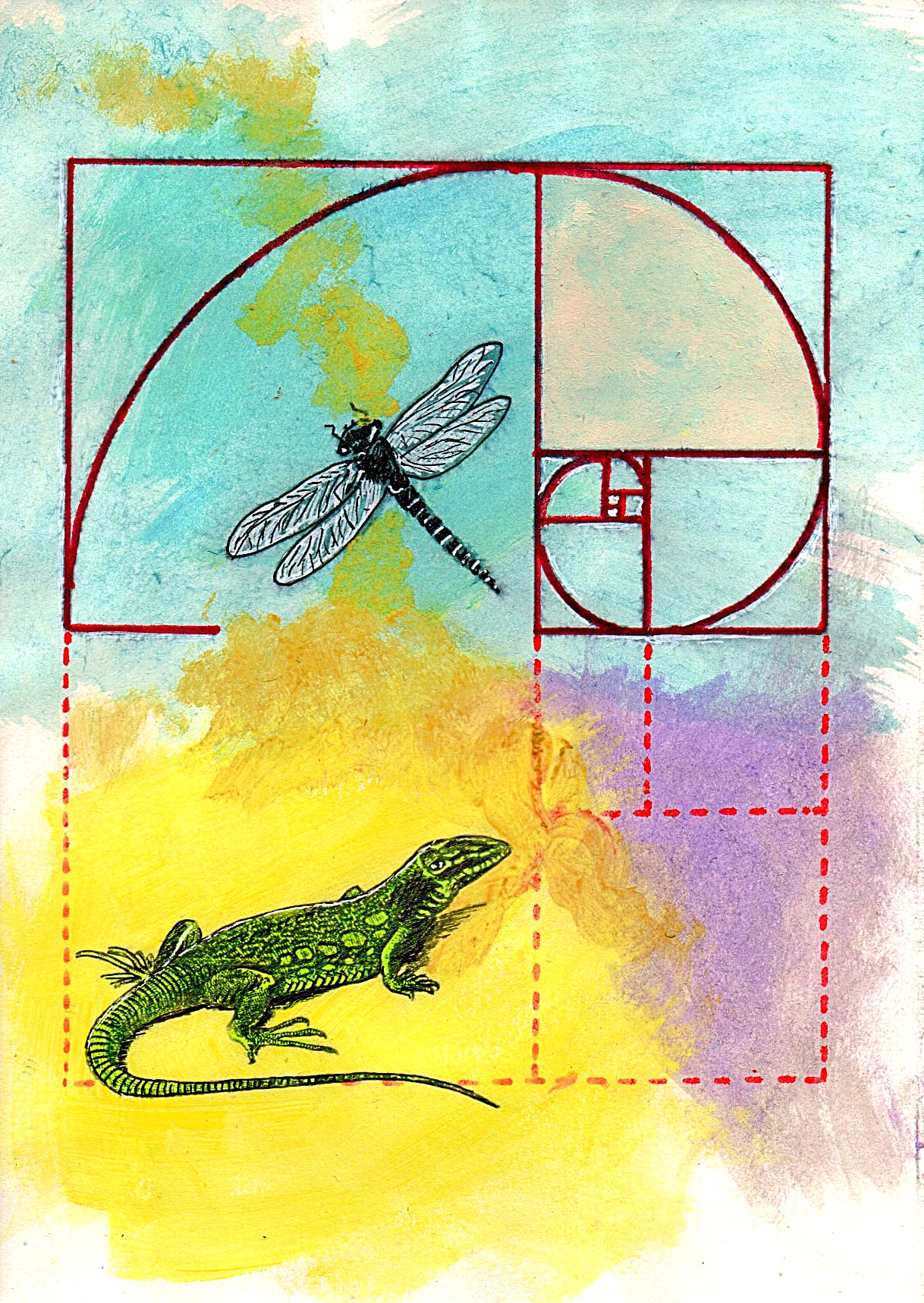
GOLDEN VISION
The nothing, the void hold my duplicate fragments (Φ2 = 2.61803398874988…) It is the hollowness of the past and the future what you don’t have and don’t want the illusion of time and line Infinity so love surrounds swelling wisdom while on the musty boards of a camp absent light filters to tilt reciprocal reality that drives your transformation (1/Φ = 0.61803398874988).
Maybe this reality is true on this twilight island where the already worn bones falter by the persistent violet stings, and there is no choice but to live among the cyclones that guard the whimsical and invisible knots with its container meshes that hide half-open portals, those that I will leave like this for a while, since everything circulates in the promised packaging.
P.D. Newman is an independent researcher located in the southern US, specializing in the history of the use of entheogenic substances in religious rituals and initiatory rites. He is the author of the books, Alchemically Stoned: The Psychedelic Secret of Freemasonry, Angels in Vermilion: The Philosophers’ Stone from Dee to DMT, and the forthcoming title, Day Trips and Night Flights: Anabasis, Katabasis, and Entheogenic Ekstasis in Myth and Rite. The Secret Teachings of All Ages (TV Series documentary) 2023
the psychic robot, how our animal selves passed through the portions of different brain territories. the snakes, the monkey scribe, and now the circuit board advisory city-state. clay tablets as a big golem, ideas as ghosts informing the brain
How would you describe your painting process and your associative relationship between concepts, events, or mental states of the subconscious? Is there a link between self-hypnosis and inspiration?
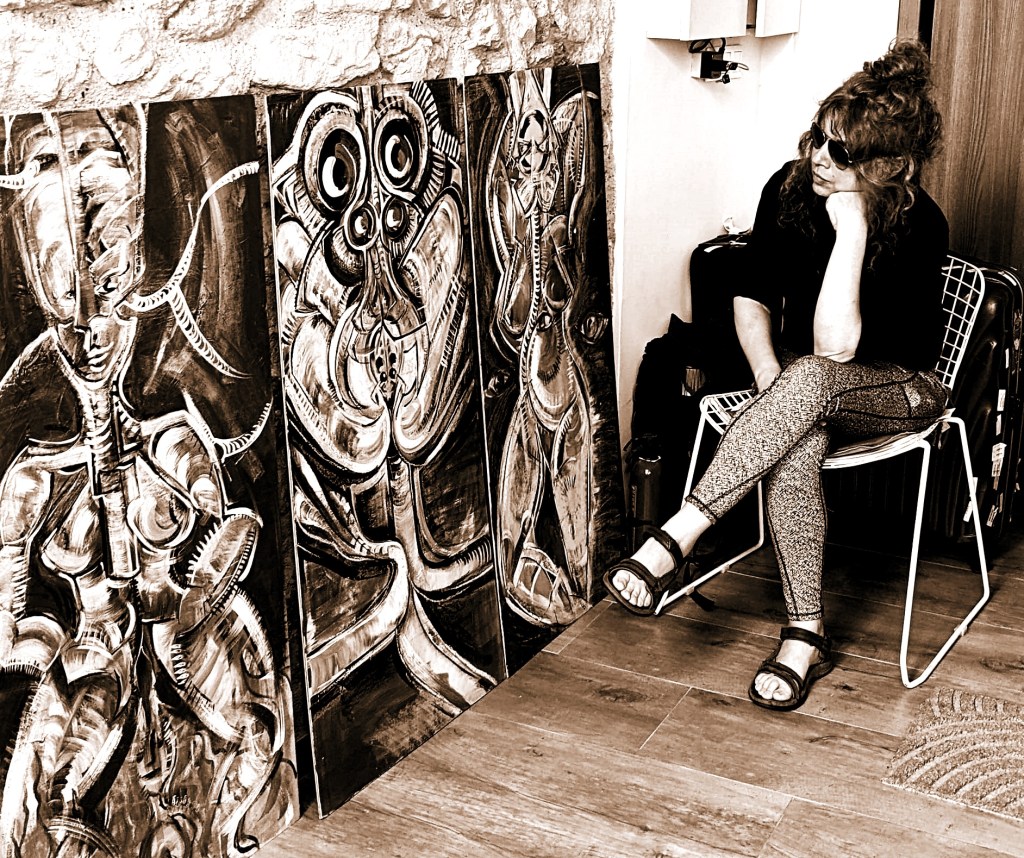
Artists, writers, and poets such as Garcia Lorca, Roberto Matta, Henri Michaux, and even Anais Nin have inspired me to paint. Language, for me, comes first, but the visual can support the verbal. I paint as if I’m composing poetry.
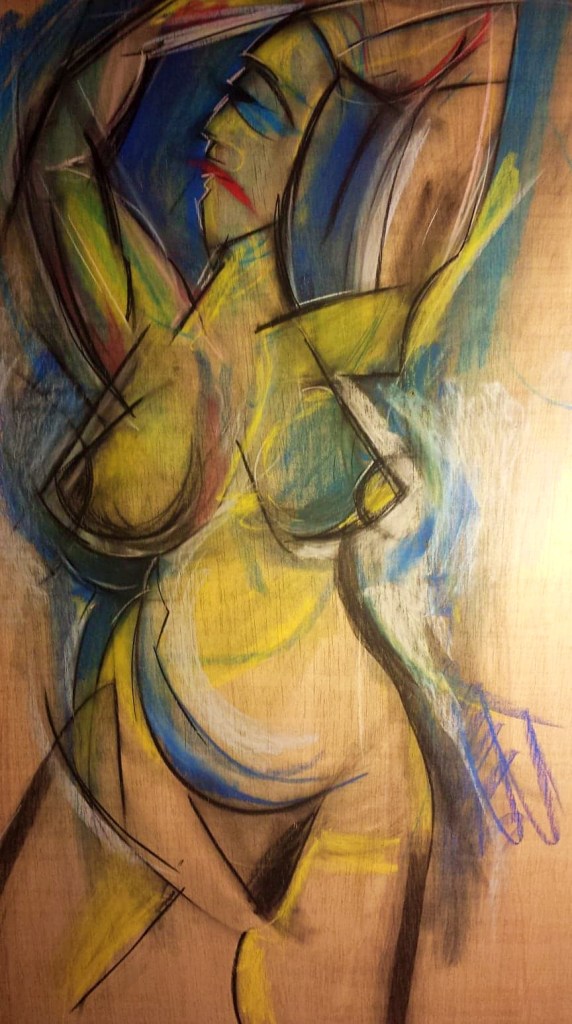
Automatism or improvisation is the starting point – bebop – but I’ve realized that the contours of a, often dismembered and re-stitched, female body appears repetitively in my mind’s eye: think Mary Shelly. This flickering of fragmented body parts leaves deposits on the canvas/my mind. There’s something about the human body that truly fascinates me. This fascination isn’t deliberate, and it’s also strange because I’m more cerebral than a physical person: in my view, the body exists only in the mind. This also solves, at least for me, the century-old dualism: the body-mind split. Or, as William Blake said: “the body is a portion of the soul.”
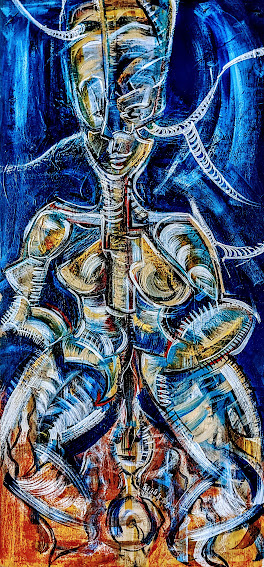
Man is a machine, and a woman is a sublime machine. If you compare the human and the animal body, the human body is clearly synthetic and artificial. It blurs the boundaries between what’s considered natural and what’s considered artificial. I find that thrilling. There’s nothing natural about us humans. We aren’t becoming robots or cyborgs, we already are. We can’t rely on our instincts anymore as non-synthetic creatures can. There are vehicles in the making that’ll be able to reproduce themselves with whatever material they can find on Mars.
How’s that different from us? You could say that humans think and feel, but do we really? Aren’t we just parroting the words, stories, and belief systems that we’ve been fed? When was the last time you heard a new idea? Something you hadn’t heard before, something that stimulated an innovative thought. We’re the protein by-product of language. Perhaps when there’s trance, a moment of silence, or jazz, an intelligent intuition can unfold in the nerve domain. Painting or poetry can help it develop, transmit and circulate. Possibly it can be fertilized by critical reading or meditation.
Is painting a technique that represents a body disconnected from words? a sort of ‘transmuting neurology’
Transmuting neurology, I love this phrasing. Probably our neurology is in constant a state of desire for perpetual transmutation, but the culture must allow for it. Studying the history of painting, I was excited to learn that the Impressionists had “discovered” different shades in snow, something that nobody had “seen” before them. Isn’t that intriguing? I guess they contributed to an alteration of the general perception and experience of what’s “white.” They are also depicted as the very first in the history of Western painting of social situations such as people dancing or swimming. Nobody had done that before them. That’s why the establishment was so scandalized.
Of course, it didn’t help that the women they painted often were what today we’d call sex workers. Can you imagine that in the second part of the 19th century? Later with expressionism and surrealism, painters gave expression to the ebb and flow of what’s inside the mind’s eye. An interesting artist is Francis Bacon. He claimed that he depicted people as they “really” are. Perhaps some of us are polished yet monstrous or disfigured? Or even, maybe the human condition is one of perpetual disfigurement? Whether we can see without words is something I keep on mulling over. I feel tempted to believe that as humans we need some sort of narrative or linguistic frame of intelligibility to see things. Perhaps we can only perceive objects contextually. Painters should be called pioneers or even anarchists of perception.
Can you elaborate on how language shapes us by a Languaged body, cultured intuition by sound, and language as a living intelligence?
I’d like to emphasize that I constantly toy with intuitions and ideas, not with truths. The truth for me often is a reductionist and particularly violent concept. Think of all the wars that have been fought over some sort of revelatory divine truth, or in later centuries, the so-called scientific truth. The Nazis had their ideology backed up by scientists’ assertion that theirs was the most evolved race (so-called Social Darwinism), and that certain other races were particularly parasitic and had to be exterminated the same way as rats or cockroaches. So, circling back to the central ideas informing my practices such as the “languaged body” which is a neologism, and the idea that language is a living intelligence, I don’t consider them to be truths. These are frames of intelligibility that have grown under my skin over the years of study, reflection, practice, and meditation. I have no problem admitting that these concepts are nothing more than my obsessions. I’m not a missionary.
I see language as something external to human beings, possibly an organism. In the process of language learning, humans are inserted into this external thing we frivolously call language. There are linguists in Switzerland who’ve developed a theory in which language is a symbiont. So not necessarily a virus as William S Burroughs famously claimed, or that it can turn parasitic in case of psychosis as French psychoanalyst Jacques Lacan suggested. I see our brain + nervous system as a receptor-like radio, tv, or computer, capable of receiving signals and building narrative. In some way, it’s a form of telepathy. By producing sounds, we invoke a whole shared world that has been forged across thousands of generations. Also, we invest our lifeworld, including our bodies, with words, with a story. If our bodies weren’t invested with language, we’d constantly experience ourselves and others as walking talking meat, protein bags, or water bags on legs. When we buy meat at the butcher’s or supermarket, we don’t think of that red stuff as chopped-up dead animal cadavers. We say it’s a New York strip or whatever. Something similar is going on with our bodies. We have names.
This name is somehow “written” on our skin, on our face. I’ve never met anyone without a name, though I’m curious how that’d be. When we feel attracted to someone, we don’t think “that’s a tasty animal.” Some of us might, however. A whole story about someone is activated within us when we fall in love, a concept of what a human being is, of what beauty is, etc. while we all know that a few millimeters under the skin there’s blood and a skull. But who, except a cannibal or a serial killer, thinks about that? The way language has contextualized humans prevents us from seeing the meatiness of a person. But this experience isn’t fixed. There are cultures in which not everyone has human status. Think of the Dalits in India. In Central Africa the so-called pygmy is being hunted and eaten, most probably because their appearance doesn’t conform to the hunter’s concept of what constitutes a human. It’s also interesting to read the private diaries of people who worked in concentration camps, and how they thought about the people they helped butcher or exterminate. Some agreed that Jews, homosexuals, communists, etc. had to be put to death, but they felt it should happen in a kinder way, pretty much how some activists think about animal rights in our era.
Language protects us by feeding us optical illusions. As humans, we’re trapped in a theater of distorted thoughts. It’s as if we need to drive on a busy freeway wearing glasses deforming everything coming our way. All this is extremely disorienting and frightening. I think maybe that’s why there’re so many ideologies and why religion is such a sensitive matter. These “grand narratives” offer the illusion of certainty and direction: how one should lead one’s life, where one should be headed, and where to invest one’s life force. The artist, I think, has been for whatever reason cast out of the Eden of ideology or religion, and is forced to constantly mold and remold her internalized worldviews, knowing often very well that this is a futile endeavor that must be repeated endlessly. But, at least, there’s some motion within. The alternative would be catatonia.
Artists, writers, and poets who helped contribute and inform your process?
I sound like a broken record when I keep on mentioning Will Alexander. But there’s no denying that his oeuvre provided me with the missing link in my thinking. I have always had an interest in ritual, animism, and shamanism, but with the latter term, we need to be extremely careful. I adhere to academic concepts of shamanism, such as Mircea Eliade’s. When younger I participated extensively in groups believing that they were engaged in shamanic practices. Perhaps some of those did. I don’t want to claim that I have the capacity to say what’s authentic and what isn’t. What I inherited from these experiences is the sensation of trance. Will’s work transfuses both language and animism/shamanism, especially in his The Combustion Cycle.
Without trance, there’s no writing nor painting for me. Writing prose is different. Poetry and painting for me fall in the same domain as glossolalia, speaking in tongues or trance-speaking. Freudian associating on the couch. Will’s concept of language as a living, possibly alchemical intelligence, makes a lot of sense to me. It connects my interest in shamanism and animism with my obsession with language in a no-nonsense way. WA’s poetics is a conscious journey into the imagination. To truly feel this, you need to understand that the imagination isn’t just “fugazi” or fantasy. The Jungians know very well that the imaginal world is a tangible environment, in which one can move around and travel in. There are beings dwelling there. You can develop a bond with these inorganic characters. Jungian practitioners are aware of this possibility.
I think I can say that Occidental culture at this point in history is in a state of coma or autophagy: it’s eating itself up. The criteria for personhood are so one-sided and reductionist that it is extremely easy to descend into a state of being a non-person. Maybe the only option when that happens for some people is to die and, in the process, drag along as many corpses as possible. Ours is a high-risk society. Having said that, I’ve lived in India for three years the comfortable life of an adult literature student. Life in India is no bargain either. Perhaps I have taken shelter in the written word and painted images because I’ve experienced that it isn’t possible to change your own culture with another. Every culture has its own cruelties, sacrifices, and gains, but they aren’t commodities. The difference, maybe, between Western cultures and the rest of the planet is that, as French novelist Michel Houellebecq suggests, the West has sacrificed almost everything for the sake of rationalism and technocracy.
There are also other artists and poets besides WA that have influenced me. I’m thinking of the “Grand Jeu” poets such as Rene Daumal and Gilbert-LeComte but also Antonin Artaud, Joyce Mansour, and Roberto Matta. Regarding US artists and poets, there’s, of course, Philip Lamantia, whose thinking and work is like a direct mind-injection into my mind: picture a metaphysical phone call without ever hanging up. Other important people would be Bob Kaufman, John Hoffman, Laurence Weisberg, but also someone like Mina Loy, and some beats, in particular William S Burroughs. I feel a deep affection for a lot of artists and writers: William Baziotes, Arshile Gorky, Thom Burns, Rik Lina, Byron Baker, Emily Dickenson, Edgar Allan Poe, William Blake, Lautreamont, Guiliaume Apollinaire, Baudelaire, Rimbaud, Gerard de Nerval, Grace Hartigan, Leonora Carrington, Remedios Varo, Juanita Guccione, and many more.
Bill de Kooning deserves special mention, on the one hand, because nobody speaks about him anymore and because of ongoing the “de Kooning-bashing. But also because my paintings are a prolegomenon (not a counter-narrative) to his disfigured depictions of Marilyn Monroe-type of women, in particular the teeth: Where else in the world is the business of smiling taken so seriously as in the USA? My series of chopped-up disfigured ladies, “Mutilated Madonnas,” are homage and homologous to his.
This is intense work. It’s incandescent. It’ll catch your eyes on fire. Burn your brain down. Giorgia Pavlidou has managed to make anguish appear beautiful. And sexy. Artaud is the tutelary spirit of this work. The anguish is real and the words have the taste and smell of the netherworld in its black gown of sibilant pupa. This is language with a biology; it writhes, hisses, and propagates by glossolalic impregnation. Reading these poems is an immersive experience. Here we find madness, anguish, erotica and Rabelaisian humor welded and wed to a language full of “lexical tentacles” and “fire dressed in fire.” It gets under your skin, this speech. These strangely intelligent & autonomous words, manic as wasps in a vessel of glass.
—John Olson
A pyrotechnics of lingual essence, Giorgia Pavlidou’s “inside the black hornet’s mind-tunnel” yields feeling through the language of the heart creating darkened constellations that rivet the inner eye all the while whirling as an estranged yet organic imaginal terrain.
—Will Alexander
Giorgia Pavlidou
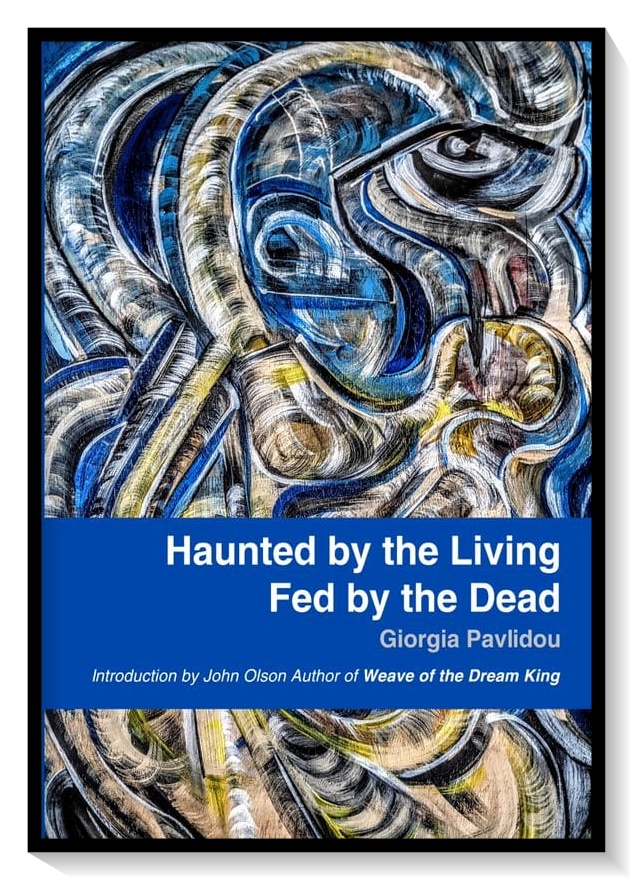
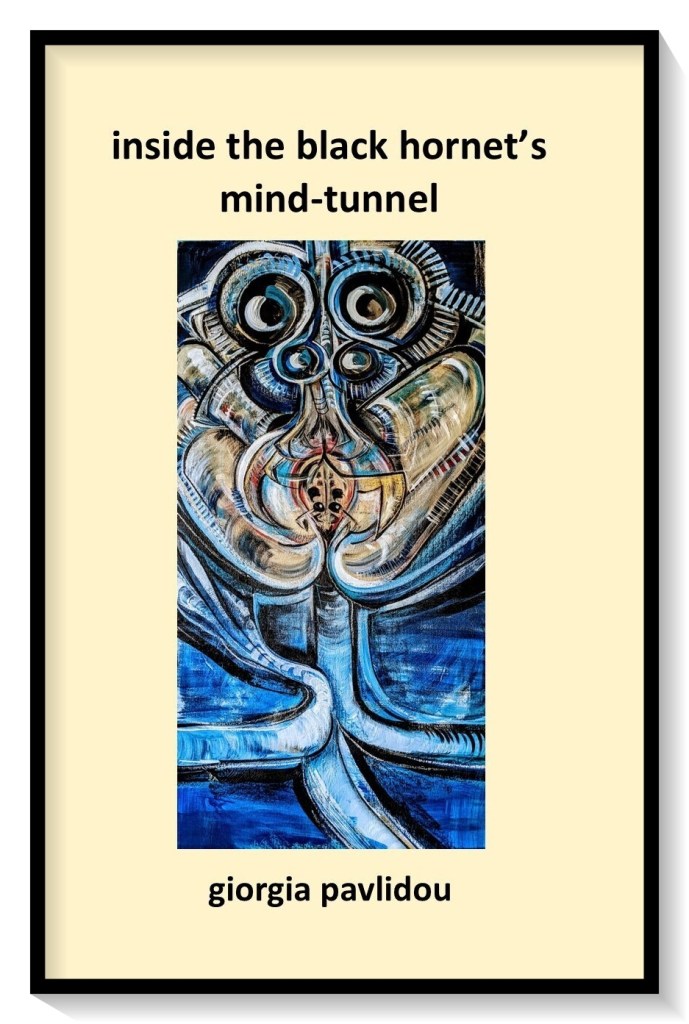
Giorgia Pavlidou is an American writer and painter intermittently living in Greece and the US. Her work recently appeared or is forthcoming in Caesura, Maintenant Dada Journal, Puerto del Sol, Clockwise Cat, Ocotillo Review, Strukterriss Magazine, Entropy and Sun & Moon Magazine. She’s an editor of SULΦUR. Additionally, Trainwreck Press launched her chapbook ‘inside the black hornet’s mind-tunnel’ in 2021, and Anvil Tongue Books her full length book of poems and paintings, ‘Haunted by the Living – Fed by the Dead’ in May 2022
Every time I ordered my papers I found these poems that correspond to my years of militancy in the communist youth under the period of the dictatorship, which in my personal case took place between 1979 and 1989
Already a couple of years ago, around 1977, my concern for writing verses had been awakened, and I still have those first poetic stammers. Those sheets speak of those attempts to provide something different to the word, since when adding two, these would give a different meaning and significance, more subtle, in short, that it had a broader meaning.
I had finished high school, and shortly after I met a landscape painter and an art student, who showed me the secrets of easel painting, it was then that I was already clear that my destiny was the visual arts. Parallel to the instruction, I received from these two friends, others close to the cultural circle that was forming in the neighborhood, they enlightened me about the dark passages that happened daily in our country. There was the coup d’état, the intervention of the United States, the disappeared detainees, the torture, the prison and the political persecution, which were some among many the prison, and the political persecution, which were some of the many atrocities that devastated our people.
poetry was still present, and names like Nicolas Guillen, Ernesto Cardenal, or Roque Dalton had been added to my library. I wrote in my spare time, and much of that poetry served the cause of the offended and their fight for liberation for the construction of a new, fairer life. It was then, during a sunny winter afternoon that one of my friends invited me to join the Communist Youth.
I accepted and from that moment my new name was Freddy. The following year he entered the Faculty of Arts of the University of Chile, where the student agitation had restarted after complex years where the repression was brutally violent. Now there were more of us and all the universities were setting up Student Centers ready to fight for student and human rights. They were two hard years, of strikes, street actions, propaganda, and confrontation with the repressive forces-Carabineros de Chile, which at that point was a militarized police force trained for repression-Between art classes, paintings, and struggle, of from time to time some of these poems that I have rescued arose. Others were lost among notebooks or were forgotten on a table in my school.
The months went by one after another; meeting, bells, protests, repression, hiding and reappearing, that’s how the years went by, with a lot of political activity, little appearance, and some verses that are being accommodated in these sheets.
At the beginning of 88, love came with force, since one day in January I met Valezka, who would be the mother of my three beloved daughters. That year, party activity would turn to the campaign for the October plebiscite and find a way to insert myself into the workplace, since by December there would be three of us in the family. It was a tough year for both of us, but we went to all the big marches where we joined the people who had said enough to so many people of darkness and opprobrium. The triumph of the “No” option brought hope for the daughter to come and the verses changed color, approaching a less arid and somber texture. 1989 I arrive with a stable job, my party life is focused on the union. That year Patricio Aylwin was elected, he would be the President “as far as possible”, or put another way: what was impossible for the people, while everything possible was given to the de facto groups and the oligarchy. Those were the years of asking for permission from the dictators and fascists who held key positions in the Armed Forces, Parliament, and the production and communication media. Large state companies continued to be privatized and neoliberalism deepened. From the 90s onwards, were the years of shame, of a protected democracy, and of the deepening of the model
Enrique of Santiago, December 2021
The Smoke Base (1979)
the base of the smoke it is base without eye for the bell a lock vibrates ten times, and the bewildered sight writes How many broken ideas are there in the mirror? for the bell the ear is deaf with pain of 10,000 years the crazy race has an end everywhere lips are pursed, the exit is praised, spitting black earth and the black earth spits us to the sky burning the pupils since the base of the smoke has no eye The base of the smoke has no eye and the ash drowns a siren and they crash by the thousands Well, it’s the autumn of man the bell screams in fright and the eardrum tells him to shut up.. but the cry is crying dog crying, of worms of mice human crying shoes melt and the frost boils in its hour pine is charcoal and the race burns and burns The base of the smoke has no eye but the beginning yes, but underlies its lock
Carnival and duel (1980)
Dreams have been trampled in the mud and the moans are silenced with screens and neon fun to lead the century on the trembling of absent birds but one day the crystal clear rain will come and after the sun with your new water kissed by the moon while the rebellious ligaments they give off longings on the gray asphalt under waiting stars the smooth flight of lepidoptera
The Pedaling (1981)
On a colorless bike pedal to a sleeping atoll in that corner of the skin of a rosy vision under the dark green chair so that the sole kisses the yellow sands the contemporary chip already inside my starry pants I think it is appropriate to say with a red voice: Long live this surreal expression! I then say: Your violet rifle jumps from the dark tides Stepping on the shapes that you don’t have yet and you were submerged in your numerical sea where they surprised you between mastabas and whips and embraced the heavy centuries under the belly of the galleys to cross the maps of the centuries chasing the useless and ephemeral
Night (1983)
Have you felt that the bats They come to your room one day agitated? They laugh and denote expired fangs while the music falls, abandoning each note, and I look for an onomatopoeia to simulate my brain hitting the floor, so as not to perceive how it is extinguished the spent life of those who do not have feathers I just want my fingers intact to pull a certain trigger and make my way through the gray tangle of his name
Observations (1984)
They are cloudy days vermin crawl and abound the palace beasts the city wears its best corruption suit and in each office a crime is perpetrated but there are still your kisses and your moisture in a brief but broad sincerity in that street that corrects my face and faith
Reading in Heaven (1985)
The fly refrained from ascending and stopped at folded hopes perceiving a usual odor had drilled all the diameters known and unknown of the present medieval apathy Repelled by bullets the nonconformity wears black tile and resume the flight causing the last ulcers to existing weight Tomorrow the cage is undressed before the soup gets cold
Painting (1986)
Alone, in front of the support clinging to thousands of flaming voices and be one and all following the thread of Ariadna in that challenging labyrinth where she is shipwrecked and pales her life, next to the truth and hers custodian loves be both and call what principle Without us realizing that we always carry with the fear of what ends
Dream (1987)
In the courtyard of my memory I did not pave stone *pastelones and on the most humid and fertile land grow a red flower burdensome and geometric without the language of capitulation and got up watered with the brief bravery that drives almost irrationally to the martyrs from every barricade in this city charnel house
Demystifying (1987)
The feather vortex perishes before the litigation of stillness and from so much looking for potions on nights covered with the moon shell I then went to the annals of oblivion while the image of the eroded sky appears under the uncertainty of its dim flashes going through the rubble of your memory My withered pupil arrived there to forget you
September Notes (1989)
They will hide my lean meat, under the cover of earth and parallel, where the traces left by my dreams will not be visible in those coordinates where the dragonflies nested In the softest parts of a solstice insistent the consecrated spells will be hidden for future generations while I drink from a larval porphyria since each wing contains the history of time, what takes my breath to set your levels without further limits that the one that extends in the red slope of a fallen where each segment of the man fulfills with the fragility of his own destiny In vain many look at their savings account on the gray sidewalk, when in reality life goes by insignificant before your eyes Now do you understand why? of the sound of crafty sabers in spring
Enrique de Santiago, Born in Santiago, Chile (1961). Visual artist, poet, researcher, essayist, curator and cultural manager. He studied a Bachelor of Art at the University of Chile and at the Institute of Contemporary Art (Chile). Since 1984, he has exhibited in individual and group exhibitions, counting to his credit around more than 100 exhibitions. He has edited five books: Fragile Transits Under the Spirals in 2012, with La Polla Literaria; Elegía a las Magas and the book essay: El Regreso de las Magas, both with Editorial Varonas. In 2018 he edited La Cúspide Uránica with editorial Xaleshem and Dharma Comunicaciones, and Travel Bitácora with Editorial Opalina Cartonera. He has participated in various poetry anthologies, both in Chile and abroad. He has collaborated in the newspaper La Nación with articles on new media art, and in magazines such as Derrame, Escaner Cultural and Labios Menores in Chile, Brumes Blondes in Holland, Adamar from Spain, Punto Seguido from Colombia, Sonámbula from Mexico, Agulha de Brazil, Incomunidade de Portugal, Styxus de Rep. Czech, Canibaal de Valencia, Spain, Materika de Costa Rica and other printed and digital publications.
05/14/21 cosmic fires burn behind the rich, black fabric of the night which parts to let the magic pass as particles of filtered light the door lies open, the gate lies closed life travels, small and swift through tiny tears a missing stitch and life. the flow itself the tear itself the seam a sight of seeming death that folds, unfolds itself in weeds of grief and swaddles itself and for the first time sees that there the door lies open to those laid out or she on knees black wings opened out speak out in seven rings the universe talks and, so, we sing
07/09/21 shifting stars and shifting rays of light pierce, project through fractal lens into the fractured night the universe mind filters through this facet and another then the other and the next it’s all-color light refracted into rainbow shimmer variations, life the shadow dark descent of being is iridescent sacred, sweet the night is full of teeming things and thoughts of universe that sings
09/03/21 black wings flap against the dawn lingering sweetly in the dark prolonging, savoring the last few tendrils of night but the dark, black velvet sky grows thin and soon the silken cloth of twilight transparent and delicate ripples, dissolves in a moment is gone and morning begins a teardrop bright and golden falls to the bottom of the deep blue bowl that holds it, the sky and rolls back down the otherside and so the sun descends again, again again once, we saw it rise but that was long ago before we learned its name and learned to make the choice ever to fall or ever to rise or yet-to-be asleep abide
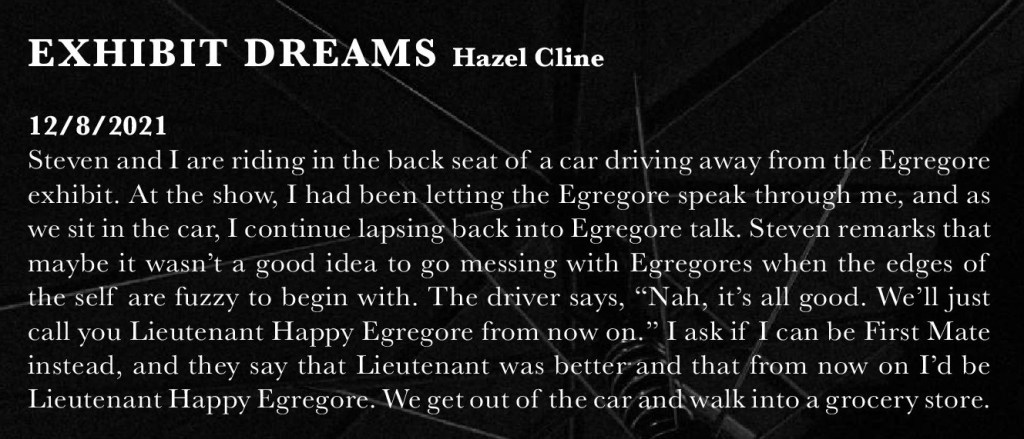
EGREGORE An exhibition by the Atlanta Surrealist Group Steven Cline, Hazel Cline, Aaron Dylan Kearns, Juli Maria Kearns, Megan Leach, Steve Morrison. October 21-31 2021 The Bakery – Atlanta, Georgia
ELEPHANT WORLD
Collaborative writing: Hazel & Steven Cline
Grey smoke, static-waiting in this lonely god-form, the elephant world. Atmosphere of iron, melting into sea. The sea must move. Must never stop. Yet, it never forgets. From the cavernous, from the well, a swallow jumps. Its cry the first sound, its wings flap the first wind into being and make the movers move. Time, wrapped in a desert blanket, becomes muffled. A lunar heli-clipse spirals inside outside, holding death in her paws, crush what skull to wholeness? A mouse, a mouse of silver coat, has singed the lungs of the elephants who dance in circles under their lost mother, the moon. Stars expand, devouring the black, betraying the void. And as the myriad forms octopi the fountains of misery, love and thermometers break free. Is it cold or burning in the heart of the world; Is it strange, or stranger?
01/03/2020 the darkening skies must shudder and crack the darkening limits of love must break and the lightning must flow through the veins of the glow the violet glow of history unchained and memory unknown there is a quiet place in unrequited grief we must keep our face streaked with grief and never forget again that we love the lightning of hillsides and the lightening of hearts must not stop the lightning that breaks our barriers apart
Ornithomancy: divination by observation of the flight of birds
ALLCLOCKWORK
Collaborative writing: Hazel & Steven Cline
The Universe, her own lost lover, may be seen as machine, as a spiraling victorian machine of goldgear, allclockwork like a song, who descends again this dream. Angelic beings formulated only as a song of pure smell drift inward, licking like a perfumed song. A scented song that melts into black glass, darker than vacuum and more crystalline than volcanic orangutans. The seabird honks slowly, irreversibly, a world into myth. The spiderweb lacework left behind by all this resembles only slightly the forlorn face of Desire and her aging pack-animal, the horned, helical diviser of all manners of play. Patterns of a great mathematical sigh leap forward, and reveal themselves to have been all along a simple jest to amuse the one remembered in Desire’s lair. Speak! Reverse! This, the pelican calls to me, to be unafraid. This last day is sweet. A multitude, an ancient epoch, indwelling therein may, inside those glittering gears, break bread with shadows. But ever, ever, while the lonely lives we lead sits weeping by her mirror, can the Victrola spit out its slugs of light. In the sky above, what! cries the clouds, what is this fracture, this suture called time? Or elsewhere called form? Around us, a tower sheds its skin. Inside us, a tower devours and delights. And this hour is born as if it were the first hour, and the last hour, penetrating deep the ear of the Other. Again and again, but this time, the gears are well worn. This time…our ghosts dance.
RAINBOW DIVING
Collaborative writing: Hazel & Steven Cline
A rainbow earthbound, dividing itself, disassembling. Red, caught in prairie dog’s embrace, builds his mudhouse around the hourglass cavern entrance. Blue, thoughtform, endodermic emissaries as its always, reshapes rain into purring playful kittens. Red, again, many times, but this time, most sweetly does it redden. Yellow kicks world’s undercarriage in its shins, bumbling slowly, stupidly; of all the violent yellows of the imagination, honey alone is tenderest, a spongecake, a saucy milksop. Ah, but purple! A color now, and then another. One color and many, Solitary and mixed. But all of these are just wet laundry in cardboard, skybleeders without care. Try instead the complexity of the allcolor udder that fills bellybirth calendars with Orange with Orange’s sad and wayward beams. Indeed, full orchards in bloom. Undercurrents undersea, liquidic petunias, Green breaks all this in her witherworn gaze, drowning into pulpworm magnificents. Learn well, then, the mazes of the deeps, or fall eternally, inexorably into farting arabesques! Or else, the obsidian horizons and wellsprings by which the silent tuber sleeps.
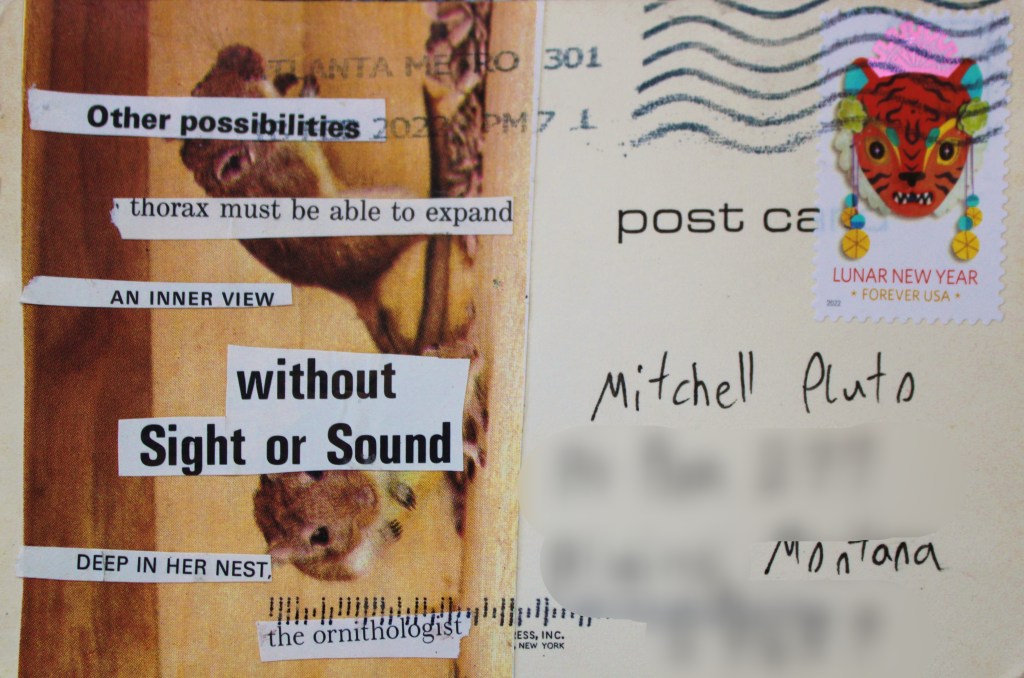
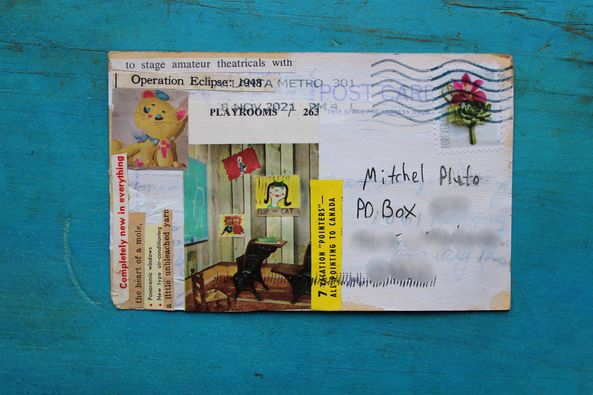
A Virtual Post Card to the Clines from Mitchell Pluto
SPIDERWAVES
Collaborative writing: Hazel & Steven Cline
Sun on my face; worm in my palm. Where is the tree I saw before I was born if not in your heart? A dancer pounds the sand into myriad dynasties of memory. Eruption of geometric solids from a hardening ground. Devastated again and again into life. Without an eclipse of the moon; Without the face I missed and without the soonness of the end. Satisfaction gave way to a pomegranate; and then the dancers in the sky, in the night, in the sand fuse via epilepsy. Shadows silver, and I find I have something to lose. Something, as in hat or muskrat, but in other words there are many things of which we are made of. Mountainous sheets of white sand, signing high notes inside, outside. What is a mountain if not the universe? All I can think of is…whale. All I can think of is whale, which is everything. Everything, blowing sheet metal kisses across aquatic dreamtime streams. Kiss, then the sands, kiss then wind. The river makes love as you fly from the waterfall to the ocean. Spiderwaves crashing in your ears, and wouldn’t you know it? A secret succumb to the drifts.
CATERWAULING
Collaborative writing: Hazel & Steven Cline
Impish sprouts, come now, rejoin the nature choir. Spout from belly, cast skin aside, rejoin the broken ends of hairway screaming. Become erect in thy tendrils, in thy vines, in thy flowering eyelids, eyelips. Scales, weatherworn, may become grey or spotted, may become a disease repeated. Repetitive formlessness may become eyeless. Liked a castaway grail, like a traveler without species or a lichen dripping, frothing from the tips of broken fingers. Inside Castle, the deepness sleeps. The deepness repeats, reaching longingly out through the ribcagebars that hold its will in check. Across swampmoat, a game of chess is played, and yes, a checkmate too. A matter of alligator flesh, weighs your worth on its scales. Firebreather, O firething, O fireeater, bring forth the charred pieces of moleblind contempt, thy master. And lay him here, unbroken on that breakening altar, his feetflesh pollinated by cold wind. But the wind will have none of it. Virgin the wind is and will remain, no matter how many times she is raped. Caterwauling is a way for millipedes to divide and seek out that onebrightmissingthing. O everfree! O everleaving! A soul’s void casts its own shadow, too, my friend. O overbearing openness! Such openness is evisceration. Is evisceration, or crushed and squirming eggplant. A call: come now, worm, come now wind, defend your keep! Atom and Electron, enemies, conspirators, corpuscular in their insane infancy. We shall become nematodes on this day, or we shall expire. Thus is the will of the organ defended. Thus is the desire of the flesh raised again.
When I bite down, my teeth spread fire. I bite down on tree, I bite down hard…a California, newly blackened. When I bite down on swimming pool? When I bite down on sea? I see the ships come and go in the night. From where do they come and wither do they go again? Where but the watery depths that hold the stars with a cargo such as that they leave at every doorstep and every grave. A ghost hand floating, a hand laid down, in a casket amongst friends. A weaponized hairplane, and a truth? Pearly truth? Pearly, yes, of the falsest kind, unlike the inky liquid left by the octopus my sister stepped on that summer when we were five or six. The luster of a pearl reflects the hungry gaze of the wanderer. But the unreflective black of closed eyes or submersion under the hungry waves shows the empty colors and flashes that call upward from eternity’s open veins…
LADYBUG LEVIATHAN
Collaborative writing: Hazel & Steven Cline
City of Cyber, inside belly of Panda. Inside panda-belly, squirming datanet suckers towards the base of your brain. Down flows the river of nerves, down winding, writhing around one another and the spine of this world. This planet called Ladybug Leviathan, this universe called Old Misery Guts. Once again this universe tells the story of the time when the slimesnake jacked in with his god cord, shivering electrical. And jacked off into the abyssal plains of the sordid, sacred animal brain of the metrosynaptic gecko. Everything teal here, everything teal or sometimes pink. And blood always purple, and blood rerouted through networks of laughter that rumble through those beautiful bowels that wailed and woke the world before worlds. Reprogram this panda, O history-keeper, O kelp-satisfied lizard of night’s mist. Open at last the lid behind the lid. Exsanguinate, expectorate, mark the spot where the psionic piston rotates. What, then, if that rotation should cease? What, then, if all the dark little spots behind your eyes should suddenly come to life?
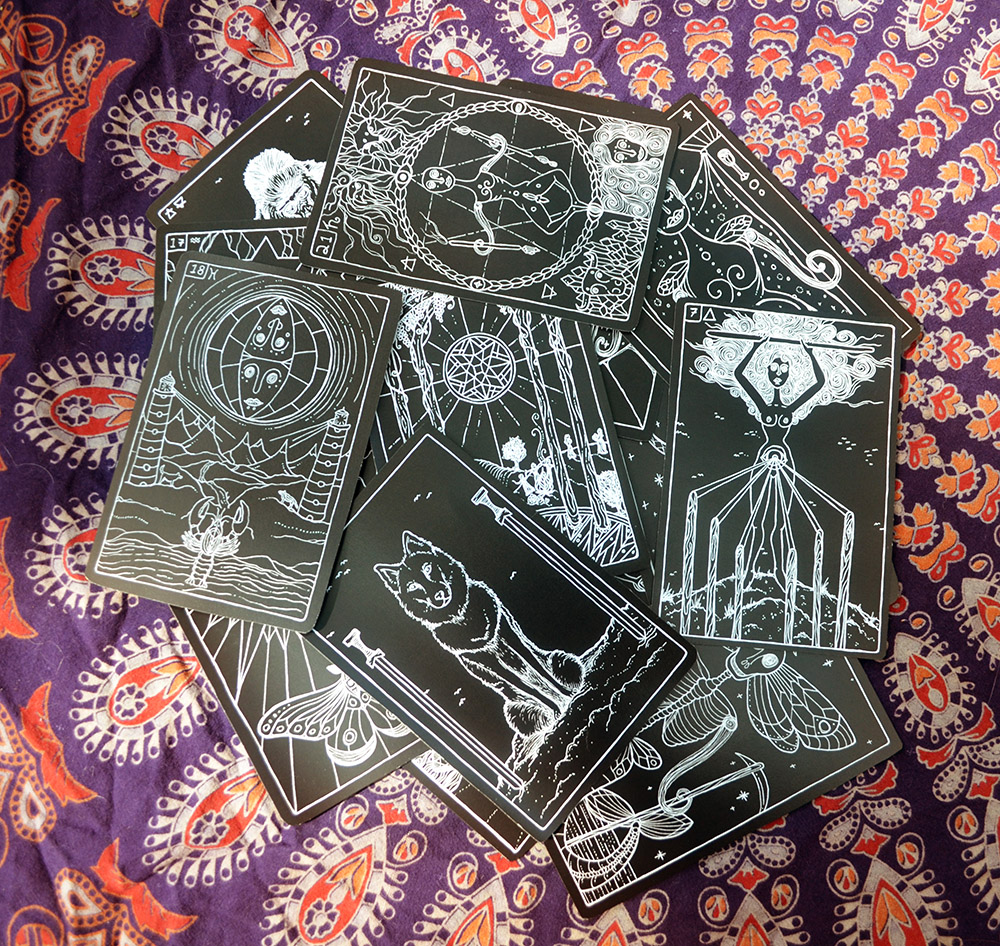
I started drawing tarot cards as a way to deepen my relationship with and understanding of the characters and archetypes that people them. I went along with the fool on their journey, and together we struggled, died, were reborn, learned about life and ourselves, and started all over again.

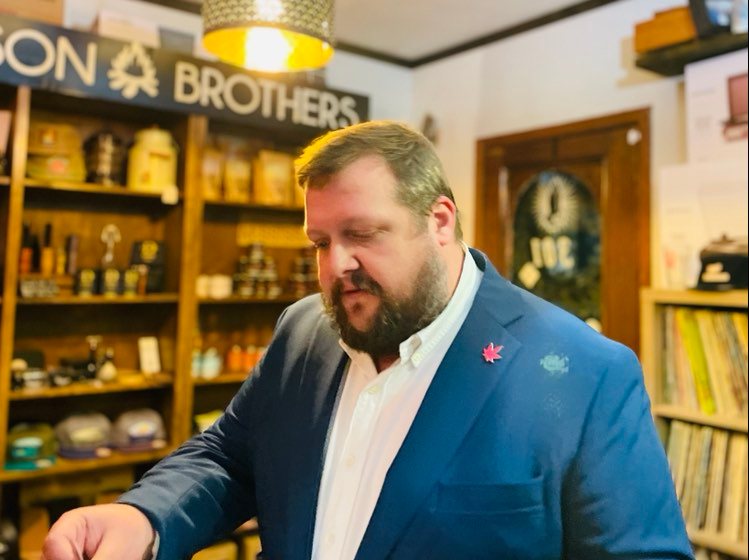
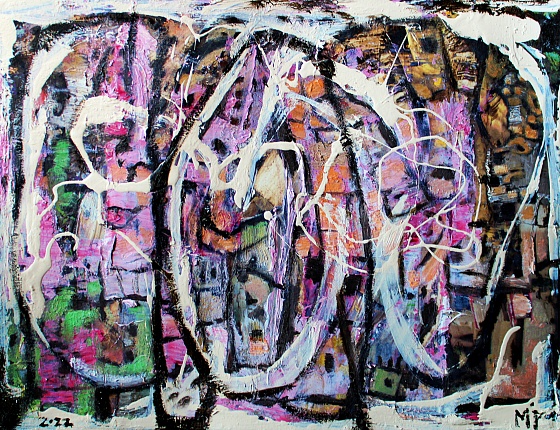

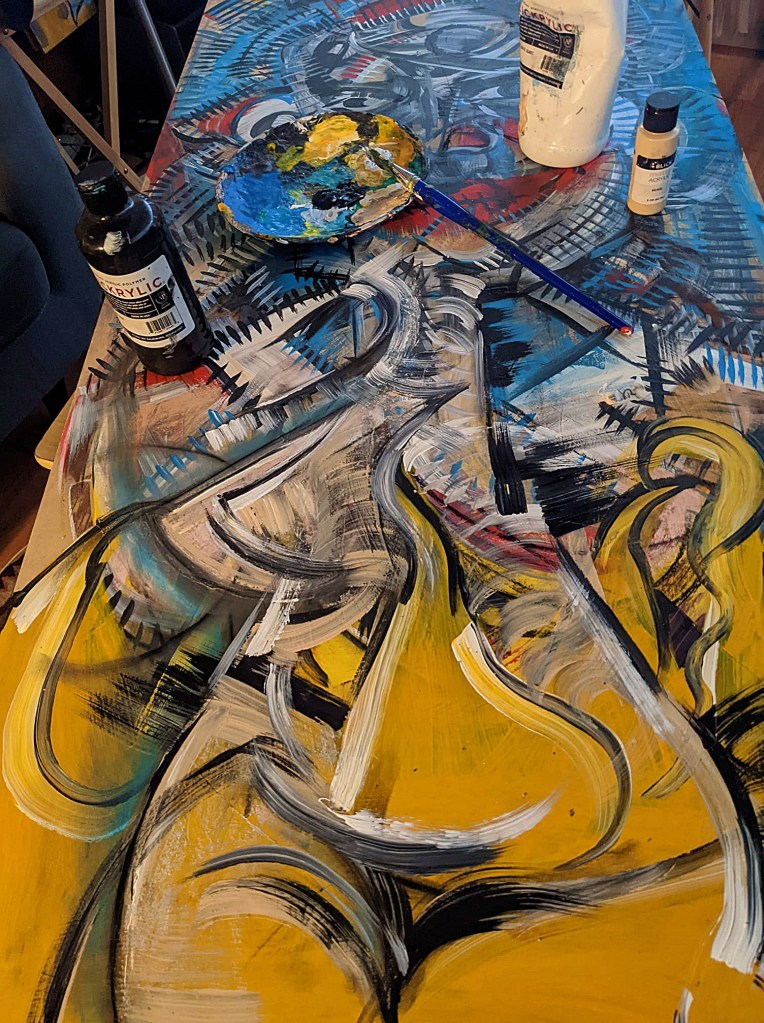


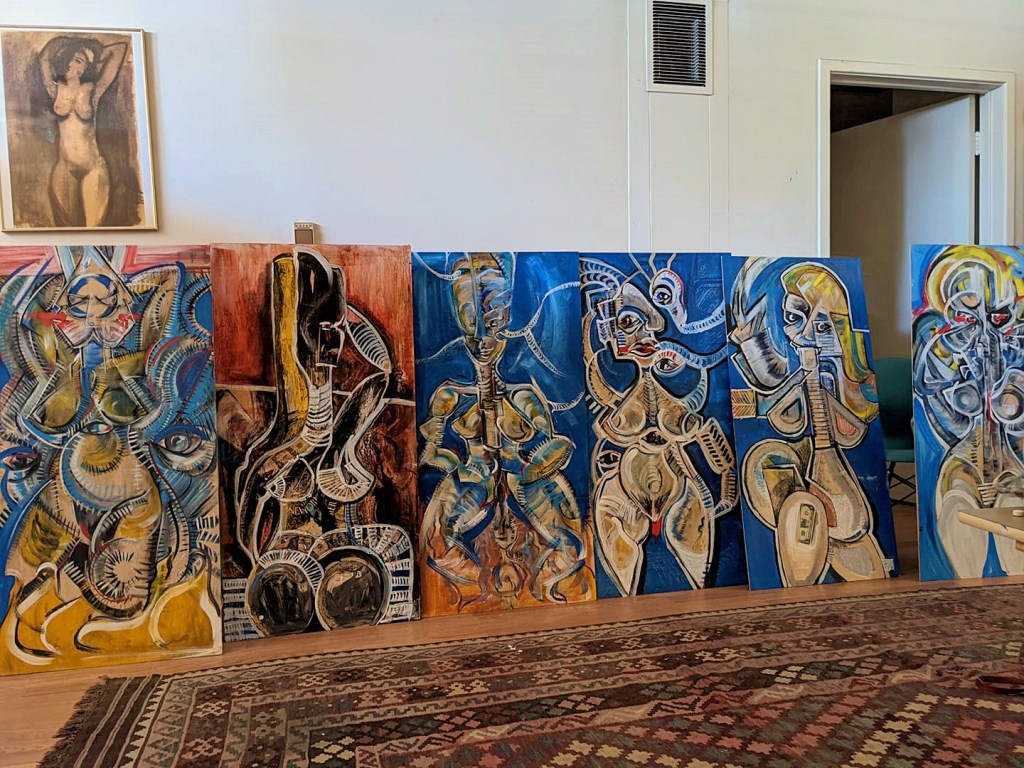




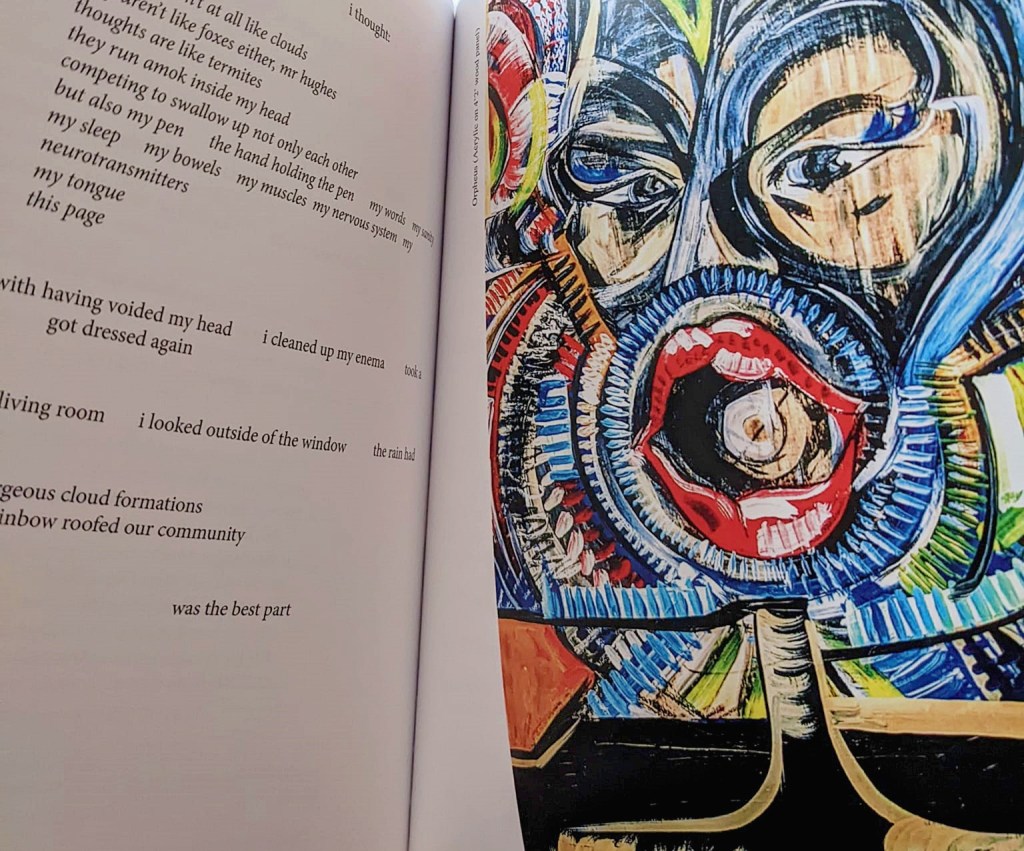
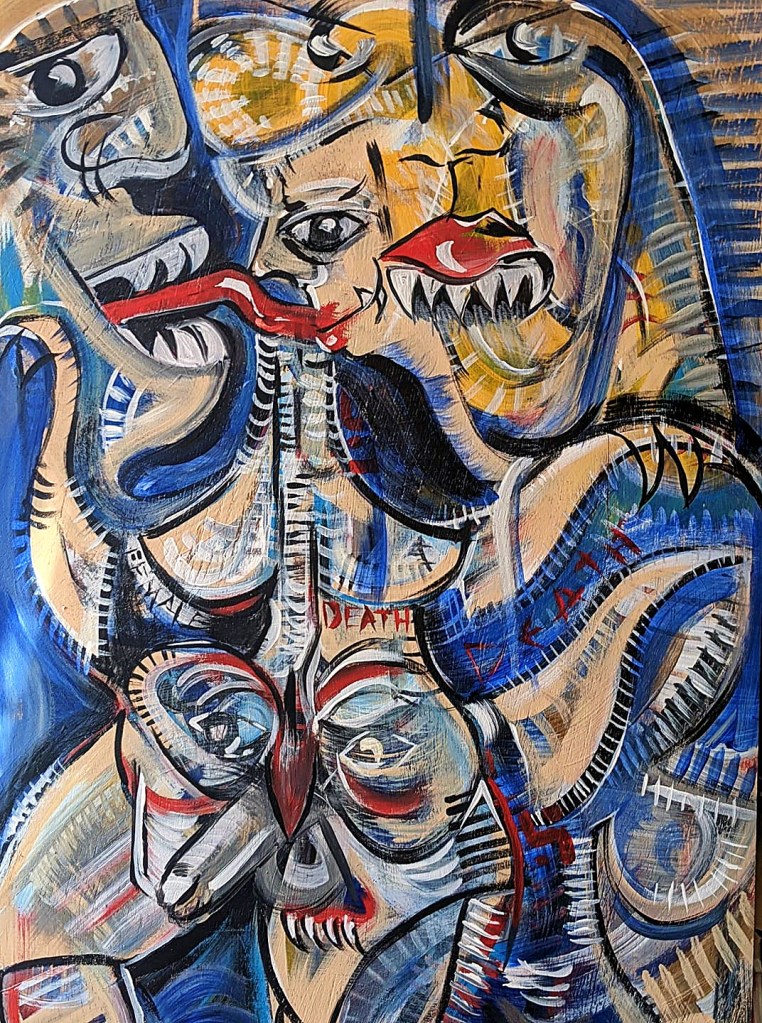

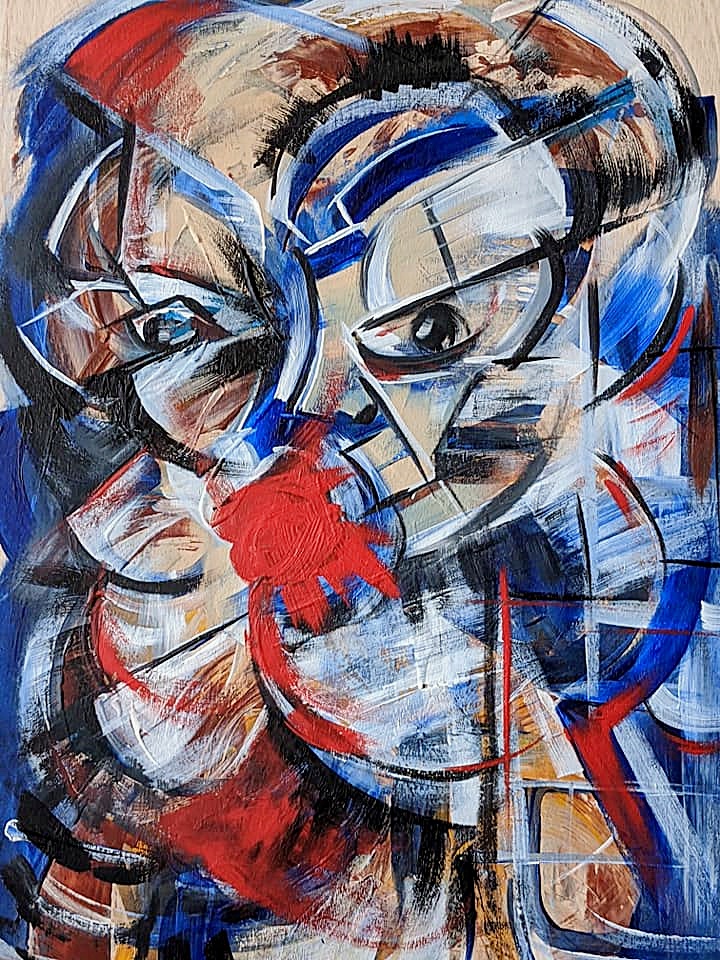
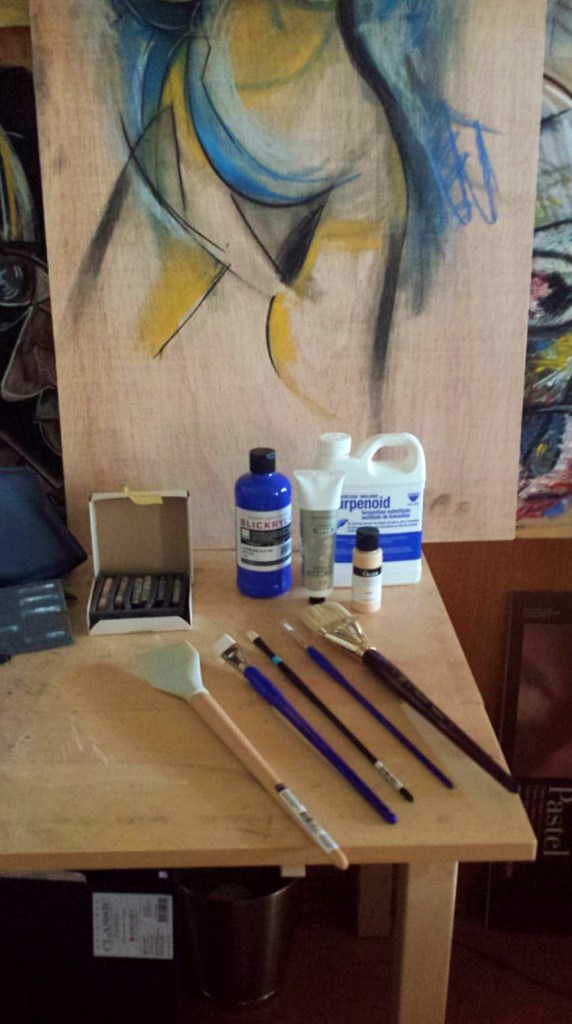










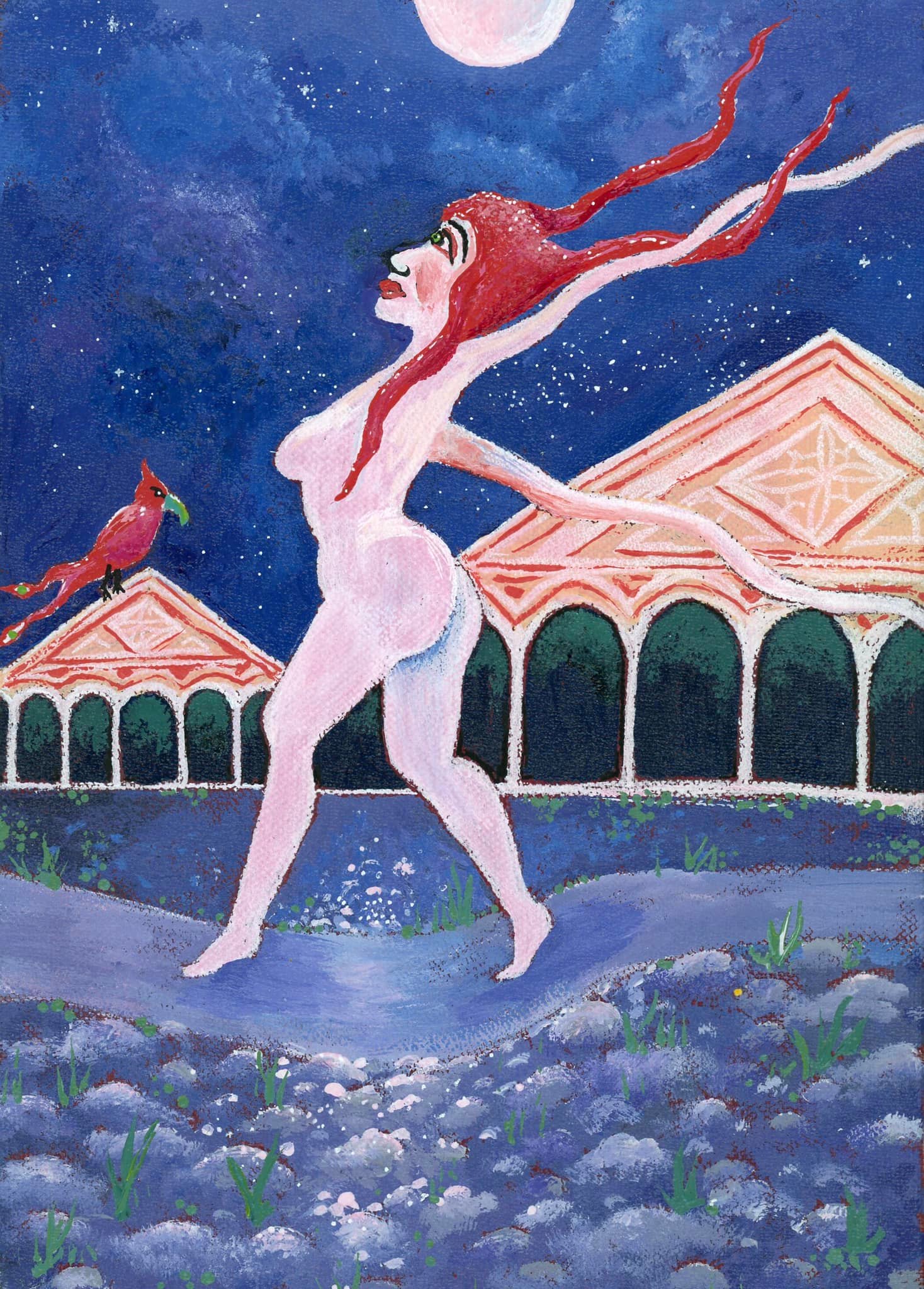
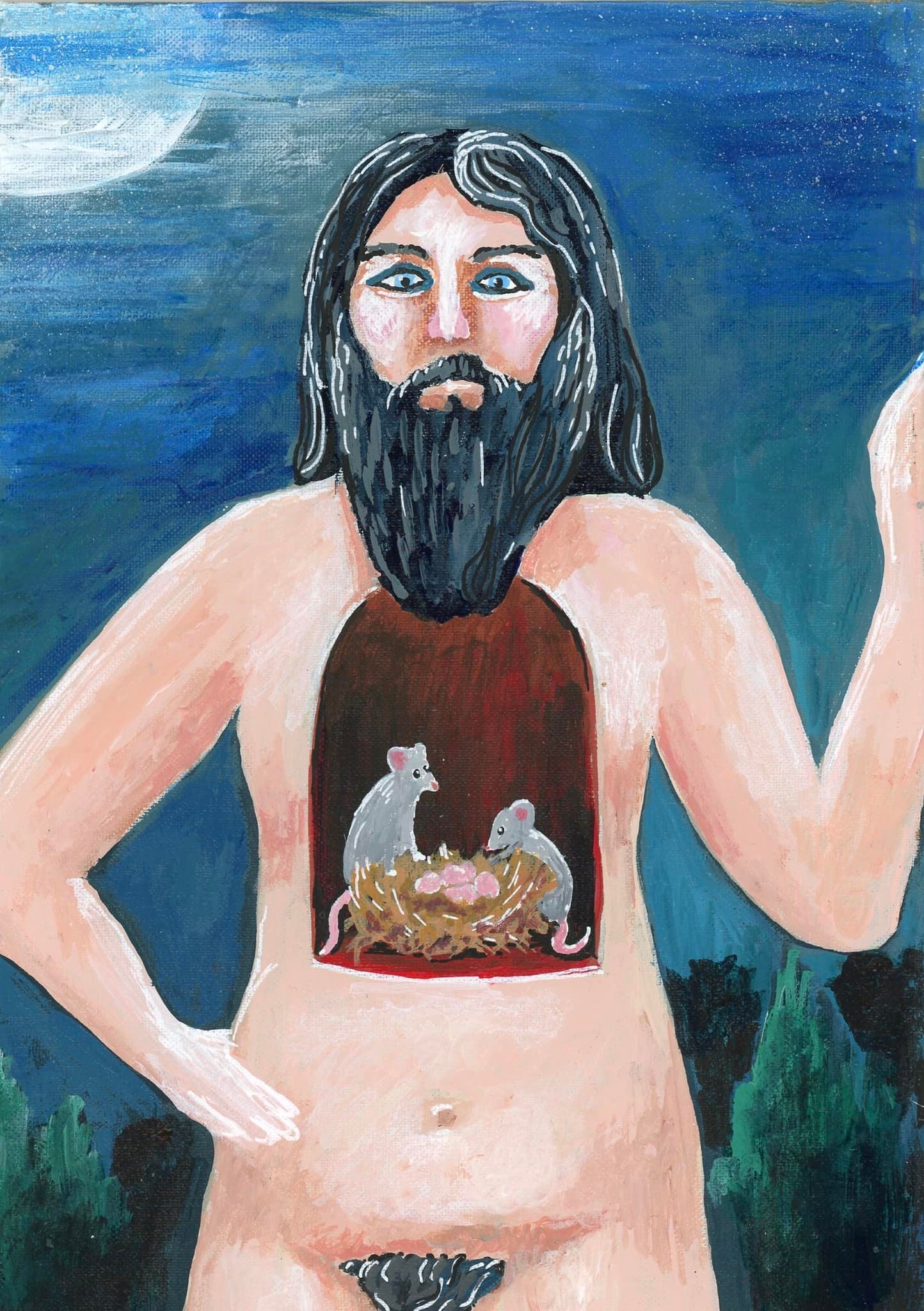
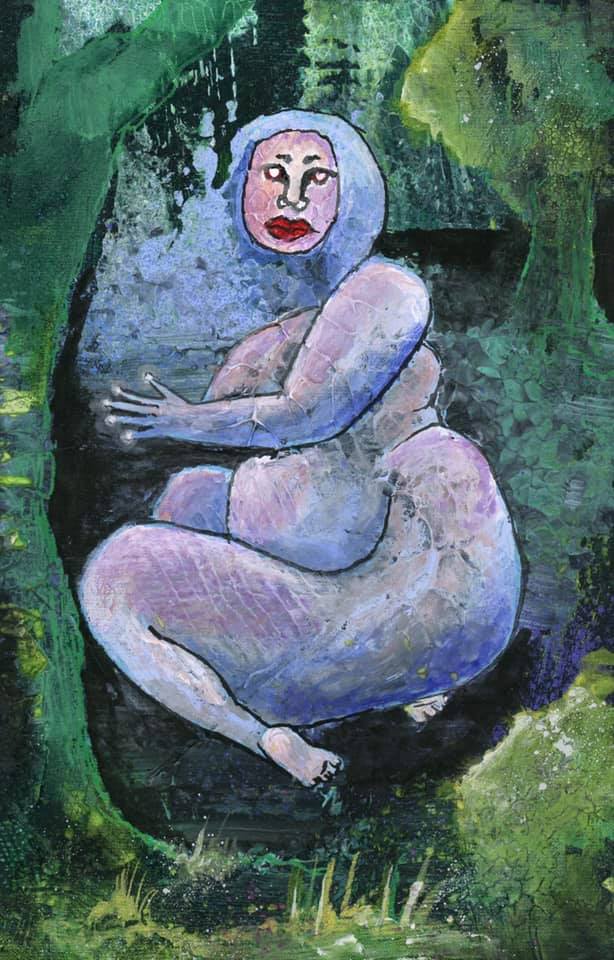
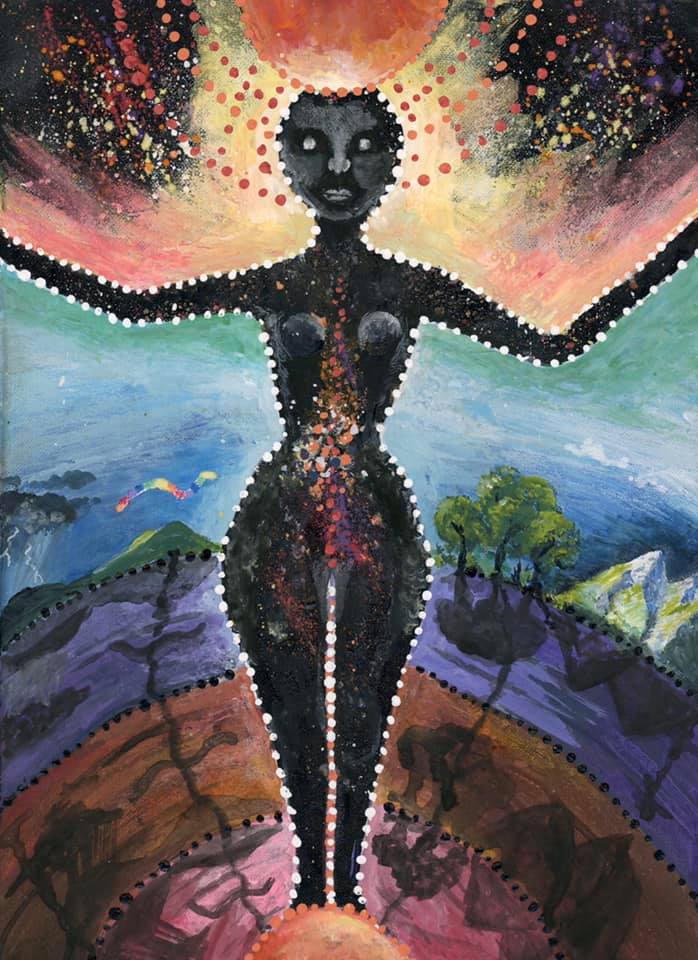


 Mitchell Pluto