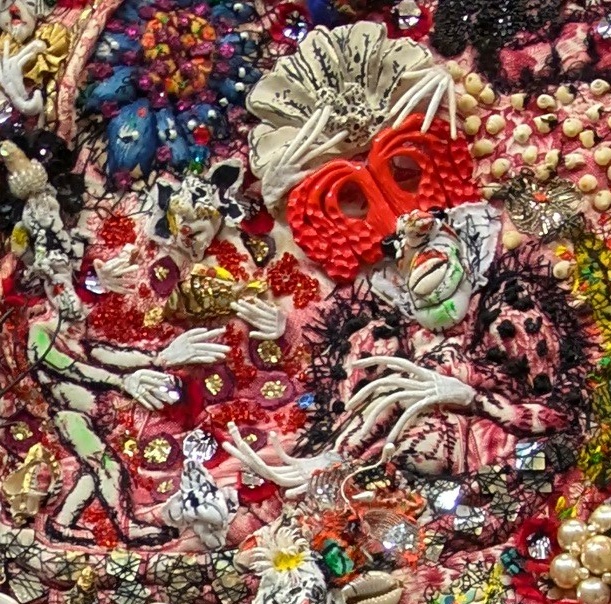
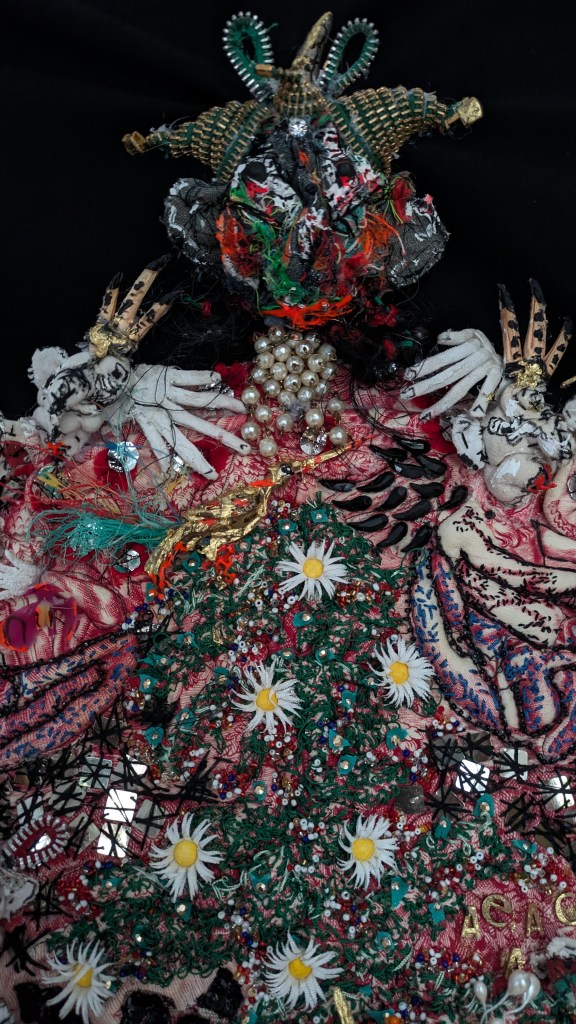
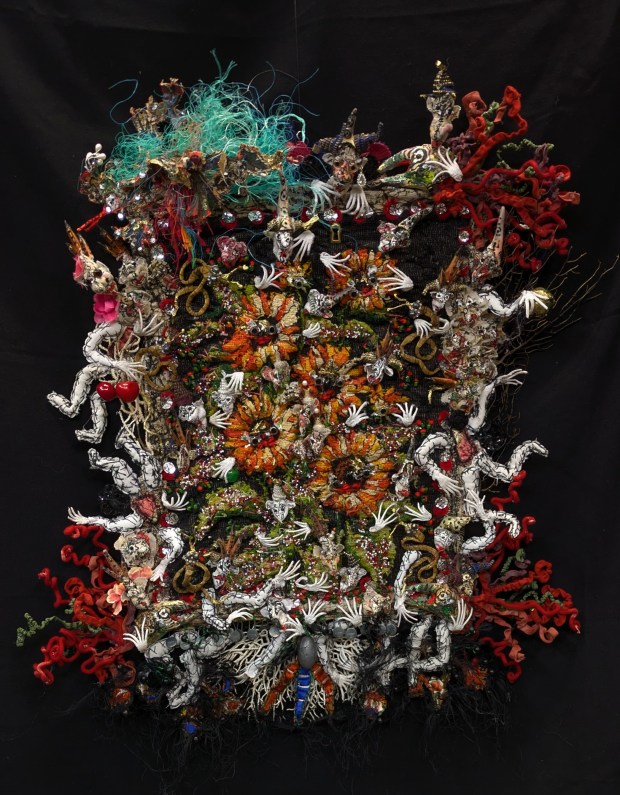
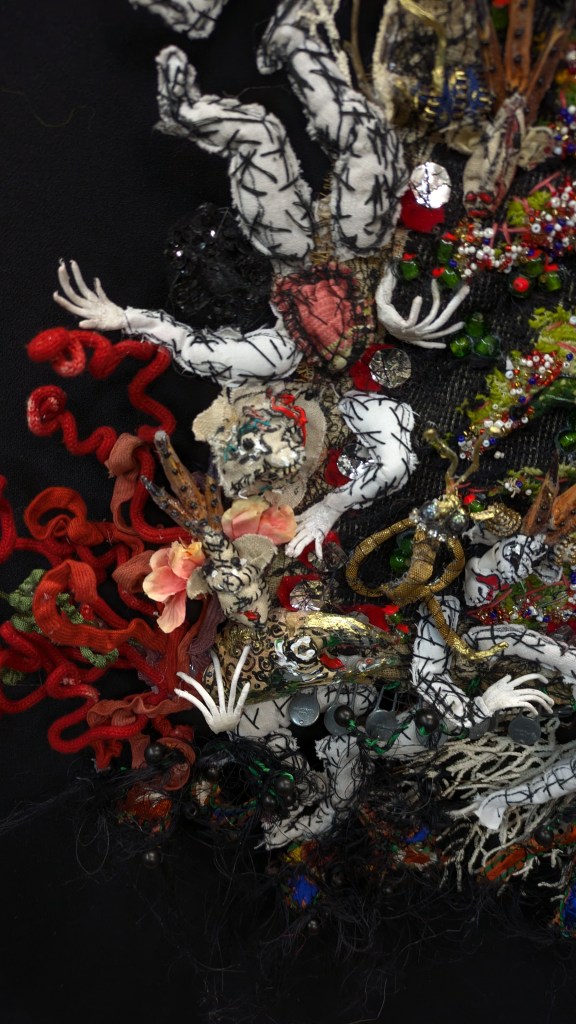
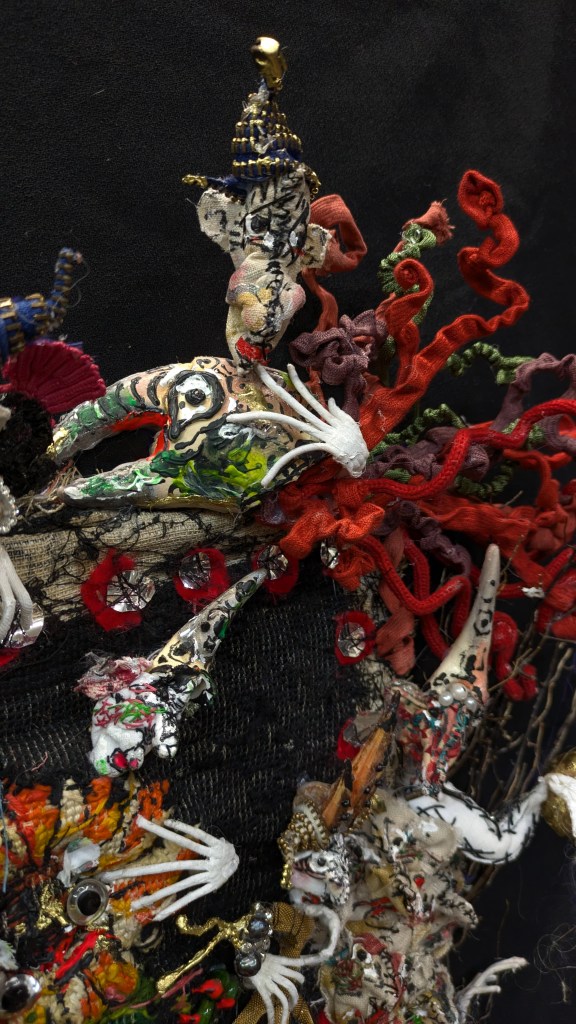
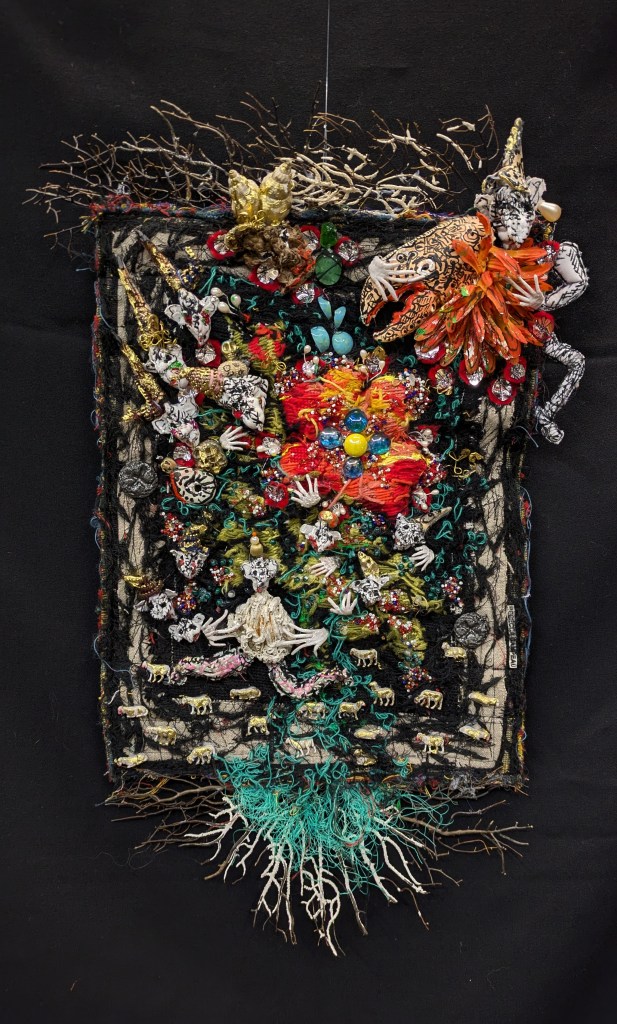
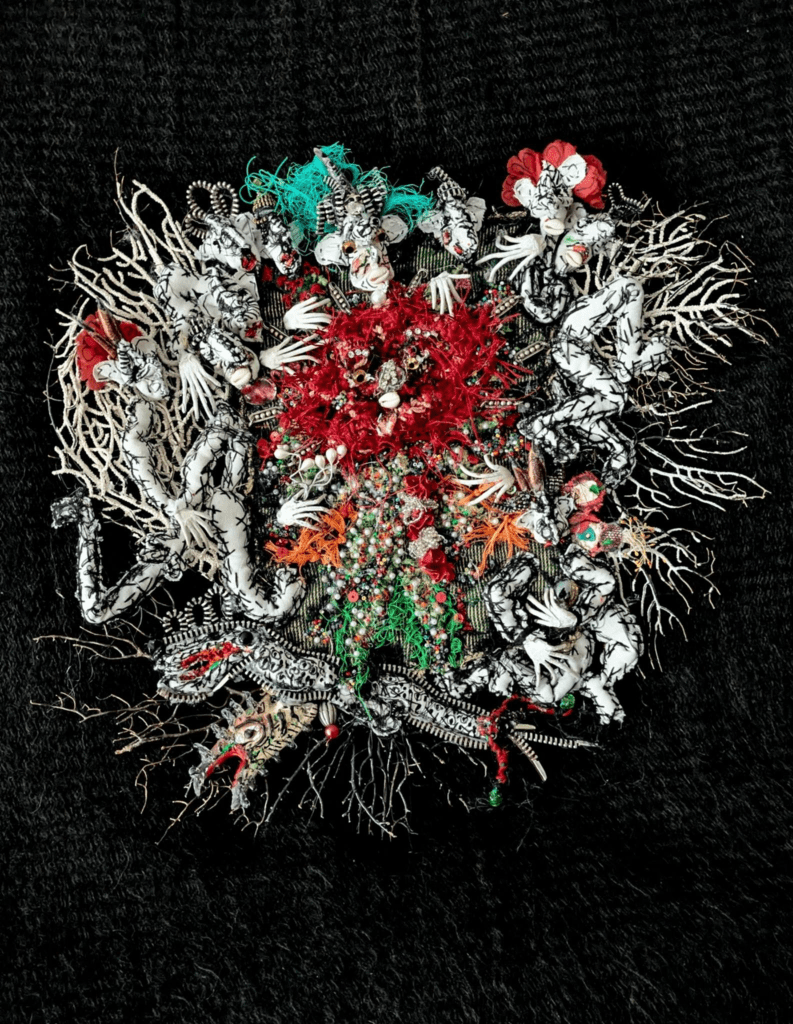
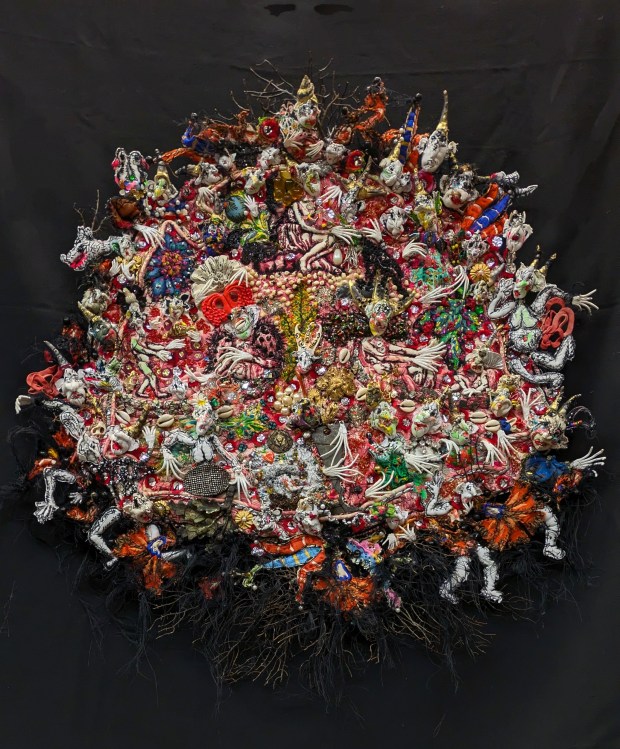
Rebecca Campeau possède un talent unique pour assembler les textiles d’une manière qui évoque une qualité hors du commun. Cela se traduit souvent par la création d’une atmosphère caractérisée à la fois par son intensité et par un large éventail de diversité.
Rebecca Campeau a travaillé comme rédactrice de mode pour les magazines ELLE, Jardin des Modes, 100 IDÉES, Jours de France, Journal Femme et d’autres publications. Elle a également exercé la fonction de styliste publicitaire pour de grandes agences telles que Hélène Rubinstein, Danone, Kodak et Nazareno Gabrielli-Milan/ORO BLEUE-Milan.
Animée par une profonde affection pour les textiles, Rebecca nourrit une passion débordante pour la découverte de nouveaux matériaux et thèmes, en particulier lorsqu’il s’agit de créer des costumes thématiques et des personnages mystérieux.
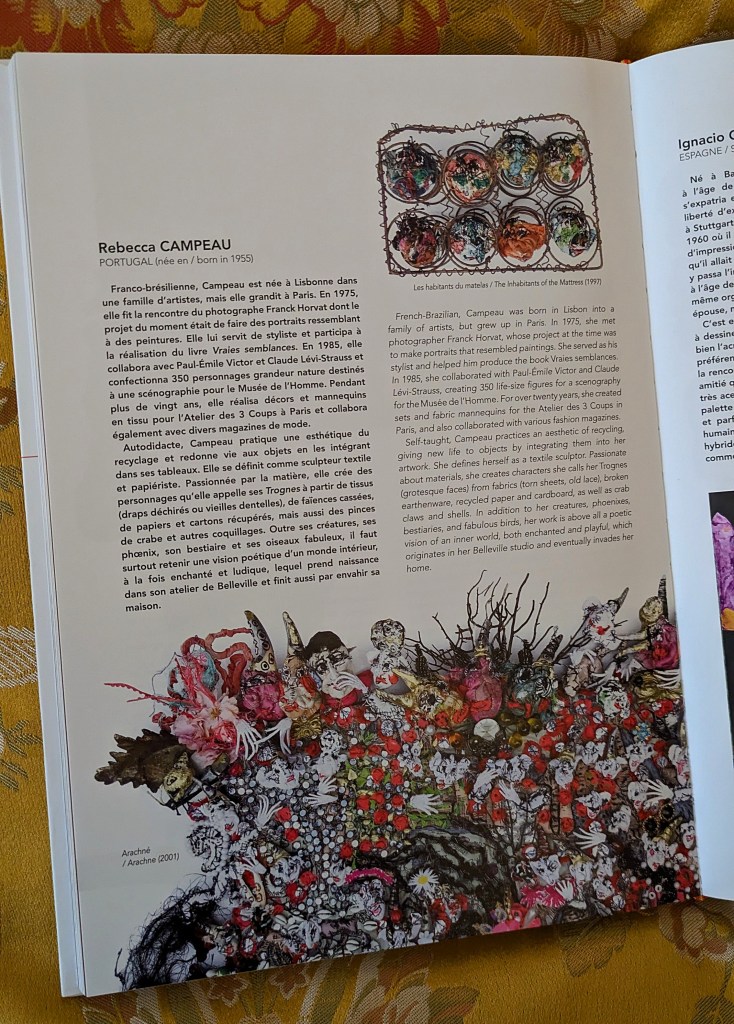
Rebecca Campeau est venue à là création artistique par le stylisme qui lui donné le goût du travail avec le tissu et papiers . Peintre, elle se définit essemtiellement comme un << sculpteur textile >> et une << papiériste >>.Elle sculpte des personnages connus ou anonymes .
C’est tout un univers qui défile dans son atelier à Belleville.
D’elle, Andrea Ferréol a écrit : << J’aurais envie de jouer à la poupée avec les personnages de Rebecca Campeau, mais pardessus tout, j’aime son bestiaire (ah! son singe emplumé comme une grande cocote ) et ses fabuleux oiseaux, Loulou le perroquet de Flaubert, et tous les autres, oiseaux lumière, de feu, de givre.Envol généraliralisé des cygnes-mouettes comme des fleurs qui se balancent au vent, des cages fines qu’un souffle suffirait à leur donner des ailes, de notre imagination enfin libérée du poids du sol >>.
Andrea Ferreol comedienne (- DESPAIR – de RAINER FASSBINDER )
Rebecca Campeau fait partie de le collection des musées Nationaux en France et à L’étranger.
Elle à collaboré avec Claude Lévi-Trauss, Paul Emile Victor et … et a réalisée un livre, ( Vraies Semblances ) avec le photographe Frank Horvat.
Prix Jean Anouilh2019 – Prix TAYLOR – Grand prix Renéé Béja 2021 – Prix Artension 2022 – Prix Bohin 2023
Musée National de Norvège-exposition Louise Bourgeois-Oslo/Musée des Champs Libres-Rennes/musée Cérès Cérès Franco Montolieu/musée d’Art Brut-Montpellier/musée Villa Montebello. musée Mona Bismarck-Paris/musée Mendjisky-Paris/Le FIAA-Le Mans/musée Cite du Train-Mulhouse/musée Toine Colot-Belgique/musée du Tunnel du Gothard-Suisse/musse du Plan incliné-Ronquieres-Belgique/musée de la mine-liège/musée de la Mine Bleue-Noyant-la-Gravoiere/musée Guerre et Paix-Ardennes/musée de la forêt-Renwez/musée de la carrière de pierre-Givet-France/musée Cristallerie Saint Louis-Saint-Louis-les Biche/Hôtel de Sully-Paris/Bibliothèque Bilipo-paris/musée Gustave Flaubert et de la Médecine-Rouen/The National Art Center-Tokyo/musée Bohin- Saint-Sulpice-Sur-Risle/musée des Beaux-Arts-Carcassonne/musée des Champs Libres-Rennes/Galerie Kiron-Paris/musée Mini Textile-Italie/Vibrations Textiles-Paris/musée de la photo-Paris/
Les sculptures sont visibles en permanence-au Musée d’Art Brut-Montpellier/musée Gustave Flaubert et de la médecine-Rouen/ Musée de l’Homme-Paris /Cite du train-Mulhouse/musée du plan incliné-conquières-Belgique/musée Arthur Masson-Belgique et…
Salons: Art Capital-Comparaisons-Paris/AAF-Paris/Figuration Critique-Paris/Salon d’Automne-Paris/Biennale 109-Paris/Salon des Beaux-Arts-Paris/Salon-XI’AN-Chine Art Partage-Rives/Hors Normes-Praz-sur-Arly/Chic Art Fair-Paris/Aix-en-oeuvres à Aix-en-Provence organisé par Andréa Ferreol
Galeries: Edgard le Marchand-Paris/Beaubourg-Paris/Art-Top-Lille/Not a Gallery-Paris/Galerie75-Rouen/l’Ecu de France-Viroflay/Chez Colette-Paris/Cécile Dufay-Paris/ST’ART-Paris/Espace Aliès Guinard-Chaillon/ l’oeil de la Femme à Barbe-Paris/Artcompulssion-Montpellier/Artistes Actuels-Paris/Collection Gallery-Chypre/
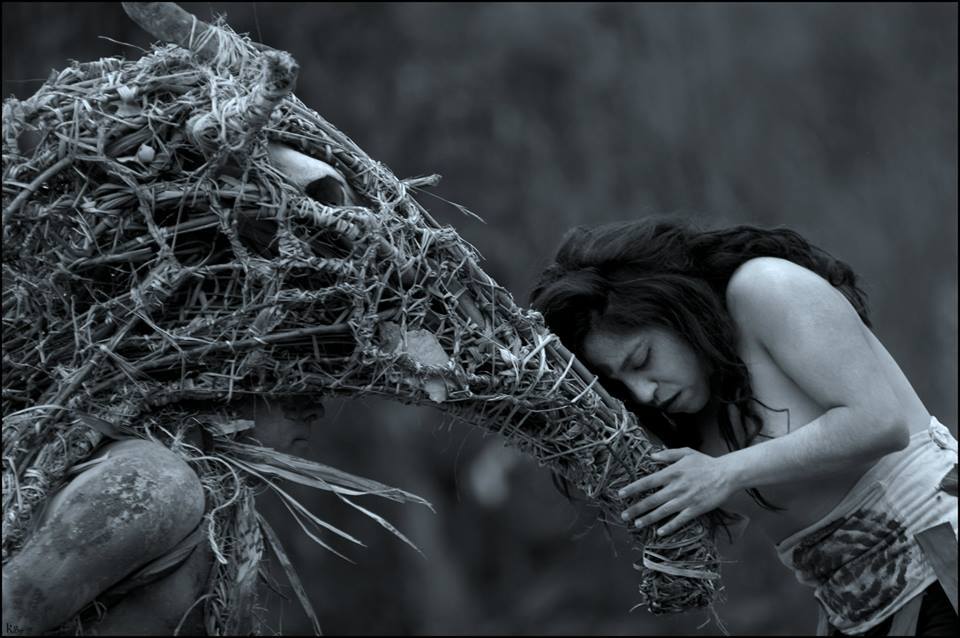
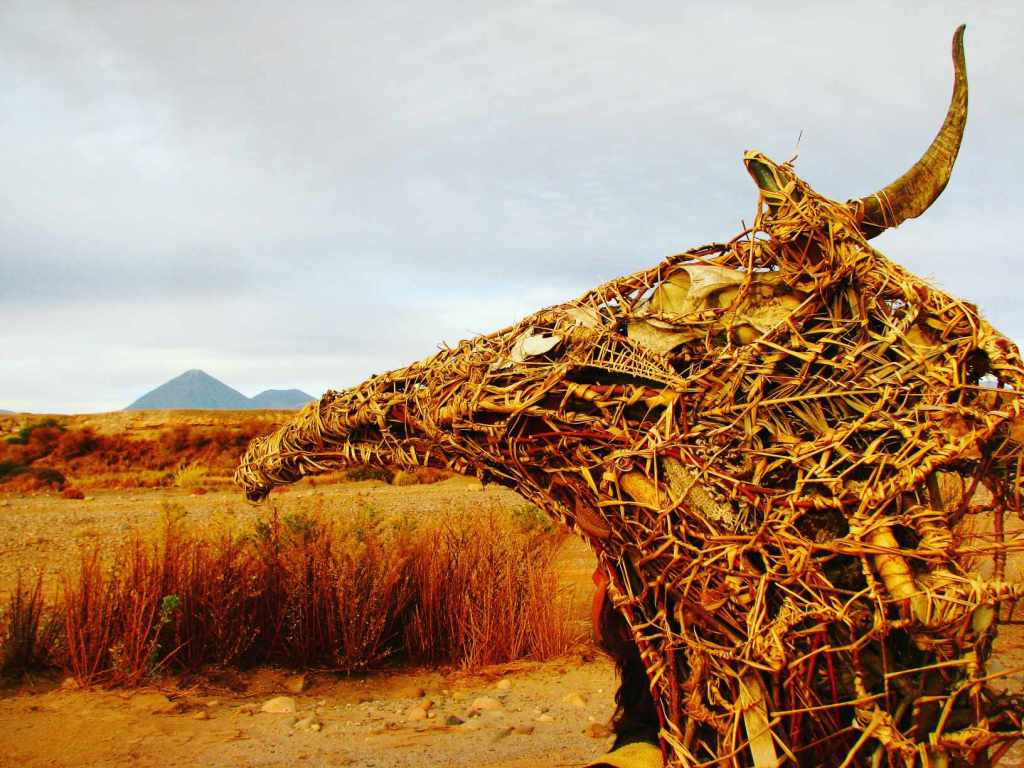
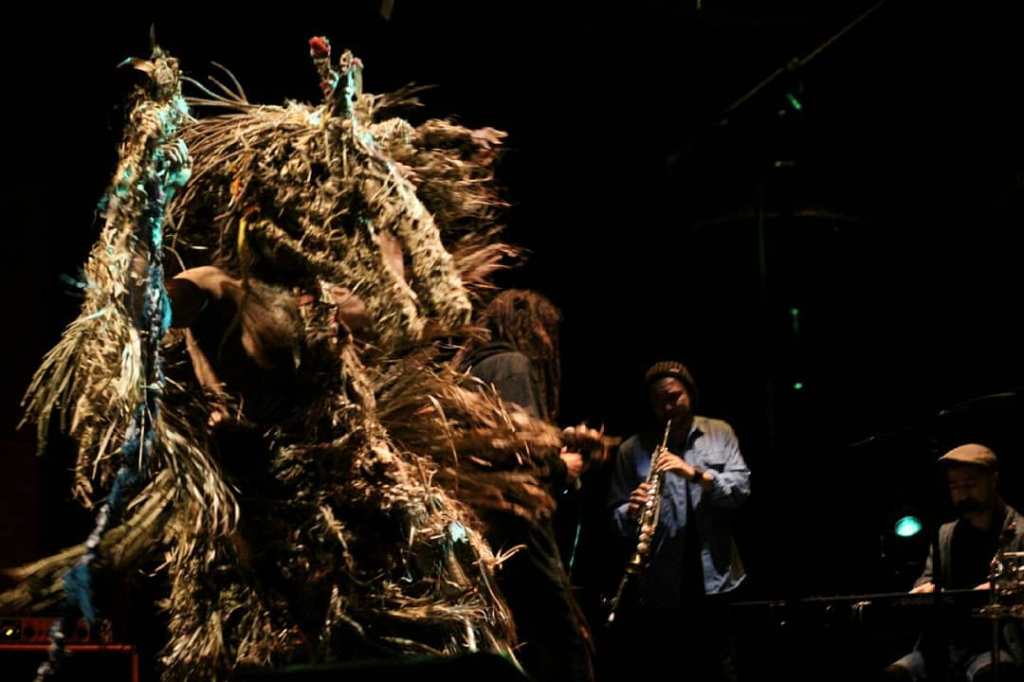
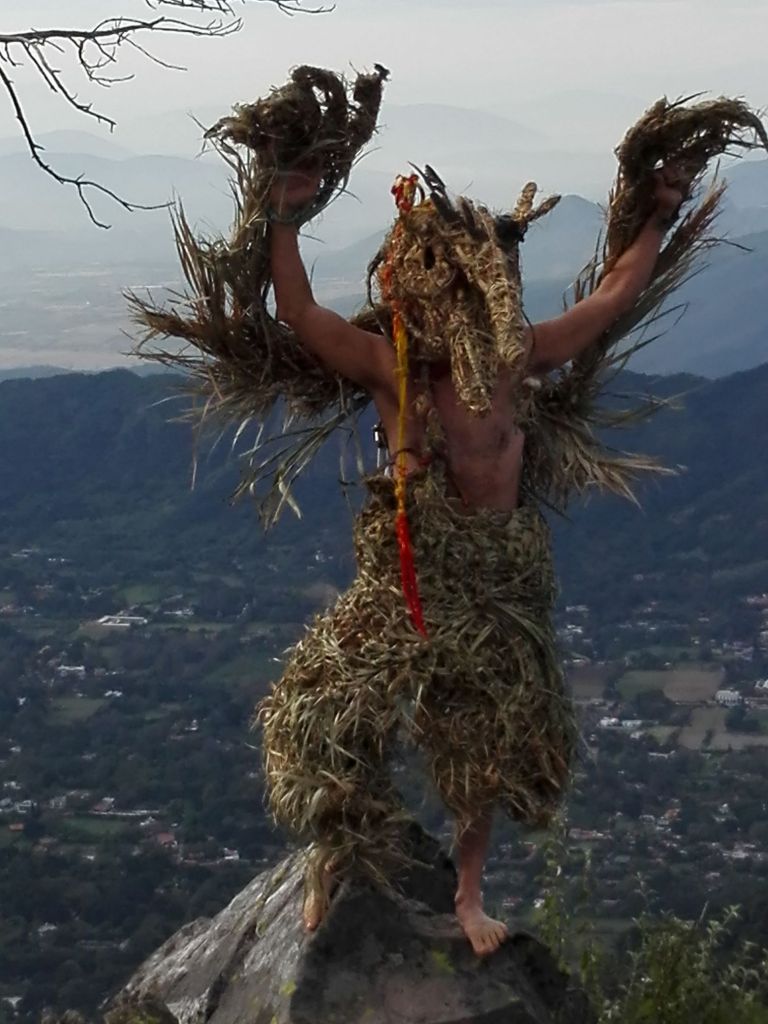
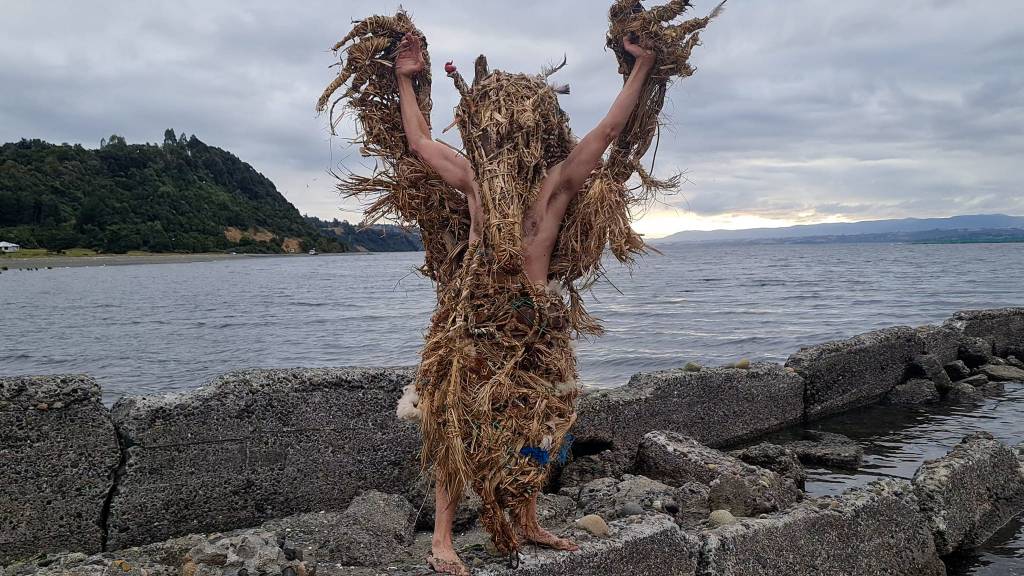
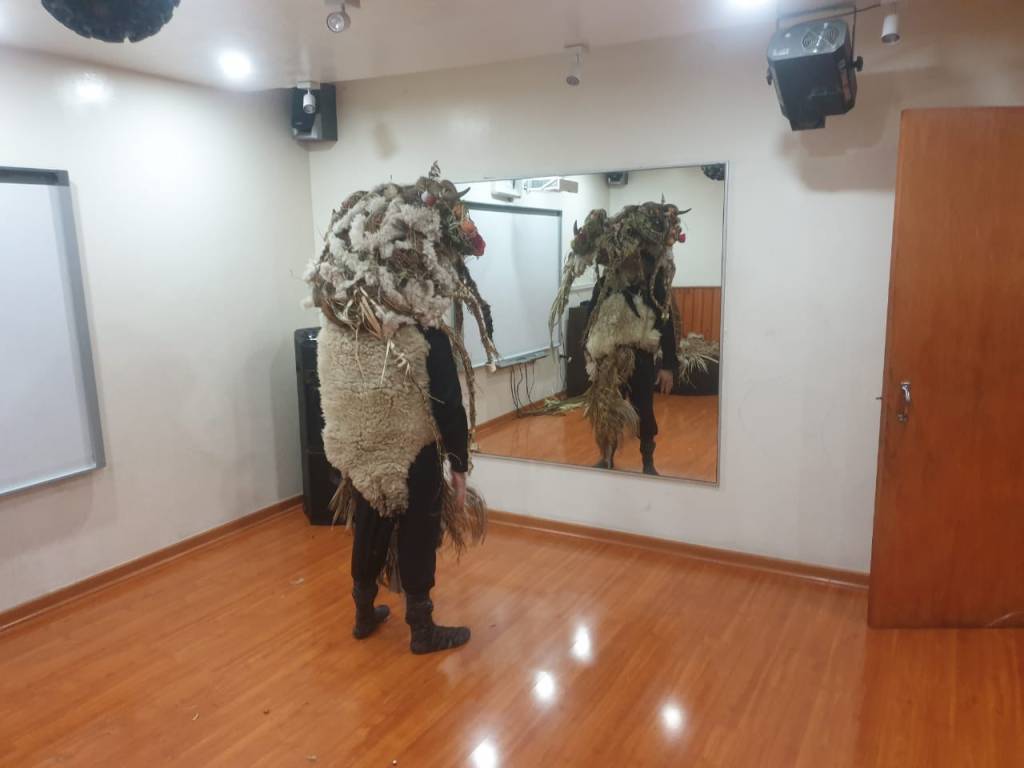
Son seres míticos… o espíritus vegetales y animales…que aparecen por el trance de tejer . Que son nuestros primeros textos.
Es bajar ese texto al cuerpo y activarlo en ceremonia Ese texto de plantas tiene una memoria ancestral
Que yo rescato hoy, por la necesidad de volver al rito, al mito y a generar saberes integrados para sanar
Si es así…mi quehacer es un trance espontáneo…según lo que voy tejiendo se arma el texto…
Si tejo una raíz me habla del inframundo. De mis densidades, oscuridades. De mis ancestros que nos sostienen y nos hacen pertenecer con identidad. Nuestras abuelas piedras nos enseñan a concretar
A cristaliza
Si tejo una rama, me conecta con supramundo, la luz , los seres alados, el aire, la espiral y el fruto , para dis frutar = sacar el fruto.. Es lo que me hace ser Pajararbol Al servicio de un oficio ancestral. Arte para lo social, arte en tribu
Francisco Ríos Araya (1971, Santiago)
With a background in journalism and art studies, Francisco has established a career known for participating in international sculptors’ gatherings. Clay, metal clay, wood, resin, and natural fibers are among the materials he integrates into his works.. Through his research, he investigates abstract elements that are connected to sensuality and the origins of life.
Francisco’s work revolves around exploring the representation of mythological beings present in diversified cultures. His reinterpretation of these concepts emphasizes their role as a conduit, linking the earthly with the celestial.
“Sol, el cuarto cielo” Acrílico sobre tela y madera. 50 x 50 cm 2023
Writing is an art, which requires a life and I don’t know how to write, I know how to paint, after 25 years, I don’t stop learning and growing. Words can probe the deepest reality, but it is not the only way, you can have few words and still have a profound impact on the nuances of reality, you can have songs in your mind, plastic and colors.
I have colors.
When I look at a painter I also see words. Meanings, ways of seeing the world and nature, that have been transferred, inherited from one artist to another. As if we all spoke the same language, a hidden one. Hidden it is, behind the colors that live in my mind.
I do not hide in the colors, from the unbearable reality. I want to think that I shape it, I want to think that it can be inhabited in other realities. I want to think that I win the fight, freedom from myself, freedom from reality. I want to be able to see a space, a small work of art and it reminds me of this, it speaks to me about the spirit, I want to inhabit dreams. Imagine the psyche of a great musician, composing songs in his mind, or a poet spinning beautiful phrases full of meaning. Evading the weight of the psychic constructions of the most common social dynamics. What a beautiful girl, that guy looked at me ugly, how badly that old man drives, how fat, how tall, DO RE MI FA SOL LA SI, isn’t it perhaps a transmutation.
I don’t know how to write, I can put these meaningful sentences, which I will regret later, not a poet. Nor from what I have painted, a constant growth, the practice of a static that comes from colors and forms. A way of meditating, a way of praying, perhaps that is why I am building altars today.
Internationally recognized author and lecturer specializing in the use of entheogenic compounds in magico-religious settings. P. D. Newman has been immersed in the study and practice of alchemy and theurgy for more than two decades. A member of the Masonic Fraternity, the Society of Rosicrucians, and the Martinist Order, he lectures internationally and has published articles in many esoteric journals, including The Scottish Rite Journal, The Masonic Society Journal, and Invisible College. The author of Alchemically Stoned and Angels in Vermilion, he lives in Tupelo, Mississippi.
An altar constitutes a sacred space insofar as it is a deliberately constructed liminal space. A space is made sacred first and foremost through the creation and maintenance of a vacuum within it—it is the mystical act of reverting an area back to its natural, chaotic state. What is then invited to fill this void constitutes the divine FIAT—the magic “word” whose essence will thenceforth inform that space and all that transpires in it. Ergo, nothing is permitted to penetrate that void which is not in harmony with essence of the god. Those things that are harmonious with a given essence are termed ‘symbols’ and ‘tokens’ of that essence. These do not simply represent or correspond to the god, but rather constitute the deity himself in miniature form—a fractal-like manifestation of that essence which recapitulates and reiterates the totality of the god upon the microcosmic plane.
The Neoplatonist, Proclus, once stated that Soul “contains images of [things] and detailed, essential [seed forms] which are like statues of things themselves.” Even the names of things, therefore, arise from Soul and amount to veritable ‘statues in sound’ that really are the things described. If the name of the god is a presence of said deity, how much more an actual image? The profane view is that the worshipper believes the god to reside within the statue gracing the altar. This is absurd. No, the statue is in the god, as are all the symbols and tokens descending from his essence. Indeed, gods are beyond space. In reality, it is the altar that occupies the god.
Image courtesy with the kind permission fromP.D. Newman
Claudia Isabel Vila Molina
born in Viña del Mar, Chile. Professor of language and communication at PUCV, poet and literary critic. In 2012, she published her first book, The Invisible Eyes of the Wind. She has published in renowned Chilean and foreign digital media: Babelia (Spain), Letras de Chile (Chile), Triplov and Athena de Portugal, among others. During the year 2017 she participates in the Xaleshem group with poetic texts for the surrealist anthologies: “Composing the illusion” in honor of Ludwig Zeller and “Full Moon”, in honor of Susana Wald. In 2018, she integrates the feminist anthology IXQUIC released both in Europe and in Latin America. In 2020 she participates reviewing the conversation book “Shuffle poetry, Surrealism in Latin America” by Alfonso Peña (Costa Rica), also writes a poetic prose text for the book “Arcano 16, La torre“, by the same author. Likewise, she participates in the book “120 notes of Eros. Written portraits of surrealist women” by Floriano Martins (Brazilian surrealist poet, writer, visual artist and cultural manager). In this year (2021) she publishes her second poetry book Poética de la erotica, amores y desamores by Marciano editores, Santiago.
Rituales poéticos
El corazón me sabe a pañuelos mojados Hoy escucho la canción de los océanos Y alguien más viene a mirarme Las algas suben por mis pies hacia las últimas rocas En este elemento volví a imitar los arrecifes Ellos callaban Me miraban tiernamente Como solo miran quienes están en estado perpetuo Y quise salir fuera de mi nombre Quise volar desde las ataduras de mi cuerpo La noche no halló sus otros puñales Y me concedió un nuevo deseo. Del poemario inédito Solsticio de invierno, derechos reservados.
Image courtesy with the kind permission from Claudia Isabel Vila Molina
Olesya Volk
Born in Baku, Azerbajan, lived in Moscow from age 16 and moved to Los Angeles in 1992. She holds a M.F.A. in Film &TV, majoring in Animation from UCLA; and is involved in painting, writing, illustrating, cartooning, mixed media, paper theatre and small size dioramas.
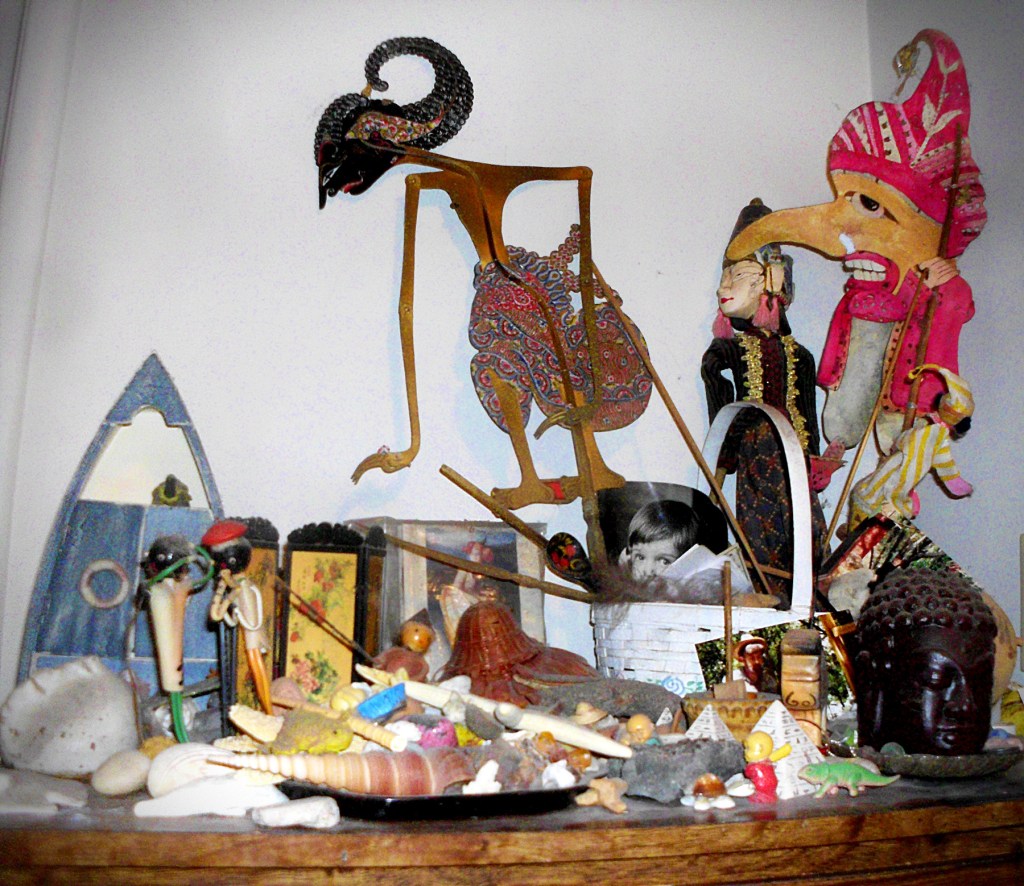
My altar: The inspiration for me always comes from the area deep inside my memory, it is connected to my childhood.
That is why my personal altar reminds of a little village that existed on a shelf in the cupboard at our place when I was a child. That village had a pond and a mill, woods and little houses. It had fishermen, singers. musicians, dancers, witches and sages, and a couple of hooligans. it had the place for games and the place for meditation and talking to spirits. Me and my sister and my mother were in charge of the village, and the villagers were protecting us and granting our daily wishes. The inhabitants of that village are still living with me! some of them are seen in the altar, the others have settled around in different corners…they continue to protect and manage the ties with the other worlds. My altar tries to copy visually that village from our cupboard, only there are much more pebbles now, and the lucky holey stones , they tell me of my walks on the beaches which I also held as sacred when a child…And above the village, there are spirits or gods overseeing it, in the shape of the Indian and Turkish shadow puppets ( one of the puppets, Beberuhi, I made myself; he is a nosier , he is curios about the essence of everything. ) And there are there the photos of the loved ones as well, photos from the past.
May the love last! may the protection and the belief in my vocation last! may the blessings stay!
Image courtesy with the kind permission from Olesya Volk
Jaime Alfaro Ngwazi
born in Coquimbo, Chile in October 17th, 1971. He studied at the University of La Serena and his degree is Bachelor in Education and Visual Arts. He has carried out different worshops about graphic expression. One of them is called Vivir el Afiche given by Mieczyslaw Gorowski. Apart from this, we can also mention Lo Esencial Significa given by Mieczyslaw Wassilewski and, finally, a seminar given by Lech Majewski at the University of La Serena.
El altar como centro mágico del mundo/ una trama de hilos multicolores de lana cruzan su centro/ se cuelgan a las orejas de las llamas del altiplano /brotan teléfonos con líneas como nervios-cuerdas de charangos, algunos trozos de carne seca y latidos de corazones emulando a Boltanski, en un centro magnético que conecta espectros de cristal, pantallas de celular y el sonido del viento/ en el desierto,seco ,que disecciona el paisaje salino, entre talleres líticos y mega fauna fantasma. Todos convocados a este espacio, reproducción en artefactos de madera del gran imperio / las cabezas de jaguar rugen a las estrellas de la lejana vía láctea ‚el frío es el ruego en la amplitud de la noche, mientras un vinilo con voces raspadas gira sin fin al compás de una danza metafísica las aristas del rombo raspan la piel suave/ el centro de todo es un valle seco ‚púrpura, apastelado en colores carne.
Image courtesy with the kind permission from Jaime Alfaro Ngwazi
Tony Kail
Ethnographer and writer. Tony holds a degree in cultural anthropology and has researched ethnic cultures for more than twenty-five years. His work has taken him from voodoo ceremonies in New Orleans to Haitian Botanicas in Harlem and Spiritual Churches in East Africa. He has lectured at more than one hundred universities, hospitals and public safety agencies. Kail has been featured on CNN Online, the History Channel and numerous radio, television and print outlets. A resident of Humboldt, Tennessee, Kail was raised in Memphis and calls it his second home.
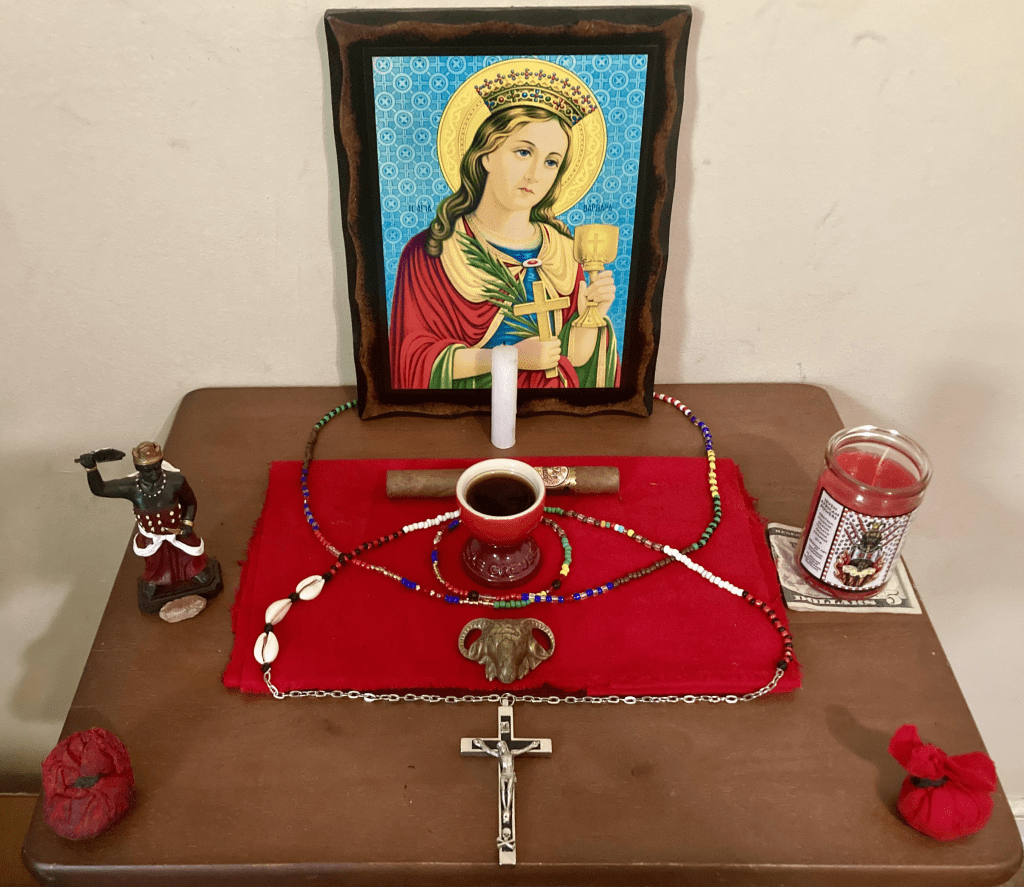
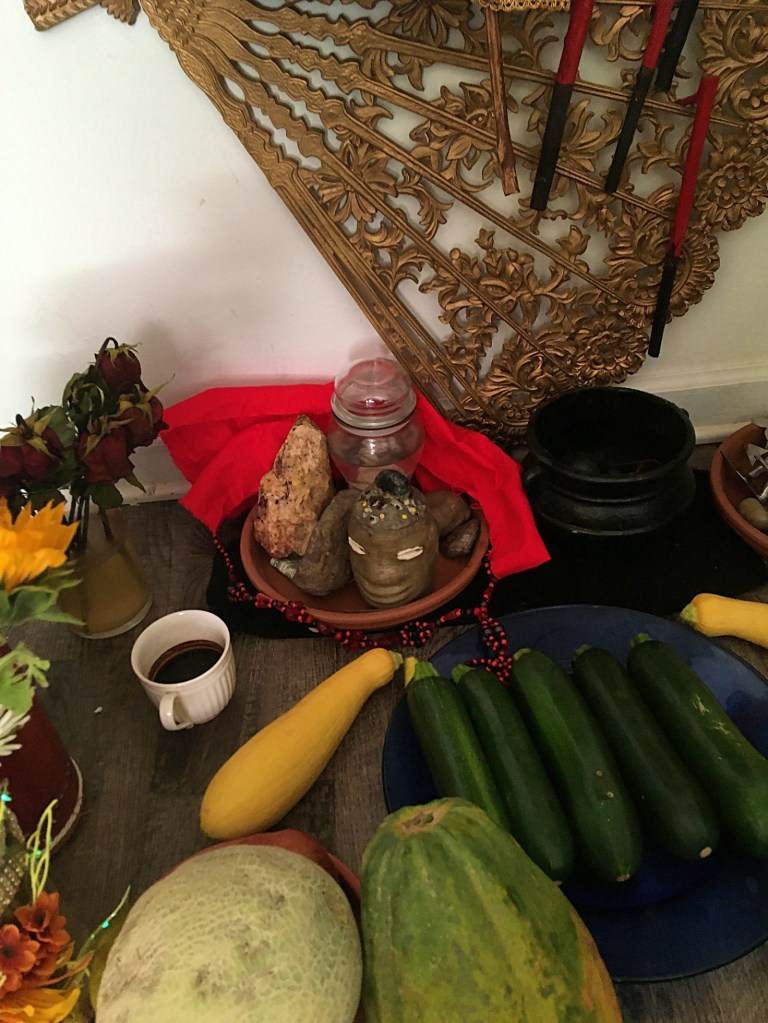
During ceremonies various events would occur that involved participants seeking reactions from the spiritual realm. On one occasion trance possession occurred and a participant was given information regarding a health issue that they had not shared with the possessed individual. Spontaneous deaths of animals would occur during rituals used to combat witchcraft. In the daily life of practitioners, physical evidence would manifest as a result of supernatural activity. Miraculous healings occurred where images of scars and skin disorders would appear on fruit and vegetables that were used in offerings to ask for healing. Subsequently practitioners would obtain healing and their wounds would disappear. Offerings to the Orishas would frequently disappear such as cups of coffee and wilting flowers would appear revived after being placed on specific altars.
From my upcoming book ‘Fieldwork with the Saints: An Ethnographic Journey into Santería in the American South
Image courtesy with the kind permission from Tony Kail
Duncan Neganigwane Pheasant
M’Chigeeng First Nation artist Duncan Neganigwane Pheasantisfrom Manitoulin Island. Duncan started painting in high school using colours and techniques inspired by Norval Morrisseau and other Woodland style artists. His grandfather, Ambrose Pheasant, told stories that were also a great influence on his artwork. Duncan uses his images to interpret Ojibwe legends and stories that surround the history of his ancestors and Manitoulin Island.
The Mohawk Warrior Flag design has been flown all over the world, serving as a symbol of the unity of Indigenous peoples in our common struggle, becoming a beacon of hope, and illuminating the discordant relationship between the dominant society and Indigenous peoples. The deer’s antlers are one of the characteristics that have made it the figure of a spiritual superiority, according to the Ojibwe. Like a crown, the antlers grow beyond its body, bringing it closer to the sky and making it sacred. In many tribes the deer is a symbol of spiritual authority. During a deer’s life the antlers fall off and grow again and the animal is also a symbol of regeneration.
Regeneration is the key to my shrine,, I burn sacred tobacco and recite the welcoming prayer.. The flag is also a symbol of regeneration,, fighting for what’s right, bringing the people back from the brink of disappearance and destruction when you enter it you travel through the eastern doorway…like when you were born…behind the warrior flag is another door…the western doorway…this is where you travel through when your journey is finished .but it is on the other side of the flag…this represents the fight ,the journey is to be done first…then you can travel through the western door…
Overall, having this home altar can be another way to remind myself of things I love or intentions I have for the future. If any of these rules are throwing me off, just trust my gut. You know what is best for you and your intentions. As long as you are in touch with your true desires, you’ll be fine to design your home altar anyway you like.
Image courtesy with the kind permission from Duncan Neganigwane Pheasant
Jay Blackwood
makes assemblages, boxes, totem dolls and other three dimensional pieces using found objects and materials. He has been involved with Surrealism, both as a practice and as a creative/revolutionary current, since the early 1990s. His work straddles the border between dream and consensus reality, the everyday and the numinous. Jay lives in Bristol, England.
The presiding spirit in my studio is a wonderful stone lithograph by Rikki Ducornet, Histoire Naturelle I, kindly given to me by Guy Ducornet some years ago. Beneath it are a number of pieces I made between 2001 and 2015. They are the product of chance finds, dreams and fleeting inspirations. All relate in some way to the natural world, and to archaic notions of male/female energies.
Image courtesy with the kind permission from Jay Blackwood
CLAUDIO RODRIGUEZ LANFRANCO
born in Valparaíso in 1968. After living in Patagonia and in United States product of a scholarship, his first painting exhibitions were date back to the nineties in Valdivia. Later he moved to Santiago and the Fifth Region, where his visual and literary work materializes in a body of work that addresses different forms of expression, such as painting and drawing, experimental and documentary video, visual poetry and muralism, with public art projects installed in Santiago, Valparaíso. As a visual artist he has exhibited his paintings in 15 solo shows and in more than 60 group shows in Chile, Europe and the United States, and his poetic texts have been published in regional, national and international poetry collections, his work being awarded in different state funds for artistic creation such as Fondart, Cntv, Fondo Carnavales Cultural Centers of Valparaíso, among others. Currently the painter lives and works between Valparaíso, Santiago and Concón, where he develops his artistic projects and teacher training, being in charge of university graduates, painting and mural workshops, becoming a teacher for generations of students and artists who have worked with him.
SELK’NAM FORCE. AS AN EXERCISE OF CREATION ON TRAVEL, CARRIED OUT DURING MY TEMPORARY TRANSIT THROUGH DIFFERENT PLACES IN CHILE SUCH AS THE ANDES MOUNTAINS, THE SOUTHERN CANALS, PATAGONIA AND THE ROUGH ARIDITY OF THE NORTH COASTS. A GLANCE OF THE BODY VALUE THAT THE ANCIENT CULTURES OF THE SOUTH OF THE PLANET GAVE THEIR CEREMONIAL REPRESENTATIONS, WHERE WITCHES AND SHAMANS DRESSED WITH BARK OR LEATHER MASKS COVERED WITH MUD AND MINERAL PIGMENTS SUCH AS WHITE, BLACK OR RED ON WHICH THEY THEN DRAWED FRAGMENTS OF THE SKY, THE PATH OF THE CONSTELLATIONS, SIGNS OF ANIMALS OR IMPORTANT NATURAL EVENTS – THE MOVEMENT OF THE SUN OR THE MOON – USING THE BODY AS A SUPPORT, AS A MAP, AS A GEOGRAPHICAL LANDMARK.
Image courtesy with the kind permission from Claudio Rodriguez Lanfranco
Doug Campbell
works primarily in collage, enjoying the immediacy of cutting through the detritus of the spectacle to the marvellous. He was born in Edinburgh, Scotland, where he still lives. Asking about the word ‘surrealist’ after finding it in a science fiction novel as a child, he was given a small book of Surrealist paintings. This was the first step on an adventure that continues until this day. His first encounter with living Surrealism was a second-hand copy of the Chicago Group’s ‘ARSENAL 4’ in the mid 1990’s. In response to a letter, Franklin Rosemont directed him to the recently-formed Leeds Surrealist group. This led to an on-going engagement with the international Surrealist movement through correspondence, collective games and contributions to publications and group shows. In 2017, he took part in the ‘Archaeology of Hope’ a large-scale Surrealist game concluding with a show and solstice ritual on the Isle of Wight. This was a significant transformative experience for everyone involved. Since then he has published a continuing series of collage novels in weekly instalments online at ‘The Cabinet of Major Weir’.
This is the biggest shrine in the house, and in the main living space, so probably the best organised. A mix of heirloom items, curios and pop culture junk. Framed artwork on the wall is by (l to r) Janice Hathaway, Tim White and Peter Overton. The boxed object at upper left is a magic bottle that belonged to my grandfather, an amateur conjurer.
Image courtesy with the kind permission from Doug Campbell
Mitchell Pluto
Artist, Jewelry Maker, Art Editor
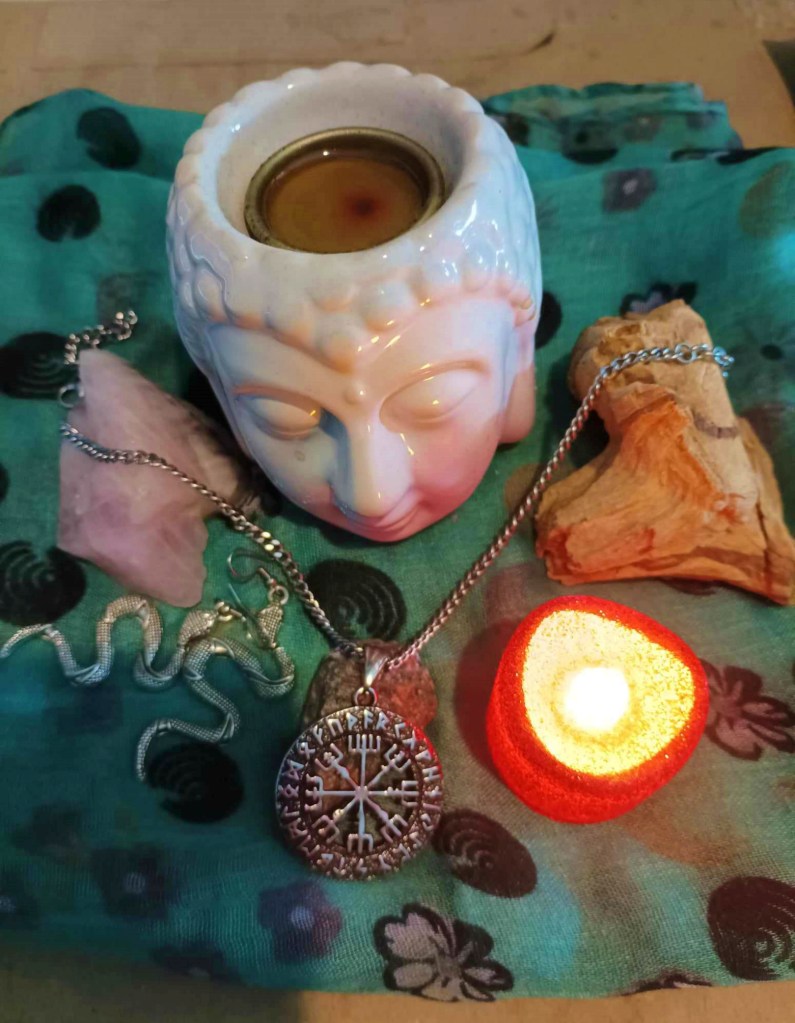
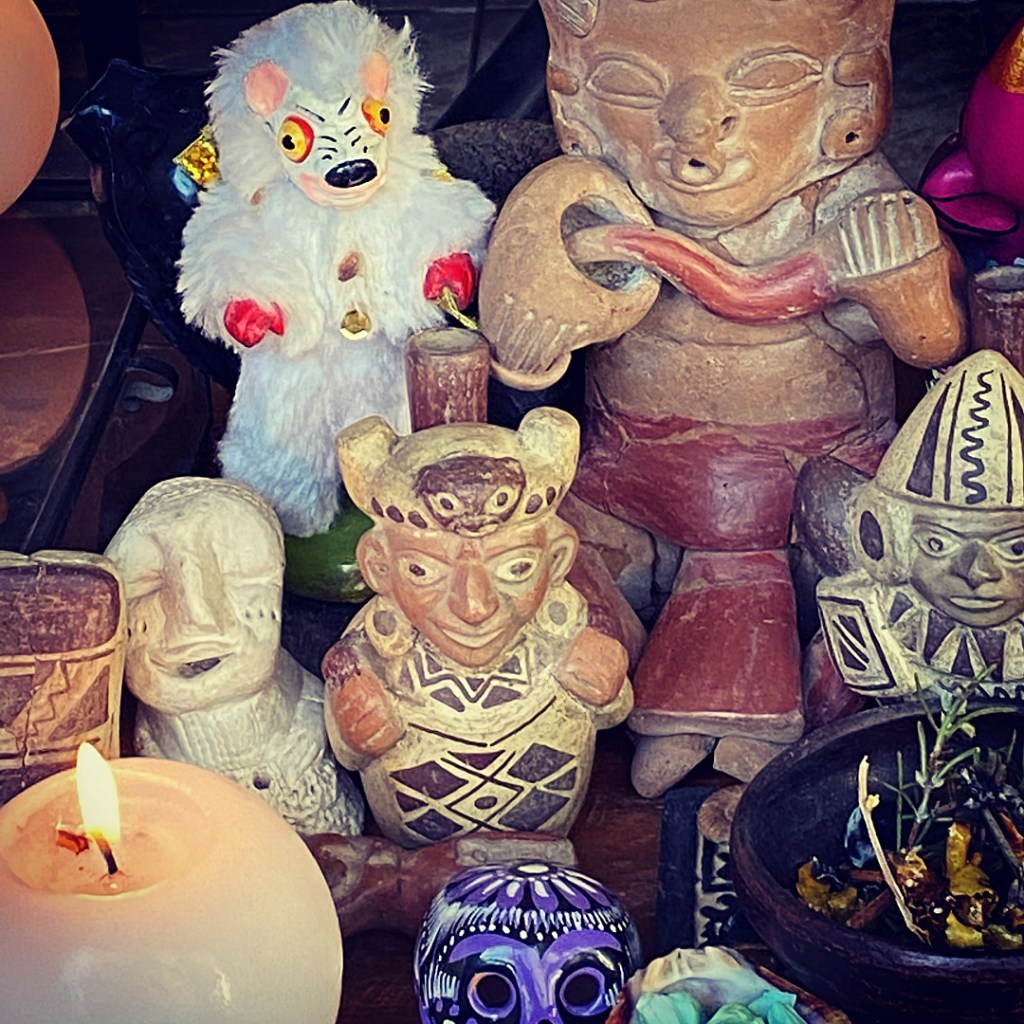
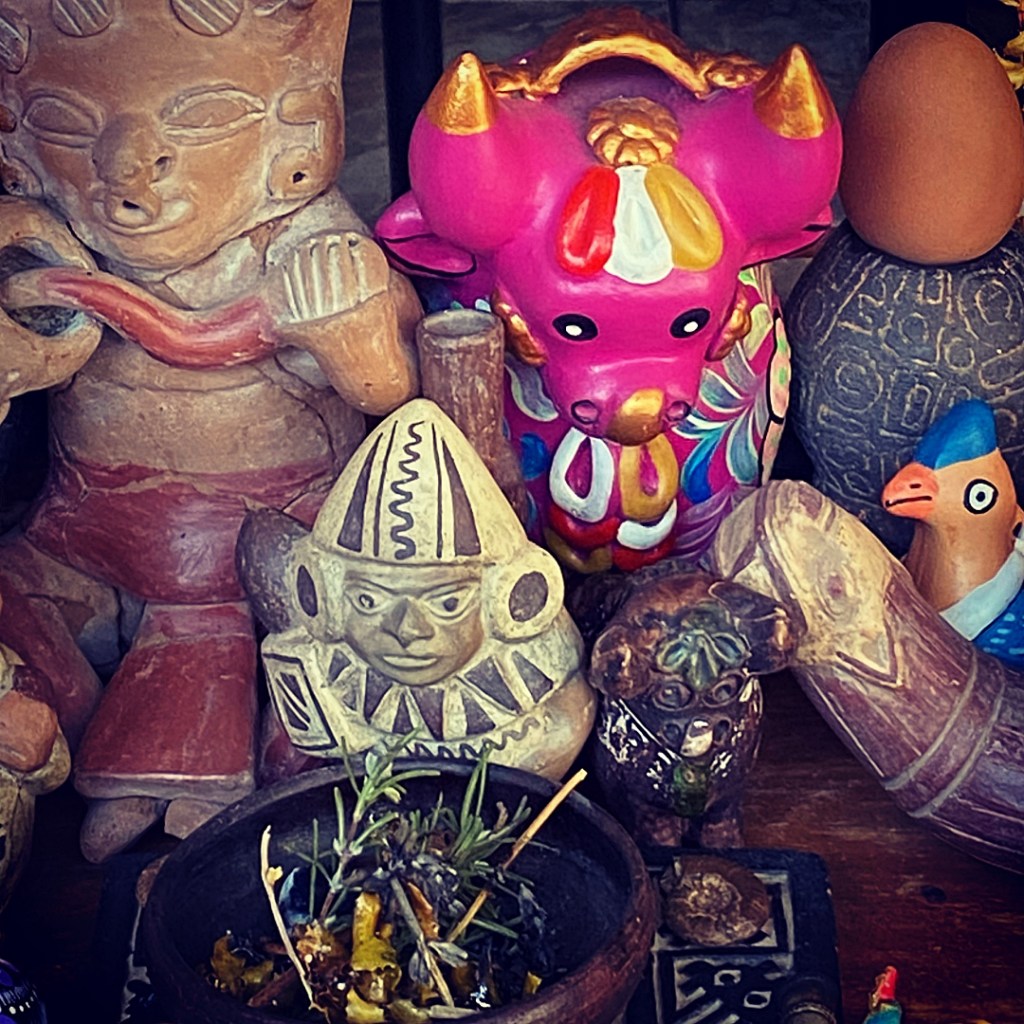
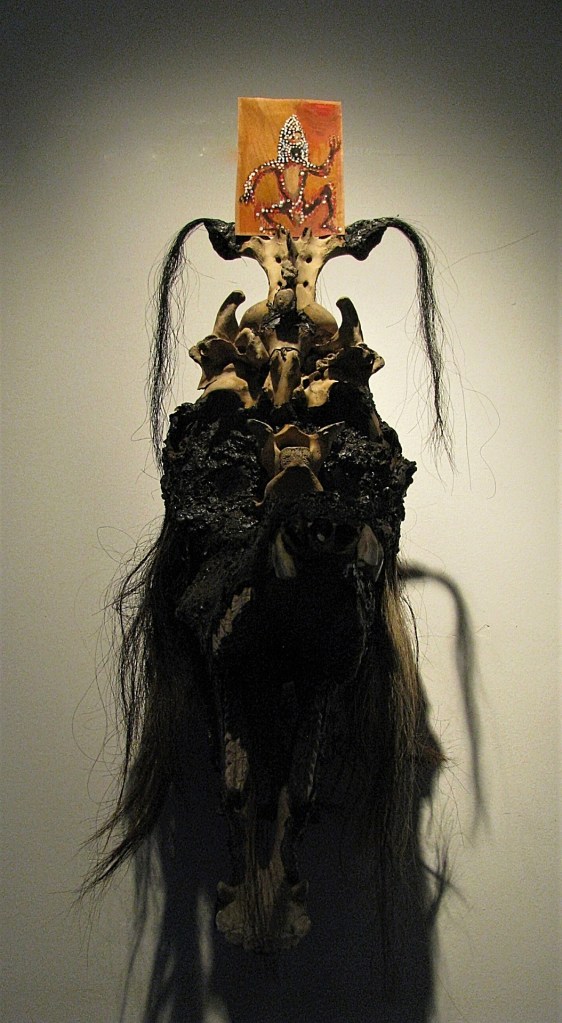
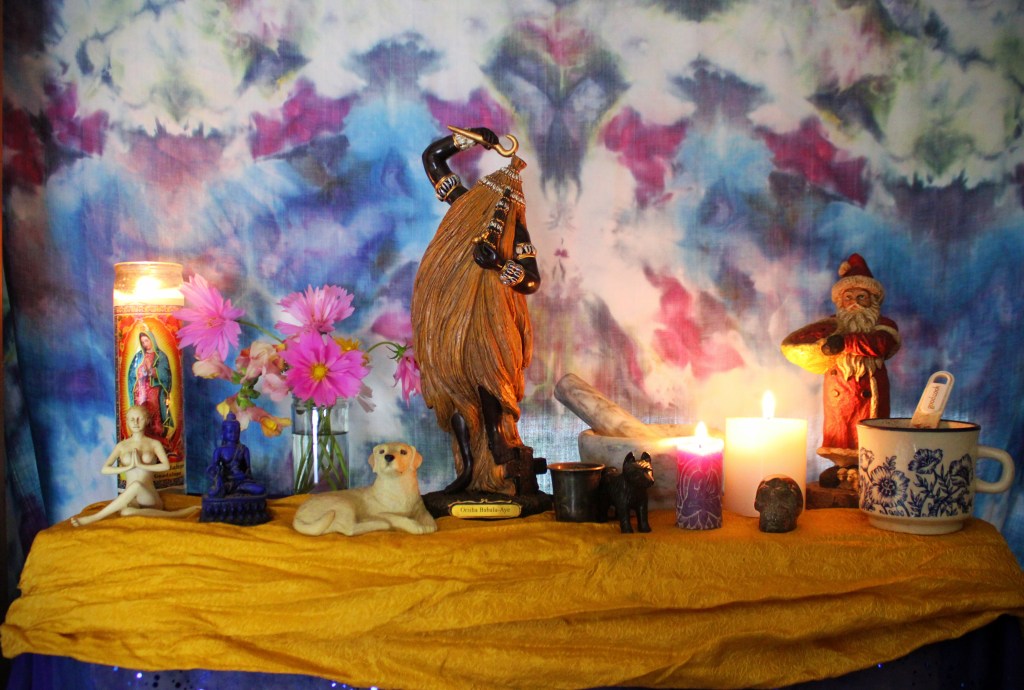
I began collecting objects for our altar in 2020 during the Covid pandemic. I selected figures that embody different archetypical aspects of growth and limitation. The process of recovery is sincerely magical. These mysterious qualities remain a focus on the altar. They play a vital role in the background as well as influencing the subconscious in healthy ways. Constructing an altar helped me be attentive to the belief needed for healing.
During the pandemic complimentary rum and coffee were supplied as part of a thoughtful routine and ritual. The other side of our altar is a shelf for salts, herbs and spices.
Wifredo Lam
Cuban artist who sought to portray and revive the enduring Afro-Cuban spirit and culture.
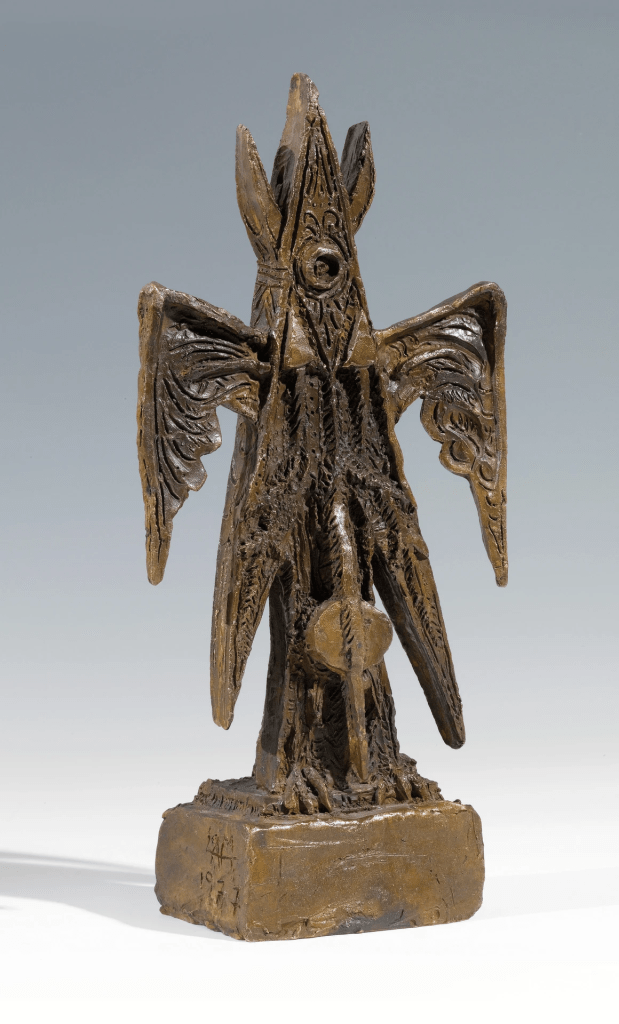
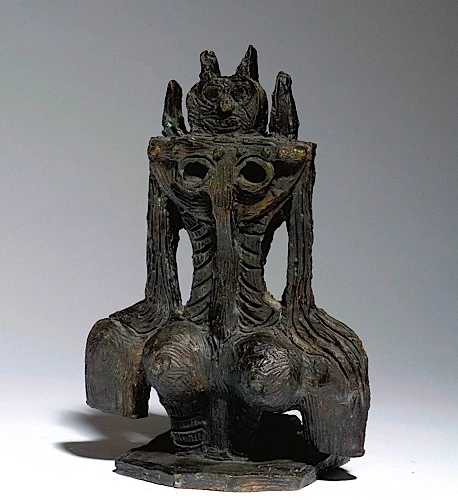
Wifredo Lam Osun, 1977 bronzeWifredo Lam GRAND YEMAYA, 1977 bronze sculpture, brown patinaPhotos from MutualArt
About theFeatured Photo
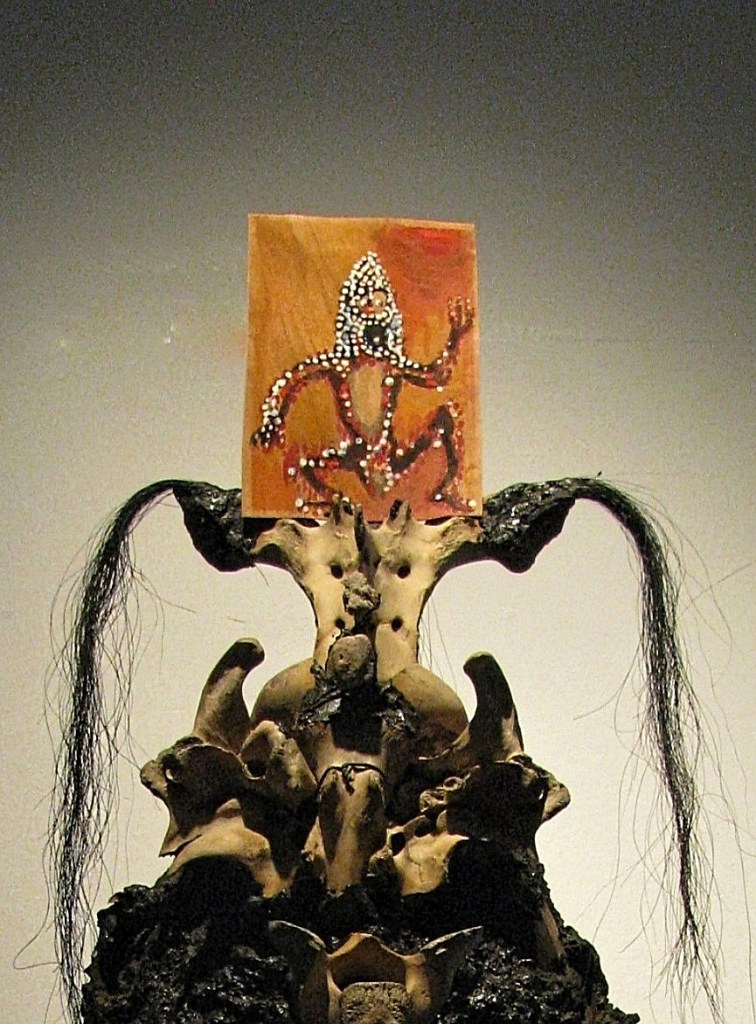
The Hair of Falmer
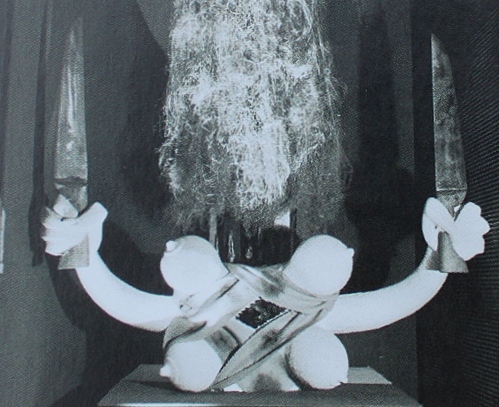
The Hair of Falmer, an altar created by Claude Tarnaud, Michel Hertz and Francis Bouvet following a design sent by Wifredo Lam from Havana for Le Surrealisme en 1947 exhibition held at Galerie Maeght, Paris, 7 July-30 September 1947 original photo Denise Bellon. Expert from The EY Exhibition: Wifredo Lam. Tate Publishing figure 33, page 211 used and intended for educational purpose only
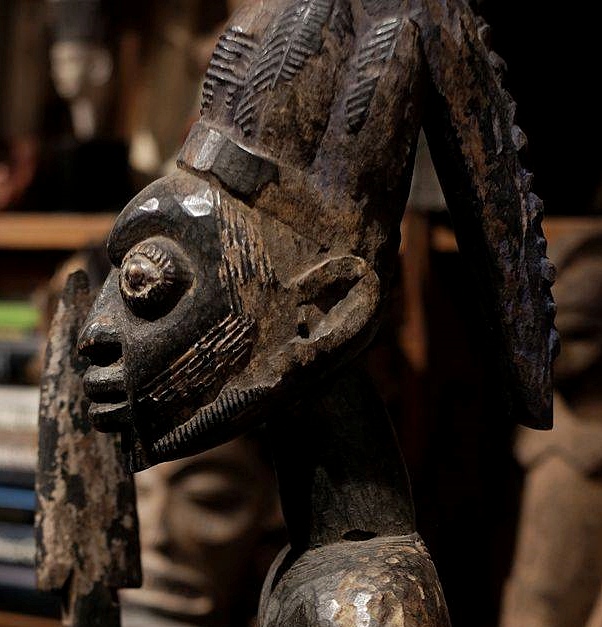
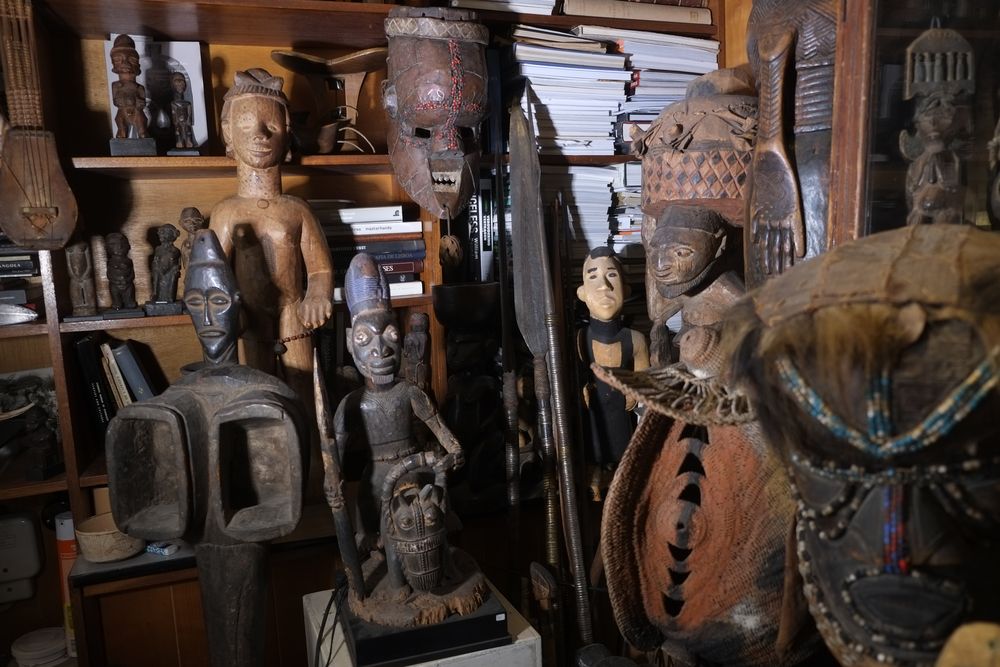
African art has been a part of my childhood. My mother, Nadya Levi, was a sculptor who collected African art, and my father, Herman Norden, was an antique dealer who had a room in his house filled with African art, books, and stuffed birds. As a child, I went to London many times with my mother for auctions, where we met interesting people like Patricia Withofs and Gaston de Havenon. I also remember Mrs. Huguette van Geluwe in Brussels, where we went to seek her opinion on Congolese pieces, or Willy Mestach. And there were Simpson, Charles Raton, and Baron Rollin, who would visit us in Antwerp, and as a little boy, I had to serve coffee and help clean the display cases.
The Salampasu mask is steeped in cultural significance and is traditionally used in tribal ceremonies and rituals. It is believed to represent ancestral spirits and is used for various purposes, such as warding off evil spirits, promoting fertility, and celebrating harvest festivals.
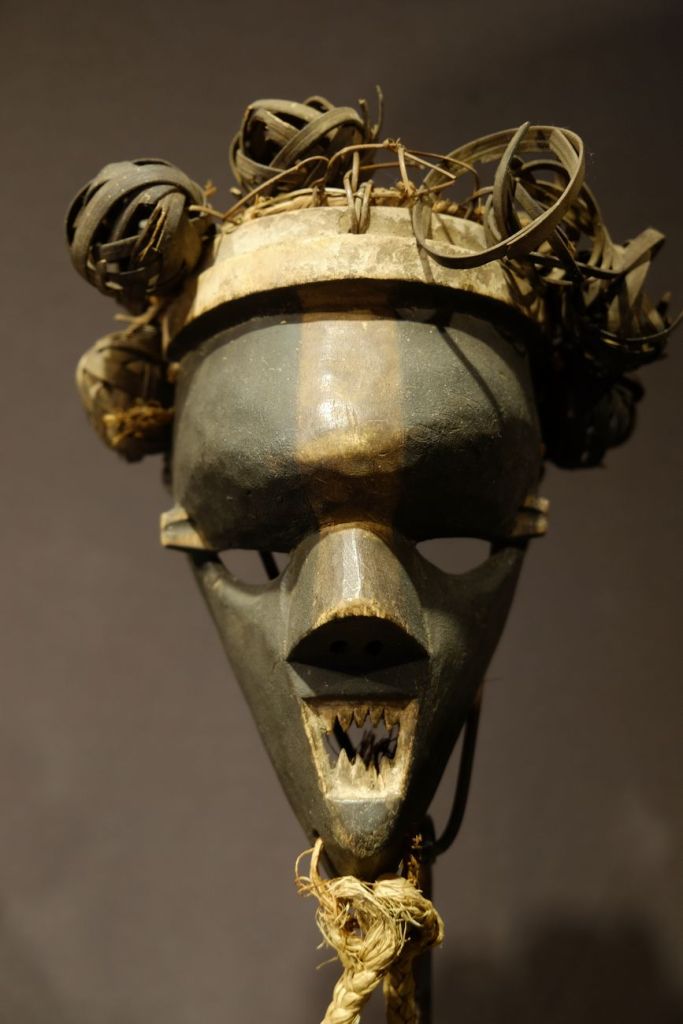
My mother’s collection of Bassa and Dan masks, all hung side by side, many of which were acquired from Paolo Morigi. My first purchase was a small miniature Etruscan stone tablet depicting a lion.
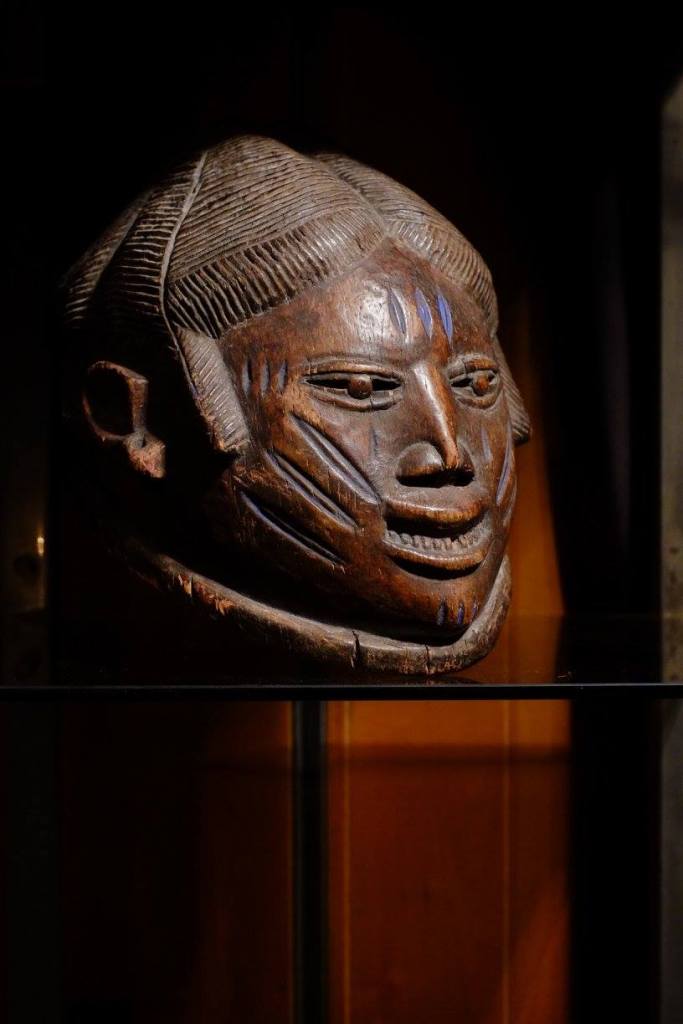
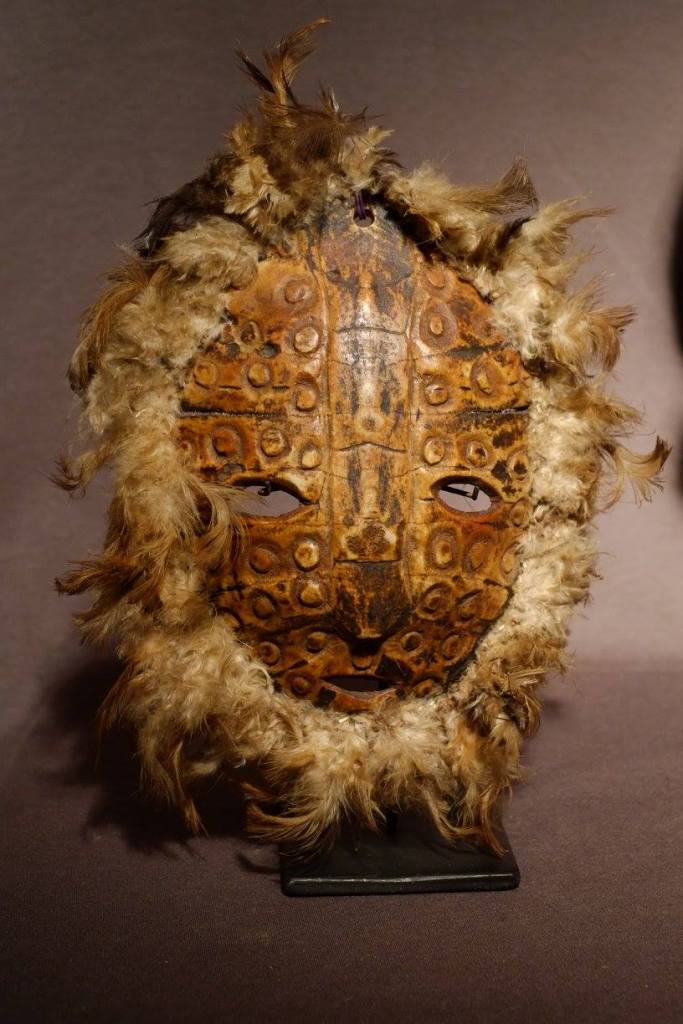
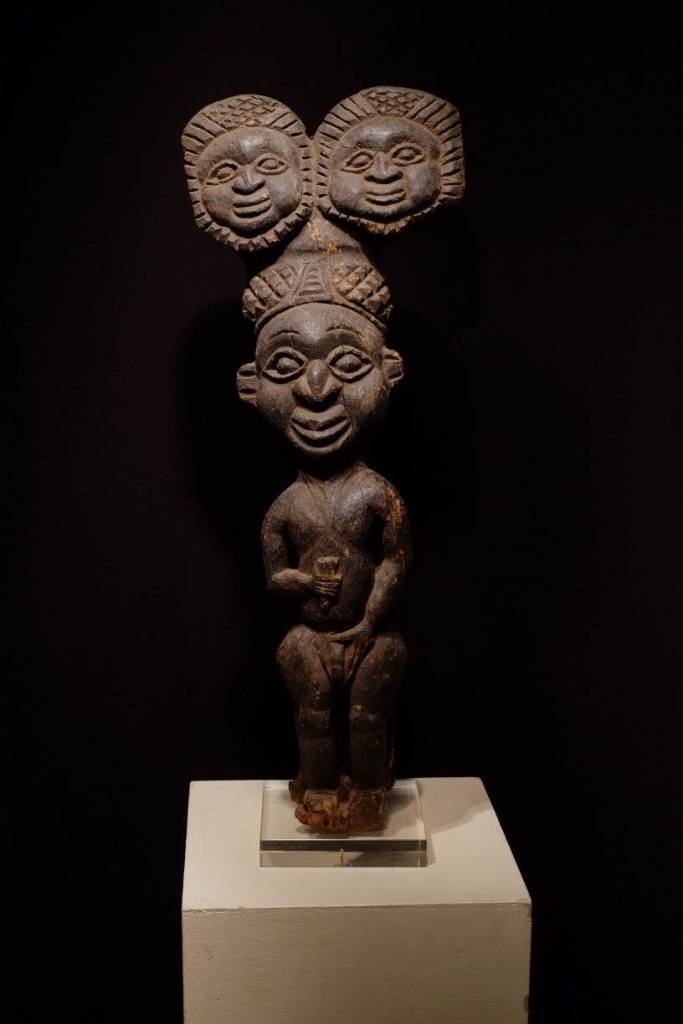
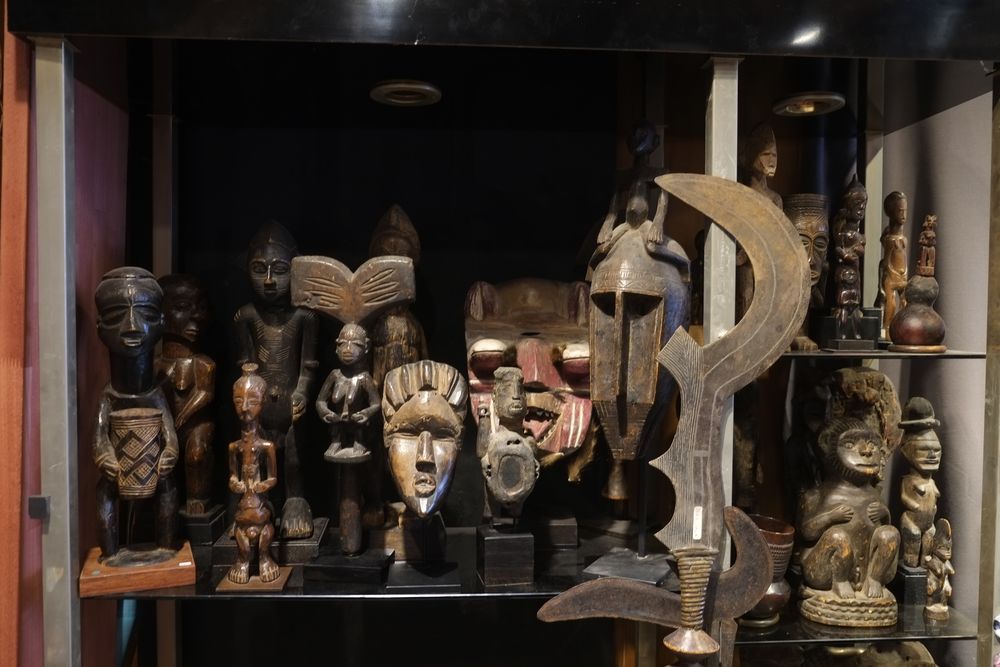
Gelede Mask Yoruba Nigeria. This sect is devoted to the mother of all orisha, the matriarchal head of the universe. Lega Turtle Mask. Mask symbolizes the wisdom of the elder members of the Bwami. Bamileke figure with three heads -Cameroun
I am always looking for an object that evokes emotions in me. I would love to acquire a beautiful object that belonged to Henry Pareyn, the first collector dealer in Antwerp around 1910. I have always derived more pleasure from acquiring objects than from selling them, but I am not a fetishist who cannot part with them.
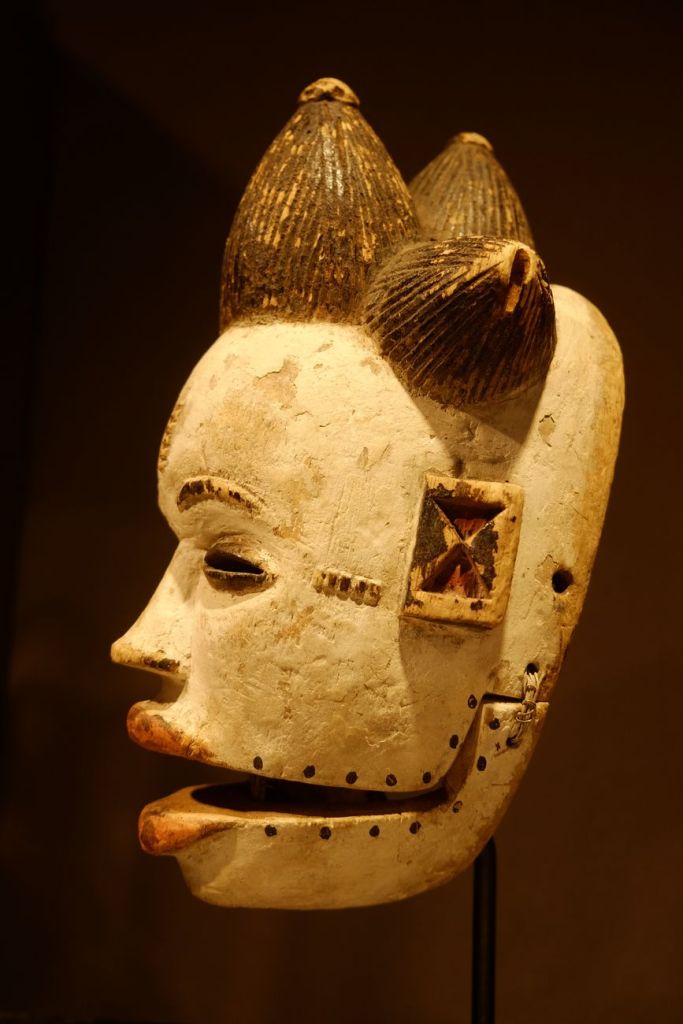
Ogoni ‘Elu’ mask with articulated jaw, Nigeria.The Ogboni ( also spelled Ogoni) people are an ancient and secretive society that has existed in Nigeria for centuries. Their religion is centered around the worship of various deities and the use of masks in religious rituals and ceremonies. The Ogboni mask being described is a prime example of this tradition.
What determines the value of the works? The value of an object often depends on the buyer. I could say that it is the beauty and antiquity associated with the provenance, but in reality, it is the emotion that an object evokes in you that is important, and sometimes the place your imagination gives it.
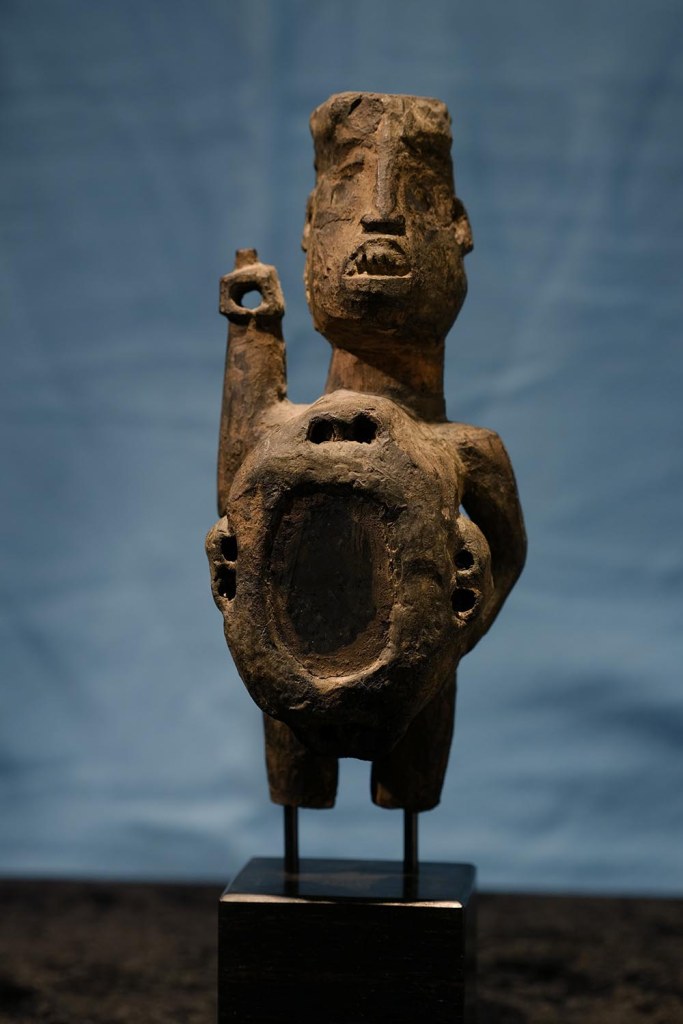
A 19th century Bakongo Nkisi Figure. The figure is known as a nkondi, which means “hunter” or “hunter of wrongs,” and it is believed to have the power to track down and punish wrongdoers. The mirror in its belly is said to allow it to see into the hearts of people and to reveal any evil or malicious intentions they may have. The eyes of the figure are made of mirror, and they are thought to help the nkondi to see clearly in the spiritual realm.
There are so many personalities in this field who have inspired me that I can’t name them all, but first and foremost, it is people with a deep passion and those who recognize the beauty and importance of African art for humanity that inspire me the most. African art has had a tremendous impact and great influence on Western art after World War I, and it is only natural to recognize the importance of this art and its artists.
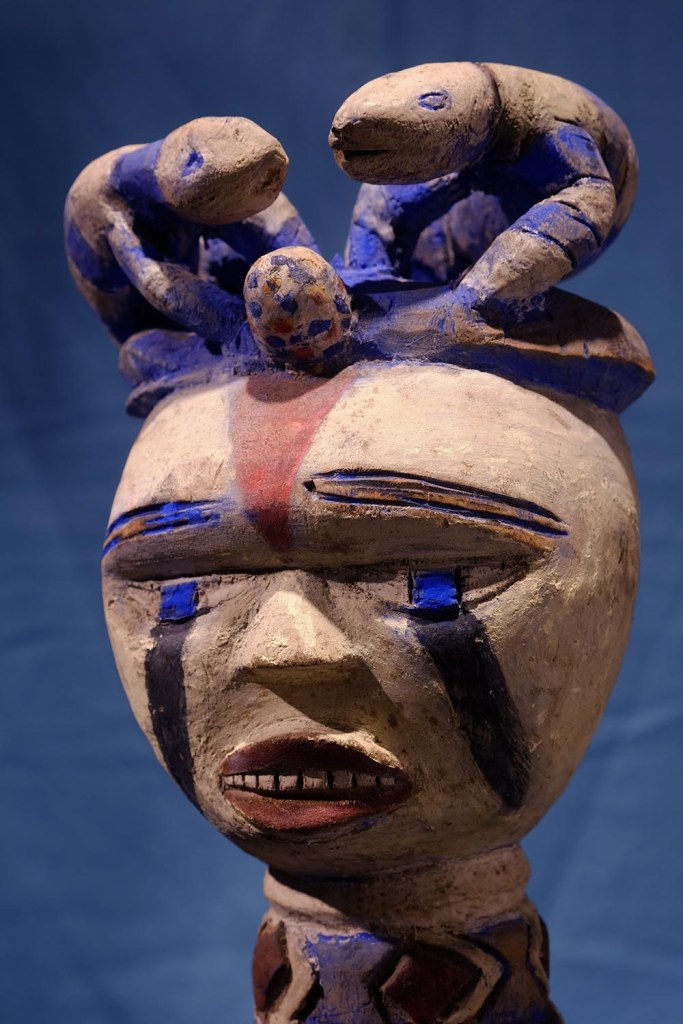
Kuyu Crest Head. The two lizards on the head of the Kuyu sculpture could represent spiritual guardians or protective spirits, as lizards are frequently associated with protective powers in many African cultures
The African art market represents only 0.8% of the overall antique market. It is flooded with fakes, and verifying authenticity is reserved for a very small experienced elite with a network of knowledgeable friends. Determining the value is equally unpredictable due to the market’s volatility, as it is too small. However, this provides many opportunities for knowledgeable buyers to make good purchases. The price of African art has declined in recent years for mid-range pieces due to the disappearance of wealthy collectors and the abundance of supply in the market. Only exceptional objects still command high prices.
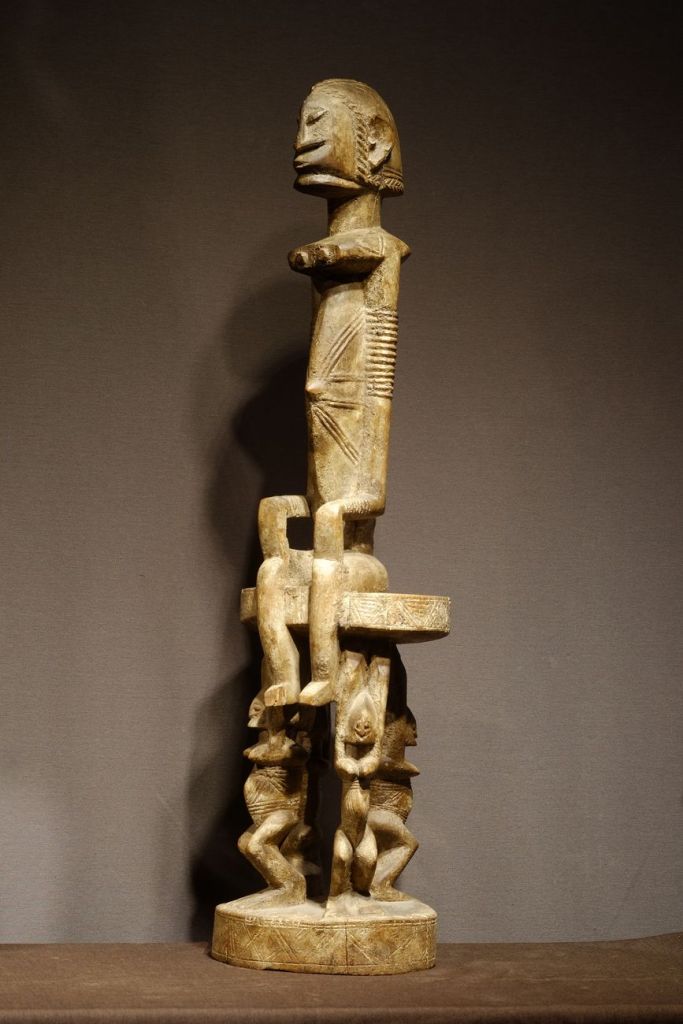
A 1967 published and museum exhibited Dogon Figure Hermaphroditic figure on a seat, which is supported by four female figures with raised arms. Yellow-brown patinated, heavy, hard wood. The published Meulendijk Dogon Figure was also exhibited in the ” Museum voor Land- en Volkenkunde” in Rotterdam, Nederland in december 1967
I do see many small collectors entering the market, but they rarely “invest” more than a few thousand euros. The recognition of contemporary African art over the past decade is very encouraging, as it could attract new audiences to African primitive art as well. The role of museums and cultural institutions is crucial in recognizing these cultures. In this regard, the Musée du quai Branly is doing excellent work by offering beautiful exhibitions that attract new audiences. However, the recent demands for repatriation create some discomfort in the market in the short term. But with the recognition of the importance of their own art, in the long term, it should allow an African market to develop in Africa. I also look forward to the creation of museums on the African continent, especially with the opening of the Museum of Black Civilizations in Dakar.
Throughout his journey, Norden has found inspiration in numerous figures within the primitive art field. He admires those who possess a deep passion for African art and recognize its significance in the broader context of humanity. The profound impact of African art on Western artistic movements following World War I further fuels his admiration for the art form and its artists. Looking ahead, Norden’s enthusiasm for primitive art shows no signs of waning. With an ongoing book project awaiting completion, he is dedicated to sharing his extensive knowledge and experiences with a wider audience.
Norden places great importance on the role of museums and cultural institutions in recognizing and promoting the significance of African art and its associated cultures. He commends the Musée du quai Branly for its remarkable exhibitions, which attract new audiences and foster appreciation for African primitive art. Norden also expresses anticipation for the emergence of museums on the African continent, with the Museum of Black Civilizations in Dakar serving as a beacon of hope.
David Norden’s lifelong dedication to primitive art has solidified his position as a respected figure in the field. His unwavering passion, discerning eye, and commitment to preserving the legacy of African art continue to shape his remarkable journey. As he eagerly shares his knowledge and explores new horizons, Norden’s contributions play an invaluable role in promoting the beauty and significance of primitive art to a global audience.
Sint Katelijnevest 27/B2000 Antwerpen/Belgium+32 3 227.35.40/david.norden@telenet.be
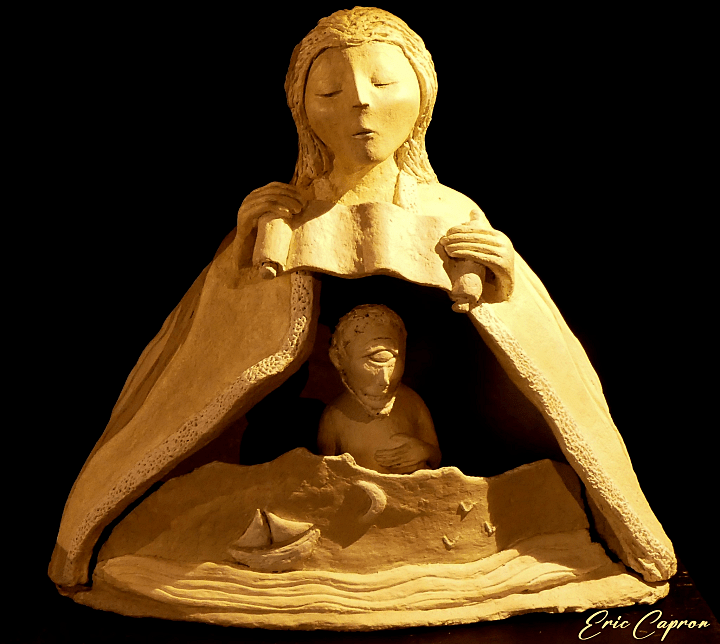
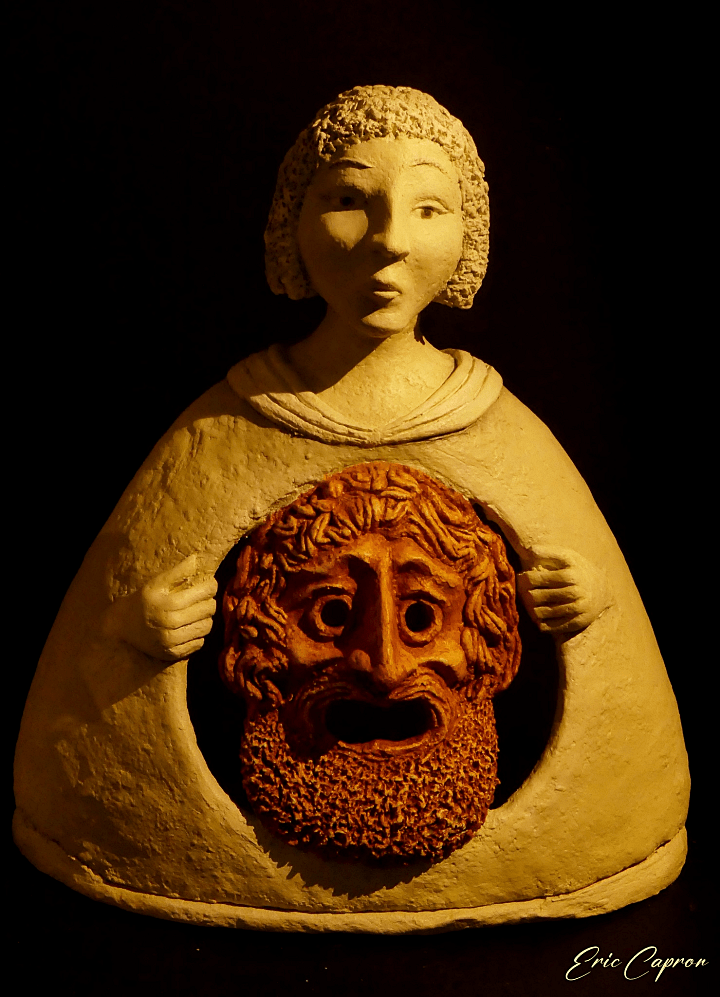
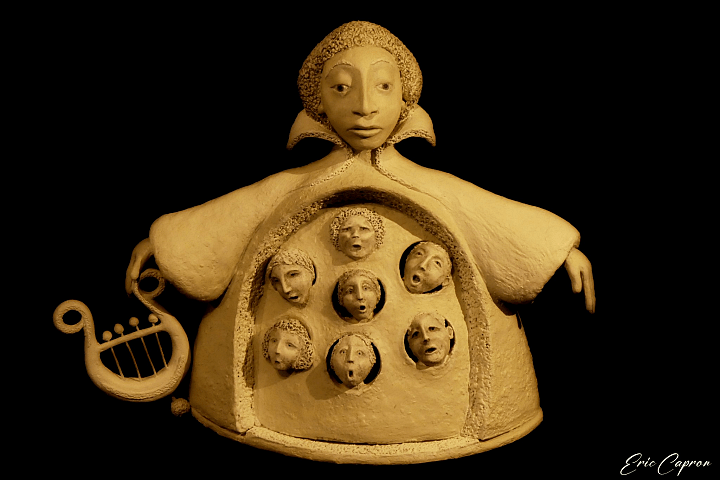
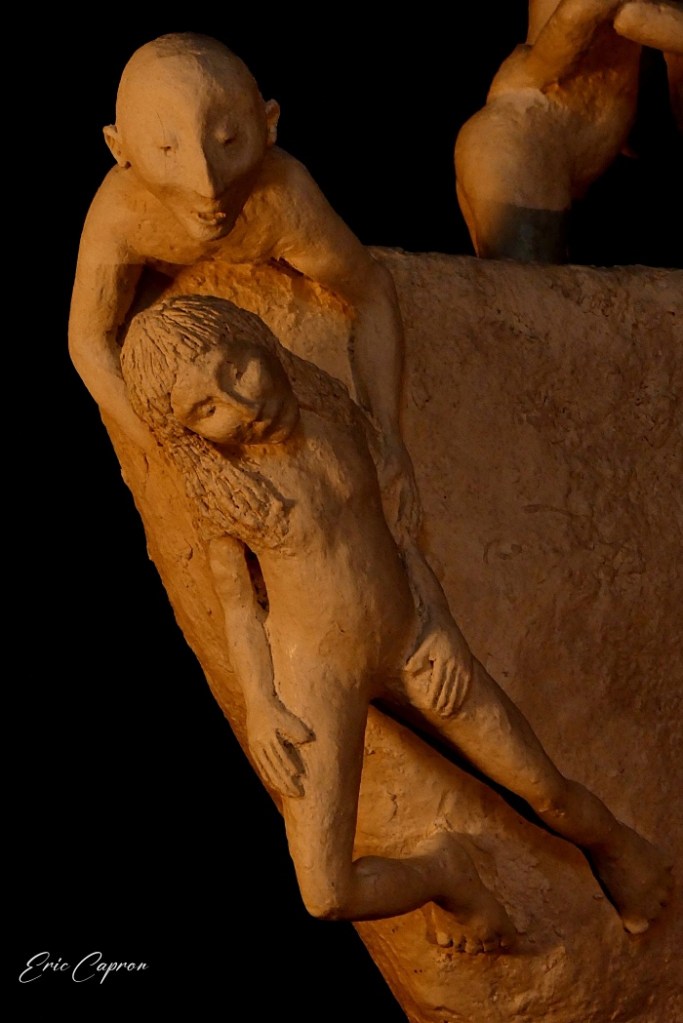
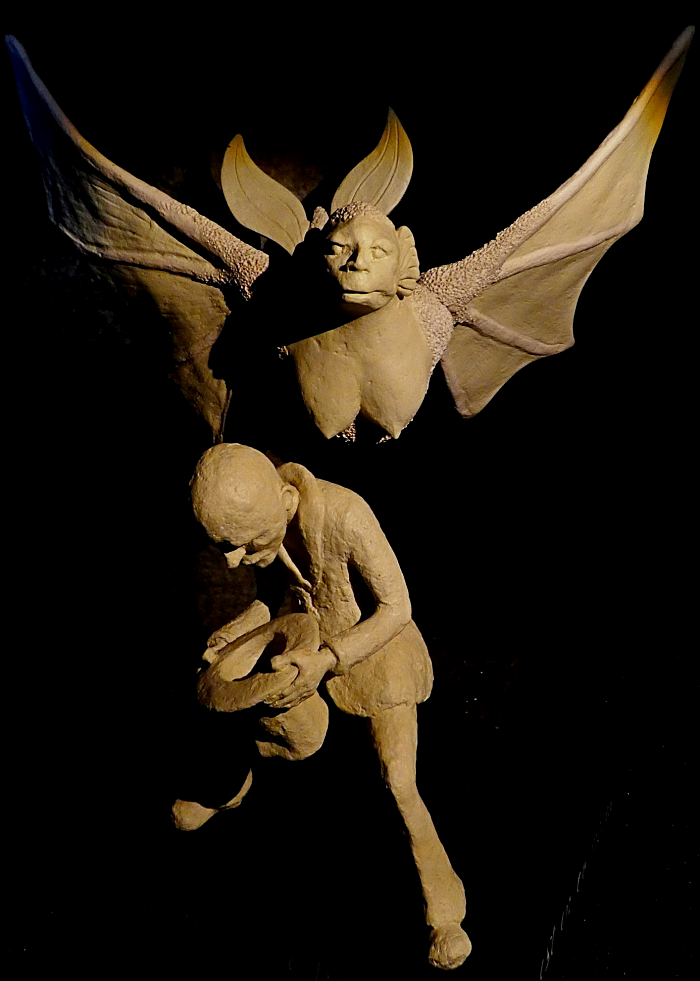
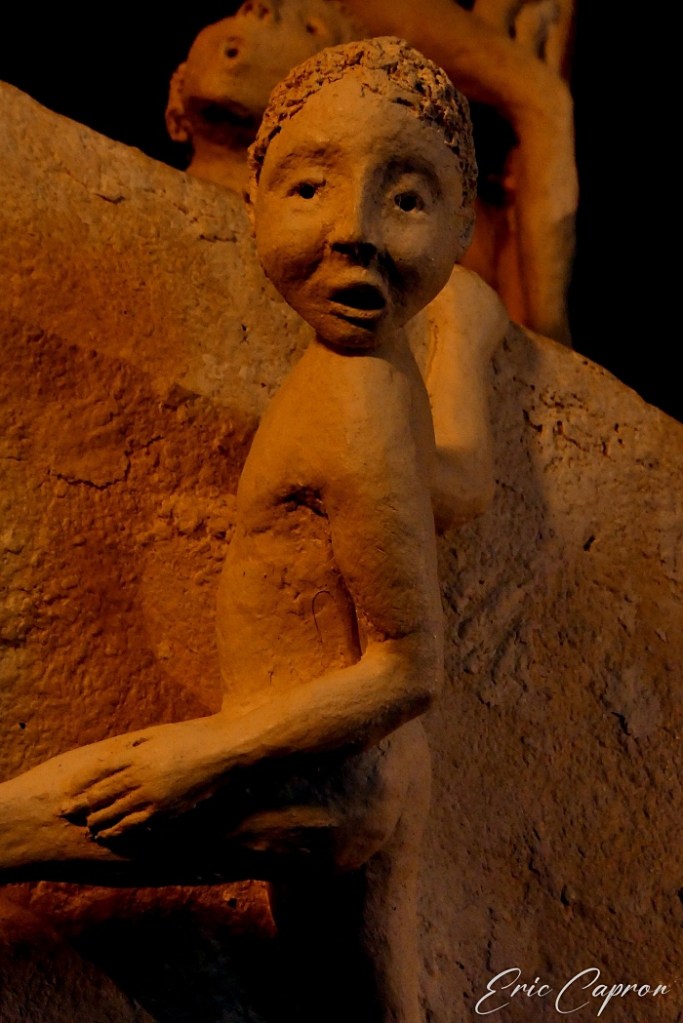
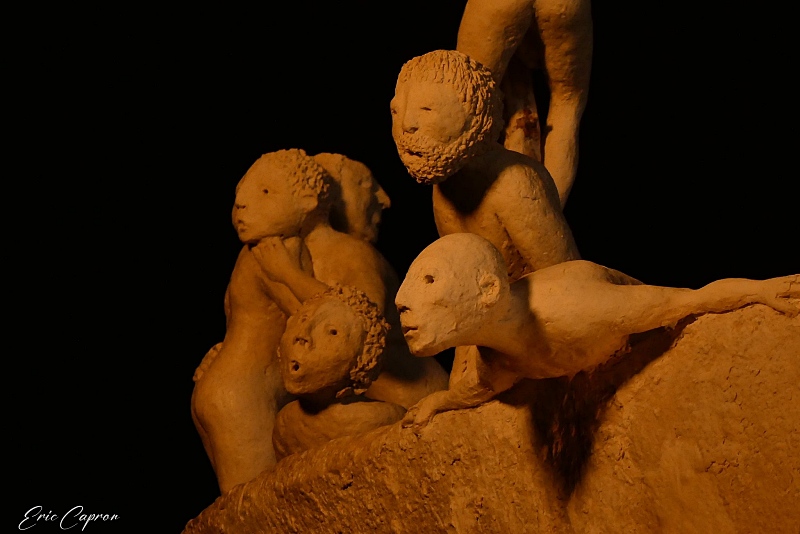
Eric Capron is a self-taught artist. He discovers the arts of the circus and the world of the puppet.
Eric Capron. Artiste autodidacte au parcours singulier. Dès son plus jeune âge, la dyslexie le marginalise. Enfant solitaire, il quitte très tôt les bancs de l’école et l’univers familial. Commence une vie de saltimbanque, découvre les arts du cirque, le monde de la marionnette.
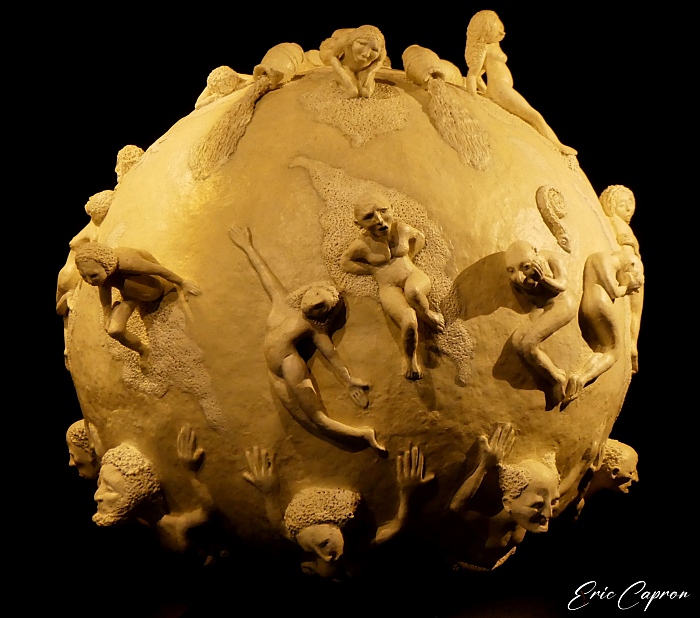
Artiste en perpétuelle mutation. Dorénavant un travail quotidien permanent de production d’œuvres en papier mâché : des corps mis en scène. Des corps non genrés, incolores, sans modèles, mais étonnamment présents à nos regards amis. Ils existent pour eux-mêmes, d’abord.
Les sculptures sensibles d’Eric Capron racontent l’âme humaine, la fragilité de nos destins. L’artiste revisite les mythes fondateurs, puisant ses références dans la mythologie, l’art sacré et profane, l’univers onirique, les grands textes de la littérature.
« J’ai le sentiment d’être l’instrument de quelque chose qui me dépasse, une sorte de miracle, une boite de Pandore qui s’est ouverte…» nous confie-t-il.




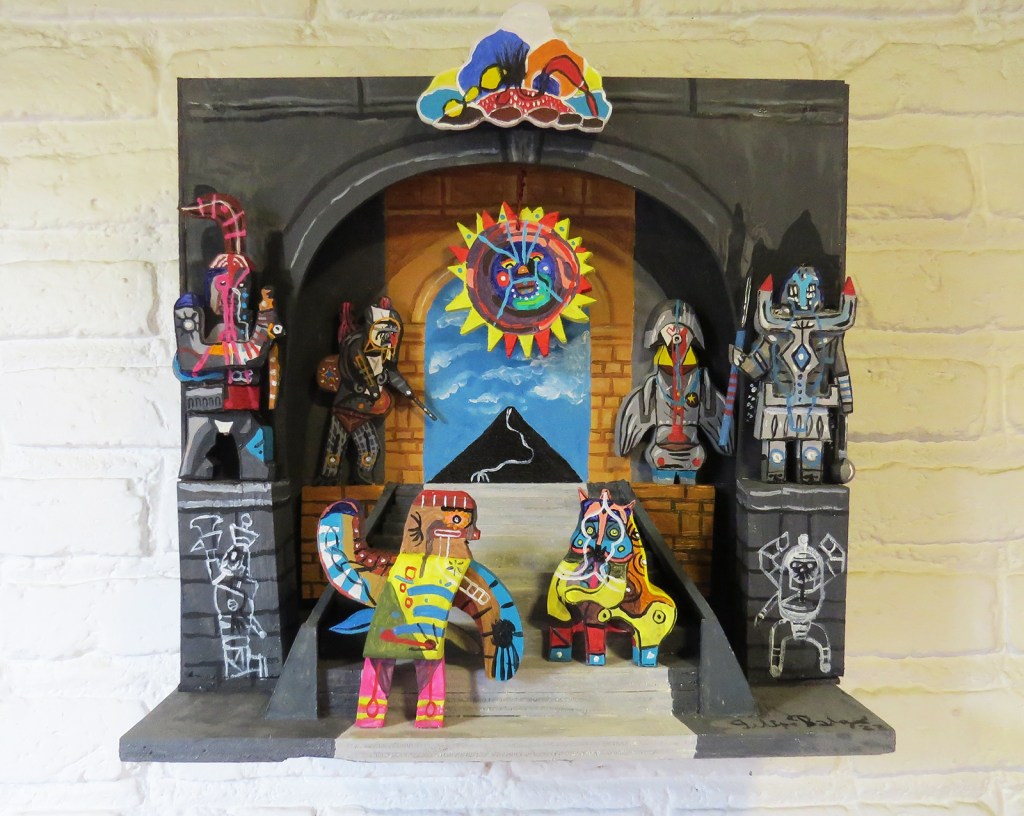
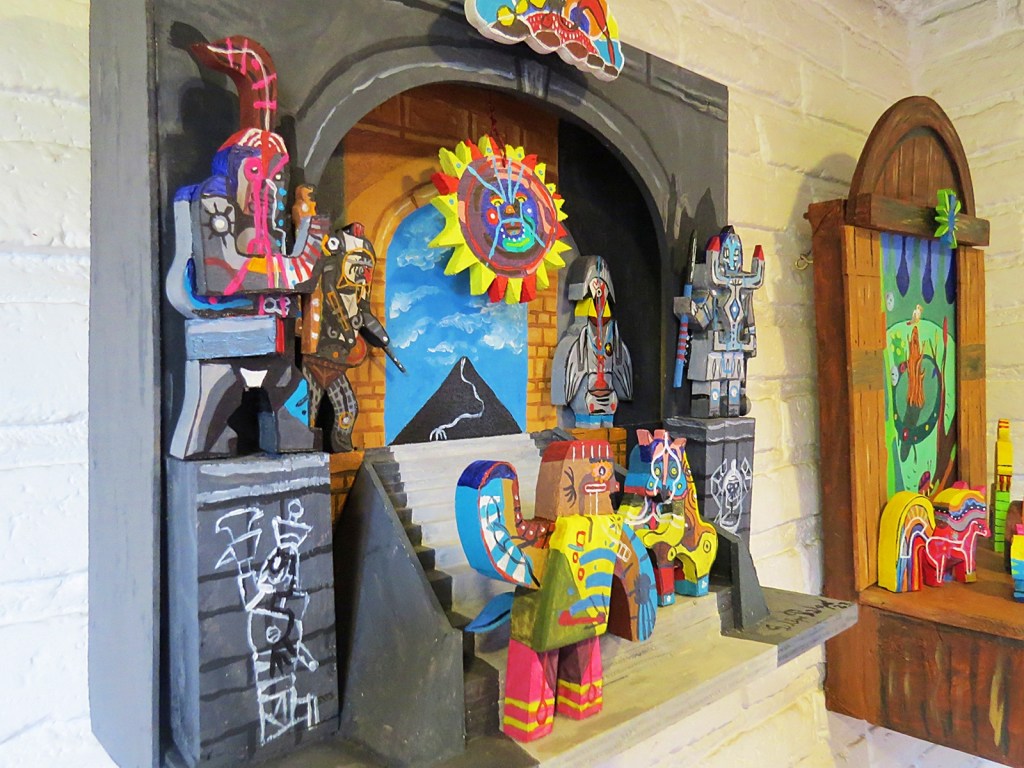

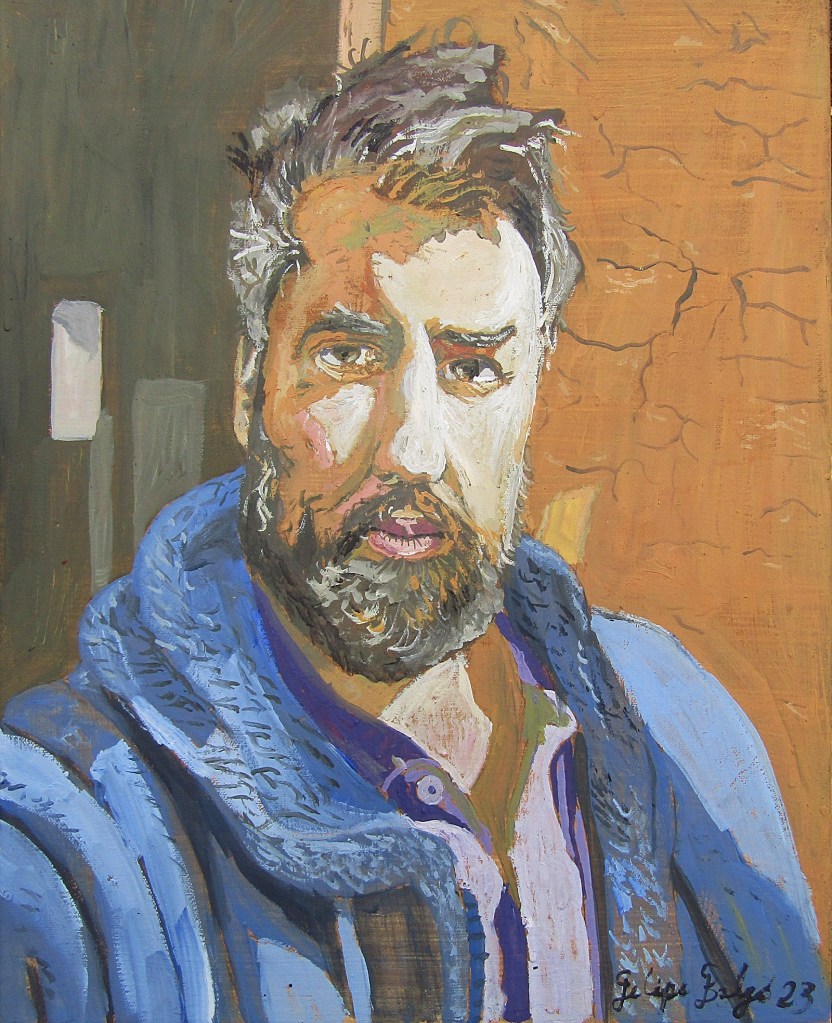









 Mitchell Pluto