Allí se ubicaron en un improvisado toldo levantado con ramas de calafate, apoyados bajo una gigantesca roca que le daba la espalda al viento que corría desde el NorEste y que traía las nubes del Atlántico.
La fogata ardió esta vez a cargo Ocetán quien no tardó en reunir material combustible para alimentar las llamas y depositar cuidadosamente sobre el suelo los hongos recolectados durante su pasada por los faldeos de la Sierra Boquerón.
Extrajo de su bolsa (mujii) los hongos y raíces que forman la dieta invernal del fueguino hongos que crecen sobre el suelo esponjoso de los pantanos donde sus raíces pequeñas se internan quedando solo visible la parte superior algo más colorida por la acción de la luz.
El sabroso shanamain, el suave y transparente Ahuichi, cubierto de pintas blancas y rojas la chahuata que crece allí en todos los árboles vivos y el lechoso chagadakaamáin que sabe muy bien asado cubierto entre las cenizas calientes del fuego.
Mientras los ojos de ella ardían en la noche Selcha hurgueteó en el componente mineral que formaba las rocas y con el pehí (cuchillo) raspó hasta dar con una veta de marcado tono rojizo que llamó su atención por la inusual extensión que ocupaba en la superficie del granito
Derritiendo luego un trozo de grasa de guanaco y separando la roca del pigmento, mezcló ambos logrando una masa colorida y viscosa que afinó machacándola en un improvisado mortero ubicado en la roca.
Untó los dedos en la pintura tibia dibujando primero en su cuerpo y luego en el de su pareja desnuda la simbología de su clan y mientras el silencio de la noche se apoderaba de ese paisaje solitario, se alimentaron bajo las estrellas, al alero de estos grandes bloques abandonados por antiguas glaciaciones sobre la inmensidad de la pampa, allí donde durante milenios la luz de la luna recortaba sus pálidas siluetas graníticas en el azul de la noche, anunciándolas mucho más inmensas y misteriosas que durante los angostos días antárticos.
Entonces sólo el aullido de algún animal nochero se hacía sentir muy lejano trazando su oscuro guión en la noche, y pronto ambos se durmieron abrazados por la naturaleza que sabiamente todo lo acoge
-DCXCI-
“Trashumancia”, poema inédito del libro “Cuando la Tierra se Acaba”, de Claudio Rodriguez Lanfranco.
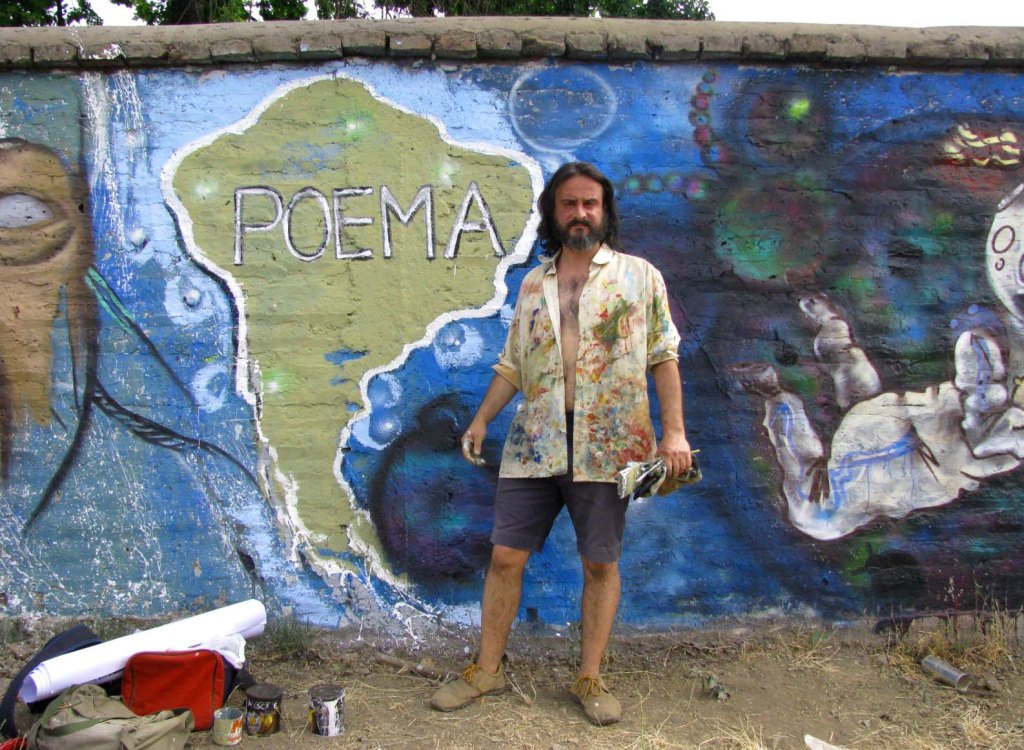
born in Valparaíso in 1968. After living in Patagonia and in the United States, a product of a scholarship, his first painting exhibitions back to the nineties in Valdivia. Later he moved to Santiago and the Fifth Region, where his visual and literary work materializes in a body of work that addresses different forms of expression, such as painting and drawing, experimental and documentary video, visual poetry and muralism, with public art projects installed in Santiago, Valparaíso. As a visual artist he has exhibited his paintings in 15 solo shows and in more than 60 group shows in Chile, Europe and the United States, and his poetic texts have been published in regional, national and international poetry collections, his work being awarded in different state funds for artistic creation such as Fondart, Cntv, Fondo Carnavales Cultural Centers of Valparaíso, among others. Currently the painter lives and works between Valparaíso, Santiago and Concón, where he develops his artistic projects and teacher training, being in charge of university graduates, painting and mural workshops, becoming a teacher for generations of students and artists who have worked with him.
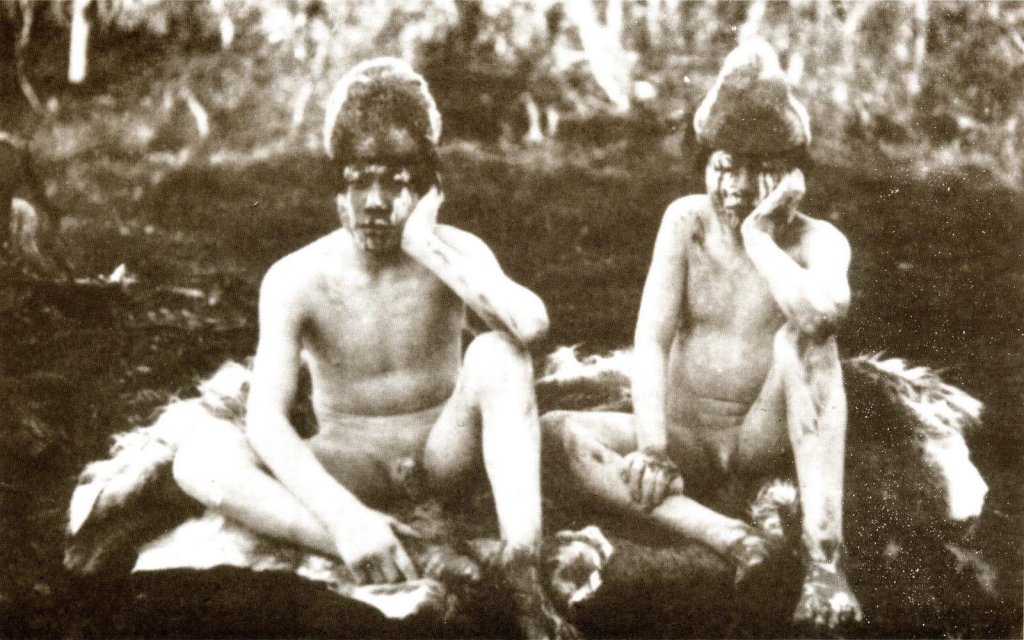
MY LITTLE SELK’NAM ARMY IS A PAINTING WITHOUT ANY RUSH AND THAT HAS BEEN CREATED OVER TIME, FORMING A VISUAL ASSEMBLY STILL UNDER CONSTRUCTION MADE IN PRINCIPLE FROM THE PHOTOGRAPHIC RECORDS OF MARTÍN GUSINDE AND OTHER STYLE ARCHIVES , BUT WHICH THEN WAS INSTALLED WITH ITS OWN IMAGINARY. WITH THIS WORK I ALSO PAY A DEBT TO MY HISTORY AS A PAINTER, BODY PAINTING BEING ONE OF THE THEMES THAT HAS DIAGONALLY CROSSED ALL OF MY WORK.
“MY LITTLE SELKNAM ARMY”IT IS AN EXERCISE OF REPRESENTATION THROUGH PAINTING OF THIS RITUAL PATTERN OF FUEGIAN CREATION: AN AESTHETIC RELATIONSHIP WITH THE SUPERNATURAL AND A WAY OF UPDATING THE MYTH OF ORIGIN THROUGH A PROPOSAL FOR CONTEMPORARY CREATION THAT AT THE SAME TIME SEEKS TO RESIST FORGETTING.
-ASPECTS OF ETERNAL ADOLESCENCE-
A COUPLE OF NIGHTS AGO I LISTENED TO A SPECIALIST IN THEMES OF EMOTIONAL GROWTH -A SOCIOLOGIST I BELIEVE- TALK ABOUT THE BEHAVIOR OF MODERN ADOLESCENTS WITH REGARD TO THEIR INTEGRATION INTO THE ENVIRONMENT AND OTHER BEHAVIORS RELATED TO THEIR SOCIAL AND GROUP VALIDATION. QUITE KNOWLEDGEABLE ON THESE ISSUES, THE SOCIOLOGIST EXPLAINED CLEARLY REFERRING TO THE IMPORTANCE OF THE LOSS OF RITES OF PASSAGE IN CURRENT SOCIETIES, WHICH WOULD MEAN FOR THE ADOLESCENT GROUP TODAY, A STRONG DEFICIENCY IN THE SOCIAL AND PERSONAL AFFECTIVE FIELD, BY NOT HAVING NO CLEAR GENERATIONAL SIGN THAT CONFIRMS WHEN IS THAT EXACT MOMENT WHEN YOU STOP BEING A CHILD TO BECOME AN ADULT IN FULL MATURITY. THIS WOULD EXPLAIN THE SENSATION OF NOT BELONGING SOMETIMES MANIFESTED BY THE ADOLESCENT GROUP AND WOULD BE ADJUSTED IN SOME CASES,
THIS LACK OF SECURITY REGARDING THEIR PLACE IN THE WORLD WOULD AFFECT ADOLESCENTS IN ALMOST ALL CONTEMPORARY SOCIETIES AND WOULD BE EXTENDERED BY A SYSTEM THAT APPEARS TO IGNORE THE TRANSCENDENCE OF THESE GENERATIONAL ISSUES OR EVOLUTIONARY PROCESSES OF VITAL IMPORTANCE, SUCH AS THOSE THAT THEY ANNOUNCE THE GREAT CHANGES IN THE HUMAN BEING.
TO ADOLESCENCE COMES FROM ADOLESCENCE, TIME OF AILMENTS AND CHANGES. LEAVING AWAY THE FIRST MENSTRUATION OR THE CASE OF SEXUAL INITIATION IN MEN, TRADITIONALLY MARKED BY THE LITTLE GIRL ON TURN THAT DAD CHOOSES, THERE ARE FEW OR NONE OF THE SPACES OF RITUAL TRUST THAT WE PRACTICE SERIOUSLY AS PARENTS AND SONS. IT IS PARADOXICAL THAT REACHING THE AGE OF MAJORITY IS TODAY, IN A COUNTRY THAT BOASTS OF PRIVILEGING FAMILY VALUES, TECHNICALLY NOTHING MORE THAN A MERE PROCEDURE, WHERE AT THE AGE OF 18 THE ADOLESCENT “AUTOMATICALLY” BEGINS TO CARRY A CIVIL RESPONSIBILITY THAT THEY MUST CULTIVATE . FAR FROM ANY CEREMONY, IT IS NOT CURIOUS THEN THAT FINALLY THERE ARE EVERY FEWER RITES THAT CALL US TO COME TOGETHER OPENLY, WITH THE EXCEPTION OF DEATH, WHEN IT IS ALREADY TOO LATE.
FOR ANCIENT CULTURES SUCH AS THE SELKNAM, ONE OF OUR ORIGINAL AUTRAL PEOPLES, THESE CEREMONIES OR RITES OF PASSAGE WERE VERY IMPORTANT, EVEN CAUSING GREAT GENDER WARS FOR POWER AND DOMINATION OF THESE FESTIVALS, WHERE THE HOUSE WAS THROWN DOWN -O EL TOLDO- THROUGH THE WINDOW TO PAY TRIBUTE TO THE KEY MOMENT THROUGH WHICH THEIR CELEBRATIONS PASSED FOR THE ONLY TIME IN LIFE.
THE HAIN CLEARLY EMERGES AS THAT SACRED CEREMONY THAT USED THEATER AND SURVIVAL REPRESENTATIONS TO TEST THE MEASURE OF THE INITIATES, PREPARING THEM FOR A PROCESS OF TRANSFORMATIONS WITHIN THE MILESTONE THAT WOULD MARK A NEW EVENT IN THE BEHAVIOR OF THE KLOKÉTEN NOVICE IN FRONT OF HIS TRIBE, WHO AT THAT MOMENT JOINTLY DECIDED THEIR PASS TO PHYSICAL AND SPIRITUAL MATURITY. A SACRED ACT WHICH WOULD GIVE THEIR LIVES BOTH STRUCTURE AND SIGNIFICANCE AND WHICH WOULD ALLOW THEM TO GENERATE THE TRUST WHICH THE INITIATED COULD LATER HAND ON FOR THE REST OF HIS LIFE. PAST-PRESENT-FUTURE DEFINED WITH SUCH OPENNESS AND CLARITY, ALLOWED THE KLOKÉTEN TO BEGIN THE RITUAL PROCESS TO STOP BEING A CHILD AND THUS TAKE THE REINS OF ITS OWN MATURITY.
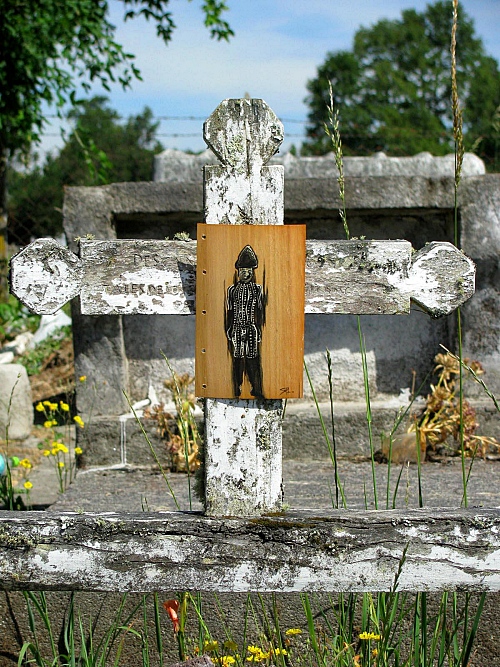
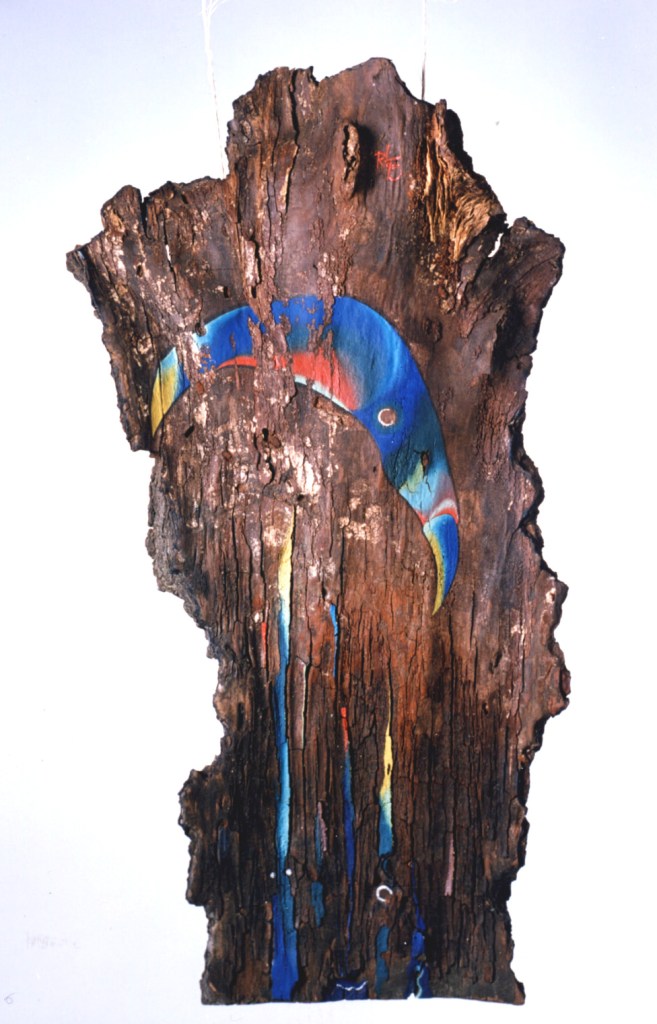
BEING AN ADULT, HOW COMPLICATED…. EVERYTHING WRITTEN IS BORN FROM ONE OF THE PICTURES OR “ FRAGMENTS”, WHICH I PAINTED YEARS AGO ON A TREE BARK (ABOVE IN THE PHOTO) AND WHERE THE SPIRIT OF HAIN MANIFESTS HOUSING IN THE PAINTED FIGURE OF AKLOKÉTEN . HERE IS REPRESENTED THE COMPLEX SYMBOLISM OF INITIAL OPPOSITION AND TRANSFORMATION BY WHICH THE KLOKÉTENHE WAS SUBJECTED INSIDE SECRET SOCIETIES THAT SEEKED TO TURN HIM INTO A MAN. THE FUSION OF A WORLD IN TRANSIT OR RITE OF PASSAGE IS INCORPORATED INTO THE PICTORICAL SIGN AND INTO THE HISTORY BROUGHT WITH IT BY THE SUPPORT, COLLECTED FOR THAT PURPOSE ON THE SLOPE OF THE VILLARRICA VOLCANO FROM THE CALCINATED REMAINS OF A CONIFER SPLIT BY LIGHTNING. JUST AS THE ANCIENTS DID TO MAKE THE RITUAL MASKS WHICH THEY USED IN THEIR CEREMONIES, I COLLECT THE BARK OF THE TREES TO PAINT THEM WITH PART OF THIS HISTORY THAT DISAPPEARS AND THAT ALSO BELONGS TO ME, BEING THE COLLECTION, A RITE THAT IS SIBLISHED TO THE PAINTING ALREADY THE TELLURIC TEXTURES OF THE EARTH, LIKE BROKEN FRAGMENTS FROM A NOT SO REMOTE PAST, AND IN WHICH WE STILL REFLECT OURSELVES.
-MY LITTLE SELK’NAM ARMY- I
THE VARIETY OF COSTUMES THAT THE SELK’NAM USED FOR THEIR PERFORMANCES DURING THE HAIN CEREMONY, THEY ARE BASED ON A CONCEPT OF CORPORALITY CREATED TO DELIVER THEIR IDEAS REGARDING RELIGIOUSNESS AND INFLUENCES TO WHICH THEY WERE SUBJECTED SINCE THEIR ORIGINS IN A DOMINANT MATRIARCHAL SOCIETY, IN WHICH THE BODY WAS THE MAIN COMMUNICATION INSTRUMENT OF MAN . THIS CONCEPT OF IMAGE, DESIGN AND MOVING COLORS ARE KEY ELEMENTS TO UNDERSTAND THE SYMBOLIC MESSAGE OF ITS CEREMONIES. IN THIS SECRET GAME, THE WORK OF THE SPIRITS WAS TO PUNISH HARDLY THOSE WHO OPPOSED THE ORDERS OF THE WOMEN.
THE PASSAGE OF TIME WOULD BE KNOWN AS THE UPDATING OF THE MYTH -ENDING THE FEMALE DOMINANCE IN CEREMONIES- THE REVEALED MEN FOUND A NEW HUT BUILT OF ROCK WITH SEVEN STONE POSTS DRAGGED FROM THEIR NATAL COUNTRIES. FIRST WACUS STARTED , THEN PAWUS AND AFTER SANU. THEY WERE STRONG AND TALL MEN. WHEN THE FIRST THREE PILLARS WERE WELL SECURED, HE BEGAN TO RAISE HIS SATE , THEN TALEN , THEN KEYAISK AND FINALLY YOISIK . EACH ONE OF THEM STOOD UNDER THE POST HE HAD RAISED, ASSUMING THE ROLE OF THE SEVEN SUPPORTSMAIN. THESE MEN ANCESTORS IN MYTHICAL TIMES WOULD BE TRANSFORMED AFTER THEIR DEATH IN DIFFERENT BEINGS OF THE NATURAL ENVIRONMENT, ACTING AS SIGNIFICANTS IN EACH EPISODE REPRESENTED IN THE RITUAL AND ESTABLISHING AN ORDER THAT WOULD HAVE BEEN THE ONE THAT THEY WOULD HAVE MAINTAINED UNTIL HISTORICAL TIMES.
EACH ONE OF THE SEVEN REGIONS OF THE SELK’NAM TERRITORY HAD A SUPPORT ACCOMPANIED BY HIS XALPEN WIFE . XALPEN WAS A FEMALE SPIRIT OF GREAT POWER FEARED BY MEN AND WOMEN WHO LIVED UNDER THE EARTH AND CALLED ON MEN TO SATISFY THEIR LUSTFUL DESIRES. “IT IS ABOUT AN EXTREMELY DANGEROUS, IRRITABLE, CAPRICIOUSLY UNPREDICTABLE BEING, WHICH WITH GREAT PLEASURE CAUSES MEN THE MOST DIVERSE DISCOMFORT. She alternates them to satisfy her sexual desires with them, REGARDLESS THAT UNDERGROUND, THE INITIATES OF THE KLÓKETEN ARE PERMANENTLY AVAILABLE (…) SHE IS CONSIDERED A WOMAN OF GREAT PROCREATIVE POWER AND BECAUSE OF HER ARBITRARIOUSNESS, SHE IS HATED BY WOMEN WHO HOWEVER, THEY SHOULD MAKE AN EFFORT TO CALM IT OUT OF CONSIDERATIONS TOWARDS THEIR HUSBANDS AND CHILDREN” (M.GUSINDE 1990: 908)
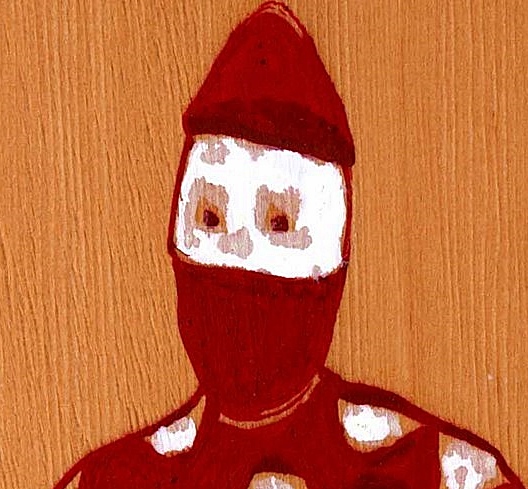
EACH SUPPORT THEN WAS DECORATED WITH PAINTINGS AND DESIGNS DEFINED BY TRADITION. THEIR FIGURES AND MOVEMENTS WERE CONSIDERED BY THE SELK’NAM AS MAGNIFICENT AND BEAUTIFUL, ESPECIALLY AMONG WOMEN. SANUIT WAS THE SOORTE OF THE WEST . WITH A RED BODY AND ABUNDANT WHITE DOTS ORDERED SYMMETRICALLY THROUGHOUT THE ENTIRE BODY, IT INDICATED THE SPIRIT’S BELONGING TO A SPECIFIC CARDINAL POINT THAT COULD BE EASILY INTERPRETED BY ALL BYSTANDERS THANKS TO THE PREDOMINANCE OF COLOR. ITS BODY ORNAMENTATION PRESENTED A DEFINED DESIGN PATTERN, WHICH SEEKED TO HIGHLIGHT A TALL, SLIM, STRONG AND AGILE FIGURE, SOMETIMES REPRESENTED BY MOVEMENTS SUCH AS FLIGHT: “SHOULDERS RAISED, ARMS FOLDED AND SLIGHTLY SEPARATED FROM THE BODY, AND HANDS CLOSED IN FISTS, THE “ACTOR” REPETITATIVELY LIFTS HIS FEET, MOVES HIS HEAD ENERGETICALLY, GIVES QUICK JUMPS, STOPS AFTER EACH ONE OF THEM AND THEN MAKES THE WHOLE BODY SHAKE” .
THE SEVEN MAIN SUPPORTS WERE SYMBOLICALLY RELATED TO THE “FOUR INVISIBLE MOUNTAINS OF INFINITY”, COMBINING A HIGH-LEVEL IDEOLOGICAL CONSTRUCTION OF CONCEPTUAL AND AESTHETIC ABSTRACTION. SOORTE SANU CAME FROM THE WEST KÉNENIK MOUNTAIN RANGE, PLACE OF THE SUNSET OF THE SUN EXPRESSED BY THE ORIGIN OF RED AND THE TRAIL OF DEATH. REPRESENTING AN OWN CULTURAL IMAGINERY THROUGH THE PERFORMANCE OF THE RITE WAS FOR THE SELK’NAM A COMPLEX SHOW OF ANTHROPOMORPHOLIC BEINGS WHOSE MASKS AND ACTIONS REVEALED THEIR PERSONALITY, THUS HELPING TO ORDER AND UPDATE A SYMBOLIC-TERRITORIAL SPACE SUPPORTED BY ATTITUDES AND SOCIAL VALUES.
-MY LITTLE SELK’NAM ARMY- II
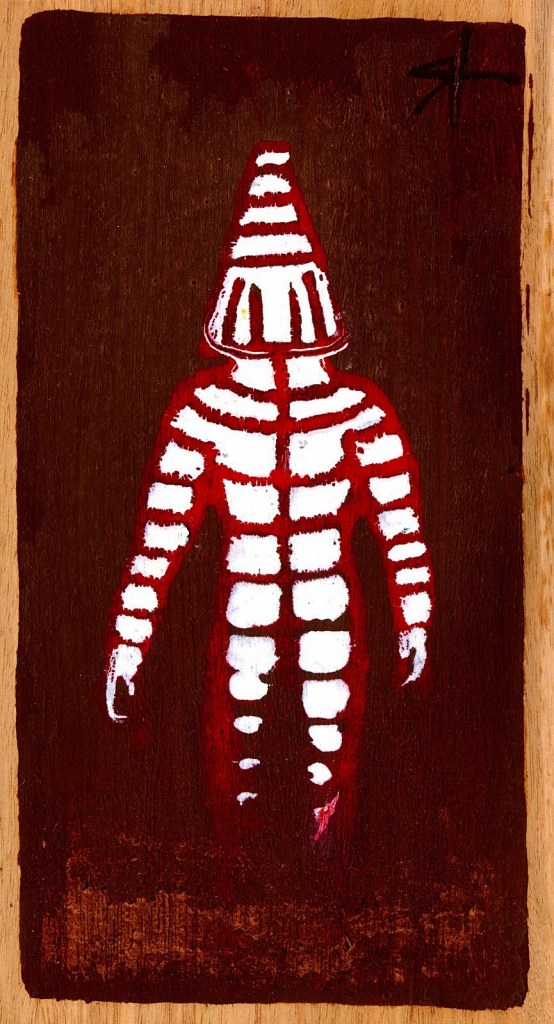
IN THE YEARS OF THE HAIN MYTH, THE YOUNGER AND INEXPERIENCED MEN OCCUPY INSIDE THE CEREMONIAL, THE SITE OF THE SECONDARY SUPPORTS; AGILE AND FAST BODIES PREPARED AND DECORATED FOR DANCE WITH COLORS ONLY PARTIALLY VISIBLE TO OTHERS, THUS SHOWING THEIR SURPRISING SPEED AND BODY ENERGY. ULEM IS ONE OF THEM. HE RELATED WITH THE OTHER SOORTES THROUGH THE THREE MAIN COLORS AND HIS FENSE FOR MOVEMENT:
“THE BODY IS DARK RED AND WHITE HORIZONTAL STRIPES ARE APPLIED TO IT, LEAVING SHORT INTERMEDIATE SECTIONS”…”VERTICALLY FROM THE NECK PASSING THROUGH THE NAVEL, LOWERS A WHITE LINE. THE ULEM MASK IS MADE OF COLORED BARK LIGHTER RED WITH THREE WHITE LINES ON THE TOP”.
THIS POINT – LINE – STRIP REITERATING WITHIN THE FIELDS OF BODY DRAWING, REFERS TO THE MYTH OF THE SAME CHARACTERS: MALE SPIRITS WITH IDEAL PHYSICAL QUALITIES FOR A HUNTER-GATHERER IN THE TIME OF THE SELK’NAM SOCIETY: AGILITY, STRENGTH, SPEED AND BEAUTY.
EACH SUPPORT HAD TOTAL CREATION AUTONOMY AND BY NOT REPRESENTING A DEFINED PATTERN IN ITS DESIGN, IT WAS POSSIBLE TO RECOGNIZE EACH OF THEM BY THEIR MASKS.
ALL FIGURES WITH GREAT MOBILITY, BLENDED INTO THE BLACK ANTARCTIC NIGHTS, TRYING TO REPRESENT THE MOVEMENTS OF SOME LOCAL ANIMAL BROUGHT INTO THE FIELD OF THE CEREMONY, WITHOUT FORGETTING THAT DESPITE THEY ENJOYED GREAT FREEDOM, EACH OF THE CHARACTERIZATIONS WAS SUBORDINATED TO A PREVIOUSLY ESTABLISHED SCRIPT INHERITED FROM PREVIOUS GENERATIONS.
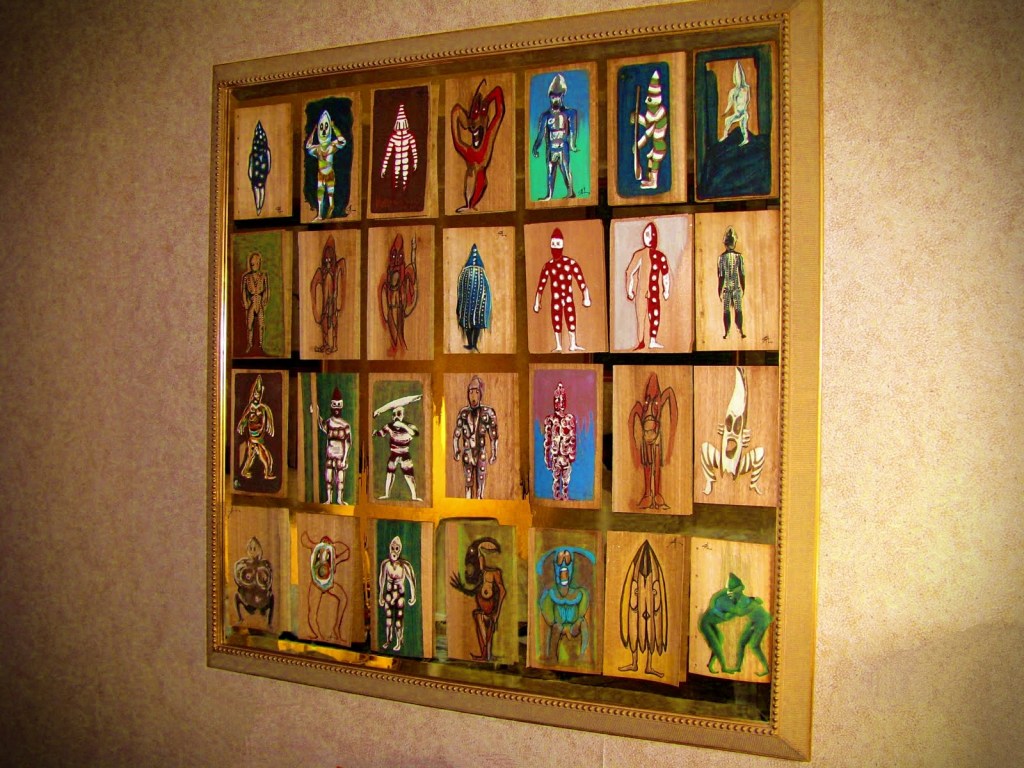
THIS SIGN OF BELONGING GAVE SENSE TO THE CYCLE OF LIFE, AND EACH YOUNG INITIATE WHO UNDERTAKEN THE RITUAL UNDERSTANDED IT SO. ULEM IS PART OF SOME 100 FIGURES PAINTED ON COIGÜE PLATE THAT ARE INCLUDED IN THE POLYPTHYTHY MURAL “MY LITTLE SELKNAM ARMY” .
-MY LITTLE SELK’NAM ARMY- III
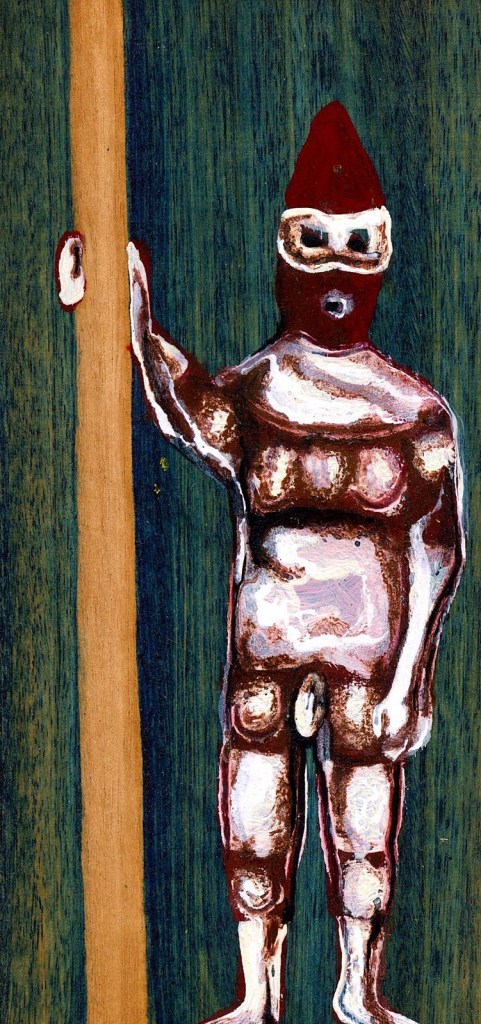
ACID LIKE A PAINTING COMPOSED OF SEVERAL PIECES THAT TOGETHER MAKE UP A MAJOR WORK, “MY LITTLE SELK’NAM ARMY” IS A POLYPTIC MURAL OF FIGURES IN OIL AND MIXED TECHNIQUES ON COIGUE AND MAÑÍO PLATES THAT I BEGAN TO PAINT IN 1998 AND WHICH I CONTINUE TO PAINTING UNTIL TODAY AS AN EXERCISE OF CREATION ON TRAVEL, CARRIED OUT DURING MY TEMPORARY TRANSIT THROUGH DIFFERENT PLACES IN CHILE SUCH AS THE ANDES MOUNTAINS, THE SOUTHERN CANALS, PATAGONIA OR THE ROUGH ARIDITY OF THE NORTHERN COASTS, TRAVELING ON SOLO EXPEDITIONS OVER THE DECK OF BOATS, BUS SEATS, LOANED CARS, MICROS OR PLANES; RESTING IN HOTELS, SHELTERS OR TENTS, WORKING AND WALKING IN WHICH ARE UP TO NOW 120 FIGURES OF BODY PAINTED IN A SIZE OF 16 X 10 CMS EACH AND WHICH FORM AS A WHOLE,
BODY PAINTING OF REAL AND INVENTED BEINGS, IMAGINED, TORN FROM THE BORDERS OF DEATH (AND OBLIVION) IN A FORMAT OF RITUAL REPRESENTATION THAT THE ANCIENTS KEPT UNTIL THE ARRIVAL OF THE WHITE MAN AS A CEREMONY OF PASSAGE FOR THE NEW GENERATIONS OF INITIATES.
THIS IS THE ARMY OF THE REPUBLIC, MY TERRACOTTA ESCORT. A GUARD OF MOCETONES MADE OF MUD AND FUNERAL WOOD THAT STAND UP AMONG THE CULTURAL LANDSCAPE LIKE A MASTER BEAM THAT SPEAKS TO US WITH THE SILENCE OF THE EXHUMEED BODIES, THAT ADVENTURE OF NAMELESS GRAVES, EMPTY BASINS AND TRACES MISSING LIKE RUBBLE BURIED AMONG THE branches.
THE PETROGLYPHS OF THE CHOAPA VALLEY- TWOIN THE PATH
THE REGION BETWEEN THE ILLAPEL AND CHOAPA RIVERS CORRESPONDS TO THE SOUTH/EAST EXTREME OF THE PROVINCE OF THE SAME NAME, IN THE IV REGION OF CHILE. IT IS ALSO THE SOUTHERN LIMIT OF THE NORTE CHICO, A GEOGRAPHICAL AND CLIMATE TRANSITION ZONE TO THE ABSOLUTE ARIDITY OF THE NORTE GRANDE.
CROSSED BY A LARGE NUMBER OF TRANSVERSE VALLEYS, THIS REGION IS THE NARROWEST IN CHILE -90 KM WIDTH FROM THE SEA TO THE CORDILLERA- WHICH MAKES IT A USUAL HUMAN TRACK SINCE TIME IMMEMORIAL. FULL OF MOUNTAIN PASSES THAT CROSS THE ANDES AT VERY LOW ALTITUDE, IT HAS BEEN A PLACE OF PERMANENT MOVEMENT OF HUMAN POPULATIONS SINCE PRE-HISPANIC TIMES. UNTIL TODAY IT IS COMMON TO SEE MUTLEEERS WITH CARAVANS OF MULES TRAVELING THE BEAUTIFUL FOOTPRINT THAT WINDS DRAWING THE NARROW VALLEY THAT FOLLOWS THE COURSE OF THE ILLAPEL RIVER, OR THROUGH THE FERTILE CAUCE OF THE CHOAPA, WHICH OFFERS A GOOD AMOUNT OF NATURAL VIEWPOINTS FROM WHICH THE ANCIENT HAD A PERFECT PANORAMIC OF THE VALLEY.
FOLLOWING A BRANCH OF THE ROAD THAT LEADS TO THE CAVILOLÉN SLOPE, WE GO INTO AN AREA FULL OF FERTILE TRANSVERSAL VALLEYS INHABITED BY MAN FOR MORE THAN TWO THOUSAND YEARS.
PLACE OF ORIGIN OF STRONG POPULAR MYTHS, TODAY WE TRY TO TRAVEL THROUGH THESE ROADS, AS A WAY TO REMAKE PART OF THE ANCIENT TRACES OCCUPIED BY THE NOMADIC SHEPHERDS AND AS POSSIBLE TO DISCOVER THE MYSTERIOUS REASON THAT MOTIVATED THESE MEN TO MARK THEIR PASSAGE THROUGH THESE PLACES , THROUGH THE STONE INSCRIPTION OF ROCK ART.
WE LEAVE THE CITY OF ILLAPEL BEHIND, TO PASS THROUGH THE MYSTERIOUS SALAMANCA -NATIONAL CAPITAL OF IMBUNCHE- AND CONTINUE THROUGH THE COURSE OF THE CHOAPA RIVER TO ITS ORIGIN, SOMETHING SOUTHEAST OF CUNCUMEN, OUR FIRST STOP.
NIGHT FALLS SLOWLY OVER THE GENTLE SLOPS OF THE MOUNTAINS, FROM WHERE THE CACTI RISE LIKE ANCIENT LOOTCH-OUTS OUTLINED AGAINST THE FADING COLOR OF THE SKIES.
THE WIND SLOWS DOWN AND A STRONG SILENCE APPEARS SPEEDING UP FROM THE BOTTOM OF THE EARTH, WHILE WE INSTALL OUR TENTS AND DREAM THAT ON FULL MOON NIGHTS, WITCHES WILL FLY OUT TO THEIR COVENS WHILE POETS WILL WRITE WITH A BONE PUNCH IN THE ANCIENT LANGUAGE OF A BLACK GOAT.
THRESHOLDS
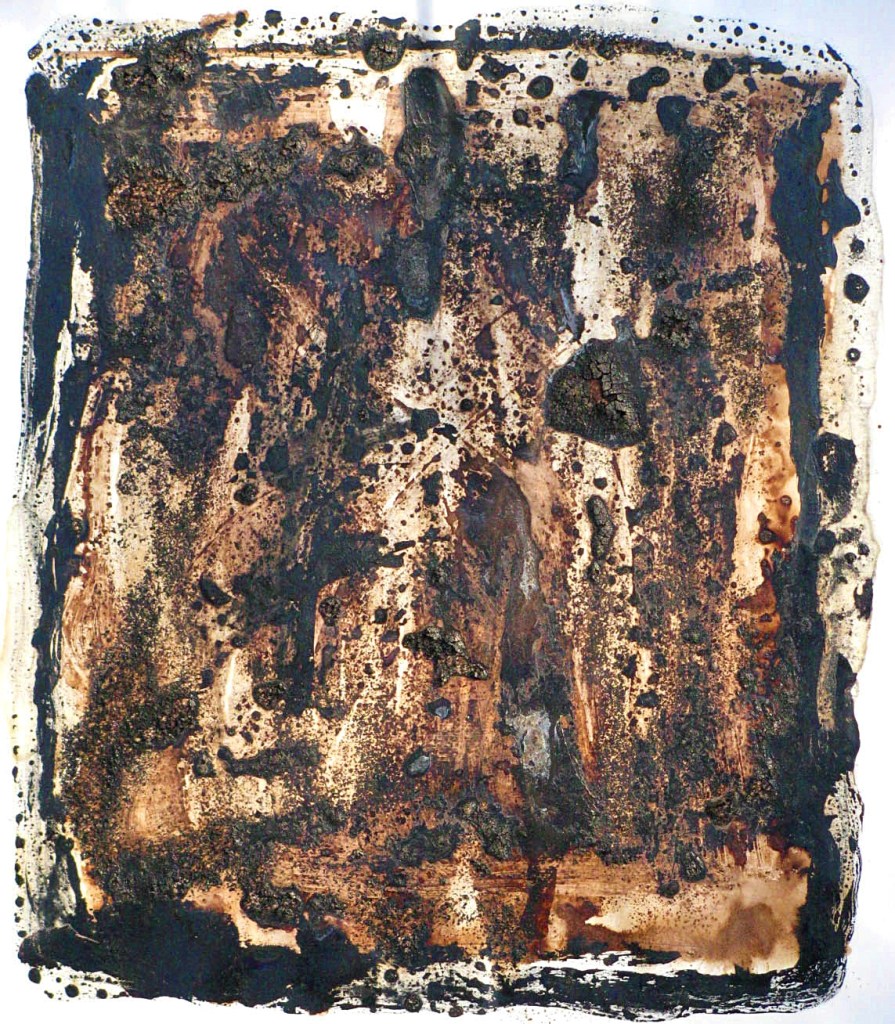
“THRESHOLD IS THAT BRIDGE THAT IS ESTABLISHED BETWEEN ONE PLACE AND ANOTHER, THAT (IN)VISIBLE PATH OR LIMIT THAT SEPARATES THEM, IS THE MINIMUM SIGN, SKIN, TEXTURE OR MATTER, FIRST STEP OR ENTRANCE FOR THINGS TO HAPPEN, OPEN DOOR IN FRONT OF THE THE ABYSS OF A NON-EXISTENT SPACE WHICH IS ALSO THE WORLD OF PAINTING, WHICH MOVES, WHICH MUTS, WHICH CHANGES, WHICH DISAPPEARES; THRESHOLD IS THE FRONTIER AND THE REVERSE OF THINGS, IT IS AT THE SAME TIME THE BEGINNING AND THE END, ORIGIN AND DESTINATION, ENTRY AND EXIT; THRESHOLD IS PAINTING AT THE SPEED OF A NERVOUS IMPULSE STIMULATING UNKNOWN SPACES, EXPLORING A NON-PLACE AND FINDING THE PERMANENT FACES OF ITS ABSENCE IN IT.”
“THRESHOLDS”,SERIES OF 15 PAINTINGS, TWO SHOWN, IN MIXED TECHNIQUE ON COUCHÉ PAPER, 40 X 40 CMS EACH, MADE BETWEEN MY WORKSHOPS OF “LAS ANIMAS” IN VALDIVIA AND “RIO ACONCAGUA” IN CONCON, ON THE EDGE OF THE XXI CENTURY.
born in Valparaíso in 1968. After living in Patagonia and in United States product of a scholarship, his first painting exhibitions were date back to the nineties in Valdivia. Later he moved to Santiago and the Fifth Region, where his visual and literary work materializes in a body of work that addresses different forms of expression, such as painting and drawing, experimental and documentary video, visual poetry and muralism, with public art projects installed in Santiago, Valparaíso. As a visual artist he has exhibited his paintings in 15 solo shows and in more than 60 group shows in Chile, Europe and the United States, and his poetic texts have been published in regional, national and international poetry collections, his work being awarded in different state funds for artistic creation such as Fondart, Cntv, Fondo Carnavales Cultural Centers of Valparaíso, among others. Currently the painter lives and works between Valparaíso, Santiago and Concón, where he develops his artistic projects and teacher training, being in charge of university graduates, painting and mural workshops, becoming a teacher for generations of students and artists who have worked with him.
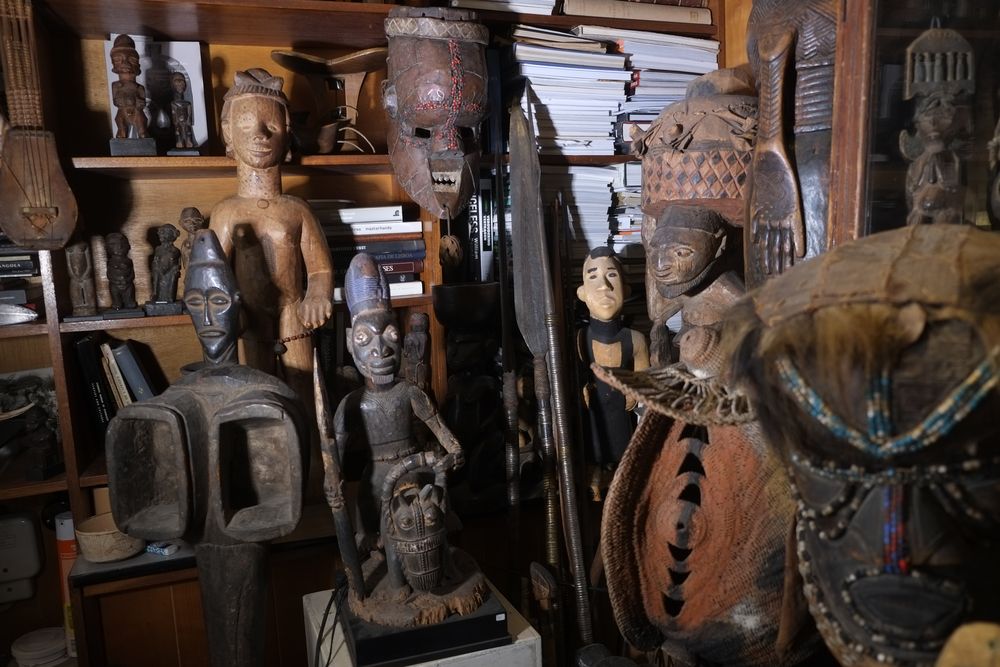
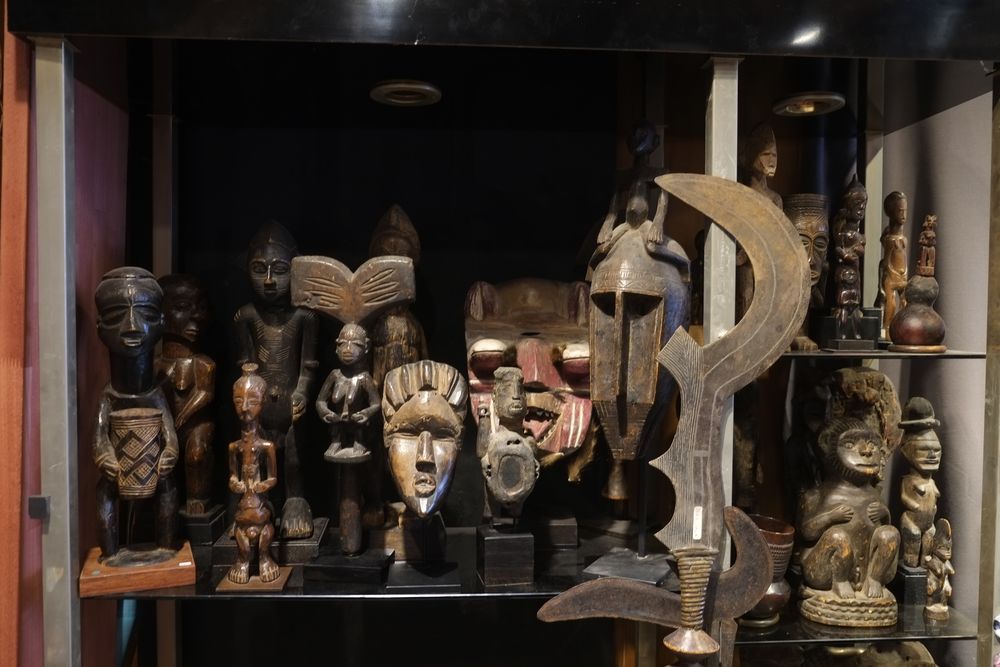
African art has been a part of my childhood. My mother, Nadya Levi, was a sculptor who collected African art, and my father, Herman Norden, was an antique dealer who had a room in his house filled with African art, books, and stuffed birds. As a child, I went to London many times with my mother for auctions, where we met interesting people like Patricia Withofs and Gaston de Havenon. I also remember Mrs. Huguette van Geluwe in Brussels, where we went to seek her opinion on Congolese pieces, or Willy Mestach. And there were Simpson, Charles Raton, and Baron Rollin, who would visit us in Antwerp, and as a little boy, I had to serve coffee and help clean the display cases.
The Salampasu mask is steeped in cultural significance and is traditionally used in tribal ceremonies and rituals. It is believed to represent ancestral spirits and is used for various purposes, such as warding off evil spirits, promoting fertility, and celebrating harvest festivals.
My mother’s collection of Bassa and Dan masks, all hung side by side, many of which were acquired from Paolo Morigi. My first purchase was a small miniature Etruscan stone tablet depicting a lion.
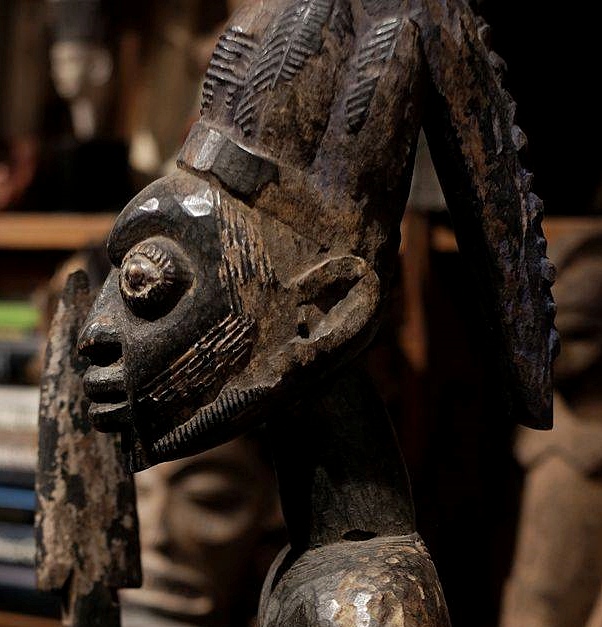
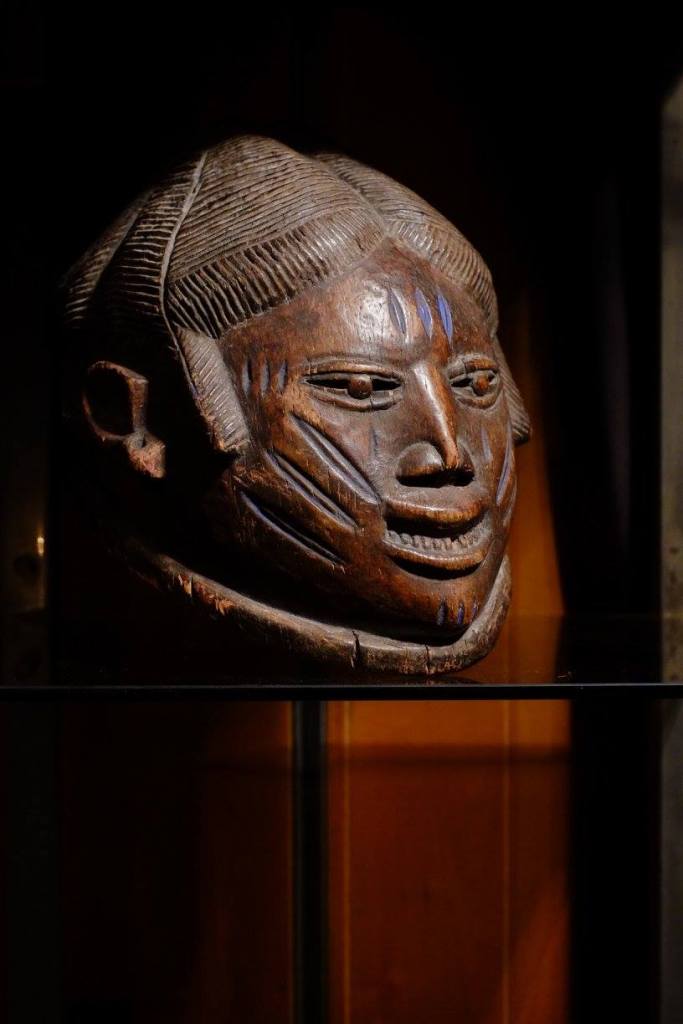
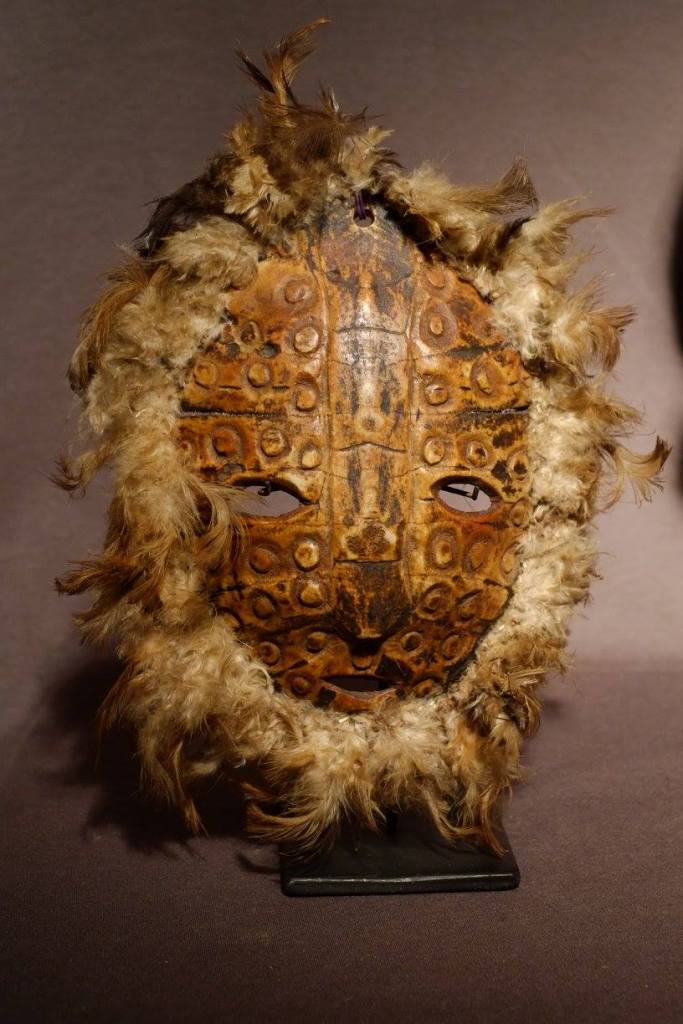
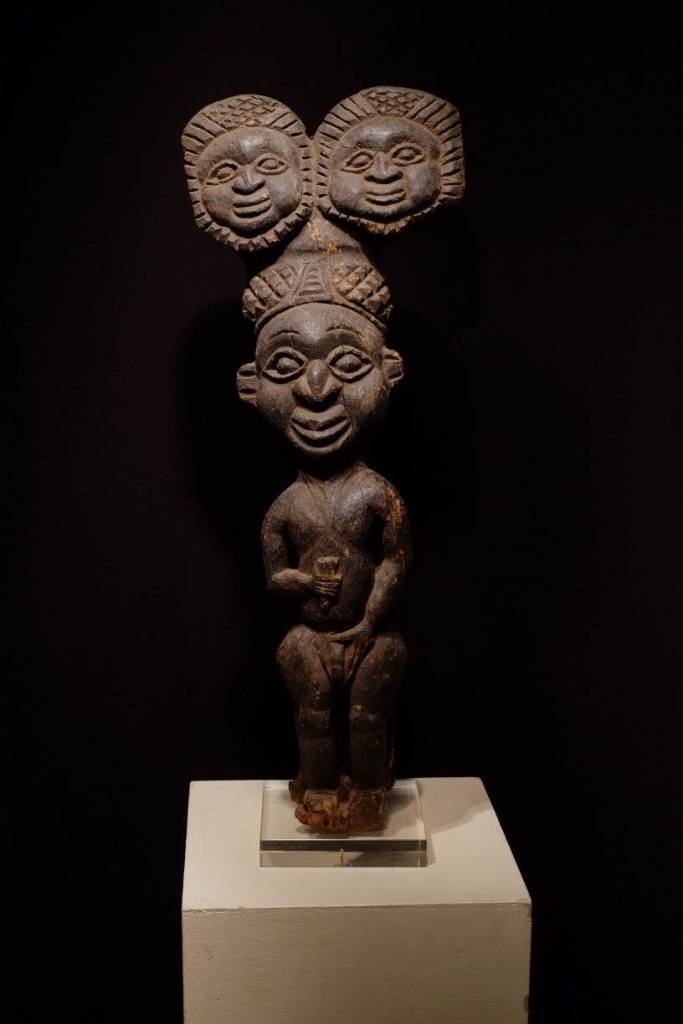
Gelede Mask Yoruba Nigeria. This sect is devoted to the mother of all orisha, the matriarchal head of the universe. Lega Turtle Mask. Mask symbolizes the wisdom of the elder members of the Bwami. Bamileke figure with three heads -Cameroun
I am always looking for an object that evokes emotions in me. I would love to acquire a beautiful object that belonged to Henry Pareyn, the first collector dealer in Antwerp around 1910. I have always derived more pleasure from acquiring objects than from selling them, but I am not a fetishist who cannot part with them.
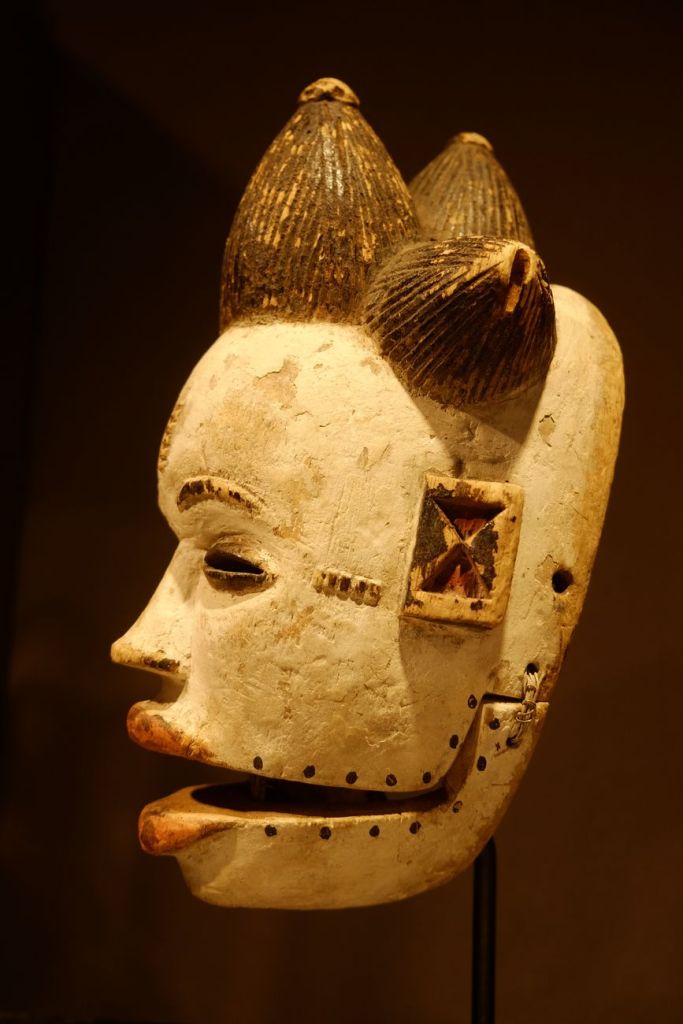
Ogoni ‘Elu’ mask with articulated jaw, Nigeria.The Ogboni ( also spelled Ogoni) people are an ancient and secretive society that has existed in Nigeria for centuries. Their religion is centered around the worship of various deities and the use of masks in religious rituals and ceremonies. The Ogboni mask being described is a prime example of this tradition.
What determines the value of the works? The value of an object often depends on the buyer. I could say that it is the beauty and antiquity associated with the provenance, but in reality, it is the emotion that an object evokes in you that is important, and sometimes the place your imagination gives it.
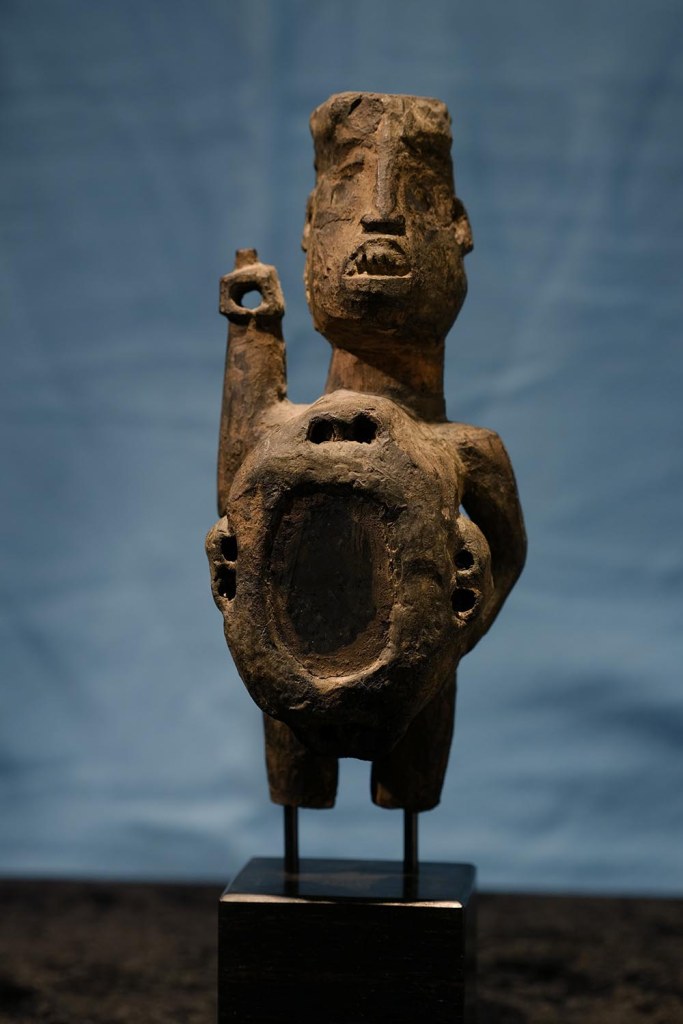
A 19th century Bakongo Nkisi Figure. The figure is known as a nkondi, which means “hunter” or “hunter of wrongs,” and it is believed to have the power to track down and punish wrongdoers. The mirror in its belly is said to allow it to see into the hearts of people and to reveal any evil or malicious intentions they may have. The eyes of the figure are made of mirror, and they are thought to help the nkondi to see clearly in the spiritual realm.
There are so many personalities in this field who have inspired me that I can’t name them all, but first and foremost, it is people with a deep passion and those who recognize the beauty and importance of African art for humanity that inspire me the most. African art has had a tremendous impact and great influence on Western art after World War I, and it is only natural to recognize the importance of this art and its artists.
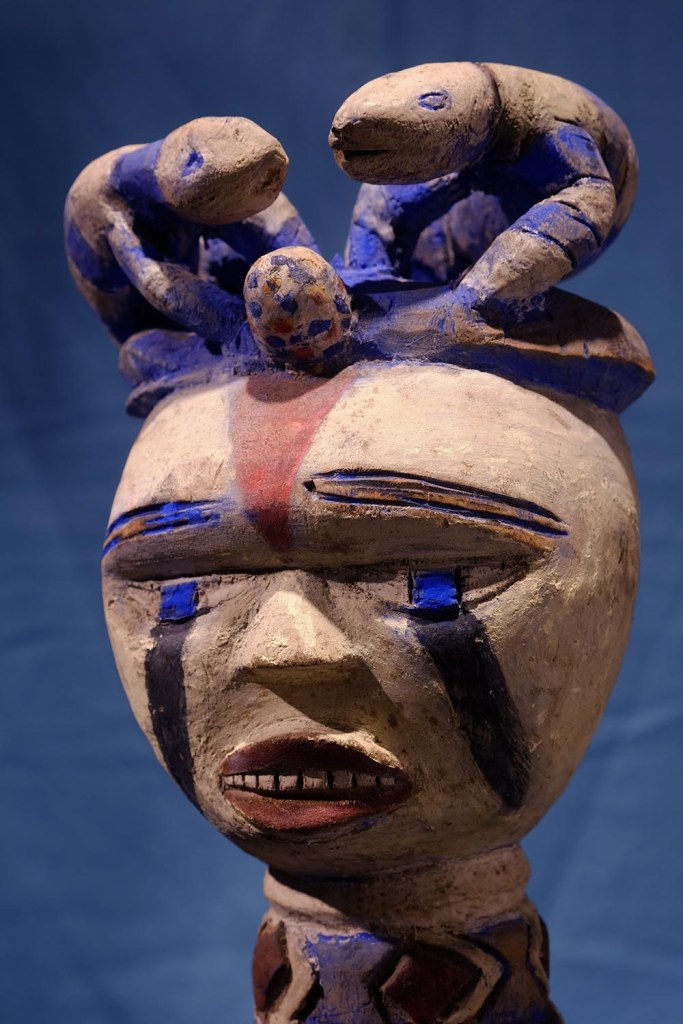
Kuyu Crest Head. The two lizards on the head of the Kuyu sculpture could represent spiritual guardians or protective spirits, as lizards are frequently associated with protective powers in many African cultures
The African art market represents only 0.8% of the overall antique market. It is flooded with fakes, and verifying authenticity is reserved for a very small experienced elite with a network of knowledgeable friends. Determining the value is equally unpredictable due to the market’s volatility, as it is too small. However, this provides many opportunities for knowledgeable buyers to make good purchases. The price of African art has declined in recent years for mid-range pieces due to the disappearance of wealthy collectors and the abundance of supply in the market. Only exceptional objects still command high prices.
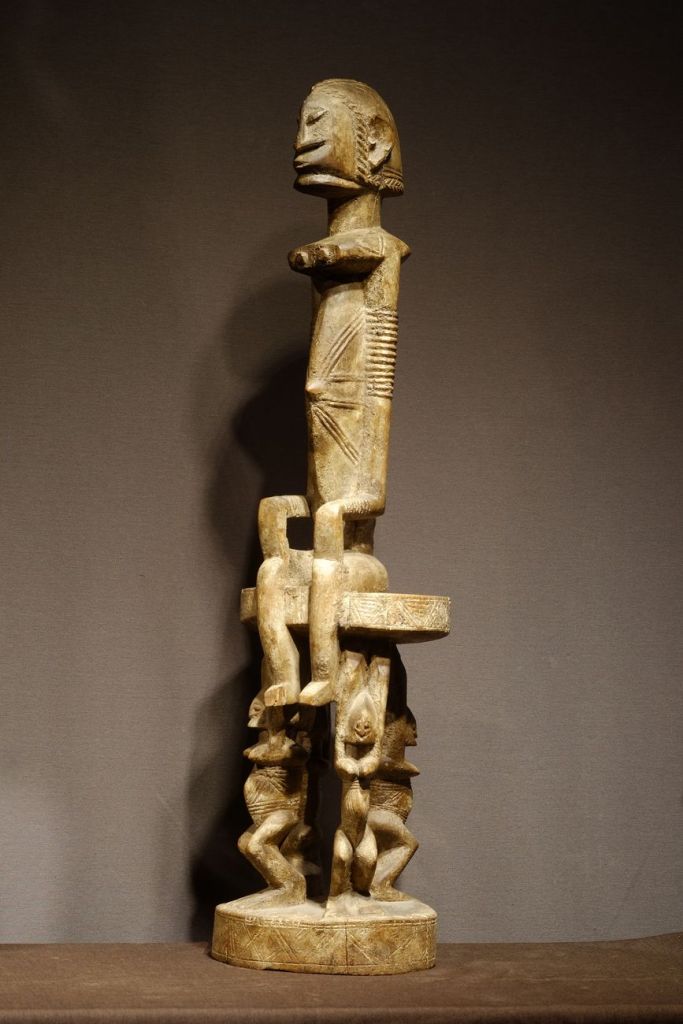
A 1967 published and museum exhibited Dogon Figure Hermaphroditic figure on a seat, which is supported by four female figures with raised arms. Yellow-brown patinated, heavy, hard wood. The published Meulendijk Dogon Figure was also exhibited in the ” Museum voor Land- en Volkenkunde” in Rotterdam, Nederland in december 1967
I do see many small collectors entering the market, but they rarely “invest” more than a few thousand euros. The recognition of contemporary African art over the past decade is very encouraging, as it could attract new audiences to African primitive art as well. The role of museums and cultural institutions is crucial in recognizing these cultures. In this regard, the Musée du quai Branly is doing excellent work by offering beautiful exhibitions that attract new audiences. However, the recent demands for repatriation create some discomfort in the market in the short term. But with the recognition of the importance of their own art, in the long term, it should allow an African market to develop in Africa. I also look forward to the creation of museums on the African continent, especially with the opening of the Museum of Black Civilizations in Dakar.
Throughout his journey, Norden has found inspiration in numerous figures within the primitive art field. He admires those who possess a deep passion for African art and recognize its significance in the broader context of humanity. The profound impact of African art on Western artistic movements following World War I further fuels his admiration for the art form and its artists. Looking ahead, Norden’s enthusiasm for primitive art shows no signs of waning. With an ongoing book project awaiting completion, he is dedicated to sharing his extensive knowledge and experiences with a wider audience.
Norden places great importance on the role of museums and cultural institutions in recognizing and promoting the significance of African art and its associated cultures. He commends the Musée du quai Branly for its remarkable exhibitions, which attract new audiences and foster appreciation for African primitive art. Norden also expresses anticipation for the emergence of museums on the African continent, with the Museum of Black Civilizations in Dakar serving as a beacon of hope.
David Norden’s lifelong dedication to primitive art has solidified his position as a respected figure in the field. His unwavering passion, discerning eye, and commitment to preserving the legacy of African art continue to shape his remarkable journey. As he eagerly shares his knowledge and explores new horizons, Norden’s contributions play an invaluable role in promoting the beauty and significance of primitive art to a global audience.
Sint Katelijnevest 27/B2000 Antwerpen/Belgium+32 3 227.35.40/david.norden@telenet.be
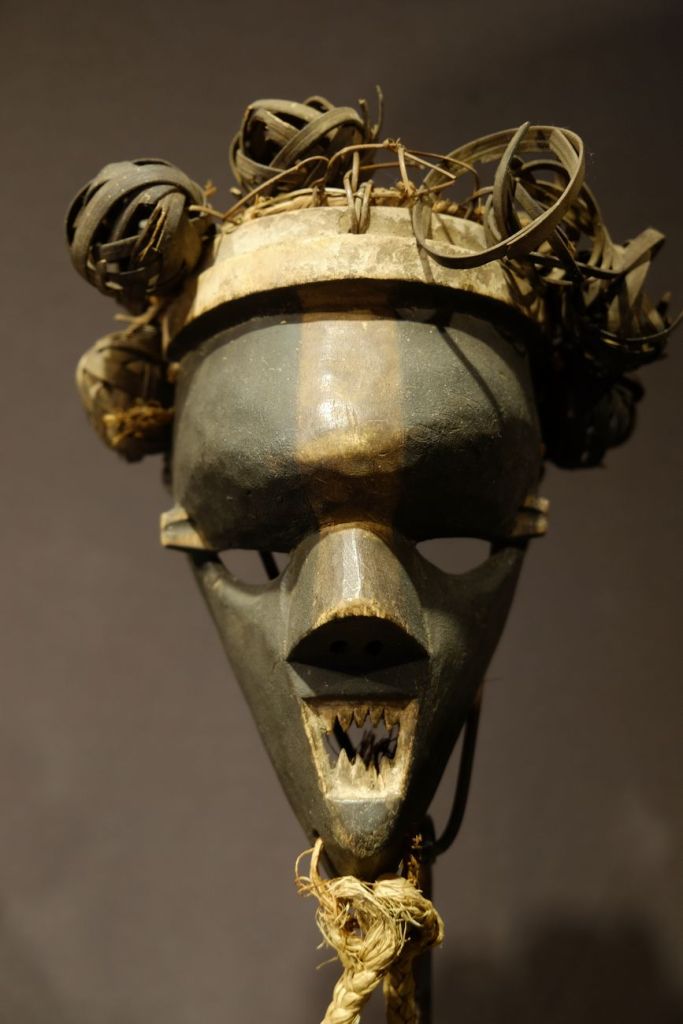
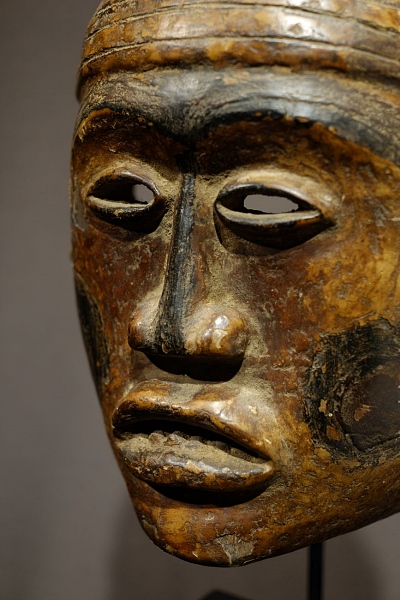
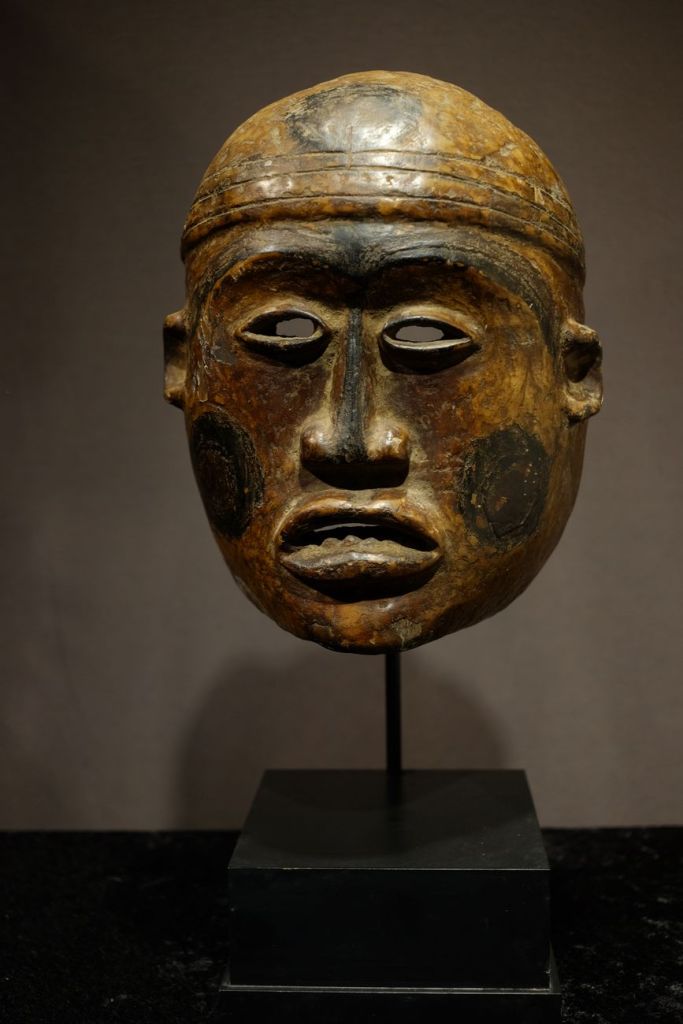
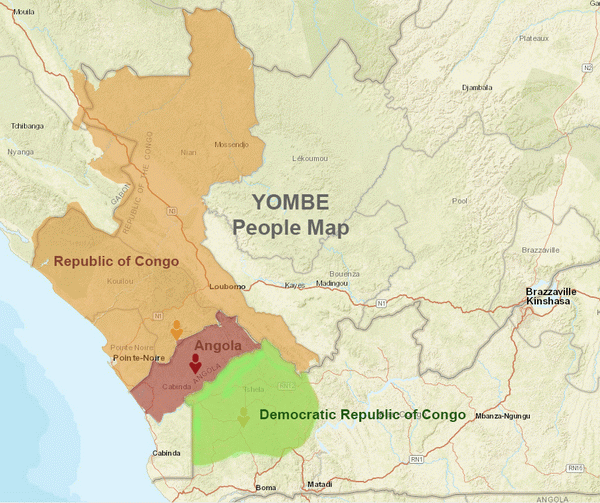
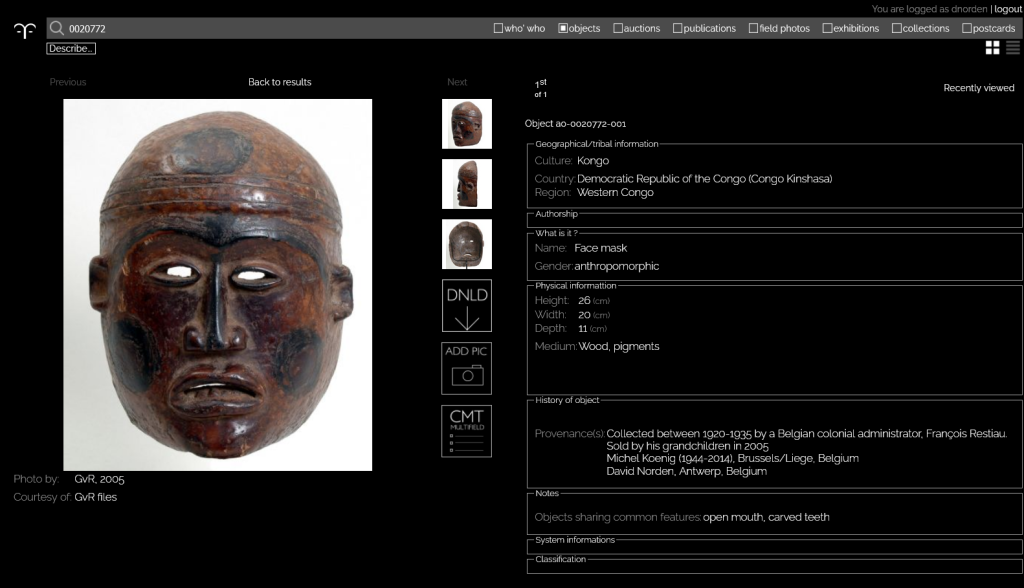
The customs of the Congo are quite different from those of Nigeria there is no direct relation between the Yoruba and Yombe. Ngobudi is the name of the diviner’s Mask . Once he wears the mask the powers of the diviner are active. A nganga is a soothsayer or traditional healer. The diviner can explain the past and give advice about the future. Nganga masks are owned by the healer or diviner.
The Yombe don’t have the traditions, like the Yoruba that are more related to the Voodoo…and Congo is difficult to explain there are so many different tribes. But the main activities are about the passage to adulthood, honoring ancestors and telling the old stories when they are royal kingdoms. In Nigeria like Benin brass pieces are more to tell and illustrate the conquest of the kingdom and decorate their palace.
In the past a lot of colonials where going to Congo, since it was a Belgian colony. That specific Yombe mask was brought back between 1920-1935 by a Belgian colonial administrator, François Restiau, Mons. He was working for the railroad company in Congo. He found that mask in Congo when the “Ocean Railway” was built between 1921 and 1934. It is a bit of a sad story when you know that to build the railway from Pointe-Noire to Brazzaville between 15,000 and 20,000 Africans died. Today the Yombe people has a small population of 15,000 and the culture is still active, but it’s not exactly the same as 100 years ago.
I have been dealing African art since 1993, before I was a professional photographer. I am specialized in African art coming from old collections mainly, so I do not import my pieces directly from Africa. My mother Nadya Levi was a sculptor and she collected African Art. My father Herman Norden was an antique dealer, and he had a room with African Art in his house. The African Art world is quite small I guess there are less than 200 serious specialized dealers in this field in the world. It is not so easy, because there are a lot of fakes that have been produced, some of them very well done, and you need to have seen a lot of pieces to be able to tell the differences.
written by David Norden
Sint Katelijnevest 27/B2000 Antwerpen/Belgium+32 3 227.35.40/david.norden@telenet.be
When I was a little kid my first years were spent with my mom and dad until they parted ways when I was in kindergarten. Before that, I remember my mom walked a lot because we didn’t have a car. My last memory of my dad’s work was he was a taxi-cab driver in Billings, MT. I was their only child and spent a lot of time with my mom, dad, and paternal grandparents. My dad would sketch a lot and my grandfather would do Absaaloke (Crow) art by making artifacts he could sell throughout his travels in Montana and Wyoming. Art was always a part of my family’s life in some form.
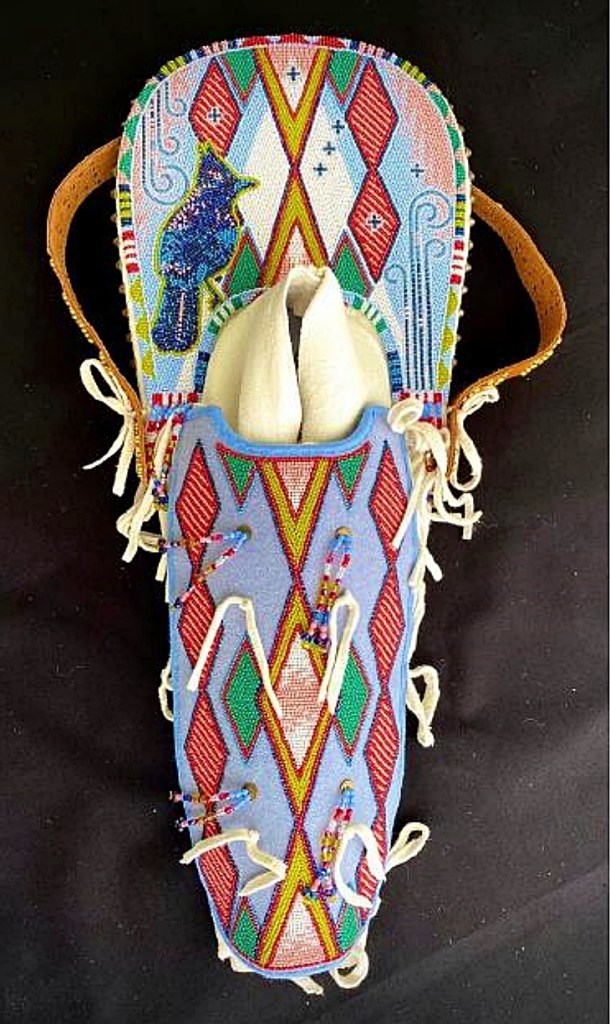
Qwasqwi, Storm, Five Friends & the Canoe (2021). 7.7″ x 1′ 7″. Red vintage true-cut, size 13 seed beads, true-cut, size 13 seed beads, deer hide, wood, cotton fabric, wool, leather, stabilizer, czech beads, nylon and cotton thread, brass tacks and spots. The first cradleboard in a series of four cradleboards, representing the four seasons. This board represents the winter season. Award: 63rd Annual Heard Museum Guild Indian Fair & Market: 1st place award in Division D-Functional objects such as bows and arrows, cradleboards, bows, weapons, shields, furniture, lamps, musical instruments, bull roarers, beaded bottles, and other objects. Exhibition: “Expressions of Resilience” at Bigfork Arts & Cultural Center showing May 8-June 26, 2021. Exhibition: “Finding Our Place: Beading and Weaving Our Culture Together” at City Scape Community Art Space, in North Vancouver BC, Oct. 8-Nov. 13, 2021. Awards 2022: Harrison Eiteljorg Purchase Award, Best of Division in Traditional Beadwork (Eiteljorg Museum), First Place in Traditional Beadwork (Eiteljorg Museum). This cradleboard is in the permanent collection of the Eiteljorg Museum.
When my mom and dad broke up, I moved with my mom to Salish country in Western Montana. For the first few years, we lived with my uncle Johnny Arlee, my aunt Joan, and my maternal grandmother Rachel Arlee Bowers. All three were prolific in their Indigenous skillsets. At the time, my uncle had his own painting business and was always out in his shop making large hand-painted signs. My aunt Joan was always doing beadwork or sewing and my grandmother did beadwork and taught at the local tribal college; her beadwork. She was also a great seamstress. Earlier than I can remember, my mom would send me with my grandmother Rachel often and she was always toting her beading supplies and beaded creations to sell.
Salish Bitterroot Story (2022), 7.7″ x 1′ 7″. Combination of vintage and contemporary size 13 seed beads, true-cut, deer hide, wood, cotton fabric, wool, leather, stabilizer, Czech beads, nylon and cotton thread, brass tacks and spots. The second cradleboard in a series of four cradleboards, representing the four seasons. This board represents the spring season. Shown at the 64th Annual Heard Museum Guild Indian Fair & Market Award 2022: Second Place in Traditional Beadwork (Eiteljorg Museum). This work is now owned by a private collector.
There were times we camped at Agne’s Camp, in Valley Creek, and she would spend summers with Agnes, helping to pass on the Salish culture. I don’t remember the earlier years but as I got older the summer was cut down to a week and my grandma would be there every year, camping out, teaching the tribal college students how to bead. I looked forward to that time and I would help her get her camp set up and do small chores so she could work. She would teach me how to bead too and I remember my first finished beadwork was a little clip-on barrette I wore with my dance regalia when I was in about 4th grade.
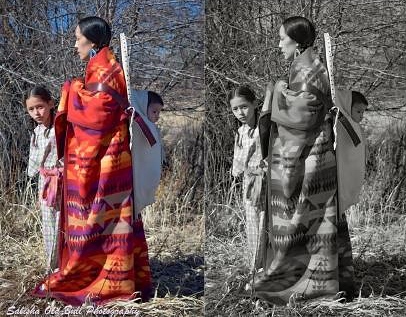
Felicite McDonald Digital Photograph 2021
By the time I was in high school I knew I wanted to practice art as a profession. I loved to draw and sketched on everything I was allowed to personalize. I wanted to know how to paint and I took every art class that was offered as an elective. I loved color theory and all of the challenges and assignments given to produce art. I wanted to go to art school but as I got older high school had a lot of social challenges for me; for a lot of different reasons; mainly adolescence and social factors. I was fast tracked through high school and when it came time to apply for colleges my mom didn’t agree that art would be the best declaration to pursue. I was so heart-broken but I minded and I ended up doing a lot of other things in college. I was never really satisfied with my majors, and mostly resentful of the ease that came to my classmates when they were following their career passions. I tried to stick it out as long as I could, which felt like my whole life.
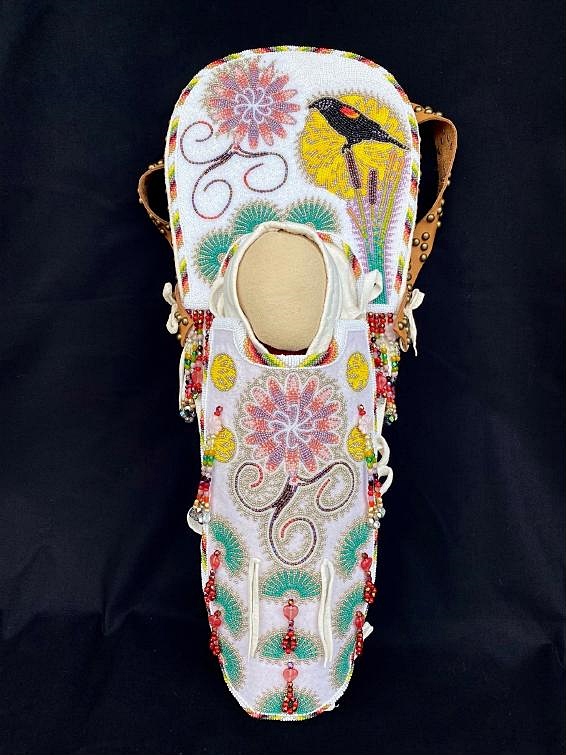
Remember That Night At Buffalo Camp (2022). 7.7″ x 1′ 7″. Red and Green vintage true-cut, size 13 seed beads, true-cut, size 13 seed beads, deer hide, wood, cotton fabric, wool, leather, stabilizer, czech beads, nylon and cotton thread, brass tacks and spots. The third cradleboard in a series of four cradleboards, representing the four seasons. This board represents the summer season. Award: 100th Annual Santa Fe Indian Market: 2nd place award in Classification VIII: Beadwork & Quillwork, Div. C: Other items, Category 3102. This cradleboard is apart of a private collection.
I feel that I’ve had a very hard adult life and I’ve somehow managed to take the road less travelled. Like everyone who takes this path, I would say I wouldn’t change my outcomes, but I get a lump in my throat thinking about everything I’ve endured to get to where I am today. I married at age 20 to a Salish man, since I had spent most of my life in Salish country. He had three daughters from a previous marriage that I helped raise. We had two sons of our own who are still young enough to be in elementary school. I used my college degrees to stay near home, in Arlee MT, but I couldn’t handle the local, you-need-to-grow-a-thicker-skin attitudes of home. I’m pretty sure I suffered from PTSD from working in a hostile working environment.
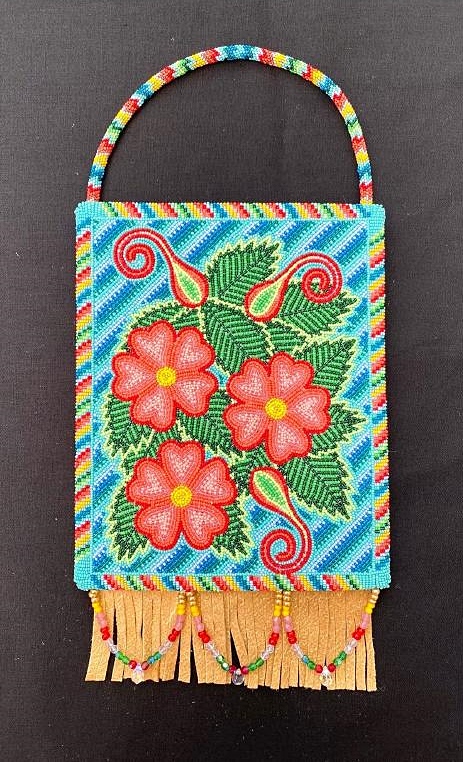
Bitterroot & Huckleberries (2021). 8.5″ x 11″ beadwork surface, not including fringe length. Combination of modern and vintage size 13 true-cut seed beads, stabilizer, deer hide, wool, cotton fabric, nylon thread, czech beads, brass bells, one plastic button. Technique is flat-stitch, two-needle, contour beadwork. Exhibition: Knowledge from Land (2021), University Center Gallery, Missoula MT Award: 100th Annual Santa Fe Indian Market: 2nd place award in Classification VII: Diverse Art Forms, Div. A: Functional objects, Category 2707. This purse is apart of a private collection
One day, I had enough. My youngest daughter was in her last year of high school and she was exploring colleges to attend. We went to a college visit with her in the spring and we sat in on the art major session. I remembered my existing broken heart from not being able to pursue art as a young adult. When I got back to work, I had a really bad day and decided enough was enough. I found out the University of Montana was beginning its first cohort of online art degree program majors and I enrolled. I took as many classes as I could handle, quit my job and got a different job. I worked full-time and took online classes until eventually I finished the program in 2021 and I finally got an art degree. I don’t think I’ve ever cried so much, throughout those few years, realizing that I should have put my foot down and did art school from the start.
The Roses We Know (2023). 13″ x 6-3/16″ x .25″. Technique is flat-stitch, two-needle, beadwork. Materials are true cut, size 13 Czech modern and vintage seed beads, brain-tanned smoked deer hide, glass and crystal beads, nylon cord, stabilizer, thread, and cotton material. This purse shows the images of wild roses that grow in Western Montana. The plant is significant to the Bitterroot Salish people as the blooming represents the buffalo are fat and ready to hunt. It is currently in a virtual exhibit, “Stories From Bead Night,” hosted by Carrie McCleary and her Plain Soul beading group, Rock Your Beads at rockyourbeads.com. This purse now belongs to a private collector.
Towards the end of my degree program, I was finally able to do more extensive exploration into art that I was hoping to strongly focus. I was sad that I didn’t know much about being a professional artist so I soaked up any advice I could along the way—I’m still a beginner. I wanted to continue to do beadwork and also was very happy to get a formal educational background on art history. It helped me to better understand genres of the artworld as well as where I found interest. It turned out that all of my time before art school was not wasted. I used a lot of my educational background to express my interest in the type of art I like to create.
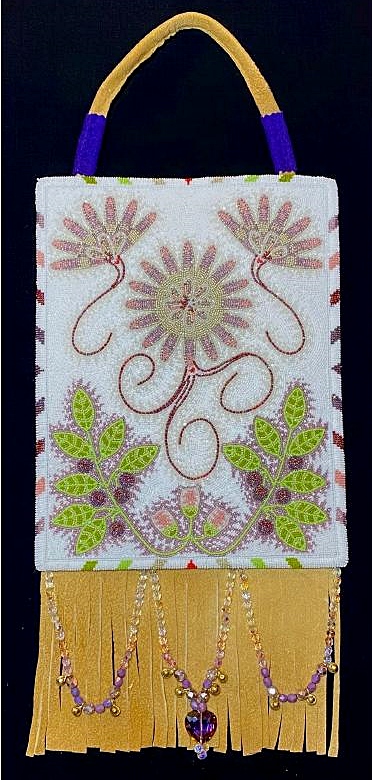
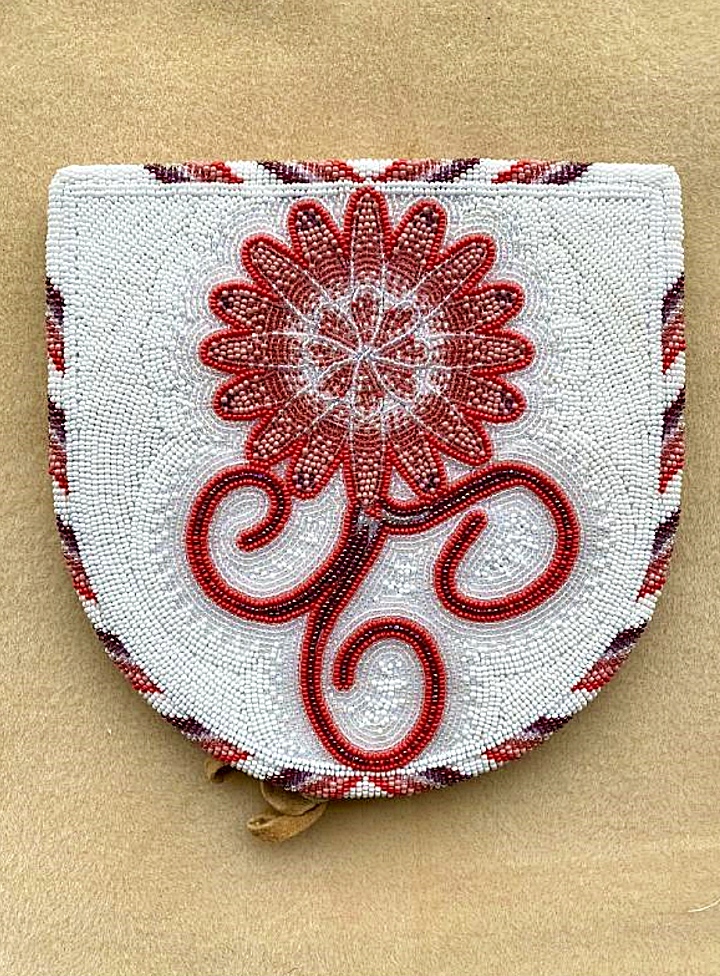
Salish Bitterroot Back Bag (2022). 6in. x 6 in., Size 13 true cut Czech beads (combination of modern and vintage). Brain-tanned, smoked, deer hide, nylon thread, stabilizer, and paper. This bag is in the permanent collection of the Montana Museum of Arts and Culture.
I like to focus on Indigenous knowledge and I like the idea of using empowerment to overcome systemic and racial oppression. The environment is most interesting and I try to express ecological concepts in my work, especially the beadwork. I enjoy lots of aspects of my culture, but feel that getting a formal education gave me a leg-up in life and it opened doors for me when I least expected it. Throughout my educational experience, I connected the idea of place-based learning and Indigenous ways of knowing. I believe that when a person is aware of their environment they can grow intellectually and pursue life beyond their basic needs—they are grounded and secure.
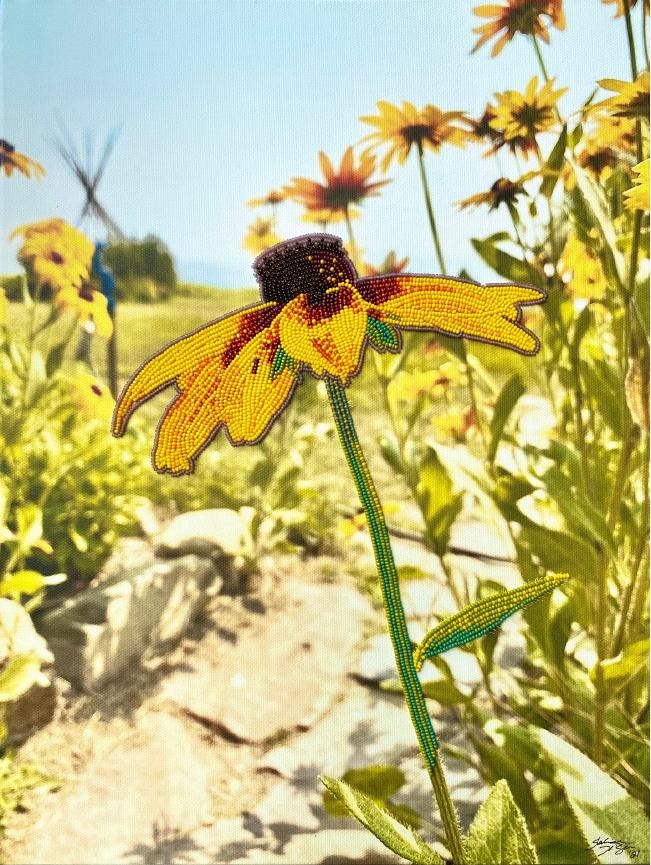
Susan At Thunderhead (2021). 12″ x 16″ original photograph and beadwork on canvas. Donated to Open Air for fundraiser.
Although beadwork is my go-to creative expression, I enjoy painting, drawing, and I aspire to improve my photography skills; I sometimes attempt to mix these medias. The past few years I’ve checked off some huge bucket list items, the biggest one being to participate in the Santa Fe Indian Market. Since 2021 I’ve found joy in participating in Indian Markets and learning how to make time to produce smaller items to vend during the market. It’s intense and physically challenging but I enjoy meeting Indigenous artists I’ve admired for years and having the honor of having artworks amongst the “greats.”
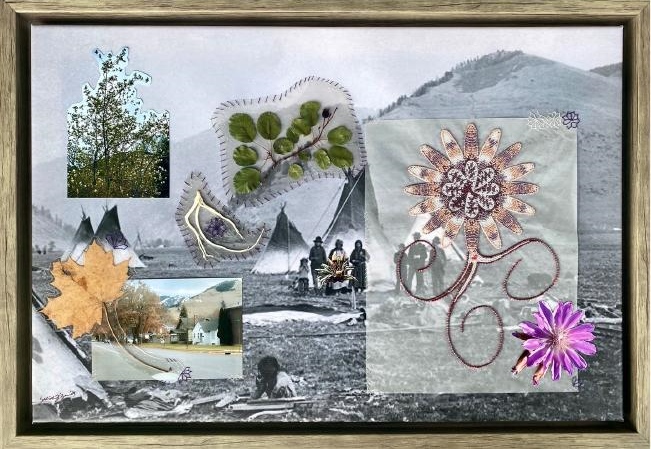
Indigenous Bitterroot Land 25” x 18”, Collage and beadwork on canvas 2021
In the future, I hope to calm down a bit and get a better handle of the business end of things. I hope to continue to grow artistically, continue to create art in a cultural sense, and to continue to support my family in this way. At the end of 2021 my husband got a new job and we moved part-time away from Arlee. But when that happened, we agreed that I would give it 100% to pursing professional art full-time. I’ve been doing this and slowly learning how to network and become more knowledgeable about the financial part of the deal. I’m thankful for my husband’s support of my journey and attribute his support to much of my ability to follow-through with life, up to this point. I’m also very thankful for the chance of being born into a family that valued art as a way of life.
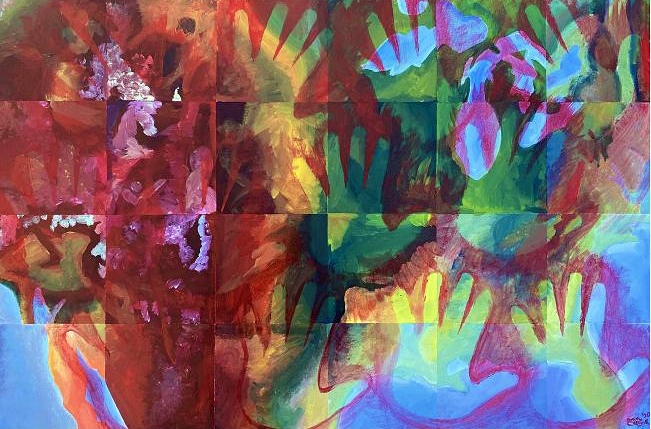
Indigenous Hillshade (2020). 24″ x 36″ acrylic on canvas. Shown in the “We are Still Here and this is Our Story” exhibition in the Emerson Center for the Arts & Culture in Bozeman, Montana .
I know that I cannot change the past but if I had to give a small bit of advice, I would say that dreams are always worth pursuing. Hard work, consistency, belief in yourself seem to be at the core of carrying a dream. I’ve wanted to give it up a few times, but I stop and remember things I’ve heard other artists say, such as having hard times and easy times along the way. I know that if I can live a life that I didn’t want for so many years, I can definitely commit to a life I really want and do my best to be accountable to myself and to my children. I love creating art and I’m certain this is how I will live the rest of my life.
John Pelko on Florals Hard sketch crayon on heavy gift-wrapping paper 12 in. x 14 in. 2019
SALISHA ANNE OLD BULL ART, PHOTOS ANDWRITING IS AN AUTHORIZED DUPLICATION WITH PERMISSION AND EXPRESSED CONSENT
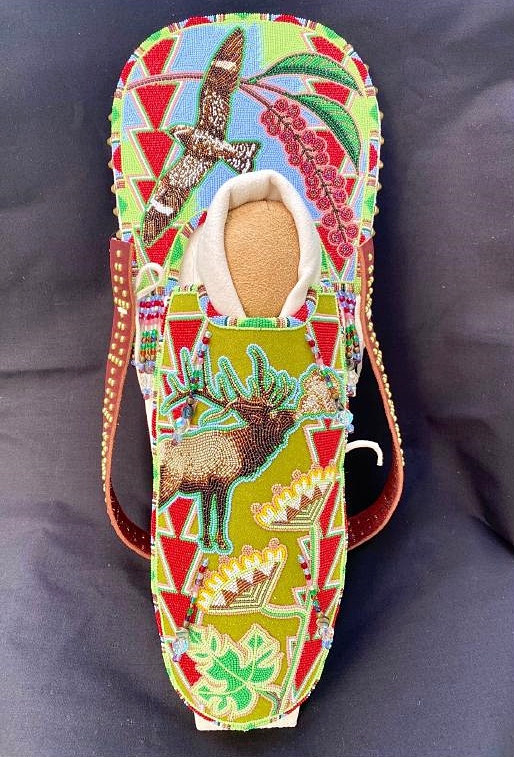
Feature photo:Signs of Autumn (2023). 7.7″ x 1′ 7″. Vintage and modern true-cut, size 13 seed beads, deer hide, wood, cotton fabric, wool, leather, stabilizer, glass beads, nylon and cotton thread, brass tacks and spots. The fourth cradleboard in a series of four cradleboards, representing the four seasons. This board represents the autumn season. Award: 65th Annual Heard Museum Guild Indian Fair & Market: Honorable Mention award in Division D-Functional objects such as bows and arrows, cradleboards, bows, weapons, shields, furniture, lamps, musical instruments, bull roarers, beaded bottles, and other objects. This work is now owned by a private collector.










 Mitchell Pluto