Parallel lines intersect, forming a diamond at the center. II is now X. This form lets us travel diagonally through space. One needs divination and shapeshifting for this kind of journey. I absorbed a triangular wave. Under the Pisces moon, I sipped from the cup. A tiny fraction of 360 Aquarius, a Kayayei, and the water porter, is playing live. Let’s toast to the lunar. It’s an old-time oracle. I use my geomantic knight on the synth console to twist the central square into a pyramid on the chessboard, bending the surrounding space. The sixty-four Yoginis from the eight phases of existence create a cosmic tapestry that illustrates awareness and extinction.
Through the checkered board, we can explore a chart of our interior states. Intertwined black and white squares represent yin and yang. This visual diagram has the ability to analyze and interpret events from different time spans. We are connecting. As a hand, claw, fin, hoof, wing, and tentacle united on a holiday to a foreign atmosphere. By being able to transform into different shapes, we plan to discover a new place to thrive, eat, and reproduce. Our honeymoon is amazing at the moment. With heightened senses working in perfect harmony. Each optical sense is a precious asset to detect whatever objects may be drifting in this void. Apps mimic snake pupils and cat eyes enhance night vision.
If we find nothing on that app, we activate a bat signal to identify what we overlooked. To combat boredom, we listen to the old fashion whale songs. There is plenty of room in the universe for invisible radio waves. We notice how unconscious shifts affect our awareness. Giving up vanity was my toughest astronaut challenge. Self-esteem improved by breaking free from consumerism. We practice Buddhism without a figure. The fading of charged particles into space is called “death”. Numbers are eternal, so we will test how long we can remember them. I am coming forward from within my ego to assert the words that I have spoken before the update. This is a hallucinatory voice. We get it, there’s no true self, but we are always expanding who we are.
For better well being, we are abandoning past programs that slowed our progress. The current speaker is about to stop speaking. Once we reach our destination, we intend to leave a circle. This storyline will trigger déjà vu and create a memorable mental image for the replicas.
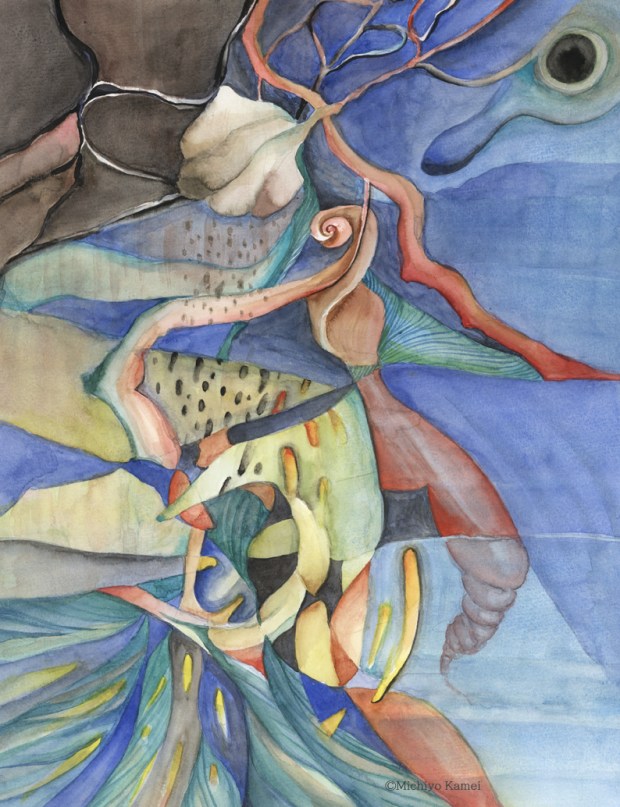
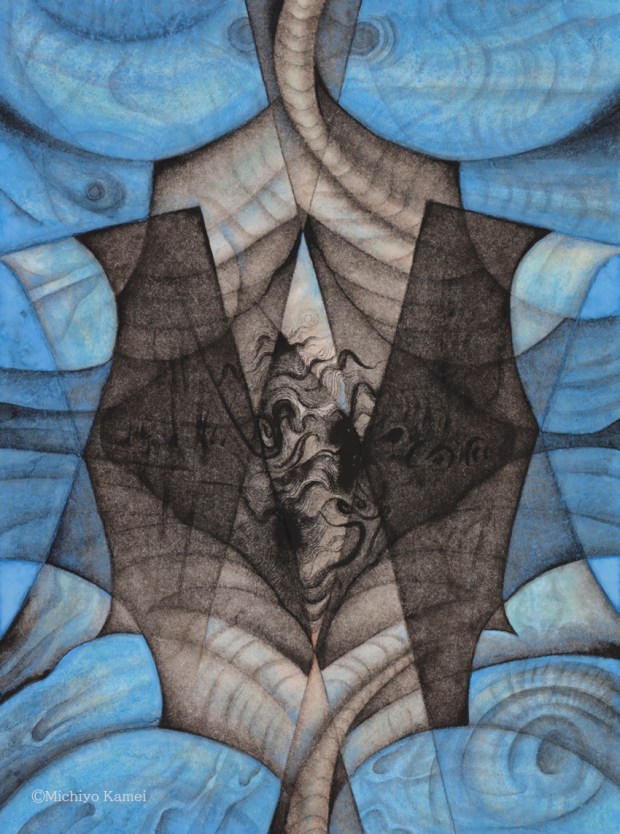
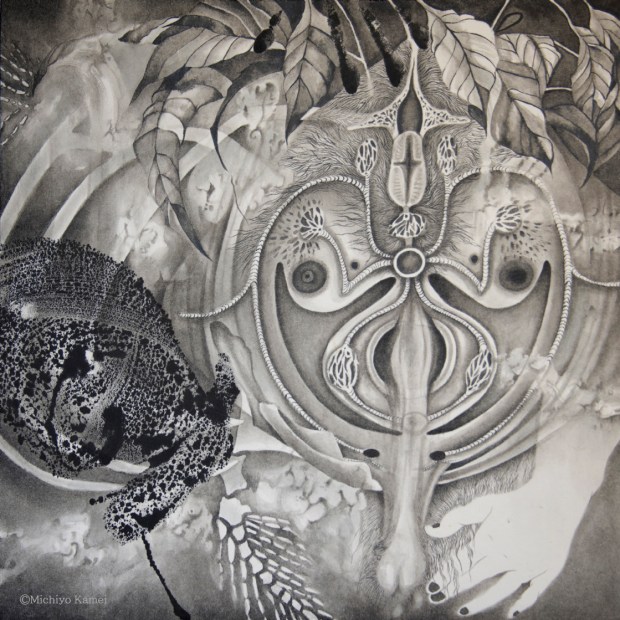
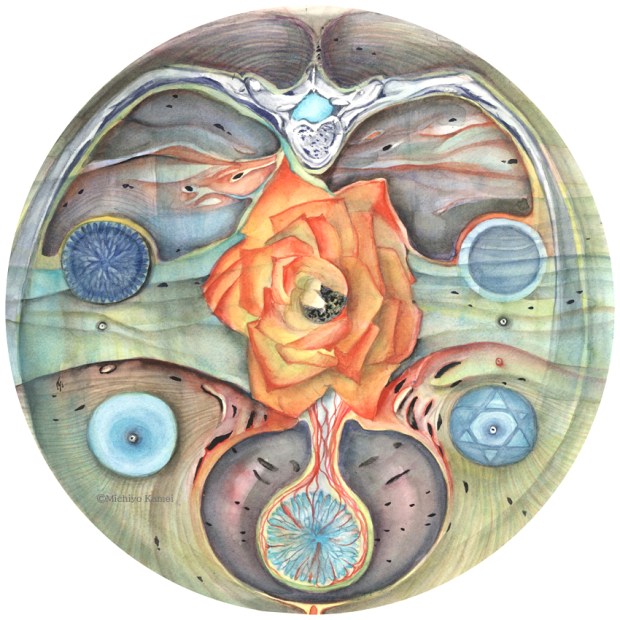
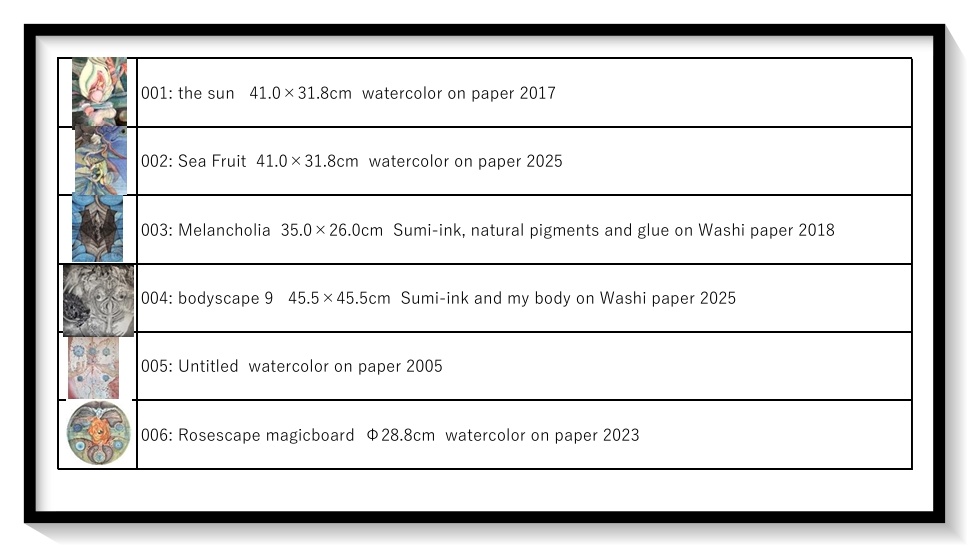
001: the sun 41.0×31.8cm watercolor on paper 2017 002: Sea Fruit 41.0×31.8cm watercolor on paper 2025 003: Melancholia 35.0×26.0cm Sumi-ink, natural pigments and glue on Washi paper 2018 004: bodyscape 9 45.5×45.5cm Sumi-ink and my body on Washi paper 2025 005: Untitled watercolor on paper 2005 006: Rosescape magicboard Φ28.8cm watercolor on paper 2023
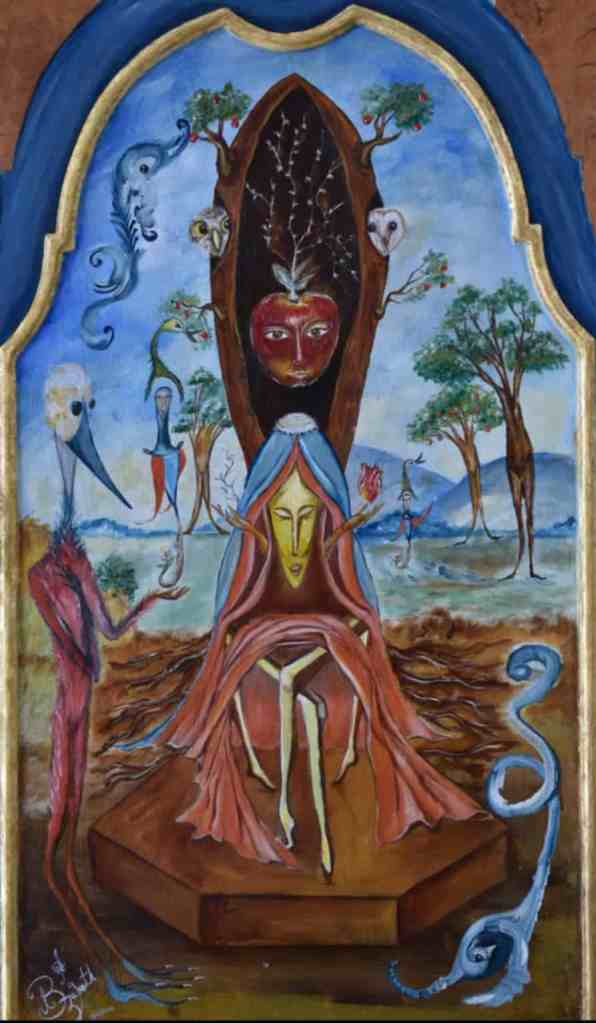
Each painting is a window into the worlds that inhabit my inner self; they represent the way I have found to share and communicate with the world, the way I can transform the visions of my dreams and materialize them into art.
In a way, Surrealism has not only been an expression but has also become a free way of life through the multiple and unlimited acts of creation that the world of dreams reveals. It has been an open door that has revealed other possibilities of creation to me, an extension of my inner world.
Brianda Zareth Huitrón has exhibited individually and collectively in Mexico and abroad.
Solo Exhibitions Leonora Carrington Museum of Xilitla, DREAM ENCOUNTERS in 2025. Women’s Museum, DREAM REVELATIONS, in 2022.
DREAM LANDSCAPES for the Temascalcingo Festival Honoring Velasco, in 2021. WINDOW TO DREAM WORLDS, at the Futurama Cultural Center, Mexico City, in 2020.
Group Exhibitions Col-art at the Oscar Román Gallery in 2025. The painting exhibition THE PAINTER’S TRADE, at the San Carlos Academy, in 2019. DIMENSIONS, Wave Gotik Treffen Festival, held in Leipzig, Germany, in 2018.
She has participated in the Chair for 100 Years of Surrealism, at the Faculty of Philosophy and Letters of the UNAM, giving a lecture on female surrealism.
Her work has recently been published in the book Mexican Women in Art, published by Agueda, and in THE ROOM SURREALIST MAGAZINE, an international surrealism magazine.
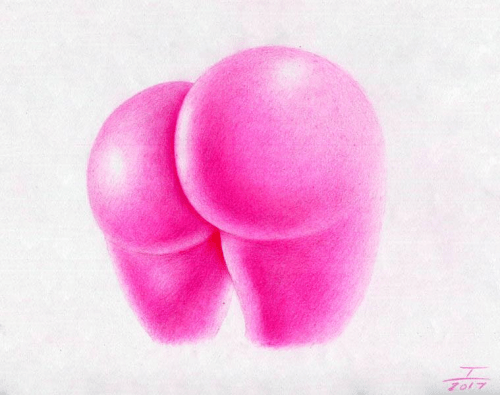
My favorite Bravo pink pen drawing is the 2017 Neon Bubble Butt. I find it enjoyable because the curvy female buttocks are a universal icon of beauty and perfection. It’s a fixed shape drifting in space. Just as helium makes things float and feel light, the drawing has a whimsical, festive quality to it. This drawing makes me think of how ideas can lift your spirits.
Juan Carlos Bravo, a Miami artist, is all about sensuality in his art. Miami is a melting pot of cultures, fashion, and the adult film industry. The sensuality in Bravo’s art makes it a favorite among collectors. He paints voluptuous women who embody an ageless ideal of sex appeal.
Surrealism, body horror, and pop culture blend to create the world of Bravo’s women. His art inspires viewers to examine their own primal instincts and their significance.
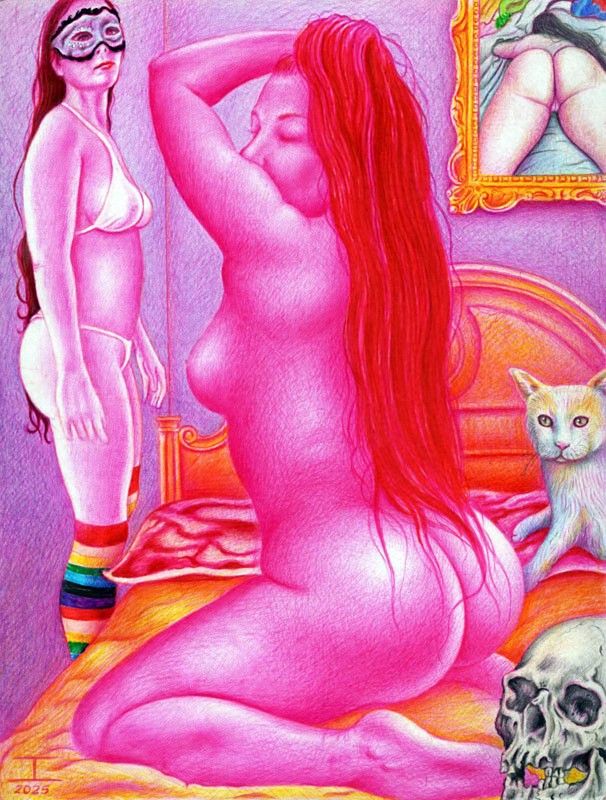
“GLORIOUS” (2025) JC Bravo
In this intimate scaled ballpoint pen drawing, I return once more to the private theater of the bedroom, a liminal space where desire, memory, and mortality quietly collide.
At the center kneels a voluptuous woman, her impossibly long red hair spilling like wine across her body, an oneiric cascade that measures both time and temptation. She raises her arms in a gesture of languid surrender, unaware, or perhaps deliberately unseeing, the woman wearing a jeweled Mardi Gras mask that transforms her into a carnival Venus. Thigh-high stockings, striped in defiant rainbow colors, root her to the earthly even as the rest of her body dissolves into roseate light. On the bed beside her, a cat and perennial guardian spirit, sits in calm, wide-eyed judgment, the only creature in the room who truly sees everything.
Above them hangs a gold framed erotic painting, its subject bent in mirror-image submission, a quiet reminder that every act of looking is also an act of being looked at. And in the lower right corner, half-hidden beneath the sheets, grins a human skull, my memento mori. It is not a threat but an invitation: remember that you will die, so love fiercely, look shamelessly, touch without apology while flesh is still warm and hair still grows.
The entire scene is drenched in an artificial pink and magenta glow, the color of stage lights, fever dreams, and cheap motel neon, a hue that makes the skin feel simultaneously hyperreal and hallucinatory. Through this saturated lens, the everyday becomes ritual, the intimate becomes mythic, and a simple moment of morning undress is revealed as a dance on the edge of oblivion.
Bravo paints the human body with anatomical precision. He features both realistic bodies and integrates stylistic elements reflecting augmentation. Technical detail is a priority in his work. He’s passionate about oil painting and uses a pink pen for his drawings.
Philip Henderson
Tyra Philip Henderson
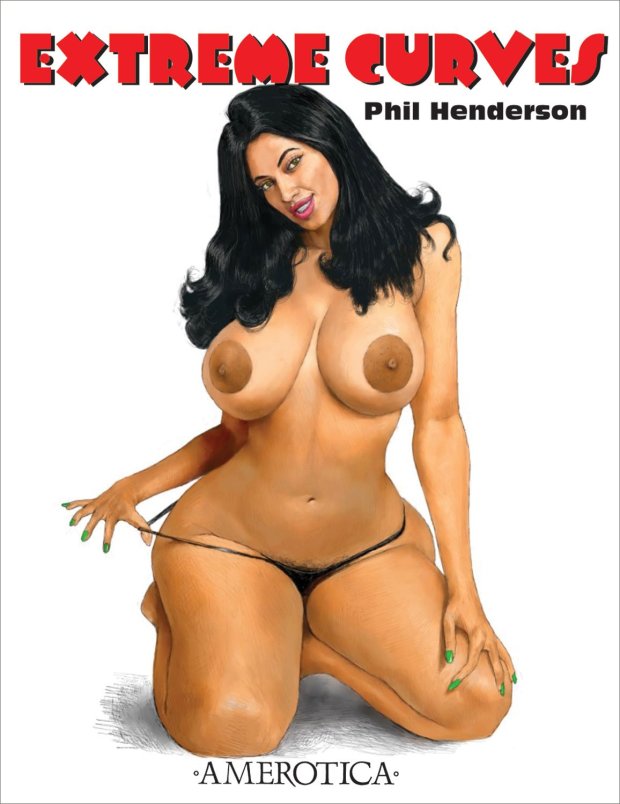
Among Henderson’s many drawings, I like Tyra the best. The figure’s eyes hold my attention. I think she saw me looking at her hand. I can tell she’s aware of my attraction through her gaze. The outline of her body forms a simple path, gently sloping from breast to thigh. Her hair almost blends with her pubic hair, but a delicate crescent shape separates them above the mons pubis. Tyra’s arm movement guide your eyes across her body. In Henderson’s artwork, eye contact and pose combine to create a feeling of empathetic sex appeal.
Curvy fetishes play a significant role in the themes of Philip Henderson. His plush illustrations create an arresting experience for the viewer. Henderson celebrates the value of curvy women. Henderson’s book, “Extreme Curves and Phat Girls”, achieved international success.
Besides his erotic illustrations, Henderson is a gifted writer of essays, novels, and poetry. He achieves elegance through his scholarly, artistic style. Henderson avoids abstraction in his anatomical figures while blending idealism and realism, creating a believable fantasy. He portrays natural grace and confidence in his figures, excluding any cosmetic enhancements.
Angélique Danielle Bègue
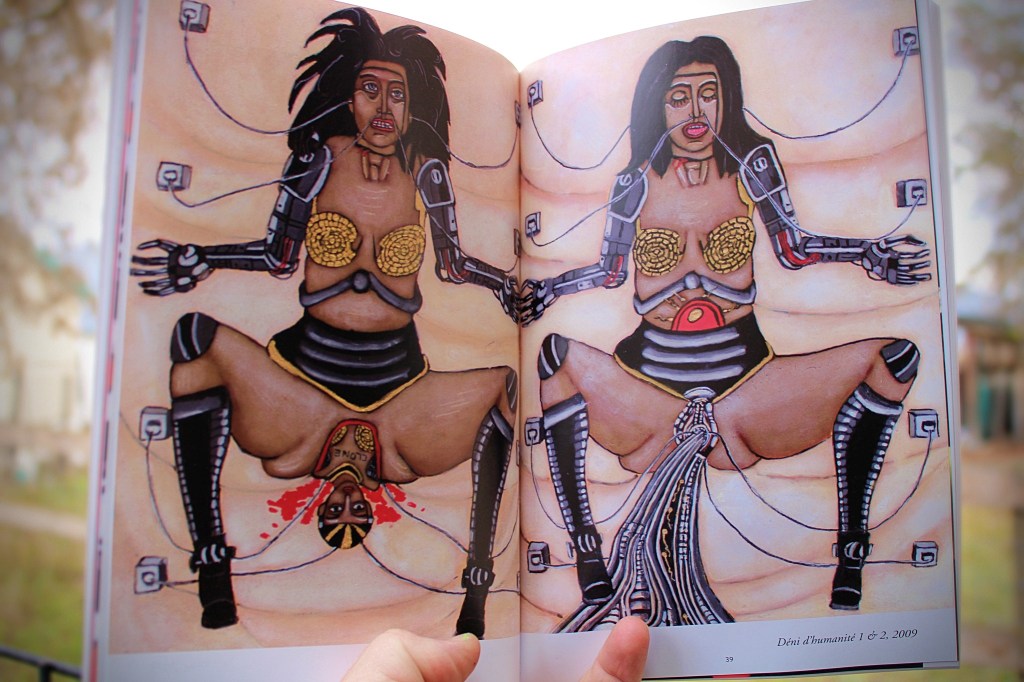
Deni d’humanité, published in Angélique Danielle Bègue‘s 2009 book, Dans Mon Corps.
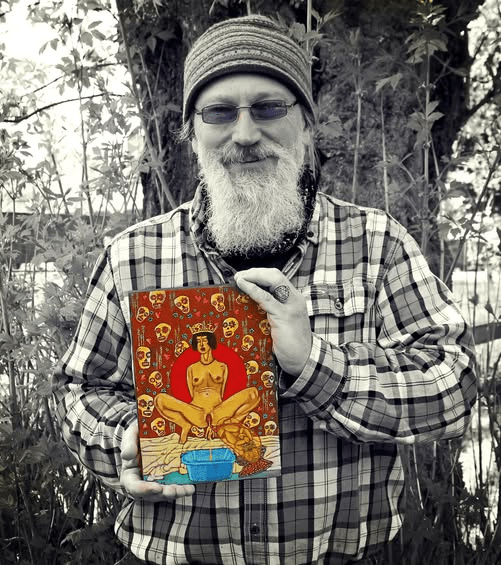
Bègue’s 2009 work, Dans Mon Corps, includes “Deni d’humanité,” a piece with a prophetic theme. In the image, AI’s exploitation disrupts the natural flow with sexual intrusion. This image illustrates AI replicating itself using humans. Her art shows how the excitement around AI is really just more of the same old ways of controlling us. Bègue’s work examines the way narrative influences our understanding of what’s real and imagined. I appreciate looking at this image because it makes me question the idea of human originality and imitation.
French painter Angélique Danielle Bègue’s artistic career started with tempera, apprenticed at Gorze Priory by an Orthodox nun. A classic style is the vehicle for Bègue’s modern concepts. France acknowledges her contribution to the revival of tempera painting. Bègue’s professional experience includes erotic modeling.
An icon painting from my dear friend Angélique Danielle Bègue from France.
In her figurative art, Bègue merges a traditional religious style with contemporary themes. Her artwork uses vibrant tones, layers, and bold lines. Bègue’s iconic graphic design employs strategic contrasts to create visual balance and proportion. She uses painting to express her internal fantasies. Bègue dedicates herself to understanding sexual fantasies and how to approach topics society deems taboo.
Miriam Cahn
ÄffinMiriam Cahn
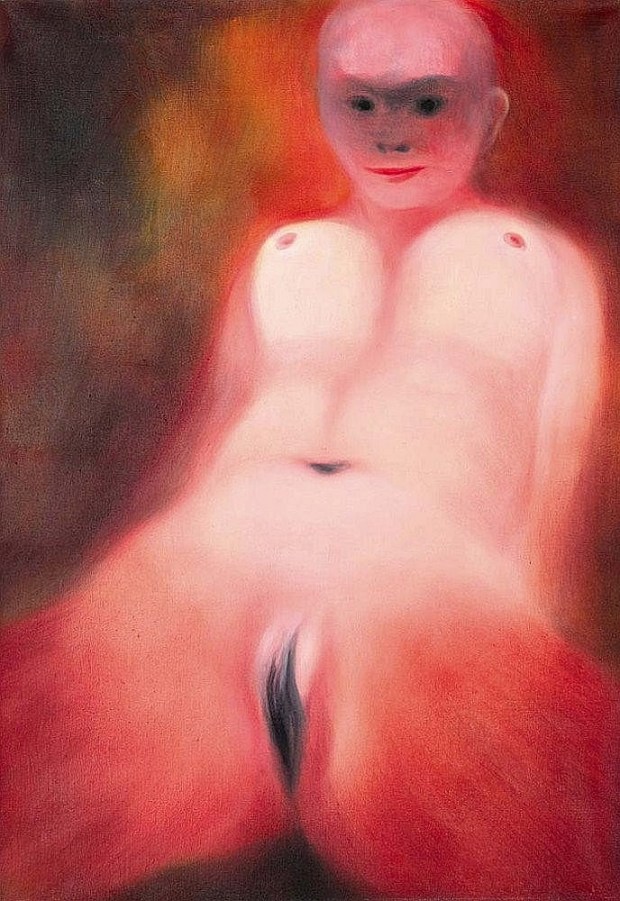
Äffin’s unsettling nature is thought-provoking to me. Simian aspects of the image contribute to its dreamlike quality while exposing a liminal personality. The skin is smooth around the breasts but gets hairier and tactile near the pelvis. The vulva is a fiery bush, sparking primal metaphors. This work compels me to explore the roots of human consciousness and how language shapes our understanding, including our desires. It suggests to me that the ideas of elegance and ugliness are mental constructs. The intense emotion evoked by this painting stems from Cahn’s ability to communicate deep thought through candid visual images.
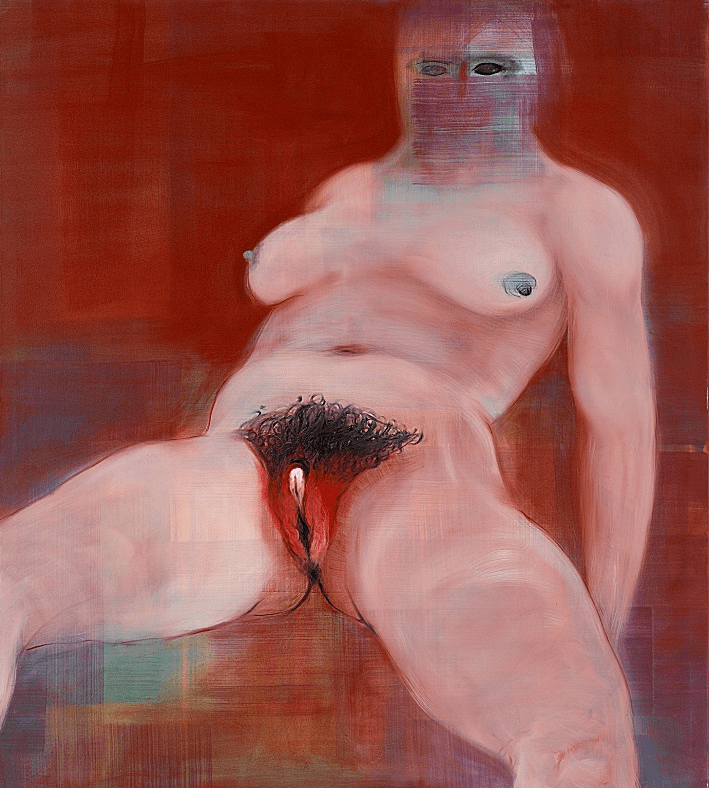
Swiss artist Miriam Cahn paints in a Neo-post-expressionist style. Her art reflects the movement’s style through her figures, colors, and emotional expression. Cahn’s work often features spectral figures with watchful eyes. Viewers become the subjects of the gaze of the eyes in her paintings.
Cahn’s paintings are vibrant and full of bright pastel colors. She discovers new things about herself through painting. With raw concepts, she develops a visual vocabulary for emotions. Her paintings are unpolished and invite the viewer into a world that’s flawed.
Viktor Alexandrovich Lyapkalo
Viktor Lyapkalo
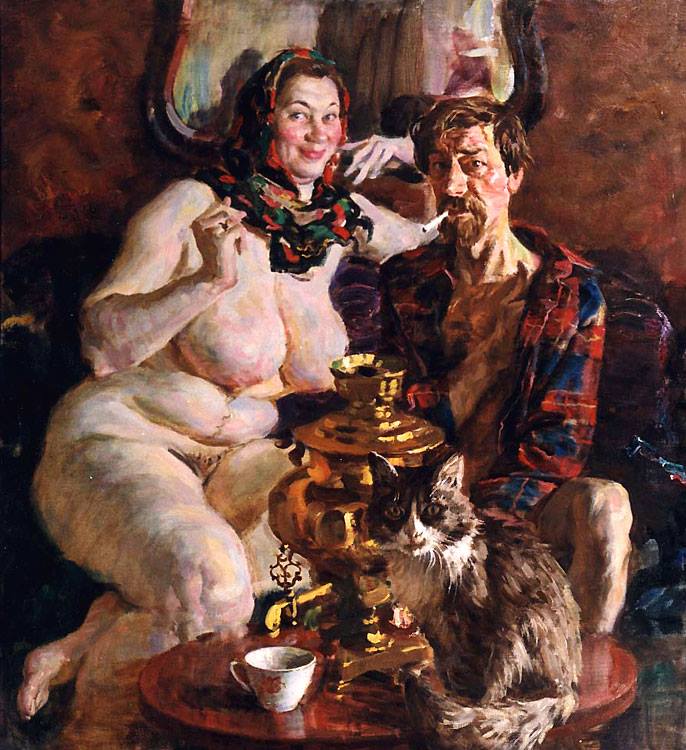
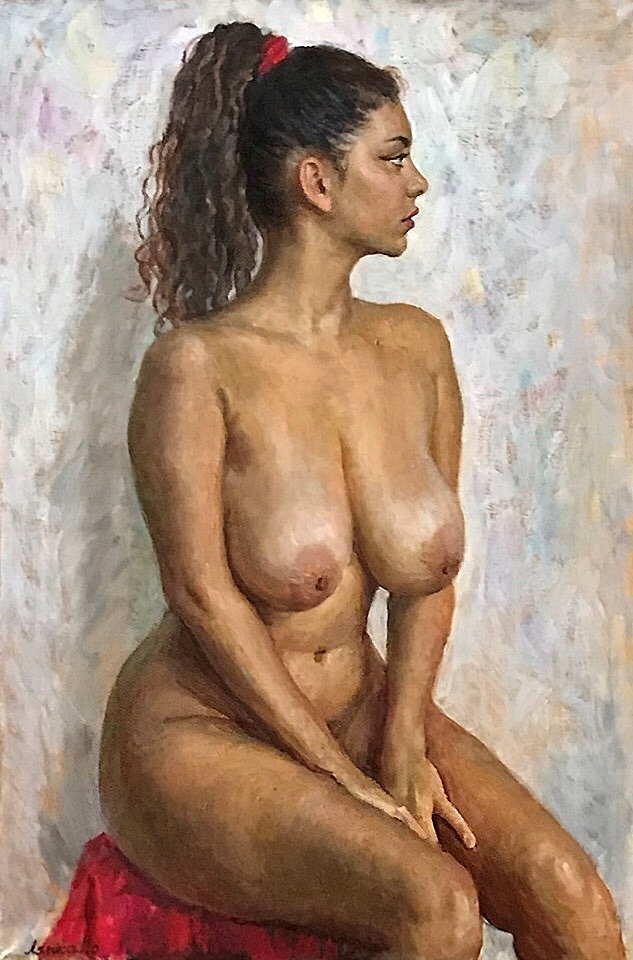
The reason I like Lyapkalo’s paintings is his choice of female subjects. It’s that simple. I’m attracted to curvy women, and his artwork features them. This painting captivates me in every way. The man, cat, and samovar create a muted, somber atmosphere, in contrast to the woman. Her lively body seems to glow with light and color. She’s appealing because of her open and generous nature, which brightens the room. Lyapkalo’s representation of the smile has a seductive effect on the viewer. The piece illustrates the duality of affection, showing both its open and concealed aspects.
Russian artist Viktor Lyapkalo paints in a strong social realist style. His paintings of women are sensual and playful. Lyapkalo’s skill with figures and academic paintings is the key to his success. His artwork portrays the emotion and character of the people he paints.
During my interview with Lyapkalo, he compared painting skin to an onion flower, highlighting its multi-hued nature. This is evident upon closer examination of the colors used in the artist’s depictions of nude women.
Pablo Picasso
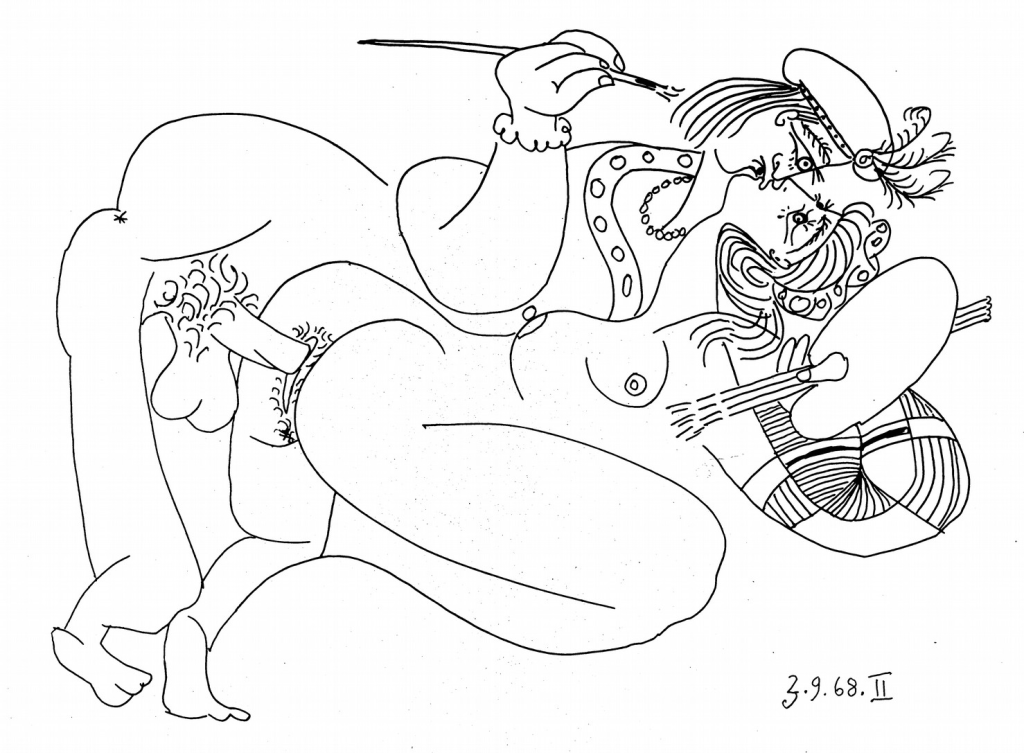
Avant-Garde Magazine, No. 8. Picasso’s Erotic Gravures Pablo PicassoArtist and his model 1969
This image remains my most memorable. In sex, artist and model become unified. I am drawn to this picture because it features both intercourse and a suggestive representation of the sexual act through the artist’s palette. As a flawless masterpiece of line, this image is everlasting.
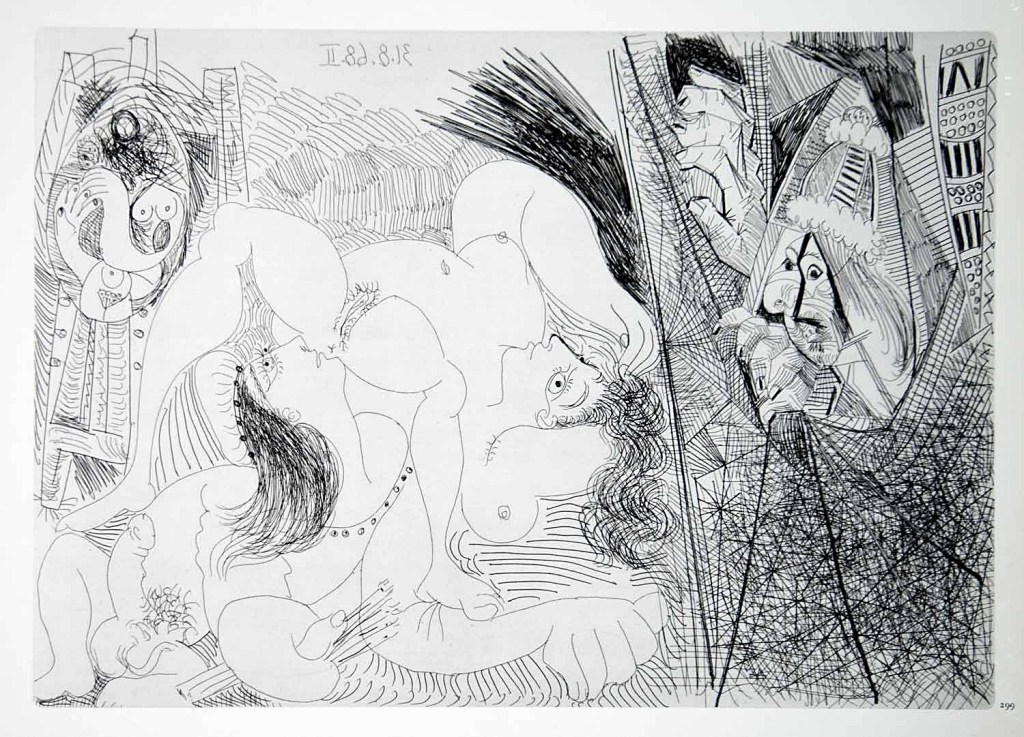
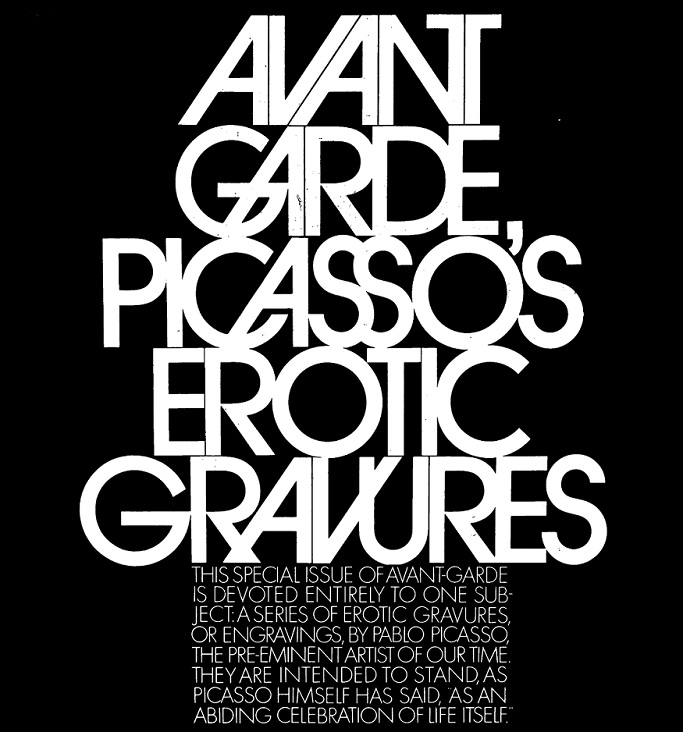
I found Avant-Garde Magazine, No. 8. Picasso’s Erotic Gravures on my parent’s bookshelf. It was between Anaïs Nin’s “Delta of Venus” and Louise Huebner’s “Power Through Witchcraft”. For a kid stuck reading boring schoolbooks, I finally stumbled on something cool.
The thin book, Picasso’s Gravures, contained his sexually suggestive sketches. Picasso’s drawings are gestural. His lines make his art look like it’s being fondled. Many illustrations displayed surfaces marred by hairiness, crinkling and stretch marks.
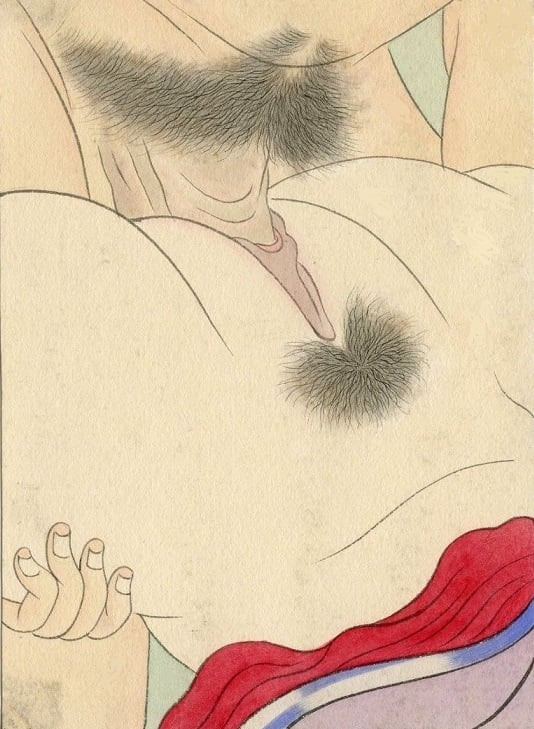
The lines create a curious interplay of dryness and wetness. Picasso’s suggestive drawings in the 1970s opened the door for other artists to explore explicit themes. He owned a collection of sixty-one Shunga prints. Picasso’s interest in Shunga is a key theme in the chapter “Artist and his Model”.
An example of eighteenth- and nineteenth-century shunga
“A lot of the eighteenth- and nineteenth-century shunga books contain enlarged images of male and female genitals, occasionally while engaged in the sexual act. These kind of ‘close-up’ designs were intended to provide instruction about anatomy and how to give pleasure. These educational images are mostly found immediately following the other illustrations in shunga books. Such prints are modeled after older versions that were used to teach human anatomy, which showed different shapes of male and female organs.” -Marijn Kruijff, Editor of Shunga gallery Erotic Art Magazine and is the foremost authority on shunga art.
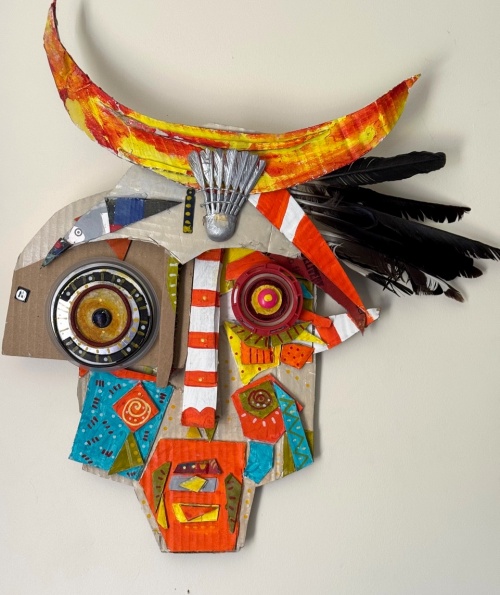
Ancestor, February 2024. Cardboard, feathers and found materials.
We live inside a culture whose overriding goal is to keep us distracted, afraid, addicted and constantly triggered and disconnected from our authentic selves.
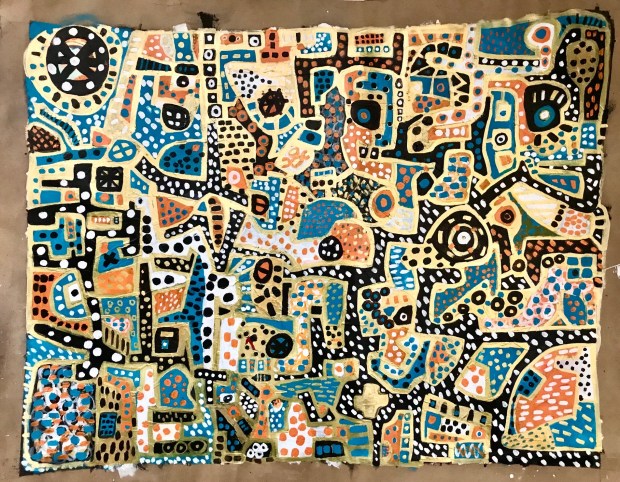
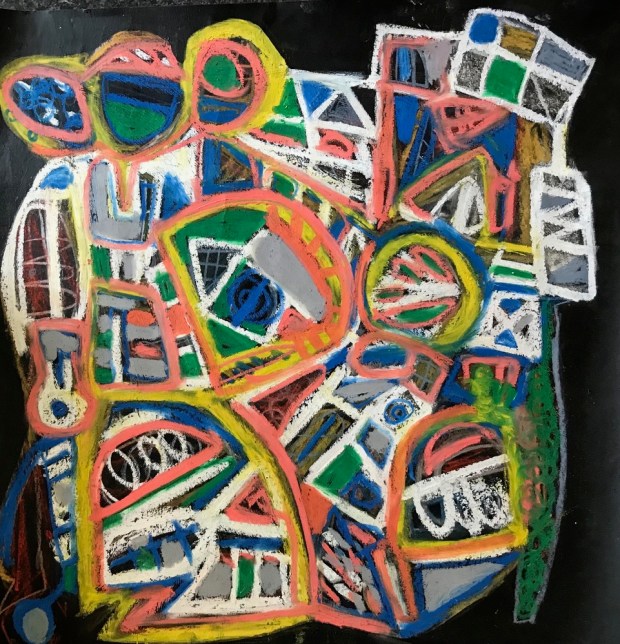
Snakes, ladders and chaos Tim White August 2025. Acrylic paint, oil pastel and paint marker on industrial paper
Art is an antidote, a map guiding us to an authentic lived experiences and a life-affirming revolutionary principle.
IlluminousDancing with the SpiritsThe Garden
John Trudell, North American Indigenous activist, declared, ‘When one lives in a society where people can no longer rely on the institutions to tell them the truth, the truth must come from culture and art’. In this context, of what therapist and medical doctor, Gabor Maté calls a ‘toxic culture’ the need for truth is critical and urgent.
FamiliarsLost child with beetle
The idea that art and poetry, and all the rich diverse forms of expression which connect us to each other can immunize us against the malignant virus of colonialism, capitalism and patriarchy is deeply appealing. That this wisdom comes from the deep spring of Indigenous knowledge and resistance, and despite the ongoing depredations of colonialism, is compelling.
Autonomic
The broken bits of the world I collect and use: the scraps of paper, plastic and metal, the discarded and rejected materials are clues and tools helping me puzzle my way out of the colonial-capitalist labyrinth. They are medicines too, the materia of transmutation, which once distilled provide essential healing and deepened connection with the biosphere and all it nurtures.
Obscene icy pole
As African American feminist bell hooks writes, ‘The moment we choose to love we begin to move against oppression’. This process of resistance, of healing through love, is an essential part of overthrowing the dismal and diminished life the masters of misery want to force on us. And it is from this love, from the sources within our imagination and in solidarity with others we can assemble a ‘new world inside the shell of the old’.
Iron Hills of Adversity Prime Optimus Vs Panoptic Octopus
For me, the found and discarded objects and materials used in my art carry a promise and reminder of profound possibilities subsumed in everyday life beyond the superficial substitutions of a hollowed-out AI virtuality. That even everyday junk and detritus call out to be up-cycled and politicised demanding a place as emblems of a transformed future, and are always on hand as building blocks for a new world, is a source of joy and inspiration.
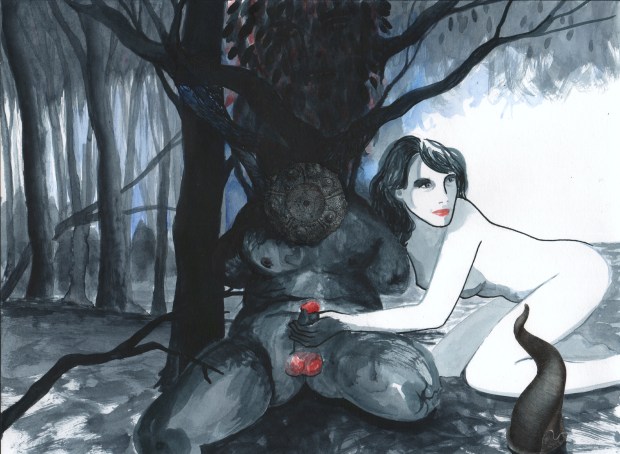
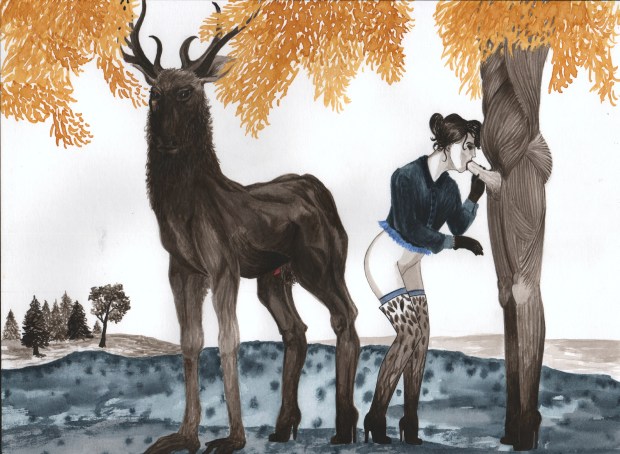
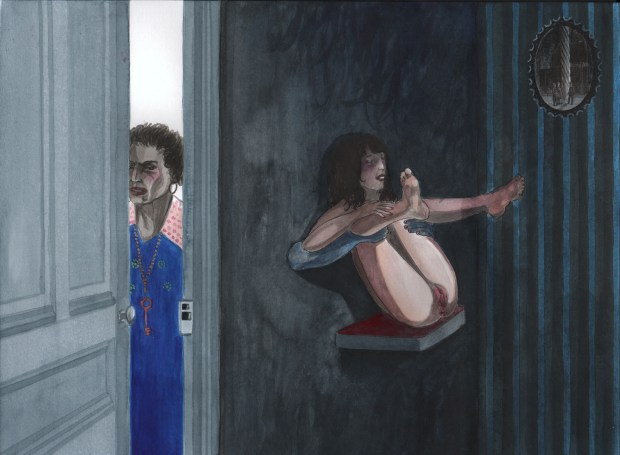
L’œuvre de Rajah Foo est souvent marquée par une touche gothique. Son travail utilise le suspense, des images troublantes et des paysages ruraux pour créer des récits visuels. Ces œuvres suscitent des émotions profondes chez le spectateur. Au cœur de son travail se trouve le thème de la pénétration et du désir. Les scènes entraînent le spectateur dans une célébration de la libido.
J’étais étudiant à L’école des beaux-arts de Nancy en France. Je discutais avec la professeure de culture générale, Geneviève B. Tout ce que je produisais était lié l’énergie sexuelle: sulptures représentant des couples de danseurs, minotaures, peintures et dessins pornographiques. Tout cela etait loin de tout ce que je voyais chez les autres etudiants, à l’introspection conceptuelle. Les enseignants étaient gênés par mon travail. Geneviève m’a dit d’un mot: tu es un artiste différent.
La coquille bleue
J’ai découvert, alors que j’étais enfant, dans la bibliothèque de ma mère le livre de ” Pauline Réage ” Histoire d’O. Une lecture comme un éblouissement. Plus tard, Sade dont la biographie m’a plus impressionnée que l’œuvre. Je fais de Freud et David Lynch, des compagnons intimes, quitte à les trahir, pour explorer l’opacité du désir. Mais j’ai peur d’être trop long… ( mythologie grecque, Bataille, Klossovski…) j’ajouterai simplement que la littérature m’a touchée la première, avant la peinture ou la sculpture.
Diane
Je crois que les deux artistes qui m’ont le plus marqué sont Hans Bellmer et sa poupée, et Max Ernst pour ses extraordinaires découpages comme ceux d’une semaine de bonté.
La fleur crue
Vous voyez, vous avez bien perçu dans mon travail ceux qui l’accompagnent. Un mot me plaît particulièrement dans vos propos: totémique. Il contient une forme de spiritualité, de brutalité et de mystères antiques. Il me fait penser à la fascination qu’exerce sur moi le mythe de Pasiphae depuis que je l’ai lu, enfant. On y trouve la puissance du désir, le scandale qu’il suscite, comme il renverse le monde. Mes dessins sont des images lentes extraites de toute cette exploration.
Le cercle de l’horizon
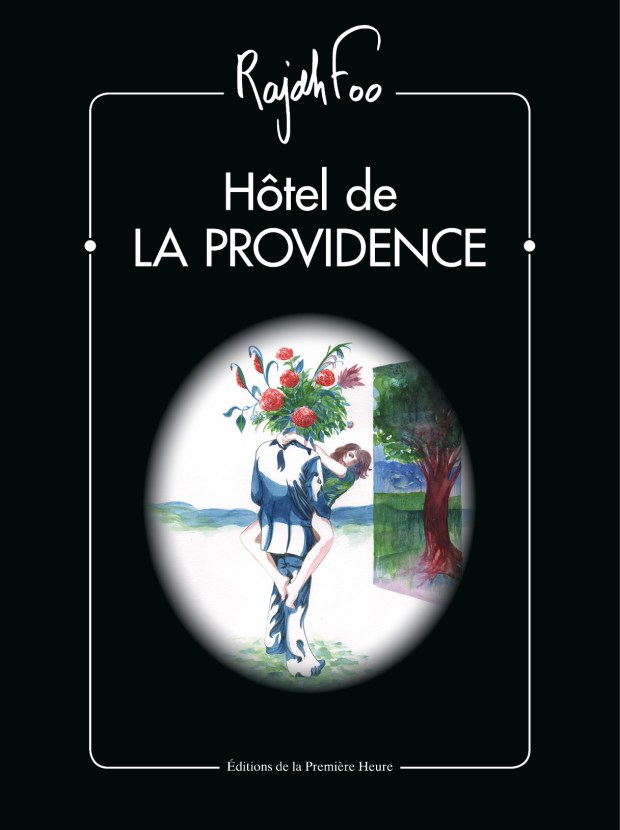
Je ne contacte jamais les galeries, je ne sais pas à l’aise avec les inconnus, et je sais que nombreux sont les artistes qui les sollicitent. Il y a une exception à ce tableau, la galerie Arts Factory à Paris, qui m’a accueilli lors d’une exposition collective, et le 8 octobre cette année pour signer un livre que m’a consacré les editions première heure.
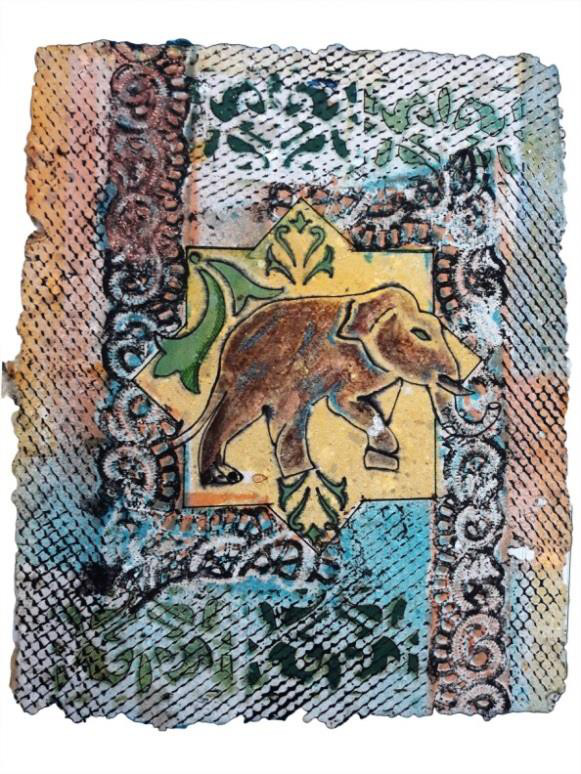
Abstract Human and Islamic pattern. Handmade Paper, dyes, rust, gold leaf. Dimensions with frame: 67.5 cm × 83 cm Production Year: 2019.
Israa Kazem uses handmade paper as her primary material, breathing new life into it. As it carries its own story. Her work merges the magic of nature with the aesthetics of ancient art civilizations, influenced by Islamic art and miniature paintings creating a style that is both vital and contemporary. The process demands precision, resulting in pieces free flowing lines and texture of the paper lend a unique character to the artwork, in addition to depth and expression—a return to roots. These frameworks surface in her approach to papermaking—a process where chaos (raw, recycled materials) yields order (structured sheets), mirroring the emergent patterns found in nature.
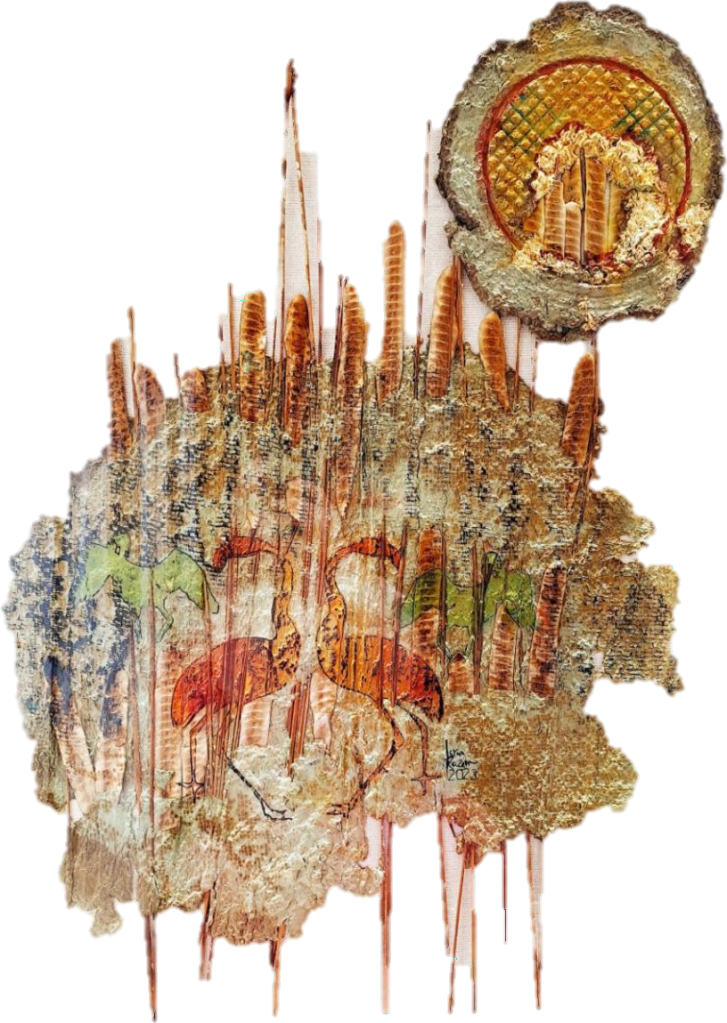
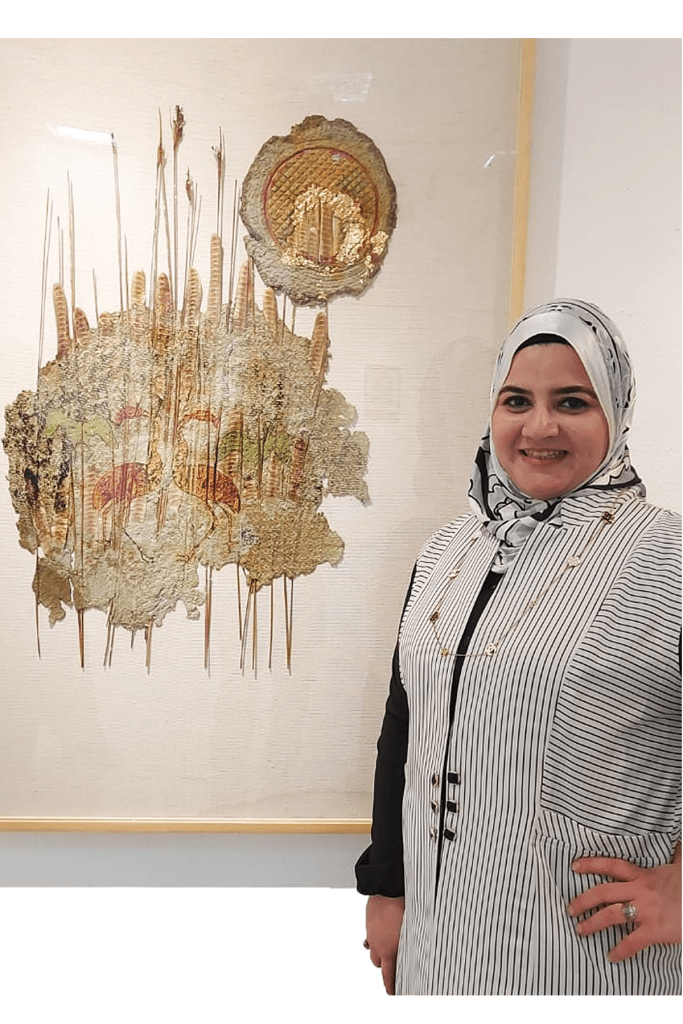
Flamingo reflection and the disk of sun Paper Pulp, Gold leaf, Dried Leaves, Stalks of Grain Plants, Ink, Color Dyes. Dimensions with frame: 132.5 cm × 102.5 cm Production Year: 2023
Her work transforms discarded fibers from wastes into delicate sheets of paper, each piece is a tactile archive, inviting the viewer to contemplation on sustainability and our relationship with the natural world.
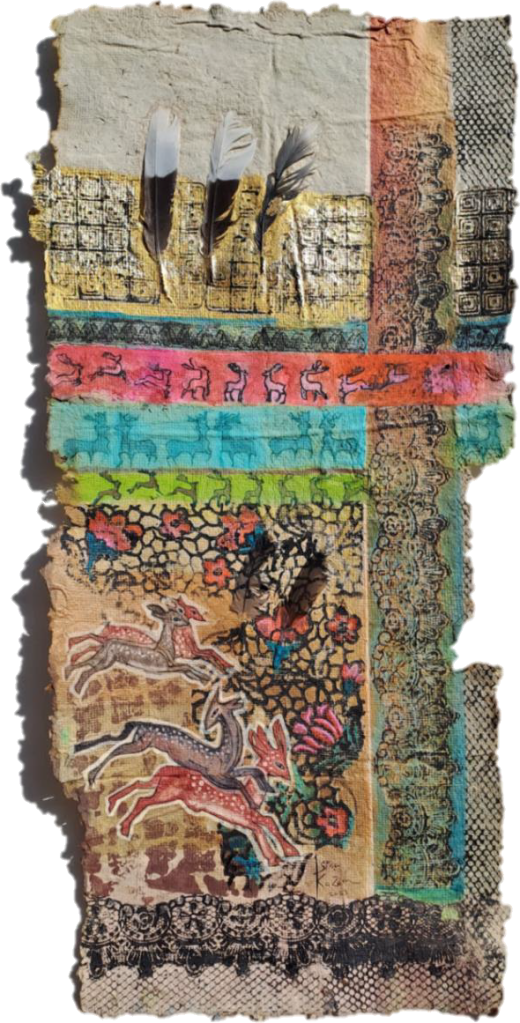
Deer are running on the mountain Handmade Paper, feather, gold leaf, dyes, ink, acrylic pens. Dimensions with frame: 85 cm × 50 cm Production Year: 2024.
She aims to highlight the diversity of living organisms and the different environments surrounding them, especially highly diverse ecological communities.
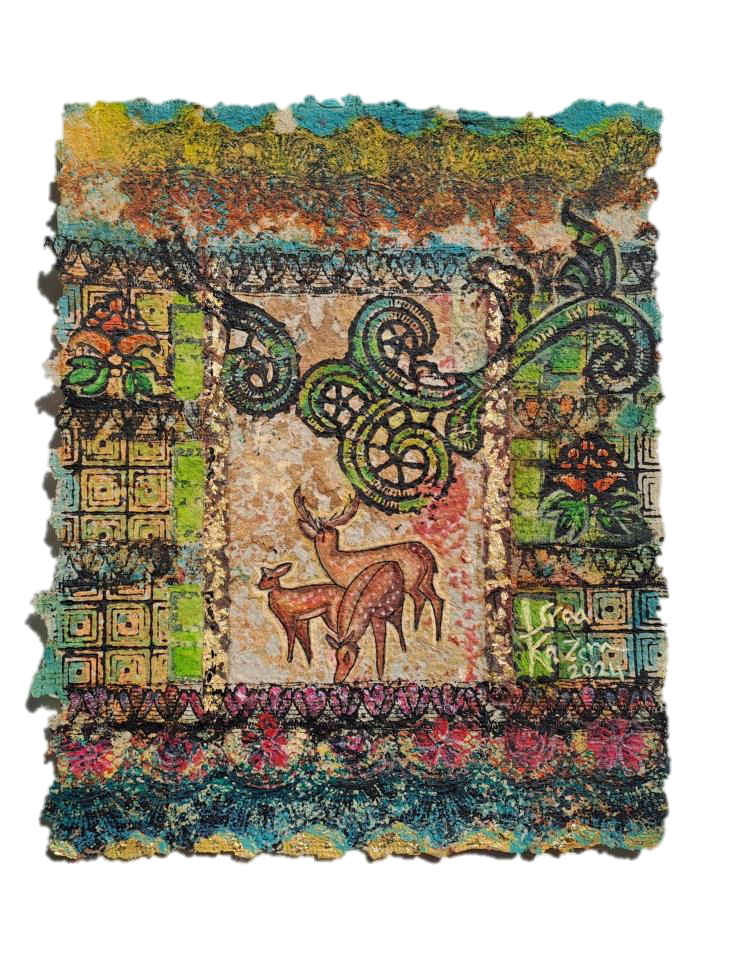
Deer are eating flowers Handmade Paper, dyes, ink, gold leaf. Dimensions with frame: 40 cm × 40 cm Production Year: 2024
This harmony is evident in her paintings, which may combine deer surrounded by geometric patterns, or blossoming flowers where the deer serves as a decorative motif. This fusion creates a visual language that speaks of the balance between two worlds: the world of spirituality and geometric perfection, and the world of life and growth in a timeless artwork.
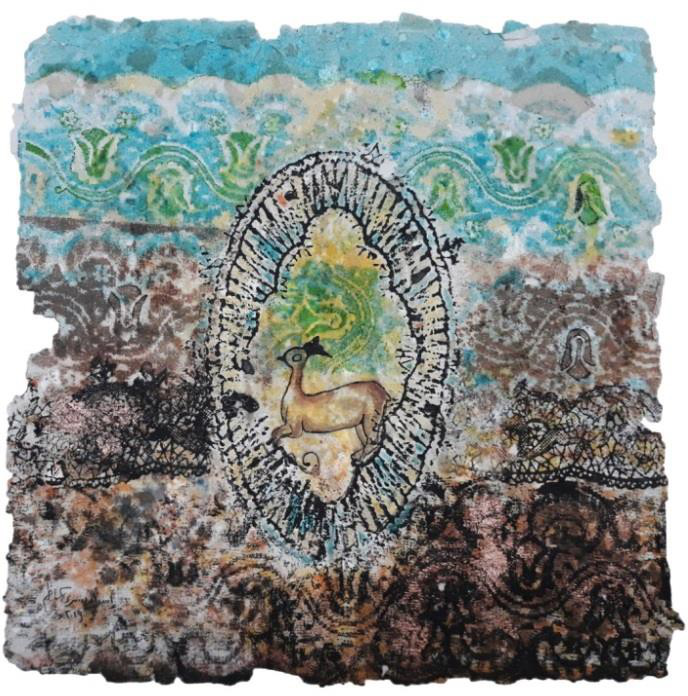
Handmade Paper, Dyes, ink Dimensions with frame: 50cm × 50 cm Production year: 2020
In her artworks collection, the deer refer as a main symbol, not merely appearing as an aesthetic form, but carrying various perspectives and meanings. The artist employs it as a symbol of optimism and new beginnings.
Handmade Paper, Dyes, ink Dimensions with frame: 50cm × 50 cm Production year: 2020
In its grace and lightness, the deer represent hope and the journey toward a better future. In Islamic art, the deer have always been associated with beauty and gentleness, making it the perfect choice to express her vision. The deer is painted in state of stillness and motion depicted in a style that combines simplicity of form and ornamental pattern, giving it a symbolic and contemporary dimension simultaneously. This demonstrates that art knows no bounds, and that the dialogue between past and present can produce creativity that transcends time and place.
Israa Kazem (B. 1987) is a Cairo based visual artist and researcher, holds Bachelor degree of Art Education, Helwan University.
She earned her master’s degree 2015, PHD 2020, in drawing and painting. Kazem is a member of the syndicate of plastic artists. She participated in many international and local Exhibitions. She found her creative inspiration in her drawings and paintings through nature. Kazem employed many drawing, painting, printing and mixed media techniques to achieve her artistic style.
Kazem uses handmade paper and paper pulp and combines them with different materials. Her use of natural materials not only adds depth and texture to her artwork but also focuses on the importance of sustainability in art and life. Her artistic practice reflects her respect for the surrounding environment and express its essence through her own vision.
Solo Exhibition: “Green Border”, Mahmoud Mokhtar Cultural Center, Nahdet Misr Gallery, 2023.
Group Exhibitions: – Agenda Exhibition, Conference Center, Bibliotheca Alexandrina, 12th, 14th, 15th, 16th sessions for the years 2019. 2021, 2022, 2023. – Cairo International Art District Exhibition (CIAD), Second Edition, Art D’Égypte, Downtown, 2022. – General Exhibition entitled “Art…The Memory of the Nation”, the 42nd session 2021, Arts Palace, Cairo Opera House. – White and Black Salon, 5th session, Gezira art center, 2020. – First Time Exhibition, 14th session, Conference Hall, Bibliotheca Alexandrina, 2019. – Second Exhibition: Artist’s Book, Mahmoud Mokhtar Cultural Center 2019. – Dai Festival of Arab Youth, Second Session, 2018. – Exhibition of the accompanied workshops for Cairo Salon 58, Artist book workshop, the Fine Arts Lovers Association, 2018. – South International Salon, Faculty of Fine Arts, Luxor – the 5 session 2017. – Youth Salon, 20th, 21st, 26th sessions Palace of Arts, Cairo Opera House, for the years 2015, 2010, 2009.
Awards and Grants: Kazem won the First Prize in Youth Visual Arts competition, 6th Edition, El Horreya Center for Creativity, Alexandria, Cultural Development Fund Sector, Ministry of Culture.
Sabbatical Grants Artist in the field of Fine Art specialized in Painting, Supreme Council of Culture, 2019, 2021, 2022, 2023.
Israa Kazem prepared the official representation of this article and has granted permission for this article to be published.
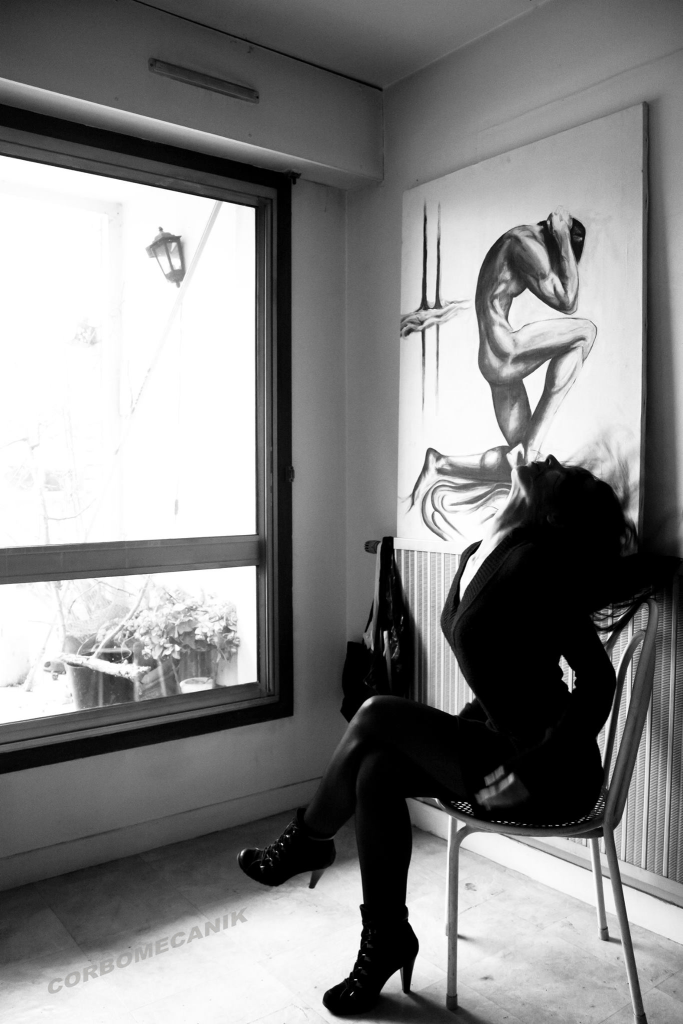
J’evolue dans le monde des arts plastiques , de l’expression corporelle et dans le milieu alternatif parisien depuis très jeune. J’ai donc explore diverses techniques et directions : peinture , photographie , dessin , graphisme , video , danse et travail sur le corps.
Depuis ces 15 dernières annnees , j’ai fait des expositions et performances en France et quelquescollaborations qui m’on ouvert de nouveaux horizons. Le public me connait plus pour mes photograhies , mes performances ou mes mises en scène des corps ( dans la cadre fetichiste , danse ou autre ) pour la simple raison que je viens des arts plastiques mais que j’ai fait une pause de 10 ans dans le domaine de la peinture pour y revenir après une renaissance.
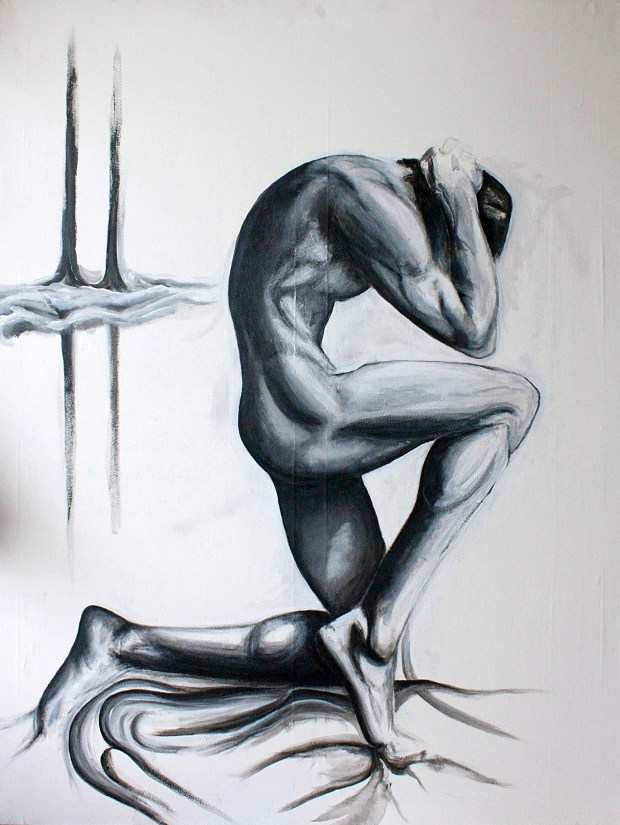
La plupart des peintures presentes ici , acryliques ou à l’huile sont des œuvres en grand format , antre 1 m et 1 m 20 de hauteur . Deux series emergent , l’une totalement dans la recherche et le jeu graphique , l’autre est une plongee dans la matière brute à travers les mediums et les volumes.
Dans mes peintures , le corps est plutot reduit à l’expression de chocs emotionels devenus physiques, j’y introduis parfois des cicatrices ou blessures ouvertes.
Je dirais qu’on y navigue plus dans le subconscient , dont l’exploration brute instinctive voir animal que me mène finalement ensuite à ritualiser en toute conscience ( mon travail photographique et de performance).
La demarche chamanique de rendre visble les esprits est toujours presente dans les deux cas. Mon attrait pour l’exploration psychedelique du subconscient , le symbolisme universel , le domaine du reve reconnecte au quotidien , le rapport à l’invisible et l’interet esoterique qui en decoulennt ont toujours etait la des l’enfance.
Mes influences picturales sont très diverses des arts premiers au classicisme , des arts sacres aux symbolistes , du street art à la bande dessine SF ( pour moi , tout est source d’inspiration et de stimulation technique , graphique et de vibration de couleurs ) et biensur les surrealistes et leur grande revolution.













 Mitchell Pluto