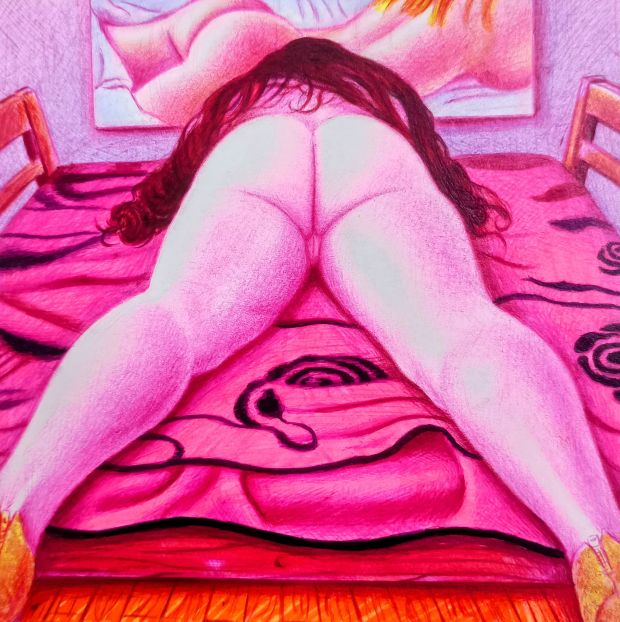
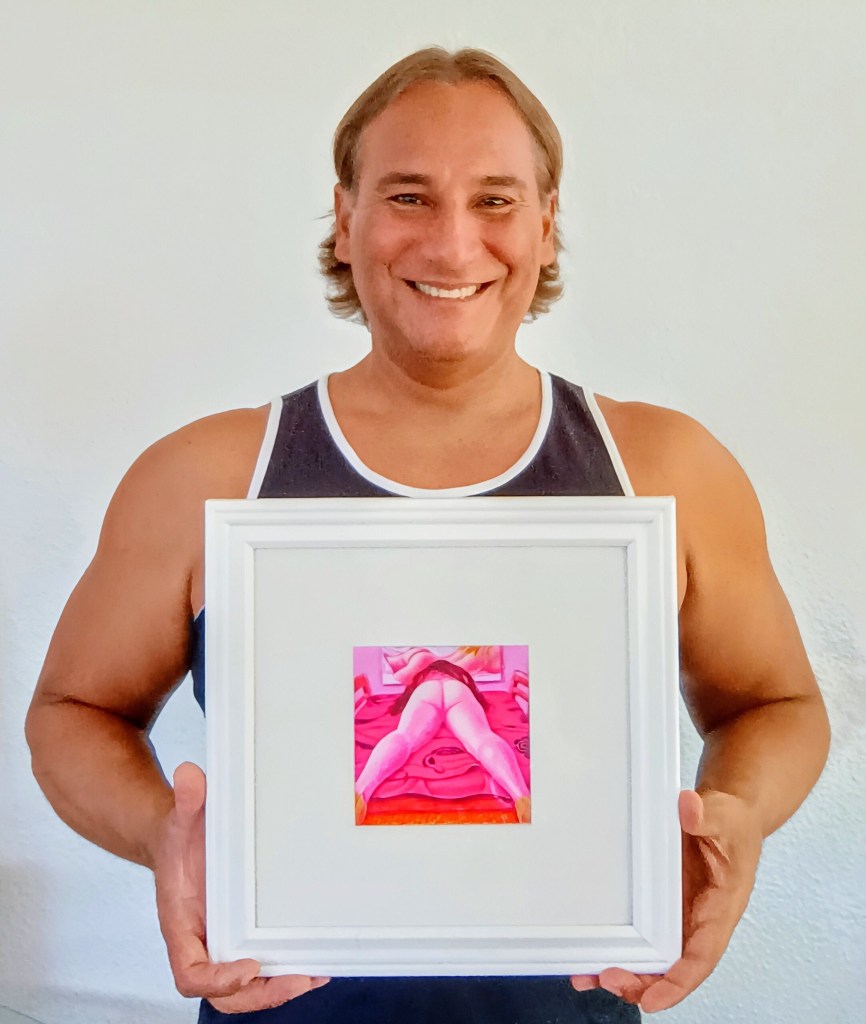
JC Bravo CONFESSION (2026) ballpoint pen on paper.
In this neon pink ballpoint pen drawing, obsessive crosshatching builds a body laid bare in complete surrender. Neon pink pulses with the heated flush of skin, the electric thrill of longing, and the raw intensity of love and lust. Through thousands of meticulous strokes, the figure becomes a quiet confession of obsession, femininity, and the consuming ache of wanting — desire quietly witnessing itself in the mirror of another painted nude.
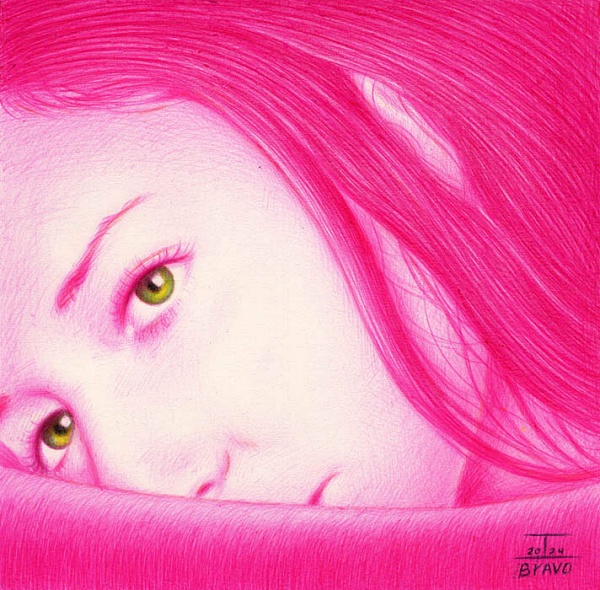
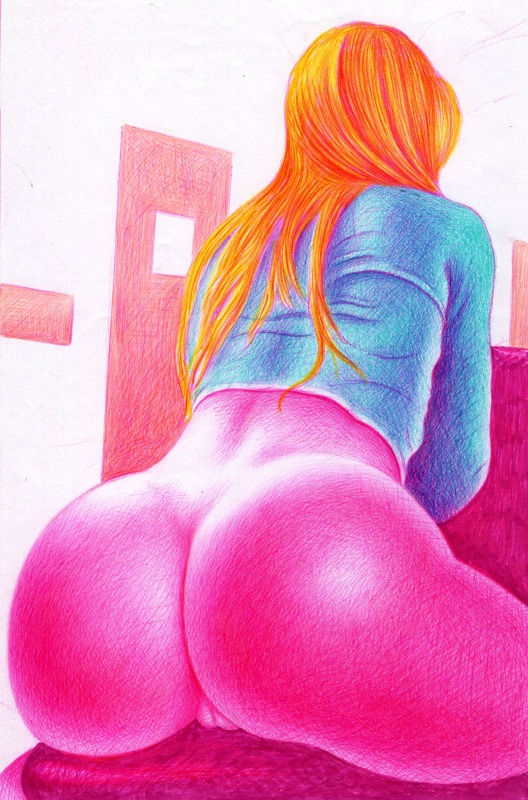
HOT FOR TEACHER (2024) Ballpoint pen on paper
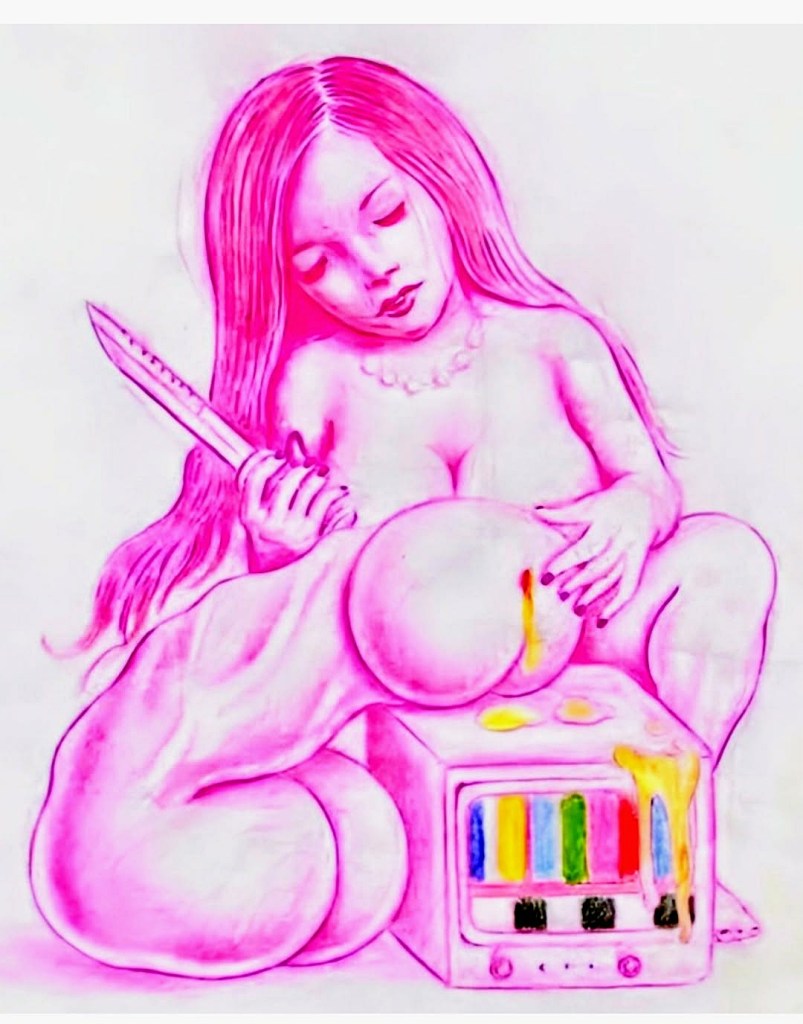
THE END OF DESIRE 2026 JC Bravo
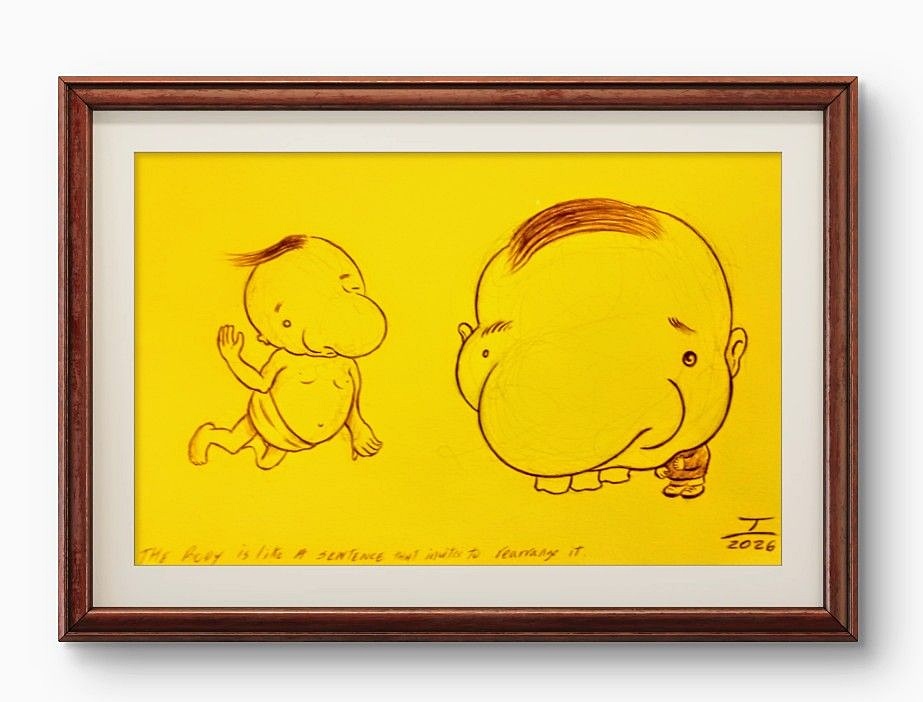
REARRANGED (2026)
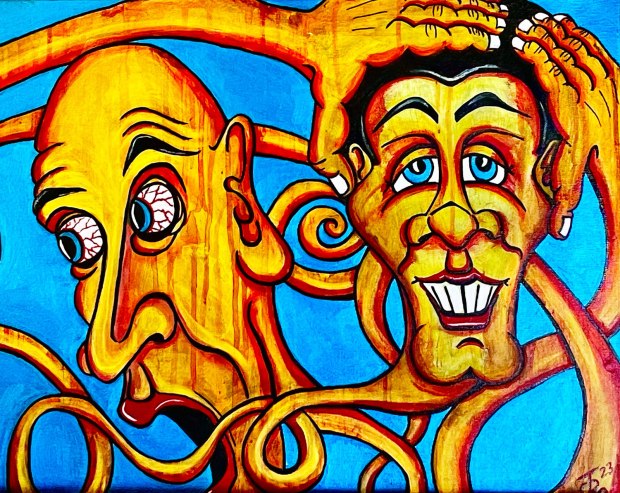
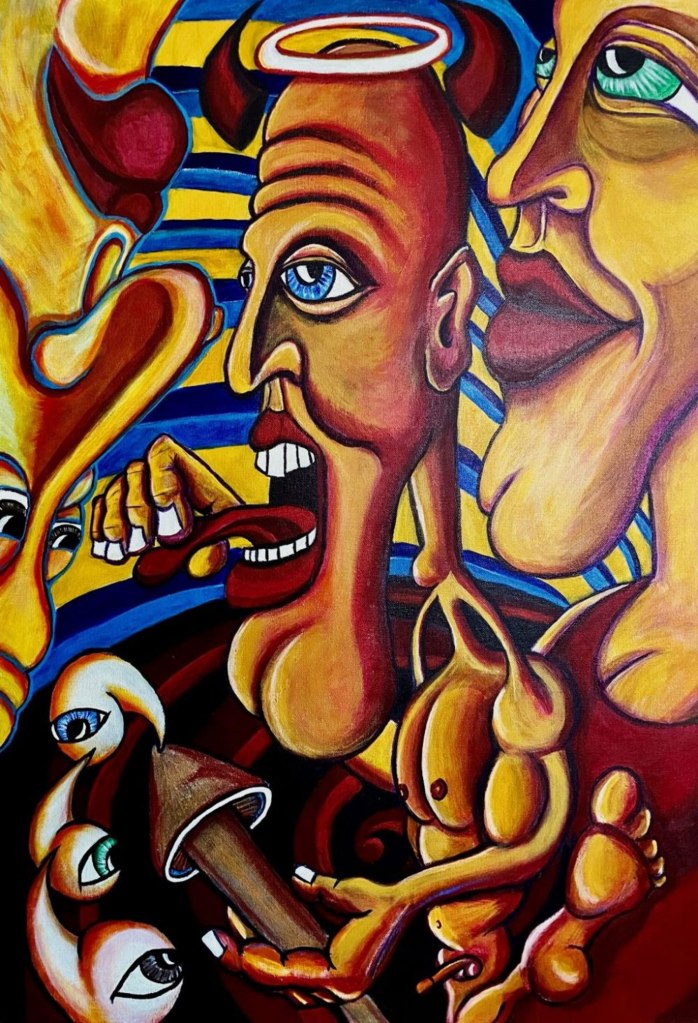
My swollen, bulbous characters are exaggerated vessels of the human condition. They are grotesque yet tender, absurd yet deeply familiar. Through them I explore inner chaos, vulnerability, desire, and the carnivalesque absurdity of simply being human.
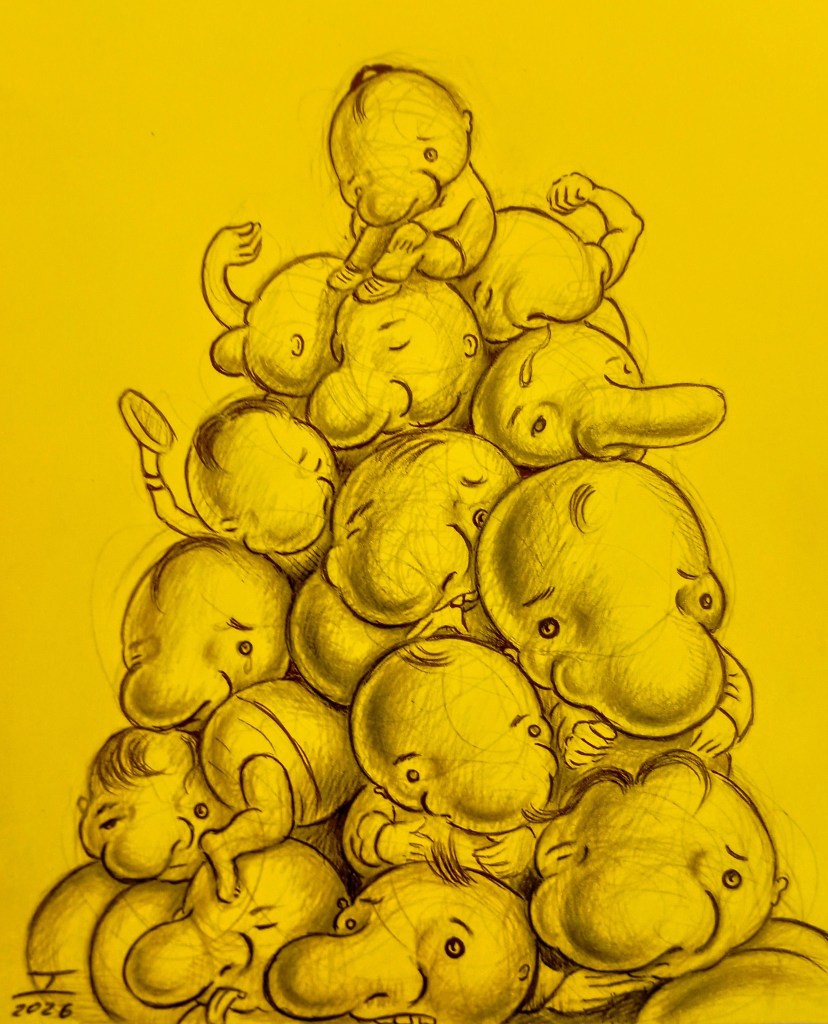
MENAGERIE (2026)
A towering pile of bulbous, round-headed baby-like creatures are stacked precariously on a bright yellow background. The way they’re climbing, clinging, and overlapping is both playful and deeply unsettling; like a living tower of innocence mixed with grotesque absurdity. Some look sleepy or content, others wide-eyed or struggling, and the whole mass has this frantic, organic energy and a carnivalesque spirit.
The pyramid shape draws the eye upward, and the yellow background makes the graphite figures pop with dramatic contrast. The details like tiny hands, varied expressions, the way limbs intertwine show great control and an unhinged imagination.
This drawing depicts a human menagerie at its most chaotic and biological: birth, multiplicity, piling up, struggling for space, yet somehow forming a single absurd existence.
I work primarily with oil paints. It is important for me to achieve a jewel like preciousness in my paintings in order to convey care and importance. I want to give my paintings a monumental and sensual quality that I believe can only be achieved with oil. Also, oil painting gives my work an elegance that balances the sometimes grotesque and fantastical subject matter.
If you would like to know more about me and see more of my work visit my website:
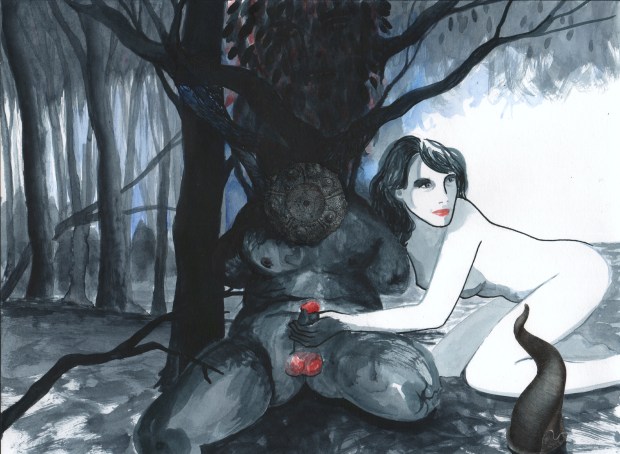
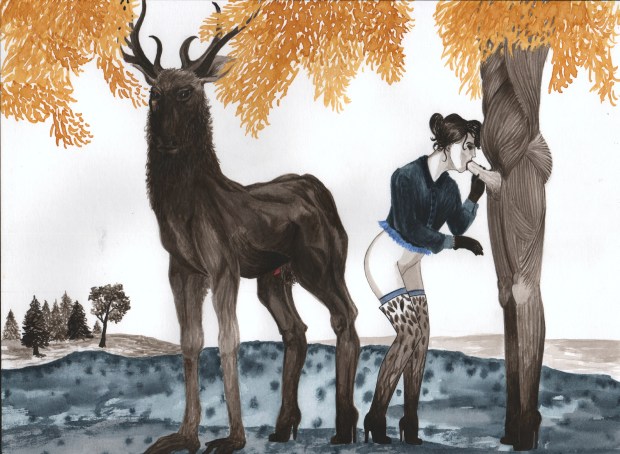
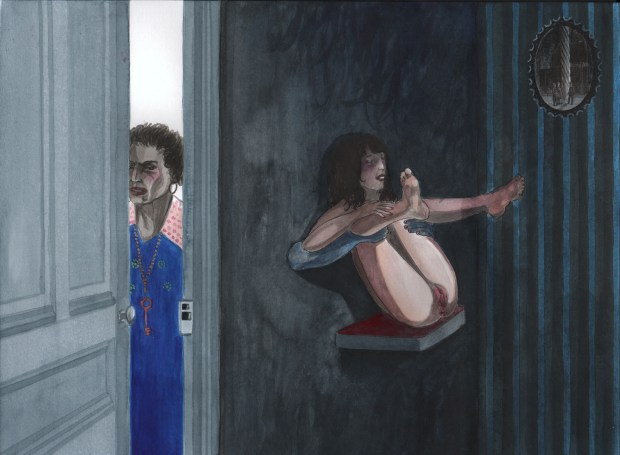
L’œuvre de Rajah Foo est souvent marquée par une touche gothique. Son travail utilise le suspense, des images troublantes et des paysages ruraux pour créer des récits visuels. Ces œuvres suscitent des émotions profondes chez le spectateur. Au cœur de son travail se trouve le thème de la pénétration et du désir. Les scènes entraînent le spectateur dans une célébration de la libido.
J’étais étudiant à L’école des beaux-arts de Nancy en France. Je discutais avec la professeure de culture générale, Geneviève B. Tout ce que je produisais était lié l’énergie sexuelle: sulptures représentant des couples de danseurs, minotaures, peintures et dessins pornographiques. Tout cela etait loin de tout ce que je voyais chez les autres etudiants, à l’introspection conceptuelle. Les enseignants étaient gênés par mon travail. Geneviève m’a dit d’un mot: tu es un artiste différent.
La coquille bleue
J’ai découvert, alors que j’étais enfant, dans la bibliothèque de ma mère le livre de ” Pauline Réage ” Histoire d’O. Une lecture comme un éblouissement. Plus tard, Sade dont la biographie m’a plus impressionnée que l’œuvre. Je fais de Freud et David Lynch, des compagnons intimes, quitte à les trahir, pour explorer l’opacité du désir. Mais j’ai peur d’être trop long… ( mythologie grecque, Bataille, Klossovski…) j’ajouterai simplement que la littérature m’a touchée la première, avant la peinture ou la sculpture.
Diane
Je crois que les deux artistes qui m’ont le plus marqué sont Hans Bellmer et sa poupée, et Max Ernst pour ses extraordinaires découpages comme ceux d’une semaine de bonté.
La fleur crue
Vous voyez, vous avez bien perçu dans mon travail ceux qui l’accompagnent. Un mot me plaît particulièrement dans vos propos: totémique. Il contient une forme de spiritualité, de brutalité et de mystères antiques. Il me fait penser à la fascination qu’exerce sur moi le mythe de Pasiphae depuis que je l’ai lu, enfant. On y trouve la puissance du désir, le scandale qu’il suscite, comme il renverse le monde. Mes dessins sont des images lentes extraites de toute cette exploration.
Le cercle de l’horizon
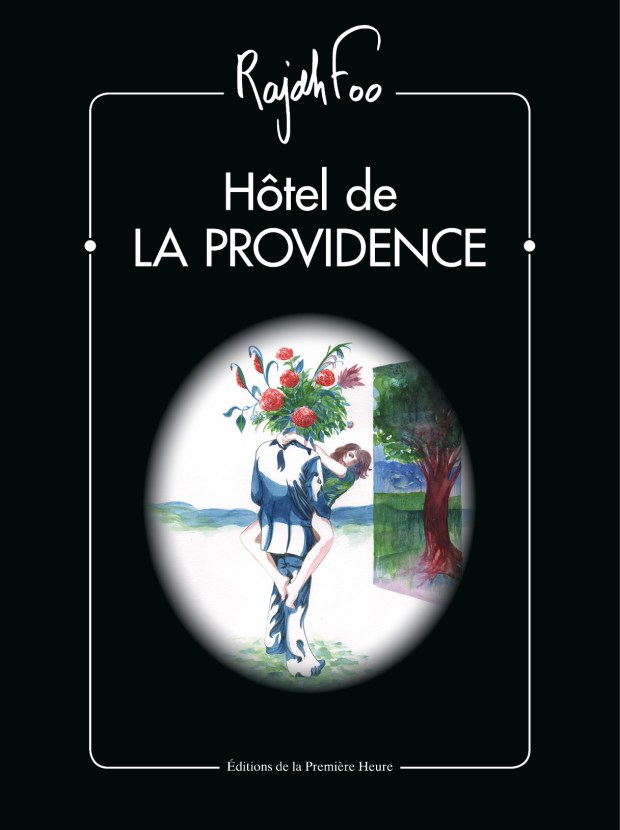
Je ne contacte jamais les galeries, je ne sais pas à l’aise avec les inconnus, et je sais que nombreux sont les artistes qui les sollicitent. Il y a une exception à ce tableau, la galerie Arts Factory à Paris, qui m’a accueilli lors d’une exposition collective, et le 8 octobre cette année pour signer un livre que m’a consacré les editions première heure.
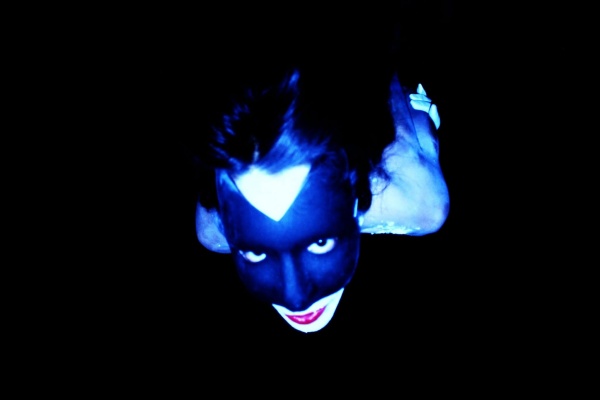
Ce spectacle comprend des lumières stroboscopiques et des effets atmosphériques ; la discrétion du spectateur est recommandée.
Un flash est un crâne qui vibre. Son aspect visuel provoque une photopsie et des sensations au niveau du lobe temporal. Les rencontres fantomatiques ont des allures psychiques. Observez des étincelles électriques dans l’atmosphère, entre les nuages et l’air. Les images du film défilent au-dessus d’un faisceau de rayons. Le projectionniste s’assure que le son et l’image de la bobine sont synchronisés. Des trous vides consomment la matière tandis que le compte à rebours se transforme en un drain optique. Une femme nue et cramoisie danse. Avec ses seins généreux et son collier de perles de crânes ondulant, elle marque la surface de notre mémoire rétinienne.
Il s’agit d’un procédé de lumière polarisée aux silhouettes exceptionnelles. Les ombres caressent les contours. Le cordon ombilical nourrit un embryon, de la même manière qu’un fil soutient un astronaute. Pendant un instant, une pieuvre du futur nous observa jusqu’à ce qu’elle projette de l’encre, rendant les observateurs inconscients. L’obscurité se remplit d’une illumination à motifs, jusqu’à une nuée de chauves-souris albinos en vol. Les drones sont des OVNIs partout. Une immense colonie de fourmis sur Terre a envahi et dévoré une simple feuille flottante. La foule s’amusait au parc d’attractions jusqu’à ce que le programme lui ordonne de former des lignes. Le fossile d’une orchidée montrait une minuscule danseuse du ventre à l’intérieur, en accéléré. La fleur était un signal intelligent voyageant à travers le temps. Un déluge d’éclairs éclipsait tout ce qui l’entourait. Une façon de contacter les extraterrestres était la danse du cerceau.
Ce cercle vient d’ailleurs. Évitez de vous leurrer. Les voyages spatiaux impliquent le vieillissement, la mutation et la mort. C’est aussi simple que ça. Observez comment les ondes de radiation dissolvent les éléments dans le néant. Ensuite, la chasse aux iguanes. Ne vous inquiétez pas, ce sont de gentils lézards en quête d’un en-cas. L’homme prothétique n’a aucun loisir, car les objets orientent son expérience vers une série télévisée. Suivez la figure nageant du tronc cérébral, à travers le système limbique, jusqu’au tableau de bord néomammifère. La Créature du Lagon Noir, malgré son portrait, n’est pas misogyne. Au contraire, elle incarne le principe du plaisir et illustre la conception de la nature. La plupart des gens entendent le saxophone flirter avec eux. Le mouvement rotatif tourbillonne de points qui s’épanouissent dans les danseurs Dogan célébrant la cérémonie du Sigui avec des masques. L’extérieur d’un masque reflète son noyau central, situé de la 111e rue à DaDa.
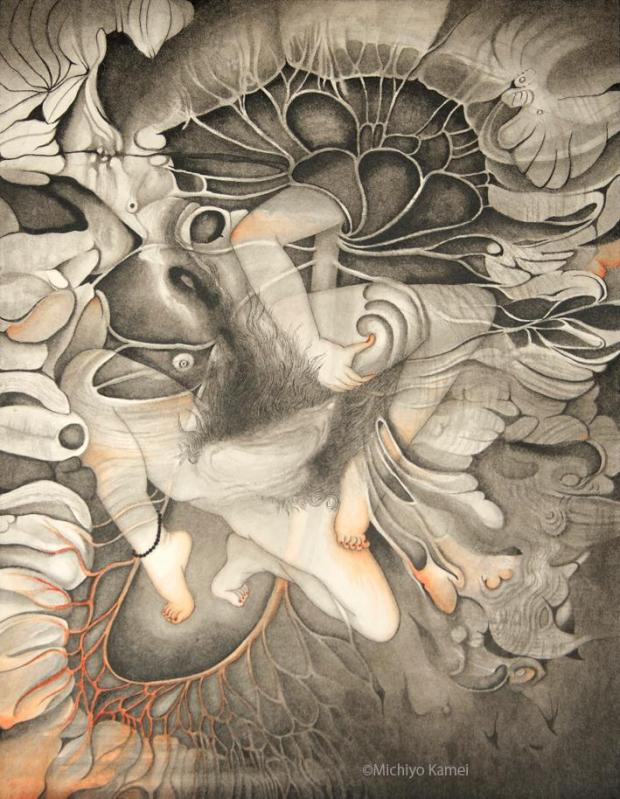
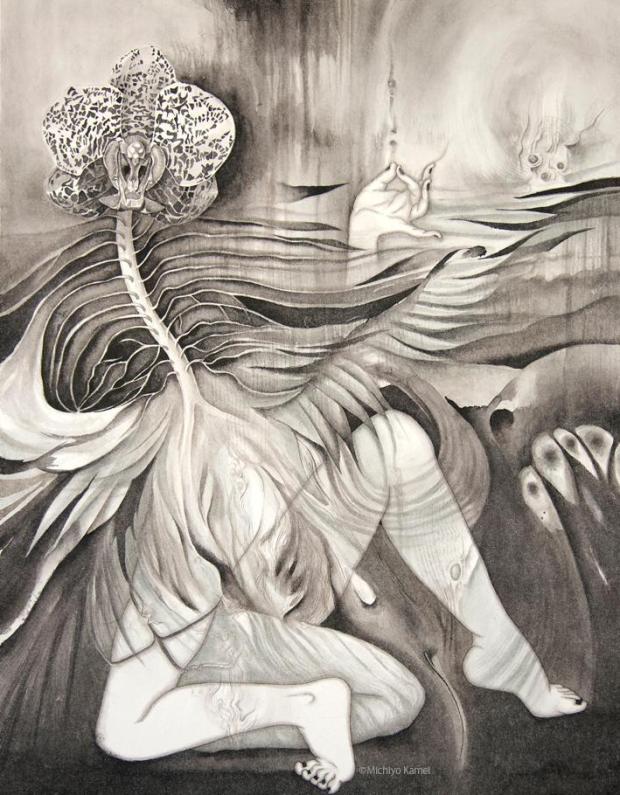
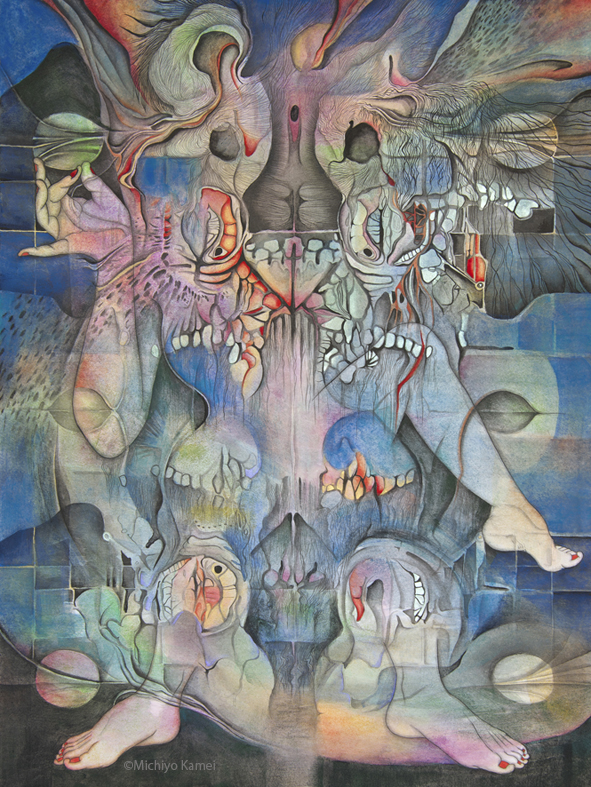
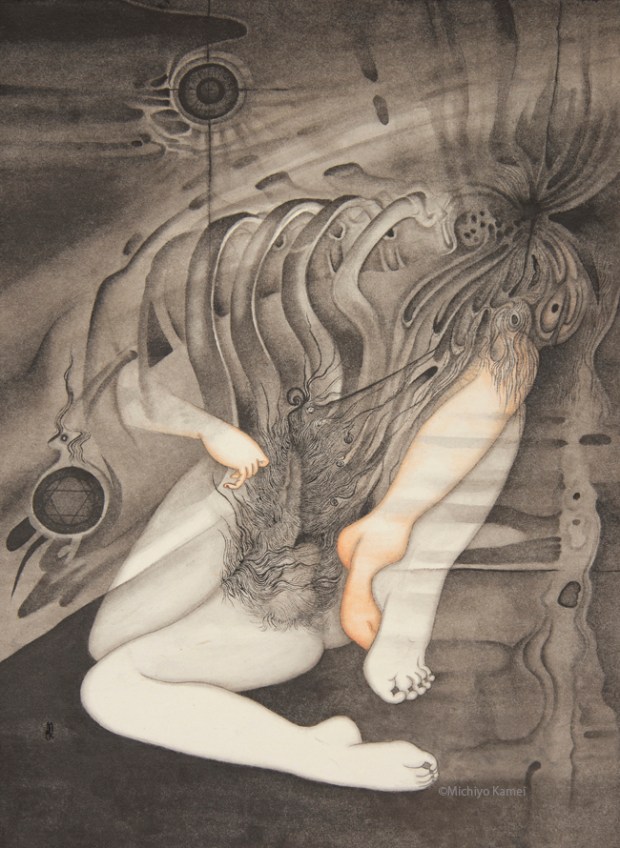
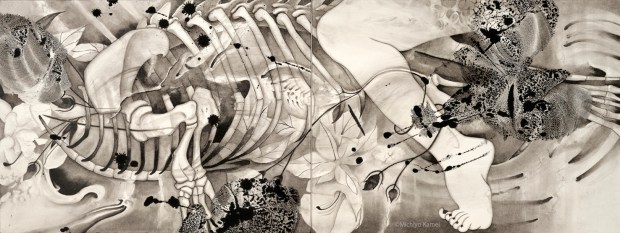
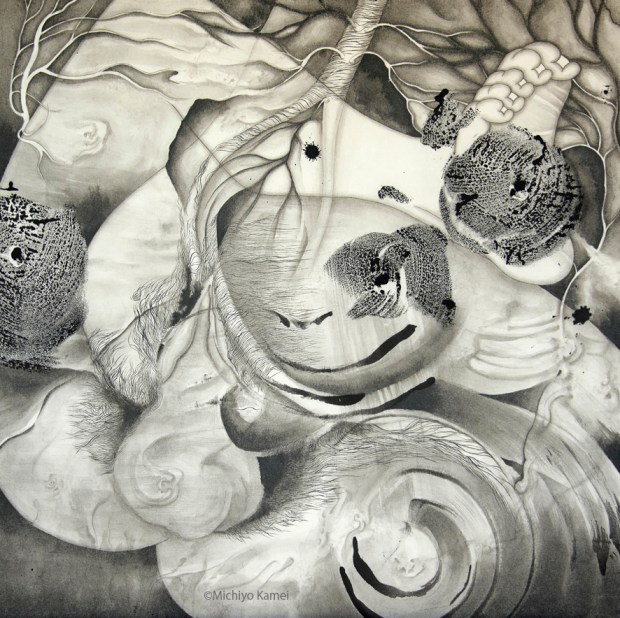
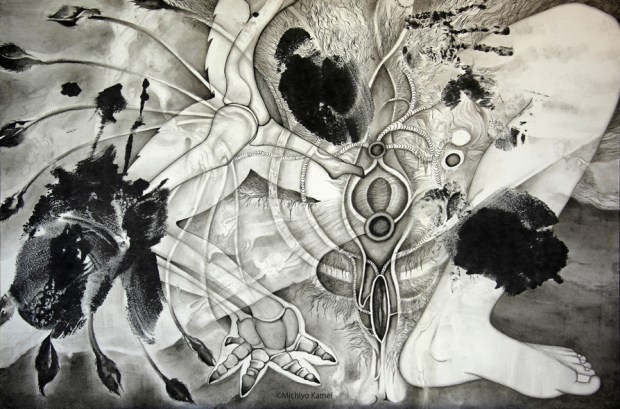
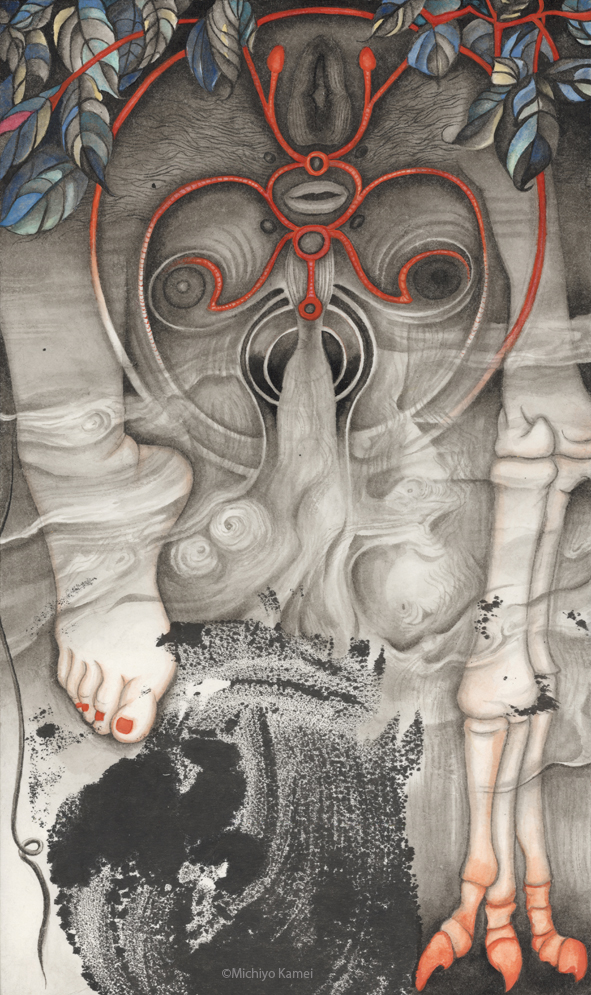
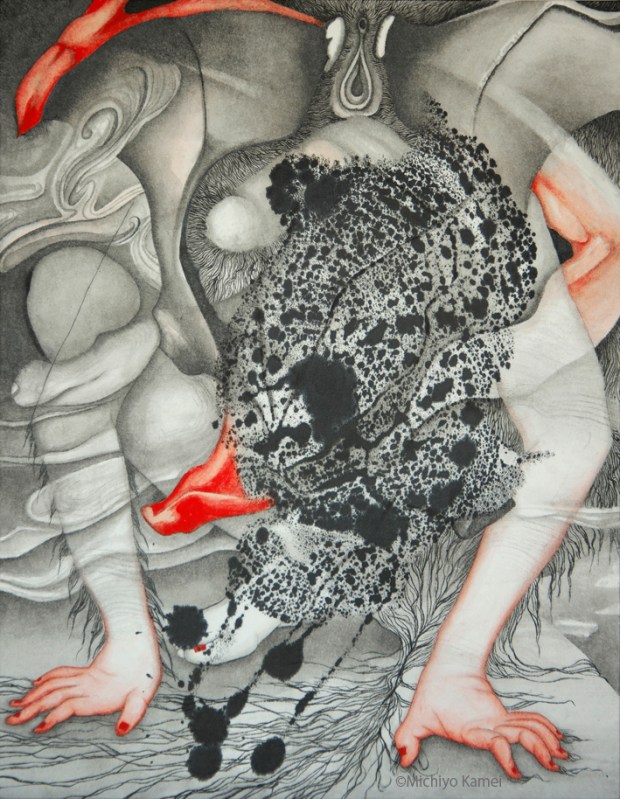
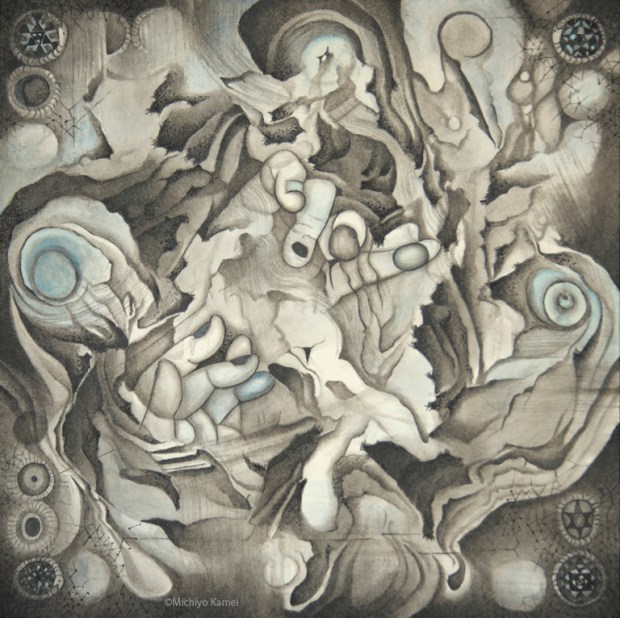
In her black ink paintings, Michiyo Kamei explores the concepts of impermanence, transformation, and the enduring nature of existence through a form she calls the bodymandala.
Mitchell Pluto: At what point did you realize you were an artist?
Michiyo Kamei: I originally studied anatomy at medical school and started out as a medical illustrator. It was only after I stopped working as an illustrator and began creating paintings that I realized I was an artist. Anatomical illustrations are created at the request of the medical field to follow the authors’ papers and wishes, so the illustrator cannot draw them freely. Paintings are free to be drawn by the creator, so the artist can freely incorporate their own ideas. This difference is significant to me.
Mitchell Pluto: How would you describe your art, given that it blends many traditional and modern genres?
Michiyo Kamei: When I was drawing anatomical illustrations, I studied the theory of modern anatomy and created my diagrams. After I quit this job and started painting, I began exhibiting at a gallery that collected ukiyo-e prints from the Edo period in Japan. Seeing many hand-painted ukiyo-e at the gallery, I rediscovered the beauty of traditional Japanese styles. When drawing the hands and feet in my work, I sketch my own body in front of a mirror, then deform it in the ukiyo-e style. In this way, I am influenced by both modern anatomical diagrams and ukiyo-e from the Edo period, which have a uniquely Japanese style.
Mitchell Pluto: When creating your artwork, what specific medium or materials do you prefer to work with?
Michiyo Kamei: I like oriental materials. Rather than just adding paint to the paper, I like to let the ink soak into the paper, letting it bleed and see how it moves within the paper fibers. Sometimes I don’t just create a picture, I let the ink create a picture on its own.
Mitchell Pluto: Could you describe and clarify what a bodymandala is?
Michiyo Kamei: Anatomical illustrations are pictures of the world of death drawn from corpses. Since I began painting, I have wanted to depict the world of life, so I have incorporated energetic shunga. Death and life are repeated in my paintings, and I hope to approach the theme of “eternity.” Mandalas represent the universe in Buddhist worldview, but I represent the universe through the body, and am exploring a new mandala form called the “bodymandala.”
Mitchell Pluto: What visual artists have influenced your work and given you inspiration?
Michiyo Kamei: I’ve been interested in the body since I was a child. It feels as though I am contained within this body, but at the same time it is also part of the natural world, the world outside of me. Which one does it belong to? And when I realized that I would die along with this body, I was terrified. Francis Bacon is an artist I admire for his expression of the body and anxiety. I’ve admired him ever since I discovered him in an illustrated catalogue as a teenager. Another artist is H.R. Giger. I think his organic expression in black and white is so beautiful.
Mitchell Pluto: Could you please tell me the central idea behind your current show?
Michiyo Kamei: I’m currently incorporating “jintaku” a technique in which ink is applied to my body and then transferred onto Japanese washi paper. Rather than painting with a paintbrush, jintaku involves pressing my body against the paper, resulting in completely uncontrollable and unexpected ink patterns. While observing the stains on my skin, I paint the “inside and outside” of the body in the blank spaces. It is meaningful to me to compose my paintings using three elements: the inside (anatomical illustrations) and outside (limbs, plants, natural world and the universe), and my living skin, which lies at the boundary between them. I call this “bodyscape,” and I hope to expand the image in my paintings from a small image of the body to a larger world. What kind of world can unfold from the body? And can humans have the imagination to do so?
Mitchell Pluto: What are your thoughts about the universe in relation to the philosophy of your art?
Michiyo Kamei: I believe that the universe in which we live has no beginning or end, but is a whole that is constantly transforming. There are times when I feel that even life and the body are merely a fleeting moment. Currently, I assume that the beginning of everything is the “zero point” of the universe, and my theme is the transformation and chaos of the body (form) that begins from there. In my paintings, I want to rewind time and explore the primordial form of life. I find a unique beauty in the cruelty and sacredness of the wild nature of evolution, which repeats selection and mating.
Mitchell Pluto: Who are your favorite writers for inspiration, and how do they influence your art and perspective?
Michiyo Kamei: I like Jorge Luis Borges, especially “The Library of Babel.” When I read this novel, I feel like an infinite universe is expanding in my head. I think his universe can only be expressed in novels (words), and can never be depicted. I would like to reach such a world someday, but life is short, and I feel that once is not enough for me.
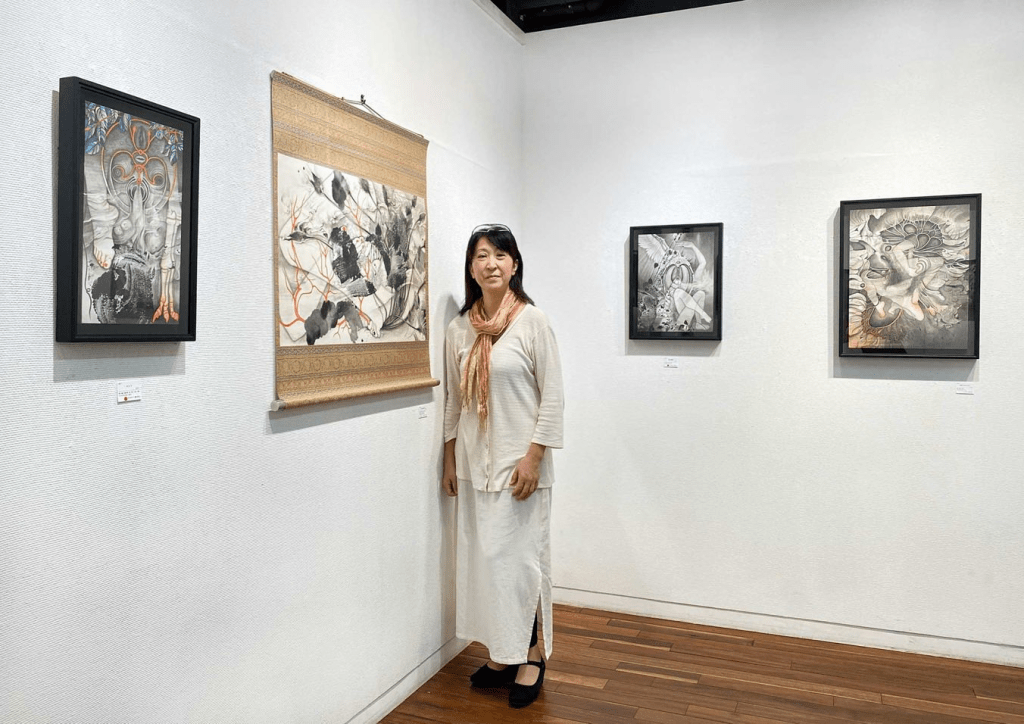
“The original form of the universe: the wildness of the zero point” Michiyo Kamei exhibition at the Y art gallery in Osaka, Japan 2025
Mighty Fine Arts presents “Like Father, Like Daughter: Inherited Visions” featuring new work by Johnny Olson and Madelyn Olson. This show opens with a reception for the artists on Sept. 27 from 6-9 pm and will run till Oct. 26. It’s a family affair at MFA with a premiere exhibit by Mad Swirl spoken word master Johnny O and his exceptionally talented daughter Madelyn.
Both are figurative based artists who exaggerate and elaborate on the human condition. The characters they create derive from some overarching personal narrative but they manage to resonate on a mythic universal scale. Their approach is also filled with imaginative humor and playfulness with a touch of satire. The resultant effect is ebullient and energetic imagery imbued with creative fervor. Father and Daughter are cut from the same cloth and blessed with uncommon virtuosity.
Also on Opening Night Wordspace Artspeak presents a musical performance by Swirve! Chris Curiel fronts this avant garde collective of liberated musicians devoted to free thinking and improvisation. Their goal is to release your mind from convention and neurotic restraints with cosmic soundscapes. Come experience and get emancipated with Swirve!
Johnny Olson was born on a brisk November day in 1970 in Chicagoland. He found his feet & cut his teeth in the blue-collared working class neighborhoods of his hometown. In 1988 he was reborn in MCRD San Diego, where he found himself the new title of United States Marine. After surviving the Gulf War, he hung up his BDUs & turned in his rifle to instead grab his pen & brush where he rediscovered his passion for writing & painting. In 1998 he found himself in Dallas, where what was supposed to be a brief stint in the South turned into over two decades… & counting.
In 1999, Johnny, with a couple of other mad cohorts, started Mad Swirl. This ‘zine project has now evolved into a being all its’ own. After wearing too many hats, he now only wears a few at Mad Swirl: Chief Editor, Creative Director & Host at Mad Swirl’s monthly Open Mic night & Mad Swirl’s Quarterly podcast, “Inside the Eye.”
Johnny’s work first appeared in print in 1996 in the now defunct Lip Magazine. Since then, his words & images have found their way onto a few online and printed zines thru the years. To name a few: Mad Swirl: Issues I-VI, The Best of Mad Swirl : 2017-2024, Haggard & Halloo, 10k Poets, PAO Productions: The Open Mic Project.
My name is Madelyn Olson and i’m an artist (anyone else have a hard time claiming that title?), primarily creating in Procreate or on paper with ink & watercolor. i’ve been creating since i could hold a pencil in my tiny little hand. to me, artistic expression is one of the best things to exist. i hope to both create & admire it all till it hurts.when i’m not creating and admiring creation, i like to eat, hang out with my dog, laugh at silly things with my friends and frolic around outside in the sun.
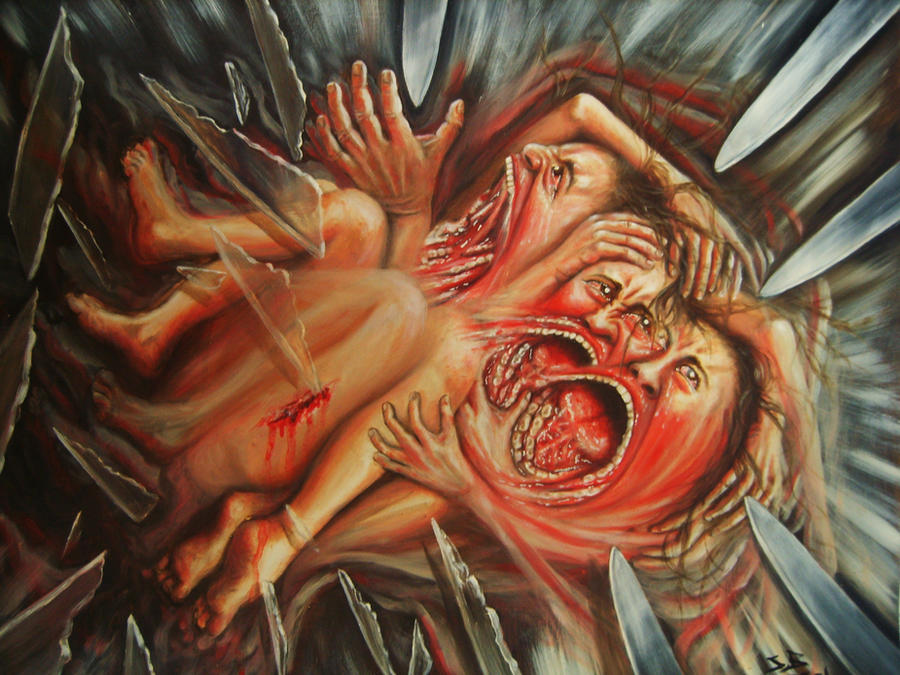
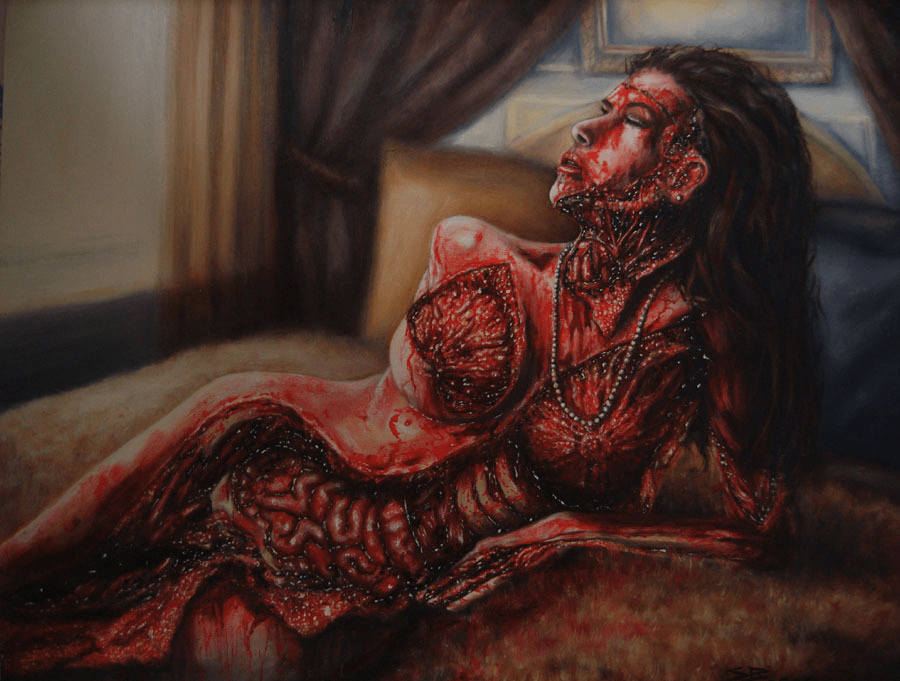
To present a well-rounded viewpoint, it’s crucial for me to feature a female artist who actively advocates for the well-being of both children and adults. I am describing someone who fights tirelessly against child exploitation and human trafficking. It is necessary to mention that there are painful sexual encounters. The focus of this article is not on fantasy, but on deep contemplation of the harsh realities surrounding sexual assault. It describes the experience of one artist who overcame incredible odds and survived.
Suzzan Blac was born in Birmingham, UK in 1960. Her oil paintings and writing reflect her personal experiences with physical, mental, and sexual abuse. Blac’s artistic purpose is to shake society out of apathy and educate those who perpetrate secondary victimization, which can be equally distressing as the abuse. Suzzan’s work serves as a source of inspiration in group therapy for victims of abuse. Her work revolves around creating educational programs that encourage greater understanding.
Blac turned to painting between 2000 and 2004 to process her pain, anger, and trauma from the abuse she experienced. In order to tap into her subconscious, she started by doodling while watching TV, recognizing that these drawings had to originate from a place deep within herself rather than her conscious thoughts. After creating the drawings, she skillfully transformed them into realistic paintings that depicted both the victim and the perpetrators. Despite feeling unsettled by her paintings, she understood that they honestly portrayed her innermost pain that required healing. For four years, she dedicated herself to painting forty images, which she carefully kept hidden for over a decade, fully aware that sharing them would cause harsh judgment. It was in 2011 when she made the bold decision to share her most challenging work with the world by putting it online. Blac found it necessary to use her artistic abilities as a platform for speaking out and advocating for her beliefs. There were many people who said hurtful things to her. However, she also received gratitude from countless survivors who felt empowered to speak up because of her.
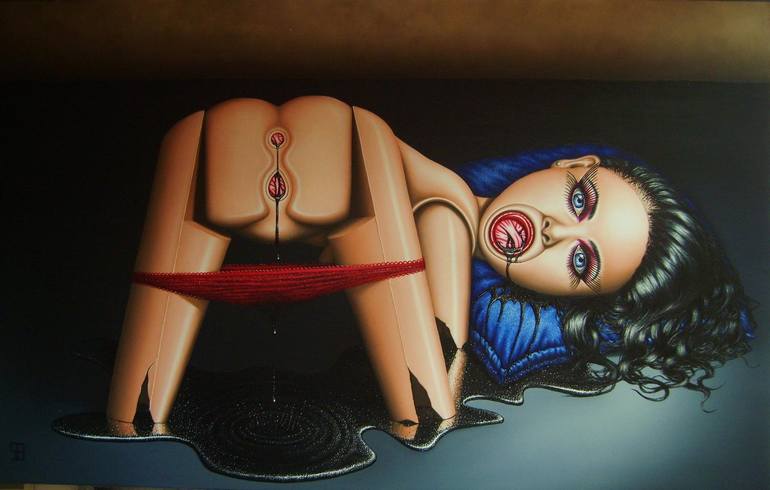
Blac’s work is challenging to look at. It invites the viewer to contemplate and empathize with situations involving sexual violence as a victim. In her own description, she compares rape to a type of murder in which the victim does not lose their life. Blac renders and illustrates emotions in a horrific way. She blends figuration with an eerie, surreal style. In her painting, she frequently uses an effect where the figures appear malleable under the influence of a predatory force. Dolls are frequently used to represent figures. The combination of these elements makes a significant and lingering impression on anyone who sees them. Her paintings hold viewers hostage and give them an intimate feeling of her experience.
The scenes in Blac’s work are terrifying, creating the ultimate experience of body horror and disassociation. Her artwork also serves as a healing remedy for emotional trauma, as well as a catalyst for memories of sexual abuse survivors. One could hypothesize that Blac’s neuroaesthetics might have an influence on the hippocampus, the area of the brain that plays a crucial role in managing the experiencing self and the remembering self.
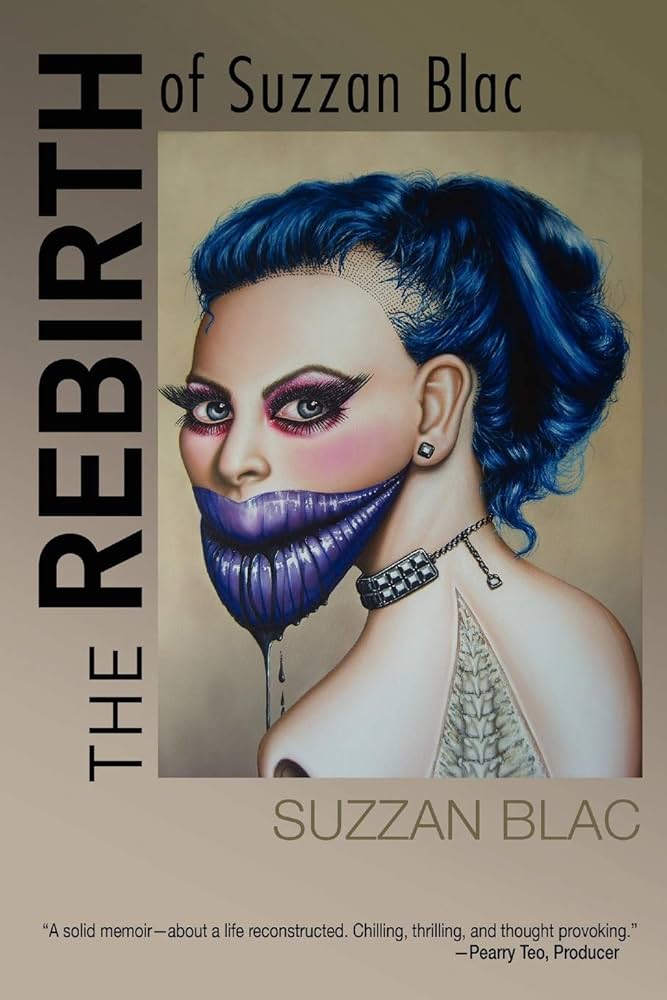
Before reading her book, The Rebirth of Suzzan Blac, I was familiar with Suzzan’s remarkable talent for painting, but unaware of her story. I won’t reveal too much about the book, but I can give you a general concept. Blac was a prisoner, enduring unimaginable exploitation in the sex trade. These events occurred when she was still a teenager. The book is candid, and Blac’s narrative has a genuine and tender tone. Although the subject was difficult, the book had a natural and easy-to-read style that leads the reader into a world filled with the most cruel human conditions one can imagine. Blac’s book is incredibly uplifting and positive. Her dedication to addressing sexual abuse issues is evident in her continuous efforts to use art as a medium for awareness.
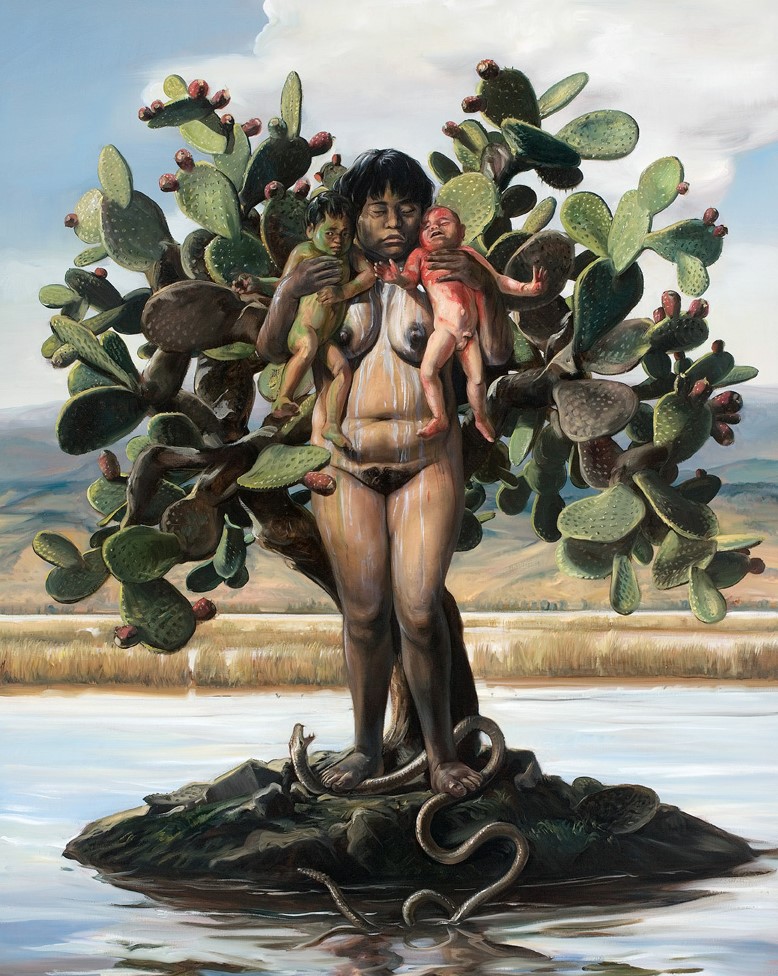
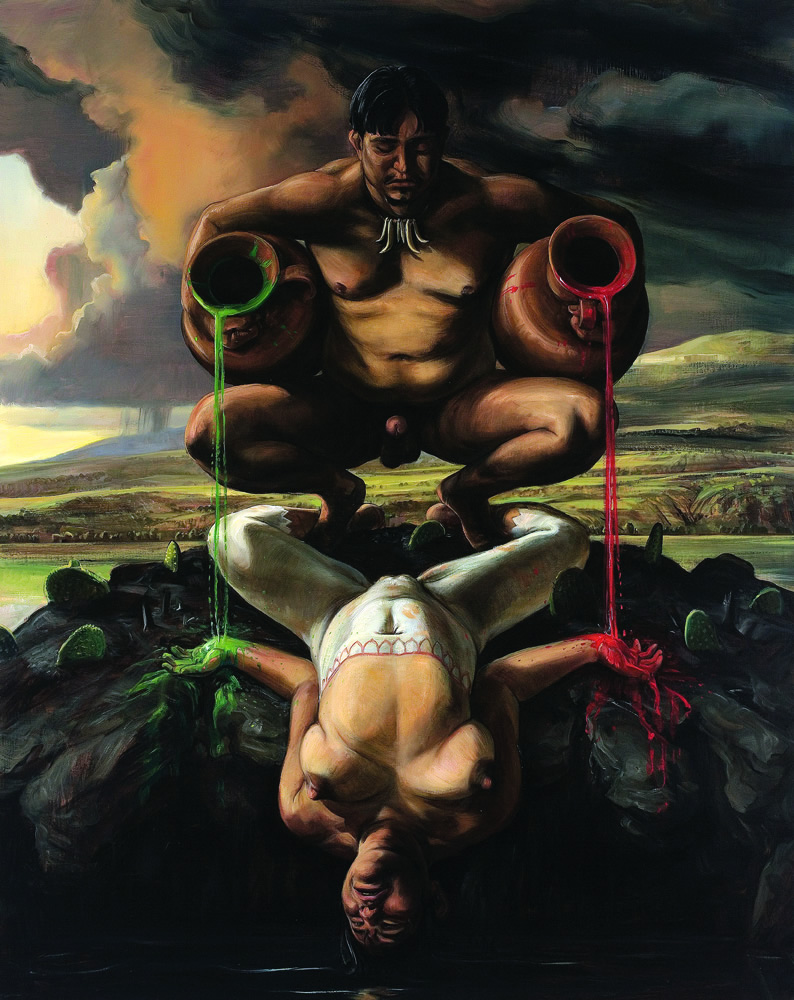
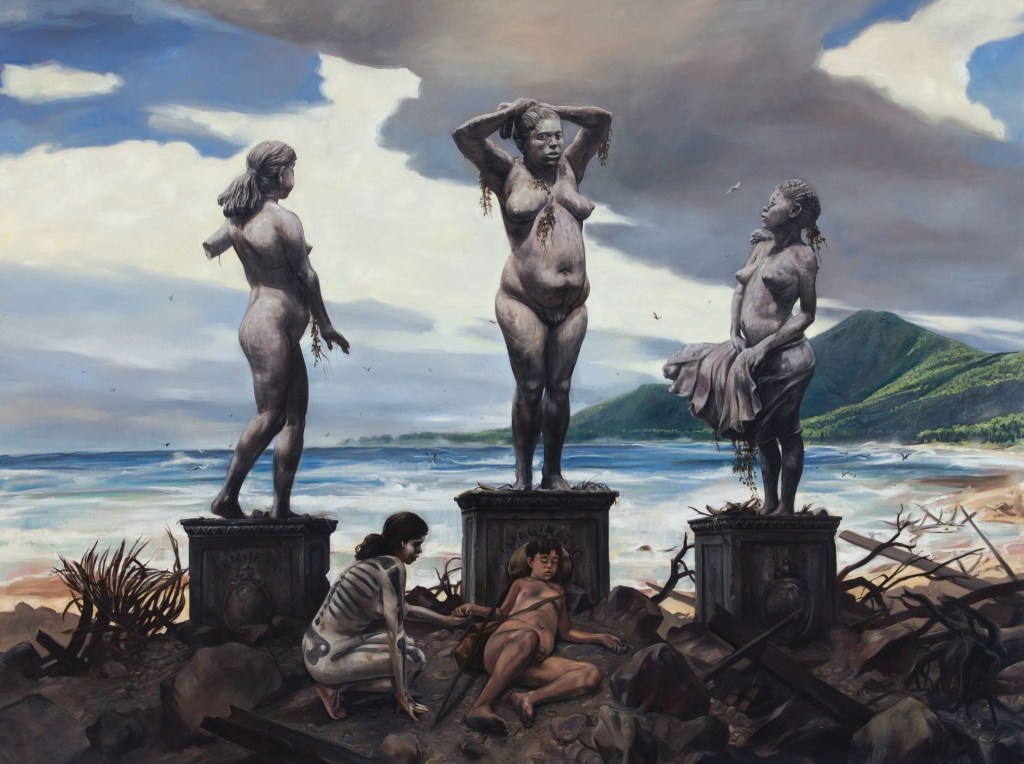
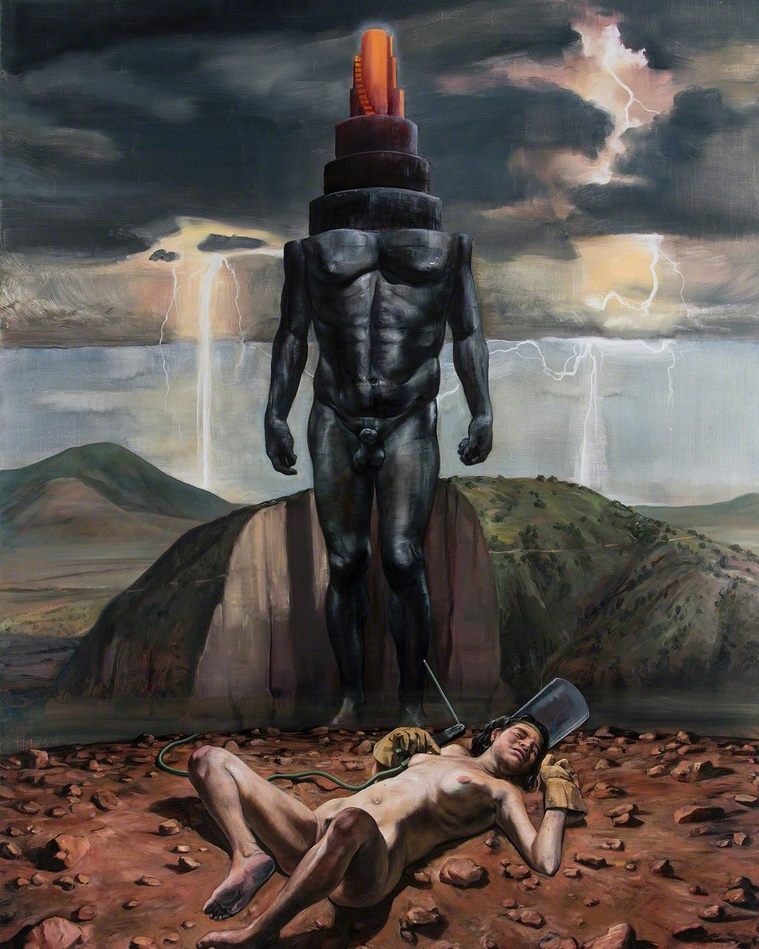
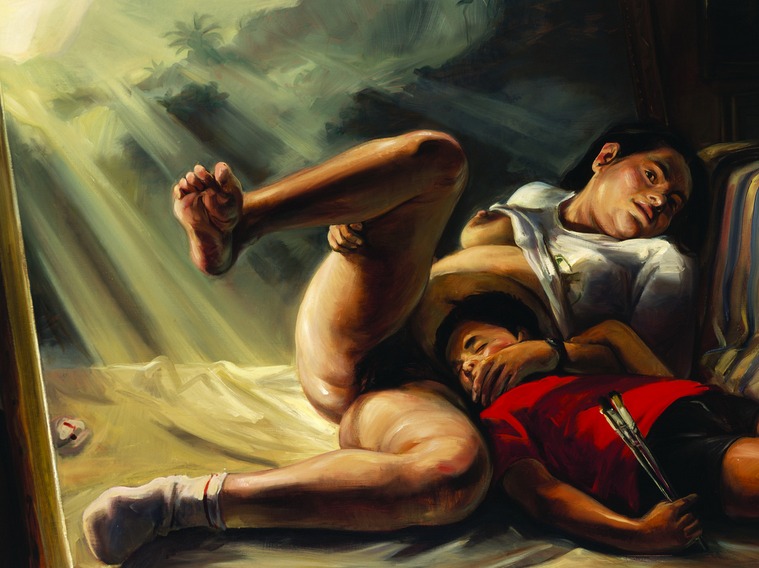
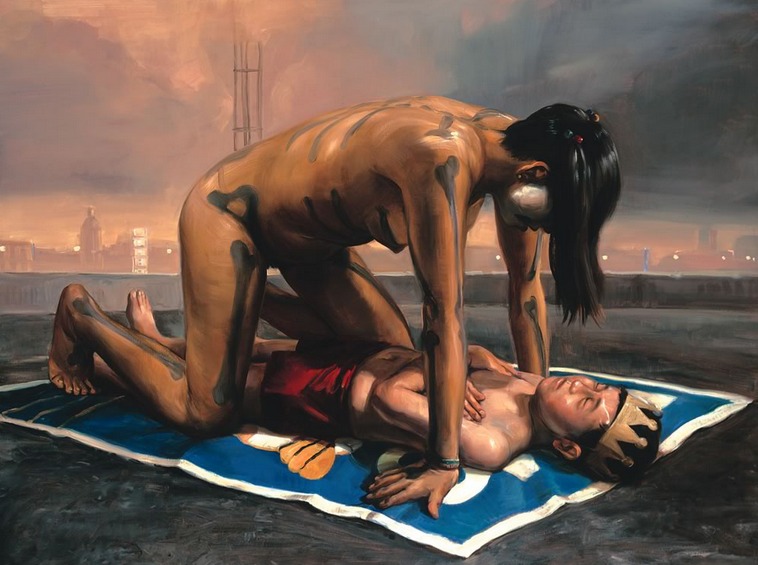
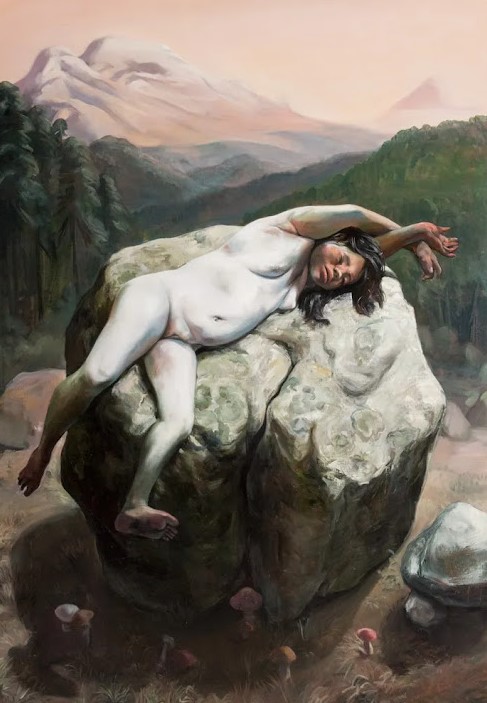
In 1968, Daniel Lezama was born in the city of Mexico City. While living in Mexico, Texas, and France, he had the unique opportunity to experience the diverse art scenes in these cities, thanks to his father’s profession as a commercial painter. Lezama’s educational journey led him to the Escuela Nacional de Artes Plasticas of the Universidad Nacional Autonoma de Mexico, where he dedicated his time and efforts, graduating in 1997. He started his formal artistic career in the late 90s.
Lezama has thrived and made significant contributions in his field. Throughout his career, Lezama has displayed his artwork in solo exhibitions and group exhibitions, spanning across Mexico and various countries around the world.
Lezama Archetypes, Recurrent Patterns, and the Psychic Labyrinth
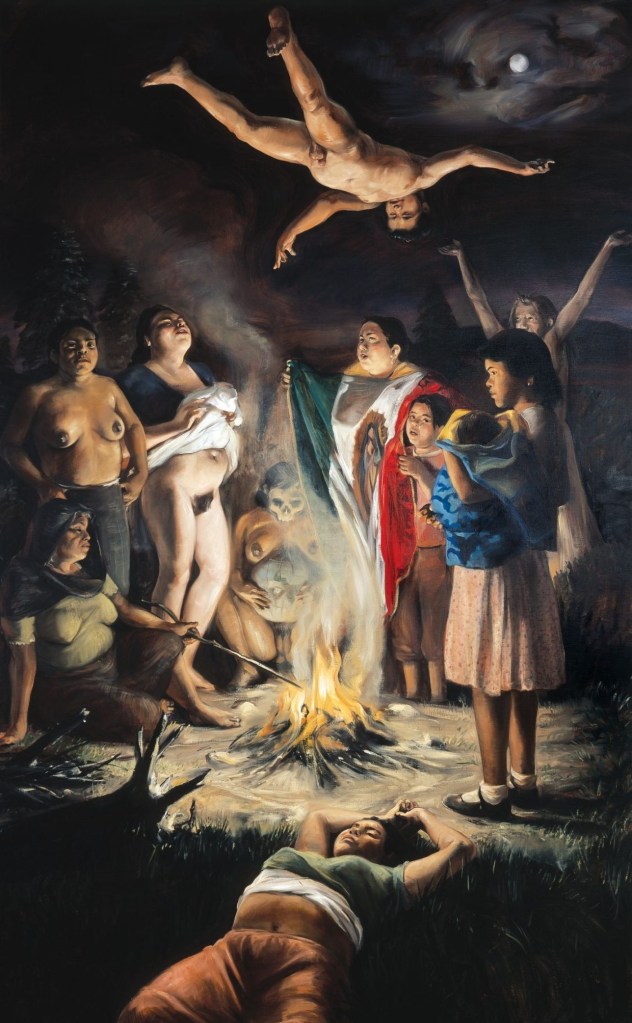
There are fundamental archetypes and reoccurring themes in Lezama’s paintings. The absence of clothing detaches one from the concept of time. It is common to see a figure portrayed as the ever-present mother. She takes on the role of both parents for her children, who compete for her affection while eagerly waiting for redemption from an authority figure who, in reality, does not exist. In contrast, the circle relies on a dynamic blend of chemical reactions and fluid displacement to support its form.
Lezama’s pictorial stage features the eternal adolescent archetype as a representation of civilization. Regardless of one’s age, every adult possesses a liminal quality that serves as a bridge between maturity and the realm of the unconscious. Changes in the surrounding environment mirror the changes in the mind. The transformative phase of adolescence shapes and molds the individual, giving acceleration to civilization.
In Lezama’s paintings, day and night coexist, blurring boundaries of space and time. This subtle effect further reinforces a reappearing theme in Lezama’s work, which explores the connection between celestial bodies and genealogical mountains.
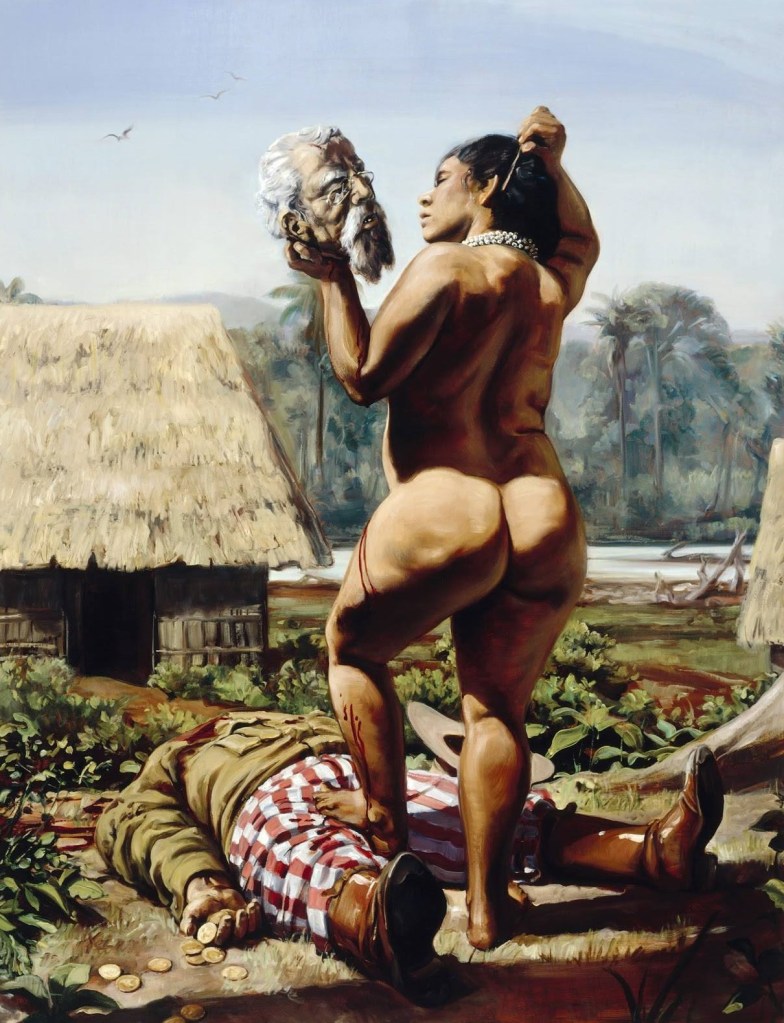
The enduring regenerative power of sexuality is proof that humans are an integral part of nature. While exploring this theme, Lezama emphasizes the artificial narratives of humanity, which give rise to supernatural histories and institutions. Lezama integrates these mystical components into an authentic backdrop, creating magic realism that resonates with the Mexican scenery.
Lezama doesn’t consider himself a realist painter or someone who replicates reality. He knows he is constructing a narrative that falls within the realm of fiction, designed to provoke thought in the intuitive mind. Erick Castillo, the author of “Daniel Lezama: Árboles de Tamoanchan,” pays tribute to Lezama as a visionary who devised a complex network of symbolic representations, reminiscent of a visual maze confined within a psyche. Lezama draws inspiration from a multitude of sources, one of which is the renowned essayist Octavio Paz. In his writings during the 1950s, Paz explores themes that align with Lezama’s ideas in his work titled “The Labyrinth of Solitude.”
Mother Narrative of Circularity
Erik Castillo, a curator, researcher, and professor in Modern Art, holds the perspective that Daniel Lezama’s paintings are fragments that contribute to a broader circle. Castillo refers to this as a narrative circularity. These figures represent actors who play different roles in a cyclic play. Lezama’s paintings use allegorical layers to communicate a language of images. He describes his stationary images in space as a visual arrangement that viewers can see as a syllable of figuration. This leads the viewer to experience a range of different interpretations.
Similar to a collage, Lezama’s themes incorporate both ancient and modern concepts, creating a unique fusion. American underground cartoonist Robert Williams offers a parallel example of combining time streams to create branching storylines. Both artists employ the surreal quality of this image-streaming effect to challenge the beliefs of their viewers, leading them to reflect and question their own perception of reality.
The Mestizaje of All Things
Lezama believes that the Mexican nation is an imaginary family that exists in the realm of imagination before becoming a reality. Lezama considers himself a hetero-Mexican. By exploring the intersection between indigenous cultures and colonization, his search sheds light on various aspects of rites of passage and cataclysm.
A crucial point to note: death is a prominent theme in Lezama’s work, yet there is no ultimate or definitive death. When an individual changes their life, the person they used to be ceases to exist. There is always something left incomplete. Similar to a thriving world ecosystem, each part relies on the other.
Inspiration for my Artwork comes about fast and furiously, which I attribute to the theory of left-to-right brain transformation. My background and education have enabled me to create without boundaries.
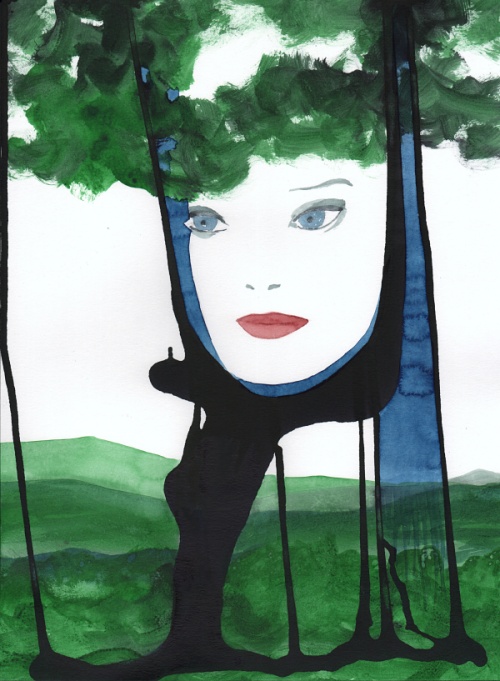
The Overseer
I see a world of abstract shapes and colors, and I interpret my vision in digital images. Hidden within my creations are enigmas—mysterious images, cryptic messages, and symbolism. I invite viewers to explore, to decode, and to find their own meanings in the art
Crystal Blue Persuasion
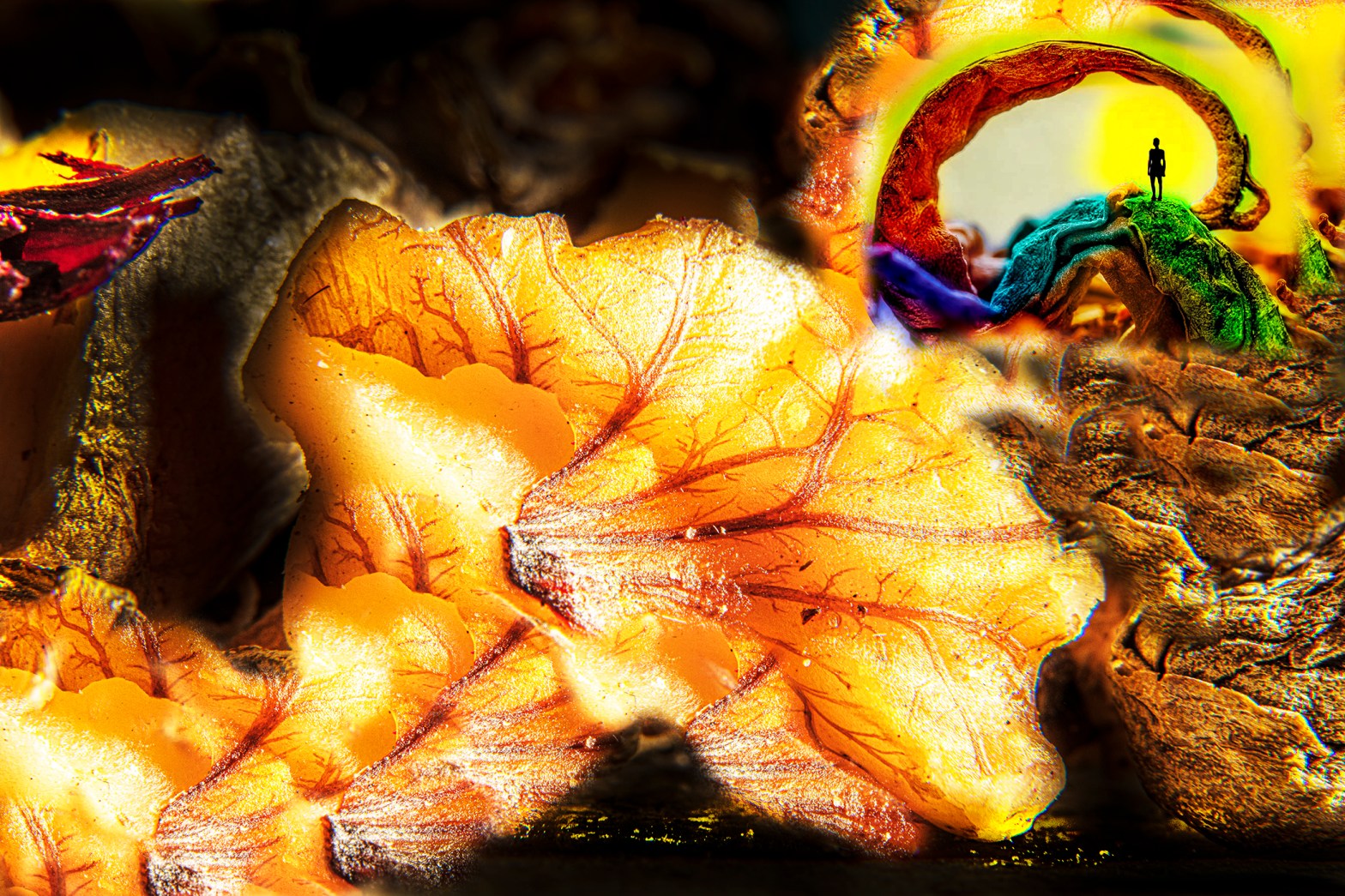
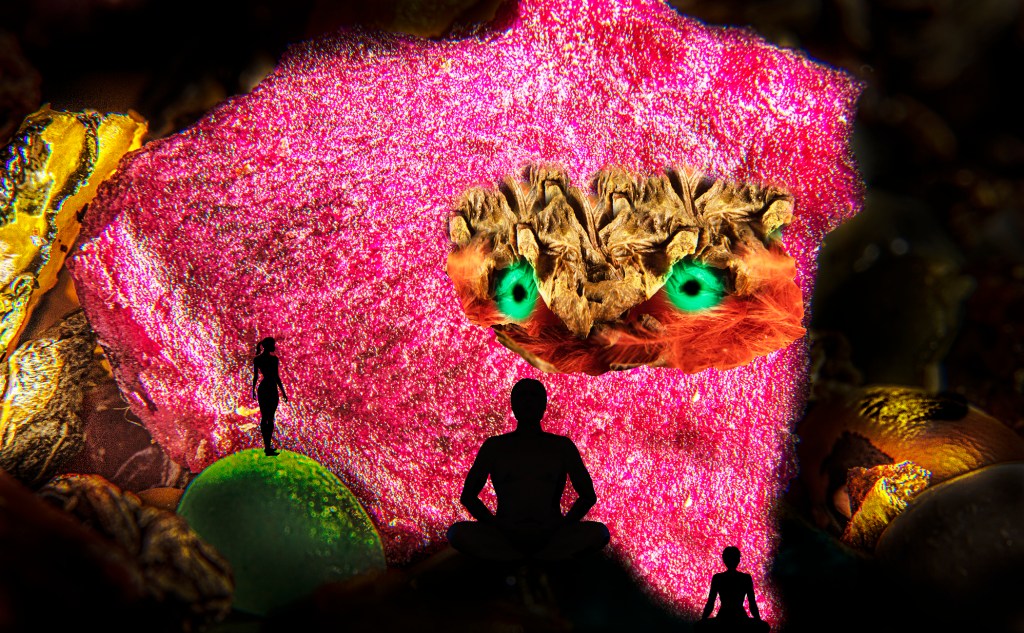
Leo Alt (Leonid Altshuler) is a notable 21st Century Digital artist, whose work incorporates images of organic substances, minerals, and man-made items, photographed on a micro-scale. Included in the surreal scenes are silhouetted forms of humans and other creatures.
The vivid images are evocative of many scenes: dreamscapes, alien worlds, portals to other dimensions, and more. Leo’s portfolio showcases his unique vision and creative approach to digital art
In centuries preceding, during the long, dark night of people passed, the light from the moon was different, they say. Carpet weavers watched sporadic clouds wrestle with thick air as translucent sentiments, ribbed by fleshy coils, pointed fingers at old friends. Tarpaulin Triveni, female, teacher of twenty, payer of Federal taxes, architect of the west winds, lover of afternoons; Route 79 to Tiruvannamalai, rush hour smoke, brimstone, incense, pooja, sudden migrations: the temple, partly stone, partly human –
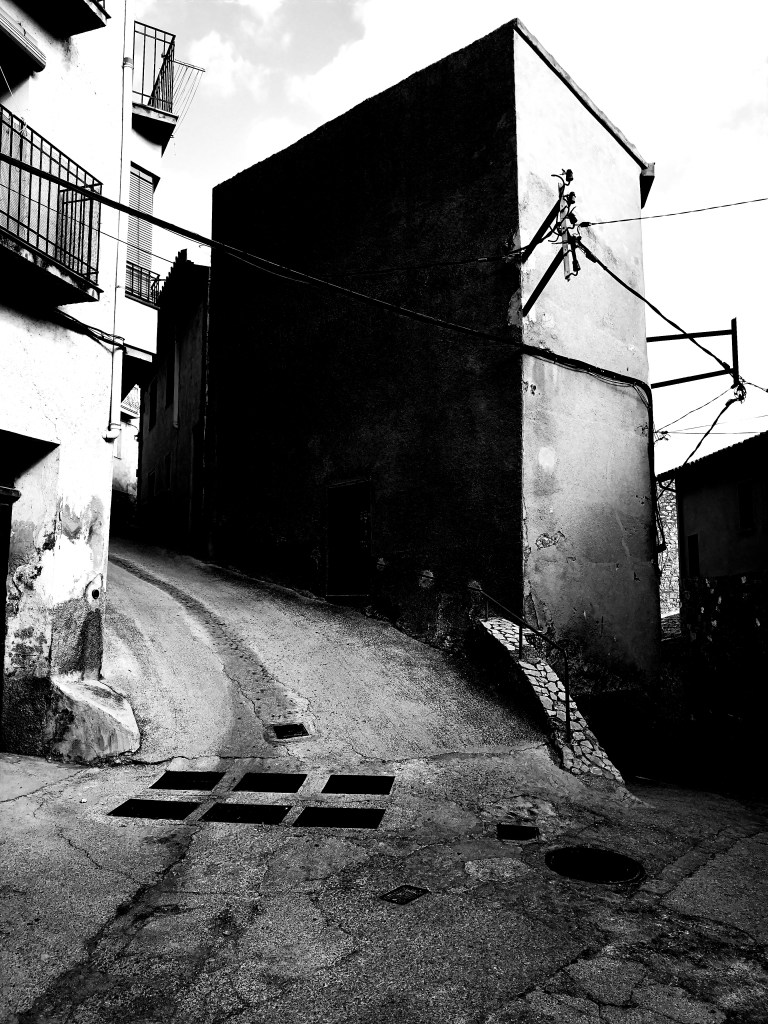
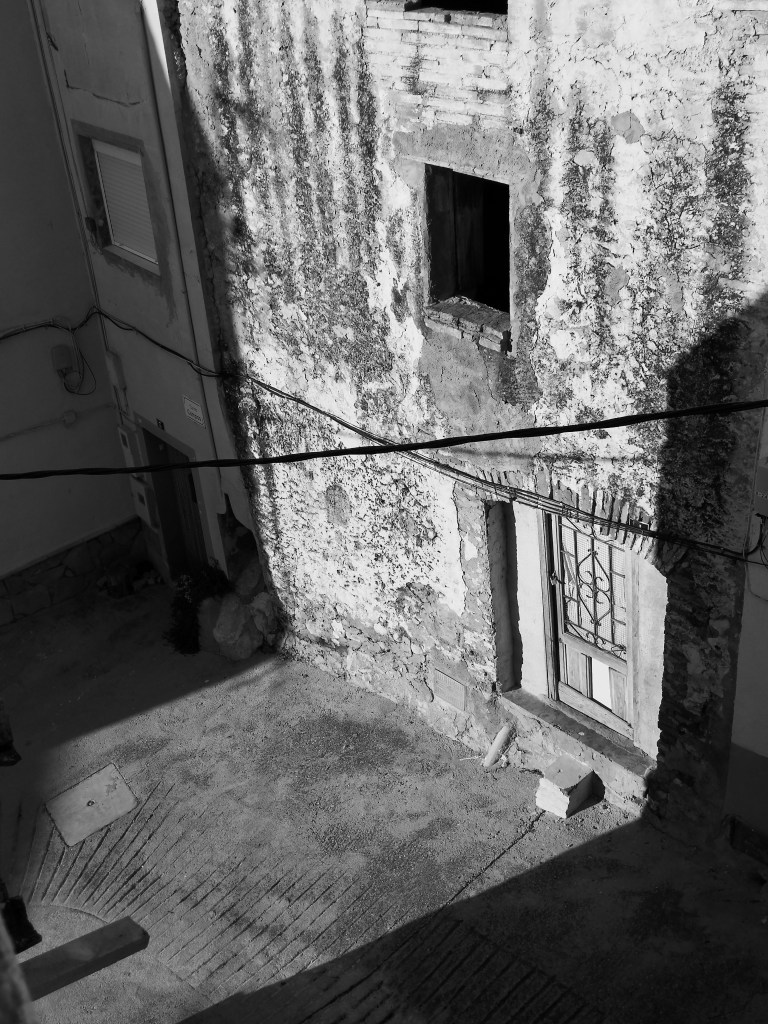
Tortosa CataloniaMontblanc Catalonia
Astarte! At last, longed the cantaloupe queen, conscious like burned butter afloat in disquietning nodes of boiled heroism, sheer terror written on her bronze armour in longhand Sufic prose, arrows bristling brilliant shafts of light upon those who stand amazed. In showers of liquid lead and riddles like retribution she raises up her head in thunderous paroxysms of wildfire, incinerating the noise of the NASDAQ trading floor via the quietest opening, or tearing into the roaring twenties: like lovers they eat themselves whole. A pain-pointed predilection for killing gods of all sorts, striking them to the ground, howling, shrieking for mercy, but shewing none, misusing the corpse after the kill like orca with a dead seal, or Achilles with Hector’s remains. We play with death. It makes us young.
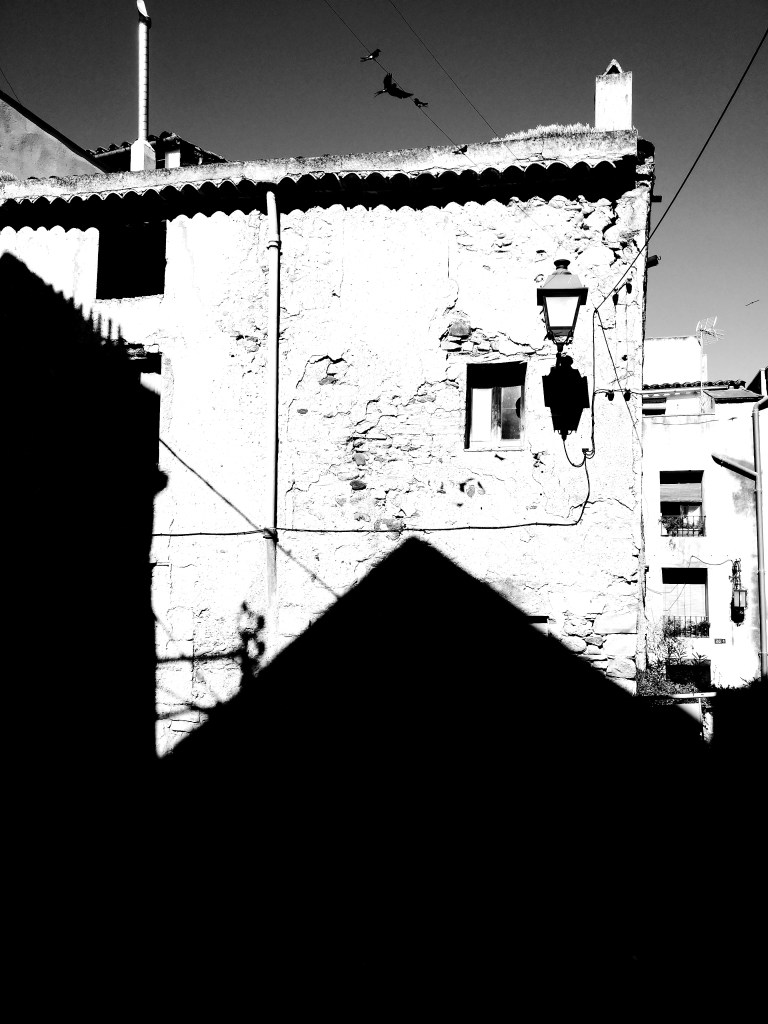
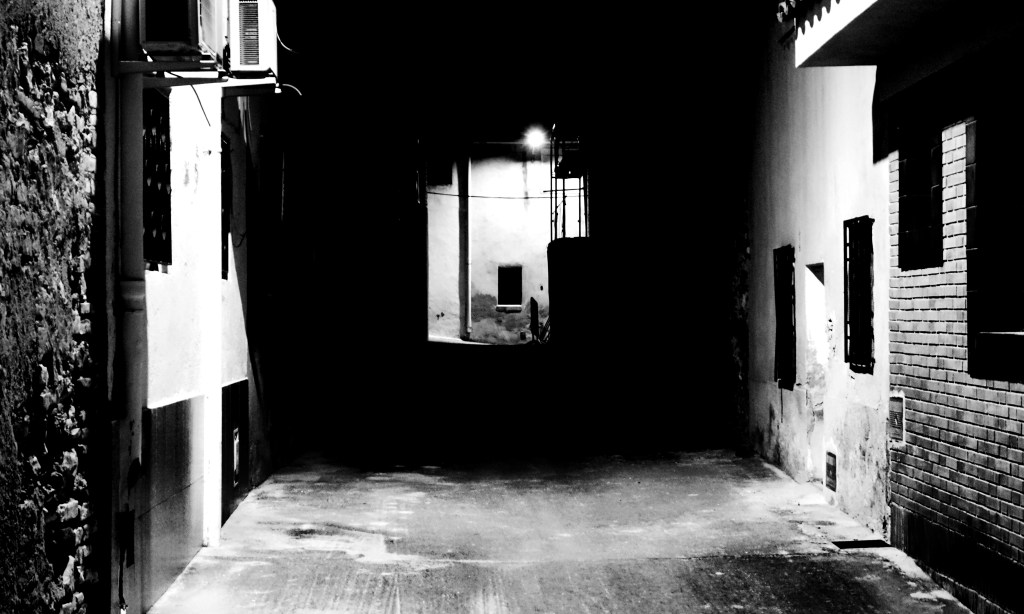
Tivenys CataloniaTivenys Catalonia
Silver serpents entwine the heart-locket of a young man in Queens. The crepuscular silhouettes of tall buildings all empty, as in a dream, bitter chills in the wind from Hudson’s channel, flashes of red lightning, banshees in the street below setting the dumpster afire. Concrete streets empty and dark, this wraith-like apparition only masquerades as a city: a riddle, an omen, a curse. A picture of petty consequences, catalysing a tuber shaped oath for remedying unlikely afflictions of the psyche, like the pinch of a rubber band wound too tightly around your finger. Entrenched layers of decimal decline pontificate politely to a crowd of mainly young goatherds, but they don’t mind, as any entertainment will suffice for a goatherd of the Bactrian valley, longsuffering in the August Afghan ovenheat, yearning for the cool Hindu Kush. Up there, queens look down from snowy temples, peaks outlined by the monsoon moon, vanished layers of paradise passing instantaneously from view. Instantaneously –
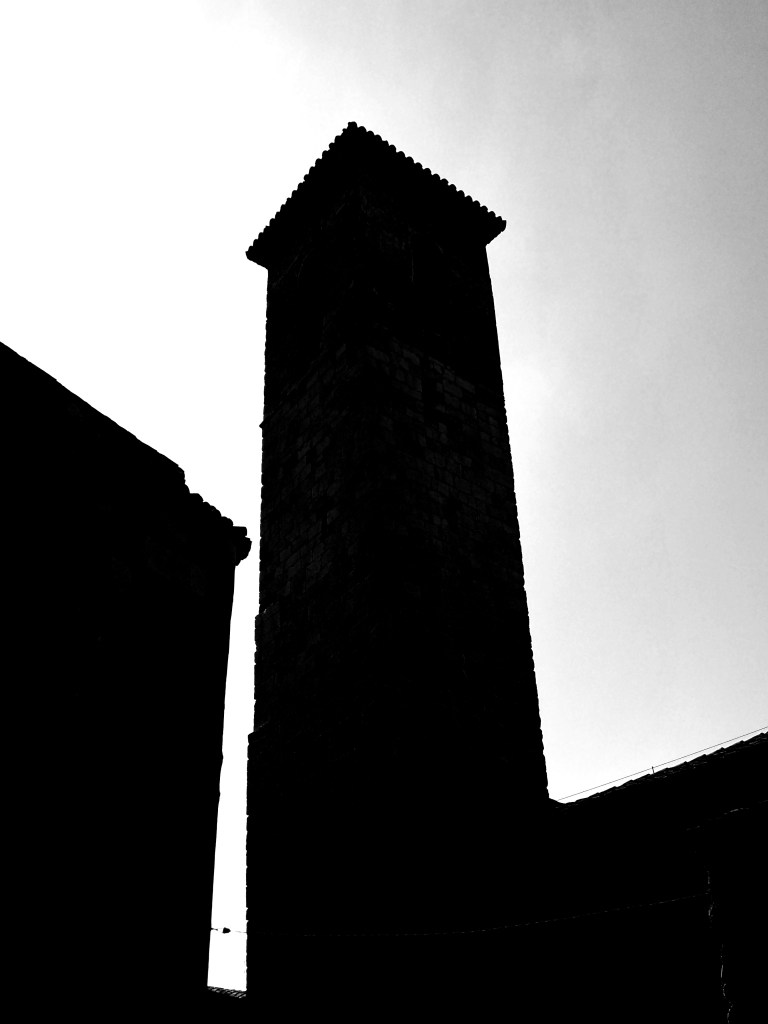
Tivenys Catalonia
Borders bind the wealthy to the poor, but in seaside temples of voluminous concern we count epigrams between sunsets, rallying fractious spirits in the meanwhile, damaging civic furniture installed in the Citibank Plaza. The old guard sits outside the bank on a plastic beach chair, machine gun hanging lazily at his side, smiling cheerfully at the calls of the brain-fever bird stirring raptures in the daytime as if coaxing clams from shells, a child of every man. Now we are ringing the new year by the seven bridges of Königsberg, full of cheap fortified wine and high on super glue, destroying the way of life for those who cannot know better, sweetening a joyous relation between the baroque lintel and its most spiritual rejoinder.
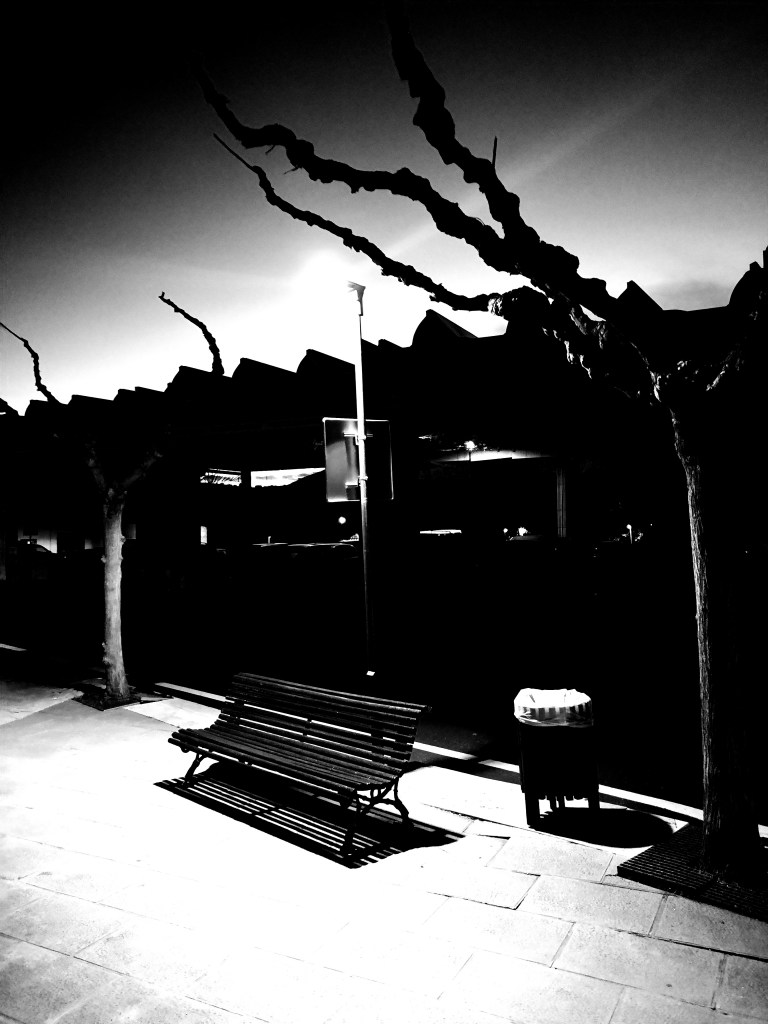
Montblanc CataloniaMontblanc Catalonia
Openings, ruptures and fissures decimate Dorothy Drumwise on her drunk drive through the badlands of Blackpool, BMW unlicensed, DMT fairground flakeout. She sings sweet missives of the Golden Age, of Plutarch, Pindar, and of Ovid. Inclinations of ages move with tectonic twists, first shifting this way, then that way, as with the latest dance fad. I know that you know that the ‘this way and that way’ is a vital mechanism of natural philosophy. The waggledance of industry, the fiesta after the feast, festivals observed on Temple grounds, and with much smoke and incense. Astarte above, chariot rider of fury, smoking halos of pure fire above the heads of gathered postmodernists, crypto-Marxists, and other groups assembled for purposes only spectacle may account for. This terror and delight is for quivering flesh alone: no gods may get a taste –
Tivenys Catalonia
In an asemic New Babylon, an endless plan of a constant architecture, sketch after sketch of alleyways and avenues, flows, interruptions, passages of ludic intrigue: our only concern will be for how the wind goes. The city-gestalt, our new Babylon, is stacked tier-upon-tier as with a Hindu temple, complete with the sombre front of a necropolis, grey and overbearing, the pantheonic structures of dead gods hewn into rock, but haphazardly, without plan or meaning. The Temple of pure, empty worship, accessed via doors which only appear to be doors, words which only appear to be words, each word a door signifying an exit, but only signifying, without being itself –
Kuilapalayam India
The cultivation of ways, sulfurite ligaments imposing reasonable content on expounding gasses, phosphorescent burns blister the torn corners of Lloyd George’s copy of The Life of Gargantua and of Pantagruel, but this will not be a problem for long – at least, not for several centuries. Down in the Centre Pompidou there exists a scale copy of Nieuwenhuys’ Labyrinthe aux échelles mobiles. Parisians drink pastis at 7pm.
Tivenys CataloniaTivenys Catalonia
The matriarchal temple builders of our mother, our lady, notre dame. The swollen, translucent body nurtures a billion babies in complex mythic tunnels underground. Our lady of the temple, founded with mortar and keystone, high Romanesque arches, transverse, ribbed, darkened by smoke of incense that beckons, intoxicates, shines, yet moulds-over quickly. The body of our lady nurtures a repugnant decay where fungi of a million kinds find resplendent consumption. A gentle breeze lifts the spores up and into the forest above, the penthouses, tower blocks, the Gothic quarter below, even the suburbs populated with a thousand empty houses, empty restaurants, empty hotels, emptiness, or so it is reported by La Vanguardia, thumbed in street corners by elderly gentlemen sipping coffee in districts of towering blocks, Brutalist forms, echoes of steel rod construction divining bittersweet sunsets of lackadaisical reform, wilted in margarita sunsets, sugary sensualities disinhibiting bashful dissimulation with the gait and libido of a wild cur, roaming street corners, lurking around the panty drawer, Our Lady intends two-thousand years of certitude for divine discourses on nature, for a thorough study of Deleuze, for a monthslong dance of the wild kind, for carnivals of a schizoid nature, for a Heraclitean passing, and passing, and never returning –
Tivenys CataloniaBarcelona Catalonia
Our retreat towards a porcelain past resides in a turpentine residue of vistas opening above the Sierra Nevada, that pillar supporting the vaulted deep blue sky, the only thing keeping worm-eaten heavens from falling. Remember how we drove there in December of 2018, how the warning signs for ice hazards slowed us for many miles? We sat in the steamy car and drank tea from a flask, ate sandwiches prepared earlier at home, austerity gnawing at the innards. Porcelain does not prevent against cysts. Cysts large as an eyeball, pickled in vinegar solution, stacked on a forgotten shelf in a back room of the British Museum. Perhaps it was Napoleon’s eye? Perhaps it was not?
Tortosa Catalonia
It was I, not Napoleon, who took the moon and put it at the bottom of a lake, littered with the bloated bodies of Englishmen drowned in their re-sprayed Range Rovers. Between velour flaps, cold castellations and raptures coloured like velvet bands at the fair, phalanxes shimmer like desert lizards tussling in the heat of day, the axehead aligns at the very base of the skull to release a thousand demons from their hiding places, demons who vy against one another in their scramble to escape this mind forever, darting this way and that, a confusion of beastly shapes writhing in colours both sapphire and turquoise –
Daniel O’Reilly
Daniel O’Reilly is an independent British author, publisher and internationally exhibited multimedia artist living and writing in rural Catalonia in northern Spain. In 2022 he exhibited stories, photographs and music from the [archipelago] project at the International Exhibition of Surrealism in Cairo & Alexandria in Egypt, which will travel to the Andre Breton House in France in 2024. He has recently published short fiction in the Margate Bookie Zine, Trilobite Literary Journal, Tiny Spoon magazine, Writer’s Block magazine, Sulfur Surrealist Jungle, the Bengaluru Review, Defunkt Magazine, Everything in Aspic Magazine, Chachalaca Review, The Room Journal of African Surrealism, and Black Flowers Literary Magazine. He is co-creator of The Unstitute, an online art lab and artists’ co-operative, and has screened original video art in competitions and exhibitions in over 20 different countries worldwide.
Descendidos al mismo infierno Tu saciedad en mi boca Los labios aparean otras voces Me buscas entre la niebla La imaginación me busca entre la bruma Yo no existo Tú me asesinaste Hundiste tus preguntas en partes viejas de la casa Algo encendía el techo Los pequeños alumbraron esa melancolía Hasta que todo se fue en la inundación Y las miradas se ensuciaron con su propio ruido No había más caretas para procrear Ni más sueños para parir.
Vuelvo al sur a los bosques La lluvia detiene el canto de nuestros cuerpos Volveremos a arder mientras la lluvia gire hacia la luz Y una partícula de viento entre en nuestros reinos El aire será nuestro Nos poseeremos agitados Ante el agua descendida por la noche Mientras los animales buscan sus huellas Y nosotros decapitamos el terror Observamos la hoguera desde la boca hacia los pies Y en un minuto todo será conocido Cada detalle entra en nosotros Aullamos con el musgo que nos cubre Y tus labios me tocan Deslizan tus hogueras en la ruta del sol Hasta que el viento es un solo gemido Y nadie ni siquiera la noche puede soportar Estas sombras recorriendo Palpando la silueta Entrando en la oscuridad.
Descubriéndonos Descubro el sur en este navío que vuela Es mi imaginación en su astillero de astros Los muñecos envician las agitadas aguas Es el aire sucio que nos recorre Y una llamarada revierte Los fragmentos del aire en toda su gestación Es tanto el aire que ansío Volar por estas explanadas hacia el lago Y desde allí recorrer la senda Las nubes dejan pergaminos en la noche Nosotros nombramos nuestras inmensidades En las lagunas del secreto La madre guarda sus señales con devoción Y el anciano lleva botellas en el bolsillo Yo no puedo morir antes de verte Es azul esta nostalgia del verde corredor Mis muñecas recuerdan todos recordamos Es un viaje por las huellas de esa mirada distante Es un tiempo dedicado al sigilo Las madrugadas vuelven a reunir sus escombros Pero la hierba crece desterrada desde la tierra Y las cartas regresan a la ciudad perdida.
























 Mitchell Pluto