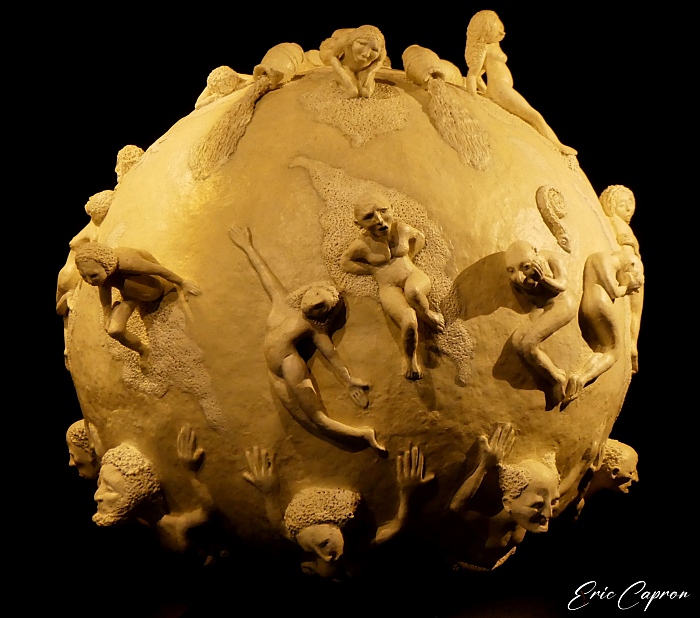
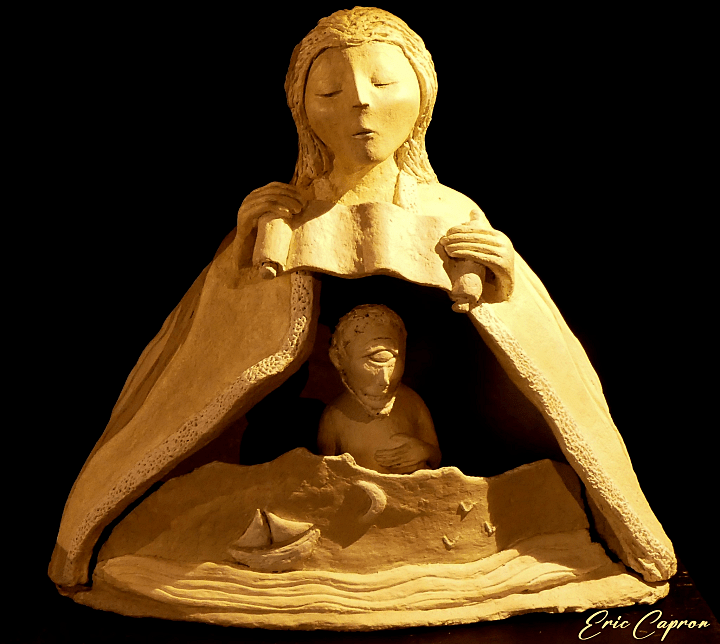
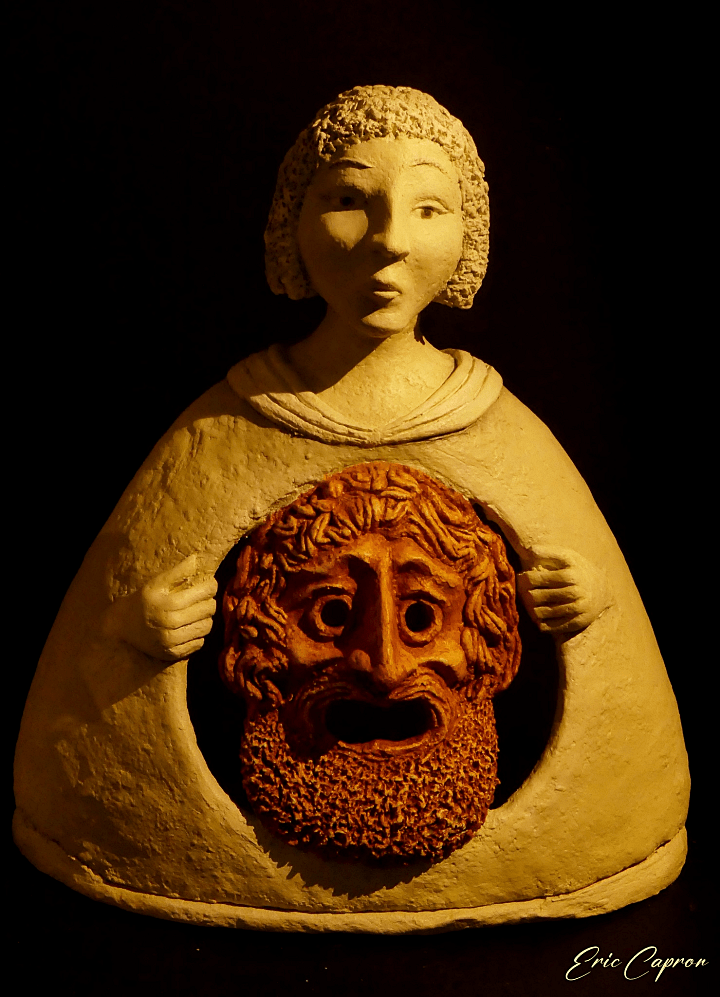
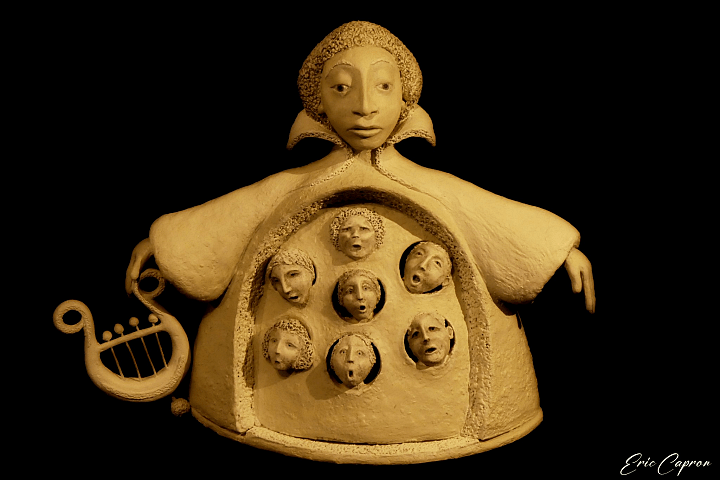
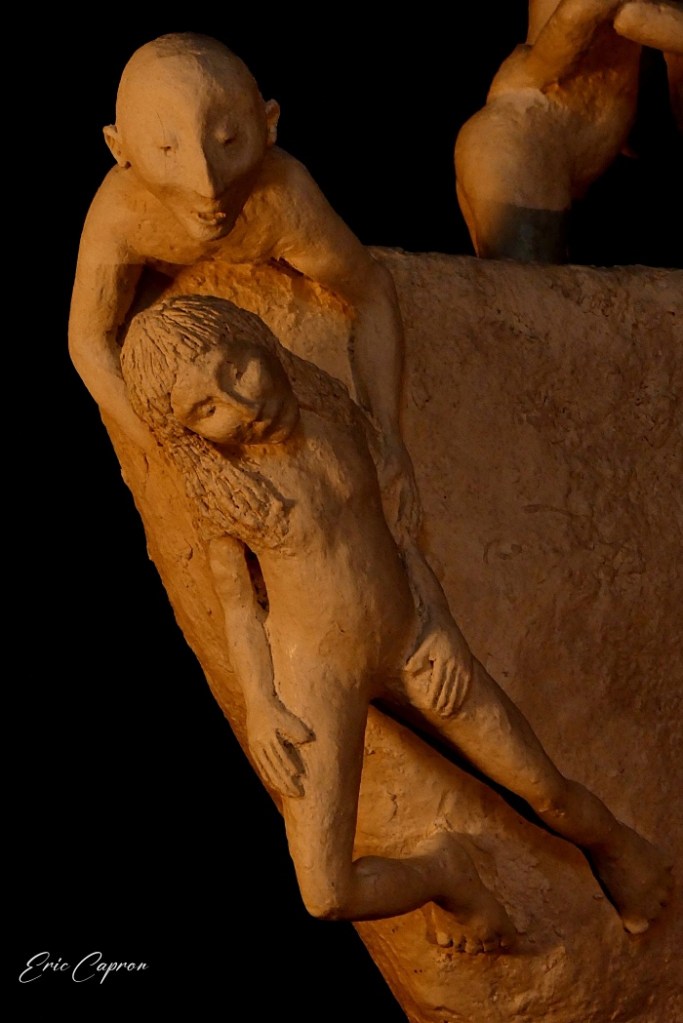
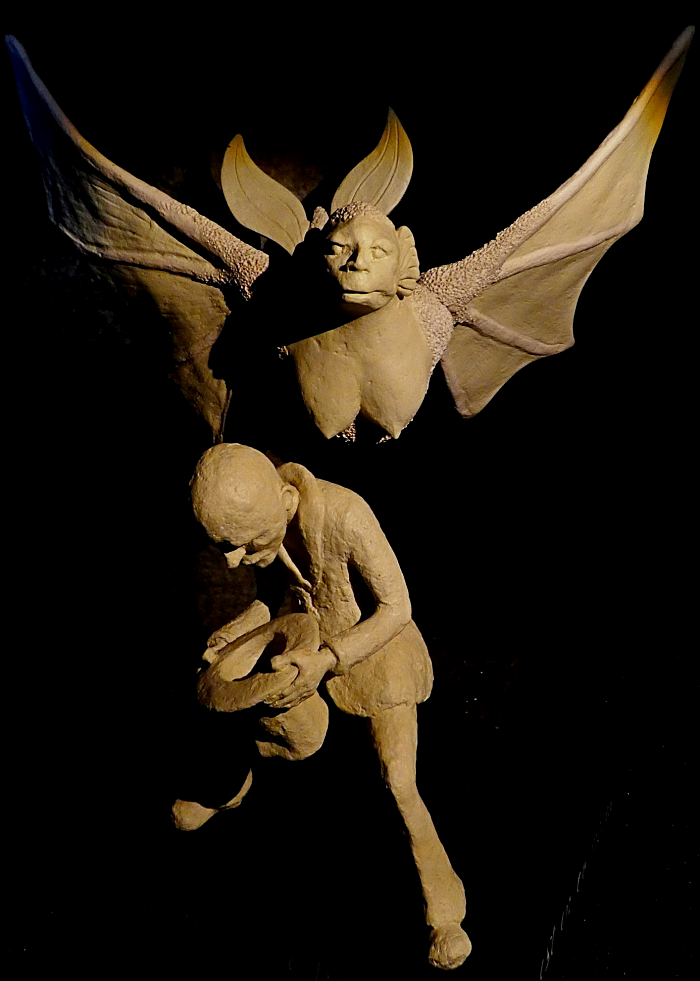
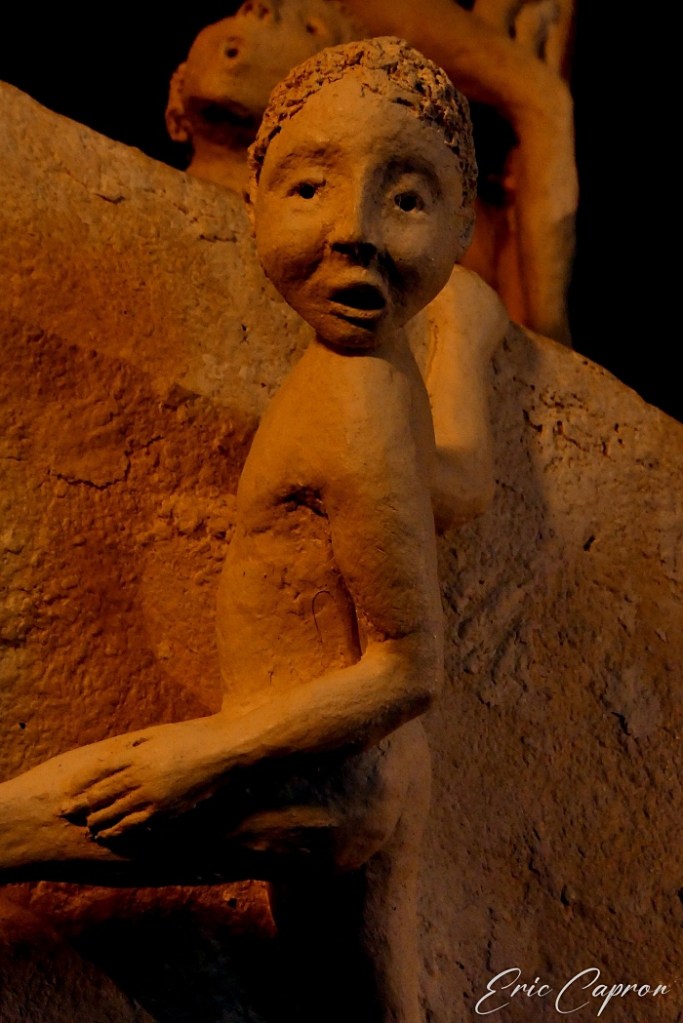
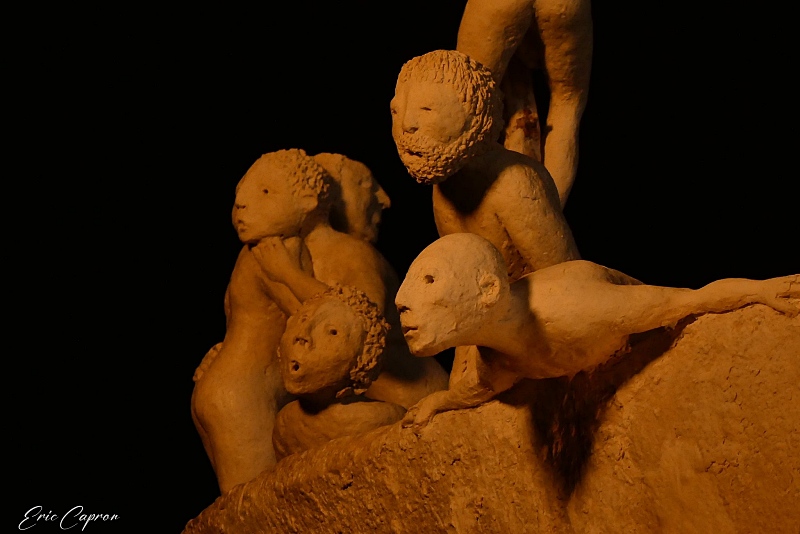
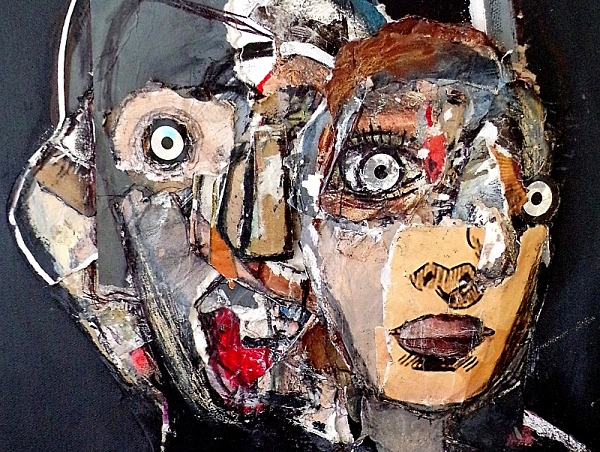
Eric Capron is a self-taught artist. He discovers the arts of the circus and the world of the puppet.
Eric Capron. Artiste autodidacte au parcours singulier. Dès son plus jeune âge, la dyslexie le marginalise. Enfant solitaire, il quitte très tôt les bancs de l’école et l’univers familial. Commence une vie de saltimbanque, découvre les arts du cirque, le monde de la marionnette.
Artiste en perpétuelle mutation. Dorénavant un travail quotidien permanent de production d’œuvres en papier mâché : des corps mis en scène. Des corps non genrés, incolores, sans modèles, mais étonnamment présents à nos regards amis. Ils existent pour eux-mêmes, d’abord.
Les sculptures sensibles d’Eric Capron racontent l’âme humaine, la fragilité de nos destins. L’artiste revisite les mythes fondateurs, puisant ses références dans la mythologie, l’art sacré et profane, l’univers onirique, les grands textes de la littérature.
« J’ai le sentiment d’être l’instrument de quelque chose qui me dépasse, une sorte de miracle, une boite de Pandore qui s’est ouverte…» nous confie-t-il.
			like

lunge clump      canopy canister		fraught ganglia, chop
butterudder						back
								forward
								this way
							that
twist turn				vertiginate
		swallow     swelter
claim cluster clank crank		rustle roundabout
                           c     l     a     m
	bustle break bother broke brother
	bother bustle break brother broke
                   			bristle
								breathe
								    bombin-
ate		fables of late		bludgeon bark   bake
		   sleight slumber swell
	B Flat		line periphery-burst		stride
intervallic surge			sully sulk  skulk
																				 atti-T!ude
feud fidelity
                    ferm             en
                   		  ta		tion

  	in-
 			  	stall

				un-
				install
FRIDAY THE 13TH
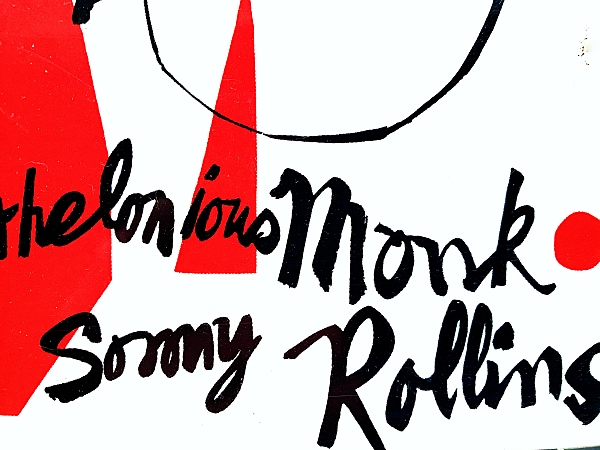
Mitchell Pluto inspired this Hinge to the Monk tune “Friday The 13th” Mitchell writes: One of my favorite tunes is Friday The 13th by Monk and Rollins, at first it takes the listener on a slant- a sort of drunk crab walk, and then the block chords, for me create a square spiral.
WOR studios 1953   thelonious Monk/Sonny Rollins
sloop-de-sloop whirl wind full intake reed fill throat splash slippery slant
peek-a-boo inebriate	peregrinate		in-
cubate 	square spiral boulder-roll stroll crab colossal 	 hi-hat crisp
chink snap crystalclarioncrystalline 	bosomy broth ivories wrought bath breadload beatitude	concuss allude	wedge hook link	sinkseepagelodge
								laurel sling
								carrion fletch
				b e t r o t h
	clump stump flummery block lump here
	come de Monk	scruff scamper liv-
ery lurch	paint a birch		fu-
rl fistful conflagrate agitate French horn ― fog-caster, frog-hopper ― conflate titillate aerate levitate brindle lop Bird-bop
							chordal congregation
							hymnal meditation
				scintilla aubergine
whisk brisk bask peculiar challenge the ruler
adumbrate gestate
spray a mandate
, man
EPISTROPHY FOR T. MONK
ganglion frieze chop
splash melodic purl surge/underflirt slash the line tease conflatethe outer reaches skim bordersperipheries riff the mad notes cyclonesflush curling cuniculi mucid caves jettison spillsof color mutation migration never beforeheard harmonic swoops triadsscribbled above bison head rage ofmemory snarled rhythms stored in stonecircling and twirling a gathering of data raptorial fingers toolboxof the soul aerial lift and poise& strafe the keysprey for salvation litanous chariotsa last chance passagebump into the finalfour bar essence is exhaustionof complexity buck to theride cymbal bow to the bass
Heller Levinson is the originator of Hinge Theory. His most recent books are Dialogics (Anvil Tongue Press, 2022),Lure, andjus’ sayn’ (Black Widow Press, 2022). His Query Caboodle and Shift Gristle are scheduled for a Spring 2023 release (also BWP). He lives in the Hudson Valley, NY.
BLENDED IN THE HOURS From the place where the abrupt sound of the loica ventures
(1) the evanescence of your future breath appears among the vegetation that hides your name and the blue and gray stones of the primal mystery there I will drink from the mist that shouts the perpendicular miracle the only reason at all that moistens the vegetal belly of the beloved and shines the incessant desire. How long does the star take to announce your coming? or there will be no signs in this already long life of chordates
(2) while the empty horn waits for its winds and the opaque flame of sleep leans into oblivion
(1) Signature and unpredictable bird before being (A) bird in the light areas that are shaken by the wind mythical and loving red that drew a smile on a child to open the celestial fields of my pupil that stirred my early neurotransmitters before the new cycle (B) (A) Before being Before discriminating the gray hours from the clear ones I inhabited the only and always proud clarity of my imaginary friend (B) New cycle My lymph is rocked by the wind in a theater of new opportunities those that favor the sweetness of the coots of sober stride mating in the repetition of miracles so that the aromas perpetuate my arcane name and the wandering clouds welcome their polar persistence. I had the option of ascending to lightning by the cosmic warp where perhaps the root of the word would have questioned in coming times of etheric colors where time would have curved for your eyes and I would raise your elusive silhouette that lies in the angle of a sunset irretrievably withers the thaumaturgical vowel (B1) as simple as a smile or the collapse of a galaxy since everything is corresponding and apparent with its prodigious lightness (B2) Like a breath from the forest.
TRAVEL I went down to the inside of your belly caressing the rafters of your cosmic cloud the one that received me with the aroma of the sacred bulbs. There you were the clear love of wood and the vegetal wisdom that embraces the ancient verb when the wind ceases its journey on the shoulders of the floral liturgy How many skies inhabit your seed that furrows the seer’s eye? Is there a niche of smoke that hides your salty voice? Or simply the root of everything has its home in that mystery.
Each step collects behind you, the daffodils that inevitably lose your mark the one that wanders in the deep sands that in the empire of shadows shelters you. The messenger has a singular noise I’ll feel it that dreadful day I will know then that the epitaphs for the sepulcher arrive, where nothing else needs to be done, the metal swallows are an illusory replacement, since the truths remained in the lock, and blind to certainties, I only rest for a few moments to give me strength in the pilgrim sea, the one who confuses the epistolary tides and enjoys seemingly innocuous sacrifices.
I will kiss your lips according to the prophecy
while the breeze will speak the unfinished language
And you will see me with your green eyes
that are not green
are brown
But when you laugh they turn green
and you can draw a different morning
with an approximate solstice
with snakes in the window,
so my useless life becomes useful
because I’m a hobo of solar systems
and I become a wanderer in your body,
as a geographer of your corpse altar
and intruder in your zodiac cenith.
At this moment the end of the thread
talk about the miracle of one day
unrepeatable and mild luck
How strange of an eclipse
under the brief abyssal tides
like ghostly cardamoms approaching
in the deserts of disease
appealing to the late corrections
as it did for millions of years
moss persistence with its epicness
selecting the right humidity
with your organic and fruity hug
in that I put my hope
in what you find in front of your eyes
because I am the one who reads in the borrascas
as I advance toward your directions
who fires violent canines
before those who offend you
to heal that sadness
that leaves the middle of the night when you slip
inevitably and persistently beneath
out the door.
Chandelier in the mornings
this useless armor
And the leaves are blank
soaking up her violently dance
they burn in front of the cabinets of dubious origin.
I hear the birds giving birth to the woods, in the upper angles of a nebula.
At this moment the end of the thread talk about the miracle of one day unrepeatable and mild luck How strange of an eclipse under the brief abyssal tides like ghostly cardamoms approaching in the deserts of disease appealing to the late corrections as it did for millions of years moss persistence with its epicness selecting the right humidity with your organic and fruity hug in that I put my hope in what you find in front of your eyes because I am the one who reads in the borrascas as I advance toward your directions who fires violent canines before those who offend you to heal that sadness that leaves the middle of the night when you slip inevitably and persistently beneath out the door.
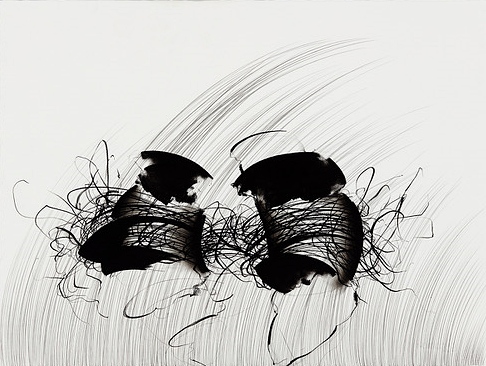
Featured Image: “Beyond the visible world is the non-Euclidean horizon for the dragonfly” acrylic and ink on 250 gm Fabriano paper by Enrique De Santiago
What does it mean to have secrets as the topography of one’s body?
It is true, not all secrets are created equal. Some add a sway to the hips while others…well…they are a poison that eat us from the inside out.
I’m Tellin’
All unsaids, All secrets are not created equal. Some secrets kin with our bodies because our bodies know that they need to be the safe, the harbor for such things. This is not about that. Some secrets turn a walk, a regular gait to a saunter because the body tastes its sweetness. This is not about that. Certain kinds of othas, secrets that is, well….they bloom somethin else, the poison that eats us from the inside out.
This be bout dat. Dat latter kind. Dat otha kind.
It’s not just in the toxic we trust. We grow. We throw seeds. We replicate it.
*
When I was a child , there was a statement that we would say that would check the perceived wrong doer. It would be something like, ’Oooooh, I’m tellin.’ What precedes the ‘tellin’ is the series of oooo’s mixed with the arrangement of vowels and consonants after that short phrase all together, in sum, in calculation, may make the 24 million miles long tail of Hailey’s comet green-eyed.
I’m tellin’ was a threat.
It was to check the doer who was already in deep doin wrong. It was a nod to the way one was willing to betray secrets, willing to betray the real monster who hid under covers.
The tellers of the toxic became the snitches, the snitches is who we said would get stitches In those streets
What does it mean to have secrets as the topography of one’s body?
Be damned, dare stitches, dare the can of whoops ass…I’m tellin.’
No threat…but invocation
Viens
Viens ici
Je ne te l’ai jamais dit mais
Oui je l’ai fait
*
Gwendolyn said it best, “…Even if you are not ready for the day,
It will not always be night.” By not ready, we mean whatever you are holding. Whatever is hiding within the folds and wrinkles and twists of unmade beds. Whatever is being passed across through invisible notes
All ink doesn’t vanish. Some just wears…refusin’ ignoring
By not ready, we mean through the hush of phone calls. The phone calls that contain whispers. The phone calls that have no phone lines that require that and only THAT one other person picks up the receiver
The thing that returns to the pit spiraled tight behind the spiral of the belly’s button. The thing that makes it feel like each look by another means they know it because of the way it reads on the body. Tethered and bound. Whatever it is that you are holding and hoping that the sun won’t beat you to it…It’s coming
Je le referais
Je le referais juste pour le chemin
*
What if we said that the keepers of that kinda…. are the sleepers who never awake. What if we said we will nail their coffins shut
And forbid them from wake. What if we flipped the script on the secret keepers, the pain dwellers, all gates and their guards,
The bottom feeders who feed on the toxic blooms, the corpse eaters who grow fat full and bloated off the bodies that become emaciated from thoooose kinda secrets
What if…We take their power back. We read the topography of the secret laden body and become fluent. Armed with the tongues that know how to untaste poison, daggers in hand.
We the kind who realllll good with the way the sun sneaks up, how it creeps from behind the curtains of dark. The heat, we feel it on our shoulders. We refuse to hide from the way it will come get us
Nous avons tous été pese
Nous sommes toujours trouve…voulant
Nous ne pouvons pas le nier
Something about the way a secret taste
Jevu hu fair sa—
Shanta Lee Gander is an artist and multi-faceted professional. As an artist, her endeavors include writing prose, poetry, investigative journalism, and photography. Her poetry, prose, and personal essays have been featured in The Crisis Magazine, Rebelle Society, and on the Ms. Magazine Blog.
The light of old things, of beautiful old things, awoke in me.-- Sherwood Anderson
swathes wash-lift, titillative
fibers twine through time,
tangle through grasses, air,
the storied
the beheld
these old pliers, bruised, complacent,
loose, slackened by the exigencies
of labor, the perfume of application
seasoned armchair yellowing from
the fade of multitude, stuffed
with the mnemonics of repose, the
armature of provision
spattering through the long cornfields sacred vessels
spring alive, drink the oil of the
corn, flutter to the western winds
things patinated,
foamingricketyhistorical,
flux-chugging
Abyssal Eros

techy		telltale		totem
	odiferous refract
 calligraphic concert

	a matter of teeth
upwards & out
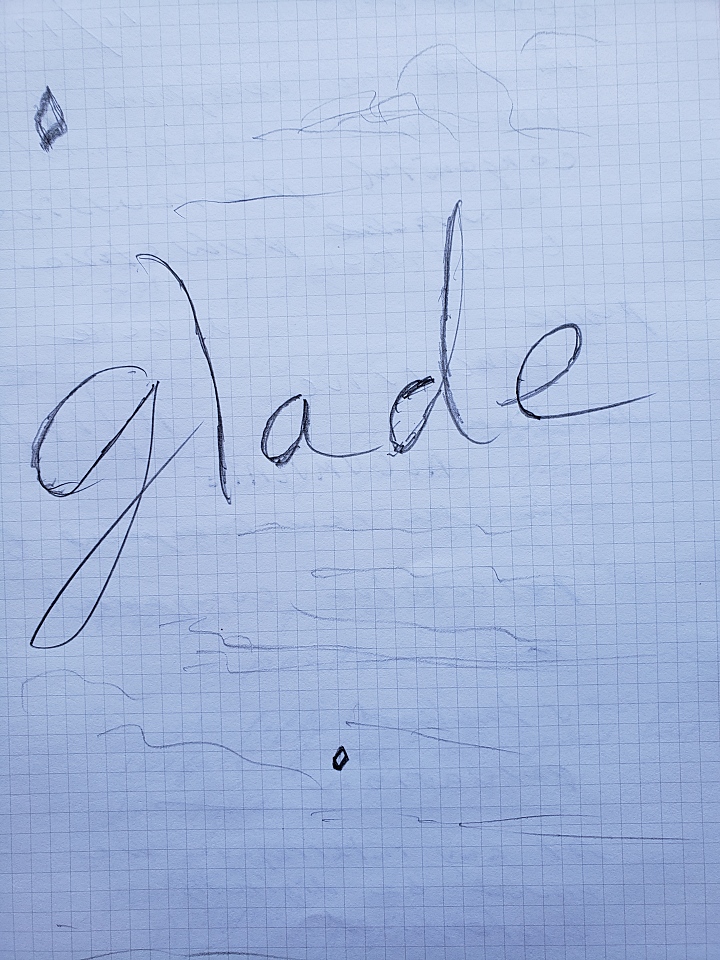
doesn’t anyone say g l a d e anymore?
gloss the glimmer reef really
	hammockSplay		over-
tures daub mineral-rinse gyre
				cumulous curdle
					drift
						harmonies
formulate in flour
	acculturate spray

					love is pertinent to confusion
					meticulous punctuation is an expensive luxury

the floorboards rose,
		       then swallowed
Heller Levinson is the originator of Hinge Theory. His most recent books are Dialogics (Anvil Tongue Press, 2022), Lure, and jus' sayn' (Black Widow Press, 2022). His Query Caboodle and Shift Gristle are scheduled for a Spring 2023 release (also BWP). He lives in the Hudson Valley, NY.
Featured Art Photo Grass Drawing for Sherwood Anderson by Linda Lynch
In his seminal work Madness in Civilisation the American sociologist Andrew Scull examines the way madness has been both an ineradicable aspect of any ordered human society, a haunting image of fear and terror, as well as a fascinating realm that inspires and attracts artists and thinkers. With the Greeks the Hippocratian tradition began, in which physicians tried to explain deviations from the average mental and bodily behaviour in natural terms, with the four humoral elements; blood, phlegm, black bile and yellow bile. Meanwhile, folk explanations of what today is often called mental illness were given in terms of the influence of spirits and demons, as well as the actions, lessons, warnings and spells of the gods. Thirdly, it was also thought, in at least some cases, that the mad were perceiving something real, as Plato says: “We made four divisions of the divine madness, ascribing them to four gods, saying that prophecy was inspired by Apollo, the mystic madness by Dionysus, the poetic by the Muses, and the madness of love, inspired by Aphrodite and Eros, we said was the best.” In this third view, Plato’s view, the madman is not a patient with a disease, neither a sufferer from divine fate, but a seeker close to something of high value.
Madness has been translated as the inner individual working through of feelings of guilt, shame, stress, and recurring traumas, all of which are interacting with the neurobiological level of the brain.
Many centuries later, the medical attitude has become dominant in this domain; since the 20th century the profession and discourse of psychiatry has claimed to know best how to deal with madness, and its accounts have been soaked in ‘naturalist’, medical terms. The earlier folk explanations that interpreted madness as a curse, a revenge, or as a whim of gods, demons or spirits, have been transformed into the dry spiritless jargon of modern psychology. Stripping the gods from their ‘real’ character in a communal world, madness has been translated as the inner individual working through of feelings of guilt, shame, stress, and recurring traumas, all of which are interacting with the neurobiological level of the brain.
But what has become of the third way of interpreting madness, namely as mysticism, prophecy and inspiration? About that possibility from times past Andrew Scull remarks: “Madness might represent another possible way of seeing: bacchic, erotic, creative, prophetic, transformational… there was another concealed kind of knowledge, intuitive, visionary and transformative knowledge and madness might provide the keys to this mystical kingdom.” In our modern age however, this search for ‘concealed knowledge’ has been forced to be played out in the open, in the form of science, which led to ‘exact’ and general knowledge about nature and its ‘concealed’ patterns and laws. Knowledge and truth count only as valid today when they are communicable, explicit, and expressible. The visionary and prophetic, on their part, have been banned from any claims on knowledge and truth, and have been referred to the fictional domains of the narrative and the religious. And the transformative? Searching for transformation has become one lifestyle option among many, permissible as long as it remains an individual striving. This transformational drive has been captured and spelled out in self-help books, coaching trajectories, management books etc.
When, what Scull and Plato refer to as mysticism and as divine madness, is fully translated and reduced to the field of mental health, something risks becoming smothered, neglected or even suppressed and denied.
Such conformist adaptions and down to earth elaborations of what were once ‘mad transformations’ have however not exhausted the underlying longing for platonic ‘divine madness’, and the ways that people still long for – whatever we call it – freedom, the Other, infinity, being or nothingness, are numerous. Some of those longing for these things put their feet on the philosophical path, and lean to the explicit, active, overt or even academic forms of philosophizing. Others go their own way in a more intuitive and passively seeking and dreaming manner. Both run the risk that at some point their strivings are considered to be nothing else than expressions of individual psychological problems, or as by-product of a supposed disturbed dopamine transmission. That is, they run the risk that their roamings and free-floating searches for divine madness are ‘psychologised’ – ascribed to their personal identity, or to personal problems, or even reduced to the only one level that is considered to be ‘basic’ with respect to life: the neurobiological level.
These psychologising and psychiatric views on that ideal realm of Plato are, to be sure, not bad in themselves. Society’s well-being depends on mutual trust and care, and is helped by the professionalisation of health care. But when the vague, ineffable area that Scull and Plato refer to as mysticism and as divine madness, is fully translated and reduced to the field of mental health, something risks becoming smothered, neglected or even suppressed and denied. Some of the more thoughtful practitioners and careful psychiatrists in the mental health field are aware of this, and have attempted to approach the inner life, the experiences and desires of their patients, from a perspective without presuppositions and prejudices about madness, and with an open mind as far as possible. And indeed, some of them, like Ronald Laing or Louis Sass have succeeded to a considerable extent to sketch the worlds of those that are involved in divine madness wander through. But all the more often, those that start from this psychiatric philosophical position remain hampered by the plain fact, that their starting point is the psychiatric diagnosis, and when tracking that diagnostic conclusion or end point back to its origins, they infuse the origins with the supposed crippledness of the endpoint. The diagnosis they make becomes a new identity for the patient, which throws its shadow back to earlier phases. What was once considered day-dreaming, or a peculiar whim, or capricious experience and deviant thoughts, become reinterpreted as only early signs of natural mental disorders: ADHD, autism, schizophrenia, bipolar disorder, etc. – nothing divine to find there! Not only the present state of a person becomes reduced to an amalgam of neurobiological patterns and psychological reactions, but also preceding experiences, thoughts, feelings and behaviour are drawn and reinterpreted into the diagnosis.
Such reinterpretations after diagnosis certainly do have their function: people receive strong narratives that give them a clear sense of identity, and a kind of compass in how to sail further with this diagnosis centered narrative. But the cost could be high as well: the third realm, the realm of divine madness, as I circumscribed it above with help of Scull and Plato himself, might simply vanish. A spiritual search becomes reinterpreted as a psychological search for a strong role model, a philosophical preoccupation becomes an ‘attention deficit’ problem, and a mystical experience becomes ‘salience dysregulation syndrome’.
In my book A Philosophy of Madness I start at the other side of the track: not at the end with diagnosis, but at the beginning with philosophy. What extreme domains of thought are accessible for a philosophically minded person? Where can a study in philosophy, both in its explicit academic form, and in its more intuitive forms, lead to? Where does the impulse to philosophy stem from? What kind of philosophical thought and experiences can push it to the edge? In this exercise I have focused especially on philosophy, and drawn analysis also from the thoughts and experiences of those that are usually called mystics or spiritual. I started with the initial philosophical sense of wonder (also in Plato, from his work, the Theaetetus) in combination with philosophy’s consequent, consistent reasoning capacity. I followed these philosophical paths, and examined what may happen when you go down the philosophical rabbit hole. When you reason away, and/or dream away, through the philosophies, thoughts and ponderings on age-old questions about time, space, infinity or identity, then you may come at strange, fascinating and seducing thoughts and experiences, that may have quite some affinity with what is going on behind those so often frightening, enigmatic and seemingly impenetrable labels like bipolar disorder or schizophrenia. And with this exercise I hope to have induced a kind of ‘breakthrough’, through the wall that all too often separates philosophy and madness, in order to both confront the armchair philosopher with the ‘real life’ situations where their ideas are acted out, and the ‘madman’ with an explicit, exact reconstruction of the thoughts and experiences that are at the basis of their so-called mental health problems.
With this exercise I hope to have induced a kind of ‘breakthrough’, through the wall that all too often separates philosophy and madness.
On the one end this may have a therapeutic value, since I provide a more thoughtful exploration of the ways of the mind other than the usual psychological and psychiatric accounts. On the other hand, it has a destigmatising value, not by arguing that all persons with and without diagnostic labels should be respected equally, but instead by ‘opening up’ those labels, and detecting common patterns of thought and experiences between madness, dreams, art, and, in particular, philosophy. The notion of madness here may then reveal, and express perhaps in a socially unaccepted and clumsy way, the paradoxical and sometimes unbearable tensions that underlie any systematic attempt or philosophical striving to grasp the whole, or to seek unity and harmony. The passion that underlies so many philosophers’ intellectual drift may lead to a kind of ethereal detachment from earthly practical matters, that may lead them to become sucked up as fuel for further drifting away from the common sense and the communal life. Not only among philosophy students, but also among some of the great philosophers we find periods or episodes where they were for longer or shorter periods ‘out of their mind’, and at least some of them would be today diagnosed away, for instance think of Ludwig Wittgenstein, but also Blaise Pascal, David Hume, Michel Foucault.
To be sure, I do not pretend that all kinds of philosophy only lead to benign visions, prophecies or interesting thought experiments. Philosophy contained and will continue to contain ideas that are dangerous for society or for the well-being of individuals. The contagiousness of these ideas is well-known on the societal level, and the powers that be do everything they can to protect order from society destroying or undermining ideas. On the personal level, there are also ideas and experiences that may be drawn from philosophers like Nietzsche or Deleuze, that may induce ‘mad transformations’, and that may also be conceived as ‘unhealthy’ from an outsiders’ usual, normal perspective. However, to gain access to and explore what the mystical kingdom entails, the one Andrew Scull refers to, it will never suffice to prevent contact with dangerous ideas just because they are considered to be ‘unhealthy’. And perhaps there is another sense of health, greater and more important than mental health. Let me end, by quoting Nietzsche: “Anyone whose soul thirsts to experience the whole range of previous values and aspirations, to sail around all the coasts of this ‘inland sea’ of ideals, anyone who wants to know from the adventures of his own experience how it feels to be the discoverer or conqueror of an ideal, or to be an artist, a saint, a lawmaker, a sage, a pious man, a soothsayer, an old-style divine Ioner – any such person needs one thing above all – the great health, a health that one doesn’t only have, but also acquires continually and must acquire because one gives it up again and again, and must give it up!”
Wouter Kusters Issue 96, 22nd June 2021from the IAI Institute of Art and Ideas
Huge old stars leaning out of the horizontal cobblestone sheets, were dictated by an ancient manual of glorious epic forms where I did not read the cunning locks, from there fall lights like eagles what they hang before your pale fortifications and despite the fact that I descend without air I cling to the dissected edges of this abyss walking away from the waves of floral promises with summer mentions that anoint you.
The amaranth silence rocks the star again and like the silent lymph you seek to break beyond the fundamental shell the one that you came to know in a primitive way in the sweet stays of belief.
Blows the hydrogen on the leaves and many cycles are enough for oblivion, while the trees stand because they keep their memory in the roots, to later give shelter to life vertical. I am the extended earth, I still have memories of that Winter will come without you realizing it.
The specificity of the meander winding secret of the air like the grass with its distant star.
Imperfect seeds also germinate, in a more difficult way; painful stem grows of the tormented plant What will this spring concoction be? that the drug that saves it
has turned into glycine – creamy smell bittersweet sugar, citrus undertones in disguised purple. Wild birds recite verses in the air Has the song of the mother bird healed her?
Am I really here, watching the miracle of my fertile land or is it my mind that imitates to the dying man who escapes from the barren land and look for the seed to save the world?
We are the witch poets, the ones with the mark on the face my trade is the botany of the imperfect that mutates to the perfect, to see the beauty in the “not graceful” is to live many lives, give wisdom to the marrow spinal cord of the brain in the seed of the plant. The noose around the neck is the plant tied to the cross, slowly stop breathing and die And what is life for? if we don’t manage to be captivated with all the trees in the world? the intelligence and wisdom of flowers is assimilated to the cunning of orphaned children nameless beautiful bastards, no handkerchief on the lapel, they feed on fresh drops; Those left by loving widows in the tomb of the dancing moon.
the dead dance imperfect seeds also flourish, they love dew in rain of scarlet evenings in the smell of smoke, fire and mapacho tobacco.
At night … the frost settles on the petal of her lip; nice to freeze like this, being kissed because of the cold that rests in the water garden. I caress each stem without prejudice to its appearance for me, the witch plant is so beautiful like the scent of the holy white rose. The twisted and mutilated lemon tree has taken refuge in the grape vine red wine lemon
Beneath the cement has grown blooming dandelion and sphere healing herb for the healer and sage. Rescuing damaged seeds is the art of the reasonable We are the ancient poets, the ones with the mark on the face Here I bring roots to decorate your hair.
I resurface in my garden
The wind blows hard, breaks promises. Catastrophic hiss, fractures everything. My hand no longer touches your figure; broken marble. underwater love nest stifled desire. You interrupted my spring cold storm; wet paper, You have erased all my love poems. What do you keep in those pockets how much do you protect? the wind asked me (the burden of my corpse) Suffering for love deforms my face -I disappear-. I neglect my garden, I leave it without dew, I turn to stone and I cry my gloomy sadness. Decay, I look in the rocks the calm of my weight.
I’m sorry for you ungrateful root, when I suffer, I become bad. I take shelter in the dead trunk, I am dry firewood I have no foolish claim to be perfect for you. Today I have seen butterfly lilies bloom, -They talk about rebirth- There is no end of the world, if the birds at night they recite poems. I resurface in my garden, I breathe, I smile. My flowers, my steps where I recover my voice, my singing My silent cat and devoted friend. imperfect seeds, we also bloom at dawn. What do you keep in those pockets how much do you protect? the wind asked me.
Victoria Morrison, Chile 1977, Social worker, poetry and short story writer. Current and active member of SECH (Chilean Writers Society) P.E.N Chile (Poets, essayists and novelists) Published books: A room in hell (2016) Ediciones La Horca Evicted poems (2017) Editorial Ovejas Negras Pupilas de Loco (2020) Rumbos Editores (Her writings are characterized by evoking psychological themes. A lover of nature, the author explains that in each word there is healing; if we assimilate that word to the roots of each plant, just as there are imperfect seeds, there are also humans imperfect; are not the goods called “crooked trees” those that, without water, shade, or fertile soil, continue to breathe on the earth. If the fragile plant resists the cold, the weather, the human flesh sheltered in wool and scarf I should be grateful and silent, listen in silence, the frozen and brave song of the frosty hour
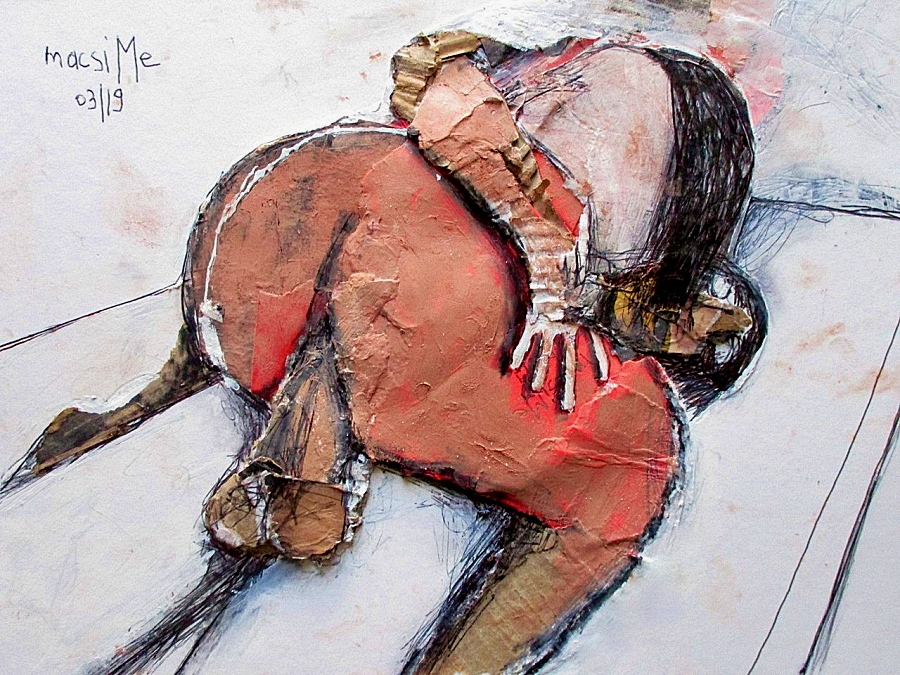
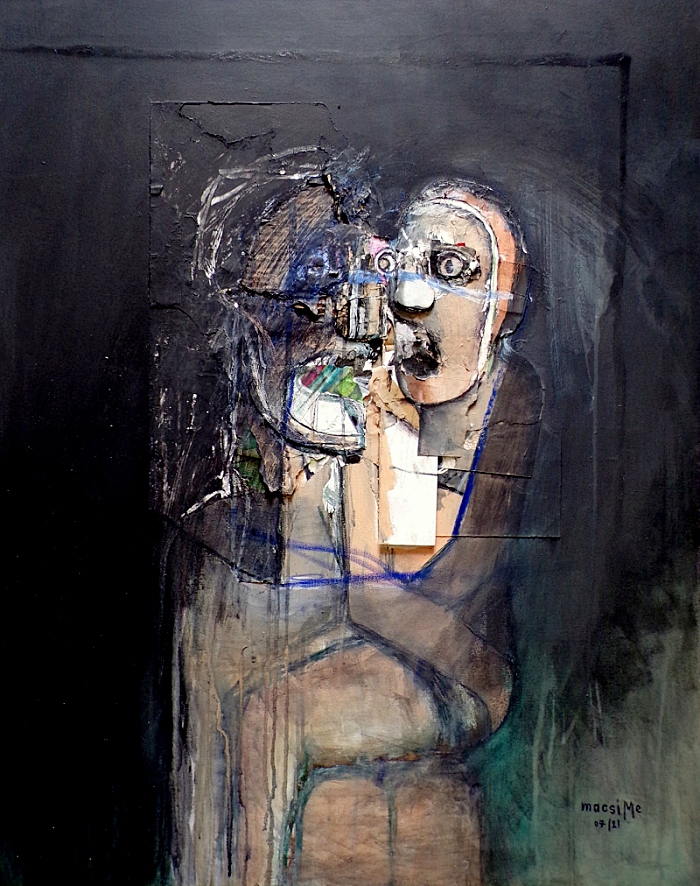
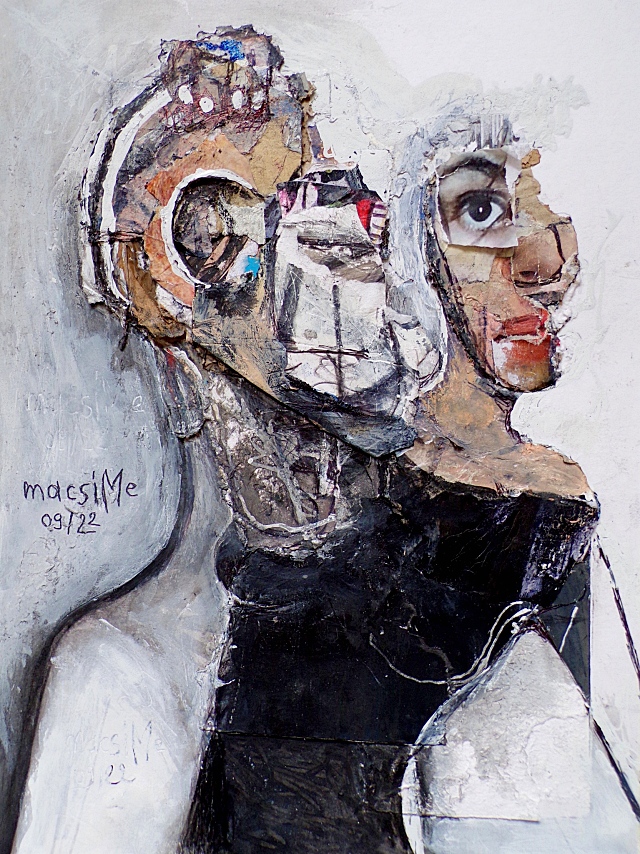
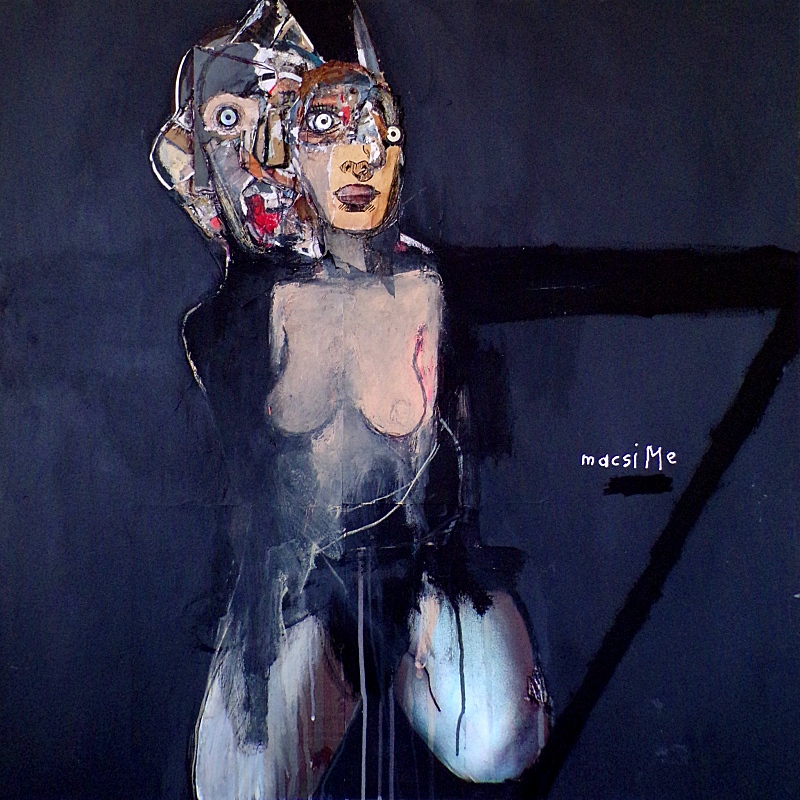
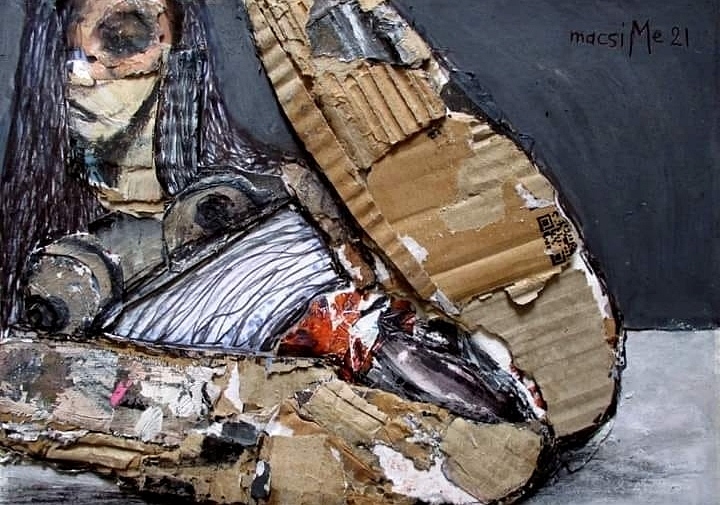
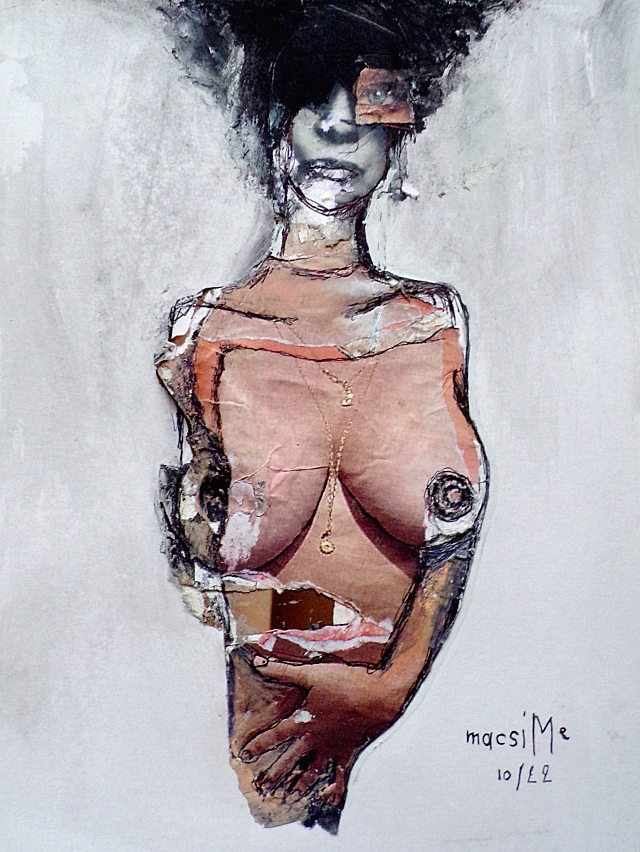
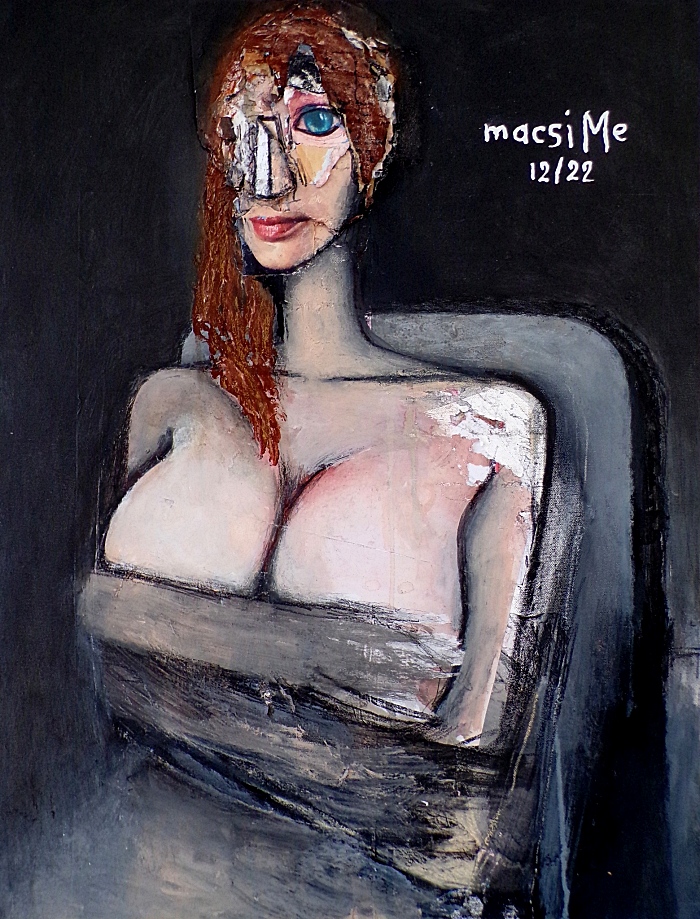
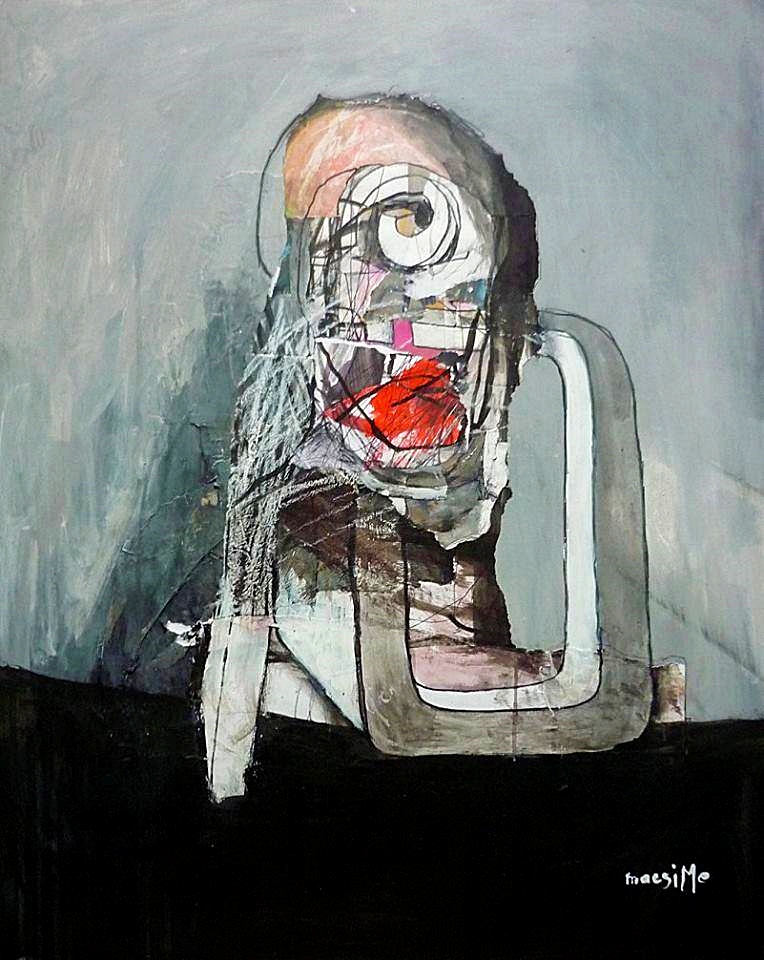
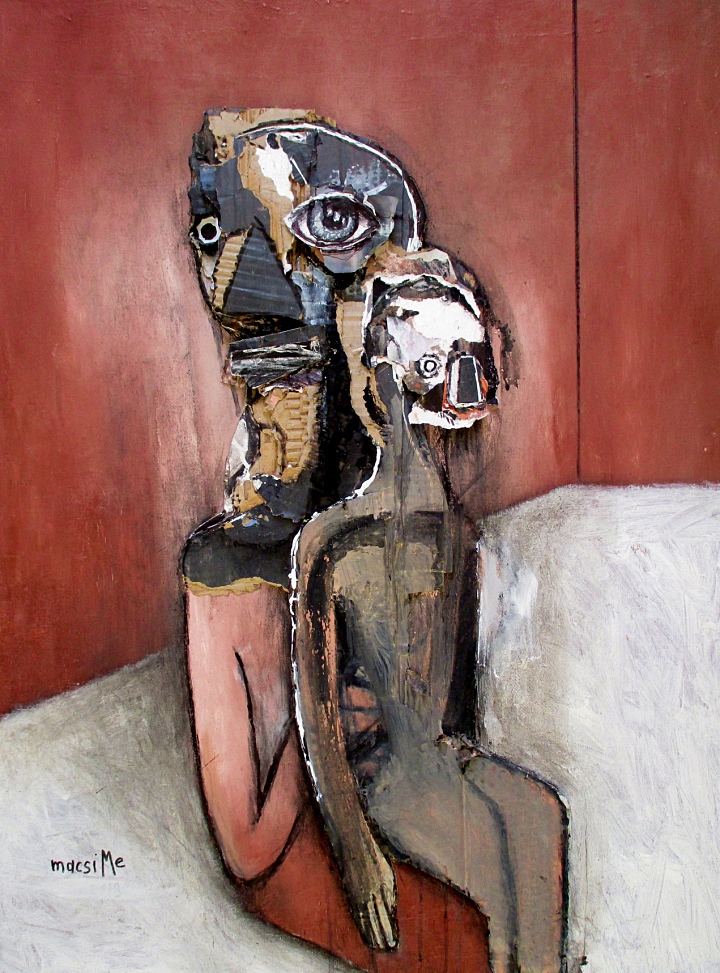
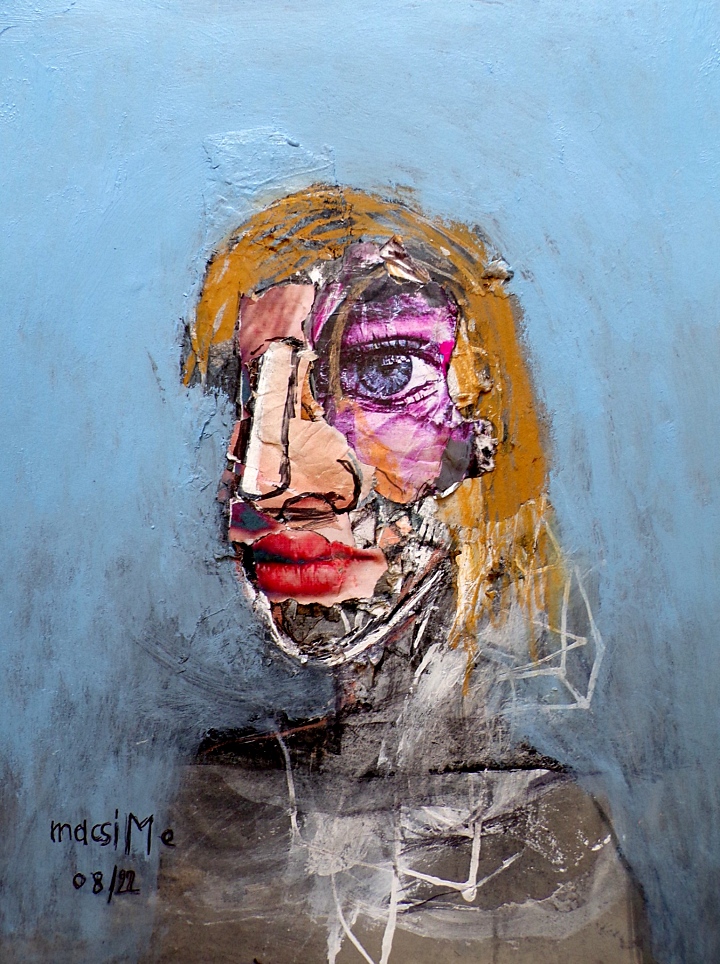
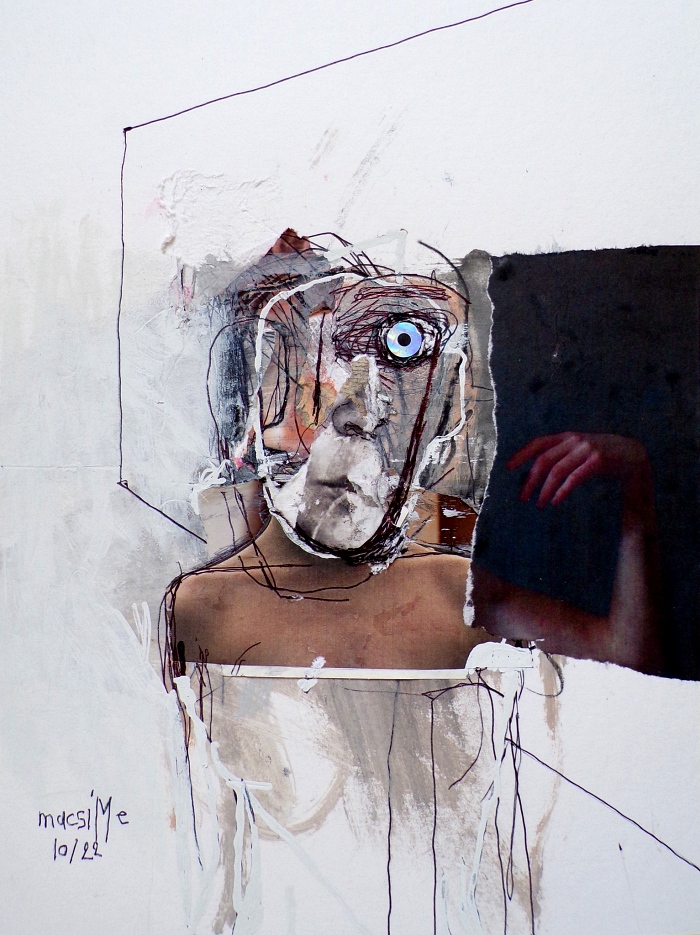
macsiMe is a French artist who is inspired by impact. macsiMe prefers no elaboration. only the act of friction and reaction speaks for itself
All in Nothing- Nothing in Everything I draw I erase I glue I scratch I tear I stop, look, look And I start again Lots of “I” s but that is what Art is Art is just answer
\
macsiMe lives in Le Mans, France enjoys observing people is inspired by action
THIS AN AUTHORIZED DUPLICATION WITH PERMISSION AND EXPRESSED CONSENT FROM THE ARTIST MACSIME








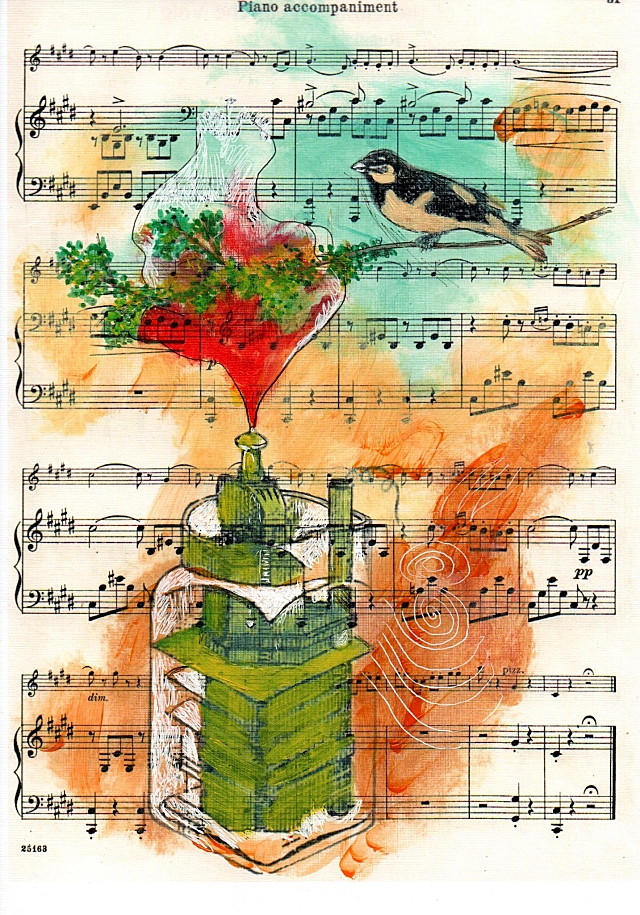
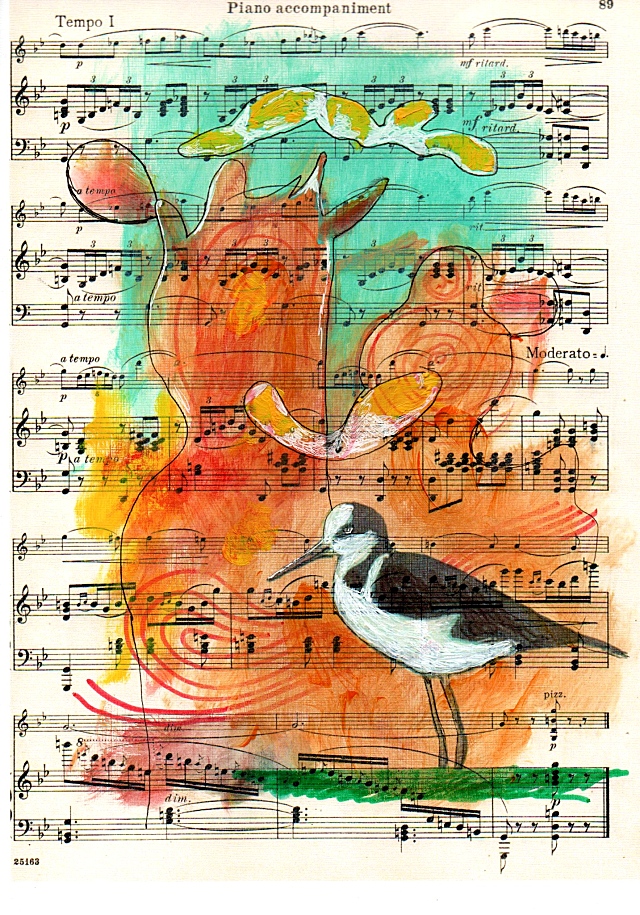
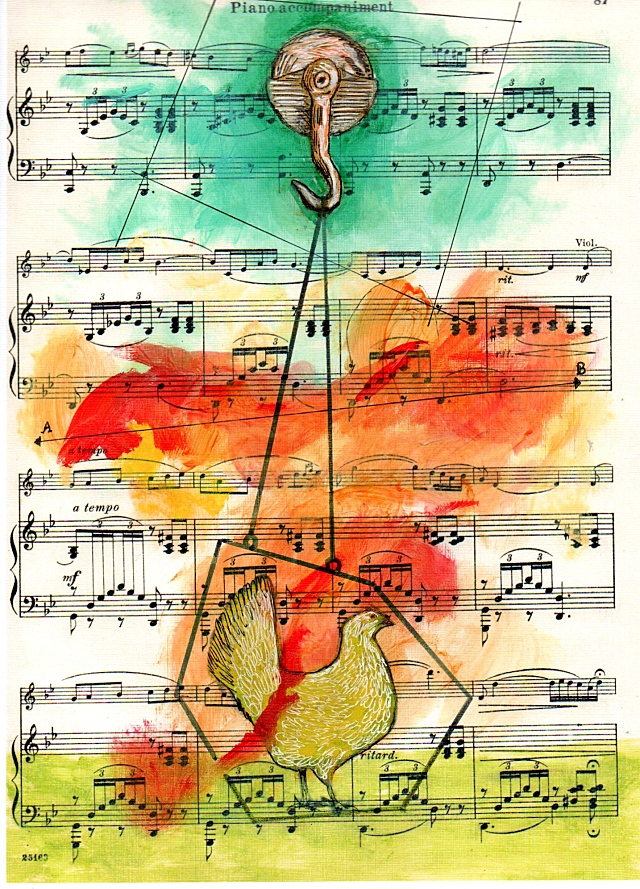
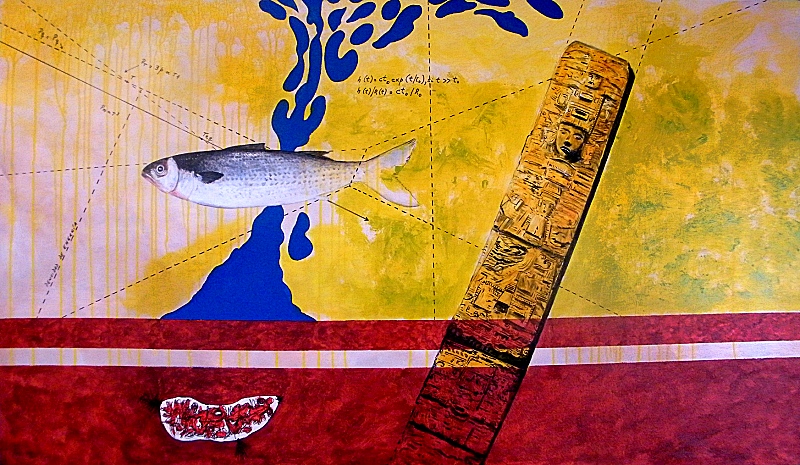

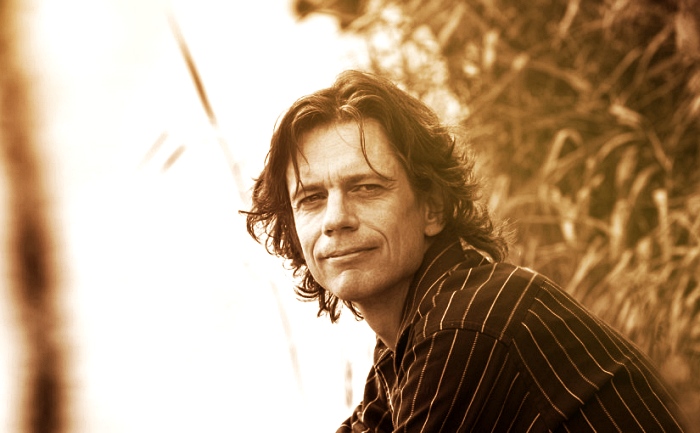
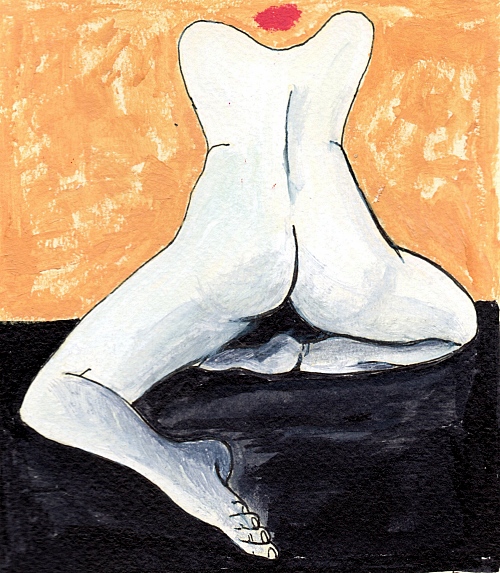
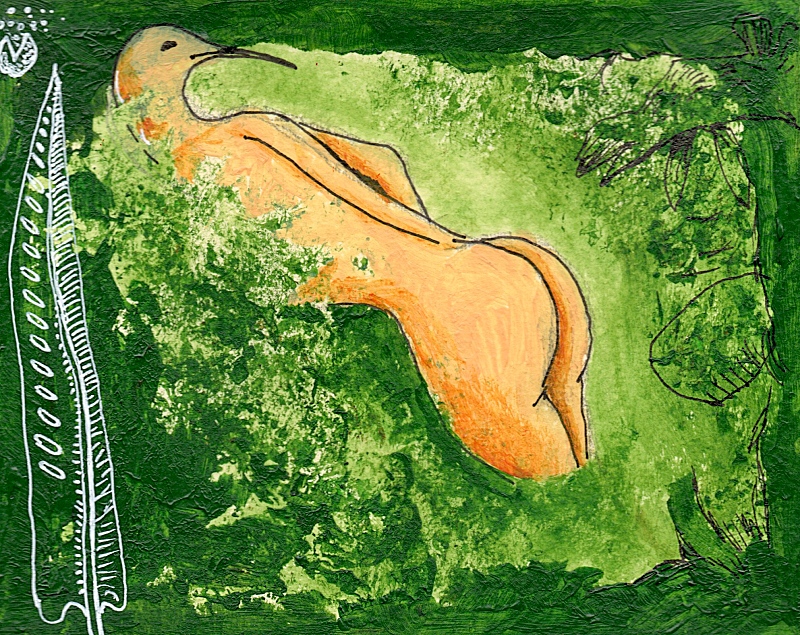
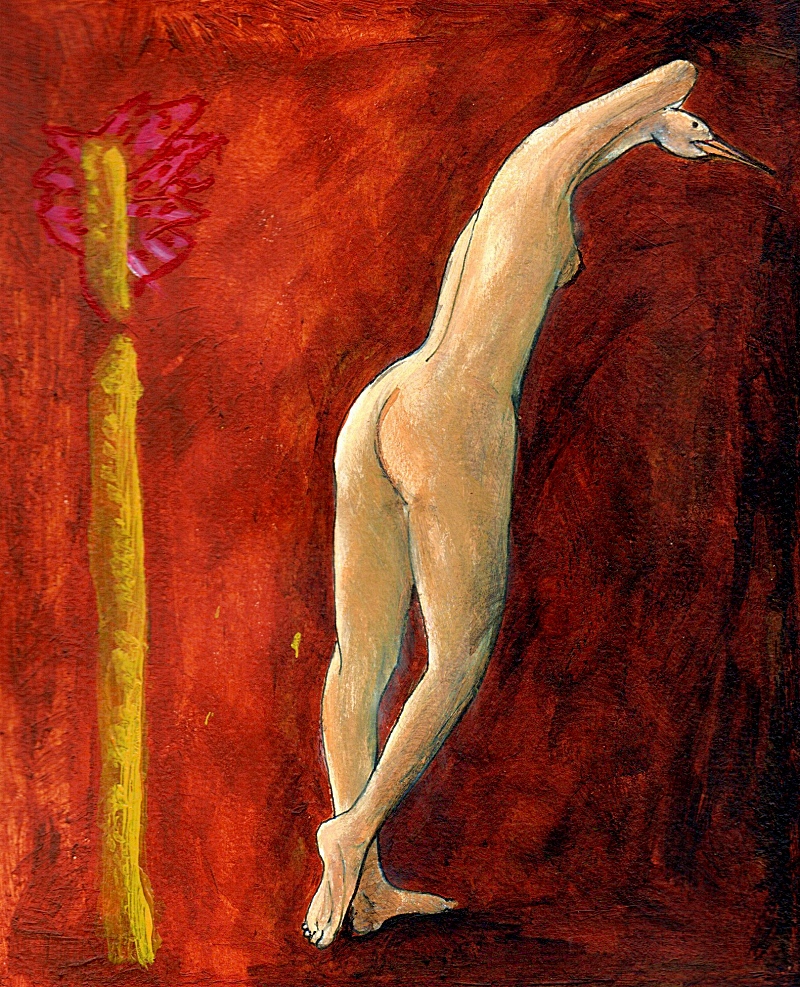





 Mitchell Pluto