To the Grand Old Oak behind the Grapevine, To the Slippery Elm in the East, To the Multiflora Rose and Perilla Mint, And at the Blue Mistflower, do I cease.
Atop Ingomar Mound, I give Tobacco and thanks, Where Osage Orange and Honey-Locust defend A stone pyre kindled at the height of the heart Thy Holy Spirit, O my God, do Thee send!
Amen, amen, and amen!
Appear to me in the Frostweed— In the leaves and in the flowers and in the roots, In the scented bark of the ancient trees, And among the Sassafras shoots.
Arrow shafts of light pierce my eyelids, Icy feathers of wind caress my hands. Earth gathers Herself beneath my feet Where the rushing waters touch the land.
P. D. Newman has been immersed in the study and practice of alchemy and theurgy for more than two decades. A member of the Masonic Fraternity, the Society of Rosicrucians, and the Martinist Order, he lectures internationally and has published articles in many esoteric journals, including The Scottish Rite Journal, The Masonic Society Journal, and Invisible College. The author of Alchemically Stoned and Angels in Vermilion, he lives in Tupelo, Mississippi.
The psychedelic, psilocybin-rich species, Psilocybe cubensis, is a coprophilous mushroom. This means that it can only subsist in the wild upon the dung of certain animals, especially cattle. While native to Cuba (hence cubensis), this fantastic fungus has been documented in a number of southern states, including Florida, Georgia, Alabama, Mississippi, Tennessee, Arkansas, Louisiana, Texas, South Carolina, North Carolina, and even as far north as Oklahoma, Virginia, and West Virginia—albeit rarely in these latter three. The species is also found in Hawaii. It was in the state of Louisiana, however, amidst its humid cattle fields and dank, swampy marshes, where African American sharecropper, Denver Moore—then just a boy—first underwent what may be an early example of psilocybin mushroom use in North America.
As the book says, Ron Hall and Denver Moore’s New York Times Bestseller, Same Kind of Different as Me—an amazing true tale of a modern-day slave, an international art dealer, and an unlikely woman who brought them together—is a story filled with hardship, betrayal, and the brutality that lines the hearts of some men. But, it’s also a story of hope and perseverance, mottled throughout with thought-provoking anecdotes about black life in the Deep South in the 1950s. Descended from African American slaves, Denver Moore was raised on a scorching southern plantation near the alligator-riddled, mosquito-infested swamps of Louisiana. Having very few monetary resources, Moore was blessed to have an incredibly resourceful wise woman of an aunt, a Conjure woman—called Auntie Etha—who, with the aid of traditional African American folk remedies, was able to help the Moore family make the most of an often difficult situation. Moore recalls,
Lookin back on it, I think Auntie was what you might call a spiritual healer, like a ‘medicine man,’ cept she was an elderly woman. […] Big Mama made me go show my respect and also to help Auntie gather up the fixins for her medicines.
She used to take me with her down by the swamp where she’d be gatherin up some leaves and roots. […] ‘Now Li’l Buddy, this here’s for takin the pain out of a wound,’ she’d say, pullin up a root and shakin off the earth. ‘And this here’s for pneumonia.’
[…] She had a room in her house with a big table in it covered with jars in all kinda sizes.
‘See them jars?’ she told me one time.
‘Yes, ma’am.’
‘In each of em, I got somethin for anything that happens to you.’
[…] She had some kinda spiritual thing goin on in that house. Every time I went in there, she made me sit on a little stool in the same spot, even facin in the same direction, like she didn’t want me to mess up whatever voodoo she had goin on in there.
Moore’s charming description of Auntie Etha clearly betrays her as a practitioner of Hoodoo, known in the Mississippi Delta as a “Rootwork” or “Conjure,” even going so far as to evoke the term, “voodoo,” in his account.
Hoodoo, a traditional African American spirituality that arose from several West African traditions as the same were imported into the New World, may not be stranger to psychoactive plants. For instance, while not entheogenic itself, one of the most common charms carried by Conjure practitioners is the root ball of the Ipomoea jalapa vine, referred to as a “High John the Conqueroo” root. Some species of Ipomoea (morning glory), such as Ipomoea tricolor and Ipomoea corymbosa, are possessed of the hallucinogenic compound, ergine, also known as d-lysergic acid amide (LSA)—a close cousin to Albert Hofmann’s “problem child,” lysergic acid diethylamide (LSD-25). In 1938, Ipomoea corymbosa (formerly Rivea corymbosa), for example, was discovered by American biologist, Richard Evans Schultes, to solve to problem of the identity of the ancient Mexican hallucinogen, Ololiuqui. The formidable effects of Ololiuqui were noted in the colonial document, The Florentine Codex, from the 16th century:
It inebriates one; it makes one crazy, stirs one up, makes one mad, makes one possessed. He who eats of it, he who drinks of it, sees many things that will make him afraid to a high degree. He is truly terrified of the great snake that he sees for this reason.
Francisco Hernandez, the famous Spanish physician, also discussed Ololiuqui in his book, Rerum medicarum Novae Hispaniae thesarus:
When the priests of the indians wish to commune with the spirits of the dead, they eat these seeds to induce a delirium and then see thousands of satanic figures and phantoms around them.
Ergo, there was already a history of the Native use of hallucinogenic morning glories in the Americas long before the arrival of African slaves. But, that doesn’t necessarily mean they learned of jalapa through Native Americans.
Century Illustrated Magazine (1881-1906), XLI, 825.
Before going any further, it is important to note that some African cultures are known to be in possession of their own rich, entheogenic traditions—independent of the export of African slaves to the New World. The Bwiti cult found among the Puna, Mitsogo, and Fang tribes in Gabon and Cameroon, for instance, employ the inebriating root bark of the West African shrub, Tabernanthe iboga, in their lively initiations. Like the “High John the Conqueroo” charms cherished by Southern practitioners of Hoodoo in North America, iboga is harvested from the roots of the shrub, linking the Bwiti cult, at least in spirit, to the black “rootwork” of Southern Hoodoo—a tradition whose own roots are to be sought in the religious practices of the Bantu of the former Kingdom of Kongo in west-central Africa. In fact, when iboga was first documented by the West, English traveler and author, Thomas Edward Bowdich, reported that,
The Eroga, a favourite but violent medicine, is no doubt a fungus, for they describe it as growing on a tree called the Ocamboo, when decaying; they burn it first, and take as muchas would lay on a shilling.
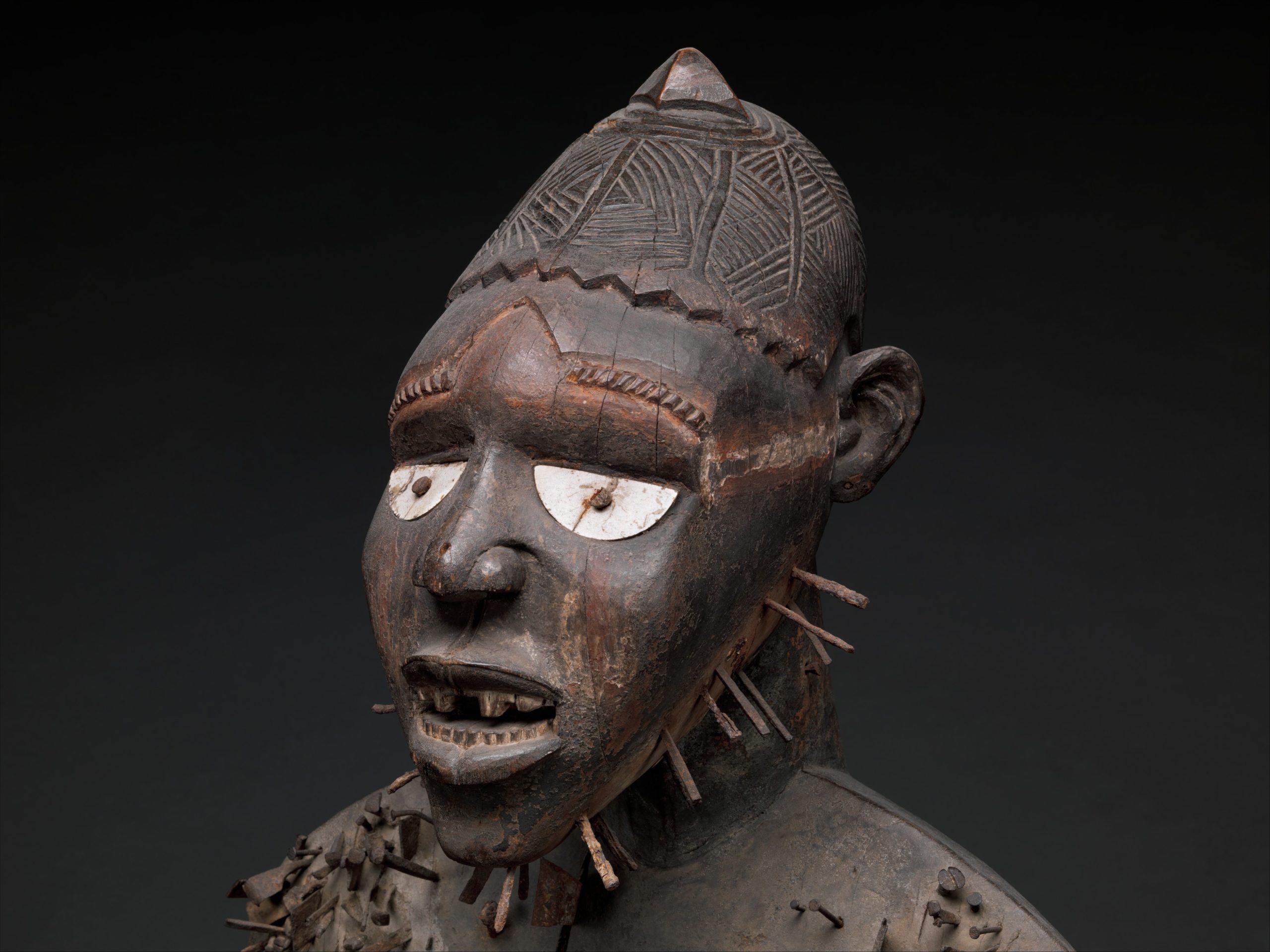
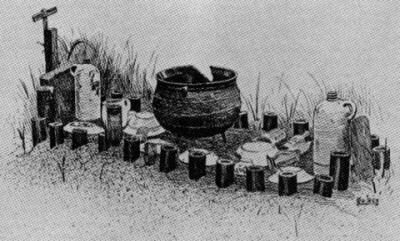
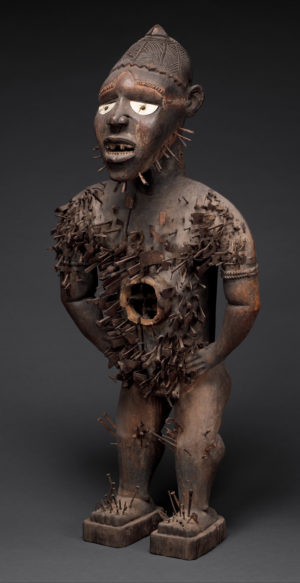
While this Englishman is no doubt in confusion regarding the identity of iboga, his observation suggests that some species of fungus was sacred to the Indigenous of the area. And, indeed, a tree fungus, known as tondo, was in fact central to the construction of nkisi statues, whose “kondu gland”—a hollow chamber in the belly of the statue—held samples of the unidentified specimen. One Bantu nganga, making an offering of the mushroom to the spirits, referred to tondo as “the key that opens everything.” The Kongolese and African American practice of surrounding the gravesite of a loved one with inverted plates and saucers, often resting atop poles or sticks, was believed to imitate the appearance of mushrooms around the burial. According to one source, this curious form of grave decoration was meant to recall and old Kongo play on words: tondo / matondo. For, in Bantu, the word for mushroom (tondo) is similar to the word for “to love” (matondo).
Power Figure (Nkisi N’Kondi: Mangaaka), Kongo peoples, mid to late nineteenth century, wood, paint, metal, resin, ceramic, 118 x 49.5 x 39.4 cm, Democratic Republic of Congo. Medicinal combinations called bilongo are sometimes stored in the head of the figure but frequently in the belly of the figure, which is shielded by a piece of glass, mirror, or other reflective surface. (The Metropolitan Museum of Art)
To return to the Americas, Schultes also identified the Aztec psychedelic, Teonanácatl, as belonging to the Psilocybe genus. But, Denver Moore’s would appear to be the first account of the possible use of a psilocybin mushroom within the context of Conjure, as the same was practiced by African American slaves in the Deep South. Many Hoodoo practices continue to be shrouded in secrecy. So, it may be impossible to determine just how far back this tradition among African Americans extends. But, as the famous Tennessee Hoodoo practitioner, Doc “Wash” Harris, founder of the infamous Saint Paul Spiritual Holy Temple in Memphis—inappropriately known by locals as “Voodoo Village”—once said in an interview with the Commercial Appeal in 1984,
God told the black man and the Indian somethings he didn’t tell nobody else.
One of those things may have concerned the powerful effects of a particular species of dung-loving mushroom.
Reminiscing about his great, wise Auntie, Moore briefly continues,
Aunt Etha took care of our bodies and souls. Mostly we never got very sick, but when we did, my auntie sure ‘nough had the cure: Somethin she called ‘cow-lip tea.’
Now cow-lip tea was brown and thin, kinda like the Lipton tea the Man sold at his store, but a durn sight more powerful. Cow-lip tea come from them white toadstools that sprout outta cow patties. […] That’s where cow-lip tea got its name. ‘Cow’ from the cow patties and ‘lip’ from the Lipton. Least that’s what Aunt Etha always told me.
The way you make cow-lip tea is you get the toadstools […] and grind em up in the sifter. [You] put it in a rag and tie a knot on top. Then you add a little honey to a boilin pot and drop that rag in the water til it bubbles up and turns good and brown. Now you got cow-lip tea.
If I was sick, Aunt Etha’d always make me drink a canful.
‘All good medicine tastes bad!’ she’d say, then put me in the bed underneath a whole pile a’ covers, no matter whether it was summertime or wintertime. In the mornin, the bed’d be soppin wet and the sheets’d be all yella, but I’d always be healed. I was nearly grown before I figured out what I was drinkin.
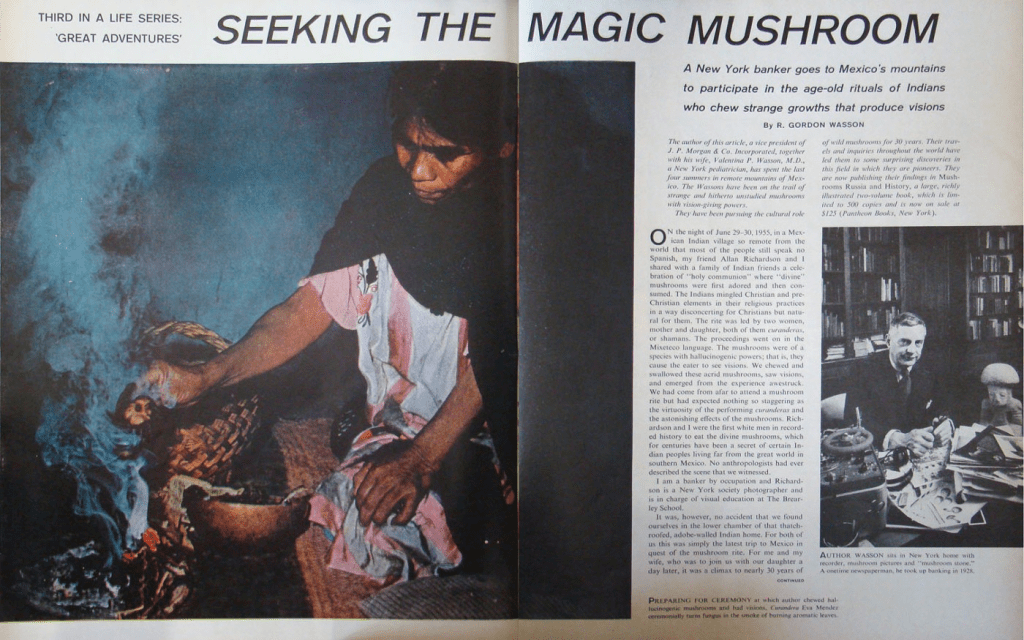
This historical narrative is simply amazing. Psilocybin mushrooms weren’t brought to the attention of the broader West until 1957, with the publication of the paradigm-shifting photo essay, “Seeking the Magic Mushroom,” in LIFE magazine by R. Gordon Wasson—the “father of ethnomycology.” Moore’s account is at least contemporaneous with Wasson’s publication. But, considering that this particular treatment was likely a timeworn tradition handed down to Auntie Etha by her own teacher(s), it is very probable that this particular use of the fungus went back much earlier than the time of Moore or his Auntie Etha. While no psychedelic effects were noted by the author, the mere fact the mushroom tea was administered in a medicinal context, to treat a sick boy, is highly significant. For, the Mazatec ceremony to which Mexican curandera, María Sabina, invited Wasson, the same wherein the psilocybin mushrooms were ingested, was also explicitly medicinal—velada being the traditional name given to the mushroom healing vigils carried out by Mazatec “shamans.” Moreover, if Moore was administered Auntie Etha’s tea while suffering a high fever, any psychedelic effects—including hallucinations—may have simply been attributed to the symptoms of the contracted illness.
“Seeking the Magic Mushroom,” in LIFE magazine by R. Gordon Wasson 1957
Importantly, Moore’s account is not the sole evidence of the use of entheogenic concoctions in the practice of Hoodoo. Over twenty years before the experience described in Same Kind of Different as Me, African American author, Zora Neale Hurston, in her 1935 classic, Mules and Men, revealed her own experience with what is quite clearly a powerful yet unnamed hallucinogen.
…I had to fast and “seek,” shut in a room that had been purged by smoke. Twenty-four hours without food except a special wine that was fed to me every four hours. It did not make me drunk in the accepted sense of the word. I merely seemed to lose my body, my mind seemed very clear. […] Maybe I went off in a trance. Great beast-like creatures thundered up to the circle from all sides. Indescribable noises, sights, feelings. Death was at hand! Seemed unavoidable! I don’t know.
While Hurston’s report does not mention hallucinogenic fungi specifically (or any other substance for that matter), the obvious psychedelic nature of her account is a good indication that entheogenic plants were not unknown to Hoodoo practitioners such as Denver Moore’s Auntie Etha.
Miguel Covarrubias’ Illustration for “Mules and Men” Zora Neale Hurston/ Lippincott, Philadelphia, 1935
Denver Moore passed away in 2012, so we were unable to interview him concerning his spectacular narration. But, it is our hope that Moore and his Auntie Etha would have been proud to know that their legacy not only lives on, but it may change the narrative as we know it regarding both the history of ethnomycology and the practices of Hoodoo and folk medicine among African Americans living in the Deep South.
P.D. Newman is an independent researcher located in the southern US, specializing in the history of the use of entheogenic substances in religious rituals and initiatory rites. He is the author of the books, Alchemically Stoned: The Psychedelic Secret of Freemasonry, Angels in Vermilion: The Philosophers’ Stone from Dee to DMT, and the forthcoming title, Day Trips and Night Flights: Anabasis, Katabasis, and Entheogenic Ekstasis in Myth and Rite. The Secret Teachings of All Ages (TV Series documentary) 2023.
Internationally recognized author and lecturer specializing in the use of entheogenic compounds in magico-religious settings. P. D. Newman has been immersed in the study and practice of alchemy and theurgy for more than two decades. A member of the Masonic Fraternity, the Society of Rosicrucians, and the Martinist Order, he lectures internationally and has published articles in many esoteric journals, including The Scottish Rite Journal, The Masonic Society Journal, and Invisible College. The author of Alchemically Stoned and Angels in Vermilion, he lives in Tupelo, Mississippi.
An altar constitutes a sacred space insofar as it is a deliberately constructed liminal space. A space is made sacred first and foremost through the creation and maintenance of a vacuum within it—it is the mystical act of reverting an area back to its natural, chaotic state. What is then invited to fill this void constitutes the divine FIAT—the magic “word” whose essence will thenceforth inform that space and all that transpires in it. Ergo, nothing is permitted to penetrate that void which is not in harmony with essence of the god. Those things that are harmonious with a given essence are termed ‘symbols’ and ‘tokens’ of that essence. These do not simply represent or correspond to the god, but rather constitute the deity himself in miniature form—a fractal-like manifestation of that essence which recapitulates and reiterates the totality of the god upon the microcosmic plane.
The Neoplatonist, Proclus, once stated that Soul “contains images of [things] and detailed, essential [seed forms] which are like statues of things themselves.” Even the names of things, therefore, arise from Soul and amount to veritable ‘statues in sound’ that really are the things described. If the name of the god is a presence of said deity, how much more an actual image? The profane view is that the worshipper believes the god to reside within the statue gracing the altar. This is absurd. No, the statue is in the god, as are all the symbols and tokens descending from his essence. Indeed, gods are beyond space. In reality, it is the altar that occupies the god.
Image courtesy with the kind permission fromP.D. Newman
Claudia Isabel Vila Molina
born in Viña del Mar, Chile. Professor of language and communication at PUCV, poet and literary critic. In 2012, she published her first book, The Invisible Eyes of the Wind. She has published in renowned Chilean and foreign digital media: Babelia (Spain), Letras de Chile (Chile), Triplov and Athena de Portugal, among others. During the year 2017 she participates in the Xaleshem group with poetic texts for the surrealist anthologies: “Composing the illusion” in honor of Ludwig Zeller and “Full Moon”, in honor of Susana Wald. In 2018, she integrates the feminist anthology IXQUIC released both in Europe and in Latin America. In 2020 she participates reviewing the conversation book “Shuffle poetry, Surrealism in Latin America” by Alfonso Peña (Costa Rica), also writes a poetic prose text for the book “Arcano 16, La torre“, by the same author. Likewise, she participates in the book “120 notes of Eros. Written portraits of surrealist women” by Floriano Martins (Brazilian surrealist poet, writer, visual artist and cultural manager). In this year (2021) she publishes her second poetry book Poética de la erotica, amores y desamores by Marciano editores, Santiago.
Rituales poéticos
El corazón me sabe a pañuelos mojados Hoy escucho la canción de los océanos Y alguien más viene a mirarme Las algas suben por mis pies hacia las últimas rocas En este elemento volví a imitar los arrecifes Ellos callaban Me miraban tiernamente Como solo miran quienes están en estado perpetuo Y quise salir fuera de mi nombre Quise volar desde las ataduras de mi cuerpo La noche no halló sus otros puñales Y me concedió un nuevo deseo. Del poemario inédito Solsticio de invierno, derechos reservados.
Image courtesy with the kind permission from Claudia Isabel Vila Molina
Olesya Volk
Born in Baku, Azerbajan, lived in Moscow from age 16 and moved to Los Angeles in 1992. She holds a M.F.A. in Film &TV, majoring in Animation from UCLA; and is involved in painting, writing, illustrating, cartooning, mixed media, paper theatre and small size dioramas.
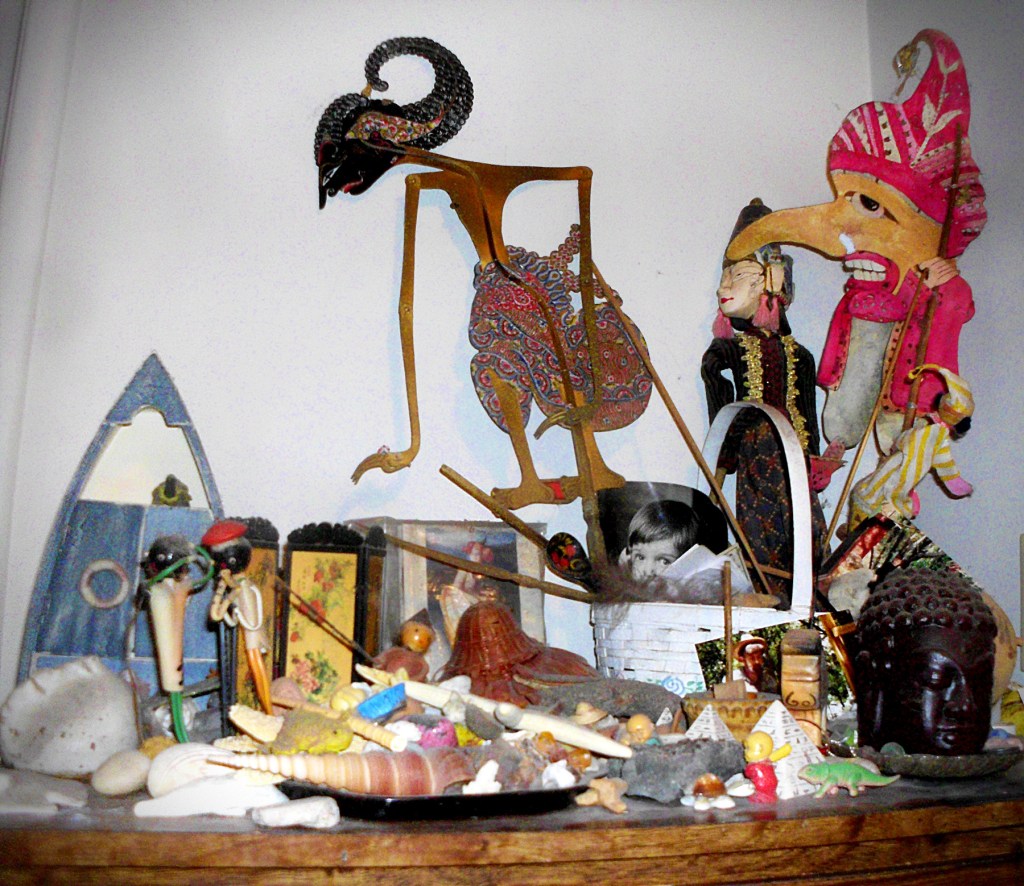
My altar: The inspiration for me always comes from the area deep inside my memory, it is connected to my childhood.
That is why my personal altar reminds of a little village that existed on a shelf in the cupboard at our place when I was a child. That village had a pond and a mill, woods and little houses. It had fishermen, singers. musicians, dancers, witches and sages, and a couple of hooligans. it had the place for games and the place for meditation and talking to spirits. Me and my sister and my mother were in charge of the village, and the villagers were protecting us and granting our daily wishes. The inhabitants of that village are still living with me! some of them are seen in the altar, the others have settled around in different corners…they continue to protect and manage the ties with the other worlds. My altar tries to copy visually that village from our cupboard, only there are much more pebbles now, and the lucky holey stones , they tell me of my walks on the beaches which I also held as sacred when a child…And above the village, there are spirits or gods overseeing it, in the shape of the Indian and Turkish shadow puppets ( one of the puppets, Beberuhi, I made myself; he is a nosier , he is curios about the essence of everything. ) And there are there the photos of the loved ones as well, photos from the past.
May the love last! may the protection and the belief in my vocation last! may the blessings stay!
Image courtesy with the kind permission from Olesya Volk
Jaime Alfaro Ngwazi
born in Coquimbo, Chile in October 17th, 1971. He studied at the University of La Serena and his degree is Bachelor in Education and Visual Arts. He has carried out different worshops about graphic expression. One of them is called Vivir el Afiche given by Mieczyslaw Gorowski. Apart from this, we can also mention Lo Esencial Significa given by Mieczyslaw Wassilewski and, finally, a seminar given by Lech Majewski at the University of La Serena.
El altar como centro mágico del mundo/ una trama de hilos multicolores de lana cruzan su centro/ se cuelgan a las orejas de las llamas del altiplano /brotan teléfonos con líneas como nervios-cuerdas de charangos, algunos trozos de carne seca y latidos de corazones emulando a Boltanski, en un centro magnético que conecta espectros de cristal, pantallas de celular y el sonido del viento/ en el desierto,seco ,que disecciona el paisaje salino, entre talleres líticos y mega fauna fantasma. Todos convocados a este espacio, reproducción en artefactos de madera del gran imperio / las cabezas de jaguar rugen a las estrellas de la lejana vía láctea ‚el frío es el ruego en la amplitud de la noche, mientras un vinilo con voces raspadas gira sin fin al compás de una danza metafísica las aristas del rombo raspan la piel suave/ el centro de todo es un valle seco ‚púrpura, apastelado en colores carne.
Image courtesy with the kind permission from Jaime Alfaro Ngwazi
Tony Kail
Ethnographer and writer. Tony holds a degree in cultural anthropology and has researched ethnic cultures for more than twenty-five years. His work has taken him from voodoo ceremonies in New Orleans to Haitian Botanicas in Harlem and Spiritual Churches in East Africa. He has lectured at more than one hundred universities, hospitals and public safety agencies. Kail has been featured on CNN Online, the History Channel and numerous radio, television and print outlets. A resident of Humboldt, Tennessee, Kail was raised in Memphis and calls it his second home.
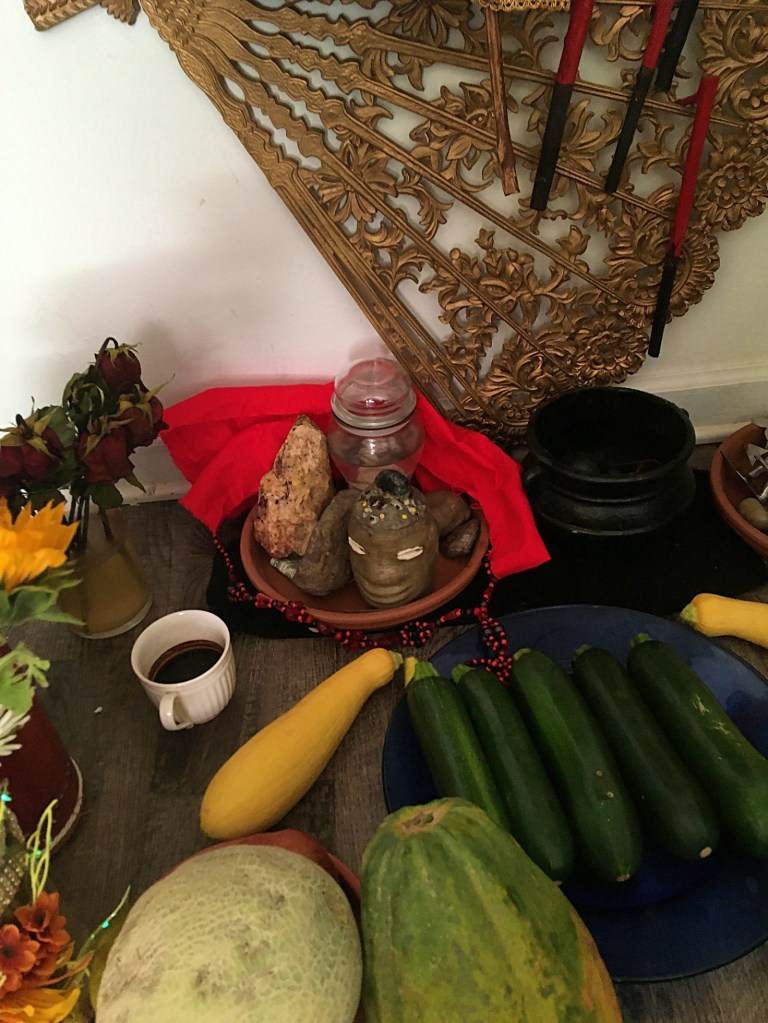
During ceremonies various events would occur that involved participants seeking reactions from the spiritual realm. On one occasion trance possession occurred and a participant was given information regarding a health issue that they had not shared with the possessed individual. Spontaneous deaths of animals would occur during rituals used to combat witchcraft. In the daily life of practitioners, physical evidence would manifest as a result of supernatural activity. Miraculous healings occurred where images of scars and skin disorders would appear on fruit and vegetables that were used in offerings to ask for healing. Subsequently practitioners would obtain healing and their wounds would disappear. Offerings to the Orishas would frequently disappear such as cups of coffee and wilting flowers would appear revived after being placed on specific altars.
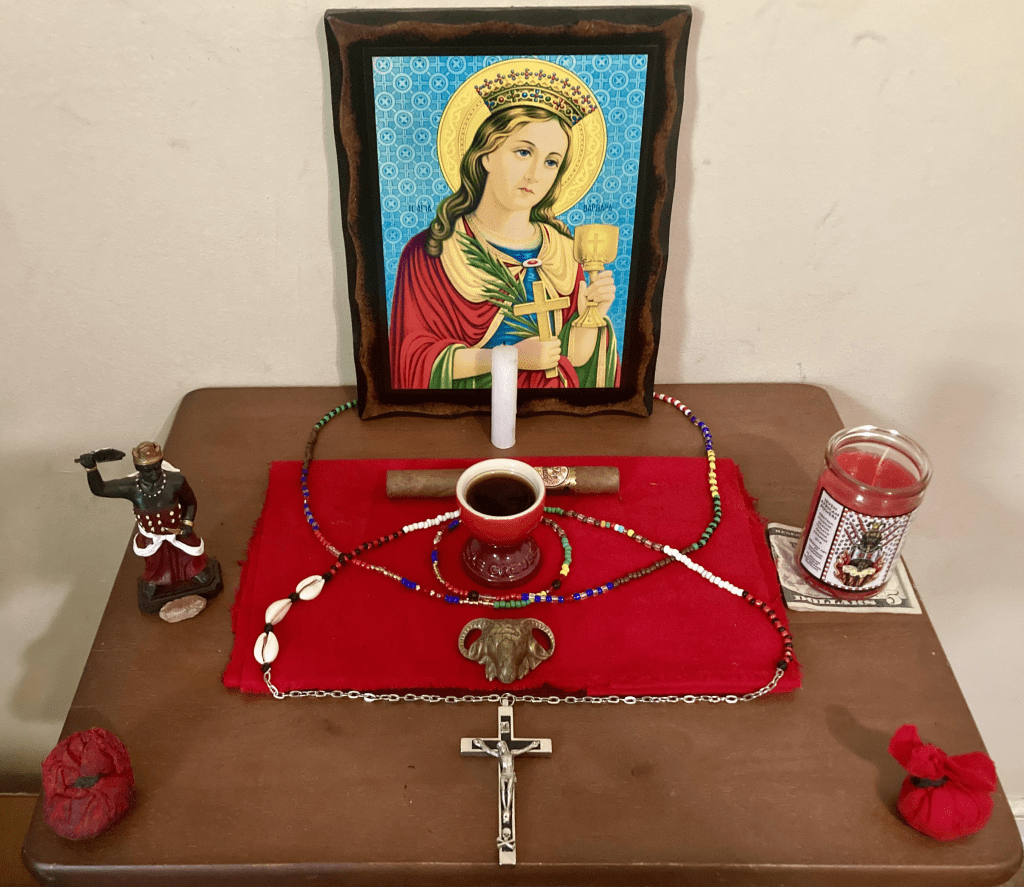
From my upcoming book ‘Fieldwork with the Saints: An Ethnographic Journey into Santería in the American South
Image courtesy with the kind permission from Tony Kail
Duncan Neganigwane Pheasant
M’Chigeeng First Nation artist Duncan Neganigwane Pheasantisfrom Manitoulin Island. Duncan started painting in high school using colours and techniques inspired by Norval Morrisseau and other Woodland style artists. His grandfather, Ambrose Pheasant, told stories that were also a great influence on his artwork. Duncan uses his images to interpret Ojibwe legends and stories that surround the history of his ancestors and Manitoulin Island.
The Mohawk Warrior Flag design has been flown all over the world, serving as a symbol of the unity of Indigenous peoples in our common struggle, becoming a beacon of hope, and illuminating the discordant relationship between the dominant society and Indigenous peoples. The deer’s antlers are one of the characteristics that have made it the figure of a spiritual superiority, according to the Ojibwe. Like a crown, the antlers grow beyond its body, bringing it closer to the sky and making it sacred. In many tribes the deer is a symbol of spiritual authority. During a deer’s life the antlers fall off and grow again and the animal is also a symbol of regeneration.
Regeneration is the key to my shrine,, I burn sacred tobacco and recite the welcoming prayer.. The flag is also a symbol of regeneration,, fighting for what’s right, bringing the people back from the brink of disappearance and destruction when you enter it you travel through the eastern doorway…like when you were born…behind the warrior flag is another door…the western doorway…this is where you travel through when your journey is finished .but it is on the other side of the flag…this represents the fight ,the journey is to be done first…then you can travel through the western door…
Overall, having this home altar can be another way to remind myself of things I love or intentions I have for the future. If any of these rules are throwing me off, just trust my gut. You know what is best for you and your intentions. As long as you are in touch with your true desires, you’ll be fine to design your home altar anyway you like.
Image courtesy with the kind permission from Duncan Neganigwane Pheasant
Jay Blackwood
makes assemblages, boxes, totem dolls and other three dimensional pieces using found objects and materials. He has been involved with Surrealism, both as a practice and as a creative/revolutionary current, since the early 1990s. His work straddles the border between dream and consensus reality, the everyday and the numinous. Jay lives in Bristol, England.
The presiding spirit in my studio is a wonderful stone lithograph by Rikki Ducornet, Histoire Naturelle I, kindly given to me by Guy Ducornet some years ago. Beneath it are a number of pieces I made between 2001 and 2015. They are the product of chance finds, dreams and fleeting inspirations. All relate in some way to the natural world, and to archaic notions of male/female energies.
Image courtesy with the kind permission from Jay Blackwood
CLAUDIO RODRIGUEZ LANFRANCO
born in Valparaíso in 1968. After living in Patagonia and in United States product of a scholarship, his first painting exhibitions were date back to the nineties in Valdivia. Later he moved to Santiago and the Fifth Region, where his visual and literary work materializes in a body of work that addresses different forms of expression, such as painting and drawing, experimental and documentary video, visual poetry and muralism, with public art projects installed in Santiago, Valparaíso. As a visual artist he has exhibited his paintings in 15 solo shows and in more than 60 group shows in Chile, Europe and the United States, and his poetic texts have been published in regional, national and international poetry collections, his work being awarded in different state funds for artistic creation such as Fondart, Cntv, Fondo Carnavales Cultural Centers of Valparaíso, among others. Currently the painter lives and works between Valparaíso, Santiago and Concón, where he develops his artistic projects and teacher training, being in charge of university graduates, painting and mural workshops, becoming a teacher for generations of students and artists who have worked with him.
SELK’NAM FORCE. AS AN EXERCISE OF CREATION ON TRAVEL, CARRIED OUT DURING MY TEMPORARY TRANSIT THROUGH DIFFERENT PLACES IN CHILE SUCH AS THE ANDES MOUNTAINS, THE SOUTHERN CANALS, PATAGONIA AND THE ROUGH ARIDITY OF THE NORTH COASTS. A GLANCE OF THE BODY VALUE THAT THE ANCIENT CULTURES OF THE SOUTH OF THE PLANET GAVE THEIR CEREMONIAL REPRESENTATIONS, WHERE WITCHES AND SHAMANS DRESSED WITH BARK OR LEATHER MASKS COVERED WITH MUD AND MINERAL PIGMENTS SUCH AS WHITE, BLACK OR RED ON WHICH THEY THEN DRAWED FRAGMENTS OF THE SKY, THE PATH OF THE CONSTELLATIONS, SIGNS OF ANIMALS OR IMPORTANT NATURAL EVENTS – THE MOVEMENT OF THE SUN OR THE MOON – USING THE BODY AS A SUPPORT, AS A MAP, AS A GEOGRAPHICAL LANDMARK.
Image courtesy with the kind permission from Claudio Rodriguez Lanfranco
Doug Campbell
works primarily in collage, enjoying the immediacy of cutting through the detritus of the spectacle to the marvellous. He was born in Edinburgh, Scotland, where he still lives. Asking about the word ‘surrealist’ after finding it in a science fiction novel as a child, he was given a small book of Surrealist paintings. This was the first step on an adventure that continues until this day. His first encounter with living Surrealism was a second-hand copy of the Chicago Group’s ‘ARSENAL 4’ in the mid 1990’s. In response to a letter, Franklin Rosemont directed him to the recently-formed Leeds Surrealist group. This led to an on-going engagement with the international Surrealist movement through correspondence, collective games and contributions to publications and group shows. In 2017, he took part in the ‘Archaeology of Hope’ a large-scale Surrealist game concluding with a show and solstice ritual on the Isle of Wight. This was a significant transformative experience for everyone involved. Since then he has published a continuing series of collage novels in weekly instalments online at ‘The Cabinet of Major Weir’.
This is the biggest shrine in the house, and in the main living space, so probably the best organised. A mix of heirloom items, curios and pop culture junk. Framed artwork on the wall is by (l to r) Janice Hathaway, Tim White and Peter Overton. The boxed object at upper left is a magic bottle that belonged to my grandfather, an amateur conjurer.
Image courtesy with the kind permission from Doug Campbell
Mitchell Pluto
Artist, Jewelry Maker, Art Editor
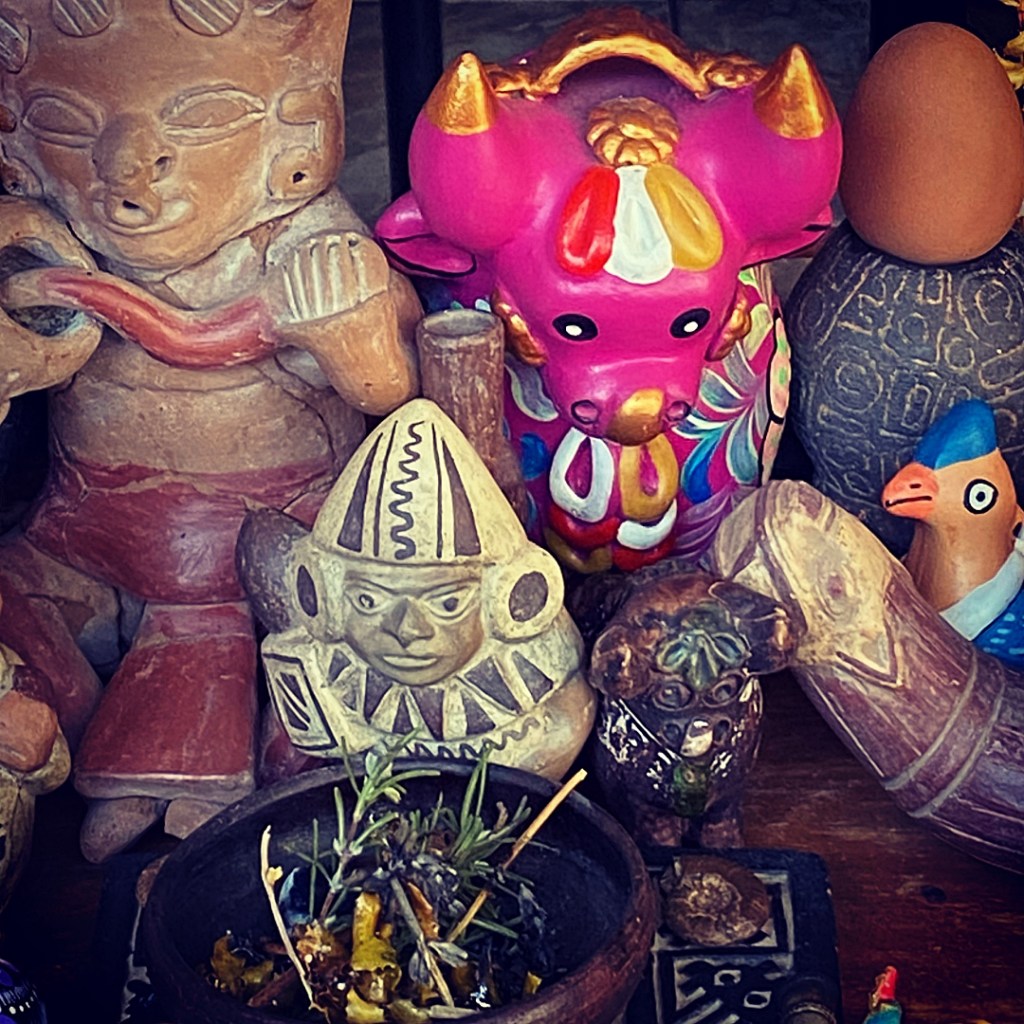
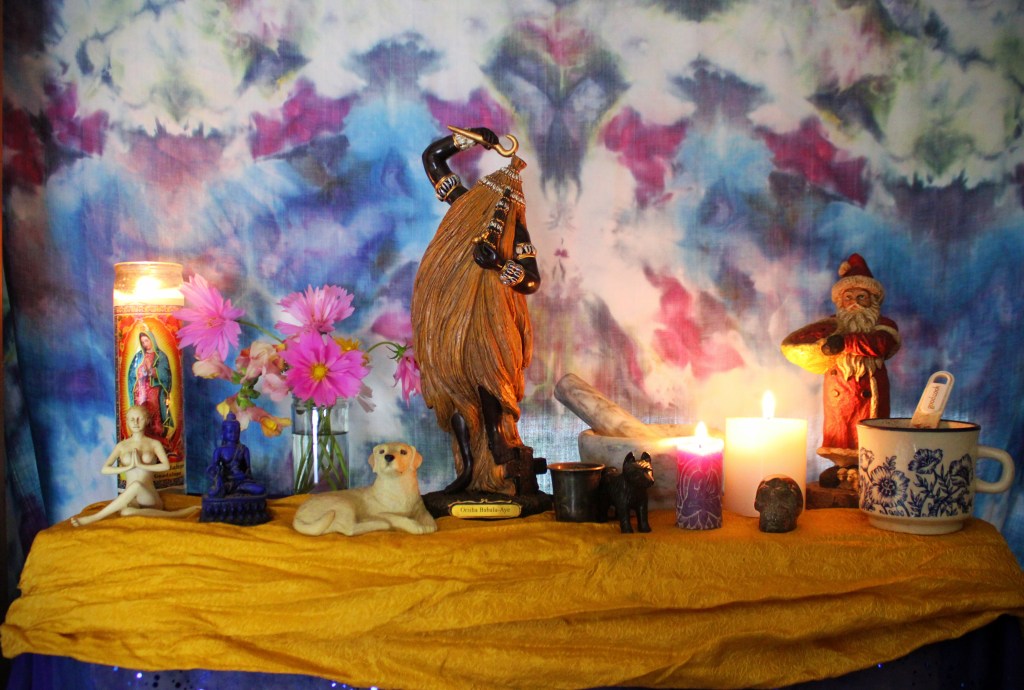
I began collecting objects for our altar in 2020 during the Covid pandemic. I selected figures that embody different archetypical aspects of growth and limitation. The process of recovery is sincerely magical. These mysterious qualities remain a focus on the altar. They play a vital role in the background as well as influencing the subconscious in healthy ways. Constructing an altar helped me be attentive to the belief needed for healing.
During the pandemic complimentary rum and coffee were supplied as part of a thoughtful routine and ritual. The other side of our altar is a shelf for salts, herbs and spices.
Wifredo Lam
Cuban artist who sought to portray and revive the enduring Afro-Cuban spirit and culture.
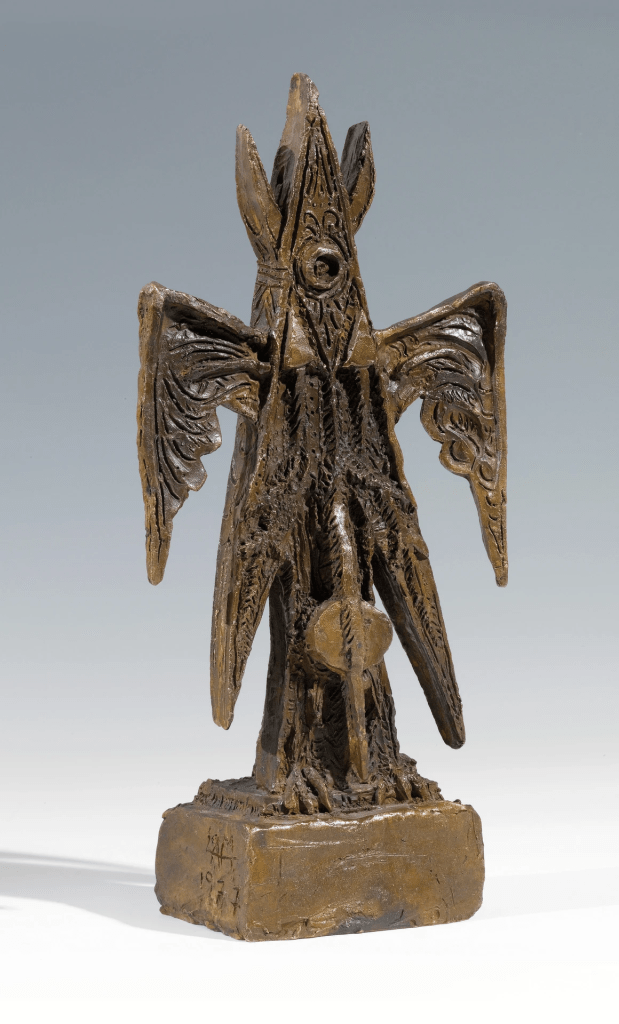
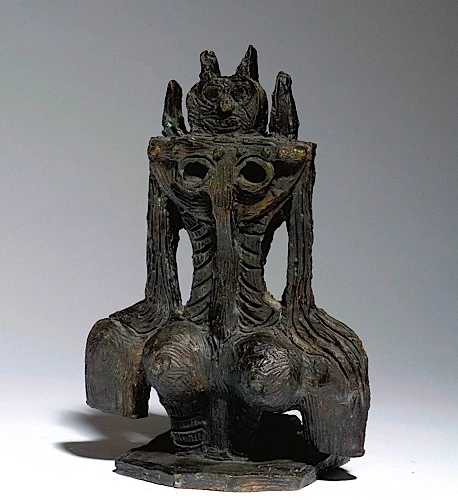
Wifredo Lam Osun, 1977 bronzeWifredo Lam GRAND YEMAYA, 1977 bronze sculpture, brown patinaPhotos from MutualArt
About theFeatured Photo
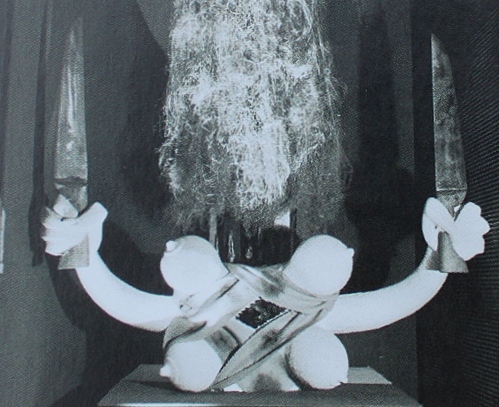
The Hair of Falmer
The Hair of Falmer, an altar created by Claude Tarnaud, Michel Hertz and Francis Bouvet following a design sent by Wifredo Lam from Havana for Le Surrealisme en 1947 exhibition held at Galerie Maeght, Paris, 7 July-30 September 1947 original photo Denise Bellon. Expert from The EY Exhibition: Wifredo Lam. Tate Publishing figure 33, page 211 used and intended for educational purpose only
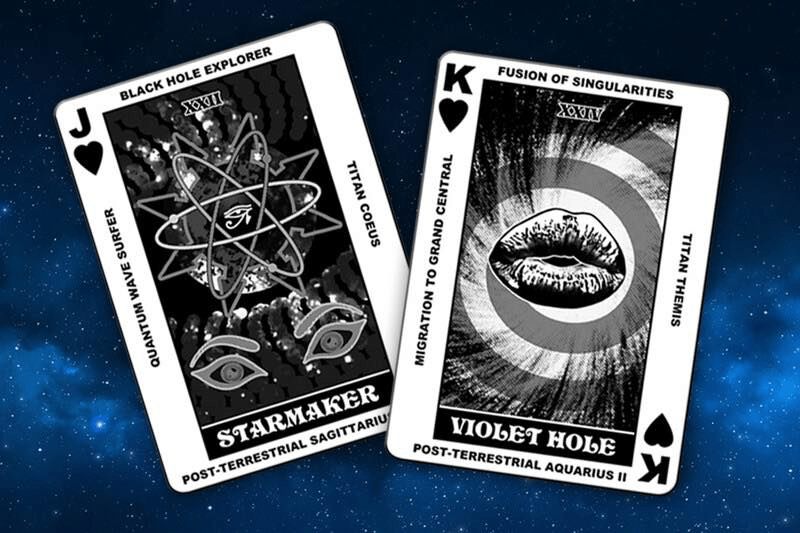
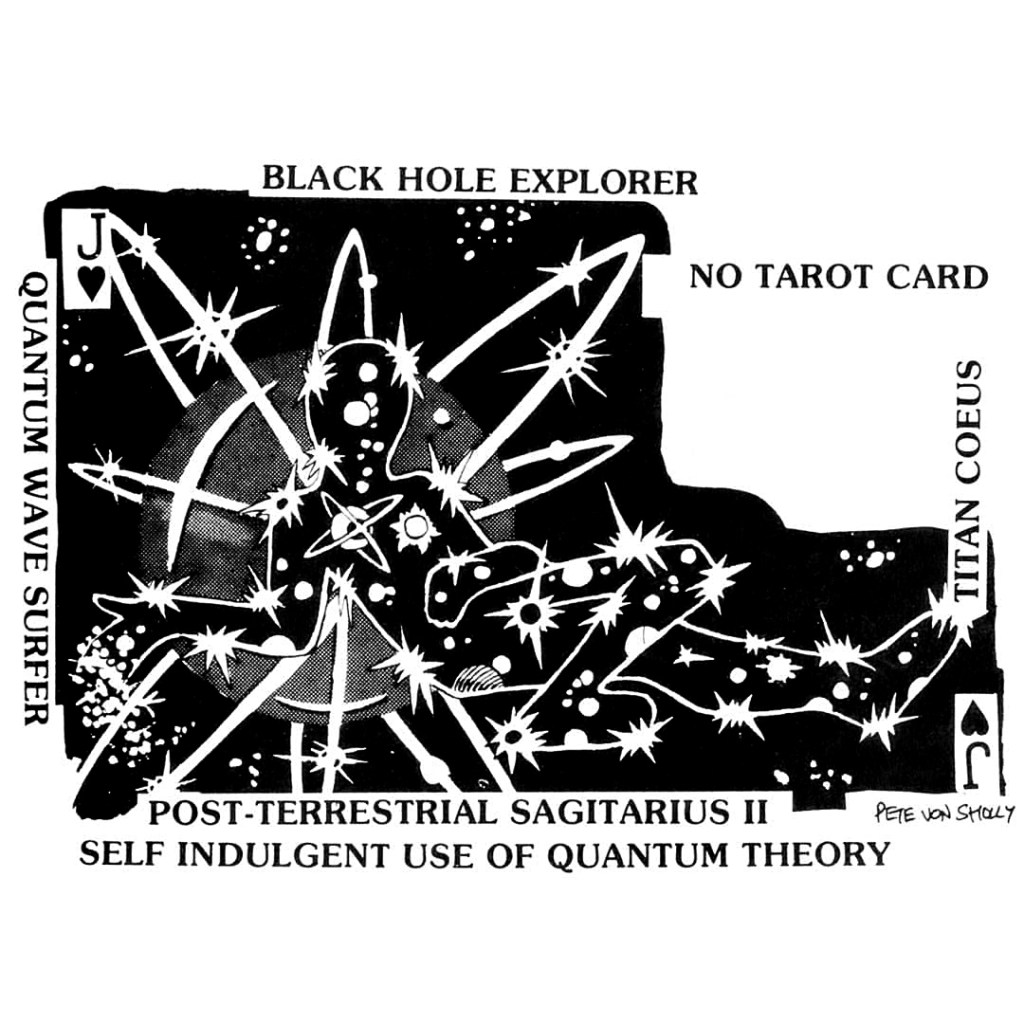
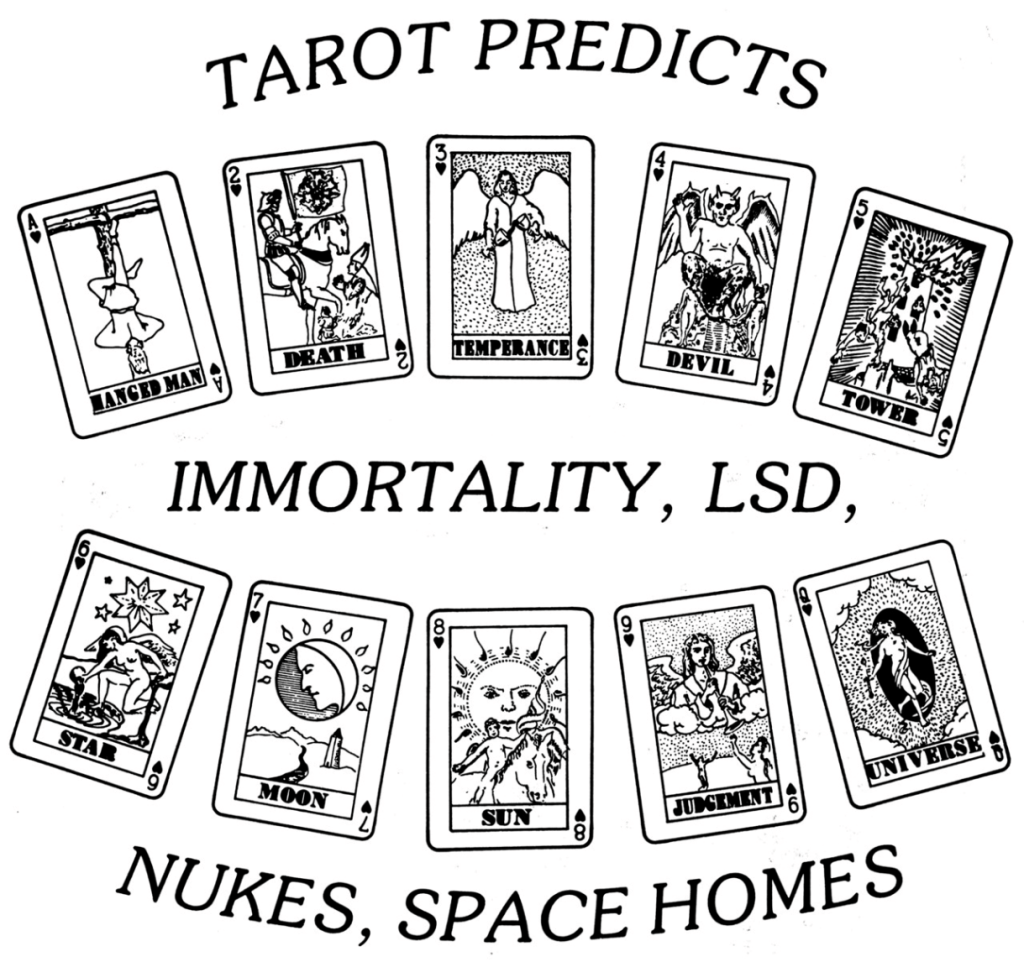
A Second Look at Leary’s Eight-Circuit Model: Gurdjieff’s Law of Octaves and the Tarot P.D. Newman Along with Ram Dass, Huston Smith, and Andrew Weil, Timothy Leary was part of what has been called “the Harvard Psychedelic Club.” Fired from his position at Harvard University for failing to attend scheduled class lectures, Leary is perhaps best known as being one of the most vocal advocates of lysergic acid diethylamide (better known as LSD-25), an extremely powerful hallucinogenic drug which Leary et alii helped to popularize during the revolutionary sixties. He was also part of the Harvard Psilocybin Project, which Leary organized following a trip to Mexico during which he was administered psilocybin mushrooms. He later recalled of this experience that he had: learned more about [his] brain and its possibilities [and] more about psychology in the five hours after taking these mushrooms than…in the preceding fifteen years of studying and doing research in psychology. The Harvard Psilocybin Project went on to conduct the famous Concord Prison Experiment, which evaluated whether psilocybin paired with psychotherapy could successfully rehabilitate repeat offenders, and the Marsh Chapel Experiment, which sought to discover if psilocybin could reliably induce mystical experiences in religiously predisposed theology students. In 1963, Leary helped initiate the Millbrook Experiment, an enormous mansion located in New York where residents spent their days experimenting with psychedelic drugs and living according to the teachings of Armenian mystic, G.I. Gurdjieff. To Gurdjieff, we’ll return below. These experiments, impressive and novel as they were, are not the good doctor’s sole claims to fame, however. During one of his many incarcerations, in 1972, Dr. Leary developed a new theoretical model of the evolution of life on earth—and of individual human consciousness—which he called the ‘Eight Brain’ or ‘Eight Circuit’ model. Popularized by Discordian Pope, Robert Anton Wilson, Leary’s Eight Circuit model postulates that all life on earth (and indeed in the entire cosmos) evolves through a series of eight successive ‘circuits.’ This same eight-fold process, Leary adds, is recapitulated in the development of consciousness within an individual human being. Just as the human embryo at various times manifests as unicellular, possessed of gills, having a tail, etc., so too does individual conscious unfold through the same successive stages of evolution. Divided into Terrestrial and Post-Terrestrial phases, Leary’s eight ‘circuits’ unfold as follows: Terrestrial: 1. The Bio-Survival (Marine Consciousness) Circuit 2. The Emotion-Locomotion Terrestrial-Mammalian (Territorial Consciousness) Circuit 3. The Symbolic-Artifactual (Laryngeal-Muscular Consciousness) Circuit 4. The Industrial (Socio-Sexual Consciousness) Circuit Post-Terrestrial 5. The Cyber-Somatic (Body Consciousness) Circuit 6. The Cyber-Electronic (Brain Consciousness) Circuit 7. The Cyber-Genetic (DNA Consciousness) Circuit 8. The Cyber-Atomic (Quantum Consciousness) Circuit Without entering into too much detail regarding the function of these ‘Brains,’ it is sufficient to say that each of the eight ‘circuits’ are further divided into three successive stages (thus giving us twenty-four) of what Leary calls “con-telligence.” Con–telligence is defined as “the reception (consciousness), integration, and transmission of energy signals.” The three stages of con–telligence applied to each of the unfolding circuits then constitute the twenty-four phases of the awareness, mastery, and communication-fusion of each new evolutionary technology—from spineless, floating amoeboid (as well as newborn infant) to meta-physiological nano-technician at the “violet hole” found at the center of our Milky Way galaxy. The people who represent these various stages of evolution Leary refers to as ‘castes.’ In an attempt to “relate the psychology of the ancient, pre-scientific world with modern notions of stages [and] phases,” Leary was wont to apply his twenty-four periods of evolution to the Major Arcana of the Tarot, wherein he perceived a clear reflection of his own model. For example, to illustrate the three-stage ‘con-telligence’ of Circuit I, Leary employed The Fool, The Magician, and The Empress cards. In illustration of the con-telligence of Circuit II, he used The High Priestess, The Emperor, and the Hierophant, etc. However, there’s just one problem with this arrangement. The Major Arcana are possessed of only twenty-two cards, leading Leary, to the horror of every Tarot purist in the world, to invent two brand new Major Arcana cards: Starmaker and Violet Whole. As hip and groovy as these two additions no doubt are, they may not have been necessary. Had Leary paid closer attention to his Gurdjieff while residing at Millbrook—or to the Ouspensky title (In Search of the Miraculous) that Charlie Manson slipped him while in solitary confinement at Folsom Prison—he might have thought to apply the sequence of Tarot’s Major Arcana cards to Gurdjieff’s Heptaparaparshinokh, aka his Law of Octaves.
According to the Law of Octaves, everything in the universe that happens or can happen manifests according to a fixed set of cyclic vibrations, called octaves. From the initial impulse of a given thing to that thing’s final completion, this constitutes an octave; that is, from do (start) to do (finish) in the Ionian mode (do re mi fa sol la ti do) constitutes a given octave. Whether it is the birth and death of a galaxy or the beginning and end of an acid trip, taken as a unit, each of these phenomena would constitute its own octave. Considered in the key of C major (which Gurdjieff obviously intends), it becomes evident that a given octave is possessed not only of eight steps, but also of two intervals. For, every note in the C major scale is followed by a sharp—save two: mi and ti. Unlike the other six tones, mi and ti, rather than being followed by semitones, move directly into the following whole notes. To compensate for these ‘intervals,’ in order to complete a given octave, Gurdjieff postulates that two “additional shocks” are required. P.D. Ouspensky, an early student of Gurdjieff, writes: In an ascending octave the first ‘interval’ comes between mi and fa. If corresponding additional energy enters at this point the octave will develop without hindrance to [ti], but between [ti] and do it needs a much stronger ‘additional shock’ for its right development than between mi and fa, because the vibrations of the octave at this point are of a considerably higher pitch and to overcome a check in the development of the octave a greater intensity is needed. It is our understanding that an ‘additional shock’ in an ascending (evolutionary) octave may be constituted by anything from a physical or emotional trauma, a mental break with mundane reality, a mystical initiation, a ritual working, or even by a psychedelic experience. It is the application of ‘super effort’ at two points in an ‘octave’ that will aid in bringing its process to completion.
Possessed of eight steps and two ‘intervals,’ Gurdjieff’s Law of Octaves neatly solves the problem of what Leary saw as two ‘missing cards.’ If we allot the cards of the Major Arcana in sets of three to Leary’s eight ‘circuits’ while keeping true to Gurdjieff’s Law of Octaves, we arrive at the arrangement below. Let the Arabic numerals indicate Leary’s Eight Circuit model. Let the Roman numerals represent those attributed to the Major Arcana cards. Let the asterisks represent Gurdjieff’s ‘additional shocks.’
1. 0 – I – II (do)
III – IV – V (re)
VI – VII – * (mi)
VIII – IX – X (fa)
XI – XII – XIII (sol)
XIV – XV – XVI (la)
XVII – XVIII – * (ti)
XIX – XX – XXI (do) As the reader may observe, these ‘shocks’ fall into the ‘transmission’ (per his theory of ‘con-telligence’) slots of Leary’s third (Symbolic-Artifactual) and seventh (Cyber-Genetic) circuits, precisely in the places where the ‘additional shocks’ are necessitated, per Gurdjieff’s Law of Octaves—no invention of cards required. The suggestion here is that ‘additional shocks’ serve as bridges for the transmission gaps between a) the integration phase of the Symbolic-Artifactual Circuit and the reception phase of the Industrial Circuit and b) the integration phase of the Cyber-Genetic Circuit and the reception phase of the Cyber-Atomic Circuit—thus providing the individual (and the species) with the momentum necessary to break the barriers between one evolutionary circuit and the next. In the Tarot, these ‘shocks’ appear between a) The Chariot and Strength and b) The Moon and The Sun cards. In the system popularized by the Hermetic Order of the Golden Dawn, The Chariot corresponds to the zodiac sign Cancer. Strength, on the other hand, corresponds to Leo. Conveniently, as Cancer is ruled by the moon and Leo is ruled by the sun, combined with the second ‘additional shock’ which occurs between The Moon and The Sun Cards, we see that both the ‘shocks’ take place at ‘intervals’ between symbolic diametrical moon-sun relationships. These ‘shocks,’ then, both practically and symbolically, serve the same ‘bridging’ function of a mercurial mediator between alchemical opposites. Coincidence? Perhaps. Granted, we may be guilty of ‘confusing the planes’ by comparing the zodiacal attributions of one pair of cards to the titles of another. However, one cannot deny the symmetrical neatness of the structure. For this arrangement to work, it goes without saying that all the cards and explanations following The Chariot in Leary’s model must be rearranged and reworked to accommodate for Gurdjieff’s ‘shocks.’ And, in fact, in Info-Psychology, his 1987 revision of Exo-Psychology, Leary kindly invited the reader “to engage in an ‘interactive co-writing’ of these important issues.” That’s all we’re really doing here. In any event, at the very least, we’ve arrived at what would appear to be a totally novel mode of Tarot analysis. The notion that hidden ‘additional shocks’ appear in the major arcana sequence between cards VII and VIII and between cards XVIII and XIX is, to our knowledge, unprecedented. But, does this innovation mean that two of Leary’s ‘castes’ must be sacrificed in favor these ‘shocks?’ Or, is the implication that two of Leary’s ‘castes’ are the ‘shocks?’ Further analysis is required to know. One thing we can say with certainty, however—and that, along with Leary’s friend, Dr. Israel Regardie of the Golden Dawn—is that “posterity […] will have a finer appreciation of what [Dr. Timothy Leary] has contributed to the world than we have today.” WORKS CITED Alpert, William. Ram Dass: Fierce Grace. Zeitgeist Films, New York. 2003 Hollingshead, Michael. The Man Who Turned on the World. The Psychedelic Library. http://www.psychedelic-library.org/hollings.htm. Accessed Jan. 9, 2017 Lattin, Don. The Harvard Psychedelic Club: How Timothy Leary, Ram Dass, Huston Smith, and Andrew Weil Killed the Fifties and Ushered in a New Age for America. HarperOne, San Francisco. 2011 Leary, Timothy. Info-Psychology: A Manual on the Use of the Human Nervous System According to the Instructions of the Manufacturers. New Falcon Publications, Las Vegas. 1987 Leary, Timothy. Neuropolitique. New Falcon Publications, Las Vegas. 2006. Leary, Timothy. The Game of Life. New Falcon Publications, Las Vegas. 2015 Ouspensky, P.D. In Search of the Miraculous: The Teachings of G.I. Gurdjieff. Harcourt, Inc., New York. 2001 Wilson, Robert Anton. Cosmic Trigger I: Final Secret of the Illuminati. Hilaritas Press, LLC., Grand Junction, CO. 2016 Wilson, Robert Anton. Prometheus Rising. Hilaritas Press, LLC., Grand Junction, CO. 2016
P.D. Newman is an independent researcher located in the southern US, specializing in the history of the use of entheogenic substances in religious rituals and initiatory rites. He is the author of the books, Alchemically Stoned: The Psychedelic Secret of Freemasonry, Angels in Vermilion: The Philosophers’ Stone from Dee to DMT, and the forthcoming title, Day Trips and Night Flights: Anabasis, Katabasis, and Entheogenic Ekstasis in Myth and Rite. The Secret Teachings of All Ages (TV Series documentary) 2023.
“Ifá tells us that when he is enraged, Obaluaiye [Babalú Ayé] takes [his] special broom and spreads sesame seeds (yamoti) on the earth before him, then sweeps the seeds before him, in ever-widening circles. As the broom begins to touch the dust and the dust begins to rise, the seeds, like miniature pockmarks, ride the wind with their annihilating powers: the force of a smallpox epidemic is thereby unleashed.”
—Robert Farris Thompson, Flash of the Spirit: African and Afro-American Art and Philosophy, p. 63 (Vintage Books. New York, NY. 1984.)
Babalú gettin’ me up in the mornin’ I believe I’ll dust my broom Babalú gettin’ me up in the mornin’ I believe I’ll dust my broom I get to sweepin’ this sesame, baby Babalú pox gon’ be ya doom
And you won’t get better—ya whole body covered in sores No, you won’t get better—ya whole body be covered in sores Be nothin’ but dogs a-lickin’ you, baby Once these bristles start sweepin’ the floors
Lazy Pushin’ Daisy
I know that there’s a man Who in Bethany stays Erbody like to call him Lazy Cause he lay still four days
Talkin’ bout that Lazy I’d swear he pushin’ up daisy
I know that there’s a man Who sleep like the dead Only the power of the good lord Rouse him out of his bed
Talkin’ bout that Lazy I’d swear he pushin’ up daisy
I know a man name Lazy Always got that bed breath Got a twisted mouth so sour Breathe out the smell of death
Talkin’ bout that Lazy I’d swear he pushin’ up daisy
I know a man name Lazy Who stink to his core Body raw as his mouth And dogs licking’ his sores
Talkin’ bout that Lazy I’d swear he pushin’ up daisy
written by P.D. Newman
P.D. Newman is an independent researcher located in the southern US, specializing in the history of the use of entheogenic substances in religious rituals and initiatory rites. He is the author of the books, Alchemically Stoned: The Psychedelic Secret of Freemasonry, Angels in Vermilion: The Philosophers’ Stone from Dee to DMT, and the forthcoming title, Day Trips and Night Flights: Anabasis, Katabasis, and Entheogenic Ekstasis in Myth and Rite. The Secret Teachings of All Ages (TV Series documentary) 2023.
Incubation is perhaps most easily understood in contrast to the art of Theurgy or ‘Work of the Gods.’ Theurgy is a process of anabasis or magical ascent whereby practitioners, such as the early Neoplatonists, especially Iamblichus and Proclus, achieved henosis or mystical union with a deity or the demiurge. However, anabasis was not always of primary importance, or even of interest, to many of the ancient Greek philosophers and magicians. More than five hundred years before the Neoplatonists arrived on the scene, Presocratic poets and philosophers, including Pythagoras and Parmenides, were preoccupied instead with katabasis—a dreamy descent to the domain of the dead, and to the dark goddess who rules over that realm.
Mirror Gazing Ecdysis Mitchell Pluto 2022
For the Platonists, katabasis was understood as the descent of the soul into a body upon incarnation. Hades, additionally, was allegorized and viewed as the very world in which we, as incorporated beings, inhabit. Socrates says to Callicles in Plato’s Gorgias, for instance, “[perhaps] in reality we’re dead. Once I even heard one of the wise men say that we are now dead and that our bodies are our tombs.” Again, in the Phaedo, Plato has Socrates say to Simmias of Thebes, “[we], who dwell in the hollows of [the earth], are unaware of this and we think we live above.” And, later in the same dialogue, “Those who are deemed to have lived an extremely pious life are freed and released from the regions of the earth as from a prison; they make their way up to a pure dwelling place and live on the surface of the earth.” Therefore, the only way to go, for Plato and his successors, was up—in an anabatic flight to the demiurge, through the various planetary spheres that separate the divine nous and Monad from the sensible world below. Theurgy was the means by which such an anabasis was accomplished. The Presocratics, conversely, leaving Mount Olympus to the gods, for the most part, focused their energies instead upon katabasis; on transporting themselves to the netherworld.
Dream Mare Mitchell Pluto 2022
The means by which these iatromanteia or “healer-seers” directed this delirious drop was via the use of an ancient divination and healing technique known as incubation. In ancient Greece, this was generally done inside of sacred and secluded caves that were sacred to certain gods, daimons, nymphs, and other metaphysical entities. Eventually, the practice would be translated to special temples dedicated to the technique, and finally into a special incubation chamber, usually positioned adjacent to the temple itself. The ancient Ionian Greek philosopher, recognized as the ‘Father of Western Philosophy,’ Pythagoras of Samos, for example, is said to have descended to Hades by entering an underground cave. While Pythagoras left no writings of his own, the late Neoplatonic philosopher, Algis Uždavinys, a past head of the Department of Humanities at the Vilnius Academy of Fine Arts, Kaunas, explains,
the subterranean tomb-like chamber represents Hades for Pythagoras. Hence, Pythagoras descended into Hades, that is, the subterranean holy chamber (like the Holy of Holies, entered by the Jewish High Priest on the occasion of Yom Kippur) that he had made himself, according to Diogenes Laertius (Vitae phil. 2). When he came up, withered and looking like a Shaiva ascetic, he said that “he had been down to Hades and even read out his experiences [aloud to the crowd].”
A similarly famous although obscure Presocratic philosopher, Parmenides of Elea, celebrated as both the ‘Father of Logic’ and the ‘Father of Metaphysics,’ wrote a dactylic hexametrical poem recounting his trip to Hades, and the underworld goddess whom he encountered. At the junction of three roads, the goddess instructed Parmenides as to the true nature of reality. His proem to “Peri Physeôs” begins,
The mares that carry me as far as longing can reach rode on, once they had come and fetched me onto the legendary road of the divinity, the road that carries the man who knows through the vast and dark unknown. […] And the goddess welcomed me kindly and took my right hand in hers and spoke these words as she addressed me…
In his proem, the divinity proceeded to instruct Parmenides in the laws of logic that we know today. That is, it was a mysterious, underworld goddess from whom Parmenides received the very rules of reason, with which he returned to the land of the living for the inauguration a new era. To a world which turned on mythos—mythology—Parmenides introduced the novel pivot of logos—logic. Although, we must admit that the weird way in which the ‘Father of Logic’ acquired that understanding appears to contradict the very laws with which he was entrusted. Moreover, Parmenides’ words may provide us with a subtle indication of just what incubation may have entailed for these heroes of Hades. The first thing the poet mentions are the mares that pull his chariot. The chariot is a token of the sun god, whose solar vehicle is pulled throughout the skies by a handsome team of heavenly horses. Indeed, ever since the time of the worship of Shammesh or Utu, the sun god of ancient Mesopotamia, the chariot has been the province of the Sol. But, the sun isn’t just about the light—for, the sun also journeys into the Underworld, like Osiris in the Dwat, through the dark, intuitive animations of Aidoneus’ alcazar. Every time we venture into sleep, we quietly and blindly slide into the Stables of Silence. Hence the false etymology suggested by the word nightmares, ‘horses of the dark.’ Like the Hunter’s three-legged horse in the fairytale of the Princess and the Tree, these ‘nightmares’ “know everything”—including the invisible way to the “legendary road” that leads to “the divinity.” The archaic techniques of dream incubation are akin to these mystical, Moiraic mares, and they alone are possessed of the potential to move us from the familiar to the fringe—down the alien road that carries the “man who knows” through the “vast and dark unknown.”
P.D. Newman October 16, 2022
P.D. Newman
P.D. Newman is an independent researcher located in the southern US, specializing in the history of the use of entheogenic substances in religious rituals and initiatory rites. He is the author of the books, Alchemically Stoned: The Psychedelic Secret of Freemasonry, Angels in Vermilion: The Philosophers’ Stone from Dee to DMT, and the forthcoming title, Day Trips and Night Flights: Anabasis, Katabasis, and Entheogenic Ekstasis in Myth and Rite. The Secret Teachings of All Ages (TV Series documentary) 2023
The Hug Acrylic on canvas 60x80cm Hoda Hussein 2022
14 September 2022 7:17 pm Earth Greenwich time zone
A letter from Oranous to Pluto on the Sleep Temple
Who believed their bed was a four-legged bear taking them on their back for a night sky ride as their own bear cub? I did. And I always woke up in the morning and kept my eyes shut till I hear family voices in the house so I am sure my parent bear landed me in the right place to start another day acting like a human. It takes practice to master acting like a human this is why we have to do it every day. But we must also not forget who we are this is why parent Bear kept their legs and body in the human house but with their tail and head on their own and took me as their child on journeys and trips at night where I can be in awareness of all that is. No wonder it was very difficult to pretend I am afraid of the scarab that landed on my hand in the nursery! I was not. The teachers were. And that was weird to me. I suppose I also was weird for them. However, I kept that memory of the friend scarab insect that tickle my palm and I still smile at that. Who would think I had an oil well in my salon where I bathed in whenever exhausted and opened my veins to it renewing my blood completely in sessions where Hathor was standing at my back massaging me? Okay well, I had a Native American tribe settling their tipi in my living room so… Let’s say this is normal in my life. So what is a sleep temple or a dream temple? I am! Well, I guess we all are in a way. Always just believed in a sacred temple where the blood circulates around the heart like pilgrims around the sacred cube of “Ka’ba” hence ka and ba. But as I can move and I am not still at all I prefer to see myself as a Mer-ka-ba “boat in Arabic”. Oh, how I loved this when I knew that Mer meant beloved in the ancient Egyptian language! Yes I know I am loved and visited but all types of loving beings. This is so beautiful! Still, I don’t think I learned yet to act humanely perfectly and instead I look for my equals who also could not really perfect the like human acting. There is something beautiful in our imperfections. Kind of childish and more related to the womb than birth. A whole multiverse moving changing developing evolving in action inside the womb of space. A multiverse that is in fact one single child in process of becoming. Did I tell you I once dreamed of having surgery on my lungs and my heart? Well, I did. And the woman doctor gave me a prescription. That I followed! I would not be that committed following a prescription of a daily life touchable doctor, so-called “real” anyway.
Hugs Bye for now
Hoda Hussein
Hoda Hussein
Egyptian creative writer poetess and novelist, artist painter and translator. Published many poetry books and novels in Arabic language. Represented Egypt in poetry and novels festivals and encounters in several countries like Yemen, Spain, India, France, Cuba, and Chile. Made creative writing workshops for kids in many schools in Cairo Egypt. Received rewards for poetry, novels and for translations in Chile, Macedonia and Egypt Was entitled as a universal ambassador for peace by the peace ambassadors circle that works under the UNESCO
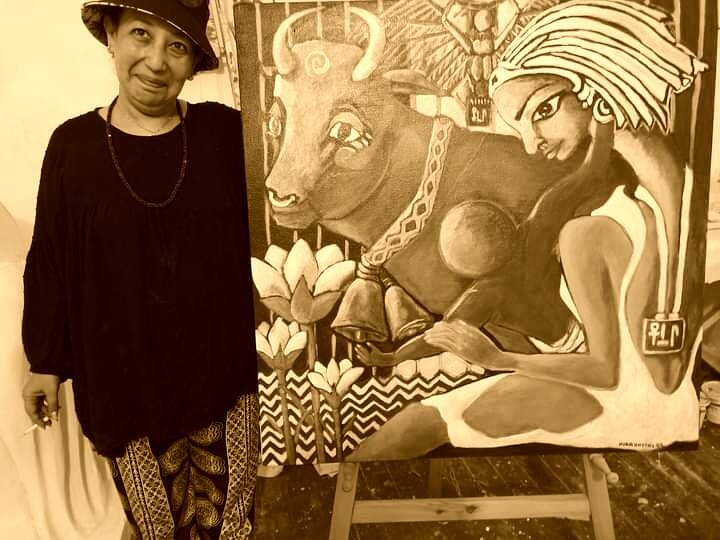
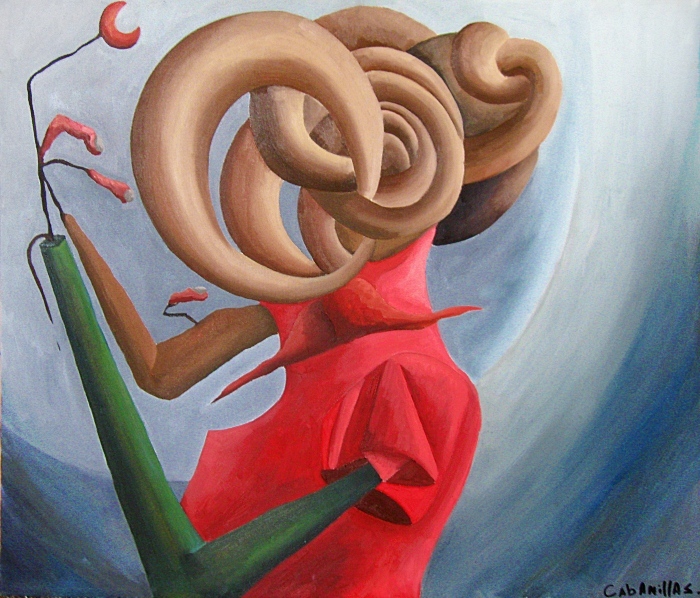
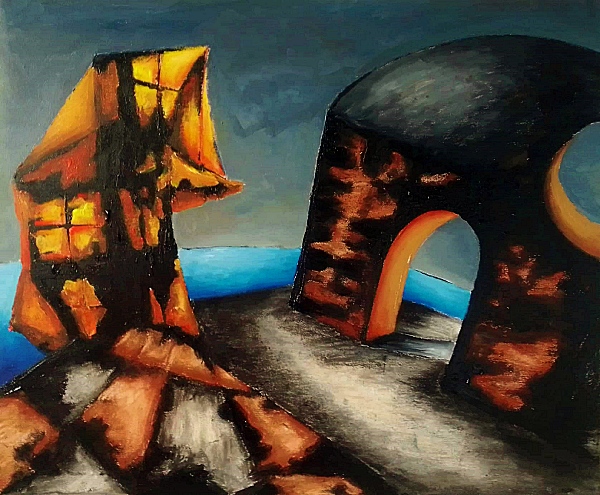
The Inhabitant of the Dream Temple Verónica Cabanillas Samaniego
The temple of dreams is located in principle in an unlimited place, it is not exactly an island, it is the sky itself in immense melancholy, surrounded by the sea and in the absence of farewells. Towards all directions a path towards you, and I discover each treasure at the bottom of the word. In the absence and presence of everything, I hear bordering a harmonious song flowing like an infinite abyss around us.
The Temple of Sleep in self. Verónica Cabanillas Samaniego
The paradise that we have penetrated and invented is resolved like the design of a luminous dream, which we glimpsed to see a long time ago, until we rediscover the trace, shake off the dust and build the raft that takes us from me to you and vice versa, yes, on this side the sleep is deep, in this temple of gods we are simple people, trying to take forever a piece of heaven and looking for a dignified death, where our names are heard and pronounced only by hallucinated insects and dogs on the last day of the humanity, we only dream that on the last day of the world we will not forget to feed them, and the last poem we wrote and the last brush stroke on the white we gave, undermine my pain to the depths, and be reborn in a beautiful pack of dogs, in another time, another planet, another galaxy as far as we can see in the temple of dreams. Because only the measure of the vision is equal to the measure of what is imagined and because everything that one builds is the measure of what he managed to imagine. In the temple of dreams I realized that, and why I was already here
Verónica Cabanillas Samaniego. Algarrobo, Chile, Octubre 2022.
Verónica Cabanillas Samaniego
Verónica Cabanillas Samaniego (Lima, 1981), is a poet and visual artist. She has exhibited individually in Lima and collectively in Europe and Latin America: El asombro del colmillo, Le Petit Canibaal, Valencia (2014); Ludwig Zeller, composing the illusion, Taller de Rokha Gallery, Santiago de Chile (2017); One hundred years of Surrealism, Espacio Matta Cultural Center, Santiago de Chile (2019-2020), International exhibition of surrealism, Kudak Gallery, Cairo-Egypt (2022), Echo of contemporary surrealism, French Institute of Alexandria, Egypt (2022). She published in 2014 TUyYO by desktop publishing and participates in various poetry anthologies: IXQUIC. International Anthology of Feminist Poetry (Editorial Verbum, Madrid, 2018); Wagered deep on the run of six rats to see which would catch the first fire / Surrealist and Outsiders (RW Spryszak, Chicago, 2018); Liberoamericanas, 80 contemporary poets (Liberoamerica, Spain / Argentina / Uruguay, 2018); Narrow doors in wide green fields / Surrealists and Outsiders (RW Spryszak, Chicago, 2019). She has participated in the V Lima Poetry Festival (2014); IV Antifil Alternative Book Fair, Lima (2019). Her visual work is published in Derrame magazine (Chile), Canibaal (Spain), La vertèbre et le rossignol N ° 5, Vies de Saint-Artaud (Canada), Vol (France), The Room (Egypt). She is part of the book 120 nights of Eros, a compendium of surrealist women made by Floriano Martins, ARC editions, Brazil (2021). She currently co-directs with Magdalena Benavente the magazine Honidi Magazine, in Algarrobo, Chile.
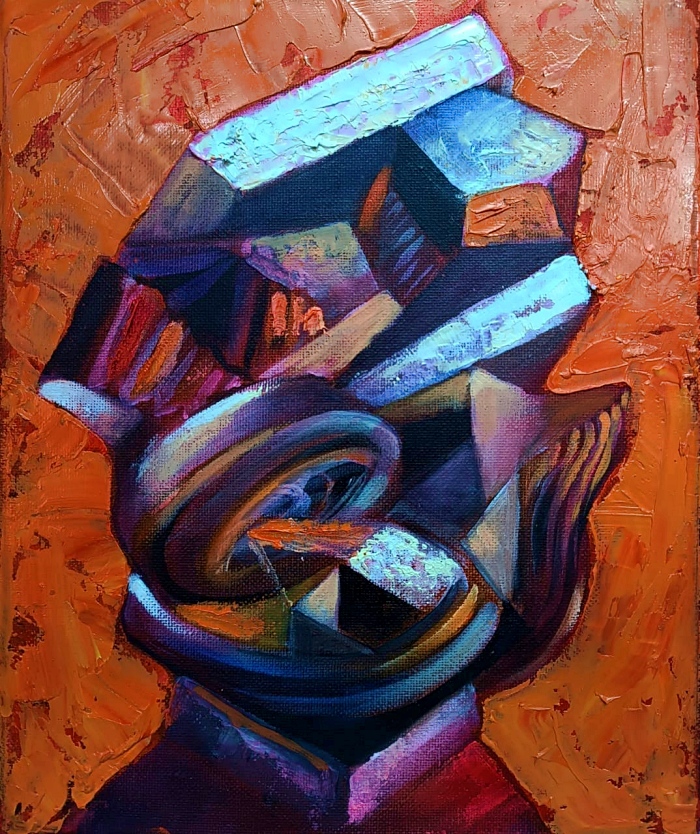
Rene Fernando Ortega Villarroel
FROM THE SOUL.
The melody of silence. I search endlessly for labyrinths across the fields I will find. Plants have eyes and they see me. I spill my blood of color pigments. With the wind I always seek to know infinite mountains wrinkled by time. That golden light lets me dominate, with veiled rain and magical scents from my hidden memories of a man of the land. Luminous nature with an open belly shows me a trace of the sun. Conscientious without desolation, living nature, the plants have begun to love me.
DESDE EL ALMA.
La melodía del silencio. Yo busco laberintos sin cesar a campo traviesa voy a encontrar. Las plantas tienen ojos y me ven. Derramo mi sangre de pigmentos de color. Con el viento siempre busco conocer infinitas montañas arrugadas por el tiempo. Esa luz dorada me deja dominar, con lluvias veladas y olores mágicos de mis recuerdos ocultos de un hombre de tierra. Naturaleza lumínica y de vientre abierto me muestra un trazo del sol. De conciencia sin desolación, naturaleza viva las plantas han comenzado a quererme.
Rene Fernando Ortega Villarroel Santiago, Chile, Octubre 2022
Rene Fernando Ortega Villarroel
René Ortega, was one of the winners in the international biennial of contemporary art October 3, 2022. Rene has exhibited work in Chile and Argentina. He is involved in many cultural art programs that have related to hospitals, children and teaching art professionally. His most recent show was Mental Labyrinthsat the Til Til Cultural Center Art gallery on June 18, 2022
“My concern is the human figure as a feeling of primitive and irrational states, whose main point are the heads, universal thought of the creation of man and center of the universe. All this led to a mutation of the plastic and pictorial language”.
Featured art photo Rene Fernando Ortega Villarroel
P.D. Newman is an independent researcher located in the southern US, specializing in the history of the use of entheogenic substances in religious rituals and initiatory rites. He is the author of the books, Alchemically Stoned: The Psychedelic Secret of Freemasonry, Angels in Vermilion: The Philosophers’ Stone from Dee to DMT, and the forthcoming title, Day Trips and Night Flights: Anabasis, Katabasis, and Entheogenic Ekstasis in Myth and Rite. The Secret Teachings of All Ages (TV Series documentary) 2023

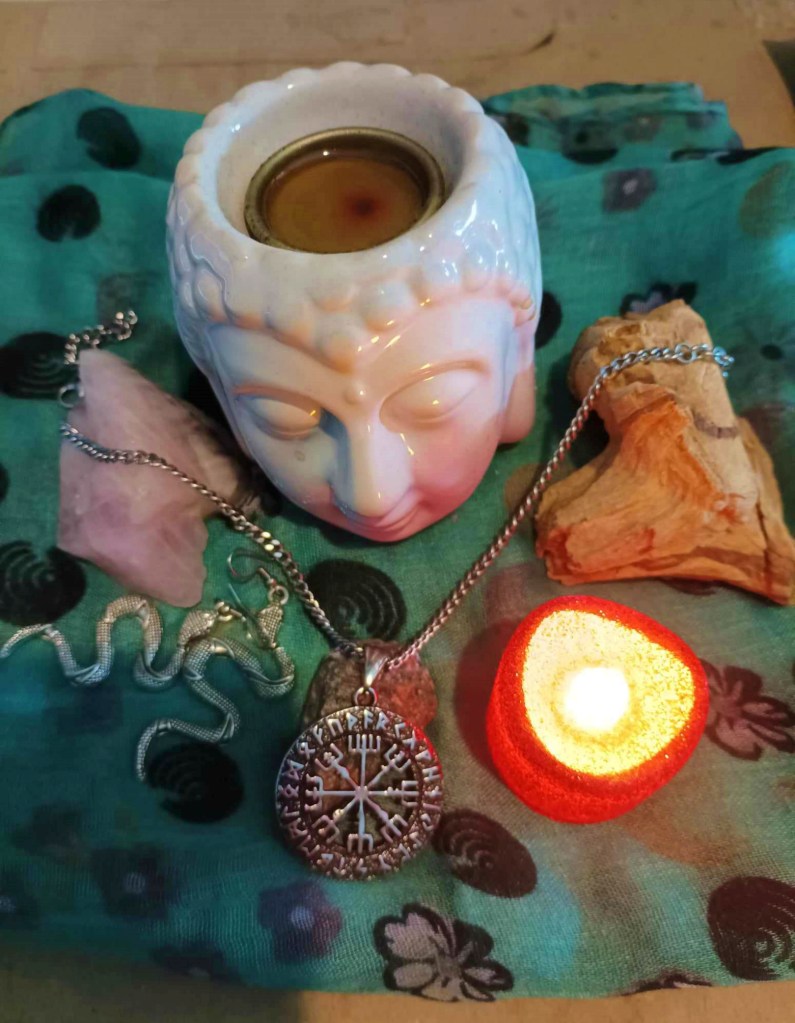
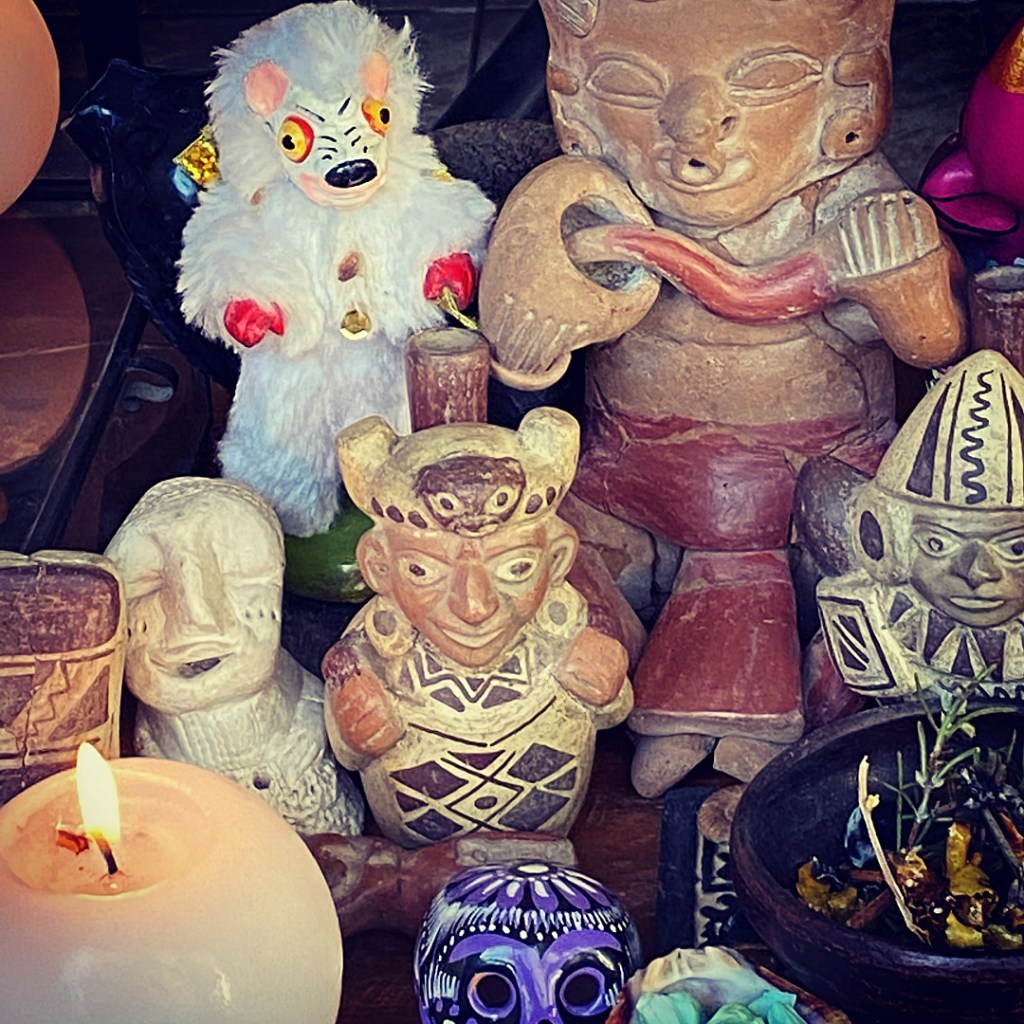





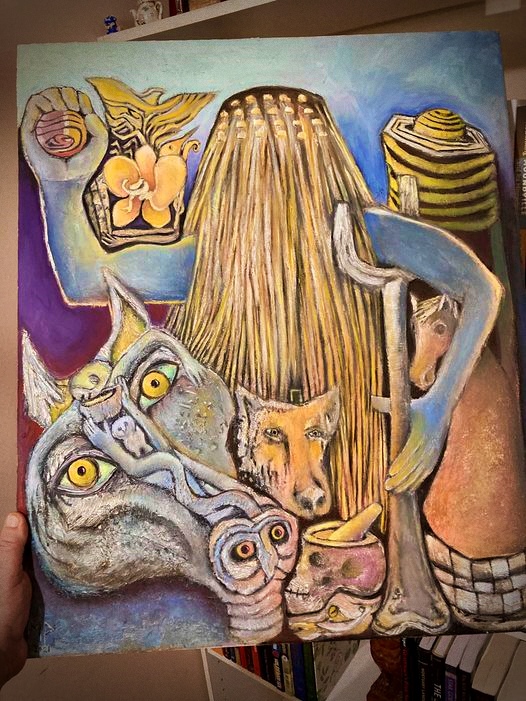

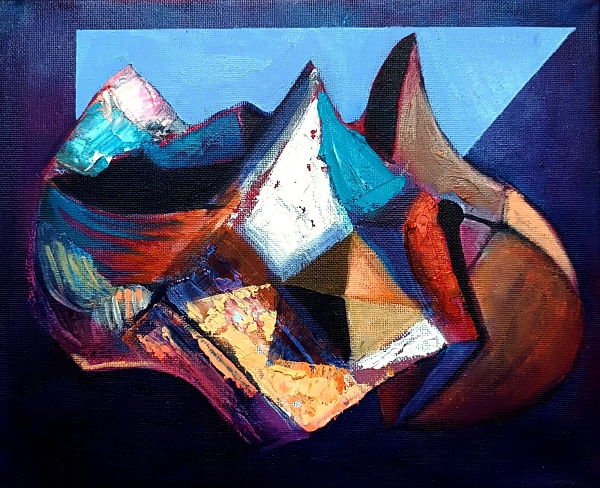
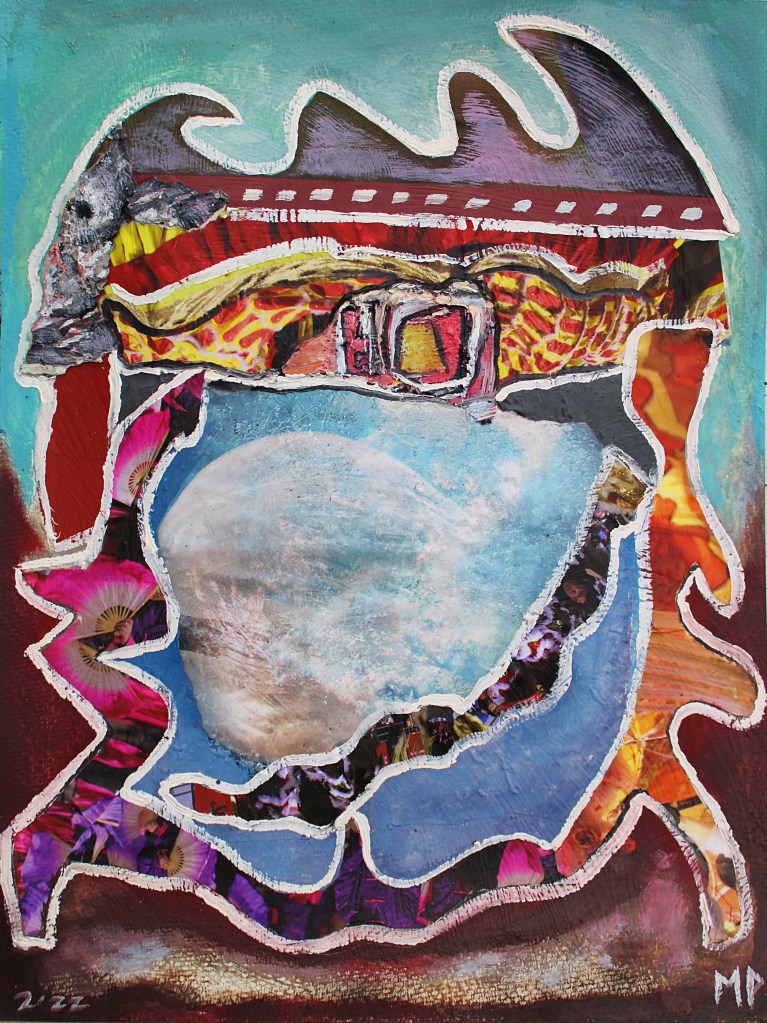
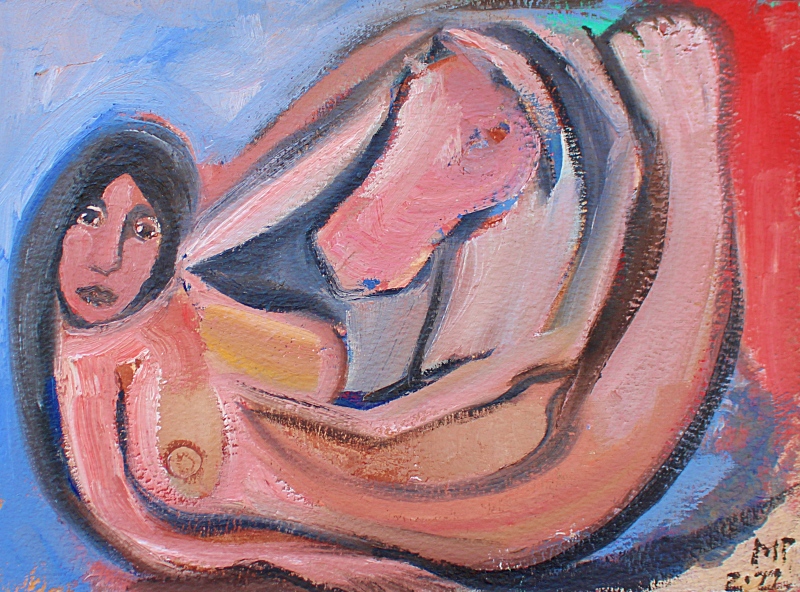
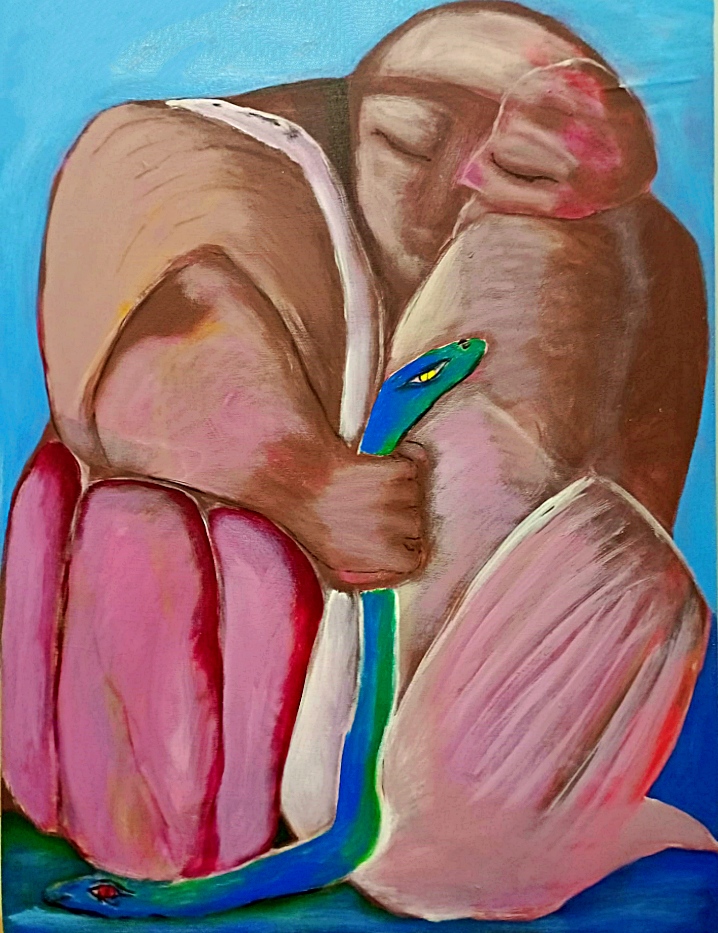

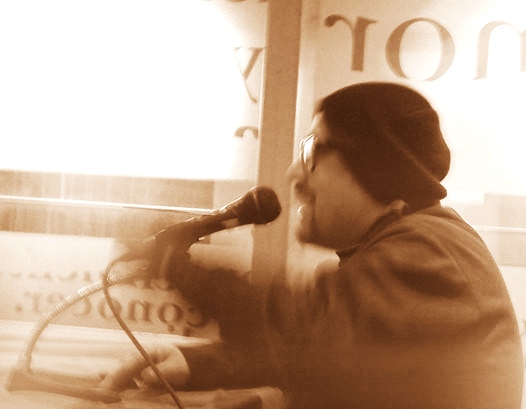
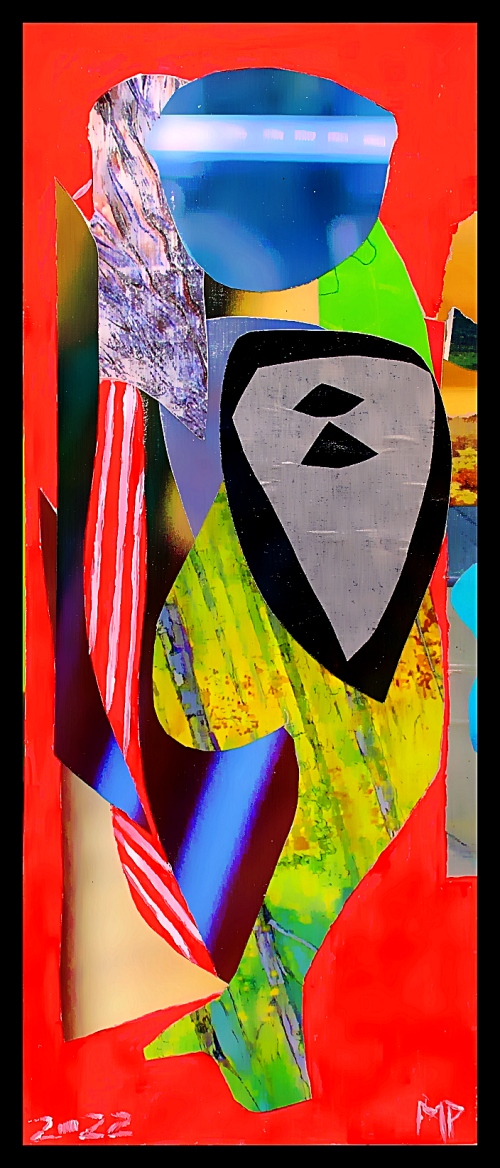
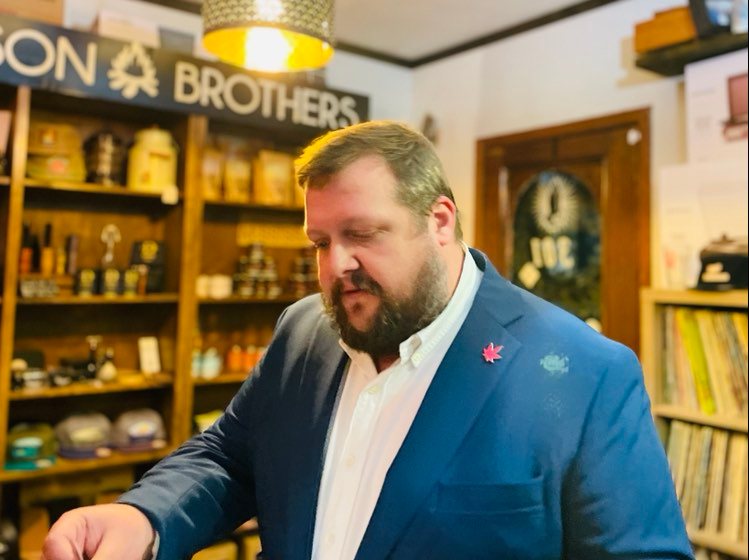
 Mitchell Pluto