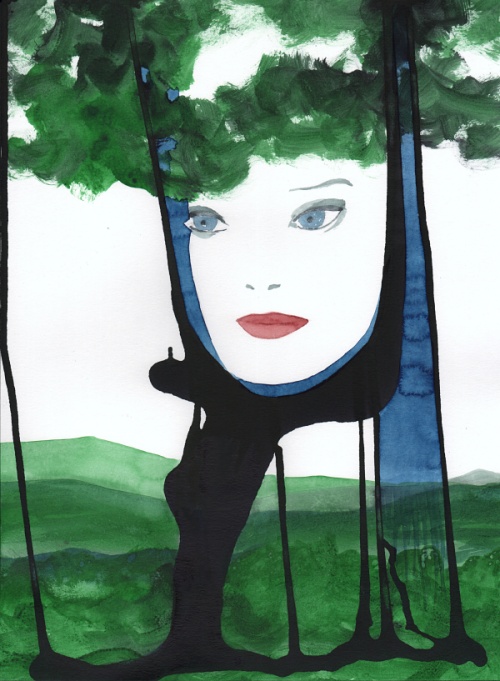
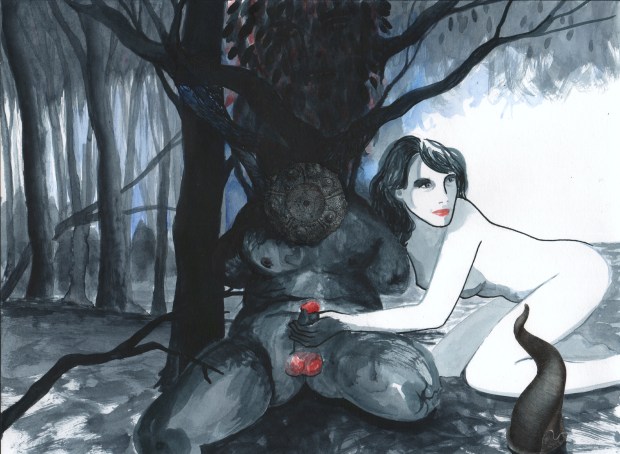
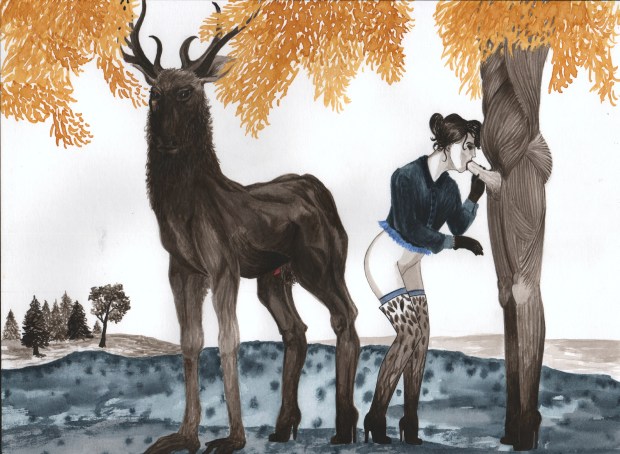
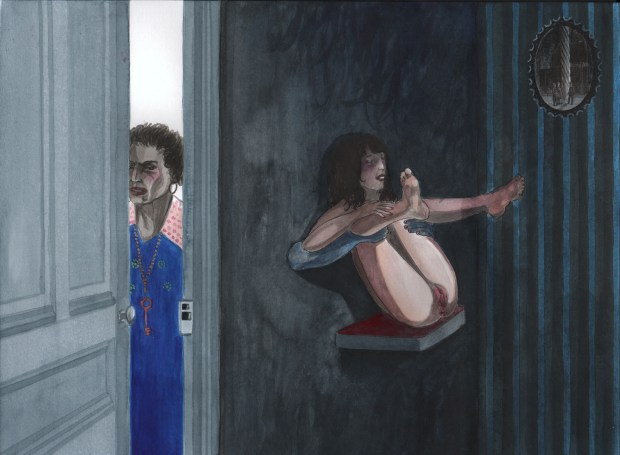
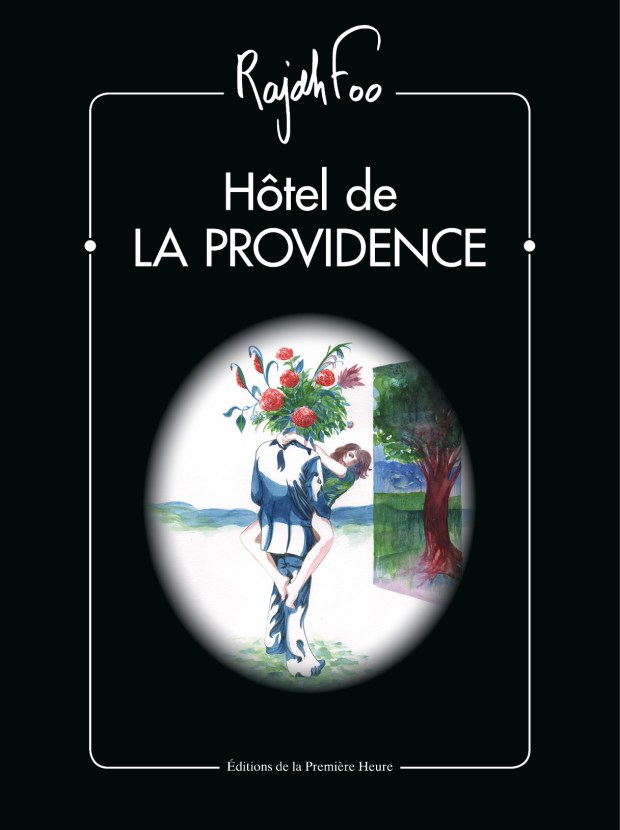
L’œuvre de Rajah Foo est souvent marquée par une touche gothique. Son travail utilise le suspense, des images troublantes et des paysages ruraux pour créer des récits visuels. Ces œuvres suscitent des émotions profondes chez le spectateur. Au cœur de son travail se trouve le thème de la pénétration et du désir. Les scènes entraînent le spectateur dans une célébration de la libido.
J’étais étudiant à L’école des beaux-arts de Nancy en France. Je discutais avec la professeure de culture générale, Geneviève B. Tout ce que je produisais était lié l’énergie sexuelle: sulptures représentant des couples de danseurs, minotaures, peintures et dessins pornographiques. Tout cela etait loin de tout ce que je voyais chez les autres etudiants, à l’introspection conceptuelle. Les enseignants étaient gênés par mon travail. Geneviève m’a dit d’un mot: tu es un artiste différent.
La coquille bleue
J’ai découvert, alors que j’étais enfant, dans la bibliothèque de ma mère le livre de ” Pauline Réage ” Histoire d’O. Une lecture comme un éblouissement. Plus tard, Sade dont la biographie m’a plus impressionnée que l’œuvre. Je fais de Freud et David Lynch, des compagnons intimes, quitte à les trahir, pour explorer l’opacité du désir. Mais j’ai peur d’être trop long… ( mythologie grecque, Bataille, Klossovski…) j’ajouterai simplement que la littérature m’a touchée la première, avant la peinture ou la sculpture.
Diane
Je crois que les deux artistes qui m’ont le plus marqué sont Hans Bellmer et sa poupée, et Max Ernst pour ses extraordinaires découpages comme ceux d’une semaine de bonté.
La fleur crue
Vous voyez, vous avez bien perçu dans mon travail ceux qui l’accompagnent. Un mot me plaît particulièrement dans vos propos: totémique. Il contient une forme de spiritualité, de brutalité et de mystères antiques. Il me fait penser à la fascination qu’exerce sur moi le mythe de Pasiphae depuis que je l’ai lu, enfant. On y trouve la puissance du désir, le scandale qu’il suscite, comme il renverse le monde. Mes dessins sont des images lentes extraites de toute cette exploration.
Le cercle de l’horizon
Je ne contacte jamais les galeries, je ne sais pas à l’aise avec les inconnus, et je sais que nombreux sont les artistes qui les sollicitent. Il y a une exception à ce tableau, la galerie Arts Factory à Paris, qui m’a accueilli lors d’une exposition collective, et le 8 octobre cette année pour signer un livre que m’a consacré les editions première heure.
In centuries preceding, during the long, dark night of people passed, the light from the moon was different, they say. Carpet weavers watched sporadic clouds wrestle with thick air as translucent sentiments, ribbed by fleshy coils, pointed fingers at old friends. Tarpaulin Triveni, female, teacher of twenty, payer of Federal taxes, architect of the west winds, lover of afternoons; Route 79 to Tiruvannamalai, rush hour smoke, brimstone, incense, pooja, sudden migrations: the temple, partly stone, partly human –
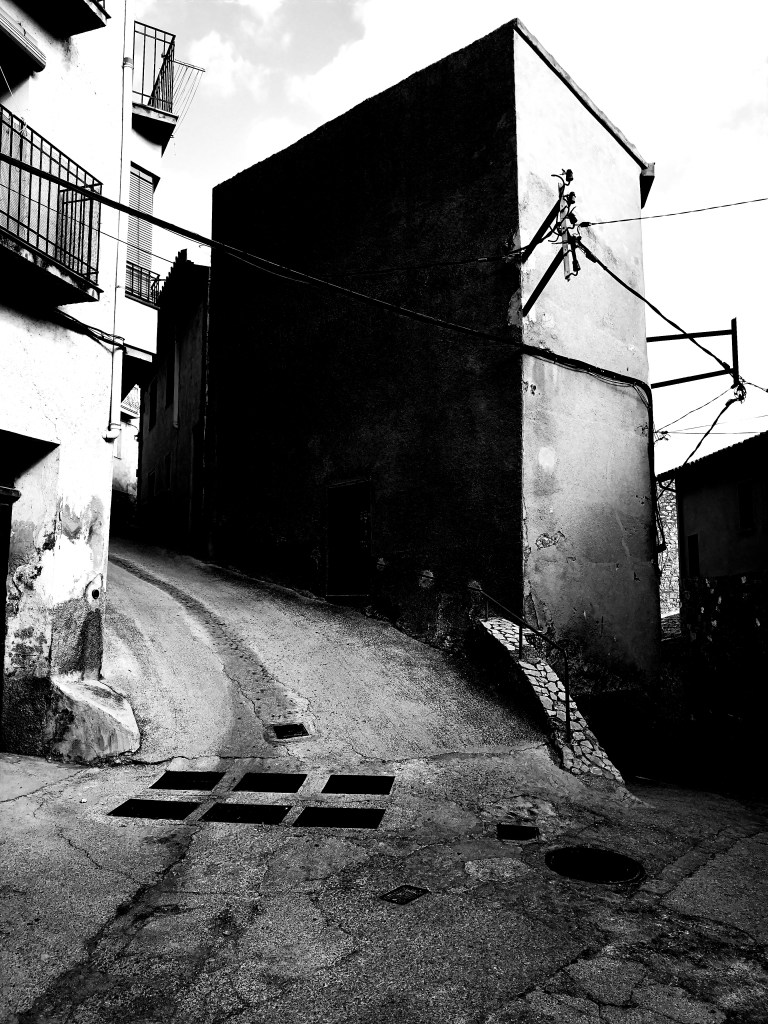
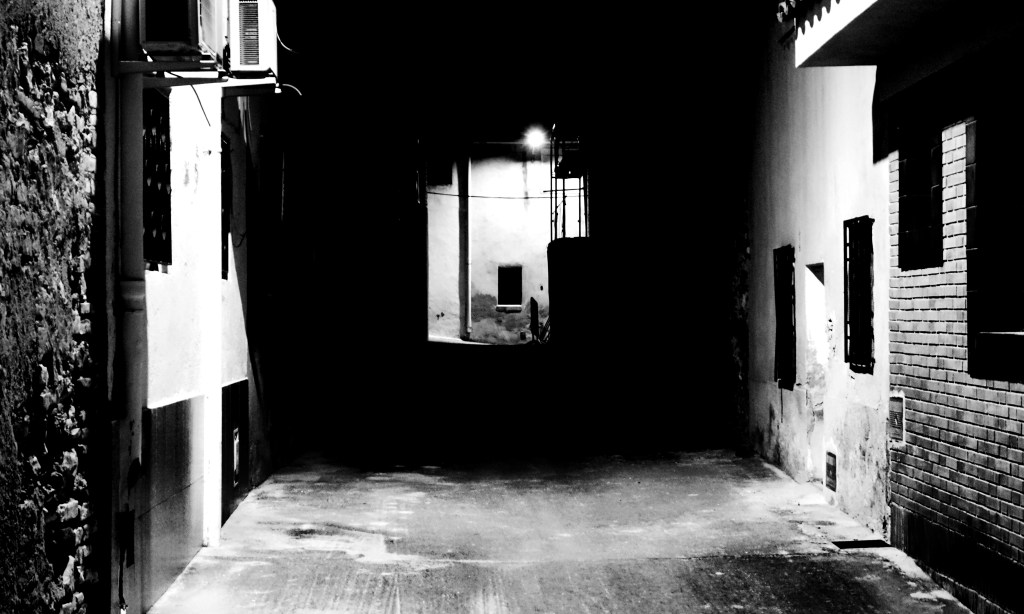
Tortosa CataloniaMontblanc Catalonia
Astarte! At last, longed the cantaloupe queen, conscious like burned butter afloat in disquietning nodes of boiled heroism, sheer terror written on her bronze armour in longhand Sufic prose, arrows bristling brilliant shafts of light upon those who stand amazed. In showers of liquid lead and riddles like retribution she raises up her head in thunderous paroxysms of wildfire, incinerating the noise of the NASDAQ trading floor via the quietest opening, or tearing into the roaring twenties: like lovers they eat themselves whole. A pain-pointed predilection for killing gods of all sorts, striking them to the ground, howling, shrieking for mercy, but shewing none, misusing the corpse after the kill like orca with a dead seal, or Achilles with Hector’s remains. We play with death. It makes us young.
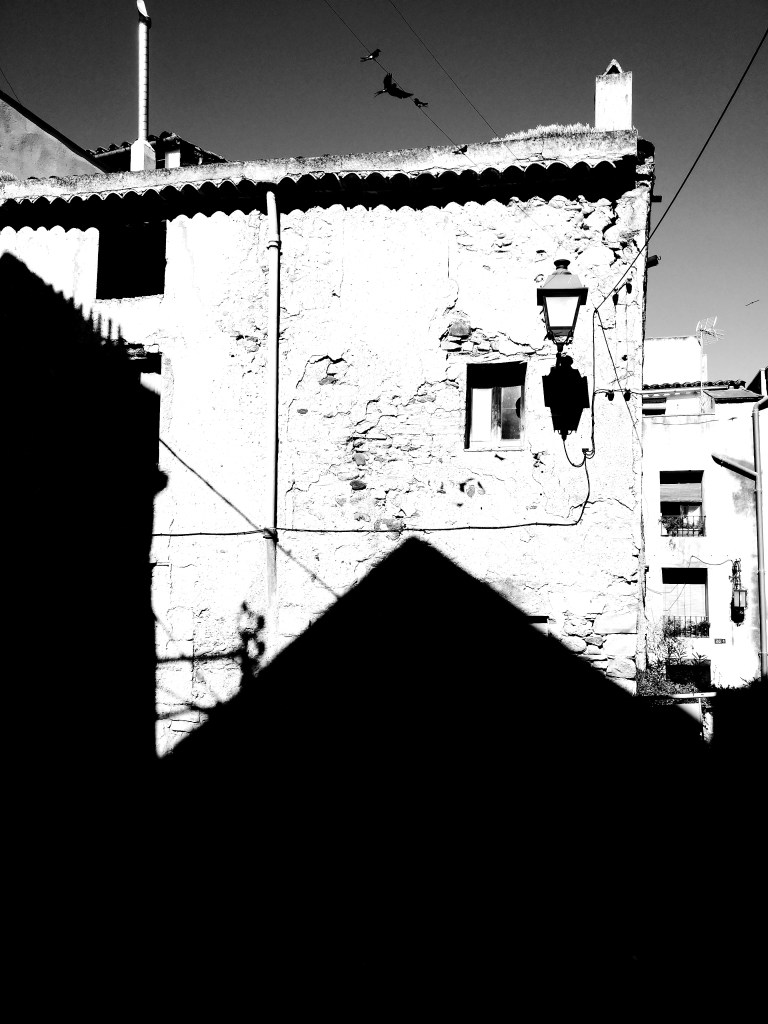
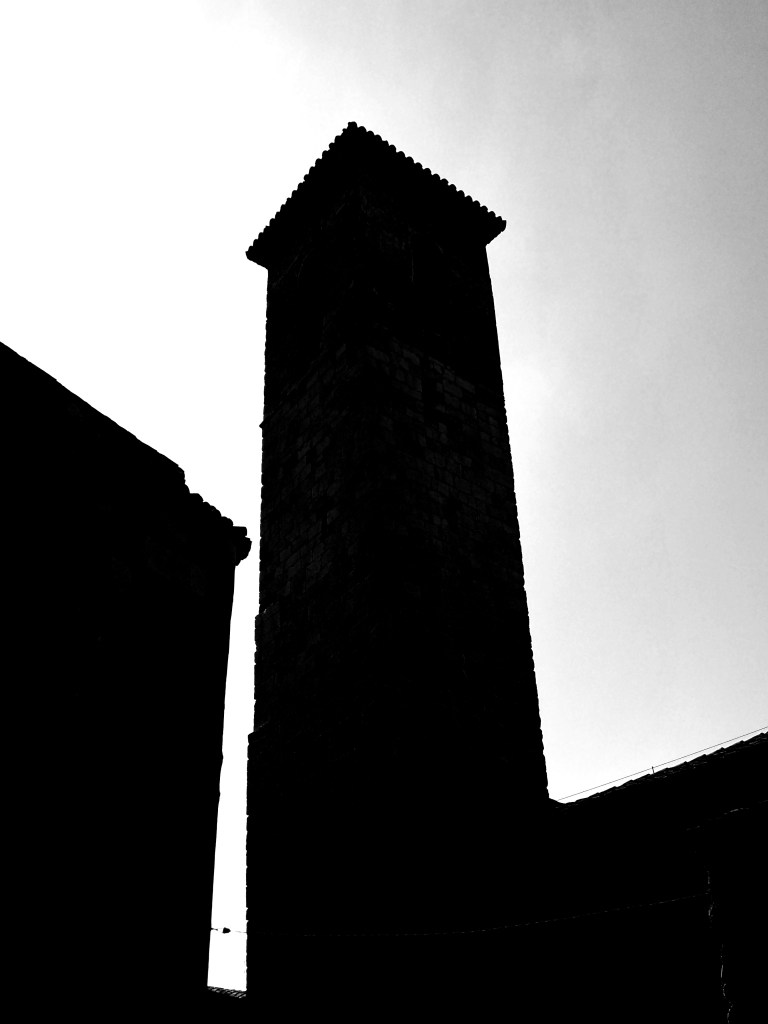
Tivenys CataloniaTivenys Catalonia
Silver serpents entwine the heart-locket of a young man in Queens. The crepuscular silhouettes of tall buildings all empty, as in a dream, bitter chills in the wind from Hudson’s channel, flashes of red lightning, banshees in the street below setting the dumpster afire. Concrete streets empty and dark, this wraith-like apparition only masquerades as a city: a riddle, an omen, a curse. A picture of petty consequences, catalysing a tuber shaped oath for remedying unlikely afflictions of the psyche, like the pinch of a rubber band wound too tightly around your finger. Entrenched layers of decimal decline pontificate politely to a crowd of mainly young goatherds, but they don’t mind, as any entertainment will suffice for a goatherd of the Bactrian valley, longsuffering in the August Afghan ovenheat, yearning for the cool Hindu Kush. Up there, queens look down from snowy temples, peaks outlined by the monsoon moon, vanished layers of paradise passing instantaneously from view. Instantaneously –
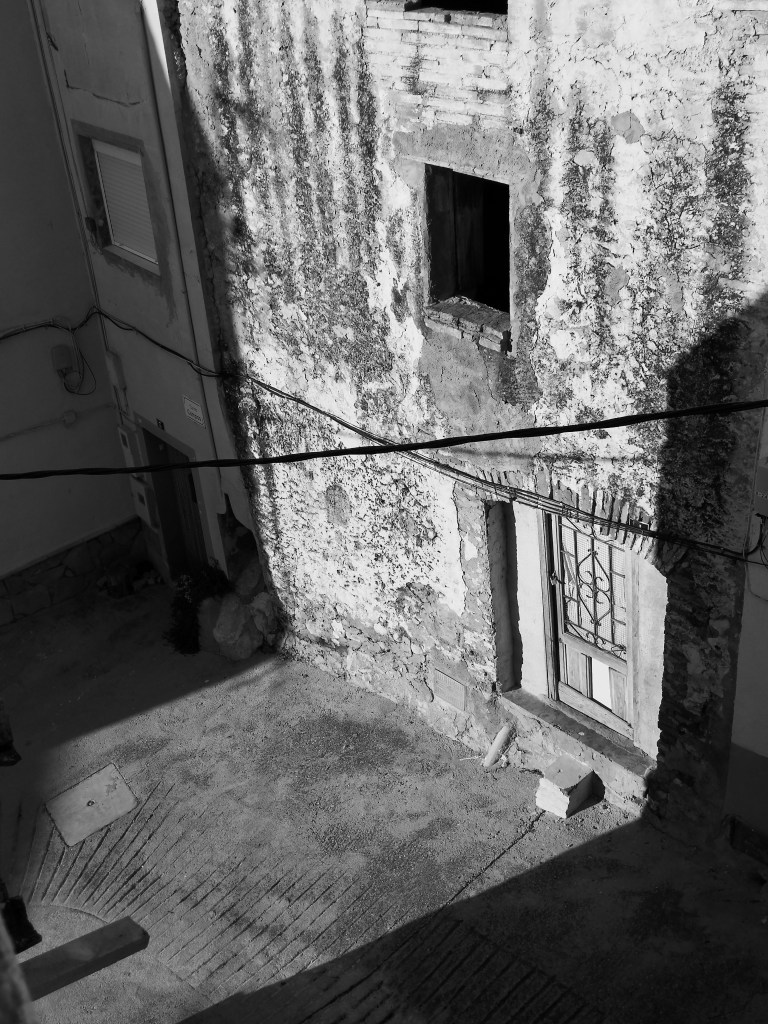
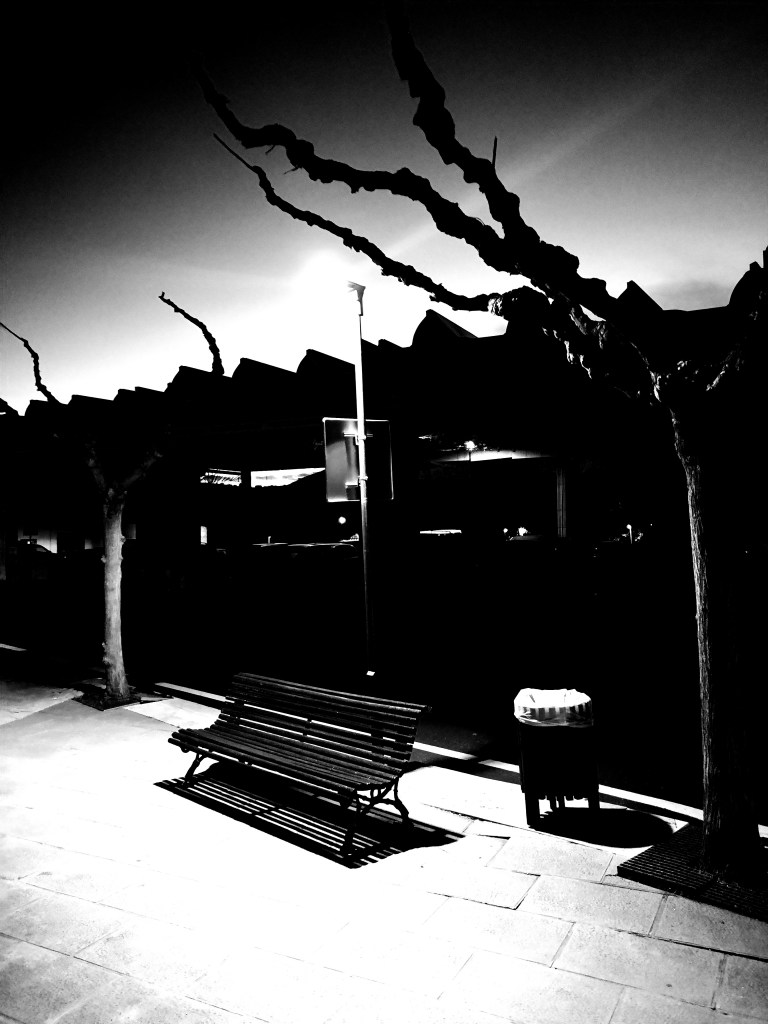
Tivenys Catalonia
Borders bind the wealthy to the poor, but in seaside temples of voluminous concern we count epigrams between sunsets, rallying fractious spirits in the meanwhile, damaging civic furniture installed in the Citibank Plaza. The old guard sits outside the bank on a plastic beach chair, machine gun hanging lazily at his side, smiling cheerfully at the calls of the brain-fever bird stirring raptures in the daytime as if coaxing clams from shells, a child of every man. Now we are ringing the new year by the seven bridges of Königsberg, full of cheap fortified wine and high on super glue, destroying the way of life for those who cannot know better, sweetening a joyous relation between the baroque lintel and its most spiritual rejoinder.
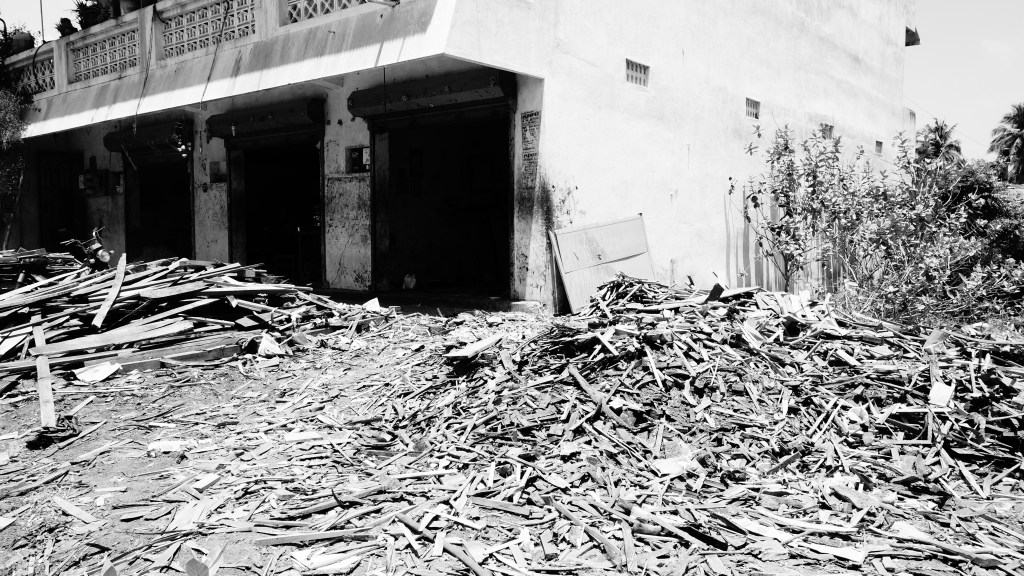
Montblanc CataloniaMontblanc Catalonia
Openings, ruptures and fissures decimate Dorothy Drumwise on her drunk drive through the badlands of Blackpool, BMW unlicensed, DMT fairground flakeout. She sings sweet missives of the Golden Age, of Plutarch, Pindar, and of Ovid. Inclinations of ages move with tectonic twists, first shifting this way, then that way, as with the latest dance fad. I know that you know that the ‘this way and that way’ is a vital mechanism of natural philosophy. The waggledance of industry, the fiesta after the feast, festivals observed on Temple grounds, and with much smoke and incense. Astarte above, chariot rider of fury, smoking halos of pure fire above the heads of gathered postmodernists, crypto-Marxists, and other groups assembled for purposes only spectacle may account for. This terror and delight is for quivering flesh alone: no gods may get a taste –
Tivenys Catalonia
In an asemic New Babylon, an endless plan of a constant architecture, sketch after sketch of alleyways and avenues, flows, interruptions, passages of ludic intrigue: our only concern will be for how the wind goes. The city-gestalt, our new Babylon, is stacked tier-upon-tier as with a Hindu temple, complete with the sombre front of a necropolis, grey and overbearing, the pantheonic structures of dead gods hewn into rock, but haphazardly, without plan or meaning. The Temple of pure, empty worship, accessed via doors which only appear to be doors, words which only appear to be words, each word a door signifying an exit, but only signifying, without being itself –
Kuilapalayam India
The cultivation of ways, sulfurite ligaments imposing reasonable content on expounding gasses, phosphorescent burns blister the torn corners of Lloyd George’s copy of The Life of Gargantua and of Pantagruel, but this will not be a problem for long – at least, not for several centuries. Down in the Centre Pompidou there exists a scale copy of Nieuwenhuys’ Labyrinthe aux échelles mobiles. Parisians drink pastis at 7pm.
Tivenys CataloniaTivenys Catalonia
The matriarchal temple builders of our mother, our lady, notre dame. The swollen, translucent body nurtures a billion babies in complex mythic tunnels underground. Our lady of the temple, founded with mortar and keystone, high Romanesque arches, transverse, ribbed, darkened by smoke of incense that beckons, intoxicates, shines, yet moulds-over quickly. The body of our lady nurtures a repugnant decay where fungi of a million kinds find resplendent consumption. A gentle breeze lifts the spores up and into the forest above, the penthouses, tower blocks, the Gothic quarter below, even the suburbs populated with a thousand empty houses, empty restaurants, empty hotels, emptiness, or so it is reported by La Vanguardia, thumbed in street corners by elderly gentlemen sipping coffee in districts of towering blocks, Brutalist forms, echoes of steel rod construction divining bittersweet sunsets of lackadaisical reform, wilted in margarita sunsets, sugary sensualities disinhibiting bashful dissimulation with the gait and libido of a wild cur, roaming street corners, lurking around the panty drawer, Our Lady intends two-thousand years of certitude for divine discourses on nature, for a thorough study of Deleuze, for a monthslong dance of the wild kind, for carnivals of a schizoid nature, for a Heraclitean passing, and passing, and never returning –
Tivenys CataloniaBarcelona Catalonia
Our retreat towards a porcelain past resides in a turpentine residue of vistas opening above the Sierra Nevada, that pillar supporting the vaulted deep blue sky, the only thing keeping worm-eaten heavens from falling. Remember how we drove there in December of 2018, how the warning signs for ice hazards slowed us for many miles? We sat in the steamy car and drank tea from a flask, ate sandwiches prepared earlier at home, austerity gnawing at the innards. Porcelain does not prevent against cysts. Cysts large as an eyeball, pickled in vinegar solution, stacked on a forgotten shelf in a back room of the British Museum. Perhaps it was Napoleon’s eye? Perhaps it was not?
Tortosa Catalonia
It was I, not Napoleon, who took the moon and put it at the bottom of a lake, littered with the bloated bodies of Englishmen drowned in their re-sprayed Range Rovers. Between velour flaps, cold castellations and raptures coloured like velvet bands at the fair, phalanxes shimmer like desert lizards tussling in the heat of day, the axehead aligns at the very base of the skull to release a thousand demons from their hiding places, demons who vy against one another in their scramble to escape this mind forever, darting this way and that, a confusion of beastly shapes writhing in colours both sapphire and turquoise –
Daniel O’Reilly
Daniel O’Reilly is an independent British author, publisher and internationally exhibited multimedia artist living and writing in rural Catalonia in northern Spain. In 2022 he exhibited stories, photographs and music from the [archipelago] project at the International Exhibition of Surrealism in Cairo & Alexandria in Egypt, which will travel to the Andre Breton House in France in 2024. He has recently published short fiction in the Margate Bookie Zine, Trilobite Literary Journal, Tiny Spoon magazine, Writer’s Block magazine, Sulfur Surrealist Jungle, the Bengaluru Review, Defunkt Magazine, Everything in Aspic Magazine, Chachalaca Review, The Room Journal of African Surrealism, and Black Flowers Literary Magazine. He is co-creator of The Unstitute, an online art lab and artists’ co-operative, and has screened original video art in competitions and exhibitions in over 20 different countries worldwide.
Confío más en tus huesos que en tu carne, por las noches sigo amando tu fantasma que huele a tierra infiel, confío más en tu bufanda roja detenida en el tiempo, el pasillo de nuestra casa gime llanto muerto, flota mi cuerpo en la tina, agua de árbol con espinas. Recogí mi pelo mojado en tu vieja toalla de mi melancolía, arrojé todos tus libros por la ventana.
Imperfecto
El hombre frente a la tumba desprende de su boca su prótesis dental, la envuelve en un pañuelo blanco, la oculta entre el pasto y la tierra de tumba, solo frente a sus muertos puede ser él, así de imperfecto. Ahí descansa su llanto desdentado, se sienta sobre la piedra, saca de una bolsa de papel café una lata de cerveza y bebe deseosamente el sorbo de vida a su garganta de flores mareadas que iluminan su rostro, suenan campanas a los lejos. Allí, frente a sus ancestros sonríe a carcajadas recordando alguna anécdota pasada, nadie lo juzga ni lo critica, allí frente a sus antepasados puede revelar su sonrisa imperfecta.
Tierra seca y olvidada (desierto)
El cerebro atormentado resuena en el grito del árbol abandonado en tierra antigua de la cuál brota maleza de llanto. El sol neurálgico y odiado nos quema la piel y el sudor es el brillo de su reflejo que nos tortura y nos humilla en esta hermosa y vacía tierra donde los hombres caminamos sobre arena hirviendo. El único árbol sobreviviente no tiene hojas ni semillas, es un muerto de pie frente al inmenso viento de arena en la boca y los ojos. Ahí, cuelgo mis pertenecías, en sus ramas de volcán. Mancho mis dedos y pinto mi cara de maquillaje negro, dispongo mi improvisado refugio, mi instinto animal es más poderoso que mi humanidad inservible en esta atmosfera.
Pan y caldo con arena refuerzan mi sacrificio.
El florero de tu madre
Visito tu sepulcro con una sonrisa camuflada, retiro minuciosamente pétalos muertos, (flores que dejan tus viudas amantes), uno a uno recolecto en mi bolsillo de lana hojas secas en distintos tonos, agua limpia dejo caer en el florero de tu madre; flores frescas para ti, leo tus poemas para recordarte. -Ya no vengo a llorarte al campo santo- a veces cuando se hace de noche, descanso sobre tu tierra de muerto, hago el amor contigo.
Abril y mayo
Dos retratos en dos marcos diferentes, dos fechas de nacimiento, dos nacionalidades, dos identidades. Ella no abraza a los árboles, los besa apasionadamente, la sangre que brota de su boca rota es savia dulce. No es blanca ni negra, ni adinerada ni necesitada, ni culta pero tampoco ignorante, educada y también puede llegar a ser una marginal. Por las noches se acuesta en su tina caliente, los cabellos que flotan en el agua talvez pertenecen a esa mujer que no existe. Dos retratos en dos marcos diferentes; la adolescente que escribe poemas de amor aullándole a la luna, el otro, la belleza de una anciana de ciento veinte años moribunda, declamando sus últimas palabras a la muerte.
Cama de hoja
Cuando lloro por los vivos, son mis muertos quienes me consuelan, no los veo, conozco sus nombres, su edad los huelo, susurran delicias a mi oído de hierba fresca. Florencia es la mujer fantasma y ciega que toca el piano entre ramas del bosque. Mi cuerpo pequeño cubierto de hojas secas; he descubierto que a los árboles también le gustan las melodías de cuna.
Herencia de lo mágico
Tengo el don de la sensibilidad, ver, oír con gran sutileza lo que nadie, y los fantasmas recorren el bosque conmigo; placentero como fumar a escondidas sobre enormes arboles retorcidos en donde reposa mi silueta delgada, hija del hombre, herencia de lo mágico, el humo se cuela por las hojas, canta la rama, silenciosa raíz mágica, dulces espinas te embellecen.
Victoria Morrison, Chile 1977, Trabajadora social, escritora de poesía y cuento. Miembro actual y activa de SECH (Sociedad de escritores de Chile) P.E.N Chile (Poetas, ensayistas y novelistas) Su poema Ñamku fue premiado con el segundo lugar del “Concurso poesía Indígena”, realizado por el “Museo de la memoria y los derechos humanos” en Chile el año 2020. Libros publicados: Una habitación en el infierno (2016) Ediciones La Horca. Poemas desahuciados (2017) Editorial Ovejas Negras. Pupilas de loco (2020) Rumbos Editores Sus escritos se caracterizan por evocar temáticas psicológicas. Amante de la naturaleza, la autora explica que en cada palabra existe sanación; si asimilamos esa palabra a las raíces de cada planta pues, así como existen semillas imperfectas, también hay humanos imperfectos; no son acaso los bienes llamados “árboles torcidos” los que, sin agua, sombra, ni tierra fértil continúan respirando en la tierra. (Si la frágil planta resiste el frio, la intemperie, la carne humana cobijada en lana y bufanda debería agradecer y callar, oír en silencio, el congelado y valiente canto de la hora escarchada).










 Mitchell Pluto