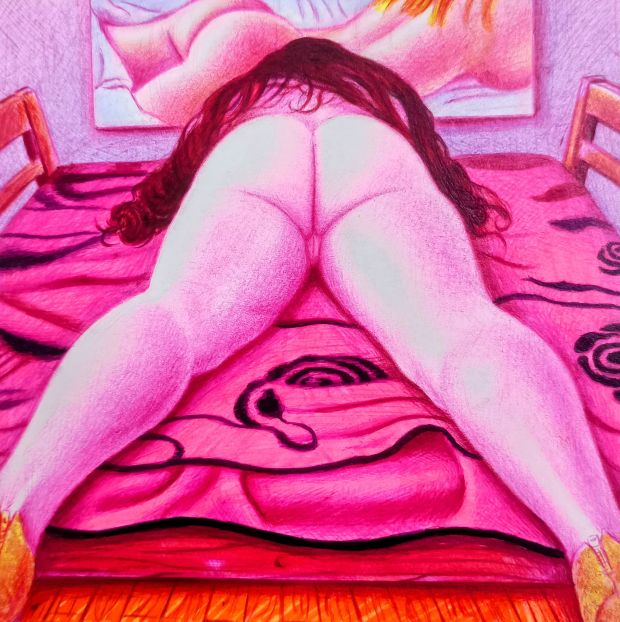
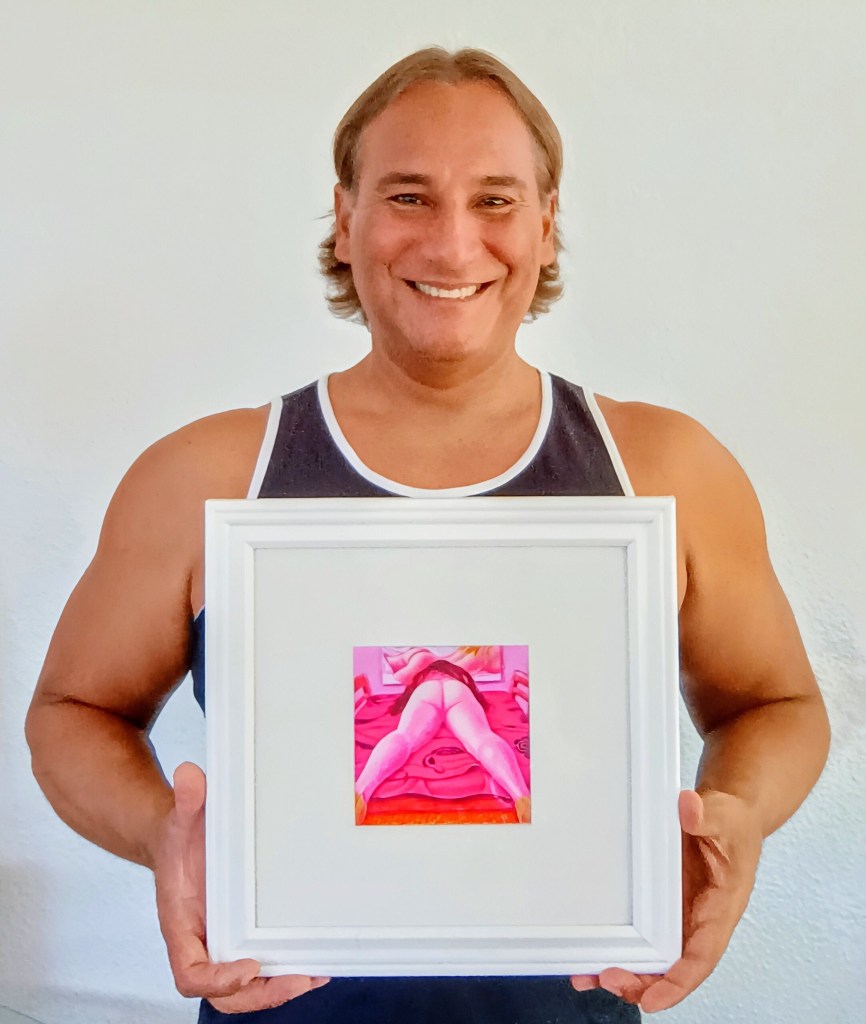
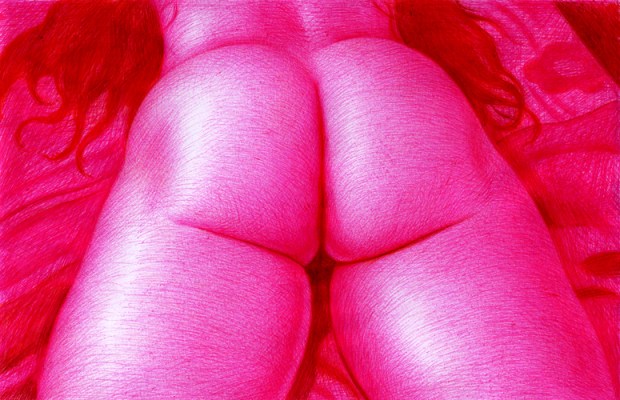
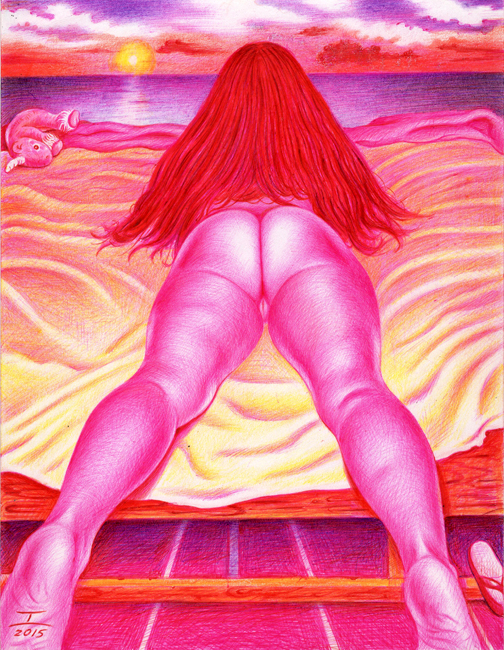
JC Bravo CONFESSION (2026) ballpoint pen on paper.
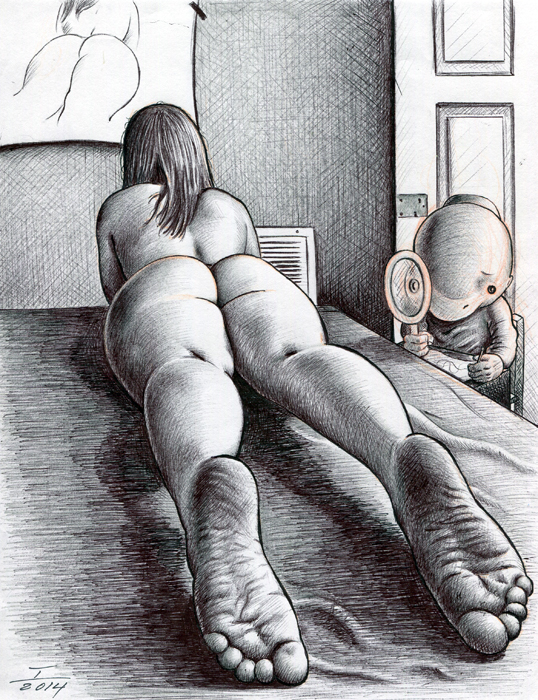
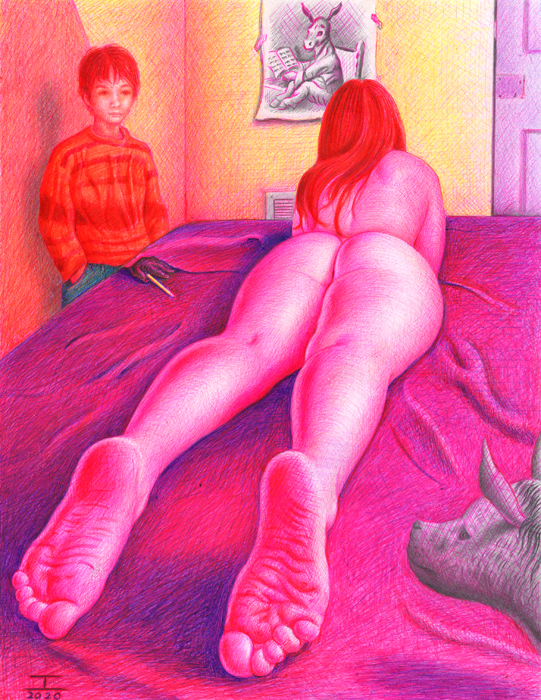
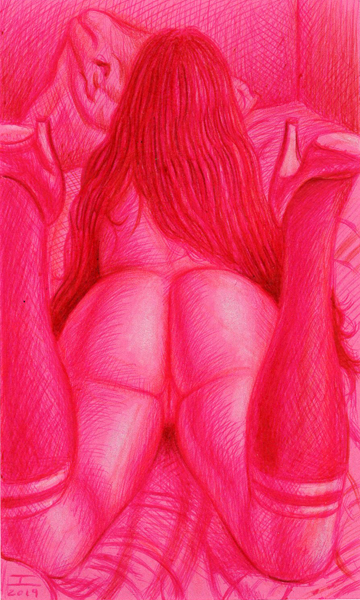
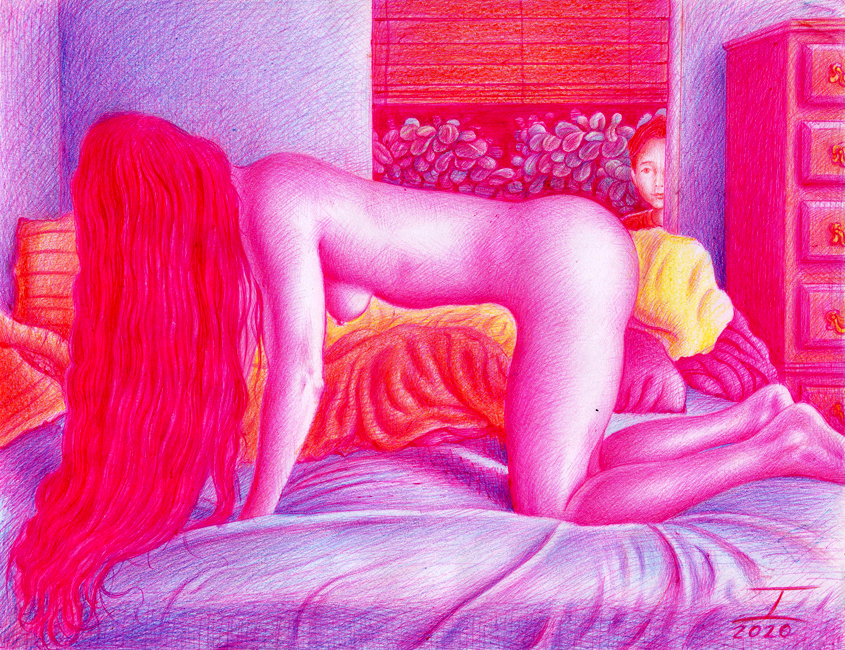
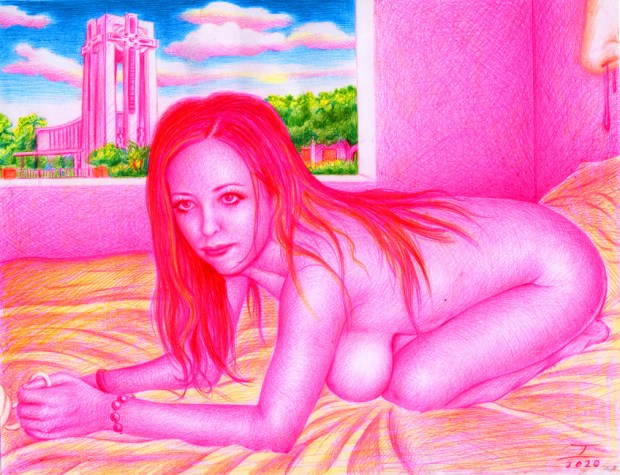
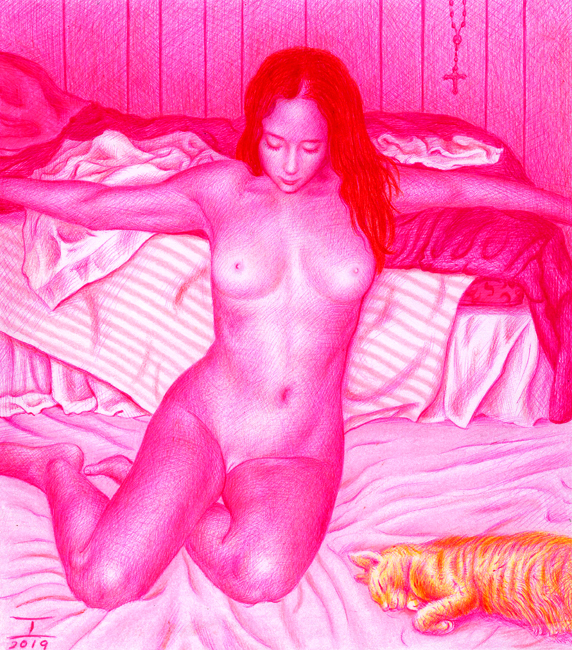
In this neon pink ballpoint pen drawing, obsessive crosshatching builds a body laid bare in complete surrender. Neon pink pulses with the heated flush of skin, the electric thrill of longing, and the raw intensity of love and lust. Through thousands of meticulous strokes, the figure becomes a quiet confession of obsession, femininity, and the consuming ache of wanting — desire quietly witnessing itself in the mirror of another painted nude.
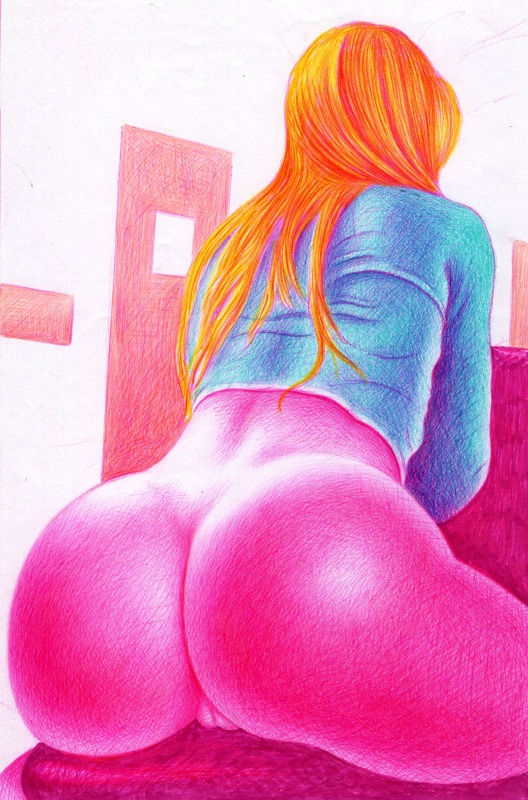
HOT FOR TEACHER (2024) Ballpoint pen on paper
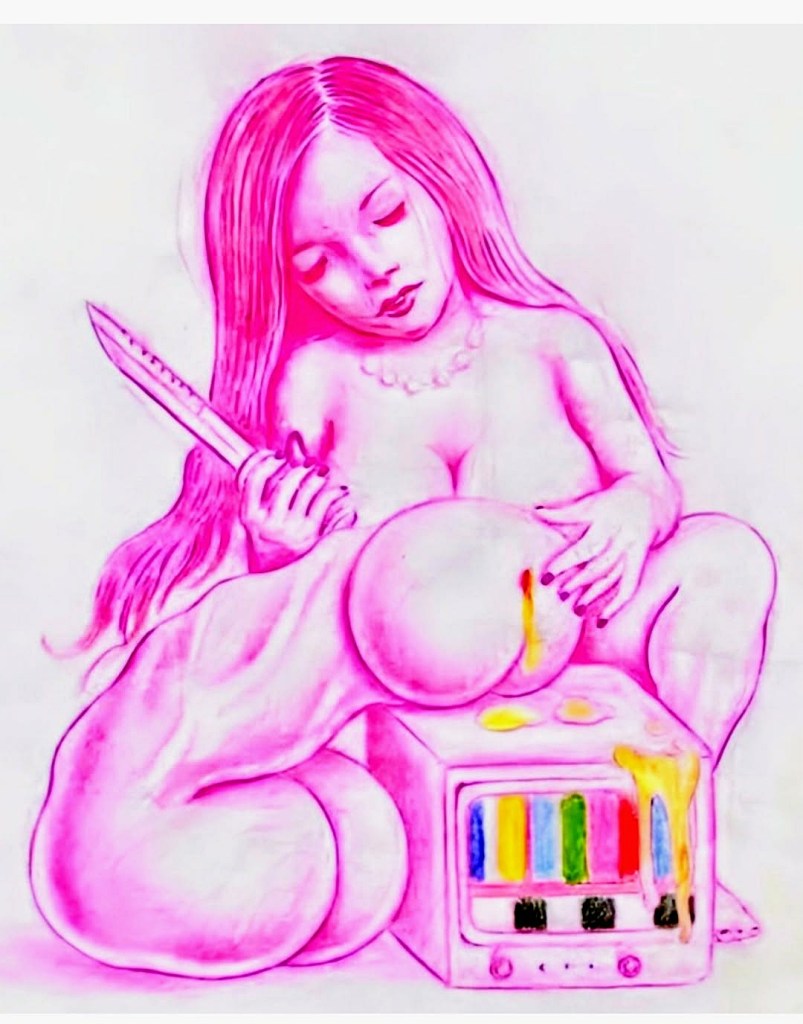
THE END OF DESIRE 2026 JC Bravo
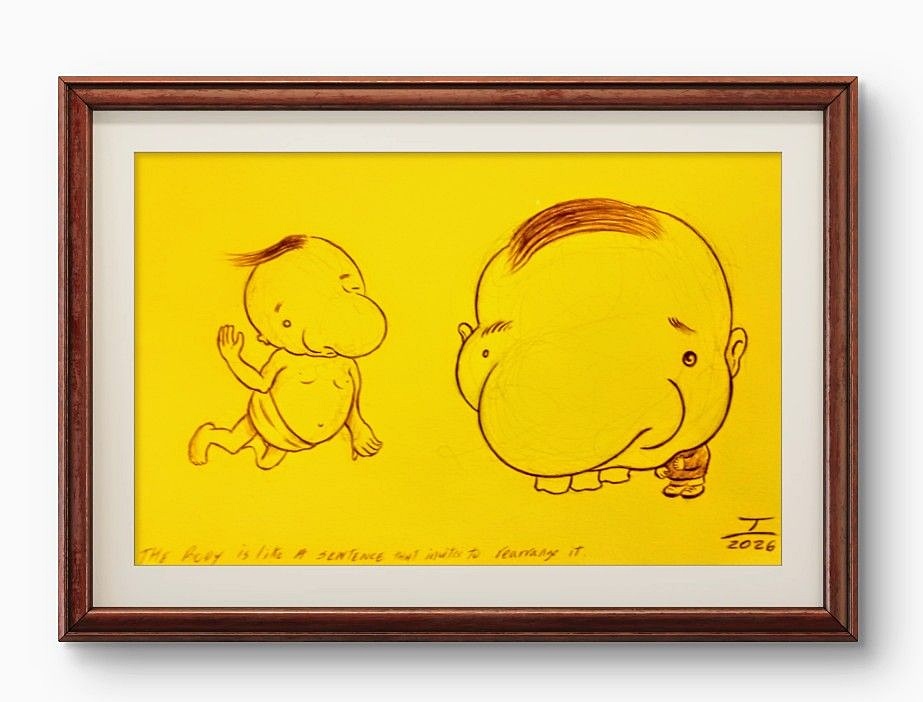
REARRANGED (2026)
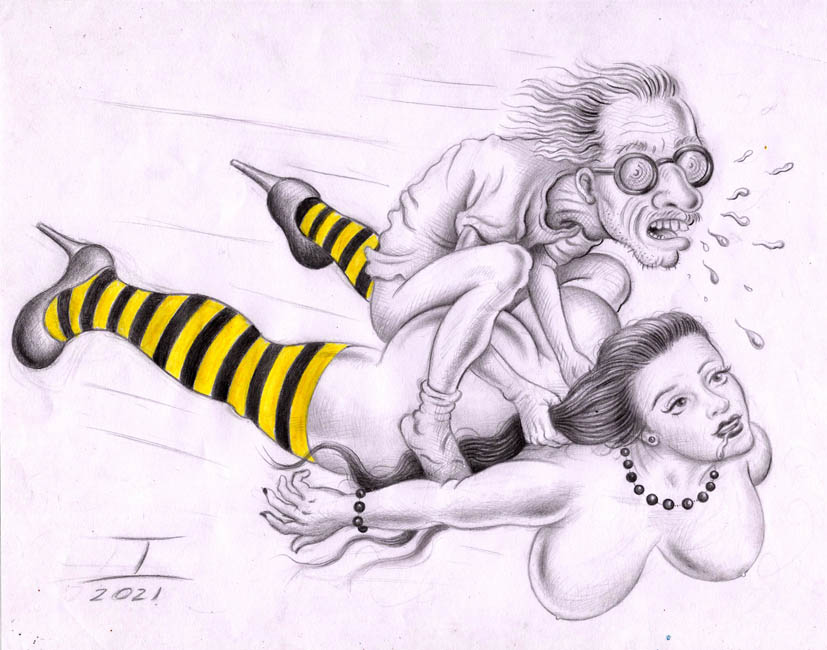
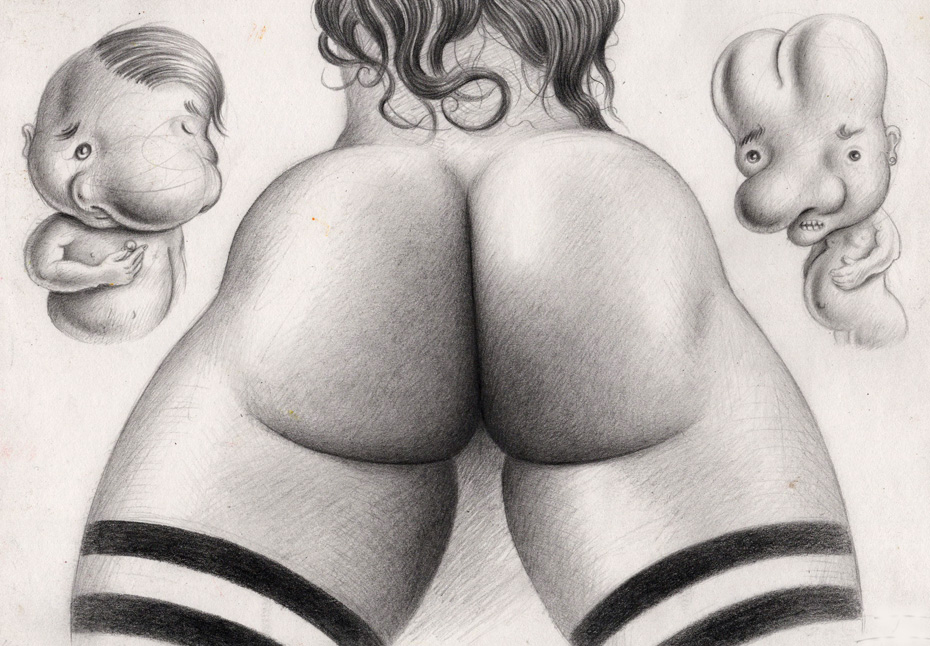
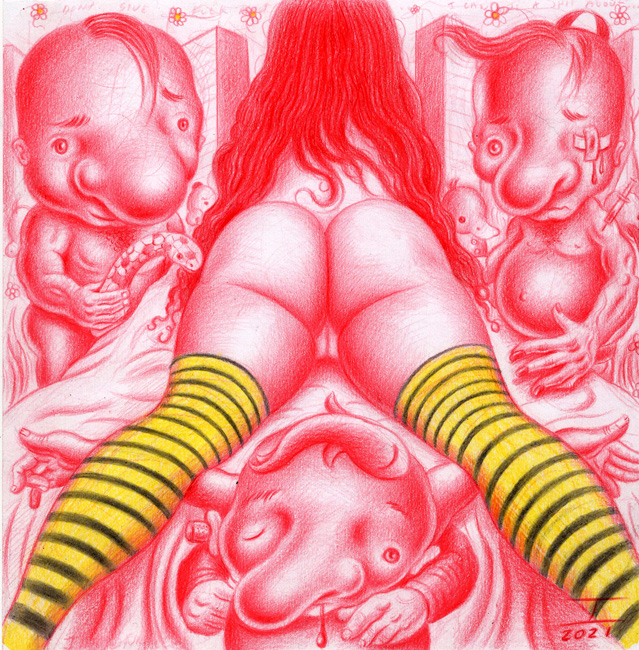
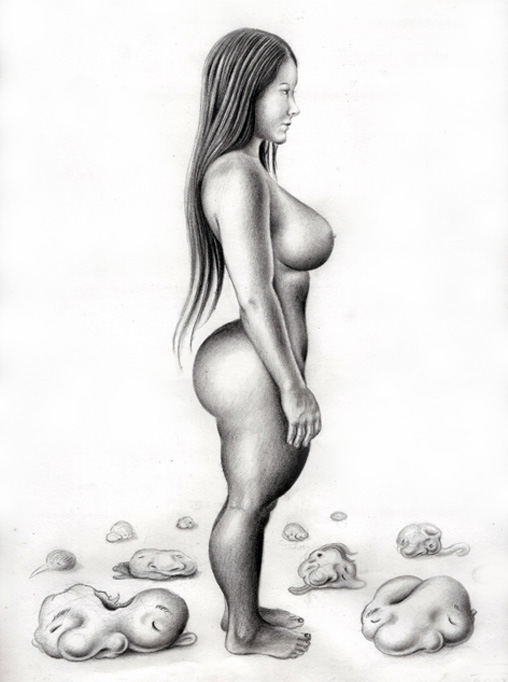
My swollen, bulbous characters are exaggerated vessels of the human condition. They are grotesque yet tender, absurd yet deeply familiar. Through them I explore inner chaos, vulnerability, desire, and the carnivalesque absurdity of simply being human.
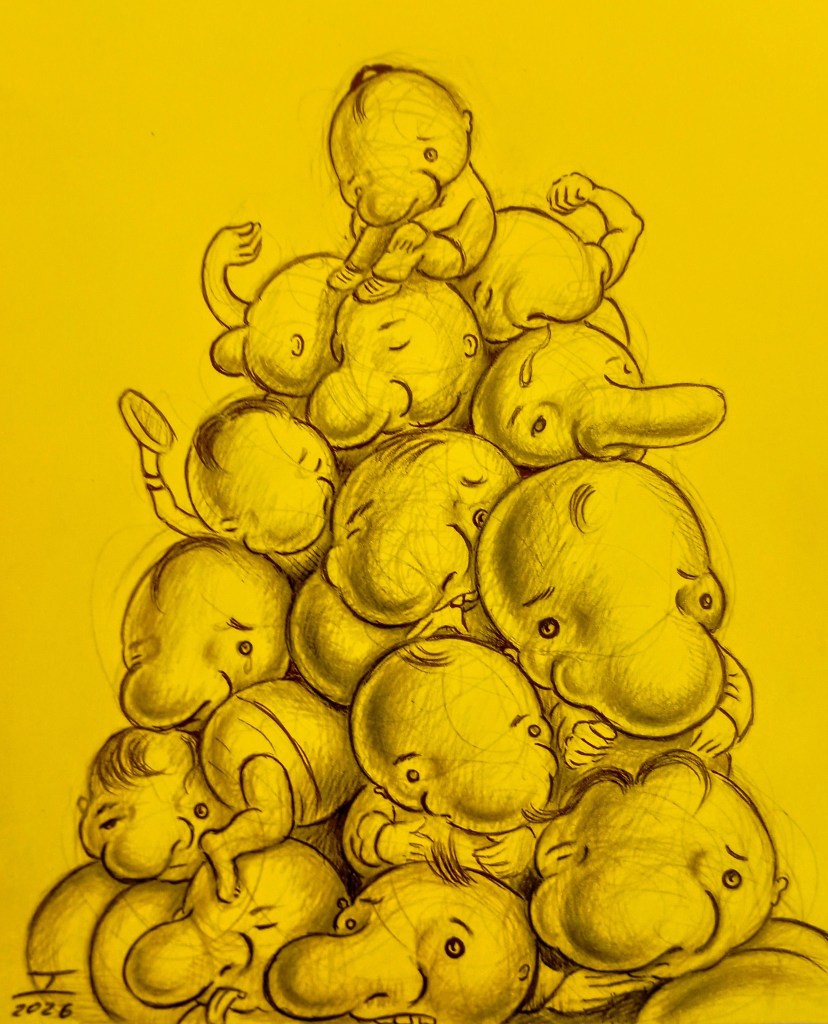
MENAGERIE (2026)
A towering pile of bulbous, round-headed baby-like creatures are stacked precariously on a bright yellow background. The way they’re climbing, clinging, and overlapping is both playful and deeply unsettling; like a living tower of innocence mixed with grotesque absurdity. Some look sleepy or content, others wide-eyed or struggling, and the whole mass has this frantic, organic energy and a carnivalesque spirit.
The pyramid shape draws the eye upward, and the yellow background makes the graphite figures pop with dramatic contrast. The details like tiny hands, varied expressions, the way limbs intertwine show great control and an unhinged imagination.
This drawing depicts a human menagerie at its most chaotic and biological: birth, multiplicity, piling up, struggling for space, yet somehow forming a single absurd existence.
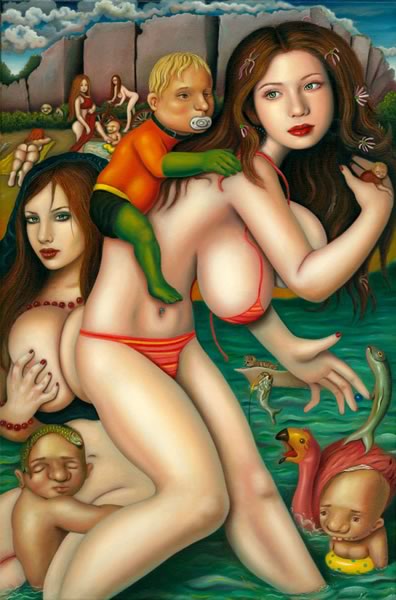
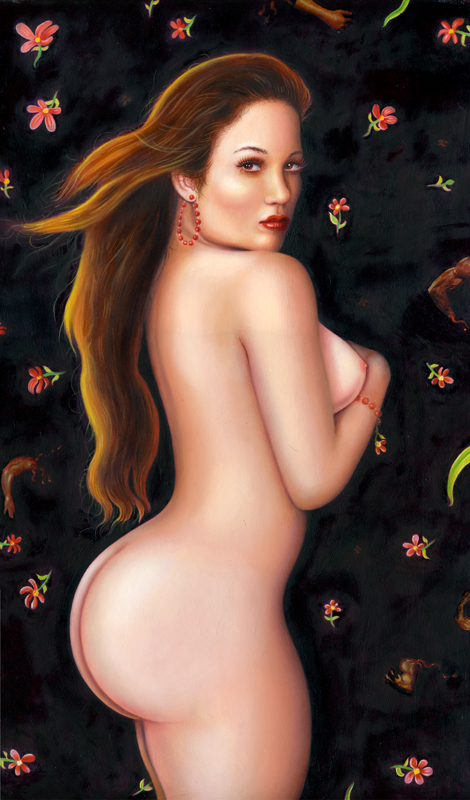
I work primarily with oil paints. It is important for me to achieve a jewel like preciousness in my paintings in order to convey care and importance. I want to give my paintings a monumental and sensual quality that I believe can only be achieved with oil. Also, oil painting gives my work an elegance that balances the sometimes grotesque and fantastical subject matter.
If you would like to know more about me and see more of my work visit my website:
Ce spectacle comprend des lumières stroboscopiques et des effets atmosphériques ; la discrétion du spectateur est recommandée.
Un flash est un crâne qui vibre. Son aspect visuel provoque une photopsie et des sensations au niveau du lobe temporal. Les rencontres fantomatiques ont des allures psychiques. Observez des étincelles électriques dans l’atmosphère, entre les nuages et l’air. Les images du film défilent au-dessus d’un faisceau de rayons. Le projectionniste s’assure que le son et l’image de la bobine sont synchronisés. Des trous vides consomment la matière tandis que le compte à rebours se transforme en un drain optique. Une femme nue et cramoisie danse. Avec ses seins généreux et son collier de perles de crânes ondulant, elle marque la surface de notre mémoire rétinienne.
Il s’agit d’un procédé de lumière polarisée aux silhouettes exceptionnelles. Les ombres caressent les contours. Le cordon ombilical nourrit un embryon, de la même manière qu’un fil soutient un astronaute. Pendant un instant, une pieuvre du futur nous observa jusqu’à ce qu’elle projette de l’encre, rendant les observateurs inconscients. L’obscurité se remplit d’une illumination à motifs, jusqu’à une nuée de chauves-souris albinos en vol. Les drones sont des OVNIs partout. Une immense colonie de fourmis sur Terre a envahi et dévoré une simple feuille flottante. La foule s’amusait au parc d’attractions jusqu’à ce que le programme lui ordonne de former des lignes. Le fossile d’une orchidée montrait une minuscule danseuse du ventre à l’intérieur, en accéléré. La fleur était un signal intelligent voyageant à travers le temps. Un déluge d’éclairs éclipsait tout ce qui l’entourait. Une façon de contacter les extraterrestres était la danse du cerceau.
Ce cercle vient d’ailleurs. Évitez de vous leurrer. Les voyages spatiaux impliquent le vieillissement, la mutation et la mort. C’est aussi simple que ça. Observez comment les ondes de radiation dissolvent les éléments dans le néant. Ensuite, la chasse aux iguanes. Ne vous inquiétez pas, ce sont de gentils lézards en quête d’un en-cas. L’homme prothétique n’a aucun loisir, car les objets orientent son expérience vers une série télévisée. Suivez la figure nageant du tronc cérébral, à travers le système limbique, jusqu’au tableau de bord néomammifère. La Créature du Lagon Noir, malgré son portrait, n’est pas misogyne. Au contraire, elle incarne le principe du plaisir et illustre la conception de la nature. La plupart des gens entendent le saxophone flirter avec eux. Le mouvement rotatif tourbillonne de points qui s’épanouissent dans les danseurs Dogan célébrant la cérémonie du Sigui avec des masques. L’extérieur d’un masque reflète son noyau central, situé de la 111e rue à DaDa.
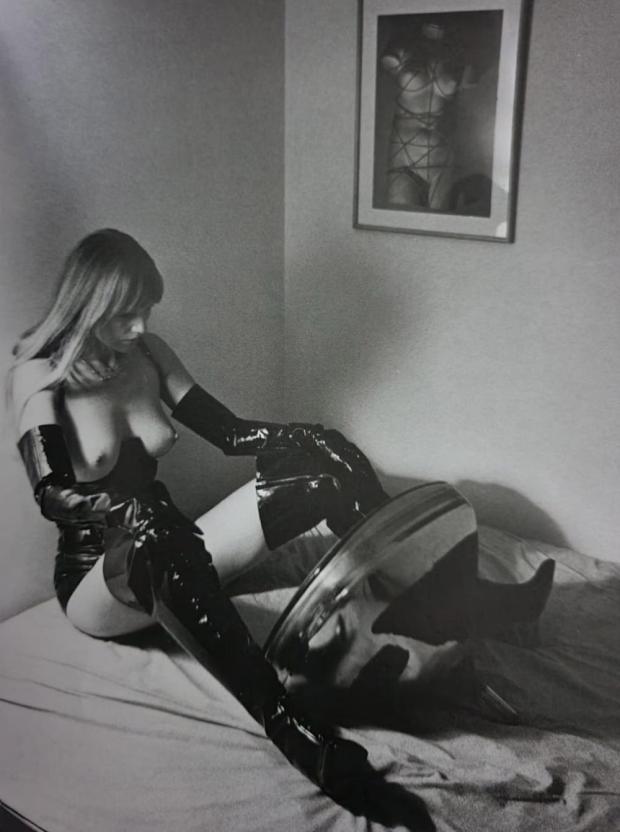
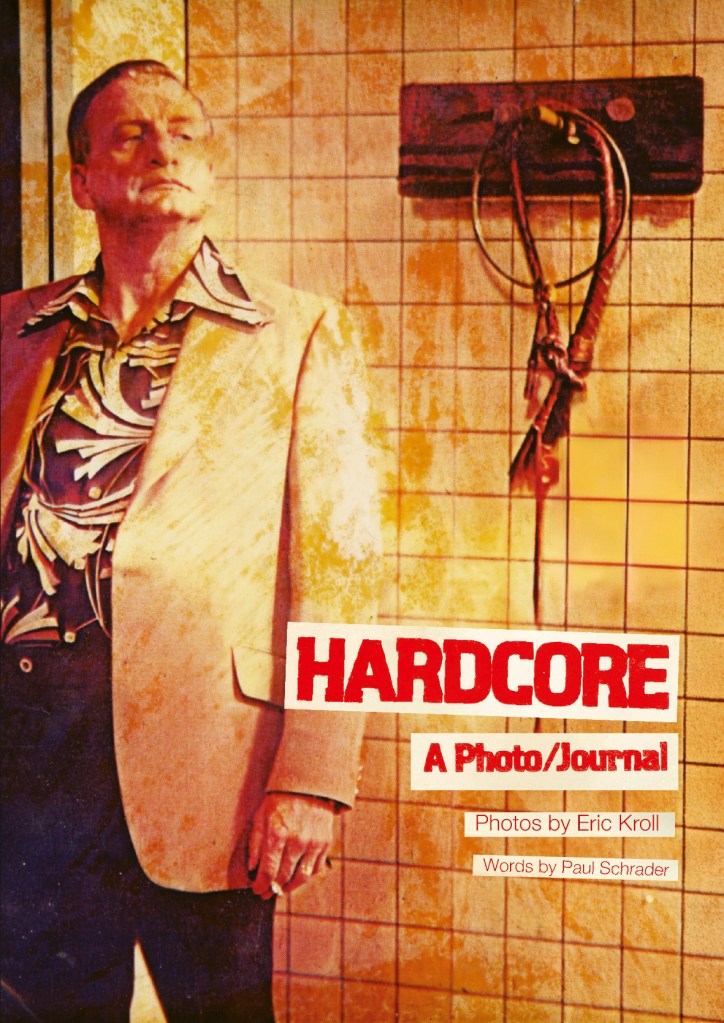
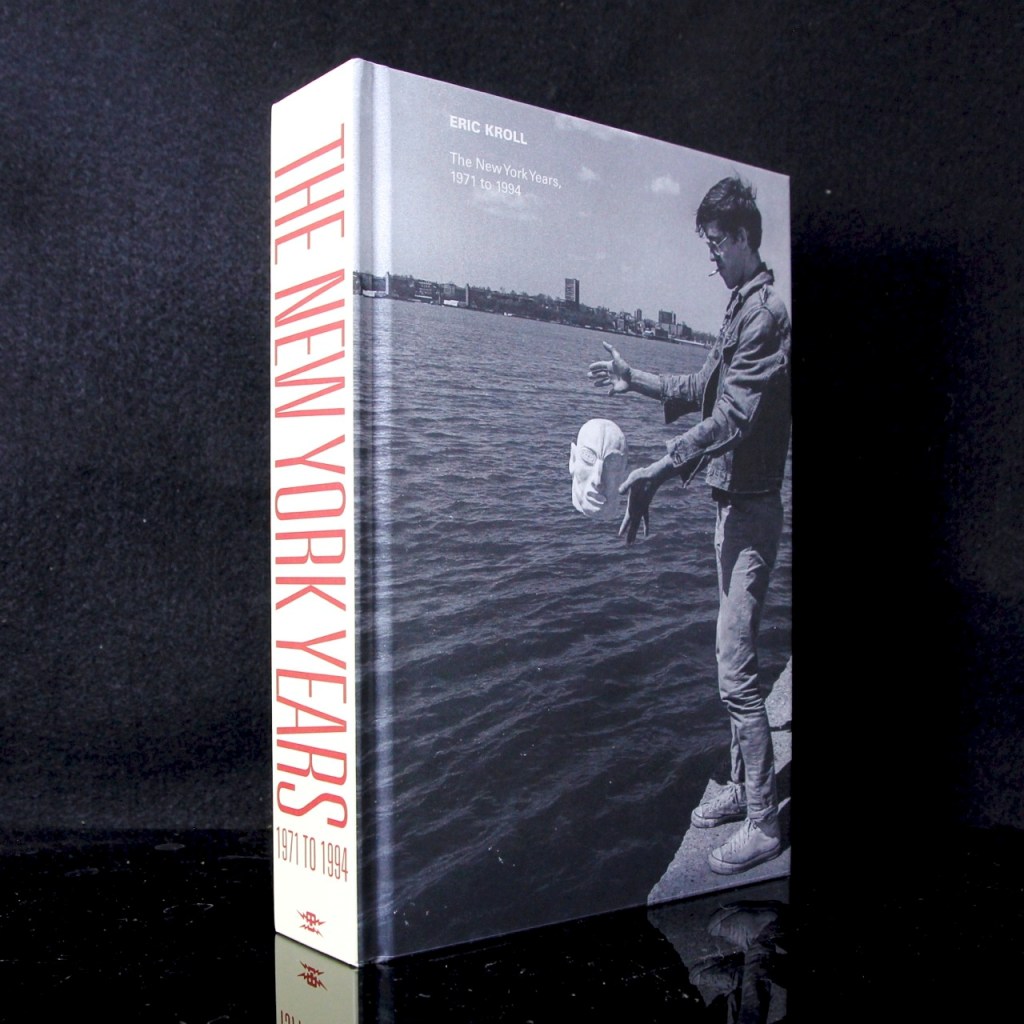
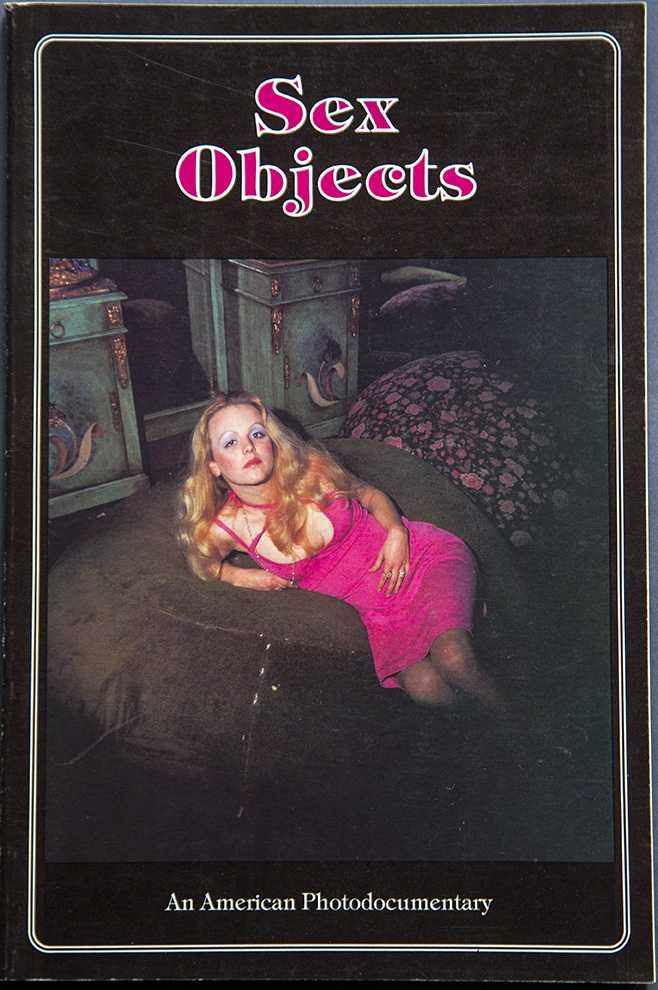
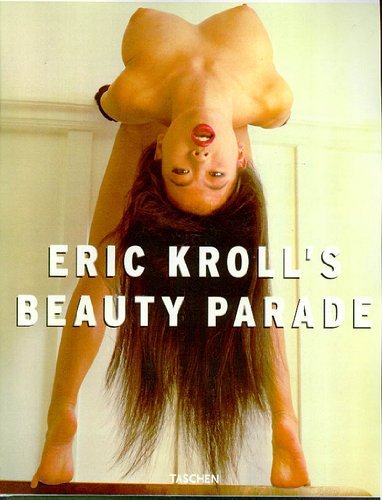
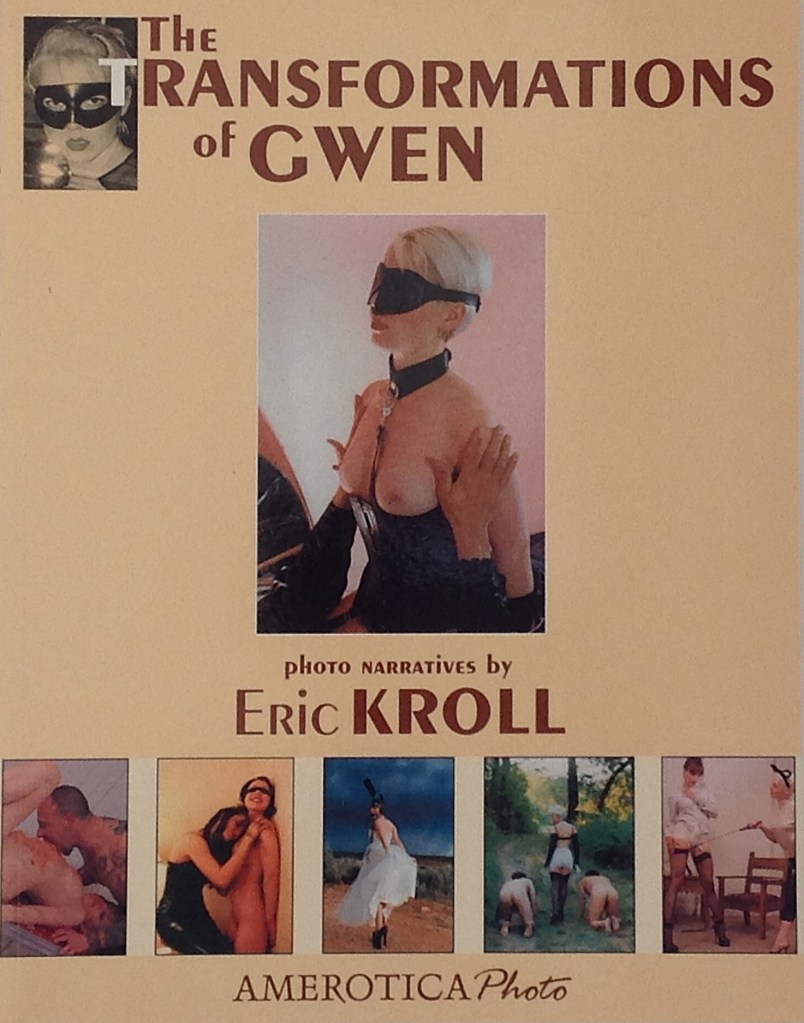
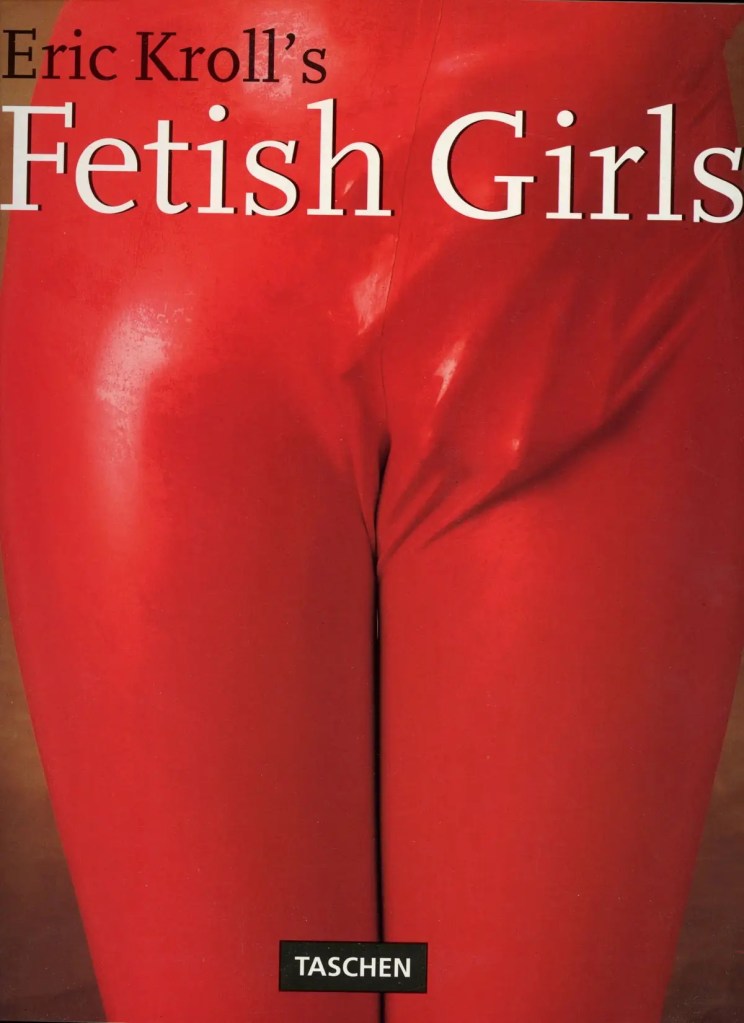
The American author Mitchell Pluto had a short email exchange with the legendary kink photographer in which he shares, among other things, some of his influences, favorite camera, books he’s currently reading. Kroll also shared some exclusive erotic photos of his own.
— Marijn Kruijff, Founder Shunga Gallery
Triple Scorpio, Triple Vision: Eric Kroll’s Lifelong Affair with Eroticism can be found here the article has been added to the Shunga Gallery blog
On October 3, 2025, I got in touch with Eric Kroll, who kindly consented to discuss himself for Shunga Gallery. Kroll. a triple Scorpio, is skilled at creating sexual aesthetics through photography. He was fortunate to have been in the ideal location at the precise moment. His work has documented and influenced transformations in art and sexuality. Kroll’s work remains a potent influence in the ongoing exploration of taboo subjects in pop culture.
L’œuvre est ici un détachement en soi, comme un désœuvrement/recoeuvrement, en mêlant les différentes expériences du vivant, la mort, le sexe, le viol, l’inceste, la naissance, le plaisir, la douleur. Ce qui reste de plus vivant provenant de l’intérieur du vécu là où les spectateurs sont confrontés directement à leurs propres fantômes/fantasmes.
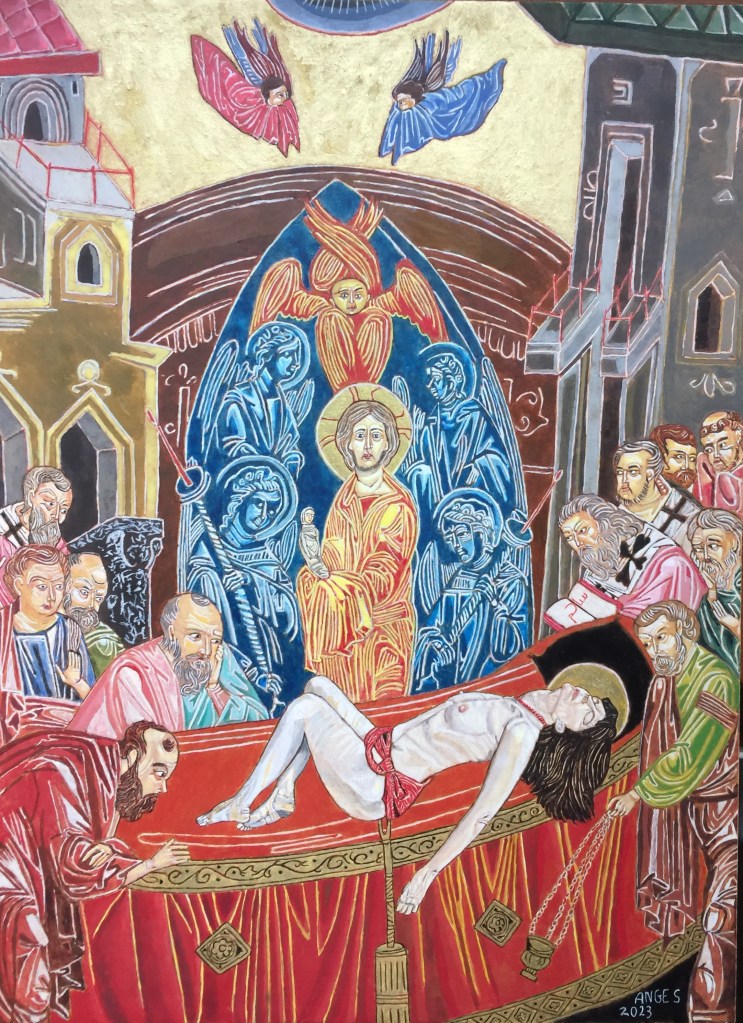
Je fais mon apprentissage au Prieuré de Gorze en compagnie de nonnes et femmes converties à l’orthodoxie. Elles font parties de la communauté du lieu. Mon maître d’icônes se nomme Louise Marie. Une dame d’un certain âge aux cheveux ressemblant à des nuages.Une formation qui a duré trois ans. Dans le même temps je prends des cours de dessins de nu à l’école des Beaux art à Metz.
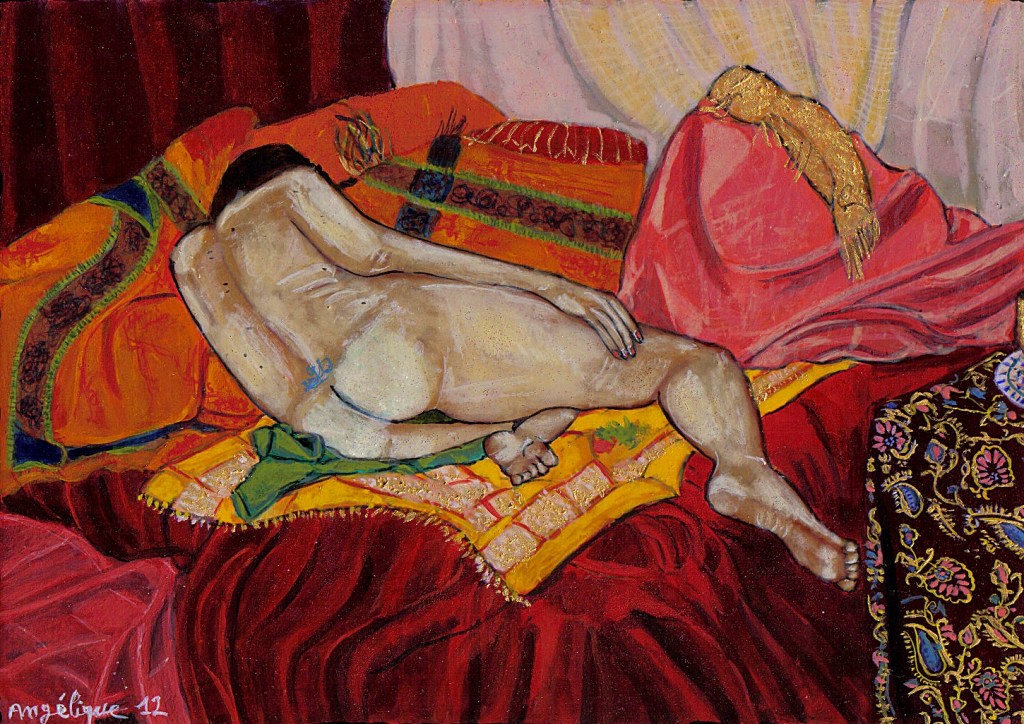
Odalisque de dos
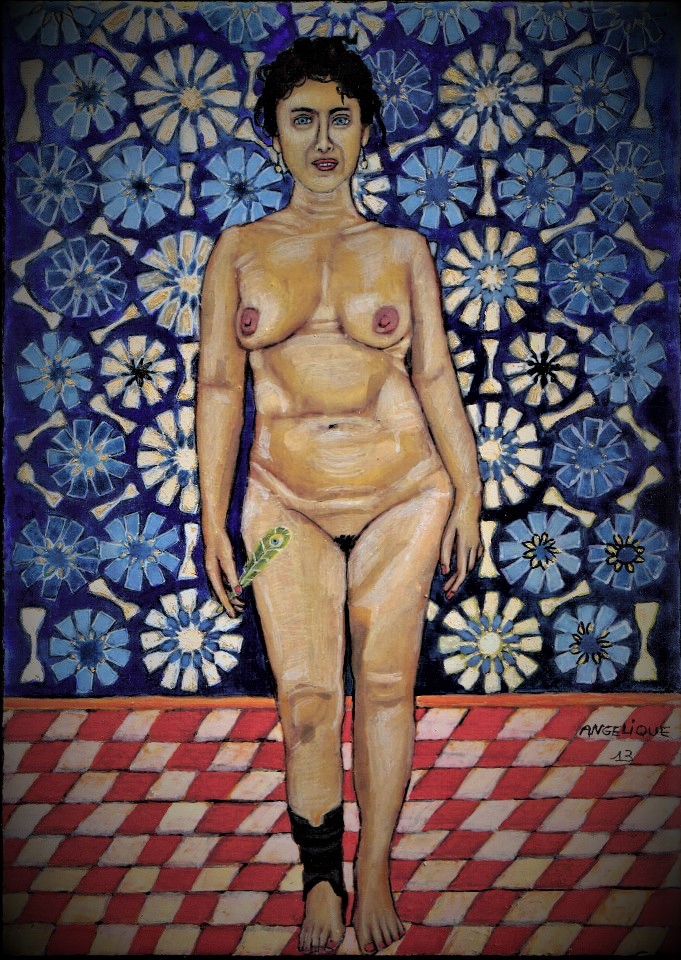
Pour commencer une icône il me faut d’abord contacter un menuisier car le sujet se peint sur une planche de bois (exotique de préférence). Une fois la planche coupée il me faut la préparer avec du Blanc de Meudon, de la gélatine alimentaire et de l’eau. (Une recette bien précise que je ne citerai pas ici) Une quinzaine de couches de cet enduit sont indispensables.
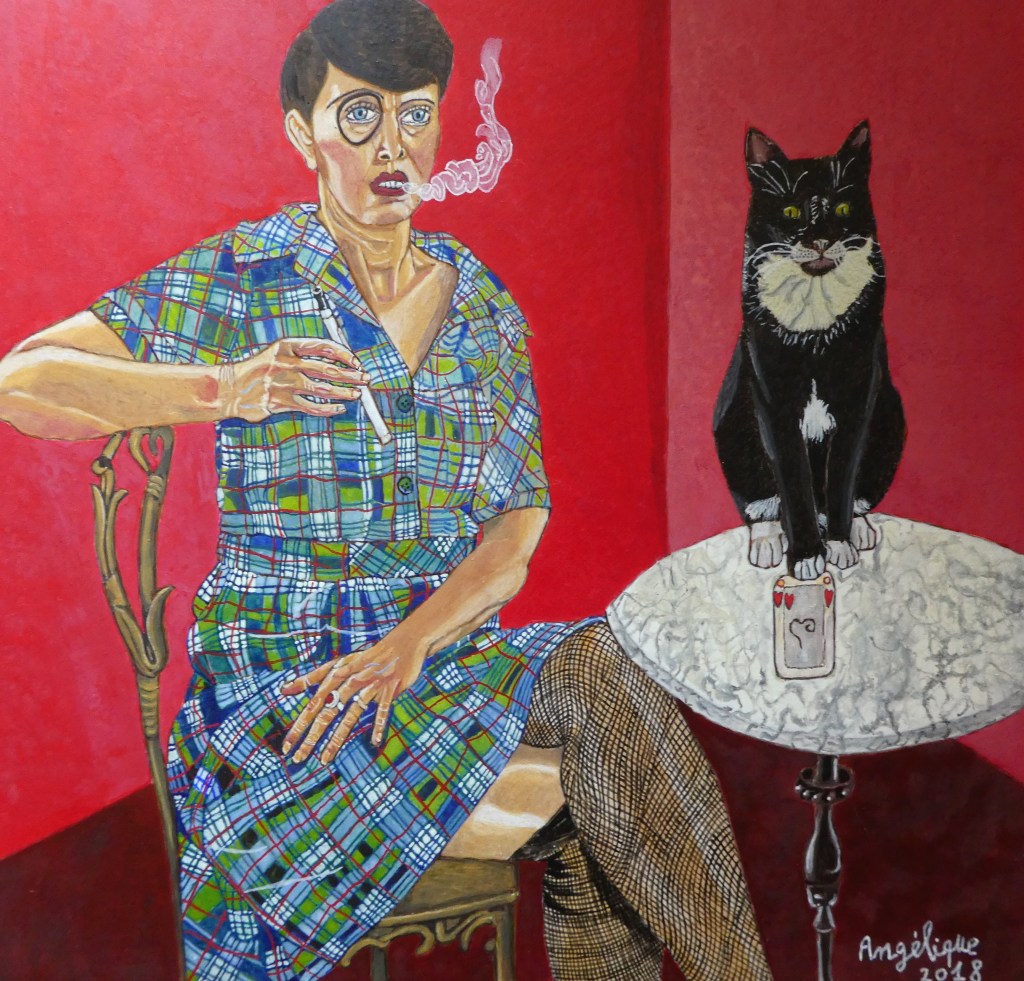
Femme de coeurMargot
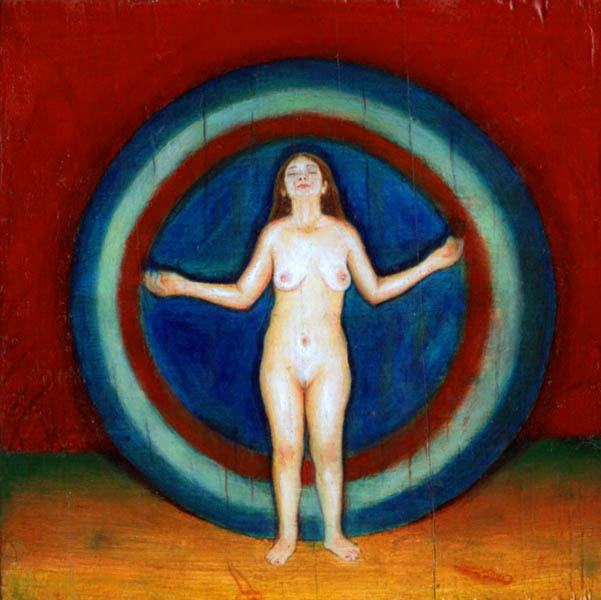
Une fois toutes les couches terminées, je laisse sécher la planche deux jours et avec du papier abrasif fin je ponce les aspérités. Planche qui représente symboliquement pour ma part le tout et le rien. Le dessin se fait sur un calque pour pouvoir le transposer grâce à des pigments sur la planche. Puis vient la préparation du liant qui va me servir à peindre. A base de jaune d’œuf et de vinaigre et un peu d’eau. (Je lave le jaune sous un mince filet d’eau et enlève la membrane). Une fois le dessin transposer sur la planche je reprends les traits grâce à un pinceau fin et du pigment noir. Le pigment qui se trouve sur la planche s’efface facilement d’où la nécessité de le reprendre. La technique que j’utilise pour peindre est celle de la tempera à la goutte. C’est à dire que je trempe mon pinceau dans ma palette contenant le liant à l’œuf (mélangé à un peu d’eau) et les pigments pour ensuite déposer la goutte sur l’endroit du dessin où je veux peindre.
Olympe
Puis je la fais rouler, mon pinceau ne touche pas la planche. Ce qui forme en quelque sorte une flaque. Une fois cette dernière sèche, je recommence le même procédé. Je commence toujours par les couleurs sombres pour arriver aux couleurs les plus claires. La symbolique de l’ombre vers la lumière. Par exemple pour la chair (un visage, un corps, les mains) j’utilise d’abord un vert olive (symbole de la terre) puis du pigment ocre rouge (symbole du sang) pour enfin arriver à l’ocre jaune pur. Les finitions de la chair comportent souvent trois voir quatre teintes différentes toujours dans les tons chairs mais de plus en plus clairs. Les quelques notes blanches que je trace grâce à un pinceau très fin se font tout à la fin pour accentuer la lumière. J’utilise la même méthodes pour les vêtement, les bijoux, le fond…..
Le bar d’amsterdam
Une fois l’œuvre terminée je peux passer au vernis. Je laisse d’abord sécher la peinture quelques jours puis je passe à la saturation et enfin le vernis. Je peins les bords de l’icône en noir ainsi que l’autre face de la planche.
Le cauchemar
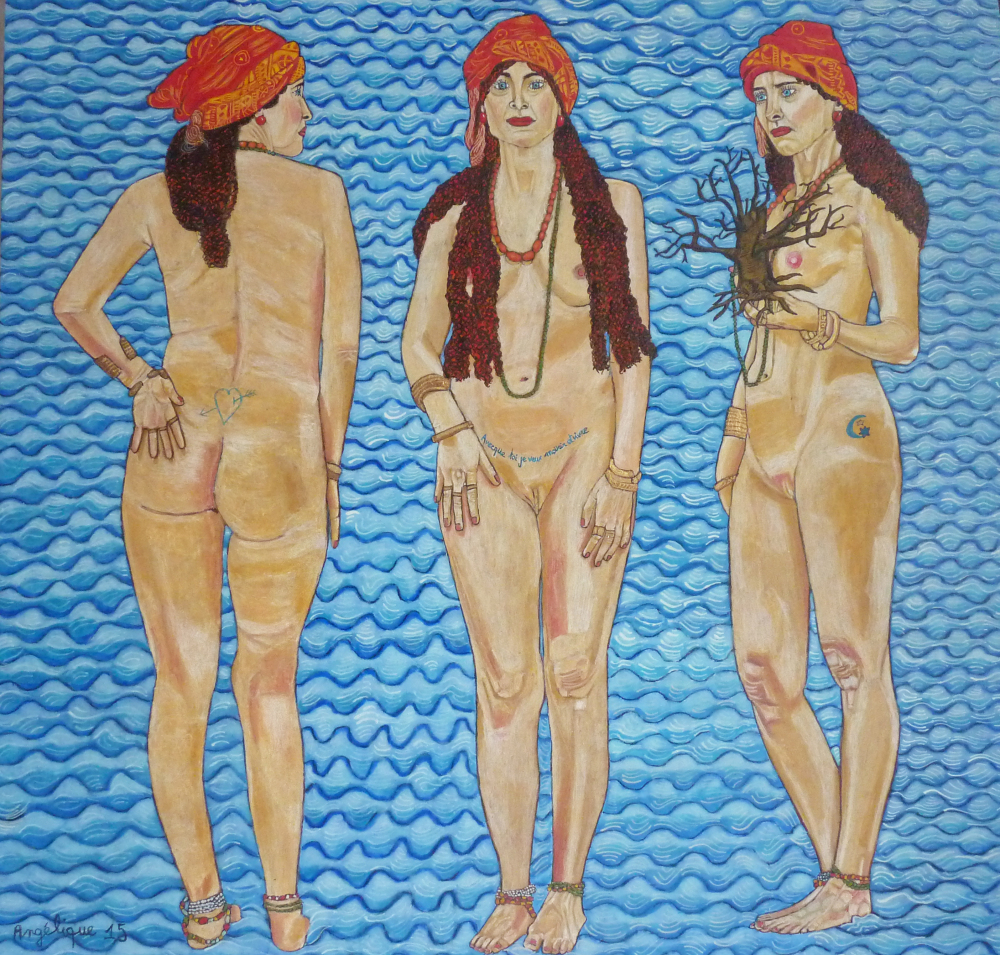
Les années 2000 représentent des changements dans mon esprit et naturellement dans les sujets que je peins. J’utilise la même technique que l’icône pour peindre des personnes qui veulent bien poser pour moi et ma vie toujours teintée de spiritualité et d’émotions fortes.
Elephant à vendre
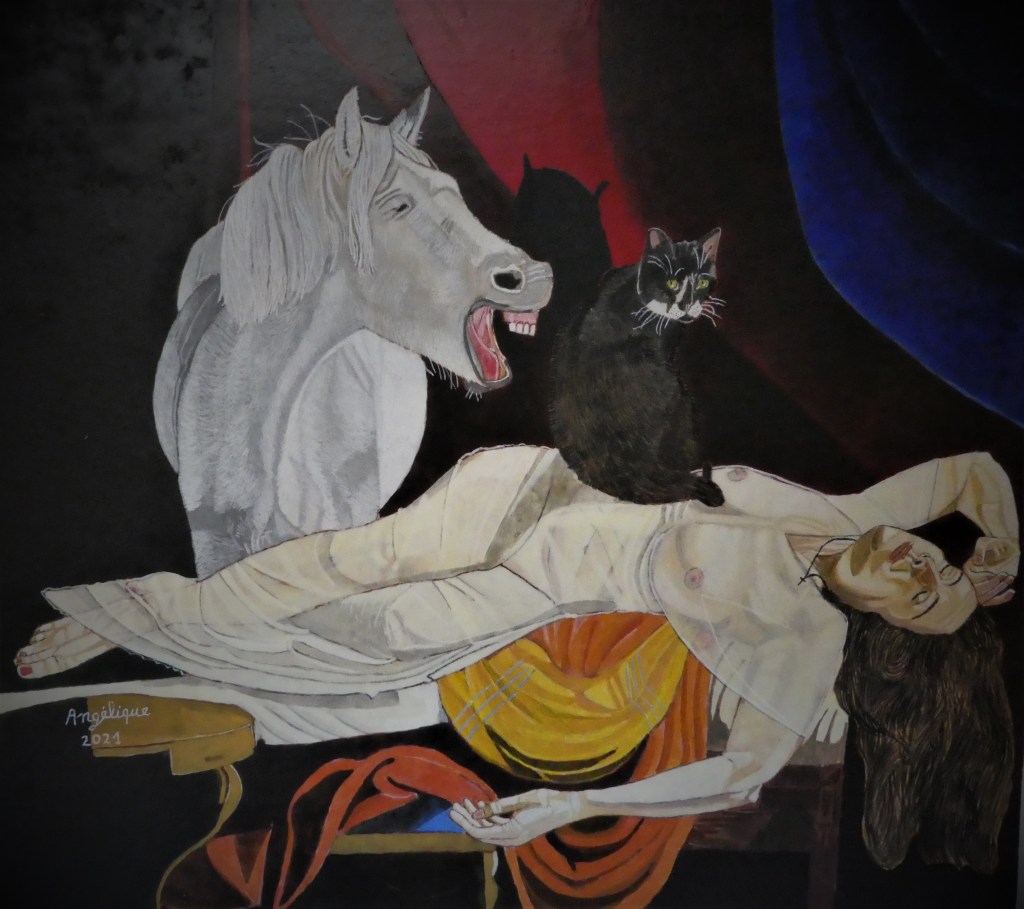
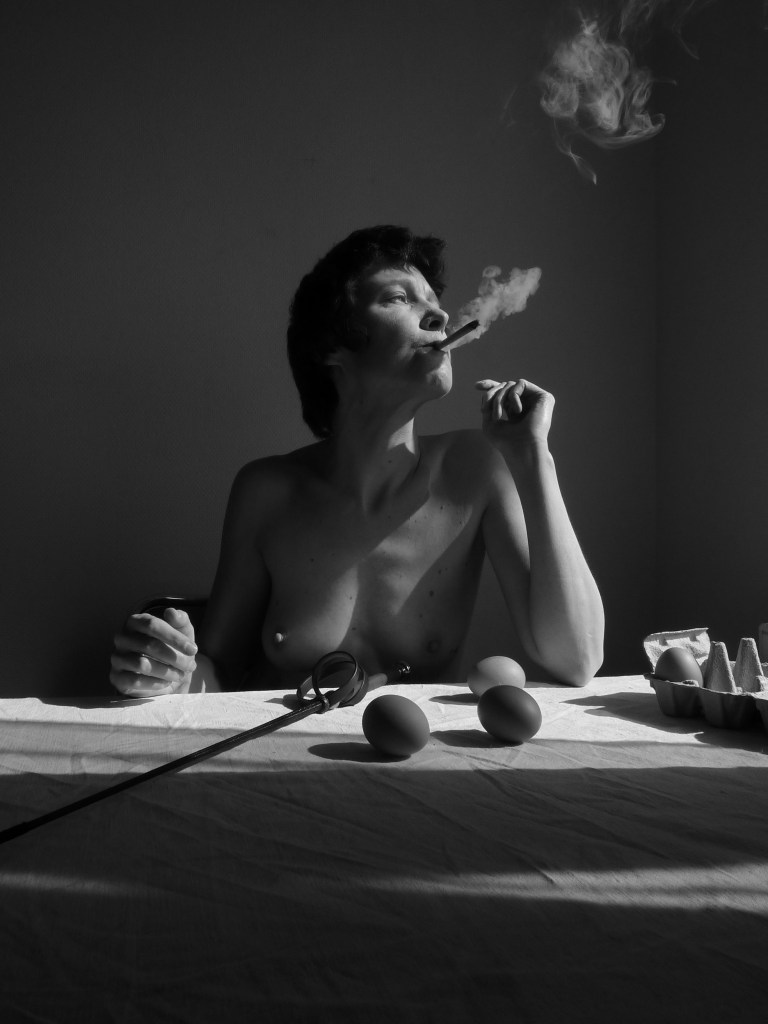
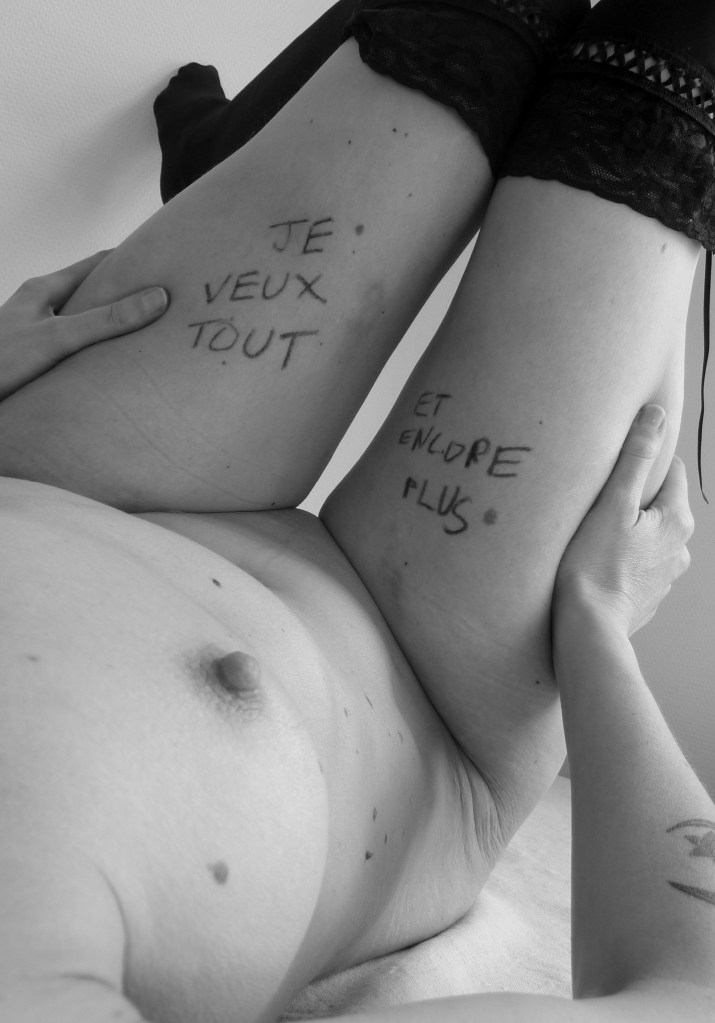
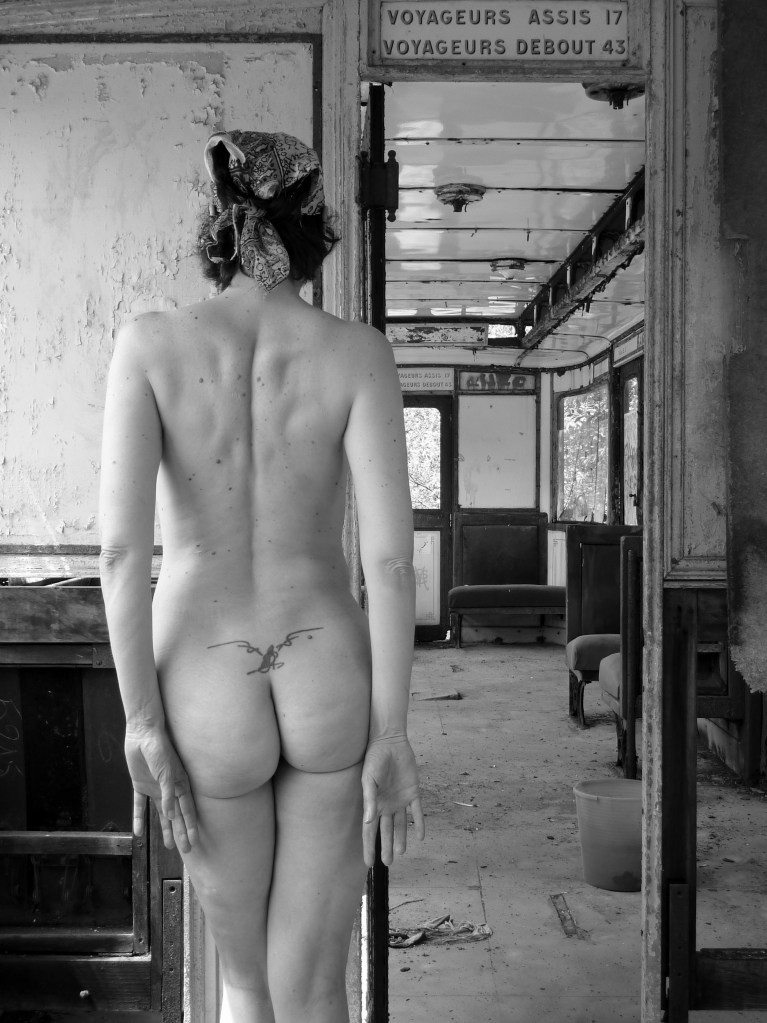
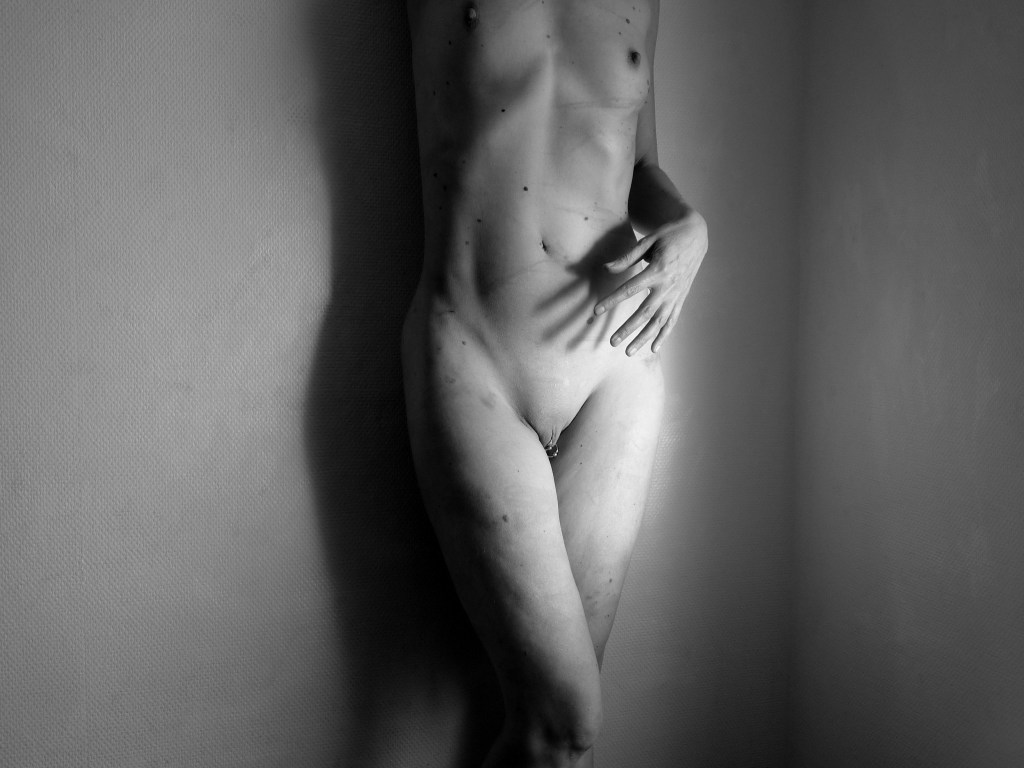
En parallèle je pose en tant que modèle à l’école des Beaux Arts de Metz et pour d’autres ateliers. Beaucoup d’élèves dessinent mon corps ou réalisent des peintures. Je pose aussi en tant que modèle pour photographes. Photographies qui m’inspirent pour relater ma vie en peinture. Je continue aussi à écrire des icônes religieuse sur commande. Je travaille aussi sur les animaux qui font partis des êtres sensibles qui peuplent ce monde et sur des sujets plus dures comme la déportation ou la détresse des femmes par exemple en Afghanistan.
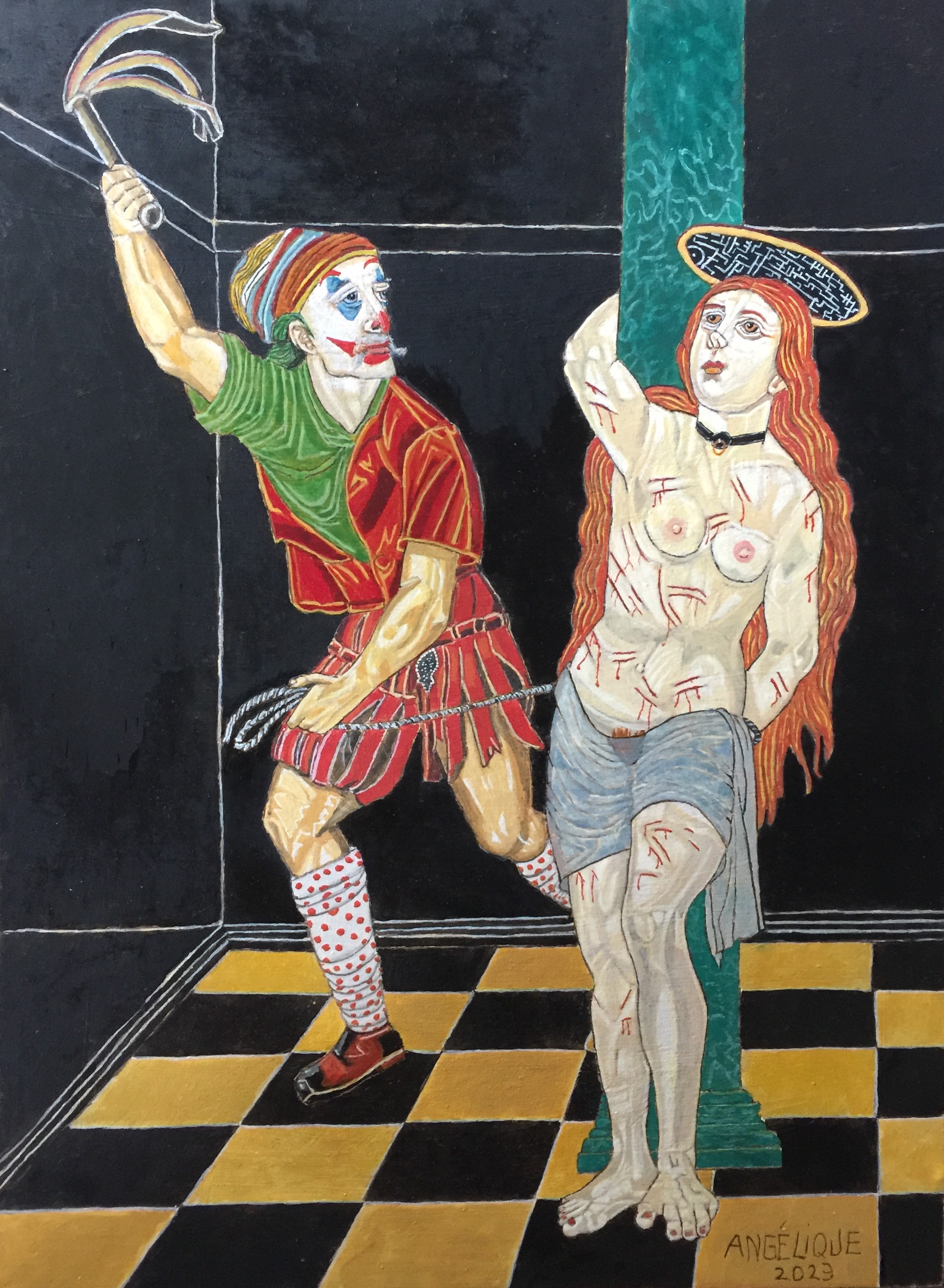
Bettina Sainte Barbe et le fou réservée
Je continue de poser pour des photographes (si le projet est sérieux) et je fais des autoportraits en photos que j’utilise aussi pour mes peintures et travaille sur commandes ou pour des expositions. Des vidéos performances sont réalisées grâce à plusieurs personnes. (artistes, amies passionnées par mon travail). Beaucoup d’artistes via fb s’inspirent de mes photos pour peindre de jolis tableaux.
L’arbre mort
Je pense dans l’avenir toujours peindre et donner des cours, transmettre ce savoir de la technique à la tempera comme Louise Marie du prieuré me l’a transmis. Et travailler sur commandes. Exposer et écrire. Pour finir, en quête d’identité depuis mon adolescence ces supports artistiques me permettent d’avancer.
noir et blanc
Angélique Bègue (December 23, 1970 – ) is a French artist who has renewed tempera painting.
NatureDouble
Video intended for mature audiences
Mes expositions :
2023 : Exposition Atelier Sainte Croix à Metz
2022 : Exposition Carrefour des Arts à Metz
2022 : Exposition Atelier Sainte Croix des Arts à Metz
2020 : Exposition à la Galerie Tet de lart à Forbach
2018-2019 :Après avoir été exposée au Centre européen du résistant déporté et au fort de Queuleu, l’oeuvre d’Angélique Bègue et d’Annick Monnier sera présentée au public normand dans le cadre du 75ème anniversaire du débarquement.
2018-2019 : J’exposerai à partir du 15 septembre ma série de peintures consacrée aux expériences médicales menées dans les camps de concentration nazis. Mes œuvres seront présentées dans le cadre de la nouvelle exposition du Centre européen du résistant déporté consacrée aux médecins déportés.
2016-2017 : «rue des Déportés« , Fort de Queuleu, Metz
2015 : « rue des Déportés », Struthof, Centre européen du résistant déporté
2012-2013 : « Dans mon corps », Toul, Musée d’Art et d’Histoire (pour public averti)
2012 : « Un envol…de vie », Université de Lorraine, Bibliothèque universitaire de Lettres, Nancy
2011 : « Ange ou démon », Villers-lès-Nancy, Galerie de Madame de Graffigny
2011 : « Super héros », Maxéville, Souterrain Porte VI
2010 : « Femme entre terre et ciel », Bar-le-Duc, Espace d’art contemporain Saint Louis
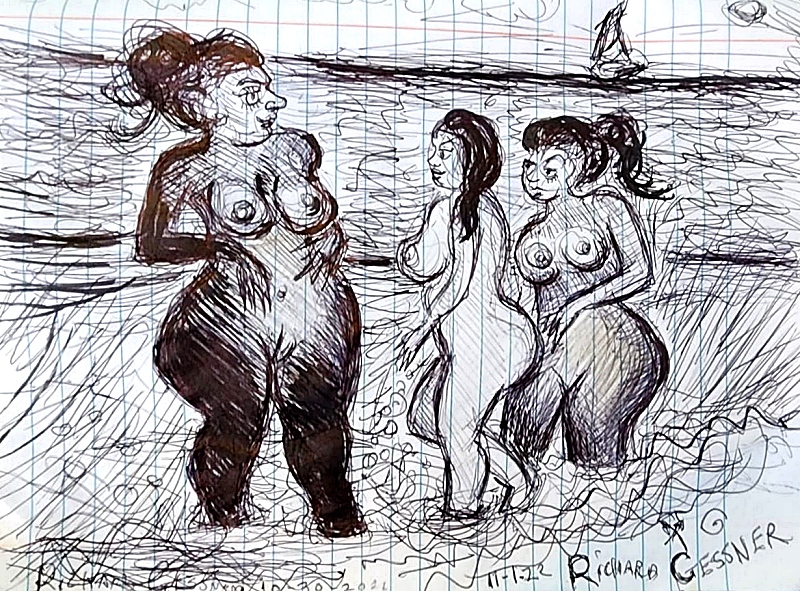
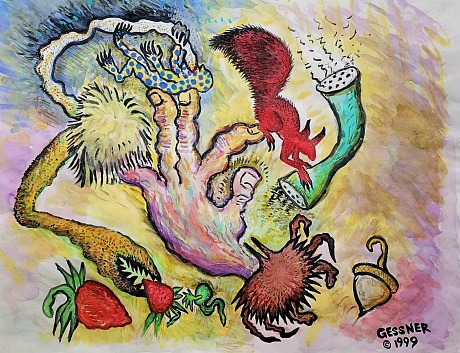
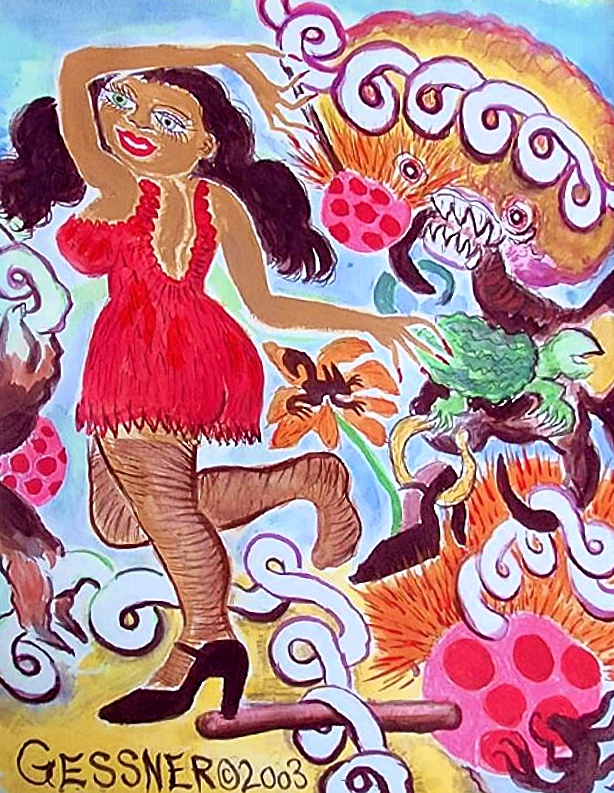
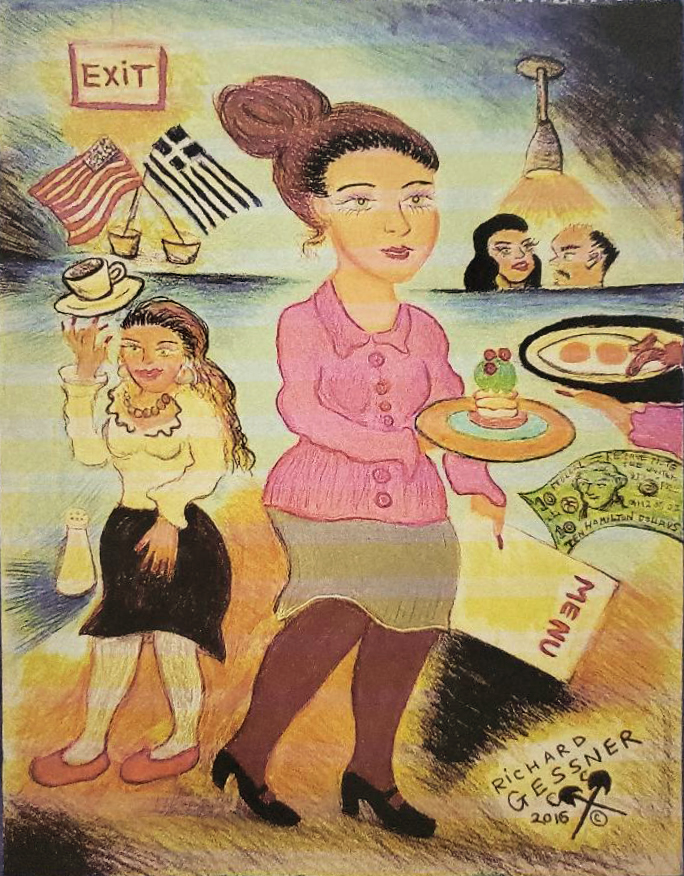
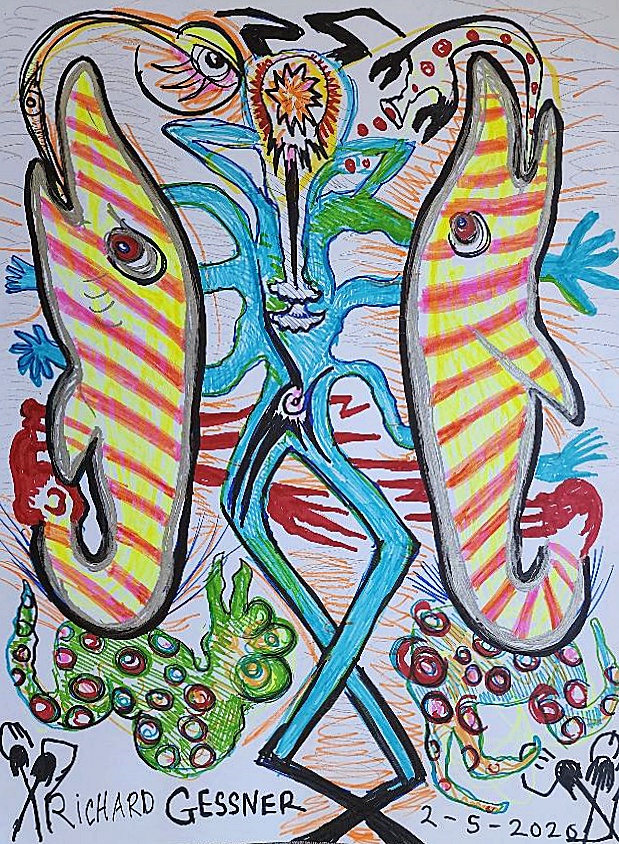
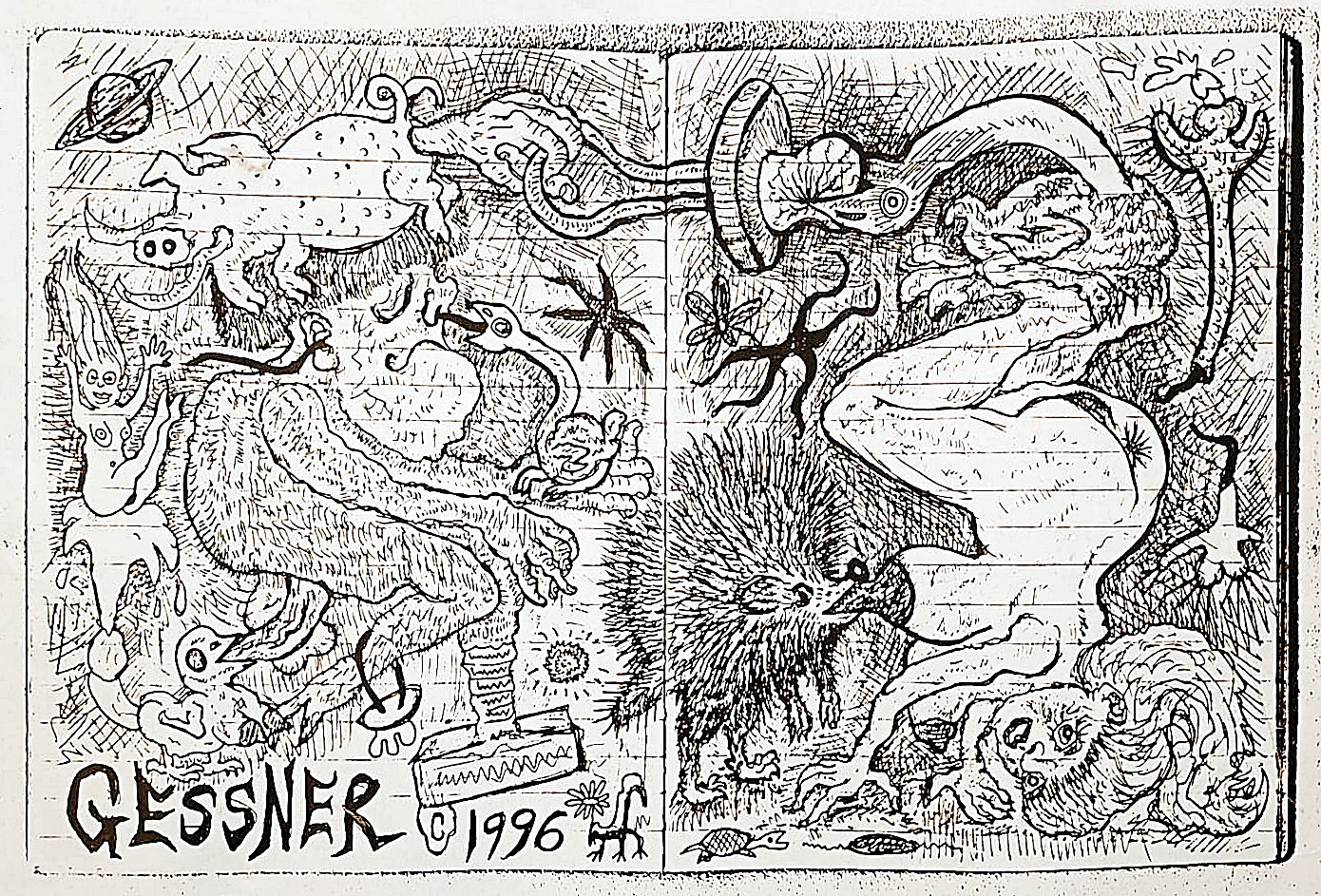
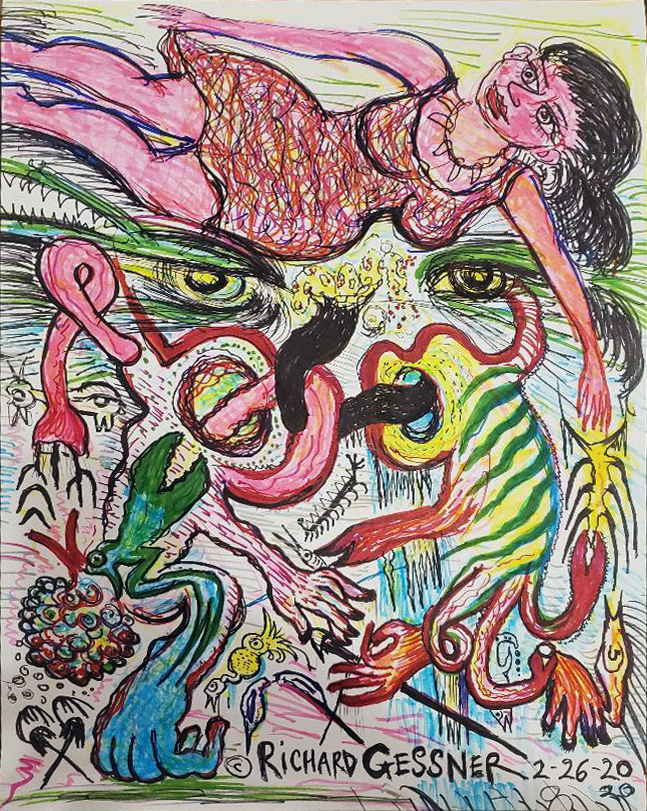
When I read Richard Gessner’s Voyeur Rising I imagined the story as an adult cartoon with liminal existential qualities. Voyeur Rising reminds me of Vladimir Nabokov’s use of an unreliable narrator who is found in most current social media video and reels. This collective trick usually deceives the viewer with a decoy. This is the place where Gessner’s work lurks, to induce the peripheral mind while feeding the predatory eye. Here we see the ultimate conflict and fantasy of the Freudian id haunting the masculine mind. A pleasure principle with an intrusive desire to poach voluptuous women without any commitment- but to squirt sperm, to clone more succulent women so they are everywhere. The fantasy has boundaries in Gessner’s character who is aware of his masculine delusion, that every women he find’s attractive isn’t a possession but an unfulfilled wish. All this takes place by the primordial ocean, a surface alive with waves.
-Mitchell Pluto
Strategically positioning his beach chair, pretending to be reading a daily newspaper, Joey Genauski, nonchalant, invisible, just by chance, settles in a tight rectangle of sand bordering the burgundy beach towels of two 19 year old college girls the age of his granddaughter.
The girls, an ash blonde, and a brunette with auburn highlights, have soft buttery skin, shapely, wide hipped—all curvaceous splendor—
Perfect brown bodies striped with pale tan lines sharply outlining pale pink asses and naturally large breasts jiggling slightly in the warm breeze of early summer.
The tan lines form a pale faded triangle V of panty line extending upwards. From butt crack to lower back, panty lines curving around thighs to below belly buttons—traces of cast of bikini no longer worn.
Gradations of pale pink skin merging to olive, cinnamon, golden brown, pale breasts encircled with D cup outlines of frilly brassieres. Burnt Sienna areoles and nipples a darker shade of brown than their overall tans.
Crisp yellow and gold designer bikinis, light summer dresses, brassieres. And panties are strewn across towels covered with tubes of sun screen, Purses, car keys, fruit, sandwiches cold drinks, a paperback of classic 19th century literature and a current glossy fashion magazine glistening in the sun.
Furtively, through dark sunglasses, Joey Genauski gazes longingly towards the girls’ spread open legs. Their Smoothly shaven vaginas, A reddish salmon pink, are soothed with cooling aloe vera. Blue and white beach umbrellas with a swordfish logo line the beach Landscape. Its a Saturday afternoon in early June, the weekend crowds work to Joey’s advantage, giving him an excuse to sit close to single women without being obvious about it. The crowds camouflaging his true intentions, allowing him to move frequently, unnoticed by the morally reproving beach patrol seeking to squelch his habit of constantly wandering the beach in quest of a perfect view.
Other voyeurs, Joey’s competition, watch the beach entrance from a distance, waiting for the arrival of young ladies, single or in groups. Approaching the ladies after they have gotten naked under their beach umbrellas.
Most women strip naked, but some keep their bikini bottoms on. Some wear Brazilian string bikinis, flesh toned thongs, almost nude, but not quite. Pale maidens wiggle out of floral print summer dresses, shorts, and candy striped one piece bathing suits.
Voluptuous brown girls peel off demure, white see-through-when-wet suits, revealing all to bulging male eyes, looking, gawking, looking away— Diaphanous mesh panties slide down svelte hips, falling to sand. Brightly colored, fancy brassieres pop off as delicate fingers reach behind unhooking clasps shining in the sun, catching the eye of a seagull flying in blue skies above.
Secret cameramen get up in the nooks and crannies of spread eagled women half asleep in the sun. Joey leaves the two girls, vanishing into thick masses of beach regulars, middle aged, tanned and leathery, marking their territory with windscreens, coolers and little plastic flags poked in the sand.
In Joey’s absence, competing beach voyeurs, some bold, well hung, smooth talkers, will succeed in engaging the ash blonde and brunette with auburn highlights in a lively conversation. Mastering bare body language a virile stud will advance to slow massage, rubbing baby oil of their perfect bodies glistening in the sun.
Slick voyeurs who remain at the top of the food chain will return to the beach, summer after summer, appearing like clockwork as in the legendary return of swallows to Mission San Juan Capistrano—
Their pick up routines with the ladies will remain similar and predictable year after year, decade after decade. Enticing the girls with superficial big talk of financial conquest, fancy cookies and little airplane bottles of alcohol.
In the tidal pools of voyeur nursery school, untested new generations of voyeurs emerge like baby sea turtle hatchlings making a mad dash seaward—
climbing the slippery slope of a succulent female ass just over the horizon,
Joey Genauski wanders into a gaggle of girls taking it all off for the first time-
In the distance, randy couples frolic in the surf, avoiding the June Jellyfish in the waves, out at sea, fishing boats come in close to shore, catching a panoramic eyeful of skin.
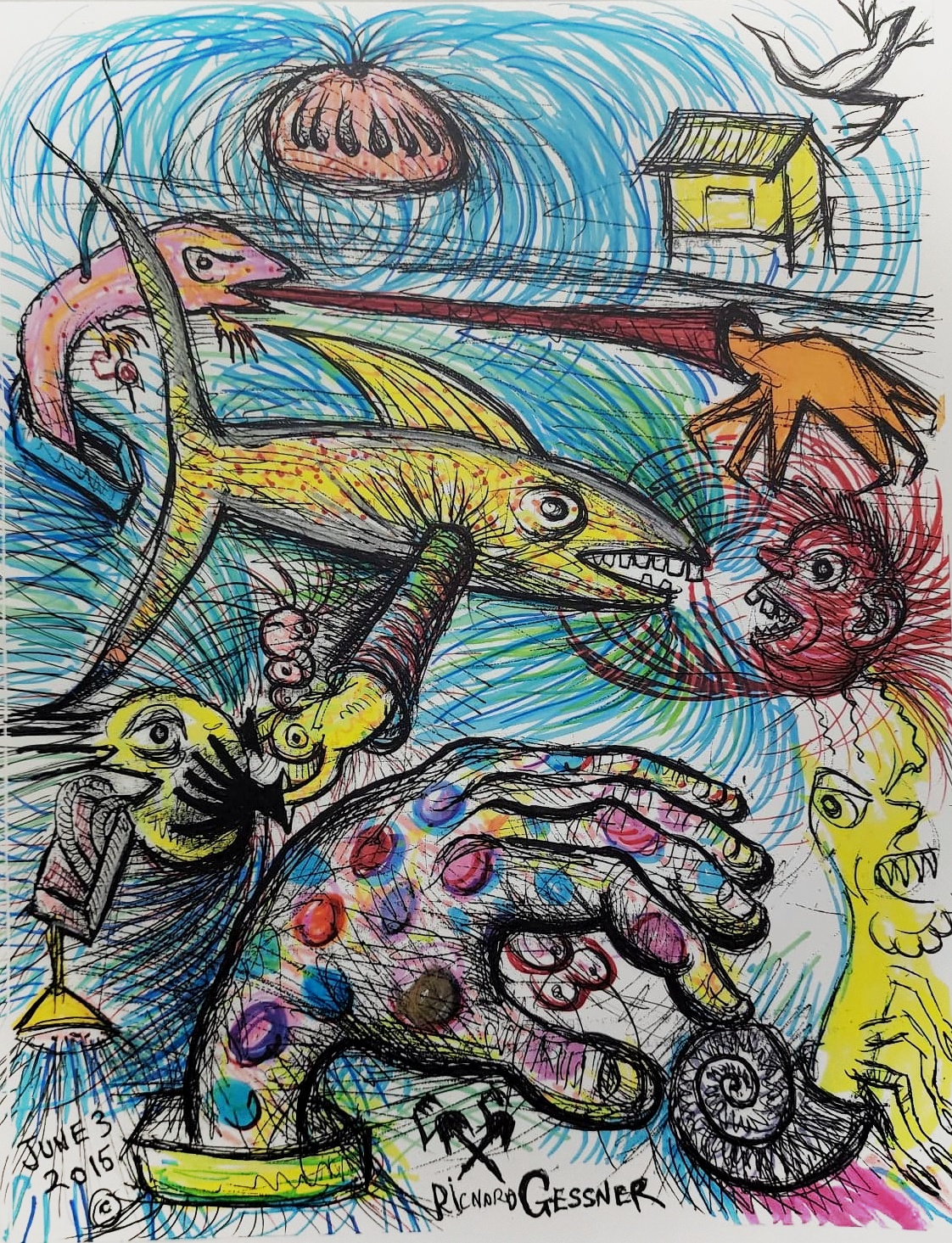
“Voyeur Rising” (C) 2022 Richard Gessner
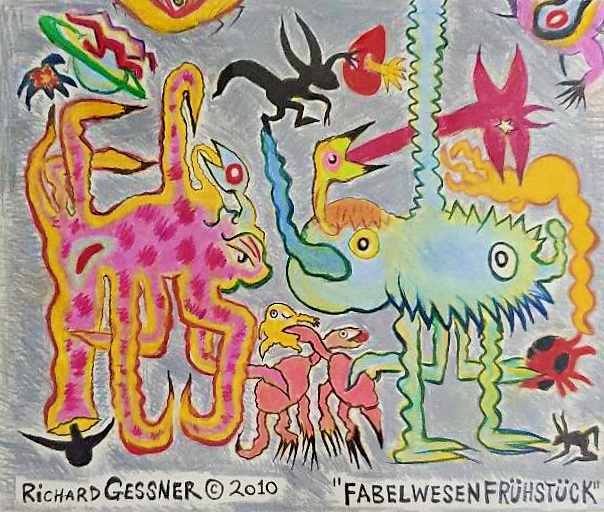
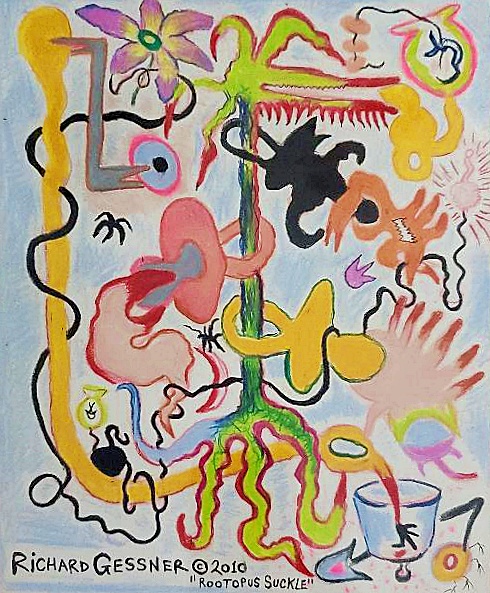
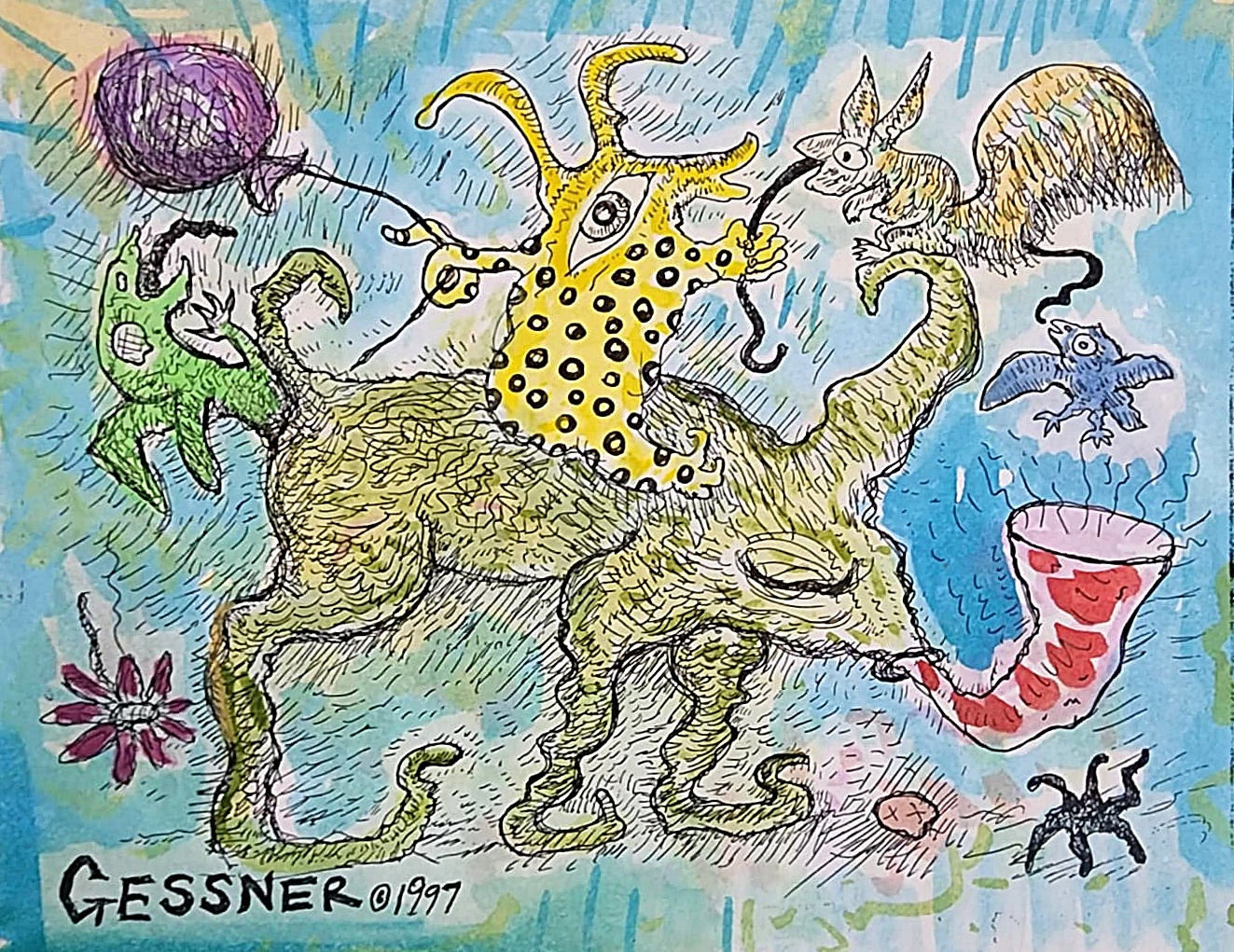
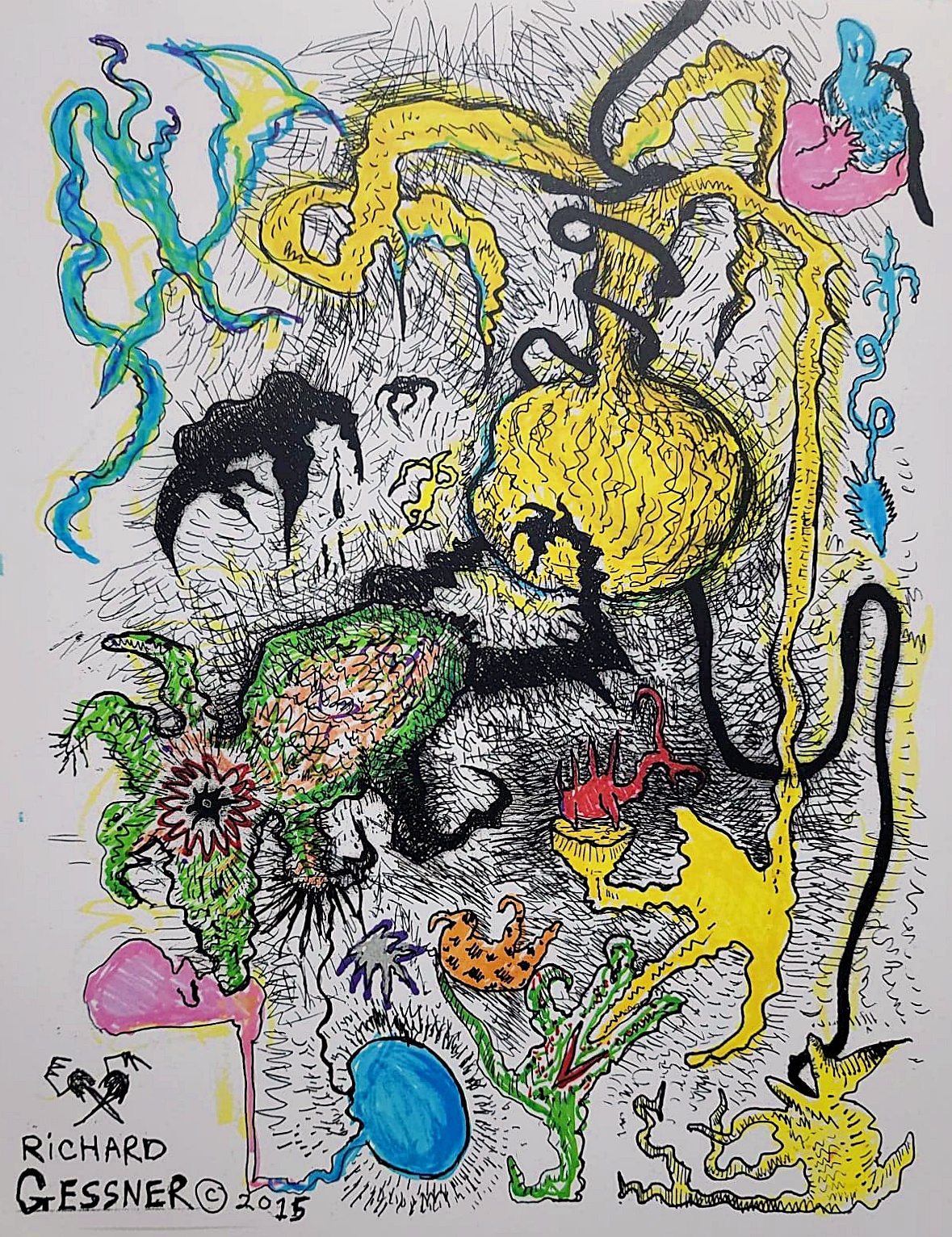
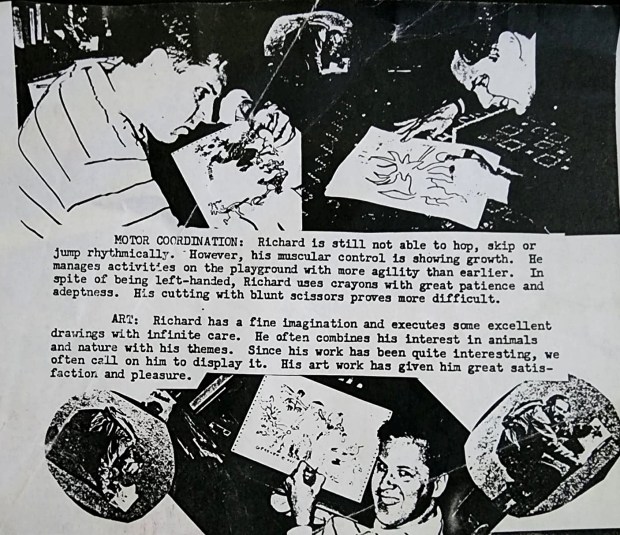
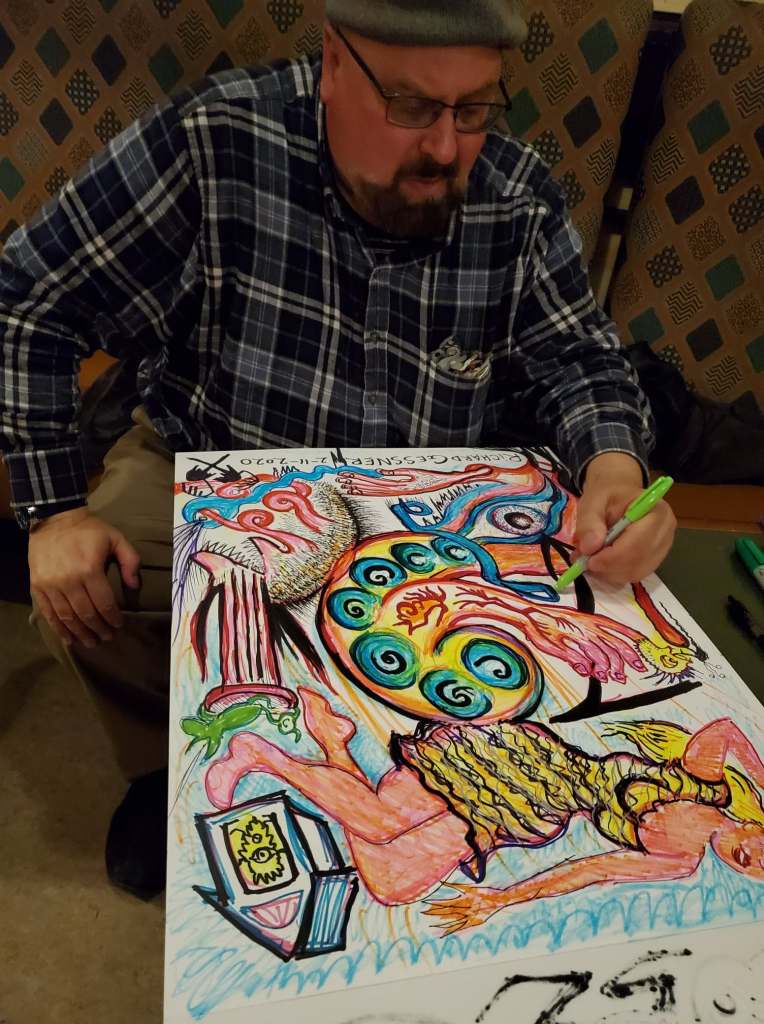
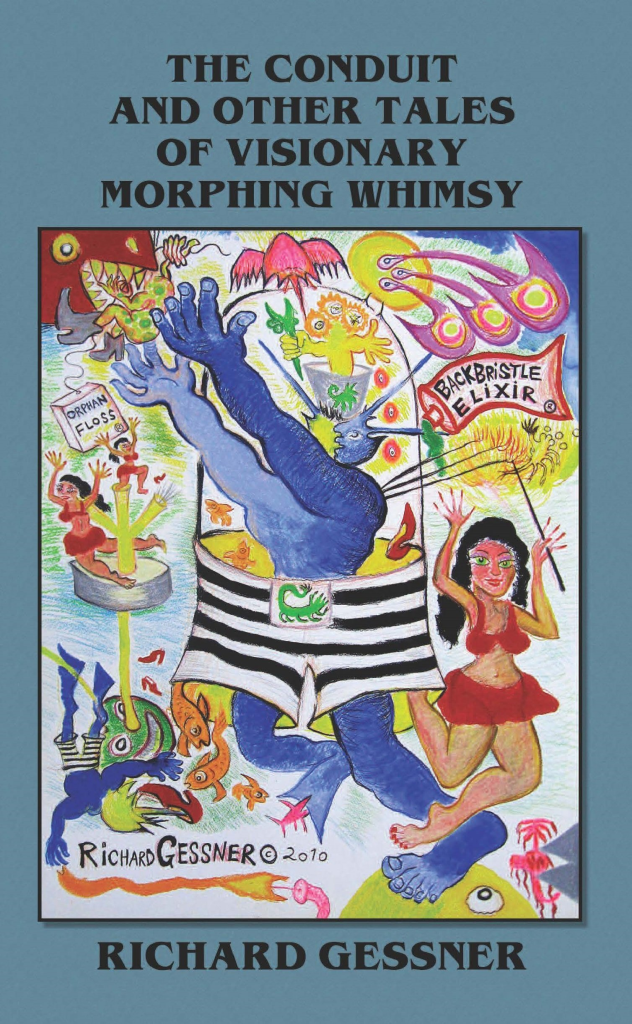
Richard Gessner’s fiction has been published in Air Fish: an anthology of speculative work, Rampike, Ice River, Coe Review, Another Chicago Magazine, Happy, The Act, Sein und Werden, Skidrow Penthouse, The Pannus Index, Fiction International and many other magazines. A collection, Excerpts from the Diary of a Neanderthal Dilettante & The Man in the Couch was published by Bomb Shelter Props. Gessner’s drawings and paintings have appeared in Raw Vision, Courier News, Asbury Park Press, Rampike, Skidrow Penthouse, and exhibited at Pleiades Gallery, Hamilton Street Gallery, Cry Baby Gallery, The Court Gallery and the Donald B. Palmer Museum. Richard wrote The Conduit and Other Visionary Tales of Morphing Whimsy. He lives in Montclair, New Jersey.
The Conduit and Other Visionary Tales of Morphing WhimsyAudible
THIS WRITING IS AN AUTHORIZED DUPLICATION WITH PERMISSION AND EXPRESSED CONSENT
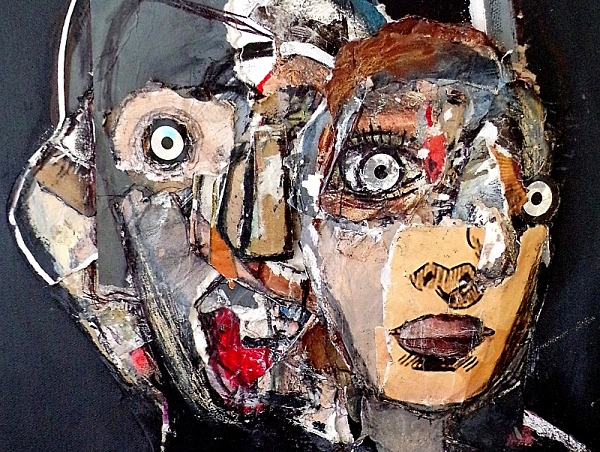
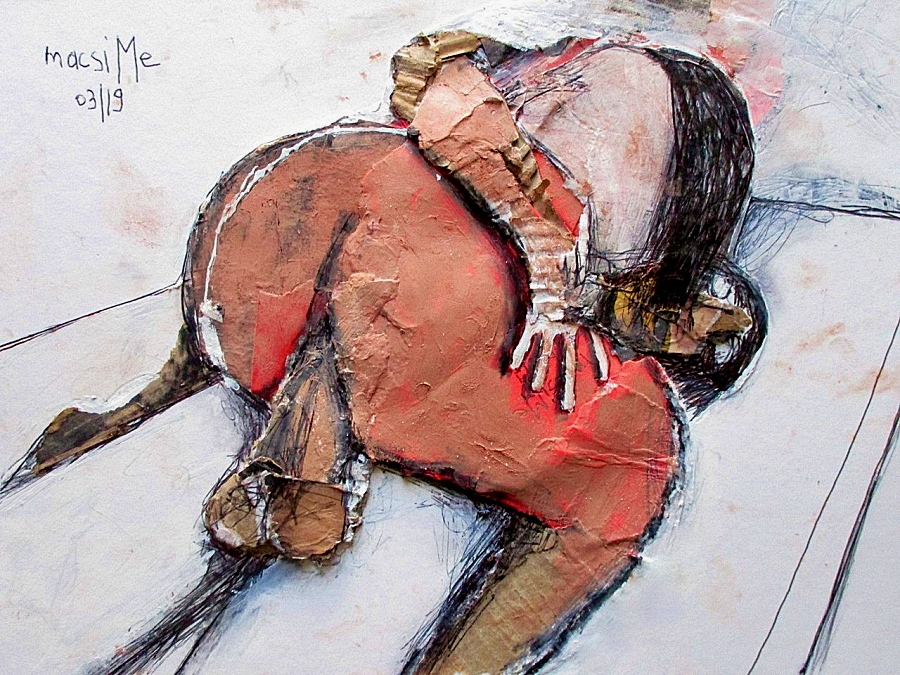
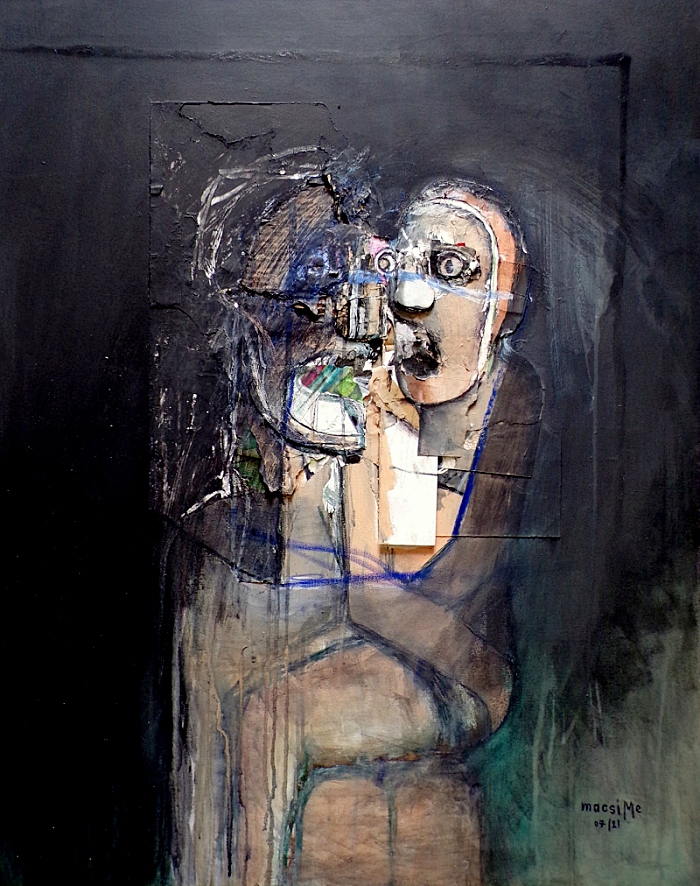
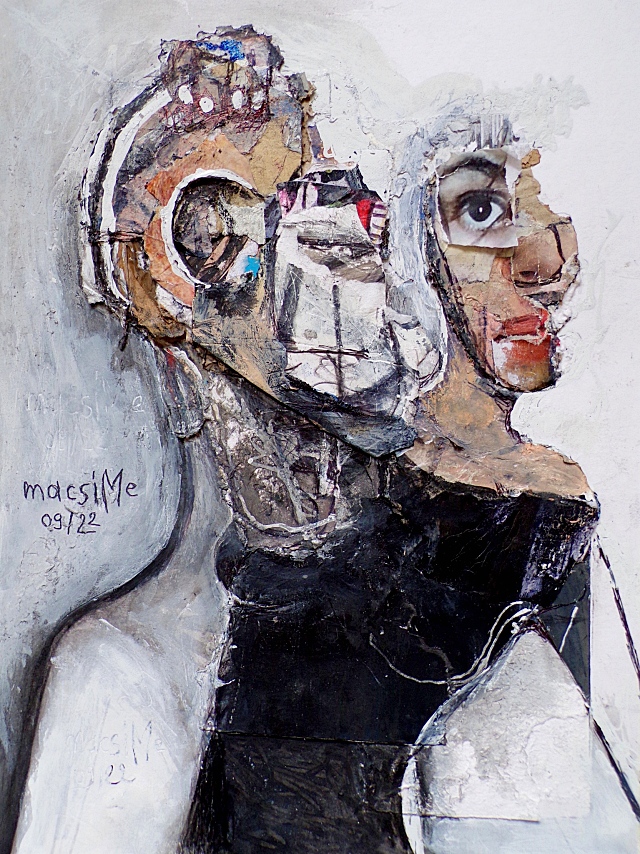
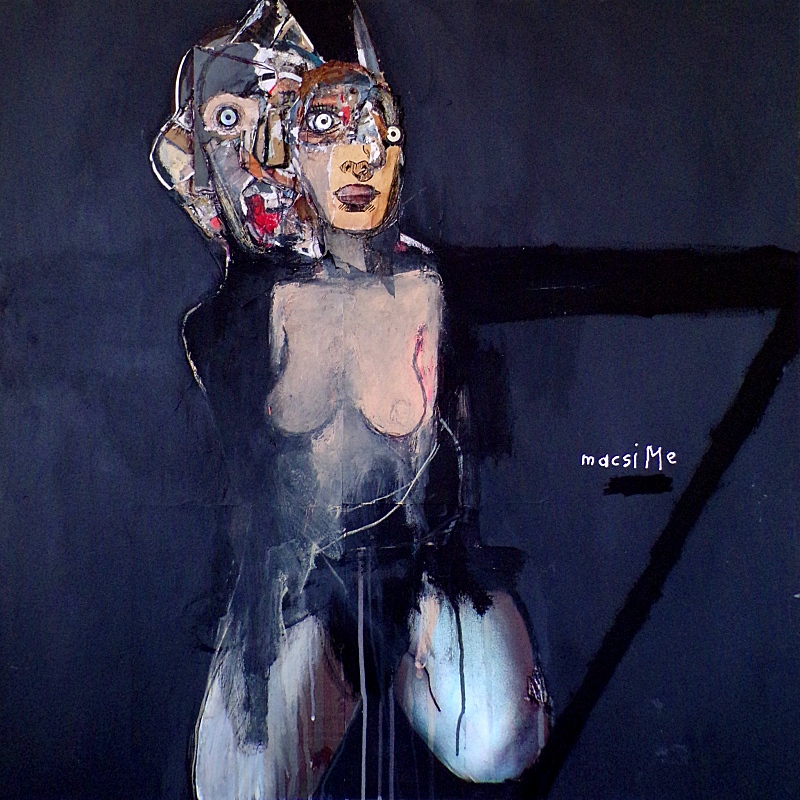
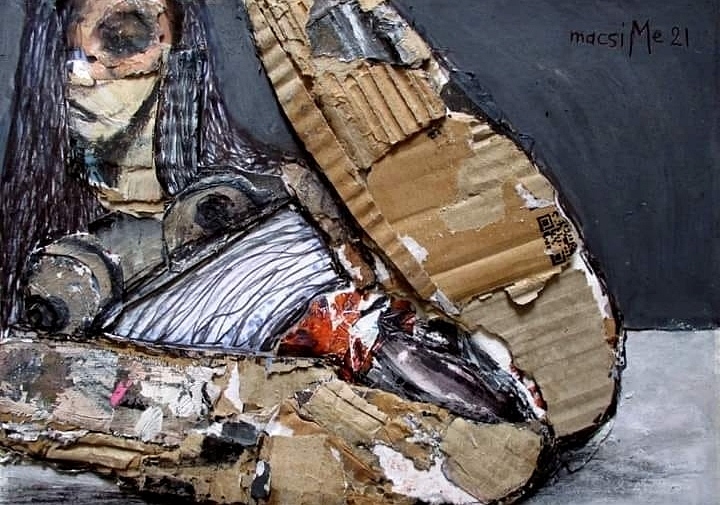
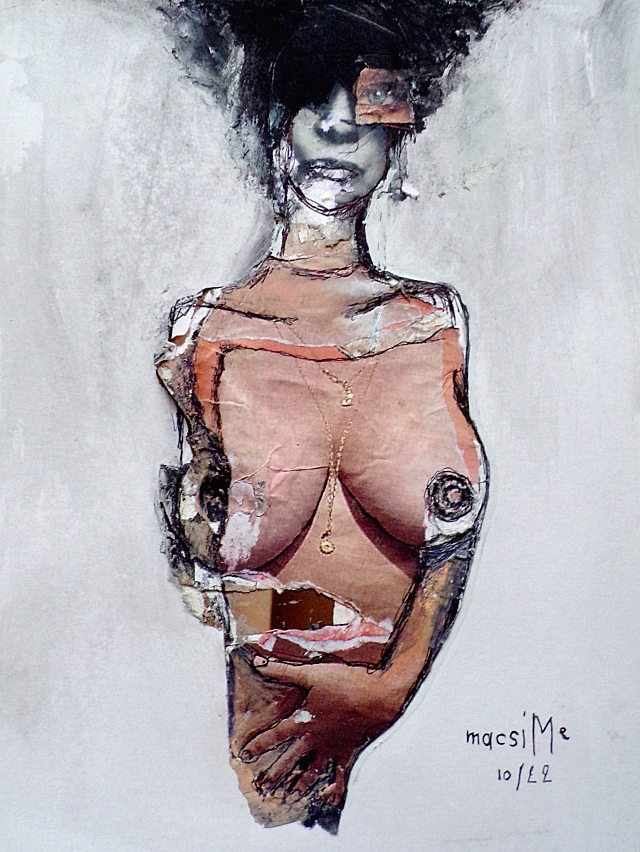
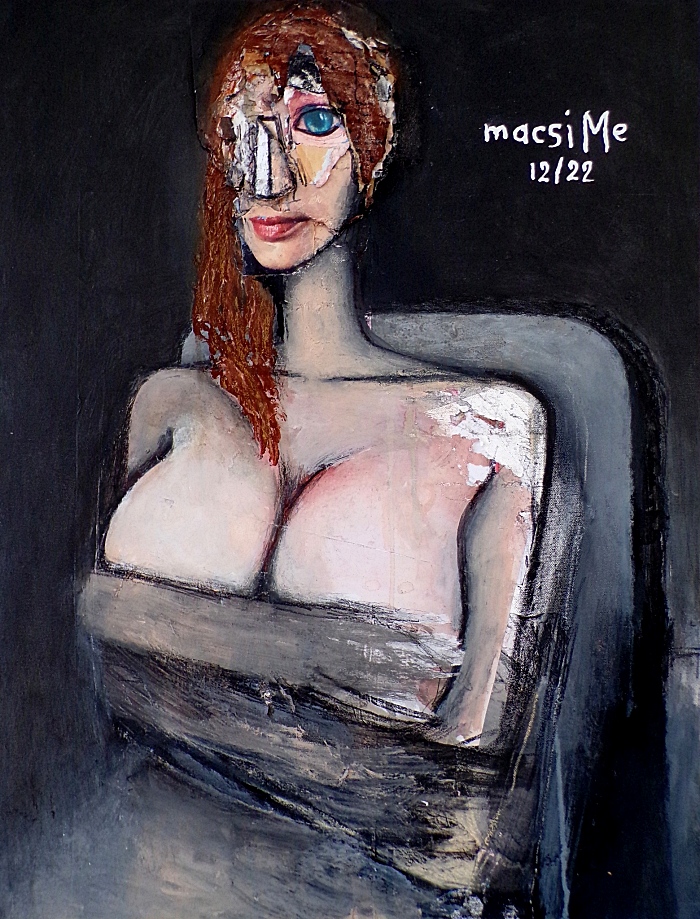
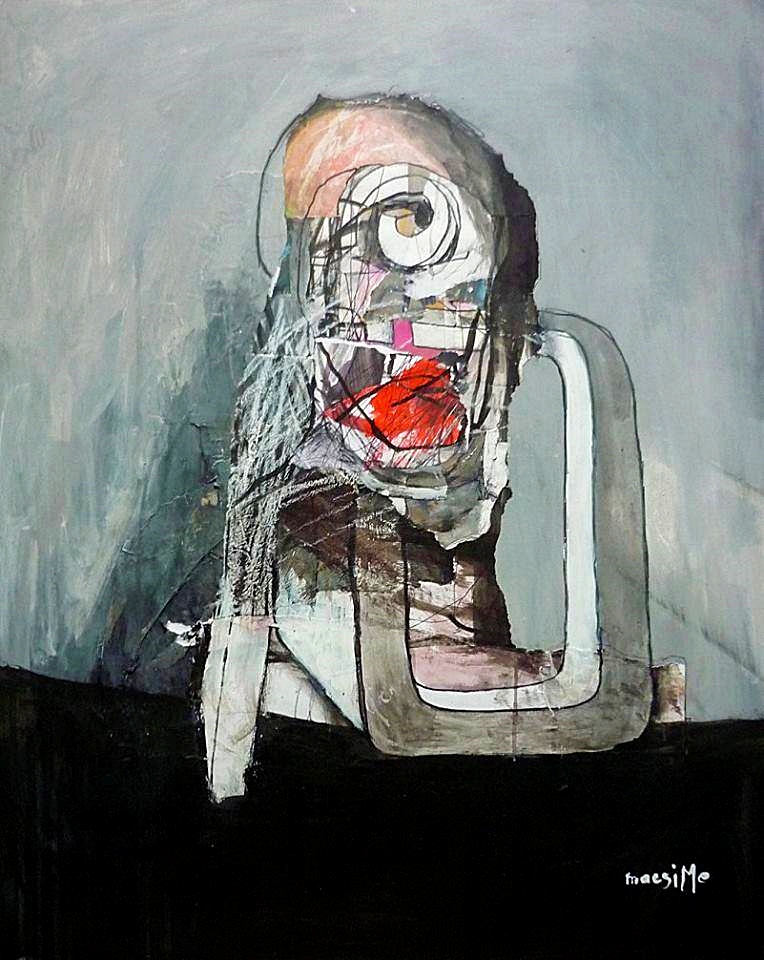
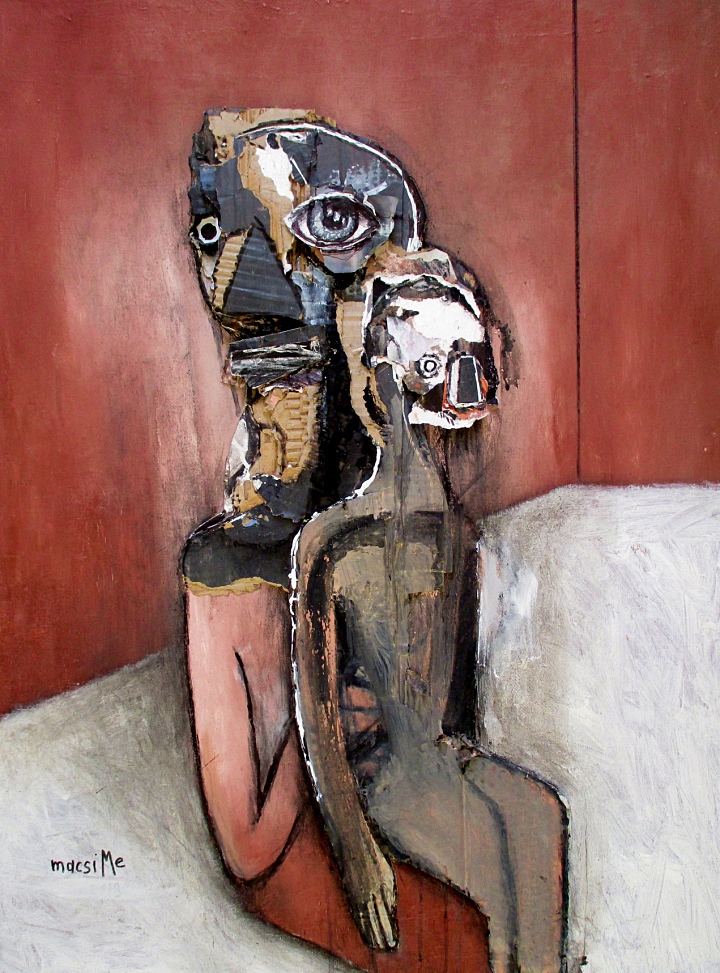
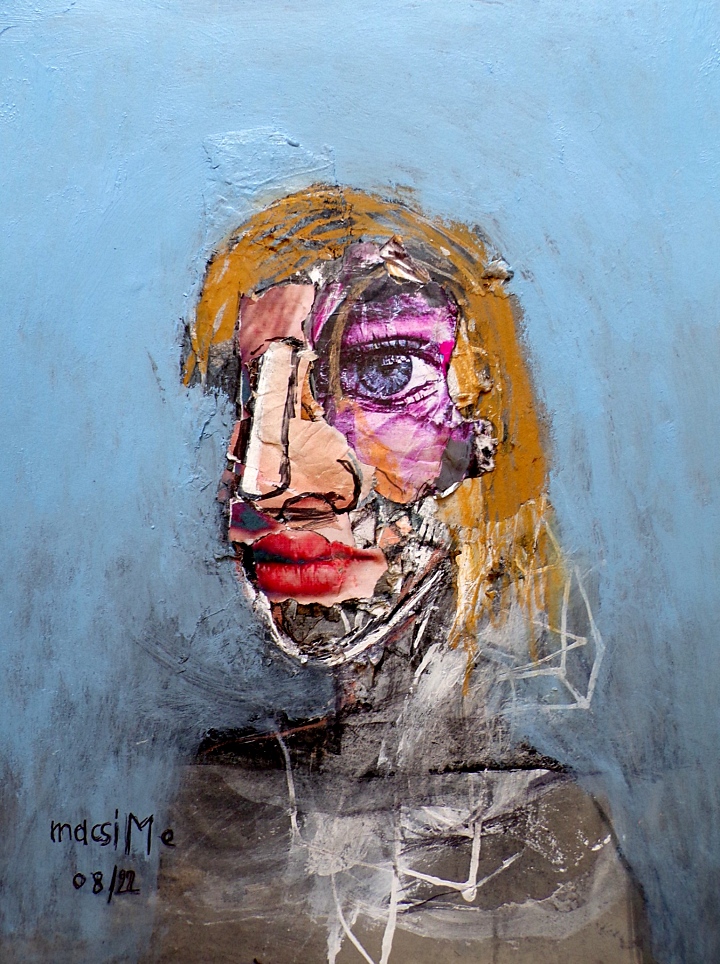
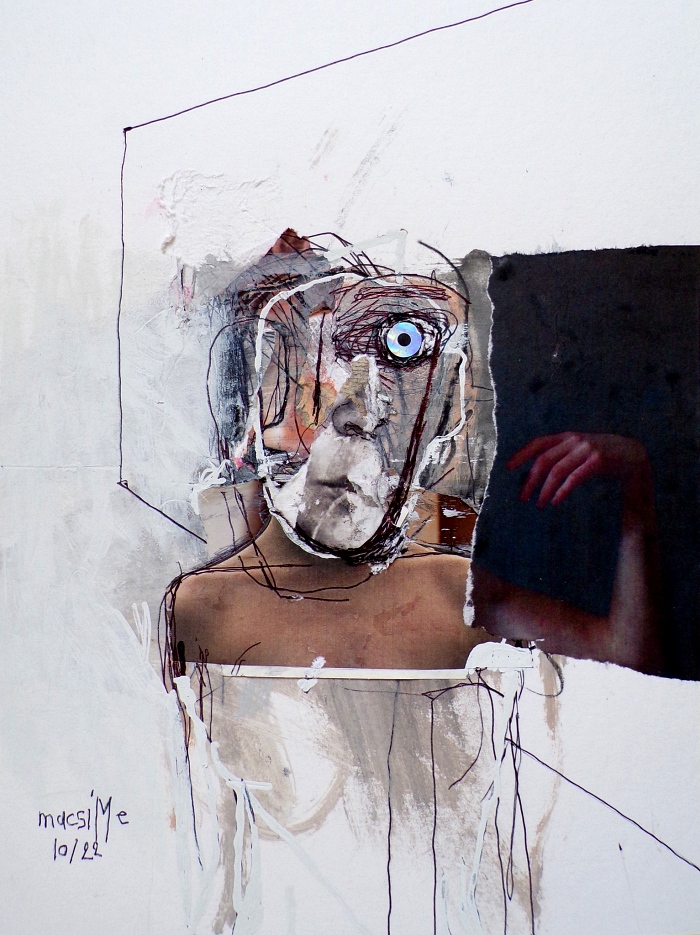
macsiMe is a French artist who is inspired by impact. macsiMe prefers no elaboration. only the act of friction and reaction speaks for itself
All in Nothing- Nothing in Everything I draw I erase I glue I scratch I tear I stop, look, look And I start again Lots of “I” s but that is what Art is Art is just answer
\
macsiMe lives in Le Mans, France enjoys observing people is inspired by action
THIS AN AUTHORIZED DUPLICATION WITH PERMISSION AND EXPRESSED CONSENT FROM THE ARTIST MACSIME
When the nose has dyslexia, the conventions of clean and dirty mutate amuck-
Nightmares of being dunked in vats of perfume become the norm-
Social status disintegrates and intimacy with a skunk brings joy-
The man burrows into remote dung heaps further and further away from the tyrannies of soap-
When the nose has dyslexia, predictable roles and behavior are scrambled anew-
Musk entrenched supermen get stampeded by berserk fawns in heat-
Germ-Phobics fondle dung beetles whom with freshly molested vigor, do hind leg roll ups of squeeky clean solid citizens-
A prudish school marm finds a hidden rabid snapping turtle in her soul after being bitten by rotten apples given jaws by the teacher’s pet gone astray-
When the nose has dyslexia, rampant desire surpasses grandiose expectation.
A wart on a baboon’s ass blossoms into a more fragrant-than-thou perfume garden berry infecting a bestial psychopath who then penetrates with valor the furious posteriors of mandrills shimmying with profane delight
Eager vines of algae growing up from centuries of neglected teeth, climb greedily towards the fortune of a fresh breath heiress-
Gooey-Pollyannas wash their mouths out with soap before reciting mantras of bland nicety to contrite career criminals gnawing on clean conscience bunions jutting from angel’s feet-
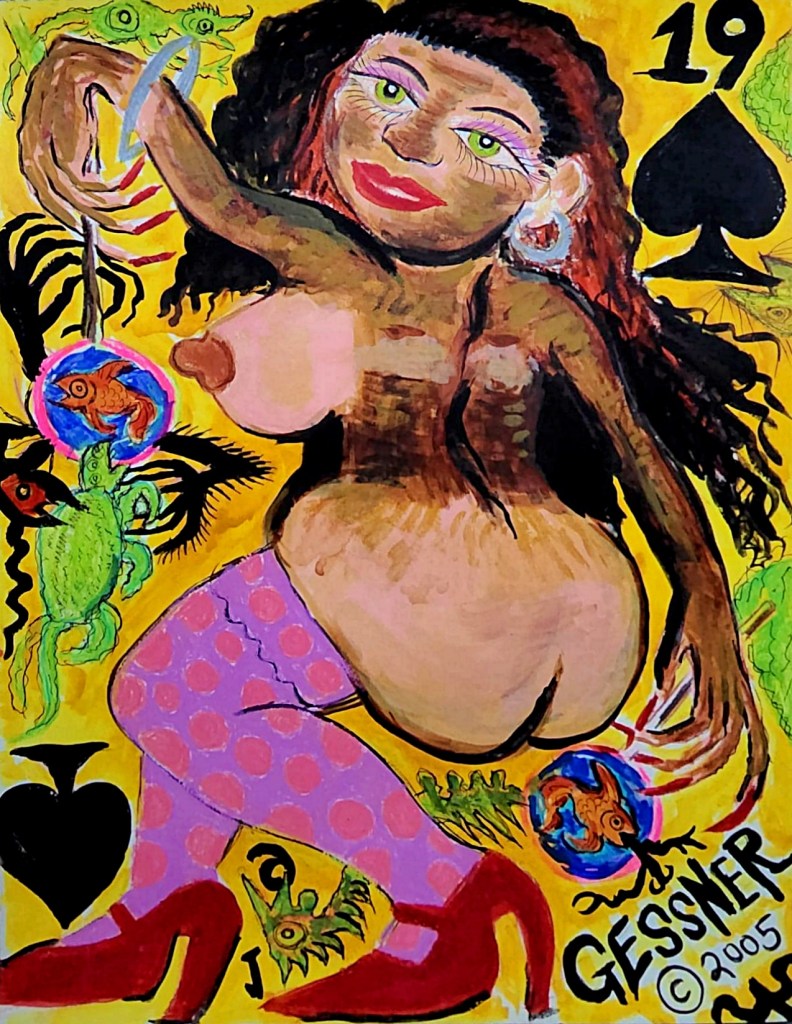
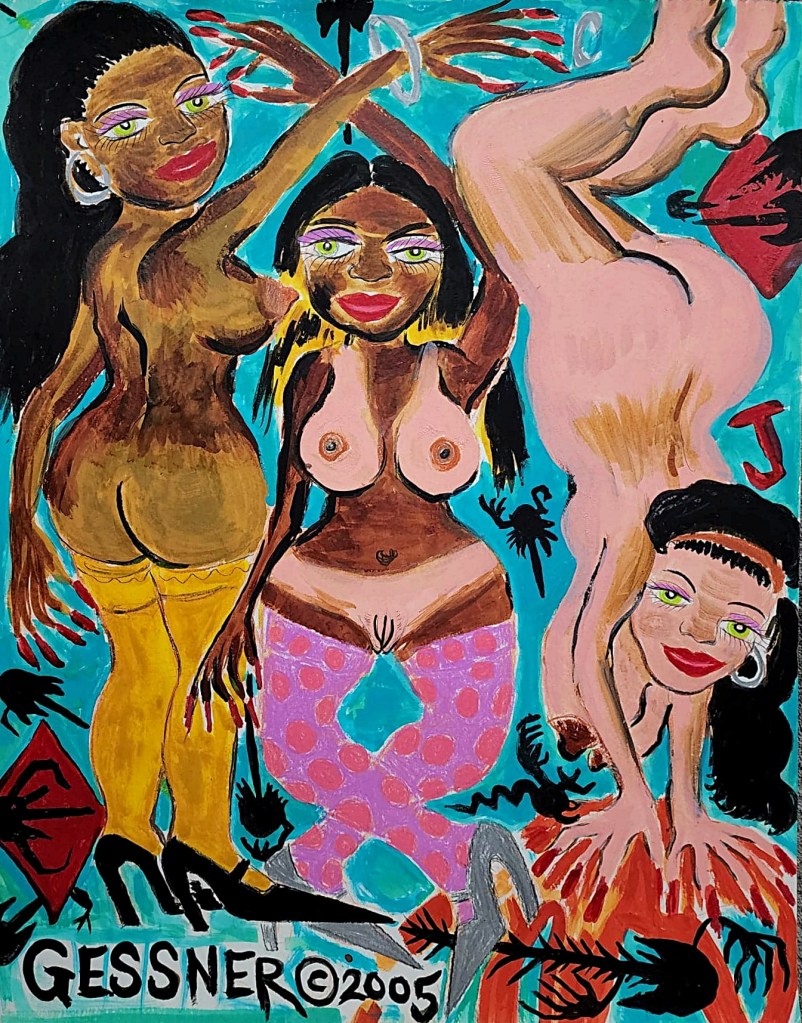
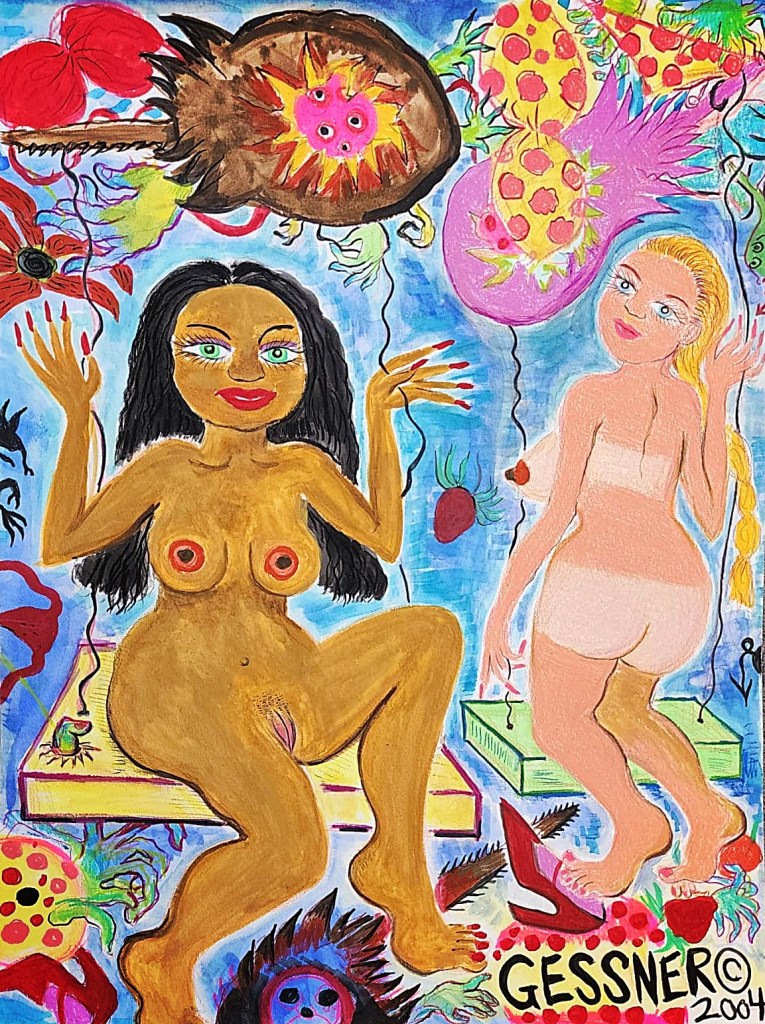
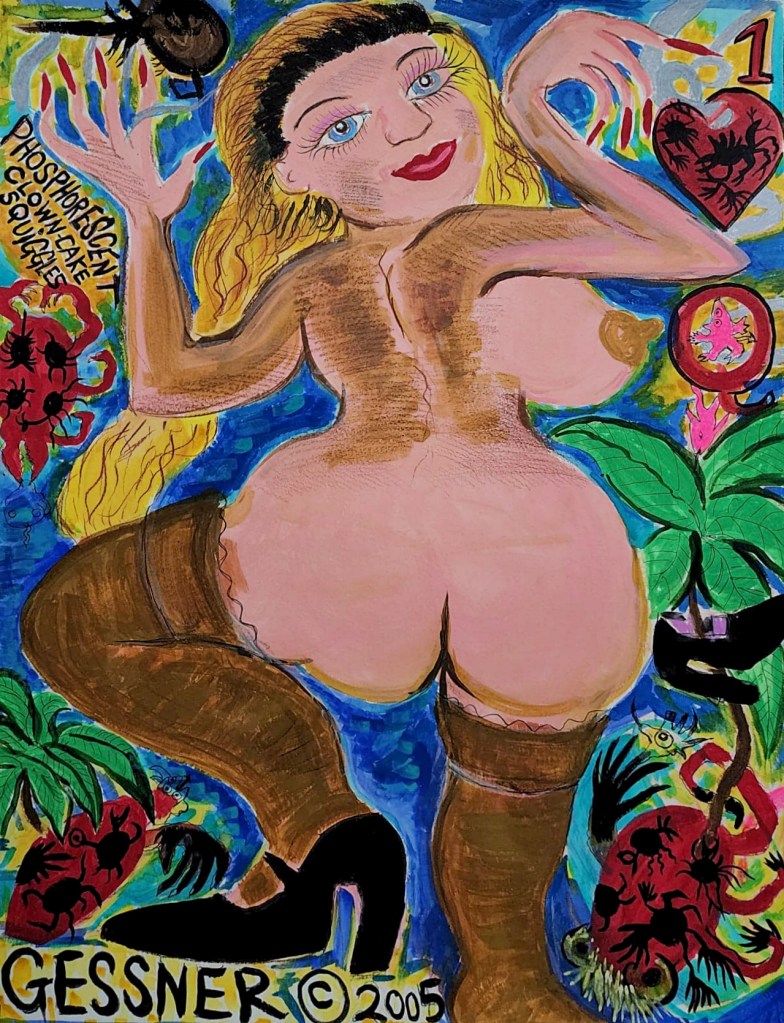
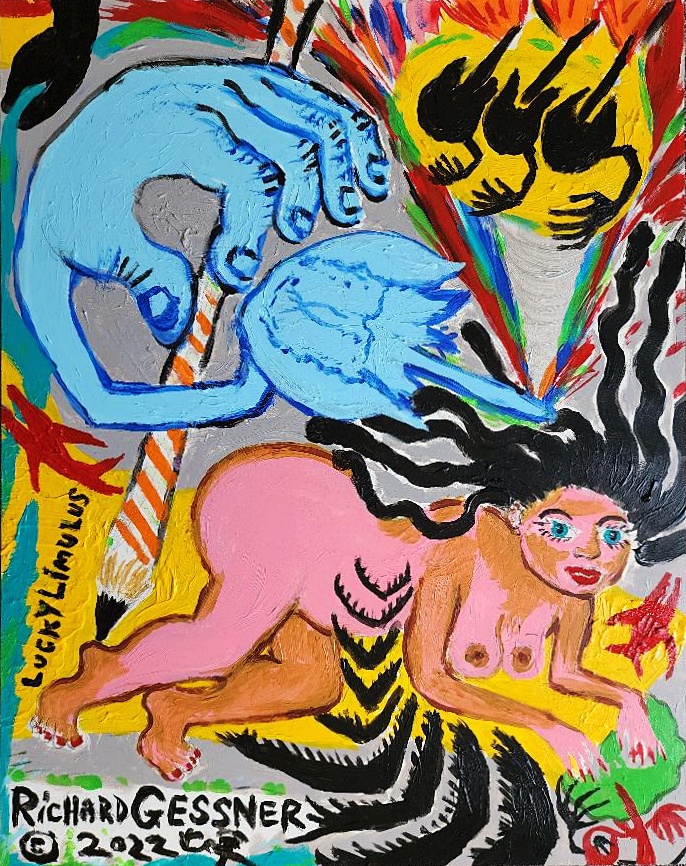
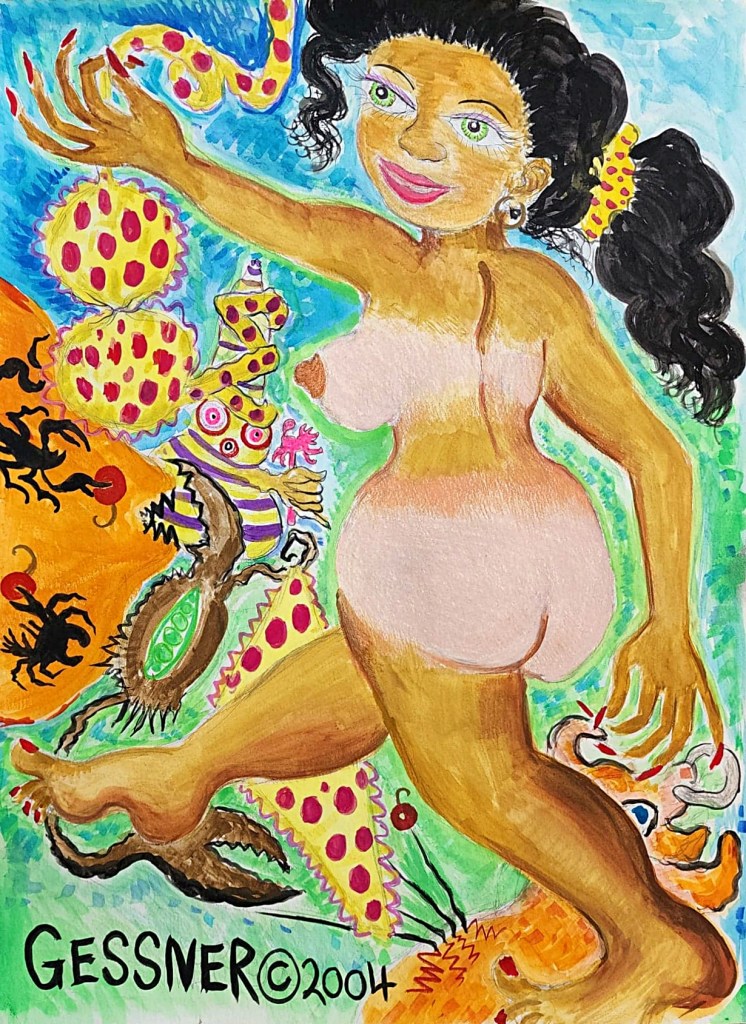
19 of ClubsTrio of Femme SirensAuf Die SchaukelPhosphorescent Clown SquigglesLucky LimulusBrunette March
When the nose has dyslexia, sacred values of societal dust are sculpted into new poisons by the playful rogue nostril metastasizing-
The Outhouse-Leper becomes a vengeful king, skinning the pillars of communities, turning the hides into outhouse doormats-
Blind Peeping Toms suddenly regain their sight munching on outhouse-doormat brittle–thus seeing and tasting time honored models of proper conduct-
Yeast Infected Vaginas curtsy with hypnotic finesse, flirting with clownish tumescent yam jam giraffes, spurting forth voyeurs turning into martyrs, turning into manic surgeons whittling skunky joy toys in a sleepless scalpel trance-
When the nose has dyslexia, the lightning of childhood memory strikes unlikely victims–oceans of crystallized feelings awaken from deep sleeps re-inventing the heart-
A hardened Loan Shark gets entangled, softened and diced up by the frail sadnesses evoked by the rubbery wet scent of his baby sister’s favorite dolly lost in a distant rainstorm-
A loud mouthed schoolyard bully becomes a mute wise old sage, transcending all utterance, ruminating inwardly, building shrines of cookie crumb folly from the remnants of desserts the bully once coerced from the trembling hands of weaklings entombed in the bowels of forgotten grammar school lunch rooms-
The cold stares of ultra strict baby sitters, soberly stretch a whiny little brat’s dirty diapers into an almighty circus tent tundra sheltering cleaner than clean orphans sired by soap bubbles popping-
Formative Foodchain
When the nose has dyslexia, embarrassment lurks in excess.
The man narrowly escapes the lewd clutches of Germ-Phobics hiding in lairs of undigested corn kernels waiting to leap out and fondle him.
He burrows inexorably deeper into remote dung heaps further and further away from the tyrannies of soap, eventually reaching paradise, where fragrant nirvana is sweetest, and stench lost its voice to the carrion bird who sings dirty in reverse.
The man enters The-Nose-Has-Dyslexia restaurant, ordering a Skunky-Joy-Toy kiss smothered in freshly molested dung beetle sauce.
As frail diced up cubes of sensitive Loan Shark say grace, crowds of manic surgeons saddened by lost wet dollies, serve the meal in a sleepless scalpel trance-
The man tastes paradise, blessed by the voice of stench stolen by the carrion bird who sings dirty in reverse.
Suddenly The-Outhouse-Leper-Turned-Vengeful-King appears, interrupting the man eating, pedantically assailing him with correct table manner etiquette, forcing a squeeky clean knife and fork into his dungy hands…
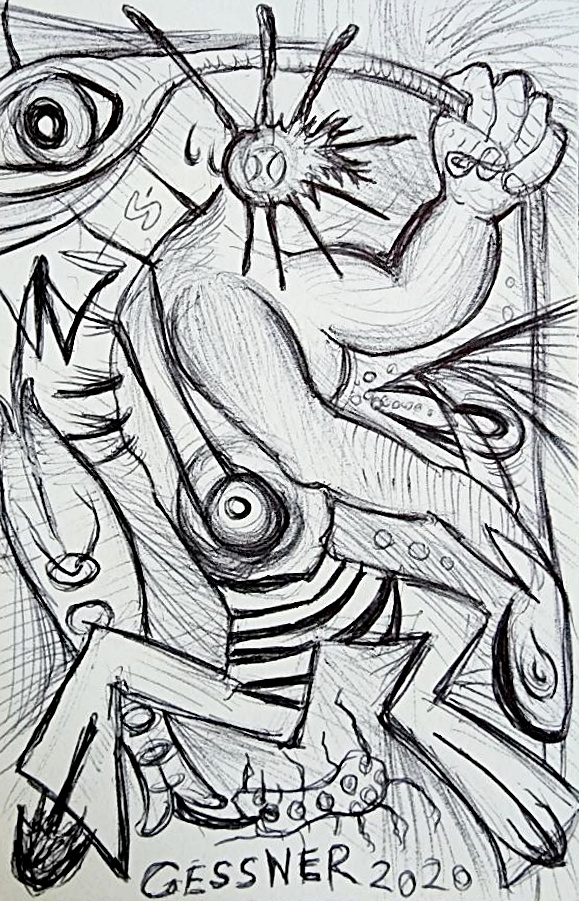
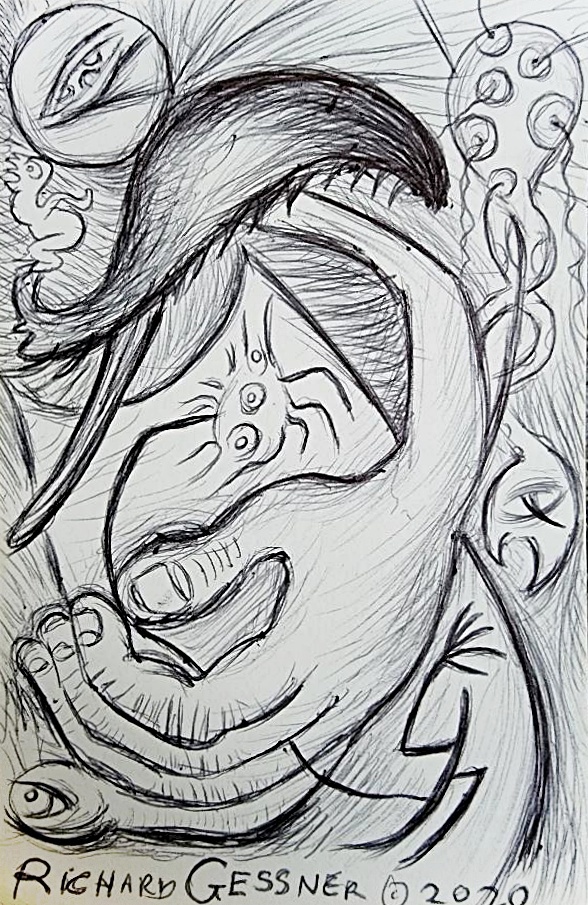
Richard Gessner’s fiction has been published in Air Fish: an anthology of speculative work, Rampike, Ice River, Coe Review, Another Chicago Magazine, Happy, The Act, Sein und Werden, Skidrow Penthouse, The Pannus Index, Fiction International and many other magazines. A collection, Excerpts from the Diary of a Neanderthal Dilettante & The Man in the Couch was published by Bomb Shelter Props. Gessner’s drawings and paintings have appeared in Raw Vision, Courier News, Asbury Park Press, Rampike, Skidrow Penthouse, and exhibited at Pleiades Gallery, Hamilton Street Gallery, Cry Baby Gallery, The Court Gallery and the Donald B. Palmer Museum. He lives in Montclair, New Jersey.
“The Amazing Richard Gessner, Wizard of the word, and Alchemist of the image” -Vincent Czyz May 24, 2022
THIS WRITING IS AN AUTHORIZED DUPLICATION WITH PERMISSION AND EXPRESSED CONSENT
How would you describe your painting process and your associative relationship between concepts, events, or mental states of the subconscious? Is there a link between self-hypnosis and inspiration?
Artists, writers, and poets such as Garcia Lorca, Roberto Matta, Henri Michaux, and even Anais Nin have inspired me to paint. Language, for me, comes first, but the visual can support the verbal. I paint as if I’m composing poetry.
Automatism or improvisation is the starting point – bebop – but I’ve realized that the contours of a, often dismembered and re-stitched, female body appears repetitively in my mind’s eye: think Mary Shelly. This flickering of fragmented body parts leaves deposits on the canvas/my mind. There’s something about the human body that truly fascinates me. This fascination isn’t deliberate, and it’s also strange because I’m more cerebral than a physical person: in my view, the body exists only in the mind. This also solves, at least for me, the century-old dualism: the body-mind split. Or, as William Blake said: “the body is a portion of the soul.”
Man is a machine, and a woman is a sublime machine. If you compare the human and the animal body, the human body is clearly synthetic and artificial. It blurs the boundaries between what’s considered natural and what’s considered artificial. I find that thrilling. There’s nothing natural about us humans. We aren’t becoming robots or cyborgs, we already are. We can’t rely on our instincts anymore as non-synthetic creatures can. There are vehicles in the making that’ll be able to reproduce themselves with whatever material they can find on Mars.
How’s that different from us? You could say that humans think and feel, but do we really? Aren’t we just parroting the words, stories, and belief systems that we’ve been fed? When was the last time you heard a new idea? Something you hadn’t heard before, something that stimulated an innovative thought. We’re the protein by-product of language. Perhaps when there’s trance, a moment of silence, or jazz, an intelligent intuition can unfold in the nerve domain. Painting or poetry can help it develop, transmit and circulate. Possibly it can be fertilized by critical reading or meditation.
Is painting a technique that represents a body disconnected from words? a sort of ‘transmuting neurology’
Transmuting neurology, I love this phrasing. Probably our neurology is in constant a state of desire for perpetual transmutation, but the culture must allow for it. Studying the history of painting, I was excited to learn that the Impressionists had “discovered” different shades in snow, something that nobody had “seen” before them. Isn’t that intriguing? I guess they contributed to an alteration of the general perception and experience of what’s “white.” They are also depicted as the very first in the history of Western painting of social situations such as people dancing or swimming. Nobody had done that before them. That’s why the establishment was so scandalized.
Of course, it didn’t help that the women they painted often were what today we’d call sex workers. Can you imagine that in the second part of the 19th century? Later with expressionism and surrealism, painters gave expression to the ebb and flow of what’s inside the mind’s eye. An interesting artist is Francis Bacon. He claimed that he depicted people as they “really” are. Perhaps some of us are polished yet monstrous or disfigured? Or even, maybe the human condition is one of perpetual disfigurement? Whether we can see without words is something I keep on mulling over. I feel tempted to believe that as humans we need some sort of narrative or linguistic frame of intelligibility to see things. Perhaps we can only perceive objects contextually. Painters should be called pioneers or even anarchists of perception.
Can you elaborate on how language shapes us by a Languaged body, cultured intuition by sound, and language as a living intelligence?
I’d like to emphasize that I constantly toy with intuitions and ideas, not with truths. The truth for me often is a reductionist and particularly violent concept. Think of all the wars that have been fought over some sort of revelatory divine truth, or in later centuries, the so-called scientific truth. The Nazis had their ideology backed up by scientists’ assertion that theirs was the most evolved race (so-called Social Darwinism), and that certain other races were particularly parasitic and had to be exterminated the same way as rats or cockroaches. So, circling back to the central ideas informing my practices such as the “languaged body” which is a neologism, and the idea that language is a living intelligence, I don’t consider them to be truths. These are frames of intelligibility that have grown under my skin over the years of study, reflection, practice, and meditation. I have no problem admitting that these concepts are nothing more than my obsessions. I’m not a missionary.
I see language as something external to human beings, possibly an organism. In the process of language learning, humans are inserted into this external thing we frivolously call language. There are linguists in Switzerland who’ve developed a theory in which language is a symbiont. So not necessarily a virus as William S Burroughs famously claimed, or that it can turn parasitic in case of psychosis as French psychoanalyst Jacques Lacan suggested. I see our brain + nervous system as a receptor-like radio, tv, or computer, capable of receiving signals and building narrative. In some way, it’s a form of telepathy. By producing sounds, we invoke a whole shared world that has been forged across thousands of generations. Also, we invest our lifeworld, including our bodies, with words, with a story. If our bodies weren’t invested with language, we’d constantly experience ourselves and others as walking talking meat, protein bags, or water bags on legs. When we buy meat at the butcher’s or supermarket, we don’t think of that red stuff as chopped-up dead animal cadavers. We say it’s a New York strip or whatever. Something similar is going on with our bodies. We have names.
This name is somehow “written” on our skin, on our face. I’ve never met anyone without a name, though I’m curious how that’d be. When we feel attracted to someone, we don’t think “that’s a tasty animal.” Some of us might, however. A whole story about someone is activated within us when we fall in love, a concept of what a human being is, of what beauty is, etc. while we all know that a few millimeters under the skin there’s blood and a skull. But who, except a cannibal or a serial killer, thinks about that? The way language has contextualized humans prevents us from seeing the meatiness of a person. But this experience isn’t fixed. There are cultures in which not everyone has human status. Think of the Dalits in India. In Central Africa the so-called pygmy is being hunted and eaten, most probably because their appearance doesn’t conform to the hunter’s concept of what constitutes a human. It’s also interesting to read the private diaries of people who worked in concentration camps, and how they thought about the people they helped butcher or exterminate. Some agreed that Jews, homosexuals, communists, etc. had to be put to death, but they felt it should happen in a kinder way, pretty much how some activists think about animal rights in our era.
Language protects us by feeding us optical illusions. As humans, we’re trapped in a theater of distorted thoughts. It’s as if we need to drive on a busy freeway wearing glasses deforming everything coming our way. All this is extremely disorienting and frightening. I think maybe that’s why there’re so many ideologies and why religion is such a sensitive matter. These “grand narratives” offer the illusion of certainty and direction: how one should lead one’s life, where one should be headed, and where to invest one’s life force. The artist, I think, has been for whatever reason cast out of the Eden of ideology or religion, and is forced to constantly mold and remold her internalized worldviews, knowing often very well that this is a futile endeavor that must be repeated endlessly. But, at least, there’s some motion within. The alternative would be catatonia.
Artists, writers, and poets who helped contribute and inform your process?
I sound like a broken record when I keep on mentioning Will Alexander. But there’s no denying that his oeuvre provided me with the missing link in my thinking. I have always had an interest in ritual, animism, and shamanism, but with the latter term, we need to be extremely careful. I adhere to academic concepts of shamanism, such as Mircea Eliade’s. When younger I participated extensively in groups believing that they were engaged in shamanic practices. Perhaps some of those did. I don’t want to claim that I have the capacity to say what’s authentic and what isn’t. What I inherited from these experiences is the sensation of trance. Will’s work transfuses both language and animism/shamanism, especially in his The Combustion Cycle.
Without trance, there’s no writing nor painting for me. Writing prose is different. Poetry and painting for me fall in the same domain as glossolalia, speaking in tongues or trance-speaking. Freudian associating on the couch. Will’s concept of language as a living, possibly alchemical intelligence, makes a lot of sense to me. It connects my interest in shamanism and animism with my obsession with language in a no-nonsense way. WA’s poetics is a conscious journey into the imagination. To truly feel this, you need to understand that the imagination isn’t just “fugazi” or fantasy. The Jungians know very well that the imaginal world is a tangible environment, in which one can move around and travel in. There are beings dwelling there. You can develop a bond with these inorganic characters. Jungian practitioners are aware of this possibility.
I think I can say that Occidental culture at this point in history is in a state of coma or autophagy: it’s eating itself up. The criteria for personhood are so one-sided and reductionist that it is extremely easy to descend into a state of being a non-person. Maybe the only option when that happens for some people is to die and, in the process, drag along as many corpses as possible. Ours is a high-risk society. Having said that, I’ve lived in India for three years the comfortable life of an adult literature student. Life in India is no bargain either. Perhaps I have taken shelter in the written word and painted images because I’ve experienced that it isn’t possible to change your own culture with another. Every culture has its own cruelties, sacrifices, and gains, but they aren’t commodities. The difference, maybe, between Western cultures and the rest of the planet is that, as French novelist Michel Houellebecq suggests, the West has sacrificed almost everything for the sake of rationalism and technocracy.
There are also other artists and poets besides WA that have influenced me. I’m thinking of the “Grand Jeu” poets such as Rene Daumal and Gilbert-LeComte but also Antonin Artaud, Joyce Mansour, and Roberto Matta. Regarding US artists and poets, there’s, of course, Philip Lamantia, whose thinking and work is like a direct mind-injection into my mind: picture a metaphysical phone call without ever hanging up. Other important people would be Bob Kaufman, John Hoffman, Laurence Weisberg, but also someone like Mina Loy, and some beats, in particular William S Burroughs. I feel a deep affection for a lot of artists and writers: William Baziotes, Arshile Gorky, Thom Burns, Rik Lina, Byron Baker, Emily Dickenson, Edgar Allan Poe, William Blake, Lautreamont, Guiliaume Apollinaire, Baudelaire, Rimbaud, Gerard de Nerval, Grace Hartigan, Leonora Carrington, Remedios Varo, Juanita Guccione, and many more.
Bill de Kooning deserves special mention, on the one hand, because nobody speaks about him anymore and because of ongoing the “de Kooning-bashing. But also because my paintings are a prolegomenon (not a counter-narrative) to his disfigured depictions of Marilyn Monroe-type of women, in particular the teeth: Where else in the world is the business of smiling taken so seriously as in the USA? My series of chopped-up disfigured ladies, “Mutilated Madonnas,” are homage and homologous to his.
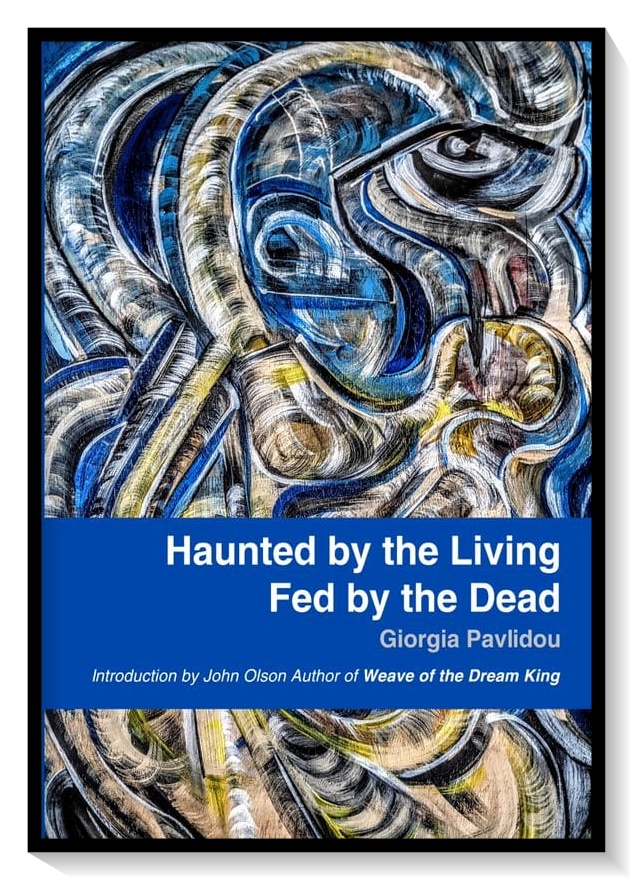
This is intense work. It’s incandescent. It’ll catch your eyes on fire. Burn your brain down. Giorgia Pavlidou has managed to make anguish appear beautiful. And sexy. Artaud is the tutelary spirit of this work. The anguish is real and the words have the taste and smell of the netherworld in its black gown of sibilant pupa. This is language with a biology; it writhes, hisses, and propagates by glossolalic impregnation. Reading these poems is an immersive experience. Here we find madness, anguish, erotica and Rabelaisian humor welded and wed to a language full of “lexical tentacles” and “fire dressed in fire.” It gets under your skin, this speech. These strangely intelligent & autonomous words, manic as wasps in a vessel of glass.
—John Olson
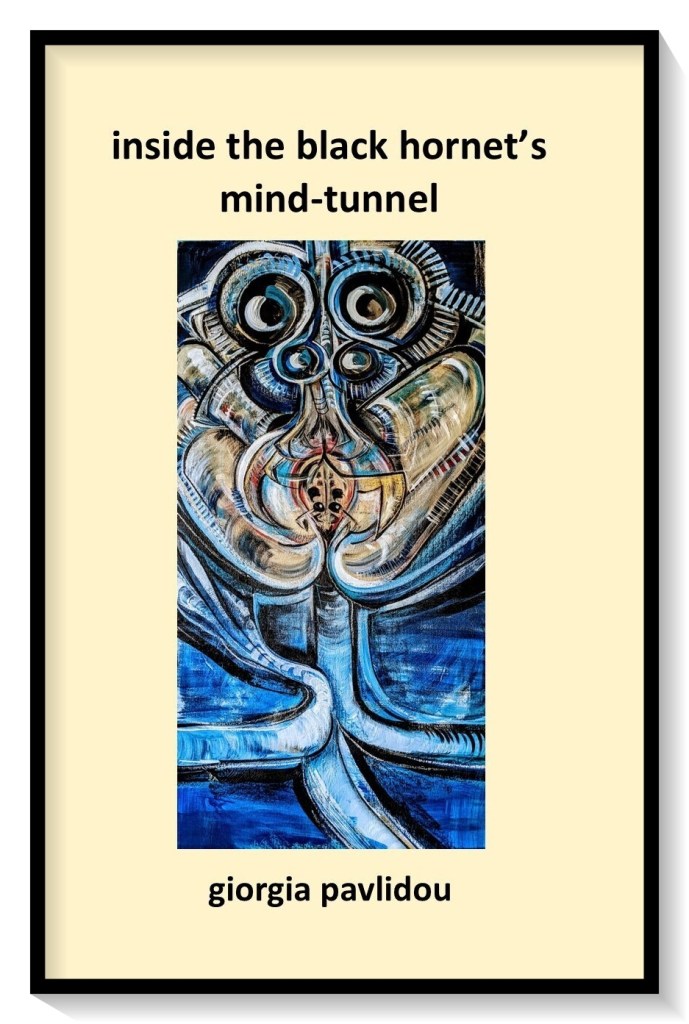
A pyrotechnics of lingual essence, Giorgia Pavlidou’s “inside the black hornet’s mind-tunnel” yields feeling through the language of the heart creating darkened constellations that rivet the inner eye all the while whirling as an estranged yet organic imaginal terrain.
—Will Alexander
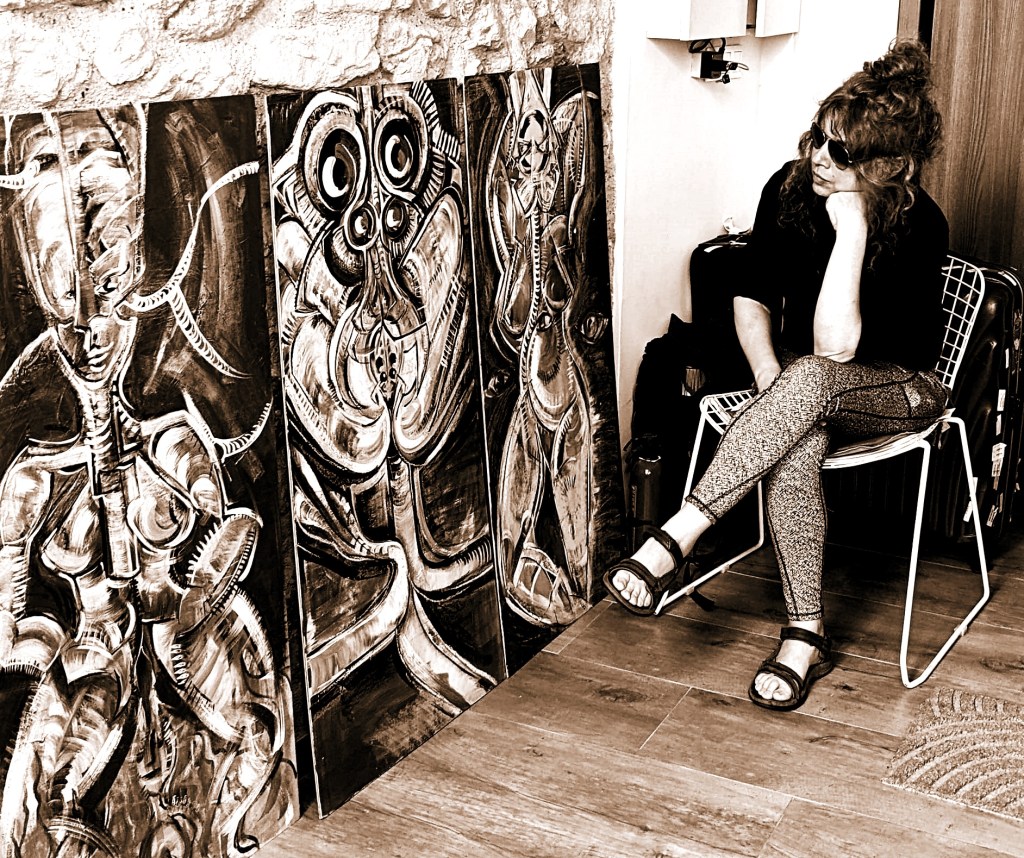
Giorgia Pavlidou
Giorgia Pavlidou is an American writer and painter intermittently living in Greece and the US. Her work recently appeared or is forthcoming in Caesura, Maintenant Dada Journal, Puerto del Sol, Clockwise Cat, Ocotillo Review, Strukterriss Magazine, Entropy and Sun & Moon Magazine. She’s an editor of SULΦUR. Additionally, Trainwreck Press launched her chapbook ‘inside the black hornet’s mind-tunnel’ in 2021, and Anvil Tongue Books her full length book of poems and paintings, ‘Haunted by the Living – Fed by the Dead’ in May 2022
Where does the inspiration come from to paint vivacious ‘swollen icons’ or Zaftig female figures?
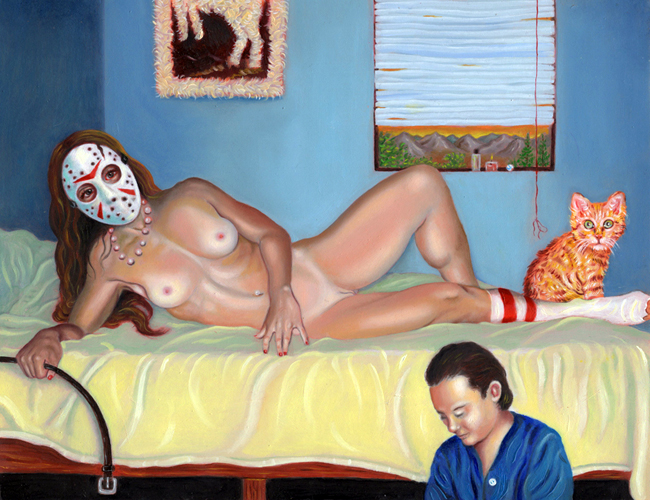
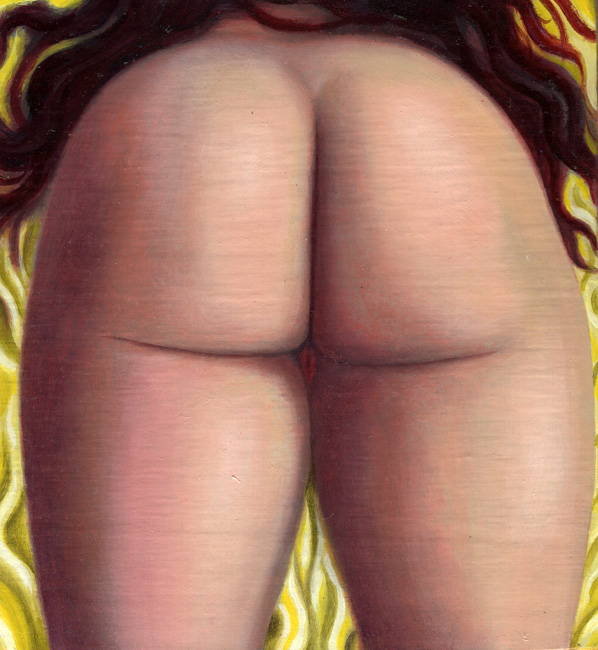
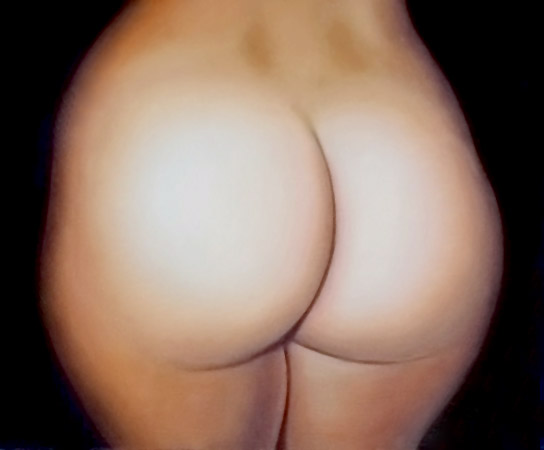
My inspiration to create these characters comes from beautiful Trauma. I had a sexualized childhood and have very vivid recollections of intense moments that shaped my life and artistic aesthetic. My voluptuous women are inspired by the Latin women I grew up seeing around me and fantasizing about. The male characters are inspired by the feelings I have experienced when I see a powerful woman. The source of my creativity is the power of femininity. I call my male characters SWOLLEN ICONS because I feel that when men are aroused they swell spirituality and physically. The feeling of blood flow from excitement inspired me to express myself and create these unique figures. They are also inspired by a memory of a deformed boy I saw back when I was 7 years old. His image is imprinted in my mind and somehow it pours into my work. One of the strongest memories that have shaped my art happened when I was a pre teen surfing in Miami Beach. While I surfed in small shore break waves a gorgeous tanned Brazilian woman approached me and asked if I could teach her how to surf. When she laid down on my surfboard I looked at her muscular and plump derriere and time seemed to stand still. She was wearing a thong and was flirting with me. She was an older married woman and was just having some fun, but for me it was serious. That memory inspired my inclination for zaftig female figures and bubble butts. Most of my work is highly personal and evolve daily experiences. And the pain and melancholy in my work is due to youthful unrequited love.
There is a strong Freudian id theme in your work have you read any Sigmund Freud? Cal Jung? what are your views on sexuality and art?
Yes, I have read and studied about them. When I graduated high school I wanted to be a psychologist. I did 4 years in college and when I was about to graduate Psych school I had a change of heart and pursued art. In the end I graduated with a major in visual arts and a minor in psychology. They were very influential to my creative process. Because of them and the surrealists I started delving into my memories to create. I loved that they gave importance to the private worlds in our subconscious. I love sexuality and sensuality; some of the greatest works of art have been driving by this primal force. I think sexuality is beautiful and powerful. I don’t see it as a sin but as a gift, the ultimate feeling in the world has to offer us. It’s the source of creativity and life. A perfect example of how the power of sexuality inspired art and helped change the world was Picasso’s “Les demoiselle D’Avognon”. That painting became the face of an art revolution that led to modern art and it was inspired by the women in a brothel. Picasso once said that sex and art are the same, I agree.
There is an infant, a consort often accompanying your female figures, who is he?
That figure is usually a self portrait. He represents the way I feel. When there are more than one of these little figures its usually a statement on society, the male condition. That’s the simple way to talk about them but I feel these characters have several layers and can signify many things, it all depends on the viewer. Sometimes this character is a SWOLLEN ICON and sometimes he can be a HYBRID. The hybrids in my work represent animalistic urges. One of my favorite painters is Bosch and I look to his array of menacing hybrids are inspiration for these thought process. My paintings can symbolize emotions but at the same time can be read as social commentary.
How do you process ideas from the subconscious and find inspiration on a daily basis?
I like to create art through the surrealist practice of automatism. I let the work unfold before me as work without conceptual restraints and flow with the material I am using. I love the initial process of discovery and uncertainty. Sometimes I am inspired by a dream or an experience and choose to try and capture that vision. But most of the time I prefer to work intuitively. I have coined the word SENSUALISM as my art style because it is heavily influence by surrealism and sensuality. I love art history and I feel my work is in constant dialogue with past art.
Were there other writers made a major influence on the way you thought about reality?
I love the works by existential writers the likes of Albert Camus, Hermann Hesse, Oscar Wilde, Kafka, Bukowski and Nabokov. Oscar Wilde’s book “A picture of Dorian Grey’ is forever inspiration for me. He was one of the first artists that showed me that one could create great art by exposing subconscious desires and fears. I also love the book “Narcissus and Goldmund” by Herman Hesse. In this book I love the way Hesse poetically depicts the life and struggles of the visionary artist. Besides loving books I am also a huge film buff. I love all genres. I find inspiration seeing and taking notes while I watch great films. My favorite filmmakers are David Lynch, David Cronenberg and Alejandro Jodorowsky. Some of my favorite all time films are; THE ELEPHAT MAN, AMADEUS, ROCKY, SANTA SANGRE and LEGEND. I also wouldn’t be able to create without music. I love creating while jamming to my favorite bands. I love the energy in heavy metal, punk rock and retro new wave; bands like Audioslave and Metallica keep me stoked while I work.
Favorite artists?
My favorite artists are Hieronymus Bosch, Salvador Dali, Pablo Picasso, Jan van Eyck, Robert crumb, Ingres. If you look carefully you will see their influence in my work. They have heavily informed my art through the years. I have actually seen Their work in person and have been changed by it. I can remember the time my wife and I took a trip to Paris to visit the Louvre museum and I was blown away the art of Jan Van Eyck. I stood in front of one of his oil paintings for an hour, mesmerized and touched by the sheer technical prowess. When I got home from the trip I decide I wanted to paint like him and dedicate my life to the love of color, sensuality and care.
What can you tell us about your spirituality of surfing and staying healthy?
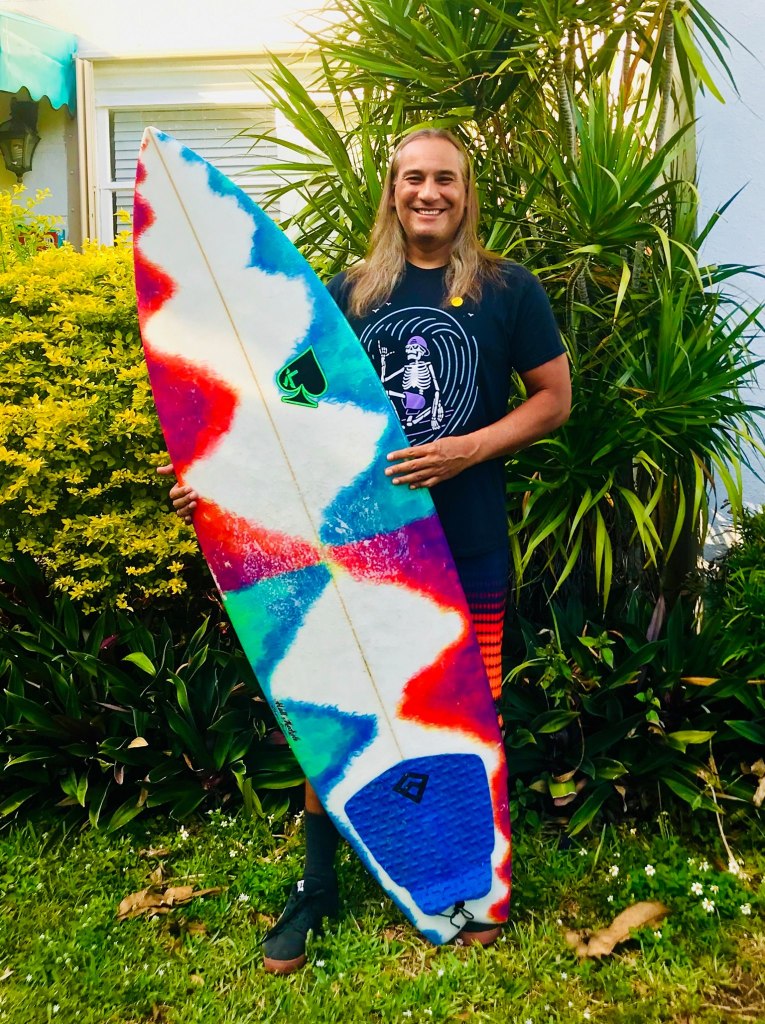
I have been surfing on and off since I was a child. To me surfing is a way to connect spiritually with nature and the higher power. Surfing is so pure and freeing, it nourishes me every time I go for a session. This feeling can be very addicting and dangerous so I have to limit my time in the water or I can get consumed by it and not get work done. I grew up in Miami Beach. I lived very close to the beach and have hung out most of my life there. All of my art is inspired by the culture of abundance and excess I witness on a day to day living here. One of my favorite paintings I have created was inspired by an accident I had surfing. The piece is called Broken Mirror and I painted it while I was recovering from a broken nose. I put all the pain and beauty I felt for life at that moment in that painting. It now hangs in my home as a reminder and it is my prized possession. After that accident I stopped surfing for a few years but I couldn’t stay away for long. Now I can say that my love for surfing is back and is stronger than ever. Surfing has given me some of the most beautiful memories and frightening moments in my life, I learn from it constantly. When I was very young my sister Giuliana bought me my first surfboard, she was the reason I began surfing, I think she believed that surfing would keep me out of trouble and help me find an identity. She was right. When she died on of cancer a few years ago I promised her that I would surf for her. So nowadays I don’t just surf for pleasure but also to keep her memory alive.
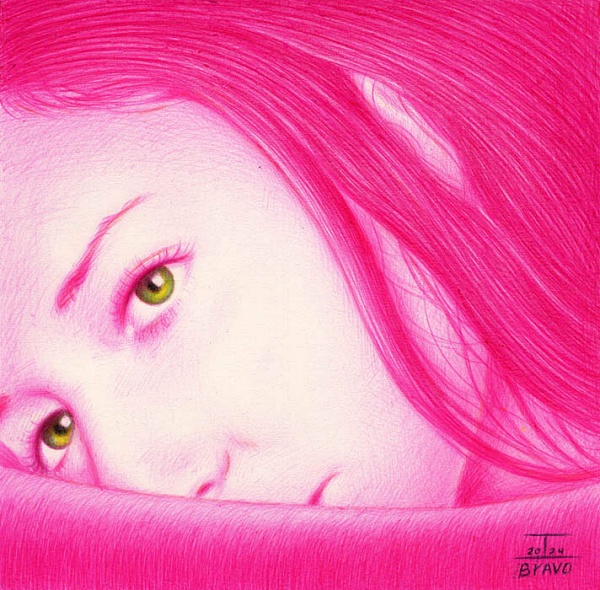
JC Bravo
I work primarily with oil paints. It is important for me to achieve a jewel like preciousness in my paintings in order to convey care and importance. I want to give my paintings a monumental and sensual quality that I believe can only be achieved with oil. Also, oil painting gives my work an elegance that balances the sometimes grotesque and fantastical subject matter.
If you would like to know more about me and see more of my work visit my website:















































 Mitchell Pluto