People often imbue their surroundings, including tools, with a “life essence” that makes them active objects. A growing number of archaeologists are beginning to study how such “living” beings impact human behavior. These archaeologists use the term “object agency,” but employ many different ontological approaches. We explore this variation, and present a framework comparing different ontological models archaeologists use. We adopt an animistic perspective, and evaluate its applicability to the Southwest using ethnographic and archaeological data. We further propose that it is applicable through out the New World. Puebloan potters consider pots living beings with a spiritual essence that is affected by and that impacts humans. Pottery manufacture is a mutual negotiation between the potter and the clay to create a “Made Being” with its own spiritual and material aspects. We conclude that a similar ontology is reflected in effigy pots and globular jars from the Casas Grandes region. Ultimately we conclude that this perspective provides useful insights into the placement, decoration, and discard of many vessels that have puzzled Southwestern archaeologists for decades.
A Female Casas Grandes effigy jar. Photo Christine S. VanPool 1999. Used with Permission
Author(s): Christine S. VanPool and Elizabeth Newsome
Duplicated and Intended for Art Educational Purposes Only
THE SPIRIT IN THE MATERIAL: A CASE STUDY OF ANIMISM IN THE AMERICAN SOUTHWEST Author(s): Christine S. VanPool and Elizabeth Newsome Source: American Antiquity, Vol. 77, No. 2 (April 2012), pp. 243-262 Published by: Society for American Archaeology Stable URL: http://www.jstor.org/stable/23486060 Accessed: 02-03-2015 22:47 UTC
Featured image: Fully formed Human Effigy Vessel. Courtesy of the Natural History Museum of Los Angeles County, Los Angeles. Photographed by Chris Coleman.
When I was a little kid my first years were spent with my mom and dad until they parted ways when I was in kindergarten. Before that, I remember my mom walked a lot because we didn’t have a car. My last memory of my dad’s work was he was a taxi-cab driver in Billings, MT. I was their only child and spent a lot of time with my mom, dad, and paternal grandparents. My dad would sketch a lot and my grandfather would do Absaaloke (Crow) art by making artifacts he could sell throughout his travels in Montana and Wyoming. Art was always a part of my family’s life in some form.
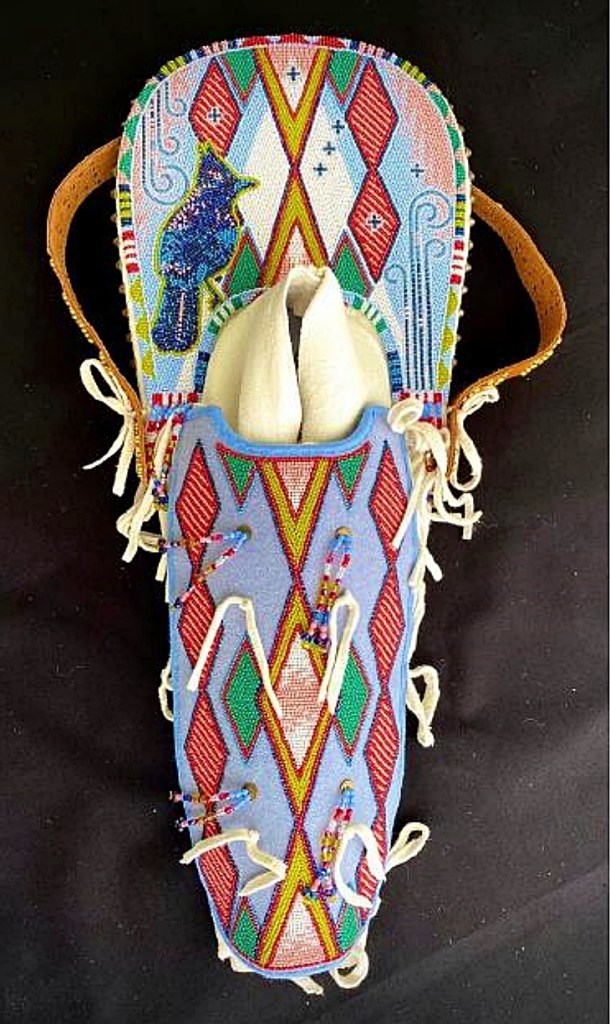
Qwasqwi, Storm, Five Friends & the Canoe (2021). 7.7″ x 1′ 7″. Red vintage true-cut, size 13 seed beads, true-cut, size 13 seed beads, deer hide, wood, cotton fabric, wool, leather, stabilizer, czech beads, nylon and cotton thread, brass tacks and spots. The first cradleboard in a series of four cradleboards, representing the four seasons. This board represents the winter season. Award: 63rd Annual Heard Museum Guild Indian Fair & Market: 1st place award in Division D-Functional objects such as bows and arrows, cradleboards, bows, weapons, shields, furniture, lamps, musical instruments, bull roarers, beaded bottles, and other objects. Exhibition: “Expressions of Resilience” at Bigfork Arts & Cultural Center showing May 8-June 26, 2021. Exhibition: “Finding Our Place: Beading and Weaving Our Culture Together” at City Scape Community Art Space, in North Vancouver BC, Oct. 8-Nov. 13, 2021. Awards 2022: Harrison Eiteljorg Purchase Award, Best of Division in Traditional Beadwork (Eiteljorg Museum), First Place in Traditional Beadwork (Eiteljorg Museum). This cradleboard is in the permanent collection of the Eiteljorg Museum.
When my mom and dad broke up, I moved with my mom to Salish country in Western Montana. For the first few years, we lived with my uncle Johnny Arlee, my aunt Joan, and my maternal grandmother Rachel Arlee Bowers. All three were prolific in their Indigenous skillsets. At the time, my uncle had his own painting business and was always out in his shop making large hand-painted signs. My aunt Joan was always doing beadwork or sewing and my grandmother did beadwork and taught at the local tribal college; her beadwork. She was also a great seamstress. Earlier than I can remember, my mom would send me with my grandmother Rachel often and she was always toting her beading supplies and beaded creations to sell.
Salish Bitterroot Story (2022), 7.7″ x 1′ 7″. Combination of vintage and contemporary size 13 seed beads, true-cut, deer hide, wood, cotton fabric, wool, leather, stabilizer, Czech beads, nylon and cotton thread, brass tacks and spots. The second cradleboard in a series of four cradleboards, representing the four seasons. This board represents the spring season. Shown at the 64th Annual Heard Museum Guild Indian Fair & Market Award 2022: Second Place in Traditional Beadwork (Eiteljorg Museum). This work is now owned by a private collector.
There were times we camped at Agne’s Camp, in Valley Creek, and she would spend summers with Agnes, helping to pass on the Salish culture. I don’t remember the earlier years but as I got older the summer was cut down to a week and my grandma would be there every year, camping out, teaching the tribal college students how to bead. I looked forward to that time and I would help her get her camp set up and do small chores so she could work. She would teach me how to bead too and I remember my first finished beadwork was a little clip-on barrette I wore with my dance regalia when I was in about 4th grade.
Felicite McDonald Digital Photograph 2021
By the time I was in high school I knew I wanted to practice art as a profession. I loved to draw and sketched on everything I was allowed to personalize. I wanted to know how to paint and I took every art class that was offered as an elective. I loved color theory and all of the challenges and assignments given to produce art. I wanted to go to art school but as I got older high school had a lot of social challenges for me; for a lot of different reasons; mainly adolescence and social factors. I was fast tracked through high school and when it came time to apply for colleges my mom didn’t agree that art would be the best declaration to pursue. I was so heart-broken but I minded and I ended up doing a lot of other things in college. I was never really satisfied with my majors, and mostly resentful of the ease that came to my classmates when they were following their career passions. I tried to stick it out as long as I could, which felt like my whole life.
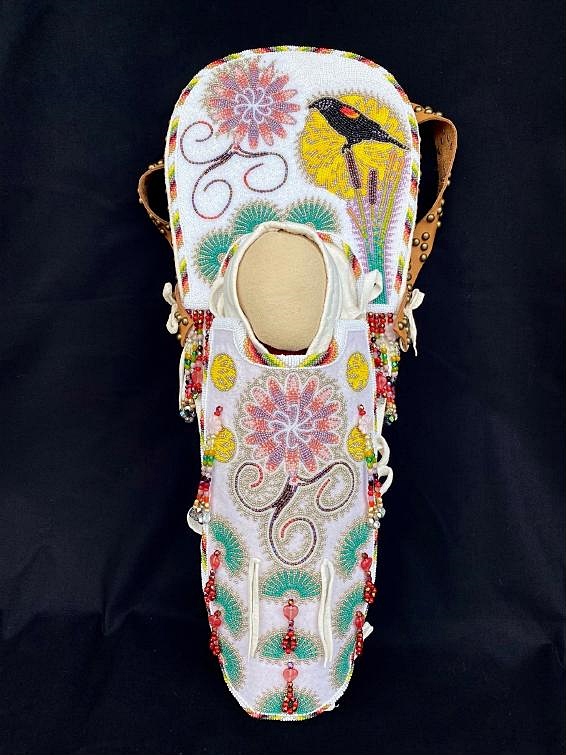
Remember That Night At Buffalo Camp (2022). 7.7″ x 1′ 7″. Red and Green vintage true-cut, size 13 seed beads, true-cut, size 13 seed beads, deer hide, wood, cotton fabric, wool, leather, stabilizer, czech beads, nylon and cotton thread, brass tacks and spots. The third cradleboard in a series of four cradleboards, representing the four seasons. This board represents the summer season. Award: 100th Annual Santa Fe Indian Market: 2nd place award in Classification VIII: Beadwork & Quillwork, Div. C: Other items, Category 3102. This cradleboard is apart of a private collection.
I feel that I’ve had a very hard adult life and I’ve somehow managed to take the road less travelled. Like everyone who takes this path, I would say I wouldn’t change my outcomes, but I get a lump in my throat thinking about everything I’ve endured to get to where I am today. I married at age 20 to a Salish man, since I had spent most of my life in Salish country. He had three daughters from a previous marriage that I helped raise. We had two sons of our own who are still young enough to be in elementary school. I used my college degrees to stay near home, in Arlee MT, but I couldn’t handle the local, you-need-to-grow-a-thicker-skin attitudes of home. I’m pretty sure I suffered from PTSD from working in a hostile working environment.
Bitterroot & Huckleberries (2021). 8.5″ x 11″ beadwork surface, not including fringe length. Combination of modern and vintage size 13 true-cut seed beads, stabilizer, deer hide, wool, cotton fabric, nylon thread, czech beads, brass bells, one plastic button. Technique is flat-stitch, two-needle, contour beadwork. Exhibition: Knowledge from Land (2021), University Center Gallery, Missoula MT Award: 100th Annual Santa Fe Indian Market: 2nd place award in Classification VII: Diverse Art Forms, Div. A: Functional objects, Category 2707. This purse is apart of a private collection
One day, I had enough. My youngest daughter was in her last year of high school and she was exploring colleges to attend. We went to a college visit with her in the spring and we sat in on the art major session. I remembered my existing broken heart from not being able to pursue art as a young adult. When I got back to work, I had a really bad day and decided enough was enough. I found out the University of Montana was beginning its first cohort of online art degree program majors and I enrolled. I took as many classes as I could handle, quit my job and got a different job. I worked full-time and took online classes until eventually I finished the program in 2021 and I finally got an art degree. I don’t think I’ve ever cried so much, throughout those few years, realizing that I should have put my foot down and did art school from the start.
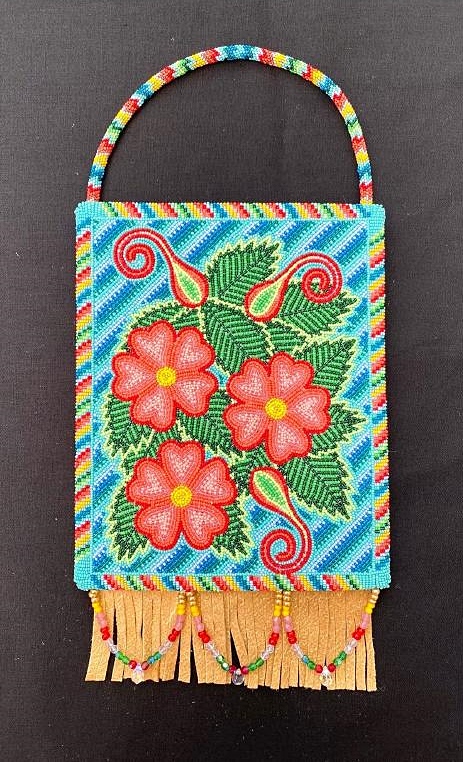
The Roses We Know (2023). 13″ x 6-3/16″ x .25″. Technique is flat-stitch, two-needle, beadwork. Materials are true cut, size 13 Czech modern and vintage seed beads, brain-tanned smoked deer hide, glass and crystal beads, nylon cord, stabilizer, thread, and cotton material. This purse shows the images of wild roses that grow in Western Montana. The plant is significant to the Bitterroot Salish people as the blooming represents the buffalo are fat and ready to hunt. It is currently in a virtual exhibit, “Stories From Bead Night,” hosted by Carrie McCleary and her Plain Soul beading group, Rock Your Beads at rockyourbeads.com. This purse now belongs to a private collector.
Towards the end of my degree program, I was finally able to do more extensive exploration into art that I was hoping to strongly focus. I was sad that I didn’t know much about being a professional artist so I soaked up any advice I could along the way—I’m still a beginner. I wanted to continue to do beadwork and also was very happy to get a formal educational background on art history. It helped me to better understand genres of the artworld as well as where I found interest. It turned out that all of my time before art school was not wasted. I used a lot of my educational background to express my interest in the type of art I like to create.
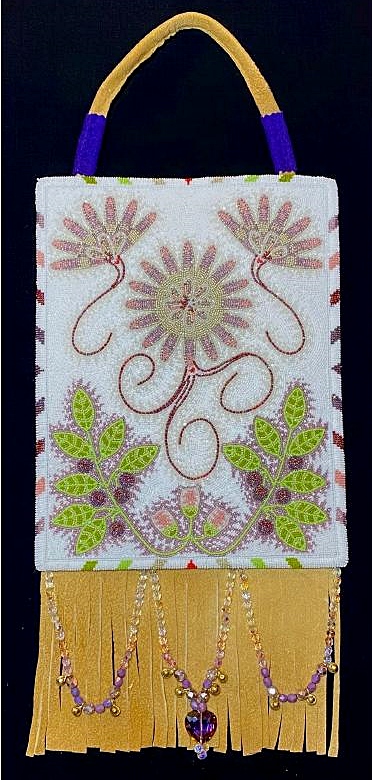
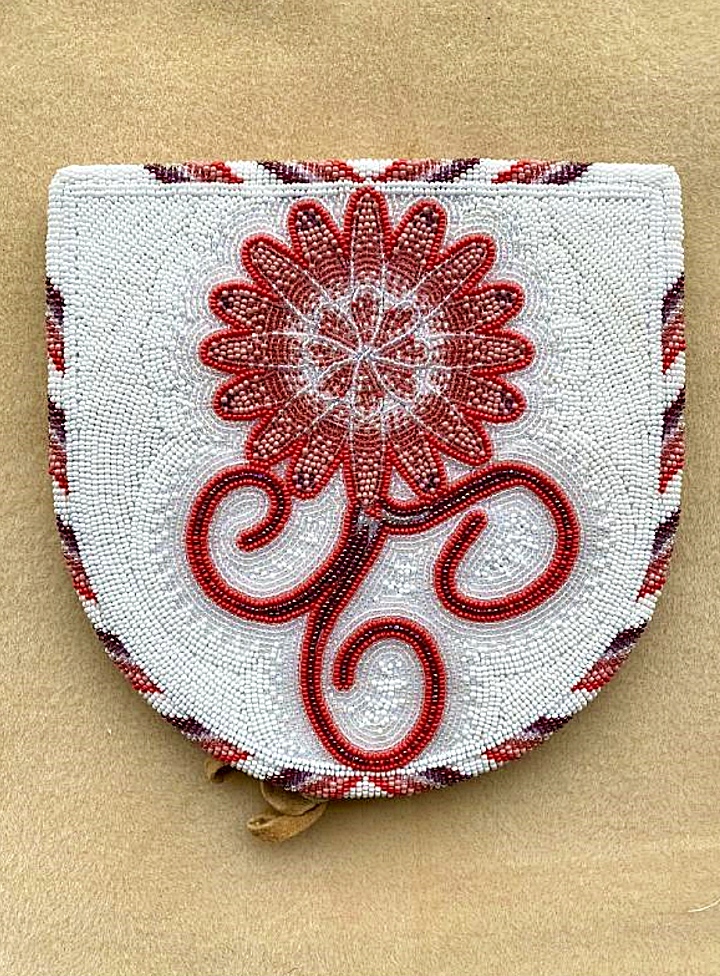
Salish Bitterroot Back Bag (2022). 6in. x 6 in., Size 13 true cut Czech beads (combination of modern and vintage). Brain-tanned, smoked, deer hide, nylon thread, stabilizer, and paper. This bag is in the permanent collection of the Montana Museum of Arts and Culture.
I like to focus on Indigenous knowledge and I like the idea of using empowerment to overcome systemic and racial oppression. The environment is most interesting and I try to express ecological concepts in my work, especially the beadwork. I enjoy lots of aspects of my culture, but feel that getting a formal education gave me a leg-up in life and it opened doors for me when I least expected it. Throughout my educational experience, I connected the idea of place-based learning and Indigenous ways of knowing. I believe that when a person is aware of their environment they can grow intellectually and pursue life beyond their basic needs—they are grounded and secure.
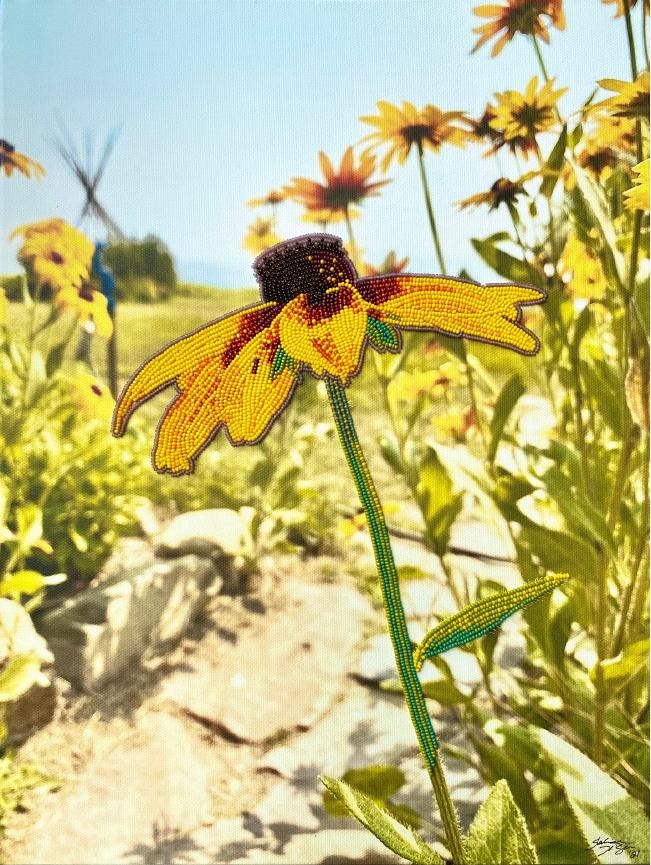
Susan At Thunderhead (2021). 12″ x 16″ original photograph and beadwork on canvas. Donated to Open Air for fundraiser.
Although beadwork is my go-to creative expression, I enjoy painting, drawing, and I aspire to improve my photography skills; I sometimes attempt to mix these medias. The past few years I’ve checked off some huge bucket list items, the biggest one being to participate in the Santa Fe Indian Market. Since 2021 I’ve found joy in participating in Indian Markets and learning how to make time to produce smaller items to vend during the market. It’s intense and physically challenging but I enjoy meeting Indigenous artists I’ve admired for years and having the honor of having artworks amongst the “greats.”
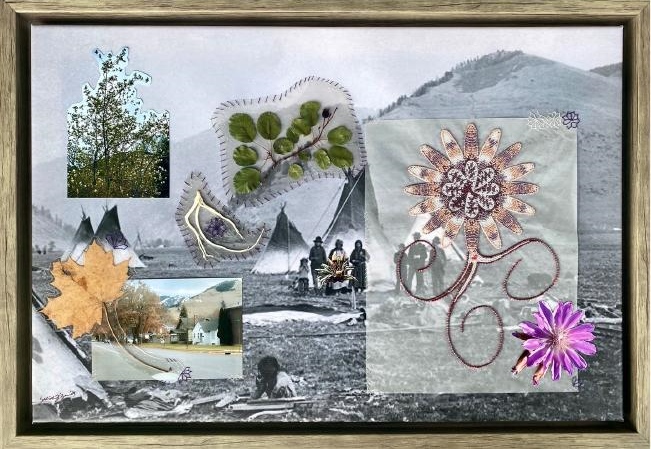
Indigenous Bitterroot Land 25” x 18”, Collage and beadwork on canvas 2021
In the future, I hope to calm down a bit and get a better handle of the business end of things. I hope to continue to grow artistically, continue to create art in a cultural sense, and to continue to support my family in this way. At the end of 2021 my husband got a new job and we moved part-time away from Arlee. But when that happened, we agreed that I would give it 100% to pursing professional art full-time. I’ve been doing this and slowly learning how to network and become more knowledgeable about the financial part of the deal. I’m thankful for my husband’s support of my journey and attribute his support to much of my ability to follow-through with life, up to this point. I’m also very thankful for the chance of being born into a family that valued art as a way of life.
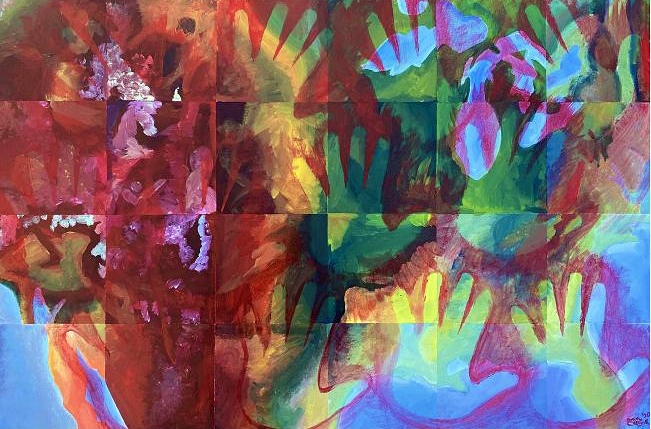
Indigenous Hillshade (2020). 24″ x 36″ acrylic on canvas. Shown in the “We are Still Here and this is Our Story” exhibition in the Emerson Center for the Arts & Culture in Bozeman, Montana .
I know that I cannot change the past but if I had to give a small bit of advice, I would say that dreams are always worth pursuing. Hard work, consistency, belief in yourself seem to be at the core of carrying a dream. I’ve wanted to give it up a few times, but I stop and remember things I’ve heard other artists say, such as having hard times and easy times along the way. I know that if I can live a life that I didn’t want for so many years, I can definitely commit to a life I really want and do my best to be accountable to myself and to my children. I love creating art and I’m certain this is how I will live the rest of my life.
John Pelko on Florals Hard sketch crayon on heavy gift-wrapping paper 12 in. x 14 in. 2019
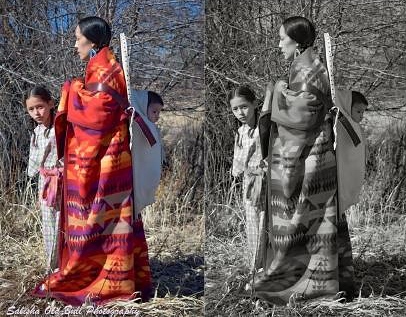
SALISHA ANNE OLD BULL ART, PHOTOS ANDWRITING IS AN AUTHORIZED DUPLICATION WITH PERMISSION AND EXPRESSED CONSENT
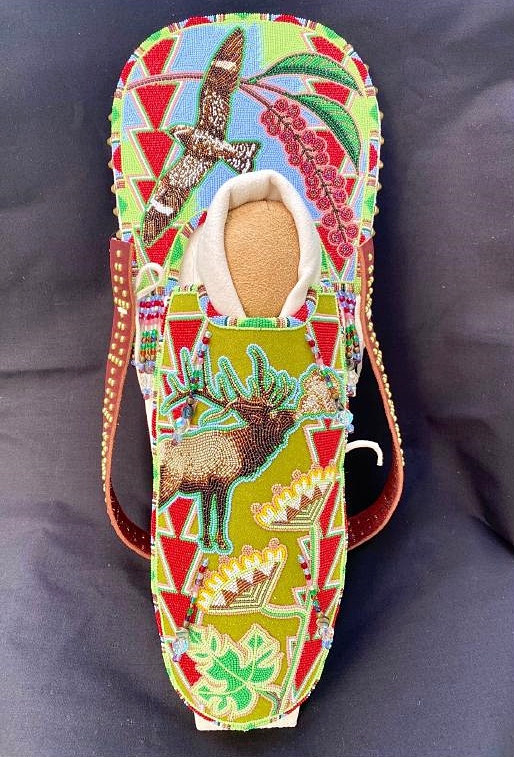
Feature photo:Signs of Autumn (2023). 7.7″ x 1′ 7″. Vintage and modern true-cut, size 13 seed beads, deer hide, wood, cotton fabric, wool, leather, stabilizer, glass beads, nylon and cotton thread, brass tacks and spots. The fourth cradleboard in a series of four cradleboards, representing the four seasons. This board represents the autumn season. Award: 65th Annual Heard Museum Guild Indian Fair & Market: Honorable Mention award in Division D-Functional objects such as bows and arrows, cradleboards, bows, weapons, shields, furniture, lamps, musical instruments, bull roarers, beaded bottles, and other objects. This work is now owned by a private collector.
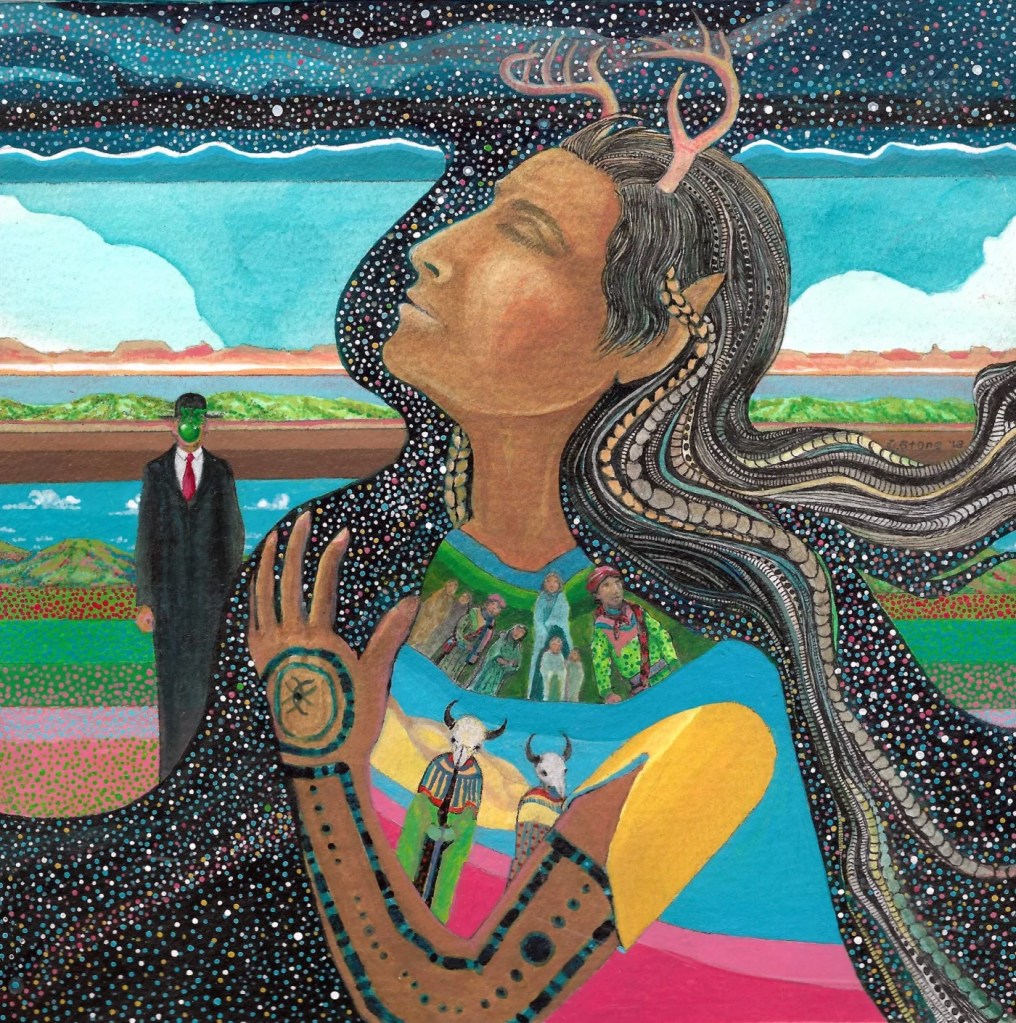
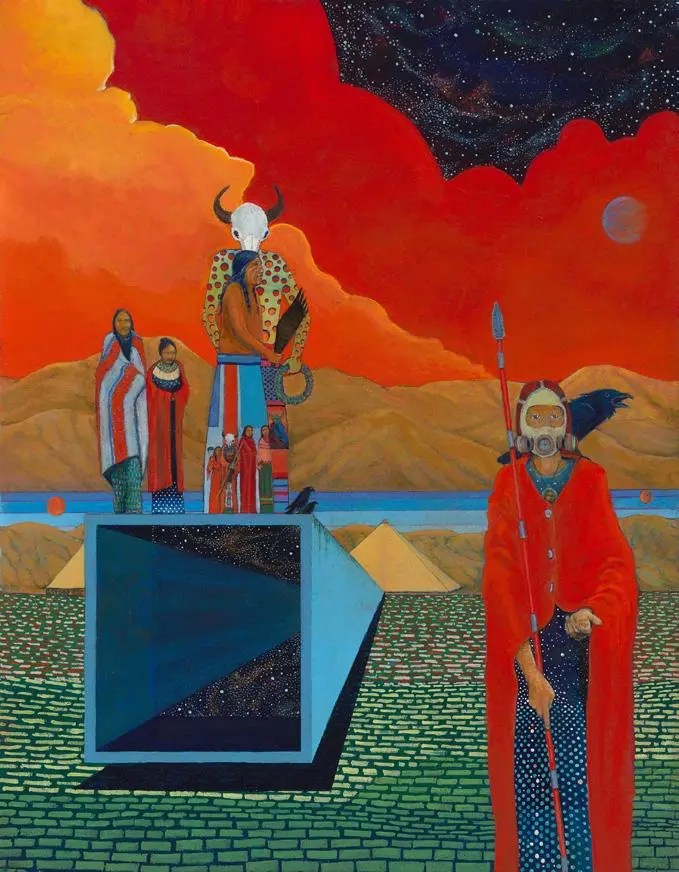
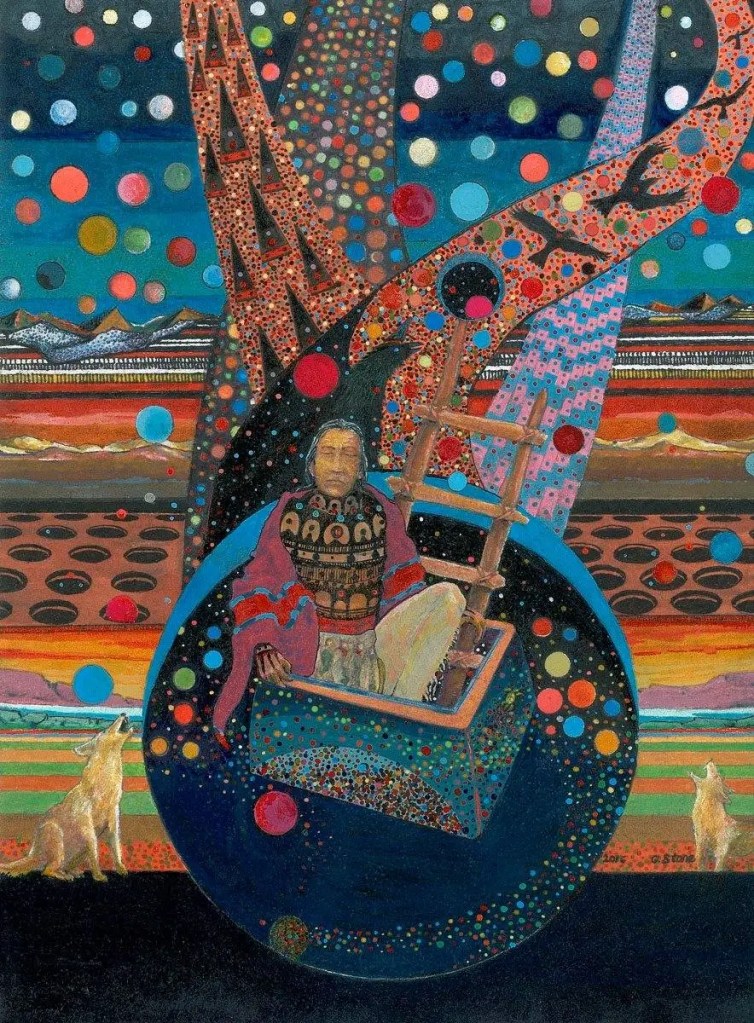
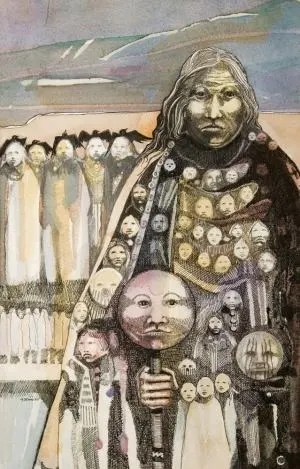
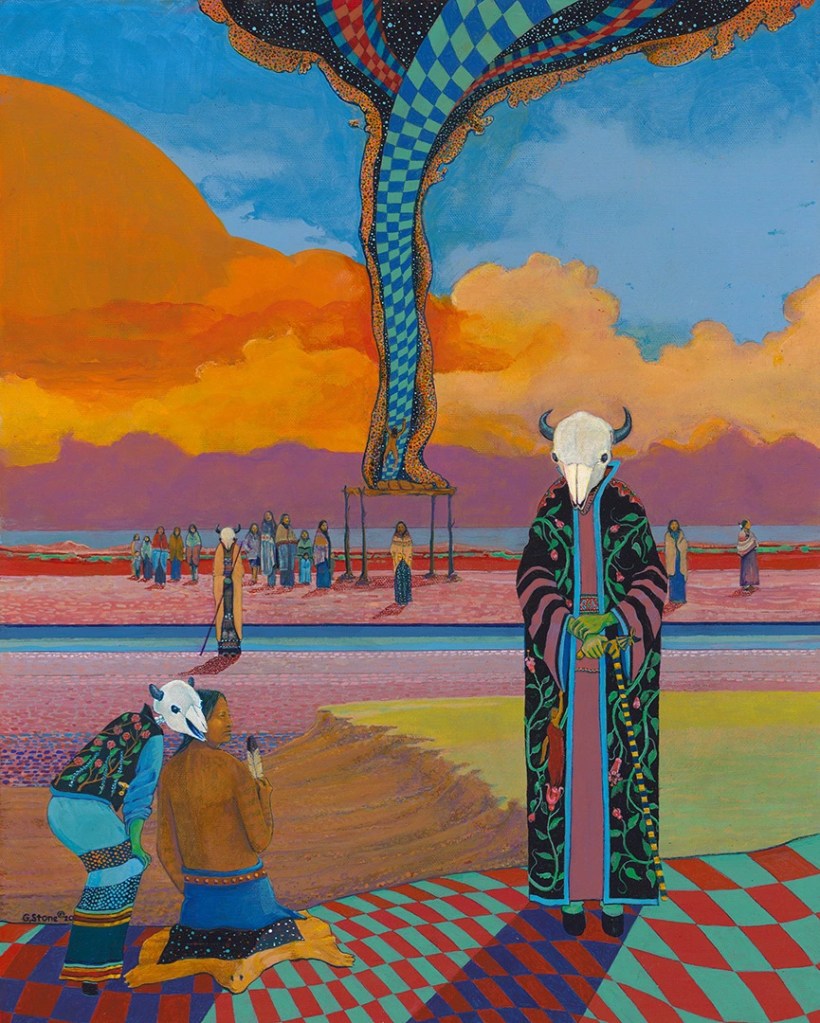
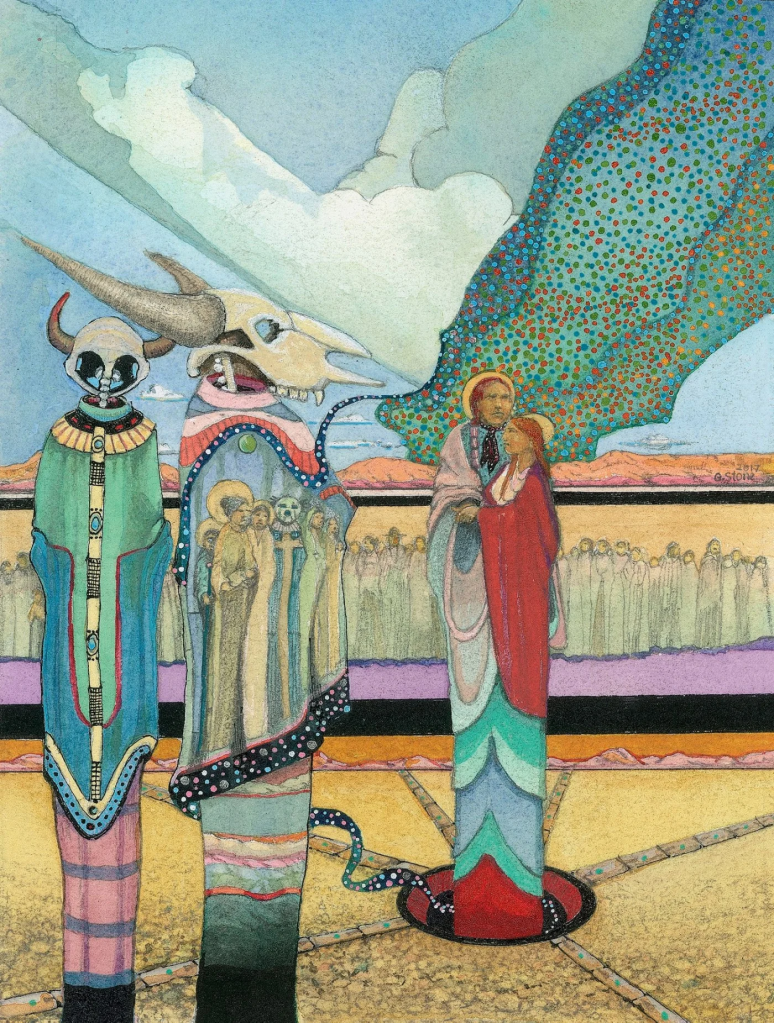
Gerald Stone’s roots flow from 1/2 Seminole and 1/8 Cherokee tribes: These worlds are, out of time, landscapes within landscapes, tribes, spirits, watchers, seekers, giants, red-haired women, murdered and missing, space stretched and bent, stories vibrating across time.
From a show at the Crocker Museum in Sacramento a write-up describes Gerald Stone as a “beloved local master artist”. Gerald himself just brushed off the accolades and calls his work “weird”. His stylized art, which he describes as a conversation between himself and his Creator, bridges traditional and contemporary styles and themes.
1947 Born in the far reaches of rural Oklahoma, Stone was a kid who liked to draw and has lived a life of peaks and valleys, always around the midline of art. Just 3 days before he was scheduled to enlist in the Army, headed most likely to Vietnam, he was accepted for a 2 year post graduated program at the Institute of American Indian Arts (IAIA) in Santa Fe, a city often considered the center of the Native American art world.
In 2009 Gerald Stone finally had the successful solo exhibition. He now shows in only a few galleries and also sells from his home.
edited by Mitchell Pluto from SULΦUR surrealist jungle archive 29 OCT 2021
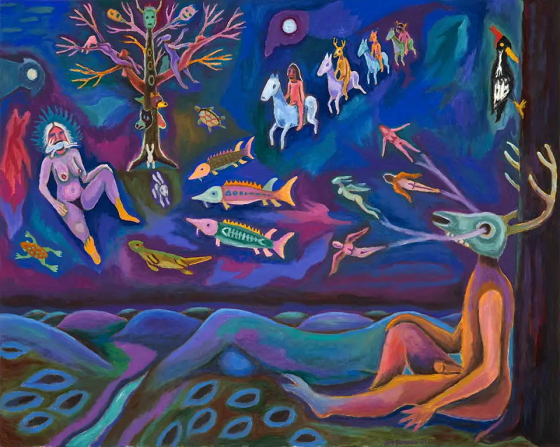
In the painting Vision Quest-Spiritual Sex there are several metaphors relating to antlers. Are there more details you can provide us to inform our understanding?
In one of my earliest painting classes we were instructed to create a composition, painting with a live male model, using some of the still life objects on the stage with him, and, our imagination. One of the objects was an antlered deer skull and in my painting, it replaced the model’s head. This was not an unfamiliar concept in Native American imagery but it was the first time for me to play with this concept. It definitely placed me into a spiritual realm I was not intending to explore. But I am a spiritual person so it felt okay to me to proceed. For me, antlered people represent spiritual people. But this antlered man was nude (as the male model was) and displayed a penis. Now this was certainly not a familiar concept in Native American imagery. It has been a concept that has developed and evolved over the years in my art recently culminating with these new paintings, “The Storyteller-Spiritual Sex” (I and II) and “Vision Quest-Spiritual Sex.”
Spiritual Nite (Beautiful Witch)
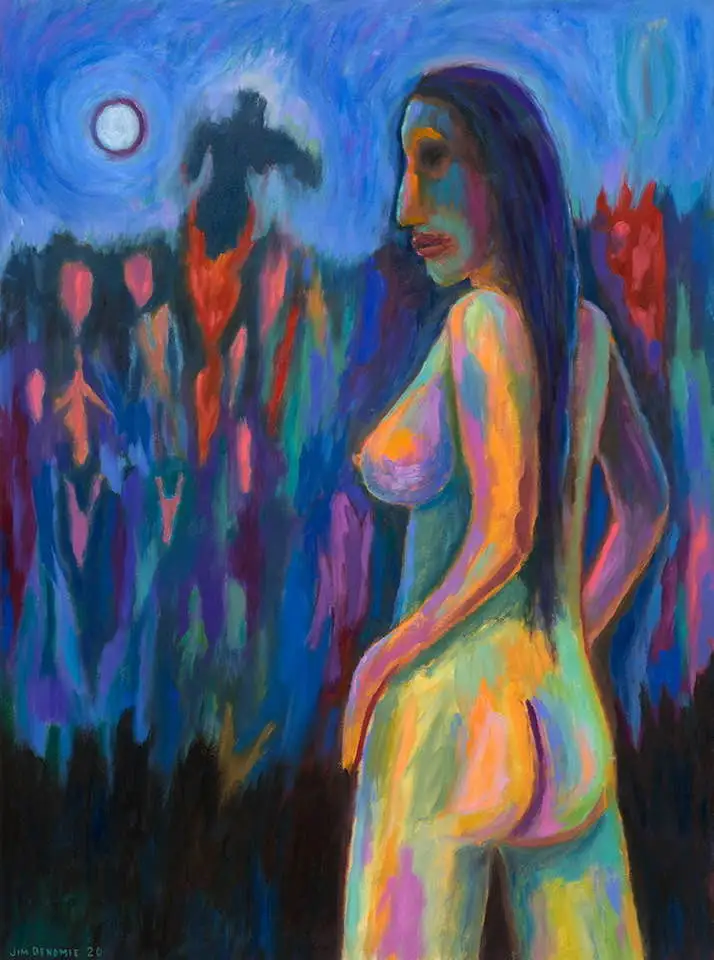
The painting Spiritual Nite expresses a nude female figure and an enigmatic figure emerging out of the woods. What hint could you give viewers to add their interpretation or apprehension?
The painting “Spiritual Nite (Beautiful Witch)” has evolved from a series of paintings of female nudes over the last twenty years that have evoked a spiritual content. I have met several witches in my life (one a former lover) and made a decision to name this evolving series Beautiful Witches. In this particular painting (and others in this series) I am working intuitively with no planned outcome. I usually start with a sketch of the figure and then develop content and background imagery right at the easel, often letting color and brushstroke inform the direction and meaning of the painting.
Mother or Beautiful Witch
Mother or Beautiful Witch transmits a sense of being fed but who are the mysterious figures behind her?
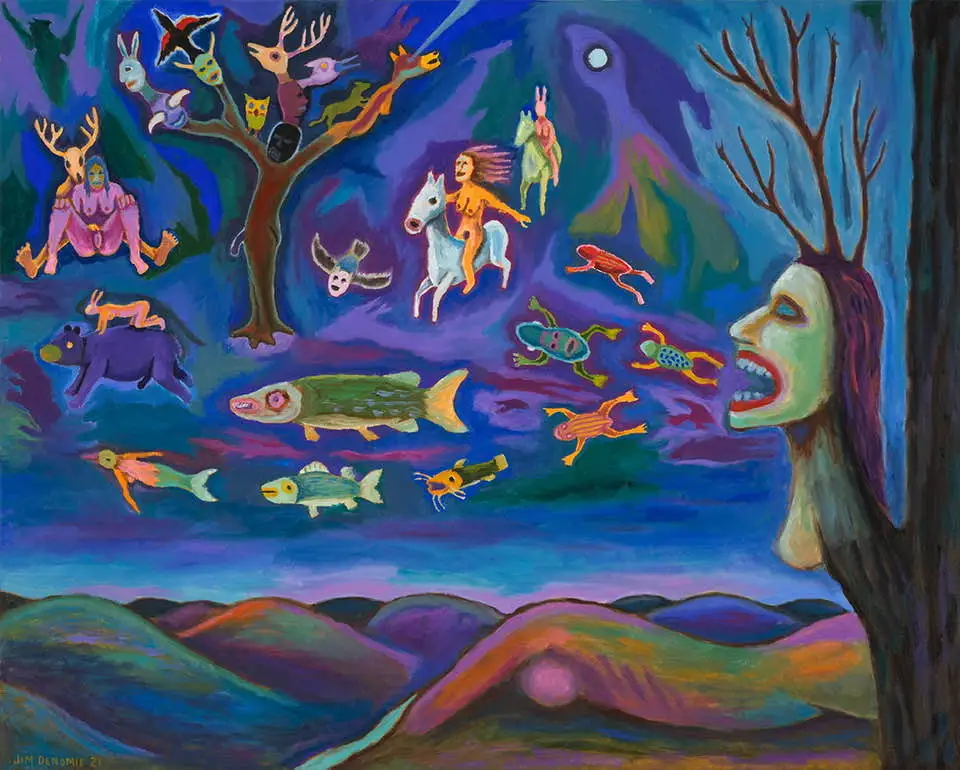
The painting “Mother (Beautiful Witch)” is an example of an idea evolving right in front of me. Originally, this painting started out a year earlier as a portrait of a tattooed woman with semi formal abstractions in the background. It had an interesting beginning but after awhile it felt lost and I changed direction in midstream. I painted over the background and the entire body of the figure while at the same time changing the position of her arms and the direction of her gaze (impulsive decision making). She was now squeezing her breast and I then painted a stream coming from it. At this point I made a sketch of it to explore options and possibilities. In the sketch, the stream coming from her breast turned into a stream of small fish each getting larger as it moved away from her body and then sketched images in the background that I was recognizing from the brushstrokes and color forms. Getting back to the painting, I added the stream of fluid coming from her breast and then had the inspiration to add a young rabbit catching that stream in its mouth, being fed, leading me to the title “Mother (Beautiful Witch).”
The owl and wolf figures emerged form the brushstrokes creating a drama in the painting. I have felt a connection to rabbits since I was a young boy and have developed several understandings of that connection. One is this: It’s the rabbits that watch over our houses at nite, protecting us from predators, intruders and disease. And also, it’s the rabbits that lead the lost out of the woods but sometimes the owl and wolf beings find them first. Both the painting and the little essay were developed independent of each other but form a natural union.
The Storyteller-Spiritual Sex II
The Storyteller-Spiritual Sex II language appears birthed from the mouth, words become things, places and people. Can you tutor the viewer a little bit about the pantheon or activity in this painting?
Storytelling is a tradition of many of the tribes in North America (and many indigenous cultures) including my own, the Ojibwa or Anishinaabe, as we call ourselves. It has been portrayed visually, most popular as sculpture of the Southwest Pueblo and Hopi tribes as a woman with many children attached to her. My rendition of this concept was inspired by my experience and knowledge of the stories told by my people and was developed through sketching. In addition to my painting, I sketch prolifically, often capturing the tip of an idea or concept that may lead to or inform a future painting. Everything I paint or sketch comes from my memories, dreams or imagination, or directly from real life, never from photographs or screens. The imagery or episodes coming from the mouth of the woman in “The Storyteller-Spiritual Sex II” all come from my visual language developed over years of exploration and in this particular painting, from my dreams and imagination.
Jim Denomie 1955-2022
What role does the moon play in your paintings?
Often the moon merely emphasizes the nite time portrayal of my spiritual paintings. For me it is the nite time when the magic and the mystical happen. And it is my preferred time to paint or sketch as I am almost always out in my studio until 2 or 3am, or later.
I love to sketch. I love seeing other artists’ sketches. Children’s drawings are the absolute best, because their abstractions, inventions and raw honesty just blow me away.
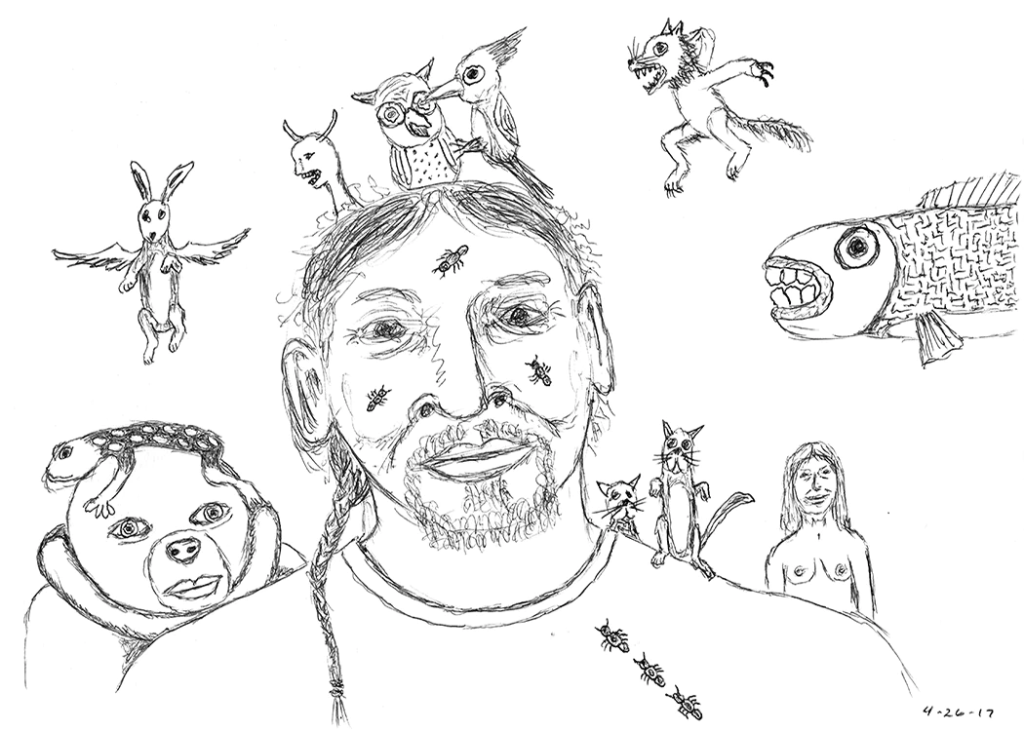
I always carry a sketchbook with me wherever I go, especially when I travel. To me, drawing or sketching is a form of note taking. It is a method of recording the lucid or fragmented thoughts passing through my mind, conscious or dreaming. Sometimes I see a story, sometimes a phrase, or sometimes just a title. It’s also a camera photographing the weird landscape (my imagination) that I dare to allow myself to journey through. It is a process where I try to do some fearless exploration. But almost always, the scenes in my mind are only temporary, fleeting, unexpected images of dreams, imagination and memories. Frequent sketching allows me to capture some of those images and to discover the ones that are unseen.
When I was an art student at the University of Minnesota, I met a musician playing his guitar and singing songs for tips on the sidewalks in Dinkytown. His name was Jerry Rau. Jerry was a Vietnam vet and a gentle soul, and he and I became friends. One day I mentioned to him about sketching an idea before I forgot it. He told me that he always carries a notebook with him explaining, “You never know when a song will come to you. You think you will remember it, but sometimes when you turn your attention for even a second, they float away, like a dream. If you don’t write it down, it will go to the next songwriter. And if he doesn’t catch it, it goes to the next. And if he doesn’t catch it, they all end up with Bob Dylan.”
Sketching is also a method of exploring. Sometimes being able to see only the beginning of a story, a song, a poem, the artist begins illustrating an idea, not knowing what or where it will lead to. Like a clown who pulls what he thinks is just one handkerchief from his shirt pocket, he pulls out cloth after cloth, one idea leading to another until you have a more complete vision of the story or song.
For some time now, I have thought of my sketches as lyrics to a song and coloring and painting my sketches as putting those words to music. Adding color and the abstraction of loose brushstrokes brings a new dimension of the sketch to life. The drawing becomes a leaping-off point and is eventually abandoned as the artist responds to what is evolving right in front of him/her. While translating a sketch to a painting, the artist starts painting but sometimes begins to experience new inspirations right there at the easel (pulling new or different handkerchiefs from his shirt pocket). These realizations make the process original (again) and the sketch and the painting become two different works of art, each significant. Sometimes I find it necessary to make quick little sketches or studies to assist a painting in progress as new ideas emerge or because I feel the need to alter the composition.
For me, sketching is instrumental for evolving ideas and for understanding the incomplete.







 Mitchell Pluto