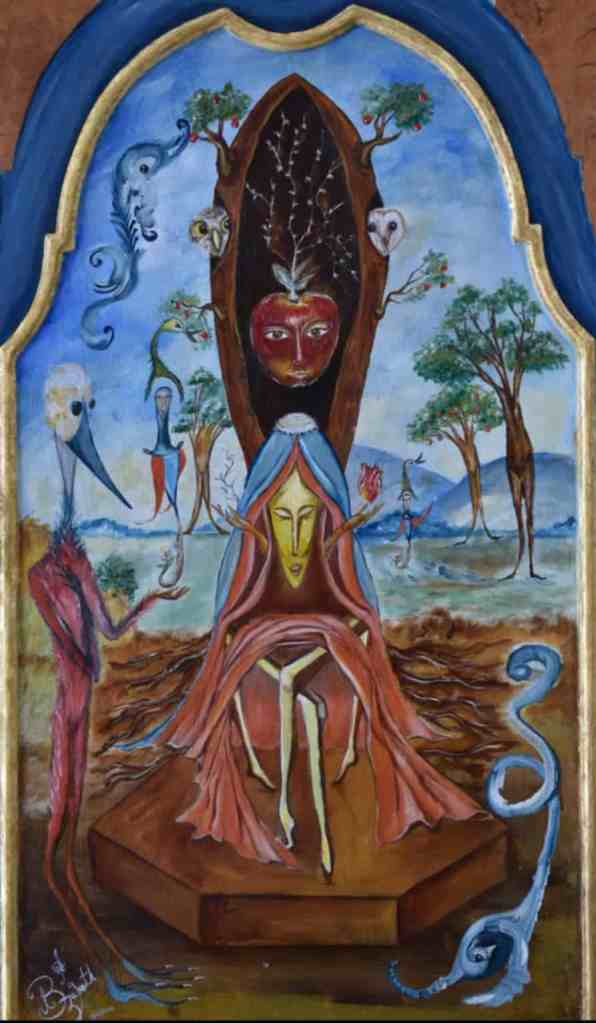
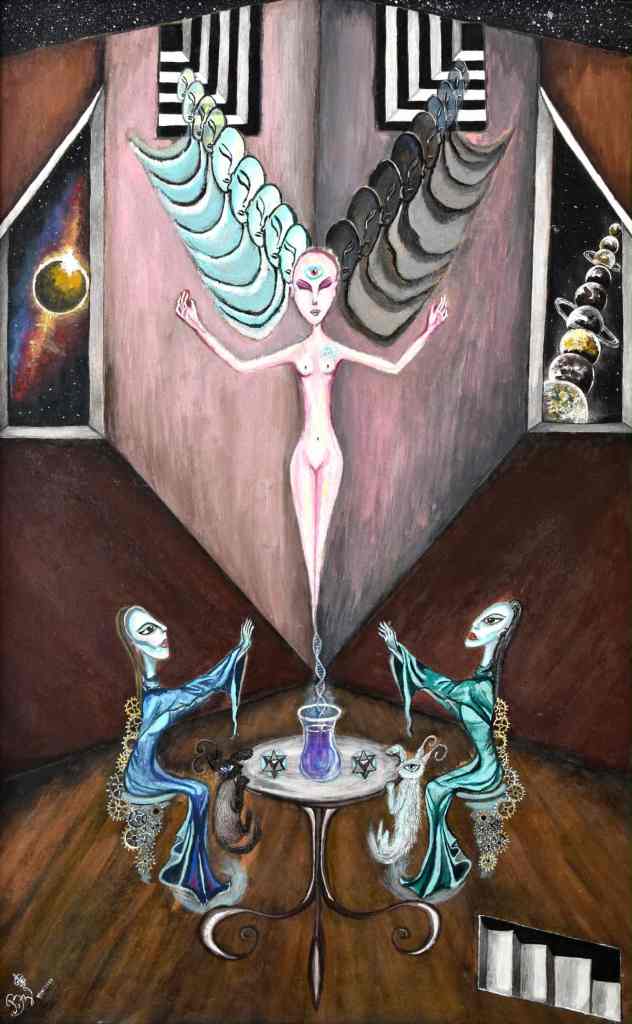
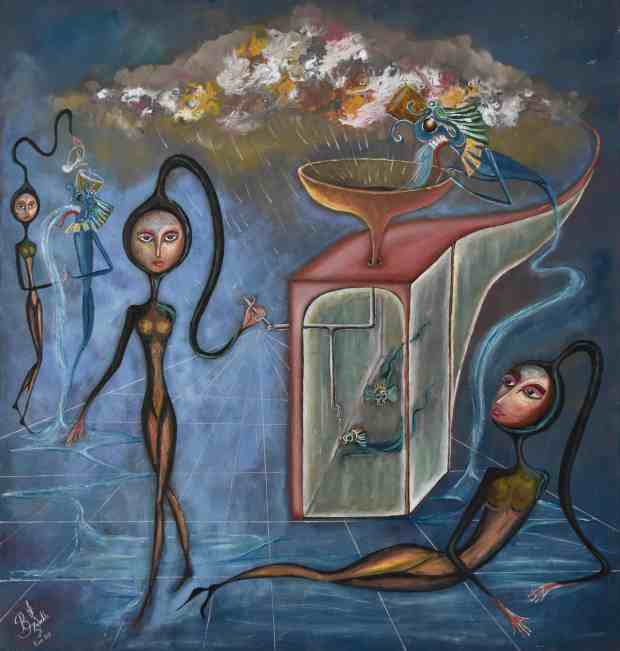
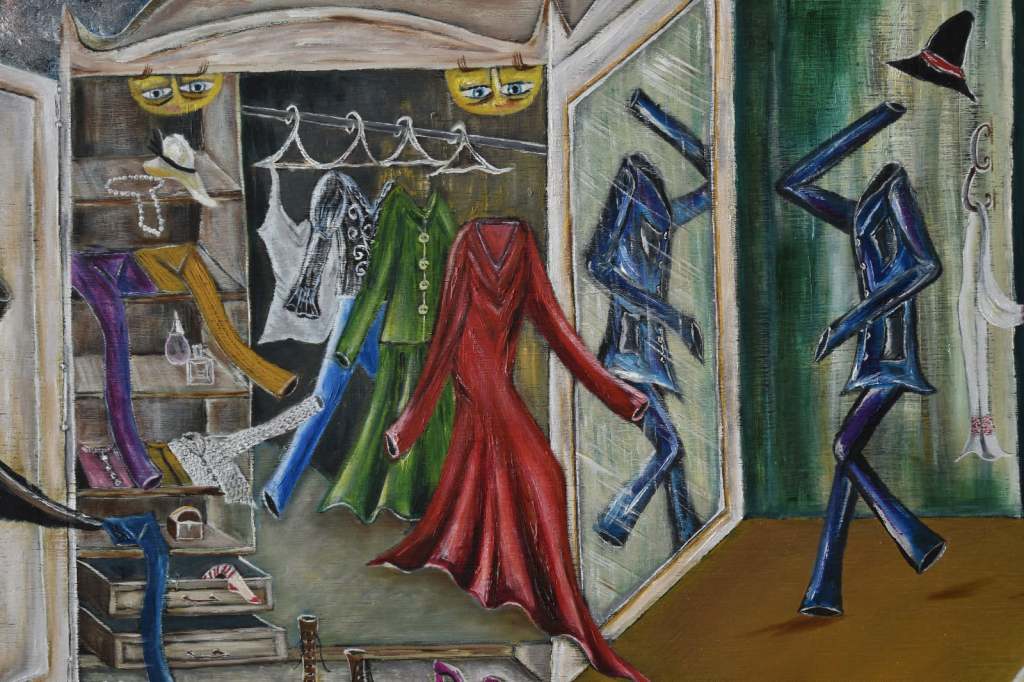
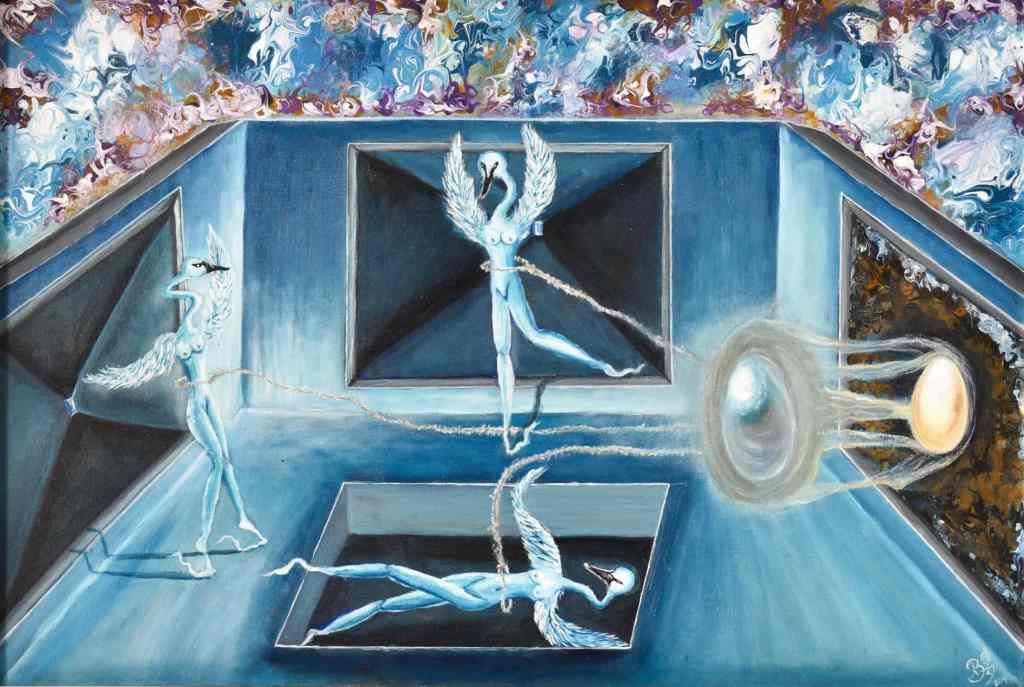
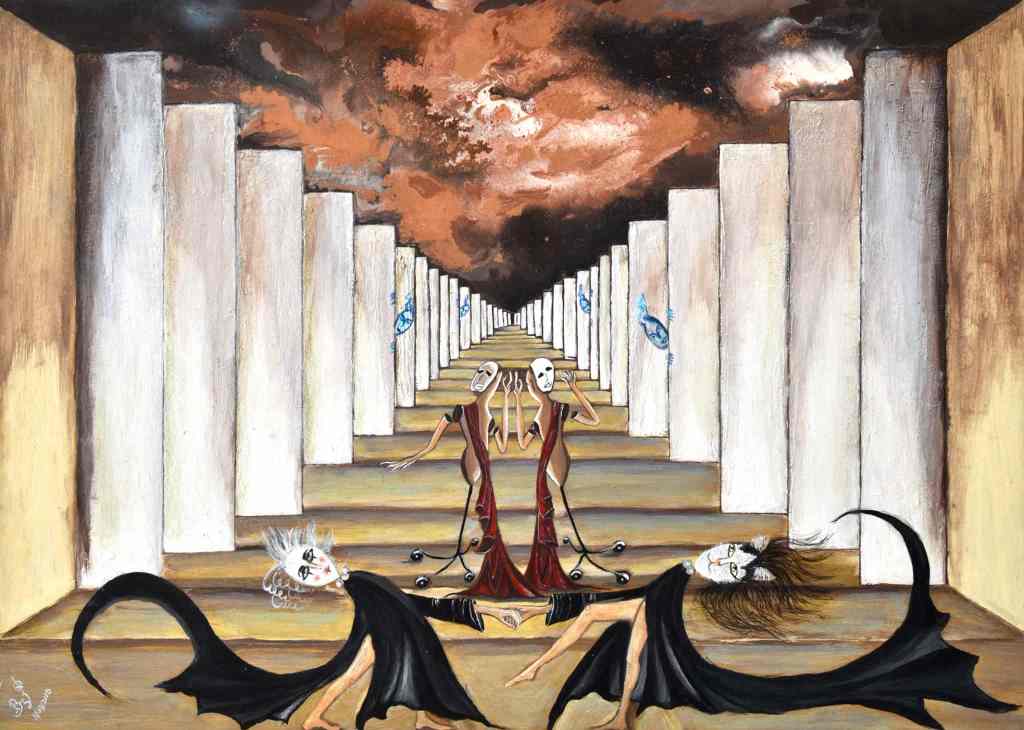
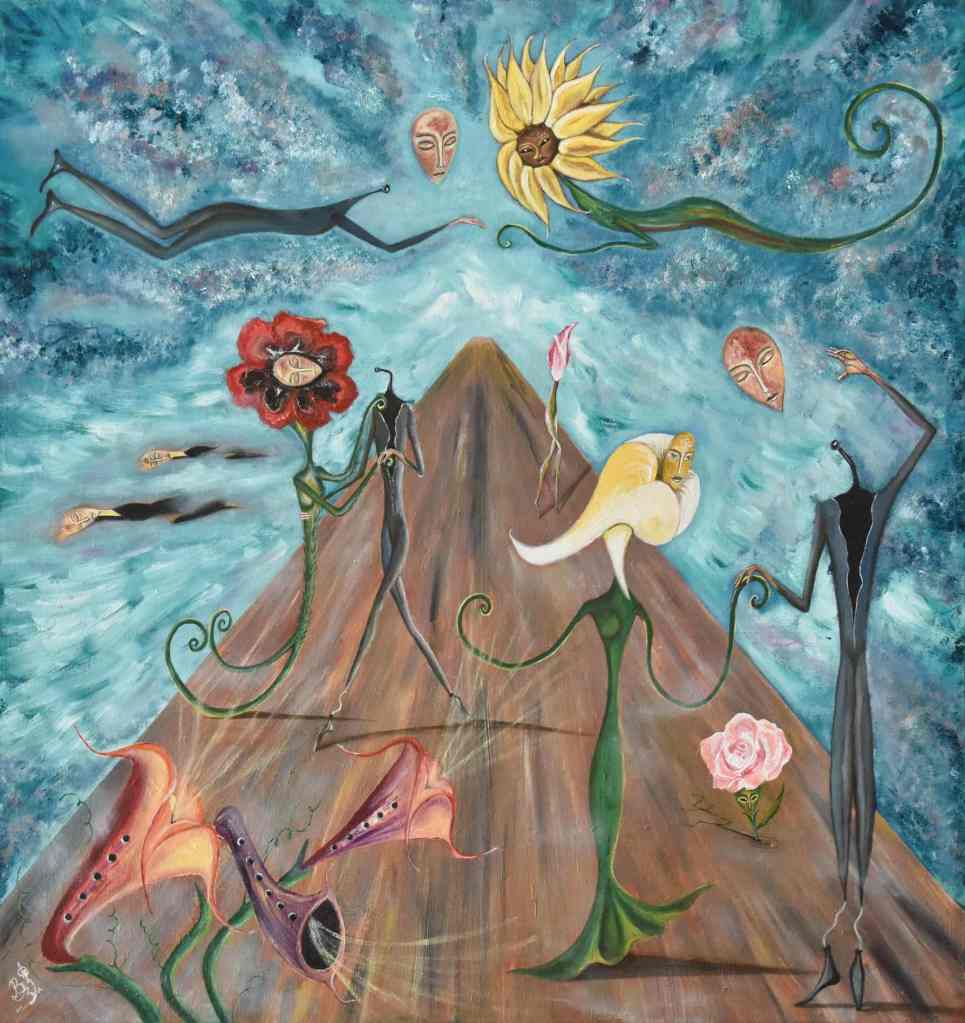
Each painting is a window into the worlds that inhabit my inner self; they represent the way I have found to share and communicate with the world, the way I can transform the visions of my dreams and materialize them into art.
In a way, Surrealism has not only been an expression but has also become a free way of life through the multiple and unlimited acts of creation that the world of dreams reveals. It has been an open door that has revealed other possibilities of creation to me, an extension of my inner world.
Brianda Zareth Huitrón has exhibited individually and collectively in Mexico and abroad.
Solo Exhibitions Leonora Carrington Museum of Xilitla, DREAM ENCOUNTERS in 2025. Women’s Museum, DREAM REVELATIONS, in 2022.
DREAM LANDSCAPES for the Temascalcingo Festival Honoring Velasco, in 2021. WINDOW TO DREAM WORLDS, at the Futurama Cultural Center, Mexico City, in 2020.
Group Exhibitions Col-art at the Oscar Román Gallery in 2025. The painting exhibition THE PAINTER’S TRADE, at the San Carlos Academy, in 2019. DIMENSIONS, Wave Gotik Treffen Festival, held in Leipzig, Germany, in 2018.
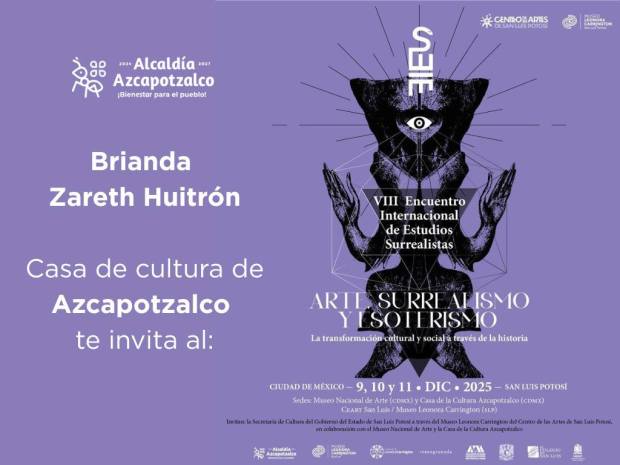
She has participated in the Chair for 100 Years of Surrealism, at the Faculty of Philosophy and Letters of the UNAM, giving a lecture on female surrealism.
Her work has recently been published in the book Mexican Women in Art, published by Agueda, and in THE ROOM SURREALIST MAGAZINE, an international surrealism magazine.
In 1968, Daniel Lezama was born in the city of Mexico City. While living in Mexico, Texas, and France, he had the unique opportunity to experience the diverse art scenes in these cities, thanks to his father’s profession as a commercial painter. Lezama’s educational journey led him to the Escuela Nacional de Artes Plasticas of the Universidad Nacional Autonoma de Mexico, where he dedicated his time and efforts, graduating in 1997. He started his formal artistic career in the late 90s.
Lezama has thrived and made significant contributions in his field. Throughout his career, Lezama has displayed his artwork in solo exhibitions and group exhibitions, spanning across Mexico and various countries around the world.
Lezama Archetypes, Recurrent Patterns, and the Psychic Labyrinth
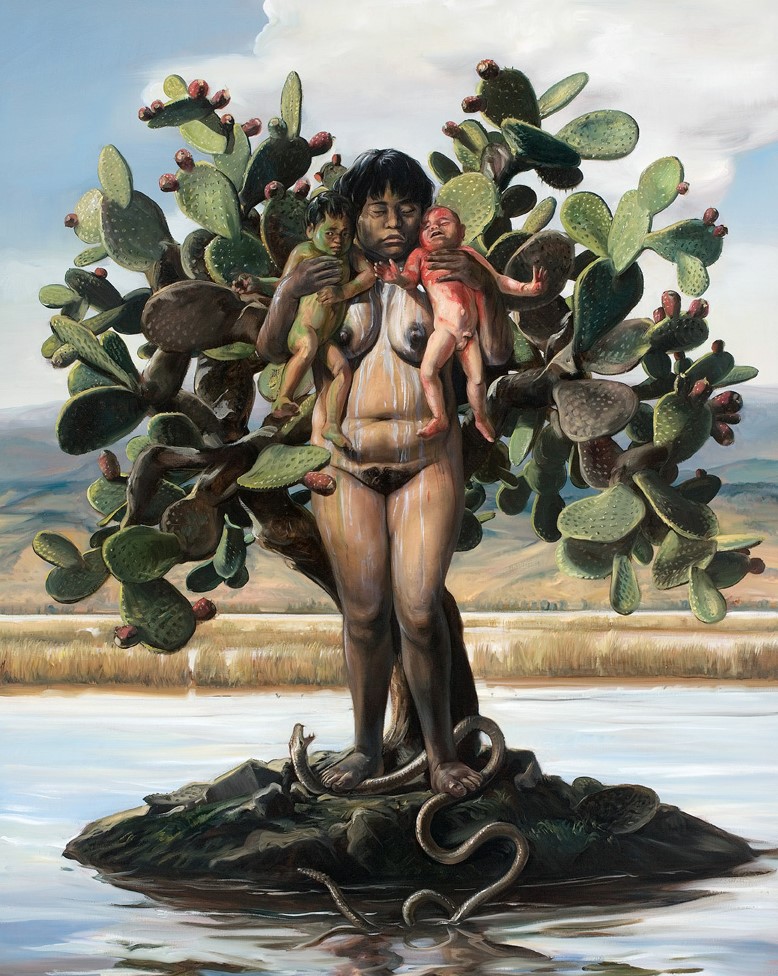
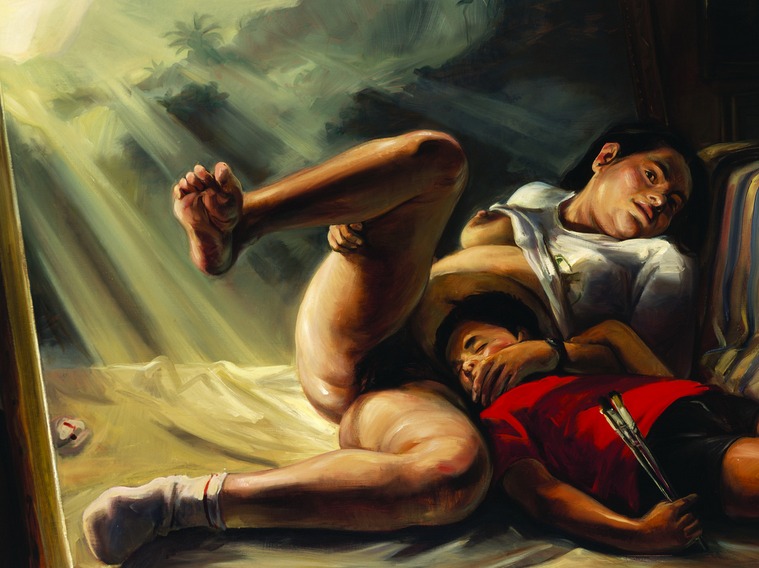
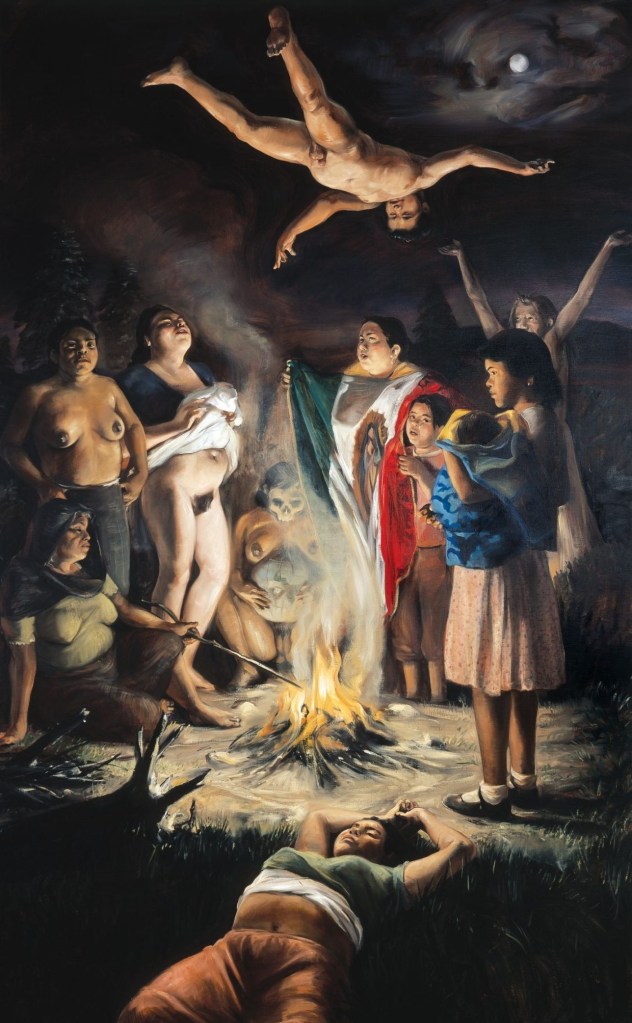
There are fundamental archetypes and reoccurring themes in Lezama’s paintings. The absence of clothing detaches one from the concept of time. It is common to see a figure portrayed as the ever-present mother. She takes on the role of both parents for her children, who compete for her affection while eagerly waiting for redemption from an authority figure who, in reality, does not exist. In contrast, the circle relies on a dynamic blend of chemical reactions and fluid displacement to support its form.
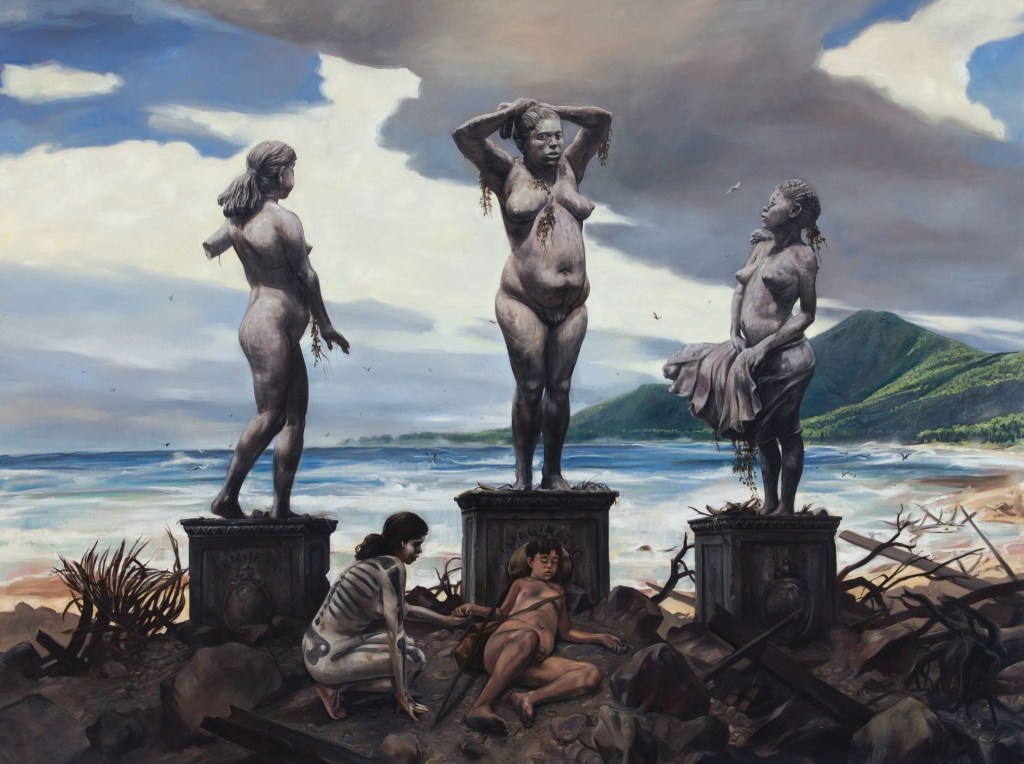
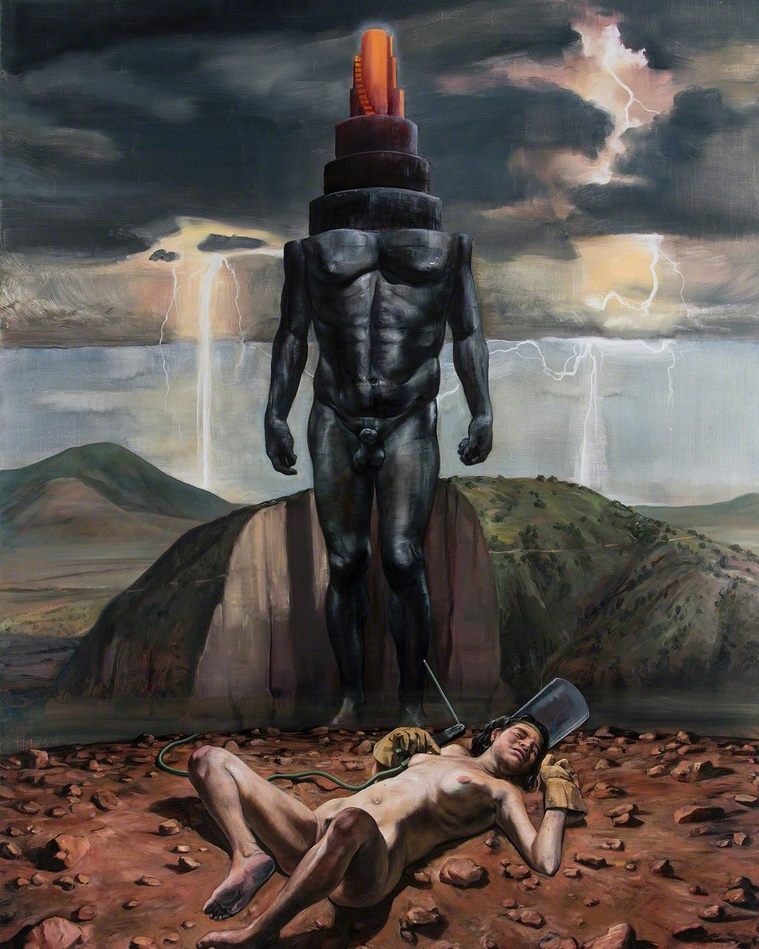
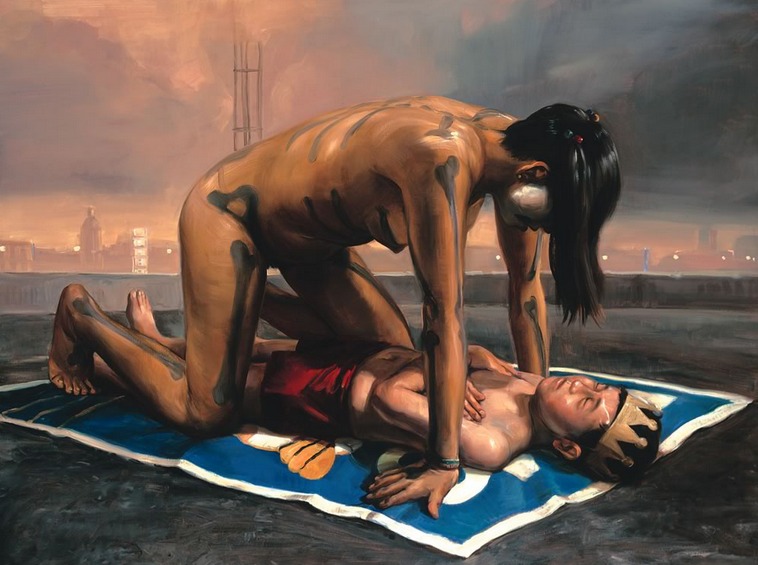
Lezama’s pictorial stage features the eternal adolescent archetype as a representation of civilization. Regardless of one’s age, every adult possesses a liminal quality that serves as a bridge between maturity and the realm of the unconscious. Changes in the surrounding environment mirror the changes in the mind. The transformative phase of adolescence shapes and molds the individual, giving acceleration to civilization.
In Lezama’s paintings, day and night coexist, blurring boundaries of space and time. This subtle effect further reinforces a reappearing theme in Lezama’s work, which explores the connection between celestial bodies and genealogical mountains.
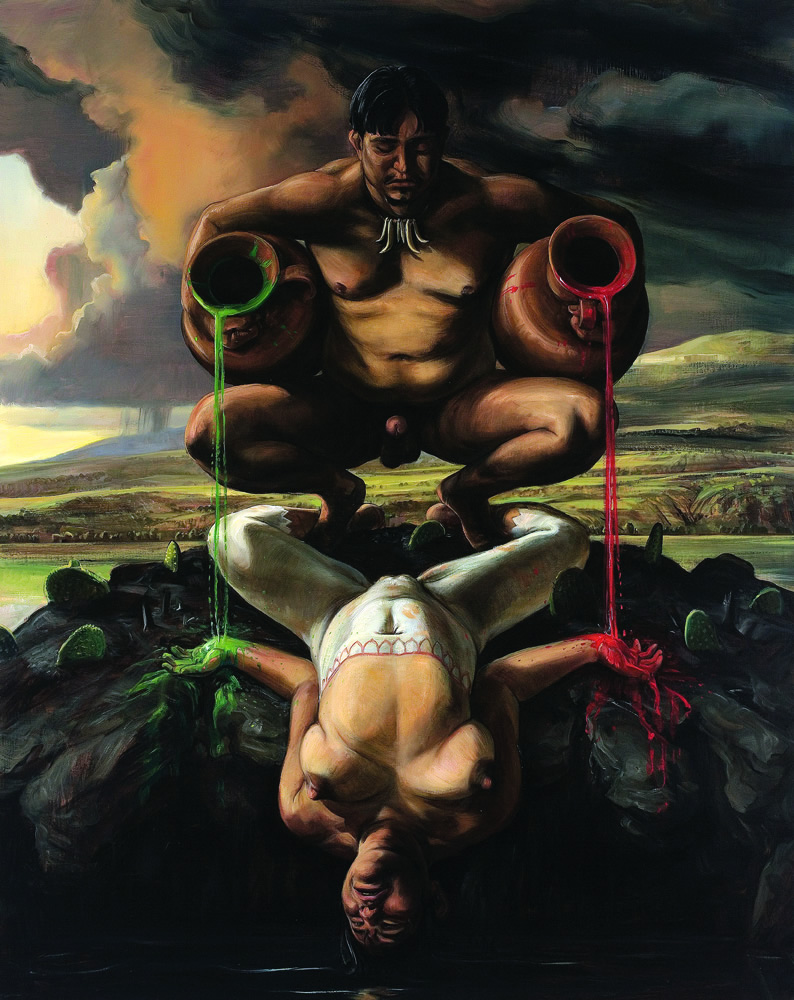
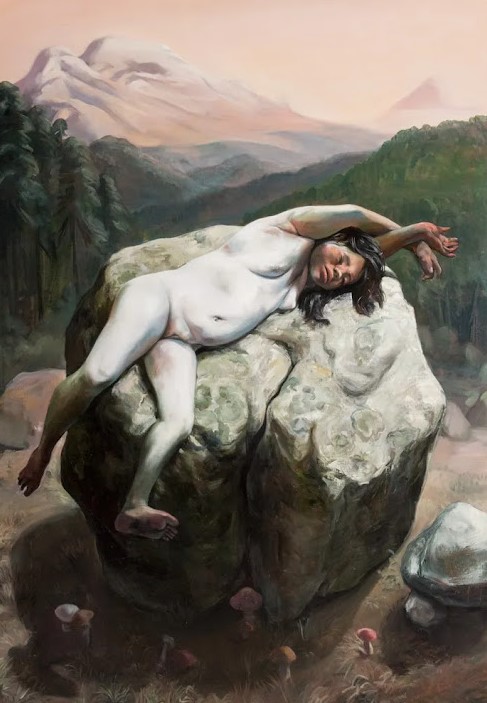
The enduring regenerative power of sexuality is proof that humans are an integral part of nature. While exploring this theme, Lezama emphasizes the artificial narratives of humanity, which give rise to supernatural histories and institutions. Lezama integrates these mystical components into an authentic backdrop, creating magic realism that resonates with the Mexican scenery.
Lezama doesn’t consider himself a realist painter or someone who replicates reality. He knows he is constructing a narrative that falls within the realm of fiction, designed to provoke thought in the intuitive mind. Erick Castillo, the author of “Daniel Lezama: Árboles de Tamoanchan,” pays tribute to Lezama as a visionary who devised a complex network of symbolic representations, reminiscent of a visual maze confined within a psyche. Lezama draws inspiration from a multitude of sources, one of which is the renowned essayist Octavio Paz. In his writings during the 1950s, Paz explores themes that align with Lezama’s ideas in his work titled “The Labyrinth of Solitude.”
Mother Narrative of Circularity
Erik Castillo, a curator, researcher, and professor in Modern Art, holds the perspective that Daniel Lezama’s paintings are fragments that contribute to a broader circle. Castillo refers to this as a narrative circularity. These figures represent actors who play different roles in a cyclic play. Lezama’s paintings use allegorical layers to communicate a language of images. He describes his stationary images in space as a visual arrangement that viewers can see as a syllable of figuration. This leads the viewer to experience a range of different interpretations.
Similar to a collage, Lezama’s themes incorporate both ancient and modern concepts, creating a unique fusion. American underground cartoonist Robert Williams offers a parallel example of combining time streams to create branching storylines. Both artists employ the surreal quality of this image-streaming effect to challenge the beliefs of their viewers, leading them to reflect and question their own perception of reality.
The Mestizaje of All Things
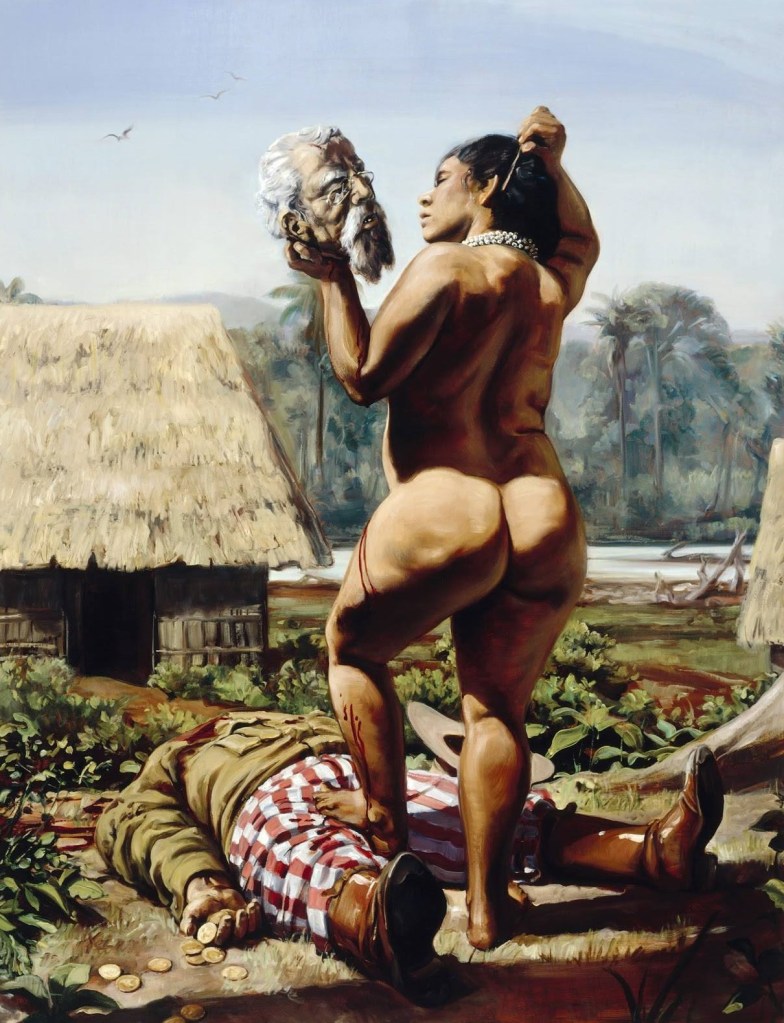
Lezama believes that the Mexican nation is an imaginary family that exists in the realm of imagination before becoming a reality. Lezama considers himself a hetero-Mexican. By exploring the intersection between indigenous cultures and colonization, his search sheds light on various aspects of rites of passage and cataclysm.
A crucial point to note: death is a prominent theme in Lezama’s work, yet there is no ultimate or definitive death. When an individual changes their life, the person they used to be ceases to exist. There is always something left incomplete. Similar to a thriving world ecosystem, each part relies on the other.








 Mitchell Pluto