World of Primitive Art with David Norden

African art has been a part of my childhood. My mother, Nadya Levi, was a sculptor who collected African art, and my father, Herman Norden, was an antique dealer who had a room in his house filled with African art, books, and stuffed birds. As a child, I went to London many times with my mother for auctions, where we met interesting people like Patricia Withofs and Gaston de Havenon. I also remember Mrs. Huguette van Geluwe in Brussels, where we went to seek her opinion on Congolese pieces, or Willy Mestach. And there were Simpson, Charles Raton, and Baron Rollin, who would visit us in Antwerp, and as a little boy, I had to serve coffee and help clean the display cases.
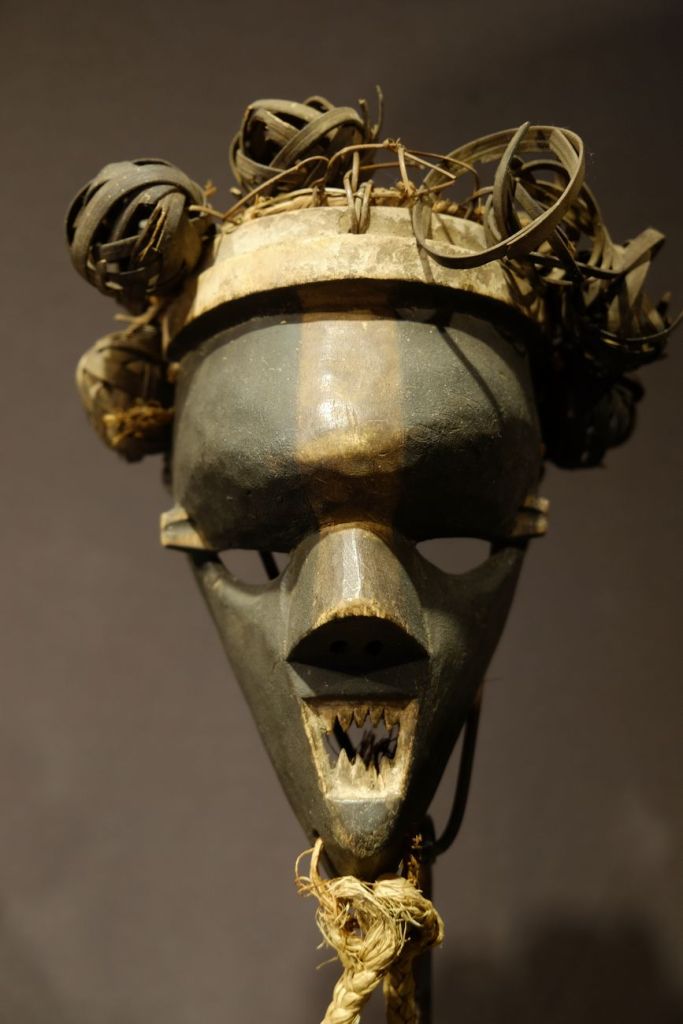
The Salampasu mask is steeped in cultural significance and is traditionally used in tribal ceremonies and rituals. It is believed to represent ancestral spirits and is used for various purposes, such as warding off evil spirits, promoting fertility, and celebrating harvest festivals.

My mother’s collection of Bassa and Dan masks, all hung side by side, many of which were acquired from Paolo Morigi. My first purchase was a small miniature Etruscan stone tablet depicting a lion.
I am always looking for an object that evokes emotions in me. I would love to acquire a beautiful object that belonged to Henry Pareyn, the first collector dealer in Antwerp around 1910. I have always derived more pleasure from acquiring objects than from selling them, but I am not a fetishist who cannot part with them.
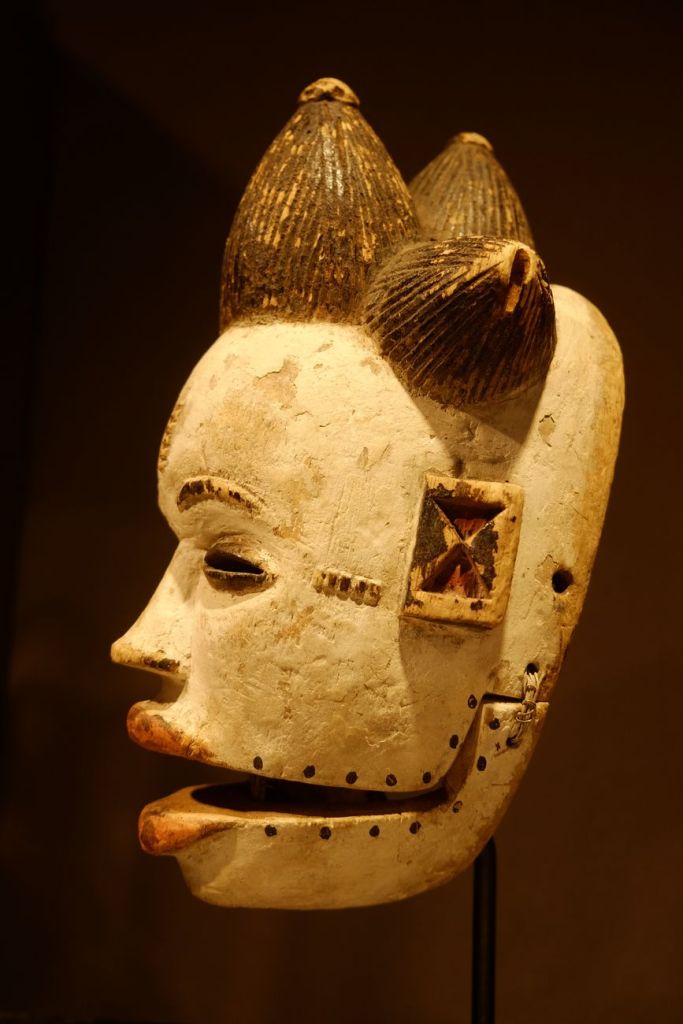
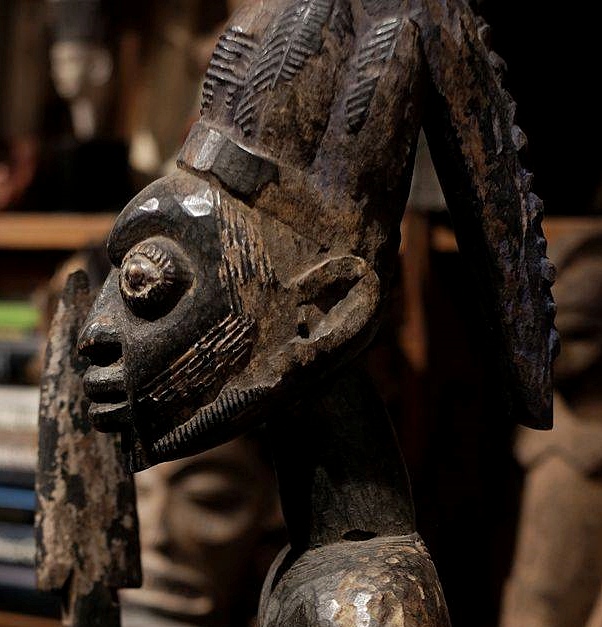
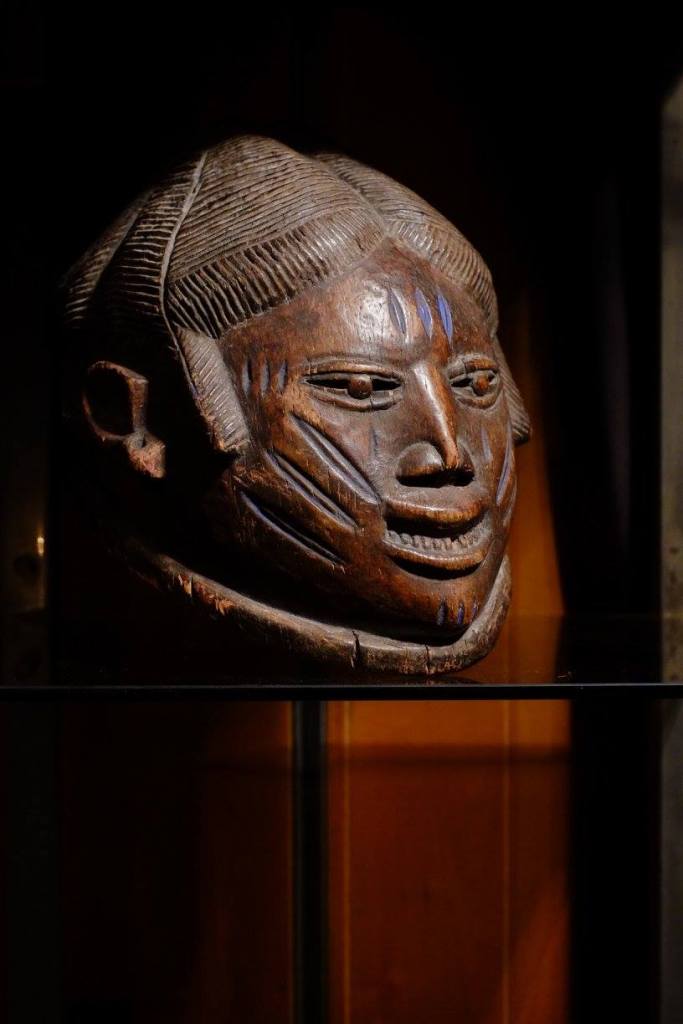
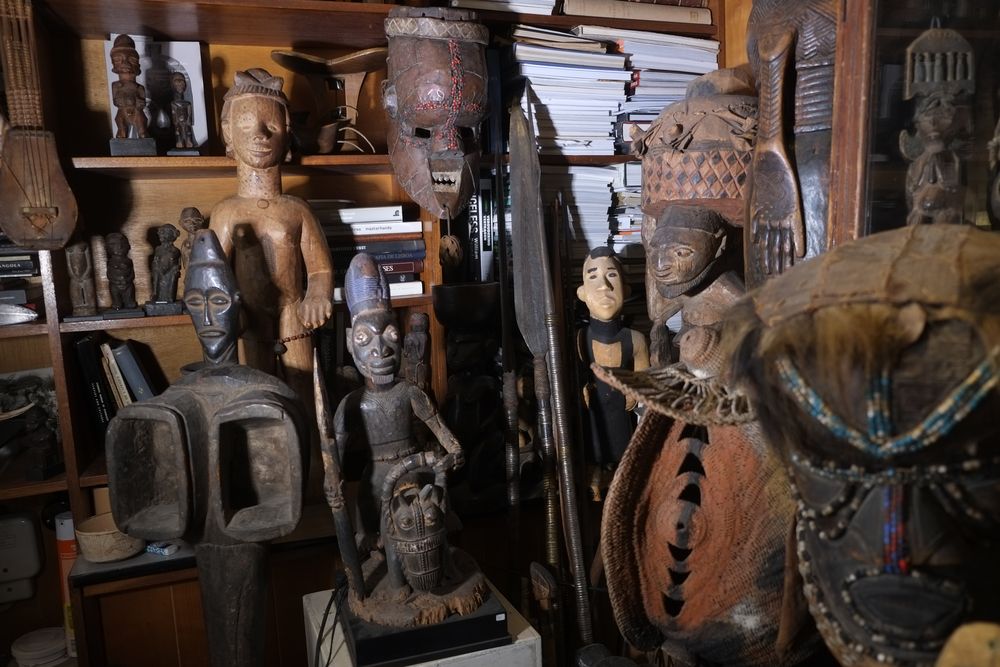
Ogoni ‘Elu’ mask with articulated jaw, Nigeria.The Ogboni ( also spelled Ogoni) people are an ancient and secretive society that has existed in Nigeria for centuries. Their religion is centered around the worship of various deities and the use of masks in religious rituals and ceremonies. The Ogboni mask being described is a prime example of this tradition.

What determines the value of the works? The value of an object often depends on the buyer. I could say that it is the beauty and antiquity associated with the provenance, but in reality, it is the emotion that an object evokes in you that is important, and sometimes the place your imagination gives it.
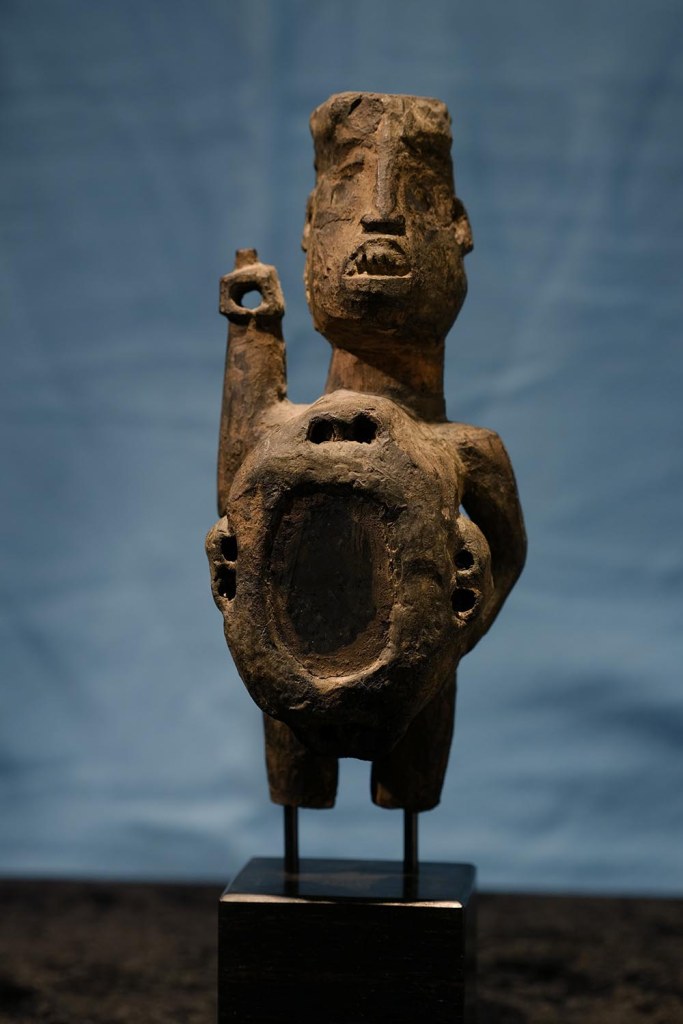
A 19th century Bakongo Nkisi Figure. The figure is known as a nkondi, which means “hunter” or “hunter of wrongs,” and it is believed to have the power to track down and punish wrongdoers. The mirror in its belly is said to allow it to see into the hearts of people and to reveal any evil or malicious intentions they may have. The eyes of the figure are made of mirror, and they are thought to help the nkondi to see clearly in the spiritual realm.

There are so many personalities in this field who have inspired me that I can’t name them all, but first and foremost, it is people with a deep passion and those who recognize the beauty and importance of African art for humanity that inspire me the most. African art has had a tremendous impact and great influence on Western art after World War I, and it is only natural to recognize the importance of this art and its artists.
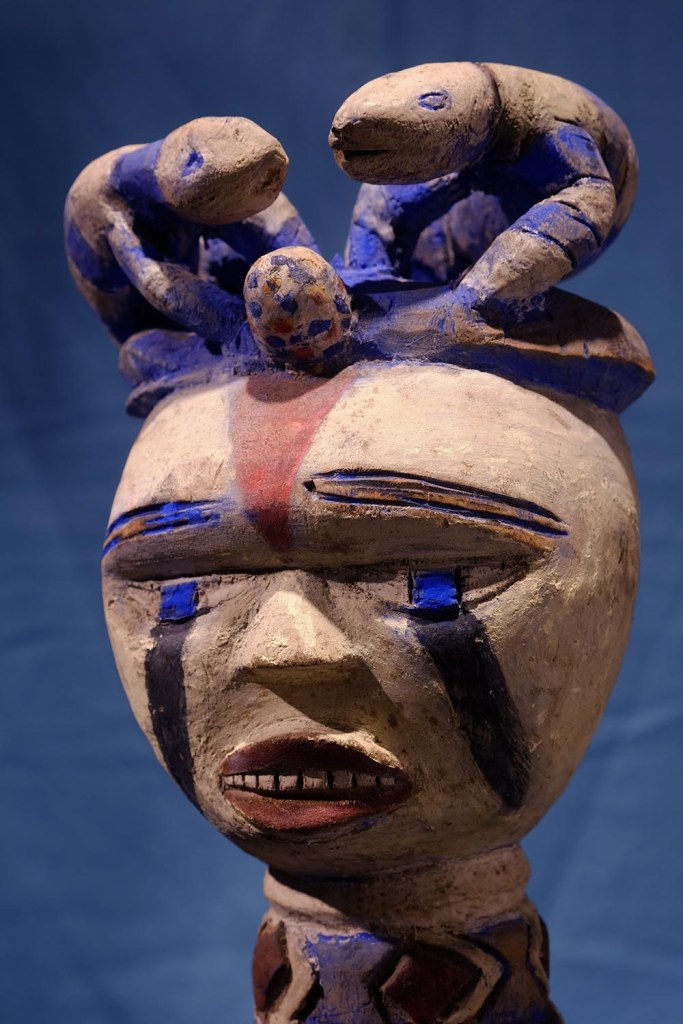
Kuyu Crest Head. The two lizards on the head of the Kuyu sculpture could represent spiritual guardians or protective spirits, as lizards are frequently associated with protective powers in many African cultures

The African art market represents only 0.8% of the overall antique market.
It is flooded with fakes, and verifying authenticity is reserved for a very small experienced elite with a network of knowledgeable friends. Determining the value is equally unpredictable due to the market’s volatility, as it is too small. However, this provides many opportunities for knowledgeable buyers to make good purchases. The price of African art has declined in recent years for mid-range pieces due to the disappearance of wealthy collectors and the abundance of supply in the market. Only exceptional objects still command high prices.
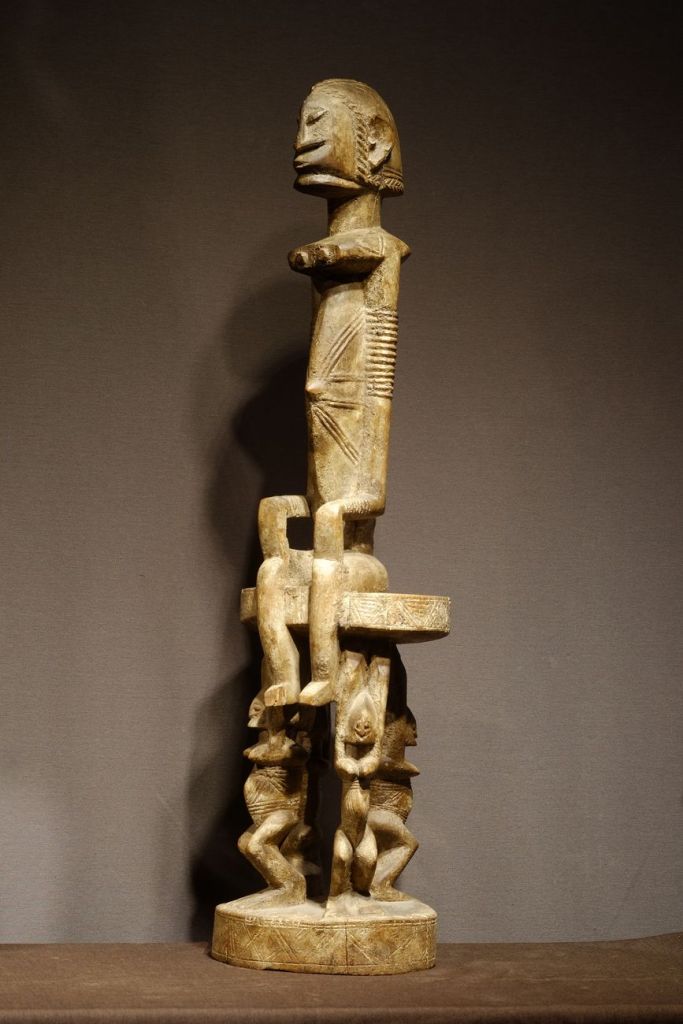
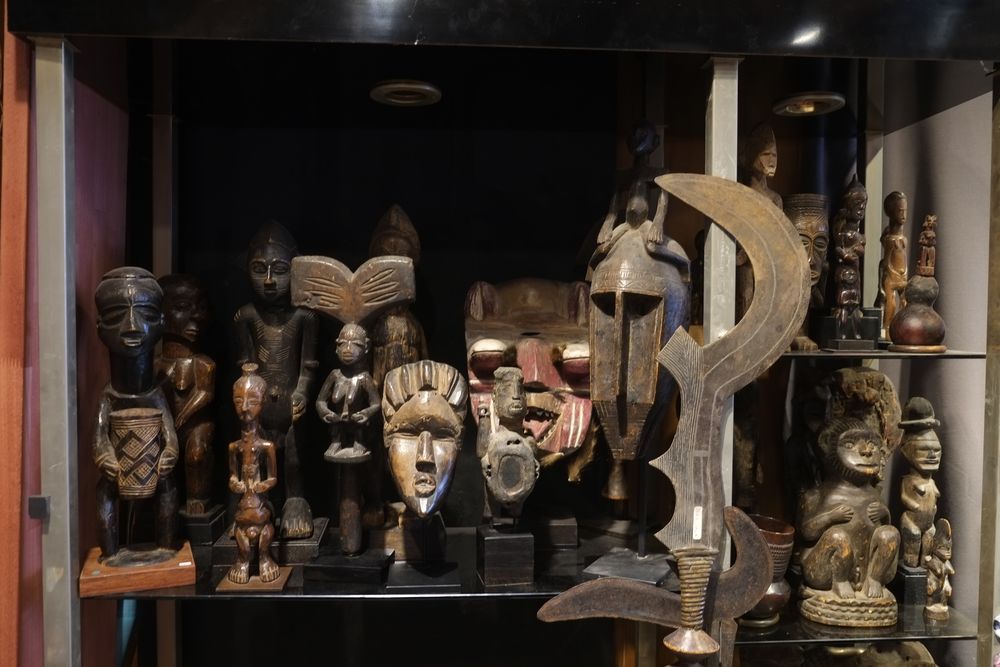
A 1967 published and museum exhibited Dogon Figure Hermaphroditic figure on a seat, which is supported by four female figures with raised arms. Yellow-brown patinated, heavy, hard wood. The published Meulendijk Dogon Figure was also exhibited in the ” Museum voor Land- en Volkenkunde” in Rotterdam, Nederland in december 1967

I do see many small collectors entering the market, but they rarely “invest” more than a few thousand euros. The recognition of contemporary African art over the past decade is very encouraging, as it could attract new audiences to African primitive art as well. The role of museums and cultural institutions is crucial in recognizing these cultures. In this regard, the Musée du quai Branly is doing excellent work by offering beautiful exhibitions that attract new audiences. However, the recent demands for repatriation create some discomfort in the market in the short term. But with the recognition of the importance of their own art, in the long term, it should allow an African market to develop in Africa. I also look forward to the creation of museums on the African continent, especially with the opening of the Museum of Black Civilizations in Dakar.

Throughout his journey, Norden has found inspiration in numerous figures within the primitive art field. He admires those who possess a deep passion for African art and recognize its significance in the broader context of humanity. The profound impact of African art on Western artistic movements following World War I further fuels his admiration for the art form and its artists. Looking ahead, Norden’s enthusiasm for primitive art shows no signs of waning. With an ongoing book project awaiting completion, he is dedicated to sharing his extensive knowledge and experiences with a wider audience.
Norden places great importance on the role of museums and cultural institutions in recognizing and promoting the significance of African art and its associated cultures. He commends the Musée du quai Branly for its remarkable exhibitions, which attract new audiences and foster appreciation for African primitive art. Norden also expresses anticipation for the emergence of museums on the African continent, with the Museum of Black Civilizations in Dakar serving as a beacon of hope.

David Norden’s lifelong dedication to primitive art has solidified his position as a respected figure in the field. His unwavering passion, discerning eye, and commitment to preserving the legacy of African art continue to shape his remarkable journey. As he eagerly shares his knowledge and explores new horizons, Norden’s contributions play an invaluable role in promoting the beauty and significance of primitive art to a global audience.
Sint Katelijnevest 27/B2000 Antwerpen/Belgium+32 3 227.35.40/david.norden@telenet.be

website where people can browse for available pieces in the shop https://buyafricanantiques.com/

or subscribe to my free newsletter
Ngobudi Mask David Norden

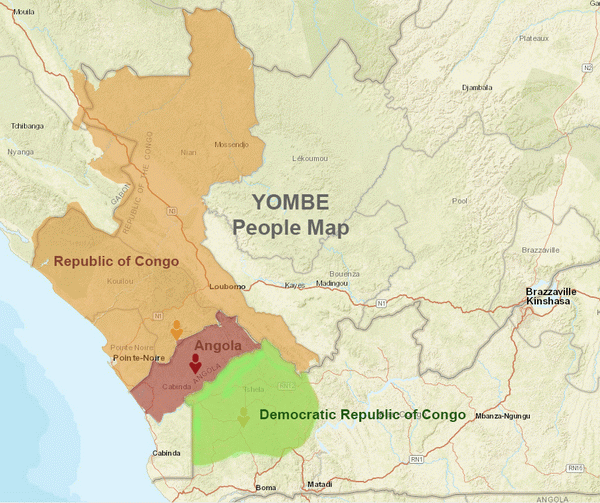
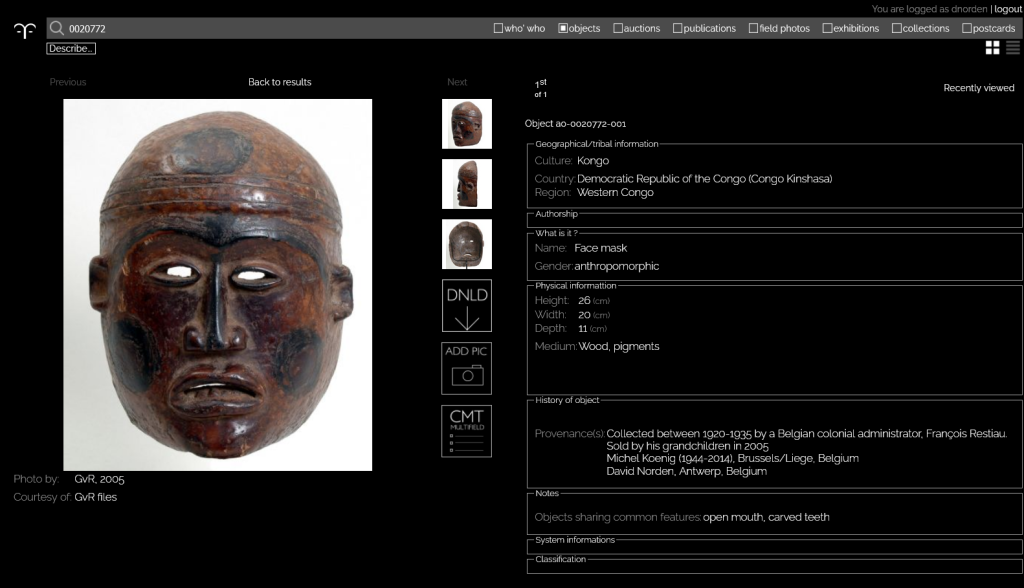
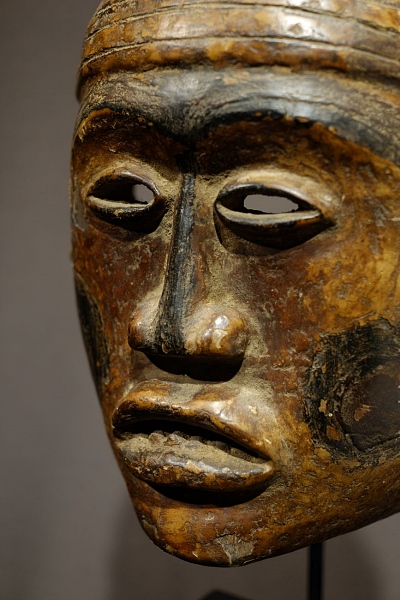
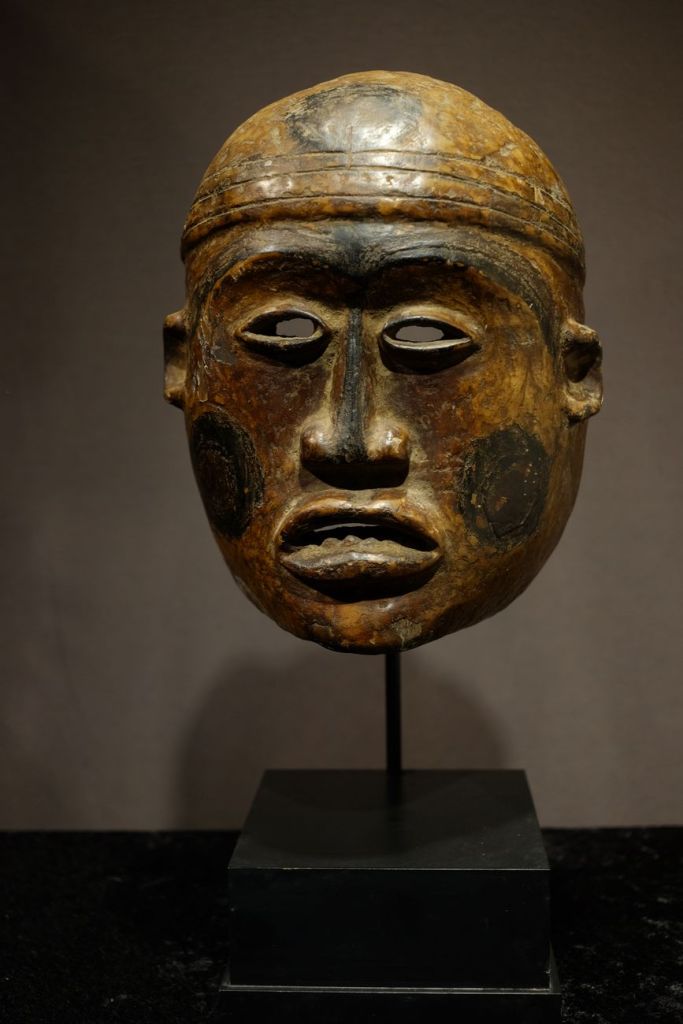
The customs of the Congo are quite different from those of Nigeria there is no direct relation between the Yoruba and Yombe. Ngobudi is the name of the diviner’s Mask . Once he wears the mask the powers of the diviner are active. A nganga is a soothsayer or traditional healer. The diviner can explain the past and give advice about the future. Nganga masks are owned by the healer or diviner.

The Yombe don’t have the traditions, like the Yoruba that are more related to the Voodoo…and Congo is difficult to explain there are so many different tribes. But the main activities are about the passage to adulthood, honoring ancestors and telling the old stories when they are royal kingdoms. In Nigeria like Benin brass pieces are more to tell and illustrate the conquest of the kingdom and decorate their palace.

In the past a lot of colonials where going to Congo, since it was a Belgian colony. That specific Yombe mask was brought back between 1920-1935 by a Belgian colonial administrator, François Restiau, Mons. He was working for the railroad company in Congo. He found that mask in Congo when the “Ocean Railway” was built between 1921 and 1934. It is a bit of a sad story when you know that to build the railway from Pointe-Noire to Brazzaville between 15,000 and 20,000 Africans died. Today the Yombe people has a small population of 15,000 and the culture is still active, but it’s not exactly the same as 100 years ago.

I have been dealing African art since 1993, before I was a professional photographer. I am specialized in African art coming from old collections mainly, so I do not import my pieces directly from Africa. My mother Nadya Levi was a sculptor and she collected African Art. My father Herman Norden was an antique dealer, and he had a room with African Art in his house. The African Art world is quite small I guess there are less than 200 serious specialized dealers in this field in the world. It is not so easy, because there are a lot of fakes that have been produced, some of them very well done, and you need to have seen a lot of pieces to be able to tell the differences.

written by David Norden

Sint Katelijnevest 27/B2000 Antwerpen/Belgium+32 3 227.35.40/david.norden@telenet.be

website where people can browse for available pieces in the shop https://buyafricanantiques.com/

or subscribe to my free newsletter
https://buyafricanantiques.com/2023/06/01/free-african-art-newsletter/

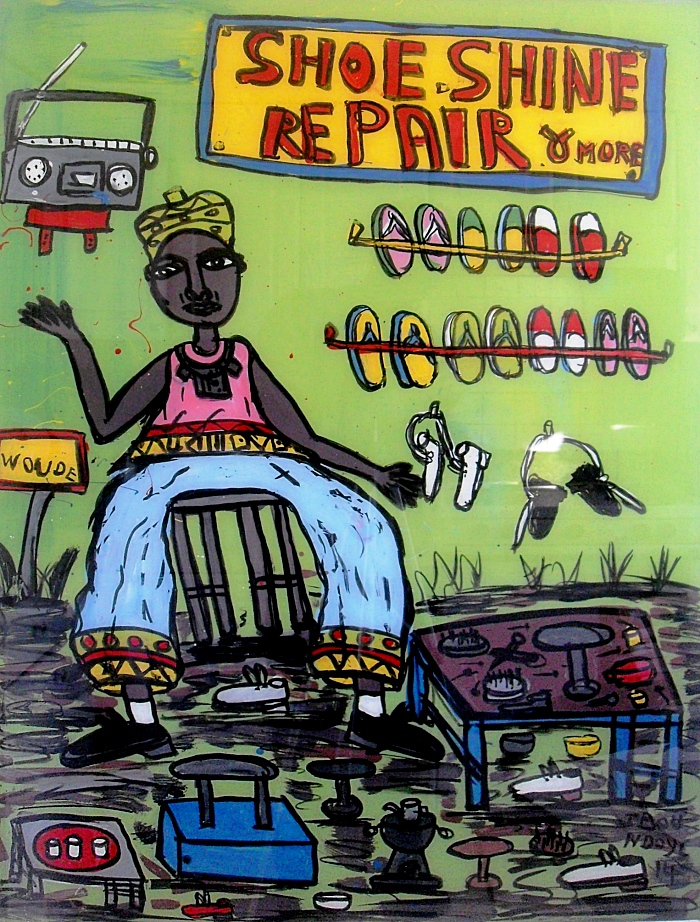
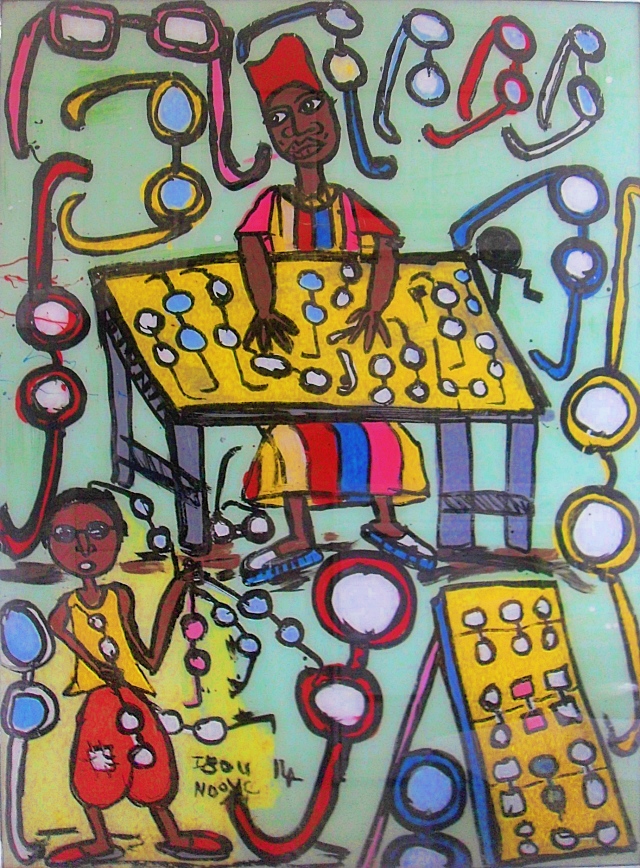
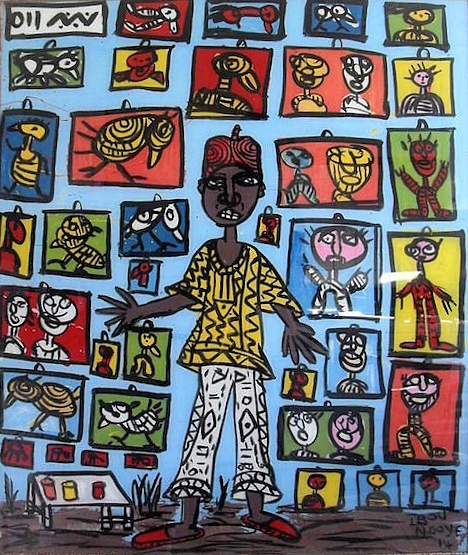
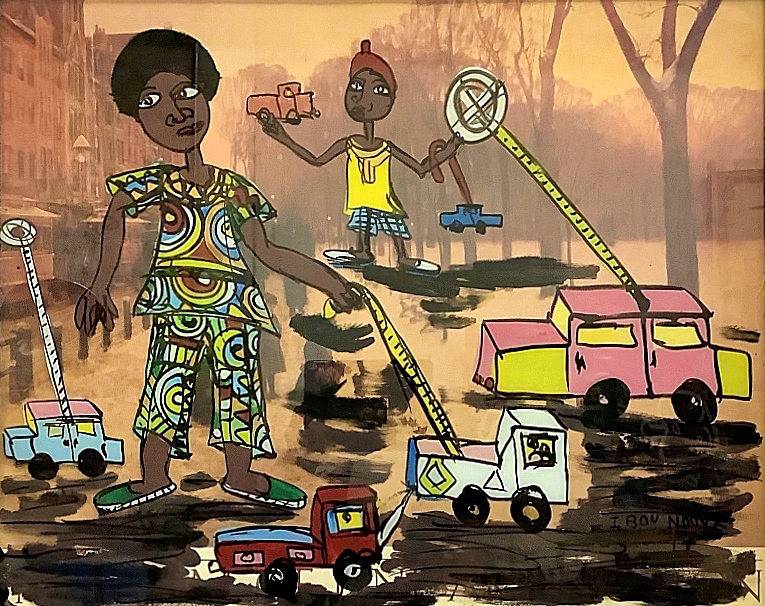
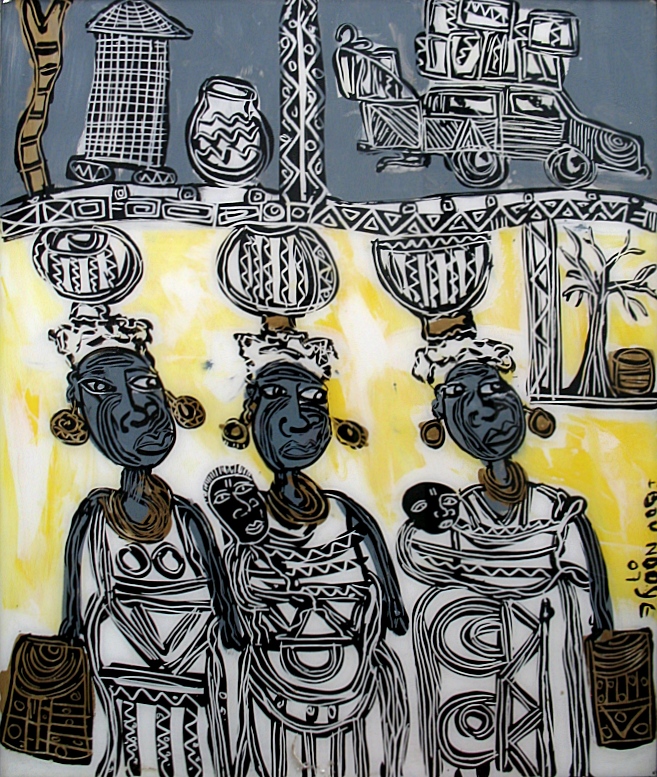
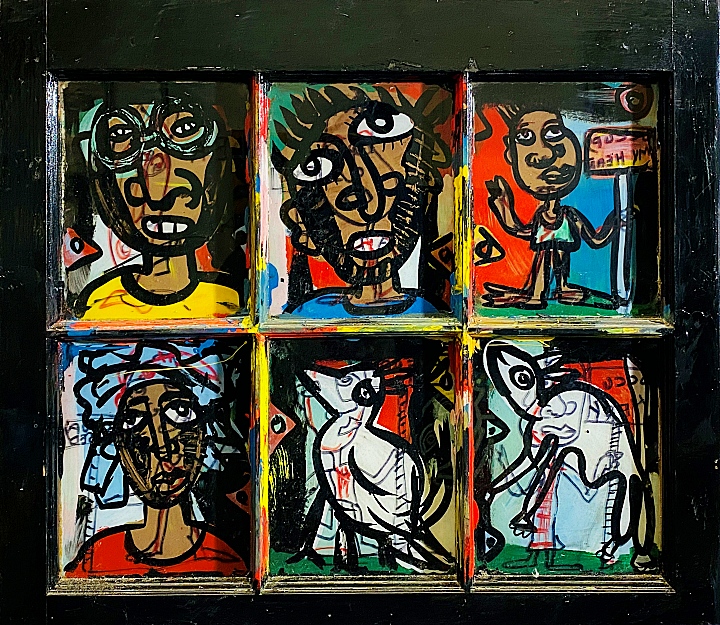
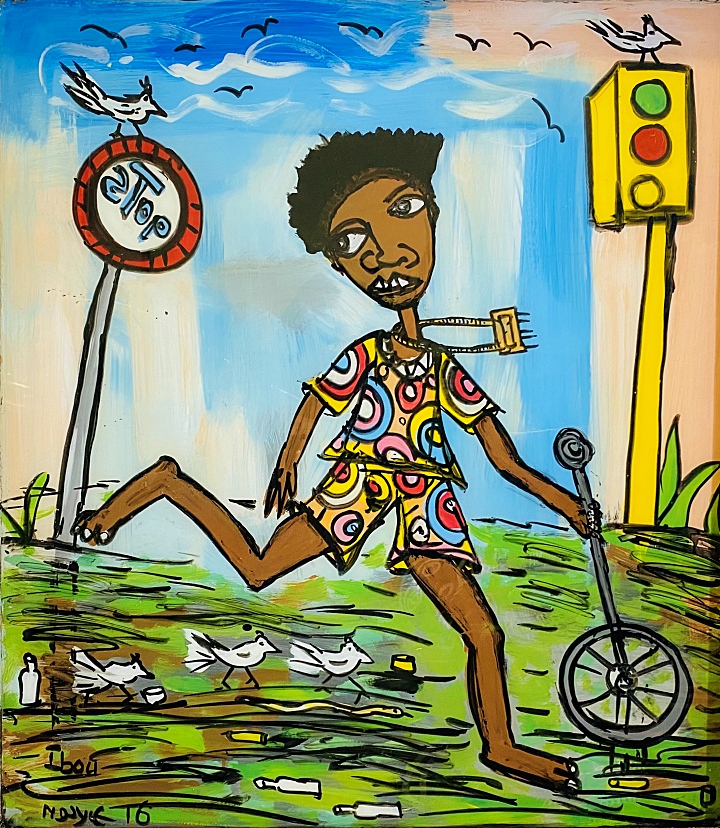
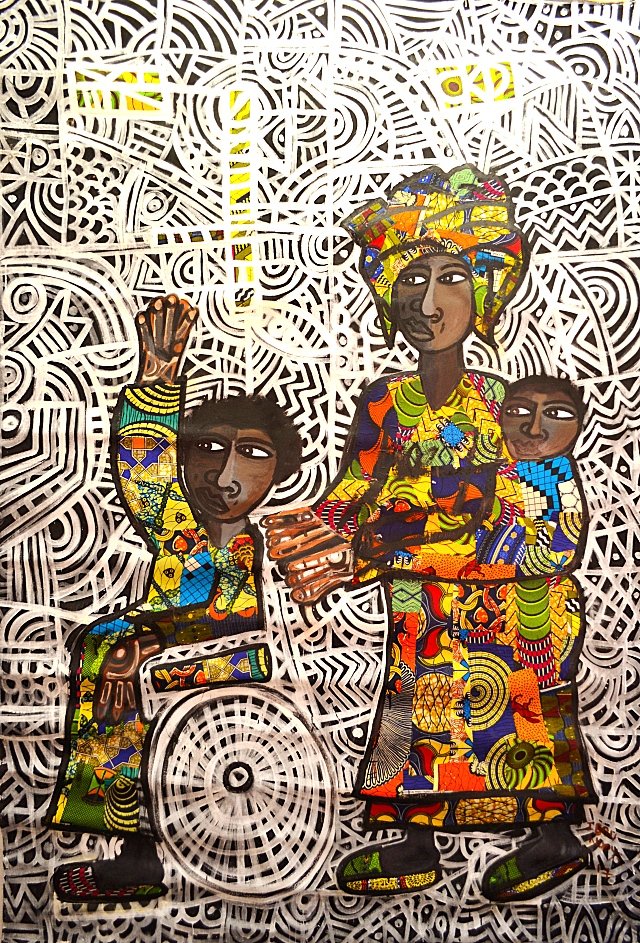
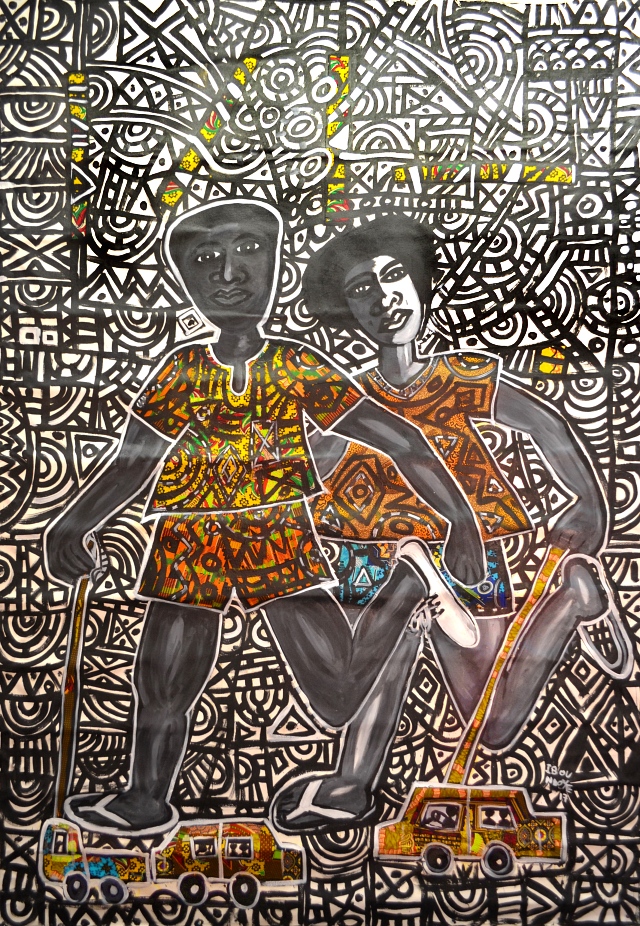
Ibou Ndoye My Paint Brush is a Walking Stick

MY PAINTINGS ARE 100% SOCIAL, IN THE SENSE
THAT THEY HAVE SOCIAL FUNCTIONS WHICH
ALLOW THE VIEWER TO DEAL WITH ALL THE SOCIAL
ETHICS OF MODERN AND TRADITIONAL LIFE.
THEY ARE THE SHORT STORIES FROM ORAL
TRADITIONS THAT TEACH, INFORM, AWAKE AND
COMMUNICATE WITH YOUR SUBCONSCIOUS.
IBOU NDOYE

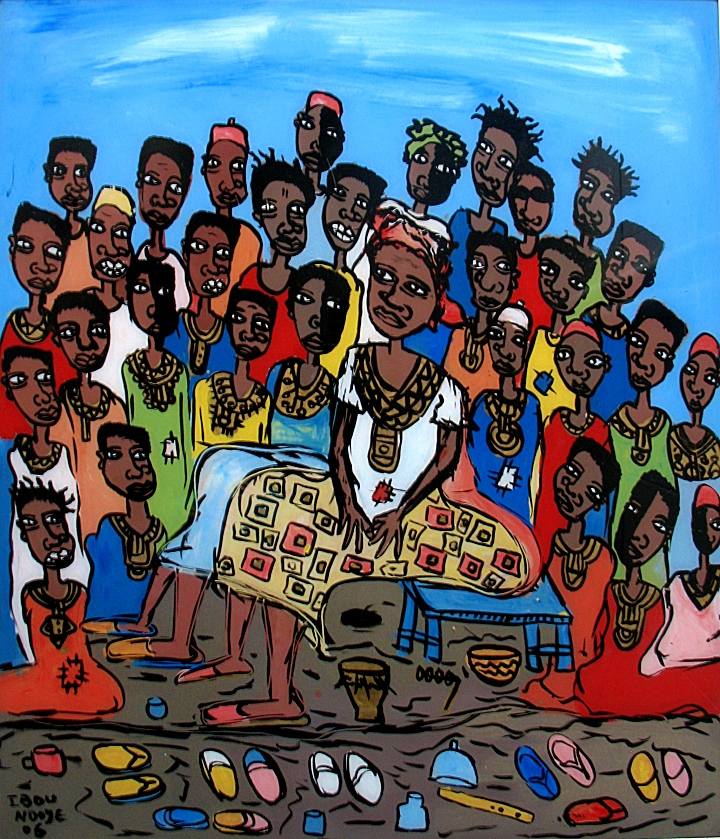
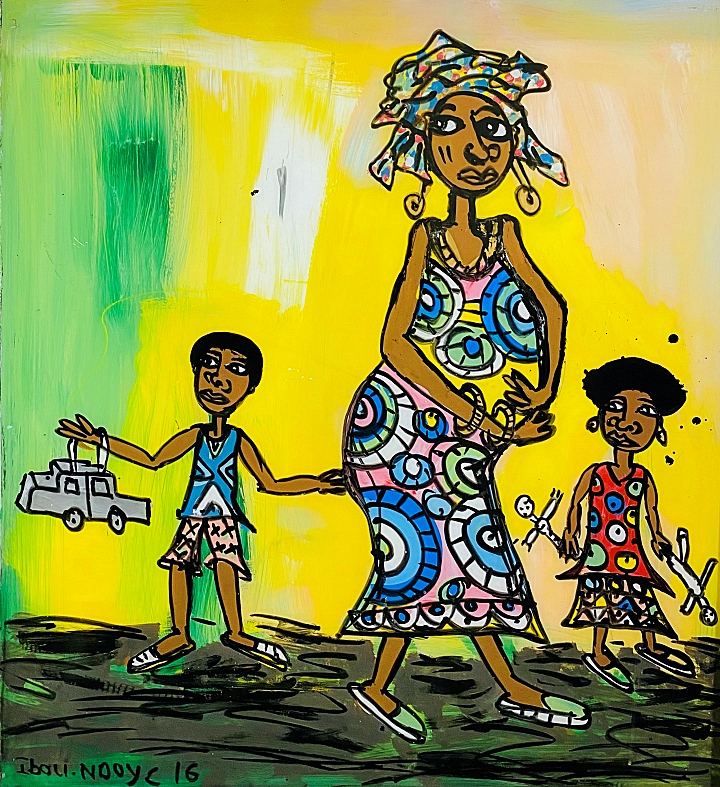
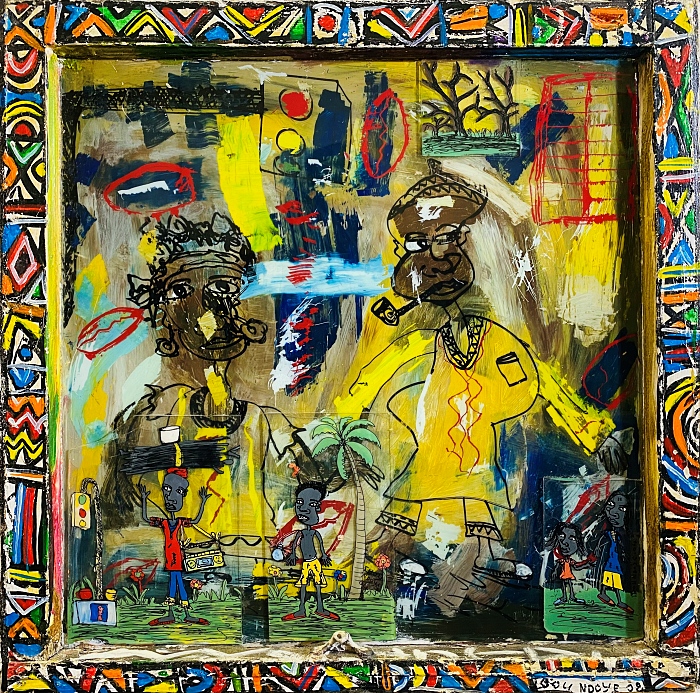
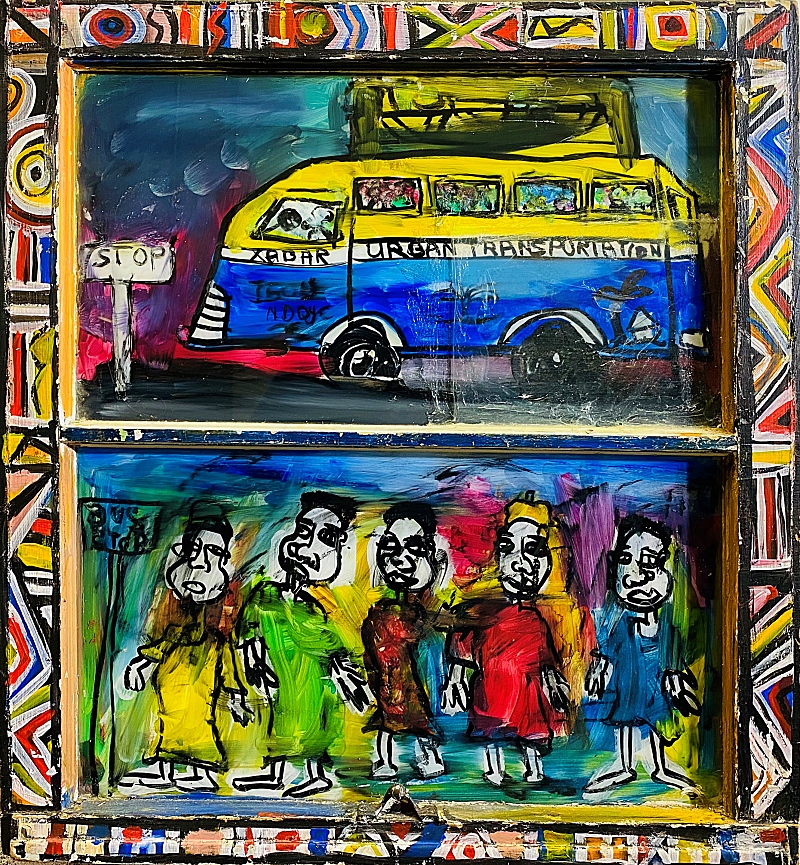
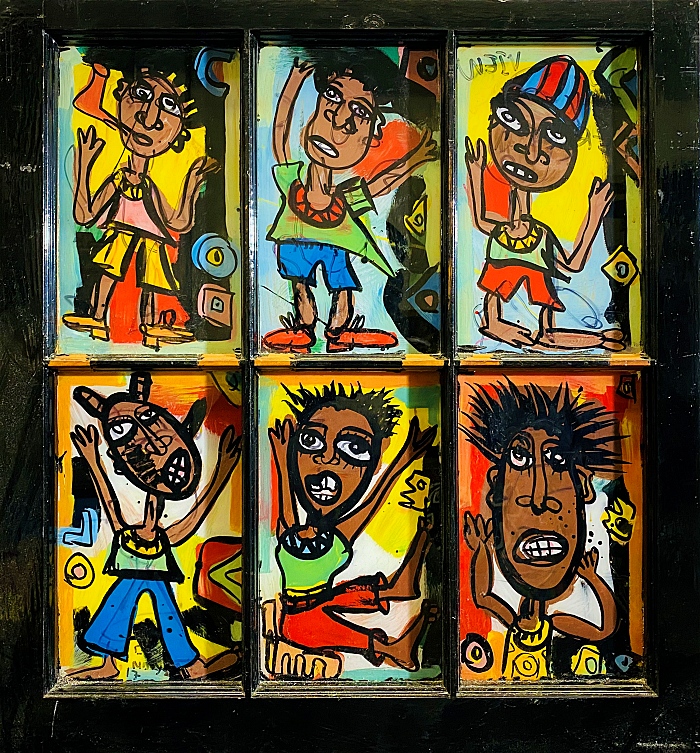
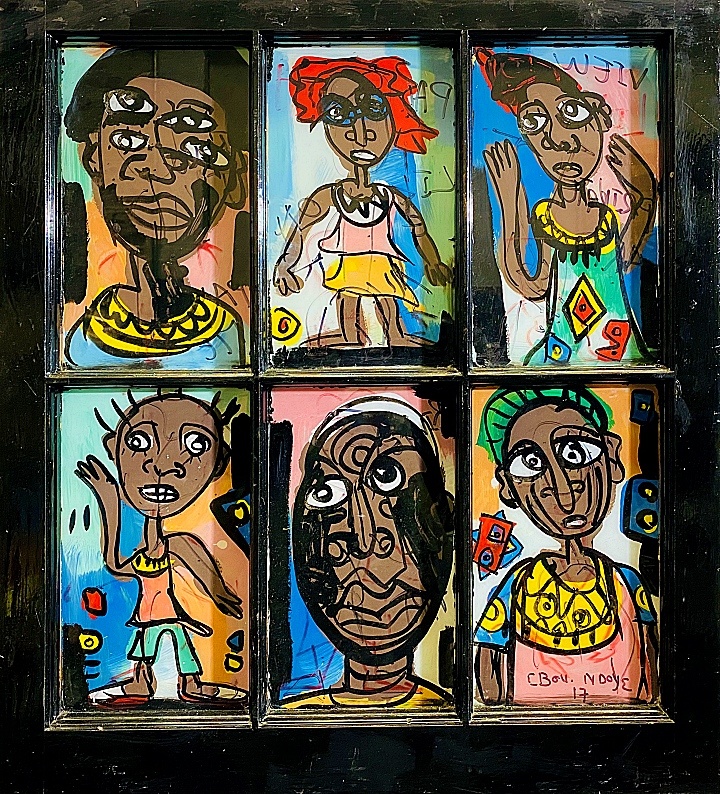
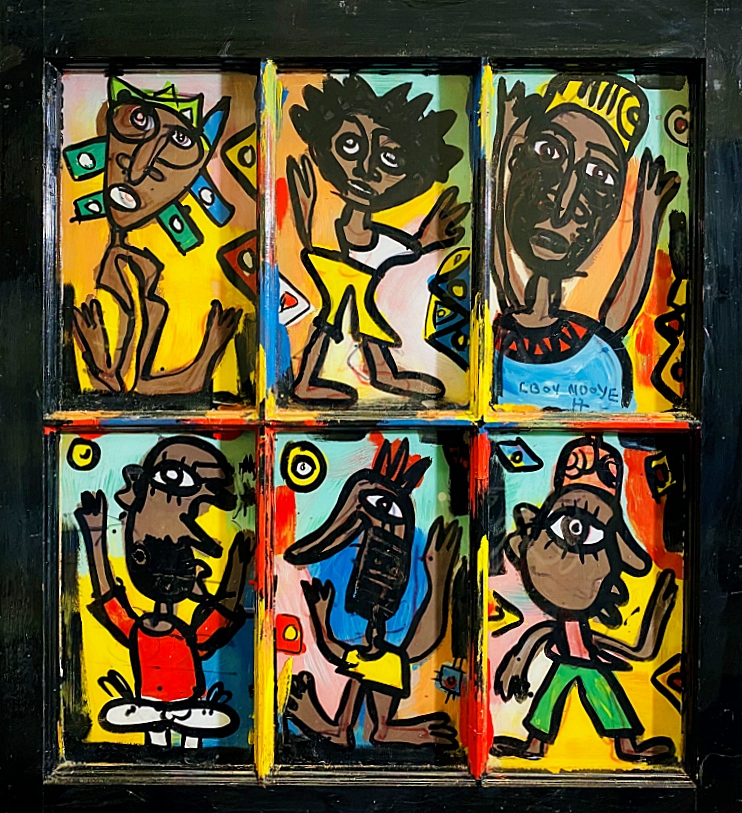
All Glass paintings are done on found windows. Please Click Image to Enlarge

Born in West Africa’s most progressive capital city, Dakar, Senegal, glass-painting
artist Ibrahima Ndoye has combined modernism and traditionalism to create a style
unique to himself. Ibrahima, commonly known as “Ibou,” grew up as the oldest
child of a family of four boys in the suburbs of Dakar. Ibou’s mother made her living
as a dressmaker while his grandmother worked as a tie-dye artist. Regularly
surrounded by colorful African textiles and fabrics, it is not surprising that Ibou says
he “socialized with art and cohabited with colors” from a very young age.

Ibou began his career as a painter in the late 1980s during a period in Senegal
called the “Set Setal,” or clean-up movement. The movement encouraged artists to
embellish the environment by expressing themselves through murals on buildings
and walls
. It was during this time that Ibou painted several murals in the suburban
city of Pikine. Some of Ibou’s murals were selected to appear in a French-produced
documentary in 1990.

Eventually Ibou’s interests changed. Following a tradition brought from the Middle
East to Senegal one hundred years prior, Ibou entered and renovated the world of
glass painting. When the technique was first introduced to the Senegalese, the
subject matter was predominated by religious scenes- i.e. Abraham’s sacrifice,
Noah’s Ark, Mary and Jesus. It wasn’t until after Senegal gained its independence
from its French colonizers (1960) that glass painting expanded in new directions.
However, through the 1980s only those holding degrees in fine art dared to play
with the century-old tradition. These initial innovators tended to create images in
such a way that the traditional style was barely recognizable through their
abstractions.

It was in the early 90s that a third wave of glass painters surfaced in Dakar. People
like Ibou began to look back at the traditional style of their predecessors with a new
inspiration. Instead of painting traditional African scenes on clean sheets of
regularly shaped glass, Ibou started breaking and layering the glass to create new
textures and effects. The incorporation of various other materials including copper
wire, broken bottles, wood, bone, and animal skin began to appear in Ibou’s work
as well. Later in his life, upon relocating to America, Ibou took one step further by
mixing glass with plastics and other materials common to our modern environment.
It is not unusual to find Ibou stapling scraps of soda cans and detergent boxes onto
vibrantly painted CD cases portraying images of African women carrying jugs of
water above their heads. As the times changed, so did Ibou’s work, creating a new
style from an old tradition.

In the late 90s Ibou began exhibiting his work around Africa and Europe in local
and internationally touring shows. The Biannual of African Art hosted in Dakar
regularly accepts Ibou’s work for exhibition in a show titled “The Salon of Glass
Painting.” In 1999 Ibou expanded his involvement in Senegal’s art scene when he
started running glass painting workshops at the El Hadji Doudou Mbath Primary
School, and later at the Dakar YMCA.

In 2001 Ibou found himself on his way to join a friend in New England. For several
months Ibou taught painting classes at Allen Special Needs Camp for the disabled
in Bedford, New Hampshire. Later that year Ibou moved to Rhode Island where he
acted as an art instructor for a program entitled “Kids at Risk” run by the Urban
Collaborative Accelerated Program (UCAP). Ibou also appeared as a guest speaker
on the Cox Television production “Cultural Tapestry.”

Now Ibou resides in Jersey City, New Jersey, and regularly exhibits his art both
locally and internationally in addition to holding glass painting workshops at
libraries and schools. Ibou intends to continue promoting and expanding his artistic
vision through exhibition, education and cultural exchange.

Jaclyn Pedalino African Art Manager

When i paint i become blind and turn my painting brushes into walking stick ,then fumble until i reach where i want to be

Ibou Ibrahima Ndoye e-mail; Ibouart@gmail.com www.iboundoye.com

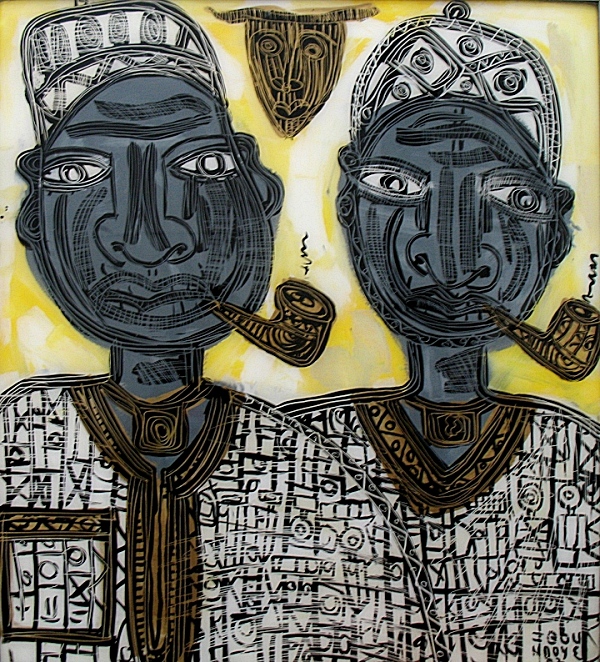
Featured photo: Pipe Smokers